



Seth Stohs
-
Posts
25,909 -
Joined
-
Last visited
-
Days Won
109
Content Type
Profiles
News
Minnesota Twins Videos
2026 Minnesota Twins Top Prospects Ranking
2022 Minnesota Twins Draft Picks
Minnesota Twins Free Agent & Trade Rumors, Notes, & Tidbits
Guides & Resources
2023 Minnesota Twins Draft Picks
The Minnesota Twins Players Project
2024 Minnesota Twins Draft Picks
2025 Minnesota Twins Draft Pick Tracker
2026 Minnesota Twins Draft Tracker: Picks & Bonuses
Forums
Blogs
Events
Store
Downloads
Gallery
Everything posted by Seth Stohs
-
 Huge difference between bunting for a hit and sacrifice bunting. He's a really good bunter for hits (or hit attempts).
- 40 replies
-
- 2
-

-
- luke keaschall
- dashawn keirsey jr
- (and 8 more)
-
Image courtesy of Rob Thompson, St. Paul Saints (photo of Gabriel Gonzalez) Since the calendar turned to August, wins have been hard to find for the Cedar Rapids Kernels and Fort Myers Mighty Mussels. Gabriel Gonzalez had a walkoff for the Saints on Saturday night. On Sunday at Target Field, the Twins topped the Royals in 11 innings when Luke Keaschall walked it off with an opposite field home run. TRANSACTIONS OF Misael Urbina was activated from the IL by Cedar Rapids. SAINTS SENTINEL St. Paul 3, Iowa 2 Box Score Clutch hits from Gabriel Gonzalez and James Outman, and strong bullpen work sealed the Saints win. Through three innings, there was no score. Jordan Wicks started for the I-Cubs, and Mick Abel threw for the Saints. Abel was not as sharp as he was in his Saints debut last weekend when he tossed five scoreless innings. He had to work in this one. However, he still limited damage. In his 4 1/3 innings, he gave up just one run on four hits and four walks. He had five strikeouts. As you would expect, he needed to throw a lot of pitches. He threw 83 pitches, and just 47 were strikes. The run he gave up in the fourth inning came on a wild pitch. The Saints got on the board and took the lead in the bottom of the fifth inning. Gabriel Gonzalez led off the inning by crushing his first Triple-A home run. DaShawn Keirsey Jr followed with a well-placed bunt single down the third base line. A throwing error by the pitcher sent the ball down the right field line allowing Kiersey to reach third base. Aaron Sabato hit a high fly ball to the warning track in left field. Keirsey scored easily. Aaron Rozek entered the game with one out and a runner on first base. He got two fielders choice ground balls to end that inning. Jonathan Long led off the top of the sixth inning with his 17th home run of the year to tie the game at 2-2. The southpaw went three innings and gave up just one run on three hits. In the bottom of the sixth, Kyler Fedko singled to left field and then stole second. James Outman drove him in with a double to give the Saints a 3-2 lead, one they held onto the rest of the game. Trent Davis came on with one out in the eighth inning. He got the next five outs, one on a strikeout, to earn his first save. Keirsey Jr went 2-for-3. Outman’s double was his second since joining the Saints. WIND SURGE WISDOM Wichita 3, NW Arkansas 11 Box Score Surge fall despite early offense from Cossetti and Jenkins as the Naturals pulled away in the middle innings. The Wind Surge were able to face a rehabbing big leaguer on Sunday afternoon. Royals starter Michael Lorenzen tossed 5 2/3 innings. The Wind Surge actually did alright against him. In the second inning, Rubel Cespedes scored on an Andrew Cossetti double to the wall. Walker Jenkins led off the third inning with a single to center. He went to second on a wild pitch. Lorenzen tried to pick him off at second but threw it into center. Jenkins raced all the way home to score. Later in the inning, Nate Baez, Cespedes and Cossetti hit back-to-back singles which tied the game at 3-3. However, NW Arkansas scored three runs in the third, fourth, and fifth innings, plus single runs in the sixth and seventh innings. Sam Armstrong started and was charged with six runs on five hits over four innings. He also hit three batters. Jacob Wosinski gave up three runs on two hits and two walks in the fifth inning. Jaylen Nowlin pitched the sixth inning and gave up one run on three walks and one hit. Next up was Kyle Bischoff who gave up one run on two hits and a walk in the seventh inning. Kade Bragg and Gabriel Yanez each threw a scoreless inning in relief. Andrew Cossetti went 2-for-3 with a walk, his 12th double, and two RBI. Walker Jenkins was 2-for-5. Rubel Cespedes was 2-for-3 with a walk. KERNELS NUGGETS Cedar Rapids 2, West Michigan 4 Box Score Despite homers from Winokur and Houghton, Kernels Swept in West Michigan. It was a series that the Kernels will want to just forget. Not only did the Kernels lose all six games of the series, they were outscored 49-12. They have lost eight of nine games since the calendar turned to August. Maybe a little home cooking will help. The Kernels will be hosting Quad Cities in a seven-game series. They will be playing a doubleheader on Wednesday afternoon, making up for a rain out a month ago. Sunday’s game was competitive. However, West Michigan manufactured two runs in the bottom of the eighth and held on in the ninth to complete the sweep. Needing pitchers to eat some innings, the Kernels couldn’t have asked for much more from their first two arms. Jacob Kisting started and gave up just one hit over the first three innings. He had three strikeouts. He was efficient and used just 33 pitches. Matt Gabbert came on and gave up two runs on three hits over four innings. He walked none and struck out three. Again, he was very efficient, needing just 38 innings to complete four innings. Unfortunately, a two-run Brett Callahan homer in the fifth inning proved big in a low-scoring game. The Kernels actually took the first lead. In the top of the fifth inning, Maddux Houghton hit his third Kernels home run to make it 1-0. The Whitecaps went ahead in the bottom of the inning on the Callahan homer. However, in the top of the sixth inning, Brandon Winokur crushed a solo home run to tie the game at 2-2. Lefty Brennan Oxford entered the game to start the bottom of the eighth. He gave up a single and a walk to start the inning. Seth Stephenson laid down a perfect sacrifice bunt, and it paid off when Jack Penney singled to drive in both runs and give the Whitecaps a 4-2 lead. The Kernels managed just five hits. No singles. Brandon Winokur led the way. He went 2-for-4 and hit his 19th double and 15th home run. Maddux Houghton hit his third Kernels homer. Jefferson Valladares hit his first double with the Kernels. Misael Urbina returned from the IL and knocked his 12th double. MUSSEL MATTERS Fort Myers, Clearwater (Canceled) With the second half reaching the final four or five weeks of the season, it becomes much more difficult to make up games. Therefore, a Sunday afternoon rain out is going to mean a cancellation rather than a postponement. The Mussels lost all five games to Clearwater this week, and they have lost six in a row. PLAYERS OF THE DAY Hitter of the Day Brandon Winokur (Cedar Rapids): 2-for-4, 2B(19), HR(15), R, RBI Pitcher of the Day Jacob Kisting (Cedar Rapids): 3 IP, 1 H, 0 R, 0 BB, 3 K, 33 pitches, 21 strikes (63.6%) PROSPECT SUMMARY Check out the Prospect Tracker for much more on our Twins Top 20 prospects after seeing how they did today. #1– Walker Jenkins (Wichita) - 2-for-5, R (played CF) #2 - Luke Keaschall (Minnesota) - 3-for-5, 2B(6), GW-`HR(2), R, 2 RBI (played 2B) #5 - Eduardo Tait (Cedar Rapids) - 0-for-4, K (catcher) #7 - Dasan Hill (Fort Myers) - 3 2/3 IP, 3 H, 2 R, 1 ER, 2 BB, 3 K, 65 pitches, 41 strikes (63.1%) #8 - Mick Abel (St. Paul) - 4 1/3 IP, 4 H, 1 R,4 BB, 5 K, 83 pitches, 47 strikes (56.6%) #11 - Gabriel Gonzalez (St. Paul) - 1-for-2, BB, HR(1), R, RBI (played RF) #14 - Brandon Winokur (Cedar Rapids) - 2-for-4, 2B(19), HR(15), R, RBI (played 3B) #20 - Hendry Mendez (Wichita) - 0-for-3, K (played LF) UPCOMING SCHEDULE Monday: Minnesota @ NY Yankees (6:05 PM CT) - RHP Zebby Matthews (3-3, 5.17 ERA) DSL Twins @ DSL Phillies (10:00 AM CT) - TBD (Monday) Tuesday: St. Paul @ Omaha (6:35 PM CT) - TBD Wichita @ Springfield (7:05 PM CT) - TBD Quad Cities @ Cedar Rapids (6:35 PM CT) - TBD Fort Myers @ Daytona (5:35 PM CT) - TBD CURRENT W-L Records Minnesota Twins: 56-61 St. Paul Saints: 51-61 Wichita Wind Surge: 57-51 Cedar Rapids Kernels: 59-48 Fort Myers Mighty Mussels: 45-60 FCL Twins: 39-20 (finished 2nd in FCL playoffs) DSL Twins: 20-28 Please feel free to ask questions about the teams, the rosters, and discuss today’s games, or anything else Twins minor-league related! View full article
-
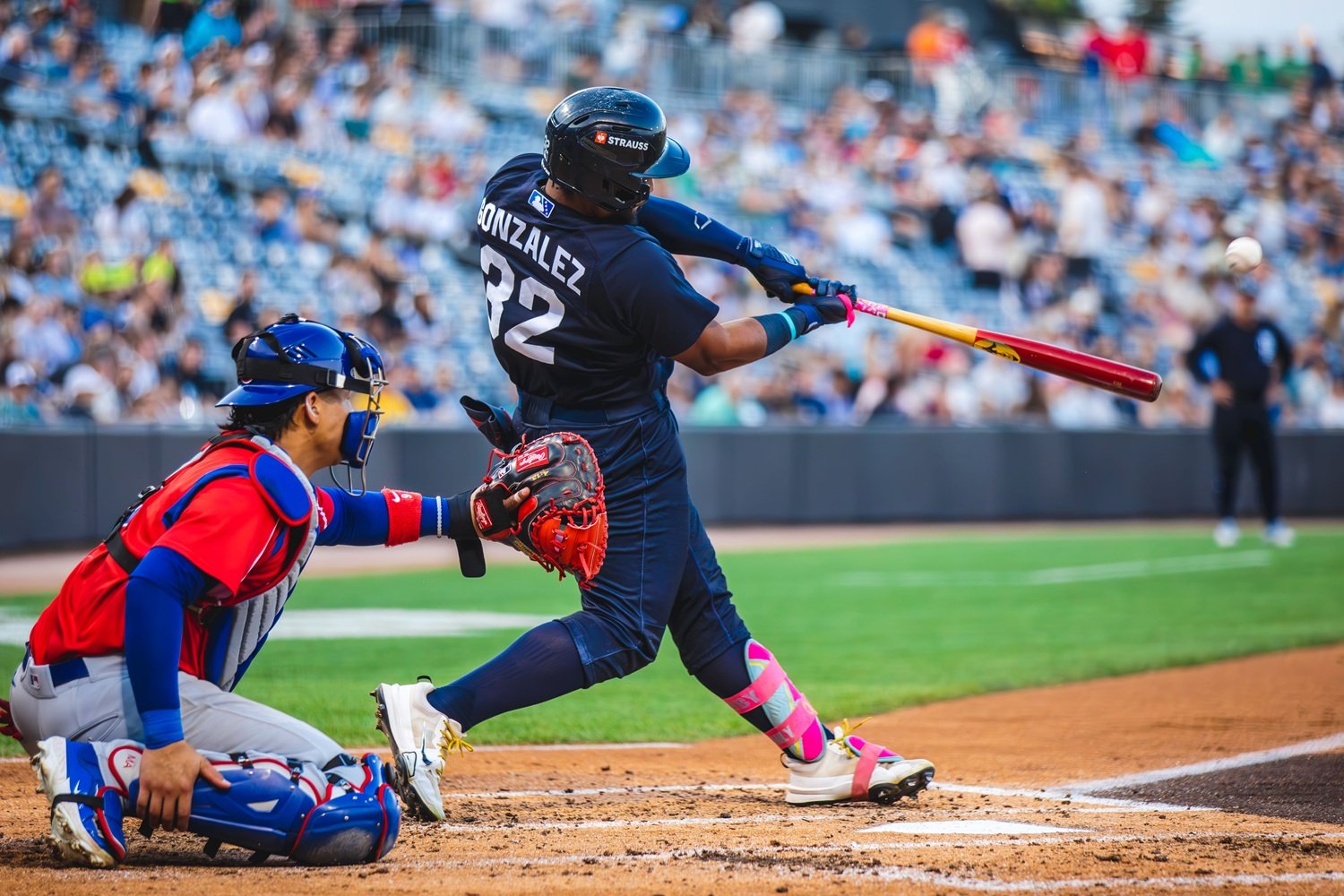 Since the calendar turned to August, wins have been hard to find for the Cedar Rapids Kernels and Fort Myers Mighty Mussels. Gabriel Gonzalez had a walkoff for the Saints on Saturday night. On Sunday at Target Field, the Twins topped the Royals in 11 innings when Luke Keaschall walked it off with an opposite field home run. TRANSACTIONS OF Misael Urbina was activated from the IL by Cedar Rapids. SAINTS SENTINEL St. Paul 3, Iowa 2 Box Score Clutch hits from Gabriel Gonzalez and James Outman, and strong bullpen work sealed the Saints win. Through three innings, there was no score. Jordan Wicks started for the I-Cubs, and Mick Abel threw for the Saints. Abel was not as sharp as he was in his Saints debut last weekend when he tossed five scoreless innings. He had to work in this one. However, he still limited damage. In his 4 1/3 innings, he gave up just one run on four hits and four walks. He had five strikeouts. As you would expect, he needed to throw a lot of pitches. He threw 83 pitches, and just 47 were strikes. The run he gave up in the fourth inning came on a wild pitch. The Saints got on the board and took the lead in the bottom of the fifth inning. Gabriel Gonzalez led off the inning by crushing his first Triple-A home run. DaShawn Keirsey Jr followed with a well-placed bunt single down the third base line. A throwing error by the pitcher sent the ball down the right field line allowing Kiersey to reach third base. Aaron Sabato hit a high fly ball to the warning track in left field. Keirsey scored easily. Aaron Rozek entered the game with one out and a runner on first base. He got two fielders choice ground balls to end that inning. Jonathan Long led off the top of the sixth inning with his 17th home run of the year to tie the game at 2-2. The southpaw went three innings and gave up just one run on three hits. In the bottom of the sixth, Kyler Fedko singled to left field and then stole second. James Outman drove him in with a double to give the Saints a 3-2 lead, one they held onto the rest of the game. Trent Davis came on with one out in the eighth inning. He got the next five outs, one on a strikeout, to earn his first save. Keirsey Jr went 2-for-3. Outman’s double was his second since joining the Saints. WIND SURGE WISDOM Wichita 3, NW Arkansas 11 Box Score Surge fall despite early offense from Cossetti and Jenkins as the Naturals pulled away in the middle innings. The Wind Surge were able to face a rehabbing big leaguer on Sunday afternoon. Royals starter Michael Lorenzen tossed 5 2/3 innings. The Wind Surge actually did alright against him. In the second inning, Rubel Cespedes scored on an Andrew Cossetti double to the wall. Walker Jenkins led off the third inning with a single to center. He went to second on a wild pitch. Lorenzen tried to pick him off at second but threw it into center. Jenkins raced all the way home to score. Later in the inning, Nate Baez, Cespedes and Cossetti hit back-to-back singles which tied the game at 3-3. However, NW Arkansas scored three runs in the third, fourth, and fifth innings, plus single runs in the sixth and seventh innings. Sam Armstrong started and was charged with six runs on five hits over four innings. He also hit three batters. Jacob Wosinski gave up three runs on two hits and two walks in the fifth inning. Jaylen Nowlin pitched the sixth inning and gave up one run on three walks and one hit. Next up was Kyle Bischoff who gave up one run on two hits and a walk in the seventh inning. Kade Bragg and Gabriel Yanez each threw a scoreless inning in relief. Andrew Cossetti went 2-for-3 with a walk, his 12th double, and two RBI. Walker Jenkins was 2-for-5. Rubel Cespedes was 2-for-3 with a walk. KERNELS NUGGETS Cedar Rapids 2, West Michigan 4 Box Score Despite homers from Winokur and Houghton, Kernels Swept in West Michigan. It was a series that the Kernels will want to just forget. Not only did the Kernels lose all six games of the series, they were outscored 49-12. They have lost eight of nine games since the calendar turned to August. Maybe a little home cooking will help. The Kernels will be hosting Quad Cities in a seven-game series. They will be playing a doubleheader on Wednesday afternoon, making up for a rain out a month ago. Sunday’s game was competitive. However, West Michigan manufactured two runs in the bottom of the eighth and held on in the ninth to complete the sweep. Needing pitchers to eat some innings, the Kernels couldn’t have asked for much more from their first two arms. Jacob Kisting started and gave up just one hit over the first three innings. He had three strikeouts. He was efficient and used just 33 pitches. Matt Gabbert came on and gave up two runs on three hits over four innings. He walked none and struck out three. Again, he was very efficient, needing just 38 innings to complete four innings. Unfortunately, a two-run Brett Callahan homer in the fifth inning proved big in a low-scoring game. The Kernels actually took the first lead. In the top of the fifth inning, Maddux Houghton hit his third Kernels home run to make it 1-0. The Whitecaps went ahead in the bottom of the inning on the Callahan homer. However, in the top of the sixth inning, Brandon Winokur crushed a solo home run to tie the game at 2-2. Lefty Brennan Oxford entered the game to start the bottom of the eighth. He gave up a single and a walk to start the inning. Seth Stephenson laid down a perfect sacrifice bunt, and it paid off when Jack Penney singled to drive in both runs and give the Whitecaps a 4-2 lead. The Kernels managed just five hits. No singles. Brandon Winokur led the way. He went 2-for-4 and hit his 19th double and 15th home run. Maddux Houghton hit his third Kernels homer. Jefferson Valladares hit his first double with the Kernels. Misael Urbina returned from the IL and knocked his 12th double. MUSSEL MATTERS Fort Myers, Clearwater (Canceled) With the second half reaching the final four or five weeks of the season, it becomes much more difficult to make up games. Therefore, a Sunday afternoon rain out is going to mean a cancellation rather than a postponement. The Mussels lost all five games to Clearwater this week, and they have lost six in a row. PLAYERS OF THE DAY Hitter of the Day Brandon Winokur (Cedar Rapids): 2-for-4, 2B(19), HR(15), R, RBI Pitcher of the Day Jacob Kisting (Cedar Rapids): 3 IP, 1 H, 0 R, 0 BB, 3 K, 33 pitches, 21 strikes (63.6%) PROSPECT SUMMARY Check out the Prospect Tracker for much more on our Twins Top 20 prospects after seeing how they did today. #1– Walker Jenkins (Wichita) - 2-for-5, R (played CF) #2 - Luke Keaschall (Minnesota) - 3-for-5, 2B(6), GW-`HR(2), R, 2 RBI (played 2B) #5 - Eduardo Tait (Cedar Rapids) - 0-for-4, K (catcher) #7 - Dasan Hill (Fort Myers) - 3 2/3 IP, 3 H, 2 R, 1 ER, 2 BB, 3 K, 65 pitches, 41 strikes (63.1%) #8 - Mick Abel (St. Paul) - 4 1/3 IP, 4 H, 1 R,4 BB, 5 K, 83 pitches, 47 strikes (56.6%) #11 - Gabriel Gonzalez (St. Paul) - 1-for-2, BB, HR(1), R, RBI (played RF) #14 - Brandon Winokur (Cedar Rapids) - 2-for-4, 2B(19), HR(15), R, RBI (played 3B) #20 - Hendry Mendez (Wichita) - 0-for-3, K (played LF) UPCOMING SCHEDULE Monday: Minnesota @ NY Yankees (6:05 PM CT) - RHP Zebby Matthews (3-3, 5.17 ERA) DSL Twins @ DSL Phillies (10:00 AM CT) - TBD (Monday) Tuesday: St. Paul @ Omaha (6:35 PM CT) - TBD Wichita @ Springfield (7:05 PM CT) - TBD Quad Cities @ Cedar Rapids (6:35 PM CT) - TBD Fort Myers @ Daytona (5:35 PM CT) - TBD CURRENT W-L Records Minnesota Twins: 56-61 St. Paul Saints: 51-61 Wichita Wind Surge: 57-51 Cedar Rapids Kernels: 59-48 Fort Myers Mighty Mussels: 45-60 FCL Twins: 39-20 (finished 2nd in FCL playoffs) DSL Twins: 20-28 Please feel free to ask questions about the teams, the rosters, and discuss today’s games, or anything else Twins minor-league related!
- 40 comments
-
- 4
-
-
- luke keaschall
- dashawn keirsey jr
- (and 8 more)
-
Image courtesy of Ed Bailey, Wichita Wind Surge (Ryan Gallagher) A walk off on Joe Mauer Night in St. Paul. Three hits for the prospect with the Mauer-esque swing. The return of a top pitching prospect. A two-homer game in Wichita. A four-walk game. A six RBI game. So many interesting things happened throughout the Twins minor league system. And check out what 2025 second-round draft pick Quentin Young did in his first at-bat in the Bridge League yesterday. TRANSACTIONS The Twins placed outfielder Matt Wallner on the paternity list. His wife Sydnie gave birth to the couple’s first child early on Saturday morning. Carson McCusker was called up from St. Paul to take that roster spot. RHP Andrew Morris was activated from the IL by St. Paul. He made his first appearance since June 19. Ricardo Olivar was placed on the 7-Day injured list for Wichita. RHP Kyle Bischoff was sent from the Saints to Wichita. IF Yilber Herrera was assigned to the Mighty Mussels from the FCL. Cedar Rapids placed RHP Eston Stull on the seven-day IL. LHP Wilker Reyes was also released from the Kernels roster. SAINTS SENTINEL St. Paul 5, Iowa 4 Box Score Mauer Magic and Ninth-Inning Heroics: Saints Walk Off in Style The game was delayed by a few minutes due to the Saints pre-game ceremony to celebrate Joe Mauer. There were bobbleheads handed out to fans ordering special tickets. Andrew Morris’s return was successful by most any account. In the first inning, he issued a one-out walk to Cubs top prospect Owen Caissie. He responded by getting his second strikeout of the inning, and Noah Cardenas threw him out trying to steal second to end the inning. In the second, he got a ground ball to shortstop. He then struck out Kevin Alcantara. The next batter ripped a groundball to the mound at 100 mph, but Morris fielded his position well and calmly threw to first for the out. Cory Lewis entered the game to start the third inning. Morris tossed two scoreless innings. He gave up no hits. He walked one and had three strikeouts. 21 of his 31 pitches were strikes. Lewis gave up two hits and four walks over his four innings. He gave up three runs, all on a home run by Alcantar. Darren McCaughan gave up one run on three hits over two innings. He gave up a solo homer to Owen Caissie. Noah Davis walked one but worked a scoreless ninth inning The Saints bats were pretty quiet until the final third of the game. They cut their deficit to 3-1 in the bottom of the seventh. DaShawn Keirsey scored on an Aaron Sabato double. In the bottom of the eighth, James Outman scored on a triple by Keirsey to make it a 4-2 game. That’s where the score remained for the bottom of the ninth. Gavin Hollowell came in for the Cubs. Jose Miranda led off with a walk. He went to third on a double by Anthony Prato. After a strikeout, Payton Eeles hit a high chopper toward second base. Miranda came in to score, and Eeles beat the throw to first base by a half-step. He stole second netase, and the throw went into center field which allowed Prato to score the tying run. After the second out, Outman was walked intentionally. He went to second on defensive indifference. That brought Gabriel Gonzalez to the plate. On an 0-1 pitch, Gonzalez launched a liner to dead center at just over 100 mph, well beyond the reach of the fielder. Eeles scored and the Saints were jubilant! Seven Saints batters had one hit. Prato hit his seventh double and walked twice. He also stole his 16th base. Miranda walked twice. WIND SURGE WISDOM Wichita 6, NW Arkansas 3 Box Score Rucker's Power Surge and Gallagher's Gem Lead Wichita to Victory Ironically (or coincidentally), it was Carson McCusker bobblehead night in Wichita. In his first start with the Twins organization and with the Wind Surge, Ryan Gallagher gave up six runs on seven hits over five innings. It was just his third Double-A start having recently been promoted by the Cubs to their Double-A affiliate in Knoxville. Maybe the 22-year-old is a quick learner. On Saturday night, he was fantastic in his first home start in Wichita. Gallagher gave up five hits and hit one batter, but he tossed five scoreless innings. He walked none and had seven strikeouts. He was also blessed with some run support in this game. In the third inning, Walker Jenkins got things going with a one-out double. Kala’i Rosario followed with a walk. Next up was Hendry Mendez, and he hit a single to drive in Jenkins with the game’s first run. Nate Baez drove in Rosario with a sacrifice fly. The Wind Surge added on in the fourth inning. Ben Ross led off with a single. He scored on Jake Rucker’s fourth homer of the season. Jorel Ortega followed with a walk and stole second. He went to third on a groundout by Kaelen Culpepper. Jenkins singled to right to make it 5-0. Jake Rucker led off the sixth inning with his second homer of the game, his fifth of the season, to put the Wind Surge up 6-0. Logan Whitaker came in to replace Gallagher for Wichita. He pitched a scoreless sixth inning. He recorded two outs in the seventh but gave up two runs before Mike Paredes got the final out and ended the threat. Paredes got the final seven outs of the game, three on strikeouts. Rucker was 2-for-4 with two home runs and three RBI. Ben Ross went 2-for-3 with a walk. Walker Jenkins went 3-for-4 with a walk, and his ninth and 10th doubles. Kala’i Rosario went 0-for-1 with three walks. KERNELS NUGGETS Cedar Rapids 4, West Michigan 5 (10 innings) Box Score Kernels Explode in Fifth but Fall in Extras The Kernels lost 13-2 on Friday night, but they did a nice job of flushing that one and showing up ready to play. They played a good game, but they were unable to get that one more run. When the game went to extra innings, the Kernels were walked off. Cedar Rapids scored all four of their runs in the top of the fifth inning. Poncho Ruiz led off with a walk. He went to third on a Kyle Hess single. Hess stole second, and Jefferson Valladares walked to load the bases. With one out, Caden Kendle singled to drive in two runs. Eduardo Tait singled and drove in two more. Lefty Garrett Horn made his first start in the Twins organization, his first appearance since July 25th. The 22-year-old gave up four runs (3 earned) on four hits and four walks in 3 2/3 innings. He struck out two batters. Xander Hamilton struck out two over the next 1 1/3 innings. Samuel Perez struck out three batters in 2 2/3 scoreless innings. Ruddy Gomez got out of the ninth inning unscathed. However, he gave up the winning run in the 10th. He got five total outs, four on strikeouts. Caden Kendle went 3-for-5 with two RBI. He also stole his 12th base of the season. Maddux Houghton was 2-for-5 with his third double. MUSSEL MATTERS Fort Myers 4, Clearwater 7 Box Score Mercedes Sparks Rally, Stevens Debuts Strong in Mussels Loss It can sometimes take a lot of arms to get through nine innings, and on Saturday, that’s what the Mussels had to do. Lefty Dasan Hill started and gave up two runs (1 earned) on three hits and two walks. He had three strikeouts. Jakob Hall came in and got the final out of the fourth inning without any further damage. Kyle Jones came on for his second rehab appearance, and it didn’t go well, though he didn’t pitch all that poorly. His line was three runs in just two-thirds of an inning. However, having watched the inning, there were three errors on ground balls. And frankly, one of the two hits Jones allowed could have very easily been deemed an error too. Brent Francisco came in and got the final out of the fifth inning and worked a scoreless sixth inning. Next up was Jonathan Stevens, the Twins 16th round draft pick last month. He became the first pitcher from the 2025 Twins draft class to get into game action. Of course, the other pitchers drafted all pitched a lot of innings in college this year. Stevens did not. But he threw, and impressed, in the Cape Cod League and the Twins took a shot. He struck out two batters over two scoreless innings. He gave up two hits and walked one batter. Julio Bonilla pitched the ninth and gave up two runs on four hits and a walk. Down 5-0 going to the bottom of the fifth, the Mussels mounted a comeback attempt. Ian Daugherty started things with a walk. He went to second when Dameury Pena walked. That brought Yasser Mercedes to the plate, and he launched a long home run to the berm in left field. His ninth home run cut the deficit to 5-3. With one out in the bottom of the seventh, JP Smith hit his second Mussels home run. Fort Myers was down 5-4. That was as close as it got. Smith went 2-for-3 with a walk and is batting .400 with a 1.171 OPS. Yasser Mercedes was 2-for-5. Along with his ninth home run, he stole his 32nd base of the season. Enrique Jimenez went 1-for-3 with a walk. DOMINICAN DAILIES DSL Twins 13, DSL Rangers 5 Box Score Almanzar Drives in Six as DSL Twins Run (and Walk) Wild We’ll just start with this. The Twins scored their 13 runs on eight hits and 13 walks. Thirteen! Just four Twins hitters recorded a hit while five of them had at least one walk. The Twins scored once in the first inning and were shut out in the second and third innings. They added runs in the final five innings they batted, totaling another 12 runs. Darwin Almanzar went 3-for-5 with two doubles and six RBI. Jamesson Val was 3-for-3 with a sacrifice fly and his third home run of the season. Now let’s get to the 13 walks. Santiago Leon went 0-for-1 but walked four times. Yovanny Duran was 1-for-2 with three walks. Joyner Perez was 0-for-2 but walked three times. Jhomnardo Reyes walked twice. Duran, Leon and Reyes each scored three times while Perez and Val scored twice. Duran stole three bases in the game to give him 27 on the season. The team had seven total steals. Geremy Villoria, who turns 17 next week, started and gave up two runs on five hits over three innings. He had two strikeouts. Brandy Ceballos worked the fourth inning and gave up three runs on two hits and two walks. Rainer Marin came on and struck out five batters over three scoreless innings. He allowed five hits and a walk. Jensi Infante threw two scoreless innings despite giving up a hit and two walks. PLAYERS OF THE DAY Hitter of the Day Danny Almanzar (DSL Twins): 3-for-5, 2-2B(16), 6 RBI Caden Kendle (Cedar Rapids): 3-for-5, R, 2 RBI, SB(12) Jake Rucker (Wichita): 2-for-4, 2 HR(5), 2 R, 3 RBI. Walker Jenkins (Wichita): 3-for-4, BB, 2-2B(10), R, RBI Pitcher of the Day Ryan Gallagher (Wichita): 5 IP, 5 H, 0 R, 0 BB, 1 HBP, 7 K, 92 pitches, 59 strikes (64.1%) PROSPECT SUMMARY Check out the Prospect Tracker for much more on our Twins Top 20 prospects after seeing how they did today. #1– Walker Jenkins (Wichita) - 3-for-4, BB, 2-2B(10), R, RBI (played RF) #2 - Luke Keaschall (Minnesota) - 1-for-4, (played 2B) #3 - Kaelen Culpepper (Wichita) - 0-for-5, K (played SS) #5 - Eduardo Tait (Cedar Rapids) - 1-for-5, 2 RBI, 2 K (DHd) #7 - Dasan Hill (Fort Myers) - 3 2/3 IP, 3 H, 2 R, 1 ER, 2 BB, 3 K, 65 pitches, 41 strikes (63.1%) #11 - Gabriel Gonzalez (St. Paul) - 1-for-4, BB, GW RBI, K #14 - Brandon Winokur (Cedar Rapids) - 1-for-5, K (played 3B) #15 - Andrew Morris (St. Paul) - 2 IP, 0 H, 0 R, 1 BB, 3 K, 31 pitches, 21 strikes (67.7%) #17 - Kyle DeBarge (Cedar Rapids) - 0-for-5, 3 K #20 - Hendry Mendez (Wichita) - 1-for-4, RBI (played LF) SUNDAY PITCHING PROBABLES Kansas City @ Minnesota (12:05 PM CT) - Bullpen Game on Roku Iowa @ St. Paul (2:07 PM CT) - RHP Mick Abel (7-2, 2.16 ERA) NW Arkansas @ Wichita (1:05 PM CT) - RHP Sam Armstrong (0-0, 7.20 ERA) Cedar Rapids @ West Michigan (1:00 PM CT) - RHP Jacob Kisting (1-3, 2.11 ERA) Clearwater @ Fort Myers (11:05 AM CT) - RHP Joel Garcia (first Mussels start) CURRENT W-L Records Minnesota Twins: 55-61 St. Paul Saints: 50-61 Wichita Wind Surge: 57-50 Cedar Rapids Kernels: 59-47 Fort Myers Mighty Mussels: 45-60 FCL Twins: 39-20 (finished 2nd in FCL playoffs) DSL Twins: 20-28 Please feel free to ask questions about the teams, the rosters, and discuss today’s games, or anything else Twins minor-league related! View full article
- 12 replies
-
- 1
-
-
- gabriel gonzalez
- andrew morris
- (and 8 more)
-
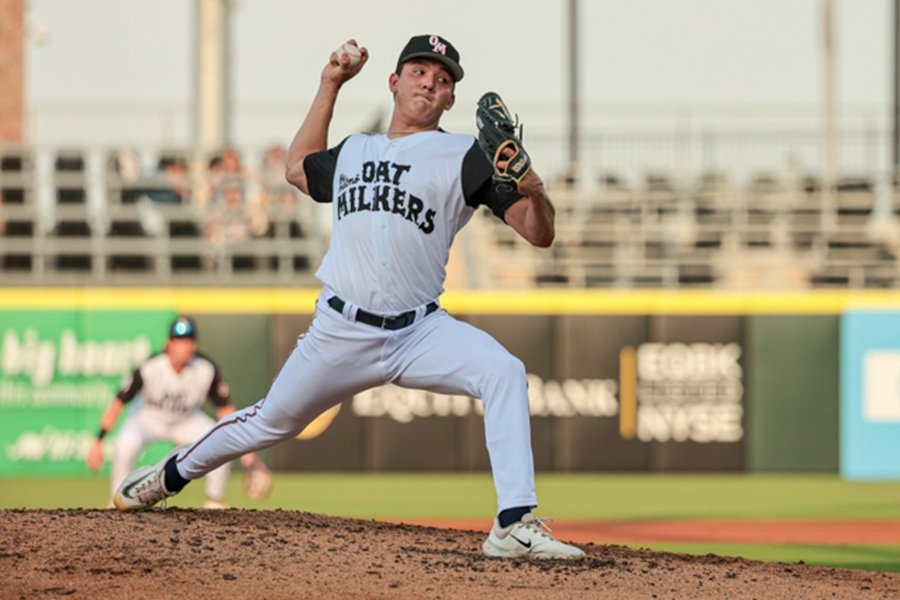 A walk off on Joe Mauer Night in St. Paul. Three hits for the prospect with the Mauer-esque swing. The return of a top pitching prospect. A two-homer game in Wichita. A four-walk game. A six RBI game. So many interesting things happened throughout the Twins minor league system. And check out what 2025 second-round draft pick Quentin Young did in his first at-bat in the Bridge League yesterday. TRANSACTIONS The Twins placed outfielder Matt Wallner on the paternity list. His wife Sydnie gave birth to the couple’s first child early on Saturday morning. Carson McCusker was called up from St. Paul to take that roster spot. RHP Andrew Morris was activated from the IL by St. Paul. He made his first appearance since June 19. Ricardo Olivar was placed on the 7-Day injured list for Wichita. RHP Kyle Bischoff was sent from the Saints to Wichita. IF Yilber Herrera was assigned to the Mighty Mussels from the FCL. Cedar Rapids placed RHP Eston Stull on the seven-day IL. LHP Wilker Reyes was also released from the Kernels roster. SAINTS SENTINEL St. Paul 5, Iowa 4 Box Score Mauer Magic and Ninth-Inning Heroics: Saints Walk Off in Style The game was delayed by a few minutes due to the Saints pre-game ceremony to celebrate Joe Mauer. There were bobbleheads handed out to fans ordering special tickets. Andrew Morris’s return was successful by most any account. In the first inning, he issued a one-out walk to Cubs top prospect Owen Caissie. He responded by getting his second strikeout of the inning, and Noah Cardenas threw him out trying to steal second to end the inning. In the second, he got a ground ball to shortstop. He then struck out Kevin Alcantara. The next batter ripped a groundball to the mound at 100 mph, but Morris fielded his position well and calmly threw to first for the out. Cory Lewis entered the game to start the third inning. Morris tossed two scoreless innings. He gave up no hits. He walked one and had three strikeouts. 21 of his 31 pitches were strikes. Lewis gave up two hits and four walks over his four innings. He gave up three runs, all on a home run by Alcantar. Darren McCaughan gave up one run on three hits over two innings. He gave up a solo homer to Owen Caissie. Noah Davis walked one but worked a scoreless ninth inning The Saints bats were pretty quiet until the final third of the game. They cut their deficit to 3-1 in the bottom of the seventh. DaShawn Keirsey scored on an Aaron Sabato double. In the bottom of the eighth, James Outman scored on a triple by Keirsey to make it a 4-2 game. That’s where the score remained for the bottom of the ninth. Gavin Hollowell came in for the Cubs. Jose Miranda led off with a walk. He went to third on a double by Anthony Prato. After a strikeout, Payton Eeles hit a high chopper toward second base. Miranda came in to score, and Eeles beat the throw to first base by a half-step. He stole second netase, and the throw went into center field which allowed Prato to score the tying run. After the second out, Outman was walked intentionally. He went to second on defensive indifference. That brought Gabriel Gonzalez to the plate. On an 0-1 pitch, Gonzalez launched a liner to dead center at just over 100 mph, well beyond the reach of the fielder. Eeles scored and the Saints were jubilant! Seven Saints batters had one hit. Prato hit his seventh double and walked twice. He also stole his 16th base. Miranda walked twice. WIND SURGE WISDOM Wichita 6, NW Arkansas 3 Box Score Rucker's Power Surge and Gallagher's Gem Lead Wichita to Victory Ironically (or coincidentally), it was Carson McCusker bobblehead night in Wichita. In his first start with the Twins organization and with the Wind Surge, Ryan Gallagher gave up six runs on seven hits over five innings. It was just his third Double-A start having recently been promoted by the Cubs to their Double-A affiliate in Knoxville. Maybe the 22-year-old is a quick learner. On Saturday night, he was fantastic in his first home start in Wichita. Gallagher gave up five hits and hit one batter, but he tossed five scoreless innings. He walked none and had seven strikeouts. He was also blessed with some run support in this game. In the third inning, Walker Jenkins got things going with a one-out double. Kala’i Rosario followed with a walk. Next up was Hendry Mendez, and he hit a single to drive in Jenkins with the game’s first run. Nate Baez drove in Rosario with a sacrifice fly. The Wind Surge added on in the fourth inning. Ben Ross led off with a single. He scored on Jake Rucker’s fourth homer of the season. Jorel Ortega followed with a walk and stole second. He went to third on a groundout by Kaelen Culpepper. Jenkins singled to right to make it 5-0. Jake Rucker led off the sixth inning with his second homer of the game, his fifth of the season, to put the Wind Surge up 6-0. Logan Whitaker came in to replace Gallagher for Wichita. He pitched a scoreless sixth inning. He recorded two outs in the seventh but gave up two runs before Mike Paredes got the final out and ended the threat. Paredes got the final seven outs of the game, three on strikeouts. Rucker was 2-for-4 with two home runs and three RBI. Ben Ross went 2-for-3 with a walk. Walker Jenkins went 3-for-4 with a walk, and his ninth and 10th doubles. Kala’i Rosario went 0-for-1 with three walks. KERNELS NUGGETS Cedar Rapids 4, West Michigan 5 (10 innings) Box Score Kernels Explode in Fifth but Fall in Extras The Kernels lost 13-2 on Friday night, but they did a nice job of flushing that one and showing up ready to play. They played a good game, but they were unable to get that one more run. When the game went to extra innings, the Kernels were walked off. Cedar Rapids scored all four of their runs in the top of the fifth inning. Poncho Ruiz led off with a walk. He went to third on a Kyle Hess single. Hess stole second, and Jefferson Valladares walked to load the bases. With one out, Caden Kendle singled to drive in two runs. Eduardo Tait singled and drove in two more. Lefty Garrett Horn made his first start in the Twins organization, his first appearance since July 25th. The 22-year-old gave up four runs (3 earned) on four hits and four walks in 3 2/3 innings. He struck out two batters. Xander Hamilton struck out two over the next 1 1/3 innings. Samuel Perez struck out three batters in 2 2/3 scoreless innings. Ruddy Gomez got out of the ninth inning unscathed. However, he gave up the winning run in the 10th. He got five total outs, four on strikeouts. Caden Kendle went 3-for-5 with two RBI. He also stole his 12th base of the season. Maddux Houghton was 2-for-5 with his third double. MUSSEL MATTERS Fort Myers 4, Clearwater 7 Box Score Mercedes Sparks Rally, Stevens Debuts Strong in Mussels Loss It can sometimes take a lot of arms to get through nine innings, and on Saturday, that’s what the Mussels had to do. Lefty Dasan Hill started and gave up two runs (1 earned) on three hits and two walks. He had three strikeouts. Jakob Hall came in and got the final out of the fourth inning without any further damage. Kyle Jones came on for his second rehab appearance, and it didn’t go well, though he didn’t pitch all that poorly. His line was three runs in just two-thirds of an inning. However, having watched the inning, there were three errors on ground balls. And frankly, one of the two hits Jones allowed could have very easily been deemed an error too. Brent Francisco came in and got the final out of the fifth inning and worked a scoreless sixth inning. Next up was Jonathan Stevens, the Twins 16th round draft pick last month. He became the first pitcher from the 2025 Twins draft class to get into game action. Of course, the other pitchers drafted all pitched a lot of innings in college this year. Stevens did not. But he threw, and impressed, in the Cape Cod League and the Twins took a shot. He struck out two batters over two scoreless innings. He gave up two hits and walked one batter. Julio Bonilla pitched the ninth and gave up two runs on four hits and a walk. Down 5-0 going to the bottom of the fifth, the Mussels mounted a comeback attempt. Ian Daugherty started things with a walk. He went to second when Dameury Pena walked. That brought Yasser Mercedes to the plate, and he launched a long home run to the berm in left field. His ninth home run cut the deficit to 5-3. With one out in the bottom of the seventh, JP Smith hit his second Mussels home run. Fort Myers was down 5-4. That was as close as it got. Smith went 2-for-3 with a walk and is batting .400 with a 1.171 OPS. Yasser Mercedes was 2-for-5. Along with his ninth home run, he stole his 32nd base of the season. Enrique Jimenez went 1-for-3 with a walk. DOMINICAN DAILIES DSL Twins 13, DSL Rangers 5 Box Score Almanzar Drives in Six as DSL Twins Run (and Walk) Wild We’ll just start with this. The Twins scored their 13 runs on eight hits and 13 walks. Thirteen! Just four Twins hitters recorded a hit while five of them had at least one walk. The Twins scored once in the first inning and were shut out in the second and third innings. They added runs in the final five innings they batted, totaling another 12 runs. Darwin Almanzar went 3-for-5 with two doubles and six RBI. Jamesson Val was 3-for-3 with a sacrifice fly and his third home run of the season. Now let’s get to the 13 walks. Santiago Leon went 0-for-1 but walked four times. Yovanny Duran was 1-for-2 with three walks. Joyner Perez was 0-for-2 but walked three times. Jhomnardo Reyes walked twice. Duran, Leon and Reyes each scored three times while Perez and Val scored twice. Duran stole three bases in the game to give him 27 on the season. The team had seven total steals. Geremy Villoria, who turns 17 next week, started and gave up two runs on five hits over three innings. He had two strikeouts. Brandy Ceballos worked the fourth inning and gave up three runs on two hits and two walks. Rainer Marin came on and struck out five batters over three scoreless innings. He allowed five hits and a walk. Jensi Infante threw two scoreless innings despite giving up a hit and two walks. PLAYERS OF THE DAY Hitter of the Day Danny Almanzar (DSL Twins): 3-for-5, 2-2B(16), 6 RBI Caden Kendle (Cedar Rapids): 3-for-5, R, 2 RBI, SB(12) Jake Rucker (Wichita): 2-for-4, 2 HR(5), 2 R, 3 RBI. Walker Jenkins (Wichita): 3-for-4, BB, 2-2B(10), R, RBI Pitcher of the Day Ryan Gallagher (Wichita): 5 IP, 5 H, 0 R, 0 BB, 1 HBP, 7 K, 92 pitches, 59 strikes (64.1%) PROSPECT SUMMARY Check out the Prospect Tracker for much more on our Twins Top 20 prospects after seeing how they did today. #1– Walker Jenkins (Wichita) - 3-for-4, BB, 2-2B(10), R, RBI (played RF) #2 - Luke Keaschall (Minnesota) - 1-for-4, (played 2B) #3 - Kaelen Culpepper (Wichita) - 0-for-5, K (played SS) #5 - Eduardo Tait (Cedar Rapids) - 1-for-5, 2 RBI, 2 K (DHd) #7 - Dasan Hill (Fort Myers) - 3 2/3 IP, 3 H, 2 R, 1 ER, 2 BB, 3 K, 65 pitches, 41 strikes (63.1%) #11 - Gabriel Gonzalez (St. Paul) - 1-for-4, BB, GW RBI, K #14 - Brandon Winokur (Cedar Rapids) - 1-for-5, K (played 3B) #15 - Andrew Morris (St. Paul) - 2 IP, 0 H, 0 R, 1 BB, 3 K, 31 pitches, 21 strikes (67.7%) #17 - Kyle DeBarge (Cedar Rapids) - 0-for-5, 3 K #20 - Hendry Mendez (Wichita) - 1-for-4, RBI (played LF) SUNDAY PITCHING PROBABLES Kansas City @ Minnesota (12:05 PM CT) - Bullpen Game on Roku Iowa @ St. Paul (2:07 PM CT) - RHP Mick Abel (7-2, 2.16 ERA) NW Arkansas @ Wichita (1:05 PM CT) - RHP Sam Armstrong (0-0, 7.20 ERA) Cedar Rapids @ West Michigan (1:00 PM CT) - RHP Jacob Kisting (1-3, 2.11 ERA) Clearwater @ Fort Myers (11:05 AM CT) - RHP Joel Garcia (first Mussels start) CURRENT W-L Records Minnesota Twins: 55-61 St. Paul Saints: 50-61 Wichita Wind Surge: 57-50 Cedar Rapids Kernels: 59-47 Fort Myers Mighty Mussels: 45-60 FCL Twins: 39-20 (finished 2nd in FCL playoffs) DSL Twins: 20-28 Please feel free to ask questions about the teams, the rosters, and discuss today’s games, or anything else Twins minor-league related!
- 12 comments
-
- 5
-
-

-
- gabriel gonzalez
- andrew morris
- (and 8 more)
-
Image courtesy of Rob Thompson (photo of Kyler Fedko) On Friday, the DSL Twins got a nice, late-inning win. That was, by far, the best game in the organization, well, other than the Twins big win over the Royals in their return to Target Field. TRANSACTIONS The Twins placed catcher Christian Vazquez on the Injured List with a shoulder infection. We certainly wish him a successful recovery. Recently claimed Jhonny Pereda was called up from St. Paul. The 29-year-old from Venezuela. He has played in six games with the Saints. His last game played for St. Paul was on Tuesday night. He went 4-for-4 with a walk, a double and a home run. He had three runs and three RBI. The Minnesota Twins signed LHP Jake Murray, an undrafted free agent from the Campbell Camels He made 15 starts for them and went 4-2 with a 6.49 ERA. However, in 59 2/3 innings, he had 34 walks and hit 16 batters, but he also struck out 82 batters. He was assigned to the FCL Twins and will likely pitch in the Bridge League the rest of the summer unless there is a need in Fort Myers. He will turn 25 later this month. RHP Anthony Narvaez was assigned to the FCL Twins from the Mighty Mussels. Jonathan Stevens was assigned to the Mussels. SAINTS SENTINEL St. Paul 5, Iowa 10 Box Score As the game started, the great Joey Chestnut and Notorious BOB began eating the six-foot loaded hot dog at CHS Field, affectionately called the "Land of 10,000 Calories." The two finished it completely in 29 minutes! And if you are going to Saturday's Saints game, you can guarantee a special Joe Mauer bobblehead by purchasing a ticket here. Marco Raya made the start for the Saints. He gave up a single run in the second and third innings and then gave up three runs in the fourth inning. He gave up five (4 earned) on seven hits. He walked three and had two strikeouts. That’s where the pitching situation went a little weird. Lefty Christian MacLeod came in to start the fifth and really struggled with his control and command. He got two outs in the inning and gave up four runs on three walks and two hits. He threw 39 pitches and the team’s deficit reached eight runs. That meant a position player could pitch. But the Saints have a limited number of pitchers available. Anthony Prato came in from second base. MacLeod went out to right field. Gabriel Gonzalez came out of the game. Kyler Fedko was the DH, but he entered the game at first base which moved Jonah Bride to second base. Prato needed just five pitches to get the final out. Of course, it came on a fly out to the right fielder, Christian MacLeod. MacLeod returned to the mound to start the sixth inning. The first batter he faced was Carlos Perez who hit his 21st homer of the season. Kevin Alcantara singled to right field (now occupied by Fedko). However, MacLeod settled in. He got a double play ball and a fly out. The seventh inning started with a walk and a single, but again MacLeod responded. He struck out Cubs top prospect Owen Caissie. Rehabbing catcher Miguel Amaya flew out to left. He then struck out Jonathon Long to end the inning. MacLeod’s final line was five runs on five hits and four walks in 2 2/3 innings. He also went 0-for-1 and watched three pitches right down the middle of the plate. Jarret Whorff came in to pitch the eighth inning and tossed two scoreless innings. In the middle, he took a strike, then fouled off two pitches, took a ball and then flew out to right field. 0-for-1, but a nice effort. The Saints got on the scoreboard in the bottom of the third inning on back-to-back, two-out doubles by James Outman and Kyler Fedko. In the sixth inning, Fedko walked and Payton Eeles was hit by a pitch. After the MacLeod strikeout, DaShawn Keirsey Jr singled to drive in Fedko, and Eeles scored on a fielding error. In the bottom of the eighth inning, Fedko absolutely crushed his first Saints home run. In the bottom of the ninth inning, Jonah Bride led off with a walk and went to third base on a double by Anthony Prato. He scored on a ground out by Will Holland. Fedko’s magical season continues to impress. He went 2-for-3 with a walk, his third double and his first Saints homer. Payton Eeles went 1-for-2 and was hit by a pitch twice. WIND SURGE WISDOM Wichita 5, NW Arkansas 9 Box Score With two outs in the bottom of the first inning, Kala’i Rosario hit his 17th home run of the season. Alejandro Hidalgo put a zero on the board in the first inning. Unfortunately, he gave up five runs on three hits and three walks in the second inning. Michael Martinez walked one, hit one, and had one strikeout in a scoreless inning. Ricky Castro gave up four runs on six hits (including two homers). He had five strikeouts and no walks. Hunter Hoopes struck out four batters over the final two innings. He gave up no runs and one hit. In the bottom of the fourth inning, Rubel Cespedes walked with one out. Ben Ross followed with his ninth home run of the year which cut the deficit to 5-3. Going to the bottom of the seventh, the Wind Surge were down 9-3. Jake Rucker led off with a single and scored on Kaelen Culpepper’s eight Wichita home run. Rosario went 2-for-4 with a walk and the home run. Walker Jenkins went 2-for-4. Hendry Mendez was 1-for-3 and walked twice. KERNELS NUGGETS Cedar Rapids 2, West Michigan 13 Box Score The Kernels led 1-0 after one-half inning thanks to a Brandon Winokur single that drove in Kyle DeBarge. That was the high point of the game for Cedar Rapids. West Michigan took a 3-1 lead in the bottom of the third. They scored two more in the bottom of the fifth inning. And then an eight-run seventh inning for the Whitecaps put the game well out of reach. The Kernels scored a second run in the top of the ninth to cut their deficit to 13-2 when Jefferson Valladares hit his first Kernels homer. The Kernels had 10 hits in the game, but they went 1-for-10 and left 11 runners on base. Kyle DeBarge went 1-for-3 with two walks. He stole his 58th and 59th stolen bases. Maddux Houghton went 2-for-3 with a walk. He also stole two bases. Winokur went 3-for-4 and stole his 22nd base of the season. Jose Olivares started and gave up three runs on three hits. In three innings, he had four walks and struck out three batters. Chase Chaney came in and gave up five runs on five hits over 3 1/3 innings. He walked two and struck out three batters. Ivran Romero came in and gave up five runs on four hits and a walk. He recorded just one out. Matt Mikulski got the final out of the seventh inning, but not before walking three batters. Wilker Reyes struck out two batters in a perfect inning. MUSSEL MATTERS Fort Myers 2, Clearwater 5 Box Score In a way, the Mussels played this game a little short-handed. First-round pick Marek Houston was in Minneapolis. Normally the top draft pick comes to Target Field to sign, but the Twins were out of town and Houston wanted to get started. He signed in Fort Myers, along with the other 2025 draft picks and non-drafted free agents. He has played in six games for Fort Myers. But on Friday night, Houston was brought to the Twin Cities and Target Field to meet front office personnel, players and coaches, take some batting practice with the team, and meet with the media. He spent time in the radio and TV booths as well. While not perfect, this was a really well-pitched game. Through seven innings, the Mussels were down 2-1. A three-run eighth inning for the Threshers provided plenty of run support and Fort Myers wasn’t able to mount a comeback. Lefty Michael Carpenter started for the Mussels and went the first four innings. He gave up two runs (1 earned) on four hits and a walk. He struck out five batters. Eli Jones came on and worked the final five innings. He gave up three runs in the eighth, though just one run was earned. He gave up four hits, walked one and had four strikeouts. The Mussels got on the board with a run in the bottom of the seventh inning. Harry Genth and Dameury Pena started the inning with walks. Then they were successful on a double steal. With one out, JP Smith singled to center to drive in Genth with the first run. Down 5-1 in the bottom of the eighth, Eduardo Beltre led off with a double and then stole third. He scored on a ground out by Bryan Acuna. Acuna had three hits in the game, all singles. JP Smith, the Twins 17th-round pick last month had another three-hit game. He was 3-for-5 and has at least one hit in all five games he has played since going 0-for-4 in his first professional game. He ends the game hitting a robust .370 with two doubles, a triple, and a home run. DOMINICAN DAILIES DSL Twins 7, DSL Mariners 5 Box Score It was a back-and-forth game in the DSL on Friday afternoon. The Twins jumped ahead and didn’t give up the lead. But when the Mariners tied it back up, the Twins showed resolve and jumped back ahead to secure the win. Juan Quinones made the start and tossed three scoreless innings. He gave up two hits, walked two, and had five strikeouts. The Twins grabbed the lead in the bottom of the third. With one out, Teilon Serrano reached on an error. Santiago Leon walked. A double steal with a throwing error allowed the first run to score. After the second out, Joyner Perez singled to drive in Leon with the second run. Yovanny Duran walked. Jose Barrios followed with a single that drove in Perez with the third run. Nestor Cafe came on for the Twins and gave up two runs in the top of the fourth inning. In total, he went two innings and gave up two runs on one hit and two walks. In the bottom of the fifth inning, the Twins got those two runs back. With one out, Duran walked and stole second. Barrios reached on a fielder’s choice and then stole second base. Jamesson Val singled in Duran, and then he stole second while Barrios stole third. He scored on a throwing error to make it 5-2. Aaron Carranza came on to start the sixth inning, but he gave up three runs on two hits and three walks and recorded just two outs. Marlon Mirabal came in and got the final out without further damage, but the score was tied at five. Mirabal, a lefty from Cuba, signed with the Twins in December. He worked the final 3 1/3 innings and didn’t allow a run. He gave up four hits, walked one and had four strikeouts. Still tied in the bottom of the eighth, Jhomnardo Reyes led off with a pinch-hit walk. With one out, Darwin Almanzar reached on a fielding error which allowed Reyes to score the go-ahead run. Perez followed with a double to make it 7-5. Perez had two of the team’s four hits including his fourth double. Santiago Leon, Yovanny Duran and Cristian Bonifacio each had two walks. The team had 10 walks in the game. They also had eight stolen bases with Jamesson Val and Jose Barrios each stealing two bags. PLAYERS OF THE DAY Hitter of the Day Kyler Fedko (St. Paul): 2-for-3, BB, 2B(3), HR(1), 2 R, 2 RBI. Pitcher of the Day Marlon Mirabal (DSL Twins): 3 1/3 IP, 4 H, 0 R, 1 BB, 4 K. PROSPECT SUMMARY Check out the Prospect Tracker for much more on our Twins Top 20 prospects after seeing how they did today. #1– Walker Jenkins (Wichita) - 2-for-4, HBP, K (played DH) #2 - Luke Keaschall (Minnesota) - 2-for-4, 2 RBI (played 2B) #3 - Kaelen Culpepper (Wichita) - 1-for-5, HR(8), R, 2 RBI, 2 K (played SS) #5 - Eduardo Tait (Cedar Rapids) - 1-for-4, 2 K #11 - Gabriel Gonzalez (St. Paul) - 0-for-2 (played RF) #12 - Marco Raya (St. Paul) - 4 IP, 7 H, 5 R, 4 ER, 3 BB, 2 K, 94 pitches, 60 strikes (63.8%) #13 - Marek Houston (Fort Myers) - Traveled to Minnesota, met Twins personnel and Twin Cities media. #14 - Brandon Winokur (Cedar Rapids) - 3-for-4, RBI, SB(22) (played SS) #17 - Kyle DeBarge (Cedar Rapids) - 1-for-3, 2 BB, R, 2 SB(59) #20 - Hendry Mendez (Wichita) - 1-for-3, 2 BB (played LF) SATURDAY PITCHING PROBABLES Iowa @ St. Paul (6:37 PM CT) - TBD NW Arkansas @ Wichita (6:05 PM CT) - RHP Ryan Gallagher (0-0, 10.80 ERA) Cedar Rapids @ West Michigan (6:05 PM CT) - LHP Garrett Horn (1st start in Twins organization) Clearwater @ Fort Myers (5:05 PM CT) - LHP Dasan Hill (0-1, 2.79 ERA) DSL Rangers @ DSL Twins (9:00 AM CT) - TBD CURRENT W-L Records Minnesota Twins: 57-60 St. Paul Saints: 49-61 Wichita Wind Surge: 56-50 Cedar Rapids Kernels: 59-46 Fort Myers Mighty Mussels: 45-59 FCL Twins: 39-20 (finished 2nd in FCL playoffs) DSL Twins: 20-28 Please feel free to ask questions about the teams, the rosters, and discuss today’s games, or anything else Twins minor-league related! View full article
-
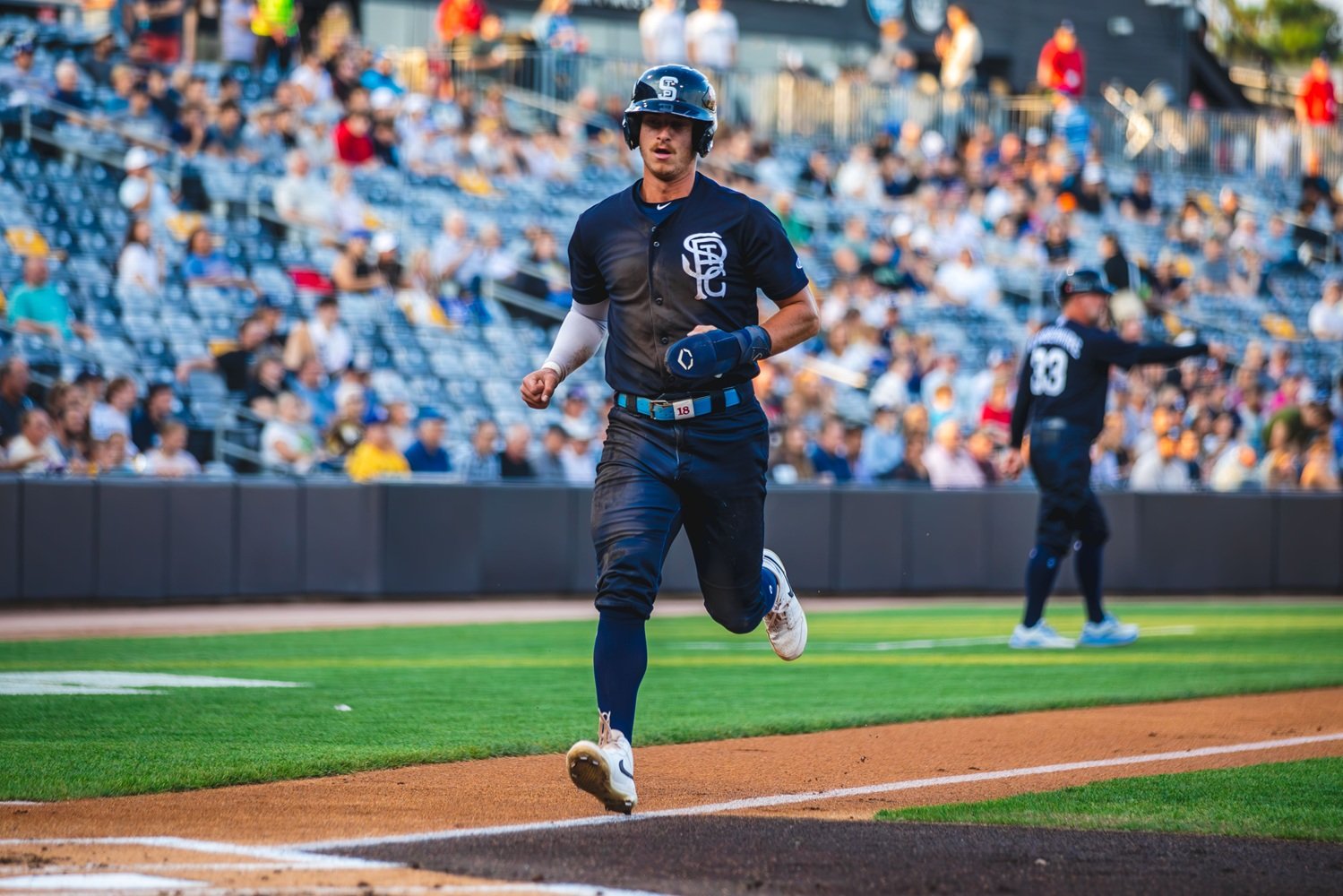 On Friday, the DSL Twins got a nice, late-inning win. That was, by far, the best game in the organization, well, other than the Twins big win over the Royals in their return to Target Field. TRANSACTIONS The Twins placed catcher Christian Vazquez on the Injured List with a shoulder infection. We certainly wish him a successful recovery. Recently claimed Jhonny Pereda was called up from St. Paul. The 29-year-old from Venezuela. He has played in six games with the Saints. His last game played for St. Paul was on Tuesday night. He went 4-for-4 with a walk, a double and a home run. He had three runs and three RBI. The Minnesota Twins signed LHP Jake Murray, an undrafted free agent from the Campbell Camels He made 15 starts for them and went 4-2 with a 6.49 ERA. However, in 59 2/3 innings, he had 34 walks and hit 16 batters, but he also struck out 82 batters. He was assigned to the FCL Twins and will likely pitch in the Bridge League the rest of the summer unless there is a need in Fort Myers. He will turn 25 later this month. RHP Anthony Narvaez was assigned to the FCL Twins from the Mighty Mussels. Jonathan Stevens was assigned to the Mussels. SAINTS SENTINEL St. Paul 5, Iowa 10 Box Score As the game started, the great Joey Chestnut and Notorious BOB began eating the six-foot loaded hot dog at CHS Field, affectionately called the "Land of 10,000 Calories." The two finished it completely in 29 minutes! And if you are going to Saturday's Saints game, you can guarantee a special Joe Mauer bobblehead by purchasing a ticket here. Marco Raya made the start for the Saints. He gave up a single run in the second and third innings and then gave up three runs in the fourth inning. He gave up five (4 earned) on seven hits. He walked three and had two strikeouts. That’s where the pitching situation went a little weird. Lefty Christian MacLeod came in to start the fifth and really struggled with his control and command. He got two outs in the inning and gave up four runs on three walks and two hits. He threw 39 pitches and the team’s deficit reached eight runs. That meant a position player could pitch. But the Saints have a limited number of pitchers available. Anthony Prato came in from second base. MacLeod went out to right field. Gabriel Gonzalez came out of the game. Kyler Fedko was the DH, but he entered the game at first base which moved Jonah Bride to second base. Prato needed just five pitches to get the final out. Of course, it came on a fly out to the right fielder, Christian MacLeod. MacLeod returned to the mound to start the sixth inning. The first batter he faced was Carlos Perez who hit his 21st homer of the season. Kevin Alcantara singled to right field (now occupied by Fedko). However, MacLeod settled in. He got a double play ball and a fly out. The seventh inning started with a walk and a single, but again MacLeod responded. He struck out Cubs top prospect Owen Caissie. Rehabbing catcher Miguel Amaya flew out to left. He then struck out Jonathon Long to end the inning. MacLeod’s final line was five runs on five hits and four walks in 2 2/3 innings. He also went 0-for-1 and watched three pitches right down the middle of the plate. Jarret Whorff came in to pitch the eighth inning and tossed two scoreless innings. In the middle, he took a strike, then fouled off two pitches, took a ball and then flew out to right field. 0-for-1, but a nice effort. The Saints got on the scoreboard in the bottom of the third inning on back-to-back, two-out doubles by James Outman and Kyler Fedko. In the sixth inning, Fedko walked and Payton Eeles was hit by a pitch. After the MacLeod strikeout, DaShawn Keirsey Jr singled to drive in Fedko, and Eeles scored on a fielding error. In the bottom of the eighth inning, Fedko absolutely crushed his first Saints home run. In the bottom of the ninth inning, Jonah Bride led off with a walk and went to third base on a double by Anthony Prato. He scored on a ground out by Will Holland. Fedko’s magical season continues to impress. He went 2-for-3 with a walk, his third double and his first Saints homer. Payton Eeles went 1-for-2 and was hit by a pitch twice. WIND SURGE WISDOM Wichita 5, NW Arkansas 9 Box Score With two outs in the bottom of the first inning, Kala’i Rosario hit his 17th home run of the season. Alejandro Hidalgo put a zero on the board in the first inning. Unfortunately, he gave up five runs on three hits and three walks in the second inning. Michael Martinez walked one, hit one, and had one strikeout in a scoreless inning. Ricky Castro gave up four runs on six hits (including two homers). He had five strikeouts and no walks. Hunter Hoopes struck out four batters over the final two innings. He gave up no runs and one hit. In the bottom of the fourth inning, Rubel Cespedes walked with one out. Ben Ross followed with his ninth home run of the year which cut the deficit to 5-3. Going to the bottom of the seventh, the Wind Surge were down 9-3. Jake Rucker led off with a single and scored on Kaelen Culpepper’s eight Wichita home run. Rosario went 2-for-4 with a walk and the home run. Walker Jenkins went 2-for-4. Hendry Mendez was 1-for-3 and walked twice. KERNELS NUGGETS Cedar Rapids 2, West Michigan 13 Box Score The Kernels led 1-0 after one-half inning thanks to a Brandon Winokur single that drove in Kyle DeBarge. That was the high point of the game for Cedar Rapids. West Michigan took a 3-1 lead in the bottom of the third. They scored two more in the bottom of the fifth inning. And then an eight-run seventh inning for the Whitecaps put the game well out of reach. The Kernels scored a second run in the top of the ninth to cut their deficit to 13-2 when Jefferson Valladares hit his first Kernels homer. The Kernels had 10 hits in the game, but they went 1-for-10 and left 11 runners on base. Kyle DeBarge went 1-for-3 with two walks. He stole his 58th and 59th stolen bases. Maddux Houghton went 2-for-3 with a walk. He also stole two bases. Winokur went 3-for-4 and stole his 22nd base of the season. Jose Olivares started and gave up three runs on three hits. In three innings, he had four walks and struck out three batters. Chase Chaney came in and gave up five runs on five hits over 3 1/3 innings. He walked two and struck out three batters. Ivran Romero came in and gave up five runs on four hits and a walk. He recorded just one out. Matt Mikulski got the final out of the seventh inning, but not before walking three batters. Wilker Reyes struck out two batters in a perfect inning. MUSSEL MATTERS Fort Myers 2, Clearwater 5 Box Score In a way, the Mussels played this game a little short-handed. First-round pick Marek Houston was in Minneapolis. Normally the top draft pick comes to Target Field to sign, but the Twins were out of town and Houston wanted to get started. He signed in Fort Myers, along with the other 2025 draft picks and non-drafted free agents. He has played in six games for Fort Myers. But on Friday night, Houston was brought to the Twin Cities and Target Field to meet front office personnel, players and coaches, take some batting practice with the team, and meet with the media. He spent time in the radio and TV booths as well. While not perfect, this was a really well-pitched game. Through seven innings, the Mussels were down 2-1. A three-run eighth inning for the Threshers provided plenty of run support and Fort Myers wasn’t able to mount a comeback. Lefty Michael Carpenter started for the Mussels and went the first four innings. He gave up two runs (1 earned) on four hits and a walk. He struck out five batters. Eli Jones came on and worked the final five innings. He gave up three runs in the eighth, though just one run was earned. He gave up four hits, walked one and had four strikeouts. The Mussels got on the board with a run in the bottom of the seventh inning. Harry Genth and Dameury Pena started the inning with walks. Then they were successful on a double steal. With one out, JP Smith singled to center to drive in Genth with the first run. Down 5-1 in the bottom of the eighth, Eduardo Beltre led off with a double and then stole third. He scored on a ground out by Bryan Acuna. Acuna had three hits in the game, all singles. JP Smith, the Twins 17th-round pick last month had another three-hit game. He was 3-for-5 and has at least one hit in all five games he has played since going 0-for-4 in his first professional game. He ends the game hitting a robust .370 with two doubles, a triple, and a home run. DOMINICAN DAILIES DSL Twins 7, DSL Mariners 5 Box Score It was a back-and-forth game in the DSL on Friday afternoon. The Twins jumped ahead and didn’t give up the lead. But when the Mariners tied it back up, the Twins showed resolve and jumped back ahead to secure the win. Juan Quinones made the start and tossed three scoreless innings. He gave up two hits, walked two, and had five strikeouts. The Twins grabbed the lead in the bottom of the third. With one out, Teilon Serrano reached on an error. Santiago Leon walked. A double steal with a throwing error allowed the first run to score. After the second out, Joyner Perez singled to drive in Leon with the second run. Yovanny Duran walked. Jose Barrios followed with a single that drove in Perez with the third run. Nestor Cafe came on for the Twins and gave up two runs in the top of the fourth inning. In total, he went two innings and gave up two runs on one hit and two walks. In the bottom of the fifth inning, the Twins got those two runs back. With one out, Duran walked and stole second. Barrios reached on a fielder’s choice and then stole second base. Jamesson Val singled in Duran, and then he stole second while Barrios stole third. He scored on a throwing error to make it 5-2. Aaron Carranza came on to start the sixth inning, but he gave up three runs on two hits and three walks and recorded just two outs. Marlon Mirabal came in and got the final out without further damage, but the score was tied at five. Mirabal, a lefty from Cuba, signed with the Twins in December. He worked the final 3 1/3 innings and didn’t allow a run. He gave up four hits, walked one and had four strikeouts. Still tied in the bottom of the eighth, Jhomnardo Reyes led off with a pinch-hit walk. With one out, Darwin Almanzar reached on a fielding error which allowed Reyes to score the go-ahead run. Perez followed with a double to make it 7-5. Perez had two of the team’s four hits including his fourth double. Santiago Leon, Yovanny Duran and Cristian Bonifacio each had two walks. The team had 10 walks in the game. They also had eight stolen bases with Jamesson Val and Jose Barrios each stealing two bags. PLAYERS OF THE DAY Hitter of the Day Kyler Fedko (St. Paul): 2-for-3, BB, 2B(3), HR(1), 2 R, 2 RBI. Pitcher of the Day Marlon Mirabal (DSL Twins): 3 1/3 IP, 4 H, 0 R, 1 BB, 4 K. PROSPECT SUMMARY Check out the Prospect Tracker for much more on our Twins Top 20 prospects after seeing how they did today. #1– Walker Jenkins (Wichita) - 2-for-4, HBP, K (played DH) #2 - Luke Keaschall (Minnesota) - 2-for-4, 2 RBI (played 2B) #3 - Kaelen Culpepper (Wichita) - 1-for-5, HR(8), R, 2 RBI, 2 K (played SS) #5 - Eduardo Tait (Cedar Rapids) - 1-for-4, 2 K #11 - Gabriel Gonzalez (St. Paul) - 0-for-2 (played RF) #12 - Marco Raya (St. Paul) - 4 IP, 7 H, 5 R, 4 ER, 3 BB, 2 K, 94 pitches, 60 strikes (63.8%) #13 - Marek Houston (Fort Myers) - Traveled to Minnesota, met Twins personnel and Twin Cities media. #14 - Brandon Winokur (Cedar Rapids) - 3-for-4, RBI, SB(22) (played SS) #17 - Kyle DeBarge (Cedar Rapids) - 1-for-3, 2 BB, R, 2 SB(59) #20 - Hendry Mendez (Wichita) - 1-for-3, 2 BB (played LF) SATURDAY PITCHING PROBABLES Iowa @ St. Paul (6:37 PM CT) - TBD NW Arkansas @ Wichita (6:05 PM CT) - RHP Ryan Gallagher (0-0, 10.80 ERA) Cedar Rapids @ West Michigan (6:05 PM CT) - LHP Garrett Horn (1st start in Twins organization) Clearwater @ Fort Myers (5:05 PM CT) - LHP Dasan Hill (0-1, 2.79 ERA) DSL Rangers @ DSL Twins (9:00 AM CT) - TBD CURRENT W-L Records Minnesota Twins: 57-60 St. Paul Saints: 49-61 Wichita Wind Surge: 56-50 Cedar Rapids Kernels: 59-46 Fort Myers Mighty Mussels: 45-59 FCL Twins: 39-20 (finished 2nd in FCL playoffs) DSL Twins: 20-28 Please feel free to ask questions about the teams, the rosters, and discuss today’s games, or anything else Twins minor-league related!
- 17 comments
-
- 6
-
-
-
- kyler fedko
- walker jenkins
- (and 8 more)
-
Image courtesy of © Isaiah J. Downing-Imagn Images Talk to a baseball fan over the age of 60, and they’ll tell you about pitchers just don’t work as long. “Back in my days, they had four-man rotations, and the goal was to go nine innings every time you took the mound.” For most of the past 30 years, MLB teams have moved to five-man rotations, and reaching 200 innings has become a badge of honor. In fact, most front offices and pitching staff just consider it a badge. More important in today’s game is going all out and using your pitches whether you get through three innings or seven innings. The last couple of seasons, the Twins have been working on a new strategy for pitching development for some pitchers. We saw it in 2024 with Marco Raya. We’ve seen it this year with several pitchers including Raya and Connor Prielipp. We’ve even seen it with a few pitchers who have been workhorses in the past. Twins rookie pitchers Travis Adams and Pierson Ohl worked through the minor leagues primarily as starting pitchers. In the progression, they each reached 127 innings in a season. The goal was always to add to that number, to go from 127 to 152 to 181. Honestly, at that point, the pitcher is averaging nearly six innings per start. From there, if you progress to 200 innings, great. There is nothing wrong with saving the bullpen arms when possible. The reality is that in today’s game (and likely has always been the case), that there are some starting pitchers who may not quite fit the mold of being able to go six to eight innings in starts very awesome. If they can, great. I mean, if Pablo Lopez and Joe Ryan are starting, you plan for them giving you six innings and have no problem with them going seven or eight frames. But for some pitchers, they might have some really, really good stuff, but they just can’t maintain that stuff through 100 pitches. They can dominate for about 50 to 75 pitches. Should that pitcher automatically be pushed to a one or two inning spot? You can’t help but wonder how many pitchers were like that over the years. They just couldn’t cut it as a “regular” starter. There are many “failed” starters who have become some of the best relievers and closers in baseball history. Consider John Smoltz. He was a Cy Young caliber starting pitcher, and when he would be the Braves’ closer, he was as good as anyone in the game. When he spent a season as a starter, he helped Atlanta for 200 to 250 innings. When he was a closer, he helped Atlanta for 45 to 80 innings per year. What if he could have worked four innings every fourth or fifth day instead of the bullpen, one-inning guy? Instead of helping Atlanta for 60 innings in a season, he could have given them 120-130 innings. It’s with that mindset that I’d love to see the Twins test-drive a new model down the stretch; not as a gimmick, but as an honest evaluation tool. We’ve got 50-ish games left, and plenty of intriguing arms in the system. So let’s see what a modified rotation might look like with Joe Ryan and the Piggybacks. Here’s a few versions of how it might look: OPTION 1 : TWO-MAN STARTS Game 1: Joe Ryan (goes 5-8 innings) Game 2: Zebby Matthews (4-5 innings), Pierson Ohl (4-5 innings) Game 3: Bailey Ober (4-5 innings), Taj Bradley (4-5 innings) Game 4: Mick Abel (4-5 innings), Travis Adams (4-5 innings) Game 5: Marco Raya (4-5 innings), Simeon Woods Richardson (4-5 innings) Remaining BP: Cole Sands, Justin Topa, Kody Funderburk (Anthony Misiewicz), Jose Urena. With this, the goal should be for the starting pitcher to hopefully get through five innings, but really to get through at least four. The goal for the "piggybacker" should be to complete the rest of the game, though based on game situations, the high-leverage arms could come into those late innings as well. It will be good to have a couple of those high-leverage bullpen guys to close out a game in the ninth. It will be equally important to have a long man or two available in the bullpen as well. There is enough depth in Triple-A and even Double-A to fill slots. In doing this, it is absolutely crucial to set a tone with the team that this is about creating opportunities and giving more people a chance to work and get innings and try to make their case for a 2026 roster spot. The hitters need to know that this is about development and opportunity, but they are working under the same lens, trying to make an impression for 2026 and beyond. The goal is always to win as well and that will be the goal in every game. “We believe that each and every one of these pitchers has a big-league arm and a big-time, big-league future and that journey starts now.” I included Woods Richardson on here because I believe he will be back soon. We don’t know a whole lot about the timelines for Pablo Lopez or David Festa. Festa could fill one of those eight spots. Because of his veteran-ness, I would let Lopez determine if he wants to fill a spot in this type of plan, or if he would want to jump right back in that Joe Ryan (normal) role. He’s earned that opportunity. And so has Ober, of course, but this might really be good for him down the stretch. If Lopez comes back, the two ‘regular’ starters could be very similar. OPTION 2: TRADITIONAL HYBRIDS Game 1: Joe Ryan Game 2: Simeon Woods Richardson, Zebby Matthews Game 3: Taj Bradley, Mick Abel Game 4: Pablo Lopez Game 5: Bailey Ober, Travis Adams Remaining BP: Cole Sands, Justin Topa, Kody Funderburk, Jose Urena, Pierson Ohl. Or how about this? OPTION 3: THREE-MAN TANDEMS Game 1: Joe Ryan Game 2, Simeon Woods Richardson, Pierson Ohl, Travis Adams (3 innings each) Game 3: Pablo Lopez, Bailey Ober (4-5 innings each) Game 4: Taj Bradley, Kendry Rojas, Mick Abel (3 innings each) Game 5: Zebby Matthews, Remaining BP: Cole Sands, Justin Topa, Kody Funderburk There are other pitchers on the 40-man roster. Maybe a Kendry Rojas will be added to the roster and inserted into a few starts. The final bullpen spots can be updated every 10-12 days as needed based on usage. Honestly, it’s a lot of plug-and-play. It’s a lot of planning, and for that 50-game stretch, it may feel a little regimented. Why Do This Now? Because it matters. Because fans want to see what’s next. Because the front office needs data. Because payroll flexibility means young, controllable players matter. And because, frankly, Twins fans need something to believe in again. And these pitchers — Abel, Raya, Matthews, Bradley, SWR, Ohl, Rojas — they give us a reason to watch. They represent hope. They represent the next great Twins rotation. We already know Joe Ryan’s part of that. So is Ober. So is Pablo López. But who else? Let’s find out. Oh, and one more thing: giving these kids a shot might just help season ticket sales too. I’d bet the front office wouldn't mind giving their sales team something to get excited about this offseason. Let’s see the arms. Let’s see the future. Let's ride with Joe Ryan and the Piggybacks. View full article
- 44 replies
-
- 2
-

-
-
- mick abel
- taj bradley
- (and 8 more)
-
Joe Ryan and the Piggybacks: Time to See What the Twins Have in the Stable
Seth Stohs posted an article in Twins
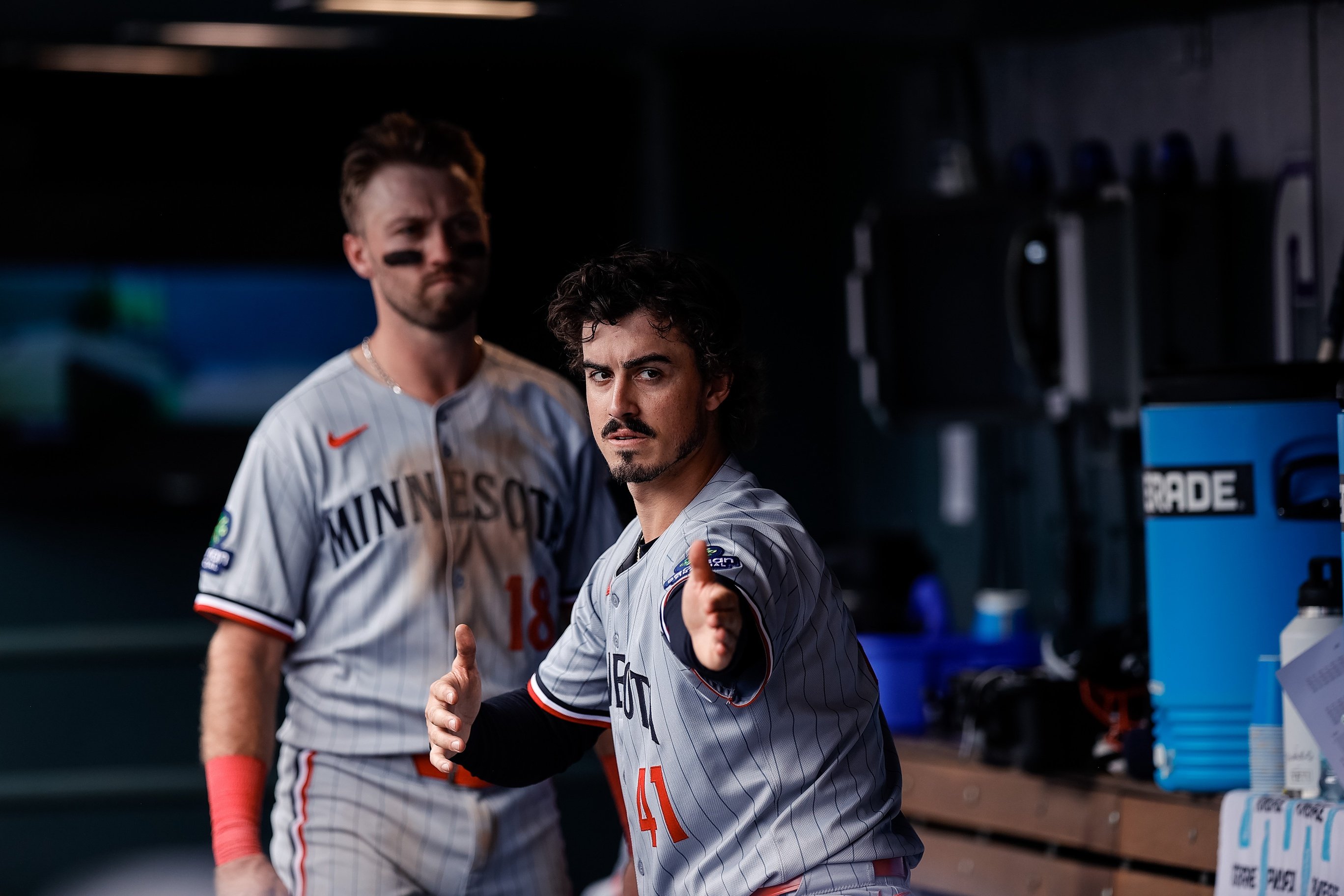 Talk to a baseball fan over the age of 60, and they’ll tell you about pitchers just don’t work as long. “Back in my days, they had four-man rotations, and the goal was to go nine innings every time you took the mound.” For most of the past 30 years, MLB teams have moved to five-man rotations, and reaching 200 innings has become a badge of honor. In fact, most front offices and pitching staff just consider it a badge. More important in today’s game is going all out and using your pitches whether you get through three innings or seven innings. The last couple of seasons, the Twins have been working on a new strategy for pitching development for some pitchers. We saw it in 2024 with Marco Raya. We’ve seen it this year with several pitchers including Raya and Connor Prielipp. We’ve even seen it with a few pitchers who have been workhorses in the past. Twins rookie pitchers Travis Adams and Pierson Ohl worked through the minor leagues primarily as starting pitchers. In the progression, they each reached 127 innings in a season. The goal was always to add to that number, to go from 127 to 152 to 181. Honestly, at that point, the pitcher is averaging nearly six innings per start. From there, if you progress to 200 innings, great. There is nothing wrong with saving the bullpen arms when possible. The reality is that in today’s game (and likely has always been the case), that there are some starting pitchers who may not quite fit the mold of being able to go six to eight innings in starts very awesome. If they can, great. I mean, if Pablo Lopez and Joe Ryan are starting, you plan for them giving you six innings and have no problem with them going seven or eight frames. But for some pitchers, they might have some really, really good stuff, but they just can’t maintain that stuff through 100 pitches. They can dominate for about 50 to 75 pitches. Should that pitcher automatically be pushed to a one or two inning spot? You can’t help but wonder how many pitchers were like that over the years. They just couldn’t cut it as a “regular” starter. There are many “failed” starters who have become some of the best relievers and closers in baseball history. Consider John Smoltz. He was a Cy Young caliber starting pitcher, and when he would be the Braves’ closer, he was as good as anyone in the game. When he spent a season as a starter, he helped Atlanta for 200 to 250 innings. When he was a closer, he helped Atlanta for 45 to 80 innings per year. What if he could have worked four innings every fourth or fifth day instead of the bullpen, one-inning guy? Instead of helping Atlanta for 60 innings in a season, he could have given them 120-130 innings. It’s with that mindset that I’d love to see the Twins test-drive a new model down the stretch; not as a gimmick, but as an honest evaluation tool. We’ve got 50-ish games left, and plenty of intriguing arms in the system. So let’s see what a modified rotation might look like with Joe Ryan and the Piggybacks. Here’s a few versions of how it might look: OPTION 1 : TWO-MAN STARTS Game 1: Joe Ryan (goes 5-8 innings) Game 2: Zebby Matthews (4-5 innings), Pierson Ohl (4-5 innings) Game 3: Bailey Ober (4-5 innings), Taj Bradley (4-5 innings) Game 4: Mick Abel (4-5 innings), Travis Adams (4-5 innings) Game 5: Marco Raya (4-5 innings), Simeon Woods Richardson (4-5 innings) Remaining BP: Cole Sands, Justin Topa, Kody Funderburk (Anthony Misiewicz), Jose Urena. With this, the goal should be for the starting pitcher to hopefully get through five innings, but really to get through at least four. The goal for the "piggybacker" should be to complete the rest of the game, though based on game situations, the high-leverage arms could come into those late innings as well. It will be good to have a couple of those high-leverage bullpen guys to close out a game in the ninth. It will be equally important to have a long man or two available in the bullpen as well. There is enough depth in Triple-A and even Double-A to fill slots. In doing this, it is absolutely crucial to set a tone with the team that this is about creating opportunities and giving more people a chance to work and get innings and try to make their case for a 2026 roster spot. The hitters need to know that this is about development and opportunity, but they are working under the same lens, trying to make an impression for 2026 and beyond. The goal is always to win as well and that will be the goal in every game. “We believe that each and every one of these pitchers has a big-league arm and a big-time, big-league future and that journey starts now.” I included Woods Richardson on here because I believe he will be back soon. We don’t know a whole lot about the timelines for Pablo Lopez or David Festa. Festa could fill one of those eight spots. Because of his veteran-ness, I would let Lopez determine if he wants to fill a spot in this type of plan, or if he would want to jump right back in that Joe Ryan (normal) role. He’s earned that opportunity. And so has Ober, of course, but this might really be good for him down the stretch. If Lopez comes back, the two ‘regular’ starters could be very similar. OPTION 2: TRADITIONAL HYBRIDS Game 1: Joe Ryan Game 2: Simeon Woods Richardson, Zebby Matthews Game 3: Taj Bradley, Mick Abel Game 4: Pablo Lopez Game 5: Bailey Ober, Travis Adams Remaining BP: Cole Sands, Justin Topa, Kody Funderburk, Jose Urena, Pierson Ohl. Or how about this? OPTION 3: THREE-MAN TANDEMS Game 1: Joe Ryan Game 2, Simeon Woods Richardson, Pierson Ohl, Travis Adams (3 innings each) Game 3: Pablo Lopez, Bailey Ober (4-5 innings each) Game 4: Taj Bradley, Kendry Rojas, Mick Abel (3 innings each) Game 5: Zebby Matthews, Remaining BP: Cole Sands, Justin Topa, Kody Funderburk There are other pitchers on the 40-man roster. Maybe a Kendry Rojas will be added to the roster and inserted into a few starts. The final bullpen spots can be updated every 10-12 days as needed based on usage. Honestly, it’s a lot of plug-and-play. It’s a lot of planning, and for that 50-game stretch, it may feel a little regimented. Why Do This Now? Because it matters. Because fans want to see what’s next. Because the front office needs data. Because payroll flexibility means young, controllable players matter. And because, frankly, Twins fans need something to believe in again. And these pitchers — Abel, Raya, Matthews, Bradley, SWR, Ohl, Rojas — they give us a reason to watch. They represent hope. They represent the next great Twins rotation. We already know Joe Ryan’s part of that. So is Ober. So is Pablo López. But who else? Let’s find out. Oh, and one more thing: giving these kids a shot might just help season ticket sales too. I’d bet the front office wouldn't mind giving their sales team something to get excited about this offseason. Let’s see the arms. Let’s see the future. Let's ride with Joe Ryan and the Piggybacks.
- 44 comments
-
- 9
-
-
- mick abel
- taj bradley
- (and 8 more)
-
Image courtesy of © Kevin Sousa-Imagn Images Last week, the Kansas City Royals promoted reliever Thomas Hatch to the big leagues. When he got into a game, it was hit first big-league appearance since September of 2023 with the Pirates. He pitched one inning and gave up two runs on two hits including a long home run. He was Designated for Assignment the next day. On Monday afternoon, the Twins announced that they had claimed Hatch from the Royals. He is expected to join the Twins on Tuesday at which point a spot on the 40-man roster and the 26-man roster will need to be opened up. That could be the same person. I assume it will be. Thomas Hatch is 30 years old. He spent the 2024 season pitching in Japan. In 2013, the Tulsa native was the 32nd round draft pick of the Rockies. Instead of signing, he stayed in-state and went to Oklahoma State. Three years later, the Chicago Cubs selected him in the third round of the 2016 draft. At the July trade deadline in 2019, the Cubs sent him to the Blue Jays for reliever David Phelps. Toronto added him to their 40-man roster after the 2019 season. During the Covid-shortened 2020 season, the Jays called up Hatch and he soon made his MLB debut. As a 25-year-old rookie, he posted a 2.73 ERA over 17 games. In 2021, he was limited to three big-league games and spent much of the season on the injured list with a right elbow impingement. He pitched just once for the Jays in 2022. In 2023, he pitched in six games for the Jays before he was DFAd. The Pirates claimed him, and he worked in 12 games for them over the remainder of the season. So, what does Thomas Hatch throw? He throws a sinker that averages about 94-95 mph. He also throws a cutter at about 90. He has a mid-80s slider/sweeper. Maybe that's something that the Twins will have him throw 50-60% of the time and see how that goes. There certainly is enough to be intrigued, but as is the case with any player claimed, they need to take advantage of the situation pretty quickly. Kody Clemens certainly did that, but other players claimed haven't, and the Twins at this stage in the season should be active at the edges of the 26- and 40-man rosters and hope a few guys stick. Earlier in the day, the Royals had named Hatch their minor league pitcher of the month for July. Who knows? Maybe Hatch and Darren McCaughan will piggyback Tuesday's game in Motown. The corresponding move has not yet been announced. That will happen on Tuesday. View full article
-
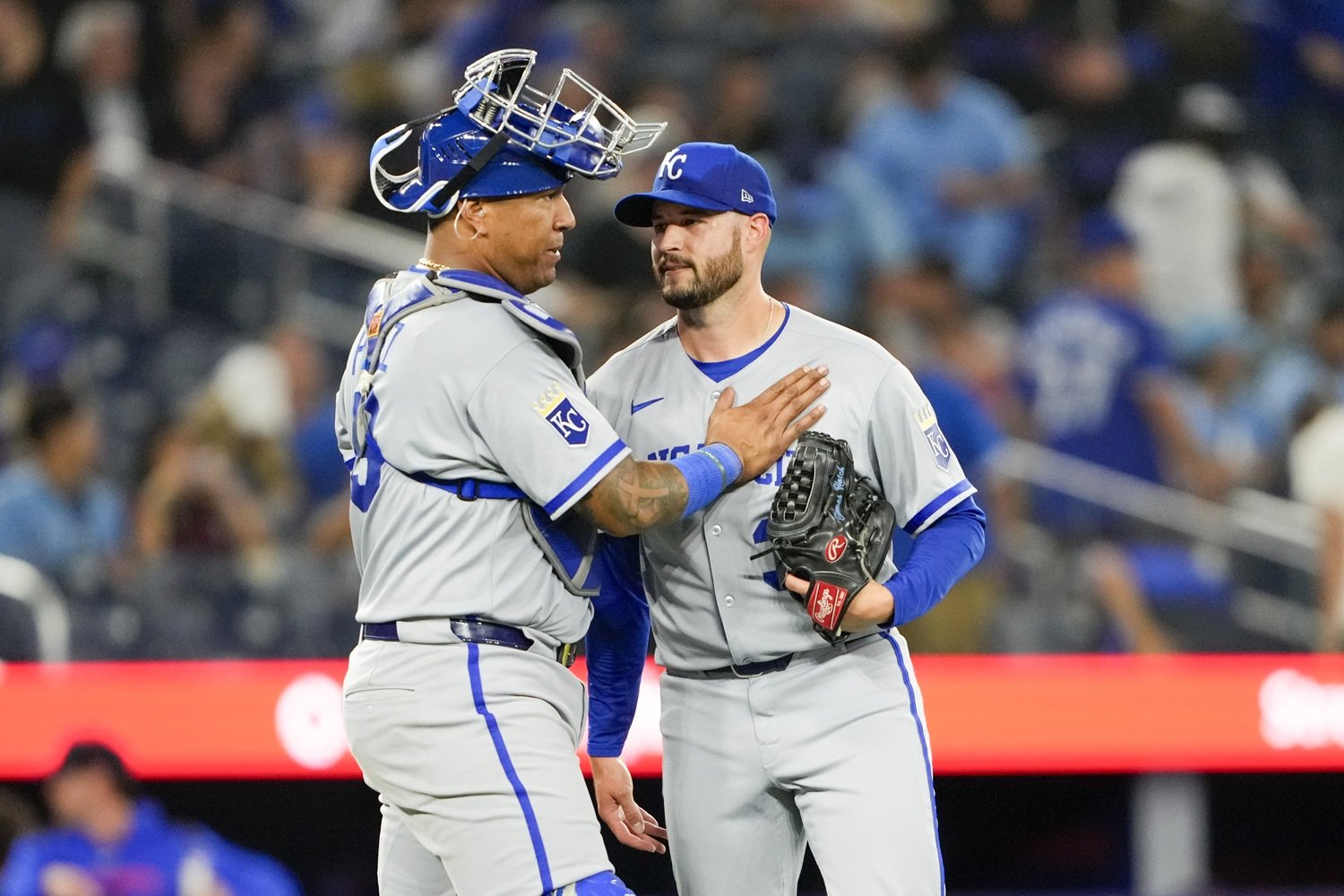 Last week, the Kansas City Royals promoted reliever Thomas Hatch to the big leagues. When he got into a game, it was hit first big-league appearance since September of 2023 with the Pirates. He pitched one inning and gave up two runs on two hits including a long home run. He was Designated for Assignment the next day. On Monday afternoon, the Twins announced that they had claimed Hatch from the Royals. He is expected to join the Twins on Tuesday at which point a spot on the 40-man roster and the 26-man roster will need to be opened up. That could be the same person. I assume it will be. Thomas Hatch is 30 years old. He spent the 2024 season pitching in Japan. In 2013, the Tulsa native was the 32nd round draft pick of the Rockies. Instead of signing, he stayed in-state and went to Oklahoma State. Three years later, the Chicago Cubs selected him in the third round of the 2016 draft. At the July trade deadline in 2019, the Cubs sent him to the Blue Jays for reliever David Phelps. Toronto added him to their 40-man roster after the 2019 season. During the Covid-shortened 2020 season, the Jays called up Hatch and he soon made his MLB debut. As a 25-year-old rookie, he posted a 2.73 ERA over 17 games. In 2021, he was limited to three big-league games and spent much of the season on the injured list with a right elbow impingement. He pitched just once for the Jays in 2022. In 2023, he pitched in six games for the Jays before he was DFAd. The Pirates claimed him, and he worked in 12 games for them over the remainder of the season. So, what does Thomas Hatch throw? He throws a sinker that averages about 94-95 mph. He also throws a cutter at about 90. He has a mid-80s slider/sweeper. Maybe that's something that the Twins will have him throw 50-60% of the time and see how that goes. There certainly is enough to be intrigued, but as is the case with any player claimed, they need to take advantage of the situation pretty quickly. Kody Clemens certainly did that, but other players claimed haven't, and the Twins at this stage in the season should be active at the edges of the 26- and 40-man rosters and hope a few guys stick. Earlier in the day, the Royals had named Hatch their minor league pitcher of the month for July. Who knows? Maybe Hatch and Darren McCaughan will piggyback Tuesday's game in Motown. The corresponding move has not yet been announced. That will happen on Tuesday.
 -
He missed like three months... no problem with letting him get some more time.
- 29 replies
-
- 1
-
-
- aaron sabato
- trent baker
- (and 3 more)
-
Image courtesy of Rob Thompson (photo of Aaron Sabato) What an interesting day in the Twins minor leagues on Saturday. While the Twins offense continues to struggle, the Saints scored double digits again. The Wind Surge hitters powered their way to a 16-run game. Even the DSL Twins scored 15. The Kernels and Mussels just earned regular wins with normal amounts of runs. On Sunday, the attention may be turned to the mound where three of the new members of the Twins organization will make their Twins organization debut. TRANSACTIONS Bailey Ober was activated from the Injured List on Saturday morning. SAINTS SENTINEL St. Paul 10, Toledo 4 Box Score The Saints scored three runs in the first and second. Then they took an inning off before scoring a single run in the next four innings. And then they hung on for the 10-4 win. Luke Keaschall led off the game with a triple. With one out, Kyler Fedko was hit by a pitch. Payton Eeles drove in both runners with another triple. Gabriel Gonzalez drove in the third run with a sacrifice fly. The second inning began with a single. Johnny Pereda walked. Nine-hitter Aaron Sabato drilled a three-run homer to make it 6-0. In the fourth inning, Pereda tripled and scored on a Keaschall sacrifice fly. The fifth inning began with Fedko walking, stealing second, and going to third on a balk. Eeles was hit by a pitch. Fedko scored on a double play ground ball by Gonzalez. With two outs in the sixth inning, Aaron Sabato hit his second homer of the game. Fedko led off the seventh inning with his first Saints double. He went to third on a groundout and scored the 10th run on a single by Gonzalez. Trent Baker made the start for the Saints. He tossed four innings and issued one walk while striking out six batters. He gave up no runs, and no hits. Jarret Whorff came in and gave up one hit, one walk and hit one batter over two scoreless innings. He gave up the first hit to the Mudhens in the sixth inning. Kyle Bischoff gave up two runs on two hits and two walks over two innings. Cole Percival gave up two runs on three hits and a walk. Aaron Sabato went 2-for-4 with his sixth and seventh homers and drove in four runs. Keaschall went 2-for-3 with a walk and a triple. Fedko went 2-fo-3 with a walk, his first Triple-A double, his first Triple-A triple, and his first Triple-A stolen base. Gonzalez was 2-for-4 with two RBI. Eeles hit a triple and drove in two runs. Perada hit a triple and walked. WIND SURGE WISDOM Wichita 16, Amarillo 11 Box Score In a game with 27 runs and 34 hits and six errors and six wild pitches and a hit batter, the Wind Surge scored in each of the first eight innings. The Sod Poodles scored in six of nine innings. A six-run sixth inning gave the Wind Surge a lead that they were able to hold onto. Wichita got off to a fast start in the first inning. Kaelen Culpepper and Walker Jenkins each singled. With one out, Ricardo Olivar drilled a three-run homer to give the team the lead. In the second inning, Ben Ross drilled a solo homer to make it 4-1. In the third inning, newcomer Hendry Mendez drove in Kala’i Rosario with a sacrifice fly. With one out in the third inning, Ross singled. He advanced on a throwing error on a pickoff attempt and then scored on a wild pitch. Next, Jose Salas singled. Culpepper and Jenkins walked to load the bases. Salas scored on a Kala’i Rosario fielder’s choice to make it 7-4. Mendez singled to start the fifth inning. He stole second and went to third on a throwing error. He scored on a Rubel Cespedes single to tie the game at 8-8. But the Wind Surge broke things open with a six-run sixth inning. With one out, Walker Jenkins singled. With two outs, he stole second. Andrew Cossetti walked. After a pitching change, Mendez singled to load the bass. Nate Baez cleared the bases with a double to make it 11-9. Rubel Cespedes doubled to drive in Baez. Finally, Ben Ross hit his second homer of the game, a two-run shot to make it 14-9. In the seventh inning, Andrew Cossetti homered to make it 15-10. In the eighth inning, Jenkins homers to make it 16-11. To the pitching. Alejandro Hidalgo made his first Double-A start and gave up four runs (2 earned) on three hits and three walks. He had four strikeouts. Jaylen Nowlin pitched one inning and gave up four runs on two hits and three walks. Darren Bowen came out of the bullpen and gave up three runs on six hits and a walk in 2 2/3 innings. Eston Stull got the next four outs, two on strikeouts. Hunter Hoopes pitched a quiet ninth. All 10 Wind Surge batters had at least one hit. Three players had two hits, and four hitters had three hits. The three hitters that had one hit also had one walk. Ben Ross was 3-for-5 with a walk, his seventh and eighth homers. He scored and drove in three runs. Jenkins went 3-for-5 with a walk and his fifth home run. In his first game in the Twins organization, Mendez went 3-for-5. Rubel Cespedes went 3- for-5. Richardo Olivar was 2-for-3 with his 12th homer and three RBI. Andrew Cossetti came in for him later in the game and he hit his 10th homer. KERNELS NUGGETS Cedar Rapids 6, Lansing 3 Box Score The hometown Lugnuts scored a run in each of the first two innings. The Kernels scored two runs in the first and two runs in the second inning. From that point, the offense provided a little insurance and the pitching carried the day. In the first, Kyle DeBarge led off with a walk and stole second. In his first at-bat in the Twins organization, Eduardo Tait lined a single to center, hit too hard to score DeBarge from second. But, DeBarge scored soon after on a wild pitch. After Billy Amick walked, there was another wild pitch that allowed Tait to score. In the top of the second, Caden Kendle led off with his seventh home run of the season. It was followed by Poncho Ruiz’s first Kernels homer. Leading 4-3 in the top of the sixth, Brandon Winokur reached on an infield single and went to second on a throwing error. Danny De Andrade drove him in with a single to center. They added one more insurance run in the top of the ninth. With one out, Poncho Ruiz walked and went to third on a Maddux Houghton single. Kyle DeBarge flew out, but Ruiz was able to score. Jose Olivares was on the mound to start for the Kernels. He was charged with three runs on six hits. He walked three and had five strikeouts in five innings. Sam Perez came in and struck out four batters over two scoreless, one-hit innings. Paulshawn Pasqualotto threw the final two innings and allowed just one hit to record his eighth save. Winokur went 2-for-3 with a walk in the game. De Andrade was 2-for-4. DeBarge stole his 56th base. MUSSEL MATTERS Fort Myers 3, Dunedin 2 (10 innings) Box Score Saturday was an intriguing match up between two of the top prep left-handed pitchers from the 2024 draft. The Twins used the 69th overall pick to select Dasan Hill from Grapevine High School in Texas. With the 95th overall, the Blue Jays took Johnny King out of Naples High School in Florida. Hill was committed to Dallas Baptist while King had committed to Miami. Hill got a $1,997,500 million bonus while King agreed to $1,247,500. Safe to say that both did well in the matchup. Johnny King tossed five scoreless innings. He gave up two hits, walked two and had seven strikeouts. Dasan Hill went four shutout innings. He gave up just one hit, walked none, and had three strikeouts. Let’s keep going. Johnny King threw 65 pitches, 38% sinkers. His sinker averaged 93.4 mph with a max of 94.5 mph. Hill threw just 45 pitches. One-third of those pitches (15) were sliders. 14 more pitches were changeups. He threw eight pitches that were called sinkers and eight more that were called 4-seam fastballs. The average sinker was 95.5 mph and the average four-seamer was 96.1 mph. His maximum velocity on a pitch was 96.8 mph. But yes, other people played in the game too. There was no score in the game through six innings. Eli Jones worked four innings and gave up just a seventh-inning run. He gave up five hits, walked one and had a strikeout. Enrique Jimenez led off the bottom of the seventh inning with a single. With one out, Shai Robinson walked. With two outs, Marek Houston singled to center to drive in Jimenez with the game-tying run. That was it until extra innings. Dylan Questad pitched a scoreless ninth inning, and then he gave up a single run (the unearned Manfred run). Ryan Sprock began the bottom of the 10th inning on second base. He advanced to third base when Robinson grounded out to second base (#ProductiveOut). Next, JP Smith was hit by a pitch. Dameury Pena ran for him. That brought Houston back to the plate, and he came through with a single to right which scored Sprock with the tying run. Pena advanced to third. Houston went to second on defensive indifference. The rehabbing Khadim Diaw stepped up and lined a single to left field to score Pena with the game winner! The Mussels managed their three runs on seven hits and three walks. Houston went 2-for-4 with a walk and his first stolen base. He also drove in the game-tying run twice in the game. Diaw had the game-winning RBI and was also hit by a pitch. JP Smith had a single and was hit by a pitch. DOMINICAN DAILIES DSL Twins 15, DSL Giants 6 Box Score 16-year-old Geremy Villoria made his first start in the Twins organization on Saturday afternoon. He came over from the Phillies side of their shared Dominican complex in Boca Chica following the trade that sent Harrison Bader to the city of brotherly love. The first inning went 1-2-3 with a groundout, a strikeout and a pop up that Villoria caught all by himself. In the top of the second frame, Joyner Perez and Jhomnardo Reyes doubled, the latter driving in the former with the game’s first run. Darwin Almanzar was hit by a pitch. The bases were loaded after a Dencer Diaz single. Aaron Salazar came up and lined a double that cleared the bases and put the Twins up 4-0. Vilooria came back out for the second inning. Following a leadoff double in the bottom of the second, runners were on second and third after a play that involved a fielding error and a throwing error. A run scored on a ground out, but it was followed with a walk. A single pushed two runs across with the help of another throwing error. Another single, and another run happened before he got a ground out to end the inning. I normally don’t go into that much detail with how the opponent scores, but once in a while it’s a good reminder of what life in the DSL (and FCL sometimes too) can look like at times. Through six innings, the game was tied at 5-5. Then the Twins brought out the big lumber for the late innings. They scored four more runs in the seventh. Gerardo Cardona doubled and went to third base on a Teilon Serrano single. Santiago Leon singled to load the bases. Hartizon Castillo drove in a painful run as he was hit by a pitch. Joyner Perez walked to drive in a second run. After a pitching change and one out, Almanzar singled to drive in two runs and make it 9-5. Gerardo Cardona and Teilon Serrano walked to start the bottom of the eighth. Leon singled to drive in a run. A second run scored on a ground out. Perez walked and went to second on a passed ball. Jhomnardo Reyes hit a sacrifice fly to drive in Leon with the 12th run. Diaz walked, Salazar was hit by a pitch. Soon after Almanzar scored on a wild pitch. Next, Cardona was hit by a pitch to re-load the bases. A walk by Serrano drove in the 15th and, thankfully, final run of the game. Marlon Mirabel came on and got two outs in the bottom of the eighth inning when the game was called due to weather. Aaron Carranza gave up one run on one hit and three walks over three innings. Rainer Marin gave up an unearned run over two innings. The Twins scored 15 runs on 10 hits, eight walks and five hit batters. Almanzar went 2-for-4 with three RBI and two runs scored Serrano went 2-for-4 with two walks and two runs scored and two RBI. PLAYERS OF THE DAY Hitter of the Day Ben Ross (Wichita): 3-for-5, BB, 2 HR (8), 3 R, 3 RBI Pitcher of the Day Trent Baker (St. Paul): 4 IP, 0 H, 0 R, BB, 6 K. PROSPECT SUMMARY Check out the Prospect Tracker for much more on our Twins Top 20 prospects after seeing how they did on Saturday. #1– Walker Jenkins (Wichita) - 3-for-5, BB, HR(5), 3 R, RBI (DHd) #2 - Luke Keaschall (Minnesota) - rehab SP: 2-for-3, BB, 3B(1), R, SF RBI (played 2B) #3 - Kaelen Culpepper (Wichita) - 2-for-6, BB, R, 2 K (played SS) #6 - Dasan Hill (Fort Myers) - 4 IP, 1 H, 0 R, 0 BB, 3 K, 45 pitches, 31 strikes (%) #8 - Gabriel Gonzalez (St. Paul) - 2-for-4 (played RF) #10 - Marek Houston (Fort Myers) - 2-for-4, BB, 2 RBI, K, SB(1) #11 - Brandon Winokur (Cedar Rapids) -2-for-3, BB, K, CS(4). (Played SS) #14 - Kyle DeBarge (Cedar Rapids) - 0-for-3, BB, R, SF RBI, K, SB(56). #16 - Billy Amick (Cedar Rapids) - 0-for-0, BB (played 1B) #17 - Khadim Diaw (Cedar Rapids) - rehab FM: 1-for-4, GW RBI, HBP, K (DHd) #19 - Eduardo Beltre (Fort Myers) - 0-for-4, 2 K (played RF) #20 - Ricardo Olivar (Wichita) - 2-for-3, HR(12), R, 3 RBI (caught) SUNDAY PITCHING PROBABLES St. Paul @ Toledo (3:05 PM CT) - RHP Mick Abel (1st start in Twins organization), Wichita @ Amarillo (6:05 PM CT) - RHP Ryan Gallagher (1st start in Twins organization) Cedar Rapids @ Lansing (12:05 PM CT) - LHP Garrett Horn (1st start in Twins organization) Dunedin @ Fort Myers (11:05 AM CT) - RHP Sam Rochard (1st Mussels start) DSL Rockies @ DSL Twins (10:00 AM CT) - TBD CURRENT W-L Records Minnesota Twins: 51-59 St. Paul Saints: 47-58 Wichita Wind Surge: 53-48 Cedar Rapids Kernels: 59-41 Fort Myers Mighty Mussels: 45-54 FCL Twins: 39-20 (finished 2nd in FCL playoffs) DSL Twins: 17-27 Please feel free to ask questions about the teams, the rosters, and discuss today’s games, or anything else Twins minor-league related! View full article
- 29 replies
-
- 1
-
-
- aaron sabato
- trent baker
- (and 3 more)
-
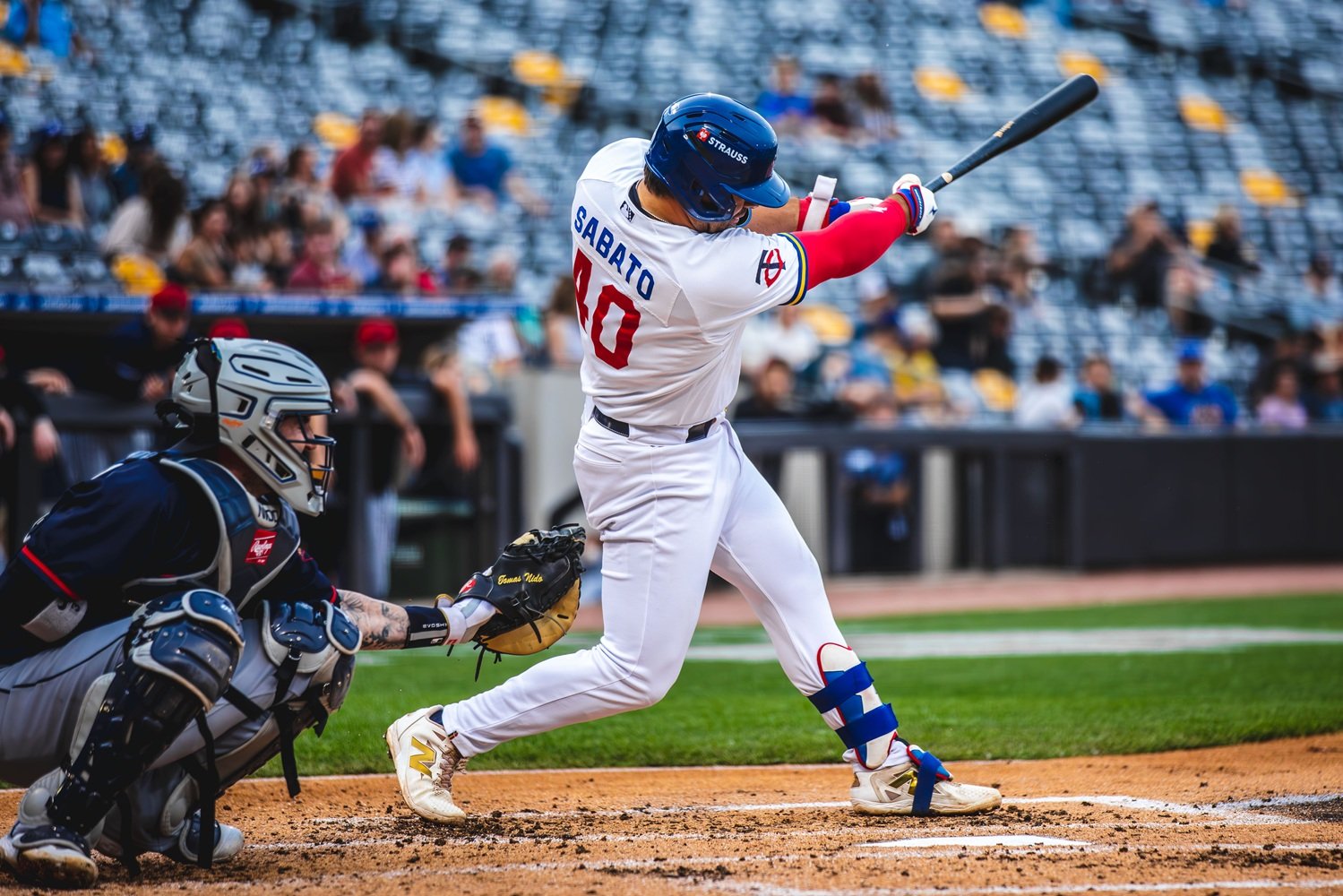 What an interesting day in the Twins minor leagues on Saturday. While the Twins offense continues to struggle, the Saints scored double digits again. The Wind Surge hitters powered their way to a 16-run game. Even the DSL Twins scored 15. The Kernels and Mussels just earned regular wins with normal amounts of runs. On Sunday, the attention may be turned to the mound where three of the new members of the Twins organization will make their Twins organization debut. TRANSACTIONS Bailey Ober was activated from the Injured List on Saturday morning. SAINTS SENTINEL St. Paul 10, Toledo 4 Box Score The Saints scored three runs in the first and second. Then they took an inning off before scoring a single run in the next four innings. And then they hung on for the 10-4 win. Luke Keaschall led off the game with a triple. With one out, Kyler Fedko was hit by a pitch. Payton Eeles drove in both runners with another triple. Gabriel Gonzalez drove in the third run with a sacrifice fly. The second inning began with a single. Johnny Pereda walked. Nine-hitter Aaron Sabato drilled a three-run homer to make it 6-0. In the fourth inning, Pereda tripled and scored on a Keaschall sacrifice fly. The fifth inning began with Fedko walking, stealing second, and going to third on a balk. Eeles was hit by a pitch. Fedko scored on a double play ground ball by Gonzalez. With two outs in the sixth inning, Aaron Sabato hit his second homer of the game. Fedko led off the seventh inning with his first Saints double. He went to third on a groundout and scored the 10th run on a single by Gonzalez. Trent Baker made the start for the Saints. He tossed four innings and issued one walk while striking out six batters. He gave up no runs, and no hits. Jarret Whorff came in and gave up one hit, one walk and hit one batter over two scoreless innings. He gave up the first hit to the Mudhens in the sixth inning. Kyle Bischoff gave up two runs on two hits and two walks over two innings. Cole Percival gave up two runs on three hits and a walk. Aaron Sabato went 2-for-4 with his sixth and seventh homers and drove in four runs. Keaschall went 2-for-3 with a walk and a triple. Fedko went 2-fo-3 with a walk, his first Triple-A double, his first Triple-A triple, and his first Triple-A stolen base. Gonzalez was 2-for-4 with two RBI. Eeles hit a triple and drove in two runs. Perada hit a triple and walked. WIND SURGE WISDOM Wichita 16, Amarillo 11 Box Score In a game with 27 runs and 34 hits and six errors and six wild pitches and a hit batter, the Wind Surge scored in each of the first eight innings. The Sod Poodles scored in six of nine innings. A six-run sixth inning gave the Wind Surge a lead that they were able to hold onto. Wichita got off to a fast start in the first inning. Kaelen Culpepper and Walker Jenkins each singled. With one out, Ricardo Olivar drilled a three-run homer to give the team the lead. In the second inning, Ben Ross drilled a solo homer to make it 4-1. In the third inning, newcomer Hendry Mendez drove in Kala’i Rosario with a sacrifice fly. With one out in the third inning, Ross singled. He advanced on a throwing error on a pickoff attempt and then scored on a wild pitch. Next, Jose Salas singled. Culpepper and Jenkins walked to load the bases. Salas scored on a Kala’i Rosario fielder’s choice to make it 7-4. Mendez singled to start the fifth inning. He stole second and went to third on a throwing error. He scored on a Rubel Cespedes single to tie the game at 8-8. But the Wind Surge broke things open with a six-run sixth inning. With one out, Walker Jenkins singled. With two outs, he stole second. Andrew Cossetti walked. After a pitching change, Mendez singled to load the bass. Nate Baez cleared the bases with a double to make it 11-9. Rubel Cespedes doubled to drive in Baez. Finally, Ben Ross hit his second homer of the game, a two-run shot to make it 14-9. In the seventh inning, Andrew Cossetti homered to make it 15-10. In the eighth inning, Jenkins homers to make it 16-11. To the pitching. Alejandro Hidalgo made his first Double-A start and gave up four runs (2 earned) on three hits and three walks. He had four strikeouts. Jaylen Nowlin pitched one inning and gave up four runs on two hits and three walks. Darren Bowen came out of the bullpen and gave up three runs on six hits and a walk in 2 2/3 innings. Eston Stull got the next four outs, two on strikeouts. Hunter Hoopes pitched a quiet ninth. All 10 Wind Surge batters had at least one hit. Three players had two hits, and four hitters had three hits. The three hitters that had one hit also had one walk. Ben Ross was 3-for-5 with a walk, his seventh and eighth homers. He scored and drove in three runs. Jenkins went 3-for-5 with a walk and his fifth home run. In his first game in the Twins organization, Mendez went 3-for-5. Rubel Cespedes went 3- for-5. Richardo Olivar was 2-for-3 with his 12th homer and three RBI. Andrew Cossetti came in for him later in the game and he hit his 10th homer. KERNELS NUGGETS Cedar Rapids 6, Lansing 3 Box Score The hometown Lugnuts scored a run in each of the first two innings. The Kernels scored two runs in the first and two runs in the second inning. From that point, the offense provided a little insurance and the pitching carried the day. In the first, Kyle DeBarge led off with a walk and stole second. In his first at-bat in the Twins organization, Eduardo Tait lined a single to center, hit too hard to score DeBarge from second. But, DeBarge scored soon after on a wild pitch. After Billy Amick walked, there was another wild pitch that allowed Tait to score. In the top of the second, Caden Kendle led off with his seventh home run of the season. It was followed by Poncho Ruiz’s first Kernels homer. Leading 4-3 in the top of the sixth, Brandon Winokur reached on an infield single and went to second on a throwing error. Danny De Andrade drove him in with a single to center. They added one more insurance run in the top of the ninth. With one out, Poncho Ruiz walked and went to third on a Maddux Houghton single. Kyle DeBarge flew out, but Ruiz was able to score. Jose Olivares was on the mound to start for the Kernels. He was charged with three runs on six hits. He walked three and had five strikeouts in five innings. Sam Perez came in and struck out four batters over two scoreless, one-hit innings. Paulshawn Pasqualotto threw the final two innings and allowed just one hit to record his eighth save. Winokur went 2-for-3 with a walk in the game. De Andrade was 2-for-4. DeBarge stole his 56th base. MUSSEL MATTERS Fort Myers 3, Dunedin 2 (10 innings) Box Score Saturday was an intriguing match up between two of the top prep left-handed pitchers from the 2024 draft. The Twins used the 69th overall pick to select Dasan Hill from Grapevine High School in Texas. With the 95th overall, the Blue Jays took Johnny King out of Naples High School in Florida. Hill was committed to Dallas Baptist while King had committed to Miami. Hill got a $1,997,500 million bonus while King agreed to $1,247,500. Safe to say that both did well in the matchup. Johnny King tossed five scoreless innings. He gave up two hits, walked two and had seven strikeouts. Dasan Hill went four shutout innings. He gave up just one hit, walked none, and had three strikeouts. Let’s keep going. Johnny King threw 65 pitches, 38% sinkers. His sinker averaged 93.4 mph with a max of 94.5 mph. Hill threw just 45 pitches. One-third of those pitches (15) were sliders. 14 more pitches were changeups. He threw eight pitches that were called sinkers and eight more that were called 4-seam fastballs. The average sinker was 95.5 mph and the average four-seamer was 96.1 mph. His maximum velocity on a pitch was 96.8 mph. But yes, other people played in the game too. There was no score in the game through six innings. Eli Jones worked four innings and gave up just a seventh-inning run. He gave up five hits, walked one and had a strikeout. Enrique Jimenez led off the bottom of the seventh inning with a single. With one out, Shai Robinson walked. With two outs, Marek Houston singled to center to drive in Jimenez with the game-tying run. That was it until extra innings. Dylan Questad pitched a scoreless ninth inning, and then he gave up a single run (the unearned Manfred run). Ryan Sprock began the bottom of the 10th inning on second base. He advanced to third base when Robinson grounded out to second base (#ProductiveOut). Next, JP Smith was hit by a pitch. Dameury Pena ran for him. That brought Houston back to the plate, and he came through with a single to right which scored Sprock with the tying run. Pena advanced to third. Houston went to second on defensive indifference. The rehabbing Khadim Diaw stepped up and lined a single to left field to score Pena with the game winner! The Mussels managed their three runs on seven hits and three walks. Houston went 2-for-4 with a walk and his first stolen base. He also drove in the game-tying run twice in the game. Diaw had the game-winning RBI and was also hit by a pitch. JP Smith had a single and was hit by a pitch. DOMINICAN DAILIES DSL Twins 15, DSL Giants 6 Box Score 16-year-old Geremy Villoria made his first start in the Twins organization on Saturday afternoon. He came over from the Phillies side of their shared Dominican complex in Boca Chica following the trade that sent Harrison Bader to the city of brotherly love. The first inning went 1-2-3 with a groundout, a strikeout and a pop up that Villoria caught all by himself. In the top of the second frame, Joyner Perez and Jhomnardo Reyes doubled, the latter driving in the former with the game’s first run. Darwin Almanzar was hit by a pitch. The bases were loaded after a Dencer Diaz single. Aaron Salazar came up and lined a double that cleared the bases and put the Twins up 4-0. Vilooria came back out for the second inning. Following a leadoff double in the bottom of the second, runners were on second and third after a play that involved a fielding error and a throwing error. A run scored on a ground out, but it was followed with a walk. A single pushed two runs across with the help of another throwing error. Another single, and another run happened before he got a ground out to end the inning. I normally don’t go into that much detail with how the opponent scores, but once in a while it’s a good reminder of what life in the DSL (and FCL sometimes too) can look like at times. Through six innings, the game was tied at 5-5. Then the Twins brought out the big lumber for the late innings. They scored four more runs in the seventh. Gerardo Cardona doubled and went to third base on a Teilon Serrano single. Santiago Leon singled to load the bases. Hartizon Castillo drove in a painful run as he was hit by a pitch. Joyner Perez walked to drive in a second run. After a pitching change and one out, Almanzar singled to drive in two runs and make it 9-5. Gerardo Cardona and Teilon Serrano walked to start the bottom of the eighth. Leon singled to drive in a run. A second run scored on a ground out. Perez walked and went to second on a passed ball. Jhomnardo Reyes hit a sacrifice fly to drive in Leon with the 12th run. Diaz walked, Salazar was hit by a pitch. Soon after Almanzar scored on a wild pitch. Next, Cardona was hit by a pitch to re-load the bases. A walk by Serrano drove in the 15th and, thankfully, final run of the game. Marlon Mirabel came on and got two outs in the bottom of the eighth inning when the game was called due to weather. Aaron Carranza gave up one run on one hit and three walks over three innings. Rainer Marin gave up an unearned run over two innings. The Twins scored 15 runs on 10 hits, eight walks and five hit batters. Almanzar went 2-for-4 with three RBI and two runs scored Serrano went 2-for-4 with two walks and two runs scored and two RBI. PLAYERS OF THE DAY Hitter of the Day Ben Ross (Wichita): 3-for-5, BB, 2 HR (8), 3 R, 3 RBI Pitcher of the Day Trent Baker (St. Paul): 4 IP, 0 H, 0 R, BB, 6 K. PROSPECT SUMMARY Check out the Prospect Tracker for much more on our Twins Top 20 prospects after seeing how they did on Saturday. #1– Walker Jenkins (Wichita) - 3-for-5, BB, HR(5), 3 R, RBI (DHd) #2 - Luke Keaschall (Minnesota) - rehab SP: 2-for-3, BB, 3B(1), R, SF RBI (played 2B) #3 - Kaelen Culpepper (Wichita) - 2-for-6, BB, R, 2 K (played SS) #6 - Dasan Hill (Fort Myers) - 4 IP, 1 H, 0 R, 0 BB, 3 K, 45 pitches, 31 strikes (%) #8 - Gabriel Gonzalez (St. Paul) - 2-for-4 (played RF) #10 - Marek Houston (Fort Myers) - 2-for-4, BB, 2 RBI, K, SB(1) #11 - Brandon Winokur (Cedar Rapids) -2-for-3, BB, K, CS(4). (Played SS) #14 - Kyle DeBarge (Cedar Rapids) - 0-for-3, BB, R, SF RBI, K, SB(56). #16 - Billy Amick (Cedar Rapids) - 0-for-0, BB (played 1B) #17 - Khadim Diaw (Cedar Rapids) - rehab FM: 1-for-4, GW RBI, HBP, K (DHd) #19 - Eduardo Beltre (Fort Myers) - 0-for-4, 2 K (played RF) #20 - Ricardo Olivar (Wichita) - 2-for-3, HR(12), R, 3 RBI (caught) SUNDAY PITCHING PROBABLES St. Paul @ Toledo (3:05 PM CT) - RHP Mick Abel (1st start in Twins organization), Wichita @ Amarillo (6:05 PM CT) - RHP Ryan Gallagher (1st start in Twins organization) Cedar Rapids @ Lansing (12:05 PM CT) - LHP Garrett Horn (1st start in Twins organization) Dunedin @ Fort Myers (11:05 AM CT) - RHP Sam Rochard (1st Mussels start) DSL Rockies @ DSL Twins (10:00 AM CT) - TBD CURRENT W-L Records Minnesota Twins: 51-59 St. Paul Saints: 47-58 Wichita Wind Surge: 53-48 Cedar Rapids Kernels: 59-41 Fort Myers Mighty Mussels: 45-54 FCL Twins: 39-20 (finished 2nd in FCL playoffs) DSL Twins: 17-27 Please feel free to ask questions about the teams, the rosters, and discuss today’s games, or anything else Twins minor-league related!
- 29 comments
-
- 6
-
-
-
- aaron sabato
- trent baker
- (and 3 more)
-
That was about as smooth as it gets. Nothing to worry about there.
-
It was a rough day for Twins fans as the trade deadline. We all knew that the Twins were likely to be quite busy since they had so many players who were impending free agents. Understanding the prospect returns that high-leverage relievers were bringing back, if it had stopped with Jhoan Duran being traded, we all could have understand. But when Brock Stewart was traded for Josh Outman, I can't find any redeeming qualities about that trade. But when I saw the Louis Varland trade to the Blue Jays, it made me sink. First and foremost, Kendry Rojas is a lefty who just got promoted to Triple-A after a quick stint in Double-A. But, as this article's title mentions, thankfully we have the Twins minor leagues to follow so that we can work to tell ourselves that the future may be bright. There is certainly talent in the organization that we get to recognize each day. Check out what Kaelen Culpepper and Walker Jenkins did for the Wind Surge on Thursday. Marco Raya was strong again as well. TRADES What… A… Day! Here are the Twins Daily articles for all of their trades at the deadline. Chris Paddack, Randy Dobnak to Tigers Jhoan Duran to Phillies Harrison Bader to Phillies Brock Stewart to Dodgers Carlos Correa to Houston Danny Coulombe to Texas Willi Castro to Cubs Griffin Jax to Tampa Louis Varland to Toronto TRANSACTIONS LHP Kendry Rojas and OF James Outman were assigned to Triple-A St. Paul. RHPs Ryan Gallagher and Sam Armstrong and OF Hendry Mendez were assigned to Double-A Wichita. C Eduardo Tait, LPH Garrett Horn, and Matt Mikulski were assigned to Cedar Rapids. RHP Geremy Villoria was assigned to DSL Twins. LHP Jaylen Nowlin returned to Wichita after spending one day with St. Paul. SAINTS SENTINEL St. Paul 0, Toledo 2 Box Score Marco Raya was very good and was on the mound a lot, but the Saints forgot to bring their bats on Thursday. Raya completed six innings and tossed 93 pitches in this game. He gave up two runs on six hits and two walks. The blemish was a four-inning home run by Jace Jung. He had six strikeouts. Aaron Rozek came on in relief. After a scoreless seventh inning, he gave up five runs in the eighth inning. Through eight innings, the Saints hitters had five walks, and no hits. With one out in the top of the ninth, Luke Keaschall pinch hit for Austin Martin. On a 3-0 count, Keaschall lined a single to left field. Well, that got things going. Edouard Julien followed with a single to right field. Jonah Bride singled to right to drive in Keaschall. A wild pitch put the tying runner on second base. However, the next two batters struck out, and the Saints fell short. WIND SURGE WISDOM Game 1: Wichita 2, Amarillo 7 Box Score This was actually a fairly close game. Amarillo led 3-1 until the bottom of the fifth when they added four runs and turned it into a blowout. The Wind Surge had just seven hits and three walks in the game. Kaelen Culpepper, the leadoff man, went 4-for-4 with his sixth Double-A homer and two RBI. Batting second, Walker Jenkins went 2-for-3 with a walk. Both added a stolen base. The rest of the lineup went a combined 1-for-20 with two walks. C.J. Culpepper started and went the first three innings. He gave up three runs on four hits and three walks. Mike Paredes gave up four runs on four hits and a walk in three innings. Game 2: Wichita 2, Amarillo 3 Box Score John Klein made the start and tossed five scoreless innings. He gave up four hits, hit a batter, and had four strikeouts. Hunter Hoopes threw a scoreless sixth inning. Then in the seventh, he gave up a three-run, walkoff homer to Manuel Pena. The Surge got on the scoreboard in the third inning when Kaelen Culpepper doubled to drive in Jose Salas. In the sixth inning, Walker Jenkins knocked his fourth Wichita home run to make it 2-0. Like Game 1, it was just those top two hitters again. Culpepper was 1-for-3 with his fourth double. Jenkins was 2-for-3 with his eighth double and fourth homer. Jose Salas also doubled for the fourth time. KERNELS NUGGETS Cedar Rapids 7, Lansing 4 Box Score A four-run sixth inning helped the Kernels to another win over Leo De Vries and the Fort Wayne, er, Lansing Lugnuts. Earlier in the morning, De Vries, a consensus top five prospect in baseball was the key component to the trade that sent Mason Miller from the A’s to the Padres. In the top of the third, Billy Amick doubled to drive in Caden Kendle with the game’s first run. Lansing scored two runs in the bottom of the inning to take the lead. However, the Kernels reclaimed the lead in the top of the fifth. Kyle Hess led off with his second triple of the season. Kendle followed with the sacrifice fly. Kyle DeBarge got things going again right away with a single and went to second on an error. He then stole third, his 55th base of the season, and scored on an Amick single. In the sixth inning, Jay Thomason singled to start the inning. Jaime Ferrer walked. After an out, Hess walked to load the bases. Kendle singled to drive in two runs and make it 5-2. DeBarge and Amick followed with RBI singles to make it 7-2. Ty Langenberg made the start. He went the first 5 2/3 innings and gave up four runs on seven hits. He had two walks and four strikeouts. Nick Trabacchi faced eight batters and recorded seven outs, three on strikeouts. His only blemish was a hit batter. Sam Perez pitched a scoreless ninth inning to record his third save. DeBarge and Amick were both 3-for-5 with a double. Amick drove in three runs and DeBarge drove in one run. Ferrer went 1-for-2 with two walks. MUSSEL MATTERS Fort Myers 3, Bradenton 5 Box Score A four-run third inning for the Marauders was pretty much the difference in this game. Jason Doktorczyk started and gave up four runs (2 earned) on three hits and two walks and a hit batters in four innings. He struck out three. Brent Francisco made his first Mussel appearance and struck out two batters over two, one-hit innings. Tyler Stasiowski gave up a solo homer over his two innings. Down 4-1 going to the sixth inning, the Mussels mounted a rally. Dameury Pena reached on an error and went to second. Yasser Mercedes singled to drive in Pena and went to second on the throw. After a ground out, Mercedes stole 29th. Next, 19-year-old newbie Enrique Jimenez lined a single to left, his first hit in the Twins organization, to drive in Marcedes and make it 4-3. The Mussels had seven hits. Caleb McNeely went 2-for-4 DOMINICAN DAILIES DSL Twins 5, DSL Phillies 3 Box Score The Twins fell behind early. Through five innings, they were down 3-0. In the top of the sixth Cristian Bonifacio walked and went to second and then third on wild pitches. Teilon Serrano walked. He went to second on a wild pitch which also allowed Bonifacio to score. Santiago Leon was hit by a pitch. After a pitching change, a flyout pushed the two runners to second and third. Serrano scored on a wild pitch. Joyner Perez doubled to drive in Santiago and tie the game at 3-3. That is where the score remained until the ninth inning. Gerardo Cardona singled to lead off the inning. Jhomnardo Reyes pinch ran for him and advanced to second on a passed ball and third on a wild pitch. Darwin Almanzar doubles to drive in Reyes and give the Twins the 4-3 lead. With one out, Serrano singled to right to drive in the fifth run. Jesus Gomez started and gave up two runs on three hits and a walk in three innings. He had two strikeouts. Eli Urena pitched the fourth inning and gave up one run on one walk. He had two strikeouts. Eliezer Lucena worked the final five innings. He gave up no runs on one hit and a walk while striking out three. The Twins had six hits and eight walks in the game. Joyner Perez was 1-for-2 with two walks. Almanzar’s double was his 13th of the season. Cristian Bonifacio went 1-for-2 with two walks and his fifth double. PLAYERS OF THE DAY Hitter of the Day Kaelen Culpepper (Wichita): 5-for-7, 2B(4), HR(6), R, 3 RBI, K, SB(5) Walker Jenkins (Wichita): 4-for-6, BB, 2B(8), HR(4), R, RBI, 2 K, SB(8) Pitcher of the Day Eliezer Lucena (DSL Twins): 5 IP, H, 0 R, BB, 3 K. John Klein (Wichita): 5 IP, 4 H, 0 R, 0 BB, HBP, 4 K. PROSPECT SUMMARY Check out the Prospect Tracker for much more on our Twins Top 20 prospects after seeing how they did on Thursday. #1– Walker Jenkins (Wichita) - 4-for-6, BB, 2B(8), HR(4), R, RBI, 2 K, SB(8) (CF both games) #2 - Luke Keaschall (Minnesota) - 1-for-1, R (PH) #3 - Kaelen Culpepper (Wichita) - 5-for-7, 2B(4), HR(6), R, 3 RBI, K, SB(5) (SS both games) #8 - Gabriel Gonzalez (Wichita) - 0-for-6, BB, 3 K. #9 - Marco Raya (St. Paul) - 6 IP, 6 H, 2 ER, 2 BB, HBP, WP, 6 K, 93 pitches, 55 strikes (59.1%) #11 - Brandon Winokur (Cedar Rapids) - 0-for-5, K (played SS) #14 - Kyle DeBarge (Cedar Rapids) - 3-for-5, R, 2B(19), RBI, K, SB(55) (played 2B) #15 - C.J. Culpepper (Wichita) - 3 IP, 4 H, 3 ER, 3 BB, 2 K, 57 pitches, 34 strikes (59.6%) #16 - Billy Amick (Cedar Rapids) - 3-for-5, 2B(12), 3 RBI (played 3B) #19 - Eduardo Beltre (Fort Myers) - 1-for-4, 2 K (played CF) #20 - Ricardo Olivar (Wichita) - 0-for-6, 3 K (DHd, then played LF) FRIDAY PITCHING PROBABLES St. Paul @ Toledo (6:05 PM CT) - RHP Cory Lewis (3-4, 6.79 ERA), Wichita @ Amarillo (7:05 PM CT) - LHP Connor Prielipp (0-4, 2.94 ERA) Cedar Rapids @ Lansing (6:05 PM CT) - TBD Dunedin @ Fort Myers (6:05 PM CT) - LHP Michael Carpenter (0-4, 4.66 ERA) DSL Rockies @ DSL Twins (10:00 AM CT) - TBD CURRENT W-L Records Minnesota Twins: 51-57 St. Paul Saints: 46-57 Wichita Wind Surge: 52-47 Cedar Rapids Kernels: 58-40 Fort Myers Mighty Mussels: 43-54 FCL Twins: 39-20 (finished 2nd in FCL playoffs) DSL Twins: 16-26 Please feel free to ask questions about the teams, the rosters, and discuss Thursday’s games, or anything else Twins minor-league related! View full article
-
 It was a rough day for Twins fans as the trade deadline. We all knew that the Twins were likely to be quite busy since they had so many players who were impending free agents. Understanding the prospect returns that high-leverage relievers were bringing back, if it had stopped with Jhoan Duran being traded, we all could have understand. But when Brock Stewart was traded for Josh Outman, I can't find any redeeming qualities about that trade. But when I saw the Louis Varland trade to the Blue Jays, it made me sink. First and foremost, Kendry Rojas is a lefty who just got promoted to Triple-A after a quick stint in Double-A. But, as this article's title mentions, thankfully we have the Twins minor leagues to follow so that we can work to tell ourselves that the future may be bright. There is certainly talent in the organization that we get to recognize each day. Check out what Kaelen Culpepper and Walker Jenkins did for the Wind Surge on Thursday. Marco Raya was strong again as well. TRADES What… A… Day! Here are the Twins Daily articles for all of their trades at the deadline. Chris Paddack, Randy Dobnak to Tigers Jhoan Duran to Phillies Harrison Bader to Phillies Brock Stewart to Dodgers Carlos Correa to Houston Danny Coulombe to Texas Willi Castro to Cubs Griffin Jax to Tampa Louis Varland to Toronto TRANSACTIONS LHP Kendry Rojas and OF James Outman were assigned to Triple-A St. Paul. RHPs Ryan Gallagher and Sam Armstrong and OF Hendry Mendez were assigned to Double-A Wichita. C Eduardo Tait, LPH Garrett Horn, and Matt Mikulski were assigned to Cedar Rapids. RHP Geremy Villoria was assigned to DSL Twins. LHP Jaylen Nowlin returned to Wichita after spending one day with St. Paul. SAINTS SENTINEL St. Paul 0, Toledo 2 Box Score Marco Raya was very good and was on the mound a lot, but the Saints forgot to bring their bats on Thursday. Raya completed six innings and tossed 93 pitches in this game. He gave up two runs on six hits and two walks. The blemish was a four-inning home run by Jace Jung. He had six strikeouts. Aaron Rozek came on in relief. After a scoreless seventh inning, he gave up five runs in the eighth inning. Through eight innings, the Saints hitters had five walks, and no hits. With one out in the top of the ninth, Luke Keaschall pinch hit for Austin Martin. On a 3-0 count, Keaschall lined a single to left field. Well, that got things going. Edouard Julien followed with a single to right field. Jonah Bride singled to right to drive in Keaschall. A wild pitch put the tying runner on second base. However, the next two batters struck out, and the Saints fell short. WIND SURGE WISDOM Game 1: Wichita 2, Amarillo 7 Box Score This was actually a fairly close game. Amarillo led 3-1 until the bottom of the fifth when they added four runs and turned it into a blowout. The Wind Surge had just seven hits and three walks in the game. Kaelen Culpepper, the leadoff man, went 4-for-4 with his sixth Double-A homer and two RBI. Batting second, Walker Jenkins went 2-for-3 with a walk. Both added a stolen base. The rest of the lineup went a combined 1-for-20 with two walks. C.J. Culpepper started and went the first three innings. He gave up three runs on four hits and three walks. Mike Paredes gave up four runs on four hits and a walk in three innings. Game 2: Wichita 2, Amarillo 3 Box Score John Klein made the start and tossed five scoreless innings. He gave up four hits, hit a batter, and had four strikeouts. Hunter Hoopes threw a scoreless sixth inning. Then in the seventh, he gave up a three-run, walkoff homer to Manuel Pena. The Surge got on the scoreboard in the third inning when Kaelen Culpepper doubled to drive in Jose Salas. In the sixth inning, Walker Jenkins knocked his fourth Wichita home run to make it 2-0. Like Game 1, it was just those top two hitters again. Culpepper was 1-for-3 with his fourth double. Jenkins was 2-for-3 with his eighth double and fourth homer. Jose Salas also doubled for the fourth time. KERNELS NUGGETS Cedar Rapids 7, Lansing 4 Box Score A four-run sixth inning helped the Kernels to another win over Leo De Vries and the Fort Wayne, er, Lansing Lugnuts. Earlier in the morning, De Vries, a consensus top five prospect in baseball was the key component to the trade that sent Mason Miller from the A’s to the Padres. In the top of the third, Billy Amick doubled to drive in Caden Kendle with the game’s first run. Lansing scored two runs in the bottom of the inning to take the lead. However, the Kernels reclaimed the lead in the top of the fifth. Kyle Hess led off with his second triple of the season. Kendle followed with the sacrifice fly. Kyle DeBarge got things going again right away with a single and went to second on an error. He then stole third, his 55th base of the season, and scored on an Amick single. In the sixth inning, Jay Thomason singled to start the inning. Jaime Ferrer walked. After an out, Hess walked to load the bases. Kendle singled to drive in two runs and make it 5-2. DeBarge and Amick followed with RBI singles to make it 7-2. Ty Langenberg made the start. He went the first 5 2/3 innings and gave up four runs on seven hits. He had two walks and four strikeouts. Nick Trabacchi faced eight batters and recorded seven outs, three on strikeouts. His only blemish was a hit batter. Sam Perez pitched a scoreless ninth inning to record his third save. DeBarge and Amick were both 3-for-5 with a double. Amick drove in three runs and DeBarge drove in one run. Ferrer went 1-for-2 with two walks. MUSSEL MATTERS Fort Myers 3, Bradenton 5 Box Score A four-run third inning for the Marauders was pretty much the difference in this game. Jason Doktorczyk started and gave up four runs (2 earned) on three hits and two walks and a hit batters in four innings. He struck out three. Brent Francisco made his first Mussel appearance and struck out two batters over two, one-hit innings. Tyler Stasiowski gave up a solo homer over his two innings. Down 4-1 going to the sixth inning, the Mussels mounted a rally. Dameury Pena reached on an error and went to second. Yasser Mercedes singled to drive in Pena and went to second on the throw. After a ground out, Mercedes stole 29th. Next, 19-year-old newbie Enrique Jimenez lined a single to left, his first hit in the Twins organization, to drive in Marcedes and make it 4-3. The Mussels had seven hits. Caleb McNeely went 2-for-4 DOMINICAN DAILIES DSL Twins 5, DSL Phillies 3 Box Score The Twins fell behind early. Through five innings, they were down 3-0. In the top of the sixth Cristian Bonifacio walked and went to second and then third on wild pitches. Teilon Serrano walked. He went to second on a wild pitch which also allowed Bonifacio to score. Santiago Leon was hit by a pitch. After a pitching change, a flyout pushed the two runners to second and third. Serrano scored on a wild pitch. Joyner Perez doubled to drive in Santiago and tie the game at 3-3. That is where the score remained until the ninth inning. Gerardo Cardona singled to lead off the inning. Jhomnardo Reyes pinch ran for him and advanced to second on a passed ball and third on a wild pitch. Darwin Almanzar doubles to drive in Reyes and give the Twins the 4-3 lead. With one out, Serrano singled to right to drive in the fifth run. Jesus Gomez started and gave up two runs on three hits and a walk in three innings. He had two strikeouts. Eli Urena pitched the fourth inning and gave up one run on one walk. He had two strikeouts. Eliezer Lucena worked the final five innings. He gave up no runs on one hit and a walk while striking out three. The Twins had six hits and eight walks in the game. Joyner Perez was 1-for-2 with two walks. Almanzar’s double was his 13th of the season. Cristian Bonifacio went 1-for-2 with two walks and his fifth double. PLAYERS OF THE DAY Hitter of the Day Kaelen Culpepper (Wichita): 5-for-7, 2B(4), HR(6), R, 3 RBI, K, SB(5) Walker Jenkins (Wichita): 4-for-6, BB, 2B(8), HR(4), R, RBI, 2 K, SB(8) Pitcher of the Day Eliezer Lucena (DSL Twins): 5 IP, H, 0 R, BB, 3 K. John Klein (Wichita): 5 IP, 4 H, 0 R, 0 BB, HBP, 4 K. PROSPECT SUMMARY Check out the Prospect Tracker for much more on our Twins Top 20 prospects after seeing how they did on Thursday. #1– Walker Jenkins (Wichita) - 4-for-6, BB, 2B(8), HR(4), R, RBI, 2 K, SB(8) (CF both games) #2 - Luke Keaschall (Minnesota) - 1-for-1, R (PH) #3 - Kaelen Culpepper (Wichita) - 5-for-7, 2B(4), HR(6), R, 3 RBI, K, SB(5) (SS both games) #8 - Gabriel Gonzalez (Wichita) - 0-for-6, BB, 3 K. #9 - Marco Raya (St. Paul) - 6 IP, 6 H, 2 ER, 2 BB, HBP, WP, 6 K, 93 pitches, 55 strikes (59.1%) #11 - Brandon Winokur (Cedar Rapids) - 0-for-5, K (played SS) #14 - Kyle DeBarge (Cedar Rapids) - 3-for-5, R, 2B(19), RBI, K, SB(55) (played 2B) #15 - C.J. Culpepper (Wichita) - 3 IP, 4 H, 3 ER, 3 BB, 2 K, 57 pitches, 34 strikes (59.6%) #16 - Billy Amick (Cedar Rapids) - 3-for-5, 2B(12), 3 RBI (played 3B) #19 - Eduardo Beltre (Fort Myers) - 1-for-4, 2 K (played CF) #20 - Ricardo Olivar (Wichita) - 0-for-6, 3 K (DHd, then played LF) FRIDAY PITCHING PROBABLES St. Paul @ Toledo (6:05 PM CT) - RHP Cory Lewis (3-4, 6.79 ERA), Wichita @ Amarillo (7:05 PM CT) - LHP Connor Prielipp (0-4, 2.94 ERA) Cedar Rapids @ Lansing (6:05 PM CT) - TBD Dunedin @ Fort Myers (6:05 PM CT) - LHP Michael Carpenter (0-4, 4.66 ERA) DSL Rockies @ DSL Twins (10:00 AM CT) - TBD CURRENT W-L Records Minnesota Twins: 51-57 St. Paul Saints: 46-57 Wichita Wind Surge: 52-47 Cedar Rapids Kernels: 58-40 Fort Myers Mighty Mussels: 43-54 FCL Twins: 39-20 (finished 2nd in FCL playoffs) DSL Twins: 16-26 Please feel free to ask questions about the teams, the rosters, and discuss Thursday’s games, or anything else Twins minor-league related!
- 53 comments
-
- 3
-
-
-
- marco raya
- kaelen culpepper
- (and 8 more)
-
Image courtesy of © Jesse Johnson-Imagn Images On Monday, the Twins officially entered trade deadline season by sending right-handed pitchers Chris Paddack and Randy Dobnak to the Detroit Tigers. In return, the Twins received a 19-year-old catcher who has yet to spend a day with a full-season affiliate. His name is Enrique Jimenez. He appeared in the Top 20 of Detroit Tigers' top prospect rankings at Baseball America earlier this month, so it’s definitely worth doing some digging and learning some more about the newest member of the Twins organization. BACKGROUND and STATS Jiménez was born in Barcelona, Venezuela. He began working with a trainer when he was quite young. The Tigers were able to sign him on Jan. 15, 2023, for $1.25 million. Evaluating kids when they are 14, 15, and 16 years old is hard, but he appeared on Top 40 and Top 50 international prospect lists. The scouts’ job is to watch 13- to 17-year-old players and try to determine what they will look like when they are 22 or 23. Physically, mentally, emotionally, these kids change a lot over a decade. So, the rankings always have to be taken with a grain of salt. However, those rankings are known, and MLB organizations make million-dollar decisions with them. Jiménez ranked No. 32 by Baseball America and No. 23 by MLB Pipeline in the runup to his signing. Let’s compare that to where the 2023 Twins international signings ranked. BA ranked Cuban outfielder Ariel Castro 13th. Shortstop-turned-pitcher Hendry Chivilli ranked 15th. Catcher Carlos Silva, also from Venezuela, ranked 23rd. Castro ranked No. 11 at MLB Pipeline. Silva ranked No. 31. Chivilli ranked No. 38. In addition, talented young pitchers Adrian Bohorquez and Miguel Cordero signed with that class. This is really a good illustration of the difficulty that international signings present. Castro spent a season in the DSL and has spent the past two seasons in the FCL. Silva spent two summers in the DSL and came to the States this year to play in the FCL. Chivilli played one season of shortstop in the DSL and then a season in the FCL. He was moved to the mound and pitches for the FCL Twins in 2025. Jiménez split the 2023 season between the Tigers' two DSL teams. Combined, he hit .277/.388/.418, with 11 doubles, three triples and one home run in 46 games. In 2024, he came to the States and played 54 games in the FCL. He hit .242/.366/.376 with nine doubles, a triple, and three homers. It was a surprise to many that Jimenez remained in the FCL in 2025. In 48 games, he's hit .250/.339/.440 with 10 doubles, two triples, and six home runs. Over his three professional seasons, he has made 78 starts behind the plate and 42 starts at first base. He also DH'd eight times. SCOUTING REPORT All of that is background that will help tell his life’s story. And there are stats, but as we have tried to say for the last two decades, the further a player is from the big leagues, the less important the stats are. Is the player growing physically, mentally, and emotionally? What are his tools? Is he continuing to improve upon them, to the point where those tools are now skills? Don’t get me wrong. Jiménez’s stat lines have been just fine. They show, to some degree, where he is now as a player, but with four or five more years of development, what can he be? That’s where the scouting reports come in and become important. Of course, scouting reports are not a perfect science. Prospects' progressions are rarely linear. Player development is a multifarious mystery. Have I used enough disclaimers and cliches yet about prospects and scouting reports? Let’s get to Enrique Jiménez’s scouting report. Jiménez stands about 5-foot-9, maybe 5-foot-10 according to some who have seen him live. He’s stocky, like a fire hydrant. He is strong and a good athlete (especially when the phrase “for a catcher” is added). That has allowed him to get time at first base, which means more at-bats. A switch-hitter, Jimenez has pretty smooth swings from both sides. While he hasn’t had a lot of plate appearances against left-handers, he appears to have more power from the right side. To this point, he has not had much home-run power, but he is a line-drive hitter who could get a lot of doubles. His game power is likely to improve in time, with at-bats, and as he continues to gain strength. That said, it’s hard to envision him hitting more than 10-12 homers in a full season. To this point, Jiménez has shown a very good eye at the plate. In his three pro seasons, his walk rates have been 14.1%, 15.3%, and 12.0%. At the same time, his strikeout rates have been 17.6%, 24.0%, and 21.9%. Jiménez is said to have a very good eye, and a contact-first swing. The lone concern is that, at times, he walks the line between patient and passive. A quick look at his wOBA over his three seasons: they came in at .392, .362, and .376. Prefer wRC+? He’s been at 113, 110, and 119. Again, the numbers themselves are not what is important. However, the point that (over time) he could continue to put together quality plate appearances, get on base, and put the ball in play is supported by his performance so far. Jimenez is not going to compete in Fastest Twins Prospect competitions. He’s not fast now, and he’s not likely going to get faster in time. That said, he could potentially get some sneaky steals. At this stage of his young career, the positives in his game come from his defense. Scouts rave about his footwork and blocking. His arm appears to be about average, but again, with his receiving skills and footwork, he has done a very nice job of controlling the running game. The last two seasons, he has thrown out 38% and 30% of would-be base runners. Scouts, teammates, and coaches all like to talk about Jiménez’s high baseball IQ. It’s so important, especially for a catcher. They love how he calls a game, and how he works with pitchers to help them succeed. He was a key factor in the FCL Tigers winning the league championship in 2024 and making it to the playoffs again in 2025. In addition, every single scouting report speaks about his high character and how it stands out at his young age. He is referred to as a great leader. There’s no doubt in my mind that was a big factor in the Twins' decision to acquire Jiménez in the trade. It does lead one to further wonder why Detroit elected to have him repeat the Complex League, which is usually an extreme measure reserved for players whose games are especially raw or who aren't mature enough to move into full-season baseball. It's possible that, as a catcher, he was held back to spend more time shoring up his English and learning to do the ancillary, off-field jobs asked of that position in the modern game. Summary Notes While nothing about his stats jumps off the page, the general opinion around the scouting industry is that Jiménez has a high floor and is relatively likely to reach the big leagues. With his profile above, I can certainly agree with that. I can’t stop thinking that Jiménez’s upside is probably Christian Vázquez. Similar height and build, strength, offensive profile, defensive profile, and intangibles: leadership, quality teammate, works well with pitchers, high baseball IQ. Clearly, at this very young age, Jiménez’s strengths are more behind the plate than at the plate. That is the skill that will keep him moving up the organizational ladder. How will all of the tools play once the league goes to the electronic strike zone? Pitch framing is the only area that should be affected. Working with pitchers and calling a game will always be very important. But I think that, like Vázquez, there is plenty of offensive potential for him to get to the big leagues. I think the odds are highest that he spends most of his big-league time as a backup catcher, but like Vázquez, he could have a few years where he becomes the primary backstop and contributes plenty at the bottom of the lineup. MLB Pipeline ranked Jiménez as the Tigers' No. 14 prospect. After the trade, he was moved to the Twins page, and they ranked him as the Twins' No. 20 prospect. As I look through my personal Twins prospect rankings, I don’t think I would rank him any higher than 34-36, but I might be more attuned to many depth pieces in the Twins system than most. While that may make one think that I don’t like the trade or the return, that just isn’t true. I do think that if he turns into Christian Vázquez, that's a great return for two months of Chris Paddack and Randy Dobnak. What are your thoughts on Jiménez and his potential? View full article
-
 On Monday, the Twins officially entered trade deadline season by sending right-handed pitchers Chris Paddack and Randy Dobnak to the Detroit Tigers. In return, the Twins received a 19-year-old catcher who has yet to spend a day with a full-season affiliate. His name is Enrique Jimenez. He appeared in the Top 20 of Detroit Tigers' top prospect rankings at Baseball America earlier this month, so it’s definitely worth doing some digging and learning some more about the newest member of the Twins organization. BACKGROUND and STATS Jiménez was born in Barcelona, Venezuela. He began working with a trainer when he was quite young. The Tigers were able to sign him on Jan. 15, 2023, for $1.25 million. Evaluating kids when they are 14, 15, and 16 years old is hard, but he appeared on Top 40 and Top 50 international prospect lists. The scouts’ job is to watch 13- to 17-year-old players and try to determine what they will look like when they are 22 or 23. Physically, mentally, emotionally, these kids change a lot over a decade. So, the rankings always have to be taken with a grain of salt. However, those rankings are known, and MLB organizations make million-dollar decisions with them. Jiménez ranked No. 32 by Baseball America and No. 23 by MLB Pipeline in the runup to his signing. Let’s compare that to where the 2023 Twins international signings ranked. BA ranked Cuban outfielder Ariel Castro 13th. Shortstop-turned-pitcher Hendry Chivilli ranked 15th. Catcher Carlos Silva, also from Venezuela, ranked 23rd. Castro ranked No. 11 at MLB Pipeline. Silva ranked No. 31. Chivilli ranked No. 38. In addition, talented young pitchers Adrian Bohorquez and Miguel Cordero signed with that class. This is really a good illustration of the difficulty that international signings present. Castro spent a season in the DSL and has spent the past two seasons in the FCL. Silva spent two summers in the DSL and came to the States this year to play in the FCL. Chivilli played one season of shortstop in the DSL and then a season in the FCL. He was moved to the mound and pitches for the FCL Twins in 2025. Jiménez split the 2023 season between the Tigers' two DSL teams. Combined, he hit .277/.388/.418, with 11 doubles, three triples and one home run in 46 games. In 2024, he came to the States and played 54 games in the FCL. He hit .242/.366/.376 with nine doubles, a triple, and three homers. It was a surprise to many that Jimenez remained in the FCL in 2025. In 48 games, he's hit .250/.339/.440 with 10 doubles, two triples, and six home runs. Over his three professional seasons, he has made 78 starts behind the plate and 42 starts at first base. He also DH'd eight times. SCOUTING REPORT All of that is background that will help tell his life’s story. And there are stats, but as we have tried to say for the last two decades, the further a player is from the big leagues, the less important the stats are. Is the player growing physically, mentally, and emotionally? What are his tools? Is he continuing to improve upon them, to the point where those tools are now skills? Don’t get me wrong. Jiménez’s stat lines have been just fine. They show, to some degree, where he is now as a player, but with four or five more years of development, what can he be? That’s where the scouting reports come in and become important. Of course, scouting reports are not a perfect science. Prospects' progressions are rarely linear. Player development is a multifarious mystery. Have I used enough disclaimers and cliches yet about prospects and scouting reports? Let’s get to Enrique Jiménez’s scouting report. Jiménez stands about 5-foot-9, maybe 5-foot-10 according to some who have seen him live. He’s stocky, like a fire hydrant. He is strong and a good athlete (especially when the phrase “for a catcher” is added). That has allowed him to get time at first base, which means more at-bats. A switch-hitter, Jimenez has pretty smooth swings from both sides. While he hasn’t had a lot of plate appearances against left-handers, he appears to have more power from the right side. To this point, he has not had much home-run power, but he is a line-drive hitter who could get a lot of doubles. His game power is likely to improve in time, with at-bats, and as he continues to gain strength. That said, it’s hard to envision him hitting more than 10-12 homers in a full season. To this point, Jiménez has shown a very good eye at the plate. In his three pro seasons, his walk rates have been 14.1%, 15.3%, and 12.0%. At the same time, his strikeout rates have been 17.6%, 24.0%, and 21.9%. Jiménez is said to have a very good eye, and a contact-first swing. The lone concern is that, at times, he walks the line between patient and passive. A quick look at his wOBA over his three seasons: they came in at .392, .362, and .376. Prefer wRC+? He’s been at 113, 110, and 119. Again, the numbers themselves are not what is important. However, the point that (over time) he could continue to put together quality plate appearances, get on base, and put the ball in play is supported by his performance so far. Jimenez is not going to compete in Fastest Twins Prospect competitions. He’s not fast now, and he’s not likely going to get faster in time. That said, he could potentially get some sneaky steals. At this stage of his young career, the positives in his game come from his defense. Scouts rave about his footwork and blocking. His arm appears to be about average, but again, with his receiving skills and footwork, he has done a very nice job of controlling the running game. The last two seasons, he has thrown out 38% and 30% of would-be base runners. Scouts, teammates, and coaches all like to talk about Jiménez’s high baseball IQ. It’s so important, especially for a catcher. They love how he calls a game, and how he works with pitchers to help them succeed. He was a key factor in the FCL Tigers winning the league championship in 2024 and making it to the playoffs again in 2025. In addition, every single scouting report speaks about his high character and how it stands out at his young age. He is referred to as a great leader. There’s no doubt in my mind that was a big factor in the Twins' decision to acquire Jiménez in the trade. It does lead one to further wonder why Detroit elected to have him repeat the Complex League, which is usually an extreme measure reserved for players whose games are especially raw or who aren't mature enough to move into full-season baseball. It's possible that, as a catcher, he was held back to spend more time shoring up his English and learning to do the ancillary, off-field jobs asked of that position in the modern game. Summary Notes While nothing about his stats jumps off the page, the general opinion around the scouting industry is that Jiménez has a high floor and is relatively likely to reach the big leagues. With his profile above, I can certainly agree with that. I can’t stop thinking that Jiménez’s upside is probably Christian Vázquez. Similar height and build, strength, offensive profile, defensive profile, and intangibles: leadership, quality teammate, works well with pitchers, high baseball IQ. Clearly, at this very young age, Jiménez’s strengths are more behind the plate than at the plate. That is the skill that will keep him moving up the organizational ladder. How will all of the tools play once the league goes to the electronic strike zone? Pitch framing is the only area that should be affected. Working with pitchers and calling a game will always be very important. But I think that, like Vázquez, there is plenty of offensive potential for him to get to the big leagues. I think the odds are highest that he spends most of his big-league time as a backup catcher, but like Vázquez, he could have a few years where he becomes the primary backstop and contributes plenty at the bottom of the lineup. MLB Pipeline ranked Jiménez as the Tigers' No. 14 prospect. After the trade, he was moved to the Twins page, and they ranked him as the Twins' No. 20 prospect. As I look through my personal Twins prospect rankings, I don’t think I would rank him any higher than 34-36, but I might be more attuned to many depth pieces in the Twins system than most. While that may make one think that I don’t like the trade or the return, that just isn’t true. I do think that if he turns into Christian Vázquez, that's a great return for two months of Chris Paddack and Randy Dobnak. What are your thoughts on Jiménez and his potential?
 -
Martin played a lot at SS, and he's played a lot at 2B, LF and CF. Julien played DH, but his best position was always DH. His rookie season, he actually became an adequate 2B defensively. Miranda was never going to be a plus defender, but he's at least adequate at 3B and 1B. Not sure where else they would move him. They tried him at 2B when he was younger and more athletic/quick. Marek Houston isn't going to start in Cedar Rapids. He'll get a couple weeks in Fort Myers at least. DeAndrade is rarely playing SS this year, even after Culpepper moved up. He's played a lot at 3B, and a little at 2B. Kyle DeBarge was drafted as a SS too. He moved to 2B pretty much right away, but he's still getting time at SS once in a while. He's also played a bit in CF. Culpepper has played a bit of 2B. In my opinion, the best defensive SS in the Twins organization (MILB), defensively, is Ben Ross. He's been so good with the glove for Wichita the past two seasons at SS. But as soon as Culpepper got to Wichita, Ross has had to play 2B and 3B
- 28 replies
-
- 5
-
-
- payton eeles
- jose miranda
- (and 8 more)
-
Do we think that Eeles would be better than Correa? What prospects are there at Triple-A? (obviously Keaschall, but that's just a rehab). People would just complain if Julien came up, even though he more than deserves it. Martin should get at-bats, so I don't think they want him in that Keirsey role (and he wouldn't be as good at those specific traits - speed, base running, defense) as Keirsey. But definitely, there are going to be a lot of interesting decisions in the offseason (or before). There are a lot of fringy players around the 40-man roster, and maybe some difficult arbitration decisions too. And Adams is fine for that role. I'm sure he'll be optioned tonight/tomorrow since he threw 82 pitches today. He's up because Lopez and Festa and Ober are on the IL... and maybe because Morris is hurt too.
- 28 replies
-
- 5
-
-
- payton eeles
- jose miranda
- (and 8 more)
-
Why not? He's the best athlete on the team. He's playing SS more in the second half with Culpepper there in the first half. But he's still getting time at CF and even some time at 3B now. Keep putting him in those athletic spots and let him be an athlete. There isn't an organization that wouldn't keep doing what the Twins are doing.
- 28 replies
-
- 7
-
-
- payton eeles
- jose miranda
- (and 8 more)
-
Image courtesy of Rob Thompson, St. Paul Saints (photo after the Luke Keaschall walkoff) "Don't Give Up. Don't Every Give Up." St. Paul Saints TRANSACTIONS Hard to believe, but there were no transactions in the Twins organization on Sunday. SAINTS SENTINEL St. Paul 10, Worcester 9 Box Score On Sunday, it was Connor Gillispie who started. He gave up six runs on six hits and a walk over just two innings. Three of those hits left the ballpark. Jarret Whorff pitched the third inning and gave up one run on two hits and two walks. Randy Dobnak came on to start the fourth inning and his job was to eat as many innings as possible. He gave up two runs on five hits and four walks in four innings. Honestly, that line is pretty incredible when you consider that just 35 of his 77 pitches were strikes. Through six innings, the Saints had two runs on four hits, and Payton Eeles had three of the hits and both RBI. Then came the seventh inning and everything switched. In the top of the seventh, Dobnak gave up two singles and a walk to load the bases with nobody out. At that point, he struck out Jhostynxon Garcia. Kristian Campbell lined out, and then Vaughn Grissom flew out to end the inning. It’s strange to say, but keeping the Saints deficit to just seven was a momentum changer. The WooSox brought Austin Adams into the game. No, not the Austin Adams that pitched on the 2019 Twins Bomba Squad. The “other” Austin Adams. Payton Eeles led off with his fourth hit of the game. After one out, Jonah Bride walked. Ryan Fitzgerald doubled to drive in Eeles. Jose Miranda hit an infield single to drive in Bride and make it 9-4. Newcomer Jhonny Pereda walked to load the bases. Will Holland lined a single to left to make it 9-5. Adams’ day was done. Alex Hoppe came in to replace him. Austin Martin welcomed him to the game with a bases-clearing double that made it a 9-8 game. Erasmo Ramirez came into the game. He worked the final two innings, striking out four batters and keeping Worcester from adding to their run total. In the bottom of the eighth, Hoppe struck out the side. Old Friend Hobie Harris came on to try to get the final three outs in the bottom of the ninth. Jose Miranda led off the inning with a single to center. Anthony Prato pinch ran for him. With one out, Edouard Julien pinch hit for Will Holland. He singled to left with Prato advancing to third. Austin Martin grounded to second, but Vaughn Grissom’s throw to second was wild. Prato scored, but Julien went to third and Martin got to second. The game was tied. Luke Keaschall came up and singled to left to drive in Julien with the game-winning run. Eeles led the way with his 4-for-5 day. He also had two stolen bases. Jose Miranda went 3-for-5 to raise his average to .204. Martin hit the huge, three-run double and walked twice. He drove in four runs. Holland was 1-for-2 with two walks. Pereda and Bride each walked twice. Check out one of our sister sites, Talk Sox, for more on the Red Sox, and see who their top 20 prospects are (post Roman Anthony and Marcelo Mayer). WIND SURGE WISDOM Wichita 6, Frisco 4 Box Score I assume that it will be a rarity, especially in front of the home fans, but both Walker Jenkins and Kaelen Culpepper got the day off on Sunday. The Surge got things going right away in the first inning. With two outs, Kala’i Rosario singled, and Ricardo Olivar walked. Andrew Cossetti followed with his eighth home run of the season to give Wichita the early 3-0 lead. It was the longest home run hit in Wichita this season. It was measured at 462 feet. The RoughRiders got one back in the top of the second, but Wichita responded with a run in the bottom of the inning. Jose Salas led off with a single. With one out, he went to third on a Jake Rucker double. Kyler Fedko brought him in with a sacrifice fly to make it 4-1. Darren Bowen made the start for the Wind Surge. He gave up one run on three hits over the first four innings. He had five strikeouts and no walks. John Stankiewicz gave up one hit over two scoreless innings. He had two strikeouts without any walks. With one out in the bottom of the sixth, Cossetti provided a little insurance with a solo homer, his ninth of the season. It proved important. Aaron Rozek came in for the seventh inning. A strikeout was followed by a single and a walk. Then a shoulda-been double player grounder turned into an error to keep the inning going. A soft single to right scored two runs, and a third run scored on a wild pitch. Rozek got out of the inning with the team still leading 5-4. In the bottom of the eighth inning, Kala’i Rosario led off with his 13th home run of the season. With one out, Cossetti came to the plate and he got a hold of another one. Unfortunately, it was caught at the fence. Kade Bragg came in and struck out two batters in a scoreless eighth inning. Cole Percival struck out one in a scoreless ninth to record his third save since joining Wichita. Cossetti was 2-for-4 with the two homers and four RBI. Rosario was 2-for-4 with the solo homer. Salas had a single and a walk. He also stole his fifth base. It was a terrific home series for the Wind Surge as they won five of six games. Oh, and Andrew Cossetti gets the Defensive Play of the Day too. KERNELS NUGGETS Cedar Rapids 4, Ft. Wayne 9 Box Score Jose Olivares started for the Kernels and gave up three runs on seven hits in five innings. He walked two and had three strikeouts. Olivares gave up single runs in the first, fourth, and fifth innings. Andy Lugo hit a second inning double to drive in Poncho Ruiz with the team’s first run. Going into the bottom of the sixth, the Kernels were down 3-1. Billy Amick led off that inning with a double. With one out, Poncho Ruiz singled to third. After a second out, Jaime Ferrer doubled to drive in a run. After a pitching change, Justin Connell hit a double to drive in two runs and give the Kernels a 4-3 lead. However, it was all TinCaps after that. Tanner Hall came on in relief. In 1 1/3 innings, he gave up four runs on four hits and three walks. Hunter Hoopes came into a bases-loaded situation but got two outs without allowing an inherited runner to score. He faced five batters and got all five out, three on strikeouts. Jeremy Lee came in for the ninth inning and gave up two runs on three hits. Ferrer went 3-for-4 with his 14th double. Ruiz was 2-for-4 with his 10th double. Billy Amick hit his 11th double and was hit by two pitches. Maddux Houghton's defense in center field is remarkable. He made a couple of great defensive plays. Play 1 and Play 2. Check out our new sister site, Padres Mission and see who their top 20 prospects are. MUSSEL MATTERS Fort Myers 0, Lakeland 2 Box Score The Mussels got some pretty solid pitching throughout this game. Unfortunately, the bats weren’t able to complement them at all. Eli Jones started and went the first four innings. He gave up one run on two hits. He walked none and had four strikeotus. Matt Gabbert Pitched a scoreless fifth inning. Jakob Hall worked two scoreless innings Tyler Stasiowski came in and gave up one run on three hits and a walk. He also had a wild pitch. He recorded just one out and left the game with the bases loaded. Zander Sechrist came in and got the final two outs of the inning without any additional damage. He also pitched a scoreless ninth frame. The Mussels had just five hits and walked twice. Jay Thomason and Yohander Martinez each had a single and a walk. COMPLEX CHRONICLES FCL Championship Series Game 1 (Best of 3) FCL Twins 1, FCL Blue Jays 2 Box Score The FCL Twins had 39 regular-season wins, best in the Florida Complex League. They beat the FCL Tigers on Saturday 4-3 to advance to the championship series. Game 1 was played in Dunedin. Game 2 and Game 3 (if necessary) will be in Fort Myers. This game was quite the pitchers’ duel. There was no score through the first six innings. Juan Cota, the Twins Daily Short-Season Minor League Pitcher of the Year in 2023, made the start for the Twins and tossed five shutout innings. He gave up three hits and had one walk. He was efficient with his pitches, no strikeouts, but giving five innings means the team needed just two pitchers in the game. Teague Conrad came out of the bullpen and tossed scoreless innings in the sixth and seventh frames. On the other side, the Blue Jays starter was 19-year-old Sann Omosako, a right-hander from Brazil. He matched Cota by putting five zeroes on the board. The Twins had four hits and two walks off of him, but they couldn’t come up with the big hit in a big spot. Rehabbing former big-league All Star Joe Mantiply pitched a scoreless sixth inning for the Blue Jays. Mantiply was replaced by Brett Garcia in the top of the seventh. Irvin Nunez started the inning with a walk. He advanced to third base on a Yandro Hernandez double. After a groundout to the pitcher for the first out, Isaac Pena singled to center to drive in Nunez with the game’s first run. Unfortunately, they were unable to drive in Hernandez with a second run. Conrad stayed in the game for the eighth inning. It started a bit ominously as he hit the first batter. The next batter reached on a very slow roller to shortstop, an infield single. However, Conrad got a ground ball to third baseman Yilber Herrera who touched third and threw across the diamond to first to complete the double play. Could they get out of the jam? No. The next batter doubled to drive in the Jays first run and tie the game at 1-1. That was followed with a single to drive in the second run. Now holding the 2-1 lead, the Jays turned to Franly Urena. He struck out the side in efficient, dominant fashion. The Twins managed just six hits and three walks. Eduardo Beltre went 2-for-4. PLAYERS OF THE DAY Hitter of the Day Andrew Cossetti (Wichita): 2-for-4, 2 HR(9), 2 R, 4 RBI, K Pitcher of the Day Juan Cota (FCL Twins): 5 IP, 3 H, 0 R, 1 BB, 0 K. PROSPECT SUMMARY Check out the Prospect Tracker for much more on our Twins Top 20 prospects after seeing how they did on Sunday. #2 - Luke Keaschall (Minnesota) - 1-for-6, GW RBI, 2 K (DHd) #8 - Gabriel Gonzalez (Wichita) - 0-for-4, K. #11 - Brandon Winokur (Cedar Rapids) - 0-for-4, K (played SS) #14 - Kyle DeBarge (Cedar Rapids) - 0-for-5, K (played 2B) #16 - Billy Amick (Cedar Rapids) - 1-for-2, 2 HBP, 2B(11), R, K (played 1B) #19 - Eduardo Beltre (FCL Twins) - 2-for-4 (DHd) #20 - Ricardo Olivar (Wichita) - 0-for-3, BB, R, K MONDAY PITCHING PROBABLES FCL Blue Jays @ FCL Twins (Best of 3, Game 2, 11:00) - TBD DSL Nationals @ DSL Twins (10:00 AM CT) - TBD CURRENT W-L Records Minnesota Twins: 50-55 St. Paul Saints: 46-54 Wichita Wind Surge: 52-44 Cedar Rapids Kernels: 56-39 Fort Myers Mighty Mussels: 42-52 FCL Twins: 39-20 (playoffs, 1-1) DSL Twins: 15-24 Please feel free to ask questions about the teams, the rosters, and discuss Sunday’s games, or anything else Twins minor-league related! View full article
-
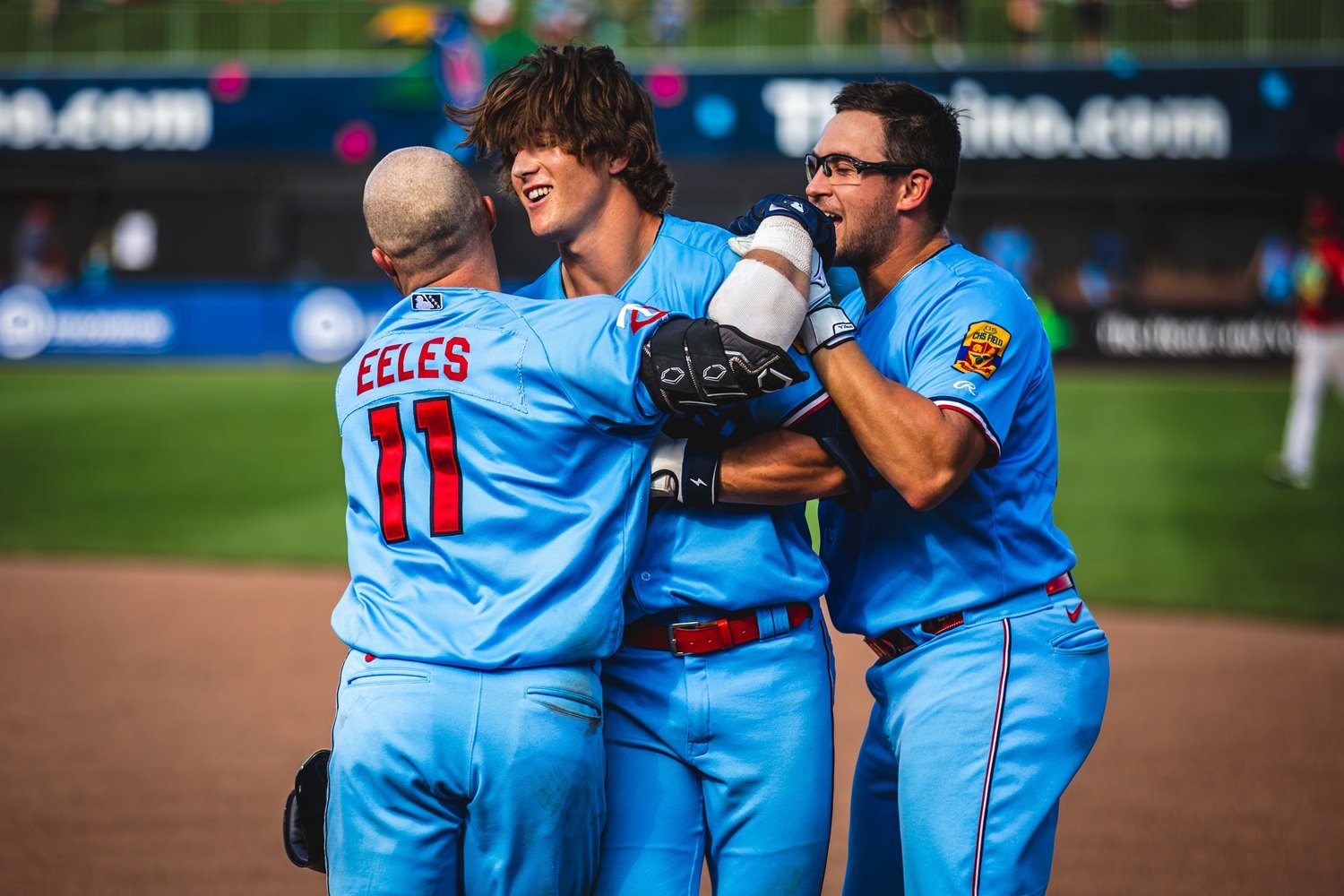 "Don't Give Up. Don't Every Give Up." St. Paul Saints TRANSACTIONS Hard to believe, but there were no transactions in the Twins organization on Sunday. SAINTS SENTINEL St. Paul 10, Worcester 9 Box Score On Sunday, it was Connor Gillispie who started. He gave up six runs on six hits and a walk over just two innings. Three of those hits left the ballpark. Jarret Whorff pitched the third inning and gave up one run on two hits and two walks. Randy Dobnak came on to start the fourth inning and his job was to eat as many innings as possible. He gave up two runs on five hits and four walks in four innings. Honestly, that line is pretty incredible when you consider that just 35 of his 77 pitches were strikes. Through six innings, the Saints had two runs on four hits, and Payton Eeles had three of the hits and both RBI. Then came the seventh inning and everything switched. In the top of the seventh, Dobnak gave up two singles and a walk to load the bases with nobody out. At that point, he struck out Jhostynxon Garcia. Kristian Campbell lined out, and then Vaughn Grissom flew out to end the inning. It’s strange to say, but keeping the Saints deficit to just seven was a momentum changer. The WooSox brought Austin Adams into the game. No, not the Austin Adams that pitched on the 2019 Twins Bomba Squad. The “other” Austin Adams. Payton Eeles led off with his fourth hit of the game. After one out, Jonah Bride walked. Ryan Fitzgerald doubled to drive in Eeles. Jose Miranda hit an infield single to drive in Bride and make it 9-4. Newcomer Jhonny Pereda walked to load the bases. Will Holland lined a single to left to make it 9-5. Adams’ day was done. Alex Hoppe came in to replace him. Austin Martin welcomed him to the game with a bases-clearing double that made it a 9-8 game. Erasmo Ramirez came into the game. He worked the final two innings, striking out four batters and keeping Worcester from adding to their run total. In the bottom of the eighth, Hoppe struck out the side. Old Friend Hobie Harris came on to try to get the final three outs in the bottom of the ninth. Jose Miranda led off the inning with a single to center. Anthony Prato pinch ran for him. With one out, Edouard Julien pinch hit for Will Holland. He singled to left with Prato advancing to third. Austin Martin grounded to second, but Vaughn Grissom’s throw to second was wild. Prato scored, but Julien went to third and Martin got to second. The game was tied. Luke Keaschall came up and singled to left to drive in Julien with the game-winning run. Eeles led the way with his 4-for-5 day. He also had two stolen bases. Jose Miranda went 3-for-5 to raise his average to .204. Martin hit the huge, three-run double and walked twice. He drove in four runs. Holland was 1-for-2 with two walks. Pereda and Bride each walked twice. Check out one of our sister sites, Talk Sox, for more on the Red Sox, and see who their top 20 prospects are (post Roman Anthony and Marcelo Mayer). WIND SURGE WISDOM Wichita 6, Frisco 4 Box Score I assume that it will be a rarity, especially in front of the home fans, but both Walker Jenkins and Kaelen Culpepper got the day off on Sunday. The Surge got things going right away in the first inning. With two outs, Kala’i Rosario singled, and Ricardo Olivar walked. Andrew Cossetti followed with his eighth home run of the season to give Wichita the early 3-0 lead. It was the longest home run hit in Wichita this season. It was measured at 462 feet. The RoughRiders got one back in the top of the second, but Wichita responded with a run in the bottom of the inning. Jose Salas led off with a single. With one out, he went to third on a Jake Rucker double. Kyler Fedko brought him in with a sacrifice fly to make it 4-1. Darren Bowen made the start for the Wind Surge. He gave up one run on three hits over the first four innings. He had five strikeouts and no walks. John Stankiewicz gave up one hit over two scoreless innings. He had two strikeouts without any walks. With one out in the bottom of the sixth, Cossetti provided a little insurance with a solo homer, his ninth of the season. It proved important. Aaron Rozek came in for the seventh inning. A strikeout was followed by a single and a walk. Then a shoulda-been double player grounder turned into an error to keep the inning going. A soft single to right scored two runs, and a third run scored on a wild pitch. Rozek got out of the inning with the team still leading 5-4. In the bottom of the eighth inning, Kala’i Rosario led off with his 13th home run of the season. With one out, Cossetti came to the plate and he got a hold of another one. Unfortunately, it was caught at the fence. Kade Bragg came in and struck out two batters in a scoreless eighth inning. Cole Percival struck out one in a scoreless ninth to record his third save since joining Wichita. Cossetti was 2-for-4 with the two homers and four RBI. Rosario was 2-for-4 with the solo homer. Salas had a single and a walk. He also stole his fifth base. It was a terrific home series for the Wind Surge as they won five of six games. Oh, and Andrew Cossetti gets the Defensive Play of the Day too. KERNELS NUGGETS Cedar Rapids 4, Ft. Wayne 9 Box Score Jose Olivares started for the Kernels and gave up three runs on seven hits in five innings. He walked two and had three strikeouts. Olivares gave up single runs in the first, fourth, and fifth innings. Andy Lugo hit a second inning double to drive in Poncho Ruiz with the team’s first run. Going into the bottom of the sixth, the Kernels were down 3-1. Billy Amick led off that inning with a double. With one out, Poncho Ruiz singled to third. After a second out, Jaime Ferrer doubled to drive in a run. After a pitching change, Justin Connell hit a double to drive in two runs and give the Kernels a 4-3 lead. However, it was all TinCaps after that. Tanner Hall came on in relief. In 1 1/3 innings, he gave up four runs on four hits and three walks. Hunter Hoopes came into a bases-loaded situation but got two outs without allowing an inherited runner to score. He faced five batters and got all five out, three on strikeouts. Jeremy Lee came in for the ninth inning and gave up two runs on three hits. Ferrer went 3-for-4 with his 14th double. Ruiz was 2-for-4 with his 10th double. Billy Amick hit his 11th double and was hit by two pitches. Maddux Houghton's defense in center field is remarkable. He made a couple of great defensive plays. Play 1 and Play 2. Check out our new sister site, Padres Mission and see who their top 20 prospects are. MUSSEL MATTERS Fort Myers 0, Lakeland 2 Box Score The Mussels got some pretty solid pitching throughout this game. Unfortunately, the bats weren’t able to complement them at all. Eli Jones started and went the first four innings. He gave up one run on two hits. He walked none and had four strikeotus. Matt Gabbert Pitched a scoreless fifth inning. Jakob Hall worked two scoreless innings Tyler Stasiowski came in and gave up one run on three hits and a walk. He also had a wild pitch. He recorded just one out and left the game with the bases loaded. Zander Sechrist came in and got the final two outs of the inning without any additional damage. He also pitched a scoreless ninth frame. The Mussels had just five hits and walked twice. Jay Thomason and Yohander Martinez each had a single and a walk. COMPLEX CHRONICLES FCL Championship Series Game 1 (Best of 3) FCL Twins 1, FCL Blue Jays 2 Box Score The FCL Twins had 39 regular-season wins, best in the Florida Complex League. They beat the FCL Tigers on Saturday 4-3 to advance to the championship series. Game 1 was played in Dunedin. Game 2 and Game 3 (if necessary) will be in Fort Myers. This game was quite the pitchers’ duel. There was no score through the first six innings. Juan Cota, the Twins Daily Short-Season Minor League Pitcher of the Year in 2023, made the start for the Twins and tossed five shutout innings. He gave up three hits and had one walk. He was efficient with his pitches, no strikeouts, but giving five innings means the team needed just two pitchers in the game. Teague Conrad came out of the bullpen and tossed scoreless innings in the sixth and seventh frames. On the other side, the Blue Jays starter was 19-year-old Sann Omosako, a right-hander from Brazil. He matched Cota by putting five zeroes on the board. The Twins had four hits and two walks off of him, but they couldn’t come up with the big hit in a big spot. Rehabbing former big-league All Star Joe Mantiply pitched a scoreless sixth inning for the Blue Jays. Mantiply was replaced by Brett Garcia in the top of the seventh. Irvin Nunez started the inning with a walk. He advanced to third base on a Yandro Hernandez double. After a groundout to the pitcher for the first out, Isaac Pena singled to center to drive in Nunez with the game’s first run. Unfortunately, they were unable to drive in Hernandez with a second run. Conrad stayed in the game for the eighth inning. It started a bit ominously as he hit the first batter. The next batter reached on a very slow roller to shortstop, an infield single. However, Conrad got a ground ball to third baseman Yilber Herrera who touched third and threw across the diamond to first to complete the double play. Could they get out of the jam? No. The next batter doubled to drive in the Jays first run and tie the game at 1-1. That was followed with a single to drive in the second run. Now holding the 2-1 lead, the Jays turned to Franly Urena. He struck out the side in efficient, dominant fashion. The Twins managed just six hits and three walks. Eduardo Beltre went 2-for-4. PLAYERS OF THE DAY Hitter of the Day Andrew Cossetti (Wichita): 2-for-4, 2 HR(9), 2 R, 4 RBI, K Pitcher of the Day Juan Cota (FCL Twins): 5 IP, 3 H, 0 R, 1 BB, 0 K. PROSPECT SUMMARY Check out the Prospect Tracker for much more on our Twins Top 20 prospects after seeing how they did on Sunday. #2 - Luke Keaschall (Minnesota) - 1-for-6, GW RBI, 2 K (DHd) #8 - Gabriel Gonzalez (Wichita) - 0-for-4, K. #11 - Brandon Winokur (Cedar Rapids) - 0-for-4, K (played SS) #14 - Kyle DeBarge (Cedar Rapids) - 0-for-5, K (played 2B) #16 - Billy Amick (Cedar Rapids) - 1-for-2, 2 HBP, 2B(11), R, K (played 1B) #19 - Eduardo Beltre (FCL Twins) - 2-for-4 (DHd) #20 - Ricardo Olivar (Wichita) - 0-for-3, BB, R, K MONDAY PITCHING PROBABLES FCL Blue Jays @ FCL Twins (Best of 3, Game 2, 11:00) - TBD DSL Nationals @ DSL Twins (10:00 AM CT) - TBD CURRENT W-L Records Minnesota Twins: 50-55 St. Paul Saints: 46-54 Wichita Wind Surge: 52-44 Cedar Rapids Kernels: 56-39 Fort Myers Mighty Mussels: 42-52 FCL Twins: 39-20 (playoffs, 1-1) DSL Twins: 15-24 Please feel free to ask questions about the teams, the rosters, and discuss Sunday’s games, or anything else Twins minor-league related!
- 28 comments
-
- 5
-
-
-
- payton eeles
- jose miranda
- (and 8 more)
-
Good usage of receipts. The nice part about this site is we like varying opinions. That's a good thing. As it relates to these guys, I definitely thought that both could get MLB time this year, but: As for E-Rod, the Twins were going to start the season with Buxton, Wallner, Bader, Larnach... and Martin and Keirsey were going to be called up first. They wouldn't call up E-Rod to be a backup. Maybe if there was a major injury. As for Raya, he was behind Lopez, Ober, Ryan, SWR, Paddack, Zebby, Festa, and probably Morris, Lewis... and even a guy like McCaughan early in the year. In other words, if the point where Raya was going to be a key contributor, things would have had to go very wrong.
- 9 replies
-
- 2
-
-
-
- ramiro dominguez
- yilber herrera
- (and 3 more)
