Nick Nelson
-
Posts
8,327 -
Joined
-
Last visited
-
Days Won
56
Content Type
Profiles
News
Minnesota Twins Videos
2026 Minnesota Twins Top Prospects Ranking
2022 Minnesota Twins Draft Picks
Minnesota Twins Free Agent & Trade Rumors, Notes, & Tidbits
Guides & Resources
2023 Minnesota Twins Draft Picks
The Minnesota Twins Players Project
2024 Minnesota Twins Draft Picks
2025 Minnesota Twins Draft Pick Tracker
2026 Minnesota Twins Draft Tracker: Picks & Bonuses
Forums
Blogs
Events
Store
Downloads
Gallery
Everything posted by Nick Nelson
-
 There's no two ways about it: Having your favorite team essentially eliminate itself from contention by early June is demoralizing. If you're looking for some glimmers of positivity and optimism, though, these individual player trends are worth focusing on. With the Twins boasting one of the worst records in the league and continuing to affirm it with their play week after week, it's natural to start thinking about the big picture, and wondering what the path forward looks like. Has their championship window closed? Is a full-on rebuild in the offing? Or is this a bump in the road that calls for retooling on the fly and getting back after it in 2022? I personally lean toward the latter, for a number of different reasons. Among them: these five key positive player trends all support the idea that Minnesota could move back into contention relatively quickly. 1. Jorge Polanco Is Returning to Form I'll admit: I was about ready to give up on Polanco as a standout player. In mid-April I openly wondered when Rocco Baldelli's faith in the infielder would be shaken, noting that Polanco continued to hit in critical lineup spots regularly despite woeful production over his past full season's worth of games. Incidentally, Baldelli's confidence DID appear to diminish around that time ... temporarily. In the latter half of April and into May, Polanco frequently found himself hitting in the bottom half of the lineup, which had almost never happened under Rocco's watch. We also learned somewhere around this time that Polanco was once again being bothered by his twice-repaired ankle. Things looked grim. But to his great credit, the 27-year-old started to find himself at the plate again. After finishing April with a miserable .555 OPS, Polanco raised that mark 150 points by slashing .253/.343/.494 in May. He's kept clicking in June, where he is thus far 8-for-24 with two doubles and a home run. Batted-ball data backs up the improved production; as Nash Walker points out, Polanco leads all second basemen in hard-hit rate since the start of May. The ankle might still be barking, but Polanco is finding a way to battle through and get the job done. Right now he actually has a higher hard-hit rate, barrel rate, and average exit velocity than any prior season in his career. Dude is mashing. He's restoring his status as a building-block type player, which is excellent news because Polanco remains under contract for at least the next two seasons, with club options for 2024 and '25. #2. Taylor Rogers Is as Good as Ever His frequent struggles in 2020, combined with the inherent volatility of relief pitchers, led plenty of us to wonder whether Rogers' days as a top-tier relief arm were over – to the extent that bringing him back in arbitration for $6 million was a subject of some debate. Am I pleased to say those debates look pretty silly now. Shaking off his mediocre work in the short season, Rogers has been phenomenal here in 2021, posting a 2.57 ERA and 2.59 WHIP across 24 ⅓ frames. His 12.6 K/9 rate would be a career-high, as would his 12.3% swinging strike rate, and he ranks 18th among all MLB relievers in fWAR. Take a look at his Statcast measurements and all those bright red circles. Under team control for one more year after this, Rogers is proving he's someone the Twins can count on as an anchor in their bullpen. They've got much work to do with this unit, but having a centerpiece of his caliber makes a big difference. He's been among the few bright spots in a disastrous relief corps, but not the only one: Tyler Duffey's recent improvement and Luke Farrell's impressive early work are also encouraging developments. #3. Josh Donaldson Is an Iron Man Again I'm not sure Donaldson's season can be viewed as any kind of glowing positive in the grand scheme, but the fact he's been able to stay on the field as a regular fixture is huge, and frankly seemed unfathomable two months ago. JD's first season with the Twins was ruined by a reemergence of his calf issues, framing his health as a primary question mark during the ensuing offseason, and he lasted all of one plate appearance before going down this year. With the Twins still on the hook for $21 million annually for three more seasons, Donaldson was quickly beginning to look like a constrictive burden in their roster construction efforts going forward. The third baseman ended up missing only 10 games following the mild hamstring strain in Game 1. Since returning on April 14th he's played in 45 of a possible 47 games, starting 43 of them. Even with the missed time, Donaldson ranks third on the team in plate appearances. Since coming off IL, he leads all Twins in both PAs and games played. His performance may leave something to be desired and he runs like he's dragging an anvil, but at 35, Donaldson is showing he can hold up as an everyday player and he's still clobbering the ball even if the results haven't been there. The outlook here has improved drastically. This team was going to be in serious trouble if things continued to devolve. #4. Rookies Are Ready for the Challenge In a season where so much has gone wrong, it would only make sense for rookies to come up and look totally overwhelmed. I mean, when even the established veterans are looking lost, how are young kids supposed to find their way? Instead, while there have been exceptions, most of the newcomers on this roster have risen to the occasion. I talked in the latest Week in Review column about the impressive early showings from pitcher Bailey Ober and infielder Nick Gordon. Alex Kirilloff has hit the ground running, although his balky wrist currently appears to be sapping all his power. Trevor Larnach looks like a seasoned vet in the batter's box. These guys could all play fairly significant roles on a competing Twins team in 2022. Regardless of how they supplement from outside, there's no doubt that Minnesota's return to contention will need to be fueled internally to a large degree. The young wave is mostly inspiring confidence right now. #5. Mitch Garver Is Elite Offensively Again Garver went through an awful ordeal in Baltimore last week, and he'll probably be sidelined for a while. But, so long as he doesn't choose to quit baseball (I'd consider it), there's plenty of reason to be excited for his return. In the month prior to his tremendously unfortunate mishap behind the plate, Garver wasn't just hitting well – he was dominating like few other hitters in the league. From May 2nd to June 1st he slashed .286/.444/.589 with four homers, five doubles, and a 17-to-16 K/BB ratio. His OPS during that span ranked third among all AL hitters and his .440 wOBA was almost 60 points higher than the next-best MLB catcher (Yasmani Grandal of the White Sox). In the aftermath of a hideous slump that lasted throughout 2020 and carried over into the first month of 2021, this awakening from Garver has been reinvigorating. He's not just getting lucky and running into meatballs – he has fundamentally transformed his offensive game and turned back into the selective, smart, fastball-crushing force that earned a Silver Slugger award in 2019. Garver was playing at an MVP-caliber level in the month before he went down, just as he did throughout the balance of 2019. If he can come back and sustain anywhere near that level, he'll be an enormous difference-maker, and he's controllable through the next two seasons. Feeling Better? I know I am. This team has a whole host of troubles right now but they're not rotting away at the core. In addition to the names mentioned above, they figure to get back their top two starters (José Berríos and Kenta Maeda) and their best player (Byron Buxton), although in two of those cases it could be the last ride here. Now, those guys have their own set of question marks – can Maeda get healthy and shake off his uncharacteristic early-season struggles, and can Buxton ever stay on the field for two weeks consecutively – but it'd be silly to give up on this team and blow it up. Here's hoping the rest of the season gives us more silver linings to build on. As we learned not too long ago when a 78-win also-ran in 2018 blossomed into a 101-win world-beater in 2019 – not to mention the vice-versa scenario this year – the tides can turn quickly. MORE FROM TWINS DAILY — Latest Twins coverage from our writers — Recent Twins discussion in our forums — Follow Twins Daily via Twitter, Facebook or email View full article
 -
Week in Review: Still Sinking
Nick Nelson replied to Nick Nelson's topic in Twins Daily Front Page News
An update on the "Trending Storyline" item:- 43 replies
-
- 1
-

-
- nick gordon
- matt shoemaker
- (and 1 more)
-
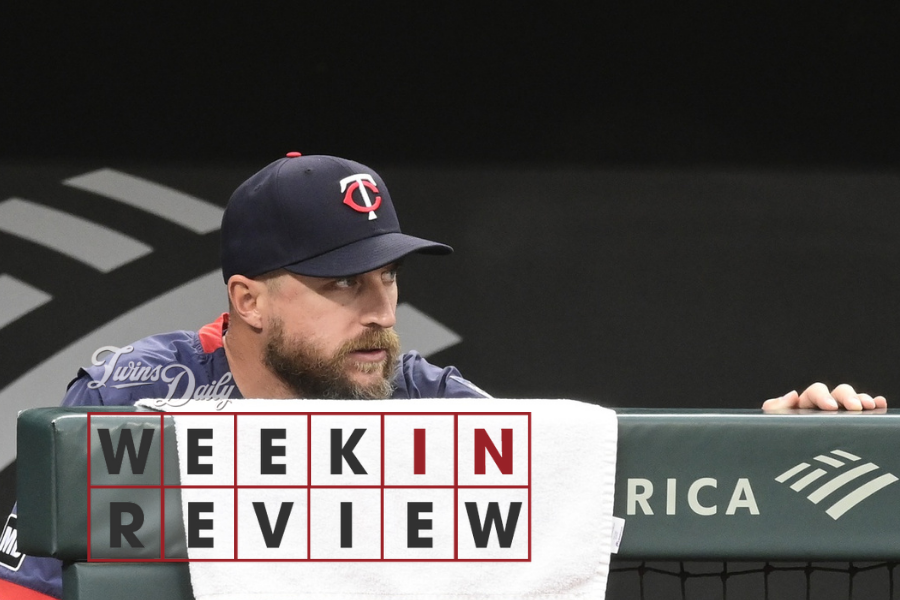 Weekly Snapshot: Mon, 5/31 through Sun, 6/6 *** Record Last Week: 3-4 (Overall: 24-35) Run Differential Last Week: -13 (Overall: -35) Standing: 5th Place in AL Central (12.5 GB) Last Week's Game Recaps: Game 53 | MIN 3, BAL 2: Twins Edge O's Behind Strong Berríos Effort Game 54 | BAL 7, MIN 4: Orioles Snap Losing Streak Against Twins Game 55 | BAL 6, MIN 3: Twins Sink to New Low, Drop Series in Baltimore Game 56 | KC 6, MIN 5: Bats Unable to Overcome Happ's Poor Start Game 57 | KC 14, MIN 5: Okay, Now THIS Was a New Low Game 58 | MIN 5, KC 4: Home Runs Power Minnesota to Narrow Victory Game 59 | MIN 3, KC 2: Strong Effort from Staff Aids Another Close Win NEWS & NOTES This team is absolutely ravaged. A nonstop barrage of injuries has forced the Twins to reach into the deepest corners of their minor-league depth, routinely fielding lineups populated by guys playing out of position or above their appropriate competition level. Not only have the injuries been plentiful, but also astoundingly inconvenient and untimely. For example, our last Week in Review column noted that "the biggest bright spot on offense right now has got to be Mitch Garver, who suddenly looks like his old Silver Slugger self." Naturally, in the first inning of the first game last week, Garver went down. The catcher experienced a brutal mishap that no one would wish upon their worst enemy, taking a foul tip directly in the groin and requiring emergency surgery that night. He'll be sidelined for the foreseeable future. In last week's column we also noted "Rocco Baldelli's made no secret of the fact that he'll be riding Rob Refsnyder hard in the short-term, and the manager will have to hope his opportunistic 30-year-old can stay hot (and healthy)." Naturally, in the same game where Garver got hurt, Refsnyder ran into the outfield wall in Baltimore and soon after went on the shelf with a concussion. With Refsnyder joining Byron Buxton, Max Kepler and Jake Cave on IL, the Twins had little choice but to call up prospect Gilberto Celestino, their only available center fielder on the 40-man roster. The 22-year-old, who'd played less than two dozen games above Single-A in the minors, has looked like a player that belongs nowhere near the big leagues, and I don't think the Twins would even deny that. But their alternative options are basically non-existent. Also hitting the Injured List this past week: relievers Caleb Thielbar (groin strain) and Shaun Anderson (blisters). Juan Minaya was designated for assignment and Dakota Chalmers was claimed off waivers by the Cubs. Griffin Jax and Bailey Ober were recalled, with the latter making an impressive start in Kansas City on Sunday. HIGHLIGHTS In a season where postseason hopes have been effectively snuffed out by early June, you have to focus on the smaller individual storylines to find fulfillment as a fan – especially those with potential to impact the long-term outlook as this team aims to pick up the pieces and remake itself with help from the internal pipeline. Ober is an intriguing asset from this standpoint. In a spot start on Sunday, he tossed four innings of one-run ball with four strikeouts and no walks. He induced an impressive eight swinging strikes on 51 pitches, flashing 93-94 MPH on the gun repeatedly with his four-seamer. Despite an intimidating 6-foot-9 frame, Ober has generally been viewed as having a limited ceiling, due mainly to his middling fastball velocity as a starter. While coming up as a prospect he usually worked in the high 80s or low 90s. The increase we're seeing now plays up his secondary stuff, and when you add strong command to the mix, you've got a pitcher with some real upside. He has a 21-to-5 K/BB ratio in 16 innings at Triple-A and now an 8-to-1 K/BB ratio in eight innings with the Twins. He should stick in the rotation and get a long look this summer. Another prospect taking advantage of his unexpected opportunity and running with it: Nick Gordon, who provided a rare heartwarming highlight amidst a barrage of uninspiring performances for the Twins last week. With his father Tom "Flash" Gordon watching from the stands on Friday, Gordon went 3-for-4 with his first major-league home run. In total, Gordon made four starts and went 7-for-16 (.438) with two RBIs and a stolen base. He's slashing .400/.429/.550 in his young big-league career, and dating back to 2019 he now has a .312 batting average and .474 slugging percentage in 340 at-bats between Triple-A and the majors. He's 22-for-26 on steal attempts during that span. Through all the tribulations he's faced over these past few years, Gordon has stepped it up on the field and really produced when given a chance. This season is a giant bummer, obviously, but if the Twins can take the opportunity to get extended looks at fringe-type prospects like Ober and Gordon, and find that maybe they actually have something in them, that's a big win with possible implications going forward. LOWLIGHTS It needs to be stated: The front office completely whiffed on nearly every significant pitching acquisition during the offseason. Starters, relievers, free agents, trades ... they've almost all panned out poorly. None worse than Matt Shoemaker, who received a $2 million deal to plug in as Minnesota's No. 5 starter and has been a total disaster. His start on Friday was one of the worst ever seen from a Twins pitcher, as the right-hander surrendered nine runs (eight earned) on eight hits and two walks while recording one out. The catastrophic performance inflated his ERA to 7.28 and tagged him with his league-leading seventh loss. Shoemaker absolutely deserves to be out of the rotation but that's not happening at this point, due to the aforementioned lack of bodies. The Twins can't afford to give away any of their MLB depth, no matter how atrocious it may be. Fellow free agent starter J.A. Happ hasn't been quite as bad as Shoemaker, but he sure hasn't been good. Happ gave up five earned runs on nine hits (three home runs) in five innings against Kansas City the previous night. He now owns a 5.61 ERA to go along with a 4.77 FIP. That includes a 10.17 ERA over his past five turns, during which opponents have slashed .360/.405/.680 against the veteran, who looks pretty cooked by now. Bullpen pickups have been similarly disappointing, just about across the board. Centerpiece free agency addition Alex Colomé gave up a two-run homer in Baltimore; his modest momentum built up in early May has now completely evaporated. Colomé has a 9.00 ERA in his past six outings and opponents are slashing .389/.450/.889. The team's lone trade acquisition of the winter, Anderson, pitched badly in his only appearance of the week before going back on IL. We've already seen Derek Law and Brandon Waddell pass through with lackluster stints. What happened to the mojo and moxie of this front office and coaching staff when it comes to identifying and developing arms? It's the top story of the season, in my opinion. Entering play on Sunday, the Twins had the third-worst ERA in the American League (ahead of only the Orioles and Angels) and the second-worst pitching WAR in the major leagues (ahead of only the Diamondbacks). The bats have their issues and the lineup is decimated but this lousy pitching staff gives the team no real shot at getting on any kind of sustained run. TRENDING STORYLINE It appears the Twins may be getting back two of their most critical pieces in the near future. Buxton, who has now missed a full month and counting since straining his hip on May 6th, completed a baserunning program without issue and will likely head on a rehab stint in the days ahead. It wouldn't be shocking to see him back in the outfield for next weekend's series against Houston. Meanwhile, Kenta Maeda went through a 35-pitch bullpen session on Sunday morning and came out of it fine. He too is on the verge of a rehab assignment, which presumably would entail one or two starts with the Saints. Will the time off prove an elixir for his woefully underwhelming performance up to this point? The Twins are probably in too deep of a hole, and plagued by too many flaws on the roster, for an historical comeback thrusting them back into contention to be realistic. If such a thing was ever going to happen though, getting back their best player and best pitcher at full strength will absolutely need to be a part of the equation. LOOKING AHEAD Well, here we go. After going 7-6 during their two-week soft patch against the Orioles and Royals, the Twins are about to see the difficulty level steepen sharply. The dreaded Yankees and Astros are coming to town. This could get ugly. (Uglier, I should say.) TUESDAY, 6/8: YANKEES @ TWINS – LHP Jordan Montgomery v. RHP Michael Pineda WEDNESDAY, 6/9: YANKEES @ TWINS – RHP Gerrit Cole v. RHP Randy Dobnak THURSDAY, 6/10: YANKEES @ TWINS – TBD v. LHP J.A. Happ FRIDAY, 6/11: ASTROS @ TWINS – RHP José Urquidy v. RHP José Berríos SATURDAY, 6/12: ASTROS @ TWINS – RHP Luis Garcia v. RHP Bailey Ober SUNDAY, 6/13: ASTROS @ TWINS – LHP Framber Valdez v. RHP Michael Pineda
- 43 comments
-
- 1
-
-
- nick gordon
- matt shoemaker
- (and 1 more)
-
It was yet another losing week for the Minnesota Twins – one that included some new lows with a series loss against the last-place Orioles in Baltimore and a humiliating blowout in Kansas City. Hurt and humbled, the wayward Twins limp forth in this summer of despair. Amid all of the misery, there are positives worth gravitating toward. Weekly Snapshot: Mon, 5/31 through Sun, 6/6 *** Record Last Week: 3-4 (Overall: 24-35) Run Differential Last Week: -13 (Overall: -35) Standing: 5th Place in AL Central (12.5 GB) Last Week's Game Recaps: Game 53 | MIN 3, BAL 2: Twins Edge O's Behind Strong Berríos Effort Game 54 | BAL 7, MIN 4: Orioles Snap Losing Streak Against Twins Game 55 | BAL 6, MIN 3: Twins Sink to New Low, Drop Series in Baltimore Game 56 | KC 6, MIN 5: Bats Unable to Overcome Happ's Poor Start Game 57 | KC 14, MIN 5: Okay, Now THIS Was a New Low Game 58 | MIN 5, KC 4: Home Runs Power Minnesota to Narrow Victory Game 59 | MIN 3, KC 2: Strong Effort from Staff Aids Another Close Win NEWS & NOTES This team is absolutely ravaged. A nonstop barrage of injuries has forced the Twins to reach into the deepest corners of their minor-league depth, routinely fielding lineups populated by guys playing out of position or above their appropriate competition level. Not only have the injuries been plentiful, but also astoundingly inconvenient and untimely. For example, our last Week in Review column noted that "the biggest bright spot on offense right now has got to be Mitch Garver, who suddenly looks like his old Silver Slugger self." Naturally, in the first inning of the first game last week, Garver went down. The catcher experienced a brutal mishap that no one would wish upon their worst enemy, taking a foul tip directly in the groin and requiring emergency surgery that night. He'll be sidelined for the foreseeable future. In last week's column we also noted "Rocco Baldelli's made no secret of the fact that he'll be riding Rob Refsnyder hard in the short-term, and the manager will have to hope his opportunistic 30-year-old can stay hot (and healthy)." Naturally, in the same game where Garver got hurt, Refsnyder ran into the outfield wall in Baltimore and soon after went on the shelf with a concussion. With Refsnyder joining Byron Buxton, Max Kepler and Jake Cave on IL, the Twins had little choice but to call up prospect Gilberto Celestino, their only available center fielder on the 40-man roster. The 22-year-old, who'd played less than two dozen games above Single-A in the minors, has looked like a player that belongs nowhere near the big leagues, and I don't think the Twins would even deny that. But their alternative options are basically non-existent. Also hitting the Injured List this past week: relievers Caleb Thielbar (groin strain) and Shaun Anderson (blisters). Juan Minaya was designated for assignment and Dakota Chalmers was claimed off waivers by the Cubs. Griffin Jax and Bailey Ober were recalled, with the latter making an impressive start in Kansas City on Sunday. HIGHLIGHTS In a season where postseason hopes have been effectively snuffed out by early June, you have to focus on the smaller individual storylines to find fulfillment as a fan – especially those with potential to impact the long-term outlook as this team aims to pick up the pieces and remake itself with help from the internal pipeline. Ober is an intriguing asset from this standpoint. In a spot start on Sunday, he tossed four innings of one-run ball with four strikeouts and no walks. He induced an impressive eight swinging strikes on 51 pitches, flashing 93-94 MPH on the gun repeatedly with his four-seamer. Despite an intimidating 6-foot-9 frame, Ober has generally been viewed as having a limited ceiling, due mainly to his middling fastball velocity as a starter. While coming up as a prospect he usually worked in the high 80s or low 90s. The increase we're seeing now plays up his secondary stuff, and when you add strong command to the mix, you've got a pitcher with some real upside. He has a 21-to-5 K/BB ratio in 16 innings at Triple-A and now an 8-to-1 K/BB ratio in eight innings with the Twins. He should stick in the rotation and get a long look this summer. Another prospect taking advantage of his unexpected opportunity and running with it: Nick Gordon, who provided a rare heartwarming highlight amidst a barrage of uninspiring performances for the Twins last week. With his father Tom "Flash" Gordon watching from the stands on Friday, Gordon went 3-for-4 with his first major-league home run. In total, Gordon made four starts and went 7-for-16 (.438) with two RBIs and a stolen base. He's slashing .400/.429/.550 in his young big-league career, and dating back to 2019 he now has a .312 batting average and .474 slugging percentage in 340 at-bats between Triple-A and the majors. He's 22-for-26 on steal attempts during that span. Through all the tribulations he's faced over these past few years, Gordon has stepped it up on the field and really produced when given a chance. This season is a giant bummer, obviously, but if the Twins can take the opportunity to get extended looks at fringe-type prospects like Ober and Gordon, and find that maybe they actually have something in them, that's a big win with possible implications going forward. LOWLIGHTS It needs to be stated: The front office completely whiffed on nearly every significant pitching acquisition during the offseason. Starters, relievers, free agents, trades ... they've almost all panned out poorly. None worse than Matt Shoemaker, who received a $2 million deal to plug in as Minnesota's No. 5 starter and has been a total disaster. His start on Friday was one of the worst ever seen from a Twins pitcher, as the right-hander surrendered nine runs (eight earned) on eight hits and two walks while recording one out. The catastrophic performance inflated his ERA to 7.28 and tagged him with his league-leading seventh loss. Shoemaker absolutely deserves to be out of the rotation but that's not happening at this point, due to the aforementioned lack of bodies. The Twins can't afford to give away any of their MLB depth, no matter how atrocious it may be. Fellow free agent starter J.A. Happ hasn't been quite as bad as Shoemaker, but he sure hasn't been good. Happ gave up five earned runs on nine hits (three home runs) in five innings against Kansas City the previous night. He now owns a 5.61 ERA to go along with a 4.77 FIP. That includes a 10.17 ERA over his past five turns, during which opponents have slashed .360/.405/.680 against the veteran, who looks pretty cooked by now. Bullpen pickups have been similarly disappointing, just about across the board. Centerpiece free agency addition Alex Colomé gave up a two-run homer in Baltimore; his modest momentum built up in early May has now completely evaporated. Colomé has a 9.00 ERA in his past six outings and opponents are slashing .389/.450/.889. The team's lone trade acquisition of the winter, Anderson, pitched badly in his only appearance of the week before going back on IL. We've already seen Derek Law and Brandon Waddell pass through with lackluster stints. What happened to the mojo and moxie of this front office and coaching staff when it comes to identifying and developing arms? It's the top story of the season, in my opinion. Entering play on Sunday, the Twins had the third-worst ERA in the American League (ahead of only the Orioles and Angels) and the second-worst pitching WAR in the major leagues (ahead of only the Diamondbacks). The bats have their issues and the lineup is decimated but this lousy pitching staff gives the team no real shot at getting on any kind of sustained run. TRENDING STORYLINE It appears the Twins may be getting back two of their most critical pieces in the near future. Buxton, who has now missed a full month and counting since straining his hip on May 6th, completed a baserunning program without issue and will likely head on a rehab stint in the days ahead. It wouldn't be shocking to see him back in the outfield for next weekend's series against Houston. Meanwhile, Kenta Maeda went through a 35-pitch bullpen session on Sunday morning and came out of it fine. He too is on the verge of a rehab assignment, which presumably would entail one or two starts with the Saints. Will the time off prove an elixir for his woefully underwhelming performance up to this point? The Twins are probably in too deep of a hole, and plagued by too many flaws on the roster, for an historical comeback thrusting them back into contention to be realistic. If such a thing was ever going to happen though, getting back their best player and best pitcher at full strength will absolutely need to be a part of the equation. LOOKING AHEAD Well, here we go. After going 7-6 during their two-week soft patch against the Orioles and Royals, the Twins are about to see the difficulty level steepen sharply. The dreaded Yankees and Astros are coming to town. This could get ugly. (Uglier, I should say.) TUESDAY, 6/8: YANKEES @ TWINS – LHP Jordan Montgomery v. RHP Michael Pineda WEDNESDAY, 6/9: YANKEES @ TWINS – RHP Gerrit Cole v. RHP Randy Dobnak THURSDAY, 6/10: YANKEES @ TWINS – TBD v. LHP J.A. Happ FRIDAY, 6/11: ASTROS @ TWINS – RHP José Urquidy v. RHP José Berríos SATURDAY, 6/12: ASTROS @ TWINS – RHP Luis Garcia v. RHP Bailey Ober SUNDAY, 6/13: ASTROS @ TWINS – LHP Framber Valdez v. RHP Michael Pineda View full article
- 43 replies
-
- 2
-
-
- nick gordon
- matt shoemaker
- (and 1 more)
-
It was a winning week for the Minnesota Twins, but not a particularly impressive one. Once again, a step forward was immediately followed by a regressive stumble, with the weekend's deflating series loss against Kansas City erasing positive vibes and progress from a sweep over Baltimore. At this point, it's hard to escape the conclusion that the perpetually underperforming Twins are what their record says they are. Weekly Snapshot: Mon, 5/24 through Sun, 5/30 *** Record Last Week: 4-2 (Overall: 21-31) Run Differential Last Week: +2 (Overall: -22) Standing: 5th Place in AL Central (11.0 GB) Last Week's Game Recaps: Game 47 | MIN 8, BAL 3: Rare Late-game Surge Pushes Twins Past O's Game 48 | MIN 7, BAL 4: Lineup Comes Through Again with Seven Runs Game 49 | MIN 3, BAL 2: Michael and Miguel Lead Minnesota to First Sweep Game 50 | KC 8, MIN 3: Royals Cool Off Twins in Deflating Loss Game 51 | MIN 6, KC 5: Twins Fend Off KC Rally and Hold On Game 52 | KC 6, MIN 3: Fading Twins Drop Another Home Series NEWS & NOTES This is the ninth Week in Review column we've filed this season, and it's the first since Week 1 – when the Twins won their season-opening series in Milwaukee, two games to one – that we're reviewing a winning week. As winning weeks ago, however, this one was remarkably uninspiring and unfulfilling. They really needed to go 5-1 at least in these six games at home against bad teams, but instead came away with just four wins, and might've been lucky to get that. The Twins required a late-game rally to beat Baltimore on Monday, and barely eked out a one-run victory on Wednesday to clinch the sweep. In a three-game weekend series against the Royals, Minnesota was twice beaten handily, and scraped out a one-run win in the other. This is not a great team dominating bad competition. This is a bottom-dweller with its hands full facing the same. On the health front, it was another week of bad news and foreboding developments for the Twins. They lost two more key pieces to the Injured List, with Luis Arraez (shoulder) and Max Kepler (hamstring) hitting the shelf after trying to play through their respective ailments. There's a belief that Kepler could return soon after his 10-day window expires, but Arraez is looking at a lengthier absence, as his shoulder injury appears to be more serious than initially thought. Meanwhile, Kenta Maeda is also facing an extended period of unavailability. Rocco Baldelli said on Sunday that the right-hander's groin issue has been resolved, but the team wants to give Maeda extra time off due to "general arm soreness," which may help explain his extremely lackluster results up to this point. Adding to the fun (not): Byron Buxton was not able to start a rehab assignment as hoped this past weekend, because he's still not moving around at 100%. Three weeks removed from suffering his hip strain, Buxton's timetable remains in limbo. On the bright side, the Twins did get Michael Pineda back from IL, and as we'll cover below, he looked great. In the bullpen, Cody Stashak was swapped out for Juan Minaya. Dakota Chalmers was DFA'ed to make room on the 40-man roster for Minaya. HIGHLIGHTS The return of Pineda was more than welcome for a rotation that's been receiving some uneven performances and is now missing Maeda. Pineda's been the underrated steady rock of this unit, and looked the part again on Wednesday. In a series finale against Baltimore where the offense didn't quite show up the way it had in the first two, Minnesota needed a high-quality pitching performance. Pineda delivered, firing six innings of one-run ball. He allowed three hits and a walk while striking out eight. Pineda's 16-7 record with the Twins stacks up as the best winning percentage in franchise history, and it's reflective of the reality that he gives them a good chance to win just about every time he takes the mound. In all but one start this year, he has pitched five or more innings and allowed three or fewer runs. The lineup is getting help from some unlikely sources. Hardly just a novelty act, Rob Refsnyder has been a key contributor; last week he went 7-for-22 with a homer and four RBIs to deliver some much-needed production at the bottom of the order. With Kepler and Buxton both sidelined, Refsnyder is essentially the only center fielder on the roster. Baldelli's made no secret of the fact that he'll be riding Refsnyder hard in the short-term, and the manager will have to hope his opportunistic 30-year-old can stay hot (and healthy). Refsnyder's recent success bodes well in the short-term. But the breakout performance of Trevor Larnach alongside him in the outfield bodes much better for the long-term. He's looking every bit the advanced, impact hitter that his minor-league numbers and top-prospect accolades suggested. Larnach went 5-for-14 with two home runs and five RBIs last week, and while he's shown the ability to absolutely obliterate baseballs, his plate discipline might be the most promising aspect of his early play. Larnach presents a challenging match-up for opposing pitchers because he doesn't chase much outside the zone, and can capitalize once he gets his pitch. As Aaron Gleeman notes, Larnach is tied for third-most walks in Twins history through his first 20 games. His five walks (vs. four strikeouts) last week included one with the bases loaded, forcing in a key run. Alex Kirilloff continues to rake (8-for-23 with two doubles last week), and Jorge Polanco is showing some pop despite the bad wheel (two doubles and a homer in his five starts). But the biggest bright spot on offense right now has got to be Mitch Garver, who suddenly looks like his old Silver Slugger self. Taking on a more regular workload with Ryan Jeffers and (until Sunday) Ben Rortvedt in Triple-A, Garver has rediscovered his rhythm at the plate. In four starts last week and one late-game sub appearance last week, he went 5-for-13 with four doubles, a home run, four walks, and just two strikeouts. Garver was slashing .151/.196/.321 with a 25-to-3 K/BB ratio through his first 17 games before a breakout two-homer night in Cleveland on April 28th. Since then, he is slashing .300/.432/.683 with 18 strikeouts and 14 walks. In 2019, he slashed .273/.365/.630. LOWLIGHTS While young bucks like Larnach and Kirilloff have been stepping up to carry much of the load offensively, the highly-paid veterans that Minnesota depends upon are coming up short. Nelson Cruz is wrapping up perhaps his most underwhelming month in a Twins uniform. Following a 2-for-14 week, he's slashing .232/.315/.378 in May with three home runs and just six RBIs in 23 games. Is age finally catching up with Cruz? He started the season on a scorching tear, but has looked like a very ordinary player for the last five weeks or so. Then again he's still hitting the ball hard as hell, so maybe it's just a matter of time before he catches fire again. Here's hoping so, because the Twins will at the very least be reliant on Cruz as a key trade chip in July. Even more concerning are the ongoing struggles of Josh Donaldson, who for better or worse is going to be around for a while The Twins spent big on Donaldson two offseasons ago, envisioning him is the final puzzle piece for a power-laden lineup with championship aspirations. Donaldson was largely a non-factor in 2020 due to injury, and while he's been able to stay on the field this year, he's making more headlines for his drama-stirring tweets than for his standout play. Last week Donaldson went 3-for-21, dropping his slash line for the season to .226/.325/.394. His double off the right field wall on Sunday was his first extra-base hit in 12 days, and he hasn't had a multi-hit game since May 8th. Donaldson is still taking good ABs and drawing walks at a solid clip, but there's only so much value in having one of the slowest dudes in baseball putting himself on first base a handful of times per week. They need JD crushing drives all over the field. He's mostly just hitting pop-ups when he makes contact, and is on pace to finish with 15 home runs. And then there is the ever-streaky Miguel Sanó, who flipped the switch back from red-hot to ice-cold with a 2-for-21 week that included one walk and 11 strikeouts. Granted, one of those two hits was tremendously impactful – a sixth-inning three-run homer on Wednesday that essentially turned a loss into a win – but he was a black hole otherwise. Between that trio – Cruz, Donaldson, and Sanó – you've got three critical cornerstones of the lineup, all hitting in key spots and providing almost nothing. They're killing rallies, rather than powering the offense with clutch knocks and dramatic blasts (with one exception). The pitching hasn't been very good but ultimately this team is built to outslug opponents and should be mauling staffs like Baltimore and Kansas City. To score only three runs in three of these six games, at home, is reflective of a dysfunctional lineup being let down by its supposed leaders. When I look back on this incredibly disappointing season, I will very likely zero in on this past week, when the Twins desperately needed to go on a run against bad teams to salvage their contention hopes and the three highest-paid players on the roster – Cruz, Donaldson and Sanó make a combined $50 million, accounting for more than a third of the total payroll – went 3-for-19 with runners in scoring position. TRENDING STORYLINE In happier news, the arms are cooking down on the farm. Last week in this space we celebrated the sterling debut of Jhoan Duran for the Saints; in his second start on Thursday, Duran tossed four shutout innings with one hit allowed and eight strikeouts. He's on the fast track and could be a real difference-maker for the Twins' staff this year. But he's not the only pitching prospect making a strong early impression. Josh Winder, whose ascending velocity has opened eyes and earned him a spring training invite, struck out seven over five innings of two-run ball for Wichita on Saturday. He owns a 1.48 ERA and 30-to-6 K/BB ratio through 24 ⅓ frames in his first stint at Double-A. Matt Canterino is currently pitching at Cedar Rapids, but could soon join Winder in Wichita because he's putting up flat-out silly numbers against Single-A hitters. After striking out 10 in four innings on Friday, Canterino has a 1.50 ERA and 35-to-3 K/BB ratio in 18 innings for the Kernels. In another bit of encouraging news pertaining to the pitcher pipeline, Jordan Balazovic plans to throw in Fort Myers on Monday. If that goes well, it sounds like he'll be heading to Double-A, where the rotation could soon feature him, Winder, and Canterino. More like Pitch-ita, amirite. Duran is closest out of these names, but any of them are realistic possibilities to pitch for the Twins this season. LOOKING AHEAD The "Or-royals" segment of the schedule rolls on in the coming week, as the Twins will travel to play both clubs on the road after going 4-2 against them at Target Field. If Minnesota can't find a way to go 6-1 or 7-0 in the upcoming games, they're going to look back at these two weeks as an unaffordable missed opportunity to make up crucial ground. They'll be returning home to face the Yankees and Astros afterward. If they play those opponents the same way they played this past week and, really, for most of the season, it's going to get ugly. MONDAY, 5/31: TWINS @ ORIOLES – RHP Jose Berríos v. RHP Jorge Lopez TUESDAY, 6/1: TWINS @ ORIOLES – RHP Michael Pineda v. LHP Bruce Zimmermann WEDNESDAY, 6/2: TWINS @ ORIOLES – RHP Randy Dobnak v. RHP Matt Harvey THURSDAY, 6/3: TWINS @ ROYALS – LHP J.A. Happ v. LHP Kris Bubic FRIDAY, 6/4: TWINS @ ROYALS – RHP Matt Shoemaker v. TBD SATURDAY, 6/5: TWINS @ ROYALS – RHP Jose Berrios v. RHP Brad Keller SUNDAY, 6/6: TWINS @ ROYALS – RHP Michael Pineda v. LHP Mike Minor View full article
-
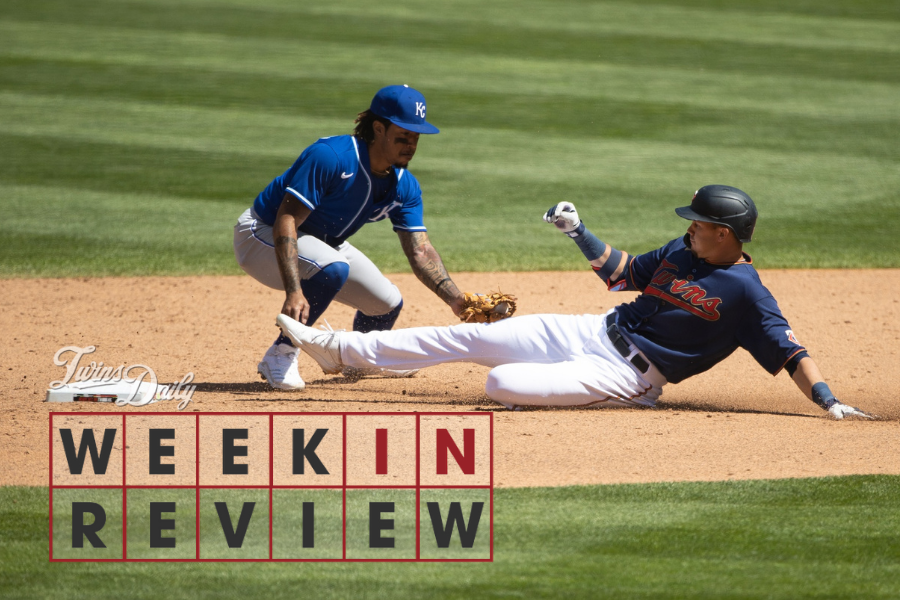 Weekly Snapshot: Mon, 5/24 through Sun, 5/30 *** Record Last Week: 4-2 (Overall: 21-31) Run Differential Last Week: +2 (Overall: -22) Standing: 5th Place in AL Central (11.0 GB) Last Week's Game Recaps: Game 47 | MIN 8, BAL 3: Rare Late-game Surge Pushes Twins Past O's Game 48 | MIN 7, BAL 4: Lineup Comes Through Again with Seven Runs Game 49 | MIN 3, BAL 2: Michael and Miguel Lead Minnesota to First Sweep Game 50 | KC 8, MIN 3: Royals Cool Off Twins in Deflating Loss Game 51 | MIN 6, KC 5: Twins Fend Off KC Rally and Hold On Game 52 | KC 6, MIN 3: Fading Twins Drop Another Home Series NEWS & NOTES This is the ninth Week in Review column we've filed this season, and it's the first since Week 1 – when the Twins won their season-opening series in Milwaukee, two games to one – that we're reviewing a winning week. As winning weeks ago, however, this one was remarkably uninspiring and unfulfilling. They really needed to go 5-1 at least in these six games at home against bad teams, but instead came away with just four wins, and might've been lucky to get that. The Twins required a late-game rally to beat Baltimore on Monday, and barely eked out a one-run victory on Wednesday to clinch the sweep. In a three-game weekend series against the Royals, Minnesota was twice beaten handily, and scraped out a one-run win in the other. This is not a great team dominating bad competition. This is a bottom-dweller with its hands full facing the same. On the health front, it was another week of bad news and foreboding developments for the Twins. They lost two more key pieces to the Injured List, with Luis Arraez (shoulder) and Max Kepler (hamstring) hitting the shelf after trying to play through their respective ailments. There's a belief that Kepler could return soon after his 10-day window expires, but Arraez is looking at a lengthier absence, as his shoulder injury appears to be more serious than initially thought. Meanwhile, Kenta Maeda is also facing an extended period of unavailability. Rocco Baldelli said on Sunday that the right-hander's groin issue has been resolved, but the team wants to give Maeda extra time off due to "general arm soreness," which may help explain his extremely lackluster results up to this point. Adding to the fun (not): Byron Buxton was not able to start a rehab assignment as hoped this past weekend, because he's still not moving around at 100%. Three weeks removed from suffering his hip strain, Buxton's timetable remains in limbo. On the bright side, the Twins did get Michael Pineda back from IL, and as we'll cover below, he looked great. In the bullpen, Cody Stashak was swapped out for Juan Minaya. Dakota Chalmers was DFA'ed to make room on the 40-man roster for Minaya. HIGHLIGHTS The return of Pineda was more than welcome for a rotation that's been receiving some uneven performances and is now missing Maeda. Pineda's been the underrated steady rock of this unit, and looked the part again on Wednesday. In a series finale against Baltimore where the offense didn't quite show up the way it had in the first two, Minnesota needed a high-quality pitching performance. Pineda delivered, firing six innings of one-run ball. He allowed three hits and a walk while striking out eight. Pineda's 16-7 record with the Twins stacks up as the best winning percentage in franchise history, and it's reflective of the reality that he gives them a good chance to win just about every time he takes the mound. In all but one start this year, he has pitched five or more innings and allowed three or fewer runs. The lineup is getting help from some unlikely sources. Hardly just a novelty act, Rob Refsnyder has been a key contributor; last week he went 7-for-22 with a homer and four RBIs to deliver some much-needed production at the bottom of the order. With Kepler and Buxton both sidelined, Refsnyder is essentially the only center fielder on the roster. Baldelli's made no secret of the fact that he'll be riding Refsnyder hard in the short-term, and the manager will have to hope his opportunistic 30-year-old can stay hot (and healthy). Refsnyder's recent success bodes well in the short-term. But the breakout performance of Trevor Larnach alongside him in the outfield bodes much better for the long-term. He's looking every bit the advanced, impact hitter that his minor-league numbers and top-prospect accolades suggested. Larnach went 5-for-14 with two home runs and five RBIs last week, and while he's shown the ability to absolutely obliterate baseballs, his plate discipline might be the most promising aspect of his early play. Larnach presents a challenging match-up for opposing pitchers because he doesn't chase much outside the zone, and can capitalize once he gets his pitch. As Aaron Gleeman notes, Larnach is tied for third-most walks in Twins history through his first 20 games. His five walks (vs. four strikeouts) last week included one with the bases loaded, forcing in a key run. Alex Kirilloff continues to rake (8-for-23 with two doubles last week), and Jorge Polanco is showing some pop despite the bad wheel (two doubles and a homer in his five starts). But the biggest bright spot on offense right now has got to be Mitch Garver, who suddenly looks like his old Silver Slugger self. Taking on a more regular workload with Ryan Jeffers and (until Sunday) Ben Rortvedt in Triple-A, Garver has rediscovered his rhythm at the plate. In four starts last week and one late-game sub appearance last week, he went 5-for-13 with four doubles, a home run, four walks, and just two strikeouts. Garver was slashing .151/.196/.321 with a 25-to-3 K/BB ratio through his first 17 games before a breakout two-homer night in Cleveland on April 28th. Since then, he is slashing .300/.432/.683 with 18 strikeouts and 14 walks. In 2019, he slashed .273/.365/.630. LOWLIGHTS While young bucks like Larnach and Kirilloff have been stepping up to carry much of the load offensively, the highly-paid veterans that Minnesota depends upon are coming up short. Nelson Cruz is wrapping up perhaps his most underwhelming month in a Twins uniform. Following a 2-for-14 week, he's slashing .232/.315/.378 in May with three home runs and just six RBIs in 23 games. Is age finally catching up with Cruz? He started the season on a scorching tear, but has looked like a very ordinary player for the last five weeks or so. Then again he's still hitting the ball hard as hell, so maybe it's just a matter of time before he catches fire again. Here's hoping so, because the Twins will at the very least be reliant on Cruz as a key trade chip in July. Even more concerning are the ongoing struggles of Josh Donaldson, who for better or worse is going to be around for a while The Twins spent big on Donaldson two offseasons ago, envisioning him is the final puzzle piece for a power-laden lineup with championship aspirations. Donaldson was largely a non-factor in 2020 due to injury, and while he's been able to stay on the field this year, he's making more headlines for his drama-stirring tweets than for his standout play. Last week Donaldson went 3-for-21, dropping his slash line for the season to .226/.325/.394. His double off the right field wall on Sunday was his first extra-base hit in 12 days, and he hasn't had a multi-hit game since May 8th. Donaldson is still taking good ABs and drawing walks at a solid clip, but there's only so much value in having one of the slowest dudes in baseball putting himself on first base a handful of times per week. They need JD crushing drives all over the field. He's mostly just hitting pop-ups when he makes contact, and is on pace to finish with 15 home runs. And then there is the ever-streaky Miguel Sanó, who flipped the switch back from red-hot to ice-cold with a 2-for-21 week that included one walk and 11 strikeouts. Granted, one of those two hits was tremendously impactful – a sixth-inning three-run homer on Wednesday that essentially turned a loss into a win – but he was a black hole otherwise. Between that trio – Cruz, Donaldson, and Sanó – you've got three critical cornerstones of the lineup, all hitting in key spots and providing almost nothing. They're killing rallies, rather than powering the offense with clutch knocks and dramatic blasts (with one exception). The pitching hasn't been very good but ultimately this team is built to outslug opponents and should be mauling staffs like Baltimore and Kansas City. To score only three runs in three of these six games, at home, is reflective of a dysfunctional lineup being let down by its supposed leaders. When I look back on this incredibly disappointing season, I will very likely zero in on this past week, when the Twins desperately needed to go on a run against bad teams to salvage their contention hopes and the three highest-paid players on the roster – Cruz, Donaldson and Sanó make a combined $50 million, accounting for more than a third of the total payroll – went 3-for-19 with runners in scoring position. TRENDING STORYLINE In happier news, the arms are cooking down on the farm. Last week in this space we celebrated the sterling debut of Jhoan Duran for the Saints; in his second start on Thursday, Duran tossed four shutout innings with one hit allowed and eight strikeouts. He's on the fast track and could be a real difference-maker for the Twins' staff this year. But he's not the only pitching prospect making a strong early impression. Josh Winder, whose ascending velocity has opened eyes and earned him a spring training invite, struck out seven over five innings of two-run ball for Wichita on Saturday. He owns a 1.48 ERA and 30-to-6 K/BB ratio through 24 ⅓ frames in his first stint at Double-A. Matt Canterino is currently pitching at Cedar Rapids, but could soon join Winder in Wichita because he's putting up flat-out silly numbers against Single-A hitters. After striking out 10 in four innings on Friday, Canterino has a 1.50 ERA and 35-to-3 K/BB ratio in 18 innings for the Kernels. In another bit of encouraging news pertaining to the pitcher pipeline, Jordan Balazovic plans to throw in Fort Myers on Monday. If that goes well, it sounds like he'll be heading to Double-A, where the rotation could soon feature him, Winder, and Canterino. More like Pitch-ita, amirite. Duran is closest out of these names, but any of them are realistic possibilities to pitch for the Twins this season. LOOKING AHEAD The "Or-royals" segment of the schedule rolls on in the coming week, as the Twins will travel to play both clubs on the road after going 4-2 against them at Target Field. If Minnesota can't find a way to go 6-1 or 7-0 in the upcoming games, they're going to look back at these two weeks as an unaffordable missed opportunity to make up crucial ground. They'll be returning home to face the Yankees and Astros afterward. If they play those opponents the same way they played this past week and, really, for most of the season, it's going to get ugly. MONDAY, 5/31: TWINS @ ORIOLES – RHP Jose Berríos v. RHP Jorge Lopez TUESDAY, 6/1: TWINS @ ORIOLES – RHP Michael Pineda v. LHP Bruce Zimmermann WEDNESDAY, 6/2: TWINS @ ORIOLES – RHP Randy Dobnak v. RHP Matt Harvey THURSDAY, 6/3: TWINS @ ROYALS – LHP J.A. Happ v. LHP Kris Bubic FRIDAY, 6/4: TWINS @ ROYALS – RHP Matt Shoemaker v. TBD SATURDAY, 6/5: TWINS @ ROYALS – RHP Jose Berrios v. RHP Brad Keller SUNDAY, 6/6: TWINS @ ROYALS – RHP Michael Pineda v. LHP Mike Minor
- 25 comments
-
- 2
-
-
- michael pineda
- mitch garver
- (and 1 more)
-
Week in Review: Way Down in the Hole
Nick Nelson replied to Nick Nelson's topic in Twins Daily Front Page News
It is indeed. Great catch! The song's also been stuck in my head since I published it last night haha- 24 replies
-
- 3
-
-
- miguel sano
- kenta maeda
- (and 1 more)
-
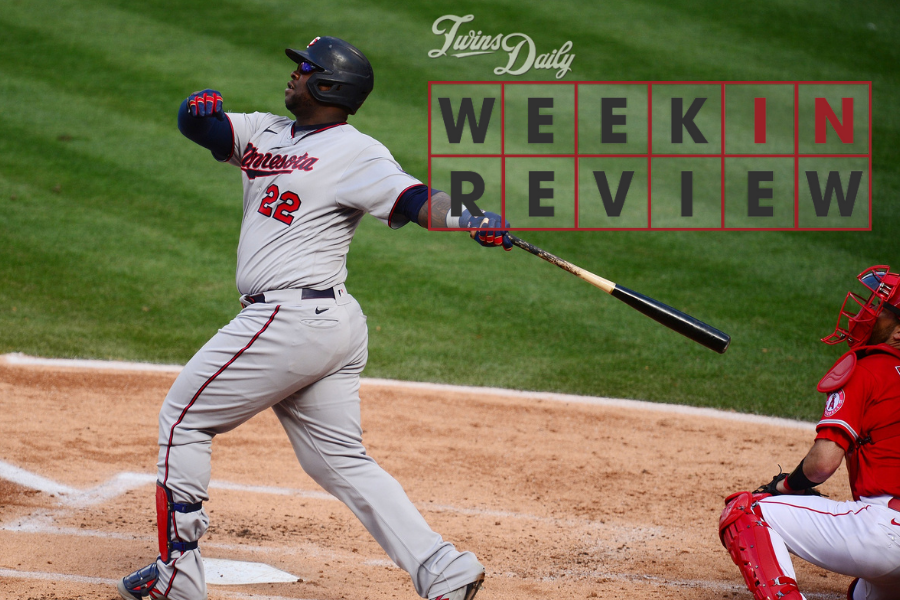 Weekly Snapshot: Mon, 5/17 through Sun, 5/23 *** Record Last Week: 4-4 (Overall: 17-29) Run Differential Last Week: -4 (Overall: -24) Standing: 5th Place in AL Central (9.5 GB) Last Week's Game Recaps: Game 39 | CWS 16, MIN 4: Sox Decimate Twins in Dispiriting Blowout Game 40 | MIN 5, CWS 4: Sanó's 3 HR Spark Rare Comeback Win Game 41 | CWS 2, MIN 1: Twins Bats Come Up Empty Against Giolito Game 42 | LAA 7, MIN 1: Halos Bury Twins to Kick Off Makeup Doubleheader Game 43 | MIN 6, LAA 3: Another Big Blast from Sanó Lifts Twins in Nightcap Game 44 | MIN 10, 0: Cleveland Rocked as Dobnak Cruises Game 45 | CLE 5, MIN 3: Twins Fall in 10th Inning Yet Again Game 46 | MIN 8, CLE 5: Hex in Extras Snapped by Garlick's Heroics NEWS & NOTES The Twins played eight games last week. They won four and lost four. They snapped their winless records in both double-headers and extra innings. They were outscored by four runs over the course of a week that included a 10-0 victory, large because it also included a 16-4 loss. There is much to cover. As always, we begin with a quick rundown of roster moves and injury updates over the past week. Heading out: Ben Rortvedt, who went 4-for-25 (.160) with 10 strikeouts and zero extra-base hits in his first turn of the majors, was optioned to Triple-A. Lewis Thorpe came and went, again, giving up four runs (just one earned) in an unimpressive spot start on Thursday before being sent back to St. Paul. Bailey Ober struggled in a spot start of his own on Tuesday (4 IP, 4 ER) and was returned to the Saints shortly thereafter. Derek Law was outrighted from the 40-man roster after posting an 8.53 ERA through 6 ⅓ innings for the Twins. He passed through waivers and made it back to St. Paul, where he coughed up a couple runs on Saturday night Michael Pineda went on the Injured List due to a minor surgical procedure. He's due to return in the coming week. Reliever Shaun Anderson also was placed on IL, with a left quad strain. Ahead of Sunday's game, the Twins placed Kenta Maeda on the shelf with a groin/adductor injury that has been bothering him for some time. Coming in: Alex Kirilloff is back! The outfielder was activated for the weekend series in Cleveland after a brief rehab stint at CHS Field. And while he's apparently playing through a wrist issue that will later require surgery, he shows no real signs of being limited. Randy Dobnak joined the rotation, starting in place of a sidelined Pineda on Friday. His outstanding return is detailed in the Highlights section below. Cody Stashak was recalled and made two scoreless appearances. Luke Farrell also joined the bullpen, hurling two shutout frames on Friday. Taking Maeda's roster spot on Sunday was Nick Gordon, who may have a shot at some decently regular playing time during this stint with both Luis Arraez (shoulder) and Jorge Polanco (ankle) banged up. HIGHLIGHTS This team shows signs of getting on track. Getting Kirilloff back in the lineup is a real difference-maker and it was felt on Friday night, when he batted cleanup in his return and the Twins scored 10 runs, as well as the next day when he came through with a clutch game-tying hit. Having both him and Trevor Larnach in the lineup is fun and exciting. Even if Larnach hasn't quite turned a corner production-wise like Kirilloff, he looks similarly comfortable and natural at the major-league level. You get the sense both of these guys are here to stay. Other hitters like Max Kepler, Mitch Garver, Kyle Garlick, and Rob Refsnyder and also had good weeks and big moments. But the star of the show, without question, was Miguel Sanó. The dam finally broke, and six weeks worth of pent-up offensive production burst forth within a ridiculous eight-game span. In 33 plate appearances dating back to last Monday, Sanó slashed .300/.364/.900 with five home runs, three doubles and 10 RBIs. His slugging percentage, which was all the way down to .209 as little as 10 days ago, is now up to .442 – well above the league average. His theatrics included a three-homer game, two four-RBI games, and a blast off Shane Bieber. Not only is he delivering big hits, he's delivering them in pivotal situations. The Twins have won five of their past 15 games and you can make a strong case that three of those victories were almost entirely because of Sanó: On May 15th, they beat Oakland 5-4 after his three-run blast in the eighth turned a two-run deficit into a one-run lead. On May 18th, he homered three times and drove in four in a 5-4 win over Chicago. In the second half of May 20th's doubleheader, Sanó's grand slam proved to be the difference in a 6-3 win. It bears noting that in 2019, Sanó slumped in June and saw his batting average sink to .195 before he flipped the switch and played at an MVP level the rest of the way, posting a .994 OPS with 25 homers and 64 RBIs in 74 games. So, let's see where he goes from here. On the pitching side, it was awesome to see Dobnak return to the rotation and look much more like the version that flashed back in the spring. The righty worked six scoreless innings in Cleveland on Friday, allowing just three hits and two walks while striking out five. He was inducing grounders and weak contact, executing his pitches, and generally looking to be in control. With Maeda now on the shelf, back-end starters Matt Shoemaker and J.A. Happ looking quite shaky, and Thorpe failing to step up, the Twins vitally needed Dobnak to find his footing. Friday's start was an excellent first step. LOWLIGHTS The Twins may be showing some signs of life, but still played .500 ball last week at a time where they desperately need to be making up ground. Even with a few things turning around, it feels like two steps forward are constantly being matched by two steps back, and some of their issues are so structurally fundamental they make it extremely hard to believe a sustained run of winning baseball is possible. Saturday's game was a perfect example of how this team just can't shake its woes. First, you've got Maeda's continued inability to make it click. The Twins have lost six of his last seven starts, and he's frequently been a prime culprit. Saturday's outing against Cleveland was the seventh straight in which he failed to complete six innings; he has one quality start in nine tries this year after going 8-for-12 in 2020. When your fourth or fifth starter aren't getting it done, you can adapt and adjust. Guys like Dobnak step in, and keep the rotation intact. But when the reigning Cy Young runner-up – a pitcher you invested heavily to acquire, and were absolutely counting on to be one of your frontline horses – turns into a pumpkin, that's an exceedingly difficult problem to fix. We'll have to hope some time off to rest of his bothersome groin proves to be the elixir Maeda needs to rediscover his game. But even with Maeda giving up an early 3-0 lead on Saturday, the Twins were in position to take the game and series. They rallied back to tie it, and sent the contest to extra innings. There, an all-too-familiar script played out. In the top of the 10th, the Twins once again failed to score their lead runner from second. In the bottom half, Alex Colomé entered, and on the second pitch he threw... I mean, look at the location of that pitch. Once again Colomé, who formed a reputation over many years as one of the most effective late-inning relievers in the game because he didn't flop in crunch time, offered up an absolute cookie in a critical spot, with the winning run in scoring position. We've seen it time and time again this year. It's particularly disappointing in this instance because Colomé really seemed to be figuring things out. Pitching in a reduced-leverage role, he'd worked seven scoreless appearances in May, allowing only two hits (both singles) and legitimately getting back to the things he's done well – namely, placing his cutter on the edges of the zone rather than right down the middle. Then, he gets another chance in a key late-game spot and immediately goes back to pulling the same crap from April. This is an enormous problem because, for better or worse, Colomé is a crux in this bullpen – especially since their other top right-hander has also been a mess. In more ways than one. On that note... In a season that's spun off the rails so early, leaving contention as an unlikely scenario for the summer, you look for other things to cheer for as a fan. You want to root for good stories. You want to connect emotionally with the squad as they grind and grow together through a tough year. You want to invest in the character of your club. All of which made Tuesday's embarrassing antics the lowlight of the week, and maybe even the season, for me. To recap: On Monday the Twins got blown out by Chicago at Target Field, to the point where Willians Astudillo was called in to chuck some 45-MPH eephus balls in the ninth. With the White Sox leading 15-4, Astudillo fell behind Yermin Mercedes 3-0. The next non-competitive offering from Tortuga found its way into the zone, and then Mercedes made sure it found its way over the fence. The Twins announcers were displeased. Evidently some Twins players were too. The next day, in a close game, Tyler Duffey decided to exact revenge, throwing behind Mercedes with Minnesota trailing by only two runs in the seventh. Yuck. As a result, Duffey was ejected along with his manager Rocco Baldelli. Each served a short suspension later in the week. Now, Mercedes ignoring a take sign from his coaches is one thing. That's not great, but it's an issue for the White Sox to take care of on their own accord. For the Twins to be so pissy that Chicago had the gall to keep trying, and for "respecting the game" to be sanctimoniously lectured about by anyone in a situation where Minnesota had its backup catcher on the mound throwing beer-league softball pitches in a major-league game ... it's too much. It's too much from a team, and a player, who need to be worrying about their own issues before getting involved in another team's, and putting people in harm's way in the process. Chicago's shortstop Tim Anderson said later that the actions were "Definitely a sign of weakness from Duffey and the Twins.” As a Twins fan who generally despises the Sox, it absolutely crushes me that I can't argue with his conclusion one bit. TRENDING STORYLINE On Saturday night at CHS Field, Jhoan Duran made his first start in a minor-league game since August of 2019. He got a bit of a late start this season due to a trapezius issue, but the organization's No. 5 prospect was worth the wait. Lucas Seehafer was on hand to cover Duran's season debut for Twins Daily, and you can find his detailed account here. The short version is this: Duran touched 103 MPH on the gun multiple times (granted, the CHS gun seems to be a little hot, but still, the guy was pumping triple digits). He struck out six over three shutout innings. A month ago, I suggested that this Twins season might go one of two ways: a 2006-style turnaround or a 2016-style meltdown. A critical factor in replicating the '06 formula was getting an impact performance from a young phenom in the rotation. In that case it was Francisco Liriano, who led the team to an 11-2 record in his first 13 starts and energized the roster with his mere presence. When you look at players in the current system capable of doing anything similar in 2021, Duran tops the list, and on Saturday we saw why. He needs to build up his pitch count but if the 23-year-old continues to show this type of dominance, and the Twins can get on any kind of run to get back to the fringe of relevance, we could see Duran enter the fray. Let's talk a little bit about that (seemingly outlandish) latter caveat. LOOKING AHEAD If you were looking for a glimpse of hope, a glimmer of promise, a glint of optimism ... this is it. The Twins have escaped the meat-grinder portion of their schedule and now enter a soft patch, with 13 consecutive games against the Orioles and Royals. Baltimore is in last place and Kansas City has plummeted since opening the season 16-9. If the Twins can REALLY make hay during this two-week stretch – say, going 11-2 or 10-3 – they would suddenly be back in the range of .500, with Byron Buxton probably close to returning (if he hasn't already). It's hard to expect that kind of success against any competition, but then, it's hard to play as poorly as Minnesota has over the past many weeks. The pendulum is due for a swing. It all starts this week with six games at Target Field. MONDAY, 5/24: ORIOLES @ TWINS – RHP John Means v. RHP Matt Shoemaker TUESDAY, 5/25: ORIOLES @ TWINS – RHP Dean Kremer v. RHP Jose Berrios WEDNESDAY, 5/26: ORIOLES @ TWINS – RHP Jorge Lopez v. RHP Michael Pineda FRIDAY, 5/28: ROYALS @ TWINS – LHP Kris Bubic v. RHP Randy Dobnak SATURDAY, 5/29: ROYALS @ TWINS – TBD v. LHP J.A. Happ SUNDAY, 5/30: ROYALS @ TWINS – RHP Brad Keller v. RHP Matt Shoemaker
- 24 comments
-
- 3
-

-
-
- miguel sano
- kenta maeda
- (and 1 more)
-
A jam-packed week of baseball for the Twins featured exhilarating highs, bucked trends, obnoxious drama, and the awakening of a sleeping giant. There are positive signs, but this team is not doing enough to chip away at its immense deficit as the end of May approaches. And yet, for the optimist, palpable cause for hope is there for the grasping. Weekly Snapshot: Mon, 5/17 through Sun, 5/23 *** Record Last Week: 4-4 (Overall: 17-29) Run Differential Last Week: -4 (Overall: -24) Standing: 5th Place in AL Central (9.5 GB) Last Week's Game Recaps: Game 39 | CWS 16, MIN 4: Sox Decimate Twins in Dispiriting Blowout Game 40 | MIN 5, CWS 4: Sanó's 3 HR Spark Rare Comeback Win Game 41 | CWS 2, MIN 1: Twins Bats Come Up Empty Against Giolito Game 42 | LAA 7, MIN 1: Halos Bury Twins to Kick Off Makeup Doubleheader Game 43 | MIN 6, LAA 3: Another Big Blast from Sanó Lifts Twins in Nightcap Game 44 | MIN 10, 0: Cleveland Rocked as Dobnak Cruises Game 45 | CLE 5, MIN 3: Twins Fall in 10th Inning Yet Again Game 46 | MIN 8, CLE 5: Hex in Extras Snapped by Garlick's Heroics NEWS & NOTES The Twins played eight games last week. They won four and lost four. They snapped their winless records in both double-headers and extra innings. They were outscored by four runs over the course of a week that included a 10-0 victory, large because it also included a 16-4 loss. There is much to cover. As always, we begin with a quick rundown of roster moves and injury updates over the past week. Heading out: Ben Rortvedt, who went 4-for-25 (.160) with 10 strikeouts and zero extra-base hits in his first turn of the majors, was optioned to Triple-A. Lewis Thorpe came and went, again, giving up four runs (just one earned) in an unimpressive spot start on Thursday before being sent back to St. Paul. Bailey Ober struggled in a spot start of his own on Tuesday (4 IP, 4 ER) and was returned to the Saints shortly thereafter. Derek Law was outrighted from the 40-man roster after posting an 8.53 ERA through 6 ⅓ innings for the Twins. He passed through waivers and made it back to St. Paul, where he coughed up a couple runs on Saturday night Michael Pineda went on the Injured List due to a minor surgical procedure. He's due to return in the coming week. Reliever Shaun Anderson also was placed on IL, with a left quad strain. Ahead of Sunday's game, the Twins placed Kenta Maeda on the shelf with a groin/adductor injury that has been bothering him for some time. Coming in: Alex Kirilloff is back! The outfielder was activated for the weekend series in Cleveland after a brief rehab stint at CHS Field. And while he's apparently playing through a wrist issue that will later require surgery, he shows no real signs of being limited. Randy Dobnak joined the rotation, starting in place of a sidelined Pineda on Friday. His outstanding return is detailed in the Highlights section below. Cody Stashak was recalled and made two scoreless appearances. Luke Farrell also joined the bullpen, hurling two shutout frames on Friday. Taking Maeda's roster spot on Sunday was Nick Gordon, who may have a shot at some decently regular playing time during this stint with both Luis Arraez (shoulder) and Jorge Polanco (ankle) banged up. HIGHLIGHTS This team shows signs of getting on track. Getting Kirilloff back in the lineup is a real difference-maker and it was felt on Friday night, when he batted cleanup in his return and the Twins scored 10 runs, as well as the next day when he came through with a clutch game-tying hit. Having both him and Trevor Larnach in the lineup is fun and exciting. Even if Larnach hasn't quite turned a corner production-wise like Kirilloff, he looks similarly comfortable and natural at the major-league level. You get the sense both of these guys are here to stay. Other hitters like Max Kepler, Mitch Garver, Kyle Garlick, and Rob Refsnyder and also had good weeks and big moments. But the star of the show, without question, was Miguel Sanó. The dam finally broke, and six weeks worth of pent-up offensive production burst forth within a ridiculous eight-game span. In 33 plate appearances dating back to last Monday, Sanó slashed .300/.364/.900 with five home runs, three doubles and 10 RBIs. His slugging percentage, which was all the way down to .209 as little as 10 days ago, is now up to .442 – well above the league average. His theatrics included a three-homer game, two four-RBI games, and a blast off Shane Bieber. Not only is he delivering big hits, he's delivering them in pivotal situations. The Twins have won five of their past 15 games and you can make a strong case that three of those victories were almost entirely because of Sanó: On May 15th, they beat Oakland 5-4 after his three-run blast in the eighth turned a two-run deficit into a one-run lead. On May 18th, he homered three times and drove in four in a 5-4 win over Chicago. In the second half of May 20th's doubleheader, Sanó's grand slam proved to be the difference in a 6-3 win. It bears noting that in 2019, Sanó slumped in June and saw his batting average sink to .195 before he flipped the switch and played at an MVP level the rest of the way, posting a .994 OPS with 25 homers and 64 RBIs in 74 games. So, let's see where he goes from here. On the pitching side, it was awesome to see Dobnak return to the rotation and look much more like the version that flashed back in the spring. The righty worked six scoreless innings in Cleveland on Friday, allowing just three hits and two walks while striking out five. He was inducing grounders and weak contact, executing his pitches, and generally looking to be in control. With Maeda now on the shelf, back-end starters Matt Shoemaker and J.A. Happ looking quite shaky, and Thorpe failing to step up, the Twins vitally needed Dobnak to find his footing. Friday's start was an excellent first step. LOWLIGHTS The Twins may be showing some signs of life, but still played .500 ball last week at a time where they desperately need to be making up ground. Even with a few things turning around, it feels like two steps forward are constantly being matched by two steps back, and some of their issues are so structurally fundamental they make it extremely hard to believe a sustained run of winning baseball is possible. Saturday's game was a perfect example of how this team just can't shake its woes. First, you've got Maeda's continued inability to make it click. The Twins have lost six of his last seven starts, and he's frequently been a prime culprit. Saturday's outing against Cleveland was the seventh straight in which he failed to complete six innings; he has one quality start in nine tries this year after going 8-for-12 in 2020. When your fourth or fifth starter aren't getting it done, you can adapt and adjust. Guys like Dobnak step in, and keep the rotation intact. But when the reigning Cy Young runner-up – a pitcher you invested heavily to acquire, and were absolutely counting on to be one of your frontline horses – turns into a pumpkin, that's an exceedingly difficult problem to fix. We'll have to hope some time off to rest of his bothersome groin proves to be the elixir Maeda needs to rediscover his game. But even with Maeda giving up an early 3-0 lead on Saturday, the Twins were in position to take the game and series. They rallied back to tie it, and sent the contest to extra innings. There, an all-too-familiar script played out. In the top of the 10th, the Twins once again failed to score their lead runner from second. In the bottom half, Alex Colomé entered, and on the second pitch he threw... I mean, look at the location of that pitch. Once again Colomé, who formed a reputation over many years as one of the most effective late-inning relievers in the game because he didn't flop in crunch time, offered up an absolute cookie in a critical spot, with the winning run in scoring position. We've seen it time and time again this year. It's particularly disappointing in this instance because Colomé really seemed to be figuring things out. Pitching in a reduced-leverage role, he'd worked seven scoreless appearances in May, allowing only two hits (both singles) and legitimately getting back to the things he's done well – namely, placing his cutter on the edges of the zone rather than right down the middle. Then, he gets another chance in a key late-game spot and immediately goes back to pulling the same crap from April. This is an enormous problem because, for better or worse, Colomé is a crux in this bullpen – especially since their other top right-hander has also been a mess. In more ways than one. On that note... In a season that's spun off the rails so early, leaving contention as an unlikely scenario for the summer, you look for other things to cheer for as a fan. You want to root for good stories. You want to connect emotionally with the squad as they grind and grow together through a tough year. You want to invest in the character of your club. All of which made Tuesday's embarrassing antics the lowlight of the week, and maybe even the season, for me. To recap: On Monday the Twins got blown out by Chicago at Target Field, to the point where Willians Astudillo was called in to chuck some 45-MPH eephus balls in the ninth. With the White Sox leading 15-4, Astudillo fell behind Yermin Mercedes 3-0. The next non-competitive offering from Tortuga found its way into the zone, and then Mercedes made sure it found its way over the fence. The Twins announcers were displeased. Evidently some Twins players were too. The next day, in a close game, Tyler Duffey decided to exact revenge, throwing behind Mercedes with Minnesota trailing by only two runs in the seventh. Yuck. As a result, Duffey was ejected along with his manager Rocco Baldelli. Each served a short suspension later in the week. Now, Mercedes ignoring a take sign from his coaches is one thing. That's not great, but it's an issue for the White Sox to take care of on their own accord. For the Twins to be so pissy that Chicago had the gall to keep trying, and for "respecting the game" to be sanctimoniously lectured about by anyone in a situation where Minnesota had its backup catcher on the mound throwing beer-league softball pitches in a major-league game ... it's too much. It's too much from a team, and a player, who need to be worrying about their own issues before getting involved in another team's, and putting people in harm's way in the process. Chicago's shortstop Tim Anderson said later that the actions were "Definitely a sign of weakness from Duffey and the Twins.” As a Twins fan who generally despises the Sox, it absolutely crushes me that I can't argue with his conclusion one bit. TRENDING STORYLINE On Saturday night at CHS Field, Jhoan Duran made his first start in a minor-league game since August of 2019. He got a bit of a late start this season due to a trapezius issue, but the organization's No. 5 prospect was worth the wait. Lucas Seehafer was on hand to cover Duran's season debut for Twins Daily, and you can find his detailed account here. The short version is this: Duran touched 103 MPH on the gun multiple times (granted, the CHS gun seems to be a little hot, but still, the guy was pumping triple digits). He struck out six over three shutout innings. A month ago, I suggested that this Twins season might go one of two ways: a 2006-style turnaround or a 2016-style meltdown. A critical factor in replicating the '06 formula was getting an impact performance from a young phenom in the rotation. In that case it was Francisco Liriano, who led the team to an 11-2 record in his first 13 starts and energized the roster with his mere presence. When you look at players in the current system capable of doing anything similar in 2021, Duran tops the list, and on Saturday we saw why. He needs to build up his pitch count but if the 23-year-old continues to show this type of dominance, and the Twins can get on any kind of run to get back to the fringe of relevance, we could see Duran enter the fray. Let's talk a little bit about that (seemingly outlandish) latter caveat. LOOKING AHEAD If you were looking for a glimpse of hope, a glimmer of promise, a glint of optimism ... this is it. The Twins have escaped the meat-grinder portion of their schedule and now enter a soft patch, with 13 consecutive games against the Orioles and Royals. Baltimore is in last place and Kansas City has plummeted since opening the season 16-9. If the Twins can REALLY make hay during this two-week stretch – say, going 11-2 or 10-3 – they would suddenly be back in the range of .500, with Byron Buxton probably close to returning (if he hasn't already). It's hard to expect that kind of success against any competition, but then, it's hard to play as poorly as Minnesota has over the past many weeks. The pendulum is due for a swing. It all starts this week with six games at Target Field. MONDAY, 5/24: ORIOLES @ TWINS – RHP John Means v. RHP Matt Shoemaker TUESDAY, 5/25: ORIOLES @ TWINS – RHP Dean Kremer v. RHP Jose Berrios WEDNESDAY, 5/26: ORIOLES @ TWINS – RHP Jorge Lopez v. RHP Michael Pineda FRIDAY, 5/28: ROYALS @ TWINS – LHP Kris Bubic v. RHP Randy Dobnak SATURDAY, 5/29: ROYALS @ TWINS – TBD v. LHP J.A. Happ SUNDAY, 5/30: ROYALS @ TWINS – RHP Brad Keller v. RHP Matt Shoemaker View full article
-
 Weekly Snapshot: Mon, 5/10 through Sun, 5/16 *** Record Last Week: 1-5 (Overall: 13-25) Run Differential Last Week: -18 (Overall: -20) Standing: 5th Place in AL Central (10.5 GB) Last Week's Game Recaps: Game 33 | CWS 9, MIN 3: White Sox Roll in Lopsided Series Opener Game 34 | CWS 13, MIN 8: Twins Can't Recover from Happ's Hole Game 35 | CWS 4, MIN 2: Sox Sweep Lifeless Twins Out of Chicago Game 36 | OAK 6, MIN 1: A's Bash Their Way to Comfortable Victory Game 37 | MIN 5, OAK 4: Sanó's Homer Keys Rare Comeback Win Game 38 | OAK 7, MIN 6: More Blunders Lead to More Losing NEWS & NOTES The hits keep on coming. Max Kepler pulled up with a hamstring injury on Sunday, exiting the game, and it looks like he may need to join Byron Buxton and Alex Kirilloff on the Injured List. Kirilloff plans to test his wrist in the coming week as he weighs a decision on whether he can/should play through it. Buxton is still probably multiple weeks out, and at this rate, by the time he gets back... oof. Further eroding Minnesota's outfield depth is the loss of Jake Cave, who was placed on the 60-day IL due to a stress reaction in his back. I'm not sure his absence qualifies as much of a negative at this point, but replacement Rob Refsnyder is no guaranteed upgrade. We won't be seeing Cave again until after the All-Star break, at minimum. In other rosters news: Devin Smeltzer went on IL with elbow inflammation and was replaced in the bullpen by Shaun Anderson. Travis Blankenhorn was claimed off waivers by the Dodgers following his DFA. Luis Arraez was activated early in the week; his return sent Nick Gordon back to St. Paul. HIGHLIGHTS Not many to speak of. Jorge Polanco had another solid week, going 7-for-27 (.280) with a homer and a pair of doubles. Trevor Larnach notched five hits in 16 ABs (.313), walking and doubling twice. Alex Colomé tossed a couple of scoreless innings. That's really about it. LOWLIGHTS Miguel Sanó's game-changing three-run homer on Saturday night was a highlight – or THE highlight, I suppose – lifting the Twins to their only victory of the week (and their first real comeback win of the entire season). But in some ways, it just felt like another signifier of how badly broken this spiraling team is. While it was nice to see Sanó finally accomplish anything helpful at the plate, the home run felt more fluky than assertive. He fought off a pitch the other way and was able to muscle it out on sheer strength. The baseball traveled a mere 349 feet, with an xBA of .120. Hardly a classic Sanó-doubter. Sanó's home run was the only thing separating the Twins from an 0-6 week, so credit is due, but he went 1-for-11 with five strikeouts otherwise, and hasn't been sharp defensively at first base. Fluky as Saturday night's win might've been, it was a desperately-needed break. Naturally, the Twins were unable to build upon it in any way. Sunday afternoon they were right back to their usual inept ways, watching an early three-run lead vanish as Kenta Maeda fell apart and defensive miscues mounted. They went 2-for-10 with RISP and stranded nine men on base. Ben Rortvedt and Josh Donaldson committed utterly dumbfounding, back-breaking errors. The winning run scored on a strike-three wild pitch. "Pain" has officially become the buzzword for this season from hell. The Twins themselves have adopted it, with those poor brand social media folks unable to conjure anything resembling an optimistic spin in the face of endless setbacks. There's really no other way to describe what we're seeing. The Twins looked this past week like a team resigned to its fate. They were thoroughly outplayed by two clubs whose superiority was obvious and undeniable. Minnesota was outscored by 18 runs, and out-homered 12-to-7. The Bomba Squad is a distant memory. Unfortunately, things get no easier in a grueling week ahead. On May 5th, less than five weeks out from Opening Day, I declared I'd seen enough from these Twins to be convinced it wasn't happening this year. I so hoped they would prove me wrong. Since then they've gone 2-7 and fallen from 5.0 games out in the Central to 10.5 out. Now we've reached a point where the Twins would need to pull off an unprecedented historical feat in order to reach the playoffs. From here, they need to play at a 100-win pace just to reach 90 victories, and that probably would still not be enough for a division title or wild-card berth. Maybe not even close. The White Sox are on track for 99 wins and not slowing down. TRENDING STORYLINE With the way this season is playing out for the Twins, following Kirilloff's development may soon become a primary reason to tune in. That is, if he is able to return. Do-Hyoung Park reports that that the top Twins prospect took swings in the batting cage on Sunday and plans to take BP this week before progressing to velo and off-speed. A decision is yet to be made on Kirilloff's strained right wrist, but one figures to come soon. It's between undergoing surgery or progressing to a rehab assignment, according to Park, who adds that players have been able to battle through similar injuries in the past, and that for Kirilloff, doing so while delaying surgery until the offseason is a possibility. From my view, if there's any risk whatsoever of making this issue worse by playing through it, I don't know why that would be viewed as an option. And how can there not be? The same wrist has bothered him and impacted his play in the past. As losses continue to pile up and contention hopes fade to dust, the Twins have to ask themselves if it's worth pushing Kirilloff at all this season. LOOKING AHEAD It's going to be a long week. First the White Sox come to Target Field, fresh off sweeping the Twins in Chicago, and looking to further bury Minnesota in the standings. There's not much reason to think they won't. Then, the Twins head all the way to Anaheim for a midweek makeup double-header on Thursday. I'm sure the players are just giddy to fly across the country to SoCal, play two games in one day, then instantly turn around and fly back to the midwest for three games against second-place Cleveland Eight games in seven days, facing teams the Twins are a combined 1-6 against, all with no Buxton, no Kirilloff, and perhaps no Kepler. Not to be forgotten: a bad bullpen that is shorthanded coming off Maeda's four-inning dud on Sunday. What could go wrong? MONDAY, 5/17: WHITE SOX @ TWINS – LHP Dallas Keuchel v LHP J.A. Happ TUESDAY, 5/18: WHITE SOX @ TWINS – RHP Lance Lynn v. RHP Michael Pineda WEDNESDAY, 5/19: WHITE SOX @ TWINS – RHP Lucas Giolito v. RHP Matt Shoemaker THURSDAY, 5/20 (G1): TWINS @ ANGELS – RHP Jose Berrios v. RHP Dylan Bundy THURSDAY, 5/20 (G2): TWINS @ ANGELS – TBD v. LHP Jose Quintana FRIDAY, 5/21: TWINS @ CLEVELAND – RHP Kenta Maeda v. RHP Triston McKenzie SATURDAY, 5/22: TWINS @ CLEVELAND – LHP J.A. Happ v. RHP Shane Bieber SUNDAY, 5/23: TWINS @ CLEVELAND – RHP Michael Pineda v. LHP Sam Hentges
 -
Playing a slate of games against top-notch competition, the Minnesota Twins looked every bit the horrendous team reflected by their MLB-worst 13-25 record. They just can't stop the bleeding. Weekly Snapshot: Mon, 5/10 through Sun, 5/16 *** Record Last Week: 1-5 (Overall: 13-25) Run Differential Last Week: -18 (Overall: -20) Standing: 5th Place in AL Central (10.5 GB) Last Week's Game Recaps: Game 33 | CWS 9, MIN 3: White Sox Roll in Lopsided Series Opener Game 34 | CWS 13, MIN 8: Twins Can't Recover from Happ's Hole Game 35 | CWS 4, MIN 2: Sox Sweep Lifeless Twins Out of Chicago Game 36 | OAK 6, MIN 1: A's Bash Their Way to Comfortable Victory Game 37 | MIN 5, OAK 4: Sanó's Homer Keys Rare Comeback Win Game 38 | OAK 7, MIN 6: More Blunders Lead to More Losing NEWS & NOTES The hits keep on coming. Max Kepler pulled up with a hamstring injury on Sunday, exiting the game, and it looks like he may need to join Byron Buxton and Alex Kirilloff on the Injured List. Kirilloff plans to test his wrist in the coming week as he weighs a decision on whether he can/should play through it. Buxton is still probably multiple weeks out, and at this rate, by the time he gets back... oof. Further eroding Minnesota's outfield depth is the loss of Jake Cave, who was placed on the 60-day IL due to a stress reaction in his back. I'm not sure his absence qualifies as much of a negative at this point, but replacement Rob Refsnyder is no guaranteed upgrade. We won't be seeing Cave again until after the All-Star break, at minimum. In other rosters news: Devin Smeltzer went on IL with elbow inflammation and was replaced in the bullpen by Shaun Anderson. Travis Blankenhorn was claimed off waivers by the Dodgers following his DFA. Luis Arraez was activated early in the week; his return sent Nick Gordon back to St. Paul. HIGHLIGHTS Not many to speak of. Jorge Polanco had another solid week, going 7-for-27 (.280) with a homer and a pair of doubles. Trevor Larnach notched five hits in 16 ABs (.313), walking and doubling twice. Alex Colomé tossed a couple of scoreless innings. That's really about it. LOWLIGHTS Miguel Sanó's game-changing three-run homer on Saturday night was a highlight – or THE highlight, I suppose – lifting the Twins to their only victory of the week (and their first real comeback win of the entire season). But in some ways, it just felt like another signifier of how badly broken this spiraling team is. While it was nice to see Sanó finally accomplish anything helpful at the plate, the home run felt more fluky than assertive. He fought off a pitch the other way and was able to muscle it out on sheer strength. The baseball traveled a mere 349 feet, with an xBA of .120. Hardly a classic Sanó-doubter. Sanó's home run was the only thing separating the Twins from an 0-6 week, so credit is due, but he went 1-for-11 with five strikeouts otherwise, and hasn't been sharp defensively at first base. Fluky as Saturday night's win might've been, it was a desperately-needed break. Naturally, the Twins were unable to build upon it in any way. Sunday afternoon they were right back to their usual inept ways, watching an early three-run lead vanish as Kenta Maeda fell apart and defensive miscues mounted. They went 2-for-10 with RISP and stranded nine men on base. Ben Rortvedt and Josh Donaldson committed utterly dumbfounding, back-breaking errors. The winning run scored on a strike-three wild pitch. "Pain" has officially become the buzzword for this season from hell. The Twins themselves have adopted it, with those poor brand social media folks unable to conjure anything resembling an optimistic spin in the face of endless setbacks. There's really no other way to describe what we're seeing. The Twins looked this past week like a team resigned to its fate. They were thoroughly outplayed by two clubs whose superiority was obvious and undeniable. Minnesota was outscored by 18 runs, and out-homered 12-to-7. The Bomba Squad is a distant memory. Unfortunately, things get no easier in a grueling week ahead. On May 5th, less than five weeks out from Opening Day, I declared I'd seen enough from these Twins to be convinced it wasn't happening this year. I so hoped they would prove me wrong. Since then they've gone 2-7 and fallen from 5.0 games out in the Central to 10.5 out. Now we've reached a point where the Twins would need to pull off an unprecedented historical feat in order to reach the playoffs. From here, they need to play at a 100-win pace just to reach 90 victories, and that probably would still not be enough for a division title or wild-card berth. Maybe not even close. The White Sox are on track for 99 wins and not slowing down. TRENDING STORYLINE With the way this season is playing out for the Twins, following Kirilloff's development may soon become a primary reason to tune in. That is, if he is able to return. Do-Hyoung Park reports that that the top Twins prospect took swings in the batting cage on Sunday and plans to take BP this week before progressing to velo and off-speed. A decision is yet to be made on Kirilloff's strained right wrist, but one figures to come soon. It's between undergoing surgery or progressing to a rehab assignment, according to Park, who adds that players have been able to battle through similar injuries in the past, and that for Kirilloff, doing so while delaying surgery until the offseason is a possibility. From my view, if there's any risk whatsoever of making this issue worse by playing through it, I don't know why that would be viewed as an option. And how can there not be? The same wrist has bothered him and impacted his play in the past. As losses continue to pile up and contention hopes fade to dust, the Twins have to ask themselves if it's worth pushing Kirilloff at all this season. LOOKING AHEAD It's going to be a long week. First the White Sox come to Target Field, fresh off sweeping the Twins in Chicago, and looking to further bury Minnesota in the standings. There's not much reason to think they won't. Then, the Twins head all the way to Anaheim for a midweek makeup double-header on Thursday. I'm sure the players are just giddy to fly across the country to SoCal, play two games in one day, then instantly turn around and fly back to the midwest for three games against second-place Cleveland Eight games in seven days, facing teams the Twins are a combined 1-6 against, all with no Buxton, no Kirilloff, and perhaps no Kepler. Not to be forgotten: a bad bullpen that is shorthanded coming off Maeda's four-inning dud on Sunday. What could go wrong? MONDAY, 5/17: WHITE SOX @ TWINS – LHP Dallas Keuchel v LHP J.A. Happ TUESDAY, 5/18: WHITE SOX @ TWINS – RHP Lance Lynn v. RHP Michael Pineda WEDNESDAY, 5/19: WHITE SOX @ TWINS – RHP Lucas Giolito v. RHP Matt Shoemaker THURSDAY, 5/20 (G1): TWINS @ ANGELS – RHP Jose Berrios v. RHP Dylan Bundy THURSDAY, 5/20 (G2): TWINS @ ANGELS – TBD v. LHP Jose Quintana FRIDAY, 5/21: TWINS @ CLEVELAND – RHP Kenta Maeda v. RHP Triston McKenzie SATURDAY, 5/22: TWINS @ CLEVELAND – LHP J.A. Happ v. RHP Shane Bieber SUNDAY, 5/23: TWINS @ CLEVELAND – RHP Michael Pineda v. LHP Sam Hentges View full article
-
At 12-20, the Minnesota Twins' busted record reflects a broken team. Meanwhile, their endless string of lapses, failures to execute, and late-game meltdowns are making this utterly deflating season feel like a broken record, repeatedly playing the same sad notes. Weekly Snapshot: Mon, 5/3 through Sun, 5/9 *** Record Last Week: 2-4 (Overall: 12-20) Run Differential Last Week: -5 (Overall: -2) Standing: 4th Place in AL Central (7.0 GB) Last Week's Game Recaps: Game 27 | MIN 6, TEX 5: Strong Defense and Kirilloff Power Twins Game 28 | TEX 6, MIN 3: Bullpen Gives Away Late Lead Once Again Game 29 | TEX 3, MIN 1: Twins Go 0-for-9 with RISP as Bats Sleep Game 30 | TEX 4, MIN 3: Another Blown Lead and Extra-Inning Loss Game 31 | MIN 7, DET 3: Bats Awaken Against Detroit's Relievers Game 32 | DET 7, MIN 3: In Unpredictable Twist, Bullpen Implodes NEWS & NOTES There were a ton of moves in the past week, most of them brought on by unfortunate events. Before we dive into the in-game highlights and lowlights, let's run through all the turnover this roster has experienced over the past seven days. The week started with Randy Dobnak being optioned to Triple-A, just in time for the start of the minor-league season. Dobnak had earned the demotion on merit, with an 8.16 ERA through seven appearances, but this decision seems more aimed at getting him back on a starting regimen. So far so good: Dobnak hurled four scoreless innings with five strikeouts in his debut for the Saints. The rotation may need him soon. Called up to replace Dobnak on the roster was Brandon Waddell, who went on to have an unbelievably disastrous second stint with the Twins. He pitched on Monday and Tuesday, allowing six runs (5 ER) while recording three totals outs. Waddell was subsequently optioned and designated for assignment; he was claimed Sunday by the Orioles. So much for that once-promising experiment. Supplanting Waddell on the roster was Devin Smeltzer, recalled to function as a long reliever. He hasn't since made an appearance. Lewis Thorpe came up for another spot start on Wednesday, tossing five innings of three-run ball against Texas, and was sent back to St. Paul afterward. Cody Stashak was optioned to Triple-A after coughing up three runs against the lowly Tigers on Friday night. He was replaced by Derek Law, a minor-league signing during the offseason who impressed during spring training. (Then again, so did Waddell.) To make room on the 40-man roster for Law, the Twins designated former third-round pick Travis Blankenhorn for assignment. The worst news of the week is that the Twins lost three absolutely critical players to injury. Luis Arraez suffered a concussion during a home plate collision on Monday and went on the 7-day Injured List. A day later, Alex Kirilloff was placed on the shelf due to an ominous wrist injury. Then Byron Buxton came up limping at first base on Thursday, and was diagnosed with Grade 2 hip strain that figures to sideline him for at least a month. You'd be hard-pressed to select anyone the Twins could LESS afford to lose from their lineup than these three. But that's just the nature of this gut-wrenching 2021 season. Filling in the roster spots of these lost fixtures were Nick Gordon, Miguel Sanó and Trevor Larnach. HIGHLIGHTS Well, let's start with Gordon. He made his major-league debut on Thursday and – setting everything else aside – it was just a really nice moment. The former first-round draft pick has gone through hell over the past few years and it probably seemed at times like this opportunity would never come. He made the most of it, reaching base twice – a single and a walk – and stealing second both times. He became the first player in Twins history to steal multiple bases in his MLB debut. Despite his draft position and pedigree, Gordon is not considered a top-flight prospect, but there's a bit of intrigue there. His outstanding athleticism was noticeable on Thursday, especially in contrast with a relatively slow and old surrounding cast. I'd love to see Gordon get some significant tread in the months ahead, because at this point, why not? Other highlights were sparse during this dreary week of play, but it was nice to see some signs of life from the likes of Mitch Garver, Jorge Polanco and Max Kepler. The continuing lack of production from this trio has been core to the offense's inconsistency and unevenness dating back to 2020. Garver seems to be coming around. After launching three home runs in the previous week, he added another on Tuesday, and more importantly his plate approach is growing much sharper. Garver drew four walks in 14 plate appearances against just three strikeouts; in his first 20 games he had three walks and 28 strikeouts. Sunday's rainout might've been a fortunate twist for the catcher, who is healing up some minor shoulder inflammation. Polanco went through perhaps his ugliest stretch of the year in games 2 and 3 against the Rangers, striking out six times in seven at-bats, but otherwise he was very productive, tallying seven hits including three doubles, a triple and a homer. He had more extra-base hits in these six games (6) than he had in his first 24 (5), raising his slugging percentage from .286 to .373. Kepler too snapped free from an extended power outage, hitting his first home run of the year against Texas on Thursday and then adding his second the following day. It wasn't a great week overall for Kep – he slashed .192/.250/.423 in 28 PAs – but he was making some legitimately hard contact, and even managed to take a lefty deep. Now, I will add the important caveat that all this success came against two of the worst teams in the league. It's way too early to be getting excited about these small sparks from foundational players who've been sputtering along for months. But, it's something. And the Twins need to see a whole lot more of it. It is extremely difficult to envision this team doing much of anything if Polanco, Kepler and Garver continue to play the way they did in the first month and throughout much of 2020. LOWLIGHTS This team is just not very good. That feels clearer than ever after a week in which they struggled to keep pace with two of the worst opponents they'll face all year. There's simply no resilience, no fight. After mounting a modest hot streak by winning four of five, Minnesota blew the second game against Texas and let it devolve into another cascade of collapses, with a woeful 1-3 stretch all but erasing their progress. The Twins have not come back and won a single game this year in which they've trailed by more than one run. No fight. The past week represented a critical opportunity to get right against bad competition ahead of a grueling stretch of the schedule. The Twins failed to take advantage, letting the last-place Rangers and Tigers win four of six. What's wrong with this team? Where to begin? The bullpen is a total disaster and it's difficult to fathom exactly where the solutions are going to come from. Alex Colomé has tossed four scoreless innings in May after a catastrophic month of April, but he's not at the point of being trusted in anything resembling a high-stakes situation. Waddell's meltdown led to his departure from the organization, subtracting one of the front office's key offseason gambles. Another one, Law, inspired no confidence in his first appearance on Saturday. Stashak's been brutal. Tyler Duffey, a pivotal crux in this bullpen's construction, is a shell of his former self. I've argued that the Twins need to take action on their bullpen quickly if they want to have any hope of resurrecting their fast-fading championship aspirations. It has become rapidly evident they are undermanned, and while fringy arms like Law are worth taking a look at, this relief corps needs an infusion of a much higher caliber. And I'm not sure even a slam-dunk acquisition would make enough difference at this point. With that said, the failures of the bullpen are magnified by a continued absence of any late-game offense, or ability to rally from deficits. Relievers have a collective 1-11 record, and while they've earned it with their performance – they're on pace to blow away the worst bullpen WPA in baseball history – a W/L that lopsided doesn't happen on its own. The lineup bears its share of blame. Topping the list of present concerns: Miguel Sanó is fast becoming an untenable option. While Polanco, Kepler and Garver show small signs of emerging from their prolonged slumps, Sanó's performance offers no real cause for encouragement. He has a decent idea of what he's doing at the plate, and continues to draw walks at a solid clip, but Sanó simply can't hit. Last week he went 3-for-17 with nine strikeouts, and his slash line for the season has sunk to .129/.299/.226. The one thing you could always reliably count on from Sanó in the past, even during the down times, was crushing the ball when he made contact. But this calling card has gone amiss in a sea of pop-ups and grounders. Here's where he has ranked over the past five years among MLB hitters in terms of average exit velocity: 2017: 96th percentile 2018: 95th percentile 2019: 100th percentile 2020: 100th percentile 2021: 17th percentile Sanó looks about as discombobulated and as he did in 2018, when the Twins opted to send him down to Single-A for a full-on reset in Fort Myers. That's not so much an option anymore. For an ostensibly healthy 28-year-old who's been in the big leagues for six years, breakdowns of this severity are very tough to accept and painful to navigate. Surely the Twins would love to be playing him less frequently at this point, but sadly they don't have much choice. The absences of Kirilloff and Buxton mean they need Sanó, not just from a "body on the field" standpoint, but also due to the (however faint) possibility of tapping his offensive potency. The first baseman has looked so poor at the plate this year, and down the stretch last year, that it can be easy to forget how dominant he was for a lengthy period beforehand: From the start of 2019 through the end of last August, Sanó hit .247/.346/.571 with 41 homers and 94 RBIs in 137 games. Is that player still within him? Can it be coaxed back out? It behooves the Twins to find out, when the alternative is running out Willians Astudillo every day at first base, but in the meantime Sanó's at-bats are just killing this team. They need more from him. They need it. Add that to the list. Urgency is building because the ultimate lowlight of the past week is one that leaves this offense in a dire state going forward. Buxton's hip injury carries a timeline of multiple weeks at least, according to Rocco Baldelli. The news might even be grimmer for Kirilloff, who plans to test his strained wrist by taking swings in the coming week. Said the manager: "If it's an unplayable situation for Alex, I think having surgery is an option." Even if Kirilloff CAN play through the injury, it's worth asking whether he SHOULD. And if you don't have him or Buxton in this lineup you don't have much. Not with Andrelton Simmons hurtling back to Earth (.451 OPS in his past 15 games after batting .450 in the first seven) and Jake Cave continuing to be a total offensive black hole (2-for-13 with five strikeouts last week, .507 OPS on the year). The Twins need Sanó to suddenly figure out how to hit the ball again. They need Kepler, Polanco and Garver to build upon their fledgling hints of positive momentum. They need Larnach, who went 0-for-4 in his debut but didn't look bad by any means, to catch on very quickly, despite his relative lack of minor-league experience. They need basically all of this to happen, because the Twins must play .600+ ball from here on out to even have a shot at the playoffs. And you know what? I could kind of see it. These are talented hitters who've been oddly out of whack for what ultimately equates to less than one full season, and they've all been misfiring simultaneously. Who's to say they couldn't all find a rhythm and start clicking in lockstep? We've seen it before, and not that long ago, in 2019. The talent is there. What I can't see is this bullpen turning around to the drastic extent necessary for a "2019 Nationals" type surge. (An example that many people love to point to as if it's a typical precedent, rather than a once-in-a-century event.) And that's why I personally have lost faith in this team as a true contender. But they've got plenty of time left to prove me wrong. TRENDING STORYLINE For the first time since 2019, minor-league baseball games were played last week! The Twins' reconfigured family of affiliates are all underway, which means that nightly Minor League Reports have returned to Twins Daily. This is exciting not just because it gives fans a diversion from the lackluster big-league product, but also because the system and pipeline will now be poised to influence the Twins far more significantly. With prospects able to actually play in games and make on-field cases for promotions, we'll have much more robust narratives and storylines to follow. One that I'm already keeping an eye on: Matt Canterino, TD's ninth-ranked prospect who's opened a lot of eyes with his ascendant arsenal. In his season debut for the Cedar Rapids Kernels on Sunday, Canterino tossed three scoreless innings and struck out six. With Jhoan Duran and Jordan Balazovic sidelined to open the season, Canterino is the top active pitching prospect, and perhaps the Twins staff's best hope for a high-impact minor-league jolt this summer. LOOKING AHEAD After failing to make any hay against a soft patch in the schedule, the Twins are now shifting into a gauntlet, where the stakes will be high and the competition stifling. First, they're off to Chicago for their first meeting of the year with the first-place White Sox, who've won 12 of 17 and lead the major leagues in run differential. Afterward, the Athletics come to Target Field, looking to follow up on their trouncing of the Twins in Oakland three weeks ago. The A's have won 21 of 29 games since starting the season 0-6. These are two red-hot, high-quality teams. The Twins will be facing them without two of their best players. I'm bracing for the worst but if they can find a way to win four of six this week it would go along way in providing some semblance of a reason to believe. TUESDAY, 5/11: TWINS @ WHITE SOX – RHP Kenta Maeda v. RHP Dylan Cease WEDNESDAY, 5/12: TWINS @ WHITE SOX – LHP J.A. Happ v. LHP Dallas Keuchel THURSDAY, 5/13: TWINS @ WHITE SOX – RHP Michael Pineda v. LHP Carlos Rodon FRIDAY, 5/14: ATHLETICS @ TWINS – RHP Frankie Montas v. RHP Matt Shoemaker SATURDAY, 5/15: ATHLETICS @ TWINS – LHP Cole Irvin v. RHP José Berríos SUNDAY, 5/16: ATHLETICS @ TWINS – RHP Chris Bassitt v. RHP Kenta Maeda MORE FROM TWINS DAILY — Latest Twins coverage from our writers — Recent Twins discussion in our forums — Follow Twins Daily via Twitter, Facebook or email View full article
-
 Weekly Snapshot: Mon, 5/3 through Sun, 5/9 *** Record Last Week: 2-4 (Overall: 12-20) Run Differential Last Week: -5 (Overall: -2) Standing: 4th Place in AL Central (7.0 GB) Last Week's Game Recaps: Game 27 | MIN 6, TEX 5: Strong Defense and Kirilloff Power Twins Game 28 | TEX 6, MIN 3: Bullpen Gives Away Late Lead Once Again Game 29 | TEX 3, MIN 1: Twins Go 0-for-9 with RISP as Bats Sleep Game 30 | TEX 4, MIN 3: Another Blown Lead and Extra-Inning Loss Game 31 | MIN 7, DET 3: Bats Awaken Against Detroit's Relievers Game 32 | DET 7, MIN 3: In Unpredictable Twist, Bullpen Implodes NEWS & NOTES There were a ton of moves in the past week, most of them brought on by unfortunate events. Before we dive into the in-game highlights and lowlights, let's run through all the turnover this roster has experienced over the past seven days. The week started with Randy Dobnak being optioned to Triple-A, just in time for the start of the minor-league season. Dobnak had earned the demotion on merit, with an 8.16 ERA through seven appearances, but this decision seems more aimed at getting him back on a starting regimen. So far so good: Dobnak hurled four scoreless innings with five strikeouts in his debut for the Saints. The rotation may need him soon. Called up to replace Dobnak on the roster was Brandon Waddell, who went on to have an unbelievably disastrous second stint with the Twins. He pitched on Monday and Tuesday, allowing six runs (5 ER) while recording three totals outs. Waddell was subsequently optioned and designated for assignment; he was claimed Sunday by the Orioles. So much for that once-promising experiment. Supplanting Waddell on the roster was Devin Smeltzer, recalled to function as a long reliever. He hasn't since made an appearance. Lewis Thorpe came up for another spot start on Wednesday, tossing five innings of three-run ball against Texas, and was sent back to St. Paul afterward. Cody Stashak was optioned to Triple-A after coughing up three runs against the lowly Tigers on Friday night. He was replaced by Derek Law, a minor-league signing during the offseason who impressed during spring training. (Then again, so did Waddell.) To make room on the 40-man roster for Law, the Twins designated former third-round pick Travis Blankenhorn for assignment. The worst news of the week is that the Twins lost three absolutely critical players to injury. Luis Arraez suffered a concussion during a home plate collision on Monday and went on the 7-day Injured List. A day later, Alex Kirilloff was placed on the shelf due to an ominous wrist injury. Then Byron Buxton came up limping at first base on Thursday, and was diagnosed with Grade 2 hip strain that figures to sideline him for at least a month. You'd be hard-pressed to select anyone the Twins could LESS afford to lose from their lineup than these three. But that's just the nature of this gut-wrenching 2021 season. Filling in the roster spots of these lost fixtures were Nick Gordon, Miguel Sanó and Trevor Larnach. HIGHLIGHTS Well, let's start with Gordon. He made his major-league debut on Thursday and – setting everything else aside – it was just a really nice moment. The former first-round draft pick has gone through hell over the past few years and it probably seemed at times like this opportunity would never come. He made the most of it, reaching base twice – a single and a walk – and stealing second both times. He became the first player in Twins history to steal multiple bases in his MLB debut. Despite his draft position and pedigree, Gordon is not considered a top-flight prospect, but there's a bit of intrigue there. His outstanding athleticism was noticeable on Thursday, especially in contrast with a relatively slow and old surrounding cast. I'd love to see Gordon get some significant tread in the months ahead, because at this point, why not? Other highlights were sparse during this dreary week of play, but it was nice to see some signs of life from the likes of Mitch Garver, Jorge Polanco and Max Kepler. The continuing lack of production from this trio has been core to the offense's inconsistency and unevenness dating back to 2020. Garver seems to be coming around. After launching three home runs in the previous week, he added another on Tuesday, and more importantly his plate approach is growing much sharper. Garver drew four walks in 14 plate appearances against just three strikeouts; in his first 20 games he had three walks and 28 strikeouts. Sunday's rainout might've been a fortunate twist for the catcher, who is healing up some minor shoulder inflammation. Polanco went through perhaps his ugliest stretch of the year in games 2 and 3 against the Rangers, striking out six times in seven at-bats, but otherwise he was very productive, tallying seven hits including three doubles, a triple and a homer. He had more extra-base hits in these six games (6) than he had in his first 24 (5), raising his slugging percentage from .286 to .373. Kepler too snapped free from an extended power outage, hitting his first home run of the year against Texas on Thursday and then adding his second the following day. It wasn't a great week overall for Kep – he slashed .192/.250/.423 in 28 PAs – but he was making some legitimately hard contact, and even managed to take a lefty deep. Now, I will add the important caveat that all this success came against two of the worst teams in the league. It's way too early to be getting excited about these small sparks from foundational players who've been sputtering along for months. But, it's something. And the Twins need to see a whole lot more of it. It is extremely difficult to envision this team doing much of anything if Polanco, Kepler and Garver continue to play the way they did in the first month and throughout much of 2020. LOWLIGHTS This team is just not very good. That feels clearer than ever after a week in which they struggled to keep pace with two of the worst opponents they'll face all year. There's simply no resilience, no fight. After mounting a modest hot streak by winning four of five, Minnesota blew the second game against Texas and let it devolve into another cascade of collapses, with a woeful 1-3 stretch all but erasing their progress. The Twins have not come back and won a single game this year in which they've trailed by more than one run. No fight. The past week represented a critical opportunity to get right against bad competition ahead of a grueling stretch of the schedule. The Twins failed to take advantage, letting the last-place Rangers and Tigers win four of six. What's wrong with this team? Where to begin? The bullpen is a total disaster and it's difficult to fathom exactly where the solutions are going to come from. Alex Colomé has tossed four scoreless innings in May after a catastrophic month of April, but he's not at the point of being trusted in anything resembling a high-stakes situation. Waddell's meltdown led to his departure from the organization, subtracting one of the front office's key offseason gambles. Another one, Law, inspired no confidence in his first appearance on Saturday. Stashak's been brutal. Tyler Duffey, a pivotal crux in this bullpen's construction, is a shell of his former self. I've argued that the Twins need to take action on their bullpen quickly if they want to have any hope of resurrecting their fast-fading championship aspirations. It has become rapidly evident they are undermanned, and while fringy arms like Law are worth taking a look at, this relief corps needs an infusion of a much higher caliber. And I'm not sure even a slam-dunk acquisition would make enough difference at this point. With that said, the failures of the bullpen are magnified by a continued absence of any late-game offense, or ability to rally from deficits. Relievers have a collective 1-11 record, and while they've earned it with their performance – they're on pace to blow away the worst bullpen WPA in baseball history – a W/L that lopsided doesn't happen on its own. The lineup bears its share of blame. Topping the list of present concerns: Miguel Sanó is fast becoming an untenable option. While Polanco, Kepler and Garver show small signs of emerging from their prolonged slumps, Sanó's performance offers no real cause for encouragement. He has a decent idea of what he's doing at the plate, and continues to draw walks at a solid clip, but Sanó simply can't hit. Last week he went 3-for-17 with nine strikeouts, and his slash line for the season has sunk to .129/.299/.226. The one thing you could always reliably count on from Sanó in the past, even during the down times, was crushing the ball when he made contact. But this calling card has gone amiss in a sea of pop-ups and grounders. Here's where he has ranked over the past five years among MLB hitters in terms of average exit velocity: 2017: 96th percentile 2018: 95th percentile 2019: 100th percentile 2020: 100th percentile 2021: 17th percentile Sanó looks about as discombobulated and as he did in 2018, when the Twins opted to send him down to Single-A for a full-on reset in Fort Myers. That's not so much an option anymore. For an ostensibly healthy 28-year-old who's been in the big leagues for six years, breakdowns of this severity are very tough to accept and painful to navigate. Surely the Twins would love to be playing him less frequently at this point, but sadly they don't have much choice. The absences of Kirilloff and Buxton mean they need Sanó, not just from a "body on the field" standpoint, but also due to the (however faint) possibility of tapping his offensive potency. The first baseman has looked so poor at the plate this year, and down the stretch last year, that it can be easy to forget how dominant he was for a lengthy period beforehand: From the start of 2019 through the end of last August, Sanó hit .247/.346/.571 with 41 homers and 94 RBIs in 137 games. Is that player still within him? Can it be coaxed back out? It behooves the Twins to find out, when the alternative is running out Willians Astudillo every day at first base, but in the meantime Sanó's at-bats are just killing this team. They need more from him. They need it. Add that to the list. Urgency is building because the ultimate lowlight of the past week is one that leaves this offense in a dire state going forward. Buxton's hip injury carries a timeline of multiple weeks at least, according to Rocco Baldelli. The news might even be grimmer for Kirilloff, who plans to test his strained wrist by taking swings in the coming week. Said the manager: "If it's an unplayable situation for Alex, I think having surgery is an option." Even if Kirilloff CAN play through the injury, it's worth asking whether he SHOULD. And if you don't have him or Buxton in this lineup you don't have much. Not with Andrelton Simmons hurtling back to Earth (.451 OPS in his past 15 games after batting .450 in the first seven) and Jake Cave continuing to be a total offensive black hole (2-for-13 with five strikeouts last week, .507 OPS on the year). The Twins need Sanó to suddenly figure out how to hit the ball again. They need Kepler, Polanco and Garver to build upon their fledgling hints of positive momentum. They need Larnach, who went 0-for-4 in his debut but didn't look bad by any means, to catch on very quickly, despite his relative lack of minor-league experience. They need basically all of this to happen, because the Twins must play .600+ ball from here on out to even have a shot at the playoffs. And you know what? I could kind of see it. These are talented hitters who've been oddly out of whack for what ultimately equates to less than one full season, and they've all been misfiring simultaneously. Who's to say they couldn't all find a rhythm and start clicking in lockstep? We've seen it before, and not that long ago, in 2019. The talent is there. What I can't see is this bullpen turning around to the drastic extent necessary for a "2019 Nationals" type surge. (An example that many people love to point to as if it's a typical precedent, rather than a once-in-a-century event.) And that's why I personally have lost faith in this team as a true contender. But they've got plenty of time left to prove me wrong. TRENDING STORYLINE For the first time since 2019, minor-league baseball games were played last week! The Twins' reconfigured family of affiliates are all underway, which means that nightly Minor League Reports have returned to Twins Daily. This is exciting not just because it gives fans a diversion from the lackluster big-league product, but also because the system and pipeline will now be poised to influence the Twins far more significantly. With prospects able to actually play in games and make on-field cases for promotions, we'll have much more robust narratives and storylines to follow. One that I'm already keeping an eye on: Matt Canterino, TD's ninth-ranked prospect who's opened a lot of eyes with his ascendant arsenal. In his season debut for the Cedar Rapids Kernels on Sunday, Canterino tossed three scoreless innings and struck out six. With Jhoan Duran and Jordan Balazovic sidelined to open the season, Canterino is the top active pitching prospect, and perhaps the Twins staff's best hope for a high-impact minor-league jolt this summer. LOOKING AHEAD After failing to make any hay against a soft patch in the schedule, the Twins are now shifting into a gauntlet, where the stakes will be high and the competition stifling. First, they're off to Chicago for their first meeting of the year with the first-place White Sox, who've won 12 of 17 and lead the major leagues in run differential. Afterward, the Athletics come to Target Field, looking to follow up on their trouncing of the Twins in Oakland three weeks ago. The A's have won 21 of 29 games since starting the season 0-6. These are two red-hot, high-quality teams. The Twins will be facing them without two of their best players. I'm bracing for the worst but if they can find a way to win four of six this week it would go along way in providing some semblance of a reason to believe. TUESDAY, 5/11: TWINS @ WHITE SOX – RHP Kenta Maeda v. RHP Dylan Cease WEDNESDAY, 5/12: TWINS @ WHITE SOX – LHP J.A. Happ v. LHP Dallas Keuchel THURSDAY, 5/13: TWINS @ WHITE SOX – RHP Michael Pineda v. LHP Carlos Rodon FRIDAY, 5/14: ATHLETICS @ TWINS – RHP Frankie Montas v. RHP Matt Shoemaker SATURDAY, 5/15: ATHLETICS @ TWINS – LHP Cole Irvin v. RHP José Berríos SUNDAY, 5/16: ATHLETICS @ TWINS – RHP Chris Bassitt v. RHP Kenta Maeda MORE FROM TWINS DAILY — Latest Twins coverage from our writers — Recent Twins discussion in our forums — Follow Twins Daily via Twitter, Facebook or email
 -
It's not about one arm fixing the bullpen single-handedly. It's about finding someone to fill a leverage role and bump everyone else down, so you're not forced to pick between Brandon Waddell and Jorge Alcala in the 10th last night. Obviously they're going to need a few guys already in the bullpen to turn around their poor play, but I fear that won't even be enough on its own.
-
Break the glass. Sound the alarm. Mash the panic button. The Twins have a full-on crisis in their bullpen. They don't have the benefit of time to sort it out internally, or wait for a favorable upgrade opportunity. They need to go get help, now.Tuesday night's ugly loss felt like a replay of the same episode with a slightly different script. Alex Colomé, the team's 1A closer coming into the season, had been so inconceivably bad in his first 10 appearances that he was deemed off-limits despite being the most well-rested pitcher in the bullpen. And so, when the Twins reached the ninth inning with a two-run lead, it was closer 1B getting the ball. Naturally, Taylor Rogers gave up two runs, allowing the last-place Rangers to tie the game and force extra innings. Rogers has been the team's best reliever this year but has now given up monster homers while protecting slim leads in back-to-back games. Just the latest in an endless barrage of bullpen misfortunes. These woes of course continued in the 10th, when Brandon Waddell was clobbered for a second straight night to drop the Twins to 0-6 in extra innings. One can quibble with Rocco Baldelli's choice to go with Waddell in that spot, and indeed he was a bad option, but the bottom line is this: they were all bad options. Jorge Alcala has been horrendous against lefties and the team – for whatever reason – doesn't trust him in leverage. Colomé, the bullpen's marquee free agent addition during the offseason, is unusable, but occupying an active roster spot and handcuffing Baldelli. This bullpen is in a dire, dire state. The relief corps is not showing any signs of turning around – quite the contrary. And frankly it's hard to feel like Shaun Anderson or Ian Hamilton or Derek Law or whatever other fringy pickup they made last winter is going to make any significant difference. The Twins have already erased most of their margin for error by banking nonstop losses in the early weeks. They need to take bold action on this bullpen before it's too late. This could mean one (or both) of two things: A: Sign a free agent. Shane Greene is the big remaining name. He inexplicably went unsigned during the offseason, despite posting a 2.39 ERA and 1.04 WHIP over 90 innings in the past two seasons. Greene has a rep as a righty silencer, which the Twins could very much use. Jon Heyman reported on Sunday that Greene "is having ongoing discussions with multiple teams." It's an option with its share of appeal. But the 32-year-old Greene isn't an overwhelmingly dominant arm, and bringing him in at this point in the season, hoping he just picks up the ball and quickly assume his top form ... that's a gamble in its own right. The better bet? B: Trade for a bad team's best reliever. It's unusual for trades to happen this early in the season. Buyers almost always opt to wait until the deadline is closer, and asking prices come down. The Twins don't have that luxury. They need to spend what it takes in prospect capital to bring in a difference-maker. The good news is that they've retained almost all of said prospect capital, by passing up any major trades during the winter. It's time for the front office to set aside its value-seeking philosophy and put some of that built-up talent equity to use by making a splash. Waiting until the deadline would be akin to saving your closer until the ninth inning for a save opportunity that may never materialize. At this rate the Twins will be dead in the water by late July. MORE FROM TWINS DAILY — Latest Twins coverage from our writers — Recent Twins discussion in our forums — Follow Twins Daily via Twitter, Facebook or email Click here to view the article
-
Twins Need to Take Bold Action on Bullpen Before It's Too Late
Nick Nelson posted an article in Twins
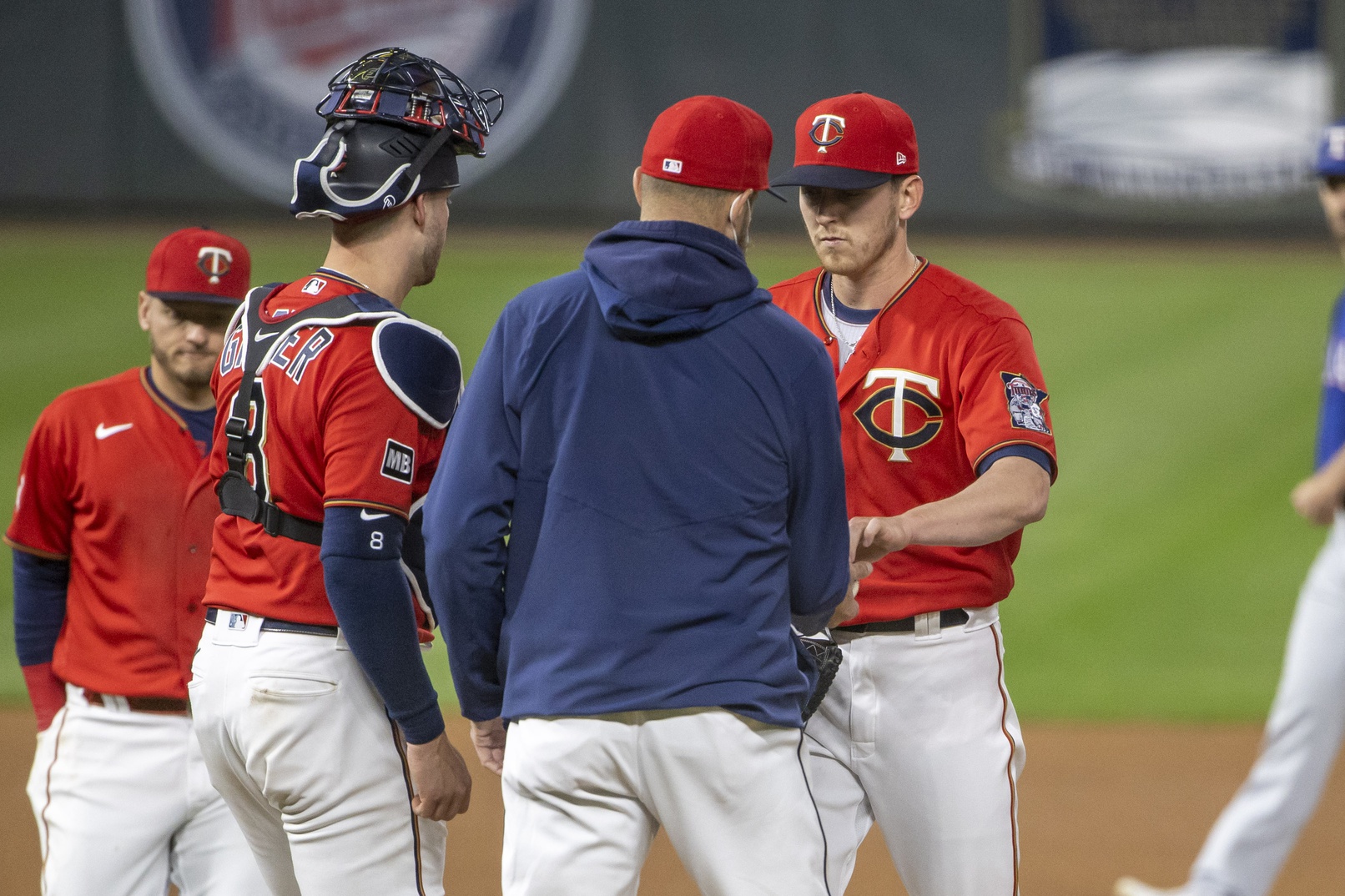 Tuesday night's ugly loss felt like a replay of the same episode with a slightly different script. Alex Colomé, the team's 1A closer coming into the season, had been so inconceivably bad in his first 10 appearances that he was deemed off-limits despite being the most well-rested pitcher in the bullpen. And so, when the Twins reached the ninth inning with a two-run lead, it was closer 1B getting the ball. Naturally, Taylor Rogers gave up two runs, allowing the last-place Rangers to tie the game and force extra innings. Rogers has been the team's best reliever this year but has now given up monster homers while protecting slim leads in back-to-back games. Just the latest in an endless barrage of bullpen misfortunes. These woes of course continued in the 10th, when Brandon Waddell was clobbered for a second straight night to drop the Twins to 0-6 in extra innings. One can quibble with Rocco Baldelli's choice to go with Waddell in that spot, and indeed he was a bad option, but the bottom line is this: they were all bad options. Jorge Alcala has been horrendous against lefties and the team – for whatever reason – doesn't trust him in leverage. Colomé, the bullpen's marquee free agent addition during the offseason, is unusable, but occupying an active roster spot and handcuffing Baldelli. This bullpen is in a dire, dire state. The relief corps is not showing any signs of turning around – quite the contrary. And frankly it's hard to feel like Shaun Anderson or Ian Hamilton or Derek Law or whatever other fringy pickup they made last winter is going to make any significant difference. The Twins have already erased most of their margin for error by banking nonstop losses in the early weeks. They need to take bold action on this bullpen before it's too late. This could mean one (or both) of two things: A: Sign a free agent. Shane Greene is the big remaining name. He inexplicably went unsigned during the offseason, despite posting a 2.39 ERA and 1.04 WHIP over 90 innings in the past two seasons. Greene has a rep as a righty silencer, which the Twins could very much use. Jon Heyman reported on Sunday that Greene "is having ongoing discussions with multiple teams." https://twitter.com/JonHeyman/status/1388848337139421185 It's an option with its share of appeal. But the 32-year-old Greene isn't an overwhelmingly dominant arm, and bringing him in at this point in the season, hoping he just picks up the ball and quickly assume his top form ... that's a gamble in its own right. The better bet? B: Trade for a bad team's best reliever. It's unusual for trades to happen this early in the season. Buyers almost always opt to wait until the deadline is closer, and asking prices come down. The Twins don't have that luxury. They need to spend what it takes in prospect capital to bring in a difference-maker. The good news is that they've retained almost all of said prospect capital, by passing up any major trades during the winter. It's time for the front office to set aside its value-seeking philosophy and put some of that built-up talent equity to use by making a splash. Waiting until the deadline would be akin to saving your closer until the ninth inning for a save opportunity that may never materialize. At this rate the Twins will be dead in the water by late July. MORE FROM TWINS DAILY — Latest Twins coverage from our writers — Recent Twins discussion in our forums — Follow Twins Daily via Twitter, Facebook or email
 -
Week in Review: Picking Up the Pieces
Nick Nelson replied to Nick Nelson's topic in Twins Daily Front Page News
They did sign Addison Reed to a $16 million deal – a free agent bullpen investment that is entirely unprecedented before or since for this franchise. He was a complete bust. Another example of the folly of free agent relievers. They did a very nice job building their bullpen last season. This year the opposite's been true, and they definitely need to take action on it before things unravel. Monday's game made that clearer than ever.- 29 replies
-
- 2
-
-
- byron buxton
- alex kirilloff
- (and 3 more)
-
Week in Review: Picking Up the Pieces
Nick Nelson replied to Nick Nelson's topic in Twins Daily Front Page News
Like Kirby Yates or Trevor Rosenthal? I don't disagree with your premise about Colome but signing "high upside FAs" in the bullpen is not quite as simple as you make it sound, even if you're willing to spend. The bet on Robles has looked decent so far, fwiw.- 29 replies
-
- 3
-
-
- byron buxton
- alex kirilloff
- (and 3 more)
-
Three offensive explosions became three victories in a week where the Twins finally started to emerge from their profound funk. Much work still lies ahead, but their first series victory in three weeks is a start. Weekly Snapshot: Mon, 4/26 through Sun, 5/2 *** Record Last Week: 3-3 (Overall: 10-16) Run Differential Last Week: +12 (Overall: +3) Standing: 4th Place in AL Central (6.0 GB) Last Week's Game Recaps: Game 21 | CLE 5, MIN 3: Twins Fall to 0-5 in Extras as Colomé Takes 3rd Loss Game 22 | CLE 7, MIN 4: Maeda Can't Find Answers, Slump Drags On Game 23 | MIN 10, CLE 2: Buxton Keys Offense in Dominant Victory Game 24 | MIN 9, KC 1: Pineda Rolls as Kirilloff Breaks Out with 2 HR Game 25 | KC 11, MIN 3: Twins Blown Out as Shoemaker Implodes Game 26 | MIN 13, KC 4: Another Big Day for the Twins Bats NEWS & NOTES Last week in this space, I broke down Minnesota's immense difficulties at catcher, noting that while both Mitch Garver and Ryan Jeffers were looking totally lost, the struggles of the latter were more pressing given his status as a developing 23-year-old player. "The Twins may need to start thinking about how they'll proceed at the catcher position," I wrote, "if they determine Jeffers needs more time in the minors." It took only a few more days, and one more start from Jeffers – he went 0-for-4 with two strikeouts against Cleveland on Monday – for the Twins to decide they'd seen enough. On Friday he was optioned to the alternate site, and replaced by the team's other top catching prospect, Ben Rortvedt. Optioned alongside Jeffers on Friday was Brent Rooker, who has largely struggled during his time with the Twins. Concurrently, JT Riddle and Tzu-Wei Lin were designated for assignment to open space on the 40-man roster for the returns of Max Kepler and Kyle Garlick from COVID-IL. Miguel Sanó is reportedly ready to go with the hamstring that placed him on IL, but the Twins are going to give him a few days to take swings and get his timing back. (To the extent he ever had it to begin with.) He figures to be activated midway through the upcoming week. HIGHLIGHTS How about that Byron Buxton? He wrapped up the greatest month in Twins history with another phenomenal week, highlighted by Wednesday's 5-for-5 explosion in Cleveland. In five games, Buxton went 10-for-21 with two home runs, three doubles, and two stolen bases. TRENDING STORYLINE This team doesn't have the luxury of giving away games right now. The offense shows signs of turning a corner, but Baldelli can't afford to be trotting pitchers out to the mound he can't trust. Which brings us to the names mentioned above. Maeda's not going anywhere, and we'll just have to hope he can find himself in a hurry. Shoemaker, as a one-year signing who looked like a temporary plug to begin with, has a far shorter leash, especially considering how irredeemably bad he's looked. While Dobnak might not be the most appealing replacement at this time, Lewis Thorpe looked good in his spot start a few weeks ago, and we know the club was high on him in spring training. How much longer will they wait to make a move? As for Colomé, it's probably still too early to be thinking about a DFA, but there is certainly some urgency for the Twins to address their bullpen issues and he's clearly the primary culprit. This is a stickier situation than Shoemaker; replacing your closer is obviously tougher than replacing your fifth starter. While Taylor Rogers is now assuming ninth-inning duties, the Twins have key high-leverage innings to backfill. Unfortunately, their minimal margin for error makes it tough to audition uncertain commodities – such as Shaun Anderson, Brandon Waddell, or Ian Hamilton – on the fly. There simply aren't enough low-leverage innings to go around for testing these fringe arms and also accommodating Colomé. You can't count on the continuance of lopsided margins like we saw all weekend against Kansas City. We'll see where the Twins go from here. Trusting the bullpen to fix itself seems unwise. LOOKING AHEAD I can't stress this enough: it is CRUCIAL for the Twins to take advantage of the upcoming soft patch in their schedule. With a full slate in the week ahead, they'll be hosting last-place Texas for four games before traveling to Detroit for three against the lowly Tigers. After that, things get a whole lot tougher and the stakes will be raised considerably: 14 games against the White Sox (6), Cleveland (3), Oakland (3), and Los Angeles (2). We haven't seen the Sox yet but the Twins are thus far 1-6 against the other three clubs. If they can't make some inroads toward .500 in these next seven days, they'll be putting themselves in a very, very precarious position. Of note: On Tuesday, Kyle Gibson makes his return to Target Field as a Ranger. He's riding a hell of a hot streak: 3-0 with a 0.82 ERA in his past five starts. Gibby has allowed zero home runs all season. Can his former team solve him? MONDAY, 5/3: RANGERS @ TWINS – RHP Dane Dunning v. RHP Kenta Maeda TUESDAY, 5/4: RANGERS @ TWINS – RHP Kyle Gibson v. LHP J.A. Happ WEDNESDAY, 5/5: RANGERS @ TWINS – RHP Kohei Arihara v. RHP Michael Pineda THURSDAY, 5/6: RANGERS @ TWINS – RHP Jordan Lyles v. RHP Matt Shoemaker FRIDAY, 5/7: TWINS @ TIGERS – RHP Jose Berrios v. RHP Spencer Turnbull SATURDAY, 5/8: TWINS @ TIGERS – RHP Kenta Maeda v. RHP Jose Urena SUNDAY, 5/9: TWINS @ TIGERS – LHP J.A. Happ v. RHP Casey Mize MORE FROM TWINS DAILY — Latest Twins coverage from our writers — Recent Twins discussion in our forums — Follow Twins Daily via Twitter, Facebook or email Click here to view the article
-
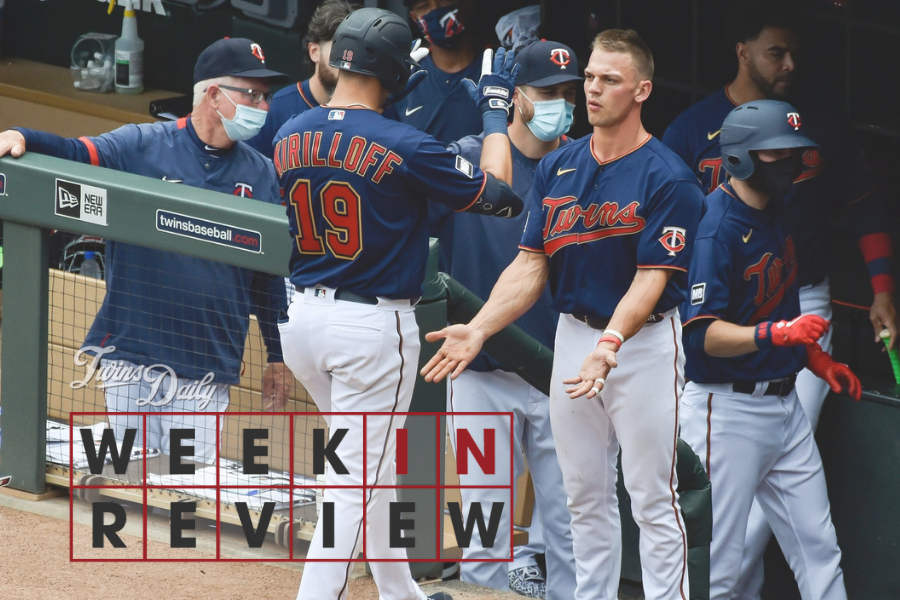 Weekly Snapshot: Mon, 4/26 through Sun, 5/2 *** Record Last Week: 3-3 (Overall: 10-16) Run Differential Last Week: +12 (Overall: +3) Standing: 4th Place in AL Central (6.0 GB) Last Week's Game Recaps: Game 21 | CLE 5, MIN 3: Twins Fall to 0-5 in Extras as Colomé Takes 3rd Loss Game 22 | CLE 7, MIN 4: Maeda Can't Find Answers, Slump Drags On Game 23 | MIN 10, CLE 2: Buxton Keys Offense in Dominant Victory Game 24 | MIN 9, KC 1: Pineda Rolls as Kirilloff Breaks Out with 2 HR Game 25 | KC 11, MIN 3: Twins Blown Out as Shoemaker Implodes Game 26 | MIN 13, KC 4: Another Big Day for the Twins Bats NEWS & NOTES Last week in this space, I broke down Minnesota's immense difficulties at catcher, noting that while both Mitch Garver and Ryan Jeffers were looking totally lost, the struggles of the latter were more pressing given his status as a developing 23-year-old player. "The Twins may need to start thinking about how they'll proceed at the catcher position," I wrote, "if they determine Jeffers needs more time in the minors." It took only a few more days, and one more start from Jeffers – he went 0-for-4 with two strikeouts against Cleveland on Monday – for the Twins to decide they'd seen enough. On Friday he was optioned to the alternate site, and replaced by the team's other top catching prospect, Ben Rortvedt. Optioned alongside Jeffers on Friday was Brent Rooker, who has largely struggled during his time with the Twins. Concurrently, JT Riddle and Tzu-Wei Lin were designated for assignment to open space on the 40-man roster for the returns of Max Kepler and Kyle Garlick from COVID-IL. Miguel Sanó is reportedly ready to go with the hamstring that placed him on IL, but the Twins are going to give him a few days to take swings and get his timing back. (To the extent he ever had it to begin with.) He figures to be activated midway through the upcoming week. HIGHLIGHTS How about that Byron Buxton? He wrapped up the greatest month in Twins history with another phenomenal week, highlighted by Wednesday's 5-for-5 explosion in Cleveland. In five games, Buxton went 10-for-21 with two home runs, three doubles, and two stolen bases. https://twitter.com/AaronGleeman/status/1388486584605896705 Buxton is making the Twins a must-watch even when the team at large has been hard to watch. He's an incredibly dynamic player and an early MVP frontrunner. But up until very recently, he wasn't getting much help. Alex Kirilloff is among those flipping the script for a languishing lineup. Given that he was hitting the ball harder than any Twins hitter, save for Buxton and Nelson Cruz, it felt like only a matter of time until Kirilloff broke through. That happened on Friday night at Target Field, when the rookie launched a pair of home runs against Kansas City, and he added another on both Saturday and Sunday. The big series lifted his OPS from .269 to .726. https://twitter.com/BallySportsNOR/status/1388963101970771968 One thing to note is that Kirilloff has been extremely aggressive at the plate, which has always been his M.O., but you do wonder if it's going to start to catch up with him. Dating back to spring training, he has drawn only two walks in 69 plate appearances. Then again, it's working just fine for his teammate Buxton, who ranks in the 11th percentile for chase rate and BB% but continues to dominate nonetheless. https://twitter.com/NickNelsonMN/status/1388902804517920771 Comparatively speaking, Garver's ongoing struggles were quite a bit more concerning than Kirilloff's. He was 0-for-his-last 17 with 11 strikeouts when he came to the plate for a third time in Cleveland on Wednesday. The catcher proceeded to launch a mammoth home run. Then, he did it again in his next AB. Garver added a three-run blast against the Royals on Sunday, and it was what we'd call a no-doubter. https://twitter.com/Nashwalker9/status/1388931880054104064 I'm not going to feel especially confident in Garver until he starts showing some dimensionality in his offensive game – in his past eight contests, he has four hits (three monster home runs and a ground ball single), zero walks, and 12 strikeouts. This all-or-nothing dynamic is very dependent on finding a mistake to destroy, which is not necessarily a sustainable formula. That said, it's good to see him unloading on some baseballs after a lengthy skid. Garver regaining his confidence (and competence) at the plate is especially critical with Jeffers now out of the mix. LOWLIGHTS Midway through March, reigning Cy Young runner-up Kenta Maeda looked more impervious than ever. Having not allowed a run or hit through his first few spring outings, the right-hander expressed concern he was having "too good" of a spring and – with tongue in cheek – yearned for a bit of adversity. In April, he got more than he bargained for. Through five starts, Maeda has a 6.56 ERA, with opponents crushing him to the tune of .350/.391/.641. His past two turns, which saw him surrender 12 earned runs on 16 hits and six homers in 8 ⅔ innings, represent the worst we've seen Maeda in a Twins uniform. In fact, you won't find a worse pair of back-to-back outings in his career. Last year, Maeda gave up six or more hits in only one of his 11 starts This year, he's allowed 6+ hits in every start. Meanwhile, Matt Shoemaker has completely fallen apart after a strong start to his Twins career. The righty gave up just one earned run through his first 11 innings, but has since coughed up an astounding 20 earned runs over 12 innings, with two strikeouts, seven walks, and six home runs allowed. The Twins have lost four straight with him on the mound. Saturday's outing was a nightmare as Shoemaker was obliterated by the Royals for nine runs, and his day ended on a sour note when he failed to back up home plate on overthrow. https://twitter.com/AaronGleeman/status/1388606757740683264 It's going to be hard to send Shoemaker and his 8.22 ERA out for another start at this point. Unfortunately the top candidate to replace him, Randy Dobnak, has an 8.16 ERA so he's not the most inspiring alternative at this time. And in a further bit of unfortunate news, it'll be a while before either of the Twins' top two pitching prospects are even ready to start making their cases for a look. https://twitter.com/dohyoungpark/status/1388890802940792832 Meanwhile, a lingering headache in the bullpen won't go away. The Twins are trying their hardest to get Alex Colomé right, but the prized offseason bullpen addition continues to look unusable at every turn. He came in for the 10th inning on Monday against Cleveland and immediately gave up a walk-off homer. The following night, Rocco Baldelli sent him right back out in a lower-leverage "get-right" spot with the Twins trailing by a run in the eighth. Colomé looked perhaps the worst he has all season, laboring through six batters while issuing three walks (one with bases loaded) and an HBP. He appeared in a lower-stakes spot on Saturday, working a scoreless ninth but giving up plenty of hard contact in a blowout loss. Colomé seems incapable of throwing the ball in the zone without hanging it in a batter's wheelhouse. He's getting hit harder than any pitcher in the big leagues. No reliever in MLB history has had a more negative impact through his first 10 appearances with a new team. Truly an epic disaster of a free agent signing, unless Colomé can find a way to reverse course dramatically. https://twitter.com/AaronGleeman/status/1387219157729480707 TRENDING STORYLINE This team doesn't have the luxury of giving away games right now. The offense shows signs of turning a corner, but Baldelli can't afford to be trotting pitchers out to the mound he can't trust. Which brings us to the names mentioned above. Maeda's not going anywhere, and we'll just have to hope he can find himself in a hurry. Shoemaker, as a one-year signing who looked like a temporary plug to begin with, has a far shorter leash, especially considering how irredeemably bad he's looked. While Dobnak might not be the most appealing replacement at this time, Lewis Thorpe looked good in his spot start a few weeks ago, and we know the club was high on him in spring training. How much longer will they wait to make a move? As for Colomé, it's probably still too early to be thinking about a DFA, but there is certainly some urgency for the Twins to address their bullpen issues and he's clearly the primary culprit. This is a stickier situation than Shoemaker; replacing your closer is obviously tougher than replacing your fifth starter. While Taylor Rogers is now assuming ninth-inning duties, the Twins have key high-leverage innings to backfill. Unfortunately, their minimal margin for error makes it tough to audition uncertain commodities – such as Shaun Anderson, Brandon Waddell, or Ian Hamilton – on the fly. There simply aren't enough low-leverage innings to go around for testing these fringe arms and also accommodating Colomé. You can't count on the continuance of lopsided margins like we saw all weekend against Kansas City. We'll see where the Twins go from here. Trusting the bullpen to fix itself seems unwise. LOOKING AHEAD I can't stress this enough: it is CRUCIAL for the Twins to take advantage of the upcoming soft patch in their schedule. With a full slate in the week ahead, they'll be hosting last-place Texas for four games before traveling to Detroit for three against the lowly Tigers. After that, things get a whole lot tougher and the stakes will be raised considerably: 14 games against the White Sox (6), Cleveland (3), Oakland (3), and Los Angeles (2). We haven't seen the Sox yet but the Twins are thus far 1-6 against the other three clubs. If they can't make some inroads toward .500 in these next seven days, they'll be putting themselves in a very, very precarious position. Of note: On Tuesday, Kyle Gibson makes his return to Target Field as a Ranger. He's riding a hell of a hot streak: 3-0 with a 0.82 ERA in his past five starts. Gibby has allowed zero home runs all season. Can his former team solve him? MONDAY, 5/3: RANGERS @ TWINS – RHP Dane Dunning v. RHP Kenta Maeda TUESDAY, 5/4: RANGERS @ TWINS – RHP Kyle Gibson v. LHP J.A. Happ WEDNESDAY, 5/5: RANGERS @ TWINS – RHP Kohei Arihara v. RHP Michael Pineda THURSDAY, 5/6: RANGERS @ TWINS – RHP Jordan Lyles v. RHP Matt Shoemaker FRIDAY, 5/7: TWINS @ TIGERS – RHP Jose Berrios v. RHP Spencer Turnbull SATURDAY, 5/8: TWINS @ TIGERS – RHP Kenta Maeda v. RHP Jose Urena SUNDAY, 5/9: TWINS @ TIGERS – LHP J.A. Happ v. RHP Casey Mize MORE FROM TWINS DAILY — Latest Twins coverage from our writers — Recent Twins discussion in our forums — Follow Twins Daily via Twitter, Facebook or email
 -
They say history repeats itself. For the 2021 Twins, that could be a good or bad thing. Two precedents from the franchise's past 15 years illustrate diverging paths forward.Five years ago today, on April 27th, 2016, the Minnesota Twins had the exact same record as they do currently: 7-14. About one week later, owner Jim Pohlad uttered three words to the media that would become irrevocably associated with an historical trainwreck of a season: "Total System Failure." By that point, things had further devolved. From 7-14, the Twins lost 12 of their next 13 games and by mid-May they were 8-26. This disastrous spiral culminated in a 103-loss season and led to a (perhaps long overdue) complete overhaul of the front office and baseball ops department. In came Derek Falvey and Thad Levine, who did a remarkable job of turning around this wayward Twins franchise. But here in 2021, a year of sky-high expectations, they find their club heading down a familiarly distressing path. Looking back at that 2016 team, you do see some noticeable similarities. A lineup that mostly failed to produce and rarely scored more than three runs. A blowup-prone bullpen with a maddeningly ineffective closer (Kevin Jepsen, meet Alex Colomé). Mounting injuries and misfortunes. A constant inability to execute in big spots or win games in convincing fashion. Then again, this 2021 roster also feels a whole lot different than that mish-mashed, transitional group. The 2016 Twins had a miscast Miguel Sanó playing in right field, ByungHo Park at DH, and Eduardo Escobar badly stretched as a shortstop for much of the year, before Jorge Polanco stepped in and looked even worse. The rotation featured Ricky Nolasco, Tommy Milone, and brutal rookie performances from Jose Berrios and Tyler Duffey. That was not a team that stacked up on paper against this year's Twins, with Nelson Cruz, Josh Donaldson, and a fully-formed Byron Buxton leading the charge. It wasn't a slightly modified version of a team that had played .600 ball and won two division titles in the past two seasons. Most notably, it was very clear from the start that the 2016 team was terrible. They started out 0-9 and really never gave the impression they were better than the results indicated. This 2021 team got off to a much different start. They were 5-2, with the best run differential in the league, and leading Seattle 6-0 on April 11th before the bottom completely fell out. A meltdown in that series finale against the Mariners gave way to a 2-12 slump that these Twins are now desperately trying to find their way out of. Unlike the 2016 Twins, we know this team is better than its record indicates. We've seen what they're capable of, even though that strong start now feels like ancient history. So to envision what a necessary turnaround might look like, let's turn the clock back another 10 years, to 2006. The '06 Twins were in better shape as of this date (9-12) but they struggled mightily during the first two months overall. As late as June 7th, they were eight games below 500 at 25-33, trailing first place by 11.5 games in the Central. No one was thinking at that time Minnesota had much of a chance. But as the summer hit its stride, so did the Twins, suddenly unlocking a series of best-case scenarios that fueled a stunning four-month run. They ended up winning 96 games and the division. What needed to happen for that team to exorcise its demons and fulfill its potential? In examining the 2006 squad, and the key factors behind their turnaround, let's see if we can't extract a few promising parallels. Justin Morneau's surge: On this date in 2006, Morneau was slashing .208/.260/.431 and looking lost. From that point forward he was a force to be reckoned with. Starting on May 1st, the first baseman hit .338/.390/.581 with 29 home runs and 115 RBIs in 136 games, earning MVP honors as a result. Now, most laggards on the current Twins have looked even worse than Morneau did early on, but they've got sleepers who've proven capable of producing like the second-half Morneau from 2006. I'm thinking of Miguel Sano, Mitch Garver, and Max Kepler, specifically. Francisco Liriano's emergence: The rookie phenom was an electrifying presence on the mound every fifth day after he joined the rotation in mid-May. I'm not saying there's any prospect in the Twins organization capable of replicating that impact, but the Twins do have some high-octane starting arms — namely Jhoan Duran, Jordan Balazovic and Matt Canterino — who are verging on MLB-ready and could step in at any time to be legit difference-makers. Front office intervention: Terry Ryan and Co. were customarily patient as things devolved in the early months of 2006, but eventually they took action and made some important moves. Not in the form of trades or external additions, mind you, but pivotal internal decisions. They phased out non-performers like Tony Batista, Juan Castro and Lew Ford. They cut bait on Kyle Lohse. They eventually gave up on their weird Willie Eyre fixation in the bullpen and called up a kid by the name of Pat Neshek. So far we haven't seen this current front office take any kind of significant action as its team has sunk into despair, other than reactive moves to fill needs. But action is bound to come. And while it's hard to feel ultra-confident in their ability to right the ship, given that they built this leaky thing to begin with, they have shown they can make critical adjustments and improvements on the fly: most importantly, in the bullpen. Lest we forget: Minnesota opened the 2019 season with a bullpen consisting of Trevor May, Taylor Rogers, Blake Parker, Trevor Hildenberger, Ryne Harper, Martín Pérez, Adalberto Mejía. The unit endured some painful struggles in the first half, but by year's end it was a high-powered, dependable relief corps with very few of the same names. I don't know what will happen from here. Admittedly, it's difficult now to imagine this team coming alive and playing at the 100+ win pace likely necessary to take the division. Then again, we could've said the same at times in early 2006. And like that team, this one has got some of the requisite pieces and capabilities to go on such a run. Or, maybe they'll continue to unravel in spectacular fashion, and we're in the midst of another Total System Failure. Or perhaps the best comp is 2018, and we'll ultimately learn that this team is neither extraordinarily good or bad, but simply a mediocre also-ran. That frankly seems like the most likely outcome at this time. The bottom line is we don't know. There's still a ton of season left and many things that can play out. Keep that in mind, and stay hopeful. MORE FROM TWINS DAILY — Latest Twins coverage from our writers — Recent Twins discussion in our forums — Follow Twins Daily via Twitter, Facebook or email Click here to view the article
-
 Five years ago today, on April 27th, 2016, the Minnesota Twins had the exact same record as they do currently: 7-14. About one week later, owner Jim Pohlad uttered three words to the media that would become irrevocably associated with an historical trainwreck of a season: "Total System Failure." By that point, things had further devolved. From 7-14, the Twins lost 12 of their next 13 games and by mid-May they were 8-26. This disastrous spiral culminated in a 103-loss season and led to a (perhaps long overdue) complete overhaul of the front office and baseball ops department. In came Derek Falvey and Thad Levine, who did a remarkable job of turning around this wayward Twins franchise. But here in 2021, a year of sky-high expectations, they find their club heading down a familiarly distressing path. Looking back at that 2016 team, you do see some noticeable similarities. A lineup that mostly failed to produce and rarely scored more than three runs. A blowup-prone bullpen with a maddeningly ineffective closer (Kevin Jepsen, meet Alex Colomé). Mounting injuries and misfortunes. A constant inability to execute in big spots or win games in convincing fashion. Then again, this 2021 roster also feels a whole lot different than that mish-mashed, transitional group. The 2016 Twins had a miscast Miguel Sanó playing in right field, ByungHo Park at DH, and Eduardo Escobar badly stretched as a shortstop for much of the year, before Jorge Polanco stepped in and looked even worse. The rotation featured Ricky Nolasco, Tommy Milone, and brutal rookie performances from Jose Berrios and Tyler Duffey. That was not a team that stacked up on paper against this year's Twins, with Nelson Cruz, Josh Donaldson, and a fully-formed Byron Buxton leading the charge. It wasn't a slightly modified version of a team that had played .600 ball and won two division titles in the past two seasons. Most notably, it was very clear from the start that the 2016 team was terrible. They started out 0-9 and really never gave the impression they were better than the results indicated. This 2021 team got off to a much different start. They were 5-2, with the best run differential in the league, and leading Seattle 6-0 on April 11th before the bottom completely fell out. A meltdown in that series finale against the Mariners gave way to a 2-12 slump that these Twins are now desperately trying to find their way out of. Unlike the 2016 Twins, we know this team is better than its record indicates. We've seen what they're capable of, even though that strong start now feels like ancient history. So to envision what a necessary turnaround might look like, let's turn the clock back another 10 years, to 2006. The '06 Twins were in better shape as of this date (9-12) but they struggled mightily during the first two months overall. As late as June 7th, they were eight games below 500 at 25-33, trailing first place by 11.5 games in the Central. No one was thinking at that time Minnesota had much of a chance. But as the summer hit its stride, so did the Twins, suddenly unlocking a series of best-case scenarios that fueled a stunning four-month run. They ended up winning 96 games and the division. What needed to happen for that team to exorcise its demons and fulfill its potential? In examining the 2006 squad, and the key factors behind their turnaround, let's see if we can't extract a few promising parallels. Justin Morneau's surge: On this date in 2006, Morneau was slashing .208/.260/.431 and looking lost. From that point forward he was a force to be reckoned with. Starting on May 1st, the first baseman hit .338/.390/.581 with 29 home runs and 115 RBIs in 136 games, earning MVP honors as a result. Now, most laggards on the current Twins have looked even worse than Morneau did early on, but they've got sleepers who've proven capable of producing like the second-half Morneau from 2006. I'm thinking of Miguel Sano, Mitch Garver, and Max Kepler, specifically. Francisco Liriano's emergence: The rookie phenom was an electrifying presence on the mound every fifth day after he joined the rotation in mid-May. I'm not saying there's any prospect in the Twins organization capable of replicating that impact, but the Twins do have some high-octane starting arms — namely Jhoan Duran, Jordan Balazovic and Matt Canterino — who are verging on MLB-ready and could step in at any time to be legit difference-makers. Front office intervention: Terry Ryan and Co. were customarily patient as things devolved in the early months of 2006, but eventually they took action and made some important moves. Not in the form of trades or external additions, mind you, but pivotal internal decisions. They phased out non-performers like Tony Batista, Juan Castro and Lew Ford. They cut bait on Kyle Lohse. They eventually gave up on their weird Willie Eyre fixation in the bullpen and called up a kid by the name of Pat Neshek. So far we haven't seen this current front office take any kind of significant action as its team has sunk into despair, other than reactive moves to fill needs. But action is bound to come. And while it's hard to feel ultra-confident in their ability to right the ship, given that they built this leaky thing to begin with, they have shown they can make critical adjustments and improvements on the fly: most importantly, in the bullpen. Lest we forget: Minnesota opened the 2019 season with a bullpen consisting of Trevor May, Taylor Rogers, Blake Parker, Trevor Hildenberger, Ryne Harper, Martín Pérez, Adalberto Mejía. The unit endured some painful struggles in the first half, but by year's end it was a high-powered, dependable relief corps with very few of the same names. I don't know what will happen from here. Admittedly, it's difficult now to imagine this team coming alive and playing at the 100+ win pace likely necessary to take the division. Then again, we could've said the same at times in early 2006. And like that team, this one has got some of the requisite pieces and capabilities to go on such a run. Or, maybe they'll continue to unravel in spectacular fashion, and we're in the midst of another Total System Failure. Or perhaps the best comp is 2018, and we'll ultimately learn that this team is neither extraordinarily good or bad, but simply a mediocre also-ran. That frankly seems like the most likely outcome at this time. The bottom line is we don't know. There's still a ton of season left and many things that can play out. Keep that in mind, and stay hopeful. MORE FROM TWINS DAILY — Latest Twins coverage from our writers — Recent Twins discussion in our forums — Follow Twins Daily via Twitter, Facebook or email
 -
The Twins returned home after a nightmarish road trip but saw little improvement in their play, falling to 3-7 at Target Field with a thoroughly lackluster performance against Pittsburgh. This team is in an astonishingly deep funk. Can they find their way out? Weekly Snapshot: Mon, 4/19 through Sun, 4/25 *** Record Last Week: 1-5 (Overall: 7-13) Run Differential Last Week: -15 (Overall: -9) Standing: 4th Place in AL Central Last Week's Game Recaps: Game 15 | OAK 7, MIN 0: Hapless Twins Continue Woeful Streak; Swept by Athletics Game 16 | OAK 1, MIN 0: Hapless Twins Continue Woeful Streak; Swept by Athletics Game 17 | OAK 13, MIN 12: Offensive Breakout Wasted in Total Unraveling Game 18 | MIN 2, PIT 0: Happ Takes No-hitter into 8th, Twins Blank Bucs Game 19 | PIT 6, MIN 2: Lineup Sleepwalks in Another Dire Loss Game 20 | PIT 6, MIN 2: Déjà Vu All Over Again NEWS & NOTES Between COVID-related maneuvering, injury replacements, and procedural moves, there was a ton of roster action over the past week. Let's quickly get caught up: On Tuesday, Max Kepler, Kyle Garlick and Caleb Thielbar were placed on the COVID-IL. They were replaced on the roster by Brent Rooker, Travis Blankenhorn, and Luke Farrell, who were all traveling with the team as taxi squad members. Lewis Thorpe was called up as the 27th man during the doubleheader in Anaheim, then returned to the minors.The next day, JT Riddle joined others on the COVID-IL, having been deemed a close contact. Tomás Telis came over from the taxi squad to replace him.On Friday, Telis and Blankenhorn were returned to the alternate site, and Miguel Sanó was placed on the IL with a hamstring injury. Taking over those roster spots were Alex Kirilloff, Nick Gordon, and Tzu-Wei Lin.On Saturday, Thielbar was reactivated after clearing COVID protocols, sending Farrell back to the alternate site.Having thrown 4 ⅔ strong innings in relief on Saturday, Smeltzer was swapped out from the bullpen for a fresh arm – Cody Stashak, who rejoined the roster on Sunday.It also sounds as though Andrelton Simmons is past his bout with COVID and ready to return, possibly as soon as Monday, although he hasn't yet been activated. Presumably Gordon, who didn't appear in the Pittsburgh series, will be sent out to make room. HIGHLIGHTS Rocco Baldelli has dealt with his share of unwelcome problems and headaches in the first month of the season, but we can probably file this one under "nice problems to have": Deciding whether or not to keep starters in games as they chase no-hitters and their pitch counts mount. José Berríos put the manager in such a spot a couple weeks ago, with six hitless frames in Milwaukee, and now J.A. Happ became the latest, carrying a no-no bid into the eighth against Pittsburgh on Friday. Fortunately, for Rocco, Happ took the decision out of his hands, giving up a double with one out in the eighth inning, but he finished with a stellar line: 7.1 IP, 1 H, 0 R, 2 BB, 3 K. Left Field The Twins moved on from Eddie Rosario during the offseason because they understandably felt they had enough to cover for his absence in left field. Thus far, this has not proven to be the case. Minnesota's left fielders have collectively gone 10-for-74 (.135) with zero home runs, 30 strikeouts, and two walks. Kirilloff, a hopeful savior, is hitless through 14 plate appearances. First Base Primarily due to Sanó's pre-injury struggles, first base has been a void of offensive production, with a .157 batting average and only three extra-base hits (all home runs). Willians Astudillo has been an uninspiring replacement. Catcher Both Mitch Garver and Ryan Jeffers are, incredibly, striking out in nearly half of their plate appearances. The struggles of Jeffers – who is slashing .167/.242/.200 with 16 strikeouts in 33 plate appearances – are especially pressing, given that he's a 23-year-old who is still developing as a player. The Twins may need to start thinking about how they'll proceed at the catcher position if they determine Jeffers needs more time in the minors. Who knows what can be done with the dazed-and-confused Garver. Second Base Like catcher, this position looked like a clear source of strength coming into the season, but has proven to be anything but. Owing mostly to Jorge Polanco's struggles, Twins second basemen had produced a .164/.235/.205 slash line before Arraez lifted those numbers slightly on Sunday. The pitching has largely not been good, especially in the disastrous meltdown that transpired on Thursday. Starters are laboring and the bullpen has been full of leaks, top to bottom. But it almost doesn't matter, because the offense has been so persistently incapable of scoring runs. There are some very talented hitters here, and I have to believe an awakening is forthcoming. But then again, so many of these familiar issues trace back to last year's struggles – especially in the playoffs. Watching inning after inning of lethargic, non-competitive at-bats against unremarkable pitchers, you can't help but wonder ... is this a closer approximation to the Twins in their true form than the juggernaut that emerged in 2019? TRENDING STORYLINE In the early part of his tenure, Baldelli's teams developed a reputation for resilience. They routinely bounced back from losses and overcame adversity on the way to a 101-win season in his managerial debut. When the times got tough, those Twins got tougher. (Up until October, anyway.) Of late, this trait has been completely amiss. The Twins have seen their troubles snowball as the month progresses. Losing two of three while scoring six runs at home against that Pirates team is just brutal. So now, we'll simply have to see if Rocco and his Twins can find some resilience within themselves. They whiffed on a juicy get-right opportunity against Pittsburgh, and if the miserable play carries forward into the next week it's going start getting costly: six games lie ahead against teams the Twins are chasing in the standings. It sounds like Simmons will be back very soon. Kepler and Garlick hopefully are not far behind. The Twins will gradually return to full strength. The pressure is mounting for them to show it's a team worth believing in. One wonders how much longer this can go on before the front office steps in and takes some kind of significant action, rather than waiting for things to get right on their own. We're moving past the realm of overreactions to small samples. LOOKING AHEAD Only three of Minnesota's first 21 games came against a division rival, and they featured the least relevant one (Detroit) at that. Now, the Twins are about to get a heavy dose of the AL Central – 25 of their next 38 games – and it starts with a slate of six match-ups against Cleveland and the Royals this week. Of note: The Twins will luckily miss Shane Bieber in the Cleveland series. We'll take whatever breaks we can get at this point. MONDAY, 4/26: TWINS @ CLEVELAND – RHP José Berríos v. RHP Zach Plesac TUESDAY, 4/27: TWINS @ CLEVELAND – RHP Kenta Maeda v. RHP Aaron Civale WEDNESDAY, 4/28: TWINS @ CLEVELAND – LHP J.A. Happ v. LHP Logan Allen FRIDAY, 4/30: ROYALS @ TWINS – LHP Mike Minor v. RHP Michael Pineda SATURDAY, 5/1: ROYALS @ TWINS – LHP Danny Duffy v. RHP Matt Shoemaker SUNDAY, 5/2: ROYALS @ TWINS – RHP Brad Keller v. RHP José Berríos MORE FROM TWINS DAILY — Latest Twins coverage from our writers — Recent Twins discussion in our forums — Follow Twins Daily via Twitter, Facebook or email Click here to view the article
-
 Weekly Snapshot: Mon, 4/19 through Sun, 4/25 *** Record Last Week: 1-5 (Overall: 7-13) Run Differential Last Week: -15 (Overall: -9) Standing: 4th Place in AL Central Last Week's Game Recaps: Game 15 | OAK 7, MIN 0: Hapless Twins Continue Woeful Streak; Swept by Athletics Game 16 | OAK 1, MIN 0: Hapless Twins Continue Woeful Streak; Swept by Athletics Game 17 | OAK 13, MIN 12: Offensive Breakout Wasted in Total Unraveling Game 18 | MIN 2, PIT 0: Happ Takes No-hitter into 8th, Twins Blank Bucs Game 19 | PIT 6, MIN 2: Lineup Sleepwalks in Another Dire Loss Game 20 | PIT 6, MIN 2: Déjà Vu All Over Again NEWS & NOTES Between COVID-related maneuvering, injury replacements, and procedural moves, there was a ton of roster action over the past week. Let's quickly get caught up: On Tuesday, Max Kepler, Kyle Garlick and Caleb Thielbar were placed on the COVID-IL. They were replaced on the roster by Brent Rooker, Travis Blankenhorn, and Luke Farrell, who were all traveling with the team as taxi squad members. Lewis Thorpe was called up as the 27th man during the doubleheader in Anaheim, then returned to the minors. The next day, JT Riddle joined others on the COVID-IL, having been deemed a close contact. Tomás Telis came over from the taxi squad to replace him. On Friday, Telis and Blankenhorn were returned to the alternate site, and Miguel Sanó was placed on the IL with a hamstring injury. Taking over those roster spots were Alex Kirilloff, Nick Gordon, and Tzu-Wei Lin. On Saturday, Thielbar was reactivated after clearing COVID protocols, sending Farrell back to the alternate site. Having thrown 4 ⅔ strong innings in relief on Saturday, Smeltzer was swapped out from the bullpen for a fresh arm – Cody Stashak, who rejoined the roster on Sunday. It also sounds as though Andrelton Simmons is past his bout with COVID and ready to return, possibly as soon as Monday, although he hasn't yet been activated. Presumably Gordon, who didn't appear in the Pittsburgh series, will be sent out to make room. HIGHLIGHTS Rocco Baldelli has dealt with his share of unwelcome problems and headaches in the first month of the season, but we can probably file this one under "nice problems to have": Deciding whether or not to keep starters in games as they chase no-hitters and their pitch counts mount. José Berríos put the manager in such a spot a couple weeks ago, with six hitless frames in Milwaukee, and now J.A. Happ became the latest, carrying a no-no bid into the eighth against Pittsburgh on Friday. Fortunately, for Rocco, Happ took the decision out of his hands, giving up a double with one out in the eighth inning, but he finished with a stellar line: 7.1 IP, 1 H, 0 R, 2 BB, 3 K. https://twitter.com/Twins/status/1385956696435007489 Happ's performance could hardly be described as dominant, but he was effective in exactly the way you'd expect from a seasoned veteran southpaw. He mixed pitches, threw strikes, kept hitters off-balance, and limited hard contact. (He also benefited from some luck, for which the Twins were beyond due.) No one should be fooled into thinking he's suddenly an ace, but it's a nice luxury to have a starter with those kinds of chops in the back half of your rotation. Failures of the Twins' lineup have not been attributable to its central cogs. Nelson Cruz launched three more home runs, with Sunday's bomb tying him for the big-league lead. Josh Donaldson looks healthy and locked in – his four-hit game on Thursday reminds us of what he can do. Luis Arraez keeps hitting and getting on base atop the order. Byron Buxton continues to flat-out mash, with a clutch extra-innings homer in Oakland and a go-ahead RBI single on Sunday. Recently we've also started to see his defensive impact come into play. He made a pair of phenomenal catches in center field and they both came at crucial times. His play in Oakland will go down as one of the year's best in baseball. https://twitter.com/Twins/status/1384996545251086338 https://twitter.com/Nashwalker9/status/1386028081144602626 It's amazing that the Twins have been so chronically incapable of producing runs and winning games when Buxton is doing what he's doing. It really is. Only worsens the sting. LOWLIGHTS We're still in the first month of the season, but even the most big-picture analytical thinker has to be harboring legitimate concerns about the state and outlook of this club. They've got a lot of time left to turn it around, but the Twins are digging themselves quite a hole, and giving reason to wonder if they're even capable of the sort of 180-degree reversal needed to get back into the contention mix. The lineup had a rare outburst on Wednesday, scoring 12 runs in a gutting loss. Outside of that, this was one of the most dreadful and dreary weeks in memory for a Minnesota Twins offense, which put up six total runs in five other games. The Twins were shut out in both ends of a doubleheader against the A's, and then held to two runs in each of their three games against a Pirates team that entered the series with a 4.75 ERA. Several different positional units have been prime contributors to this run-scoring malaise: https://twitter.com/NickNelsonMN/status/1386358653758758913 Left Field The Twins moved on from Eddie Rosario during the offseason because they understandably felt they had enough to cover for his absence in left field. Thus far, this has not proven to be the case. Minnesota's left fielders have collectively gone 10-for-74 (.135) with zero home runs, 30 strikeouts, and two walks. Kirilloff, a hopeful savior, is hitless through 14 plate appearances. First Base Primarily due to Sanó's pre-injury struggles, first base has been a void of offensive production, with a .157 batting average and only three extra-base hits (all home runs). Willians Astudillo has been an uninspiring replacement. Catcher Both Mitch Garver and Ryan Jeffers are, incredibly, striking out in nearly half of their plate appearances. The struggles of Jeffers – who is slashing .167/.242/.200 with 16 strikeouts in 33 plate appearances – are especially pressing, given that he's a 23-year-old who is still developing as a player. The Twins may need to start thinking about how they'll proceed at the catcher position if they determine Jeffers needs more time in the minors. Who knows what can be done with the dazed-and-confused Garver. Second Base Like catcher, this position looked like a clear source of strength coming into the season, but has proven to be anything but. Owing mostly to Jorge Polanco's struggles, Twins second basemen had produced a .164/.235/.205 slash line before Arraez lifted those numbers slightly on Sunday. The pitching has largely not been good, especially in the disastrous meltdown that transpired on Thursday. Starters are laboring and the bullpen has been full of leaks, top to bottom. But it almost doesn't matter, because the offense has been so persistently incapable of scoring runs. There are some very talented hitters here, and I have to believe an awakening is forthcoming. But then again, so many of these familiar issues trace back to last year's struggles – especially in the playoffs. Watching inning after inning of lethargic, non-competitive at-bats against unremarkable pitchers, you can't help but wonder ... is this a closer approximation to the Twins in their true form than the juggernaut that emerged in 2019? TRENDING STORYLINE In the early part of his tenure, Baldelli's teams developed a reputation for resilience. They routinely bounced back from losses and overcame adversity on the way to a 101-win season in his managerial debut. When the times got tough, those Twins got tougher. (Up until October, anyway.) Of late, this trait has been completely amiss. The Twins have seen their troubles snowball as the month progresses. Losing two of three while scoring six runs at home against that Pirates team is just brutal. So now, we'll simply have to see if Rocco and his Twins can find some resilience within themselves. They whiffed on a juicy get-right opportunity against Pittsburgh, and if the miserable play carries forward into the next week it's going start getting costly: six games lie ahead against teams the Twins are chasing in the standings. It sounds like Simmons will be back very soon. Kepler and Garlick hopefully are not far behind. The Twins will gradually return to full strength. The pressure is mounting for them to show it's a team worth believing in. One wonders how much longer this can go on before the front office steps in and takes some kind of significant action, rather than waiting for things to get right on their own. We're moving past the realm of overreactions to small samples. LOOKING AHEAD Only three of Minnesota's first 21 games came against a division rival, and they featured the least relevant one (Detroit) at that. Now, the Twins are about to get a heavy dose of the AL Central – 25 of their next 38 games – and it starts with a slate of six match-ups against Cleveland and the Royals this week. Of note: The Twins will luckily miss Shane Bieber in the Cleveland series. We'll take whatever breaks we can get at this point. MONDAY, 4/26: TWINS @ CLEVELAND – RHP José Berríos v. RHP Zach Plesac TUESDAY, 4/27: TWINS @ CLEVELAND – RHP Kenta Maeda v. RHP Aaron Civale WEDNESDAY, 4/28: TWINS @ CLEVELAND – LHP J.A. Happ v. LHP Logan Allen FRIDAY, 4/30: ROYALS @ TWINS – LHP Mike Minor v. RHP Michael Pineda SATURDAY, 5/1: ROYALS @ TWINS – LHP Danny Duffy v. RHP Matt Shoemaker SUNDAY, 5/2: ROYALS @ TWINS – RHP Brad Keller v. RHP José Berríos MORE FROM TWINS DAILY — Latest Twins coverage from our writers — Recent Twins discussion in our forums — Follow Twins Daily via Twitter, Facebook or email
 -
The Minnesota Twins need help. Is it on the way? Friday they'll be joined by two former first-round draft picks, who have followed radically different paths to get here. The stakes are high: for the team, for Alex Kirilloff, and especially for Nick Gordon.Returning home after one of the worst road trips imaginable, the Twins are shorthanded, with at least three regulars sidelined. Miguel Sanó (hamstring) joins Andrelton Simmons and Max Kepler (COVID) on the injured list, while the status of hobbled Nelson Cruz is uncertain. The good news, for both the Twins and their newly promoted prospects, is that Kirilloff and Gordon can functionally fill the gaps quite well. There will be no shortage of opportunity right away for these guys. Last summer, while Kirilloff was dazzling everyone at the alternate site, eventually earning a postseason promotion, Gordon was recovering from a scary and prolonged bout with COVID. He missed the entire season, which is a true shame because he undoubtedly would've gotten a shot with the injury-ravaged Twins grasping for reinforcements. They now find themselves doing so again, very early, in 2021. And this time Gordon is ready to answer the call. He's not a guy who's been on the radar for some time, and it might feel easy to downplay his addition, but I will say this: The Twins front office has stuck with this guy, and they sure didn't need to. They had no real attachment to him, as an underperforming draft pick of the former regime, but they've steadfastly kept him on their 40-man roster – sometimes at the expense of quality players that got away. (At the moment, Akil Baddoo comes to mind.) They see something in Gordon. He's always been a talented and innately gifted ballplayer, infused with big-league DNA, and now he'll finally get to step onto the big stage, with a mire of misfortune hopefully behind him. I'm excited for Kirilloff, but I also have a baseline idea of what to expect from him. I'm deeply intrigued by Gordon because I have no idea what to expect. I do know this much: if he can make any kind of impact off the bat, playing time is available at second base right now. MORE FROM TWINS DAILY — Latest Twins coverage from our writers — Recent Twins discussion in our forums — Follow Twins Daily via Twitter, Facebook or email Click here to view the article