



Nick Nelson
-
Posts
8,372 -
Joined
-
Last visited
-
Days Won
56
Content Type
Profiles
News
Minnesota Twins Videos
2026 Minnesota Twins Top Prospects Ranking
2022 Minnesota Twins Draft Picks
Minnesota Twins Free Agent & Trade Rumors, Notes, & Tidbits
Guides & Resources
2023 Minnesota Twins Draft Picks
The Minnesota Twins Players Project
2024 Minnesota Twins Draft Picks
2025 Minnesota Twins Draft Pick Tracker
2026 Minnesota Twins Draft Tracker: Picks & Bonuses
Forums
Blogs
Events
Store
Downloads
Gallery
Everything posted by Nick Nelson
-
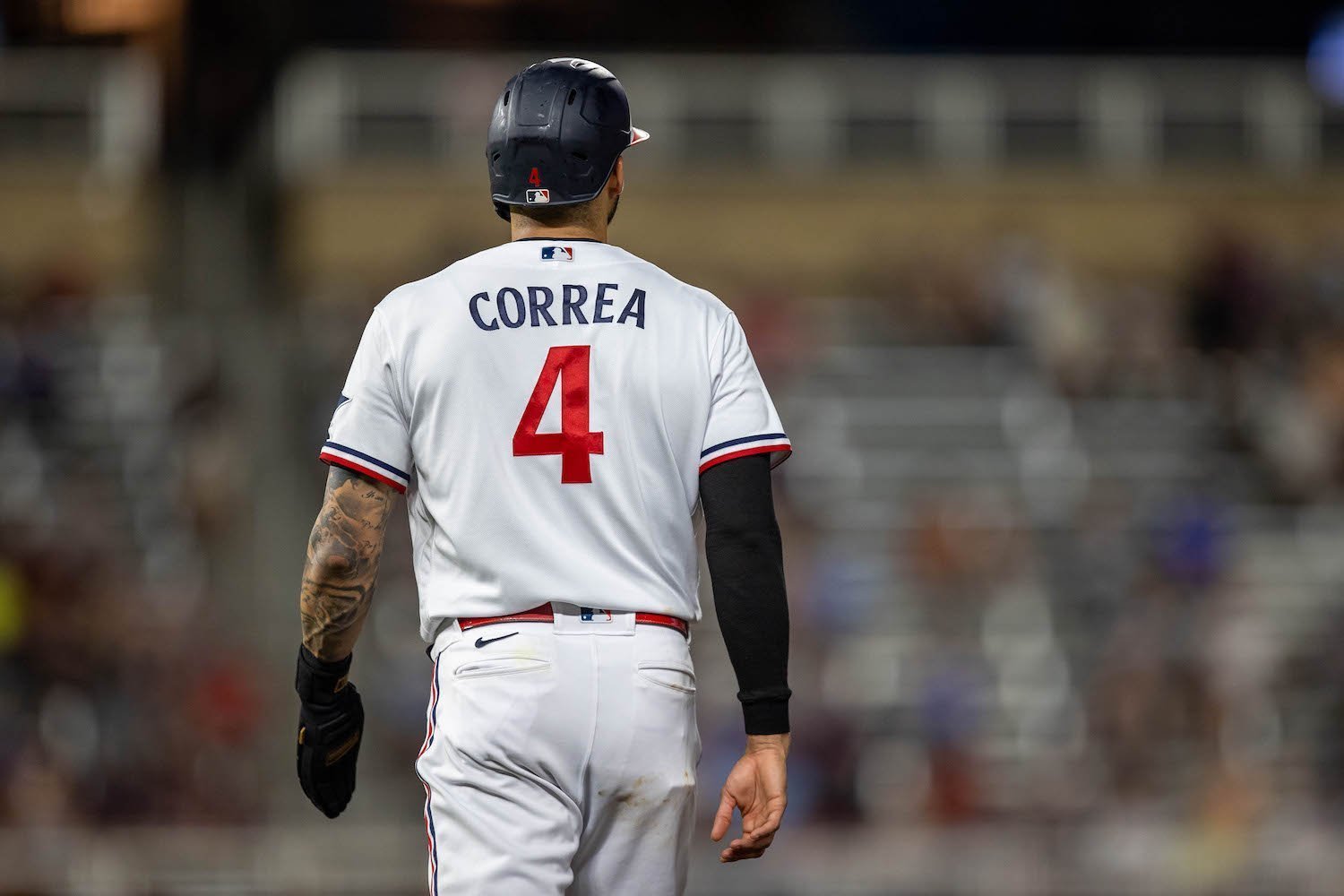 From start to finish, Carlos Correa’s time in Minnesota was a strange odyssey — one that, it turns out, nearly ended in tragedy. In a recent interview with MLB.com’s Brian McTaggart, Correa recounted a harrowing moment on Lake Minnetonka last July, when he found himself “fighting for survival.” During a family outing, he drifted far from both the boat and the shore, exhausted and struggling to stay afloat while carrying his 3-year-old son, Kylo. Correa wasn’t wearing a life jacket. Spotting a nearby buoy, he made for it, believing it was his only chance. Kylo, safely strapped into a life vest, sat on his shoulders, asking if they were going to be okay. Correa reached the buoy but slipped. He went under, grabbed the chain, and injured his left hand. With his son still on his shoulders, he alternated hands just to stay above water, shouting toward the boat for help. It was, by his account, his last gasp. His father-in-law eventually spotted him and swam out with a life jacket. Correa and his son made it out safely. As McTaggart notes, the experience sparked a religious reawakening, leading Correa to organize regular Bible study sessions during the offseason. I get that a lot of Twins fans are down on Correa. But, it’s difficult to hear a story like that and not feel a jolt of empathy. A situation like that — legitimately fearing for your life, trying to suppress panic while your child looks to you for reassurance — can leave lingering echoes of trauma. I know numerous people who've witnessed drowning incidents or had close calls themselves, and it haunts them. The exact date of the incident isn’t specified, but Correa was traded back to Houston two weeks later, suggesting it occurred around the All-Star break. He was in the lineup for the first game of the second half, showing no outward signs of what he’d just endured. You never really know what someone is dealing with. It's quite the bookend to Correa’s turbulent tenure in Minnesota. He arrived as a jilted free agent and experienced dramatic highs and lows over three and a half seasons. Injuries, including plantar fasciitis in both feet, disrupted his availability and hampered his performance. In 2024, that issue cut short an All-Star-caliber campaign and coincided with a team-wide collapse that carried through to 2025. I'm also not going to pretend everything was out of his control. Last season, Correa was healthy but repeatedly came up short in big moments, a stark contrast to his reputation. At times, he carried himself more like a hired mercenary than a foundational piece, and that perception only hardened on his way out. As McTaggart writes, “He never wanted to leave Houston in the first place.” Still, whatever frustration lingers is outweighed by something else. It’s disappointing that what once looked like a defining chapter for the Twins unraveled so completely. It’s disappointing that the franchise’s boldest free-agent move will be remembered more for what didn’t happen than what did. And it’s scary to realize that, near the end of it all, things came far closer to tragedy than anyone realized.
 -
Image courtesy of Jesse Johnson-USA TODAY Sports From start to finish, Carlos Correa’s time in Minnesota was a strange odyssey — one that, it turns out, nearly ended in tragedy. In a recent interview with MLB.com’s Brian McTaggart, Correa recounted a harrowing moment on Lake Minnetonka last July, when he found himself “fighting for survival.” During a family outing, he drifted far from both the boat and the shore, exhausted and struggling to stay afloat while carrying his 3-year-old son, Kylo. Correa wasn’t wearing a life jacket. Spotting a nearby buoy, he made for it, believing it was his only chance. Kylo, safely strapped into a life vest, sat on his shoulders, asking if they were going to be okay. Correa reached the buoy but slipped. He went under, grabbed the chain, and injured his left hand. With his son still on his shoulders, he alternated hands just to stay above water, shouting toward the boat for help. It was, by his account, his last gasp. His father-in-law eventually spotted him and swam out with a life jacket. Correa and his son made it out safely. As McTaggart notes, the experience sparked a religious reawakening, leading Correa to organize regular Bible study sessions during the offseason. I get that a lot of Twins fans are down on Correa. But, it’s difficult to hear a story like that and not feel a jolt of empathy. A situation like that — legitimately fearing for your life, trying to suppress panic while your child looks to you for reassurance — can leave lingering echoes of trauma. I know numerous people who've witnessed drowning incidents or had close calls themselves, and it haunts them. The exact date of the incident isn’t specified, but Correa was traded back to Houston two weeks later, suggesting it occurred around the All-Star break. He was in the lineup for the first game of the second half, showing no outward signs of what he’d just endured. You never really know what someone is dealing with. It's quite the bookend to Correa’s turbulent tenure in Minnesota. He arrived as a jilted free agent and experienced dramatic highs and lows over three and a half seasons. Injuries, including plantar fasciitis in both feet, disrupted his availability and hampered his performance. In 2024, that issue cut short an All-Star-caliber campaign and coincided with a team-wide collapse that carried through to 2025. I'm also not going to pretend everything was out of his control. Last season, Correa was healthy but repeatedly came up short in big moments, a stark contrast to his reputation. At times, he carried himself more like a hired mercenary than a foundational piece, and that perception only hardened on his way out. As McTaggart writes, “He never wanted to leave Houston in the first place.” Still, whatever frustration lingers is outweighed by something else. It’s disappointing that what once looked like a defining chapter for the Twins unraveled so completely. It’s disappointing that the franchise’s boldest free-agent move will be remembered more for what didn’t happen than what did. And it’s scary to realize that, near the end of it all, things came far closer to tragedy than anyone realized. View full article
-
Image courtesy of Nathan Ray Seebeck-Imagn Images On Thursday, Mick Abel took the mound for the Twins and — as has often been the case this spring — he put on a show. Averaging 96.2 MPH with his four-seamer and 88.1 with his slider, Abel piled up six strikeouts in 4 ⅔ innings, with Red Sox hitters whiffing on 11 of 42 swings. One day later, it became all but official that Abel will head north with the big-league club, with Zebby Matthews being optioned to Triple-A. A month ago, I wrote that Pablo López's season-ending injury at the start of camp swung the door wide open for Abel to step up and seize a spot on the Opening Day rotation. He went and did just that, with his Grapefruit League numbers reflecting dominant form in five starts: 18 IP, 4 ER (2.00 ERA), 1 HR, 23 K, 3 BB. That last number is perhaps the most important. Control has been Abel's main sticking point as he looks to get over the hump and establish himself in the majors. He walked seven in 14 innings with the Twins last year, and has averaged 5.1 BB/9 in Triple-A. This spring, the right-hander has done an excellent job of staying in the zone; up until he issued a pair of free passes in the fourth inning on Thursday, he'd walked only one hitter through 16 frames. Acquired alongside catching prospect Eduardo Tait (who showed well in the Spring Breakout game earlier on Thursday) in exchange for Jhoan Duran at the 2025 deadline, Abel is one of the biggest reasons for excitement around Minnesota's future rotation outlook. The 24-year-old has been widely viewed as a top pitching prospect in the game, and his high-powered arsenal grades out beautifully according to pitch profiling models. Matthews entered camp with an ostensible leg up on Abel due to his more extensive MLB experience, but at no point has he quite looked like the best version of himself. His stuff is down and he's been hit hard, with seven earned runs allowed on 12 hits in 11 innings. He also issued four walks, straying from his signature strength. Coming off a 2025 season where he struggled and missed time with a shoulder injury, it'd be nice to see Matthews dialing up his peak velocity and missing bats again, but that hasn't really been the case in March. He'll head to Triple-A where he figures to be the top rotation reinforcement waiting in the wings. As Twins fans are all too aware, it usually doesn't take long for a need to emerge in the starting rotation. We could easily see Matthews back up before the end of April. But either way, Abel should have some runway to find his footing in the majors and I'm here for it. The 6-foot-5 righty finished his up-and-down 2025 season on a brilliant note with six shutout innings against the Phillies. He'll now have a chance to pick up where he left off right out of the gates. Abel's talent is such that we could be looking at him as Minnesota's No. 1 starter by year's end, but with a 6.23 ERA through 39 MLB innings thus far, he's got plenty to prove in (hopefully) his first full season in the bigs. How are you feeling about the Twins' rotation? Is Abel over Matthews the right choice? Let us know your thoughts in the comments. View full article
-
Twins Rotation Appears Set as Mick Abel Beats Out Zebby Matthews
Nick Nelson posted an article in Twins
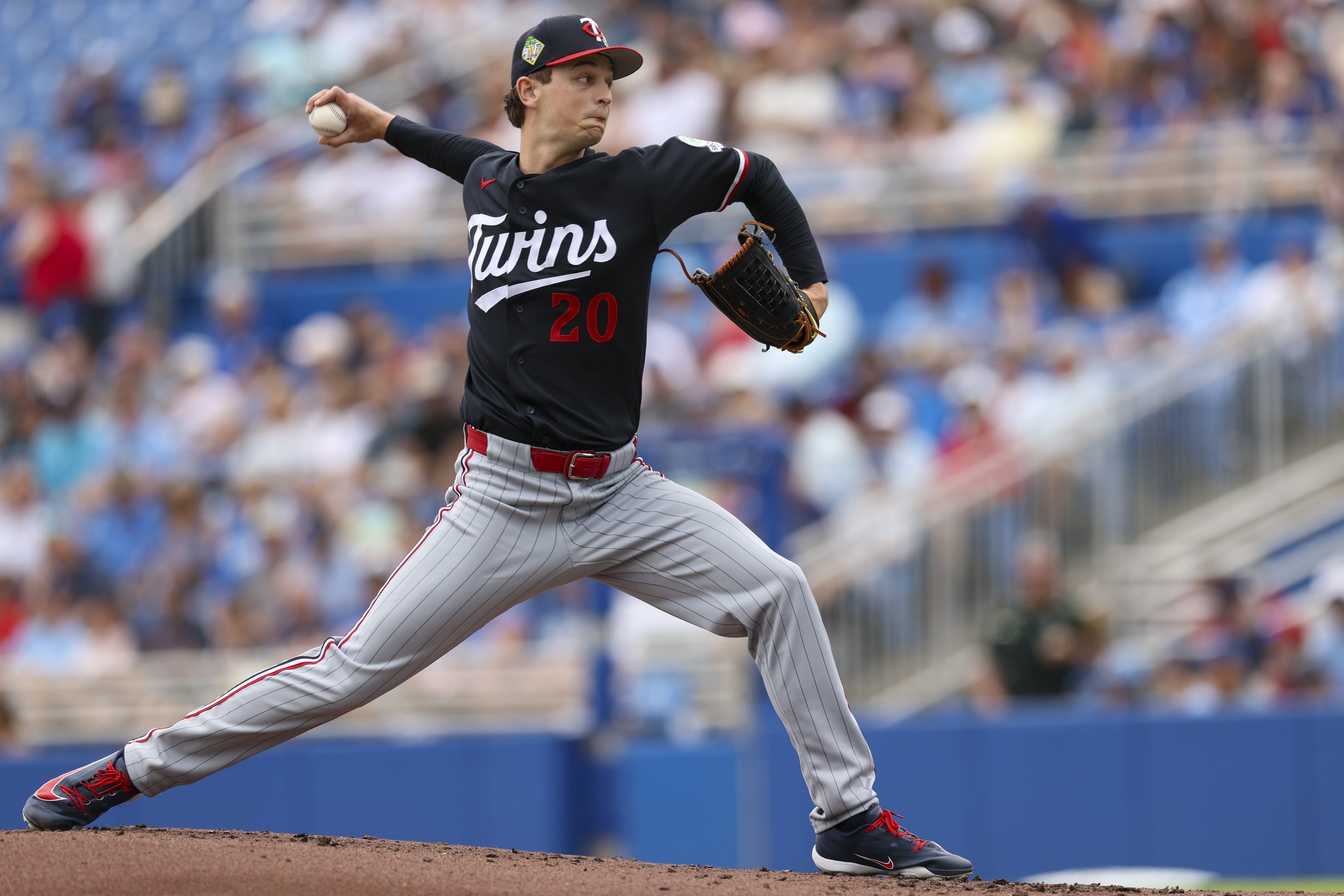 On Thursday, Mick Abel took the mound for the Twins and — as has often been the case this spring — he put on a show. Averaging 96.2 MPH with his four-seamer and 88.1 with his slider, Abel piled up six strikeouts in 4 ⅔ innings, with Red Sox hitters whiffing on 11 of 42 swings. One day later, it became all but official that Abel will head north with the big-league club, with Zebby Matthews being optioned to Triple-A. A month ago, I wrote that Pablo López's season-ending injury at the start of camp swung the door wide open for Abel to step up and seize a spot on the Opening Day rotation. He went and did just that, with his Grapefruit League numbers reflecting dominant form in five starts: 18 IP, 4 ER (2.00 ERA), 1 HR, 23 K, 3 BB. That last number is perhaps the most important. Control has been Abel's main sticking point as he looks to get over the hump and establish himself in the majors. He walked seven in 14 innings with the Twins last year, and has averaged 5.1 BB/9 in Triple-A. This spring, the right-hander has done an excellent job of staying in the zone; up until he issued a pair of free passes in the fourth inning on Thursday, he'd walked only one hitter through 16 frames. Acquired alongside catching prospect Eduardo Tait (who showed well in the Spring Breakout game earlier on Thursday) in exchange for Jhoan Duran at the 2025 deadline, Abel is one of the biggest reasons for excitement around Minnesota's future rotation outlook. The 24-year-old has been widely viewed as a top pitching prospect in the game, and his high-powered arsenal grades out beautifully according to pitch profiling models. Matthews entered camp with an ostensible leg up on Abel due to his more extensive MLB experience, but at no point has he quite looked like the best version of himself. His stuff is down and he's been hit hard, with seven earned runs allowed on 12 hits in 11 innings. He also issued four walks, straying from his signature strength. Coming off a 2025 season where he struggled and missed time with a shoulder injury, it'd be nice to see Matthews dialing up his peak velocity and missing bats again, but that hasn't really been the case in March. He'll head to Triple-A where he figures to be the top rotation reinforcement waiting in the wings. As Twins fans are all too aware, it usually doesn't take long for a need to emerge in the starting rotation. We could easily see Matthews back up before the end of April. But either way, Abel should have some runway to find his footing in the majors and I'm here for it. The 6-foot-5 righty finished his up-and-down 2025 season on a brilliant note with six shutout innings against the Phillies. He'll now have a chance to pick up where he left off right out of the gates. Abel's talent is such that we could be looking at him as Minnesota's No. 1 starter by year's end, but with a 6.23 ERA through 39 MLB innings thus far, he's got plenty to prove in (hopefully) his first full season in the bigs. How are you feeling about the Twins' rotation? Is Abel over Matthews the right choice? Let us know your thoughts in the comments.
 -
True, ultimately if you're gonna be bad anyway, just go with the younger arm that offers any promise vs the 37-year-old wash-up. I mainly thought Hendriks was a lock because he was continually getting the most meaningful spring innings, but I see now that was for evaluation purposes and they didn't see him cutting it. The flip side is that those important build-up reps didn't go to someone else who evidently will be in the bullpen. How many real MLB hitters has Altavilla faced this spring? A few in the WBC, I suppose.
- 77 replies
-
- 4
-

-
- cole sands
- taylor rogers
- (and 1 more)
-
No argument there but at some point they have to start. I'm hoping that as some of the leadership shifts settle in, we'll see more of a defined and consistent direction.
-
It's an interesting argument to say Orze and Adams are at the end of their ropes at 26/28 coming off their rookie seasons, with like 6 years of team control, when we're talking about replacing them with a 33-year-old minor league signing who's thrown 30 innings in an MLB season once, almost a decade ago. Is that really how a rebuilding team/bullpen should operate?
- 77 replies
-
- 3
-
-

-
- cole sands
- taylor rogers
- (and 1 more)
-
Ha, I mean it's a fair point but how many pitchers are you comfortable cutting from this roster, especially when it's for stopgap veterans? Kent, sure. Adams maybe? I doubt they'll eat the money to cut Topa.
- 77 replies
-
- 1
-
-
- cole sands
- taylor rogers
- (and 1 more)
-
They might nominally be viewed as starters for now, but I believe the team realistically views both their futures being in the bullpen. They've openly hinted as much re: Prielipp. Big part of it is that in 8 combined pro seasons, neither has cracked 85 innings pitched.
- 77 replies
-
- 1
-
-
- cole sands
- taylor rogers
- (and 1 more)
-
It's a question of roster math. Their 40-man is full and they're gonna need to make room for every new addition. I have a hard time seeing them carrying all of Hendriks, Chafin and Altavilla out of camp, especially if they're also needing to make room for Arcia on the position-player side. As for Laweryson, he's in the depth picture but the fact they cut him last year after he pitched pretty well in a late-season audition sort of says it all to me.
- 77 replies
-
- 2
-
-
- cole sands
- taylor rogers
- (and 1 more)
-
He'll make the team and he'll be pitching in the ninth inning. I can almost guarantee that at this point.
- 77 replies
-
- 5
-

-
-
- cole sands
- taylor rogers
- (and 1 more)
-
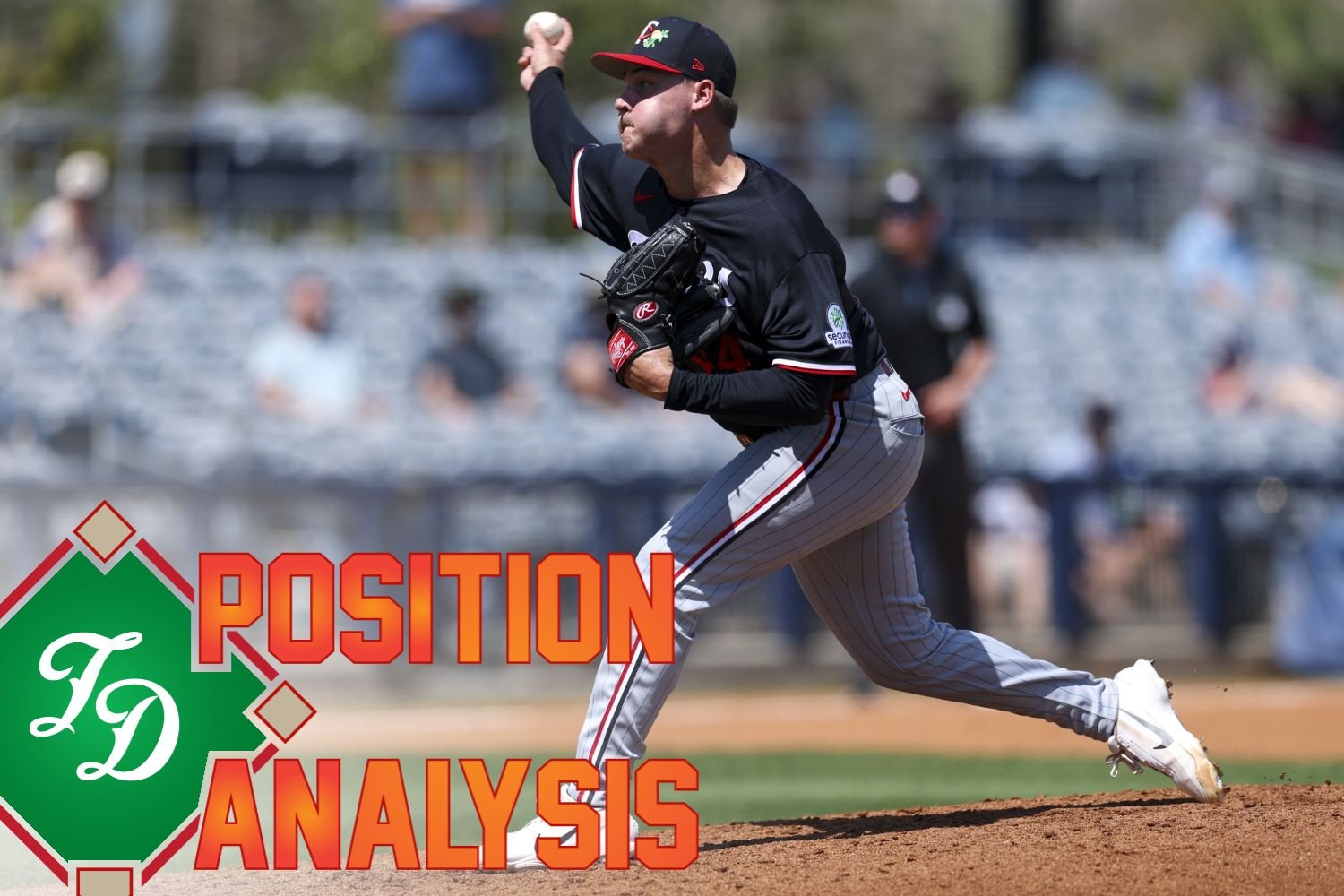 According to FanGraphs, the Rays are projected to have the third-best bullpen in baseball, with Griffin Jax as their best reliever. The Phillies are projected to have the fourth-best bullpen, with Jhoan Durán as their best reliever. The Blue Jays are projected to have the 12th-best bullpen, with Louie Varland as their second-best reliever. The Twins, meanwhile, will be looking to replace all that lost impact with a bullpen that's generously projected to finish 20th in fWAR, a 19-spot drop from last year. Holdover Cole Sands will be surrounded by a group of aging, over-the-hill vets and fringe or young arms looking to turn a corner. In all likelihood, it won't be pretty, especially in the early going. TWINS RELIEF PITCHERS AT A GLANCE Projected Bullpen: Cole Sands, Taylor Rogers, Justin Topa, Liam Hendriks, Andrew Chafin, Eric Orze, Anthony Banda, Zak Kent Depth: Kody Funderburk, David Festa, John Klein, Travis Adams, Dan Altavilla, Grant Hartwig, Matt Bowman Prospects: Connor Prielipp, Marco Raya, Kendry Rojas, Ryan Gallagher, James Ellwanger Twins fWAR Ranking Last Year: 7th out of 30 Twins fWAR Projection This Year: 20th out of 30 THE GOOD There are some real track records of success here. Twins fans know how good Taylor Rogers was during his glory days in Minnesota, and how good Liam Hendriks was after he left. Andrew Chafin has a 3.35 ERA over a 12-year MLB career. Anthony Banda, Justin Topa and Eric Orze have all posted sub-four ERAs in the majors over the past couple seasons. A casual follower of baseball might look at this list of names and conclude that it's actually a pretty good bullpen — certainly a very accomplished one. The Twins are hoping the depth of experience and "been there, done that" factor will pay dividends, especially under the leadership of a new bullpen coach who embodies those qualities in LaTroy Hawkins. Much of this unit's outlook hinges on Hendriks. He's a complete wild-card, with fewer than 20 innings pitched over the past three seasons while dealing with myriad health issues. From 2019 through 2022 he was one of the very best and most dominant relief pitchers in baseball. It seems unlikely he'll recapture that form now at age 37, but the Twins would take anything in the realm. It would be a stretch to say Hendriks has been blowing people away or generating massive enthusiasm in spring training, but with his fastball reaching the mid-90s, he's shown enough to instill belief that he's not cooked. Sands, when at his best in 2024, looked a little bit like Hendriks of yore, pairing an overpowering arsenal with excellent control to log a 3.28 ERA and 2.63 FIP in 71 ⅓ innings. If both of those two can stay healthy and perform at a reasonably high level, it will make a huge difference for a bullpen whose most apparent shortcoming is a lack of impact righties in the late innings following the departures of Durán, Jax and Varland. One area where the Twins do seem relatively well equipped is the left-handed side. Minnesota's Opening Day bullpen is likely to feature three southpaws and maybe even four. Rogers, Chafin and Banda check a lot of boxes in terms of results and experience, including in high-leverage situations. Banda ranked second on the Dodgers in Win Probability Added last year, with a 96 MPH fastball and wipeout slider that held opponents to a .223 wOBA. Rogers and Chafin have seen their velocity and stuff degrade over time, but you wouldn't really know it from their numbers. These are crafty vets who can get people out, especially left-handed hitters. THE BAD There's a reason Rogers, Hendriks and Chafin were available late in the offseason on minor-league contracts or very cheap MLB deals. There's also a reason Orze was acquired in a low-wattage trade, and Banda and Zak Kent were essentially waiver claims. These are not in-demand pitchers. They are not viewed around the league as likely to make substantial positive impacts. Those are just the undeniable facts. Everyone's aware of what these guys have done in the past. When you look beyond ERAs, you start to see why, because the outlook gets a lot less favorable. Rogers had a 3.38 ERA last year but a less impressive 4.38 FIP, thanks to issuing 23 walks in 50 innings and posting the highest HR rate of his career at 34. Chafin, Banda and Orze also have had their own share of control issues that threaten to derail solid top-line performance. This year's Twins bullpen mix features only one reliever projected by FanGraphs to post a WAR above 0.4 (Sands). Last year saw seven relievers post a WAR higher than 0.4 for the Twins bullpen, including five who spent only two-thirds of the season as part of it. You might look at this and think, "Wow, despite all that, the Twins bullpen is projected to be only the 11th-worst in baseball?!" And yeah, it does say a lot about how many teams are struggling to find confident stability on the relief pitching front. Which underscores what a risk that Minnesota's front office took last year in trading away three who've proven themselves to the degree of Durán, Jax and Varland. The Twins are hoping that they can eventually develop similar bullpen stalwarts out of an emerging slate of arms that includes Kody Funderburk, David Festa, Connor Prieilipp, Marco Raya, John Klein, Kendry Rojas, Ryan Gallagher and James Ellwanger. It's definitely not hard to envision some legit late-inning arms coming out of that group, in time. But figuring it all out is a nonlinear, trial-and-error process that requires exercising patience and enduring pain. The odds of this bullpen being even average in the first half of the 2026 are extremely slim, which will have major implications on the team's ability to remain competitive and avoid another deadline sell-off. THE BOTTOM LINE This is clearly not a good bullpen. From my view, it's likely to be quite terrible, whereas sources like FanGraphs project it merely as below average. Either way, a clear strength was flipped into a clear weakness through Minnesota's actions at the deadline last year. These actions were designed to benefit the long-term outlook, and evaluating them through that lens will take time. But there's little doubt that the short-term outlook for the bullpen is severely worsened. The Twins felt the effect in August and September of last year, and they'll continue to feel them this year unless several overlooked vets can score rare victories against Father Time. Catch up on the rest of our roster preview series: Twins 2026 Position Analysis: Catcher Twins 2026 Position Analysis: First Base Twins 2026 Position Analysis: Second Base Twins 2026 Position Analysis: Third Base Twins 2026 Position Analysis: Shortstop Twins 2026 Position Analysis: Left Field Twins 2026 Position Analysis: Center Field Twins 2026 Position Analysis: Right Field Twins 2026 Position Analysis: Designated Hitter Twins 2026 Position Analysis: Starting Pitcher
- 77 comments
-
- 4
-
-
-
- cole sands
- taylor rogers
- (and 1 more)
-
Image courtesy of Nathan Ray Seebeck-Imagn Images According to FanGraphs, the Rays are projected to have the third-best bullpen in baseball, with Griffin Jax as their best reliever. The Phillies are projected to have the fourth-best bullpen, with Jhoan Durán as their best reliever. The Blue Jays are projected to have the 12th-best bullpen, with Louie Varland as their second-best reliever. The Twins, meanwhile, will be looking to replace all that lost impact with a bullpen that's generously projected to finish 20th in fWAR, a 19-spot drop from last year. Holdover Cole Sands will be surrounded by a group of aging, over-the-hill vets and fringe or young arms looking to turn a corner. In all likelihood, it won't be pretty, especially in the early going. TWINS RELIEF PITCHERS AT A GLANCE Projected Bullpen: Cole Sands, Taylor Rogers, Justin Topa, Liam Hendriks, Andrew Chafin, Eric Orze, Anthony Banda, Zak Kent Depth: Kody Funderburk, David Festa, John Klein, Travis Adams, Dan Altavilla, Grant Hartwig, Matt Bowman Prospects: Connor Prielipp, Marco Raya, Kendry Rojas, Ryan Gallagher, James Ellwanger Twins fWAR Ranking Last Year: 7th out of 30 Twins fWAR Projection This Year: 20th out of 30 THE GOOD There are some real track records of success here. Twins fans know how good Taylor Rogers was during his glory days in Minnesota, and how good Liam Hendriks was after he left. Andrew Chafin has a 3.35 ERA over a 12-year MLB career. Anthony Banda, Justin Topa and Eric Orze have all posted sub-four ERAs in the majors over the past couple seasons. A casual follower of baseball might look at this list of names and conclude that it's actually a pretty good bullpen — certainly a very accomplished one. The Twins are hoping the depth of experience and "been there, done that" factor will pay dividends, especially under the leadership of a new bullpen coach who embodies those qualities in LaTroy Hawkins. Much of this unit's outlook hinges on Hendriks. He's a complete wild-card, with fewer than 20 innings pitched over the past three seasons while dealing with myriad health issues. From 2019 through 2022 he was one of the very best and most dominant relief pitchers in baseball. It seems unlikely he'll recapture that form now at age 37, but the Twins would take anything in the realm. It would be a stretch to say Hendriks has been blowing people away or generating massive enthusiasm in spring training, but with his fastball reaching the mid-90s, he's shown enough to instill belief that he's not cooked. Sands, when at his best in 2024, looked a little bit like Hendriks of yore, pairing an overpowering arsenal with excellent control to log a 3.28 ERA and 2.63 FIP in 71 ⅓ innings. If both of those two can stay healthy and perform at a reasonably high level, it will make a huge difference for a bullpen whose most apparent shortcoming is a lack of impact righties in the late innings following the departures of Durán, Jax and Varland. One area where the Twins do seem relatively well equipped is the left-handed side. Minnesota's Opening Day bullpen is likely to feature three southpaws and maybe even four. Rogers, Chafin and Banda check a lot of boxes in terms of results and experience, including in high-leverage situations. Banda ranked second on the Dodgers in Win Probability Added last year, with a 96 MPH fastball and wipeout slider that held opponents to a .223 wOBA. Rogers and Chafin have seen their velocity and stuff degrade over time, but you wouldn't really know it from their numbers. These are crafty vets who can get people out, especially left-handed hitters. THE BAD There's a reason Rogers, Hendriks and Chafin were available late in the offseason on minor-league contracts or very cheap MLB deals. There's also a reason Orze was acquired in a low-wattage trade, and Banda and Zak Kent were essentially waiver claims. These are not in-demand pitchers. They are not viewed around the league as likely to make substantial positive impacts. Those are just the undeniable facts. Everyone's aware of what these guys have done in the past. When you look beyond ERAs, you start to see why, because the outlook gets a lot less favorable. Rogers had a 3.38 ERA last year but a less impressive 4.38 FIP, thanks to issuing 23 walks in 50 innings and posting the highest HR rate of his career at 34. Chafin, Banda and Orze also have had their own share of control issues that threaten to derail solid top-line performance. This year's Twins bullpen mix features only one reliever projected by FanGraphs to post a WAR above 0.4 (Sands). Last year saw seven relievers post a WAR higher than 0.4 for the Twins bullpen, including five who spent only two-thirds of the season as part of it. You might look at this and think, "Wow, despite all that, the Twins bullpen is projected to be only the 11th-worst in baseball?!" And yeah, it does say a lot about how many teams are struggling to find confident stability on the relief pitching front. Which underscores what a risk that Minnesota's front office took last year in trading away three who've proven themselves to the degree of Durán, Jax and Varland. The Twins are hoping that they can eventually develop similar bullpen stalwarts out of an emerging slate of arms that includes Kody Funderburk, David Festa, Connor Prieilipp, Marco Raya, John Klein, Kendry Rojas, Ryan Gallagher and James Ellwanger. It's definitely not hard to envision some legit late-inning arms coming out of that group, in time. But figuring it all out is a nonlinear, trial-and-error process that requires exercising patience and enduring pain. The odds of this bullpen being even average in the first half of the 2026 are extremely slim, which will have major implications on the team's ability to remain competitive and avoid another deadline sell-off. THE BOTTOM LINE This is clearly not a good bullpen. From my view, it's likely to be quite terrible, whereas sources like FanGraphs project it merely as below average. Either way, a clear strength was flipped into a clear weakness through Minnesota's actions at the deadline last year. These actions were designed to benefit the long-term outlook, and evaluating them through that lens will take time. But there's little doubt that the short-term outlook for the bullpen is severely worsened. The Twins felt the effect in August and September of last year, and they'll continue to feel them this year unless several overlooked vets can score rare victories against Father Time. Catch up on the rest of our roster preview series: Twins 2026 Position Analysis: Catcher Twins 2026 Position Analysis: First Base Twins 2026 Position Analysis: Second Base Twins 2026 Position Analysis: Third Base Twins 2026 Position Analysis: Shortstop Twins 2026 Position Analysis: Left Field Twins 2026 Position Analysis: Center Field Twins 2026 Position Analysis: Right Field Twins 2026 Position Analysis: Designated Hitter Twins 2026 Position Analysis: Starting Pitcher View full article
-
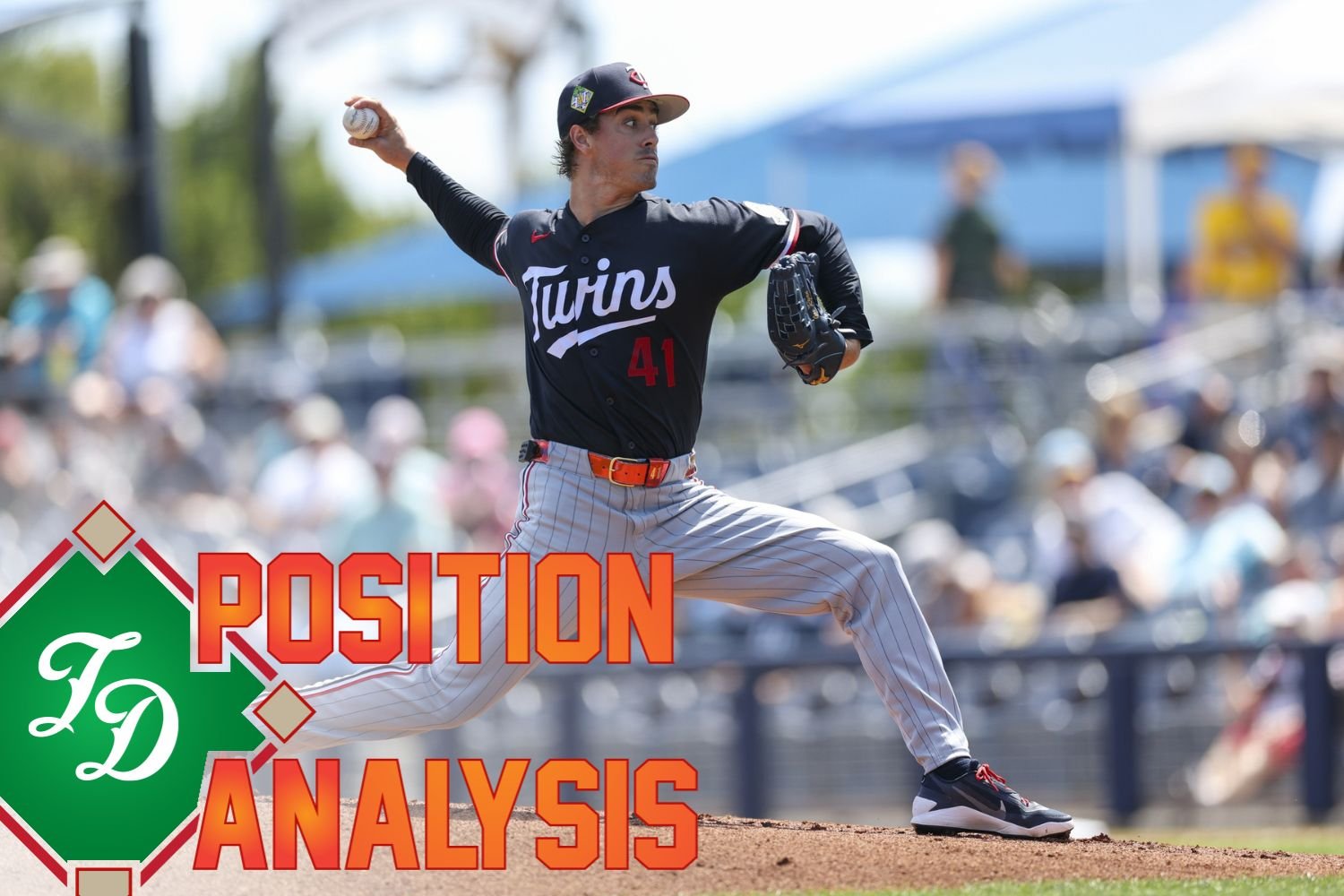 Their vaunted rotation-fronting trio was to be foundational for Minnesota's hopes of fielding an unlikely contender this year. When Pablo López, Joe Ryan and Bailey Ober are healthy and on their games, it's hard to discount this team. Unfortunately, López went down with a season-ending elbow injury on the first day of spring training. Ryan and Ober were slow to get going in the first half of camp, and both have question marks attached to them entering their second-to-last seasons under team control. It's unclear which version of Ober we're going to get this year, and whether Ryan will still be a Twin after the deadline. These factors increase the urgency for the next wave of pitching talent to firmly establish itself in the major leagues. It is going to be the central storyline of this season, with major implications for the team's ability to compete in 2026 and contend for a championship down the road. TWINS STARTING PITCHERS AT A GLANCE Projected Rotation: Joe Ryan, Bailey Ober, Simeon Woods Richardson, Taj Bradley, Mick Abel Depth: Zebby Matthews, Andrew Morris, David Festa Prospects: Connor Prielipp, Kendry Rojas, Dasan Hill, Charlee Soto, Riley Quick Twins fWAR Ranking Last Year: 16th out of 30 Twins fWAR Projection This Year: 14th out of 30 THE GOOD The Twins have invested heavily in turning their pitching pipeline into a strength. They used high draft picks on Connor Prielipp, Dasan Hill, Charlee Soto and Riley Quick. They targeted Simeon Woods Richardson, Taj Bradley, Mick Abel and Kendry Rojas in high-profile deadline trades. Several of those pitchers on the verge of joining the MLB rotation mix, if not on already in it. Others are rising fast through the minors and garnering acclaim. It's an exciting group. Woods Richardson has proven himself as at least a solid big-league starter, and his strong finish last year hinted at more to unlock. Bradley undoubtedly has more to unlock as a former top prospect who hasn't quite pulled it all together, but is still only 24. Rojas and Abel have commanded attention with their performances in camp, and the latter is angling for a spot in the Opening Day rotation. Abel is competing for that spot against Zebby Matthews, who was conversely not acquired via any ambitious investment, but rather through savvy drafting and development. He's gone from eighth-round draft pick to potentially entrenching himself in the major-league rotation if he can stay healthy and find consistency. Much like Bradley, Rojas and Abel, Matthews has frontline-caliber stuff and that's plain to see. Same goes for David Festa, who will hopefully be able to rebound from a shoulder setback and contribute. This deep assortment of promising arms could give the Twins a big advantage when facing lesser fourth and fifth starters for other clubs. The top of the rotation took a major hit with the loss of López, but in such a scenario, few teams could turn to an alternative No. 1 starter as good as Ryan. He's coming off an All-Star season at age 29. This year, only 11 AL starters are projected for a higher fWAR than Ryan's 3.1. The right-hander was slowed out of the gates in camp by a minor back tweak, but threw three innings in his spring debut last week and went four in a crisp outing on Monday. Minnesota projects as a middle-of-the-pack team for starting pitching. If some of these young starters and post-hype prospects take real steps forward, they can easily finish a lot higher. The front office is counting on just that. THE BAD In a recent survey, MLB coaches and executives were asked to name the best teams at pitching acquisition and development. The Twins received only four votes, ranking near the bottom. That's not what we were hoping for after seven years of Derek Falvey's leadership. For all the talk of his pitching specialization, and all the success stories we've seen sort of start to materialize, not that many panned out under Falvey. Injuries have ravaged the pitching pipeline. Guys like Matthews and Festa, who rose to prominence as prospects, have stalled out in their entry to the majors. And the Twins are taking on several more similarly intriguing but unfinished projects that other orgs more or less gave up on in Bradley, Abel and Rojas. Jeremy Zoll now leads baseball ops for the Twins, but otherwise the faces are mostly the same. Pete Maki survived a coaching shakeup and still runs the pitching staff. These guys need to buck the trend and turn some young arms into actual difference-makers in the MLB rotation. Past successes are already starting to fade from the picture. López will be coming back from Tommy John surgery in his final season under contract. Ryan seems somewhat unlikely to make it past this trade deadline as a Twin. And Ober saw a dramatic drop-off last year due to a velocity loss that shows no sign of being resolved. No doubt these emerging arms entering the fold can be good. They just haven't been good yet. Bradley has a 4.86 career ERA, including 6.61 with the Twins last year. Able has a 6.23 career ERA (8.36 with Twins). Matthews and Festa haven't turned the corner, with ERAs over five. Rojas has yet to find success in Triple-A. At the end of the day, the proof is in the pudding. THE BOTTOM LINE This is going to be a transitional year for the Twins rotation. The younger starters have a chance to stake their claims and position this unit for a bright future, but they need to stay healthy and turn promise into results. Up until now, none have really been able to do it on the big-league stage. I don't want to say "now or never" for them because they've all got time left to figure things out, but if several don't do it now, the Twins will never have a chance in 2026. Catch up on the rest of our roster preview series: Twins 2026 Position Analysis: Catcher Twins 2026 Position Analysis: First Base Twins 2026 Position Analysis: Second Base Twins 2026 Position Analysis: Third Base Twins 2026 Position Analysis: Shortstop Twins 2026 Position Analysis: Left Field Twins 2026 Position Analysis: Center Field Twins 2026 Position Analysis: Right Field Twins 2026 Position Analysis: Designated Hitter
- 36 comments
-
- 5
-
-
- joe ryan
- bailey ober
- (and 3 more)
-
Image courtesy of Nathan Ray Seebeck-Imagn Images Their vaunted rotation-fronting trio was to be foundational for Minnesota's hopes of fielding an unlikely contender this year. When Pablo López, Joe Ryan and Bailey Ober are healthy and on their games, it's hard to discount this team. Unfortunately, López went down with a season-ending elbow injury on the first day of spring training. Ryan and Ober were slow to get going in the first half of camp, and both have question marks attached to them entering their second-to-last seasons under team control. It's unclear which version of Ober we're going to get this year, and whether Ryan will still be a Twin after the deadline. These factors increase the urgency for the next wave of pitching talent to firmly establish itself in the major leagues. It is going to be the central storyline of this season, with major implications for the team's ability to compete in 2026 and contend for a championship down the road. TWINS STARTING PITCHERS AT A GLANCE Projected Rotation: Joe Ryan, Bailey Ober, Simeon Woods Richardson, Taj Bradley, Mick Abel Depth: Zebby Matthews, Andrew Morris, David Festa Prospects: Connor Prielipp, Kendry Rojas, Dasan Hill, Charlee Soto, Riley Quick Twins fWAR Ranking Last Year: 16th out of 30 Twins fWAR Projection This Year: 14th out of 30 THE GOOD The Twins have invested heavily in turning their pitching pipeline into a strength. They used high draft picks on Connor Prielipp, Dasan Hill, Charlee Soto and Riley Quick. They targeted Simeon Woods Richardson, Taj Bradley, Mick Abel and Kendry Rojas in high-profile deadline trades. Several of those pitchers on the verge of joining the MLB rotation mix, if not on already in it. Others are rising fast through the minors and garnering acclaim. It's an exciting group. Woods Richardson has proven himself as at least a solid big-league starter, and his strong finish last year hinted at more to unlock. Bradley undoubtedly has more to unlock as a former top prospect who hasn't quite pulled it all together, but is still only 24. Rojas and Abel have commanded attention with their performances in camp, and the latter is angling for a spot in the Opening Day rotation. Abel is competing for that spot against Zebby Matthews, who was conversely not acquired via any ambitious investment, but rather through savvy drafting and development. He's gone from eighth-round draft pick to potentially entrenching himself in the major-league rotation if he can stay healthy and find consistency. Much like Bradley, Rojas and Abel, Matthews has frontline-caliber stuff and that's plain to see. Same goes for David Festa, who will hopefully be able to rebound from a shoulder setback and contribute. This deep assortment of promising arms could give the Twins a big advantage when facing lesser fourth and fifth starters for other clubs. The top of the rotation took a major hit with the loss of López, but in such a scenario, few teams could turn to an alternative No. 1 starter as good as Ryan. He's coming off an All-Star season at age 29. This year, only 11 AL starters are projected for a higher fWAR than Ryan's 3.1. The right-hander was slowed out of the gates in camp by a minor back tweak, but threw three innings in his spring debut last week and went four in a crisp outing on Monday. Minnesota projects as a middle-of-the-pack team for starting pitching. If some of these young starters and post-hype prospects take real steps forward, they can easily finish a lot higher. The front office is counting on just that. THE BAD In a recent survey, MLB coaches and executives were asked to name the best teams at pitching acquisition and development. The Twins received only four votes, ranking near the bottom. That's not what we were hoping for after seven years of Derek Falvey's leadership. For all the talk of his pitching specialization, and all the success stories we've seen sort of start to materialize, not that many panned out under Falvey. Injuries have ravaged the pitching pipeline. Guys like Matthews and Festa, who rose to prominence as prospects, have stalled out in their entry to the majors. And the Twins are taking on several more similarly intriguing but unfinished projects that other orgs more or less gave up on in Bradley, Abel and Rojas. Jeremy Zoll now leads baseball ops for the Twins, but otherwise the faces are mostly the same. Pete Maki survived a coaching shakeup and still runs the pitching staff. These guys need to buck the trend and turn some young arms into actual difference-makers in the MLB rotation. Past successes are already starting to fade from the picture. López will be coming back from Tommy John surgery in his final season under contract. Ryan seems somewhat unlikely to make it past this trade deadline as a Twin. And Ober saw a dramatic drop-off last year due to a velocity loss that shows no sign of being resolved. No doubt these emerging arms entering the fold can be good. They just haven't been good yet. Bradley has a 4.86 career ERA, including 6.61 with the Twins last year. Able has a 6.23 career ERA (8.36 with Twins). Matthews and Festa haven't turned the corner, with ERAs over five. Rojas has yet to find success in Triple-A. At the end of the day, the proof is in the pudding. THE BOTTOM LINE This is going to be a transitional year for the Twins rotation. The younger starters have a chance to stake their claims and position this unit for a bright future, but they need to stay healthy and turn promise into results. Up until now, none have really been able to do it on the big-league stage. I don't want to say "now or never" for them because they've all got time left to figure things out, but if several don't do it now, the Twins will never have a chance in 2026. Catch up on the rest of our roster preview series: Twins 2026 Position Analysis: Catcher Twins 2026 Position Analysis: First Base Twins 2026 Position Analysis: Second Base Twins 2026 Position Analysis: Third Base Twins 2026 Position Analysis: Shortstop Twins 2026 Position Analysis: Left Field Twins 2026 Position Analysis: Center Field Twins 2026 Position Analysis: Right Field Twins 2026 Position Analysis: Designated Hitter View full article
-
I meant top long-term contingency if Lee gets injured or just isn't cutting it at all performance-wise, not if he needs a day off here and there.
-
Thank you! Hill actually was mentioned among the big-velo arms: "Prielipp, Hill and Rojas throw harder than almost any left-handed pitchers in Twins history." It's an exciting time in that regard. (Side note: I said "almost" because I didn't do the full research and didn't want to make firm statements, but it opens a question: who is the hardest throwing LHP in Twins history? Will all three of these guys surpass that benchmark if they reach the majors?)
- 11 replies
-
- 1
-
-
- walker jenkins
- kaelen culpepper
- (and 1 more)
-
Image courtesy of William Parmeter Youth. Prospects. The future. Some years, these are the only places to focus if you want to feel hopeful and positive about your favorite team. For Twins fans, it looks like this is going to be one of those years. Fortunately, the current state of Minnesota's farm system gives plenty of cause for enthusiasm and optimism. Read on for a rundown of our rankings plus analysis of how the Twins compare to the rest of the league, and where their strengths and weaknesses lie. Twins Top 20 Prospects of 2026 Click on the player's name to read our full profile. Walker Jenkins, OF: If he shakes the injury bug, his path to becoming an MLB All-Star is plain to see. Kaelen Culpepper, SS: Broke through in first full minors season, now stands as heir apparent at short. Emmanuel Rodriguez, OF: Boom-or-bust profile is easy to dream on, with rare power/patience blend. Eduardo Tait, C: Standout hitting tool, legit defense make him MN's best catching prospect since Mauer. Connor Prielipp, LHP: Finally healthy last year, he made a convincing case as the system's best arm. Dasan Hill, LHP: Oozing top-of-rotation potential after fanning 83 over 62 IP in first season out of HS. Gabriel Gonzalez, OF: Line-drive machine batted .329 across three levels in breakout 2025 campaign. Kendry Rojas, LHP: Lanky southpaw has drawn attention in camp, flashing impressive FB/SL combo. Marek Houston, SS: Defensive wiz will play in MLB based on glove alone, with star potential if he hits. Charlee Soto, RHP: Boasting some of the org's best stuff and looking to rebound from arm injury. Riley Quick, RHP: Reaches the upper-90s from a 6-foot-6 frame, could rise fast if he stays healthy. Andrew Morris, RHP: Polished strike-thrower who provides immediate depth for the MLB rotation. Brandon Winokur, SS/CF: A big man with big power potential and exceptional athleticism for his size. Quentin Young, SS: Similar traits to Winokur. The question for both: will they make enough contact? Marco Raya, RHP: Hoping to weaponize his high-powered sweeper following conversion to bullpen. Hendry Mendez, OF: Controls the zone well and offers upside if he can start elevating the ball more. Kyle DeBarge, 2B/SS/CF: Speedster struggled in the second half at Cedar Rapids, but stole 55 bases. C.J. Culpepper, RHP: Continues to get results, but must show he can stay healthy and throw strikes. Khadim Diaw, C/CF: Disciplined hitter with an intriguing defensive profile, looking to add some pop. James Ellwanger, RHP: Hard-throwing college draftee has strikeout stuff, could be fast-tracked as RP. POSITIONAL BREAKDOWN Catchers: 2 Infielders: 4 Outfielders: 5 Right-handed Pitchers: 6 Left-handed Pitchers: 3 ESTIMATED ARRIVAL TIMELINES 2026: Jenkins, K. Culpepper, Rodriguez, Prielipp, Gonzalez, Morris, Raya 2027: Rojas, Mendez, C.J. Culpepper 2028: Tait, Houston, Soto, Quick, Winokur, DeBarge, Diaw, Ellwanger 2029: Hill, Young LEAGUEWIDE SYSTEM RANKINGS ESPN: 8 out of 30 Baseball Prospectus: 8 out of 30 MLB Pipeline: 9 out of 30 FanGraphs: 12 out of 30 Baseball America: 12 out of 30 The Athletic: 21 out of 30 STRENGTHS The Twins are generally viewed as having an above-average, but not quite top-tier, farm system relative to the rest of the league. In sizing up their overall mix of talent, a few strengths stand out. Near-ready impact: At least six of the top 10 have a reasonable chance to debut in the majors this season, including all of the top three (Walker Jenkins, Kaelen Culpepper, Emmanuel Rodriguez). Left-handed pitching: There was a long stretch where the Twins had zero left-handed pitchers among their top prospect. How things have changed. Our top three pitching prospects are all southpaws, with Connor Prielipp, Dasan Hill and Kendry Rojas all landing in the top 10. Raw athleticism and strength: Brandon Winokur and Quentin Young are huge physical specimens with really impressive tools. Riley Quick was a highly recruited four-star offensive lineman before attending Alabama and getting drafted as a pitcher by the Twins. There's a lot of volatility and bust potential with such player types, but it's fun to see the Twins taking big swings. Big-velo arms: Quick is one of several pitchers in the Twins system who can throw really hard. Charlee Soto and James Ellwanger are also guys who light up the radar. Prielipp, Hill and Rojas throw harder than almost any left-handed pitchers in Twins history. The question is whether all these velo demons can stay healthy. WEAKNESSES You might notice that, among the farm system rankings from various publications above, The Athletic is a clear outlier. Whereas ESPN, BP, BA, FanGraphs and Pipeline all have the Twins somewhere between eighth and 12th out of MLB teams, Keith Law has them all the way down at 21. His reasoning is pretty straightforward, and tough to deny: health. For all the great talent the Twins have boasted in their system over the years, so much of it has failed to actualize in the majors due to a constant onslaught of injury woes. Unfortunately, that shows no real signs of changing. Jenkins has been hurt frequently since being drafted, and is sidelined this spring by a hamstring strain. Rodriguez has also been oft-injured, totaling only 112 games over the past two seasons. Prielipp has undergone multiple elbow surgeries; he's 25 years old with only less than 115 professional innings logged. We're still in the top five! It's not like the Twins organization has some inherent curse, and much of this is just bad luck, subject to change with the winds of fortune. But there are certain developmental philosophies that might lead to higher likelihood of injury, especially on the pitching side. It's the trade-off for targeting hard throwers or drafting mid-rounders and boosting their velocity. The reality is that we've yet to see any of these guys make it to the big leagues healthy. David Festa and Zebby Matthews have dealt with shoulder issues since graduating. KEEP TRACK OF TWINS PROSPECTS ALL YEAR This series and recap only serve as a snapshot of the Twins' system heading into the season. As the action gets going and players start to move in the rankings, you can follow along through the summer with our Twins Top Prospect Tracker, which is updated frequently. View full article
- 11 replies
-
- 1
-
-
- walker jenkins
- kaelen culpepper
- (and 1 more)
-
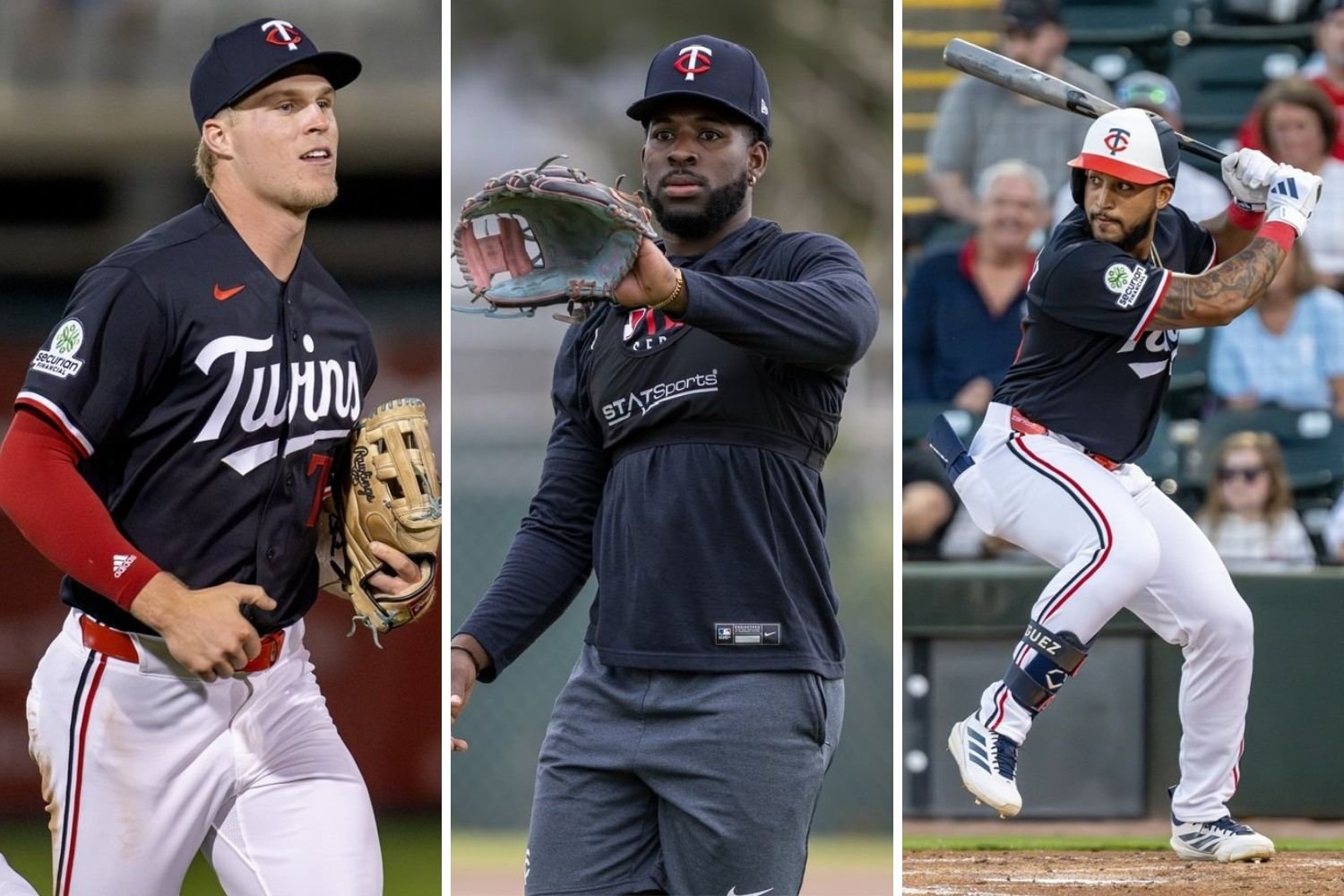 Youth. Prospects. The future. Some years, these are the only places to focus if you want to feel hopeful and positive about your favorite team. For Twins fans, it looks like this is going to be one of those years. Fortunately, the current state of Minnesota's farm system gives plenty of cause for enthusiasm and optimism. Read on for a rundown of our rankings plus analysis of how the Twins compare to the rest of the league, and where their strengths and weaknesses lie. Twins Top 20 Prospects of 2026 Click on the player's name to read our full profile. Walker Jenkins, OF: If he shakes the injury bug, his path to becoming an MLB All-Star is plain to see. Kaelen Culpepper, SS: Broke through in first full minors season, now stands as heir apparent at short. Emmanuel Rodriguez, OF: Boom-or-bust profile is easy to dream on, with rare power/patience blend. Eduardo Tait, C: Standout hitting tool, legit defense make him MN's best catching prospect since Mauer. Connor Prielipp, LHP: Finally healthy last year, he made a convincing case as the system's best arm. Dasan Hill, LHP: Oozing top-of-rotation potential after fanning 83 over 62 IP in first season out of HS. Gabriel Gonzalez, OF: Line-drive machine batted .329 across three levels in breakout 2025 campaign. Kendry Rojas, LHP: Lanky southpaw has drawn attention in camp, flashing impressive FB/SL combo. Marek Houston, SS: Defensive wiz will play in MLB based on glove alone, with star potential if he hits. Charlee Soto, RHP: Boasting some of the org's best stuff and looking to rebound from arm injury. Riley Quick, RHP: Reaches the upper-90s from a 6-foot-6 frame, could rise fast if he stays healthy. Andrew Morris, RHP: Polished strike-thrower who provides immediate depth for the MLB rotation. Brandon Winokur, SS/CF: A big man with big power potential and exceptional athleticism for his size. Quentin Young, SS: Similar traits to Winokur. The question for both: will they make enough contact? Marco Raya, RHP: Hoping to weaponize his high-powered sweeper following conversion to bullpen. Hendry Mendez, OF: Controls the zone well and offers upside if he can start elevating the ball more. Kyle DeBarge, 2B/SS/CF: Speedster struggled in the second half at Cedar Rapids, but stole 55 bases. C.J. Culpepper, RHP: Continues to get results, but must show he can stay healthy and throw strikes. Khadim Diaw, C/CF: Disciplined hitter with an intriguing defensive profile, looking to add some pop. James Ellwanger, RHP: Hard-throwing college draftee has strikeout stuff, could be fast-tracked as RP. POSITIONAL BREAKDOWN Catchers: 2 Infielders: 4 Outfielders: 5 Right-handed Pitchers: 6 Left-handed Pitchers: 3 ESTIMATED ARRIVAL TIMELINES 2026: Jenkins, K. Culpepper, Rodriguez, Prielipp, Gonzalez, Morris, Raya 2027: Rojas, Mendez, C.J. Culpepper 2028: Tait, Houston, Soto, Quick, Winokur, DeBarge, Diaw, Ellwanger 2029: Hill, Young LEAGUEWIDE SYSTEM RANKINGS ESPN: 8 out of 30 Baseball Prospectus: 8 out of 30 MLB Pipeline: 9 out of 30 FanGraphs: 12 out of 30 Baseball America: 12 out of 30 The Athletic: 21 out of 30 STRENGTHS The Twins are generally viewed as having an above-average, but not quite top-tier, farm system relative to the rest of the league. In sizing up their overall mix of talent, a few strengths stand out. Near-ready impact: At least six of the top 10 have a reasonable chance to debut in the majors this season, including all of the top three (Walker Jenkins, Kaelen Culpepper, Emmanuel Rodriguez). Left-handed pitching: There was a long stretch where the Twins had zero left-handed pitchers among their top prospect. How things have changed. Our top three pitching prospects are all southpaws, with Connor Prielipp, Dasan Hill and Kendry Rojas all landing in the top 10. Raw athleticism and strength: Brandon Winokur and Quentin Young are huge physical specimens with really impressive tools. Riley Quick was a highly recruited four-star offensive lineman before attending Alabama and getting drafted as a pitcher by the Twins. There's a lot of volatility and bust potential with such player types, but it's fun to see the Twins taking big swings. Big-velo arms: Quick is one of several pitchers in the Twins system who can throw really hard. Charlee Soto and James Ellwanger are also guys who light up the radar. Prielipp, Hill and Rojas throw harder than almost any left-handed pitchers in Twins history. The question is whether all these velo demons can stay healthy. WEAKNESSES You might notice that, among the farm system rankings from various publications above, The Athletic is a clear outlier. Whereas ESPN, BP, BA, FanGraphs and Pipeline all have the Twins somewhere between eighth and 12th out of MLB teams, Keith Law has them all the way down at 21. His reasoning is pretty straightforward, and tough to deny: health. For all the great talent the Twins have boasted in their system over the years, so much of it has failed to actualize in the majors due to a constant onslaught of injury woes. Unfortunately, that shows no real signs of changing. Jenkins has been hurt frequently since being drafted, and is sidelined this spring by a hamstring strain. Rodriguez has also been oft-injured, totaling only 112 games over the past two seasons. Prielipp has undergone multiple elbow surgeries; he's 25 years old with only less than 115 professional innings logged. We're still in the top five! It's not like the Twins organization has some inherent curse, and much of this is just bad luck, subject to change with the winds of fortune. But there are certain developmental philosophies that might lead to higher likelihood of injury, especially on the pitching side. It's the trade-off for targeting hard throwers or drafting mid-rounders and boosting their velocity. The reality is that we've yet to see any of these guys make it to the big leagues healthy. David Festa and Zebby Matthews have dealt with shoulder issues since graduating. KEEP TRACK OF TWINS PROSPECTS ALL YEAR This series and recap only serve as a snapshot of the Twins' system heading into the season. As the action gets going and players start to move in the rankings, you can follow along through the summer with our Twins Top Prospect Tracker, which is updated frequently.
- 11 comments
-
- 6
-
-
- walker jenkins
- kaelen culpepper
- (and 1 more)
-
True story. I just never know how it's gonna go asking a 31-year-old with 1,000 games in the majors to go to Triple-A. Sometimes they prefer to just try their luck overseas. But being the top SS contingency behind Brooks Lee, and his history of back/performance issues, is seemingly a pretty favorable spot.
- 38 replies
-
- 4
-
-
- luke keaschall
- trevor larnach
- (and 3 more)
-
The tricky thing for Arcia is the roster math since he's an NRI. If we assume fellow NRIs Hendriks and Chafin are making the bullpen, that'd mean three spots need to be opened up on the 40-man. Not impossible but not easy or painless. Another thing is that Arcia is mad slow, even slower than Lee. Personally I think he needed to come into camp and wow them to win a spot, not sure he's done that so far. If they are able to stash him at Triple-A that'd be nice, I'm unsure of his opt-out situation.
- 38 replies
-
- 7
-
-
- luke keaschall
- trevor larnach
- (and 3 more)
-
Wallner's having a great spring. I feel confident in him. Lewis definitely concerning. The at-bats are bringing back memories of last year, when he seemed to be hunting for homers way too aggressively. His numbers: 30 PA, 3 H (2 HR), 1 BB
- 38 replies
-
- 8
-
-
- luke keaschall
- trevor larnach
- (and 3 more)
-
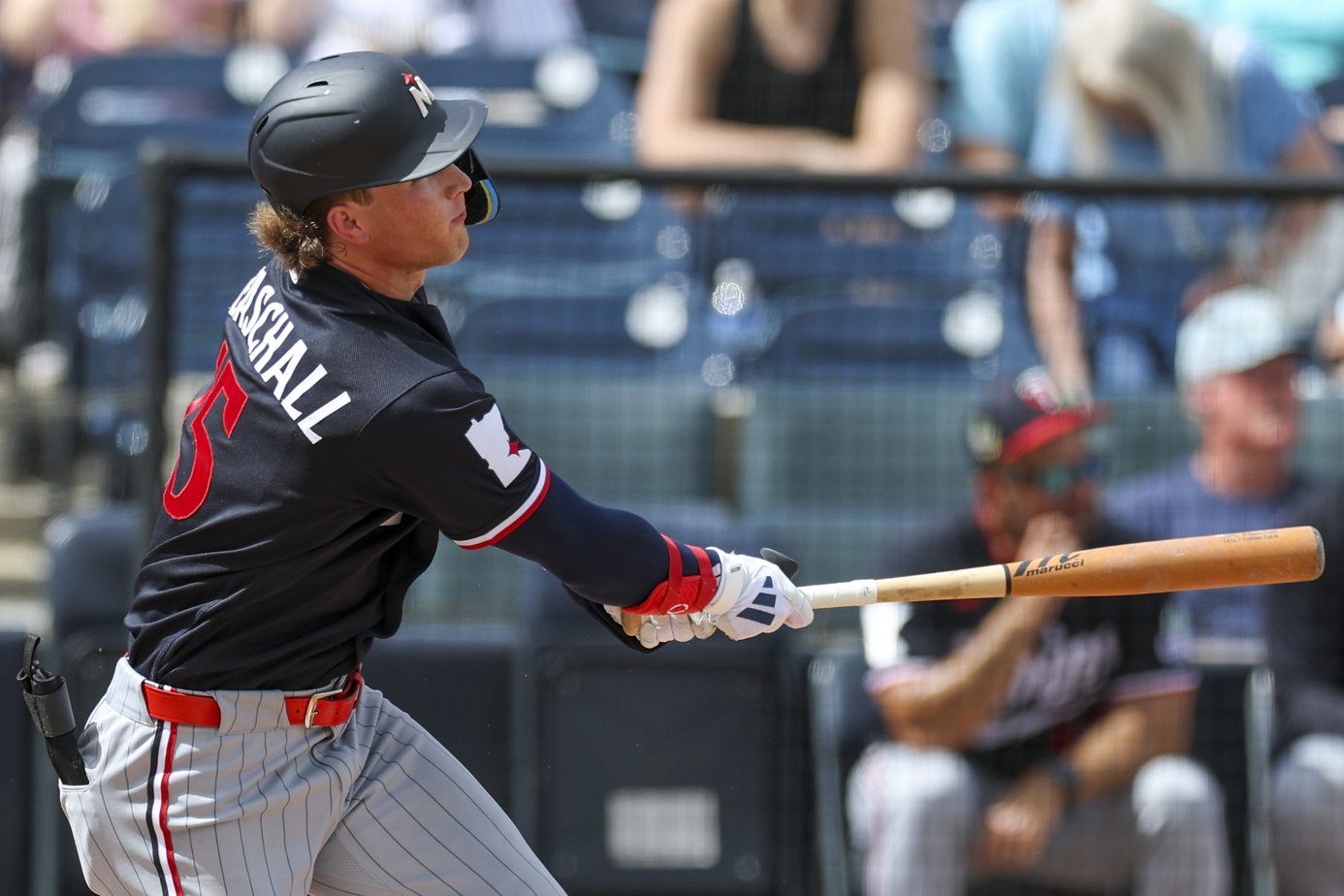 Spring training stats don't matter, but usage trends do, especially at this stage of the game. We're now only 11 days from the season opener in Baltimore. The Twins roster has been whittled down and Derek Shelton is increasingly obligated to operate with — to borrow a word he likes — intentionality. This is no longer just about getting guys their reps and experimenting. As Opening Day approaches, players needs to start acclimating to their planned roles, and final decisions need to be informed. So it's worthwhile to keep a close eye on lineup construction and pitcher deployment, which we track in this space. Last week we checked in who's been playing where in the first half of camp. Here's an update seven days later with a few quick notes on what stands out. Total starts are listed next to each player, with their number of starts in the past week (Monday through Sunday) listed in parentheses. Catcher Ryan Jeffers: 10x (3x) Victor Caratini: 7x (2x) Alex Jackson: 6x (2x) Noah Cardenas: 1x No surprises here. The top three catchers are splitting reps evenly. But the Twins aren't really breaking in anyone as a third-string catcher for the event that Jackson doesn't make it through waivers. Cardenas, who's presumed to fill that role, has seen plenty of action as a sub. First Base Josh Bell: 10x (2x) Eric Wagaman: 6x (2x) Kody Clemens: 4x (2x) Victor Caratini: 3x (1x) Aaron Sabato: 1x The balanced usage here reinforces my belief that first base will be heavily rotated. I don't expect Wagaman to make the Opening Day roster, but would guess he'll see plenty of action there over the course of the season. Second Base Luke Keaschall: 9x (3x) Kody Clemens: 7x Tristan Gray: 4x (2x) Orlando Arcia: 3x (2x) Kaelen Culpepper: 1x I mentioned last week that I was surprised to see Clemens getting so many spring starts at second base (and so few at first). Since then he's made two starts at first and zero at second. Third Base Royce Lewis: 9x (4x) Gio Urshela: 5x Ryan Kreidler: 3x (2x) Tristan Gray: 3x (1x) Eric Wagaman: 2x Orlando Arcia: 1x Jake Rucker: 1x The injury scare that got Lewis scratched from the lineup a couple weeks ago now appears to be completely in the rear-view, which is good news. He's been starting at his set position as consistently as anyone else of late. Still no appearances at third base for Clemens, even as a sub. Shortstop Brooks Lee: 13x (4x) Orlando Arcia: 5x (1x) Tristan Gray: 3x (1x) Ryan Kreidler: 3x (1x) Lee leads the team in starts at a single spot this spring with 13 at short, as the Twins continue to evaluate his three backup options. This position has perhaps the worst starter and the worst depth on the roster. Left Field Austin Martin: 7x (1x) Trevor Larnach: 6x (1x) Luke Keaschall: 3x (2x) Alan Roden: 2x Emmanuel Rodriguez: 2x James Outman: 2x (2x) Eric Wagaman: 1x (1x) Gabriel Gonzalez: 1x Keaschall getting two more starts in left field was the most eye-catching development in camp over the past week. It's starting to look less like a novelty and more like something the Twins could actually implement at times (although he hasn't looked the sharpest out there). If Keaschall, Martin, Larnach, and Outman or Roden are all options in left field, the Twins will have plenty of matchup flexibility. Note that Larnach was originally scheduled to play left field on Sunday against the Red Sox, but was scratched shortly before game time with left side soreness, so that will be something to keep an eye on. If he has to start on the injured list, the door is flung wide open for Roden, who continues to produce this spring. Center Field James Outman: 6x (1x) Byron Buxton: 4x Austin Martin: 5x (3x) Alan Roden: 5x (2x) Ryan Kreidler: 2x (1x) Walker Jenkins: 1x Emmanuel Rodriguez: 1x The candidates to back up Buxton have all been getting plenty of looks while he's away at the World Baseball Classic. Among that trio, Outman is the truest center fielder, but the Twins are taking every opportunity to evaluate the viability of Martin and Roden, who got five of seven starts. Right Field Matt Wallner: 10x (3x) Alan Roden: 6x (2x) Trevor Larnach: 4x (2x) James Outman: 2x Ryan Kreidler: 1x Gabriel Gonzalez: 1x I continue to believe that Wallner will be the starter in right field almost every day. Unlike left, the Twins aren't really setting up platooning possibilities at the position, with lefty hitters starting 23 of 25 games, including all seven last week. One related note: On Sunday, Martin made (I believe) his first spring appearance in right field, sliding over in the middle innings after starting in left. Designated Hitter Bell: 5x (3x) Wallner: 3x (1x) Larnach: 3x (1x) Urshela: 3x (1x) Lewis: 2x (1x) Buxton: 2x Caratini: 1x Jeffers: 1x Keaschall: 1x Rodriguez: 1x Gonzalez: 1x Mendez: 1x About what you'd expect: the three clear bat-first players on the roster getting a majority of DH time. If Larnach misses time that could shake things up here. The Pitching Carousel As we march toward Opening Day, it becomes increasingly interesting to follow the pitching usage. Who's starting, in what order, and how are they mapping toward the first series of the season? On the relief side, who is entering in the early part of games? Generally, you expect the pitchers who are going to be in more significant roles to be the first ones in — you're never guaranteed to face high-end competition in spring training, especially at home, but you're far more likely to throw against legit MLB hitters if you're coming in for the fifth or sixth versus the eighth or ninth. Here's how the starters lined up over the past seven days, along with the first and second relievers to enter (not including the stock arms who enter to finish the last inning for a starter): Monday – Zebby Matthews (Liam Hendriks, Andrew Morris) Tuesday – Joe Ryan (Cole Sands, Zak Kent) Wednesday – Taj Bradley (Taylor Rogers, Andrew Chafin) Thursday – Bailey Ober (Hendriks, Sands) Friday – Mick Abel (Kent, Cody Laweryson) Saturday – Simeon Woods Richardson (Rogers, Hendriks) Sunday – Zebby Matthews (Eric Orze, Matt Bowman) Here are a few observations based on what I'm seeing above. Take them with a grain of salt because observations and extrapolations is all they are. Joe Ryan should be in line to start on Opening Day. He made his first official spring start on Tuesday and threw 48 pitches over three innings. From there it sounded like his next appearance might come for Team USA in a potential WBC championship game this coming Tuesday, but this plan has been nixed. With Ryan staying in camp, my assumption is that he'll start Monday against the Pirates (75 pitches?), then again on Saturday against the Rays (90?), setting him up pitch in Baltimore on March 26th with a standard four days' rest. Simeon Woods Richardson could do it too, though. Woods Richardson pushed all the way to 79 pitches in his latest start on Saturday, so he's ahead of Ryan in terms of build-up. And if the Twins were following a standard five-man starting cycle from here forward (one game on, four games off), Woods Richardson's turn would be up on Opening Day. I bet he's the backup plan if Ryan can't go for any reason. Liam Hendriks and Taylor Rogers poised to split closer duties? If you look at earlier spring game usage as an indicator of expected role leverage, then Hendriks and Rogers are tracking toward claiming late-inning spots, alongside Cole Sands, who we know is going to be the de facto fireman. One might surmise that Hendriks and Rogers will be the go-to ninth-inning options depending on matchups. This is more or less what I would've expected — both offer a great deal of closing experience, if not a ton of upside at this stage of their careers. Zak Kent trending toward a bullpen role. The Twins are trying to get a look at their latest reliever acquisition against reasonably decent competition. Claimed off waivers on February 26th to fill the 40-man spot vacated by Pablo López, Kent has been getting some valuable opportunities and making the most of them. He was the second reliever in on Tuesday and the first in on Friday. In 4 ⅔ innings across four total appearances, he has allowed two hits and a walk with seven strikeouts. I have to imagine Kent is either going to make the roster or be DFA'ed to make room for a Hendriks or Andrew Chafin, so it makes sense the Twins are giving him some real chances to show what he's got. Time for back-to-backs. Unless I'm mistaken, we still haven't seen a reliever pitch on back-to-back days yet. It's a key aspect of spring ramp-up, and is especially important for someone like Hendriks who needs to prove himself physically coming off an injury-ravaged stretch. Keep an eye on that in the coming week. Anything catching your eye in terms of usage trends and decision-making as we march into the latter portion of camp? Sound off in the comments and let us know where you'll be focusing in the final full week of spring training.
- 38 comments
-
- 11
-
-

-
- luke keaschall
- trevor larnach
- (and 3 more)
-
Image courtesy of Nathan Ray Seebeck-Imagn Images Spring training stats don't matter, but usage trends do, especially at this stage of the game. We're now only 11 days from the season opener in Baltimore. The Twins roster has been whittled down and Derek Shelton is increasingly obligated to operate with — to borrow a word he likes — intentionality. This is no longer just about getting guys their reps and experimenting. As Opening Day approaches, players needs to start acclimating to their planned roles, and final decisions need to be informed. So it's worthwhile to keep a close eye on lineup construction and pitcher deployment, which we track in this space. Last week we checked in who's been playing where in the first half of camp. Here's an update seven days later with a few quick notes on what stands out. Total starts are listed next to each player, with their number of starts in the past week (Monday through Sunday) listed in parentheses. Catcher Ryan Jeffers: 10x (3x) Victor Caratini: 7x (2x) Alex Jackson: 6x (2x) Noah Cardenas: 1x No surprises here. The top three catchers are splitting reps evenly. But the Twins aren't really breaking in anyone as a third-string catcher for the event that Jackson doesn't make it through waivers. Cardenas, who's presumed to fill that role, has seen plenty of action as a sub. First Base Josh Bell: 10x (2x) Eric Wagaman: 6x (2x) Kody Clemens: 4x (2x) Victor Caratini: 3x (1x) Aaron Sabato: 1x The balanced usage here reinforces my belief that first base will be heavily rotated. I don't expect Wagaman to make the Opening Day roster, but would guess he'll see plenty of action there over the course of the season. Second Base Luke Keaschall: 9x (3x) Kody Clemens: 7x Tristan Gray: 4x (2x) Orlando Arcia: 3x (2x) Kaelen Culpepper: 1x I mentioned last week that I was surprised to see Clemens getting so many spring starts at second base (and so few at first). Since then he's made two starts at first and zero at second. Third Base Royce Lewis: 9x (4x) Gio Urshela: 5x Ryan Kreidler: 3x (2x) Tristan Gray: 3x (1x) Eric Wagaman: 2x Orlando Arcia: 1x Jake Rucker: 1x The injury scare that got Lewis scratched from the lineup a couple weeks ago now appears to be completely in the rear-view, which is good news. He's been starting at his set position as consistently as anyone else of late. Still no appearances at third base for Clemens, even as a sub. Shortstop Brooks Lee: 13x (4x) Orlando Arcia: 5x (1x) Tristan Gray: 3x (1x) Ryan Kreidler: 3x (1x) Lee leads the team in starts at a single spot this spring with 13 at short, as the Twins continue to evaluate his three backup options. This position has perhaps the worst starter and the worst depth on the roster. Left Field Austin Martin: 7x (1x) Trevor Larnach: 6x (1x) Luke Keaschall: 3x (2x) Alan Roden: 2x Emmanuel Rodriguez: 2x James Outman: 2x (2x) Eric Wagaman: 1x (1x) Gabriel Gonzalez: 1x Keaschall getting two more starts in left field was the most eye-catching development in camp over the past week. It's starting to look less like a novelty and more like something the Twins could actually implement at times (although he hasn't looked the sharpest out there). If Keaschall, Martin, Larnach, and Outman or Roden are all options in left field, the Twins will have plenty of matchup flexibility. Note that Larnach was originally scheduled to play left field on Sunday against the Red Sox, but was scratched shortly before game time with left side soreness, so that will be something to keep an eye on. If he has to start on the injured list, the door is flung wide open for Roden, who continues to produce this spring. Center Field James Outman: 6x (1x) Byron Buxton: 4x Austin Martin: 5x (3x) Alan Roden: 5x (2x) Ryan Kreidler: 2x (1x) Walker Jenkins: 1x Emmanuel Rodriguez: 1x The candidates to back up Buxton have all been getting plenty of looks while he's away at the World Baseball Classic. Among that trio, Outman is the truest center fielder, but the Twins are taking every opportunity to evaluate the viability of Martin and Roden, who got five of seven starts. Right Field Matt Wallner: 10x (3x) Alan Roden: 6x (2x) Trevor Larnach: 4x (2x) James Outman: 2x Ryan Kreidler: 1x Gabriel Gonzalez: 1x I continue to believe that Wallner will be the starter in right field almost every day. Unlike left, the Twins aren't really setting up platooning possibilities at the position, with lefty hitters starting 23 of 25 games, including all seven last week. One related note: On Sunday, Martin made (I believe) his first spring appearance in right field, sliding over in the middle innings after starting in left. Designated Hitter Bell: 5x (3x) Wallner: 3x (1x) Larnach: 3x (1x) Urshela: 3x (1x) Lewis: 2x (1x) Buxton: 2x Caratini: 1x Jeffers: 1x Keaschall: 1x Rodriguez: 1x Gonzalez: 1x Mendez: 1x About what you'd expect: the three clear bat-first players on the roster getting a majority of DH time. If Larnach misses time that could shake things up here. The Pitching Carousel As we march toward Opening Day, it becomes increasingly interesting to follow the pitching usage. Who's starting, in what order, and how are they mapping toward the first series of the season? On the relief side, who is entering in the early part of games? Generally, you expect the pitchers who are going to be in more significant roles to be the first ones in — you're never guaranteed to face high-end competition in spring training, especially at home, but you're far more likely to throw against legit MLB hitters if you're coming in for the fifth or sixth versus the eighth or ninth. Here's how the starters lined up over the past seven days, along with the first and second relievers to enter (not including the stock arms who enter to finish the last inning for a starter): Monday – Zebby Matthews (Liam Hendriks, Andrew Morris) Tuesday – Joe Ryan (Cole Sands, Zak Kent) Wednesday – Taj Bradley (Taylor Rogers, Andrew Chafin) Thursday – Bailey Ober (Hendriks, Sands) Friday – Mick Abel (Kent, Cody Laweryson) Saturday – Simeon Woods Richardson (Rogers, Hendriks) Sunday – Zebby Matthews (Eric Orze, Matt Bowman) Here are a few observations based on what I'm seeing above. Take them with a grain of salt because observations and extrapolations is all they are. Joe Ryan should be in line to start on Opening Day. He made his first official spring start on Tuesday and threw 48 pitches over three innings. From there it sounded like his next appearance might come for Team USA in a potential WBC championship game this coming Tuesday, but this plan has been nixed. With Ryan staying in camp, my assumption is that he'll start Monday against the Pirates (75 pitches?), then again on Saturday against the Rays (90?), setting him up pitch in Baltimore on March 26th with a standard four days' rest. Simeon Woods Richardson could do it too, though. Woods Richardson pushed all the way to 79 pitches in his latest start on Saturday, so he's ahead of Ryan in terms of build-up. And if the Twins were following a standard five-man starting cycle from here forward (one game on, four games off), Woods Richardson's turn would be up on Opening Day. I bet he's the backup plan if Ryan can't go for any reason. Liam Hendriks and Taylor Rogers poised to split closer duties? If you look at earlier spring game usage as an indicator of expected role leverage, then Hendriks and Rogers are tracking toward claiming late-inning spots, alongside Cole Sands, who we know is going to be the de facto fireman. One might surmise that Hendriks and Rogers will be the go-to ninth-inning options depending on matchups. This is more or less what I would've expected — both offer a great deal of closing experience, if not a ton of upside at this stage of their careers. Zak Kent trending toward a bullpen role. The Twins are trying to get a look at their latest reliever acquisition against reasonably decent competition. Claimed off waivers on February 26th to fill the 40-man spot vacated by Pablo López, Kent has been getting some valuable opportunities and making the most of them. He was the second reliever in on Tuesday and the first in on Friday. In 4 ⅔ innings across four total appearances, he has allowed two hits and a walk with seven strikeouts. I have to imagine Kent is either going to make the roster or be DFA'ed to make room for a Hendriks or Andrew Chafin, so it makes sense the Twins are giving him some real chances to show what he's got. Time for back-to-backs. Unless I'm mistaken, we still haven't seen a reliever pitch on back-to-back days yet. It's a key aspect of spring ramp-up, and is especially important for someone like Hendriks who needs to prove himself physically coming off an injury-ravaged stretch. Keep an eye on that in the coming week. Anything catching your eye in terms of usage trends and decision-making as we march into the latter portion of camp? Sound off in the comments and let us know where you'll be focusing in the final full week of spring training. View full article
