



Nick Nelson
-
Posts
8,327 -
Joined
-
Last visited
-
Days Won
56
Content Type
Profiles
News
Minnesota Twins Videos
2026 Minnesota Twins Top Prospects Ranking
2022 Minnesota Twins Draft Picks
Minnesota Twins Free Agent & Trade Rumors, Notes, & Tidbits
Guides & Resources
2023 Minnesota Twins Draft Picks
The Minnesota Twins Players Project
2024 Minnesota Twins Draft Picks
2025 Minnesota Twins Draft Pick Tracker
2026 Minnesota Twins Draft Tracker: Picks & Bonuses
Forums
Blogs
Events
Store
Downloads
Gallery
Everything posted by Nick Nelson
-
 I can say with confidence Cave is not popular, neither with the casual nor hardcore crowd. That's not an assumption. I interact with a lot of fans here and on Twitter. Why would he be? He's been a terrible player receiving an inordinate amount of playing time (when healthy) for two years.
 -
Thought I was being pretty clear in referencing the lockout, which is expected by essentially everyone involved with the sport. For the Twins to go into such a hiatus while surrounded by several unfavorable storylines would not be great for their brand. I didn't think it to be very controversial.
-
And guess what's going to be happening during those months? This comment seems entirely oblivious of the reality that is about to materialize. It would be nice to have any semblance of good news or encouragement before the baseball world shuts down completely.
-
As mentioned, I understand they can do this. But might you name some examples of past players they tendered arbitration contracts and then cut in spring training (or before)? I'm having a hard time thinking of a single one. Let's not act like it's a common occurrence.
-
The Minnesota Twins have yet to make any significant additions this offseason, but that's not to say the league as a whole has been standing still. As we await an impending lockout, let's get up to speed on the state of the Twins, recapping the latest roster moves, an unpopular retention decision, and key pitching targets coming off the board. Twins Protect Prospects, Fill 40-Man Roster Last Friday marked the deadline for teams to add players to their 40-man rosters in order to block them from being claimed in the Rule 5 draft. Minnesota elected to protect six prospects. IN: Royce Lewis, SS Jose Miranda, 3B Josh Winder, RHP Cole Sands, RHP Blayne Enlow, RHP Chris Vallimont, RHP While the first four adds above were essentially considered locks, the Twins went the extra mile by adding Enlow (recovering from Tommy John surgery) and Vallimont (24-year-old with no success yet above Single-A). After getting burned on the loss of Akil Baddoo last year, it seems Minnesota wanted to take no undue risks this time around, especially when it comes to their critical minor-league pitching depth. In order to facilitate this wave of additions, the team also cleared room by offloading four players. OUT: Devin Smeltzer, LHP (Outrighted) Kyle Garlick, OF (Outrighted) Charlie Barnes, LHP (DFA) Willians Astudillo, UTIL (DFA) These moves leave the 40-man roster full, with 17 position players and 23 pitchers. Here's the makeup as it currently stands. From here on out, the Twins will need to remove a player and risk losing him for each new addition. Any of Danny Coulombe, Ralph Garza Jr., Juan Minaya, Cody Stashak, Drew Strotman, and Lewis Thorpe could be on the chopping block. It's hard to envision any more drops on the positional side (barring trades), after one clear candidate got himself a controversial new contract for 2022. Cave Lands Deal for 2022 It was widely expected the Twins would move on from Jake Cave this offseason. He produced a total of 0.2 fWAR in 118 games over the past two seasons, his performance progressively worsening. Alas, the team agreed to terms with him Friday on a one-year, $800K contract. It's a bit less than Cave was projected to earn in arbitration this winter, but still could hardly be considered much of a value, considering how awful his play has been. My read on this is that the Twins are simply trying to preserve some experienced outfield depth, with both Byron Buxton and Max Kepler ranking among their most likely players to be traded this offseason. Still, Jake Cave? It bears noting that arbitration contracts are not guaranteed. The Twins can still cut Cave before the next season starts while shedding most of his salary commitment. That rarely happens, but it may be somewhat more likely in this case given the circumstances. Here's a look at the updated 2022 roster and payroll projection, with Cave (for now) penciled in as fourth outfielder: Rotation Options Fly Off the Free Agency Board Free agent starters Noah Syndergaard, Justin Verlander and Eduardo Rodriguez have all signed with aspiring 2022 contenders from the American League. None of those teams are the Twins. Detroit made an emphatic statement about its status as a reborn legit player in the AL Central, signing Rodriguez to a five-year, $77 million contract. Not only is E-Rod a quality arm added atop a talented young Tigers rotation, but he was also one of the more realistic high-end starter targets for the Twins. (Though they reportedly were not in on him.) Syndergaard got a one-year, $21.5 million contract from the Angels, while Verlander re-signed with Houston on a one-year deal worth $25 million, plus a 2023 player option. It's likely that neither of these ace-caliber hurlers had much interest in signing with the reigning last-place finishers in the Central, but those kinds of short-term commitments are in the wheelhouse of the flexibility-focused Twins. With that trio off the board, here's what remains at the top end of the free agent starting pitching market (* denotes QO and draft pick compensation): Max Scherzer, RHP Kevin Gausman, RHP Robbie Ray, LHP* Marcus Stroman, RHP Clayton Kershaw, LHP Carlos Rodón, LHP Anthony DeSclafani, RHP Steven Matz, LHP Zack Greinke, RHP Alex Cobb, RHP Yusei Kikuchi, LHP Jon Gray, RHP Alex Wood, LHP Still plenty of quantity out there, but if the Twins want to score a name from this list they might want to act quickly, because other clubs aren't wasting time. One lower-level name also came off the board on Sunday when José Quintana signed with the Pirates for $2 million. Winter of Discontent? We all knew this was likely to be an unusual offseason, given the looming labor strife. Plenty of organizations seem to be biding their time. The Twins front office, especially, has had a habit of waiting out the market and treating patience as an asset, so their general lack of activity comes as no big surprise. With that said, the early events of this offseason have done nothing but fuel the sour vibes of frustrated fans who are eager for a turnaround, and a showing of intention. Since wrapping up one of the most disappointing seasons in franchise history, here's what we've witnessed: Three top free agent starters signing with other teams, including one with a division rival. An unpopular player in Cave re-signing for 2022. José Berríos signing a long-term extension with Toronto, and more or less indicating that his prior dedication to reaching free agency was largely due to Minnesota never making an offer that seriously tempted him. Reports of Buxton negotiations inexplicably remaining fruitless despite the apparent presence of a reasonable framework, with a trade considered likely. None of these are necessarily unforgivable offenses on their own (the Buxton thing might be, if it plays out like it's trending). But they all feed into negative narratives around the Twins: a team that is unwilling to do what it takes to keep premier homegrown talent, or to sign high-end free agent pitching. A team that's overly committed to perceived "bargains," and maintaining the status quo rather than taking bold action. There's time to turn the tides on these narratives yet, but if the Twins stand still until the CBA expires midway through next week, they're staring down the prospect of letting this sourness and discontent fester through an extended lockout, which will already be alienating enough for fans on its own. If that's the case, well... good luck with those season ticket sales. MORE FROM TWINS DAILY — Order the Offseason Handbook — Latest Twins coverage from our writers — Recent Twins discussion in our forums — Follow Twins Daily via Twitter, Facebook or email View full article
-
Offseason Status Update: 40-Man Shuffling, Missed Opportunities
Nick Nelson posted an article in Twins
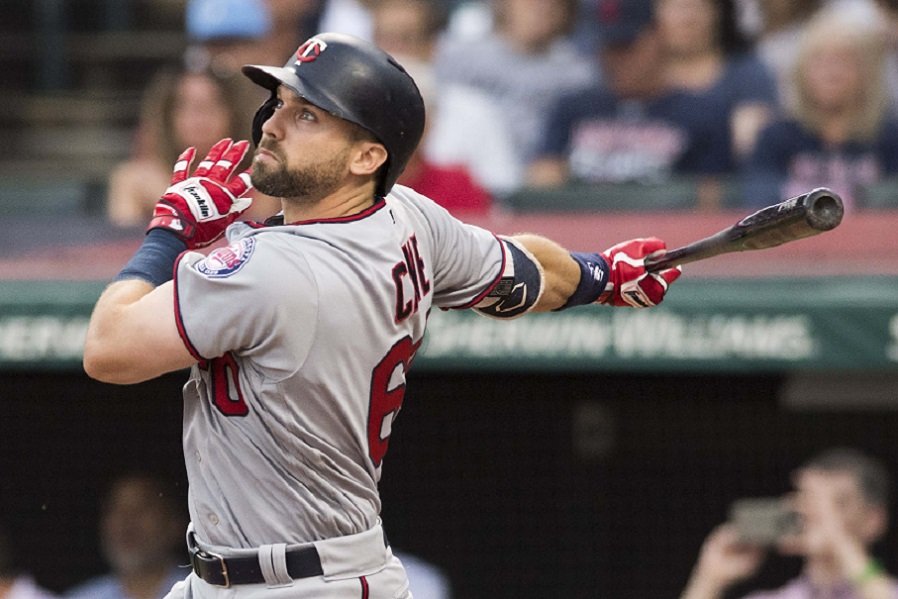 Twins Protect Prospects, Fill 40-Man Roster Last Friday marked the deadline for teams to add players to their 40-man rosters in order to block them from being claimed in the Rule 5 draft. Minnesota elected to protect six prospects. IN: Royce Lewis, SS Jose Miranda, 3B Josh Winder, RHP Cole Sands, RHP Blayne Enlow, RHP Chris Vallimont, RHP While the first four adds above were essentially considered locks, the Twins went the extra mile by adding Enlow (recovering from Tommy John surgery) and Vallimont (24-year-old with no success yet above Single-A). After getting burned on the loss of Akil Baddoo last year, it seems Minnesota wanted to take no undue risks this time around, especially when it comes to their critical minor-league pitching depth. In order to facilitate this wave of additions, the team also cleared room by offloading four players. OUT: Devin Smeltzer, LHP (Outrighted) Kyle Garlick, OF (Outrighted) Charlie Barnes, LHP (DFA) Willians Astudillo, UTIL (DFA) These moves leave the 40-man roster full, with 17 position players and 23 pitchers. Here's the makeup as it currently stands. From here on out, the Twins will need to remove a player and risk losing him for each new addition. Any of Danny Coulombe, Ralph Garza Jr., Juan Minaya, Cody Stashak, Drew Strotman, and Lewis Thorpe could be on the chopping block. It's hard to envision any more drops on the positional side (barring trades), after one clear candidate got himself a controversial new contract for 2022. Cave Lands Deal for 2022 It was widely expected the Twins would move on from Jake Cave this offseason. He produced a total of 0.2 fWAR in 118 games over the past two seasons, his performance progressively worsening. Alas, the team agreed to terms with him Friday on a one-year, $800K contract. It's a bit less than Cave was projected to earn in arbitration this winter, but still could hardly be considered much of a value, considering how awful his play has been. My read on this is that the Twins are simply trying to preserve some experienced outfield depth, with both Byron Buxton and Max Kepler ranking among their most likely players to be traded this offseason. Still, Jake Cave? It bears noting that arbitration contracts are not guaranteed. The Twins can still cut Cave before the next season starts while shedding most of his salary commitment. That rarely happens, but it may be somewhat more likely in this case given the circumstances. Here's a look at the updated 2022 roster and payroll projection, with Cave (for now) penciled in as fourth outfielder: Rotation Options Fly Off the Free Agency Board Free agent starters Noah Syndergaard, Justin Verlander and Eduardo Rodriguez have all signed with aspiring 2022 contenders from the American League. None of those teams are the Twins. Detroit made an emphatic statement about its status as a reborn legit player in the AL Central, signing Rodriguez to a five-year, $77 million contract. Not only is E-Rod a quality arm added atop a talented young Tigers rotation, but he was also one of the more realistic high-end starter targets for the Twins. (Though they reportedly were not in on him.) Syndergaard got a one-year, $21.5 million contract from the Angels, while Verlander re-signed with Houston on a one-year deal worth $25 million, plus a 2023 player option. It's likely that neither of these ace-caliber hurlers had much interest in signing with the reigning last-place finishers in the Central, but those kinds of short-term commitments are in the wheelhouse of the flexibility-focused Twins. With that trio off the board, here's what remains at the top end of the free agent starting pitching market (* denotes QO and draft pick compensation): Max Scherzer, RHP Kevin Gausman, RHP Robbie Ray, LHP* Marcus Stroman, RHP Clayton Kershaw, LHP Carlos Rodón, LHP Anthony DeSclafani, RHP Steven Matz, LHP Zack Greinke, RHP Alex Cobb, RHP Yusei Kikuchi, LHP Jon Gray, RHP Alex Wood, LHP Still plenty of quantity out there, but if the Twins want to score a name from this list they might want to act quickly, because other clubs aren't wasting time. One lower-level name also came off the board on Sunday when José Quintana signed with the Pirates for $2 million. Winter of Discontent? We all knew this was likely to be an unusual offseason, given the looming labor strife. Plenty of organizations seem to be biding their time. The Twins front office, especially, has had a habit of waiting out the market and treating patience as an asset, so their general lack of activity comes as no big surprise. With that said, the early events of this offseason have done nothing but fuel the sour vibes of frustrated fans who are eager for a turnaround, and a showing of intention. Since wrapping up one of the most disappointing seasons in franchise history, here's what we've witnessed: Three top free agent starters signing with other teams, including one with a division rival. An unpopular player in Cave re-signing for 2022. José Berríos signing a long-term extension with Toronto, and more or less indicating that his prior dedication to reaching free agency was largely due to Minnesota never making an offer that seriously tempted him. Reports of Buxton negotiations inexplicably remaining fruitless despite the apparent presence of a reasonable framework, with a trade considered likely. None of these are necessarily unforgivable offenses on their own (the Buxton thing might be, if it plays out like it's trending). But they all feed into negative narratives around the Twins: a team that is unwilling to do what it takes to keep premier homegrown talent, or to sign high-end free agent pitching. A team that's overly committed to perceived "bargains," and maintaining the status quo rather than taking bold action. There's time to turn the tides on these narratives yet, but if the Twins stand still until the CBA expires midway through next week, they're staring down the prospect of letting this sourness and discontent fester through an extended lockout, which will already be alienating enough for fans on its own. If that's the case, well... good luck with those season ticket sales. MORE FROM TWINS DAILY — Order the Offseason Handbook — Latest Twins coverage from our writers — Recent Twins discussion in our forums — Follow Twins Daily via Twitter, Facebook or email
 -
Byron Buxton has been the fastest player in major-league baseball. He has the highest SB percentage in MLB history (min 50 attempts). He won a Platinum Glove in CF at age 23 -- one year older than Lewis (who still hasn't settled on a position) will be next year. He ranks 4th among all MLB players in SLG over the past 3 years (min 600 PA). He's played at a pace of 6.5 fWAR/150G over the past 3 seasons. Royce Lewis may turn out to be an amazing player but he's not going to do these things. Nobody's doing these things. Nobody possesses this combination of elite skills. In your attempt to prove a point you've only proven the opposite, and pinpointed exactly what makes Buxton so different and special. "Tools projections" for prospects are subjective, somewhat arbitrary, and often wildly optimistic. Buxton has fulfilled the most lofty interpretations of his potential. That is why the Twins cannot let him leave. That said, I will echo the sentiment of @USAFChief... I hope your highly favorable estimation of Lewis comes to fruition!
-
No one anointed him as a god. People rightfully said Royce Lewis's talent and tools are not on the same plane as Byron Buxton, which is very obviously true and quite silly to argue with (nor is it insult to Lewis). Then you went on some long hyperbolic rant in response, invoking Barry Bonds. Tell me again what's far fetched?
-
I mean, Buxton has had like multiple career-threatening injuries within the past couple years. He's had several concussions. He has to understand as well as anyone that nothing is guaranteed. Safety and security are factors here, right? There is something to be said for locking down $80 million and setting your family up for generations, and not needing to worry about it anymore. I'm not sure I quite buy into the idea that this is a "cut-rate contract" he'd be moronic to sign, although obviously I find it very favorable to the Twins.
-
That's because Byron Buxton legitimately has a Trout-like skill set, which was on display in April when he managed to out-play peak form Mike Trout. I'm not sure you quite understand the extent of Buxton's tools? You can't just compare him to other players because others can run, hit, and field. He's off the charts in these categories.
-
You don't have to break the bank, that's the whole point! A deal that maxes out at $14M/yr is absurdly reasonable and affordable for a player of Buxton's caliber, and the only reason he'd conceivably be available at such a rate is BECAUSE of the injury history. That's why this is such a momentous opportunity for the Twins, and why fans are almost unanimously baffled and infuriated by these stalled negotiations. If Buxton were demanding to be paid like the MVP-caliber player he is when fully healthy and producing, I think there'd be a lot more room for disagreement and more understanding of the team's position. From all indications that does not appear to be the case, or even close.
-
I think it's a combination of #1 (inaccurate numbers -- I find it impossible to believe a deal wouldn't be done if those terms were legit as we're perceiving them) and #3 (Buxton doesn't want to sign an extension). I mentioned this on Twitter but will add it here too: If Buxton's traded, you'd like to think the Twins find a way to get their side of the story out there, because if we're left to believe they passed on a chance to extend him on a deal that would've *maxed out* at 100M over 7 years, some of us will never forgive them
-
In many cases, getting more information about a situation brings clarity. But in the case of the Minnesota Twins and their negotiations with star center fielder Byron Buxton, emerging details only generate further confusion. Based on what's been reported, it's really hard to make sense of what the team is doing here. On Tuesday, Dan Hayes and Ken Rosenthal bylined a report in The Athletic with the headline: Byron Buxton’s future with the Twins remains in limbo as team gauges trade interest, potential extension offers. The article depicts a team struggling to decide whether it should trade its best player with one year remaining under contract, or hold him for the 2022 season. The option that seems most obvious and desirable — striking a long-term extension with this generational talent in his prime — doesn't really seem to be on the table, even if it hasn't been ruled out. "Chairman Jim Pohlad, according to major-league sources, is reluctant to move Buxton, knowing such a decision potentially would upset a fan base tired of seeing the team part with homegrown stars," per The Athletic. Pohlad's absolutely right in his assessment of how trading Buxton will be perceived by Twins fans, who just watched Jose Berrios sign an extension with Toronto. Fortunately, it would seem nobody is in better position than he to ensure Buxton sticks around. Pohlad and his ownership group have the power to greenlight an offer that keeps Buxton in Minnesota long-term, and such a framework — from all indications — is extremely achievable under team-friendly terms. The article from Hayes and Rosenthal reiterates that a 7-year, $80 million offer was extended in July, which we've heard before, but later offers up this detail: "Sources said talks about an incentive-laden extension in July broke down because of the Twins’ unwillingness to push the potential total value to $100 million." Back in July, reports indicated Buxton's side was amenable to that guaranteed amount of $80 million (which surprised me), but that an agreement couldn't be reached over the incentive structure. In my mind, I figured Buxton's camp must have been demanding some extravagant bonuses that could've done something like double the base amount. Yet, the wording of this new report — talks about an incentive-laden extension in July broke down because of the Twins’ unwillingness to push the potential total value to $100 million — well, that sure sounds like the team was not open to a contract that would maximize at $100 million. And if true, that's nothing short of embarrassing. Shameful. And egregiously foolish. I mean, come on, that would average out to about $14 million per year. That's Ricky Nolasco money, for a homegrown MVP-caliber player in his prime years. I'm having a really hard time connecting the dots here. If Twins ownership is adamant about keeping Buxton, and the center fielder's side is open to a reasonable deal, then what is the hold-up? Why are the Twins mired in internal debate over whether to trade Buxton or let him leave as a free agent, rather than opting for the best choice, which is neither of those? Here are a few possibilities I can conjure. If you have others, I'd love to hear them in the comments. The reported numbers are inaccurate. Hayes and Rosenthal are two of the more respected writers in the biz, and I trust they're providing a realistic view of the overall dynamic, but that doesn't mean every single detail is spot-on. Perhaps there are some specifics getting obscured in the communication loop. Or maybe they're receiving false info from a biased source with an agenda. (Ostensibly, this would be Buxton's agent, but I'm not sure what their end-game would be in leaking a low-ball offer?) Also: the numbers that've been reported would have be a loooong ways off to not make sense for the Twins. The Twins front office doesn't believe in Buxton. Or at least doesn't have enough confidence in his durability and aging regression to feel that a long-term extension is in their interest. I find this kind of hard to believe, but when you look at the evidence available to us — an owner expressing his desire to retain a player who is seemingly open to reasonable terms, and a front office that isn't making it happen — it's a plausible explanation. Buxton has no interest in signing an extension in Minnesota. This would run contrary to what he's said publicly, but it'd hardly be the first time a pro athlete gave lip service to appease fans. Maybe the bridge truly was burned when the Twins held Buxton in the minors in September of 2018. Or maybe Buck has a yearning to return to the South where he was raised. Or maybe he simply recognizes an opportunity to earn a much bigger payday one year from now if he can deliver in 2022. Sadly, I think this is probably the most likely answer behind everything, and also the only one that completely ties the Twins' hands. Pohlad is bluffing, and doesn't really want to pay up. It's the favored explanation for many, I'm sure. Maybe it's true, and Pohlad is portraying himself to media as the good guy who fought for Buxton before an inevitable trade. But if the reported number he's targeting is anywhere close to correct, there's no reason that Twins shouldn't be able to keep Buxton while building a quality team around him under the payroll parameters that have become standard under this ownership. One thing I will say: if Pohlad is pushing to prevent a Buxton trade solely to mitigate fan blowback, knowing the team won't be able to re-sign him (which is one way to read the opening in the Athletic article), the front office needs to shut him out and not listen. Team strategy cannot be dictated by such factors. Trading Buxton will be a bitter pill to swallow, but it may result in making the best of a bad situation. A totally self-inflicted bad situation, if reports around these negotiations are to be believed. MORE FROM TWINS DAILY — Order the Offseason Handbook — Latest Twins coverage from our writers — Recent Twins discussion in our forums — Follow Twins Daily via Twitter, Facebook or email View full article
-
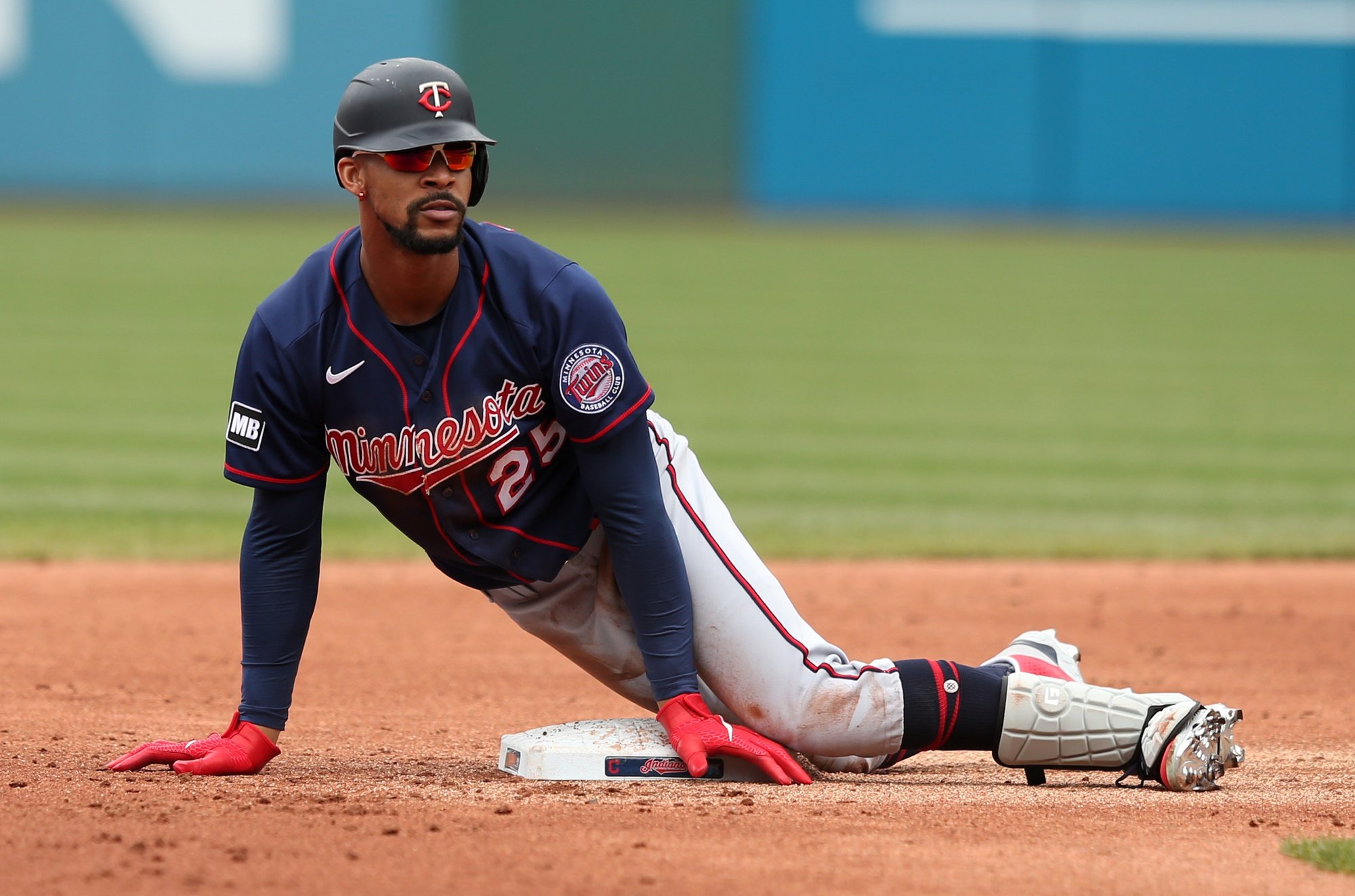 On Tuesday, Dan Hayes and Ken Rosenthal bylined a report in The Athletic with the headline: Byron Buxton’s future with the Twins remains in limbo as team gauges trade interest, potential extension offers. The article depicts a team struggling to decide whether it should trade its best player with one year remaining under contract, or hold him for the 2022 season. The option that seems most obvious and desirable — striking a long-term extension with this generational talent in his prime — doesn't really seem to be on the table, even if it hasn't been ruled out. "Chairman Jim Pohlad, according to major-league sources, is reluctant to move Buxton, knowing such a decision potentially would upset a fan base tired of seeing the team part with homegrown stars," per The Athletic. Pohlad's absolutely right in his assessment of how trading Buxton will be perceived by Twins fans, who just watched Jose Berrios sign an extension with Toronto. Fortunately, it would seem nobody is in better position than he to ensure Buxton sticks around. Pohlad and his ownership group have the power to greenlight an offer that keeps Buxton in Minnesota long-term, and such a framework — from all indications — is extremely achievable under team-friendly terms. The article from Hayes and Rosenthal reiterates that a 7-year, $80 million offer was extended in July, which we've heard before, but later offers up this detail: "Sources said talks about an incentive-laden extension in July broke down because of the Twins’ unwillingness to push the potential total value to $100 million." Back in July, reports indicated Buxton's side was amenable to that guaranteed amount of $80 million (which surprised me), but that an agreement couldn't be reached over the incentive structure. In my mind, I figured Buxton's camp must have been demanding some extravagant bonuses that could've done something like double the base amount. Yet, the wording of this new report — talks about an incentive-laden extension in July broke down because of the Twins’ unwillingness to push the potential total value to $100 million — well, that sure sounds like the team was not open to a contract that would maximize at $100 million. And if true, that's nothing short of embarrassing. Shameful. And egregiously foolish. I mean, come on, that would average out to about $14 million per year. That's Ricky Nolasco money, for a homegrown MVP-caliber player in his prime years. I'm having a really hard time connecting the dots here. If Twins ownership is adamant about keeping Buxton, and the center fielder's side is open to a reasonable deal, then what is the hold-up? Why are the Twins mired in internal debate over whether to trade Buxton or let him leave as a free agent, rather than opting for the best choice, which is neither of those? Here are a few possibilities I can conjure. If you have others, I'd love to hear them in the comments. The reported numbers are inaccurate. Hayes and Rosenthal are two of the more respected writers in the biz, and I trust they're providing a realistic view of the overall dynamic, but that doesn't mean every single detail is spot-on. Perhaps there are some specifics getting obscured in the communication loop. Or maybe they're receiving false info from a biased source with an agenda. (Ostensibly, this would be Buxton's agent, but I'm not sure what their end-game would be in leaking a low-ball offer?) Also: the numbers that've been reported would have be a loooong ways off to not make sense for the Twins. The Twins front office doesn't believe in Buxton. Or at least doesn't have enough confidence in his durability and aging regression to feel that a long-term extension is in their interest. I find this kind of hard to believe, but when you look at the evidence available to us — an owner expressing his desire to retain a player who is seemingly open to reasonable terms, and a front office that isn't making it happen — it's a plausible explanation. Buxton has no interest in signing an extension in Minnesota. This would run contrary to what he's said publicly, but it'd hardly be the first time a pro athlete gave lip service to appease fans. Maybe the bridge truly was burned when the Twins held Buxton in the minors in September of 2018. Or maybe Buck has a yearning to return to the South where he was raised. Or maybe he simply recognizes an opportunity to earn a much bigger payday one year from now if he can deliver in 2022. Sadly, I think this is probably the most likely answer behind everything, and also the only one that completely ties the Twins' hands. Pohlad is bluffing, and doesn't really want to pay up. It's the favored explanation for many, I'm sure. Maybe it's true, and Pohlad is portraying himself to media as the good guy who fought for Buxton before an inevitable trade. But if the reported number he's targeting is anywhere close to correct, there's no reason that Twins shouldn't be able to keep Buxton while building a quality team around him under the payroll parameters that have become standard under this ownership. One thing I will say: if Pohlad is pushing to prevent a Buxton trade solely to mitigate fan blowback, knowing the team won't be able to re-sign him (which is one way to read the opening in the Athletic article), the front office needs to shut him out and not listen. Team strategy cannot be dictated by such factors. Trading Buxton will be a bitter pill to swallow, but it may result in making the best of a bad situation. A totally self-inflicted bad situation, if reports around these negotiations are to be believed. MORE FROM TWINS DAILY — Order the Offseason Handbook — Latest Twins coverage from our writers — Recent Twins discussion in our forums — Follow Twins Daily via Twitter, Facebook or email
 -
Great comments and discourse y'all. I've really enjoyed reading all the thoughts.
-
As we all know, the current Twins front office has had some whiffs when it comes to offseason pitching pickups. Addison Reed, Lance Lynn, J.A. Happ, Matt Shoemaker and Alex Colomé are names that come to mind. While recency bias – primed by those last three names – might lead one to believe this leadership can do no right, that isn't the case. In looking at some of their most successful acquisitions, perhaps we can identify a formula for getting back on track this offseason. With a lens on 2022, we're judging these acquisitions in terms of immediate impact, so we'll rank them by the fWAR (Fangraphs Wins Above Replacement) in their first season after coming aboard. These are the seven names that stand out. 1. Michael Pineda, 2019 (2.6 fWAR) Signed as a free agent (2 years, $10M) This wasn't actually the first year after Pineda came aboard, because Minnesota signed him ahead of the 2018 season, knowing he'd miss most or all of it while rehabbing from Tommy John surgery. Once Big Mike was ready to get rolling in 2019, he was every bit the rock-solid mid-rotation starter they sought, posting a 4.01 ERA over 146 innings while leading the team to a 16-10 record in his starts. His PED suspension in September soured the overall season, especially because it prevented him from being able to make an impact in the playoffs (and led to Randy Dobnak starting Game 2). But all that aside, he was a key part of the team's success in 2019, and continued to provide value to the team after re-signing on another two-year deal, posting a 3.57 ERA between 2020 and '21. Takeaway: Patience is a virtue. The Twins were willing to commit money up-front and wait out Pineda's surgery rehab, and it has paid dividends for three years since. 2. Jake Odorizzi, 2018 (2.5 fWAR) Acquired from Tampa Bay in trade The Rays were looking to unload Odorizzi's salary ahead of the 2018 season. Finding a lack of demand in the market, they settled for a trade with Minnesota that brought back middling shortstop prospect Jermaine Palacios. It was a mystery to me why Tampa couldn't get more for Odorizzi, who posted solid numbers in 2017 and had two years of control remaining. Maybe it was the timing of the move, just before spring training. One could purport he fell into the Twins' laps, but alas, they made the move and no one else did. They were glad it was them. Odorizzi was once again solid in 2018, becoming a much-needed veteran fixture in a rotation that ended up getting nothing from Ervin Santana in the final year of his deal. (In fact, the condition of Santana's surgically-repaired finger when he showed up in camp was likely the primary driver of this move in the first place.) Of course, the real value in Odorizzi's acquisition came the following year, when he blossomed as an All-Star with 4.3 fWAR. Takeaway: If you're willing to take on salary from a small-market team, you can sometimes take advantage of weird desperation moves late in the offseason. 3. Kenta Maeda, 2020 (2.1 fWAR) Acquired from Los Angeles in trade Ranking Maeda third on this list doesn't do him justice. He is easily the most successful pitching acquisition by this front office. If you extrapolate his performance from the pandemic-shortened 2020 season into a 162-game sample, he'd have registered a 5.7 fWAR, which is Cy Young territory. (Accordingly, he finished runner-up in the AL Cy Young voting.) But to keep things consistent, we'll place him here, and it's fitting in a way, because he wasn't as much of a pure value-add as the two above. Whereas the additions of Pineda and Odorizzi cost the Twins only a bit of money and a dispensable minor-leaguer, acquiring Maeda required the organization to part with its top pitching prospect, Brusdar Graterol. Takeaway: Pay to play. The Twins' most impactful pitching acquisition during this regime has also required the greatest sacrifice. 4. Martin Perez, 2019 (1.9 fWAR) Signed as a free agent (1 year, $3.5 million) I know, I know. Many of you are rolling your eyes and scoffing at the notion of Perez as a "successful" acquisition. For what it's worth, I'd agree with you, and so would Baseball Reference's WAR calculation would agree with you (it had him at 0.1). For whatever reason, FanGraphs' version of the metric is charitable toward his 2019 season even though he posted a 5.12 ERA and 4.66 FIP, unraveling after a strong start. I will say this much: Perez took the ball every fifth day and did enough for an offense-driven club to go 17-12 behind him in 29 starts. Realistically that's probably the kind of thing we need to hope for from a Twins fourth or fifth starter next year. Moreover, while his poor results in 2019 were plain to see, Perez nevertheless found a new home in Boston the following offseason, and has made 48 appearances (34 starts) for the Red Sox over the past two years, not including his four appearances in the most recent ALCS (!). The Twins saw something in Perez and it's hard to say they were entirely wrong. Takeaway: This was an analytics play. The Twins were intrigued by Perez's late-season velocity jump in 2018, and by his experimentation with a cutter. They were onto something – his cutter held opponents to a .269 wOBA in 2019, during which he posted career-high strikeout and swing-and-miss rates. That just didn't end up being enough to offset his shortcomings. 5. Tyler Clippard, 2020 (0.8 fWAR) Signed as a free agent (1 year, $2.75 million) The last three names on this last will have the same caveat applied as Maeda: their performances came in a shortened season, so the cumulative WAR comparison is not apples to apples. Clippard's 0.8 fWAR would've been pretty decent for a regular full season (Tyler Duffey was worth 0.8 fWAR this year), but when projected to 162 games he'd have been at 2.2, which is like, prime Joe Nathan territory. Clippard did everything for this bullpen. He opened, he closed. He was effective against righties and lefties. He threw strikes, he limited hits, he kept the ball in the yard. Clippard was everything you could ever want from a free agent reliever signing, albeit in an abbreviated sample. Takeaway: The free agent relief market is volatile, but sometimes when you take an inexpensive flier on a veteran who's been consistently good for many years, it works out. 6. Rich Hill, 2020 (0.7 fWAR) Signed as a free agent (1 year, $3 million plus incentives) We can't fairly extrapolate Hill's 2020 season in quite the same way as we can the others. He was recovering from elbow surgery and wouldn't have been available until June or July even if the season started on time. The late start enabled him to join the rotation out of the gates, and he proved to be a quality asset at the back end, posting a 3.03 ERA in eight starts. Nothing special, but for such a low-cost investment, this is exactly what you hope to extract. Takeaway: Like with Pineda, the Twins were rewarded for their patience. They were willing to pay up-front and wait out an elbow rehab. Sometimes that type of willingness can be a differentiator for mid-market teams seeking impact pitching talent. 7. Matt Wisler, 2020 (0.6 fWAR) Claimed off waivers from Seattle Wisler was waived by Seattle after posting a 5.61 ERA in 2019, then the Twins snagged him and watched him put up a 1.07 ERA over 25 ⅓ innings in 2020. It's the kind of fix-up we were hoping to see frequently from this front office, and seemingly a recipe they tried to replicate in 2021 with pickups like Brandon Waddell, Ian Gibaut and Shaun Anderson – to little success. Takeaway: The Twins love to find a slider they feel they can unlock and unleash. In this case, they were right on the money. In others, maybe not so much. This speaks to the hazardous nature of gambling on fringy talent discarded by other organizations. ~~~ So what did we learn here? What kind of insight can we extract from looking at these seven acquisitions from the past four offseasons? A few things strike me. Patience reaps rewards. The Twins were willing to wait on Pineda and Hill. This played to their advantage. Looking at the current market, one could apply this thinking to someone like Kirby Yates (rehabbing from Tommy John surgery last March) or James Paxton (TJ surgery in April). Either one of these free agents could offer massive upside at a relatively low price. By the way, the patience factor also applies to the rhythm of the offseason itself, because this front office pulled off two of its best trades (Odorizzi and Maeda) in February. Rely on analytics to fill the fringes. Say what you will about Perez, but there was validity to the uptick detected in his arsenal. As a low-cost addition at the back of the rotation, he worked out fine. Wisler was a lower-tier bullpen cog, so his emergence was more of a luxury than a necessity, but it sure helped. So long as the Twins are making these kinds of bets in non-essential roles, I hope they'll keep making them. Go big or go home. While this front office has made several good pitching acquisitions, only one could be described as a true immediate slam dunk, and that's Maeda. The Twins needed an ace to slot in front of José Berríos – a monumentally tall task – and they managed to do it. The cost was a brilliant young arm in Graterol. We haven't seen this regime make such an aggressive bid for high-end starting pitching outside of that trade. The only starter they've signed to a multi-year deal is Pineda, which has turned out pretty well but was altogether low-stakes (in both cases). Their interest in Zack Wheeler was well known, and that obviously would've been a big hit if they could've made it happen. Will the Twins find a way to entice a top-tier target of their choosing this winter? The need has never been greater. Hopefully this front office can learn from what's worked – and what hasn't worked – during their first five years, and course-correct after a failed previous offseason. MORE FROM TWINS DAILY — Order the Offseason Handbook — Latest Twins coverage from our writers — Recent Twins discussion in our forums — Follow Twins Daily via Twitter, Facebook or email View full article
-
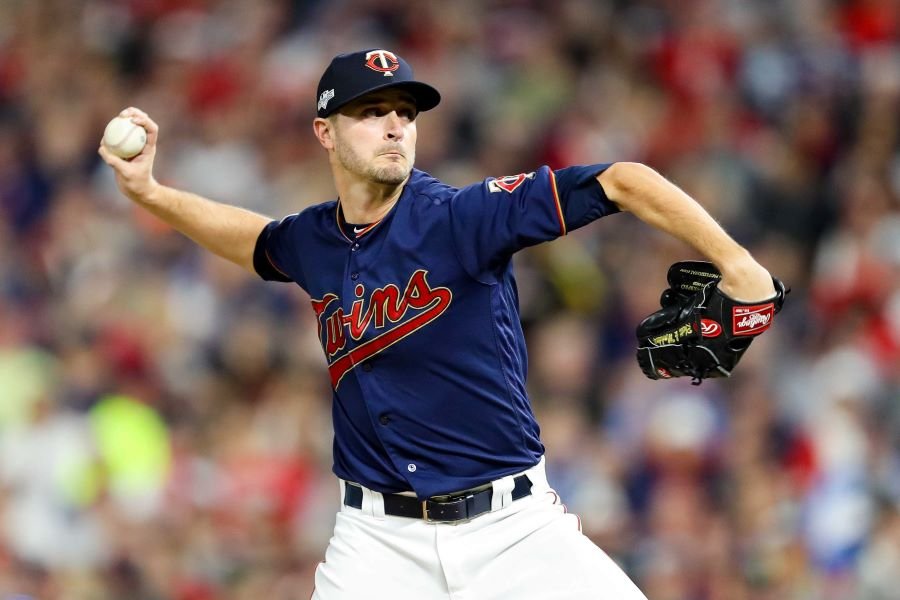 With a lens on 2022, we're judging these acquisitions in terms of immediate impact, so we'll rank them by the fWAR (Fangraphs Wins Above Replacement) in their first season after coming aboard. These are the seven names that stand out. 1. Michael Pineda, 2019 (2.6 fWAR) Signed as a free agent (2 years, $10M) This wasn't actually the first year after Pineda came aboard, because Minnesota signed him ahead of the 2018 season, knowing he'd miss most or all of it while rehabbing from Tommy John surgery. Once Big Mike was ready to get rolling in 2019, he was every bit the rock-solid mid-rotation starter they sought, posting a 4.01 ERA over 146 innings while leading the team to a 16-10 record in his starts. His PED suspension in September soured the overall season, especially because it prevented him from being able to make an impact in the playoffs (and led to Randy Dobnak starting Game 2). But all that aside, he was a key part of the team's success in 2019, and continued to provide value to the team after re-signing on another two-year deal, posting a 3.57 ERA between 2020 and '21. Takeaway: Patience is a virtue. The Twins were willing to commit money up-front and wait out Pineda's surgery rehab, and it has paid dividends for three years since. 2. Jake Odorizzi, 2018 (2.5 fWAR) Acquired from Tampa Bay in trade The Rays were looking to unload Odorizzi's salary ahead of the 2018 season. Finding a lack of demand in the market, they settled for a trade with Minnesota that brought back middling shortstop prospect Jermaine Palacios. It was a mystery to me why Tampa couldn't get more for Odorizzi, who posted solid numbers in 2017 and had two years of control remaining. Maybe it was the timing of the move, just before spring training. One could purport he fell into the Twins' laps, but alas, they made the move and no one else did. They were glad it was them. Odorizzi was once again solid in 2018, becoming a much-needed veteran fixture in a rotation that ended up getting nothing from Ervin Santana in the final year of his deal. (In fact, the condition of Santana's surgically-repaired finger when he showed up in camp was likely the primary driver of this move in the first place.) Of course, the real value in Odorizzi's acquisition came the following year, when he blossomed as an All-Star with 4.3 fWAR. Takeaway: If you're willing to take on salary from a small-market team, you can sometimes take advantage of weird desperation moves late in the offseason. 3. Kenta Maeda, 2020 (2.1 fWAR) Acquired from Los Angeles in trade Ranking Maeda third on this list doesn't do him justice. He is easily the most successful pitching acquisition by this front office. If you extrapolate his performance from the pandemic-shortened 2020 season into a 162-game sample, he'd have registered a 5.7 fWAR, which is Cy Young territory. (Accordingly, he finished runner-up in the AL Cy Young voting.) But to keep things consistent, we'll place him here, and it's fitting in a way, because he wasn't as much of a pure value-add as the two above. Whereas the additions of Pineda and Odorizzi cost the Twins only a bit of money and a dispensable minor-leaguer, acquiring Maeda required the organization to part with its top pitching prospect, Brusdar Graterol. Takeaway: Pay to play. The Twins' most impactful pitching acquisition during this regime has also required the greatest sacrifice. 4. Martin Perez, 2019 (1.9 fWAR) Signed as a free agent (1 year, $3.5 million) I know, I know. Many of you are rolling your eyes and scoffing at the notion of Perez as a "successful" acquisition. For what it's worth, I'd agree with you, and so would Baseball Reference's WAR calculation would agree with you (it had him at 0.1). For whatever reason, FanGraphs' version of the metric is charitable toward his 2019 season even though he posted a 5.12 ERA and 4.66 FIP, unraveling after a strong start. I will say this much: Perez took the ball every fifth day and did enough for an offense-driven club to go 17-12 behind him in 29 starts. Realistically that's probably the kind of thing we need to hope for from a Twins fourth or fifth starter next year. Moreover, while his poor results in 2019 were plain to see, Perez nevertheless found a new home in Boston the following offseason, and has made 48 appearances (34 starts) for the Red Sox over the past two years, not including his four appearances in the most recent ALCS (!). The Twins saw something in Perez and it's hard to say they were entirely wrong. Takeaway: This was an analytics play. The Twins were intrigued by Perez's late-season velocity jump in 2018, and by his experimentation with a cutter. They were onto something – his cutter held opponents to a .269 wOBA in 2019, during which he posted career-high strikeout and swing-and-miss rates. That just didn't end up being enough to offset his shortcomings. 5. Tyler Clippard, 2020 (0.8 fWAR) Signed as a free agent (1 year, $2.75 million) The last three names on this last will have the same caveat applied as Maeda: their performances came in a shortened season, so the cumulative WAR comparison is not apples to apples. Clippard's 0.8 fWAR would've been pretty decent for a regular full season (Tyler Duffey was worth 0.8 fWAR this year), but when projected to 162 games he'd have been at 2.2, which is like, prime Joe Nathan territory. Clippard did everything for this bullpen. He opened, he closed. He was effective against righties and lefties. He threw strikes, he limited hits, he kept the ball in the yard. Clippard was everything you could ever want from a free agent reliever signing, albeit in an abbreviated sample. Takeaway: The free agent relief market is volatile, but sometimes when you take an inexpensive flier on a veteran who's been consistently good for many years, it works out. 6. Rich Hill, 2020 (0.7 fWAR) Signed as a free agent (1 year, $3 million plus incentives) We can't fairly extrapolate Hill's 2020 season in quite the same way as we can the others. He was recovering from elbow surgery and wouldn't have been available until June or July even if the season started on time. The late start enabled him to join the rotation out of the gates, and he proved to be a quality asset at the back end, posting a 3.03 ERA in eight starts. Nothing special, but for such a low-cost investment, this is exactly what you hope to extract. Takeaway: Like with Pineda, the Twins were rewarded for their patience. They were willing to pay up-front and wait out an elbow rehab. Sometimes that type of willingness can be a differentiator for mid-market teams seeking impact pitching talent. 7. Matt Wisler, 2020 (0.6 fWAR) Claimed off waivers from Seattle Wisler was waived by Seattle after posting a 5.61 ERA in 2019, then the Twins snagged him and watched him put up a 1.07 ERA over 25 ⅓ innings in 2020. It's the kind of fix-up we were hoping to see frequently from this front office, and seemingly a recipe they tried to replicate in 2021 with pickups like Brandon Waddell, Ian Gibaut and Shaun Anderson – to little success. Takeaway: The Twins love to find a slider they feel they can unlock and unleash. In this case, they were right on the money. In others, maybe not so much. This speaks to the hazardous nature of gambling on fringy talent discarded by other organizations. ~~~ So what did we learn here? What kind of insight can we extract from looking at these seven acquisitions from the past four offseasons? A few things strike me. Patience reaps rewards. The Twins were willing to wait on Pineda and Hill. This played to their advantage. Looking at the current market, one could apply this thinking to someone like Kirby Yates (rehabbing from Tommy John surgery last March) or James Paxton (TJ surgery in April). Either one of these free agents could offer massive upside at a relatively low price. By the way, the patience factor also applies to the rhythm of the offseason itself, because this front office pulled off two of its best trades (Odorizzi and Maeda) in February. Rely on analytics to fill the fringes. Say what you will about Perez, but there was validity to the uptick detected in his arsenal. As a low-cost addition at the back of the rotation, he worked out fine. Wisler was a lower-tier bullpen cog, so his emergence was more of a luxury than a necessity, but it sure helped. So long as the Twins are making these kinds of bets in non-essential roles, I hope they'll keep making them. Go big or go home. While this front office has made several good pitching acquisitions, only one could be described as a true immediate slam dunk, and that's Maeda. The Twins needed an ace to slot in front of José Berríos – a monumentally tall task – and they managed to do it. The cost was a brilliant young arm in Graterol. We haven't seen this regime make such an aggressive bid for high-end starting pitching outside of that trade. The only starter they've signed to a multi-year deal is Pineda, which has turned out pretty well but was altogether low-stakes (in both cases). Their interest in Zack Wheeler was well known, and that obviously would've been a big hit if they could've made it happen. Will the Twins find a way to entice a top-tier target of their choosing this winter? The need has never been greater. Hopefully this front office can learn from what's worked – and what hasn't worked – during their first five years, and course-correct after a failed previous offseason. MORE FROM TWINS DAILY — Order the Offseason Handbook — Latest Twins coverage from our writers — Recent Twins discussion in our forums — Follow Twins Daily via Twitter, Facebook or email
 -
Actually this rule was never put into effect. I kind of doubt it will be.
-
I don't think anyone's actually suggesting the usage would be this rigid. Theoretically guys like Ryan and Ober will still go 5 innings frequently. There will also still be shorter-burst relievers like Alcala and Duffey for the late innings. Mostly the concept here is about shifting away from the idea that a SP has to go 5+ innings or it's a failure. Instead, you can plan around frequent short starts or piggyback situations. The way this plays out in practice would be fluid. But I think with a 14-man staff you can accommodate it.
-
The problem is that it's not always easy to determine which situations they're best suited for. Some pitchers spend a large portion of their careers being misused. There aren't many who've even been tested in a McHugh-type role so it's hard to say how they'll take it to it, which is why this is a bit experimental and risky. There's a big reason it's not THAT risky, though: For all their variations, one thing that is almost universally true for pitchers is that they;re better against hitters the first time facing them in a game compared to the second or third time.
-
Arbitration and baseball in general are moving away from valuing pitcher "wins" because we can all see they're a team-based stat -- not meaningful indicators of individual performance. Pitchers will go where they can make money and succeed. As the game evolves, teams will start paying more for roles that are deemed impactful. I could see these kinds of multi-inning/hybrid types earning more on average than the typical 1-inning setup man or scrap heap back-end starter (Shoemaker et al.) so it may become somewhat appealing for players. When the 2019 season ended, the Twins had Berrios penciled in for the 2020 season and that's it. Gibson, Pineda, and Odorizzi were all free agents.
-
It's developing a method to get effective pitching results in the interim while you wait for the prospect pipeline to start providing. Again, as I said earlier: I don't think it's fair to judge this regime on on the merits of its systemic pitching development yet. It took 5 years after Berrios was drafted to reach the majors and he was terrible his first year. This is Year 5 for the current front office. If nobody from the Winder, Duran, Canterino, Balazovic, Strotman, Woods Richardson etc group pans out you'll have a point.
-
A few people have made comments along these lines and I think it's on point. What I presented in the article is a vision for a more extreme version of this model, but I think the sweet spot might lie in the middle: commit 2-3 rotation spots to more traditional starters who can go 5-6 regularly, but use the last couple as sort of "extended bullpen games" on a regular basis. And this kind of plan can always stay flexible over the course of the season. Maybe some guys step up and show they can be counted on to get through the lineup 2-3 times. Maybe a prospect comes up with workhorse qualities. The problem is, with all the pitching talent in the Twins' system, I don't see a single guy who is realistically equipped to do that.
-
So you're telling me that taking pitchers and implementing changes to make them more effective does not qualify as "developing pitching." I'd love to hear your definition! Yes, it's about bringing young players up through your system but development is an ongoing focus throughout a player's career. When the Twins brought in Matt Wisler and turned him into a high-quality RP, that was a development success. When Cleveland traded for a no-name prospect named Kluber and made him a Cy Young winner, that was a development success. Tampa Bay has enjoyed a number of development successes with older & more established pitchers, and it's a big part of why they are successful. This front office was not brought in to sign $150M starters in free agency. They were brought in to think creatively, find opportunities, and get more out of players. That's the kind of thinking this article is framed around. They had basically one proven starter on their MLB roster going in to the 2019-2020 offseason. Worked out fine. (shrug) The reason they have zero starters going into this one is because they traded Jose Berrios for prospects at the deadline, making a short-term sacrifice for a perceived long-term gain. Agree or disagree with the move, I'm not sure how you could describe it as anything other than "forward thinking"?
-
This is a fair point, because Gant's definitely a perfect fit with the model we're discussing here, but I think bringing him back at the arb price was a nonstarter. Wouldn't shock me at all if the Twins end up re-signing him for like 1.5-2M.

