



Nick Nelson
-
Posts
8,372 -
Joined
-
Last visited
-
Days Won
56
Content Type
Profiles
News
Minnesota Twins Videos
2026 Minnesota Twins Top Prospects Ranking
2022 Minnesota Twins Draft Picks
Minnesota Twins Free Agent & Trade Rumors, Notes, & Tidbits
Guides & Resources
2023 Minnesota Twins Draft Picks
The Minnesota Twins Players Project
2024 Minnesota Twins Draft Picks
2025 Minnesota Twins Draft Pick Tracker
2026 Minnesota Twins Draft Tracker: Picks & Bonuses
Forums
Blogs
Events
Store
Downloads
Gallery
Everything posted by Nick Nelson
-
Image courtesy of Brad Penner-Imagn Images The Weekly Nutshell: The week opened on a positive note, with the Twins pulling off an impressive comeback win over Nolan McLean and the Mets. From there, it was all downhill. Minnesota dropped the next five straight, scoring two or fewer runs in four of the losses as the bullpen and defense repeatedly let them down. Any lingering good vibes from their surprising 8-1 hot streak were quickly erased by a counterbalancing 1-9 cold spell, and sadly the latest sample feels a lot more reflective of who this team is — for now, at least. On the bright side, we did get some previews of a more favorable future during this rough road trip, and hopefully there's more of that to come soon. Weekly Snapshot: Mon, 4/20 through Sun, 4/26 *** Record Last Week: 1-5 (Overall: 12-16) Run Differential Last Week: -12 (Overall: +0) Standing: 3rd Place in AL Central (2.5 GB) Latest Game Results Game 23 | MIN 5, NYM 3: Twins Break Through Against McLean, Top Spiraling Mets Twins bullpen: 4 IP, 0 H, 0 R, 6 K Game 24 | NYM 3, MIN 2: Mets End Skid Despite Strong Debuts from Prielipp, Rojas Prielipp: 4 IP, 4 H, 2 ER, 0 BB, 6 K Game 25 | NYM 10, MIN 8: Exciting Comeback Falls Short as Bullpen Erases Momentum Jeffers: Game-tying GS Game 26 | TB 6, MIN 2: Bradley Gives Up Four Home Runs in Return to Tropicana Field Bradley: 6.1 IP, 6 ER, 3 BB, 3 K, 4 HR Game 27 | TB 6, MIN 1: Familiar Story as Pitchers, Bats Struggle in Fourth Straight Loss Rogers: 0 IP, 2 H, 1 BB, 3 ER Game 28 | TB 4, MIN 2: Rays Complete Sweep in Series Where Twins Never Held Lead Woods Richardson: 4.1 IP, 8 H, 4 ER, 3 BB, 2 K IF YOU'D RATHER LISTEN TO THE WEEK IN REVIEW THAN READ IT, YOU CAN GET IT IN AUDIO FORM! FIND THE LATEST EPISODE ON OUR PODCAST PAGE, AS WELL AS ON APPLE AND SPOTIFY. SUBSCRIBE TO OUR CHANNELS SO YOU DON'T MISS OUT! NEWS & NOTES The week opened with a flurry of roster moves, including a couple of high-profile prospect promotions. On Tuesday, left-hander Kendry Rojas was called up from Triple-A, and a day later he was joined by fellow southpaw Connor Prielipp. Ranked eighth and fifth respectively on Twins Daily's top prospects list, these are the two top arms in the high minors for the Twins. Both pitchers debuted on Wednesday against the Mets. The exciting promotions came at a cost. Mick Abel, coming off back-to-back excellent starts, was placed on the injured list Monday with right elbow inflammation, which flared up during his latest bullpen session. Fortunately, an MRI showed no structural damage and the team is viewing it as a best-case scenario for the emerging young righty. Hopefully he won't be sidelined for too long, but every precaution should be taken with this hopeful rotation staple. With the Abel IL move opening up one spot on the pitching staff, Kody Funderburk's transfer to the paternity list (congrats!) opened the other, at least for a few days. Funderburk was reinstated on Friday, sending Rojas back to the minors, but Prielipp remains on the roster and in the rotation for the time being. Royce Lewis returned from the IL after the minimum 10 days, confirming that his knee sprain indeed proved to be very minor. Ryan Kreidler returned to Triple-A in (essentially) a corresponding action. I'd have rather seen James Outman shipped out personally, but for now the Twins are keen to avoid exposing him and his .115 batting average to waivers. A few other quick roster notes: The Twins claimed reliever Christian Roa off waivers from the Astros, designating first baseman Eric Wagaman for assignment to make room on the 40-man roster. Roa has a similar profile to Garrett Acton: 27-year-old righty who's barely played in the majors but has posted big strikeout numbers in Triple-A. Wagaman, acquired from the Marlins during the offseason, was basically a flop, missing out on the Opening Day roster and then posting a .538 OPS in Triple-A before being cut from the 40-man. Travis Adams, who's been out since spring due to an elbow issue, moved his rehab up to St. Paul on Wednesday and is in line to become a bullpen option very soon. He appeared twice for the Saints, allowing three earned runs with five strikeouts and a walk over 3 ⅔ innings. The Twins signed veteran reliever Luis García, a 39-year-old righty with more than 600 appearances in the majors, to a minor-league contact. He also could factor into the bullpen depth equation pretty quickly, given his experience. A final unfortunate note: outfielder Alan Roden suffered a torn labrum in his right shoulder, and will be sidelined for at least the next month. The hope is that he won't need surgery but as we're all aware, shoulder injuries are pesky and pernicious. It's a big downer for Roden after a thumb injury knocked him out down the stretch last year. HIGHLIGHTS While the Twins have flirted with competitiveness during the first month, this season was always going to be about getting a real glimpse of the future and ushering in the next wave of talent. That's why games like Wednesday's against the Mets are so invigorating, even if that one ultimately turned out to be a tough 3-2 loss. Prielipp was as advertised in his MLB debut, piling up whiffs with a power slide en route to six strikeouts with no walks over four innings. An exciting preview of things to come. Prielipp is going to be a force on this staff for some time as long as he can stay healthy. Rojas was not nearly as sharp when he made his own first MLB appearance, entering as a reliever later in the same game. He got through two scoreless frames but issued three walks with no strikeouts and labored a bit at times. That said, he was touching 98 with his fastball and got through the outing cleanly, so all in all it was far from a disastrous first impression. He was optioned back to Triple-A after one appearance but we'll surely see Rojas again soon. On offense, Austin Martin has been the clear standout and it's earning him more trust from his manager. This was best demonstrated on Friday when Martin found himself starting in right field and batting third against a right-handed starter in Drew Rasmussen. Martin still isn't quite starting every day, but he's moving well beyond the strict platoon role, and it's well deserved as he keeps getting on base in literally half of his plate appearances. Four hits and four walks in the past week leave Martin sitting with a .327/.500/.455 slash line, and he leads the team with 0.9 fWAR despite ranking eighth in plate appearances. He's also making far more of a defensive impact than we've seen in the past as he appears to grow comfortable and confident in the outfield. LOWLIGHTS There were some poor individual hitting and pitching performances over the course of the week, but what continues to really stick out as a negative for this team is the defense. Just excruciating to watch, night after night. Thomas Nestico (@TJStats) shared on Friday a list of the best and worst defenders in the major leagues, per Defensive Runs Saved. The Twins had three different players ranked as the least valuable fielder at his position: Ryan Jeffers at catcher, Brooks Lee at shortstop, Matt Wallner in right field. As a team the Twins have the third-worst defense in the majors by DRS. Jeffers is probably being underrated a little by defensive metrics that aren't fully accounting for the impact of his ABS challenging proficiency, and his bat is definitely adding value on the other side (he hit a big grand slam to briefly tie Thursday's game in the eighth), but the rough patches in his game have been evident. Earlier in Thursday's game he let a passed ball get by him in the second, costing Joe Ryan a strikeout and leading to three unearned runs scoring. Opposing baserunners are 15-for-19 on steals against Jeffers. He's been very good overall, but there are warts. The defensive metrics definitely check out on Lee, who is constantly letting grounders sneak past him at short. Statcast pegs his fielding range in the 3rd percentile. He was at least able to get his bat going to pull out of his latest slump, posting back-to-back three-hit games on Thursday and Friday. He's going to need to bring a lot more of that to be a useful player because he lacks the skills to be anything more than a liability at short. Wallner, at negative-5 DRS, is one of the worst overall defenders in all of baseball. He's getting terrible jumps in right field, his running speed has declined from last year, and his big arm hasn't yielded much value. Making matters worse is that Wallner also hasn't been able to find his groove at the plate. He's slashing .190/.281/.329 with a league-leading 36 strikeouts. He was 2-for-20 over his past seven games before sitting against a right-hander in the finale at Citi Field, which is perhaps a precursor to a more significant move if things stay as they are. Wallner does notably have an option remaining. Luke Keaschall doesn't quite make the cut as baseball's worst at his position, but he has not looked good at second base. Any hope that his arm strength would improve significantly as he distanced from elbow surgery hasn't really come to fruition. Keaschall's lackluster throwing ability — illustrated by a pattern of floating, fluttering, bouncing deliveries across the diamond — doesn't even meet the relatively low demands of second base. He's also been a complete mess at the plate, stranding 12 runners in Wednesday's and Thursday's losses alone, part of a 4-for-20 week that leaves his OPS hovering around .500. I'm cautiously optimistic that his offensive game will turn around, but I just don't see it working out for Keaschall in the infield, which is non-ideal for the Twins who are far deeper in the outfield. Rounding out the infield malaise is Lewis, who returned to the fold with a thump. At the plate he went 3-for-20 with six strikeouts and zero walks, and Lewis is tied for the worst Outs Above Average in the majors at negative-six. I'm pretty close to losing hope at this point. Lewis still sprinkles in the occasional reminder of his former prowess, including a home run and a nice defensive play down the third base line last week, but they are heavily outweighed by bafflingly inept play. It was entirely too easy to see this coming. The Twins were one of the worst defensive teams in baseball and did little to remedy that during the offseason. In fact, they actively worsened their state of affairs for the sake of saving money. They're paying Carlos Correa $10 million to play at an All-Star caliber level for another team — his 3 DRS and 2 OAA would both lead the Twins, as would his 1.0 fWAR through the first month of action. TRENDING STORYLINE How soon is too soon to take action on this rapidly unraveling ballclub? It seemed like their charmed 8-1 run was going to at least set them up to hang around the .500 mark even after regression inevitably set up, but the fall has been harder than anyone could've foreseen. Now they find themselves four games under, with no end to the losing in sight. What options are available to provide a jolt? Swapping Wallner out for someone like Emmanuel Rodriguez is the most straightforward lever to pull at the moment. Then again, Wallner is also one of the team's highest-upside bats and slumps are part of his game. Sending him to Triple-A at age 28 would be rough. Gabriel Gonzalez is a name to watch. He's batting just .202 for the Saints, suppressed by a .188 BABIP, but hit three homers this past week and has been seeing time at first base as the Twins seek to boost his defensive versatility. Kaelen Culpepper looms as a possible solution for the woes on the left side of the infield, but he probably needs to find more of a sustained groove before that's on the table — Culpepper ended the week in an 0-for-14 skid and his OPS is below .700. On the pitching side, Rojas should be back sooner than later, and I'd also like to see Prielipp stick around even after Abel recovers. He's clearly one of the staff's highest-caliber arms, and sending him back to the minors to waste bullets seems senseless at this point. Minnesota's optimal rotation probably includes Prielipp in favor of Simeon Woods Richardson, whose ERA inflated to 6.30 with a couple more ugly starts this past week, but that's not as straightforward since SWR is out of options. Would they consider a bullpen move if he keeps churning out clunker starts? A potentially relevant and related note here: Zebby Matthews delivered his finest start of the season on Sunday, striking out six over five shutout innings with just one hit and one walk allowed. After a brutal spring and start to the season at Triple-A, Matthews is maybe starting to round into form, with a 2.57 ERA and 16-to-2 K/BB ratio in 14 innings over his past three starts. LOOKING AHEAD The two clubs that faced off in the American League Championship Series last year are coming to Target Field in a jam-packed week that should hopefully feature some good weather and entertaining baseball. Prielipp and Ryan are both scheduled to start twice during the home stand. MONDAY, APRIL 27: MARINERS @ TWINS — RHP Luis Castillo v. LHP Connor Prielipp TUESDAY, APRIL 28: MARINERS @ TWINS — RHP Logan Gilbert v. RHP Joe Ryan WEDNESDAY, APRIL 29: MARINERS @ TWINS — RHP George Kirby v. RHP Taj Bradley THURSDAY, APRIL 30: BLUE JAYS @ TWINS — RHP Kevin Gausman v. RHP Bailey Ober FRIDAY, MAY 1: BLUE JAYS @ TWINS — RHP Dylan Cease v. RHP Simeon Woods Richardson SATURDAY, MAY 2: BLUE JAYS @ TWINS — LHP Patrick Corbin v. LHP Connor Prielipp SUNDAY, MAY 3: BLUE JAYS @ TWINS — LHP Eric Lauer v. RHP Joe Ryan View full article
- 27 replies
-
- 3
-

-

-

-
- austin martin
- connor prielipp
- (and 2 more)
-
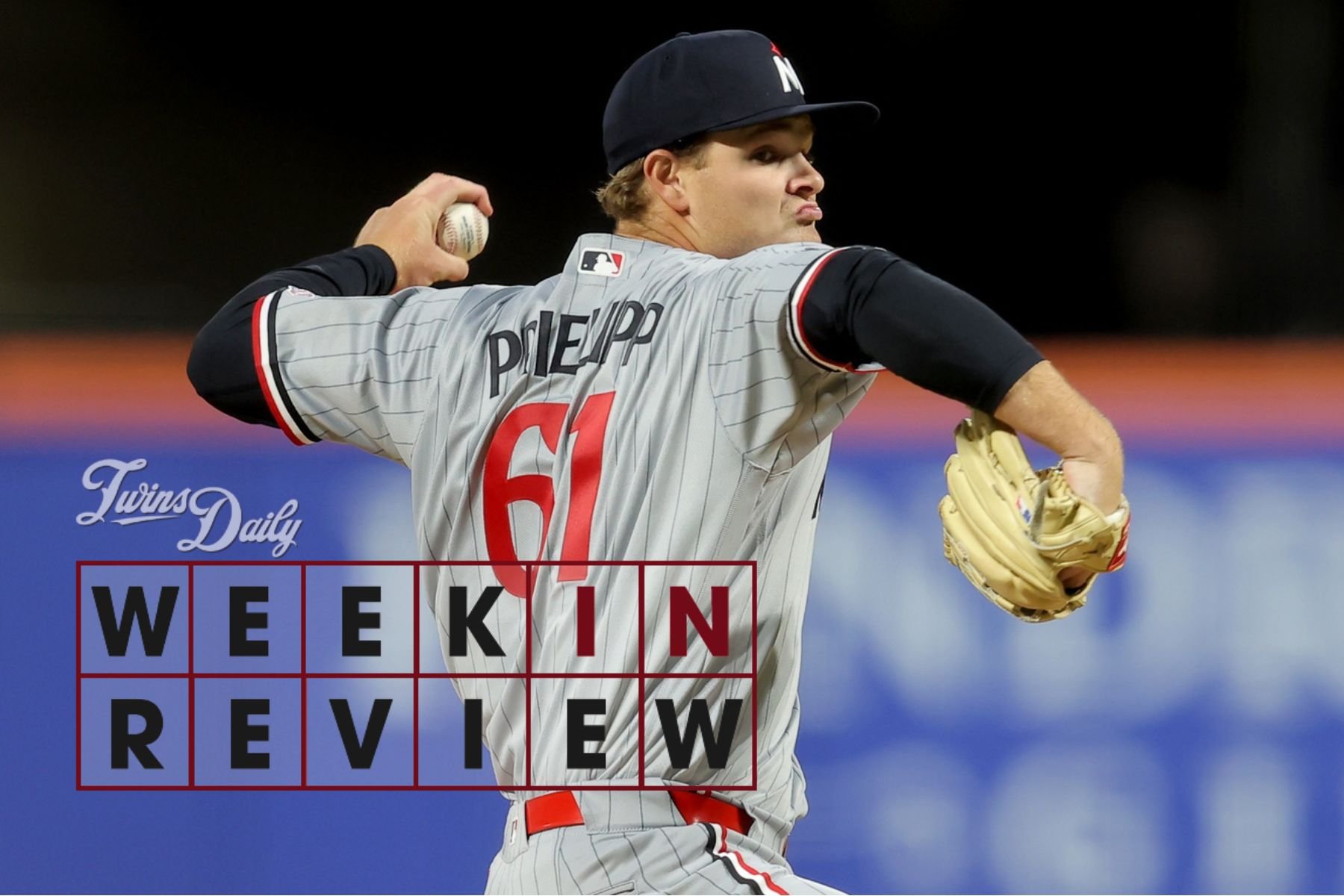 The Weekly Nutshell: The week opened on a positive note, with the Twins pulling off an impressive comeback win over Nolan McLean and the Mets. From there, it was all downhill. Minnesota dropped the next five straight, scoring two or fewer runs in four of the losses as the bullpen and defense repeatedly let them down. Any lingering good vibes from their surprising 8-1 hot streak were quickly erased by a counterbalancing 1-9 cold spell, and sadly the latest sample feels a lot more reflective of who this team is — for now, at least. On the bright side, we did get some previews of a more favorable future during this rough road trip, and hopefully there's more of that to come soon. Weekly Snapshot: Mon, 4/20 through Sun, 4/26 *** Record Last Week: 1-5 (Overall: 12-16) Run Differential Last Week: -12 (Overall: +0) Standing: 3rd Place in AL Central (2.5 GB) Latest Game Results Game 23 | MIN 5, NYM 3: Twins Break Through Against McLean, Top Spiraling Mets Twins bullpen: 4 IP, 0 H, 0 R, 6 K Game 24 | NYM 3, MIN 2: Mets End Skid Despite Strong Debuts from Prielipp, Rojas Prielipp: 4 IP, 4 H, 2 ER, 0 BB, 6 K Game 25 | NYM 10, MIN 8: Exciting Comeback Falls Short as Bullpen Erases Momentum Jeffers: Game-tying GS Game 26 | TB 6, MIN 2: Bradley Gives Up Four Home Runs in Return to Tropicana Field Bradley: 6.1 IP, 6 ER, 3 BB, 3 K, 4 HR Game 27 | TB 6, MIN 1: Familiar Story as Pitchers, Bats Struggle in Fourth Straight Loss Rogers: 0 IP, 2 H, 1 BB, 3 ER Game 28 | TB 4, MIN 2: Rays Complete Sweep in Series Where Twins Never Held Lead Woods Richardson: 4.1 IP, 8 H, 4 ER, 3 BB, 2 K IF YOU'D RATHER LISTEN TO THE WEEK IN REVIEW THAN READ IT, YOU CAN GET IT IN AUDIO FORM! FIND THE LATEST EPISODE ON OUR PODCAST PAGE, AS WELL AS ON APPLE AND SPOTIFY. SUBSCRIBE TO OUR CHANNELS SO YOU DON'T MISS OUT! NEWS & NOTES The week opened with a flurry of roster moves, including a couple of high-profile prospect promotions. On Tuesday, left-hander Kendry Rojas was called up from Triple-A, and a day later he was joined by fellow southpaw Connor Prielipp. Ranked eighth and fifth respectively on Twins Daily's top prospects list, these are the two top arms in the high minors for the Twins. Both pitchers debuted on Wednesday against the Mets. The exciting promotions came at a cost. Mick Abel, coming off back-to-back excellent starts, was placed on the injured list Monday with right elbow inflammation, which flared up during his latest bullpen session. Fortunately, an MRI showed no structural damage and the team is viewing it as a best-case scenario for the emerging young righty. Hopefully he won't be sidelined for too long, but every precaution should be taken with this hopeful rotation staple. With the Abel IL move opening up one spot on the pitching staff, Kody Funderburk's transfer to the paternity list (congrats!) opened the other, at least for a few days. Funderburk was reinstated on Friday, sending Rojas back to the minors, but Prielipp remains on the roster and in the rotation for the time being. Royce Lewis returned from the IL after the minimum 10 days, confirming that his knee sprain indeed proved to be very minor. Ryan Kreidler returned to Triple-A in (essentially) a corresponding action. I'd have rather seen James Outman shipped out personally, but for now the Twins are keen to avoid exposing him and his .115 batting average to waivers. A few other quick roster notes: The Twins claimed reliever Christian Roa off waivers from the Astros, designating first baseman Eric Wagaman for assignment to make room on the 40-man roster. Roa has a similar profile to Garrett Acton: 27-year-old righty who's barely played in the majors but has posted big strikeout numbers in Triple-A. Wagaman, acquired from the Marlins during the offseason, was basically a flop, missing out on the Opening Day roster and then posting a .538 OPS in Triple-A before being cut from the 40-man. Travis Adams, who's been out since spring due to an elbow issue, moved his rehab up to St. Paul on Wednesday and is in line to become a bullpen option very soon. He appeared twice for the Saints, allowing three earned runs with five strikeouts and a walk over 3 ⅔ innings. The Twins signed veteran reliever Luis García, a 39-year-old righty with more than 600 appearances in the majors, to a minor-league contact. He also could factor into the bullpen depth equation pretty quickly, given his experience. A final unfortunate note: outfielder Alan Roden suffered a torn labrum in his right shoulder, and will be sidelined for at least the next month. The hope is that he won't need surgery but as we're all aware, shoulder injuries are pesky and pernicious. It's a big downer for Roden after a thumb injury knocked him out down the stretch last year. HIGHLIGHTS While the Twins have flirted with competitiveness during the first month, this season was always going to be about getting a real glimpse of the future and ushering in the next wave of talent. That's why games like Wednesday's against the Mets are so invigorating, even if that one ultimately turned out to be a tough 3-2 loss. Prielipp was as advertised in his MLB debut, piling up whiffs with a power slide en route to six strikeouts with no walks over four innings. An exciting preview of things to come. Prielipp is going to be a force on this staff for some time as long as he can stay healthy. Rojas was not nearly as sharp when he made his own first MLB appearance, entering as a reliever later in the same game. He got through two scoreless frames but issued three walks with no strikeouts and labored a bit at times. That said, he was touching 98 with his fastball and got through the outing cleanly, so all in all it was far from a disastrous first impression. He was optioned back to Triple-A after one appearance but we'll surely see Rojas again soon. On offense, Austin Martin has been the clear standout and it's earning him more trust from his manager. This was best demonstrated on Friday when Martin found himself starting in right field and batting third against a right-handed starter in Drew Rasmussen. Martin still isn't quite starting every day, but he's moving well beyond the strict platoon role, and it's well deserved as he keeps getting on base in literally half of his plate appearances. Four hits and four walks in the past week leave Martin sitting with a .327/.500/.455 slash line, and he leads the team with 0.9 fWAR despite ranking eighth in plate appearances. He's also making far more of a defensive impact than we've seen in the past as he appears to grow comfortable and confident in the outfield. LOWLIGHTS There were some poor individual hitting and pitching performances over the course of the week, but what continues to really stick out as a negative for this team is the defense. Just excruciating to watch, night after night. Thomas Nestico (@TJStats) shared on Friday a list of the best and worst defenders in the major leagues, per Defensive Runs Saved. The Twins had three different players ranked as the least valuable fielder at his position: Ryan Jeffers at catcher, Brooks Lee at shortstop, Matt Wallner in right field. As a team the Twins have the third-worst defense in the majors by DRS. Jeffers is probably being underrated a little by defensive metrics that aren't fully accounting for the impact of his ABS challenging proficiency, and his bat is definitely adding value on the other side (he hit a big grand slam to briefly tie Thursday's game in the eighth), but the rough patches in his game have been evident. Earlier in Thursday's game he let a passed ball get by him in the second, costing Joe Ryan a strikeout and leading to three unearned runs scoring. Opposing baserunners are 15-for-19 on steals against Jeffers. He's been very good overall, but there are warts. The defensive metrics definitely check out on Lee, who is constantly letting grounders sneak past him at short. Statcast pegs his fielding range in the 3rd percentile. He was at least able to get his bat going to pull out of his latest slump, posting back-to-back three-hit games on Thursday and Friday. He's going to need to bring a lot more of that to be a useful player because he lacks the skills to be anything more than a liability at short. Wallner, at negative-5 DRS, is one of the worst overall defenders in all of baseball. He's getting terrible jumps in right field, his running speed has declined from last year, and his big arm hasn't yielded much value. Making matters worse is that Wallner also hasn't been able to find his groove at the plate. He's slashing .190/.281/.329 with a league-leading 36 strikeouts. He was 2-for-20 over his past seven games before sitting against a right-hander in the finale at Citi Field, which is perhaps a precursor to a more significant move if things stay as they are. Wallner does notably have an option remaining. Luke Keaschall doesn't quite make the cut as baseball's worst at his position, but he has not looked good at second base. Any hope that his arm strength would improve significantly as he distanced from elbow surgery hasn't really come to fruition. Keaschall's lackluster throwing ability — illustrated by a pattern of floating, fluttering, bouncing deliveries across the diamond — doesn't even meet the relatively low demands of second base. He's also been a complete mess at the plate, stranding 12 runners in Wednesday's and Thursday's losses alone, part of a 4-for-20 week that leaves his OPS hovering around .500. I'm cautiously optimistic that his offensive game will turn around, but I just don't see it working out for Keaschall in the infield, which is non-ideal for the Twins who are far deeper in the outfield. Rounding out the infield malaise is Lewis, who returned to the fold with a thump. At the plate he went 3-for-20 with six strikeouts and zero walks, and Lewis is tied for the worst Outs Above Average in the majors at negative-six. I'm pretty close to losing hope at this point. Lewis still sprinkles in the occasional reminder of his former prowess, including a home run and a nice defensive play down the third base line last week, but they are heavily outweighed by bafflingly inept play. It was entirely too easy to see this coming. The Twins were one of the worst defensive teams in baseball and did little to remedy that during the offseason. In fact, they actively worsened their state of affairs for the sake of saving money. They're paying Carlos Correa $10 million to play at an All-Star caliber level for another team — his 3 DRS and 2 OAA would both lead the Twins, as would his 1.0 fWAR through the first month of action. TRENDING STORYLINE How soon is too soon to take action on this rapidly unraveling ballclub? It seemed like their charmed 8-1 run was going to at least set them up to hang around the .500 mark even after regression inevitably set up, but the fall has been harder than anyone could've foreseen. Now they find themselves four games under, with no end to the losing in sight. What options are available to provide a jolt? Swapping Wallner out for someone like Emmanuel Rodriguez is the most straightforward lever to pull at the moment. Then again, Wallner is also one of the team's highest-upside bats and slumps are part of his game. Sending him to Triple-A at age 28 would be rough. Gabriel Gonzalez is a name to watch. He's batting just .202 for the Saints, suppressed by a .188 BABIP, but hit three homers this past week and has been seeing time at first base as the Twins seek to boost his defensive versatility. Kaelen Culpepper looms as a possible solution for the woes on the left side of the infield, but he probably needs to find more of a sustained groove before that's on the table — Culpepper ended the week in an 0-for-14 skid and his OPS is below .700. On the pitching side, Rojas should be back sooner than later, and I'd also like to see Prielipp stick around even after Abel recovers. He's clearly one of the staff's highest-caliber arms, and sending him back to the minors to waste bullets seems senseless at this point. Minnesota's optimal rotation probably includes Prielipp in favor of Simeon Woods Richardson, whose ERA inflated to 6.30 with a couple more ugly starts this past week, but that's not as straightforward since SWR is out of options. Would they consider a bullpen move if he keeps churning out clunker starts? A potentially relevant and related note here: Zebby Matthews delivered his finest start of the season on Sunday, striking out six over five shutout innings with just one hit and one walk allowed. After a brutal spring and start to the season at Triple-A, Matthews is maybe starting to round into form, with a 2.57 ERA and 16-to-2 K/BB ratio in 14 innings over his past three starts. LOOKING AHEAD The two clubs that faced off in the American League Championship Series last year are coming to Target Field in a jam-packed week that should hopefully feature some good weather and entertaining baseball. Prielipp and Ryan are both scheduled to start twice during the home stand. MONDAY, APRIL 27: MARINERS @ TWINS — RHP Luis Castillo v. LHP Connor Prielipp TUESDAY, APRIL 28: MARINERS @ TWINS — RHP Logan Gilbert v. RHP Joe Ryan WEDNESDAY, APRIL 29: MARINERS @ TWINS — RHP George Kirby v. RHP Taj Bradley THURSDAY, APRIL 30: BLUE JAYS @ TWINS — RHP Kevin Gausman v. RHP Bailey Ober FRIDAY, MAY 1: BLUE JAYS @ TWINS — RHP Dylan Cease v. RHP Simeon Woods Richardson SATURDAY, MAY 2: BLUE JAYS @ TWINS — LHP Patrick Corbin v. LHP Connor Prielipp SUNDAY, MAY 3: BLUE JAYS @ TWINS — LHP Eric Lauer v. RHP Joe Ryan
- 27 comments
-
- 11
-
-
-
- austin martin
- connor prielipp
- (and 2 more)
-
Image courtesy of Bruce Kluckhohn-Imagn Images The Weekly Nutshell: Coming off a 6-1 week, the Minnesota Twins kicked this one off with their most impressive showing of the season, clobbering Red Sox ace Garrett Crochet for 11 runs in a blowout win to keep the good times rolling. They followed on Tuesday by knocking around old friend Sonny Gray, notching their eighth win in nine games. That's where the charmed run finally came to a halt. The Twins dropped the finale against Boston and then got swept by Cincinnati with poor defense, unreliable relief pitching, and a lack of timely hitting all playing a role in the rapid cooldown. With four straight losses, Minnesota has dropped back to the .500 mark as they prepare to embark on a challenging East Coast road trip. Weekly Snapshot: Mon, 4/13 through Sun, 4/19 *** Record Last Week: 2-4 (Overall: 11-11) Run Differential Last Week: +4 (Overall: +12) Standing: 3rd Place in AL Central (1.5 GB) Latest Game Results Game 17 | MIN 13, BOS 6: Red-Hot Twins Obliterate Crochet, Launch 4 Homers Jeffers: 3-4, HR, 3 RBI Game 18 | MIN 6, BOS 0: Abel Spins a Gem and Buxton Goes Deep Twice Buxton: 4-5, 2 HR Game 19 | BOS 9, MIN 5: Woods Richardson Hit Hard as Sox Cool Off Twins Woods Richardson: 5 IP, 10 H, 6 ER, 3 BB, 3 K Game 20 | CIN 2, MIN 1: Slumping Keaschall Strands Seven in One-Run Loss Keaschall: 0-4, GIDP, 7 LOB Game 21 | CIN 5, MIN 4: Late Leads Slips Away as Bullpen and Defense Lapse Bradley: 6 IP, 2 ER, 2 BB, 5 K Game 22 | CIN 7, MIN 4: Bullpen, Defense Melt Down Again as Red Complete Sweep Morris, Acton: 3 IP, 6 R, 3 ER IF YOU'D RATHER LISTEN TO THE WEEK IN REVIEW THAN READ IT, YOU CAN GET IT IN AUDIO FORM! FIND THE LATEST EPISODE ON OUR PODCAST PAGE, AS WELL AS ON APPLE AND SPOTIFY. SUBSCRIBE TO OUR CHANNELS SO YOU DON'T MISS OUT! NEWS & NOTES When Royce Lewis went on the injured list with a low-grade knee sprain last weekend, the hope was that his absence would be a short one. Sure enough, he initiated a rehab stint with the Saints on Saturday, just seven days after landing on the IL. Lewis homered in his first at-bat with St. Paul and then homered again on Sunday, looking plenty healthy while starting at DH and then third base. He is eligible to return as soon as as Tuesday. The big question in my mind: when Lewis is activated, who exits the 26-man roster to make room? The straightforward answer is Ryan Kreidler, who was called up as Lewis' replacement, but I'd prefer to see Kreidler stay with James Outman shipped out. HIGHLIGHTS After shaking off a slow start, which was undoubtedly impacted by his WBC-related lack of regular spring playing time, Byron Buxton is finally locked in at the plate. It's a joy to behold. Buxton homered on Monday and then launched two more on Tuesday as part of an 8-for-21 week that raised his OPS by 171 points. Buxton also flew around the outfield and made some nice defensive plays. By the weekend, though, something did appear somewhat amiss for him. He started at DH on Saturday and twice in the game he was seemingly unable to run out grounders on close plays at full speed. Is he okay? Worth keeping an eye on. For what it's worth he was back in center field on Sunday and did appear to be moving fine. Aiding Buxton at the top of the order was Austin Martin, who continues to provide exactly what the Twins need from him as a table-setter. Martin notched five hits, including two doubles — one of which tied the game in the ninth on Sunday — and his first home run of the season. He also drew four more walks, keeping his on-base percentage up near the .500 mark, and crossed the plate five times. Martin leads the team in fWAR through 22 games. Kreidler's arrival as a (short-term?) roster addition has provided a defensive boost, as expected, but also a surprising boost to the offense. The 28-year-old utilityman homered just twice in 89 games for the Tigers over the past four years before homering twice in his first week with the Twins. His 438-foot nuke to the upper-deck against Crochet on Monday proved to be the final straw for the left-hander. Kreidler also doubled and drew four walks on the week. If you didn't know anything about Kreidler and his history, you might start to think, hey, maybe we've got something here. Sadly, we're witnessing a bit of an anomaly. Kreidler has been one of the worst hitters in the majors during his limited opportunities and it's unlikely he's suddenly figured it all out at the plate as opposed to running into a few mistake pitches with good swings. But Kreidler's defensive value is such that he really doesn't need to hit much at all to be a valuable roster piece. A week like this here and there would be more than enough. The rotation excelled once again, and has been a strength that few others can match. Entering play on Sunday, the Twins ranked third in the majors in fWAR from starting pitchers (behind Detroit and Seattle). Taj Bradley and Joe Ryan ranked fifth and seventh among individual starters, respectively, and both shined again in their latest outings. Ryan held the Reds to two runs (one earned) in six innings on Friday, striking out six and walking none with three hits allowed. He's allowed two or fewer earned runs in four of his five starts this year. On Saturday, Bradley also went six innings in a quality start, allowing two earned runs and handing a lead to the bullpen that disappeared in the late innings. Bradley's ERA sits at 1.63 and his FIP at 1.97. He has yet to allow a home run through five starts. Commendably, Bailey Ober is finding a way to get it done with sub-90 fastball velocity. He was nothing short of dominant on Sunday against the Reds, leaning heavily on the changeup and breaking ball to strike out 10 over 6 ⅓ innings with just one unearned run allowed. He's keeping hitters off balance and keeping the ball in the yard. Can he keep it going? Who knows, but we'll certainly take it for now. While Ryan, Bradley and Ober were good, Mick Abel stole the show with his brilliant performance on Tuesday night, striking out 10 with no walks over seven shutout innings in a win over the Red Sox. It was Abel's second start in a row holding the opposing lineup scoreless, and he's lowered his ERA from 11.05 to 3.98 in the process. Beyond encouraging. LOWLIGHTS For a second consecutive week, the ugliest pitching moments came with Simeon Woods Richardson and Anthony Banda on the mound. It was an otherwise mostly successful home stand for the staff, but these two in particular are struggling here in April. In Wednesday's series finale against Boston they combined to allow nine runs (eight earned) on 12 hits in six innings, negating any chance for a sweep over the Red Sox. Five days earlier, that same duo coughed up eight earned runs over 5 ⅓ in Toronto. The Twins are 0-4 in Woods Richardon's starts this year and Banda has quickly found himself on the lower end of the bullpen hierarchy with an ERA now sitting at 10.38. It's especially unfortunate because the Twins are lacking for relievers they can trust in key spots. The bullpen in general is getting a reality check. On Saturday three relievers combined to progressively blow a two-run lead in the late innings. On Sunday it happened much more rapidly, with Andrew Morris surrendering three runs in the ninth before three more scored (unearned) against Garrett Acton in the 10th. A sure win turned into a crushing loss with a rookie (pitching a second inning in his second career appearance) and recent waiver claim on the mound. Neither of these guys should be pitching in such a situation. Obviously. Then again, it's hard to have a whole lot more faith in the mediocre likes of Justin Topa, Eric Orze and Cole Sands, who each gave up a run on Saturday as the 4-2 lead built up behind Bradley turned into a 5-4 defeat. We wondered last week how long the patchwork bullpen could hold up and it turns out, not long at all. In fairness, the pitchers were not helped at all by the defense, which has been atrocious. The past week we saw two different plays where multiple errors were committed, and in both cases the spiraling misplays were highly damaging. Luke Keaschall — who is also struggling mightily at the plate — bobbled and threw away a double-play ball with the bases loaded on Wednesday, letting in two and setting up a three-run blast. On Sunday, things unraveled in the 10th on a grounder that Tristan Gray failed to stab and then Martin failed to cleanly pick up in the outfield. Sloppy, sloppy baseball. No different from what most of us expected, but painful to watch nonetheless, especially when these botched plays are proving more costly than anticipated with the offense and rotation both contributing strongly. Winnable games keep slipping away and early-season momentum is being dashed. I wish I could say I was confident that help was on the way. TRENDING STORYLINE Is there anything the Twins can do about their bullpen and defense? Right now the team is so bad in both areas that it's pretty much impossible to envision them as a consistent winner. Watching quality starts get wasted in every game against the Reds was brutal, and the type of thing that's going to quickly sour fans who were attempting buy into this team's surprising April energy. Derek Shelton needs better options in the bullpen. Asking Morris to throw the eighth and ninth with a two-run lead in his second MLB appearance, when he's barely been tested as a reliever, was ridiculous. Claiming Acton off waivers and throwing him into extreme high-leverage situations right off the bat, ridiculous. Unfortunately, they are no easy fixes. The collection of relief arms at Triple-A is uninspiring. Minor-league signing John Brebbia was pitching pretty well before giving up three home runs on Sunday. John Klein has a 7.36 ERA for the Saints and Marco Raya 9.64 as two of the only readily available 40-man roster options. Dan Altavilla, who almost made the Opening Day roster, has a 9.31 ERA and 12-to-11 K/BB ratio. I guess you could think about giving a shot to 35-year-old Matt Bowman, owner of a 1.54 ERA through seven appearances, but that's not a needle-mover. There's just little hope on the horizon for this relief corps, unless they try something drastic like converting Connor Prielipp or Zebby Matthews at the expense of their starting depth. UPDATE: Well how about that. They're calling up Kendry Rojas, fresh off the injured list, with Prielipp reportedly joining on the taxi squad for the road trip. More to come. The dreadful Twins defense feels just as hopeless. They have sub-par fielders in most of the starting positions, including a couple who rank among the league's worst. Matt Wallner has been the least valuable defender in baseball, per Defensive Runs Saved, and Brooks Lee has no business playing shortstop regularly in the big leagues with 6th percentile range and 19th percentile arm strength. Speaking of dismal arm strength, Keaschall is skipping routine throws to first from 70 feet away at second. Keeping Kreidler on the roster would be helpful, but only so much. No one else the Twins can call upon or swap in soon is going to be any kind of savior with the glove. This a fundamentally bad defensive team and we're probably going to have to live with it. We'll see how they intend to address this crippling weakness over time. There is going to be a lot of pressure on prospects like Emmanuel Rodriguez and Kaelen Culpepper to come up and be impact defenders in a hurry. LOOKING AHEAD The suddenly slumping Twins are off to New York to face a Mets team with the second-highest payroll and worst record in baseball. Can Minnesota get the vibes back on track by capitalizing on the rotten ones in Queens, or will this prove to be the matchup that gets the Mets right? From there it's off to Tampa for three games against the Rays, starting with a showdown between Bradley and the team that is probably second-guessing their decision to trade him at the moment. TUESDAY, APRIL 21: TWINS @ METS — RHP Mick Abel v. RHP Nolan McLean WEDNESDAY, APRIL 22: TWINS @ METS — RHP Simeon Woods Richardson v. RHP Clay Holmes THURSDAY, APRIL 23: TWINS @ METS — RHP Joe Ryan v. RHP Kodai Senga FRIDAY, APRIL 24: TWINS @ RAYS — RHP Taj Bradley v. RHP Drew Rasmussen SATURDAY, APRIL 25: TWINS @ RAYS — RHP Bailey Ober v. LHP Shane McClanahan SUNDAY, APRIL 26: TWINS @ RAYS — RHP Mick Abel v. TBD View full article
- 32 replies
-
- 2
-
-
- byron buxton
- ryan kreidler
- (and 2 more)
-
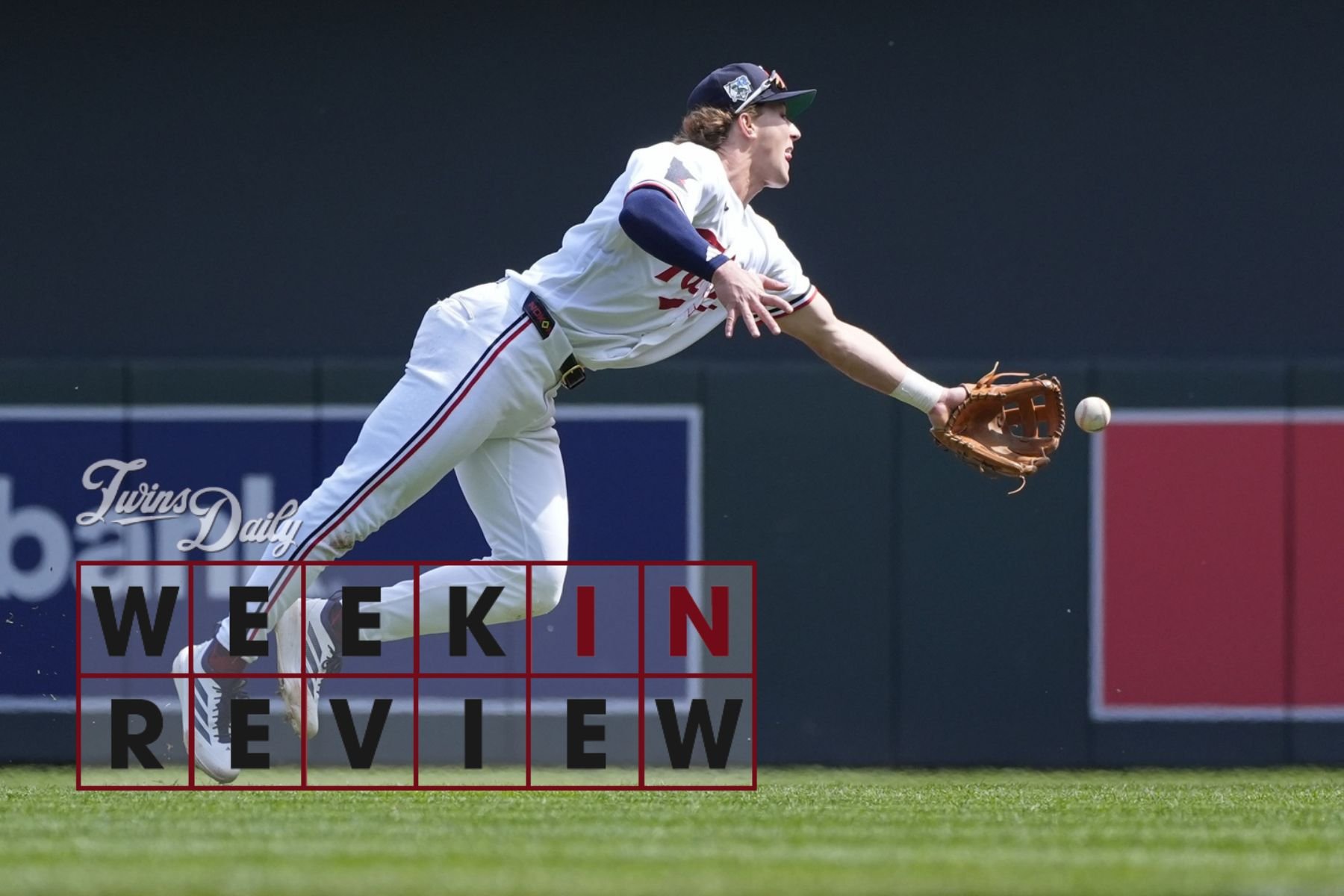 The Weekly Nutshell: Coming off a 6-1 week, the Minnesota Twins kicked this one off with their most impressive showing of the season, clobbering Red Sox ace Garrett Crochet for 11 runs in a blowout win to keep the good times rolling. They followed on Tuesday by knocking around old friend Sonny Gray, notching their eighth win in nine games. That's where the charmed run finally came to a halt. The Twins dropped the finale against Boston and then got swept by Cincinnati with poor defense, unreliable relief pitching, and a lack of timely hitting all playing a role in the rapid cooldown. With four straight losses, Minnesota has dropped back to the .500 mark as they prepare to embark on a challenging East Coast road trip. Weekly Snapshot: Mon, 4/13 through Sun, 4/19 *** Record Last Week: 2-4 (Overall: 11-11) Run Differential Last Week: +4 (Overall: +12) Standing: 3rd Place in AL Central (1.5 GB) Latest Game Results Game 17 | MIN 13, BOS 6: Red-Hot Twins Obliterate Crochet, Launch 4 Homers Jeffers: 3-4, HR, 3 RBI Game 18 | MIN 6, BOS 0: Abel Spins a Gem and Buxton Goes Deep Twice Buxton: 4-5, 2 HR Game 19 | BOS 9, MIN 5: Woods Richardson Hit Hard as Sox Cool Off Twins Woods Richardson: 5 IP, 10 H, 6 ER, 3 BB, 3 K Game 20 | CIN 2, MIN 1: Slumping Keaschall Strands Seven in One-Run Loss Keaschall: 0-4, GIDP, 7 LOB Game 21 | CIN 5, MIN 4: Late Leads Slips Away as Bullpen and Defense Lapse Bradley: 6 IP, 2 ER, 2 BB, 5 K Game 22 | CIN 7, MIN 4: Bullpen, Defense Melt Down Again as Red Complete Sweep Morris, Acton: 3 IP, 6 R, 3 ER IF YOU'D RATHER LISTEN TO THE WEEK IN REVIEW THAN READ IT, YOU CAN GET IT IN AUDIO FORM! FIND THE LATEST EPISODE ON OUR PODCAST PAGE, AS WELL AS ON APPLE AND SPOTIFY. SUBSCRIBE TO OUR CHANNELS SO YOU DON'T MISS OUT! NEWS & NOTES When Royce Lewis went on the injured list with a low-grade knee sprain last weekend, the hope was that his absence would be a short one. Sure enough, he initiated a rehab stint with the Saints on Saturday, just seven days after landing on the IL. Lewis homered in his first at-bat with St. Paul and then homered again on Sunday, looking plenty healthy while starting at DH and then third base. He is eligible to return as soon as as Tuesday. The big question in my mind: when Lewis is activated, who exits the 26-man roster to make room? The straightforward answer is Ryan Kreidler, who was called up as Lewis' replacement, but I'd prefer to see Kreidler stay with James Outman shipped out. HIGHLIGHTS After shaking off a slow start, which was undoubtedly impacted by his WBC-related lack of regular spring playing time, Byron Buxton is finally locked in at the plate. It's a joy to behold. Buxton homered on Monday and then launched two more on Tuesday as part of an 8-for-21 week that raised his OPS by 171 points. Buxton also flew around the outfield and made some nice defensive plays. By the weekend, though, something did appear somewhat amiss for him. He started at DH on Saturday and twice in the game he was seemingly unable to run out grounders on close plays at full speed. Is he okay? Worth keeping an eye on. For what it's worth he was back in center field on Sunday and did appear to be moving fine. Aiding Buxton at the top of the order was Austin Martin, who continues to provide exactly what the Twins need from him as a table-setter. Martin notched five hits, including two doubles — one of which tied the game in the ninth on Sunday — and his first home run of the season. He also drew four more walks, keeping his on-base percentage up near the .500 mark, and crossed the plate five times. Martin leads the team in fWAR through 22 games. Kreidler's arrival as a (short-term?) roster addition has provided a defensive boost, as expected, but also a surprising boost to the offense. The 28-year-old utilityman homered just twice in 89 games for the Tigers over the past four years before homering twice in his first week with the Twins. His 438-foot nuke to the upper-deck against Crochet on Monday proved to be the final straw for the left-hander. Kreidler also doubled and drew four walks on the week. If you didn't know anything about Kreidler and his history, you might start to think, hey, maybe we've got something here. Sadly, we're witnessing a bit of an anomaly. Kreidler has been one of the worst hitters in the majors during his limited opportunities and it's unlikely he's suddenly figured it all out at the plate as opposed to running into a few mistake pitches with good swings. But Kreidler's defensive value is such that he really doesn't need to hit much at all to be a valuable roster piece. A week like this here and there would be more than enough. The rotation excelled once again, and has been a strength that few others can match. Entering play on Sunday, the Twins ranked third in the majors in fWAR from starting pitchers (behind Detroit and Seattle). Taj Bradley and Joe Ryan ranked fifth and seventh among individual starters, respectively, and both shined again in their latest outings. Ryan held the Reds to two runs (one earned) in six innings on Friday, striking out six and walking none with three hits allowed. He's allowed two or fewer earned runs in four of his five starts this year. On Saturday, Bradley also went six innings in a quality start, allowing two earned runs and handing a lead to the bullpen that disappeared in the late innings. Bradley's ERA sits at 1.63 and his FIP at 1.97. He has yet to allow a home run through five starts. Commendably, Bailey Ober is finding a way to get it done with sub-90 fastball velocity. He was nothing short of dominant on Sunday against the Reds, leaning heavily on the changeup and breaking ball to strike out 10 over 6 ⅓ innings with just one unearned run allowed. He's keeping hitters off balance and keeping the ball in the yard. Can he keep it going? Who knows, but we'll certainly take it for now. While Ryan, Bradley and Ober were good, Mick Abel stole the show with his brilliant performance on Tuesday night, striking out 10 with no walks over seven shutout innings in a win over the Red Sox. It was Abel's second start in a row holding the opposing lineup scoreless, and he's lowered his ERA from 11.05 to 3.98 in the process. Beyond encouraging. LOWLIGHTS For a second consecutive week, the ugliest pitching moments came with Simeon Woods Richardson and Anthony Banda on the mound. It was an otherwise mostly successful home stand for the staff, but these two in particular are struggling here in April. In Wednesday's series finale against Boston they combined to allow nine runs (eight earned) on 12 hits in six innings, negating any chance for a sweep over the Red Sox. Five days earlier, that same duo coughed up eight earned runs over 5 ⅓ in Toronto. The Twins are 0-4 in Woods Richardon's starts this year and Banda has quickly found himself on the lower end of the bullpen hierarchy with an ERA now sitting at 10.38. It's especially unfortunate because the Twins are lacking for relievers they can trust in key spots. The bullpen in general is getting a reality check. On Saturday three relievers combined to progressively blow a two-run lead in the late innings. On Sunday it happened much more rapidly, with Andrew Morris surrendering three runs in the ninth before three more scored (unearned) against Garrett Acton in the 10th. A sure win turned into a crushing loss with a rookie (pitching a second inning in his second career appearance) and recent waiver claim on the mound. Neither of these guys should be pitching in such a situation. Obviously. Then again, it's hard to have a whole lot more faith in the mediocre likes of Justin Topa, Eric Orze and Cole Sands, who each gave up a run on Saturday as the 4-2 lead built up behind Bradley turned into a 5-4 defeat. We wondered last week how long the patchwork bullpen could hold up and it turns out, not long at all. In fairness, the pitchers were not helped at all by the defense, which has been atrocious. The past week we saw two different plays where multiple errors were committed, and in both cases the spiraling misplays were highly damaging. Luke Keaschall — who is also struggling mightily at the plate — bobbled and threw away a double-play ball with the bases loaded on Wednesday, letting in two and setting up a three-run blast. On Sunday, things unraveled in the 10th on a grounder that Tristan Gray failed to stab and then Martin failed to cleanly pick up in the outfield. Sloppy, sloppy baseball. No different from what most of us expected, but painful to watch nonetheless, especially when these botched plays are proving more costly than anticipated with the offense and rotation both contributing strongly. Winnable games keep slipping away and early-season momentum is being dashed. I wish I could say I was confident that help was on the way. TRENDING STORYLINE Is there anything the Twins can do about their bullpen and defense? Right now the team is so bad in both areas that it's pretty much impossible to envision them as a consistent winner. Watching quality starts get wasted in every game against the Reds was brutal, and the type of thing that's going to quickly sour fans who were attempting buy into this team's surprising April energy. Derek Shelton needs better options in the bullpen. Asking Morris to throw the eighth and ninth with a two-run lead in his second MLB appearance, when he's barely been tested as a reliever, was ridiculous. Claiming Acton off waivers and throwing him into extreme high-leverage situations right off the bat, ridiculous. Unfortunately, they are no easy fixes. The collection of relief arms at Triple-A is uninspiring. Minor-league signing John Brebbia was pitching pretty well before giving up three home runs on Sunday. John Klein has a 7.36 ERA for the Saints and Marco Raya 9.64 as two of the only readily available 40-man roster options. Dan Altavilla, who almost made the Opening Day roster, has a 9.31 ERA and 12-to-11 K/BB ratio. I guess you could think about giving a shot to 35-year-old Matt Bowman, owner of a 1.54 ERA through seven appearances, but that's not a needle-mover. There's just little hope on the horizon for this relief corps, unless they try something drastic like converting Connor Prielipp or Zebby Matthews at the expense of their starting depth. UPDATE: Well how about that. They're calling up Kendry Rojas, fresh off the injured list, with Prielipp reportedly joining on the taxi squad for the road trip. More to come. The dreadful Twins defense feels just as hopeless. They have sub-par fielders in most of the starting positions, including a couple who rank among the league's worst. Matt Wallner has been the least valuable defender in baseball, per Defensive Runs Saved, and Brooks Lee has no business playing shortstop regularly in the big leagues with 6th percentile range and 19th percentile arm strength. Speaking of dismal arm strength, Keaschall is skipping routine throws to first from 70 feet away at second. Keeping Kreidler on the roster would be helpful, but only so much. No one else the Twins can call upon or swap in soon is going to be any kind of savior with the glove. This a fundamentally bad defensive team and we're probably going to have to live with it. We'll see how they intend to address this crippling weakness over time. There is going to be a lot of pressure on prospects like Emmanuel Rodriguez and Kaelen Culpepper to come up and be impact defenders in a hurry. LOOKING AHEAD The suddenly slumping Twins are off to New York to face a Mets team with the second-highest payroll and worst record in baseball. Can Minnesota get the vibes back on track by capitalizing on the rotten ones in Queens, or will this prove to be the matchup that gets the Mets right? From there it's off to Tampa for three games against the Rays, starting with a showdown between Bradley and the team that is probably second-guessing their decision to trade him at the moment. TUESDAY, APRIL 21: TWINS @ METS — RHP Mick Abel v. RHP Nolan McLean WEDNESDAY, APRIL 22: TWINS @ METS — RHP Simeon Woods Richardson v. RHP Clay Holmes THURSDAY, APRIL 23: TWINS @ METS — RHP Joe Ryan v. RHP Kodai Senga FRIDAY, APRIL 24: TWINS @ RAYS — RHP Taj Bradley v. RHP Drew Rasmussen SATURDAY, APRIL 25: TWINS @ RAYS — RHP Bailey Ober v. LHP Shane McClanahan SUNDAY, APRIL 26: TWINS @ RAYS — RHP Mick Abel v. TBD
- 32 comments
-
- 2
-
-
-
- byron buxton
- ryan kreidler
- (and 2 more)
-
 What stats are we talking about that would be meaningful in the sample of MLB time he's played. Do you have defensive stats from the minors? Kreidler made several outstanding plays in center in spring training. People throughout the org have remarked about his defensive ability. I don't think they're infallible but I also trust my eyes and ears. And yeah, the ability to roster him as versatile defense-first depth with options is what makes him preferable to someone like Outman. No one's making him out to be a viable MLB starter.
 -
Come on. Are MLB front offices just idiots who can't evaluate defense as well as you? The Tigers were well aware of his inability to hit. Why did they roster him for part of the past 4 years, including out of camp last year? Why did he get grabbed quickly off waivers when DFA'ed? If what you're saying was accurate he'd be nowhere near a major-league roster. I'd love to see Trevor Larnach make a play like this in the outfield at some point in his entire life.
-
Image courtesy of Jesse Johnson-Imagn Images Amid a largely encouraging start for the Minnesota Twins, there's been no shortage of grousing and grumbling about James Outman, whose start has been anything but encouraging. Here in mid-April, the backup outfielder is still searching for his first hit of the season — through 20 plate appearances he's gone 0-for-18 with 10 strikeout and two walks. It's no isolated slump. Outman also struggled mightily down the stretch last year after being acquired in exchange for reliever Brock Stewart at the deadline. In total, he's batting .124 with a .485 OPS and 44% strikeout rate as a Twin. Turning 29 next month, he's not exactly a youthful upside play at this point. The promise Outman showed as a rookie back in 2023 has vanished from sight. It's understandable why fans are eager to see Outman ousted. The case for sticking with him rests on two factors: His role is extremely limited. Outman has started only four of Minnesota's first 17 games, and his 20 PAs rank 13th on the team. Nobody who's been on the roster since the start of the season has played less. You don't want to call up a legitimate player or prospect like Emmanuel Rodriguez, Walker Jenkins or even Alan Roden to languish on the bench and get a handful of ABs each week. His skills for that limited role are suitable. While he hasn't hit at all, Outman can play all three outfielder positions well and the Twins trust him in center. He also runs well and is 2-for-2 on stolen bases. That's really the primary function of his pure bench role, and he excels with these specific skills more than most alternatives. There's also the matter of Outman being out of options, meaning he'd have to be DFA'ed and put through waivers if removed from the active roster. It's likely the main reason he made the team out of camp, but it's becoming less and less of a consideration. Would Outman even be claimed by another team at this point? If he does, would it really be a big deal? The reality is that Kreidler offers everything that Outman does and then some. Need a glove-first (glove-only?) player you can count on all over the outfield, including center? Someone who can run reasonably well if needed as an in-game sub? A guy who you don't mind using sparingly as a bench piece? Check, check, check. Kreidler is a very good defender all over the field. He might not be quite as good as Outman in center, but he's close; keep in mind that Kreidler started there on Opening Day for the Tigers last year. Additionally he can back up every infield position, and he'll be an upgrade over the starter at each. Right now, the Twins lack any purpose-fit defensive replacements for their lackluster infield unit. The big knock on Kreidler is that he's been one of the worst hitters in baseball. His initial stint with the Twins, which has included two homers and four RBIs in his first three games, has been intriguing on this front, but it's too early to invest much belief in his offense on this basis. Dating back to 2024, Kreidler's .191 wOBA is sixth-worst among 593 MLB players with 100+ PA. Outman is only slightly better, with his .229 wOBA 22nd-worst. You're looking at two offensive non-factors, and one is bringing far more to the table as a versatile utilityman versus a player whose sole value is being able to handle center field. Royce Lewis is eligible to return from the injured list as soon as Monday, and is scheduled to scheduled to start a rehab stint on Saturday. He's in line to return at some point next week. Whenever Lewis is activated, the corresponding move should not be to send down Kreidler, who was brought up as his replacement, but rather Outman, whose ostensible value has been replaced by the Kreidler. View full article
-
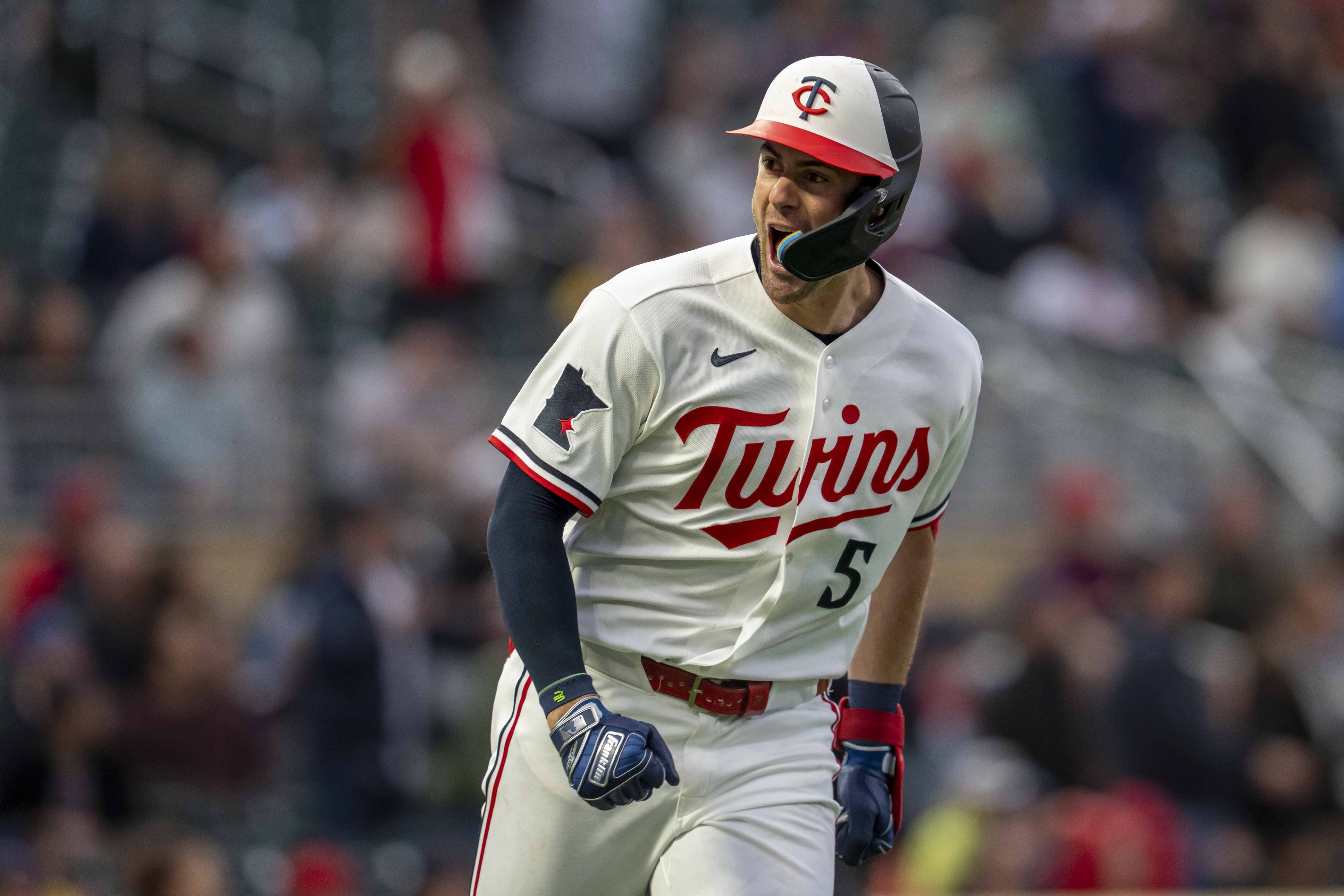 Amid a largely encouraging start for the Minnesota Twins, there's been no shortage of grousing and grumbling about James Outman, whose start has been anything but encouraging. Here in mid-April, the backup outfielder is still searching for his first hit of the season — through 20 plate appearances he's gone 0-for-18 with 10 strikeout and two walks. It's no isolated slump. Outman also struggled mightily down the stretch last year after being acquired in exchange for reliever Brock Stewart at the deadline. In total, he's batting .124 with a .485 OPS and 44% strikeout rate as a Twin. Turning 29 next month, he's not exactly a youthful upside play at this point. The promise Outman showed as a rookie back in 2023 has vanished from sight. It's understandable why fans are eager to see Outman ousted. The case for sticking with him rests on two factors: His role is extremely limited. Outman has started only four of Minnesota's first 17 games, and his 20 PAs rank 13th on the team. Nobody who's been on the roster since the start of the season has played less. You don't want to call up a legitimate player or prospect like Emmanuel Rodriguez, Walker Jenkins or even Alan Roden to languish on the bench and get a handful of ABs each week. His skills for that limited role are suitable. While he hasn't hit at all, Outman can play all three outfielder positions well and the Twins trust him in center. He also runs well and is 2-for-2 on stolen bases. That's really the primary function of his pure bench role, and he excels with these specific skills more than most alternatives. There's also the matter of Outman being out of options, meaning he'd have to be DFA'ed and put through waivers if removed from the active roster. It's likely the main reason he made the team out of camp, but it's becoming less and less of a consideration. Would Outman even be claimed by another team at this point? If he does, would it really be a big deal? The reality is that Kreidler offers everything that Outman does and then some. Need a glove-first (glove-only?) player you can count on all over the outfield, including center? Someone who can run reasonably well if needed as an in-game sub? A guy who you don't mind using sparingly as a bench piece? Check, check, check. Kreidler is a very good defender all over the field. He might not be quite as good as Outman in center, but he's close; keep in mind that Kreidler started there on Opening Day for the Tigers last year. Additionally he can back up every infield position, and he'll be an upgrade over the starter at each. Right now, the Twins lack any purpose-fit defensive replacements for their lackluster infield unit. The big knock on Kreidler is that he's been one of the worst hitters in baseball. His initial stint with the Twins, which has included two homers and four RBIs in his first three games, has been intriguing on this front, but it's too early to invest much belief in his offense on this basis. Dating back to 2024, Kreidler's .191 wOBA is sixth-worst among 593 MLB players with 100+ PA. Outman is only slightly better, with his .229 wOBA 22nd-worst. You're looking at two offensive non-factors, and one is bringing far more to the table as a versatile utilityman versus a player whose sole value is being able to handle center field. Royce Lewis is eligible to return from the injured list as soon as Monday, and is scheduled to scheduled to start a rehab stint on Saturday. He's in line to return at some point next week. Whenever Lewis is activated, the corresponding move should not be to send down Kreidler, who was brought up as his replacement, but rather Outman, whose ostensible value has been replaced by the Kreidler.
 -
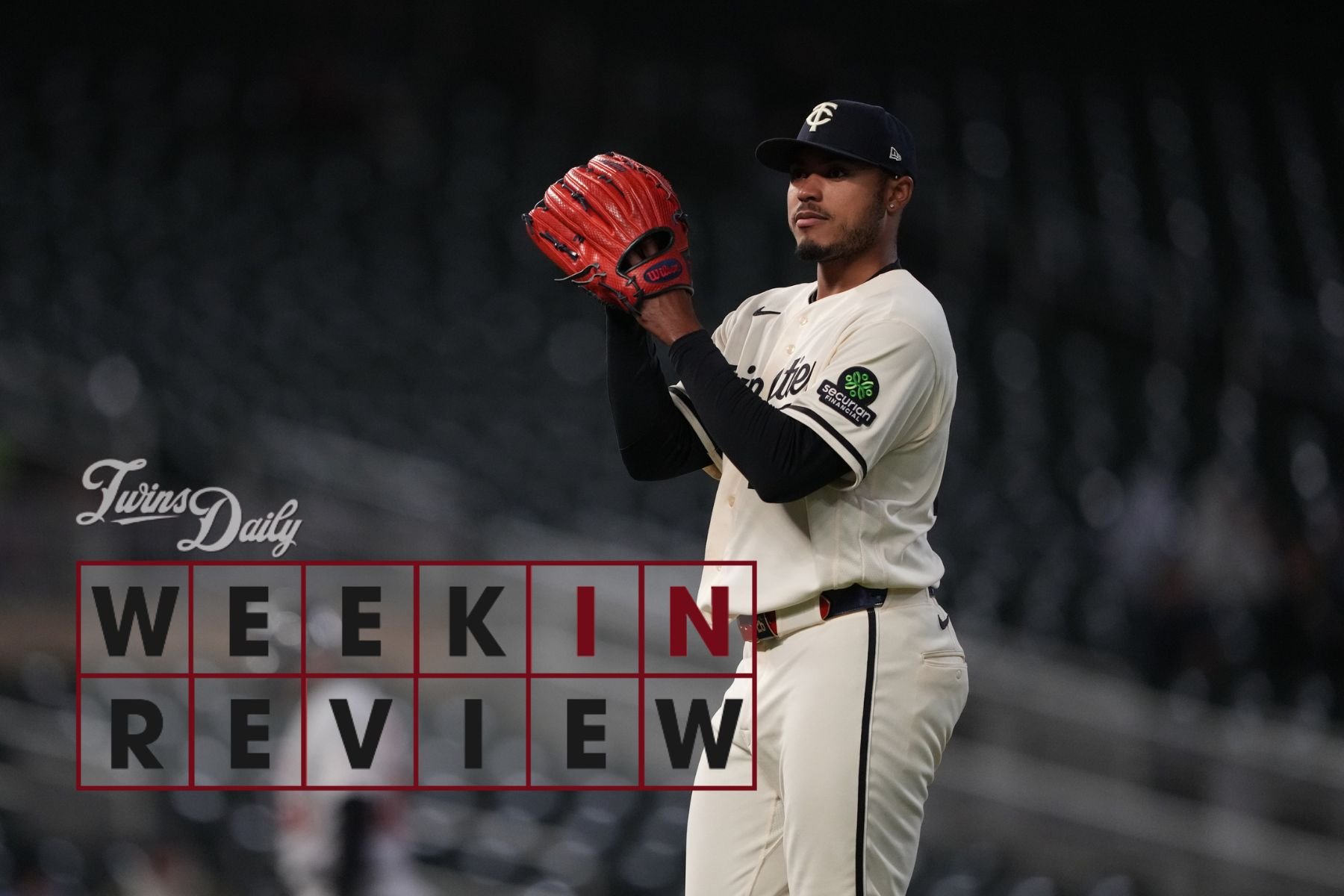 The Weekly Nutshell: Well okay then! Through their first nine games of the season, the Twins much looked like the team most expected to see, opening with a 3-6 record that placed them at the bottom of the Central division. Looking ahead to matchups against Detroit and Toronto, the Twins were going to need to step it up to avoid sinking deeper here in April. They did indeed step it up, and in a big way, seizing a rare four-game series sweep at home against the Tigers before heading to Toronto and taking two of three from the defending AL champs. The Twins hit for power, pitched well, and played much more cleanly than we saw in the first few series. They took advantage of lapses while their opponents struggled to do the same. Suddenly, they've won six of seven and eight of their past 11. Now we're having some fun. Weekly Snapshot: Mon, 4/6 through Sun, 4/12 *** Record Last Week: 6-1 (Overall: 9-7) Run Differential Last Week: +16 (Overall: +14) Standing: 2nd Place in AL Central (0.5 GB) Latest Game Results Game 10 | MIN 7, DET 3: Keaschall's First Homer Sparks Win in Frigid Temps Keaschall: 1-3, HR, 2 RBI, 2 BB Game 11 | MIN 4, DET 2: Bradley Outduels Skubal in Dominant Performance Bradley: 6.1 IP, 6 H, 1 R, 0 BB, 10 K Game 12 | MIN 8, DET 6: Twins Ambush Valdez, Hang On to Clinch Series Win Buxton: 3-4, BB Game 13 | MIN 3, DET 1: Abel's Strong Start, Lee's Clutch Hit Secure Sweep Abel: 6 IP, 4 H, 0 R, 6 K Game 14 | TOR 10, MIN 4: Wheels Come Off for Woods Richardson and Banda Woods Richardson: 4 IP, 6 H, 5 ER, 2 K Game 15 | MIN 7, TOR 4: Ryan Cruises and Larnach Delivers Three-Run Blast Ryan: 7 IP, 2 H, 2 ER, 5 K Game 16 | MIN 8, TOR 2: Twins Jump All Over Scherzer, Take Road Series in Rout Gray, Lee: 5 RBIs IF YOU'D RATHER LISTEN TO THE WEEK IN REVIEW THAN READ IT, YOU CAN GET IT IN AUDIO FORM! FIND THE LATEST EPISODE ON OUR PODCAST PAGE, AS WELL AS ON APPLE AND SPOTIFY. SUBSCRIBE TO OUR CHANNELS SO YOU DON'T MISS OUT! YOU CAN ALSO WATCH OUR LIVESTREAM WITH LOU HENNESY BELOW. NEWS & NOTES The Twins made their first IL moves since the season began on Saturday, placing third baseman Royce Lewis and reliever Cody Laweryson on the shelf. Utilityman Ryan Kreidler and right-hander Andrew Morris were called up from Triple-A as replacements. Lewis tweaked his knee on a swing in Thursday's game, later diagnosed as a sprain, while Laweryson is dealing with a forearm strain. Some fans expressed dismay to see Kreidler called up instead of, say, Kaelen Culpepper, but the reality is that Culpepper has only played about a dozen games at Triple-A. He's a very important prospect and his timeline should be dictated by development rather than the major-league team's needs, especially if those those needs are short-term in nature. That is hopefully the case for Lewis, who sounds likely to miss the minimum 10 days if things go to plan. Laweryson's timeline is less clear. Forearm strains are always concerning. The timing is tough because he was coming off a couple really strong appearances in the Detroit series, including his first career save on Monday. Morris, ranked by Twins Daily as the #12 prospect in the system, will provide length with the ability to pitch multiple innings. He did so in his MLB debut on Sunday, throwing two-innings of one-run ball while firing a fastball in the upper 90s. HIGHLIGHTS The Twins were failing to get anything done against left-handed starters ... up until they faced Tarik Skubal and Framber Valdez — the $50 million duo atop Detroit's rotation — and knocked them around for 12 earned runs in 9 ⅓ innings, defeating them both on the way to a stunning sweep over the Tigers. Some of Minnesota's righty bats finally came alive. Luke Keaschall hit his first homer of the season on Monday and added RBIs in the next two games. Byron Buxton broke out of his slump with a three-hit game on Wednesday, with Lewis also driving in a pair. Brooks Lee delivered a clutch go-ahead hit on Thursday, and channeled the momentum into two home runs and a two-run double in Toronto. He lifted his OPS from .417 at the start of the week to .694 by the end. A desperately needed awakening for Lee at the plate. There were plenty of good signs from the offense, which averaged 5.9 runs per game on the week and now ranks second in the American League in scoring. But the rotation led the way against Detroit, with Minnesota's four starters combining to allow just five earned runs on 18 hits in 23 innings (1.95 ERA), with zero homers. Joe Ryan and Bailey Ober were good, Mick Abel was very good, and Taj Bradley was once again great. Bradley continues to look better and better each time out, and was flat-out dominant on Tuesday, holding the Tigers to one run in 6 ⅓ innings with 10 strikeouts and zero walks. After outperforming one of the best pitchers in the game on Tuesday, Bradley followed up by outperforming one of the best pitchers of this generation on Sunday, picking up another win against Max Scherzer and the Blue Jays. Bradley battled major control issues in this one, walking four and throwing just 62 of 106 pitches for strikes. But in a way it was maybe his most impressive start yet, because he worked out of self-created jams and found the zone when he needed to. It was a great indicator of how far he's come. Minnesota's patchwork bullpen is getting it done for now. They held close leads in the Detroit series, with contributors emerging from every corner and a different reliever notching the save in each win. Laweryson got five big outs to close out Monday's game. Newcomer Garrett Acton picked up the win on Thursday, tossing two critical innings in relief of Abel to set up Lee's late-game heroics. Taylor Rogers, Eric Orze and Kody Fundeburk were all effective in their opportunities, and Derek Shelton seemed to be putting them in the right spots. I'm not sure how long this grab-bag relief corps will be able to sustain its performance, but you've got to commend them for what they've been able to get done thus far. A few other performances worth highlighting from an outstanding 6-1 week for the Twins: Ryan Jeffers was a run-producing machine, driving in seven across his four starts behind the plate while impacting games with his prolific and proficient pitch-challenging. He tallied three hits, including a homer, in the opener against Toronto, and is taking a lot of high-quality at-bats. Trevor Larnach hasn't had a ton of opportunity to play due to the frequency of left-handed opposing starters, but he's definitely taking advantage of his spots. He launched a big three-run homer off lefty Eric Lauer to break Saturday's game open, and on the season he has seven walks compared to four strikeouts, reflecting masterful control of the zone. Austin Martin is getting on base relentlessly, which is exactly what the Twins need him to do. He recorded five walks and four hits last week, boosting his batting average to .300 and his OBP to .500 in the young season, and his defense in the outfield has looked much-improved. On Friday he doubled for his first extra-base hit of the season; we'll take whatever glimpses of pop we can get. Finally, Josh Bell continues to anchor the lineup with consistently fantastic production. He started in the middle of the order for all seven games and went 8-for-24 with a double, a homer, and five RBIs. Bell has been all that was advertised and then some. LOWLIGHTS Simeon Woods Richardson pitched really well through his first two starts, but felt like a little bit of a ticking time bomb. His swing-and-miss rate was among the lowest in the league, and his stuff was grading out very poorly according to qualitative models. In Toronto, the bottom fell out. Staked an early lead on home runs from Jeffers and Lee, Woods Richardson was hit hard in a four-run fourth that erased the team's advantage. He was replaced by Anthony Banda, another guy plagued by quality-of-stuff issues — his fastball is down nearly three full MPH from last year. Banda was touched up for three earned runs in 1 ⅔ on Friday, after yielding four earned runs while recording just two outs against Detroit on Wednesday. His ERA sits at 9.39 through eight appearances. Maybe we're seeing why the Dodgers were willing to let him go. While many hitters are coming around and finding success at the plate, James Outman is not among them. He's still searching for his first hit of the season after going 0-for-9 with six strikeouts last week. Outman has been overmatched and doesn't really appear to have much of a chance up there. To some extent I can give him some lenience — he's playing somewhat rarely and it can be hard to find your timing or get into any groove with such sporadic opportunities. But that's the role. And while it's not a role that demands much offensively, the Twins need someone who can pose some kind of threat at the plate when he's in the lineup. Lou and I discussed some possible options and solutions in the livestream and podcast. TRENDING STORYLINE We'll see how the Twins handle the left side of their infield in the absence of Lewis. Kreidler and Tristan Gray have traded off starts based on matchups thus far, and that's probably a fair expectation going forward. I wondered if we might see Kreidler step in at shortstop with Lee sliding to third against lefties — probably a better defensive alignment — but so far Shelton has seen fit to keep Lee home at shortstop. Kreidler made a very slick play in his first start at the hot corner, showcasing what he brings to the table defensively. Depending on how long Lewis is out, this could be a great opportunity for Gray to get some playing time and show what he can do. He's always been bit of a fringy player who's struggled to get consistent playing time in the majors, but he's got a really intriguing power tool and we've already seen that on display. He hit another big three-run homer on Sunday and has driven in 11 runs through eight games played, helping key the surprising early success of this offense. Unfortunately, the nature of the upcoming schedule might make it hard for the lefty-swinging Gray to draw regular starts in the near future (see below), but with each eye-catching moment he's establishing himself as a legitimate top backup behind Lewis at third, which as we've seen is a pretty important role. LOOKING AHEAD The parade of left-handers continues, with four more the docket next week, starting with one of the game's best in Red Sox ace Garrett Crochet. The Twins seem to have turned a bit of a corner against southpaws this past week, so we'll see if they can channel that forward into their lefty-stacked matchups against Boston and Cincinnati at Target Field. MONDAY, APRIL 13: RED SOX @ TWINS — LHP Garrett Crochet v. RHP Bailey Ober TUESDAY, APRIL 14: RED SOX @ TWINS — RHP Sonny Gray v. RHP Mick Abel WEDNESDAY, APRIL 15: RED SOX @ TWINS — LHP Connelly Early v. RHP Simeon Woods Richardson FRIDAY, APRIL 17: REDS @ TWINS — LHP Brandon Williamson v. RHP Joe Ryan SATURDAY, APRIL 18: REDS @ TWINS — LHP Andrew Abbott v. RHP Taj Bradley SUNDAY, APRIL 19: REDS @ TWINS — RHP Brady Singer v. RHP Bailey Ober
 -
Image courtesy of Jordan Johnson-Imagn Images The Weekly Nutshell: Well okay then! Through their first nine games of the season, the Twins much looked like the team most expected to see, opening with a 3-6 record that placed them at the bottom of the Central division. Looking ahead to matchups against Detroit and Toronto, the Twins were going to need to step it up to avoid sinking deeper here in April. They did indeed step it up, and in a big way, seizing a rare four-game series sweep at home against the Tigers before heading to Toronto and taking two of three from the defending AL champs. The Twins hit for power, pitched well, and played much more cleanly than we saw in the first few series. They took advantage of lapses while their opponents struggled to do the same. Suddenly, they've won six of seven and eight of their past 11. Now we're having some fun. Weekly Snapshot: Mon, 4/6 through Sun, 4/12 *** Record Last Week: 6-1 (Overall: 9-7) Run Differential Last Week: +16 (Overall: +14) Standing: 2nd Place in AL Central (0.5 GB) Latest Game Results Game 10 | MIN 7, DET 3: Keaschall's First Homer Sparks Win in Frigid Temps Keaschall: 1-3, HR, 2 RBI, 2 BB Game 11 | MIN 4, DET 2: Bradley Outduels Skubal in Dominant Performance Bradley: 6.1 IP, 6 H, 1 R, 0 BB, 10 K Game 12 | MIN 8, DET 6: Twins Ambush Valdez, Hang On to Clinch Series Win Buxton: 3-4, BB Game 13 | MIN 3, DET 1: Abel's Strong Start, Lee's Clutch Hit Secure Sweep Abel: 6 IP, 4 H, 0 R, 6 K Game 14 | TOR 10, MIN 4: Wheels Come Off for Woods Richardson and Banda Woods Richardson: 4 IP, 6 H, 5 ER, 2 K Game 15 | MIN 7, TOR 4: Ryan Cruises and Larnach Delivers Three-Run Blast Ryan: 7 IP, 2 H, 2 ER, 5 K Game 16 | MIN 8, TOR 2: Twins Jump All Over Scherzer, Take Road Series in Rout Gray, Lee: 5 RBIs IF YOU'D RATHER LISTEN TO THE WEEK IN REVIEW THAN READ IT, YOU CAN GET IT IN AUDIO FORM! FIND THE LATEST EPISODE ON OUR PODCAST PAGE, AS WELL AS ON APPLE AND SPOTIFY. SUBSCRIBE TO OUR CHANNELS SO YOU DON'T MISS OUT! YOU CAN ALSO WATCH OUR LIVESTREAM WITH LOU HENNESY BELOW. NEWS & NOTES The Twins made their first IL moves since the season began on Saturday, placing third baseman Royce Lewis and reliever Cody Laweryson on the shelf. Utilityman Ryan Kreidler and right-hander Andrew Morris were called up from Triple-A as replacements. Lewis tweaked his knee on a swing in Thursday's game, later diagnosed as a sprain, while Laweryson is dealing with a forearm strain. Some fans expressed dismay to see Kreidler called up instead of, say, Kaelen Culpepper, but the reality is that Culpepper has only played about a dozen games at Triple-A. He's a very important prospect and his timeline should be dictated by development rather than the major-league team's needs, especially if those those needs are short-term in nature. That is hopefully the case for Lewis, who sounds likely to miss the minimum 10 days if things go to plan. Laweryson's timeline is less clear. Forearm strains are always concerning. The timing is tough because he was coming off a couple really strong appearances in the Detroit series, including his first career save on Monday. Morris, ranked by Twins Daily as the #12 prospect in the system, will provide length with the ability to pitch multiple innings. He did so in his MLB debut on Sunday, throwing two-innings of one-run ball while firing a fastball in the upper 90s. HIGHLIGHTS The Twins were failing to get anything done against left-handed starters ... up until they faced Tarik Skubal and Framber Valdez — the $50 million duo atop Detroit's rotation — and knocked them around for 12 earned runs in 9 ⅓ innings, defeating them both on the way to a stunning sweep over the Tigers. Some of Minnesota's righty bats finally came alive. Luke Keaschall hit his first homer of the season on Monday and added RBIs in the next two games. Byron Buxton broke out of his slump with a three-hit game on Wednesday, with Lewis also driving in a pair. Brooks Lee delivered a clutch go-ahead hit on Thursday, and channeled the momentum into two home runs and a two-run double in Toronto. He lifted his OPS from .417 at the start of the week to .694 by the end. A desperately needed awakening for Lee at the plate. There were plenty of good signs from the offense, which averaged 5.9 runs per game on the week and now ranks second in the American League in scoring. But the rotation led the way against Detroit, with Minnesota's four starters combining to allow just five earned runs on 18 hits in 23 innings (1.95 ERA), with zero homers. Joe Ryan and Bailey Ober were good, Mick Abel was very good, and Taj Bradley was once again great. Bradley continues to look better and better each time out, and was flat-out dominant on Tuesday, holding the Tigers to one run in 6 ⅓ innings with 10 strikeouts and zero walks. After outperforming one of the best pitchers in the game on Tuesday, Bradley followed up by outperforming one of the best pitchers of this generation on Sunday, picking up another win against Max Scherzer and the Blue Jays. Bradley battled major control issues in this one, walking four and throwing just 62 of 106 pitches for strikes. But in a way it was maybe his most impressive start yet, because he worked out of self-created jams and found the zone when he needed to. It was a great indicator of how far he's come. Minnesota's patchwork bullpen is getting it done for now. They held close leads in the Detroit series, with contributors emerging from every corner and a different reliever notching the save in each win. Laweryson got five big outs to close out Monday's game. Newcomer Garrett Acton picked up the win on Thursday, tossing two critical innings in relief of Abel to set up Lee's late-game heroics. Taylor Rogers, Eric Orze and Kody Fundeburk were all effective in their opportunities, and Derek Shelton seemed to be putting them in the right spots. I'm not sure how long this grab-bag relief corps will be able to sustain its performance, but you've got to commend them for what they've been able to get done thus far. A few other performances worth highlighting from an outstanding 6-1 week for the Twins: Ryan Jeffers was a run-producing machine, driving in seven across his four starts behind the plate while impacting games with his prolific and proficient pitch-challenging. He tallied three hits, including a homer, in the opener against Toronto, and is taking a lot of high-quality at-bats. Trevor Larnach hasn't had a ton of opportunity to play due to the frequency of left-handed opposing starters, but he's definitely taking advantage of his spots. He launched a big three-run homer off lefty Eric Lauer to break Saturday's game open, and on the season he has seven walks compared to four strikeouts, reflecting masterful control of the zone. Austin Martin is getting on base relentlessly, which is exactly what the Twins need him to do. He recorded five walks and four hits last week, boosting his batting average to .300 and his OBP to .500 in the young season, and his defense in the outfield has looked much-improved. On Friday he doubled for his first extra-base hit of the season; we'll take whatever glimpses of pop we can get. Finally, Josh Bell continues to anchor the lineup with consistently fantastic production. He started in the middle of the order for all seven games and went 8-for-24 with a double, a homer, and five RBIs. Bell has been all that was advertised and then some. LOWLIGHTS Simeon Woods Richardson pitched really well through his first two starts, but felt like a little bit of a ticking time bomb. His swing-and-miss rate was among the lowest in the league, and his stuff was grading out very poorly according to qualitative models. In Toronto, the bottom fell out. Staked an early lead on home runs from Jeffers and Lee, Woods Richardson was hit hard in a four-run fourth that erased the team's advantage. He was replaced by Anthony Banda, another guy plagued by quality-of-stuff issues — his fastball is down nearly three full MPH from last year. Banda was touched up for three earned runs in 1 ⅔ on Friday, after yielding four earned runs while recording just two outs against Detroit on Wednesday. His ERA sits at 9.39 through eight appearances. Maybe we're seeing why the Dodgers were willing to let him go. While many hitters are coming around and finding success at the plate, James Outman is not among them. He's still searching for his first hit of the season after going 0-for-9 with six strikeouts last week. Outman has been overmatched and doesn't really appear to have much of a chance up there. To some extent I can give him some lenience — he's playing somewhat rarely and it can be hard to find your timing or get into any groove with such sporadic opportunities. But that's the role. And while it's not a role that demands much offensively, the Twins need someone who can pose some kind of threat at the plate when he's in the lineup. Lou and I discussed some possible options and solutions in the livestream and podcast. TRENDING STORYLINE We'll see how the Twins handle the left side of their infield in the absence of Lewis. Kreidler and Tristan Gray have traded off starts based on matchups thus far, and that's probably a fair expectation going forward. I wondered if we might see Kreidler step in at shortstop with Lee sliding to third against lefties — probably a better defensive alignment — but so far Shelton has seen fit to keep Lee home at shortstop. Kreidler made a very slick play in his first start at the hot corner, showcasing what he brings to the table defensively. Depending on how long Lewis is out, this could be a great opportunity for Gray to get some playing time and show what he can do. He's always been bit of a fringy player who's struggled to get consistent playing time in the majors, but he's got a really intriguing power tool and we've already seen that on display. He hit another big three-run homer on Sunday and has driven in 11 runs through eight games played, helping key the surprising early success of this offense. Unfortunately, the nature of the upcoming schedule might make it hard for the lefty-swinging Gray to draw regular starts in the near future (see below), but with each eye-catching moment he's establishing himself as a legitimate top backup behind Lewis at third, which as we've seen is a pretty important role. LOOKING AHEAD The parade of left-handers continues, with four more the docket next week, starting with one of the game's best in Red Sox ace Garrett Crochet. The Twins seem to have turned a bit of a corner against southpaws this past week, so we'll see if they can channel that forward into their lefty-stacked matchups against Boston and Cincinnati at Target Field. MONDAY, APRIL 13: RED SOX @ TWINS — LHP Garrett Crochet v. RHP Bailey Ober TUESDAY, APRIL 14: RED SOX @ TWINS — RHP Sonny Gray v. RHP Mick Abel WEDNESDAY, APRIL 15: RED SOX @ TWINS — LHP Connelly Early v. RHP Simeon Woods Richardson FRIDAY, APRIL 17: REDS @ TWINS — LHP Brandon Williamson v. RHP Joe Ryan SATURDAY, APRIL 18: REDS @ TWINS — LHP Andrew Abbott v. RHP Taj Bradley SUNDAY, APRIL 19: REDS @ TWINS — RHP Brady Singer v. RHP Bailey Ober View full article
-
Thank you so much for the kinds words Chief! Loving these features.
-
Great comment. You put your finger on the main reason I was skeptical of the Jax trade: it felt hurried, and driven more by acquiescing to the player's preference than improving the team, with Jax requesting a trade at the last minute. The Duran trade, in contrast, felt much more intentional and strategic. The Twins said all along they wanted two top 100ish prospects and they got just that. Alas -- all's well that ends well. Keep it up Taj.
-
Taj Bradley Holds the Key to Converting Front Office Skeptics
Nick Nelson posted an article in Twins
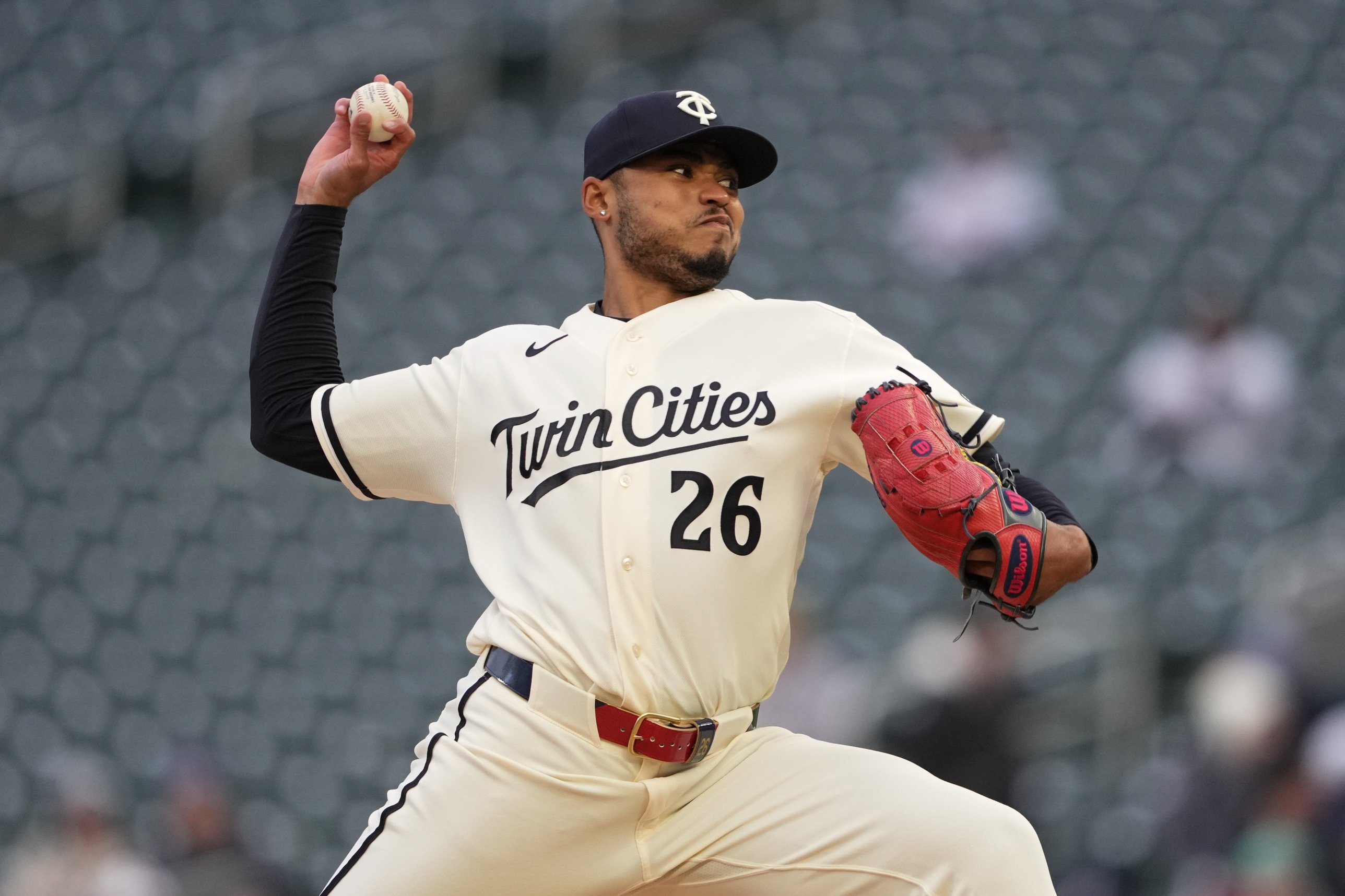 I was a major critic of what the Twins did at the trade deadline last year. I didn't have a problem with selling, but selling to the overwhelming extent the front office did felt, to me, overboard and ill advised. A commitment to losing beyond 2025. Minnesota offloaded quite a bit of talent with years of team service remaining, including some of their best players. But it wasn't even that. A big, bold shakeup amid another extremely disappointing season — that I can deal with. What my disapproval really boiled down to was a lack of trust in the people making these weighty decisions. When you're trading away as many well-liked, proven, controllable players as the Twins did last July, you have to be right more than you're wrong on the returns. Otherwise, you risk setting the franchise back significantly and further torpedoing fan morale. It felt hard at the time to have confidence in the Twins front office to make the right calls, and for their development apparatus to follow through on the vision. This was the same baseball ops department that built the iteration of the team that they were now dismantling — one that never really experienced much success outside of a single ALWC round victory in the playoffs. Notably, it was also a department that had consistently struggled to convert talented young players into sustainable MLB contributors, or to turn around wayward careers. This added extra room for skepticism around a strategy focused on acquiring players with clear ability but downward trend needles and clear performance issues. When the deadline additions almost uniformly flopped during their first impressions in the final months of 2025, it only fueled the fires of doubt. When Derek Falvey, chief architect of the sweeping shakeup, exited during the offseason, more fuel. I'm someone who desperately wants to buy into the direction of the Twins franchise. I want to believe in where they're going, because the alternative is (and has been) quite bleak. But there just haven't been enough success stories in the past couple years to instill a level of faith. Taj Bradley is fast turning into a case study capable of turning the tides. The trade that sent Griffin Jax to Tampa in exchange for Bradley was among my least favorite at last year's deadline. Sure, the logic was easy enough to see: relievers are generally more volatile and less valuable than starters; Bradley was bringing with him two extra years of team control, plus untapped upside. But Jax was a proven stud, and Bradley, for all his ability and prior accolades as an up-and-coming prospect, was far from that. He'd failed to find much MLB success under the vaunted Rays development engine (4.70 ERA in 354 IP) — he was even demoted to Triple-A prior to being acquired — and Bradley looked as bad as ever during a late six-start stint for Minnesota following the trade (6.61 ERA in 31.1 IP). This year has been a very different story. We're only two weeks in, but Bradley has been one of the league's best pitchers early on, posting a shiny 1.08 ERA with 22 strikeouts and four walks through 16 ⅔ innings. He's gotten better each time out, building upon an impressive spring by flashing improved command of an overpowering arsenal. I don't want to overreact to the small sample, but in his first three starts Bradley is looking like the actualized version of himself, which just never came to fruition in Tampa despite ample opportunity. It's been absolutely invigorating. Jax, meanwhile, is off to a horrible start with the Rays, having allowed five earned runs on seven hits and three walks through four innings. Whereas Bradley ranks fifth in the majors among qualified pitchers in fWAR (0.7), Jax ranks sixth-worst among relievers (-0.3), and second-to-last in WPA (-0.97). I'm definitely not going to overreact to this minuscule sample of five appearances, but it does lend some credence to the volatility of relief pitching while greatly enhancing the present optics of this trade for Minnesota. It’s still far too early to declare anything definitive, and one hot stretch from Bradley doesn’t suddenly validate an entire organizational reset. (He's had these before in short bursts.) But developments like this matter. They offer a tangible glimpse of what the front office envisioned when it made a series of aggressive, uncomfortable decisions last summer. If Bradley continues to look like this — not just effective, but transformed — it can become more than an individual success story. It's a proof of concept. If he does it while Jax continues to scuffle, it will quickly start looking like one of the better trades the Twins have made. There are still plenty of moves from that deadline that need time to play out — Mick Abel, Eduardo Tait, Alan Roden, Kendry Rojas among them — and the ultimate judgment on this front office will depend on the full body of work. But it’s a lot easier to buy into the process when you can point to a clear, early win. For a group that has struggled to earn the benefit of the doubt, Bradley’s emergence can be a meaningful step toward restoring belief that they might actually know what they’re doing. For a team that is direly lacking faith from its fan base, these kinds of wins are more important than any on the field right now.
 -
Image courtesy of Jordan Johnson-Imagn Images I was a major critic of what the Twins did at the trade deadline last year. I didn't have a problem with selling, but selling to the overwhelming extent the front office did felt, to me, overboard and ill advised. A commitment to losing beyond 2025. Minnesota offloaded quite a bit of talent with years of team service remaining, including some of their best players. But it wasn't even that. A big, bold shakeup amid another extremely disappointing season — that I can deal with. What my disapproval really boiled down to was a lack of trust in the people making these weighty decisions. When you're trading away as many well-liked, proven, controllable players as the Twins did last July, you have to be right more than you're wrong on the returns. Otherwise, you risk setting the franchise back significantly and further torpedoing fan morale. It felt hard at the time to have confidence in the Twins front office to make the right calls, and for their development apparatus to follow through on the vision. This was the same baseball ops department that built the iteration of the team that they were now dismantling — one that never really experienced much success outside of a single ALWC round victory in the playoffs. Notably, it was also a department that had consistently struggled to convert talented young players into sustainable MLB contributors, or to turn around wayward careers. This added extra room for skepticism around a strategy focused on acquiring players with clear ability but downward trend needles and clear performance issues. When the deadline additions almost uniformly flopped during their first impressions in the final months of 2025, it only fueled the fires of doubt. When Derek Falvey, chief architect of the sweeping shakeup, exited during the offseason, more fuel. I'm someone who desperately wants to buy into the direction of the Twins franchise. I want to believe in where they're going, because the alternative is (and has been) quite bleak. But there just haven't been enough success stories in the past couple years to instill a level of faith. Taj Bradley is fast turning into a case study capable of turning the tides. The trade that sent Griffin Jax to Tampa in exchange for Bradley was among my least favorite at last year's deadline. Sure, the logic was easy enough to see: relievers are generally more volatile and less valuable than starters; Bradley was bringing with him two extra years of team control, plus untapped upside. But Jax was a proven stud, and Bradley, for all his ability and prior accolades as an up-and-coming prospect, was far from that. He'd failed to find much MLB success under the vaunted Rays development engine (4.70 ERA in 354 IP) — he was even demoted to Triple-A prior to being acquired — and Bradley looked as bad as ever during a late six-start stint for Minnesota following the trade (6.61 ERA in 31.1 IP). This year has been a very different story. We're only two weeks in, but Bradley has been one of the league's best pitchers early on, posting a shiny 1.08 ERA with 22 strikeouts and four walks through 16 ⅔ innings. He's gotten better each time out, building upon an impressive spring by flashing improved command of an overpowering arsenal. I don't want to overreact to the small sample, but in his first three starts Bradley is looking like the actualized version of himself, which just never came to fruition in Tampa despite ample opportunity. It's been absolutely invigorating. Jax, meanwhile, is off to a horrible start with the Rays, having allowed five earned runs on seven hits and three walks through four innings. Whereas Bradley ranks fifth in the majors among qualified pitchers in fWAR (0.7), Jax ranks sixth-worst among relievers (-0.3), and second-to-last in WPA (-0.97). I'm definitely not going to overreact to this minuscule sample of five appearances, but it does lend some credence to the volatility of relief pitching while greatly enhancing the present optics of this trade for Minnesota. It’s still far too early to declare anything definitive, and one hot stretch from Bradley doesn’t suddenly validate an entire organizational reset. (He's had these before in short bursts.) But developments like this matter. They offer a tangible glimpse of what the front office envisioned when it made a series of aggressive, uncomfortable decisions last summer. If Bradley continues to look like this — not just effective, but transformed — it can become more than an individual success story. It's a proof of concept. If he does it while Jax continues to scuffle, it will quickly start looking like one of the better trades the Twins have made. There are still plenty of moves from that deadline that need time to play out — Mick Abel, Eduardo Tait, Alan Roden, Kendry Rojas among them — and the ultimate judgment on this front office will depend on the full body of work. But it’s a lot easier to buy into the process when you can point to a clear, early win. For a group that has struggled to earn the benefit of the doubt, Bradley’s emergence can be a meaningful step toward restoring belief that they might actually know what they’re doing. For a team that is direly lacking faith from its fan base, these kinds of wins are more important than any on the field right now. View full article
-
Image courtesy of Jay Biggerstaff-Imagn Images The Weekly Nutshell: In their first full week of the 2026 season, the Twins dropped four of six, and they've now lost all three series they've played. Both in Kansas City and at home, games were played under cold, wet conditions that contributed to sloppy play, but the Twins struggled far more than their opponents to overcome the inclement weather. Sparse crowds at Target Field over the opening weekend were a clear indicator of what we already knew: fan morale is direly low and this team is having a hard time drawing interest. Unless their offense can start to show some signs of life, it's only likely to get worse. Weekly Snapshot: Mon, 3/30 through Sun, 4/5 *** Record Last Week: 2-4 (Overall: 3-6) Run Differential Last Week: -2 (Overall: -2) Standing: 5th Place in AL Central (2.5 GB) Latest Game Results Game 4 | KC 3, MIN 1: Offense Once Again Goes Silent Against Lefty Starter Buxton, Keaschall: 0-7 Game 5 | KC 13, MIN 9: Twins Lose Control in Rain-Soaked Loss at Kauffman Twins pitchers: 15 H, 5 BB, 2 HBP, 2 HR allowed Game 6 | MIN 5, KC 1: Sweep Avoided Behind Strong Outing From Bradley Bradley: 6 IP, 0 ER, 3 K Game 7 | MIN 10, TB 4: Late Home Runs Seal Victory in Home Opener Gray: 1-2, BB, HR, 5 RBI Game 8 | TB 7, MIN 1: Abel Struggles Again as Lineup Gets Shut Down by Another LHP Abel: 4 IP, 6 H, 3 BB, 5 ER Game 9 | TB 4, MIN 1 (10): Pitching Staff Eventually Buckles in Extras as Offense Flops Woods Richardson: 6.2 IP, 1 ER, 4 K NEWS & NOTES The relief pitching carousel has begun to spin. Expect it to continue all summer long. As they often do, the Twins traded for a recently DFA'ed reliever, jumping the waiver line to acquire right-hander Garrett Acton from Miami in exchange for minor-leaguer Logan Whitaker. David Festa was moved to the 60-day injured list to make room on the 40-man, confirming that he's essentially out until at least June, which is a bummer. The Twins wasted little time getting Acton onto the active roster, swapping him for Zak Kent on Sunday. Kent heads to Triple-A after tossing two shutout innings in Saturday's loss. Acton, 27, has allowed eight earned runs and three homers in 6 ⅔ MLB innings, but has big strikeout numbers in the minors. Probably the type of arm worth taking a look at in a season like this. Presumably he'll step into Kent's vacated role as a low-leverage mop-up type who can provide some length if needed. (And will likely find himself on the carousel soon enough.) HIGHLIGHTS Not many hitters in the Twins lineup are getting the job done, but Josh Bell has been an early exception. He's looking very much like the guy who excelled in the second half with the Nats last year, and was a rare ignitor for the offense this past week, clubbing two homers and a double while driving in six. Bell entered play on Sunday tied for the league lead with nine runs scored. Tristan Gray also supplied some power and run production, taking advantage of his opportunity to start at short in the home opener (due to Brooks Lee's illness) by sealing the game in the eighth with a grand slam. Gray has made only 18 plate appearances but he's already got eight RBIs to lead the team. Taj Bradley look another promising step in his second start of the season, cruising through six innings of shutout ball on Thursday to help salvage a win in KC. He wasn't quite flinging the same level of swing-and-miss filth as he did in Baltimore, but Bradley looked plenty good and reasonably efficient, walking only one while getting through six on 100 pitches. He's allowed one through through 10 ⅓ innings in two starts. On Sunday, Simeon Woods Richardson delivered the deepest start of the season for Minnesota thus far, holding Tampa to one run over 6 ⅔ frames in a game where he unfortunately received no run support. In his last seven starts dating back to September, Woods Richardson has a 2.33 ERA and 42-to-12 K/BB ratio in 38 ⅔ innings. LOWLIGHTS New manager, new hitting coach, same old maddeningly ineffective offense. The Twins were held to a single run in three of their six games last week, and naturally lost all three. In Sunday's finale against the Rays, with a chance to take their first series behind a stellar outing from Woods Richardson, the Twins couldn't get much of anything going, producing just three hits and two walks in 10 innings. A day earlier, Steven Matz became the latest left-handed starter to stymy the Minnesota lineup, breezing through six innings with two hits allowed. As a team the Twins are batting .186 with a .619 OPS against lefty starting pitchers. Derek Shelton is doing his best to stack up righties for favorable matchups, but no one's been capable of doing anything with them. The biggest problem at the moment is that the Twins just aren't getting anything from their No. 2 and 3 hitters. Luke Keaschall has been getting some singles, but not showing any power nor much patience. He's got just two walks and one extra-base hit through 39 plate appearances. Byron Buxton celebrated surpassing 10 years of major-league service, but did so amidst a deep slump at the plate. He went 0-for-18 on the week with six strikeouts and no walks, though he thankfully evaded an injury scare on an HBP that sent him walking straight into the clubhouse. Ultimately I'm not overly concerned about either of those two, although Keaschall's slow start does raise an eyebrow following the quiet finish last year. The rest of the lineup is doing nothing to pick them up or inspire confidence generally. Austin Martin is drawing some walks, but he went 3-for-13 last week and is still looking for his first extra-base hit. Matt Wallner popped three solo homers but was otherwise 2-for-23 with 12 strikeouts and zero walks. Royce Lewis has been similarly all-or-nothing — he's got four extra-base hits but zero singles and a .167 average through 29 PA. Ryan Jeffers was 3-for-16 and still hasn't driven in a run this year. Kody Clemens keeps getting looks in the leadoff spot despite a .150 average and .261 OBP. Lee continues to be a complete non-factor with the bat, slashing .167/.250/.167 through seven games. He's looked bad enough that the Twins have to be starting to weigh their options; there's no reason he should have an especially long leash. We're 10 days into the season and I'm already tired of watching most of these guys flail away at the plate. I'm ready for some fresh blood in the lineup and I wonder how quickly the Twins might be inclined to oblige. TRENDING STORYLINE This space in the weekly recap is frequently going to be focused on prospects playing at Triple-A, at least early in the season, because really that is the only compelling source of intrigue right now: How soon can some of these highly regarded near-ready talents prove that they ARE ready, and infuse some life into a persistently stale Twins team? Kaelen Culpepper is doing his part to put the heat on Lee. He homered in both legs of a double-header in St. Paul on Sunday, his second and third of the season. Emmanuel Rodriguez also homered twice over the weekend, building on his strong spring showing. Alan Roden has his OPS up over 1.000 for the Saints. Walker Jenkins has been a bit slower to get going but it only feels like a matter of time. LOOKING AHEAD Three more left-handed starters on the docket in the coming week, which is not great news, especially when the first one happens to go by the name of Tarik Skubal. Facing two high-quality opponents in the Tigers and Blue Jays, the Twins will need to play significantly better ball than they have thus far, or else this is gonna be ugly. MONDAY, APRIL 6: TIGERS @ TWINS — RHP Casey Mize v. RHP Joe Ryan TUESDAY, APRIL 7: TIGERS @ TWINS — LHP Tarik Skubal v. RHP Taj Bradley WEDNESDAY, APRIL 8: TIGERS @ TWINS — LHP Framber Valdez v. RHP Bailey Ober THURSDAY, APRIL 9: TIGERS @ TWINS — RHP Jack Flaherty v. RHP Mick Abel FRIDAY, APRIL 10: TWINS @ BLUE JAYS — RHP Simeon Woods Richardson v. TBD SATURDAY, APRIL 11: TWINS @ BLUE JAYS — RHP Joe Ryan v. LHP Eric Lauer SUNDAY, APRIL 12: TWINS @ BLUE JAYS — RHP Taj Bradley v. RHP Max Scherzer View full article
- 38 replies
-
- 1
-
-
- josh bell
- byron buxton
- (and 1 more)
-
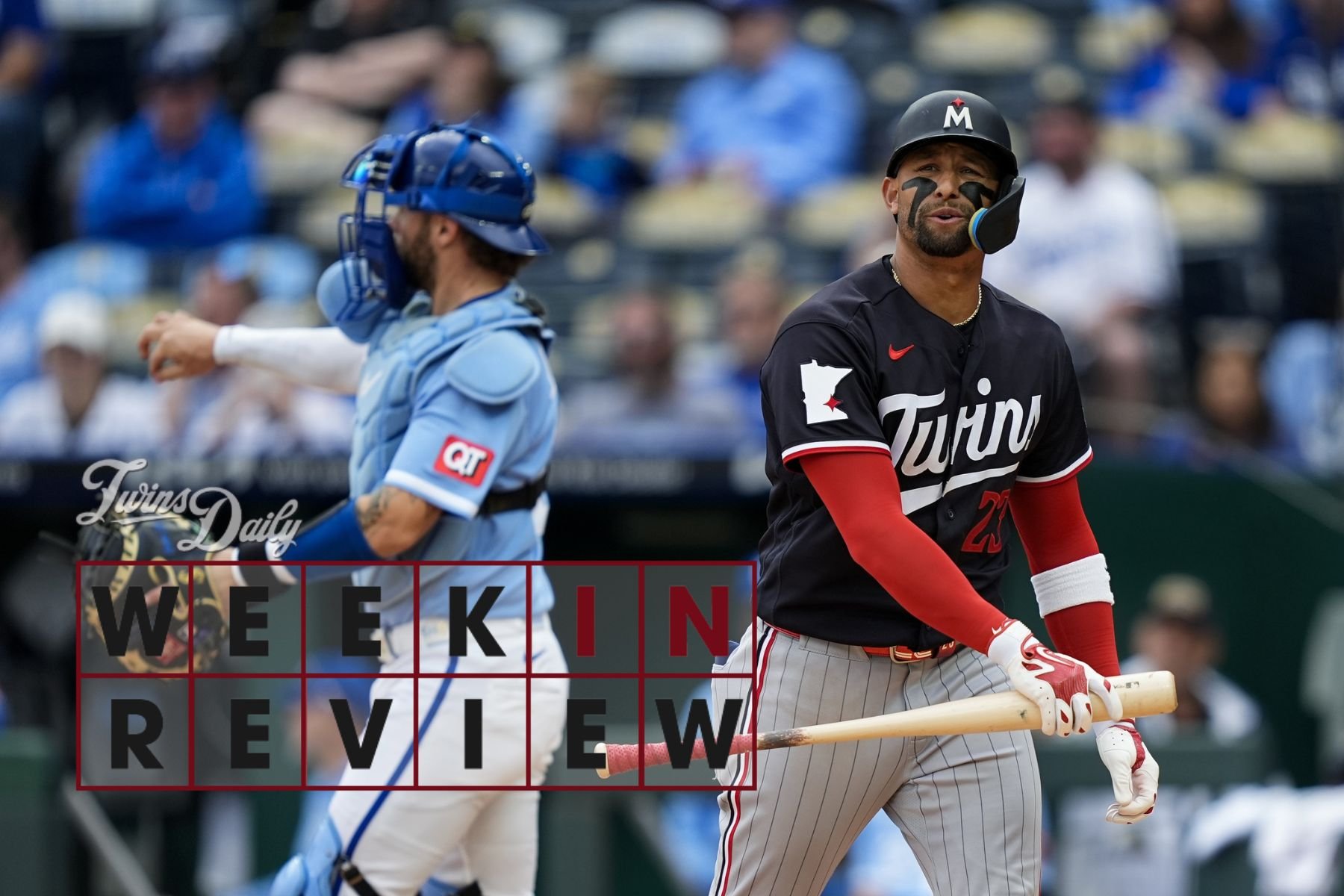 The Weekly Nutshell: In their first full week of the 2026 season, the Twins dropped four of six, and they've now lost all three series they've played. Both in Kansas City and at home, games were played under cold, wet conditions that contributed to sloppy play, but the Twins struggled far more than their opponents to overcome the inclement weather. Sparse crowds at Target Field over the opening weekend were a clear indicator of what we already knew: fan morale is direly low and this team is having a hard time drawing interest. Unless their offense can start to show some signs of life, it's only likely to get worse. Weekly Snapshot: Mon, 3/30 through Sun, 4/5 *** Record Last Week: 2-4 (Overall: 3-6) Run Differential Last Week: -2 (Overall: -2) Standing: 5th Place in AL Central (2.5 GB) Latest Game Results Game 4 | KC 3, MIN 1: Offense Once Again Goes Silent Against Lefty Starter Buxton, Keaschall: 0-7 Game 5 | KC 13, MIN 9: Twins Lose Control in Rain-Soaked Loss at Kauffman Twins pitchers: 15 H, 5 BB, 2 HBP, 2 HR allowed Game 6 | MIN 5, KC 1: Sweep Avoided Behind Strong Outing From Bradley Bradley: 6 IP, 0 ER, 3 K Game 7 | MIN 10, TB 4: Late Home Runs Seal Victory in Home Opener Gray: 1-2, BB, HR, 5 RBI Game 8 | TB 7, MIN 1: Abel Struggles Again as Lineup Gets Shut Down by Another LHP Abel: 4 IP, 6 H, 3 BB, 5 ER Game 9 | TB 4, MIN 1 (10): Pitching Staff Eventually Buckles in Extras as Offense Flops Woods Richardson: 6.2 IP, 1 ER, 4 K NEWS & NOTES The relief pitching carousel has begun to spin. Expect it to continue all summer long. As they often do, the Twins traded for a recently DFA'ed reliever, jumping the waiver line to acquire right-hander Garrett Acton from Miami in exchange for minor-leaguer Logan Whitaker. David Festa was moved to the 60-day injured list to make room on the 40-man, confirming that he's essentially out until at least June, which is a bummer. The Twins wasted little time getting Acton onto the active roster, swapping him for Zak Kent on Sunday. Kent heads to Triple-A after tossing two shutout innings in Saturday's loss. Acton, 27, has allowed eight earned runs and three homers in 6 ⅔ MLB innings, but has big strikeout numbers in the minors. Probably the type of arm worth taking a look at in a season like this. Presumably he'll step into Kent's vacated role as a low-leverage mop-up type who can provide some length if needed. (And will likely find himself on the carousel soon enough.) HIGHLIGHTS Not many hitters in the Twins lineup are getting the job done, but Josh Bell has been an early exception. He's looking very much like the guy who excelled in the second half with the Nats last year, and was a rare ignitor for the offense this past week, clubbing two homers and a double while driving in six. Bell entered play on Sunday tied for the league lead with nine runs scored. Tristan Gray also supplied some power and run production, taking advantage of his opportunity to start at short in the home opener (due to Brooks Lee's illness) by sealing the game in the eighth with a grand slam. Gray has made only 18 plate appearances but he's already got eight RBIs to lead the team. Taj Bradley look another promising step in his second start of the season, cruising through six innings of shutout ball on Thursday to help salvage a win in KC. He wasn't quite flinging the same level of swing-and-miss filth as he did in Baltimore, but Bradley looked plenty good and reasonably efficient, walking only one while getting through six on 100 pitches. He's allowed one through through 10 ⅓ innings in two starts. On Sunday, Simeon Woods Richardson delivered the deepest start of the season for Minnesota thus far, holding Tampa to one run over 6 ⅔ frames in a game where he unfortunately received no run support. In his last seven starts dating back to September, Woods Richardson has a 2.33 ERA and 42-to-12 K/BB ratio in 38 ⅔ innings. LOWLIGHTS New manager, new hitting coach, same old maddeningly ineffective offense. The Twins were held to a single run in three of their six games last week, and naturally lost all three. In Sunday's finale against the Rays, with a chance to take their first series behind a stellar outing from Woods Richardson, the Twins couldn't get much of anything going, producing just three hits and two walks in 10 innings. A day earlier, Steven Matz became the latest left-handed starter to stymy the Minnesota lineup, breezing through six innings with two hits allowed. As a team the Twins are batting .186 with a .619 OPS against lefty starting pitchers. Derek Shelton is doing his best to stack up righties for favorable matchups, but no one's been capable of doing anything with them. The biggest problem at the moment is that the Twins just aren't getting anything from their No. 2 and 3 hitters. Luke Keaschall has been getting some singles, but not showing any power nor much patience. He's got just two walks and one extra-base hit through 39 plate appearances. Byron Buxton celebrated surpassing 10 years of major-league service, but did so amidst a deep slump at the plate. He went 0-for-18 on the week with six strikeouts and no walks, though he thankfully evaded an injury scare on an HBP that sent him walking straight into the clubhouse. Ultimately I'm not overly concerned about either of those two, although Keaschall's slow start does raise an eyebrow following the quiet finish last year. The rest of the lineup is doing nothing to pick them up or inspire confidence generally. Austin Martin is drawing some walks, but he went 3-for-13 last week and is still looking for his first extra-base hit. Matt Wallner popped three solo homers but was otherwise 2-for-23 with 12 strikeouts and zero walks. Royce Lewis has been similarly all-or-nothing — he's got four extra-base hits but zero singles and a .167 average through 29 PA. Ryan Jeffers was 3-for-16 and still hasn't driven in a run this year. Kody Clemens keeps getting looks in the leadoff spot despite a .150 average and .261 OBP. Lee continues to be a complete non-factor with the bat, slashing .167/.250/.167 through seven games. He's looked bad enough that the Twins have to be starting to weigh their options; there's no reason he should have an especially long leash. We're 10 days into the season and I'm already tired of watching most of these guys flail away at the plate. I'm ready for some fresh blood in the lineup and I wonder how quickly the Twins might be inclined to oblige. TRENDING STORYLINE This space in the weekly recap is frequently going to be focused on prospects playing at Triple-A, at least early in the season, because really that is the only compelling source of intrigue right now: How soon can some of these highly regarded near-ready talents prove that they ARE ready, and infuse some life into a persistently stale Twins team? Kaelen Culpepper is doing his part to put the heat on Lee. He homered in both legs of a double-header in St. Paul on Sunday, his second and third of the season. Emmanuel Rodriguez also homered twice over the weekend, building on his strong spring showing. Alan Roden has his OPS up over 1.000 for the Saints. Walker Jenkins has been a bit slower to get going but it only feels like a matter of time. LOOKING AHEAD Three more left-handed starters on the docket in the coming week, which is not great news, especially when the first one happens to go by the name of Tarik Skubal. Facing two high-quality opponents in the Tigers and Blue Jays, the Twins will need to play significantly better ball than they have thus far, or else this is gonna be ugly. MONDAY, APRIL 6: TIGERS @ TWINS — RHP Casey Mize v. RHP Joe Ryan TUESDAY, APRIL 7: TIGERS @ TWINS — LHP Tarik Skubal v. RHP Taj Bradley WEDNESDAY, APRIL 8: TIGERS @ TWINS — LHP Framber Valdez v. RHP Bailey Ober THURSDAY, APRIL 9: TIGERS @ TWINS — RHP Jack Flaherty v. RHP Mick Abel FRIDAY, APRIL 10: TWINS @ BLUE JAYS — RHP Simeon Woods Richardson v. TBD SATURDAY, APRIL 11: TWINS @ BLUE JAYS — RHP Joe Ryan v. LHP Eric Lauer SUNDAY, APRIL 12: TWINS @ BLUE JAYS — RHP Taj Bradley v. RHP Max Scherzer
- 38 comments
-
- 5
-
-
- josh bell
- byron buxton
- (and 1 more)
-
 Every hidden nook, cranny, and secret value at the Minnesota Twins ballpark. By the fans, for the fans. (Updated for 2026!) Welcome! This is the definitive guide to Target Field, by the fans and for the fans. These recommendations were assembled by Twins Daily writers and community members who frequent the ballpark and have uncovered the best views, values, and secrets to share with you. Whether you're an out-of-towner visiting Target Field and looking for tips, or you're a local who wants to make sure you're getting the most out of your experience at this elite ballpark, we've got you covered. This comprehensive guide will walk you through every step of the Target Field experience but should you have additional recommendations or suggestions, please use the comment fields found below this article. Enjoy and have a great time at Target Field! What's New in 2026? Twins leadership clearly recognizes that the state of the team will make it a challenge to draw the fans to the ballpark. They are doing what they can to make Target Field as inviting of an experience they can to offset the likelihood of low-caliber play on the field. In addition to new ticket deals (such as the $249 full-season Twins Pass), newly incorporated features and promotions include: $2 pregame beers before Friday and Saturday home games. Offerings include 12 oz. cans of Bud, Bud Light or (recommended) Summit Twins Pils at select locations, available from gates until scheduled first pitch. Friday Happy Hour with expanded value deals. In addition to the $2 beers, you can access hot dogs and snacks for the same price. There's also live music. Party time. Free ice cream and half-price meals for kids on Sundays. For those 12 and under. Improved cellular coverage at the stadium. The Twins partnered with American Tower and they say it will lead to an 82% expansion in network coverage plus upgraded 5G for all three major carriers. New and expanded concessions, including local features. See the "Best Food at Target Field" section further down for a rundown of the new tastes. Table of Contents (click to jump to section) Target Field Facts and Specs Best Places to Park Around Target Field Best Seats at Target Field Best Food at Target Field Best Bars at Target Field, Ranked Secret Gems of Target Field Self-Guided Target Field Walking Tour Target Field Fan FAQs Target Field Facts and Specs Address: 1 Twins Way, Minneapolis, MN 55403 Opened: April 12th, 2010 Capacity: 38,544 Dimensions LF: 339 feet LCF: 377 feet CF: 411 feet RCF: 367 feet RF: 328 feet Best Places to Park Around Target Field There are many options for parking around Target Field. Understandably, some folks traveling to downtown like to park closer to the park in order to minimize their walk. Those who are up for a Downtown Dawdle can find lower costs and other attractions to check out in the surrounding neighborhoods. Here we've listed some of the most popular nearby parking lots and ramps, roughly in order of proximity to the park, but note that there are tons of additional surface lots and ramps beyond these, especially if you don't mind parking a bit further away. Note that you can also use the SpotHero app via the Twins website to reserve a parking spot at a highly reasonable rate. A-B-C Ramps The closest you can get to the stadium. These ramps, which you can enter from side streets or directly from 394, are actually connected to Target Field, so you can get to the plaza or even into the stadium without actually having to step outside. Note that these ramps tend to fill up to capacity as gametime nears. They are all now pay-on-entry for Twins games, which should lead to a faster exit after the game. The A/B ramps fill up most quickly, and the C ramp is a longer walk, so arrive early if you'd like to avoid a more circuitous journey from your car. Address: 33 North 9th Street Cost: $12-14 Distance from Target Field: Next door Hawthorne Ramp Another large multi-level parking ramp that is similar to the A-B-C ramps but a bit more of a walk, serving as a central hub for Target Field, Target Center, and many surrounding venues like First Avenue and the Orpheum. The interceding area between the stadium is well lit and trafficked. Address: 31 N 9th Street Cost: $12 Distance from Target Field: 1/4 mile 4th Street North Lot A favorite for many Twins Daily game attendees. This sizable outdoor lot rests underneath a highway overhang, with several nearby breweries and restaurants. It's relatively cheap, quite close to Target Field's northwest end, and you can conveniently pay from your phone. Address: 601 N 4th Street Cost: $6 Distance from Target Field: 1/4 mile Darby's Lot on 5th Avenue Very similar in location to the above, and offers the added benefit of indoor ramp parking, although the cost is higher. We're going to continue to call it the Darby's Lot for now even though its namesake – the neighboring Darby's Pub and Grill – closed down after the 2022 season. (It's been replaced by Bricksworth Beer Co., a restaurant serving rectangular pizzas that is absolutely worth checking out.) Address: 317 N 5th Avenue Distance from Target Field: 1/4 mile Park & Shop Built to cater to downtown shoppers at Macy's and elsewhere, this lot is plenty big and almost always has capacity during Twins games. They don't charge event rates, so you'll only pay the standard $7 flat rate for night and weekend games. About a four-block walk from Target Field, this location is more convenient for those coming from the west or 35W. Address: 24 S 8th Street Cost: $7 (hourly rate for weekday games) Distance from Target Field: 1/2 mile Street Meters Street meters are available everywhere in the areas surrounding Target Field. Event rates usually check in around $2.50/hour. Although they tend to have time limits shorter than a baseball game, you can download an app and add more money mid-game as a workaround. Be warned that finding open meters can be challenging, especially during weekday games. Target Field transit tips If you're not driving to the ballpark, there are plenty of other ways to get there. Cabs and ride-sharing apps are of course options and can drop you off right at the plaza. You can take the light rail via the METRO Blue Line and METRO Green Line with drop-offs at Target Field Station, just outside of Gate 6. There are also several bus routes that will drop you right outside the park. Learn more on the Metro Transit website. Best Seats at Target Field Before getting into seats, let's discuss getting into the stadium. As of 2025, fans are able to utilize MLB Go-Ahead Entry at Target Field. MLB Go-Ahead Entry is a facial authentication-based ticket validation system — whether or not you want to opt-in to such a program is entirely about your own personal level of comfort. If you do choose to participate, fans can register using the MLB Ballpark app and use Go-Ahead Entry at one designated lane each at Gates 3, 6, 29 and 34. You can learn more here. "Best seats" means different things to different people, based on your desired price range. The Twins offer a Ticket Finder tool to help you narrow your search around various parameters if you'd like to buy from their website. Here, we've divided this section into three different categories: I'm balling out (money's not an object) I'm willing to spend for good seats I'm looking for cheap tickets and a good time Best values for Target Field tickets (by price range) I'm Balling Out These are some of the best places to sit at Target Field if budget is no issue: Champions Club Sections 7-10 These are the cushy (and cushiony) seats directly behind home plate. The ticket comes with complementary food and drinks, served to your seat, so you'll really be living the high life. You might even be on the TV broadcast! You'll also have access to an exclusive, newly renovated indoor space with TVs, bars and food. These seats aren't available as single-game tickets through the Twins ticket office so you'll have to go through a third-party vendor. They can run hundreds or even thousands, but sometimes you can catch a sneaky deal through ticket broker apps. (Note: Netting in view.) Dugout Box Sections 1-6, 11-17 Nested alongside the first and third base lines, with outstanding views at almost field-level. Sitting in these seats affords access to the exclusive 1B/3B Lounges, which offer shorter lines for concessions and restrooms. (Note: Netting in view.) Cost: ~$100 Thrivent Club Sections A-R Middle-deck area offering views from behind home plate and the infield baselines. Comes with access to an exclusive indoor area with food, bars, and cool Twins history displays. These tickets aren't sold for single games so you'll need to buy a package (min. 40 games) or go through a broker. Maybe the most affordable path to a premium ballpark experience, depending on availability. "The Dock" Beyond Section 137 Designed to imbue your gameday experiences with some majorly Minnesotan vibes, this small section behind the right-field overhang is presented by Winnebago Industries, and essentially mimics a pontoon boat, complete with captain's chairs. You can rent out The Dock for a party at $1200, which might seem steep, but it seats up to 12 and includes vouchers for lakeside-themed food and drinks. I'm Willing to Spend for Good Seats For those who are looking to get a good experience at the ballpark but within a more reasonable price range, there are a number of recommended options: Home Plate Box Sections 109-119 Probably the best view you can get at Target Field. Hunker in behind home plate for a straightaway angle to the action along with a panoramic layout of the ballpark's many features, from jumbo-jumbotron to Minnie & Paul sign to skyline. There's lots of good food and drink in the concourses near these sections. (Note: Netting in view.) Cost: ~$60-75 Down the Baselines Sections 101-108, 120-127 These seats also offer close-up views of the action at near-ground level. Both the first base line and third base line have their perks: from one side you're looking at the giant scoreboard and from the other, the open skyline. (Note: Netting in view.) Cost: ~50-$70 Corona Deck Patio on the Overhang Sections 139-140 This is sort of a unique experience in that you get to sit in a barstool style seat with a counter in front of you, viewing the game from above right field adjacent to the foul pole. These seats also come with an included $10 voucher for concessions, and are right next to the big open plaza/lawn area, so it can be a good choice for bringing a group of friends who are seeking a bit more of a party atmosphere. The downside is you lack some visibility of game action in the right field corner. The "Overlook" sections next to these (136-138) offer a similar view at a cheaper cost ($27) without the frills. Cost: ~$55 Left Field Bleachers Sections 128-131 One of the best values in the ballpark, provided you don't mind sitting on hard metal bleachers. It's prime home run catching territory, with a good close-feeling view of the action, although you don't get to enjoy the big jumbotron. This tends to be perhaps the rowdiest section of the stands. Cost: ~$35 I'm Looking for Cheap Tickets and a Good Time Speaks for itself. Home Plate Terrance and View Sections 210-219, 310-319 Pretty decent seats for the price if you don't mind a steep vantage point. You'll have a full perspective from behind the plate, albeit it from pretty high up in Target Field's altitudinous heights. The second deck gets you a bit closer than the third (with fewer steps to climb) for a bit more cost. You can catch some very lovely and inexpensive skyline views from sections 318-19. Cost: ~$20-40 The Nosebleeds Sections 301-309, 320-323, 329-334 You'll be high up and pretty far from the action, but you'll still see it all clearly, and a price that's manageable for bringing the family. Note that the wind can really whip up in these areas on breezy days. Cost: ~$30 or lower Standing Room Only (SRO) Available only through Twins Pass, at a cheap (~$3) per-game rate if you buy the full-season package. Sun, shade, and weather conditions at Target Field If you're looking to stay out of the sun, or you're concerned about the weather forecast for a game you're planning on attending, here are some things to know: The sun usually shines down most fiercely onto the seats on the third base side, which can be pleasant in April or September but sometimes brutal in the heart of July. The first base line can be a little less punishing, especially for evening games as the shade creeps across the stadium starting here. If buying seats in the lower deck, aiming for the rows closer to the back can get you under the overhanging deck above, offering shade to protect you from the sun while also keeping you dry in the event of ... Rain. It's an inevitable reality of a fully outdoor ballpark. The left field bleachers and further-back rows in the lower bowl are your best bets to stay under cover, although you can always retreat to the concourse to escape a downpour. There are heaters near most of the section entrances throughout the stadium, so you can gravitate near these to stay warm during a cold early-season or late-season game. The bars are also generally good places to stay warm and dry. Sensory suite at Target Field In 2022, the Twins partnered with UnitedHealthcare to introduce a new sensory suite at Target Field, which offers views of the field from a secluded and quiet space with diversions available, to cater to a range of fans with sensory disorders or other neuroatypical conditions. Read Twins Daily's story about the UnitedHealthcare Sensory Suite for more details. Best Food at Target Field Kramarczuk's: These brats and polish sausages, fried up on the grill alongside onions and kraut, are a prime attraction. #1 recommendation. Locations: 101, 112, 312 Hot Indian: Multiple saucy rice combos are available, but the Chicken Tikka is the star here – a spicy curry chicken topped with cool crunchy slaw. Location: 120 Tony O's: Delicious Cuban sandwich, with ham, cheese and pickles melted into a crispy bread panini-style. It's really good. Location: 114, Thrivent Club Official Fried Chicken: Fried chicken with a tasty seasoning, available as tenders or bone-in. Offers a convenient mobile checkout for painless pickup. Location: 133 Pizza Luce: There are several different spots you can find pizza throughout the park, but if you want the best available grab a slice at Luce, right next to Minnie & Paul's in center field. The meaty TC Bear is a fan fave. Location: 234 Red Cow: Tasty burgers with a pink center, featuring a 60/40 makeup of beef and bacon in the patty. Locations: 120, 233 Turkey To Go: Mounds of shredded turkey piled on a bun with all the fixings of your choosing. Location: 114 Standard Fare: At various counters and stands throughout the ballpark, you will also find all manner of typical stadium fare such as hot dogs, nachos, chicken tenders, and mini donuts. Hot dogs at Target Field Here's what you need to know about this universal ballpark fixture and the options available to you at Target Field: The Original Twins Dog is the basic offering, and its perfectly fine if unexceptional. You can find these at concession stands near sections 124, 131, 232, 311 and they cost $5.50. The Twins Big Dog is a heftier frank in a bigger bun and it comes along with a bag of potato chips. It's found near sections 105, 109, 120, 237, 305, 319, and 323, as well as the Thrivent Club and costs $7.50. Bunless hot dogs are available throughout the ballpark as a gluten-free option, and there's a meatless sriracha brat available at Section 126. At sections 124, 211, and 311, you can get a TC Kid's Meal which includes a hot dog along with applesauce/chips and choice of beverage for $8.00. These are half-price on Sundays. New Target Field Food in 2026 Mac and Yes Please (Section 113): Cavatappi with creamy white cheddar sauce, paired with your choice of buffalo chicken or brisket plus complementary toppings. If you don't mind bleu cheese, the buffalo chicken dish is fantastic. Double Barrel Burger from Red Cow (Section 233): Two smash-style beef patties with gooey white American cheese, grilled onions and a horseradish cream sauce. A strong new contender for best burger at the park. Elote from La Madre (Section 110): Mexican street food staple -- steamed corn on a stick-skewered cob, slathered with mayo and sprinkled with Tajin, cotija, and corn chip crumbles. Solid if unspectacular. Mediterranean Bowl (Section 114): A rice bowl topped with chicken shawarma, diced red onion, tomatoes, cucumber, feta cheese and tzatziki. The ingredients are fresh and the overall combo is tasty. (Vegetarion option available.) No Gluten Way (Section 112): The Twins placed a major focus on growing their gluten-free options this year, with an entire setup tailored to the dietary preference. You'll find a signature burger, all-beef hot dog, snacks, cookies and drinks. The burger, loaded with grilled onions, candied bacon and a bistro sauce, is quite good. Justin's Candied Popcorn (Section 106): Customize your own creation, with an array of candy and sweets available to pile on a cup of fresh-popped kernels. Chocolate Fish on a Stick (Truly On Deck or Town Ball Tavern): If you're looking for a standout dessert, this is your best bet, maybe in Target Field history. This Japanese-inspired treat comes as a fish-shaped waffle with a chocolatey filling, alongside vanilla ice cream and chocolate sauce. Trust us, it's bomb. Cheapest food and drinks at Target Field The ballpark offers family-friendly pricing at concession stands located near sections 120, 133 and 311. At these locations you can get the following deals to keep costs in check, although some items may be smaller portions than elsewhere: Hot dog - $3.99 Nachos - $3.99 Soft pretzel - $4.49 Peanuts - $2.99 Popcorn - $2.99 16oz soda - $2.49 16oz water - $3.99 12oz beer - $5.99 Where to find local beers at Target Field The most expansive selection of local beers and microbrews on draft is at the Twins Drafts counter next to Gate 34, alongside the right field plaza area. The walk-in cooler next to Gate 6 also has a good selection of local labels like Surly and Summit. You can also find locally made Keeper's Heart whiskey from O'Shaughnessy Distilling Co. at Town Ball Tavern (Section 229), and locally made Gray Duck Vodka at their sponsored deck in left (Gate 6). Best Bars at Target Field, Ranked You can find the official list of Target Field bars and restaurants here. This is how we rank our top five favorites for 2026 and why. Carbliss Clubhouse (Gate 6): Big rectangular bar in the heart of the stadium's flow, with great sightlines from lower-deck left field corner, just beside the foul pole. Grab a Bomba Juice and post up at the railing. Cutwater Cocktail Bar at Minnie & Paul's (CF Club Level): Unique bird's eye view from high above the field in straightaway center. The railing overlooking the field is usually packed but there are plenty of shady spots to relax and several TVs. Truly On Deck (RF Club Level): Massive indoor bar area with glass walls and good vibes. You can pull up at a stool for a sports bar-like experience, or drift toward the open field viewing area to catch game action from the right field corner. See the "Secret Gems" section below for a ballpark hack pertaining to this location. Home Plate Taproom presented by Pryes (Behind Home Plate Terrace Level, formerly Twins Pub): A fun and festive smaller bar with an unbeatable location directly behind home plate. It's also the home of another hidden gem of the ballpark (again – see below). Surfside (LF Club Level): Similar to the Gray Duck Deck, but one level above and with a bit less hustle and bustle. This is a good spot to sneak away for a beer and a catch up with a friend, though you can still catch live views of the game. Honorable Mentions: Hrbek's Pub, Sun Cruiser 10,000 Lakes Bar, Bar & Keeper's Heart Town Ball Tavern. Perfectly fine watering holes with no direct view of the field. Secret Gems of Target Field Sue the Organist: When visiting the Twins Pub at the terrace level behind home plate (first base side), you'll encounter famed ballpark organist Sue Nelson, cheerily tapping out the classics. She's very accessible and interactive, always happy to chat with the kids and pose for a photo (so long as she's not mid-tune). Truly on Deck Postgame: The semi-enclosed right field bar doesn't have to play by the rules of Target Field's general alcohol policy (no sales after the seventh). That means you can cruise up there late in the game for an extra beer, and then hang on the balcony while the stadium is put to rest. Bonus Achievement: Shut down the stadium at Truly on a fireworks night. Memorabilia Displays in the Thrivent Club If you can get your hands on some tickets that enable access to this interior concession and commingling area, you'll definitely want to check out the displays featuring glass-encased mementos from Twins greats. The Kirby Puckett mural in this section is also a highlight. Ultimate VIP Tour The Twins offer a behind-the-scenes tour, complete with a walk through the press box and behind-homeplate access, two hours before most games. (12:10 PM starts are excluded.). Space is limited to 15 guests and you must also have a game ticket. The cost is $80. Pro tip: request Twins Curator Clyde Doepner to lead the tour. If he can, you'll be in for a real treat, especially if you're into baseball and Twins history. The Grand Old Flag The flag pole on the plaza was from the original Metropolitan Stadium. When the Twins played at the Metrodome, it was used by a VFW in Bloomington, and they donated it back to the Twins when Target Field was created. Before each game, the US flag is raised by a veteran or active military member. A Bit of Hoops History The wooden part of the bar floor in the Keeper's Heart Town Ball Tavern was originally used for the basketball floor at the Armory, where the Minneapolis Lakers won several championships before moving to LA. Take in Minneapolis There are multiple balconies at Target Field on the outside of the park, where you can sit or stand and look out at the city. These include Truly, Town Ball and Thrivent. Best Spots Near Target Field to Pregame/Postgame One of the advantages of having a stadium downtown is there are no shortage of fun options before and after the ballgame. Here are a few of our favorites near the stadium. Best Food Near Target Field Gluek’s - A historic bar and restaurant styled like a German beer hall. You’ll find at least a half dozen food items on their menu that you’ll want to order. Runyon’s - Sports bar with the best buffalo wings downtown, and second place is far behind. Pizza Luce - Specialty pizza. You can grab a slice and go or hunker down at their bar until the late close. Freehouse - a little further from the stadium than the others, and more restaurant than bar, but it has great food and a nice array of craft beers, including their own. Graze - Marketplace-style setup with central bars and an array of locally-sourced food stands. Great outdoor yard for hanging on a beautiful day. Best Breweries Near Target Field Bricksworth - A craft brewery just a block away from Target Field that specializes in IPAs and Detroit-style pizza, plus plenty of TV’s inside for sports and an enormous patio for that summer afternoon. Modist - An impressive and diverse array of experimental beers awaits you at this craft brewery, and right across the street from Bricksworth. Fulton - Solid space and taps, including the popular Lonely Blonde and Sweet Child of Vine. Only about a half-block from the yard. Best Bars Near Target Field Smorgie's - Great pre/post-game hangout with very good food at a very good price; nothing on the menu is over $12. McKenzie - A neighborhood-ish craft beer bar with at least 30 beers on tap. Kieran’s - This Irish pub’s patio is always in demand. The Loon - Known as a baseball bar even when the stadium was on the other side of downtown, they’re know for good food and a lively atmosphere that is aided by their “Grape Ape” shots. Tom’s Watch Bar - If you want to watch more sports before or after the game, this is your place. Lots of food options, but at downtown prices for sure. The Saloon - Minneapolis’ most popular gay bar with specials that cater to Twins fans. Cuzzy’s - It disguises itself as a dive bar, but the food is solid, there are plenty of beer options, and it’s usually busy. Twins Daily's Self-Guided Target Field Walking Tour There's so much listed here that you might be wondering where to start. Never fear! We've got the Tour de Geek! John "Twins Geek" Bonnes has an inning-by-inning breakdown of where to go and what to see, eat, and drink in nine innings at Target Field. Just click through to each of the links below: 1st Inning 2nd inning 3rd inning 4th inning 5th inning 6th inning 7th inning 8th inning 9th inning Learn about the signature moments in Target Field's first decade of existence. Target Field Fan FAQ What is Target Field's bag policy? Always a common question and point of frustration among fans. Here are the details, per their website. ALLOWED: Single-compartment bags (maximum size of 16”x16”x8”) are allowed into Target Field. These include purses, clutch purses, single-compartment tote bags, clear bags, drawstring bags, diaper bags, single-compartment soft-sided coolers, fanny packs and bags containing medically necessary items. Fanny packs (9”x5” or smaller) are allowed into Target Field and may be carried through express lanes Small clutch purses (9” by 5” by 2” or smaller) may be carried through the Express Lanes at each gate without divesting items at the gate. NOT ALLOWED: Backpacks, multi-compartment laptop bags, duffel bags or any bags over the size requirement (max 16”x16”x8”). Can I catch batting practice at the ballpark? It's a bit tricky. The Twins usually take batting practice about 2 ½ hour prior to game time, with their opponents starting an hour later. (Sometimes only one team takes BP, sometimes neither.) Meanwhile, the gates officially open for entry 60 minutes before weeknight games, 90 minutes before weekday games, and two hours before weekend games. On a Friday, Saturday, or Sunday right when the gates open, you might catch some of the home team's pregame swings. Can I bring food or drinks into Target Field? You can bring any food into the ballpark, so long as it's not in a tupperware or hard-sided container. The rules for beverages are a bit more restrictive: "Sealed, bottled water 32 oz. or less, and soft sided single juice or milk containers for children are the only outside beverages permitted into Target Field." Guests may also bring empty, plastic sport-type water bottles and fill them at any water fountain throughout the ballpark. What can't I bring into Target Field? The Twins list these as prohibited items for the ballpark: ball retrievers, balloons, bats, beach balls, boom boxes, brooms, fireworks, flasks, Frisbees, coolers, inflatables, laser pointers, lawn chairs, noise-making devices, weapons, wooden sticks, or rods. Note that you can pay a fee to store any of these items, or an oversized bag, in a locker outside of Gate 6. Where can I park my bike at Target Field? Within the past couple years, the team started offering a complimentary designated area to check your bike where a team employee will keep an eye on it during the game. They'll give you a ticket and you can pick it up afterward. Find this area on the west side of the stadium, next to Gate 6. What is payment and Wi-Fi situation at the stadium? In 2025, the Twins upgraded Target Field’s point-of-sale technology at all concession stands and stores to use MyVenue. The team also upgraded its Wi-Fi and cellular data infrastructure, and all fans should have access to Wi-Fi or 5G data regardless of their carrier.
 -
Image courtesy of Daniel Kucin Jr.-Imagn Images The Weekly Nutshell: After wrapping up spring training, the Twins headed to Baltimore to officially kick off their 2026 regular season against the Orioles. Entering this campaign with their lowest expectations in years, the Twins came out of the gates with a fairly solid series against the O’s but dropped two of three while derailed by some familiar foils: lack of timely hitting, sloppy defense and questionable decision-making. Still, it was an altogether fairly impressive showing with a number of strong individual performances and positive takeaways. Let’s dig in. Weekly Snapshot: Thurs, 3/26 through Sun, 3/29 *** Record Last Week: 1-2 (Overall: 1-2) Run Differential Last Week: +0 (Overall: +0) Standing: T-3rd Place in AL Central (1.0 GB) Latest Game Results Game 1 | BAL 2, MIN 1: Ryan Deals But Timely Hits Elude Lineup Twins hitters: 1-12 RISP, 3 GIDP Game 2 | MIN 4, BAL 1: Lewis Home Run Helps Lift Twins to First Win Bradley: 4.1 IP, 1 ER, 9 K Game 3 | BAL 8, MIN 6: Ober and Abel Knocked Around in Piggyback Effort Abel: 3.1 IP, 8 H, 5 ER, 4 BB NEWS & NOTES Ahead of the season opener, the Twins placed David Festa and Travis Adams on the 15-day injured list. Both right-handers are dealing with arm issues and facing opaque return timelines. Of course, Pablo López was already on the 60-day IL and will miss the season after undergoing elbow surgery. HIGHLIGHTS Joe Ryan had a bit of an odd spring. A minor injury scare affected his ramp-up and robbed him of a chance to compete at the World Baseball Classic. He threw only 12 innings in Grapefruit League play. But on Opening Day, he showed no signs of ill effect. The righty was in top form on Thursday at Camden, peppering the zone with his signature fastball while also mixing in a slow bending curve that kept opponents in shambles. Ryan held Baltimore off the board for 5 ⅓ innings, striking out seven with one hit allowed, and probably would’ve gone deeper if not for the Twins opting to play it safe on pitch count (85) following his disrupted spring. The stellar season debut from Ryan was good to see, but hardly surprising. This is what we saw from him for most of last season, and what we’ve come to expect. The same goes for Byron Buxton, who was an electrifying force in the opening series, repeatedly making things happen with his legs. In the opener, Buxton tripled before scoring Minnesota’s only run of the game on a Luke Keaschall sac fly. On Saturday, he again scored their lone run by: Beating out an infield single (originally called out, and reversed on challenge) Tagging up and taking second on a fly ball to center Taking third on a pickoff error by Adley Rutschman Scoring on a sacrifice fly by Josh Bell That is the definition of manufacturing a run, and it epitomizes the unique advantages Buxton brings to the table. When he's healthy and playing, this team can entertain. And if he gets a some help, they can win. We all expected Ryan and Buxton to be the leaders of this pitching staff and offense, respectively. They looked up to the task in B-More. But if the Twins as a team want to B More than also-rans (eh??) they’ll need some others to step up. As such, Royce Lewis’ opening series delivered a major jolt of energy. He struggled on Thursday but bounced back with a big home run on Saturday and launched another on Sunday. It’s clear that Lewis needs to earn the full confidence of new manager Derek Shelton, who’s been batting him eighth in the lineup and pulled him for a pinch-hitter in a key spot late in the first game. But Lewis is starting to rebuild his own confidence and that’s the crucial first step. Taj Bradley is another player looking to put previous struggles behind him and harness his natural talent — with major implications for the team’s outlook. And while his first start of the season on Saturday was far from perfect, Bradley’s overpowering arsenal was on full display as he racked up nine strikeouts with one run allowed in 4 ⅓ innings. The fastball was nearly touching 100 and the diving splitter was giving the Orioles fits. A promising start to a very important season. A couple other strong performances from the opening series worth highlighting: Tristan Gray made his first start at shortstop on Sunday and made an excellent first impression, delivering a three-run double in his first AB as a Twin and following with an RBI single later in the game. It was a bit of a surprise to see Gray make the team out of spring as backup infielder over Ryan Kreidler and Orlando Arcia, who both went to St. Paul. Gray's intriguing bat is a major reason, and we got a glimpse in this game. The much maligned bullpen had a very solid showing in the opening series, allowing two runs in eight total innings (if we don’t count Mick Abel’s piggybacking appearance on Sunday). When Bradley had to come out in the fifth inning on Saturday, the relief corps stepped up in a big way, with five pitchers combining for 4 ⅔ shutout innings to protect a lead. Probably Shelton deserves some credit for his maneuvering there as well. LOWLIGHTS One of the biggest concerns for the Twins entering this season was Bailey Ober’s sub-par spring velocity coming off his worst season in the big leagues. He barely cracked 90 MPH in camp, and that will make it awfully hard to succeed against MLB hitters, even when you’re 6-foot-9 with an outstanding changeup and good control. We were all wondering: once the games started mattering and the adrenaline truly kicked in, would Ober be able to find another level of juice? The answer, it turns out, is basically no. Ober found a little more velo against the Orioles compared to most of his Grapefruit starts, but his four-seamer still averaged under 90 MPH and he couldn’t generate whiffs. He struck out just one Baltimore hitter, dancing through three scoreless innings before Tyler O'Neill took him deep on an 89 MPH fastball in the wheelhouse for a three-run homer. I’ve pretty much given up hope on Ober tapping into the 92-93 range where he sat when at his best, so it’s really a question of whether he can dial in the craftiness and command to be at least somewhat effective in this new reality. On Sunday, that was the case until it wasn’t. Abel, who came out of the bullpen in the fifth to cover the back half, had the opposite problem. The velocity and stuff were there but he was all over the place and had nonstop traffic on the bases, yielding five runs on eight hits and four walks in 3 ⅓ innings. It was a shame to witness in the aftermath of such a fantastic spring showing that saw Abel seize a rotation spot in large part because his control was so crisp. On Sunday, he was missing his spots by a mile. Was he thrown off by the piggybacking usage? It’s possible, but we saw plenty of this from Abel last year when he posted a 6.23 ERA. Whereas Bradley was able to survive a lack of polish and precision in his first 2026 outing, Abel was not. Brooks Lee is another important player whose challenges from last year spilled over into the start of the new season. Starting at shortstop on Thursday and Saturday, Lee went 0-for-6 with three strikeouts and frankly looked horrible at the plate and in the field. His strike zone control remained non-existent and his limited range was evident as grounders bled through the infield. The redemption tour is off to a rough start, but hey, it’s only two games. Despite some disappointing individual performances, Twins players generally did enough to win this series. The team was undone in large part by repeated lapses in defense, decision-making and fundamentals: Austin Martin throwing to third instead of second, multiple players running into outs on the base paths, Matt Wallner wasting the team’s last challenge. The hope was that a new managerial voice might help shore up some of these short circuits that plagued the 2025 club, but so far we haven’t seen much to indicate Shelton’s oversight will produce much cleaner baseball than Rocco Baldelli’s did. To me, that’s not a surprise, since the players have hardly changed. We’ll see if they can iron some things out going forward. TRENDING STORYLINE While the Twins were kicking off their season in Baltimore, the St. Paul Saints got started in Indianapolis with a lineup full of high-profile names and key prospects. The Saints lineup features Walker Jenkins, Emmanuel Rodriguez, Kaelen Culpepper, Gabriel Gonzalez and Alan Roden among others. Hghlights from opening weekend include: Culpepper had three-hits in his Triple-A debut, Roden has already drawn six walks, and pretty much every pitcher threw well (save for Zebby Matthews, who is increasingly becoming a concern). Top pitching prospect Connor Prielipp got the nod for the opener and locked in following a slow start. Future relief reinforcements Marco Raya and John Klein looked dominant in their first appearances of the season. This is going to be a fun team that demands the attention of Twins fans. I’ll be tracking Culpepper extra closely. I’m not sure Lee has a ton of leash if his underwhelming play persists. If Culpepper continues to impress like he did in spring training and in his first action with the Saints, he could be on a fast track to getting a shot. LOOKING AHEAD Lots of lefties are on deck for the Twins, who are scheduled to face southpaws in all three contests against the Royals in Kansas City, along with another lefty starter on Saturday against the Rays. At present, Ober is slated to pitch the home opener against Tampa. MONDAY, MARCH 30: TWINS @ ROYALS — RHP Simeon Woods Richardson v. LHP Kris Bubic WEDNESDAY, APRIL 1: TWINS @ ROYALS — RHP Joe Ryan v. LHP Noah Cameron THURSDAY, APRIL 2: TWINS @ ROYALS — RHP Taj Bradley v. LHP Cole Ragans FRIDAY, APRIL 3: RAYS @ TWINS — RHP Joe Boyle v. RHP Bailey Ober SATURDAY, APRIL 4: RAYS @ TWINS — LHP Steven Matz v. RHP Mick Abel SUNDAY, APRIL 5: RAYS @ TWINS — RHP Nick Martinez v. RHP Simeon Woods Richardson View full article
-
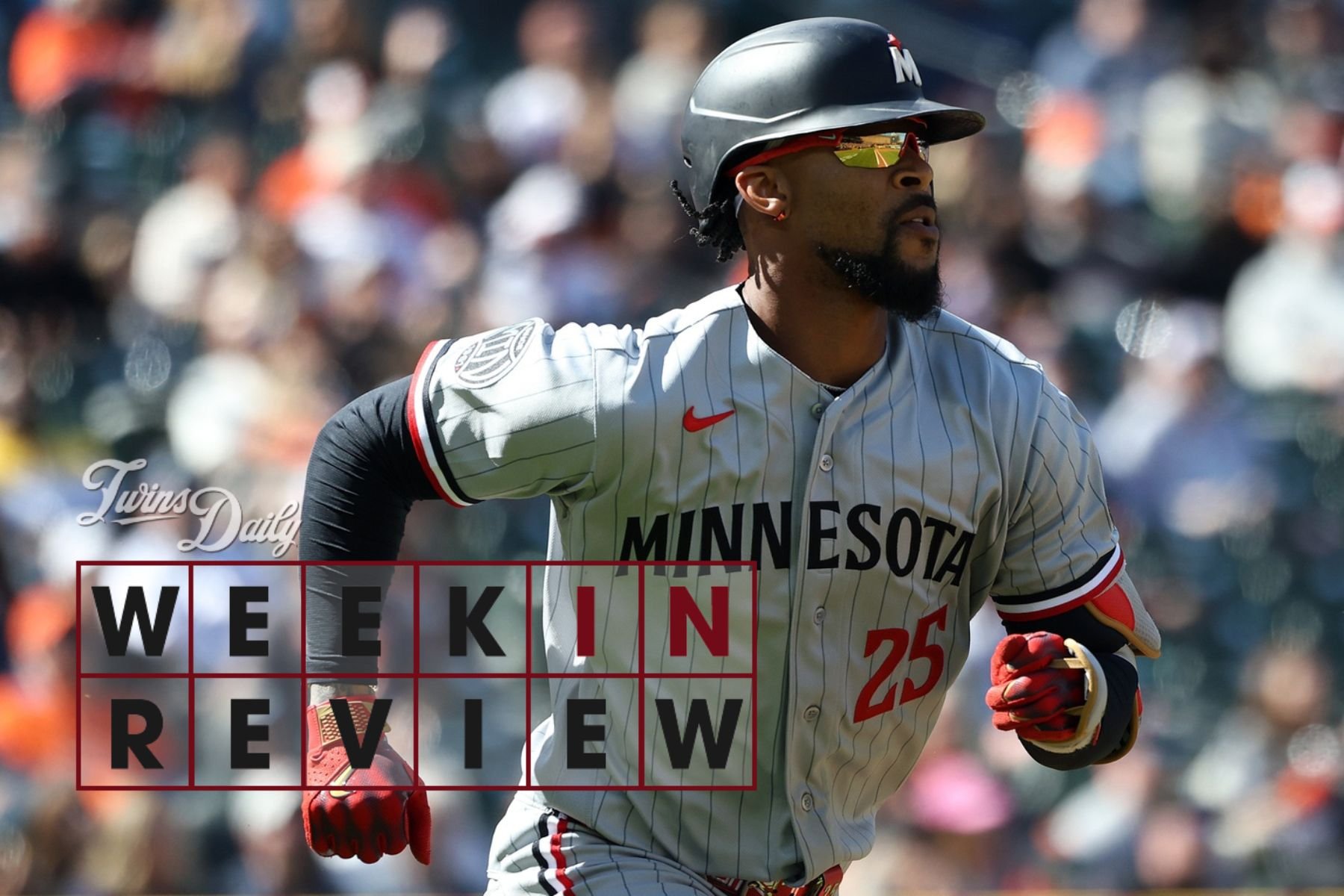 The Weekly Nutshell: After wrapping up spring training, the Twins headed to Baltimore to officially kick off their 2026 regular season against the Orioles. Entering this campaign with their lowest expectations in years, the Twins came out of the gates with a fairly solid series against the O’s but dropped two of three while derailed by some familiar foils: lack of timely hitting, sloppy defense and questionable decision-making. Still, it was an altogether fairly impressive showing with a number of strong individual performances and positive takeaways. Let’s dig in. Weekly Snapshot: Thurs, 3/26 through Sun, 3/29 *** Record Last Week: 1-2 (Overall: 1-2) Run Differential Last Week: +0 (Overall: +0) Standing: T-3rd Place in AL Central (1.0 GB) Latest Game Results Game 1 | BAL 2, MIN 1: Ryan Deals But Timely Hits Elude Lineup Twins hitters: 1-12 RISP, 3 GIDP Game 2 | MIN 4, BAL 1: Lewis Home Run Helps Lift Twins to First Win Bradley: 4.1 IP, 1 ER, 9 K Game 3 | BAL 8, MIN 6: Ober and Abel Knocked Around in Piggyback Effort Abel: 3.1 IP, 8 H, 5 ER, 4 BB NEWS & NOTES Ahead of the season opener, the Twins placed David Festa and Travis Adams on the 15-day injured list. Both right-handers are dealing with arm issues and facing opaque return timelines. Of course, Pablo López was already on the 60-day IL and will miss the season after undergoing elbow surgery. HIGHLIGHTS Joe Ryan had a bit of an odd spring. A minor injury scare affected his ramp-up and robbed him of a chance to compete at the World Baseball Classic. He threw only 12 innings in Grapefruit League play. But on Opening Day, he showed no signs of ill effect. The righty was in top form on Thursday at Camden, peppering the zone with his signature fastball while also mixing in a slow bending curve that kept opponents in shambles. Ryan held Baltimore off the board for 5 ⅓ innings, striking out seven with one hit allowed, and probably would’ve gone deeper if not for the Twins opting to play it safe on pitch count (85) following his disrupted spring. The stellar season debut from Ryan was good to see, but hardly surprising. This is what we saw from him for most of last season, and what we’ve come to expect. The same goes for Byron Buxton, who was an electrifying force in the opening series, repeatedly making things happen with his legs. In the opener, Buxton tripled before scoring Minnesota’s only run of the game on a Luke Keaschall sac fly. On Saturday, he again scored their lone run by: Beating out an infield single (originally called out, and reversed on challenge) Tagging up and taking second on a fly ball to center Taking third on a pickoff error by Adley Rutschman Scoring on a sacrifice fly by Josh Bell That is the definition of manufacturing a run, and it epitomizes the unique advantages Buxton brings to the table. When he's healthy and playing, this team can entertain. And if he gets a some help, they can win. We all expected Ryan and Buxton to be the leaders of this pitching staff and offense, respectively. They looked up to the task in B-More. But if the Twins as a team want to B More than also-rans (eh??) they’ll need some others to step up. As such, Royce Lewis’ opening series delivered a major jolt of energy. He struggled on Thursday but bounced back with a big home run on Saturday and launched another on Sunday. It’s clear that Lewis needs to earn the full confidence of new manager Derek Shelton, who’s been batting him eighth in the lineup and pulled him for a pinch-hitter in a key spot late in the first game. But Lewis is starting to rebuild his own confidence and that’s the crucial first step. Taj Bradley is another player looking to put previous struggles behind him and harness his natural talent — with major implications for the team’s outlook. And while his first start of the season on Saturday was far from perfect, Bradley’s overpowering arsenal was on full display as he racked up nine strikeouts with one run allowed in 4 ⅓ innings. The fastball was nearly touching 100 and the diving splitter was giving the Orioles fits. A promising start to a very important season. A couple other strong performances from the opening series worth highlighting: Tristan Gray made his first start at shortstop on Sunday and made an excellent first impression, delivering a three-run double in his first AB as a Twin and following with an RBI single later in the game. It was a bit of a surprise to see Gray make the team out of spring as backup infielder over Ryan Kreidler and Orlando Arcia, who both went to St. Paul. Gray's intriguing bat is a major reason, and we got a glimpse in this game. The much maligned bullpen had a very solid showing in the opening series, allowing two runs in eight total innings (if we don’t count Mick Abel’s piggybacking appearance on Sunday). When Bradley had to come out in the fifth inning on Saturday, the relief corps stepped up in a big way, with five pitchers combining for 4 ⅔ shutout innings to protect a lead. Probably Shelton deserves some credit for his maneuvering there as well. LOWLIGHTS One of the biggest concerns for the Twins entering this season was Bailey Ober’s sub-par spring velocity coming off his worst season in the big leagues. He barely cracked 90 MPH in camp, and that will make it awfully hard to succeed against MLB hitters, even when you’re 6-foot-9 with an outstanding changeup and good control. We were all wondering: once the games started mattering and the adrenaline truly kicked in, would Ober be able to find another level of juice? The answer, it turns out, is basically no. Ober found a little more velo against the Orioles compared to most of his Grapefruit starts, but his four-seamer still averaged under 90 MPH and he couldn’t generate whiffs. He struck out just one Baltimore hitter, dancing through three scoreless innings before Tyler O'Neill took him deep on an 89 MPH fastball in the wheelhouse for a three-run homer. I’ve pretty much given up hope on Ober tapping into the 92-93 range where he sat when at his best, so it’s really a question of whether he can dial in the craftiness and command to be at least somewhat effective in this new reality. On Sunday, that was the case until it wasn’t. Abel, who came out of the bullpen in the fifth to cover the back half, had the opposite problem. The velocity and stuff were there but he was all over the place and had nonstop traffic on the bases, yielding five runs on eight hits and four walks in 3 ⅓ innings. It was a shame to witness in the aftermath of such a fantastic spring showing that saw Abel seize a rotation spot in large part because his control was so crisp. On Sunday, he was missing his spots by a mile. Was he thrown off by the piggybacking usage? It’s possible, but we saw plenty of this from Abel last year when he posted a 6.23 ERA. Whereas Bradley was able to survive a lack of polish and precision in his first 2026 outing, Abel was not. Brooks Lee is another important player whose challenges from last year spilled over into the start of the new season. Starting at shortstop on Thursday and Saturday, Lee went 0-for-6 with three strikeouts and frankly looked horrible at the plate and in the field. His strike zone control remained non-existent and his limited range was evident as grounders bled through the infield. The redemption tour is off to a rough start, but hey, it’s only two games. Despite some disappointing individual performances, Twins players generally did enough to win this series. The team was undone in large part by repeated lapses in defense, decision-making and fundamentals: Austin Martin throwing to third instead of second, multiple players running into outs on the base paths, Matt Wallner wasting the team’s last challenge. The hope was that a new managerial voice might help shore up some of these short circuits that plagued the 2025 club, but so far we haven’t seen much to indicate Shelton’s oversight will produce much cleaner baseball than Rocco Baldelli’s did. To me, that’s not a surprise, since the players have hardly changed. We’ll see if they can iron some things out going forward. TRENDING STORYLINE While the Twins were kicking off their season in Baltimore, the St. Paul Saints got started in Indianapolis with a lineup full of high-profile names and key prospects. The Saints lineup features Walker Jenkins, Emmanuel Rodriguez, Kaelen Culpepper, Gabriel Gonzalez and Alan Roden among others. Hghlights from opening weekend include: Culpepper had three-hits in his Triple-A debut, Roden has already drawn six walks, and pretty much every pitcher threw well (save for Zebby Matthews, who is increasingly becoming a concern). Top pitching prospect Connor Prielipp got the nod for the opener and locked in following a slow start. Future relief reinforcements Marco Raya and John Klein looked dominant in their first appearances of the season. This is going to be a fun team that demands the attention of Twins fans. I’ll be tracking Culpepper extra closely. I’m not sure Lee has a ton of leash if his underwhelming play persists. If Culpepper continues to impress like he did in spring training and in his first action with the Saints, he could be on a fast track to getting a shot. LOOKING AHEAD Lots of lefties are on deck for the Twins, who are scheduled to face southpaws in all three contests against the Royals in Kansas City, along with another lefty starter on Saturday against the Rays. At present, Ober is slated to pitch the home opener against Tampa. MONDAY, MARCH 30: TWINS @ ROYALS — RHP Simeon Woods Richardson v. LHP Kris Bubic WEDNESDAY, APRIL 1: TWINS @ ROYALS — RHP Joe Ryan v. LHP Noah Cameron THURSDAY, APRIL 2: TWINS @ ROYALS — RHP Taj Bradley v. LHP Cole Ragans FRIDAY, APRIL 3: RAYS @ TWINS — RHP Joe Boyle v. RHP Bailey Ober SATURDAY, APRIL 4: RAYS @ TWINS — LHP Steven Matz v. RHP Mick Abel SUNDAY, APRIL 5: RAYS @ TWINS — RHP Nick Martinez v. RHP Simeon Woods Richardson
- 18 comments
-
- 9
-
-
- joe ryan
- byron buxton
- (and 1 more)
-
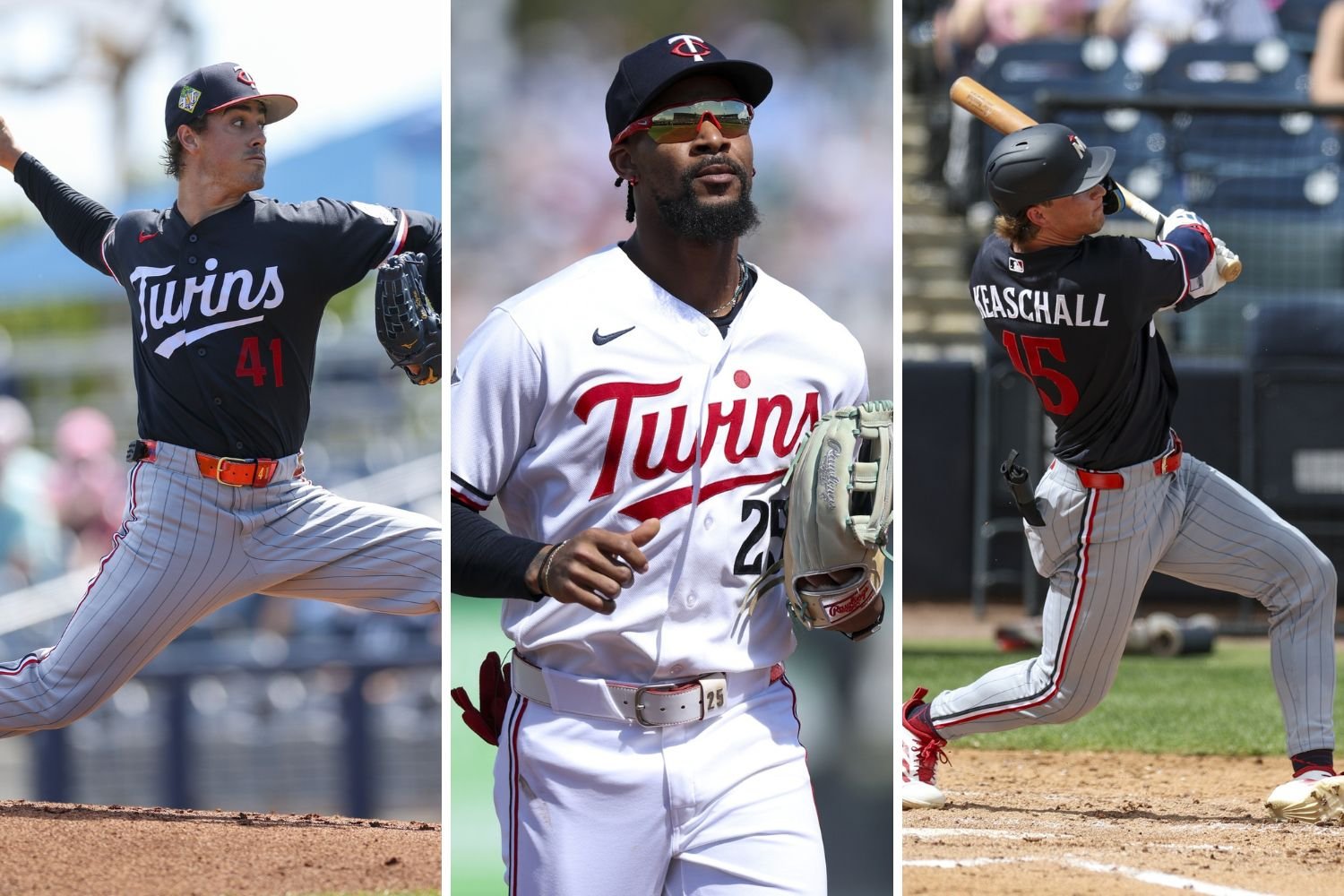 Hired during the offseason to replace Rocco Baldelli as Minnesota Twins manager, Derek Shelton brought with him a new mantra: hunt the good. The idea is that, in a game where failure is relentless, players should make a concerted effort to focus on positives and growth rather than dwelling on negativity and frustration. It will be a valuable mindset for fans to adopt here in 2026. Despite proclamations from new ownership figurehead Tom Pohlad that the Twins hope and expect to be competitive this year, the reality is that projection systems forecast them as a sub-.500 team, and betting lines in Vegas have them pegged as one of the worst teams in all of baseball. Anything can happen, and there are certainly pathways to being a surprise contender in the lukewarm AL Central, but especially after losing their No. 1 starter at the beginning of camp, the odds of the 2026 Twins being a good team are slim. My personal expectation is that they will lose close to 100 games. But even if that comes to fruition, it doesn't mean we as fans can't have a lot of fun this season, or find meaning within the action. (I will remind you that the Twins lost 90+ games in four of the first five years in this website's life. And we were having a ball!) But we'll have to know where to look. With that in mind, this season preview special will spend less time focusing on the anticipated sub-par overall results for the 2026 Twins, and more time helping elevate the interesting narratives and stories worth of your attention — many of which will have major implications on the team's ability to resurrect as a contender in 2027. Let's hunt the good. Expected Opening Day Roster Catchers: Ryan Jeffers, Victor Caratini Infielders: Josh Bell, Kody Clemens, Luke Keaschall, Brooks Lee, Royce Lewis, Tristan Gray Outfielders: Trevor Larnach, Byron Buxton, Matt Wallner, Austin Martin, James Outman Starting Pitchers: Joe Ryan, Taj Bradley, Bailey Ober, Simeon Woods Richardson, Mick Abel Relief Pitchers: Cole Sands, Taylor Rogers, Justin Topa, Anthony Banda, Eric Orze, Kody Funderburk, Zak Kent, Cody Laweryson Position by Position Roster Preview Throughout spring training, I gradually rolled out breakdowns of the outlook and depth of each position on the Twins. Below you can find a quick summary of each, and click through for the full story. Catcher: Entering his free agency walk year, a motivated Jeffers takes over as primary starter while newcomer Caratini joins the timeshare. First Base: Expect a heavy rotation (with middling upside) that features Bell, Clemens, Caratini, and at some point Eric Wagaman. Second Base: Keaschall's presence makes it one of the most exciting, high-upside positions. He'll look to evade sophomore regression and improve defensively. Third Base: Twins need Lewis to at least stay on the field, because they are lacking for immediate contingencies behind him. But we know what he can do. Shortstop: Searching for a new SS identity in the post-Carlos Correa era, Twins are putting all their eggs in the Lee basket for now. Left Field: The old guard (Larnach, Martin) look to fend off newcomers (Outman, Alan Roden) and top prospects for playing time. Center Field: Coming off his best season and a run with Team USA in the WBC, Buxton is locked in and hoping to keep building on his health and production. Right Field: Wallner figures to play almost everyday, with an underrated track record of production and limited platooning possibilities in right. Designated Hitter: At least three players on the roster are probably best suited for DH, which is not a great reflection of the club's general defensive aptitude, but sets a stable floor here. Starting Pitcher: Injuries and question marks plague the veteran rotation core, increasing the urgency for promising younger arms to turn the corner. Lots to like there. Relief Pitcher: The journey to rebuild the bullpen after completely dismantling it at last year's deadline begins, and it's bound to a bumpy road. Key Stories of Follow in 2026 Okay, I'll admit that tour through the roster was perhaps not the cheeriest exercise, but we had to keep it real. As we turn our attention to the people and storylines worth following closely this year, we'll shine a spotlight on some legitimately exciting and intriguing areas of focus. Sorting through a deep and talented pitching group The Twins are hopeful their wave of emerging arms — acquired largely through high draft picks and bold trades — will carry them back to the contention. There's a lot of promise to be found here. Pitchers like Taj Bradley, Mick Abel, Zebby Matthews, Simeon Woods Richardson, and maybe even prospects like Connor Prielipp and Kendry Rojas should have no shortage of runway if healthy. In tough competitive times, a baseball season becomes much easier to follow when you're looking forward to watching the starting pitcher almost every day. The new young core arrives Whether or not the Twins want to admit it, they're rebuilding. But I can see why they'd bristle at the connotation of the term. Selling hope in a rebuild is difficult when the prospects meant to drive it are still many years away, and their impact remains entirely theoretical. Luckily, Minnesota's pipeline is about to start paying off. Three of their top five prospects (Walker Jenkins, Emmanuel Rodriguez, Prielipp) have already reached Triple-A and a fourth (Kaelen Culpepper) is likely to start there this year. It's not always going to be pretty right away, but fans are going to get to start seeing these vaunted talents in 2026 rather than just hearing about them. And in cases like Rodriguez, who dazzled everyone in spring camp before being optioned, it's not hard to envision immediate success and notoriety. Read more: Twins Daily 2026 Top 20 Prospects: Recap and Analysis Royce Lewis at a career crossroads Lewis remains closely connected to the last truly great moment in Twins history — that 2023 postseason breakthrough where his home-run swing carried the offense. Lewis' early emergence remains ingrained in our memories, and he's fully focused on tapping back into that form. The stakes are extremely high for him, and for the team. Peak Royce elevates this team in a dramatic way. Even a rebound to solidly above-average would make a big difference over last year's 83 OPS+. If we get more of the same, this lineup is going to struggle, and his days in Minnesota are likely numbered. But right now we can dream on much more, even in the wake of a quiet spring. Meet the new bosses, same as the old bosses? During the offseason, the Twins implemented new leadership at every level. Derek Shelton replaced Rocco Baldelli as manager. Jeremy Zoll replaced Derek Falvey as head of baseball ops. Tom Pohlad replaced his brother Joe as executive ownership chair. It remains to be seen how much will actually change, especially since none of these none of these new titleholders seem to represent a remotely radical departure from the previous occupant. But any kind of shakeup is welcome in the aftermath of a total two-year collapse. Let's embrace this opportunity for a fresh start and hope these newly appointed leaders can earn back the shattered confidence of fans. Behold the greatness of Byron Buxton This is what's got me most invigorated. Buxton finally turning the corner on injuries and blossoming as a true superstar has been easily the most uplifting aspect of the last two years, and hopefully it will continue to be a resounding source of joy in the season ahead. Let's hear from you as we count down the hours until first pitch of the 2026 season. Are you feeling more optimistic about the team's outlook than me? If not, what's going to be compelling you to tune in and follow along this year? It's been a long and weird offseason, but baseball is finally back.
 -
Image courtesy of Nathan Ray Seebeck-Imagn Images Hired during the offseason to replace Rocco Baldelli as Minnesota Twins manager, Derek Shelton brought with him a new mantra: hunt the good. The idea is that, in a game where failure is relentless, players should make a concerted effort to focus on positives and growth rather than dwelling on negativity and frustration. It will be a valuable mindset for fans to adopt here in 2026. Despite proclamations from new ownership figurehead Tom Pohlad that the Twins hope and expect to be competitive this year, the reality is that projection systems forecast them as a sub-.500 team, and betting lines in Vegas have them pegged as one of the worst teams in all of baseball. Anything can happen, and there are certainly pathways to being a surprise contender in the lukewarm AL Central, but especially after losing their No. 1 starter at the beginning of camp, the odds of the 2026 Twins being a good team are slim. My personal expectation is that they will lose close to 100 games. But even if that comes to fruition, it doesn't mean we as fans can't have a lot of fun this season, or find meaning within the action. (I will remind you that the Twins lost 90+ games in four of the first five years in this website's life. And we were having a ball!) But we'll have to know where to look. With that in mind, this season preview special will spend less time focusing on the anticipated sub-par overall results for the 2026 Twins, and more time helping elevate the interesting narratives and stories worth of your attention — many of which will have major implications on the team's ability to resurrect as a contender in 2027. Let's hunt the good. Expected Opening Day Roster Catchers: Ryan Jeffers, Victor Caratini Infielders: Josh Bell, Kody Clemens, Luke Keaschall, Brooks Lee, Royce Lewis, Tristan Gray Outfielders: Trevor Larnach, Byron Buxton, Matt Wallner, Austin Martin, James Outman Starting Pitchers: Joe Ryan, Taj Bradley, Bailey Ober, Simeon Woods Richardson, Mick Abel Relief Pitchers: Cole Sands, Taylor Rogers, Justin Topa, Anthony Banda, Eric Orze, Kody Funderburk, Zak Kent, Cody Laweryson Position by Position Roster Preview Throughout spring training, I gradually rolled out breakdowns of the outlook and depth of each position on the Twins. Below you can find a quick summary of each, and click through for the full story. Catcher: Entering his free agency walk year, a motivated Jeffers takes over as primary starter while newcomer Caratini joins the timeshare. First Base: Expect a heavy rotation (with middling upside) that features Bell, Clemens, Caratini, and at some point Eric Wagaman. Second Base: Keaschall's presence makes it one of the most exciting, high-upside positions. He'll look to evade sophomore regression and improve defensively. Third Base: Twins need Lewis to at least stay on the field, because they are lacking for immediate contingencies behind him. But we know what he can do. Shortstop: Searching for a new SS identity in the post-Carlos Correa era, Twins are putting all their eggs in the Lee basket for now. Left Field: The old guard (Larnach, Martin) look to fend off newcomers (Outman, Alan Roden) and top prospects for playing time. Center Field: Coming off his best season and a run with Team USA in the WBC, Buxton is locked in and hoping to keep building on his health and production. Right Field: Wallner figures to play almost everyday, with an underrated track record of production and limited platooning possibilities in right. Designated Hitter: At least three players on the roster are probably best suited for DH, which is not a great reflection of the club's general defensive aptitude, but sets a stable floor here. Starting Pitcher: Injuries and question marks plague the veteran rotation core, increasing the urgency for promising younger arms to turn the corner. Lots to like there. Relief Pitcher: The journey to rebuild the bullpen after completely dismantling it at last year's deadline begins, and it's bound to a bumpy road. Key Stories of Follow in 2026 Okay, I'll admit that tour through the roster was perhaps not the cheeriest exercise, but we had to keep it real. As we turn our attention to the people and storylines worth following closely this year, we'll shine a spotlight on some legitimately exciting and intriguing areas of focus. Sorting through a deep and talented pitching group The Twins are hopeful their wave of emerging arms — acquired largely through high draft picks and bold trades — will carry them back to the contention. There's a lot of promise to be found here. Pitchers like Taj Bradley, Mick Abel, Zebby Matthews, Simeon Woods Richardson, and maybe even prospects like Connor Prielipp and Kendry Rojas should have no shortage of runway if healthy. In tough competitive times, a baseball season becomes much easier to follow when you're looking forward to watching the starting pitcher almost every day. The new young core arrives Whether or not the Twins want to admit it, they're rebuilding. But I can see why they'd bristle at the connotation of the term. Selling hope in a rebuild is difficult when the prospects meant to drive it are still many years away, and their impact remains entirely theoretical. Luckily, Minnesota's pipeline is about to start paying off. Three of their top five prospects (Walker Jenkins, Emmanuel Rodriguez, Prielipp) have already reached Triple-A and a fourth (Kaelen Culpepper) is likely to start there this year. It's not always going to be pretty right away, but fans are going to get to start seeing these vaunted talents in 2026 rather than just hearing about them. And in cases like Rodriguez, who dazzled everyone in spring camp before being optioned, it's not hard to envision immediate success and notoriety. Read more: Twins Daily 2026 Top 20 Prospects: Recap and Analysis Royce Lewis at a career crossroads Lewis remains closely connected to the last truly great moment in Twins history — that 2023 postseason breakthrough where his home-run swing carried the offense. Lewis' early emergence remains ingrained in our memories, and he's fully focused on tapping back into that form. The stakes are extremely high for him, and for the team. Peak Royce elevates this team in a dramatic way. Even a rebound to solidly above-average would make a big difference over last year's 83 OPS+. If we get more of the same, this lineup is going to struggle, and his days in Minnesota are likely numbered. But right now we can dream on much more, even in the wake of a quiet spring. Meet the new bosses, same as the old bosses? During the offseason, the Twins implemented new leadership at every level. Derek Shelton replaced Rocco Baldelli as manager. Jeremy Zoll replaced Derek Falvey as head of baseball ops. Tom Pohlad replaced his brother Joe as executive ownership chair. It remains to be seen how much will actually change, especially since none of these none of these new titleholders seem to represent a remotely radical departure from the previous occupant. But any kind of shakeup is welcome in the aftermath of a total two-year collapse. Let's embrace this opportunity for a fresh start and hope these newly appointed leaders can earn back the shattered confidence of fans. Behold the greatness of Byron Buxton This is what's got me most invigorated. Buxton finally turning the corner on injuries and blossoming as a true superstar has been easily the most uplifting aspect of the last two years, and hopefully it will continue to be a resounding source of joy in the season ahead. Let's hear from you as we count down the hours until first pitch of the 2026 season. Are you feeling more optimistic about the team's outlook than me? If not, what's going to be compelling you to tune in and follow along this year? It's been a long and weird offseason, but baseball is finally back. View full article
-
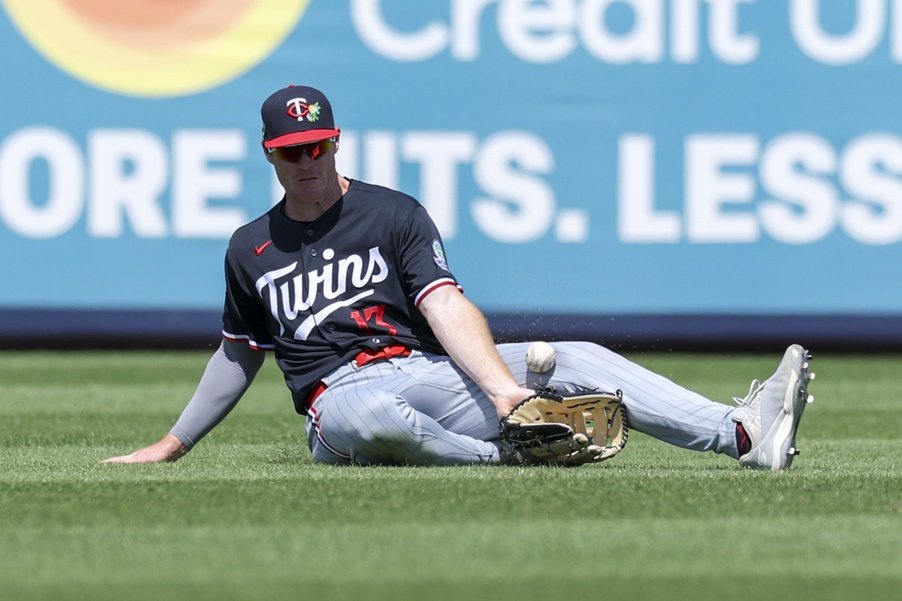 It's annoying to watch a bad team. It's aggravating to watch a bad defensive team. The two often go hand in hand, and that was certainly the case last year for the 92-loss Twins, who ranked second-to-last in Runs Saved, according to Sports Info Solutions. Watching so many games slip away was one thing. But when makeable plays are getting missed, and fundamentals are running astray, the viewing experience really degrades in a hurry. On top of that, bad defense is costly for pitchers, inflating their numbers while forcing pitch counts to mount and long innings to drag. Improving the defense was said to be a key priority for the Twins at the end of last season. "When Derek Falvey spoke at a year-end news conference, one day after Baldelli was fired as manager, the Twins president was asked a question about things he could have done differently this year," Bobby Nightengale wrote at the Star Tribune. "He immediately brought up defense as one of the things that was constantly on his mind." But that wasn't really reflected in the team's offseason moves, and certainly won't be reflected on their Opening Day roster. After seeing several of their better defenders depart — including Harrison Bader, Christian Vazquez, Ty France and DaShawn Keirsey Jr. — the Twins have done little to replenish their lost fielding acumen. Josh Bell comes aboard with a truly terrible defensive rep. Victor Caratini is probably closer to average. Ryan Kreidler was the only legitimate glove-first player acquired over the winter, and he's more glove-only, which is why he's been sent to the minors to start the season. Without Kreidler, the Twins roster will have few players who could confidently be called strong defenders. Byron Buxton might be the only member of the starting lineup with such a designation, though he himself shows clear signs of decline. Source: Sports Info Solutions Maybe you can make the case for Royce Lewis if he carries forward last year's improvement. But Bell, Luke Keaschall, Brooks Lee, Trevor Larnach and Matt Wallner all grade out poorly in the field. Backups Austin Martin and Tristan Gray (or Orlando Arcia) are stretched at the most important defensive positions they'll be asked to play (center and short). That leaves James Outman, who made the team over Alan Roden mostly because he's out of options, but also because he gives the Twins the closest thing to a defensive specialist off the bench. Unlike Roden or Martin, Outman is a natural center fielder and ostensibly a standout in left or right. But like Buxton, Outman's defensive metrics have seen a downward trend in recent years. As far as late-game defensive replacements go, he'll be a step down from Keirsey at best. There is hope for future improvement, with prospects like Walker Jenkins, Emmanuel Rodriguez and Marek Houston boasting quality defensive skills. But in the short-term, it's really hard to find sources of optimism for defensive improvement on the Twins. As Mark Simon concluded at SIS, "Their best-case scenario with what’s currently on the roster is probably something close to average. Their worst-case scenario is dropping to last overall in Runs Saved." That worst-case scenario feels more likely to play out than not, unless several players can really step it up.
- 49 comments
-
- 12
-
-
-
Image courtesy of Nathan Ray Seebeck-Imagn Images It's annoying to watch a bad team. It's aggravating to watch a bad defensive team. The two often go hand in hand, and that was certainly the case last year for the 92-loss Twins, who ranked second-to-last in Runs Saved, according to Sports Info Solutions. Watching so many games slip away was one thing. But when makeable plays are getting missed, and fundamentals are running astray, the viewing experience really degrades in a hurry. On top of that, bad defense is costly for pitchers, inflating their numbers while forcing pitch counts to mount and long innings to drag. Improving the defense was said to be a key priority for the Twins at the end of last season. "When Derek Falvey spoke at a year-end news conference, one day after Baldelli was fired as manager, the Twins president was asked a question about things he could have done differently this year," Bobby Nightengale wrote at the Star Tribune. "He immediately brought up defense as one of the things that was constantly on his mind." But that wasn't really reflected in the team's offseason moves, and certainly won't be reflected on their Opening Day roster. After seeing several of their better defenders depart — including Harrison Bader, Christian Vazquez, Ty France and DaShawn Keirsey Jr. — the Twins have done little to replenish their lost fielding acumen. Josh Bell comes aboard with a truly terrible defensive rep. Victor Caratini is probably closer to average. Ryan Kreidler was the only legitimate glove-first player acquired over the winter, and he's more glove-only, which is why he's been sent to the minors to start the season. Without Kreidler, the Twins roster will have few players who could confidently be called strong defenders. Byron Buxton might be the only member of the starting lineup with such a designation, though he himself shows clear signs of decline. Source: Sports Info Solutions Maybe you can make the case for Royce Lewis if he carries forward last year's improvement. But Bell, Luke Keaschall, Brooks Lee, Trevor Larnach and Matt Wallner all grade out poorly in the field. Backups Austin Martin and Tristan Gray (or Orlando Arcia) are stretched at the most important defensive positions they'll be asked to play (center and short). That leaves James Outman, who made the team over Alan Roden mostly because he's out of options, but also because he gives the Twins the closest thing to a defensive specialist off the bench. Unlike Roden or Martin, Outman is a natural center fielder and ostensibly a standout in left or right. But like Buxton, Outman's defensive metrics have seen a downward trend in recent years. As far as late-game defensive replacements go, he'll be a step down from Keirsey at best. There is hope for future improvement, with prospects like Walker Jenkins, Emmanuel Rodriguez and Marek Houston boasting quality defensive skills. But in the short-term, it's really hard to find sources of optimism for defensive improvement on the Twins. As Mark Simon concluded at SIS, "Their best-case scenario with what’s currently on the roster is probably something close to average. Their worst-case scenario is dropping to last overall in Runs Saved." That worst-case scenario feels more likely to play out than not, unless several players can really step it up. View full article
-
Image courtesy of Jonathan Dyer-Imagn Images A series of cuts over the weekend, including some rather surprising ones, brought further clarity to the expected Opening Day roster for the Twins. It feels safe to say that at least 23 or 24 spots are accounted for, with some lingering uncertainty at a few positions heading into the final days of camp. This will be our last update on spring training usage, highlighting who's played where and who's pitched when over the past seven days (Monday through Sunday). As the Twins prepare themselves for the start of meaningful action on Thursday, let's see what we can deduce from Derek Shelton's decision-making. (Total spring starts are listed next to each player; starts in the past week are in parentheses.) Catcher Ryan Jeffers: 14x (4x) Victor Caratini: 9x (2x) Alex Jackson: 6x Noah Cardenas: 1x The Twins used a traditional two-catcher rotation, and Jackson did not get any starts as the Twins reportedly shop him around. First Base Josh Bell: 11x (1x) Eric Wagaman: 8x (2x) Kody Clemens: 6x (2x) Victor Caratini: 4x (1x) Aaron Sabato: 1x Bell still leads the team in starts at first base, but made only one in the past week. Will he be there on Opening Day? I assume it'll be either him or Caratini against lefty Trevor Rogers, with the other at DH. Second Base Luke Keaschall: 12x (3x) Kody Clemens: 8x (1x) Tristan Gray: 4x Orlando Arcia: 5x (2x) Kaelen Culpepper: 1x Keaschall batted leadoff on Sunday in a lineup that sure seemed like a regular-season tune up. A sign of things to come? His skill set is an obvious fit. Third Base Royce Lewis: 13x (4x) Gio Urshela: 6x (1x) Tristan Gray: 4x (1x) Ryan Kreidler: 3x Eric Wagaman: 2x Orlando Arcia: 1x Jake Rucker: 1x It would have been convenient if Urshela accepted an assignment to Triple-A, where he could wait on hand as third-base depth behind the oft-injured Lewis, but he chose to re-enter the open market instead. The fact that Arcia has made only one 3B start all spring is, to me, an indicator that he's not making the team, because if he does he'll be the top backup there. Wouldn't you want to get a little more of a look at now his skills and reactions play? Shortstop Brooks Lee: 18x (5x) Orlando Arcia: 5x Tristan Gray: 4x (1x) Ryan Kreidler: 3x Lee has made four more starts at shortstop this spring than anyone else has made at any single position — a fitting reflection of Minnesota's deeply lacking depth. Left Field Austin Martin: 8x (1x) Trevor Larnach: 7x (1x) Luke Keaschall: 4x (1x) James Outman: 3x (1x) Alan Roden: 3x (1x) Emmanuel Rodriguez: 2x Eric Wagaman: 1x Gabriel Gonzalez: 1x Ryan Kreidler: 1x (1x) Martin returned to the lineup on Sunday after a concussion scare earlier in the week sidelined him for a few days. He's going to start in left fielder against left-handed pitchers (including on Opening Day) and he'll be a handy asset on the bench. The question is how much he can expand his role beyond that. Roden was optioned to Triple-A on Sunday, ensuring that Outman will make the Opening Day roster as fourth outfielder. Center Field James Outman: 8x (2x) Alan Roden: 7x (2x) Byron Buxton: 6x (2x) Austin Martin: 5x Ryan Kreidler: 2x Walker Jenkins: 1x Emmanuel Rodriguez: 1x Buxton returned to the starting lineup on Friday after his run with Team USA in the World Baseball Classic, where he played ... somewhat sparsely. It would come as no surprise if he takes a little extra time to consistently find his timing compared to some others. “I need at-bats,” Buxton said over the weekend. “I’m not off. I feel like I’m a couple of clicks off, but it ain’t nothing where I’m worried.” Right Field Matt Wallner: 13x (3x) Alan Roden: 6x Trevor Larnach: 4x James Outman: 2x Ryan Kreidler: 2x (1x) Austin Martin: 1x (1x) Gabriel Gonzalez: 1x Kyler Fedko: 1x (1x) It's been a great spring for Wallner, who's swinging a hot bat and looking solid defensively in right. He's primed to be the starting right fielder in almost every game, regardless of matchup. Designated Hitter Josh Bell: 8x (3x) Matt Wallner: 4x (1x) Trevor Larnach: 4x (1x) Gio Urshela: 3x Royce Lewis: 2x Byron Buxton: 2x Alex Jackson: 1x (1x) Victor Caratini: 1x Ryan Jeffers: 1x Luke Keaschall: 1x Emmanuel Rodriguez: 1x Gabriel Gonzalez: 1x Hendry Mendez: 1x Bell has started at first base more than anyone else this spring, but he's also gotten twice as many DH starts as anybody else. I don't know how much meaning to attach to that but I tentatively expect we'll most often see him at DH and Clemens at 1B against right-handers. The Pitching Carousel Last week I noted that both Liam Hendriks and Andrew Chafin were often among the first relievers entering games, meaning that they were getting chances to face relatively legitimate spring competition. When you see that trend, you can conclude that either: A) they're gearing up for high-leverage roles and the team wants them primed for those match-ups, or B) they're being closely evaluated and the team wants to see them against the best hitters possible. It turns out that it was the latter, and through this assessment, neither was deemed up to snuff. Both Hendriks and Chafin were granted their releases on Friday, with team officials citing their lack of consistency as the cause. I can give the Twins some credit for being honest with themselves and not simply deferring to veteran status, but it leaves the bullpen pretty light on bullpen depth and experience. Here's how the pitcher usage sequences played out in six games over the past week. Monday: Joe Ryan, Anthony Banda, Cole Sands, Justin Topa, Chafin, Kody Funderburk Tuesday: Bailey Ober, Hendriks, Eric Orze, Zak Kent Thursday: Mick Abel, (Luis Quiñones), Hendriks, Dan Altavilla, Matt Bowman Friday: Simeon Woods Richardson, Topa, Banda, Taylor Rogers, Sands Saturday: Ryan, Orze, Altavilla, Cody Laweryson Sunday: Taj Bradley, (Logan Whitaker), Funderburk, Bowman, Trent Baker Ryan is lined up to start against the Orioles in the season opener on Thursday. From there, it looks like he'll be followed by Bradley, Ober, Abel and Woods Richardson. Zebby Matthews was optioned to Triple-A on Friday, where he will stand by as the next man up.It sure looks like Altavilla is going to make the team, but the leverage hierarchy is still a bit tricky to figure out. Topa might be the closer? Share your thoughts on final roster decisions and emerging roles as we head into the final days of spring camp. View full article
-
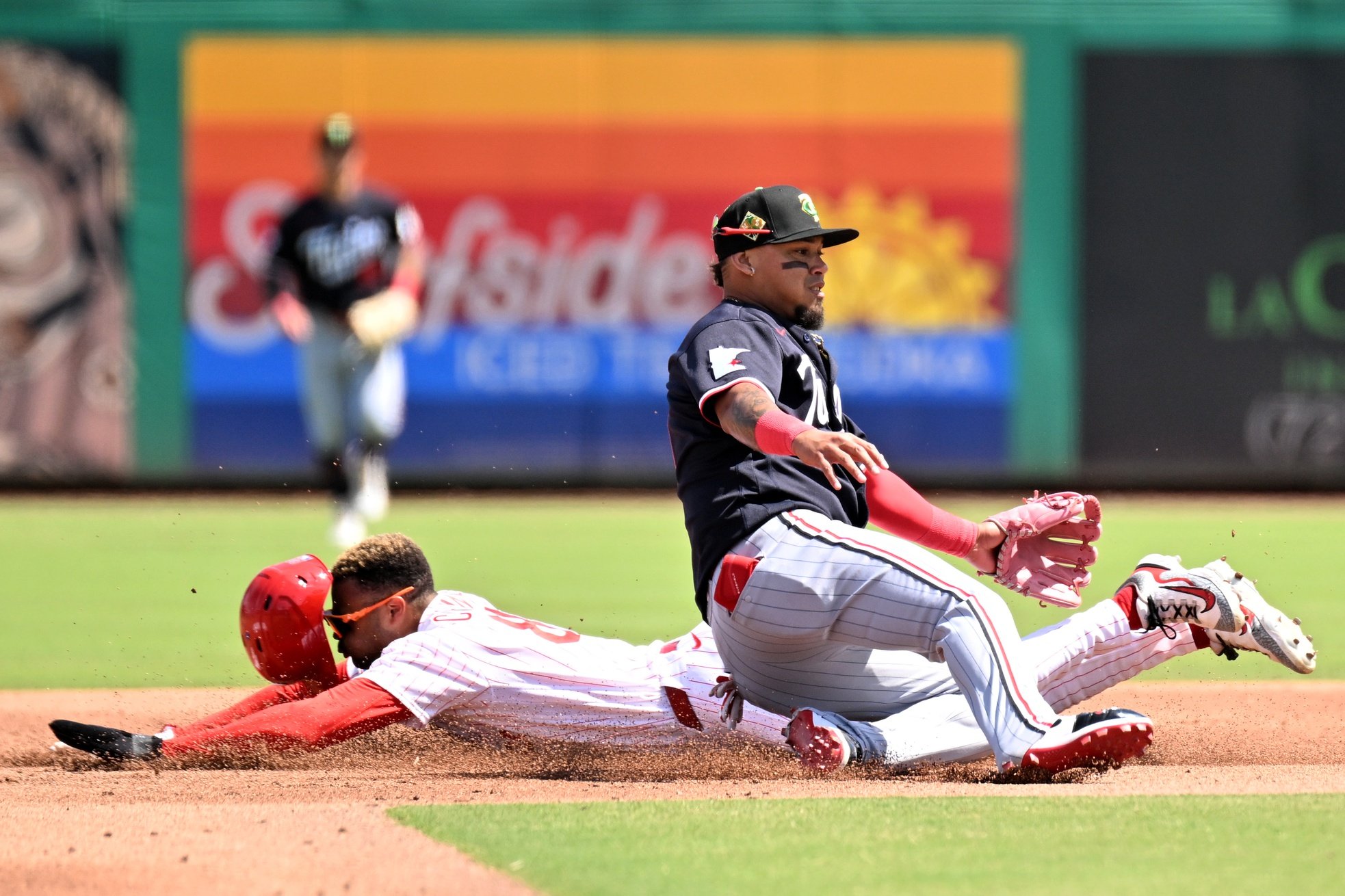 A series of cuts over the weekend, including some rather surprising ones, brought further clarity to the expected Opening Day roster for the Twins. It feels safe to say that at least 23 or 24 spots are accounted for, with some lingering uncertainty at a few positions heading into the final days of camp. This will be our last update on spring training usage, highlighting who's played where and who's pitched when over the past seven days (Monday through Sunday). As the Twins prepare themselves for the start of meaningful action on Thursday, let's see what we can deduce from Derek Shelton's decision-making. (Total spring starts are listed next to each player; starts in the past week are in parentheses.) Catcher Ryan Jeffers: 14x (4x) Victor Caratini: 9x (2x) Alex Jackson: 6x Noah Cardenas: 1x The Twins used a traditional two-catcher rotation, and Jackson did not get any starts as the Twins reportedly shop him around. First Base Josh Bell: 11x (1x) Eric Wagaman: 8x (2x) Kody Clemens: 6x (2x) Victor Caratini: 4x (1x) Aaron Sabato: 1x Bell still leads the team in starts at first base, but made only one in the past week. Will he be there on Opening Day? I assume it'll be either him or Caratini against lefty Trevor Rogers, with the other at DH. Second Base Luke Keaschall: 12x (3x) Kody Clemens: 8x (1x) Tristan Gray: 4x Orlando Arcia: 5x (2x) Kaelen Culpepper: 1x Keaschall batted leadoff on Sunday in a lineup that sure seemed like a regular-season tune up. A sign of things to come? His skill set is an obvious fit. Third Base Royce Lewis: 13x (4x) Gio Urshela: 6x (1x) Tristan Gray: 4x (1x) Ryan Kreidler: 3x Eric Wagaman: 2x Orlando Arcia: 1x Jake Rucker: 1x It would have been convenient if Urshela accepted an assignment to Triple-A, where he could wait on hand as third-base depth behind the oft-injured Lewis, but he chose to re-enter the open market instead. The fact that Arcia has made only one 3B start all spring is, to me, an indicator that he's not making the team, because if he does he'll be the top backup there. Wouldn't you want to get a little more of a look at now his skills and reactions play? Shortstop Brooks Lee: 18x (5x) Orlando Arcia: 5x Tristan Gray: 4x (1x) Ryan Kreidler: 3x Lee has made four more starts at shortstop this spring than anyone else has made at any single position — a fitting reflection of Minnesota's deeply lacking depth. Left Field Austin Martin: 8x (1x) Trevor Larnach: 7x (1x) Luke Keaschall: 4x (1x) James Outman: 3x (1x) Alan Roden: 3x (1x) Emmanuel Rodriguez: 2x Eric Wagaman: 1x Gabriel Gonzalez: 1x Ryan Kreidler: 1x (1x) Martin returned to the lineup on Sunday after a concussion scare earlier in the week sidelined him for a few days. He's going to start in left fielder against left-handed pitchers (including on Opening Day) and he'll be a handy asset on the bench. The question is how much he can expand his role beyond that. Roden was optioned to Triple-A on Sunday, ensuring that Outman will make the Opening Day roster as fourth outfielder. Center Field James Outman: 8x (2x) Alan Roden: 7x (2x) Byron Buxton: 6x (2x) Austin Martin: 5x Ryan Kreidler: 2x Walker Jenkins: 1x Emmanuel Rodriguez: 1x Buxton returned to the starting lineup on Friday after his run with Team USA in the World Baseball Classic, where he played ... somewhat sparsely. It would come as no surprise if he takes a little extra time to consistently find his timing compared to some others. “I need at-bats,” Buxton said over the weekend. “I’m not off. I feel like I’m a couple of clicks off, but it ain’t nothing where I’m worried.” Right Field Matt Wallner: 13x (3x) Alan Roden: 6x Trevor Larnach: 4x James Outman: 2x Ryan Kreidler: 2x (1x) Austin Martin: 1x (1x) Gabriel Gonzalez: 1x Kyler Fedko: 1x (1x) It's been a great spring for Wallner, who's swinging a hot bat and looking solid defensively in right. He's primed to be the starting right fielder in almost every game, regardless of matchup. Designated Hitter Josh Bell: 8x (3x) Matt Wallner: 4x (1x) Trevor Larnach: 4x (1x) Gio Urshela: 3x Royce Lewis: 2x Byron Buxton: 2x Alex Jackson: 1x (1x) Victor Caratini: 1x Ryan Jeffers: 1x Luke Keaschall: 1x Emmanuel Rodriguez: 1x Gabriel Gonzalez: 1x Hendry Mendez: 1x Bell has started at first base more than anyone else this spring, but he's also gotten twice as many DH starts as anybody else. I don't know how much meaning to attach to that but I tentatively expect we'll most often see him at DH and Clemens at 1B against right-handers. The Pitching Carousel Last week I noted that both Liam Hendriks and Andrew Chafin were often among the first relievers entering games, meaning that they were getting chances to face relatively legitimate spring competition. When you see that trend, you can conclude that either: A) they're gearing up for high-leverage roles and the team wants them primed for those match-ups, or B) they're being closely evaluated and the team wants to see them against the best hitters possible. It turns out that it was the latter, and through this assessment, neither was deemed up to snuff. Both Hendriks and Chafin were granted their releases on Friday, with team officials citing their lack of consistency as the cause. I can give the Twins some credit for being honest with themselves and not simply deferring to veteran status, but it leaves the bullpen pretty light on bullpen depth and experience. Here's how the pitcher usage sequences played out in six games over the past week. Monday: Joe Ryan, Anthony Banda, Cole Sands, Justin Topa, Chafin, Kody Funderburk Tuesday: Bailey Ober, Hendriks, Eric Orze, Zak Kent Thursday: Mick Abel, (Luis Quiñones), Hendriks, Dan Altavilla, Matt Bowman Friday: Simeon Woods Richardson, Topa, Banda, Taylor Rogers, Sands Saturday: Ryan, Orze, Altavilla, Cody Laweryson Sunday: Taj Bradley, (Logan Whitaker), Funderburk, Bowman, Trent Baker Ryan is lined up to start against the Orioles in the season opener on Thursday. From there, it looks like he'll be followed by Bradley, Ober, Abel and Woods Richardson. Zebby Matthews was optioned to Triple-A on Friday, where he will stand by as the next man up.It sure looks like Altavilla is going to make the team, but the leverage hierarchy is still a bit tricky to figure out. Topa might be the closer? Share your thoughts on final roster decisions and emerging roles as we head into the final days of spring camp.
- 54 comments
-
- 12
-
