



Nick Nelson
-
Posts
8,372 -
Joined
-
Last visited
-
Days Won
56
Content Type
Profiles
News
Minnesota Twins Videos
2026 Minnesota Twins Top Prospects Ranking
2022 Minnesota Twins Draft Picks
Minnesota Twins Free Agent & Trade Rumors, Notes, & Tidbits
Guides & Resources
2023 Minnesota Twins Draft Picks
The Minnesota Twins Players Project
2024 Minnesota Twins Draft Picks
2025 Minnesota Twins Draft Pick Tracker
2026 Minnesota Twins Draft Tracker: Picks & Bonuses
Forums
Blogs
Events
Store
Downloads
Gallery
Everything posted by Nick Nelson
-
 Image courtesy of © Bruce Kluckhohn-Imagn Images When Derek Shelton came aboard as manager, he brought with him a new mantra: "hunt the good." The idea was that, in a game often defined by failure, you've got to focus on the successes and wins where you can. Foreseeing plenty of failure as I looked ahead to this Twins season, it was a mindset I tried to adopt. I have to remind myself that this site was founded (in 2012) amidst a long stretch of constant losing for the franchise, but during those times we still found ways to enjoy following along. You search for the small positives and appreciate them — especially those with potentially significant future ramifications. As we checked in at the one-third point of the season a couple weeks ago, I found several heartening trends worth focusing on. Battling through myriad injuries and setbacks, the Twins were showing resilience. They had just pulled out of a tailspin with seven wins in their past nine games, drawing within a game of .500 and positioning themselves in the wild-card race. Since then, they've lost 11 of 15, falling back to eight games below .500 and to a 90-loss pace. Unfortunately, most of the bright spots that I called out at the time have taken a sharp turn downward turn, and in some cases the writing was one the wall even then. Let's check in on the primary contributors and factors that were keeping the Twins relevant. Fantastic starting rotation: Lately, not so much. Through May 27th, Twins starters ranked ninth in the majors in fWAR; since then they rank 27th. Bailey Ober's charmed run came to and end with a pair of clunkers preceding an IL trip for elbow inflammation. Taj Bradley's performance has tailed off dramatically, as has Connor Prielipp's. Simeon Woods Richardson got DFA'ed. Austin Martin and Trevor Larnach breakouts: Martin had a .900 OPS at the start of May. Since then he's slashing .216/.285/.288, with a .440 OPS in his past 24 games. Larnach is hitting .189 with a .610 OPS since May 27th. Ryan Jeffers on track for a career year: He had just gotten injured, and will still be out for several more weeks. When he turns he'll be just months from free agency, and a possible trade candidate. Shockingly effective bullpen: They were on a great run in late May, inching upward on the leaderboard after an expectedly rough start to the year. With Luis García and Justin Topa recently jettisoned, there was some hope that some of level of success would sustain. Nope. Since May 27th, Minnesota's bullpen ranks 26th in baseball with a 6.16 ERA and 28th in WPA. Derek Shelton resonance: I said at the time that I was lukewarm on this vibe because the Twins had plenty of hot streaks over the past couple of years under Rocco Baldelli, and they were ultimately outweighed by prolonged losing spells. So far that's been the case here too, and in fact with the way the team is trending — outscored by 45 runs during this latest 15-game stretch — you could argue that things are starting to go off the rails under his watch. So what positives remain? Frightfully few. Byron Buxton continues to absolutely crush when he's in the lineup and has been easily the biggest highlight on the team. Joe Ryan keeps turning in excellent outings to fuel his trade value. Kody Clemens has been one of the few red-hot hitters in the lineup over the past couple weeks, though it says a lot that he ranks third among Twins position players in fWAR as a journeyman role player. Slim pickings outside of a few select players, none of whom are really positioned as future building blocks. Then again, if this team has reminded us of anything, it's how many ups and downs can take place over the course of an MLB season. Any of the downward-trending guys mentioned above — Martin, Larnach, Bradley, Prielipp — could do an about-face and resume their ascent at any time. Royce Lewis is back and has taken some good swings. Moreover, help is on the way. Alan Roden is rehabbing from injury in Triple-A and could join the big-league club sometime soon. Ditto Mick Abel, whose return would do much to jolt a staggered rotation. Fellow 2026 deadline acquisition Hendry Mendez has been on a tear for the Saints and is a candidate for a second-half promotion, if the Twins can find room for him. One guy they'll have no trouble finding room for is Kaelen Culpepper, the top prospect who is excelling at Triple-A and in line for an imminent call-up. He's become the main source of optimism and excitement for demoralized Twins fans, although as I wrote earlier this week, that places a pretty heavy burden on his shoulders. If he comes up and struggles it won't be any kind of indictment on his future, but it will be another drop in the bucket of 2026 malaise. We'll see if the Twins and their key players have another burst of resilience in them. If not, we could be in for a dreary second half. Last year's team went 34-61 after this date. If this year's club were to play at the same pace the rest of the way they'd finish 64-98. Only three Twins teams have lost more games (2016, 2011, 1982). Gonna be hard to hunt much good out of that. View full article
- 121 replies
-
- 1
-

-
- taj bradley
- austin martin
- (and 2 more)
-
There's an Awful Lot Riding on the Shoulders of Kaelen Culpepper
Nick Nelson posted an article in Twins
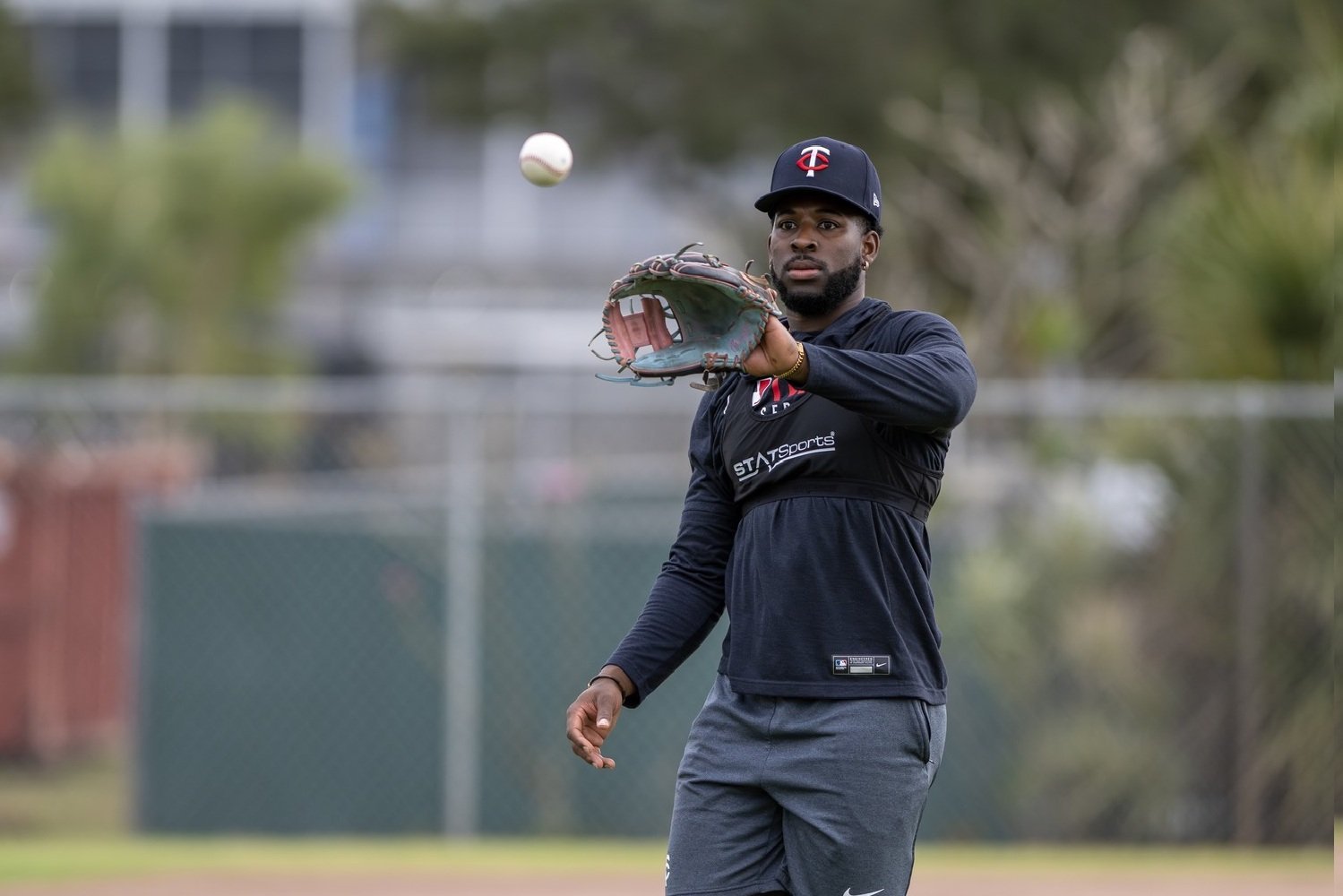 There's a growing buzz throughout the Twins sphere that Kaelen Culpepper's arrival in the majors is imminent. A promotion would certainly be warranted — the 23-year-old has been on fire in Triple-A, slashing .391/.481/.696 here in June after posting a .947 OPS in May. He's homered five times in his past 14 games while showing improved plate discipline and playing shortstop almost everyday. It's fair to say he looks ready. But Culpepper's success in St. Paul is only one factor driving the sense of urgency to get him up to the big-league club. The other side of it is that Minnesota's infield has been horrible, offensively and defensively. Most troubling: this state of affairs can primarily be tied back to a set of players who not long ago were in the same position as Culpepper: former high draft picks turned top prospects who were being counted on as key parts of the solution for the Twins infield. Brooks Lee's OPS has hovered around mediocrity, which is a relatively good outcome in light of his ugly underlying metrics. His fielding has graded out very poorly, albeit better at third than short, and as a result he's been a borderline replacement-level player. That still puts him ahead of Royce Lewis, who's checking in at a .554 OPS and negative-0.2 fWAR after returning from a brief banishment to the minors. Lee has also outperformed Luke Keaschall, who's been getting on base at a solid rate recently but is slugging .324. Not good enough for a bottom-tier defender at second base. Twins fans are constantly being reminded that the path from top prospect to impact major-leaguer is non-linear if not a dead end. The two biggest talents in the Twins' system aside from Culpepper, Walker Jenkins and Emmanuel Rodriguez, are both injured (again), which only reinforces that sense of wariness. Nothing is promised. In fact, around here, it almost feels like what's promised is disappointment. Still, hope springs eternal, and when you see a touted talent like Culpepper tearing it up at the closest level to the majors, you can't help but shake off past experiences and feel excited. He looks like a good one. The Twins need him to be, and fast. It's not so much about salvaging this season, which feels like a moot point. It's more so about rejuvenating any sense of optimism and confidence within the fanbase. This year has already been a morale beatdown: modest winning stretches followed by deep funks, myriad injuries to the pitching staff, and — as mentioned — the so-called "post-hype prospects" meant to propel a turnaround have flopped almost without exception. Fans need a beacon for a better future they can grasp onto. There's little on the current roster to provide it, and there's little else on the way in the near term. Fair or not, Culpepper carries a heavy weight. Here's hoping he's up to the task. History says he'll let us down. But history is only that.
- 33 comments
-
- 4
-
-
- kaelen culpepper
- brooks lee
- (and 2 more)
-
Image courtesy of William Parmeter There's a growing buzz throughout the Twins sphere that Kaelen Culpepper's arrival in the majors is imminent. A promotion would certainly be warranted — the 23-year-old has been on fire in Triple-A, slashing .391/.481/.696 here in June after posting a .947 OPS in May. He's homered five times in his past 14 games while showing improved plate discipline and playing shortstop almost everyday. It's fair to say he looks ready. But Culpepper's success in St. Paul is only one factor driving the sense of urgency to get him up to the big-league club. The other side of it is that Minnesota's infield has been horrible, offensively and defensively. Most troubling: this state of affairs can primarily be tied back to a set of players who not long ago were in the same position as Culpepper: former high draft picks turned top prospects who were being counted on as key parts of the solution for the Twins infield. Brooks Lee's OPS has hovered around mediocrity, which is a relatively good outcome in light of his ugly underlying metrics. His fielding has graded out very poorly, albeit better at third than short, and as a result he's been a borderline replacement-level player. That still puts him ahead of Royce Lewis, who's checking in at a .554 OPS and negative-0.2 fWAR after returning from a brief banishment to the minors. Lee has also outperformed Luke Keaschall, who's been getting on base at a solid rate recently but is slugging .324. Not good enough for a bottom-tier defender at second base. Twins fans are constantly being reminded that the path from top prospect to impact major-leaguer is non-linear if not a dead end. The two biggest talents in the Twins' system aside from Culpepper, Walker Jenkins and Emmanuel Rodriguez, are both injured (again), which only reinforces that sense of wariness. Nothing is promised. In fact, around here, it almost feels like what's promised is disappointment. Still, hope springs eternal, and when you see a touted talent like Culpepper tearing it up at the closest level to the majors, you can't help but shake off past experiences and feel excited. He looks like a good one. The Twins need him to be, and fast. It's not so much about salvaging this season, which feels like a moot point. It's more so about rejuvenating any sense of optimism and confidence within the fanbase. This year has already been a morale beatdown: modest winning stretches followed by deep funks, myriad injuries to the pitching staff, and — as mentioned — the so-called "post-hype prospects" meant to propel a turnaround have flopped almost without exception. Fans need a beacon for a better future they can grasp onto. There's little on the current roster to provide it, and there's little else on the way in the near term. Fair or not, Culpepper carries a heavy weight. Here's hoping he's up to the task. History says he'll let us down. But history is only that. View full article
-
Week in Review: Reality Check
Nick Nelson replied to Nick Nelson's topic in Twins Daily Front Page News
This was, no joke, the original title for the column. Then I looked around and couldn't confirm that the phrase existed outside if a 1994 rom-com and thought it was too obscure 😆- 44 replies
-
- 1
-

-
- simeon woods richardson
- bailey ober
- (and 2 more)
-
Image courtesy of Charles LeClaire-Imagn Images The Weekly Nutshell: The past week represented an interesting opportunity for the Minnesota Twins to match up against a couple of franchises in similar positions. The White Sox and Pirates are also lower-budget teams that are focused on development and building toward the future while also trying to stay competitive in the present. During these two series, the Twins looked to be miles behind both opponents. They lost six of seven games, with the only win coming in a laborious 11-inning affair on Tuesday. An increasingly injury-ravaged and filler-packed pitching staff gave up nine-plus runs on three separate occasions as the team's biggest strength from the first third of the season lapsed into a liability. Now the Twins will limp back to Target Field on a five-game losing streak, hoping to capture any kind of positive energy with the season sinking back into darkness. Weekly Snapshot: Mon, 5/25 through Sun, 5/31 *** Record Last Week: 1-6 (Overall: 27-33) Run Differential Last Week: -25 (Overall: -21) Standing: 3rd Place in AL Central (6.5 GB) Latest Game Results Game 54 | CWS 3, MIN 1: Twins Come Out on Losing End of Chi-Town Pitching Duel Martin, Bell, Clemens: 0-12 Game 55 | MIN 5, CWS 3 (11): Lee's Clutch Three-Run Double Secures Win in Extras Ryan: 7.2 IP, 2 ER, 5 H, 0 BB, 9 K Game 56 | CWS 15, MIN 2: Regression Hits Like Load of Bricks in Massive Blowout Orze, Adams: 2.2 IP, 8 ER, 2 H, 2 BB, 3 K Game 57 | CWS 6, MIN 2: Walks, Mistakes Cost Twins Early in Disappointing Series Finale Woods Richardson: 2.2 IP, 5 ER, 5 H, 3 BB, 4 K Game 58 | PIT 6, MIN 5: Reynolds Walks Off Rogers with Two-Run Homer in Ninth Inning Larnach: 2-4, HR, 2 RBI Game 59 | PIT 10, MIN 9: Fierce Comeback Effort Fall Short After Ober Digs Big Early Hole Ober: 4.2 IP, 8 R (7 ER), 12 H, 1 BB, 3 K Game 60 | PIT 9, MIN 3: Pirates Rough Up Tiwns Pitching Once Again to Seal Sweep at PNC Matthews: 4.1 IP, 7 ER, 6 H, 2 BB, 7 K IF YOU'D RATHER LISTEN TO THE WEEK IN REVIEW THAN READ IT, YOU CAN GET IT IN AUDIO FORM! FIND THE LATEST EPISODE ON OUR PODCAST PAGE, AS WELL AS ON APPLE AND SPOTIFY. SUBSCRIBE TO OUR CHANNELS SO YOU DON'T MISS OUT! NEWS & NOTES The Twins already have Mick Abel and Alan Roden — two key pieces acquired at last year's trade deadline — on the injured list indefinitely, and they've seen Taj Bradley sidelined for a spell. On Friday, another hopeful future fixture from that deadline class landed on the shelf, with Kendry Rojas placed on the 15-day IL due to elbow soreness. The injury is being billed as inflammation, and Joe Ryan's recent example taught us not to overreact, but this is certainly ominous news for Rojas, whose health history was part of the reason behind Toronto's willingness to give up his promising arm in the Louis Varland trade. Stepping back into the rotation on short notice for Rojas was Simeon Woods Richardson. Unfortunately, he picked up right where he left off, coughing up five earned runs on five hits and three walks in 2 ⅔ innings. At that point, the Twins had seen enough: they designated Woods Richardson for assignment on Saturday, exposing the 25-year-old to waivers and potentially losing him for nothing. A major downfall from the strong finish last year, and from my view a bit of a questionable decision. One day after designating Woods Richardson for assignment, the Twins lost another former rotation anchor, with Bailey Ober also heading to the injured list due to elbow inflammation. After impressively giving up just five homers through 52 innings in his first nine starts, Ober had given up seven in his past three, and he got flat-out crushed by the Pirates on Saturday. We'll see how long he's out, and we'll see if Woods Richardson is able to get through waivers and stick around, because the depth would be even handier now. The Twins selected the contract of right-hander Mike Paredes from St. Paul to replace Ober on the roster. Paredes is a fun story as a former 18th-round draft pick out of high school who has turned himself into, if not a prospect, at least an intriguing arm who has captured the Twins' attention. Working as a 4-5 inning starter with the Saints, the 25-year-old posted a 2.70 ERA and 25-to-5 K/BB ratio in May, and he also has plenty of experience pitching in relief. Paredes made his MLB debut on Sunday, shaking off early control issues to allow just one earned run in 3 ⅔ innings. In other pitching moves, Travis Adams was sent down and called back up, while John Klein was called up and sent back down. Kody Funderburk also returned to the fold from Triple-A. The Twins, who've already used 18 pitchers in relief this year (not counting Orlando Arcia) are in a constant churn to keep fresh arms at their disposal. HIGHLIGHTS The Joe Ryan experience continues to be a very enjoyable one. He turned in a fourth consecutive excellent outing in the wake of his early-May elbow scare, holding the White Sox to two runs over 7 ⅔ innings with zero walks and nine strikeouts. As so much goes amiss in the rotation around him, Ryan has been beyond steady, putting up quality starts in seven of his past nine turns while seemingly looking better each time out. He ranks fifth among MLB starters in fWAR and appears very much on track to make a second straight All-Star team. It's a little bittersweet that, as Ryan excels and the Twins unravel, the biggest implication of his success is what it means for his trade value rather than this team's outlook. It was an interesting week for Kody Clemens. On Wednesday he made his first professional start in center field, and then he was back there three times in the next four days. To his credit, Clemens mostly held his own in the surprising assignment, and he also delivered a power-packed week at the plate with two homers, two triples and a double. Finally, Brooks Lee deserves a shout out. He came through with the clutch three-run double in extras to lift the Twins in their lone victory of the week, and also homered three times, pushing his season total to eight. Lee's output this season has been highly sporadic, and that was the case again last week — he was 2-for-21 with one walk outside of those four extra-base hits — but the occasional power flurry is welcome and it's nice to see him at least holding his own at the plate with an OPS that's been hovering around average. If he's going to keep batting second and playing third base, he'll need to meet a higher bar for consistency. LOWLIGHTS Rojas is hurt. Ober is hurt. Abel remains sidelined. Bradley is still fresh off the injured list, but had his shortest start of the season on Friday (4 IP, 5 ER) after being pushed back a day. And now Woods Richardson is out the door. The rotation has been one of the biggest strengths and stabilizers for the Twins over the first two months, but has taken a quick and drastic turn for the worst. Even in the healthier contingent, things are not trending well aside from Ryan. Zebby Matthews got knocked around by the Pirates on Sunday, coughing up seven earned runs in 4 ⅓ innings. It was his second straight start allowing multiple homers, succumbing to what has largely been his kryptonite as an MLB pitcher. He's got to keep the ball in the yard. Connor Prielipp is bogging down in his own introduction to the big leagues. After posting a shiny 2.88 ERA through his first five starts, Prielipp has turned in back-to-back rough outings, including his latest against the White Sox: 4.1 IP, 6 ER, 8 H, 3 BB, 5 K. The erratic performance included a pair of wild pitches. Prielipp's ability and raw stuff have never been in doubt. The big question is how he will handle throwing 85-90 pitches every fifth day with an arm that hasn't been conditioned for such rigors. Hopefully what we're seeing now is a temporary stumble rather than a sign of Prielipp struggling to endure the taxing workload of an MLB starting pitcher. As the pitching staff wears down, Minnesota's offense is not proving capable of keeping pace with the opposition. In these seven games, they were outscored by 25 and out-hit by by 23. The White Sox and Pirates went 12-for-13 on stolen bases (including 5-for-5 against Victor Caratini on Saturday) while the Twins went 1-for-3. Minnesota's hitters struck out 67 times against 13 walks. There are too many non-factors in the lineup on a day-to-day basis. The Twins are going out of their way to keep Austin Martin in right field even as his production falls off a cliff — he went 1-for-22 with a walk in the past week and his OPS dropped by 187 points in the month of May. Using Martin routinely in right field against right-handed pitchers, against whom he has a sub-.650 OPS, is a glaring sign of this offense's shortcomings and lack of optimization. So too is Josh Bell batting third, as he did on Saturday despite an OPS that had nearly dropped below .600. He did deliver three RBIs in that game but Bell has been a major liability while hitting in the middle of the order. The Twins hoped he could bring both power and discipline as a veteran presence but in May, Bell managed just two home runs with 30-to-3 K-BB ratio in 102 plate appearances. He entered play on Sunday tied with Pittsburgh's Marcell Ozuna for the worst fWAR among qualified big-leaguers at negative-0.8. Trevor Larnach, another early-season success story, is slumping with a deteriorating plate approach: he went 3-for-24 with 10 strikeouts and one walk. Luke Keaschall is slugging .322. Caratini has four extra-base hits all aseason. Aside from Byron Buxton, who remains clearly hobbled and limited to DH, there is just no one in this lineup who inspires much faith at all. With the attrition and struggles on the pitching staff, unless several of these languishing hitters can step up and show something, things are prone to get pretty ugly here in June. TRENDING STORYLINE Royce Lewis is campaigning for a recall at Triple-A. He's been on a tear ever since his demotion, batting .324 with five homers and three doubles in nine games. It bears noting that he's still striking out a fair amount (eight times in 21 plate appearances over the past week) but the production is there and he's swinging with a visibly renewed confidence. I'm not under the illusion that Royce has suddenly been "fixed" by a couple good weeks against minor-league pitching, but at some point the Twins will need to bring him back and see if he can channel that against the real deal. Might they feel an extra sense of urgency to seek a spark as their offense spins its wheels a with lineup full of punchless bats. The big question, of course, is where he will fit in, whenever the Twins deem him ready to return. Brooks Lee appears to be digging himself in at third base, which is where Lewis has played exclusively since being optioned. It seems notable that Arcia was the starter at first base on Sunday, which at least sets up the stylistic precedent for Lewis to play there. Will he start getting some reps there with the Saints? Or maybe at second base, or even the outfield? Presumably the Twins will want to at least work him in at a few positions to establish some flexibility before bringing him back. I'm more interested to see how many positions he plays in the coming week than how many more homers he pops against Triple-A pitchers. LOOKING AHEAD The Twins return home to wrap up their longest stretch of the season without an off day. They've played 10 straight and they'll play seven more at Target Field, with the White Sox arriving for a quick-turnaround rematch followed by a matchup against the struggling Royals. The Twins would love to bounce back against the Sox and may find the going a little easier with Munetaka Murakami now on the injured list. It remains to be seen how Ober's spot in the rotation will be filled. MONDAY, JUNE 1: WHITE SOX @ TWINS —RHP David Sandlin v. RHP Joe Ryan TUESDAY, JUNE 2: WHITE SOX @ TWINS — RHP Davis Martin v. LHP Connor Prielipp WEDNESDAY, JUNE 3: WHITE SOX @ TWINS — RHP Erick Fedde v. RHP Taj Bradley THURSDAY, JUNE 4: ROYALS @ TWINS — RHP Seth Lugo v. TBD FRIDAY, JUNE 5: ROYALS @ TWINS — RHP Michael Wacha v. RHP Zebby Matthews SATURDAY, JUNE 6: ROYALS @ TWINS — TBD v. RHP Joe Ryan SUNDAY, JUNE 7: ROYALS @ TWINS — LHP Noah Cameron v. LHP Connor Prielipp View full article
- 44 replies
-
- 1
-
-
- simeon woods richardson
- bailey ober
- (and 2 more)
-
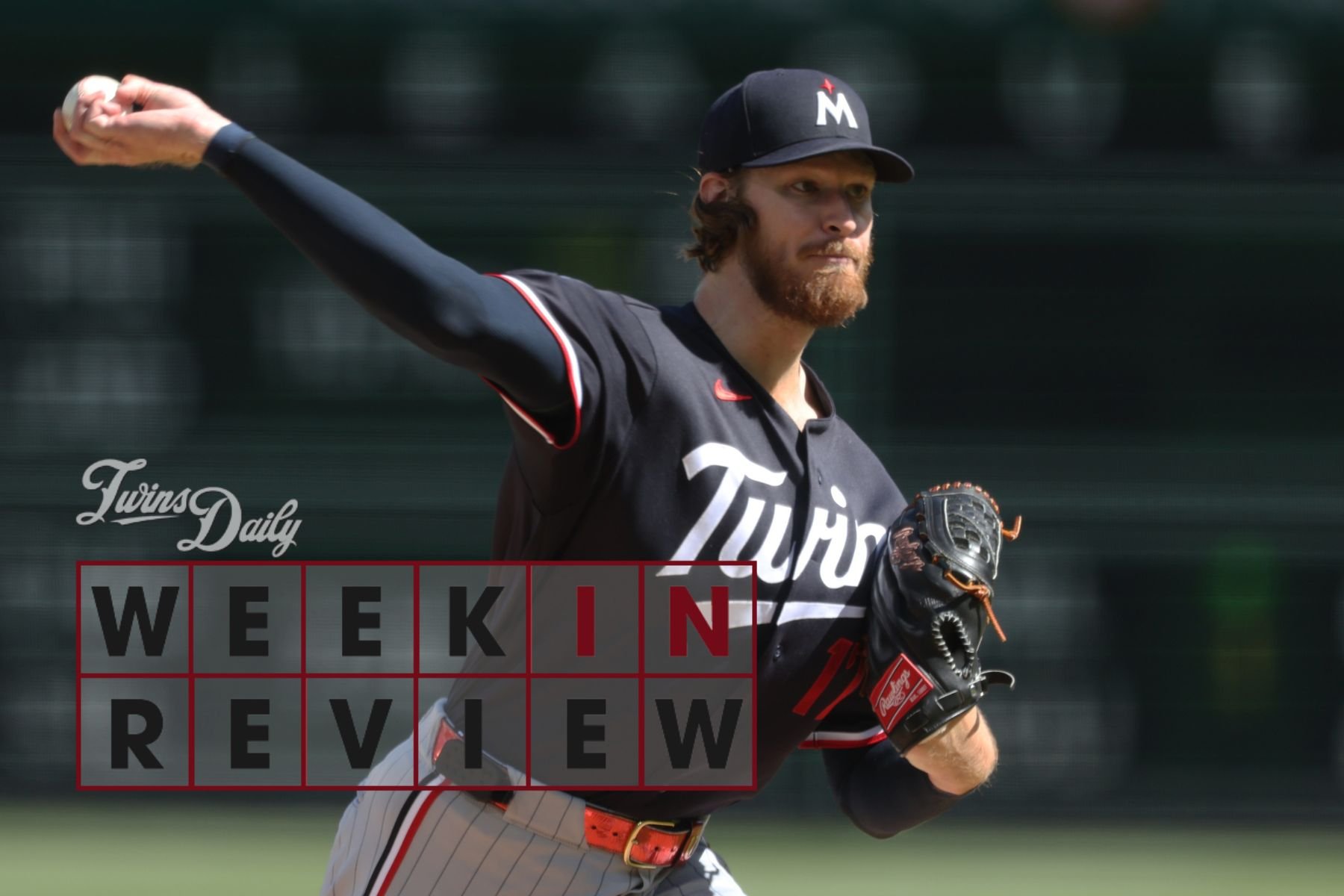 The Weekly Nutshell: The past week represented an interesting opportunity for the Minnesota Twins to match up against a couple of franchises in similar positions. The White Sox and Pirates are also lower-budget teams that are focused on development and building toward the future while also trying to stay competitive in the present. During these two series, the Twins looked to be miles behind both opponents. They lost six of seven games, with the only win coming in a laborious 11-inning affair on Tuesday. An increasingly injury-ravaged and filler-packed pitching staff gave up nine-plus runs on three separate occasions as the team's biggest strength from the first third of the season lapsed into a liability. Now the Twins will limp back to Target Field on a five-game losing streak, hoping to capture any kind of positive energy with the season sinking back into darkness. Weekly Snapshot: Mon, 5/25 through Sun, 5/31 *** Record Last Week: 1-6 (Overall: 27-33) Run Differential Last Week: -25 (Overall: -21) Standing: 3rd Place in AL Central (6.5 GB) Latest Game Results Game 54 | CWS 3, MIN 1: Twins Come Out on Losing End of Chi-Town Pitching Duel Martin, Bell, Clemens: 0-12 Game 55 | MIN 5, CWS 3 (11): Lee's Clutch Three-Run Double Secures Win in Extras Ryan: 7.2 IP, 2 ER, 5 H, 0 BB, 9 K Game 56 | CWS 15, MIN 2: Regression Hits Like Load of Bricks in Massive Blowout Orze, Adams: 2.2 IP, 8 ER, 2 H, 2 BB, 3 K Game 57 | CWS 6, MIN 2: Walks, Mistakes Cost Twins Early in Disappointing Series Finale Woods Richardson: 2.2 IP, 5 ER, 5 H, 3 BB, 4 K Game 58 | PIT 6, MIN 5: Reynolds Walks Off Rogers with Two-Run Homer in Ninth Inning Larnach: 2-4, HR, 2 RBI Game 59 | PIT 10, MIN 9: Fierce Comeback Effort Fall Short After Ober Digs Big Early Hole Ober: 4.2 IP, 8 R (7 ER), 12 H, 1 BB, 3 K Game 60 | PIT 9, MIN 3: Pirates Rough Up Tiwns Pitching Once Again to Seal Sweep at PNC Matthews: 4.1 IP, 7 ER, 6 H, 2 BB, 7 K IF YOU'D RATHER LISTEN TO THE WEEK IN REVIEW THAN READ IT, YOU CAN GET IT IN AUDIO FORM! FIND THE LATEST EPISODE ON OUR PODCAST PAGE, AS WELL AS ON APPLE AND SPOTIFY. SUBSCRIBE TO OUR CHANNELS SO YOU DON'T MISS OUT! NEWS & NOTES The Twins already have Mick Abel and Alan Roden — two key pieces acquired at last year's trade deadline — on the injured list indefinitely, and they've seen Taj Bradley sidelined for a spell. On Friday, another hopeful future fixture from that deadline class landed on the shelf, with Kendry Rojas placed on the 15-day IL due to elbow soreness. The injury is being billed as inflammation, and Joe Ryan's recent example taught us not to overreact, but this is certainly ominous news for Rojas, whose health history was part of the reason behind Toronto's willingness to give up his promising arm in the Louis Varland trade. Stepping back into the rotation on short notice for Rojas was Simeon Woods Richardson. Unfortunately, he picked up right where he left off, coughing up five earned runs on five hits and three walks in 2 ⅔ innings. At that point, the Twins had seen enough: they designated Woods Richardson for assignment on Saturday, exposing the 25-year-old to waivers and potentially losing him for nothing. A major downfall from the strong finish last year, and from my view a bit of a questionable decision. One day after designating Woods Richardson for assignment, the Twins lost another former rotation anchor, with Bailey Ober also heading to the injured list due to elbow inflammation. After impressively giving up just five homers through 52 innings in his first nine starts, Ober had given up seven in his past three, and he got flat-out crushed by the Pirates on Saturday. We'll see how long he's out, and we'll see if Woods Richardson is able to get through waivers and stick around, because the depth would be even handier now. The Twins selected the contract of right-hander Mike Paredes from St. Paul to replace Ober on the roster. Paredes is a fun story as a former 18th-round draft pick out of high school who has turned himself into, if not a prospect, at least an intriguing arm who has captured the Twins' attention. Working as a 4-5 inning starter with the Saints, the 25-year-old posted a 2.70 ERA and 25-to-5 K/BB ratio in May, and he also has plenty of experience pitching in relief. Paredes made his MLB debut on Sunday, shaking off early control issues to allow just one earned run in 3 ⅔ innings. In other pitching moves, Travis Adams was sent down and called back up, while John Klein was called up and sent back down. Kody Funderburk also returned to the fold from Triple-A. The Twins, who've already used 18 pitchers in relief this year (not counting Orlando Arcia) are in a constant churn to keep fresh arms at their disposal. HIGHLIGHTS The Joe Ryan experience continues to be a very enjoyable one. He turned in a fourth consecutive excellent outing in the wake of his early-May elbow scare, holding the White Sox to two runs over 7 ⅔ innings with zero walks and nine strikeouts. As so much goes amiss in the rotation around him, Ryan has been beyond steady, putting up quality starts in seven of his past nine turns while seemingly looking better each time out. He ranks fifth among MLB starters in fWAR and appears very much on track to make a second straight All-Star team. It's a little bittersweet that, as Ryan excels and the Twins unravel, the biggest implication of his success is what it means for his trade value rather than this team's outlook. It was an interesting week for Kody Clemens. On Wednesday he made his first professional start in center field, and then he was back there three times in the next four days. To his credit, Clemens mostly held his own in the surprising assignment, and he also delivered a power-packed week at the plate with two homers, two triples and a double. Finally, Brooks Lee deserves a shout out. He came through with the clutch three-run double in extras to lift the Twins in their lone victory of the week, and also homered three times, pushing his season total to eight. Lee's output this season has been highly sporadic, and that was the case again last week — he was 2-for-21 with one walk outside of those four extra-base hits — but the occasional power flurry is welcome and it's nice to see him at least holding his own at the plate with an OPS that's been hovering around average. If he's going to keep batting second and playing third base, he'll need to meet a higher bar for consistency. LOWLIGHTS Rojas is hurt. Ober is hurt. Abel remains sidelined. Bradley is still fresh off the injured list, but had his shortest start of the season on Friday (4 IP, 5 ER) after being pushed back a day. And now Woods Richardson is out the door. The rotation has been one of the biggest strengths and stabilizers for the Twins over the first two months, but has taken a quick and drastic turn for the worst. Even in the healthier contingent, things are not trending well aside from Ryan. Zebby Matthews got knocked around by the Pirates on Sunday, coughing up seven earned runs in 4 ⅓ innings. It was his second straight start allowing multiple homers, succumbing to what has largely been his kryptonite as an MLB pitcher. He's got to keep the ball in the yard. Connor Prielipp is bogging down in his own introduction to the big leagues. After posting a shiny 2.88 ERA through his first five starts, Prielipp has turned in back-to-back rough outings, including his latest against the White Sox: 4.1 IP, 6 ER, 8 H, 3 BB, 5 K. The erratic performance included a pair of wild pitches. Prielipp's ability and raw stuff have never been in doubt. The big question is how he will handle throwing 85-90 pitches every fifth day with an arm that hasn't been conditioned for such rigors. Hopefully what we're seeing now is a temporary stumble rather than a sign of Prielipp struggling to endure the taxing workload of an MLB starting pitcher. As the pitching staff wears down, Minnesota's offense is not proving capable of keeping pace with the opposition. In these seven games, they were outscored by 25 and out-hit by by 23. The White Sox and Pirates went 12-for-13 on stolen bases (including 5-for-5 against Victor Caratini on Saturday) while the Twins went 1-for-3. Minnesota's hitters struck out 67 times against 13 walks. There are too many non-factors in the lineup on a day-to-day basis. The Twins are going out of their way to keep Austin Martin in right field even as his production falls off a cliff — he went 1-for-22 with a walk in the past week and his OPS dropped by 187 points in the month of May. Using Martin routinely in right field against right-handed pitchers, against whom he has a sub-.650 OPS, is a glaring sign of this offense's shortcomings and lack of optimization. So too is Josh Bell batting third, as he did on Saturday despite an OPS that had nearly dropped below .600. He did deliver three RBIs in that game but Bell has been a major liability while hitting in the middle of the order. The Twins hoped he could bring both power and discipline as a veteran presence but in May, Bell managed just two home runs with 30-to-3 K-BB ratio in 102 plate appearances. He entered play on Sunday tied with Pittsburgh's Marcell Ozuna for the worst fWAR among qualified big-leaguers at negative-0.8. Trevor Larnach, another early-season success story, is slumping with a deteriorating plate approach: he went 3-for-24 with 10 strikeouts and one walk. Luke Keaschall is slugging .322. Caratini has four extra-base hits all aseason. Aside from Byron Buxton, who remains clearly hobbled and limited to DH, there is just no one in this lineup who inspires much faith at all. With the attrition and struggles on the pitching staff, unless several of these languishing hitters can step up and show something, things are prone to get pretty ugly here in June. TRENDING STORYLINE Royce Lewis is campaigning for a recall at Triple-A. He's been on a tear ever since his demotion, batting .324 with five homers and three doubles in nine games. It bears noting that he's still striking out a fair amount (eight times in 21 plate appearances over the past week) but the production is there and he's swinging with a visibly renewed confidence. I'm not under the illusion that Royce has suddenly been "fixed" by a couple good weeks against minor-league pitching, but at some point the Twins will need to bring him back and see if he can channel that against the real deal. Might they feel an extra sense of urgency to seek a spark as their offense spins its wheels a with lineup full of punchless bats. The big question, of course, is where he will fit in, whenever the Twins deem him ready to return. Brooks Lee appears to be digging himself in at third base, which is where Lewis has played exclusively since being optioned. It seems notable that Arcia was the starter at first base on Sunday, which at least sets up the stylistic precedent for Lewis to play there. Will he start getting some reps there with the Saints? Or maybe at second base, or even the outfield? Presumably the Twins will want to at least work him in at a few positions to establish some flexibility before bringing him back. I'm more interested to see how many positions he plays in the coming week than how many more homers he pops against Triple-A pitchers. LOOKING AHEAD The Twins return home to wrap up their longest stretch of the season without an off day. They've played 10 straight and they'll play seven more at Target Field, with the White Sox arriving for a quick-turnaround rematch followed by a matchup against the struggling Royals. The Twins would love to bounce back against the Sox and may find the going a little easier with Munetaka Murakami now on the injured list. It remains to be seen how Ober's spot in the rotation will be filled. MONDAY, JUNE 1: WHITE SOX @ TWINS —RHP David Sandlin v. RHP Joe Ryan TUESDAY, JUNE 2: WHITE SOX @ TWINS — RHP Davis Martin v. LHP Connor Prielipp WEDNESDAY, JUNE 3: WHITE SOX @ TWINS — RHP Erick Fedde v. RHP Taj Bradley THURSDAY, JUNE 4: ROYALS @ TWINS — RHP Seth Lugo v. TBD FRIDAY, JUNE 5: ROYALS @ TWINS — RHP Michael Wacha v. RHP Zebby Matthews SATURDAY, JUNE 6: ROYALS @ TWINS — TBD v. RHP Joe Ryan SUNDAY, JUNE 7: ROYALS @ TWINS — LHP Noah Cameron v. LHP Connor Prielipp
- 44 comments
-
- 3
-

-
-

-
- simeon woods richardson
- bailey ober
- (and 2 more)
-
Joe Ryan and the Elephant in the Room
Nick Nelson replied to Nick Nelson's topic in Twins Daily Front Page News
Are we convinced this is the right path forward, even if he's willing to accept it? The track record of paying 30+ year old pitchers that kind of money is not good. Large-market teams can afford it, which is why they're basically the only ones who make such deals. Even if payroll goes up somewhat that's a big fraction annually going to one aging starter, for a franchise that (rightfully) prides itself on pitching development. Personally, I think the options are: trade him or plan to offer a QO following 2027. But as mentioned by commenters above, there's just so much uncertainty with next season and the CBA that there's major risk in not charting a decisive path now. -
Image courtesy of Jordan Johnson-Imagn Images The MLB trade deadline is a little over two months from now, on August 3rd. That seems like a long time, but then again, Opening Day was that long ago and it feels like yesterday. As much as we might want to savor the current moment — a team playing well enough to stay relevant in a lackluster AL landscape, and a #1 starter who's unlocking yet another level of excellence — there are realities bearing down that the Twins front office cannot afford to brush aside. Joe Ryan is pitching as well as ever. He was good before the elbow scare that forced him out of a game in early May. and he's somehow been even better since. His 2.1 fWAR leads all Twins players and ranks fifth among MLB starters. If the Twins are to stay competitive and play meaningful games into September, as Tom Pohlad has decreed, they'll need Ryan to do it, especially if he keeps pitching like this. He's their best player. The quandary at hand: he's also their best trade chip, and their biggest opportunity to bolster the rebuild effort in profound ways. While they might not like to utter the word, this team is rebuilding. They're transitioning from a fading old guard (Royce Lewis, Matt Wallner) to an impending prospect wave. At last year's deadline, they dealt several key relievers for players who — while varying degrees of MLB-ready — were targeted for their longer-term control. They have to be looking ahead, but maybe not THAT far ahead. This is the emotional tug-of-war facing Minnesota's front office over the next two months. Ryan isn’t just the Twins’ best starter; he’s the kind of pitcher contenders empty farm systems to acquire. He’s under control through 2027. He misses bats, limits walks, thrives in big moments, and increasingly looks like someone capable of starting Game 1 of a playoff series for a true World Series threat. Those pitchers rarely become available with this much control remaining. When they do, the return can reshape an organization. That’s the cold logic. The perspective of the brain. But the heart might tell us that the Twins aren’t buried. They’re hovering around contention in an American League where mediocrity has become the norm. A good month could put them firmly in the playoff picture. Trading Ryan while meaningful baseball remains on the table would feel, to many fans and players, like surrender. Again. After years of payroll cuts, injuries, and organizational drift, it would be another unmistakable signal that the franchise is prioritizing tomorrow over today. Same old, same old under "new leadership." Cold logic has its validity though. Pitchers are volatile assets, and Ryan already provided a scare this season. Having already seen Pablo López go down, the Twins know better than anyone how quickly the value of a frontline starter can evaporate. Ryan has previously dealt with shoulder and groin injuries, and every additional inning carries risk. That’s what makes this such an organizational crossroads. The heart says you owe it to the clubhouse and demoralized fanbase to keep pushing forward in a surprisingly open AL field. The brain says this may be the rare moment when timing, value and market demand align perfectly to accelerate the next truly sustainable contention window. And the better Joe Ryan pitches between now and July, the louder that elephant in the room becomes. View full article
-
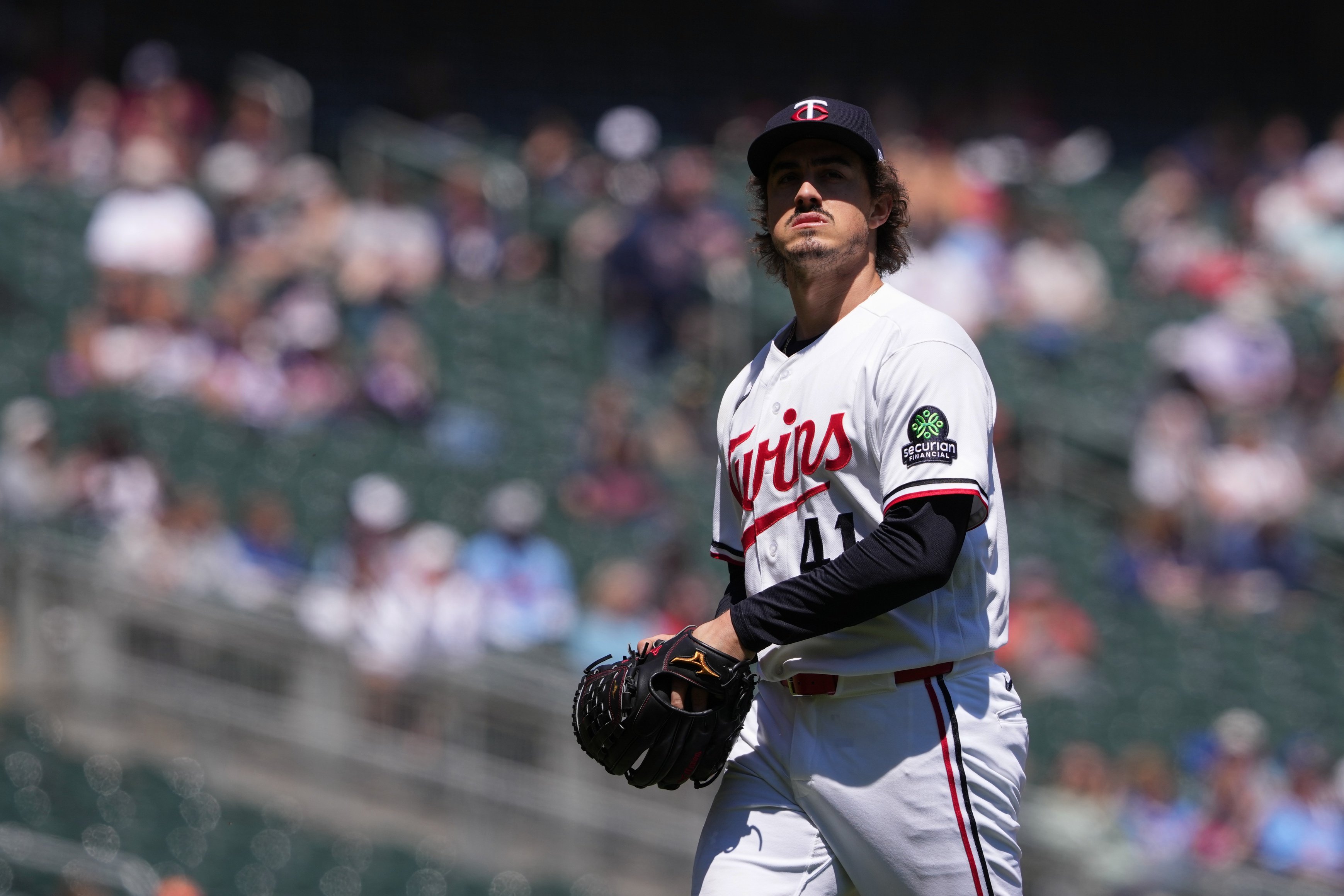 The MLB trade deadline is a little over two months from now, on August 3rd. That seems like a long time, but then again, Opening Day was that long ago and it feels like yesterday. As much as we might want to savor the current moment — a team playing well enough to stay relevant in a lackluster AL landscape, and a #1 starter who's unlocking yet another level of excellence — there are realities bearing down that the Twins front office cannot afford to brush aside. Joe Ryan is pitching as well as ever. He was good before the elbow scare that forced him out of a game in early May. and he's somehow been even better since. His 2.1 fWAR leads all Twins players and ranks fifth among MLB starters. If the Twins are to stay competitive and play meaningful games into September, as Tom Pohlad has decreed, they'll need Ryan to do it, especially if he keeps pitching like this. He's their best player. The quandary at hand: he's also their best trade chip, and their biggest opportunity to bolster the rebuild effort in profound ways. While they might not like to utter the word, this team is rebuilding. They're transitioning from a fading old guard (Royce Lewis, Matt Wallner) to an impending prospect wave. At last year's deadline, they dealt several key relievers for players who — while varying degrees of MLB-ready — were targeted for their longer-term control. They have to be looking ahead, but maybe not THAT far ahead. This is the emotional tug-of-war facing Minnesota's front office over the next two months. Ryan isn’t just the Twins’ best starter; he’s the kind of pitcher contenders empty farm systems to acquire. He’s under control through 2027. He misses bats, limits walks, thrives in big moments, and increasingly looks like someone capable of starting Game 1 of a playoff series for a true World Series threat. Those pitchers rarely become available with this much control remaining. When they do, the return can reshape an organization. That’s the cold logic. The perspective of the brain. But the heart might tell us that the Twins aren’t buried. They’re hovering around contention in an American League where mediocrity has become the norm. A good month could put them firmly in the playoff picture. Trading Ryan while meaningful baseball remains on the table would feel, to many fans and players, like surrender. Again. After years of payroll cuts, injuries, and organizational drift, it would be another unmistakable signal that the franchise is prioritizing tomorrow over today. Same old, same old under "new leadership." Cold logic has its validity though. Pitchers are volatile assets, and Ryan already provided a scare this season. Having already seen Pablo López go down, the Twins know better than anyone how quickly the value of a frontline starter can evaporate. Ryan has previously dealt with shoulder and groin injuries, and every additional inning carries risk. That’s what makes this such an organizational crossroads. The heart says you owe it to the clubhouse and demoralized fanbase to keep pushing forward in a surprisingly open AL field. The brain says this may be the rare moment when timing, value and market demand align perfectly to accelerate the next truly sustainable contention window. And the better Joe Ryan pitches between now and July, the louder that elephant in the room becomes.
 -
Image courtesy of Rafael Suanes-Imagn Images The Minnesota Twins entered this season with the deck stacked against them. They were a 70-win team that made few meaningful upgrades during the offseason. Minnesota's new manager brought with him one of the worst career winning percentages in history; their new ownership chair had no baseball experience. The Twins' long-tenured and highly-respected baseball ops leader resigned just before spring training, leaving untested Jeremy Zoll in charge of the front office. The infrastructure was already quite questionable. Then, on the first official day of spring training, the Twins lost Pablo López, their highest paid and arguably most important player, for the season. None of their big bullpen gambles in camp (e.g. Liam Hendriks and Andrew Chafin) paid off. The team started the season 3-6. Everything was seemingly moving along as one would expect. But from there, the Twins won eight of nine, vaulting above the .500 mark. This was followed by a prolonged "back to reality" slump, with a 9-19 record over the next 28 games putting Minnesota back underwater by six games. But now they've pulled together another hot streak, winning seven of their last nine to get back within a game of .500 and into the thick of the AL Wild Card picture. Through these first 55 games, in addition to being without López entirely, the Twins have: Gotten zero appearances from David Festa, and just four from Mick Abel. Received sub-replacement level performance from their two biggest offseason signings, Josh Bell and Victor Caratini. Seen hopeful lineup cornerstone Luke Keaschall go from promising #3 hitter on Opening Day to floundering #8 hitter two months later. Sent down key players Royce Lewis and Matt Wallner after several weeks of immense and relentless struggle. Demoted Simeon Woods Richardson to the bullpen after he posted a league-worst 7.71 ERA through nine starts. You look at this series of developments all together, and you'd assume the Twins were 10 games below .500. At times, they've been trending in that direction. But so far they've been able to pull out of their tailspins with winning bursts, and as we pass the one-third milestone in the schedule, they are on pace for 80 wins. That's on the higher end of general expectations and well within range of Tom Pohlad's "We will be competitive in 2026" edict. I don't want to heap too much praise on a losing team that's hanging around in a very underwhelming American League, but, it's impressive! How have the Twins managed to overcome their shortcomings and tribulations to reach this point? What's Gone Right? For all that has gone amiss in the past few months, there are a number of important things that have gone swimmingly. And while it's fair to debate the sustainability in some cases, there's no denying the impact up until now. (The following stats were entering play on Tuesday.) The starting rotation has been (mostly) fantastic. Twins starters are on pace for 14.1 fWAR, which would be the highest in the last decade aside from their division-winning campaigns in 2019 and '23. The collective 3.82 ERA from Minnesota's rotation is dragged down by Woods Richardson; if you remove his contributions from the mix that figure drops to 3.15, which would rank third in the AL behind the Rays and Yankees, owners of the two best records in the league. Byron Buxton is as good as ever. He's on pace for 48 home runs and 6.0 fWAR, which would both represent new career highs. Having such an offensive force at the top of the your lineup who can also play a solid center field is just such a big competitive advantage. Ryan Jeffers was building toward a career year. He was neck-and-neck with Buxton in WAR before going down with a hamate fracture last week, and that probably understates the impact of his prolific ABS-challenging success. Jeffers will be out until around the All-Star break, which is one major factor standing in the way of sustained success for the Twins, but he's been integral to getting them here. Austin Martin and Trevor Larnach are taking big steps forward. They rank third and fourth Twins among position players in WAR after Buxton and Jeffers. Not long ago, it was unclear whether either of them would even be in the team's plans for this season. They're excelling with a similar formula: good plate approaches yielding low-power, high-OBP production that nets out at roughly 25% of above league average. The bullpen has been shockingly effective. At least lately, anyway. Through 39 games, Twins relievers had the second-worst ERA in baseball (5.81). Since then, in their past 15 games, they have the fourth-best ERA (2.05), and they lead the majors in WPA, helping them go 10-5 over this stretch. It's been a stunning turnaround and while I struggle to convince myself it's going to stay this way, they did just part ways with their two worst bullpen arms (Justin Topa and Luis García) in the past week. Derek Shelton seems to be resonating. I don't want to blow this out of proportion — especially because, this time last year, the Twins were five games over .500 and fresh off a 13-game winning streak under Rocco Baldelli. That's easy to forget now because of how the rest of the season went, and there's plenty of season left this year. We've seen this Twins team play some bad ball under Shelton. But we've also seen them generally respond well to his presence, and they're now on their second run of scrappy winning baseball in two months. There's a lot that's gone wrong with this team, and a lot that still could go wrong. But to be within spitting distance of a winning record as the summer gets going in earnest is about all I could have realistically ask for, so I'm going to savor it while I can. What are you biggest impressions of the 2026 Twins through one-third of the season? Is it a bad team that's riding a temporary hot streak? A mediocre team that matches its record? Or a potentially good team with more in the tank? I'd love to hear your thoughts in the comments. View full article
-
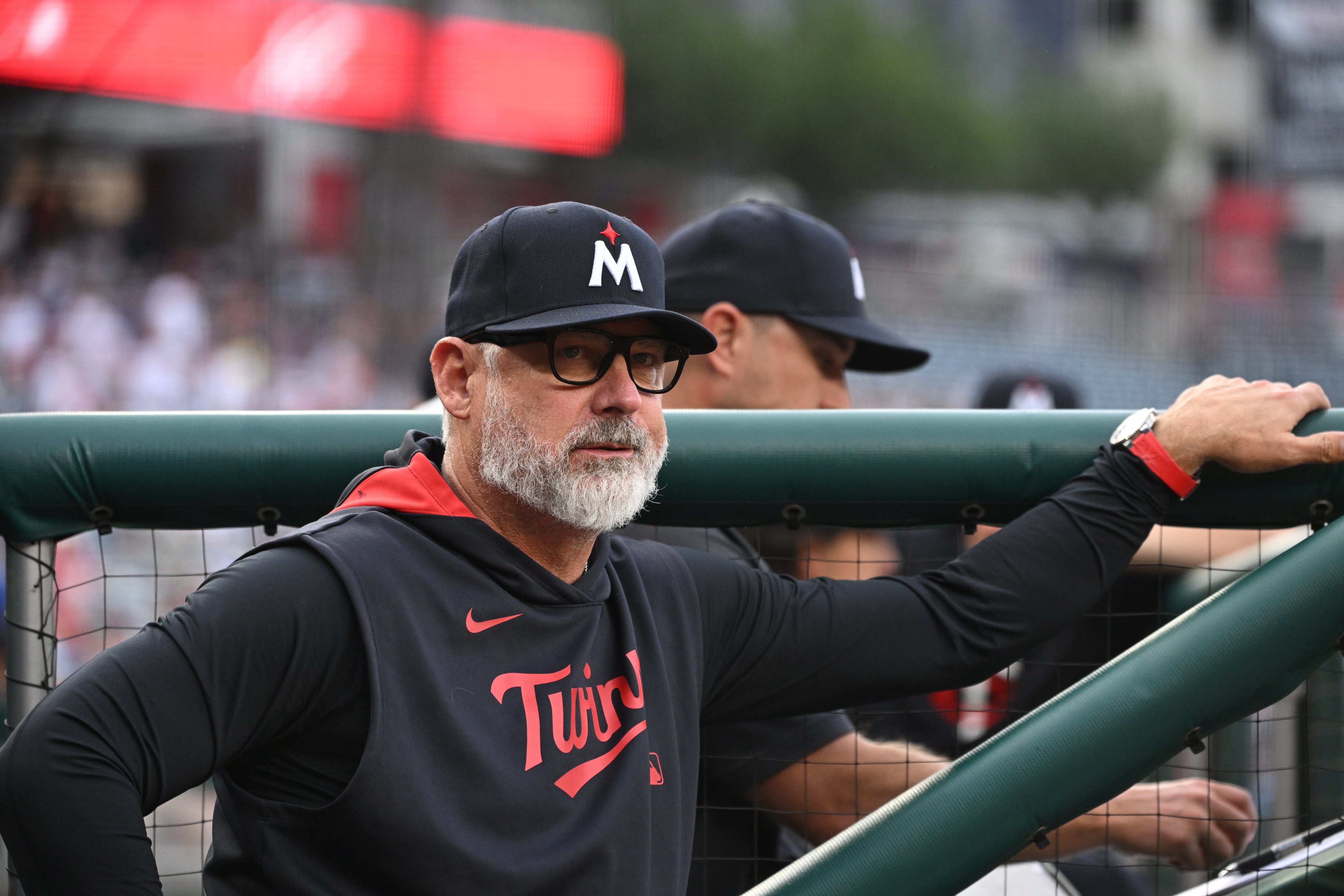 The Minnesota Twins entered this season with the deck stacked against them. They were a 70-win team that made few meaningful upgrades during the offseason. Minnesota's new manager brought with him one of the worst career winning percentages in history; their new ownership chair had no baseball experience. The Twins' long-tenured and highly-respected baseball ops leader resigned just before spring training, leaving untested Jeremy Zoll in charge of the front office. The infrastructure was already quite questionable. Then, on the first official day of spring training, the Twins lost Pablo López, their highest paid and arguably most important player, for the season. None of their big bullpen gambles in camp (e.g. Liam Hendriks and Andrew Chafin) paid off. The team started the season 3-6. Everything was seemingly moving along as one would expect. But from there, the Twins won eight of nine, vaulting above the .500 mark. This was followed by a prolonged "back to reality" slump, with a 9-19 record over the next 28 games putting Minnesota back underwater by six games. But now they've pulled together another hot streak, winning seven of their last nine to get back within a game of .500 and into the thick of the AL Wild Card picture. Through these first 55 games, in addition to being without López entirely, the Twins have: Gotten zero appearances from David Festa, and just four from Mick Abel. Received sub-replacement level performance from their two biggest offseason signings, Josh Bell and Victor Caratini. Seen hopeful lineup cornerstone Luke Keaschall go from promising #3 hitter on Opening Day to floundering #8 hitter two months later. Sent down key players Royce Lewis and Matt Wallner after several weeks of immense and relentless struggle. Demoted Simeon Woods Richardson to the bullpen after he posted a league-worst 7.71 ERA through nine starts. You look at this series of developments all together, and you'd assume the Twins were 10 games below .500. At times, they've been trending in that direction. But so far they've been able to pull out of their tailspins with winning bursts, and as we pass the one-third milestone in the schedule, they are on pace for 80 wins. That's on the higher end of general expectations and well within range of Tom Pohlad's "We will be competitive in 2026" edict. I don't want to heap too much praise on a losing team that's hanging around in a very underwhelming American League, but, it's impressive! How have the Twins managed to overcome their shortcomings and tribulations to reach this point? What's Gone Right? For all that has gone amiss in the past few months, there are a number of important things that have gone swimmingly. And while it's fair to debate the sustainability in some cases, there's no denying the impact up until now. (The following stats were entering play on Tuesday.) The starting rotation has been (mostly) fantastic. Twins starters are on pace for 14.1 fWAR, which would be the highest in the last decade aside from their division-winning campaigns in 2019 and '23. The collective 3.82 ERA from Minnesota's rotation is dragged down by Woods Richardson; if you remove his contributions from the mix that figure drops to 3.15, which would rank third in the AL behind the Rays and Yankees, owners of the two best records in the league. Byron Buxton is as good as ever. He's on pace for 48 home runs and 6.0 fWAR, which would both represent new career highs. Having such an offensive force at the top of the your lineup who can also play a solid center field is just such a big competitive advantage. Ryan Jeffers was building toward a career year. He was neck-and-neck with Buxton in WAR before going down with a hamate fracture last week, and that probably understates the impact of his prolific ABS-challenging success. Jeffers will be out until around the All-Star break, which is one major factor standing in the way of sustained success for the Twins, but he's been integral to getting them here. Austin Martin and Trevor Larnach are taking big steps forward. They rank third and fourth Twins among position players in WAR after Buxton and Jeffers. Not long ago, it was unclear whether either of them would even be in the team's plans for this season. They're excelling with a similar formula: good plate approaches yielding low-power, high-OBP production that nets out at roughly 25% of above league average. The bullpen has been shockingly effective. At least lately, anyway. Through 39 games, Twins relievers had the second-worst ERA in baseball (5.81). Since then, in their past 15 games, they have the fourth-best ERA (2.05), and they lead the majors in WPA, helping them go 10-5 over this stretch. It's been a stunning turnaround and while I struggle to convince myself it's going to stay this way, they did just part ways with their two worst bullpen arms (Justin Topa and Luis García) in the past week. Derek Shelton seems to be resonating. I don't want to blow this out of proportion — especially because, this time last year, the Twins were five games over .500 and fresh off a 13-game winning streak under Rocco Baldelli. That's easy to forget now because of how the rest of the season went, and there's plenty of season left this year. We've seen this Twins team play some bad ball under Shelton. But we've also seen them generally respond well to his presence, and they're now on their second run of scrappy winning baseball in two months. There's a lot that's gone wrong with this team, and a lot that still could go wrong. But to be within spitting distance of a winning record as the summer gets going in earnest is about all I could have realistically ask for, so I'm going to savor it while I can. What are you biggest impressions of the 2026 Twins through one-third of the season? Is it a bad team that's riding a temporary hot streak? A mediocre team that matches its record? Or a potentially good team with more in the tank? I'd love to hear your thoughts in the comments.
- 58 comments
-
- 10
-
-
-
-
- derek shelton
- byron buxton
- (and 2 more)
-
Image courtesy of Jesse Johnson-Imagn Images The Weekly Nutshell: The Twins have their problems, as we all know. But this past week was a good reminder that they are not alone in that boat. Matchups against the Astros and Red Sox, two of the most disappointing teams in the American League, offered some welcomed perspective. Despite their much higher payrolls and expectations, Houston and Boston have been no better than Minnesota and they were mostly outclassed by the Twins, who've now taken six of seven. The winning baseball was a much needed distraction from the flurry of bad news that opened the week: major injuries to Ryan Jeffers and Emmanuel Rodriguez, and another demotion of a core player to Triple-A. Weekly Snapshot: Mon, 5/18 through Sun, 5/24 *** Record Last Week: 5-1 (Overall: 26-27) Run Differential Last Week: +10 (Overall: +4) Standing: 3rd Place in AL Central (5.0 GB) Latest Game Results Game 48 | MIN 6, HOU 3: Rojas Impresses, Twins Hang on After Long Rain Delay Rojas: 4 IP, 0 R, 2 H, 1 BB, 3 K Game 49 | HOU 2, MIN 1: Offense Strands Nine Runners in Another One-Run Loss Matthews: 6 IP, 2 R, 5 H, 0 BB, 6 K Game 50 | MIN 4, HOU 1: Ryan Deals, Kreidler Delivers Key Homer in Series Clincher Kreidler: 1-3, HR, 3 RBI Game 51 | MIN 8, BOS 6: Twins Battle Back from Early Deficit Powered by Buxton, Martin Buxton: 2-5, HR, 3 RBI Game 52 | MIN 4, BOS 2: Bradley Brings the Heat in Return, Bullpen Backs Him Up Bradley: 5 IP, 1 R, 3 H, 2 BB, 7 K Game 53 | MIN 6, BOS 5: Martin, Lee Deliver Key Hits in Sweep-Clinching Comeback Win Twins bullpen: 3 IP, 0 R, 2 H, 0 BB, 3 K NEWS & NOTES Following the resumption of Monday's rain-disrupted game against Houston, Ryan Jeffers swung at the first offering from Astros pitcher AJ Blubaugh in an eighth-inning plate appearance and shattered his bat on a foul ball. He strolled over to grab a new stick, stepped back into the box, and took the next two pitches. Nothing seemed amiss. But something was. Once the count reached 2-1, Jeffers waved to the dugout for trainers and quickly came out of the game. He was initially diagnosed with left wrist sprain but on Tuesday were learned the news was much worse: a fractured hamate bone, requiring surgery with a recovery timeline in the two-month range. It's a crushing development for both the team and Jeffers, who's been exceptional in his final year under contract. He expressed some hope that he can come back sooner than is generally expected, but for the foreseeable future, the Twins will have to proceed without arguably their most valuable player. Alex Jackson replaces Jeffers on the roster, and as Victor Caratini's timeshare partner behind the plate. The Twins are swapping out one of the best-hitting catchers in baseball for one of the worst, but Jackson at least brings MLB experience and strong defensive chops. He'll try and play his way into the team's post-Jeffers catching plans in 2027, but his lack of option is a complicating factor. In addition to Jeffers, the Twins also lost another key component of what they hoped would be their lineup core, sending Royce Lewis down to Triple-A for a reset less than a week after taking the same action with Matt Wallner. As with Wallner, Lewis' continually spiraling performance left the front office with little choice but to make a bold change. Replaced by Orlando Arcia on the MLB roster for the time being, Lewis homered in his first at-bat back in Triple-A, and then went deep twice on Saturday. So far, so good. The tough injury news didn't stop with Jeffers. Top prospect Emmanuel Rodriguez was tabbed for surgery after a ligament tear was discovered upon further examination of his thumb. Any hope that this would be a short-term injury is dashed by this grim development. If not for getting hurt, Rodriguez probably would already be up in the majors, with both Lewis and Wallner sent down, but now we'll need to wait until the second half to see him back in action. One chapter from the Jorge Polanco trade closed last week while another one opened up. Reliever Justin Topa was designated for assignment with an 8.05 ERA on Tuesday after being used as much as any reliever in the majors during the first two months, replaced by Travis Adams. Days later, outfield prospect Gabriel Gonzalez got the call to the big leagues with Tristan Gray taking a short paternity leave. Like Anthony DeSclafani before him, Topa didn't amount to much in a Twins uniform but Gonzalez was always the player upon whom the Polanco package was likely to be judged. He started in left field and batted fifth on Friday night in his major-league debut, drawing walks in his first two plate appearances before notching his first MLB hit on a dribbler to third. He'll return to the minors within a day or two, but Gonzalez made a nice first impression and will be back before long. Ahead of Saturday's game, the Twins activated Taj Bradley and designated Luis García for assignment. García's tenure in Minnesota is one we'd all like to forget: 8.2 IP, 10 ER, 12 H, 4 BB, 2 K. A final bullpen note: Saints relievers Matt Bowman and John Brebbia exercised opt-out clauses in their contracts and became free agents. HIGHLIGHTS As usual, the offense ran through Byron Buxton. He returned from missing several games due to hip soreness, and while clearly still not 100%, Buck got right back to business at the plate. He doubled twice in his return to action against Houston on Tuesday, and crushed a two-run homer over the Green Monster on Friday to fuel Minnesota's comeback win. Still showing signs of discomfort, Buxton was eased back into action, starting at DH three times before returning to center field on Saturday and then getting the day off Sunday. Austin Martin had cooled off substantially after taking over the everyday right field job from Matt Wallner, entering the weekend series in Boston in an 0-for-14 slump. He broke out of the funk at Fenway, launching a key go-ahead two-run homer right to back up Buxton's. He then doubled in the first run on Saturday as part of a two-hit game, and delivered a game-tying double on Sunday. Trevor Larnach was batting .172 in his past 10 games before breaking through with four hits on Saturday and notched an RBI single on Sunday. He and Martin have been two of the team's best stories in the first third of the season, but had been lapsing into possible regression, so it's great to see them get back on track as surprising lineup cornerstones. Josh Bell shook out of a much deeper slump against Houston, homering twice with four RBIs in the series opener and then adding three more knocks on Tuesday. He had a sub-.400 OPS in his past 20 games heading into the week, but shows signs of at least stabilizing. Fellow free-agent signing Caratini, who's also been mired in a lengthy drought, homered in the finale against Houston, his first extra-base hit in over a month. In both cases, these are hopefully sign of things to come, especially for Caratini who will be starting regularly behind the plate in Jeffers' absence and looking to keep the catcher position afloat offensively. The pitching staff was nothing short of brilliant against the Astros and Red Sox, allowing 18 total earned runs on 40 hits (three home runs) over six games. Joe Ryan put up his third consecutive start with six innings of one-run ball, striking out a season-high nine. Zebby Matthews struck out six with no walks in holding Houston to two runs over six frames. Kendry Rojas impressed in his first major-league start, allowing two hits and a walk over four scoreless innings on Monday. Bradley was fully healthy in his return from the injured list, posting his best velocity of the season in a winning effort against Boston. Meanwhile, the bullpen was on point yet again. Twins relievers are fourth in the majors in ERA and third in FIP over the past two weeks. Only five teams have a better bullpen WPA in May. Yoendrys Gómez is looking like a legitimate addition, delivering important scoreless outings in his first three appearances, all victories, before running into a bit of trouble in sloppy, wet conditions in Sunday's finale (but still making some big pitches). His performance against Houston on Wednesday, striking out five of the seven batters he faced in two shutout innings, felt like a statement. Gómez combined with Taylor Rogers, Anthony Banda, Eric Orze, Adams, Rojas and Andrew Morris to allow two run on seven hits over 23 ⅓ innings. Morris walked in a run during an erratic save attempt on Saturday, but aside from that, the only Twins reliever to allow a run was Topa. He surrendered three while recording just two outs on Monday, and he was jettisoned soon after. Everyone remaining in the bullpen is trending in a pretty good direction. LOWLIGHTS Before they were sent to the minors, Wallner and Lewis found themselves being benched more frequently, and when they played, hitting lower in the order than ever before. I'm not saying he's necessarily close to being optioned, but it's notable that Luke Keaschall is now following a similar path. After sitting the middle game in the previous Milwaukee series, Keaschall was again out of the lineup for the middle game of the Houston series. He then went 0-for-4 in the finale, and on Friday night in Boston found himself batting eighth in the lineup, the lowest he's hit since his MLB debut more than a year ago. He did come through with a pair of hits and an RBI in Friday's game, but also committed a pretty ugly error at second — number five, tied for the team lead with the now-demoted Lewis. Keaschall didn't play on Saturday or Sunday, although it seemed to have more to do with residual soreness from an HBP on Friday than anything performance-related. That aside, the Twins have been showing clear signs of eroding confidence in their Opening Day #3 hitter. The defense is a big factor in that. Even in a very brief glimpse, Arcia's superiority with the glove has been apparent. On the offensive side, Keaschall is taking good ABs and getting on base — he's hitting .268 with a .414 OBP this month, walking as much as he's striking out — but the quality of contact has been just abysmal. Keaschall hasn't homered since April 6th and has just one extra-base hit in his past 50 plate appearances. [keaschallsc524] In terms of on-field performance, there weren't many nits to pick for the Twins in a pair of series wins that featured great pitching and productive showings from the offense. The big lowlights of the week really centered on the injury developments. Losing Jeffers is gut-punch that detracts from enthusiasm around Minnesota's current ascent toward the .500 mark. Same goes for Rodriguez, who was looking like a major X-factor as a potential rookie difference-maker this summer; now his name will be X'ed out for the foreseeable future. You enjoy the wins as they come, but it grows far more difficult to see the success sustaining through setbacks like these. Lewis joining Wallner in Triple-A is a sad reflection of where things stand with the "post-hype prospect" group, but maybe it's the beginning of a turnaround toward better days and career rejuvenations. Something needed to change and it's good to at least see the Twins take action and enact a plan with these two floundering vets, even if it feels a little demoralizing. If the Twins want to remain in the competitive mix into the second half of the season, they've got to get at least one of these guys going, not to mention Keaschall. Lewis' dominant start with the Saints bodes well, at least. TRENDING STORYLINE On Friday night, we saw Brooks Lee start at a position other than shortstop for the first time all year, sliding over to third with Ryan Kreidler taking over at short. The rest of the series featured the same alignment. Derek Shelton and the Twins are expressing a preference, and it's one that makes sense to me. Lee is best suited for third base, and that's been evident in seeing his shortcomings exposed at shortstop this year. Kreidler, conversely, is very good at the position, which is a big part of his value proposition. The Twins need to get better defensively in the infield, and this is a meaningful step in that direction. The future implications of this shift are interesting to consider. Mainly: If Lee takes to third, what does that mean for Lewis if and when he is ready to return? Is there a place for him? And if Kreidler can excel defensively while sustaining some level of production at the plate, could he stick as the starting shortstop for a while? It's all on the table right now. LOOKING AHEAD The Twins are on the early end of their longest stretch of games all season without a break. They'll play seven in the coming week, wrapping up a 10-game road trip with expeditions to Chicago and Pittsburgh. Under normal circumstances, the White Sox and Pirates would represent soft matchups, but they've actually both been playing pretty well. This should be a good test against two franchises that are in a similar place to the Twins, looking ahead but trying to stay in the fight while they're at it. MONDAY, MAY 25: TWINS @ WHITE SOX — RHP Zebby Matthews v. LHP Anthony Kay TUESDAY, MAY 26: TWINS @ WHITE SOX — RHP Joe Ryan v. RHP Sean Burke WEDNESDAY, MAY 27: TWINS @ WHITE SOX — LHP Connor Prielipp v. RHP Davis Martin THURSDAY, MAY 28: TWINS @ WHITE SOX — RHP Taj Bradley v. RHP Erick Fedde FRIDAY, MAY 29: TWINS @ PIRATES — RHP Bailey Ober v. RHP Mitch Keller SATURDAY, MAY 30: TWINS @ PIRATES — RHP Zebby Matthews v. RHP Carmen Mlodzinski SUNDAY, MAY 31: TWINS @ PIRATES — RHP Joe Ryan v. RHP Braxton Ashcraft View full article
- 19 replies
-
- 2
-
-
- royce lewis
- ryan jeffers
- (and 3 more)
-
 The Weekly Nutshell: The Twins have their problems, as we all know. But this past week was a good reminder that they are not alone in that boat. Matchups against the Astros and Red Sox, two of the most disappointing teams in the American League, offered some welcomed perspective. Despite their much higher payrolls and expectations, Houston and Boston have been no better than Minnesota and they were mostly outclassed by the Twins, who've now taken six of seven. The winning baseball was a much needed distraction from the flurry of bad news that opened the week: major injuries to Ryan Jeffers and Emmanuel Rodriguez, and another demotion of a core player to Triple-A. Weekly Snapshot: Mon, 5/18 through Sun, 5/24 *** Record Last Week: 5-1 (Overall: 26-27) Run Differential Last Week: +10 (Overall: +4) Standing: 3rd Place in AL Central (5.0 GB) Latest Game Results Game 48 | MIN 6, HOU 3: Rojas Impresses, Twins Hang on After Long Rain Delay Rojas: 4 IP, 0 R, 2 H, 1 BB, 3 K Game 49 | HOU 2, MIN 1: Offense Strands Nine Runners in Another One-Run Loss Matthews: 6 IP, 2 R, 5 H, 0 BB, 6 K Game 50 | MIN 4, HOU 1: Ryan Deals, Kreidler Delivers Key Homer in Series Clincher Kreidler: 1-3, HR, 3 RBI Game 51 | MIN 8, BOS 6: Twins Battle Back from Early Deficit Powered by Buxton, Martin Buxton: 2-5, HR, 3 RBI Game 52 | MIN 4, BOS 2: Bradley Brings the Heat in Return, Bullpen Backs Him Up Bradley: 5 IP, 1 R, 3 H, 2 BB, 7 K Game 53 | MIN 6, BOS 5: Martin, Lee Deliver Key Hits in Sweep-Clinching Comeback Win Twins bullpen: 3 IP, 0 R, 2 H, 0 BB, 3 K NEWS & NOTES Following the resumption of Monday's rain-disrupted game against Houston, Ryan Jeffers swung at the first offering from Astros pitcher AJ Blubaugh in an eighth-inning plate appearance and shattered his bat on a foul ball. He strolled over to grab a new stick, stepped back into the box, and took the next two pitches. Nothing seemed amiss. But something was. Once the count reached 2-1, Jeffers waved to the dugout for trainers and quickly came out of the game. He was initially diagnosed with left wrist sprain but on Tuesday were learned the news was much worse: a fractured hamate bone, requiring surgery with a recovery timeline in the two-month range. It's a crushing development for both the team and Jeffers, who's been exceptional in his final year under contract. He expressed some hope that he can come back sooner than is generally expected, but for the foreseeable future, the Twins will have to proceed without arguably their most valuable player. Alex Jackson replaces Jeffers on the roster, and as Victor Caratini's timeshare partner behind the plate. The Twins are swapping out one of the best-hitting catchers in baseball for one of the worst, but Jackson at least brings MLB experience and strong defensive chops. He'll try and play his way into the team's post-Jeffers catching plans in 2027, but his lack of option is a complicating factor. In addition to Jeffers, the Twins also lost another key component of what they hoped would be their lineup core, sending Royce Lewis down to Triple-A for a reset less than a week after taking the same action with Matt Wallner. As with Wallner, Lewis' continually spiraling performance left the front office with little choice but to make a bold change. Replaced by Orlando Arcia on the MLB roster for the time being, Lewis homered in his first at-bat back in Triple-A, and then went deep twice on Saturday. So far, so good. The tough injury news didn't stop with Jeffers. Top prospect Emmanuel Rodriguez was tabbed for surgery after a ligament tear was discovered upon further examination of his thumb. Any hope that this would be a short-term injury is dashed by this grim development. If not for getting hurt, Rodriguez probably would already be up in the majors, with both Lewis and Wallner sent down, but now we'll need to wait until the second half to see him back in action. One chapter from the Jorge Polanco trade closed last week while another one opened up. Reliever Justin Topa was designated for assignment with an 8.05 ERA on Tuesday after being used as much as any reliever in the majors during the first two months, replaced by Travis Adams. Days later, outfield prospect Gabriel Gonzalez got the call to the big leagues with Tristan Gray taking a short paternity leave. Like Anthony DeSclafani before him, Topa didn't amount to much in a Twins uniform but Gonzalez was always the player upon whom the Polanco package was likely to be judged. He started in left field and batted fifth on Friday night in his major-league debut, drawing walks in his first two plate appearances before notching his first MLB hit on a dribbler to third. He'll return to the minors within a day or two, but Gonzalez made a nice first impression and will be back before long. Ahead of Saturday's game, the Twins activated Taj Bradley and designated Luis García for assignment. García's tenure in Minnesota is one we'd all like to forget: 8.2 IP, 10 ER, 12 H, 4 BB, 2 K. A final bullpen note: Saints relievers Matt Bowman and John Brebbia exercised opt-out clauses in their contracts and became free agents. HIGHLIGHTS As usual, the offense ran through Byron Buxton. He returned from missing several games due to hip soreness, and while clearly still not 100%, Buck got right back to business at the plate. He doubled twice in his return to action against Houston on Tuesday, and crushed a two-run homer over the Green Monster on Friday to fuel Minnesota's comeback win. Still showing signs of discomfort, Buxton was eased back into action, starting at DH three times before returning to center field on Saturday and then getting the day off Sunday. Austin Martin had cooled off substantially after taking over the everyday right field job from Matt Wallner, entering the weekend series in Boston in an 0-for-14 slump. He broke out of the funk at Fenway, launching a key go-ahead two-run homer right to back up Buxton's. He then doubled in the first run on Saturday as part of a two-hit game, and delivered a game-tying double on Sunday. Trevor Larnach was batting .172 in his past 10 games before breaking through with four hits on Saturday and notched an RBI single on Sunday. He and Martin have been two of the team's best stories in the first third of the season, but had been lapsing into possible regression, so it's great to see them get back on track as surprising lineup cornerstones. Josh Bell shook out of a much deeper slump against Houston, homering twice with four RBIs in the series opener and then adding three more knocks on Tuesday. He had a sub-.400 OPS in his past 20 games heading into the week, but shows signs of at least stabilizing. Fellow free-agent signing Caratini, who's also been mired in a lengthy drought, homered in the finale against Houston, his first extra-base hit in over a month. In both cases, these are hopefully sign of things to come, especially for Caratini who will be starting regularly behind the plate in Jeffers' absence and looking to keep the catcher position afloat offensively. The pitching staff was nothing short of brilliant against the Astros and Red Sox, allowing 18 total earned runs on 40 hits (three home runs) over six games. Joe Ryan put up his third consecutive start with six innings of one-run ball, striking out a season-high nine. Zebby Matthews struck out six with no walks in holding Houston to two runs over six frames. Kendry Rojas impressed in his first major-league start, allowing two hits and a walk over four scoreless innings on Monday. Bradley was fully healthy in his return from the injured list, posting his best velocity of the season in a winning effort against Boston. Meanwhile, the bullpen was on point yet again. Twins relievers are fourth in the majors in ERA and third in FIP over the past two weeks. Only five teams have a better bullpen WPA in May. Yoendrys Gómez is looking like a legitimate addition, delivering important scoreless outings in his first three appearances, all victories, before running into a bit of trouble in sloppy, wet conditions in Sunday's finale (but still making some big pitches). His performance against Houston on Wednesday, striking out five of the seven batters he faced in two shutout innings, felt like a statement. Gómez combined with Taylor Rogers, Anthony Banda, Eric Orze, Adams, Rojas and Andrew Morris to allow two run on seven hits over 23 ⅓ innings. Morris walked in a run during an erratic save attempt on Saturday, but aside from that, the only Twins reliever to allow a run was Topa. He surrendered three while recording just two outs on Monday, and he was jettisoned soon after. Everyone remaining in the bullpen is trending in a pretty good direction. LOWLIGHTS Before they were sent to the minors, Wallner and Lewis found themselves being benched more frequently, and when they played, hitting lower in the order than ever before. I'm not saying he's necessarily close to being optioned, but it's notable that Luke Keaschall is now following a similar path. After sitting the middle game in the previous Milwaukee series, Keaschall was again out of the lineup for the middle game of the Houston series. He then went 0-for-4 in the finale, and on Friday night in Boston found himself batting eighth in the lineup, the lowest he's hit since his MLB debut more than a year ago. He did come through with a pair of hits and an RBI in Friday's game, but also committed a pretty ugly error at second — number five, tied for the team lead with the now-demoted Lewis. Keaschall didn't play on Saturday or Sunday, although it seemed to have more to do with residual soreness from an HBP on Friday than anything performance-related. That aside, the Twins have been showing clear signs of eroding confidence in their Opening Day #3 hitter. The defense is a big factor in that. Even in a very brief glimpse, Arcia's superiority with the glove has been apparent. On the offensive side, Keaschall is taking good ABs and getting on base — he's hitting .268 with a .414 OBP this month, walking as much as he's striking out — but the quality of contact has been just abysmal. Keaschall hasn't homered since April 6th and has just one extra-base hit in his past 50 plate appearances. [keaschallsc524] In terms of on-field performance, there weren't many nits to pick for the Twins in a pair of series wins that featured great pitching and productive showings from the offense. The big lowlights of the week really centered on the injury developments. Losing Jeffers is gut-punch that detracts from enthusiasm around Minnesota's current ascent toward the .500 mark. Same goes for Rodriguez, who was looking like a major X-factor as a potential rookie difference-maker this summer; now his name will be X'ed out for the foreseeable future. You enjoy the wins as they come, but it grows far more difficult to see the success sustaining through setbacks like these. Lewis joining Wallner in Triple-A is a sad reflection of where things stand with the "post-hype prospect" group, but maybe it's the beginning of a turnaround toward better days and career rejuvenations. Something needed to change and it's good to at least see the Twins take action and enact a plan with these two floundering vets, even if it feels a little demoralizing. If the Twins want to remain in the competitive mix into the second half of the season, they've got to get at least one of these guys going, not to mention Keaschall. Lewis' dominant start with the Saints bodes well, at least. TRENDING STORYLINE On Friday night, we saw Brooks Lee start at a position other than shortstop for the first time all year, sliding over to third with Ryan Kreidler taking over at short. The rest of the series featured the same alignment. Derek Shelton and the Twins are expressing a preference, and it's one that makes sense to me. Lee is best suited for third base, and that's been evident in seeing his shortcomings exposed at shortstop this year. Kreidler, conversely, is very good at the position, which is a big part of his value proposition. The Twins need to get better defensively in the infield, and this is a meaningful step in that direction. The future implications of this shift are interesting to consider. Mainly: If Lee takes to third, what does that mean for Lewis if and when he is ready to return? Is there a place for him? And if Kreidler can excel defensively while sustaining some level of production at the plate, could he stick as the starting shortstop for a while? It's all on the table right now. LOOKING AHEAD The Twins are on the early end of their longest stretch of games all season without a break. They'll play seven in the coming week, wrapping up a 10-game road trip with expeditions to Chicago and Pittsburgh. Under normal circumstances, the White Sox and Pirates would represent soft matchups, but they've actually both been playing pretty well. This should be a good test against two franchises that are in a similar place to the Twins, looking ahead but trying to stay in the fight while they're at it. MONDAY, MAY 25: TWINS @ WHITE SOX — RHP Zebby Matthews v. LHP Anthony Kay TUESDAY, MAY 26: TWINS @ WHITE SOX — RHP Joe Ryan v. RHP Sean Burke WEDNESDAY, MAY 27: TWINS @ WHITE SOX — LHP Connor Prielipp v. RHP Davis Martin THURSDAY, MAY 28: TWINS @ WHITE SOX — RHP Taj Bradley v. RHP Erick Fedde FRIDAY, MAY 29: TWINS @ PIRATES — RHP Bailey Ober v. RHP Mitch Keller SATURDAY, MAY 30: TWINS @ PIRATES — RHP Zebby Matthews v. RHP Carmen Mlodzinski SUNDAY, MAY 31: TWINS @ PIRATES — RHP Joe Ryan v. RHP Braxton Ashcraft
- 19 comments
-
- 6
-
-
- royce lewis
- ryan jeffers
- (and 3 more)
-
Image courtesy of Jordan Johnson-Imagn Images In 2012, the Twins acquired a 23-year-old infielder named Eduardo Escobar, part of the return for two months of a severely diminished Francisco Liriano at the trade deadline. At the time, Escobar was not all that highly regarded, and his initial run with Minnesota in 2012 and 2013 (negative-0.2 fWAR in 80 games) did little to bolster his rep. To his great credit, though, Escobar developed into a highly useful player for the Twins. He didn't get much hype in an organization that was anticipating the arrival of premier prospects like Byron Buxton and Miguel Sanó, but Escobar was one of the team's better regulars over the next several years, posting solid offensive numbers as a versatile, shortstop-capable fielder. Escobar was amidst a career year in 2018 when the Twins cashed him in for Jhoan Durán in one of the best moves of the Derek Falvey era. Durán, much like Escobar, would become an example of how key contributors can be uncovered in unlikely places. They don't always have to be top draft picks like Buxton or high-profile international signings like Sanó. Which brings us to present day. As the Twins rebuild and set their sights on future improvement, there's understandably a lot of focus on those top prospects who will hopefully help elevate the club over the next few years: Walker Jenkins, Emmanuel Rodriguez, Kaelen Culpepper and Gabriel Gonzalez, who made his Twins debut on Friday night against Boston. There's also plenty of attention being paid to Royce Lewis and Matt Wallner — former top prospects whose ability to reboot and rebound in Triple-A feels very weighty at the moment. While these rising and reeling talents all plug away in the minors, there are a number of players currently on the MLB roster who are making their own cases to play a role going forward, as the team hopefully transitions into a more competitive state. Acquired via waivers, minor-league deals or low-scale trades, none of these players have anything promised. They need to fight for their MLB futures, and that's exactly what makes their stories compelling to follow this summer. Kody Clemens The Twins acquired Clemens in exchange for cash considerations last April, jumping the waiver line for a player who was potentially headed to the minors at age 28. He impressed enough over the remainder of the season to earn another chance this year, but had much to prove. He largely slumped through the first month, but Clemens has come on in a big way. He heated up in late April and is has an OPS over .800 here in May. While bigger names have fizzled, Clemens has sizzled enough to expand his role, best demonstrated on Friday night when started in right field and batted seventh against a left-handed starter at Fenway. He's held his own against southpaws, which is one thing helping his case. Clemens has also been not just good but excellent defensively at first base, and he saw time at second as well before getting his first starting outfield nod over the weekend. That's the kind of flexibility that helps a good (if streaky) hitter and valued clubhouse presence stick around. Clemens is arbitration eligible for the first time in the coming offseason, and could be retained year-to-year at a reasonable cost through 2029. He's not gonna be a star but he could definitely be a stable roster fixture for a while. Ryan Kreidler Willi Castro is another example of the player type we're talking about. He was acquired as an unheralded minor-league free agent in 2023 — envisioned as a speedy light-hitting utilityman, if he made the team — but turned himself into a quality regular and even an All-Star. It's hard to look at Kreidler and not see the parallels. Both players ranked #7 in the Tigers system, per MLB Pipeline, before debuting in the majors. (Castro in 2019, Kreidler in 2022.) Both fell out of favor in Detroit after failing to hit in parts of four seasons. Both got scooped up by the Twins for essentially nothing. Castro proved to be a find. And while it's still very early, Kreidler is trending in the same direction. He's already hit three home runs in 11 games with the Twins, which is more than he totaled (two) in 89 games with the Tigers. Much like a younger Castro, Kreidler offers considerable value if he hits at all, because he can play center field and shortstop. In fact, he's probably the team's best defender at short, evidenced by Derek Shelton's decision to start him there (with Brooks Lee at third base) over the weekend. He's not going to maintain a 1.000+ OPS but the offensive bar for Kreidler to be a valuable multi-year roster asset is not high. He won't even be arb-eligible until after next season. Tristan Gray Many middling talents like Gray never get much of an extended opportunity in the majors. The 30-year-old admitted to reporters ahead of this season that he was considering retirement before catching on with the Twins and holding down a roster spot. This is his chance. We'll see what he can do with it. Gray's had some nice moments this year but overall hasn't been terribly effective. It can be hard when you're playing sporadically and constantly feeling like your roster spot is at risk. For now, the Lewis demotion lessens those impediments for Gray, whose spot should be secure and his role expanded in the coming weeks. Can he show enough to convince the Twins he might be worth keeping around cheaply as a backup infielder or potential platoon partner? It's going to require his power showing up more consistently to offset a poor plate approach. Gray, currently away from the team on paternity leave, has just one extra-base hit in his 57 plate appearances. Alex Jackson The loss of Ryan Jeffers opens the door for Jackson to try and play his way into Minnesota's catcher setup in 2027. He's been stashed at Triple-A, third on the depth chart, up until the starter went down with a hamate fracture this past week, forcing the Twins to confront the reality of a Jeffers-less future behind the plate. Jackson could be part of it. He's got MLB experience and is still two years away from free agency. Like Kreidler, he offers enough defensive value in a limited role to justify rostering without a great deal of offensive production. But he's got to at least hit a little, and the .527 career MLB OPS up to this point won't cut it. He posted a career-high 111 OPS+ in Baltimore last year and has flashed pop at Triple-A with the Saints, albeit with a .295 OBP. Jackson got the start at catcher on Friday (going 0-for-4 with three strikeouts) and figures to play semi-regularly over the next couple of months. Will he establish himself as a credible option to share time with Victor Caratini in 2027 after Jeffers presumably moves on? The dilemma here is that if Jackson plays well enough to earn a spot in the team's 2027 plans, it decreases his odds of getting through waivers again when Jeffers returns. But you cross that bridge when you get there. Yoendrys Gómez The advantage of having a wide-open bullpen, as the Twins do this year, is that you can audition intriguing arms and hopefully run into a few overlooked useful pieces along the way. In the past we've seen Minnesota use this method to come upon multi-year contributors like Brandon Kintzler, Casey Fien and Jared Burton. The relievers who've rotated through their bullpen carousel so far this year, like Zak Kent and Garrett Acton, have failed to capture the imagination. Gómez, their latest waiver-wire pickup, is a little more interesting. I certainly don't want to blow out of proportion his tiny sample of work with the Twins, but in eight appearances, he's looked legitimately good with seven strikeouts and just one hit allowed in 6 ⅓ innings. His appearance in last Wednesday's series finale against Houston, striking out five of seven batters faced, was an eye-opener. The fact that he's appeared on five different MLB teams since the start of last year could be viewed as a negative, a sign of his perceived dispensability, or a more positive indicator of the intrigue that numerous different front offices — including the Dodgers, Yankees and Rays — have seen in him. There's nothing stopping the Twins from giving Gómez a more extended look than any of those other clubs saw fit. The Twins whiffed on almost all of their minor-league bullpen signings, from Liam Hendriks and Andrew Chafin to Matt Bowman and John Brebbia, so they really could use a hit on a random find like Gómez. Or Cody Laweryson, or Eric Orze. This relief corps needs all the help it can get going forward. View full article
-
Which Twins Role Players Will Write Themselves Into the Team's Future?
Nick Nelson posted an article in Twins
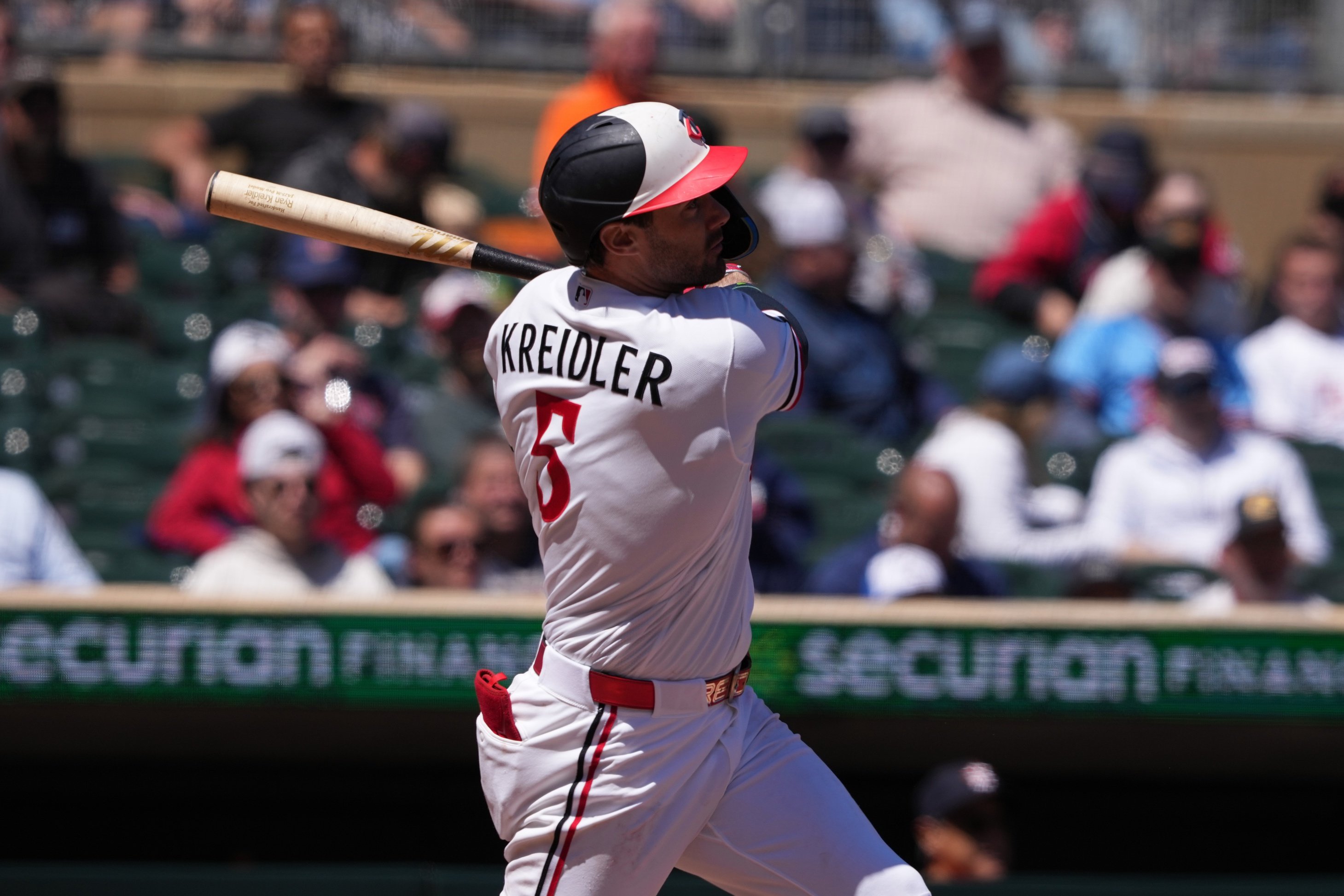 In 2012, the Twins acquired a 23-year-old infielder named Eduardo Escobar, part of the return for two months of a severely diminished Francisco Liriano at the trade deadline. At the time, Escobar was not all that highly regarded, and his initial run with Minnesota in 2012 and 2013 (negative-0.2 fWAR in 80 games) did little to bolster his rep. To his great credit, though, Escobar developed into a highly useful player for the Twins. He didn't get much hype in an organization that was anticipating the arrival of premier prospects like Byron Buxton and Miguel Sanó, but Escobar was one of the team's better regulars over the next several years, posting solid offensive numbers as a versatile, shortstop-capable fielder. Escobar was amidst a career year in 2018 when the Twins cashed him in for Jhoan Durán in one of the best moves of the Derek Falvey era. Durán, much like Escobar, would become an example of how key contributors can be uncovered in unlikely places. They don't always have to be top draft picks like Buxton or high-profile international signings like Sanó. Which brings us to present day. As the Twins rebuild and set their sights on future improvement, there's understandably a lot of focus on those top prospects who will hopefully help elevate the club over the next few years: Walker Jenkins, Emmanuel Rodriguez, Kaelen Culpepper and Gabriel Gonzalez, who made his Twins debut on Friday night against Boston. There's also plenty of attention being paid to Royce Lewis and Matt Wallner — former top prospects whose ability to reboot and rebound in Triple-A feels very weighty at the moment. While these rising and reeling talents all plug away in the minors, there are a number of players currently on the MLB roster who are making their own cases to play a role going forward, as the team hopefully transitions into a more competitive state. Acquired via waivers, minor-league deals or low-scale trades, none of these players have anything promised. They need to fight for their MLB futures, and that's exactly what makes their stories compelling to follow this summer. Kody Clemens The Twins acquired Clemens in exchange for cash considerations last April, jumping the waiver line for a player who was potentially headed to the minors at age 28. He impressed enough over the remainder of the season to earn another chance this year, but had much to prove. He largely slumped through the first month, but Clemens has come on in a big way. He heated up in late April and is has an OPS over .800 here in May. While bigger names have fizzled, Clemens has sizzled enough to expand his role, best demonstrated on Friday night when started in right field and batted seventh against a left-handed starter at Fenway. He's held his own against southpaws, which is one thing helping his case. Clemens has also been not just good but excellent defensively at first base, and he saw time at second as well before getting his first starting outfield nod over the weekend. That's the kind of flexibility that helps a good (if streaky) hitter and valued clubhouse presence stick around. Clemens is arbitration eligible for the first time in the coming offseason, and could be retained year-to-year at a reasonable cost through 2029. He's not gonna be a star but he could definitely be a stable roster fixture for a while. Ryan Kreidler Willi Castro is another example of the player type we're talking about. He was acquired as an unheralded minor-league free agent in 2023 — envisioned as a speedy light-hitting utilityman, if he made the team — but turned himself into a quality regular and even an All-Star. It's hard to look at Kreidler and not see the parallels. Both players ranked #7 in the Tigers system, per MLB Pipeline, before debuting in the majors. (Castro in 2019, Kreidler in 2022.) Both fell out of favor in Detroit after failing to hit in parts of four seasons. Both got scooped up by the Twins for essentially nothing. Castro proved to be a find. And while it's still very early, Kreidler is trending in the same direction. He's already hit three home runs in 11 games with the Twins, which is more than he totaled (two) in 89 games with the Tigers. Much like a younger Castro, Kreidler offers considerable value if he hits at all, because he can play center field and shortstop. In fact, he's probably the team's best defender at short, evidenced by Derek Shelton's decision to start him there (with Brooks Lee at third base) over the weekend. He's not going to maintain a 1.000+ OPS but the offensive bar for Kreidler to be a valuable multi-year roster asset is not high. He won't even be arb-eligible until after next season. Tristan Gray Many middling talents like Gray never get much of an extended opportunity in the majors. The 30-year-old admitted to reporters ahead of this season that he was considering retirement before catching on with the Twins and holding down a roster spot. This is his chance. We'll see what he can do with it. Gray's had some nice moments this year but overall hasn't been terribly effective. It can be hard when you're playing sporadically and constantly feeling like your roster spot is at risk. For now, the Lewis demotion lessens those impediments for Gray, whose spot should be secure and his role expanded in the coming weeks. Can he show enough to convince the Twins he might be worth keeping around cheaply as a backup infielder or potential platoon partner? It's going to require his power showing up more consistently to offset a poor plate approach. Gray, currently away from the team on paternity leave, has just one extra-base hit in his 57 plate appearances. Alex Jackson The loss of Ryan Jeffers opens the door for Jackson to try and play his way into Minnesota's catcher setup in 2027. He's been stashed at Triple-A, third on the depth chart, up until the starter went down with a hamate fracture this past week, forcing the Twins to confront the reality of a Jeffers-less future behind the plate. Jackson could be part of it. He's got MLB experience and is still two years away from free agency. Like Kreidler, he offers enough defensive value in a limited role to justify rostering without a great deal of offensive production. But he's got to at least hit a little, and the .527 career MLB OPS up to this point won't cut it. He posted a career-high 111 OPS+ in Baltimore last year and has flashed pop at Triple-A with the Saints, albeit with a .295 OBP. Jackson got the start at catcher on Friday (going 0-for-4 with three strikeouts) and figures to play semi-regularly over the next couple of months. Will he establish himself as a credible option to share time with Victor Caratini in 2027 after Jeffers presumably moves on? The dilemma here is that if Jackson plays well enough to earn a spot in the team's 2027 plans, it decreases his odds of getting through waivers again when Jeffers returns. But you cross that bridge when you get there. Yoendrys Gómez The advantage of having a wide-open bullpen, as the Twins do this year, is that you can audition intriguing arms and hopefully run into a few overlooked useful pieces along the way. In the past we've seen Minnesota use this method to come upon multi-year contributors like Brandon Kintzler, Casey Fien and Jared Burton. The relievers who've rotated through their bullpen carousel so far this year, like Zak Kent and Garrett Acton, have failed to capture the imagination. Gómez, their latest waiver-wire pickup, is a little more interesting. I certainly don't want to blow out of proportion his tiny sample of work with the Twins, but in eight appearances, he's looked legitimately good with seven strikeouts and just one hit allowed in 6 ⅓ innings. His appearance in last Wednesday's series finale against Houston, striking out five of seven batters faced, was an eye-opener. The fact that he's appeared on five different MLB teams since the start of last year could be viewed as a negative, a sign of his perceived dispensability, or a more positive indicator of the intrigue that numerous different front offices — including the Dodgers, Yankees and Rays — have seen in him. There's nothing stopping the Twins from giving Gómez a more extended look than any of those other clubs saw fit. The Twins whiffed on almost all of their minor-league bullpen signings, from Liam Hendriks and Andrew Chafin to Matt Bowman and John Brebbia, so they really could use a hit on a random find like Gómez. Or Cody Laweryson, or Eric Orze. This relief corps needs all the help it can get going forward.
- 29 comments
-
- 5
-
-
- kody clemens
- ryan kreidler
- (and 3 more)
-
Image courtesy of Matt Krohn-Imagn Images The Weekly Nutshell: We've reached the second half of May, and that's where things start coming into focus. Samples are growing more substantial, and patience is wearing thin for struggling players who are derailing the team's results. The Twins haven't had a winning week since early April and are 10-19 in their last 29 games. They've been constantly hanging around five-to-seven games below .500, which mostly lines up to preseason expectations. (They're currently on about a 70-win pace after winning 70 games in 2025.) What makes it frustrating though, is that the bar for relevance does not feel out of reach. You see the Cleveland Guardians leading the division with an unspectacular 26-22 record, you see some of the pitching performances being put forth by Minnesota's starters, and it really doesn't feel like Tom Pohlad's stated goal of competitiveness is out of the realm. As unimpressive as they've looked for the most part, the Twins are currently within two games of a wild-card position in the American League. However, they are being held back and dragged down by too many dreadful performances that go well beyond merely "bad" and as we approach the season's one-third marker in the schedule, the time for action is upon us. We saw that begin to unfold this past week and there could be more to come. Let's dig in. Weekly Snapshot: Mon, 5/11 through Sun, 5/17 *** Record Last Week: 3-3 (Overall: 21-26) Run Differential Last Week: +7 (Overall: -6) Standing: 3rd Place in AL Central (4.5 GB) Latest Game Results Game 42 | MIN 3, MIA 0: Ober Throws a Maddux, Shutting Out Marlins on 89 Pitches Ober: 9 IP, 0 R, 2 H, 0 BB, 7 K Game 43 | MIA 9, MIN 5: Two Buxton Homers Not Enough to Overcome SWR Clunker Woods Richardson: 3 IP, 8 R (6 ER), 7 H, 4 BB, 1 K Game 44 | MIN 9, MIA 1: Twins Take Series with Blowout Win in Zebby's Return Matthews: 7 IP, 0 R, 4 H, 1 BB, 5 K Game 45 | MIL 3, MIN 2: Lead Slips Away on Iffy Ruling in One-Run Loss to Brewers Ryan: 6 IP, 1 R, 4 H, 1 BB, 7 K Game 46 | MIL 2, MIN 1: RISP Woes Prove Costly as Twins Come Up Just Short Again Twins offense: 10 K, 1 BB, 0-8 RISP Game 47 | MIN 5, MIL 4: Twins Steal One from Brewers Behind Bullpen and Bats Twins bullpen: 4 IP, 1 R, 4 H, 3 BB, 4 K IF YOU'D RATHER LISTEN TO THE WEEK IN REVIEW THAN READ IT, YOU CAN GET IT IN AUDIO FORM! FIND THE LATEST EPISODE ON OUR PODCAST PAGE, AS WELL AS ON APPLE AND SPOTIFY. SUBSCRIBE TO OUR CHANNELS SO YOU DON'T MISS OUT! NEWS & NOTES The morning after going 0-for-4 with four strikeouts in Wednesday's loss to Miami, his second golden sombrero in a row, Matt Wallner was optioned to Triple-A for a much-needed reset. Heading back to the minors is a devastating setback for the 28-year-old with more than 1,100 plate appearances in the majors, but his increasingly untenable performance left the Twins with little choice. An 0-for-14 slump (with 11 Ks) had dropped his OPS to .551, and the defense was somehow worse than the offense. He'll look to get back on track with the Saints and return with renewed confidence, similar to his journey in the 2024 season. Recalled to replace Wallner on the roster was glove-first utilityman Ryan Kreidler. In terms of day-to-day utility, we're seeing Austin Martin step into a true everyday role in right field. He has been the starter there in all four games since Wallner was sent down. Also on Thursday, the Twins called up Zebby Matthews and sent down Travis Adams. Matthews steps into the vacant spot opened up by Taj Bradley's pectoral injury, chiseling away the final piece of remaining rotation depth in Triple-A. Any further attrition would put the Twins in a tough spot. Luckily, Bradley appears to be moving toward a somewhat imminent return. He made a rehab start for the Saints on Sunday, although it didn't go especially smoothly (42 pitches in 1.2 IP with 2 H, 2 BB allowed). Cody Laweryson, recovering from a forearm strain, also initiated a rehab at Triple-A over the weekend, and tossed a 1-2-3 inning in his return to action on Saturday. HIGHLIGHTS The starting rotation, with one glaring exception, continues to carry weight for this team. Bailey Ober opened the week with the best performance of his career: a complete-game shutout on just 89 pitches, with just two hits allowed. He retired the last 16 batters he faced consecutively. His second start on Sunday wasn't nearly as brilliant, with the righty surrendering three runs over five innings, but he exited with a lead and a 3.63 ERA on the season. Ober's velocity remains the lowest in all of baseball, but he's demonstrating major resilience and adaptability by harnessing every other strength in his repertoire — command, intelligence, extension — to keep hitters off balance and give his team a fighting chance. Matthews took a page out of Ober's book in his return to the rotation on Thursday. He was throwing much harder than Ober, albeit down from his 2025 norm, but efficiency and execution were the name of the game for Zebulon in a crisp seven innings of one-run ball. He struck out five and walked one, displaying the strike-throwing prowess that needs to be his signature. You'd like to see a bit more swing-and-miss (just five on 83 pitches), but all in all it was an encouraging return to the big-league stage. Connor Prielipp continues to look very good in his own introduction to the MLB level, allowing just one earned run over six innings against Milwaukee in his latest turn. He struck out eight and yielded just three hits. One day earlier, Joe Ryan delivered another quality start with six innings of one-run ball. In two outings since the elbow scare on May 3rd, Ryan has allowed just two runs on six hits in 12 innings with 12 strikeouts. It's starting to feel safe to say a bullet was dodged. Speaking of bullets, Byron Buxton launched a couple more into the seats on Wednesday against Miami, pushing his total to 15 in 26 games since starting the season in a modest dry spell. Unfortunately, he started feeling soreness in his (historically pesky) right hip after that contest, and sat out the finale against the Marlins as well as the entire Brewers series. You don't love to see it, but Buxton is reportedly trending in the right direction and could be back in the lineup Monday. If not, I'd expect to see him land on the injured list. A couple of other hitting performances of note: Kody Clemens was 8-for-19 with a home run, four doubles and some solid glovework at first — he's quietly ranked as the best fielder in baseball at the position, per Defensive Runs Saved. Kreidler had multiple hits in his first two starts after rejoining the fold, and now has a .997 OPS in extremely limited action, which certainly does not match up to his offensive rep. James Outman, who figures to see more playing time in Wallner's absence, had his best week of the season with four hits including a double and a triple. Finally, we've got to give some props to the bullpen. I still have very little faith in this unit as a general rule, but to give credit where it's due, the relievers were collectively very solid against Miami and Milwaukee, allowing only four runs in 18 innings (2.00 ERA). That included a pair of scoreless appearances from newcomer Yoendrys Gómez and solid rebounds from Justin Topa and Luis García. LOWLIGHTS Start after start, Simeon Woods Richardson can't seem to figure it out. In fact, he's trending in the wrong direction, with Wednesday's clunker against the Marlins representing a new low. The same lineup that got carved up on surrounding days by Ober and Matthews was able to feast on the struggling Woods Richardson, who lasted just three innings while coughing up eight runs (six earned) on seven hits and four walks with just one strikeout. He fell to 0-6 on the year and saw his ERA inflate to 7.71. Too often, Woods Richardson is simply giving the Twins no chance to win, as evidenced by the team's 1-8 record with him on the mound. But there is scant action the team can take at this juncture. It sounds like they'll go with a bullpen game led by Kendry Rojas on Monday, which is Woods Richardson's next scheduled start, but that doesn't feel like a sustainable solution going forward. Matthews was the last layer of starting depth and he's now been called upon to fill in for Bradley. Until injured starters get healthy, the Twins are sort of stuck with Woods Richardson, but with Bradley on the comeback trail, decision time may soon be upon us. How safe Royce Lewis' roster spot? He could be next in line for a St. Paul demotion, with numbers that look equally bad to Wallner's and a broken plate approach that feels just as hopeless. Lewis was 2-for-16 with eight strikeouts on the week and his slash line for the season now sits at .163/.261/.279. He also had some brutal moments at third base, drawing an obstruction call on Friday and then botching a routine grounder on Saturday, with both leading to unearned runs in one-score losses. Lewis has an option left and unlike Woods Richardson, there are viable candidates in the minors to replace him, as we'll cover shortly. Tristan Gray has been kept busy by giving breaks to Lewis and Luke Keaschall, the latter of whom is probably not in danger of a demotion but has been almost equally unproductive. Gray started in place of Lewis, mired in a 2-for-27 slump, at third base on Wednesday and in place of Keaschall, mired in a 3-for-21 slump, at second base on Saturday. Keaschall, like Wallner and Lewis, has been a liability on both ends, and this was another rough week for him defensively. Keaschall did have a solid game on Sunday to get his OPS back over .600, but before that, he was among four Twins regulars with an OPS below .600, not counting Wallner who is now in Triple-A. Also included in that group are both of the front office's "big" veteran offseason additions, Josh Bell and Victor Caratini, who have been well below replacement level while earning $7 million apiece. TRENDING STORYLINE Help is on the way via the St. Paul pipeline. As mentioned, Bradley and Laweryson both have rehab assignments underway and could be back as soon as this week. More interesting to track are the standout hitters who are making cases to unseat Minnesota's lineup laggards. If the team is getting close to making a move on Lewis, there are two compelling options to step in as his replacement on the left side of the infield: Orlando Arcia and Kaelen Culpepper. Arcia is hitting .318 with a .932 OPS for the Saints and of course brings the benefit of a lengthy MLB track record. I'm not going to make too much out of his production as a 31-year-old in Triple-A, but I also don't know what more the Twins could want to see from the minor-league signing to convince them he's capable of at least filling in during a short-term reset for Lewis. Culpepper would be more of a long-term commitment, and probably a bleaker sign for Lewis if he were the one swapped in. His performance in St. Paul has been more good than great but he's more than holding his own, both at the plate and in the field, and is viewed as a big part of the Twins' future. He hit his ninth homer of the season on Friday. A couple of other noteworthy players to monitor in St. Paul as potential offensive reinforcements in the near future: Hendry Mendez, who hit his first Triple-A homer on Saturday and is batting 395 through nine games with the Saints. He's not the cleanest fit as a lefty-swinging corner outfielder, but the bat looks legit. Gabriel Gonzalez is shaking off a slow start and finding his groove. He went 8-for-13 with a homer and a double over the weekend, looking more like the dominant hitter we saw throughout the 2025 campaign. Gonzalez has been splitting time pretty evenly between right field and first base. Former first-rounder Aaron Sabato has homered six times with 17 RBIs in his past 11 games. He's a 26-year-old non-prospect and the slugging success in a favorable environment should be taken with a grain of salt, but it'd be a lot of fun to see him get a shot at some point. LOOKING AHEAD The Astros are coming to town, which is a series many were circling on the schedule at the beginning of the season: Carlos Correa's return to Target Field. But a season-ending injury to Correa has zapped that storyline, and in fact the entire Houston lineup is ravaged, which should theoretically make life easier for Twins pitching. Following on off day on Thursday, the Twins will head to Boston to face another struggling big-market team, kicking off a 10-game road trip at Fenway. Can Minnesota capitalize against two of the AL's most disappointing clubs? MONDAY, MAY 18: ASTROS @ TWINS — RHP Lance McCullers Jr. v LHP Kendry Rojas TUESDAY, MAY 19: ASTROS @ TWINS — RHP Mike Burrows v. RHP Zebby Matthews WEDNESDAY, MAY 20: ASTROS @ TWINS — RHP Spencer Arrighetti v. RHP Joe Ryan FRIDAY, MAY 22: TWINS @ RED SOX — LHP Connor Prielipp v. LHP Payton Tolle SATURDAY, MAY 23: TWINS @ RED SOX — RHP Bailey Ober v. TBD SUNDAY, MAY 24: TWINS @ RED SOX — TBD v. RHP Brayan Bello View full article
- 20 replies
-
- 2
-
-
- bailey ober
- matt wallner
- (and 1 more)
-
 The Weekly Nutshell: We've reached the second half of May, and that's where things start coming into focus. Samples are growing more substantial, and patience is wearing thin for struggling players who are derailing the team's results. The Twins haven't had a winning week since early April and are 10-19 in their last 29 games. They've been constantly hanging around five-to-seven games below .500, which mostly lines up to preseason expectations. (They're currently on about a 70-win pace after winning 70 games in 2025.) What makes it frustrating though, is that the bar for relevance does not feel out of reach. You see the Cleveland Guardians leading the division with an unspectacular 26-22 record, you see some of the pitching performances being put forth by Minnesota's starters, and it really doesn't feel like Tom Pohlad's stated goal of competitiveness is out of the realm. As unimpressive as they've looked for the most part, the Twins are currently within two games of a wild-card position in the American League. However, they are being held back and dragged down by too many dreadful performances that go well beyond merely "bad" and as we approach the season's one-third marker in the schedule, the time for action is upon us. We saw that begin to unfold this past week and there could be more to come. Let's dig in. Weekly Snapshot: Mon, 5/11 through Sun, 5/17 *** Record Last Week: 3-3 (Overall: 21-26) Run Differential Last Week: +7 (Overall: -6) Standing: 3rd Place in AL Central (4.5 GB) Latest Game Results Game 42 | MIN 3, MIA 0: Ober Throws a Maddux, Shutting Out Marlins on 89 Pitches Ober: 9 IP, 0 R, 2 H, 0 BB, 7 K Game 43 | MIA 9, MIN 5: Two Buxton Homers Not Enough to Overcome SWR Clunker Woods Richardson: 3 IP, 8 R (6 ER), 7 H, 4 BB, 1 K Game 44 | MIN 9, MIA 1: Twins Take Series with Blowout Win in Zebby's Return Matthews: 7 IP, 0 R, 4 H, 1 BB, 5 K Game 45 | MIL 3, MIN 2: Lead Slips Away on Iffy Ruling in One-Run Loss to Brewers Ryan: 6 IP, 1 R, 4 H, 1 BB, 7 K Game 46 | MIL 2, MIN 1: RISP Woes Prove Costly as Twins Come Up Just Short Again Twins offense: 10 K, 1 BB, 0-8 RISP Game 47 | MIN 5, MIL 4: Twins Steal One from Brewers Behind Bullpen and Bats Twins bullpen: 4 IP, 1 R, 4 H, 3 BB, 4 K IF YOU'D RATHER LISTEN TO THE WEEK IN REVIEW THAN READ IT, YOU CAN GET IT IN AUDIO FORM! FIND THE LATEST EPISODE ON OUR PODCAST PAGE, AS WELL AS ON APPLE AND SPOTIFY. SUBSCRIBE TO OUR CHANNELS SO YOU DON'T MISS OUT! NEWS & NOTES The morning after going 0-for-4 with four strikeouts in Wednesday's loss to Miami, his second golden sombrero in a row, Matt Wallner was optioned to Triple-A for a much-needed reset. Heading back to the minors is a devastating setback for the 28-year-old with more than 1,100 plate appearances in the majors, but his increasingly untenable performance left the Twins with little choice. An 0-for-14 slump (with 11 Ks) had dropped his OPS to .551, and the defense was somehow worse than the offense. He'll look to get back on track with the Saints and return with renewed confidence, similar to his journey in the 2024 season. Recalled to replace Wallner on the roster was glove-first utilityman Ryan Kreidler. In terms of day-to-day utility, we're seeing Austin Martin step into a true everyday role in right field. He has been the starter there in all four games since Wallner was sent down. Also on Thursday, the Twins called up Zebby Matthews and sent down Travis Adams. Matthews steps into the vacant spot opened up by Taj Bradley's pectoral injury, chiseling away the final piece of remaining rotation depth in Triple-A. Any further attrition would put the Twins in a tough spot. Luckily, Bradley appears to be moving toward a somewhat imminent return. He made a rehab start for the Saints on Sunday, although it didn't go especially smoothly (42 pitches in 1.2 IP with 2 H, 2 BB allowed). Cody Laweryson, recovering from a forearm strain, also initiated a rehab at Triple-A over the weekend, and tossed a 1-2-3 inning in his return to action on Saturday. HIGHLIGHTS The starting rotation, with one glaring exception, continues to carry weight for this team. Bailey Ober opened the week with the best performance of his career: a complete-game shutout on just 89 pitches, with just two hits allowed. He retired the last 16 batters he faced consecutively. His second start on Sunday wasn't nearly as brilliant, with the righty surrendering three runs over five innings, but he exited with a lead and a 3.63 ERA on the season. Ober's velocity remains the lowest in all of baseball, but he's demonstrating major resilience and adaptability by harnessing every other strength in his repertoire — command, intelligence, extension — to keep hitters off balance and give his team a fighting chance. Matthews took a page out of Ober's book in his return to the rotation on Thursday. He was throwing much harder than Ober, albeit down from his 2025 norm, but efficiency and execution were the name of the game for Zebulon in a crisp seven innings of one-run ball. He struck out five and walked one, displaying the strike-throwing prowess that needs to be his signature. You'd like to see a bit more swing-and-miss (just five on 83 pitches), but all in all it was an encouraging return to the big-league stage. Connor Prielipp continues to look very good in his own introduction to the MLB level, allowing just one earned run over six innings against Milwaukee in his latest turn. He struck out eight and yielded just three hits. One day earlier, Joe Ryan delivered another quality start with six innings of one-run ball. In two outings since the elbow scare on May 3rd, Ryan has allowed just two runs on six hits in 12 innings with 12 strikeouts. It's starting to feel safe to say a bullet was dodged. Speaking of bullets, Byron Buxton launched a couple more into the seats on Wednesday against Miami, pushing his total to 15 in 26 games since starting the season in a modest dry spell. Unfortunately, he started feeling soreness in his (historically pesky) right hip after that contest, and sat out the finale against the Marlins as well as the entire Brewers series. You don't love to see it, but Buxton is reportedly trending in the right direction and could be back in the lineup Monday. If not, I'd expect to see him land on the injured list. A couple of other hitting performances of note: Kody Clemens was 8-for-19 with a home run, four doubles and some solid glovework at first — he's quietly ranked as the best fielder in baseball at the position, per Defensive Runs Saved. Kreidler had multiple hits in his first two starts after rejoining the fold, and now has a .997 OPS in extremely limited action, which certainly does not match up to his offensive rep. James Outman, who figures to see more playing time in Wallner's absence, had his best week of the season with four hits including a double and a triple. Finally, we've got to give some props to the bullpen. I still have very little faith in this unit as a general rule, but to give credit where it's due, the relievers were collectively very solid against Miami and Milwaukee, allowing only four runs in 18 innings (2.00 ERA). That included a pair of scoreless appearances from newcomer Yoendrys Gómez and solid rebounds from Justin Topa and Luis García. LOWLIGHTS Start after start, Simeon Woods Richardson can't seem to figure it out. In fact, he's trending in the wrong direction, with Wednesday's clunker against the Marlins representing a new low. The same lineup that got carved up on surrounding days by Ober and Matthews was able to feast on the struggling Woods Richardson, who lasted just three innings while coughing up eight runs (six earned) on seven hits and four walks with just one strikeout. He fell to 0-6 on the year and saw his ERA inflate to 7.71. Too often, Woods Richardson is simply giving the Twins no chance to win, as evidenced by the team's 1-8 record with him on the mound. But there is scant action the team can take at this juncture. It sounds like they'll go with a bullpen game led by Kendry Rojas on Monday, which is Woods Richardson's next scheduled start, but that doesn't feel like a sustainable solution going forward. Matthews was the last layer of starting depth and he's now been called upon to fill in for Bradley. Until injured starters get healthy, the Twins are sort of stuck with Woods Richardson, but with Bradley on the comeback trail, decision time may soon be upon us. How safe Royce Lewis' roster spot? He could be next in line for a St. Paul demotion, with numbers that look equally bad to Wallner's and a broken plate approach that feels just as hopeless. Lewis was 2-for-16 with eight strikeouts on the week and his slash line for the season now sits at .163/.261/.279. He also had some brutal moments at third base, drawing an obstruction call on Friday and then botching a routine grounder on Saturday, with both leading to unearned runs in one-score losses. Lewis has an option left and unlike Woods Richardson, there are viable candidates in the minors to replace him, as we'll cover shortly. Tristan Gray has been kept busy by giving breaks to Lewis and Luke Keaschall, the latter of whom is probably not in danger of a demotion but has been almost equally unproductive. Gray started in place of Lewis, mired in a 2-for-27 slump, at third base on Wednesday and in place of Keaschall, mired in a 3-for-21 slump, at second base on Saturday. Keaschall, like Wallner and Lewis, has been a liability on both ends, and this was another rough week for him defensively. Keaschall did have a solid game on Sunday to get his OPS back over .600, but before that, he was among four Twins regulars with an OPS below .600, not counting Wallner who is now in Triple-A. Also included in that group are both of the front office's "big" veteran offseason additions, Josh Bell and Victor Caratini, who have been well below replacement level while earning $7 million apiece. TRENDING STORYLINE Help is on the way via the St. Paul pipeline. As mentioned, Bradley and Laweryson both have rehab assignments underway and could be back as soon as this week. More interesting to track are the standout hitters who are making cases to unseat Minnesota's lineup laggards. If the team is getting close to making a move on Lewis, there are two compelling options to step in as his replacement on the left side of the infield: Orlando Arcia and Kaelen Culpepper. Arcia is hitting .318 with a .932 OPS for the Saints and of course brings the benefit of a lengthy MLB track record. I'm not going to make too much out of his production as a 31-year-old in Triple-A, but I also don't know what more the Twins could want to see from the minor-league signing to convince them he's capable of at least filling in during a short-term reset for Lewis. Culpepper would be more of a long-term commitment, and probably a bleaker sign for Lewis if he were the one swapped in. His performance in St. Paul has been more good than great but he's more than holding his own, both at the plate and in the field, and is viewed as a big part of the Twins' future. He hit his ninth homer of the season on Friday. A couple of other noteworthy players to monitor in St. Paul as potential offensive reinforcements in the near future: Hendry Mendez, who hit his first Triple-A homer on Saturday and is batting 395 through nine games with the Saints. He's not the cleanest fit as a lefty-swinging corner outfielder, but the bat looks legit. Gabriel Gonzalez is shaking off a slow start and finding his groove. He went 8-for-13 with a homer and a double over the weekend, looking more like the dominant hitter we saw throughout the 2025 campaign. Gonzalez has been splitting time pretty evenly between right field and first base. Former first-rounder Aaron Sabato has homered six times with 17 RBIs in his past 11 games. He's a 26-year-old non-prospect and the slugging success in a favorable environment should be taken with a grain of salt, but it'd be a lot of fun to see him get a shot at some point. LOOKING AHEAD The Astros are coming to town, which is a series many were circling on the schedule at the beginning of the season: Carlos Correa's return to Target Field. But a season-ending injury to Correa has zapped that storyline, and in fact the entire Houston lineup is ravaged, which should theoretically make life easier for Twins pitching. Following on off day on Thursday, the Twins will head to Boston to face another struggling big-market team, kicking off a 10-game road trip at Fenway. Can Minnesota capitalize against two of the AL's most disappointing clubs? MONDAY, MAY 18: ASTROS @ TWINS — RHP Lance McCullers Jr. v LHP Kendry Rojas TUESDAY, MAY 19: ASTROS @ TWINS — RHP Mike Burrows v. RHP Zebby Matthews WEDNESDAY, MAY 20: ASTROS @ TWINS — RHP Spencer Arrighetti v. RHP Joe Ryan FRIDAY, MAY 22: TWINS @ RED SOX — LHP Connor Prielipp v. LHP Payton Tolle SATURDAY, MAY 23: TWINS @ RED SOX — RHP Bailey Ober v. TBD SUNDAY, MAY 24: TWINS @ RED SOX — TBD v. RHP Brayan Bello
- 20 comments
-
- 2
-
-
- bailey ober
- matt wallner
- (and 1 more)
-
Image courtesy of © Jesse Johnson, Imagn Images On Tuesday night at Target Field, Bailey Ober threw a complete shutout on just 89 pitches against the Miami Marlins. It was a rarity in its own right — Twins starters don't complete a game very often — but the efficiency of his performance was almost unheard of in these times. The only starter in Twins history to throw a shutout on fewer pitches, per Aaron Gleeman, was Bill Krueger (85) back in 1992. It was around that time, the first of Greg Maddux's four consecutive Cy Young seasons, that the term "Maddux" was being coined in reference to a shutout recorded on a double-digit pitch total. The Hall of Famer would also gain repute for his ability to dominate with relatively sub-par velocity. Coincidentally, earlier in the day on Tuesday I happened to be dinking around on Baseball Reference and looking through Carlos Silva's 2005 game log. The backstory is that I've been piecing together a list of my most vivid personal memory from each of the past 25 Twins seasons, and for '05 it was Silva's 74-pitch shutout against the Brewers in May. This was the pinnacle outing from Silva's career — a perfect encapsulation of the strike-throwing groundballer at his best — and the epitome of Twins pitching philosophy from that era. Silva debuted in the majors in 2002, the same year as Rick Anderson became Minnesota's pitching coach, and two years later he was acquired by the Twins alongside Punto in the Eric Milton trade. Silva's stylistic alignment to Anderson's "pitch-to-contact" prototype undoubtedly played a role in the Twins targeting him. And sure enough, the right-hander mostly served as a proof point for the wisdom of such an approach at the time. With the exception of his ugly 2006 campaign, Silva was mostly a reliable, ultra-efficient innings eater with above-average ERAs for the Twins. That 2005 season was his best: he posted a 3.44 ERA (130 ERA+) in 188 ⅓ innings while issuing just nine walks all year. Silva achieved this success with a 9.5% strikeout rate (3.4 K/9) — just 71 strikeouts in 27 starts. The lowest strikeout rate in baseball today belongs to Adrian Houser at 12.2%. To look back through his game log now is almost incomprehensible up against the context of modern-day pitching. Deep counts just really didn't exist against Carlos Silva. He threw it over the plate and said, "Come get it," knowing that the movement on his middling 90ish-MPH fastball and oft-used changeup would succeed in inducing weak contact most of the time. As a result, his pitch counts were shockingly low. In 2005, Silva completed seven or more innings in 21 of his 27 starts, but surpassed 100 pitches in an outing only twice all year. You contrast that with the current environment, where starters rarely venture into the seventh or eighth because their pitch counts have already piled up on longer, strikeout-chasing ABs, and it feels like almost a different game. And in many respects, it was. Baseball has changed in fundamental ways over the past 21 years. A pitcher like Silva probably could not succeed in 2026, and would likely be unable to even tread water. Ober is doing it though. Granted, his traits are not as extreme as Silva or some of the other standard-bearers from the pitch-to-contact era like Brad Radke and Nick Blackburn, but Ober leverages similar ingredients in his recipe. Throw strikes, hit your spots, induce ground balls, lean on the offspeeds. "The lost art of pitching," as Ober calls it. Ober's 35.5% GB rate is not conventionally high but it's the highest of his career. He's attacking the fringes of the zone with the highest called-strike rate of his career (17.3%). And he's throwing more (better) changeups than ever before: 36.2% of the time, with a .167 batting average allowed. The economical pitch usage enables Ober to routinely pitch deeper into games than other starters, which has ancillary positive effects on the bullpen. The Twins as a team have had three complete games thrown over the past three seasons and Ober was behind all of them. This year, he's gotten through at least six innings in five of his past six starts, and he's on pace to reach 200 innings. A throwback, indeed. Time will tell if Ober can keep rolling like this, especially given the quality of the defense backing up all this contact — he definitely has his skeptics — but it's already gone on long enough that it's difficult to characterize his success is a total fluke. As long as he can stay on track, I'm just going to enjoy the ride and bask in the nostalgia. View full article
-
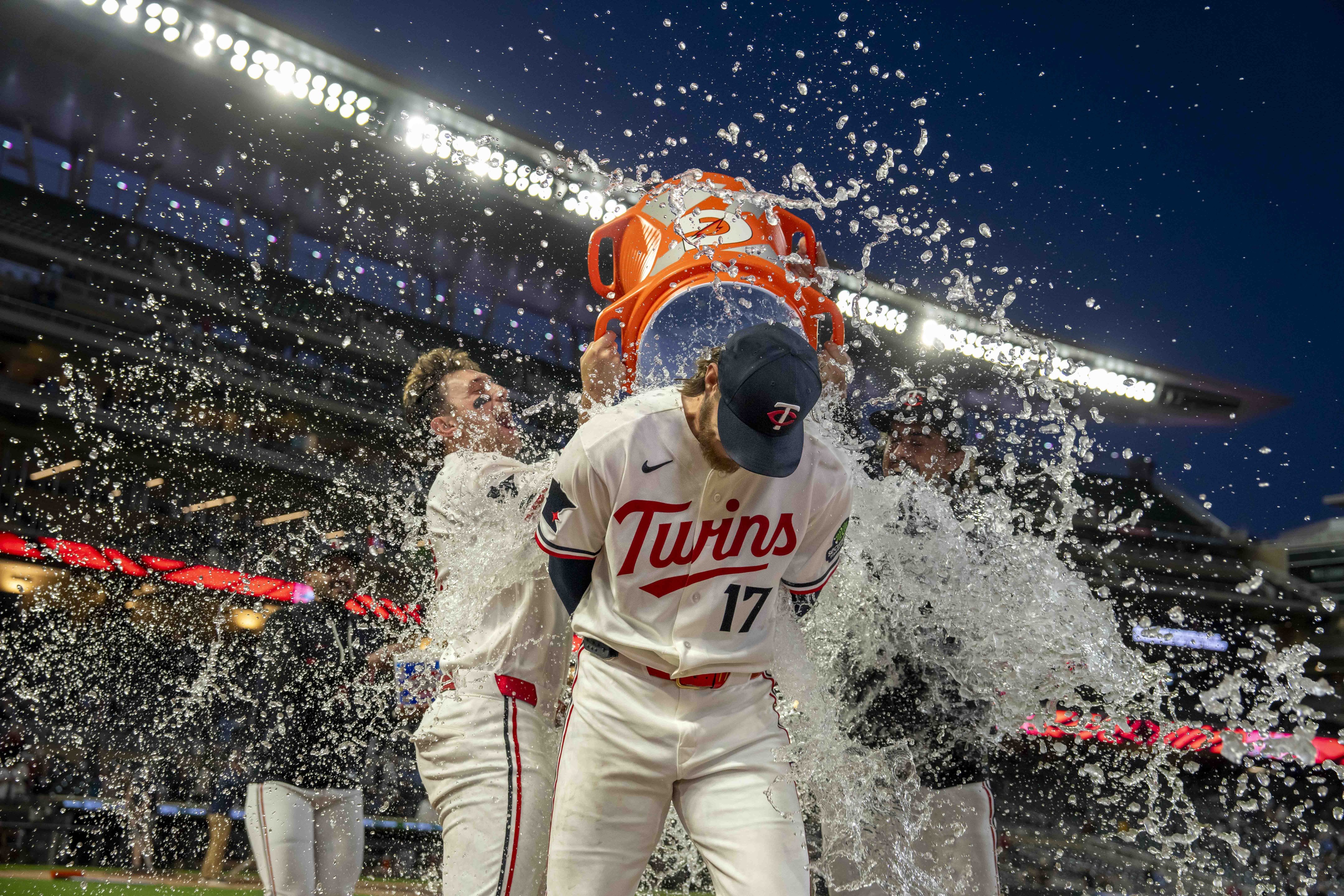 On Tuesday night at Target Field, Bailey Ober threw a complete shutout on just 89 pitches against the Miami Marlins. It was a rarity in its own right — Twins starters don't complete a game very often — but the efficiency of his performance was almost unheard of in these times. The only starter in Twins history to throw a shutout on fewer pitches, per Aaron Gleeman, was Bill Krueger (85) back in 1992. It was around that time, the first of Greg Maddux's four consecutive Cy Young seasons, that the term "Maddux" was being coined in reference to a shutout recorded on a double-digit pitch total. The Hall of Famer would also gain repute for his ability to dominate with relatively sub-par velocity. Coincidentally, earlier in the day on Tuesday I happened to be dinking around on Baseball Reference and looking through Carlos Silva's 2005 game log. The backstory is that I've been piecing together a list of my most vivid personal memory from each of the past 25 Twins seasons, and for '05 it was Silva's 74-pitch shutout against the Brewers in May. This was the pinnacle outing from Silva's career — a perfect encapsulation of the strike-throwing groundballer at his best — and the epitome of Twins pitching philosophy from that era. Silva debuted in the majors in 2002, the same year as Rick Anderson became Minnesota's pitching coach, and two years later he was acquired by the Twins alongside Punto in the Eric Milton trade. Silva's stylistic alignment to Anderson's "pitch-to-contact" prototype undoubtedly played a role in the Twins targeting him. And sure enough, the right-hander mostly served as a proof point for the wisdom of such an approach at the time. With the exception of his ugly 2006 campaign, Silva was mostly a reliable, ultra-efficient innings eater with above-average ERAs for the Twins. That 2005 season was his best: he posted a 3.44 ERA (130 ERA+) in 188 ⅓ innings while issuing just nine walks all year. Silva achieved this success with a 9.5% strikeout rate (3.4 K/9) — just 71 strikeouts in 27 starts. The lowest strikeout rate in baseball today belongs to Adrian Houser at 12.2%. To look back through his game log now is almost incomprehensible up against the context of modern-day pitching. Deep counts just really didn't exist against Carlos Silva. He threw it over the plate and said, "Come get it," knowing that the movement on his middling 90ish-MPH fastball and oft-used changeup would succeed in inducing weak contact most of the time. As a result, his pitch counts were shockingly low. In 2005, Silva completed seven or more innings in 21 of his 27 starts, but surpassed 100 pitches in an outing only twice all year. You contrast that with the current environment, where starters rarely venture into the seventh or eighth because their pitch counts have already piled up on longer, strikeout-chasing ABs, and it feels like almost a different game. And in many respects, it was. Baseball has changed in fundamental ways over the past 21 years. A pitcher like Silva probably could not succeed in 2026, and would likely be unable to even tread water. Ober is doing it though. Granted, his traits are not as extreme as Silva or some of the other standard-bearers from the pitch-to-contact era like Brad Radke and Nick Blackburn, but Ober leverages similar ingredients in his recipe. Throw strikes, hit your spots, induce ground balls, lean on the offspeeds. "The lost art of pitching," as Ober calls it. Ober's 35.5% GB rate is not conventionally high but it's the highest of his career. He's attacking the fringes of the zone with the highest called-strike rate of his career (17.3%). And he's throwing more (better) changeups than ever before: 36.2% of the time, with a .167 batting average allowed. The economical pitch usage enables Ober to routinely pitch deeper into games than other starters, which has ancillary positive effects on the bullpen. The Twins as a team have had three complete games thrown over the past three seasons and Ober was behind all of them. This year, he's gotten through at least six innings in five of his past six starts, and he's on pace to reach 200 innings. A throwback, indeed. Time will tell if Ober can keep rolling like this, especially given the quality of the defense backing up all this contact — he definitely has his skeptics — but it's already gone on long enough that it's difficult to characterize his success is a total fluke. As long as he can stay on track, I'm just going to enjoy the ride and bask in the nostalgia.
 -
Image courtesy of David Richard-Imagn Images The Weekly Nutshell: It's becoming a weekly trend for the Minnesota Twins: they start and finish strong, with a whole lot of ugliness in between. This time around, they kicked off the week with an 11-3 win over Washington before dropping three in a row and then rebounding over the weekend with rare back-to-back one-run wins in Cleveland. The Twins are in last place but are hanging around in a closely grouped AL Central, currently led by Cleveland with a .500 record. Though they're far from out of the running, it's tough to feel much belief in this team's outlook as the bullpen continues to bleed and the hits keep coming from an injury standpoint. But Minnesota's star center fielder is doing all he can to single-handedly keep things interesting. Weekly Snapshot: Mon, 5/4 through Sun, 5/10 *** Record Last Week: 3-3 (Overall: 18-23) Run Differential Last Week: -7 (Overall: -12) Standing: 5th Place in AL Central (2.5 GB) Latest Game Results Game 36 | MIN 11, WAS 3: Twins Beat Up on Brutal Nats Pitching Staff in Rout Lee: 3-5, 3 RBI Game 37 | WAS 15, MIN 2: Ober Struggles, Bullpen Gets Nuked in Late Innings Topa, García: 1.1 IP, 8 ER, 3 HR allowed Game 38 | WAS 7, MIN 5: Mental Mistakes, Missed Chances Cost Twins Series Woods Richardson: 4.1 IP, 5 ER, 4 H, 2 BB, 2 K Game 39 | CLE 6, MIN 4: Four-Run First Carries Guardians to Win in Opener Buxton: 3-5, HR, 2 RBI Game 40 | MIN 2, CLE 1 (11): Buxton Provides All the Offense Epic Pitching Duel Buxton: 2-5, HR, 2 RBI Game 41 | MIN 5, CLE 4: Twins Scrape Out Another Rare One-Run Win at Cleveland Clemens: 2-4, 2 R NEWS & NOTES The week opened with some much-needed good news: Joe Ryan's MRI showed no structural damage in his elbow, eliciting a collective sigh of relief after his early exit last week set off major alarm bells. Not only was Ryan able to avoid a trip to the injured list, but he didn't even miss a start, returning to the mound for his scheduled turn in Cleveland on Saturday. It went very well. More on that below. But it wasn't all good news on the pitching health front. Mick Abel, who's trying to work his way back from elbow inflammation, experienced a setback and received a cortisone shot in his triceps. He's still probably multiple weeks away at least. This comes on the heels of David Festa being shut down on his own rehab journey due to renewed soreness in his shoulder, leaving his season somewhat in limbo. And on Saturday, the Twins placed Taj Bradley — who's been easily the biggest bright spot on the pitching staff — on the injured list with right pec muscle inflammation. Travis Adams was recalled to take his spot on the roster. Hopefully this is a minor issue for Bradley but it unfortunately should be noted that the same injury cost him two months in 2024. Word is that imaging came back clean, but Bradley was headed to see Dr. Keith Meister (famed pitching surgeon) for a second opinion, which suggests some level of concern. We'll see what comes next. While Adams replaced him immediately on the roster, it looks like it'll be Kendry Rojas — recalled on Sunday with Kody Funderburk heading down — counted on to fill the bulk innings lost from Bradley, who's been a workhorse for this staff. Rojas threw 3 ⅓ innings in relief of opener Andrew Morris in the series finale against Cleveland. Finally, Yoendrys Gómez was acquired from Tampa Bay for cash considerations. The Twins designated Christian Roa for assignment to make room on the 40-man and optioned John Klein to make room on the active roster. HIGHLIGHTS This was a fairly solid week for the offense, all in all, with some of the lineup's top performers contributing and building on their successful starts to the season. As usual, Byron Buxton was the driving force. At times it's felt like he IS the Twins offense, and that became literal on Saturday night when Buxton's leadoff homer in the first and RBI double in the 11th represented the entirety of Minnesota's production in a 2-1 victory. The home run was Buxton's third of the week, pushing his season total to 13. Entering play on Sunday he was tied for fourth in the majors behind Aaron Judge, Munetaka Murakami and Kyle Schwarber. Ryan Jeffers went 6-for-17 with a home run, four doubles and four runs scored. Austin Martin was 7-for-20 with a double and a stolen base. Buxton, Jeffers and Martin rank first, second and fourth among Twins position players in fWAR this season, respectively. Brooks Lee has risen to fifth on that list, ascending steadily in recent weeks after pulling clear of a season-opening lull. He tallied four multi-hit games and six RBIs, and on Saturday played perhaps his best defensive game of the season at shortstop. In extra innings, Lee made a couple of stellar, high-stakes plays, including a game-ending putout on a diving play to his left in the 11th, following an almost miraculous stab of a hot liner with the infield in. Luke Keaschall is also rising on the WAR leaderboard following his own slow start. He had four hits including a double, but also drew eight walks with no strikeouts. In his past 14 games, Keaschall is 13-for-43 (.317) with five doubles and three stolen bases, lifting his OPS by over 100 points. On the pitching side, Ryan looked to be in top form on Saturday, which was a huge relief. There were no signs of discomfort or hindrance from the elbow that forced him out of his previous start, and in fact Ryan's velocity was actually up a tick over his season norm. He held the Guardians to one over six innings and finished with 107 pitches, his highest total in an outing since June of 2023. Never a dull moment when it comes to the Joe Ryan Experience. LOWLIGHTS Another horrendous week for the bullpen. Wednesday's game was the clear low point, with four relievers combining to allow 10 earned runs in three innings after Bailey Ober's exit. That included six charged to Justin Topa, who now has a 7.88 ERA and has been one of the most-used relievers in baseball despite his lack of capability. Luis García followed Topa and gave up home runs to two of the four batters he faced; García has now surrendered eight earned runs in 4 ⅔ innings since being signed to a minor-league contract after the Mets jettisoned him. Anthony Banda continues to look erratic and unreliable. He issued two walks and hit two batters in his four appearances. His ERA sits at 7.64 on the season, making him one of four Twins pitchers seeing regular use despite an ERA over six. Joining Banda, Topa and García in that category is Simeon Woods Richardson, who is getting knocked around every fifth day with no end in sight. The Nationals jumped on him for five earned runs in 4 ⅓ innings on Thursday, marking the third straight start in which he's been unable to get through the fifth. The Twins are 1-7 in games started by Woods Richardson, whose 6.92 ERA is tied for the worst in baseball. There haven't been many redeeming aspects in the right-hander's performance so far. He has the lowest strikeout rate in the majors at 10.7%. Opponents are slashing .323/.390/.544 against him, and they have a .440 wOBA against the splitter that's supposed to be a neutralizing weapon. Yet the Twins have little choice but to keep trotting him out there as a member of their rotation. Injuries to Festa, Abel and now Bradley have decimated Minnesota's starting depth, so even if they wanted to make a move with Woods Richardson — tricky in and of itself since he's out of options and doesn't seem to offer much potential as a reliever — their hands are essentially tied. Honestly, I can live with it. In an increasingly lost season, letting a 25-year-old starter work through his struggles is acceptable. He's not giving the Twins much chance to win when he's on the mound but that doesn't really matter a whole lot. In the bigger picture there is still a purpose in running him out there. The bullpen situation is far more difficult to tolerate. Klein also wasn't pitching well either, allowing two earned runs over 2 ⅓ innings during his brief stint with the Twins, but at least he's a semi-legitimate prospect who could possibly be a factor for the bullpen going forward. Instead, he's back in Triple-A, while the Twins trot out veterans like Topa, García and now Gómez with no current or future value. This isn't a rebuilding bullpen, it's just a bad bullpen offering no compelling reason to tune in. Finally, we've got to talk about Royce Lewis. It's getting late early for the Twins third baseman. He sat consecutive games on Wednesday and Thursday as Derek Shelton sought to give Lewis — hitting .133 with a 15-to-1 K/BB ratio since coming off the injured list — a bit of a soft reset. The 26-year-old now routinely finds himself batting ninth in the order, with an OPS that has dropped well below .600. Despite efforts to reduce the pressure and get him right, Lewis just can't find his way out of a funk that essentially extends back to the middle of the 2024 season. Where to go from here? In some sense you can make a similar argument as the one above with Woods Richardson — as a hopeful building block, let him take the lumps and try to figure things out — but this slump has lasted far longer and unlike with SWR, Lewis has a minor-league option remaining, as well as credible options in the minors to replace him. TRENDING STORYLINE If you're looking for a vibe lift, you might turn your attention to the super-slugging St. Paul Saints. Yes, there's cause for dismay on this roster too, with top prospects Walker Jenkins and Emmanuel Rodriguez both landing on the injured list last week, but there's still plenty of juice in this lineup. The Saints tweeted last week that they lead all of professional baseball in home runs, outpacing even the New York Yankees who were leading the majors. Among the power bats fueling St. Paul's prolific long-ball prowess are Gabriel Gonzalez, Kyler Fedko, Orlando Arcia and Kaelen Culpepper with eight home runs apiece. The latter two stand out as potential promotion candidates, with the capability to displace Lewis at third base. Understandably, the Twins might want to keep playing it slow with Culpepper, prioritizing his development as he continues acclimating to the Triple-A level. But Arcia, who is slashing .316.372/.579 through 34 games with the Saints, sure looks like a candidate for a relatively imminent call-up. LOOKING AHEAD Following a 3-3 road trip, the Twins are coming back to Target Field for a pair of interleague showdowns. First they'll be welcoming the Marlins, with Woodbury native Max Meyer slated to make his Target Field debut on Wednesday. Over the weekend it'll be the cross-border rival Brewers, with plenty of Wisconsinite fans surely in tow. Should be some nice weather as long as it stays dry. TUESDAY, MAY 12: MARLINS @ TWINS — RHP Eury Perez v. RHP Bailey Ober WEDNESDAY, MAY 13: MARLINS @ TWINS — RHP Max Meyer v. RHP Simeon Woods Richardson THURSDAY, MAY 14: MARLINS @ TWINS — LHP Robby Snelling v. LHP Connor Prielipp FRIDAY, MAY 15: BREWERS @ TWINS — LHP Kyle Harrison v. RHP Joe Ryan SATURDAY, MAY 16: BREWERS @ TWINS — RHP Logan Henderson v. TBD SUNDAY, MAY 17: BREWERS @ TWINS — RHO Chad Patrick v. RHP Bailey Ober View full article
-
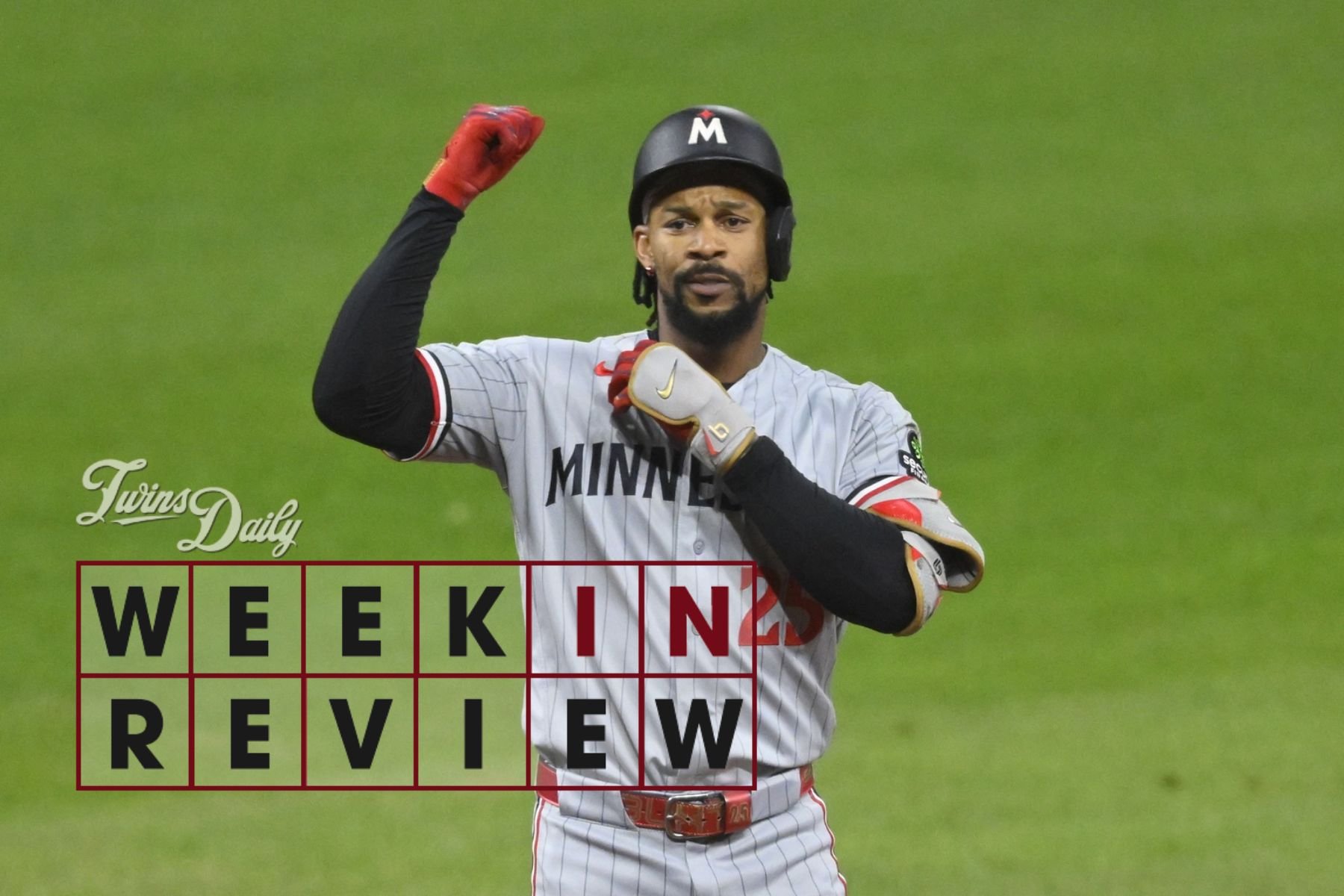 The Weekly Nutshell: It's becoming a weekly trend for the Minnesota Twins: they start and finish strong, with a whole lot of ugliness in between. This time around, they kicked off the week with an 11-3 win over Washington before dropping three in a row and then rebounding over the weekend with rare back-to-back one-run wins in Cleveland. The Twins are in last place but are hanging around in a closely grouped AL Central, currently led by Cleveland with a .500 record. Though they're far from out of the running, it's tough to feel much belief in this team's outlook as the bullpen continues to bleed and the hits keep coming from an injury standpoint. But Minnesota's star center fielder is doing all he can to single-handedly keep things interesting. Weekly Snapshot: Mon, 5/4 through Sun, 5/10 *** Record Last Week: 3-3 (Overall: 18-23) Run Differential Last Week: -7 (Overall: -12) Standing: 5th Place in AL Central (2.5 GB) Latest Game Results Game 36 | MIN 11, WAS 3: Twins Beat Up on Brutal Nats Pitching Staff in Rout Lee: 3-5, 3 RBI Game 37 | WAS 15, MIN 2: Ober Struggles, Bullpen Gets Nuked in Late Innings Topa, García: 1.1 IP, 8 ER, 3 HR allowed Game 38 | WAS 7, MIN 5: Mental Mistakes, Missed Chances Cost Twins Series Woods Richardson: 4.1 IP, 5 ER, 4 H, 2 BB, 2 K Game 39 | CLE 6, MIN 4: Four-Run First Carries Guardians to Win in Opener Buxton: 3-5, HR, 2 RBI Game 40 | MIN 2, CLE 1 (11): Buxton Provides All the Offense Epic Pitching Duel Buxton: 2-5, HR, 2 RBI Game 41 | MIN 5, CLE 4: Twins Scrape Out Another Rare One-Run Win at Cleveland Clemens: 2-4, 2 R NEWS & NOTES The week opened with some much-needed good news: Joe Ryan's MRI showed no structural damage in his elbow, eliciting a collective sigh of relief after his early exit last week set off major alarm bells. Not only was Ryan able to avoid a trip to the injured list, but he didn't even miss a start, returning to the mound for his scheduled turn in Cleveland on Saturday. It went very well. More on that below. But it wasn't all good news on the pitching health front. Mick Abel, who's trying to work his way back from elbow inflammation, experienced a setback and received a cortisone shot in his triceps. He's still probably multiple weeks away at least. This comes on the heels of David Festa being shut down on his own rehab journey due to renewed soreness in his shoulder, leaving his season somewhat in limbo. And on Saturday, the Twins placed Taj Bradley — who's been easily the biggest bright spot on the pitching staff — on the injured list with right pec muscle inflammation. Travis Adams was recalled to take his spot on the roster. Hopefully this is a minor issue for Bradley but it unfortunately should be noted that the same injury cost him two months in 2024. Word is that imaging came back clean, but Bradley was headed to see Dr. Keith Meister (famed pitching surgeon) for a second opinion, which suggests some level of concern. We'll see what comes next. While Adams replaced him immediately on the roster, it looks like it'll be Kendry Rojas — recalled on Sunday with Kody Funderburk heading down — counted on to fill the bulk innings lost from Bradley, who's been a workhorse for this staff. Rojas threw 3 ⅓ innings in relief of opener Andrew Morris in the series finale against Cleveland. Finally, Yoendrys Gómez was acquired from Tampa Bay for cash considerations. The Twins designated Christian Roa for assignment to make room on the 40-man and optioned John Klein to make room on the active roster. HIGHLIGHTS This was a fairly solid week for the offense, all in all, with some of the lineup's top performers contributing and building on their successful starts to the season. As usual, Byron Buxton was the driving force. At times it's felt like he IS the Twins offense, and that became literal on Saturday night when Buxton's leadoff homer in the first and RBI double in the 11th represented the entirety of Minnesota's production in a 2-1 victory. The home run was Buxton's third of the week, pushing his season total to 13. Entering play on Sunday he was tied for fourth in the majors behind Aaron Judge, Munetaka Murakami and Kyle Schwarber. Ryan Jeffers went 6-for-17 with a home run, four doubles and four runs scored. Austin Martin was 7-for-20 with a double and a stolen base. Buxton, Jeffers and Martin rank first, second and fourth among Twins position players in fWAR this season, respectively. Brooks Lee has risen to fifth on that list, ascending steadily in recent weeks after pulling clear of a season-opening lull. He tallied four multi-hit games and six RBIs, and on Saturday played perhaps his best defensive game of the season at shortstop. In extra innings, Lee made a couple of stellar, high-stakes plays, including a game-ending putout on a diving play to his left in the 11th, following an almost miraculous stab of a hot liner with the infield in. Luke Keaschall is also rising on the WAR leaderboard following his own slow start. He had four hits including a double, but also drew eight walks with no strikeouts. In his past 14 games, Keaschall is 13-for-43 (.317) with five doubles and three stolen bases, lifting his OPS by over 100 points. On the pitching side, Ryan looked to be in top form on Saturday, which was a huge relief. There were no signs of discomfort or hindrance from the elbow that forced him out of his previous start, and in fact Ryan's velocity was actually up a tick over his season norm. He held the Guardians to one over six innings and finished with 107 pitches, his highest total in an outing since June of 2023. Never a dull moment when it comes to the Joe Ryan Experience. LOWLIGHTS Another horrendous week for the bullpen. Wednesday's game was the clear low point, with four relievers combining to allow 10 earned runs in three innings after Bailey Ober's exit. That included six charged to Justin Topa, who now has a 7.88 ERA and has been one of the most-used relievers in baseball despite his lack of capability. Luis García followed Topa and gave up home runs to two of the four batters he faced; García has now surrendered eight earned runs in 4 ⅔ innings since being signed to a minor-league contract after the Mets jettisoned him. Anthony Banda continues to look erratic and unreliable. He issued two walks and hit two batters in his four appearances. His ERA sits at 7.64 on the season, making him one of four Twins pitchers seeing regular use despite an ERA over six. Joining Banda, Topa and García in that category is Simeon Woods Richardson, who is getting knocked around every fifth day with no end in sight. The Nationals jumped on him for five earned runs in 4 ⅓ innings on Thursday, marking the third straight start in which he's been unable to get through the fifth. The Twins are 1-7 in games started by Woods Richardson, whose 6.92 ERA is tied for the worst in baseball. There haven't been many redeeming aspects in the right-hander's performance so far. He has the lowest strikeout rate in the majors at 10.7%. Opponents are slashing .323/.390/.544 against him, and they have a .440 wOBA against the splitter that's supposed to be a neutralizing weapon. Yet the Twins have little choice but to keep trotting him out there as a member of their rotation. Injuries to Festa, Abel and now Bradley have decimated Minnesota's starting depth, so even if they wanted to make a move with Woods Richardson — tricky in and of itself since he's out of options and doesn't seem to offer much potential as a reliever — their hands are essentially tied. Honestly, I can live with it. In an increasingly lost season, letting a 25-year-old starter work through his struggles is acceptable. He's not giving the Twins much chance to win when he's on the mound but that doesn't really matter a whole lot. In the bigger picture there is still a purpose in running him out there. The bullpen situation is far more difficult to tolerate. Klein also wasn't pitching well either, allowing two earned runs over 2 ⅓ innings during his brief stint with the Twins, but at least he's a semi-legitimate prospect who could possibly be a factor for the bullpen going forward. Instead, he's back in Triple-A, while the Twins trot out veterans like Topa, García and now Gómez with no current or future value. This isn't a rebuilding bullpen, it's just a bad bullpen offering no compelling reason to tune in. Finally, we've got to talk about Royce Lewis. It's getting late early for the Twins third baseman. He sat consecutive games on Wednesday and Thursday as Derek Shelton sought to give Lewis — hitting .133 with a 15-to-1 K/BB ratio since coming off the injured list — a bit of a soft reset. The 26-year-old now routinely finds himself batting ninth in the order, with an OPS that has dropped well below .600. Despite efforts to reduce the pressure and get him right, Lewis just can't find his way out of a funk that essentially extends back to the middle of the 2024 season. Where to go from here? In some sense you can make a similar argument as the one above with Woods Richardson — as a hopeful building block, let him take the lumps and try to figure things out — but this slump has lasted far longer and unlike with SWR, Lewis has a minor-league option remaining, as well as credible options in the minors to replace him. TRENDING STORYLINE If you're looking for a vibe lift, you might turn your attention to the super-slugging St. Paul Saints. Yes, there's cause for dismay on this roster too, with top prospects Walker Jenkins and Emmanuel Rodriguez both landing on the injured list last week, but there's still plenty of juice in this lineup. The Saints tweeted last week that they lead all of professional baseball in home runs, outpacing even the New York Yankees who were leading the majors. Among the power bats fueling St. Paul's prolific long-ball prowess are Gabriel Gonzalez, Kyler Fedko, Orlando Arcia and Kaelen Culpepper with eight home runs apiece. The latter two stand out as potential promotion candidates, with the capability to displace Lewis at third base. Understandably, the Twins might want to keep playing it slow with Culpepper, prioritizing his development as he continues acclimating to the Triple-A level. But Arcia, who is slashing .316.372/.579 through 34 games with the Saints, sure looks like a candidate for a relatively imminent call-up. LOOKING AHEAD Following a 3-3 road trip, the Twins are coming back to Target Field for a pair of interleague showdowns. First they'll be welcoming the Marlins, with Woodbury native Max Meyer slated to make his Target Field debut on Wednesday. Over the weekend it'll be the cross-border rival Brewers, with plenty of Wisconsinite fans surely in tow. Should be some nice weather as long as it stays dry. TUESDAY, MAY 12: MARLINS @ TWINS — RHP Eury Perez v. RHP Bailey Ober WEDNESDAY, MAY 13: MARLINS @ TWINS — RHP Max Meyer v. RHP Simeon Woods Richardson THURSDAY, MAY 14: MARLINS @ TWINS — LHP Robby Snelling v. LHP Connor Prielipp FRIDAY, MAY 15: BREWERS @ TWINS — LHP Kyle Harrison v. RHP Joe Ryan SATURDAY, MAY 16: BREWERS @ TWINS — RHP Logan Henderson v. TBD SUNDAY, MAY 17: BREWERS @ TWINS — RHO Chad Patrick v. RHP Bailey Ober
- 19 comments
-
- 5
-
-
- byron buxton
- joe ryan
- (and 1 more)
-
Image courtesy of Matt Blewett-Imagn Images The Weekly Nutshell: For a second consecutive week, the Minnesota Twins opened up with an impressive victory, and then it was pretty much all downhill from there. They dropped four of the next five, sinking further below .500 as their leaky relief corps turned the late innings into a recurring horror show. There have been some small positive developments and positive signs mixed in for this club, but they are being vastly overshadowed by setbacks and failure. Sunday's series finale against Toronto brought yet another devastating gut-punch; the modest morale boost of a split-clinching victory was derailed by Joe Ryan exiting with right elbow soreness after just two batters faced. Vibes are bad, and the season already feels like it's on life support here in early May. Weekly Snapshot: Mon, 4/27 through Sun, 5/3 *** Record Last Week: 3-4 (Overall: 15-20) Run Differential Last Week: -5 (Overall: -5) Standing: 5th Place in AL Central (4.0 GB) Latest Game Results Game 29 | MIN 11, SEA 4: Bats Awaken as Twins Snap 5-Game Losing Streak Clemens: 2-5, 5 RBI Game 30 | SEA 7, MIN 1: Bullpen Collapses Behind Ryan, Lineup Gets Shut Down Twins offense: 0-10 RISP Game 31 | SEA 5, MIN 3: Bullpen Caves in Late Innings Again, Wasting Bradley Rebound Orze: 0.1 IP, 2 H, 3 BB, 3 ER Game 32 | MIN 7, TOR 1: Ober Combines with Relievers to Keep Blue Jays in Check Ober: 6 IP, 1 ER, 4 H, 2 BB, 2 K Game 33 | TOR 7, MIN 3: SWR Struggles Again, Twins Can't Escape Early Hole Woods Richardson: 4.2 IP, 9 H, 6 R (4 ER) Game 34 | TOR 11, MIN 4: Bullpen Surrenders Eight in the Eighth to Lose Yet Again García, Banda: 1 IP, 8 R (7 ER), 5 H, 2 BB, 0 K Game 35 | MIN 4, TOR 3: Twins Salvage Split with Win, But Lose Ryan to Elbow Injury Morris: 3.2 IP, 0 R, 2 H, 1 BB, 3 K IF YOU'D RATHER LISTEN TO THE WEEK IN REVIEW THAN READ IT, YOU CAN GET IT IN AUDIO FORM! FIND THE LATEST EPISODE ON OUR PODCAST PAGE, AS WELL AS ON APPLE AND SPOTIFY. SUBSCRIBE TO OUR CHANNELS SO YOU DON'T MISS OUT! NEWS & NOTES Nine pitches into his eighth start of the season, Ryan motioned to the dugout for trainers and quickly headed for the clubhouse. Soon after, the Twins announced that the right-hander was removed due to soreness in his right elbow, which is obviously quite alarming. As we anxiously await details regarding the official prognosis, it's difficult not to despair, given how these things tend to go and how this season has gone. Needless to say, in the event this is a significant arm injury for Ryan, it's going to place a lot of heat on the front office's questionable call to hold both him and Pablo López heading into a doomed campaign. For at least a while, the rotation is going to have to proceed without its top pitcher, and that's also true of the bullpen, which lost Cole Sands to the injured list with a forearm strain on Saturday. Sands hasn't been very good this year but was undoubtedly the team's most trusted option, and his loss stretches an overmatched relief corps even thinner. Earlier in the week, the bullpen lost fellow right-hander Garrett Acton to a shoulder strain. Replacing Acton: 39-year-old right-hander Luis García, who'd been signed to a minor-league deal days earlier after being released by the Mets. Replacing Sands: 24-year-old righty John Klein, one of the last remaining healthy depth options on the 40-man. Klein tossed a scoreless inning in his MLB debut on Saturday. Zak Kent was designated for assignment to make room on the roster for García. Eric Wagaman, who was DFA'ed the previous week to make room for waiver pickup Christian Roa, was himself claimed off waivers by the Mets. HIGHLIGHTS The rotation has been the clear and decisive strength of this team through 35 games. This past week we saw Connor Prielipp build upon his impressive debut, Taj Bradley bounce back admirably from his stumble on the prior road trip, and Bailey Ober continue to defy convention with a sub-90s fastball. Let's take a closer look at each of their performances. Prielipp recorded his first big-league win on Monday against the Mariners, allowing two runs over five innings, and he posted the same line on Saturday against Toronto. His control wasn't as sharp in these two starts as in his debut, as Prielipp issued five walks across 10 innings, but he continued to look comfortable and confident on the mound, allowing just four hits. His slider has proven to be a dominant pitch thus far, as anticipated, and his changeup shows great promise as well. Bradley's last outing against the Rays, in which he allowed four home runs, raised some concerns of a major regression backslide getting underway. He quelled those fears with an excellent outing on Wednesday, holding the Mariners to two runs over seven innings with seven strikeouts, two walks, and four hits allowed. The overall numbers from Taj this year have obviously been impressive, but what has really stood out to me about the right-hander — even when he struggled during his initial stint with the Twins late last year — is his durability and stamina. He's gone on the injured list only once in his major-league career, back in spring of 2024. He's completed five or more innings in 11 of his 13 starts with Minnesota, including six-plus in five of seven turns this year. Bradley not only throws the hardest fastball for a starter in Twins history, but he's able to maintain upper-90s velocity very deep into games, even beyond 100 pitches. He has surpassed that threshold four times this year, and his 114 pitches thrown against Seattle on Wednesday were the most by a Twins starter since Kenta Maeda back in 2020. Traditionally-inclined fans are surely loving this shift. Speaking of appeal to old-school fans, Ober is turning back the clock with his stunning level of success despite a lack of velocity. Against the Blue Jays on Thursday, his fastball averaged 88 MPH and never topped 89.1 MPH. His average FB velo is the lowest in the major leagues, but it hasn't mattered lately. On Thursday he worked through six innings of one-run ball, with a solo homer representing the only damage. Ober's ERA is now down to 3.55 on the season, including 1.47 in his last three starts. We'll see how long he can make it last, but right now Ober is effectively offsetting the death of his fastball by embracing his offspeed arsenal. Opponents are batting .173 against his changeup, and .125 against his sweeper. Nothing short of remarkable. Offensively, it was an absolute monster week for Byron Buxton, who was 10-for-30 with five home runs in seven games. For whatever reason he just seems far more locked in when he's hitting leadoff; he shifted there after batting second in his first eight games (with a .415 OPS), and since the switch has batted .288 with a .615 slugging percentage. A few other hitters worth highlighting from the home stand: Trevor Larnach is starting to see steadier playing time as the parade of opposing lefty starters dissipates, and he's still not losing steam. He notched eight hits, including a pair of doubles, in 21 at-bats last week and kept on controlling the zone with four strikeouts against three walks. His fielding has also been drastically improved, providing a rare defensive bright spot for the Twins. Sticking it to the skeptics who wanted to see him shipped out during the offseason, Larnach's been one of the team's most valuable players thus far. Ryan Jeffers is up there as well, tied with Larnach for second among Twins position players behind Buxton in fWAR (0.9). Jeffers opened the week with three consecutive multi-hit games, finishing 7-for-20 with a homer and five RBIs. Kody Clemens posted a five-RBI night on Monday, and during the home stand he tallied three extra-base hits (two doubles and a home run). His OPS had dropped down to .581 entering the week, but is back up to a more reasonable, albeit unexceptional, .675 following Sunday's game. Austin Martin went 6-for-17 (.353) with two walks and two stolen bases. His .484 on-base percentage leads all big-leaguers with 90+ PA, and nobody else is within 40 points. LOWLIGHTS The consistently strong work from Minnesota's rotation and occasional flashes from the offense are too often going to waste thanks to a bullpen that is predictably one of the least dependable in the game, and in recent Twins history. The late innings have been full of misadventures, featuring a rotating cast of culprits. On Tuesday night Ryan exited in the seventh inning with the score tied 1-1. Kody Funderburk allowed his inherited run to score, and then combined with Sands and García combined to surrender five more, turning a close game into a lopsided loss. The following night saw Bradley in position to pick up the win before Eric Orze melted down in a save opportunity, entering with a one-run lead in the ninth to cough up three earned runs while recording just one out in an eventual 5-3 loss. Saturday's game really took the cake though. The Twins were once again on track for a potential victory, leading 4-3 in the eighth before handing the ball over to García up one. The Jays went single-walk-single-single to chase the veteran from the game. In came Anthony Banda, who committed an error on a comebacker before yielding a walk, a double and a home run. By the time the Twins were able to record a single out in the inning, Toronto had scored eight times and taken an 11-4 lead. García had been released by the lowly Mets a couple weeks earlier. Banda had been designated for assignment by the Dodgers in February despite posting a 3.18 ERA last year. Orze was likely at risk for a DFA by the Rays if Minnesota hadn't acquired him in a low-wattage trade in November. These pitchers had been essentially rejected by their previous teams and were not in demand. For the Twins to be turning to them in high-leverage situations this early in the season is simply an embarrassing reflection of how the team was constructed. And you know, it'd be just as well if it aligned to a coherent larger strategy. When you're not even trying to compete, a capable bullpen isn't going to make much of a difference. The problem is that the Twins openly held onto this notion that they would be competitive despite their lack of investment and effort, and elected not to shop either of their top veteran starters during the offseason as a result. Pending a prognosis on Ryan, this aimless decision-making is at risk of looking like a total disaster, made all the more upsetting by how foreseeable the outcome was. The pitching staff has been mediocre overall, mainly thanks to starters pulling weight, but will be hard-pressed to maintain even that level in the absence of Ryan and Sands. In order to make any inroads back toward .500, the offense — rarely able to muster more than four runs — will need to come alive, and too few hitters appear up to the task. Josh Bell has spiraled after a strong start, with a 4-for-25 week dropping his OPS to .640 on the season. Victor Caratini, the other "big ticket" signing from the offseason, is slashing .217/.317/.265. Matt Wallner snapped an 0-for-19 skid with two hits on Sunday but is still treading dangerously close to a demotion. Royce Lewis looks utterly hopeless, and was justifiably batting ninth in three of his five starts. He managed just two singles and a walk in 19 plate appearances. It's a bad team with a bunch of players performing dreadfully. Aside from Buxton and a few bright spots in the rotation, there's not much here to stoke interest or create a compelling experience for fans. On top of it all, top prospects Walker Jenkins and Emmanuel Rodriguez were both forced out of games for the Saints due to injuries over the weekend. (Rodriguez jammed his thumb sliding into first base on Saturday, and Jenkins hurt his shoulder colliding with the wall on Sunday.) TRENDING STORYLINE Joe Ryan's health is clearly the biggest topic for the Twins heading into a new week. Presumably we will learn on Monday or Tuesday the severity of what he is dealing with. I'm mindful that we've already had a false-alarm health scare with Ryan this year, when he came out of his first spring start with what turned out to be a minor back issue. But of course, elbows are a different animal. And the initial indicators — how quickly he signaled for trainers, how brief the discussion was before he came out of the game, how defeated he looked coming off the mound — all point toward bad news. For now, the Twins and their fans will have to hope for the best and prepare for the worst. No matter what imaging tells us, it seems all but certain Ryan will at least be landing on the injured list for some period of time. It's a major blow for a rotation that has already seen its admirable preseason depth whittled away by injuries to López, David Festa and Mick Abel. We can look to Abel as an optimistic example vis-à-vis Ryan's situation. He was scratched from his scheduled start on the previous road trip after experiencing some elbow soreness in a bullpen but his scans came back clean and he was diagnosed with light inflammation. He's already started playing catch and could advance to a rehab stint soon. In the meantime, though, the Twins are probably going to need to find someone else to fill Ryan's rotation spot. They've already called up their top pitching prospect in Prielipp, whose grasp on a rotation spot just got firmer. Andrew Morris, who threw 57 pitches in relief of Ryan on Sunday, could theoretically shift back into a starting role, but that would subtract from a bullpen that is already woefully short on anything resembling power arms. As of now, Zebby Matthews is the most likely candidate to get the call. Really the only credible candidate. He has shaken off a rough start at Triple-A with a string of solid outings, including his most recent on Saturday: 5 IP, 1 ER, 3 H, 3 BB, 7 K. His stuff has been ticking up and unlike, say, Kendry Rojas, Matthews is built up to handle the rigors of starting and pitching five-plus innings in the majors, LOOKING AHEAD The Twins are back on the road, heading to Washington after the day off on Monday to face a Nationals team that has gone 4-12 at home so far this year. Next up will be their first showdown of the season with Cleveland. We'll see who gets the nod for Ryan's turn on Saturday, since it feels safe to assume it won't be him. TUESDAY, MAY 5: TWINS @ NATIONALS — RHP Taj Bradley v. RHP Cade Cavalli WEDNESDAY, MAY 6: TWINS @ NATIONALS — RHP Bailey Ober v. RHP Miles Mikolas THURSDAY, MAY 7: TWINS @ NATIONALS — RHP Simeon Woods Richardson v. RHP Jake Irvin FRIDAY, MAY 8: TWINS @ GUARDIANS — LHP Connor Prielipp v. LHP Parker Messick SATURDAY, MAY 9: TWINS @ GUARDIANS — TBD v. RHP Tanner Bibee SUNDAY, MAY 10: TWINS @ GUARDIANS — RHP Taj Bradley v. RHP Gavin Williams View full article
-
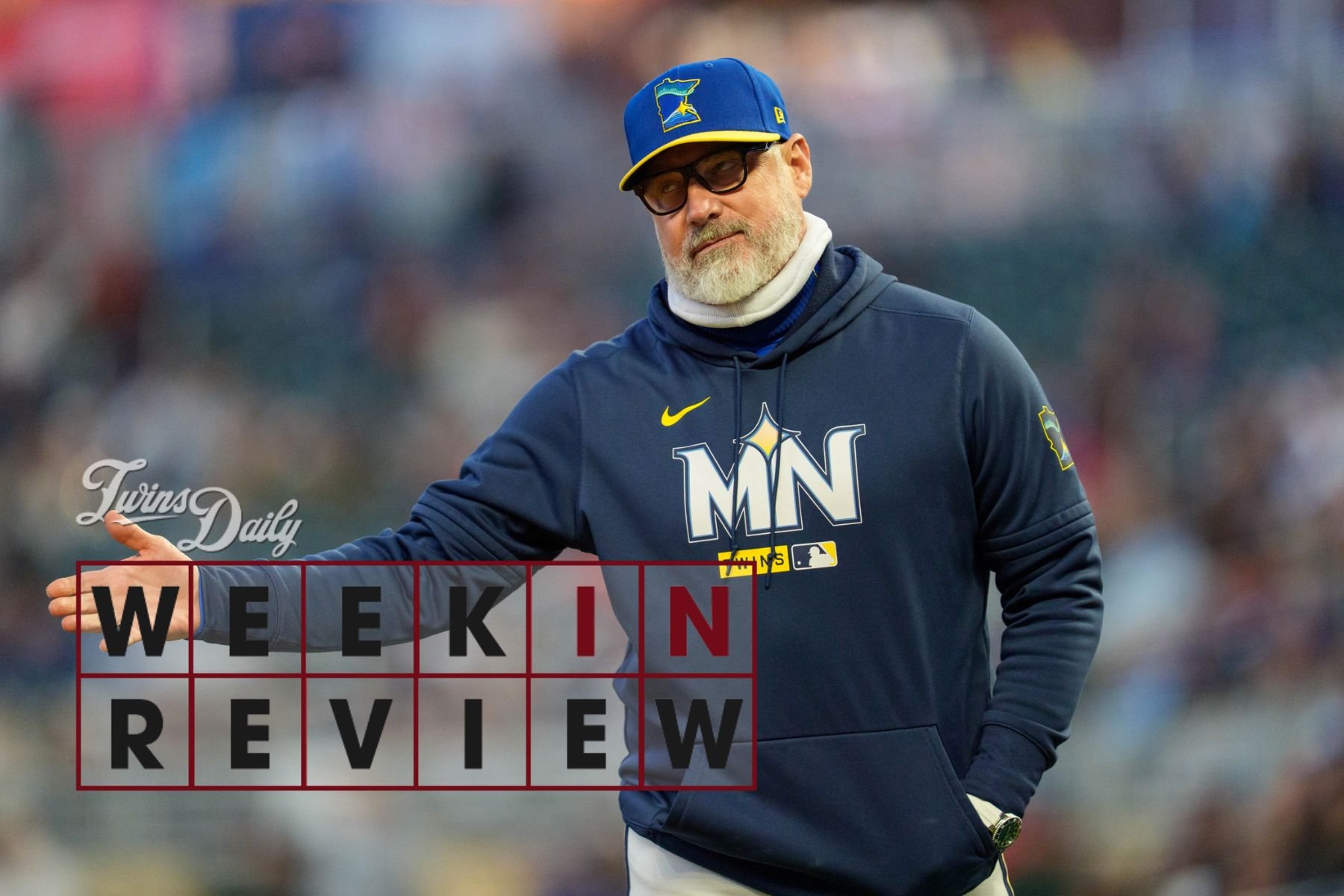 The Weekly Nutshell: For a second consecutive week, the Minnesota Twins opened up with an impressive victory, and then it was pretty much all downhill from there. They dropped four of the next five, sinking further below .500 as their leaky relief corps turned the late innings into a recurring horror show. There have been some small positive developments and positive signs mixed in for this club, but they are being vastly overshadowed by setbacks and failure. Sunday's series finale against Toronto brought yet another devastating gut-punch; the modest morale boost of a split-clinching victory was derailed by Joe Ryan exiting with right elbow soreness after just two batters faced. Vibes are bad, and the season already feels like it's on life support here in early May. Weekly Snapshot: Mon, 4/27 through Sun, 5/3 *** Record Last Week: 3-4 (Overall: 15-20) Run Differential Last Week: -5 (Overall: -5) Standing: 5th Place in AL Central (4.0 GB) Latest Game Results Game 29 | MIN 11, SEA 4: Bats Awaken as Twins Snap 5-Game Losing Streak Clemens: 2-5, 5 RBI Game 30 | SEA 7, MIN 1: Bullpen Collapses Behind Ryan, Lineup Gets Shut Down Twins offense: 0-10 RISP Game 31 | SEA 5, MIN 3: Bullpen Caves in Late Innings Again, Wasting Bradley Rebound Orze: 0.1 IP, 2 H, 3 BB, 3 ER Game 32 | MIN 7, TOR 1: Ober Combines with Relievers to Keep Blue Jays in Check Ober: 6 IP, 1 ER, 4 H, 2 BB, 2 K Game 33 | TOR 7, MIN 3: SWR Struggles Again, Twins Can't Escape Early Hole Woods Richardson: 4.2 IP, 9 H, 6 R (4 ER) Game 34 | TOR 11, MIN 4: Bullpen Surrenders Eight in the Eighth to Lose Yet Again García, Banda: 1 IP, 8 R (7 ER), 5 H, 2 BB, 0 K Game 35 | MIN 4, TOR 3: Twins Salvage Split with Win, But Lose Ryan to Elbow Injury Morris: 3.2 IP, 0 R, 2 H, 1 BB, 3 K IF YOU'D RATHER LISTEN TO THE WEEK IN REVIEW THAN READ IT, YOU CAN GET IT IN AUDIO FORM! FIND THE LATEST EPISODE ON OUR PODCAST PAGE, AS WELL AS ON APPLE AND SPOTIFY. SUBSCRIBE TO OUR CHANNELS SO YOU DON'T MISS OUT! NEWS & NOTES Nine pitches into his eighth start of the season, Ryan motioned to the dugout for trainers and quickly headed for the clubhouse. Soon after, the Twins announced that the right-hander was removed due to soreness in his right elbow, which is obviously quite alarming. As we anxiously await details regarding the official prognosis, it's difficult not to despair, given how these things tend to go and how this season has gone. Needless to say, in the event this is a significant arm injury for Ryan, it's going to place a lot of heat on the front office's questionable call to hold both him and Pablo López heading into a doomed campaign. For at least a while, the rotation is going to have to proceed without its top pitcher, and that's also true of the bullpen, which lost Cole Sands to the injured list with a forearm strain on Saturday. Sands hasn't been very good this year but was undoubtedly the team's most trusted option, and his loss stretches an overmatched relief corps even thinner. Earlier in the week, the bullpen lost fellow right-hander Garrett Acton to a shoulder strain. Replacing Acton: 39-year-old right-hander Luis García, who'd been signed to a minor-league deal days earlier after being released by the Mets. Replacing Sands: 24-year-old righty John Klein, one of the last remaining healthy depth options on the 40-man. Klein tossed a scoreless inning in his MLB debut on Saturday. Zak Kent was designated for assignment to make room on the roster for García. Eric Wagaman, who was DFA'ed the previous week to make room for waiver pickup Christian Roa, was himself claimed off waivers by the Mets. HIGHLIGHTS The rotation has been the clear and decisive strength of this team through 35 games. This past week we saw Connor Prielipp build upon his impressive debut, Taj Bradley bounce back admirably from his stumble on the prior road trip, and Bailey Ober continue to defy convention with a sub-90s fastball. Let's take a closer look at each of their performances. Prielipp recorded his first big-league win on Monday against the Mariners, allowing two runs over five innings, and he posted the same line on Saturday against Toronto. His control wasn't as sharp in these two starts as in his debut, as Prielipp issued five walks across 10 innings, but he continued to look comfortable and confident on the mound, allowing just four hits. His slider has proven to be a dominant pitch thus far, as anticipated, and his changeup shows great promise as well. Bradley's last outing against the Rays, in which he allowed four home runs, raised some concerns of a major regression backslide getting underway. He quelled those fears with an excellent outing on Wednesday, holding the Mariners to two runs over seven innings with seven strikeouts, two walks, and four hits allowed. The overall numbers from Taj this year have obviously been impressive, but what has really stood out to me about the right-hander — even when he struggled during his initial stint with the Twins late last year — is his durability and stamina. He's gone on the injured list only once in his major-league career, back in spring of 2024. He's completed five or more innings in 11 of his 13 starts with Minnesota, including six-plus in five of seven turns this year. Bradley not only throws the hardest fastball for a starter in Twins history, but he's able to maintain upper-90s velocity very deep into games, even beyond 100 pitches. He has surpassed that threshold four times this year, and his 114 pitches thrown against Seattle on Wednesday were the most by a Twins starter since Kenta Maeda back in 2020. Traditionally-inclined fans are surely loving this shift. Speaking of appeal to old-school fans, Ober is turning back the clock with his stunning level of success despite a lack of velocity. Against the Blue Jays on Thursday, his fastball averaged 88 MPH and never topped 89.1 MPH. His average FB velo is the lowest in the major leagues, but it hasn't mattered lately. On Thursday he worked through six innings of one-run ball, with a solo homer representing the only damage. Ober's ERA is now down to 3.55 on the season, including 1.47 in his last three starts. We'll see how long he can make it last, but right now Ober is effectively offsetting the death of his fastball by embracing his offspeed arsenal. Opponents are batting .173 against his changeup, and .125 against his sweeper. Nothing short of remarkable. Offensively, it was an absolute monster week for Byron Buxton, who was 10-for-30 with five home runs in seven games. For whatever reason he just seems far more locked in when he's hitting leadoff; he shifted there after batting second in his first eight games (with a .415 OPS), and since the switch has batted .288 with a .615 slugging percentage. A few other hitters worth highlighting from the home stand: Trevor Larnach is starting to see steadier playing time as the parade of opposing lefty starters dissipates, and he's still not losing steam. He notched eight hits, including a pair of doubles, in 21 at-bats last week and kept on controlling the zone with four strikeouts against three walks. His fielding has also been drastically improved, providing a rare defensive bright spot for the Twins. Sticking it to the skeptics who wanted to see him shipped out during the offseason, Larnach's been one of the team's most valuable players thus far. Ryan Jeffers is up there as well, tied with Larnach for second among Twins position players behind Buxton in fWAR (0.9). Jeffers opened the week with three consecutive multi-hit games, finishing 7-for-20 with a homer and five RBIs. Kody Clemens posted a five-RBI night on Monday, and during the home stand he tallied three extra-base hits (two doubles and a home run). His OPS had dropped down to .581 entering the week, but is back up to a more reasonable, albeit unexceptional, .675 following Sunday's game. Austin Martin went 6-for-17 (.353) with two walks and two stolen bases. His .484 on-base percentage leads all big-leaguers with 90+ PA, and nobody else is within 40 points. LOWLIGHTS The consistently strong work from Minnesota's rotation and occasional flashes from the offense are too often going to waste thanks to a bullpen that is predictably one of the least dependable in the game, and in recent Twins history. The late innings have been full of misadventures, featuring a rotating cast of culprits. On Tuesday night Ryan exited in the seventh inning with the score tied 1-1. Kody Funderburk allowed his inherited run to score, and then combined with Sands and García combined to surrender five more, turning a close game into a lopsided loss. The following night saw Bradley in position to pick up the win before Eric Orze melted down in a save opportunity, entering with a one-run lead in the ninth to cough up three earned runs while recording just one out in an eventual 5-3 loss. Saturday's game really took the cake though. The Twins were once again on track for a potential victory, leading 4-3 in the eighth before handing the ball over to García up one. The Jays went single-walk-single-single to chase the veteran from the game. In came Anthony Banda, who committed an error on a comebacker before yielding a walk, a double and a home run. By the time the Twins were able to record a single out in the inning, Toronto had scored eight times and taken an 11-4 lead. García had been released by the lowly Mets a couple weeks earlier. Banda had been designated for assignment by the Dodgers in February despite posting a 3.18 ERA last year. Orze was likely at risk for a DFA by the Rays if Minnesota hadn't acquired him in a low-wattage trade in November. These pitchers had been essentially rejected by their previous teams and were not in demand. For the Twins to be turning to them in high-leverage situations this early in the season is simply an embarrassing reflection of how the team was constructed. And you know, it'd be just as well if it aligned to a coherent larger strategy. When you're not even trying to compete, a capable bullpen isn't going to make much of a difference. The problem is that the Twins openly held onto this notion that they would be competitive despite their lack of investment and effort, and elected not to shop either of their top veteran starters during the offseason as a result. Pending a prognosis on Ryan, this aimless decision-making is at risk of looking like a total disaster, made all the more upsetting by how foreseeable the outcome was. The pitching staff has been mediocre overall, mainly thanks to starters pulling weight, but will be hard-pressed to maintain even that level in the absence of Ryan and Sands. In order to make any inroads back toward .500, the offense — rarely able to muster more than four runs — will need to come alive, and too few hitters appear up to the task. Josh Bell has spiraled after a strong start, with a 4-for-25 week dropping his OPS to .640 on the season. Victor Caratini, the other "big ticket" signing from the offseason, is slashing .217/.317/.265. Matt Wallner snapped an 0-for-19 skid with two hits on Sunday but is still treading dangerously close to a demotion. Royce Lewis looks utterly hopeless, and was justifiably batting ninth in three of his five starts. He managed just two singles and a walk in 19 plate appearances. It's a bad team with a bunch of players performing dreadfully. Aside from Buxton and a few bright spots in the rotation, there's not much here to stoke interest or create a compelling experience for fans. On top of it all, top prospects Walker Jenkins and Emmanuel Rodriguez were both forced out of games for the Saints due to injuries over the weekend. (Rodriguez jammed his thumb sliding into first base on Saturday, and Jenkins hurt his shoulder colliding with the wall on Sunday.) TRENDING STORYLINE Joe Ryan's health is clearly the biggest topic for the Twins heading into a new week. Presumably we will learn on Monday or Tuesday the severity of what he is dealing with. I'm mindful that we've already had a false-alarm health scare with Ryan this year, when he came out of his first spring start with what turned out to be a minor back issue. But of course, elbows are a different animal. And the initial indicators — how quickly he signaled for trainers, how brief the discussion was before he came out of the game, how defeated he looked coming off the mound — all point toward bad news. For now, the Twins and their fans will have to hope for the best and prepare for the worst. No matter what imaging tells us, it seems all but certain Ryan will at least be landing on the injured list for some period of time. It's a major blow for a rotation that has already seen its admirable preseason depth whittled away by injuries to López, David Festa and Mick Abel. We can look to Abel as an optimistic example vis-à-vis Ryan's situation. He was scratched from his scheduled start on the previous road trip after experiencing some elbow soreness in a bullpen but his scans came back clean and he was diagnosed with light inflammation. He's already started playing catch and could advance to a rehab stint soon. In the meantime, though, the Twins are probably going to need to find someone else to fill Ryan's rotation spot. They've already called up their top pitching prospect in Prielipp, whose grasp on a rotation spot just got firmer. Andrew Morris, who threw 57 pitches in relief of Ryan on Sunday, could theoretically shift back into a starting role, but that would subtract from a bullpen that is already woefully short on anything resembling power arms. As of now, Zebby Matthews is the most likely candidate to get the call. Really the only credible candidate. He has shaken off a rough start at Triple-A with a string of solid outings, including his most recent on Saturday: 5 IP, 1 ER, 3 H, 3 BB, 7 K. His stuff has been ticking up and unlike, say, Kendry Rojas, Matthews is built up to handle the rigors of starting and pitching five-plus innings in the majors, LOOKING AHEAD The Twins are back on the road, heading to Washington after the day off on Monday to face a Nationals team that has gone 4-12 at home so far this year. Next up will be their first showdown of the season with Cleveland. We'll see who gets the nod for Ryan's turn on Saturday, since it feels safe to assume it won't be him. TUESDAY, MAY 5: TWINS @ NATIONALS — RHP Taj Bradley v. RHP Cade Cavalli WEDNESDAY, MAY 6: TWINS @ NATIONALS — RHP Bailey Ober v. RHP Miles Mikolas THURSDAY, MAY 7: TWINS @ NATIONALS — RHP Simeon Woods Richardson v. RHP Jake Irvin FRIDAY, MAY 8: TWINS @ GUARDIANS — LHP Connor Prielipp v. LHP Parker Messick SATURDAY, MAY 9: TWINS @ GUARDIANS — TBD v. RHP Tanner Bibee SUNDAY, MAY 10: TWINS @ GUARDIANS — RHP Taj Bradley v. RHP Gavin Williams
- 31 comments
-
- 5
-
-
-
- cole sands
- joe ryan
- (and 2 more)
-
 On Tuesday night against the Mariners, Joe Ryan threw six innings of one-run ball before surrendering a leadoff double in the top of the seventh. He exited in a very winnable 1-1 tie game. Before long, the score was 7-1 and the Twins were lopsided losers. Kody Funderburk quickly allowed the inherited runner to score. In the eighth, Cole Sands gave up a three-run homer to Josh Naylor. (Who pimped the living hell out of it.) In the ninth, newly acquired veteran Luis García — recently waived by the Mets after posting a 7.11 ERA through six appearances — allowed two more runs to cap off a bullpen meltdown that torpedoed Minnesota's chances of locking up a series win. On Wednesday, Eric Orze entered in the ninth to protect a one-run lead and gave up three earned runs while recording one out, sealing another series loss. These were the the 10th and 11th losses in 13 games for the Twins, dropping them five games below .500. For the season, their relievers rank 25th in baseball with a 5.31 ERA and 27th in Win Probability Added at -1.58. It hasn't quite been the worst relief corps in the league, but it's been close, and costly. As expected. Making matters worse: Louis Varland is reaching new levels of dominance in Toronto. After setting a record for reliever usage in the playoffs last year, and prompting Blue Jays starter Kevin Gausman to call his deadline acquisition "one of the greatest trades we've ever made," Varland is further elevating his game here in 2026. Through 16 innings, he has a 0.56 ERA and 26-to-4 K/BB ratio with zero home runs allowed. His fastball is averaging 98 MPH. His strikeout rate (43%), FIP (0.63) and fWAR (1.0) all lead the American League. In fact, Varland's WAR is more than double that of the entire Twins bullpen (0.4). It's hard to overstate what a difference he could be making as leader of this reconfigured unit. Alas, Varland is now a Blue Jay, due to the controversial decision to ship out the breakout reliever and his five remaining years of control as part of last year's deadline teardown. Whereas the Griffin Jax and Jhoan Duran trades were fairly conventional rebuild moves, the Varland trade was much more of a head-scratcher. Up until he was dealt just minutes before the deadline, he seemed likely to stick around as the long-term leader of a rebuilding relief corps. We're seeing now why that may have been a good idea. Instead, we're seeing the downside of an audacious, risk-laden decision. Varland is starring in the Blue Jays bullpen while the Twins flounder in part because of their complete lack of late-inning weapons. Alan Roden seemed like an odd fit when Minnesota's front office targeted him and only looks more so now — he was buried in the minors on the LH-hitting OF depth chart before suffering another significant injury last week. Roden is out for the next month at least and possibly much longer. Ouch. Which brings us to Kendry Rojas, the other half of the Varland return. He was always the centerpiece of the deal from the Twins' view, and we're seeing why this year. Rojas looked great in camp and has been stellar in his handful of appearances for the Saints. He's already debuted for the Twins, tossing two scoreless innings of relief while filling in for Funderburk last week, and as long he stays healthy it won't be long before he's back. With his upper-90s heat and whiff-centric stuff from the left side, Rojas is a high-caliber arm with the realistic potential to flip the narrative (at least somewhat) on the Varland trade. Fair or not, there's going to be a lot of pressure on him to do so. Right now, the contrast is impossible to ignore. Varland is becoming exactly the kind of late-inning force the Twins desperately lack — dominant, reliable, game-altering — just in someone else’s bullpen. Minnesota is left searching for answers in the innings that matter most, hoping Rojas can eventually help bridge that gap.
- 40 comments
-
- 8
-
-
- louis varland
- kendrys morales
- (and 1 more)
-
Image courtesy of William Liang-Imagn Images On Tuesday night against the Mariners, Joe Ryan threw six innings of one-run ball before surrendering a leadoff double in the top of the seventh. He exited in a very winnable 1-1 tie game. Before long, the score was 7-1 and the Twins were lopsided losers. Kody Funderburk quickly allowed the inherited runner to score. In the eighth, Cole Sands gave up a three-run homer to Josh Naylor. (Who pimped the living hell out of it.) In the ninth, newly acquired veteran Luis García — recently waived by the Mets after posting a 7.11 ERA through six appearances — allowed two more runs to cap off a bullpen meltdown that torpedoed Minnesota's chances of locking up a series win. On Wednesday, Eric Orze entered in the ninth to protect a one-run lead and gave up three earned runs while recording one out, sealing another series loss. These were the the 10th and 11th losses in 13 games for the Twins, dropping them five games below .500. For the season, their relievers rank 25th in baseball with a 5.31 ERA and 27th in Win Probability Added at -1.58. It hasn't quite been the worst relief corps in the league, but it's been close, and costly. As expected. Making matters worse: Louis Varland is reaching new levels of dominance in Toronto. After setting a record for reliever usage in the playoffs last year, and prompting Blue Jays starter Kevin Gausman to call his deadline acquisition "one of the greatest trades we've ever made," Varland is further elevating his game here in 2026. Through 16 innings, he has a 0.56 ERA and 26-to-4 K/BB ratio with zero home runs allowed. His fastball is averaging 98 MPH. His strikeout rate (43%), FIP (0.63) and fWAR (1.0) all lead the American League. In fact, Varland's WAR is more than double that of the entire Twins bullpen (0.4). It's hard to overstate what a difference he could be making as leader of this reconfigured unit. Alas, Varland is now a Blue Jay, due to the controversial decision to ship out the breakout reliever and his five remaining years of control as part of last year's deadline teardown. Whereas the Griffin Jax and Jhoan Duran trades were fairly conventional rebuild moves, the Varland trade was much more of a head-scratcher. Up until he was dealt just minutes before the deadline, he seemed likely to stick around as the long-term leader of a rebuilding relief corps. We're seeing now why that may have been a good idea. Instead, we're seeing the downside of an audacious, risk-laden decision. Varland is starring in the Blue Jays bullpen while the Twins flounder in part because of their complete lack of late-inning weapons. Alan Roden seemed like an odd fit when Minnesota's front office targeted him and only looks more so now — he was buried in the minors on the LH-hitting OF depth chart before suffering another significant injury last week. Roden is out for the next month at least and possibly much longer. Ouch. Which brings us to Kendry Rojas, the other half of the Varland return. He was always the centerpiece of the deal from the Twins' view, and we're seeing why this year. Rojas looked great in camp and has been stellar in his handful of appearances for the Saints. He's already debuted for the Twins, tossing two scoreless innings of relief while filling in for Funderburk last week, and as long he stays healthy it won't be long before he's back. With his upper-90s heat and whiff-centric stuff from the left side, Rojas is a high-caliber arm with the realistic potential to flip the narrative (at least somewhat) on the Varland trade. Fair or not, there's going to be a lot of pressure on him to do so. Right now, the contrast is impossible to ignore. Varland is becoming exactly the kind of late-inning force the Twins desperately lack — dominant, reliable, game-altering — just in someone else’s bullpen. Minnesota is left searching for answers in the innings that matter most, hoping Rojas can eventually help bridge that gap. View full article
- 40 replies
-
- 1
-
-
- louis varland
- kendrys morales
- (and 1 more)
