



Nick Nelson
-
Posts
8,322 -
Joined
-
Last visited
-
Days Won
56
Content Type
Profiles
News
Minnesota Twins Videos
2026 Minnesota Twins Top Prospects Ranking
2022 Minnesota Twins Draft Picks
Minnesota Twins Free Agent & Trade Rumors, Notes, & Tidbits
Guides & Resources
2023 Minnesota Twins Draft Picks
The Minnesota Twins Players Project
2024 Minnesota Twins Draft Picks
2025 Minnesota Twins Draft Pick Tracker
2026 Minnesota Twins Draft Tracker: Picks & Bonuses
Forums
Blogs
Events
Store
Downloads
Gallery
Everything posted by Nick Nelson
-
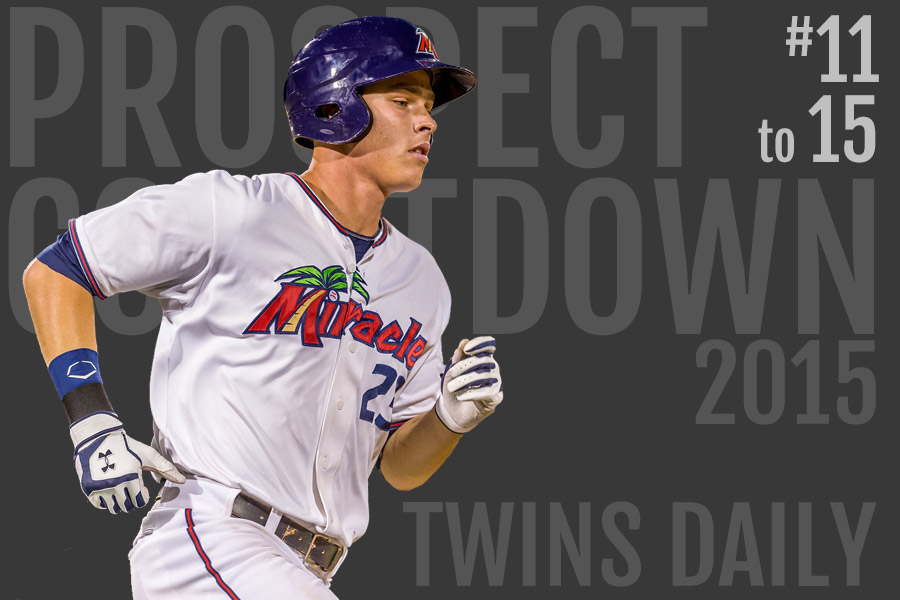 15. Taylor Rogers - LHP Age: 24 2014 Stats (AA): 145 IP, 11-6, 3.29 ERA, 1.29 WHIP, 113/37 K/BB ETA: 2016 You won't often see Rogers mentioned among the system's most promising young arms, because he lacks the high-end velocity and gaudy strikeout numbers of some others, but if you ask folks within the organization about pitchers who can help the Twins in the near future, his name is going to come up. The lefty was an 11th-round pick out of the University of Kentucky in 2011, and he continues to advance through the minor-league ranks while showing exceptional poise and polish on the mound. Many questioned how Rogers would perform at the higher levels, but he showed a lot in the Eastern League last year by allowing only four homers in 145 innings while boosting his K-rate. The biggest question is whether his high-80s arsenal will prove too hittable in the majors, especially against right-handed batters. 14. Adam B. Walker - OF Age: 23 2014 Stats (A+): .246/.307/.436, 25 HR, 94 RBI, 78 R, 9/14 SB ETA: 2016 In terms of pure power, Walker ranks with the likes of sluggers such as Miguel Sano and Kennys Vargas. He hit some legendary moonshots last year in the pitcher-friendly Florida State League, and won the league's All-Star Home Run Derby contest in June. His father was an NFL running back and his mother was a star college athlete, so the muscular 6'4" Walker has the bloodlines and build that you love to see. Unfortunately, while stepping up to High-A ball, the outfielder saw drops in batting average, OBP and slugging, which many anticipated due to his poor strike zone control and high whiff rate. He'll need to become a more complete hitter in order to have a future as a big-league regular, but the pure power alone makes him worth tracking. 13. Stephen Gonsalves - LHP Age: 20 2014 Stats (Rk/A): 65.2 IP, 4-3, 3.02 ERA, 1.14 WHIP, 70/21 K/BB ETA: 2018 In 94 professional innings, Gonsalves has struck out 109 hitters and allowed only 72 hits. It's safe to say that the big 6'5" left-hander has been overwhelming the opposition at the lower levels of the minors, and he doesn't even turn 21 until July. There's not much to quibble about with his results so far, and as a tall southpaw with improving velocity, his projectibility is off the charts. So really, all that's holding Gonsalves back at this point is his limited sample size. If he can put in a full season and maintain his performance in High-A, he'll surely vault into the Top 10 next year and maybe even the Top 5. 12. Max Kepler - OF/1B Age: 22 2014 Stats (A+): .264/.333/.393, 5 HR, 59 RBI, 53 R, 6/8 SB ETA: 2017 When the Twins signed the Berlin native as a 16-year-old back in 2009 with an $800,000 bonus, Kepler was considered to be perhaps the best baseball talent ever to come over from Europe. But it was always known that developing him into a big-league player was going to be a long process. Kepler needed to adapt to living and playing in the United States, and sure enough, he's had his growing pains while rising through the minors. All along, though, he has managed to post solid numbers, and 2014 was another step in the right direction. Although his production was less than dazzling, his AVG/OBP/SLG were all above the Florida State League averages (.257/.325/.371), and the overall numbers mask his second-half improvement: From July 1st through the end of the season, Kepler hit .303/.359/.442 with 19 of his 31 extra-base hits. The biggest stride for the young outfielder was his success against lefty pitchers -- after hitting .117 with a hideous .365 OPS versus southpaws in 2013, he improved to .273 and .691 last year. 11. Lewis Thorpe - LHP Age: 19 2014 Stats (A): 71.2 IP, 3-2, 3.52 ERA, 1.37 WHIP, 80/36 K/BB ETA: 2018 Thorpe sneaked into our Top 10 last year, and based solely on performance, he would have found himself there again this time around. Thorpe had already established himself as a rare commodity with a mid-90s fastball whizzing in from the left side, and he further solidified his legitimacy last year by heading to the Midwest League -- where at 18 he was the youngest player to throw a pitch -- and piling up 80 strikeouts over 71 innings. Thorpe struggled a bit with his control, issuing 4.5 BB/9 to go along with five hit batsmen and eight wild pitches, but the bigger concern is his health. Thorpe felt some pain in his elbow late in the season, and an MRI revealed a UCL sprain. For now, the Twins are taking a "wait and hope for the best" approach, but as we all know, that doesn't always work out. If the young southpaw ends up needing Tommy John surgery, it would obviously set him back substantially.
 -
 ? He has an 804 OPS with 79 homers over the past three seasons. Sure, but he has a 2.79 career ERA and has never been above 3.07 so it's not likely to get a whole lot higher. He's a stud.
 -
"They've made a real statement with what they're doing," said an anonymous AL Central official. "It's apparent they're better. They're a good club," said Tigers GM Dave Dombrowski. "Rarely has a team so successfully and systematically answered so many of its major questions" in an offseason, wrote Jon Heyman of CBS Sports. With the possible exception of the crosstown Cubs, no team has drawn more attention and praise for its offseason moves than the Chicago White Sox. General manager Rick Hahn's pick-ups included a front-line starter, an elite closer, an All-Star caliber outfielder and more. How big of a leap can the revamped Sox make after finishing fourth in 2014?2014 Record: 73-89 Runs Scored/Allowed: 660 / 758 Key Additions: Jeff Samardzija (SP), Melky Cabrera (OF), David Robertson (RP), Adam LaRoche (1B), Zach Duke (RP) Key Departures: Paul Konerko (1B), Marcus Semien (IF) Why They'll Be Better Chicago lost 89 games last year despite boasting the Rookie of the Year in its lineup and the No. 3 Cy Young finisher in its rotation. There simply wasn't enough talent surrounding Jose Abreu and Chris Sale, but the White Sox have done plenty to address that over the past few months. LaRoche and Cabrera should re-energize an offensive unit that had grown stagnant with Paul Konerko and Adam Dunn running out the thread. Samardzija joins Sale and Jose Quintana to form a potent trio of starters. The Sox spent a whopping $60 million to upgrade their bullpen with the additions of Robertson and Duke. There's also a dynamic wild card in the mix here -- that being left-hander Carlos Rodon. Considered by many to be the best player in the 2014 draft, Rodon fell to Chicago at the third pick. He signed in July and was pitching in Triple-A by late August. Leaning on an absolutely filthy slider, he struck out 38 hitters in his first 24 professional innings. The 22-year-old was considered extremely polished coming out of North Carolina State University and could make an impact in the majors this year as a dominant arm slotting into either the bullpen or rotation. That's a nice weapon to have on deck. Why They'll Be Worse It's tough to imagine the White Sox not getting better in 2015, barring a rash of bad injuries. They do have some question marks around the infield and at the back end of the rotation, and of course there's no guarantee that all (or any) of their new acquisitions will work out, but manager Rob Ventura enters this season equipped with everything he should need to field a winner. The widespread adulation that Hahn has received is well warranted. What To Expect Driven by the likes of Abreu, Quintana, Adam Eaton and Avisail Garcia, the White Sox were already a young team on an upward trajectory. The bevy of substantial offseason additions will only hasten their rise, and should put them right in the thick of the division race. Unless they have major health issues, the Sox strike me as a team with a floor around .500 and a win ceiling in the 90s. ~~~ This is the third installment in a series at Twins Daily previewing the rest of the AL Central. You can read our write-ups on the Royals and Tigers, and check back in later this week for our take on the Indians. Click here to view the article
-
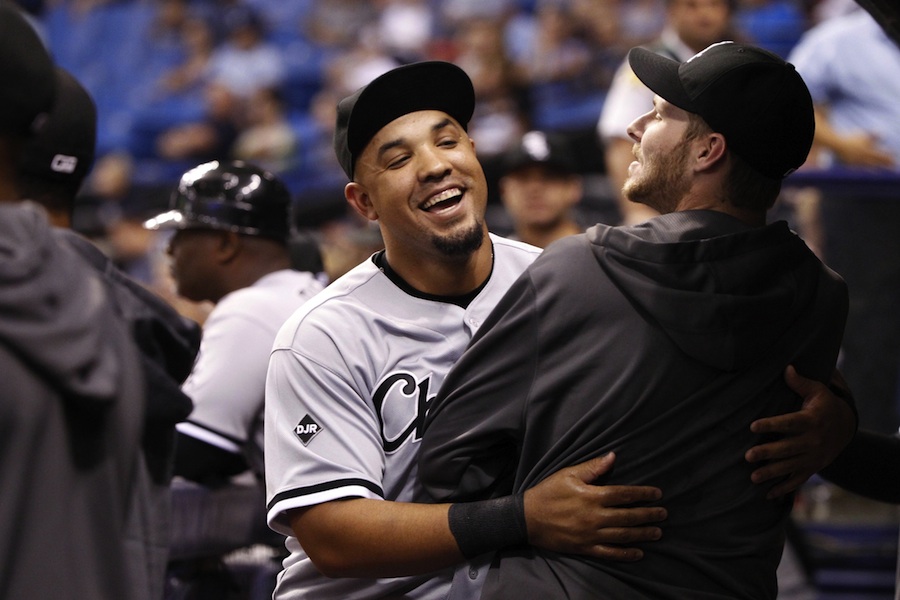 2014 Record: 73-89 Runs Scored/Allowed: 660 / 758 Key Additions: Jeff Samardzija (SP), Melky Cabrera (OF), David Robertson (RP), Adam LaRoche (1B), Zach Duke (RP) Key Departures: Paul Konerko (1B), Marcus Semien (IF) Why They'll Be Better Chicago lost 89 games last year despite boasting the Rookie of the Year in its lineup and the No. 3 Cy Young finisher in its rotation. There simply wasn't enough talent surrounding Jose Abreu and Chris Sale, but the White Sox have done plenty to address that over the past few months. LaRoche and Cabrera should re-energize an offensive unit that had grown stagnant with Paul Konerko and Adam Dunn running out the thread. Samardzija joins Sale and Jose Quintana to form a potent trio of starters. The Sox spent a whopping $60 million to upgrade their bullpen with the additions of Robertson and Duke. There's also a dynamic wild card in the mix here -- that being left-hander Carlos Rodon. Considered by many to be the best player in the 2014 draft, Rodon fell to Chicago at the third pick. He signed in July and was pitching in Triple-A by late August. Leaning on an absolutely filthy slider, he struck out 38 hitters in his first 24 professional innings. The 22-year-old was considered extremely polished coming out of North Carolina State University and could make an impact in the majors this year as a dominant arm slotting into either the bullpen or rotation. That's a nice weapon to have on deck. Why They'll Be Worse It's tough to imagine the White Sox not getting better in 2015, barring a rash of bad injuries. They do have some question marks around the infield and at the back end of the rotation, and of course there's no guarantee that all (or any) of their new acquisitions will work out, but manager Rob Ventura enters this season equipped with everything he should need to field a winner. The widespread adulation that Hahn has received is well warranted. What To Expect Driven by the likes of Abreu, Quintana, Adam Eaton and Avisail Garcia, the White Sox were already a young team on an upward trajectory. The bevy of substantial offseason additions will only hasten their rise, and should put them right in the thick of the division race. Unless they have major health issues, the Sox strike me as a team with a floor around .500 and a win ceiling in the 90s. ~~~ This is the third installment in a series at Twins Daily previewing the rest of the AL Central. You can read our write-ups on the Royals and Tigers, and check back in later this week for our take on the Indians.
 -
It wasn't so long ago that the Tigers were the laughing stock of baseball. From 1998 through 2005 they lost an average of 97 games, including a 119-loss season in 2003 that was among the worst in major-league history. To say that Detroit has come a long way would be an understatement, as the Motor City Kitties have now won the American League Central four years running. But times are changing at Comerica; erstwhile ace Justin Verlander ain't what he used to be, and the stud who replaced him in that role, Max Scherzer, recently signed a monster contract with the Nationals. Can these restructured Tigers retain their roar?2014 Record: 90-72 Runs Scored/Allowed: 757 / 705 Key Additions: Yoenis Cespedes (OF), Anthony Gose (OF), Alfredo Simon (SP), Shane Greene (SP) Key Departures: Max Scherzer (SP), Rick Porcello (SP), Torii Hunter (OF) Why They'll Be Better The Tigers have been one of the American League's best offensive teams for quite a while, and that should remain true, even with question marks surrounding their two best hitters. Miguel Cabrera is recovering back from a significant ankle surgery and Victor Martinez, coming off a career year, is now 36. But those are still two guys you want to build your lineup around, and there's plenty to like elsewhere. Detroit replaced the aging Hunter with Cespedes, which figures to be an upgrade and maybe a big one. Right fielder J.D. Martinez enjoyed a breakout season in 2014, and talented young hitters like Jose Iglesias and Nick Castellanos have the potential to do so this year. Why They'll Be Worse Power pitching has been foundational to Detroit's success, but with Scherzer gone and Verlander evidently on the downslope, is their pitching really that powerful anymore? Sure, the Tigers still have David Price and Anibal Sanchez leading the way, but the back half of their rotation looks as weak as it has in years, and their bullpen -- which struggled frequently last year -- is none too intimidating. This is an aging team, and a farm system that has been gutted through GM Dave Dombrowski's aggressive maneuvering was ranked last week by ESPN.com's prospect guru Keith Law as the worst in all of baseball, so little help is on the way. What To Expect The Tigers allowed 705 runs last year -- most by far of any playoff team -- and it's tough to see how they're going to reduce that number with Scherzer and Porcello gone. If some young guys can step up, and closer Joe Nathan can rebound at age 40, Detroit might get enough from the staff to hang on atop the division, but I think it's more likely that the Tigers' reign over the AL Central is going to come to an end. They look as vulnerable as they have in many years. Click here to view the article
-
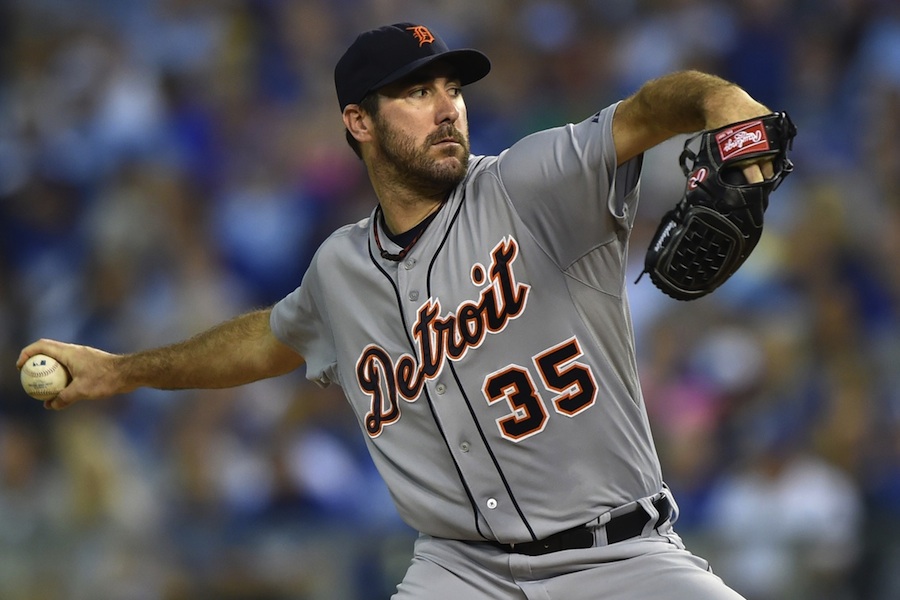 2014 Record: 90-72 Runs Scored/Allowed: 757 / 705 Key Additions: Yoenis Cespedes (OF), Anthony Gose (OF), Alfredo Simon (SP), Shane Greene (SP) Key Departures: Max Scherzer (SP), Rick Porcello (SP), Torii Hunter (OF) Why They'll Be Better The Tigers have been one of the American League's best offensive teams for quite a while, and that should remain true, even with question marks surrounding their two best hitters. Miguel Cabrera is recovering back from a significant ankle surgery and Victor Martinez, coming off a career year, is now 36. But those are still two guys you want to build your lineup around, and there's plenty to like elsewhere. Detroit replaced the aging Hunter with Cespedes, which figures to be an upgrade and maybe a big one. Right fielder J.D. Martinez enjoyed a breakout season in 2014, and talented young hitters like Jose Iglesias and Nick Castellanos have the potential to do so this year. Why They'll Be Worse Power pitching has been foundational to Detroit's success, but with Scherzer gone and Verlander evidently on the downslope, is their pitching really that powerful anymore? Sure, the Tigers still have David Price and Anibal Sanchez leading the way, but the back half of their rotation looks as weak as it has in years, and their bullpen -- which struggled frequently last year -- is none too intimidating. This is an aging team, and a farm system that has been gutted through GM Dave Dombrowski's aggressive maneuvering was ranked last week by ESPN.com's prospect guru Keith Law as the worst in all of baseball, so little help is on the way. What To Expect The Tigers allowed 705 runs last year -- most by far of any playoff team -- and it's tough to see how they're going to reduce that number with Scherzer and Porcello gone. If some young guys can step up, and closer Joe Nathan can rebound at age 40, Detroit might get enough from the staff to hang on atop the division, but I think it's more likely that the Tigers' reign over the AL Central is going to come to an end. They look as vulnerable as they have in many years.
 -
I watched it all unfold, but I still have a hard time comprehending it. It feels weird -- almost oxymoronic -- to utter the phrase "American League Champion Kansas City Royals." This is a franchise that had been mired in a losing culture for nearly my entire life. Throughout most of the 2014 season, the Royals were very ordinary, lacking star power. Yet, there they were in October, rattling off victories and completing a pair of impressive sweeps on their way to the World Series. Now, the Royals enter the 2015 campaign as reigning league champs, seeking to prove that last year's success was no fluke. Can they do it?2014 Record: 89-73 Runs Scored/Allowed: 651 / 624 Key Additions: Edinson Volquez (SP), Kris Medlen (SP), Alex Rios (OF), Kendrys Morales (DH) Key Departures: James Shields (SP), Nori Aoki (OF), Billy Butler (DH) Why They'll Be Better The Royals have a fairly young roster, with a number of players still potentially on the rise. While it's hard to view any of their offseason personnel swaps as major talent upgrades, they have plenty of returning pieces that could take significant steps forward. Specifically, I'm thinking of Salvador Perez (24), who has the ability to be one of the top catchers in the game, and 23-year-old fireballer Yordano Ventura, who might be the de facto No. 1 with Shields gone. The Royals have also kept their tremendous bullpen mostly intact, and if that group can pick up where it left off, they'll help the club win a lot of games. Last year Kansas City went 65-4 when leading after six innings. Why They'll Be Worse Frankly, there are a lot of reasons to believe the Royals are headed for a drop-off, and perhaps a substantial one. The biggest thing is that they played way over their heads in 2014. Based on runs scored and allowed, they profiled more like a .500 team (their Pythagerean W/L record was 84-78). Their offense had no real firepower; only two regulars (Alex Gordon and Lorenzo Cain) finished with an OPS+ above 100, and the team ranked last in the majors in home runs. It's hard to imagine the Royals repeating -- much less building upon -- their success without becoming more of a run-scoring threat. Their offseason moves, which included replacing Billy Butler and Nori Aoki with Kendrys Morales and Alex Rios, were more lateral than forward. If someone like Eric Hosmer or Mike Moustakas finally had a breakout year, that could be a game-changer, but how long have we been waiting for that to happen? Removing Shields from the front of the rotation severely downgrades that unit, and the starters that GM Dayton Moore added in the departed ace's stead -- Volquez and Medlen -- are question marks at best. This looks to me like a fairly average starting corps that will struggle to consistently hand leads over to that powerful bullpen, especially if the lineup can't increase its output. What To Expect The Royals are perhaps the biggest regression candidate among all MLB clubs. That's not meant to take anything away from their charmed run last autumn -- it was nothing short of magical -- but those types of streaks are hard to repeat and I just don't see the infrastructure in place to sustain as a contender. Honestly, it wouldn't surprise me a bit to see Kansas City drop back to fourth or fifth place this year. Click here to view the article
-
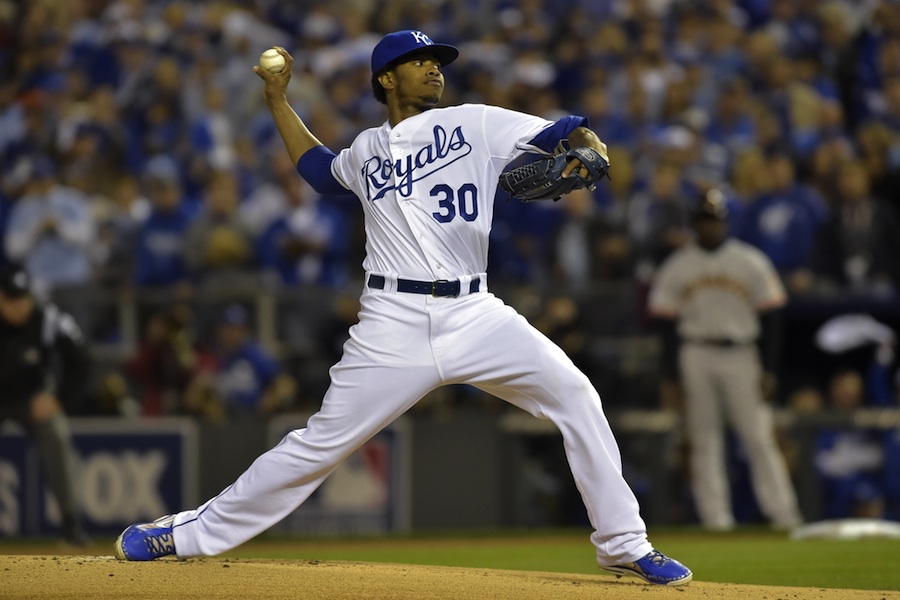 2014 Record: 89-73 Runs Scored/Allowed: 651 / 624 Key Additions: Edinson Volquez (SP), Kris Medlen (SP), Alex Rios (OF), Kendrys Morales (DH) Key Departures: James Shields (SP), Nori Aoki (OF), Billy Butler (DH) Why They'll Be Better The Royals have a fairly young roster, with a number of players still potentially on the rise. While it's hard to view any of their offseason personnel swaps as major talent upgrades, they have plenty of returning pieces that could take significant steps forward. Specifically, I'm thinking of Salvador Perez (24), who has the ability to be one of the top catchers in the game, and 23-year-old fireballer Yordano Ventura, who might be the de facto No. 1 with Shields gone. The Royals have also kept their tremendous bullpen mostly intact, and if that group can pick up where it left off, they'll help the club win a lot of games. Last year Kansas City went 65-4 when leading after six innings. Why They'll Be Worse Frankly, there are a lot of reasons to believe the Royals are headed for a drop-off, and perhaps a substantial one. The biggest thing is that they played way over their heads in 2014. Based on runs scored and allowed, they profiled more like a .500 team (their Pythagerean W/L record was 84-78). Their offense had no real firepower; only two regulars (Alex Gordon and Lorenzo Cain) finished with an OPS+ above 100, and the team ranked last in the majors in home runs. It's hard to imagine the Royals repeating -- much less building upon -- their success without becoming more of a run-scoring threat. Their offseason moves, which included replacing Billy Butler and Nori Aoki with Kendrys Morales and Alex Rios, were more lateral than forward. If someone like Eric Hosmer or Mike Moustakas finally had a breakout year, that could be a game-changer, but how long have we been waiting for that to happen? Removing Shields from the front of the rotation severely downgrades that unit, and the starters that GM Dayton Moore added in the departed ace's stead -- Volquez and Medlen -- are question marks at best. This looks to me like a fairly average starting corps that will struggle to consistently hand leads over to that powerful bullpen, especially if the lineup can't increase its output. What To Expect The Royals are perhaps the biggest regression candidate among all MLB clubs. That's not meant to take anything away from their charmed run last autumn -- it was nothing short of magical -- but those types of streaks are hard to repeat and I just don't see the infrastructure in place to sustain as a contender. Honestly, it wouldn't surprise me a bit to see Kansas City drop back to fourth or fifth place this year.
 -
In his first full season as manager of the Minnesota Twins, Tom Kelly guided to the team to the first World Series title in franchise history. After Kelly retired in 2001, Ron Gardenhire took the helm, and in his first season he led the Twins to the American League Championship Series. Your move, Paul Molitor.The Twins have been in a losing funk for such a long time that it can be difficult for fans to remember just how quickly fortunes sometimes turn. But it can happen, and it has. The dramatic shifts that have coincided with the last two managerial changes provide evidence enough of that. Kelly originally stepped in midway through the 1986 season, with the Twins on their way to 91 losses. At the time, they had not finished above .500 in eight years, but the club experienced a renaissance under Kelly, capturing two championships in his first five seasons. After this successful stretch, they fell back into a rut, and by the end of the 90s they were caught in an extended losing spell similar to the one they are presently trying to escape. The Twins lost 90 or more games every year from 1997 through 2000, and while it appeared they were headed for a division title in 2001, they collapsed in the second half and fell short. Gardenhire took over the following year, and we all know the rest of that story. In light of this history, Molitor shouldn't feel too intimidated as he takes the reigns and seeks to steer the Twins out of the darkness. Despite the timing, it likely wasn't the changes in leadership that primarily drove these last two turnarounds, but rather influxes of prospect talent and emergences of young star players, as well as savvy veteran additions. The team is in a comparable position now as Molitor embarks on his journey, so it's not hard to draw a parallel and envision a similar outcome. It stands to reason that the new skipper himself -- uninterested in sitting through multiple years of stagnation -- is doing so. Will the resurgence be as abrupt as it was in those aforementioned instances? Of course, the answer is 'probably not.' The Twins need to get back to the .500 range before a deep postseason run becomes a consideration. Talk of a worst-to-first swing in the Central is mostly just rosy optimism that always tends to manifest at this time of year. Mostly. It's hardly unthinkable that the Twins could find themselves in contention for the division late in the season. Obviously they need to stay healthy and get a lot of good individual performances. But, in a broader sense, two things need to happen: 1) Fast start. The team needs to put itself in a competitive mindset with a surprisingly strong start, and a record at or above .500 heading into July. This would set them up as "buyers" at the deadline, allowing them to upgrade in areas of need midway through the season. It would also make more urgent the calling up of prospects who could make a positive impact (e.g., Byron Buxton and Miguel Sano). 2) Weak division. This part, unfortunately, isn't really in the Twins' control. During his Q&A at the Winter Meltdown event, team president Dave St. Peter opined that the AL Central might be the strongest division in baseball. Well... that needs to be not the case. Not so much because the Twins need to be able to come out on top -- the addition of an extra wild-card spot somewhat negates that aspect -- but because they need a team or two they can beat up on and pile up wins against. In 2010, when the Twins won the division, they went a combined 26-10 against Chicago and Kansas City. In 2009 they went 24-12 against those same two clubs. Between '02 and '03 they won 29 of 38 games against the Tigers. With baseball's unbalanced schedule, taking care of business against the division's bottom-feeders is critical to contending for October. For the last few years, the Twins have been that bottom-feeder; they need to swap out of that role. It's a little difficult to envision such a scenario this year -- the Royals and Tigers ain't what they used to be, and the White Sox and Indians both look pretty good on paper -- but you never know. What do you think? What will it take for the Twins to be competitive in the division and in the American League this year? Click here to view the article
- 64 replies
-
- 1
-

-
- paul molitor
- tom kelly
- (and 1 more)
-
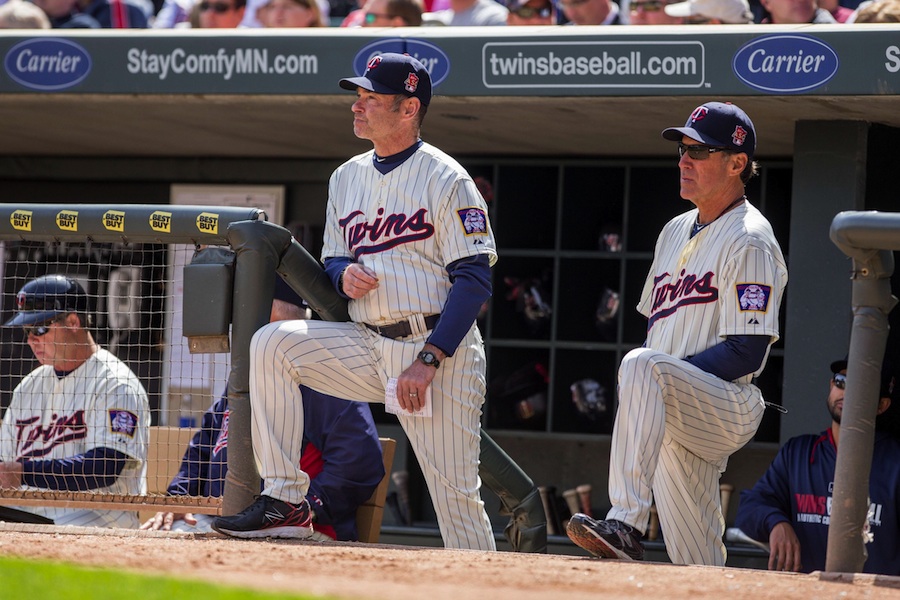 The Twins have been in a losing funk for such a long time that it can be difficult for fans to remember just how quickly fortunes sometimes turn. But it can happen, and it has. The dramatic shifts that have coincided with the last two managerial changes provide evidence enough of that. Kelly originally stepped in midway through the 1986 season, with the Twins on their way to 91 losses. At the time, they had not finished above .500 in eight years, but the club experienced a renaissance under Kelly, capturing two championships in his first five seasons. After this successful stretch, they fell back into a rut, and by the end of the 90s they were caught in an extended losing spell similar to the one they are presently trying to escape. The Twins lost 90 or more games every year from 1997 through 2000, and while it appeared they were headed for a division title in 2001, they collapsed in the second half and fell short. Gardenhire took over the following year, and we all know the rest of that story. In light of this history, Molitor shouldn't feel too intimidated as he takes the reigns and seeks to steer the Twins out of the darkness. Despite the timing, it likely wasn't the changes in leadership that primarily drove these last two turnarounds, but rather influxes of prospect talent and emergences of young star players, as well as savvy veteran additions. The team is in a comparable position now as Molitor embarks on his journey, so it's not hard to draw a parallel and envision a similar outcome. It stands to reason that the new skipper himself -- uninterested in sitting through multiple years of stagnation -- is doing so. Will the resurgence be as abrupt as it was in those aforementioned instances? Of course, the answer is 'probably not.' The Twins need to get back to the .500 range before a deep postseason run becomes a consideration. Talk of a worst-to-first swing in the Central is mostly just rosy optimism that always tends to manifest at this time of year. Mostly. It's hardly unthinkable that the Twins could find themselves in contention for the division late in the season. Obviously they need to stay healthy and get a lot of good individual performances. But, in a broader sense, two things need to happen: 1) Fast start. The team needs to put itself in a competitive mindset with a surprisingly strong start, and a record at or above .500 heading into July. This would set them up as "buyers" at the deadline, allowing them to upgrade in areas of need midway through the season. It would also make more urgent the calling up of prospects who could make a positive impact (e.g., Byron Buxton and Miguel Sano). 2) Weak division. This part, unfortunately, isn't really in the Twins' control. During his Q&A at the Winter Meltdown event, team president Dave St. Peter opined that the AL Central might be the strongest division in baseball. Well... that needs to be not the case. Not so much because the Twins need to be able to come out on top -- the addition of an extra wild-card spot somewhat negates that aspect -- but because they need a team or two they can beat up on and pile up wins against. In 2010, when the Twins won the division, they went a combined 26-10 against Chicago and Kansas City. In 2009 they went 24-12 against those same two clubs. Between '02 and '03 they won 29 of 38 games against the Tigers. With baseball's unbalanced schedule, taking care of business against the division's bottom-feeders is critical to contending for October. For the last few years, the Twins have been that bottom-feeder; they need to swap out of that role. It's a little difficult to envision such a scenario this year -- the Royals and Tigers ain't what they used to be, and the White Sox and Indians both look pretty good on paper -- but you never know. What do you think? What will it take for the Twins to be competitive in the division and in the American League this year?
 -
Is anyone saying that? The question is who should be in line for the fifth starter spot. As noted in the article, if May is a mess in spring training then you make adjustments (same goes for Nolasco, and anyone, really), but based on everything at play he looks like the best option going in. It's not a scholarship, it's an evaluation based on the evidence at hand. Obviously more evidence comes into play during the month of March, I just don't think what happens in Ft. Myers should be the overriding factor in the decision. Their plan should be to have May in the rotation. Plans can change.
-
With the addition of Ervin Santana via free agency, the Twins have essentially sealed up four of five spots in the 2015 rotation. Barring an injury or a dramatic turn of events in spring training, Santana, Phil Hughes, Ricky Nolasco and Kyle Gibson are all going to be there on opening day. That leaves one final opening, with several names in the mix to fill it. Who should be the leading candidate?Personally, I'm not a fan of the whole "spring training position battle" concept. Deciding who will fill any roster spot -- particularly a rotation spot -- is weighty, and should not be dictated by performance in a couple of dozen (or fewer) exhibition games, where the competition ranges from established starters getting their work in to minor-league journeymen. Going into camp, the Twins need to have a good idea of who they want rounding out the rotation. If they currently have a preference among a list that includes Mike Pelfrey, Tommy Milone, Alex Meyer, Tim Stauffer and others, they haven't been too forward about it. But for me, there's one clear choice, and that is Trevor May. May has nothing left to prove in the minors. Last year, he was one of the best starters in the Class-AAA International League, posting a 2.84 ERA, 1.16 WHIP and 94-to-39 K/BB ratio while allowing just four home runs in 98 innings. It seems silly to send him back there at age 25 after that kind of performance, especially when you consider how many innings May has already logged in the high minors. Between Double-A and Triple-A, the right-hander has made 73 starts; for comparison, Meyer -- who many believe has spent plenty of time in the minors already -- has made 40 starts between those two levels. One could point to May's unimpressive results during a late-season audition for the Twins, but he pitched better than most people believe. For instance, you might think May's control was a complete and total mess during his time with the Twins. That was sort of true... in his first start. But after that brutal, jittery debut in which he issued seven walks, the righty handed out 15 free passes in 43 2/3 innings (3.1 BB/9) while throwing strikes at a 65 percent rate, which is league-average. During that same span, he also notched 44 strikeouts, burning big-league batters with a 92 MPH fastball and quality secondary stuff. He certainy demonstrated that his stuff plays in the majors. None of that really takes away from the fact that he gave up a ton of hits and a ton of runs, but that's hardly uncharacteristic for a rookie getting his first taste of The Show and learning that some of the pitches he could get away with in the minors aren't going to play. We saw the same thing occur with Gibson, who was crushed in his 2013 call-up before putting together a solid first full season in '14. In many ways, May's debut was more impressive than Gibson's. When you consider the positive signs May showed last year, and his age, and his lengthy minor-league service, and his potential importance to the future of this rotation, it seems clear to me that he should be first in line to get a crack at that fifth rotation spot. Obviously that changes if he gets hurt or is a total mess in spring training, but the Twins simply have much more to gain from giving May a chance to take hold of that job than they do with someone like Pelfrey or Milone -- both short-term and long-term. The only question is whether the club is willing to set aside factors like experience and salary in making that decision. Click here to view the article
-
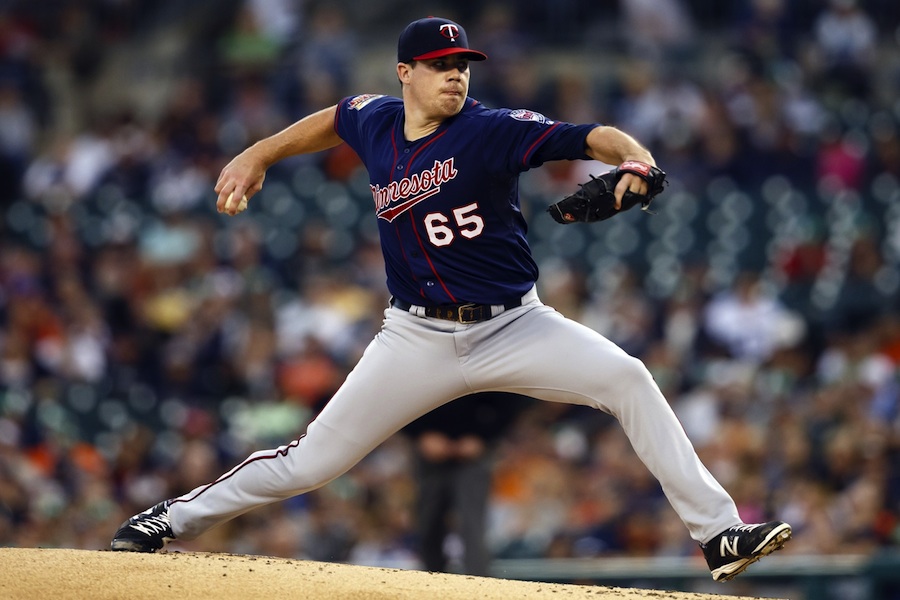 Personally, I'm not a fan of the whole "spring training position battle" concept. Deciding who will fill any roster spot -- particularly a rotation spot -- is weighty, and should not be dictated by performance in a couple of dozen (or fewer) exhibition games, where the competition ranges from established starters getting their work in to minor-league journeymen. Going into camp, the Twins need to have a good idea of who they want rounding out the rotation. If they currently have a preference among a list that includes Mike Pelfrey, Tommy Milone, Alex Meyer, Tim Stauffer and others, they haven't been too forward about it. But for me, there's one clear choice, and that is Trevor May. May has nothing left to prove in the minors. Last year, he was one of the best starters in the Class-AAA International League, posting a 2.84 ERA, 1.16 WHIP and 94-to-39 K/BB ratio while allowing just four home runs in 98 innings. It seems silly to send him back there at age 25 after that kind of performance, especially when you consider how many innings May has already logged in the high minors. Between Double-A and Triple-A, the right-hander has made 73 starts; for comparison, Meyer -- who many believe has spent plenty of time in the minors already -- has made 40 starts between those two levels. One could point to May's unimpressive results during a late-season audition for the Twins, but he pitched better than most people believe. For instance, you might think May's control was a complete and total mess during his time with the Twins. That was sort of true... in his first start. But after that brutal, jittery debut in which he issued seven walks, the righty handed out 15 free passes in 43 2/3 innings (3.1 BB/9) while throwing strikes at a 65 percent rate, which is league-average. During that same span, he also notched 44 strikeouts, burning big-league batters with a 92 MPH fastball and quality secondary stuff. He certainy demonstrated that his stuff plays in the majors. None of that really takes away from the fact that he gave up a ton of hits and a ton of runs, but that's hardly uncharacteristic for a rookie getting his first taste of The Show and learning that some of the pitches he could get away with in the minors aren't going to play. We saw the same thing occur with Gibson, who was crushed in his 2013 call-up before putting together a solid first full season in '14. In many ways, May's debut was more impressive than Gibson's. When you consider the positive signs May showed last year, and his age, and his lengthy minor-league service, and his potential importance to the future of this rotation, it seems clear to me that he should be first in line to get a crack at that fifth rotation spot. Obviously that changes if he gets hurt or is a total mess in spring training, but the Twins simply have much more to gain from giving May a chance to take hold of that job than they do with someone like Pelfrey or Milone -- both short-term and long-term. The only question is whether the club is willing to set aside factors like experience and salary in making that decision.
 -
We at Twins Daily are ecstatic that one of the three featured speakers at this Saturday's Winter Meltdown event will be Jacque Jones, who was a member of three division champion teams during his seven seasons in Minnesota from 1999 through 2005.If you'd like to see Jones, along with Twins president Dave St. Peter and former player Tim Laudner, answering questions from John Bonnes and Aaron Gleeman, there are still a few tickets available for the big party this Saturday. In honor of Jones' return to Twins Territory, we thought we'd run through five of the most memorable moments of his career. 5. Drafted by the Twins in 1996 After a very successful college career at the University of Southern California, Jones was taken by the Twins in the second round of the '96 draft, with the 37th overall pick. Since first-rounder Travis Lee never actually signed, Jones was the highest selection to join the organization in that draft and he made good, cruising through the minors in three years and debuting in the majors at age 24. 4. Arm and hammer: Jones doubles off Spivey Though he came up through the minors as a center fielder, Jones was pushed away from that position in the big leagues by the presence of Torii Hunter, moving first to left and eventually to right. In the corners, Jones' high-end athleticism made him a real defensive asset, and he displayed all his tools on this play in a 2005 game against the Brewers. Watch as Jones sprints backwards to haul in a fly ball, then springs off the Metrodome baggy and delivers a laser beam from the warning track to Justin Morneau at first base, doubling off Junior Spivey. http://m.mlb.com/video/v37114801 3. A rocket against "The Rocket" Jones hit 165 home runs in his decade-year career, and although most of those came in a Twins uniform, the most prodigious might have come during his brief stint with the Cubs. In a 2006 game against Roger Clemens and the Houston Astros, Jones launched a home run over the center field wall at Minute Maid Park that was estimated to have traveled over 440 feet. This was in the same season that Clemens posted a career-low 1.87 ERA, and the majestic shot off Jones' bat was one of only 11 homers surrendered by Clemens in 32 starts. 2. A farewell in Minnesota He was very good in his prime, but unfortunately Jones saw his production tail off rather abruptly after he left the Twins. He enjoyed a couple of solid seasons in Chicago, then made brief appearances with the Marlins and Tigers, but he was done as a big-leaguer at age 33. In 2010, he returned to Minnesota on a minor-league deal, and while he didn't get back to the majors, he did get the opportunity to play at brand-new Target Field when the Twins faced the St. Louis Cardinals in a pair of exhibition games in early April. Jones was greeted by fans with a standing ovation. He retired a few months later, in June. 1. "Contract This": The 2002 season-opening homer. When I think about Jones, this is always the first memory that comes to mind. In the offseason preceding the 2002 season, just as I was really beginning to grow into a Twins diehard, rumors had swirled that the club might be contracted. Like many other fans -- not to mention players and employees -- I was nervous that Bud Selig and Major League Baseball would simply erase the team I loved from existence. On Opening Day in '02, the Twins faced the Royals in Kansas City, and on the second pitch of the game from Jeff Suppan, Jones launched a home run into the Kauffman Stadium fountains. It was the first of two homers in the game for Jones, kicking off what would be the best season of his career, as he'd go on to hit 27 bombs with a .300 batting average and .852 OPS. It was emblematic of what Jones brought to the table as a leadoff hitter -- the ability to put his team ahead 1-0 in the first at-bat, in any game. But more than any of that, it was an emphatic statement that the Minnesota Twins weren't going anywhere. They went on to win 94 games on the way to a division title and a trip to the American League Championship Series. That September, an issue of ESPN Magazine, with a cover featuring Jones and three of his teammates, dubbed Minnesota "The Team That Saved Baseball." http://espn.go.com/i/magazine/new/5_20_lg.jpg If you'd like to hear Jones discuss these moments, and many others, make sure to grab your ticket for this Saturday's event! Click here to view the article
-
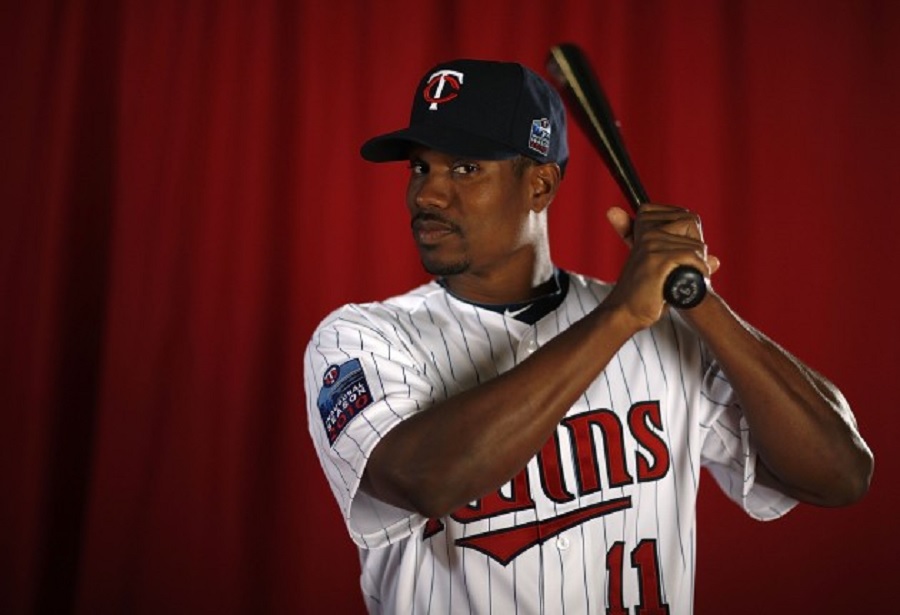 If you'd like to see Jones, along with Twins president Dave St. Peter and former player Tim Laudner, answering questions from John Bonnes and Aaron Gleeman, there are still a few tickets available for the big party this Saturday. In honor of Jones' return to Twins Territory, we thought we'd run through five of the most memorable moments of his career. 5. Drafted by the Twins in 1996 After a very successful college career at the University of Southern California, Jones was taken by the Twins in the second round of the '96 draft, with the 37th overall pick. Since first-rounder Travis Lee never actually signed, Jones was the highest selection to join the organization in that draft and he made good, cruising through the minors in three years and debuting in the majors at age 24. 4. Arm and hammer: Jones doubles off Spivey Though he came up through the minors as a center fielder, Jones was pushed away from that position in the big leagues by the presence of Torii Hunter, moving first to left and eventually to right. In the corners, Jones' high-end athleticism made him a real defensive asset, and he displayed all his tools on this play in a 2005 game against the Brewers. Watch as Jones sprints backwards to haul in a fly ball, then springs off the Metrodome baggy and delivers a laser beam from the warning track to Justin Morneau at first base, doubling off Junior Spivey. http://m.mlb.com/video/v37114801 3. A rocket against "The Rocket" Jones hit 165 home runs in his decade-year career, and although most of those came in a Twins uniform, the most prodigious might have come during his brief stint with the Cubs. In a 2006 game against Roger Clemens and the Houston Astros, Jones launched a home run over the center field wall at Minute Maid Park that was estimated to have traveled over 440 feet. This was in the same season that Clemens posted a career-low 1.87 ERA, and the majestic shot off Jones' bat was one of only 11 homers surrendered by Clemens in 32 starts. 2. A farewell in Minnesota He was very good in his prime, but unfortunately Jones saw his production tail off rather abruptly after he left the Twins. He enjoyed a couple of solid seasons in Chicago, then made brief appearances with the Marlins and Tigers, but he was done as a big-leaguer at age 33. In 2010, he returned to Minnesota on a minor-league deal, and while he didn't get back to the majors, he did get the opportunity to play at brand-new Target Field when the Twins faced the St. Louis Cardinals in a pair of exhibition games in early April. Jones was greeted by fans with a standing ovation. He retired a few months later, in June. https://www.youtube.com/watch?v=XE2JVY7ll64 1. "Contract This": The 2002 season-opening homer. When I think about Jones, this is always the first memory that comes to mind. In the offseason preceding the 2002 season, just as I was really beginning to grow into a Twins diehard, rumors had swirled that the club might be contracted. Like many other fans -- not to mention players and employees -- I was nervous that Bud Selig and Major League Baseball would simply erase the team I loved from existence. On Opening Day in '02, the Twins faced the Royals in Kansas City, and on the second pitch of the game from Jeff Suppan, Jones launched a home run into the Kauffman Stadium fountains. It was the first of two homers in the game for Jones, kicking off what would be the best season of his career, as he'd go on to hit 27 bombs with a .300 batting average and .852 OPS. It was emblematic of what Jones brought to the table as a leadoff hitter -- the ability to put his team ahead 1-0 in the first at-bat, in any game. But more than any of that, it was an emphatic statement that the Minnesota Twins weren't going anywhere. They went on to win 94 games on the way to a division title and a trip to the American League Championship Series. That September, an issue of ESPN Magazine, with a cover featuring Jones and three of his teammates, dubbed Minnesota "The Team That Saved Baseball." http://espn.go.com/i/magazine/new/5_20_lg.jpg If you'd like to hear Jones discuss these moments, and many others, make sure to grab your ticket for this Saturday's event!
 -
When you look up and down the Twins' projected starting lineup for 2015, there are a number of potential weak spots. Neither Danny Santana nor Kennys Vargas is a lock to maintain their stellar rookie performances. Joe Mauer is a giant question mark at this point. We still don't really know who's going to play center field. But one area that few people are talking about is catcher, where the Twins are counting on Kurt Suzuki to back up one of the best seasons of his career. What happens if he can't?At the trade deadline in 2014, with Suzuki's name floating around in rumors, Terry Ryan decided instead to lock up the veteran backstop with a two-year extension. At the time, Suzuki was batting over .300 with an above-average OPS, and his strong first half had even earned him an All-Star appearance. Yet, in the context of Suzuki's career, the quality offensive output looked somewhat unsustainable -- his .760 OPS at the end of July was 70 points higher than his career mark, and he hadn't even finished above .700 since 2009. Had he really recaptured the ability that made him a major asset for the Athletics in the earlier portion of his career, or had he simply enjoyed a few good months? When your production is based so heavily on putting the ball in play and collecting singles, things can turn around in quite a hurry. Unfortunately, that's just what happened to Suzuki. After signing his extension, he hit .248/.290/.366 the rest of the way. Those numbers line up far more closely with his career slash line: .257/.314/.376. That kind of production wouldn't exactly be disastrous -- American League catchers hit just .241/.301/.374 overall in 2014, meaning Suzuki was essentially average even in his diminished second-half capacity -- but what if the 31-year-old continues to slide toward the sub par level he was at in 2012 and 2013? This brings us to a question that is likely be discussed frequently this spring and summer: What do the Twins really think of Josmil Pinto? The 25-year-old's future became murky after Minnesota extended Suzuki's contract for two years; would the team have committed $12 million to the veteran if they truly envisioned Pinto taking over the reins any time soon? The answer is... maybe. Suzuki's $6 million salary wouldn't be all that ridiculous even if he's only playing part-time, especially when you consider the depth he adds at a position that -- outside of Pinto -- is almost barren at the highest levels. (Beyond these two, there are no catchers currently on the 40-man roster.) Suzuki's presence allows the Twins to be very patient with the development of Pinto's defensive skills, and that likely played a big part in the decision to keep him around. But what if Pinto's proficiency behind the plate does not improve, or Suzuki's regression hits harder and faster than expected? With a lack of appealing alternatives on the extended roster -- or, really, anywhere in the organization -- it's hard to say at this point. Unless they are willing to make some concessions defensively and let Pinto's bat carry him, the Twins might be tied to Suzuki -- for better or worse. Click here to view the article
-
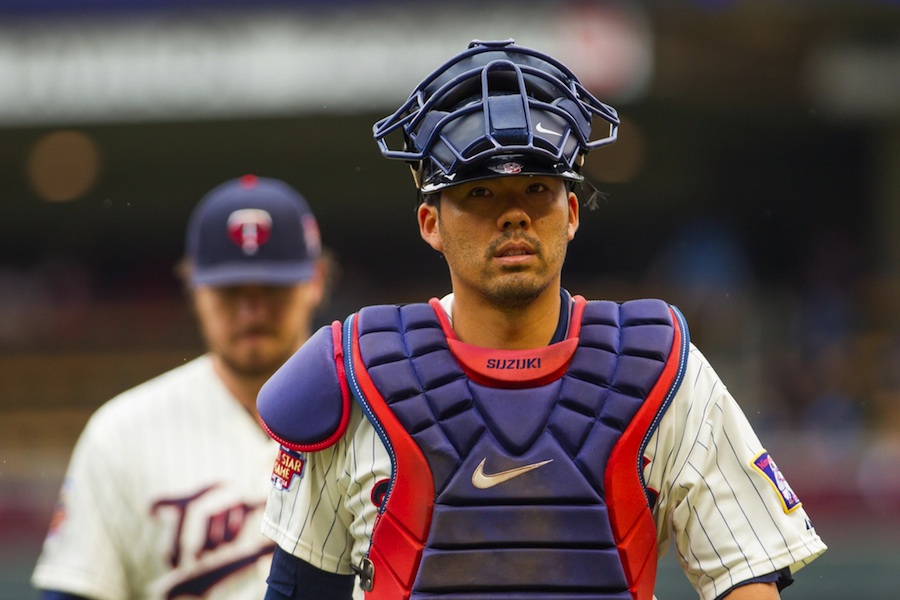 At the trade deadline in 2014, with Suzuki's name floating around in rumors, Terry Ryan decided instead to lock up the veteran backstop with a two-year extension. At the time, Suzuki was batting over .300 with an above-average OPS, and his strong first half had even earned him an All-Star appearance. Yet, in the context of Suzuki's career, the quality offensive output looked somewhat unsustainable -- his .760 OPS at the end of July was 70 points higher than his career mark, and he hadn't even finished above .700 since 2009. Had he really recaptured the ability that made him a major asset for the Athletics in the earlier portion of his career, or had he simply enjoyed a few good months? When your production is based so heavily on putting the ball in play and collecting singles, things can turn around in quite a hurry. Unfortunately, that's just what happened to Suzuki. After signing his extension, he hit .248/.290/.366 the rest of the way. Those numbers line up far more closely with his career slash line: .257/.314/.376. That kind of production wouldn't exactly be disastrous -- American League catchers hit just .241/.301/.374 overall in 2014, meaning Suzuki was essentially average even in his diminished second-half capacity -- but what if the 31-year-old continues to slide toward the sub par level he was at in 2012 and 2013? This brings us to a question that is likely be discussed frequently this spring and summer: What do the Twins really think of Josmil Pinto? The 25-year-old's future became murky after Minnesota extended Suzuki's contract for two years; would the team have committed $12 million to the veteran if they truly envisioned Pinto taking over the reins any time soon? The answer is... maybe. Suzuki's $6 million salary wouldn't be all that ridiculous even if he's only playing part-time, especially when you consider the depth he adds at a position that -- outside of Pinto -- is almost barren at the highest levels. (Beyond these two, there are no catchers currently on the 40-man roster.) Suzuki's presence allows the Twins to be very patient with the development of Pinto's defensive skills, and that likely played a big part in the decision to keep him around. But what if Pinto's proficiency behind the plate does not improve, or Suzuki's regression hits harder and faster than expected? With a lack of appealing alternatives on the extended roster -- or, really, anywhere in the organization -- it's hard to say at this point. Unless they are willing to make some concessions defensively and let Pinto's bat carry him, the Twins might be tied to Suzuki -- for better or worse.
 -
I think I mentioned this in the last mailbag, but my ideal course with Hicks would be to mostly shield him from righties early on, and then hopefully let him build up some confidence with success hitting from the right side. At that point, start to feed him more starts against RHP and hope that he takes off and turns into the player many of us believe he can be.
-
With temperatures outside dropping well below zero, we're here to warm you up by serving hot takes to answer all your burning Twins-related questions! Sorry. That was very lame. Anyway, moving on...Twins Daily Member Kirby_waved_at_me: How bad does Ricky Nolasco have to be to lose a spot in the Twins' rotation? Conversely, how good does Alex Meyer have to pitch to earn a spot? If Nolasco pitches as badly as he did last year, they're going to remove him. But if that's the case, some sort of significant injury is going to come to light. He's got too much ability to keep getting rocked to that extent unless there's an underlying issue. The bigger question is, what do they do if he's performing badly but not terribly (i.e. 4.75 ERA) and there's a guy on the farm who's clearly ready to step in (like, say, Meyer)? I don't know the answer, but I'm very curious to find out. Twins Daily Member mike wants wins: Which minor league RP will we see up early? Not a big fan of not using your minor league system for those guys fast, before they get hurt (which seems to be what many, not all, other teams are doing now). Michael Tonkin will be up early, if not out of camp. A.J. Achter has a chance. Neither Nick Burdi nor Jake Reed has pitched above Single-A, but it wouldn't shock me to see either (or both) up and making an impact in the second half. Those guys can bring it. @MrNewBrighton on Twitter: What kind of season can we expect from Joe Mauer in 2015? (I'm hoping for .315 15 HRs 100 RBI #MNTwins I like the optimism. I won't venture to guess at this point on his home runs and RBI, but I do think he'll get back to batting over .300 with an elite OBP. Nice piece to have around the top of the lineup. Twins Daily Member stringer bell: Are the Twins really going to go with their current options for center field? Related question--will Danny Santana see considerable time in center this year? There's still plenty of time to grab a free agent stopgap -- Colby Rasmus, Nyjer Morgan and Eric Young Jr. are among the remaining available names -- but it looks like they're comfortable rolling with Aaron Hicks and Jordan Schafer. Nothing wrong with that, in my mind. Those two fit nicely as platoon partners and can both offer solid defense. Byron Buxton should be along shortly. @Ex_Twins_News on Twitter: MN Native Mark Hamburger has an invite to Spring Training. Does he have a shot at appearing with the big league club in '15? Hamburger is a great story, so I'm certainly hoping so. He's got a steep hill to climb though. He was unspectacular as a 27-year-old in Triple-A last year and the reliever pipeline is pretty flush in this system. @Twins_guyTJZ on Twitter: With enough internal depth at first base i.e.Vargas and Adam Brett Walker, where does Mauer fit into the Twins long-term future? Hard to say at this point whether Vargas' bat is legit. He's exceptionally strong and certainly looked the part last year, but he doesn't control the strike zone well and pitchers started to take advantage in the last few weeks. He needs to prove himself in 2015, and even then, I think he's a DH. Walker hasn't played above Single-A. Actually, the name we should be wondering about in this conversation is Sano. @Nieman1499 on Twitter: Thoughts on Lewis Thorpe? He had a great first year - Does he project as a reliever or starting pitcher? He was phenomenal at Cedar Rapids last year, blowing away opposing hitters as an 18-year-old. But his season ended on an ominous note health-wise, so it'll be interesting to see how he looks and feels in the spring. If all goes well, he has a chance to start, but Low-A is a long way from the majors. Twins Daily Member jharaldson: Ron Gardenhire was either first or second in the AL for Manager of the Year 6 times and has been linked to 0 manager jobs this offseason. Joe Maddon was either first or second in the AL for Manager of the Year 2 times and a team fired its current manager and hired him almost immediately after he came available. Why has Ron Gardenhire generated almost no interest in the MLB community? I get the sense that he's more than content taking a year off. Why wouldn't he? He's still getting paid by the Twins and has no obligation to do anything really. If I were him, I'd enjoy a summer with the family and then see how things shake out around the league. Maybe something opens up that appeals to him, or maybe a club makes an aggressive run at him. But it also bears noting that all those Manager of the Year votes are well in the past, and the last time he oversaw a winning team was five years ago. Twins Daily Member SwainZag: What's the timeline for Nick Burdi? Any chance that Sano and Buxton both start the season in Rochester? Burdi is interesting. He'll start the season at Double-A most likely, but I can't imagine he'll be there long. He could be up very quickly. He's filthy. I think both Buxton and Sano are pretty much locks to start in Chattanooga. Twins Daily Member youngpadawan: Could Gordon pull off a Buxton-esk first full season and shoot up prospect rankings? How do their first half seasons compare? You can't really expect anyone to follow in Buxton's footsteps -- he's a very rare talent. Gordon should take a step forward but it wouldn't shock me if his bat takes a while to develop, especially the power. He's still a wiry teenager. Twins Daily Member Halsey Hall: Who's the cream of the crop in the Central Division this year? The Tigers will be strong again, with or without Max Scherzer. Chicago has obviously loaded up big-time. They're probably the two front-runners, though Cleveland is sneaky good with that young rotation. I expect Kansas City to take a major step backward. Twins Daily Member Bark's Lounge: Based upon what you know about the Twins players behind the scenes (leadership, respect, preparation, etc.), if the Twins were to name a Player or Players a Captain - who do you think would get to wear the "C" on their uniforms? Brian Dozier is the first name that comes to mind. Very personable, very approachable, and an excellent example of someone who works hard and maximizes his ability. He was an eighth-round draft pick and middling minor league prospect who has turned himself into a borderline All-Star second baseman in the majors. Hard not to respect that. Twins Daily Member Tibs: What is it going to take for the Twins to win the division? I'm done with this 90 loss stuff. Win Twins! Couldn't agree more. It will take sustained high-level production from the offense, and massive improvements from the starting staff. Neither is implausible. But more than anything, it will take a soft division. The Twins need a team or two they can beat up on (that's basically always been their recipe for AL Central titles), and they'd probably need to be able finish first with a high-80s win total because 90-plus is too much to ask at this point. Click here to view the article
- 32 replies
-
- 3
-
-
- joe mauer
- ricky nolasco
- (and 1 more)
-
 Twins Daily Member Kirby_waved_at_me: How bad does Ricky Nolasco have to be to lose a spot in the Twins' rotation? Conversely, how good does Alex Meyer have to pitch to earn a spot? If Nolasco pitches as badly as he did last year, they're going to remove him. But if that's the case, some sort of significant injury is going to come to light. He's got too much ability to keep getting rocked to that extent unless there's an underlying issue. The bigger question is, what do they do if he's performing badly but not terribly (i.e. 4.75 ERA) and there's a guy on the farm who's clearly ready to step in (like, say, Meyer)? I don't know the answer, but I'm very curious to find out. Twins Daily Member mike wants wins: Which minor league RP will we see up early? Not a big fan of not using your minor league system for those guys fast, before they get hurt (which seems to be what many, not all, other teams are doing now). Michael Tonkin will be up early, if not out of camp. A.J. Achter has a chance. Neither Nick Burdi nor Jake Reed has pitched above Single-A, but it wouldn't shock me to see either (or both) up and making an impact in the second half. Those guys can bring it. @MrNewBrighton on Twitter: What kind of season can we expect from Joe Mauer in 2015? (I'm hoping for .315 15 HRs 100 RBI #MNTwins I like the optimism. I won't venture to guess at this point on his home runs and RBI, but I do think he'll get back to batting over .300 with an elite OBP. Nice piece to have around the top of the lineup. Twins Daily Member stringer bell: Are the Twins really going to go with their current options for center field? Related question--will Danny Santana see considerable time in center this year? There's still plenty of time to grab a free agent stopgap -- Colby Rasmus, Nyjer Morgan and Eric Young Jr. are among the remaining available names -- but it looks like they're comfortable rolling with Aaron Hicks and Jordan Schafer. Nothing wrong with that, in my mind. Those two fit nicely as platoon partners and can both offer solid defense. Byron Buxton should be along shortly. @Ex_Twins_News on Twitter: MN Native Mark Hamburger has an invite to Spring Training. Does he have a shot at appearing with the big league club in '15? Hamburger is a great story, so I'm certainly hoping so. He's got a steep hill to climb though. He was unspectacular as a 27-year-old in Triple-A last year and the reliever pipeline is pretty flush in this system. @Twins_guyTJZ on Twitter: With enough internal depth at first base i.e.Vargas and Adam Brett Walker, where does Mauer fit into the Twins long-term future? Hard to say at this point whether Vargas' bat is legit. He's exceptionally strong and certainly looked the part last year, but he doesn't control the strike zone well and pitchers started to take advantage in the last few weeks. He needs to prove himself in 2015, and even then, I think he's a DH. Walker hasn't played above Single-A. Actually, the name we should be wondering about in this conversation is Sano. @Nieman1499 on Twitter: Thoughts on Lewis Thorpe? He had a great first year - Does he project as a reliever or starting pitcher? He was phenomenal at Cedar Rapids last year, blowing away opposing hitters as an 18-year-old. But his season ended on an ominous note health-wise, so it'll be interesting to see how he looks and feels in the spring. If all goes well, he has a chance to start, but Low-A is a long way from the majors. Twins Daily Member jharaldson: Ron Gardenhire was either first or second in the AL for Manager of the Year 6 times and has been linked to 0 manager jobs this offseason. Joe Maddon was either first or second in the AL for Manager of the Year 2 times and a team fired its current manager and hired him almost immediately after he came available. Why has Ron Gardenhire generated almost no interest in the MLB community? I get the sense that he's more than content taking a year off. Why wouldn't he? He's still getting paid by the Twins and has no obligation to do anything really. If I were him, I'd enjoy a summer with the family and then see how things shake out around the league. Maybe something opens up that appeals to him, or maybe a club makes an aggressive run at him. But it also bears noting that all those Manager of the Year votes are well in the past, and the last time he oversaw a winning team was five years ago. Twins Daily Member SwainZag: What's the timeline for Nick Burdi? Any chance that Sano and Buxton both start the season in Rochester? Burdi is interesting. He'll start the season at Double-A most likely, but I can't imagine he'll be there long. He could be up very quickly. He's filthy. I think both Buxton and Sano are pretty much locks to start in Chattanooga. Twins Daily Member youngpadawan: Could Gordon pull off a Buxton-esk first full season and shoot up prospect rankings? How do their first half seasons compare? You can't really expect anyone to follow in Buxton's footsteps -- he's a very rare talent. Gordon should take a step forward but it wouldn't shock me if his bat takes a while to develop, especially the power. He's still a wiry teenager. Twins Daily Member Halsey Hall: Who's the cream of the crop in the Central Division this year? The Tigers will be strong again, with or without Max Scherzer. Chicago has obviously loaded up big-time. They're probably the two front-runners, though Cleveland is sneaky good with that young rotation. I expect Kansas City to take a major step backward. Twins Daily Member Bark's Lounge: Based upon what you know about the Twins players behind the scenes (leadership, respect, preparation, etc.), if the Twins were to name a Player or Players a Captain - who do you think would get to wear the "C" on their uniforms? Brian Dozier is the first name that comes to mind. Very personable, very approachable, and an excellent example of someone who works hard and maximizes his ability. He was an eighth-round draft pick and middling minor league prospect who has turned himself into a borderline All-Star second baseman in the majors. Hard not to respect that. Twins Daily Member Tibs: What is it going to take for the Twins to win the division? I'm done with this 90 loss stuff. Win Twins! Couldn't agree more. It will take sustained high-level production from the offense, and massive improvements from the starting staff. Neither is implausible. But more than anything, it will take a soft division. The Twins need a team or two they can beat up on (that's basically always been their recipe for AL Central titles), and they'd probably need to be able finish first with a high-80s win total because 90-plus is too much to ask at this point.
 -
In a large sense, 2014 will go down as another year of stalled movement for the Minnesota Twins organization, characterized by more setbacks for top prospects and minimal progress in the W/L column. However, a deeper look shows that very important strides were made in a few areas the bode well going forward. Here are five developments that should have you feeling a whole lot better as we look ahead to 2015.Big Changes in the Coaching Staff For the first time in nearly three decades, the Twins fired their manager, dismissing Ron Gardenhire one day after the conclusion of the season. The move was warranted following a fourth consecutive 90-loss season. Not everyone viewed Gardenhire's internally promoted replacement, Paul Molitor, as a transformative change in direction, but by most accounts Molitor does things his own way and the look of his coaching staff will be very different. The most notable addition is pitching coach Neil Allen, a rising talent from the Rays organization with no meaningful previous ties to the Twins. A fresh perspective at the top, and a new voice for this embattled pitching staff, should at least provide a very different dynamic. J.O. Berrios' Incredible Year While the rest of the system's top prospects stagnated, sat out, or took steps backwards, Berrios saw his stock skyrocket with one of the best pitching seasons we've seen from a Twins prospect in some time. There were questions surrounding the right-hander entering this campaign, given his relatively small stature and his good-but-not-great results at Cedar Rapids in 2013, but Berrios made an emphatic statement by obliterating the Class-A Florida State League in the first half, then holding his own as the youngest hurler in the Class-AA Eastern League after a midseason promotion. He even made a critical late-season start at Triple-A... as a 20-year-old. Berrios' momentum hasn't stopped since he stopped playing in games. During the offseason, he's been on an insane workout regimen down in his native Puerto Rico, evidenced by the numerous photos and videos he has been sharing on his Twitter and Facebook pages. The difference in his physique since just September (at which point he wasn't exactly in bad shape) is noticeable: If Berrios doesn't pan out for the Twins, I think it's safe to say it won't be from a lack of effort or work ethic. The Spending Continues Last offseason, Terry Ryan went on a spending spree that was historic by this franchise's standards, handing out the two largest free agent deals in team history while committing a total of $84 million to Ricky Nolasco, Phil Hughes and Mike Pelfrey in an effort to reinforce their rotten rotation. The spend trend has only continued in 2014. First there was the in-season signing of Kendrys Morales -- a totally uncharacteristic move and a surprising one, given that the Twins really weren't shaping up as contenders at the time. Then, during this offseason, Ryan eclipsed Nolasco's record deal by inking Ervin Santana to a $54 million contract. In addition, the Twins signed Torii Hunter for $10.5 million and ponied up for a Hughes extension. In some respects, the Twins are simply riding a league-wide trend of increased spending as new revenues pour in, but it's still nice to see, and hopefully a sign of heightened aggressiveness to come, as they work back toward contention. Free Agent Success Stories Perhaps Ryan's new-found willingness to splurge on the open market has been bolstered by two free agent signings that would have to rank among the most successful this team has ever made (granted, that bar wasn't set high). Kurt Suzuki surpassed all expectations on his one-year deal, making the All-Star team and earning a two-year extension midway through the summer. Hughes, of course, might as well have been an All-Star, as he was one of the AL's best starting pitchers and finished seventh in the Cy Young voting. He also earned himself an extension even though there were two years left on his bargain deal. Rookie Rampage The Twins have sometimes been accused of promoting prospects too slowly, and leaving seemingly MLB-ready youngsters stagnating on the farm, which made it all the more encouraging to see Danny Santana and Kennys Vargas featured so heavily in 2014. Coming into the season, neither player looked like a candidate to log significant time in the majors. Santana was 22 and had played just one season in Double-A. Vargas, also 23, hadn't played above Single-A. Yet both were given chances and thrived, helping power a surprisingly strong offense. Hopefully the club will show similar willingness to let the next wave of promising young hitters make their case -- and hopefully with similar results. Click here to view the article
- 8 replies
-
- 1
-
-
- jo berrios
- paul molitor
- (and 3 more)
-
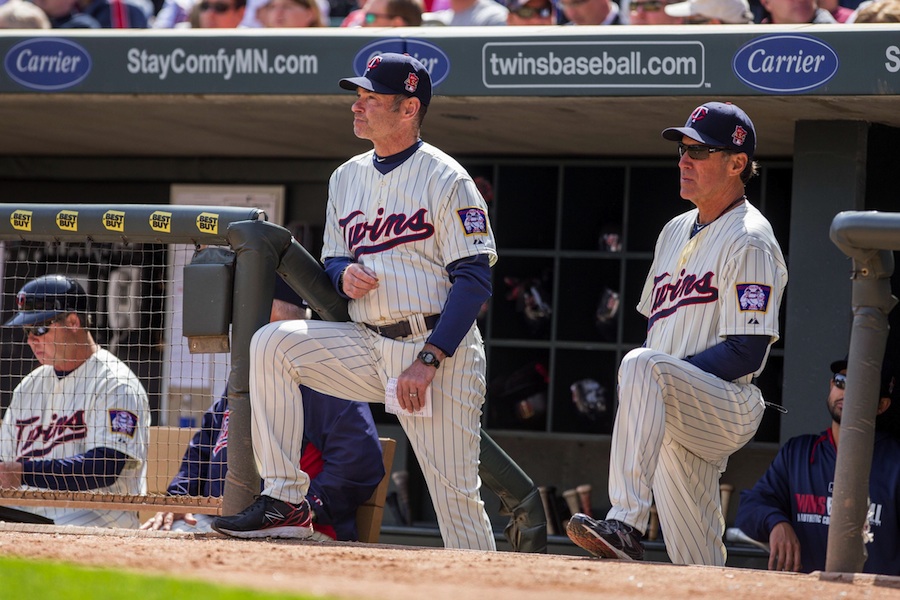 Big Changes in the Coaching Staff For the first time in nearly three decades, the Twins fired their manager, dismissing Ron Gardenhire one day after the conclusion of the season. The move was warranted following a fourth consecutive 90-loss season. Not everyone viewed Gardenhire's internally promoted replacement, Paul Molitor, as a transformative change in direction, but by most accounts Molitor does things his own way and the look of his coaching staff will be very different. The most notable addition is pitching coach Neil Allen, a rising talent from the Rays organization with no meaningful previous ties to the Twins. A fresh perspective at the top, and a new voice for this embattled pitching staff, should at least provide a very different dynamic. J.O. Berrios' Incredible Year While the rest of the system's top prospects stagnated, sat out, or took steps backwards, Berrios saw his stock skyrocket with one of the best pitching seasons we've seen from a Twins prospect in some time. There were questions surrounding the right-hander entering this campaign, given his relatively small stature and his good-but-not-great results at Cedar Rapids in 2013, but Berrios made an emphatic statement by obliterating the Class-A Florida State League in the first half, then holding his own as the youngest hurler in the Class-AA Eastern League after a midseason promotion. He even made a critical late-season start at Triple-A... as a 20-year-old. Berrios' momentum hasn't stopped since he stopped playing in games. During the offseason, he's been on an insane workout regimen down in his native Puerto Rico, evidenced by the numerous photos and videos he has been sharing on his Twitter and Facebook pages. The difference in his physique since just September (at which point he wasn't exactly in bad shape) is noticeable: If Berrios doesn't pan out for the Twins, I think it's safe to say it won't be from a lack of effort or work ethic. The Spending Continues Last offseason, Terry Ryan went on a spending spree that was historic by this franchise's standards, handing out the two largest free agent deals in team history while committing a total of $84 million to Ricky Nolasco, Phil Hughes and Mike Pelfrey in an effort to reinforce their rotten rotation. The spend trend has only continued in 2014. First there was the in-season signing of Kendrys Morales -- a totally uncharacteristic move and a surprising one, given that the Twins really weren't shaping up as contenders at the time. Then, during this offseason, Ryan eclipsed Nolasco's record deal by inking Ervin Santana to a $54 million contract. In addition, the Twins signed Torii Hunter for $10.5 million and ponied up for a Hughes extension. In some respects, the Twins are simply riding a league-wide trend of increased spending as new revenues pour in, but it's still nice to see, and hopefully a sign of heightened aggressiveness to come, as they work back toward contention. Free Agent Success Stories Perhaps Ryan's new-found willingness to splurge on the open market has been bolstered by two free agent signings that would have to rank among the most successful this team has ever made (granted, that bar wasn't set high). Kurt Suzuki surpassed all expectations on his one-year deal, making the All-Star team and earning a two-year extension midway through the summer. Hughes, of course, might as well have been an All-Star, as he was one of the AL's best starting pitchers and finished seventh in the Cy Young voting. He also earned himself an extension even though there were two years left on his bargain deal. Rookie Rampage The Twins have sometimes been accused of promoting prospects too slowly, and leaving seemingly MLB-ready youngsters stagnating on the farm, which made it all the more encouraging to see Danny Santana and Kennys Vargas featured so heavily in 2014. Coming into the season, neither player looked like a candidate to log significant time in the majors. Santana was 22 and had played just one season in Double-A. Vargas, also 23, hadn't played above Single-A. Yet both were given chances and thrived, helping power a surprisingly strong offense. Hopefully the club will show similar willingness to let the next wave of promising young hitters make their case -- and hopefully with similar results.
 -
The Twins' signing of veteran right-hander Tim Stauffer slipped under the radar to a large degree as a fairly minor acquisition that fell amidst a holiday week. But in adding the 32-year-old, the team is ponying up a couple million in guaranteed money to address a unit that already seemed somewhat crowded. How does Stauffer fit?Stauffer's one-year, $2.2 million deal isn't significantly different from what the Twins would have given Anthony Swarzak, who was the only arbitration-eligible player they chose to non-tender. Considering the similarities between the two pitchers, this looks like a straight-up swap. Like Swarzak, Stauffer has spent time as a starter and as a reliever. And like Swarzak, he's been much better in the bullpen, where he has a 2.65 career ERA. But unlike Swarzak, Stauffer has actually had some success as a starter. In that role, the veteran has a 4.29 career ERA -- compared to 5.87 for Swarzak -- and in his most recent season as a full-time member of the rotation (2011), Stauffer put up a solid 3.73 ERA and 1.26 WHIP over 31 starts. Now, all of those numbers were accrued in the National League, with Petco Park as his home field, so the skill difference between Stauffer and Swarzak might not actually be as large as the statistical gap suggests. But the newcomer profiles as a better reliever, capable of missing more bats and filling a more impactful role in the bullpen, so he's a welcome addition. He also looks like a guy who can step in and make a good spot start in situations where the Twins need someone and don't want to make a roster move. That is a weapon that any team likes to have available somewhere in its bullpen, and it's an area where Swarzak never really proved adequate. With all the talk of improving the quality of their starting pitching depth, this may have been the key consideration for the Twins in replacing Swarzak with Stauffer. It's not a huge upgrade, but it does make the team slightly better, and getting slightly better in many different areas is a good way to move the needle in a larger sense. Click here to view the article
-
 Stauffer's one-year, $2.2 million deal isn't significantly different from what the Twins would have given Anthony Swarzak, who was the only arbitration-eligible player they chose to non-tender. Considering the similarities between the two pitchers, this looks like a straight-up swap. Like Swarzak, Stauffer has spent time as a starter and as a reliever. And like Swarzak, he's been much better in the bullpen, where he has a 2.65 career ERA. But unlike Swarzak, Stauffer has actually had some success as a starter. In that role, the veteran has a 4.29 career ERA -- compared to 5.87 for Swarzak -- and in his most recent season as a full-time member of the rotation (2011), Stauffer put up a solid 3.73 ERA and 1.26 WHIP over 31 starts. Now, all of those numbers were accrued in the National League, with Petco Park as his home field, so the skill difference between Stauffer and Swarzak might not actually be as large as the statistical gap suggests. But the newcomer profiles as a better reliever, capable of missing more bats and filling a more impactful role in the bullpen, so he's a welcome addition. He also looks like a guy who can step in and make a good spot start in situations where the Twins need someone and don't want to make a roster move. That is a weapon that any team likes to have available somewhere in its bullpen, and it's an area where Swarzak never really proved adequate. With all the talk of improving the quality of their starting pitching depth, this may have been the key consideration for the Twins in replacing Swarzak with Stauffer. It's not a huge upgrade, but it does make the team slightly better, and getting slightly better in many different areas is a good way to move the needle in a larger sense.
 -
Article: Mientkiewicz Draws Key Assignment
Nick Nelson posted a topic in Twins Daily Front Page News
It was easy enough to see coming, but the Twins made it official last week that Doug Mientkiewicz will move up and manage the club's Double-A affiliate in Chattanooga next year. The organization clearly thinks highly of Mientkiewicz, as they interviewed him multiple times for the big-league manager opening despite his lack of experience. And while he ultimately didn't come out on top of that race, he ended up with a job that might actually be more important in the short term.While Paul Molitor's slightly revamped Twins team tries to dig its way out of irrelevance and show meaningful improvement for the first time in four years, some of the most integral components to the success of this ongoing rebuilding process will be reporting to Double-A. The stakes are high, as four of the best prospects in the system -- all at critical junctures in their careers -- are expected to open the 2015 campaign in Chattanooga. Byron Buxton, the consensus No. 1 prospect in all of baseball a year ago, lost some of his luster during an injury-filled 2014 season that was all but lost. Miguel Sano underwent Tommy John surgery in the spring and hasn't played competitively since. Eddie Rosario missed half of 2014 due to a drug-related suspension and struggled after returning, derailing the considerable momentum he'd built up heading into the season. J.O. Berrios isn't stalled out like the other three -- quite the contrary -- but he has plenty to prove as an undersized starter coming off a flat-out spectacular campaign. Can the righty shut down advanced hitters and back up his newly claimed standing as the best pitching prospect in the organization (and maybe one of the best in the game)? Any one of these players is a candidate to see action at Target Field sometime next season. In April, they'll likely be joining a Lookouts roster packed with other notable prospects. If this team, and specifically a few key individuals, kick it into high gear, it would finally set in motion plans for a youth-fueled turnaround at the big-league level. One can hardly overstate the importance of Buxton, Sano, Rosario and Berrios getting off to fast starts. Mientkiewicz worked with all four while managing at Ft. Myers, and oversaw immensely successful seasons for each. It's hard to think of a better man for the task. Click here to view the article- 28 replies
-
- 1
-
-
- doug mientkiewicz
- byron buxton
- (and 3 more)
