



Nick Nelson
-
Posts
8,322 -
Joined
-
Last visited
-
Days Won
56
Content Type
Profiles
News
Minnesota Twins Videos
2026 Minnesota Twins Top Prospects Ranking
2022 Minnesota Twins Draft Picks
Minnesota Twins Free Agent & Trade Rumors, Notes, & Tidbits
Guides & Resources
2023 Minnesota Twins Draft Picks
The Minnesota Twins Players Project
2024 Minnesota Twins Draft Picks
2025 Minnesota Twins Draft Pick Tracker
2026 Minnesota Twins Draft Tracker: Picks & Bonuses
Forums
Blogs
Events
Store
Downloads
Gallery
Everything posted by Nick Nelson
-
 Hope everyone had a great Thanksgiving weekend. Let's get caught up on some of the latest Twins-related offseason stories as we prepare to flip the calendar to December.* Korean slugger Byung Ho Park is traveling to Minnesota this week, where his side will meet with the Twins in efforts to hammer out a deal ahead of the December 8th deadline, which is suddenly only a week away. The Twins won exclusive negotiating rights with Park in early November with a $12.85 million bid. Using the contract that Pittsburgh inked with fellow Korean Jung Ho Kang last year as a baseline, Mike Berardino of the Pioneer Press ballparks a prospective Park contract around five years and $32.5 million. That would represent a total investment of $45 million, which would signal a very strong belief in Park's ability. It would also mark the third straight offseason in which the Twins invest more than $40 million into a free agent. All expectations are that a deal will be finalized this week. * If Park does indeed sign, attention will shift to finding a spot for him in the lineup. Things have been quiet on the Trevor Plouffe trade rumor front up to this point, but that could change when the MLB Winter Meetings get underway in Nashville next Monday. Bringing general managers from all 30 teams together in one central location, the Winter Meetings often serve as a springboard for trade talks. A few weeks ago we took a look at Plouffe's potential trade market. Miguel Sano, who will need to move out of the DH spot in order to make room for Park, has recently missed some time in the Dominican Winter League team for what Berardino reports was a trip back to the United Sates at the Twins' request. Sano was expected to return to action this week. Curiously, he has played only at DH and third base in the winter league despite Twins officials holding the line that the current plan is to move him to the outfield in 2016. * The Tigers made their first big splash of the offseason this weekend when they agreed to terms with right-hander Jordan Zimmermann on a five-year, $110 million contract. It's a return to the midwest for the 29-year-old Zimmermann, who hails from Auburndale, WI, and played college ball three hours east of the Twin Cities in Stevens Point. He has spent his entire career pitching for the Nationals, compiling a 70-50 record with a 3.22 ERA and 1.16 WHIP, and his control is elite. It will be interesting to see how his game translates to the American League. While the Twins were adding 13 wins to their 2014 total this year, the Tigers moved in the opposite direction by adding 15 losses and missing the playoffs for the first time in five seasons. They needed a replacement at the top of the rotation with David Price out of the picture, and it looks like they're betting on Zimmermann, who we ranked as the No. 4 free agent starter in the Offseason Handbook. Even with the addition of a premium arm, the Tigers have plenty to worry about going forward. Their roster is aging and they're not likely to get a whole lot of help from a farm system that was ranked by Baseball America in the spring as the worst in baseball (though, in fairness, was bolstered by the Price trade in July). Click here to view the article
 -
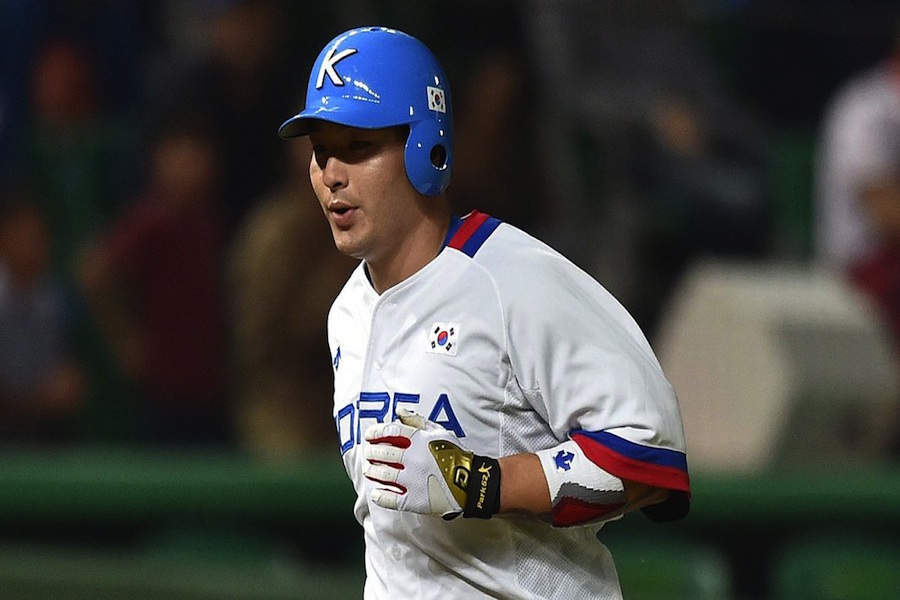 * Korean slugger Byung Ho Park is traveling to Minnesota this week, where his side will meet with the Twins in efforts to hammer out a deal ahead of the December 8th deadline, which is suddenly only a week away. The Twins won exclusive negotiating rights with Park in early November with a $12.85 million bid. Using the contract that Pittsburgh inked with fellow Korean Jung Ho Kang last year as a baseline, Mike Berardino of the Pioneer Press ballparks a prospective Park contract around five years and $32.5 million. That would represent a total investment of $45 million, which would signal a very strong belief in Park's ability. It would also mark the third straight offseason in which the Twins invest more than $40 million into a free agent. All expectations are that a deal will be finalized this week. * If Park does indeed sign, attention will shift to finding a spot for him in the lineup. Things have been quiet on the Trevor Plouffe trade rumor front up to this point, but that could change when the MLB Winter Meetings get underway in Nashville next Monday. Bringing general managers from all 30 teams together in one central location, the Winter Meetings often serve as a springboard for trade talks. A few weeks ago we took a look at Plouffe's potential trade market. Miguel Sano, who will need to move out of the DH spot in order to make room for Park, has recently missed some time in the Dominican Winter League team for what Berardino reports was a trip back to the United Sates at the Twins' request. Sano was expected to return to action this week. Curiously, he has played only at DH and third base in the winter league despite Twins officials holding the line that the current plan is to move him to the outfield in 2016. * The Tigers made their first big splash of the offseason this weekend when they agreed to terms with right-hander Jordan Zimmermann on a five-year, $110 million contract. It's a return to the midwest for the 29-year-old Zimmermann, who hails from Auburndale, WI, and played college ball three hours east of the Twin Cities in Stevens Point. He has spent his entire career pitching for the Nationals, compiling a 70-50 record with a 3.22 ERA and 1.16 WHIP, and his control is elite. It will be interesting to see how his game translates to the American League. While the Twins were adding 13 wins to their 2014 total this year, the Tigers moved in the opposite direction by adding 15 losses and missing the playoffs for the first time in five seasons. They needed a replacement at the top of the rotation with David Price out of the picture, and it looks like they're betting on Zimmermann, who we ranked as the No. 4 free agent starter in the Offseason Handbook. Even with the addition of a premium arm, the Tigers have plenty to worry about going forward. Their roster is aging and they're not likely to get a whole lot of help from a farm system that was ranked by Baseball America in the spring as the worst in baseball (though, in fairness, was bolstered by the Price trade in July).
 -
As Thanksgiving arrives and we reflect on all of the many things that we are thankful for, our team at Twins Daily has no shortage of gratitude.First and foremost, we're thankful for our readers and commenters here on the site. You all have made this an amazing place to come and discuss our favorite team every day. So far this year, more than half a million unique visitors have stopped by Twins Daily, blowing away our total for the entirety of 2014. We are on track to approach 10 million page views. As long as you folks keep coming, we'll keeping working our hardest to provide the best independent baseball coverage in town. On that note, we're also thankful to everyone who has bought a copy of our Offseason Handbook. It's a fun (though exhausting) product to put together, and the reception in terms of sales and feedback made those efforts feel worthwhile. If you haven't picked up a copy yet, it makes a great read for the long holiday weekend as the Winter Meetings approach. We're thankful for our moderators, who maintain sanity and civility in our forums. That can be a tremendous challenge at times, but these individuals work tirelessly to ensure that the TD message boards remain a welcoming environment where fans of all stripes can feel comfortable expressing their viewpoints and exchanging ideas. We're thankful for every last blog contribution that is submitted to the site. I've read a lot of really great stuff here this year that didn't come from any of the core writers and I've discovered a number of new voices that I thoroughly enjoy. That was always a big part of the vision when we first launched three years ago. We're thankful this Twins team that we cover so obsessively has returned to relevance with a winning season and a clear upward trajectory. With a big wave of young talent entering the fold, and a couple of major moves already in the books here in this young offseason, there's plenty of reason for optimism that even better things are on the horizon. We're extremely excited for everything that lies ahead this winter and into next season. It's a great time to be a Twins fan and we're grateful to be able to share the ride with all of you. Have an awesome holiday! Click here to view the article
-
 First and foremost, we're thankful for our readers and commenters here on the site. You all have made this an amazing place to come and discuss our favorite team every day. So far this year, more than half a million unique visitors have stopped by Twins Daily, blowing away our total for the entirety of 2014. We are on track to approach 10 million page views. As long as you folks keep coming, we'll keeping working our hardest to provide the best independent baseball coverage in town. On that note, we're also thankful to everyone who has bought a copy of our Offseason Handbook. It's a fun (though exhausting) product to put together, and the reception in terms of sales and feedback made those efforts feel worthwhile. If you haven't picked up a copy yet, it makes a great read for the long holiday weekend as the Winter Meetings approach. We're thankful for our moderators, who maintain sanity and civility in our forums. That can be a tremendous challenge at times, but these individuals work tirelessly to ensure that the TD message boards remain a welcoming environment where fans of all stripes can feel comfortable expressing their viewpoints and exchanging ideas. We're thankful for every last blog contribution that is submitted to the site. I've read a lot of really great stuff here this year that didn't come from any of the core writers and I've discovered a number of new voices that I thoroughly enjoy. That was always a big part of the vision when we first launched three years ago. We're thankful this Twins team that we cover so obsessively has returned to relevance with a winning season and a clear upward trajectory. With a big wave of young talent entering the fold, and a couple of major moves already in the books here in this young offseason, there's plenty of reason for optimism that even better things are on the horizon. We're extremely excited for everything that lies ahead this winter and into next season. It's a great time to be a Twins fan and we're grateful to be able to share the ride with all of you. Have an awesome holiday!
 -
Sure. Unfortunately, I don't think a rotation full of flame-throwers or a top-tier power-hitting lineup in 2016 is remotely realistic, so that discussion is basically irrelevant.
- 64 replies
-
- 1
-

-
- trevor may
- glen perkins
- (and 2 more)
-
When the Kansas City Royals won the World Series earlier this month after coming up just short in 2014, it spawned an army of articles on how every other team could learn from their success and implement aspects of their blueprint. In reality, the foundations of Kansas City's rise to the top have been fairly simple: They get good enough performances from starting pitchers, play roundly excellent defense and consistently execute offensively. Perhaps the defining component of the club, though, has been a phenomenal relief corps that turns virtually every late lead into a victory.Over the last two years, the Royals have gone 138-10 when leading after six frames. There's a certain psychological edge that is gained when you have an array of intimidating power arms at your disposal in the late innings. Many general managers – and Terry Ryan is one of them – will say that starting pitching is at the core of a winning formula. That's true to an extent, but it's becoming a little less true these days with bullpens growing more specialized and prominent. As evidence, here's where the World Champion Royals saw their starting pitchers rank out of 30 MLB clubs across various categories this year: ERA: 22nd OPS: 21st WHIP: 25th K/9: 25th The shutdown bullpen made up for their weakness in the rotation to a rather stunning degree, as the Royals still managed to allow fewer runs than all but two AL teams. The Twins are not likely to have an elite rotation in 2016, but what they lack in top-shelf talent they make up for with quality depth. A group that is solid one-through-five looks like a fairly safe bet. As the Royals have shown, when you combine a good-not-great rotation with a deep and dominant bullpen, you can beat anyone. To me, this is the clearest path to making the Twins a true championship contender in 2016. So just what will it take for Minnesota's bullpen to elevate to that point? They certainly weren't there this year, ranking 10th in the AL in ERA, eighth in WHIP, and dead last in strikeout rate. Last week, Seth looked at how the unit might come together with the pieces that are currently in place. Today, I'll piggyback on that post with a look at some factors that will determine Minnesota's chances of fielding a top-tier bullpen next year. Will Terry Ryan's focus on adding velocity to the bullpen continue? Since Ryan took over the GM reins once again in 2012, his increased emphasis on acquiring hard-throwing pitchers with strikeout stuff has been impossible to ignore, especially when juxtaposed against his previous tenure. In his first offseason back at the helm he traded for Alex Meyer and Trevor May. Each of the past few draft classes has included numerous powerful college arms that profile as late-inning relievers. This year, five of the six highest fastball velocities among Twins relievers belonged to Meyer, May, J.R. Graham (acquired by Ryan in the Rule 5 draft last year), Kevin Jepsen (acquired by Ryan at the deadline this year) and Ryan Pressly (acquired by Ryan in the Rule 5 draft two years ago). Last week, the club's 40-man roster juggling included outrighting A.J. Achter, whose upper-80s heater belied his outstanding minor-league results, while adding several raw young arms that can approach triple-digits, including J.T. Chargois, Yorman Landa, Mason Melotakis and Randy Rosario. Up to this point, the approach hasn't really paid off yet, but as long as the front office continues to prioritize these types of players, it will bode well for the bullpen's outlook. Can Glen Perkins return to form? It's probably the biggest question in this equation. For the majority of the last five seasons Perkins has been easily the most reliable and overpowering reliever on the Twins, so seeing him devolve into a hittable mess over the final two months was disheartening to say the least. That's why I ranked his second half as one of the five worst things to happen to the team this year, but as I said in that article, I'm optimistic that Perk will put in the necessary work to get back to his previous standing. He's been too good for too long to let a couple of months of health-related struggles change our overall perception of him. Will the young guns arrive and make an impact? Several of the hard-throwing hurlers acquired in recent drafts were positioned to break through this season, and that might have contributed to Ryan's conservative approach to addressing the bullpen last winter, when his most high-profile addition was Tim Stauffer. In 2014, a number of different minor-leaguers – such as Nick Burdi, Jake Reed and Zack Jones – put themselves on the fast track by posting fantastic numbers while brandishing upper-90s gas. Unfortunately, all of them stalled out this year and failed to take meaningful steps forward. Fortunately, they're all still under 25, and both Burdi and Reed are coming off eye-popping performances in the Arizona Fall League. Add into that mix Meyer, whose transition to relief may be permanent, and you've got four fireballers in the high minors with a very real chance of entering the picture and developing into potent weapons next year. I'll be interested to see whether Jones, who curiously was not among the recent 40-man additions, makes it through the Rule 5 draft next month unclaimed. I suspect he will not. Can Trevor May become Wade Davis Lite? Davis is the key to the entire Royals bullpen. He's arguably the best reliever in the American League, and since he hasn't been the the closer for most of the last two seasons, Ned Yost has had the luxury of deploying him at the most critical junctures possible, matching him up against the opposing lineup's best hitters in extremely high-leverage spots. I'm not saying that May is going to reach the level of Davis, because that's a preposterously high bar, but he has a somewhat similar profile as the former highly regarded prospect who was solid enough as a big-league starter but unleashed a new level of dominance in short relief stints. If he can continue to get sharper as he grows more comfortable in that role, it's not hard to envision May being the best right-handed reliever that the Twins have had since Joe Nathan. Of course, the question is whether the 26-year-old will indeed be used as a reliever or starter next year. Seth wrote last week that he fully expects May to pitch out of the bullpen all year, and given the circumstances, that's hard to argue against. Will the Twins make another big addition? Entering the season with a bullpen anchored by Perkins, Jepsen and May would be respectable, but the strength of Kansas City's game-changing bullpen is in its depth. It's not just that they have guys like Davis and Greg Holland and Kelvin Herrera at the top, it's that they can dig deeper and call on guys like Ryan Madson, Franklin Morales and Luke Hochevar, who are as good as the setup men on many opposing clubs. If the Twins truly want a bullpen that sets them apart from the competition, I believe they need to bring on at least one more established premium arm for the late innings, especially with the uncertainty surrounding Perkins. That might mean an aggressive splash in the free agent market or trading for someone like Drew Storen or even Aroldis Chapman. Would Ryan be so bold? Click here to view the article
- 64 replies
-
- 4
-
-
- trevor may
- glen perkins
- (and 2 more)
-
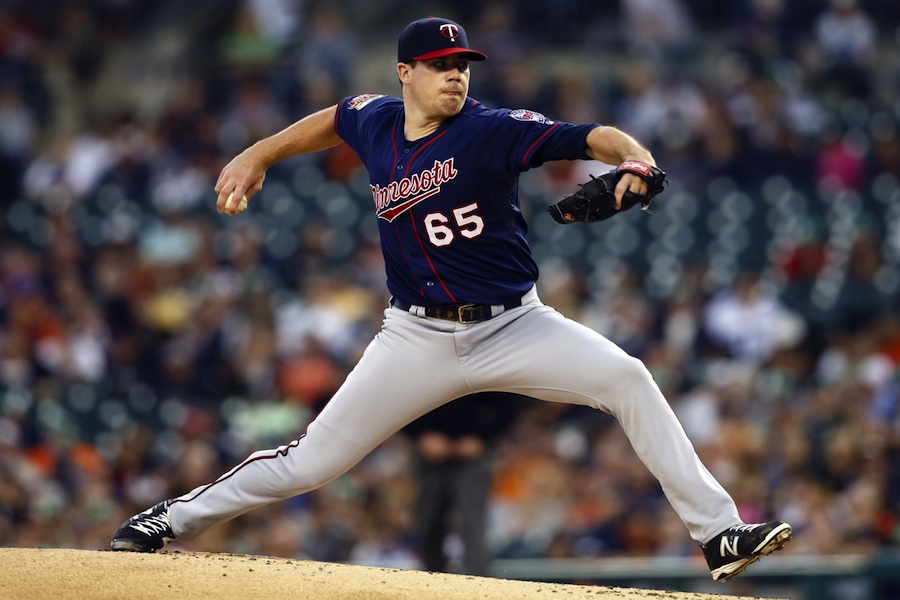 Over the last two years, the Royals have gone 138-10 when leading after six frames. There's a certain psychological edge that is gained when you have an array of intimidating power arms at your disposal in the late innings. Many general managers – and Terry Ryan is one of them – will say that starting pitching is at the core of a winning formula. That's true to an extent, but it's becoming a little less true these days with bullpens growing more specialized and prominent. As evidence, here's where the World Champion Royals saw their starting pitchers rank out of 30 MLB clubs across various categories this year: ERA: 22nd OPS: 21st WHIP: 25th K/9: 25th The shutdown bullpen made up for their weakness in the rotation to a rather stunning degree, as the Royals still managed to allow fewer runs than all but two AL teams. The Twins are not likely to have an elite rotation in 2016, but what they lack in top-shelf talent they make up for with quality depth. A group that is solid one-through-five looks like a fairly safe bet. As the Royals have shown, when you combine a good-not-great rotation with a deep and dominant bullpen, you can beat anyone. To me, this is the clearest path to making the Twins a true championship contender in 2016. So just what will it take for Minnesota's bullpen to elevate to that point? They certainly weren't there this year, ranking 10th in the AL in ERA, eighth in WHIP, and dead last in strikeout rate. Last week, Seth looked at how the unit might come together with the pieces that are currently in place. Today, I'll piggyback on that post with a look at some factors that will determine Minnesota's chances of fielding a top-tier bullpen next year. Will Terry Ryan's focus on adding velocity to the bullpen continue? Since Ryan took over the GM reins once again in 2012, his increased emphasis on acquiring hard-throwing pitchers with strikeout stuff has been impossible to ignore, especially when juxtaposed against his previous tenure. In his first offseason back at the helm he traded for Alex Meyer and Trevor May. Each of the past few draft classes has included numerous powerful college arms that profile as late-inning relievers. This year, five of the six highest fastball velocities among Twins relievers belonged to Meyer, May, J.R. Graham (acquired by Ryan in the Rule 5 draft last year), Kevin Jepsen (acquired by Ryan at the deadline this year) and Ryan Pressly (acquired by Ryan in the Rule 5 draft two years ago). Last week, the club's 40-man roster juggling included outrighting A.J. Achter, whose upper-80s heater belied his outstanding minor-league results, while adding several raw young arms that can approach triple-digits, including J.T. Chargois, Yorman Landa, Mason Melotakis and Randy Rosario. Up to this point, the approach hasn't really paid off yet, but as long as the front office continues to prioritize these types of players, it will bode well for the bullpen's outlook. Can Glen Perkins return to form? It's probably the biggest question in this equation. For the majority of the last five seasons Perkins has been easily the most reliable and overpowering reliever on the Twins, so seeing him devolve into a hittable mess over the final two months was disheartening to say the least. That's why I ranked his second half as one of the five worst things to happen to the team this year, but as I said in that article, I'm optimistic that Perk will put in the necessary work to get back to his previous standing. He's been too good for too long to let a couple of months of health-related struggles change our overall perception of him. Will the young guns arrive and make an impact? Several of the hard-throwing hurlers acquired in recent drafts were positioned to break through this season, and that might have contributed to Ryan's conservative approach to addressing the bullpen last winter, when his most high-profile addition was Tim Stauffer. In 2014, a number of different minor-leaguers – such as Nick Burdi, Jake Reed and Zack Jones – put themselves on the fast track by posting fantastic numbers while brandishing upper-90s gas. Unfortunately, all of them stalled out this year and failed to take meaningful steps forward. Fortunately, they're all still under 25, and both Burdi and Reed are coming off eye-popping performances in the Arizona Fall League. Add into that mix Meyer, whose transition to relief may be permanent, and you've got four fireballers in the high minors with a very real chance of entering the picture and developing into potent weapons next year. I'll be interested to see whether Jones, who curiously was not among the recent 40-man additions, makes it through the Rule 5 draft next month unclaimed. I suspect he will not. Can Trevor May become Wade Davis Lite? Davis is the key to the entire Royals bullpen. He's arguably the best reliever in the American League, and since he hasn't been the the closer for most of the last two seasons, Ned Yost has had the luxury of deploying him at the most critical junctures possible, matching him up against the opposing lineup's best hitters in extremely high-leverage spots. I'm not saying that May is going to reach the level of Davis, because that's a preposterously high bar, but he has a somewhat similar profile as the former highly regarded prospect who was solid enough as a big-league starter but unleashed a new level of dominance in short relief stints. If he can continue to get sharper as he grows more comfortable in that role, it's not hard to envision May being the best right-handed reliever that the Twins have had since Joe Nathan. Of course, the question is whether the 26-year-old will indeed be used as a reliever or starter next year. Seth wrote last week that he fully expects May to pitch out of the bullpen all year, and given the circumstances, that's hard to argue against. Will the Twins make another big addition? Entering the season with a bullpen anchored by Perkins, Jepsen and May would be respectable, but the strength of Kansas City's game-changing bullpen is in its depth. It's not just that they have guys like Davis and Greg Holland and Kelvin Herrera at the top, it's that they can dig deeper and call on guys like Ryan Madson, Franklin Morales and Luke Hochevar, who are as good as the setup men on many opposing clubs. If the Twins truly want a bullpen that sets them apart from the competition, I believe they need to bring on at least one more established premium arm for the late innings, especially with the uncertainty surrounding Perkins. That might mean an aggressive splash in the free agent market or trading for someone like Drew Storen or even Aroldis Chapman. Would Ryan be so bold?
 -
Gambling on those big numbers at AAA. It was pretty clear to me even from watching him a little bit that the stuff isn't MLB-caliber.
- 179 replies
-
- 2
-
-
- adam brett walker
- taylor rogers
- (and 2 more)
-
And the former brought us Escobar at SS. When you think about it, D-San's complete ineptitude may end up being a good thing. Had he hit semi-decently (650ish OPS), you wonder how long Molitor would have stuck with him and we'd have to deal with his lacking production and mistake-prone defense while Escobar continued to linger in a weird utility role. So yeah, while it's unfortunate that Santana and Vargas collapsed, it paved the way for #1 and #2 on this list.
-
His second half was rough, no doubt, to say that Dozier's overall season was less than satisfactory seems awfully harsh. He put up a 750 OPS with 28 HR, 39 doubles and 101 runs scored as a good defensive second baseman. That's pretty good.
-
This list is based more on long-term implications than simply impact on the 2015 season, which is why Erv's suspension wasn't listed. In the long run, it could actually be viewed as beneficial in a way. Saved some innings for his arm at the front end of a four-year deal. Plus, others pitched about as well as he could've been expected to during his absence. The magnitude of their drop-offs was striking, no doubt, but I viewed both more as placeholders than long-term fixtures, which is why their bad seasons were less concerning to me than guys like Meyer, Arcia and Pinto.
-
The 2015 season was largely a positive one for the Twins, and on Monday we touched on five of the most encouraging developments that took place. It wasn't all sunshine and roses, though. So today we'll look at the five most unfortunate things that transpired this year, from a big-picture perspective.1. Joe Mauer's decline continued We hoped that he would regain some of his diminished sharpness and plate discipline as he moved away from his concussion issues. We hoped the transition to first base would result in improved power numbers driven by stronger legs. We hoped that Mauer could return to being a star-caliber player whose veteran bat would be the centerpiece in an athletic young lineup. It hasn't happened. It's getting harder to believe it's going to happen. The 2015 season marked the first time that Mauer has ever posted an OPS+ below 100, ending a string of 11 consecutive above-average offensive performances dating back to 2004. He batted .265. He slugged .380 with 10 home runs from a power position. He struck out almost twice as often as he walked. His outstanding numbers with runners in scoring position prevented him from being a total liability, but with the bases empty (59 percent of his plate appearances) Mauer hit .232/.284/.349, while always batting at the top of the order. Throughout his career, he has made up for his lack of home run pop by being an on-base machine who consistently set up the hitters behind him for success. He didn't do that this year, and with a lack of injuries or limiting circumstances to point at, this is beginning to look like what Mauer truly is at age 32: a mediocre hitter who belongs closer to the bottom of the lineup than the top. For better or for worse, Mauer – still owed $23 million annually through 2018 – is going to be around for a while yet. We can only hope for better. 2. Josmil Pinto basically dropped out of the catcher conversation Pinto's receiving skills have long been considered marginal at best, but he nonetheless entered this season as the Twins' best hope for an eventual Kurt Suzuki replacement at catcher who could actually deliver some offensive punch. The hitting ability was there, so it was just a matter of making enough improvements defensively behind the plate in order for the Twins to entrust him with handling the pitching staff. Unfortunately, Pinto endured a very rough season that likely ends any real possibility of him becoming a regular backstop for the Twins. He battled ongoing concussion issues throughout the summer that cost him two months and limited him to 72 total games (in which he posted an ugly .669 OPS). After returning to Rochester in August, he played DH exclusively the rest of the way. When you combine the brain injury concerns with the iffy defensive abilities, it's increasingly difficult to imagine the Twins giving Pinto any kind of real shot to become their starting catcher, and that's a shame because no one else in the organization offers his kind of offensive upside at the position. That remains true even after the acquisition of John Ryan Murphy. 3. Glen Perkins fell apart in the second half Perkins' tailspin at the end of the 2014 season was a little worrisome, but he seemingly erased any doubts with a first half in 2015 that saw him convert every save chance while earning on All-Star nod. However, his quick and shocking drop-off after the break, and especially his costly poor outings late in the year, created some major question marks about his outlook going forward. Two springs ago, the Twins handed Perkins an extension through the 2017 season with hopes that he'd be their closer for the duration of that term. Now, Terry Ryan is reluctant to commit to Perk as the ninth-inning man for 2016, and no one can blame him. The lefty was consistently ineffective for the final two months this year. After the All-Star Game, he never put together three consecutive appearances without allowing a run. Opponents batted .360 against him with seven home runs. Given that Perkins has now tailed off in the late stages of back-to-back seasons, could this be an issue of preparation and conditioning? Ryan seemingly intimated such with this answer in his Offseason Handbook interview: http://s16.postimg.org/6ow3j6o2t/TRperk.png If that's the case, the problem at least seems correctable. Perkins doesn't strike me as the type of guy who's going to sit back and tolerate this kind of performance from himself, so perhaps his heartbreaking finish in 2015 will serve as a wake-up call. 4. Alex Meyer unraveled When the Twins traded Denard Span to the Nationals back in 2012, they acquired a player that they viewed as a potential front-end starting pitcher. Meyer cultivated his ace-in-waiting status during his first couple years in Minnesota's system, putting up huge strikeout numbers while shutting down minor league hitters at Double-A and Triple-A. This year, however, everything came undone. Meyer floundered in the International League, which he had dominated in 2014. From spring training through September, the big right-hander constantly struggled to find the strike zone... and his confidence. It's far too soon to give up on the 25-year-old Meyer. But it might be time to give up on the idea of him as a starter. With his command issues and resulting huge pitch counts, he had an uphill climb in order to break into the rotation for a Twins team that values efficiency and deep outings from starters. He spent most of this season in the bullpen and it's looking like that is where his future lies. The good news is that he can be a major asset there, with triple-digit heat and a wipe-out breaking ball. The bad news is that removing him from the rotation equation leaves the Twins system very thin on high-ceiling starters that miss bats. 5. Oswaldo Arcia stopped hitting Over the years, Arcia has exhibited some notable downsides – namely, a dreadful lack of range in the outfield and some boisterous mannerisms on the field that tend to rub some people the wrong way. He has made up for these things, however, by consistently hitting the crap out of the ball. Arcia rose fast through the minors, clobbering the competition at each stop, and reached the big leagues at age 21. He has accumulated a .741 OPS with 36 home runs in 853 MLB plate appearances, all before turning 25, becoming one of the most accomplished hitters in the game for his age. He looked like a long-term fixture in the middle of the lineup. Arcia was beginning to heat up after a slow start this year before landing on the disabled list in May. He headed to Triple-A after being reinstated, seemingly for a temporary rehab stint, but never returned to the Twins. At Rochester, Arcia's bat went amiss for the first time in his career. Outside of a brief home run flurry in July, he was inexplicably flat-out awful against Triple-A pitching for a full three months, batting just .199 with a .630 OPS while showing almost no plate discipline. His lost year puts the Twins in a tough position, because Arcia will be out of options next spring, meaning he'll either need to be rostered or exposed to waivers. It's tough to count on him after his brutal showing in 2015, but it'd be even tougher to simply let his potent lefty power bat slip away. Click here to view the article
-
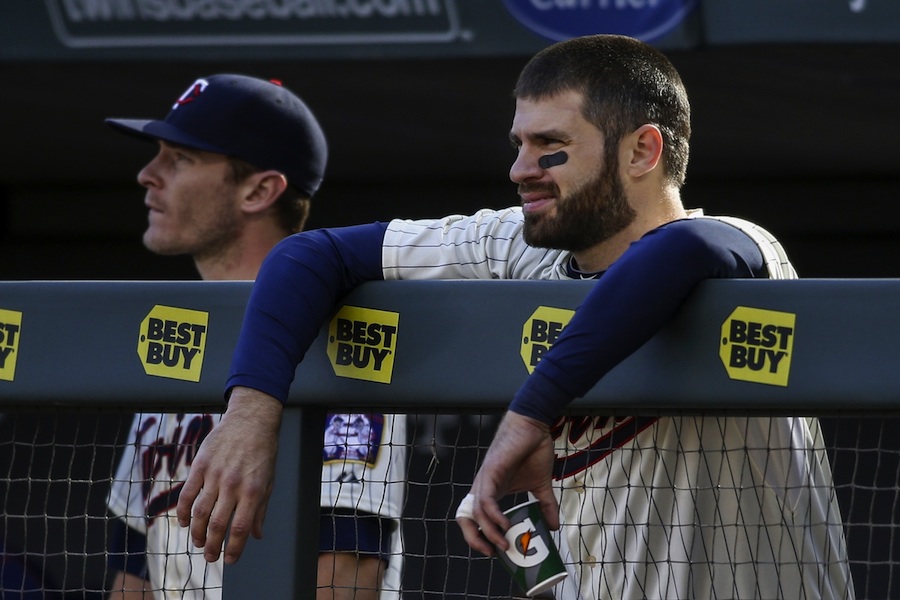 1. Joe Mauer's decline continued We hoped that he would regain some of his diminished sharpness and plate discipline as he moved away from his concussion issues. We hoped the transition to first base would result in improved power numbers driven by stronger legs. We hoped that Mauer could return to being a star-caliber player whose veteran bat would be the centerpiece in an athletic young lineup. It hasn't happened. It's getting harder to believe it's going to happen. The 2015 season marked the first time that Mauer has ever posted an OPS+ below 100, ending a string of 11 consecutive above-average offensive performances dating back to 2004. He batted .265. He slugged .380 with 10 home runs from a power position. He struck out almost twice as often as he walked. His outstanding numbers with runners in scoring position prevented him from being a total liability, but with the bases empty (59 percent of his plate appearances) Mauer hit .232/.284/.349, while always batting at the top of the order. Throughout his career, he has made up for his lack of home run pop by being an on-base machine who consistently set up the hitters behind him for success. He didn't do that this year, and with a lack of injuries or limiting circumstances to point at, this is beginning to look like what Mauer truly is at age 32: a mediocre hitter who belongs closer to the bottom of the lineup than the top. For better or for worse, Mauer – still owed $23 million annually through 2018 – is going to be around for a while yet. We can only hope for better. 2. Josmil Pinto basically dropped out of the catcher conversation Pinto's receiving skills have long been considered marginal at best, but he nonetheless entered this season as the Twins' best hope for an eventual Kurt Suzuki replacement at catcher who could actually deliver some offensive punch. The hitting ability was there, so it was just a matter of making enough improvements defensively behind the plate in order for the Twins to entrust him with handling the pitching staff. Unfortunately, Pinto endured a very rough season that likely ends any real possibility of him becoming a regular backstop for the Twins. He battled ongoing concussion issues throughout the summer that cost him two months and limited him to 72 total games (in which he posted an ugly .669 OPS). After returning to Rochester in August, he played DH exclusively the rest of the way. When you combine the brain injury concerns with the iffy defensive abilities, it's increasingly difficult to imagine the Twins giving Pinto any kind of real shot to become their starting catcher, and that's a shame because no one else in the organization offers his kind of offensive upside at the position. That remains true even after the acquisition of John Ryan Murphy. 3. Glen Perkins fell apart in the second half Perkins' tailspin at the end of the 2014 season was a little worrisome, but he seemingly erased any doubts with a first half in 2015 that saw him convert every save chance while earning on All-Star nod. However, his quick and shocking drop-off after the break, and especially his costly poor outings late in the year, created some major question marks about his outlook going forward. Two springs ago, the Twins handed Perkins an extension through the 2017 season with hopes that he'd be their closer for the duration of that term. Now, Terry Ryan is reluctant to commit to Perk as the ninth-inning man for 2016, and no one can blame him. The lefty was consistently ineffective for the final two months this year. After the All-Star Game, he never put together three consecutive appearances without allowing a run. Opponents batted .360 against him with seven home runs. Given that Perkins has now tailed off in the late stages of back-to-back seasons, could this be an issue of preparation and conditioning? Ryan seemingly intimated such with this answer in his Offseason Handbook interview: http://s16.postimg.org/6ow3j6o2t/TRperk.png If that's the case, the problem at least seems correctable. Perkins doesn't strike me as the type of guy who's going to sit back and tolerate this kind of performance from himself, so perhaps his heartbreaking finish in 2015 will serve as a wake-up call. 4. Alex Meyer unraveled When the Twins traded Denard Span to the Nationals back in 2012, they acquired a player that they viewed as a potential front-end starting pitcher. Meyer cultivated his ace-in-waiting status during his first couple years in Minnesota's system, putting up huge strikeout numbers while shutting down minor league hitters at Double-A and Triple-A. This year, however, everything came undone. Meyer floundered in the International League, which he had dominated in 2014. From spring training through September, the big right-hander constantly struggled to find the strike zone... and his confidence. It's far too soon to give up on the 25-year-old Meyer. But it might be time to give up on the idea of him as a starter. With his command issues and resulting huge pitch counts, he had an uphill climb in order to break into the rotation for a Twins team that values efficiency and deep outings from starters. He spent most of this season in the bullpen and it's looking like that is where his future lies. The good news is that he can be a major asset there, with triple-digit heat and a wipe-out breaking ball. The bad news is that removing him from the rotation equation leaves the Twins system very thin on high-ceiling starters that miss bats. 5. Oswaldo Arcia stopped hitting Over the years, Arcia has exhibited some notable downsides – namely, a dreadful lack of range in the outfield and some boisterous mannerisms on the field that tend to rub some people the wrong way. He has made up for these things, however, by consistently hitting the crap out of the ball. Arcia rose fast through the minors, clobbering the competition at each stop, and reached the big leagues at age 21. He has accumulated a .741 OPS with 36 home runs in 853 MLB plate appearances, all before turning 25, becoming one of the most accomplished hitters in the game for his age. He looked like a long-term fixture in the middle of the lineup. Arcia was beginning to heat up after a slow start this year before landing on the disabled list in May. He headed to Triple-A after being reinstated, seemingly for a temporary rehab stint, but never returned to the Twins. At Rochester, Arcia's bat went amiss for the first time in his career. Outside of a brief home run flurry in July, he was inexplicably flat-out awful against Triple-A pitching for a full three months, batting just .199 with a .630 OPS while showing almost no plate discipline. His lost year puts the Twins in a tough position, because Arcia will be out of options next spring, meaning he'll either need to be rostered or exposed to waivers. It's tough to count on him after his brutal showing in 2015, but it'd be even tougher to simply let his potent lefty power bat slip away.
 -
Yep. Duffey and Kepler were definitely in the running for the fifth spot but ultimately I went with Rosario because he did his thing over almost a full season in the majors.
- 23 replies
-
- 1
-
-
- miguel sano
- eddie rosario
- (and 3 more)
-
The Twins emerged from the darkness this year, breaking a string of four straight 90-loss seasons by adding 13 wins to their 2014 total. Many good things happened to make this possible. Here are five worth focusing on.1. Miguel Sano showed MVP-caliber hitting ability. We knew Sano, a top prospect and big performer in the minors, was going to be an impact player in the lineup. It was hard to anticipate him being quite this good, this fast. Sano played 80 games for the Twins this year – about half a season's worth. If you double his production, you get 36 home runs, 34 doubles, 104 RBI and 106 walks. Among players that logged 300 or more plate appearances in the majors, his OPS (.936) ranked 11th and his walk rate (15.6 percent) ranked sixth. He did all this as a 22-year-old coming off an entire missed season and getting his first taste of the majors. Sano will enter the 2016 campaign as a 23-year-old with a bit of experience under his belt, and as the unquestioned cornerstone of the Minnesota lineup. He'll be a popular preseason MVP sleeper among analysts, regardless of what position he's playing. 2. Eduardo Escobar locked up the shortstop position. Shortstop has been a constant problem area for the Twins for many years. Over the last decade they have had nine different Opening Day starters at the position, and with few exceptions, all have been bad. That's why Escobar's strong season was such a revelation for the franchise. If there were questions about the legitimacy of his breakthrough offensive performance in 2014 (.721 OPS and 35 doubles in 133 games), he did plenty to silence them with an even better 2015. After taking over shortstop from Danny Santana for good at the end of July, Escobar hit .278/.337/.505 with eight homers in 56 games. He did that while providing a steady and reliable glove at shortstop, committing only four errors there on the season (compared to 16 for Santana). Since the start of 2014. Escobar has piled up 90 extra-base hits in 260 games. His power is a rare commodity at shortstop, where the average AL player slugged .380 this year, lowest of any position. His .445 slugging percentage on the season would have ranked second among MLB shortstops, ahead of Troy Tulowitzki. Escobar turns 27 in January. 3. Jose Berrios maintained his luster at the highest levels. In 2014, Berrios had a monster season that saw him climb from Single-A to Triple-A, while also climbing prospect lists and establishing himself as a clear cut top-tier talent in the minors. His 2015 season was better by leaps and bounds. The right-hander basically replicated his production from a year ago, but did so while spending the entire season in Double-A and Triple-A. Despite being one of the youngest players to throw a pitch in the International League, he dominated it as he has every other, posting a 2.62 ERA and 0.96 WHIP with a phenomenal 83-to-14 K/BB ratio in 75 innings. The huge season was rendered all the more crucial by Alex Meyer's unraveling. Berrios now stands as the lone pitching prospect in Minnesota's high minors with true top-of-the-rotation potential. Fortunately, he's a hell of a prospect. He's the best young arm the Twins have brought along since Francisco Liriano, and he seems capable of making a similar impact based on his demolishment of opponents at every level. 4. Trevor May excelled in two different roles. Following his disastrous seven-walk MLB debut in Oakland, May posted an excellent 44-to-13 K/BB ratio in his final nine appearances last season. Though his 7.42 ERA didn't show it, he was on the right track. This year, May took a big step forward, with the results backing up the rock-solid peripherals. He showed steady improvement as a starter through the first half, and was just hitting his stride in June before being sent to the bullpen as victim of a numbers crunch. There, May showed the makings of a lock-down reliever. He gives the Twins a dynamic weapon on the pitching staff, and one they sorely needed. He looks like a solid mid-rotation starter with potential to be more, or else a dominating late-inning reliever. He's young and will be cheap for many years. Major asset. 5. Eddie Rosario's exceptional athleticism paid big dividends. I'll admit to being a little skeptical of Rosario due to his production drop-off in the high minors and his questionable plate discipline. The latter was on display during his rookie year but it didn't seem to matter a whole lot. Rosario displayed stunning power for his smallish frame, racking up 46 extra-base hits – including a league-leading 15 triples – after being called up in early May. While his approach at the plate was anything but patient, his quick wrists and coordination enabled him to make hard contact with tough pitches. With his speed and strength, if he starts to get a better handle on the strike zone he has All-Star upside, especially since he's a fantastic defender in the outfield corners. These five players, all under the age of 28, present five reasons that Twins fans should feel very good about the team's future. Click here to view the article
- 23 replies
-
- 2
-
-
- miguel sano
- eddie rosario
- (and 3 more)
-
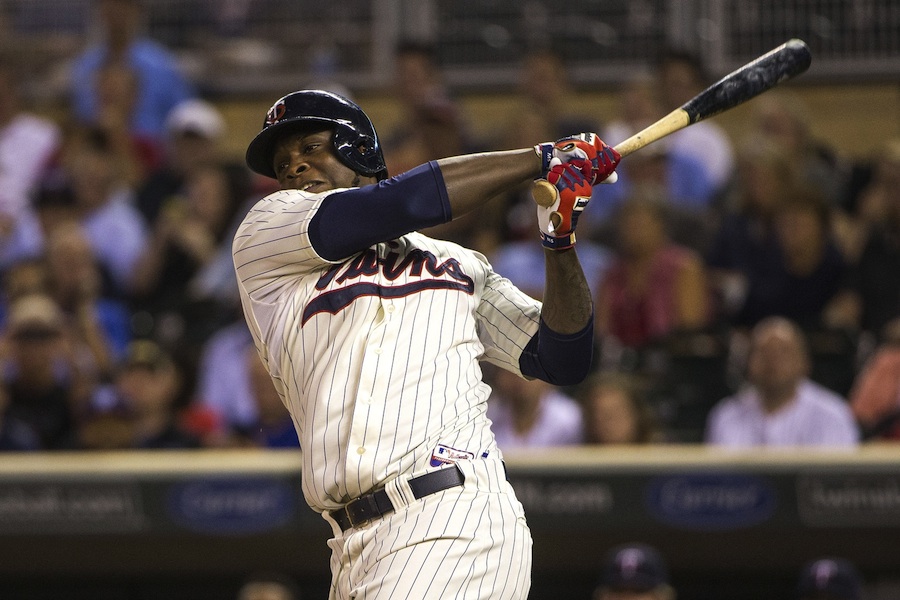 1. Miguel Sano showed MVP-caliber hitting ability. We knew Sano, a top prospect and big performer in the minors, was going to be an impact player in the lineup. It was hard to anticipate him being quite this good, this fast. Sano played 80 games for the Twins this year – about half a season's worth. If you double his production, you get 36 home runs, 34 doubles, 104 RBI and 106 walks. Among players that logged 300 or more plate appearances in the majors, his OPS (.936) ranked 11th and his walk rate (15.6 percent) ranked sixth. He did all this as a 22-year-old coming off an entire missed season and getting his first taste of the majors. Sano will enter the 2016 campaign as a 23-year-old with a bit of experience under his belt, and as the unquestioned cornerstone of the Minnesota lineup. He'll be a popular preseason MVP sleeper among analysts, regardless of what position he's playing. 2. Eduardo Escobar locked up the shortstop position. Shortstop has been a constant problem area for the Twins for many years. Over the last decade they have had nine different Opening Day starters at the position, and with few exceptions, all have been bad. That's why Escobar's strong season was such a revelation for the franchise. If there were questions about the legitimacy of his breakthrough offensive performance in 2014 (.721 OPS and 35 doubles in 133 games), he did plenty to silence them with an even better 2015. After taking over shortstop from Danny Santana for good at the end of July, Escobar hit .278/.337/.505 with eight homers in 56 games. He did that while providing a steady and reliable glove at shortstop, committing only four errors there on the season (compared to 16 for Santana). Since the start of 2014. Escobar has piled up 90 extra-base hits in 260 games. His power is a rare commodity at shortstop, where the average AL player slugged .380 this year, lowest of any position. His .445 slugging percentage on the season would have ranked second among MLB shortstops, ahead of Troy Tulowitzki. Escobar turns 27 in January. 3. Jose Berrios maintained his luster at the highest levels. In 2014, Berrios had a monster season that saw him climb from Single-A to Triple-A, while also climbing prospect lists and establishing himself as a clear cut top-tier talent in the minors. His 2015 season was better by leaps and bounds. The right-hander basically replicated his production from a year ago, but did so while spending the entire season in Double-A and Triple-A. Despite being one of the youngest players to throw a pitch in the International League, he dominated it as he has every other, posting a 2.62 ERA and 0.96 WHIP with a phenomenal 83-to-14 K/BB ratio in 75 innings. The huge season was rendered all the more crucial by Alex Meyer's unraveling. Berrios now stands as the lone pitching prospect in Minnesota's high minors with true top-of-the-rotation potential. Fortunately, he's a hell of a prospect. He's the best young arm the Twins have brought along since Francisco Liriano, and he seems capable of making a similar impact based on his demolishment of opponents at every level. 4. Trevor May excelled in two different roles. Following his disastrous seven-walk MLB debut in Oakland, May posted an excellent 44-to-13 K/BB ratio in his final nine appearances last season. Though his 7.42 ERA didn't show it, he was on the right track. This year, May took a big step forward, with the results backing up the rock-solid peripherals. He showed steady improvement as a starter through the first half, and was just hitting his stride in June before being sent to the bullpen as victim of a numbers crunch. There, May showed the makings of a lock-down reliever. He gives the Twins a dynamic weapon on the pitching staff, and one they sorely needed. He looks like a solid mid-rotation starter with potential to be more, or else a dominating late-inning reliever. He's young and will be cheap for many years. Major asset. 5. Eddie Rosario's exceptional athleticism paid big dividends. I'll admit to being a little skeptical of Rosario due to his production drop-off in the high minors and his questionable plate discipline. The latter was on display during his rookie year but it didn't seem to matter a whole lot. Rosario displayed stunning power for his smallish frame, racking up 46 extra-base hits – including a league-leading 15 triples – after being called up in early May. While his approach at the plate was anything but patient, his quick wrists and coordination enabled him to make hard contact with tough pitches. With his speed and strength, if he starts to get a better handle on the strike zone he has All-Star upside, especially since he's a fantastic defender in the outfield corners. These five players, all under the age of 28, present five reasons that Twins fans should feel very good about the team's future.
 -
Article: Did The Twins Give Up On Hicks Too Soon?
Nick Nelson replied to Nick Nelson's topic in Twins Daily Front Page News
This is what I was getting at with the title. I'm not saying they gave him away for nothing, I'm saying that even if they didn't plan on keeping him long-term, they could've kept him another year hoping for a real breakout and -- in that event -- gotten much more value back next offseason (or even at the deadline). If Hicks truly does figure things out and become an offensive force in CF, with his defensive abilities, he's a heck of a nice asset. -
Article: Did The Twins Give Up On Hicks Too Soon?
Nick Nelson replied to Nick Nelson's topic in Twins Daily Front Page News
Corner OF is one of the few places on the field where you can get away with sacrificing defense for offense without being hurt by it too much. Pretty much that simple. -
On Wednesday, the Twins traded away a 26-year-old former first round pick coming off a season in which he appeared to turn a corner in the majors. Understandably, this has caused some to wonder whether the team is letting Aaron Hicks get away at the wrong time.In terms of upside, there's really no comparing Hicks and the player that Minnesota received back in the deal, John Ryan Murphy. In one corner you have a player with All Star potential; Hicks has all the tools necessary to be one of the league's better center fielders, boasting excellent defense and speed with a hint of power and solid plate approach. Murphy's realistic ceiling is average big-league catcher. But when it comes to the likelihood of reaching those levels, Murphy is the far safer bet. In fact, he was basically already there this year at age 24, albeit in a fairly small sample size as part-time backup for New York. Hicks has teased and tantalized with his talent, and it appeared in the middle of the summer that he might finally be breaking through, but he fell back into a slump over the final two months. And for all the overall progress that he did show, he was still lousy as ever swinging from the left side, batting just .206 with a .596 OPS versus righties. When you're an offensive liability against two-thirds of the league's pitchers, that's a problem. At this point, Hicks looks like a guy who simply won't hit enough to stick in a corner outfield spot, and center is spoken for here in Minnesota. If Byron Buxton isn't manning the position on Opening Day, he will be by year's end. Hicks is out of options next year meaning the Twins would have needed to roster him, and with so many other outfielders in the corner mix -- Eddie Rosario, Oswaldo Arcia, Max Kepler and now evidently Miguel Sano -- that obligation could have caused some issues next spring. Still young and undoubtedly skilled, Hicks has a chance to become a nice player. I'm not sure he would've had much of an opportunity anymore with the Twins, where he may have very well ended up being a fourth outfielder or part-time starter in 2016. In New York, where the outfield situation is in flux and openings are available, his window is more open both short-term and long-term. Plus, the favorable dimensions at Yankee Stadium should play up his moderate power and he'll face less pressure to produce in a stronger overall lineup. This is a good move for Hicks. Similarly, it's a good move for Murphy. The 24-year-old catcher was hopelessly blocked in New York -- now by veteran Brian McCann, who's signed through 2018, and down the road by 22-year-old Gary Sanchez, who is viewed as one of the game's better young upcoming backstops. In Minnesota, Murphy will have every opportunity to lock down a starting role, should he be up to the task. While his numbers might not pop out, I'm not sure his odds of becoming a serviceable starter are much lower than those of Hicks. Here's a good way to look at the situation: In the minors, Hicks put up an .808 OPS in 605 games while Murphy put up a .733 OPS in 451 games. This year in the majors, 10 catchers made 300 or more plate appearances and posted an OPS of .733 or above. Twenty-two corner outfielders made 300 or more plate appearances with an OPS of .808 or above. Murphy is the rarer commodity, especially when viewed through the lens of a Twins organization that was deep on OF talent and absurdly low on catching depth. Obviously we don't know what's going to happen going forward, but right now I view this as the Twins choosing Arcia over Hicks. At least one was bound to be gone by the end (or maybe even the beginning) of next season based on the outfield numbers crunch and the options situations. Hicks is coming off the better year and got a better return, whereas I still believe that Arcia offers more promise as a corner outfielder. So I like the decision. Hicks might yet turn into a heck of a player, but it's tough to see how it was going to happen here. Murphy is a welcome addition and bolsters the organization's catching depth immensely, even if he never develops into a quality regular. What do you think? Will trading Hicks come back to haunt Terry Ryan and the Twins? Click here to view the article
-
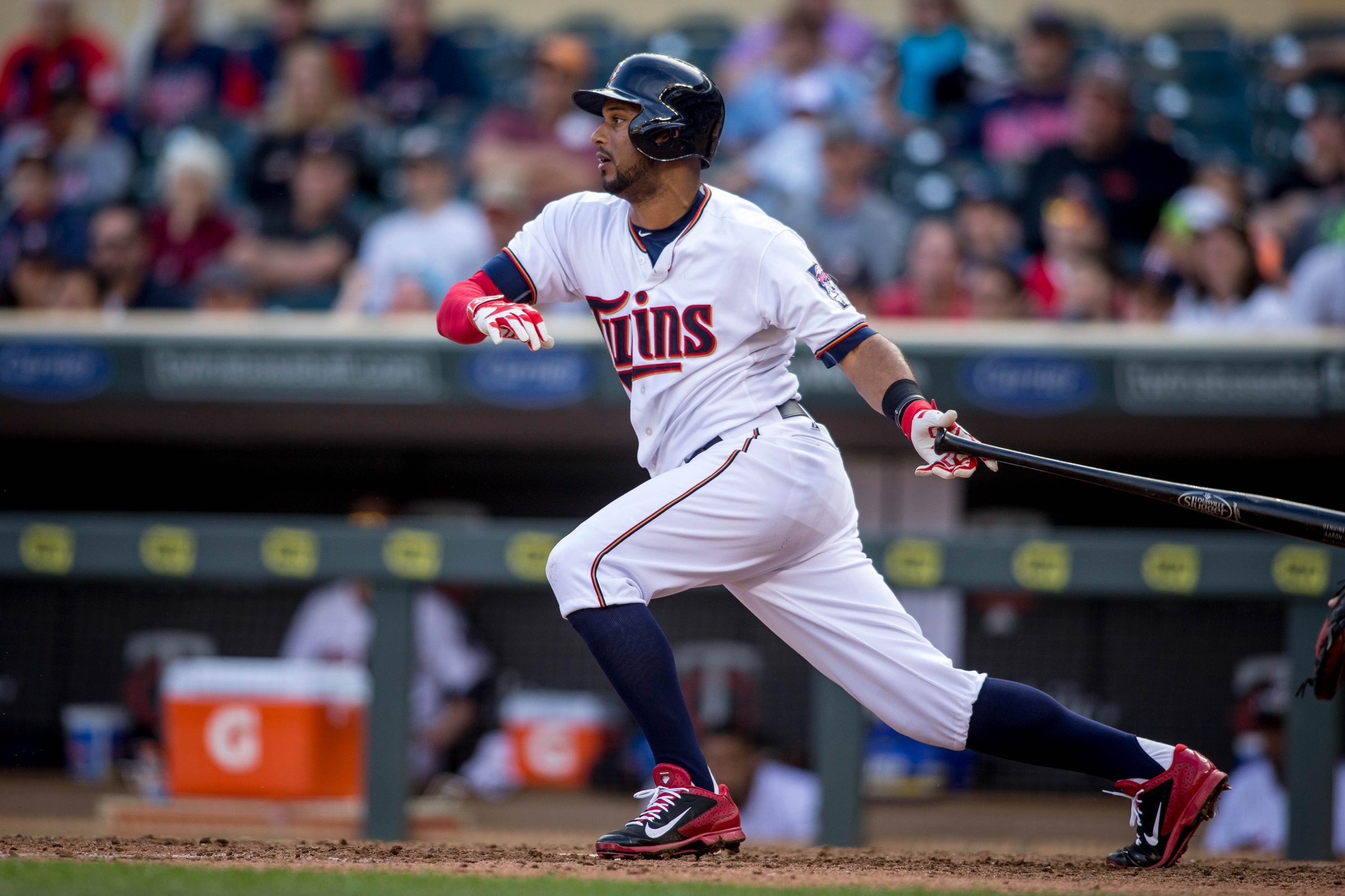 In terms of upside, there's really no comparing Hicks and the player that Minnesota received back in the deal, John Ryan Murphy. In one corner you have a player with All Star potential; Hicks has all the tools necessary to be one of the league's better center fielders, boasting excellent defense and speed with a hint of power and solid plate approach. Murphy's realistic ceiling is average big-league catcher. But when it comes to the likelihood of reaching those levels, Murphy is the far safer bet. In fact, he was basically already there this year at age 24, albeit in a fairly small sample size as part-time backup for New York. Hicks has teased and tantalized with his talent, and it appeared in the middle of the summer that he might finally be breaking through, but he fell back into a slump over the final two months. And for all the overall progress that he did show, he was still lousy as ever swinging from the left side, batting just .206 with a .596 OPS versus righties. When you're an offensive liability against two-thirds of the league's pitchers, that's a problem. At this point, Hicks looks like a guy who simply won't hit enough to stick in a corner outfield spot, and center is spoken for here in Minnesota. If Byron Buxton isn't manning the position on Opening Day, he will be by year's end. Hicks is out of options next year meaning the Twins would have needed to roster him, and with so many other outfielders in the corner mix -- Eddie Rosario, Oswaldo Arcia, Max Kepler and now evidently Miguel Sano -- that obligation could have caused some issues next spring. Still young and undoubtedly skilled, Hicks has a chance to become a nice player. I'm not sure he would've had much of an opportunity anymore with the Twins, where he may have very well ended up being a fourth outfielder or part-time starter in 2016. In New York, where the outfield situation is in flux and openings are available, his window is more open both short-term and long-term. Plus, the favorable dimensions at Yankee Stadium should play up his moderate power and he'll face less pressure to produce in a stronger overall lineup. This is a good move for Hicks. Similarly, it's a good move for Murphy. The 24-year-old catcher was hopelessly blocked in New York -- now by veteran Brian McCann, who's signed through 2018, and down the road by 22-year-old Gary Sanchez, who is viewed as one of the game's better young upcoming backstops. In Minnesota, Murphy will have every opportunity to lock down a starting role, should he be up to the task. While his numbers might not pop out, I'm not sure his odds of becoming a serviceable starter are much lower than those of Hicks. Here's a good way to look at the situation: In the minors, Hicks put up an .808 OPS in 605 games while Murphy put up a .733 OPS in 451 games. This year in the majors, 10 catchers made 300 or more plate appearances and posted an OPS of .733 or above. Twenty-two corner outfielders made 300 or more plate appearances with an OPS of .808 or above. Murphy is the rarer commodity, especially when viewed through the lens of a Twins organization that was deep on OF talent and absurdly low on catching depth. Obviously we don't know what's going to happen going forward, but right now I view this as the Twins choosing Arcia over Hicks. At least one was bound to be gone by the end (or maybe even the beginning) of next season based on the outfield numbers crunch and the options situations. Hicks is coming off the better year and got a better return, whereas I still believe that Arcia offers more promise as a corner outfielder. So I like the decision. Hicks might yet turn into a heck of a player, but it's tough to see how it was going to happen here. Murphy is a welcome addition and bolsters the organization's catching depth immensely, even if he never develops into a quality regular. What do you think? Will trading Hicks come back to haunt Terry Ryan and the Twins?
 -
In a stunning move, the Minnesota Twins announced today that they have traded outfielder Aaron Hicks to the New York Yankees in exchange for catcher John Ryan Murphy. The move comes one day after the Twins trimmed down their catching depth by dealing Chris Herrmann to Arizona.Hicks, a 26-year-old former first-round draft pick, enjoyed a breakout season of sorts in 2015, hitting .256/.323/.398 with 11 home runs in 97 games for Minnesota after struggling mightily in 2013 and 2014. Murphy, a 24-year-old former second-round pick, has served as a backup catcher in New York for parts of the last three seasons and hit .277/.327/.406 this year with three homers and 14 RBI in 67 games. He threw out eight base runners on 29 steal attempts (28 percent). The righty-swinging Murphy is a career .277/.311/.374 hitter in the minors. The trade has wide-reaching implications for both teams. The Yankees now seem less likely to bring back free agent outfielder Chris Young, and the acquisition of Hicks might increase the likelihood of a rumored Brett Gardner trade. For the Twins, trading Hicks helps clear out a logjam in the outfield and opens the door for Miguel Sano to potentially take over a corner spot with Korean import Byung-ho Park entering the fold as DH. Murphy will likely share time with Kurt Suzuki behind the plate in 2016 and could hypothetically be a long-term solution at catcher, although his track record doesn't necessarily suggest he'll hit enough to be an impact starter at the position. You may remember Murphy as the guy who sunk the Twins with a three-run homer off Glen Perkins at Target Field in July. What do you think? Did the Terry Ryan sell low on the talented Hicks? Click here to view the article
-
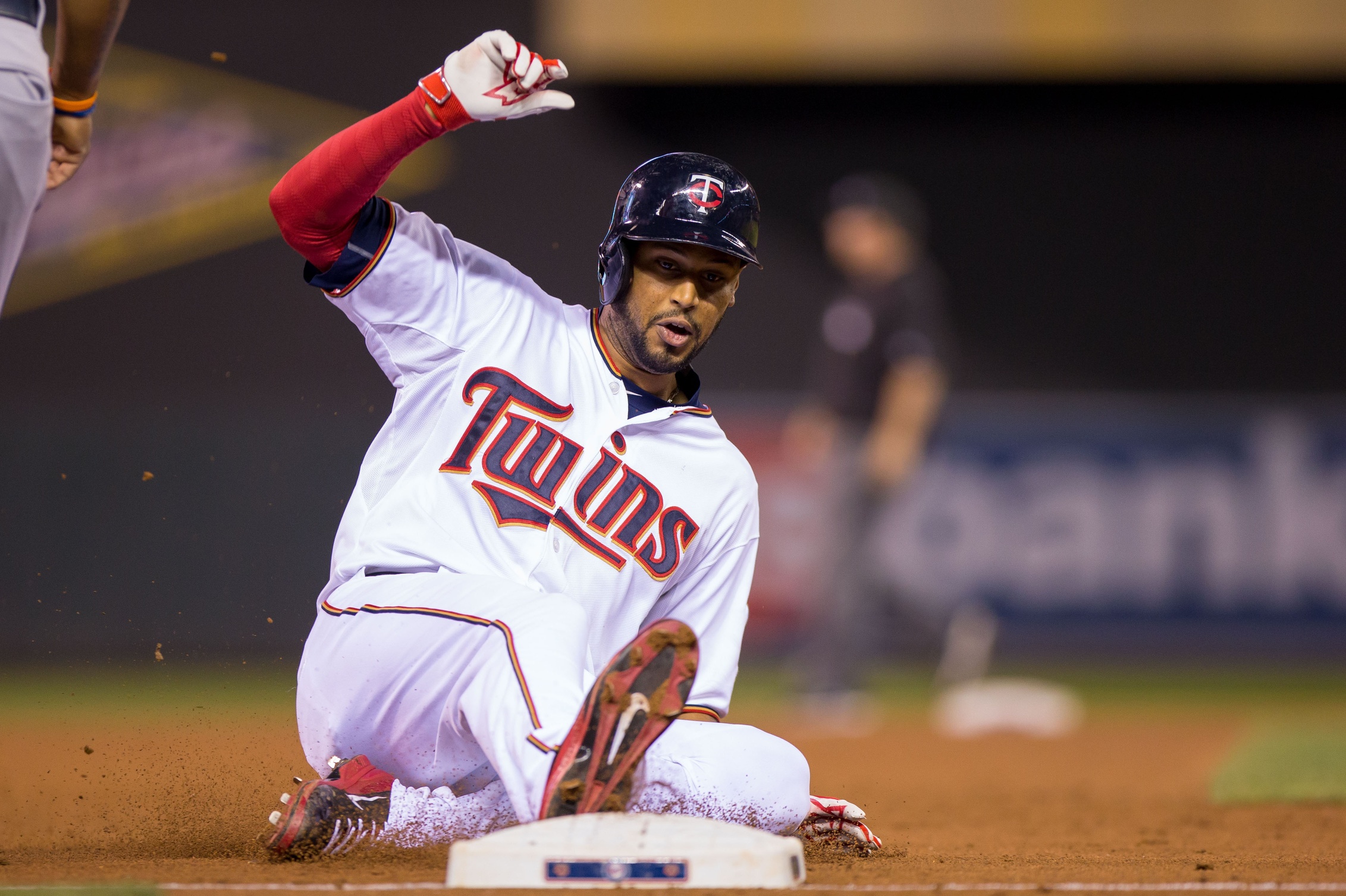 Hicks, a 26-year-old former first-round draft pick, enjoyed a breakout season of sorts in 2015, hitting .256/.323/.398 with 11 home runs in 97 games for Minnesota after struggling mightily in 2013 and 2014. Murphy, a 24-year-old former second-round pick, has served as a backup catcher in New York for parts of the last three seasons and hit .277/.327/.406 this year with three homers and 14 RBI in 67 games. He threw out eight base runners on 29 steal attempts (28 percent). The righty-swinging Murphy is a career .277/.311/.374 hitter in the minors. The trade has wide-reaching implications for both teams. The Yankees now seem less likely to bring back free agent outfielder Chris Young, and the acquisition of Hicks might increase the likelihood of a rumored Brett Gardner trade. For the Twins, trading Hicks helps clear out a logjam in the outfield and opens the door for Miguel Sano to potentially take over a corner spot with Korean import Byung-ho Park entering the fold as DH. Murphy will likely share time with Kurt Suzuki behind the plate in 2016 and could hypothetically be a long-term solution at catcher, although his track record doesn't necessarily suggest he'll hit enough to be an impact starter at the position. You may remember Murphy as the guy who sunk the Twins with a three-run homer off Glen Perkins at Target Field in July. https://www.youtube.com/watch?v=OBIKjhVcmzQ What do you think? Did the Terry Ryan sell low on the talented Hicks?
 -
Article: Stop Comparing Park To Nishioka
Nick Nelson replied to Nick Nelson's topic in Twins Daily Front Page News
I dunno. Maybe this piece fell flat because the headline was too strong. The purpose here is not to lecture anyone (I know most people here would not make the comparison), but to clearly define the vastly different situations between this signing and the infamous one that took place five years ago, and also to point out that if we do want to make contextual comparisons, there are better examples out there. Also, this has been noted above but I'll add: I have seen the scouting report that the Twins received on Nishioka. It was not glowing by any means. That move was simply a colossal failure in team-building and -- combined with the decision to give Hardy away -- the worst moment in Bill Smith's tenure. -
Article: Stop Comparing Park To Nishioka
Nick Nelson replied to Nick Nelson's topic in Twins Daily Front Page News
The people who comment and participate here regularly make up a small portion of the readership. You do understand that, right? Thanks for your valuable contributions to the conversation though! I understand that this is exactly why the comparison is being made. And it's silly. Which is why this article was written. Also, "media-hyped"? How? These are major moves, not sure the media deserves blame for giving them substantial coverage. -
Article: Stop Comparing Park To Nishioka
Nick Nelson replied to Nick Nelson's topic in Twins Daily Front Page News
I don't think the community here is an accurate barometer of Twins fandom at large (which is why I love this place). If you were on Twitter, or even having conversations in person with casual Twins followers about Park, you'd be hearing Nishioka's name coming up plenty. Uh... Kepler is an outfielder. I strongly doubt Sano will actually go to the OF, and if he does it'll be a short-term thing. This move doesn't really affect Kepler's timeline. The other two actually are marginal and I'm not terribly worried about blocking them.
