



Nick Nelson
-
Posts
8,326 -
Joined
-
Last visited
-
Days Won
56
Content Type
Profiles
News
Minnesota Twins Videos
2026 Minnesota Twins Top Prospects Ranking
2022 Minnesota Twins Draft Picks
Minnesota Twins Free Agent & Trade Rumors, Notes, & Tidbits
Guides & Resources
2023 Minnesota Twins Draft Picks
The Minnesota Twins Players Project
2024 Minnesota Twins Draft Picks
2025 Minnesota Twins Draft Pick Tracker
2026 Minnesota Twins Draft Tracker: Picks & Bonuses
Forums
Blogs
Events
Store
Downloads
Gallery
Everything posted by Nick Nelson
-
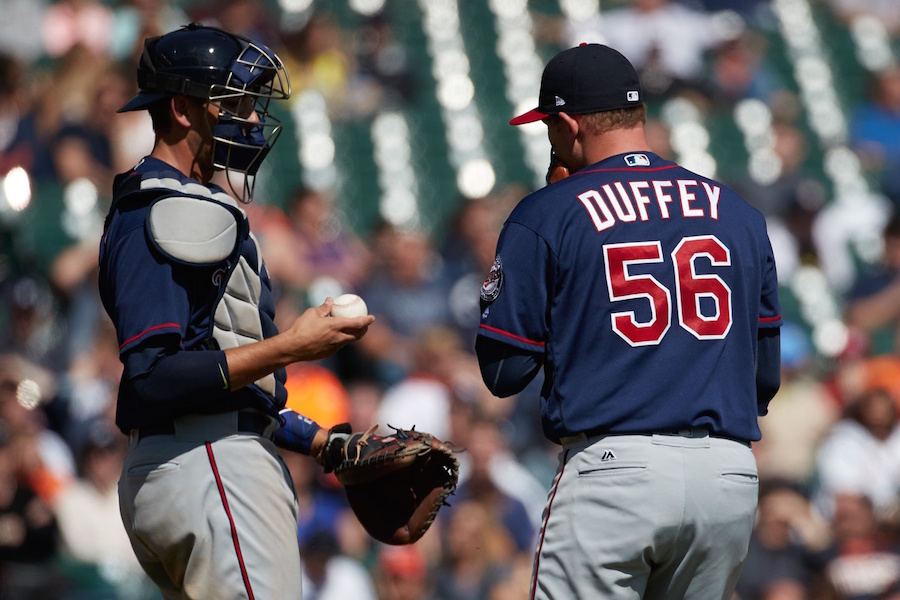 For some time, many fans have wondered just what Duffey might be capable of in the bullpen. I count myself among them. There were a number of factors suggesting he could be a strong fit in the late innings – namely his collegiate experience there and his two-pitch mix. The 26-year-old's struggles as a starter last year further supported the need for a switch. Nevertheless, the Twins maintained an outward stance heading into spring that he'd be competing for a rotation spot. It appeared he was very much in that race up until the end of March, at which point the team announced Adalberto Mejia was going to be the fifth starter while Duffey would come north in a swingman-type capacity. As it turns out, he's been the most reliable man in the bullpen through two-plus weeks. Duffey's stellar outing on Monday extended a season-opening scoreless streak to 8.2 innings, and during that span he's allowed only five hits (all singles) and one walk while striking out seven. If this continues, the Twins will face a decision: consider giving him another shot at starting, or stick with what's working and allow Duffey to thrive in relief? In a sense, it feels silly to even consider messing with the good thing he has going. Duffey's signature breaking ball has been straight-up nasty and has left batters shaking their heads. But of course, that's not really anything new. The theoretical benefit behind using him in short relief stints was that it might play up his fastball, which was coming in like a beachball last summer and routinely got crushed. That might be occurring to some extent, but it's not like Duffey is suddenly whipping 96 MPH heaters in there. In fact, from early readings, his fastball is only up by about one MPH compared to his 2016 average. And it's not like he's consistently being leveraged in the kinds of quick-hit stints that would be conducive to max effort. He has thrown multiple innings in three of his four appearances, and racked up 32 pitches in his latest. Maybe Duffey looks so good because he's more comfortable or adept in the bullpen. It could well be the case that his arsenal is gaining efficacy when he enters as a change-of-pace, replacing a starter or another reliever. Maybe that two-pitch combo simply works better when he's not trying to get through a lineup three times. Or, there could be other elements at play. Maybe his decision to move to the other side of the rubber against righties is paying dividends. Maybe he has made other adjustments to improve his fastball command. Or maybe he's just plain healthier and feeling better. If his success is being driven by things of that nature, then Duffey could certainly keep it going in the rotation. While his ugly 2016 is fresh in our minds, it bears remembering that he was excellent as a starter for the Twins in 2015 and throughout the minors. As things stand, he is in limbo to a degree. He has pitched only three times in the past 13 days. Unless and until there is a definitive commitment to him as a top setup option, his usage as a reliever figures to remain sporadic. The manager, for his part, doesn't seem inclined to make this switch permanent. "For now," Paul Molitor said Tuesday in reference to Duffey's present assignment in the bullpen. Personally, I'm not sure moving him back to the rotation is the right choice, particularly since Minnesota has five healthy and functional starters for the time being, plus a guy in Jose Berrios at Triple-A who is proving his readiness to step in. But one way or another the Twins should decide on a defined role and leave it be. What would you like to see happen with Duffey?
 -

Article: Ervin Santana Is Legit
Nick Nelson replied to Nick Nelson's topic in Twins Daily Front Page News
There's no implication here that he's going to sustain a 0.41 ERA throughout the summer. We saw what happened last year with those factors normalized over a full season. This article is less about what he's done in his first three starts in 2017, and more about what he's done with a fair amount of consistency since 2013. -
Maybe it's the team's history with free agents. Perhaps it is the perpetual up-and-down pattern of his career. Or maybe it's just a well justified skepticism about the sustainability of any good starting pitcher wearing a Minnesota Twins uniform. Whatever the reasons, people have had a hard time buying into Ervin Santana as a legitimate front-line starter. But at this point, it's an inescapable conclusion.Throughout his entire career, Santana has been a very streaky pitcher, so in a sense we should not go crazy over his incredible start to the 2017 season. But then again, this is the form he showed for most of 2016. The veteran right-hander is (hopefully) heading into a fifth straight season of sustained health and quality production. The improved results over this extensive stretch owe to more than just another hot streak. Since adding a new pitch to his repertoire, Santana has been a different player. A much better one, who shows signs of entrenching himself as a true No. 1 starter on a staff that desperately needs one to stick. In 2012, Santana allowed a league-leading 39 home runs in just 178 innings while scuffling through his final year with the Angels, in which he posted a career-worst ERA+ of 74. Perhaps it was this that inspired him to add a two-seam fastball – more colloquially known as a sinker – to his mix the following year. As you can see in the image below via Brooks Baseball, a new gray datapoint line starts appearing in 2013. This is when he started using the sinker, or at least in a way that caused it to register as such. The offering has been a noticeable difference-maker for him. Download attachment: Brooksbaseball-Chart.jpeg Santana has always been pretty good at limiting base-runners, evidenced by a 1.28 career WHIP. But in his down years, home runs have haunted, punishing him for the occasional walk or base hit. He's now in Year 5 since altering his arsenal, and there's been a distinct change. Through 2012, Santana had allowed homers at a 3.2 percent rate, with a 4.33 ERA. Since then, 2.5 percent with a 3.39 ERA. It's only a piece of the puzzle, but the bottom line is that Santana has been a really good pitcher for quite a while now. He has basically neutralized his one weakness – the long ball – and after making that adjustment hasn't really had a bad season. Since 2013, only 18 pitchers have thrown more innings with a better ERA, and they're all really damn good (surrounding Santana on the list are Jordan Zimmermann and Dallas Keuchel). Now, this isn't to say that Erv is ace material, or the guy you ideally want in Game 1 of a postseason series. He's just an extremely reliable above-average starter – a commodity that's been in short supply around these parts. And at the price the Twins are paying ($13.5 million this year and next, with a $14 million option in 2019) he's a real bargain. Naturally, this raises questions about how things might shape up at the trade deadline. Should the rest of the league become convinced of his value (and if he keeps pitching well for three more months, why would they doubt it?), Santana could bring back a decent haul. That's another asset for Derek Falvey and Thad Levine – already gifted the No. 1 overall draft pick and highest waiver priority – to keep in their pockets. Certainly a favorable inheritance for a new front office focused on building from the ground up. Of course, right now, selling is not the mindset. The Twins are 7-5, and in second place. While the thrill of actually being relevant may be fleeting, it may not. Either way, we'll all ride it as long as we can, especially with Santana keeping the good times rolling each fifth day. Click here to view the article
-
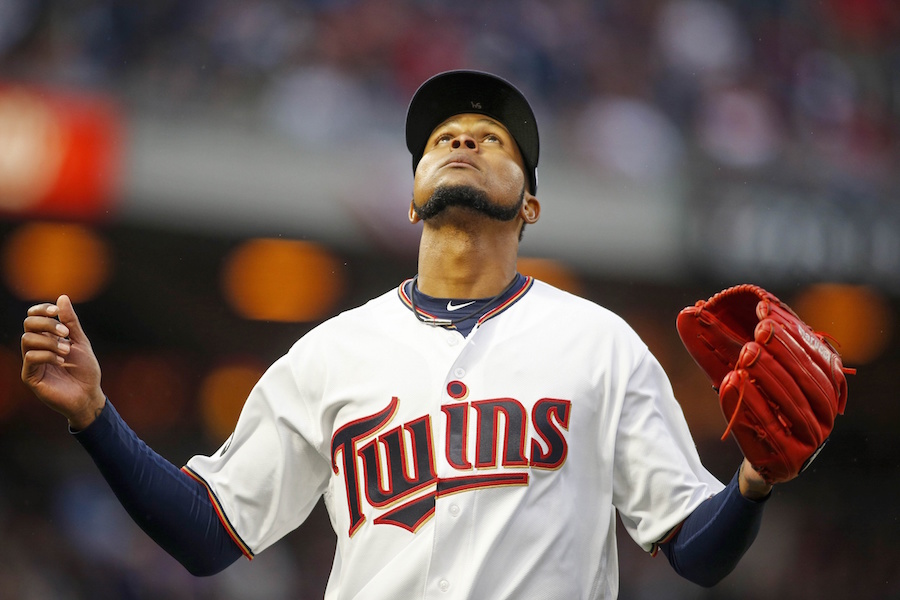 Throughout his entire career, Santana has been a very streaky pitcher, so in a sense we should not go crazy over his incredible start to the 2017 season. But then again, this is the form he showed for most of 2016. The veteran right-hander is (hopefully) heading into a fifth straight season of sustained health and quality production. The improved results over this extensive stretch owe to more than just another hot streak. Since adding a new pitch to his repertoire, Santana has been a different player. A much better one, who shows signs of entrenching himself as a true No. 1 starter on a staff that desperately needs one to stick. In 2012, Santana allowed a league-leading 39 home runs in just 178 innings while scuffling through his final year with the Angels, in which he posted a career-worst ERA+ of 74. Perhaps it was this that inspired him to add a two-seam fastball – more colloquially known as a sinker – to his mix the following year. As you can see in the image below via Brooks Baseball, a new gray datapoint line starts appearing in 2013. This is when he started using the sinker, or at least in a way that caused it to register as such. The offering has been a noticeable difference-maker for him. Santana has always been pretty good at limiting base-runners, evidenced by a 1.28 career WHIP. But in his down years, home runs have haunted, punishing him for the occasional walk or base hit. He's now in Year 5 since altering his arsenal, and there's been a distinct change. Through 2012, Santana had allowed homers at a 3.2 percent rate, with a 4.33 ERA. Since then, 2.5 percent with a 3.39 ERA. It's only a piece of the puzzle, but the bottom line is that Santana has been a really good pitcher for quite a while now. He has basically neutralized his one weakness – the long ball – and after making that adjustment hasn't really had a bad season. Since 2013, only 18 pitchers have thrown more innings with a better ERA, and they're all really damn good (surrounding Santana on the list are Jordan Zimmermann and Dallas Keuchel). Now, this isn't to say that Erv is ace material, or the guy you ideally want in Game 1 of a postseason series. He's just an extremely reliable above-average starter – a commodity that's been in short supply around these parts. And at the price the Twins are paying ($13.5 million this year and next, with a $14 million option in 2019) he's a real bargain. Naturally, this raises questions about how things might shape up at the trade deadline. Should the rest of the league become convinced of his value (and if he keeps pitching well for three more months, why would they doubt it?), Santana could bring back a decent haul. That's another asset for Derek Falvey and Thad Levine – already gifted the No. 1 overall draft pick and highest waiver priority – to keep in their pockets. Certainly a favorable inheritance for a new front office focused on building from the ground up. Of course, right now, selling is not the mindset. The Twins are 7-5, and in second place. While the thrill of actually being relevant may be fleeting, it may not. Either way, we'll all ride it as long as we can, especially with Santana keeping the good times rolling each fifth day.
 -
Article: Who Will Be Pitching Staff's Odd Man Out?
Nick Nelson replied to Nick Nelson's topic in Twins Daily Front Page News
Honestly, I really felt like they should have kept Stubbs out of ST and now that's even looking more like the case. His RH bat was such a nice fit with Rosario and Kepler starting in the corners, plus he could play CF and allows you to spell Buxton without starting Santana. Alas, now Stubbs is with the Giants. We'll see how he does in San Fran.- 102 replies
-
- 3
-

-
- craig breslow
- tyler duffey
- (and 2 more)
-
Paul Molitor wasn't thrilled to be handed a 13-man pitching staff and three-man bench on Opening Day. Despite the team's success in these first seven games, he isn't feeling much better about it now. The manager has already been hamstrung on multiple occasions, including the end of a Tuesday loss which left him sounding a little exasperated. Something needs to change soon. That means the Twins have a tough decision to make.Operating with just three position backups, all of whom are more or less defensive specialists, has limited Molitor's ability to tweak and plug into the lineup. When he wanted to give DH Robbie Grossman a day off Saturday, the uninspiring replacement was utility infielder Eduardo Escobar. On Tuesday, when Molitor opted to sit first baseman Joe Mauer and right fielder Max Kepler against a left-hander, the fill-ins at two premium offensive positions were Chris Gimenez and Danny Santana – the two worst bats on the roster. Late in the game, the manager was unable to pinch-run for Jason Castro, standing on second as the tying run, because Joe Mauer had just singled him there after pinch-hitting for Castro's backup. Meanwhile, the extra arms have yielded Molitor no benefit. Sure, Twins starters have surprisingly pitched deep into most games, but the eight-man bullpen would be extreme overkill regardless. In the first eight days of the season, Justin Haley, Tyler Duffey and Michael Tonkin got into games twice apiece. Craig Breslow recorded one single out. In theory, the roster that Minnesota opened this season with was palatable for a brief period. In practice, it's a joke. The front office must realize that it's unfair and, frankly, ill-advised to keep this competitive handicap in play. Molitor emphasized at the conclusion of camp his belief that the unideal initial setup was "short-term." He is no doubt ready to move on and restore some balance. The Twins have a few different options for doing so. The easy choice is calling up Kennys Vargas. He's healthy and made his fourth straight start in Rochester on Tuesday, slugging his first home run. Choosing a pitcher to remove from the bullpen, which has been stunningly effective in the early going, is less easy. We know the late-inning core of Brandon Kintzler, Ryan Pressly, Matt Belisle and Taylor Rogers will remain intact. After that, it gets a little trickier. Rule 5 pick Justin Haley has more or less proven his worth, with a clean one-inning debut followed by a long relief outing in Chicago that was going swimmingly through three innings before a pair of homers knocked him out. He seems safe. Tyler Duffey is the obvious pick if the team still views him as a starter. He could go to Triple-A, get stretched out and be ready to step into the rotation when needed. But are they still viewing him that way? Should they? Though he was framed as a swingman coming out of camp, Duffey's usage has not been reflective of such. Instead, he's been a high-leverage crutch for Molitor. And unsurprisingly, the righty has looked excellent in short bursts, flashing the stuff of a legit setup man. Why mess with that after he put up a 6.43 ERA in the Twins rotation last year? If Duffey will indeed accompany Pressly and Belisle as a late-inning weapon, it sort of marginalizes Michael Tonkin, who currently appears to have no real purpose on the roster. His two appearances have come in the two losses, both with the team down multiple runs. Once again, he is being used as a mop-up man, a role that suits him poorly. It's not evident from the first handful of games that he's gained any additional trust from Molitor. Then again, the Twins went out of their way to keep Tonkin out of spring, and he hasn't really done anything to lose favor on his end. Then there's Craig Breslow. He's made one appearance, relieving Kyle Gibson in the third game against the Royals. Molitor pulled him after three batters, and didn't turn to the veteran lefty in any of the next four contests. In his lone outing, Breslow threw only four of 11 pitches for strikes. In spring training, he walked seven over nine innings. The reinvented southpaw might have impressive spin and movement on his pitches, but there's no evidence he can command them. Clearly he doesn't have the manager's faith. So it seems there are three options at play if the Twins want to add a bat in short order. They can send out Duffey and get him back on a starting regimen in Rochester. They can expose Tonkin to waivers with hopes he'll have better odds of passing through now than at the end of spring. Or they can pull the plug on Breslow, whom they just handed a 40-man roster spot, after one outing. I'm not sure what the best option is, though I'd probably lean toward Breslow. I do know that the Twins need to cut down on pitchers and bulk up their bench, and I'm guessing everyone reading this will agree. What's your move? Click here to view the article
-
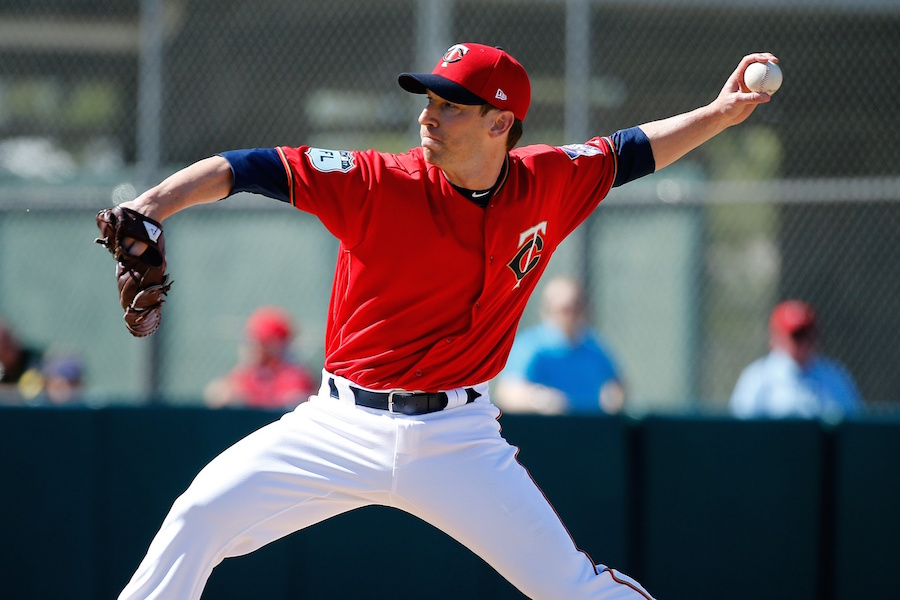 Operating with just three position backups, all of whom are more or less defensive specialists, has limited Molitor's ability to tweak and plug into the lineup. When he wanted to give DH Robbie Grossman a day off Saturday, the uninspiring replacement was utility infielder Eduardo Escobar. On Tuesday, when Molitor opted to sit first baseman Joe Mauer and right fielder Max Kepler against a left-hander, the fill-ins at two premium offensive positions were Chris Gimenez and Danny Santana – the two worst bats on the roster. Late in the game, the manager was unable to pinch-run for Jason Castro, standing on second as the tying run, because Joe Mauer had just singled him there after pinch-hitting for Castro's backup. Meanwhile, the extra arms have yielded Molitor no benefit. Sure, Twins starters have surprisingly pitched deep into most games, but the eight-man bullpen would be extreme overkill regardless. In the first eight days of the season, Justin Haley, Tyler Duffey and Michael Tonkin got into games twice apiece. Craig Breslow recorded one single out. In theory, the roster that Minnesota opened this season with was palatable for a brief period. In practice, it's a joke. The front office must realize that it's unfair and, frankly, ill-advised to keep this competitive handicap in play. Molitor emphasized at the conclusion of camp his belief that the unideal initial setup was "short-term." He is no doubt ready to move on and restore some balance. The Twins have a few different options for doing so. The easy choice is calling up Kennys Vargas. He's healthy and made his fourth straight start in Rochester on Tuesday, slugging his first home run. Choosing a pitcher to remove from the bullpen, which has been stunningly effective in the early going, is less easy. We know the late-inning core of Brandon Kintzler, Ryan Pressly, Matt Belisle and Taylor Rogers will remain intact. After that, it gets a little trickier. Rule 5 pick Justin Haley has more or less proven his worth, with a clean one-inning debut followed by a long relief outing in Chicago that was going swimmingly through three innings before a pair of homers knocked him out. He seems safe. Tyler Duffey is the obvious pick if the team still views him as a starter. He could go to Triple-A, get stretched out and be ready to step into the rotation when needed. But are they still viewing him that way? Should they? Though he was framed as a swingman coming out of camp, Duffey's usage has not been reflective of such. Instead, he's been a high-leverage crutch for Molitor. And unsurprisingly, the righty has looked excellent in short bursts, flashing the stuff of a legit setup man. Why mess with that after he put up a 6.43 ERA in the Twins rotation last year? If Duffey will indeed accompany Pressly and Belisle as a late-inning weapon, it sort of marginalizes Michael Tonkin, who currently appears to have no real purpose on the roster. His two appearances have come in the two losses, both with the team down multiple runs. Once again, he is being used as a mop-up man, a role that suits him poorly. It's not evident from the first handful of games that he's gained any additional trust from Molitor. Then again, the Twins went out of their way to keep Tonkin out of spring, and he hasn't really done anything to lose favor on his end. Then there's Craig Breslow. He's made one appearance, relieving Kyle Gibson in the third game against the Royals. Molitor pulled him after three batters, and didn't turn to the veteran lefty in any of the next four contests. In his lone outing, Breslow threw only four of 11 pitches for strikes. In spring training, he walked seven over nine innings. The reinvented southpaw might have impressive spin and movement on his pitches, but there's no evidence he can command them. Clearly he doesn't have the manager's faith. So it seems there are three options at play if the Twins want to add a bat in short order. They can send out Duffey and get him back on a starting regimen in Rochester. They can expose Tonkin to waivers with hopes he'll have better odds of passing through now than at the end of spring. Or they can pull the plug on Breslow, whom they just handed a 40-man roster spot, after one outing. I'm not sure what the best option is, though I'd probably lean toward Breslow. I do know that the Twins need to cut down on pitchers and bulk up their bench, and I'm guessing everyone reading this will agree. What's your move?
 -
Article: Five Takeaways From A Fun First Week
Nick Nelson replied to Nick Nelson's topic in Twins Daily Front Page News
The Twins ran out an OF alignment of Grossman-Rosario-Sano (EDIT: sorry I meant Arcia not Grossman) in three straight games last April. While Buxton was on the roster. The entire Sano OF experiment in general, along with a willingness to give Grossman 72 starts in LF, was indicative of a lackluster emphasis on the importance of this component. The only player who has set foot in the outfield over the first week this season other than the three starters is Danny Santana, who played left in one game.- 75 replies
-
- 4
-
-
- byron buxton
- ervin santana
- (and 1 more)
-
A good start to the season is only that. The Twins have played through only a tiny fraction of their schedule, and their strong play in the first week won't necessarily mean a whole lot in the grand scheme. But it sure beats the hell out of the alternative, to which we've become all too accustomed.It's important not to blow small-sample trends and observations out of proportion at this time of year, even if there's a natural inclination to do so. Still, these five storylines loom large with two series victories in the books. 1. The outfield defense is an enormous difference-maker. "Nothing falls but raindrops." Byron Buxton said that's the motto of Minnesota's athletic young outfield trio, and his unit has lived up to the billing. Buck has combined with Eddie Rosario and Max Kepler to take away several hits already in a handful of games, some of which would have surely yielded extra bases. The commitment to outfield defense for Paul Molitor has been obvious in the way he's configured his lineups. Robbie Grossman appears to be more of a true DH and hasn't yet played an inning in the field. The advantage has been unmistakable. A pivotal moment came early in Sunday's game when Yolmer Sanchez stepped in for the White Sox with two on and one out in the second. He launched one to deep left, inches short of the wall, but Rosario fought through the swirling wind and ranged back to catch it. Ervin Santana escaped the inning unscathed, en route to six scoreless. If Grossman is in left, that ball almost surely drops and it's a big inning. Those swings are monumental. 2. The rotation is bouncing back in a huge way. Through six games, Twins starters have yet to allow more than three runs in an outing. Granted, they weren't always great, or in Adalberto Mejia's case even up to par. But the bottom line is that the starters have left every game winnable. It's not worth reading into all that deeply, especially in light of the competition. In my Central Intelligence preview pieces on the Royals and White Sox, I explained why I expected both clubs to be down this year. It's a big reason we feel the Twins have an easy path to a bunch more wins in 2017. Still, there weren't too many stretches of six consecutive games last year where a starter didn't put a game out of reach. In fact, the Twins have already – in the first week – doubled their starting pitcher win total from last April (2). We can look at this for what it is: a major statement from an embattled rotation that appears very capable of competing. The bullpen has been nearly flawless thus far, deserving much praise in its own right, but I'll need to see that carry forward more before I buy in. 3. Byron Buxton is bewildered. Again. There are many reasons that Buxton's immense struggles at the plate have been so conspicuous amidst an otherwise very successful start for the team. In part, it's the contrast of his approach, swinging wildly in quick at-bats while the rest of the lineup piles up walks and wears out opposing pitchers. There's also the fact that Molitor placed him in the spotlight by batting him third and sticking with it through four games. But above all, Buxton draws attention because most fans recognize that he is vitally integral to this franchise taking the next step. It's nice things have shaken out favorably through one week, but ultimately, sustainable winning is largely contingent on the 23-year-old realizing some semblance of his potential at the plate. The ugly numbers (2-for-26, 14 K, 1 BB) would not be so troubling if not for a history that includes a 35 percent strikeout rate in the majors and a perpetual need for Triple-A resets. Of course, Buxton has dominated that level, and every other one in the minors. He did the same last September with the Twins, and did enough this spring to convince Molitor he was ready for prime time. Ability is not the issue here. It's evident the young outfielder is out of sorts – illustrated by the whiffs on hittable pitches in the zone as much as the chasing outside. What he probably (hopefully) needs is a continuing stream of steady at-bats, until he runs into a hot streak, gains confidence and takes off. Fortunately, with the tremendous value he's providing on the other side (see item No. 1), it's pretty easy to live with him scuffling at the bottom of the order. 4. Jason Castro was just what this team needed. No, he's not going to continue to walk in a third of his plate appearances or get on base at a .500 clip. But Castro is showing exactly the skills and strengths the Twins paid for. The steady vet is taking professional at-bats and has been a noticeable presence behind the plate. The numbers will tell you that he's already getting his pitchers extra strikes, and at times it has been visibly apparent he's providing an edge. Plus, with the fast start, an optimist's mind cannot help but see a possible parallel with Castro's predecessor. Kurt Suzuki was a solid hitter early in his career but went through several years of unexceptional production at the plate. He experienced an offensive reawakening in Minnesota, with two of his better seasons by OPS+. Castro has a similar history, but tantalizes with greater upside. The former 10th overall pick and highly regarded prospect was a .269/.344/.454 hitter in 2012 and 2013 with Houston. The three years since have seen his performance tail off, but there's a very capable batsman in there. 5. The lineup should cause headaches all summer long. Castro is just one Twin who is thriving in the batter's box early on, contributing to a deep lineup that has been able to apply pressure from top to bottom. They've faced some erratic hurlers early on, true, but Minnesota hitters are taking advantage with exceptional patience. This has enabled them to put up crooked numbers even without bats making much noise, and it certainly bodes well for a time when guys like Brian Dozier and Joe Mauer start connecting with more authority. What has caught your eye most in the opening week of action? Click here to view the article
- 75 replies
-
- 3
-
-
- byron buxton
- ervin santana
- (and 1 more)
-
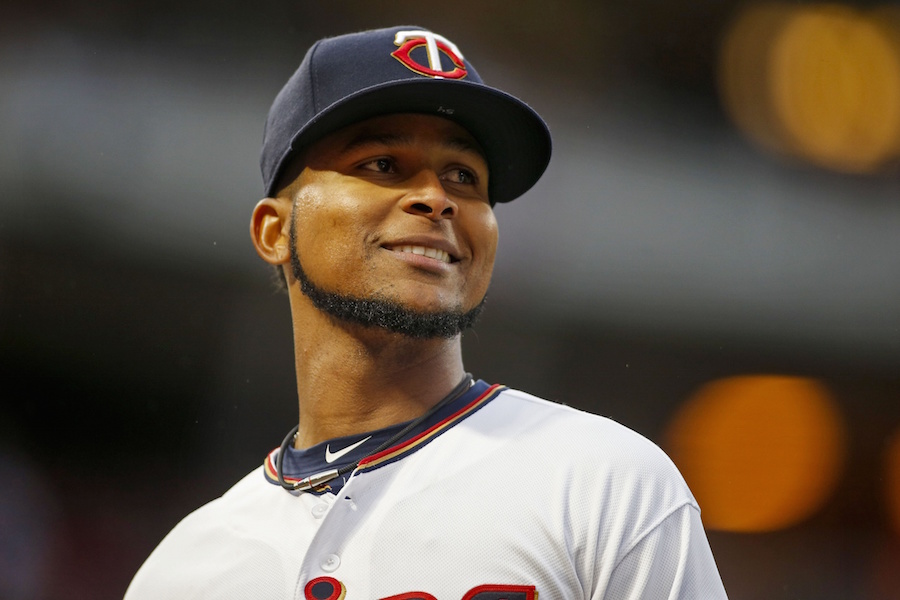 It's important not to blow small-sample trends and observations out of proportion at this time of year, even if there's a natural inclination to do so. Still, these five storylines loom large with two series victories in the books. 1. The outfield defense is an enormous difference-maker. "Nothing falls but raindrops." Byron Buxton said that's the motto of Minnesota's athletic young outfield trio, and his unit has lived up to the billing. Buck has combined with Eddie Rosario and Max Kepler to take away several hits already in a handful of games, some of which would have surely yielded extra bases. The commitment to outfield defense for Paul Molitor has been obvious in the way he's configured his lineups. Robbie Grossman appears to be more of a true DH and hasn't yet played an inning in the field. The advantage has been unmistakable. A pivotal moment came early in Sunday's game when Yolmer Sanchez stepped in for the White Sox with two on and one out in the second. He launched one to deep left, inches short of the wall, but Rosario fought through the swirling wind and ranged back to catch it. Ervin Santana escaped the inning unscathed, en route to six scoreless. If Grossman is in left, that ball almost surely drops and it's a big inning. Those swings are monumental. 2. The rotation is bouncing back in a huge way. Through six games, Twins starters have yet to allow more than three runs in an outing. Granted, they weren't always great, or in Adalberto Mejia's case even up to par. But the bottom line is that the starters have left every game winnable. It's not worth reading into all that deeply, especially in light of the competition. In my Central Intelligence preview pieces on the Royals and White Sox, I explained why I expected both clubs to be down this year. It's a big reason we feel the Twins have an easy path to a bunch more wins in 2017. Still, there weren't too many stretches of six consecutive games last year where a starter didn't put a game out of reach. In fact, the Twins have already – in the first week – doubled their starting pitcher win total from last April (2). We can look at this for what it is: a major statement from an embattled rotation that appears very capable of competing. The bullpen has been nearly flawless thus far, deserving much praise in its own right, but I'll need to see that carry forward more before I buy in. 3. Byron Buxton is bewildered. Again. There are many reasons that Buxton's immense struggles at the plate have been so conspicuous amidst an otherwise very successful start for the team. In part, it's the contrast of his approach, swinging wildly in quick at-bats while the rest of the lineup piles up walks and wears out opposing pitchers. There's also the fact that Molitor placed him in the spotlight by batting him third and sticking with it through four games. But above all, Buxton draws attention because most fans recognize that he is vitally integral to this franchise taking the next step. It's nice things have shaken out favorably through one week, but ultimately, sustainable winning is largely contingent on the 23-year-old realizing some semblance of his potential at the plate. The ugly numbers (2-for-26, 14 K, 1 BB) would not be so troubling if not for a history that includes a 35 percent strikeout rate in the majors and a perpetual need for Triple-A resets. Of course, Buxton has dominated that level, and every other one in the minors. He did the same last September with the Twins, and did enough this spring to convince Molitor he was ready for prime time. Ability is not the issue here. It's evident the young outfielder is out of sorts – illustrated by the whiffs on hittable pitches in the zone as much as the chasing outside. What he probably (hopefully) needs is a continuing stream of steady at-bats, until he runs into a hot streak, gains confidence and takes off. Fortunately, with the tremendous value he's providing on the other side (see item No. 1), it's pretty easy to live with him scuffling at the bottom of the order. 4. Jason Castro was just what this team needed. No, he's not going to continue to walk in a third of his plate appearances or get on base at a .500 clip. But Castro is showing exactly the skills and strengths the Twins paid for. The steady vet is taking professional at-bats and has been a noticeable presence behind the plate. The numbers will tell you that he's already getting his pitchers extra strikes, and at times it has been visibly apparent he's providing an edge. Plus, with the fast start, an optimist's mind cannot help but see a possible parallel with Castro's predecessor. Kurt Suzuki was a solid hitter early in his career but went through several years of unexceptional production at the plate. He experienced an offensive reawakening in Minnesota, with two of his better seasons by OPS+. Castro has a similar history, but tantalizes with greater upside. The former 10th overall pick and highly regarded prospect was a .269/.344/.454 hitter in 2012 and 2013 with Houston. The three years since have seen his performance tail off, but there's a very capable batsman in there. 5. The lineup should cause headaches all summer long. Castro is just one Twin who is thriving in the batter's box early on, contributing to a deep lineup that has been able to apply pressure from top to bottom. They've faced some erratic hurlers early on, true, but Minnesota hitters are taking advantage with exceptional patience. This has enabled them to put up crooked numbers even without bats making much noise, and it certainly bodes well for a time when guys like Brian Dozier and Joe Mauer start connecting with more authority. What has caught your eye most in the opening week of action?
 -
Article: Paul Molitor's Opening Day Redemption
Nick Nelson replied to Nick Nelson's topic in Twins Daily Front Page News
It's basically the same thing, with Kepler to the top and Grossman to the bottom, plus Escobar in for Polanco. -
Article: Paul Molitor's Opening Day Redemption
Nick Nelson replied to Nick Nelson's topic in Twins Daily Front Page News
And they scored 7 runs. That's, um, kind of the point? Clustering your more patient, OBP-centric guys at the top of the order can help manufacture rallies when bats don't. It did in this game. You can claim that Kansas City's pitchers "decided to stop throwing the ball anywhere close to the strike zone" (huh?) all you want, but that point remains. -
In the week or so leading up to Opening Day, Paul Molitor's lineups became a central topic of conversation among Twins fans and media. This was, in part, borne out of desperation; after an especially long spring training, we had all basically run out of things to talk about. But there was also something about those final tuneup experiments that felt depictive of deeper and much more important narratives. Particularly that of the manager, who enjoyed a vindicating afternoon on Monday.Many eyebrows were raised last summer when Minnesota's GM vacancy opened up along with an immediate, non-negotiable stipulation that Molitor would stay on. His team was on its way to an historically awful finish, and given his complete lack of managerial experience prior to 2015, the sophomore skipper didn't have much to fall back on other than a revered status within the organization. Ultimately, this wasn't a dealbreaker for Derek Falvey or Thad Levine, who are from all appearances fostering a healthy rapport with Molitor despite an inherent conflict of interest. The new top execs are expressing a big-picture view while downplaying the importance of quick answers and short-term thinking. Molitor, on the hot seat and under the microscope, can't afford such a mindset. He doesn't set the roster. The Twins skipper would probably rather not be tethered to a Rule 5 pick he needs to hide in the bullpen, nor deprived of ByungHo Park after watching the slugger check all the boxes over five weeks in Florida. All Molitor can do is work with what he's got, and in that respect, there have been some interesting storylines and they came into play on Monday. Throughout the Grapefruit League, Molitor was constantly toying with his lineups, telling reporters he was open to anything. But only in the final weekend, with the Twins running through their final rehearsals, did it become clear that his willingness to get weird was legit. The unorthodox lineup on Opening Day caught a lot of people off-guard, but it was the culmination of considerable tweaking and experimentation on Molitor's part. Robbie Grossman batting second? Byron Buxton in the three-hole? Joe Mauer hitting cleanup for the first time in 11 years?? (Go ahead and re-read that last one for dramatic effect.) It was sequencing that defied convention. But it's not like Molitor, chomping at the bit to start on a good note and put 2016 behind him, gave this any shortage of thought. And when you squint, you can envision how the gears were turning. Brian Dozier likes leading off, and feels comfortable there. Last year when he was most comfortable he was smashing like three homers a week. OK, not much thinking required there. But then, you plug in Grossman who led the team in on-base percentage last year, and had a .418 clip against lefties. OBP near the top of the order – how sabermetrical! Buxton third is unexpected but he was a monster last September and displayed equal confidence and aggressiveness this spring. Clearly Molitor believes the kid is ready to arrive, and made a statement to that effect on Opening Day. Mauer batting fourth certainly caused the most bewilderment. His lack of power production makes him an ill fit for the traditional cleanup mold, no doubt. But what does Molitor care about established practices? He's got nothing to lose. I suspect that the cerebral side of him sees a smart veteran player that can consistently keep rallies rolling even if he doesn't deliver the knockout punch. A selective hitter who can take pitches and handle the bat, optimal for orchestrating steals and hit-and-runs with Buxton aboard. An OBP specialist who can continually get on base ahead of Miguel Sano. On Opening Day, Molitor's quirky lineup was immediately put to the test. In the pivotal seventh inning of a 1-1 game, the Twins mounted a threat. With two runners in scoring position and one out, the Royals intentionally walked Brian Dozier, and here came Molitor's custom made run-scoring configuration with bases loaded. They scored runs. Grossman did what he does – drew a walk, and it gave the Twins a lead. Next up Buxton, with a chance to do serious damage. He struck out, one of three on the day, but I'll still take him in that spot right now. Mauer and Sano both followed with run-scoring walks of their own to build the lead before hits from Jason Castro and Jorge Polanco blew it open. It certainly wasn't Molitor's lineup construction that won the game. We can credit Ervin Santana and some very good, disciplined Twins at-bats (aided by a bit of wildness) for that. But there were those little moments that validated the manager's creative thinking, and it all added up to one big reward: Minnesota's first season-opening win in almost a decade, and the quickest possible disassociation from last years disastrous start. The satisfaction for Molitor and the Twins is fleeting – they've got a lot of work to do. But at least, with the schedule's customary open second day, they get a little extra time to soak it in. Click here to view the article
-
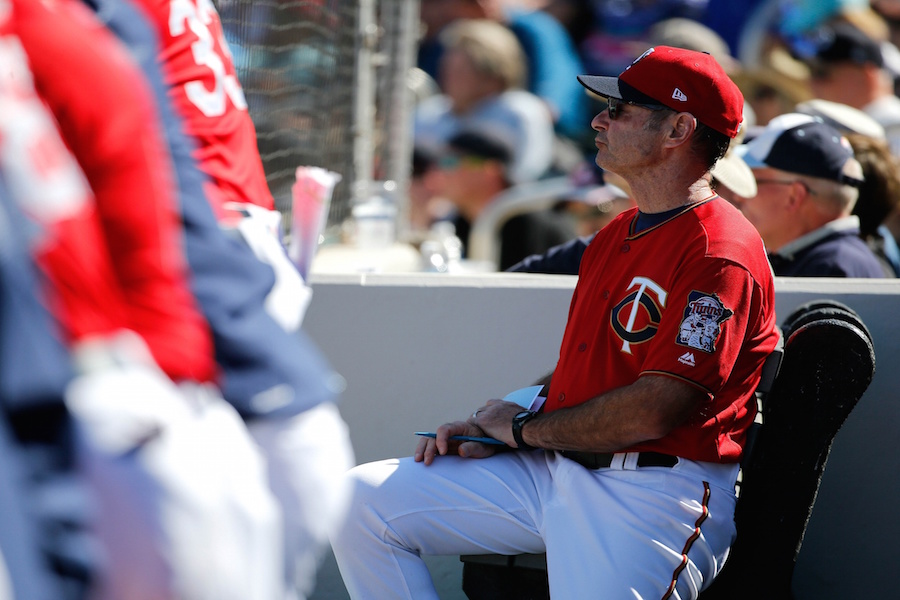 Many eyebrows were raised last summer when Minnesota's GM vacancy opened up along with an immediate, non-negotiable stipulation that Molitor would stay on. His team was on its way to an historically awful finish, and given his complete lack of managerial experience prior to 2015, the sophomore skipper didn't have much to fall back on other than a revered status within the organization. Ultimately, this wasn't a dealbreaker for Derek Falvey or Thad Levine, who are from all appearances fostering a healthy rapport with Molitor despite an inherent conflict of interest. The new top execs are expressing a big-picture view while downplaying the importance of quick answers and short-term thinking. Molitor, on the hot seat and under the microscope, can't afford such a mindset. He doesn't set the roster. The Twins skipper would probably rather not be tethered to a Rule 5 pick he needs to hide in the bullpen, nor deprived of ByungHo Park after watching the slugger check all the boxes over five weeks in Florida. All Molitor can do is work with what he's got, and in that respect, there have been some interesting storylines and they came into play on Monday. Throughout the Grapefruit League, Molitor was constantly toying with his lineups, telling reporters he was open to anything. But only in the final weekend, with the Twins running through their final rehearsals, did it become clear that his willingness to get weird was legit. The unorthodox lineup on Opening Day caught a lot of people off-guard, but it was the culmination of considerable tweaking and experimentation on Molitor's part. Robbie Grossman batting second? Byron Buxton in the three-hole? Joe Mauer hitting cleanup for the first time in 11 years?? (Go ahead and re-read that last one for dramatic effect.) It was sequencing that defied convention. But it's not like Molitor, chomping at the bit to start on a good note and put 2016 behind him, gave this any shortage of thought. And when you squint, you can envision how the gears were turning. Brian Dozier likes leading off, and feels comfortable there. Last year when he was most comfortable he was smashing like three homers a week. OK, not much thinking required there. But then, you plug in Grossman who led the team in on-base percentage last year, and had a .418 clip against lefties. OBP near the top of the order – how sabermetrical! Buxton third is unexpected but he was a monster last September and displayed equal confidence and aggressiveness this spring. Clearly Molitor believes the kid is ready to arrive, and made a statement to that effect on Opening Day. Mauer batting fourth certainly caused the most bewilderment. His lack of power production makes him an ill fit for the traditional cleanup mold, no doubt. But what does Molitor care about established practices? He's got nothing to lose. I suspect that the cerebral side of him sees a smart veteran player that can consistently keep rallies rolling even if he doesn't deliver the knockout punch. A selective hitter who can take pitches and handle the bat, optimal for orchestrating steals and hit-and-runs with Buxton aboard. An OBP specialist who can continually get on base ahead of Miguel Sano. On Opening Day, Molitor's quirky lineup was immediately put to the test. In the pivotal seventh inning of a 1-1 game, the Twins mounted a threat. With two runners in scoring position and one out, the Royals intentionally walked Brian Dozier, and here came Molitor's custom made run-scoring configuration with bases loaded. They scored runs. Grossman did what he does – drew a walk, and it gave the Twins a lead. Next up Buxton, with a chance to do serious damage. He struck out, one of three on the day, but I'll still take him in that spot right now. Mauer and Sano both followed with run-scoring walks of their own to build the lead before hits from Jason Castro and Jorge Polanco blew it open. It certainly wasn't Molitor's lineup construction that won the game. We can credit Ervin Santana and some very good, disciplined Twins at-bats (aided by a bit of wildness) for that. But there were those little moments that validated the manager's creative thinking, and it all added up to one big reward: Minnesota's first season-opening win in almost a decade, and the quickest possible disassociation from last years disastrous start. The satisfaction for Molitor and the Twins is fleeting – they've got a lot of work to do. But at least, with the schedule's customary open second day, they get a little extra time to soak it in.
 -
To the great consternation of uniform purists everywhere, the New Era brand logo will appear on MLB caps this regular season for the first time, a practice that started in last year's playoffs. In the eyes of some, this is yet another obnoxious step toward commercialization of the product on the field. But in the case of the Minnesota Twins, it is a rather fitting insignia as the franchise wades into unfamiliar territory with an overhauled baseball operations unit led by total outsiders.Understandably, there's a general feeling of dissatisfaction among the fanbase after 103 losses were followed by a relatively quiet offseason on the player acquisition front. A roster that stumbled to the worst finish in the history of Twins baseball is back, largely intact. A rotation that ranked as the league's worst, routinely erasing any meaningful chance at a victory before games were half-done, brings only one new face: rookie Adalberto Mejia, who will be making his first major-league start when he takes on the White Sox in Chicago this weekend. A bullpen that failed frequently to put out fires, often fanning the flames for a full scale inferno, opens as a classic Twins group in all the wrong ways. Contact-prone veterans in high-leverage roles (Brandon Kintzler, Matt Belisle, Craig Breslow), quantity over quality, general lack of upside. On the surface, it's easy to look at the construction of the Opening Day roster and feel dispirited as we lurch into Year 7 in this this almost exclusively non-competitive slog. It's a grand old game, to be sure, but the spectating appeal wanes as losses mount, especially when there's been so much lousy baseball contributing to that end. It comes as no surprise that the Twins are struggling to sell tickets, nor that polled fans are woefully pessimistic about the team's chances. Most would not be surprised to see another 0-9 start, or worse. Winning is the primary imperative right now, and I'm not just talking about placing notches on the left column. More importantly, they need to win back the hearts of casual followers and baseball enthusiasts. While a return to contention will ultimately drive this, the Twins can begin to move the needle simply by showing real progress. Therein lies their advantage. With expectations so staggeringly low, this is a tremendous opportunity for the club to pleasantly surprise. And while the minimal roster tweaking may not inspire confidence of a turnaround in the near future, foundational changes within the organization provide a central storyline that will define this season and give onlookers plenty of incentive to tune in and stay engaged. Open Minds At Sunday's final preseason presser, Paul Molitor acknowledged that his team hasn't offered much to cheer about but urged fans to be "open-minded," and it is advice that all should heed. No one can be blamed for carrying an ingrained skepticism about this team, or even a sense of apathy. Minnesota's run of difficulties and setbacks over the past several years have overshadowed any other franchise in the game. With the misery sinking to a new depth in 2016, there's no real feeling of upward momentum at this time. But the previous leadership is gone. The new top baseball bosses at 1 Twins Way are both external hires with no real ties to the organization. Derek Falvey, the fast-rising exec whose relative youth and inexperience are befitting the project he inherits, comes from a Cleveland operation that has become the crown jewel of the AL Central – not to mention a hotbed of mineable front office talent. Thad Levine, his hand-picked GM and right-hand man, was a longtime staple in a Texas braintrust that mastered the model of perpetual competitiveness, with seven first- or second-place finishes in the last eight years. Rob Antony, who made some impressive moves during his brief time at the helm as Terry Ryan's interim replacement, stays on and lends continuity from the old regime, but he is clearly No. 3 in the reconfigured hierarchy. There are systemic and pervasive issues afflicting this organization, and it may take time to lay proper groundwork for the sustainable contending models Falvey and Levine helped build elsewhere and envision here. In the words of team president Dave St. Peter, they're not "miracle men." No miracles required. Just sound and proactive decision-making, unobstructed by outdated mindsets or inhibiting loyalties. The new hires may have been selected specifically because they embody such characteristics. While we presently know little about the new executive duo, we do know two things: 1) This will be a front office that relies much more strongly upon analytics and modern philosophies, incorporating data and innovations while recognizing the blueprint for building a champion in today's MLB. 2) Any assessments being made by Falvey and Levine, whether regarding players or employees or frameworks in place, come with no shading from preconception or attachment. Complaints of the Twins lagging due to insularity or staleness are baseless going forward. It is clear that these guys are coming in with open minds, so fans should do the same. For those of us who enjoy following the nuts and bolts of roster management almost as much as the action on the field, this represents the most curiosity-piquing time for the Twins in decades. Better Days Ahead When you take away the emotion, and the raw freshness of 2016, there really is not much reason to expect the Twins to be terrible this year. They'll probably be bad, yes, nothing approaching the unwatchable mess that unfolded last summer. Betting lines have Minnesota pegged at 74.5 wins. Baseball Prospectus projects 78. These are objective measures for setting a predictive baseline on the team's outcome. Improving by 15 wins is about what we should anticipate. Of course, these same conventions also painted the Twins as a decent team last spring, when they wrapped up a similarly positive camp only to step into the regular season like a racehorse whose leg snapped as he ventured from the gate. No predictive tool can really account for the variables that conspired to turn an 83-win team into a 59-win disaster. But such tools also cannot account for unexpected breakthroughs and fortuitous turns. Such things have been in short supply for Minnesota lately, but how often in the marathon baseball schedule is a long losing spell countered by an ensuing hot streak? What happens to that 75-win baseline if Byron Buxton, more comfortable at the plate, turns into an offensive force and emerges as one of the game's premier impact players? What happens if the four veterans in the rotation replicate their 2014 performances, and Mejia proves a capable newcomer? What happens if the bullpen infusion starts coming to fruition and Tyler Jay is setting up JT Chargois in meaningful August games? Yes, this is a time of year where the mind tends to wander amid a teeming haze of promise and hope. Maybe that feels so much more convincing this spring because the bar is set so very low. Even if the Twins don't break an eight-year run of Opening Day losses on Monday afternoon, I do feel safe in saying they'll win their first game before April 15th. From there, it's all uphill. Click here to view the article
-
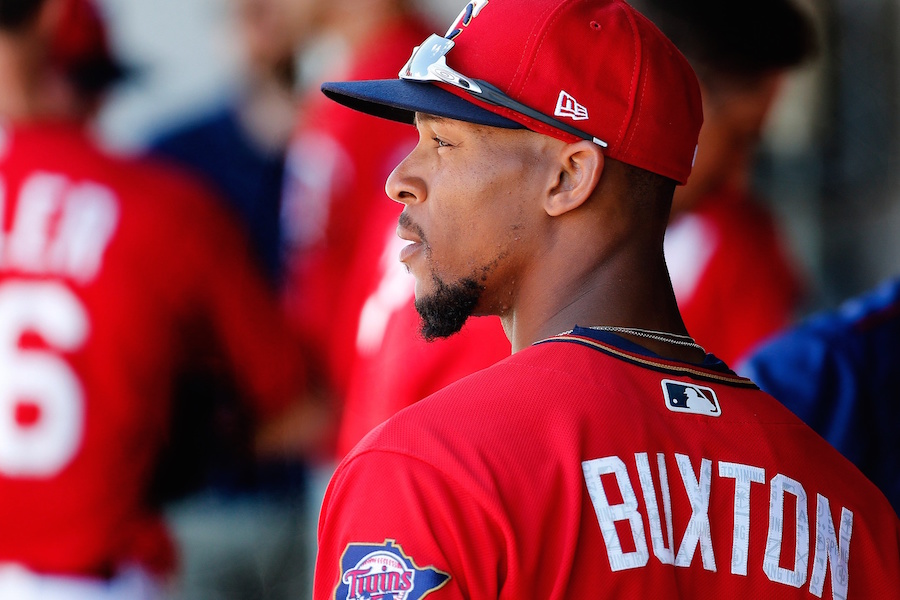 Understandably, there's a general feeling of dissatisfaction among the fanbase after 103 losses were followed by a relatively quiet offseason on the player acquisition front. A roster that stumbled to the worst finish in the history of Twins baseball is back, largely intact. A rotation that ranked as the league's worst, routinely erasing any meaningful chance at a victory before games were half-done, brings only one new face: rookie Adalberto Mejia, who will be making his first major-league start when he takes on the White Sox in Chicago this weekend. A bullpen that failed frequently to put out fires, often fanning the flames for a full scale inferno, opens as a classic Twins group in all the wrong ways. Contact-prone veterans in high-leverage roles (Brandon Kintzler, Matt Belisle, Craig Breslow), quantity over quality, general lack of upside. On the surface, it's easy to look at the construction of the Opening Day roster and feel dispirited as we lurch into Year 7 in this this almost exclusively non-competitive slog. It's a grand old game, to be sure, but the spectating appeal wanes as losses mount, especially when there's been so much lousy baseball contributing to that end. It comes as no surprise that the Twins are struggling to sell tickets, nor that polled fans are woefully pessimistic about the team's chances. Most would not be surprised to see another 0-9 start, or worse. Winning is the primary imperative right now, and I'm not just talking about placing notches on the left column. More importantly, they need to win back the hearts of casual followers and baseball enthusiasts. While a return to contention will ultimately drive this, the Twins can begin to move the needle simply by showing real progress. Therein lies their advantage. With expectations so staggeringly low, this is a tremendous opportunity for the club to pleasantly surprise. And while the minimal roster tweaking may not inspire confidence of a turnaround in the near future, foundational changes within the organization provide a central storyline that will define this season and give onlookers plenty of incentive to tune in and stay engaged. Open Minds At Sunday's final preseason presser, Paul Molitor acknowledged that his team hasn't offered much to cheer about but urged fans to be "open-minded," and it is advice that all should heed. No one can be blamed for carrying an ingrained skepticism about this team, or even a sense of apathy. Minnesota's run of difficulties and setbacks over the past several years have overshadowed any other franchise in the game. With the misery sinking to a new depth in 2016, there's no real feeling of upward momentum at this time. But the previous leadership is gone. The new top baseball bosses at 1 Twins Way are both external hires with no real ties to the organization. Derek Falvey, the fast-rising exec whose relative youth and inexperience are befitting the project he inherits, comes from a Cleveland operation that has become the crown jewel of the AL Central – not to mention a hotbed of mineable front office talent. Thad Levine, his hand-picked GM and right-hand man, was a longtime staple in a Texas braintrust that mastered the model of perpetual competitiveness, with seven first- or second-place finishes in the last eight years. Rob Antony, who made some impressive moves during his brief time at the helm as Terry Ryan's interim replacement, stays on and lends continuity from the old regime, but he is clearly No. 3 in the reconfigured hierarchy. There are systemic and pervasive issues afflicting this organization, and it may take time to lay proper groundwork for the sustainable contending models Falvey and Levine helped build elsewhere and envision here. In the words of team president Dave St. Peter, they're not "miracle men." No miracles required. Just sound and proactive decision-making, unobstructed by outdated mindsets or inhibiting loyalties. The new hires may have been selected specifically because they embody such characteristics. While we presently know little about the new executive duo, we do know two things: 1) This will be a front office that relies much more strongly upon analytics and modern philosophies, incorporating data and innovations while recognizing the blueprint for building a champion in today's MLB. 2) Any assessments being made by Falvey and Levine, whether regarding players or employees or frameworks in place, come with no shading from preconception or attachment. Complaints of the Twins lagging due to insularity or staleness are baseless going forward. It is clear that these guys are coming in with open minds, so fans should do the same. For those of us who enjoy following the nuts and bolts of roster management almost as much as the action on the field, this represents the most curiosity-piquing time for the Twins in decades. Better Days Ahead When you take away the emotion, and the raw freshness of 2016, there really is not much reason to expect the Twins to be terrible this year. They'll probably be bad, yes, nothing approaching the unwatchable mess that unfolded last summer. Betting lines have Minnesota pegged at 74.5 wins. Baseball Prospectus projects 78. These are objective measures for setting a predictive baseline on the team's outcome. Improving by 15 wins is about what we should anticipate. Of course, these same conventions also painted the Twins as a decent team last spring, when they wrapped up a similarly positive camp only to step into the regular season like a racehorse whose leg snapped as he ventured from the gate. No predictive tool can really account for the variables that conspired to turn an 83-win team into a 59-win disaster. But such tools also cannot account for unexpected breakthroughs and fortuitous turns. Such things have been in short supply for Minnesota lately, but how often in the marathon baseball schedule is a long losing spell countered by an ensuing hot streak? What happens to that 75-win baseline if Byron Buxton, more comfortable at the plate, turns into an offensive force and emerges as one of the game's premier impact players? What happens if the four veterans in the rotation replicate their 2014 performances, and Mejia proves a capable newcomer? What happens if the bullpen infusion starts coming to fruition and Tyler Jay is setting up JT Chargois in meaningful August games? Yes, this is a time of year where the mind tends to wander amid a teeming haze of promise and hope. Maybe that feels so much more convincing this spring because the bar is set so very low. Even if the Twins don't break an eight-year run of Opening Day losses on Monday afternoon, I do feel safe in saying they'll win their first game before April 15th. From there, it's all uphill.
 -
Article: Cool Heat: Shaggy Is A Closer In Waiting
Nick Nelson replied to Nick Nelson's topic in Twins Daily Front Page News
I LOL'd pretty hard -
Awesome stuff DB. The Butcher & the Boar rib tips used to be my favorite food at the yard, but in my opinion they've gotten worse with each passing year. My sense is that it's hard to match quality to volume with a dish like that. Buffalo chicken poutine?? Hmmmm
-
He has been given one full season, during which he was working in an unfamiliar role but still piled up the most strikeout of any Twins reliever since prime Joe Nathan. People lament the Twins not giving young guys chances, lament the lack of velocity and strikeouts, then are so quick to give up on a dude after a bit of turbulence. His ERA was around 3 in mid-June before an unprecedented workload began to catch up with him. And again, who is he holding back? Chargois can be called up at any time. They didn't lose anyone to keep him, whereas they would have lost him to keep someone else.
- 143 replies
-
- 6
-
-
- brandon kintzler
- matt belisle
- (and 3 more)
-
Article: The Age Of Analytics Arrives In Minnesota
Nick Nelson replied to Nick Nelson's topic in Twins Daily Front Page News
I'm about as low on Santana as possible, but this is a reasonable and well articulated defense of keeping him around, for the time being, -
You think relievers with Tonkin's minor-league numbers, and a 10 K/9 rate over a full big-league season, grow on trees? And you're telling me that if he were to end up somewhere else on waivers, turning into the quality setup man that both his AAA numbers and MLB K/BB suggest is possible, you're not going to be wringing your hands about the Twins letting him go because they favored Alex Wimmers? Problem is that he's not often going to get a three-run lead, especially considering that this is the Twins. More often he'll be trying to guard a one or two run lead, and in those situations a few grounders with eyes can erase that lead in a hurry, by no real fault of his own. You need K's in the 9th. Kintzler is a much better fit as a middle reliever, particularly since his efficiency makes him a good candidate to handle multiple frames.
- 143 replies
-
- 5
-
-
- brandon kintzler
- matt belisle
- (and 3 more)
-
I'm excited to see Tonkin let loose in a role that he's better suited for. Personally I believe that his struggles last year tied considerably to his being asked to throw tons of pitches while miscast as a long man. With Haley now occupying that role, Tonkin can unleash the fire in one-inning stints. If they were to let him go elsewhere and he succeeded in that capacity, we'd have looked back at it as a critical misstep.
- 143 replies
-
- 10
-
-
- brandon kintzler
- matt belisle
- (and 3 more)
-
... Finally For more than a decade, Minnesota Twins fans have been clamoring for a more analytical approach from the front office. Those cries have now been answered. The pivot from legendary scout Terry Ryan to relatively unknown young executive Derek Falvey at the head of baseball operations represents just about the starkest move in that direction possible, and we're already seeing evidence of it.During our Q&A session with him at the Winter Meltdown in January, Twins Director of Baseball Research Jack Goin opined that his organization ranked around the middle of the pack when it comes to optimizing analytics, though he candidly acknowledged they don't really hold a competitive advantage in that area at this time. Now, the Twins are positioned to move briskly toward gaining one. From Old School to New School While his department has certainly made significant strides in recent years, I doubt that Goin would deny that Minnesota was playing catch up for a while. As forward-thinking front offices across the league began to adopt cutting-edge tracking methods and advanced statistics, a Twins franchise run by Ryan and his largely stagnant braintrust remained decidedly traditional in its philosophies. The "if it ain't broke, don't fix it" approach lost any semblance of credibility in 2016 when a lengthy stretch of disappointment culminated with the worst season in Twins history. It was clear that things were broken. So, ownership made a move to fix them. A track record of insularity and deference to reputation was thrown on its side with the decision to hire Falvey. Young, energetic and little-known on the national scene, he was a blinding contrast to Ryan, the heralded scout whose very presence commanded respect, and whose affable gruffness was a defining characteristic. At a time where many fans understandably expected a minor change in course, and maybe even a simple switch to the next in command, Twins owner Jim Pohlad and president Dave St. Peter enacted a 180-degree turn. I give them a lot of credit for that. And everything I've seen thus far leads me to believe their choice was a savvy one. Riding the Wave Across the nation, analytics and technology are increasingly gaining influence – not just in baseball, but in the sports world at large. On Tuesday night, I had the privilege of co-hosting an event at The Pitch, an entrepreneurial hub in Northeast Minneapolis with a specific focus on innovative businesses operating in the field of sport. We were celebrating the launch of The Ultimate Guide to SportsTech in Minnesota, which I helped compile with TECHdotMN. The digital doc serves as a window to some of the state's brightest up-and-comers in this rapidly growing space. Back in January, I covered the MinneAnalytics SportCon event downtown, a first-of-its kind sports analytics conference bringing together experts and execs from various corners of the industry to discuss and dissect advancements within this evolving frontier. One of the featured panelists of the day? None other than Falvey, who had attained his title as Chief Baseball Officer only a few months earlier. A top Minnesota Twins executive speaking as an authority at a conference on analytics? Not so long ago, it would have seemed unthinkable, but it's a sign of the times at Target Field. And Falvey was very much at home on that stage. The Puzzle Solver Earlier this week, the New York Times published a profile on the new Twins CBO penned by Tyler Kepner. The piece discusses Falvey's career as a pitcher at Trinity College, wherein the right-hander relied upon his studious and strategic nature rather than superior talent to stay afloat. That's been the ongoing story for Falvey, who never played professional baseball and joined Cleveland's front office shortly after graduating Trinity with an economics degree. "He likes working puzzles and solving problems," as Kepner put it, and he very quickly ascended ranks with the Indians while capturing the attention and admiration of baseball lifers like Terry Francona. Despite his background, some might skeptically question what evidence exists of Falvey being a revolutionary figure in the scope of this franchise's story. He doesn't necessarily go around openly flaunting new-age stats and advanced metrics, after all. But there's no doubt he is well versed in such matters and, to be fair, constantly evangelizing those kinds of things right off the bat can be alienating in an organization with many lingering Ryan loyalists. And that's also not really the point. The definition of analytics is "information resulting from the systematic analysis of data or statistics." And if you pay any attention to what Falvey says, you're bound to hear him talk about the value of data-driven decisions based on versatile sets of available info. You could argue that we haven't necessarily seen those elements in action yet, as the realigned front office has taken a relatively hands-off approach with roster management in the early going. But if you look for them, signs of shifting philosophy are not difficult to find. The New Way Indications that Minnesota is taking a more modern approach to building a team and organization are, perhaps, somewhat sparse up to this point, but they are certainly noticeable. The aggressive pursuit and signing of Jason Castro, a renowned pitching framing specialist, was an early signal. And while some of the other acquisitions may bear marks of the old regime, the reasoning and outcomes have been different. While I was in Fort Myers, there was a belief among many covering camp that Ryan Vogelsong had an inside track for a rotation spot, especially after Trevor May went down. Such perceptions were, in my view, based on conditioning carried over from the previous era. Bringing the slow-tossing 39-year-old north based on little more than veteran influence would have been a trademark Ryan move, to be sure, but there's a different flavor now. Sure enough, the Vogelsong drama ended early when he was released last week, winnowing the fifth starter competition down to pitchers whose presence in the rotation can actually yield tangible long-term benefits. The signing and elevation of Craig Breslow might also look like a standard TR type maneuver, given his depth of MLB experience and previous ties to the Twins. At least, until you look deeper. Recognizing that he was probably reaching the end of his career unless he figured out a way to gain an edge, Breslow reinvented himself, purchasing an expensive tracking device and using it to alter his delivery in order to maximize the spin on his pitches. He and his agent sold his revival by selling the data, and that struck a chord with Falvey. "One of the things I think, as an industry, we can be a little bit better about is using evidence to help development," the CBO explained to Twins Daily earlier this month. "I think Craig was one who just went and did that on his own, which I commend him for." The favorable impression went both ways. After the southpaw threw in front of scouts from numerous teams during the winter, he received nearly a dozen offers, some of which included more money than Minnesota's $1.25 million plus incentives. But by all accounts, it was Falvey's acute understanding and appreciation of what Breslow was trying to do that tilted the scales. There are plenty of other subtle steps toward a more analytical approach in terms of the way Falvey, along with GM Thad Levine, have begun to piece things together. There has been an evident increase in hiring within Goin's research department, with job postings popping up a few times in the past few months. Jeff Pickler, added to the big-league coaching staff in December, has a background of implementing new data and software solutions. Paul Molitor named "the deciphering of information" as a distinct area Pickler can influence. So What? Now, of course, this is all fairly meaningless for the time being. Until we see real progress on the field, any supposed differences between the new leadership and the old are based only on rhetoric and platitudes. But as someone who has longed for the Twins to distance themselves from the outdated thinking and strictly observational analysis that embodied their outward mindset as an organization, I'm beyond refreshed by the things I have seen and heard from the individuals now running the show. I'll leave you with this quote from Falvey. It is his response to the final question I asked him in a one-on-one session outside the Twins clubhouse when I was in camp two weeks ago. "On the subject of analytics," I submitted, "is there anything that you see rising to the forefront that is maybe not being looked at too much right now?" It's a question that Terry Ryan – bless his heart – would have rolled his eyes at, and vaguely answered in some unsatisfying manner. Here's Falvey's full answer, verbatim, with no foresight that it was coming. "The evolution of StatCast is something that, of all 30 teams, I think there’s a few teams that have wrapped their hands around it a bit. I think there’s more teams that need to spend more time understanding it. But we have so much more information about how a player moves on the field, and where he’s positioned at the moment each pitch is thrown, how well he goes from first to third, efficiencies, things like that. And I think we’re going to have a better understanding of how to use that information to develop players’ individual skills. For instance an outfielder, routes to the ball and otherwise, we’re now going to have evidence and data that help us better understand how he moves around in the outfield, which will allow Jeff Pickler and our other minor league coaches along the way to better train at 2 o’clock in the afternoon to help put him in a better position at 7 o’clock. So that’s exciting. I’m excited about that particular tool impacting the game and each team is gonna be in a race to try to figure out who can do it best, that’s part of the deal. That’s the competition." Indeed, that is the competition. And the Twins, in my humble opinion, are now far better equipped for it. Click here to view the article
-
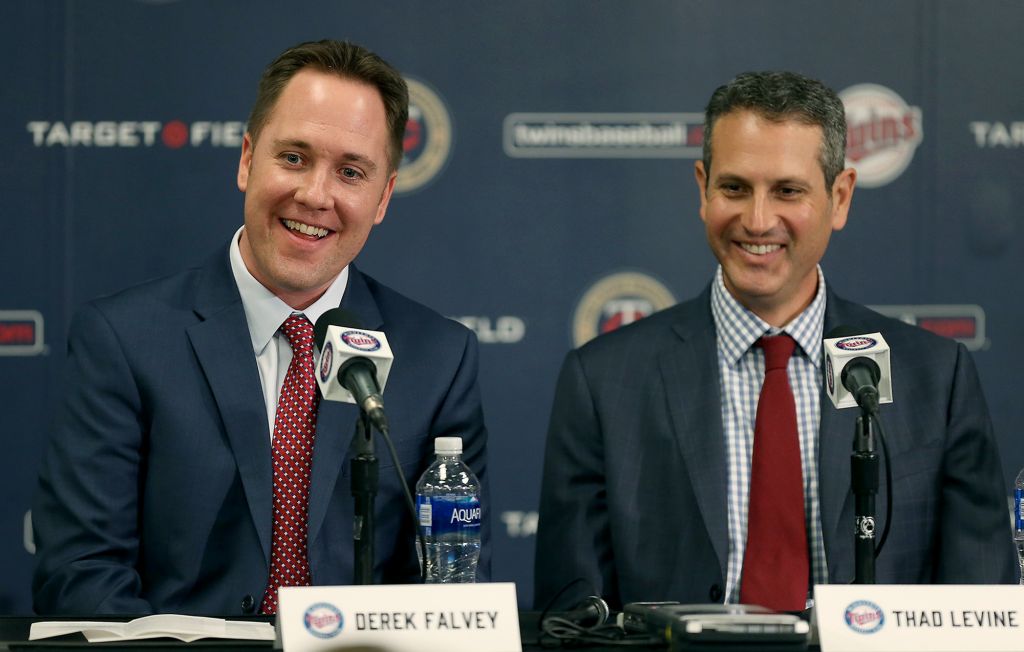 During our Q&A session with him at the Winter Meltdown in January, Twins Director of Baseball Research Jack Goin opined that his organization ranked around the middle of the pack when it comes to optimizing analytics, though he candidly acknowledged they don't really hold a competitive advantage in that area at this time. Now, the Twins are positioned to move briskly toward gaining one. From Old School to New School While his department has certainly made significant strides in recent years, I doubt that Goin would deny that Minnesota was playing catch up for a while. As forward-thinking front offices across the league began to adopt cutting-edge tracking methods and advanced statistics, a Twins franchise run by Ryan and his largely stagnant braintrust remained decidedly traditional in its philosophies. The "if it ain't broke, don't fix it" approach lost any semblance of credibility in 2016 when a lengthy stretch of disappointment culminated with the worst season in Twins history. It was clear that things were broken. So, ownership made a move to fix them. A track record of insularity and deference to reputation was thrown on its side with the decision to hire Falvey. Young, energetic and little-known on the national scene, he was a blinding contrast to Ryan, the heralded scout whose very presence commanded respect, and whose affable gruffness was a defining characteristic. At a time where many fans understandably expected a minor change in course, and maybe even a simple switch to the next in command, Twins owner Jim Pohlad and president Dave St. Peter enacted a 180-degree turn. I give them a lot of credit for that. And everything I've seen thus far leads me to believe their choice was a savvy one. Riding the Wave Across the nation, analytics and technology are increasingly gaining influence – not just in baseball, but in the sports world at large. On Tuesday night, I had the privilege of co-hosting an event at The Pitch, an entrepreneurial hub in Northeast Minneapolis with a specific focus on innovative businesses operating in the field of sport. We were celebrating the launch of The Ultimate Guide to SportsTech in Minnesota, which I helped compile with TECHdotMN. The digital doc serves as a window to some of the state's brightest up-and-comers in this rapidly growing space. Back in January, I covered the MinneAnalytics SportCon event downtown, a first-of-its kind sports analytics conference bringing together experts and execs from various corners of the industry to discuss and dissect advancements within this evolving frontier. One of the featured panelists of the day? None other than Falvey, who had attained his title as Chief Baseball Officer only a few months earlier. A top Minnesota Twins executive speaking as an authority at a conference on analytics? Not so long ago, it would have seemed unthinkable, but it's a sign of the times at Target Field. And Falvey was very much at home on that stage. The Puzzle Solver Earlier this week, the New York Times published a profile on the new Twins CBO penned by Tyler Kepner. The piece discusses Falvey's career as a pitcher at Trinity College, wherein the right-hander relied upon his studious and strategic nature rather than superior talent to stay afloat. That's been the ongoing story for Falvey, who never played professional baseball and joined Cleveland's front office shortly after graduating Trinity with an economics degree. "He likes working puzzles and solving problems," as Kepner put it, and he very quickly ascended ranks with the Indians while capturing the attention and admiration of baseball lifers like Terry Francona. Despite his background, some might skeptically question what evidence exists of Falvey being a revolutionary figure in the scope of this franchise's story. He doesn't necessarily go around openly flaunting new-age stats and advanced metrics, after all. But there's no doubt he is well versed in such matters and, to be fair, constantly evangelizing those kinds of things right off the bat can be alienating in an organization with many lingering Ryan loyalists. And that's also not really the point. The definition of analytics is "information resulting from the systematic analysis of data or statistics." And if you pay any attention to what Falvey says, you're bound to hear him talk about the value of data-driven decisions based on versatile sets of available info. You could argue that we haven't necessarily seen those elements in action yet, as the realigned front office has taken a relatively hands-off approach with roster management in the early going. But if you look for them, signs of shifting philosophy are not difficult to find. The New Way Indications that Minnesota is taking a more modern approach to building a team and organization are, perhaps, somewhat sparse up to this point, but they are certainly noticeable. The aggressive pursuit and signing of Jason Castro, a renowned pitching framing specialist, was an early signal. And while some of the other acquisitions may bear marks of the old regime, the reasoning and outcomes have been different. While I was in Fort Myers, there was a belief among many covering camp that Ryan Vogelsong had an inside track for a rotation spot, especially after Trevor May went down. Such perceptions were, in my view, based on conditioning carried over from the previous era. Bringing the slow-tossing 39-year-old north based on little more than veteran influence would have been a trademark Ryan move, to be sure, but there's a different flavor now. Sure enough, the Vogelsong drama ended early when he was released last week, winnowing the fifth starter competition down to pitchers whose presence in the rotation can actually yield tangible long-term benefits. The signing and elevation of Craig Breslow might also look like a standard TR type maneuver, given his depth of MLB experience and previous ties to the Twins. At least, until you look deeper. Recognizing that he was probably reaching the end of his career unless he figured out a way to gain an edge, Breslow reinvented himself, purchasing an expensive tracking device and using it to alter his delivery in order to maximize the spin on his pitches. He and his agent sold his revival by selling the data, and that struck a chord with Falvey. "One of the things I think, as an industry, we can be a little bit better about is using evidence to help development," the CBO explained to Twins Daily earlier this month. "I think Craig was one who just went and did that on his own, which I commend him for." The favorable impression went both ways. After the southpaw threw in front of scouts from numerous teams during the winter, he received nearly a dozen offers, some of which included more money than Minnesota's $1.25 million plus incentives. But by all accounts, it was Falvey's acute understanding and appreciation of what Breslow was trying to do that tilted the scales. There are plenty of other subtle steps toward a more analytical approach in terms of the way Falvey, along with GM Thad Levine, have begun to piece things together. There has been an evident increase in hiring within Goin's research department, with job postings popping up a few times in the past few months. Jeff Pickler, added to the big-league coaching staff in December, has a background of implementing new data and software solutions. Paul Molitor named "the deciphering of information" as a distinct area Pickler can influence. So What? Now, of course, this is all fairly meaningless for the time being. Until we see real progress on the field, any supposed differences between the new leadership and the old are based only on rhetoric and platitudes. But as someone who has longed for the Twins to distance themselves from the outdated thinking and strictly observational analysis that embodied their outward mindset as an organization, I'm beyond refreshed by the things I have seen and heard from the individuals now running the show. I'll leave you with this quote from Falvey. It is his response to the final question I asked him in a one-on-one session outside the Twins clubhouse when I was in camp two weeks ago. "On the subject of analytics," I submitted, "is there anything that you see rising to the forefront that is maybe not being looked at too much right now?" It's a question that Terry Ryan – bless his heart – would have rolled his eyes at, and vaguely answered in some unsatisfying manner. Here's Falvey's full answer, verbatim, with no foresight that it was coming. "The evolution of StatCast is something that, of all 30 teams, I think there’s a few teams that have wrapped their hands around it a bit. I think there’s more teams that need to spend more time understanding it. But we have so much more information about how a player moves on the field, and where he’s positioned at the moment each pitch is thrown, how well he goes from first to third, efficiencies, things like that. And I think we’re going to have a better understanding of how to use that information to develop players’ individual skills. For instance an outfielder, routes to the ball and otherwise, we’re now going to have evidence and data that help us better understand how he moves around in the outfield, which will allow Jeff Pickler and our other minor league coaches along the way to better train at 2 o’clock in the afternoon to help put him in a better position at 7 o’clock. So that’s exciting. I’m excited about that particular tool impacting the game and each team is gonna be in a race to try to figure out who can do it best, that’s part of the deal. That’s the competition." Indeed, that is the competition. And the Twins, in my humble opinion, are now far better equipped for it.
 -
Article: Central Intelligence: Chicago White Sox
Nick Nelson replied to Nick Nelson's topic in Twins Daily Front Page News
I'll admit that I was motivated to use the term so I could include that "fire Sale / fire sale" wordplay in the intro. I'll also admit that I have no shame.
