



ashbury
-
Posts
42,479 -
Joined
-
Last visited
-
Days Won
471
Content Type
Profiles
News
Minnesota Twins Videos
2026 Minnesota Twins Top Prospects Ranking
2022 Minnesota Twins Draft Picks
Minnesota Twins Free Agent & Trade Rumors, Notes, & Tidbits
Guides & Resources
2023 Minnesota Twins Draft Picks
The Minnesota Twins Players Project
2024 Minnesota Twins Draft Picks
2025 Minnesota Twins Draft Pick Tracker
2026 Minnesota Twins Draft Tracker: Picks & Bonuses
Forums
Blogs
Events
Store
Downloads
Gallery
Everything posted by ashbury
-
Front Page: Twins Acquire RHP Sam Dyson from Giants
ashbury replied to Seth Stohs's topic in Twins Daily Front Page News
"Until." Are we presupposing? Have you looked at his track record, such as his game log this year? He had a bad outing for SF on July 13, quite similar to what we've seen, with 3 runs given up without recording an out. Blew the save. Team lost. Then he came in to a game two days later and began a string of 7 appearances leading up to the trade, where he pitched an inning each time and gave up an aggregate of 2 hits and 1 walk, for an OPS-against of .212. (Yes, his BABIP was a little low. ) I mean, this is the nature of a relief pitcher. He gave us two truly terrible games. His record doesn't say this is who he is, though. He's a 31-year old athlete. I don't think it makes sense to throw out his entire recent body of work, and make extrapolations like "until" based on two games.- 206 replies
-
- 1
-

-
- sam dyson
- prelander berroa
- (and 2 more)
-
This current four-game losing streak has been hard on everyone's nerves. Hopefully the Twins figure out how to get back on track tonight.
- 54 replies
-
- 5
-
-
- nelson cruz
- max kepler
- (and 3 more)
-
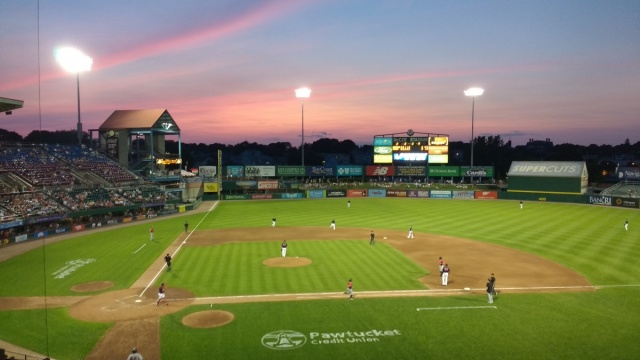
The eligibility question absolutely factors into the discussion, OTOH I think the FO is demonstrating that 40-man rostering issues won't always drive the decision on who gets a 25-man spot. Dobnak was awesome last night. His fastball got faster as the game went on, and he was hitting 95 in his final inning of work. (A scouting report I've seen places him much slower, so somebody in the organization may deserve kudos.) He gave up the one earned run legitimately, with a clean single and a double to start things off in the 6th, but he nearly worked out of it and the defense behind him did not do him any particular favors. Perennial ashbury-whipping-boy Jake Cave got a first inning single but promptly erased the good he had accomplished by trying to stretch it to a double. Two outs at the time, so maybe it's justifiable, but it was not close. Very crisply played game. They completed 5 innings with a 2-0 score in barely over an hour. Additional scoring ran the total to a very pleasant two and a half hours on a nice summer night with a spectacular sunset as a bonus. TD stalwart sampleSizeOfOne joined me for this night of baseball in Rhode Island.
- 12 replies
-
- 5
-
-
- nick gordon
- jhoan duran
- (and 3 more)
-
I was at the game in Pawtucket last night. I found the video of Gordon's HBP interesting because the PbP guy had the same first impression I did, that it hit him in the foot. At the game, I was speculating that he hurt his knee in trying to get out of the way. The video stops before he actually comes out of the game, and he was smiling, but it looked worse later on - they thought he might be able to stay in and he was trying to walk it off, but then the knee buckled under him. And then trying to walk back to the dugout after being removed, it seemed to buckle again. Hopefully it was just a painful thing, causing that, and not structural damage. I was totally unaware of the guy who came in for Gordon, Jake Hirabayashi. Just up from GCL after being drafted in 2019, kind of a strange choice for a AAA fill-in. He didn't do very well, especially on a challenging roller to 2B that looked very odd as he tried to come up with it and throw. I really would have liked to see Gordon get a chance at that'un. It's a difficult play that major leaguers do All The Time. More later, gotta run...
- 12 replies
-
- 3
-
-
- nick gordon
- jhoan duran
- (and 3 more)
-
Front Page: Get To Know: Miracle RHP Chris Vallimont
ashbury replied to Seth Stohs's topic in Twins Daily Front Page News
/winnar /thread -
Normal Twins Fan: SEASON OVER. Any Vikings Fan: hold my beer ...
-
8 was a nice touch. I missed a few innings of the next game too, as a result.
- 135 replies
-
- 3
-
-
- minnesota twins game recap
- twins vs marlins
- (and 2 more)
-
Yah, my first day on the new slo-pitch team went badly too.
- 135 replies
-
- 6
-
-
- minnesota twins game recap
- twins vs marlins
- (and 2 more)
-
Rocco gave the new guy a chance to make friends quickly by coming in and being all bad-ass - "just got off a plane, howyadoin, let's go win some games now, whaddayasay". It blew up in their faces. But not a season-killer, I'm pretty sure. Just, didn't work. I'd need a lot of evidence to convince me that the idea had no chance from the outset.
- 135 replies
-
- 7
-
-
- minnesota twins game recap
- twins vs marlins
- (and 2 more)
-
Front Page: Twins Acquire RHP Sam Dyson from Giants
ashbury replied to Seth Stohs's topic in Twins Daily Front Page News
To quote Michael Scott: -
A large percentage of the US population lives in a small band along the I-95 corridor - although a goodly portion of that is north of Philly - still in terms of human beings his flight crossed a lot of the nation.
- 135 replies
-
- 1
-
-
- minnesota twins game recap
- twins vs marlins
- (and 2 more)
-
I got out of the hobby when the discussion became predominantly about the speculative value of the player/card and not for the love of the game or the players. Sorry. Wanna buy some Topps/Fleer/Donruss from circa 1985? Didn't think so.
-
He's a National Leaguer - he pitched against the Marlins as recently as late May. Plus I'm sure there was a conversation with him before he took the mound. Plus he has a catcher to share the decision making with, in the moment. He's a veteran, and isn't asking the bullpen coach, "what do you call that wiggly pitch, again?" He's got to make his pitches. That's all. And when he doesn't: Get'em tomorrow.
- 135 replies
-
- 4
-
-
- minnesota twins game recap
- twins vs marlins
- (and 2 more)
-
Handling pressure well can come from multiple directions. I resist the easy interpretation that they are mentally weak, or whatever - with few exceptions, that kind of player gets weeded out well before they reach this stage, or at least coping mechanisms are taught. But I am concerned that the pitching strategy in the 9th or later is simply different from earlier in the game, and if our guys are going to the plate with the same strategy as in the earlier innings, they could be setting themselves up for failure. Which is why I named the batting coach, above, as needing to do some reflection. It's his job to find answers. WHY are the numbers like they are, is what he needs to get to the bottom of. It's SSS. It could be a fluke. But, like I said, worrisome.
- 135 replies
-
- 2
-
-
- minnesota twins game recap
- twins vs marlins
- (and 2 more)
-
I hadn't, but it's a good question, and unfortunately there's an illuminating answer available at baseball-reference.com https://www.baseball-reference.com/leagues/split.cgi?t=b&lg=MLB&year=2019#all_innng MLB-wide, extra inning OPS isn't too out of line with other innings. (The 9th is markedly low, and there are probably good reasons for that, going beyond the word "closer".) https://www.baseball-reference.com/teams/split.cgi?t=b&team=MIN&year=2019#all_innng Our 2019 Twins have an extra inning OPS of .602, going into today's game. The ninth inning isn't aces either, at .683. I needn't tell you, this is lower than any other inning. It's small sample size territory (106 PA in extras), but not comforting. We go from above average offense to below average, after eight. Time for some soul searching for our batters, and probably the batting coach as well.
- 135 replies
-
- 5
-
-
- minnesota twins game recap
- twins vs marlins
- (and 2 more)
-
Front Page: Twins Acquire RHP Sam Dyson from Giants
ashbury replied to Seth Stohs's topic in Twins Daily Front Page News
There is some irony in a move, intended to strengthen the bullpen, having an immediate result that leaves it in a highly weakened state heading into the next series.- 206 replies
-
- 2
-
-
- sam dyson
- prelander berroa
- (and 2 more)
-
Front Page: Twins Acquire RHP Sam Dyson from Giants
ashbury replied to Seth Stohs's topic in Twins Daily Front Page News
- 206 replies
-
- 1
-
-
- sam dyson
- prelander berroa
- (and 2 more)
-
Article: Series Preview: Reeling in the Fish
ashbury replied to Ted Schwerzler 's topic in Twins Daily Front Page News
Because it's a discussion forum? People post here because they have an opinion. If you have no interest in a particular subject, move to a different one. If you want to provide a counterpoint, do it respectfully. Don't snipe at other posters simply for their having an opinion. -
Quickly!? The rebuild began in earnest after the 2012 season. Eddie Rosario reached AAA in 2015, Max Kepler and Mitch Garver and Miguel Sano reached AAA in 2016, so that we could begin the anticipation countdown for 30-HR power soon. Things have taken FOREVER to change.
-
Front Page: Twins Acquire RHP Sam Dyson from Giants
ashbury replied to Seth Stohs's topic in Twins Daily Front Page News
Name all the games where the temperature at first pitch caused multiple players to say to each other, "I hate this place in April." -
Front Page: Twins Acquire RHP Sam Dyson from Giants
ashbury replied to Seth Stohs's topic in Twins Daily Front Page News
Moderator's Note:* I would like to ask the moderators to stop bickering. * Not really- 206 replies
-
- 3
-
-
- sam dyson
- prelander berroa
- (and 2 more)
-
Front Page: Twins Acquire RHP Sam Dyson from Giants
ashbury replied to Seth Stohs's topic in Twins Daily Front Page News
Of course. But we're not looking for one reason that covers all. And weather is a completely plausible reason for some, including MN.- 206 replies
-
- 3
-
-
- sam dyson
- prelander berroa
- (and 2 more)
-
Front Page: Twins Acquire RHP Sam Dyson from Giants
ashbury replied to Seth Stohs's topic in Twins Daily Front Page News
Just a thought, but if a guy born and raised in Florida signs with Los Angeles the first time he has control over his own destiny, then signs with Phoenix the next time he has control over his own destiny, then accepts a trade to Houston but says he would not have accepted a trade to Minnesota or Boston or New York, one working theory is that he doesn't enjoy cold Aprils or Octobers. He can't control road games, but it might not be complicated!- 206 replies
-
- 16
-
-
- sam dyson
- prelander berroa
- (and 2 more)
-
Front Page: 2019 MLB Trade Deadline Review
ashbury replied to Cooper Carlson's topic in Twins Daily Front Page News
"In Case Of Emergency, Break Glass." -
Front Page: Twins Acquire RHP Sam Dyson from Giants
ashbury replied to Seth Stohs's topic in Twins Daily Front Page News
Depends on your taste for control pitching versus power arms, I would think.- 206 replies
-
- 1
-
-
- sam dyson
- prelander berroa
- (and 2 more)
