Jump to content
Twins Daily
  • Create Account
  • Twins News & Analysis

    Which Young Twins Should Get an Extension This Winter?

    Jeremy Zoll says Minnesota will explore extensions. Here are six young players who could make sense for an early commitment.

    Cody Christie
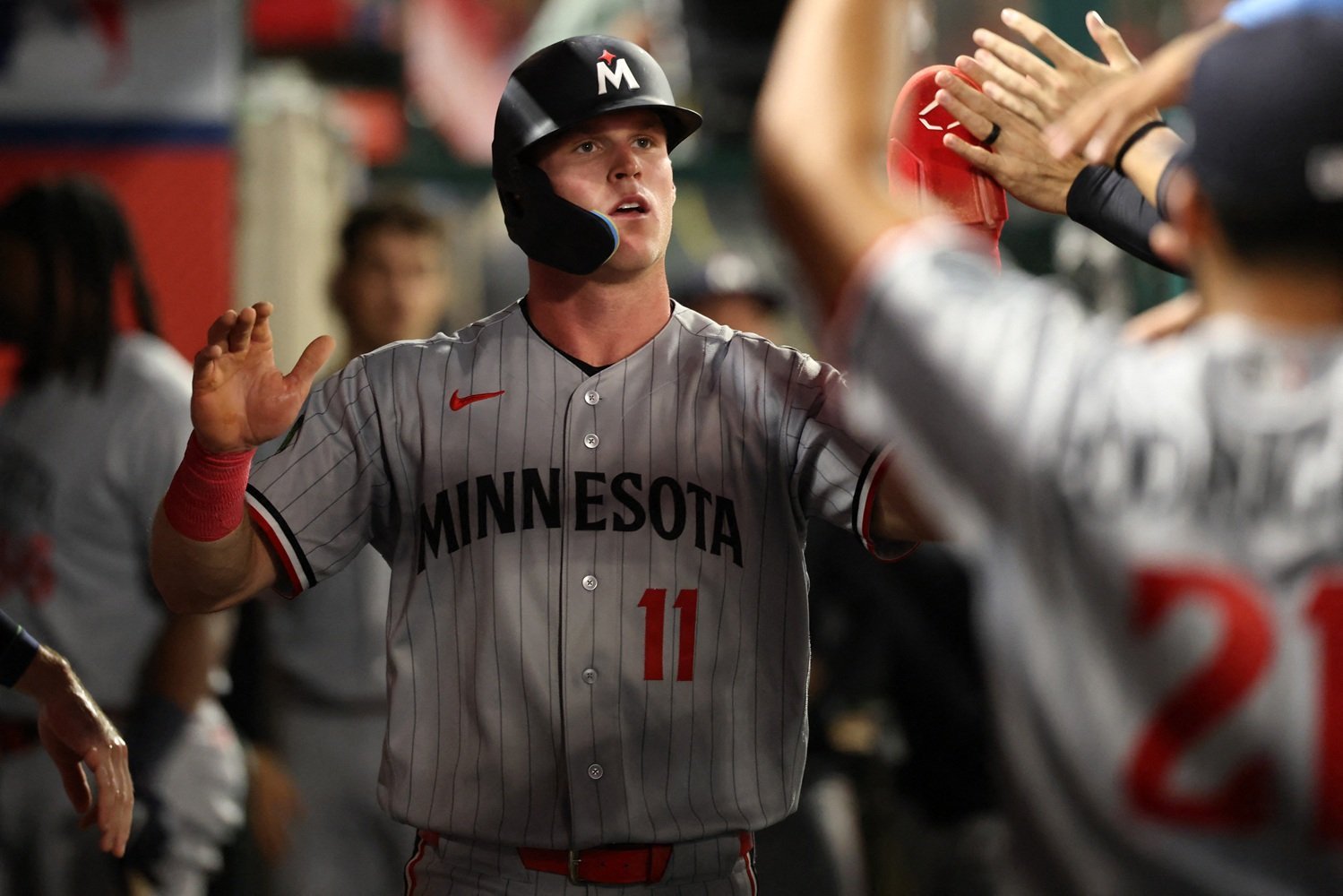
    Image courtesy of Kiyoshi Mio - IMAGN IMAGES via Reuters Connect

    Twins Video

    Major League Baseball has increasingly become a league where teams are willing to bet on young players before the players have had much opportunity to cash in on their potential.

    That trend has accelerated in recent years. Teams have handed out long-term contracts to players with very little service time, and some have even made commitments before a player reaches the majors. In 2026 alone, Colt Emerson, Cooper Pratt and Luis Lara signed extensions before making their MLB debuts, while several other highly regarded young players received significant guarantees almost immediately after reaching the majors.

    The strategy is relatively simple. A team gives a young player financial security early, while potentially buying out arbitration seasons and some free-agent years at a lower cost than the player might command after establishing himself as a star.

    The Minnesota Twins have watched that trend from the outside. This winter, they could finally decide to participate. General manager Jeremy Zoll said the organization plans to explore contract extensions with some of its young players during the offseason. Zoll also explained why he prefers to have those discussions away from the regular season.

    “As it pertains to extension conversations, that’s definitely something we’re going to explore this offseason and going forward,” said Zoll. “I know there have been in-season extensions around the league. Personally, I don’t think it serves anyone particularly well to potentially create a distraction for players during the season on those fronts. So those will be things we’ll engage in this offseason and we’ll see how that all shakes out.”

    That leaves a fascinating question for the Twins. Who exactly should they be talking to?

    The Twins Have Seen Both Sides of This Equation

    There is an obvious appeal to getting ahead of the market. If a player becomes a star, the price is going to increase dramatically. If the Twins can identify that player early enough, they could potentially secure several years of production at a manageable cost.

    But the organization also has plenty of evidence for why patience can be valuable. As explored earlier this year, the Twins had opportunities to make long-term commitments to players such as Royce Lewis, Jose Miranda and Matt Wallner when their perceived values were significantly higher.

    Lewis looked like an obvious extension candidate following his spectacular 2023 campaign. He hit .309/.372/.548 with 15 home runs and a 149 OPS+ in 58 games before starring in the postseason. Today, Lewis is coming off a disappointing 2026 season in which he hit .227/.287/.380 with a 86 OPS+ and 0.9 WAR.

    Miranda provides another cautionary tale. After posting a 114 OPS+ as a rookie in 2022, his production collapsed in 2023 (55 OPS+) before rebounding in 2024 (112 OPS+). There were flashes of his strong bat-to-ball skills, but he never put it all together at the big-league level. He was eventually out of the organization and played the entire season in the minors this year. 

    Wallner provides another example of the uncertainty surrounding young players. His power looked like something the Twins could build around, but injuries and strikeouts have prevented him from establishing himself as a consistent everyday player. In 2026, he hit just .167/.259/.292 with a 55 OPS+ in 34 games before being demoted to Triple-A for the remainder of the season. 

    The lesson isn't that extensions are bad. It is that the Twins need to be extremely selective about which players receive them. That brings us to this winter's potential candidates.

    Taj Bradley

    The case for an extension: Bradley might have the strongest argument among Minnesota's young pitchers. The 25-year-old right-hander made 31 starts and threw 178 1/3 innings in 2026, posting a 3.73 ERA, 3.82 FIP and 205 strikeouts. He produced 4.4 WAR while becoming one of the most important pieces of Minnesota's rotation. There is also a reason to believe the best is still ahead as he is only 25-years old. Bradley has already demonstrated the ability to miss bats while carrying a starter's workload, and he has three years remaining before free agency.

    The case against an extension: Pitching is inherently risky, particularly when discussing a multi-year commitment. Bradley has only one season at this level of workload and production. His 1.22 WHIP and 76 walks also show there is still room for improvement. The Twins would be buying into both his 2026 breakout and the expectation that he can sustain it.

    Luke Keaschall

    The case for an extension: Keaschall looks like exactly the type of player teams target with early extensions because he is under team control through 2031. At 23, he followed his impressive 2025 debut with a full 2026 season in which he hit .282/.374/.407 with 10 home runs, 20 stolen bases and 2.2 WAR. His 120 OPS+ shows his offensive production was comfortably above league average.  More importantly, Keaschall's game isn't dependent on one tool. He provides on-base ability, speed while still having room to develop more power. The Twins can plug him into the top of the lineup for the foreseeable future. 

    The case against an extension: His power profile is still somewhat uncertain. Ten home runs in 620 plate appearances isn't overwhelming, and his .407 slugging percentage leaves some questions about his long-term offensive upside. His defensive metrics also weren't particularly strong across his various positions in 2026. An extension would be betting that Keaschall's overall offensive profile continues to develop.

    Walker Jenkins

    The case for an extension: Jenkins may have the highest offensive ceiling of anyone on this list. The fifth overall pick in 2023 entered 2026 as one of baseball's top prospects and ultimately reached the majors at age 21. Before his promotion, Jenkins produced a .323/.417/.559 line with 14 home runs, 17 stolen bases and a 151 wRC+ across 73 minor-league games.

    His major-league debut was much more modest, as he hit .226/.293/.393 with a 91 OPS+ in 93 plate appearances. But that small sample doesn't erase the larger body of work. Jenkins remains one of the organization's most intriguing long-term building blocks.

    The case against an extension: This is precisely where the Lewis lesson comes into play. Jenkins has barely begun his major-league career. The Twins would be committing significant money based primarily on prospect pedigree and minor-league performance rather than established MLB production.

    There is also the Scott Boras factor. Jenkins' representation could make an early deal more difficult to negotiate, particularly if the player believes his eventual earning power could be enormous.

    Connor Prielipp

    The case for an extension: Prielipp's underlying numbers provide more optimism than his ERA. The left-hander finished 2026 with a 4.87 ERA but a 3.73 FIP over 125 2/3 innings. He struck out 128 hitters while allowing only 14 home runs. Considering his lengthy injury history, simply completing a full season while establishing himself as a major-league starter represents an important step forward. If the Twins believe his FIP is more representative of his future performance, there could be an opportunity to buy low before his results catch up with his underlying skills.

    The case against an extension: This is a much larger projection than Bradley. Prielipp still hasn't demonstrated sustained major-league success, and his 1.29 WHIP and 4.87 ERA leave plenty of uncertainty. He also has a history of significant injuries, which makes a long-term pitching commitment particularly complicated. There is a reasonable argument for simply letting Prielipp prove more before committing.

    Kaelen Culpepper

    The case for an extension: Culpepper's 2026 season provided two encouraging data points. First, he dominated Triple-A, hitting .271/.367/.478 with 14 home runs and 17 stolen bases in 74 games. Then he reached Minnesota and held his own, hitting .274/.328/.393 with a 102 OPS+ over 33 games. The combination of shortstop defense, athleticism and offensive upside makes Culpepper an intriguing long-term piece.

    The case against an extension: He has only 128 major-league plate appearances. That's not enough information to know whether his offensive production will translate over a full season. His 28 strikeouts against just six walks in 128 plate appearances also highlight areas that need improvement. Culpepper may be a player the Twins should monitor closely rather than rush to sign.

    Emmanuel Rodriguez

    The case for an extension: Rodriguez remains one of the organization's highest-upside offensive players. He reached the majors in September after another productive minor-league season (140 wRC+) and made his debut at 23. His combination of power, plate discipline and athleticism has made him one of the more intriguing prospects in the system for several years. The Twins would be buying before Rodriguez has had a chance to establish himself as a major-league hitter. That's exactly what makes an early extension potentially valuable.

    The case against an extension: There simply isn't enough MLB evidence yet. Rodriguez went 8-for-45 with two home runs and a .178/.229/.400 line during his brief major-league debut. That obviously isn't enough to make a judgment about his future, but it demonstrates how much uncertainty remains. There are also questions about whether his long-term defensive home will maximize his value. The offensive upside is exciting, but the Twins would be paying for potential.

    Where Should the Twins Start?

    There is no reason for Minnesota to hand out extensions simply because other teams are doing it. The purpose of an early extension is to identify a player before the market catches up and create cost certainty before arbitration and free agency become expensive. But the Lewis, Wallner, and Miranda examples demonstrate how quickly that calculation can change.

    Bradley has the strongest major-league track record of this group. Keaschall has the largest body of MLB work among the position players. Jenkins has perhaps the greatest long-term ceiling. Prielipp represents an intriguing buy-low opportunity, while Culpepper and Rodriguez remain higher-risk bets on potential.

    The Twins don't need to pick just one. But they also don't need to force the issue with all six. Zoll has made it clear that extensions will be part of the offseason conversation. Now the difficult part begins: deciding which young players have shown enough to justify turning potential future value into guaranteed money today.

    For a franchise trying to build its next competitive window, those decisions could be among the most important of the winter.


    What player or players should the Twins approach for contract extensions this winter? Leave a comment and start the discussion.

    Want more Twins in your Google results? Add us as a preferred source.

    Follow Twins Daily For Minnesota Twins News & Analysis

    Recent Twins Articles

    Recent Twins Videos


    User Feedback

    Recommended Comments


    Featured Comments

    5 minutes ago, TheLeviathan said:

    The NHL does it right.  Based on the age you're drafted the team is given a certain number of fixed years of control before restricted free agency happens.

    The MLBPA would be fools not to be pushing for something like that.

    I've been advocating for something like this.  I can't stand service time manipulation that teams pull - it's intentionally not putting your best team out on the field.   Going the age-based route for free agency eligibility eliminates many of the reasons teams pull this type of stuff.

    As long as free agency is tied to service time, there will be incentive for teams to manipulate it.  So instead of trying to craft rules around it (there will always be a loophole to exploit), just divorce it from free agency eligibility completely

    34 minutes ago, The Great Hambino said:

    I've been advocating for something like this.  I can't stand service time manipulation that teams pull - it's intentionally not putting your best team out on the field.   Going the age-based route for free agency eligibility eliminates many of the reasons teams pull this type of stuff.

    As long as free agency is tied to service time, there will be incentive for teams to manipulate it.  So instead of trying to craft rules around it (there will always be a loophole to exploit), just divorce it from free agency eligibility completely

    When the NHL adopted a salary cap it was one of the main components that they got in return.  As a result I imagine most long-time NHL players will get multiple FA deals in their career.  In MLB it seems like guys get one unless they have some ironman career ala Verlander.

    5 hours ago, NYCTK said:

    I can go sit behind home plate in one of the most expensive metro areas in the world for about $400 ($200 with bad weather) with white glove service and all you can eat and drink inclusive. It's a different product completely. 

    If you actually compare apples to apples, tickets haven't grown much faster than inflation. Which you know because I pointed this out last time you starting complaining about ticket prices and how overpaid the players are.

    It's good to be you.

    What does a Keaschall extension look like?

    Comps

    Lawrence Butler 7 years $65.5M

    Michael Harris II 8 years $72M

    Ke’Bryan Hayes 8 years $70M

    Myles Straw 5 years $25M

    Luis Lara 7 years $31M

    Somewhere between 5 and 9 million for 5-7 years.

    Keaschall is a Super 2 so he gets four rounds of arbitration. Guessing 2/5/9/16 for a total of $33M if they go year to year. I would offer Keaschall 6 years $45M with an $20M team option. 


    9 hours ago, The Great Hambino said:

    Why anyone would think that cutting salaries would lower ticket prices and not result in the owners simply pocketing more money is utterly baffling to me.  Ticket prices are set by what the public is willing to pay.  They cost what they cost because people are willing to pay it.  The ticket market and player labor market are separate markets.

    it's not that it will but that it should. somebody in some business somewhere in this United States needs to not live on greed

    MLB trade rumors arbitration estimates 
     

    Minnesota Twins (10)

    None of these are bad

    3 minutes ago, DJL44 said:


    MLB trade rumors arbitration estimates 
     

    Minnesota Twins (10)

    None of these are bad

    $5.1M for Royce could be bad if his 2027 is like 2026, but it could be a steal if he humbly makes adjustments.

    12 hours ago, mluebker said:

    I think they wait to see what’s in the new CBA before extending anyone. It has the potential to be a game-changer. 

    Prices are not going to get cheaper and the floor that the owners want will make have the teams spend nearly a half a billion combined. Yes, the larger markets may drop some, though not nearly that much. 

    I am of the opinion that small market teams never extend pitchers with injury history, so that eliminates Abel and Prielipp. If I am the GM, I am trying to lock up Lee, Keaschall and maybe Walker. Walker's nagging injuries and now a surgery, scare me a bit. 


    The Twins need cost certainty and to try and maximize every dollar spent. 

    14 hours ago, Jeff K said:

    Bradley and Keaschall are easy choices to offer extensions.  I think Kaelen Culpepper is the next best choice.

    Jenkins before Culpepper.  But both are deserving.

    I am definitely not extending Preliepp yet.  He needs to be healthy for 4 or 5 years first

    13 hours ago, DJL44 said:


    MLB trade rumors arbitration estimates 
     

    Minnesota Twins (10)

    None of these are bad

    Non-tender Banda for sure since we could turn around and sign him for $1MM, if not a MiLB contract. Ober and Kremer are tough calls. Can't have a legitimate contender with both in the rotation, and Ober certainly doesn't warrant $7MM as a reliever. 

    So much of the rest depends on the team's strategy.

    So much of direction needs to be based upon what owners expect from the new CBA. Internally, they know what they're willing to accept and what they're not. 

    We can speculate under the current CBA, and MLB Trade Rumors estimates are based upon 2024-2025 arbitration rather than considering potential impact from Skubal.

    Logan Gilbert $15MM
    Joe Ryan $9MM

    Lets get real, Gilbert is better than Ryan, it's not like night and day, though. Players like Ryan have nothing to lose by challenging arbitration. Yes I am aware Ryan has a $12MM mutual option, and I think both parties will accept it. It really seems to have worked out great, surprisingly. But players similar to Joe Ryan have no reason not to push the Skubal decision and push for a much higher salary in their final arbitration year.

    I'd consider buying out the arbitration years/extending slightly Walker Jenkins and Taj Bradley. Nobody else.

    Keaschall's bat has outperformed metrics, he's got a slow swing and limited power, and he's a DH.
    Prielipp could be Ricky Nolasco or Brandon Pfaadt (took years to produce)
    Rodriguez has a high likelihood of never being an MLB caliber player
    Culpepper has a questionable ceiling of being worth locking up.
     

    22 hours ago, TheLeviathan said:

    Young players in MLB deserve to hit free agency much, much sooner than they do.  I imagine this will be a major outcome of the CBA negotiations.

    Read: There's no way in hell any agent is signing off on anything in this uncertainty.

    It's certainly why I try. The price of players is about to skyrocket. I'm offering Bradley, Keaschell, Culpeper, Jenkins, and Houston long term deals. I think only Bradley and Keaschell might accept..

    I agree, it would be bad to accept offers given what's likely coming. 

    Taj & Jenkins are the guys I think would be most likely to get extensions even tho I don't believe twins would actually do it I mean why pay a guy real money when you can pay them minimal money for years this is a the pohlads were talking about family motto is "maximize the business " 

    On 10/2/2026 at 8:30 AM, killercarewoliva said:

    …can't any older people respond…?

    As an “older guy,”  how can I resist an appeal like that?

    First, if you’re a small market team like the Twins, charging more and more for tickets when you’re fielding a mediocre product doesn’t sound like a great strategy for filling the seats. A couple of sources say 2026 was the lowest average crowd size (excluding during COVID) this century, that on average they sold and distributed just 56% of available seats. So I don’t think the problem is the fans, I think it’s the product.

    Second, baseball used to be the working man’s game. When you price him and his family out of the stadium, you’re basically telling your (traditionally) most loyal fans they aren’t welcome anymore. Maybe on game days they need to put all unsold tickets on sale for five bucks each and try to fill the seats, instead of having nearly half the stadium empty at game time. Will the people who paid full price for seats in the same section be ticked off? Sure, just like the people who couldn’t afford to pay full price are ticked off when they find themselves priced out of an afternoon or evening at the ballpark. You pick who  you feel sorry for.

    Third, they’re trying to sell “the stadium experience” harder than they’re trying to sell watching the team. The stadium experience isn’t a reason to be out there in the stands regularly. It’s a one-off. When your friends ask if you’ve been to Target Field, you can say yes whether it was once or dozens of times. If you’re a fan and care about the pennant race, want to see how Kalen Culpepper looks at short, or you just enjoy sitting in the sun and keeping score, you aren’t coming out to evaluate the ballpark, you’re coming out to watch the team that plays in it.

    I spent my younger years going to Met Stadium with my dad, the Metrodome with my friends, and Memorial Stadium in Baltimore with my future wife. We’d go on a whim—“Let’s see the game tonight,” and show up at the box office to buy whatever tickets we could get. This generation of fans, unless they were born with a silver spoon in their mouth, isn’t going to know what that’s like, and nobody who could do anything about it seems to think that’s a problem.

    On 10/2/2026 at 11:13 AM, killercarewoliva said:

    I've run seven marathons and I can still run but afterwards I like to have a nap. might keep in mind I have followed the Minnesota twins since 1965. almost religiously because of the type of players that the Minnesota twins like to put on the field. I've only been there one time for 4 days in 1992. I am currently 74 years old but my lady would call me 74 years young. no smoking, no drinking, no illicit drugs. he can live better and look better in your old age. okay one more thought. just for fun 1987 world series. my wife knew somebody in the power business offering me a ticket to a world series game for $100. pricing was different then and I didn't take it. thought it was too much money in hindsight....

    there is a few others from you but I can't see them. I can only pick one. everything is gone except the one seven messages total.

    On 10/2/2026 at 11:23 AM, MackMan said:

    IDK. This dude is beyond me. If owners really wanted to make more money they would cut salaries and just put out a HS team where these kids would be happy to make $100k/year to lose and play baseball. Now the players union and league would have to step in and prevent this from happening because that would be a stain on baseball. 

    I tried mentioning to this guy yesterday that the way to get fans into the park is field a competitive team. A good team will cause fans to come to the game, which in turn the ownership team can raise the prices to tickets to what is needed to get people into the game. But on the other hand if a team is horrible, the ownership needs to cut ticket prices to get people in and hope those fans are going to buy from the merchandise and food. I would rather have a full stadium at 1/2 price tickets than a 1/2 full stadium from full priced tickets. The money is the same, but if people only pay $20/ticket versus $50-60/ticket, they may be more apt to spend on food and merchandise. 

    Yes and I think that if you cut the ticket prices in half the owner's not going to make as much money because the ticket prices are half what he was receiving before. not everyone can afford whatever the owner wants to charge. looking at some of the single ticket prices in the lower sections wherever stadium it is that could run about $100,000 to watch baseball. it kind of means that all the four major sports in this country only rich people can go to them and sit close to the field of play. if the reserve clause and the free agency had not been changed, we wouldn't have high ticket prices right now because players would be playing for a lot less and they would be fine with it because of their making half a million dollars a year. most occupations if you even qualify for them isn't going to have that high of salary. then the players that you wanted to see their whole entire career like the three I have mentioned here. Harmon killerbrew Tony Oliva and rod Carew that got traded. they'd all have still been there in a twins uniform. there would be no talk of who we can pay for to put a better position player at first base. That's telling ownership. we're willing to pay a whole lot more money to improve that position per ticket to each game. remember when the Chicago Cubs won the world series, their tickets went way up as if it's worth more it's not worth more well watching a game. I am unable to get to most of the replies that I receive. sometimes it's only one then they're gone.

    8 minutes ago, DJL44 said:

    If the Twins cut ticket prices in half they’ll be cheaper than Saints tickets.

    I mean the Saints are actually worth watching though...

    Its worth the price of admission (to watch the Saints) because these are players that got a taste of the big leagues and want back or are trying to get there for the first time. These games matter to the players, not as much the organization outside of a development standpoint. 

    18 minutes ago, MackMan said:

    I mean the Saints are actually worth watching though...

    Its worth the price of admission (to watch the Saints) because these are players that got a taste of the big leagues and want back or are trying to get there for the first time. These games matter to the players, not as much the organization outside of a development standpoint. 

    what do the saints cost? I've only been in Minneapolis for 4 days in 1992. I'm from the state of Virginia. very close to where the Minnesota twins started at in 1900 as the Washington senators. I think that AAA was Rochester New York and whenever Rochester was in Richmond, Virginia. I would go see them and you could sit behind home plate for $11. now there's a San Francisco Giants AA team there 3,000 miles apart and you can easily spend $40 for minor league baseball. I tried a close by lowest level of minor league ice hockey and the lowest price I could find in that 10,000 seat center was $83. most tickets were $100. the lowest form of minor league hockey and people waste their money doing that. at least that's how I see it. it's just absurd. nobody can say anything to make me think any different because I've seen the changes throughout my 74 years and nothing's even close to how it's been in the last 5 or 10 years. You're paying what you used to pay for national hockey League game for the lowest form of matter league hockey. oh yeah just for fun. I was a Minnesota North Stars fan also like the Vikings and you had a guy named Gump Worsley 49 years old. I think being a goaltender with no mask on the last hockey goalie to not wear a mask. he was kind of scraped up looking so they changed her name from the North Stars to the lone Stars for Dallas. my gosh


    Create an account or sign in to comment

    You need to be a member in order to leave a comment

    Create an account

    Sign up for a new account in our community. It's easy!

    Register a new account

    Sign in

    Already have an account? Sign in here.

    Sign In Now

×
×
  • Create New...