


Twins Video
The Minnesota Twins and Toronto Blue Jays don't make blockbuster trades every season, but when they do business together, the deals tend to reshape both organizations.
Over the last six years, the clubs have completed three significant trades involving established major leaguers and premium prospects. Each transaction reflected where the two franchises stood competitively at the time, but they also revealed something deeper. Toronto has repeatedly targeted Minnesota's ability to develop pitching, while the Twins have shown confidence in their ability to identify overlooked talent elsewhere.
That raises an interesting question. Does Toronto trust Minnesota's pitching pipeline even more than Twins fans do? Or should the Twins begin wondering if they're consistently giving away the best arm in these deals?
With another major trade now complete, it's worth revisiting how each swap has unfolded.
2021: José Berríos for Austin Martin and Simeon Woods Richardson
The first deal between the clubs remains one of the defining trades of the Derek Falvey era. Minnesota capitalized on a seller's market by moving José Berríos at the 2021 trade deadline, acquiring two highly ranked prospects (at the time) in Austin Martin and Simeon Woods Richardson.
Toronto immediately committed to Berríos, signing him to a long-term extension before he reached free agency. His tenure with the Blue Jays has featured stretches of ace-level production mixed with frustrating inconsistency with a 102 ERA+ and a 4.36 FIP. Earlier this season, he underwent Tommy John surgery and is out until 2027.
The Twins never received the star power many envisioned from their return. Martin's elite hit tool never translated into the impact bat scouts projected because the expected power never arrived with a 95 OPS+ and 0.7 rWAR over 243 games. Rather than becoming an everyday cornerstone, he has settled into the role of a versatile major league contributor capable of filling multiple positions.
Woods Richardson looked like he could become a dependable middle-of-the-rotation starter after flashing encouraging signs during parts of 2024 and 2025 (104 ERA+, 4.30 FIP). Everything unraveled during the opening months of 2026 as posted a -0.8 rWAR in 15 games. Minnesota designated him for assignment, Toronto claimed him, passed him through waivers, and returned him to the minor leagues.
Looking back, neither side produced the overwhelming winner many expected immediately after the trade.
2025: Louis Varland and Ty France for Kendry Rojas and Alan Roden
The second deadline deal has become much more complicated. Toronto aggressively pursued Louis Varland leading into the 2025 trade deadline. Minnesota had little reason to move a controllable pitcher capable of starting or relieving for several more seasons, making the eventual deal somewhat surprising.
The Twins believed they were acquiring two players ready to contribute. Alan Roden arrived with a reputation as one of Toronto's most polished hitting prospects and someone capable of stepping into the major league lineup immediately. Kendry Rojas offered something Minnesota covets: a young left-hander with swing-and-miss stuff and legitimate upside if he can stay healthy. Both players have helped the Twins during the 2026 season and still possess room for additional growth.
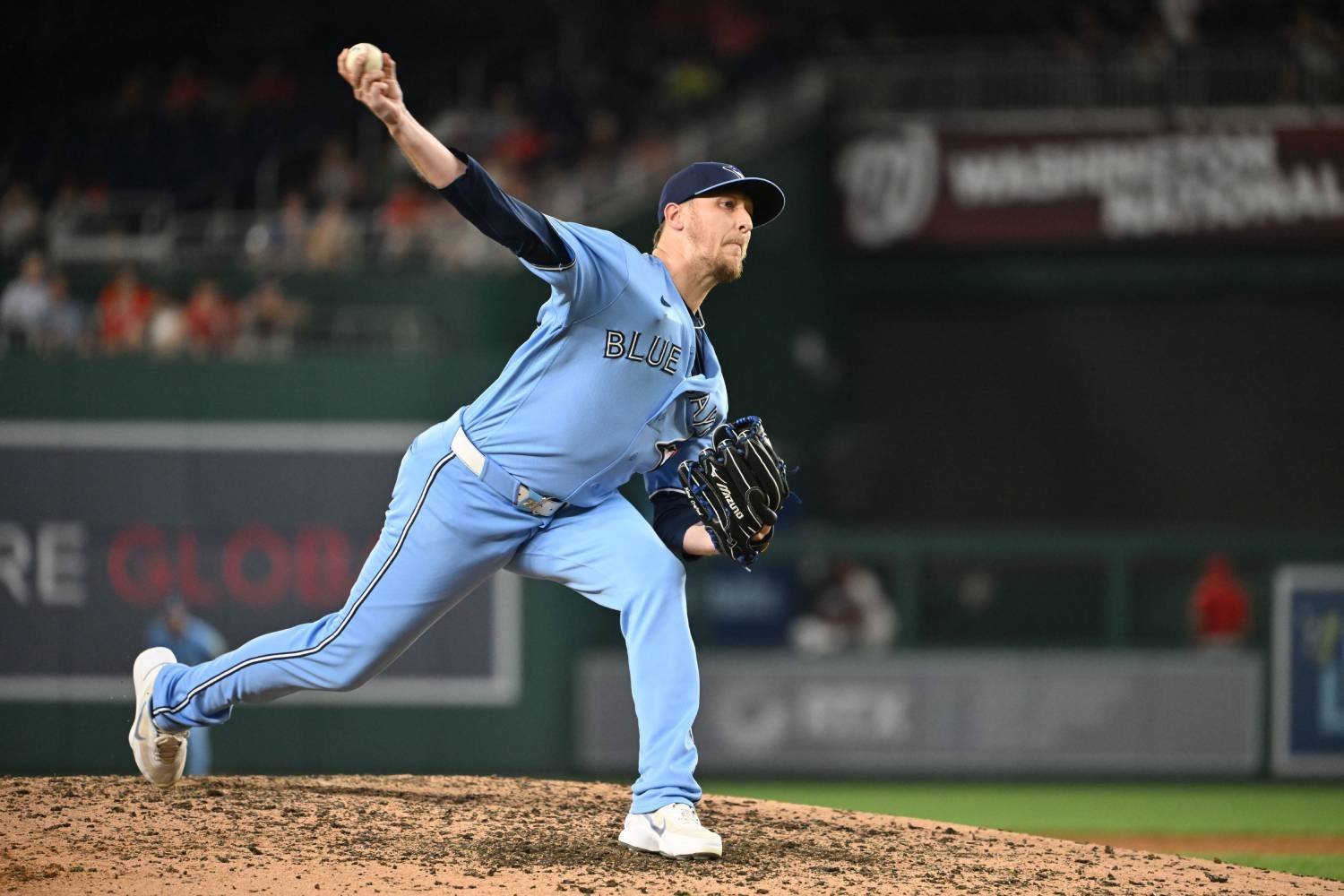
The problem is what happened on the other side. Varland hasn't simply become a quality reliever. He's emerged as arguably the best closer in the American League. Through 51 appearances, he has a 1.11 ERA with a 32.9 K% and 7.2 BB%. His electric fastball and fearless approach have allowed him to dominate late innings while anchoring Toronto's bullpen.
Minnesota may have questioned Varland's long-term upside. Toronto never hesitated to embrace him as a high-leverage weapon, and the results have been spectacular. Even if Roden and Rojas become productive major leaguers, watching Varland develop into one of baseball's premier relievers has made this trade increasingly difficult for Twins fans to accept.
2026: Jeff Hoffman and cash for Dasan Hill, John Klein, Dameury Pena, and international bonus pool money
This year's deadline continued the growing connection between the two front offices. Minnesota entered August needing bullpen help as much as any contender. Jeff Hoffman immediately addressed that weakness, giving the Twins a proven late-inning reliever who remains under team control through next season. That extra year of control dramatically increased Toronto's asking price.
The centerpiece of the package is Dasan Hill, one of the more fascinating pitching prospects in the organization. His future remains difficult to project. He has the raw ingredients to develop into a quality starting pitcher, but many evaluators believe his electric arsenal could eventually play even better in a high-leverage bullpen role. He also carries enough risk that he could never fully reach either ceiling.
John Klein profiles more as organizational pitching depth today, although Toronto's continued interest in Minnesota arms naturally invites curiosity about whether its player development group sees another level. Dameury Peña remains several years away but offers intriguing athleticism and offensive upside in the lower minors.
Unlike the previous two deals, this trade will require years before anyone can confidently judge the outcome.
A Fascinating Organizational Trend
Viewed together, these trades reveal a clear pattern. Toronto has repeatedly targeted pitchers developed by Minnesota. Berríos was already an established front-line starter, but the Blue Jays also prioritized Varland and have now added Hill and Klein to their system. Even Woods Richardson returned to the organization after Minnesota moved on.
That suggests Toronto's evaluators consistently value the pitching talent coming through the Twins organization. Minnesota, meanwhile, has often preferred acquiring position players or younger, projectable talent while trusting its own player development staff to maximize those returns.
Neither philosophy is inherently right or wrong. But the Varland trade serves as a reminder that sometimes the pitcher leaving Minnesota ultimately becomes the most valuable asset involved.
Perhaps Toronto truly sees something unique in Minnesota's pitching pipeline. Or perhaps these repeated deals simply reflect two organizations with similar competitive windows that value players differently.
The next time these front offices pick up the phone near the trade deadline, Twins fans may pay closer attention than ever. After all, history suggests Toronto usually knows exactly which Minnesota pitcher it wants.
What stands out about these three trades? Who has been the winner? Leave a comment and start the discussion.
Are you optimistic about the Twins right now?

Follow Twins Daily For Minnesota Twins News & Analysis



- Dman, nclahammer, weitz41 and 1 other
-
 4
4



Recommended Comments
Create an account or sign in to comment
You need to be a member in order to leave a comment
Create an account
Sign up for a new account in our community. It's easy!
Register a new accountSign in
Already have an account? Sign in here.
Sign In Now