


Twins Video
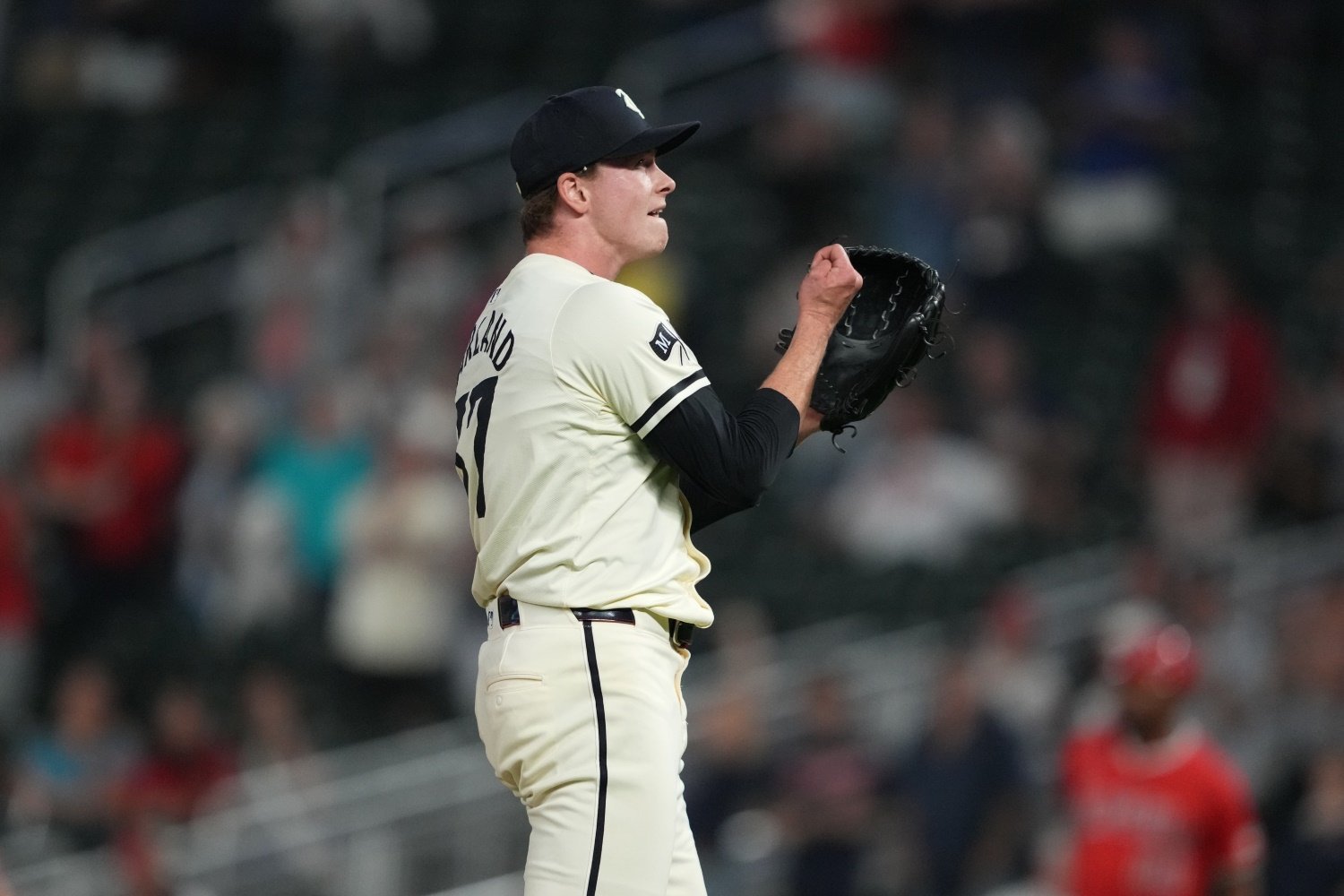
The Minnesota Twins have a long history of developing starting pitchers who eventually find their calling in the bullpen. Jhoan Durán, Griffin Jax, and Taylor Rogers are recent examples of former starters finding a late-inning role in the bullpen. As Louie Varland transitions to a relief role in 2025, the Twins have an opportunity to maximize his unique skill set. With Varland’s five-pitch arsenal and improved sinker performance in 2024, the question now becomes: what does the best version of Varland (the reliever) look like?
The Five-Pitch Foundation
In 2024, Varland leaned on a four-seam fastball/cutter combination, while modestly incorporating a sinker, curveball, and changeup. His fastball sat in the mid-90s, touching 97-98 mph in short stints, and his slider-ish cutter remained a reliable weapon. Meanwhile, the sinker emerged as a viable option, and his curve and changeup added depth to his repertoire.

Typically, relievers cut back on the number of pitches they utilize when shifting from starter to reliever. However, the Twins have seen Jax succeed using a five-pitch mix, a model that Varland can follow in his transition. Here’s how he can optimize his pitch mix against righties and lefties.
Against Right-Handed Hitters
Primary Weapon: Four-Seam Fastball (45%) Varland’s four-seam fastball is his bread and butter, especially in relief. It’s a pitch that plays well up in the zone, due to its rising action and increased velocity in shorter outings. In 2024, his four-seamer generated a 29.9 Whiff% and a 23.9 Put Away%. It was a pitch that he worked on extensively in St. Paul last year, as he focused on locating it in the upper third of the zone. Against righties, Varland should focus on elevating it to generate swings and misses or weak contact.
Secondary Weapon: Slider/Cutter (40%) The cutter remains Varland’s most trusted secondary pitch. It’s a pitch he can throw early in counts for weak contact or use to fool hitters who try to cheat on his four-seam fastball. Last season, he threw this pitch 36% of the time against righties, so there can be an expectation that he will increase the usage of the pitch in a relief role. The issue with it is, it doesn't miss bats quite the way you'd like to see from a breaking ball-shaped cutter. Its velocity is too close to that of his four-seamer to do that, but when he works as a starter, it also isn't hard enough to bully hitters the way a power cutter sometimes can. With an extra two ticks on it in relief, we have seen the offering play up nicely.
Situational Weapon: Curveball/Knuckle curve (10-15%) The knuckle curve gives Varland a weapon to induce soft contact. Last season against righties, it was a pitch with a 42.3 Whiff%, a .176 opponent SLG and a -3° launch angle. It’s a good weapon to keep in his back pocket, especially since it is over 12 mph slower than his four-seamer.
His sinker and changeup were used sparingly against right-handed hitters last season (45 pitches), so he will likely focus on his better pitches in a relief role. Pitchers don’t need as full a repertoire out of the bullpen because they won’t face a lineup multiple times. Varland can throw his best pitches with a higher velocity.
Against Left-Handed Hitters
Primary Weapon: Four Seamer (45-50%) His four-seamer has been a significant part of his arsenal, and Varland uses it even more regularly against lefties than righties. Last season, he held batters to a .254 xBA with a 20.0 Whiff% on the pitch. Elevated fastballs can effectively change eye levels, especially after a steady diet of his secondary offerings. The question here is whether he can get more consistent in his location of the heat. Too often, so far, his high-aimed fastballs end up in the middle of the zone instead.

Against righties, he can mitigate that problem by using the sinker a bit more, but sinkers to opposite-handed batters are nitro balls. Thus, barring the development of a truer, higher-riding cutter, he needs to hit his spots on the top rail of the zone with the fastball.
Secondary Weapon: Slider/Cutter (25-30%) Although the slider isn’t traditionally a lefty-killer, Varland’s ability to backfoot the pitch makes it a useful situational weapon. It’s not a primary offering, but can be mixed in when needed. Lefties destroyed this pitch last season with a .800 SLG, but his xSLG was over 200 points lower, so there is room for improvement. Most importantly, those numbers came while working as a starter; the pitch can ramp up and be much more potent if he's working in short bursts. Out of his secondary pitches, his slider/cutter had the highest Whiff% and Put Away% versus lefty batsmen.
Situational Weapon: Curveball/Knuckle Curve (15-20%) Varland’s curveball is the pitch that keeps lefties honest. It showed flashes of effectiveness in 2024, with a 21.3 Whiff% to help neutralize left-handed power. He should focus on throwing it down and in to draw swings over the top. He throws it in the same location in the zone as his cutter, but the 6-mph difference in the pitches can lead to more swings and misses.
Last season, Varland used his changeup nearly 17% of the time against lefties, but the pitch was ineffective at generating swings and misses. He had a 6.7 Whiff% and a 6.3 Put Away% with his changeup. Varland can use the pitch sparingly against lefties, but the rest of his repertoire will hold up better when he needs strikeouts in a relief role.
Why This Mix Works
Moving to the bullpen is about leveraging Varland’s strengths while simplifying his approach. The four-seam fastball and cutter remain his bread-and-butter pitches against righties and lefties, while the curveball can keep batters off-balance. He seems likely to ditch some of his less-used pitches (perhaps the sinker, if the four-seam fastball command comes along as hoped), while keeping his changeup to use sparingly. By focusing on matchups and situations, Varland can become a versatile, high-leverage weapon for the Twins.
Combined with a well-thought-out pitch mix, the added velocity in relief could transform Varland into a dominant late-inning option. If the Twins can hone this approach, they might unlock the best version of Varland yet: a bullpen ace with the tools to dominate any hitter in any situation.
What pitch mix makes the most sense for Varland? How should he approach righties and lefties? Leave a comment and start the discussion.
Are you optimistic about the Twins right now?

Follow Twins Daily For Minnesota Twins News & Analysis



- Doctor Gast, DocBauer, gman and 3 others
-
 6
6


Recommended Comments
Create an account or sign in to comment
You need to be a member in order to leave a comment
Create an account
Sign up for a new account in our community. It's easy!
Register a new accountSign in
Already have an account? Sign in here.
Sign In Now