


Twins Video
6) Eduardo Escobar, shortstop
Personally, I feel like the time to extend Escobar has passed. There are a couple of reasons for that. When he narrowly missed the Super 2 deadline after the 2014 season, the Twins could have given him an extra bump in 2015 in return for a guarantee in 2016. Even as a utility-type player, Escobar brought lots of value to the roster. Amid rumors that the Twins were dangling him for a relief pitcher though, it shouldn’t be surprising he wasn’t extended.
Secondly, while negotiating his salary as a first-time arbitration-eligible player, the Twins could have rewarded their new shortstop by guaranteeing his second year. Basically a “You’re our shortstop, we believe in you, now stop looking over your shoulder” contract. Essentially the same type of ill-fated deal the team made with Brendan Harris a few years back. A contract, too, that doesn’t damage your payroll even if Escobar returns to a utility-role.
Escobar has earned the starting shortstop position to begin 2016. It’s hard to see Jorge Polanco wrestling it away from him as many believe he’s not equipped to handle that position long-term. So who in the organization is? Defensively Engelb Vielma is, but his bat has a ways to go and he hasn’t even played at AA yet. Nick Gordon is a better all-around player, but he’s only likely to make his Fort Myers debut this year.
The reality is that the Twins, for the first time in a long time, have middle infield options. Brian Dozier is one of the best second baseman in the American League. Polanco is a legitimate prospect. Vielma and Gordon are down the line and Jermaine Palacios and bonus-baby Wander Javier are even further down the line. Oh, Danny Santana, despite the “position change” this offseason, and Eduardo Nunez could still remain options as well.
There are some big-sticker prices on the arbitration years of bought-out shortstops, but then there’s also the deal the Royals signed Alcides Escobar to. A deal that agreed to pay the shortstop $3 million in EACH of his three arbitration years. If there’s a deal like that out there to be had, that’s one worth considering.
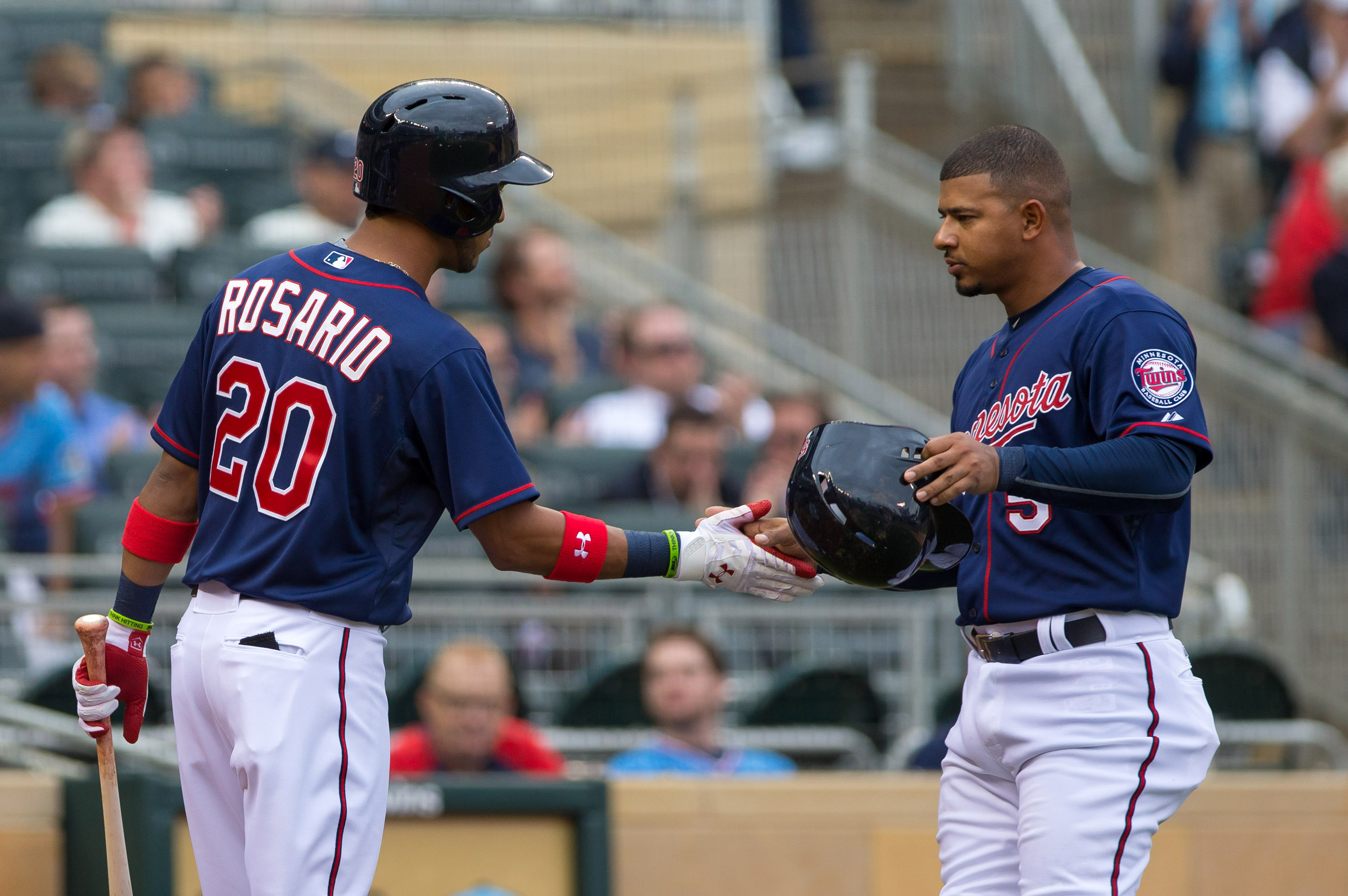
5) Eddie Rosario, outfielder
The unlikelihood of signing a player with less than one year of service was discussed during the potential Buxton extension. Rosario falls into that category.
But there is a deal that was signed a handful of years ago that could provide a nice framework for a Rosario deal; A deal signed by then-Pirates outfielder Jose Tabata. Yes, Tabata turned out to be a bust, but the investment for six years of Tabata ($15 million) pales in comparison to the nearly $25 million invested in Byung Ho Park, a complete unknown.
There is going to be pretty significant difference between Tabata and Rosario, though, and that is because Rosario is in line to be a Super 2 player after the 2017 season. So while the framework remains the same, an extra year of arbitration, inflation over the 2011 Tabata deal and some incentives that will reward Rosario if he continues to remain a regular will increase the value of this deal.
At a minimum, Rosario will always provide defensive value and has a floor of a fourth outfielder. The initial contract would pay him, at worst, as a fourth outfielder.
The proposal:
2016 (0+): $540,000
2017 (1+): $760,000
2018 (Super 2): $2 million
2019 (3+): $3.5 million
2020 (4+): $4.5 million
2021 (5+): $5.7 million
2022 (6+): $7 million option or $.5 million buyout
2023 (7+): $8 million option or $.5 million buyout
2024 (8+): $9 million option or $.5 million buyout
All told, the guarantee is over six years at the price of $17.5 million. Some other caveats: Starting in 2018, Rosario will earn an additional $500,000 in any year he exceeds 550 plate appearances. His salary for each ensuing year will also increase by $500,000 and his buyouts will increase by $100,000. An additional security for Rosario is that starting with that 2019 season, each time he exceeds the aforementioned 550 plate appearances, he can opt out of the remainder of his contract.
Rosario’s maximum contract, if he reached 550 plate appearances each year and never opted out, would look as follows:
2016 (0+): $540,000
2017 (1+): $760,000
2018 (Super 2): $2.5 million
2019 (3+): $4.5 million
2020 (4+): $6 million
2021 (5+): $7.7 million
2022 (6+): $9.5 million option or $1 million buyout
2023 (7+): $11 million option or $1.1 million buyout
2024 (8+): $12.5 million option or $1.2 million buyout
The contract becomes a six year, $23 million deal with a maximum value of $55 million over eight years, a fair-market contract for an everyday, but not an All-Star, outfielder.
What do you think? #ExtendEitherEddie?





Recommended Comments
Create an account or sign in to comment
You need to be a member in order to leave a comment
Create an account
Sign up for a new account in our community. It's easy!
Register a new accountSign in
Already have an account? Sign in here.
Sign In Now