


Twins Video
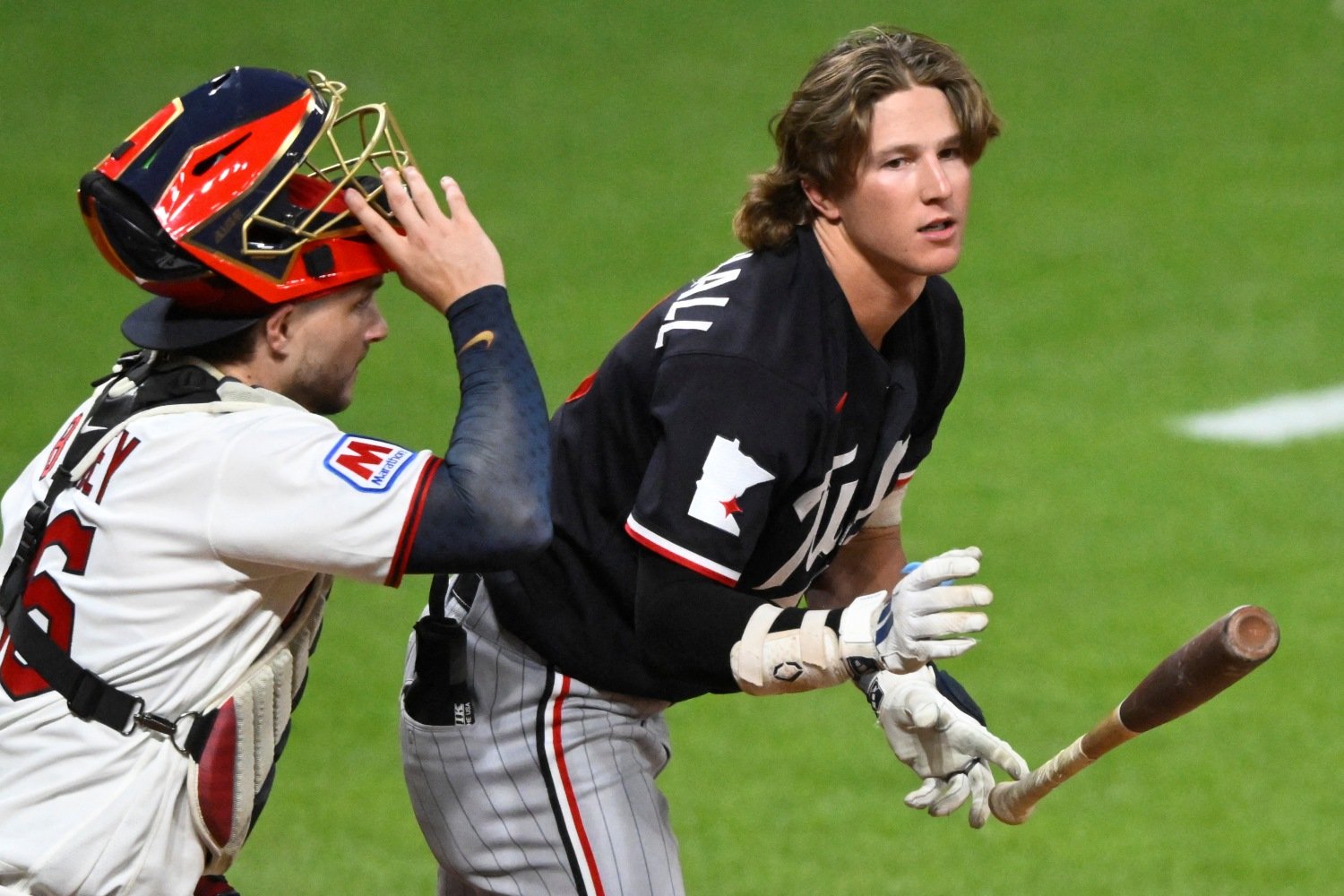
Getting hit by a pitch isn't something a hitter wants to become known for. For Luke Keaschall, however, it's becoming an important part of the package. The Twins' second-year player has spent much of his baseball career finding his way onto first base the hard way. That trend has continued in the majors, where Keaschall recently set a new franchise record by being hit by his 22nd pitch of the season.
That record comes with an interesting backstory, because getting hit by a pitch has already cost Keaschall significant time in the majors. During his first week in the big leagues in 2025, Keaschall was hit by an 87-MPH pitch from Kyle Hendricks. The collision fractured his arm and forced him to miss roughly three months. It would have been understandable if that experience changed the way he approached the inside half of the plate.
It didn't. Instead, Keaschall has continued doing what he's done throughout his baseball career. Now, he's the Twins' single-season leader in getting plunked.
It's Part of His Game
Keaschall's 22nd hit-by-pitch of the season came Friday in Anaheim, moving him past Willi Castro's franchise record of 21, set in 2024. Rather than treating the milestone as something particularly strange, Keaschall views it as another consequence of his approach at the plate.
"It's part of my game,” Keaschall told reporters. “I've got short levers, so I have to stand on the plate a little closer than other guys to be able to cover [outside pitches]. It's just part of it."
That explanation gets to the heart of why Keaschall has been hit so often. His body positioning and swing mechanics require him to crowd the plate. Standing closer gives him a better chance to reach pitches on the outer portion of the strike zone, but it also leaves him less room to avoid an errant pitch aimed for the inner half.
There is a tradeoff. Keaschall appears more than willing to accept it. The numbers show this isn't some new development, though. During his sophomore season at the University of San Francisco, Keaschall was hit 19 times in only 57 games. He added another 13 plunkings in 55 games as a junior at Arizona State. Then, in 2024, he was plunked 18 times in 103 minor-league games. This has been following Keaschall around for years.
"I've just gotten hit a lot my whole career," Keaschall said. "I land a little more closed with my front foot striding toward the plate, so I don't really bail on pitches like a lot of guys who land more open. I've just always got hit a lot."
That's the big thing. Keaschall actually doesn't stand much closer to the plate than an average batter, but with a deep crouch, a high leg kick and a stride that takes him from open in his stance to more closed, he moves toward the plate until very late in his hitting actions. Many hitters are neutral or moving away from the plate earlier than Keaschall is.
The Injury Didn't Change Him
There's some irony in Keaschall breaking a Twins record for hit-by-pitches after a hit-by-pitch nearly derailed his rookie season. The Hendricks pitch was not some minor inconvenience. Keaschall suffered a fractured arm and spent approximately three months away from the Twins.
Yet, when he returned, he didn't suddenly start backing away from the plate. That says something about how ingrained this approach has become. Keaschall was already comfortable operating close to the strike zone's edges. His willingness to stand near the plate is connected to the rest of his offensive profile. He wants to control the zone, get on base and put pressure on the defense.
Getting hit is simply one way that happens. Protective equipment reduces the physical toll, but it doesn't eliminate the risk. There's still a certain amount of courage involved in repeatedly standing in the same spot after learning firsthand that a pitch can end your season. Not only is Keaschall doing so, but he still moves into the ball the same (arguably ill-advised) way that he did 17 months ago. Here's a side-by-side look at the moment he was hit by the pitch that broke his arm, and at a pitch that hit him against the Angels over the weekend in almost the same spot. The pitch on the right was 10 MPH harder. The pad he now wears spared him another major injury; he's chosen to wear that instead of adjusting the way he hits.

When a hitter consistently crowds the plate, the margin for error becomes smaller. Keaschall's style puts him in that territory. Chuck Knoblauch remains the all-time Twins leader with 74 hit-by-pitches during his seven seasons with the organization. César Tovar ranks second with 68. Keaschall has a long way to go before approaching those career totals, but the single-season record is already his. Considering his history, it might not be his last record involving a baseball hitting him. Considering the nature of this approach, though, last year's might also not be the only time it costs him dearly.
The July Transformation
The most interesting part of Keaschall's 2026 hit-by-pitch total might not be the final number. It's when the plunkings started piling up. Keaschall was hit by only five pitches during his first 81 games of the season. Since July 1, however, he's been a completely different kind of target. Over the 64 games since that date, Keaschall has been hit 17 times, the most in the majors during that span. That's more than three times as many hit-by-pitches as he accumulated during the first half of the season.
That's turned an interesting part of his offensive profile into a legitimate weapon. As Keaschall has settled into the major leagues, he's increasingly looked comfortable at the plate. His ability to get on base doesn't rely solely on getting hits. He can draw walks, use his speed, or (apparently) allow pitchers to provide him with a free trip to first base.
That's valuable for any hitter. It's especially valuable for someone who could find himself near the top of Minnesota's lineup on a regular basis.
What the Hit-By-Pitches Add to His Offensive Profile
Obviously, getting on base is good, as long as it doesn't come at the expense of one's bone integrity. Being hit by pitches is an efficient way to pad OBP, too, because rather than requiring one to work a walk by taking four pitches outside the zone, it puts one on base immediately. If you're willing to get hit, you can afford to be a bit more aggressive at the plate (and, hopefully, get more hits, which are still more valuable than walks or being hit) without missing out on chances to reach via pitchers being wild.
There is also a secondary benefit. Pitchers know Keaschall is willing to stand close to the plate. That can make the inside portion of the strike zone an important part of every matchup. If pitchers miss their spots, Keaschall can reach base. If they move too far away from the inside edge, he has the plate coverage to handle pitches farther away.
The Art of Getting Hit
There aren't many players who can say getting hit by a pitch is an intentional part of their offensive identity. Keaschall isn't trying to get hit. He's simply unwilling to move away from the plate just because he might get hit. The 22 hit-by-pitches are a byproduct of his approach, his body positioning and his desire to cover the entire strike zone. After already suffering a serious injury from one of those pitches, Keaschall has shown no interest in changing what has made him successful. He's gambling with his body. As long as he wears the right equipment and wins the bets he's making, though, it's a worthwhile tradeoff.
Now, he's in the Twins record book because of it. As Minnesota looks toward the future, Keaschall could become a fixture near the top of the lineup. His ability to reach base, run, battle through at-bats and create pressure on opposing pitchers gives him an intriguing offensive foundation. If he keeps standing close to the plate, there will probably be plenty more free trips to first base along the way.
What does this unique skill add to Keaschall's offensive profile? Leave a comment and start the discussion.







Recommended Comments
Create an account or sign in to comment
You need to be a member in order to leave a comment
Create an account
Sign up for a new account in our community. It's easy!
Register a new accountSign in
Already have an account? Sign in here.
Sign In Now