


Twins Video
There are still managers left in MLB who will throw their players under the bus. Some do it when they sense that it's the only (or simply the most appropriate) way to motivate a player who responds only to certain styles of confrontation or accountability. Some do it when they simply lose composure and can't hold onto their own turbid frustrations any longer. For some, of course, it's a mix of the two.
The salient fact, here, is that Rocco Baldelli is not that type of old-school. Like the majority of managers coming into the game over the last decade or so, he maintains a code of professionalism that doesn't permit making an example of anyone, or pointing fingers. When he feels it's fair, he will sometimes call out the overall effort or focus of his team, but even that is reserved only for time when he truly feels there's been a collective sag that requires a collective rededication. He doesn't ever lay one of his own players bare for media or fan criticism.
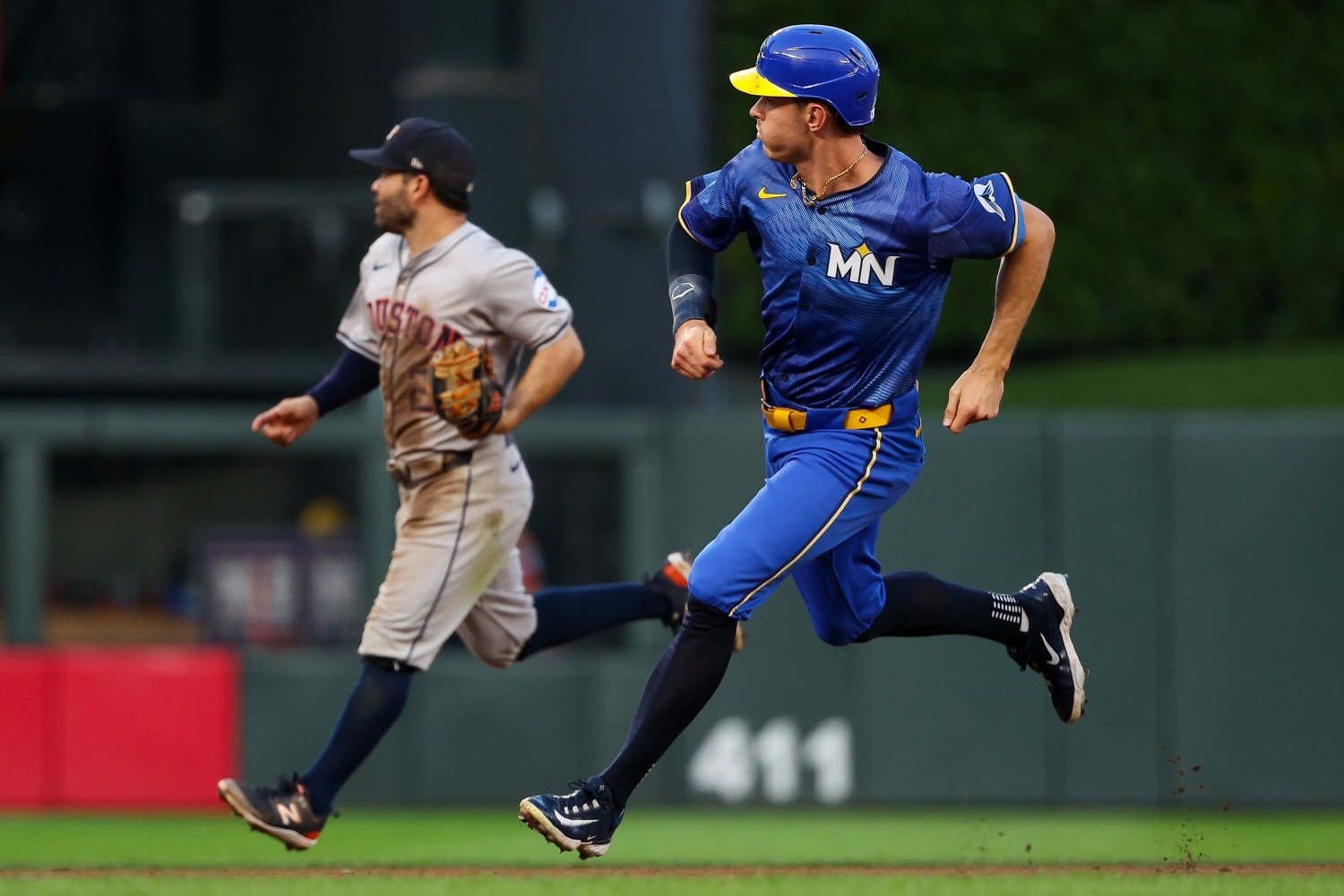
He came about as close as he ever will, though, in response to a question after Tuesday night's loss about a play on which outfielder Max Kepler should have attempted to score, but stopped at third. The choice probably cost the Twins a run, and it was a bad, bad look.
The mention of Kepler's lingering knee soreness isn't to be ignored. Kepler is, undoubtedly, playing at a bit less than 100%, something he doesn't do especially well, and it's only fair to account for that issue when evaluating choices or moves he makes on the field. When Baldelli says there was more to a conversation that he'll keep private, though, he's speaking in the code he's gradually developed with Twins media and fans. He was upset with Kepler, and outside the public limelight, he let his player know it.
Well he should have, too. That was an inexcusable failure of effort, from a player who has shown too strong a tendency toward self-preservation before. It was a tricky play, with the ball behind him in the right-field corner, and given the pace with which it was hit, much about the go/stay decision for a runner depends on the prior positioning of the defense and the cleanness of their collection and relay process. Kepler had to count on Tommy Watkins, his third-base coach, for that, and it looked like Watkins was a bit indecisive. He gave his player the wave, but it did come slightly later than might be typical.
The problem is clear, when you see Kepler approaching third base as the camera cuts to him: he was breaking it down even as he approached the bag. A right fielder himself, he knows that corner better than anyone else alive, and he knew that Carlos Santana had hit it so hard into the corner that he would get there very quickly most of the time. He made an independent decision not to extend himself and test his knee.
If he had adequately assessed Atlanta's positioning before the play, though, he would have seen that Jorge Soler was playing well off the line before the pitch. Soler also isn't as fast as even this aged version of Kepler. He does have a strong arm, but he wasn't in a position to use it. Kepler should have scored on the play. If he had kept running, he almost certainly would have been safe. In any scenario in which he was out, the Atlanta defenders would have made such a good play that you just shrug and move on.
Instead, Kepler seemed to shrink from the potential damage of turning on the afterburners with his knee still balking; the danger of a possible collision at the plate; and the difficulty of changing gears after starting to decelerate a bit. He can see free agency from here, and he didn't want to hit the market as damaged goods. Unfortunately, that's as good an explanation for his willingness to play through this issue (when he's so often gone on the shelf with similar ones) as the fact that his star teammates Byron Buxton and Carlos Correa are already out.
At this point, Kepler is a marginal contributor. Giving him playing time instead of any of Matt Wallner, Trevor Larnach, or José Miranda feels like a losing proposition for the Twins, though it occasionally happens, just for the maintenance of all four players' health and out of deference to Kepler's veteran status. It's fair for him to want to protect his own health, but he has to have the situational awareness and baseline hustle to be in position to score on a play like that. With one out, stopping at third could have been harmless; the Twins were a bit unlucky not to score for the balance of the inning. That factor might also have been in Kepler's mind; he's generally been a smart player.
On balance, though, this was an egregious failure of effort, at a juncture of the season when the Twins can't afford it. This is a rough stretch of the schedule, going very badly for the team, and they need to seek out and occasionally force good moments, rather than sit and wait and hope things come round right. It's a stretch that tests what you really want, and how badly.
Modern baseball analysis leans hard toward the mechanical, the strategic, and the antiseptic. There is, however, still a significant role for emotion, intensity, and desire in the game, especially as August tilts toward September and the stakes of every game steadily rise. Great teams need talent and data-driven feedback, but they also need energy, selflessness, and leadership. Kepler is a deeply respected player, and a tone-setter, even if he's not often a vocal leader. On Tuesday night, his energy and his selflessness--and, by extension, his leadership--was insufficient.
Which team do you dislike the most in the AL Central?

Follow Twins Daily For Minnesota Twins News & Analysis



- Schmoeman5, roger, mikelink45 and 5 others
-
 6
6
-
 2
2


Recommended Comments
Create an account or sign in to comment
You need to be a member in order to leave a comment
Create an account
Sign up for a new account in our community. It's easy!
Register a new accountSign in
Already have an account? Sign in here.
Sign In Now