
Jump to content
Twins Daily
  • Create Account
  • Twins News & Analysis

    Diving Into The Offseason: A Berrios Extension?


    Seth Stohs

    First we dove into what an extension for Brian Dozier. He’s had his first long-term contract, and now he’s one year from free agency. Last week, we contemplated long-term deals for the Twins two mammoth stars, Byron Buxton and Miguel Sano. They are one year away from arbitration, so now could be the time to get each extended.

    Today, I’m going to write about another type of potential long-term contract. This one is about a pitcher instead of a hitter, and this one is for a guy who has only a bit over one year of service time, meaning he won’t even be eligible for arbitration until after the 2019 season. Today, I’ll try to come up with a logical, fair long-term deal for RHP Jose Berrios.

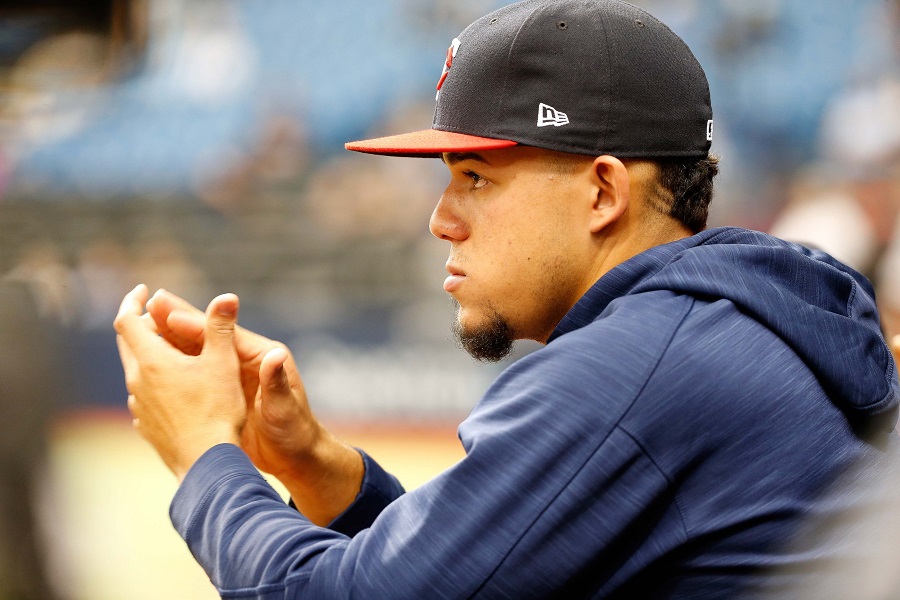
    Image courtesy of Kim Klement, USA Today

    Twins Video

    The case for Jose Berrios is similar to that of Byron Buxton and Miguel Sano. The hope of the last four years has been in Buxton and Sano, but also in Berrios because obviously, pitching wins. As much as we need to continue to see big offense, to get to where they all (and we all) want to get, they’ll need pitching.

    Berrios had a rough debut season in 2016, but when he came up in 2017, he pitched very well, at least for the first two months. But he was so much better and we really started to see what he could become.

    It’s obviously much more difficult to find long-term contracts for players such as Jose Berrios. He’s two seasons from arbitration and five years from free agency. There just aren’t a lot of examples of this for pitchers.

    In fact, of American League pitchers, I found just two such examples, Chris Archer and Martin Perez. Both came up, like Berrios, as top prospects. Archer pretty much immediately became an ace-level pitcher in Tampa. Perez was with the Rangers (with Thad Levine involved) and was exciting, but he was hurt some and struggled some. But he has become pretty good.

    ccs-19-0-44512700-1508809824.png

    They each had two pre-arbitration seasons, three arbitration season and then there were options to cover some free agent seasons.

    There are several more players who signed with one season before free agency. That’s obviously more ‘normal.’

    Part of the reason for signing players early is for some cost certainty. But also, for teams to provide life-long financial security to the players, the players need to accept the risk that they could be underpaid in arbitration years or free agent years. It’s a trade off.

    Here is a group of players who chose to go year-to-year with arbitration.

    ccs-19-0-77463100-1508809858.png

    Because of the risk, these numbers should be the top of the spectrum, and yet they vary a bit. And, of course, we also have to account for the inflation in the game the last several years.

    To try to help with that, here is a listing of some pitchers who went through the arbitration cycle for the first time in 2017.

    ccs-19-0-53498700-1508809881.png

    Again, I only went through the American League. This is already a bunch, and frankly, you don’t want to go through a list double this size, but it gives us a good range for what the Twins could expect to have to pay.

    So, with all that as background, here is the contract that I would offer to Jose Berrios this offseason, at least as a starting point for discussion.

    ccs-19-0-82240300-1508810505.png

    This works out to a seven year, $46 million contract, and with the option, it would be eight years, $60 million. (I put a $2 million buyout to the option in there.)

    Seven years and $46 million sure doesn’t sound like a lot, does it? And yet, $46 million for a guy with just over a year of experience is a lot of money. Consider that four years ago around this time, Chris Archer signed a contract for six years and $25.5 million with two option years. That's $20 million additional dollars four years later. If I were to guess, I think that the Berrios side would want it to be a year or two shorter so that he can become a free agent at 29 or 30.

    In that context, does this deal seem to make some sense for the Twins? For Berrios’s camp? What do you think?

    ccs-19-0-75238800-1508811228.jpg

    Follow Twins Daily For Minnesota Twins News & Analysis

    Recent Twins Articles

    Recent Twins Videos

    Twins Top Prospects

    Marek Houston

    Cedar Rapids Kernels - A+, SS
    The 22-year-old went 2-for-5 on Friday night, his fourth straight multi-hit game. Heading into the week, he was hitting .246/.328/.404 (.732). Four games later, he is hitting .303/.361/.447 (.808).

    User Feedback

    Recommended Comments


    Featured Comments

    You are looking at the downside of being stuck with a contract on an injured pitcher. I am looking at the downside of not being able to afford an successful pitcher. With Berrios, I am more concerned about not being able to afford him if he’s successful and would be willing to accept the risk of having to pay him if he gets hurt. If you think there’s more risk from his getting injured than from not being able to afford him, that’s a valid position.

    I haven't done so much as bust out a single cocktail napkin to do the math. Just spitballin'.


    I will say that if you think you have figured out how to tell which pitchers' regimens are going to prevent major injury, you are wasting your time posting on an internet site. :)

    I haven't done so much as bust out a single cocktail napkin to do the math. Just spitballin'.


    I will say that if you think you have figured out how to tell which pitchers' regimens are going to prevent major injury, you are wasting your time posting on an internet site. :)

    As I said in an earlier post, Berrios appears more likely than the average pitcher to stay healthy or recover from injury, which is why I support the numbers Seth posted. Your opinion seems to be to never sign a long-term contract with a pitcher when they are several years from free agency. I’m sure that many people agree with you, and I won’t say you’re “wrong,” but teams do accept the gamble and sign these contracts with pitchers, although usually not this early. The advantage of doing it now is to get a better price. If the Twins could sign Berrios with Seth’s numbers, that would be a good deal.

    As I said in an earlier post, Berrios appears more likely than the average pitcher to stay healthy or recover from injury, which is why I support the numbers Seth posted. Your opinion seems to be to never sign a long-term contract with a pitcher when they are several years from free agency. I’m sure that many people agree with you, and I won’t say you’re “wrong,” but teams do accept the gamble and sign these contracts with pitchers, although usually not this early. The advantage of doing it now is to get a better price. If the Twins could sign Berrios with Seth’s numbers, that would be a good deal.

    I think what Ash is asking, as will I, is what specifically is forming your opinion that Berrios is less likely to get hurt?

    I think what Ash is asking, as will I, is what specifically is forming your opinion that Berrios is less likely to get hurt?

    As I said initially, he keeps himself in great shape, which I believe will help prevent injury and, if he gets injured, will help him recover and resume being a valuable pitcher.


    At this point, I will add that I expect Falvey and Levine are changing the team’s medical and physical therapy practices, to hopefully improve health outcomes.

    Edited by Deduno Abides


    As I said initially, he keeps himself in great shape, which I believe will help prevent injury and, if he gets injured, will help him recover and resume being a valuable pitcher.

    At this point, I will add that I expect Falvey and Levine are changing the team’s medical and physical therapy practices, to hopefully improve health outcomes.


    UCL is a tendon. 

    The labrum is fibro-cartilage. 


    I'm not sure there's much to be done about either from a being in shape standpoint. The point is that you cannot successfully predict injury to pitchers (at least as of today).


    That said, I'd still lock him up.

    UCL is a tendon.

    The labrum is fibro-cartilage.


    I'm not sure there's much to be done about either from a being in shape standpoint. The point is that you cannot successfully predict injury to pitchers (at least as of today).


    That said, I'd still lock him up.

    Fitness and training play a large role in preventing and recovering from these injuries. The best chiropractors and physical therapists spend much of their days dealing with labral and tendon issues and muscle weaknesses that can lead to them. That is exactly what training is about. It is not about getting big guns. Edited by Deduno Abides


    I haven't done so much as bust out a single cocktail napkin to do the math. Just spitballin'.


    I will say that if you think you have figured out how to tell which pitchers' regimens are going to prevent major injury, you are wasting your time posting on an internet site. :)

    This...

    http://gifimage.net/wp-content/uploads/2017/08/hysterical-laughter-gif-1.gif

    Actually there is some indication that Berrios is less likely to have an arm injury than other prospects. He hasn't had any arm issues (did I miss anything?) in the minors, has pitched 165/170/185 IP and scouts aren't saying 'bad mechanics' (like Meyer). Obviously arm injuries can strike anyone but those are 3 big factors that I would look for when assessing risk.


    And if you always play this 'pitchers can get injured' card then you will never sign or make a big trade for a pitcher. Getting an extra year or two of Berrios is a lot better than having to develop another pitcher to replace him or having to sign a late 20's pitcher to a big extension or an even bigger FA contract.

    Edited by kab21

    In my opinion if the front office could get this deal done, even upping the FA years so the total value is $66 million that will end up being a steal. Is there risk, of course, but that is how you get the trade off for cost certainty and added value of team friendly FA years. If they can get him to sign this off season I’d do it.

    The problem with all these extensions is that you are talking about basically unproven products. Dozier is a proven product. Buxton, Sano and Berrios are not. I say give them at least the start of another year before you start tossing around 8-10-12 million a year numbers. We need to spend some money on a very good starter and maybe a closer. We could also use a better DH though a platoon may be in the works with Vargas and Grossman. While it would be great to keep this group together for 5-10 years, let's make sure they are all the real deal.


    The problem with all these extensions is that you are talking about basically unproven products. Dozier is a proven product. Buxton, Sano and Berrios are not. I say give them at least the start of another year before you start tossing around 8-10-12 million a year numbers. We need to spend some money on a very good starter and maybe a closer. We could also use a better DH though a platoon may be in the works with Vargas and Grossman. While it would be great to keep this group together for 5-10 years, let's make sure they are all the real deal.


    the longer you wait, the more expensive it gets, if they are good. 

    The problem with all these extensions is that you are talking about basically unproven products. Dozier is a proven product. Buxton, Sano and Berrios are not. I say give them at least the start of another year before you start tossing around 8-10-12 million a year numbers. We need to spend some money on a very good starter and maybe a closer. We could also use a better DH though a platoon may be in the works with Vargas and Grossman. While it would be great to keep this group together for 5-10 years, let's make sure they are all the real deal.

    The risk of them not being the real deal is what allows you to get a discount.

    If you wait until there is no doubt, then why would the player give up even one cent of peak earnings?


    The problem with all these extensions is that you are talking about basically unproven products. Dozier is a proven product. Buxton, Sano and Berrios are not. I say give them at least the start of another year before you start tossing around 8-10-12 million a year numbers. We need to spend some money on a very good starter and maybe a closer. We could also use a better DH though a platoon may be in the works with Vargas and Grossman. While it would be great to keep this group together for 5-10 years, let's make sure they are all the real deal.

    At some point you gotta trust that they are gonna pan out...nothing ventured nothing gained


    The problem with all these extensions is that you are talking about basically unproven products. Dozier is a proven product. Buxton, Sano and Berrios are not. I say give them at least the start of another year before you start tossing around 8-10-12 million a year numbers. We need to spend some money on a very good starter and maybe a closer. We could also use a better DH though a platoon may be in the works with Vargas and Grossman. While it would be great to keep this group together for 5-10 years, let's make sure they are all the real deal.

    Most of the deals only payout significant money in one FA season and in subsequent option years. the risk is fairly minimal that way.

    And there is a reason that we are tossing out 8/10/12 arb numbers. Gibson has been a bust but he is still getting 3M and possibly even 4+M in his final option year. Berrios could be that bad and still make half going year to year.

    As I said in an earlier post, Berrios appears more likely than the average pitcher to stay healthy or recover from injury, which is why I support the numbers Seth posted. Your opinion seems to be to never sign a long-term contract with a pitcher when they are several years from free agency. I’m sure that many people agree with you, and I won’t say you’re “wrong,” but teams do accept the gamble and sign these contracts with pitchers, although usually not this early. The advantage of doing it now is to get a better price. If the Twins could sign Berrios with Seth’s numbers, that would be a good deal.

    I've been cogitating on this a couple of days now, and finally decided to try to sort out my thoughts with some data.


    Berrios just completed his age-23 season. That's a little arbitrary, depending on which part of the year one's birthday falls, but allows me to at least try to define a quick-and-dirty study to avoid cherry picking as much as possible. He started 25 games, pitched 145 innings, and got an above-average ERA+. That's the mark of a pretty good pitcher.


    Let's turn the clock back 10 years, and find the guys in their age-23 season who pitched at least 100 innings and had an ERA+ better than 90 in the 2007 season. I'm doing this by hand, so I hope I didn't miss someone:


    Carlos Villanueva - 59 G, 6 GS, 114 IP, ERA+ 113

    Brandon McCarthy - 23 G, 22 GS, 101 IP, ERA+ 94

    Tim Lincecum - 24G, 24 GS, 146 IP, ERA+ 112

    Scott Kazmir - 34 G, 34 GS, 206 IP, ERA+ 130

    Cole Hamels - 28 G, 28 GS, 183 IP, ERA+ 135

    Zack Greinke - 52 G, 14 GS, 122 IP, ERA+ 124


    HOLY MOLEY! That's some tasty pitching to lock up long-term, if you are smart enough to predict the future.


    I want to eliminate Villanueva from consideration, as his pitching line isn't that similar to Berrios's that year, and he never went on to become a full-time starter. But, if I do that, I miss out on Greinke. I don't think I wanna do that.


    I want to eliminate McCarthy, as having had a season not up to Berrios's standard set this year. Still, McCarthy has always been one of those guys people talk about trying to acquire, so I assume his reputation was pretty good back in 2007. Being in the majors at age 23 and being given a lot of innings means something. He's broken a lot of hearts since then with tantalizing but injury-riddled seasons, but I don't know how to predict that yet.


    So I'm gonna say, let's stick with these 6 after all.


    Lincecum and Kazmir did indeed get lucrative contracts, ones that I believe the signing teams came to regret. They delivered the bulk of their career WAR during their years of team-control.


    Hamels and Greinke? Yes please.


    So, suppose you're a GM and by some lucky chance you have these 6 pitchers on your roster at age 23. Ownership is willing to go deep for a few, but not all - and they won't give you a mulligan toward signing someone else to replace any dead money later on. How do you determine which, if any, to buy out of a few years of free agency, and which ones do you go only year to year, knowing only what is known in 2007? Pick the right two, and only those, and you're the next reincarnation of Branch Rickey. Sign too many, and you may be having ownership breathing down your neck. Sign the wrong two, and you're outta there. (Oh, and don't factor in what their actual teams did contract-wise later on, nor whether player and agent would have been open to an early deal, nor that they would have differing amounts of major league service time. Just make the call at age 23, as to whether to open negotiations or not.)


    I went to b-r.com and brought up the minor league page for each player, combined partial rows, and scrolled so I couldn't see past 2007. One guy went to college and the others were signed younger.


    Villanueva - steadily increasing workload, no major downtime, reached majors at 22

    McCarthy - steadily increasing workload, no major downtime, reached majors at 21

    Lincecum - normal-looking college workload, brief minor league at 22, reached majors at 23

    Kazmir - normal minor league workload at 18 through 20, reached majors at 20

    Hamels - normal at 19, reduced workload 20-21 (injured?), reached majors at 22

    Greinke - normal 18-19 workload, reached majors at 20, missed time* at 22, reliever at 23


    * For non-physical reasons not relevant to this discussion


    I dunno. Based on this cursory review of their health, I think I'd reach some wrong conclusions.


    Back to your assertion about work ethic and exercise regimens, I don't know how to be analytic about it. There's an anecdote about Lincecum swearing off of In-N-Out Burgers, just when things started to go sour for him. He was always known as kind of a flake, so maybe he's the anti-Berrios and does serve as a cautionary tale. But I don't know how outsiders like us can really know who has stellar habits - if you try to infer from their innings workload up to age 23, some of the "wrong" guys above have clean records like Berrios, and some of the "right" guys don't.


    If I'm a GM, and my analytics team gives me this, I ask them to dig deeper for me. At minimum, repeat this exercise for several more seasons, then see if any refinements to the methodology suggest themselves and proceed with that. I'm certain that this has been done, anyway.


    So, take this as merely some food for thought. I don't claim to know the last word here.


    Instead, I'll close with probably the saddest photo I will see all day:


    7aa1ec7f_mlbam.jpg

    I've been cogitating on this a couple of days now, and finally decided to try to sort out my thoughts with some data.


    Berrios just completed his age-23 season. That's a little arbitrary, depending on which part of the year one's birthday falls, but allows me to at least try to define a quick-and-dirty study to avoid cherry picking as much as possible. He started 25 games, pitched 145 innings, and got an above-average ERA+. That's the mark of a pretty good pitcher.


    Let's turn the clock back 10 years, and find the guys in their age-23 season who pitched at least 100 innings and had an ERA+ better than 90 in the 2007 season. I'm doing this by hand, so I hope I didn't miss someone:


    Carlos Villanueva - 59 G, 6 GS, 114 IP, ERA+ 113

    Brandon McCarthy - 23 G, 22 GS, 101 IP, ERA+ 94

    Tim Lincecum - 24G, 24 GS, 146 IP, ERA+ 112

    Scott Kazmir - 34 G, 34 GS, 206 IP, ERA+ 130

    Cole Hamels - 28 G, 28 GS, 183 IP, ERA+ 135

    Zack Greinke - 52 G, 14 GS, 122 IP, ERA+ 124


    HOLY MOLEY! That's some tasty pitching to lock up long-term, if you are smart enough to predict the future.


    I want to eliminate Villanueva from consideration, as his pitching line isn't that similar to Berrios's that year, and he never went on to become a full-time starter. But, if I do that, I miss out on Greinke. I don't think I wanna do that.


    I want to eliminate McCarthy, as having had a season not up to Berrios's standard set this year. Still, McCarthy has always been one of those guys people talk about trying to acquire, so I assume his reputation was pretty good back in 2007. Being in the majors at age 23 and being given a lot of innings means something. He's broken a lot of hearts since then with tantalizing but injury-riddled seasons, but I don't know how to predict that yet.


    So I'm gonna say, let's stick with these 6 after all.


    Lincecum and Kazmir did indeed get lucrative contracts, ones that I believe the signing teams came to regret. They delivered the bulk of their career WAR during their years of team-control.


    Hamels and Greinke? Yes please.


    So, suppose you're a GM and by some lucky chance you have these 6 pitchers on your roster at age 23. Ownership is willing to go deep for a few, but not all - and they won't give you a mulligan toward signing someone else to replace any dead money later on. How do you determine which, if any, to buy out of a few years of free agency, and which ones do you go only year to year, knowing only what is known in 2007? Pick the right two, and only those, and you're the next reincarnation of Branch Rickey. Sign too many, and you may be having ownership breathing down your neck. Sign the wrong two, and you're outta there. (Oh, and don't factor in what their actual teams did contract-wise later on, nor whether player and agent would have been open to an early deal. Just make the call at age 23, as to whether to open negotiations or not.)


    I went to b-r.com and brought up the minor league page for each player, combined partial rows, and scrolled so I couldn't see past 2007. One guy went to college and the others were signed younger.


    Villanueva - steadily increasing workload, no major downtime, reached majors at 22

    McCarthy - steadily increasing workload, no major downtime, reached majors at 21

    Lincecum - normal-looking college workload, brief minor league at 22, reached majors at 23

    Kazmir - normal minor league workload at 18 through 20, reached majors at 20

    Hamels - normal at 19, reduced workload 20-21 (injured?), reached majors at 22

    Greinke - normal 18-19 workload, reached majors at 20, significant time missed at 22 and 23


    I dunno. Based on this cursory review of their health, I think I'd reach some wrong conclusions.


    Back to your assertion about work ethic and exercise regimens, I don't know how to be analytic about it. There's an anecdote about Lincecum swearing off of In-N-Out Burgers, just when things started to go sour for him. He was always known as kind of a flake, so maybe he's the anti-Berrios and does serve as a cautionary tale. But I don't know how outsiders like us can really know who has stellar habits - if you try to infer from their innings workload up to age 23, some of the "wrong" guys above have clean records like Berrios, and some of the "right" guys don't.


    If I'm a GM, and my analytics team gives me this, I ask them to dig deeper for me. At minimum, repeat this exercise for several more seasons, then see if any refinements to the methodology suggest themselves and proceed with that. I'm certain that this has been done, anyway.


    So, take this as merely some food for thought. I don't claim to know the last word here.


    Instead, I'll close with probably the saddest photo I will see all day:


    7aa1ec7f_mlbam.jpg

    Good information.


    Giants waited until Lincecum was in age 26 season, after two amazing years and one pretty good year. It was a lot more expensive, but they signed a 2-year deal and he pitched well, so it was a good deal. Then they signed an even more expensive 2-year deal, and he pitched OK, so it was almost a wash. Then they signed a slightly less expensive 2-year deal, and he pitched poorly. Going every two years, and waiting for Lincecum to prove himself, they spent almost $100M, which is a lot more than Seth proposed for a long-term deal for Berrios. Also, Lincecum was always considered more risky, with his size and unorthodox style.


    Kazmir signed a three year deal for $28.5 before age 25, after being great at 21-23 and somewhat disappointing at 24. He was Ok at 25 and the wheels fell off at 26 and 27. He’s been somewhat of a mystery and I’ll admit to never quite understanding how and why pitchers succeed or fail for the Rays. It seems that he pitched through a bunch of minor injuries until he had bigger injuries and wasn’t any good anymore. He obviously was still a good pitcher, because he had a good comeback after resting. Better choices and communication earlier might have saved several years of his career.


    Brandon McCarthy got his fame by being included in a trade for John Danks. He had had a good minors career, but his age 23 stats were terrible, despite the numbers you cite. 101.2 IP, 5.22 K/9, 4.25 BB/9. His first year with more than 1.1 fWAR and less than 4 ERA, FIP or xFIP was at age 28, when he put it together for the Athletics.


    Villanueva was 0.4 fWAR long reliever at age 23.


    Signing a young pitcher is a bet. Hopefully, more is known and done now to prevent injuries, beyond counting pitches.


    Create an account or sign in to comment

    You need to be a member in order to leave a comment

    Create an account

    Sign up for a new account in our community. It's easy!

    Register a new account

    Sign in

    Already have an account? Sign in here.

    Sign In Now

×
×
  • Create New...