



Matthew Trueblood
-
Posts
1,033 -
Joined
-
Last visited
Content Type
Profiles
News
Minnesota Twins Videos
2026 Minnesota Twins Top Prospects Ranking
2022 Minnesota Twins Draft Picks
Minnesota Twins Free Agent & Trade Rumors, Notes, & Tidbits
Guides & Resources
2023 Minnesota Twins Draft Picks
The Minnesota Twins Players Project
2024 Minnesota Twins Draft Picks
2025 Minnesota Twins Draft Pick Tracker
2026 Minnesota Twins Draft Tracker: Picks & Bonuses
Forums
Blogs
Events
Store
Downloads
Gallery
Everything posted by Matthew Trueblood
-
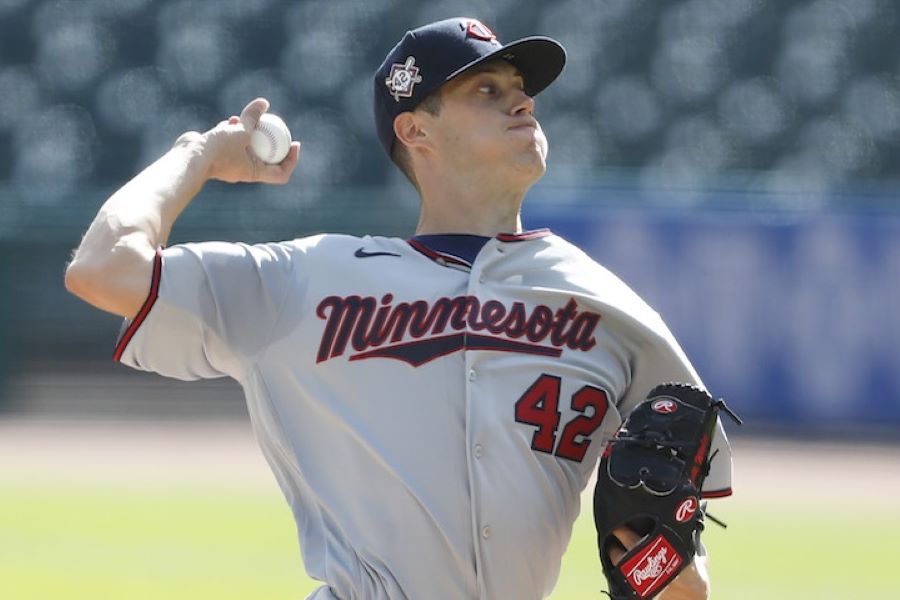 Wisler, 28, had a marvelous 2020 season in the Minnesota bullpen, thanks not only to his extreme slider usage, but to a change to his delivery that improved his command of the pitch. His 32.7-percent strikeout rate placed him in the 89th percentile among all pitchers with 20 or more innings pitched. He was in line to earn somewhere around $1.5 million, and the team retaining him at that price seemed like a foregone conclusion. At a deeper level, though, it’s not hard to see what led the Twins to violate that expectation. There are, in fact, at least three contributing factors that probably led them to that choice. Firstly, as welcome as Wisler’s whiffs were, a great strikeout rate does not make a great pitcher. By walking roughly one in every seven batters faced, Wisler put too many opponents on base. They didn’t often come around to score, as his minuscule ERA attests, but to strand runners that way is often impossible in the long run. Between that failing, the suspect offensive competition (especially for a righty reliever) the Twins faced throughout the season, and his extreme fly-ball tendencies, Baseball Prospectus’s advanced pitching metrics pegged Wisler as an essentially average pitcher in 2020. By both DRA- and cFIP, Wisler was actually worse in 2020 than in 2019. That sounds bonkers, when considering only his surface-level numbers, but when evaluating a relief pitcher, always resist the temptation to weigh those traditional numbers as heavily as more granular, advanced ones. The second reason why letting Wisler become a free agent makes some sense is logistical, and reflective of both the team’s and the league’s prevailing preferences with regard to pitching usage. Wisler is out of minor-league options. That’s not a big deal if a pitcher is on the relief ace tier, like Tyler Duffey and Taylor Rogers, but for almost any lesser light, it becomes a real factor. Teams (and the Twins, especially) value the ability to shuttle fresh arms up from Triple-A and send tired or struggling ones down. That will be truer than ever in 2021, since the team’s highest affiliate is now just a Green Line ride away. Wisler was good enough in a shortened season, with expanded rosters, but at this moment, we don’t know how many players teams will be allowed to carry in 2021, and the developing news about vaccine timelines suggests we’ll have a full, 162-game season. Both of those things make it harder to plan to carry a non-elite reliever who cannot be optioned. It’s not hard to imagine that the Twins believed there was about $1 million (the difference between Wisler’s likely arbitration earnings and the league minimum) of value to be gained by maintaining flexibility. It helps, in that regard, that the free-agent market is flush with quality right-handed relievers, including a bevy of new ones who flooded that space along with Wisler on Wednesday. The final reason is conceptual, rather than concrete, but no less potent. To grasp it, imagine pitching acquisition, evaluation, and development as a frontier in a land being explored and occupied by a new people. On a frontier, it’s important to identify one’s strengths and weaknesses, because they determine what is both possible and prudent. Wisler’s path to success in 2020 was extreme. It was a push into a new, unexplored, unestablished space. Even as the season progressed, I found myself asking the question: how far can this whole thing be taken? Wisler was used in multiple roles. A former starter, he opened multiple games, and often got more than three outs in an appearance. He threw sliders at historic frequency. I wondered, and I can only assume that even the Twins also wondered: how much further could this be taken? Could Wisler go three innings at a time without losing effectiveness? Could he pitch 100 innings over a full season, without fading? Could he keep throwing sliders 90 percent of the time, reshaping the pitch and mixing up his locations well enough that the league wouldn’t figure him out, adjust, and start scoring against him? A less successful, confident pitching infrastructure would have led a team to continue that dangerous exploration. It’s a potentially lucrative endeavor, but there’s a lot of risk attached to it. The questions posed above are fascinating, from a sheer scientific perspective. The exploration would have some value for the league, as it continues in an era of rapid change and advancement. The Twins, though, have enough skills not to keep exploring until their luck runs out. They can, and already have, set up an outpost and start replicating the success Wisler represents. They can let others bear the risks of trying to get more out of Wisler. Plenty of hurlers can be gotten slightly cheaper, with as-good-or-better chances to thrive. MORE FROM TWINS DAILY — Latest Twins coverage from our writers — Recent Twins discussion in our forums — Follow Twins Daily via Twitter, Facebook or email
 -
Trevor Bauer has demonstrated his ability to dominate, but his track record is uneven, and he’s a distraction and a headache both on the mound and off of it. He insists that he’s worth it, because no team has yet allowed him to do what he can really do. The Twins could ask him to prove it.Bauer has said, in the past, that he believes he could pitch consistently on three days’ rest. Given that he’s already proved existing experts wrong about some of the fundamentals of modern pitching more than once, maybe that’s not as far-fetched as it sounds. Fifty and 60 years ago, it was relatively commonplace, and as recently as 1985, three different pitchers made at least 23 starts on the fourth day after their previous outing. If it’s true, and if Bauer could be roughly as effective while regularly pitching on that schedule, it would be transformative, even for a team (like the Twins) with solid starting pitching depth in-house. Famously eager to bet on himself on one-year deals even now that he’s reached free agency, Bauer now faces a market that invites players to make exactly that kind of choice. There are no guarantees about offseasons beyond this one, but the confluence of bad breaks that would have to happen in order for next year’s market not to look more player-friendly than this one is hard to imagine. Thus, the Twins could (in theory) sign Bauer to a one-year deal, making them disinclined to worry about his long-term durability enough to rest him more than necessary. Bauer could, in theory, seize upon an offer that included the opportunity to prove himself the league’s most wear-resistant workhorse, whereupon he’d be better able to cash in come the end of 2021. It’s worth asking, then: just how big a difference would that kind of usage pattern make, not for Bauer, but for the Twins and the rest of their pitching staff? The effect could be huge, but it requires a reimagination of the starting staff—or, if you prefer, a return to a long-defunct variation on the starting rotation, which is more a hierarchical decision tree than a rotation, at all. Here’s how it would work: Any time Bauer has had at least three days of rest, he pitches.Any time Bauer is unavailable, José Berríos pitches, as long as he’s had at least four days’ rest.If Bauer and Berríos are both unavailable, and if Kenta Maeda has had at least four days’ rest, Maeda pitches.If all three of the above are unavailable, and if Michael Pineda has had at least four days, he pitches.If all four of the above are unavailable, Randy Dobnak pitches, as long as he’s had at least four days’ rest. (It’s possible, technically, for the first thing to be true without Dobnak having had sufficient rest, if there’s a doubleheader involved, but obviously, that would be very rare.)If you’re wondering, I placed Berríos above Maeda in this pecking order not out of any belief that Berríos will be better in 2021 (though he could be), but because Berríos is much younger, has been more durable, and derives more of his value from eating innings. I mapped this algorithm for starting pitcher deployment onto the Twins’ current 2021 schedule. Obviously, that’s a vast oversimplification of the problem at hand. Injuries disrupt things for every team, every season. Weather forces delays, reschedulings, and the aforementioned doubleheaders. Most importantly, this particular time around, the coronavirus could well force another abnormal abomination of a season, and that contorted campaign could be unfriendly to this gambit. For the sake of the exercise, though, let’s pretend that that algorithm could be repeated and applied all year. Over 162 games, that would lead to 45 starts for Bauer (yes, really), 33 for Berríos, 32 for Maeda, 30 for Pineda, and 22 for Dobnak. Without really losing a start by any of the three incumbents in whom they have full confidence, the Twins could, by signing Bauer and going this route, shift 10 or 11 starts from the back end of their rotation to their new ace. Now, shortening Bauer’s rest between starts would mean shortening his starts themselves, but two things make that a minor concern, at most. First, Bauer threw more pitches per start than anyone except Lance Lynn in 2020, and got more outs per start than anyone but Zach Plesac and Kyle Hendricks. If he pitched 17 percent less in each outing, he’d still be at least league-average in terms of per-game workload. Second, almost every team is embracing quicker hooks and more bullpen work from their starters, including the Twins, so a series of five-inning, 81-pitch outings by Bauer (most of them ending with the opponent having scored one run) would pose no major problems. This effect is, frankly, enormous. Bauer’s ability to continue overwhelming opponents the way he did this season, should the league crack down on the foreign substances he used to enhance his performance this year, is somewhat in doubt. He’s earned some credibility when he boasts about his conditioning and durability, but skepticism is still warranted. Most importantly, the fact that he could plausibly take the ball in over a quarter of Minnesota’s games does not change the magnitude of his negative effect on the likability and chemistry of a team that has been eminently likable and enjoyed good chemistry over the last two seasons. It might even exacerbate that effect. To make Bauer worth the phoniness, the immaturity, the callousness, and the arrogance, one has to get a pretty good deal on him, and believe he can both perform well in his own right and open things up for the rest of the roster. That said, there’s room to imagine that the Twins could do both of those things. He has as positive a relationship with Derek Falvey as with any executive in the majors. The Twins, with their solid depth and limited budget, could gain flexibility by sliding Dobnak into (essentially) a swingman role, and raise the ceiling of their pitching staff in the same stroke. Even if you don’t ultimately buy it (I don’t), the exercise is enlightening. One challenge in any 162-game season is to balance and modulate workloads, to keep starters fresh until the end of the season. This experiment illustrates how, if a pitcher could truly break the modern molds of pitcher usage, it might allow their team to alter the process by which they do that juggling act, and have a significant, positive impact on their whole pitching staff. Click here to view the article
-
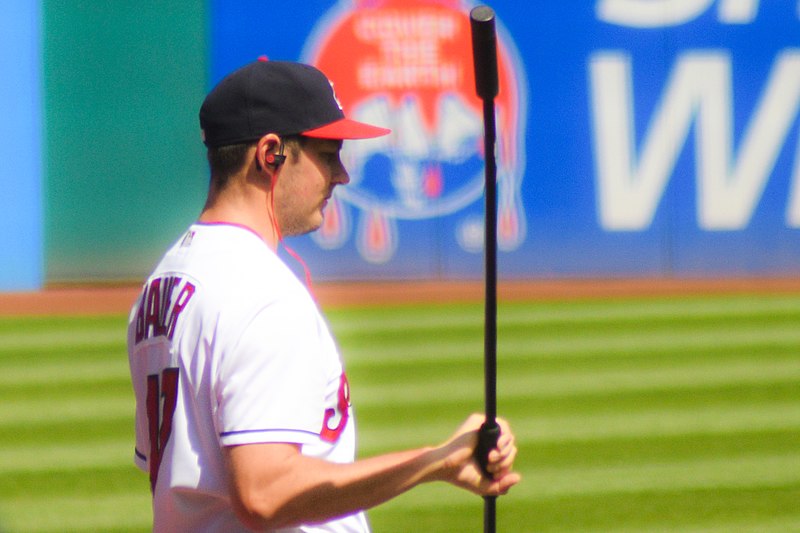 Bauer has said, in the past, that he believes he could pitch consistently on three days’ rest. Given that he’s already proved existing experts wrong about some of the fundamentals of modern pitching more than once, maybe that’s not as far-fetched as it sounds. Fifty and 60 years ago, it was relatively commonplace, and as recently as 1985, three different pitchers made at least 23 starts on the fourth day after their previous outing. If it’s true, and if Bauer could be roughly as effective while regularly pitching on that schedule, it would be transformative, even for a team (like the Twins) with solid starting pitching depth in-house. Famously eager to bet on himself on one-year deals even now that he’s reached free agency, Bauer now faces a market that invites players to make exactly that kind of choice. There are no guarantees about offseasons beyond this one, but the confluence of bad breaks that would have to happen in order for next year’s market not to look more player-friendly than this one is hard to imagine. Thus, the Twins could (in theory) sign Bauer to a one-year deal, making them disinclined to worry about his long-term durability enough to rest him more than necessary. Bauer could, in theory, seize upon an offer that included the opportunity to prove himself the league’s most wear-resistant workhorse, whereupon he’d be better able to cash in come the end of 2021. It’s worth asking, then: just how big a difference would that kind of usage pattern make, not for Bauer, but for the Twins and the rest of their pitching staff? The effect could be huge, but it requires a reimagination of the starting staff—or, if you prefer, a return to a long-defunct variation on the starting rotation, which is more a hierarchical decision tree than a rotation, at all. Here’s how it would work: Any time Bauer has had at least three days of rest, he pitches. Any time Bauer is unavailable, José Berríos pitches, as long as he’s had at least four days’ rest. If Bauer and Berríos are both unavailable, and if Kenta Maeda has had at least four days’ rest, Maeda pitches. If all three of the above are unavailable, and if Michael Pineda has had at least four days, he pitches. If all four of the above are unavailable, Randy Dobnak pitches, as long as he’s had at least four days’ rest. (It’s possible, technically, for the first thing to be true without Dobnak having had sufficient rest, if there’s a doubleheader involved, but obviously, that would be very rare.) If you’re wondering, I placed Berríos above Maeda in this pecking order not out of any belief that Berríos will be better in 2021 (though he could be), but because Berríos is much younger, has been more durable, and derives more of his value from eating innings. I mapped this algorithm for starting pitcher deployment onto the Twins’ current 2021 schedule. Obviously, that’s a vast oversimplification of the problem at hand. Injuries disrupt things for every team, every season. Weather forces delays, reschedulings, and the aforementioned doubleheaders. Most importantly, this particular time around, the coronavirus could well force another abnormal abomination of a season, and that contorted campaign could be unfriendly to this gambit. For the sake of the exercise, though, let’s pretend that that algorithm could be repeated and applied all year. Over 162 games, that would lead to 45 starts for Bauer (yes, really), 33 for Berríos, 32 for Maeda, 30 for Pineda, and 22 for Dobnak. Without really losing a start by any of the three incumbents in whom they have full confidence, the Twins could, by signing Bauer and going this route, shift 10 or 11 starts from the back end of their rotation to their new ace. Now, shortening Bauer’s rest between starts would mean shortening his starts themselves, but two things make that a minor concern, at most. First, Bauer threw more pitches per start than anyone except Lance Lynn in 2020, and got more outs per start than anyone but Zach Plesac and Kyle Hendricks. If he pitched 17 percent less in each outing, he’d still be at least league-average in terms of per-game workload. Second, almost every team is embracing quicker hooks and more bullpen work from their starters, including the Twins, so a series of five-inning, 81-pitch outings by Bauer (most of them ending with the opponent having scored one run) would pose no major problems. This effect is, frankly, enormous. Bauer’s ability to continue overwhelming opponents the way he did this season, should the league crack down on the foreign substances he used to enhance his performance this year, is somewhat in doubt. He’s earned some credibility when he boasts about his conditioning and durability, but skepticism is still warranted. Most importantly, the fact that he could plausibly take the ball in over a quarter of Minnesota’s games does not change the magnitude of his negative effect on the likability and chemistry of a team that has been eminently likable and enjoyed good chemistry over the last two seasons. It might even exacerbate that effect. To make Bauer worth the phoniness, the immaturity, the callousness, and the arrogance, one has to get a pretty good deal on him, and believe he can both perform well in his own right and open things up for the rest of the roster. That said, there’s room to imagine that the Twins could do both of those things. He has as positive a relationship with Derek Falvey as with any executive in the majors. The Twins, with their solid depth and limited budget, could gain flexibility by sliding Dobnak into (essentially) a swingman role, and raise the ceiling of their pitching staff in the same stroke. Even if you don’t ultimately buy it (I don’t), the exercise is enlightening. One challenge in any 162-game season is to balance and modulate workloads, to keep starters fresh until the end of the season. This experiment illustrates how, if a pitcher could truly break the modern molds of pitcher usage, it might allow their team to alter the process by which they do that juggling act, and have a significant, positive impact on their whole pitching staff.
 -
We can’t know what the asking price for any player who wasn’t traded by August 31 was. We can’t know whether teams outside playoff contention were willing to deal anyone under team control beyond 2020. We can, however, say that the Twins front office failed to make needed upgrades at this year’s deadline.The rationalizations they offered after the quiet passing of that deadline sounded reasonable enough. The team anticipated getting Byron Buxton and Josh Donaldson back, and that figured to improve their offense immediately. In fairness, those guys did return, and they did have a positive impact on the lineup, and (despite further injury issues) the team did manage to eke out a division title. The front office believed they could weather the injuries and underperformance they’d dealt with to that point, and be fully healthy and productive by the time the playoffs rolled around, Here’s the problem: to whatever extent they were being honest when they made those statements on Sept. 1, the front office was viewing the trade deadline as one path to solving the problems that had already arisen. That’s not how a contending team needs to view the trade deadline. For a truly great team, or one with that potential, the trade deadline needs to be viewed as a chance to solve problems that have not yet arisen. It’s the art of heading off trouble at the pass. Obviously, that’s not easy. Look around, though, and you’ll notice that the smartest, most aggressive teams always do it. The 2017 Dodgers were 74-31 at the end of July, leading the NL West by 14 games, but they made a last-second trade for Yu Darvish, because that raised both their floor and their ceiling come October. That ended badly, when the Astros lit Darvish up in the World Series, but first, he gave the team nine very good regular-season starts and dominant outings in both the NLDS and the NLCS. The 2017 Astros had a commanding lead in their division and a deep enough pitching staff to make an October run, but traded for Justin Verlander just before the deadline for postseason eligibility. The 2014 Athletics dealt for Jeff Samardzija and Jason Hammel on July 4, but on July 31, they dealt for Jon Lester, too. Lester eventually lost the AL Wild Card Game, but without his stabilizing presence, the Oakland rotation would have collapsed altogether. They went 15-29 in games started by anyone but Lester over the final two months, but 7-4 when Lester pitched. In late August, it was clear that the Twins needed offensive help. There were many candidates, though relatively few hitters ended up being dealt. It was a difficult trade deadline to navigate, and even if the Twins knew better than to assume the best about their in-house candidates, they faced several obstacles in trying to develop and complete negotiations on a deal. Still, it feels as though they were too confident, both in the health of their players and in their likely performance levels over the balance of the season. Because 2019 marked such a substantial departure from the track records of Mitch Garver, Jorge Polanco, Max Kepler, and Ehire Adrianza, one inevitable challenge of 2020 was assessing how much of those improvements were sustainable, and to what extent regression would erase them. The Twins were slow to acknowledge the latter, keeping Polanco in premium lineup spots too long and remaining too satisfied with Adrianza as a utility infielder and near-everyday player. The other challenge, which is a perennial one for every team but was especially cogent in the case of these Twins, was judging the probability that Buxton, Donaldson, and Arraez would each be able to get and remain healthy, and including in that analysis the risks that Miguel Sanó (past injury issues), Nelson Cruz (age), Alex Avila (both of those things), Kepler (known nagging issues and a history of others), or Polanco (never, it seems, fully healthy, dating to last June) would also either break down or have their performance compromised by some ailment. They surveyed those issues, considered their (very good) depth of young players at the alternate site, and elected to stand pat. That was a miscalculation, and I would argue that it was a pretty poor one. Donaldson’s injury issues have all been related; there was no reason to assume he would suddenly have no further trouble with them. Buxton has proved, across several seasons and in myriad ways, that he’s injury-prone. That’s not a comment on his toughness, intelligence, or self-control, but nor is it really debatable. Avoiding serious injury, whether when being hit (or not) by a pitch, running into (or stopping shy of) the wall, or running the bases, is a skill, and Buxton doesn’t possess it. Arraez’s knees have been balky since he was in the low minors. The other, ostensibly healthy players listed still bore clear signs of posing injury risks. The front office needed to accept the fact that they were, as a group, unlikely to be available and productive enough to get them far in the postseason, and go make an addition or two. They failed in that endeavor, and now have a long winter to weigh some very similar decisions. MORE FROM TWINS DAILY — Latest Twins coverage from our writers — Recent Twins discussion in our forums — Follow Twins Daily via Twitter, Facebook or email Click here to view the article
-
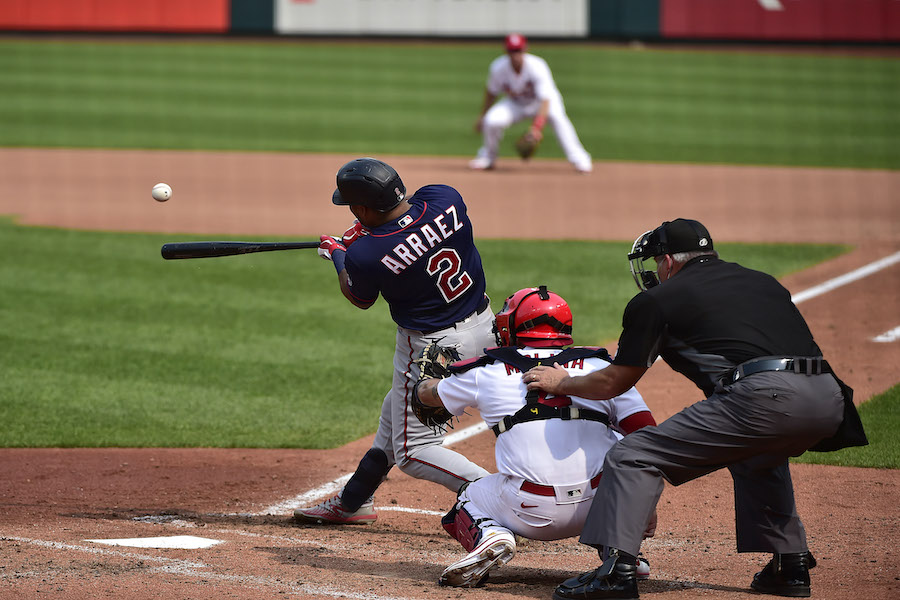 The rationalizations they offered after the quiet passing of that deadline sounded reasonable enough. The team anticipated getting Byron Buxton and Josh Donaldson back, and that figured to improve their offense immediately. In fairness, those guys did return, and they did have a positive impact on the lineup, and (despite further injury issues) the team did manage to eke out a division title. The front office believed they could weather the injuries and underperformance they’d dealt with to that point, and be fully healthy and productive by the time the playoffs rolled around, Here’s the problem: to whatever extent they were being honest when they made those statements on Sept. 1, the front office was viewing the trade deadline as one path to solving the problems that had already arisen. That’s not how a contending team needs to view the trade deadline. For a truly great team, or one with that potential, the trade deadline needs to be viewed as a chance to solve problems that have not yet arisen. It’s the art of heading off trouble at the pass. Obviously, that’s not easy. Look around, though, and you’ll notice that the smartest, most aggressive teams always do it. The 2017 Dodgers were 74-31 at the end of July, leading the NL West by 14 games, but they made a last-second trade for Yu Darvish, because that raised both their floor and their ceiling come October. That ended badly, when the Astros lit Darvish up in the World Series, but first, he gave the team nine very good regular-season starts and dominant outings in both the NLDS and the NLCS. The 2017 Astros had a commanding lead in their division and a deep enough pitching staff to make an October run, but traded for Justin Verlander just before the deadline for postseason eligibility. The 2014 Athletics dealt for Jeff Samardzija and Jason Hammel on July 4, but on July 31, they dealt for Jon Lester, too. Lester eventually lost the AL Wild Card Game, but without his stabilizing presence, the Oakland rotation would have collapsed altogether. They went 15-29 in games started by anyone but Lester over the final two months, but 7-4 when Lester pitched. In late August, it was clear that the Twins needed offensive help. There were many candidates, though relatively few hitters ended up being dealt. It was a difficult trade deadline to navigate, and even if the Twins knew better than to assume the best about their in-house candidates, they faced several obstacles in trying to develop and complete negotiations on a deal. Still, it feels as though they were too confident, both in the health of their players and in their likely performance levels over the balance of the season. Because 2019 marked such a substantial departure from the track records of Mitch Garver, Jorge Polanco, Max Kepler, and Ehire Adrianza, one inevitable challenge of 2020 was assessing how much of those improvements were sustainable, and to what extent regression would erase them. The Twins were slow to acknowledge the latter, keeping Polanco in premium lineup spots too long and remaining too satisfied with Adrianza as a utility infielder and near-everyday player. The other challenge, which is a perennial one for every team but was especially cogent in the case of these Twins, was judging the probability that Buxton, Donaldson, and Arraez would each be able to get and remain healthy, and including in that analysis the risks that Miguel Sanó (past injury issues), Nelson Cruz (age), Alex Avila (both of those things), Kepler (known nagging issues and a history of others), or Polanco (never, it seems, fully healthy, dating to last June) would also either break down or have their performance compromised by some ailment. They surveyed those issues, considered their (very good) depth of young players at the alternate site, and elected to stand pat. That was a miscalculation, and I would argue that it was a pretty poor one. Donaldson’s injury issues have all been related; there was no reason to assume he would suddenly have no further trouble with them. Buxton has proved, across several seasons and in myriad ways, that he’s injury-prone. That’s not a comment on his toughness, intelligence, or self-control, but nor is it really debatable. Avoiding serious injury, whether when being hit (or not) by a pitch, running into (or stopping shy of) the wall, or running the bases, is a skill, and Buxton doesn’t possess it. Arraez’s knees have been balky since he was in the low minors. The other, ostensibly healthy players listed still bore clear signs of posing injury risks. The front office needed to accept the fact that they were, as a group, unlikely to be available and productive enough to get them far in the postseason, and go make an addition or two. They failed in that endeavor, and now have a long winter to weigh some very similar decisions. MORE FROM TWINS DAILY — Latest Twins coverage from our writers — Recent Twins discussion in our forums — Follow Twins Daily via Twitter, Facebook or email
 -
Ducked in to say what DMAC said; a lovely echo of Giamatti. That's the wonderful and awful thing about it, too: this isn't unique to the Twins, however unique certain elements of it seem to be. This is how baseball is meant to work.
-
Had these two teams met a year ago, the Astros would have held a huge advantage in the starting rotation. Things have changed. The Twins have a clear edge, though it might be smaller than you think.In Game 1 on Tuesday, Kenta Maeda will oppose Zack Greinke. That’s a pretty classic matchup, featuring veterans with ample postseason experience and the ability to dominate when they’re in command of their full arsenal. The numbers say Maeda is better than Greinke right now, though, and in watching the two pitch, one gets exactly the same impression. Maeda’s ability to pitch primarily with his secondary stuff has surpassed that of Greinke, as the former Cy Young winner has tried to manage a significant loss of velocity. Download attachment: Maeda.PNG (To derive these estimates, I’ve averaged the player’s projected stats for 2020 from Baseball Prospectus’s PECOTA system with their actual numbers, giving both data points equal weight, because a 60-game season (shortened, in some cases, by trips to the injured list) shouldn’t color our perceptions of pitchers entirely. This is a reasonable projection of each pitcher’s true talent at this moment, from a purely statistical, performance-informed lens.) Maeda can more easily miss bats, at this stage, and has a bigger margin for error, and it shows up in his advanced pitching metrics. Throwing both his slider and his changeup to hitters on either side of the plate makes a huge difference for him. Greinke, though known as an enthusiastic and frequent tinkerer, has never shown the willingness to lean on pitches other than his fastball as hard as Maeda has done in his first season with the Twins. That’s good news for the Twins, who struggle when a pitcher refuses to give in and throw them fastballs in traditional fastball counts. Game 2 will probably be the first chance to see how Houston’s pitching plan for the series diverges from that of the Twins. Whereas Minnesota will go to their second-biggest name, the Astros reportedly plan to use Framber Valdez as a reliever. Valdez had the best numbers among all Astros starters this season. In fact, the only AL pitchers who finished with more Wins Above Replacement Player (WARP), according to Baseball Prospectus, were Shane Bieber and Maeda. Instead of the left-handed Valdez, who might make multiple multi-inning appearances even in a three-game set, Baker will hand the ball to José Urquidy in Game 2. Interestingly, Urquidy bears some similarities to José Berríos. Both are relatively short right-handers. Both have big, two-plane breaking balls, though whereas Berríos throws just that one curve, Urquidy has both his slider and a truer curveball, with great vertical depth. Both are at their best when they’re able to work both laterally and vertically within the zone, making the most of their four-pitch mixes. Though far less experienced at the upper levels, Urquidy is only a year younger than Berríos. Coming into this season, in fact, Urquidy might have been considered a better bet than Berríos. After his ascendant 2019, which culminated in a start in Game 4 of the World Series, he had better projected numbers than Berríos. He missed most of the season, though, after testing positive for COVID-19 at the beginning of the July training camp and spending the first month of the campaign on the injured list for undisclosed reasons. Since returning to the Astros, Urquidy has a great ERA, but his peripheral numbers are much shakier. As a result, Berríos now projects as the better of the two starters. Download attachment: Berrios.PNG We’ve seen such inconsistency from Berríos this year that it’s hard to feel overwhelmingly confident about this matchup. Urquidy has great stuff, not only with the aforementioned breaking balls, but with a four-seamer that works well at the top of the zone and a changeup that can really run away from left-handed batters. He’s probably somewhat closer to his preseason projections, and to his actual ERA, than to his dim advanced metrics, but with such a disrupted start to the season, it could also be that he’s just not going to be his best self in 2020. If a Game 3 is necessary, the matchup of the starters will be as tight as the series itself. Michael Pineda has been solid since completing his suspension and rejoining the Twins rotation, but Lance McCullers, Jr. can dominate opposing batters with his power curveball, and he’s looked good since returning after a lengthy Tommy John rehab process. Pineda’s slider should be highly effective against Houston’s heavily right-handed lineup, as it was when he faced similar offensive teams early this year. He’s fooled people a bit less with each start, though, and Rocco Baldelli figures to give him less time to struggle before going to the bullpen than he will with Maeda or Berríos. McCullers, meanwhile, has gotten right back into the habit of throwing a steady diet of curves, but they play a bit less effectively now that he seems to have left two miles per hour and a couple of inches of movement on the operating table. Download attachment: Pineda.PNG If the series gets this far, it should be a tightly contested final game. These starters are almost identical in their overall quality at this point. It might well come down to whether Houston can still effectively deploy Valdez as a fireman after McCullers starts to flag, or whether the Twins can successfully fire their string of bullpen bullets past Houston and eke out a victory. Overall, the Twins have the better starting staff for this short series. The margins are small enough, though, that variance will swallow the advantage. This battle won’t come down to which starters are better, because neither side’s are sufficiently better to show that here. It will come down, instead, to who executes better, avoids mental pitfalls, and is lifted at the right time by their manager. Given the track records of all six of these guys, though, it’s no easier to tell who might do those things right in a big game than it is to discern which one is better, in general. That’s what makes playoff baseball so much fun. Click here to view the article
-
Astros-Twins ALDS Preview: Which Starting Rotation Has the Edge?
Matthew Trueblood posted an article in Twins
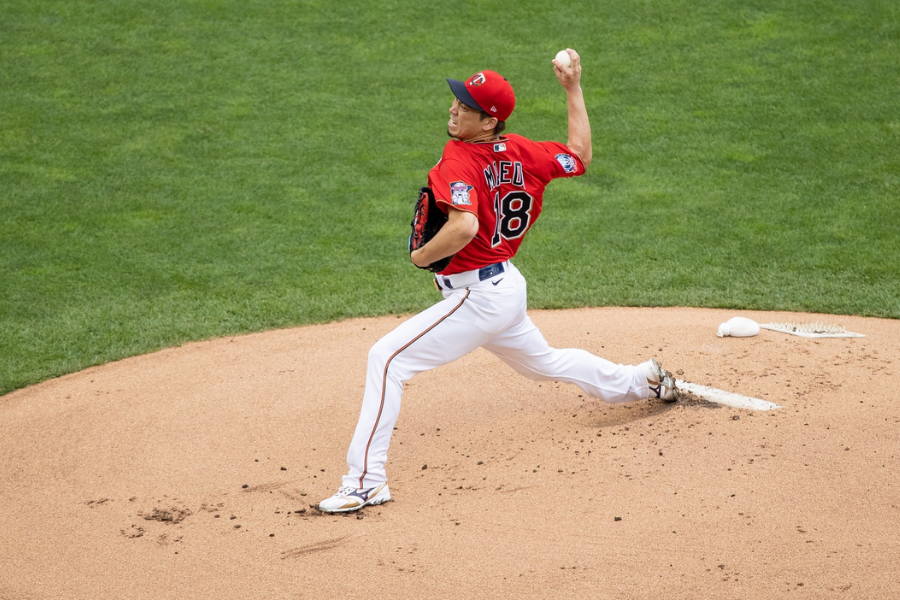 In Game 1 on Tuesday, Kenta Maeda will oppose Zack Greinke. That’s a pretty classic matchup, featuring veterans with ample postseason experience and the ability to dominate when they’re in command of their full arsenal. The numbers say Maeda is better than Greinke right now, though, and in watching the two pitch, one gets exactly the same impression. Maeda’s ability to pitch primarily with his secondary stuff has surpassed that of Greinke, as the former Cy Young winner has tried to manage a significant loss of velocity. (To derive these estimates, I’ve averaged the player’s projected stats for 2020 from Baseball Prospectus’s PECOTA system with their actual numbers, giving both data points equal weight, because a 60-game season (shortened, in some cases, by trips to the injured list) shouldn’t color our perceptions of pitchers entirely. This is a reasonable projection of each pitcher’s true talent at this moment, from a purely statistical, performance-informed lens.) Maeda can more easily miss bats, at this stage, and has a bigger margin for error, and it shows up in his advanced pitching metrics. Throwing both his slider and his changeup to hitters on either side of the plate makes a huge difference for him. Greinke, though known as an enthusiastic and frequent tinkerer, has never shown the willingness to lean on pitches other than his fastball as hard as Maeda has done in his first season with the Twins. That’s good news for the Twins, who struggle when a pitcher refuses to give in and throw them fastballs in traditional fastball counts. Game 2 will probably be the first chance to see how Houston’s pitching plan for the series diverges from that of the Twins. Whereas Minnesota will go to their second-biggest name, the Astros reportedly plan to use Framber Valdez as a reliever. Valdez had the best numbers among all Astros starters this season. In fact, the only AL pitchers who finished with more Wins Above Replacement Player (WARP), according to Baseball Prospectus, were Shane Bieber and Maeda. Instead of the left-handed Valdez, who might make multiple multi-inning appearances even in a three-game set, Baker will hand the ball to José Urquidy in Game 2. Interestingly, Urquidy bears some similarities to José Berríos. Both are relatively short right-handers. Both have big, two-plane breaking balls, though whereas Berríos throws just that one curve, Urquidy has both his slider and a truer curveball, with great vertical depth. Both are at their best when they’re able to work both laterally and vertically within the zone, making the most of their four-pitch mixes. Though far less experienced at the upper levels, Urquidy is only a year younger than Berríos. Coming into this season, in fact, Urquidy might have been considered a better bet than Berríos. After his ascendant 2019, which culminated in a start in Game 4 of the World Series, he had better projected numbers than Berríos. He missed most of the season, though, after testing positive for COVID-19 at the beginning of the July training camp and spending the first month of the campaign on the injured list for undisclosed reasons. Since returning to the Astros, Urquidy has a great ERA, but his peripheral numbers are much shakier. As a result, Berríos now projects as the better of the two starters. We’ve seen such inconsistency from Berríos this year that it’s hard to feel overwhelmingly confident about this matchup. Urquidy has great stuff, not only with the aforementioned breaking balls, but with a four-seamer that works well at the top of the zone and a changeup that can really run away from left-handed batters. He’s probably somewhat closer to his preseason projections, and to his actual ERA, than to his dim advanced metrics, but with such a disrupted start to the season, it could also be that he’s just not going to be his best self in 2020. If a Game 3 is necessary, the matchup of the starters will be as tight as the series itself. Michael Pineda has been solid since completing his suspension and rejoining the Twins rotation, but Lance McCullers, Jr. can dominate opposing batters with his power curveball, and he’s looked good since returning after a lengthy Tommy John rehab process. Pineda’s slider should be highly effective against Houston’s heavily right-handed lineup, as it was when he faced similar offensive teams early this year. He’s fooled people a bit less with each start, though, and Rocco Baldelli figures to give him less time to struggle before going to the bullpen than he will with Maeda or Berríos. McCullers, meanwhile, has gotten right back into the habit of throwing a steady diet of curves, but they play a bit less effectively now that he seems to have left two miles per hour and a couple of inches of movement on the operating table. If the series gets this far, it should be a tightly contested final game. These starters are almost identical in their overall quality at this point. It might well come down to whether Houston can still effectively deploy Valdez as a fireman after McCullers starts to flag, or whether the Twins can successfully fire their string of bullpen bullets past Houston and eke out a victory. Overall, the Twins have the better starting staff for this short series. The margins are small enough, though, that variance will swallow the advantage. This battle won’t come down to which starters are better, because neither side’s are sufficiently better to show that here. It will come down, instead, to who executes better, avoids mental pitfalls, and is lifted at the right time by their manager. Given the track records of all six of these guys, though, it’s no easier to tell who might do those things right in a big game than it is to discern which one is better, in general. That’s what makes playoff baseball so much fun.
 -
The 2020 playoffs are now all about finding enough good innings, but Randy Dobnak’s highest utility to the Minnesota Twins will be as a reliever with a firmly defined role.After several very strong starts to begin this strange season, Dobnak has hit a rough patch over his last two outings, and as a result, he was chewed up in the roster churn of the season’s final fortnight Wednesday. While he’s at the Alternate Site in St. Paul, the Twins should prepare Dobnak for a versatile and two-pronged but highly specialized place in the team’s relief corps for the postseason. Dobnak’s sinker is a major weapon, but it needs to be deployed strategically. As he’s made mechanical and technical adjustments this season, Dobnak has turned a sinker that already had exceptional depth into the single heaviest pitch of its kind in the majors. With his low-three-quarter arm slot, Dobnak gets good sink, but he’s become more efficient this year, maintaining better posture and tilting his spine less as he drives through release. That’s pushed his release point down, and a minor change to his grip of the pitch has also helped increase the drop on the offering. His 85 sinkers in September, prior to being optioned, averaged -1.72 inches of vertical movement. That number is meaningless without context, so here’s some context. Since 2015, here are the only pitchers to average more sink on their sinkers in any season than Dobnak has this month. Download attachment: Heavy Sinkers.PNG Note the right-hand column. The only other hurlers who get the same kind of dive on their sinkers that Dobnak achieves are sidearmers and submariners. Meanwhile, Dobnak pitches from a low but distinctly upright, non-sidearm slot. The kind of movement he generates with that pitch is so unusual as to be impossible to truly handle. That’s why Dobnak has a 62.5-percent groundball rate this season, and why his sinker has a career-best 75-percent ground ball rate this month. Alas, that movement doesn’t translate into very many swings and misses. Batters make contact on 89 percent of their swings against the sinker. They whiff on 34 percent of their swings at his slider, but because the sinker is still his primary pitch, they rarely get as far as seeing that pitch in two-strike counts—and even when they do, they can often spoil it to extend the at-bat. Dobnak has been less pitch-efficient of late, as teams learn to handle him that way. Opposing batters are also chasing less when he tries to expand the zone—about 31 percent of the time, down from almost 39 percent in 2019. When they swing within the zone, they make contact 93.5 percent of the time. Since he mostly avoids the barrel of the bat, this isn’t a death knell, but it makes Dobnak very vulnerable as a starter. That goes double as the lineup turns over, because Dobnak is essentially a two-pitch pitcher against right-handed batters. Most of them see his full repertoire in their first plate appearance. Lefties get roughly equal shares of changeups and sliders, to go with the sinker, but lefties aren’t fooled by Dobnak even the first time. This season, in 91 plate appearances, left-handed batters have four doubles, two home runs, seven walks, two times being hit by pitch, and just 10 strikeouts against Dobnak. He’s not strictly a matchup arm, but his numbers and skill set suggest he’ll continue to run a wide platoon split. These are all reasons, though, why Dobnak could become a full-fledged secret weapon with a move to relief. If he could be deployed against a predominantly right-handed segment of an opposing batting order, he’d be in a position to succeed. If he were brought in with runners on base, he would be in prime position to get a ground ball and get the team out of the inning, with minimal risk that he would instead yield a game-breaking home run. He also has the durability of a fully stretched-out starter, and the tenacity that made Tyler Duffey such a good candidate for the transition from starting to relieving, temperamentally. He needn’t be in the playoff rotation to give the Twins a significant number of innings, and by shuttling him to the bullpen, the team could better take advantage of his greatest strengths while shielding themselves from his biggest vulnerabilities. There’s one more thing that makes Dobnak an especially good fit for the Twins’ bullpen: He’s very different from most of the other pitchers on the staff, stylistically. A 2013 study centered on R.A. Dickey showed that both relievers entering the game after the notable knuckleballer and pitchers who started the next day benefited from simply following Dickey. Hitters couldn’t switch gears, mentally or physiologically, well enough to give their best at-bat against an orthodox, hard-throwing reliever after seeing Dickey for several innings. Since then, broader research has affirmed that the principle applies beyond purveyors of the butterfly ball. There’s a small but tangible benefit to giving a hitter a very different look than they’ve had in the game up to that point. All the things listed above, from the movement on his sinker to his mechanical signature, make Dobnak just that kind of change for opposing batters. Among Twins starters, his pitch profile most resembles that of Michael Pineda, but Pineda releases the ball about a foot and a half higher than Dobnak and uses a four-seam fastball. Dobnak is a fair physical comp for José Berríos, but their pitch mixes and approaches are wildly different. Rich Hill is a southpaw famous for his verticality, with a riding fastball and whip of a curve. Kenta Maeda uses a very different arm slot than Dobnak, and attacks the zone very differently. Nor are relievers Trevor May, Taylor Rogers, or Duffey anything like Dobnak. Even in this bizarre October, devoid of the usual days off and demanding a bit more careful management of the pitching staff than in years past, a pitcher who can so consistently induce ground balls; go multiple innings when needed; and force opposing hitters to adjust to a radical change in styles is hugely valuable. Dobnak doesn’t miss enough bats to keep starting, especially against good offenses, which is what the Twins will see. That doesn’t mean he can’t help them make a deep and successful playoff run. MORE FROM TWINS DAILY — Latest Twins coverage from our writers — Recent Twins discussion in our forums — Follow Twins Daily via Twitter, Facebook or email Click here to view the article
-
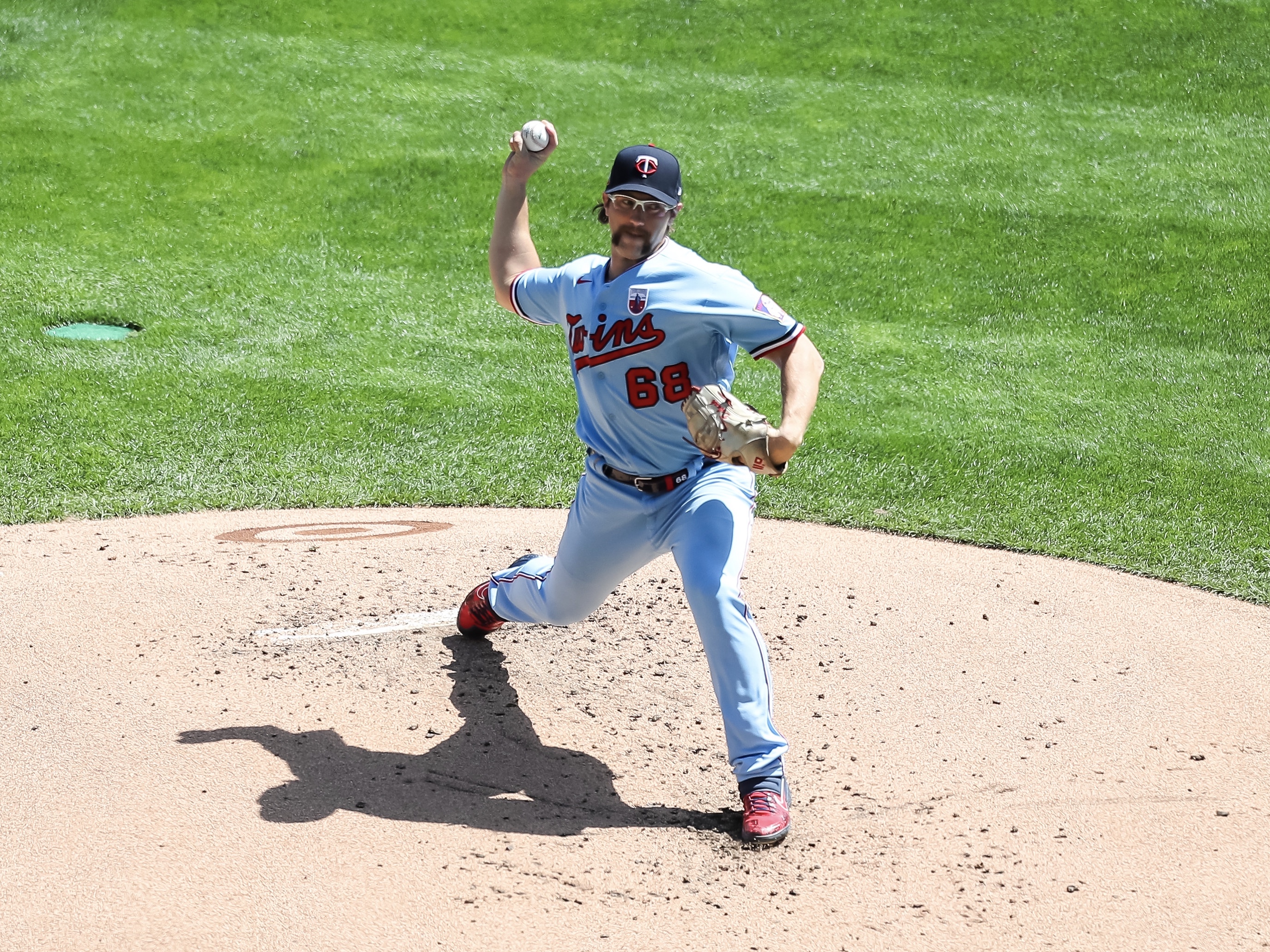 After several very strong starts to begin this strange season, Dobnak has hit a rough patch over his last two outings, and as a result, he was chewed up in the roster churn of the season’s final fortnight Wednesday. While he’s at the Alternate Site in St. Paul, the Twins should prepare Dobnak for a versatile and two-pronged but highly specialized place in the team’s relief corps for the postseason. Dobnak’s sinker is a major weapon, but it needs to be deployed strategically. As he’s made mechanical and technical adjustments this season, Dobnak has turned a sinker that already had exceptional depth into the single heaviest pitch of its kind in the majors. With his low-three-quarter arm slot, Dobnak gets good sink, but he’s become more efficient this year, maintaining better posture and tilting his spine less as he drives through release. That’s pushed his release point down, and a minor change to his grip of the pitch has also helped increase the drop on the offering. His 85 sinkers in September, prior to being optioned, averaged -1.72 inches of vertical movement. That number is meaningless without context, so here’s some context. Since 2015, here are the only pitchers to average more sink on their sinkers in any season than Dobnak has this month. Note the right-hand column. The only other hurlers who get the same kind of dive on their sinkers that Dobnak achieves are sidearmers and submariners. Meanwhile, Dobnak pitches from a low but distinctly upright, non-sidearm slot. The kind of movement he generates with that pitch is so unusual as to be impossible to truly handle. That’s why Dobnak has a 62.5-percent groundball rate this season, and why his sinker has a career-best 75-percent ground ball rate this month. Alas, that movement doesn’t translate into very many swings and misses. Batters make contact on 89 percent of their swings against the sinker. They whiff on 34 percent of their swings at his slider, but because the sinker is still his primary pitch, they rarely get as far as seeing that pitch in two-strike counts—and even when they do, they can often spoil it to extend the at-bat. Dobnak has been less pitch-efficient of late, as teams learn to handle him that way. Opposing batters are also chasing less when he tries to expand the zone—about 31 percent of the time, down from almost 39 percent in 2019. When they swing within the zone, they make contact 93.5 percent of the time. Since he mostly avoids the barrel of the bat, this isn’t a death knell, but it makes Dobnak very vulnerable as a starter. That goes double as the lineup turns over, because Dobnak is essentially a two-pitch pitcher against right-handed batters. Most of them see his full repertoire in their first plate appearance. Lefties get roughly equal shares of changeups and sliders, to go with the sinker, but lefties aren’t fooled by Dobnak even the first time. This season, in 91 plate appearances, left-handed batters have four doubles, two home runs, seven walks, two times being hit by pitch, and just 10 strikeouts against Dobnak. He’s not strictly a matchup arm, but his numbers and skill set suggest he’ll continue to run a wide platoon split. These are all reasons, though, why Dobnak could become a full-fledged secret weapon with a move to relief. If he could be deployed against a predominantly right-handed segment of an opposing batting order, he’d be in a position to succeed. If he were brought in with runners on base, he would be in prime position to get a ground ball and get the team out of the inning, with minimal risk that he would instead yield a game-breaking home run. He also has the durability of a fully stretched-out starter, and the tenacity that made Tyler Duffey such a good candidate for the transition from starting to relieving, temperamentally. He needn’t be in the playoff rotation to give the Twins a significant number of innings, and by shuttling him to the bullpen, the team could better take advantage of his greatest strengths while shielding themselves from his biggest vulnerabilities. There’s one more thing that makes Dobnak an especially good fit for the Twins’ bullpen: He’s very different from most of the other pitchers on the staff, stylistically. A 2013 study centered on R.A. Dickey showed that both relievers entering the game after the notable knuckleballer and pitchers who started the next day benefited from simply following Dickey. Hitters couldn’t switch gears, mentally or physiologically, well enough to give their best at-bat against an orthodox, hard-throwing reliever after seeing Dickey for several innings. Since then, broader research has affirmed that the principle applies beyond purveyors of the butterfly ball. There’s a small but tangible benefit to giving a hitter a very different look than they’ve had in the game up to that point. All the things listed above, from the movement on his sinker to his mechanical signature, make Dobnak just that kind of change for opposing batters. Among Twins starters, his pitch profile most resembles that of Michael Pineda, but Pineda releases the ball about a foot and a half higher than Dobnak and uses a four-seam fastball. Dobnak is a fair physical comp for José Berríos, but their pitch mixes and approaches are wildly different. Rich Hill is a southpaw famous for his verticality, with a riding fastball and whip of a curve. Kenta Maeda uses a very different arm slot than Dobnak, and attacks the zone very differently. Nor are relievers Trevor May, Taylor Rogers, or Duffey anything like Dobnak. Even in this bizarre October, devoid of the usual days off and demanding a bit more careful management of the pitching staff than in years past, a pitcher who can so consistently induce ground balls; go multiple innings when needed; and force opposing hitters to adjust to a radical change in styles is hugely valuable. Dobnak doesn’t miss enough bats to keep starting, especially against good offenses, which is what the Twins will see. That doesn’t mean he can’t help them make a deep and successful playoff run. MORE FROM TWINS DAILY — Latest Twins coverage from our writers — Recent Twins discussion in our forums — Follow Twins Daily via Twitter, Facebook or email
 -
With numerous Twins hitters ailing, a rugged offseason schedule looming, and big questions about the offense lingering, rookie infielder Travis Blankenhorn becomes an important player for the team to evaluate over the final week and a half of the regular season.Blankenhorn, 24, was called up Monday to help the team weather its seemingly perpetual dearth of fully healthy, fully functioning hitters. He was 18th on our preseason list of the Twins’ top prospects, although national prospect publications tended to slot him a bit lower. Some injury issues contributed to his slow ascent through the minors after he was a third-round pick in 2015, and they’ve slowed him down enough to drain defensive upside from his profile. He’s mostly with the club so that they can determine whether he can carry the power progression he showed last season at Double-A Pensacola into the big leagues. At 6-foot-2 and 230 pounds, Blankenhorn is built like the other rookies on whom the Twins have called in the face of this wave of injuries, Ryan Jeffers and Brent Rooker. Unlike those guys, he was dinged by some scouts because of questions about whether he could access his power in games. There are three main reasons why a prospect might not project to carry batting-practice or minor-league power into big-league competition: an overaggressive (or overly passive) approach; a flat swing plane; and a lack of sheer strength. Blankenhorn certainly has no issues with that last item, but he’s been a very free swinger throughout his professional career, and there were questions about whether he could get the necessary lift with his swing, too. Some of those questions, Blankenhorn put to rest last year. His total of 19 home runs in 471 plate appearances doesn’t leap out at the jaded modern stat-reader, but neither the Florida State League nor the Southern League has seen the kind of power surge that has swept the Triple-A and MLB levels recently. After a summer at the alternate site, where the Twins have been doing intensive player-development work focused on the same things (lifting and pulling the ball as often as possible, without opening up massive holes in one’s swing or approach) they’ve been focusing on organization-wide over the last two years, Blankenhorn is likely as ready as ever to get the ball in the air to the pull field. Even in the minors, he’s been a pull hitter. That leaves two questions: what his plate discipline (or lack thereof) will allow him to do at bat, and where he might fit in the field. The latter is actually the easier answer. With Luis Arraez currently sidelined, and with Eddie Rosario now nursing an elbow contusion, the two positions Blankenhorn has played most often are at least periodically available, for the foreseeable future. Jake Cave and LaMonte Wade, Jr. are good enough to man left field if needed, but that assumes that both Max Kepler and Byron Buxton are healthy enough, on any given night, to patrol the other two-thirds of the grass. That, lately, has not been a safe assumption. Given his size and his below-average speed, Blankenhorn is a suboptimal option in the outfield. However, if the team must choose between putting him there or having him at second, while the hobbled Marwin Gonzalez goes out to chase fly balls at 25 feet per second, they might well elect to let the younger legs do the running. Failing that, or if (it’s not hard to imagine, and in fact, it’s what led to Blankenhorn’s call-up) Gonzalez is unable to play on a given night, Blankenhorn can slot in at second base, his best position and the one where he makes the biggest difference, relative to potential alternatives (like Ehire Adrianza). That leaves us wondering only whether Blankenhorn can make enough contact against big-league pitching to hit the way he’s proven himself capable of hitting in the minors. The best metric for evaluating performances one needs to translate into potential big-league production is Baseball Prospectus’s Deserved Runs Created rate (DRC+), and last year, Blankenhorn’s was 119 at Pensacola. That suggests that, despite striking out nearly 23 percent of the time, he was a genuinely effective hitter, doing things that can translate well into other contexts. Even so, his minor-league strikeout rates (and a lack of complementary walks) make it impossible to know what to think until Blankenhorn gets into the lineup and sees some big-leaguers who want to get him out. To that end, the Twins should play him every day down the stretch. Even once Arraez returns, one of Nelson Cruz, Josh Donaldson, Rosario, Kepler, Gonzalez, and Arraez is likely to want a day off, anyway, given the way their 2020s have gone, so there will be openings on the lineup card. With a robust (if still very small and potentially misleading) sample of play to evaluate, the Twins will be able to decide what they can expect if they carry Blankenhorn on the playoff roster. It matters, in a big way, because there will be no days off during any of the first three rounds of this year’s playoffs. Given the nature of the lingering injuries with which many of the players named above are dealing, and considering the conservative approach the team has taken with those players, the likelihood that they’ll need an extra left-handed bat (at second base or in left field) at some key juncture, perhaps even to start one or more games, is quite high. Starting Adrianza in any playoff game would be hard to justify, even given his solid glove. It’s not hard to find encouraging comps for Blankenhorn, as he matriculates to the majors. A few years ago, such a big, bat-first player at second base would be tough to imagine, but Mike Moustakas and Max Muncy have been highly successful regulars at that spot recently. Nor does his profile seem as risky, offensively, as it might if the Twins didn’t specialize so well in magnifying the things (power, a selectively aggressive approach) Blankenhorn most needs to do in order to succeed. He’s with the team. They need a player like him, even if everything breaks right in terms of health over the rest of the season, and that’s a big ‘if’, anyway. Rocco Baldelli needs to get Blankenhorn onto the lineup card often. MORE FROM TWINS DAILY — Latest Twins coverage from our writers — Recent Twins discussion in our forums — Follow Twins Daily via Twitter, Facebook or email Click here to view the article
-
 Blankenhorn, 24, was called up Monday to help the team weather its seemingly perpetual dearth of fully healthy, fully functioning hitters. He was 18th on our preseason list of the Twins’ top prospects, although national prospect publications tended to slot him a bit lower. Some injury issues contributed to his slow ascent through the minors after he was a third-round pick in 2015, and they’ve slowed him down enough to drain defensive upside from his profile. He’s mostly with the club so that they can determine whether he can carry the power progression he showed last season at Double-A Pensacola into the big leagues. At 6-foot-2 and 230 pounds, Blankenhorn is built like the other rookies on whom the Twins have called in the face of this wave of injuries, Ryan Jeffers and Brent Rooker. Unlike those guys, he was dinged by some scouts because of questions about whether he could access his power in games. There are three main reasons why a prospect might not project to carry batting-practice or minor-league power into big-league competition: an overaggressive (or overly passive) approach; a flat swing plane; and a lack of sheer strength. Blankenhorn certainly has no issues with that last item, but he’s been a very free swinger throughout his professional career, and there were questions about whether he could get the necessary lift with his swing, too. Some of those questions, Blankenhorn put to rest last year. His total of 19 home runs in 471 plate appearances doesn’t leap out at the jaded modern stat-reader, but neither the Florida State League nor the Southern League has seen the kind of power surge that has swept the Triple-A and MLB levels recently. After a summer at the alternate site, where the Twins have been doing intensive player-development work focused on the same things (lifting and pulling the ball as often as possible, without opening up massive holes in one’s swing or approach) they’ve been focusing on organization-wide over the last two years, Blankenhorn is likely as ready as ever to get the ball in the air to the pull field. Even in the minors, he’s been a pull hitter. That leaves two questions: what his plate discipline (or lack thereof) will allow him to do at bat, and where he might fit in the field. The latter is actually the easier answer. With Luis Arraez currently sidelined, and with Eddie Rosario now nursing an elbow contusion, the two positions Blankenhorn has played most often are at least periodically available, for the foreseeable future. Jake Cave and LaMonte Wade, Jr. are good enough to man left field if needed, but that assumes that both Max Kepler and Byron Buxton are healthy enough, on any given night, to patrol the other two-thirds of the grass. That, lately, has not been a safe assumption. Given his size and his below-average speed, Blankenhorn is a suboptimal option in the outfield. However, if the team must choose between putting him there or having him at second, while the hobbled Marwin Gonzalez goes out to chase fly balls at 25 feet per second, they might well elect to let the younger legs do the running. Failing that, or if (it’s not hard to imagine, and in fact, it’s what led to Blankenhorn’s call-up) Gonzalez is unable to play on a given night, Blankenhorn can slot in at second base, his best position and the one where he makes the biggest difference, relative to potential alternatives (like Ehire Adrianza). That leaves us wondering only whether Blankenhorn can make enough contact against big-league pitching to hit the way he’s proven himself capable of hitting in the minors. The best metric for evaluating performances one needs to translate into potential big-league production is Baseball Prospectus’s Deserved Runs Created rate (DRC+), and last year, Blankenhorn’s was 119 at Pensacola. That suggests that, despite striking out nearly 23 percent of the time, he was a genuinely effective hitter, doing things that can translate well into other contexts. Even so, his minor-league strikeout rates (and a lack of complementary walks) make it impossible to know what to think until Blankenhorn gets into the lineup and sees some big-leaguers who want to get him out. To that end, the Twins should play him every day down the stretch. Even once Arraez returns, one of Nelson Cruz, Josh Donaldson, Rosario, Kepler, Gonzalez, and Arraez is likely to want a day off, anyway, given the way their 2020s have gone, so there will be openings on the lineup card. With a robust (if still very small and potentially misleading) sample of play to evaluate, the Twins will be able to decide what they can expect if they carry Blankenhorn on the playoff roster. It matters, in a big way, because there will be no days off during any of the first three rounds of this year’s playoffs. Given the nature of the lingering injuries with which many of the players named above are dealing, and considering the conservative approach the team has taken with those players, the likelihood that they’ll need an extra left-handed bat (at second base or in left field) at some key juncture, perhaps even to start one or more games, is quite high. Starting Adrianza in any playoff game would be hard to justify, even given his solid glove. It’s not hard to find encouraging comps for Blankenhorn, as he matriculates to the majors. A few years ago, such a big, bat-first player at second base would be tough to imagine, but Mike Moustakas and Max Muncy have been highly successful regulars at that spot recently. Nor does his profile seem as risky, offensively, as it might if the Twins didn’t specialize so well in magnifying the things (power, a selectively aggressive approach) Blankenhorn most needs to do in order to succeed. He’s with the team. They need a player like him, even if everything breaks right in terms of health over the rest of the season, and that’s a big ‘if’, anyway. Rocco Baldelli needs to get Blankenhorn onto the lineup card often. MORE FROM TWINS DAILY — Latest Twins coverage from our writers — Recent Twins discussion in our forums — Follow Twins Daily via Twitter, Facebook or email
 -
Labor Day marks the unofficial end of summer. Labor Day also kicks off the very best stretch of any season in which to be at a ballpark. Alas, this year, that only makes it an even more bittersweet milestone than usual.Baseball bills itself as the summer game. It wants to live in your mind as the official sporting sponsor of sunshine, vacations, and the Fourth of July. Owners make most of their money by packing their stadiums on summer weekends, selling not only tickets and jerseys and parking spots, but lemonade and ice cream to kids, and beer and nachos to kids’ parents. Even a bad team can often draw a pretty full house on occasions like those, because the clientele is families of five and six, and the product isn’t really baseball, so much as a memorable and stimulating evening of entertainment for all of them. When the game presents itself to you that way, though, it’s essentially trying to sell you an illusory sense of escape and immortality. Come, baseball says, freeze time with us. Summer will last forever, if you can have enough days and nights like this one, surrounded by noise and excitement and (mostly) friendly, low-stakes confrontation. This food doesn’t count against your diet. These hours don’t drag the countdown clock to the resumption of school or the end of your vacation any closer to zero. Of course, none of that is true. Baseball also wants to sell itself to you as a perpetually credible contest, between teams with real chances to win something they might mark as meaningful. That’s the tremendous virtue of the 162-game season, and is why the recent uptick in aggressive rebuilding projects has raised such a red flag for so many around the game. The game is built on the notion that, for the lion’s share of the season, everyone is in the hunt for the postseason, and every game matters, but that each game matters in only a small, survivable kind of way, because the team will have a chance to make up ground tomorrow if they lose today. Of course, all of that is only partially true even in the best of times, and (in so many ways) these are not the best of times. I love September because, invariably and inexorably, it comes along to dispel and dismantle baseball’s myths. Go to two games in a week this time of year, as the dwindling of our daylight hours accelerates toward the equinox, and you’ll notice the sun dipping through the space between the roof and the upper deck a half-inning earlier. The morning and midday wind picks up, and while the chill of autumn doesn’t really ride on it yet, that chill does start to creep into the heavy, still air of late afternoon. Whatever lies you were told, and whatever lies you told yourself, you’ve been getting older as you’ve watched this summer’s games, and now the year’s supply of baseball (like that of hot days and late sunsets) is running out. With that shiver-inducing return to reality, though, comes a wonderful vulnerability and vividity. What happens on the field in September matters more, to the average fan in the ballpark, as well as to the players. September baseball patrons form families of choice. They’re not there just to get drunk and carouse; that part of the party has changed venues, to football stadiums and tailgate lots. The kids are back in school, so fewer families can attend games, and those who do consist of hardcore fans for whom baseball is a nightly dinner-table topic. Teams in contention still pack the park in September, but the fans’ attention doesn’t need to be called back to the field as frequently. For teams who are out of the running, fans show up to savor the game itself, before it’s beyond their reach again for a while, and to see the young players on whom their hopes of being better next year rest. I’m a son, a friend, and a father. I don’t resent the families killing time or the buddies killing brain cells. I love baseball when it rises up to fill the entire physical and mental space before me, though, and because of that, September ballpark people are my people. This is why baseball will always mean more to Northern cities and their fans. San Diego, Los Angeles, and Atlanta are fine baseball towns, but they don’t live as fully in September, because they don’t have to wonder how far behind the end of baseball will come the beginning of winter. The smells of a ballpark in September are similar to those of a ballpark in July, but in the North, the experience of smelling them is different, because as you draw in that air and catch a whiff of grilled sausage and onions, that olfactory sensation mingles with the visceral, almost tactile sensation of the air—now crisp and cold, or getting there, instead of thick and warm. It’s the same smell, but it’s not the same feeling at all. There’s no better place to feel the fall rushing at you than in a ballpark in the northern part of the United States, and especially in Target Field. No park in baseball saves up and shows off the last lights of summer the way Target Field does, with its limestone accents inside and out, with the nested lights around the roofline preserving the fans’ view of the Southern and Western skies, and with its earth tones throughout, including large amounts of wood and a heavy use of forest green. The way the stone catches the sun, the way the ballpark (with the smallest footprint in the major leagues, with the field set below street level, with the high wall in right field and the soaring triple-deck grandstand beyond left field and the scoreboard above that) wraps itself around you like the collar of a good jacket—it all allows you to embrace and accept the end of one season, the beginning of another, and the promise (or threat) of more to come, in safety and solace. All of this now stands in sharper relief than ever, because we’ve been denied September at Target Field, and at every other ballpark. This fall is settling over Minnesota with only digitized, insubstantial signals. In reality, we can all still step outside to catch the cold air in our noses, but we can’t smell the same symphony of ballpark odors. In our minds and hearts, it feels like the opposite is true: we have the trappings of a season change here, but not the thing that makes it real for us. The fact of autumn is here, but the feeling is muted. Without the ballpark to ground us, it feels like this fleeting baseball season is something less than halfway over, and its end doesn’t feel as perilously close as it really is. Out of necessity and good sense, we’ve retreated from the physical act of attending games, but in doing so, we’ve numbed ourselves to elements of the games (and the very lives of which they’re a part) in a deeper way than we might have realized. I hope we can be back at ballparks in April next season, but even if we are, we will have lost an entire September, and next September seems excruciatingly far away. MORE FROM TWINS DAILY — Latest Twins coverage from our writers — Recent Twins discussion in our forums — Follow Twins Daily via Twitter, Facebook or email Click here to view the article
-
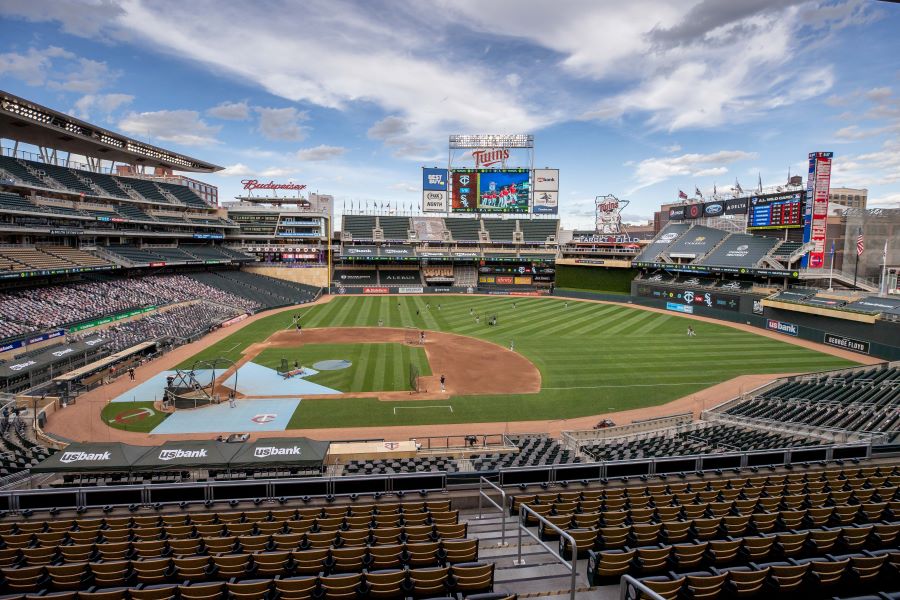 Baseball bills itself as the summer game. It wants to live in your mind as the official sporting sponsor of sunshine, vacations, and the Fourth of July. Owners make most of their money by packing their stadiums on summer weekends, selling not only tickets and jerseys and parking spots, but lemonade and ice cream to kids, and beer and nachos to kids’ parents. Even a bad team can often draw a pretty full house on occasions like those, because the clientele is families of five and six, and the product isn’t really baseball, so much as a memorable and stimulating evening of entertainment for all of them. When the game presents itself to you that way, though, it’s essentially trying to sell you an illusory sense of escape and immortality. Come, baseball says, freeze time with us. Summer will last forever, if you can have enough days and nights like this one, surrounded by noise and excitement and (mostly) friendly, low-stakes confrontation. This food doesn’t count against your diet. These hours don’t drag the countdown clock to the resumption of school or the end of your vacation any closer to zero. Of course, none of that is true. Baseball also wants to sell itself to you as a perpetually credible contest, between teams with real chances to win something they might mark as meaningful. That’s the tremendous virtue of the 162-game season, and is why the recent uptick in aggressive rebuilding projects has raised such a red flag for so many around the game. The game is built on the notion that, for the lion’s share of the season, everyone is in the hunt for the postseason, and every game matters, but that each game matters in only a small, survivable kind of way, because the team will have a chance to make up ground tomorrow if they lose today. Of course, all of that is only partially true even in the best of times, and (in so many ways) these are not the best of times. I love September because, invariably and inexorably, it comes along to dispel and dismantle baseball’s myths. Go to two games in a week this time of year, as the dwindling of our daylight hours accelerates toward the equinox, and you’ll notice the sun dipping through the space between the roof and the upper deck a half-inning earlier. The morning and midday wind picks up, and while the chill of autumn doesn’t really ride on it yet, that chill does start to creep into the heavy, still air of late afternoon. Whatever lies you were told, and whatever lies you told yourself, you’ve been getting older as you’ve watched this summer’s games, and now the year’s supply of baseball (like that of hot days and late sunsets) is running out. With that shiver-inducing return to reality, though, comes a wonderful vulnerability and vividity. What happens on the field in September matters more, to the average fan in the ballpark, as well as to the players. September baseball patrons form families of choice. They’re not there just to get drunk and carouse; that part of the party has changed venues, to football stadiums and tailgate lots. The kids are back in school, so fewer families can attend games, and those who do consist of hardcore fans for whom baseball is a nightly dinner-table topic. Teams in contention still pack the park in September, but the fans’ attention doesn’t need to be called back to the field as frequently. For teams who are out of the running, fans show up to savor the game itself, before it’s beyond their reach again for a while, and to see the young players on whom their hopes of being better next year rest. I’m a son, a friend, and a father. I don’t resent the families killing time or the buddies killing brain cells. I love baseball when it rises up to fill the entire physical and mental space before me, though, and because of that, September ballpark people are my people. This is why baseball will always mean more to Northern cities and their fans. San Diego, Los Angeles, and Atlanta are fine baseball towns, but they don’t live as fully in September, because they don’t have to wonder how far behind the end of baseball will come the beginning of winter. The smells of a ballpark in September are similar to those of a ballpark in July, but in the North, the experience of smelling them is different, because as you draw in that air and catch a whiff of grilled sausage and onions, that olfactory sensation mingles with the visceral, almost tactile sensation of the air—now crisp and cold, or getting there, instead of thick and warm. It’s the same smell, but it’s not the same feeling at all. There’s no better place to feel the fall rushing at you than in a ballpark in the northern part of the United States, and especially in Target Field. No park in baseball saves up and shows off the last lights of summer the way Target Field does, with its limestone accents inside and out, with the nested lights around the roofline preserving the fans’ view of the Southern and Western skies, and with its earth tones throughout, including large amounts of wood and a heavy use of forest green. The way the stone catches the sun, the way the ballpark (with the smallest footprint in the major leagues, with the field set below street level, with the high wall in right field and the soaring triple-deck grandstand beyond left field and the scoreboard above that) wraps itself around you like the collar of a good jacket—it all allows you to embrace and accept the end of one season, the beginning of another, and the promise (or threat) of more to come, in safety and solace. All of this now stands in sharper relief than ever, because we’ve been denied September at Target Field, and at every other ballpark. This fall is settling over Minnesota with only digitized, insubstantial signals. In reality, we can all still step outside to catch the cold air in our noses, but we can’t smell the same symphony of ballpark odors. In our minds and hearts, it feels like the opposite is true: we have the trappings of a season change here, but not the thing that makes it real for us. The fact of autumn is here, but the feeling is muted. Without the ballpark to ground us, it feels like this fleeting baseball season is something less than halfway over, and its end doesn’t feel as perilously close as it really is. Out of necessity and good sense, we’ve retreated from the physical act of attending games, but in doing so, we’ve numbed ourselves to elements of the games (and the very lives of which they’re a part) in a deeper way than we might have realized. I hope we can be back at ballparks in April next season, but even if we are, we will have lost an entire September, and next September seems excruciatingly far away. MORE FROM TWINS DAILY — Latest Twins coverage from our writers — Recent Twins discussion in our forums — Follow Twins Daily via Twitter, Facebook or email
 -
In his first start in almost a year, Michael Pineda went to his slider more often than he had in any game since April 2017. The pitch has become his bread-and-butter, and it’s just what the doctor ordered as the Twins ponder their key matchups this September and October.Over the course of his decade-long career, Pineda has changed strikingly little, in terms of his essential pitch mix and approach. He has a four-seam fastball, a slider, and a changeup, with the changeup a third pitch restricted mostly to occasional use against left-handed batters. He works from the first-base side of the pitching rubber, uses a three-quarter delivery, and generates considerable natural cutting action on his fastball. Because of that cut on the heat, Pineda’s slider has always been deceptive and effective against right-handed batters, because the spin axes of the two pitches are not terribly dissimilar. In fact, Pineda tweaked his release a bit in 2017, while he was still with the Yankees, making the fastball cut a bit less, but the slider break more vertically, and bringing the spin axes of the offerings more closely in line. Download attachment: Pineda Speed v Spin Axis w lines.jpg The black line connects the clusters representing his fastball and slider from 2011-16. The red line connects the clusters representing those pitches from 2017-20. The spin hitters try to pick up on a typical pitcher’s slider is very, very difficult to pick up on Pineda’s, because his fastball has such similar spin. Even the spin rates of the two pitches match more closely than those of many hurlers’ heaters and sliders, and those rates are quite low. Most of Pineda’s movement comes from the plane he creates, by being 6-foot-7 and using a relatively upright delivery, along with the aforementioned arm angle. Since the start of last season, 331 pitchers have thrown at least 1,000 total pitches, and Pineda has the 24th-highest average release point. Unlike many of the pitchers releasing the ball at a similar sheer height, though, he doesn’t have an over-the-top delivery. That makes his stuff funky, even though it seems pretty vanilla in a cursory reading of his velocity, spin rate, and movement data. It also allows him to fill up the strike zone better than most hurlers, although as a result, he can be somewhat vulnerable to hard contact. All of this was on display Tuesday night, as Pineda sliced and diced the White Sox with 36 sliders in just 81 total pitches. Chicago sent out their parade of league-leading mashers, but the majority of them (Tim Anderson, Eloy Jiménez, José Abreu, Edwin Encarnación, and Luis Robert, for instance) are right-handed. Pineda had an answer for them, in the form of a steadier diet of sliders than he has fed any lineup in years. Download attachment: Pineda Pitch Usage Over Time.jpeg The Twins are, notably, cranking up the slider usage on virtually all of their pitchers this year, and not just against same-handed batters. Pineda, who has had virtually neutral platoon splits in recent years, gets much of his effectiveness from the vertical movement he creates, so he’s not usually as slider-heavy as other, lower-slot righties with more sweeping breaking balls would tend to be against a lineup like Chicago’s. However, Tuesday night was an early proof of concept: when he’s commanding that offering, and throwing it with conviction and regularity, he can be tougher on righties. Download attachment: Pineda Pitch Pie Chart.jpg At this stage of his career, Pineda has a fairly flat fastball. It’s not as heavy as it was when he was younger, and when it straightens out inside the zone, it becomes very hittable. There’s a case to be made that he should ratchet up his slider usage even more in the future, forcing hitters to sit on that pitch and then going to the fastball as his change of pace. If Tuesday was progress on that front, it’s a welcome development. The White Sox are heavily right-handed, but the same can be said of the Astros (especially with Yordan Álvarez out for the year), Yankees, and Blue Jays, who are all prospective early-round playoff opponents. Pineda should keep developing comfort with the slider, because it’s the pitch that will take him as far as he can go for the Twins in 2020. MORE FROM TWINS DAILY — Latest Twins coverage from our writers — Recent Twins discussion in our forums — Follow Twins Daily via Twitter, Facebook or email Click here to view the article
-
 Over the course of his decade-long career, Pineda has changed strikingly little, in terms of his essential pitch mix and approach. He has a four-seam fastball, a slider, and a changeup, with the changeup a third pitch restricted mostly to occasional use against left-handed batters. He works from the first-base side of the pitching rubber, uses a three-quarter delivery, and generates considerable natural cutting action on his fastball. Because of that cut on the heat, Pineda’s slider has always been deceptive and effective against right-handed batters, because the spin axes of the two pitches are not terribly dissimilar. In fact, Pineda tweaked his release a bit in 2017, while he was still with the Yankees, making the fastball cut a bit less, but the slider break more vertically, and bringing the spin axes of the offerings more closely in line. The black line connects the clusters representing his fastball and slider from 2011-16. The red line connects the clusters representing those pitches from 2017-20. The spin hitters try to pick up on a typical pitcher’s slider is very, very difficult to pick up on Pineda’s, because his fastball has such similar spin. Even the spin rates of the two pitches match more closely than those of many hurlers’ heaters and sliders, and those rates are quite low. Most of Pineda’s movement comes from the plane he creates, by being 6-foot-7 and using a relatively upright delivery, along with the aforementioned arm angle. Since the start of last season, 331 pitchers have thrown at least 1,000 total pitches, and Pineda has the 24th-highest average release point. Unlike many of the pitchers releasing the ball at a similar sheer height, though, he doesn’t have an over-the-top delivery. That makes his stuff funky, even though it seems pretty vanilla in a cursory reading of his velocity, spin rate, and movement data. It also allows him to fill up the strike zone better than most hurlers, although as a result, he can be somewhat vulnerable to hard contact. All of this was on display Tuesday night, as Pineda sliced and diced the White Sox with 36 sliders in just 81 total pitches. Chicago sent out their parade of league-leading mashers, but the majority of them (Tim Anderson, Eloy Jiménez, José Abreu, Edwin Encarnación, and Luis Robert, for instance) are right-handed. Pineda had an answer for them, in the form of a steadier diet of sliders than he has fed any lineup in years. The Twins are, notably, cranking up the slider usage on virtually all of their pitchers this year, and not just against same-handed batters. Pineda, who has had virtually neutral platoon splits in recent years, gets much of his effectiveness from the vertical movement he creates, so he’s not usually as slider-heavy as other, lower-slot righties with more sweeping breaking balls would tend to be against a lineup like Chicago’s. However, Tuesday night was an early proof of concept: when he’s commanding that offering, and throwing it with conviction and regularity, he can be tougher on righties. At this stage of his career, Pineda has a fairly flat fastball. It’s not as heavy as it was when he was younger, and when it straightens out inside the zone, it becomes very hittable. There’s a case to be made that he should ratchet up his slider usage even more in the future, forcing hitters to sit on that pitch and then going to the fastball as his change of pace. If Tuesday was progress on that front, it’s a welcome development. The White Sox are heavily right-handed, but the same can be said of the Astros (especially with Yordan Álvarez out for the year), Yankees, and Blue Jays, who are all prospective early-round playoff opponents. Pineda should keep developing comfort with the slider, because it’s the pitch that will take him as far as he can go for the Twins in 2020. MORE FROM TWINS DAILY — Latest Twins coverage from our writers — Recent Twins discussion in our forums — Follow Twins Daily via Twitter, Facebook or email
 -
In his gutty performance last week in Cleveland, Rich Hill added a new (old) pitch to his arsenal. The cutter is a perfect and familiar addition to Hill’s profile. It could be the veteran’s path to consistency and excellence from now through the playoffs.Famously, Hill primarily throws a high-spin four-seam fastball, often aimed at the top of the strike zone, and a high-spin, 11-to-5 curveball. He reinvented himself as a reliever almost a decade ago, and even as he transitioned back to the starting rotation several seasons ago, he kept mostly to that two-pitch mix. He will occasionally drop down to a sidearm delivery and throw a sinker, and he has thrown very rare sliders and changeups over the course of his second act, but all of those pitches have tended to be mere showpieces. Until last Tuesday, Hill hadn’t thrown any pitch other than the fastball and curve seven times in a single outing since April 2018. Hill only threw 78 pitches in that game, though, and seven of them were cutters. It’s an offering he’s attempting to turn into a more reliable weapon than any other third pitch he’s tried in years. Speaking to the media after the game, Hill sounded enthusiastic about the endeavor, and credited both former teammate Clayton Kershaw and Twins pitching coach Wes Johnson with helping him develop the cutter. Even before I heard those remarks, though, Kershaw and Johnson were the two people I thought of, as Hill made use of the cutter to get through five solid innings on a night when his command of the fastball and curve were spotty. Though they’ve never been identical pitchers, either mechanically or in terms of skill set, Kershaw and Hill have always shared some important characteristics, and the thing that separates them has always been Kershaw’s slider. Here’s Kershaw’s pitch arsenal breakdown, from Baseball Savant. Download attachment: CK Arsenal 20.PNG With his uniquely over-the-top delivery, Kershaw keeps the ball in a tight vertical lane, mostly boring in on right-handers and moving away from lefties. Notice, though, that the slider keeps batters from being able to lock into one vertical path, while also creating an intermediate velocity band for which they have to account. This is what Ted Williams used to say about the changes to pitching over the course of his career: once the slider entered wide use after World War II, it made the job of hitting 50 percent harder, because hitters had to guess among three viable options, instead of just sitting on either a fastball or a curve. Williams was oversimplifying, of course; many pitchers had had three pitches (most especially the changeup) for years before that. Still, there was some truth in what he said, because so many pitchers were able to add the slider, whereas many lacked something fundamental to throwing either the curve or the change. Pitchers were also more willing to use the slider, especially in its short, cutterish form, against opposite-handed batters, pushing the ball in on the hands for weak contact. Hill has, for much of this latest act of his career, been the kind of hurler Williams so loved to face. Add the cutter to the mix, though, and everything looks just a bit different. Download attachment: RH Arsenal 20.PNG Now, Hill isn’t quite as over-the-top as Kershaw, and his curve has always had a bit more sweep. Still, to really force hitters to see and react to him in a different dimension, he’s always needed another pitch. The cutter fills that need. He’s unlikely to miss bats with the pitch the way Kershaw did with his slider, at his peak, but lately, Kershaw’s slider has become more like a cutter, getting weak contact and setting up whiffs on the fastball and curveball. That’s the role the cutter could fill for Hill. If this story sounds familiar, it should. This is the same type of adjustment Jake Odorizzi made when he came to the Twins, and honed especially well in 2019. He was, for most of his career, a high-fastball guy, with a splitter and 12-to-6 curve that all stayed in the same vertical lane. Once he mastered the cutter, he was able to work both sides of home plate, and (in conjunction with his mechanical overhaul) that made him more effective against both right- and left-handed batters. The Twins have become extremely adept at helping pitchers create the “wiggle” necessary to force hitters to cover the whole plate against them, inviting more weak contact. This adjustment could help Hill do the same thing. Even 40-year-olds who have pitched in two World Series and have a recent track record of dominance can learn new tricks, and in Minnesota, Hill has found the perfect learning environment. MORE FROM TWINS DAILY — Latest Twins coverage from our writers — Recent Twins discussion in our forums — Follow Twins Daily via Twitter, Facebook or email Click here to view the article
-
 Famously, Hill primarily throws a high-spin four-seam fastball, often aimed at the top of the strike zone, and a high-spin, 11-to-5 curveball. He reinvented himself as a reliever almost a decade ago, and even as he transitioned back to the starting rotation several seasons ago, he kept mostly to that two-pitch mix. He will occasionally drop down to a sidearm delivery and throw a sinker, and he has thrown very rare sliders and changeups over the course of his second act, but all of those pitches have tended to be mere showpieces. Until last Tuesday, Hill hadn’t thrown any pitch other than the fastball and curve seven times in a single outing since April 2018. Hill only threw 78 pitches in that game, though, and seven of them were cutters. It’s an offering he’s attempting to turn into a more reliable weapon than any other third pitch he’s tried in years. Speaking to the media after the game, Hill sounded enthusiastic about the endeavor, and credited both former teammate Clayton Kershaw and Twins pitching coach Wes Johnson with helping him develop the cutter. Even before I heard those remarks, though, Kershaw and Johnson were the two people I thought of, as Hill made use of the cutter to get through five solid innings on a night when his command of the fastball and curve were spotty. Though they’ve never been identical pitchers, either mechanically or in terms of skill set, Kershaw and Hill have always shared some important characteristics, and the thing that separates them has always been Kershaw’s slider. Here’s Kershaw’s pitch arsenal breakdown, from Baseball Savant. With his uniquely over-the-top delivery, Kershaw keeps the ball in a tight vertical lane, mostly boring in on right-handers and moving away from lefties. Notice, though, that the slider keeps batters from being able to lock into one vertical path, while also creating an intermediate velocity band for which they have to account. This is what Ted Williams used to say about the changes to pitching over the course of his career: once the slider entered wide use after World War II, it made the job of hitting 50 percent harder, because hitters had to guess among three viable options, instead of just sitting on either a fastball or a curve. Williams was oversimplifying, of course; many pitchers had had three pitches (most especially the changeup) for years before that. Still, there was some truth in what he said, because so many pitchers were able to add the slider, whereas many lacked something fundamental to throwing either the curve or the change. Pitchers were also more willing to use the slider, especially in its short, cutterish form, against opposite-handed batters, pushing the ball in on the hands for weak contact. Hill has, for much of this latest act of his career, been the kind of hurler Williams so loved to face. Add the cutter to the mix, though, and everything looks just a bit different. Now, Hill isn’t quite as over-the-top as Kershaw, and his curve has always had a bit more sweep. Still, to really force hitters to see and react to him in a different dimension, he’s always needed another pitch. The cutter fills that need. He’s unlikely to miss bats with the pitch the way Kershaw did with his slider, at his peak, but lately, Kershaw’s slider has become more like a cutter, getting weak contact and setting up whiffs on the fastball and curveball. That’s the role the cutter could fill for Hill. If this story sounds familiar, it should. This is the same type of adjustment Jake Odorizzi made when he came to the Twins, and honed especially well in 2019. He was, for most of his career, a high-fastball guy, with a splitter and 12-to-6 curve that all stayed in the same vertical lane. Once he mastered the cutter, he was able to work both sides of home plate, and (in conjunction with his mechanical overhaul) that made him more effective against both right- and left-handed batters. The Twins have become extremely adept at helping pitchers create the “wiggle” necessary to force hitters to cover the whole plate against them, inviting more weak contact. This adjustment could help Hill do the same thing. Even 40-year-olds who have pitched in two World Series and have a recent track record of dominance can learn new tricks, and in Minnesota, Hill has found the perfect learning environment. MORE FROM TWINS DAILY — Latest Twins coverage from our writers — Recent Twins discussion in our forums — Follow Twins Daily via Twitter, Facebook or email
 -
As good as Minnesota’s pitching depth is, injuries have already stretched and tested it. It would be wise to explore picking up one of these four guys, to give the club a bit more of a cushion.You can never have too much pitching, and in a season in which the playoffs will be expanded and injuries are more common than ever, you can certainly never have too much relief pitching. For a Twins team staring down an AL postseason gauntlet of right-leaning lineups like those of the Yankees, Astros, White Sox, and Blue Jays, an extra right-hander in the bullpen could make an especially big difference. The Twins have a quartet of reliable right-handed relievers at the back end of their bullpen, in Tyler Duffey, Trevor May, Sergio Romo, and Tyler Clippard. However, since the beginning of the season, Cody Stashak and Zack Littell have been hampered by injuries; Randy Dobnak has been pressed into full-time starting duty; and Jorge Alcala and Matt Wisler have proved to be electric, but not necessarily consistent. If further injuries were to diminish the team down the stretch—and it’s not as though May has a spotless health track record, and Romo and Clippard are suspect based purely on age—the team might suddenly face a surprising deficit of relief depth. Here are four guys who could solve that problem before it arises, and who would make the bullpen tangibly better even if everyone stays healthy. Chris Stratton, Pittsburgh Pirates: A 2012 first-round pick by the Giants, Stratton has always seemed to be a bit less than the sum of his parts. He was a starter in the San Francisco farm system, and pitched in their rotation at the big-league level for about a year and a half, but after being dealt to the Angels last March, he put up an 8.59 ERA in five starts and two relief appearances. In mid-May, the Angels sold Stratton’s contract to the Pirates, who made him a full-time reliever. Ever since, there have been signs of major progress. In 61 innings out of the Pittsburgh bullpen, Stratton has 65 strikeouts and 20 walks, and his DRA- of 80 suggests he’s been 20 percent better than an average pitcher overall. More importantly, and more excitingly, there’s reason to hope for even more from him. The move to relief has allowed Stratton to add about 1.5 miles per hour on his fastball, which now sits at 93.3, and mechanically, there are things the Twins could do to safely push him even higher. Not only that, but Stratton’s average spin rate on the pitch is 2,609 revolutions per minute. Stratton is a spin monster. His curveball and slider also have elite raw spin rates. So far, though, Stratton rates poorly on Active Spin leaderboards, indicating that he’s not getting much of the movement he could be getting from that spin. Again, mechanically, there are ways to shore up that shortcoming. Even in the meantime, though, the stuff is distinctly playing up, leading to a great strikeout rate and consistently weak contact by opponents. There are non-mechanical changes Stratton can still make, too. He’s still throwing his fastball more than he would if the Twins were to bring him in, especially against left-handed batters. His changeup is missing bats at a very high rate, but he’s not trusting it much. His curve is a fourth pitch right now, with his slider having taken a big step forward, and the wise thing to do might be to shelve the curve until the offseason and have him lean more on the slider and change. Under team control through 2023, Stratton wouldn’t be a rental arm. He could step right into Trevor May’s role in 2021, and could do many of the things May and Romo are doing for the team even this year. The price tag wouldn’t be exorbitant, though, because his results don’t yet speak to his full potential in this role, and because the Pirates are eagerly and aggressively rebuilding. Daniel Bard, Colorado Rockies: If Stratton’s path to this point seems serpentine, it’s nothing compared to that of Bard. After years in the pitching wilderness, his career derailed by the yips, Bard has reasserted his dominance as the Rockies’ closer in his first big-league action since 2013. There’s much less tinkering to do with Bard than there could be with Stratton. He throws 98 miles per hour, has a wicked slider, and will also mix in a changeup, but his usages of each pitch are already nearly optimal, and although he rates low on active spin, he’s not a candidate for a mechanical overhaul—for multiple reasons. What Bard can be, though, is an immediately dominant reliever and a no-questions-asked incumbent as the setup man in 2021. He’s under team control for two more years after this one, and his track record suggests so much risk (what if his control deserts him again?) that his price tag should be fairly low. The Rockies will be sellers at the deadline; they’re in freefall. It’s just a matter of whether they hear an offer that gets them interested enough to deal Bard, rather than hold onto him. Félix Peña, Los Angeles Angels: Much has been made of the Twins’ increased reliance on sliders this season, but the Angels put them to shame. Anaheim has been the slider capital of MLB for a few years now, not in terms of effectiveness, but in terms of sheer volume. Peña is one excellent example: he throws his slider about 35 percent of the time, often using it to set up his sinker, rather than vice-versa. Used as a swingman and a long reliever at various points over his three-year career, Peña has blossomed despite uncertainty about his role. He has a career DRA- of 87, marking him as clearly above-average, and this year is shaping up to be his best. Batters whiff on over half their swings against that slider, and while his sinker doesn’t miss bats the way one might hope, it hums in at 94 miles per hour and tends to avoid the barrels of opponents’ bats. Like Stratton, Peña is under team control through 2023. The Angels are a team in a very strange position, though, and might prefer to get back a similar pitcher further from free agency, or take a chance on a pair of prospects, rather than hold a solid middle reliever without much upside. Mychal Givens, Baltimore Orioles: Against right-handed batters, Givens is a monster. Though he stands not much taller than Romo, Givens weighs about 70 pounds more, and throws from a similar arm angle. That is to say, he comes down the mound with good posture, and is far from being a submariner, but his arm angle is essentially sidearm. From that slot, and with his excellent extension at release, his 94-MPH heat (which can rise to 97 when he’s going for a big strikeout) looks much faster. As most hurlers with deliveries like that do, Givens struggles against opposite-handed batters. Lefties have hit him for power since the start of 2019. In fact, he’s a bit more prone to hard contact in the air than would be ideal, even against righties. He strikes out more than enough batters to be a qualified late-inning arm, though, and because he leans heavily on his fastball against righties, he’s become a more consistent presence than he used to be. The Twins might ask Givens to try throwing his slider more, against both lefties and righties. The pitch does miss bats, but he doesn’t use it much, and particularly buries it against lefties. If he could get comfortable going to it more often, he would be less vulnerable to power. As a team, the Twins have helped multiple pitchers clear the mental hurdles to using breaking balls against opposite-handed batters since Wes Johnson came in. In fact, they’ve also gotten multiple guys to throw more changeups to same-handed batters, and Givens’s changeup could add a nice extra dimension for him against righties, too. Unlike the hurlers about, Givens is due to be a free agent after 2021. The Orioles have a dwindling number of chances to deal him, and rental relievers tend to fetch little at the deadline, so they’re likely to be active listeners until Monday afternoon. If the Twins make a move, Givens would insure them against injuries to any of their top righties, slide in opposite Clippard (with his notable reverse splits) in a middle-relief role, and make it less important that Littell and/or Stashak regain full health and effectiveness in 2020. They’d also have a solid setup arm for next year. *** Over four pieces, I’ve recommended 14 players on whom the Twins should at least inquire before Monday’s deadline. None are stars, but all of them are good fits for the team’s apparent needs, and most look like average-plus players with upside of one kind or another. Eleven of them are under team control beyond this season. Three teams have two players each in the group: the Giants, with Donovan Solano and Tony Watson; the Orioles, with Hanser Alberto and Givens; and the Pirates, with Erik González and Stratton. That creates the possibility that the Twins could do some one-stop shopping, and give up something substantial only in return for upgrading multiple roster spots and having control of at least one good player beyond 2020. Personally, I’m intrigued most by González and Stratton, and think the Twins should check in regularly with the Pirates through Monday afternoon to see if a chance to scoop them up materializes. Failing that, though, there are many ways for the team to subtly improve, positioning themselves better for the seeding fight that will be September and giving them more ways to win series once they reach the playoffs. They can be aggressive, without giving up players to whom the fan base is overly attached. Click here to view the article
-
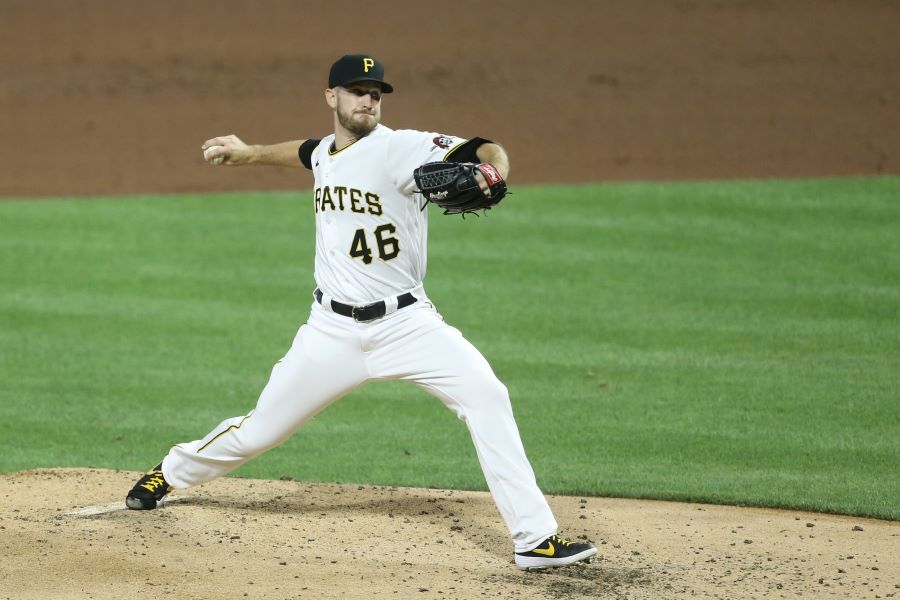 You can never have too much pitching, and in a season in which the playoffs will be expanded and injuries are more common than ever, you can certainly never have too much relief pitching. For a Twins team staring down an AL postseason gauntlet of right-leaning lineups like those of the Yankees, Astros, White Sox, and Blue Jays, an extra right-hander in the bullpen could make an especially big difference. The Twins have a quartet of reliable right-handed relievers at the back end of their bullpen, in Tyler Duffey, Trevor May, Sergio Romo, and Tyler Clippard. However, since the beginning of the season, Cody Stashak and Zack Littell have been hampered by injuries; Randy Dobnak has been pressed into full-time starting duty; and Jorge Alcala and Matt Wisler have proved to be electric, but not necessarily consistent. If further injuries were to diminish the team down the stretch—and it’s not as though May has a spotless health track record, and Romo and Clippard are suspect based purely on age—the team might suddenly face a surprising deficit of relief depth. Here are four guys who could solve that problem before it arises, and who would make the bullpen tangibly better even if everyone stays healthy. Chris Stratton, Pittsburgh Pirates: A 2012 first-round pick by the Giants, Stratton has always seemed to be a bit less than the sum of his parts. He was a starter in the San Francisco farm system, and pitched in their rotation at the big-league level for about a year and a half, but after being dealt to the Angels last March, he put up an 8.59 ERA in five starts and two relief appearances. In mid-May, the Angels sold Stratton’s contract to the Pirates, who made him a full-time reliever. Ever since, there have been signs of major progress. In 61 innings out of the Pittsburgh bullpen, Stratton has 65 strikeouts and 20 walks, and his DRA- of 80 suggests he’s been 20 percent better than an average pitcher overall. More importantly, and more excitingly, there’s reason to hope for even more from him. The move to relief has allowed Stratton to add about 1.5 miles per hour on his fastball, which now sits at 93.3, and mechanically, there are things the Twins could do to safely push him even higher. Not only that, but Stratton’s average spin rate on the pitch is 2,609 revolutions per minute. Stratton is a spin monster. His curveball and slider also have elite raw spin rates. So far, though, Stratton rates poorly on Active Spin leaderboards, indicating that he’s not getting much of the movement he could be getting from that spin. Again, mechanically, there are ways to shore up that shortcoming. Even in the meantime, though, the stuff is distinctly playing up, leading to a great strikeout rate and consistently weak contact by opponents. There are non-mechanical changes Stratton can still make, too. He’s still throwing his fastball more than he would if the Twins were to bring him in, especially against left-handed batters. His changeup is missing bats at a very high rate, but he’s not trusting it much. His curve is a fourth pitch right now, with his slider having taken a big step forward, and the wise thing to do might be to shelve the curve until the offseason and have him lean more on the slider and change. Under team control through 2023, Stratton wouldn’t be a rental arm. He could step right into Trevor May’s role in 2021, and could do many of the things May and Romo are doing for the team even this year. The price tag wouldn’t be exorbitant, though, because his results don’t yet speak to his full potential in this role, and because the Pirates are eagerly and aggressively rebuilding. Daniel Bard, Colorado Rockies: If Stratton’s path to this point seems serpentine, it’s nothing compared to that of Bard. After years in the pitching wilderness, his career derailed by the yips, Bard has reasserted his dominance as the Rockies’ closer in his first big-league action since 2013. There’s much less tinkering to do with Bard than there could be with Stratton. He throws 98 miles per hour, has a wicked slider, and will also mix in a changeup, but his usages of each pitch are already nearly optimal, and although he rates low on active spin, he’s not a candidate for a mechanical overhaul—for multiple reasons. What Bard can be, though, is an immediately dominant reliever and a no-questions-asked incumbent as the setup man in 2021. He’s under team control for two more years after this one, and his track record suggests so much risk (what if his control deserts him again?) that his price tag should be fairly low. The Rockies will be sellers at the deadline; they’re in freefall. It’s just a matter of whether they hear an offer that gets them interested enough to deal Bard, rather than hold onto him. Félix Peña, Los Angeles Angels: Much has been made of the Twins’ increased reliance on sliders this season, but the Angels put them to shame. Anaheim has been the slider capital of MLB for a few years now, not in terms of effectiveness, but in terms of sheer volume. Peña is one excellent example: he throws his slider about 35 percent of the time, often using it to set up his sinker, rather than vice-versa. Used as a swingman and a long reliever at various points over his three-year career, Peña has blossomed despite uncertainty about his role. He has a career DRA- of 87, marking him as clearly above-average, and this year is shaping up to be his best. Batters whiff on over half their swings against that slider, and while his sinker doesn’t miss bats the way one might hope, it hums in at 94 miles per hour and tends to avoid the barrels of opponents’ bats. Like Stratton, Peña is under team control through 2023. The Angels are a team in a very strange position, though, and might prefer to get back a similar pitcher further from free agency, or take a chance on a pair of prospects, rather than hold a solid middle reliever without much upside. Mychal Givens, Baltimore Orioles: Against right-handed batters, Givens is a monster. Though he stands not much taller than Romo, Givens weighs about 70 pounds more, and throws from a similar arm angle. That is to say, he comes down the mound with good posture, and is far from being a submariner, but his arm angle is essentially sidearm. From that slot, and with his excellent extension at release, his 94-MPH heat (which can rise to 97 when he’s going for a big strikeout) looks much faster. As most hurlers with deliveries like that do, Givens struggles against opposite-handed batters. Lefties have hit him for power since the start of 2019. In fact, he’s a bit more prone to hard contact in the air than would be ideal, even against righties. He strikes out more than enough batters to be a qualified late-inning arm, though, and because he leans heavily on his fastball against righties, he’s become a more consistent presence than he used to be. The Twins might ask Givens to try throwing his slider more, against both lefties and righties. The pitch does miss bats, but he doesn’t use it much, and particularly buries it against lefties. If he could get comfortable going to it more often, he would be less vulnerable to power. As a team, the Twins have helped multiple pitchers clear the mental hurdles to using breaking balls against opposite-handed batters since Wes Johnson came in. In fact, they’ve also gotten multiple guys to throw more changeups to same-handed batters, and Givens’s changeup could add a nice extra dimension for him against righties, too. Unlike the hurlers about, Givens is due to be a free agent after 2021. The Orioles have a dwindling number of chances to deal him, and rental relievers tend to fetch little at the deadline, so they’re likely to be active listeners until Monday afternoon. If the Twins make a move, Givens would insure them against injuries to any of their top righties, slide in opposite Clippard (with his notable reverse splits) in a middle-relief role, and make it less important that Littell and/or Stashak regain full health and effectiveness in 2020. They’d also have a solid setup arm for next year. *** Over four pieces, I’ve recommended 14 players on whom the Twins should at least inquire before Monday’s deadline. None are stars, but all of them are good fits for the team’s apparent needs, and most look like average-plus players with upside of one kind or another. Eleven of them are under team control beyond this season. Three teams have two players each in the group: the Giants, with Donovan Solano and Tony Watson; the Orioles, with Hanser Alberto and Givens; and the Pirates, with Erik González and Stratton. That creates the possibility that the Twins could do some one-stop shopping, and give up something substantial only in return for upgrading multiple roster spots and having control of at least one good player beyond 2020. Personally, I’m intrigued most by González and Stratton, and think the Twins should check in regularly with the Pirates through Monday afternoon to see if a chance to scoop them up materializes. Failing that, though, there are many ways for the team to subtly improve, positioning themselves better for the seeding fight that will be September and giving them more ways to win series once they reach the playoffs. They can be aggressive, without giving up players to whom the fan base is overly attached.
 -
Since Taylor Rogers has been a bit less effective this summer than over the previous two years, the Twins could use a bit more southpaw stability in their bullpen. With a few days left before the trade deadline, they have an opportunity to make just such an addition.Historically, left-handed relievers go hand-in-hand with the trade deadline. Almost every contending team could use one more good lefty for tough matchups in middle relief, and yet, teams in rebuilding modes still often have such a pitcher lurking on their roster. This season, thanks to the three-batter minimum rule and its constraints on reliever usage, the demand figures to be a bit dampened, but the Twins are among the teams who could still be in the market. Here are four left-handed pen men who could add something meaningful to Minnesota’s pitching staff, without costing too much. Tony Watson, San Francisco Giants: Let’s start with the bad news on Watson: his velocity is down. Like, way down, from the mid-90s at his peak, to 93 miles per hour over the past two seasons, to an unimpressive 90 miles per hour. Watson is 35, so a velocity drop isn’t exactly unexpected, but this one is severe, even given the interrupted ramp-up to this strange season. Watson’s success has never been rooted in overpowering speed, though, and he’s making up for the lost zip on his heat by doing the other things he’s always done well. He’s leaning more on his changeup (against righties) and his slider (against lefties), and he’s pitching from a lower arm slot than ever. Watson has always excelled at matching his release point on all of his pitches, creating deception even without wicked movement. He throws plenty of strikes, and gets ground balls. He’s only making the prorated share of $3 million, on a one-year deal, so the Twins could take him on without any major financial concerns, and given that he’s a rental, the Giants have little leverage in trade negotiations. Adam Morgan, Philadelphia Phillies: When healthy, Morgan has been an above-average reliever for each of the last three seasons, across a total of 134 innings. He’s well on his way to making that a four-year streak this year, mostly by ratcheting up the usage of his wipeout slider. Opposing hitters have whiffed on over 30 percent of the sliders Morgan has thrown in 2020, and that makes him an excellent fit for the Twins’ bullpen. They’re a team that loves good sliders and pitchers who throw them at a high rate, and Morgan is even starting to show confidence in the pitch against right-handed batters. Just 30 years old and with a fastball that can still scrape 95 miles per hour, Morgan could be a medium-term investment for the team. He’s under team control through 2021, making him a potential, partial replacement for Trevor May or Sergio Romo in a setup role for next season. He doesn’t require heavy engineering in order to be effective, but with an unusually deep repertoire for a reliever, he offers Wes Johnson plenty with which to work. In the short term, he could be a bridge between the Twins’ high-octane right-handed arms, including coming into messy situations and pitching out of them, thereby circumventing the three-batter rule. Given the Phillies’ place in the standings and their fan base’s feelings toward their bullpen, prying Morgan loose doesn’t figure to take a major haul. Justin Wilson, New York Mets: Wilson sports a hideous ERA, but that belies his real performance for the Mets, both this season and throughout last year. In fact, in all but half of one year over the last half-decade, Wilson has been a fairly fearsome power arm, relying heavily on a riding four-seamer and a cutter that can neutralize both left- and right-handed batters. Wilson has seven holds for the Mets this season. In their first two games of the season, he entered in the eighth inning, with New York nursing one-run leads, and each time, he struck out Ronald Acuña, Jr. on four pitches to end the frame, with the tying run on base. At his best, Wilson focuses solely on the four-seamer and the cutter, each of which have high spin rates and force unproductive contact at the top of the strike zone. His problems, when they do crop up, tend to be in mechanical rhythm and alignment, and those are precisely the problems Johnson has been adept at solving over the last two years. The cutter has been a minor specialty of the Twins, too, although more so among starting pitchers. Wilson’s ability to handle batters on either side of the plate (and the remaining potential for the team to reintroduce the true slider into his arsenal) make Wilson an appealing potential addition, and his impending free agency should make him a cheap target. Angel Perdomo, Milwaukee Brewers: Let’s get weird, and dare to have a little bit of fun. Imagining the Twins paying a princely sum for arbitration-eligible, Taylor Rogers-redundant Josh Hader isn’t that fun. Imagining them swooping in to grab a pitcher who could still have major upside and be under team control for even longer, at virtually no cost, is fun. Angel Perdomo is fun. Twins fans who remember Perdomo’s unsuccessful and soporific (and, literally, balky) appearance during Kenta Maeda’s near-no-hitter might not think so, but there’s a ton to like about the gigantic left-hander. His fastball sits at 95 miles per hour, and touches 97. He has a slider with two-plane movement and a decent changeup. The Brewers signed him as a minor-league free agent in November 2018, and in 2019, he split his season between Double- and Triple-A. He pitched 69 innings, struck out 107, and walked 44. Obviously, Perdomo’s control issues are the major drawback for any team considering relying on him in the short- or long-term future. There are good reasons to wonder whether he’ll ever be able to fix those problems, but there’s also plenty for Wes Johnson to work with. Perdomo stays closed as he strides down the mound, but could delay trunk rotation better through landing with his front foot. If he did so, he would also be able to achieve more stability and better posture from foot strike through release, and he’d therefore be more likely to throw consistent strikes. Mechanically, those are things the Brewers don’t necessarily emphasize, but we’ve seen multiple pitchers get better in these areas since Johnson came aboard. Perdomo would be a bit of a project, and for that reason, he’d cost very little. Having a six-foot-eight lefty figure out control late and blossom in their mid- to late-20s is hardly unheard-of, though, and if the Twins could land him and help him implement key tweaks, he’d be under team control for six more years, in addition to lightening the load of key relievers down the stretch. MORE FROM TWINS DAILY — Latest Twins coverage from our writers — Recent Twins discussion in our forums — Follow Twins Daily via Twitter, Facebook or email Click here to view the article
-
4 Left-Handed Relievers the Twins Could Target This Week
Matthew Trueblood posted an article in Twins
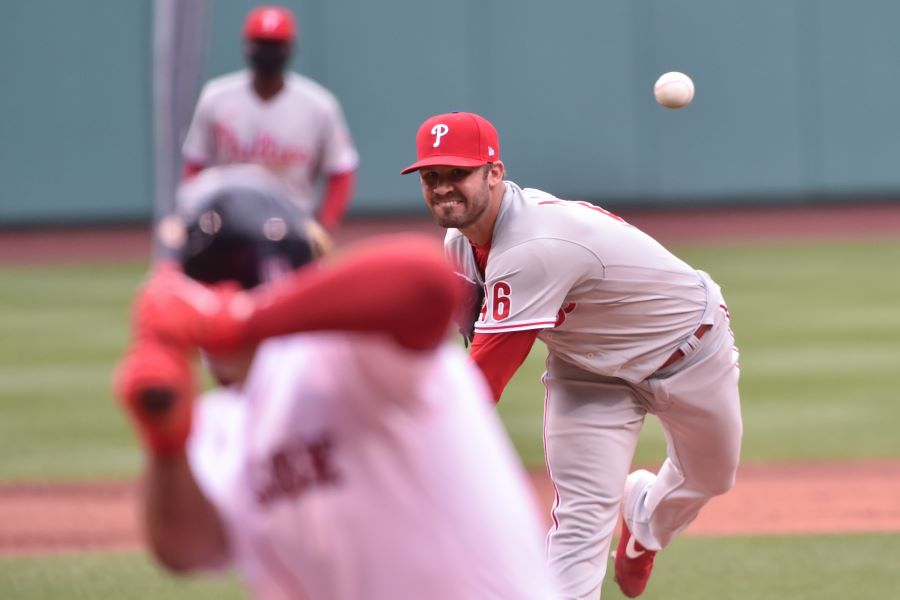 Historically, left-handed relievers go hand-in-hand with the trade deadline. Almost every contending team could use one more good lefty for tough matchups in middle relief, and yet, teams in rebuilding modes still often have such a pitcher lurking on their roster. This season, thanks to the three-batter minimum rule and its constraints on reliever usage, the demand figures to be a bit dampened, but the Twins are among the teams who could still be in the market. Here are four left-handed pen men who could add something meaningful to Minnesota’s pitching staff, without costing too much. Tony Watson, San Francisco Giants: Let’s start with the bad news on Watson: his velocity is down. Like, way down, from the mid-90s at his peak, to 93 miles per hour over the past two seasons, to an unimpressive 90 miles per hour. Watson is 35, so a velocity drop isn’t exactly unexpected, but this one is severe, even given the interrupted ramp-up to this strange season. Watson’s success has never been rooted in overpowering speed, though, and he’s making up for the lost zip on his heat by doing the other things he’s always done well. He’s leaning more on his changeup (against righties) and his slider (against lefties), and he’s pitching from a lower arm slot than ever. Watson has always excelled at matching his release point on all of his pitches, creating deception even without wicked movement. He throws plenty of strikes, and gets ground balls. He’s only making the prorated share of $3 million, on a one-year deal, so the Twins could take him on without any major financial concerns, and given that he’s a rental, the Giants have little leverage in trade negotiations. Adam Morgan, Philadelphia Phillies: When healthy, Morgan has been an above-average reliever for each of the last three seasons, across a total of 134 innings. He’s well on his way to making that a four-year streak this year, mostly by ratcheting up the usage of his wipeout slider. Opposing hitters have whiffed on over 30 percent of the sliders Morgan has thrown in 2020, and that makes him an excellent fit for the Twins’ bullpen. They’re a team that loves good sliders and pitchers who throw them at a high rate, and Morgan is even starting to show confidence in the pitch against right-handed batters. Just 30 years old and with a fastball that can still scrape 95 miles per hour, Morgan could be a medium-term investment for the team. He’s under team control through 2021, making him a potential, partial replacement for Trevor May or Sergio Romo in a setup role for next season. He doesn’t require heavy engineering in order to be effective, but with an unusually deep repertoire for a reliever, he offers Wes Johnson plenty with which to work. In the short term, he could be a bridge between the Twins’ high-octane right-handed arms, including coming into messy situations and pitching out of them, thereby circumventing the three-batter rule. Given the Phillies’ place in the standings and their fan base’s feelings toward their bullpen, prying Morgan loose doesn’t figure to take a major haul. Justin Wilson, New York Mets: Wilson sports a hideous ERA, but that belies his real performance for the Mets, both this season and throughout last year. In fact, in all but half of one year over the last half-decade, Wilson has been a fairly fearsome power arm, relying heavily on a riding four-seamer and a cutter that can neutralize both left- and right-handed batters. Wilson has seven holds for the Mets this season. In their first two games of the season, he entered in the eighth inning, with New York nursing one-run leads, and each time, he struck out Ronald Acuña, Jr. on four pitches to end the frame, with the tying run on base. At his best, Wilson focuses solely on the four-seamer and the cutter, each of which have high spin rates and force unproductive contact at the top of the strike zone. His problems, when they do crop up, tend to be in mechanical rhythm and alignment, and those are precisely the problems Johnson has been adept at solving over the last two years. The cutter has been a minor specialty of the Twins, too, although more so among starting pitchers. Wilson’s ability to handle batters on either side of the plate (and the remaining potential for the team to reintroduce the true slider into his arsenal) make Wilson an appealing potential addition, and his impending free agency should make him a cheap target. Angel Perdomo, Milwaukee Brewers: Let’s get weird, and dare to have a little bit of fun. Imagining the Twins paying a princely sum for arbitration-eligible, Taylor Rogers-redundant Josh Hader isn’t that fun. Imagining them swooping in to grab a pitcher who could still have major upside and be under team control for even longer, at virtually no cost, is fun. Angel Perdomo is fun. Twins fans who remember Perdomo’s unsuccessful and soporific (and, literally, balky) appearance during Kenta Maeda’s near-no-hitter might not think so, but there’s a ton to like about the gigantic left-hander. His fastball sits at 95 miles per hour, and touches 97. He has a slider with two-plane movement and a decent changeup. The Brewers signed him as a minor-league free agent in November 2018, and in 2019, he split his season between Double- and Triple-A. He pitched 69 innings, struck out 107, and walked 44. Obviously, Perdomo’s control issues are the major drawback for any team considering relying on him in the short- or long-term future. There are good reasons to wonder whether he’ll ever be able to fix those problems, but there’s also plenty for Wes Johnson to work with. Perdomo stays closed as he strides down the mound, but could delay trunk rotation better through landing with his front foot. If he did so, he would also be able to achieve more stability and better posture from foot strike through release, and he’d therefore be more likely to throw consistent strikes. Mechanically, those are things the Brewers don’t necessarily emphasize, but we’ve seen multiple pitchers get better in these areas since Johnson came aboard. Perdomo would be a bit of a project, and for that reason, he’d cost very little. Having a six-foot-eight lefty figure out control late and blossom in their mid- to late-20s is hardly unheard-of, though, and if the Twins could land him and help him implement key tweaks, he’d be under team control for six more years, in addition to lightening the load of key relievers down the stretch. MORE FROM TWINS DAILY — Latest Twins coverage from our writers — Recent Twins discussion in our forums — Follow Twins Daily via Twitter, Facebook or email
 -
Yesterday, we discussed three utility bats with enough upside to entice the Twins to make a significant trade before Monday’s deadline. Today, let’s discuss three more. These guys wouldn’t send shockwaves through the American League Central race, but they could alter the Twins’ fortunes at the end of the season, or in the playoffs.While it might be tempting to stand pat, given the potential that the Twins will get Josh Donaldson, Byron Buxton, and Mitch Garver back over the next two weeks, the team would do well to think a bit more aggressively. Because of the way seeding is determined in this year’s 16-team playoff format, finishing first in the tight AL Central race does matter. Anyone the team can acquire over the next few days could not only help them accomplish that goal, and thus better position them for October, but play a bigger and more helpful role when that time of year comes, relative to players like Jake Cave and Ehire Adrianza. Here are three guys whom the Twins could acquire cheaply, but who fit really well on the team’s roster as it stands right now. Hanser Alberto, IF, Baltimore Orioles: My last piece focused on players (Donovan Solano, Erik González, and Howie Kendrick) who consistently hit the ball especially hard, or cluster their batted balls into the highest-value launch-angle band, or both. Alberto is not that kind of hitter. He’s posted one of the league’s lowest average exit velocities and hard-hit rates in each of the last two seasons. Yet, he’s batted .306 since the start of 2019, and his BABIP is .323. He does it, first and foremost, by being able to make contact at an exceptional rate. He’s one of the most aggressive hitters in baseball, chasing pitches outside the zone almost half the time and swinging over 70 percent of the time when pitchers do throw him strikes. He’s not a dead pull hitter, so teams can’t shift effectively against him. Even when they try, though, Alberto is good at foiling the strategy. He shares the skill apparently possessed by Luis Arraez, to see where the defense is positioned and aim batted balls to open spots. He has multiple swings, really, and switches between them according to the situation and his vision of the field in front of him. At 27 and with decent overall athleticism, Alberto plays above-average defense at both second and third base. He’d fit perfectly into the holes created by Adrianza’s ineffectiveness, Donaldson’s absence, and Arraez’s balky knee. He’s also a capable corner outfielder, and the team could certainly use a right-handed backup to Max Kepler and Eddie Rosario at those positions. Under team control through 2022, Alberto is nonetheless a low-cost target, because the Orioles are unlikely to tender him contracts all the way from here to his free agency, and they’re eager to continue rebuilding through trades and high draft picks. Phillip Ervin, OF, Cincinnati Reds: Ervin is one of the great buy-low opportunities available in baseball right now, even if his ultimate ceiling is quite low. The 28-year-old former first-round pick has dreadful numbers so far, his swing still out of whack as he tries to get untracked. Still, his core skills make him a great potential fit for the Twins. Ervin has great plate discipline, rarely expanding his strike zone. He has a short, line-drive swing, but there’s room for him to generate much more power without losing much in the way of contact rate. He’s short and thickset, and his athleticism allows him to play very good defense in either outfield corner. Like Kepler, he always looks a bit uncomfortable in center field, not out of a dearth of speed or athleticism, but based on angles and reads. Still, as a lefty-mashing corner outfielder, he’d fill an important need for Minnesota. If the Twins could make a few of the changes they’d certainly try to make with Ervin, over the offseason to come, they’d have years to reap the rewards. He’s under team control through 2025. In the meantime, he’d cover the team in case of a tough matchup against a lefty, allow them to keep both Rosario and Kepler fresher down the stretch, and give the team an option off the bench if the right situation arises come October. Thanks to the ugly numbers he’s put up and the Reds’ outfield logjam, however, he’d be available at a bargain rate this week. Charlie Culberson, SS/2B, Atlanta Braves: The grandson of Ted Williams-era Red Sox outfielder Leon Culberson is now playing in his eighth MLB season, making him the longest-tenured big-leaguer in the family. He’s never had more than 322 plate appearances in a season, and has been on the brink of being pushed out of the game multiple times, but Culberson has shown a knack for hitting left-handed pitching, comes up with clutch hits at a surprising rate, and acquits himself well at any infield position. Since his modest reinvention in the Dodgers system half a decade ago, Culberson has been more about power than contact or plate discipline, and he only has average power. Still, he’s been a competent hitter each of the last two seasons with Atlanta (as his 93 DRC+ since the start of 2018 attests). He’d be an upgrade over Adrianza, and good insurance against an injury to Jorge Polanco. He signed a minor-league deal this winter, and although technically under team control through 2021, he’s a non-tender candidate come the offseason. The Braves are contenders, but they have such a crowded infield picture that Culberson (despite being active all season) has just seven plate appearances to date. He’s the cheapest potential acquisition the Twins could make, while still clearly improving the roster spot currently occupied by Adrianza, once the club regains relatively full health. MORE FROM TWINS DAILY — Latest Twins coverage from our writers — Recent Twins discussion in our forums — Follow Twins Daily via Twitter, Facebook or email Click here to view the article
-
 While it might be tempting to stand pat, given the potential that the Twins will get Josh Donaldson, Byron Buxton, and Mitch Garver back over the next two weeks, the team would do well to think a bit more aggressively. Because of the way seeding is determined in this year’s 16-team playoff format, finishing first in the tight AL Central race does matter. Anyone the team can acquire over the next few days could not only help them accomplish that goal, and thus better position them for October, but play a bigger and more helpful role when that time of year comes, relative to players like Jake Cave and Ehire Adrianza. Here are three guys whom the Twins could acquire cheaply, but who fit really well on the team’s roster as it stands right now. Hanser Alberto, IF, Baltimore Orioles: My last piece focused on players (Donovan Solano, Erik González, and Howie Kendrick) who consistently hit the ball especially hard, or cluster their batted balls into the highest-value launch-angle band, or both. Alberto is not that kind of hitter. He’s posted one of the league’s lowest average exit velocities and hard-hit rates in each of the last two seasons. Yet, he’s batted .306 since the start of 2019, and his BABIP is .323. He does it, first and foremost, by being able to make contact at an exceptional rate. He’s one of the most aggressive hitters in baseball, chasing pitches outside the zone almost half the time and swinging over 70 percent of the time when pitchers do throw him strikes. He’s not a dead pull hitter, so teams can’t shift effectively against him. Even when they try, though, Alberto is good at foiling the strategy. He shares the skill apparently possessed by Luis Arraez, to see where the defense is positioned and aim batted balls to open spots. He has multiple swings, really, and switches between them according to the situation and his vision of the field in front of him. At 27 and with decent overall athleticism, Alberto plays above-average defense at both second and third base. He’d fit perfectly into the holes created by Adrianza’s ineffectiveness, Donaldson’s absence, and Arraez’s balky knee. He’s also a capable corner outfielder, and the team could certainly use a right-handed backup to Max Kepler and Eddie Rosario at those positions. Under team control through 2022, Alberto is nonetheless a low-cost target, because the Orioles are unlikely to tender him contracts all the way from here to his free agency, and they’re eager to continue rebuilding through trades and high draft picks. Phillip Ervin, OF, Cincinnati Reds: Ervin is one of the great buy-low opportunities available in baseball right now, even if his ultimate ceiling is quite low. The 28-year-old former first-round pick has dreadful numbers so far, his swing still out of whack as he tries to get untracked. Still, his core skills make him a great potential fit for the Twins. Ervin has great plate discipline, rarely expanding his strike zone. He has a short, line-drive swing, but there’s room for him to generate much more power without losing much in the way of contact rate. He’s short and thickset, and his athleticism allows him to play very good defense in either outfield corner. Like Kepler, he always looks a bit uncomfortable in center field, not out of a dearth of speed or athleticism, but based on angles and reads. Still, as a lefty-mashing corner outfielder, he’d fill an important need for Minnesota. If the Twins could make a few of the changes they’d certainly try to make with Ervin, over the offseason to come, they’d have years to reap the rewards. He’s under team control through 2025. In the meantime, he’d cover the team in case of a tough matchup against a lefty, allow them to keep both Rosario and Kepler fresher down the stretch, and give the team an option off the bench if the right situation arises come October. Thanks to the ugly numbers he’s put up and the Reds’ outfield logjam, however, he’d be available at a bargain rate this week. Charlie Culberson, SS/2B, Atlanta Braves: The grandson of Ted Williams-era Red Sox outfielder Leon Culberson is now playing in his eighth MLB season, making him the longest-tenured big-leaguer in the family. He’s never had more than 322 plate appearances in a season, and has been on the brink of being pushed out of the game multiple times, but Culberson has shown a knack for hitting left-handed pitching, comes up with clutch hits at a surprising rate, and acquits himself well at any infield position. Since his modest reinvention in the Dodgers system half a decade ago, Culberson has been more about power than contact or plate discipline, and he only has average power. Still, he’s been a competent hitter each of the last two seasons with Atlanta (as his 93 DRC+ since the start of 2018 attests). He’d be an upgrade over Adrianza, and good insurance against an injury to Jorge Polanco. He signed a minor-league deal this winter, and although technically under team control through 2021, he’s a non-tender candidate come the offseason. The Braves are contenders, but they have such a crowded infield picture that Culberson (despite being active all season) has just seven plate appearances to date. He’s the cheapest potential acquisition the Twins could make, while still clearly improving the roster spot currently occupied by Adrianza, once the club regains relatively full health. MORE FROM TWINS DAILY — Latest Twins coverage from our writers — Recent Twins discussion in our forums — Follow Twins Daily via Twitter, Facebook or email
 -
With Mitch Garver, Josh Donaldson, and Byron Buxton injured, the Twins could use both punch and depth from the right side. Fortunately, there are a handful of solid players who might be available in trades before the deadline next Monday.This trade deadline will be much quieter than most, and it’s hard to guess or gauge what kinds of deals will happen. Certainly, teams will approach the possibility of trading for players on expiring contracts differently than they would in other years, since this truncated season and the expanded playoffs change the payoff for a successful short-term upgrade. Clubs also figure to be a bit more wary to take on big contracts, because of the widespread uncertainty about the medium-term future of free agency and team finances. Still, moves will happen, and the Twins are a surefire playoff team with clear, low-grade needs. That could position them well to make a deal or two. It’s not just the fact that Garver, Buxton, and Donaldson are sidelined right now that puts the Twins in a position of needing some extra right-handed hitting help. Ehire Adrianza, who was a pleasant surprise as a versatile bench option in 2018 and 2019, has faded, and now looks more like the poor hitter who first made his way to Minnesota. Adrianza is also aging, with his defensive prowess fading and his speed gone, so he offers little for the Twins at this point. Luis Arraez continues to play on a sore knee, and it’s affecting his game. Marwin Gonzalez has a .673 OPS. The team should try to hedge their bets, in case some significant subset of this sextet remains unable to help the club much come October. Here are the three best guys who should be available and could fill key needs. We’ll discuss three more tomorrow. Donovan Solano, IF, San Francisco Giants: Though some teammates have nicknamed him Donny Barrels, Solano doesn’t actually generate much power. That’s almost where the bad news ends, though, because Solano has become a genuinely interesting right-handed hitter, capable of squaring the ball up as consistently as anyone in baseball and of playing all over the infield. Solano uses a toe tap/leg kick hybrid, so his swing sometimes looks a bit arrhythmic, but he makes contact within the zone and uses the whole field. He’s also one of the best players in baseball at clustering his batted balls within the launch-angle band that leads to the best outcomes. Among players with 100 or more batted balls in 2019, the Twins had the seventh-, ninth-, and 10th-best hitters at that, in Arraez, Jorge Polanco, and Jason Castro. Solano, however, was first, in a group that included 406 total players. He’s among the leaders thus far in 2020, too, which is part of the reason for his .340 batting average since the start of 2019. At either second or third base, Solano is a roughly average fielder. He’s played shortstop for 150 innings over the last two seasons, too. He’s not a good baserunner, but Solano would be a massive upgrade over Adrianza and Gonzalez, pushing the former off the roster and letting the latter play more outfield as needed. He would even make a fine platoon partner for Arraez, and failing that, he would provide insurance against Arraez needing to sit for a prolonged period with that nagging knee problem. With the ability to use the whole field but a tendency to pull the ball, and with his emphasis on getting on plane with the incoming pitch so frequently, Solano’s a perfect fit for this team and its philosophy. The only real drawback in dealing for Solano is that the Giants are in a position to ask for something meaningful in return. That doesn’t mean the Twins would need to part with any of their name-brand prospects, but Solano has a year of team control remaining beyond this year, so Minnesota would have to offer enough not only to outbid other interested teams, but to make Giants general manager Scott Harris and president of baseball operations Farhan Zaidi decide to pull the trigger now, rather than wait and see what offers they get over the winter. Erik González, SS, Pittsburgh Pirates: Twins fans are familiar with González, who was an Indians farmhand and Francisco Lindor understudy until he was traded to Pittsburgh in November 2018. He’s long been considered a good-glove, no-hit shortstop, and fairly so. He’s not a match for the physical stereotype of such players, though: he’s tall and strong. That’s why what’s happening this year is pretty exciting. Here’s the quicksheet box atop González’s player page at Baseball Savant: Download attachment: EG 2020.PNG That’s shocking. González, who has just one home run in 2020 and seven in 497 career plate appearances, is among the league leaders in average exit velocity and in hard-hit rate this year. He’s even elevating the ball more. Nor is all of that happening by accident. He’s genuinely hammering the baseball, and it’s thanks to a new swing path. González hits with a high, early leg kick, and in the past, that led to a somewhat lunging swing in which he swung down through the point of contact. Watching his swing, especially over the last two seasons, was oddly jarring: it’s a very familiar swing path to anyone who grew up watching baseball even in the 1990s or early 2000s, but there are few players left in the game who swing that way. This year, the leg kick is the same, though he’s doing some different things with his back leg as he drives forward. He’s also creating more torque, by keeping his front shoulder closed and starting his bat barrel with a rearward movement to get his swing going. For the most part, though, he’s just changed that swing plane. He’s still not a fly-ball hitter, but he’s getting his hands down and creating a path up into the strike zone. Plate discipline is far from a strength for González; he has 14 strikeouts and no walks this year. That’s not a bad strikeout rate, though, for a hitter who is generating plenty of potential power. González’s swing is fairly grooved, at this point, with a high in-zone contact rate but a lot of whiffs when he expands the zone. The Twins have taught precisely that style of hitting recently, though, so he’d be a good fit for them, philosophically. More than Solano, González would be an option at shortstop even if Polanco were to get hurt, requiring a longer-term stopgap. He’s also a superior defender at second base. The Pirates have control over González through 2022, but they’re already trying to find playing time for Kevin Newman, Cole Tucker, and Adam Frazier, and infield prospects Ke’Bryan Hayes and Oneil Cruz are knocking on the door. That his surface-level production doesn’t yet match the change in the batted-ball data could help keep his price tag down. Pittsburgh desperately needs pitching help, and the Twins have enough depth in that area to get a deal done without feeling a major pang. Howie Kendrick, 1B/2B, Washington Nationals: No serious baseball fan needs an introduction to Kendrick at this point. If his 15-year career hadn’t previously exposed you to him, his game-winning homer in Game 7 of last year’s World Series ought to have done so. Kendrick is the prototypical “professional hitter,” with far more pure hit tool than power, but enough of the latter to come through when that’s what the team needs. At 37 years old, Kendrick is painfully slow afoot, and he hasn’t played a meaningful amount anywhere but first or second base in over half a decade. His lack of versatility would make him an imperfect replacement for Adrianza, and would limit his ability to help the team cope with Donaldson’s continued absence, but his bat is valuable all by itself. He’s exceptionally good at avoiding strikeouts. He uses the big part of the field, especially when he has an opportunity to move a runner over. He has good enough plate discipline to draw walks, especially because he’ll foul off good pitches on the edges of the zone if necessary. When the Twins face a tough left-handed pitcher in a playoff setting, either as a starter or in a key late-game situation, it’d be awfully nice to have Kendrick available. He has a mutual option for 2021, which the bizarre market might actually bring into play, but the price tag to acquire him would be lower than those on either Solano or González. MORE FROM TWINS DAILY — Latest Twins coverage from our writers — Recent Twins discussion in our forums — Follow Twins Daily via Twitter, Facebook or email Click here to view the article


