


Twins Video
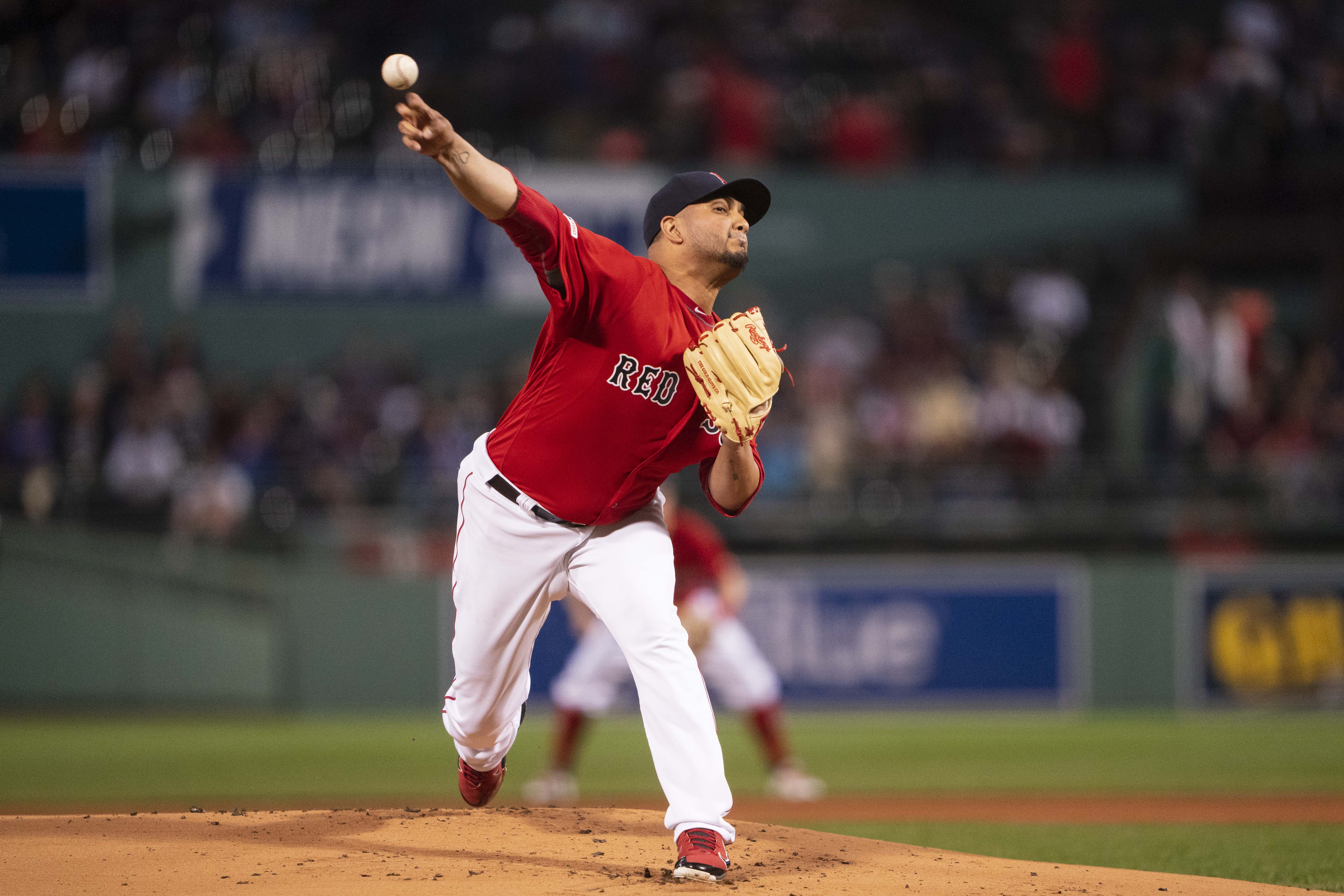
For the second time in three winters, the Twins have signed a Venezuelan right-hander in his early 30s, with an impressive MLB track record but nightmarish recent results, to a late-winter minor-league deal. I don’t expect Jhoulys Chacín to be with the organization much longer in 2020 than Aníbal Sánchez was in 2018, because the Twins already have a number of potentially solid starting pitching options. However, one thing about Chacín should stand out for Twins fans: his slider usage. Like the first pitching acquisition of Minnesota’s offseason (Matt Wisler), this final one seems to reflect the Twins’ confidence that a good, heavily-used slider is a solid foundation on which to build success.
Chacín came up with the Rockies in 2009, and had impressive seasons with them. From 2014-16, however, he ran into a lot of trouble, especially with injuries. In that three-year span, he had a 4.81 ERA, in just 234 total innings. He was worth -0.4 WARP, according to Baseball Prospectus. Between March 2015 and the end of 2016, he belonged to five different teams.
His career on life support, Chacín signed with the pitching-starved Padres for $1.75 million for 2017—but found something there that (briefly, anyway) changed the course of his career again. After never having thrown his slider even a quarter of the time, he threw it 34 percent of the time that season, stayed healthy, topped 180 innings, had a 3.89 ERA, and racked up 2.2 WARP. That earned him his two-year deal with the Brewers prior to 2018.
Here’s where his slider usage has gone since.

In 2018, Chacín had a season fully in line with his early brilliance in Colorado. Using his slider as his primary pitch, he befuddled and frustrated opposing batters. They couldn’t get him to throw anything straight, and that left them hacking away at stuff they had no chance to drive. He made 35 starts during the season and another three in October, as the Brewers pitched him virtually every time he could be said to be on full rest. Their strategy was to get him out of the game before opponents could see him a third time, thereby giving them a chance to find the range on his slider and square it up.
Then, in 2019: disaster. As Chacín leaned more and more heavily on the slider, batters started taking its measure. His whiff rate (as a percentage of all sliders thrown) tumbled to a career-low 11.5 percent, not because it flattened out or he stopped commanding it, but because batters started sitting on it. They still didn’t exactly obliterate the pitch; they did most of their damage when he gave in and threw a sinker. However, the attempt to push his slider usage up to 50 percent while still starting was a failure. He found the point of diminishing returns for that pitch, in his particular repertoire, in the role he was asked to fill.
That point is higher, of course, if you’re a short-burst reliever. Opponents have far fewer chances to see and adjust to the pitch, and they can’t make you the focal point of their preparation for any particular game. Matt Wisler threw his slider 45 percent of the time even in 2018, but that wasn’t anywhere near the red line for slider use, because (although he began his big-league career in the Braves’ rotation) he’s a pure reliever. In 2019, though, he really pushed the envelope.

It backfired, though in a different way than Chacín’s strategy did. (That shouldn’t shock us; they’re very different pitchers and pitches.) Wisler still induced whiffs on a very impressive 20.9 percent of all his sliders, which is why the Twins liked him enough to claim him on waivers and slot him into the bullpen plans. By Baseball Prospectus’s advanced metrics (where 100 is league-average and lower is better), he had an 85 DRA-, a 93 cFIP, and was worth an impressive 0.7 WARP in just 51 innings last year. His ERA, however, was 5.61, because batters cracked 10 home runs against him in that relatively small body of work.
The problem wasn’t that Wisler’s slider lacked bite, or that batters began gearing up and swinging out of their shoes against him. Nor was it (solely) the aeroball that victimized him. The problem was simple: most pitchers’ sliders are prone to occasional slips, and some of those slips lead to balls in dirt, and some lead to balls left fat in the center of the zone. By throwing so many sliders, Wisler opened himself up to a few too many of those slips, and too many of them landed in hittable areas.
Pitch mix is always a delicate balance. Every pitcher must calibrate and tinker with their pitch interactions in their own, unique way. However, there are certain thresholds that should raise one’s eyebrows, and they can make for easy adjustments, especially for teams with ample confidence in their pitching infrastructure. That last modifier definitely describes the Twins, which is probably why they were happy to take their chances with Wisler and Chacín. If Wes Johnson can help them each hone their pitch balance the way he did with multiple Twins last season, these small investments could pay big dividends.
MORE FROM TWINS DAILY
— Latest Twins coverage from our writers
— Recent Twins discussion in our forums
— Follow Twins Daily via Twitter, Facebook or email





Recommended Comments
Create an account or sign in to comment
You need to be a member in order to leave a comment
Create an account
Sign up for a new account in our community. It's easy!
Register a new accountSign in
Already have an account? Sign in here.
Sign In Now