



Matthew Trueblood
-
Posts
1,033 -
Joined
-
Last visited
Content Type
Profiles
News
Minnesota Twins Videos
2026 Minnesota Twins Top Prospects Ranking
2022 Minnesota Twins Draft Picks
Minnesota Twins Free Agent & Trade Rumors, Notes, & Tidbits
Guides & Resources
2023 Minnesota Twins Draft Picks
The Minnesota Twins Players Project
2024 Minnesota Twins Draft Picks
2025 Minnesota Twins Draft Pick Tracker
2026 Minnesota Twins Draft Tracker: Picks & Bonuses
Forums
Blogs
Events
Store
Downloads
Gallery
Everything posted by Matthew Trueblood
-
 In listening to the latest episode of the Views From 314 Ft. podcast, a companion to the excellent Yankees blog of the same name, I was struck by the way co-hosts Randy Wilkins and Derek Albin (and even guest Bradford William Davis, who covers the Yankees for the New York Daily News) discussed the serious threats to the Yankees’ American League supremacy for the coming season. In short, they don’t see any. Before you crack wise about blithe or arrogant Yankees fans, let me assure you: that’s not who any of those three are. They’re sharp baseball analysts, and they were giving their honest appraisal of the competitive landscape. Hearing them weigh the Twins and find them wanting, not only because of the teams’ recent playoff history but because the Twins’ roster lacks the depth of star power the Yankees boast, helped bring the problem the Twins face into clearer focus. For my email newsletter, Penning Bull, I do weekly, tiered power rankings of all 30 teams. Almost since the inception of that project, two months ago, I have had the Yankees as the third team (and only AL club) in my top tier. The Twins have steadily crept up the rankings, and are now one of only two teams (and the only AL club) in the second tier. Overall, I rate the Yankees as the third-best team in baseball, and the Twins as the fifth-best. Despite putting the tiers into the rankings to more clearly establish where big differences exist, though, I think I’d failed to consider the full implications of having them separated by a tier. Few people are higher on the roster the Twins have built than I am, and I was startled at the way even Yankees partisans were assuming New York to have a clear path to the World Series. Yet, I’m more or less projecting the same thing. Let’s talk about how that could change. Let’s consider a trade that, while probably pushing the Twins front office beyond its comfort zone, could tilt the table in a meaningful way. Reds ace Luis Castillo came up in plenty of trade rumors this winter. Most notably, in fact, he was tied to the Yankees, when Ken Rosenthal reported that Cincinnati had demanded New York shortstop Gleyber Torres in return for him. Nothing ever came all that close to happening, though, and with the season a few weeks away, Castillo looks likely to be the Opening Day starter for the Reds. At 28 and with three years of team control left, Castillo is very much in his prime, and he’s a prime trade chip for a Reds team unlikely to be especially competitive in 2021. Over the last two seasons, he has 261 innings pitched and a DRA- of 64. A Baseball Prospectus statistic, DRA- represents a pitcher’s contribution to run prevention on an indexed scale, where 100 is league-average and lower is better. Castillo is elite. The only pitcher to qualify for the ERA title and best Castillo’s DRA- in each of the last two seasons is Jacob deGrom. As you’d imagine, acquiring Castillo would be difficult. It’s far from impossible, though, because of the Reds’ financial and competitive realities, and because of what the Twins can offer them. I have a particular package in mind, and will share it tomorrow, but for now, drop a comment and let us know what you'd be willing to surrender in order to land Castillo. Continued in Part 2.
 -
Despite the offseason departure of Trevor May, the Twins have a stable of true flamethrowers in their bullpen. If things pan out the way the team plans, they could have their hardest-throwing relief corps to date.According to FanGraphs, the highest average fastball velocity (combining four-seamers and two-seamers or sinkers) by Twins relievers in any season came in 2019. That’s probably no surprise to most Twins fans. That year’s staff was anchored by May, Taylor Rogers, and Tyler Duffey, but only had soft-tossing Sergio Romo for half the year, and didn’t have the aging Tyler Clippard at all. Even fringe relievers on that 2019 team (like Austin Adams, Matt Magill, Fernando Romero and Sean Poppen) routinely topped 95 miles per hour. Overall, that unit averaged 93.3 miles per hour with their heat. I used Baseball Prospectus’s Depth Charts, which divvy up the projected relief innings to the team by percentages of the total workload, to assign weights to the contributions of each likely Twins reliever to the team’s 2021 average velocity. That system currently has 14 pitchers in line to get at least some relief innings, and while it’s likely that that number will end up even higher, that makes for a pretty robust estimate of the likely distribution of work. Alex Colomé, Rogers, Duffey, Jorge Alcalá, and Hansel Robles each project to get 10 percent of the total relief work for the team over the course of the season. That’s a typical way to project reliever usage, though in reality, any set of five relievers is likely to see at least one case of severe attrition, be it due to injury or poor performance. Caleb Thielbar, Cody Stashak, Ian Gibaut, Lewis Thorpe, and Devin Smeltzer are each projected for at least 6 percent of the relief innings, but no more than 9 percent. Edwar Colina, Shaun Anderson, Dakota Chalmers, and Ian Hamilton are projected to play small roles. In Baseball Prospectus 2021, the annual publication, each of these players (save Gibaut and Colina, who don’t have entries, and Chalmers, who has yet to pitch in the big leagues) have listed PECOTA projections for their 2021 fastball velocities. For those 11 pitchers, therefore, I used the projected velocity figure in the book. For Gibaut and Colina, I used the average velocities they’ve each shown in their brief big-league careers. For Chalmers, I used 94.5 miles per hour, toward the low end of reported velocity ranges listed on his most recent scouting reports. The results: this year’s Twins project to have an average bullpen fastball velocity of 95.3 miles per hour. That would rival the 2017 and 2018 Yankees, who sported the hardest average fastballs on record. Alcalá is the projected leader, north of 99 miles per hour, but the power of even their veteran arms sets this team apart from most. Obviously, many things could happen to prevent this projection from coming to fruition. Robles has been sitting in the 94-96 range this spring; he’s projected to better approximate his career averages and average 98 mph. Smeltzer, Thorpe, and Randy Dobnak (currently projected solely as a starter by BP) could end up eating far more relief innings than expected, for reasons good or bad. That’s to say nothing of the chances that one of the team’s harder throwers gets hurt. Consider, though, that this assumes Jhoan Duran appears only as a starter, if at all, in the majors. It doesn’t include any projected work for Glenn Sparkman, whose fastball hums in at around 95 miles per hour. It could be that, if one of those two were pressed into service in the place of someone like Stashak or Smeltzer, the Twins will even top this sizzling projection. As last year’s very stout bullpen proved, speed isn’t everything. In fact, some of the team’s most effective pitchers will be using their fastballs relatively sparingly, preferring to attack primarily with breaking stuff. That’s the formula the team has followed over the last two successful seasons. However, it’s exciting to imagine that even letting one of the game’s hardest throwers leave via free agency might not stop this team from being one of the most intimidating relief units in baseball history. MORE FROM TWINS DAILY — Latest Twins coverage from our writers — Recent Twins discussion in our forums — Follow Twins Daily via Twitter, Facebook or email Click here to view the article
-
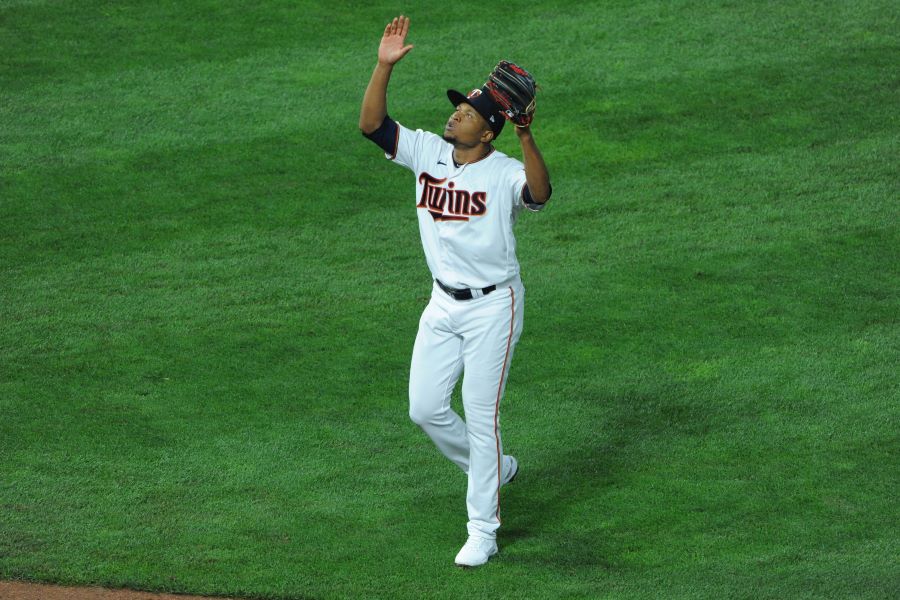 According to FanGraphs, the highest average fastball velocity (combining four-seamers and two-seamers or sinkers) by Twins relievers in any season came in 2019. That’s probably no surprise to most Twins fans. That year’s staff was anchored by May, Taylor Rogers, and Tyler Duffey, but only had soft-tossing Sergio Romo for half the year, and didn’t have the aging Tyler Clippard at all. Even fringe relievers on that 2019 team (like Austin Adams, Matt Magill, Fernando Romero and Sean Poppen) routinely topped 95 miles per hour. Overall, that unit averaged 93.3 miles per hour with their heat. I used Baseball Prospectus’s Depth Charts, which divvy up the projected relief innings to the team by percentages of the total workload, to assign weights to the contributions of each likely Twins reliever to the team’s 2021 average velocity. That system currently has 14 pitchers in line to get at least some relief innings, and while it’s likely that that number will end up even higher, that makes for a pretty robust estimate of the likely distribution of work. Alex Colomé, Rogers, Duffey, Jorge Alcalá, and Hansel Robles each project to get 10 percent of the total relief work for the team over the course of the season. That’s a typical way to project reliever usage, though in reality, any set of five relievers is likely to see at least one case of severe attrition, be it due to injury or poor performance. Caleb Thielbar, Cody Stashak, Ian Gibaut, Lewis Thorpe, and Devin Smeltzer are each projected for at least 6 percent of the relief innings, but no more than 9 percent. Edwar Colina, Shaun Anderson, Dakota Chalmers, and Ian Hamilton are projected to play small roles. In Baseball Prospectus 2021, the annual publication, each of these players (save Gibaut and Colina, who don’t have entries, and Chalmers, who has yet to pitch in the big leagues) have listed PECOTA projections for their 2021 fastball velocities. For those 11 pitchers, therefore, I used the projected velocity figure in the book. For Gibaut and Colina, I used the average velocities they’ve each shown in their brief big-league careers. For Chalmers, I used 94.5 miles per hour, toward the low end of reported velocity ranges listed on his most recent scouting reports. The results: this year’s Twins project to have an average bullpen fastball velocity of 95.3 miles per hour. That would rival the 2017 and 2018 Yankees, who sported the hardest average fastballs on record. Alcalá is the projected leader, north of 99 miles per hour, but the power of even their veteran arms sets this team apart from most. Obviously, many things could happen to prevent this projection from coming to fruition. Robles has been sitting in the 94-96 range this spring; he’s projected to better approximate his career averages and average 98 mph. Smeltzer, Thorpe, and Randy Dobnak (currently projected solely as a starter by BP) could end up eating far more relief innings than expected, for reasons good or bad. That’s to say nothing of the chances that one of the team’s harder throwers gets hurt. Consider, though, that this assumes Jhoan Duran appears only as a starter, if at all, in the majors. It doesn’t include any projected work for Glenn Sparkman, whose fastball hums in at around 95 miles per hour. It could be that, if one of those two were pressed into service in the place of someone like Stashak or Smeltzer, the Twins will even top this sizzling projection. As last year’s very stout bullpen proved, speed isn’t everything. In fact, some of the team’s most effective pitchers will be using their fastballs relatively sparingly, preferring to attack primarily with breaking stuff. That’s the formula the team has followed over the last two successful seasons. However, it’s exciting to imagine that even letting one of the game’s hardest throwers leave via free agency might not stop this team from being one of the most intimidating relief units in baseball history. MORE FROM TWINS DAILY — Latest Twins coverage from our writers — Recent Twins discussion in our forums — Follow Twins Daily via Twitter, Facebook or email
 -
The Twins would not have non-tendered Matt Wisler in December if they didn’t believe they would find another Wisler by April. It’s not even March 10, but they're showing off the new model. Hello, Glenn Sparkman.The similarities between Sparkman’s and Wisler’s career paths are superficial, but not meaningless. Both were, for a considerable time in the minors and some in the majors, starters. Both joined the Twins sporting bloated, hideous ERAs for their big-league careers, though in both cases, part of that could be ascribed to having pitched for bad teams. Both also had sliders that regularly induced swings and misses by opposing hitters, and both had increased their usage of that pitch substantially in the year prior to the Twins scooping them up. Both had three years of team control left when Minnesota got them. Sparkman’s first outing with the Twins this spring was inauspicious, but there was a hint of things to come even there. He threw 24 pitches against the Red Sox that day, and 15 of them were sliders. When he pitched Sunday against the Rays, though, a full-fledged Wislerization was on display. Of 17 total pitches, 13 were sliders. Sparkman showed the ability to throw the pitch as a chase offering in the dirt; to land it for a strike with a more curveball-like shape; and to tilt it to work up in the zone, giving hitters another look off of his high, mid-90s fastball. Wisler’s emergence with the Twins was not purely about cranking up his slider usage to a historic number. The team also helped him make a notable mechanical adjustment, improving his command. Sparkman has long struggled with control problems, himself, and has had funky mechanics over the years. He moved from the third- to the first-base side of the pitching rubber in 2019, which helped, but he still threw too few strikes. The problems are multivariate: a collapsing glove side, leading to poor posture and little stability into release; chaotic timing in his leg kick and the break of his hands; and a very sloppy push off of his back foot. Most of those undesirable markers are still there, so far this spring. They’re all incrementally improved, though, and that’s really all Sparkman needed to do. With merely below-average command of a nasty slider-fastball combination, he can expect to have results very similar to the ones Wisler enjoyed in 2020. Unlike Wisler, Sparkman has never had top prospect status, and he didn’t pinball to a half-dozen teams before Minnesota. He’s been a Royals fixture over the last few years, which tells much of what there is to tell about his career to date. Sparkman is actually a few months older than Wisler, and will turn 29 in May. Because he went to college and signed at 21, though, his arc through pro baseball has been quite different. Unlike Wisler, therefore, he has yet to exhaust his minor-league options. Whereas the Twins had to carry Wisler all year in 2020, it’s likely that Sparkman will start the season at the alternate site, and that even if and when he reaches the parent club, he’ll be shuttled back to St. Paul a time or two during the balance of the campaign. If this works — and neither his minor mechanical improvements nor the willingness to throw his slider with Wisleresque frequency guarantees that; it’s just an encouraging start — then Sparkman could have more staying power in the organization. Once added to the 40-man roster, he will have to win a constant battle to stay on it, but there won’t be any pressure to remain perpetually available out of the pen. He’s a hard-throwing, slider-slinging right-hander who offers the team all of Wisler’s upside, plus bonus flexibility. At this point, only disastrous control trouble or an injury is likely to prevent Sparkman from at least getting a chance to audition for a lasting role in the bullpen with his retooled repertoire and cleaned-up delivery — even if he has to wait until mid-May or so to get it. MORE FROM TWINS DAILY — Latest Twins coverage from our writers — Recent Twins discussion in our forums — Follow Twins Daily via Twitter, Facebook or email Click here to view the article
-
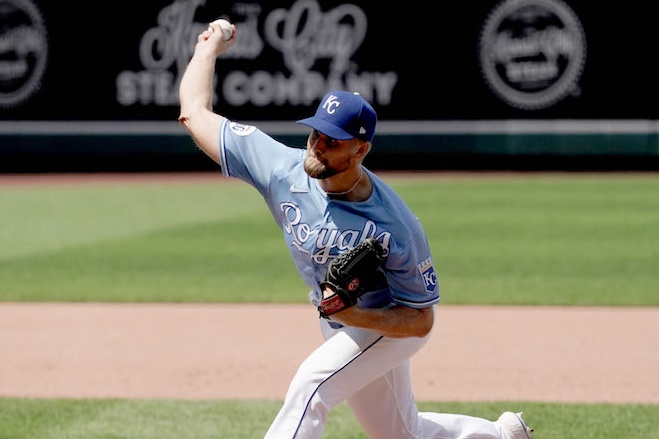 The similarities between Sparkman’s and Wisler’s career paths are superficial, but not meaningless. Both were, for a considerable time in the minors and some in the majors, starters. Both joined the Twins sporting bloated, hideous ERAs for their big-league careers, though in both cases, part of that could be ascribed to having pitched for bad teams. Both also had sliders that regularly induced swings and misses by opposing hitters, and both had increased their usage of that pitch substantially in the year prior to the Twins scooping them up. Both had three years of team control left when Minnesota got them. Sparkman’s first outing with the Twins this spring was inauspicious, but there was a hint of things to come even there. He threw 24 pitches against the Red Sox that day, and 15 of them were sliders. When he pitched Sunday against the Rays, though, a full-fledged Wislerization was on display. Of 17 total pitches, 13 were sliders. Sparkman showed the ability to throw the pitch as a chase offering in the dirt; to land it for a strike with a more curveball-like shape; and to tilt it to work up in the zone, giving hitters another look off of his high, mid-90s fastball. Wisler’s emergence with the Twins was not purely about cranking up his slider usage to a historic number. The team also helped him make a notable mechanical adjustment, improving his command. Sparkman has long struggled with control problems, himself, and has had funky mechanics over the years. He moved from the third- to the first-base side of the pitching rubber in 2019, which helped, but he still threw too few strikes. The problems are multivariate: a collapsing glove side, leading to poor posture and little stability into release; chaotic timing in his leg kick and the break of his hands; and a very sloppy push off of his back foot. Most of those undesirable markers are still there, so far this spring. They’re all incrementally improved, though, and that’s really all Sparkman needed to do. With merely below-average command of a nasty slider-fastball combination, he can expect to have results very similar to the ones Wisler enjoyed in 2020. Unlike Wisler, Sparkman has never had top prospect status, and he didn’t pinball to a half-dozen teams before Minnesota. He’s been a Royals fixture over the last few years, which tells much of what there is to tell about his career to date. Sparkman is actually a few months older than Wisler, and will turn 29 in May. Because he went to college and signed at 21, though, his arc through pro baseball has been quite different. Unlike Wisler, therefore, he has yet to exhaust his minor-league options. Whereas the Twins had to carry Wisler all year in 2020, it’s likely that Sparkman will start the season at the alternate site, and that even if and when he reaches the parent club, he’ll be shuttled back to St. Paul a time or two during the balance of the campaign. If this works — and neither his minor mechanical improvements nor the willingness to throw his slider with Wisleresque frequency guarantees that; it’s just an encouraging start — then Sparkman could have more staying power in the organization. Once added to the 40-man roster, he will have to win a constant battle to stay on it, but there won’t be any pressure to remain perpetually available out of the pen. He’s a hard-throwing, slider-slinging right-hander who offers the team all of Wisler’s upside, plus bonus flexibility. At this point, only disastrous control trouble or an injury is likely to prevent Sparkman from at least getting a chance to audition for a lasting role in the bullpen with his retooled repertoire and cleaned-up delivery — even if he has to wait until mid-May or so to get it. MORE FROM TWINS DAILY — Latest Twins coverage from our writers — Recent Twins discussion in our forums — Follow Twins Daily via Twitter, Facebook or email
 -
Over the last three seasons, Max Kepler has taken over 1,400 plate appearances. His batting average on balls in play (BABIP) over that span is .240, but projection systems forecast a number closer to .270 in 2021. Why? Should we believe them?This question gets at important basic concepts in math and behavioral psychology, but first and foremost, let’s examine the issue through a purely baseball lens. Kepler is a young player who still has room and time to improve. He didn’t hit the ball as hard in 2020 as he had in 2019, but as I discussed last week, part of that problem stemmed from his approach. He did show an improved ability to do damage on pitches low and in, which had been a problem in the second half of his breakout season. It’s insufficient to say he’s had bad luck over the last three years, but improved outcomes on batted balls are pretty easy to imagine for him. On the other hand, he’s an extreme pull hitter, and an extreme fly-ball hitter. In the age of defensive shifts, that’s a recipe for a very low BABIP. No batter with at least 1,200 plate appearances over the last three seasons has as low a BABIP as Kepler’s, but two of the other four under .250 (Kyle Seager and Kole Calhoun) have the same offensive profile as Kepler. They all rely on hitting the ball over the wall, drawing walks, and avoiding calamitous strikeout rates to have success. (The other two BABIP laggards, as one might guess, are Albert Pujols and Edwin Encarnación.) Still, consider the throwaway fact in the middle of that paragraph. No batter who has played anywhere near as much as Kepler has over the last three years has had as low a BABIP. That’s where this becomes a question of math and prediction. Regression alone should pull Kepler significantly toward the league’s average BABIP, which hovers around .300, or at least toward some average for players of his type. If we ignore the base rate for BABIP throughout the league, we will commit a systematic error in assessing the chances that Kepler improves in 2021. Baseball Prospectus’s PECOTA projection system offers percentile projections for every player. Kepler’s 50th-percentile projection for 2021 pegs him at 3.2 Wins Above Replacement Player (WARP), with a sturdy 119 DRC+. That’s good even for a corner outfielder. To get there, though, it projects Kepler to post a .270 BABIP. It gives him a BABIP to match his last three years, at .240, only in his 5th-percentile projection, wherein he hits .207/.286/.372 overall. Other projection systems mostly see Kepler’s BABIP landing around .260 in 2021. Does that mean all of these are overestimating him? It could. It’s pretty clear that Kepler needs to make adjustments at the plate. He’s evolved impressively over the course of his big-league career, but his inability to generate hard contact against certain pitches or to certain parts of the park (plus the inherent disadvantage of being a lefty pull hitter, in the modern game) is putting a cap on his potential production. Even so, it’s more likely that we’ll see him improve in those ways this year, as long as he’s healthy and keeps his strike zone organized, than that he’ll continue to be the league’s worst BABIP guy. Count that as one more reason to expect a solid season from a reliably solid player. Just remember, too, that we don't yet know how he'll make those adjustments, or what it might cost in other facets of his game. MORE FROM TWINS DAILY — Latest Twins coverage from our writers — Recent Twins discussion in our forums — Follow Twins Daily via Twitter, Facebook or email Click here to view the article
-
Max Kepler Has the Lowest BABIP in Baseball. Can He Fix It?
Matthew Trueblood posted an article in Twins
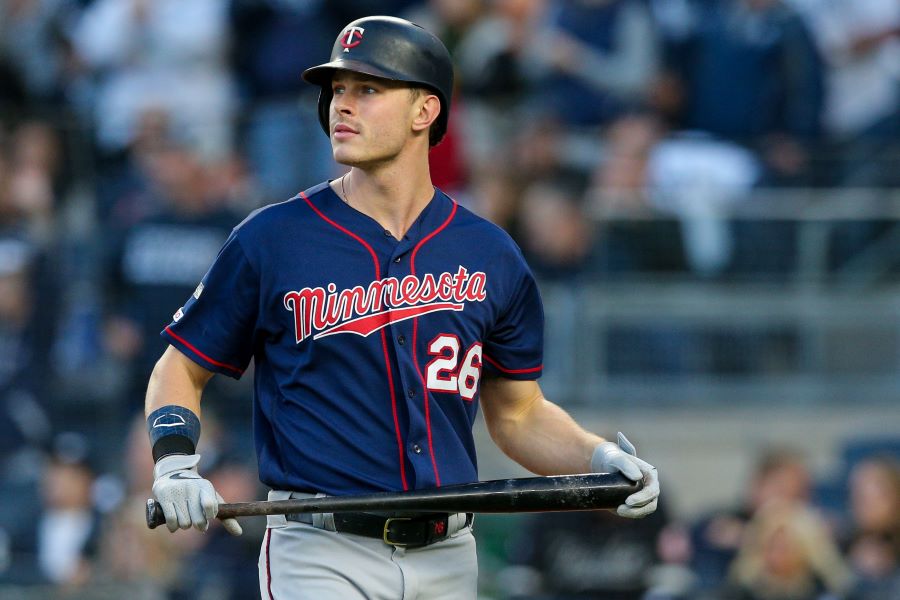 This question gets at important basic concepts in math and behavioral psychology, but first and foremost, let’s examine the issue through a purely baseball lens. Kepler is a young player who still has room and time to improve. He didn’t hit the ball as hard in 2020 as he had in 2019, but as I discussed last week, part of that problem stemmed from his approach. He did show an improved ability to do damage on pitches low and in, which had been a problem in the second half of his breakout season. It’s insufficient to say he’s had bad luck over the last three years, but improved outcomes on batted balls are pretty easy to imagine for him. On the other hand, he’s an extreme pull hitter, and an extreme fly-ball hitter. In the age of defensive shifts, that’s a recipe for a very low BABIP. No batter with at least 1,200 plate appearances over the last three seasons has as low a BABIP as Kepler’s, but two of the other four under .250 (Kyle Seager and Kole Calhoun) have the same offensive profile as Kepler. They all rely on hitting the ball over the wall, drawing walks, and avoiding calamitous strikeout rates to have success. (The other two BABIP laggards, as one might guess, are Albert Pujols and Edwin Encarnación.) Still, consider the throwaway fact in the middle of that paragraph. No batter who has played anywhere near as much as Kepler has over the last three years has had as low a BABIP. That’s where this becomes a question of math and prediction. Regression alone should pull Kepler significantly toward the league’s average BABIP, which hovers around .300, or at least toward some average for players of his type. If we ignore the base rate for BABIP throughout the league, we will commit a systematic error in assessing the chances that Kepler improves in 2021. Baseball Prospectus’s PECOTA projection system offers percentile projections for every player. Kepler’s 50th-percentile projection for 2021 pegs him at 3.2 Wins Above Replacement Player (WARP), with a sturdy 119 DRC+. That’s good even for a corner outfielder. To get there, though, it projects Kepler to post a .270 BABIP. It gives him a BABIP to match his last three years, at .240, only in his 5th-percentile projection, wherein he hits .207/.286/.372 overall. Other projection systems mostly see Kepler’s BABIP landing around .260 in 2021. Does that mean all of these are overestimating him? It could. It’s pretty clear that Kepler needs to make adjustments at the plate. He’s evolved impressively over the course of his big-league career, but his inability to generate hard contact against certain pitches or to certain parts of the park (plus the inherent disadvantage of being a lefty pull hitter, in the modern game) is putting a cap on his potential production. Even so, it’s more likely that we’ll see him improve in those ways this year, as long as he’s healthy and keeps his strike zone organized, than that he’ll continue to be the league’s worst BABIP guy. Count that as one more reason to expect a solid season from a reliably solid player. Just remember, too, that we don't yet know how he'll make those adjustments, or what it might cost in other facets of his game. MORE FROM TWINS DAILY — Latest Twins coverage from our writers — Recent Twins discussion in our forums — Follow Twins Daily via Twitter, Facebook or email
 -
Though yet to pitch to his front-of-the-rotation potential over a full season, José Berríos has shown more than flashes of that talent level. He’s two years from free agency. Here’s what a contract extension to make him a Twins fixture could look like.Unlike teammate Byron Buxton, Berríos lacks clear, directly applicable, recent precedent deals around whom we can build an imagined agreement. That doesn’t directly make a deal less likely, but it does illustrate the roadblocks both sides face at this stage. More so than batters, pitchers tend to have either demonstrated their full ability or suffered setbacks that stunted their development and blunted their earning power by this point in their careers. Berríos, who will turn just 27 in May, is a rare case. His age means time is still on Berríos’s side. He’s been quite healthy and durable throughout his professional career. He’s been consistently above-average, with DRA- figures of 91, 95, 91, and 95 over the last four years, according to Baseball Prospectus. (DRA- is an advanced statistic that expresses a pitcher’s contribution to run prevention on a scale indexed to 100, such that that number is average, and lower is better.) Yet, there remain several reasons to believe that he could be even better, and his inability to take the step from solid mid-rotation starter to ace has delayed any discussion of a deal until now. Few pitchers sign extensions taking them past their walk year when they have between four and five years of big-league service, as Berríos does right now. Most have either already signed deals, shielding them from the risks associated with being a good young pitcher, or are willing to bear the remaining risks and go to free agency. Kyle Hendricks signed such a deal in March 2019, with the same amount of service time. It guaranteed him $55.5 million, with a club option that could carry the total value up to $70 million. Because it took effect only in 2020, the deal really extended the Cubs’ control over Hendricks by three or four seasons, not two or three, and it kept intact the $7.4-million deal he’d already signed for 2019. Hendricks’s deal isn’t a great template for a Berríos one, though, for multiple reasons. Hendricks was already 29 when he signed the deal. He signed it during a period in which extensions were being signed at an unprecedented pace, often on very team-friendly terms. He has also consistently been much better than Berríos has been, albeit with a skill set that leads many to (unfairly) question his staying power. It was only those factors that even led the deal to happen at that time. To build a potential Berríos deal, then, we need to be creative and willing to work without the safety net of history. Getting an extension done would require the same from both the Twins organization and Berríos’s agents at Wasserman Media Group. Using what we know about arbitration and free agency and the outcomes we can imagine for Berríos over the next half-decade, it is possible to build a contract that would serve the interests on both sides of the negotiating table. Firstly, remember that Berríos and the Twins already agreed on a $6.1-million deal for 2021. This deal wouldn’t need to replace that one, but let’s suggest that it do so, by converting his 2021 salary to $5.7 million, with a $1.5-million signing bonus. That would be a net raise of $1.1 million for this year, and making more than that a bonus would protect Berríos somewhat in the event of any turn in the progress of the pandemic that leads to fewer than 162 games being played. (Signing bonuses, unlike salaries, are not prorated in such cases.) For 2022, the deal could give Berríos a raise to $9.1 million, plus a $3.3-million signing bonus. That would protect Berríos in the event of a work stoppage that either truncates or wipes out the season. The total payout of $12.4 million would be right in line with what Berríos would be likely to earn via arbitration, given a strong 2021, and it would represent an investment on the part of the Twins. In exchange, Berríos would give up some of the potential riches of a free-agent payday immediately after 2022. In 2023 and 2024, a deal could pay him $15 million annually. Then, in 2025, Berríos could hold a $16-million player option, with the right to decline it and pursue free agency heading into his age-31 season. That structure offers the player both security and considerable upside, since if he pitches well at age 30, he would be in line for a fine payday by declining his option after 2024. The Twins, though, could seek to add one more wrinkle. When Jake Arrieta signed with the Phillies prior to the 2018 season, two seasons were guaranteed. After that, Arrieta held a player option, but the Phillies had the right to void it by guaranteeing that salary for 2020, 2021, and 2022. A similar, slightly souped-up version of that could work here, too. If Berríos were positioned to turn down his player option after 2024, but the Twins believed he projected well over the following few years, they could void the player option by exercising a club option worth a total of $60 million over three years, 2025-27. To summarize, the deal proposed here would extend the Twins’ club control over Berríos by at least two years, and as many as five. Berríos would be guaranteed as much as $59.5 million in new money, or $43.5 million if he elected free agency rather than exercise the player option at the end of 2024. He’d get immediate security, and the Twins would gain long-term cost certainty in a rotation chock-full of question marks beyond 2021. At its maximum, if the Twins voided Berríos’s option and exercised their lucrative one, he would make $109.6 million over the next seven years, with $103.5 million of that being “new” money. He’d still be positioned to hit free agency at age 33. This is a complicated contract. Its structure would be unusual in multiple ways. The Arrieta deal happened very late in an offseason, and Arrieta was a free agent. This is a very different situation. The fact that these countervailing interests and possibilities have to be accounted for, resulting in such a complex package, underscores the improbability that the team and the player will find common ground this spring. If they do, though, this is how it might look, and it’s a (potential) deal about which Twins fans should feel good. MORE FROM TWINS DAILY — Latest Twins coverage from our writers — Recent Twins discussion in our forums — Follow Twins Daily via Twitter, Facebook or email Click here to view the article
-
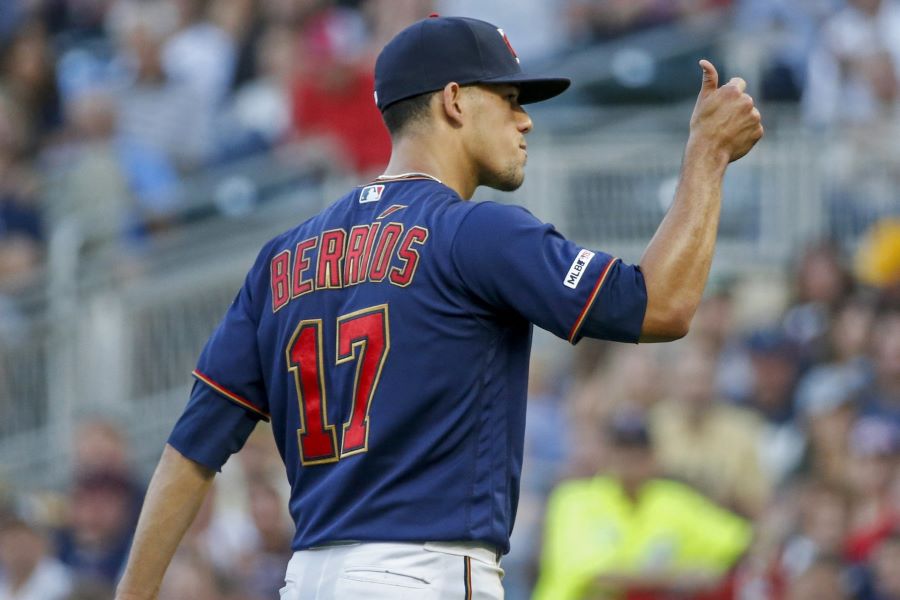 Unlike teammate Byron Buxton, Berríos lacks clear, directly applicable, recent precedent deals around whom we can build an imagined agreement. That doesn’t directly make a deal less likely, but it does illustrate the roadblocks both sides face at this stage. More so than batters, pitchers tend to have either demonstrated their full ability or suffered setbacks that stunted their development and blunted their earning power by this point in their careers. Berríos, who will turn just 27 in May, is a rare case. His age means time is still on Berríos’s side. He’s been quite healthy and durable throughout his professional career. He’s been consistently above-average, with DRA- figures of 91, 95, 91, and 95 over the last four years, according to Baseball Prospectus. (DRA- is an advanced statistic that expresses a pitcher’s contribution to run prevention on a scale indexed to 100, such that that number is average, and lower is better.) Yet, there remain several reasons to believe that he could be even better, and his inability to take the step from solid mid-rotation starter to ace has delayed any discussion of a deal until now. Few pitchers sign extensions taking them past their walk year when they have between four and five years of big-league service, as Berríos does right now. Most have either already signed deals, shielding them from the risks associated with being a good young pitcher, or are willing to bear the remaining risks and go to free agency. Kyle Hendricks signed such a deal in March 2019, with the same amount of service time. It guaranteed him $55.5 million, with a club option that could carry the total value up to $70 million. Because it took effect only in 2020, the deal really extended the Cubs’ control over Hendricks by three or four seasons, not two or three, and it kept intact the $7.4-million deal he’d already signed for 2019. Hendricks’s deal isn’t a great template for a Berríos one, though, for multiple reasons. Hendricks was already 29 when he signed the deal. He signed it during a period in which extensions were being signed at an unprecedented pace, often on very team-friendly terms. He has also consistently been much better than Berríos has been, albeit with a skill set that leads many to (unfairly) question his staying power. It was only those factors that even led the deal to happen at that time. To build a potential Berríos deal, then, we need to be creative and willing to work without the safety net of history. Getting an extension done would require the same from both the Twins organization and Berríos’s agents at Wasserman Media Group. Using what we know about arbitration and free agency and the outcomes we can imagine for Berríos over the next half-decade, it is possible to build a contract that would serve the interests on both sides of the negotiating table. Firstly, remember that Berríos and the Twins already agreed on a $6.1-million deal for 2021. This deal wouldn’t need to replace that one, but let’s suggest that it do so, by converting his 2021 salary to $5.7 million, with a $1.5-million signing bonus. That would be a net raise of $1.1 million for this year, and making more than that a bonus would protect Berríos somewhat in the event of any turn in the progress of the pandemic that leads to fewer than 162 games being played. (Signing bonuses, unlike salaries, are not prorated in such cases.) For 2022, the deal could give Berríos a raise to $9.1 million, plus a $3.3-million signing bonus. That would protect Berríos in the event of a work stoppage that either truncates or wipes out the season. The total payout of $12.4 million would be right in line with what Berríos would be likely to earn via arbitration, given a strong 2021, and it would represent an investment on the part of the Twins. In exchange, Berríos would give up some of the potential riches of a free-agent payday immediately after 2022. In 2023 and 2024, a deal could pay him $15 million annually. Then, in 2025, Berríos could hold a $16-million player option, with the right to decline it and pursue free agency heading into his age-31 season. That structure offers the player both security and considerable upside, since if he pitches well at age 30, he would be in line for a fine payday by declining his option after 2024. The Twins, though, could seek to add one more wrinkle. When Jake Arrieta signed with the Phillies prior to the 2018 season, two seasons were guaranteed. After that, Arrieta held a player option, but the Phillies had the right to void it by guaranteeing that salary for 2020, 2021, and 2022. A similar, slightly souped-up version of that could work here, too. If Berríos were positioned to turn down his player option after 2024, but the Twins believed he projected well over the following few years, they could void the player option by exercising a club option worth a total of $60 million over three years, 2025-27. To summarize, the deal proposed here would extend the Twins’ club control over Berríos by at least two years, and as many as five. Berríos would be guaranteed as much as $59.5 million in new money, or $43.5 million if he elected free agency rather than exercise the player option at the end of 2024. He’d get immediate security, and the Twins would gain long-term cost certainty in a rotation chock-full of question marks beyond 2021. At its maximum, if the Twins voided Berríos’s option and exercised their lucrative one, he would make $109.6 million over the next seven years, with $103.5 million of that being “new” money. He’d still be positioned to hit free agency at age 33. This is a complicated contract. Its structure would be unusual in multiple ways. The Arrieta deal happened very late in an offseason, and Arrieta was a free agent. This is a very different situation. The fact that these countervailing interests and possibilities have to be accounted for, resulting in such a complex package, underscores the improbability that the team and the player will find common ground this spring. If they do, though, this is how it might look, and it’s a (potential) deal about which Twins fans should feel good. MORE FROM TWINS DAILY — Latest Twins coverage from our writers — Recent Twins discussion in our forums — Follow Twins Daily via Twitter, Facebook or email
 -
Byron Buxton is the Twins’ most entertaining, high-upside player. He’s slated to become a free agent after the 2022 season. What would a contract extension to keep him around beyond that year look like? We do have some relevant precedents to consider.Buxton, 27, is as tough a player to compare to any other as can be found in the modern game. He has all of the individual tools to be one of the game’s dozen best players, but has never assembled and demonstrated them all in conjunction over a full season. Moreover, and relatedly, he’s suffered numerous injuries, which have both slowed his development and made him an impossible player upon whom to rely on an everyday basis. The tantalizing upside of Buxton isn’t something for which the Twins can afford to pay — not because they don’t have enough money to do so, or because he’d be too unwilling to give it up, but because the odds that he will fully realize it are far too long. Any extension for Buxton has to be built around the player he has been to this point in his career, with the understanding that he might not have yet reached his peak and that extending him beyond his term of team control involves the team acknowledging its faith in him and investing in some measure of that upside. Outfielders who attain four-plus years of big-league service rarely sign extensions to take them past their organic free-agent period. Over the last decade, only 16 such players have signed multiyear deals, according to MLB Trade Rumors’s Extension Tracker. Of those, all but a small handful were two-year deals that gave the team cost certainty and the player insurance against a down year, but which didn’t extend the term of team control. Two exceptions offer us a glimpse of a possible Buxton deal’s structure. In March 2012, the Royals signed left fielder Alex Gordon to an extension covering four seasons, plus a player option for 2016. The deal guaranteed Gordon as much as $50 million, if he exercised the option, or $37.5 million, if he opted for free agency after 2015. (He did so, and re-signed with the team for $72 million over four years.) Gordon and the Royals had previously agreed to a one-year deal for 2012 at just under $4.8 million, but the new deal paid him $6 million for that season, with salary increases in each subsequent year. Like Buxton, Gordon was a former second overall pick who took an unusually long time to establish himself as a good player in the big leagues. It was only in the 2011 season, just prior to signing the extension, that he emerged as a full-fledged star. He was considerably better than Buxton in that platform season, with a very broad base of skills (excellent defense, albeit in left field; power; speed; and plate discipline). However, he was also a year older, and got nearly 700 plate appearances in the year that so impressed his team. Buxton had any such opportunity stolen from him in 2020, not only by continued injury trouble, but by the pandemic. Gordon’s similar prospect pedigree and obvious potential make him a fair comp for Buxton, but that deal was so long ago (and the apparent certitude of his future production so much higher) that it’s an imperfect template for a Buxton extension. Our other precedent is much more recent, and shares Buxton’s profile more closely: an extremely athletic, very young, tooled-up center fielder, but with red flags attached to their scouting report when it comes to both plate approach and durability. During the rush of extensions signed in the spring of 2019, the Blue Jays elected to lock up their incumbent center fielder, Randal Grichuk. Although not a Buxton-caliber defender in center, Grichuk had acquitted himself as a semi-regular there, and provided plus defense whenever slid to an outfield corner. In 2018, his first season with the Jays, he had set career highs with 58 extra-base hits and 1.9 WARP, despite not even playing enough to qualify for the batting title. He was 26 during that campaign, and 27 when he signed his deal, as Buxton would be if he signed an extension this spring. Grichuk signed a five-year deal guaranteeing him $52 million. It replaced a one-year deal worth $5 million, and provided him with an immediate raise to $7 million, plus signing bonuses paid out mostly in 2019 and 2020. He would have made $12 million in 2020, had the full season been played, but that was the highest-salaried season of the contract. In each of the next three years, he will make $9.3 million. In 2019, Grichuk delivered 31 home runs, but given his strikeout-to-walk ratio and the way balls flew out of big-league parks that year, that wasn’t an especially impressive figure. He has been worth just 0.6 total WARP since the start of 2019, thanks in part to defensive collapse. At this point, his deal is viewed as moderately bad money, but given the structure of the contract, he’s not a huge burden on the Jays, and he will probably still deliver some value as a corner outfielder and down-lineup power bat over the next season or two. Again, Buxton’s speed and defensive chops give him a higher floor than Grichuk has. Then again, his approach is as hacktastic as Grichuk’s, and his injury track record is impossible to ignore. That’s why he and his agents at Jet Sports Management would probably be open to an extension like Grichuk’s. The Twins might even be able to get him to agree to a deal more like Gordon’s, with four seasons and more modest salary guarantees but a player option for his age-31 season, especially if they’re willing to slightly boost his 2021 salary of $5.1 million, the way each of those deals did. Consider one more relevant precedent, in the news within the last 48 hours: Jackie Bradley, Jr. Like Buxton, Bradley spent his 20s as a brilliant defensive center fielder with obvious offensive tools, but never consistently produced at an above-average level at the plate. Upon reaching free agency (and on the eve of his 31st birthday), Bradley was stranded on the open market, having to sign for two years and $24 million three weeks after spring training began. That’s what awaits Buxton if he doesn’t make good on his potential within the next two seasons; he would and should pounce on a handsome offer to avoid that downside. The only question is whether the Twins would be willing to make such an offer. There’s a strong case to be made for doing so. Again, consider the Bradley signing, by the Brewers. He joins an outfield that already featured three established, highly-paid veterans, in Christian Yelich, Lorenzo Cain, and Avisaíl García. Even without the designated hitter spot into which to stick one of those four, the Brewers wanted Bradley, to balance that corps and cover for its weaknesses. Bradley complements Cain and García, who both hit right-handed, and whose bodies and ages suggest a lack of defensive value in the coming season. He also insures the team against further injury trouble for any of the three incumbents, all of whom have had those issues recently. Keeping Buxton around would similarly balance the Twins’ prospective outfield of the future, currently projected to lean to the left (Alex Kirilloff, Trevor Larnach, and Max Kepler). He wouldn’t block the potential emergence of Gilberto Celestino, because Celestino could and would step in when Buxton deals with injuries or prolonged offensive slumps, as well as spelling the steadier corner outfielders. Given everything Buxton can do on the diamond, and the potential for a true superstar turn, the Twins should be willing to risk carrying him as a semi-regular making an eight-figure salary into the middle of the decade. Buxton should be eager to accept that small infringement on his earning potential, given the security and upside he would gain in the process. MORE FROM MATTHEW Max Kepler Has to Get Aggressive EarlyWhich Pitch Should Kenta Maeda Add in 2021?Alex Kirilloff, and the Truth About Scott Boras and Contract ExtensionsA Good Comp for Jhoan Duran and His Splinker Click here to view the article
-
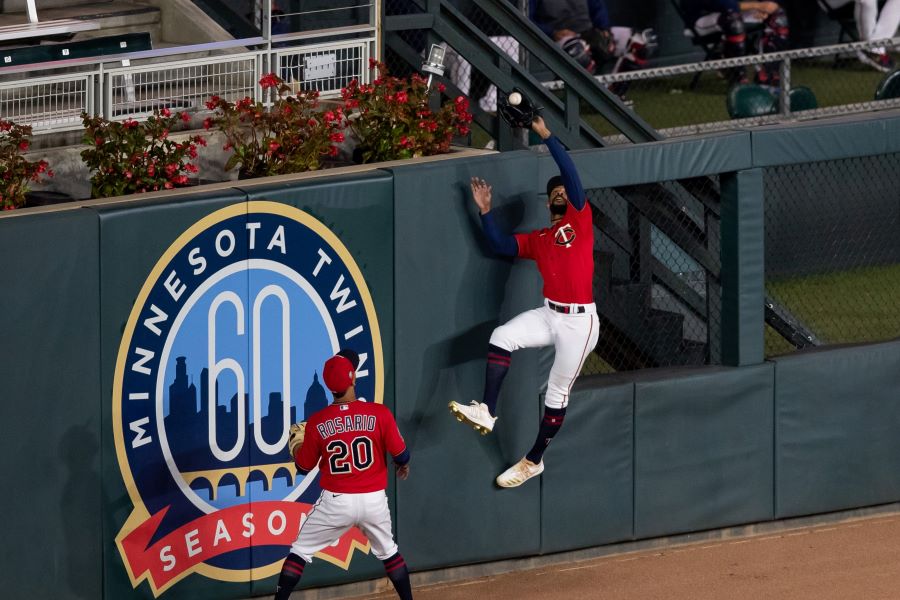 Buxton, 27, is as tough a player to compare to any other as can be found in the modern game. He has all of the individual tools to be one of the game’s dozen best players, but has never assembled and demonstrated them all in conjunction over a full season. Moreover, and relatedly, he’s suffered numerous injuries, which have both slowed his development and made him an impossible player upon whom to rely on an everyday basis. The tantalizing upside of Buxton isn’t something for which the Twins can afford to pay — not because they don’t have enough money to do so, or because he’d be too unwilling to give it up, but because the odds that he will fully realize it are far too long. Any extension for Buxton has to be built around the player he has been to this point in his career, with the understanding that he might not have yet reached his peak and that extending him beyond his term of team control involves the team acknowledging its faith in him and investing in some measure of that upside. Outfielders who attain four-plus years of big-league service rarely sign extensions to take them past their organic free-agent period. Over the last decade, only 16 such players have signed multiyear deals, according to MLB Trade Rumors’s Extension Tracker. Of those, all but a small handful were two-year deals that gave the team cost certainty and the player insurance against a down year, but which didn’t extend the term of team control. Two exceptions offer us a glimpse of a possible Buxton deal’s structure. In March 2012, the Royals signed left fielder Alex Gordon to an extension covering four seasons, plus a player option for 2016. The deal guaranteed Gordon as much as $50 million, if he exercised the option, or $37.5 million, if he opted for free agency after 2015. (He did so, and re-signed with the team for $72 million over four years.) Gordon and the Royals had previously agreed to a one-year deal for 2012 at just under $4.8 million, but the new deal paid him $6 million for that season, with salary increases in each subsequent year. Like Buxton, Gordon was a former second overall pick who took an unusually long time to establish himself as a good player in the big leagues. It was only in the 2011 season, just prior to signing the extension, that he emerged as a full-fledged star. He was considerably better than Buxton in that platform season, with a very broad base of skills (excellent defense, albeit in left field; power; speed; and plate discipline). However, he was also a year older, and got nearly 700 plate appearances in the year that so impressed his team. Buxton had any such opportunity stolen from him in 2020, not only by continued injury trouble, but by the pandemic. Gordon’s similar prospect pedigree and obvious potential make him a fair comp for Buxton, but that deal was so long ago (and the apparent certitude of his future production so much higher) that it’s an imperfect template for a Buxton extension. Our other precedent is much more recent, and shares Buxton’s profile more closely: an extremely athletic, very young, tooled-up center fielder, but with red flags attached to their scouting report when it comes to both plate approach and durability. During the rush of extensions signed in the spring of 2019, the Blue Jays elected to lock up their incumbent center fielder, Randal Grichuk. Although not a Buxton-caliber defender in center, Grichuk had acquitted himself as a semi-regular there, and provided plus defense whenever slid to an outfield corner. In 2018, his first season with the Jays, he had set career highs with 58 extra-base hits and 1.9 WARP, despite not even playing enough to qualify for the batting title. He was 26 during that campaign, and 27 when he signed his deal, as Buxton would be if he signed an extension this spring. Grichuk signed a five-year deal guaranteeing him $52 million. It replaced a one-year deal worth $5 million, and provided him with an immediate raise to $7 million, plus signing bonuses paid out mostly in 2019 and 2020. He would have made $12 million in 2020, had the full season been played, but that was the highest-salaried season of the contract. In each of the next three years, he will make $9.3 million. In 2019, Grichuk delivered 31 home runs, but given his strikeout-to-walk ratio and the way balls flew out of big-league parks that year, that wasn’t an especially impressive figure. He has been worth just 0.6 total WARP since the start of 2019, thanks in part to defensive collapse. At this point, his deal is viewed as moderately bad money, but given the structure of the contract, he’s not a huge burden on the Jays, and he will probably still deliver some value as a corner outfielder and down-lineup power bat over the next season or two. Again, Buxton’s speed and defensive chops give him a higher floor than Grichuk has. Then again, his approach is as hacktastic as Grichuk’s, and his injury track record is impossible to ignore. That’s why he and his agents at Jet Sports Management would probably be open to an extension like Grichuk’s. The Twins might even be able to get him to agree to a deal more like Gordon’s, with four seasons and more modest salary guarantees but a player option for his age-31 season, especially if they’re willing to slightly boost his 2021 salary of $5.1 million, the way each of those deals did. Consider one more relevant precedent, in the news within the last 48 hours: Jackie Bradley, Jr. Like Buxton, Bradley spent his 20s as a brilliant defensive center fielder with obvious offensive tools, but never consistently produced at an above-average level at the plate. Upon reaching free agency (and on the eve of his 31st birthday), Bradley was stranded on the open market, having to sign for two years and $24 million three weeks after spring training began. That’s what awaits Buxton if he doesn’t make good on his potential within the next two seasons; he would and should pounce on a handsome offer to avoid that downside. The only question is whether the Twins would be willing to make such an offer. There’s a strong case to be made for doing so. Again, consider the Bradley signing, by the Brewers. He joins an outfield that already featured three established, highly-paid veterans, in Christian Yelich, Lorenzo Cain, and Avisaíl García. Even without the designated hitter spot into which to stick one of those four, the Brewers wanted Bradley, to balance that corps and cover for its weaknesses. Bradley complements Cain and García, who both hit right-handed, and whose bodies and ages suggest a lack of defensive value in the coming season. He also insures the team against further injury trouble for any of the three incumbents, all of whom have had those issues recently. Keeping Buxton around would similarly balance the Twins’ prospective outfield of the future, currently projected to lean to the left (Alex Kirilloff, Trevor Larnach, and Max Kepler). He wouldn’t block the potential emergence of Gilberto Celestino, because Celestino could and would step in when Buxton deals with injuries or prolonged offensive slumps, as well as spelling the steadier corner outfielders. Given everything Buxton can do on the diamond, and the potential for a true superstar turn, the Twins should be willing to risk carrying him as a semi-regular making an eight-figure salary into the middle of the decade. Buxton should be eager to accept that small infringement on his earning potential, given the security and upside he would gain in the process. MORE FROM MATTHEW Max Kepler Has to Get Aggressive Early Which Pitch Should Kenta Maeda Add in 2021? Alex Kirilloff, and the Truth About Scott Boras and Contract Extensions A Good Comp for Jhoan Duran and His Splinker
 -
The brief 2020 season marked a small step backward for Max Kepler, after a tremendous 2019. In order to regain his star power, Kepler needs to reclaim the extremely aggressive approach he adopted in 2019, especially early in counts.Kepler was the leadoff hitter in Tuesday’s Grapefruit League tilt against the Braves, and on the first pitch he saw from Atlanta’s Ian Anderson, he pulled a fly ball in the air. It was a relatively lazily hit ball, and went for an out, but that was a good sign. Kepler is at his best when he’s getting aggressive in early and advantageous counts. That can be said of most hitters, to one degree or another, but given Kepler’s baseline talent and the swing he has built, it’s especially important for him, Last month, our Cody Pirkl highlighted some of the troubling trends and numbers that emerged for Kepler in 2020, and talked about why that makes 2021 especially important. Kepler’s numbers against left-handed pitchers, in an extremely small sample, were lousy. He also saw a drop in quality of contact, overall (though he still hit the ball in the air and generated hard contact at above-average rates). As Cody discussed, and as my previous findings about the staying powerof left-hitting corner outfielders hint, that could lead one to wonder whether Kepler remains the right fielder of this team’s medium-term future. Take a more granular look at his strange, shortened season, though, and it’s easy to see a path back to brilliance for the 28-year-old slugger. Consider his swing rates on the first pitch, or with either a 1-0 or an 0-1 count, for each full season of his career. Download attachment: Kep Early Counts.PNG After finding the key to unlock his power potential in 2019, Kepler went right back to the way he’d previously approached early counts within at-bats in 2020. It didn’t work. This helps explain the slight uptick in his strikeout rate, because he simply faced more deep counts. Kepler actually made contact on a higher percentage of two-strike swings in 2020 than in 2019, when he struck out less often. This is a place where it’s important to think mathematically: The (minor) problem of Kepler’s rising strikeout rate is in the denominator, not the numerator. We often neglect the denominator when thinking about such things. To the extent that Kepler’s power went missing in 2020, we can also trace that back to his inability to attack early in the count. A swing with two strikes is, necessarily, a bit defensive. A swing by a hitter whose attention is divided—who is thinking too hard, and perhaps emphasizing patience too much—can be similarly conservative, even early in a count, when there’s really nothing to lose. When Kepler did get into good hitter’s counts in 2020, he was as aggressive as ever, and produced better results, too. (Don’t get intimidated by xwOBA, below. You can easily find places to read about what it means, but here, consider it a shorthand for hitting the ball hard and getting it off the ground, without losing contact in the bargain.) Download attachment: Kep Ahead.PNG There might be psychological reasons why Kepler was less assertive early in counts in 2020, ranging from trying to balance too complex an approach to the understandable, vague distraction under which we have all lived for the past year. There might, too, have been lingering physical reasons, related to the shoulder injury that hampered him late in 2019. In either case, though, the cure is the same: head into 2021 fully healthy, ready to attack the first strike opposing hurlers are foolish enough to throw. If he does that, Kepler has a good chance to be an All-Star. MORE FROM MATTHEW Taylor Rogers' Slider is Back, BabyWhich Pitch Should Kenta Maeda Add in 2021?Alex Kirilloff, and the Truth About Scott Boras and Contract ExtensionsA Good Comp for Jhoan Duran and His SplinkerHow Well Could the Twins Hide Luis Arraez in the Field?The Biggest Red Flag for Byron Buxton's Bat Click here to view the article
-
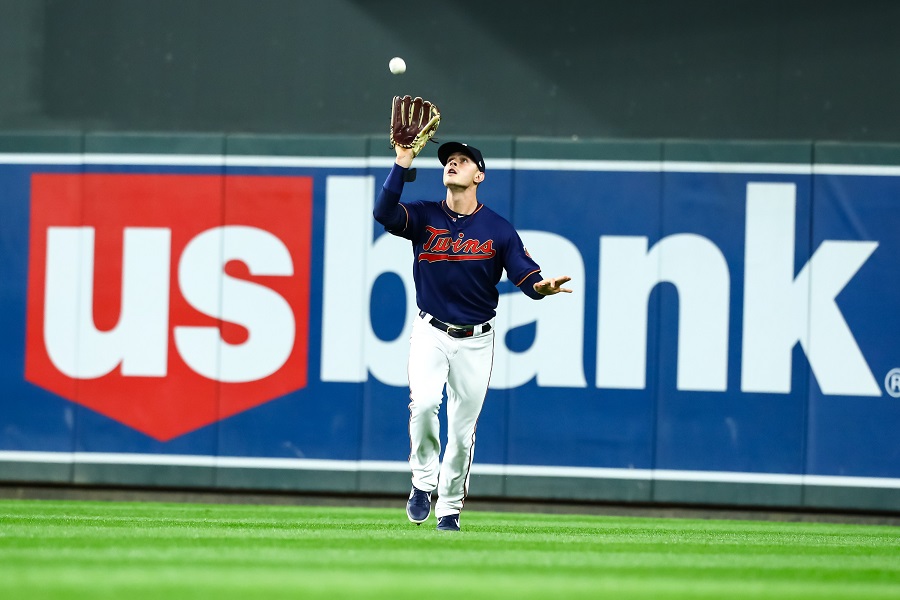 Kepler was the leadoff hitter in Tuesday’s Grapefruit League tilt against the Braves, and on the first pitch he saw from Atlanta’s Ian Anderson, he pulled a fly ball in the air. It was a relatively lazily hit ball, and went for an out, but that was a good sign. Kepler is at his best when he’s getting aggressive in early and advantageous counts. That can be said of most hitters, to one degree or another, but given Kepler’s baseline talent and the swing he has built, it’s especially important for him, Last month, our Cody Pirkl highlighted some of the troubling trends and numbers that emerged for Kepler in 2020, and talked about why that makes 2021 especially important. Kepler’s numbers against left-handed pitchers, in an extremely small sample, were lousy. He also saw a drop in quality of contact, overall (though he still hit the ball in the air and generated hard contact at above-average rates). As Cody discussed, and as my previous findings about the staying power of left-hitting corner outfielders hint, that could lead one to wonder whether Kepler remains the right fielder of this team’s medium-term future. Take a more granular look at his strange, shortened season, though, and it’s easy to see a path back to brilliance for the 28-year-old slugger. Consider his swing rates on the first pitch, or with either a 1-0 or an 0-1 count, for each full season of his career. After finding the key to unlock his power potential in 2019, Kepler went right back to the way he’d previously approached early counts within at-bats in 2020. It didn’t work. This helps explain the slight uptick in his strikeout rate, because he simply faced more deep counts. Kepler actually made contact on a higher percentage of two-strike swings in 2020 than in 2019, when he struck out less often. This is a place where it’s important to think mathematically: The (minor) problem of Kepler’s rising strikeout rate is in the denominator, not the numerator. We often neglect the denominator when thinking about such things. To the extent that Kepler’s power went missing in 2020, we can also trace that back to his inability to attack early in the count. A swing with two strikes is, necessarily, a bit defensive. A swing by a hitter whose attention is divided—who is thinking too hard, and perhaps emphasizing patience too much—can be similarly conservative, even early in a count, when there’s really nothing to lose. When Kepler did get into good hitter’s counts in 2020, he was as aggressive as ever, and produced better results, too. (Don’t get intimidated by xwOBA, below. You can easily find places to read about what it means, but here, consider it a shorthand for hitting the ball hard and getting it off the ground, without losing contact in the bargain.) There might be psychological reasons why Kepler was less assertive early in counts in 2020, ranging from trying to balance too complex an approach to the understandable, vague distraction under which we have all lived for the past year. There might, too, have been lingering physical reasons, related to the shoulder injury that hampered him late in 2019. In either case, though, the cure is the same: head into 2021 fully healthy, ready to attack the first strike opposing hurlers are foolish enough to throw. If he does that, Kepler has a good chance to be an All-Star. MORE FROM MATTHEW Taylor Rogers' Slider is Back, Baby Which Pitch Should Kenta Maeda Add in 2021? Alex Kirilloff, and the Truth About Scott Boras and Contract Extensions A Good Comp for Jhoan Duran and His Splinker How Well Could the Twins Hide Luis Arraez in the Field? The Biggest Red Flag for Byron Buxton's Bat
 -
Though not the Twins’ projected ace for 2021, José Berríos remains a pivotal pitcher for a team aspiring to a deep run in October. After his uneven 2020, here’s what to look for in his televised spring debut Wednesday.Can he attack the first-base side of the plate with heat? Last season, opponents slugged .625 against Berríos’s four-seam fastball. If that continues, there will be a low ceiling on his overall value, no matter how well he does other things. That said, there’s cause for hope that Berríos can solve that problem. He gave up so much damage last season because he couldn’t keep his fastball out of the heart of the plate. With his sinker, though, he was able to locate much more effectively. Alas, he only did so to one side of the dish. Download attachment: JB Fastballs.PNG This fits a comparison I’ve long drawn between Berríos and Jake Arrieta. Though now a shell of his former ace self, Arrieta once shared several key characteristics with Berríos. Both are extremely strong, well-conditioned right-handers, with the same highly unusual mechanical signature. As Arrieta did at his peak, Berríos has a crossfire alignment pattern and an explosive delivery that makes use of his overall athleticism. For Arrieta, one of the turning points in his emergence as a Cy Young-caliber starter was when he learned to pound the glove side of the plate (that is, the outside corner to right-handed hitters, inside against lefties) with his sinker. That allowed him to turn his four-seamer into a secondary, gear-shifting pitch, focused on elevating for swings and misses. It also maximized the contrast between his (new) primary heater and his primary breaking ball, a slider with two-plane break. You needn’t buy fully into the Arrieta comparison to see the broader point, though: Berríos needs to be able to paint both edges with hard stuff. If he can adjust his release point to drive his four-seamer to that glove-side edge, he should do so. If he can’t, he needs to start showing the capacity to take his sinker across the plate, instead, pounding that pitch low and away from righties, or low and in to lefties. Either improvement will augment the effectiveness of his whole repertoire, and put an end to the hard contact he suffered so often in 2020. What shape will his curveball take? Almost no one in baseball throws a true slurve anymore, but that’s what Berríos’s breaking ball is. It sits uncomfortably in the middle of the spectrum of which pure curves and pure sliders are the endpoints, and while it’s not ineffective, it’s far from optimal. During the coronal interregnum last year, Berríos said he was working to reshape his curve. He said he wanted the pitch to have more of a traditional, 12-to-6 movement pattern. That didn’t really materialize. Download attachment: Brooksbaseball-Chart (25).jpeg In 2019, Berríos had (perhaps unintentionally) widened his curve into a true roundhouse, with huge horizontal movement. He did quiet that down last year, but the pitch still had big lateral break, and a shape much more diagonal than vertical. However, Berríos did add velocity to the pitch last season, as he did on all of his offerings. That leaves open the possibility that he will, at some point, find a true slider or cutter that works for him. Given his sheer stuff, his delivery, and his feel for pitching, there’s a slider in him somewhere. If he finds it, he doesn’t need to tweak his curve at all; it works fine as a complementary breaking ball. If he does stick with the power curve, though, it will be interesting to see whether he can create more of the vertical action about which he talked last spring. Will he show more confidence in his changeup? At the same time as he was talking about wanting to alter his breaking ball, Berríos also proclaimed his intention to change his changeup. He wanted to be able to throw it more against right-handed batters, and especially, to locate it to the glove side of the plate. He did succeed, in one regard: his change moved less to the arm side than it had in the past. That made it look more like his four-seamer, out of the hand, and led to a significant increase in whiffs. At times, a pitch that had previously been spotty became his go-to secondary weapon. However, his usage of the pitch against righties, specifically, did not increase. Nor did he find the feel for throwing it to the side of the plate that would be away from those righties. That’s not surprising. Most pitchers struggle to command their changeup to the glove side of home; Berríos has never had especially impressive command of the change, overall; his delivery isn’t wholly conducive to making that pitch work easily; and the season was only two months long. He did do one interesting thing, with big implications for his changeup usage against righties: elevate his sinker. That might sound like a bad thing, but sinkers aren’t actually effective primarily because they sink. Just as often, their velocity and horizontal movement create the weak contact and ground balls that make them work, and that’s as true of Berríos’s sinker as of anyone’s. If he can keep throwing the sinker to the inside corner against righties, at or above the belt, it will set up the changeup, even if he can’t get the change to cross the plate and hit the outside corner as often as he’d hoped. Meanwhile, again, the reshaped change works better off his four-seamer. Because the change and the sinker are the most closely related pitches in terms of movement and release, any work he puts into locating the sinker to the glove side should yield ancillary benefits on the changeup. For this first outing, though, watch mostly to see what he’s trying to do with the change. Even if he misses with it, his plan for the pitch is important information for forecasting his 2021 season. MORE FROM MATTHEW Taylor Rogers' Slider is Back, BabyWhich Pitch Should Kenta Maeda Add in 2021?Alex Kirilloff, and the Truth About Scott Boras and Contract ExtensionsA Good Comp for Jhoan Duran and His SplinkerHow Well Could the Twins Hide Luis Arraez in the Field?The Biggest Red Flag for Byron Buxton's Bat Click here to view the article
-
3 Things to Watch as José Berríos Makes His Spring Debut
Matthew Trueblood posted an article in Twins
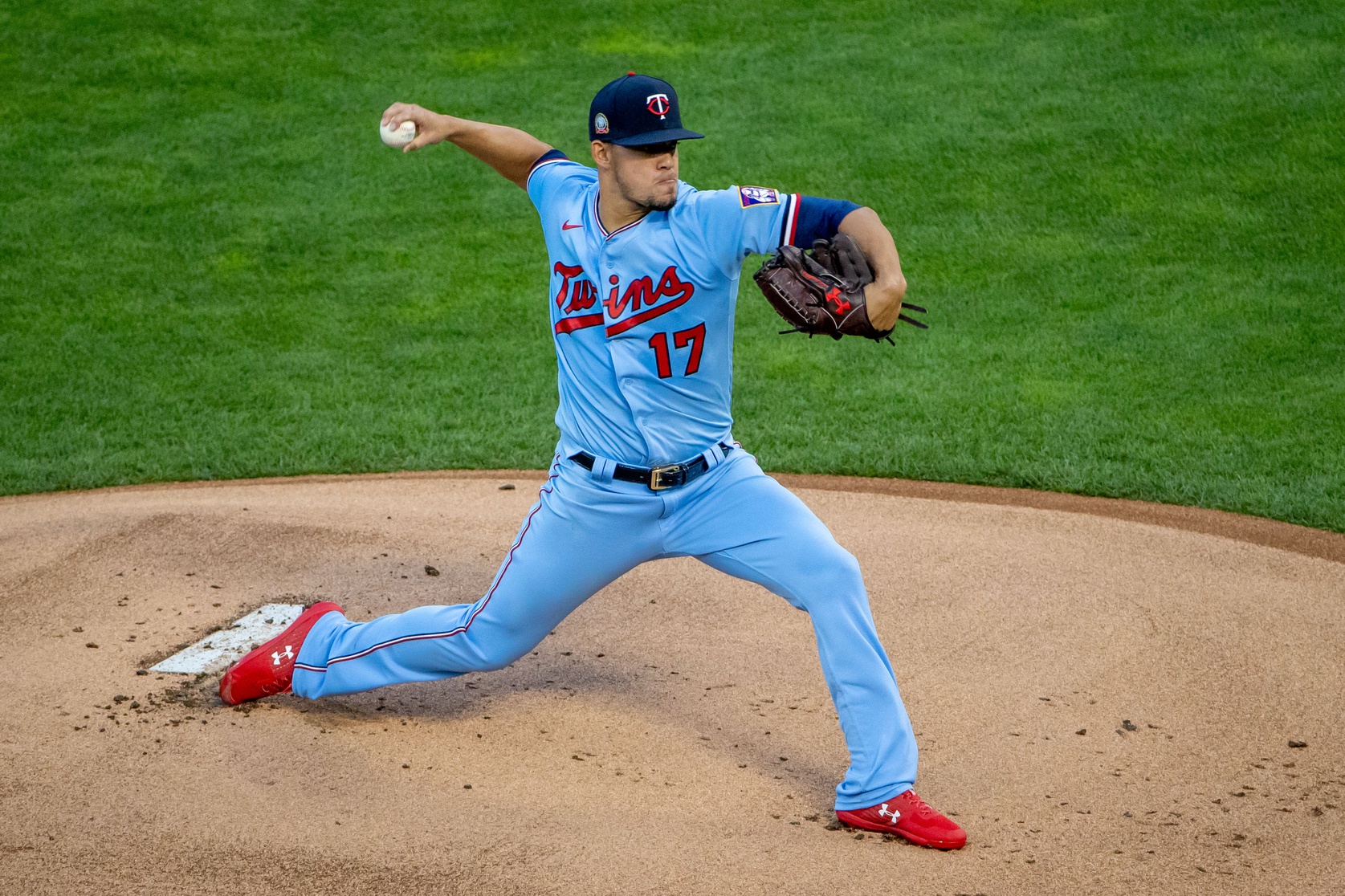 Can he attack the first-base side of the plate with heat? Last season, opponents slugged .625 against Berríos’s four-seam fastball. If that continues, there will be a low ceiling on his overall value, no matter how well he does other things. That said, there’s cause for hope that Berríos can solve that problem. He gave up so much damage last season because he couldn’t keep his fastball out of the heart of the plate. With his sinker, though, he was able to locate much more effectively. Alas, he only did so to one side of the dish. This fits a comparison I’ve long drawn between Berríos and Jake Arrieta. Though now a shell of his former ace self, Arrieta once shared several key characteristics with Berríos. Both are extremely strong, well-conditioned right-handers, with the same highly unusual mechanical signature. As Arrieta did at his peak, Berríos has a crossfire alignment pattern and an explosive delivery that makes use of his overall athleticism. For Arrieta, one of the turning points in his emergence as a Cy Young-caliber starter was when he learned to pound the glove side of the plate (that is, the outside corner to right-handed hitters, inside against lefties) with his sinker. That allowed him to turn his four-seamer into a secondary, gear-shifting pitch, focused on elevating for swings and misses. It also maximized the contrast between his (new) primary heater and his primary breaking ball, a slider with two-plane break. You needn’t buy fully into the Arrieta comparison to see the broader point, though: Berríos needs to be able to paint both edges with hard stuff. If he can adjust his release point to drive his four-seamer to that glove-side edge, he should do so. If he can’t, he needs to start showing the capacity to take his sinker across the plate, instead, pounding that pitch low and away from righties, or low and in to lefties. Either improvement will augment the effectiveness of his whole repertoire, and put an end to the hard contact he suffered so often in 2020. What shape will his curveball take? Almost no one in baseball throws a true slurve anymore, but that’s what Berríos’s breaking ball is. It sits uncomfortably in the middle of the spectrum of which pure curves and pure sliders are the endpoints, and while it’s not ineffective, it’s far from optimal. During the coronal interregnum last year, Berríos said he was working to reshape his curve. He said he wanted the pitch to have more of a traditional, 12-to-6 movement pattern. That didn’t really materialize. In 2019, Berríos had (perhaps unintentionally) widened his curve into a true roundhouse, with huge horizontal movement. He did quiet that down last year, but the pitch still had big lateral break, and a shape much more diagonal than vertical. However, Berríos did add velocity to the pitch last season, as he did on all of his offerings. That leaves open the possibility that he will, at some point, find a true slider or cutter that works for him. Given his sheer stuff, his delivery, and his feel for pitching, there’s a slider in him somewhere. If he finds it, he doesn’t need to tweak his curve at all; it works fine as a complementary breaking ball. If he does stick with the power curve, though, it will be interesting to see whether he can create more of the vertical action about which he talked last spring. Will he show more confidence in his changeup? At the same time as he was talking about wanting to alter his breaking ball, Berríos also proclaimed his intention to change his changeup. He wanted to be able to throw it more against right-handed batters, and especially, to locate it to the glove side of the plate. He did succeed, in one regard: his change moved less to the arm side than it had in the past. That made it look more like his four-seamer, out of the hand, and led to a significant increase in whiffs. At times, a pitch that had previously been spotty became his go-to secondary weapon. However, his usage of the pitch against righties, specifically, did not increase. Nor did he find the feel for throwing it to the side of the plate that would be away from those righties. That’s not surprising. Most pitchers struggle to command their changeup to the glove side of home; Berríos has never had especially impressive command of the change, overall; his delivery isn’t wholly conducive to making that pitch work easily; and the season was only two months long. He did do one interesting thing, with big implications for his changeup usage against righties: elevate his sinker. That might sound like a bad thing, but sinkers aren’t actually effective primarily because they sink. Just as often, their velocity and horizontal movement create the weak contact and ground balls that make them work, and that’s as true of Berríos’s sinker as of anyone’s. If he can keep throwing the sinker to the inside corner against righties, at or above the belt, it will set up the changeup, even if he can’t get the change to cross the plate and hit the outside corner as often as he’d hoped. Meanwhile, again, the reshaped change works better off his four-seamer. Because the change and the sinker are the most closely related pitches in terms of movement and release, any work he puts into locating the sinker to the glove side should yield ancillary benefits on the changeup. For this first outing, though, watch mostly to see what he’s trying to do with the change. Even if he misses with it, his plan for the pitch is important information for forecasting his 2021 season. MORE FROM MATTHEW Taylor Rogers' Slider is Back, Baby Which Pitch Should Kenta Maeda Add in 2021? Alex Kirilloff, and the Truth About Scott Boras and Contract Extensions A Good Comp for Jhoan Duran and His Splinker How Well Could the Twins Hide Luis Arraez in the Field? The Biggest Red Flag for Byron Buxton's Bat
 -
How much can we learn from five pitches thrown in the first exhibition game of spring training, before the calendar even flips to March? In the case of Taylor Rogers’ slider, the answer is: plenty. And the news is awfully good.Last season was a rough one for the Twins’ erstwhile relief ace. He turned a corner in mid-2018, as he slowly added a slider to his sinker- and curveball-centric repertoire, becoming one of the game’s elite relief pitchers over the ensuing year and a half. In 2020, though, he lost the feel that allowed him to separate that slider from his curveball. As Rogers told Dan Hayes in September 2018, he grips the two pitches the same way, which can make differentiating them difficult at times. Like other pitchers throughout baseball, he clearly struggled with that very thing throughout the strange and shortened first pandemic season. The problem is most easily illustrated by looking at Rogers’s average velocities on his two breaking balls. From the moment when he first unleashed the slider, it was a significantly firmer pitch than the curve. In 2020, he lost the extra velocity that gave the pitch such biting action, especially against righties. Download attachment: Rogers Velo.jpeg In fact, he ran into some of the same problem in late 2019, but then, it predominantly took the form of his curve coming in too firm, with the shape and in the same velocity band as the slider. In 2020, he had the curve tuned to its usual pitch (no pun intended), but the slider took on the curve’s shape, as well as dropping to its speed range. Download attachment: Rogers VMov.jpeg The results showed up in a slightly decreased whiff rate on the pitch, but much more so in the forms of more damage on both the curveball and the sinker. Without the hard, laterally-moving slider, the sinker was easier to spot and attack. The curve created less of a sinking feeling in the hitter’s stomach. The slider is more than just a whipsaw pitch in its own right, helping the hurler rack up strikeouts: it’s also supposed to keep hitters on the defensive. Rogers couldn’t do that last year. When he took the mound Sunday in Fort Myers, though, Rogers had the nasty version of the slider back. Last season, Rogers didn’t average more than 83.0 miles per hour on the soldier in any individual appearance. For the year, he sat at 81.7 miles per hour with it. On Sunday, his five sliders averaged 84.7 miles per hour. He got in on right-handed hitters Connor Wong and Bobby Dalbec with it, drawing three swings and two whiffs. Unlike last season, when he often left the pitch over the middle, Rogers was able to steer the pitch where he wanted it to go. This is no guarantee of success, of course, and Rogers could suffer further inconsistency as he moves through the month of preparation left before the season starts. Commanding two distinct breaking balls, especially for a pitcher who repeats their release point as robotically as Rogers does, can be very hard. The fact that he uses the same grip on each pitch only further complicates the process. For one game, however, he put on display precisely the pitch that went missing for him throughout a disappointing 2020. MORE FROM MATTHEW Which Pitch Should Kenta Maeda Add in 2021?Alex Kirilloff, and the Truth About Scott Boras and Contract ExtensionsA Good Comp for Jhoan Duran and His SplinkerHow Well Could the Twins Hide Luis Arraez in the Field?The Biggest Red Flag for Byron Buxton's Bat Click here to view the article
-
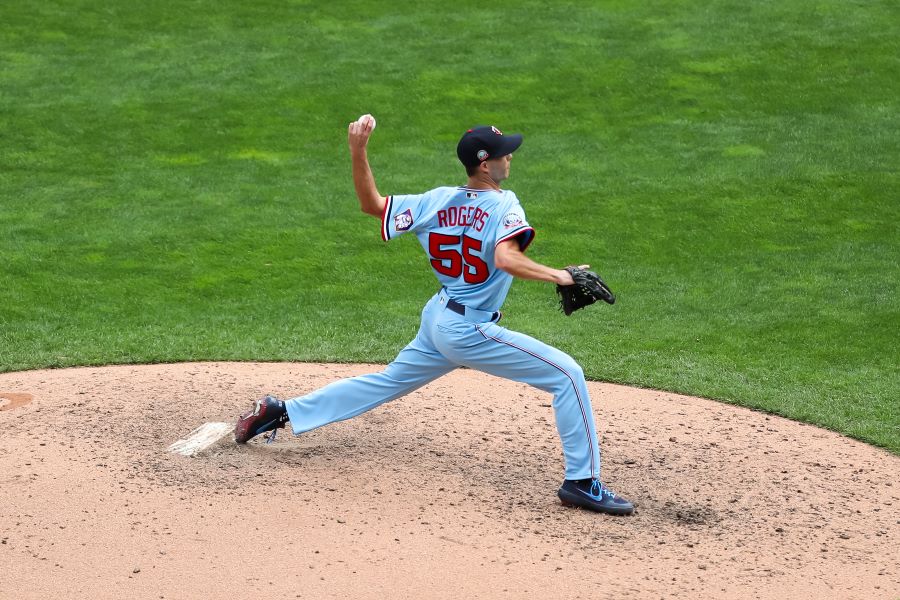 Last season was a rough one for the Twins’ erstwhile relief ace. He turned a corner in mid-2018, as he slowly added a slider to his sinker- and curveball-centric repertoire, becoming one of the game’s elite relief pitchers over the ensuing year and a half. In 2020, though, he lost the feel that allowed him to separate that slider from his curveball. As Rogers told Dan Hayes in September 2018, he grips the two pitches the same way, which can make differentiating them difficult at times. Like other pitchers throughout baseball, he clearly struggled with that very thing throughout the strange and shortened first pandemic season. The problem is most easily illustrated by looking at Rogers’s average velocities on his two breaking balls. From the moment when he first unleashed the slider, it was a significantly firmer pitch than the curve. In 2020, he lost the extra velocity that gave the pitch such biting action, especially against righties. In fact, he ran into some of the same problem in late 2019, but then, it predominantly took the form of his curve coming in too firm, with the shape and in the same velocity band as the slider. In 2020, he had the curve tuned to its usual pitch (no pun intended), but the slider took on the curve’s shape, as well as dropping to its speed range. The results showed up in a slightly decreased whiff rate on the pitch, but much more so in the forms of more damage on both the curveball and the sinker. Without the hard, laterally-moving slider, the sinker was easier to spot and attack. The curve created less of a sinking feeling in the hitter’s stomach. The slider is more than just a whipsaw pitch in its own right, helping the hurler rack up strikeouts: it’s also supposed to keep hitters on the defensive. Rogers couldn’t do that last year. When he took the mound Sunday in Fort Myers, though, Rogers had the nasty version of the slider back. Last season, Rogers didn’t average more than 83.0 miles per hour on the soldier in any individual appearance. For the year, he sat at 81.7 miles per hour with it. On Sunday, his five sliders averaged 84.7 miles per hour. He got in on right-handed hitters Connor Wong and Bobby Dalbec with it, drawing three swings and two whiffs. Unlike last season, when he often left the pitch over the middle, Rogers was able to steer the pitch where he wanted it to go. This is no guarantee of success, of course, and Rogers could suffer further inconsistency as he moves through the month of preparation left before the season starts. Commanding two distinct breaking balls, especially for a pitcher who repeats their release point as robotically as Rogers does, can be very hard. The fact that he uses the same grip on each pitch only further complicates the process. For one game, however, he put on display precisely the pitch that went missing for him throughout a disappointing 2020. MORE FROM MATTHEW Which Pitch Should Kenta Maeda Add in 2021? Alex Kirilloff, and the Truth About Scott Boras and Contract Extensions A Good Comp for Jhoan Duran and His Splinker How Well Could the Twins Hide Luis Arraez in the Field? The Biggest Red Flag for Byron Buxton's Bat
 -
In an interview on Zoom with reporters this week, Kenta Maeda intimated that he would add one of three pitches to his repertoire in 2021: a two-seamer, a cutter, or a curveball. Which makes the most sense?First, let’s make one thing clear: Maeda actually already has all three of the offerings he mentioned Tuesday. Each are pitches he’s deemphasized or eliminated at certain points in his big-league career, but he threw all three even in the truncated 2020 season. Download attachment: Brooksbaseball-Chart (20).jpeg Still, it’s fair to say that his three main pitches in 2020 are the three on which he’s relied for most of his career: the four-seam fastball, the slider, and the split-change. The question, then, is which of these candidate pitches best complement what Maeda is already doing—since that formula made him a Cy Young Award candidate last year. That’s the apparent question, anyway. I’ll argue that it’s hardly a question at all, and is really a settled issue already. Here’s why: in the exquisite feel he shows for reshaping and modifying his slider, he’s already enjoying the benefits of the cutter and the curve. Looking at average movement and velocity data split up only by pitch type can be deceiving. Sometimes, it’s important to subdivide that data, and doing so with Maeda’s slider reveals what made that pitch so effective for him last year, against both righties and lefties. Download attachment: Brooksbaseball-Chart (21).jpeg Against righties, Maeda threw his slider about 1.5 miles per hour harder, and with more lateral movement, than when throwing (nominally) the same pitch to lefties. Download attachment: Brooksbaseball-Chart (23).jpeg Lefties got a slower version of the pitch, with considerably more vertical depth. Download attachment: Brooksbaseball-Chart (22).jpeg In general, this is exactly what you want. Sharp, lateral break is more effective against same-handed batters; vertical movement and velocity differential help more against opposite-handed ones. Maeda could benefit from refining his true cutter, perhaps, in order to get in under the hands of lefties, rather than aiming the slider at their back foot, but he already does that fairly effectively with his four-seamer. There’d be no discernible benefit to using a cutter against righties, above what he already gets from his slider, unless he could learn to throw it at the front hip of righties and sneak it over the inside corner for called strikes. That’s difficult to do, though, and the benefits are dependent on delicate sequencing and context. They also tend to be quite fleeting. That depth he achieves on the slider when throwing it to lefties also makes the curveball basically unnecessary. It works fine as a more dramatic change of speed and eye level than his primary weapons, but he already uses it in that capacity, and expanding his reliance on it any further would probably yield diminishing returns. Moreover, Maeda’s key mechanical improvement in 2020 only steered him further from being positioned to use the cutter or the curveball to maximum effect. Both of those pitches best tunnel with other pitches, most deceive batters, and permit their wielders to command them best when thrown from high arm angles. Maeda found a more stable, efficient mechanical signature last season, and it lowered his arm angle. That only accentuated the fact that he throws his curve from a higher release point than his other stuff. Download attachment: Brooksbaseball-Chart (24).jpeg Happily, though, a low three-quarter slot is ideally suited to the sinker. That arm angle invites the ball to run to the arm side and to sink. Notably, Maeda actually increased his sinker usage even last season. He could do so even more, though, and if he’s going to flesh out his arsenal for 2021, that’s the natural way to do it. Against righties, Maeda’s sinker allows him to work inside and elevate a bit. That can induce weak contact, or set up the slider away, which (in turn) sets up the splitter down and in. Against lefties, the sinker has limited utility right now, but if Maeda learned to start it at their front hips and run it back to the inside corner, that could change. (Generally speaking, and especially in the case of Maeda’s mechanical signature, it’s easier to consistently execute the front-hip sinker to opposite-handed batters than the front-hip cutter to same-handed ones.) The powerful revelation of last season, for Maeda, was that his splitter is a weapon even against righties, and his slider is devastating even against lefties, so that he doesn’t need to venture beyond his top three pitches very often to dominate opponents. Still, he’s going to see the AL Central for a second time this year, and surely, the Twins will try to get him deep into games to save the rest of the staff, as they did so successfully in 2020. To do that and sustain what he showed, he needs to continue to manipulate his slider the way he did last year, and he could benefit from continuing to refine his sinker. It may not be a wholly new pitch, but it could add extra dimension to an already-impressive repertoire. MORE FROM TWINS DAILY — Latest Twins coverage from our writers — Recent Twins discussion in our forums — Follow Twins Daily via Twitter, Facebook or email Click here to view the article
- 1 reply
-
- 1
-

-
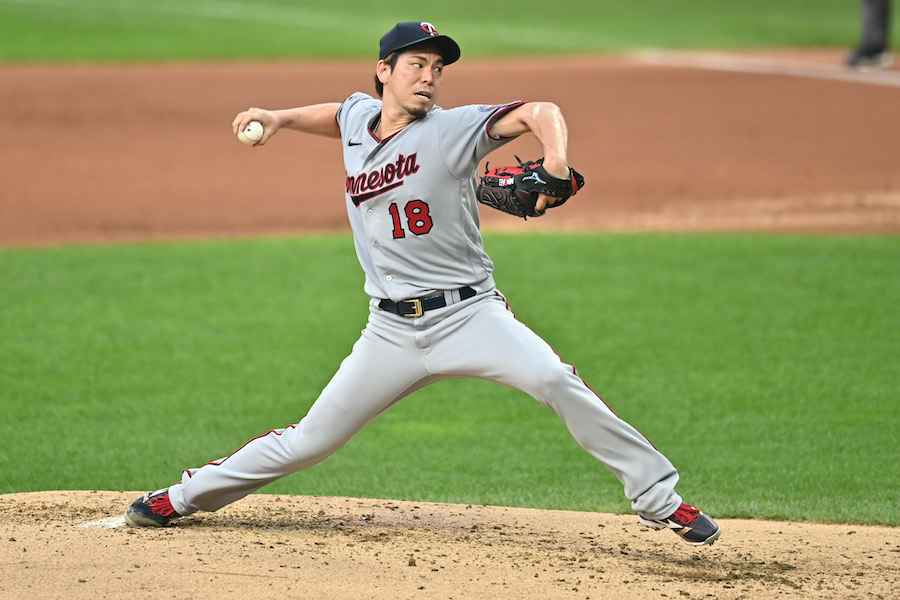 First, let’s make one thing clear: Maeda actually already has all three of the offerings he mentioned Tuesday. Each are pitches he’s deemphasized or eliminated at certain points in his big-league career, but he threw all three even in the truncated 2020 season. Still, it’s fair to say that his three main pitches in 2020 are the three on which he’s relied for most of his career: the four-seam fastball, the slider, and the split-change. The question, then, is which of these candidate pitches best complement what Maeda is already doing—since that formula made him a Cy Young Award candidate last year. That’s the apparent question, anyway. I’ll argue that it’s hardly a question at all, and is really a settled issue already. Here’s why: in the exquisite feel he shows for reshaping and modifying his slider, he’s already enjoying the benefits of the cutter and the curve. Looking at average movement and velocity data split up only by pitch type can be deceiving. Sometimes, it’s important to subdivide that data, and doing so with Maeda’s slider reveals what made that pitch so effective for him last year, against both righties and lefties. Against righties, Maeda threw his slider about 1.5 miles per hour harder, and with more lateral movement, than when throwing (nominally) the same pitch to lefties. Lefties got a slower version of the pitch, with considerably more vertical depth. In general, this is exactly what you want. Sharp, lateral break is more effective against same-handed batters; vertical movement and velocity differential help more against opposite-handed ones. Maeda could benefit from refining his true cutter, perhaps, in order to get in under the hands of lefties, rather than aiming the slider at their back foot, but he already does that fairly effectively with his four-seamer. There’d be no discernible benefit to using a cutter against righties, above what he already gets from his slider, unless he could learn to throw it at the front hip of righties and sneak it over the inside corner for called strikes. That’s difficult to do, though, and the benefits are dependent on delicate sequencing and context. They also tend to be quite fleeting. That depth he achieves on the slider when throwing it to lefties also makes the curveball basically unnecessary. It works fine as a more dramatic change of speed and eye level than his primary weapons, but he already uses it in that capacity, and expanding his reliance on it any further would probably yield diminishing returns. Moreover, Maeda’s key mechanical improvement in 2020 only steered him further from being positioned to use the cutter or the curveball to maximum effect. Both of those pitches best tunnel with other pitches, most deceive batters, and permit their wielders to command them best when thrown from high arm angles. Maeda found a more stable, efficient mechanical signature last season, and it lowered his arm angle. That only accentuated the fact that he throws his curve from a higher release point than his other stuff. Happily, though, a low three-quarter slot is ideally suited to the sinker. That arm angle invites the ball to run to the arm side and to sink. Notably, Maeda actually increased his sinker usage even last season. He could do so even more, though, and if he’s going to flesh out his arsenal for 2021, that’s the natural way to do it. Against righties, Maeda’s sinker allows him to work inside and elevate a bit. That can induce weak contact, or set up the slider away, which (in turn) sets up the splitter down and in. Against lefties, the sinker has limited utility right now, but if Maeda learned to start it at their front hips and run it back to the inside corner, that could change. (Generally speaking, and especially in the case of Maeda’s mechanical signature, it’s easier to consistently execute the front-hip sinker to opposite-handed batters than the front-hip cutter to same-handed ones.) The powerful revelation of last season, for Maeda, was that his splitter is a weapon even against righties, and his slider is devastating even against lefties, so that he doesn’t need to venture beyond his top three pitches very often to dominate opponents. Still, he’s going to see the AL Central for a second time this year, and surely, the Twins will try to get him deep into games to save the rest of the staff, as they did so successfully in 2020. To do that and sustain what he showed, he needs to continue to manipulate his slider the way he did last year, and he could benefit from continuing to refine his sinker. It may not be a wholly new pitch, but it could add extra dimension to an already-impressive repertoire. MORE FROM TWINS DAILY — Latest Twins coverage from our writers — Recent Twins discussion in our forums — Follow Twins Daily via Twitter, Facebook or email
 -
Some Twins fans object to the idea of Alex Kirilloff opening the season with the Twins, on the premise that agent Scott Boras will proscribe any contract extension to keep Kirilloff around beyond 2027. That’s simply not true.Boras has been one of baseball’s most influential and successful agents for about 30 years, and it’s fair to say that he’s earned that reputation by ensuring that his clients are paid what they’re worth. Often, that does mean taking them to free agency, where teams have to bid against one another and a player can gauge their true market value. However, in the last decade, Boras has negotiated no fewer than eight contract extensions for clients prior to their reaching free agency, including some very relevant precedents for a theoretical Kirilloff deal. In early 2011, Boras and client Carlos González—an electrifying bat-first corner outfielder who batted left-handed—agreed to a seven-year, $80-million deal with the Colorado Rockies, when González was still four years from free agency. Later that year, just months before Angels pitcher Jered Weaver was due to hit free agency, he and Boras signed a five-year extension with the team. In March 2013, Carlos Gómez and Boras agreed to a three-year extension to keep him with the Brewers, when he was a year from free agency. Weeks later, Boras and client Elvis Andrus agreed on an eight-year deal with the Rangers, when Andrus was still several years from free agency. In 2016, Boras client Stephen Strasburg signed an extension with the Nationals in May of what would otherwise have been his walk year. More recently, Boras has negotiated long-term deals for clients José Altuve and Xander Bogaerts, each of whom was a year from free agency at the time. The idea that Boras is inflexibly averse to any pre-free agency deal is false and misleading. If your preferred way of dealing with Kirilloff would be for the Twins to sign him to an immediate extension like the ones to which the White Sox inked outfielders Eloy Jiménez and Luis Robert, you’re doomed to disappointment. Boras has never signed a client up for a long-term deal before they reached two years of service time. That’s not a problem, though. The Twins shouldn’t want to sign Kirilloff to such a deal so soon, anyway. As I wrote in advocating that he open the season on the roster, Kirilloff might not turn out to be worth keeping beyond 2026. The Twins will have a much clearer idea of his value in a couple of years, just as he will. The team will also be able to use that time to determine what they have in Trevor Larnach, what Max Kepler’s aging curve will look like, and whether Kirilloff’s long-term defensive home is in the outfield or at first base. All of that is relevant—even crucial—in setting the price at which an extension would make sense. If they do decide that Kirilloff is extension-worthy, be it in late 2022 or early 2026, there’s every reason to believe that Boras and Kirilloff will be receptive to conversations about such a deal. None of the examples cited here involved teams that had overwhelming leverage over the player in question. The special circumstances that allowed each deal to fruition weren’t all that special, really. In each case, a team demonstrated a serious (beyond monetary) commitment to both the player themselves and building a winning team around them. In each case, their offer reflected that fact, such that (while the terms can still be characterized as team-friendly) Boras could confidently sign off on his client’s choice. In each case, the player responded to the team’s behavior by wanting to stay, which helped ensure both sides would do what was needed to finish the deal. This is what we should want from all parties, when it comes to building lasting relationships between teams and their young players. The Twins have been one of the league’s model franchises in just this regard, especially over the last two years. Vilifying Boras for his style is silly; using Kirilloff’s choice to retain him as a reason to manipulate his service time is a red herring. This team, this player, and this agent can easily find common ground, if and when the time comes. In the meantime, the Twins should make the decision that maximizes their chances to win a close division in 2021, and the one that gives them the best chance to evaluate their options for the longer term. MORE FROM TWINS DAILY — Latest Twins coverage from our writers — Recent Twins discussion in our forums — Follow Twins Daily via Twitter, Facebook or email Click here to view the article
-
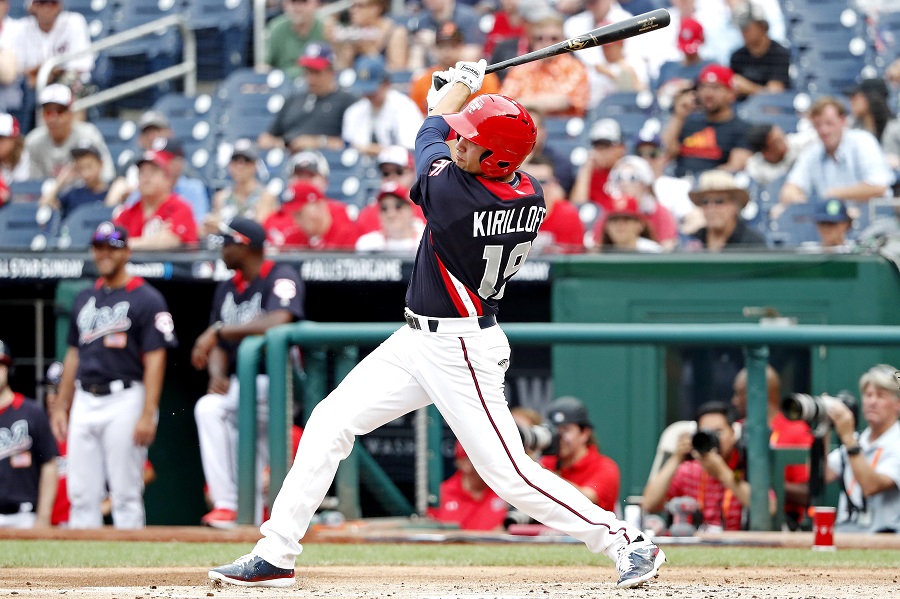 Boras has been one of baseball’s most influential and successful agents for about 30 years, and it’s fair to say that he’s earned that reputation by ensuring that his clients are paid what they’re worth. Often, that does mean taking them to free agency, where teams have to bid against one another and a player can gauge their true market value. However, in the last decade, Boras has negotiated no fewer than eight contract extensions for clients prior to their reaching free agency, including some very relevant precedents for a theoretical Kirilloff deal. In early 2011, Boras and client Carlos González—an electrifying bat-first corner outfielder who batted left-handed—agreed to a seven-year, $80-million deal with the Colorado Rockies, when González was still four years from free agency. Later that year, just months before Angels pitcher Jered Weaver was due to hit free agency, he and Boras signed a five-year extension with the team. In March 2013, Carlos Gómez and Boras agreed to a three-year extension to keep him with the Brewers, when he was a year from free agency. Weeks later, Boras and client Elvis Andrus agreed on an eight-year deal with the Rangers, when Andrus was still several years from free agency. In 2016, Boras client Stephen Strasburg signed an extension with the Nationals in May of what would otherwise have been his walk year. More recently, Boras has negotiated long-term deals for clients José Altuve and Xander Bogaerts, each of whom was a year from free agency at the time. The idea that Boras is inflexibly averse to any pre-free agency deal is false and misleading. If your preferred way of dealing with Kirilloff would be for the Twins to sign him to an immediate extension like the ones to which the White Sox inked outfielders Eloy Jiménez and Luis Robert, you’re doomed to disappointment. Boras has never signed a client up for a long-term deal before they reached two years of service time. That’s not a problem, though. The Twins shouldn’t want to sign Kirilloff to such a deal so soon, anyway. As I wrote in advocating that he open the season on the roster, Kirilloff might not turn out to be worth keeping beyond 2026. The Twins will have a much clearer idea of his value in a couple of years, just as he will. The team will also be able to use that time to determine what they have in Trevor Larnach, what Max Kepler’s aging curve will look like, and whether Kirilloff’s long-term defensive home is in the outfield or at first base. All of that is relevant—even crucial—in setting the price at which an extension would make sense. If they do decide that Kirilloff is extension-worthy, be it in late 2022 or early 2026, there’s every reason to believe that Boras and Kirilloff will be receptive to conversations about such a deal. None of the examples cited here involved teams that had overwhelming leverage over the player in question. The special circumstances that allowed each deal to fruition weren’t all that special, really. In each case, a team demonstrated a serious (beyond monetary) commitment to both the player themselves and building a winning team around them. In each case, their offer reflected that fact, such that (while the terms can still be characterized as team-friendly) Boras could confidently sign off on his client’s choice. In each case, the player responded to the team’s behavior by wanting to stay, which helped ensure both sides would do what was needed to finish the deal. This is what we should want from all parties, when it comes to building lasting relationships between teams and their young players. The Twins have been one of the league’s model franchises in just this regard, especially over the last two years. Vilifying Boras for his style is silly; using Kirilloff’s choice to retain him as a reason to manipulate his service time is a red herring. This team, this player, and this agent can easily find common ground, if and when the time comes. In the meantime, the Twins should make the decision that maximizes their chances to win a close division in 2021, and the one that gives them the best chance to evaluate their options for the longer term. MORE FROM TWINS DAILY — Latest Twins coverage from our writers — Recent Twins discussion in our forums — Follow Twins Daily via Twitter, Facebook or email
 -
Getting one’s head around the unusual profile of Twins pitching prospect Jhoan Duran can be tricky. It might be helpful to use a starter who recently signed a handsome free-agent deal to frame his scouting report.As Seth Stohs chronicled so well last week, Duran is one of the top prospects in the Twins’ system, and (arguably) the team’s highest-upside hurler. He’s not an easy player to project or evaluate, though, because there remains a strange air of mystery around his arsenal. Famously, he throws a pitch the team has taken to calling a “splinker,” combining the power of a hard sinker with the plummeting, tumbling action of a splitter. Few pitchers in baseball throw such a thing, no matter what one calls it, and it’s just one thing about Duran’s repertoire that remains a bit unknown. To figure out what kind of pitcher he might become, as he draws closer to the big leagues, consider Taijuan Walker. The newly minted Mets right-handed starter, who signed a two-year deal worth $20 million (plus a player option for 2023) earlier this month, is almost exactly the same size as Duran (6-foot-5, 230 pounds). He throws from a similar high three-quarters arm slot, with a similarly tall delivery. He came up quite young, so by the time he was 23 (as Duran is now), he’d already been in the big leagues for parts of three seasons. That lets us look back at the type of pitcher he was then with some confidence; some recent insights he shared with FanGraphs allow us to assess the way his evolution and his pitch usage might inform a projection of Duran’s career. When he came up, Walker relied heavily on his fastball, which sat comfortably in the mid-90s and occasionally touched 100 miles per hour. He had two usable breaking balls, but his primary offspeed offering was a splitter—kind of. As he said in the recent interview, he really took his usual sinker (or two-seam fastball) grip and merely spread his fingers a bit, so he threw the pitch harder and got more of a sinkerish movement than most splitters. “I put my fingers just outside that two-seam grip, so I’m not splitting it like an actual splitter,” he said. Walker made only very sparing use of his true sinker, which hummed in at the same speed as his fastball, but that splitter often tumbled in at speeds north of 90 miles per hour, with significantly reduced spin. The effect was something very much like what Duran’s (even harder) splinker does. Early in his career, batters whiffed at that splitter on roughly 30 percent of their swings. As he’s aged and worked through some injuries, however, Walker’s splitter has morphed a bit. He still throws it much the same way—as hard as ever, with the same movement—but his fastball has lost velocity, so the two pitches fit in a much closer velocity band. Batters have whiffed on it much less, but it’s become an excellent source of ground balls for him. That’s what a sinker usually does. “That’s what I tell people,” Walker told interviewer David Laurila. “It could be a sinker, honestly… especially if my fastball velo is down that day. If I’m 92, and my change is 90… yeah, it’s a sinker.” That basically solves the mystery of the splinker. For now, Duran should probably hone the pitch as a slightly-modified splitter. That’s how it will garner the most possible swings and misses. However, as he matures, he can turn it into more of a variant on his fastball. Then again, Duran might be well-served to throw a sinker, anyway, and learn to keep the two pitches distinct from one another. As I wrote last week, the Twins like their pitchers to throw multiple flavors of fastball, especially because it tends to allow them to comfortably pitch to one side of the plate with each. That’s an adjustment Walker only made in 2020, but it unlocked some things for him. “Yes, I added [a two-seamer] last year,” Walker said in the interview. “I added it so I can get in to righties without risking pulling a four-seam over the middle. I didn’t want it to be a sinker; I wanted it to be more of a running fastball, arm side.” The Twins are likely to help Duran reach that realization much sooner, and he might benefit considerably from that mental distinction Walker draws: the two-seam fastball as something other than a sinker, and the splitter/splinker as a pitch with more vertical depth. In the interview, Walker also talks about finding he could get more riding action on his four-seam fastball by working at the top of the zone, and about honing his slider to have more depth than the cutter he previously favored, with the so-called dot on the front of the ball, rather than the side. In each of these regards, too, Duran already has a leg up, thanks to the team’s development work and his own aptitude. Held back though he was by health problems, Walker has had a successful career already. After getting smarter in his approach and crafting his pitches better, he seems poised to get even better in 2021. If Duran follows that blueprint, with more intense stuff and an earlier introduction to these key principles, he could have an immediate and intense impact on the Twins’ pitching staff as soon as this summer. MORE FROM TWINS DAILY — Latest Twins coverage from our writers — Recent Twins discussion in our forums — Follow Twins Daily via Twitter, Facebook or email Click here to view the article
-
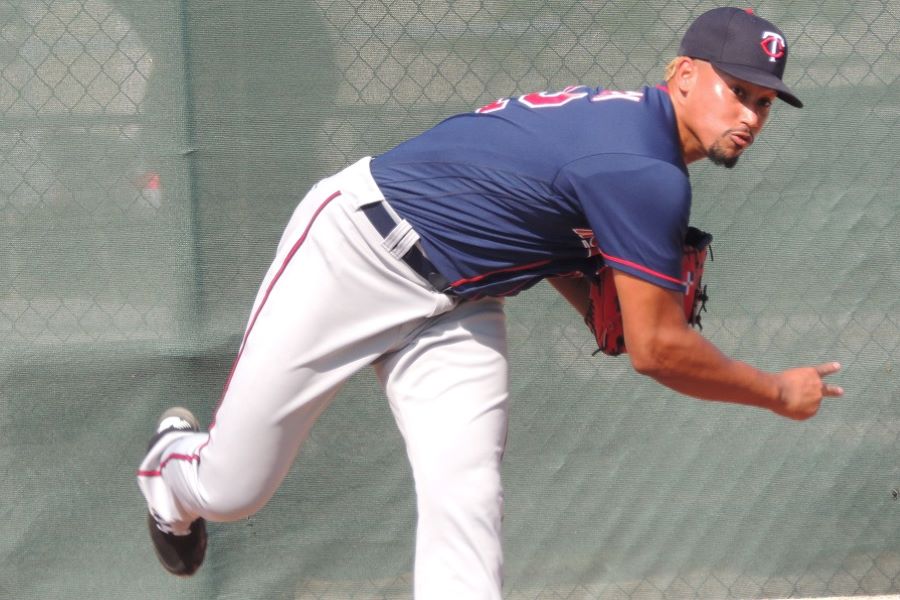 As Seth Stohs chronicled so well last week, Duran is one of the top prospects in the Twins’ system, and (arguably) the team’s highest-upside hurler. He’s not an easy player to project or evaluate, though, because there remains a strange air of mystery around his arsenal. Famously, he throws a pitch the team has taken to calling a “splinker,” combining the power of a hard sinker with the plummeting, tumbling action of a splitter. Few pitchers in baseball throw such a thing, no matter what one calls it, and it’s just one thing about Duran’s repertoire that remains a bit unknown. To figure out what kind of pitcher he might become, as he draws closer to the big leagues, consider Taijuan Walker. The newly minted Mets right-handed starter, who signed a two-year deal worth $20 million (plus a player option for 2023) earlier this month, is almost exactly the same size as Duran (6-foot-5, 230 pounds). He throws from a similar high three-quarters arm slot, with a similarly tall delivery. He came up quite young, so by the time he was 23 (as Duran is now), he’d already been in the big leagues for parts of three seasons. That lets us look back at the type of pitcher he was then with some confidence; some recent insights he shared with FanGraphs allow us to assess the way his evolution and his pitch usage might inform a projection of Duran’s career. When he came up, Walker relied heavily on his fastball, which sat comfortably in the mid-90s and occasionally touched 100 miles per hour. He had two usable breaking balls, but his primary offspeed offering was a splitter—kind of. As he said in the recent interview, he really took his usual sinker (or two-seam fastball) grip and merely spread his fingers a bit, so he threw the pitch harder and got more of a sinkerish movement than most splitters. “I put my fingers just outside that two-seam grip, so I’m not splitting it like an actual splitter,” he said. Walker made only very sparing use of his true sinker, which hummed in at the same speed as his fastball, but that splitter often tumbled in at speeds north of 90 miles per hour, with significantly reduced spin. The effect was something very much like what Duran’s (even harder) splinker does. Early in his career, batters whiffed at that splitter on roughly 30 percent of their swings. As he’s aged and worked through some injuries, however, Walker’s splitter has morphed a bit. He still throws it much the same way—as hard as ever, with the same movement—but his fastball has lost velocity, so the two pitches fit in a much closer velocity band. Batters have whiffed on it much less, but it’s become an excellent source of ground balls for him. That’s what a sinker usually does. “That’s what I tell people,” Walker told interviewer David Laurila. “It could be a sinker, honestly… especially if my fastball velo is down that day. If I’m 92, and my change is 90… yeah, it’s a sinker.” That basically solves the mystery of the splinker. For now, Duran should probably hone the pitch as a slightly-modified splitter. That’s how it will garner the most possible swings and misses. However, as he matures, he can turn it into more of a variant on his fastball. Then again, Duran might be well-served to throw a sinker, anyway, and learn to keep the two pitches distinct from one another. As I wrote last week, the Twins like their pitchers to throw multiple flavors of fastball, especially because it tends to allow them to comfortably pitch to one side of the plate with each. That’s an adjustment Walker only made in 2020, but it unlocked some things for him. “Yes, I added [a two-seamer] last year,” Walker said in the interview. “I added it so I can get in to righties without risking pulling a four-seam over the middle. I didn’t want it to be a sinker; I wanted it to be more of a running fastball, arm side.” The Twins are likely to help Duran reach that realization much sooner, and he might benefit considerably from that mental distinction Walker draws: the two-seam fastball as something other than a sinker, and the splitter/splinker as a pitch with more vertical depth. In the interview, Walker also talks about finding he could get more riding action on his four-seam fastball by working at the top of the zone, and about honing his slider to have more depth than the cutter he previously favored, with the so-called dot on the front of the ball, rather than the side. In each of these regards, too, Duran already has a leg up, thanks to the team’s development work and his own aptitude. Held back though he was by health problems, Walker has had a successful career already. After getting smarter in his approach and crafting his pitches better, he seems poised to get even better in 2021. If Duran follows that blueprint, with more intense stuff and an earlier introduction to these key principles, he could have an immediate and intense impact on the Twins’ pitching staff as soon as this summer. MORE FROM TWINS DAILY — Latest Twins coverage from our writers — Recent Twins discussion in our forums — Follow Twins Daily via Twitter, Facebook or email
 -
There’s no question that Luis Arraez’s bat belongs in the Twins lineup. His glove is much less valuable, but the organization has gotten good at hiding poor defenders. They might have a unique opportunity to do so in 2021.I recently wrote about why I think the Twins should make Alex Kirilloff their Opening Day left fielder. That position is predicated on him having a solid spring training, though. Should he struggle, or deal with nagging injuries, the team would be wise to have him spend not merely a few token weeks, but a few edifying months in St. Paul. In that case—or in case the team does make the penny-wise, pound-foolish decision to hold him back for service-time reasons—Arraez will probably open the season as the regular left fielder for the parent club. In my live looks at him in that position in 2019, I felt that he was better than he’s been given credit for. Furthermore, Arraez has been optimistic and assertive this spring about his expectation that he will play plenty of left field, and do it well. Still, for the moment, let’s assume that he’s going to have a rough time out there. Even compared to a year and a half ago, he’s gotten a half-step slower, and his legs continue to be sources of pain and frustration. Let’s imagine that Arraez is slotted in as the everyday left fielder for the first half of this season, and that he’s basically a weak-armed Eddie Rosario out there. If all of that comes to pass, how would the Twins minimize the damage? And how well should we expect it to work? First of all, let’s think about what makes for the least damage when an outfielder is stretched at their position. I spoke to Jake Cave about his experiences in center field, back in June 2019. He talked about playing deeper in center than any other player in baseball, and about the advantages he gained therefrom. Some of them are intuitive, and have become macro-level conventional wisdom of modern outfield positioning: the deeper one plays, the fewer balls can get over one’s head, or past them into the gaps. One might give up a few more singles, but the hits taken away by playing deeper are usually for extra bases. Other edges gained by playing deeper are more idiosyncratic, and must be considered through the prism of the individual. Cave is comfortable playing deeper, because he feels he can take an extra split-second to read the ball off the bat before he gets moving. As he notes, more athletic, more explosive athletes sometimes prefer to play shallower, get moving sooner, and then change course if and when they need to do so. Arraez is, shall we say, much more Cave than Byron Buxton, and when he played left field in 2019, he did so from a very deep starting position. That allowed him to handle the position fairly well, in my estimation. Though his reads on balls over his head were much maligned, he did make at least one memorably solid play on a ball hit to the wall at Target Field, and he was solid on everything hit to the sides of or in front of him, within his fairly limited range. If he’s sent back to left field on a regular basis in 2021, Arraez can afford to play as deep as he wants. That’s because, now that the Twins have Josh Donaldson and Andrelton Simmons on the left side of the infield, the odds of any ground ball going through the left side are slightly lower. The better an infield defense a team has, the deeper the outfielders can afford to play, without allowing baserunners to take extra bases on ground-ball hits. Simmons also plays remarkably deep at shortstop, not only maximizing his range on grounders, but allowing him to range farther into left field on bloopers and pop-ups than most shortstops do. That gives Arraez a little extra prospective peace of mind in playing deep. Of course, that only helps in a very limited way. It would really make the Twins’ defense more efficient if, in addition to having the wall in front of him on the left side of the infield, Arraez could get help from Buxton, in the form of the blazing-fast center fielder shading opposing batters toward that side. Most of the time, in a modern defense, that isn’t especially feasible. Next time you see an infield shift three players to one side of second base, watch the center fielder. As if swung that way by a counterweight, they will almost always shade the hitter toward the opposite field. It’s a defense mechanism built into shifts: the center fielder, opposite-field outfielder, and the lone infielder on the opposite side of the diamond have to cheat slightly toward the gaping spaces left by the probabilistic move of clustering fielders on the batter’s pull side. Simmons and Donaldson have enough range to give the Twins better options. With those two on the left side of the infield, right-handed batters should hardly ever face shifted infields. That means that, if a righty with good power toward the gap in left-center is due at the plate, Buxton should be able to cheat toward that gap, without worrying as much about a mi**** or defensive swing turning into a two-base gapper the other way. Shifts are valuable in terms of probabilities, but they can also force suboptimal secondary choices. Without shifts in place, the Twins can put three near-elite defenders in close enough proximity to Arraez to make his defensive limitations in left field relatively unimportant. The team did something similar over the last two seasons, with Jorge Polanco. Rightfully concerned about Polanco’s defense at shortstop, the team increased its use of shifts, to put him in better positions to make the plays of which he’s capable, and to help other defenders cover for his lack of range. Obviously, it’s impossible for any set of teammates to wholly take on the defensive responsibilities of a given player, without sacrificing too much of their own positioning. Wisely applied, however, defensive gameplans can incrementally shrink the area (and the value of the area) for which a poor fielder is responsible. This time around, the Twins have the personnel to hide a bad glove man by removing shifts they might otherwise have used. That’s another in a long series of steps forward the team’s run-prevention has taken since 2018. MORE FROM TWINS DAILY — Latest Twins coverage from our writers — Recent Twins discussion in our forums — Follow Twins Daily via Twitter, Facebook or email Click here to view the article
-
How Well Could the Twins Hide Luis Arraez in the Field?
Matthew Trueblood posted an article in Twins
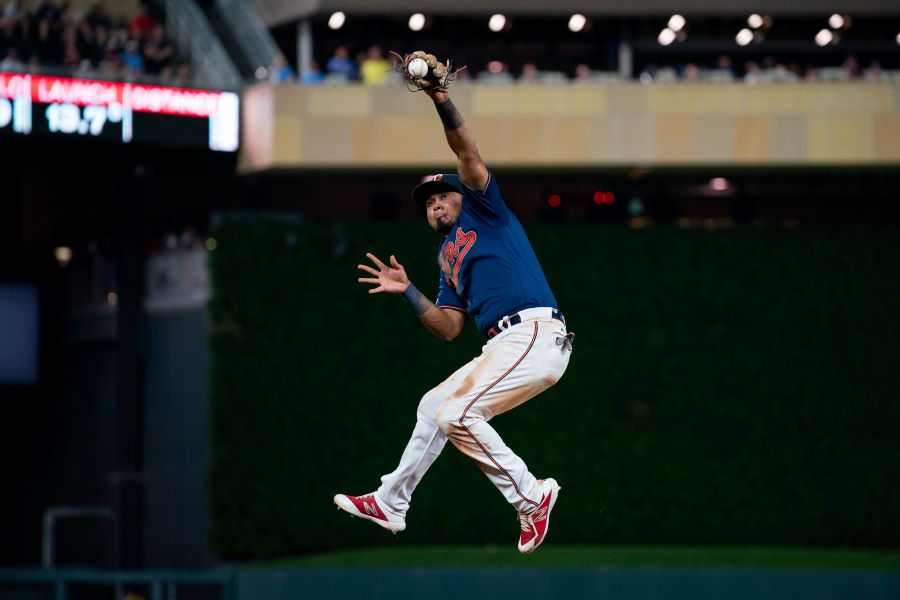 I recently wrote about why I think the Twins should make Alex Kirilloff their Opening Day left fielder. That position is predicated on him having a solid spring training, though. Should he struggle, or deal with nagging injuries, the team would be wise to have him spend not merely a few token weeks, but a few edifying months in St. Paul. In that case—or in case the team does make the penny-wise, pound-foolish decision to hold him back for service-time reasons—Arraez will probably open the season as the regular left fielder for the parent club. In my live looks at him in that position in 2019, I felt that he was better than he’s been given credit for. Furthermore, Arraez has been optimistic and assertive this spring about his expectation that he will play plenty of left field, and do it well. Still, for the moment, let’s assume that he’s going to have a rough time out there. Even compared to a year and a half ago, he’s gotten a half-step slower, and his legs continue to be sources of pain and frustration. Let’s imagine that Arraez is slotted in as the everyday left fielder for the first half of this season, and that he’s basically a weak-armed Eddie Rosario out there. If all of that comes to pass, how would the Twins minimize the damage? And how well should we expect it to work? First of all, let’s think about what makes for the least damage when an outfielder is stretched at their position. I spoke to Jake Cave about his experiences in center field, back in June 2019. He talked about playing deeper in center than any other player in baseball, and about the advantages he gained therefrom. Some of them are intuitive, and have become macro-level conventional wisdom of modern outfield positioning: the deeper one plays, the fewer balls can get over one’s head, or past them into the gaps. One might give up a few more singles, but the hits taken away by playing deeper are usually for extra bases. Other edges gained by playing deeper are more idiosyncratic, and must be considered through the prism of the individual. Cave is comfortable playing deeper, because he feels he can take an extra split-second to read the ball off the bat before he gets moving. As he notes, more athletic, more explosive athletes sometimes prefer to play shallower, get moving sooner, and then change course if and when they need to do so. Arraez is, shall we say, much more Cave than Byron Buxton, and when he played left field in 2019, he did so from a very deep starting position. That allowed him to handle the position fairly well, in my estimation. Though his reads on balls over his head were much maligned, he did make at least one memorably solid play on a ball hit to the wall at Target Field, and he was solid on everything hit to the sides of or in front of him, within his fairly limited range. If he’s sent back to left field on a regular basis in 2021, Arraez can afford to play as deep as he wants. That’s because, now that the Twins have Josh Donaldson and Andrelton Simmons on the left side of the infield, the odds of any ground ball going through the left side are slightly lower. The better an infield defense a team has, the deeper the outfielders can afford to play, without allowing baserunners to take extra bases on ground-ball hits. Simmons also plays remarkably deep at shortstop, not only maximizing his range on grounders, but allowing him to range farther into left field on bloopers and pop-ups than most shortstops do. That gives Arraez a little extra prospective peace of mind in playing deep. Of course, that only helps in a very limited way. It would really make the Twins’ defense more efficient if, in addition to having the wall in front of him on the left side of the infield, Arraez could get help from Buxton, in the form of the blazing-fast center fielder shading opposing batters toward that side. Most of the time, in a modern defense, that isn’t especially feasible. Next time you see an infield shift three players to one side of second base, watch the center fielder. As if swung that way by a counterweight, they will almost always shade the hitter toward the opposite field. It’s a defense mechanism built into shifts: the center fielder, opposite-field outfielder, and the lone infielder on the opposite side of the diamond have to cheat slightly toward the gaping spaces left by the probabilistic move of clustering fielders on the batter’s pull side. Simmons and Donaldson have enough range to give the Twins better options. With those two on the left side of the infield, right-handed batters should hardly ever face shifted infields. That means that, if a righty with good power toward the gap in left-center is due at the plate, Buxton should be able to cheat toward that gap, without worrying as much about a mi**** or defensive swing turning into a two-base gapper the other way. Shifts are valuable in terms of probabilities, but they can also force suboptimal secondary choices. Without shifts in place, the Twins can put three near-elite defenders in close enough proximity to Arraez to make his defensive limitations in left field relatively unimportant. The team did something similar over the last two seasons, with Jorge Polanco. Rightfully concerned about Polanco’s defense at shortstop, the team increased its use of shifts, to put him in better positions to make the plays of which he’s capable, and to help other defenders cover for his lack of range. Obviously, it’s impossible for any set of teammates to wholly take on the defensive responsibilities of a given player, without sacrificing too much of their own positioning. Wisely applied, however, defensive gameplans can incrementally shrink the area (and the value of the area) for which a poor fielder is responsible. This time around, the Twins have the personnel to hide a bad glove man by removing shifts they might otherwise have used. That’s another in a long series of steps forward the team’s run-prevention has taken since 2018. MORE FROM TWINS DAILY — Latest Twins coverage from our writers — Recent Twins discussion in our forums — Follow Twins Daily via Twitter, Facebook or email
