



Tom Froemming
-
Posts
5,260 -
Joined
-
Last visited
-
Days Won
22
Content Type
Profiles
News
Minnesota Twins Videos
2026 Minnesota Twins Top Prospects Ranking
2022 Minnesota Twins Draft Picks
Minnesota Twins Free Agent & Trade Rumors, Notes, & Tidbits
Guides & Resources
2023 Minnesota Twins Draft Picks
The Minnesota Twins Players Project
2024 Minnesota Twins Draft Picks
2025 Minnesota Twins Draft Pick Tracker
2026 Minnesota Twins Draft Tracker: Picks & Bonuses
Forums
Blogs
Events
Store
Downloads
Gallery
Everything posted by Tom Froemming
-
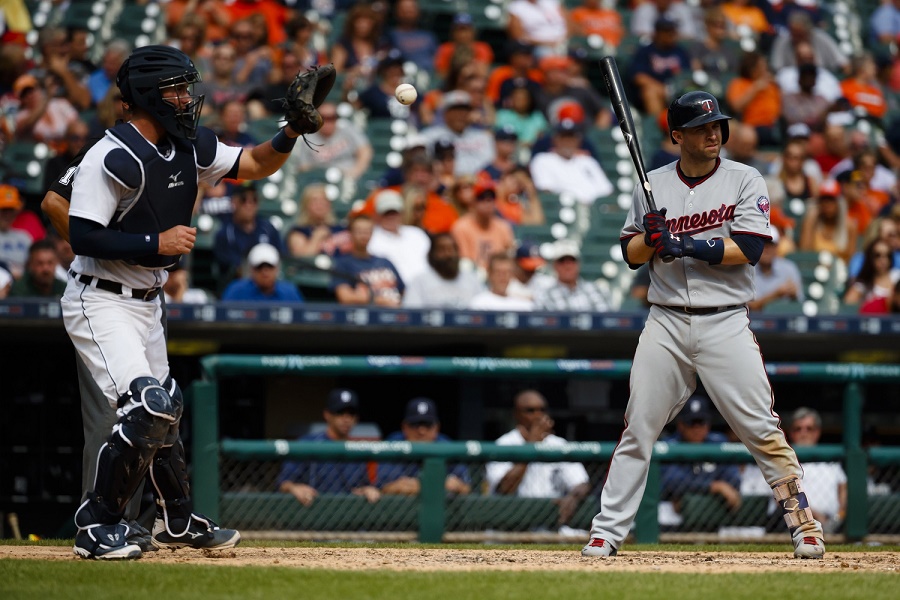 It's not very common for trades to happen this time of year, as it seems like front offices take it a little easy during the holidays. Last season, the Reds traded Aroldis Chapman to the Yankees on Dec. 28 but there wasn't another trade for almost two weeks after. Typically if a trade is going to happen early in the offseason it's completed at the Winter Meetings. Jon Heyman's reports that talks with the Dodgers about a potential Brian Dozier swap do not appear to be progressing. At what point do the Twins (or Dodgers, for that matter) just walk away from trade talks? I'm not in the camp that is demanding Dozier to be traded this winter, but I am starting to feel a weird anxiety about his status being up in the air (can't even begin to imagine how he feels). I just want to know if Dozier is going to be a part of the 2017 Twins or not. So many other things around the infield depend on what happens with Dozier. In my offseason blueprint I decided it would be better to hold Dozier and see if maybe at the deadline there would be more teams interested at that time. It's always nice to have a bidding war to drive up the asking price. But I'm starting to doubt if there will be another package that comes around with a better upper-level pitching prospect than Jose De Leon. Dave Cameron's of Fangraphs believes the Twins should make a deal for De Leon while he's on the table. And after reading Nick's thorough breakdown of De Leon it's tough to disagree with Cameron's stance. De Leon is certainly a risky investment, but what young pitcher isn't? While my own patience runs thin, it's probably a good thing for Twins fans I'm not running the team. That's true for lots of reasons, but chief among them right now is that I wouldn't have the endurance to be engaged in a negotiation for this long. Falvey and Levine may be running the risk of the Dodgers looking elsewhere to find a second baseman, but all the negotiating power lies with the Twins at this point. If a deal doesn't get done, the Twins keep the best and most popular player in the organization who just hit 42 home runs, is in his prime and on an affordable contract. And taking a look at Seth's recent roster projection, there aren't any glaring holes on the team now that Jason Castro has filled the void at catcher. The Dodgers, on the other hand, currently project to have Enrique Hernandez as their Opening Day second baseman. There are also rumors they're interested in a reunion with Chase Utley, who just turned 38-years-old. Sure, they could trade for another player such as Logan Forsythe of the Rays, but he's not on Dozier's level and he would still cost LA an impressive package of prospects. By no means do the Twins need to trade Brian Dozier. Falvey and Levine know this. I think one could argue the Dodgers need Dozier if they expect to contend for the World Series. The National League should be extremely competitive. Good things come to those who wait. Hopefully the Dodgers eventually give in and let go of whoever the Twins are holding out for. They have every reason to do so.
 -
Article: Less Is More?
Tom Froemming replied to Tom Froemming's topic in Twins Daily Front Page News
I feel like if the team thinks they can compete by 2018 they should keep both Dozier and Ervin. If not, they both should be traded, regardless of replacement options. Plus let's say Dozier is traded for De Leon, then I would argue that there is in a way an excess, maybe not in terms of talent, but in numbers. As it stands the rotation would be Ervin, Santiago, Gibson, Berrios and Hughes (if healthy) or maybe Duffey/May/Mejia with Gonsalves knocking on the door in Triple A. I'm skeptical he'll stick, but Rule 5 guy Justin Haley is another option. Toss in De Leon and it becomes difficult to try to work all these guys into a five-man rotation even with the expected injuries/attrition. Might as well trade Ervin at that point. -
Article: Less Is More?
Tom Froemming replied to Tom Froemming's topic in Twins Daily Front Page News
This is great stuff, thanks for taking the time to comment. To your point, even De Leon, a former 24th-round-pick, wasn't a heralded prospect as recently as a couple years ago. You've definitely swayed my thinking some, and in general I have to agree with you. But when I think specifically about the Twins position right now I would still be inclined to go high risk/high reward. I feel like with Berrios, Gonsalves, Romero, Jay, Stewart, Mejia and the like all coming up and other options in Gibson, Duffey and even May the Twins should have no problem finding options to fill out the rotation. While the guys I just listed have either under performed or haven't yet cracked the majors, that's still already nine options. And who knows, maybe one or two of those guys can be one of the type of pitchers who turns into a complete stud with a new pitch/mechanical tweak. I guess you can never have enough pitching, but I'm still inclined to shoot for the moon and focus on just trying to get the best pitcher possible instead of the best package.- 24 replies
-
- 1
-

-
- brian dozier
- ervin santana
- (and 3 more)
-
Article: Less Is More?
Tom Froemming replied to Tom Froemming's topic in Twins Daily Front Page News
You're right, even combining both Dozier and Ervin probably isn't enough to get Urias. But if you swap in Alex Reyes of the Cardinals or Tyler Glasnow of the Pirates or whoever you feel is the best guy that combo could possibly net, would you rather do that or try to trade Dozier and Santana separately for more prospects? I guess the bottom line is I'm wondering if there's any avenue in which the Twins can land a young pitcher better than Jose De Leon, or is that the highest we can realistically hope for. No disrespect to him, De Leon would be a huge add for the future of the rotation, but I just wonder. I'm sure that's the question Falvey is trying to find an answer to right now.- 24 replies
-
- 1
-
-
- brian dozier
- ervin santana
- (and 3 more)
-
During this week's Winter Meetings we've seen the Chicago White Sox trade two of their premier players, Chris Sale and Adam Eaton, for a total of seven prospects. The moves have skyrocketed the White Sox farm system, which has been rated in the bottom third of baseball for several years. With Sale and Eaton both being very valuable thanks to their ages and team-friendly contracts, the White Sox managed to land both quality and quantity in terms of the prospects they acquired. For the Twins, it's likely the front office will have to choose between quality and quantity in their deals this winter.It's not difficult to imagine Derek Falvey & Co. making a couple of similar deals, though on a slightly smaller scale. But with a solid young foundation already in place and more help on the way with the No. 1 pick in this upcoming June's draft, should the Twins be more focused on top quality in their returns? The Brian Dozier trade winds continue to swirl, but things have been curiously quiet on the Ervin Santana front. Maybe neither of them get traded this offseason, but it seems obvious that if one goes there's not much reason to hold on to the other. So why not try to move them both in the same deal? There are rumored to be multiple teams interested in Dozier, but the most smoke has been surrounding the Los Angeles Dodgers. And, like most teams, the Dodgers could use another starting pitcher. This would be the ultimate putting all your eggs in the same basket deal, but how about offering Dozier and Santana for 20-year-old wonder boy Julio Urias? Getting third and fourth starters, middle relievers or solid everyday players is never all that difficult. Every year those types of players can be acquired on the free agent market, and with a core of cheap young players coming up and Joe Mauer's contract coming off the books soon the Twins should have spending room in the future. Getting aces, shutdown closers or stud hitters is extremely difficult. Even when those players become available you either have to sell your farm system just to get them as a half-season rental or sign them to ridiculous free agent contracts that are two or three years longer than you'd like. As with any young player, Urias is a lottery ticket, but his odds of giving you a jackpot are as high as they get. And if Urias hits you would have a player who is great, young and under extended team control. Of course, all this is assuming the Dodgers would even agree to the swap. Despite facing more advanced hitters his entire minor league career, the Mexican lefty dominated. Urias has a 2.66 ERA and 10.5 K/9 over 267 1/3 innings in the minors. He got the call to the show last season as a 19-year-old and did not experience much of a learning curve. Over 77 innings with the Dodgers, Urias had a 3.39 ERA and averaged 9.8 K/9. That's the kind of player who is next to impossible for the Twins to acquire under normal circumstances. Jose De Leon, the most rumored centerpiece in purposed Dozier deals, looks completely ordinary next to Urias. But still, it's much more likely Dozier is traded for a package of youngsters. And to be fair, both Falvey and GM Thad Levine have first-hand experience acquiring some really impressive players in such packages. But when those trades don't work out, well ... we all remember the Johan Santana trade. Maybe the Urias scenario isn't realistic, but what do you think about the idea in general? Should the Twins shoot for the moon and package Dozier and Ervin in the same deal, or should they try to diversify their returns and trade them in separate deals for packages of prospects? Click here to view the article
-
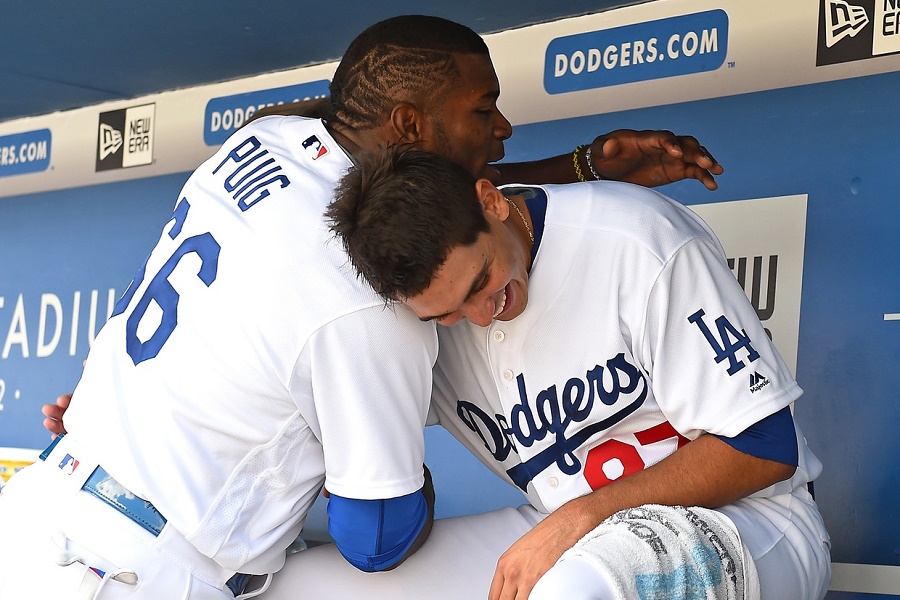 It's not difficult to imagine Derek Falvey & Co. making a couple of similar deals, though on a slightly smaller scale. But with a solid young foundation already in place and more help on the way with the No. 1 pick in this upcoming June's draft, should the Twins be more focused on top quality in their returns? The Brian Dozier trade winds continue to swirl, but things have been curiously quiet on the Ervin Santana front. Maybe neither of them get traded this offseason, but it seems obvious that if one goes there's not much reason to hold on to the other. So why not try to move them both in the same deal? There are rumored to be multiple teams interested in Dozier, but the most smoke has been surrounding the Los Angeles Dodgers. And, like most teams, the Dodgers could use another starting pitcher. This would be the ultimate putting all your eggs in the same basket deal, but how about offering Dozier and Santana for 20-year-old wonder boy Julio Urias? Getting third and fourth starters, middle relievers or solid everyday players is never all that difficult. Every year those types of players can be acquired on the free agent market, and with a core of cheap young players coming up and Joe Mauer's contract coming off the books soon the Twins should have spending room in the future. Getting aces, shutdown closers or stud hitters is extremely difficult. Even when those players become available you either have to sell your farm system just to get them as a half-season rental or sign them to ridiculous free agent contracts that are two or three years longer than you'd like. As with any young player, Urias is a lottery ticket, but his odds of giving you a jackpot are as high as they get. And if Urias hits you would have a player who is great, young and under extended team control. Of course, all this is assuming the Dodgers would even agree to the swap. Despite facing more advanced hitters his entire minor league career, the Mexican lefty dominated. Urias has a 2.66 ERA and 10.5 K/9 over 267 1/3 innings in the minors. He got the call to the show last season as a 19-year-old and did not experience much of a learning curve. Over 77 innings with the Dodgers, Urias had a 3.39 ERA and averaged 9.8 K/9. That's the kind of player who is next to impossible for the Twins to acquire under normal circumstances. Jose De Leon, the most rumored centerpiece in purposed Dozier deals, looks completely ordinary next to Urias. But still, it's much more likely Dozier is traded for a package of youngsters. And to be fair, both Falvey and GM Thad Levine have first-hand experience acquiring some really impressive players in such packages. But when those trades don't work out, well ... we all remember the Johan Santana trade. Maybe the Urias scenario isn't realistic, but what do you think about the idea in general? Should the Twins shoot for the moon and package Dozier and Ervin in the same deal, or should they try to diversify their returns and trade them in separate deals for packages of prospects?
 -
Article: A Tale Of Two Catchers
Tom Froemming replied to Steven Buhr's topic in Twins Daily Front Page News
Nice write up. What an interesting journey it has been for Garver and Turner. It's too bad Stuart had to go, but I suppose it's not necessary to keep four catchers on the 40 man. For what it's worth Turner's bat heated up some to end the year. He had a .745 OPS in the second half. If he can have a great spring and the Reds decide Devin Mesoraco's catching days are over Turner could be the backup to Tucker Barnhart on the Reds' opening day roster.- 8 replies
-
- 2
-
-
- mitch garver
- stuart turner
- (and 3 more)
-
Article: Official Winter Meetings Wednesday Thread
Tom Froemming replied to Seth Stohs's topic in Twins Daily Front Page News
I don't understand why the Nats didn't just sign Dexter Fowler. Pretty close to as good as Eaton. Sure, he'd cost more, but I can't imagine the Nats are hurting for money. Plus that's just looking at "cost" as salary, Eaton cost them his salary and those three prospects. I don't get it, but hopefully this means the Twins can get a similar haul for Dozier. While you can at least compare Eaton to Fowler there is no one on the free agent market comparable to Dozier.- 163 replies
-
- 1
-
-
- brian dozier
- chris sale
- (and 3 more)
-
Article: As The Defense Goes, So Goes The Twins
Tom Froemming replied to Tom Froemming's topic in Twins Daily Front Page News
Plus if he's called up we would get the added bonus of hearing Bert try to pronounce Engelb Vielma.- 25 replies
-
- 4
-
-
- derek falvey
- jason castro
- (and 3 more)
-
The first big addition of the Derek Falvey era was done in design to improve the team's defense, an area that had gone serially overlooked in recent years. Let's hope the defensive upgrades continue, as there has been a strong correlation between team defense and success for the Twins. Take a look through the more than 220 comments on Parker's article and it becomes obvious there is not a consensus among Twins Daily readers on whether or not it was wise to sign Jason Castro to a three-year, $24.5 million deal. Only time will tell, but an upgrade at catcher, particularly in terms of defense, was a huge need. It's a good start, as Nick noted, but there are still plenty of areas of improvement. And it's worth noting that defense has been a huge factor in the team's successes and failures over the years.Over the past 15 seasons, the Twins have ranked in the top half in team defense seven times, according to Fangraphs. They had a winning record in six of those seasons (every year but '07 when they were 79-83) and made the playoffs five times. In the eight years they've fielded a below-average defense (which includes each of the past six seasons), the Twins have been over .500 twice with just one postseason appearance ('09, Joe Mauer's MVP season). With an above average defense, the Twins have averaged 89 wins and with a sub-par defense they've averaged just 72 wins. And that's pretty close to being in line with what you see across the league. Taking a look at the past five seasons, teams who finished in the top 10 in defense averaged 85 wins and those in the bottom ten averaged just 75 wins. It's very difficult to be a good team that's bad at catching the baseball. As always, there are plenty of exceptions. The '14 Reds and Red Sox both ranked in the top five in defense but lost 86 and 91 games, respectively. On the other end, the '15 Pirates won 98 games despite being in the bottom five in defense. Last season, the Twins were 29th in defense, ahead of only Oakland. The only position where the Twins had above average glove work was at first base, where they ranked 8th. Center field (16th) and second base (19th) were spots where the team was at least passable. But right field (23rd), third base (24th), catcher (25th), and shortstop (27th) were all pain points for the Twins' defense, and thanks to Robbie Grossman's horrendous performance the team had the worst-rated left field defense in baseball. The hope is that Castro will boost the defense behind the dish, but what about the other positions? Max Kepler spent more time in right field with the Twins last season than he had played the position over his entire minor league career. Hopefully with more reps in right his defense will improve, he certainly appears to have the physical tools to be an above average fielder. In left, Eddie Rosario has been one of the best defenders in baseball the past two seasons. But he only accounted for about a third of the innings in left last season, as he spent some time in Rochester and played some center field. That leaves the biggest unanswered questions are on the left side of the infield. The obvious in-house candidates to fill those spots are Miguel Sano, Jorge Polanco and Eduardo Escobar. If I'm going to give Kepler a break due to lack of minor league reps in right, I suppose I need to do the same for both Sano at third (thanks to his 2014 Tommy John surgery) and Polanco at shortstop (because he inexplicably played second base last season in Rochester). But it would be risky to hope they can both make the major improvements necessary to become even just average defensively. Considering they'd be playing next to each other in the field, a lack of improvement from both would be a defensive disaster. In his offseason blueprint, Seth recently offered up punchless leatherwizard (copyright Eric Longenhagen) Engelb Vielma as a glove-first alternate at shortstop. Vielma hasn't played above Double A, but for what it's worth both Falvey and GM Thad Levine have had success aggressively promoting young shortstops (not that Vielma is anywhere near the prospect Francisco Lindor or Elvis Andrus were). The only other player with infield experience on the 40-man roster is Danny Santana, and the free agent market is thin. How everything shakes out in the infield also relies heavily on whether or not Brian Dozier is traded. With the Winter Meetings coming up this week, many more questions may be answered. What would you like to see the Twins do to improve their defense? Click here to view the article
- 25 replies
-
- 2
-
-
- derek falvey
- jason castro
- (and 3 more)
-
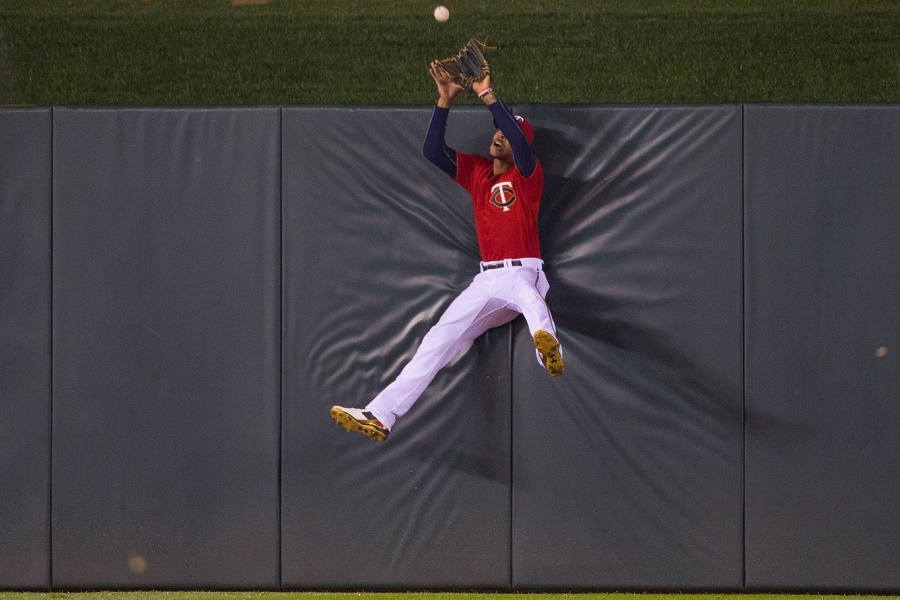 Over the past 15 seasons, the Twins have ranked in the top half in team defense seven times, according to Fangraphs. They had a winning record in six of those seasons (every year but '07 when they were 79-83) and made the playoffs five times. In the eight years they've fielded a below-average defense (which includes each of the past six seasons), the Twins have been over .500 twice with just one postseason appearance ('09, Joe Mauer's MVP season). With an above average defense, the Twins have averaged 89 wins and with a sub-par defense they've averaged just 72 wins. And that's pretty close to being in line with what you see across the league. Taking a look at the past five seasons, teams who finished in the top 10 in defense averaged 85 wins and those in the bottom ten averaged just 75 wins. It's very difficult to be a good team that's bad at catching the baseball. As always, there are plenty of exceptions. The '14 Reds and Red Sox both ranked in the top five in defense but lost 86 and 91 games, respectively. On the other end, the '15 Pirates won 98 games despite being in the bottom five in defense. Last season, the Twins were 29th in defense, ahead of only Oakland. The only position where the Twins had above average glove work was at first base, where they ranked 8th. Center field (16th) and second base (19th) were spots where the team was at least passable. But right field (23rd), third base (24th), catcher (25th), and shortstop (27th) were all pain points for the Twins' defense, and thanks to Robbie Grossman's horrendous performance the team had the worst-rated left field defense in baseball. The hope is that Castro will boost the defense behind the dish, but what about the other positions? Max Kepler spent more time in right field with the Twins last season than he had played the position over his entire minor league career. Hopefully with more reps in right his defense will improve, he certainly appears to have the physical tools to be an above average fielder. In left, Eddie Rosario has been one of the best defenders in baseball the past two seasons. But he only accounted for about a third of the innings in left last season, as he spent some time in Rochester and played some center field. That leaves the biggest unanswered questions are on the left side of the infield. The obvious in-house candidates to fill those spots are Miguel Sano, Jorge Polanco and Eduardo Escobar. If I'm going to give Kepler a break due to lack of minor league reps in right, I suppose I need to do the same for both Sano at third (thanks to his 2014 Tommy John surgery) and Polanco at shortstop (because he inexplicably played second base last season in Rochester). But it would be risky to hope they can both make the major improvements necessary to become even just average defensively. Considering they'd be playing next to each other in the field, a lack of improvement from both would be a defensive disaster. In his offseason blueprint, Seth recently offered up punchless leatherwizard (copyright Eric Longenhagen) Engelb Vielma as a glove-first alternate at shortstop. Vielma hasn't played above Double A, but for what it's worth both Falvey and GM Thad Levine have had success aggressively promoting young shortstops (not that Vielma is anywhere near the prospect Francisco Lindor or Elvis Andrus were). The only other player with infield experience on the 40-man roster is Danny Santana, and the free agent market is thin. How everything shakes out in the infield also relies heavily on whether or not Brian Dozier is traded. With the Winter Meetings coming up this week, many more questions may be answered. What would you like to see the Twins do to improve their defense?
 -
Article: REPORT: Twins To Sign Jason Castro
Tom Froemming replied to Parker Hageman's topic in Twins Daily Front Page News
My fear is as umpires start to pay more attention to this stuff and understand who the guys are with the reputations of being the best framers, they'll be more cognizant and shrink their zone for that catcher. It's sort of like when the batter has a reputation of having a good eye it seems sometimes they get calls just because the ump gives them the benefit of the doubt. I've also wondered if framing skills carry over when a catcher switches teams. Isn't it possible Castro's numbers were so good because the Astros pitchers were really good at painting the black? Could it be some "stolen" strikes should be credited to the pitcher? Either way, the Twins desperately needed a catcher, and there doesn't appear to be a long-term solution in house until maybe 19-year-old Ben Rortvedt is ready, and that's assuming he makes it. Both Murphy and Garver look like decent backups at best.- 223 replies
-
- 5
-
-
- jason castro
- free agent
- (and 1 more)
-
Article: Flipping Toward A Brighter Future
Tom Froemming replied to Tom Froemming's topic in Twins Daily Front Page News
Um ... the 2016 Chicago Cubs.- 28 replies
-
- 6
-
-
- rich hill
- derek holland
- (and 3 more)
-
There's been a lot of speculation about how Derek Falvey and Thad Levine may build up the Minnesota Twins. Will they trade, draft, buy or develop their way to a brighter future for the Twins? Well I'm wondering if it may be possible for them to also flip their way toward improving the team's outlook. Flipping houses is back en vogue, and it seems there's some opportunity to apply the same concepts related to flipping houses to rebuilding a ball club. Teams have all kinds of ways they can improve their future outlook, but is it possible to simply flip your way to a brighter future?Probably the best example of a team successfully flipping a player from last season was the Oakland A's handling of Rich Hill. Despite not expecting to be competitive, the A's signed Hill to a one-year, $6 million deal over the winter. From the moment the signing was announced it was speculated that the A's were out to flip Hill at the trade deadline. Entering his age 36 season, it was no guarantee Hill would replicate his impressive 2015 numbers that came from just four starts. But Hill was able to thrive over 14 starts with Oakland and was packaged with Josh Reddick to land a trio of promising pitching prospects from the Dodgers: Jharel Cotton, Frankie Montas and Grant Holmes. The Cubs using this strategy with Scott Feldman in 2013 stick out as maybe the greatest example of the strategy. Unlike Hill, Feldman was coming off a terrible season when he signed with the Cubs, posting a 5.09 ERA. But with past success and youth on his side, Chicago gave him a one-year, $6 million deal. Feldman turned in the best performance of his career over 15 starts as a Cub, and was sent as the headliner in a deal for Jake Arrieta. I'm sure even the most optimistic person the the Cubs' front office didn't see that working out as well as it did, but even at the time the logic was sound. Acquiring younger players with more upside and more years of control always makes sense. Even with that being the case, those trades rarely work out even close to that well. Now that Arrieta is a Cy Young pitcher and the Cubs are world champions that's looking like one of the greatest trades of all time. This is clearly not on that same level, but the Twins were able to flip Fernando Abad last season. No, Pat Light is not a franchise-changing piece, but the Twins did well to turn a guy they signed to a minor league deal into a younger player with upside who has more years of team control. That's the goal. So how might the Twins employ the tactic this offseason? Looking at guys who have the potential to be larger scale flips, someone who sticks out as a potential reclamation project among hitters is old friend Carlos Gomez. Levine's Rangers acquired him midseason from the Astros and saw him turn things around. After receiving MVP consideration in 2013 and 2014 things fell apart for Gomez. In his time with the Astros, he hit even worse than when he was a Twin, which eventually led to his release. But in a short sample of 130 at-bats with the Rangers Gomez had a .905 OPS. He's seeking a multi-year deal, but you never know how the market will turn out. We saw Ian Desmond and Dexter Fowler sit on the market until late February last offseason. Both had to settle for one-year deals. It's difficult to predict who, but it seems likely somebody in this free agent class will end up being a great bargain for the last few teams with money left to spend. On the pitching side, there are plenty of guys who could dramatically increase their value, but no one who jumps out to the extent Hill did last offseason. Brett Anderson is probably at the top of the list. Anderson has been one of the least healthy pitchers in the game since debuting with Oakland as a 21-year-old back in 2009. He turns 29 in February, and has had his share of both successes and failures over his career. Overall he has an ERA+ of 105, a 3.70 FIP and 2.77 K/BB ratio for his career. The combination of suppressed value and potential upside make Anderson an ideal candidate to flip. Here are some other intriguing names among starting pitchers ... Derek Holland: When news first broke Texas declined his option it didn't really move the needle for me, but I'm starting to come around. I'm not sure we've seen a healthy Holland at any point over the last three seasons. In 2013 he was the eighth-best pitcher in the AL per fWAR and entering his age 30 season there should still be something left in the tank. Signing him to a one-year deal would be an excellent low risk, potentially high reward deal. Henderson Alvarez: He's only thrown 22 1/3 innings over the past two seasons, but is also still just 26-years-old. When healthy he can sit in the mid-90s, but he's more of a control specialist than a strikeout pitcher. Jake Peavy: He's 35 and had a 5.54 ERA last season. But Eno Sarris recently highlighted his encouraging spin rates over at Fangraphs. If he's willing to pitch for a last-place team, it shouldn't be a problem landing him on an affordable one-year pact. Jorge De La Rosa: The veteran longtime Rockies hurler has actually pitched relatively well in Coors Field. Still, it would be interesting to see if he could thrive if he gets outside of pitching half his games in baseball's oddest environment. Out of the bullpen I see Santiago Casilla or Neftali Feliz as good options to flip. Either could be inserted directly into the closer role and rack up value quickly. In his offseason blueprint, Seth offered up David Hernandez as an affordable veteran who could be a fit for the Twins' bullpen. He also fits the bill of someone who could be flipped. Another strategy I'd be interested in would be converting a pitcher into a new role. Why not get creative and sign Travis Wood as a starter, or Andrew Cashner to pitch out of the bullpen? Might a guy like Wood even take a pay cut for the chance to start again? Who knows, maybe. I am under the assumption payroll will be reduced, but hopefully Falvey and Levine can talk the Pohlads into making one of these deals. If things work out, the return on investment can be enormous. Who would you target as a free agent to flip? Click here to view the article
- 28 replies
-
- 2
-
-
- rich hill
- derek holland
- (and 3 more)
-
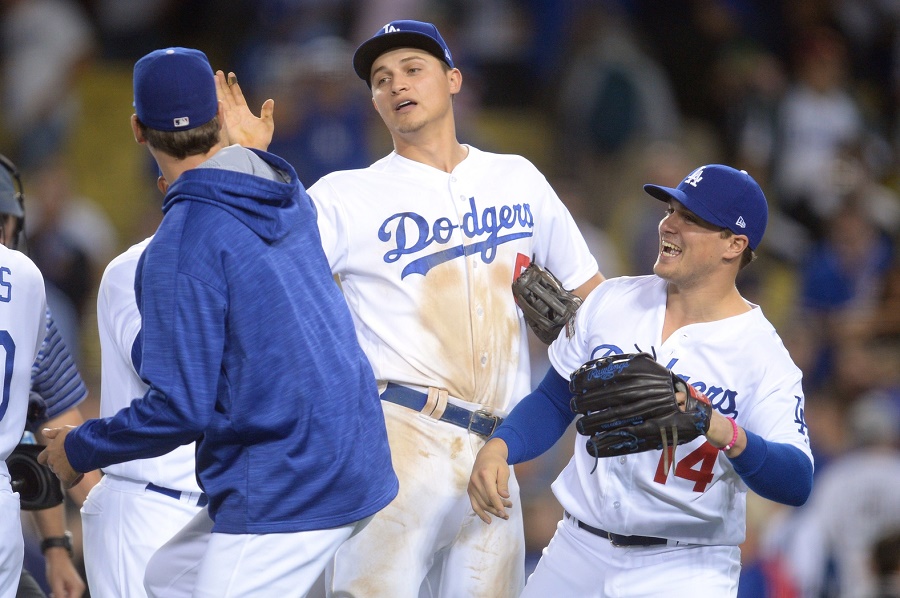 Probably the best example of a team successfully flipping a player from last season was the Oakland A's handling of Rich Hill. Despite not expecting to be competitive, the A's signed Hill to a one-year, $6 million deal over the winter. From the moment the signing was announced it was speculated that the A's were out to flip Hill at the trade deadline. Entering his age 36 season, it was no guarantee Hill would replicate his impressive 2015 numbers that came from just four starts. But Hill was able to thrive over 14 starts with Oakland and was packaged with Josh Reddick to land a trio of promising pitching prospects from the Dodgers: Jharel Cotton, Frankie Montas and Grant Holmes. The Cubs using this strategy with Scott Feldman in 2013 stick out as maybe the greatest example of the strategy. Unlike Hill, Feldman was coming off a terrible season when he signed with the Cubs, posting a 5.09 ERA. But with past success and youth on his side, Chicago gave him a one-year, $6 million deal. Feldman turned in the best performance of his career over 15 starts as a Cub, and was sent as the headliner in a deal for Jake Arrieta. I'm sure even the most optimistic person the the Cubs' front office didn't see that working out as well as it did, but even at the time the logic was sound. Acquiring younger players with more upside and more years of control always makes sense. Even with that being the case, those trades rarely work out even close to that well. Now that Arrieta is a Cy Young pitcher and the Cubs are world champions that's looking like one of the greatest trades of all time. This is clearly not on that same level, but the Twins were able to flip Fernando Abad last season. No, Pat Light is not a franchise-changing piece, but the Twins did well to turn a guy they signed to a minor league deal into a younger player with upside who has more years of team control. That's the goal. So how might the Twins employ the tactic this offseason? Looking at guys who have the potential to be larger scale flips, someone who sticks out as a potential reclamation project among hitters is old friend Carlos Gomez. Levine's Rangers acquired him midseason from the Astros and saw him turn things around. After receiving MVP consideration in 2013 and 2014 things fell apart for Gomez. In his time with the Astros, he hit even worse than when he was a Twin, which eventually led to his release. But in a short sample of 130 at-bats with the Rangers Gomez had a .905 OPS. He's seeking a multi-year deal, but you never know how the market will turn out. We saw Ian Desmond and Dexter Fowler sit on the market until late February last offseason. Both had to settle for one-year deals. It's difficult to predict who, but it seems likely somebody in this free agent class will end up being a great bargain for the last few teams with money left to spend. On the pitching side, there are plenty of guys who could dramatically increase their value, but no one who jumps out to the extent Hill did last offseason. Brett Anderson is probably at the top of the list. Anderson has been one of the least healthy pitchers in the game since debuting with Oakland as a 21-year-old back in 2009. He turns 29 in February, and has had his share of both successes and failures over his career. Overall he has an ERA+ of 105, a 3.70 FIP and 2.77 K/BB ratio for his career. The combination of suppressed value and potential upside make Anderson an ideal candidate to flip. Here are some other intriguing names among starting pitchers ... Derek Holland: When news first broke Texas declined his option it didn't really move the needle for me, but I'm starting to come around. I'm not sure we've seen a healthy Holland at any point over the last three seasons. In 2013 he was the eighth-best pitcher in the AL per fWAR and entering his age 30 season there should still be something left in the tank. Signing him to a one-year deal would be an excellent low risk, potentially high reward deal. Henderson Alvarez: He's only thrown 22 1/3 innings over the past two seasons, but is also still just 26-years-old. When healthy he can sit in the mid-90s, but he's more of a control specialist than a strikeout pitcher. Jake Peavy: He's 35 and had a 5.54 ERA last season. But Eno Sarris recently highlighted his encouraging spin rates over at Fangraphs. If he's willing to pitch for a last-place team, it shouldn't be a problem landing him on an affordable one-year pact. Jorge De La Rosa: The veteran longtime Rockies hurler has actually pitched relatively well in Coors Field. Still, it would be interesting to see if he could thrive if he gets outside of pitching half his games in baseball's oddest environment. Out of the bullpen I see Santiago Casilla or Neftali Feliz as good options to flip. Either could be inserted directly into the closer role and rack up value quickly. In his offseason blueprint, Seth offered up David Hernandez as an affordable veteran who could be a fit for the Twins' bullpen. He also fits the bill of someone who could be flipped. Another strategy I'd be interested in would be converting a pitcher into a new role. Why not get creative and sign Travis Wood as a starter, or Andrew Cashner to pitch out of the bullpen? Might a guy like Wood even take a pay cut for the chance to start again? Who knows, maybe. I am under the assumption payroll will be reduced, but hopefully Falvey and Levine can talk the Pohlads into making one of these deals. If things work out, the return on investment can be enormous. Who would you target as a free agent to flip?
 -
One last thing regarding Soto, here's an overview of him vs. the top free agent guys: OPS 2013-2016 Soto .744 Ramos .734 Wieters .724 Castro .709 Framing 2013-2016 Castro 30.8 Soto 1.2 Ramos -2.8 Wieters -28.1 Career CS% Ramos 34% Wieters 33% Soto 27% Castro 26%
- 28 replies
-
- 1
-
-
- jorge polanco
- brian dozier
- (and 3 more)
-
Soto would be more of a stop gap, and while he's not anyone to grab headlines, he would represent an upgrade over Suzuki (not saying much I know). The ideal situation is he would be in a 60/40 split with one of the "younger" guys to open the year before rolling back into more of a bench role. I put younger in quotes because Murphy, Garver and Turner will all be either 25 or 26 this season. It's time to give them an opportunity, they shouldn't need anymore time in the minors. Garver's great season has carried over into the AFL and both Murphy and Turner had encouraging finishes to the MiLB season.
- 28 replies
-
- 1
-
-
- jorge polanco
- brian dozier
- (and 3 more)
-
I know this looks a lot like the team that lost 103 games, but it also looks pretty similar to the 2015 team that was in the playoff hunt all the way up to the last weekend of the season. My glass is half full right now, but I think it's realistic to expect the majority of the guys on that 25-man roster to perform better than they did last season. But if that doesn't happen, heck yeah, hold a fire sale and basically make it the goal to land the number one pick. I'd give these guys one more shot, then do an Astros-style bottoming out.
-
The offseason is officially underway and it's time to play everybody's favorite game: November Fantasy Front Office Madness! Er, I guess everybody else is calling this their offseason blueprint. If you'd like to play along at home, the Twins Daily Offseason Handbook came out earlier this month, and along with an offseason blueprint from the Twins Daily regulars it includes everything you need to lay out your own future for the team. Several others have already joined in on the blueprint building, including Cody Christie and Cold Omaha's Brandon Warne, This is a lot of fun to do, if you don't like the blueprints I've laid below, head over to the forum (where there are already a few examples) or post a blog with your own plan, I love reading these things. All right, lets get down to it. First things first, you have to know what you're working with. After the worst season in franchise history, I'd expect the Pohlads would want to cut some payroll. Attendance dropped about 11.5%, so I'll build a similar reduction into my budget, aiming for around $93 million.Now before I get into the moves, let's figure out what the goal should be. Even with the budget dropping, I'd still want to present a team that could have a conceivable chance at contending, at least if everything went right. The new front office is going to create some positive buzz, and you wouldn't want to lose that by staging a massive fire sale. There's also the issue of building up the organization. Everything's about to change, and I'd prefer Derek Falvey and Thad Levine be able to devote as much time as needed getting the details right on how the org is structured and who else is hired even more so than building up the 2017 roster. I'd be fine with a quiet offseason if it meant amazing people were being hired into the front office, scouting department, etc. Okay, on to arbitration. These would be mainly budget cuts, but I would non-tender Trevor Plouffe and Brandon Kintzler. Both players could provide value to this year's team, but I'm not sure if either could surpass even their projected arbitration salaries on the open market. After watching his career for so long, it will be tough to watch Plouffe go, but it's time. I like Kintzler, but it's easy to find scrap heap relievers willing to sign minor league deals. I was tempted to let Hector Santiago go to open up some payroll, but with starting pitching being the team's biggest need I wouldn't want to downgrade the rotation any more than it already is. On top of that, I still think Santiago is a respectable pitcher. Yes, he'll walk his fare share of guys and give up homers, but he has a 103 ERA+ over six years. I think Santiago was tinkering with things when he first came to Minnesota (8.17 ERA in Aug.), but then went back to his usual formula at the end of the year (3.75 ERA in Sept./Oct.). Even with non-tendering Plouffe and Kintzler there's not a lot of room left in the budget for free agents. I'd like to leave the door open for John Ryan Murphy, Mitch Garver or Stuart Turner to establish themselves but it's obvious the Twins need a major league catcher. I think Geovany Soto represents the best buying opportunity in terms of bargain basement backstops in this year's free agent class. Soto, who turns 34 in January, signed a one-year, $2.8 million deal with the Angels last offseason and only played 28 games. Let's say we sign him for one-year, $2.25 million. Staying on the field has been a huge issue for Soto the last four seasons, but when healthy he's played well. Over those last four years, Soto has only 567 plate appearances, but his .431 slugging percentage is actually ahead of top free agent catchers Wilson Ramos (.429) and Matt Wieters (.422) over that same span. His defense is probably average at best, but that would still be an upgrade over Kurt Suzuki. An added bonus is Soto is Puerto Rican. To me, probably the most important thing of 2017 is the development of Jose Berrios. I think it could be extremely helpful to find a veteran to guide him as a player. It would be even better if that person could also relate to him personally and help him blossom into the beast we all believe he can become. I'd also like to see a legit major league shortstop added, but the market is extremely thin. Ruben Tejada signed a one-year, $1.5 million deal last offseason, and while he barely played it wouldn't surprise me that due to the thin market and his age (he's only 27) he gets a decent raise. We'll also put him down for one-year, $2.25 million. You don't get much from the bat, but he's been productive against lefties (.362 career OBP), is a decent defender at shortstop and can play second and third as well. And that's it. Those are the only major league contracts, at least. I'd bring in a few guys, particularly pitchers, on minor league deals and see what happens in spring training. I'd be particularly interested in a reunion with veteran Sean Burnett, who spent the bulk of last year pitching to a 2.15 ERA with Rochester. So there's gotta be a big trade, right? Nope, sorry. Not right away at least. If I'm trading away Brian Dozier or Ervin Santana I'm assuming the team has no shot at competing in 2017 or '18. I'm not ready to do that out of the gate. Pretty boring, I know. While there wouldn't be any ground breaking moves, it's the way the roster gets filled out where things get interesting. Starting Lineup C-Geovany Soto $2.25M 1B-Joe Mauer (vs. RHP) $23M 2B-Brian Dozier $6M 3B-Jorge Polanco $0.5M SS-Eduardo Escobar $2.9M LF-Eddie Rosario $0.5M CF-Byron Buxton $0.5M RF-Max Kepler $0.5M DH-Miguel Sano $0.5M Bench Kennys Vargas (starting 1B vs. LHP) $0.5M John Ryan Murphy $0.5M Robbie Grossman $0.5M Ruben Tejada $2.25M Rotation Ervin Santana $13.5M Hector Santiago $8.6M Kyle Gibson $3.5M Jose Berrios $0.5M Phil Hughes $13.2M Bullpen Tyler Duffey $0.5M Trevor May $0.5M J.T. Chargios $0.5M Taylor Rogers $0.5M Ryan Pressly $1.1M Glen Perkins $6.5M Michael Tonkin $0.5M Adding in the $2.75M owed to Byungho Park, that's an Opening Day payroll of $92.55 million. Missing from this team is Danny Santana, who at this point I'd expect to clear waivers. There are a lot of familiar faces in this bunch, but in slightly different places. Though I've committed positions to each guy in the starting lineup, it's open for a lot of flexibility. What the signing of Tejada does is provide enough infield depth so you don't have to play Polanco at short or Sano at third. In the big picture, I could see Engelb Vielma being ready to be a glove-first MLB shortstop by midseason 2017 with Nick Gordon probably around a year behind him. So I'm not interested in trying to make Polanco stick at shortstop. Putting Polanco at third may seem odd, but that is a weak position in the minors for the Twins. Unlike shortstop, it's difficult to look at the current crop of talent and see multiple options coming up the pipeline any time within the next year or two. No, Polanco did not look good at third base in a short sample last season, but I think his skills translate better there than shortstop and with a spring training learning the position maybe we see better results. If he sticks, you have a legit long-term solution at third, so no need to try to make Sano work there. Just let him mash at DH. Out in the bullpen, I'd combat any disappointment Duffey or May would have about not cracking the rotation by letting them duke it out for the closer role in spring training. If it were totally up to me, I'd probably have May in the rotation and instead give Hughes the opportunity to pitch at the back end of the bullpen. He's done it before. But with his contract, I doubt that if he's healthy he'll be doing anything but starting. We'll say that's an ownership decision, out of my hands. Speaking of health, there are always extra days off in April, so even if Hughes and/or Perkins aren't back to 100 percent, you wouldn't have to lean on either of them early on. If you didn't feel confident even easing them in and they start the year on the DL, Adalberto Mejia becomes the fifth starter and either Ryan O'Rourke or Buddy Boshers joins the pen. If we get to July and somehow this team is over .500, I'd aim to make major improvements to the bullpen and try to add another starting pitcher. You wouldn't want to sell off the farm, but operating under $100 million with a cost controlled core, this team would be well placed to take on salary. Sometimes that means you don't need to give up your top prospects. If we get to July and this team is below .500, we're open for business. Dozier and Santana are traded for sure, along with any other vets with trade value. You maybe even listen on a young guy or two. And the returns I'd seek wouldn't be guys on the cusp of the major leagues, I'd aim for lower-level prospects who would be more likely to make an impact in 2018 or 2019. What do you think? Should I tweet this out to Thad Levine? Click here to view the article
- 28 replies
-
- 2
-
-
- jorge polanco
- brian dozier
- (and 3 more)
-
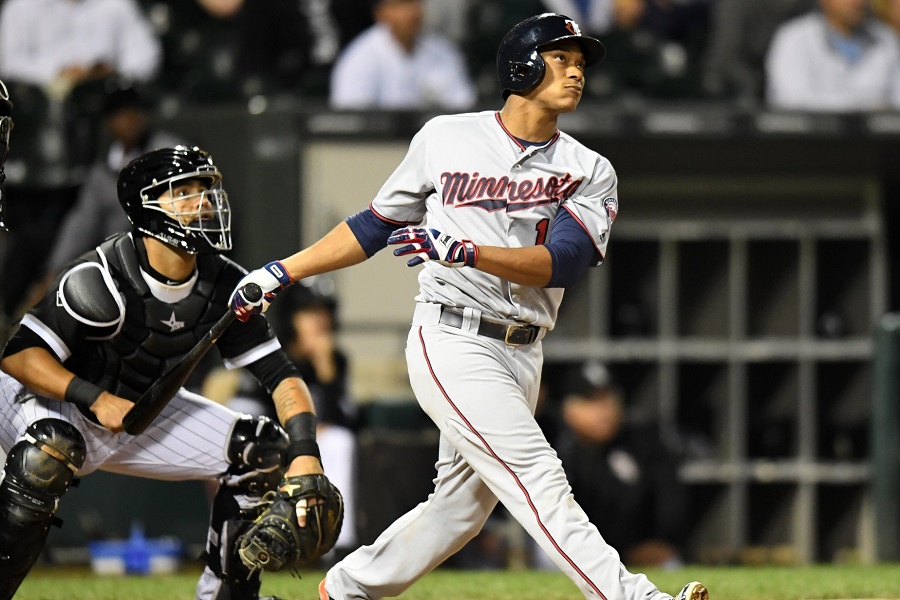 Now before I get into the moves, let's figure out what the goal should be. Even with the budget dropping, I'd still want to present a team that could have a conceivable chance at contending, at least if everything went right. The new front office is going to create some positive buzz, and you wouldn't want to lose that by staging a massive fire sale. There's also the issue of building up the organization. Everything's about to change, and I'd prefer Derek Falvey and Thad Levine be able to devote as much time as needed getting the details right on how the org is structured and who else is hired even more so than building up the 2017 roster. I'd be fine with a quiet offseason if it meant amazing people were being hired into the front office, scouting department, etc. Okay, on to arbitration. These would be mainly budget cuts, but I would non-tender Trevor Plouffe and Brandon Kintzler. Both players could provide value to this year's team, but I'm not sure if either could surpass even their projected arbitration salaries on the open market. After watching his career for so long, it will be tough to watch Plouffe go, but it's time. I like Kintzler, but it's easy to find scrap heap relievers willing to sign minor league deals. I was tempted to let Hector Santiago go to open up some payroll, but with starting pitching being the team's biggest need I wouldn't want to downgrade the rotation any more than it already is. On top of that, I still think Santiago is a respectable pitcher. Yes, he'll walk his fare share of guys and give up homers, but he has a 103 ERA+ over six years. I think Santiago was tinkering with things when he first came to Minnesota (8.17 ERA in Aug.), but then went back to his usual formula at the end of the year (3.75 ERA in Sept./Oct.). Even with non-tendering Plouffe and Kintzler there's not a lot of room left in the budget for free agents. I'd like to leave the door open for John Ryan Murphy, Mitch Garver or Stuart Turner to establish themselves but it's obvious the Twins need a major league catcher. I think Geovany Soto represents the best buying opportunity in terms of bargain basement backstops in this year's free agent class. Soto, who turns 34 in January, signed a one-year, $2.8 million deal with the Angels last offseason and only played 28 games. Let's say we sign him for one-year, $2.25 million. Staying on the field has been a huge issue for Soto the last four seasons, but when healthy he's played well. Over those last four years, Soto has only 567 plate appearances, but his .431 slugging percentage is actually ahead of top free agent catchers Wilson Ramos (.429) and Matt Wieters (.422) over that same span. His defense is probably average at best, but that would still be an upgrade over Kurt Suzuki. An added bonus is Soto is Puerto Rican. To me, probably the most important thing of 2017 is the development of Jose Berrios. I think it could be extremely helpful to find a veteran to guide him as a player. It would be even better if that person could also relate to him personally and help him blossom into the beast we all believe he can become. I'd also like to see a legit major league shortstop added, but the market is extremely thin. Ruben Tejada signed a one-year, $1.5 million deal last offseason, and while he barely played it wouldn't surprise me that due to the thin market and his age (he's only 27) he gets a decent raise. We'll also put him down for one-year, $2.25 million. You don't get much from the bat, but he's been productive against lefties (.362 career OBP), is a decent defender at shortstop and can play second and third as well. And that's it. Those are the only major league contracts, at least. I'd bring in a few guys, particularly pitchers, on minor league deals and see what happens in spring training. I'd be particularly interested in a reunion with veteran Sean Burnett, who spent the bulk of last year pitching to a 2.15 ERA with Rochester. So there's gotta be a big trade, right? Nope, sorry. Not right away at least. If I'm trading away Brian Dozier or Ervin Santana I'm assuming the team has no shot at competing in 2017 or '18. I'm not ready to do that out of the gate. Pretty boring, I know. While there wouldn't be any ground breaking moves, it's the way the roster gets filled out where things get interesting. Starting Lineup C-Geovany Soto $2.25M 1B-Joe Mauer (vs. RHP) $23M 2B-Brian Dozier $6M 3B-Jorge Polanco $0.5M SS-Eduardo Escobar $2.9M LF-Eddie Rosario $0.5M CF-Byron Buxton $0.5M RF-Max Kepler $0.5M DH-Miguel Sano $0.5M Bench Kennys Vargas (starting 1B vs. LHP) $0.5M John Ryan Murphy $0.5M Robbie Grossman $0.5M Ruben Tejada $2.25M Rotation Ervin Santana $13.5M Hector Santiago $8.6M Kyle Gibson $3.5M Jose Berrios $0.5M Phil Hughes $13.2M Bullpen Tyler Duffey $0.5M Trevor May $0.5M J.T. Chargios $0.5M Taylor Rogers $0.5M Ryan Pressly $1.1M Glen Perkins $6.5M Michael Tonkin $0.5M Adding in the $2.75M owed to Byungho Park, that's an Opening Day payroll of $92.55 million. Missing from this team is Danny Santana, who at this point I'd expect to clear waivers. There are a lot of familiar faces in this bunch, but in slightly different places. Though I've committed positions to each guy in the starting lineup, it's open for a lot of flexibility. What the signing of Tejada does is provide enough infield depth so you don't have to play Polanco at short or Sano at third. In the big picture, I could see Engelb Vielma being ready to be a glove-first MLB shortstop by midseason 2017 with Nick Gordon probably around a year behind him. So I'm not interested in trying to make Polanco stick at shortstop. Putting Polanco at third may seem odd, but that is a weak position in the minors for the Twins. Unlike shortstop, it's difficult to look at the current crop of talent and see multiple options coming up the pipeline any time within the next year or two. No, Polanco did not look good at third base in a short sample last season, but I think his skills translate better there than shortstop and with a spring training learning the position maybe we see better results. If he sticks, you have a legit long-term solution at third, so no need to try to make Sano work there. Just let him mash at DH. Out in the bullpen, I'd combat any disappointment Duffey or May would have about not cracking the rotation by letting them duke it out for the closer role in spring training. If it were totally up to me, I'd probably have May in the rotation and instead give Hughes the opportunity to pitch at the back end of the bullpen. He's done it before. But with his contract, I doubt that if he's healthy he'll be doing anything but starting. We'll say that's an ownership decision, out of my hands. Speaking of health, there are always extra days off in April, so even if Hughes and/or Perkins aren't back to 100 percent, you wouldn't have to lean on either of them early on. If you didn't feel confident even easing them in and they start the year on the DL, Adalberto Mejia becomes the fifth starter and either Ryan O'Rourke or Buddy Boshers joins the pen. If we get to July and somehow this team is over .500, I'd aim to make major improvements to the bullpen and try to add another starting pitcher. You wouldn't want to sell off the farm, but operating under $100 million with a cost controlled core, this team would be well placed to take on salary. Sometimes that means you don't need to give up your top prospects. If we get to July and this team is below .500, we're open for business. Dozier and Santana are traded for sure, along with any other vets with trade value. You maybe even listen on a young guy or two. And the returns I'd seek wouldn't be guys on the cusp of the major leagues, I'd aim for lower-level prospects who would be more likely to make an impact in 2018 or 2019. What do you think? Should I tweet this out to Thad Levine?
 -
You're right, had a feeling I missed something. Tyner was the DH 12 times in 2006 and was second in DH appearances in '07 with 26, which was only 10 away from the team leader, Jason Kubel. Of course, that was under Gardy. Here are some interesting guys Molitor has used at DH the past two seasons: Eduardo Nunez (22 total), Eduardo Escobar (10 total), Danny Santana (9 total), Shane Robinson (5), Kurt Suzuki (4) and Juan Centeno, Logan Schafer and Chris Herrmann all had one appearance as a DH.
-
Big Papi made plenty of money in his career, but I was pretty surprised to look back as see the biggest financial commitment the Red Sox ever had to make him was a 4-year, $52 million extension that had another club option year.
-
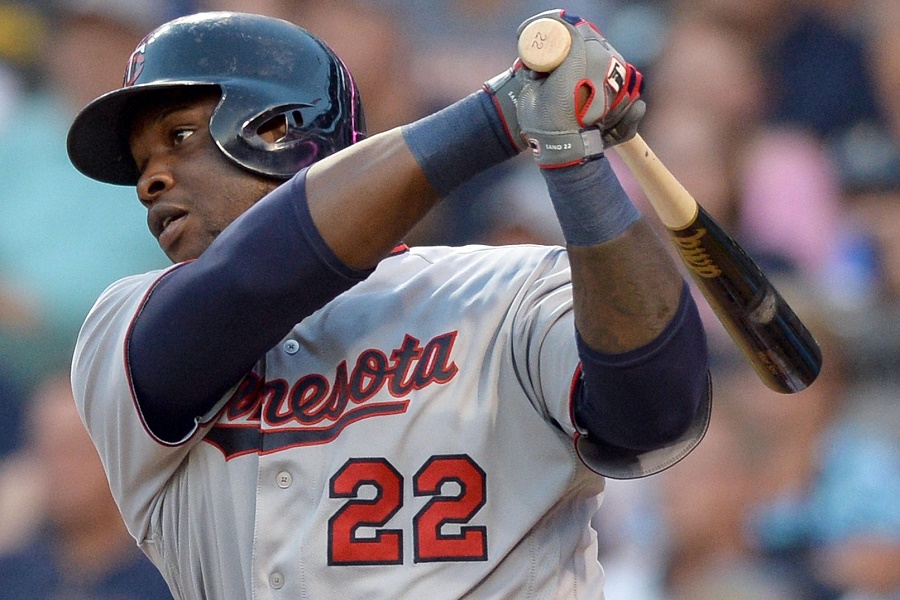 You have to go back to 2011 to the last time the Orioles (Vlad Guerrero) and Rays (Johnny Damon) had a 100-game DH, and 2010 for the Blue Jays (Adam Lind) and Indians (Travis Hafner). The White Sox have had their share of veteran sluggers, but the last time they had a player DH in 100 games was 2008 (Jim Thome, who also reached 99 games at DH in '09). That would be the longest drought without an "everyday" DH, except for the fact the Twins have them beat ... by a decade. The last Twins player to DH 100 games? Paul Molitor in 1998 (he also accomplished the feat in '97 & '96). The last time the Twins even had a guy DH in half their games was in 2009 (Jason Kubel, 82). Things were especially unstable at DH last season. Miguel Sano and Byungho Park shared the team lead in appearances at DH with just 36. Joe Mauer (34), Robbie Grossman (19) and Kennys Vargas (13) also had at least 10 games at DH. The only other teams to fail to have a player reach even 60 games at DH were the Yankees (led by A-Rod's 57 games) and A's (led by 53 games at DH for Khris Davis). But it's not like that was all by design. Of course, if Park continued his hot start Paul Molitor would have gladly penciled him in at DH 100-plus times last season. Park had a .900 OPS through his first month and a half in the big leagues before falling apart. And maybe Terry Ryan would never have brought in Park if the team didn't feel it was too early to make 23-year-old Sano an everyday DH. To be fair, that was an entirely sensible approach to take (deciding to put him in right field is another discussion). Even the greatest designated hitters of all-time spent many of their younger years in the field. Any discussion about great designated hitters has to start with David Ortiz, right? Despite being in his mid-20s, the Twins were primarily DHing Ortiz in his last three years in Minnesota, but he played first base in 79 games over his first two seasons in Boston. Once he turned 29, Ortiz never played in more than 10 games in the field in a season. Chili Davis mostly played outfield prior to coming to Minnesota in 1991 and switching to DH as a 31-year-old. Jim Thome was a third baseman through age 25 and didn't switch to DH until joining the White Sox at age 35. Paul Molitor played all over the diamond before becoming a primary DH at age 35. Edgar Martinez primarily played third base until he was 32. Harold Baines was an outfielder before he switched to DH in his age 28 season. Frank Thomas was one of the biggest dudes to play the game, but even he played more first base until he was 30. One last bit of DH info fun, since the DH was instituted in 1973 the Twins have had a 100-game DH 12 times. That's the exact number of seasons David Ortiz played at least 100 games as a DH. Here is the list of Twins' leader in DH games for each season (over 100 games in bold): 16: Miguel Sano/Byungho Park 36 15: Miguel Sano 69 14: Kennys Vargas 40 13: Ryan Doumit 49 12: Ryan Doumit 48 11: Jim Thome 59 10: Jim Thome 79 09: Jason Kubel 82 08: Jason Kubel 85 07: Jason Kubel 36 06: Rondell White 54 05: Matt LeCroy 63 04: Jose Offerman 39 03: Matt LeCroy 63 02: David Ortiz 95 01: David Ortiz 80 00: David Ortiz 88 99: Marty Cordova 85 98: Paul Molitor 115 97: Paul Molitor 122 96: Paul Molitor 143 95: Pedro Munoz 77 94: Dave Winfield 76 93: Dave Winfield 105 92: Chili Davis 125 91: Chili Davis 150 90: Gene Larkin 43 89: Jim Dwyer 73 88: Gene Larkin 86 87: Roy Smalley 73 86: Roy Smalley 114 85: Roy Smalley 56 84: Randy Bush 88 83: Randy Bush 104 82: Randy Johnson 66 81: Glenn Adams 62 80: Jose Morales 85 79: Jose Morales 77 78: Glenn Adams 100 77: Craig Kusick 85 76: Craig Kusick 79 75: Tony Oliva 120 74: Tony Oliva 112 73: Tony Oliva 142
 -
Article: Three-Bagger: Heat, Holland & Handbook
Tom Froemming replied to Nick Nelson's topic in Twins Daily Front Page News
Looks like Holland's option is $11 million. So compared to Hector Santiago he's more expensive, older and has a worse career ERA+. Pitching staff needs to improve, but I'm not so sure Holland's the guy I'd be after. -
Soooo ... thinking I should probably write something about Miguel Sano this week, since that's all anybody seems to want to talk about
- 139 replies
-
- 3
-
-
- derek falvey
- thad levine
- (and 3 more)
