



Ted Schwerzler
-
Posts
5,149 -
Joined
-
Last visited
Content Type
Profiles
News
Minnesota Twins Videos
2026 Minnesota Twins Top Prospects Ranking
2022 Minnesota Twins Draft Picks
Minnesota Twins Free Agent & Trade Rumors, Notes, & Tidbits
Guides & Resources
2023 Minnesota Twins Draft Picks
The Minnesota Twins Players Project
2024 Minnesota Twins Draft Picks
2025 Minnesota Twins Draft Pick Tracker
2026 Minnesota Twins Draft Tracker: Picks & Bonuses
Forums
Blogs
Events
Store
Downloads
Gallery
Everything posted by Ted Schwerzler
-
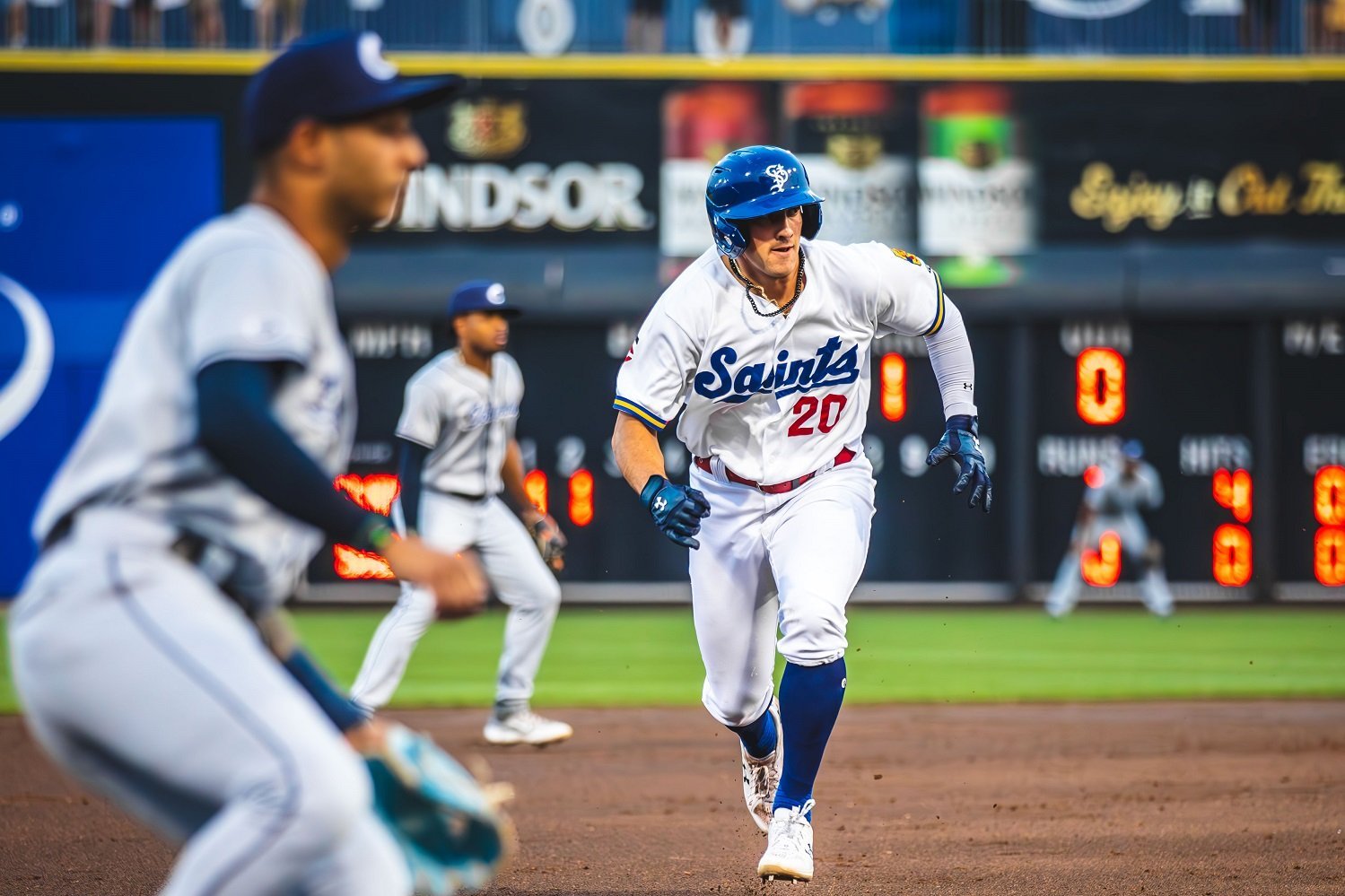 When Derek Falvey went into the offseason last year, he had a few key areas to supplement Rocco Baldelli’s roster. In looking to build the Twins while hoping to avoid being dealt massive blows by injury, he sought to bring in veterans with upside. Kyle Farmer was a starting caliber option at shortstop if Carlos Correa landed elsewhere. Joey Gallo could start in both the outfield and at first base. Willi Castro and Donovan Solano would be vital supplemental roster pieces. The Twins acquired each of those players based on their previous track record. If the front office failed to upgrade in those positions, at the very least, they would have capable veteran options going into the 2023 season. The Twins organization was in a much different place last offseason, however. They had a broadcast deal that assured ownership of millions in revenue. The team has acknowledged that the 2024 payroll will be lower without it. Should the Twins decrease payroll by up to $25 million, as has been discussed, bringing in multiple veterans isn’t going to be an option for rotational pieces. That isn’t very pleasant by some measures, but it also reflects where the Twins organization is as a whole. Minnesota has no reason to sign a rotational outfielder north of $10 million this offseason, and Correa is the shortstop, so Farmer at $7 million doesn’t make as much sense. The budget dropping isn’t ideal, but it was sure to happen with the emergence of young talent anyway. Edouard Julien, Royce Lewis, and Matt Wallner have all taken starting roles, and barring an extension, each of them will make the major league minimum. With how the Twins youth stepped up a season ago, fans should be excited about this prospect depth. No one within the Twins organization will ask Austin Martin or Brooks Lee to play significant roles on Opening Day. However, blocking them with a veteran making a couple of million while they are this close doesn’t make much sense either. Minnesota tendered a deal to Castro this offseason so that he will return to his utility role. For now, Nick Gordon will remain on the roster at $1 million. Beyond that, Martin could find himself working towards that type of production after a wildly successful 2023 season. Jose Miranda has the opportunity to bounce back if he’s healthy, and Yunior Severino was recently added to the 40-man roster as well. From a pitching perspective, more will be asked of Brent Headrick as he looks to settle in, and David Festa could be an arm that emerges from a Bailey Ober trajectory in 2024. Matt Canterino should be back and healthy, while the hope would be that Jorge Alcala or Simeon Woods Richardson becomes usable. Pablo Lopez has established the top of the rotation, and Ober, paired with Joe Ryan, makes three guarantees. Adding in Chris Paddack should stabilize things further. Paying for free agents is a minefield. You are looking to acquire the best talent while being forced to pay for previous production. On top of that, you’re getting aging commodities, and the goal of each player is to establish stability for the longest tenure possible. Routinely bringing in a one-year hired hitman is difficult, but it works well when things turn out like Solano or Michael A. Taylor (acquired via trade). A season ago, the Twins experienced a historic rookie class, and they got extensive production from them early and often during the season. Banking on that to repeat itself shouldn’t be the plan A. Still, in a season where Brooks Lee, Martin, Festa, Severino, Canterino, Marco Raya, and Tanner Schobel could all debut, it’s understandable to look within. Depth is something that every organization will always place a premium on, but being able to develop it saves substantial money, and there is a much more known track record with your talent. Minnesota’s farm system is flush with near-ready players, and they could be called upon when the first opportunities arise in 2024.
- 22 comments
-
- 8
-

-

-
- brooks lee
- david festa
- (and 1 more)
-
Twins Depth Will Look Different in 2024
Ted Schwerzler posted a topic in Twins Daily Front Page News
A season ago, the Minnesota Twins acquired baseline depth at crucial positions, hoping their injuries from 2022 could be masked. That worked out wonderfully, but with payroll taking a different shape in 2024, veterans may not be the players provided as depth for the upcoming year. Image courtesy of Rob Thompson, St. Paul Saints When Derek Falvey went into the offseason last year, he had a few key areas to supplement Rocco Baldelli’s roster. In looking to build the Twins while hoping to avoid being dealt massive blows by injury, he sought to bring in veterans with upside. Kyle Farmer was a starting caliber option at shortstop if Carlos Correa landed elsewhere. Joey Gallo could start in both the outfield and at first base. Willi Castro and Donovan Solano would be vital supplemental roster pieces. The Twins acquired each of those players based on their previous track record. If the front office failed to upgrade in those positions, at the very least, they would have capable veteran options going into the 2023 season. The Twins organization was in a much different place last offseason, however. They had a broadcast deal that assured ownership of millions in revenue. The team has acknowledged that the 2024 payroll will be lower without it. Should the Twins decrease payroll by up to $25 million, as has been discussed, bringing in multiple veterans isn’t going to be an option for rotational pieces. That isn’t very pleasant by some measures, but it also reflects where the Twins organization is as a whole. Minnesota has no reason to sign a rotational outfielder north of $10 million this offseason, and Correa is the shortstop, so Farmer at $7 million doesn’t make as much sense. The budget dropping isn’t ideal, but it was sure to happen with the emergence of young talent anyway. Edouard Julien, Royce Lewis, and Matt Wallner have all taken starting roles, and barring an extension, each of them will make the major league minimum. With how the Twins youth stepped up a season ago, fans should be excited about this prospect depth. No one within the Twins organization will ask Austin Martin or Brooks Lee to play significant roles on Opening Day. However, blocking them with a veteran making a couple of million while they are this close doesn’t make much sense either. Minnesota tendered a deal to Castro this offseason so that he will return to his utility role. For now, Nick Gordon will remain on the roster at $1 million. Beyond that, Martin could find himself working towards that type of production after a wildly successful 2023 season. Jose Miranda has the opportunity to bounce back if he’s healthy, and Yunior Severino was recently added to the 40-man roster as well. From a pitching perspective, more will be asked of Brent Headrick as he looks to settle in, and David Festa could be an arm that emerges from a Bailey Ober trajectory in 2024. Matt Canterino should be back and healthy, while the hope would be that Jorge Alcala or Simeon Woods Richardson becomes usable. Pablo Lopez has established the top of the rotation, and Ober, paired with Joe Ryan, makes three guarantees. Adding in Chris Paddack should stabilize things further. Paying for free agents is a minefield. You are looking to acquire the best talent while being forced to pay for previous production. On top of that, you’re getting aging commodities, and the goal of each player is to establish stability for the longest tenure possible. Routinely bringing in a one-year hired hitman is difficult, but it works well when things turn out like Solano or Michael A. Taylor (acquired via trade). A season ago, the Twins experienced a historic rookie class, and they got extensive production from them early and often during the season. Banking on that to repeat itself shouldn’t be the plan A. Still, in a season where Brooks Lee, Martin, Festa, Severino, Canterino, Marco Raya, and Tanner Schobel could all debut, it’s understandable to look within. Depth is something that every organization will always place a premium on, but being able to develop it saves substantial money, and there is a much more known track record with your talent. Minnesota’s farm system is flush with near-ready players, and they could be called upon when the first opportunities arise in 2024. View full article -
 Derek Falvey hasn’t offered much in the way of concrete plans for Rocco Baldelli’s 2024 club thus far. We have heard how uncertainty regarding a new broadcasting deal will impact the payroll. There have been rumors of veteran players whom the Twins could make available. The team has watched three talented pitchers sign elsewhere as free agents. Subtractions (and speculation about them) abound, but there haven't yet been additions or replacements. The ball has to get rolling at some point, though. What are a few focal points when teams convene during baseball’s offseason get-together? Do the Twins Make a Move? A year ago, the Minnesota Twins were active before the Winter Meetings. On November 18, they traded Gio Urshela to the Los Angeles Angels for Alejandro Hidalgo, and followed that up by acquiring Kyle Farmer from the Cincinnati Reds for Casey Legumina. A few minor-league deals happened earlier in the month, but Christian Vazquez didn’t agree to their first free-agent deal until December 16. Joey Gallo then followed suit not long after. Unfortunately, there isn’t a condensed, football- or basketball-style free-agent frenzy in baseball, as is the case in other sports. We saw a one after the lockout was lifted a couple of years ago, but traditionally, the hot stove heats up most during the Winter Meetings, and simmers (rather than boiling aggressively) throughout the winter. As Minnesota looks to scale back payroll, how aggressive they will be on the free agency front remains to be seen. This front office has traditionally waited out the market, but they could look to spend the dollars they have allocated early and create a modicum of certainty. The Twins shouldn’t be considered prominent players for the biggest names on the open market, and there was evidence of that in allowing Sonny Gray to play elsewhere for $75 million in total guarantees from St. Louis. Finding players to do one-year deals this early on in the winter can be tough, but it may be where Minnesota looks to shoot their shot. What Groundwork is Laid for a Trade? More than the free-agent market, it stands to reason that the front office will be active in making trades. Darren Wolfson has mentioned on Twitter that the trade market is the team's focus, and the groundwork for any deal could be months in the making. The Twins have holes in the rotation and center field, where some intriguing options could be available from other organizations. A year ago, there were rumblings of a Luis Arraez swap to the Miami Marlins for weeks before it happened. Ultimately, the Twins landed their new ace, Pablo Lopez, but the names exchanged in that deal shifted multiple times before it eventually came to fruition. The Winter Meetings are a place for those conversations to ramp up, and while the deal may not come together during the week, many decisions can be traced back to it. Does a Rule 5 Selection Happen? The Twins protected four players from the Rule 5 Draft when they added Yunior Severino, Jair Camargo, Emmanuel Rodriguez, and Austin Martin to their 40-man roster. Each of them should have been considered locks, but that leaves a couple of additional players exposed to the opposition. DaShawn Keirsey played at a high level during 2023 and looked the part of a big-league outfielder for the St. Paul Saints. Maybe Anthony Prato, Michael Helman, or Andrew Bechtold interests a team. Conversely, the Twins could add a player, especially if suppressing payroll is a focal point. A Rule 5 addition would come with cost certainty, and hitting on a pre-arb player would also have future ramifications regarding raises and team control. There don’t seem to be many straightforward paths for a player to stick all year with Minnesota, but an extra bullpen arm or utility player might be worthwhile. Not every player turns into Johan Santana, but finding another Ryan Pressly or your version of Akil Baddoo, Tyler Wells, or someone similar would be a boost. What Happens to the Competition? So far, the most aggressive team in the AL Central has been the Detroit Tigers. They locked up former Minnesota starter Kenta Maeda on a two-year deal. A.J. Hinch’s club has young talent like Riley Greene, Tarik Skubal, and Spencer Torkelson. They have money to spend, with Miguel Cabrera’s deal also coming off the books. How much do the Tigers continue to spend, and are they hesitant to go big after getting burned by Javier Baez? Expect a selloff to happen for the Chicago White Sox, and a transition in the clubhouse seems logical there. Where does their former shortstop Tim Anderson end up, and how much belief is there that he can bounce back? They did bring in Paul DeJong to take over the position, but will they also be replacing Luis Robert or Dylan Cease after dealing either player for a prospect haul? Cleveland remains a wild card, in that they are twisting in the wind. Jose Ramirez isn’t going anywhere, but what type of talent will he have around him? Will the Guardians spend any money, or will they be focused on finding another Kyle Manzardo-type return from someone interested in Shane Bieber? Does Ohtani Choose the Central? The greatest free agent in Major League Baseball history will sign a contract this offseason, but for how much and where Shohei Ohtani lands remains to be seen. He has been linked heavily to the Los Angeles Dodgers, and the Angels say they’ll try to keep him. Maybe the San Francisco Giants make sense, and are the Seattle Mariners being truthful in opting out of his courtship? There has been talk of the Blue Jays wanting to bring Ohtani north of the border, but the Texas Rangers could have interest in bringing him down south. We haven’t heard any links to the AL Central, and it seems unlikely for him to wind up in the Midwest, but it would send shockwaves to see the dual-threat talent playing routinely against the Twins for the next decade. What are you most interested in seeing take place during the Winter Meetings? What are you hoping the Minnesota Twins do? Share your thoughts in the comments below.
 -
While the offseason can be a slog from the perspective of a fan looking for news across the Major League Baseball landscape, at no point does the stove get hotter than during the Winter Meetings. Expect things to heat up for the Twins as they head to the Meetings Dec. 4-7, in Nashville. Image courtesy of © Mark J. Rebilas-USA TODAY Sports Derek Falvey hasn’t offered much in the way of concrete plans for Rocco Baldelli’s 2024 club thus far. We have heard how uncertainty regarding a new broadcasting deal will impact the payroll. There have been rumors of veteran players whom the Twins could make available. The team has watched three talented pitchers sign elsewhere as free agents. Subtractions (and speculation about them) abound, but there haven't yet been additions or replacements. The ball has to get rolling at some point, though. What are a few focal points when teams convene during baseball’s offseason get-together? Do the Twins Make a Move? A year ago, the Minnesota Twins were active before the Winter Meetings. On November 18, they traded Gio Urshela to the Los Angeles Angels for Alejandro Hidalgo, and followed that up by acquiring Kyle Farmer from the Cincinnati Reds for Casey Legumina. A few minor-league deals happened earlier in the month, but Christian Vazquez didn’t agree to their first free-agent deal until December 16. Joey Gallo then followed suit not long after. Unfortunately, there isn’t a condensed, football- or basketball-style free-agent frenzy in baseball, as is the case in other sports. We saw a one after the lockout was lifted a couple of years ago, but traditionally, the hot stove heats up most during the Winter Meetings, and simmers (rather than boiling aggressively) throughout the winter. As Minnesota looks to scale back payroll, how aggressive they will be on the free agency front remains to be seen. This front office has traditionally waited out the market, but they could look to spend the dollars they have allocated early and create a modicum of certainty. The Twins shouldn’t be considered prominent players for the biggest names on the open market, and there was evidence of that in allowing Sonny Gray to play elsewhere for $75 million in total guarantees from St. Louis. Finding players to do one-year deals this early on in the winter can be tough, but it may be where Minnesota looks to shoot their shot. What Groundwork is Laid for a Trade? More than the free-agent market, it stands to reason that the front office will be active in making trades. Darren Wolfson has mentioned on Twitter that the trade market is the team's focus, and the groundwork for any deal could be months in the making. The Twins have holes in the rotation and center field, where some intriguing options could be available from other organizations. A year ago, there were rumblings of a Luis Arraez swap to the Miami Marlins for weeks before it happened. Ultimately, the Twins landed their new ace, Pablo Lopez, but the names exchanged in that deal shifted multiple times before it eventually came to fruition. The Winter Meetings are a place for those conversations to ramp up, and while the deal may not come together during the week, many decisions can be traced back to it. Does a Rule 5 Selection Happen? The Twins protected four players from the Rule 5 Draft when they added Yunior Severino, Jair Camargo, Emmanuel Rodriguez, and Austin Martin to their 40-man roster. Each of them should have been considered locks, but that leaves a couple of additional players exposed to the opposition. DaShawn Keirsey played at a high level during 2023 and looked the part of a big-league outfielder for the St. Paul Saints. Maybe Anthony Prato, Michael Helman, or Andrew Bechtold interests a team. Conversely, the Twins could add a player, especially if suppressing payroll is a focal point. A Rule 5 addition would come with cost certainty, and hitting on a pre-arb player would also have future ramifications regarding raises and team control. There don’t seem to be many straightforward paths for a player to stick all year with Minnesota, but an extra bullpen arm or utility player might be worthwhile. Not every player turns into Johan Santana, but finding another Ryan Pressly or your version of Akil Baddoo, Tyler Wells, or someone similar would be a boost. What Happens to the Competition? So far, the most aggressive team in the AL Central has been the Detroit Tigers. They locked up former Minnesota starter Kenta Maeda on a two-year deal. A.J. Hinch’s club has young talent like Riley Greene, Tarik Skubal, and Spencer Torkelson. They have money to spend, with Miguel Cabrera’s deal also coming off the books. How much do the Tigers continue to spend, and are they hesitant to go big after getting burned by Javier Baez? Expect a selloff to happen for the Chicago White Sox, and a transition in the clubhouse seems logical there. Where does their former shortstop Tim Anderson end up, and how much belief is there that he can bounce back? They did bring in Paul DeJong to take over the position, but will they also be replacing Luis Robert or Dylan Cease after dealing either player for a prospect haul? Cleveland remains a wild card, in that they are twisting in the wind. Jose Ramirez isn’t going anywhere, but what type of talent will he have around him? Will the Guardians spend any money, or will they be focused on finding another Kyle Manzardo-type return from someone interested in Shane Bieber? Does Ohtani Choose the Central? The greatest free agent in Major League Baseball history will sign a contract this offseason, but for how much and where Shohei Ohtani lands remains to be seen. He has been linked heavily to the Los Angeles Dodgers, and the Angels say they’ll try to keep him. Maybe the San Francisco Giants make sense, and are the Seattle Mariners being truthful in opting out of his courtship? There has been talk of the Blue Jays wanting to bring Ohtani north of the border, but the Texas Rangers could have interest in bringing him down south. We haven’t heard any links to the AL Central, and it seems unlikely for him to wind up in the Midwest, but it would send shockwaves to see the dual-threat talent playing routinely against the Twins for the next decade. What are you most interested in seeing take place during the Winter Meetings? What are you hoping the Minnesota Twins do? Share your thoughts in the comments below. View full article
-
I don't think it really matters what positions get paid. The pitching not being one of them is reflective of astute development and trading.
- 50 replies
-
- 3
-
-
- rhys hoskins
- mitch keller
- (and 3 more)
-
Keller is 27 and a free agent after 2025. Is he really going to be there when they are ready to compete? I think banking on Kirilloff in any form is about as trustworthy as Buxton at this point. Hoskins is the lone big dollar addition above, and a $138M total bill is still over $20M down from 2023.
- 50 replies
-
- 7
-
-
-

-
- rhys hoskins
- mitch keller
- (and 3 more)
-
The Minnesota Twins have a few places to add this offseason, and if they want to repeat as winners of the American League Central Division, they’ll need to get things right yet again. Derek Falvey is operating with a different payroll, but there is a natural avenue to be better while staying cheaper. Image courtesy of Tommy Gilligan-USA TODAY Sports Last season, the Minnesota Twins front office provided Rocco Baldelli with a franchise-record Opening Day payroll. It was a raise on the pocketbooks for another year and has been consistently moving that way for a while. With decreasing television revenues, it always made sense Minnesota may dial things back. Beyond that, though, having the possibility of ten players all pre-arbitration and making a league minimum of $740,000, dialing back was just part of an expected reset. Using the Twins Daily Payroll Tool this is the starting point I am operating from. Working with the parameters we know now, buckle up for the moves I would make before Opening Day. 1. Sign Rhys Hoskins for two years and $40 million This is probably a bit on the high side for Hoskins, as I’d prefer to get him at $18 million annually, but the Twins should do what they can to make him say no. They need a right-handed bat. Check. They need a middle-of-the-order bat. Check. They need a serious player at first base. Check. Hoskins checks so many boxes for Minnesota that it becomes difficult not to love that fit. He costs money rather than prospects, as Pete Alonso would, and takes significant pressure off any expectations for Alex Kirilloff. Coming off a knee injury that kept him out all of last season, there shouldn’t be any concerns in the future, and he doesn’t hamstring the roster construction in any way. 2. Trade Matt Wallner, Yasser Mercedes, and Andrew Bechtold to the Pittsburgh Pirates for Mitch Keller and Canaan Smith-Njigba Moving Wallner, as a Minnesota prospect right after his debut, won’t be well received. Getting Keller, a Cedar Rapids prospect, after his first All-Star Game might help to soften the blow. Wallner is penciled in to start as Minnesota’s left fielder, but there’s an immediate alternative in the form of Trevor Larnach. You could make the case to include Emmanuel Rodriguez, but his ceiling is substantially higher, and Keller only has two years of team control left. Mercedes is only 19 and made his stateside debut in 2023. He has incredible tools but is raw as a prospect. Bechtold is at Triple-A and plays every position, including pitcher. Acquiring Smith-Njigba in the deal, whose brother is the Seattle Seahawks wide receiver, also gives Minnesota another outfield option. He isn’t a free agent until 2029, but has fallen down the Pirates depth chart despite being on the 40-man roster. He posted an .839 OPS at Triple-A in 2023 and will be 25 years old in 2024. 3. Trade Kyle Farmer to the St. Louis Cardinals for Dylan Carlson Minnesota tender Farmer a contract not because they intend to keep a backup at nearly $7 million in 2024 but because the shortstop class in free agency is horrible, and he has the talent to start. Sending Farmer to the Cardinals gives them an immediate veteran alongside Nolan Arenado and shores up their roster should they keep Paul Goldschmidt in the final year of his deal. Prospect Masyn Winn is waiting in the wings, but he posted just a 29 OPS+ in his first 37 games last season, and this would allow him more time to develop. Carlson is a name the Twins have been tied to previously, and he has former top-10 prospect allure to him. The luster has worn off, but he hit 18 home runs while finishing third in Rookie of the Year voting just two years ago. Carlson was hurt some in 2023, but even at depreciated production in 2022, he posted a 99 OPS+ across 128 games. The Twins may unlock more production from him, and he provides a switch-hitting bat that is substantially better against lefties. He could be the Byron Buxton insurance Minnesota needs to replace Michael A. Taylor or become a high-quality bench option. 4. Sign Harrison Bader for one year and $7 million We saw last season that having a viable full-time starting centerfield option alongside Buxton is a must. Given the uncertainty of health at the centerfield position for Minnesota, having a couple of guys makes sense. Cody Bellinger is the gold standard, but that isn’t going to fit from a logic or dollars standpoint. Kevin Kiermaier could be an option, but coming off a strong year for the Blue Jays, he’s much more likely to get a multi-year deal. Taylor should be paid handsomely after his season with Minnesota, but Bader could potentially be had on a prove-it deal. Looking at some projections and the fit with Taylor leaving via free agency, Bader would be a seamless transition for the Twins. He plays at a Gold Glove-caliber defensively, and while he doesn’t bring much to the table offensively (77 OPS+ since 2022) at this point, he was exactly league average by OPS across his first 451 major league games. He has also gone 37/43 in his last two seasons of steal attempts, and replacing that for Baldelli would be beneficial. 5. Sign Matt Moore for one year and $6 million By payroll measures, this pushes the total dollars close to the high end of where Minnesota is projected to be, and that may not work. I’d love to see Lou Trivino, but he won’t be ready until midway through 2024 and may wait until then to sign. Dakota Hudson isn’t a reliever, and while Spencer Turnbull could be used as a long man or depth starter, pushing the envelope at the back end of Minnesota’s pen makes sense. Moore was designated for assignment by the Los Angeles Angels, and Minnesota put in a claim for him, but he was awarded to the Cleveland Guardians. After Cleveland fell out of it, Moore was claimed by the Miami Marlins. He made $7.55 million last year, and a similar contract makes sense as he will be in his age-35 season. Moore wasn’t as good in 2023 as he was with the Rangers in 2022, but his 2.56 ERA substantiated the strong transition to relief. The Twins bullpen could have five players making the league minimum, so adding the largest contract since Addison Reed could make sense even for a front office that has avoided spending on that group. There may be a consideration for trading Nick Gordon, as Willi Castro has surpassed him for the main utility role. That said, he’s going to command a little over the league minimum and was very good in the Castro role a year ago when healthy. If he gets to the point of ineffectiveness, there’s no reason he can’t be released at some point during the year. At that time, Austin Martin may be ready for the same type of role. Along with Polanco, Max Kepler’s name will be heard this offseason, as shedding him would result in a $10 million gain for the books. How the Twins handle the outfield configuration concerning Kepler, Larnach, and Wallner should be very interesting, but it’s Kepler’s 2023 that has me intrigued. He decided to lift the ball over the shift rather than hitting through it, and unlike in 2019, this time, it didn’t have the help of a juiced baseball. Kepler is still a great defender, and keeping him throughout his extension makes sense. With the dust settling there, the Twins would be on the hook for a $138 million Opening Day payroll. Of course, that will rise throughout the season as incentives are hit, but they could also ship players if things go sideways. Cutting further could be done with a similar talent at a lesser amount than Moore, but a $140 million bill is still nearly a $20 million savings from 2023. Unfortunately, the franchise isn’t run with a bit more spending correlation to the talent present or expectations in front of them, but this is maybe the best of both worlds. Losing the television contract means those dollars will need to come elsewhere, but even if taken over by a new entity, $30 million in revenues for 2024 would represent almost a halving of what was considered among the worst broadcast deals in the sport previously. No one should be crying poor here, and the Twins still get to field a team capable of making a run for the division and beyond. What are your thoughts? What would you do differently? Give it a try for real using the Twins Daily Payroll Tool here. View full article
-
5 Realistic Offseason Moves That Would Set the Twins Up for 2024 Success
Ted Schwerzler posted an article in Twins
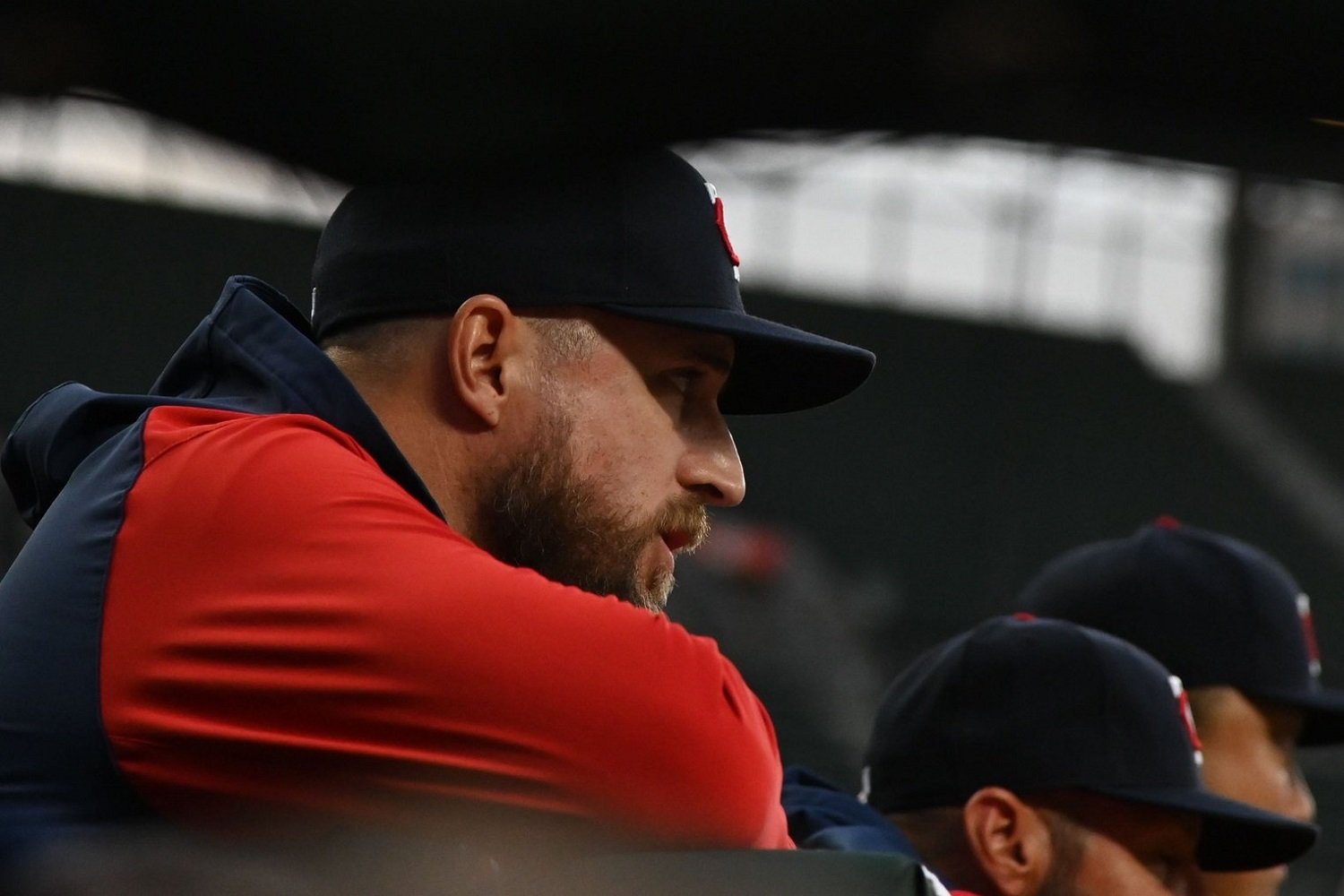 Last season, the Minnesota Twins front office provided Rocco Baldelli with a franchise-record Opening Day payroll. It was a raise on the pocketbooks for another year and has been consistently moving that way for a while. With decreasing television revenues, it always made sense Minnesota may dial things back. Beyond that, though, having the possibility of ten players all pre-arbitration and making a league minimum of $740,000, dialing back was just part of an expected reset. Using the Twins Daily Payroll Tool this is the starting point I am operating from. Working with the parameters we know now, buckle up for the moves I would make before Opening Day. 1. Sign Rhys Hoskins for two years and $40 million This is probably a bit on the high side for Hoskins, as I’d prefer to get him at $18 million annually, but the Twins should do what they can to make him say no. They need a right-handed bat. Check. They need a middle-of-the-order bat. Check. They need a serious player at first base. Check. Hoskins checks so many boxes for Minnesota that it becomes difficult not to love that fit. He costs money rather than prospects, as Pete Alonso would, and takes significant pressure off any expectations for Alex Kirilloff. Coming off a knee injury that kept him out all of last season, there shouldn’t be any concerns in the future, and he doesn’t hamstring the roster construction in any way. 2. Trade Matt Wallner, Yasser Mercedes, and Andrew Bechtold to the Pittsburgh Pirates for Mitch Keller and Canaan Smith-Njigba Moving Wallner, as a Minnesota prospect right after his debut, won’t be well received. Getting Keller, a Cedar Rapids prospect, after his first All-Star Game might help to soften the blow. Wallner is penciled in to start as Minnesota’s left fielder, but there’s an immediate alternative in the form of Trevor Larnach. You could make the case to include Emmanuel Rodriguez, but his ceiling is substantially higher, and Keller only has two years of team control left. Mercedes is only 19 and made his stateside debut in 2023. He has incredible tools but is raw as a prospect. Bechtold is at Triple-A and plays every position, including pitcher. Acquiring Smith-Njigba in the deal, whose brother is the Seattle Seahawks wide receiver, also gives Minnesota another outfield option. He isn’t a free agent until 2029, but has fallen down the Pirates depth chart despite being on the 40-man roster. He posted an .839 OPS at Triple-A in 2023 and will be 25 years old in 2024. 3. Trade Kyle Farmer to the St. Louis Cardinals for Dylan Carlson Minnesota tender Farmer a contract not because they intend to keep a backup at nearly $7 million in 2024 but because the shortstop class in free agency is horrible, and he has the talent to start. Sending Farmer to the Cardinals gives them an immediate veteran alongside Nolan Arenado and shores up their roster should they keep Paul Goldschmidt in the final year of his deal. Prospect Masyn Winn is waiting in the wings, but he posted just a 29 OPS+ in his first 37 games last season, and this would allow him more time to develop. Carlson is a name the Twins have been tied to previously, and he has former top-10 prospect allure to him. The luster has worn off, but he hit 18 home runs while finishing third in Rookie of the Year voting just two years ago. Carlson was hurt some in 2023, but even at depreciated production in 2022, he posted a 99 OPS+ across 128 games. The Twins may unlock more production from him, and he provides a switch-hitting bat that is substantially better against lefties. He could be the Byron Buxton insurance Minnesota needs to replace Michael A. Taylor or become a high-quality bench option. 4. Sign Harrison Bader for one year and $7 million We saw last season that having a viable full-time starting centerfield option alongside Buxton is a must. Given the uncertainty of health at the centerfield position for Minnesota, having a couple of guys makes sense. Cody Bellinger is the gold standard, but that isn’t going to fit from a logic or dollars standpoint. Kevin Kiermaier could be an option, but coming off a strong year for the Blue Jays, he’s much more likely to get a multi-year deal. Taylor should be paid handsomely after his season with Minnesota, but Bader could potentially be had on a prove-it deal. Looking at some projections and the fit with Taylor leaving via free agency, Bader would be a seamless transition for the Twins. He plays at a Gold Glove-caliber defensively, and while he doesn’t bring much to the table offensively (77 OPS+ since 2022) at this point, he was exactly league average by OPS across his first 451 major league games. He has also gone 37/43 in his last two seasons of steal attempts, and replacing that for Baldelli would be beneficial. 5. Sign Matt Moore for one year and $6 million By payroll measures, this pushes the total dollars close to the high end of where Minnesota is projected to be, and that may not work. I’d love to see Lou Trivino, but he won’t be ready until midway through 2024 and may wait until then to sign. Dakota Hudson isn’t a reliever, and while Spencer Turnbull could be used as a long man or depth starter, pushing the envelope at the back end of Minnesota’s pen makes sense. Moore was designated for assignment by the Los Angeles Angels, and Minnesota put in a claim for him, but he was awarded to the Cleveland Guardians. After Cleveland fell out of it, Moore was claimed by the Miami Marlins. He made $7.55 million last year, and a similar contract makes sense as he will be in his age-35 season. Moore wasn’t as good in 2023 as he was with the Rangers in 2022, but his 2.56 ERA substantiated the strong transition to relief. The Twins bullpen could have five players making the league minimum, so adding the largest contract since Addison Reed could make sense even for a front office that has avoided spending on that group. There may be a consideration for trading Nick Gordon, as Willi Castro has surpassed him for the main utility role. That said, he’s going to command a little over the league minimum and was very good in the Castro role a year ago when healthy. If he gets to the point of ineffectiveness, there’s no reason he can’t be released at some point during the year. At that time, Austin Martin may be ready for the same type of role. Along with Polanco, Max Kepler’s name will be heard this offseason, as shedding him would result in a $10 million gain for the books. How the Twins handle the outfield configuration concerning Kepler, Larnach, and Wallner should be very interesting, but it’s Kepler’s 2023 that has me intrigued. He decided to lift the ball over the shift rather than hitting through it, and unlike in 2019, this time, it didn’t have the help of a juiced baseball. Kepler is still a great defender, and keeping him throughout his extension makes sense. With the dust settling there, the Twins would be on the hook for a $138 million Opening Day payroll. Of course, that will rise throughout the season as incentives are hit, but they could also ship players if things go sideways. Cutting further could be done with a similar talent at a lesser amount than Moore, but a $140 million bill is still nearly a $20 million savings from 2023. Unfortunately, the franchise isn’t run with a bit more spending correlation to the talent present or expectations in front of them, but this is maybe the best of both worlds. Losing the television contract means those dollars will need to come elsewhere, but even if taken over by a new entity, $30 million in revenues for 2024 would represent almost a halving of what was considered among the worst broadcast deals in the sport previously. No one should be crying poor here, and the Twins still get to field a team capable of making a run for the division and beyond. What are your thoughts? What would you do differently? Give it a try for real using the Twins Daily Payroll Tool here.
- 50 comments
-
- 5
-
-
- rhys hoskins
- mitch keller
- (and 3 more)
-
At this point, the Minnesota Twins have yet to make a significant move this offseason. We have heard plenty about the payroll sliding backward, but does that have anything to do with the front office opting against bringing back Sonny Gray or Kenta Maeda? Image courtesy of Jim Rassol-USA TODAY Sports Heading into the winter, Derek Falvey’s shopping list was expected to include a right-handed bat, a center fielder, and a starting pitcher. That last item on the list could be the most important, after Rocco Baldelli’s club had one of the better groups in the game a season ago. Minnesota still has depth, but Pablo Lopez will be looking for a running mate. Both Kenta Maeda and Sonny Gray threw substantial innings for the Twins last season. The latter finished runner-up to Gerrit Cole for the American League Cy Young award. That reflected how good of a season he had and indicated the payday he would command from any potential suitor. While Maeda didn’t have the same tier of results, he fared well, and deals for pitchers like Lance Lynn and Kyle Gibson paved a path for him to benefit financially. So why didn’t the Twins show a greater desire to retain either of their departing starters? That answer is multi-faceted, but it isn’t exactly complicated. This front office has shied away from paying arms in free agency. That’s a logical stance when you understand that you’re getting someone else’s leftovers. Every free agent is hitting the market because their former employer allowed them to do so, and they are likely doing so at what baseball calls an advanced age. The Twins, under Falvey, have never spent more than $20 million on a starting pitcher, and that was a two-year deal for Michael Pineda that allowed him to bide his time during rehab from Tommy John surgery. Expecting them to change course on that process with Maeda (as he enters his late 30s) or Gray (as he’s paid more based on recent performance) never seemed like a good bet. Realistically, the Twins didn’t retain the services of either Gray or Maeda because the length of each deal wouldn’t make sense. Maeda finally landed a deal that wasn’t full of incentives, and he’ll make a base salary nearly the same as the eight-year deal he signed when coming over from Japan. A total guarantee of $24 million didn’t need to be prohibitive for Minnesota, but their focus was on Maeda being a one-year arm for them, if he was to be back at all. Scott Boras was set on finding at least a two-year deal, and with the Tigers having more of a need, they were the team that bit. Regarding Gray, Minnesota was interested in making a short-term deal. They proved the earnestness of that sentiment by making the Qualifying Offer. Of course, Gray would never accept that one-year pact, so it was a moot point, but the Twins would have gladly paid $25 million for a season or two of his services. The problem is that the market was always going to give Gray a third year, and Minnesota being interested in that seemed like a non-starter. He hasn’t been the most durable arm throughout his career, and it’s unlikely that will change for the better as he ages. St. Louis had to find their ace, and pairing talent with Nolan Arenado and Paul Goldschmidt before it got too late was necessary. Now, the front office is tasked with replacing the innings and starts made by both Maeda and Gray. They went into the offseason assuming that would be the case, and now it has become a reality. That the Twins will stand pat remains highly unlikely, and expecting them to add someone like Dylan Bundy, J.A. Happ, or Matt Shoemaker doesn’t seem realistic, either. They are already exploring the trade market, and it seems most likely that they will make their addition that way. Whom they land remains uncertain, but plenty of fine candidates are out there. After a successful run in 2023, it may have been fun to run it back. A similar outcome with everyone repeating success or performing at a higher level wouldn't have been probable, though, and Minnesota must carve a new path toward more optimal results. Maeda was a fun way to get involved in the Mookie Betts excitement with the Dodgers, and acquiring Gray was a well-executed move that has come full circle. It’s okay to be sad that both are gone, while understanding that the right decision was made. View full article
-
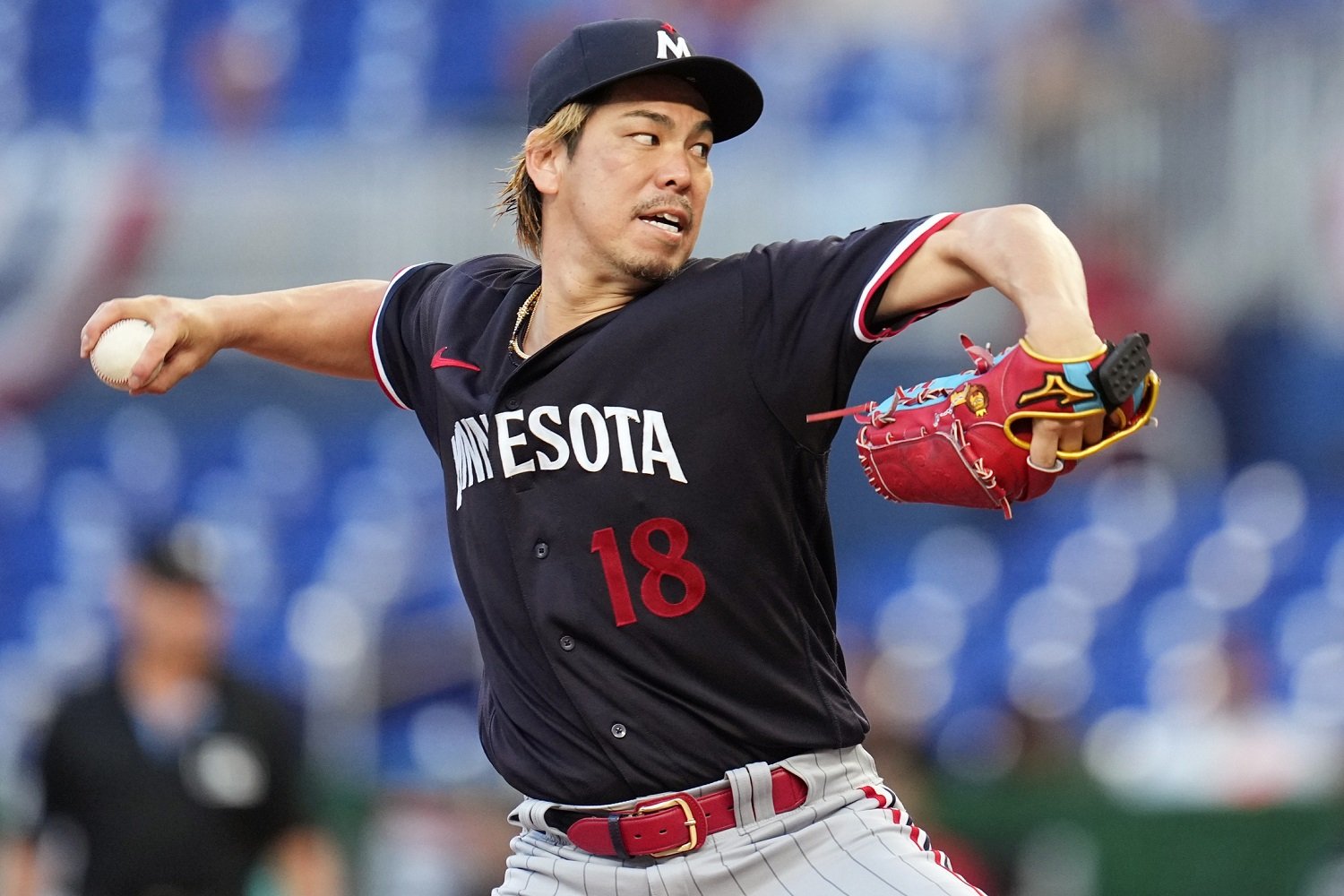 Heading into the winter, Derek Falvey’s shopping list was expected to include a right-handed bat, a center fielder, and a starting pitcher. That last item on the list could be the most important, after Rocco Baldelli’s club had one of the better groups in the game a season ago. Minnesota still has depth, but Pablo Lopez will be looking for a running mate. Both Kenta Maeda and Sonny Gray threw substantial innings for the Twins last season. The latter finished runner-up to Gerrit Cole for the American League Cy Young award. That reflected how good of a season he had and indicated the payday he would command from any potential suitor. While Maeda didn’t have the same tier of results, he fared well, and deals for pitchers like Lance Lynn and Kyle Gibson paved a path for him to benefit financially. So why didn’t the Twins show a greater desire to retain either of their departing starters? That answer is multi-faceted, but it isn’t exactly complicated. This front office has shied away from paying arms in free agency. That’s a logical stance when you understand that you’re getting someone else’s leftovers. Every free agent is hitting the market because their former employer allowed them to do so, and they are likely doing so at what baseball calls an advanced age. The Twins, under Falvey, have never spent more than $20 million on a starting pitcher, and that was a two-year deal for Michael Pineda that allowed him to bide his time during rehab from Tommy John surgery. Expecting them to change course on that process with Maeda (as he enters his late 30s) or Gray (as he’s paid more based on recent performance) never seemed like a good bet. Realistically, the Twins didn’t retain the services of either Gray or Maeda because the length of each deal wouldn’t make sense. Maeda finally landed a deal that wasn’t full of incentives, and he’ll make a base salary nearly the same as the eight-year deal he signed when coming over from Japan. A total guarantee of $24 million didn’t need to be prohibitive for Minnesota, but their focus was on Maeda being a one-year arm for them, if he was to be back at all. Scott Boras was set on finding at least a two-year deal, and with the Tigers having more of a need, they were the team that bit. Regarding Gray, Minnesota was interested in making a short-term deal. They proved the earnestness of that sentiment by making the Qualifying Offer. Of course, Gray would never accept that one-year pact, so it was a moot point, but the Twins would have gladly paid $25 million for a season or two of his services. The problem is that the market was always going to give Gray a third year, and Minnesota being interested in that seemed like a non-starter. He hasn’t been the most durable arm throughout his career, and it’s unlikely that will change for the better as he ages. St. Louis had to find their ace, and pairing talent with Nolan Arenado and Paul Goldschmidt before it got too late was necessary. Now, the front office is tasked with replacing the innings and starts made by both Maeda and Gray. They went into the offseason assuming that would be the case, and now it has become a reality. That the Twins will stand pat remains highly unlikely, and expecting them to add someone like Dylan Bundy, J.A. Happ, or Matt Shoemaker doesn’t seem realistic, either. They are already exploring the trade market, and it seems most likely that they will make their addition that way. Whom they land remains uncertain, but plenty of fine candidates are out there. After a successful run in 2023, it may have been fun to run it back. A similar outcome with everyone repeating success or performing at a higher level wouldn't have been probable, though, and Minnesota must carve a new path toward more optimal results. Maeda was a fun way to get involved in the Mookie Betts excitement with the Dodgers, and acquiring Gray was a well-executed move that has come full circle. It’s okay to be sad that both are gone, while understanding that the right decision was made.
 -
The Baseball Writers Association of America recently unveiled the 2024 Major League Baseball Hall of Fame ballot. With voting taking place this offseason and enshrinement set for the summer, it could be fun for Minnesota Twins fans looking to celebrate Joe Mauer. Since his playing days, Joe Mauer has been recognized with a few key accolades. The Minnesota Twins wasted no time making sure no player in franchise history would again wear the number 7. Last season, they brought Mauer back onto the field and inducted him into the franchise Hall of Fame with a ceremony at Target Field. The only thing left is to create a bronze bust in Cooperstown's plaque room, which in my opinion should happen during the first voting cycle. No player in franchise history seems to have their production more scrutinized than Mauer. From a fanbase that continually clamors for ownership to spend money, his record-breaking contract was primarily held against him despite providing surplus value and having to move positions following a career-threatening injury. Beyond that, his mild-mannered personality doesn’t often elicit significant favor, and his true talent somehow flew under the radar. As a catcher, Mauer was among the best to play the game. He won three batting titles from behind the plate, something no other player has done in major league history. At the most demanding position on a baseball diamond, Mauer won three offensive awards that tested durability and the chief offensive ability in the sport. While he was not the current iteration of Luis Arraez, Mauer earned his batting titles through plate discipline, consistency, and a picturesque left-handed swing. He never slid defensively during that time either, racking up three Gold Glove awards while needing to compete with Ivan Rodriguez and Matt Wieters. The move to first base is where Mauer’s Hall of Fame candidacy hits a snag. His offensive production dropped mightily as a corner infielder, but the move was forced as a result of his traumatic brain injury. Although he never fit the bill for the position, hitting just 38 home runs after moving to first full-time, he remained an above-average offensive producer with a 105 OPS+ across 680 games. His .278 average in that span was plenty respectable, and he still finished with a career .306 average. Beyond transitioning to an entirely new position at age 31, Mauer again found a way to excel. He recorded 1,000 innings at first base in 2015 and posted a -4 DRS (defensive runs saved). In 2016, he turned that on its head by tallying 7 DRS and 9 outs above average (OAA in the first year Statcast recorded the metric). By 2017, he was worth 13 DRS and 11 OAA, making him the best defensive player at the position statistically. Antiquated voting gave Eric Hosmer the Gold Glove as a reflection of his offensive prowess despite owning -5 DRS and OAA numbers. Had Mauer been correctly given the award, he would have been the third player in major league history to win a Gold Gloves at multiple positions, joining Darin Erstad and Placido Polanco. So often, Mauer’s case for Cooperstown is compared to that of St. Louis Cardinals catcher Yadier Molina. Despite having been a historically below-average offensive producer, the latter is seen as a surefire first-ballot candidate because of his defensive prowess and team accolades. Mauer is often denigrated for his time spent at first base after being forced out behind the plate. When voting for the first time, though, it’s not about comparison to outside noise as much as it should be a yes or no. Jay Jaffe’s JAWS system, which focuses on the worthiness of Hall of Fame enshrinement, places Mauer seventh among catchers. The six above him are all in, and Bill Dickey, along with six others behind him, are in as well. With a ballot introducing only Adrian Beltre as a sure inductee and Todd Helton as a worthy holdover, the ability to vote for ten players should have Mauer’s as an easy name to check. Last week, Cody Christie looked at the ballot, where Mauer falls amongst his competition, and the case he has. The outline seems to set the record relatively straight. We haven’t seen the acceptance of controversial players, whether steroids or other transgressions, be moved in, but Mauer has none to overcome. His most significant detriment may have been getting hurt and taking a payday that rubs some the wrong way. He was the Sandy Koufax or Johan Santana of his time behind the plate, and he continued on from that. What ballot a player gets in on is as inconsequential as forcing a guy to wait for the sake of merit. You can track the results with Ryan Thibodaux on X at @NotMrTibbs. If done right, this one shouldn’t be hard. Vote Mauer and call Joe in January. View full article
-
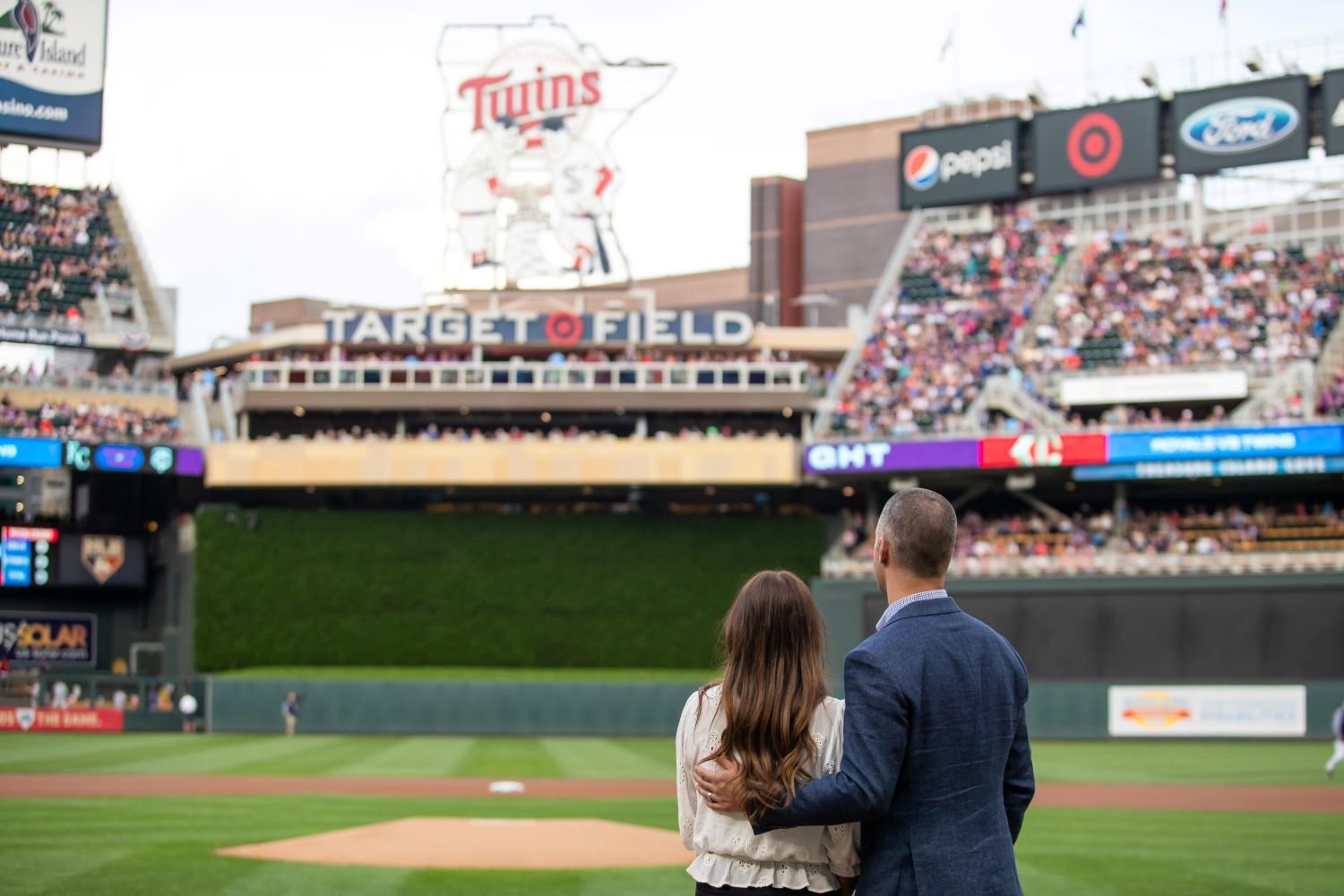 Since his playing days, Joe Mauer has been recognized with a few key accolades. The Minnesota Twins wasted no time making sure no player in franchise history would again wear the number 7. Last season, they brought Mauer back onto the field and inducted him into the franchise Hall of Fame with a ceremony at Target Field. The only thing left is to create a bronze bust in Cooperstown's plaque room, which in my opinion should happen during the first voting cycle. No player in franchise history seems to have their production more scrutinized than Mauer. From a fanbase that continually clamors for ownership to spend money, his record-breaking contract was primarily held against him despite providing surplus value and having to move positions following a career-threatening injury. Beyond that, his mild-mannered personality doesn’t often elicit significant favor, and his true talent somehow flew under the radar. As a catcher, Mauer was among the best to play the game. He won three batting titles from behind the plate, something no other player has done in major league history. At the most demanding position on a baseball diamond, Mauer won three offensive awards that tested durability and the chief offensive ability in the sport. While he was not the current iteration of Luis Arraez, Mauer earned his batting titles through plate discipline, consistency, and a picturesque left-handed swing. He never slid defensively during that time either, racking up three Gold Glove awards while needing to compete with Ivan Rodriguez and Matt Wieters. The move to first base is where Mauer’s Hall of Fame candidacy hits a snag. His offensive production dropped mightily as a corner infielder, but the move was forced as a result of his traumatic brain injury. Although he never fit the bill for the position, hitting just 38 home runs after moving to first full-time, he remained an above-average offensive producer with a 105 OPS+ across 680 games. His .278 average in that span was plenty respectable, and he still finished with a career .306 average. Beyond transitioning to an entirely new position at age 31, Mauer again found a way to excel. He recorded 1,000 innings at first base in 2015 and posted a -4 DRS (defensive runs saved). In 2016, he turned that on its head by tallying 7 DRS and 9 outs above average (OAA in the first year Statcast recorded the metric). By 2017, he was worth 13 DRS and 11 OAA, making him the best defensive player at the position statistically. Antiquated voting gave Eric Hosmer the Gold Glove as a reflection of his offensive prowess despite owning -5 DRS and OAA numbers. Had Mauer been correctly given the award, he would have been the third player in major league history to win a Gold Gloves at multiple positions, joining Darin Erstad and Placido Polanco. So often, Mauer’s case for Cooperstown is compared to that of St. Louis Cardinals catcher Yadier Molina. Despite having been a historically below-average offensive producer, the latter is seen as a surefire first-ballot candidate because of his defensive prowess and team accolades. Mauer is often denigrated for his time spent at first base after being forced out behind the plate. When voting for the first time, though, it’s not about comparison to outside noise as much as it should be a yes or no. Jay Jaffe’s JAWS system, which focuses on the worthiness of Hall of Fame enshrinement, places Mauer seventh among catchers. The six above him are all in, and Bill Dickey, along with six others behind him, are in as well. With a ballot introducing only Adrian Beltre as a sure inductee and Todd Helton as a worthy holdover, the ability to vote for ten players should have Mauer’s as an easy name to check. Last week, Cody Christie looked at the ballot, where Mauer falls amongst his competition, and the case he has. The outline seems to set the record relatively straight. We haven’t seen the acceptance of controversial players, whether steroids or other transgressions, be moved in, but Mauer has none to overcome. His most significant detriment may have been getting hurt and taking a payday that rubs some the wrong way. He was the Sandy Koufax or Johan Santana of his time behind the plate, and he continued on from that. What ballot a player gets in on is as inconsequential as forcing a guy to wait for the sake of merit. You can track the results with Ryan Thibodaux on X at @NotMrTibbs. If done right, this one shouldn’t be hard. Vote Mauer and call Joe in January.
- 28 comments
-
- 6
-
-
-
- joe mauer
- yadier molina
- (and 1 more)
-
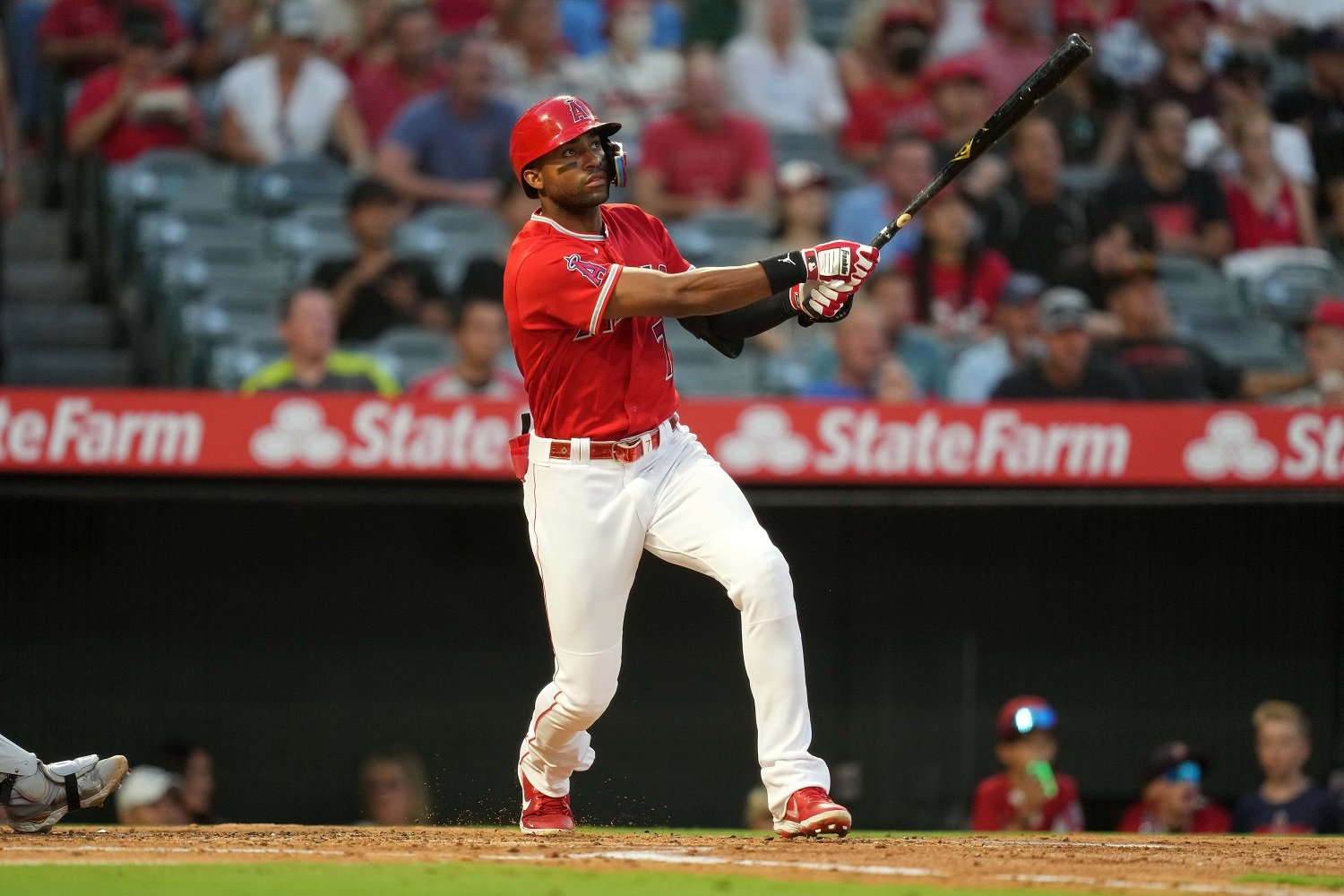 When the Twins front office gave Byron Buxton his $100 million deal, they did so knowing the discount due to his limited ability was baked in. That never became more prominent than in 2023, when Rocco Baldelli was forced to use his best outfield defender solely as a designated hitter. As his aching knee never improved, the defensive position became that of Michael A. Taylor. At this moment, Taylor is still a free agent and is far from a lock to find a re-up with his recent team. Buxton is coming off yet another knee procedure, and what he can provide coming into the year has never been more murky. Needing a legitimate starting-caliber option, it’s an area to be addressed. Cody Bellinger isn’t a realistic free agent target, and while either Harrison Bader or Kevin Kiermaier may be, the trade market could also work. Jack Suwinski - Pittsburgh Pirates Easily the most unlikely of the options here, Suwinski is just 25 years old and doesn’t enter arbitration until 2026. However, he plays for the Pirates, and how soon Pittsburgh believes they can contend could make him expendable. They have Paul Skenes coming, and talents like Oneil Cruz, Ke’Bryan Hayes, Henry Davis, and Endy Rodriguez make them intriguing. If Suwinski is seen as part of that core, he will stay. Should Pittsburgh make him available, Suwinski would give the Twins both an immediate and long-term option as a starter. He’s come into his own as a power hitter, but his defensive value is uncertain. He posted ugly DRS (defensive runs saved) numbers this year but did show well by outs above average. As a left-handed player, he’d fit in between Matt Wallner and Max Kepler. Proposed trade: Suwinski for Emmanuel Rodriguez, Brent Headrick, and Josh Winder (Trade Value Simulator says: Slight disadvantage PIT) Tommy Edman - St. Louis Cardinals This one is fun for a couple of reasons. Minnesota has looked into at least a few outfielders with Cardinals ties during recent seasons, and Edman’s brother, Johnny, works as a Data Quality Engineer in the Twins front office. Traditionally an infielder playing shortstop and second base, he was a defensive dynamo in those spots last year. Defensive analytics don’t love him as much this year, but he added centerfield to his repertoire for the first time consistently this year. Similar to Taylor, Edman is about league average offensively at his best. He has hit double-digit homers during all of his full professional seasons. He also steals a bunch of bags, which would help that aspect of Minnesota’s game. There is a lot to like here, and while he will keep getting more expensive in arbitration (he made $4.2 million in 2023), he is under team control for the next two years. Proposed trade: Edman for David Festa and Jordan Balazovic (TVS says: Slight disadvantage STL) Dylan Carlson - St. Louis Cardinals If the price for Edman is too steep, another center fielder from St. Louis could be the fit. Carlson has faded since finishing third in the Rookie of the Year voting in 2021. Injuries kept him out of action for a good portion of the season last year, but this is still a former consensus top-20 prospect. He is under team control through 2026, so there is ample opportunity to get him right if the Twins think they can do that. During 2022, Carlson posted six defensive runs saved and was worth four outs above average. He ranked well by Statcast’s metric last year, but obviously, the sample was much more limited. This would be an upside play for Minnesota, and by starting him every day, they’d certainly be looking for the guy who drew rave reviews as a prospect. Proposed trade: Carlson for Simeon Woods Richardson and Keoni Cavaco (TVS says: Essentially neutral) Jo Adell - Los Angeles Angels Last season, Adell played in the fewest games of his pro career at the major league level. After 88 games and a lackluster 78 OPS+ in 2022, the Angels are forcing Adell to prove he has it before committing to him yet again. Although Mike Trout will eventually move away from center field, it doesn’t seem now is the time for Adell. As a former top-five consensus prospect, Adell’s name is well known. He has struggled to replicate minor league success for Los Angeles, though, and he may benefit from a change of scenery. He’s under team control through 2027, and seeing better K/BB rates at Triple-A Salt Lake last season may be enough to warrant someone giving him some real run. As the Opening Day starter, Adell would be a gamble, but the Twins could strike gold if things click. Proposed trade: Adell for Nick Gordon and Christian MacLeod (TVS says: Slight advantage LAA) Mickey Moniak - Los Angeles Angels The first overall pick in the 2016 Major League Draft, the Twins could add a third such player to their active roster. Joining Royce Lewis and Carlos Correa, Moniak seeks to substantiate his 2023 as a late-blooming breakout. He played in just 85 games for the Angels, but it resulted in a 113 OPS+. The sample sizes are small, but that’s lightyears better than the 35 OPS+ he posted over 66 games in his first three major league seasons. Moniak is probably considered part of the Angels' future plans, but the front office has been largely inept for some time. He was strong defensively in center and would give the Twins another young addition to the roster. Moniak is only 25 and doesn’t hit arbitration until after the upcoming season. Should the resurgence be believed, his addition would be nice for Minnesota. Proposed trade: Moniak for Yasser Mercedes and Trevor Larnach (TVS says: Significant advantage LAA) Which of these names do you feel most excited about? Is there a return that would make you uncomfortable to get one in return?
 -
The Minnesota Twins have an unfortunate issue in center field. Despite having understandably paid Byron Buxton, the inability of the talented outfielder to stay healthy has created a hole on the grass. Derek Falvey adequately addressed the issue in 2023, but they must follow a similar blueprint in 2024. Image courtesy of Kirby Lee, USA Today When the Twins front office gave Byron Buxton his $100 million deal, they did so knowing the discount due to his limited ability was baked in. That never became more prominent than in 2023, when Rocco Baldelli was forced to use his best outfield defender solely as a designated hitter. As his aching knee never improved, the defensive position became that of Michael A. Taylor. At this moment, Taylor is still a free agent and is far from a lock to find a re-up with his recent team. Buxton is coming off yet another knee procedure, and what he can provide coming into the year has never been more murky. Needing a legitimate starting-caliber option, it’s an area to be addressed. Cody Bellinger isn’t a realistic free agent target, and while either Harrison Bader or Kevin Kiermaier may be, the trade market could also work. Jack Suwinski - Pittsburgh Pirates Easily the most unlikely of the options here, Suwinski is just 25 years old and doesn’t enter arbitration until 2026. However, he plays for the Pirates, and how soon Pittsburgh believes they can contend could make him expendable. They have Paul Skenes coming, and talents like Oneil Cruz, Ke’Bryan Hayes, Henry Davis, and Endy Rodriguez make them intriguing. If Suwinski is seen as part of that core, he will stay. Should Pittsburgh make him available, Suwinski would give the Twins both an immediate and long-term option as a starter. He’s come into his own as a power hitter, but his defensive value is uncertain. He posted ugly DRS (defensive runs saved) numbers this year but did show well by outs above average. As a left-handed player, he’d fit in between Matt Wallner and Max Kepler. Proposed trade: Suwinski for Emmanuel Rodriguez, Brent Headrick, and Josh Winder (Trade Value Simulator says: Slight disadvantage PIT) Tommy Edman - St. Louis Cardinals This one is fun for a couple of reasons. Minnesota has looked into at least a few outfielders with Cardinals ties during recent seasons, and Edman’s brother, Johnny, works as a Data Quality Engineer in the Twins front office. Traditionally an infielder playing shortstop and second base, he was a defensive dynamo in those spots last year. Defensive analytics don’t love him as much this year, but he added centerfield to his repertoire for the first time consistently this year. Similar to Taylor, Edman is about league average offensively at his best. He has hit double-digit homers during all of his full professional seasons. He also steals a bunch of bags, which would help that aspect of Minnesota’s game. There is a lot to like here, and while he will keep getting more expensive in arbitration (he made $4.2 million in 2023), he is under team control for the next two years. Proposed trade: Edman for David Festa and Jordan Balazovic (TVS says: Slight disadvantage STL) Dylan Carlson - St. Louis Cardinals If the price for Edman is too steep, another center fielder from St. Louis could be the fit. Carlson has faded since finishing third in the Rookie of the Year voting in 2021. Injuries kept him out of action for a good portion of the season last year, but this is still a former consensus top-20 prospect. He is under team control through 2026, so there is ample opportunity to get him right if the Twins think they can do that. During 2022, Carlson posted six defensive runs saved and was worth four outs above average. He ranked well by Statcast’s metric last year, but obviously, the sample was much more limited. This would be an upside play for Minnesota, and by starting him every day, they’d certainly be looking for the guy who drew rave reviews as a prospect. Proposed trade: Carlson for Simeon Woods Richardson and Keoni Cavaco (TVS says: Essentially neutral) Jo Adell - Los Angeles Angels Last season, Adell played in the fewest games of his pro career at the major league level. After 88 games and a lackluster 78 OPS+ in 2022, the Angels are forcing Adell to prove he has it before committing to him yet again. Although Mike Trout will eventually move away from center field, it doesn’t seem now is the time for Adell. As a former top-five consensus prospect, Adell’s name is well known. He has struggled to replicate minor league success for Los Angeles, though, and he may benefit from a change of scenery. He’s under team control through 2027, and seeing better K/BB rates at Triple-A Salt Lake last season may be enough to warrant someone giving him some real run. As the Opening Day starter, Adell would be a gamble, but the Twins could strike gold if things click. Proposed trade: Adell for Nick Gordon and Christian MacLeod (TVS says: Slight advantage LAA) Mickey Moniak - Los Angeles Angels The first overall pick in the 2016 Major League Draft, the Twins could add a third such player to their active roster. Joining Royce Lewis and Carlos Correa, Moniak seeks to substantiate his 2023 as a late-blooming breakout. He played in just 85 games for the Angels, but it resulted in a 113 OPS+. The sample sizes are small, but that’s lightyears better than the 35 OPS+ he posted over 66 games in his first three major league seasons. Moniak is probably considered part of the Angels' future plans, but the front office has been largely inept for some time. He was strong defensively in center and would give the Twins another young addition to the roster. Moniak is only 25 and doesn’t hit arbitration until after the upcoming season. Should the resurgence be believed, his addition would be nice for Minnesota. Proposed trade: Moniak for Yasser Mercedes and Trevor Larnach (TVS says: Significant advantage LAA) Which of these names do you feel most excited about? Is there a return that would make you uncomfortable to get one in return? View full article
-
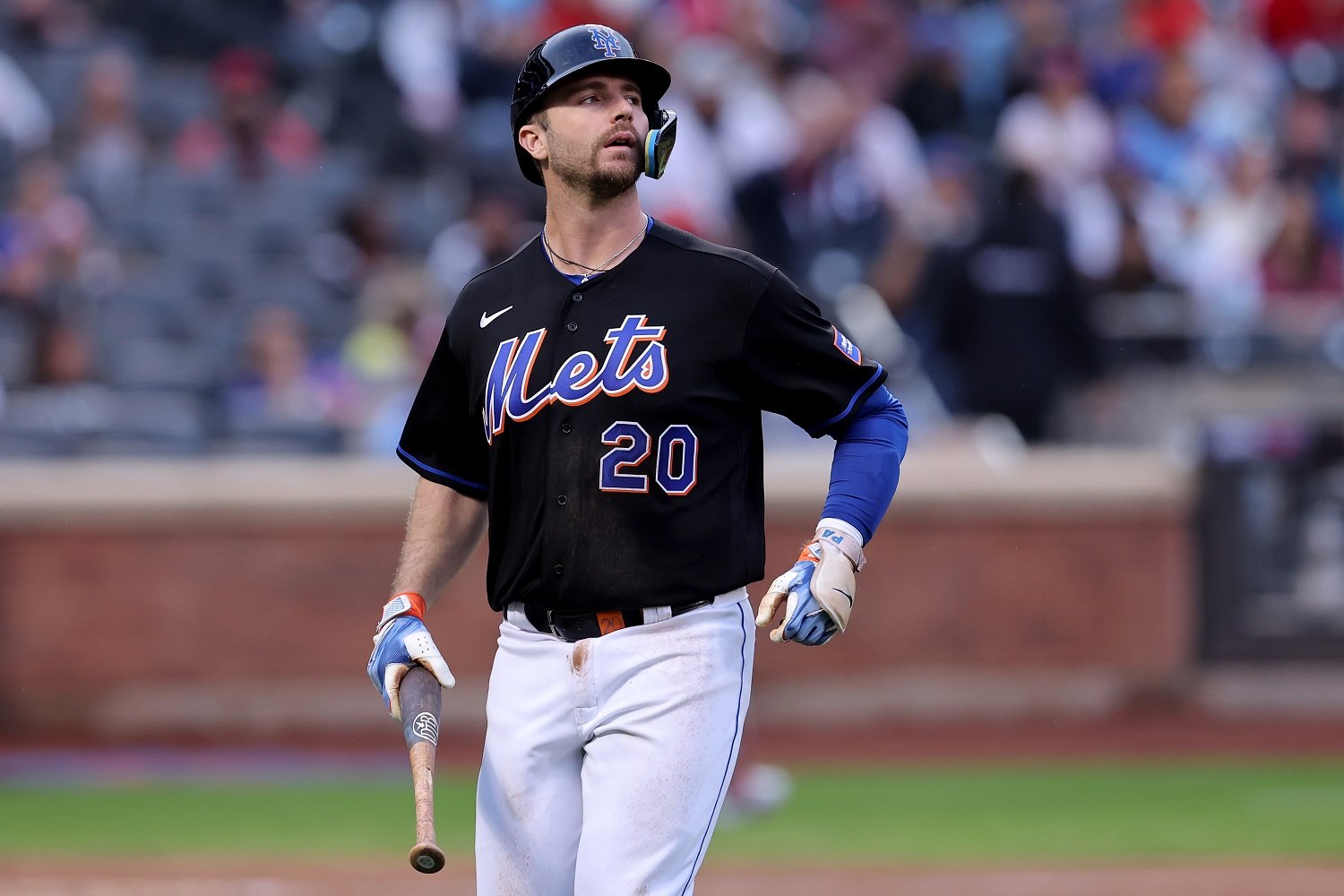 For most of last season, Rocco Baldelli found himself with left-handed power in the outfield, with Byron Buxton shelved from defensive usage. Michael A. Taylor was a right-handed centerfielder but was playing for his bat more than anything. Max Kepler, Joey Gallo, Trevor Larnach, and Matt Wallner spent significant time on the corners, each batting from the left side. At first base, Gallo filled in plenty, and the position was destined for Alex Kirilloff. When healthy, the plan would be for Kirilloff to hit for power and average, but we have seen that his health is a question mark at best in recent seasons. Still, with many outfield options at their disposal, Minnesota should be more inclined to add a right-handed option at first base to pair with Kirilloff. Rhys Hoskins will be the popular name on the open market, but four alternatives could be had in a trade. Pete Alonso - New York Mets Former Home Run Derby champion Alonso has hit 37 or more dingers in every full season. The Mets and Steve Cohen don’t need salary relief, but it was communicated to Max Scherzer and Justin Verlander that New York intends to reset in 2024. Alonso is in the final year of team control, so there isn’t much reason not to cash in on him. Alonso has posted at least a 122 OPS+ in each of his big league seasons. He draws a good amount of walks, hits for a passable average, and has power with the best names in baseball. He’s also right-handed and would be platoon-proof should Kirilloff never fully return to form for Minnesota. Proposed trade: Alonso for Yasser Mercedes and Aaron Sabato (Trade Value Simulator says: Slight advantage NYM) Brandon Drury - Los Angeles Angels Signed by the Angels before the 2023 season when they thought there was a chance to win with Shohei Ohtani and Mike Trout, Drury watched firsthand as the organization continued to waste talent. His 114 OPS+ was a slight dip from 2022, but he has put up three consecutive strong seasons. The power really has come on the past two years, and he added first base as a key component to his arsenal last year. In the final year of a two-year deal worth $17 million, Drury is being paid just $8.5 million this season. He’s shown neutral splits throughout his career and has experience playing several positions. The Twins could find a much better fit for a little more than Kyle Farmer is expected to make this season. Proposed trade: Drury for Kyle Farmer and Michael Helman (TVS says: Neutral) Ryan Mountcastle - Baltimore Orioles It’s a bit odd to think the Orioles would trade one of their younger players while being in a window of contention, but he’s not a great fit for the new configurations of that ballpark. Should they lean more towards Ryan O’Hearn or others, he’d be a great option, and this summer, Matt Braun lined out why. Under team control through 2026, Mouncastle would have the highest acquisition cost of these options. He owns a career 114 OPS+ and hit 33 home runs just two years ago. Allowing him to yank pitches into the bleachers at Target Field would be much easier, and he has crushed southpaws in his young career. Like Kirilloff, he also has experience in the corner outfield. Proposed trade: Mountcastle for David Festa and Brent Headrick (TVS says: Slight disadvantage BAL) Paul Goldschmidt - St. Louis Cardinals There was plenty of talk at the trade deadline as to whether the Cardinals would sell off. That included Goldschmidt and even murmurs of third baseman Nolan Arenado. Recently our own Nash Walker touched on the idea of Minnesota making a move for Goldschmidt. He fits the profile of a strong right-handed bat that can play first base for the Twins. Goldy won an MVP just a year ago, and while there hasn't been a significant decline in his talent, St. Louis could be inclined to get younger and cheaper with the veteran in the final year of his deal. He's due to make $26 million in 2024, and that could go up to $28 million with incentives, which makes this move tough for the Twins as they look to pull back payroll. Neither Max Kepler or Jorge Polanco are a real fit for a team looking to add youth, so they wouldn't get salary relief here either. Giving up a better prospect could entice St. Louis to throw in money for the salary though. Proposed trade: Goldschmidt for Marco Raya, Jose Salas, and Zebby Matthews Which of these names do you feel most excited about? Is there a return that would make you uncomfortable to get one in return?
- 24 comments
-
- 1
-
-
- pete alonso
- ryan mountcastle
- (and 1 more)
-
If there was something that the Minnesota Twins appeared to need at the trade deadline last season, it was a right-handed slugger. The lineup was left-handed heavy, and it didn’t help when playing for platoon advantages. They never added that guy, but this offseason is a chance to address the issue. Image courtesy of © Brad Penner-USA TODAY Sports For most of last season, Rocco Baldelli found himself with left-handed power in the outfield, with Byron Buxton shelved from defensive usage. Michael A. Taylor was a right-handed centerfielder but was playing for his bat more than anything. Max Kepler, Joey Gallo, Trevor Larnach, and Matt Wallner spent significant time on the corners, each batting from the left side. At first base, Gallo filled in plenty, and the position was destined for Alex Kirilloff. When healthy, the plan would be for Kirilloff to hit for power and average, but we have seen that his health is a question mark at best in recent seasons. Still, with many outfield options at their disposal, Minnesota should be more inclined to add a right-handed option at first base to pair with Kirilloff. Rhys Hoskins will be the popular name on the open market, but four alternatives could be had in a trade. Pete Alonso - New York Mets Former Home Run Derby champion Alonso has hit 37 or more dingers in every full season. The Mets and Steve Cohen don’t need salary relief, but it was communicated to Max Scherzer and Justin Verlander that New York intends to reset in 2024. Alonso is in the final year of team control, so there isn’t much reason not to cash in on him. Alonso has posted at least a 122 OPS+ in each of his big league seasons. He draws a good amount of walks, hits for a passable average, and has power with the best names in baseball. He’s also right-handed and would be platoon-proof should Kirilloff never fully return to form for Minnesota. Proposed trade: Alonso for Yasser Mercedes and Aaron Sabato (Trade Value Simulator says: Slight advantage NYM) Brandon Drury - Los Angeles Angels Signed by the Angels before the 2023 season when they thought there was a chance to win with Shohei Ohtani and Mike Trout, Drury watched firsthand as the organization continued to waste talent. His 114 OPS+ was a slight dip from 2022, but he has put up three consecutive strong seasons. The power really has come on the past two years, and he added first base as a key component to his arsenal last year. In the final year of a two-year deal worth $17 million, Drury is being paid just $8.5 million this season. He’s shown neutral splits throughout his career and has experience playing several positions. The Twins could find a much better fit for a little more than Kyle Farmer is expected to make this season. Proposed trade: Drury for Kyle Farmer and Michael Helman (TVS says: Neutral) Ryan Mountcastle - Baltimore Orioles It’s a bit odd to think the Orioles would trade one of their younger players while being in a window of contention, but he’s not a great fit for the new configurations of that ballpark. Should they lean more towards Ryan O’Hearn or others, he’d be a great option, and this summer, Matt Braun lined out why. Under team control through 2026, Mouncastle would have the highest acquisition cost of these options. He owns a career 114 OPS+ and hit 33 home runs just two years ago. Allowing him to yank pitches into the bleachers at Target Field would be much easier, and he has crushed southpaws in his young career. Like Kirilloff, he also has experience in the corner outfield. Proposed trade: Mountcastle for David Festa and Brent Headrick (TVS says: Slight disadvantage BAL) Paul Goldschmidt - St. Louis Cardinals There was plenty of talk at the trade deadline as to whether the Cardinals would sell off. That included Goldschmidt and even murmurs of third baseman Nolan Arenado. Recently our own Nash Walker touched on the idea of Minnesota making a move for Goldschmidt. He fits the profile of a strong right-handed bat that can play first base for the Twins. Goldy won an MVP just a year ago, and while there hasn't been a significant decline in his talent, St. Louis could be inclined to get younger and cheaper with the veteran in the final year of his deal. He's due to make $26 million in 2024, and that could go up to $28 million with incentives, which makes this move tough for the Twins as they look to pull back payroll. Neither Max Kepler or Jorge Polanco are a real fit for a team looking to add youth, so they wouldn't get salary relief here either. Giving up a better prospect could entice St. Louis to throw in money for the salary though. Proposed trade: Goldschmidt for Marco Raya, Jose Salas, and Zebby Matthews Which of these names do you feel most excited about? Is there a return that would make you uncomfortable to get one in return? View full article
-
Joe Ryan, Sonny Gray, and Pablo Lopez weren't enough evidence?
-
I still don't know if that's enough. The ask should be massive there.
- 37 replies
-
- 1
-
-
- logan gilbert
- alex manoah
- (and 3 more)
-
It's hard to hold back on so many pieces, but then ask to aim higher than Blackburn.
- 37 replies
-
- 4
-
-
- logan gilbert
- alex manoah
- (and 3 more)
-
Five Trades the Minnesota Twins Could Make for a Starting Pitcher
Ted Schwerzler posted an article in Twins
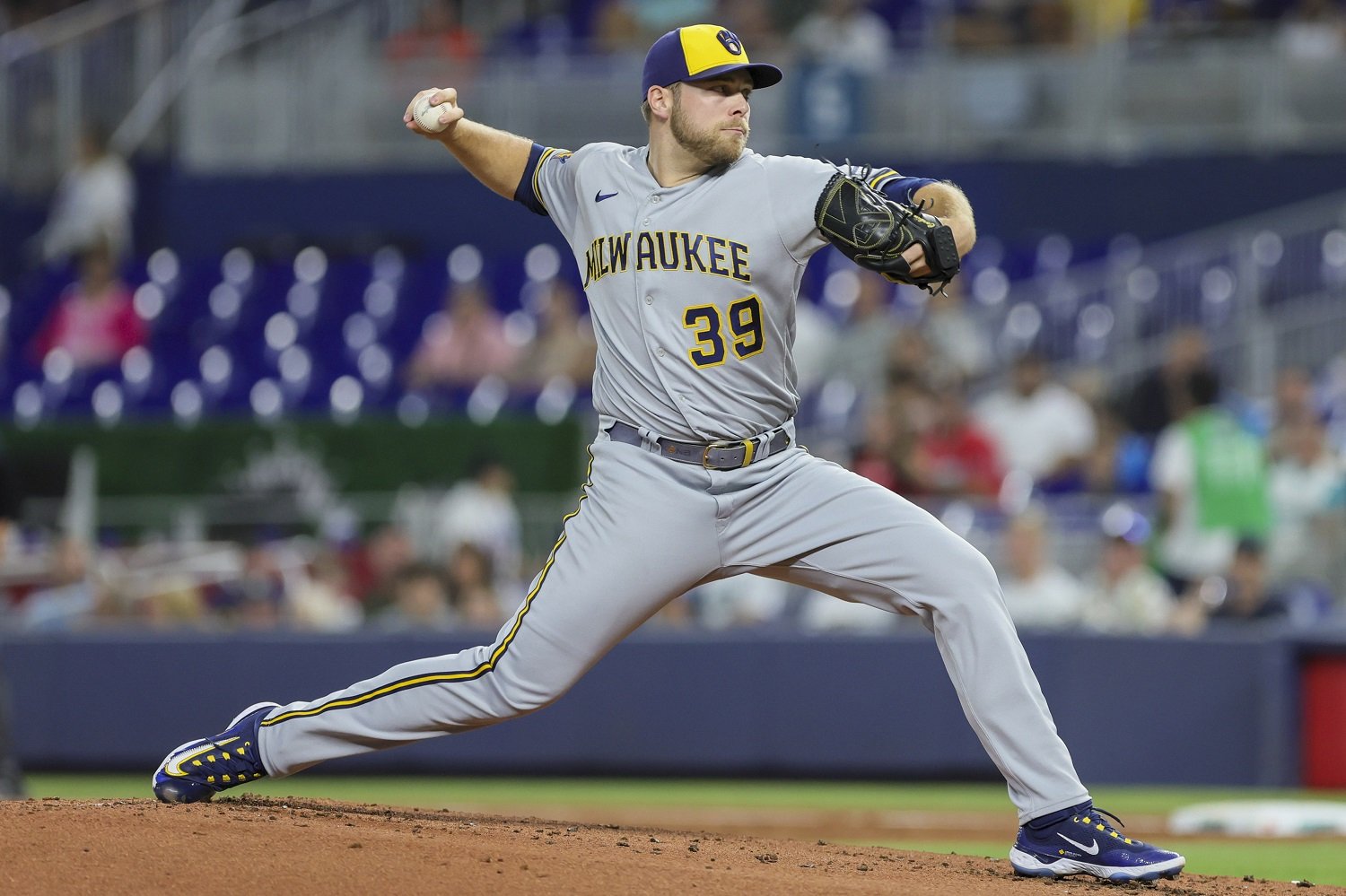 While the headliner leaving Rocco Baldelli’s pitching staff is Sonny Gray, it should be noted that Kenta Maeda is on his way out as well. Derek Falvey will need to restock the group that now includes Pablo Lopez and Chris Paddack, but finding a higher-caliber arm to join them seems like a must. Playing in the free agency market may not be the most straightforward way to reduce payroll. That could bode well for a Twins organization that has done well with pitching trades, and when Gray turns into a compensatory draft pick, they’ll have seen their best work come full circle. Here are five options Minnesota could consider: Alek Manoah - Toronto Blue Jays Toronto has some serious soul-searching to do when it comes to Manoah. He was a Rookie of the Year candidate in 2021 and finished third in the Cy Young voting in 2022 while also being an All-Star. Then, last season, everything fell apart. He made just 19 starts at the major league level, most of which were bad. He didn’t show up to the minors when demoted initially and was sent on a journey that had him pitching in Single-A. Maybe the relationship is tarnished with the Blue Jays, or maybe Toronto doesn’t think they can fix him. Either way, plenty was going on mentally and physically with Manoah. A change of scenery could be a good opportunity for him. Minnesota previously matched up with this front office when sending Jose Berrios to Canada for Austin Martin and Simeon Woods Richardson. Max Kepler could join him to play with George Springer and Daulton Varsho in the outfield. Manoah is under team control through 2027, so the ask will be steep even if his stock is down. Proposed trade - Manoah for Kepler and David Festa (Trade Value Simulator says: Slight advantage TOR) Logan Gilbert - Seattle Mariners One of the most talked about names this offseason has been the 14th overall pick from the 2018 draft. Seattle has pitching coming out their ears with Robbie Ray, Luis Castillo, and George Kirby. Maybe they will move Gilbert to address some other issues on their roster. He has posted numbers similar to Pablo Lopez at this point, and with the Twins making some tweaks, unlocking another level for the 27-year-old could turn him into a frontline starter. With Seattle exploring options for a second baseman, this would be a match where Minnesota may find Jerry Dipoto looking fondly at Jorge Polanco. That won’t be near enough to headline a deal for a guy who doesn’t hit free agency until 2028, but the Twins may be inclined to build a package around him. Gilbert could immediately slot in as a top-three starter for Baldelli, which would do wonders to replace Gray. Proposed trade - Gilbert for Polanco, Emmanuel Rodriguez, Trevor Larnach, and Connor Prielipp (TVS says: Significant disadvantage SEA) Paul Blackburn - Oakland Athletics Having been in Oakland for seven years, it only seems fair that Blackburn deserves saving. He will be 30 years old in 2024 and is a free agent following the 2025 season. He should be in line for only modest raises each of the next two years, which is enticing to a team not keen on writing checks like Oakland. The Athletics would certainly want prospects in return for Blackburn, and Minnesota’s depth could play beneficial there. Named as a token All-Star in 2022, Blackburn actually had a better season last year. His 4.43 ERA was nothing to write home about, but the 3.96 FIP suggests there is something to work with. He isn’t a durable arm and is not someone who will rewrite who he has been thus far in his career at this stage. Still, if the Twins want to lengthen their rotation and do it without a substantial cost, Blackburn should be available for a back-end top-30 prospect. Proposed trade - Blackburn for Jovani Moran and Josh Winder (TVS says: Advantage OAK) Mitch Keller - Pittsburgh Pirates A former second-round pick, Keller has Twins Territory ties in that he’s the pride of Cedar Rapids. Taken out of high school, he debuted at 23 and will be 28 in 2024. He’ll make a bit more money in the next two seasons, but he is still plenty cost-effective and doesn’t hit free agency until 2026. Keller’s secondary numbers are better than his ERA in the past two seasons, and his 3.84 FIP is something to dream on with a better developmental staff. He posted a career-best 9.7 K/9 last year and was just shy of 200 innings. Named an All-Star, his addition to the Twins staff would be no worse than their third-best arm. Keller would definitely come with a higher cost than Blackburn, but probably less than Manoah and Gilbert. Maybe Derek Shelton and Baldelli can team up for a deal here. Proposed trade - Keller for Matt Wallner and Yasser Mercedes (TCS says: Neutral) Corbin Burnes - Milwaukee Brewers There’s no denying that the Brewers are looking for less ways to spend. That has been the case for years, and they may now enter a period of transition with manager Craig Counsell leaving for Chicago. Burnes is in the final year of team control and’ll be north of $11 million after arbitration. Milwaukee isn’t going to want an expensive asset back, but a prospect trade could work. Burnes isn’t the same pitcher he was in 2021 when winning a Cy Young, but he’s still exceptionally talented. The Brewers will try and hope someone pays a king’s ransom, and while Minnesota needs to avoid that, a top-10 prospect package doesn’t seem ridiculous when you could be getting a true ace out of the deal. Putting Burnes at the top of a rotation with Lopez gives Minnesota a one-two punch anyone in the league should envy. Proposed trade - Burnes for Marco Raya, Kody Funderburk, and Jose Miranda (TVS says: Slight disadvantage MIL) Which of these starters are you most inclined to trade for? Does the expected cost turn you off for one more than another?
- 37 comments
-
- 3
-
-
- logan gilbert
- alex manoah
- (and 3 more)
-
This offseason, the Minnesota Twins will again find themselves in the pitching market. They'll need to replace a pair of departures to establish depth that had them owning one of the best rotations in baseball. Could they do it through the trade market? Image courtesy of © Sam Navarro-USA TODAY Sports While the headliner leaving Rocco Baldelli’s pitching staff is Sonny Gray, it should be noted that Kenta Maeda is on his way out as well. Derek Falvey will need to restock the group that now includes Pablo Lopez and Chris Paddack, but finding a higher-caliber arm to join them seems like a must. Playing in the free agency market may not be the most straightforward way to reduce payroll. That could bode well for a Twins organization that has done well with pitching trades, and when Gray turns into a compensatory draft pick, they’ll have seen their best work come full circle. Here are five options Minnesota could consider: Alek Manoah - Toronto Blue Jays Toronto has some serious soul-searching to do when it comes to Manoah. He was a Rookie of the Year candidate in 2021 and finished third in the Cy Young voting in 2022 while also being an All-Star. Then, last season, everything fell apart. He made just 19 starts at the major league level, most of which were bad. He didn’t show up to the minors when demoted initially and was sent on a journey that had him pitching in Single-A. Maybe the relationship is tarnished with the Blue Jays, or maybe Toronto doesn’t think they can fix him. Either way, plenty was going on mentally and physically with Manoah. A change of scenery could be a good opportunity for him. Minnesota previously matched up with this front office when sending Jose Berrios to Canada for Austin Martin and Simeon Woods Richardson. Max Kepler could join him to play with George Springer and Daulton Varsho in the outfield. Manoah is under team control through 2027, so the ask will be steep even if his stock is down. Proposed trade - Manoah for Kepler and David Festa (Trade Value Simulator says: Slight advantage TOR) Logan Gilbert - Seattle Mariners One of the most talked about names this offseason has been the 14th overall pick from the 2018 draft. Seattle has pitching coming out their ears with Robbie Ray, Luis Castillo, and George Kirby. Maybe they will move Gilbert to address some other issues on their roster. He has posted numbers similar to Pablo Lopez at this point, and with the Twins making some tweaks, unlocking another level for the 27-year-old could turn him into a frontline starter. With Seattle exploring options for a second baseman, this would be a match where Minnesota may find Jerry Dipoto looking fondly at Jorge Polanco. That won’t be near enough to headline a deal for a guy who doesn’t hit free agency until 2028, but the Twins may be inclined to build a package around him. Gilbert could immediately slot in as a top-three starter for Baldelli, which would do wonders to replace Gray. Proposed trade - Gilbert for Polanco, Emmanuel Rodriguez, Trevor Larnach, and Connor Prielipp (TVS says: Significant disadvantage SEA) Paul Blackburn - Oakland Athletics Having been in Oakland for seven years, it only seems fair that Blackburn deserves saving. He will be 30 years old in 2024 and is a free agent following the 2025 season. He should be in line for only modest raises each of the next two years, which is enticing to a team not keen on writing checks like Oakland. The Athletics would certainly want prospects in return for Blackburn, and Minnesota’s depth could play beneficial there. Named as a token All-Star in 2022, Blackburn actually had a better season last year. His 4.43 ERA was nothing to write home about, but the 3.96 FIP suggests there is something to work with. He isn’t a durable arm and is not someone who will rewrite who he has been thus far in his career at this stage. Still, if the Twins want to lengthen their rotation and do it without a substantial cost, Blackburn should be available for a back-end top-30 prospect. Proposed trade - Blackburn for Jovani Moran and Josh Winder (TVS says: Advantage OAK) Mitch Keller - Pittsburgh Pirates A former second-round pick, Keller has Twins Territory ties in that he’s the pride of Cedar Rapids. Taken out of high school, he debuted at 23 and will be 28 in 2024. He’ll make a bit more money in the next two seasons, but he is still plenty cost-effective and doesn’t hit free agency until 2026. Keller’s secondary numbers are better than his ERA in the past two seasons, and his 3.84 FIP is something to dream on with a better developmental staff. He posted a career-best 9.7 K/9 last year and was just shy of 200 innings. Named an All-Star, his addition to the Twins staff would be no worse than their third-best arm. Keller would definitely come with a higher cost than Blackburn, but probably less than Manoah and Gilbert. Maybe Derek Shelton and Baldelli can team up for a deal here. Proposed trade - Keller for Matt Wallner and Yasser Mercedes (TCS says: Neutral) Corbin Burnes - Milwaukee Brewers There’s no denying that the Brewers are looking for less ways to spend. That has been the case for years, and they may now enter a period of transition with manager Craig Counsell leaving for Chicago. Burnes is in the final year of team control and’ll be north of $11 million after arbitration. Milwaukee isn’t going to want an expensive asset back, but a prospect trade could work. Burnes isn’t the same pitcher he was in 2021 when winning a Cy Young, but he’s still exceptionally talented. The Brewers will try and hope someone pays a king’s ransom, and while Minnesota needs to avoid that, a top-10 prospect package doesn’t seem ridiculous when you could be getting a true ace out of the deal. Putting Burnes at the top of a rotation with Lopez gives Minnesota a one-two punch anyone in the league should envy. Proposed trade - Burnes for Marco Raya, Kody Funderburk, and Jose Miranda (TVS says: Slight disadvantage MIL) Which of these starters are you most inclined to trade for? Does the expected cost turn you off for one more than another? View full article
-
 Derek Falvey will again look to build Rocco Baldelli a roster flush with depth. After the 2022 season saw the Twins fade down the stretch due to injuries, it was notable depth that provided Minnesota with staying power en route to an AL Central title last year. There has been plenty of talk about how the payroll will shake out with decreased television revenues, and other cast-offs could provide options for the Twins. The landscape of non-tendered players included former first round picks and plenty of big names. Not all of them are fits for Minnesota, but while looking for starting pitching, a bat, and centerfield help, a few could make sense. Here are ten names to think about: Spencer Turnbull - RHP Minnesota knows Turnbull well as he has spent the entirety of his career with the Detroit Tigers. He underwent Tommy John surgery and did not pitch in 2022. Throwing just 31 innings across seven starts last year, he posted an ERA north of 7.00. From 2019 through 2021, however, Turnbull owned a 4.13 ERA with a 3.67 FIP. His 8.5 K/9 was respectable, and his 3.5 BB/9 kept him out of trouble. Turnbull isn’t a dominant arm by any means and doesn’t come close to replacing Sonny Gray’s production, but he could be an excellent back-end depth option for the rotation. Command is generally the last thing to return post-elbow surgery, and if he goes back to being stingy against the long ball, that’s a usable arm. Austin Meadows - OF Acquired by the Tigers from Tampa Bay for Isaac Paredes, Meadows is a former 9th overall pick and a one-time all-star. He played only 42 games in Detroit battling against both physical and mental health issues. A change of scenery could be a big boost for him, and he was wildly productive from 2019 through 2021 with the Rays. His 125 OPS+ in that stretch would work well in any lineup. Meadows is more of a corner outfielder than an option in center, and he is left-handed, but there are plenty worse dice rolls a team could make on a low-cost deal. Juan Yepez - UTIL One of the youngest players to be non-tendered this offseason, Yepez hasn’t yet reached arbitration and has an option remaining. He’s a right-handed bat that can play in the outfield and is also a first base option. After posting a 109 OPS+ two years ago in his first 76 games for the Cardinals, he got just 28 games of action last year. At Triple-A this past season, Yepez posted a .736 OPS. He’s not a huge power threat, but he should be reliable for double-digits in a full-time utility role. Mike Ford - 1B/DH The former Yankees slugger was a late bloomer and didn’t make his rookie debut until he was 26. His 137 OPS+ across 50 games in 2019 put him on the map, but Ford has never again flashed that production. In 2022, he split 50 games between the Giants, Mariners, Braves, and Angels while producing just a 77 OPS+. Seattle gave him significant run last year, playing in 83 games, and Ford rebounded with a solid 122 OPS+. He hit 16 homer runs last season for the Mariners, and while he’s not at all a batting average guy, he takes enough walks to support a passable OBP. Ford can handle first base as a left-handed bopper but is better suited for the designated hitter role. Rowdy Tellez - 1B/DH After three seasons with the Brewers, Milwaukee decided that Tellez was expendable. His 153 games in 2022 produced a 113 OPS+ and was propped up by 35 homers. Last year, he played in just over 100 games, and the dip to an 82 OPS+ largely reflected the lack of power production. Tellez hit only 13 long balls last season and has continued to put up poor on-base numbers. Tellez is also left-handed and is not someone you want to play at first base for any significant stretch of time. If the home run production had continued, he probably wouldn’t have found himself without a deal. Without the power though, his benefit to any offense is limited. Daniel Vogelbach - 1B/DH There is very clearly a theme in the type of player that finds themselves on the outs when it comes to non-tender time. Vogelbach is very similar to Ford and Tellez while having also played for the Mariners and Brewers. The New York Mets cut ties with Vogelbach after playing him for 159 games the past two seasons. Vogelbach was above league average last season with a 104 OPS+, but he hit just 13 home runs in 104 games. Vogelbach is left-handed as well, and with Pete Alonso at first base for the Mets, he didn’t make an appearance in the field. Dakota Hudson - RHP A former first round pick for the Cardinals, Hudson will be 29 years old in 2024. After owning a 3.14 ERA through his first 249 2/3 major-league innings, Hudson posted a 4.64 ERA across 221 innings the past two seasons. His peripherals aren’t anything to get excited about, and the strikeout numbers make it difficult for him to see a high level of success. Utilizing him as an option for the fifth rotation spot, or even as a sixth candidate in a long-man role, could be of some benefit. Realistically, Hudson may be a better fit as an innings eater for a bad team. Lou Trivino - RHP Just a couple of years removed from compiling 22 saves as the Oakland Athletics closer, Trivino didn’t pitch at all for the Yankees in 2023 after undergoing Tommy John surgery. New York traded for him in 2022, and he posted a 1.66 ERA after leaving the Athletics. He is now 32 years old, but if he’s worked his way back from the surgery, he could be a great pickup for a bullpen. Trivino has pitched in high-leverage spots previously, and while he wouldn’t supplant Jhoan Duran for the Twins, slotting in the group of Griffin Jax, Caleb Thielbar, and Brock Stewart is an exciting possibility. Adam Cimber - RHP Another familiar name as he has pitched in the AL Central for the Cleveland Guardians, Cimber had his first truly poor year for Toronto in 2023. Cimber dealt with a shoulder issue last season that shelved him for a good amount of the year. He pitched in just 20 2/3 innings, and the shoulder impingement never allowed him to pitch after June 18. He did begin a rehab assignment before the end of the year, and an entire offseason should allow him an opportunity to get healthy for 2024. He’s more deception than dominance, but there’s a usable middle-relief arm here if he’s right. Brandon Woodruff - RHP Scheduled to make roughly $11 million in arbitration for 2024, Woodruff is easily the biggest name to hit free agency. It’s not that he isn’t a dominant pitcher when healthy, but there are real questions about whether he’ll ever be healthy again. Woodruff underwent a capsule procedure in his throwing shoulder, which will be a substantially more uncertain return than someone returning from an elbow issue. He is an ace-level arm if and when he’s healthy, so taking a risk on a multi-year deal makes some sense. No one should expect him to throw in 2024, but if the Twins want to risk throwing away money, the come-up in 2025 and beyond may be massive. Which non-tendered free agent are you most interested in the Twins targeting? Is there someone you’d prefer them to avoid completely?
- 23 comments
-
- 3
-
-
-
- brandon woodruff
- lou trivino
- (and 4 more)
-
On Friday night, Major League Baseball teams were forced to make decisions on their arbitration-eligible players for the upcoming 2024 season. The Twins had seven candidates outstanding, and tendered contracts to all of them. Many other players became free agents and can now be considered as potential additions. Image courtesy of Jerome Miron-USA TODAY Sports Derek Falvey will again look to build Rocco Baldelli a roster flush with depth. After the 2022 season saw the Twins fade down the stretch due to injuries, it was notable depth that provided Minnesota with staying power en route to an AL Central title last year. There has been plenty of talk about how the payroll will shake out with decreased television revenues, and other cast-offs could provide options for the Twins. The landscape of non-tendered players included former first round picks and plenty of big names. Not all of them are fits for Minnesota, but while looking for starting pitching, a bat, and centerfield help, a few could make sense. Here are ten names to think about: Spencer Turnbull - RHP Minnesota knows Turnbull well as he has spent the entirety of his career with the Detroit Tigers. He underwent Tommy John surgery and did not pitch in 2022. Throwing just 31 innings across seven starts last year, he posted an ERA north of 7.00. From 2019 through 2021, however, Turnbull owned a 4.13 ERA with a 3.67 FIP. His 8.5 K/9 was respectable, and his 3.5 BB/9 kept him out of trouble. Turnbull isn’t a dominant arm by any means and doesn’t come close to replacing Sonny Gray’s production, but he could be an excellent back-end depth option for the rotation. Command is generally the last thing to return post-elbow surgery, and if he goes back to being stingy against the long ball, that’s a usable arm. Austin Meadows - OF Acquired by the Tigers from Tampa Bay for Isaac Paredes, Meadows is a former 9th overall pick and a one-time all-star. He played only 42 games in Detroit battling against both physical and mental health issues. A change of scenery could be a big boost for him, and he was wildly productive from 2019 through 2021 with the Rays. His 125 OPS+ in that stretch would work well in any lineup. Meadows is more of a corner outfielder than an option in center, and he is left-handed, but there are plenty worse dice rolls a team could make on a low-cost deal. Juan Yepez - UTIL One of the youngest players to be non-tendered this offseason, Yepez hasn’t yet reached arbitration and has an option remaining. He’s a right-handed bat that can play in the outfield and is also a first base option. After posting a 109 OPS+ two years ago in his first 76 games for the Cardinals, he got just 28 games of action last year. At Triple-A this past season, Yepez posted a .736 OPS. He’s not a huge power threat, but he should be reliable for double-digits in a full-time utility role. Mike Ford - 1B/DH The former Yankees slugger was a late bloomer and didn’t make his rookie debut until he was 26. His 137 OPS+ across 50 games in 2019 put him on the map, but Ford has never again flashed that production. In 2022, he split 50 games between the Giants, Mariners, Braves, and Angels while producing just a 77 OPS+. Seattle gave him significant run last year, playing in 83 games, and Ford rebounded with a solid 122 OPS+. He hit 16 homer runs last season for the Mariners, and while he’s not at all a batting average guy, he takes enough walks to support a passable OBP. Ford can handle first base as a left-handed bopper but is better suited for the designated hitter role. Rowdy Tellez - 1B/DH After three seasons with the Brewers, Milwaukee decided that Tellez was expendable. His 153 games in 2022 produced a 113 OPS+ and was propped up by 35 homers. Last year, he played in just over 100 games, and the dip to an 82 OPS+ largely reflected the lack of power production. Tellez hit only 13 long balls last season and has continued to put up poor on-base numbers. Tellez is also left-handed and is not someone you want to play at first base for any significant stretch of time. If the home run production had continued, he probably wouldn’t have found himself without a deal. Without the power though, his benefit to any offense is limited. Daniel Vogelbach - 1B/DH There is very clearly a theme in the type of player that finds themselves on the outs when it comes to non-tender time. Vogelbach is very similar to Ford and Tellez while having also played for the Mariners and Brewers. The New York Mets cut ties with Vogelbach after playing him for 159 games the past two seasons. Vogelbach was above league average last season with a 104 OPS+, but he hit just 13 home runs in 104 games. Vogelbach is left-handed as well, and with Pete Alonso at first base for the Mets, he didn’t make an appearance in the field. Dakota Hudson - RHP A former first round pick for the Cardinals, Hudson will be 29 years old in 2024. After owning a 3.14 ERA through his first 249 2/3 major-league innings, Hudson posted a 4.64 ERA across 221 innings the past two seasons. His peripherals aren’t anything to get excited about, and the strikeout numbers make it difficult for him to see a high level of success. Utilizing him as an option for the fifth rotation spot, or even as a sixth candidate in a long-man role, could be of some benefit. Realistically, Hudson may be a better fit as an innings eater for a bad team. Lou Trivino - RHP Just a couple of years removed from compiling 22 saves as the Oakland Athletics closer, Trivino didn’t pitch at all for the Yankees in 2023 after undergoing Tommy John surgery. New York traded for him in 2022, and he posted a 1.66 ERA after leaving the Athletics. He is now 32 years old, but if he’s worked his way back from the surgery, he could be a great pickup for a bullpen. Trivino has pitched in high-leverage spots previously, and while he wouldn’t supplant Jhoan Duran for the Twins, slotting in the group of Griffin Jax, Caleb Thielbar, and Brock Stewart is an exciting possibility. Adam Cimber - RHP Another familiar name as he has pitched in the AL Central for the Cleveland Guardians, Cimber had his first truly poor year for Toronto in 2023. Cimber dealt with a shoulder issue last season that shelved him for a good amount of the year. He pitched in just 20 2/3 innings, and the shoulder impingement never allowed him to pitch after June 18. He did begin a rehab assignment before the end of the year, and an entire offseason should allow him an opportunity to get healthy for 2024. He’s more deception than dominance, but there’s a usable middle-relief arm here if he’s right. Brandon Woodruff - RHP Scheduled to make roughly $11 million in arbitration for 2024, Woodruff is easily the biggest name to hit free agency. It’s not that he isn’t a dominant pitcher when healthy, but there are real questions about whether he’ll ever be healthy again. Woodruff underwent a capsule procedure in his throwing shoulder, which will be a substantially more uncertain return than someone returning from an elbow issue. He is an ace-level arm if and when he’s healthy, so taking a risk on a multi-year deal makes some sense. No one should expect him to throw in 2024, but if the Twins want to risk throwing away money, the come-up in 2025 and beyond may be massive. Which non-tendered free agent are you most interested in the Twins targeting? Is there someone you’d prefer them to avoid completely? View full article
- 23 replies
-
- 1
-
-
- brandon woodruff
- lou trivino
- (and 4 more)
-
Twins Bullpen Catcher Dishes on His Unique Experience in 2023
Ted Schwerzler posted an article in Twins
 On the field, fans watched Rocco Baldelli and the Minnesota Twins play American League Central Division-winning baseball. The 2023 squad ended an 18-year postseason drought, and they swept a Toronto Blue Jays team while besting former ace Jose Berrios in an elimination game. Behind the scenes, pitchers like Chris Paddack and Jorge Alcala were working their way back toward the active roster with an eye on competing alongside their teammates. Paddack ultimately realized the goal and looked great when deployed in September and October. As those bullpen sessions took place, I connected with Bryan Ludwig, a catcher doing it all behind the scenes. Despite working as an attorney, Ludwig has had the pleasure of working with the Twins as a bullpen catcher. Wondering what that experience has been like, what he has seen, and especially the development of arms this season, it seemed like a good time to connect. Twins Daily: How do you wind up as a bullpen catcher in a major league organization? What does your baseball background look like? Bryan Ludwig: I grew up in Woodbury and played ball at Woodbury High School ('04). I attended Augsburg University, where I played ball as a C/1B/DH (2004-2008). I also played for and ran the St. Paul Mudhens (Class A Townball) from 2005-2020, managing the team from 2010-2020. Since 2020, I've been playing summer ball in the Federal League (35+) for the Lakeville Lobos and moonlighting with Baseball 365's townball team. I've been a coach with the Minnesota Twins Youth Training Academy and the RBI Program since 2010. I work traveling camps/clinics in the spring/summer and train catchers in the offseason. I have also worked in club baseball as a head coach and trainer. Mostly with Great Lakes Baseball Academy until recently. Having a seven and nine-year-old is pulling me into the coach-dad realm lately with little league and softball. I've also been a volunteer assistant coach back with Augsburg, working with their catchers in fall ball and early spring, and since 2020, I've been working with the Midwest Speed Softball Club, training their catchers during their winter season. Rehab bullpen catching is a story of "right place, right time, right person." I had a unique skill set with unique connections that enabled me to meet a unique need. I was just a volunteer with the Twins academy in 2009, trying to log hours for my volunteer requirements at law school. The Twins' lefty specialist bullpen thrower was the one running those camps at the time, and leading up to the start of 2010, he got wind that the Twins were asking around about having a local catcher on-call to be a bullpen guy. The ask was to work with the training staff as guys rehabbed and fill in for home games as needed. This was a completely new role with the christening of Target Field. While they were in the Dome, an injury was a one-way ticket to Ft. Myers to rehab because no on-site facilities were available. With Target Field opening and a state-of-the-art training room and team doctors on-site, they needed someone who could work out with the pitchers when the team was on the road, during off days, or when the full-time bullpen catcher was unavailable or needed a break. It was late March 2010, and I got a call from the Twins bullpen guy in the middle of one of my classes. He explains the situation and asked if I would be interested in reporting to Target Field the following week to work with Scott Baker, Nick Blackburn, and Carl Pavano on the field so they could get on the big mound before the home opener. The rest is history from there, I have been in this role since, except pausing during the pandemic when the organization limited who was in/around the clubhouse. I am grateful for the schedule flexibility my job as an attorney has provided to enable me to stay connected to the game, even in this small way. I have gotten to meet and interact with many amazing baseball people, and I hope to continue doing this as long as I am physically able. TD: When you get behind the plate for the Twins, what goes into that preparation? Are you working with anyone from the team to ensure you know what each guy wants to do? BL: There are two routes this goes: the in-game route and the rehab route. In-game, the preparation for the catcher is minimal. It is dictated by the situation and the call from the dugout. Also, each pitcher has their own preparation timeline. Unless it is a "get hot immediately" call, you have a general idea of who will be getting up depending on the inning and the situation. The bullpen coach and pitcher control the pen, but most of these guys have such a finely tuned internal clock they know exactly how long it will take to get hot as soon as that phone rings. Most guys will start throwing plyo balls and stretching around the 5th/6th inning, and once they get on the mound, it is anywhere between 15-25 pitches to get hot. The other job in-game is warming up left field. Otherwise, the bullpen is just baseball guys being baseball guys on the bench. For rehab work, it is a little more regimented. The training staff establishes a back-to-throwing program with built-in bullpen days. On those days, there is usually some pre-bullpen treatment and workout for the pitcher: long toss to a specific distance, some throw a short flat ground pen to work on release points and grip, and then a full pen on the big mound or out in the home bullpen. Everything monitored closely to ensure all the movements and metrics are improving or back to normal for a guy before they can go out on minor league assignment for a start or in-game relief work. The training staff I have worked with have been amazing at letting me use of all the tools and resources the big leaguers get to use to get ready to throw. On rehab days, I check in with the trainer to get the session plan, do some light band work and stretching, get on my shins, and head out to the first baseline for long toss. (I'm a Minnesota Townballer. Show-n-go is how we roll.) TD: This season, we saw the Twins put together one of their best starting rotations in franchise history. What was it like to work with those guys, and how was their stuff different than what you had seen in the past? BL: There is no denying that this was one of the most talented staffs the Twins have had in a long time. Aside from pure talent, one of the things that made this staff unique is that each pitcher, starting or relief, was uniquely complimentary to every one of the other guys on the roster. Pablo Lopez and Jhoan Duran did it with power and flair, Sonny Gray and Caleb Thielbar were bulldogs with control and finesse. Up and down the staff, there was a near-perfect balance of power and finesse, and guys like Pablo and Sonny took the lead on establishing a bulldog mentality across the staff. As an inside-outside observer, there were no wasted opportunities, and they attacked offenses versus just trying to hold an offense off. A lot of credit also goes to the Twins pitching coaches who fostered and supported that approach and gave all of these guys the tools and information necessary to find another edge or slight adjustment to add to their personal pitch arsenal. When you've seen big league "stuff," it is all elite, and pitching has outpaced hitting in how it is tracked, analyzed, and adjusted. I can talk about my thoughts on that for hours. Still, I think what made this staff so difficult was the consistency of its makeup that gave opposing offenses the sense that getting a starter out of a game only meant a constant barrage of difficult arms from the pen and on the days the starters went deep, they were equally unhittable. TD: Having done work with some of the guys rehabbing with the intention of making it back for the postseason, what tipped you off that they may be ready? How did their stuff look? BL: There are all kinds of measurables and metrics (spin rate, pitch depth, pitch shape, velocity, vertical break, horizontal break, etc.) that can give the team confidence that a guy is ready to step back on a big league mound. Those are all invaluable data points, but from my position, there is also a perceptible change in how a particular pitch moves or the snap of my mitt that I can tell the last piece has clicked into place. For some guys, it's that "out pitch" that bites a little harder, that changeup that disappears like a magic trick at 59 feet, or the fastball that has little lift that tells you "this guy is back." Sometimes, it's even a simple look they give after they let go of that breaking pitch at 100% for the first time, and it has the life and movement they expect. When they start repeating that output on the rehab mound, you can visibly see a weight lifted off their shoulders. I think any catcher would agree, when a pitcher is dialed in and that glove snap is just a little bit louder, you just have the intuitive sense that no hitter will be able to touch it. For all the data and technology, there is still a lot of raw feel in the moment that informs that player that they're ready. The tech, trainers, and coaches will confirm it, but that moment is always fun to be even a small part of. TD: You have seen plenty of pitchers while working behind the plate. Is there a guy or a pitch that jumps out as something that has always just been special? BL: 2014 All-Star Game aside (that is another fun story), It is not velocity that impresses. It is the movement and pinpoint control these guys have on pitches that can move 22 inches horizontally or drop 14 inches and still catch a corner. For the Twins, if you want to talk about wipeout pitches, it is tough to beat a Francisco Liriano slider or a vintage Joe Nathan curveball. However, that Duran splinker is, in fact, some ridiculous voodoo magic. Regarding a special moment, I spent an entire summer with Michael Pineda as he rehabbed from TJ. Seeing him progress and become a force in the rotation in 2019 was incredible. That grind was real, and he poured everything he had into it. That human element gets lost sometimes with fans who don't get to see that day-to-day drive and passion first-hand. TD: For Minnesota going into 2024, how confident should the quality of depth returning make fans feel about the pitching? Why can this group go out and again put up strong numbers? BL: It will be tough to replace some of the departing arms, but there is real buy-in from the returners to what the training and coaching staff want to develop with these guys individually and as a cohesive unit. The seasoning of some of our younger arms, along with the sustained presence of key vets, makes for a firm foundation to build off of the successes of this season. The bullpen will remain a force, and will be anchored by one of the most electric closers in the game (Duran), but Paddack is the guy I am most excited about. It is a bit of a wild card at this point, but if the Twins don't re-sign Gray and assuming a healthy season, I think his range of outcomes starts at something like 70-80% of what Sonny gave this rotation to a seamless replacement from Paddack in 2024. In both circumstances, Twins fans should be excited by that. TD: End it with something fun. What has been one of the best moments or stories you can share since working in this role? BL: I had the honor of serving as one of the bullpen catchers during All-Star Weekend in 2014. I was assigned to the World team during the Futures Game and the American League during the workout day, Home Run Derby, and All-Star Game. I was in the World bullpen for the Futures game and got to warm up a young stud named Jose Berrios before his start. This is where I have to get romantic about baseball because it is rare that you recognize one of those "stop and take it in" moments, but that was certainly it. During the game, I got to work with players who span the globe, some of whom didn't speak English. Each of the pins on the globe, MLB team affiliations, and varied languages didn't matter on that day because we all spoke the same language of baseball. There were no cross-ups. No missed signs. Just a couple of guys having a catch on a warm July evening with each new pitcher that entered the game. There are many other moments and experiences from that weekend and the years of being granted the opportunity to strap on the gear and play this small role with my favorite childhood team. That particular experience sits at the top for me because it was the perfect baseball microcosm. At the end of the day, players will come and go, and teams will rise and fall, but the game holds this baseball community together. The game lights us up every February as teams report to Spring Training and a new season begins. From the tee-baller in a jersey five sizes too big to the big leaguer catching the last out of the World Series, the game is the heartbeat. **** Baseball is a sport everyone experiences differently, and the barrier to entry is so low. While mastering the game is an art form, appreciating it is beyond a straightforward understanding. Bryan Ludwig does something fun outside of his regular work schedule, and hearing how that has all played out was quite the experience.
- 7 comments
-
- 10
-
-
-
- chris paddack
- jhoan duran
- (and 2 more)
-
When consuming baseball over the course of a 162 game season, multiple years in a row, it likely gets lost on fans how many people are involved in an organization beyond the 26-man roster. After a successful 2023 for the Minnesota Twins, viewing the experience through the eyes of a bullpen catcher provides some interesting insight. Image courtesy of © Rick Osentoski-USA TODAY Sports On the field, fans watched Rocco Baldelli and the Minnesota Twins play American League Central Division-winning baseball. The 2023 squad ended an 18-year postseason drought, and they swept a Toronto Blue Jays team while besting former ace Jose Berrios in an elimination game. Behind the scenes, pitchers like Chris Paddack and Jorge Alcala were working their way back toward the active roster with an eye on competing alongside their teammates. Paddack ultimately realized the goal and looked great when deployed in September and October. As those bullpen sessions took place, I connected with Bryan Ludwig, a catcher doing it all behind the scenes. Despite working as an attorney, Ludwig has had the pleasure of working with the Twins as a bullpen catcher. Wondering what that experience has been like, what he has seen, and especially the development of arms this season, it seemed like a good time to connect. Twins Daily: How do you wind up as a bullpen catcher in a major league organization? What does your baseball background look like? Bryan Ludwig: I grew up in Woodbury and played ball at Woodbury High School ('04). I attended Augsburg University, where I played ball as a C/1B/DH (2004-2008). I also played for and ran the St. Paul Mudhens (Class A Townball) from 2005-2020, managing the team from 2010-2020. Since 2020, I've been playing summer ball in the Federal League (35+) for the Lakeville Lobos and moonlighting with Baseball 365's townball team. I've been a coach with the Minnesota Twins Youth Training Academy and the RBI Program since 2010. I work traveling camps/clinics in the spring/summer and train catchers in the offseason. I have also worked in club baseball as a head coach and trainer. Mostly with Great Lakes Baseball Academy until recently. Having a seven and nine-year-old is pulling me into the coach-dad realm lately with little league and softball. I've also been a volunteer assistant coach back with Augsburg, working with their catchers in fall ball and early spring, and since 2020, I've been working with the Midwest Speed Softball Club, training their catchers during their winter season. Rehab bullpen catching is a story of "right place, right time, right person." I had a unique skill set with unique connections that enabled me to meet a unique need. I was just a volunteer with the Twins academy in 2009, trying to log hours for my volunteer requirements at law school. The Twins' lefty specialist bullpen thrower was the one running those camps at the time, and leading up to the start of 2010, he got wind that the Twins were asking around about having a local catcher on-call to be a bullpen guy. The ask was to work with the training staff as guys rehabbed and fill in for home games as needed. This was a completely new role with the christening of Target Field. While they were in the Dome, an injury was a one-way ticket to Ft. Myers to rehab because no on-site facilities were available. With Target Field opening and a state-of-the-art training room and team doctors on-site, they needed someone who could work out with the pitchers when the team was on the road, during off days, or when the full-time bullpen catcher was unavailable or needed a break. It was late March 2010, and I got a call from the Twins bullpen guy in the middle of one of my classes. He explains the situation and asked if I would be interested in reporting to Target Field the following week to work with Scott Baker, Nick Blackburn, and Carl Pavano on the field so they could get on the big mound before the home opener. The rest is history from there, I have been in this role since, except pausing during the pandemic when the organization limited who was in/around the clubhouse. I am grateful for the schedule flexibility my job as an attorney has provided to enable me to stay connected to the game, even in this small way. I have gotten to meet and interact with many amazing baseball people, and I hope to continue doing this as long as I am physically able. TD: When you get behind the plate for the Twins, what goes into that preparation? Are you working with anyone from the team to ensure you know what each guy wants to do? BL: There are two routes this goes: the in-game route and the rehab route. In-game, the preparation for the catcher is minimal. It is dictated by the situation and the call from the dugout. Also, each pitcher has their own preparation timeline. Unless it is a "get hot immediately" call, you have a general idea of who will be getting up depending on the inning and the situation. The bullpen coach and pitcher control the pen, but most of these guys have such a finely tuned internal clock they know exactly how long it will take to get hot as soon as that phone rings. Most guys will start throwing plyo balls and stretching around the 5th/6th inning, and once they get on the mound, it is anywhere between 15-25 pitches to get hot. The other job in-game is warming up left field. Otherwise, the bullpen is just baseball guys being baseball guys on the bench. For rehab work, it is a little more regimented. The training staff establishes a back-to-throwing program with built-in bullpen days. On those days, there is usually some pre-bullpen treatment and workout for the pitcher: long toss to a specific distance, some throw a short flat ground pen to work on release points and grip, and then a full pen on the big mound or out in the home bullpen. Everything monitored closely to ensure all the movements and metrics are improving or back to normal for a guy before they can go out on minor league assignment for a start or in-game relief work. The training staff I have worked with have been amazing at letting me use of all the tools and resources the big leaguers get to use to get ready to throw. On rehab days, I check in with the trainer to get the session plan, do some light band work and stretching, get on my shins, and head out to the first baseline for long toss. (I'm a Minnesota Townballer. Show-n-go is how we roll.) TD: This season, we saw the Twins put together one of their best starting rotations in franchise history. What was it like to work with those guys, and how was their stuff different than what you had seen in the past? BL: There is no denying that this was one of the most talented staffs the Twins have had in a long time. Aside from pure talent, one of the things that made this staff unique is that each pitcher, starting or relief, was uniquely complimentary to every one of the other guys on the roster. Pablo Lopez and Jhoan Duran did it with power and flair, Sonny Gray and Caleb Thielbar were bulldogs with control and finesse. Up and down the staff, there was a near-perfect balance of power and finesse, and guys like Pablo and Sonny took the lead on establishing a bulldog mentality across the staff. As an inside-outside observer, there were no wasted opportunities, and they attacked offenses versus just trying to hold an offense off. A lot of credit also goes to the Twins pitching coaches who fostered and supported that approach and gave all of these guys the tools and information necessary to find another edge or slight adjustment to add to their personal pitch arsenal. When you've seen big league "stuff," it is all elite, and pitching has outpaced hitting in how it is tracked, analyzed, and adjusted. I can talk about my thoughts on that for hours. Still, I think what made this staff so difficult was the consistency of its makeup that gave opposing offenses the sense that getting a starter out of a game only meant a constant barrage of difficult arms from the pen and on the days the starters went deep, they were equally unhittable. TD: Having done work with some of the guys rehabbing with the intention of making it back for the postseason, what tipped you off that they may be ready? How did their stuff look? BL: There are all kinds of measurables and metrics (spin rate, pitch depth, pitch shape, velocity, vertical break, horizontal break, etc.) that can give the team confidence that a guy is ready to step back on a big league mound. Those are all invaluable data points, but from my position, there is also a perceptible change in how a particular pitch moves or the snap of my mitt that I can tell the last piece has clicked into place. For some guys, it's that "out pitch" that bites a little harder, that changeup that disappears like a magic trick at 59 feet, or the fastball that has little lift that tells you "this guy is back." Sometimes, it's even a simple look they give after they let go of that breaking pitch at 100% for the first time, and it has the life and movement they expect. When they start repeating that output on the rehab mound, you can visibly see a weight lifted off their shoulders. I think any catcher would agree, when a pitcher is dialed in and that glove snap is just a little bit louder, you just have the intuitive sense that no hitter will be able to touch it. For all the data and technology, there is still a lot of raw feel in the moment that informs that player that they're ready. The tech, trainers, and coaches will confirm it, but that moment is always fun to be even a small part of. TD: You have seen plenty of pitchers while working behind the plate. Is there a guy or a pitch that jumps out as something that has always just been special? BL: 2014 All-Star Game aside (that is another fun story), It is not velocity that impresses. It is the movement and pinpoint control these guys have on pitches that can move 22 inches horizontally or drop 14 inches and still catch a corner. For the Twins, if you want to talk about wipeout pitches, it is tough to beat a Francisco Liriano slider or a vintage Joe Nathan curveball. However, that Duran splinker is, in fact, some ridiculous voodoo magic. Regarding a special moment, I spent an entire summer with Michael Pineda as he rehabbed from TJ. Seeing him progress and become a force in the rotation in 2019 was incredible. That grind was real, and he poured everything he had into it. That human element gets lost sometimes with fans who don't get to see that day-to-day drive and passion first-hand. TD: For Minnesota going into 2024, how confident should the quality of depth returning make fans feel about the pitching? Why can this group go out and again put up strong numbers? BL: It will be tough to replace some of the departing arms, but there is real buy-in from the returners to what the training and coaching staff want to develop with these guys individually and as a cohesive unit. The seasoning of some of our younger arms, along with the sustained presence of key vets, makes for a firm foundation to build off of the successes of this season. The bullpen will remain a force, and will be anchored by one of the most electric closers in the game (Duran), but Paddack is the guy I am most excited about. It is a bit of a wild card at this point, but if the Twins don't re-sign Gray and assuming a healthy season, I think his range of outcomes starts at something like 70-80% of what Sonny gave this rotation to a seamless replacement from Paddack in 2024. In both circumstances, Twins fans should be excited by that. TD: End it with something fun. What has been one of the best moments or stories you can share since working in this role? BL: I had the honor of serving as one of the bullpen catchers during All-Star Weekend in 2014. I was assigned to the World team during the Futures Game and the American League during the workout day, Home Run Derby, and All-Star Game. I was in the World bullpen for the Futures game and got to warm up a young stud named Jose Berrios before his start. This is where I have to get romantic about baseball because it is rare that you recognize one of those "stop and take it in" moments, but that was certainly it. During the game, I got to work with players who span the globe, some of whom didn't speak English. Each of the pins on the globe, MLB team affiliations, and varied languages didn't matter on that day because we all spoke the same language of baseball. There were no cross-ups. No missed signs. Just a couple of guys having a catch on a warm July evening with each new pitcher that entered the game. There are many other moments and experiences from that weekend and the years of being granted the opportunity to strap on the gear and play this small role with my favorite childhood team. That particular experience sits at the top for me because it was the perfect baseball microcosm. At the end of the day, players will come and go, and teams will rise and fall, but the game holds this baseball community together. The game lights us up every February as teams report to Spring Training and a new season begins. From the tee-baller in a jersey five sizes too big to the big leaguer catching the last out of the World Series, the game is the heartbeat. **** Baseball is a sport everyone experiences differently, and the barrier to entry is so low. While mastering the game is an art form, appreciating it is beyond a straightforward understanding. Bryan Ludwig does something fun outside of his regular work schedule, and hearing how that has all played out was quite the experience. View full article
- 7 replies
-
- 1
-
-
- chris paddack
- jhoan duran
- (and 2 more)

