Jamie Cameron
-
Posts
1,349 -
Joined
-
Last visited
-
Days Won
4
Content Type
Profiles
News
Minnesota Twins Videos
2026 Minnesota Twins Top Prospects Ranking
2022 Minnesota Twins Draft Picks
Minnesota Twins Free Agent & Trade Rumors, Notes, & Tidbits
Guides & Resources
2023 Minnesota Twins Draft Picks
The Minnesota Twins Players Project
2024 Minnesota Twins Draft Picks
2025 Minnesota Twins Draft Pick Tracker
2026 Minnesota Twins Draft Tracker: Picks & Bonuses
Forums
Blogs
Events
Store
Downloads
Gallery
Everything posted by Jamie Cameron
-
Sam Armstrong was the second arm acquired in the Willi Castro trade with the Chicago Cubs. What should Twins fans expect from their new pitching prospect?
-
Sam Armstrong was the second arm acquired in the Willi Castro trade with the Chicago Cubs. What should Twins fans expect from their new pitching prospect? View full video
-
Twins added a borderline top 100 prospect in left-handed starter Kendry Rojas. Who is he? How might he help the Twins?
-
Twins added a borderline top 100 prospect in left-handed starter Kendry Rojas. Who is he? How might he help the Twins? View full video
-
Image courtesy of Thieres Rabelo In episode 90 of Destination: The Show, Jeremy and Jamie walk through an incredibly busy trade deadline for the Minnesota Twins. The guys discuss feeling reengaged in Twins baseball with the magnitude of the changes on the MLB roster. From there, they discuss trades they liked and struggled to see the value in. The guys finish by discussing what the roster might look like in 2026, talking through who the lineup will be built around and handicapping a rotation that should have plenty of depth. 0:00 Intro 2:35 Housekeeping 3:47 Post deadline feelings 13:45 Jhoan Duran Trade 20:12 Harrison Bader Trade 23:33 Brock Stewart Trade 31:44 Willi Castro Trade 34:42 Griffin Jax Trade 44:11 Louie Varland Trade 56:27 40-man roster crunch 1:02:38 Lineup pillars? 1:09:00 Promote AA Studs? 1:20:00 Next year's rotation You can support the show by downloading it from wherever you get your podcasts, including iTunes and Spotify. If you enjoy the content, consider leaving us a five-star rating and review in addition to sharing or retweeting DTS-related content. You can follow us on Twitter @DTS_POD1, @Jeremynygaard, @J_D_Cameron, and @TheodoreTollef1. We’re now on Bluesky @destinationtheshow.bsky.social. You can also find full episodes and clips of our shows on our YouTube page @DestinationTheShow. View full article
-
 In episode 90 of Destination: The Show, Jeremy and Jamie walk through an incredibly busy trade deadline for the Minnesota Twins. The guys discuss feeling reengaged in Twins baseball with the magnitude of the changes on the MLB roster. From there, they discuss trades they liked and struggled to see the value in. The guys finish by discussing what the roster might look like in 2026, talking through who the lineup will be built around and handicapping a rotation that should have plenty of depth. 0:00 Intro 2:35 Housekeeping 3:47 Post deadline feelings 13:45 Jhoan Duran Trade 20:12 Harrison Bader Trade 23:33 Brock Stewart Trade 31:44 Willi Castro Trade 34:42 Griffin Jax Trade 44:11 Louie Varland Trade 56:27 40-man roster crunch 1:02:38 Lineup pillars? 1:09:00 Promote AA Studs? 1:20:00 Next year's rotation You can support the show by downloading it from wherever you get your podcasts, including iTunes and Spotify. If you enjoy the content, consider leaving us a five-star rating and review in addition to sharing or retweeting DTS-related content. You can follow us on Twitter @DTS_POD1, @Jeremynygaard, @J_D_Cameron, and @TheodoreTollef1. We’re now on Bluesky @destinationtheshow.bsky.social. You can also find full episodes and clips of our shows on our YouTube page @DestinationTheShow.
 -
Usual caveats apply about prognosticating about a class a year out, but, yes, 2023 caliber class.
- 42 replies
-
- 1
-

-
- louis varland
- alan roden
- (and 1 more)
-
Image courtesy of © Bruce Kluckhohn-Imagn Images What a mess. It’s been a few days since the Twins decided to commit ritualistic sacrifice on their entire bullpen. I’m not sure that I have any more clarity on how to square that as a whole. What has gnawed at me since Thursday is a lack of coherence between some of the trades made. A lack of coherence on which light is starting to be shed. If the Twins had stopped trading players away prior to the Griffin Jax and Louie Varland deals, there’s a good chance fans view the deadline in a different light. In that reality, you have two high-leverage arms around which to build your future bullpen. It’s also a more explicit statement of intent around competing in 2026, one that makes acquiring Taj Bradley and Alan Roden more palatable. That’s not what the Twins did, though. They traded Griffin Jax to Tampa Bay for Taj Bradley in a puzzling one-for-one swap, adding to their stable of almost-very-good young MLB starting pitchers. Varland was flipped to the Blue Jays in a stunner for outfielder Alan Roden and left-handed pitching prospect Kendry Rojas. This is a trade of tensions for me. For some, trading a hometown kid made good, under team control until 2030 hurt. For others, trading a former 15th round pick who came to the organization throwing 90 mph and left touching 100 mph was the source of the regret. Both of those feelings resonate with me on some level. I also think the Twins got good value. The front office has been criticized for not being cold and calculating enough during their tenure. Whether that was sticking with veteran players when younger ones deserved more playing time, or not catalyzing even moderate turnover of a stagnant hitting core. That’s why this trade felt tough. We went from no change, to all the change. I believe bullpen arms are volatile and expendable. I believe you should trade them at peak value. I don’t believe bullpen arms are expendable to the point you should trade them all at once. Even today, we are learning that Griffin Jax requested a trade. I’m guessing more revelations are afoot. This won’t be a defense of the organization's approach at the trade deadline. Rather, a simple appraisal of the value that Varland returned. Let’s start with Kendry Rojas, who will make his debut in the Twins organization starting for the Saints on Thursday. Rojas signed with the Blue Jays out of Cuba in 2020 for $215,000, and has enjoyed a convergence of improving stuff and excellent results at each stop on his minor league tour to date. 22-years old and listed at 6’2, 190 pounds, Rojas has a lean frame with some projection left. It’s a clean, repeatable delivery with some moderate crossfire in his stride. Rojas has a longer arm stroke and keeps the ball hidden well behind his head, adding to some deception in his delivery. In 41 2/3 innings of work in Toronto’s system in 2025, he’s managed a 3.46 ERA (2.45 FIP), struck out 37.1% of hitters, walked just 5.4%, and maintained a ground ball rate north of 51%. That’s extremely impressive production. If we want to crudely compare Rojas with Mick Abel, you’re getting more strikes and consistency with the former, more explosive stuff with the latter. But what of Rojas’ stuff? What might the Twins focus on with him? It’s currently a sinker/slider dominant profile (yes, the Twins seem to be leaning into that more and more), with a more sparsely used four seam fastball and changeup to round out a four-pitch mix. Both varieties of Rojas’ fastball sit 94 mph but will touch 96 mph. Rojas’ changeup is thrown hard, around 87 mph. It generates some cut and plenty of swing and miss, although there’s likely room for more velocity separation between his fastball and changeup. Finally, the power slider, which averages 87 mph doesn’t have a ton of depth to it and results in ground balls more than swing and miss. That’s a really strong platform on which to build. I can see the Twins adding a tick or two more to Rojas’ fastball, tweaking the shape of his slider, and even toying with adding an additional pitch prior to 2026. I’d expect him to get plenty of run at Triple-A throughout the remainder of this season. He’s a borderline Top 100 type prospect for me, with the upside of a mid-rotation starter who should get a look in the majors in 2026. Alan Roden, from a bird's eye view, seems like a weird fit. The Twins now have Matt Wallner, Trevor Larnach, Roden, James Outman, and DaShawn Keirsey Jr. as left-handed hitting outfield options in, or close to the majors. My bet would be that this portion of the acquisition makes more sense after the bookend of offseason roster moves which result in a couple of the aforementioned names no longer being in the organization. Roden was Toronto’s third round pick in 2022 out of Creighton, and does a lot of things well. In three minor-league seasons in Toronto’s system, he’s managed a wRC+ of 151 (2023), 138 (2024), and 150 (2025). In 125 games between AA and AAA in 2024, he walked 12.1% of the time and struck out just 14.2% with a .388 wOBA. He gets on base, and he can hit. There are supplementary tools here too. Roden has a good arm (86th percentile arm strength) and is likely around an average defender (which makes him better than both Wallner and Larnach). There’s also above average speed (66th percentile). While you’re not getting slug, you’re getting a little bit of everything else. If Roden is a productive major league starter, there’s plenty of value there. This value is, of course, dependent on the Twins being right. I think anyone can be forgiven for not feeling confident about that right now. While the Varland trade was a shocker given the context, the return of an everyday player and a back end starter is the type of value I expected to recoup in other deadline deals (Brock Stewart cough). For me, it’s a trade where I can see the logic in the value, if not the logic in the timing. View full article
-
Working Through Ambiguity: Evaluating the Louis Varland Trade
Jamie Cameron posted an article in Twins
 What a mess. It’s been a few days since the Twins decided to commit ritualistic sacrifice on their entire bullpen. I’m not sure that I have any more clarity on how to square that as a whole. What has gnawed at me since Thursday is a lack of coherence between some of the trades made. A lack of coherence on which light is starting to be shed. If the Twins had stopped trading players away prior to the Griffin Jax and Louie Varland deals, there’s a good chance fans view the deadline in a different light. In that reality, you have two high-leverage arms around which to build your future bullpen. It’s also a more explicit statement of intent around competing in 2026, one that makes acquiring Taj Bradley and Alan Roden more palatable. That’s not what the Twins did, though. They traded Griffin Jax to Tampa Bay for Taj Bradley in a puzzling one-for-one swap, adding to their stable of almost-very-good young MLB starting pitchers. Varland was flipped to the Blue Jays in a stunner for outfielder Alan Roden and left-handed pitching prospect Kendry Rojas. This is a trade of tensions for me. For some, trading a hometown kid made good, under team control until 2030 hurt. For others, trading a former 15th round pick who came to the organization throwing 90 mph and left touching 100 mph was the source of the regret. Both of those feelings resonate with me on some level. I also think the Twins got good value. The front office has been criticized for not being cold and calculating enough during their tenure. Whether that was sticking with veteran players when younger ones deserved more playing time, or not catalyzing even moderate turnover of a stagnant hitting core. That’s why this trade felt tough. We went from no change, to all the change. I believe bullpen arms are volatile and expendable. I believe you should trade them at peak value. I don’t believe bullpen arms are expendable to the point you should trade them all at once. Even today, we are learning that Griffin Jax requested a trade. I’m guessing more revelations are afoot. This won’t be a defense of the organization's approach at the trade deadline. Rather, a simple appraisal of the value that Varland returned. Let’s start with Kendry Rojas, who will make his debut in the Twins organization starting for the Saints on Thursday. Rojas signed with the Blue Jays out of Cuba in 2020 for $215,000, and has enjoyed a convergence of improving stuff and excellent results at each stop on his minor league tour to date. 22-years old and listed at 6’2, 190 pounds, Rojas has a lean frame with some projection left. It’s a clean, repeatable delivery with some moderate crossfire in his stride. Rojas has a longer arm stroke and keeps the ball hidden well behind his head, adding to some deception in his delivery. In 41 2/3 innings of work in Toronto’s system in 2025, he’s managed a 3.46 ERA (2.45 FIP), struck out 37.1% of hitters, walked just 5.4%, and maintained a ground ball rate north of 51%. That’s extremely impressive production. If we want to crudely compare Rojas with Mick Abel, you’re getting more strikes and consistency with the former, more explosive stuff with the latter. But what of Rojas’ stuff? What might the Twins focus on with him? It’s currently a sinker/slider dominant profile (yes, the Twins seem to be leaning into that more and more), with a more sparsely used four seam fastball and changeup to round out a four-pitch mix. Both varieties of Rojas’ fastball sit 94 mph but will touch 96 mph. Rojas’ changeup is thrown hard, around 87 mph. It generates some cut and plenty of swing and miss, although there’s likely room for more velocity separation between his fastball and changeup. Finally, the power slider, which averages 87 mph doesn’t have a ton of depth to it and results in ground balls more than swing and miss. That’s a really strong platform on which to build. I can see the Twins adding a tick or two more to Rojas’ fastball, tweaking the shape of his slider, and even toying with adding an additional pitch prior to 2026. I’d expect him to get plenty of run at Triple-A throughout the remainder of this season. He’s a borderline Top 100 type prospect for me, with the upside of a mid-rotation starter who should get a look in the majors in 2026. Alan Roden, from a bird's eye view, seems like a weird fit. The Twins now have Matt Wallner, Trevor Larnach, Roden, James Outman, and DaShawn Keirsey Jr. as left-handed hitting outfield options in, or close to the majors. My bet would be that this portion of the acquisition makes more sense after the bookend of offseason roster moves which result in a couple of the aforementioned names no longer being in the organization. Roden was Toronto’s third round pick in 2022 out of Creighton, and does a lot of things well. In three minor-league seasons in Toronto’s system, he’s managed a wRC+ of 151 (2023), 138 (2024), and 150 (2025). In 125 games between AA and AAA in 2024, he walked 12.1% of the time and struck out just 14.2% with a .388 wOBA. He gets on base, and he can hit. There are supplementary tools here too. Roden has a good arm (86th percentile arm strength) and is likely around an average defender (which makes him better than both Wallner and Larnach). There’s also above average speed (66th percentile). While you’re not getting slug, you’re getting a little bit of everything else. If Roden is a productive major league starter, there’s plenty of value there. This value is, of course, dependent on the Twins being right. I think anyone can be forgiven for not feeling confident about that right now. While the Varland trade was a shocker given the context, the return of an everyday player and a back end starter is the type of value I expected to recoup in other deadline deals (Brock Stewart cough). For me, it’s a trade where I can see the logic in the value, if not the logic in the timing.
- 42 comments
-
- 11
-
-
- louis varland
- alan roden
- (and 1 more)
-
The Twins added a skillful bat in Hendry Mendez from the Phillies. What are his strengths and opportunities? How does he fit into the Twins system?
-
The Twins added a skillful bat in Hendry Mendez from the Phillies. What are his strengths and opportunities? How does he fit into the Twins system? View full video
-
The Twins added top catching prospect Eduardo Tait in the Jhoan Duran trade. What are his strengths and opportunities? How does he fit in the Twins system?
-
The Twins added top catching prospect Eduardo Tait in the Jhoan Duran trade. What are his strengths and opportunities? How does he fit in the Twins system? View full video
-
What are the Twins Getting in New Pitching Prospect Mick Abel?
Jamie Cameron posted an article in Minor Leagues
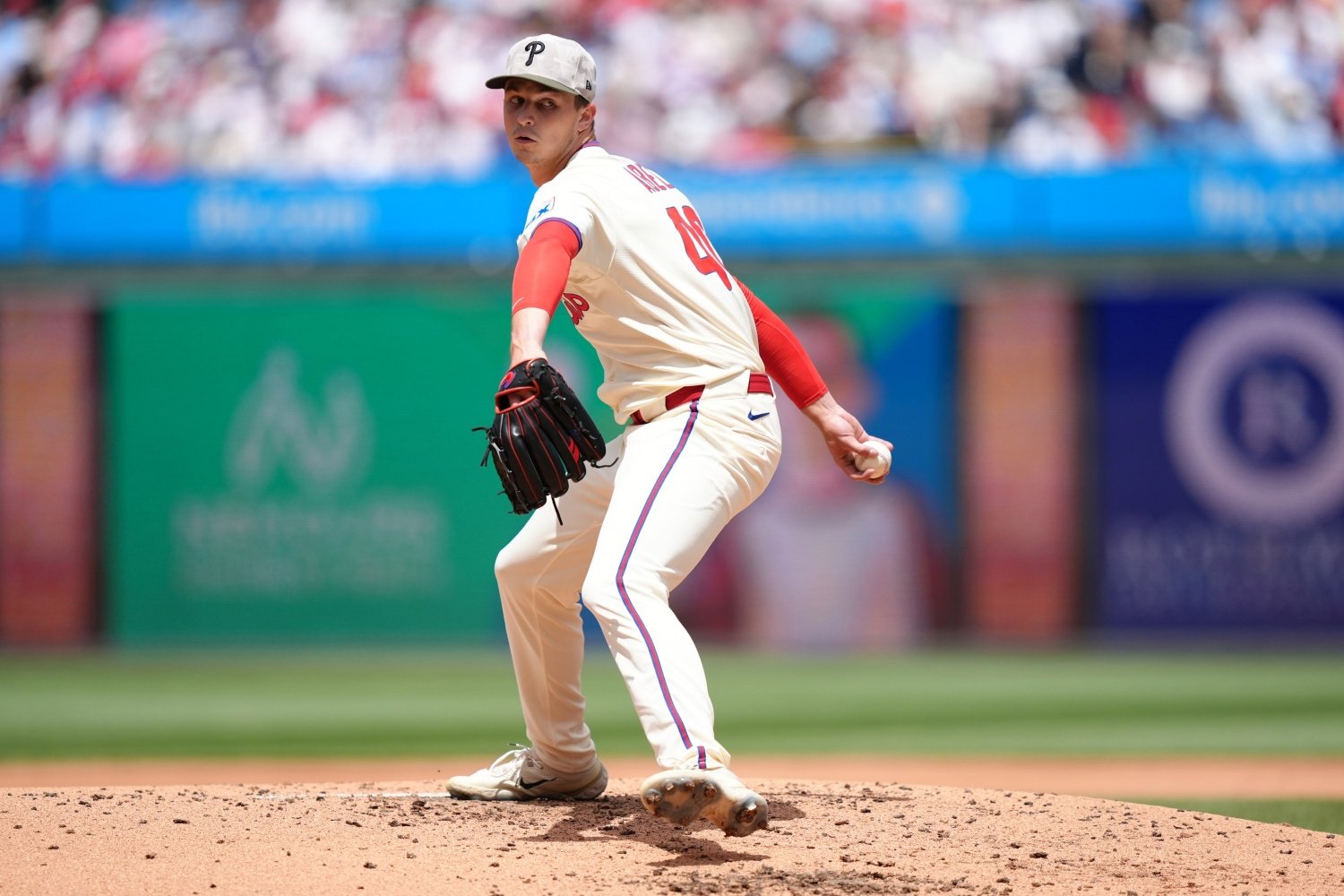 Mick Abel is a 6-foot-5 right-handed pitcher. Originally drafted 15th overall by the Phillies in the COVID-shortened 2020 MLB Draft. He’s a prospect with plenty of past hype and a fair amount of fatigue associated with him, having hit a high-water mark of being ranked the 35th-best prospect in the sport by Baseball America before the 2023 season. Let’s start with the ingredients, because they are exciting. Abel is tall, with a lean frame. It’s a good delivery for me, too, and he’s young for his level—even though it feels like he’s been around forever. There’s an established four-plus pitch mix for Abel, with excellent velocity through his arsenal, a good feel for spin, and close to seven feet of extension. Control, command, and neutralizing lefties in the majors have been the bugaboos, to date. Abel has looked like a different pitcher in Triple A in 2025. He’s logged 74 innings with a 2.31 ERA (3.55 FIP), managing a healthy 26.6% strikeout rate, and a less-healthy 10.5% walk rate, which is an improvement on 2024. The strike-throwing percentage is hovering between 63-64%; you’d like to see that increase a bit. The stuff is good, folks. It’s a fastball thrown 45% of the time that sits at 96 mph; a sinker 15% of the time that sits a tick lower; a power slider thrown 14% of the time that sits 87 mph; and an 82-mph curveball he throws around 22% of the time. There’s a changeup here, too, with negligible usage (around 4%). More to come on that. Abel had a hard time against lefties in his brief stint in the majors. He pitched 25 innings and gave up six home runs against left-handed hitters. Ouch. What might the Twins do with ingredients and productivity that hasn’t ever quite matched up? I think they’ll try to tweak the shapes of his breaking balls. It’s possible that they add a cutter to his mix, too, and work on his changeup, in service of helping him be more effective against left-handed hitters and enabling the arsenal to play more effectively together. Where would we slide Abel into Twins prospect lists? This is a little more challenging than with Eduardo Tait. It depends on how you weigh current level versus upside. For me, Abel fits in the cluster of talented arms in the Twins organization who are fringy top-100 prospects. If we assume a top five of Walker Jenkins, Emmanuel Rodriguez, Luke Keaschall, Kaelen Culpepper, Tait (in any order you like), Abel fits in the 6-8 range. I might have Connor Prielipp (currently on two top-100 lists), ahead by a nose. Abel probably gets the nod over Charlee Soto and Dasan Hill, given his prospect pedigree and proximity to the majors. There’s another lens through which we might assess Abel’s worth to the organization. The Twins have Pablo López and Joe Ryan (hopefully) leading the rotation as playoff-caliber starters. Bailey Ober is a wild card right now, so let’s set him aside. In Abel, David Festa, and Zebby Matthews, the Twins have a trio of top-100 caliber starting pitching prospects (who recently graduated or are about to). You only need one of the three to take a step forward toward being the caliber of pitcher who could start a playoff game for you. The other two fill up the back of the rotation, or, eventually, are high-leverage relievers if that doesn’t work out. While the Duran trade is tough for fans to process, I think there’s a good chance that in six years, the Twins come out on top in terms of value here (unless the Phillies win the World Series). A solid outcome for Abel would be a reliable, back-end starter, but there’s room here for much more.
 -
Image courtesy of © Kyle Ross-Imagn Images Mick Abel is a 6-foot-5 right-handed pitcher. Originally drafted 15th overall by the Phillies in the COVID-shortened 2020 MLB Draft. He’s a prospect with plenty of past hype and a fair amount of fatigue associated with him, having hit a high-water mark of being ranked the 35th-best prospect in the sport by Baseball America before the 2023 season. Let’s start with the ingredients, because they are exciting. Abel is tall, with a lean frame. It’s a good delivery for me, too, and he’s young for his level—even though it feels like he’s been around forever. There’s an established four-plus pitch mix for Abel, with excellent velocity through his arsenal, a good feel for spin, and close to seven feet of extension. Control, command, and neutralizing lefties in the majors have been the bugaboos, to date. Abel has looked like a different pitcher in Triple A in 2025. He’s logged 74 innings with a 2.31 ERA (3.55 FIP), managing a healthy 26.6% strikeout rate, and a less-healthy 10.5% walk rate, which is an improvement on 2024. The strike-throwing percentage is hovering between 63-64%; you’d like to see that increase a bit. The stuff is good, folks. It’s a fastball thrown 45% of the time that sits at 96 mph; a sinker 15% of the time that sits a tick lower; a power slider thrown 14% of the time that sits 87 mph; and an 82-mph curveball he throws around 22% of the time. There’s a changeup here, too, with negligible usage (around 4%). More to come on that. Abel had a hard time against lefties in his brief stint in the majors. He pitched 25 innings and gave up six home runs against left-handed hitters. Ouch. What might the Twins do with ingredients and productivity that hasn’t ever quite matched up? I think they’ll try to tweak the shapes of his breaking balls. It’s possible that they add a cutter to his mix, too, and work on his changeup, in service of helping him be more effective against left-handed hitters and enabling the arsenal to play more effectively together. Where would we slide Abel into Twins prospect lists? This is a little more challenging than with Eduardo Tait. It depends on how you weigh current level versus upside. For me, Abel fits in the cluster of talented arms in the Twins organization who are fringy top-100 prospects. If we assume a top five of Walker Jenkins, Emmanuel Rodriguez, Luke Keaschall, Kaelen Culpepper, Tait (in any order you like), Abel fits in the 6-8 range. I might have Connor Prielipp (currently on two top-100 lists), ahead by a nose. Abel probably gets the nod over Charlee Soto and Dasan Hill, given his prospect pedigree and proximity to the majors. There’s another lens through which we might assess Abel’s worth to the organization. The Twins have Pablo López and Joe Ryan (hopefully) leading the rotation as playoff-caliber starters. Bailey Ober is a wild card right now, so let’s set him aside. In Abel, David Festa, and Zebby Matthews, the Twins have a trio of top-100 caliber starting pitching prospects (who recently graduated or are about to). You only need one of the three to take a step forward toward being the caliber of pitcher who could start a playoff game for you. The other two fill up the back of the rotation, or, eventually, are high-leverage relievers if that doesn’t work out. While the Duran trade is tough for fans to process, I think there’s a good chance that in six years, the Twins come out on top in terms of value here (unless the Phillies win the World Series). A solid outcome for Abel would be a reliable, back-end starter, but there’s room here for much more. View full article
-
What Are Minnesota Twins Getting in Top Prospect Eduardo Tait?
Jamie Cameron posted an article in Minor Leagues
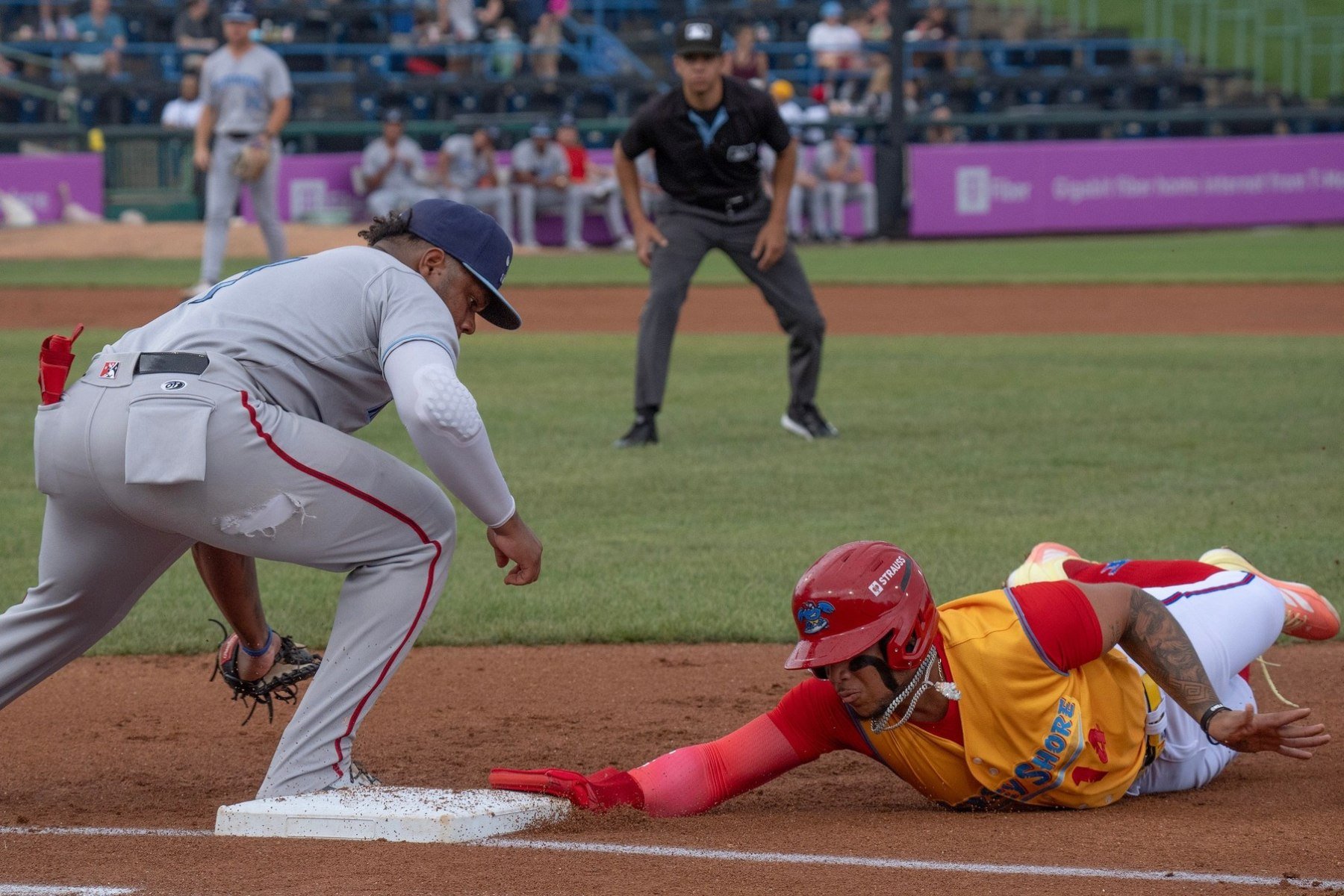 The Twins have a new global top-100 prospect. They have a new top catching prospect. On Wednesday afternoon, the Twins traded beloved closer Jhoan Duran to the Philadelphia Phillies for catcher Eduardo Tait and right-handed pitcher Mick Abel. Who is Tait? Where does he fit among Twins prospects? What are his strengths and weaknesses? Let’s dig in. Eduardo Tait (Tah-eet) is an 18-year-old, left-handed-hitting catching prospect, signed for $90,000 out of Panama in the 2023 international signing window. Tait was ranked the 50th-best prospect by Baseball America, 56th overall by MLB Pipeline, and 63rd by Just Baseball. Tait is a thick-bodied catcher who sets up in the batter’s box with an unusual, sternum-high hand set. It gives way to a sizable leg kick in his load. There’s good bat speed, quick hands and what looks like a short, semi-adjustable stroke here. There’s also serious strength and power. Tait posted some of the best exit velocities in the Florida State League, logging batted-ball speeds north of 113 mph as an 18-year-old. That’s Emmanuel Rodriguez-level age-adjusted power. What are the warts, offensively? Tait is an aggressive hitter. He’s walked just 8.3% of the time thus far in 2025. He swings aggressively (54.8%), and chases often. The Twins have shown a proclivity for leaning into offensive profiles with chase tendencies, with some success. Luke Keaschall and Kaelen Culpepper are two recent, notable examples. The rest of the offensive profile is solid. Tait has an overall contact rate approaching 80%, and despite some holes in his swing, he should get to his power plenty often, the more he plays. This should be an output with good bat-to-ball skills, above-average to plus power, and a fringe-average on-base skillset. That’s valuable in and of itself, the more so for a left-handed hitting catcher. But what of the defense? Tait has a plus arm (he nabbed over 32% of base runners in A ball). By all accounts, his receiving has improved significantly this year. You’d be safe to say that the bat is better than the glove, currently. Specifically, if Tait can move more fluidly as a backstop, he could put his physical tools to better use. He’s a good athlete, though, so there’s reason for optimism there. In 82 games across Low A and High A in 2025, he’s hitting .255/.319/.434 with 11 home runs and a 107 wRC+. He’ll be assigned to High-A Cedar Rapids. Where does Tait fit in the Twins system? Overall, I’d rank him 5th, behind Walker Jenkins, Rodriguez, Keaschall, and Culpepper. For me, that says more about my conviction on Culpepper than some kind of ding on Tait. I think there’s a plausible argument to rank him anywhere from 3rd to 6th, depending on how you value defensive positioning, upside, and proximity to the majors. Tait is a good distance from impacting the major-league team. This is a slower burn, a longer-term play than any of the four above him on my list. This is not the type of return that plays into the ‘sustainable winner’ mantra so frequently expressed by this front office. Instead, it’s the type of return that leaves you asking: ‘who’s next?'
 -
Image courtesy of © Peter Ackerman / USA TODAY NETWORK via Imagn Images The Twins have a new global top-100 prospect. They have a new top catching prospect. On Wednesday afternoon, the Twins traded beloved closer Jhoan Duran to the Philadelphia Phillies for catcher Eduardo Tait and right-handed pitcher Mick Abel. Who is Tait? Where does he fit among Twins prospects? What are his strengths and weaknesses? Let’s dig in. Eduardo Tait (Tah-eet) is an 18-year-old, left-handed-hitting catching prospect, signed for $90,000 out of Panama in the 2023 international signing window. Tait was ranked the 50th-best prospect by Baseball America, 56th overall by MLB Pipeline, and 63rd by Just Baseball. Tait is a thick-bodied catcher who sets up in the batter’s box with an unusual, sternum-high hand set. It gives way to a sizable leg kick in his load. There’s good bat speed, quick hands and what looks like a short, semi-adjustable stroke here. There’s also serious strength and power. Tait posted some of the best exit velocities in the Florida State League, logging batted-ball speeds north of 113 mph as an 18-year-old. That’s Emmanuel Rodriguez-level age-adjusted power. What are the warts, offensively? Tait is an aggressive hitter. He’s walked just 8.3% of the time thus far in 2025. He swings aggressively (54.8%), and chases often. The Twins have shown a proclivity for leaning into offensive profiles with chase tendencies, with some success. Luke Keaschall and Kaelen Culpepper are two recent, notable examples. The rest of the offensive profile is solid. Tait has an overall contact rate approaching 80%, and despite some holes in his swing, he should get to his power plenty often, the more he plays. This should be an output with good bat-to-ball skills, above-average to plus power, and a fringe-average on-base skillset. That’s valuable in and of itself, the more so for a left-handed hitting catcher. But what of the defense? Tait has a plus arm (he nabbed over 32% of base runners in A ball). By all accounts, his receiving has improved significantly this year. You’d be safe to say that the bat is better than the glove, currently. Specifically, if Tait can move more fluidly as a backstop, he could put his physical tools to better use. He’s a good athlete, though, so there’s reason for optimism there. In 82 games across Low A and High A in 2025, he’s hitting .255/.319/.434 with 11 home runs and a 107 wRC+. He’ll be assigned to High-A Cedar Rapids. Where does Tait fit in the Twins system? Overall, I’d rank him 5th, behind Walker Jenkins, Rodriguez, Keaschall, and Culpepper. For me, that says more about my conviction on Culpepper than some kind of ding on Tait. I think there’s a plausible argument to rank him anywhere from 3rd to 6th, depending on how you value defensive positioning, upside, and proximity to the majors. Tait is a good distance from impacting the major-league team. This is a slower burn, a longer-term play than any of the four above him on my list. This is not the type of return that plays into the ‘sustainable winner’ mantra so frequently expressed by this front office. Instead, it’s the type of return that leaves you asking: ‘who’s next?' View full article
-
 In episode 88 of Destination: The Show, Jeremy and Jamie hop on an emergency episode to discuss the Chris Paddack trade to the Tigers. The guys dig into the reality of accruing value via prospects and shedding salary and try to place new catching prospect Enrique Jimenez in the Twins system, speculating that he might debut at Fort Myers in short order. The guys touch on Pierson Ohl being called up to make his MLB debut against the Red Sox and what his role might be down the stretch of the season, before some reckless speculation about how many and who of the rest of the roster might be shifted before Thursday’s deadline. 0:00 Intro 4:00 Twins Trade Chris Paddack 7:50 Twins Acquire Enrique Jimenez 18:42 Pierson Ohl Called Up 28:10 Do any of the big names go? You can support the show by downloading it from wherever you get your podcasts, including iTunes and Spotify. If you enjoy the content, consider leaving us a five-star rating and review in addition to sharing or retweeting DTS-related content. You can follow us on Twitter @DTS_POD1, @Jeremynygaard, @J_D_Cameron, and @TheodoreTollef1. We’re now on Bluesky @destinationtheshow.bsky.social. You can also find full episodes and clips of our shows on our YouTube page @DestinationTheShow.
 -
Image courtesy of Thieres Rabelo In episode 88 of Destination: The Show, Jeremy and Jamie hop on an emergency episode to discuss the Chris Paddack trade to the Tigers. The guys dig into the reality of accruing value via prospects and shedding salary and try to place new catching prospect Enrique Jimenez in the Twins system, speculating that he might debut at Fort Myers in short order. The guys touch on Pierson Ohl being called up to make his MLB debut against the Red Sox and what his role might be down the stretch of the season, before some reckless speculation about how many and who of the rest of the roster might be shifted before Thursday’s deadline. 0:00 Intro 4:00 Twins Trade Chris Paddack 7:50 Twins Acquire Enrique Jimenez 18:42 Pierson Ohl Called Up 28:10 Do any of the big names go? You can support the show by downloading it from wherever you get your podcasts, including iTunes and Spotify. If you enjoy the content, consider leaving us a five-star rating and review in addition to sharing or retweeting DTS-related content. You can follow us on Twitter @DTS_POD1, @Jeremynygaard, @J_D_Cameron, and @TheodoreTollef1. We’re now on Bluesky @destinationtheshow.bsky.social. You can also find full episodes and clips of our shows on our YouTube page @DestinationTheShow. View full article
-
 In episode 87 of Destination: The Show, Jeremy and Jamie compare updated Twins top 20 prospect lists. They start by digging into the guys at the top, including injury-impacted seasons for Walker Jenkins and Emmanuel Rodriguez, and an incredible 2025 from Kaelen Culpepper (with great insights on St. Paul from Theo). The guys dig into how to position the new draftees, including Marek Houston, Riley Quick, and high upside prepster Quentin Young. Finally, in the back half of the top 20, they talk through some catching options that could eventually impact the big league roster, and who might be flying under the radar. 0:00 Intro and Housekeeping 3:11 Draft Wrap-up 5:31 Twins Draft Signings 9:59 Twins Top 20 Prospect Update 12:45 Walker Jenkins 18:15 Luke Keaschall and Emmanuel Rodriguez 28:47 Kaelen Culpepper 34:42 Connor Prielipp 37:45 Marek Houston 40:05 Charlee Soto 42:15 Dasan Hill 45:25 Riley Quick 48:39 Marco Raya 54:00 Gabriel Gonzalez 58:35 Andrew Morris 1:02:02 Kyle DeBarge 1:06:01 Brandon Winokur 1:09:58 Quentin Young 1:13:24 CJ Culpepper 1:16:24 Ricardo Olivar 1:19:45 Khadim Diaw 1:22:05 BIlly Amick 1:24:35 Jose Olivares 1:26:00 James Ellwanger 1:27:31 Danny De Andrade 1:29:05 Trade Deadline You can support the show by downloading it from wherever you get your podcasts, including iTunes and Spotify. If you enjoy the content, consider leaving us a five-star rating and review in addition to sharing or retweeting DTS-related content. You can follow us on Twitter @DTS_POD1, @Jeremynygaard, @J_D_Cameron, and @TheodoreTollef1. We’re now on Bluesky @destinationtheshow.bsky.social. You can also find full episodes and clips of our shows on our YouTube page @DestinationTheShow.
 -
Image courtesy of Thieres Rabelo In episode 87 of Destination: The Show, Jeremy and Jamie compare updated Twins top 20 prospect lists. They start by digging into the guys at the top, including injury-impacted seasons for Walker Jenkins and Emmanuel Rodriguez, and an incredible 2025 from Kaelen Culpepper (with great insights on St. Paul from Theo). The guys dig into how to position the new draftees, including Marek Houston, Riley Quick, and high upside prepster Quentin Young. Finally, in the back half of the top 20, they talk through some catching options that could eventually impact the big league roster, and who might be flying under the radar. 0:00 Intro and Housekeeping 3:11 Draft Wrap-up 5:31 Twins Draft Signings 9:59 Twins Top 20 Prospect Update 12:45 Walker Jenkins 18:15 Luke Keaschall and Emmanuel Rodriguez 28:47 Kaelen Culpepper 34:42 Connor Prielipp 37:45 Marek Houston 40:05 Charlee Soto 42:15 Dasan Hill 45:25 Riley Quick 48:39 Marco Raya 54:00 Gabriel Gonzalez 58:35 Andrew Morris 1:02:02 Kyle DeBarge 1:06:01 Brandon Winokur 1:09:58 Quentin Young 1:13:24 CJ Culpepper 1:16:24 Ricardo Olivar 1:19:45 Khadim Diaw 1:22:05 BIlly Amick 1:24:35 Jose Olivares 1:26:00 James Ellwanger 1:27:31 Danny De Andrade 1:29:05 Trade Deadline You can support the show by downloading it from wherever you get your podcasts, including iTunes and Spotify. If you enjoy the content, consider leaving us a five-star rating and review in addition to sharing or retweeting DTS-related content. You can follow us on Twitter @DTS_POD1, @Jeremynygaard, @J_D_Cameron, and @TheodoreTollef1. We’re now on Bluesky @destinationtheshow.bsky.social. You can also find full episodes and clips of our shows on our YouTube page @DestinationTheShow. View full article
-
Walker JenkinsLuke KeaschallEmmanuel RodriguezKaelen CulpepperConnor PrielippCharlee SotoDasan HillMarek HoustonRiley QuickMarco RayaAndrew MorrisGabriel GonzalezBrandon WinokurKyle DeBargeCJ CulpepperRicardo OlivarQuentin YoungBilly AmickJames EllwangerKhadim Diaw
-
Walker JenkinsLuke KeaschallEmmanuel RodriguezKaelen CulpepperConnor PrielippCharlee SotoDasan HillMarek HoustonRiley QuickMarco RayaAndrew MorrisGabriel GonzalezBrandon WinokurKyle DeBargeCJ CulpepperRicardo OlivarQuentin YoungBilly AmickJames EllwangerKhadim Diaw
-
Gabriel Gonzalez is a Great Hitter, but It Might not Matter
Jamie Cameron posted an article in Minor Leagues
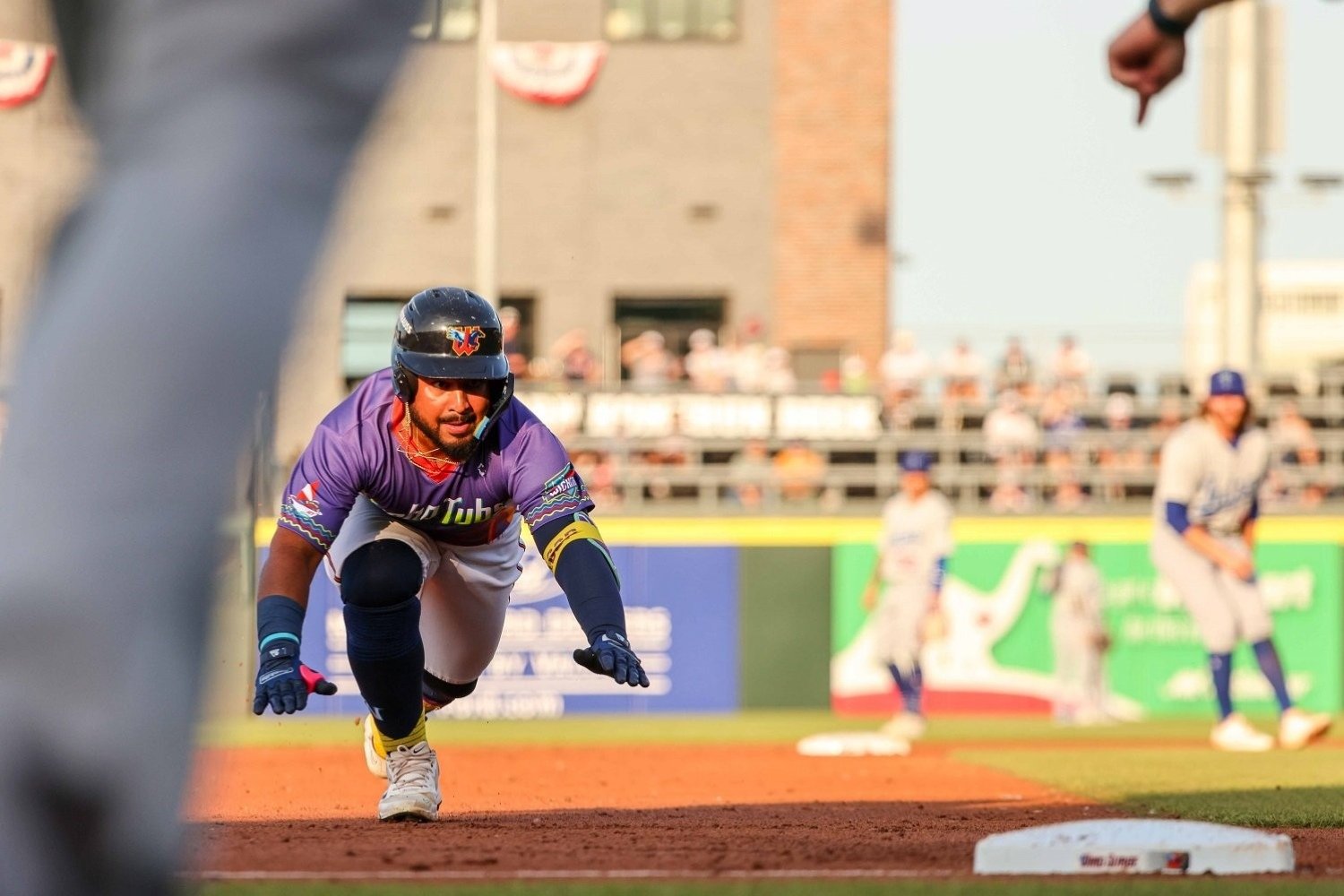 Gabriel Gonzalez is a confounding baseball player. He sits squarely at the intersection of many of my own personal prospect biases. I don’t favor this type of prospect. And yet, he’s raking. Because he’s raking (and because I lost a friendly wager), it’s time to give his performance a more thorough examination. What is he? What might he become? Gonzalez was acquired in the Jorge Polanco trade in January 2024. The Twins acquired Anthony DeSclafani, Justin Topa, Darren Bowen, and Gonzalez in return for the longtime fan favorite second baseman. Gonzalez was the headliner of the return on the prospect side for the Twins. Originally signed out of Venezuela by the Mariners, Gonzalez came to the Twins with a hyper-aggressive top-100 prospect ranking from MLB Pipeline (#79) entering the 2024 season. Gonzalez missed all of May and a chunk of June 2024 due to injury, and struggled at High A as a 19-year-old, managing a .706 OPS and a 106 wRC+. What had been touted as a potentially plus hit tool didn't look like one at that point. What a difference a year makes, eh? After managing a .907 OPS in 34 games during a second stint at Cedar Rapids, Gonzalez has kicked on in Wichita. In 47 games at Double A, he’s hitting .370/.453/.522 with two home runs (22 extra base hits), a 9.7% walk rate, a measly 11.6% strikeout rate, and a healthy 173 wRC+. Let’s dig into what Gonzalez does well. I think we can see where the plus hit tool prognostication came from. Gonzalez uses the whole field beautifully. In his emerging Double-A sample, his batted-ball events find the pull side, center of the field, and opposite side 39% of the time, 23.2% of the time, and 37.8% of the time, respectively. You can’t live out the ‘take what you’re given’ hitting adage more aptly than that. Gonzalez has also turned into a line-drive machine. It’s a rate approaching 29% at Wichita, well above his 21% mark at Cedar Rapids in 2024. There are also really good bat-to-ball skills here. His current overall contact rate of 86% is well above average. This is undeniably an impressive turnaround from Gonzalez. I think it’s fair to say he’s rediscovered some of his lost shine from 2024. So, am I prepared to admit defeat and buy Gonzalez prospect stock? Not so fast. There’s a case to be made that it’s still an extremely narrow pathway for Gonzalez as an MLB regular, for two primary reasons: not enough quality supplementary tools, and questions about his power production relative to his defensive position. At a high level, from this seat, it’s a plus arm, below-average glove, and a below-average run tool for Gonzalez. He has the arm to stick in right field, but the mobility isn’t great, and the routes and defensive actions are a bit raw. That’s not to say he can’t take steps forward, but it is to say that right now, he profiles as a below-average defensive outfielder who doesn’t run well. Next, there’s the power. Gonzalez has been a doubles machine at Double A (18 in his first 47 games). He hit 18 home runs in 116 games in Seattle’s farm system in 2023. Since then, though, he's clubbed just 11 home runs in 157 games at High A and Double A. That doesn’t clear the bar for a big-league corner outfielder. His .152 ISO would rank 46th out of 60 qualified MLB outfielders. As currently constructed, it’s fringy power. One final concern that’s worth noting for Gonzalez is his swing rate. It’s come down plenty since his DSL days, but at roughly 52%, he’s still a free swinger. There’s a narrow path to tread for aggressive hitters with good bat-to-ball skills. The potential pitfall is eroding quality of contact, the higher he climbs the ladder. How do we square all this? Simply, by saying that Gonzalez has had a tremendous 2025 season. That’s undeniable. Unless some combination of the defense and power ticks up, however, I’ll have a hard time envisioning him as a high-quality MLB regular. The profile ends up feeling a lot like that of Avisaíl García. People loved to dream on García, but in roughly 4,300 career plate appearances, he had a 100 OPS+. Then, too, García debuted in the majors at a younger age than Gonzalez's right now, and he was huge, whereas Gonzalez is a sturdy but compact 5-foot-11. For me, he fits a 'tweener profile, not quite an everyday player. He'd be better as a right-handed platoon bat. For now, all he can do is to continue hitting anything and everything thrown his way, a task he’s taken to with gusto and great success in 2025.
 -
Image courtesy of Ed Bailey, Wichita Wind Surge Gabriel Gonzalez is a confounding baseball player. He sits squarely at the intersection of many of my own personal prospect biases. I don’t favor this type of prospect. And yet, he’s raking. Because he’s raking (and because I lost a friendly wager), it’s time to give his performance a more thorough examination. What is he? What might he become? Gonzalez was acquired in the Jorge Polanco trade in January 2024. The Twins acquired Anthony DeSclafani, Justin Topa, Darren Bowen, and Gonzalez in return for the longtime fan favorite second baseman. Gonzalez was the headliner of the return on the prospect side for the Twins. Originally signed out of Venezuela by the Mariners, Gonzalez came to the Twins with a hyper-aggressive top-100 prospect ranking from MLB Pipeline (#79) entering the 2024 season. Gonzalez missed all of May and a chunk of June 2024 due to injury, and struggled at High A as a 19-year-old, managing a .706 OPS and a 106 wRC+. What had been touted as a potentially plus hit tool didn't look like one at that point. What a difference a year makes, eh? After managing a .907 OPS in 34 games during a second stint at Cedar Rapids, Gonzalez has kicked on in Wichita. In 47 games at Double A, he’s hitting .370/.453/.522 with two home runs (22 extra base hits), a 9.7% walk rate, a measly 11.6% strikeout rate, and a healthy 173 wRC+. Let’s dig into what Gonzalez does well. I think we can see where the plus hit tool prognostication came from. Gonzalez uses the whole field beautifully. In his emerging Double-A sample, his batted-ball events find the pull side, center of the field, and opposite side 39% of the time, 23.2% of the time, and 37.8% of the time, respectively. You can’t live out the ‘take what you’re given’ hitting adage more aptly than that. Gonzalez has also turned into a line-drive machine. It’s a rate approaching 29% at Wichita, well above his 21% mark at Cedar Rapids in 2024. There are also really good bat-to-ball skills here. His current overall contact rate of 86% is well above average. This is undeniably an impressive turnaround from Gonzalez. I think it’s fair to say he’s rediscovered some of his lost shine from 2024. So, am I prepared to admit defeat and buy Gonzalez prospect stock? Not so fast. There’s a case to be made that it’s still an extremely narrow pathway for Gonzalez as an MLB regular, for two primary reasons: not enough quality supplementary tools, and questions about his power production relative to his defensive position. At a high level, from this seat, it’s a plus arm, below-average glove, and a below-average run tool for Gonzalez. He has the arm to stick in right field, but the mobility isn’t great, and the routes and defensive actions are a bit raw. That’s not to say he can’t take steps forward, but it is to say that right now, he profiles as a below-average defensive outfielder who doesn’t run well. Next, there’s the power. Gonzalez has been a doubles machine at Double A (18 in his first 47 games). He hit 18 home runs in 116 games in Seattle’s farm system in 2023. Since then, though, he's clubbed just 11 home runs in 157 games at High A and Double A. That doesn’t clear the bar for a big-league corner outfielder. His .152 ISO would rank 46th out of 60 qualified MLB outfielders. As currently constructed, it’s fringy power. One final concern that’s worth noting for Gonzalez is his swing rate. It’s come down plenty since his DSL days, but at roughly 52%, he’s still a free swinger. There’s a narrow path to tread for aggressive hitters with good bat-to-ball skills. The potential pitfall is eroding quality of contact, the higher he climbs the ladder. How do we square all this? Simply, by saying that Gonzalez has had a tremendous 2025 season. That’s undeniable. Unless some combination of the defense and power ticks up, however, I’ll have a hard time envisioning him as a high-quality MLB regular. The profile ends up feeling a lot like that of Avisaíl García. People loved to dream on García, but in roughly 4,300 career plate appearances, he had a 100 OPS+. Then, too, García debuted in the majors at a younger age than Gonzalez's right now, and he was huge, whereas Gonzalez is a sturdy but compact 5-foot-11. For me, he fits a 'tweener profile, not quite an everyday player. He'd be better as a right-handed platoon bat. For now, all he can do is to continue hitting anything and everything thrown his way, a task he’s taken to with gusto and great success in 2025. View full article