



Greggory Masterson
-
Posts
819 -
Joined
-
Last visited
-
Days Won
2
Content Type
Profiles
News
Minnesota Twins Videos
2026 Minnesota Twins Top Prospects Ranking
2022 Minnesota Twins Draft Picks
Minnesota Twins Free Agent & Trade Rumors, Notes, & Tidbits
Guides & Resources
2023 Minnesota Twins Draft Picks
The Minnesota Twins Players Project
2024 Minnesota Twins Draft Picks
2025 Minnesota Twins Draft Pick Tracker
2026 Minnesota Twins Draft Tracker: Picks & Bonuses
Forums
Blogs
Events
Store
Downloads
Gallery
Everything posted by Greggory Masterson
-
 I’ve been saying the Twins don’t have enough 1st round picks from the 2020 draft
- 40 replies
-
- 2
-

-

-
- orlando arcia
- ryan kreidler
- (and 2 more)
-
Image courtesy of L to R: Orlando Arcia (© Jonah Hinebaugh/Naples Daily News/USA Today Network-Florida / USA TODAY NETWORK via Imagn Images), Tristan Gray (© Mike Watters-Imagn Images), Ryan Kreidler (© Nathan Ray Seebeck-Imagn Images) It seems that in recent years, the Twins have had very few classic roster battles in spring training. Part of this decline is due to the fact that spring training performance isn’t taken as seriously as it once was, but the Twins have also had a pretty set roster coming into camp for a few years. The “battles” on the offensive side tend to be “which of this pool of guys could be the 13th man on the bench,” which came more down to preference between very different roles. For instance, would Mickey Gasper’s bat or DaShawn Keirsey’s speed be more useful? (Because look, not all of the questions had a right answer.) This year, though, the Twins have a specific need: backup shortstop. After an offseason of collecting fringe major-league talent (and letting some of it, like Vidal Bruján, pass right through without ever actually donning the uniform), they have three options to fill the spot. Each has a unique profile, so it’s unclear that their talent level will be the deciding factor. However, this is one of the battles in camp least adulterated by outside factors like minor-league options or deferring to seniority. Orlando Arcia: The Veteran Arcia is in Twins camp on a minor-league deal worth $1.25 million if he makes the team out of camp. He has an opt-out clause, so if the Twins don’t add him to the 40-man roster, he may be able to re-enter free agency. Just two seasons removed from an All-Star nod, Arcia is the biggest name of the bunch. He spent a couple of seasons in Atlanta, hitting fine (100 OPS+ between 2022 and 2023), but his offense has fallen off a cliff over the last two seasons (.599 OPS, 64 OPS+ between 2024 and 2025). His peak was league-average, so there’s not much room to fall offensively. Once lauded for his defense, Arcia has slipped a bit upon entering his 30s. Stepping in for Dansby Swanson in Atlanta, he registered 7 outs above average (OAA) at shortstop over 2,591 innings between 2023 and 2024, but clocked in at -2 OAA in 173 innings at shortstop in 2025. He was still a plus defender at second base (3 OAA in 115 innings) and third base (1 OAA in 115 innings), but he’s not getting any younger, and his primary function would be playing shortstop. Arcia has played mostly shortstop and second base this spring and has put together a solid enough spring, with a .780 OPS. Obligatory “spring training stats don’t mean anything,” but if he’s looking good enough at shortstop, he might have the inside track on the spot, since the Twins can keep the other two choices. They both have minor-league options. Nothing about Arcia's batted-ball data suggests a significant change in who he is, though he's made more contact this spring than he has in recent big-league seasons. Ryan Kreidler: The Glove Kreidler was claimed late in 2025 from Pittsburgh and has lasted the entire offseason on the 40-man roster. The 28-year-old is getting big-league opportunities for one reason: he can pick it at short. He's probably the best shortstop defender in the organization who’s not named Marek Houston. For a team with a starting shortstop (Brooks Lee) who has major defensive questions, Kreidler can provide some stability. He’s registered 2 OAA at the position in 253 big-league innings. He can also play a solid center field, league-average by OAA at 0 in 117 innings there last season. The eye test matches the stats, though he lacks the raw speed you look for in a center fielder. The issue? The dude has never hit. In his best season, 2022, he slashed .178/.244/.233, for a 39 OPS+, where 100 is average and higher is better. This is saying he was less than half as productive as an average hitter—in his best year. Funny enough, he was worth positive WAR by both Fangraphs and Baseball Reference for that season, and would have been a 1-2 WAR player if given 300 plate appearances. That might tell you something about his defense. I guess it might also tell you something about WAR's utility in edge cases. He’s only got 211 MLB plate appearances in his career, and if he can hit even a little, he could be an adequate bench player who can play both shortstop and center field when needed. But it’s difficult to see him mustering even 2024-2025 Arcia-level offense at this point in his career. He’s played all three infield positions (other than first base) and both center and right field this spring, but he’s only got a .469 OPS in 30 (meaningless) spring training plate appearances. He's making slightly better and more frequent contact than has been his wont, but there hasn't been a breakout or visible overhaul. Tristan Gray: The Hitter Now, “The Hitter” might be overselling it a bit with Gray, but compared to the other two options, hitting is his defining trait. Gray was acquired for minor-league catcher Nate Baez this winter, and he’s stuck around on the 40-man roster, like Kreidler, indicating that the Twins have some lasting interest in him. Gray turns 30 this season, and he’s registered 122 plate appearances in his three-year MLB career between Tampa Bay, Miami, and Oakland. He’s also been in the Pirates, White Sox, and Red Sox organizations. He slashed .231/.282/.410 last season, and his OPS was just 9% below league average. He plays all four infield positions. He’s played 80 or fewer big-league innings at each infield position, but he’s been worth 0 OAA at first, 0 OAA at second, -2 OAA at third, and 1 OAA at short. I’m listing these for consistency in this writeup. The sample is too small for the stats to be meaningful. But the scouting report suggests that Gray could be serviceable at shortstop—not standout by any means, but potentially serviceable. One knock against Gray is that he’s left-handed, which adds another lefty to a roster crowded with lefties. However, the other infield positions are currently manned by Luke Keaschall and Royce Lewis, which would give Gray opportunities to give them days off against righties in addition to his normal days backing up Lee. He’s split his time evenly between second, third, and short this spring. If the Twins think he can hit a little and play a decent enough shortstop, he might be a better fit than the light-hitting options. And here’s your meaningless spring training stat: .648 OPS. He's swung and missed disturbingly often for Grapefruit League action and isn't hitting the ball especially hard, but he has plus bat speed, which the other two can't say. The Verdict: I Don’t Know Funny enough, at the time of writing, all three have exactly five appearances at shortstop this spring. I could see it going any way. I think I’d say 1) Kreidler, 2) Arcia, 3) Gray, but I could also see a world where Gray makes the team alongside one of the other two, due to injuries. In less than a week, we'll know for sure. View full article
-
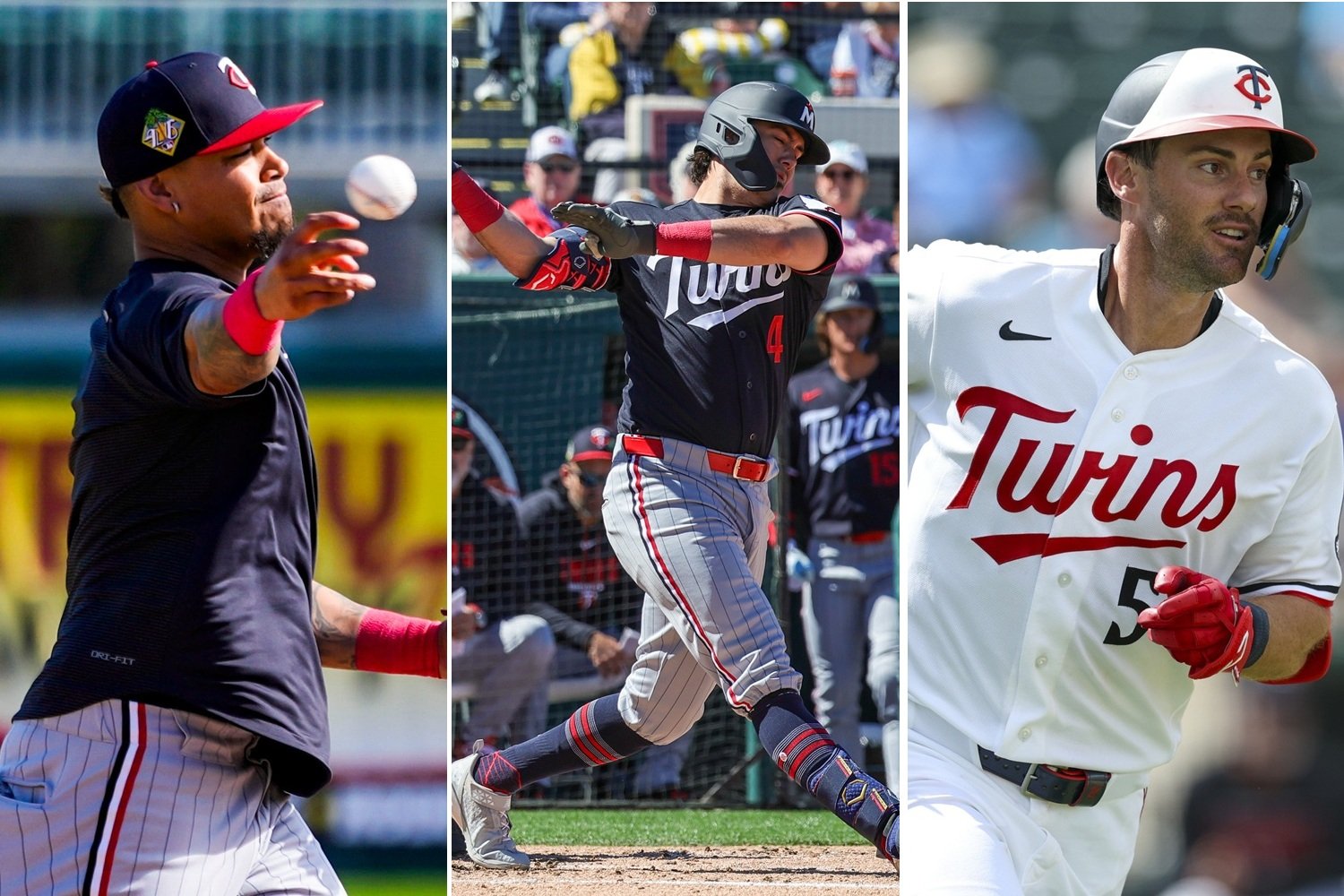 It seems that in recent years, the Twins have had very few classic roster battles in spring training. Part of this decline is due to the fact that spring training performance isn’t taken as seriously as it once was, but the Twins have also had a pretty set roster coming into camp for a few years. The “battles” on the offensive side tend to be “which of this pool of guys could be the 13th man on the bench,” which came more down to preference between very different roles. For instance, would Mickey Gasper’s bat or DaShawn Keirsey’s speed be more useful? (Because look, not all of the questions had a right answer.) This year, though, the Twins have a specific need: backup shortstop. After an offseason of collecting fringe major-league talent (and letting some of it, like Vidal Bruján, pass right through without ever actually donning the uniform), they have three options to fill the spot. Each has a unique profile, so it’s unclear that their talent level will be the deciding factor. However, this is one of the battles in camp least adulterated by outside factors like minor-league options or deferring to seniority. Orlando Arcia: The Veteran Arcia is in Twins camp on a minor-league deal worth $1.25 million if he makes the team out of camp. He has an opt-out clause, so if the Twins don’t add him to the 40-man roster, he may be able to re-enter free agency. Just two seasons removed from an All-Star nod, Arcia is the biggest name of the bunch. He spent a couple of seasons in Atlanta, hitting fine (100 OPS+ between 2022 and 2023), but his offense has fallen off a cliff over the last two seasons (.599 OPS, 64 OPS+ between 2024 and 2025). His peak was league-average, so there’s not much room to fall offensively. Once lauded for his defense, Arcia has slipped a bit upon entering his 30s. Stepping in for Dansby Swanson in Atlanta, he registered 7 outs above average (OAA) at shortstop over 2,591 innings between 2023 and 2024, but clocked in at -2 OAA in 173 innings at shortstop in 2025. He was still a plus defender at second base (3 OAA in 115 innings) and third base (1 OAA in 115 innings), but he’s not getting any younger, and his primary function would be playing shortstop. Arcia has played mostly shortstop and second base this spring and has put together a solid enough spring, with a .780 OPS. Obligatory “spring training stats don’t mean anything,” but if he’s looking good enough at shortstop, he might have the inside track on the spot, since the Twins can keep the other two choices. They both have minor-league options. Nothing about Arcia's batted-ball data suggests a significant change in who he is, though he's made more contact this spring than he has in recent big-league seasons. Ryan Kreidler: The Glove Kreidler was claimed late in 2025 from Pittsburgh and has lasted the entire offseason on the 40-man roster. The 28-year-old is getting big-league opportunities for one reason: he can pick it at short. He's probably the best shortstop defender in the organization who’s not named Marek Houston. For a team with a starting shortstop (Brooks Lee) who has major defensive questions, Kreidler can provide some stability. He’s registered 2 OAA at the position in 253 big-league innings. He can also play a solid center field, league-average by OAA at 0 in 117 innings there last season. The eye test matches the stats, though he lacks the raw speed you look for in a center fielder. The issue? The dude has never hit. In his best season, 2022, he slashed .178/.244/.233, for a 39 OPS+, where 100 is average and higher is better. This is saying he was less than half as productive as an average hitter—in his best year. Funny enough, he was worth positive WAR by both Fangraphs and Baseball Reference for that season, and would have been a 1-2 WAR player if given 300 plate appearances. That might tell you something about his defense. I guess it might also tell you something about WAR's utility in edge cases. He’s only got 211 MLB plate appearances in his career, and if he can hit even a little, he could be an adequate bench player who can play both shortstop and center field when needed. But it’s difficult to see him mustering even 2024-2025 Arcia-level offense at this point in his career. He’s played all three infield positions (other than first base) and both center and right field this spring, but he’s only got a .469 OPS in 30 (meaningless) spring training plate appearances. He's making slightly better and more frequent contact than has been his wont, but there hasn't been a breakout or visible overhaul. Tristan Gray: The Hitter Now, “The Hitter” might be overselling it a bit with Gray, but compared to the other two options, hitting is his defining trait. Gray was acquired for minor-league catcher Nate Baez this winter, and he’s stuck around on the 40-man roster, like Kreidler, indicating that the Twins have some lasting interest in him. Gray turns 30 this season, and he’s registered 122 plate appearances in his three-year MLB career between Tampa Bay, Miami, and Oakland. He’s also been in the Pirates, White Sox, and Red Sox organizations. He slashed .231/.282/.410 last season, and his OPS was just 9% below league average. He plays all four infield positions. He’s played 80 or fewer big-league innings at each infield position, but he’s been worth 0 OAA at first, 0 OAA at second, -2 OAA at third, and 1 OAA at short. I’m listing these for consistency in this writeup. The sample is too small for the stats to be meaningful. But the scouting report suggests that Gray could be serviceable at shortstop—not standout by any means, but potentially serviceable. One knock against Gray is that he’s left-handed, which adds another lefty to a roster crowded with lefties. However, the other infield positions are currently manned by Luke Keaschall and Royce Lewis, which would give Gray opportunities to give them days off against righties in addition to his normal days backing up Lee. He’s split his time evenly between second, third, and short this spring. If the Twins think he can hit a little and play a decent enough shortstop, he might be a better fit than the light-hitting options. And here’s your meaningless spring training stat: .648 OPS. He's swung and missed disturbingly often for Grapefruit League action and isn't hitting the ball especially hard, but he has plus bat speed, which the other two can't say. The Verdict: I Don’t Know Funny enough, at the time of writing, all three have exactly five appearances at shortstop this spring. I could see it going any way. I think I’d say 1) Kreidler, 2) Arcia, 3) Gray, but I could also see a world where Gray makes the team alongside one of the other two, due to injuries. In less than a week, we'll know for sure.
- 40 comments
-
- 6
-
-
- orlando arcia
- ryan kreidler
- (and 2 more)
-
Please respect Kody Clemens’s right field appearance (he and Kreidler switched spots halfway through Kreidler’s right field start)
-
1) Walker Jenkins--will probably be in the majors this year if healthy 2) Kaelen Culpepper--may get a cup of coffee this season, extremely likely to make the bigs in the next 2 years 3) Emmanuel Rodriguez--will be in the majors this year if healthy (and may be early in the season) 7) Gabriel Gonzalez--likely to get a cup of coffee this season 9) Marek Houston--currently at the same level as Tait, but will almost assuredly appear in the big leagues at least once because of his glove Those are the other hitters in the top 10. It would be a surprise if any of those 5 never make it to the bigs. Tait is a 19-year-old catcher. He either needs to hit extremely well, develop defensively, or both to make the majors. He's on track to do so, but it would not be surprising in the least to see a teenage catcher falter. Even one who is well ahead of schedule. We just saw it happen to Diego Cartaya, who was more highly regarded than Tait. Surprising? No. Disappointing? Yes. Such is the way with teenage catchers. If we expand to TD's top 20, Hendry Mendez (17) is clearly more likely, because he's already on the 40. Tait fits in with Quentin Young (14) and Brandon Winokur (13), two young toolsy prospects who might be All-Stars and might never have success even at AAA. That could definitely happen with Tait. He's not on lists for his floor; he's on them for his ceiling. His ceiling is (if I were to hazard a guess) only behind Jenkins and Rodriguez. I'd probably put Tait in front of Khadim Diaw (19), but even with Kyle DeBarge (16), I hesitate to say Tait is more likely, because DeBarge could sneak in as a reserve infielder at some point.
-
I think this is a very important point. Obviously we’d all like for him to excel, but at his age, it’s not the end of the world if he doesn’t take another big step this season. He needs to eventually, but especially with catchers, you have to be patient. Even if he spends the whole season at High-A, he’s still going to be a 20-year-old at High-A playing against guys 3 years older than him. hopefully he does better than that, though.
-
I think it’s safe to say that TD likes Tait, and I had him at either 4 or 5 on my personal list. There’s a ton to get excited about with him. But it’d be disingenuous to ignore the potential pitfalls that could keep him from ever making the majors. Diego Cartaya was released by the Twins last season after they basically got him for free, and he was an even more heralded teenage catcher than Tait. It’s important to keep it in perspective.
-
Funny, I thought I erred on the side of wearing rose tinted glasses.
-
Image courtesy of Malamut Photography Acquired from the Phillies at the 2025 trade deadline, Eduardo Tait was the main piece in return for Jhoan Duran, alongside pitcher Mick Abel. Tait immediately became the Twins’ premier catching prospect, and he is a consensus Top 100 prospect league wide. That being said, he’s the most likely of Twins Daily’s top prospects list to never register an MLB plate appearance. The low-floor, high-ceiling teenager who is already at High-A has a long way to go before he dons a Twins uniform, but his potential is something that the Twins and their fans are salivating over. Eduardo Tait Age: 19 (DOB: 08/27/2006) Bats/Throws: L/R 2025 Stats (Single-A, High-A): 486 PA, .253/.311/.427, 32 2B, 1 3B, 14 HR, 36 BB, 99 SO ETA: 2029 2025 Ranking: NR National Top 100 Rankings BP: 54 | MLB: 65 | ATH: 93 | BA: 93 | ESPN: 38 Tait was signed out of Panama as a 16-year-old in 2023 and immediately began mashing in the Dominican Summer League, sporting a .917 OPS. He earned a promotion to Single-A Clearwater in 2024 as a 17-year-old, four years younger than the average player. By age 18, he was already on Philadelphia’s High-A Jersey Shore, while his high-school-aged peers stateside were only getting drafted, and he was selected for the 2025 Futures Game. His numbers at both levels of Class A have not been standout, merely clocking in around league-average across the two leagues. But he was among the youngest players in either Class-A league, so league-average hitting, especially from a catcher, is noteworthy. What to Like Tait is a catcher with huge raw power potential, with scouts assigning a 60- or 70-grade rating to his profile. Catchers are among the weakest-hitting players across baseball, and to have a middle-of-the-order bat playing the catching position is a boon to any team. He popped 14 home runs and 32 doubles in 486 plate appearances last year in his age-18 season, showing great promise. He has a sturdy build, and scouts question how much more muscle he can add to his already-developed frame, so increased power is more likely to come from swing improvements than adding more muscle as he ages, but his power potential is legit. His exit velocities and swing speed are encouraging. He’s also quite pull-heavy, setting himself up for good in-game power as he continues to develop. Tait also has good bat-to-ball skills, a trait that is uncommon for sluggers, especially young sluggers. In 2025, he posted a 20% strikeout rate, which undersells his ability to make contact given his plate discipline deficiencies (to be discussed later). He can put the ball in play very well, and if he can combine that skill with plus or plus-plus power, the Twins could see some excellent results in the big leagues, even if he is forced to move off catcher. As a catcher, Tait’s calling card is his arm strength. His pop time is around 1.9 seconds, and he threw out 33% of base stealers at Single-A. He needs to clean up his accuracy on throws to best limit base stealers, but his raw strength is encouraging. His receiving is believed to have league-average potential by the time he’s done developing, which, when paired with his bat and arm strength, can be enough to justify keeping him at catcher, though he won’t be winning any Gold Gloves. What to Work On As stated, Tait is the least likely of the names on Twins Daily’s list to make the major leagues, in part because of his youth and in part because he has some significant holes in his profile. Although there is excitement about his bat as a catcher, the bar for offense rises if Tait is unable to stick at the position. Given his frame and lack of speed, Tait’s only other positional homes are first base and designated hitter. And Tait’s outlook as a catcher defensively is indeed in question. Although he has raw arm strength, his skills as a receiver and blocker are in question. He has improved as a receiver, but he still has major deficiencies in keeping the ball in front of him, and scouts question whether he will have enough athleticism to consistently block pitches in the dirt or move laterally. He still has the potential bat to be a good first baseman or DH, but his ceiling as a player is significantly lower away from the catching position. Tait’s biggest weakness at the plate is his discipline. Put succinctly, he swings at everything. He has the bat-to-ball skills to get to nearly anything, but his hit tool is greatly reduced by his decision-making. This has been more pronounced since reaching High-A, as he had only a 4% walk rate. This lack of plate discipline also contributes to his batting average, as he’s swinging at less-than-optimal pitches to hit, especially early in counts. He’ll probably never have the best eye at the plate, but if he can reel in his swing-happy approach a bit, combined with his bat-to-ball skills and power, he could be dangerous. What to Look For in 2026 Tait will likely begin 2026 at High-A Cedar Rapids, though it’s unclear whether the Twins will be as aggressive moving him up through the system as Philadelphia was. Tait needs to make strides as a receiver and blocker, and catcher development is notoriously difficult to predict. Offensively, success would include moving from a league-average hitter for the level to a plus hitter. The Twins have time for the 19-year-old to develop, and it’s important for him to do better than just holding his own. The major step he needs to take offensively is swinging less. Watch for him to be making better swing decisions, which should be reflected in his batting average and on-base percentage. If he cleans up his approach at the plate, watch out. View full article
-
Twins Daily 2026 Top Prospects: #4 Eduardo Tait
Greggory Masterson posted an article in Minor Leagues
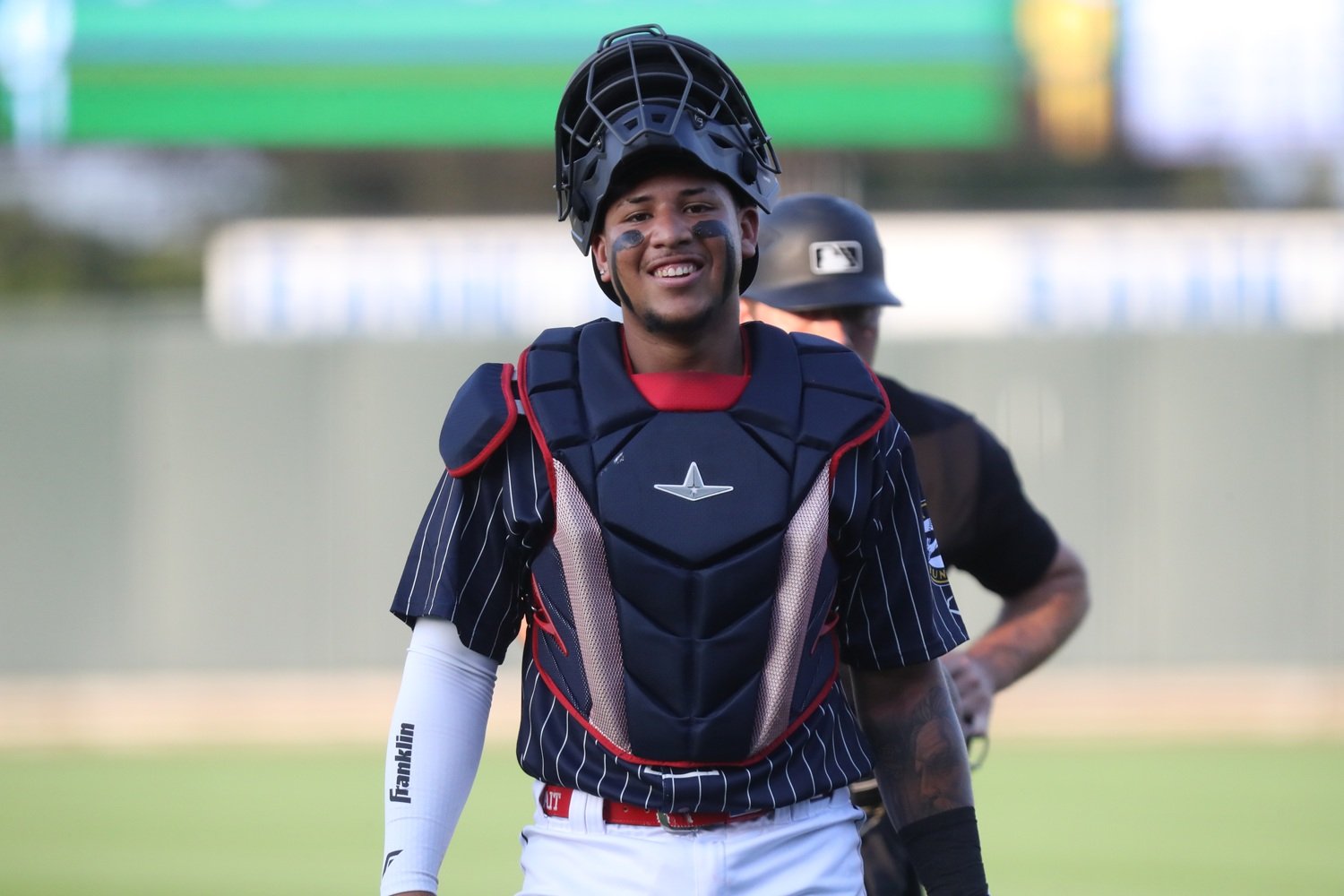 Acquired from the Phillies at the 2025 trade deadline, Eduardo Tait was the main piece in return for Jhoan Duran, alongside pitcher Mick Abel. Tait immediately became the Twins’ premier catching prospect, and he is a consensus Top 100 prospect league wide. That being said, he’s the most likely of Twins Daily’s top prospects list to never register an MLB plate appearance. The low-floor, high-ceiling teenager who is already at High-A has a long way to go before he dons a Twins uniform, but his potential is something that the Twins and their fans are salivating over. Eduardo Tait Age: 19 (DOB: 08/27/2006) Bats/Throws: L/R 2025 Stats (Single-A, High-A): 486 PA, .253/.311/.427, 32 2B, 1 3B, 14 HR, 36 BB, 99 SO ETA: 2029 2025 Ranking: NR National Top 100 Rankings BP: 54 | MLB: 65 | ATH: 93 | BA: 93 | ESPN: 38 Tait was signed out of Panama as a 16-year-old in 2023 and immediately began mashing in the Dominican Summer League, sporting a .917 OPS. He earned a promotion to Single-A Clearwater in 2024 as a 17-year-old, four years younger than the average player. By age 18, he was already on Philadelphia’s High-A Jersey Shore, while his high-school-aged peers stateside were only getting drafted, and he was selected for the 2025 Futures Game. His numbers at both levels of Class A have not been standout, merely clocking in around league-average across the two leagues. But he was among the youngest players in either Class-A league, so league-average hitting, especially from a catcher, is noteworthy. What to Like Tait is a catcher with huge raw power potential, with scouts assigning a 60- or 70-grade rating to his profile. Catchers are among the weakest-hitting players across baseball, and to have a middle-of-the-order bat playing the catching position is a boon to any team. He popped 14 home runs and 32 doubles in 486 plate appearances last year in his age-18 season, showing great promise. He has a sturdy build, and scouts question how much more muscle he can add to his already-developed frame, so increased power is more likely to come from swing improvements than adding more muscle as he ages, but his power potential is legit. His exit velocities and swing speed are encouraging. He’s also quite pull-heavy, setting himself up for good in-game power as he continues to develop. Tait also has good bat-to-ball skills, a trait that is uncommon for sluggers, especially young sluggers. In 2025, he posted a 20% strikeout rate, which undersells his ability to make contact given his plate discipline deficiencies (to be discussed later). He can put the ball in play very well, and if he can combine that skill with plus or plus-plus power, the Twins could see some excellent results in the big leagues, even if he is forced to move off catcher. As a catcher, Tait’s calling card is his arm strength. His pop time is around 1.9 seconds, and he threw out 33% of base stealers at Single-A. He needs to clean up his accuracy on throws to best limit base stealers, but his raw strength is encouraging. His receiving is believed to have league-average potential by the time he’s done developing, which, when paired with his bat and arm strength, can be enough to justify keeping him at catcher, though he won’t be winning any Gold Gloves. What to Work On As stated, Tait is the least likely of the names on Twins Daily’s list to make the major leagues, in part because of his youth and in part because he has some significant holes in his profile. Although there is excitement about his bat as a catcher, the bar for offense rises if Tait is unable to stick at the position. Given his frame and lack of speed, Tait’s only other positional homes are first base and designated hitter. And Tait’s outlook as a catcher defensively is indeed in question. Although he has raw arm strength, his skills as a receiver and blocker are in question. He has improved as a receiver, but he still has major deficiencies in keeping the ball in front of him, and scouts question whether he will have enough athleticism to consistently block pitches in the dirt or move laterally. He still has the potential bat to be a good first baseman or DH, but his ceiling as a player is significantly lower away from the catching position. Tait’s biggest weakness at the plate is his discipline. Put succinctly, he swings at everything. He has the bat-to-ball skills to get to nearly anything, but his hit tool is greatly reduced by his decision-making. This has been more pronounced since reaching High-A, as he had only a 4% walk rate. This lack of plate discipline also contributes to his batting average, as he’s swinging at less-than-optimal pitches to hit, especially early in counts. He’ll probably never have the best eye at the plate, but if he can reel in his swing-happy approach a bit, combined with his bat-to-ball skills and power, he could be dangerous. What to Look For in 2026 Tait will likely begin 2026 at High-A Cedar Rapids, though it’s unclear whether the Twins will be as aggressive moving him up through the system as Philadelphia was. Tait needs to make strides as a receiver and blocker, and catcher development is notoriously difficult to predict. Offensively, success would include moving from a league-average hitter for the level to a plus hitter. The Twins have time for the 19-year-old to develop, and it’s important for him to do better than just holding his own. The major step he needs to take offensively is swinging less. Watch for him to be making better swing decisions, which should be reflected in his batting average and on-base percentage. If he cleans up his approach at the plate, watch out.
 -
This is feeling weirdly personal, so I'm going to respond and then let it be. Trevor Larnach is a solid piece. He's probably been a league-average or slightly below-average option in left field or at DH, but starting-caliber. In many other permutations of the Twins, he'd be pencilled into a role without discussion. But this season, they have many left field options (Martin, Outman, Roden, Rodriguez, potentially Gonzalez and Jenkins) and have Wallner entrenched in right. They also have a few DH options (Bell, Caratini). There's a lot of redundancy on this team. Even waiving Outman doesn't clear up the picture. And so there have been a lot of questions about how to clear up the roster construction, and it often comes down to moving Larnach to make room for Roden, Rodriguez, Martin, etc. That's not lynching him. If you've concluded the smart move is to trade Larnach, you have to find a team where he fits, which is limited. If he's a low-end starting player, most other teams have someone better in that role. The Braves losing their DH/LF presents a possible trade partner. Some of the "cheap shots" you've highlighted are just laying out the scene. It's worth asking whether the Braves would be interested in a player if they already have a player in camp who could be seen as an equivalent hitter. It's also worth noting that Larnach's return probably wouldn't be great, because there are a lot of players in the league who would qualify as a low-end but starting-caliber DH. It'd be disingenuous for me to say "The Braves would certainly want Larnach" or "Larnach could probably fetch a top-10 organizational prospect." A low-end prospect or a middle reliever is probably what he would fetch, if the Braves were interested. And it's not disrespectful to say that the 4.475M Larnach is getting this year could have been better used elsewhere. The team has a half-dozen left fielders and big question marks in the bullpen. Spending 4-5% of the team's budget on a right-handed reliever seems to be a better use of that money than on another redundant left fielder--even if that left fielder is marginally better than the other options. But at this point in the offseason, the money really isn't a big concern, because free agency has dried up. Acknowledging that isn't an insult.
-
Can I ask why you see this as a cheap shot, and against whom? Because that wasn’t my intention.
- 30 replies
-
- 2
-
-
- trevor larnach
- alan roden
- (and 3 more)
-
Image courtesy of © Jordan Godfree-Imagn Images On Tuesday morning, Jeff Passan of ESPN announced that Atlanta outfielder Jurickson Profar has tested positive for a performance-enhancing drug (PEDs) for the second time in two seasons. After serving an 80-game suspension in 2025 for failing a PED test, Profar’s second suspension would keep him out for the entirety of the 2026 season, including the playoffs. The suspension is not yet official; the players' union intends to file a grievance on the veteran's behalf. In all likelihood, though, the Braves need to find a replacement for Profar, who was in line to take the bulk of the team’s DH opportunities in 2026 after the offseason acquisition of left fielder Mike Yastrzemski. Unfortunately for the Braves, options are limited at this point in the offseason. The free agent pool is nearly depleted: Max Kepler will be serving an 80-game suspension for a failed PED test of his own. Tommy Pham and Andrew McCutchen are in their late 30s and best-suited for the short side of a platoon. Other options include Jesse Winker or (if the team is open to a DH-only veteran of lesser note) Donovan Solano and Rowdy Tellez. The Braves have Dominic Smith in camp already, a lefty first baseman and non-roster invitee with nearly seven years of MLB service time. If the season started today, Smith—who had a 114 OPS+ across 225 plate appearances in 2025—would likely be the club’s Opening Day designated hitter. However, 2025 was the first season since 2020 in which Smith had an OPS+ over 100. Beyond that, he has some experience in the outfield, but he should not be played there except in emergencies. Atlanta could be interested in bringing in another outfielder, which is where Minnesota comes into the discussion. The Twins have a bit of a logjam in their corner outfield spots, with Matt Wallner, Trevor Larnach, James Outman, Alan Roden, Austin Martin, and Emmanuel Rodriguez. Except for Wallner, none of the names listed have shown themselves as a clear choice for one of the spots. At present, Larnach and Outman seem penciled into Opening Day jobs, much to the consternation of Twins fans who would prefer seeing Roden patrolling left field. Roden, acquired as the second piece in the trade that sent Louis Varland to Toronto at the 2025 trade deadline, is a superior defender to Larnach and is not a young prospect. Rodriguez is having a good camp, and his time in the major leagues may be coming soon as well, which raises questions about Larnach’s future. Many have questioned the decision to both tender Larnach a contract this winter and open the season with him on the roster. The team has a surplus of corner outfield options and is running a lower payroll than they have in a decade. Larnach’s modest $4.475-million contract takes up a notable portion of the team’s current payroll; that money could have been better spent elsewhere. The Braves losing a left fielder/DH presents an opportunity for the Twins to offload Larnach and create playing time for younger outfielders. It would also free up time at DH for first baseman Josh Bell, who has a poor reputation as a defender. But would the Braves be interested? Again, Smith is already in camp, and he had a better slash line than Larnach, albeit in less than half of the plate appearances. Larnach was right around average overall, as opposed to Smith, who was 14% better than an average hitter in his limited opportunities. The two hitters had roughly similar splits against right-handed pitchers, though, with Smith being 15% better than an average hitter, as compared to Larnach’s 9% better. In Profar, Atlanta is staring down the possibility of replacing a guy who hits well against both lefties and righties. The Braves hadn't planned to platoon Profar, and it’s unclear who on the roster would face lefties if the club elected to bring in a player who needs to be platooned, as both Larnach and Smith do. This is especially noteworthy, because Atlanta will also (probably) platoon the lefty-batting Yastrzemski. However, the club’s options are limited, and Atlanta’s head of baseball operations, Alex Anthopoulos, has been known to jump on opportunities to maintain competitiveness. In 2021, he made moves to pick up four outfielders in the 20 days after losing Ronald Acuña Jr. for the season—Joc Pederson, Jorge Soler, Eddie Rosario, and Adam Duvall. That team would go on to win the World Series a few months later, in large part because of that quartet of outfielders. Even if there's a trade for Larnach on the horizon, it’s unlikely that the Twins will net much in return—perhaps a middle reliever like Joel Payamps (who is making about half of what Larnach is this season), or a low-level prospect. At this point in the offseason, the savings on offloading Larnach don’t have much effect; the options for reallocating the salary are limited. The objective would probably be to free up space for the other lefty corner outfielders behind him while getting a little—likely negligible—player value in return. But, I ask you anyway, because that's what we do here: What does this mean for Trevor Larnach? View full article
-
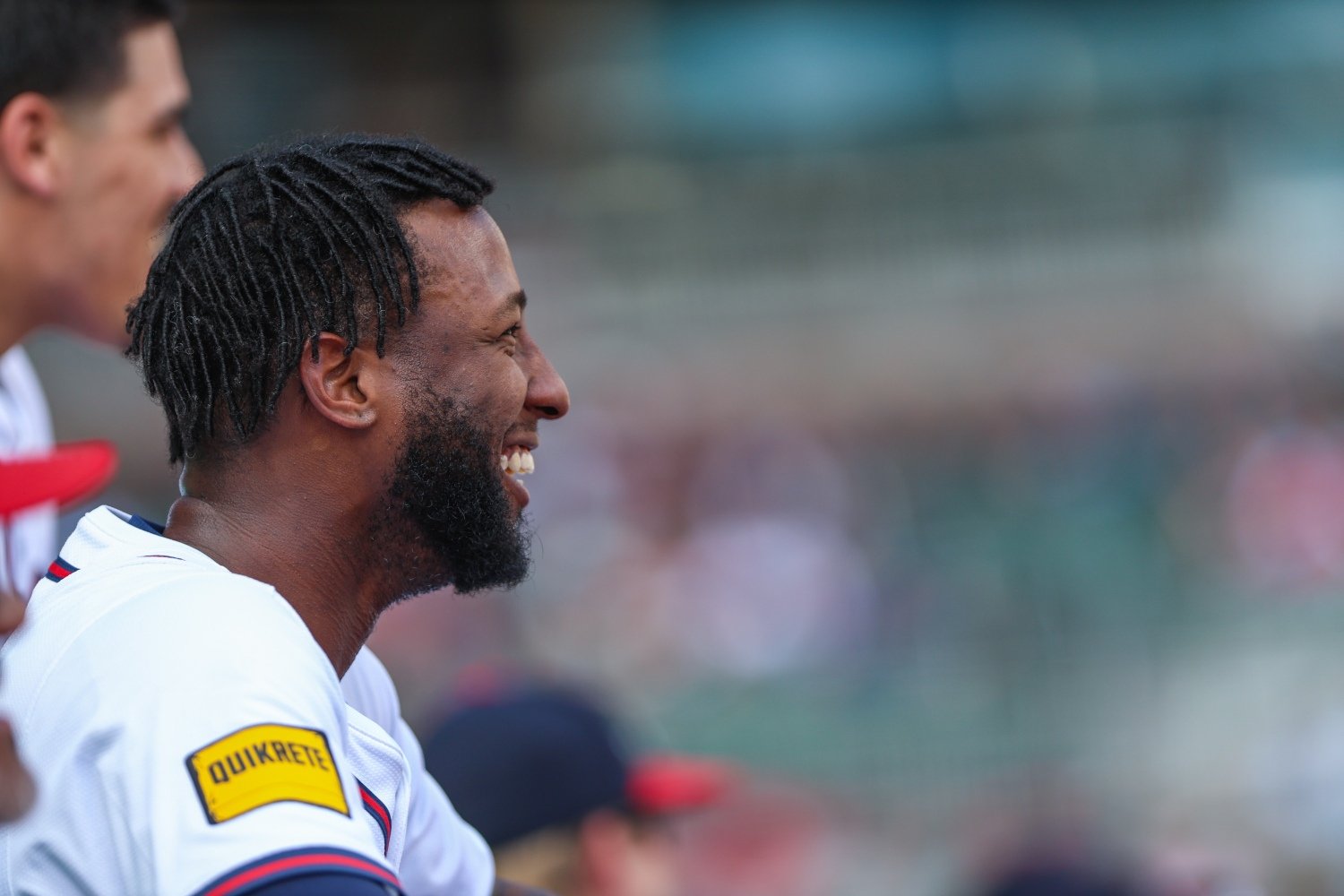 On Tuesday morning, Jeff Passan of ESPN announced that Atlanta outfielder Jurickson Profar has tested positive for a performance-enhancing drug (PEDs) for the second time in two seasons. After serving an 80-game suspension in 2025 for failing a PED test, Profar’s second suspension would keep him out for the entirety of the 2026 season, including the playoffs. The suspension is not yet official; the players' union intends to file a grievance on the veteran's behalf. In all likelihood, though, the Braves need to find a replacement for Profar, who was in line to take the bulk of the team’s DH opportunities in 2026 after the offseason acquisition of left fielder Mike Yastrzemski. Unfortunately for the Braves, options are limited at this point in the offseason. The free agent pool is nearly depleted: Max Kepler will be serving an 80-game suspension for a failed PED test of his own. Tommy Pham and Andrew McCutchen are in their late 30s and best-suited for the short side of a platoon. Other options include Jesse Winker or (if the team is open to a DH-only veteran of lesser note) Donovan Solano and Rowdy Tellez. The Braves have Dominic Smith in camp already, a lefty first baseman and non-roster invitee with nearly seven years of MLB service time. If the season started today, Smith—who had a 114 OPS+ across 225 plate appearances in 2025—would likely be the club’s Opening Day designated hitter. However, 2025 was the first season since 2020 in which Smith had an OPS+ over 100. Beyond that, he has some experience in the outfield, but he should not be played there except in emergencies. Atlanta could be interested in bringing in another outfielder, which is where Minnesota comes into the discussion. The Twins have a bit of a logjam in their corner outfield spots, with Matt Wallner, Trevor Larnach, James Outman, Alan Roden, Austin Martin, and Emmanuel Rodriguez. Except for Wallner, none of the names listed have shown themselves as a clear choice for one of the spots. At present, Larnach and Outman seem penciled into Opening Day jobs, much to the consternation of Twins fans who would prefer seeing Roden patrolling left field. Roden, acquired as the second piece in the trade that sent Louis Varland to Toronto at the 2025 trade deadline, is a superior defender to Larnach and is not a young prospect. Rodriguez is having a good camp, and his time in the major leagues may be coming soon as well, which raises questions about Larnach’s future. Many have questioned the decision to both tender Larnach a contract this winter and open the season with him on the roster. The team has a surplus of corner outfield options and is running a lower payroll than they have in a decade. Larnach’s modest $4.475-million contract takes up a notable portion of the team’s current payroll; that money could have been better spent elsewhere. The Braves losing a left fielder/DH presents an opportunity for the Twins to offload Larnach and create playing time for younger outfielders. It would also free up time at DH for first baseman Josh Bell, who has a poor reputation as a defender. But would the Braves be interested? Again, Smith is already in camp, and he had a better slash line than Larnach, albeit in less than half of the plate appearances. Larnach was right around average overall, as opposed to Smith, who was 14% better than an average hitter in his limited opportunities. The two hitters had roughly similar splits against right-handed pitchers, though, with Smith being 15% better than an average hitter, as compared to Larnach’s 9% better. In Profar, Atlanta is staring down the possibility of replacing a guy who hits well against both lefties and righties. The Braves hadn't planned to platoon Profar, and it’s unclear who on the roster would face lefties if the club elected to bring in a player who needs to be platooned, as both Larnach and Smith do. This is especially noteworthy, because Atlanta will also (probably) platoon the lefty-batting Yastrzemski. However, the club’s options are limited, and Atlanta’s head of baseball operations, Alex Anthopoulos, has been known to jump on opportunities to maintain competitiveness. In 2021, he made moves to pick up four outfielders in the 20 days after losing Ronald Acuña Jr. for the season—Joc Pederson, Jorge Soler, Eddie Rosario, and Adam Duvall. That team would go on to win the World Series a few months later, in large part because of that quartet of outfielders. Even if there's a trade for Larnach on the horizon, it’s unlikely that the Twins will net much in return—perhaps a middle reliever like Joel Payamps (who is making about half of what Larnach is this season), or a low-level prospect. At this point in the offseason, the savings on offloading Larnach don’t have much effect; the options for reallocating the salary are limited. The objective would probably be to free up space for the other lefty corner outfielders behind him while getting a little—likely negligible—player value in return. But, I ask you anyway, because that's what we do here: What does this mean for Trevor Larnach?
- 30 comments
-
- 5
-
-
- trevor larnach
- alan roden
- (and 3 more)
-
Yeah, I've been trying to sketch out what that could look like. Could be something like: Short: Sands Topa Orze/Hendriks Rogers Banda Funderburk Long: Adams Piggyback: Festa
-
Want to make sure you know that my intention here was not to say that there are four bulk relievers, each pitching every fourth day. If they do carry this over (I'm not sure I'd be on board with it), I'd assume it'd be with exactly one of them.
-
Odd, very basic thing to claim that I don't know and does not change the fact that, yes, the Twins utilized scheduled bulk days in the minor leagues.
-
Image courtesy of © Mike Watters-Imagn Images The Minnesota Twins have eight players with at least 10 big-league starts under their belts (or at least piggyback bulk outings): Pablo López, Joe Ryan, Bailey Ober, Simeon Woods Richardson, Taj Bradley, Zebby Matthews, David Festa, and Mick Abel. There has been much handwringing this offseason about how that lot will be sifted and sorted. The team hasn't shown any openness to rolling with a six-man rotation on Opening Day, even when that meant leaving a good pitcher on the outside looking in, as was the case with Ober in 2023. In fact, they’ve been more likely to open the year with a four-man rotation, given the number of off days MLB schedules at the beginning of the year. In 2019, for instance, they used Martín Pérez out of the bullpen for the first couple of weeks. By contrast, in the bullpen, the Twins lack options. As opposed to the starting rotation, which has eight names for five spots, the bullpen is closer to having five spots for eight names. There are Anthony Banda, Cole Sands, Taylor Rogers, Justin Topa, Kody Funderburk, and Eric Orze, who seem earmarked for the pen, and Travis Adams threw a few dozen innings for the Twins last season. Veteran non-roster invitees to spring training—like Dan Altavilla, Liam Hendriks, or Julian Merryweather—could factor in as well. But it’s all still very up in the air. Those other two spots (or three, depending on your opinion on Orze) could also be taken by starting pitching prospects like Connor Prielipp, John Klein, or Marco Raya—or, maybe, some of that work can be taken by whoever of the top eight starters doesn’t make the rotation. There has been talk of starters being moved to short relief. Festa is probably the name most bandied about on this topic. But what if we aren’t talking about short relief? The Twins have, in the past, attempted to carry a designated long reliever. It’s almost become a hackneyed cliché to bring up how poorly that plan worked in 2021 with Randy Dobnak or how Cole Sands spent half the year in the majors in 2023 while only throwing 21 innings. But in 2025, they rolled out a new scheme. The long relievers were on a schedule, similar to the starting pitchers. They did this in the minor leagues with a handful of pitchers, such as Adams, Pierson Ohl, Cory Lewis, Trent Baker, and Darren McCaughan. Instead of starting every fifth or sixth day, these pitchers would pitch in relief every fourth day, on three days' rest, throwing about 60 pitches (if it was going well). It may well have been an experiment, or simply a way to keep arms on the farm stretched out when the minor-league teams had an abundance of starting pitchers on the roster. It should be noted that the premium pitchers were not asked to fill this bulk, piggyback role. Matthews, Festa, Abel, Bradley, and Kendry Rojas started in every one of their appearances at St. Paul, and Andrew Morris only relieved twice. But it was a strategy that the Twins seemed pleased with. After the trade deadline selloff, they introduced the pitching plan to the major leagues. Adams and Ohl both pitched piggyback bulk days, as did veteran Thomas Hatch, and Abel piggybacked twice. This wasn’t a long-term setup, as Adams and Ohl eventually settled into short-relief roles, but it may have been a proof of concept for the team. So, what if the solution to having too many starters and not enough relievers is solved with the same move? Instead of sending a starting pitcher to the minors to lie in wait, what if the Twins designated one of their younger arms as a scheduled bulk reliever? There are some real benefits to this. First, as stated, the Twins would be able to keep their best pitchers out of the minors. If everyone is healthy, they can only keep two of Woods Richardson, Bradley, Matthews, Festa, and Abel in the rotation. Even if someone like Festa were converted to short relief, that would still require two of those other names to be stashed in St. Paul—wasting bullets, as the kids say. And there are already plenty of starting arms in Triple-A, including Prielipp, Klein, Raya, Morris, Lewis, and Kendry Rojas. Second, it fills one of the eight bullpen spots—and with someone who will rack up innings. A designated piggyback pitcher throwing two to four innings every four days likely leads the bullpen in innings and would be one of the better performers on a rate basis as well. With a six-man rotation, the bullpen has to cover the same number of innings with fewer pitchers, but with a designated piggyback reliever, the other seven relievers are likely throwing fewer innings than they would otherwise. Third, it keeps the next line of defense stretched out. The sixth starter, if pushed into regular bulk relief, is always ready to step into the rotation should any injury occur. If they were instead throwing short relief, it may take time for them to prepare to throw five innings in a start—which is part of the reason the sixth arm often starts in Triple-A. If they are throwing 60 pitches every four days, though, they’re ready to step in immediately. Fourth, it also probably keeps the rotation a little fresher. The scheduled bulk reliever’s presence allows the regular starters to go a little shorter when they’re being piggybacked, reducing wear and tear. This is all well and good, and could be a perfectly viable way to keep someone like Matthews or Abel in the majors if they don’t make the rotation, but it’s not a sure bet to work. There are some practical issues—the biggest being in-game decision-making. If Ryan is rolling through five frames on a low pitch count, but it’s his scheduled bulk day, should manager Derek Shelton pull him to hand it off to Abel? If it’s a one-run game, should López be removed and the game be turned over to Matthews in the sixth? How long should he throw? Would it be better to turn the seventh inning over to a setup man, or would Woods Richardson pitch the fifth, sixth, and seventh innings, since that’s what the schedule said? It’d take some real commitment to the philosophy to see this play out in practice. A minor-league team or a team out of contention can more easily commit to such a plan, because its wins and losses are less meaningful. But what about a team that (at least by the claims of their owner) expects to be competitive? For decades, analysts have asked what the future of pitching structure is. In 2009, Dave Fleming suggested a three-three-three rotation in which three pitchers each pitch once through the lineup in each game, for a total of three innings each. (Tony La Russa even tried to implement a version of this in 1993, when he was managing the A's.) Bullpen games and openers are not as popular as they once were, but they have still altered the way we think about divvying up innings. The Rockies briefly tried to carry us back to the days of the four-man rotation (but with hard limits on pitch counts at around 75), in 2012. As we move ever closer to whatever the next age of pitchers is, the Twins seem primed to take one of the first steps toward truly shaking up the four-day rest paradigm, whether it works or not. Could we see them implement it this season, and become the next trailblazers? View full article
-
 The Minnesota Twins have eight players with at least 10 big-league starts under their belts (or at least piggyback bulk outings): Pablo López, Joe Ryan, Bailey Ober, Simeon Woods Richardson, Taj Bradley, Zebby Matthews, David Festa, and Mick Abel. There has been much handwringing this offseason about how that lot will be sifted and sorted. The team hasn't shown any openness to rolling with a six-man rotation on Opening Day, even when that meant leaving a good pitcher on the outside looking in, as was the case with Ober in 2023. In fact, they’ve been more likely to open the year with a four-man rotation, given the number of off days MLB schedules at the beginning of the year. In 2019, for instance, they used Martín Pérez out of the bullpen for the first couple of weeks. By contrast, in the bullpen, the Twins lack options. As opposed to the starting rotation, which has eight names for five spots, the bullpen is closer to having five spots for eight names. There are Anthony Banda, Cole Sands, Taylor Rogers, Justin Topa, Kody Funderburk, and Eric Orze, who seem earmarked for the pen, and Travis Adams threw a few dozen innings for the Twins last season. Veteran non-roster invitees to spring training—like Dan Altavilla, Liam Hendriks, or Julian Merryweather—could factor in as well. But it’s all still very up in the air. Those other two spots (or three, depending on your opinion on Orze) could also be taken by starting pitching prospects like Connor Prielipp, John Klein, or Marco Raya—or, maybe, some of that work can be taken by whoever of the top eight starters doesn’t make the rotation. There has been talk of starters being moved to short relief. Festa is probably the name most bandied about on this topic. But what if we aren’t talking about short relief? The Twins have, in the past, attempted to carry a designated long reliever. It’s almost become a hackneyed cliché to bring up how poorly that plan worked in 2021 with Randy Dobnak or how Cole Sands spent half the year in the majors in 2023 while only throwing 21 innings. But in 2025, they rolled out a new scheme. The long relievers were on a schedule, similar to the starting pitchers. They did this in the minor leagues with a handful of pitchers, such as Adams, Pierson Ohl, Cory Lewis, Trent Baker, and Darren McCaughan. Instead of starting every fifth or sixth day, these pitchers would pitch in relief every fourth day, on three days' rest, throwing about 60 pitches (if it was going well). It may well have been an experiment, or simply a way to keep arms on the farm stretched out when the minor-league teams had an abundance of starting pitchers on the roster. It should be noted that the premium pitchers were not asked to fill this bulk, piggyback role. Matthews, Festa, Abel, Bradley, and Kendry Rojas started in every one of their appearances at St. Paul, and Andrew Morris only relieved twice. But it was a strategy that the Twins seemed pleased with. After the trade deadline selloff, they introduced the pitching plan to the major leagues. Adams and Ohl both pitched piggyback bulk days, as did veteran Thomas Hatch, and Abel piggybacked twice. This wasn’t a long-term setup, as Adams and Ohl eventually settled into short-relief roles, but it may have been a proof of concept for the team. So, what if the solution to having too many starters and not enough relievers is solved with the same move? Instead of sending a starting pitcher to the minors to lie in wait, what if the Twins designated one of their younger arms as a scheduled bulk reliever? There are some real benefits to this. First, as stated, the Twins would be able to keep their best pitchers out of the minors. If everyone is healthy, they can only keep two of Woods Richardson, Bradley, Matthews, Festa, and Abel in the rotation. Even if someone like Festa were converted to short relief, that would still require two of those other names to be stashed in St. Paul—wasting bullets, as the kids say. And there are already plenty of starting arms in Triple-A, including Prielipp, Klein, Raya, Morris, Lewis, and Kendry Rojas. Second, it fills one of the eight bullpen spots—and with someone who will rack up innings. A designated piggyback pitcher throwing two to four innings every four days likely leads the bullpen in innings and would be one of the better performers on a rate basis as well. With a six-man rotation, the bullpen has to cover the same number of innings with fewer pitchers, but with a designated piggyback reliever, the other seven relievers are likely throwing fewer innings than they would otherwise. Third, it keeps the next line of defense stretched out. The sixth starter, if pushed into regular bulk relief, is always ready to step into the rotation should any injury occur. If they were instead throwing short relief, it may take time for them to prepare to throw five innings in a start—which is part of the reason the sixth arm often starts in Triple-A. If they are throwing 60 pitches every four days, though, they’re ready to step in immediately. Fourth, it also probably keeps the rotation a little fresher. The scheduled bulk reliever’s presence allows the regular starters to go a little shorter when they’re being piggybacked, reducing wear and tear. This is all well and good, and could be a perfectly viable way to keep someone like Matthews or Abel in the majors if they don’t make the rotation, but it’s not a sure bet to work. There are some practical issues—the biggest being in-game decision-making. If Ryan is rolling through five frames on a low pitch count, but it’s his scheduled bulk day, should manager Derek Shelton pull him to hand it off to Abel? If it’s a one-run game, should López be removed and the game be turned over to Matthews in the sixth? How long should he throw? Would it be better to turn the seventh inning over to a setup man, or would Woods Richardson pitch the fifth, sixth, and seventh innings, since that’s what the schedule said? It’d take some real commitment to the philosophy to see this play out in practice. A minor-league team or a team out of contention can more easily commit to such a plan, because its wins and losses are less meaningful. But what about a team that (at least by the claims of their owner) expects to be competitive? For decades, analysts have asked what the future of pitching structure is. In 2009, Dave Fleming suggested a three-three-three rotation in which three pitchers each pitch once through the lineup in each game, for a total of three innings each. (Tony La Russa even tried to implement a version of this in 1993, when he was managing the A's.) Bullpen games and openers are not as popular as they once were, but they have still altered the way we think about divvying up innings. The Rockies briefly tried to carry us back to the days of the four-man rotation (but with hard limits on pitch counts at around 75), in 2012. As we move ever closer to whatever the next age of pitchers is, the Twins seem primed to take one of the first steps toward truly shaking up the four-day rest paradigm, whether it works or not. Could we see them implement it this season, and become the next trailblazers?
- 25 comments
-
- 2
-
-
- simeon woods richardson
- mick abel
- (and 3 more)
-
I sure have
-
In fairness, Falvey acquired every player in the organization except Buxton (and some minor league signings over the past couple of days)
-
Minnesota Twins 2026 Opening Day Roster Projection, v3.0
Greggory Masterson posted an article in Twins
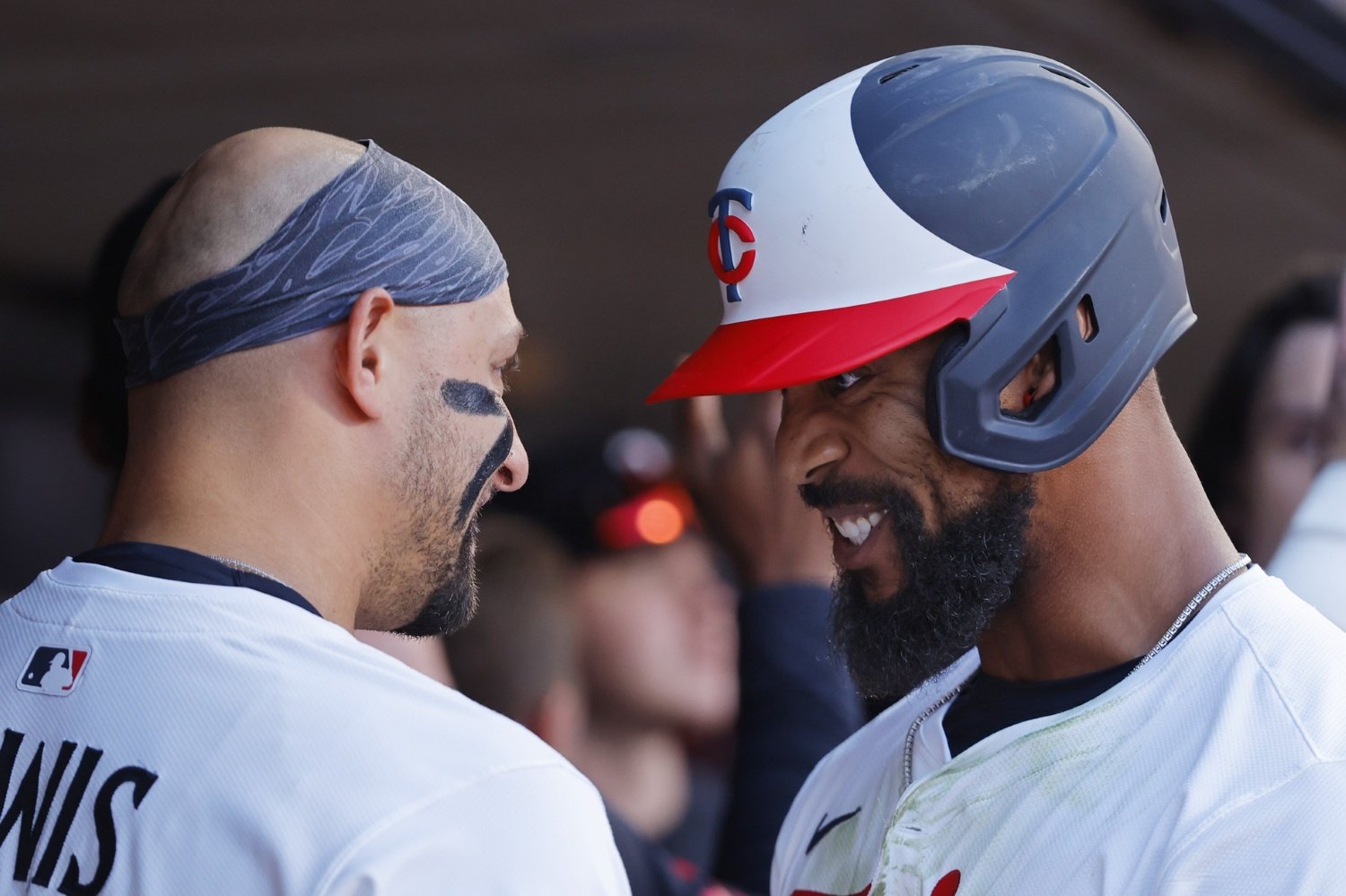 The Twins haven’t been terribly active this offseason. If Jeremy Zoll has the same offseason habits as Derek Falvey, there might be a few more moves on the way. Nonetheless, let’s try to map out what the Opening Day roster might be, given the players who are in the organization right now. Catchers (2): Ryan Jeffers, Victor Caratini Others on the 40-man roster: Alex Jackson The most unexpected move of the offseason has been the addition of Victor Caratini as a second catcher. Ryan Jeffers has spent most of his career in a timeshare behind the plate, typically catching about half of the Twins’ games and topping out at 81 games started at catcher. Caratini, a switch-hitter better against righties, forms a good platoon with the righty-batting Jeffers. Both will likely see some time at DH, and Caratini can also play some first base if needed. It’s unclear whether the team foresees another 50/50 split or if Jeffers will start closer to two of every three games (or if Caratini’s presence will lead to him being traded). Alex Jackson, for whom the Twins traded utility infielder Payton Eeles in November, is out of options, but it seems unlikely that the Twins will carry three catchers with a four-man bench, even if Caratini sees time at first base. Jackson may be waived or traded before Opening Day. Infielders (6): Josh Bell, Luke Keaschall, Royce Lewis, Brooks Lee, Kody Clemens, Ryan Kreidler Others on the 40-man roster: Tristan Gray, Eric Wagaman Second base, third base, and shortstop are pretty well set ahead of the season, with Luke Keaschall, Royce Lewis, and Brooks Lee, respectively. Lewis and Lee are unlikely to see time away from their primary position, other than an occasional day as the DH, but Keaschall may moonlight in the outfield. Josh Bell is also a lock to make the roster, slotting in at both first base and designated hitter. It’s unclear how his playing time will break down between those two assignments. When and if Bell is in the DH spot, Kody Clemens will likely get dibs on playing first base, and he’s primed to get time at second base, giving Keaschall a day off now and then. He could also be used in the corner outfield, or at third base in a pinch. The Twins have cycled through many different options for the backup shortstop position this offseason. Ryan Kreidler seems to be at the front of the position battle, with Tristan Gray and Orlando Arcia also in the running. Kreidler has no options remaining, Gray has one, and Arcia is on a minor-league contract with an invite to spring training. Payton Eeles, Ryan Fitzgerald, and Vidal Bruján were all in this conversation at various points, but cycled out of the organization. In this scenario, Kreidler gets the nod, not just because he cannot be sent down without being exposed to waivers, but also because he’s the best fielder in a crowd of suspect hitters. He can also play center field, adding extra flexibility. Eric Wagaman may also make the team as a platoon corner bat, but it would probably come at the cost of an outfielder. Outfielders (5): Alan Roden, Byron Buxton, Matt Wallner, Trevor Larnach, Austin Martin Others on the 40-man roster: Gabriel Gonzalez, Hendry Mendez, James Outman, Emmanuel Rodriguez Byron Buxton is obviously a lock in center field, as is Matt Wallner in right. Left field is a bit more up in the air, but if Trevor Larnach is still on the team on Opening Day, he’ll have a spot. Whether that spot is primarily as a designated hitter is up for debate, but Larnach has spent more than half of the previous two seasons as a DH. If Larnach is primarily the DH (pinning Josh Bell to first base, more often than not), Alan Roden and Austin Martin appear to be the two to split duties in left field. Roden, acquired along with Kendry Rojas in the Louis Varland trade, was inserted directly into the Twins’ lineup last summer, but soon suffered a season-ending thumb injury. Martin impressed down the stretch, with a .374 on-base percentage and solid corner defense. They make a natural platoon fit, as Roden is left-handed and Martin bats righty, and both can play some center field if necessary. James Outman, acquired at the deadline for Brock Stewart, is a notable cut in this iteration. He is out of options. His struggles both offensively and defensively (and his redundancy with other lefties Wallner, Larnach, Roden, and Clemens) make it difficult to justify a roster spot. However, if the Twins are adamant that his center field defense is necessary or believe that he could recapture the promise he showed in 2023 as a rookie, he could make the team. There is an outside chance that Gabriel Gonzalez makes the team as a platoon bat in a corner or that Emmanuel Rodriguez or Walker Jenkins supplant one of the starting corner outfielders, but it seems unlikely. Starting Rotation (5): Pablo López, Joe Ryan, Bailey Ober, Taj Bradley, Simeon Woods Richardson Others on the 40-man: Mick Abel, Zebby Matthews If there are no subtractions and everyone is healthy, Pablo López and Joe Ryan will start the first two games of the season, in some order. Bailey Ober has been a fixture in this rotation for years, and if he’s healthy, he’ll also be given a shot to rebound after a 2025 that was mostly lost to nagging injury and mechanical issues. Simeon Woods Richardson has quietly been a consistent back-end starter for the past two seasons, and although the prospect shine on other potential rotation names is brighter, Woods Richardson has earned an opportunity to start the season in the rotation. He’s also out of minor league options, so the Twins need to keep him in MLB or risk losing him on waivers. The fifth spot is up in the air, but Taj Bradley seems the most likely recipient. Acquired for Griffin Jax, he has the most MLB experience among the names vying for the spot, though he had a shaky 2025. Zebby Matthews is his stiffest competition, but to this point, Matthews has not been able to match his underlying metrics with his performance. Mick Abel and David Festa are also in the running, but it’s difficult to see them beating both Bradley and Matthews (though all four do have minor league options). Bullpen (8): Cole Sands, Taylor Rogers, Justin Topa, Kody Funderburk, Eric Orze, David Festa, Travis Adams, John Klein Others on the 40-man roster: Andrew Morris, Connor Prielipp, Marco Raya, Kendry Rojas The Twins have only made one free-agent addition to the bullpen this offseason, bringing back Taylor Rogers. Rogers currently fits into the late-innings group as the lefty, alongside righties Cole Sands and Justin Topa. Middle relief-bound Kody Funderburk and Eric Orze are the only two other names that seem likely to make the Opening Day bullpen. The other three spots are up for grabs. David Festa, given durability concerns and struggles to accumulate innings as a starter, seems like a prime candidate to step into a bullpen role. If the Twins believe that they have enough rotation depth, that could happen as early as Opening Day. Travis Adams provided long relief in 2025, and John Klein, one of the more impressive arms in the system last season, could be an excellent option in the bullpen, should he have a good spring training. Connor Prielipp and Marco Raya were also named earlier in the season as starting depth who could transition to the bullpen. Non-roster invites like Matt Bowman and Dan Altavilla could also be counted on to round out the eight-man corps.
- 113 comments
-
- 9
-
-
- simeon woods richardson
- victor caratini
- (and 1 more)
-
The Twins haven’t been terribly active this offseason, and if Jeremy Zoll has the same offseason habits as Derek Falvey, there might be a few more moves on the way. Nonetheless, let’s try to map out what the Opening Day roster might be, given the players who are already in the organization right now. Catchers (2): Ryan Jeffers, Victor Caratini Others on the 40-man roster: Alex Jackson The most unexpected move of the offseason has been the addition of Victor Caratini as a second catcher. Ryan Jeffers has spent most of his career in a timeshare behind the plate, typically catching about half of the Twins’ games, and topping out at 81 games started at catcher. Caratini, a switch-hitter better against righties, forms a good platoon with the righty Jeffers. Both will likely see some time at DH, and Caratini can also play some first base if needed. It’s unclear whether the team foresees another 50:50 split or if Jeffers will start closer to two of every three games (or if Caratini’s presence will lead to him being traded). Alex Jackson, whom the Twins traded utility infielder Payton Eeles for in November, is out of options, but it seems unlikely that the Twins will carry three catchers with a four-man bench, even if Caratini sees time at first base. Jackson may be waived or traded before Opening Day. Infielders (6): Josh Bell, Luke Keaschall, Royce Lewis, Brooks Lee, Kody Clemens, Ryan Kreidler Others on the 40-man roster: Tristan Gray, Eric Wagaman Second base, third base, and shortstop are pretty well set ahead of the season with Luke Keaschall, Royce Lewis, and Brooks Lee, respectively. Lewis and Lee are unlikely to see time away from their primary position, other than an occasional day as the DH, but Keaschall may see some outfield time. Josh Bell is also a lock to make the roster, slotting in at both first base and designated hitter. It’s unclear what exactly that mix will be for him. When and if Bell is in the DH spot, Kody Clemens will likely get dibs on playing first base, and he’s primed to get time at second base, giving Keaschall a day off now and then. He could also be used in the corner outfield or third in a pinch. The Twins have cycled through many different options for the backup shortstop position this offseason. Ryan Kreidler seems to be at the front of the position battle, with Tristan Gray and Orlando Arcia also in the running. Kreidler has no options remaining, Gray has one, and Arcia is on a minor league contract with an invite to spring training. Payton Eeles, Ryan Fitzgerald, and Vidal Bruján were all in this conversation but cycled out of the organization. In this scenario, Kreidler gets the nod, not just because he cannot be sent down without being exposed to waivers but also because he’s the best fielder in a crowd of suspect hitters. He can also play center field, adding additional flexibility. Eric Wagaman may also make the team as a platoon corner bat, but it would likely come at the cost of an outfielder. Outfielders (5): Alan Roden, Byron Buxton, Matt Wallner, Trevor Larnach, Austin Martin Others on the 40-man roster: Gabriel Gonzalez, Hendry Mendez, James Outman, Emmanuel Rodriguez Byron Buxton is obviously a lock in center field, as is Matt Wallner in right. Left field is a bit more up in the air, but if Trevor Larnach is still on the team on Opening Day, he’ll have a spot. Whether that spot is primarily as a designated hitter is up for debate, but Larnach has spent more than half of the previous two seasons as a DH. If Larnach is primarily the DH (moving Josh Bell to first base more often than not), Alan Roden and Austin Martin appear to be the two to split duties in left field. Roden, acquired along with Kendry Rojas in the Louis Varland trade, was immediately inserted directly into the Twins’ lineup but soon thereafter suffered a season-ending thumb injury. Martin impressed down the stretch with a .374 on-base percentage and solid corner defense. They make a natural platoon fit, as Roden is left-handed and Martin bats righty, and both can play some center field if necessary. James Outman, acquired at the deadline for Brock Stewart, is a notable cut in this iteration. He is out of options. His struggles both offensively and defensively, and his redundancy with other lefties in Wallner, Larnach, Roden, and Clemens, make it difficult to justify a roster spot. However, if the Twins are adamant that his center field defense is necessary or believe that he could recapture the promise he showed in 2023 as a rookie, he could make the team. There is an outside chance that Gabriel Gonzalez makes the team as a platoon bat in a corner or that Emmanuel Rodriguez or Walker Jenkins supplant one of the starting corner outfielders, but it seems unlikely. Starting Rotation (5): Pablo López, Joe Ryan, Bailey Ober, Taj Bradley, Simeon Woods Richardson Others on the 40-man: Mick Abel, Zebby Matthews If there are no subtractions and everyone is healthy, Pablo López and Joe Ryan will start the first two games of the season, in some order. Bailey Ober has been a fixture in this rotation for years, and if he’s healthy, he’ll also be given a shot to rebound after a 2025 that was mostly lost to nagging injury and mechanical issues. Simeon Woods Richardson has quietly been a consistent backend starter for the past two seasons, and although the prospect shine on other potential rotation names is brighter at this point in his career, he’s earned an opportunity to start the season in the rotation. He’s also out of minor league options, so the Twins need to keep him in MLB or risk exposing him to waivers. The fifth spot is up in the air, but Taj Bradley seems the most likely recipient. Acquired for Griffin Jax, he has the most MLB experience among the names vying for the spot, though he had a shaky 2025. Zebby Matthews is his stiffest competition, but to this point, Matthews has not been able to match his underlying metrics with his performance. Mick Abel and David Festa are also in the running, but it’s difficult to see them beating both Bradley and Matthews (though all four do have minor league options). Bullpen (8): Cole Sands, Taylor Rogers, Justin Topa, Kody Funderburk, Eric Orze, David Festa, Travis Adams, John Klein Others on the 40-man roster: Andrew Morris, Connor Prielipp, Marco Raya, Kendry Rojas The Twins have only made one free agent MLB addition to the bullpen this offseason, bringing back Taylor Rogers. Rogers currently fits into the late-innings group as the lefty alongside righties Cole Sands and Justin Topa. Middle relief-bound Kody Funderburk and Eric Orze—acquired in trade with the Rays—are the only two other names that seem likely to make the Opening Day bullpen. The other three spots are more up in the air. David Festa, given durability concerns and struggles to accumulate innings as a starter, seems like a prime candidate to step into a bullpen role. If the Twins believe that they have enough rotation depth, that could happen as early as Opening Day. Travis Adams provided long relief in 2025, and John Klein, one of the more impressive arms in the system last season, could be an excellent option in the bullpen, should he have a good spring training. Connor Prielipp and Marco Raya were also named earlier in the season as starting depth who could transition to the bullpen. Non-roster invites like Matt Bowman and Dan Altavilla could also be counted on to round out the eight-man corps. View full article
-
This was penned before Ohl’s DFA, and I forgot that I had listed him. Swap him out for another bullpen candidate name on the current 40 and it might get shorter (Prielipp, Rojas, Raya, Morris) or slightly longer, if they moved a starter to the pen (Abel, Zebby)
-
FWIW, that really wasn’t the topic of this article, because tacit knowledge is by definition difficult to communicate.
