



Greggory Masterson
-
Posts
819 -
Joined
-
Last visited
-
Days Won
2
Content Type
Profiles
News
Minnesota Twins Videos
2026 Minnesota Twins Top Prospects Ranking
2022 Minnesota Twins Draft Picks
Minnesota Twins Free Agent & Trade Rumors, Notes, & Tidbits
Guides & Resources
2023 Minnesota Twins Draft Picks
The Minnesota Twins Players Project
2024 Minnesota Twins Draft Picks
2025 Minnesota Twins Draft Pick Tracker
2026 Minnesota Twins Draft Tracker: Picks & Bonuses
Forums
Blogs
Events
Store
Downloads
Gallery
Everything posted by Greggory Masterson
-
What is Kyler Fedko’s Job?
Greggory Masterson replied to Greggory Masterson's topic in Twins Daily Front Page News
DaShawn Keirsey and Carson McCusker walked so Kyler Fedko could run (straight into the hearts of Twins fans)- 42 replies
-
- 3
-

-

-
- kyler fedko
- austin martin
- (and 3 more)
-
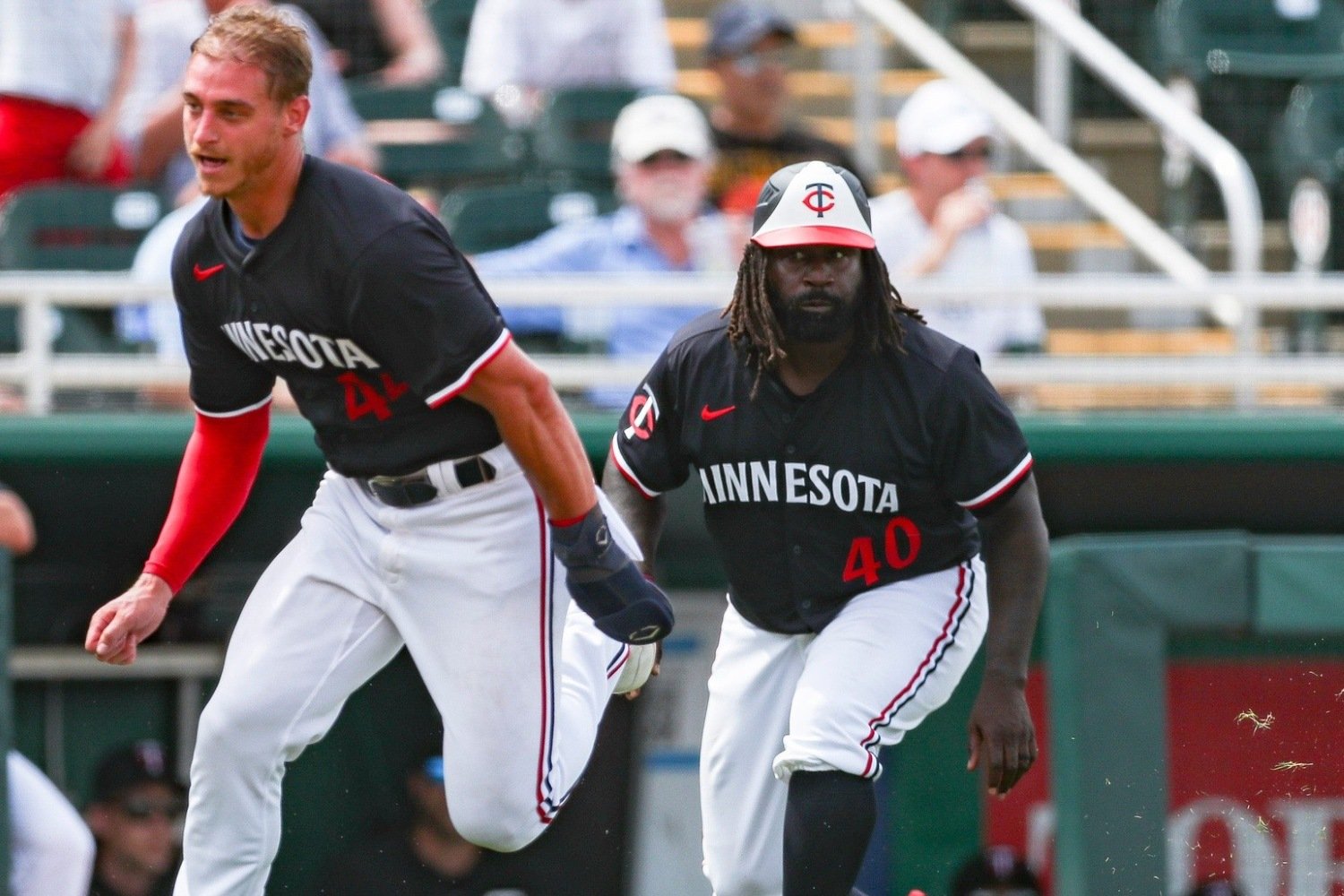 The Twins selected the contract of 26-year-old outfielder Kyler Fedko Sunday, designating veteran infielder Orlando Arcia in the process to make room on both the 40-man and active roster. Now that he’s finally in Minnesota, what will the Twins do with him? Fedko is a right-handed outfielder who can play all three outfield positions, though scouts suggest that his defense in center field isn’t good enough to be an everyday player out there. He’s also added first base to his bag of tricks, but he’s only got about 300 innings there across three seasons between Double- and Triple-A. He’s also played three games at second base this season, but it’s unlikely that the Twins will need to play that card. Often, transactions clearly show what a team’s plan with a player is. If the team cuts a left-handed corner outfielder and promotes a different left-handed corner outfielder to replace him, the old guy’s job is the new guy’s job. Not so with an Arcia-Fedko swap. We can’t just look at Arcia’s playing time and copy and paste it onto Fedko’s ledger. However, we can start with Arcia’s playing time and work from there, because there’s playing time to go around as a result of that move. Arcia has been playing approximately every other day. He’s been starting at shortstop against lefties, and he’s been filling in at first and second base, though he hadn’t had an appearance at either position since the return of Royce Lewis. (That's probably why, in the end, it made more sense to give Fedko a look than to hang onto Arcia. Having cut James Outman to recall Lewis, they were tipping toward being infielder-heavy and outfielder-light.) Arcia’s playing time at shortstop actually directly translates to Fedko's playing time, though. During each of Arcia’s recent appearances at shortstop, righty superutility player Ryan Kreidler has started in the outfield. Going forward, those platoon shortstop appearances can easily be transferred over to Kreidler, and Kreidler could take time from the strong side of the platoon, Tristan Gray—but this is a Fedko writeup, so we’ll skip that discussion. Fedko serving as a platoon outfielder is the most straightforward path to playing time. In the majors, he’s carried an OPS around .900, about 35% better than average for the level, but he’s been especially good against lefties this season, with an OPS of 1.262—though he’s historically had somewhat neutral platoon splits. The Twins have gotten below-average production from their corner outfielders against lefties—20th by OPS and 17th by wRC+. If Fedko can provide some thump against southpaws, he’ll have a place on this roster, joining Austin Martin as the right-handed corner outfielders. Trevor Larnach has been entrenched in left field, but he’s been platooned all season. Kody Clemens has seen more time in right field recently, but the Twins are probably open to playing a full righty lineup against lefty starters. It’s unclear if Clemens (who has a slightly above-average .714 OPS against lefties this season) would continue to get playing time against lefties in this alignment, because the Twins now have two righty corner outfielders, as well as the right-handed Luke Keashcall and Royce Lewis, who can play first and second base against lefties. But, again, that’s a conversation for another day. Speaking of Clemens, there’s also a center field component to discuss. Fedko is a bit stretched in center, but he’ll likely get some opportunity out there, given that Clemens has been used as their primary backup center fielder in recent weeks. The Twins’ previous fifth outfielder, Outman, was jettisoned from the roster last week to make room for Lewis after spending most of the season collecting dust at the end of the bench. The Twins have been hesitant to play Martin in center field, suggesting Fedko could be ahead of him on the depth chart. Kreidler is a solid center fielder, but the club will be relying on him in the infield more often. Given the choice between playing Clemens or Fedko in center field when Byron Buxton has a day off, it wouldn’t be surprising for Fedko to get the nod—even against righty pitching. As mentioned, Fedko can also play first base, but it’s difficult to see that happening often, given the presence of Clemens, Lewis, Josh Bell, and even Keaschall on the roster. Could it happen that he ends up over there for an inning or two? Maaaaybe. I could see that, and the fear is there. Given that about a third of starting pitchers are lefties, you’re looking at about two starts a week for Fedko in a corner. Then, if he gives Buxton a day off in center field, he’ll get another start every week or two, pending Buxton’s health. And of course, he could be used as a pinch-hitter. He’s a Minnesota Twin, after all. Two or three starts a week doesn’t sound like much, but it’s certainly more action than Outman was getting. And Fedko isn’t a prospect, per se; he’s a late-blooming 26-year-old. Even if he has a multi-year MLB career, he’s going to be a part-time player. They’re not doing him a disservice by using him in moderation. In games he doesn’t start, he could be used as a pinch-runner. He’s gone 47-for-59 as a basestealer over the past two seasons in the high minors, just under 80% of his attempts proving successful. So the Twins are under no pressure to force him into the lineup. But he certainly has an opportunity. Martin has slowed down in recent weeks and is not set in stone as the Twins’ fourth outfielder. Even if bigger names like Walker Jenkins, Emmanuel Rodriguez, Alan Roden, or Matt Wallner are called up to the big-league team, they’re all lefties, so the team would be well-served to carry a righty. There’s certainly an opportunity to show what Fedko can do. The door is open for Fedko, who had a 28-homer, 38-stolen-base season last year, to carve out a part-time role and try to stake a claim to more. He’s become a fan favorite, among fans who get attached to low-ceiling prospects, and it will be fun to see how it shakes out for him this season.
- 42 comments
-
- 7
-
-
- kyler fedko
- austin martin
- (and 3 more)
-
The Twins selected the contract of 26-year-old outfielder Kyler Fedko, designating veteran infielder Orlando Arcia in the process to make room on both the 40-man and active roster. Now that he’s finally in Minnesota, what will the Twins do with him? Fedko is a right-handed outfielder who can play all three outfield positions, though scouts suggest that his defense in center field isn’t good enough to be an everyday player out there. He’s also added first base to his bag of tricks, but he’s only got about 300 innings there across three seasons between Double- and Triple-A. He’s also played three games at second base this season, but it’s unlikely that the Twins will need to play that card. Oftentimes, transactions clearly show what a team’s plan with a player is. If the team cuts a left-handed corner outfielder and promotes a different left-handed corner outfielder to replace him, the old guy’s job is the new guy’s job. Not so with an Arcia-Fedko swap. We can’t just look at Arcia’s playing time and copy and paste it onto Fedko’s ledger. However, we can start with Arcia’s playing time and work from there, because there’s playing time to go around as a result of that move. Arcia has been playing approximately every other day. He’s been starting at shortstop against lefties, and he’s been filling in at first and second base (though he hasn’t had an appearance at either position since the return of Royce Lewis). Arcia’s playing time at shortstop actually directly translates to Fedko's playing time, though. During each of Arcia’s recent appearances at shortstop, righty superutility player Ryan Kreidler has started in the outfield. Going forward, those platoon shortstop appearances can easily be transferred over to Kreidler (and Kreidler could potentially take time from the strong side of the platoon, Tristan Gray, but this is a Fedko writeup, so we’ll skip that discussion). Fedko serving as a platoon outfielder is the most straightforward path toward playing time. In the minors, he’s carried an OPS around .900, good for 35% above league-average for the level, but he’s been especially good against lefties this season, with an OPS of 1.262 (though he’s historically had somewhat neutral platoon splits). The Twins have gotten below-below average production from their corner outfielders against lefties—20th by OPS and 17th by wRC+. If Fedko can provide some thump against southpaws, he’ll have a place on this roster, joining Austin Martin as the right-handed corner outfielders. Trevor Larnach has been entrenched in left field, but he’s been platooned all season. Kody Clemens has seen more time in right field recently, but the Twins are likely open to playing a full righty lineup against lefty starters. It’s unclear if Clemens (who has a slightly above-average .714 OPS against lefties this season) would continue to get playing time against lefties in this alignment, because the Twins now have two righty corner outfielders as well as the right-handed Luke Keashcall and Royce Lewis, who can play first and second base against lefties. But, again, that’s a conversation for another day. Speaking of Clemens, there’s also a center field component to discuss. Fedko is a bit stretched in center, but he’ll likely get some opportunity out there, given that Clemens has been used as their primary backup center fielder in recent weeks. The Twins’ previous fifth outfielder, James Outman, was jettisoned from the roster last week to make room for Royce Lewis after spending most of the season collecting dust at the end of the bench. The Twins have been hesitant to play Martin in center field, suggesting Fedko could be ahead of him on the depth chart, and Kreidler is a solid center fielder, but the club will be relying on him in the infield more often. If given the choice between playing Clemens or Fedko in center field when Byron Buxton has a day off, it wouldn’t be surprising for Fedko to get the nod—even against righty pitching. As mentioned, Fedko can also play first base, but it’s difficult to see that happening often, given the presence of Clemens, Lewis, Josh Bell, and even Keaschall on the roster. Could it happen that he ends up over there for an inning or two? Maaaaybe. I could see that, and the fear is there. Given that about a third of starting pitchers are lefties, you’re looking at about two starts a week for Fedko in a corner. Then, if he gives Buxton a day off in center field, he’ll get another start every week or two, pending Buxton’s health. And of course, he could be used as a pinch hitter. He’s a Minnesota Twin after all. Two or three starts a week doesn’t sound like much, but it’s certainly more action than Outman was getting. And Fedko isn’t a prospect—he’s a late-blooming 26-year-old. Even if he has a multi-year MLB career, he’s going to be a part-time player. They’re not doing him a disservice to use him in moderation. And in games he doesn’t start, he could be used as a pinch runner. He’s gone 47-for-59 as a basestealer over the past two seasons in the high minors, just under 80%. So the Twins are under no pressure to force him into the lineup. But he certainly has opportunity. Martin has slowed down in recent weeks and is not set in stone as the Twins’ fourth outfielder. And even if bigger names like Walker Jenkins, Emmanuel Rodriguez, Alan Roden, or Matt Wallner are called up to the MLB team, they’re all lefties, so the team would be well-served to carry a righty. There’s certainly opportunity. The door is open for Fedko, who had a 28-homer, 38-stolen-base season last year, to carve out a part-time role going forward. He’s become a fan favorite among fans who get attached to low-ceiling prospects, and it will be fun to see how it shakes out for him this season. View full article
- 42 replies
-
- 1
-
-
- kyler fedko
- austin martin
- (and 3 more)
-
Twins Off-Daily Mailbag Tonight at 6:00 CT
Greggory Masterson posted a topic in Minnesota Twins Talk
At 6 o'clock tonight, the Twins Off-Daily crew will be hosting a YouTube livestream (on a non-off-day!). We're looking for mailbag questions. If you've got something you'd like us to answer, reply here and head on over to YouTube at 6! We hope to see you soon! -
Image courtesy of © Matt Krohn-Imagn Images Ryan Jeffers was the best player on the Twins through the first quarter of the 2026 season. In 37 games, he slashed .295/.408/.541, with a .949 OPS about 60% above league average. That OPS is the best in the league among primary catchers with at least 140 plate appearances, and by fWAR, he ranks fifth, despite not playing since May 18. He’s also graded out as an average defender behind the plate, and he was on track to play about 120 games between catcher and DH. Simply put, he was playing like one of the premier catchers in baseball. Due to Jeffers’s broken hamate bone, he will remain out of commission for another 4-6 weeks, by most estimates. He struck an optimistic tone when he met with reporters this week, but even he noted that he can't predict how things will go, and that he was advised not to rush it. The Twins sorely miss him, as his backups Victor Caratini and Alex Jackson have combined to hit just over .200 and have not provided even average defense behind the plate. Jeffers is eligible for free agency this offseason. Let’s break down the case and context for him to receive a qualifying offer. There are a lot of moving pieces here, so buckle up. What is a qualifying offer? Per the current CBA, free agents are eligible to receive a qualifying offer from their current team once in their career. Since this is Jeffers's first time eligible for free agency, the Twins can give him the qualifying offer. The qualifying offer is a one-year contract worth the average yearly salary of the 125 highest-paid players the previous year. For the 2026 season, that was approximately $22 million, and for 2027, it will likely be slightly higher. Let’s conservatively call it $23 million. If the player accepts the offer, they will return to their team for one more year. If they reject the offer, they will be a free agent. However, other teams are disincentivized from signing the player because they will lose a draft pick (or two, depending on their payroll) the following season. The original team will receive an additional draft pick between the first and fourth rounds as compensation for losing the player, varying based on their revenue-sharing status. Of note, the ongoing CBA negotiations ahead of the 2027 season will (probably) not affect the qualifying offers at the end of the 2026 season. Even if the entire system were removed in the 2027 CBA, the 2026 qualifying offers will be grandfathered in because they occurred before the current CBA expires. Why would the Twins extend a qualifying offer to Ryan Jeffers? Well, obviously, the primary reason would be that Jeffers is a good catcher. It’s unlikely that Jeffers is truly the best offensive catcher in baseball, but he has been a good hitter over the past four seasons—about 20% better than league average—at a position where the average hitter is below league average. His defense is not outstanding, or potentially even good, but it’s average, and good enough that he’s not a disaster at the most difficult position to play. Furthermore, the alternatives are not appetizing. Caratini and Jackson are both under contract for 2027 (with Caratini owed $7 million), but neither has given much reason to have confidence they will be dependable everyday options. The Twins have a handful of high-minors catchers, such as Noah Cardenas and David Bañuelos, but none of them have starting catcher potential. Eduardo Tait is their top catching prospect, but he’s a 19-year-old at High-A. They might draft Georgia Tech catcher Vahn Lackey, but even if he’s fast-tracked to the majors, he shouldn’t be counted on to be the everyday catcher in 2027. There's also the subject of Jeffers's trade value. If the Twins are not in contention around the trade deadline, Jeffers is a player teams will be calling about. However, he's projected to return to action just weeks before the deadline, giving teams limited time to evaluate him in a trade. Whatever packages he may have netted two weeks ago have probably been reduced since his injury, which makes the prospect of keeping him around more valuable. The return may even be less valuable than the draft-pick compensation the Twins would receive (and by next year's trade deadline, he would be eligible to be traded again, should he accept the qualifying offer). Is Jeffers worth a qualifying offer? At $23 million, Jeffers would be the highest-paid catcher in the world, by a wide margin. The top-paid catchers projected for 2027 are Atlanta’s Sean Murphy and Philadelphia’s J.T. Realmuto, at $15 million each. Jeffers would make about 50% more. Put simply, even if Jeffers maintained his 2026 performance upon his return from injury, he’s not worth $23 million a year in his 30s. However, he might be worth $23 million for one year. Teams are much happier to overpay for a short contract (see Kyle Tucker’s deal with the Dodgers) than they are to cut a long deal for less money per year. There’s a cliché that goes “there’s no such thing as a bad one-year deal,” and there’s some truth to that. The Twins might be in a position in which their best option for having a starting-caliber catcher in 2027 is to overpay Jeffers in the short term. Other free-agent options would be Tyler Stephenson and Jonah Heim. The Twins extended Jake Odorizzi a qualifying offer in 2019 in a similar situation. Odorizzi didn’t command an annual contract of $18 million, but to keep the rotation stocked, they were willing to overpay to keep him for one more year. Furthermore, if Jeffers rejects the qualifying offer, the Twins could receive that compensatory draft pick, likely between the first and second rounds of the 2027 MLB Draft. Which raises another question: Would Jeffers accept the offer? (and also, why not just extend him?) It’s unclear whether Jeffers would even accept the offer, though I would probably bet yes, if I were forced to take a side. He's a Scott Boras client, but he's never been thought of as this caliber of player before this season, and he's hurt right now. Even Boras's aggressiveness has limits. However, there have not been many catchers who have hit the open market to base this discussion on. Most free-agent catchers are of the backup variety. Since the 2019-2020 offseason, there have been seven contracts signed by catchers for more than $23 million total: Yasmani Grandal (4/73M), James McCann (4/40.6M), Realmuto (5/115.5, 3/45M), Willson Contreras (5/87.5), Christian Vázquez (3/30M), Mitch Garver (2/24M). That being said, Jeffers is certainly in a position to join that group, and, like Contreras, his bat is insurance against potentially moving off the catcher position. Contreras now plays first base, but in the four seasons leading up to his $87.5 million contract with St. Louis, he had a similar 118 OPS+, albeit with more plate appearances. Jeffers could be in line for a big, multi-year payday. His estimated contract might be enough to allow him to opt out of a one-year, $23 million deal. There’s risk to signing a short deal, especially for a catcher on the wrong side of 30. Should Jeffers have a down 2027, those multi-year deals might dry up, and as a Boras client, Jeffers is likely to try to maximize his lifetime earnings rather than take the guaranteed money—hich I suppose could be twisted to support either side of this question. This bit also explains why the Twins are unlikely to offer Jeffers a long-term deal. Paying Jeffers in eight figures a year for three or more years is quite risky, especially for a team that might have its catcher of the future debuting in the next couple of seasons. And especially for a team whose low payroll has been an unending topic of conversation for three years now. Speaking of which: Would Tom Pohlad allow the Twins to pay Jeffers $23 million next season? Yeah, probably. The Twins are running a minuscule payroll right now. They’re projected to have an approximately $70-80 million payroll after arbitration in 2027, which includes the money owed to Carlos Correa. If they part with Joe Ryan, Bailey Ober, Trevor Larnach, or Royce Lewis either at the trade deadline or the beginning of the offseason, that figure will be even lower. Players like Walker Jenkins, Emmanuel Rodriguez, Kaelen Culpepper, and Gabriel Gonzalez are likely to be filling roster spots on minimum-salary contracts. There’s a case to be made that even if the Twins are returning to a $105 million payroll, they’d have room for Jeffers to be paid $16 million more than his current $6.7 million salary next year. If the Pohlad family indeed intends to increase payroll (as Tom has suggested would have been the case this year, had he taken the reins earlier) to even $130 million, they have more than enough room to bump up Jeffers’s contract for a single year. When my co-host on the Twins Off-Daily Podcast (no free ads), @Lou Hennessy, proposed this idea earlier in the season, I initially scoffed a bit. But the combination of Jeffers’s performance, team needs, and room to spend, might make this a worthwhile endeavor. View full article
-
Should the Twins make Ryan Jeffers the Qualifying Offer?
Greggory Masterson posted an article in Twins
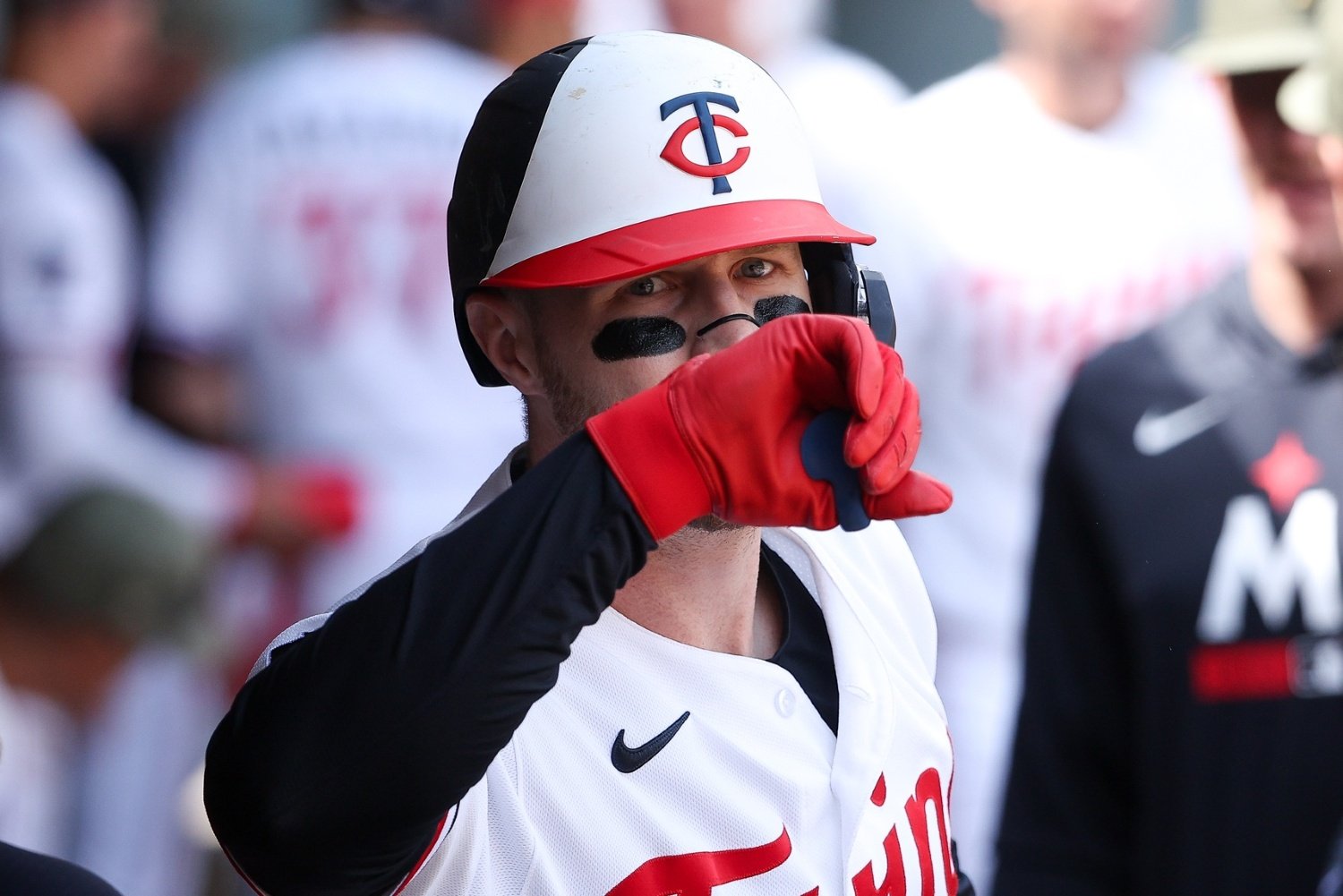 Ryan Jeffers was the best player on the Twins through the first quarter of the 2026 season. In 37 games, he slashed .295/.408/.541, with a .949 OPS about 60% above league average. That OPS is the best in the league among primary catchers with at least 140 plate appearances, and by fWAR, he ranks fifth, despite not playing since May 18. He’s also graded out as an average defender behind the plate, and he was on track to play about 120 games between catcher and DH. Simply put, he was playing like one of the premier catchers in baseball. Due to Jeffers’s broken hamate bone, he will remain out of commission for another 4-6 weeks, by most estimates. He struck an optimistic tone when he met with reporters this week, but even he noted that he can't predict how things will go, and that he was advised not to rush it. The Twins sorely miss him, as his backups Victor Caratini and Alex Jackson have combined to hit just over .200 and have not provided even average defense behind the plate. Jeffers is eligible for free agency this offseason. Let’s break down the case and context for him to receive a qualifying offer. There are a lot of moving pieces here, so buckle up. What is a qualifying offer? Per the current CBA, free agents are eligible to receive a qualifying offer from their current team once in their career. Since this is Jeffers's first time eligible for free agency, the Twins can give him the qualifying offer. The qualifying offer is a one-year contract worth the average yearly salary of the 125 highest-paid players the previous year. For the 2026 season, that was approximately $22 million, and for 2027, it will likely be slightly higher. Let’s conservatively call it $23 million. If the player accepts the offer, they will return to their team for one more year. If they reject the offer, they will be a free agent. However, other teams are disincentivized from signing the player because they will lose a draft pick (or two, depending on their payroll) the following season. The original team will receive an additional draft pick between the first and fourth rounds as compensation for losing the player, varying based on their revenue-sharing status. Of note, the ongoing CBA negotiations ahead of the 2027 season will (probably) not affect the qualifying offers at the end of the 2026 season. Even if the entire system were removed in the 2027 CBA, the 2026 qualifying offers will be grandfathered in because they occurred before the current CBA expires. Why would the Twins extend a qualifying offer to Ryan Jeffers? Well, obviously, the primary reason would be that Jeffers is a good catcher. It’s unlikely that Jeffers is truly the best offensive catcher in baseball, but he has been a good hitter over the past four seasons—about 20% better than league average—at a position where the average hitter is below league average. His defense is not outstanding, or potentially even good, but it’s average, and good enough that he’s not a disaster at the most difficult position to play. Furthermore, the alternatives are not appetizing. Caratini and Jackson are both under contract for 2027 (with Caratini owed $7 million), but neither has given much reason to have confidence they will be dependable everyday options. The Twins have a handful of high-minors catchers, such as Noah Cardenas and David Bañuelos, but none of them have starting catcher potential. Eduardo Tait is their top catching prospect, but he’s a 19-year-old at High-A. They might draft Georgia Tech catcher Vahn Lackey, but even if he’s fast-tracked to the majors, he shouldn’t be counted on to be the everyday catcher in 2027. There's also the subject of Jeffers's trade value. If the Twins are not in contention around the trade deadline, Jeffers is a player teams will be calling about. However, he's projected to return to action just weeks before the deadline, giving teams limited time to evaluate him in a trade. Whatever packages he may have netted two weeks ago have probably been reduced since his injury, which makes the prospect of keeping him around more valuable. The return may even be less valuable than the draft-pick compensation the Twins would receive (and by next year's trade deadline, he would be eligible to be traded again, should he accept the qualifying offer). Is Jeffers worth a qualifying offer? At $23 million, Jeffers would be the highest-paid catcher in the world, by a wide margin. The top-paid catchers projected for 2027 are Atlanta’s Sean Murphy and Philadelphia’s J.T. Realmuto, at $15 million each. Jeffers would make about 50% more. Put simply, even if Jeffers maintained his 2026 performance upon his return from injury, he’s not worth $23 million a year in his 30s. However, he might be worth $23 million for one year. Teams are much happier to overpay for a short contract (see Kyle Tucker’s deal with the Dodgers) than they are to cut a long deal for less money per year. There’s a cliché that goes “there’s no such thing as a bad one-year deal,” and there’s some truth to that. The Twins might be in a position in which their best option for having a starting-caliber catcher in 2027 is to overpay Jeffers in the short term. Other free-agent options would be Tyler Stephenson and Jonah Heim. The Twins extended Jake Odorizzi a qualifying offer in 2019 in a similar situation. Odorizzi didn’t command an annual contract of $18 million, but to keep the rotation stocked, they were willing to overpay to keep him for one more year. Furthermore, if Jeffers rejects the qualifying offer, the Twins could receive that compensatory draft pick, likely between the first and second rounds of the 2027 MLB Draft. Which raises another question: Would Jeffers accept the offer? (and also, why not just extend him?) It’s unclear whether Jeffers would even accept the offer, though I would probably bet yes, if I were forced to take a side. He's a Scott Boras client, but he's never been thought of as this caliber of player before this season, and he's hurt right now. Even Boras's aggressiveness has limits. However, there have not been many catchers who have hit the open market to base this discussion on. Most free-agent catchers are of the backup variety. Since the 2019-2020 offseason, there have been seven contracts signed by catchers for more than $23 million total: Yasmani Grandal (4/73M), James McCann (4/40.6M), Realmuto (5/115.5, 3/45M), Willson Contreras (5/87.5), Christian Vázquez (3/30M), Mitch Garver (2/24M). That being said, Jeffers is certainly in a position to join that group, and, like Contreras, his bat is insurance against potentially moving off the catcher position. Contreras now plays first base, but in the four seasons leading up to his $87.5 million contract with St. Louis, he had a similar 118 OPS+, albeit with more plate appearances. Jeffers could be in line for a big, multi-year payday. His estimated contract might be enough to allow him to opt out of a one-year, $23 million deal. There’s risk to signing a short deal, especially for a catcher on the wrong side of 30. Should Jeffers have a down 2027, those multi-year deals might dry up, and as a Boras client, Jeffers is likely to try to maximize his lifetime earnings rather than take the guaranteed money—hich I suppose could be twisted to support either side of this question. This bit also explains why the Twins are unlikely to offer Jeffers a long-term deal. Paying Jeffers in eight figures a year for three or more years is quite risky, especially for a team that might have its catcher of the future debuting in the next couple of seasons. And especially for a team whose low payroll has been an unending topic of conversation for three years now. Speaking of which: Would Tom Pohlad allow the Twins to pay Jeffers $23 million next season? Yeah, probably. The Twins are running a minuscule payroll right now. They’re projected to have an approximately $70-80 million payroll after arbitration in 2027, which includes the money owed to Carlos Correa. If they part with Joe Ryan, Bailey Ober, Trevor Larnach, or Royce Lewis either at the trade deadline or the beginning of the offseason, that figure will be even lower. Players like Walker Jenkins, Emmanuel Rodriguez, Kaelen Culpepper, and Gabriel Gonzalez are likely to be filling roster spots on minimum-salary contracts. There’s a case to be made that even if the Twins are returning to a $105 million payroll, they’d have room for Jeffers to be paid $16 million more than his current $6.7 million salary next year. If the Pohlad family indeed intends to increase payroll (as Tom has suggested would have been the case this year, had he taken the reins earlier) to even $130 million, they have more than enough room to bump up Jeffers’s contract for a single year. When my co-host on the Twins Off-Daily Podcast (no free ads), @Lou Hennessy, proposed this idea earlier in the season, I initially scoffed a bit. But the combination of Jeffers’s performance, team needs, and room to spend, might make this a worthwhile endeavor.
- 59 comments
-
- 5
-
-
- ryan jeffers
- victor caratini
- (and 3 more)
-
Image courtesy of © Jesse Johnson-Imagn Images In 2025, one of the season-long storylines in the Twins’ system was the use of piggyback relievers. At many levels of the organization, in addition to the team’s starting pitchers, there were a handful of pitchers who threw in bulk but were not in the rotation. And they also threw more often, typically on three days’ rest, one day fewer than a typical starter’s four days. Many questioned whether that plan would ever be carried over into the majors, but after the trade deadline last season, the Twins utilized set piggyback bulk relievers like Travis Adams, Pierson Ohl, and Thomas Hatch, who would throw multiple innings out of the bullpen on a schedule. Of course, the second half of the 2025 Twins season came at the end of a lost year, when wins and losses didn’t matter. So it was still unclear at the beginning of the 2026 season whether the team would continue to use this strategy. On Opening Day, the Twins did not appear to roster one of these guys, though players like Cody Laweryson, Justin Topa, Kody Funderburk, Zak Kent, and Eric Orze would be counted on to throw more than an inning. Technically, though, they did start this using a form of this strategy in just the third game of the season, as Mick Abel piggybacked with Bailey Ober, throwing 3 1/3 innings in relief (to poor results, giving up five runs and not completing four full innings). Garrett Acton threw multiple innings in his Twins debut, then, on three days’ rest, threw another couple of innings on April 13th. He wasn’t asked to do so again, falling into a more traditional end-of-the-pen mop-up pitcher before his late April injury. Andrew Morris, though, stepped into this type of role fairly quickly upon his debut. Morris, a starter to this point in his career, debuted April 12th, throwing three innings of relief from the 6th to 8th inning. He next pitched on six days later, this time tasked with attempting a two-inning save, blowing it after recording just four of the required six outs. After this appearance, Morris sat three days and threw 2 2/3 innings, then sat three days and threw three innings. This usage pattern was more or less in line with the role the Twins have used in the minors. However, Morris was trending toward a more high-leverage role. He recorded a four-out hold on two days’ rest, then on two days’ rest recorded 3 2/3 innings in relief of an injured Joe Ryan. Following this appearance, he transitioned to more of a short relief role, and he hasn’t recorded more than four outs since May 3rd. Around that time, Kendry Rojas entered the picture as an additional arm with some length. Rojas, a starter like Morris, had been recovering from injury and started his season late, not fully stretching out as a starter by the time he got his number called for his MLB debut, which was two innings of relief in a piggyback start with fellow rookie Connor Prielipp. He was sent down shortly after his April debut but returned to MLB action on May 10th. Since then, he has followed the usage pattern one would expect of a player in this role. He recorded 10 outs as the bulk arm in a bullpen game against Cleveland on May 10th, then threw two innings on three days’ rest against Miami, closing out a blowout. After three more days of rest, he started his first game, throwing four innings against Houston. On four days’ rest after that, he threw three innings of relief against Boston. Rojas was then in line to start another game on four days’ rest on Thursday, May 28th, but he was scratched due to elbow soreness. Sadly, fans of this role may be without it for a while, but Rojas showed how useful a player in this role can be. He was off to a start to his career in which he was probably having more success than his performance suggested (his 1.47 WHIP is higher than his ERA), but he was almost an old-school swingman, cutting into the bullpen’s workload while also being available to start when the rotation needed to push someone back or fill in for a day. This oddball scheduled bulk reliever was actually working, at least for a while. Adams, one of the pioneers of the role in 2025, has also potentially been working into this role, starting his season throwing 2 1/3 innings on two days’ rest, two innings on five days’ rest, then two innings on two days' rest. However, it seems that the Twins might be gearing him toward working on shorter outings with shorter rest, even if he could be asked to throw more than an inning at a time, similar to the usage seen with players like Orze or Funderburk. Simeon Woods Richardson could have potentially replaced Rojas in this role, but he was DFAd on Saturday morning. It's hard to imagine SWR not being claimed by another organization. Woods Richardson was in line to throw in bulk in his May 18th bullpen debut, but the game entered a rain delay after his first inning of work, shutting him down for the night. He rested six days before pitching again in relief, this time two innings in a losing effort in Chicago. He started Thursday afternoon’s game on just two days’ rest when Rojas was scratched from the start. He didn't even make it through three innings before allowing five runs. Whatever the plan is with Woods Richardson, it doesn’t seem like this role is in the cards. However, using this formula has been something of a success. If you combine this type of multi-inning relief appearances from Morris, Rojas, and Adams, they’ve combined to throw 29 innings, allowing eight earned runs, which is a 2.48 ERA. If you include the four shutout innings Rojas threw as a spot starter on three days’ rest, it drops down to 2.18 in 33 innings. Unfortunately (or fortunately, if you’re of the opinion this role is new-age made-up nonsense), the Twins haven’t been able to keep a player in this role long. Morris has been thrust into late-innings work, Rojas is on the injured list now with inflammation in his triceps, and Adams (who is the least stretched out) has been sent down to Triple-A due to high usage over the last week. And right now, it’s unclear that the Twins have another horse to slide into this role. The current Twins’ pen, outside of the aforementioned arms, doesn’t have anyone who can slide into this role. John Klein was called up to take SWR's roster spot. He didn’t impress in his debut but has been throwing multiple innings at Triple-A to middling effectiveness. Laweryson and Funderburk have also both struggled at Triple-A, and they have been promoted to fill Rojas and Adams's spots, which probably spells the end of the experiment, for now. Marco Raya, a high-octane recently converted starter, has been throwing multiple innings very frequently at Triple-A thus far this season, racking up 10 appearances with at least two full innings pitched. After a very shaky and discouraging start to the season, he’s settled into a more respectable 3.68 ERA in eight May appearances across 14 2/3 innings. He’s typically throwing on two or three days’ rest, though he’s topped out at 35 pitches. Still, he might be the best choice the Twins have if they want a hard-throwing bullpen arm who throws multiple innings with any regularity. C.J. Culpepper was just last month converted to a reliever upon his promotion to St. Paul, but he's throwing shorter outings than Raya and isn't on the 40-man. The position may be more trouble than it’s worth in the long run, and it may be suited only for players like Rojas and Morris who are close to being MLB-ready starters, but early returns on a stretched-out reliever who throws multiple innings on a somewhat predictable schedule have been encouraging. It’ll be interesting to see how much faith the Twins have in continuing its usage as the calendar turns to June. View full article
-
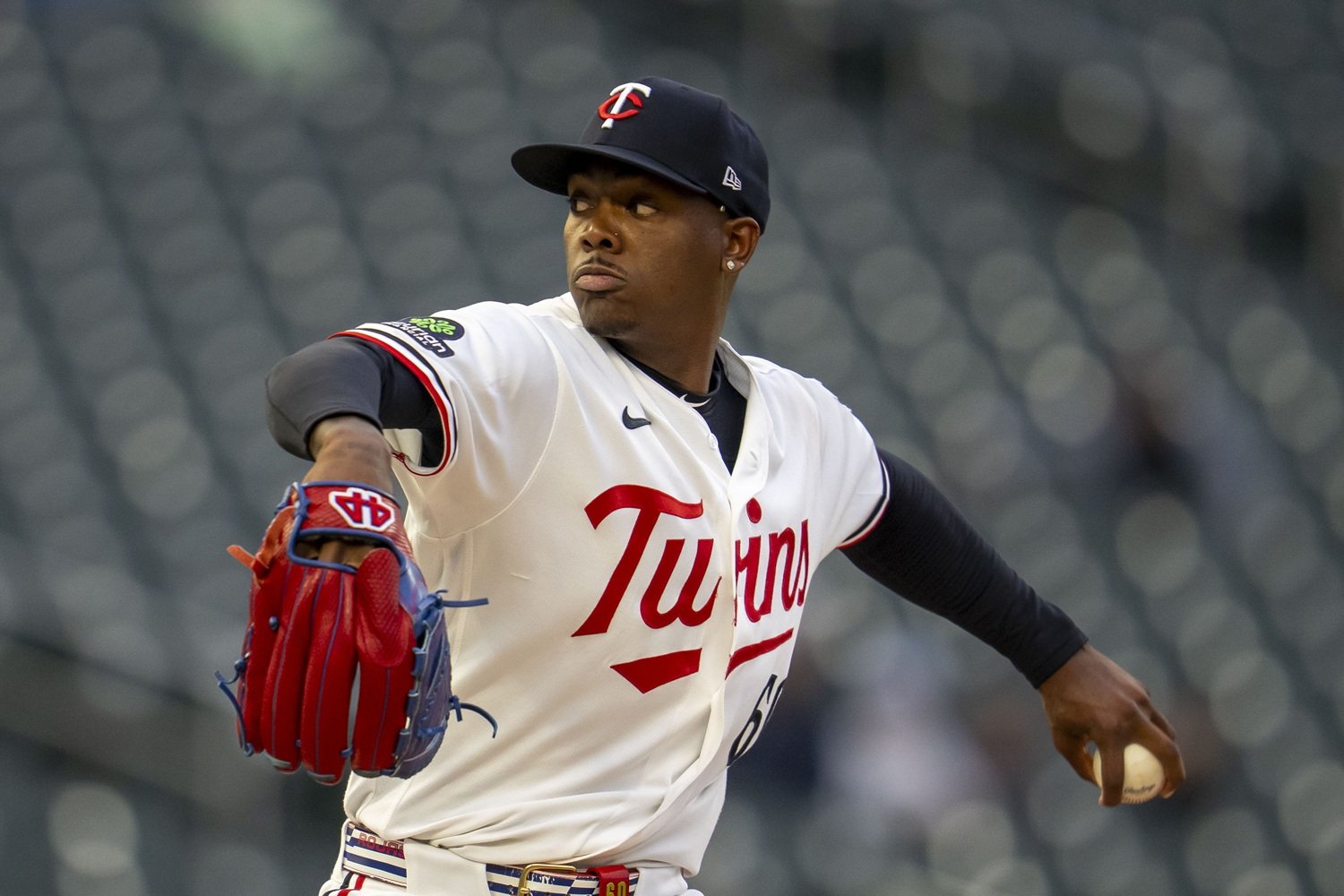 In 2025, one of the season-long storylines in the Twins’ system was the use of piggyback relievers. At many levels of the organization, in addition to the team’s starting pitchers, there were a handful of pitchers who threw in bulk but were not in the rotation. And they also threw more often, typically on three days’ rest, one day fewer than a typical starter’s four days. Many questioned whether that plan would ever be carried over into the majors, but after the trade deadline last season, the Twins utilized set piggyback bulk relievers like Travis Adams, Pierson Ohl, and Thomas Hatch, who would throw multiple innings out of the bullpen on a schedule. Of course, the second half of the 2025 Twins season came at the end of a lost year, when wins and losses didn’t matter. So it was still unclear at the beginning of the 2026 season whether the team would continue to use this strategy. On Opening Day, the Twins did not appear to roster one of these guys, though players like Cody Laweryson, Justin Topa, Kody Funderburk, Zak Kent, and Eric Orze would be counted on to throw more than an inning. Technically, though, they did start this using a form of this strategy in just the third game of the season, as Mick Abel piggybacked with Bailey Ober, throwing 3 1/3 innings in relief (to poor results, giving up five runs and not completing four full innings). Garrett Acton threw multiple innings in his Twins debut, then, on three days’ rest, threw another couple of innings on April 13th. He wasn’t asked to do so again, falling into a more traditional end-of-the-pen mop-up pitcher before his late April injury. Andrew Morris, though, stepped into this type of role fairly quickly upon his debut. Morris, a starter to this point in his career, debuted April 12th, throwing three innings of relief from the 6th to 8th inning. He next pitched on six days later, this time tasked with attempting a two-inning save, blowing it after recording just four of the required six outs. After this appearance, Morris sat three days and threw 2 2/3 innings, then sat three days and threw three innings. This usage pattern was more or less in line with the role the Twins have used in the minors. However, Morris was trending toward a more high-leverage role. He recorded a four-out hold on two days’ rest, then on two days’ rest recorded 3 2/3 innings in relief of an injured Joe Ryan. Following this appearance, he transitioned to more of a short relief role, and he hasn’t recorded more than four outs since May 3rd. Around that time, Kendry Rojas entered the picture as an additional arm with some length. Rojas, a starter like Morris, had been recovering from injury and started his season late, not fully stretching out as a starter by the time he got his number called for his MLB debut, which was two innings of relief in a piggyback start with fellow rookie Connor Prielipp. He was sent down shortly after his April debut but returned to MLB action on May 10th. Since then, he has followed the usage pattern one would expect of a player in this role. He recorded 10 outs as the bulk arm in a bullpen game against Cleveland on May 10th, then threw two innings on three days’ rest against Miami, closing out a blowout. After three more days of rest, he started his first game, throwing four innings against Houston. On four days’ rest after that, he threw three innings of relief against Boston. Rojas was then in line to start another game on four days’ rest on Thursday, May 28th, but he was scratched due to elbow soreness. Sadly, fans of this role may be without it for a while, but Rojas showed how useful a player in this role can be. He was off to a start to his career in which he was probably having more success than his performance suggested (his 1.47 WHIP is higher than his ERA), but he was almost an old-school swingman, cutting into the bullpen’s workload while also being available to start when the rotation needed to push someone back or fill in for a day. This oddball scheduled bulk reliever was actually working, at least for a while. Adams, one of the pioneers of the role in 2025, has also potentially been working into this role, starting his season throwing 2 1/3 innings on two days’ rest, two innings on five days’ rest, then two innings on two days' rest. However, it seems that the Twins might be gearing him toward working on shorter outings with shorter rest, even if he could be asked to throw more than an inning at a time, similar to the usage seen with players like Orze or Funderburk. Simeon Woods Richardson could have potentially replaced Rojas in this role, but he was DFAd on Saturday morning. It's hard to imagine SWR not being claimed by another organization. Woods Richardson was in line to throw in bulk in his May 18th bullpen debut, but the game entered a rain delay after his first inning of work, shutting him down for the night. He rested six days before pitching again in relief, this time two innings in a losing effort in Chicago. He started Thursday afternoon’s game on just two days’ rest when Rojas was scratched from the start. He didn't even make it through three innings before allowing five runs. Whatever the plan is with Woods Richardson, it doesn’t seem like this role is in the cards. However, using this formula has been something of a success. If you combine this type of multi-inning relief appearances from Morris, Rojas, and Adams, they’ve combined to throw 29 innings, allowing eight earned runs, which is a 2.48 ERA. If you include the four shutout innings Rojas threw as a spot starter on three days’ rest, it drops down to 2.18 in 33 innings. Unfortunately (or fortunately, if you’re of the opinion this role is new-age made-up nonsense), the Twins haven’t been able to keep a player in this role long. Morris has been thrust into late-innings work, Rojas is on the injured list now with inflammation in his triceps, and Adams (who is the least stretched out) has been sent down to Triple-A due to high usage over the last week. And right now, it’s unclear that the Twins have another horse to slide into this role. The current Twins’ pen, outside of the aforementioned arms, doesn’t have anyone who can slide into this role. John Klein was called up to take SWR's roster spot. He didn’t impress in his debut but has been throwing multiple innings at Triple-A to middling effectiveness. Laweryson and Funderburk have also both struggled at Triple-A, and they have been promoted to fill Rojas and Adams's spots, which probably spells the end of the experiment, for now. Marco Raya, a high-octane recently converted starter, has been throwing multiple innings very frequently at Triple-A thus far this season, racking up 10 appearances with at least two full innings pitched. After a very shaky and discouraging start to the season, he’s settled into a more respectable 3.68 ERA in eight May appearances across 14 2/3 innings. He’s typically throwing on two or three days’ rest, though he’s topped out at 35 pitches. Still, he might be the best choice the Twins have if they want a hard-throwing bullpen arm who throws multiple innings with any regularity. C.J. Culpepper was just last month converted to a reliever upon his promotion to St. Paul, but he's throwing shorter outings than Raya and isn't on the 40-man. The position may be more trouble than it’s worth in the long run, and it may be suited only for players like Rojas and Morris who are close to being MLB-ready starters, but early returns on a stretched-out reliever who throws multiple innings on a somewhat predictable schedule have been encouraging. It’ll be interesting to see how much faith the Twins have in continuing its usage as the calendar turns to June.
- 28 comments
-
- 5
-
-
- kendry rojas
- travis adams
- (and 3 more)
-
Royce Lewis Needs to Have an Open Mind
Greggory Masterson replied to Tom Froemming's topic in Twins Minor League Talk
There are many hours in a day. You can work on multiple aspects of your game. The alternatives to having guys bounce around positionally are 1) Guaranteeing an abysmal defense, because you have to keep a guy where he's "always played," tools and development be damned, and 2) risking leaving a good player in the minors because you can't carry two guys who only play second base. -
Image courtesy of Jesse Johnson-Imagn Images On Friday, May 22nd, in Boston, Brooks Lee played a position other than shortstop for the first time since July 28th, 2025. Carlos Correa, the Twins’ starting shortstop between 2022 and mid-2025, left the following day’s game with a migraine and never played a game for Minnesota again. Since July 29th, Lee has started at shortstop in 95 games. But those days may be close to being over. There are a number of factors at play here. First, Lee himself. When Lee was drafted eighth overall in 2022, scouts believed he could be a serviceable MLB shortstop, with a pro arm and sure hands, but a lack of range. Since then, his defensive outlook has diminished, and it has felt like Lee has been asked to play shortstop out of necessity. He has turned in some good plays, but he seems overmatched, with -8 outs above average (OAA) in 1,193 innings at the position, and -5 OAA just this season alone (390 innings). He’s graded out at second and third base as an approximately average-to-slightly-below-average fielder, and one of those two positions is likely where he needs to settle if he wants a multi-year career as a starting player. However, to this point, Minnesota has relied on him at shortstop due to a dearth of other options. Tristan Gray, the team’s utility infielder through the first two months of the 2026 season, is a 30-year-old out of his athletic prime who can play some shortstop but shouldn’t be counted on as the team’s everyday shortstop, nor has he been playing every day at any position. However, the team recently called up another utility infielder, Ryan Kreidler, who has a much different profile than Gray. Kreidler, despite his hot start at the plate (.313/.405/.656 with 3 home runs in 37 plate appearances), is not a good hitter. He’s been among the worst hitters in baseball during his five-year MLB career. However, he’s a bona fide shortstop. Prior to Friday’s game, he had played five games in center field and five games at third base, only starting at shortstop in a game Lee did not play. Friday, though, he played shortstop, the position where he’s most valuable, for the first time getting precedence over Lee. And Saturday, he started at the hot corner again. In fact, on the broadcast, Cory Provus noted that the club has made it clear that Lee will spend a lot of time at third in the near future. This alignment makes the most of both players’ skill sets when both are on the dirt. Kreidler is the best shortstop on the team, so it makes sense to play him at the toughest position. Lee has a profile best served at third base, given his lack of range. Honestly, the Twins’ third utility infielder, Orlando Arcia, should also get precedence over Lee at short. Neither Kreidler nor Arcia nor Gray is likely to be the long-term answer at shortstop, though. Instead, this move also appears to be clearing a path for Twins Daily’s #2 prospect, shortstop Kaelen Culpepper, to make his debut in the not-so-distant future. Culpepper, the 21st overall pick in 2024, has been heating up at Triple-A St. Paul over the last few weeks, with an OPS over .900 over the past month. Culpepper started the season slowly, getting his first taste of Triple-A pitching this season. He’s also bounced around the diamond this spring, but two-thirds of his appearances have been at shortstop. Culpepper is more athletic and rangy than Lee with a plus arm, though there are questions about whether he has enough range to cut it as an MLB shortstop long-term. If he’s merely average, though, he’s a better option than Lee. Jamie Cameron wrote a great profile on Culpepper earlier this month that I encourage you to read. Long-term, the Twins probably hope a player like Twins Daily's #7 prospect Marek Houston will take over shortstop duties and move Culpepper to second or third base, but by all indications, the Twins seem to prefer Culpepper over Lee at short, necessitating a move to third (or second) base at some point for the three-year veteran. And the Twins recently reduced their 40-man roster to 39, designating Luis Garcia for assignment Saturday morning, which opens the door to add Culpepper to both the active and 40-man roster without much resistance. There’s another name at play, though—the reason third base is open for Lee to play, at least sporadically for now. Royce Lewis, the Twins’ starting third baseman (when healthy) since 2023, was demoted to Triple-A earlier this week after mustering just a .539 OPS in his first 119 plate appearances of 2026. For the foreseeable future, he will be in St. Paul (which also cuts into Culpepper’s time playing positions beyond shortstop), leaving major league playing time available at third base. It’d be a bit surprising if Lee exclusively played third for the time being, though the Twins don't currently have a player who plays third but doesn't play shortstop on their roster. It’s unclear whether—or if—Lewis will return to major-league action, or at what position. As bad as Lee has looked early this season at shortstop, Lewis looked as bad or worse at third base. It’s possible that Lewis, along with getting his hitting back on track, may need to learn to play another position to get back up to the majors, but that conversation is months away. As a caveat, the Twins have another struggling infielder—Luke Keaschall—to worry about. Perhaps Lee or Culpepper (or Arcia or Gray) might also be asked to man the keystone at some point, which complicates this analysis. But for right now, it looks like we’re in the early stages of Brooks Lee’s short tenure as Minnesota’s shortstop coming to an unceremonious end, and the newly-vacated hot corner is as good a place as any to let him settle in, so long as he shows something at the plate*. *it’s unclear that he’s shown enough at the plate yet View full article
-
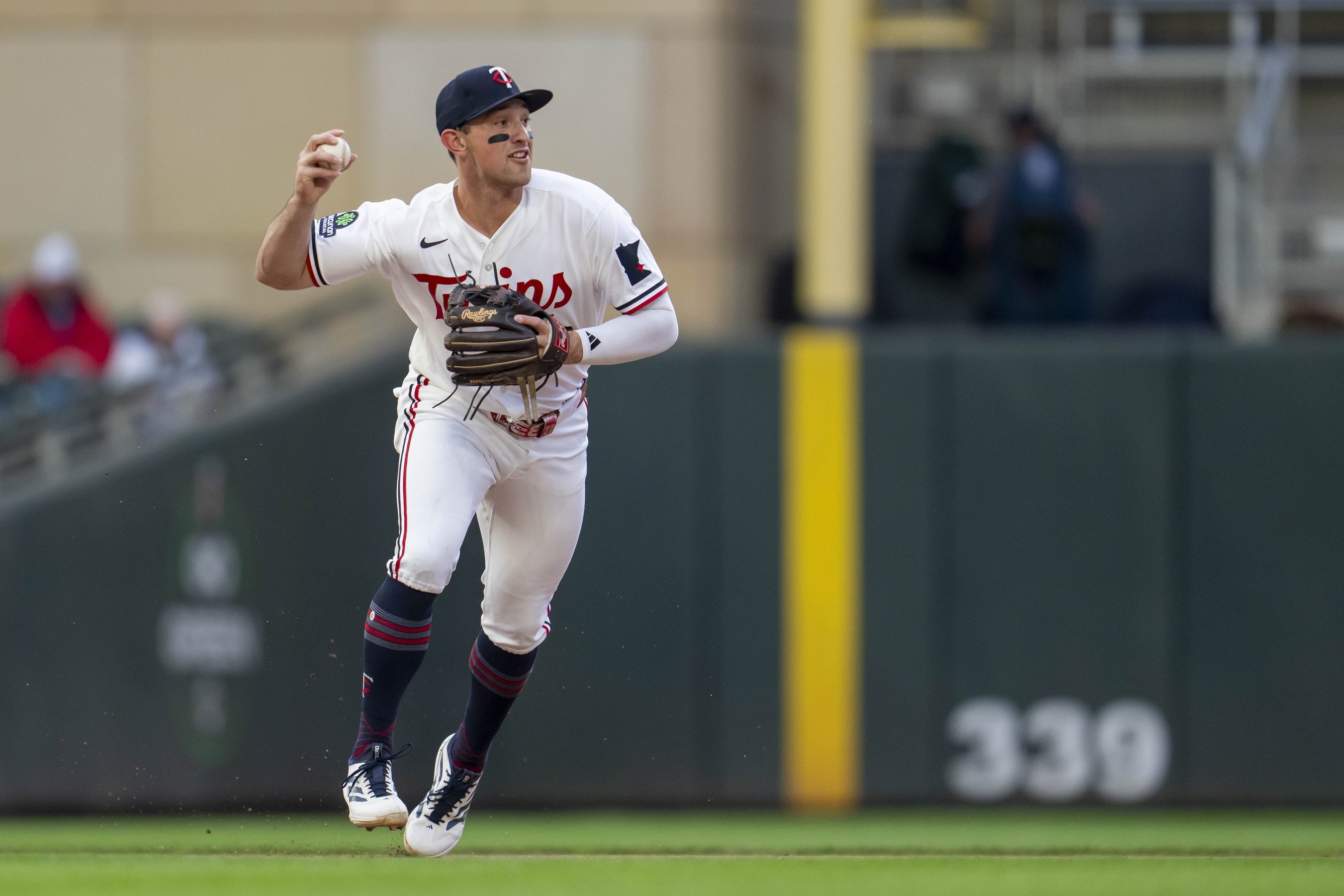 On Friday, May 22nd, in Boston, Brooks Lee played a position other than shortstop for the first time since July 28th, 2025. Carlos Correa, the Twins’ starting shortstop between 2022 and mid-2025, left the following day’s game with a migraine and never played a game for Minnesota again. Since July 29th, Lee has started at shortstop in 95 games. But those days may be close to being over. There are a number of factors at play here. First, Lee himself. When Lee was drafted eighth overall in 2022, scouts believed he could be a serviceable MLB shortstop, with a pro arm and sure hands, but a lack of range. Since then, his defensive outlook has diminished, and it has felt like Lee has been asked to play shortstop out of necessity. He has turned in some good plays, but he seems overmatched, with -8 outs above average (OAA) in 1,193 innings at the position, and -5 OAA just this season alone (390 innings). He’s graded out at second and third base as an approximately average-to-slightly-below-average fielder, and one of those two positions is likely where he needs to settle if he wants a multi-year career as a starting player. However, to this point, Minnesota has relied on him at shortstop due to a dearth of other options. Tristan Gray, the team’s utility infielder through the first two months of the 2026 season, is a 30-year-old out of his athletic prime who can play some shortstop but shouldn’t be counted on as the team’s everyday shortstop, nor has he been playing every day at any position. However, the team recently called up another utility infielder, Ryan Kreidler, who has a much different profile than Gray. Kreidler, despite his hot start at the plate (.313/.405/.656 with 3 home runs in 37 plate appearances), is not a good hitter. He’s been among the worst hitters in baseball during his five-year MLB career. However, he’s a bona fide shortstop. Prior to Friday’s game, he had played five games in center field and five games at third base, only starting at shortstop in a game Lee did not play. Friday, though, he played shortstop, the position where he’s most valuable, for the first time getting precedence over Lee. And Saturday, he started at the hot corner again. In fact, on the broadcast, Cory Provus noted that the club has made it clear that Lee will spend a lot of time at third in the near future. This alignment makes the most of both players’ skill sets when both are on the dirt. Kreidler is the best shortstop on the team, so it makes sense to play him at the toughest position. Lee has a profile best served at third base, given his lack of range. Honestly, the Twins’ third utility infielder, Orlando Arcia, should also get precedence over Lee at short. Neither Kreidler nor Arcia nor Gray is likely to be the long-term answer at shortstop, though. Instead, this move also appears to be clearing a path for Twins Daily’s #2 prospect, shortstop Kaelen Culpepper, to make his debut in the not-so-distant future. Culpepper, the 21st overall pick in 2024, has been heating up at Triple-A St. Paul over the last few weeks, with an OPS over .900 over the past month. Culpepper started the season slowly, getting his first taste of Triple-A pitching this season. He’s also bounced around the diamond this spring, but two-thirds of his appearances have been at shortstop. Culpepper is more athletic and rangy than Lee with a plus arm, though there are questions about whether he has enough range to cut it as an MLB shortstop long-term. If he’s merely average, though, he’s a better option than Lee. Jamie Cameron wrote a great profile on Culpepper earlier this month that I encourage you to read. Long-term, the Twins probably hope a player like Twins Daily's #7 prospect Marek Houston will take over shortstop duties and move Culpepper to second or third base, but by all indications, the Twins seem to prefer Culpepper over Lee at short, necessitating a move to third (or second) base at some point for the three-year veteran. And the Twins recently reduced their 40-man roster to 39, designating Luis Garcia for assignment Saturday morning, which opens the door to add Culpepper to both the active and 40-man roster without much resistance. There’s another name at play, though—the reason third base is open for Lee to play, at least sporadically for now. Royce Lewis, the Twins’ starting third baseman (when healthy) since 2023, was demoted to Triple-A earlier this week after mustering just a .539 OPS in his first 119 plate appearances of 2026. For the foreseeable future, he will be in St. Paul (which also cuts into Culpepper’s time playing positions beyond shortstop), leaving major league playing time available at third base. It’d be a bit surprising if Lee exclusively played third for the time being, though the Twins don't currently have a player who plays third but doesn't play shortstop on their roster. It’s unclear whether—or if—Lewis will return to major-league action, or at what position. As bad as Lee has looked early this season at shortstop, Lewis looked as bad or worse at third base. It’s possible that Lewis, along with getting his hitting back on track, may need to learn to play another position to get back up to the majors, but that conversation is months away. As a caveat, the Twins have another struggling infielder—Luke Keaschall—to worry about. Perhaps Lee or Culpepper (or Arcia or Gray) might also be asked to man the keystone at some point, which complicates this analysis. But for right now, it looks like we’re in the early stages of Brooks Lee’s short tenure as Minnesota’s shortstop coming to an unceremonious end, and the newly-vacated hot corner is as good a place as any to let him settle in, so long as he shows something at the plate*. *it’s unclear that he’s shown enough at the plate yet
- 38 comments
-
- 5
-
-
- brooks lee
- kaelen culpepper
- (and 5 more)
-
Bowman is 35 himself. I try not to get too upset when my complaint is effectively "How come the Twins chose the probably bad player I don't like instead of the probably bad player I do like!?"
-
I think guys knowing when they should expect to pitch is valuable. But I struggle to justify the idea that taking them “You will be facing the 5-6-7 hitters” is markedly different than “You will be pitching the 8th”
- 24 replies
-
- 7
-
-
- derek shelton
- luis garcia
- (and 1 more)
-
Image courtesy of © Matt Krohn-Imagn Images The 2026 Minnesota Twins bullpen is markedly different than those of past years. Obviously, there’s a clear talent gap, but beyond that, the arms are being deployed in a seemingly inconsistent manner. Minor-league veteran Luis García threw two innings of 9th-inning mop-up to begin his Twins career (allowing two runs in two innings across two games), and the next day, he was trusted to throw the 8th inning of a 4-3 game that the Twins were winning. In April, the Twins had back-to-back games (which they won) that required four relievers to record eight outs and five relievers to record 10. Justin Topa and Kody Funderburk both picked up saves, despite neither pitcher starting the 9th inning. To date, eight Twins have a save on their ledger, with none having more than two (Topa, García). As stated, this pattern is a far cry from the typical usage in prior seasons. It’s much easier to set it and forget it when the backend contains Jhoan Durán, Griffin Jax, Louis Varland, and Brock Stewart. Sure, there may be some shuffling required, but whatever day-to-day usage variance existed with a more structured pen, it doesn’t hold a candle to what we’ve seen from Derek Shelton’s relief corps. From the outside, this seems like the Twins are relying on gut instinct and hot hands to try to find a way through the late innings of every ballgame. (So up yours, analytics wonks!) However, it’s a bit naïve to believe that Shelton’s ability to white-knuckle his way through ballgames can all be chalked up to his baseball acumen and willingness to switch to another arm as soon as things start to skid. Before every game, professional scouts and analysts prepare game plans and scouting reports to prepare players for action. They also prepare material for coaches, and Shelton has confirmed that he has long meetings about the best possible plans to get through a game with his coaching staff, just as Rocco Baldelli did. Most teams have some hierarchy in the bullpen, all things being equal. But part of a pro scout's or analyst's role is helping managers make informed decisions within that hierarchy. One of the tools many organizations make available to managers is an in-game bullpen hierarchy. This tool might come in several forms. Many teams use a (close your ears if you hate nerds) laminated notecard listing the opposing team’s lineup. For each spot in the lineup, relievers are organized one through eight, based on the quality of the matchup with that specific hitter. Last season, that hierarchy might not have seen much variation. The best matchup against any hitter was Durán. After that, it was Jax. If the hitter was a lefty, third might be Danny Coulombe, but otherwise it’d be Stewart and Varland, in some order. Given the caliber of arms we’re talking about, throw the best one available. If pitchers are more evenly matched, though, that hitter-to-hitter differentiation might be more obvious. Naturally, there are platoon splits to be aware of—a guy like Taylor Rogers or Anthony Banda will get the nod against a lefty over someone like Cody Laweryson or Yoendrys Gómez. But there are also more idiosyncratic factors to consider. For instance, arm angle, pitch mix, velocity, swing trajectory and/or plate discipline can come into play. With a bunch of pitchers who can charitably be called “fine,” chasing the matchups becomes more useful and necessary. Take Topa (who has been designated for assignment since the writing of this piece, but who knows, he may remain in the organization) and Eric Orze. Both pitchers are righties who throw their fastball in the low 90s, but they have very different profiles. Topa is a sinker-sweeper/cutter pitcher who throws sidearm and mostly operates east-west. Orze has a much higher arm angle, and over half of his pitches are splitters. When he’s not throwing a splitter, you’ll probably see a fastball, giving him a much more distinct north-south profile. You should be able to see where I’m going here. Some hitters struggle more with north-south, and others struggle with east-west. There will be righties in an opposing lineup who should have Orze deployed against them, and others whom Topa would best match. Tyler Duffey referenced this type of system in a Twin Cities Territory episode last month, relaying how, when he was with the Twins, relievers would be prepped before each game on which part of the opposing lineup they would likely be deployed against. This scouting seems even more vital when the bullpen has to fight and claw for every advantage possible. So, in practice, to an outsider, that can look like Shelton pushing buttons at random. Topa may be trusted to close one day and throw the sixth the next, based on where his advantage is in the opponent’s lineup. And that quick hook for relievers may be a jumpy manager, or it might be that Cole Sands had the best matchup for the previous three batters, but Andrew Morris’s pitch mix is a better matchup for the next two, and Shelton wants to take advantage of that. Don't forget to factor recent workload in, too! There are always more layers to these decisions than meet the eye; teams work hard to keep it that way. Of course, there will still be stuff thrown at the wall to see what sticks. They don’t know what they have in John Klein or Kody Funderburk until they’ve been tested, and Shelton can also do a little Minnesota politicking (that is, passive aggression) if he believes it will compel the front office to make a roster move he feels is overdue. All told, though, the method is probably outweighing the madness in this regard. They have a plan, even if they’re working with lesser material. One fun way to pass the next month might be to figure out what patterns we can spot in that plan, as a few pitchers settle into their roles with the club. View full article
- 24 replies
-
- 2
-
-
- derek shelton
- luis garcia
- (and 1 more)
-
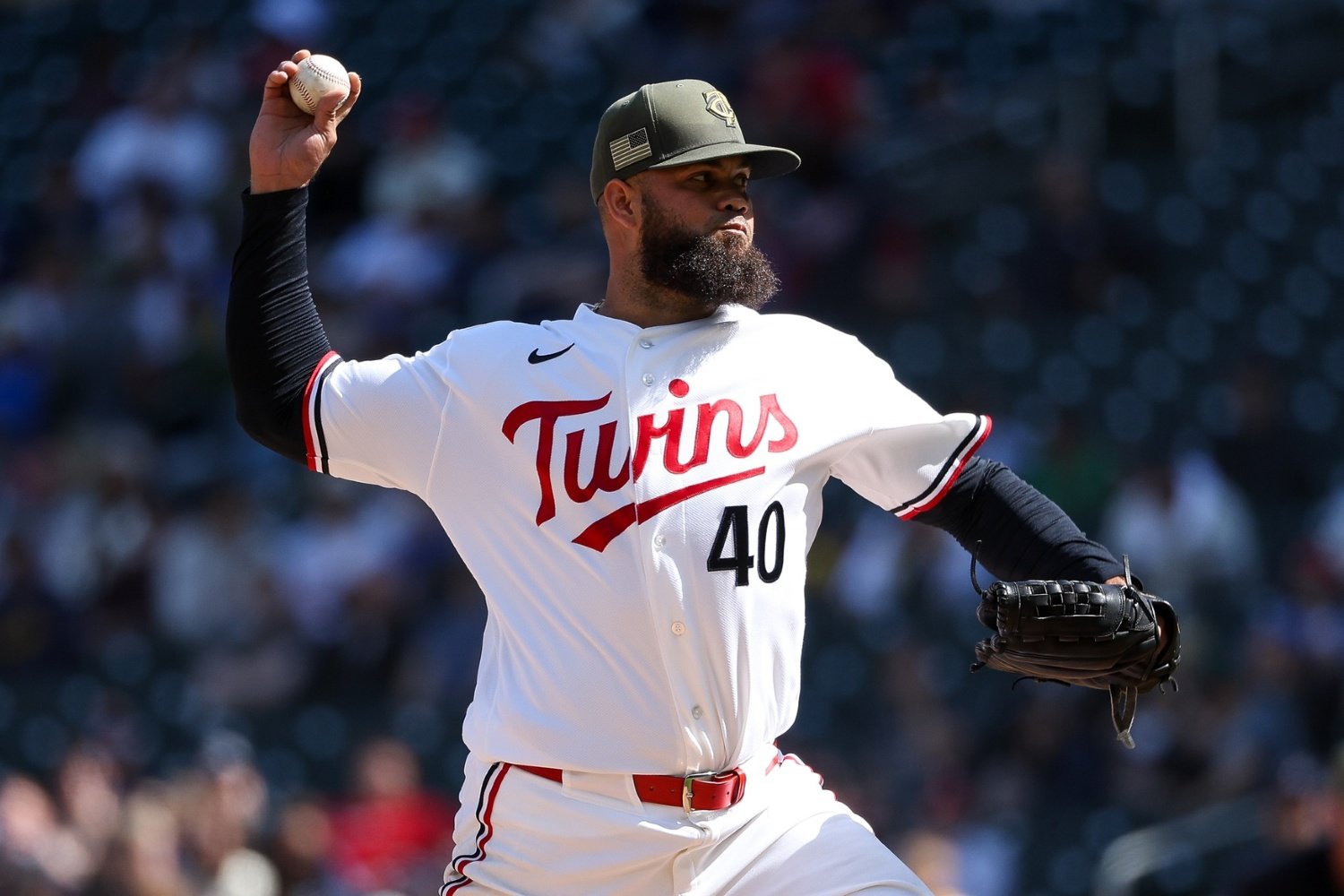 The 2026 Minnesota Twins bullpen is markedly different than those of past years. Obviously, there’s a clear talent gap, but beyond that, the arms are being deployed in a seemingly inconsistent manner. Minor-league veteran Luis García threw two innings of 9th-inning mop-up to begin his Twins career (allowing two runs in two innings across two games), and the next day, he was trusted to throw the 8th inning of a 4-3 game that the Twins were winning. In April, the Twins had back-to-back games (which they won) that required four relievers to record eight outs and five relievers to record 10. Justin Topa and Kody Funderburk both picked up saves, despite neither pitcher starting the 9th inning. To date, eight Twins have a save on their ledger, with none having more than two (Topa, García). As stated, this pattern is a far cry from the typical usage in prior seasons. It’s much easier to set it and forget it when the backend contains Jhoan Durán, Griffin Jax, Louis Varland, and Brock Stewart. Sure, there may be some shuffling required, but whatever day-to-day usage variance existed with a more structured pen, it doesn’t hold a candle to what we’ve seen from Derek Shelton’s relief corps. From the outside, this seems like the Twins are relying on gut instinct and hot hands to try to find a way through the late innings of every ballgame. (So up yours, analytics wonks!) However, it’s a bit naïve to believe that Shelton’s ability to white-knuckle his way through ballgames can all be chalked up to his baseball acumen and willingness to switch to another arm as soon as things start to skid. Before every game, professional scouts and analysts prepare game plans and scouting reports to prepare players for action. They also prepare material for coaches, and Shelton has confirmed that he has long meetings about the best possible plans to get through a game with his coaching staff, just as Rocco Baldelli did. Most teams have some hierarchy in the bullpen, all things being equal. But part of a pro scout's or analyst's role is helping managers make informed decisions within that hierarchy. One of the tools many organizations make available to managers is an in-game bullpen hierarchy. This tool might come in several forms. Many teams use a (close your ears if you hate nerds) laminated notecard listing the opposing team’s lineup. For each spot in the lineup, relievers are organized one through eight, based on the quality of the matchup with that specific hitter. Last season, that hierarchy might not have seen much variation. The best matchup against any hitter was Durán. After that, it was Jax. If the hitter was a lefty, third might be Danny Coulombe, but otherwise it’d be Stewart and Varland, in some order. Given the caliber of arms we’re talking about, throw the best one available. If pitchers are more evenly matched, though, that hitter-to-hitter differentiation might be more obvious. Naturally, there are platoon splits to be aware of—a guy like Taylor Rogers or Anthony Banda will get the nod against a lefty over someone like Cody Laweryson or Yoendrys Gómez. But there are also more idiosyncratic factors to consider. For instance, arm angle, pitch mix, velocity, swing trajectory and/or plate discipline can come into play. With a bunch of pitchers who can charitably be called “fine,” chasing the matchups becomes more useful and necessary. Take Topa (who has been designated for assignment since the writing of this piece, but who knows, he may remain in the organization) and Eric Orze. Both pitchers are righties who throw their fastball in the low 90s, but they have very different profiles. Topa is a sinker-sweeper/cutter pitcher who throws sidearm and mostly operates east-west. Orze has a much higher arm angle, and over half of his pitches are splitters. When he’s not throwing a splitter, you’ll probably see a fastball, giving him a much more distinct north-south profile. You should be able to see where I’m going here. Some hitters struggle more with north-south, and others struggle with east-west. There will be righties in an opposing lineup who should have Orze deployed against them, and others whom Topa would best match. Tyler Duffey referenced this type of system in a Twin Cities Territory episode last month, relaying how, when he was with the Twins, relievers would be prepped before each game on which part of the opposing lineup they would likely be deployed against. This scouting seems even more vital when the bullpen has to fight and claw for every advantage possible. So, in practice, to an outsider, that can look like Shelton pushing buttons at random. Topa may be trusted to close one day and throw the sixth the next, based on where his advantage is in the opponent’s lineup. And that quick hook for relievers may be a jumpy manager, or it might be that Cole Sands had the best matchup for the previous three batters, but Andrew Morris’s pitch mix is a better matchup for the next two, and Shelton wants to take advantage of that. Don't forget to factor recent workload in, too! There are always more layers to these decisions than meet the eye; teams work hard to keep it that way. Of course, there will still be stuff thrown at the wall to see what sticks. They don’t know what they have in John Klein or Kody Funderburk until they’ve been tested, and Shelton can also do a little Minnesota politicking (that is, passive aggression) if he believes it will compel the front office to make a roster move he feels is overdue. All told, though, the method is probably outweighing the madness in this regard. They have a plan, even if they’re working with lesser material. One fun way to pass the next month might be to figure out what patterns we can spot in that plan, as a few pitchers settle into their roles with the club.
- 24 comments
-
- 9
-

-
-
- derek shelton
- luis garcia
- (and 1 more)
-
Walker JenkinsKaelen CulpepperConnor PrielippEmmanuel RodriguezEduardo TaitMarek HoustonRiley QuickDasan HillKendry RojasAndrew MorrisGabriel GonzalezHendry MendezQuentin YoungBrandon WinokurJohn KleinKhadim DiawCharlee SotoJames EllwangerCJ CulpepperAdrian Bohorquez
-
Has Bonnes been taking part of my paycheck and putting it back into the site?
- 39 replies
-
- 2
-
-
- trevor larnach
- matt wallner
- (and 3 more)
-
We don't want to admit it, but the league has never had fewer good righty outfielders as we have right now. Per an article by Mike Petriello, there were only 16 starting right-handed outfielders with an an OPS+ of 100 or better: Ronald Acuña Jr., Jo Adell, Randy Arozarena, Harrison Bader, Byron Buxton, Jackson Chourio, Austin Hays, Teoscar Hernández, Aaron Judge, Wyatt Langford, Ramón Laureano, Andy Pages, Heliot Ramos, Julio Rodríguez, Fernando Tatis Jr., Taylor Ward. Right-handed outfielders as a whole had a 100 OPS+. Everyone's outfielders are left-handed, especially in the corners, because a lot of those righties listed are center fielders.
- 39 replies
-
- 7
-
-
- trevor larnach
- matt wallner
- (and 3 more)
-
The Rox landed me a long time ago, unfortunately.
-
Buy this thing from Gregg, you won't regret it
Greggory Masterson replied to Brock Beauchamp's topic in Minnesota Twins Talk
I really appreciate it, Richie -
Buy this thing from Gregg, you won't regret it
Greggory Masterson replied to Brock Beauchamp's topic in Minnesota Twins Talk
No free ads -
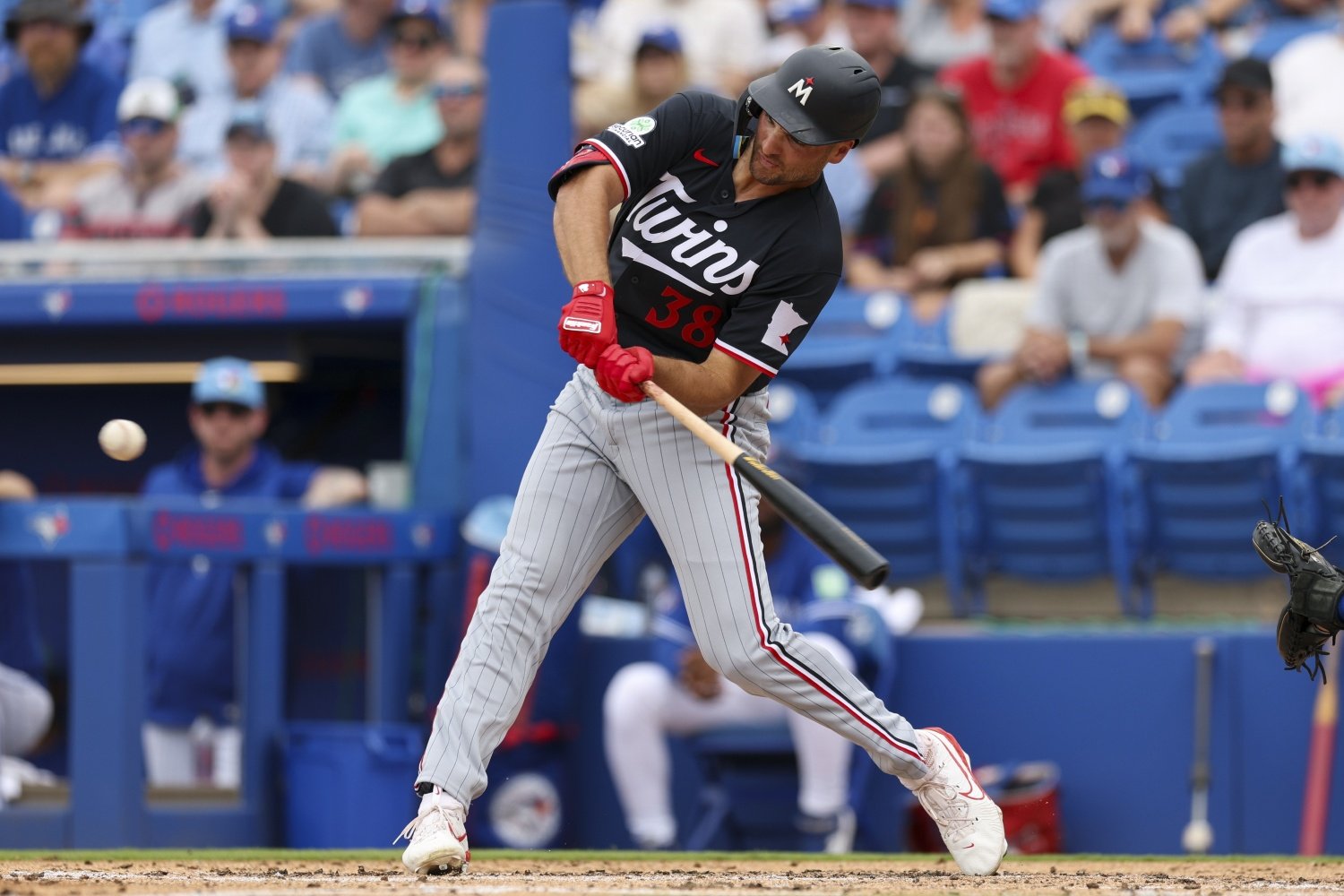 Another Twins spring training has come and gone, and although every spring brings new storylines, a select few tend to reappear again and again. It’s time to hand out Twins Daily’s Golden Grapefruit Awards, presented by Greggory T. Masterson of the Twins Off-Daily Podcast, a Twins Daily subsidiary, sponsored by No One, Are You Insane?. Miguel Sanó Memorial "Best Shape of His Life" Award: Brooks Lee If you close your eyes and look up spring training clichés in the dictionary, this is what you see—er, after you open your eyes again. Every spring, one guy or another shows up 15 pounds lighter or with an alleged 40 pounds of muscle. It’s such a cliché that Twins manager Derek Shelton actually requested that no one use the words “best shape of his life.” Well, too bad for Shelton, we provide unbiased, independent coverage, and we’re not afraid to ruffle some feathers, awarding Brooks Lee the Best Shape of his Life Award. Lee showed up weighing the same amount as last season, but the weight has been “better proportioned” as he has tried to improve his lateral foot speed and quickness in hopes of improving his defense at shortstop. Congratulations, Brooks! Previous winners: Jhoan Duran (2025), Byron Buxton (2024), José Miranda (2023) "Newest Pitch" Award: Connor Prielipp This spring, there was little news of new pitches among Twins pitchers. Maybe it’s because everyone was more concerned with who was pitching (or who wasn’t pitching) than they were about what those pitchers were throwing. There was no big story about six guys learning a splitter at Driveline or anything. There was one notable pitch added, though: Connor Prielipp added a curveball. Prielipp, who is fighting to remain a starter, has been working on adding a fourth pitch to complement his fastball, slider, and changeup. He’s already tried mixing in a sinker, and it looks like the Twins are also working with him on a curveball with more depth and glove-side movement than his gyro slider. Here’s hoping it helps him remain a rotation option! Previous winners: Jorge Alcala (2025), Joe Ryan (2024, 2023), Griffin Jax (2023) "Most Revamped Swing" Award: Matt Wallner Matt Wallner was probably the Twin most fans were convinced needed a swing overhaul this offseason, even after his 110 OPS+ last season. One of the biggest issues Wallner dealt with last season was his performance against fastballs in the upper third of the zone. This offseason, he made an effort to simplify his swing, working to expand the range of pitches he can damage without sacrificing the power his offensive profile is built on. To date, none of the Most Revamped Swing winners have turned around their offensive performance, but none of them have had the floor Wallner established last season. Previous winners: Ty France (2025), Brooks Lee (2024), Max Kepler (2023) "Weirdest Injury" Award: Pablo López For some reason, it seems like every spring some very stupid injury occurs, like Byron Buxton chipping his tooth eating steak or Jordan Balazovic being sucker-punched at a Fort Myers bar. Sadly, there were no ha-ha funny injuries this spring. There was an existentially funny injury, though. Just hours into spring training, Pablo López exited the mound with soreness in his arm. Within days, it would be determined that the Twins’ ace had a torn ulnar collateral ligament and would miss the entire season. Really. The first day, the first practice, just hours into camp. Not funny, but pretty funny. Previous winners: Mickey Gasper (stepped on playing second base, 2025), Pete Maki (ruptured bicep doing pullups, 2024), Jordan Balazovic (broken jaw, bar fight, 2023) "Honey, Grab My Program" Award: Kyler Fedko Somewhere between the 4th and 7th inning in nearly every spring training game, a wave of players wearing number 87 with no name on the back of their jersey take over for the big-leaguers. Every year, there are a couple of guys who do so in almost every game. Sometimes it’s for positional flexibility, other times they’re top prospects. And other times, the team doesn’t really have any other center fielders to play instead of them. Only players who have never appeared in MLB and are not on the 40-man roster qualify for this award. Both Kyler Fedko and Tanner Schobel appeared in 18 games, tied for the most on the team, including big leaguers. Fedko amassed 25 plate appearances, though, and had a few starts, so he wins this year. Fedko played all three outfield spots and first base, providing real coverage. He may have been the biggest surprise last season, nearly accumulating a 30-30 season in the minors, but he struggled in his opportunities this spring, batting just .130. Already 26, he may debut this season, though none of the other winners of this award were still in the organization the following season. Previous winners: Jeferson Morales (2025), Chris Williams (2024), Andrew Bechtold (2023) "First Cliché Statement" Award: Bailey Ober We’d like to take a moment of silence to mourn the trade of Carlos Correa, who (if he were still in a Twins jersey) would have surely been the betting favorite for this award. Alas, Correa had no opportunity to avenge his 2025 loss. Instead, this award goes to an unlikely winner, one Bailey Ober. As far as I can tell, Ober was among the first, if not the first, player to be interviewed this spring. When asked if he needed to win a rotation job, he said, “I always enjoy proving to myself that I'm here and that I every single day continue to try and get better and not necessarily be complacent with what I have. I'm always pushing myself and trying to be the best I can be, do whatever means necessary to accomplish that.” Everyone’s always excited to do the work on February 12. We’ll see if it paid off. Previous winners: Rocco Baldelli (2025), Carlos Correa (2024, 2023) "Grainiest Video" Award: Josh Norris Finally, my favorite award—the media can’t help themselves, and we, as fans, will eat up whatever they give us. When baseball’s back, we need proof. Grainy videos taken through a fence at the beginning of camp are a spring training staple. Dan Hayes tried to defend his crown, but I simply think phone cameras are too good. There wasn’t much to choose from this season. Instead of a beat writer, this year’s award goes to Josh Norris of Baseball America, who posted a video of Twins prospect Marek Houston with about a third of the frame obscured by a chain link fence. You can still see most of the swing, and the video is of good quality, but it doesn’t get more spring training than a slow-motion video obscured by a fence on a back field. Previous winners: Dan Hayes (2025, 2024), Do-Hyoung Park (2023)
- 4 comments
-
- 5
-
-
- bailey ober
- brooks lee
- (and 4 more)
-
Another Twins spring training has come and gone, and although every spring brings new storylines, a select few tend to reappear again and again. It’s time to hand out Twins Daily’s Golden Grapefruit Awards, presented by Greggory T. Masterson of the Twins Off-Daily Podcast, a Twins Daily subsidiary. Miguel Sanó Memorial "Best Shape of His Life" Award: Brooks Lee If you close your eyes and look up spring training cliches in the dictionary, this is what you see. Every spring, one guy or another shows up 15 pounds lighter or with an alleged 40 pounds of muscle. It’s such a cliché that Twins manager Derek Shelton actually requested that no one use the words “best shape of his life.” Well, too bad for Shelton, we provide unbiased, independent coverage, and we’re not afraid to ruffle some feathers, awarding Brooks Lee the Best Shape of his Life Award. Lee showed up weighing the same amount as last season, but the weight has been “better proportioned” as he has tried to improve his lateral foot speed and quickness in hopes of improving his defense at shortstop. Congratulations, Brooks! Previous winners: Jhoan Durán (2025), Byron Buxton (2024), José Miranda (2023) "Newest Pitch" Award: Connor Prielipp This spring, there was little news of new pitches among Twins pitchers. Maybe it’s because everyone was more concerned with who was pitching (or who wasn’t pitching) than they were about what those pitchers were throwing. There was no big story about six guys learning a splitter at Driveline or anything. There was one notable pitch added—Connor Prielipp added a curveball. Prielipp, who is fighting to remain a starter, has been working on adding a fourth pitch to complement his fastball, slider, and changeup. He’s already tried mixing in a sinker, and it looks like the Twins are also working with him on a curveball with more drop and glove-side movement than his gyro slider. Here’s hoping it helps him remain a rotation option! https://x.com/pitchprofiler/status/2026017472629874986 Previous winners: Jorge Alcala (2025), Joe Ryan (2024, 2023), Griffin Jax (2023) "Most Revamped Swing" Award: Matt Wallner Matt Wallner was probably the Twin most fans were convinced needed a swing overhaul this offseason, even after his 110 OPS+ last season. One of the biggest issues Wallner dealt with last season was his performance against fastballs in the upper third of the zone. https://x.com/HagemanParker/status/2035770889535431004?s=20 This offseason, he made an effort to simplify his swing, working to expand the range of pitches he can damage without sacrificing the power his offensive profile is built on. To date, none of the Most Revamped Swing winners have turned around their offensive performance, but none of them have had the floor Wallner established last season. Previous winners: Ty France (2025), Brooks Lee (2024), Max Kepler (2023) "Weirdest Injury" Award: Pablo López For some reason, it seems like every spring some very stupid injury occurs, like Bryon Buxton chipping his tooth eating steak or Jordan Balazovic being sucker punched at a Fort Myers bar. Sadly, there were no ha-ha funny injuries this spring. There was an existentially funny injury, though. Just hours into spring training starting, Pablo López exited the mound with soreness in his arm. Within days, it would be determined that the Twins’ ace had a torn ulnar collateral ligament and would miss the entire season. Really. The first day, the first practice, just hours into camp. Not funny, but pretty funny. Previous winners: Mickey Gasper (stepped on playing second base, 2025), Pete Maki (ruptured bicep doing pullups, 2024), Jordan Balazovic (broken jaw, bar fight, 2023) "Honey, Grab My Program" Award: Kyler Fedko Somewhere between the 4th and 7th inning in nearly every spring training game, a wave of players wearing number 87 with no name on the back of their jersey take over for the MLB players. Every year, there are a couple of guys who do so in almost every game. Sometimes it’s for positional flexibility, other times they’re top prospects. And other times, the team doesn’t really have any other center fielders to play instead of them. Only players who have never appeared in MLB and are not on the 40-man roster qualify for this award. Both Kyler Fedko and Tanner Schobel appeared in 18 games, tied for the most on the team, including big leaguers. Fedko amassed 25 plate appearances, though, and had a few starts, so he wins this year. Fedko played all three outfield spots and first base, providing real coverage this spring. He may have been the biggest surprise last season, nearly accumulating a 30-30 season in the minors, but he struggled in his opportunities this spring, batting just .130. Already 26, we may see him debut this season, though none of the other winners of this award were still in the organization the following season. Previous winners: Jeferson Morales (2025), Chris Williams (2024), Andrew Bechtold (2023) "First Cliché Statement" Award: Bailey Ober We’d like to take a moment of silence to mourn the trade of Carlos Correa, who, if he were still in a Twins jersey, would have surely been the betting favorite for this award. Alas, Correa had no opportunity to avenge his 2025 loss. Instead, this award goes to an unlikely winner, one Bailey Ober. As far as I can tell, Ober was among the first, if not the first, player to be interviewed this spring. When asked if he needed to win a rotation job, he said, “I always enjoy proving to myself that I'm here and that I every single day continue to try and get better and not necessarily be complacent with what I have. I'm always pushing myself and trying to be the best I can be, do whatever means necessary to accomplish that.” Everyone’s always excited to do the work on February 12. We’ll see if it paid off. Previous winners: Rocco Baldelli (2025), Carlos Correa (2024, 2023) "Grainiest Video" Award: Josh Norris Finally, my favorite award—the media can’t help themselves, and we, as fans, will eat up whatever they give us. When baseball’s back, we need proof. Grainy videos taken through a fence at the beginning of camp are a spring training staple. Dan Hayes tried to defend his crown, but I simply think phone cameras are too good. There wasn’t much to choose from this season. Instead of a beat writer, this year’s award goes to Josh Norris of Baseball America, who posted a video of Twins prospect Marek Houston with about a third of the frame obscured by a chain link fence. You can still see most of the swing, and the video is of good quality, but it doesn’t get more spring training than a slow-motion video obscured by a fence on a back field. https://x.com/jnorris427/status/2032468178211586420?s=20 Previous winners: Dan Hayes (2025, 2024), Do-Hyoung Park (2023) View full article
-
If Ryan Kreidler had been hitting like Christian Vázquez did over the past 3 seasons, he'd have a 10 year career as a utility infielder
-
I haven't checked in a couple days but my spreadsheet has him with 8 appearances at first, 5 at third, and 1 in left
