



Adam Friedman
-
Posts
102 -
Joined
-
Last visited
Content Type
Profiles
News
Minnesota Twins Videos
2026 Minnesota Twins Top Prospects Ranking
2022 Minnesota Twins Draft Picks
Minnesota Twins Free Agent & Trade Rumors, Notes, & Tidbits
Guides & Resources
2023 Minnesota Twins Draft Picks
The Minnesota Twins Players Project
2024 Minnesota Twins Draft Picks
2025 Minnesota Twins Draft Pick Tracker
2026 Minnesota Twins Draft Tracker: Picks & Bonuses
Forums
Blogs
Events
Store
Downloads
Gallery
Everything posted by Adam Friedman
-
 Should the first-place Twins trade one of their starters on expiring deals to help the organization in weaker areas? Image courtesy of © Matt Blewett-USA TODAY Sports Should the first-place Twins trade one of their starters on expiring deals to help the organization in weaker areas? The Twins are in first place, but they're in first place primarily because they are in the worst division in baseball, But also because their pitching staff has been one of the best in baseball. They rank 2nd in fWAR and FIP and lead the league in innings pitched. They could trade from the starting pitching strength, but doing so would likely weaken their playoff chances this year. Should they do it? Sonny Gray and Kenta Maeda are both on expiring deals, so they likely won't return in 2024. The Twins may need them to win the division or for an elusive playoff victory. But, since the Twins are in first place, there are merits for considering it. Pros to Trading Gray or Maeda Sellers' Market The Twins would consider trading Gray or Maeda because many teams seek starting pitching without an ample supply of quality starting pitchers on the trade market. The Twins do not need additional starting pitching help, so they could take advantage of this market. The White Sox flipped frontline starter Lucas Giolito and reliever Reynaldo Lopez on expiring deals for a package of two prospects headlined by top-100 prospect Edgar Quero. If the Twins trade Gray, they could likely add a fourth consensus top-100 prospect to the system, joining Brooks Lee, Emmanuel Rodriguez, and Walker Jenkins . Return Could Help in 2023 or 2024 and Beyond The upside to moving Gray or Maeda is that the return they receive could help them for multiple years down the line. With both being free agents this offseason, it's unlikely either will be back. Whether they trade for a young major leaguer or high minors' prospect, the return will help them in future years, where they might be a part of stronger teams than this one. It's worth noting that the Twins will extend Gray a qualifying offer (assuming health). In the unlikely case that Gray accepts the qualifying offer, the Twins would retain his services in 2024 for around $20 million. If he rejected the qualifying offer and they lost him in free agency, the Twins would receive a late first-round or second-round compensation pick. So he also has future value if they retain him. If they trade him, they need to receive a return with a value greater than the draft pick compensation. Playoff Rotation and Regular Season Rotation Can Survive without Them The biggest reason to trade Gray or Maeda is that the starting rotation could likely withstand their departure. They have Louie Varland and Dallas Keuchel to get them to the playoffs, and they could dip deeper to Brent Headrick if needed. Should the rotation hold up enough to get them to the playoffs, Joe Ryan, Pablo Lopez, and Bailey Ober are all fine to start a playoff game. They only need three starters if they make the playoffs, so subtracting Gray or Maeda (who likely isn't in line to start a playoff game anyways) would be fine. Cons to Trading Away Starting Pitching Diminished Depth Many say there is never too much starting pitching depth, which is typically accurate. The Twins learned that in 2019 when they lost Michael Pineda to suspension and Kyle Gibson and Martín Pérez to injury/illness ahead of the playoffs, resulting in Randy Dobnak starting Game 2 of the ALDS at Yankee Stadium. Trading away Gray or Maeda would diminish the depth and push the Twins closer to a disastrous scenario where they don't have a competent option to start a playoff game. Additionally, further diminishing depth could lead to having to lean on much worse pitchers in crucial games to get to the playoffs. Questionable Replacements It seems that Keuchel and Varland are acceptable fifth starters for the next two months. It's even easy to argue that the difference between ten starts of Maeda or Gray and Keuchel or Varland is marginal. On the other hand, While Keuchel has a 1.13 AAA ERA, walks are a problem, and at 38 with a fastball around 88 MPH, major league hitting might crush him. Varland hasn't fixed his home run problem in AAA, and that's unlikely to improve in the majors. Is the margin between Gray or Maeda and one of them over ten starts really that trivial? Morale For all the talk about value and team control, the players are, of course, people with real emotions like the rest of us. Gray and Maeda are veteran leaders of a starting pitching group that has been one of the best in baseball until the last couple of weeks. Losing that leadership could hurt the rest of the starting pitching group and send a message that the front office believes in something other than the group. The Twins can exploit a sellers' market for starting pitchers or hold onto veteran starters for the stretch run and playoffs. What do you think is the best path? View full article
 -
 The Twins are in first place, but they're in first place primarily because they are in the worst division in baseball, But also because their pitching staff has been one of the best in baseball. They rank 2nd in fWAR and FIP and lead the league in innings pitched. They could trade from the starting pitching strength, but doing so would likely weaken their playoff chances this year. Should they do it? Sonny Gray and Kenta Maeda are both on expiring deals, so they likely won't return in 2024. The Twins may need them to win the division or for an elusive playoff victory. But, since the Twins are in first place, there are merits for considering it. Pros to Trading Gray or Maeda Sellers' Market The Twins would consider trading Gray or Maeda because many teams seek starting pitching without an ample supply of quality starting pitchers on the trade market. The Twins do not need additional starting pitching help, so they could take advantage of this market. The White Sox flipped frontline starter Lucas Giolito and reliever Reynaldo Lopez on expiring deals for a package of two prospects headlined by top-100 prospect Edgar Quero. If the Twins trade Gray, they could likely add a fourth consensus top-100 prospect to the system, joining Brooks Lee, Emmanuel Rodriguez, and Walker Jenkins . Return Could Help in 2023 or 2024 and Beyond The upside to moving Gray or Maeda is that the return they receive could help them for multiple years down the line. With both being free agents this offseason, it's unlikely either will be back. Whether they trade for a young major leaguer or high minors' prospect, the return will help them in future years, where they might be a part of stronger teams than this one. It's worth noting that the Twins will extend Gray a qualifying offer (assuming health). In the unlikely case that Gray accepts the qualifying offer, the Twins would retain his services in 2024 for around $20 million. If he rejected the qualifying offer and they lost him in free agency, the Twins would receive a late first-round or second-round compensation pick. So he also has future value if they retain him. If they trade him, they need to receive a return with a value greater than the draft pick compensation. Playoff Rotation and Regular Season Rotation Can Survive without Them The biggest reason to trade Gray or Maeda is that the starting rotation could likely withstand their departure. They have Louie Varland and Dallas Keuchel to get them to the playoffs, and they could dip deeper to Brent Headrick if needed. Should the rotation hold up enough to get them to the playoffs, Joe Ryan, Pablo Lopez, and Bailey Ober are all fine to start a playoff game. They only need three starters if they make the playoffs, so subtracting Gray or Maeda (who likely isn't in line to start a playoff game anyways) would be fine. Cons to Trading Away Starting Pitching Diminished Depth Many say there is never too much starting pitching depth, which is typically accurate. The Twins learned that in 2019 when they lost Michael Pineda to suspension and Kyle Gibson and Martín Pérez to injury/illness ahead of the playoffs, resulting in Randy Dobnak starting Game 2 of the ALDS at Yankee Stadium. Trading away Gray or Maeda would diminish the depth and push the Twins closer to a disastrous scenario where they don't have a competent option to start a playoff game. Additionally, further diminishing depth could lead to having to lean on much worse pitchers in crucial games to get to the playoffs. Questionable Replacements It seems that Keuchel and Varland are acceptable fifth starters for the next two months. It's even easy to argue that the difference between ten starts of Maeda or Gray and Keuchel or Varland is marginal. On the other hand, While Keuchel has a 1.13 AAA ERA, walks are a problem, and at 38 with a fastball around 88 MPH, major league hitting might crush him. Varland hasn't fixed his home run problem in AAA, and that's unlikely to improve in the majors. Is the margin between Gray or Maeda and one of them over ten starts really that trivial? Morale For all the talk about value and team control, the players are, of course, people with real emotions like the rest of us. Gray and Maeda are veteran leaders of a starting pitching group that has been one of the best in baseball until the last couple of weeks. Losing that leadership could hurt the rest of the starting pitching group and send a message that the front office believes in something other than the group. The Twins can exploit a sellers' market for starting pitchers or hold onto veteran starters for the stretch run and playoffs. What do you think is the best path?
 -
He's the 2019 NL MVP, he plays center field, he'll be a free agent, and he shouldn't cost an arm and a leg. Cody Bellinger should be a priority. Image courtesy of © Michael McLoone-USA TODAY Sports He's the 2019 NL MVP, he plays center field, he'll be a free agent, and he shouldn't cost an arm and a leg. Cody Bellinger should be a priority. As the Twins' lineup toils away, many fans and analysts have brought up superstars such as Nolan Arenado and Paul Goldschmidt as trade targets to fix the offense. While they certainly could help, it might make sense for the Twins to set their sights a bit lower on the rental market to retain prospect capital while improving the team. A former rookie of the year, MVP, and World Series champion fits the bill for this smaller but still impactful move. By bringing in Cody Bellinger, the Twins can replace one of their worst hitters with an above-average hitter who brings athleticism, versatility, and a low strikeout rate. Why It Makes Sense Upgrade on Michael A. Taylor When the Twins acquired Michael A. Taylor, most observers expected that he would be a heavily used 4th outfielder. The Twins could rely on his tremendous center field defense while Byron Buxton began the year as the full-time designated hitter. Halfway through the season, Buxton is still the DH, and Taylor is the full-time center fielder. While Taylor has been terrific in center field and on the basepaths, stealing 11 bases so far, he has been as advertised at the plate, sporting a poor 84 wRC+, fueled by a Joey Gallo-esque 34.1% K%. Upgrading on Taylor's poor hitting is an excellent way for the Twins to improve the offensive output, and that's where Bellinger makes a ton of sense. He's had a bounce-back season where he's put up an outstanding 2.4 fWAR- driven by an offensive rebirth where he's put up a very solid 135 wRC+. Part of Bellinger's hitting success is drastically cutting his strikeout rate to 17.5% from 27.3% in 2022. This is much closer to the 16.4% K% that helped him win the MVP. Bellinger is a terrific center fielder, too, and has 11 stolen bases as well. In Bellinger, the Twins could acquire a massive upgrade at the plate without sacrificing Taylor's stolen bases and defense- while bumping Taylor to a minor role that he fits better in. Offensive and Defensive Versatility In addition to being a general upgrade on Taylor at the plate, Bellinger provides the team with versatility at the plate and in the field that manager Rocco Baldelli would appreciate having at his disposal. Not only can Bellinger play a good center field, but he also won a gold glove in right field in 2019. Should Buxton be able to play center field down the stretch, Bellinger could capably slide over to right field. Bellinger can also play first base, so Baldelli could shuffle things around to accommodate other outfielders. On the offensive side of the ball, Bellinger provides a bit of power with 11 home runs, speed with 11 stolen bases, and the ability to limit strikeouts, as previously mentioned. Beyond these diverse skills, in 2023, Bellinger has had reverse splits- which is highly unusual for a left-handed hitter. He has posted a solid 108 wRC+ against righties and an incredible 191 wRC+ against lefties for the Cubs, driven by a .671 SLG. It is unlikely that this success against lefties would sustain. He has a career of 106 wRC+ against lefties, much lower than his career of 123 wRC+ against righties. If it did sustain, though, it would be a massive advantage for the Twins, who have struggled mightily against lefties all season. Red Flags While Bellinger's success this season has been a fun story and a pleasant surprise, there are certainly some red flags that could indicate acquiring Bellinger might work out poorly. First, his batted ball data doesn't indicate that his performance has been that much better than the last two horrible seasons. His hard hit % and barrel % are down, and his max exit velocity still isn't where it was at his MVP peak. Second, he had a great start to the season in April but was awful in May and June. He has been great again in July, but is he just another streaky bat? If so, Bellinger may be going into a massive slump when the Twins need him to hit. Third, the data on his success against lefties is extraordinary based on his track record. That seems like a fluke, which begs the question, is Bellinger's 2023 season a fluke? It remains to be seen how Bellinger finishes his season, but given what he's done in 2023 up to this point, he would be a worthwhile acquisition, despite these question marks - only if the price is right. The Cost To determine the cost of acquiring Bellinger, the 2021 Kris Bryant trade from the Cubs to the Giants and the 2022 Andrew Benintendi trade from Kansas City to the Yankees provide excellent comparisons, based on the level of player that season and them being on expiring deals. In the Benintendi deal, the Royals received the Yankees' 19th and 21st best prospects at the time and one outside of the top 30, per MLB Pipeline. The Cubs received the Giants' 9th and 30th best prospects in the Bryant deal, per MLB Pipeline. The best prospect at the time in either deal was Alex Canario in the Bryant deal, which Fangraphs had as a 45 FV prospect, who was a boom or bust type of prospect, yet to hit at the professional level. While our friends at Northside Baseball suggest Bellinger could maybe command Alex Kirilloff, David Festa, or Marco Raya, it seems likely the Twins could hold onto those prospects, and a package around Tanner Schobel or even Kala'i Rosario might get the job done. The Cubs may place a lot of value on the opportunity to make Bellinger a qualifying offer. Still, given the questions about Bellinger's ability to sustain this performance, it's possible he could accept the offer. It's unclear if the Cubs would want to risk committing around $20 million in 2024 to Bellinger, with their top prospect, Pete Crow-Armstrong , likely to come up at some point in the season to take over in center. If the qualifying offer raises the value the Cubs ask for, the Twins can make a slightly stronger offer. Regardless of the qualifying offer, Bellinger could give the Twins a massive upgrade at one of their lousy lineup's weakest spots. Bringing in Bellinger could help the Twins secure a division title without being a move that guts an already somewhat depleted farm system. View full article
-
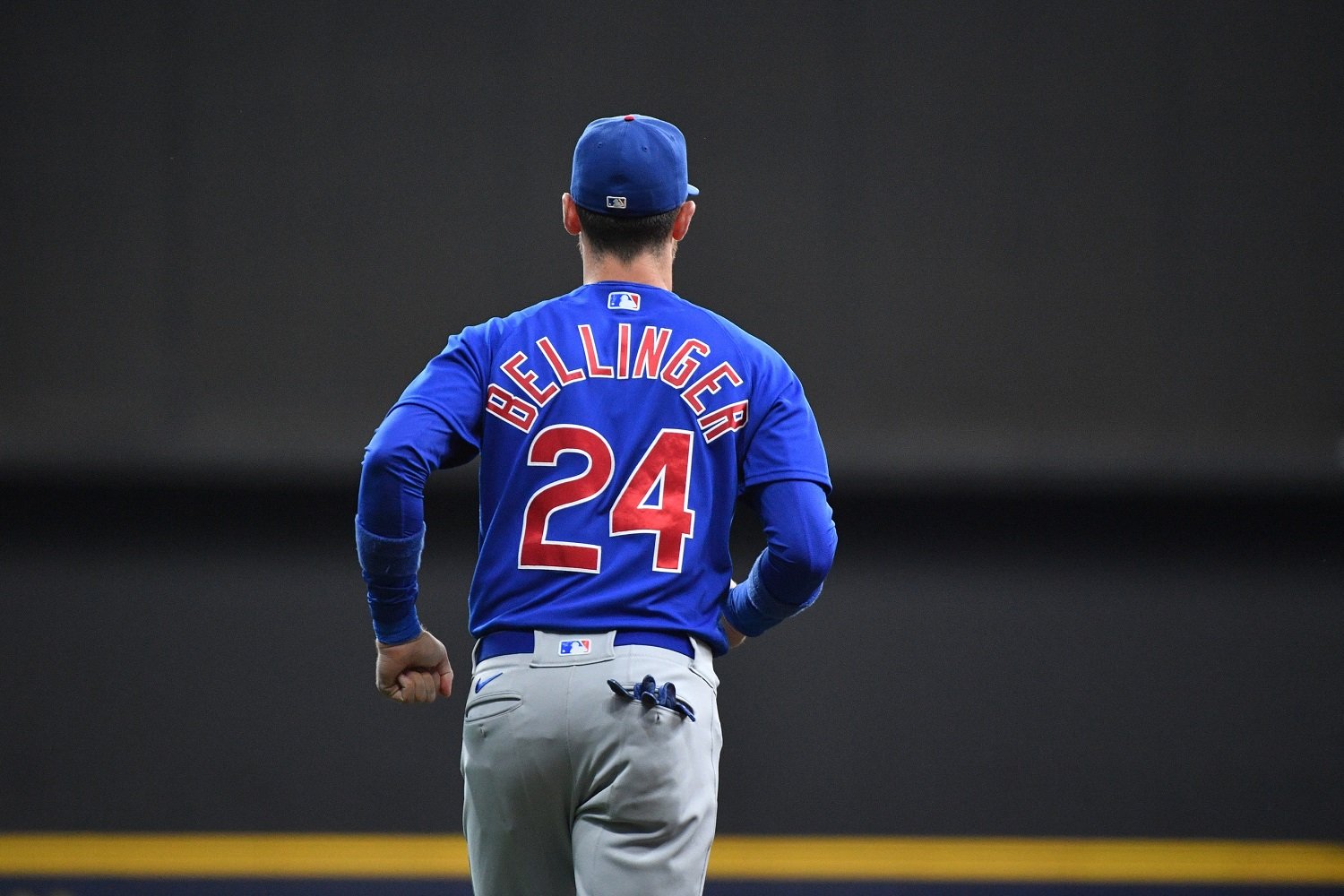 As the Twins' lineup toils away, many fans and analysts have brought up superstars such as Nolan Arenado and Paul Goldschmidt as trade targets to fix the offense. While they certainly could help, it might make sense for the Twins to set their sights a bit lower on the rental market to retain prospect capital while improving the team. A former rookie of the year, MVP, and World Series champion fits the bill for this smaller but still impactful move. By bringing in Cody Bellinger, the Twins can replace one of their worst hitters with an above-average hitter who brings athleticism, versatility, and a low strikeout rate. Why It Makes Sense Upgrade on Michael A. Taylor When the Twins acquired Michael A. Taylor, most observers expected that he would be a heavily used 4th outfielder. The Twins could rely on his tremendous center field defense while Byron Buxton began the year as the full-time designated hitter. Halfway through the season, Buxton is still the DH, and Taylor is the full-time center fielder. While Taylor has been terrific in center field and on the basepaths, stealing 11 bases so far, he has been as advertised at the plate, sporting a poor 84 wRC+, fueled by a Joey Gallo-esque 34.1% K%. Upgrading on Taylor's poor hitting is an excellent way for the Twins to improve the offensive output, and that's where Bellinger makes a ton of sense. He's had a bounce-back season where he's put up an outstanding 2.4 fWAR- driven by an offensive rebirth where he's put up a very solid 135 wRC+. Part of Bellinger's hitting success is drastically cutting his strikeout rate to 17.5% from 27.3% in 2022. This is much closer to the 16.4% K% that helped him win the MVP. Bellinger is a terrific center fielder, too, and has 11 stolen bases as well. In Bellinger, the Twins could acquire a massive upgrade at the plate without sacrificing Taylor's stolen bases and defense- while bumping Taylor to a minor role that he fits better in. Offensive and Defensive Versatility In addition to being a general upgrade on Taylor at the plate, Bellinger provides the team with versatility at the plate and in the field that manager Rocco Baldelli would appreciate having at his disposal. Not only can Bellinger play a good center field, but he also won a gold glove in right field in 2019. Should Buxton be able to play center field down the stretch, Bellinger could capably slide over to right field. Bellinger can also play first base, so Baldelli could shuffle things around to accommodate other outfielders. On the offensive side of the ball, Bellinger provides a bit of power with 11 home runs, speed with 11 stolen bases, and the ability to limit strikeouts, as previously mentioned. Beyond these diverse skills, in 2023, Bellinger has had reverse splits- which is highly unusual for a left-handed hitter. He has posted a solid 108 wRC+ against righties and an incredible 191 wRC+ against lefties for the Cubs, driven by a .671 SLG. It is unlikely that this success against lefties would sustain. He has a career of 106 wRC+ against lefties, much lower than his career of 123 wRC+ against righties. If it did sustain, though, it would be a massive advantage for the Twins, who have struggled mightily against lefties all season. Red Flags While Bellinger's success this season has been a fun story and a pleasant surprise, there are certainly some red flags that could indicate acquiring Bellinger might work out poorly. First, his batted ball data doesn't indicate that his performance has been that much better than the last two horrible seasons. His hard hit % and barrel % are down, and his max exit velocity still isn't where it was at his MVP peak. Second, he had a great start to the season in April but was awful in May and June. He has been great again in July, but is he just another streaky bat? If so, Bellinger may be going into a massive slump when the Twins need him to hit. Third, the data on his success against lefties is extraordinary based on his track record. That seems like a fluke, which begs the question, is Bellinger's 2023 season a fluke? It remains to be seen how Bellinger finishes his season, but given what he's done in 2023 up to this point, he would be a worthwhile acquisition, despite these question marks - only if the price is right. The Cost To determine the cost of acquiring Bellinger, the 2021 Kris Bryant trade from the Cubs to the Giants and the 2022 Andrew Benintendi trade from Kansas City to the Yankees provide excellent comparisons, based on the level of player that season and them being on expiring deals. In the Benintendi deal, the Royals received the Yankees' 19th and 21st best prospects at the time and one outside of the top 30, per MLB Pipeline. The Cubs received the Giants' 9th and 30th best prospects in the Bryant deal, per MLB Pipeline. The best prospect at the time in either deal was Alex Canario in the Bryant deal, which Fangraphs had as a 45 FV prospect, who was a boom or bust type of prospect, yet to hit at the professional level. While our friends at Northside Baseball suggest Bellinger could maybe command Alex Kirilloff, David Festa, or Marco Raya, it seems likely the Twins could hold onto those prospects, and a package around Tanner Schobel or even Kala'i Rosario might get the job done. The Cubs may place a lot of value on the opportunity to make Bellinger a qualifying offer. Still, given the questions about Bellinger's ability to sustain this performance, it's possible he could accept the offer. It's unclear if the Cubs would want to risk committing around $20 million in 2024 to Bellinger, with their top prospect, Pete Crow-Armstrong , likely to come up at some point in the season to take over in center. If the qualifying offer raises the value the Cubs ask for, the Twins can make a slightly stronger offer. Regardless of the qualifying offer, Bellinger could give the Twins a massive upgrade at one of their lousy lineup's weakest spots. Bringing in Bellinger could help the Twins secure a division title without being a move that guts an already somewhat depleted farm system.
- 34 comments
-
- 3
-

-
- cody bellinger
- michael a taylor
- (and 1 more)
-
My thought when bringing him into it is that a different voice could kickstart things. Obviously, I'm not in the hitters' meetings, but it's hard to see a group with solid talent like this one getting any worse.
-
I definitely thought about Gallo. I think with Buxton's health issues, maintaining some level at depth at least for now is important. And I'm not completely convinced it's not possible Gallo can be productive. For this offense, his power potential could be very useful.
-
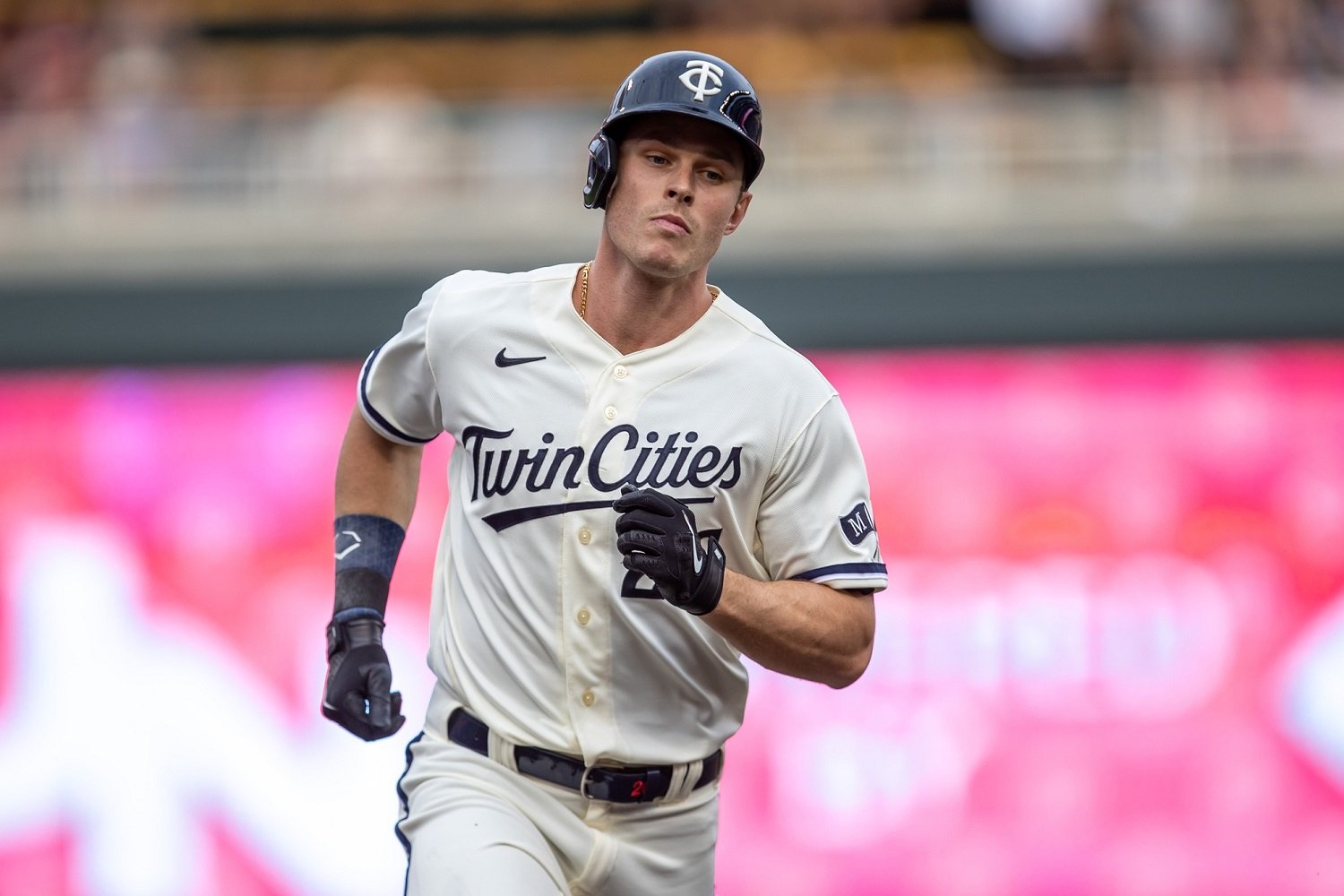 The Twins came into this season with modest expectations. Most projection systems had them just above .500, finishing first or second in a lousy division. So far, the Twins lead the division but have failed to break away from the .500 mark and risk falling behind Cleveland, who's just as uninspiring. It's time for the Twins to make two changes. 1. Swap Matt Wallner for Max Kepler While the manager, coaches, and front office draw plenty of ire, the players have not performed so far. Max Kepler represents that poor performance more than any other Twin. Kepler broke out with the Twins in 2019, and many fans believed he'd be a key player for years. Many even believed he had a chance to break out further into one of the game's premier players. The opposite has happened. Kepler has gotten worse every season. He was above average offensively in 2020 but dipped below in 2021 and 2022. Now he's reached new lows. His wRC+ sits at 91 going into play on 6/27- meaning he's 9% below average as a hitter. That is untenable for a right fielder in this offense. Thinking Kepler needs to go is hardly an original thought, but it is well past time for the Twins to move on from Kepler - and analysts and fans will continue to say it until he's gone. Over 1,000 at-bats from 2021-23 show he will not get better in Minnesota. While there's the scary possibility of him hitting bombs for the Yankees or another contender in October or something like that, the Twins need to find a trade partner or DFA Max Kepler because he is a waste of a roster spot, blocking higher upside players- especially Matt Wallner. Wallner is the first name that comes to mind when looking for an offensive jolt from the minors, and he can replace Kepler in right field. Wallner raked at the major league level, posting a remarkable and unsustainable 216 wRC+, but he was sent down when Joey Gallo returned from an injury. Since his demotion, Wallner has continued to terrorize AAA pitching, as he's done since last season. It is ridiculously frustrating for all involved with the Twins to watch him do this without getting the opportunity to help the major league club. He's the two-time Twins minor league player of the year, yet he's not getting the opportunities he earned in the majors and at AAA. He has a knack for striking out but has hit overall at every level. With the strikeouts come a solid walk rate and massive power that the Twins need. Bringing Wallner back could help wake up a sleepy offense. If the Twins are running a team on merit, it's clear Wallner should be playing right field, not Max Kepler. 2. Fire Hitting Coach David Popkins While shuffling the players is one way to make a change, the problems with this team may go beyond individual players. With so much underperformance on the offensive side of the ball, the young hitting coach seems like the obvious first person to go if the Twins shake things up. It was surprising when the Twins tapped David Popkins as the hitting coach going into 2021 when he was about to turn 32. He had never been above high-A as a hitting coach, so making him the hitting coach of a major league club indicated the Twins management saw something special in Popkins. After almost one and a half seasons of inconsistency on that side of the ball, he isn't having much success. Ken Rosenthal indicated on the Athletic on June 16th that the Twins will not fire Popkins- despite the team's struggles offensively. That decision is odd. Star players aren't hitting, and role players like Christian Vazquez and Max Kepler are having career-worst seasons. A change must be made when nobody is hitting- even if there is some risk that it worsens things. In his scathing story on the Twins' offense on June 21st, Rosenthal called out the Twins' refusal to cut bait with Max Kepler and David Popkins. He mentions that they still believe Kepler has an upside, but as mentioned earlier, there's no evidence that is true. He indicated that the Twins have no plans to let go of either Kepler or Popkins. Allowing them to toil without results is absurd as the division slips away. Will the Twin's leadership finally see the obvious and make the obvious changes?
 -
The mediocrity of this season on the tail of two straight losing seasons rightly frustrates fans. Many fans are calling for change, but what changes should they make? Image courtesy of © Jesse Johnson-USA TODAY Sports The mediocrity of this season on the tail of two straight losing seasons rightly frustrates fans. Many fans are calling for change, but what changes should they make? The Twins came into this season with modest expectations. Most projection systems had them just above .500, finishing first or second in a lousy division. So far, the Twins lead the division but have failed to break away from the .500 mark and risk falling behind Cleveland, who's just as uninspiring. It's time for the Twins to make two changes. 1. Swap Matt Wallner for Max Kepler While the manager, coaches, and front office draw plenty of ire, the players have not performed so far. Max Kepler represents that poor performance more than any other Twin. Kepler broke out with the Twins in 2019, and many fans believed he'd be a key player for years. Many even believed he had a chance to break out further into one of the game's premier players. The opposite has happened. Kepler has gotten worse every season. He was above average offensively in 2020 but dipped below in 2021 and 2022. Now he's reached new lows. His wRC+ sits at 91 going into play on 6/27- meaning he's 9% below average as a hitter. That is untenable for a right fielder in this offense. Thinking Kepler needs to go is hardly an original thought, but it is well past time for the Twins to move on from Kepler - and analysts and fans will continue to say it until he's gone. Over 1,000 at-bats from 2021-23 show he will not get better in Minnesota. While there's the scary possibility of him hitting bombs for the Yankees or another contender in October or something like that, the Twins need to find a trade partner or DFA Max Kepler because he is a waste of a roster spot, blocking higher upside players- especially Matt Wallner. Wallner is the first name that comes to mind when looking for an offensive jolt from the minors, and he can replace Kepler in right field. Wallner raked at the major league level, posting a remarkable and unsustainable 216 wRC+, but he was sent down when Joey Gallo returned from an injury. Since his demotion, Wallner has continued to terrorize AAA pitching, as he's done since last season. It is ridiculously frustrating for all involved with the Twins to watch him do this without getting the opportunity to help the major league club. He's the two-time Twins minor league player of the year, yet he's not getting the opportunities he earned in the majors and at AAA. He has a knack for striking out but has hit overall at every level. With the strikeouts come a solid walk rate and massive power that the Twins need. Bringing Wallner back could help wake up a sleepy offense. If the Twins are running a team on merit, it's clear Wallner should be playing right field, not Max Kepler. 2. Fire Hitting Coach David Popkins While shuffling the players is one way to make a change, the problems with this team may go beyond individual players. With so much underperformance on the offensive side of the ball, the young hitting coach seems like the obvious first person to go if the Twins shake things up. It was surprising when the Twins tapped David Popkins as the hitting coach going into 2021 when he was about to turn 32. He had never been above high-A as a hitting coach, so making him the hitting coach of a major league club indicated the Twins management saw something special in Popkins. After almost one and a half seasons of inconsistency on that side of the ball, he isn't having much success. Ken Rosenthal indicated on the Athletic on June 16th that the Twins will not fire Popkins- despite the team's struggles offensively. That decision is odd. Star players aren't hitting, and role players like Christian Vazquez and Max Kepler are having career-worst seasons. A change must be made when nobody is hitting- even if there is some risk that it worsens things. In his scathing story on the Twins' offense on June 21st, Rosenthal called out the Twins' refusal to cut bait with Max Kepler and David Popkins. He mentions that they still believe Kepler has an upside, but as mentioned earlier, there's no evidence that is true. He indicated that the Twins have no plans to let go of either Kepler or Popkins. Allowing them to toil without results is absurd as the division slips away. Will the Twin's leadership finally see the obvious and make the obvious changes? View full article
-
Certainly easier to be me than Derek Falvey. You need a plan for whoever you sign, but they could easily bust/get injured regardless of the plan. Just seems like it was foreseeable they’d be in the situation, which is why I wrote about the available options a couple months ago (February I believe).
-
It’s a volatile market and you’re generally better off relying on homegrown guys, but one $5 million-$9 million one-year deal just seems like it would benefit the team a lot. Honestly, before doing the research, I expected most of the cheaper options to be struggling, but most are thriving.
-
Choosing relievers is hard but also part of the job. I advocated for Moore a couple months back when I wrote about the last available guys, but it’s really tough to predict.
-
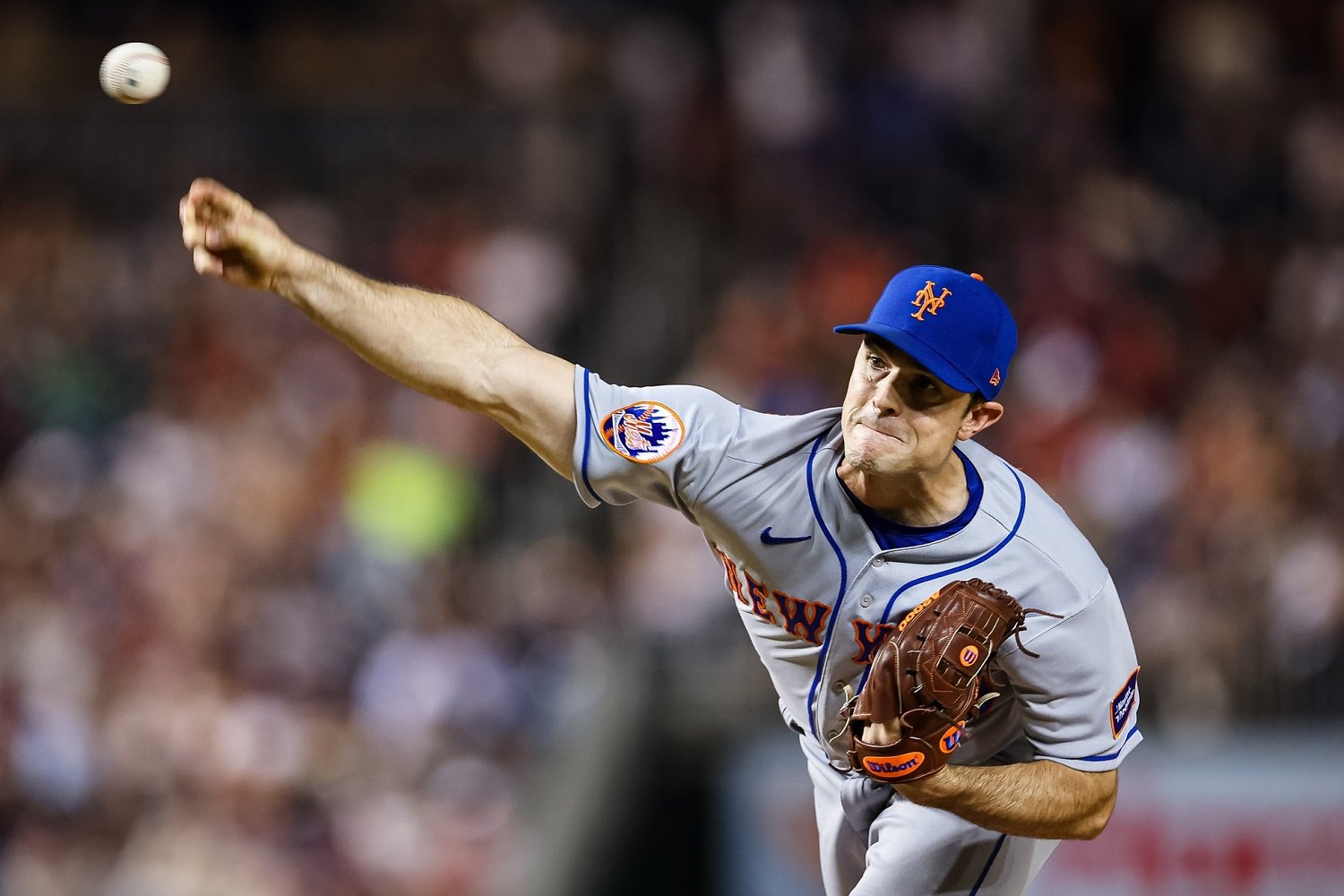 Many viewed the Twins' bullpen as a strength heading into this season, which was reasonable given the strong group at the top: Jhoan Duran, Jorge López, Griffin Jax, and Caleb Thielbar. While those guys are excellent, it seemed clear that for the bullpen to shine, it needed improved performances from a combination of Emilio Pagán, Jovani Moran, or Jorge Alcala. If they didn't step it up, an injury to one of the top four could be catastrophic, and beyond the injury concerns, a team needs more than four reliable relievers to succeed. While the Twins may have uncovered a hidden gem in Brock Stewart, it does not seem enough for the bullpen to thrive, with none of Pagán, Moran, or Alcala inspiring much confidence and Thielbar injured for now. The Twins are 23rd in relief pitcher xFIP in all of baseball, indicating they are lucky to be 12th in relief pitcher ERA. On Wednesday, the group's apparent weakness reared its ugly head when the Twins had a one-run lead over the Dodgers, with seemingly none of the back four available. Without their services available, Twins fans were subjected to a familiar sight- Pagán blowing the lead via a home run- in this case, a grand slam. With the lack of bullpen depth and the mystifying decision to bring him back, Pagán blowing a game isn't a shock. Many analysts advocated that the Twins add a reliever in free agency, but they chose not to sign a single reliever on a major league contract. That decision begs the question: how are the free-agent relievers doing in 2023? Could they have improved the Twins' bullpen? The Expensive Signings ($10 million+ AAV) This Twins front office has been reluctant to invest financially in the free agent reliever market, and when they have done it, it yielded poor results. Relievers can be highly volatile, so investing large sums of money in them is risky, but it can certainly pay off. The 2023 free agent class had six pitchers sign $10 million per year contracts or more- four of those signings being for multiple years. The four pitchers who received multiyear contracts are Edwin Diaz, Kenley Jansen, Rafael Montero, and Taylor Rogers. David Robertson and Craig Kimbrel each signed a one-year, $10 million deal. Diaz suffered a season-ending injury celebrating at the World Baseball Classic after becoming the first $100 million reliever, and Montero was resigned quickly by Houston. Rogers, Jansen, Kimbrel, and Robertson are the only four of the group who were seemingly available to the Twins and with any performance to evaluate in 2023. Rogers, Kimbrel, and Jansen have all been underwhelming- with ERAs of 4.72, 6.60, and 4.26. However, all have produced batted ball metrics indicating they've been above average but unlucky- with Jansen having an outstanding xERA of 3.06. He's probably the only of the three that would've been a worthwhile investment- but $32 million over two years is expensive for somebody with a 4.26 ERA- regardless of the underlying numbers. Robertson, on the other hand, has been one of the best relievers in the league. He's posted a dazzling 0.95 ERA with a 98th percentile xERA of 2.03. All that for $10 million is certainly worth it. It's an improvement on last season but not particularly surprising because he was also one of the better relievers in 2022. If not priced out, the Twins should have been at least interested in Robertson's services- and he would have improved the current bullpen. Middle-Priced Options (Less Than $10 Million AAV) This group of relievers is much larger and not necessarily worth discussing in individualized detail. Still, it is worthwhile to see what options would've worked out and which might've been failed signings had the Twins brought them. The group of pitchers who have been successful in 2023 in this price range is surprisingly large. Matt Moore, Adam Ottavino, Carlos Estevez, Andrew Chafin, Chris Martin, and even Aroldis Chapman have all been at least well above average by xERA. Assuming their performance would be the same for the Twins, all of those pitchers would have massively improved the Twins' bullpen. It's also unsurprising that Moore and Chafin are thriving- given their strong 2022 seasons. Admittedly, a few relievers signed in this price range have been poor or injured- so the Twins would have had to choose the right guy. But, surprisingly, at least so far, most of the relief pitchers signed for between $3 million and $10 million have had strong 2023 seasons, so it would have been hard to miss. Michael Fulmer, Pierce Johnson, and Trevor May (who was awful before getting injured) would have hurt this bullpen group. Still, it seems the Twins, had they spent Pagán's $3.5 million or more on a different reliever, would have helped a group that needs it. Consequences of Not Signing at Least One Reliever Choosing not to invest heavily in the bullpen via free agency has been a constant throughout the current regime's tenure. However, signing zero relievers to a major league deal is a new extreme. By choosing not to add bullpen depth, the Twins likely will lose a few extra games between now and the trade deadline, which could be costly for a team gunning for the playoffs. Further, barring breakouts from internal options or waivers, they will need to trade for at least one reliever at the deadline. Any trade will cost them prospect capital, and they'll have to pay a couple of months of that pitcher's salary anyway. The cost at the deadline to add needed bullpen help will likely be steeper than it would have been this winter. It is clear now that not adding a single reliever was a mistake, but it remains to be seen just how costly.
 -
How are the free agent relievers that the Twins didn't sign doing? Image courtesy of © Scott Taetsch-USA TODAY Sports How are the free agent relievers that the Twins didn't sign doing? Many viewed the Twins' bullpen as a strength heading into this season, which was reasonable given the strong group at the top: Jhoan Duran, Jorge López, Griffin Jax, and Caleb Thielbar. While those guys are excellent, it seemed clear that for the bullpen to shine, it needed improved performances from a combination of Emilio Pagán, Jovani Moran, or Jorge Alcala. If they didn't step it up, an injury to one of the top four could be catastrophic, and beyond the injury concerns, a team needs more than four reliable relievers to succeed. While the Twins may have uncovered a hidden gem in Brock Stewart, it does not seem enough for the bullpen to thrive, with none of Pagán, Moran, or Alcala inspiring much confidence and Thielbar injured for now. The Twins are 23rd in relief pitcher xFIP in all of baseball, indicating they are lucky to be 12th in relief pitcher ERA. On Wednesday, the group's apparent weakness reared its ugly head when the Twins had a one-run lead over the Dodgers, with seemingly none of the back four available. Without their services available, Twins fans were subjected to a familiar sight- Pagán blowing the lead via a home run- in this case, a grand slam. With the lack of bullpen depth and the mystifying decision to bring him back, Pagán blowing a game isn't a shock. Many analysts advocated that the Twins add a reliever in free agency, but they chose not to sign a single reliever on a major league contract. That decision begs the question: how are the free-agent relievers doing in 2023? Could they have improved the Twins' bullpen? The Expensive Signings ($10 million+ AAV) This Twins front office has been reluctant to invest financially in the free agent reliever market, and when they have done it, it yielded poor results. Relievers can be highly volatile, so investing large sums of money in them is risky, but it can certainly pay off. The 2023 free agent class had six pitchers sign $10 million per year contracts or more- four of those signings being for multiple years. The four pitchers who received multiyear contracts are Edwin Diaz, Kenley Jansen, Rafael Montero, and Taylor Rogers. David Robertson and Craig Kimbrel each signed a one-year, $10 million deal. Diaz suffered a season-ending injury celebrating at the World Baseball Classic after becoming the first $100 million reliever, and Montero was resigned quickly by Houston. Rogers, Jansen, Kimbrel, and Robertson are the only four of the group who were seemingly available to the Twins and with any performance to evaluate in 2023. Rogers, Kimbrel, and Jansen have all been underwhelming- with ERAs of 4.72, 6.60, and 4.26. However, all have produced batted ball metrics indicating they've been above average but unlucky- with Jansen having an outstanding xERA of 3.06. He's probably the only of the three that would've been a worthwhile investment- but $32 million over two years is expensive for somebody with a 4.26 ERA- regardless of the underlying numbers. Robertson, on the other hand, has been one of the best relievers in the league. He's posted a dazzling 0.95 ERA with a 98th percentile xERA of 2.03. All that for $10 million is certainly worth it. It's an improvement on last season but not particularly surprising because he was also one of the better relievers in 2022. If not priced out, the Twins should have been at least interested in Robertson's services- and he would have improved the current bullpen. Middle-Priced Options (Less Than $10 Million AAV) This group of relievers is much larger and not necessarily worth discussing in individualized detail. Still, it is worthwhile to see what options would've worked out and which might've been failed signings had the Twins brought them. The group of pitchers who have been successful in 2023 in this price range is surprisingly large. Matt Moore, Adam Ottavino, Carlos Estevez, Andrew Chafin, Chris Martin, and even Aroldis Chapman have all been at least well above average by xERA. Assuming their performance would be the same for the Twins, all of those pitchers would have massively improved the Twins' bullpen. It's also unsurprising that Moore and Chafin are thriving- given their strong 2022 seasons. Admittedly, a few relievers signed in this price range have been poor or injured- so the Twins would have had to choose the right guy. But, surprisingly, at least so far, most of the relief pitchers signed for between $3 million and $10 million have had strong 2023 seasons, so it would have been hard to miss. Michael Fulmer, Pierce Johnson, and Trevor May (who was awful before getting injured) would have hurt this bullpen group. Still, it seems the Twins, had they spent Pagán's $3.5 million or more on a different reliever, would have helped a group that needs it. Consequences of Not Signing at Least One Reliever Choosing not to invest heavily in the bullpen via free agency has been a constant throughout the current regime's tenure. However, signing zero relievers to a major league deal is a new extreme. By choosing not to add bullpen depth, the Twins likely will lose a few extra games between now and the trade deadline, which could be costly for a team gunning for the playoffs. Further, barring breakouts from internal options or waivers, they will need to trade for at least one reliever at the deadline. Any trade will cost them prospect capital, and they'll have to pay a couple of months of that pitcher's salary anyway. The cost at the deadline to add needed bullpen help will likely be steeper than it would have been this winter. It is clear now that not adding a single reliever was a mistake, but it remains to be seen just how costly. View full article
-
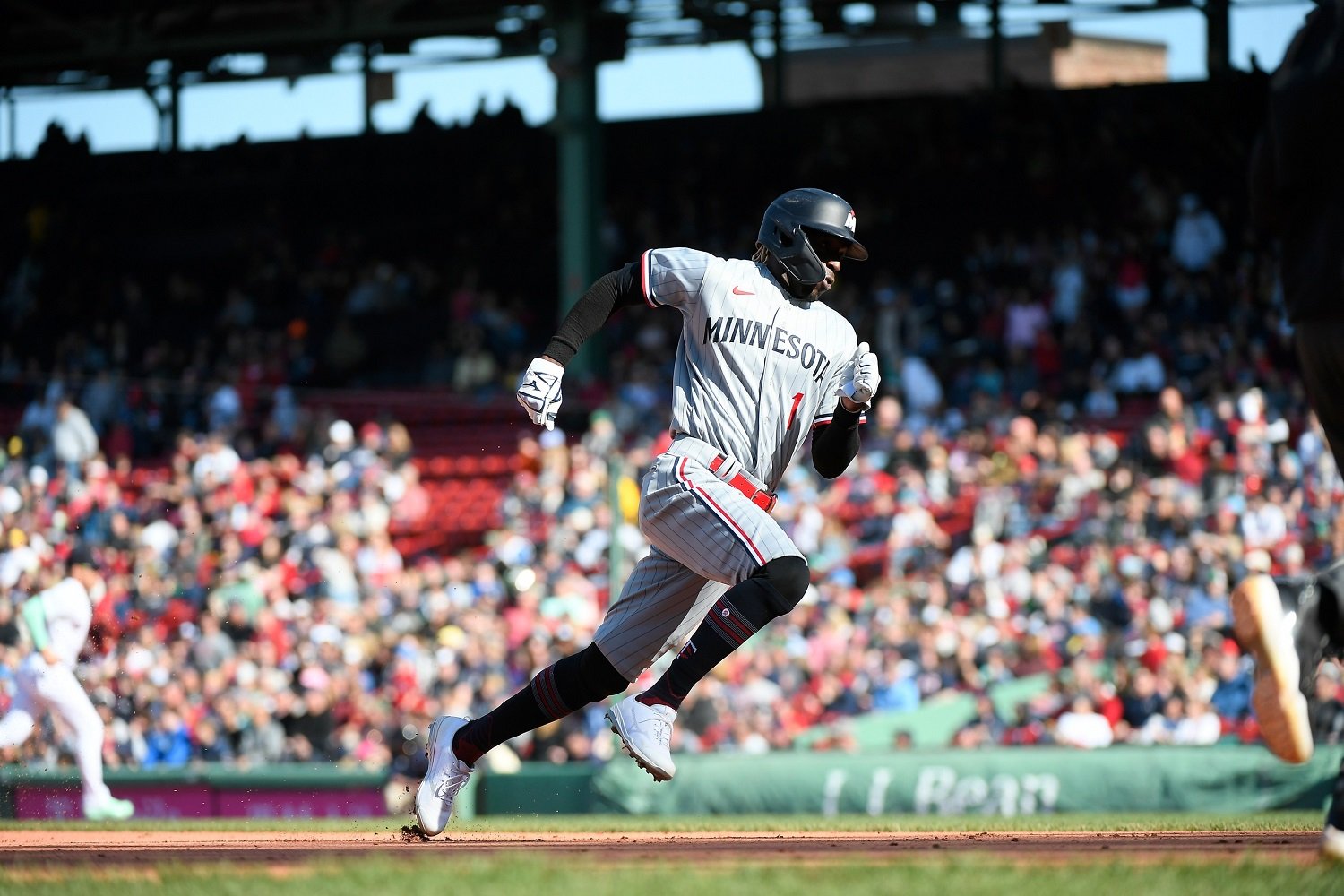 When the Twins took a chance on Nick Gordon with the fifth pick of the 2014 draft out of high school, the Twins were betting on his speed, hit tool, solid arm, and baseball pedigree eventually making him their everyday shortstop. At times, it has looked like he could become a major contributor, but a slow start this year has meant his Twins’ career is at a crossroads. After a long and winding path to the majors, his time in Minnesota could be nearing an end, but he deserves a chance to show that he can contribute to a winning ballclub, as he did for most of 2022. Health Struggles Gordon’s minor league career was up and down. He was always above average as a hitter, but he didn’t really show the star ability the Twins hoped he would. Gordon’s lack of power meant he struggled to sustain success throughout minor league seasons. The star breakout the Twins hoped he’d show when they drafted him never really happened, and he fell down prospect lists accordingly. Beyond that, Gordon had chronic gastrointestinal issues that made gaining enough weight extremely difficult. In 2020, as Gordon finally seemed close to making the majors in the shortened season, Gordon had an elongated and severe case of Covid-19. He continuously tested positive, so he was unable to get to the alternate site with the team. Covid-19 also compounded his gastrointestinal issues, and they could not get them under control. He had no appetite, causing him to lose 15 pounds. He couldn’t really eat or sleep, and it was a very difficult time for his career- missing what seemed to be a pivotal season. Despite his prior underperformance and horrible medical struggles, Gordon finally made it to the majors in 2021. That season could have been better for Gordon, as he posted a 79 wRC+- meaning he was a 21 below-average offensively. Gordon split his time between the outfield and middle infield and was a mostly acceptable defender at all positions. While he wasn’t productive, after everything he went through and after being written off by most, playing in the major leagues was a massive accomplishment for Gordon. 2022 Breakout As incredible as it was that Gordon made it to the majors, the tenacity that fueled him to work through his on-field and health struggles helped Gordon finally be a productive player with his bat. It took a while for Gordon to click in 2022, just like it did for his entire career to click. He had an 80 wRC+ in both April and May, and it seemed he might be designated for assignment. Being out of options, his time with the Twins appeared to be nearing its end. But the Twins stuck with him, and he kept working with hitting coach David Popkins, and in June, things changed. Gordon posted a 127 wRC+ and 128 wRC+ in June and July, followed by a sensational 151 wRC+ in August. This offensive explosion was shocking and one of the stories of the season. Beyond that, Gordon's bat was critical to the Twins maintaining their lead in the AL Central in August. His batted-ball data was great, so it seemed unlikely the production was just smoke and mirrors. The Twins and their fans hoped that his breakout would carry over to the 2023 season. 2023 Struggles and Playing Time To start the 2023 season, Gordon was on the strong side of a platoon at second base, filling in for Jorge Polanco. The Twins seemed to believe in him in that role, hoping he’d repeat his solid 125 wRC+ against righties from 2022 - or even improve on it. But that just has not happened- although this could be somewhat related to a high ankle sprain he suffered in spring training. Gordon has basically only faced righties, and his hitting has been atrocious. He’s gone 6 for 52, with just two doubles one walk, and a triple, good for a hideous .324 OPS. But it’s only been 52 at-bats, and he started slowly last year, too, although he wasn't this bad. Further, his expected metrics indicate he has been extremely unlucky. His expected batting average based on the quality of his contact is .254, a whopping .139 points lower than his actual .115 AVG. He hasn’t hit for enough power or walked enough, so he would still be a below average hitter, but not one of the worst in baseball. In a typical situation, teams would let a player work through these struggles - especially if they had a really solid season in the year prior. Teams, especially the Twins, know that they shouldn't take so much from a small sample size. But Gordon has not received this benefit of the doubt. He has started just two games in 13 days, including his 4/26 start against the Yankees. As much as Twins fans like Edouard Julien, it was striking that he got opportunities to platoon against righties over Gordon, despite barely ever playing in AAA in his career. It’s also notable that Max Kepler (who admittedly is getting on track) and Jose Miranda have been bad too, but the Twins have run them out there just about every day they’ve been available. Given that Gordon was their best left-handed slugger last year (a low bar), it’s strange he’s not given the same chances to get right. What’s Next for Gordon? The Twins will soon face roster crunches, with Kyle Farmer and Alex Kirilloff coming back from their injuries in the coming weeks. Gordon is out of options, so he would need to be designated for assignment to make room for one of them. If DFA’d, he’s unlikely to clear waivers, so that would be the end of his time with the Twins. It’s likely that Willi Castro would be optioned before Gordon is DFA’d, especially given that he can go to AAA without clearing waivers. But if the Twins remain healthy (a big if), there will be two roster spots needed for Kirilloff and Farmer. If Gordon is not playing, it makes little sense to keep him around. Gordon has worked so hard to produce at the big-league level, and he provided energy and enthusiasm when the Twins needed it. He also enthusiastically learned to play the outfield to provide needed positional flexibility. The Twins letting him go without giving him a chance to get his bat going again would be a mistake. Hopefully, they will work to get him back on track.
 -
Nick Gordon's slow start is putting him - and the Twins - in a tricky place. Image courtesy of © Eric Canha-USA TODAY Sports Nick Gordon's slow start is putting him - and the Twins - in a tricky place. When the Twins took a chance on Nick Gordon with the fifth pick of the 2014 draft out of high school, the Twins were betting on his speed, hit tool, solid arm, and baseball pedigree eventually making him their everyday shortstop. At times, it has looked like he could become a major contributor, but a slow start this year has meant his Twins’ career is at a crossroads. After a long and winding path to the majors, his time in Minnesota could be nearing an end, but he deserves a chance to show that he can contribute to a winning ballclub, as he did for most of 2022. Health Struggles Gordon’s minor league career was up and down. He was always above average as a hitter, but he didn’t really show the star ability the Twins hoped he would. Gordon’s lack of power meant he struggled to sustain success throughout minor league seasons. The star breakout the Twins hoped he’d show when they drafted him never really happened, and he fell down prospect lists accordingly. Beyond that, Gordon had chronic gastrointestinal issues that made gaining enough weight extremely difficult. In 2020, as Gordon finally seemed close to making the majors in the shortened season, Gordon had an elongated and severe case of Covid-19. He continuously tested positive, so he was unable to get to the alternate site with the team. Covid-19 also compounded his gastrointestinal issues, and they could not get them under control. He had no appetite, causing him to lose 15 pounds. He couldn’t really eat or sleep, and it was a very difficult time for his career- missing what seemed to be a pivotal season. Despite his prior underperformance and horrible medical struggles, Gordon finally made it to the majors in 2021. That season could have been better for Gordon, as he posted a 79 wRC+- meaning he was a 21 below-average offensively. Gordon split his time between the outfield and middle infield and was a mostly acceptable defender at all positions. While he wasn’t productive, after everything he went through and after being written off by most, playing in the major leagues was a massive accomplishment for Gordon. 2022 Breakout As incredible as it was that Gordon made it to the majors, the tenacity that fueled him to work through his on-field and health struggles helped Gordon finally be a productive player with his bat. It took a while for Gordon to click in 2022, just like it did for his entire career to click. He had an 80 wRC+ in both April and May, and it seemed he might be designated for assignment. Being out of options, his time with the Twins appeared to be nearing its end. But the Twins stuck with him, and he kept working with hitting coach David Popkins, and in June, things changed. Gordon posted a 127 wRC+ and 128 wRC+ in June and July, followed by a sensational 151 wRC+ in August. This offensive explosion was shocking and one of the stories of the season. Beyond that, Gordon's bat was critical to the Twins maintaining their lead in the AL Central in August. His batted-ball data was great, so it seemed unlikely the production was just smoke and mirrors. The Twins and their fans hoped that his breakout would carry over to the 2023 season. 2023 Struggles and Playing Time To start the 2023 season, Gordon was on the strong side of a platoon at second base, filling in for Jorge Polanco. The Twins seemed to believe in him in that role, hoping he’d repeat his solid 125 wRC+ against righties from 2022 - or even improve on it. But that just has not happened- although this could be somewhat related to a high ankle sprain he suffered in spring training. Gordon has basically only faced righties, and his hitting has been atrocious. He’s gone 6 for 52, with just two doubles one walk, and a triple, good for a hideous .324 OPS. But it’s only been 52 at-bats, and he started slowly last year, too, although he wasn't this bad. Further, his expected metrics indicate he has been extremely unlucky. His expected batting average based on the quality of his contact is .254, a whopping .139 points lower than his actual .115 AVG. He hasn’t hit for enough power or walked enough, so he would still be a below average hitter, but not one of the worst in baseball. In a typical situation, teams would let a player work through these struggles - especially if they had a really solid season in the year prior. Teams, especially the Twins, know that they shouldn't take so much from a small sample size. But Gordon has not received this benefit of the doubt. He has started just two games in 13 days, including his 4/26 start against the Yankees. As much as Twins fans like Edouard Julien, it was striking that he got opportunities to platoon against righties over Gordon, despite barely ever playing in AAA in his career. It’s also notable that Max Kepler (who admittedly is getting on track) and Jose Miranda have been bad too, but the Twins have run them out there just about every day they’ve been available. Given that Gordon was their best left-handed slugger last year (a low bar), it’s strange he’s not given the same chances to get right. What’s Next for Gordon? The Twins will soon face roster crunches, with Kyle Farmer and Alex Kirilloff coming back from their injuries in the coming weeks. Gordon is out of options, so he would need to be designated for assignment to make room for one of them. If DFA’d, he’s unlikely to clear waivers, so that would be the end of his time with the Twins. It’s likely that Willi Castro would be optioned before Gordon is DFA’d, especially given that he can go to AAA without clearing waivers. But if the Twins remain healthy (a big if), there will be two roster spots needed for Kirilloff and Farmer. If Gordon is not playing, it makes little sense to keep him around. Gordon has worked so hard to produce at the big-league level, and he provided energy and enthusiasm when the Twins needed it. He also enthusiastically learned to play the outfield to provide needed positional flexibility. The Twins letting him go without giving him a chance to get his bat going again would be a mistake. Hopefully, they will work to get him back on track. View full article
-
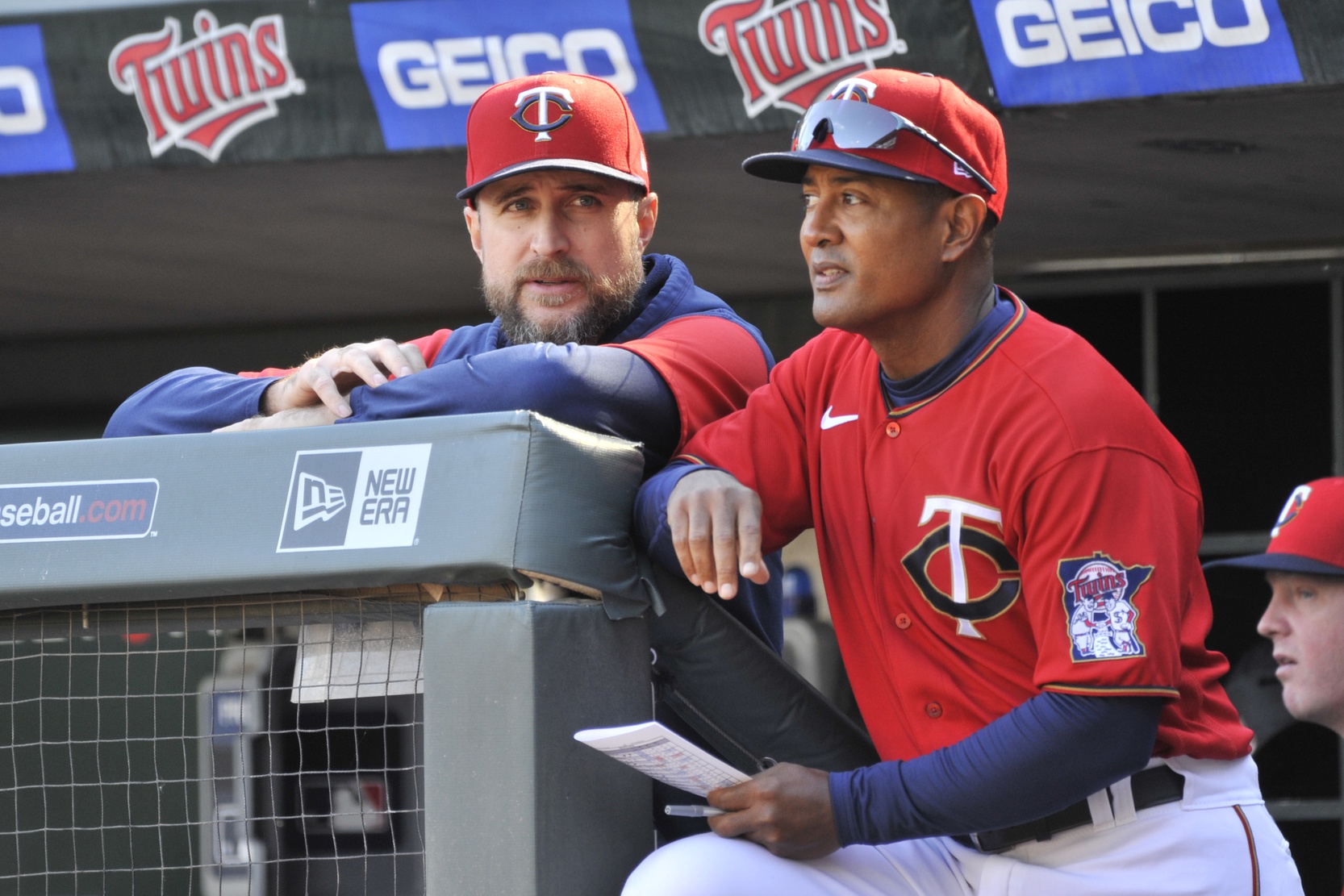 Heading into 2021, it seemed evident that Derek Falvey and Thad Levine had things under control. They modernized the organization analytically, assembled a farm system of players seemingly ready to make an instant impact, and had just won two straight division titles – the franchise's first since 2010. The organization seemed poised for sustainable success with its leadership's thoughtful, cutting-edge decision-making steering the ship. There have always been critics of this front office, but on the back of 2021 and 2022, they have grown louder and multiplied. Some will question the regime's competency, others will criticize their lack of an "ace," and a vocal group of critics will question whether their entire philosophy and reliance on data is the right way to run a baseball team. Let's examine what this group has done well and poorly to evaluate whether the boisterous critics of Falvey and Levine are onto something. Front Office Strengths Development of Homegrown Major League Bats Terry Ryan, a scout by trade, always prided himself on putting together rosters built around cores of homegrown position player talent. This ability to construct a nucleus of quality hitters drafted or acquired via international free agency has carried over to the current regime. It's a critical skill when working with a middling payroll. The Twins can distribute their funds to a few extra quality players because they have team-friendly structures with most position players. Beyond utilizing those homegrown bats in everyday roles, they have shown an ability to develop hitters that they can flip in trades – even if they weren't top picks. That allowed them to acquire Tyler Mahle, and it could come into play again at this deadline when trying to bolster a playoff-caliber roster. Increased Aggression in Acquiring High-End Talent Under the current front office, the Twins have shown a more aggressive approach than the previous regime when acquiring high-end talent, and they've continued grown more emboldened over seven years at the helm. We first saw that when they acquired Nelson Cruz ahead of the 2019 season. That aggression grew when they signed Josh Donaldson to a record free agent deal. While this contract didn't pan out, it made a statement. They traded Donaldson while he still had some value, which enabled them to pay Carlos Correa, breaking the Donaldson contract record. Of course, they eventually shattered Correa's record when they re-signed him. Add in various trades – including the ones that brought in all five of this year's starting rotation members – and the increased aggressiveness is undeniable. Front Office Weaknesses Bullpen Construction and Reliever Free Agents One common thread between the losing seasons in 2021 and 2022 was bullpen meltdowns from newly acquired pitchers. In 2021, Alex Colomé deflated the team and its fans with his early-season implosions. In 2022, the Twins traded Taylor Rogers for Emilio Pagán. He held it together for a bit but memorably cost the Twins multiple times against Cleveland as the Guardians sped away in the divisional race. Beyond those memorable blowups, they have repeatedly tried to sign relief pitchers on small short-term deals, but most haven't worked out either. Due to the volatility of relievers, building a good bullpen is extremely difficult, but the Twins have rarely had enough homegrown arms or capable enough external additions to do so. It may be different this season, but it's one thing to have a good group on paper and another for them to succeed in games. Starting Pitching Development and Free Agent Acquisitions When the Pohlads tapped Falvey as president of baseball operations, they touted him for his role in building the terrific pitching development pipeline in Cleveland. However, Falvey has yet to materialize that level of pitching development success in Minnesota. To this point, Bailey Ober is the only homegrown starting pitcher that has proven to be major-league caliber during the Falvey and Levine era. Others may be on the precipice, including Simeon Woods Richardson, Louie Varland, and David Festa. However, they all have yet to prove they can be quality starters at the major-league level. Beyond the lack of internal development, the front office has invested very little into starting pitchers on the free agent market. Most of their free agent starter acquisitions have been bargain-bin signings, like Homer Bailey, Dylan Bundy and Matt Shoemaker. Most of those did not work out, with their only successful free agent starter addition being Michael Pineda. Not developing starting pitching and not paying for it in free agency has been one of the most significant flaws of this regime. They may have put together a good rotation for 2023 via trade, but the development of their starting pitching prospects this season will be a crucial storyline to monitor. If the strengths remain strong and they have improved their weaknesses, the front office should have put together a winning team in 2023. If so, their future will be clearer as the organization's leaders. However, if their bullpen construction weakness rears its head again and tanks their season, and we don't see progress in developing quality starters, the Twins may be at the point of considering a front-office shakeup. Ownership is investing in this team like never before and that comes with heightened expectations.
 -
Over the first six years of the Derek Falvey and Thad Levine era, the Twins have been up and down. They've made the playoffs three times, including two division titles. Yet, they are coming off two straight losing seasons, putting into question whether this regime will see an eighth season leading the organization. Image courtesy of Jeffrey Becker-USA TODAY Sports Over the first six years of the Derek Falvey and Thad Levine era, the Twins have been up and down. They've made the playoffs three times, including two division titles. Yet, they are coming off two straight losing seasons, putting into question whether this regime will see an eighth season leading the organization. Heading into 2021, it seemed evident that Derek Falvey and Thad Levine had things under control. They modernized the organization analytically, assembled a farm system of players seemingly ready to make an instant impact, and had just won two straight division titles – the franchise's first since 2010. The organization seemed poised for sustainable success with its leadership's thoughtful, cutting-edge decision-making steering the ship. There have always been critics of this front office, but on the back of 2021 and 2022, they have grown louder and multiplied. Some will question the regime's competency, others will criticize their lack of an "ace," and a vocal group of critics will question whether their entire philosophy and reliance on data is the right way to run a baseball team. Let's examine what this group has done well and poorly to evaluate whether the boisterous critics of Falvey and Levine are onto something. Front Office Strengths Development of Homegrown Major League Bats Terry Ryan, a scout by trade, always prided himself on putting together rosters built around cores of homegrown position player talent. This ability to construct a nucleus of quality hitters drafted or acquired via international free agency has carried over to the current regime. It's a critical skill when working with a middling payroll. The Twins can distribute their funds to a few extra quality players because they have team-friendly structures with most position players. Beyond utilizing those homegrown bats in everyday roles, they have shown an ability to develop hitters that they can flip in trades – even if they weren't top picks. That allowed them to acquire Tyler Mahle, and it could come into play again at this deadline when trying to bolster a playoff-caliber roster. Increased Aggression in Acquiring High-End Talent Under the current front office, the Twins have shown a more aggressive approach than the previous regime when acquiring high-end talent, and they've continued grown more emboldened over seven years at the helm. We first saw that when they acquired Nelson Cruz ahead of the 2019 season. That aggression grew when they signed Josh Donaldson to a record free agent deal. While this contract didn't pan out, it made a statement. They traded Donaldson while he still had some value, which enabled them to pay Carlos Correa, breaking the Donaldson contract record. Of course, they eventually shattered Correa's record when they re-signed him. Add in various trades – including the ones that brought in all five of this year's starting rotation members – and the increased aggressiveness is undeniable. Front Office Weaknesses Bullpen Construction and Reliever Free Agents One common thread between the losing seasons in 2021 and 2022 was bullpen meltdowns from newly acquired pitchers. In 2021, Alex Colomé deflated the team and its fans with his early-season implosions. In 2022, the Twins traded Taylor Rogers for Emilio Pagán. He held it together for a bit but memorably cost the Twins multiple times against Cleveland as the Guardians sped away in the divisional race. Beyond those memorable blowups, they have repeatedly tried to sign relief pitchers on small short-term deals, but most haven't worked out either. Due to the volatility of relievers, building a good bullpen is extremely difficult, but the Twins have rarely had enough homegrown arms or capable enough external additions to do so. It may be different this season, but it's one thing to have a good group on paper and another for them to succeed in games. Starting Pitching Development and Free Agent Acquisitions When the Pohlads tapped Falvey as president of baseball operations, they touted him for his role in building the terrific pitching development pipeline in Cleveland. However, Falvey has yet to materialize that level of pitching development success in Minnesota. To this point, Bailey Ober is the only homegrown starting pitcher that has proven to be major-league caliber during the Falvey and Levine era. Others may be on the precipice, including Simeon Woods Richardson, Louie Varland, and David Festa. However, they all have yet to prove they can be quality starters at the major-league level. Beyond the lack of internal development, the front office has invested very little into starting pitchers on the free agent market. Most of their free agent starter acquisitions have been bargain-bin signings, like Homer Bailey, Dylan Bundy and Matt Shoemaker. Most of those did not work out, with their only successful free agent starter addition being Michael Pineda. Not developing starting pitching and not paying for it in free agency has been one of the most significant flaws of this regime. They may have put together a good rotation for 2023 via trade, but the development of their starting pitching prospects this season will be a crucial storyline to monitor. If the strengths remain strong and they have improved their weaknesses, the front office should have put together a winning team in 2023. If so, their future will be clearer as the organization's leaders. However, if their bullpen construction weakness rears its head again and tanks their season, and we don't see progress in developing quality starters, the Twins may be at the point of considering a front-office shakeup. Ownership is investing in this team like never before and that comes with heightened expectations. View full article
-
From my perspective, writing this was not me giving up on Kirilloff but more to discuss how they handle his absence until he's right. I still believe he can be an outstanding middle-of-the-lineup bat, but it's clear at this point they need to be prepared to deal with him potentially missing time, which they definitely are. Can't speak to commentors' views on him, of course. Re Miranda to 1st: I believe it's likely he could improve there with more reps, but I would probably prefer Julien and Kirilloff there from a long-term view.
- 50 replies
-
- 1
-
-
- alex kirilloff
- kyle garlick
- (and 3 more)
-
I absolutely agree with this. However, they seem intent on doing it at least part time. On the flip side, Larnach is about average in left and seems to be healthy for now. Gallo is a terrific (and large) athlete, so I think he is a safe bet to be solid over there.
-
I definitely worry too that Kirilloff may not be somebody they can trust long term. The Twins do have quite a few infielders and not enough room for them. I would imagine Lee playing third and Lewis second- with Correa at short of course. That leaves Miranda, Kirilloff, and Julien to cover DH and 1st. If they feel they need to bring in a first baseman, the price in a trade or free agency shouldn't be too steep given the position.
-
Solano is a very solid player and is very good against lefties. I totally agree with giving the young guys chances, but injuries will more than likely make that happen, unfortunately.
- 50 replies
-
- 2
-
-
- alex kirilloff
- kyle garlick
- (and 3 more)
-
Everybody wants to see Julien! The kid rakes! Don't think we'll have to wait long.
- 50 replies
-
- 1
-
-
- alex kirilloff
- kyle garlick
- (and 3 more)
-
I think Solano was just about that. Against righties, I imagine Julien will also be ready soon and can play first.
- 50 replies
-
- 1
-
-
- alex kirilloff
- kyle garlick
- (and 3 more)
-
From the obvious to the fantastical, lots of pieces can be moved around to replace Alex Kirilloff. Image courtesy of Rick Osentoski-USA TODAY Sports From the obvious to the fantastical, lots of pieces can be moved around to replace Alex Kirilloff. Alex Kirilloff was once viewed as a key cog in the middle of the lineup for years to come, but his wrist injuries have prevented him from being that elite bat prospect analysts predicted. While it's still easy to see Kirilloff being a significant contributor to the Twins offense, it appears that may not begin on Opening Day, as he's "a little behind [the Twins] schedule." Kirilloff was likely slotted to play first base and designated hitter, and the Twins have put together a roster that provides ample flexibility to cover for his absence. Let’s look at some of the likely options if Kirilloff starts the year on the Injured List. Gallo to First, Gordon/Larnach to Left Field and Designated Hitter Joey Gallo has appeared at first base throughout spring training but last appeared there for significant innings in 2018. Gallo, to many Twins fans' chagrin, seems likely to be a regular, and his athleticism should enable him to play first, at least competently, especially given that he came up as a third baseman. With Gallo playing first base, Trevor Larnach or Nick Gordon can competently cover for him in left field, with others filling in as designated hitter, making this plan very workable. Based on Gallo playing first in spring training, this plan seems likely to be deployed against right-handed pitchers if Kirilloff starts the season on the injured list. This plan is suboptimal because of its defensive implications. For all of Gallo's struggles at the plate, his outfield defense has remained a strength. If it's not clicking at the plate and the Twins take him from the outfield, he is giving the Twins nothing. On the flip side, it allows Larnach and Gordon's potent left-handed bats to be in the lineup against right-handed pitchers. This likely lineup combination will work okay defensively but will most help the offense against righties. Solano to First Base Slotting in Donovan Solano at first base is another logical option that doesn't require any other maneuvers. The Twins signed Solano to DH and play first and second base. A right-handed hitter who is just below average against righties and above average against lefties, Solano is acceptable to play regardless of pitcher-handedness. This option keeps everybody at their natural positions, and Solano is a solid bat to have in the lineup, having been above average at the plate from 2019-21. This approach makes sense, especially if Solano's 2019-21 bat shows up in 2023. Farmer to Third, Miranda to First, Solano DH Rocco Baldelli will likely deploy some variation of this lineup combination against left-handed pitchers, even if Kirilloff is healthy. It creates all sorts of problems for left-handed pitchers. All three of these hitters crush lefties, whereas Farmer’s or Solano’s roles will likely be more limited when right-handers pitch. The defense of these players also makes the lineup combination extremely attractive for Baldelli. We will see how good Miranda will be at third, but given that Farmer was a decent everyday shortstop last season and had around-average defensive metrics at third, Farmer is likely the better defensive third baseman of the two. This lineup combination is an exciting possibility for a team that has struggled against lefties in recent seasons. Garlick Makes the Team Kyle Garlick is another right-handed bat that could play a role in replacing Alex Kirilloff. Garlick wouldn’t be a direct replacement for Kirilloff in the field or at the plate, as he has never played first and is a righty who thrives against lefties. However, replacing Kirilloff with him on the 26-man roster would provide an additional weapon for Baldelli to deploy against left-handed pitchers. Garlick can play designated hitter or one of the corner outfield spots, replacing Gallo or Max Kepler against left-handed pitchers. That would allow a righty-heavy lineup while Farmer moves to third, Miranda to first, and Solano to DH. Adding him to that group would give the Twins a potent lineup against left-handed pitchers, as Garlick was 28% above league average against lefties. On the flip side, Garlick is poor defensively. Beyond that, he would displace Trevor Larnach on the 26-man roster, weakening the lineup against righties - the far more common matchup. Julien is Promoted and Plays First Base Edouard Julien was optioned to AAA on Tuesday, so this isn’t happening for Opening Day, but as the season progresses, it’s a different story. Early in the season, this is the most fun and least likely of these four lineup combinations. It would require somebody else to be on the injured list or a surprising player being removed from the roster. With positive developments on minor injuries from Gordon and Larnach, the latter of whom seems to have fully recovered as he has played and homered in Sunday's spring training game, Julien making the roster would be shocking but also fun. Julien has yet to play much first (not even in spring training) but isn't a very good second baseman, so getting his bat in the lineup by putting him at first makes sense. In 2022, Julien crushed right-handed pitching at AA, displaying impressive power and on-base ability, showing the ability to hit the ball hard and walk a lot. He has continued his tear in spring training and into the World Baseball Classic, hitting a leadoff home run for Canada on the first pitch he saw of the tournament. The talk of Twins camp won’t make the team out of camp, but we can dream for an early promotion. As you know, Julien was optioned to St. Paul (and minor-league camp) earlier this week. That said, he could be recalled. While it's unlikely, it could theoretically happen. How do you see it playing out? Leave a COMMENT below. View full article
-
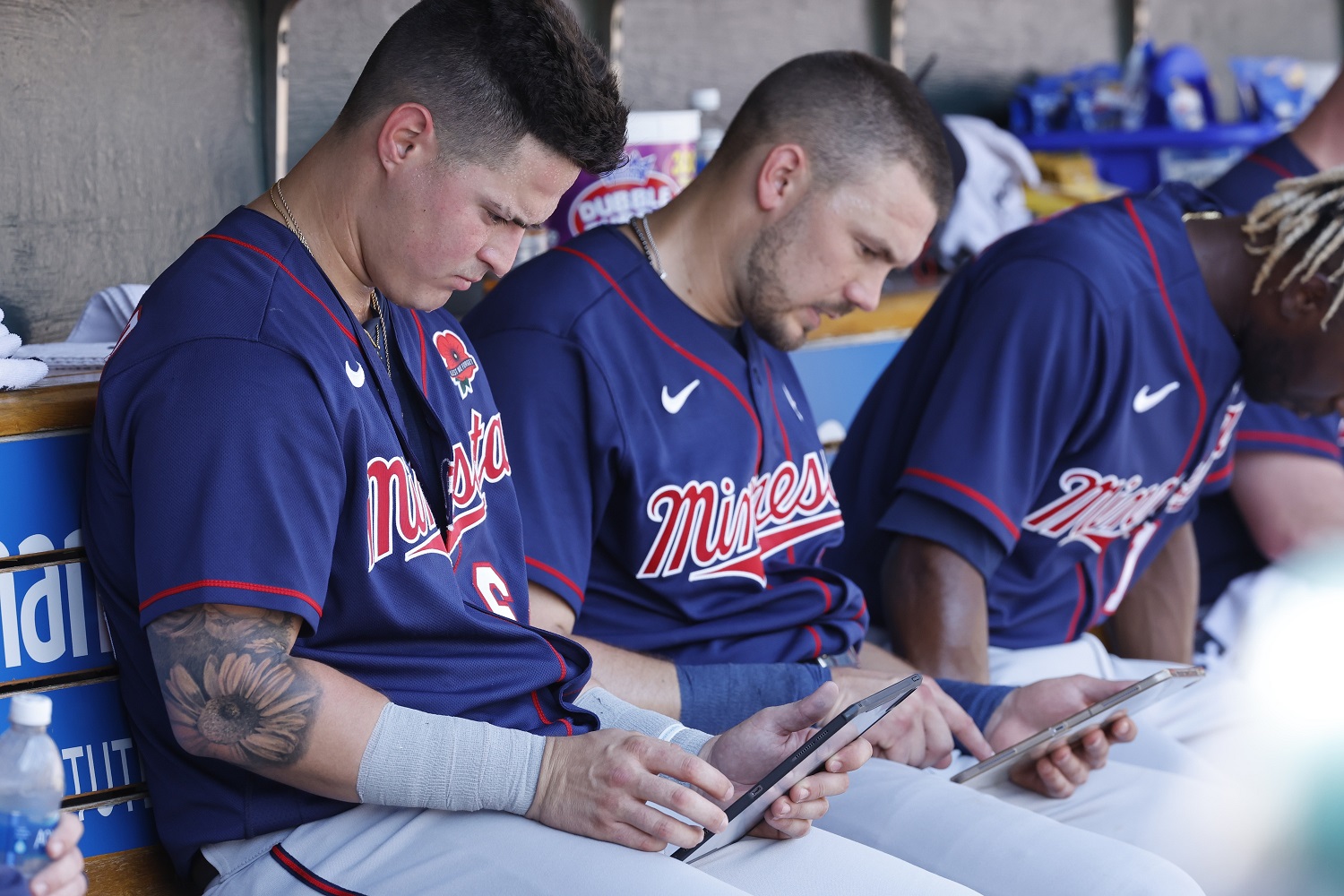 Alex Kirilloff was once viewed as a key cog in the middle of the lineup for years to come, but his wrist injuries have prevented him from being that elite bat prospect analysts predicted. While it's still easy to see Kirilloff being a significant contributor to the Twins offense, it appears that may not begin on Opening Day, as he's "a little behind [the Twins] schedule." Kirilloff was likely slotted to play first base and designated hitter, and the Twins have put together a roster that provides ample flexibility to cover for his absence. Let’s look at some of the likely options if Kirilloff starts the year on the Injured List. Gallo to First, Gordon/Larnach to Left Field and Designated Hitter Joey Gallo has appeared at first base throughout spring training but last appeared there for significant innings in 2018. Gallo, to many Twins fans' chagrin, seems likely to be a regular, and his athleticism should enable him to play first, at least competently, especially given that he came up as a third baseman. With Gallo playing first base, Trevor Larnach or Nick Gordon can competently cover for him in left field, with others filling in as designated hitter, making this plan very workable. Based on Gallo playing first in spring training, this plan seems likely to be deployed against right-handed pitchers if Kirilloff starts the season on the injured list. This plan is suboptimal because of its defensive implications. For all of Gallo's struggles at the plate, his outfield defense has remained a strength. If it's not clicking at the plate and the Twins take him from the outfield, he is giving the Twins nothing. On the flip side, it allows Larnach and Gordon's potent left-handed bats to be in the lineup against right-handed pitchers. This likely lineup combination will work okay defensively but will most help the offense against righties. Solano to First Base Slotting in Donovan Solano at first base is another logical option that doesn't require any other maneuvers. The Twins signed Solano to DH and play first and second base. A right-handed hitter who is just below average against righties and above average against lefties, Solano is acceptable to play regardless of pitcher-handedness. This option keeps everybody at their natural positions, and Solano is a solid bat to have in the lineup, having been above average at the plate from 2019-21. This approach makes sense, especially if Solano's 2019-21 bat shows up in 2023. Farmer to Third, Miranda to First, Solano DH Rocco Baldelli will likely deploy some variation of this lineup combination against left-handed pitchers, even if Kirilloff is healthy. It creates all sorts of problems for left-handed pitchers. All three of these hitters crush lefties, whereas Farmer’s or Solano’s roles will likely be more limited when right-handers pitch. The defense of these players also makes the lineup combination extremely attractive for Baldelli. We will see how good Miranda will be at third, but given that Farmer was a decent everyday shortstop last season and had around-average defensive metrics at third, Farmer is likely the better defensive third baseman of the two. This lineup combination is an exciting possibility for a team that has struggled against lefties in recent seasons. Garlick Makes the Team Kyle Garlick is another right-handed bat that could play a role in replacing Alex Kirilloff. Garlick wouldn’t be a direct replacement for Kirilloff in the field or at the plate, as he has never played first and is a righty who thrives against lefties. However, replacing Kirilloff with him on the 26-man roster would provide an additional weapon for Baldelli to deploy against left-handed pitchers. Garlick can play designated hitter or one of the corner outfield spots, replacing Gallo or Max Kepler against left-handed pitchers. That would allow a righty-heavy lineup while Farmer moves to third, Miranda to first, and Solano to DH. Adding him to that group would give the Twins a potent lineup against left-handed pitchers, as Garlick was 28% above league average against lefties. On the flip side, Garlick is poor defensively. Beyond that, he would displace Trevor Larnach on the 26-man roster, weakening the lineup against righties - the far more common matchup. Julien is Promoted and Plays First Base Edouard Julien was optioned to AAA on Tuesday, so this isn’t happening for Opening Day, but as the season progresses, it’s a different story. Early in the season, this is the most fun and least likely of these four lineup combinations. It would require somebody else to be on the injured list or a surprising player being removed from the roster. With positive developments on minor injuries from Gordon and Larnach, the latter of whom seems to have fully recovered as he has played and homered in Sunday's spring training game, Julien making the roster would be shocking but also fun. Julien has yet to play much first (not even in spring training) but isn't a very good second baseman, so getting his bat in the lineup by putting him at first makes sense. In 2022, Julien crushed right-handed pitching at AA, displaying impressive power and on-base ability, showing the ability to hit the ball hard and walk a lot. He has continued his tear in spring training and into the World Baseball Classic, hitting a leadoff home run for Canada on the first pitch he saw of the tournament. The talk of Twins camp won’t make the team out of camp, but we can dream for an early promotion. As you know, Julien was optioned to St. Paul (and minor-league camp) earlier this week. That said, he could be recalled. While it's unlikely, it could theoretically happen. How do you see it playing out? Leave a COMMENT below.
- 50 comments
-
- 3
-
-
- alex kirilloff
- kyle garlick
- (and 3 more)


