



Andrew Mahlke
-
Posts
151 -
Joined
-
Last visited
Content Type
Profiles
News
Minnesota Twins Videos
2026 Minnesota Twins Top Prospects Ranking
2022 Minnesota Twins Draft Picks
Minnesota Twins Free Agent & Trade Rumors, Notes, & Tidbits
Guides & Resources
2023 Minnesota Twins Draft Picks
The Minnesota Twins Players Project
2024 Minnesota Twins Draft Picks
2025 Minnesota Twins Draft Pick Tracker
2026 Minnesota Twins Draft Tracker: Picks & Bonuses
Forums
Blogs
Events
Store
Downloads
Gallery
Everything posted by Andrew Mahlke
-
Fair that was definitely harsh, my bad. I should've said that these players make this type of money because the players' salaries are growing along with everything else. It would also be hard to let fans come for free because that is a large source of revenue for the team. I overstepped, my bad major league ready.
-
I don't think this would be necessarily bad...he would guarantee staying on the field. If he catches a few less fly balls per season, so what. He still would be vastly outproducing his replacement in center in the field and at the plate. He would be staying healthy and this is something the Twins have been stressing with him for a few years.
-
Base contract: 7 years, $133 million ($19M AAV) 120 games incentive: $9.5M/yr ($28.5M AAV) 130 games incentive: $2.4M/yr ($30.9M AAV) 140 games incentive: $2.4M/yr ($33.3M AAV) 150 games incentive: $2.4M/yr ($35.7M AAV) I wrote extensively about this and why these values make sense below:
-

Scratch One SP Off the List - Rodriguez to Tigers
Andrew Mahlke replied to SteveLV's topic in Other Baseball
This is a good signing for Detroit. They are a couple of pieces (Correa) from being contenders. A little disappointed we couldn’t get Rodriguez and we weren’t reported to be in discussions with him lately. Will be interesting to see if we can make any signings before the CBA -
Dave St. Peter's Meteoric Rise and How to Get a Job in Sports
Andrew Mahlke posted an article in Just For Fun
 On Monday, Dave St. Peter was kind enough to speak about his rapid ascension through the Twins front office and his career at Saint John’s University in Collegeville, MN. Now, this was a very cool opportunity. St. Peter’s late father, Dom, was a 1954 graduate of Saint John’s, making this opportunity for St. Peter to speak extra special. For those of you who don’t know, I am a sophomore at Saint John’s. As a lifelong Twins fan and someone who aspires to have a job in professional sports some day, I knew this speech would be very inspiring and educational to me. For those of you who also want to work in sports, or even if you are wondering just how St. Peter went from intern to CEO in only twelve years, I have a few main takeaways from this speech. Be willing to put yourself out there and create a portfolio Growing up, St. Peter was a kid who knew he loved sports. He was always obsessing over statistics and was a sports fan no matter what the season was. He credited his father for passing the love of sports on to him. St. Peter admitted that he was by no means a star athlete as a youngster. He played American Legion Baseball but was cut his junior year, motivating him to work harder. He said he knew he wanted to work in professional sports and saw his path to doing so through the business world. So when he got to the University of North Dakota he decided to get a student job in the UND Sports Information Department and worked there for three years, covering various sports extensively. Additionally, he wrote for the UND student newspaper and was an aide for the Grand Forks Herald. After doing all of these things, St. Peter knew he wanted a career in professional sports. However, being from Bismarck, ND, he did not have any local professional teams he could cover. So, in 1989 after college, he moved to the Twin Cities and lived with his sister in hopes of finding a job with one of the local sports teams. One thing St. Peter had going well for him before applying for internships was that he had a great “portfolio”. At his speech, he told us that if any of us want to work in pro sports, we should build a portfolio. By portfolio, he meant a bunch of examples of your work that you could show to potential employers that showcase your skills and why you should be the one getting the internship. This could include projects, writing, even contributing on sites such as Twins Daily. It is important to put yourself out there, be confident, create a portfolio, and publish your work. St. Peter applied for an internship with the Twins. Denied. He applied for an internship with the Vikings. Denied. He even applied for an internship with the new expansion NBA team in town, the Timberwolves. Denied. Finally, he was accepted on an internship to work for the Minnesota North Stars. After six months with the North Stars, he got an internship with the Twins. Be flexible in what type of job you take In 2015, St. Peter said “When I started working in sports, if I had to pick one, I probably would have picked baseball. But I wasn’t at a point where I could be picky, I had to be broad. I was open to basketball, football, baseball, even the minor leagues, and certainly hockey.” There are a lot of people throughout the country who want to work in sports. With a high demand for jobs in sports, it’s highly unlikely you’ll get to choose what job you want. St. Peter knew that hockey wasn’t his favorite sport, but he knew if that was his only opportunity to work in sports, so be it. Additionally, people in sports have connections. It is likely that employees with the Twins know employees with the Vikings, employees with the Vikings know employees with the Timberwolves, etc. Below is a photo of St. Peter, Vikings GM Rick Spielman, Timberwolves President Chris Wright, Minnesota United President Nick Rogers, and Wild Chief Operating Officer Matt Majka at a community event in 2017. Even if you are offered a job that is not your first option, have a positive attitude and show your skills in that job because you never know what connections you may make. St. Peter’s first job with the Twins was managing a team pro shop. He said he wasn’t all that thrilled about working in retail but he knew he wanted to work in baseball so he kept a positive attitude and learned many valuable skills in this position including how to hire people, fire people, and deal with customers. Be Patient Things won’t always go your way in the sports industry. That’s fine. St. Peter was turned down numerous times before he ultimately got a job in sports and worked his way up to Twins President of Baseball Operations. Recent World Series winning manager Brian Snitker of the Atlanta Braves has been a coach in the Braves system since 1982 and wasn’t named manager of the major league squad until 2016. Patience pays off. Conclusion Dave St. Peter being generous enough to come up to a college in the middle of November and speak to a bunch of college students shows why he has been so successful in his job. He understands the importance of giving back to the community that has supported his team so greatly over the years. He got to the top of the Twins organization not only because of his extensive baseball knowledge, but because he treats people right. If you want to work in sports, put your name out there, create a portfolio to showcase your work, be flexible, be patient, and treat people the right way. Thank you for reading, and Go Twins!
-
If you're like me, you love sports and hope to make a career out of it. Dave St. Peter spoke at my school this week, and this is what I learned. Image courtesy of Jasen Vinlove, USA Today If you're like me, you love sports and hope to make a career out of it. Dave St. Peter spoke at my school this week, and this is what I learned. On Monday, Dave St. Peter was kind enough to speak about his rapid ascension through the Twins front office and his career at Saint John’s University in Collegeville, MN. Now, this was a very cool opportunity. St. Peter’s late father, Dom, was a 1954 graduate of Saint John’s, making this opportunity for St. Peter to speak extra special. For those of you who don’t know, I am a sophomore at Saint John’s. As a lifelong Twins fan and someone who aspires to have a job in professional sports some day, I knew this speech would be very inspiring and educational to me. For those of you who also want to work in sports, or even if you are wondering just how St. Peter went from intern to CEO in only twelve years, I have a few main takeaways from this speech. Be willing to put yourself out there and create a portfolio Growing up, St. Peter was a kid who knew he loved sports. He was always obsessing over statistics and was a sports fan no matter what the season was. He credited his father for passing the love of sports on to him. St. Peter admitted that he was by no means a star athlete as a youngster. He played American Legion Baseball but was cut his junior year, motivating him to work harder. He said he knew he wanted to work in professional sports and saw his path to doing so through the business world. So when he got to the University of North Dakota he decided to get a student job in the UND Sports Information Department and worked there for three years, covering various sports extensively. Additionally, he wrote for the UND student newspaper and was an aide for the Grand Forks Herald. After doing all of these things, St. Peter knew he wanted a career in professional sports. However, being from Bismarck, ND, he did not have any local professional teams he could cover. So, in 1989 after college, he moved to the Twin Cities and lived with his sister in hopes of finding a job with one of the local sports teams. One thing St. Peter had going well for him before applying for internships was that he had a great “portfolio”. At his speech, he told us that if any of us want to work in pro sports, we should build a portfolio. By portfolio, he meant a bunch of examples of your work that you could show to potential employers that showcase your skills and why you should be the one getting the internship. This could include projects, writing, even contributing on sites such as Twins Daily. It is important to put yourself out there, be confident, create a portfolio, and publish your work. St. Peter applied for an internship with the Twins. Denied. He applied for an internship with the Vikings. Denied. He even applied for an internship with the new expansion NBA team in town, the Timberwolves. Denied. Finally, he was accepted on an internship to work for the Minnesota North Stars. After six months with the North Stars, he got an internship with the Twins. Be flexible in what type of job you take In 2015, St. Peter said “When I started working in sports, if I had to pick one, I probably would have picked baseball. But I wasn’t at a point where I could be picky, I had to be broad. I was open to basketball, football, baseball, even the minor leagues, and certainly hockey.” There are a lot of people throughout the country who want to work in sports. With a high demand for jobs in sports, it’s highly unlikely you’ll get to choose what job you want. St. Peter knew that hockey wasn’t his favorite sport, but he knew if that was his only opportunity to work in sports, so be it. Additionally, people in sports have connections. It is likely that employees with the Twins know employees with the Vikings, employees with the Vikings know employees with the Timberwolves, etc. Below is a photo of St. Peter, Vikings GM Rick Spielman, Timberwolves President Chris Wright, Minnesota United President Nick Rogers, and Wild Chief Operating Officer Matt Majka at a community event in 2017. Even if you are offered a job that is not your first option, have a positive attitude and show your skills in that job because you never know what connections you may make. St. Peter’s first job with the Twins was managing a team pro shop. He said he wasn’t all that thrilled about working in retail but he knew he wanted to work in baseball so he kept a positive attitude and learned many valuable skills in this position including how to hire people, fire people, and deal with customers. Be Patient Things won’t always go your way in the sports industry. That’s fine. St. Peter was turned down numerous times before he ultimately got a job in sports and worked his way up to Twins President of Baseball Operations. Recent World Series winning manager Brian Snitker of the Atlanta Braves has been a coach in the Braves system since 1982 and wasn’t named manager of the major league squad until 2016. Patience pays off. Conclusion Dave St. Peter being generous enough to come up to a college in the middle of November and speak to a bunch of college students shows why he has been so successful in his job. He understands the importance of giving back to the community that has supported his team so greatly over the years. He got to the top of the Twins organization not only because of his extensive baseball knowledge, but because he treats people right. If you want to work in sports, put your name out there, create a portfolio to showcase your work, be flexible, be patient, and treat people the right way. Thank you for reading, and Go Twins! View full article
-
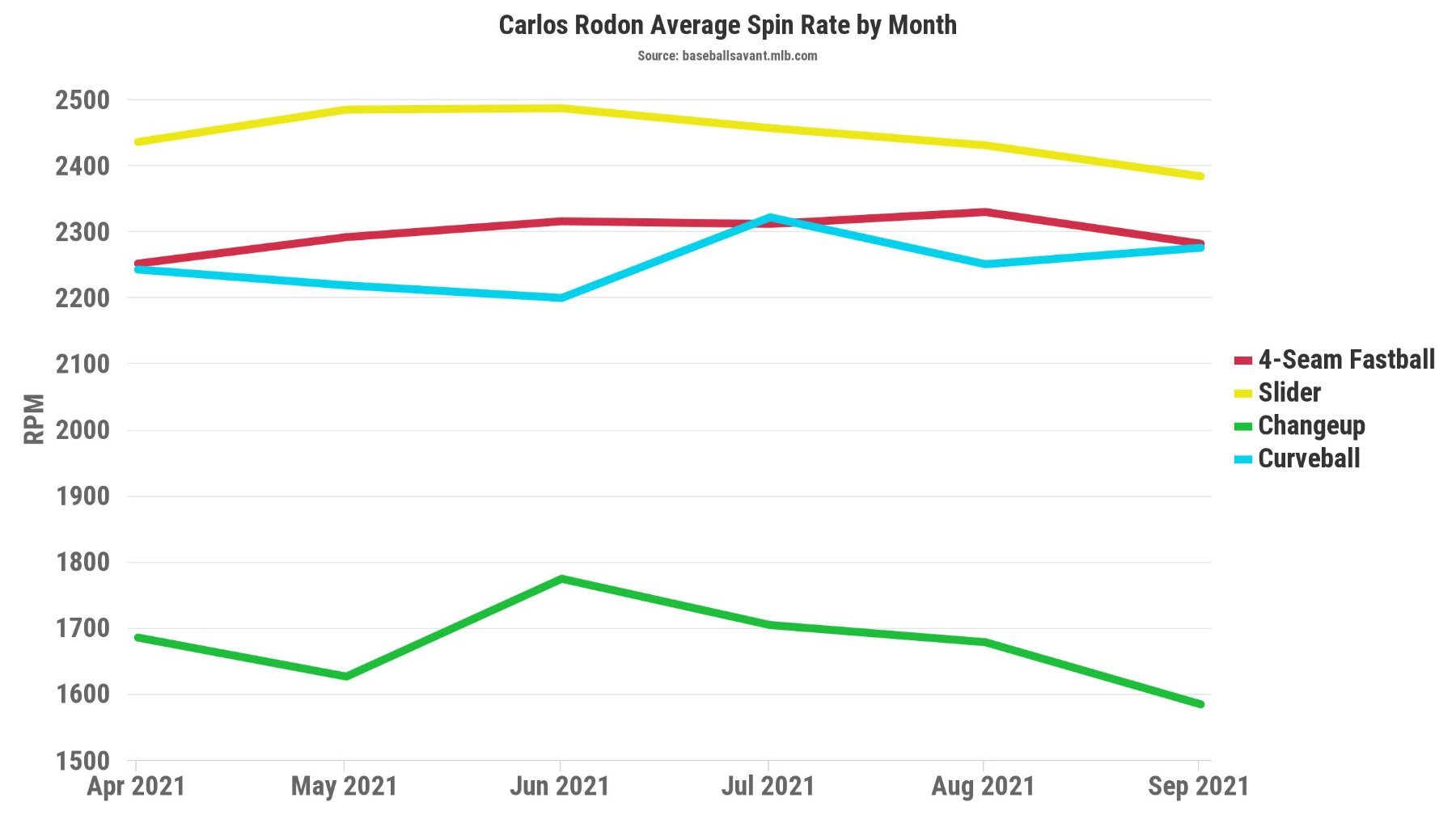
That was something I was thinking too. However when I looked into it, Rodon's spin rates from June to the end of the year had very negligible differences. Attached is that chart.
- 25 replies
-
- 1
-

-
- byron buxton
- max kepler
- (and 3 more)
-
After a disappointing 2021 season the Twins have an interesting offseason ahead of them. How do they get themselves back into contention while simultaneously staying around their standard $130MM budget? The problem was that the money spent last offseason was not spent on the correct players. Here is my blueprint for a potentially successful upcoming offseason for the Twins. Image courtesy of David Banks, USA Today After a disappointing 2021 season the Twins have an interesting offseason ahead of them. How do they get themselves back into contention while simultaneously staying around their standard $130MM budget? The problem was that the money spent last offseason was not spent on the correct players. Here is my blueprint for a potentially successful upcoming offseason for the Twins. A lot of Twins fans are angered by the front office “refusing to spend big money”. The problem doesn’t lie in not spending, as we see yet another phenomenal season by the penny-pinching Tampa Bay Rays. In 2021, the Twins gave J.A. Happ a one-year deal for $8MM. He had a 63 ERA+ and was in the 5th percentile of all qualified pitchers in Barrel %. Here are his percentile rankings from Baseball Savant: Simply put, Happ was one of the worst pitchers in the league in 2021. Remember that the Twins signed him for a one-year, $8 million deal. Robbie Ray is probably going to win the American League Cy Young award in 2021. He posted an AL-leading 154 ERA+ and led all of MLB with 248 strikeouts pitchers in the league in 2021. He also decreased his walk rate from 17.9% in 2020 to 6.7% in 2021. Here are his percentile rankings: Ray was outstanding in 2021. He was a free agent before the 2021 season and re-signed very quickly with the Toronto Blue Jays. Guess what his contract was? If you guessed that his contract was one-year and $8 million, you would be correct. In November of 2020, Robbie Ray signed an identical contract to what J.A. Happ would receive two months later. It’s not that the Twins won’t spend money on players, it’s that they aren’t spending money on the right players. If you want to see another case of this, take a look at Corey Knebel’s 2021 numbers and know that the Twins paid Alex Colome $250K more than him in 2021. Without further ado, let’s get into my 2021-22 offseason blueprint. Using Twins Daily’s handy roster-building tool I created this roster: Let’s break this roster down. Starting Rotation It is no secret that this is the most important need on the roster. In 2021, the Twins starting pitchers finished dead last in bWAR in all of MLB. The only starting pitchers from 2021 still on the roster are Bailey Ober and Joe Ryan, both of whom impressed in 2021 campaigns but are both still unproven. If the Twins want to contend in 2022, the front office needs to vastly improve their starting pitching. The first thing they should do is sign Carlos Rodon to a five-year, $115 million deal. If the White Sox choose not to extend Rodon after a Cy Young-caliber 2021 season, the front office needs to make him their #2 priority (more on that later). Rodon’s four-seamer was the most effective pitch in baseball in 2021 in terms of run value, being worth -26 runs. He also had the sixth most effective slider in baseball, worth -14 runs. And come on, just look at these percentile rankings. Rodon is not viewed by the general public as highly as other starters on the market such as Robbie Ray, Kevin Gausman, and Marcus Stroman. I would pay Rodon more than all three of them. Despite his breakout season, he is one of the best pitchers in baseball and him being signed for anything less than $20MM would be an absolute tragedy. The next starting pitcher the Twins should sign is Eduardo Rodriguez. The Twins should give Rodriguez a two-year, $24 million contract. There are a number of starters I could have targeted in this price range, including Jon Gray and Anthony DeSclafani. I went with Rodriguez because he may be undervalued because of his below-average 2021 statistics. When you look deeper, Rodriguez was one of the unluckiest pitchers in the league in 2021. Rodriguez has a lot of qualities I look for in a middle-to-top of the rotation starter. He doesn’t walk a lot of hitters, strikes out a good amount, and could blossom into a stud. I wrote about Rodriguez and other free agents here. The last starting pitcher the Twins should sign is Michael Pineda. Pineda is a familiar face for Twins fans, having spent the last four seasons with the organization. Pineda was solid, posting a 116 ERA+ in his three seasons in Minnesota. He rarely walks batters and has an above-average slider, having a whiff rate of 37.7% with the slider and allowing a miniscule .252 xWOBA on the pitch in 2021. He would provide a veteran presence and some familiarity to a Twins rotation. The offer to Pineda is a one-year deal worth $7 million. The Lineup Because in my blueprint I spent $42 million on starting pitchers, I'll have to scale back what the team can spend on the lineup. Let’s get into it. Going down the lineup, the first change we see is I made Alex Kirilloff the everyday first baseman. Kirilloff is a phenomenal young player who I believe will someday play in several all-star games. In 2021, Kirilloff had two outs above average at 1B compared to Miguel Sano’s -6. Sano will be the full-time DH who can occasionally play first base if Kirilloff needs a day off or plays in the outfield. The next change I made is signing Freddy Galvis to a one-year, $3 million deal. In my free agent target article, I mentioned maybe signing Carlos Correa or Chris Taylor to play the position. Unfortunately, that is not something the Twins could do while remaining around the $130 million budget because of the pitching needs. So instead, I am going to echo Nick Nelson's plan and sign Galvis on a cheap deal for one year with hopes Austin Martin or Royce Lewis could take the reins at shortstop in 2023 or even at some point in 2022. Galvis is not an outstanding player but is definitely serviceable. In the outfield, I have Brent Rooker starting the season in left field. Other guys who would be seeing time here would be Gilberto Celestino, Luis Arraez, Kirilloff, Trevor Larnach, and Jose Miranda. This is by no means a set spot and whoever has a hot bat or the best matchup would be playing on any given day. In center field, the Twins give Byron Buxton a newly-inked deal. Extending Buxton is the top priority this offseason, no doubt. I wrote an extensive article highlighting what a potential deal should look like and why. It would be a seven-year, $133 million deal plus incentives for games played. The incentives are not set in stone. and I am open to listening to whatever Buxton’s side wants for incentives because as long as he’s on the field, he will be the team's best player and helping win games in so many ways. Our roster includes Trevor Larnach starting the season in right field. This is a little bit of a concern for me given his late-season struggles in 2021 and his demotion to St. Paul, but from the glimpses he showed earlier in the season and the potential he has, I have faith in Larnach to figure it out. This obviously raises the question: where did Max Kepler go? Kepler is a talented outfielder, and he is owed about $16 million over the next two seasons, which is a team-friendly contract for a player of his caliber. The Marlins are a young up-and-coming team that could use a solid outfielder and Kepler is exactly that. They are likely to value Kepler’s contract, and I believe the return could be good. This is why we should trade Max Kepler to the Miami Marlins. In return, the Twins would be receiving the Marlins sixth best-prospect, RHP Eury Perez, their seventh best prospect, LHP Jake Eder, and their 21st prospect, outfielder Griffin Conine. Perez is 6’8” and throws a fastball in the mid 90s. He had a very strong showing in High-A this year and is still only 18 years old. Eder had a very strong season in AA and features a fastball that has been up to 98 as well as a wipeout slider. Conine is a power-hitting corner outfielder who hit 36 home runs between high-A and AA in 2021. This is a very good return for Kepler so the Twins would add #19 prospect, RHP Cole Sands who had a good year in AA. According to baseballtradevalues.com, this is a very even trade. It would be a trade that would give the Twins some much needed pitching depth and add to a bright collection of pitching prospects. The Bullpen (Arm-Barn?) With the additions to the lineup and rotation, we don’t have a ton of spending flexibility for the bullpen. With Rogers, Duffey, Alcala, and Thielbar all returning, there are four spots to fill. Here is how I filled those spots: Randy Dobnak ($800K) is the long reliever. Dobnak is a good fit for this role if he can get back to his 2019-20 form. He is a strike-thrower who is efficient and could eat innings. He could also make a spot start, if needed. Ryan Tepera ($5 million) is the set-up man who could close a game too. I wrote about Tepera in my free agent targets article, and he would be an instant stud in the back end of the bullpen. He spent time in 2021 on both sides of Chicago and was excellent, being in the 96th percentile for xERA. With a nasty slider and fastball to pair with it, Tepera would be an excellent signing, especially given Rogers’ uncertainty. Heath Hembree ($1 million) is in a middle-relief role. I also wrote extensively about Hembree and his bad luck. Hembree’s high spin rates lead to exceptional strikeout numbers and with a little more luck in 2022, he would be a fantastic addition to our bullpen especially at this price. Griffin Jax ($600K) is also in a long relief role. Jax made quite a few starts in 2021 and was unimpressive. In a relief role he could let it eat a little more. If he revamps his pitch arsenal (more offspeed!), he would be a good pitcher in a long relief role. Jax’s slider had a xWOBA of .270 in 2021, compared to his fastball’s xWOBA of .402. He would be a fun pitcher to watch progress as he learns what does and doesn’t work at the major-league level. I think the poor bullpen in 2021 was a little fluky and keeping the same core four (Rogers, Duffey, Alcala, and Thielbar) along with adding a few good pieces could make our 2022 bullpen a lot better. They also could build bullpen depth with minor leaguers such as Jovani Moran, Ralph Garza Jr., and Jhoan Duran. Summary With this blueprint, I tried to keep it realistic with signings the Twins would be likely to make, and I tried to stay within a reasonable budget. For the most part, I want to not overcommit to free agency so the Twins can still have flexibility to build from within. I gave one or two year deals to Rodriguez, Galvis, Tepera, Pineda, and Hembree. Along with that, extending Buxton for seven years is big, and getting a stud starting pitcher in Rodon and the team could be ready to compete in 2022. Thank you for reading, and Go Twins! What do you think of this offseason blueprint. MORE FROM TWINS DAILY — Order the Offseason Handbook — Latest Twins coverage from our writers — Recent Twins discussion in our forums — Follow Twins Daily via Twitter, Facebook or email View full article
-
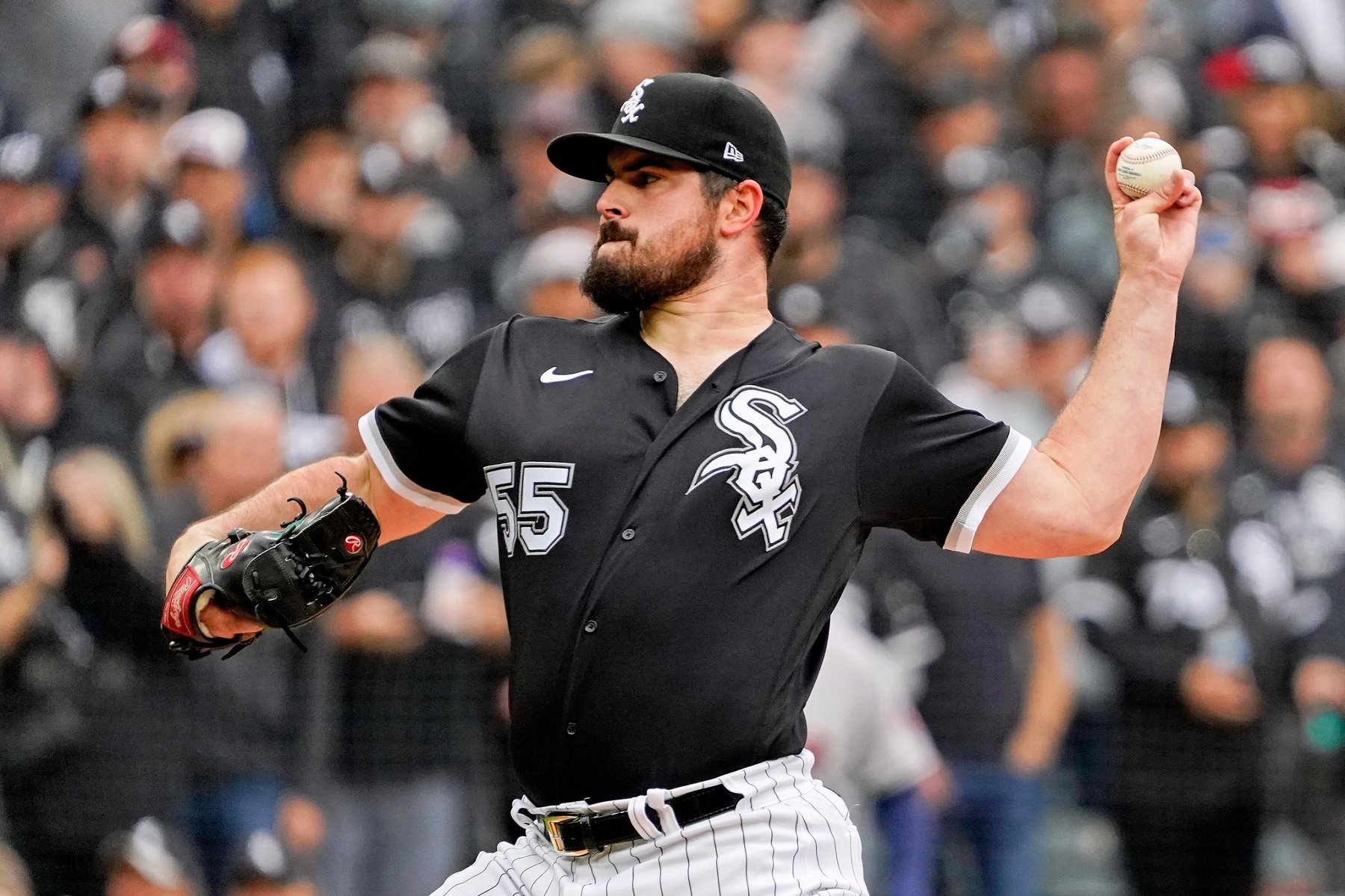 A lot of Twins fans are angered by the front office “refusing to spend big money”. The problem doesn’t lie in not spending, as we see yet another phenomenal season by the penny-pinching Tampa Bay Rays. In 2021, the Twins gave J.A. Happ a one-year deal for $8MM. He had a 63 ERA+ and was in the 5th percentile of all qualified pitchers in Barrel %. Here are his percentile rankings from Baseball Savant: Simply put, Happ was one of the worst pitchers in the league in 2021. Remember that the Twins signed him for a one-year, $8 million deal. Robbie Ray is probably going to win the American League Cy Young award in 2021. He posted an AL-leading 154 ERA+ and led all of MLB with 248 strikeouts pitchers in the league in 2021. He also decreased his walk rate from 17.9% in 2020 to 6.7% in 2021. Here are his percentile rankings: Ray was outstanding in 2021. He was a free agent before the 2021 season and re-signed very quickly with the Toronto Blue Jays. Guess what his contract was? If you guessed that his contract was one-year and $8 million, you would be correct. In November of 2020, Robbie Ray signed an identical contract to what J.A. Happ would receive two months later. It’s not that the Twins won’t spend money on players, it’s that they aren’t spending money on the right players. If you want to see another case of this, take a look at Corey Knebel’s 2021 numbers and know that the Twins paid Alex Colome $250K more than him in 2021. Without further ado, let’s get into my 2021-22 offseason blueprint. Using Twins Daily’s handy roster-building tool I created this roster: Let’s break this roster down. Starting Rotation It is no secret that this is the most important need on the roster. In 2021, the Twins starting pitchers finished dead last in bWAR in all of MLB. The only starting pitchers from 2021 still on the roster are Bailey Ober and Joe Ryan, both of whom impressed in 2021 campaigns but are both still unproven. If the Twins want to contend in 2022, the front office needs to vastly improve their starting pitching. The first thing they should do is sign Carlos Rodon to a five-year, $115 million deal. If the White Sox choose not to extend Rodon after a Cy Young-caliber 2021 season, the front office needs to make him their #2 priority (more on that later). Rodon’s four-seamer was the most effective pitch in baseball in 2021 in terms of run value, being worth -26 runs. He also had the sixth most effective slider in baseball, worth -14 runs. And come on, just look at these percentile rankings. Rodon is not viewed by the general public as highly as other starters on the market such as Robbie Ray, Kevin Gausman, and Marcus Stroman. I would pay Rodon more than all three of them. Despite his breakout season, he is one of the best pitchers in baseball and him being signed for anything less than $20MM would be an absolute tragedy. The next starting pitcher the Twins should sign is Eduardo Rodriguez. The Twins should give Rodriguez a two-year, $24 million contract. There are a number of starters I could have targeted in this price range, including Jon Gray and Anthony DeSclafani. I went with Rodriguez because he may be undervalued because of his below-average 2021 statistics. When you look deeper, Rodriguez was one of the unluckiest pitchers in the league in 2021. Rodriguez has a lot of qualities I look for in a middle-to-top of the rotation starter. He doesn’t walk a lot of hitters, strikes out a good amount, and could blossom into a stud. I wrote about Rodriguez and other free agents here. The last starting pitcher the Twins should sign is Michael Pineda. Pineda is a familiar face for Twins fans, having spent the last four seasons with the organization. Pineda was solid, posting a 116 ERA+ in his three seasons in Minnesota. He rarely walks batters and has an above-average slider, having a whiff rate of 37.7% with the slider and allowing a miniscule .252 xWOBA on the pitch in 2021. He would provide a veteran presence and some familiarity to a Twins rotation. The offer to Pineda is a one-year deal worth $7 million. The Lineup Because in my blueprint I spent $42 million on starting pitchers, I'll have to scale back what the team can spend on the lineup. Let’s get into it. Going down the lineup, the first change we see is I made Alex Kirilloff the everyday first baseman. Kirilloff is a phenomenal young player who I believe will someday play in several all-star games. In 2021, Kirilloff had two outs above average at 1B compared to Miguel Sano’s -6. Sano will be the full-time DH who can occasionally play first base if Kirilloff needs a day off or plays in the outfield. The next change I made is signing Freddy Galvis to a one-year, $3 million deal. In my free agent target article, I mentioned maybe signing Carlos Correa or Chris Taylor to play the position. Unfortunately, that is not something the Twins could do while remaining around the $130 million budget because of the pitching needs. So instead, I am going to echo Nick Nelson's plan and sign Galvis on a cheap deal for one year with hopes Austin Martin or Royce Lewis could take the reins at shortstop in 2023 or even at some point in 2022. Galvis is not an outstanding player but is definitely serviceable. In the outfield, I have Brent Rooker starting the season in left field. Other guys who would be seeing time here would be Gilberto Celestino, Luis Arraez, Kirilloff, Trevor Larnach, and Jose Miranda. This is by no means a set spot and whoever has a hot bat or the best matchup would be playing on any given day. In center field, the Twins give Byron Buxton a newly-inked deal. Extending Buxton is the top priority this offseason, no doubt. I wrote an extensive article highlighting what a potential deal should look like and why. It would be a seven-year, $133 million deal plus incentives for games played. The incentives are not set in stone. and I am open to listening to whatever Buxton’s side wants for incentives because as long as he’s on the field, he will be the team's best player and helping win games in so many ways. Our roster includes Trevor Larnach starting the season in right field. This is a little bit of a concern for me given his late-season struggles in 2021 and his demotion to St. Paul, but from the glimpses he showed earlier in the season and the potential he has, I have faith in Larnach to figure it out. This obviously raises the question: where did Max Kepler go? Kepler is a talented outfielder, and he is owed about $16 million over the next two seasons, which is a team-friendly contract for a player of his caliber. The Marlins are a young up-and-coming team that could use a solid outfielder and Kepler is exactly that. They are likely to value Kepler’s contract, and I believe the return could be good. This is why we should trade Max Kepler to the Miami Marlins. In return, the Twins would be receiving the Marlins sixth best-prospect, RHP Eury Perez, their seventh best prospect, LHP Jake Eder, and their 21st prospect, outfielder Griffin Conine. Perez is 6’8” and throws a fastball in the mid 90s. He had a very strong showing in High-A this year and is still only 18 years old. Eder had a very strong season in AA and features a fastball that has been up to 98 as well as a wipeout slider. Conine is a power-hitting corner outfielder who hit 36 home runs between high-A and AA in 2021. This is a very good return for Kepler so the Twins would add #19 prospect, RHP Cole Sands who had a good year in AA. According to baseballtradevalues.com, this is a very even trade. It would be a trade that would give the Twins some much needed pitching depth and add to a bright collection of pitching prospects. The Bullpen (Arm-Barn?) With the additions to the lineup and rotation, we don’t have a ton of spending flexibility for the bullpen. With Rogers, Duffey, Alcala, and Thielbar all returning, there are four spots to fill. Here is how I filled those spots: Randy Dobnak ($800K) is the long reliever. Dobnak is a good fit for this role if he can get back to his 2019-20 form. He is a strike-thrower who is efficient and could eat innings. He could also make a spot start, if needed. Ryan Tepera ($5 million) is the set-up man who could close a game too. I wrote about Tepera in my free agent targets article, and he would be an instant stud in the back end of the bullpen. He spent time in 2021 on both sides of Chicago and was excellent, being in the 96th percentile for xERA. With a nasty slider and fastball to pair with it, Tepera would be an excellent signing, especially given Rogers’ uncertainty. Heath Hembree ($1 million) is in a middle-relief role. I also wrote extensively about Hembree and his bad luck. Hembree’s high spin rates lead to exceptional strikeout numbers and with a little more luck in 2022, he would be a fantastic addition to our bullpen especially at this price. Griffin Jax ($600K) is also in a long relief role. Jax made quite a few starts in 2021 and was unimpressive. In a relief role he could let it eat a little more. If he revamps his pitch arsenal (more offspeed!), he would be a good pitcher in a long relief role. Jax’s slider had a xWOBA of .270 in 2021, compared to his fastball’s xWOBA of .402. He would be a fun pitcher to watch progress as he learns what does and doesn’t work at the major-league level. I think the poor bullpen in 2021 was a little fluky and keeping the same core four (Rogers, Duffey, Alcala, and Thielbar) along with adding a few good pieces could make our 2022 bullpen a lot better. They also could build bullpen depth with minor leaguers such as Jovani Moran, Ralph Garza Jr., and Jhoan Duran. Summary With this blueprint, I tried to keep it realistic with signings the Twins would be likely to make, and I tried to stay within a reasonable budget. For the most part, I want to not overcommit to free agency so the Twins can still have flexibility to build from within. I gave one or two year deals to Rodriguez, Galvis, Tepera, Pineda, and Hembree. Along with that, extending Buxton for seven years is big, and getting a stud starting pitcher in Rodon and the team could be ready to compete in 2022. Thank you for reading, and Go Twins! What do you think of this offseason blueprint. MORE FROM TWINS DAILY — Order the Offseason Handbook — Latest Twins coverage from our writers — Recent Twins discussion in our forums — Follow Twins Daily via Twitter, Facebook or email
- 25 comments
-
- 4
-
-
- byron buxton
- max kepler
- (and 3 more)
-
In 2021 he had an ERA of 2.79, which is already considered elite. Even at this elite level, Tepera got unlucky. His xERA was 2.50 and his xwOBA was .248. These are both in the 96th percentile of all pitchers. Of relief pitchers with at least 60 innings pitched in 2021, there were only 6 with a lower xERA than Tepera. Another thing Tepera excels at is getting swings and misses. His whiff rate was in the 96th percentile, and his K% was just over 30%, good enough to be in the 88th percentile of all pitchers. When I first looked at his pitch profile, his fastball velocity, spin rate, and his curveball spin rate are all about league average. So I wondered, what makes him so special? Tepera has a very good slider, throwing it nearly 45% of the time in 2021, up from just over 5% in 2020. His whiff rate on his slider was nearly 51%, meaning that over half of the time batters would swing at it they would swing and miss. This is extremely good. Another thing that jumps out at me about Tepera’s slider is that since 2019, he is getting roughly 0.7 feet more of extension on his slider, and since then his xwOBA on that pitch has gone way down. This is from a forum I posted a couple weeks ago. Hope this helps
-
I would split it between Rogers and Ryan Tepera based on matchup
-
As you know, the MLB draft is vital to team success. Although the impact might not be seen immediately like in the NFL or NBA, the draft is still how great teams are built. If you haven't checked out Part 1 yet, I encourage you do so if you want to read about our first 11 picks of the 2021 draft. Without a further ado, let's hear about our new draftees! Round 11, Pick 339: Brandon Birdsell, RHP, Texas Tech Did not sign Round 12, Pick 369: Kyler Fedko, OF, Connecticut Kyler Fedko is a 6’2” 210 lb outfielder from the University of Connecticut. Fedko is a bat-first outfielder who had a phenomenal collegiate career at UCONN. He has a limited defensive profile and won’t wow you on the basepaths, so he will need to impress with his hitting in order to make the majors. Fedko is originally from Gibsonia, PA. In his career at UCONN, he slashed .335/.410/.557 with 19 home runs and 53 extra base hits. Fedko broke out at the plate during his junior campaign in 2021, slashing an absurd .398/.483/.673 with 12 home runs and 53 RBI’s. He also led the Big East in batting average, runs scored (57), hits (78), OBP, and total bases (132). Fedko was named Big-East Player of the Year. Fedko received 81 plate appearances for Low-A Fort Myers in 2021, slashing .235/.346/.265 with 2 doubles. Considering Fedko’s monstrous college career, this first taste of pro ball is seen as a disappointment but it could also be attributed to a very small sample size. Fedko has always hit well everywhere he has been so I expect his track record of success to continue into 2022. Round 13, Pick 399: David Festa, RHP, Seton Hall David Festa is 6’6” 185 lb RHP from Seton Hall University. Festa is very projectable and although his strikeout totals aren’t that impressive and he won’t light up a radar gun, these are both things that I am confident can be developed. With a frame like this, he has a lot of room to add muscle and velocity to his fastball. Festa is originally from Verona, NJ. In his career at Seton Hall, he was 10-11 with a 3.49 ERA. In 2021 however, he was very good. Festa went 6-4 with a 2.00 ERA. In addition, he averaged 8.38 K/9 and 4.13 BB/9. Along with Fedko, Festa was named to the All-Big East first team in 2021. Festa made 4 appearances in 2021 between the FCL Twins and Low-A Fort Myers. In these 4 appearances, he went 8 & ⅓ innings, allowing 4 earned runs on 3 hits and 4 walks while striking out 12. Festa will be an intriguing prospect to follow given his collegiate success and slender frame. If he can gain muscle and velocity to his fastball, he will be a fast-rising prospect. Round 14, Pick 429: Pierson Ohl, RHP, Grand Canyon University Pierson Ohl is a 6’1” 180 lb RHP from Grand Canyon University. Ohl has excellent command and pounds the zone. He doesn’t have phenomenal velocity or movement on his pitches, but if he develops those he could be a great pitcher going forward. Ohl is originally from Simi Valley, CA. In his collegiate career at GCU, he went 18-9 with a 2.99 ERA. In 2021, he was excellent, posting a 2.60 ERA while going 10-2. He averaged 9.24 K/9 and an astounding 1.08 BB/9. In his college career, he had a miniscule BB/9 of 1.31. Ohl was also named WAC Pitcher of the Year and received second-team All-American honors, the first GCU player to earn D-1 All-American honors. Since Ohl threw 100 innings for GCU in 2021, he was limited in pro ball this year. He only made one appearance for the FCL Twins and went 1.2 innings, allowing 3 earned runs on 5 hits while striking out 1. Obviously this is an extremely small sample size so there is no reason to worry that this is the type of pitcher Ohl will be going forward. However, for Ohl to make it to the MLB, he will need to add velocity and movement. Round 15, Pick 459: Mikey Perez, SS, UCLA Mikey Perez is a 6’0” 185 lb 2B from UCLA. Perez is a versatile power-hitting middle infielder. Perez didn’t play a full collegiate season until 2021 but he can play all around the infield and he is sure-handed there. With limited collegiate playing time, it is hard to evaluate his bat quite yet but he has some power so it will be interesting to see how his bat plays at the next level. Perez is originally from Cerritos, CA. In his collegiate career at UCLA, he slashed .243/.366/.443 with 11 home runs and 29 extra base hits. In 2021, he started every game for UCLA, mostly at second base but he also made 11 starts at SS and 4 starts at 3B. He led the team in home runs with 11. He joins Cardenas as UCLA alumni in this Twins draft class. Perez received 35 plate appearances between the FCL Twins and Low-A Fort Myers in his first experience of pro ball in 2021. Perez made the most of this opportunity, slashing .533/.600/.800 with 5 doubles and a home run. He also walked more than he struck out. He played 5 games at 2B and 3 games at SS. If Perez continues to mash minor league pitching he could progress quickly through the minors given his ability to play multiple positions. Round 16, Pick 489: Johnathan Lavallee, RHP, Long Beach State Jonathan Lavallee is a 6’4” 240 lb RHP from Long Beach State University. Lavallee is an absolute specimen. He relies mostly on his fastball and likes to use his slider to put hitters away. Like Perez, Lavallee is from Simi Valley, CA. Before LBSU, Lavallee attended LA Pierce CC, a community college in Los Angeles. He excelled there, posting a 1.92 ERA and striking out 102 in 84 innings of work as a sophomore. Lavallee was utterly dominant at LBSU as well. He attended LBSU in 2020 (COVID shortened) and 2021. In his career at LBSU, Lavallee went 9-1 with a 2.10 ERA. He also had 9.86 K/9 and only 2.34 BB/9. He held opposing batters to a measly .177 batting average. Lavallee received numerous awards in 2021, including First-Team All-American, All-Big West First-Team, and Big West Co-Pitcher of the year. Lavallee made one appearance in 2021 for the FCL Twins and went 2 innings, allowing 1 ER on 2 hits while striking out 3. Lavallee has an impressive track record of collegiate success and it will be exciting to see if he can continue it into the Twins organization in 2022. Round 17, Pick 519: Dylan Neuse, 2B, Texas Tech Dylan Neuse is a 5’9” 175 lb 2B from Texas Tech University. Neuse’s older brother, Sheldon, is an infielder in the Dodgers system. Neuse is a great all-around athlete who has shown he can play both middle infield and center field. Neuse is originally from Fort Worth, TX. In his collegiate career at Texas Tech, Neuse slashed .305/.421/.477 with 10 home runs and 43 extra base hits. Neuse was a highly touted prospect coming into his junior year, being named the preseason Big-12 player of the year but after a solid start to the season, he was hit in the back by a pitch and didn’t play a game after April 11. Neuse could be a steal this late in the draft, it just all depends on how he is able to bounce back from injury. Neuse did not appear in any minor league games in 2021, so hopefully he can return to full health for 2022. Round 18, Pick 549: Mike Paredes, RHP, San Diego State Mike Paredes is a 5’11” 185 lb RHP from San Diego State University. Paredes sports a fastball that ranges from 89-92 MPH and has a great mix of pitches he uses to keep hitters off balance. Paredes is originally from San Diego, CA. In his collegiate career, Paredes went 8-4 with a 5.28 ERA. He averaged 8.37 K/9 and 2.61 BB/9. Paredes never had much success collegiately but hopefully things can change course when he gets to pro ball. Paredes made 2 appearances for the FCL Twins, going 4 innings while allowing 1 ER on 1 hit and 1 walk while striking out 6. Maybe once he got to pro ball, something clicked for Paredes. Whatever it could’ve been, it will be interesting to see if he can build off of this small success in 2022. Round 19, Pick 579: Jaylen Nowlin, LHP, Chipola JC Jaylen Nowlin is a 6’2” 185 lb LHP from Chipola JC. Nowlin has a fastball that sits in the low 90s and he can run it up to 94. He also throws a changeup in the low 80s and a slider in the low to mid 80s. Nowlin’s changeup is his best pitch as he has great fade on it and the ability to throw it in any situation. Nowlin is originally from West Lake HS in Georgia. He had an outstanding ERA of 2.14 in 42 innings pitched in his lone season at Chipola. He has a lot of swing-and-miss in his repertoire, averaging 12.6 K/9. He has struggled with command, issuing an average of 5.1 BB/9 this spring. Nowlin made one appearance for the FCL Twins in 2021. He went ⅓ of an inning, allowing 3 ER on 2 hits and 2 walks while striking out 1. Obviously not a great start to pro ball for Nowlin, but bad outings happen to everyone. Nowlin is still a very raw pitcher and I wouldn’t be surprised if he saw his velocity jump into the mid 90s under the tutelage of the Twins minor league pitching staff. Round 20, Pick 609: Dillon Tatum, C, UC Irvine Dillon Tatum is a 6’0” 190 lb catcher from the University of California, Irvine. Tatum is a power-hitting catcher who also assumed the DH role for the Anteaters in 2021. Tatum is originally from Stockton, CA. Before going to UC-Irvine, he attended San Joaquin Delta College in Stockton. In his career at Delta college, he slashed .316/.442/.474 with 4 home runs and 24 extra base hits in 60 games. At UC-Irvine, Tatum slashed .278/.401/.684 with 15 home runs and 36 RBI’s in 40 games. He set the single-season record for home runs in his only year as an Anteater. Tatum only had 10 plate appearances for the FCL Twins and went 0-7 with 3 walks. Obviously this is a frustrating start to a career for Tatum but look for him to pick it up and have a solid year in 2022. Summary With a collegiate-heavy class in 2021, the Twins are counting on some of these players to come up and contribute in the near future for the Twins. Over half of our draft picks were either pitchers or catchers as those are very important positions in baseball. It will be exciting to see how these prospects develop in 2022 and beyond! Thank you for reading, and Go Twins!
-
The MLB draft is not nearly as popular as the NFL or NBA drafts. In 2021, 12.6 million people tuned in to watch Roger Goodell announce the first round of draft picks. Over the last 10 years, the NBA draft has had between 2 and 4 million viewers. The MLB however, had barely over 1 million viewers in 2021. However, the MLB draft remains very important. Since 1965 (when the first MLB draft was held), 9 of the Twins top 13 players in terms of WAR were drafted by the Twins. These players include Joe Mauer, Kirby Puckett, Kent Hrbek, Chuck Knoblauch, Gary Gaetti, Torii Hunter, Justin Morneau, Brian Dozier, and Corey Koskie. As you can see, most of our franchise’s best players were drafted by us and that stresses the importance of drafting well. Without further ado, let’s jump in to checking in on our 2021 draft class Round 1, Pick 26: Chase Petty, RHP, Mainland Regional HS (NJ) Chase Petty was one of the most electrifying players drafted in 2021. Petty was the third high school pitcher taken in the draft. High school pitchers are generally riskier selections than college pitchers just because they haven’t proven themselves at a higher level yet. Petty is worth the risk. He has a fastball that sits in the upper 90s and it has been up to 100 mph. He also has a firm slider that sits in the upper 80s and has a spin rate between 2600 and 2700 RPM. Lookout Landing does a great job breaking down Petty’s stuff and mechanics here. Petty is a high-octane arm who only throws three pitches, so I foresee him as the Twins closer of the future. Petty is one of the most exciting players in the Twins farm system, ranking as our 7th best prospect. Petty saw very limited action in the 2021 minor league season, making 2 appearances (one start) for the FCL Twins in the Florida Complex League. Between these 2 appearances, he threw 5 innings, allowing 3 runs on 6 hits and one walk while striking out 6. He only faced 21 batters so obviously this is a small sample size, but Petty had a solid start to his professional baseball career. Look for Petty to make some noise in 2022. Comp Round A, Pick 36: Noah Miller, SS, Ozaukee HS (WI) It is often said that shortstops are the best athletes on the field. Most MLB infielders were shortstops on their high school or college teams. It is always a good thing to have too many shortstops because you can move them around the field. Seth Stohs wrote a great article about Noah Miller that really highlights everything about him. The Twins loved his makeup, athleticism, and rare ability to hit at a high level from both sides of the plate. In Miller's senior year of high school, he hit .608 with 6 home runs and 21 RBI’s. Miller currently ranks as the Twins number 13 prospect. In Miller’s first taste of pro-ball, he was assigned to the FCL Twins and in 96 plate appearances, he slashed .238/.316/.369 with 3 doubles, a triple, and 2 home runs. He had 9 walks to 26 strikeouts and committed 4 errors out of 86 chances, good for a .952 fielding percentage. Miller struggled in his first taste of pro ball this season but he was only an 18 year old and he still has a very bright future ahead of him. Round 2, Pick 61: Steve Hajjar, LHP, Michigan Steve Hajjar is a 6’5” 215 lb pitcher from the University of Michigan. He throws a fastball in the low 90s and it has been up to 95 mph. His best pitch is his changeup, and MLB Pipeline says that he does a very good job of selling his changeup with fastball arm speed, which can be very deceptive to hitters. Hajjar is ranked as the number 22 prospect in the Twins system. Hajjar did not pitch professionally in 2021. In 81.2 innings at Michigan, he was 4-2 with a 3.09 ERA. His K/9 was very impressive at 12.2, while having a BB/9 of 3.2. He was named All-Big Ten Conference First Team. He also led the Big Ten in strikeouts. Hajjar is a 21 year old so he will probably progress a little quicker through the minor leagues than Petty and Miller. Hajjar will be a fun prospect to watch develop and I am excited to hopefully see him at Target Field soon. Round 3, Pick 98: Cade Povich, LHP, Nebraska Cade Povich is a 6’3” 185 lb pitcher from the University of Nebraska. He has a fastball that tops out around 91 MPH. Povich does not have a whole lot available on him or his pitch repertoire, but he seems like a crafty lefty who really understands how to pitch. Povich, initially from Bellevue West High School, went to South Mountain CC in Phoenix for one year and excelled. He went 10-1 with a 1.52 ERA before transferring to Nebraska. Along with Hajjar, Povich was also named All-Big Ten Conference First Team in 2021. He went 6-1 with a 3.11 ERA. He also had 9.8K/9 and 2.4BB/9. In professional ball, Povich made one start with the FCL Twins and went 2 innings, allowing one hit and striking out 3. He also made 3 appearances for Low-A affiliate Fort Myers and pitched very well, compiling 8 innings and allowing only 1 earned run, 6 hits, 2 walks, and 2 HBP while striking out 16 (!!). Povich was dominant in his limited 10 innings of work this year and he will definitely be a prospect to follow if he continues his success in the minors. Round 4, Pick 128: Christian Encarnacion-Strand, 3B, Oklahoma State Christian Encarnacion-Strand is a 6’0” 224 lb 3B from Oklahoma State University. Encarnacion-Strand has a very talented bat and extremely strong throwing arm. He is a little limited on his feet as the Twins will probably move him to 1B eventually. Encarnacion-Strand, initially from Pleasant Hill, CA, went to Yavapai CC for his first two years of eligibility. At Yavapai, Encarnacion-Strand absolutely mashed, hitting .410 with 31 doubles and 33 home runs in just 81 career games. At Oklahoma State, he slashed .361/.442/.661 with 15 home runs and 66 RBI’s in his one year there. He was named Big 12 newcomer of the year and was unanimously selected to the All-Big Twelve Conference First Team. In his first taste of professional baseball, Encarnacion-Strand slashed .391/.424/.598 with 4 home runs in 92 plate appearances for the Twins low-A affiliate Fort Myers. He did have 5 walks compared to 26 strikeouts, which could be an area of concern as he progresses, but he is still young and has shown a lot of potential with his bat so far. He will be a fun prospect to watch crush opposing pitching and hopefully he continues this impressive offensive start. Round 5, Pick 159: Christian Macleod, LHP, Mississippi State Christian Macleod is a 6’4” 227 lb LHP from Mississippi State University. Macleod has a fastball that ranges from 87 to 93 MPH but is very effective because he commands it well and tunnels it well with his best pitch, an upper 70s curveball with great depth. Macleod is originally from Huntsville, Alabama. In his collegiate career at Mississippi State, Macleod went 10-6 with a 4.34 ERA. He had a 12.8K/9 and a 3.4BB/9. His ERA for 2021 was not great at 5.23, but before playoffs he had a 3.14 ERA and a few bad outings ballooned that ERA. In the shortened 2020 season, he was named Co-National Freshman Player of the Year by Collegiate Baseball Newspaper, going 4-0 with a 0.86 ERA. Macleod only appeared in one game with the FCL Twins this season, going 1&⅔ innings, allowing no runs, one hit, and two walks while striking out 5. Macleod has a chance to be a back-end starting pitcher and he will be an interesting prospect to follow. If he adds some velocity, he could make a huge jump. Round 6, Pick 189: Travis Adams, RHP, Sacramento State Travis Adams is a 6’0” 195 lb RHP from Sacramento State. Contrary to what pitchers are becoming more of as strikeouts and walks are rising league wide, Adams is a control specialist who won’t blow anyone away with his strikeout numbers but he hardly walks anyone. Adams is originally from Desert Hot Springs, California. In his collegiate career at Sacramento State, Adams went 10-6 with a 3.75 ERA. He had 7.75 K/9 and an impressive 1.49 BB/9. In 2021, the MLB average for BB/9 was 3.3, so Adams thrives in that area of the game. Adams made one appearance for the FCL Twins, recording 4 outs while allowing 3 earned runs, 2 hits, 2 walks, and struck out 3. If Adams can improve his stuff he could be a good prospect for the Twins going forward. Round 7, Pick 219: Jake Rucker, 3B, Tennessee Jake Rucker is a 6’2” 185 lb 3B from the University of Tennessee. He was a very solid player at Tennessee and can play every position in the infield. He is very aggressive at the plate and solid in the field. Rucker lacks an elite trait so it might make it difficult for him to excel in pro ball, but he could be a solid player. Rucker is originally from Greenbrier, Tennessee. In his collegiate career at Tennessee, he slashed .311/.388/.463 with 12 home runs and 96 RBI’s. In 2021, he really broke out. He had an OPS of .919 and had 21 doubles, 2 triples, and 9 home runs. He was named a 3rd team All-American this year and also garnered First Team All-SEC honors. Rucker had 85 plate appearances at low-A Fort Myers this year, and slashed .265/.376/.324 with 2 doubles and 1 triple. These numbers are not other-worldly but they are a great starting point for an experienced versatile player like Rucker. It will be fun to see how he progresses into 2022. Round 8, Pick 249: Noah Cardenas, C, UCLA Noah Cardenas is a 6’1” 190 lb catcher from UCLA. Cardenas is an outstanding defensive catcher. If Cardenas is going to make an impact in the league, he will have to improve at the plate. Right now he profiles like Ben Rortvedt, an outstanding defender who doesn't stand out offensively. Cardenas is originally from Saugus, California. In his collegiate career at UCLA, he slashed .302/.407/.426 with 8 home runs and 30 extra base hits. His freshman year, he had an OPS of .976 in 58 games. In 2021, he had a .775 OPS. He also threw out 38% of base-stealers. Cardenas was named to the 2021 Pac-12 All-Conference Team. Cardenas had 25 plate appearances with the FCL Twins in 2021. He went 6-20 with a double, a home run, and 3 walks. A very small sample size, but if Cardenas could get back to his 2019 self offensively and continues to dominate defensively, he could be a very nice prospect for the Twins. Round 9, Pick 279: Patrick Winkel, C, Connecticut Patrick Winkel is a 6’1'' 200 lb catcher from the University of Connecticut. Mlb dot com says that Winkel is a great athlete behind the plate with above average power but needs to improve his hit tool to use his power more regularly. Winkel is originally from Orange, CT. In his career, he slashed .300/.359/.507 with 18 home runs and 41 extra base hits in 102 games. He also threw out 25% of potential base-stealers. Winkel was named All-BIG East Second Team in 2021. Winkel had 84 plate appearances at Low-A Fort Myers in 2021. He slashed .243/.369/.357 with 5 doubles and a home run. Beginning his career in Low-A shows that the Twins have confidence in where Winkel could go with his career. He struggled more than he did in college, but that is expected. Hopefully with some experience under his belt he can thrive in 2022. Round 10, Pick 309: Ernie Yake, SS, Gonzaga Ernie Yake is a 5’10” 175 lb SS from Gonzaga. Yake was a phenomenal shortstop at Gonzaga and played four years there. Yake is an older prospect, as he will be 24 years old at the start of the 2022 season. Yake is originally from Bellingham, WA. In his career at Gonzaga, he slashed .320/.392/.419 with 6 home runs and 54 extra base hits. He also walked 71 times compared to only 53 strikeouts, so he controls the zone very well. In 2021, he was a national semifinalist for the Brooks Wallace award, given yearly to the best shortstop in college baseball. Yake only had 26 plate appearances with the FCL Twins in 2021, slashing .227/.370/.318 with 2 doubles and 3 stolen bases. Yake will be fun to follow as he could be a Luis Arraez type hitter who puts the ball in play and rarely strikes out, while playing great defense at shortstop. Part 2 highlighting our picks in rounds 11-20 will be coming soon Thank you for reading and Go Twins!
-
I don't think the Marlins do Sanchez for Garver straight up. Sanchez has the potential to be a top 10-20 pitcher in the league so we would most likely have to give up a top 5 prospect.
-
To be able to have guys go 7-8 innings, you first need pitchers who are able to go this long and still be effective. To solve the problem of Rocco pulling guys soon we need to get arms who are able to go 3 times through the order while still being effective
-
What should the Twins offer Byron Buxton?
Andrew Mahlke commented on Andrew Mahlke's blog entry in Mahlk
Thank you I really appreciate that! We need to lock Buxton up for the long-term I agree. -
Back in March, Matthew Trueblood wrote an excellent article on Twins Daily about what a potential Byron Buxton extension would look like. Now, obviously this was before Buxton’s phenomenal (injury plagued, but still phenomenal) 2021 campaign. After the season Buxton had, his value for a future extension skyrocketed. With Byron Buxton up until about 2019, the main question was always: “Will he be able to hit major league pitching?”. He always played phenomenal defense, ran the bases ridiculously well, and had an incredibly strong arm. He just had to put it together at the plate. Well, since the start of 2019, Buxton is 20th in the MLB in OPS and 4th in the MLB in slugging percentage. Buxton has really put it together at the plate in the last 3 seasons and it has been a joy to watch. Before we get into his contract specifics, let’s highlight how special Byron Buxton is. 5-Tool Player Byron Buxton helps the Twins win games, plain and simple. Since the beginning of 2019, the Twins are 104-68 when Buxton plays, and 106-106 when he does not. This means that they play at roughly a 98 win pace when he is on the field and an 81 win pace when he is not. This is the difference between not making the playoffs at all and getting home-field advantage in the playoffs. Let’s take a dive into what makes Buxton such a difference-maker for the Twins. Hitting I mentioned earlier how Buxton has really found his stride with his swing. Back in May of 2019, towards the beginning of Buxton’s outbreak, Parker Hageman wrote a phenomenal article about Byron Buxton’s swing. He took a deep dive into the swing adjustments Buxton had made that year that led to his success. Ever since then, his career has taken off. Buxton has been riddled with injuries his entire career, that is no secret. But since 2019, out of all players with a maximum of 700 plate appearances, Buxton leads with 102 extra base hits. The next closest player is Buxton’s teammate, Mitch Garver with 79 extra base hits. With limited appearances, Buxton is thriving. Using Baseball Savant’s handy Affinity feature, you can see which players have the most similar batted ball profiles to each other. In 2021, the most similar batters to Buxton were Yordan Alvarez, Fernando Tatis Jr., Rafael Devers, Salvador Perez, Josh Donaldson, and Aaron Judge. Buxton is up there with the cream of the crop. If you follow baseball at all, you know all of these guys are absolute stars and Buxton’s name belongs in that conversation as well. 2021 was his best year yet. He had a 169 wRC+, had 42 extra base hits (19 home runs), and a 1.005 OPS. Buxton proved in 2021 that he couldn’t just hit, but absolutely MASH major league pitching. Defense Buxton has always been elite defensively, winning a platinum glove as the AL’s best defensive player in 2017. Since 2016, Buxton has 58 outs above average (OAA), the 5th most among all center fielders. All of the players ahead of him (Lorenzo Cain, Kevin Kiermaier, Billy Hamilton, and Ender Inciarte) played at least 140 more games than Buxton in that span. If Buxton had played 140 more games, he would have the most OAA by 10 outs. It is safe to say that when Buxton is healthy he is the best defensive CF in baseball. He also has an absolute cannon in the outfield. His arm strength has been measured at 99 MPH before, so he definitely has an above average arm. Speed Buxton has always been one of the fastest players in the MLB. In 2021, Buxton was in the 99th percentile in sprint speed. His average sprint speed was 30 ft/sec and he had the fastest average home to first time at 4.00 sec. Buxton is a game-changer on the bases and has made a huge impact on many games on the basepaths, most notably walking off the Detroit Tigers on a seemingly routine ground ball to the shortstop. Overall Value Since 2019, Buxton has been worth 8.1 fWAR in 187 games, or a pace of 7 fWAR per 162 games. To put that number into perspective, there were zero position players with a WAR of 7 or over in 2021. In the last full season, 2019, the only players with a WAR 7 or above were Mike Trout, Alex Bregman, Christian Yelich, Cody Bellinger, Marcus Semien, and Anthony Rendon. Buxton’s WAR in 2021 was 4.2 over 61 games. Extrapolated to 162 games, that would be the equivalent of 11.2. That is absolutely ridiculous. That would be tied for the 17th best single season of all time in terms of WAR. Injuries Just looking at his raw per 162 numbers, you would think that the Twins should sign Buxton to a 10 year, $500 million extension. Unfortunately, Buxton has been injury prone throughout his career. As of July 2021, Buxton had only played 181 of 484 possible games since 2018. It is hard to justify giving him a big extension if he isn’t going to be healthy for a majority of it. Extension structure In short, I would offer Buxton an extension over seven years. It will start in 2023 and go through 2029, his age 29 through 35 season. As Buxton ages, his defense and speed will most likely deteriorate and he will not be as valuable. You also have to factor in his injury history so you won’t be paying full price. Consider the following: Since 2019, Buxton has played 187 of a possible 384 games, or 48% of possible games. Since 2019, Buxton has accumulated 8.1 WAR in 187 games, or 7 WAR/162 games According to Fangraphs, you should pay $8M/WAR. So, If Buxton were to play 162 games, he would be worth 7 WAR x $8M/WAR = $56M/year This is obviously egregious, especially considering the Twins usually have a payroll from 125-140M. According to spotrac, with the exception of the Dodgers, the top payrolls are right around $200M. We are going to assume those teams are able to use the $8M/WAR calculation Since the Twins will use maximum 140M of payroll, 70% of what the top payrolls use, we will also use 0.7 as our multiplier for the WAR value calculation. $8M/WAR x 0.7 = $5.6M/WAR Using our new 5.6M/WAR, he would be worth roughly $39M a year if he played 162. I think this is fair for a player of his caliber. He has been an MVP level player the last 3 seasons, and shows no signs of stopping. Besides injuries. Since Buxton has only played about 48% of possible games, I would pay him 48% of that $39M per year. 39M x 0.48 = about $19M a year. This is the base salary I would give Buxton. His base contract should be 7 years, $133 million However, we should account for the fact that there is a chance he remains healthy. This is where it gets tricky. This is where I bring in incentives to the contract. Buxton’s 7 WAR per 162 is worth 0.043 WAR per game. The current contract is assuming he plays 80 games If Buxton plays 120 games, he will get the original 19 million plus an additional amount of money We will determine this amount of money by multiplying his WAR per game by the additional 40 games he will be playing 40 games x 0.043 WAR per game = 1.7 WAR x $5.6M per WAR = $9.5M If Buxton plays 120 games, he should earn an additional 10 million. For 130 games, he will be worth an additional 2.4 million using that formula For 140 games, he will be worth another 2.4 million And for 150, he will be worth 2.4 million more. Contract Summary Base contract: 7 years, $133 million ($19M AAV) 120 games incentive: $9.5M/yr ($28.5M AAV) 130 games incentive: $2.4M/yr ($30.9M AAV) 140 games incentive: $2.4M/yr ($33.3M AAV) 150 games incentive: $2.4M/yr ($35.7M AAV) If Buxton plays 150 games, he could be making up to $35.7 million per year. This is the contract I would propose to Buxton because he would be getting a good amount of guaranteed money and it also helps him understand that playing a certain amount of games could get him an absurd amount of money. How does this contract compare? A salary of 19M per year (if he meets no incentives) would make him the 27th highest paid position player in baseball. Since 2019, he is 33rd in WAR among all position players, so this base contract would be just about right. If he meets all of the incentives, he would be the highest paid position player in baseball, which is fair considering the amount of talent he has and his production over a full healthy season would be at an MVP level. I think at his peak, he will play about 120-130 games, making his salary between 28 and 31 million. This would put him in the range of the 5th to 8th highest position player in the league. TL: DR version Pay Buxton a base salary of $19 million a year for 7 years, with games played incentives from 120 games to 150 games of various amounts that could net him up to $35.7 million per year. Conclusion Byron Buxton is a generational type of talent and I haven’t seen anyone like him in a Twins uniform my whole life. It would be a mistake to let him go just because of financial concerns. He is a player that you would rather overpay than not pay at all, so priority number ONE this offseason needs to be extending him. If there’s one player to offer this type of contract to, it’s Buck. Thank you for reading, and Go Twins.
- 19 comments
-
- 10
-
-
Free Agents the Twins should target for 2022
Andrew Mahlke replied to Andrew Mahlke's topic in Minnesota Twins Talk
Arraez I assume -
I fail to see how trading Buxton and Arraez will get them ready for 2024-2025. Both of them will still be in their prime, with Buck at the tail end and Arraez entering it. If we want to compete 3 years down the line they are both definitely guys we want to hang on to.
-
Free Agents the Twins should target for 2022
Andrew Mahlke replied to Andrew Mahlke's topic in Minnesota Twins Talk
Agreed. More of wishful thinking with that one than anything. The main point was guys who would be very good for us and if we decide not to extend Buxton then we will have to have something else in mind with that money that we would've used to sign him, and Correa would be the guy I hope we go after. -
It is no secret that the Twins had a disappointing 2021 season. We had our positives, like a great season from Jorge Polanco and we continued to see that when Byron Buxton is on the field he has the potential to be the best player in baseball. One place we really faltered last year was our free agent signings did not live up to expectations. From Matt Shoemaker and his -0.7 fWAR, an ERA over 8, and FIP over 6, to Andrelton Simmons and his -0.5 fWAR, 56 wRC+, and .558 OPS, and many in between, one place the Twins could really improve this year is in their free agent acquisitions. With between 45-60 million dollars in projected spending, the Twins could really get creative with their free agent signings. Here are 5 free agents that I think the Twins should try to acquire this offseason. Heath Hembree, RP, NY Mets At first glance, Heath Hembree had an extremely disappointing 2021 campaign. From a standard statistical viewpoint, he was 2-7 with a 5.59 ERA. Now, by only looking at these numbers you might think the Twins would be crazy to sign a 33 year old reliever with stats that bad. But taking a deeper dive into his numbers, you might be able to see why this is a cheap signing that could very well pay off. Although Hembree had a 5.59 ERA last season, his expected ERA (xERA) was actually 3.12, which was in the 88th percentile of all MLB pitchers last season. If you are unfamiliar, xERA takes into account the quality of contact allowed by a pitcher (exit velocity and launch angle) rather than the results of what happened. Basically, it eliminates luck (weather, defenses, ballpark dimensions). It gives the pitcher credit for what he can control. According to Baseball Savant, Hembree had the largest difference between his actual ERA and his expected ERA for any pitcher in the 2021 season (2.47). Another statistic that favors just how unlucky Hembree was this season is xwOBA. This is similar to xERA in that it shows how Hembree’s batted ball data including his walks allowed and strikeouts would usually play out, eliminating factors beyond his control. Hembree’s xwOBA was actually .035 lower than his actual wOBA, good enough for 9th in the MLB among qualifiers. As strikeouts are becoming more and more common in the big leagues, it is important to have pitchers who can strike guys out at a high rate. This is something Hembree excelled at last year. Hembree struck out 34.2% of batters last year. A number this high puts him in the 96th percentile of all MLB pitchers, which is fantastic. His high strikeout rates can be attributed to his above average spin rates. Along with his fastball velocity being in the 79th percentile of all pitchers, his fastball spin rate is in the 92nd percentile, and his breaking-ball spin rate is in the 96th percentile. These are great predictors of future success for Hembree because although his bad luck may not continue, his high strikeout numbers and high spin rates should. One thing Hembree could work on is limiting the number of walks he allows. Last year Hembree’s walk rate was 9.9%, which was only in the 28th percentile of all pitchers. If Hembree limits his walks and gets a little bit more luck on his side, he could be a key contributor to the Twins bullpen in 2022 at a very low price. Carlos Correa, SS, Houston Astros There are not many players more controversial than Carlos Correa. His handling of the 2017 Houston Astros cheating scandal rubbed a lot of people in the wrong direction. Many wondered if Correa’s red hot start to his career was only because of the cheating. The answer to that question can be put to rest. In 2021, Correa had the 9th highest fWAR (5.8) of all position players. Additionally he had a wRC+ of 134, meaning he was 34% above a league average hitter Correa is one of the best players in the league when he is at his best. In 2021, he was in the 87th percentile of xWOBA, his hard hit rate was in the 63rd percentile at over 42%, and his walk rate was almost 12%, good enough to be in the 84th percentile. In 2021, the Twins had one of the worst shortstops in the league in Simmons. Going from Simmons to Correa would be a massive upgrade at one of the premier positions in baseball. This past year, Correa was in the 97th percentile in Outs Above Average (OAA). He was the 6th highest shortstop behind Nicky Lopez, Francisco Lindor, Nick Ahmed, Simmons, and Brandon Crawford. Yes, Simmons is ahead of Correa but Correa’s offense is so much better than Simmons’s that the difference defensively is almost negligible. Correa is also a machine in the playoffs. He is currently tied for the 7th most homers in playoff history with 18, and he is only 27 years old. Astros manager Dusty Baker has called Correa one of the best pressure players he has ever seen, and Baker has been in the MLB as a manager since 1993 and has managed the likes of Barry Bonds, Joey Votto, and Bryce Harper. If we do sign Correa, the question arises: what happens to Austin Martin and Royce Lewis? Well, if we have enough money to sign Correa that means we most likely didn’t extend Buxton or we would’ve traded Donaldson to get rid of his contract to clear up money for Correa. That leaves an open spot at CF and 3B. Ideally, Lewis would play center and Martin would play third like he did in his college days at Vanderbilt. Lewis has also been taking reps in the outfield in the minor leagues. Again, this move only happens if we trade or don’t resign Buxton, which I think is a terrible idea given his sky high potential. Correa will likely command a lot of money in the free agent market, and is projected to get an expensive 10 year, $266.2 million dollar contract by Spotrac. This signing is unfortunately not likely, but the Twins could definitely make it happen if they were to unload salaries. If we don’t extend Byron Buxton, I would hope we pivot to making Correa a massive offer. Chris Taylor, UTIL, LA Dodgers If you have been paying attention to postseason baseball this year, you probably are familiar with Chris Taylor. Earlier this month, he hit a walk-off home run to send the Dodgers to the NLDS. He has been an integral part of the Los Angeles Dodgers success since being traded there from Seattle in 2016. Taylor is a utility man who can play all three outfield positions along with third base and middle infield. Having a player with that kind of versatility on your team can be vital to team success. It would allow us to give guys regular days off while shifting Taylor all around the diamond. Taylor had a breakout 2017 campaign, when he had an .850 OPS and a 126 wRC+. Since then he has been around a 110 wRC+, still 10% better than league average. Taylor is also extremely fast, as he is in the 91st percentile of all players in sprint speed, as his average is 28.8 ft/sec (league average is 27). Another thing Taylor does extremely well is his plate discipline. In 2021 his walk rate was 10.8% and in the 73rd percentile. His chase rate was in the 92nd percentile, which means he rarely swings at bad pitches. The combination of Taylor having a high walk rate and low chase rate means that even when he is not hitting well at the plate he can still contribute offensively, getting on base 34% of the time and he will usually steal over 10 bases a season. Chris Taylor will be a player who will be worth 2-3 WAR per season and does a lot of little things right that help his teams win games. He would not be a super expensive pick-up as Spotrac has him projected to be worth $11 million per year. This would be a great signing by the Twins and Taylor would be able to help us in all facets of the game Ryan Tepera, RP, Chicago White Sox Most recently, Ryan Tepera made headlines for saying the Astros are still doing ‘sketchy stuff’, to which Astros manager Dusty Baker responded saying he had never heard of Tepera before. Well, maybe Dusty should pay a little more attention because Tepera was quietly one of the best relievers in baseball in 2021. Historically, when relief pitchers are evaluated, the first thing people check is how many saves they have. Between his time on the north side and south side of Chicago this season, Tepera only had one save to his name. A lot of this is due to the White Sox bullpen being absolutely loaded with big names such as Liam Hendriks and Craig Kimbrel. But if you take a deeper dive into the statistics, you will find that Tepera was the second best pitcher in an extremely deep White Sox bullpen. Tepera had an ERA of 2.79, which is already considered elite. Even at this elite level, Tepera got unlucky. His xERA was 2.50 and his xwOBA was .248. These are both in the 96th percentile of all pitchers. Of relief pitchers with at least 60 innings pitched in 2021, there were only 6 with a lower xERA than Tepera. Another thing Tepera excels at is getting swings and misses. His whiff rate was in the 96th percentile, and his K% was just over 30%, good enough to be in the 88th percentile of all pitchers. When I first looked at his pitch profile, his fastball velocity, spin rate, and his curveball spin rate are all about league average. So I wondered, what makes him so special? Tepera has a very good slider, throwing it nearly 45% of the time in 2021, up from just over 5% in 2020. His whiff rate on his slider was nearly 51%, meaning that over half of the time batters would swing at it they would swing and miss. This is extremely good. Another thing that jumps out at me about Tepera’s slider is that since 2019, he is getting roughly 0.7 feet more of extension on his slider, and since then his xwOBA on that pitch has gone way down. Once Tepera discovered he had an elite slider and began throwing it more, he turned into one of the most dominant relievers in the league. Obviously the Twins struggled with relief pitching this season and Tepera would be a huge upgrade to our bullpen. With his strong expected stats from 2021 and his newly revamped slider, Tepera would be very successful and a great signing for fairly cheap. Eduardo Rodriguez, SP, Boston Red Sox Among baseball fans, Eduardo Rodriguez is a pretty well-known name. He has always been a fairly consistent middle of the rotation starter. This season, he had a below average ERA of 4.74, although his xERA showed that he was a bit unlucky. His xERA was 3.55, more than a difference of a full point. This is in the 73rd percentile of all qualified pitchers. With a bit more luck, he would be a solid 3 starter in a Twins rotation that badly needs a consistent starter. With Michael Pineda being a free agent and Kenta Maeda undergoing Tommy John surgery, the Twins are in dire need of starting pitchers. If you look at Eduardo Rodriguez’s percentile rankings in 2021, he was above average in just about every relevant category. In fact, he was in the 90th percentile of average exit velocity allowed. This means that he rarely allows hard contact and that is a very important quality to have as a pitcher. He also had a K% of 27.4, which is in the 76th percentile of all pitchers. He does not walk a lot of batters, having a walk rate of 7%, good enough to be in the 70th percentile of all pitchers. One reason Rodriguez is still not excellent despite his ability to miss barrels is because of his pitch arsenal. Below is his pitch arsenal by month in 2021. As you can see, he threw his fastball almost 45% of the time and his most frequent off-speed pitch is his changeup. He has a good mix of pitches, throwing four different pitches more than 10% of the time. However, he could be even more effective if he threw his sinker more and his cutter less. In 2021, his cutter was his worst pitch, allowing a .301 BA and a .487 SLG on the pitch. However, he continued to throw it 18% of the time, or every fifth pitch. His sinker was way more effective, only allowing a BA of .264 and a SLG of .385. However, he only threw his sinker 11% of the time, or 60% as much as he threw his cutter. Rodriguez also has an extremely effective changeup. Against changeups, hitters had an xBA of .238 against it, with lefties hitting only .176 against the changeup. If the Twins could convince Rodriguez to throw more sinkers and changeups, and less cutters, he would be an outstanding signing. Rodriguez would not be a super expensive signing, with plenty of starting pitchers also on the market such as big names Max Scherzer, Zack Greinke, Clayton Kershaw, and Justin Verlander. A lot of teams may underlook an unlucky pitcher such as Rodriguez and that may allow the Twins to swoop in and sign him for less money than he is worth. Conclusion The Twins had a very disappointing 2021 season and they have a big offseason ahead of them. They have big decisions to make such as a potential Buxton extension, key arbitration decisions such as Taylor Rogers and Tyler Duffey, potential trades, and which free agents to bring in. If we look at a big name free agent such as Correa and then some undervalued pieces like Hembree, Taylor, Tepera, and Rodriguez we will be in a good spot to compete for the AL Central again in 2022.
- 19 replies
-
- 13
-

