Parker Hageman
-
Posts
4,162 -
Joined
-
Last visited
-
Days Won
6
Content Type
Profiles
Minnesota Twins News, Rumors & Analysis
Minnesota Twins Videos
2026 Minnesota Twins Top Prospect Rankings
2022 Minnesota Twins Draft Picks & Signing Bonuses
Minnesota Twins Trade & Free Agent Rumors
Minnesota Twins Fan Guides & Resources
2023 Minnesota Twins Draft Picks & Signing Bonuses
2024 Minnesota Twins Draft Picks & Signing Bonuses
2025 Minnesota Twins Draft Picks & Signing Bonuses
2026 Minnesota Twins Draft Picks & Signing Bonuses
Forums
Blogs
Events
Store
Downloads
Gallery
Everything posted by Parker Hageman
-

Griffin Jax, the two-headed monster
Parker Hageman replied to Brock Beauchamp's topic in Minnesota Twins Talk
Jax made some important adjustments when he was sent back down to St. Paul. When he returned, he added 2 inches of induced vertical break (more carry) and an improved slider. Fastball | First 5 outings: 15.6 IVB, 1:32 spin direction at release, .293 BAA Fastball | Last 4 outings: 17.3 IVB, 1:21 spin direction, .194 BAA (albeit those were some HAMMERED home runs off of Sox bats) This is notable because the added carry gives his fastball ride (a combination of carry and run). If you look at the top induced vertical break pitchers, you'll find that most have a spin direction close to 12:00. That's essentially the pure backspin fastball. At 1:20, Jax's fastball now not only has above average carry (16.1 MLB avg), but it has run that darts into a right-handed hitter. His slider's performance is much better: Slider | First 5 outings: .429 BAA, 12% swing strike rate Slider | Last 4 outings: .040 BAA, 22% swing strike rate He adjusted his release point for his slider, letting it go a few inches higher than before and it appears to have added a few inches of vertical drop. I don't know what these means for him going forward. The fastball is intriguing. It's not a unicorn but it's a bit of an outlier and outliers can flummox hitters. The slider is showing signs of being a tough pill. Stay tuned.- 40 replies
-
- 12
-

-
If you are planning on going to the Mall of America, it's always neat to show kids the place where home plate for Met Stadium used to be. Then you can point way up to the wall across all the rides and see the seat Harmon Killebrew hit his home run into. That blew my daughter's mind when she was young. Squirrel nailed a lot of things to do around the town. I'll add going to Minnehaha Falls -- good trails to walk around there.
-
Did the Twins build a shaky bullpen?
Parker Hageman replied to denarded's topic in Minnesota Twins Talk
@mnfireman That's a really good point about the 3-batter rule. What is interesting is the reliever ERA league-wide is 4.16 -- which is down from 4.43 in 2019 -- but the inherited run scored percentage is up to 34.9 from 31.9. You have to wonder if the increased IRA is partially a byproduct of a manager leaving a pitcher out for those extra few hitters, allowing them to reach, and then pulling that pitcher after 3 plate appearances instead of the one in prior years. It's weird. Relievers have a much lower batting average allowed, on-base, slugging against and home runs allowed than 2019 but more runners on base are scoring. -
Did the Twins build a shaky bullpen?
Parker Hageman replied to denarded's topic in Minnesota Twins Talk
I think the Twins tried to construct a bullpen similar to their 2020 one -- a pen that was reliant on breaking balls instead of fastballs. In the off-season, they acquired established personnel that would fit that blueprint (Colome, Robles) to replace guys like Romo, Clippard and May while adding Matt Wisler-like arms that could potentially fire sliders (Derek Law, Luke Ferrell, Glenn Sparkman, Ian Hamilton) like he did. I don't think anyone thought Colome was going to regress this much. Maybe they were too optimistic on Jorge Alcala and Cody Stashak taking strides forward. Or that Randy Dobnak would become a strong reliever. Maybe they believed too much in their system that they could create a reliever off the waivers like they had done in the past (Shaun Anderson). With no reliable relievers at the beginning of the year, it's hard for me to challenge the Twins' in-game bullpen management. Whatever button Rocco pushed was set to implode. It will be interesting to see how the Twins handle this off-season with their bullpen. They are clearly auditioning some arms now. Do they stick to the same script and find a few established free agent arms while grabbed up an assortment of slider-throwers to see what sticks? Do they go out and try to trade for some? Do they pivot away from the breaking ball-heavy plan and try to get power arms? -
Speaking of trying to attract a younger audience...it would appear that MLB and Barstool Sports are in talks for Barstool to potentially broadcast some games: Love or hate Barstool, you can't argue that they aren't grabbing what MLB sees as prime demographics. From CivicScience.com article in August 2019: I doubt this development will do anything for our current community members who have commented here but the notion that MLB could broadcast their games on Barstool's multiple platforms (Twitter, YouTube and Instagram) that is dominated by younger consumers must be very appealing.
-
St. Paul to Stardom: Louie Varland is the Real Deal
Parker Hageman replied to David Youngs's topic in Twins Minor League Talk
His slider was a work in progress this offseason. Because he has altered his arm angle and is now presetting his wrist angle for his fastball (trying to increase the vertical carry numbers), he felt that his slider needed more work. You can see the shape on some of those in this video from May. It's ok, he just needs to get more consistent with it. The thing that I want to stress about him is that because of his low release point and high fastball carry, his attack angle plays a lot like Josh Hader. Obviously he's not as side-windy or coming at hitters from close to the first base bag, but what makes his fastball difficult to hit is that it come out of a low slot and then the ball just doesn't fall. So, data-wise, Varland has that effect. The velocity is really nice, don't get me wrong, but the special sauce is that angle plus carry. -
Ex Twins in 2021: Where Are They Now?
Parker Hageman replied to Vanimal46's topic in Minnesota Twins Talk
Not necessarily the hinge pattern but trying to engage hip drive more. I will also add that he has blamed his new leg issues on this change. -
Not sure how Aaron made his calculations but all non-Bally teams are down 3.6% since 2019. That's not a terrible number One of the team's doing the most heavy lifting is the Los Angeles Dodgers. They are up almost 50% since 2019. The biggest factor is that they had what amounted to a multi-year blackout of broadcasts end in 2020, giving more residents of the market access to watch their games locally. I suppose if you are looking for a case study of whether Bally's limiting the access will effect a team's viewership, the answer is it doesn't have to. It only takes building a competitive team that wins a World Series and the eyeballs come flooding back. Not hard at all.
-
@Brock Beauchamp I like that take. I do think that baseball's leadership has recognized things have unraveled on them. While I wouldn't say they are necessarily afraid to change their rules, I think they have done some haphazardly while being very deliberate about other changes. They've thrown some into action right away (the 3 batters, runner on 2nd in extras, no sticky stuff). But the bigger picture rule changes they are trying out at the lower levels to see what happens. I think by trying some variations at the minor league levels (i.e., robo zone, big bases, pushing the mound back), it gives them an opportunity to see how that might influence the game play, which is probably a good thing. I've seen the robo zone in action at the AFL level and hitters are not ready to handle that particular strike zone (some adjustments need to be made yet). MLB's game would be drastically different if that were in effect. They probably are reacting 5 years too late for some of this but I think it's good that they are trying.
-
@LA VIkes Fan Interesting comments. I'm intrigued by the notion that you dislike some of the "newer" elements of the game -- like the increase in shifts -- but also say the game is afraid to make changes. I think the game has changed a lot over the last 5-10 years and still evolving. Would you say those "newer" changes are not good for the game? Outside of keeping the shift from happening, are there other changes you would make to make the game more exciting?
-
If the Twins were competitive this year, would you watch more games -- even if you feel the baseball is bad? Or has the on-field product across the board reduced your interest in watching the game?
-
According to a recent Forbes article, viewership in baseball has declined significantly in most markets. Here in the Twin Cities, there has been a 55% decrease in viewers compared to the 2019 season. There are the obvious reasons why: First, Bally Sports North has been a clusterbleep. They have no presence on platforms like YouTubeTV and Hulu, giving the cord-cutters little option to even watch the game. Second, the team has been abysmal and most, if not all, of the bottom-dwelling teams across the league have seen their numbers crater. But there's also the notion that the pandemic has influenced people's viewing habits -- that perhaps bigger issues have arisen making sitting down nightly for a game a little less palpable. Furthermore, there is the idea that the game has changed enough on the field that it is offering a less entertaining brand of baseball. Fewer balls in play has diluted the quality and has turned away a segment of the population. We're looking for some anecdotal feedback. This community is obviously of the die-hard variety but habits do change. Are you consuming about the same amount of games? Fewer? If so, why?
-
Ex Twins in 2021: Where Are They Now?
Parker Hageman replied to Vanimal46's topic in Minnesota Twins Talk
That's the hip hinge. Getting pitchers to hinge (bend) at the hip is very vogue right now. One way to get that feel is if you are doing squats in the proper form (with the knees behind the toes). As pitchers gather, they bend a bit at the waist/hip and corkscrew into the back hip/upper leg. Their upper half will be able to stack behind their leg. With a proper hinge pattern, they can maintain that ground force through the entire foot as they drive home, utilizing all the leg muscles rather than becoming quad dominate (and more rotational in the back leg). Some pitchers/athletes are much better at this movement pattern than others. Some are naturally able to move that way while others will need a lot of training/side work in order to be able execute it. Does that give you a better idea of how that works? -
26 and 39? Oh boy. WCCO's Cory Hepola and Parker Hageman discuss the current state of the Minnesota Twins. Topics include: What are you hoping to see right now? If the Twins stayed 50% more healthy this year - what’s their record right now? Managing a Bullpen? WALK OFF WIN: Are you able to enjoy the moment? What needs to be done for the Twins to compete in 2022? Watch ⬇️
-
Alex Kirilloff’s Growing Pains
Parker Hageman replied to Tom Froemming's topic in Twins Daily Front Page News
Let me add something here: Because the sampling sizes are so small, it's sometimes difficult to decipher if this is an actual approach change by pitchers/opponents or a glitch in the data. For instance, in the first stretch, Kirilloff saw 14% cutters and 15% sliders (29% total). Post-IL, he saw 3% cutters/26% sliders (29% total). MLB's data center buckets cutters as fastballs and sliders as breaking balls. (There was a good thread by a Driveline researcher that showed how sliders/cutters are sort of blending together.) So this may be a product of teams wanting to give him some run and the Royals (who threw him a high percentage of sliders) just have more arms that throw sliders rather than cutters. When you look at just 4S/2S data, there really isn't that much of a difference: 36% before, 38% after. But, in terms of how teams are attacking him with those fastballs, teams are seemingly throwing fewer in the zone. In the first stretch, he saw 64% of fastballs (excluding cutters) in the zone. Post-IL, he received 48% in-zone -- 54% being league-average. So it would appear that teams are taking note of his ability to obliterate fastballs and just showing him those off the plate (although SSS is still in consideration here). -
Rob Refsnyder has been so damn hot at the plate he’s practically glowing. This stretch has been the intended results of a plan he devised nearly six years ago. After a short yet productive rookie season with the Yankees, Refsnyder stated that he was going to add the element of power to his game. “I’m going to try to hit home runs next year,” Refsnyder told Fangraphs’ David Laurila in September 2016. “I’ve had a lot of good conversations with people and I’m going to try to completely change my game. I think it will help my career.” While he might have tried, he did not hit a home run, let alone many home runs, the next year. Image courtesy of Bruce Kluckhohn-USA TODAY Sports Rob Refsnyder has been so damn hot at the plate he’s practically glowing. This stretch has been the intended results of a plan he devised nearly six years ago. After a short yet productive rookie season with the Yankees, Refsnyder stated that he was going to add the element of power to his game. “I’m going to try to hit home runs next year,” Refsnyder told Fangraphs’ David Laurila in September 2016. “I’ve had a lot of good conversations with people and I’m going to try to completely change my game. I think it will help my career.” While he might have tried, he did not hit a home run, let alone many home runs, the next year. In 2016, Refsnyder was a 25-year-old floating between Triple-A and the New York Yankees. The Arizona State alumni -- a former College World Series’ Most Outstanding Player to boot -- had yet to make an impact on his club. He had a brilliant idea: He would add power to his game. His idea involved mirroring the approach of Minnesota Twin Brian Dozier. He noted that Dozier’s short, compact swing provided him with a high pull rate. The spray-to-all-fields approach wasn’t going to give him the requisite direction to hit home runs in bunches, he believed. So, over the next few years he tried to pull the ball. Refsnyder would finally pop his third career home run on April 27, 2018, by this time in a Tampa Bay Rays uniform. He would do it again on May 30 in Oakland but would not enjoy the slow jog around the bases again for almost three years. https://twitter.com/BallySportsNOR/status/1395888740976009218 A lot has happened between major league home runs. Refsynder has been with four different organizations. He didn’t see any MLB time in 2019 while with the Diamondbacks and Reds. The following year, he was a member of the Rangers’ alternate site in 2020 and received 35 plate appearances in Texas. He would do a stint in St. Paul, first at the Twins’ preseason alternate site, then as a member of the Triple-A Saints. Notably, his swing morphed from a loosy, leg kick with multiple parts (left) to an inward twist (middle) and then back to a hanging leg kick with more stability bridging the upper and lower half while creating a stretch with the front and back (right). You can see the drastic change between his previous swing with Texas and his recent one with the Twins. You would understand that, after all those years of not being able to trot around the bases, that Refsnyder would take a moment to bask in the adulation for destroying a Triston Mckenzie fastball left up. But he did not. What did Refsnyder do? He thanked his Triple-A hitting coach. “I was working on a couple things with Borgs,” Refsnyder told the media when asked about his swing, “and, thankfully, it has been working out.” Matt Borgschulte, or Borgs as Refsnyder called him, said that it is a testament to what type of person Refsnyder is to take the time to give recognition to those who have helped him. “All the credit goes to Rob, I’ve learned a lot from him as well,” says Matt Borgschulte, pointing out that Refsnyder’s career through multiple organizations comes with tacit knowledge on hitting. Each stop gives him a new perspective from different coaches and players. Smart players are able to retain and transfer that to their next destination. Refsnyder was signed by the Twins in November and invited to spring training. He wasn’t thrilled with his performance in March, deriding the pull-side ground balls he hit, so he and the Twins’ staff reviewed video of his swing and re-wrote the plan. He said he was able to try some things while in the alternate camp without the worry of what his performance looked like. “Not having to worry about games means not worrying about numbers or statistics that are on the back of baseball cards,” says Borgschulte, emphasizing the process over the outcome. The Twins work on fitting hitters with their best movements. But in doing so it becomes a conversation between the player and the staff. Refsnyder had a vision and, as they rebuilt his approach, they would have a back-and-forth on what felt good, what was working and what needed adjustments. Borgschulte highlighted Refsnyder’s load as an important component of his swing, setting him up to be in a good position to attack good pitches. When asked about the physical changes to his swing and how that impacted his ability to drive the ball, Borgschulte deferred and spoke toward Refsnyder’s overall approach: “Thinking too much about mechanics can be difficult on your approach,” he said. “Rob worked on trying to stay on the ball, going up the middle with it to the right-center field gap.” That’s very different from the approach Refsnyder outlined in 2016 when he began to be hyper-focused on pulling the ball. In his limited time with the Twins, the majority of balls off his bat have gone to center field (52%) while less than a quarter have been pulled. Maybe more importantly to Refsnyder’s results, just 24% of batted balls have been on the ground. The Twins organization has implemented a system for communication between coaches at different levels, so after Refsnyder left the Saints, hitting coaches Edgar Varela and Rudy Hernandez were able to continue with -- and enhance -- the preparation plan for him when he arrived at the big league club. To be fair, getting excited over less than 40 plate appearances is not advised. After all, Refsnyder’s line (.438/.472/.719 with 2 HR) looks an awful lot like Robbie Grossman’s (.361/.452/.694 with 2 HR) after 11 games in a Twins uniform. Still, there are signs that this might be the culmination of Refsnyder’s 2016 plan to add power and, if that is the case, having a right-handed outfielder with some pop isn’t a bad addition. Enjoy the ride. View full article
-
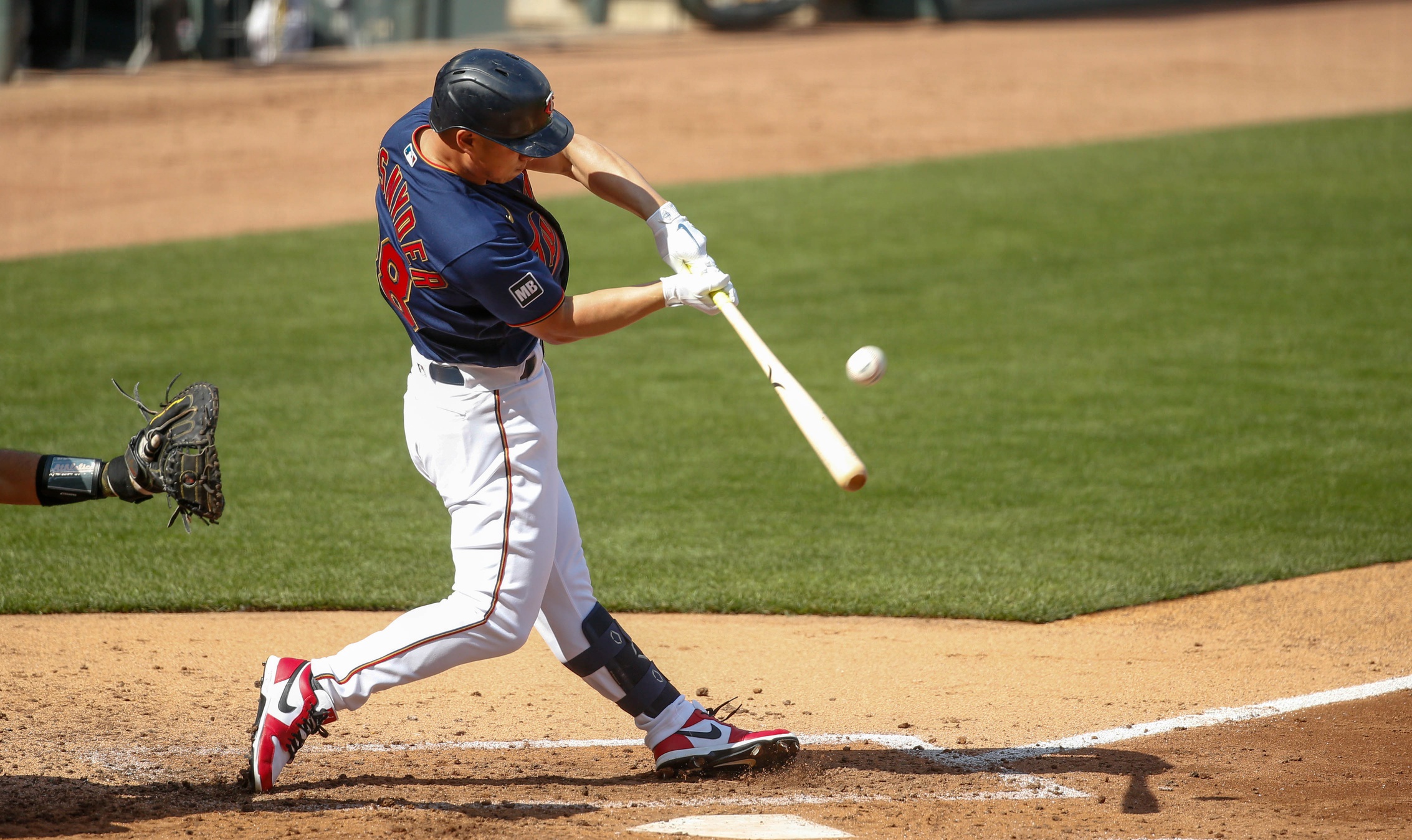 In 2016, Refsnyder was a 25-year-old floating between Triple-A and the New York Yankees. The Arizona State alumni -- a former College World Series’ Most Outstanding Player to boot -- had yet to make an impact on his club. He had a brilliant idea: He would add power to his game. His idea involved mirroring the approach of Minnesota Twin Brian Dozier. He noted that Dozier’s short, compact swing provided him with a high pull rate. The spray-to-all-fields approach wasn’t going to give him the requisite direction to hit home runs in bunches, he believed. So, over the next few years he tried to pull the ball. Refsnyder would finally pop his third career home run on April 27, 2018, by this time in a Tampa Bay Rays uniform. He would do it again on May 30 in Oakland but would not enjoy the slow jog around the bases again for almost three years. https://twitter.com/BallySportsNOR/status/1395888740976009218 A lot has happened between major league home runs. Refsynder has been with four different organizations. He didn’t see any MLB time in 2019 while with the Diamondbacks and Reds. The following year, he was a member of the Rangers’ alternate site in 2020 and received 35 plate appearances in Texas. He would do a stint in St. Paul, first at the Twins’ preseason alternate site, then as a member of the Triple-A Saints. Notably, his swing morphed from a loosy, leg kick with multiple parts (left) to an inward twist (middle) and then back to a hanging leg kick with more stability bridging the upper and lower half while creating a stretch with the front and back (right). You can see the drastic change between his previous swing with Texas and his recent one with the Twins. You would understand that, after all those years of not being able to trot around the bases, that Refsnyder would take a moment to bask in the adulation for destroying a Triston Mckenzie fastball left up. But he did not. What did Refsnyder do? He thanked his Triple-A hitting coach. “I was working on a couple things with Borgs,” Refsnyder told the media when asked about his swing, “and, thankfully, it has been working out.” Matt Borgschulte, or Borgs as Refsnyder called him, said that it is a testament to what type of person Refsnyder is to take the time to give recognition to those who have helped him. “All the credit goes to Rob, I’ve learned a lot from him as well,” says Matt Borgschulte, pointing out that Refsnyder’s career through multiple organizations comes with tacit knowledge on hitting. Each stop gives him a new perspective from different coaches and players. Smart players are able to retain and transfer that to their next destination. Refsnyder was signed by the Twins in November and invited to spring training. He wasn’t thrilled with his performance in March, deriding the pull-side ground balls he hit, so he and the Twins’ staff reviewed video of his swing and re-wrote the plan. He said he was able to try some things while in the alternate camp without the worry of what his performance looked like. “Not having to worry about games means not worrying about numbers or statistics that are on the back of baseball cards,” says Borgschulte, emphasizing the process over the outcome. The Twins work on fitting hitters with their best movements. But in doing so it becomes a conversation between the player and the staff. Refsnyder had a vision and, as they rebuilt his approach, they would have a back-and-forth on what felt good, what was working and what needed adjustments. Borgschulte highlighted Refsnyder’s load as an important component of his swing, setting him up to be in a good position to attack good pitches. When asked about the physical changes to his swing and how that impacted his ability to drive the ball, Borgschulte deferred and spoke toward Refsnyder’s overall approach: “Thinking too much about mechanics can be difficult on your approach,” he said. “Rob worked on trying to stay on the ball, going up the middle with it to the right-center field gap.” That’s very different from the approach Refsnyder outlined in 2016 when he began to be hyper-focused on pulling the ball. In his limited time with the Twins, the majority of balls off his bat have gone to center field (52%) while less than a quarter have been pulled. Maybe more importantly to Refsnyder’s results, just 24% of batted balls have been on the ground. The Twins organization has implemented a system for communication between coaches at different levels, so after Refsnyder left the Saints, hitting coaches Edgar Varela and Rudy Hernandez were able to continue with -- and enhance -- the preparation plan for him when he arrived at the big league club. To be fair, getting excited over less than 40 plate appearances is not advised. After all, Refsnyder’s line (.438/.472/.719 with 2 HR) looks an awful lot like Robbie Grossman’s (.361/.452/.694 with 2 HR) after 11 games in a Twins uniform. Still, there are signs that this might be the culmination of Refsnyder’s 2016 plan to add power and, if that is the case, having a right-handed outfielder with some pop isn’t a bad addition. Enjoy the ride.
-
Let Them Swing How They Want
Parker Hageman commented on Parker Hageman's blog entry in Baseball Good
There hasn't been a publicly provide update on the attack angle (or other swing data) since 2017 so it is difficult to say if there has been a significant league-wide shift on that. It's possible it is a factor in combination with the trend of higher velo, higher located fastballs. In regards to Max Kepler, in 2017 Kepler had one of the lowest attack angles in baseball at 4 degrees. The "optimal" attack angle for fastballs was around 8-10 degrees. By comparison, Joe Mauer was 11 degrees and Nelson Cruz was 12. It makes sense about Kepler considering coaches said that they felt he was too steep into the swing zone and that resulted on him getting on top of balls (grounders into the shift). I can't say how much he has or hasn't changed in terms of attack angle. He has acknowledged that in 2019, he tried to chase launch angle -- and he both increased that, his exit velo and pulled the ball more. I don't know how much of that is from the coaching side either. Another factor is VERTICAL BAT ANGLE. This is another measurement of the degree at which the barrel of the bat is compared to the knob of the bat at contact. There is a good thread on this concept here but, simply, a flat vertical bat angle produces more in-play mi****s (infield field balls and weak grounders) while a steeper vertical bat angle will typically produce more mi****s out of play (foul balls) and squarely hit balls. If you look at the picture in this 2017 article, you can see an example of Kepler's flat vertical bat angle. It's possible that Kepler still has a very flat swing (attack angle-wise) which is resulting in that high rate of infield flies and ground balls. As far as backspin goes, research by Dr. Alan Nathan shows that the best and most consistent way to hit balls with backspin is by (1) hitting them square and (2) slightly south of the ball's equator. If your attack angle is steep, like Kepler's in 2017, you have to have nearly perfect timing to get to that spot. With an optimal attack angle closer to 8-10 degrees, you have more room for error. Adding to this, high backspin, as shown in some research, isn't optimal either. A recent Fangraphs' study showed that players who have high backspin underperform compared to those in the square contact group. High backspin adds flight carry but does not necessarily get as many hits. While it is good to have a backspinning ball flight, exit velocity is a superior indicator of hit potential. This is to say, hitters shouldn't focus on backspin contact. I don't know if this has answered anything but it certainly killed some time. -
Byron Buxton, a father who happens to play center field for the Minnesota Twins, was asked how he approaches working with his young son on his game. On the Sports Info Solutions podcast with Mark Simon, Buxton said that he lets his kid hit anyway he wants. “When we go out to hit, before we do anything, he’ll hit like any player he wants to hit like. He wants to hit like Max Kepler or hit like Cody Bellinger. Anybody he wants to hit like, that’s what I let him do,” Buxton says. “For him, he likes Mookie Betts’ leg kick but he likes where Cody Bellinger’s hands are at. I’m not going to make you hit like me or hit like this person because there are days where you might have to back off the plate or open up a little bit. So it’s one of those where I’m literally whatever he wants to do on the diamond, I do whatever he wants to do because that’s what keeps it fun.” There are coaches and parents who give relentless instructions until the young hitters conform to some preconceived notion of what a hitter should look like. This presents several problems. This first is that motor learning rarely progresses well from that style of teaching. And what works for one hitter, might not for another. People need to have creativity and freedom to explore movements in order to find optimal ones for them. “I was forever trying a new stance, trying to hit like [Hank] Greenberg or [Jimmy] Foxx or somebody, and then going back to my old way,” Ted Williams wrote in his book, The Science of Hitting. “I recommend that for kids. Experiment. Try what you see that looks good on somebody else.” Read the rest of the post at Get Better Baseball.
-
The Bomba Show: Can The 2021 Twins Season Be Saved?
Parker Hageman posted a blog entry in Baseball Good
WCCO's Cory Hepola and Parker Hageman discuss the current state of the Minnesota Twins. Topics include: More depressing: 2011 or 2021 Twins? How is this happening? Should we have seen this coming? What’s worse: Pitching or Defense? What do you do with Miguel Sano? Give me ONE positive? Who does Trevor Larnach remind you of? Can this team save this season? -
I can’t believe I didn’t even consider the possibility that someday there would be a brand new stadium in downtown St. Paul. so stupid of me.
-
Went to the Saints game last night with @John Bonnes and @Nick Nelson.
Amazing atmosphere. Started to feel normal again.
While the game was dull (if you were rooting for the Saints), we did get to witness the first Saints home run (Tomas Talis) hit in St. Paul by a Twins' affiliated player. Also, I-Cubs' 31-year-old Robert Stock was humming 102-mile per hour darts at the end of the game.
CHS Field is a beaut.
-
As Parker Hageman and I watched the Saints' debut as the Twins' AAA affiliate last night at CHS field, he reminded me that one of the first stories he ever wrote for GameDay Program and Scorecard concerned the challenges the Twins face in getting their minor league parks closer together. I dug it up for us old-timers. It was originally published in September of 2008. That's how long we've been talking about this. - JB This past offseason, the Atlanta Braves announced plans to terminate their 42-year minor-league relationship with the city of Richmond, Virginia. The plan is to relocate the Richmond Triple-A affiliate 469 miles to the south. So starting with the 2009 season, the Braves’ most major-league ready prospects will be just a 45-minute drive away from Turner Field. The Braves, who already have a Class-A affiliate in Rome, Georgia – roughly 70 miles northwest of Atlanta – will have two of their farm clubs within a two-hour drive of their fan base. As Parker Hageman and I watched the Saints' debut as the Twins' AAA affiliate last night at CHS field, he reminded me that one of the first stories he ever wrote for GameDay Program and Scorecard concerned the challenges the Twins face in getting their minor league parks closer together. I dug it up for us old-timers. It was originally published in September of 2008. That's how long we've been talking about this. - JB This past offseason, the Atlanta Braves announced plans to terminate their 42-year minor-league relationship with the city of Richmond, Virginia. The plan is to relocate the Richmond Triple-A affiliate 469 miles to the south. So starting with the 2009 season, the Braves’ most major-league ready prospects will be just a 45-minute drive away from Turner Field. The Braves, who already have a Class-A affiliate in Rome, Georgia – roughly 70 miles northwest of Atlanta – will have two of their farm clubs within a two-hour drive of their fan base. Similarly, the Philadelphia Phillies recently moved their top affiliate from Ottawa to Allentown, PA, a nice complement to the organization’s Double-A affiliate, also located in-state in the city of Reading. With these teams grouped so closely, in theory a Phillies fan can spend a weekend and just two hours and forty-five minutes in the car and watch three levels of Phillie talent. On the opposite side of the Manifest Destiny, the Seattle Mariners have nursed a pair of 13-year relationships with both the Class-AAA Tacoma Rainiers (33 miles south of Safeco Field) and the Class-A Everett AquaSox (30 miles north of Safeco Field). This proximity has encouraged local blog communities such as USS Mariner and Lookout Landing to organize outings to inspect the developing Mariner talent first-hand. For diehard fans in Twins Territory, it is hard not to be envious. In comparison to a Braves fan who will be able to see up-and-coming prospects perform in Atlanta's northern suburbs starting next year, an ambitious Twins fan in Minneapolis or Saint Paul must drive nearly 17 hours to catch a glimpse of the team's Triple-A prospects in Rochester, New York. Can the Twins organization consider following the path of teams like Atlanta and Philadelphia? Notable Braves blogger (Sabernomics.com) and associate professor at Kennesaw State University J.C. Bradbury cited several economical positives regarding the geographical convenience of these farm clubs. First, travel time for scouts and coaches to analyze a potential call-up is greatly reduced. Second, once a player is needed due to injury or general promotion, the cost of getting that player from point A to point B is reduced significantly. In the case of the Braves, Phillies and Mariners, each have two of their clubs within manageable driving distance, thus reducing the cost of shuffling players around. The final but possibly most important reason for clustering the ball clubs is that it creates a commitment to players by the fans region-wide. Not long ago, hometown fans received brief snippets of information and weekly reports on players down on the farm through the local paper. Since the proliferation of the Internet, however, minor-league statistics have been readily available to every rube with a modem. Now it appears that major-league organizations are discovering the added benefit of allowing the average fan to see these players before their very eyes. If every Twins draft pick spent a season in St. Cloud, Fargo or Mankato before ascending to the other levels, an investment of sorts would be made between the spectator and the organization. That spectator may be enticed to visit the new Twins stadium when the player was eventually promoted. A relationship is created. But there are several barriers that impede the Twins from easily replicating this system. Unlike the Atlanta Braves who own the Richmond Braves franchise, the Twins are only in a partnership with the majority of their farm teams (they own rookie-league Elizabethton outright). The Braves are able to move their club on a whim. For the Twins to adjust their alignment, they would need to wait for one of the Player Development Contracts to expire and simultaneously find a community that would be accommodating to the new club. Another issue is that the sparsely populated Midwest region limits the encroachment of almost all of the leagues (minus the Midwest League, of course) which are situated on the dense coasts. The Class-AA Eastern League's closest team to Minnesota is the Akron Aeros, a 12-hour drive from the Twin Cities (but a 45-minute drive for Cleveland Indians fans to see their second-highest farm club). Therefore, relocating the New Britain Rock Cats to the similarly sized Duluth-Superior area would greatly increase the travel budget, completely negating the entire purpose of saving money if every road trip takes a minimum 12-hour bus ride. Likewise, the International League, home of the Twins’ current Triple-A affiliate Rochester Red Wings, has a minimum nine-hour drive from Minnesota to the nearest competitor (Indianapolis Indians). Obviously Des Moines would be a great city to host a Twins affiliate, as it is just three hours and 40 minutes south on Interstate 35 and has drawn 14,000 people to one game. The problem, however, is that the Player Development Contract between the Iowa Cubs and the Chicago Cubs is signed through 2012. The Twins do have one affiliate that would benefit from relocation. In August 2007, the Twins and the Beloit Professional Baseball Association (BPBA), purveyors of the Low-A Snappers, agreed to a two-year extension on their P.D.C., ensuring the partnership would last through the 2010 season. The Snappers’ home ballpark, Harry Pohlman Field, seats just 3,501 in a league where most of the facilities have around 1,500 more seats per stadium. The Beloit ballpark has been renovated several times – adding box seats and other amenities – but lacks the revenue generators that flashier, newer ballparks have. Recent attempts to get a new stadium built in nearby Janesville, Wisconsin have been thwarted. Since the Beloit Snappers are community-owned (like the Green Bay Packers) the sale of the team appears to be an unlikely outcome. So, for a franchise to come to Minnesota, an entrepreneur would need to purchase an existing team (the most recent Midwest League team sold for $6.2 million in 2006), wait until the Twins' P.D.C. with the Beloit organization expired, and then relocate the purchased team to a community closer to the Twin Cities. One appealing location is the recently proposed stadium in Burnsville, Minnesota (25 minutes south of the Metrodome). Two private financiers, Tony Pettit and Terry Deroche, have submitted preliminary designs to the city of Burnsville for a 7,300-seat ballpark to be constructed without government assistance and potentially ready for independent Northern League games by 2009. Dakota County, Minnesota's third most populous county with over 380,000 residences, also has strong economic base to support a minor league franchise, just like Gwinnett County in Georgia. Bringing a Low-A Midwest League team into the Twin Cities would be a good reward to local Twins fans, providing them with a low-cost alternative to what is sure to be an increasingly expensive ticket at the taxpayer-funded stadium. The team would reap dividends from the residual marketing effect of having future major-league players develop just south of the Minnesota River while saving on travel costs for scouts and coaches. And maybe in 2013 the Twins can finally wrestle Des Moines away from the Cubs, and turn I-35 into a solid corridor of Twins baseball. View full article
-
GameDay Program Flashback: Rethinking the Farm System
Parker Hageman posted an article in Minor Leagues
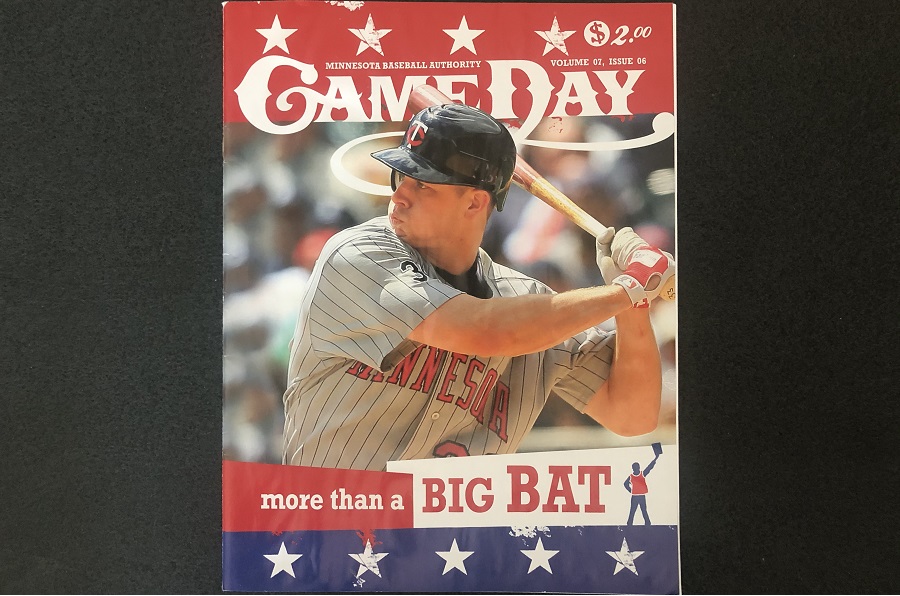 Similarly, the Philadelphia Phillies recently moved their top affiliate from Ottawa to Allentown, PA, a nice complement to the organization’s Double-A affiliate, also located in-state in the city of Reading. With these teams grouped so closely, in theory a Phillies fan can spend a weekend and just two hours and forty-five minutes in the car and watch three levels of Phillie talent. On the opposite side of the Manifest Destiny, the Seattle Mariners have nursed a pair of 13-year relationships with both the Class-AAA Tacoma Rainiers (33 miles south of Safeco Field) and the Class-A Everett AquaSox (30 miles north of Safeco Field). This proximity has encouraged local blog communities such as USS Mariner and Lookout Landing to organize outings to inspect the developing Mariner talent first-hand. For diehard fans in Twins Territory, it is hard not to be envious. In comparison to a Braves fan who will be able to see up-and-coming prospects perform in Atlanta's northern suburbs starting next year, an ambitious Twins fan in Minneapolis or Saint Paul must drive nearly 17 hours to catch a glimpse of the team's Triple-A prospects in Rochester, New York. Can the Twins organization consider following the path of teams like Atlanta and Philadelphia? Notable Braves blogger (Sabernomics.com) and associate professor at Kennesaw State University J.C. Bradbury cited several economical positives regarding the geographical convenience of these farm clubs. First, travel time for scouts and coaches to analyze a potential call-up is greatly reduced. Second, once a player is needed due to injury or general promotion, the cost of getting that player from point A to point B is reduced significantly. In the case of the Braves, Phillies and Mariners, each have two of their clubs within manageable driving distance, thus reducing the cost of shuffling players around. The final but possibly most important reason for clustering the ball clubs is that it creates a commitment to players by the fans region-wide. Not long ago, hometown fans received brief snippets of information and weekly reports on players down on the farm through the local paper. Since the proliferation of the Internet, however, minor-league statistics have been readily available to every rube with a modem. Now it appears that major-league organizations are discovering the added benefit of allowing the average fan to see these players before their very eyes. If every Twins draft pick spent a season in St. Cloud, Fargo or Mankato before ascending to the other levels, an investment of sorts would be made between the spectator and the organization. That spectator may be enticed to visit the new Twins stadium when the player was eventually promoted. A relationship is created. But there are several barriers that impede the Twins from easily replicating this system. Unlike the Atlanta Braves who own the Richmond Braves franchise, the Twins are only in a partnership with the majority of their farm teams (they own rookie-league Elizabethton outright). The Braves are able to move their club on a whim. For the Twins to adjust their alignment, they would need to wait for one of the Player Development Contracts to expire and simultaneously find a community that would be accommodating to the new club. Another issue is that the sparsely populated Midwest region limits the encroachment of almost all of the leagues (minus the Midwest League, of course) which are situated on the dense coasts. The Class-AA Eastern League's closest team to Minnesota is the Akron Aeros, a 12-hour drive from the Twin Cities (but a 45-minute drive for Cleveland Indians fans to see their second-highest farm club). Therefore, relocating the New Britain Rock Cats to the similarly sized Duluth-Superior area would greatly increase the travel budget, completely negating the entire purpose of saving money if every road trip takes a minimum 12-hour bus ride. Likewise, the International League, home of the Twins’ current Triple-A affiliate Rochester Red Wings, has a minimum nine-hour drive from Minnesota to the nearest competitor (Indianapolis Indians). Obviously Des Moines would be a great city to host a Twins affiliate, as it is just three hours and 40 minutes south on Interstate 35 and has drawn 14,000 people to one game. The problem, however, is that the Player Development Contract between the Iowa Cubs and the Chicago Cubs is signed through 2012. The Twins do have one affiliate that would benefit from relocation. In August 2007, the Twins and the Beloit Professional Baseball Association (BPBA), purveyors of the Low-A Snappers, agreed to a two-year extension on their P.D.C., ensuring the partnership would last through the 2010 season. The Snappers’ home ballpark, Harry Pohlman Field, seats just 3,501 in a league where most of the facilities have around 1,500 more seats per stadium. The Beloit ballpark has been renovated several times – adding box seats and other amenities – but lacks the revenue generators that flashier, newer ballparks have. Recent attempts to get a new stadium built in nearby Janesville, Wisconsin have been thwarted. Since the Beloit Snappers are community-owned (like the Green Bay Packers) the sale of the team appears to be an unlikely outcome. So, for a franchise to come to Minnesota, an entrepreneur would need to purchase an existing team (the most recent Midwest League team sold for $6.2 million in 2006), wait until the Twins' P.D.C. with the Beloit organization expired, and then relocate the purchased team to a community closer to the Twin Cities. One appealing location is the recently proposed stadium in Burnsville, Minnesota (25 minutes south of the Metrodome). Two private financiers, Tony Pettit and Terry Deroche, have submitted preliminary designs to the city of Burnsville for a 7,300-seat ballpark to be constructed without government assistance and potentially ready for independent Northern League games by 2009. Dakota County, Minnesota's third most populous county with over 380,000 residences, also has strong economic base to support a minor league franchise, just like Gwinnett County in Georgia. Bringing a Low-A Midwest League team into the Twin Cities would be a good reward to local Twins fans, providing them with a low-cost alternative to what is sure to be an increasingly expensive ticket at the taxpayer-funded stadium. The team would reap dividends from the residual marketing effect of having future major-league players develop just south of the Minnesota River while saving on travel costs for scouts and coaches. And maybe in 2013 the Twins can finally wrestle Des Moines away from the Cubs, and turn I-35 into a solid corridor of Twins baseball.
-
Really enjoyed reading your Griffin Jax article. Good luck at CHS tonight!