



Parker Hageman
-
Posts
4,162 -
Joined
-
Last visited
-
Days Won
6
Content Type
Profiles
Minnesota Twins News, Rumors & Analysis
Minnesota Twins Videos
2026 Minnesota Twins Top Prospect Rankings
2022 Minnesota Twins Draft Picks & Signing Bonuses
Minnesota Twins Trade & Free Agent Rumors
Minnesota Twins Fan Guides & Resources
2023 Minnesota Twins Draft Picks & Signing Bonuses
2024 Minnesota Twins Draft Picks & Signing Bonuses
2025 Minnesota Twins Draft Picks & Signing Bonuses
2026 Minnesota Twins Draft Picks & Signing Bonuses
Forums
Blogs
Events
Store
Downloads
Gallery
Everything posted by Parker Hageman
-
In the case of how individuals fare season-to-season, maybe. Certainly there isn't enough data around to know how a player will perform year-over-year. The real value comes from the insanely large data set that has been studied and extensively and one of the amazing findings is that hits happen at a higher rate on batted balls that have an exit velocity of 90 MPH or greater and a launch angle between 10-30 degrees. In terms of development, if you know that one of your prospects is hitting more of those types of balls in play, you know that they are doing something right. It may be reflected in their batting average but that is not always the case. Conversely, if they are not hitting a high percentage of balls in that range, then you likely know there is something to work on. Again, I see the value as a common language of the front office. If you are discussing a player's performance in the minors and just say "he's hitting .280 the last 30 days for Fort Myers", that doesn't mean anything in regards to his actual performance. If you talk about his exit velocity/launch angles and how many optimal batted balls he has put into play (in additional to strikeout rates, walk rates, etc), for example, now you know have a better understanding of that performance.
-
Overall point: "pushing off the rubber" -- as he was describing it during the broadcast -- does little for power or command. I know (hope?) Bert means something different that what he explained on TV when he and/or Neil Allen were working with Berrios in the bullpen.
-
On Friday night in Kansas City Bert Blyleven described to viewers what he and the Twins’ coaching staff were working on with Jose Berrios in order to straighten him out. “Right...there!” Blyleven exclaimed as Berrios delivered a fastball for strike three to the Royals’ Jarrod Dyson in the bottom of the first. It was a beautiful pitch that was beautifully executed by the rookie. “EXPLODE towards home plate,” he emphasized. As the replay of the strikeout rolled, Blyleven further elaborated by saying “once you get to that balance point, utilize the rubber and explode towards home plate” and that Berrios needed to “push off” the rubber more. And just like that, Jose Berrios was fixed forever, right? Image courtesy of Brad Rempal // USA Today On Friday night in Kansas City Bert Blyleven described to viewers what he and the Twins’ coaching staff were working on with Jose Berrios in order to straighten him out. “Right...there!” Blyleven exclaimed as Berrios delivered a fastball for strike three to the Royals’ Jarrod Dyson in the bottom of the first. It was a beautiful pitch that was beautifully executed by the rookie. “EXPLODE towards home plate,” he emphasized. As the replay of the strikeout rolled, Blyleven further elaborated by saying “once you get to that balance point, utilize the rubber and explode towards home plate” and that Berrios needed to “push off” the rubber more. And just like that, Jose Berrios was fixed forever, right? For those who are able to see the embedded Twitter post, you can watch and listen to the entire conversation here: https://twitter.com/ParkerHageman/status/766878258956644353 Berrios, of course, came unglued shortly thereafter. He issued four walks and allowed four runs to score during his four innings of work. He either stopped exploding towards home plate or that wasn’t the pitching tip that was going to remedy what ails him. Now, regular Twins broadcast viewers will recall this pitching advice. This, along with a “good downward plane”, have become common pitching jargon slung around for years. Scott Baker never figured out how to get a good downward plane. It has come to the point where if any Twins pitcher is struggling, the inevitable cure from the broadcast booth would likely be one of those two remedies. To be clear, I’m not suggesting that Bert Blyleven doesn’t know pitching. Bert Blyleven has forgotten more about pitching in the time it took you to get to this point in the sentence than most people hope to learn in a lifetime. However, when it comes to utilizing the rubber by pushing off, as Blyleven suggests, science might not agree with the Dutchman’s assessment. According to Kyle Boddy and his Driveline Baseball think tank in Seattle, Washington has studied the “push off” phenomenon and his preliminary research shows that the back leg push off is not the velocity-inducing catalyst that people think it is. Boddy offered the Mariners’ Arquimedes Caminero as a good example of how velocity isn’t generated off the back leg. When he gets to his balance point and goes forward, his foot disengages the rubber area but doesn’t push off. http://i.imgur.com/cxLJzHG.gif When it comes this particular pitching cue, Blyleven is incorrect. By Boddy’s account, coming from someone who has dedicated his career to understanding the science behind it, pushing from the back leg has little influence on velocity or command. What we hear from players, former players and coaches is a disconnect between what they FELT and what is actually happening during the process. To Blyleven, the act of driving off the back leg may have felt like pushing off the pitching rubber but that is not what actually transpires in the kinetic chain. Berrios’ problem does not stem from not utilizing the pitching rubber enough. In the case of Berrios’ development, as Mike Berardino of the St Paul Pioneer Press recently phrased it, the Twins are using a “village” approach. In addition to Blyleven, Berrios has been receiving advice from Neil Allen, Eddie Guardado and teammate Ervin Santana. While the guidance from multiple experienced baseball men can be beneficial, there is also the danger that a young prospect has too many messages being communicated -- especially when some of the advice, in spite of the well-meaning nature, is wrong. There is no denying that Berrios needs refinement. When it comes to his fastball command, he has found the zone just 46% of the time -- compared to the 53.5% major league average. In fact, of those who have thrown 350 or more fastballs, Berrios’ in-zone rate is the fifth lowest. Beyond that, Berrios also struggles to command his fastball in the zone, missing the glove by a wide margin and winding up in a hitter’s whump-em zone. That being said, in spite of the poor command, Berrios’ movement and velocity on his fastball has also incited plenty of swing-and-misses making it a very good potential weapon. Right now his fastball gets a swinging strike 9.3% of the time it’s thrown -- well above the league average of 7.5%. By comparison, the hard-throwing Noah Syndergaard gets a swinging strike 9.5% of the time. That would be good over the course of an entire season. That would be really good. http://i.imgur.com/VH4xtUF.gif Guardado told me something in spring training that resonated about his instructional approach and the psyche of pitchers in general. “I don’t like to go in there and fix a damn engine when you only need to change a spark plug,” he said. “That’s what I try to do. Keep it simple, keep it easy. Not too much to think about because it is already tough to go out there and the pressure out there trying to compete.” There is a lot of pressure. Especially for someone who has been deemed the team’s top pitching prospect and one -- through various social media channels -- who has also set a lofty expectation for himself as well. Berrios has talent, skill and dedication like few others have ever had or ever wish to have and he has carved up hitters in the minor leagues. It is only a matter of time before it all clicks. View full article
-
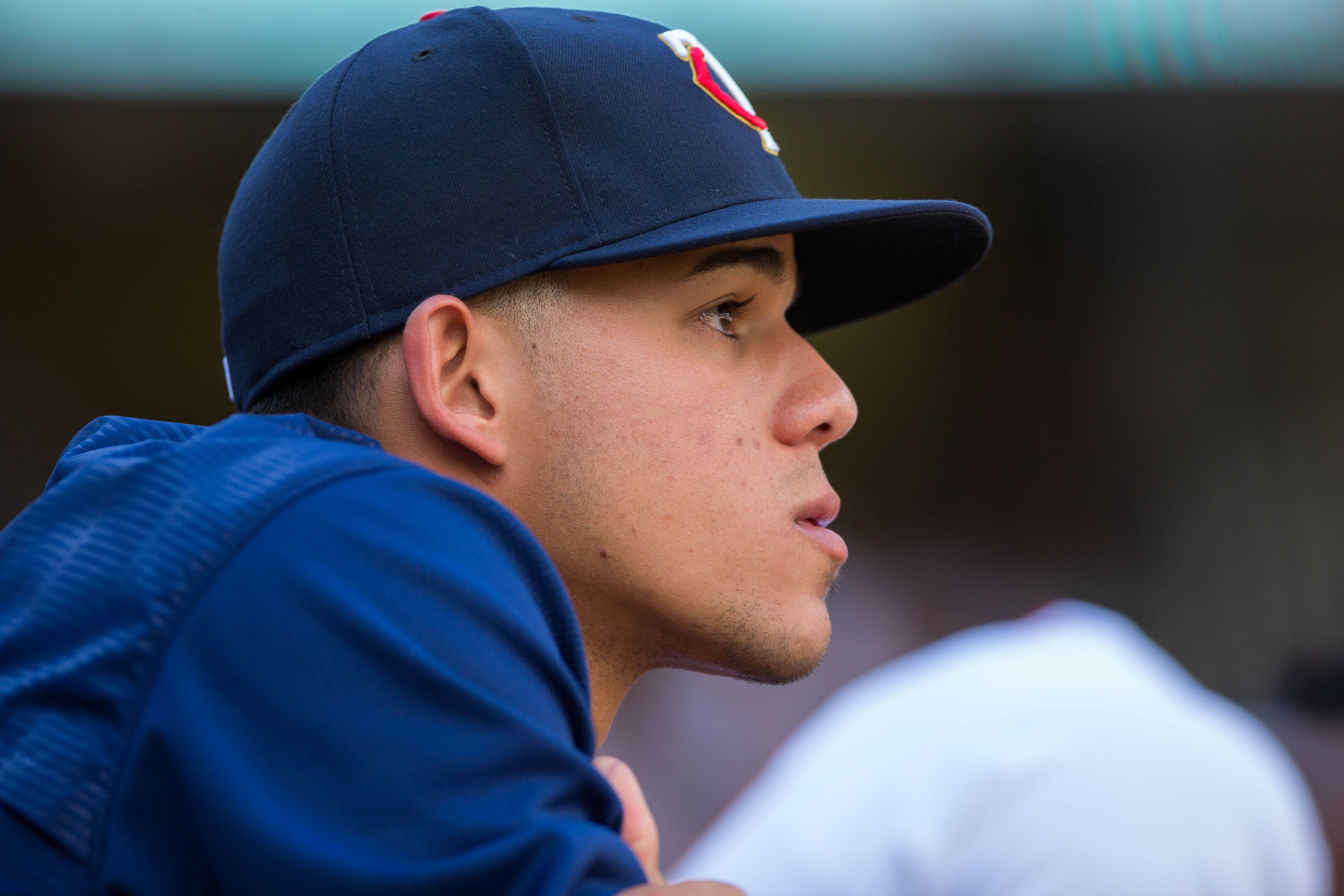 For those who are able to see the embedded Twitter post, you can watch and listen to the entire conversation here: https://twitter.com/ParkerHageman/status/766878258956644353 Berrios, of course, came unglued shortly thereafter. He issued four walks and allowed four runs to score during his four innings of work. He either stopped exploding towards home plate or that wasn’t the pitching tip that was going to remedy what ails him. Now, regular Twins broadcast viewers will recall this pitching advice. This, along with a “good downward plane”, have become common pitching jargon slung around for years. Scott Baker never figured out how to get a good downward plane. It has come to the point where if any Twins pitcher is struggling, the inevitable cure from the broadcast booth would likely be one of those two remedies. To be clear, I’m not suggesting that Bert Blyleven doesn’t know pitching. Bert Blyleven has forgotten more about pitching in the time it took you to get to this point in the sentence than most people hope to learn in a lifetime. However, when it comes to utilizing the rubber by pushing off, as Blyleven suggests, science might not agree with the Dutchman’s assessment. According to Kyle Boddy and his Driveline Baseball think tank in Seattle, Washington has studied the “push off” phenomenon and his preliminary research shows that the back leg push off is not the velocity-inducing catalyst that people think it is. Boddy offered the Mariners’ Arquimedes Caminero as a good example of how velocity isn’t generated off the back leg. When he gets to his balance point and goes forward, his foot disengages the rubber area but doesn’t push off. http://i.imgur.com/cxLJzHG.gif When it comes this particular pitching cue, Blyleven is incorrect. By Boddy’s account, coming from someone who has dedicated his career to understanding the science behind it, pushing from the back leg has little influence on velocity or command. What we hear from players, former players and coaches is a disconnect between what they FELT and what is actually happening during the process. To Blyleven, the act of driving off the back leg may have felt like pushing off the pitching rubber but that is not what actually transpires in the kinetic chain. Berrios’ problem does not stem from not utilizing the pitching rubber enough. In the case of Berrios’ development, as Mike Berardino of the St Paul Pioneer Press recently phrased it, the Twins are using a “village” approach. In addition to Blyleven, Berrios has been receiving advice from Neil Allen, Eddie Guardado and teammate Ervin Santana. While the guidance from multiple experienced baseball men can be beneficial, there is also the danger that a young prospect has too many messages being communicated -- especially when some of the advice, in spite of the well-meaning nature, is wrong. There is no denying that Berrios needs refinement. When it comes to his fastball command, he has found the zone just 46% of the time -- compared to the 53.5% major league average. In fact, of those who have thrown 350 or more fastballs, Berrios’ in-zone rate is the fifth lowest. Beyond that, Berrios also struggles to command his fastball in the zone, missing the glove by a wide margin and winding up in a hitter’s whump-em zone. That being said, in spite of the poor command, Berrios’ movement and velocity on his fastball has also incited plenty of swing-and-misses making it a very good potential weapon. Right now his fastball gets a swinging strike 9.3% of the time it’s thrown -- well above the league average of 7.5%. By comparison, the hard-throwing Noah Syndergaard gets a swinging strike 9.5% of the time. That would be good over the course of an entire season. That would be really good. http://i.imgur.com/VH4xtUF.gif Guardado told me something in spring training that resonated about his instructional approach and the psyche of pitchers in general. “I don’t like to go in there and fix a damn engine when you only need to change a spark plug,” he said. “That’s what I try to do. Keep it simple, keep it easy. Not too much to think about because it is already tough to go out there and the pressure out there trying to compete.” There is a lot of pressure. Especially for someone who has been deemed the team’s top pitching prospect and one -- through various social media channels -- who has also set a lofty expectation for himself as well. Berrios has talent, skill and dedication like few others have ever had or ever wish to have and he has carved up hitters in the minor leagues. It is only a matter of time before it all clicks.
-
That is a fair point and, to be honest, I don't know what Neil Allen is telling Berrios, so I refrained from commenting on that.
-
Since Trackman data only became available at all stadiums starting in 2015, I'll assume they didn't have that in-play dating back to 2014. But, more to the point, exit velocity/launch angle is a much more valuable data set to examine when it comes to player development than batting average.
-
Rays Organization Evaluating Hitters Differently The Tampa Bay Rays organization have always been at the leading edge of using information and data before other teams latch on and this might be yet another example. TangoTiger, co-author of The Book, shared a line from a forthcoming Sports Illustrated article: For those who are unable to see the embedded tweet, Albert Chen's article notes that the "Rays’ organization... are told that hitters ... are not measured by batting average but by batted-ball exit velocity." That's a significant mindset shift for minor leaguers who tend to focus more on the newspaper box score stats. Moving to a measurement system that captures the process of what makes a good hitter (exit velocity, launch angle, etc) is far superior. To be sure, the Twins do have Trackman in most of their minor league ballparks and use that data to evaluate their players, but I would guess that inside the front office the Twins employees are likely discussing Byungho Park's batting average rather than his exit velocity.
-
Bert Blyleven On Fixing Jose Berrios On Friday night in Kansas City, Bert Blyleven honed in on an aspect of Jose Berrios’ delivery that he felt needed attention. “Right...there!” Blyleven exclaimed as Berrios delivered strike three to the Royals’ Jarrod Dyson in the bottom of the first. “EXPLODE towards home plate.” Blyleven further elaborated his point by saying “once you get to that balance point, utilize the rubber and explode towards home plate” and that Berrios needed to “push off” the rubber more. For those who are able to see the embedded Twitter post, you can watch and listen to the entire conversation here: https://twitter.com/ParkerHageman/status/766878258956644353 Now, regular Twins broadcast viewers will recall this piece of advice. This, along with a “good downward plane”, have become common pitching jargon slung around for years. It has come to the point where if any Twins pitcher is struggling, the inevitable cure from the broadcast booth would likely be one of those two remedies. When it comes to utilizing the rubber by pushing off, as Blyleven suggests, science might not agree with the Dutchman’s assessment. According to Kyle Boddy and his Driveline Baseball think tank in Seattle, Washington has studied the “push off” phenomenon and his preliminary research shows that the back leg push off is not the velocity-inducing catalyst that people think it is. Boddy offered the Mariners’ Arquimedes Caminero as a good example of how velocity isn’t generated off the back leg. When he gets to his balance point and goes forward, his foot disengages the rubber area but doesn’t push off. http://i.imgur.com/cxLJzHG.gif When it comes this particular pitching cue, Blyleven is incorrect. By Boddy’s account, coming someone who has dedicated their career to understanding the science behind it, pushing from the back leg has little influence with velocity or command. What we hear from players, former players and coaches is a disconnect between what they FELT and what is actually happening during the process. To Blyleven, the act of driving off the back leg may have felt like pushing off the pitching rubber but that is not what actually transpires in the kinetic chain. There is no question Berrios needs some refinement. When it comes to his fastball command, he has found the zone just 46% of the time -- compared to the 53.5% major league average. In fact, of those who have thrown 350 or more fastballs, Berrios’ in-zone rate is the fifth lowest. Beyond that, Berrios also struggles to command his fastball in the zone, missing the glove by a wide margin and winding up in a hitter’s whump-em zone. That being said, in spite of the poor command, Berrios’ movement and velocity on his fastball has incited plenty of swing-and-misses making it a very good weapon. [berrios' fastball location vs Kansas City] In the case of Berrios’ development, as Mike Berardino of the St Paul Pioneer Press recently phrased it, the Twins are using a “village” approach. In addition to Blyleven, Berrios has been receiving advice from Neil Allen, Eddie Guardado and teammate Ervin Santana. While the guidance of multiple experienced baseball men can be beneficial, there is also the danger that a young prospect has too many messages being communicated -- especially when some of the advice, in spite of the well-meaning nature, is wrong.

-
Successful changeups are about movement, not speed Or so Brian Bannister and Zack Grienke discovered during the early days of PitchF/X data. According to the Providence Journal’s Brian Macpherson, the duo stumbled on to some useful information regarding what made a changeup so devastating. It wasn’t speed differential, it was movement: Bannister washed out as a pitcher but has found a new career with the Red Sox, first as a member of the front office’s analytics team and now as a member of the coaching staff, acting as an assistant pitching coach in hopes of helping other pitchers digest this type of information. This idea definitely runs counterintuitive to what is typically taught inside the game at all levels. For example, just this week I received an email from Pro Baseball Insider, a fantastic instructional site run by former Twin Doug Bernier (who has also become a disciple of the elite swing mechanics Josh Donaldson talked about). The email came equipped with a guide on how to throw a changeup written by former Twins farmhand Anthony Slama. Slama wrote that the “fundamental purpose” of the pitch is to “deceive the hitter and change his timing.” “By altering the speed of the pitch without altering arm-speed or delivery,” Slama wrote, “the pitcher can deceive a hitter and by doing this have a better chance at keeping the ball off his barrel.” While speed separation and arm action consistency play a role, at no point does Slama mentions movement. In the early 1980s, pitching coach Johnny Podres had Frank Viola incorporate a changeup into his repertoire and helped him establish a consistent arm slot similar to his fastball. But the pitch didn’t really take off from there. By Viola’s own admission, he used “15 to 20” different grips until he worked with Dick Such where he found the right grip and that turned into the earth-scorching changeup he used throughout the rest of the 1980s. When Johan Santana’s changeup was dominating baseball’s landscape and leaving piles of bodies in its path, many reports and descriptions focused on the idea that Santana’s changeup came out of his hand like a cotton ball with fastball arm action. What is often left off is how much the pitch moved. https://twitter.com/ParkerHageman/status/630892538086457344 Whether you are working on a changeup of your own, helping others work on their or simply watching the game on TV, remember to look for movement out of a pitcher’s changeup.
-
Corey Koskie Reacts To Josh Donaldson's Hitting Instructional I don't think what Donaldson was talking about is all that radical -- after all, Ted Williams detailed a lot of what he was talking about in the Science of Hitting book that came out in 1971. A lot of Donaldson's overall concepts were outlined in Williams' manuscript. Still, those ideas are not widespread throughout the game. It was interesting to see former Twin Corey Koskie weigh in on the video last night: "I just learned how to hit 15 years too late." I'd love to pick his brain and know what he was taught -- starting in his lumberjack days in Canada all the way through the Twins system. It would seem that none of those traits were presented to the players throughout the late 1990s and early 2000s... and even more recently: "I’ve changed a lot. I remember coming into my rookie ball season and I went and just played. I thought I did a pretty good job. Then the following spring training, our hitting coordinator, Slice, wanted to change somethings and I was up for the change. I wanted to produce and do well by the team and the organization. He started to have me do a toe-tap thing." -- Trevor Plouffe "They changed me in rookie ball. They closed me up. They slowed down some movement a bit." -- Byron Buxton Those are just two isolated instances. I do know that Chad Allen has been really good at letting hitters find rhythm and Brunansky is supportive as well (to an extent). When I asked Brunansky about what he saw out of the Blue Jays organization, including what Donaldson was doing, this is what he said: Plouffe had a similar response about if he felt the Blue Jays were on to something with their hitting philosophy: "In my opinion you don’t want to conform everybody to the same type of swing because everybody has grown up swinging differently. We’ve swung for 27 years now and it’s who we are. If you can get to that certain spot, people are realizing there are a million different ways to get there." I don't know much from the rest of the hitting coaches and instructors in the organization but I am inclined to believe they are embracing this method more than they did in the past.
-
I think that in a lot of ways, the availability of video on hitters throughout history plays a prominent role on what hitters like Donaldson are doing now versus what we were taught. Most generations relied on feel and trying to communicate what they felt was the best method to hitting (staying still, hit the top half on the ball, hands to the ball, chop down, etc). It wasn't until more recently that video has shown that successful hitters are not actually executing that way. It seems that more frequently, whenever we see a hitter having a breakout year or a career turnaround, it's often with that hitter changing their style from the previous methods to something that more closely resembles what Donaldson spoke of. Brad Miller, who averaged 10 home runs per season with the Mariners, suddenly has popped off for 25 and counting. Check out how much his swing has changed. https://twitter.com/ParkerHageman/status/762324086118768640
-
For those who have followed Twins Daily for some time might know that I like to dig into the hows and whys of the game in addition to the data side. Not having the opportunity to write full breakdowns here as often anymore, I wanted to create this thread to use as a place to post items discussing the game -- swings, approaches, game theories, data utilization, front office trends, etc -- things that do not necessarily involve the Twins specifically but might influence how you might view the game overall. I hope to post something to the thread on a regular basis. In the comment sections I have seen plenty of great insight and questions regarding the game so I hope we can use this thread to post videos, articles, quotes and discussion points. I hope we can make this a valuable asset of the Twins Daily community. First up: Josh Donaldson on the MLB Network discussing his swing mechanics. I believe this video is a must watch for any hitter or coach. I'm sure not everyone will agree on the method but the concept and the thought-process behind his swings is unbelievable. To tie it to the Twins, after watching this, how do you think the organization has been trying to teach Byron Buxton to swing? Have they been doing him a disservice?
-

Fangraphs (and other national publications) on the Twins
Parker Hageman replied to Mike Sixel's topic in Minnesota Twins Talk
I'm not wrong and I hereby accept your apology. -
Buxton Stalls Out, Again
Parker Hageman replied to Nick Nelson's topic in Twins Daily Front Page News
https://twitter.com/ParkerHageman/status/762718005440589824 -
Official Trade Deadline Day Thread
Parker Hageman replied to Seth Stohs's topic in Twins Daily Front Page News
Jon Heyman is reporting the Twins and Red Sox have an agreement on Fernando Abad.- 553 replies
-
- 4
-

-
- kurt suzuki
- brandon kintzler
- (and 2 more)
-
Brandon Kintzler: Proven Closer?
Parker Hageman replied to Cody Christie's topic in Twins Daily Front Page News
Before we get too excited about this, let's keep in mind that pitch f/x hasn't always categorized fastballs accurately. For instance, in 2014 they said he threw 17% 4-seam but he was almost exclusively sinkers. When you look at the game charts, the ones labeled "4-seamers" moved the same as the ones labeled "sinkers". The impressive part is that he is throwing very few secondary pitches in the mix. He's essentially a one-pitch pitcher. Only Kenley Jansen, Zach Britton and Sean Doolittle have leaned on one-pitch more than Kintzler. **Here's another thing: Britton probably has the best sinking fastball in the game right now. He grips it like a 2-seamer with a slight cross grip. Kintzler, who they categorize as a "sinker", holds his in almost the exact same way. They both have very similar vertical movement (Britton's is thrown much harder) resulting in sink but one is a sinker and the other is a 2-seamer. Shruggy guy.
- 25 replies
-
- 1
-
-
- brandon kintzler
- glen perkins
- (and 2 more)
-
Minnesota's Defensive Dilemma
Parker Hageman replied to Cody Christie's topic in Twins Daily Front Page News
HEY! Speaking of defensive metrics, here is Rob Antony's take on them from our 2010 interview: -
With TR Gone, Can We Trust The Braintrust?
Parker Hageman replied to Nick Nelson's topic in Twins Daily Front Page News
Being the one who conducted the original interview with Rob Antony in 2010, I probably should clarify several things. During a spring training visit in 2010, I attempted to get time with Terry Ryan. I was told that he was unavailable (like he typically is outside of his pre-game huddles) and that Antony would gladly answer my questions. My point was to gauge what the level of knowledge was for baseball analytics inside the organization. In addition to some current event questions, I added a few questions from the book Behind-The Scenes Baseball (the Doug Decatur book discussed what life was like as an analytics “advisor” to several teams in 1984) which would be telling of the mindset of a team’s GM. Those questions were something like, does he prefer RBI to Slugging Percentage? Does the GM know basic advanced stats (I used FIP and BABIP as mine)? As you can see in the link above, Antony shaded toward the old-school mindset, not very familiar with what were, at the time, advanced stat concepts. To be sure, Antony readily acknowledged this short-coming as well, remarking that the organization definitely slanted old-school and mentioned that they had just hired a guy to focus solely on analytics (Jack Goin). Shortly after publishing the interview, Aaron Gleeman shared it on his site and it gained national steam. I was told that there was definite unhappiness about the interview and how it portrayed Antony. In fact, I’m told that the Twins reached out to Gleeman to have him sit down with Antony so he could clarify his position on analytics. Later on, several members within the organization told me later that the interview prompted Antony to educate himself on a lot of those stats and concepts. I haven’t had the opportunity to sit down one-on-one with Antony since the interview was published. I would love to sit down with him again and revisit some of those topics but let me make this much clear: I have been around him during his time leading the pre-game media huddles, I’ve read all of the TwinkieTown interviews with him over the past several years -- he’s a very sharp guy. Would he make a good GM? ¯\_(ツ)_/¯ -
Frankly, I don't know who to believe. The Twins' track record for identifying injuries is not stellar. And players hide injuries all the time. Dozier said he wasn't hurt in the second half of last year but was playing through a torn labrum in his hip. Phil Hughes said he wasn't hurt and was playing through thoracic outlet syndrome in his shoulder. Glen Perkins said no one should worry about his velocity and he had a torn labrum in his shoulder. Chris Colabello told no one about his thumb injury. And so on and so on and so on. I can certainly see a scenario where Park hurt his wrist in camp, had it feel better for a stretch and then tweaked it. Multiple reasons why he wouldn't say anything and try to keep playing through it. Not true. In hitter's counts during his hot stretch he saw fastballs 63% of the time and during the slump he saw them 59% of the time. This isn't enough of a variation. He actually saw MORE fastballs (57% to 54%) on the first pitch during his slump. Teams were not pitching him backwards overall during the bulk of his slump. What they did do, as indicated in the heat map GIF in the article, was avoid the middle of the plate -- particularly in hitter's counts....I will add, however, that teams rarely threw him fastballs AT ALL during his last 8 games before being demoted. He was already taking water at this point -- I just think that might have been what opened the floodgates.
-
When the Twins signed Byung Ho Park this offseason, they knew they were getting a strikeout-prone slugger who could regularly destroy baseballs. For about a month and half, he lived up to that billing. Midway through May that changed. He turned into a strikeout prone player who gently hit baseballs. Multiple explanations for this massive slump were offered. Teams finally adjusted to him. He focused too much on hard fastballs. His confidence was gone. As such, the Twins sent him to Rochester to regain his swing. If reports are accurate, however, it would appear that, in addition to the issues above, Park has also been playing through an injury. On May 13, in the opener of a three game series in Cleveland, Park had his first multi-homer game of his career and giving him nine on the season, pulling him within three of the AL pace-setting in Robinson Cano. He was tops among rookies in the junior circuit in home runs, and his overall numbers, while not otherworldly, were highly respectable. When the sun set on the Buckeye State that night, Park carried a .245/.324/.582 batting line. He had the shine of a legit Rookie Of The Year candidate. But just as meteoric as his rise, Park fell quickly back to earth. Over the next 33 games, he posted a measly batting line of .145/.233/.265. His exit velocity average dropped from 90.9 MPH to 87.2. His average fly ball distance went from 250 to 208. As a predominant fly ball hitter, these metrics were troubling. Pitchers confounded him as he reportedly obsessed with higher velocity. His confidence waned. Something was amiss. Park’s Korean Baseball Organization-honed upper-cut swing path has been perfect for mashing breaking balls: Of his 12 home runs, 8 were on curves or sliders. Only Colorado’s Trevor Story (10) and the Dodgers’ Corey Seager (9) hit more on those types of pitches. There was no doubt that Park could manhandle mistakes but he has been carved up when the sequences included fastballs with velocity 93 miles per hour or higher. In fact, Park’s struggles are so prolific, his .089 batting average against fastballs 93 MPH or higher was the lowest in baseball… with the exception of the Phillies’ Ryan Howard (.042). Was it truly the competition and the velocity in the major leagues that bested Park? On one hand, prior to his signing, scouts did express concern over his ability to catch up to inside fastballs. On the other, hitters who graduated from the Korean league have done quite well against these exact same type of fastballs. Pittsburgh’s Jung Ho Kang, Baltimore’s Hyun Soo Kim and Seattle Dae Ho Lee all had averages over .300 on fastballs over 93 MPH this year. Not being able to face elite velocity while developing in Korea certainly did not hinder their careers. Teams also adjusted to Park. While over a month of play seems like a crazytown amount of time to continue to throw middle-middle pitches to a guy who would obliterate them, it really took opponents that long to actively avoid that location. In short, he saw fewer mistakes. Another possible factor for Park’s dismal performance emerged during last night’s Rochester Red Wings’ broadcast. As Seth Stohs pointed out on Twitter last night, the Lehigh Valley IronPigs announcers, noting Park’s absence from the game, said that Park had been struggling with a hand injury -- one that had lingered since spring training -- and was unable to maintain proper contact with the bat. https://twitter.com/twinsdaily/status/751428998572285952 Per the broadcast: On Friday Brad Steil, the Twins' Director of Minor League Operations, dismissed the broadcast banter, writing in an email to Twins Daily that there is nothing accurate about that report. "Park does not have a hand injury and he didn't have a hand injury (or anything else) in spring training," Steil noted. "He does have some wrist soreness at the moment, but it’s not something that prevents him from playing. Players deal with bumps, bruises, soreness, and general fatigue throughout the course of a six month season, and we will occasionally give them days off to help manage those things." That kind of information seems noteworthy. It would appear, however, that there were no reports of Park’s condition mentioned anywhere dating back to spring training. To be sure, this would not be the first time a player has downplayed an injury in an effort to keep playing. While rest would be in their best interest, competitiveness and machismo drives them to play night after night in spite of falling numbers and aching body parts. In baseball, communicating with the coaching and medical staff the extent of an injury can be complicated and certainly a language barrier (even with a translator) can also add a wrinkle. Even so, if the team had knowledge of a hand injury dating back to spring training, the subsequent poor performance should have necessitated some time off rather than continuing to insert him into the lineup, further damaging his confidence. Park’s slump could be both an issue of confidence and a nagging injury. Teams did adjust and Park seemingly did not adjust with them. At the same time, the same balls he was hitting hard into play simply were not hit with as much vigor as of late and a hand injury would be one viable reason for that. Whether you view the hand injury as an excuse rather than an explanation for his performance is inconsequential. What does matter is his ability to hit again. Regardless of the current circumstance, Park needs confidence and rest and Rochester is an appropriate setting for both. Image courtesy of Bruce Kockhold, USA TODAY View full article
-
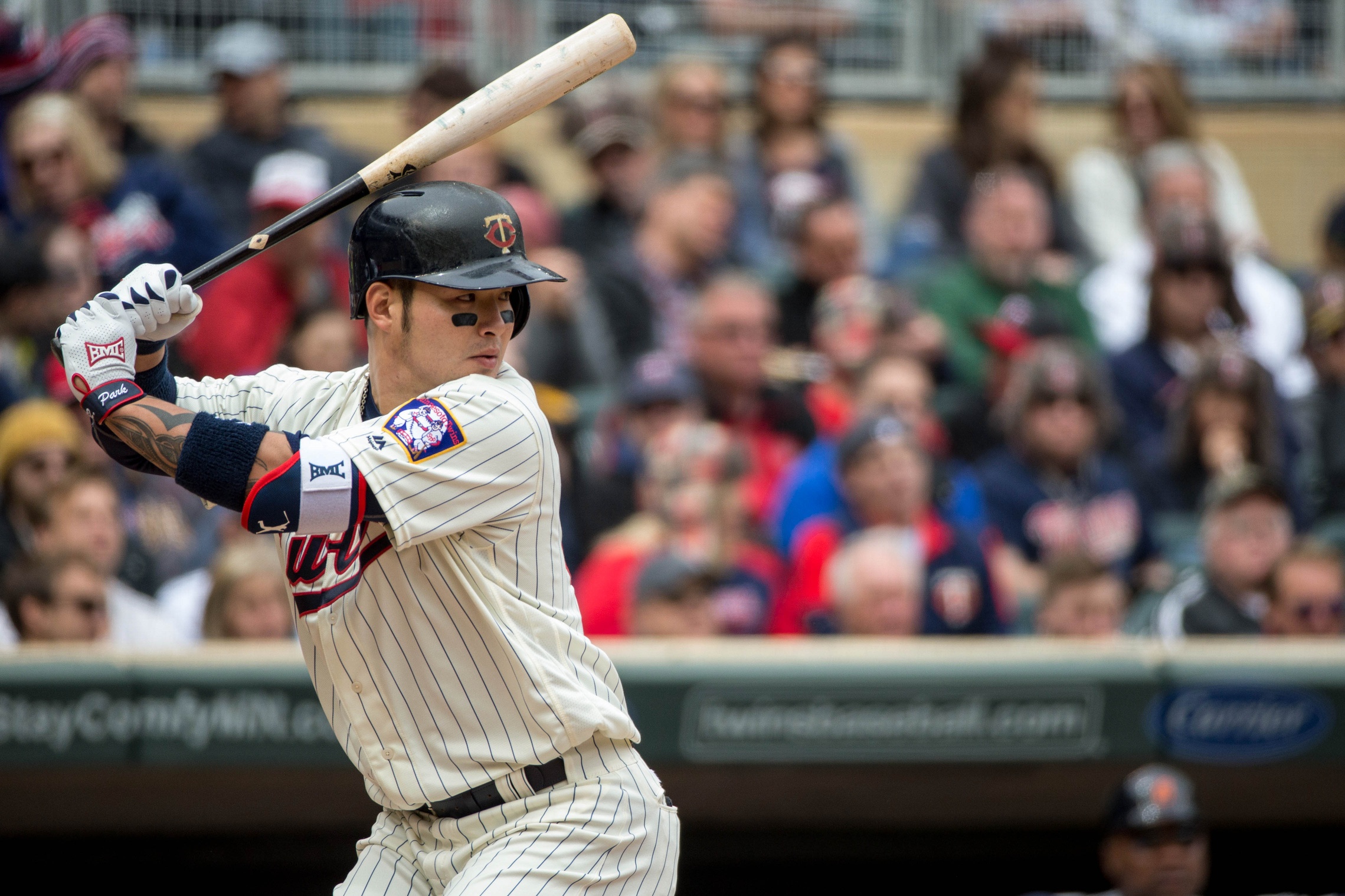 On May 13, in the opener of a three game series in Cleveland, Park had his first multi-homer game of his career and giving him nine on the season, pulling him within three of the AL pace-setting in Robinson Cano. He was tops among rookies in the junior circuit in home runs, and his overall numbers, while not otherworldly, were highly respectable. When the sun set on the Buckeye State that night, Park carried a .245/.324/.582 batting line. He had the shine of a legit Rookie Of The Year candidate. But just as meteoric as his rise, Park fell quickly back to earth. Over the next 33 games, he posted a measly batting line of .145/.233/.265. His exit velocity average dropped from 90.9 MPH to 87.2. His average fly ball distance went from 250 to 208. As a predominant fly ball hitter, these metrics were troubling. Pitchers confounded him as he reportedly obsessed with higher velocity. His confidence waned. Something was amiss. Park’s Korean Baseball Organization-honed upper-cut swing path has been perfect for mashing breaking balls: Of his 12 home runs, 8 were on curves or sliders. Only Colorado’s Trevor Story (10) and the Dodgers’ Corey Seager (9) hit more on those types of pitches. There was no doubt that Park could manhandle mistakes but he has been carved up when the sequences included fastballs with velocity 93 miles per hour or higher. In fact, Park’s struggles are so prolific, his .089 batting average against fastballs 93 MPH or higher was the lowest in baseball… with the exception of the Phillies’ Ryan Howard (.042). Was it truly the competition and the velocity in the major leagues that bested Park? On one hand, prior to his signing, scouts did express concern over his ability to catch up to inside fastballs. On the other, hitters who graduated from the Korean league have done quite well against these exact same type of fastballs. Pittsburgh’s Jung Ho Kang, Baltimore’s Hyun Soo Kim and Seattle Dae Ho Lee all had averages over .300 on fastballs over 93 MPH this year. Not being able to face elite velocity while developing in Korea certainly did not hinder their careers. Teams also adjusted to Park. While over a month of play seems like a crazytown amount of time to continue to throw middle-middle pitches to a guy who would obliterate them, it really took opponents that long to actively avoid that location. In short, he saw fewer mistakes. Another possible factor for Park’s dismal performance emerged during last night’s Rochester Red Wings’ broadcast. As Seth Stohs pointed out on Twitter last night, the Lehigh Valley IronPigs announcers, noting Park’s absence from the game, said that Park had been struggling with a hand injury -- one that had lingered since spring training -- and was unable to maintain proper contact with the bat. https://twitter.com/twinsdaily/status/751428998572285952 Per the broadcast: On Friday Brad Steil, the Twins' Director of Minor League Operations, dismissed the broadcast banter, writing in an email to Twins Daily that there is nothing accurate about that report. "Park does not have a hand injury and he didn't have a hand injury (or anything else) in spring training," Steil noted. "He does have some wrist soreness at the moment, but it’s not something that prevents him from playing. Players deal with bumps, bruises, soreness, and general fatigue throughout the course of a six month season, and we will occasionally give them days off to help manage those things." That kind of information seems noteworthy. It would appear, however, that there were no reports of Park’s condition mentioned anywhere dating back to spring training. To be sure, this would not be the first time a player has downplayed an injury in an effort to keep playing. While rest would be in their best interest, competitiveness and machismo drives them to play night after night in spite of falling numbers and aching body parts. In baseball, communicating with the coaching and medical staff the extent of an injury can be complicated and certainly a language barrier (even with a translator) can also add a wrinkle. Even so, if the team had knowledge of a hand injury dating back to spring training, the subsequent poor performance should have necessitated some time off rather than continuing to insert him into the lineup, further damaging his confidence. Park’s slump could be both an issue of confidence and a nagging injury. Teams did adjust and Park seemingly did not adjust with them. At the same time, the same balls he was hitting hard into play simply were not hit with as much vigor as of late and a hand injury would be one viable reason for that. Whether you view the hand injury as an excuse rather than an explanation for his performance is inconsequential. What does matter is his ability to hit again. Regardless of the current circumstance, Park needs confidence and rest and Rochester is an appropriate setting for both.
-
In the middle of a roster shuffle which includes the recall of outfielder Eddie Rosario, the Minnesota Twins announced today that they have designated reliever Kevin Jepsen for assignment. In the middle of a roster shuffle which includes the recall of outfielder Eddie Rosario, the Minnesota Twins announced today that they have designated reliever Kevin Jepsen for assignment. Jepsen played a vital bullpen role for the Twins in 2015 after being acquired at the trade deadline. After closer Glen Perkins struggled in the second-half of the season, Jepsen successfully converted 10 saves in 11 opportunities while posting a minuscule 1.61 ERA and limiting opponents to a .176 average against in 28 innings. 2016, however, was an unmitigated disaster for the 31-year-old and one of the main reasons the Twins' bullpen has been such a disaster. When the Twins signed him to a one-year, $5.3 million deal, they figured they had a solid back-end arm to support Perkins. Given the closer's role once again following another injury to Perkins, Jepsen blew four saves in 11 opportunities and was demoted to a set-up spot. He allowed a career-high seven home runs as teams posted a 972 OPS. For Jepsen, it was the loss of his secondary pitches that spoiled his season. He lost the feel for his changeup and seemed to lack the same precision with his curveball. Without these pitches, hitters homed in on his fastball, hitting .323 with six home runs on the pitch. The prior season hitters held a .173 average on the fastball with just one extra base hit. Trevor May, who has completed his rehab assignment and is at least a day or two away from being reinstated, has reportedly shortened his stride in order to alleviate pressure on his lower back. View full article
-
 Jepsen played a vital bullpen role for the Twins in 2015 after being acquired at the trade deadline. After closer Glen Perkins struggled in the second-half of the season, Jepsen successfully converted 10 saves in 11 opportunities while posting a minuscule 1.61 ERA and limiting opponents to a .176 average against in 28 innings. 2016, however, was an unmitigated disaster for the 31-year-old and one of the main reasons the Twins' bullpen has been such a disaster. When the Twins signed him to a one-year, $5.3 million deal, they figured they had a solid back-end arm to support Perkins. Given the closer's role once again following another injury to Perkins, Jepsen blew four saves in 11 opportunities and was demoted to a set-up spot. He allowed a career-high seven home runs as teams posted a 972 OPS. For Jepsen, it was the loss of his secondary pitches that spoiled his season. He lost the feel for his changeup and seemed to lack the same precision with his curveball. Without these pitches, hitters homed in on his fastball, hitting .323 with six home runs on the pitch. The prior season hitters held a .173 average on the fastball with just one extra base hit. Trevor May, who has completed his rehab assignment and is at least a day or two away from being reinstated, has reportedly shortened his stride in order to alleviate pressure on his lower back.
-
Brian Dozier Pulls Himself Out Of Slump
Parker Hageman replied to Parker Hageman's topic in Twins Daily Front Page News
I'd argue that Buxton has had development issues to some extent because he was listening too much. The reason he is just re-adding his leg kick this season is because of instruction at the lower levels. And I'll admit it is difficult to turn down advice at that age and level but sometimes it is for the best. Every player needs to own their swing. They should certainly take advice but, in the end, it's their careers on the line. As Brunansky explained to me this spring, sometimes you got to get to the point where Dozier was at last year in order to listen to some of the advice as well. -
Brian Dozier Pulls Himself Out Of Slump
Parker Hageman replied to Parker Hageman's topic in Twins Daily Front Page News
Right, and I think you share the concerns that we have heard on broadcasts and in print over the last few seasons. Dozier's batting average will always suffer because of it. I think there are some members of the staff who feel that because Dozier plays a position and hits in a particular spot in the order, he needs to hit like it. Dozier, hard headed, enjoyed being a power hitter. I think there was definitely some tug-o-war about his approach and some of the trying to "fix it" actually led to more issues. If he feels more comfortable being the power hitter-type (and it's working), they need to just let him be.


