



Parker Hageman
-
Posts
4,162 -
Joined
-
Last visited
-
Days Won
6
Content Type
Profiles
Minnesota Twins News, Rumors & Analysis
Minnesota Twins Videos
2026 Minnesota Twins Top Prospect Rankings
2022 Minnesota Twins Draft Picks & Signing Bonuses
Minnesota Twins Trade & Free Agent Rumors
Minnesota Twins Fan Guides & Resources
2023 Minnesota Twins Draft Picks & Signing Bonuses
2024 Minnesota Twins Draft Picks & Signing Bonuses
2025 Minnesota Twins Draft Picks & Signing Bonuses
2026 Minnesota Twins Draft Picks & Signing Bonuses
Forums
Blogs
Events
Store
Downloads
Gallery
Everything posted by Parker Hageman
-

Report From The Fort: Twins Win in Clearwater
Parker Hageman replied to Parker Hageman's topic in Twins Daily Front Page News
Southern like Brian Dozier? They do have Rudy Hernandez on staff as an assistant hitting coach. -
The Minnesota Twins top the Philadelphia Phillies 4-3 on Friday behind solid pitching performances and a pair of home runs from middle infielders. Trevor May and Jose Berrios, both battling for a rotation spot, limited the Phillies to just one run, while Jake Reed, Aaron Slegers, Stephen Gonsalves, and JT Chargois turned in zeros in their appearances. Only Buddy Boshers was roughed up in his lone inning of work. Offensively, the Twins were lifted by home runs for two infielders, Danny Santana and Tommy Field. Outfielder Zack Granite drove home two on a single in the seventh inning to put the Twins ahead for good. The Twins are back home at Hammond Stadium on Saturday. Ervin Santana will take on the Toronto Blue Jays in his second start of the spring. More notes… Image courtesy of Butch Dill - USA Today The Minnesota Twins top the Philadelphia Phillies 4-3 on Friday behind solid pitching performances and a pair of home runs from middle infielders. Trevor May and Jose Berrios, both battling for a rotation spot, limited the Phillies to just one run, while Jake Reed, Aaron Slegers, Stephen Gonsalves, and JT Chargois turned in zeros in their appearances. Only Buddy Boshers was roughed up in his lone inning of work. Offensively, the Twins were lifted by home runs for two infielders, Danny Santana and Tommy Field. Outfielder Zack Granite drove home two on a single in the seventh inning to put the Twins ahead for good. The Twins are back home at Hammond Stadium on Saturday. Ervin Santana will take on the Toronto Blue Jays in his second start of the spring. More notes… ** Trevor May fared well in his second spring start. The first batter he faced was Cesar Hernandez who May got ahead 0-2 but then misfired with a fastball up and clipped Hernandez in the shoulder. Hernandez ended up coming around to score on a sac fly by Odubel Herrera. May said later that he felt that the transition from the windup to the stretch threw him out of whack for a few batters. He recovered and allowed one single while striking out two Phillies. May said that last season he went away from the windup because he was told by Torii Hunter and Paul Molitor that he was tipping his pitches. Prior to starting his windup, he would close his glove around the ball in his hand and hold it lower in the pocket when he threw his breaking balls and leaving it unclenched when throwing his fastball. May says he has since corrected this and hasn’t had any more issues. “He was doing certain things on certain pitches,” Molitor said after his outing. “If I can see them when I’m not really trying to study that stuff then you know it’s somewhat flagrant.” How is it that Molitor still picks up on these things even when he’s not on the field? “Old habits die hard.” ** Berrios struck out four over two innings but admitted he struggled in his first inning of work. He went deep into counts and walked two. While he didn’t want to use it as an excuse, Berrios said the transition coming in from the bullpen was challenging and didn’t feel fully ready in that initial inning. The Twins would like to see better command out of Berrios, have him avoid rushing his delivery and strive for more efficient innings. ** Miguel Sano struck out in three of his at-bats, albeit the first of which he appeared to check his swing. During Jose Berrios’ post-game presser, Sano sidled up behind the reporters. Berrios was then asked if he thought he could strike out Miguel Sano. Sano shook his head and replied “Everyone can strike me out.” Molitor was not concerned about Sano’s performance so far this spring which has included seven strikeouts in ten plate appearances. “I don’t think he’s recognizing spin great yet,” he said. “He's had some good swings at fastballs, just maybe a tick late. He’s got the right approach, trying to stay inside instead of trying to hit everything to left field.” ** Eddie Rosario made back-to-back long distance bus rides to Sarasota and then Clearwater. “The schedule doesn’t always work out,” Molitor said. “I told myself I’m not going to be overly concerned about who goes on what trip. It’s about getting time for them to play. Got some at-bats yesterday, center field today, might play right field on Sunday.” Molitor said that the Puerto Rico team was contemplating using him as a right fielder so the Twins manager obliged and will give him some reps on the other side of the field. He added that it was a good opportunity to try outfielders in other places in the event of an in-season injury. Rosario, who has been given limited exposure versus left-handed pitching in his major league career, faced the Orioles’ side-arming lefty Donnie Hart and the at-bat went pretty much as you would expect. Overall, Molitor wants to see more consistency out of the outfielder. “He can get zoned in pretty good for a while then he might lose it for a day or two. I think he knows he’s trying to plan on being a more consistent player. Something that would center around his at-bats more than any other part of his game.” ** Back in Fort Myers, Twins prospect Mason Melotakis threw a 25-pitch bullpen without any issues. The 25-year-old left-handed has suffered an oblique strain and was listed as day-to-day. Armed with a fastball that reaches 97, Melotakis spent 2016 in Chattanooga where he worked 33 innings in relief and struck out 42. ** Glen Perkins threw a bullpen session as well on Thursday. The review from Molitor? M’eh. “I didn’t hear anything over-the-top encouraging and I didn’t hear anything alarming.” ** Nick Gordon, Twins Daily’s 4th ranked prospect, won the bat toss contest: ** Molitor shared his thoughts on how things are working out with the new members of his coaching staff. View full article
-
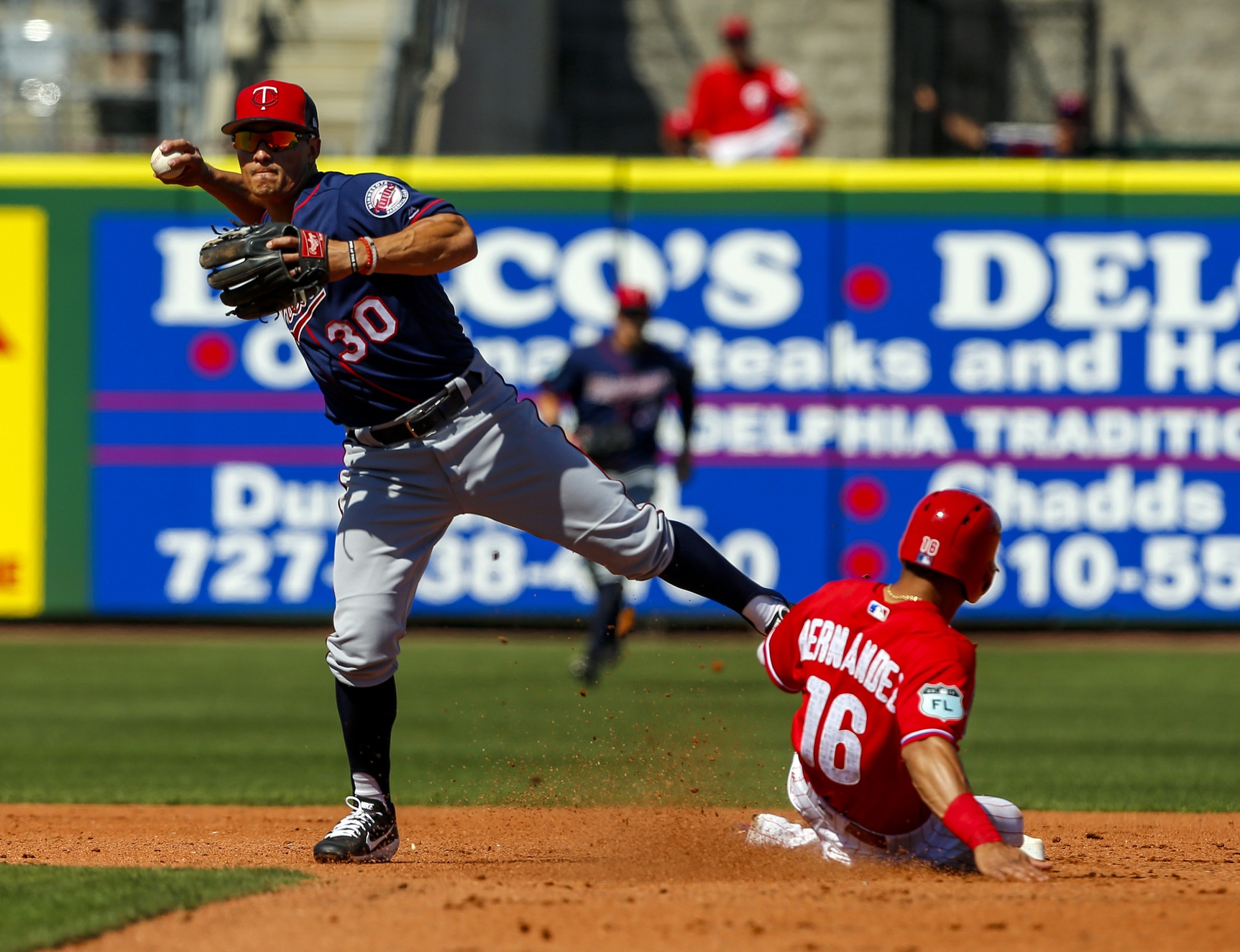 ** Trevor May fared well in his second spring start. The first batter he faced was Cesar Hernandez who May got ahead 0-2 but then misfired with a fastball up and clipped Hernandez in the shoulder. Hernandez ended up coming around to score on a sac fly by Odubel Herrera. May said later that he felt that the transition from the windup to the stretch threw him out of whack for a few batters. He recovered and allowed one single while striking out two Phillies. May said that last season he went away from the windup because he was told by Torii Hunter and Paul Molitor that he was tipping his pitches. Prior to starting his windup, he would close his glove around the ball in his hand and hold it lower in the pocket when he threw his breaking balls and leaving it unclenched when throwing his fastball. May says he has since corrected this and hasn’t had any more issues. “He was doing certain things on certain pitches,” Molitor said after his outing. “If I can see them when I’m not really trying to study that stuff then you know it’s somewhat flagrant.” How is it that Molitor still picks up on these things even when he’s not on the field? “Old habits die hard.” ** Berrios struck out four over two innings but admitted he struggled in his first inning of work. He went deep into counts and walked two. While he didn’t want to use it as an excuse, Berrios said the transition coming in from the bullpen was challenging and didn’t feel fully ready in that initial inning. The Twins would like to see better command out of Berrios, have him avoid rushing his delivery and strive for more efficient innings. ** Miguel Sano struck out in three of his at-bats, albeit the first of which he appeared to check his swing. During Jose Berrios’ post-game presser, Sano sidled up behind the reporters. Berrios was then asked if he thought he could strike out Miguel Sano. Sano shook his head and replied “Everyone can strike me out.” Molitor was not concerned about Sano’s performance so far this spring which has included seven strikeouts in ten plate appearances. “I don’t think he’s recognizing spin great yet,” he said. “He's had some good swings at fastballs, just maybe a tick late. He’s got the right approach, trying to stay inside instead of trying to hit everything to left field.” ** Eddie Rosario made back-to-back long distance bus rides to Sarasota and then Clearwater. “The schedule doesn’t always work out,” Molitor said. “I told myself I’m not going to be overly concerned about who goes on what trip. It’s about getting time for them to play. Got some at-bats yesterday, center field today, might play right field on Sunday.” Molitor said that the Puerto Rico team was contemplating using him as a right fielder so the Twins manager obliged and will give him some reps on the other side of the field. He added that it was a good opportunity to try outfielders in other places in the event of an in-season injury. Rosario, who has been given limited exposure versus left-handed pitching in his major league career, faced the Orioles’ side-arming lefty Donnie Hart and the at-bat went pretty much as you would expect. Overall, Molitor wants to see more consistency out of the outfielder. “He can get zoned in pretty good for a while then he might lose it for a day or two. I think he knows he’s trying to plan on being a more consistent player. Something that would center around his at-bats more than any other part of his game.” ** Back in Fort Myers, Twins prospect Mason Melotakis threw a 25-pitch bullpen without any issues. The 25-year-old left-handed has suffered an oblique strain and was listed as day-to-day. Armed with a fastball that reaches 97, Melotakis spent 2016 in Chattanooga where he worked 33 innings in relief and struck out 42. ** Glen Perkins threw a bullpen session as well on Thursday. The review from Molitor? M’eh. “I didn’t hear anything over-the-top encouraging and I didn’t hear anything alarming.” ** Nick Gordon, Twins Daily’s 4th ranked prospect, won the bat toss contest: ** Molitor shared his thoughts on how things are working out with the new members of his coaching staff.
-
From what I understand, Molitor has never been resistant to anything new. He might not be aware of everything available but he definitely listens to the ideas.
-
The Minnesota Twins were not overly active in the free agent market but there are plenty of new faces in the clubhouse. With turnover on his coaching staff, Paul Molitor has spent the better part of the spring getting to know his new coworkers. Gone are Tom Brunansky and Butch Davis. New faces include hitting coach James Rowson, first base coach Jeff Smith and bench coach Jeff Pickler. Since mid-February, the new coaching staff has tried to jell in efforts to create a cohesive vision and team. “It’s like Derek and Thad,” Molitor said in regards to his new coaches. “Getting to know these guys better all the time.” Image courtesy of Kim Klement - USA Today The Minnesota Twins were not overly active in the free agent market but there are plenty of new faces in the clubhouse. With turnover on his coaching staff, Paul Molitor has spent the better part of the spring getting to know his new coworkers. Gone are Tom Brunansky and Butch Davis. New faces include hitting coach James Rowson, first base coach Jeff Smith and bench coach Jeff Pickler. Since mid-February, the new coaching staff has tried to jell in efforts to create a cohesive vision and team. “It’s like Derek and Thad,” Molitor said in regards to his new coaches. “Getting to know these guys better all the time.” The first change started on the hitting side. While outsiders may have looked at the numbers and suspected the pitching may receive an overhaul, Molitor and the front office agreed that the right message was being delivered in spite of the lackluster results. What they determined was that there needed to be a different voice and a different approach with the bats. Rowson, Molitor said, came highly recommended. “We had a lot of good input before I even had a chance to sit down and have a nice, long conversation [with Rowson],” Molitor explained. “There’s a certain energy component to that role, there’s a certain ability to communication and build relationships in that role and obviously you got to have guys hitting.” Molitor quickly found out when they started working together that Rowson checked all the boxes he was looking for in terms of the ideal hitting coach characteristics. “I think the important component in that role is knowing the hitters, knowing what they do well, be available, be positive, be there, give them a game plan when needed. He’s got all that stuff.” Like most hitting coaches, Rowson spends batting practice behind the turtle shell, occasionally giving some advice or encouragement, but mostly observing and learning his hitters. His philosophy, boiled down, is hit the ball hard. If the hitter is putting on his best swing, the direction will take care of itself. No need to aim the ball to the opposite field. When the game starts, Molitor said, Rowson tones down the instruction. “I’m not big on breaking down every pitch in every at bat,” Molitor said. “He might ask what you are thinking on that count but gotta let them play when the game starts.” Jeff Pickler comes to the Twins by the way of the Los Angeles Dodgers and has been asked to use all the tools at his disposal in order to improve the defense, which includes tasks like positioning the outfield in optimal alignment in order to reduce runs allowed. “Picks got a lot of layers,” Molitor said. “He’s embraced the outfield thing, guys really love him out there. His involvement is with him trying to dissect data and what we can use as a team or for certain people that would maybe find a way to advance rather than staying stagnant.” Molitor said that Pickler has been very active in the spring training games already. One example Molitor provided for Pickler’s value added is his ability to think ahead. During Wednesday’s game against the Orioles, with Chris Johnson at the plate, two outs and no one on base, Pickler approached Molitor in the dugout with a suggestion to shift to a no-doubles defense. His reasoning was that light-hitting Johnny Giavotella was on deck. If Johnson were to reach second, he would almost surely score on a single. Taking away the extra base hit opportunity would possibly prevent that run. Molitor respected that kind of foresight. Jeff Smith, the newly added first base coach, is a mountain of a man, every bit the same shape as Miguel Sano but with a few more years. Before the game, Smith roams the field with a catcher’s training glove, a shaved down version of a standard catcher’s mitt that trains backstops to receive the ball with minimum movement. More simply, it helps a catcher in their framing. Molitor acknowledged Jeff Smith’s role as the first base coach is different from his recent stretch as a manager in the minor league system and the new angle of the game will take some getting used to but Smith’s catching background has been a welcomed addition. “I’ve been pleased with how we’ve handled ourselves behind the plate,” Molitor said. The game of baseball has moved beyond simply hiring the manager’s drinking buddy to keep him company on the bench. Coaching staffs have slowly expanded and roles like defensive specialists have emerged as teams have placed a greater emphasis on using data to position their players around the diamond. The Twins have started to adapt to this dugout revolution as well. At least from Molitor’s viewpoint, the Twins feel they have the right collection of coaches in place to get the most out of their players. View full article
-
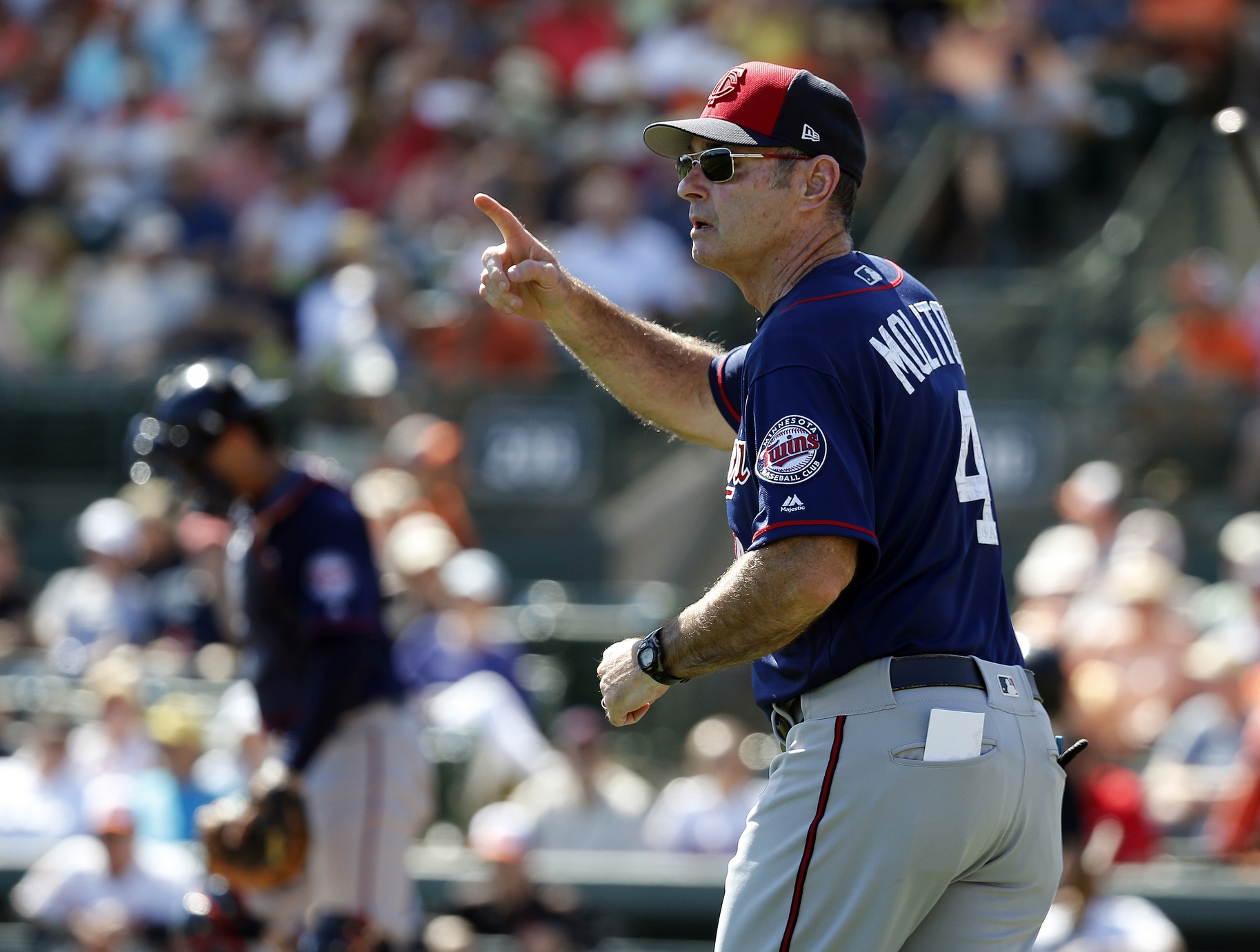 The first change started on the hitting side. While outsiders may have looked at the numbers and suspected the pitching may receive an overhaul, Molitor and the front office agreed that the right message was being delivered in spite of the lackluster results. What they determined was that there needed to be a different voice and a different approach with the bats. Rowson, Molitor said, came highly recommended. “We had a lot of good input before I even had a chance to sit down and have a nice, long conversation [with Rowson],” Molitor explained. “There’s a certain energy component to that role, there’s a certain ability to communication and build relationships in that role and obviously you got to have guys hitting.” Molitor quickly found out when they started working together that Rowson checked all the boxes he was looking for in terms of the ideal hitting coach characteristics. “I think the important component in that role is knowing the hitters, knowing what they do well, be available, be positive, be there, give them a game plan when needed. He’s got all that stuff.” Like most hitting coaches, Rowson spends batting practice behind the turtle shell, occasionally giving some advice or encouragement, but mostly observing and learning his hitters. His philosophy, boiled down, is hit the ball hard. If the hitter is putting on his best swing, the direction will take care of itself. No need to aim the ball to the opposite field. When the game starts, Molitor said, Rowson tones down the instruction. “I’m not big on breaking down every pitch in every at bat,” Molitor said. “He might ask what you are thinking on that count but gotta let them play when the game starts.” Jeff Pickler comes to the Twins by the way of the Los Angeles Dodgers and has been asked to use all the tools at his disposal in order to improve the defense, which includes tasks like positioning the outfield in optimal alignment in order to reduce runs allowed. “Picks got a lot of layers,” Molitor said. “He’s embraced the outfield thing, guys really love him out there. His involvement is with him trying to dissect data and what we can use as a team or for certain people that would maybe find a way to advance rather than staying stagnant.” Molitor said that Pickler has been very active in the spring training games already. One example Molitor provided for Pickler’s value added is his ability to think ahead. During Wednesday’s game against the Orioles, with Chris Johnson at the plate, two outs and no one on base, Pickler approached Molitor in the dugout with a suggestion to shift to a no-doubles defense. His reasoning was that light-hitting Johnny Giavotella was on deck. If Johnson were to reach second, he would almost surely score on a single. Taking away the extra base hit opportunity would possibly prevent that run. Molitor respected that kind of foresight. Jeff Smith, the newly added first base coach, is a mountain of a man, every bit the same shape as Miguel Sano but with a few more years. Before the game, Smith roams the field with a catcher’s training glove, a shaved down version of a standard catcher’s mitt that trains backstops to receive the ball with minimum movement. More simply, it helps a catcher in their framing. Molitor acknowledged Jeff Smith’s role as the first base coach is different from his recent stretch as a manager in the minor league system and the new angle of the game will take some getting used to but Smith’s catching background has been a welcomed addition. “I’ve been pleased with how we’ve handled ourselves behind the plate,” Molitor said. The game of baseball has moved beyond simply hiring the manager’s drinking buddy to keep him company on the bench. Coaching staffs have slowly expanded and roles like defensive specialists have emerged as teams have placed a greater emphasis on using data to position their players around the diamond. The Twins have started to adapt to this dugout revolution as well. At least from Molitor’s viewpoint, the Twins feel they have the right collection of coaches in place to get the most out of their players.
-
I'd have to check again but by my count, Hughes didn't register a swing and miss in that outing.
-
In a way, Thursday’s outing in Sarasota was a microcosm of Phil Hughes’ previous two seasons. His velocity was down, he threw a ton of strikes, and he struggled to put hitters away. Nevertheless, Hughes left the game after 45 pitches -- 30 of which were strikes -- and felt that he had made significant progress towards returning to his pre-injury form. “Compared to last time, it was miles better,” said Hughes. Last time, of course, was his two inning, four hit, two run outing at JetBlue Park. It was his first game action since his thoracic outlet syndrome surgery and the Red Sox monsters made loud and consistent contact. His pitches lacked velocity and precision. This time his pitches simply lacked velocity. Ed Smith Stadium’s radar gun showed that Hughes was sitting around 88-89 with his fastball/cutter combination. He touched 90 a couple of times. But Hughes wasn’t overly concerned over those figures. “I don’t necessarily want to say ‘OK I have to throw this pitch as hard as I can right now because I have to prove that I am healthy and back’,” Hughes said. In evaluating the difference between the two outings, Hughes said as opposed to his start against Boston, he felt like he was in the driver’s seat, working ahead in the count which allowed him to open up the tool shed and deploy some of his secondary pitches. Facing a formidable Orioles lineup which included Adam Jones, Manny Machado, Mark Trumbo and Chris Davis, Hughes was able to use his cutter, curveball and changeup. “Starting off with some strike ones, throwing some decent cutters, moving the ball around the zone, elevating. I actually had a chance to work on some things instead of trying to get back into some counts like I did last time.” He did start hitters off with strikes. Phil Hughes threw a ton of strikes as Phil Hughes is wont to do. Phil Hughes throws a ton of strikes. That has never been an issue. He was ahead in the count on a regular basis, giving him the chance to use some of his secondary pitches. And, like he said, Hughes did throw some decent cutters. His best was perhaps the first one he threw when he froze Baltimore’s Hyun Soo Kim on a classic backdrop cutter. “I think I had a seven or eight pitch sequence to [Kim]. I figured I’d take a chance on 3-2 so it was nice to execute that pitch,” said Hughes. “It was a pitch that really eluded me my last outing, it felt kinda all over the place. I guess that is sorta to be expected for my first one and today I felt a lot more comfortable and located the ball better.” On the flip side, Hughes had five hitters in 0-2 counts. He allowed three of those hitters to reach base. In the first inning, Manny Machado pulled what Hughes called a “decent curveball” on 0-2 down the third base line for a double. One batter later Hughes found himself 0-2 against Mark Trumbo, only to fall behind in the count and eventually walk him. He did the same thing to Kim in the third inning, who wound up being his last batter of the afternoon. One of the issues Hughes has struggled with over the last two seasons is finishing hitters in strikeout situations. According to ESPN/TruMedia, Hughes has a .243 average against in two-strike counts, the third-highest among qualified pitchers. In 0-2 counts specifically, Hughes has a .250 average against compared to the .155 league average. “A big thing with us is to try to limit the 0-2 hits,” Hughes said. “There’s a fine line because you still want to make a competitive pitch on 0-2, not just waste one, but at the same time make sure it is a quality pitch.” Hughes did make the effort to put hitters away. Against Trumbo, he threw two fastballs at Trumbo’s eye level, only to have him foul the two back. Back in 2014, Hughes had success throwing his fastball in the upper third or higher, resulting in 42 strikeouts. That, however, was when he was sitting 92. The current 88-90 version of his fastball is not likely to achieve the same outcome. Manager Paul Molitor said that Hughes executed the game plan despite not getting the desired results in those two-strike situations. With Trumbo, the Twins wanted to work up above the zone, which Hughes did several times. Molitor credits Trumbo for battling what he considered tough pitches. Hughes’ style, Molitor said, was going to occasionally allow counts to swing from 0-2 to 2-2 in a hurry as he tries to set up an out pitch. “I think Phil understands that he’s such a command guy that he has to push people off the plate, especially when he is ahead in the count and elevate a little bit,” Molitor said. In terms of how he feels compared to previous seasons, Hughes wouldn’t take the bait. “I don’t want to get too far ahead of myself and compare it,” he said after his second start of the spring. “I’m just trying to go through every day and do what I have to do and I feel like at the end of spring I’ll really have a more clear idea of where I’m at.” There are several more weeks of spring training remaining for Hughes to ramp up, add velocity, and improve his command. At the very least, Hughes is happy with his progress so far. Image courtesy of Kim Klement - USA Today View full article
-
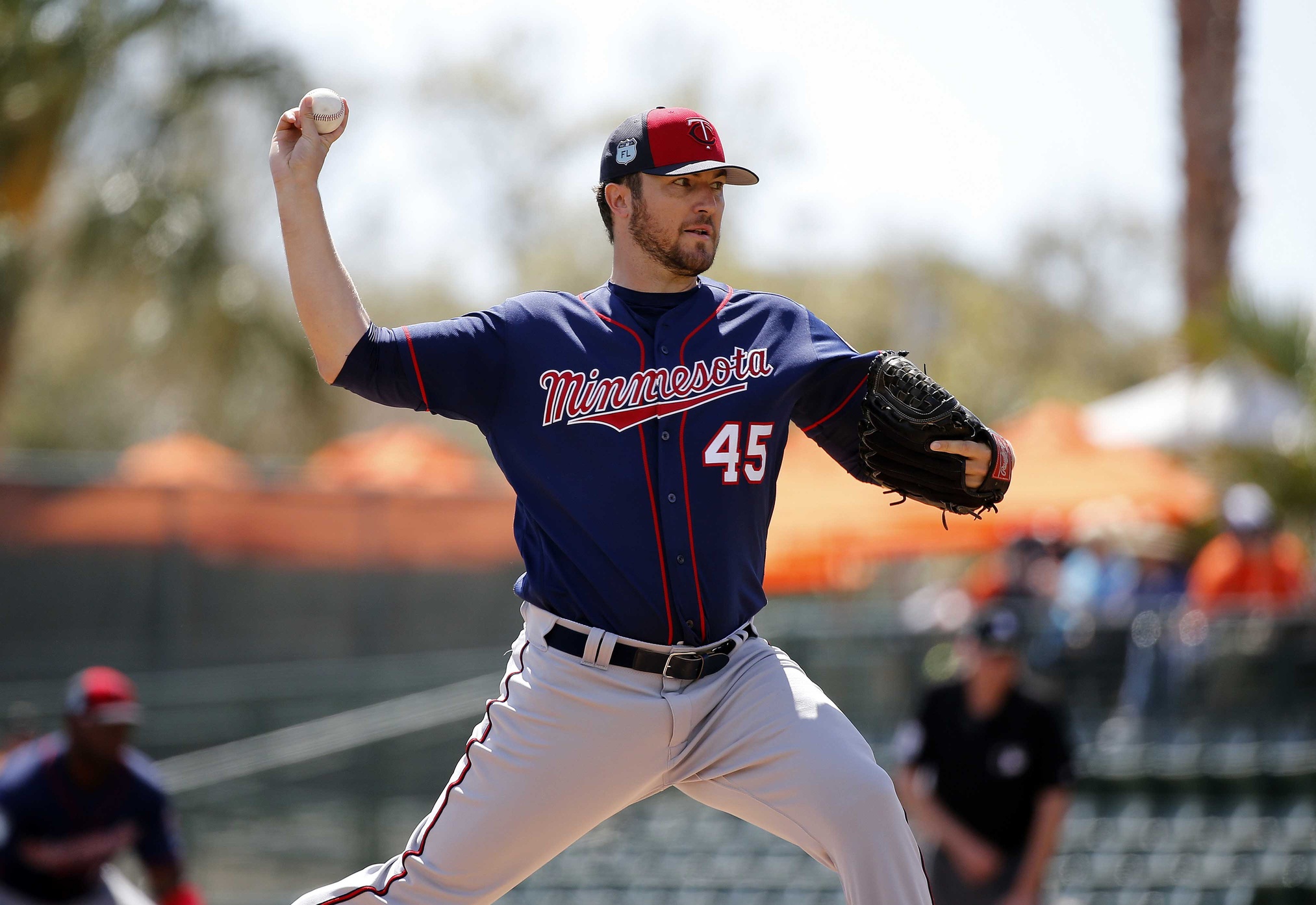 Last time, of course, was his two inning, four hit, two run outing at JetBlue Park. It was his first game action since his thoracic outlet syndrome surgery and the Red Sox monsters made loud and consistent contact. His pitches lacked velocity and precision. This time his pitches simply lacked velocity. Ed Smith Stadium’s radar gun showed that Hughes was sitting around 88-89 with his fastball/cutter combination. He touched 90 a couple of times. But Hughes wasn’t overly concerned over those figures. “I don’t necessarily want to say ‘OK I have to throw this pitch as hard as I can right now because I have to prove that I am healthy and back’,” Hughes said. In evaluating the difference between the two outings, Hughes said as opposed to his start against Boston, he felt like he was in the driver’s seat, working ahead in the count which allowed him to open up the tool shed and deploy some of his secondary pitches. Facing a formidable Orioles lineup which included Adam Jones, Manny Machado, Mark Trumbo and Chris Davis, Hughes was able to use his cutter, curveball and changeup. “Starting off with some strike ones, throwing some decent cutters, moving the ball around the zone, elevating. I actually had a chance to work on some things instead of trying to get back into some counts like I did last time.” He did start hitters off with strikes. Phil Hughes threw a ton of strikes as Phil Hughes is wont to do. Phil Hughes throws a ton of strikes. That has never been an issue. He was ahead in the count on a regular basis, giving him the chance to use some of his secondary pitches. And, like he said, Hughes did throw some decent cutters. His best was perhaps the first one he threw when he froze Baltimore’s Hyun Soo Kim on a classic backdrop cutter. “I think I had a seven or eight pitch sequence to [Kim]. I figured I’d take a chance on 3-2 so it was nice to execute that pitch,” said Hughes. “It was a pitch that really eluded me my last outing, it felt kinda all over the place. I guess that is sorta to be expected for my first one and today I felt a lot more comfortable and located the ball better.” On the flip side, Hughes had five hitters in 0-2 counts. He allowed three of those hitters to reach base. In the first inning, Manny Machado pulled what Hughes called a “decent curveball” on 0-2 down the third base line for a double. One batter later Hughes found himself 0-2 against Mark Trumbo, only to fall behind in the count and eventually walk him. He did the same thing to Kim in the third inning, who wound up being his last batter of the afternoon. One of the issues Hughes has struggled with over the last two seasons is finishing hitters in strikeout situations. According to ESPN/TruMedia, Hughes has a .243 average against in two-strike counts, the third-highest among qualified pitchers. In 0-2 counts specifically, Hughes has a .250 average against compared to the .155 league average. “A big thing with us is to try to limit the 0-2 hits,” Hughes said. “There’s a fine line because you still want to make a competitive pitch on 0-2, not just waste one, but at the same time make sure it is a quality pitch.” Hughes did make the effort to put hitters away. Against Trumbo, he threw two fastballs at Trumbo’s eye level, only to have him foul the two back. Back in 2014, Hughes had success throwing his fastball in the upper third or higher, resulting in 42 strikeouts. That, however, was when he was sitting 92. The current 88-90 version of his fastball is not likely to achieve the same outcome. Manager Paul Molitor said that Hughes executed the game plan despite not getting the desired results in those two-strike situations. With Trumbo, the Twins wanted to work up above the zone, which Hughes did several times. Molitor credits Trumbo for battling what he considered tough pitches. Hughes’ style, Molitor said, was going to occasionally allow counts to swing from 0-2 to 2-2 in a hurry as he tries to set up an out pitch. “I think Phil understands that he’s such a command guy that he has to push people off the plate, especially when he is ahead in the count and elevate a little bit,” Molitor said. In terms of how he feels compared to previous seasons, Hughes wouldn’t take the bait. “I don’t want to get too far ahead of myself and compare it,” he said after his second start of the spring. “I’m just trying to go through every day and do what I have to do and I feel like at the end of spring I’ll really have a more clear idea of where I’m at.” There are several more weeks of spring training remaining for Hughes to ramp up, add velocity, and improve his command. At the very least, Hughes is happy with his progress so far.
-
And so it begins. Twins Daily’s Report From The Fort 2017 kicks off from Sarasota where the Twins will tangle with the Baltimore Orioles. The visiting media at Ed Smith Stadium is placed directly under the Earth’s sun so there will be interesting tan lines by the end of this game. Not that I am complaining. On to Twins baseball... And so it begins. Twins Daily’s Report From The Fort 2017 kicks off from Sarasota where the Twins will tangle with the Baltimore Orioles. The visiting media at Ed Smith Stadium is placed directly under the Earth’s sun so there will be interesting tan lines by the end of this game. Not that I am complaining. On to Twins baseball... Phil Hughes will make his second start of the spring. Hughes, who is returning from thoracic outlet syndrome surgery, surrendered four hits and two runs in two innings of work against the Red Sox in his first outing. According to the Pioneer Press’s Mike Berardino, Hughes reached 90 on the radar, which is about what he averaged on his fastball over the past two seasons. Ideally, he would like to see that velocity creep up closer to the 92 mile per hour average he posted in his first season with the Twins. Hughes will have to navigate through some big bats in the Orioles lineup. Adam Jones, Manny Machado, Chris Davis and Mark Trumbo will present a solid challenge for the veteran https://twitter.com/twinsdaily/status/837319645971492864/photo/1 Glen Perkins turns 34 today. In case you were wondering, the closers with the most saves after turning 34 are Mariano Rivera (369), Dennis Eckersley (326), Trevor Hoffman (287), Jose Mesa (184) and Doug Jones (182). Former Twins closer Joe Nathan is seventh with 177. From now until the end of March, Twins Daily will have you covered from Fort Myers. Be sure to follow Twins Daily on Twitter for live updates, breaking news and insight. View full article
-
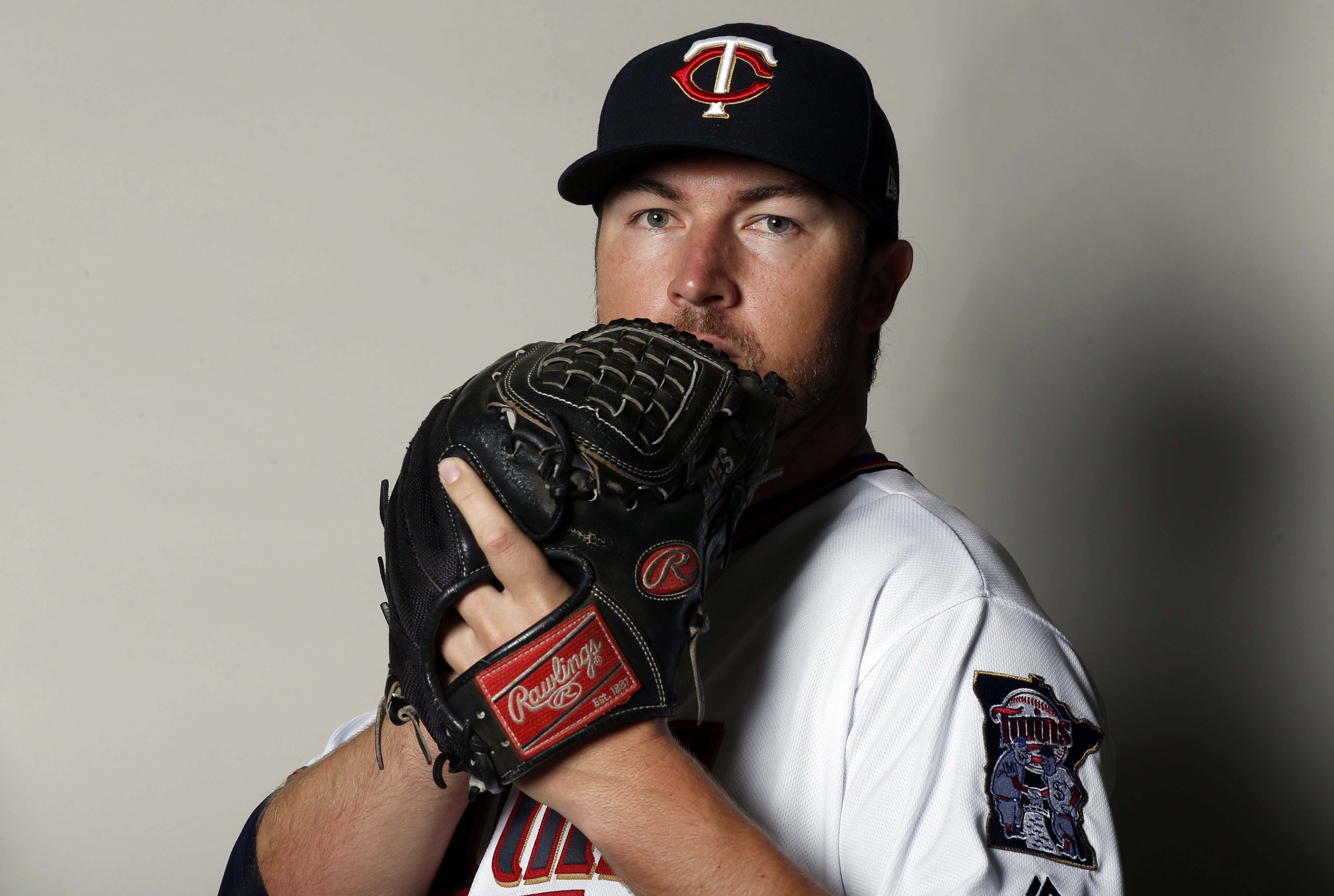 Phil Hughes will make his second start of the spring. Hughes, who is returning from thoracic outlet syndrome surgery, surrendered four hits and two runs in two innings of work against the Red Sox in his first outing. According to the Pioneer Press’s Mike Berardino, Hughes reached 90 on the radar, which is about what he averaged on his fastball over the past two seasons. Ideally, he would like to see that velocity creep up closer to the 92 mile per hour average he posted in his first season with the Twins. Hughes will have to navigate through some big bats in the Orioles lineup. Adam Jones, Manny Machado, Chris Davis and Mark Trumbo will present a solid challenge for the veteran https://twitter.com/twinsdaily/status/837319645971492864/photo/1 Glen Perkins turns 34 today. In case you were wondering, the closers with the most saves after turning 34 are Mariano Rivera (369), Dennis Eckersley (326), Trevor Hoffman (287), Jose Mesa (184) and Doug Jones (182). Former Twins closer Joe Nathan is seventh with 177. From now until the end of March, Twins Daily will have you covered from Fort Myers. Be sure to follow Twins Daily on Twitter for live updates, breaking news and insight.
-
It is interesting to see that after the Twins made their analytics-focused hire, Falvine immediately added Hunter, Hawkins and Cuddyer to the staff and tried to target veterans to infuse life into the clubhouse culture. You can't measure it but there is something to it. http://www.usatoday.com/story/sports/mlb/2015/08/24/field-front-office-many-believe-chemistry-still-matters-baseball/32271291/
-
Thanks to Rob Neyer and Bill Baer, there was a mini flare-up on the internets regarding the issue of statheads and their tendency to be pro-ownership. https://twitter.com/Baer_Bill/status/834885829893980160 Friend of Twins Daily and Winter Meltdown guest Mike Bates weighed in on the complicated issue at MLBDailyDish.com. Bates' take was that, yes, analysts tend to have "pro ownership" leanings in their writings but that isn't necessarily because they sympathize with ownership. Here is Bates' words on the matter: It is an interesting notion, to be sure. More often than not, the analytics community does tend to speak in terms of how the team has won or lost a particular signing or trade rather than from the perspective of the player. Nobody really says "Good for Kurt Suzuki for getting $1.5 million from the Braves", most gripe about the team "wasting money". I could be wrong. Maybe some genuinely good people out in the Twins Daily community truly do care about the players. Either way, it's a good read.
-
For more background on the Texas and Florida Baseball Ranches as well as the Durathro, you definitely should read this ---> http://www.espn.com/mlb/story/_/id/13519176/how-texas-baseball-ranch-saved-scott-kazmir-started-pitching-revolution
-
I recommend getting a seat on or in the Monster.
-
Last year Kris Bryant pranked the Mesa Community College Thunderbirds by posing as a European transfer student. This year, pitching legend Greg Maddux repays the favor. Enjoy.
- 7 replies
-
- 5
-

-
- greg maddux
- kris bryant
- (and 1 more)
-
The Minnesota Twins' first workout comes with a bullpen session that emphasizes throwing strikes with their fastballs. According to MLB.com's Rhett Bollinger, Allen has kicked off a new program to attempt to improve in that area: Last October,Allen was fairly insistent that the Twins pitchers system-wide needed to improve their fastball skills. “From rookie ball up, we’re going to have it,” Allen told the Pioneer Press's Mike Berardino last season. “You just have to do the work. For instance, on a side day, you’re going to throw four-seam fastballs. I’ve got all kinds of numbers in there, written up, how I want sides thrown. You won’t go to your offspeed until you throw fastballs for strikes.” While command has been an issue, velocity has been an on-going problem as well. Per BaseballSavant.com, the Twins' average velocity on four- and two-seam fastballs 92.39 MPH, the fifth lowest in the league. Not surprising, the team's swinging strike percentage on fastballs is the third lowest with just 2.78 percent of fastball thrown missing bats.
-
FanGraphs: Is Brian Dozier's Power Repeatable?
Parker Hageman replied to Seth Stohs's topic in Minnesota Twins Talk
oh no, i've gone cross eyed.
- 52 replies
-
- 10
-
-
The Inside Story Of Twins Daily
Parker Hageman replied to John Bonnes's topic in Twins Daily Front Page News
I definitely mentioned this multiple times at the on-set of our work together. I distinctly remember bringing that idea up at a meeting at Seth's townhouse and it was met with silence. At the time, I was miffed because I thought everyone was being shortsighted. Later, I came to realize that it was easy for me to accept that proposal because I had the least about of "blog equity" of the group. I was ready to consolidate my work because I had only been working on it for less than three years at that point. Meanwhile, Seth and John were almost a decade in and Nick wasn't too far behind. Without a cohesive vision, I can see why it would be difficult to roll that die. After the FOX meeting and the agreement that we were going to combine efforts on one site, I also recall that Seth, Nick and myself were fairly indifferent about having a forum section attached to the site. John, however, was persistent and insistent. The site had to have a forum or the whole venture wouldn't work. It needed a built-in community. Personally, I was skeptical, mostly because I had never spent any time in forums and the only one I was familiar with was the flaming pile at either KFAN or ESPN. I wasn't even aware of BYTO until Nick introduced Brock to the group. It didn't take long to realize how wrong my stance was on the forums. This has truly been a great collection of thoughts and ideas (mixed with the occasional snark for flavoring). -
The Arizona Diamondbacks sent a message this morning that the Twins' long-time manager and current Diamondbacks bench coach, Ron Gardenhire, has been diagnosed with prostate cancer. "I'm going to fight and deal with it," Gardenhire said. "It's a bump in the road and not how I envisioned starting Spring Training with a brand new team but it's a part of life. With the backing of this ball club, we'll get through it and I'll get through it." https://twitter.com/abc15sports/status/831575785911709697/photo/1 According to the Star Tribune, Gardenhire will return to Minneapolis to have surgery performed by Dr. William Utz. Gardenhire managed the Twins for 13 season and was hired this past November as a bench coach for Arizona.
-
TD Top Prospects: #10 Lewin Diaz
Parker Hageman replied to Parker Hageman's topic in Twins Daily Front Page News
Good info. Thanks for sharing. -
TD Top Prospects: #10 Lewin Diaz
Parker Hageman replied to Parker Hageman's topic in Twins Daily Front Page News
"...but he has shown signs of being more than an all-or-nothing type of hitter like Walker." -
TD Top Prospects: #10 Lewin Diaz
Parker Hageman replied to Parker Hageman's topic in Twins Daily Front Page News
Correct. Radcliff was high on his athleticism for a guy his size. I'd like to hear from some of the Twins Daily members who are down at camp. If you get a chance to see his infield chops, let us know. -
When the Minnesota Twins signed Lewin Diaz for $1.4 million in 2013, he was a 16-year-old kid who was weighing in at a reported 210 pounds. Two years later he had grown to 263 and was being compared to having “Miguel Sano-type” power. That’s certainly intriguing but baseball has seemingly lost interest in the 30-plus home run guys who add no other value. So the question is, can Lewin Diaz provide some other value? Age: 20 (DOB: 11/19/96) 2015 Stats (Rk): 46 G, .310/.353/.575, 9 HR, 37 RBI ETA: 2019 2016 Ranking: 18 National Top 100 Rankings BA: NR | MLB: NR | ESPN: NR | BP: NR What’s To Like With the exception of Daniel Palka (our 14th-highest rated prospect in the system), Diaz represents the only source of raw power on Twins Daily’s top prospect list. While the long ball potential is substantial, the baseball industry has started to devalue the power-only players. Teams no longer place a premium on dingers, as evidenced by the offseason employment plight of Chris Carter and former Twins prospect Adam Walker (11th on our list in 2016). With his size, Diaz’s career is limited to a first base or designated hitter role but he has shown signs of being more than an all-or-nothing type of hitter like Walker. Admittedly it was only rookie ball, but Diaz’s .310 average is a mark that Walker never even came close to matching. The Twins believe that Diaz may also be able to provide batting average value (for whatever that’s worth) as well as avoid making regular outs. What’s Left To Work On Despite teeming with raw power potential, Diaz hasn’t applied that much in game action until this past season when he hit nine home runs in 187 plate appearances as a 19-year-old in the Appalachian League. That is not out of the norm for prospects -- especially at his age -- but there are some indications that a few tweaks for Diaz could tap into that talent. Big and strong, Diaz’s swing has a solid foundation but his current barrel path doesn’t necessarily lead to towering fly balls which translate into huge home run totals. When the Twins signed him as a 16-year-old in 2013, Baseball America said that Diaz struggled to “tap into that power in game situations”. The swing is level down to and through the ball and results in plenty of base hits but his power is limited to almost exclusively his pull side. That's not a bad thing, but with his size you would like to see a few more towering flies to the alleys as opposed to just at the right field foul pole. There is time to develop that swing. What’s Next Diaz has yet to play over 50 games in a season so that will be his first challenge in 2017. The second is just continuing to produce like he did last year. Remember: At 20 years old this season, Diaz has plenty of time to develop as a player. However, as a 2013 signee, he is starting to get to the point where the Twins will need to consider adding him to the 40-man roster, which makes 2017 an important season. View full article
-
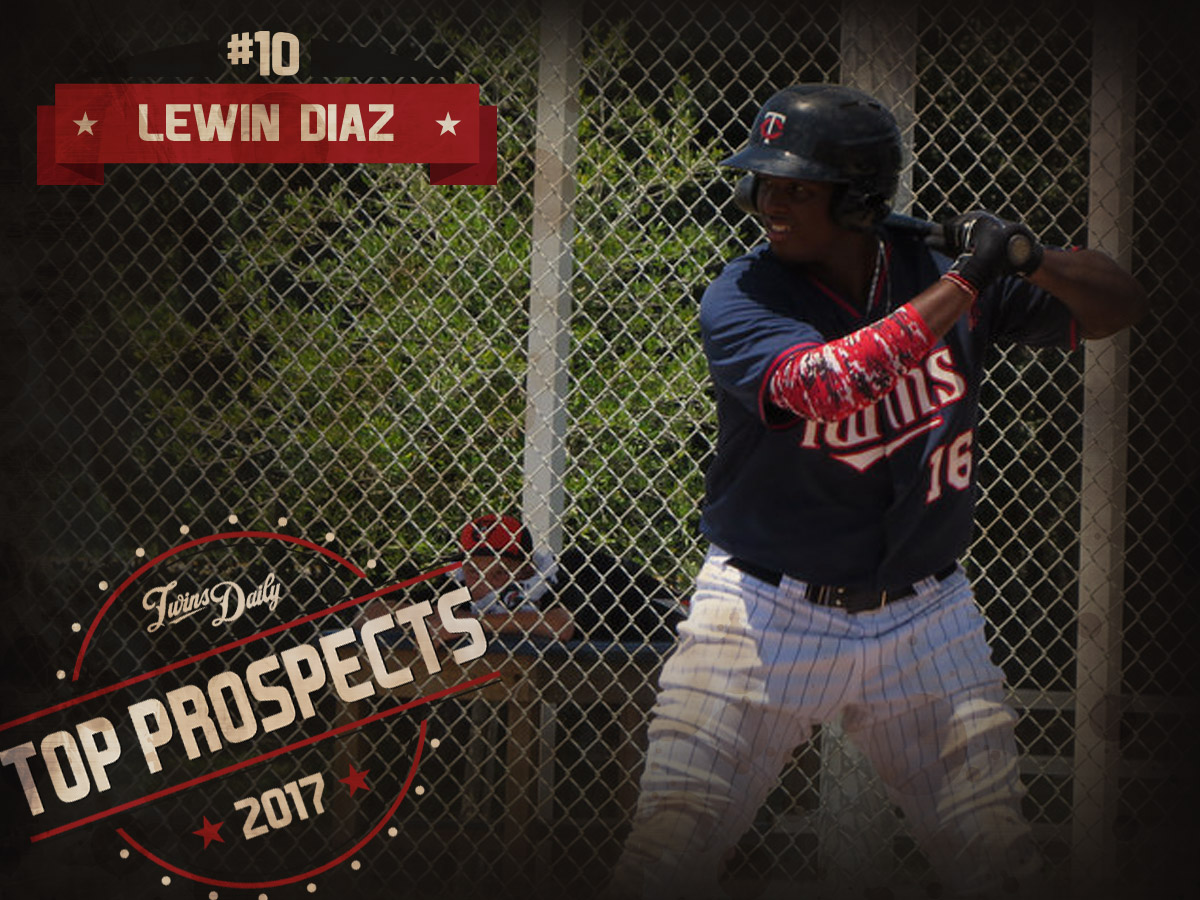 Age: 20 (DOB: 11/19/96) 2015 Stats (Rk): 46 G, .310/.353/.575, 9 HR, 37 RBI ETA: 2019 2016 Ranking: 18 National Top 100 Rankings BA: NR | MLB: NR | ESPN: NR | BP: NR What’s To Like With the exception of Daniel Palka (our 14th-highest rated prospect in the system), Diaz represents the only source of raw power on Twins Daily’s top prospect list. While the long ball potential is substantial, the baseball industry has started to devalue the power-only players. Teams no longer place a premium on dingers, as evidenced by the offseason employment plight of Chris Carter and former Twins prospect Adam Walker (11th on our list in 2016). With his size, Diaz’s career is limited to a first base or designated hitter role but he has shown signs of being more than an all-or-nothing type of hitter like Walker. Admittedly it was only rookie ball, but Diaz’s .310 average is a mark that Walker never even came close to matching. The Twins believe that Diaz may also be able to provide batting average value (for whatever that’s worth) as well as avoid making regular outs. What’s Left To Work On Despite teeming with raw power potential, Diaz hasn’t applied that much in game action until this past season when he hit nine home runs in 187 plate appearances as a 19-year-old in the Appalachian League. That is not out of the norm for prospects -- especially at his age -- but there are some indications that a few tweaks for Diaz could tap into that talent. Big and strong, Diaz’s swing has a solid foundation but his current barrel path doesn’t necessarily lead to towering fly balls which translate into huge home run totals. When the Twins signed him as a 16-year-old in 2013, Baseball America said that Diaz struggled to “tap into that power in game situations”. The swing is level down to and through the ball and results in plenty of base hits but his power is limited to almost exclusively his pull side. That's not a bad thing, but with his size you would like to see a few more towering flies to the alleys as opposed to just at the right field foul pole. There is time to develop that swing. What’s Next Diaz has yet to play over 50 games in a season so that will be his first challenge in 2017. The second is just continuing to produce like he did last year. Remember: At 20 years old this season, Diaz has plenty of time to develop as a player. However, as a 2013 signee, he is starting to get to the point where the Twins will need to consider adding him to the 40-man roster, which makes 2017 an important season.
