



Nick Nelson
-
Posts
8,372 -
Joined
-
Last visited
-
Days Won
56
Content Type
Profiles
News
Minnesota Twins Videos
2026 Minnesota Twins Top Prospects Ranking
2022 Minnesota Twins Draft Picks
Minnesota Twins Free Agent & Trade Rumors, Notes, & Tidbits
Guides & Resources
2023 Minnesota Twins Draft Picks
The Minnesota Twins Players Project
2024 Minnesota Twins Draft Picks
2025 Minnesota Twins Draft Pick Tracker
2026 Minnesota Twins Draft Tracker: Picks & Bonuses
Forums
Blogs
Events
Store
Downloads
Gallery
Everything posted by Nick Nelson
-
 Great comment! Very fair. I guess my confidence is less about the Twins and more about the quality of the league. These teams just aren't that good. Twins have a winning record against everyone surrounding them in the WC standings sans Seattle. And also there's only 40 games until the end of August which doesn't create a ton of room for separation as long as Twins hold their own (and I do expect them to improve so some extent at the deadline, unless they complete unravel in the next 2 weeks).
 -
Yeah I'm very curious to see what they do with him. His path back to the majors seems to have disappeared here. Mentioned this on twitter yesterday, but if I were a team in need of some offensive explosiveness, with ABs available at DH, I'd absolutely take a flier on him.
-
Perhaps a bit of editorializing on my end but I do not expect him back for any consequential amount of time this season.
-
Image courtesy of © Kyle Ross-Imagn Images In some ways, this Twins season has gone perfectly according to expectation. They are on pace to finish just below .500, which is exactly where sites like FanGraphs projected. They are being led by the same two All-Stars from last year in Joe Ryan and Byron Buxton. The rotation's been pretty good, the bullpen's been pretty bad. None of this would have shocked me if you told me in March. But the way they've gotten here has been full of surprises: dramatic ups and downs, breakthrough offensive performances, elite production with runners in scoring position. It's a mercurial ballclub, and that makes it hard to predict what lies ahead in the final 10 weeks of the 2026 season. With that said, there are a few things coming that I do feel confident in asserting. Strap in, because I believe these five outcomes are inevitable: The offense's run-scoring productivity will slow down (unless hitters improve fundamentally). Minnesota's AL-leading run total (471) is largely a byproduct of their opportunistic nature: they are slashing .286/.368/.451 with RISP for an .820 OPS that is 80 points higher than their overall baseline. That's great, but it's not predictive. Regression is coming. Unless they can improve their overall hitting proficiency — and that's perfectly plausible if guys like Royce Lewis and Luke Keaschall can build on what they've been doing lately — the Twins are going to gravitate downward in run-scoring, possibly to a range reflecting their 20th-ranked .314 xwOBA. The Tigers will make a push. In recent years, Detroit has proven to be the streakiest of streaky teams. They were heavily favored to win the division, but got off to a stunningly bad start and have been buried near the bottom of the AL Central. History tells us they were bound to counteract their multi-month slump and they've already begun to do so, drawing back toward the pack with nine wins in their past 12 games. With the Tigers being non-factors in the first half, Cleveland and Chicago have battled for first place while hovering around .500, and the Twins are just a few games out. The idea of any of these teams being front-runners is premised on Detroit remaining dormant. I wouldn't bet on that. Whoever wins this division is going to have to make a stand against the Tigers. The Twins will do something weird at the trade deadline. Expect the unexpected. With three weeks to go, it's not clear whether the Twins will be buyers or sellers. They very well might blur the line. The front office is balancing the realities of an ongoing rebuild with the mandate to build faith among fans, and act on an undeniable opportunity in this watered-down American League. Ryan Jeffers and Josh Bell are impending free agents. Trevor Larnach is blossoming at a position of depth. Joe Ryan's trade value will never be higher. On the flip side, you've got a farm system that was freshly restocked by last year's firesale and a new draft class. I can't pretend to know what kind of shenanigans they've got in store. But I do feel confident in saying it'll be an eventful and surprising deadline. The pitching staff will be tested. Mick Abel and Anthony Banda aren't coming back. David Festa might not either. Connor Prielipp is already venturing into career-high workload territory. Bailey Ober is back from injury but throwing 87 MPH. Even Minnesota's All-Star ace Joe Ryan is looking to prove something by finishing a season without wearing down. In the bullpen, Derek Shelton has leaned hard on waiver pickup Yoendrys Gómez and rookie Andrew Morris to scrape by. Mike Paredes has delivered beyond any reasonable expectation thus far. These guys will be hard-pressed to maintain like this, and that's not a knock against them. The Twins pitching staff hasn't been great overall, allowing the seventh-most runs in baseball in the first half, but it has held together. We'll really see their resilience tested in the final months. Is help coming via trade? The Twins will play meaningful baseball in September. It doesn't take a whole lot of starry-eyed optimism to reach this conclusion. Yes, the Twins have a similar record to this time last year, but two things are different: the division and league are worse, and there's no chance they team is going to offload talent like last year, which led to playing 16 games below .500 in August and September. I do expect some of the slumbering giants in the AL to come alive down the stretch, including the Tigers as mentioned above. But Detroit has work to do, still nine games away from a winning record. The existence of three wild-card spots — last of which Minnesota is currently tied for — will make it hard to fall completely out of the running before the start of September, unless the the Twins fall off a cliff or multiple mid-range teams get extremely hot. Could happen, but not likely. What's likely is that the Twins will fulfill Tom Pohlad's preseason proclamation. "Let's judge the success of this year on wins and losses, on whether we're playing meaningful baseball in September," he said in late January. And even if that's a somewhat lukewarm definition of contention, the words that followed are what matter most: "If we're doing that, I think we're gonna be in position to grow payroll the following year, and the following year. That's what I hope we can start focusing on." I'm ready to focus on that. The Twins have begun to build something in the first half of this 2026 season and they arrived at the break playing great ball. Now the hard part begins: sustaining success, growing momentum, and turning this into something real. Can they do it? That part is anyone's guess. But at this point I wouldn't put it past them. View full article
-
5 Things You Can Count On in the Second Half of the Minnesota Twins Season
Nick Nelson posted an article in Twins
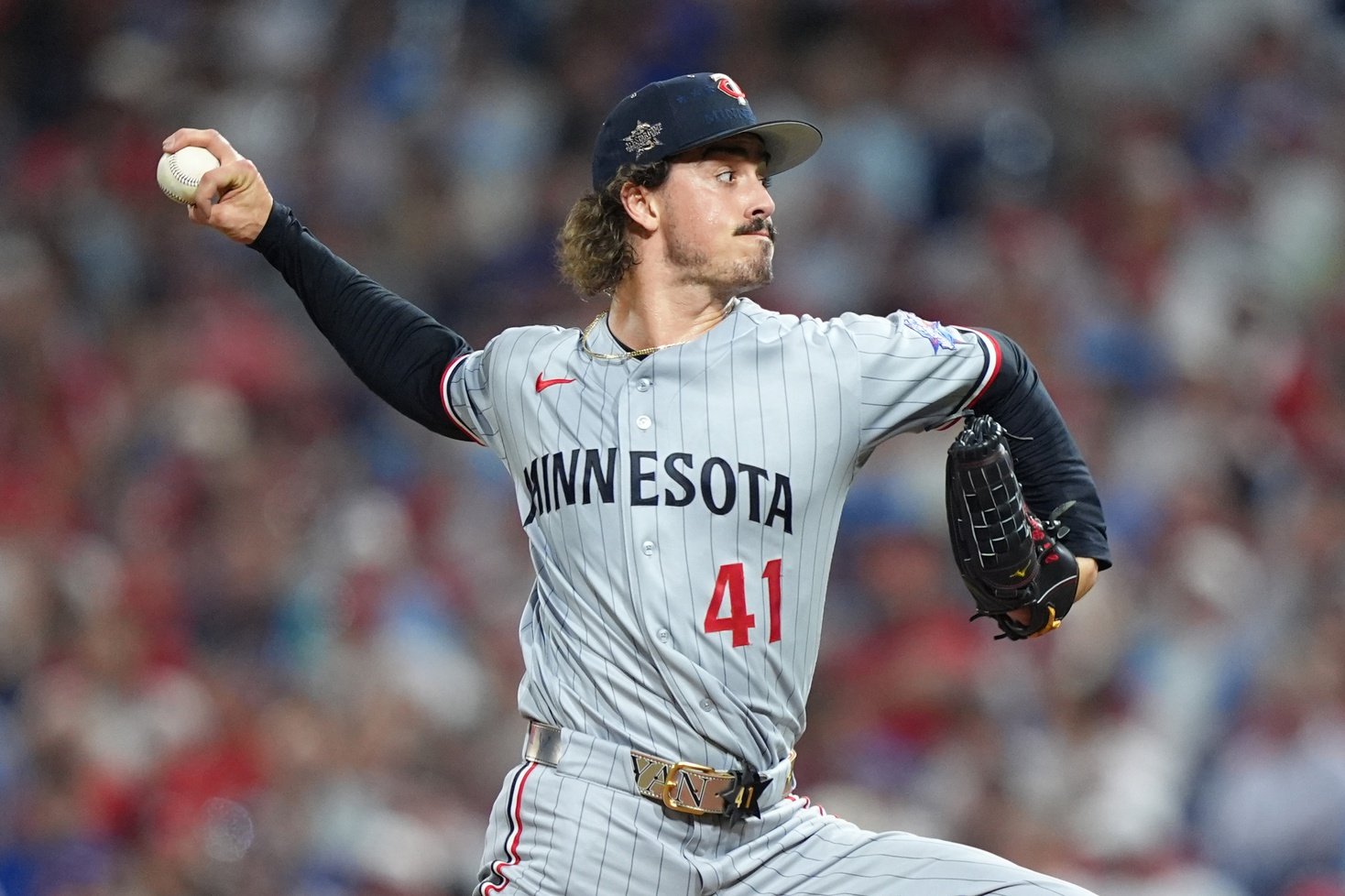 In some ways, this Twins season has gone perfectly according to expectation. They are on pace to finish just below .500, which is exactly where sites like FanGraphs projected. They are being led by the same two All-Stars from last year in Joe Ryan and Byron Buxton. The rotation's been pretty good, the bullpen's been pretty bad. None of this would have shocked me if you told me in March. But the way they've gotten here has been full of surprises: dramatic ups and downs, breakthrough offensive performances, elite production with runners in scoring position. It's a mercurial ballclub, and that makes it hard to predict what lies ahead in the final 10 weeks of the 2026 season. With that said, there are a few things coming that I do feel confident in asserting. Strap in, because I believe these five outcomes are inevitable: The offense's run-scoring productivity will slow down (unless hitters improve fundamentally). Minnesota's AL-leading run total (471) is largely a byproduct of their opportunistic nature: they are slashing .286/.368/.451 with RISP for an .820 OPS that is 80 points higher than their overall baseline. That's great, but it's not predictive. Regression is coming. Unless they can improve their overall hitting proficiency — and that's perfectly plausible if guys like Royce Lewis and Luke Keaschall can build on what they've been doing lately — the Twins are going to gravitate downward in run-scoring, possibly to a range reflecting their 20th-ranked .314 xwOBA. The Tigers will make a push. In recent years, Detroit has proven to be the streakiest of streaky teams. They were heavily favored to win the division, but got off to a stunningly bad start and have been buried near the bottom of the AL Central. History tells us they were bound to counteract their multi-month slump and they've already begun to do so, drawing back toward the pack with nine wins in their past 12 games. With the Tigers being non-factors in the first half, Cleveland and Chicago have battled for first place while hovering around .500, and the Twins are just a few games out. The idea of any of these teams being front-runners is premised on Detroit remaining dormant. I wouldn't bet on that. Whoever wins this division is going to have to make a stand against the Tigers. The Twins will do something weird at the trade deadline. Expect the unexpected. With three weeks to go, it's not clear whether the Twins will be buyers or sellers. They very well might blur the line. The front office is balancing the realities of an ongoing rebuild with the mandate to build faith among fans, and act on an undeniable opportunity in this watered-down American League. Ryan Jeffers and Josh Bell are impending free agents. Trevor Larnach is blossoming at a position of depth. Joe Ryan's trade value will never be higher. On the flip side, you've got a farm system that was freshly restocked by last year's firesale and a new draft class. I can't pretend to know what kind of shenanigans they've got in store. But I do feel confident in saying it'll be an eventful and surprising deadline. The pitching staff will be tested. Mick Abel and Anthony Banda aren't coming back. David Festa might not either. Connor Prielipp is already venturing into career-high workload territory. Bailey Ober is back from injury but throwing 87 MPH. Even Minnesota's All-Star ace Joe Ryan is looking to prove something by finishing a season without wearing down. In the bullpen, Derek Shelton has leaned hard on waiver pickup Yoendrys Gómez and rookie Andrew Morris to scrape by. Mike Paredes has delivered beyond any reasonable expectation thus far. These guys will be hard-pressed to maintain like this, and that's not a knock against them. The Twins pitching staff hasn't been great overall, allowing the seventh-most runs in baseball in the first half, but it has held together. We'll really see their resilience tested in the final months. Is help coming via trade? The Twins will play meaningful baseball in September. It doesn't take a whole lot of starry-eyed optimism to reach this conclusion. Yes, the Twins have a similar record to this time last year, but two things are different: the division and league are worse, and there's no chance they team is going to offload talent like last year, which led to playing 16 games below .500 in August and September. I do expect some of the slumbering giants in the AL to come alive down the stretch, including the Tigers as mentioned above. But Detroit has work to do, still nine games away from a winning record. The existence of three wild-card spots — last of which Minnesota is currently tied for — will make it hard to fall completely out of the running before the start of September, unless the the Twins fall off a cliff or multiple mid-range teams get extremely hot. Could happen, but not likely. What's likely is that the Twins will fulfill Tom Pohlad's preseason proclamation. "Let's judge the success of this year on wins and losses, on whether we're playing meaningful baseball in September," he said in late January. And even if that's a somewhat lukewarm definition of contention, the words that followed are what matter most: "If we're doing that, I think we're gonna be in position to grow payroll the following year, and the following year. That's what I hope we can start focusing on." I'm ready to focus on that. The Twins have begun to build something in the first half of this 2026 season and they arrived at the break playing great ball. Now the hard part begins: sustaining success, growing momentum, and turning this into something real. Can they do it? That part is anyone's guess. But at this point I wouldn't put it past them.
- 63 comments
-
- 12
-

-
Image courtesy of Matt Blewett-Imagn Images Alan Roden started five games last week after joining the Minnesota Twins roster in place of Byron Buxton. That might be all the time he gets, for now — Buxton is eligible to return from the injured list on Friday. Nearly a year after they acquired him as an ostensibly MLB-ready outfielder, the 26-year-old Roden has made a total of 56 plate appearances with the Twins, spending a vast majority of his time in Triple-A or on the IL. If we get to the end of this year and that remains the case, it'll feel like a failure in follow-through for this rebuilding (?) team. Roden was a key part of the return for Louis Varland, now the AL's best closer. Not only will the Twins have gotten no value from Roden, but they won't have learned much of anything about him in the span of a season and a half. Alas, as things stand, the path to regular playing time for a healthy Roden is basically non-existent. Buxton is an All-Star center fielder. Trevor Larnach is just behind Buxton in terms of productivity (.366 wOBA), thriving with a regular routine in left field. Meanwhile, Luke Keaschall has transitioned from infield to outfield and, so far, not looked back. His bat is coming on strong, with a .303/.418/.449 slash line in his past 30 games. Buxton and Keaschall aren't going anywhere. Larnach could be a different story. There is merit to the idea of trading him, even in a buyer context: sell high, free up payroll (~$2 million), and fall back on ample depth that includes Roden, Matt Wallner, Walker Jenkins, Gabriel Gonzalez, Kody Clemens and eventually Emmanuel Rodriguez. It's a strategically sound concept for a creative front office. But then you take a step back and say, really? The Twins are competing for a playoff spot and they're going to trade their leadoff hitter, who's been integral to a league-leading scoring offense, for a prospect or middle reliever? All to make room for a guy like Roden who was proven nothing as a big-leaguer? Seems kind of ludicrous when you put it that way. The same dynamic takes shape elsewhere across the roster. One solution to the outfield logjam — one that I sort of favor, in theory — would be shifting Buxton primarily to DH for the second half in order to preserve his health and keep him in the lineup. In that scenario, you could use Keaschall in center and give Roden some real run in right field. The problem is that Josh Bell is now the everyday designated hitter. I guess it's hard to call that a "problem" because Bell has been a dream-come-true at the position, with a .971 OPS in the past month, but his inflexible usage does create certain blockages. The argument for shopping Bell at the deadline is similar to Larnach: depth to replace him, salary relief to reinvest, and a lack of future fit. But the contradictory logic is also the same: You're going to trade the cleanup hitter who's been driving your offense to this point? And that's supposed to make your team better? Ryan Jeffers is another example, and maybe the most pressing. His return from the injured list last week has compelled the Twins to carry three catchers, including Alex Jackson who figures to rarely be used. The sticking point is that Jackson is out of options, and would likely be claimed off waivers if designated for assignment. Jackson has looked good enough to position himself as the team's backup catcher next year behind Victor Caratini. If the Twins are out of contention, the path forward is simple: trade the free-agency-bound Jeffers for what you can get, and spend the rest of the year working in your 2027 catching tandem. (You can afford to deal with the wasted roster spot in the meantime, because the games don't matter.) If the Twins are firmly in contention, and a legit threat in the American League, the path forward is also simple: hold Jeffers past the deadline and don't worry so much about losing Jackson. When you're playing in the now, you can't overly worry about tomorrow. Where the Twins are, a game below .500 at the All-Star break, is stuck weirdly in the middle. They are legitimately in postseason contention, primarily due to the overall shabbiness of the league, but still long shots to reach October and longer shots to advance. This puts their front office in a fascinating spot as the trade deadline approaches. In the likelihood the team misses the playoffs, you don't want to look back with regret at opportunities missed. At the same time, you also don't want to hinder your chances to capitalize on what's in front of you, especially with an edict seemingly coming down from ownership to push. Personally, I'm interested in seeing this season through but I'm mainly setting my sights on 2027 as the opening of a true championship window: a rotation led by Joe Ryan, Pablo López and Taj Bradley along with a more fully-formed bullpen and an emerging lineup bolstered by newly arriving top prospects. That's a team you can really start believing in, especially if Tom Pohlad is prepared to invest as he claims. Do the Twins want to take further steps now to maximize that window, or are they more inclined to stay focused on the present in pursuit of a postseason berth in this wide-open AL landscape? There are big trade-offs either way, setting up heavy implications for the front office's looming deadline decisions. View full article
-
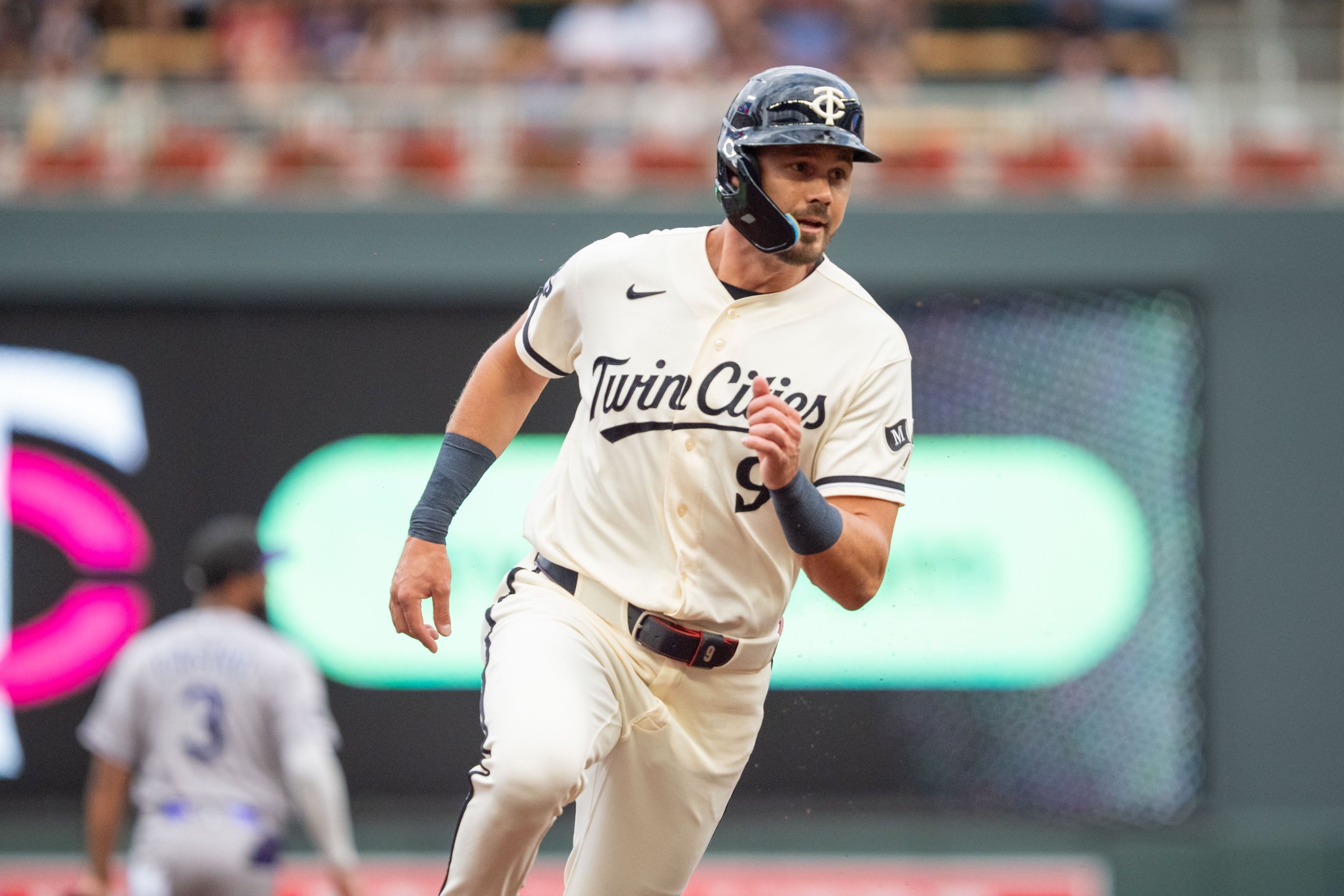 Alan Roden started five games last week after joining the Minnesota Twins roster in place of Byron Buxton. That might be all the time he gets, for now — Buxton is eligible to return from the injured list on Friday. Nearly a year after they acquired him as an ostensibly MLB-ready outfielder, the 26-year-old Roden has made a total of 56 plate appearances with the Twins, spending a vast majority of his time in Triple-A or on the IL. If we get to the end of this year and that remains the case, it'll feel like a failure in follow-through for this rebuilding (?) team. Roden was a key part of the return for Louis Varland, now the AL's best closer. Not only will the Twins have gotten no value from Roden, but they won't have learned much of anything about him in the span of a season and a half. Alas, as things stand, the path to regular playing time for a healthy Roden is basically non-existent. Buxton is an All-Star center fielder. Trevor Larnach is just behind Buxton in terms of productivity (.366 wOBA), thriving with a regular routine in left field. Meanwhile, Luke Keaschall has transitioned from infield to outfield and, so far, not looked back. His bat is coming on strong, with a .303/.418/.449 slash line in his past 30 games. Buxton and Keaschall aren't going anywhere. Larnach could be a different story. There is merit to the idea of trading him, even in a buyer context: sell high, free up payroll (~$2 million), and fall back on ample depth that includes Roden, Matt Wallner, Walker Jenkins, Gabriel Gonzalez, Kody Clemens and eventually Emmanuel Rodriguez. It's a strategically sound concept for a creative front office. But then you take a step back and say, really? The Twins are competing for a playoff spot and they're going to trade their leadoff hitter, who's been integral to a league-leading scoring offense, for a prospect or middle reliever? All to make room for a guy like Roden who was proven nothing as a big-leaguer? Seems kind of ludicrous when you put it that way. The same dynamic takes shape elsewhere across the roster. One solution to the outfield logjam — one that I sort of favor, in theory — would be shifting Buxton primarily to DH for the second half in order to preserve his health and keep him in the lineup. In that scenario, you could use Keaschall in center and give Roden some real run in right field. The problem is that Josh Bell is now the everyday designated hitter. I guess it's hard to call that a "problem" because Bell has been a dream-come-true at the position, with a .971 OPS in the past month, but his inflexible usage does create certain blockages. The argument for shopping Bell at the deadline is similar to Larnach: depth to replace him, salary relief to reinvest, and a lack of future fit. But the contradictory logic is also the same: You're going to trade the cleanup hitter who's been driving your offense to this point? And that's supposed to make your team better? Ryan Jeffers is another example, and maybe the most pressing. His return from the injured list last week has compelled the Twins to carry three catchers, including Alex Jackson who figures to rarely be used. The sticking point is that Jackson is out of options, and would likely be claimed off waivers if designated for assignment. Jackson has looked good enough to position himself as the team's backup catcher next year behind Victor Caratini. If the Twins are out of contention, the path forward is simple: trade the free-agency-bound Jeffers for what you can get, and spend the rest of the year working in your 2027 catching tandem. (You can afford to deal with the wasted roster spot in the meantime, because the games don't matter.) If the Twins are firmly in contention, and a legit threat in the American League, the path forward is also simple: hold Jeffers past the deadline and don't worry so much about losing Jackson. When you're playing in the now, you can't overly worry about tomorrow. Where the Twins are, a game below .500 at the All-Star break, is stuck weirdly in the middle. They are legitimately in postseason contention, primarily due to the overall shabbiness of the league, but still long shots to reach October and longer shots to advance. This puts their front office in a fascinating spot as the trade deadline approaches. In the likelihood the team misses the playoffs, you don't want to look back with regret at opportunities missed. At the same time, you also don't want to hinder your chances to capitalize on what's in front of you, especially with an edict seemingly coming down from ownership to push. Personally, I'm interested in seeing this season through but I'm mainly setting my sights on 2027 as the opening of a true championship window: a rotation led by Joe Ryan, Pablo López and Taj Bradley along with a more fully-formed bullpen and an emerging lineup bolstered by newly arriving top prospects. That's a team you can really start believing in, especially if Tom Pohlad is prepared to invest as he claims. Do the Twins want to take further steps now to maximize that window, or are they more inclined to stay focused on the present in pursuit of a postseason berth in this wide-open AL landscape? There are big trade-offs either way, setting up heavy implications for the front office's looming deadline decisions.
- 56 comments
-
- 11
-
-

-
- josh bell
- ryan jeffers
- (and 1 more)
-
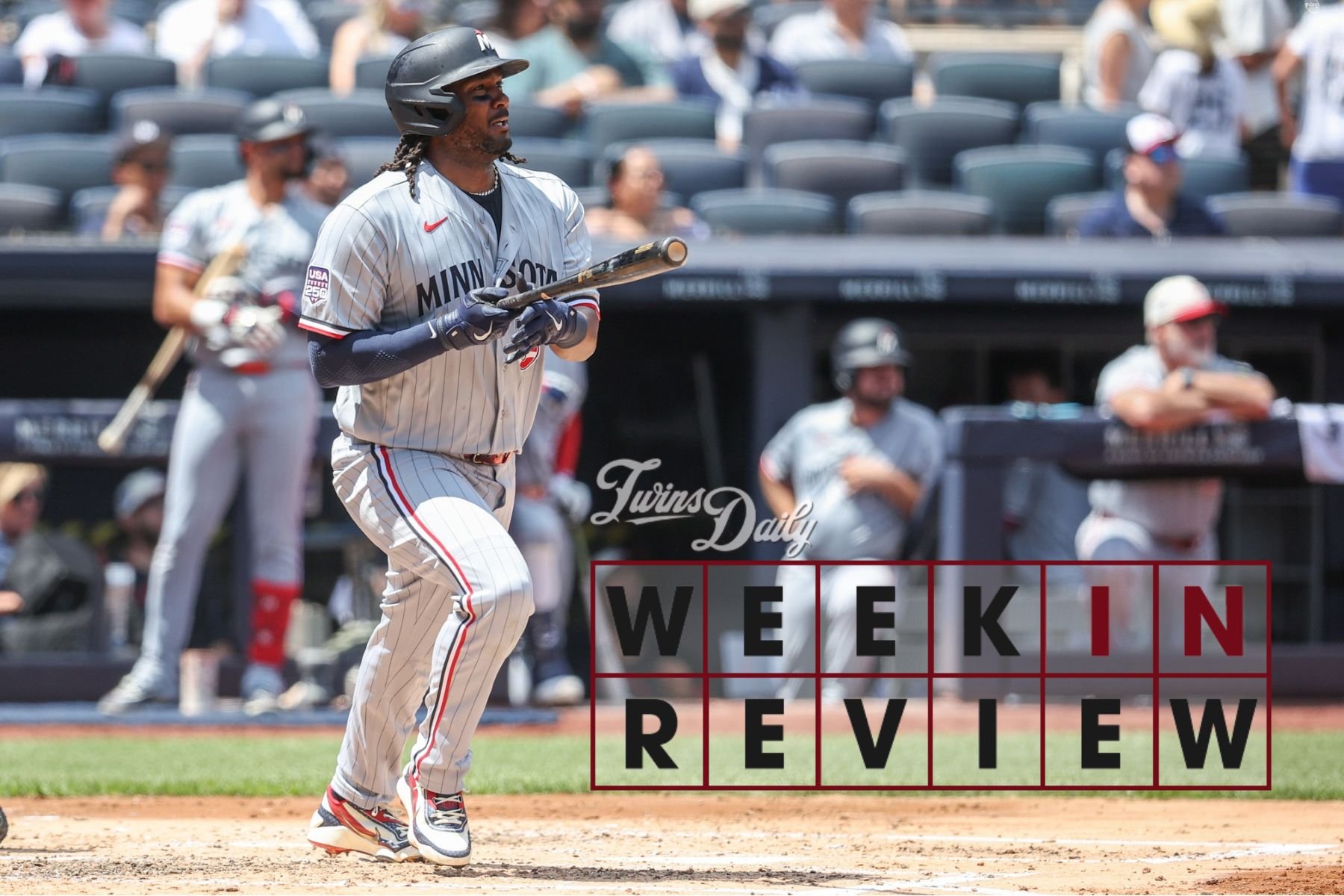
Image courtesy of Matt Blewett-Imagn Images The Weekly Nutshell: Winning their first two games against Cleveland brought the Twins within a game of .500 ... and then, of course, they lost two straight to ensure they wouldn't get back to that elusive break-even point before the All-Star break. They haven't had a non-losing record since April 22nd, and here at the season's unofficial midpoint, their W/L is nearly identical to where it was last year when they conducted a deadline firesale on the way to 90 losses. Still, something about this season feels different, and that was evident again last week. Coming off an excellent road trip that featured series wins against two long-time tormenters in New York and Houston, the Twins conquered another bitter rival by taking two of three from the Guardians for a second time this year. It was a gratifying, and meaningful, turning of the tides for a Twins team trailing Cleveland by just a couple of games in the standings. All of this might say more about the state of the American League and its typical heavyweights than it does about the caliber of this Twins team, but hey — opportunity is opportunity, and they clearly have one in front of them. After taking care of business against the lowly Angels over the weekend, the Twins are oh-so close to the .500 mark that they've been chasing all summer, and well within range of a postseason spot with 65 left to play. Weekly Snapshot: Mon, 7/6 through Sun, 7/12 *** Record Last Week: 4-2 (Overall: 48-49) Run Differential Last Week: +3 (Overall: -14) Standing: 3rd Place in AL Central (3.0 GB) Latest Game Results Game 92 | MIN 3, CLE 1: Bradley Dominates, Leads Twins Past Sloppy Guardians Bradley: 7 IP, 1 ER, 3 H, 0 BB, 10 K Game 93 | MIN 6, CLE 5: Roden's Walk-Off Wall Ball in Ninth Caps Comeback Win Roden: 2-5, 2 RBI Game 94 | CLE 5, MIN 2: Guards Avoid Sweep Behind Dominant Start from Williams Twins offense: 3 H, 1 BB, 14 K Game 95 | LAA 4, MIN 3: Twins Strand 9 Runners as Offense Struggles to Get Going Matthews: 6 IP, 4 ER, 6 H, 2 BB, 3 K Game 96 | MIN 5, LAA 3: Pitchers Steer Out of Trouble, Lineup Produces Key Late Hits Lewis: 2-4, HR, 2 RBI Game 97 | MIN 4, LAA 2: Larnach and Jeffers Drive in Two Apiece, Bradley Deals Again Bradley: 7 IP, 2 ER, 6 H, 2 BB, 6 K NEWS & NOTES It was a busy week of roster movement that also saw the Twins pick third overall in the draft. Let's run through the updates: Byron Buxton's run of avoiding the injured list came to an end on Tuesday, when he was placed on the IL with a hip impingement that he aggravated at the end of last week. The timing of this stint, just in front of the break, means Buxton potentially could miss relatively minimal game time; he'll be eligible to return on Friday when the Twins are back in action, which would equate to six games lost. In the meantime, Alan Roden was recalled to take over the open roster spot and has been starting regularly in right field, with Luke Keaschall sliding over into center. Ryan Jeffers was activated from the IL on Friday after missing nearly two months with fractured hamate. Kyler Fedko was optioned to make room. Jeffers started behind the plate on Friday and Sunday, notching two hits in eight at-bats. Bailey Ober also came off the IL after missing all of June with elbow inflammation, starting Thursday's series finale against Cleveland. He had a fine outing on paper with five innings of one-run ball, but the fastball was averaging less than 88 MPH. Connor Prielipp (blister) and Marco Raya (right shoulder impingement) were placed on the IL. Eric Orze and Cody Laweryson were optioned to Triple-A. Mick Abel and Anthony Banda were both moved to the 60-day IL to create space on the 40-man. The Twins acquired right-hander Woo-Suk Go in a minor trade with the Tigers. Go had an upward mobility clause in his contract that meant he needed to be placed on the MLB roster, so the Twins moved him straight to their big-league club. Left-hander Kendry Rojas was also recalled amid all the bullpen juggling. Right-hander Jack Anderson was claimed off waivers from the Red Sox and then optioned to the Saints. Garrett Acton started a rehab assignment with Class-A Ft. Myers. Cole Sands rebooted his own rehab in Triple-A after having it halted due to a flareup of injury symptoms. Sands could be in line to return after the break and has the potential to provide a big bullpen boost. The Twins made their first semi-significant trade of deadline season, striking early to acquire reliever Tommy Nance from the Blue Jays in exchange for catching prospect Ryan Sprock. At 35, Nance is a bit of a journeyman but has pitched reasonably well out of the Toronto bullpen over the past couple years. It's a talent upgrade, if a modest one. Nance allowed a run in his first inning of work as a Twin on Saturday, but struck out two and was credited with the win. That should just about get us caught up with roster news at the big-league level. But the most exciting moment of the week for prospect sickos like myself came on Saturday when the Twins selected third overall in the MLB Draft, their highest position since 2017. They took Georgia Tech catcher Vahn Lackey, who emerged as a consensus top-three pick with a breakthrough college season. He immediately bolsters the overall quality of Minnesota's farm system and will be an exciting name to follow going forward, with the capability to rise very fast. In addition to Lackey, the Twins also added a number of other intriguing new players to their system on Day 1 and Day 2 of the draft; you can click on those threads to catch up and share your thoughts. HIGHLIGHTS Taj Bradley set the tone in Tuesday's series-opening victory over Cleveland with his second straight dominant outing, compiling 10 strikeouts over seven innings of one-run ball with only three hits allowed. Bradley induced 25 swings and misses, most by any Twins starter this season, and 17 of those came on the cutter. Bradley was stellar again on Sunday, firing seven innings of two-run ball to pick up his ninth win. Outside of a brief downswing coming off the IL, Bradley has been pitching like a legitimate ace, not just in terms of performance but workload. That's enormous with Pablo López down. As the bullpen shuffles wildly from day to day, the Twins are at least seeing some steadiness from key arms that are likely to stick around and support the cause in the second half. Andrew Morris was once again fantastic, tossing five shutout innings with five strikeouts, one walk and two hits allowed. He's rattled off 16 straight scoreless appearances and has a 17-to-3 K/BB ratio in that span. I think I'm ready to say the rookie has become their most trusted reliever in my eyes? Yoendrys Gómez is also very much in that conversation — he picked up two saves and a win in three scoreless outings. Gómez has finished the game in his last seven straight appearances, so he's one of the few in this bullpen with a clearly defined role. The Twins' closer is answering the call admirably with a team-leading 1.80 Win Probability Added and a perfect 11-for-11 conversion rate on saves. I'll admit I'm a little perturbed by his drop-off in strikeouts of late, and the 2.7% HR/FB rate feels like a bit of a ticking time bomb, but there's no knocking the results. He's been an amazing pickup and you've gotta hope the Twins can get similarly lucky with one of their latest "throw-it-at-the-wall" additions like Nance, Go and Anderson. While far from being trusted, left-handers Taylor Rogers and Kody Funderburk at least took steps in the right direction last week, combing for 3 ⅓ scoreless innings. Funderburk, in particular, is on an encouraging run: he's issued only one walk in six frames since returning from Triple-A, throwing strikes at a 66% clip. I ranked Funderburk very low on my reliever confidence scale, but if he actually gets to a place where he can reliably throw the ball over the plate, that changes everything for him. The Twins offense continues to lead the American League in scoring, but had a relatively quiet week, averaging under four runs per game. Still, what I appreciate is that they're putting up a fight every night, and comebacks almost never feel out of reach, as Royce Lewis noted following Saturday's victory. Lewis did his part to power the offense with five hits, including a double and a pair of home runs. He drove in four and by week's end, Royce's OPS was back up to a respectable .696. His two-run homer to open the scoring on Saturday, a 419-foot nuke to the upper deck, was the kind of swing that really gets your juices flowing. That is the guy we all want to see — the explosive wild-card who could completely change this team's fortunes down the stretch. Lewis' growing confidence is palpable. While the circumstances that paved way for his return were unfortunate, it was nice to see Roden finally get another shot in the majors after spending the first half in Triple-A, and largely injured. He wasted no time making an impact, delivering two RBIs in his first game back on Wednesday including the ninth-inning walk-off hit. Last year, Roden drove in one run and drew zero walks in 12 games with the Twins; this year he's already at three and two respectively in his first week. He looks like a big-leaguer. I just don't know how long the runway is going to be right now, because Buxton could be back on the other side of the break and then you go back to a starting outfield alignment that's tough to crack. Buxton's been their best hitter and Trevor Larnach (who homered and drove in two on Sunday) is right up there with him. At the same time, Keaschall is coming on strong: he went 6-for-16 last week and is batting .393 with power here in July. LOWLIGHTS While Rogers and Funderburk had positive showings to earn back some faith as left-handed options in the bullpen, that wasn't true for Rojas in his return to the big-league stage. With his electric, high-velocity arsenal, he has the makings of a game-changing arm if only he can harness the stuff and command the zone. That didn't happen on Thursday in his worst outing as a big-leaguer: Rojas allowed three earned runs in two innings of work against Cleveland, yielding three walks and a home run. He entered in the sixth inning of a 1-1 tie game and left with a 4-1 deficit, costing the Twins their chance at a sweep over the dreaded Guards. There's still plenty to like about the lefty's long-term outlook, but it's an open question how much he can be counted to help the Twins in the present. I do wonder if he'll be a part of the post-deadline picture, and to what extent if so. I'm also curious to see what the plan is with Go. The 27-year-old is sort of an interesting project, as a former KBO standout who signed for $4.5 million with the Padres back in 2024 but has since been passed around and failed to earn a big-league opportunity until now. His numbers in Triple-A were nothing to write home about and he did not look terribly impressive to my eyes in his first couple of appearances with the Twins, but obviously more time is needed for a proper evaluation. That's sort of the trouble with the spot the Twins are in: they don't have a ton of leeway to assess these marginal arms while panning for another Gómez-like diamond in the rough. And when opportunities for these fringy relievers arise, they're often going to be in higher leverage than you'd like to be using suspect pitchers. Running out Go and Nance in the seventh and eighth innings of a tight game on Saturday felt precarious even if it ultimately worked out. The last thing you want to do is run Morris into the ground as he acclimates to a true relief role for the first time. TRENDING STORYLINE How will the Twins handle the catcher position? For now they are carrying three following the return of Jeffers, because they understandably don't want to expose Alex Jackson (out of options) to waivers and risk losing him for nothing. Jackson had a solid run while Jeffers was sidelined, slashing .296/.321/.407 with quality defense, and he's established himself as a viable option to back up Victor Caratini in 2027 once Jeffers presumably moves on as a free agent. The problem is that keeping Jackson around means letting him collect dust while clogging up a bench spot. He's barely ever going to play with Jeffers and Caratini healthy, especially since the DH spot is fully clamped down by Josh Bell. Is Jeffers setting up to assist a push for the Twins down the stretch, or is he being showcased as a trade candidate? There are a lot of angles at play here. He's one of their most valuable players and could be critical to their hopes of reaching the postseason. At the same time, you don't want to risk losing a valuable asset for nothing at season's end, and Minnesota's contention hopes remain slim. Maybe you hold onto him with plans to offer a qualifying offer in the offseason. That would require a willingness to pay Jeffers around $20 million in 2027. (Good test for Tom Pohlad's mettle?) Exploring a contract extension is also on table, but is that really a route you want to go with a catcher who's about to turn 30 when you just drafted a college star at the same position who is likely to be on the fast track? Their actions at the deadline will tell us a lot about how the Twins envision their short-term future behind the plate. Are they going to stay in this three-catcher limbo until then? LOOKING AHEAD The All-Star break is upon us. Sadly Buxton will not be able to participate in Tuesday's festivities due to his placement on the IL, but I expect we'll see Joe Ryan pitch an inning for a second straight year. Coming out of the break, the Twins will head to Wrigley Field for a three-game series against a very solid Cubs team. Pitching probables are currently unknown but I'm going to guess the Twins open the second half with Ober, Zebby Matthews and Ryan. MONDAY, JULY 13: MLB HOME RUN DERBY TUESDAY, JULY 14: MLB ALL-STAR GAME (PHILADELPHIA) FRIDAY, JULY 17: TWINS @ CUBS SATURDAY, JULY 18: TWINS @ CUBS SUNDAY, JULY 19: TWINS @ CUBS View full article
-
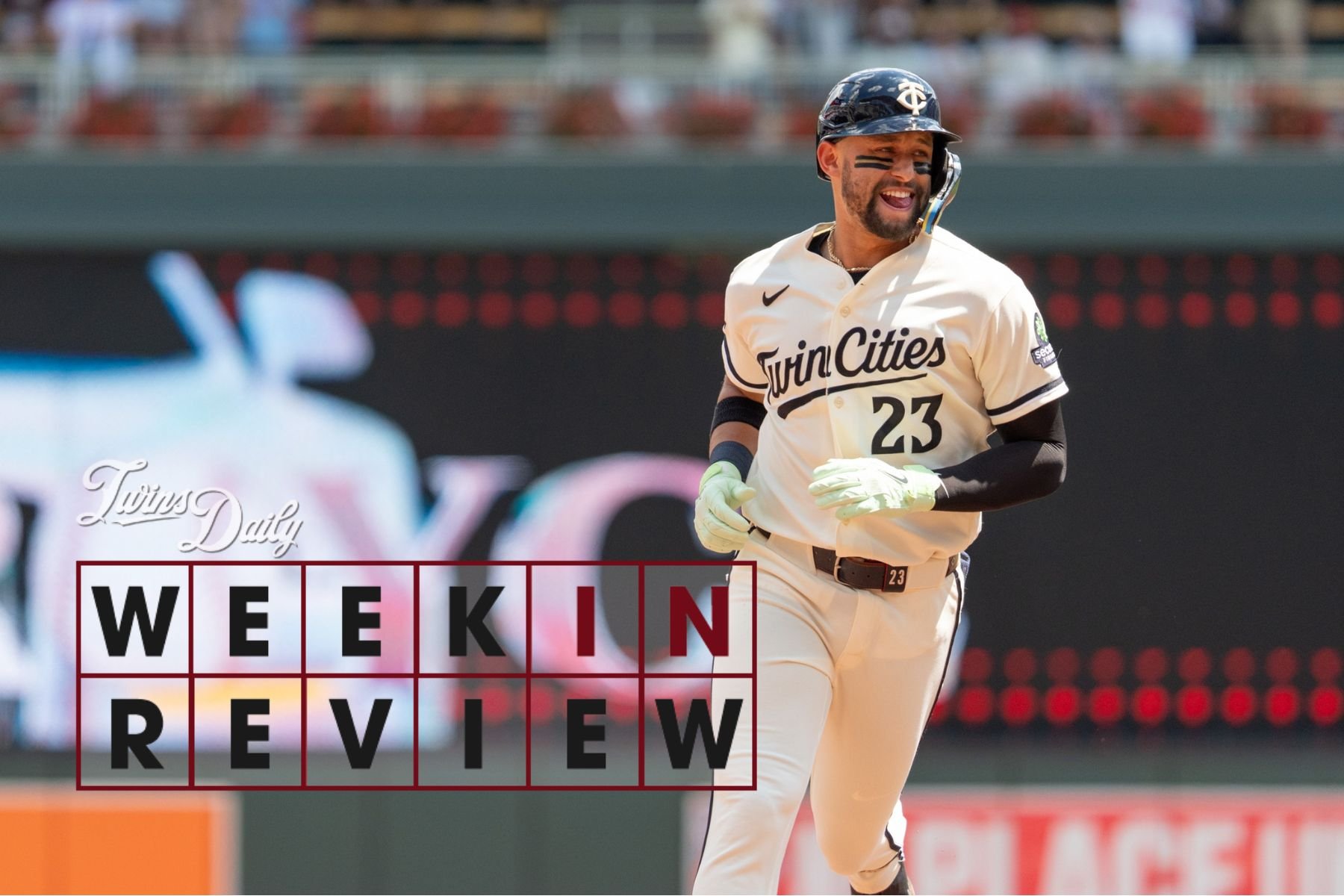 The Weekly Nutshell: Winning their first two games against Cleveland brought the Twins within a game of .500 ... and then, of course, they lost two straight to ensure they wouldn't get back to that elusive break-even point before the All-Star break. They haven't had a non-losing record since April 22nd, and here at the season's unofficial midpoint, their W/L is nearly identical to where it was last year when they conducted a deadline firesale on the way to 90 losses. Still, something about this season feels different, and that was evident again last week. Coming off an excellent road trip that featured series wins against two long-time tormenters in New York and Houston, the Twins conquered another bitter rival by taking two of three from the Guardians for a second time this year. It was a gratifying, and meaningful, turning of the tides for a Twins team trailing Cleveland by just a couple of games in the standings. All of this might say more about the state of the American League and its typical heavyweights than it does about the caliber of this Twins team, but hey — opportunity is opportunity, and they clearly have one in front of them. After taking care of business against the lowly Angels over the weekend, the Twins are oh-so close to the .500 mark that they've been chasing all summer, and well within range of a postseason spot with 65 left to play. Weekly Snapshot: Mon, 7/6 through Sun, 7/12 *** Record Last Week: 4-2 (Overall: 48-49) Run Differential Last Week: +3 (Overall: -14) Standing: 3rd Place in AL Central (3.0 GB) Latest Game Results Game 92 | MIN 3, CLE 1: Bradley Dominates, Leads Twins Past Sloppy Guardians Bradley: 7 IP, 1 ER, 3 H, 0 BB, 10 K Game 93 | MIN 6, CLE 5: Roden's Walk-Off Wall Ball in Ninth Caps Comeback Win Roden: 2-5, 2 RBI Game 94 | CLE 5, MIN 2: Guards Avoid Sweep Behind Dominant Start from Williams Twins offense: 3 H, 1 BB, 14 K Game 95 | LAA 4, MIN 3: Twins Strand 9 Runners as Offense Struggles to Get Going Matthews: 6 IP, 4 ER, 6 H, 2 BB, 3 K Game 96 | MIN 5, LAA 3: Pitchers Steer Out of Trouble, Lineup Produces Key Late Hits Lewis: 2-4, HR, 2 RBI Game 97 | MIN 4, LAA 2: Larnach and Jeffers Drive in Two Apiece, Bradley Deals Again Bradley: 7 IP, 2 ER, 6 H, 2 BB, 6 K NEWS & NOTES It was a busy week of roster movement that also saw the Twins pick third overall in the draft. Let's run through the updates: Byron Buxton's run of avoiding the injured list came to an end on Tuesday, when he was placed on the IL with a hip impingement that he aggravated at the end of last week. The timing of this stint, just in front of the break, means Buxton potentially could miss relatively minimal game time; he'll be eligible to return on Friday when the Twins are back in action, which would equate to six games lost. In the meantime, Alan Roden was recalled to take over the open roster spot and has been starting regularly in right field, with Luke Keaschall sliding over into center. Ryan Jeffers was activated from the IL on Friday after missing nearly two months with fractured hamate. Kyler Fedko was optioned to make room. Jeffers started behind the plate on Friday and Sunday, notching two hits in eight at-bats. Bailey Ober also came off the IL after missing all of June with elbow inflammation, starting Thursday's series finale against Cleveland. He had a fine outing on paper with five innings of one-run ball, but the fastball was averaging less than 88 MPH. Connor Prielipp (blister) and Marco Raya (right shoulder impingement) were placed on the IL. Eric Orze and Cody Laweryson were optioned to Triple-A. Mick Abel and Anthony Banda were both moved to the 60-day IL to create space on the 40-man. The Twins acquired right-hander Woo-Suk Go in a minor trade with the Tigers. Go had an upward mobility clause in his contract that meant he needed to be placed on the MLB roster, so the Twins moved him straight to their big-league club. Left-hander Kendry Rojas was also recalled amid all the bullpen juggling. Right-hander Jack Anderson was claimed off waivers from the Red Sox and then optioned to the Saints. Garrett Acton started a rehab assignment with Class-A Ft. Myers. Cole Sands rebooted his own rehab in Triple-A after having it halted due to a flareup of injury symptoms. Sands could be in line to return after the break and has the potential to provide a big bullpen boost. The Twins made their first semi-significant trade of deadline season, striking early to acquire reliever Tommy Nance from the Blue Jays in exchange for catching prospect Ryan Sprock. At 35, Nance is a bit of a journeyman but has pitched reasonably well out of the Toronto bullpen over the past couple years. It's a talent upgrade, if a modest one. Nance allowed a run in his first inning of work as a Twin on Saturday, but struck out two and was credited with the win. That should just about get us caught up with roster news at the big-league level. But the most exciting moment of the week for prospect sickos like myself came on Saturday when the Twins selected third overall in the MLB Draft, their highest position since 2017. They took Georgia Tech catcher Vahn Lackey, who emerged as a consensus top-three pick with a breakthrough college season. He immediately bolsters the overall quality of Minnesota's farm system and will be an exciting name to follow going forward, with the capability to rise very fast. In addition to Lackey, the Twins also added a number of other intriguing new players to their system on Day 1 and Day 2 of the draft; you can click on those threads to catch up and share your thoughts. HIGHLIGHTS Taj Bradley set the tone in Tuesday's series-opening victory over Cleveland with his second straight dominant outing, compiling 10 strikeouts over seven innings of one-run ball with only three hits allowed. Bradley induced 25 swings and misses, most by any Twins starter this season, and 17 of those came on the cutter. Bradley was stellar again on Sunday, firing seven innings of two-run ball to pick up his ninth win. Outside of a brief downswing coming off the IL, Bradley has been pitching like a legitimate ace, not just in terms of performance but workload. That's enormous with Pablo López down. As the bullpen shuffles wildly from day to day, the Twins are at least seeing some steadiness from key arms that are likely to stick around and support the cause in the second half. Andrew Morris was once again fantastic, tossing five shutout innings with five strikeouts, one walk and two hits allowed. He's rattled off 16 straight scoreless appearances and has a 17-to-3 K/BB ratio in that span. I think I'm ready to say the rookie has become their most trusted reliever in my eyes? Yoendrys Gómez is also very much in that conversation — he picked up two saves and a win in three scoreless outings. Gómez has finished the game in his last seven straight appearances, so he's one of the few in this bullpen with a clearly defined role. The Twins' closer is answering the call admirably with a team-leading 1.80 Win Probability Added and a perfect 11-for-11 conversion rate on saves. I'll admit I'm a little perturbed by his drop-off in strikeouts of late, and the 2.7% HR/FB rate feels like a bit of a ticking time bomb, but there's no knocking the results. He's been an amazing pickup and you've gotta hope the Twins can get similarly lucky with one of their latest "throw-it-at-the-wall" additions like Nance, Go and Anderson. While far from being trusted, left-handers Taylor Rogers and Kody Funderburk at least took steps in the right direction last week, combing for 3 ⅓ scoreless innings. Funderburk, in particular, is on an encouraging run: he's issued only one walk in six frames since returning from Triple-A, throwing strikes at a 66% clip. I ranked Funderburk very low on my reliever confidence scale, but if he actually gets to a place where he can reliably throw the ball over the plate, that changes everything for him. The Twins offense continues to lead the American League in scoring, but had a relatively quiet week, averaging under four runs per game. Still, what I appreciate is that they're putting up a fight every night, and comebacks almost never feel out of reach, as Royce Lewis noted following Saturday's victory. Lewis did his part to power the offense with five hits, including a double and a pair of home runs. He drove in four and by week's end, Royce's OPS was back up to a respectable .696. His two-run homer to open the scoring on Saturday, a 419-foot nuke to the upper deck, was the kind of swing that really gets your juices flowing. That is the guy we all want to see — the explosive wild-card who could completely change this team's fortunes down the stretch. Lewis' growing confidence is palpable. While the circumstances that paved way for his return were unfortunate, it was nice to see Roden finally get another shot in the majors after spending the first half in Triple-A, and largely injured. He wasted no time making an impact, delivering two RBIs in his first game back on Wednesday including the ninth-inning walk-off hit. Last year, Roden drove in one run and drew zero walks in 12 games with the Twins; this year he's already at three and two respectively in his first week. He looks like a big-leaguer. I just don't know how long the runway is going to be right now, because Buxton could be back on the other side of the break and then you go back to a starting outfield alignment that's tough to crack. Buxton's been their best hitter and Trevor Larnach (who homered and drove in two on Sunday) is right up there with him. At the same time, Keaschall is coming on strong: he went 6-for-16 last week and is batting .393 with power here in July. LOWLIGHTS While Rogers and Funderburk had positive showings to earn back some faith as left-handed options in the bullpen, that wasn't true for Rojas in his return to the big-league stage. With his electric, high-velocity arsenal, he has the makings of a game-changing arm if only he can harness the stuff and command the zone. That didn't happen on Thursday in his worst outing as a big-leaguer: Rojas allowed three earned runs in two innings of work against Cleveland, yielding three walks and a home run. He entered in the sixth inning of a 1-1 tie game and left with a 4-1 deficit, costing the Twins their chance at a sweep over the dreaded Guards. There's still plenty to like about the lefty's long-term outlook, but it's an open question how much he can be counted to help the Twins in the present. I do wonder if he'll be a part of the post-deadline picture, and to what extent if so. I'm also curious to see what the plan is with Go. The 27-year-old is sort of an interesting project, as a former KBO standout who signed for $4.5 million with the Padres back in 2024 but has since been passed around and failed to earn a big-league opportunity until now. His numbers in Triple-A were nothing to write home about and he did not look terribly impressive to my eyes in his first couple of appearances with the Twins, but obviously more time is needed for a proper evaluation. That's sort of the trouble with the spot the Twins are in: they don't have a ton of leeway to assess these marginal arms while panning for another Gómez-like diamond in the rough. And when opportunities for these fringy relievers arise, they're often going to be in higher leverage than you'd like to be using suspect pitchers. Running out Go and Nance in the seventh and eighth innings of a tight game on Saturday felt precarious even if it ultimately worked out. The last thing you want to do is run Morris into the ground as he acclimates to a true relief role for the first time. TRENDING STORYLINE How will the Twins handle the catcher position? For now they are carrying three following the return of Jeffers, because they understandably don't want to expose Alex Jackson (out of options) to waivers and risk losing him for nothing. Jackson had a solid run while Jeffers was sidelined, slashing .296/.321/.407 with quality defense, and he's established himself as a viable option to back up Victor Caratini in 2027 once Jeffers presumably moves on as a free agent. The problem is that keeping Jackson around means letting him collect dust while clogging up a bench spot. He's barely ever going to play with Jeffers and Caratini healthy, especially since the DH spot is fully clamped down by Josh Bell. Is Jeffers setting up to assist a push for the Twins down the stretch, or is he being showcased as a trade candidate? There are a lot of angles at play here. He's one of their most valuable players and could be critical to their hopes of reaching the postseason. At the same time, you don't want to risk losing a valuable asset for nothing at season's end, and Minnesota's contention hopes remain slim. Maybe you hold onto him with plans to offer a qualifying offer in the offseason. That would require a willingness to pay Jeffers around $20 million in 2027. (Good test for Tom Pohlad's mettle?) Exploring a contract extension is also on table, but is that really a route you want to go with a catcher who's about to turn 30 when you just drafted a college star at the same position who is likely to be on the fast track? Their actions at the deadline will tell us a lot about how the Twins envision their short-term future behind the plate. Are they going to stay in this three-catcher limbo until then? LOOKING AHEAD The All-Star break is upon us. Sadly Buxton will not be able to participate in Tuesday's festivities due to his placement on the IL, but I expect we'll see Joe Ryan pitch an inning for a second straight year. Coming out of the break, the Twins will head to Wrigley Field for a three-game series against a very solid Cubs team. Pitching probables are currently unknown but I'm going to guess the Twins open the second half with Ober, Zebby Matthews and Ryan. MONDAY, JULY 13: MLB HOME RUN DERBY TUESDAY, JULY 14: MLB ALL-STAR GAME (PHILADELPHIA) FRIDAY, JULY 17: TWINS @ CUBS SATURDAY, JULY 18: TWINS @ CUBS SUNDAY, JULY 19: TWINS @ CUBS
 -
Image courtesy of Wendell Cruz-Imagn Images The Weekly Nutshell: The Astros and Yankees have collectively made 11 appearances in the ALCS dating back to their showdown there in 2017. These are two of the league's powerhouses of this century: big payrolls, big starpower, big expectations. The Twins have long had their share of trouble with both, including October, so the opportunity to face off against both back to back during their latest road trip figured to be a good measuring stick for a Minnesota team teetering between buyer and seller status. The outcome, a 4-2 week that saw the Twins battle hard and come up big in harsh environments, was a resounding success. If not for a rare implosion from their ace on Tuesday in Houston, the Twins easily could have won five of the six games. They scored their first series win at Yankee Stadium since 2014, and it was fairly convincing. Now they return home with a chance to bring real momentum into the All-Star break and bolster their case for addition rather than subtraction at the deadline. Weekly Snapshot: Mon, 6/29 through Sun, 7/5 *** Record Last Week: 3-2 (Overall: 43-47) Run Differential Last Week: +13 (Overall: -17) Standing: 3rd Place in AL Central (4.0 GB) Latest Game Results Game 86 | MIN 5, HOU 4: Zebby Cruises Through Seven, Bullpen Holds Off Comeback Matthews: 7 IP, 1 ER, 4 H, 1 BB, 7 K Game 87 | HOU 6, MIN 4: Ryan's 4th-Inning Implosion Sinks Twins to Even Up Series Ryan: 4 IP, 6 ER, 6 H, 3 BB, 5 K Game 88 | MIN 8, HOU 3: Early Leads Holds Behind Bradley's Historic Strikeout Streak Larnach: 3-5, 2B, 3 RBI Game 89 | NYY 5, MIN 2: Familiar Result in Yankee Stadium, Lineup Goes 1-12 with RISP Kreidler, Gray: 0-8, 6 K Game 90 | MIN 11, NYY 4: Explosive Twins Offense Launches Six Homers to Sink Yankees Bell: 3-5, 2 HR, 3 RBI Game 91 | MIN 6, NYY 1: Ryan Bounces Back as Twins Score a Rare Series Win in the Bronx Ryan: 7 IP, 0 ER, 3 H, 0 BB, 9 K NEWS & NOTES A couple of key players who've been sidelined are tracking toward returns at or around the All-Star break. Bailey Ober moved his rehab up to Triple-A on Saturday and threw five innings (76 pitches) against Buffalo. He gave up four earned runs but struck out five with no walks. In terms of workload build-up, Ober is pretty much ready to go and he could make his next start for the Twins, which would likely push Mike Paredes to long relief or back to the minors. Paredes has done an admirable job filling in. Catching Ober in his Saturday start for St. Paul was Ryan Jeffers, back in action for a second game in his own rehab after losing six weeks to a fractured hamate. Jeffers exhibited no rust or ill effect from the injury, at least in terms of his swing: he notched two hits in each of his first two games back, including a homer against old friend Simeon Woods Richardson. While Ober and Jeffers should be back soon, Anthony Banda won't be. We learned early in the week that the injury that forced him out of last Sunday's game is a significant lat strain that will keep him out for months. That means his season might be over, in a tough blow for a relief corps that was already thin on dependable options. For now, Cody Laweryson has returned to fill the open bullpen spot. For a second straight year, Byron Buxton and Joe Ryan were named to the American League All-Star team. Unfortunately, Buxton's ability to participate is in doubt after he exited Sunday's game with an aggravation of his hip injury, suffered while suffered while sliding into second on a steal attempt. HIGHLIGHTS The Twins offense is not slowing down as the calendar flips to July. They scored 36 runs in six games, adding onto their American League-leading total and distancing themselves from the second-place Yankees by outscoring them 19-10 in their own house.. Josh Bell led the charge by crushing four home runs, including a pair in Saturday's blowout win. He also doubled twice and drove in nine runs across six games. His season is going pretty much exactly to script, with a slow start giving way to a scorching midsummer surge. Bell is off to a stellar start in July after posting an .891 OPS in June. Notably, the Twins have completely given up on using him defensively — his last start anywhere other than designated hitter was in May. But this output will absolutely play at DH. A more unexpected source of power: Luke Keaschall. During this road trip at least, he fit the bill of a right fielder, homering twice with a double among his five hits in 13 at-bats. Keaschall has as many extra-base hits in the first five days of July (3 in 16 PA) as he did in the entire month of June (3 in 93 PA). He saw zero action in the infield last week. Some other strong offensive performances from the road trip: Kody Clemens went deep three times, pushing his season total to to 16 as he hunts a 30-homer season. He drove in nine runs and lifted his OPS to .799 on the season. The defensively versatile Clemens has settled in, for now, as Minnesota's regular second baseman, with his last nine consecutive starts coming there. His bat is a big asset at the position; only five qualified MLB second basemen have an OPS above .800. Trevor Larnach kept things clicking at the top of the lineup, collecting six hits (including a double and home run) along with four walks in 22 plate appearances. He's slashing .421/.476/.684 in his past 15 games, and his .368 wOBA on the season led all AL left fielders entering play on Sunday (250+ PA). The catcher position continues to produce in the absence of Jeffers, with Victor Caratini and Alex Jackson each popping a home run. In one of the season's most surprising twists, Minnesota has the highest OPS in the AL at the catcher position since Jeffers went down. I'm curious to see how the Twins handle his return. Jackson has looked good enough that you don't want to expose him to waivers. Maybe they carry three catchers for a couple weeks and look to flip Jeffers at the deadline? When you look at the Twins offense, which is relatively short on clear standout hitters, you might wonder just how they've been able to pace the AL in run-scoring. It comes down to examples like these: players such as Clemens and Larnach and Caratini who have been vastly better than the norm at their positions. That and Bell being one of the game's best hitters since the start of June. On the pitching side, Ryan bounced back brilliantly from Tuesday's midgame meltdown with one of his finest outings of the season on Sunday, striking out nine over seven scoreless at Yankee Stadium. On Wednesday, Taj Bradley struck out 11 Astros over five innings in a series-clinching victory, setting a franchise record by recording 10 consecutive outs via the K. Following a bit of a stumble off the injured list, he's turned in three strong outings in a row, striking out 22 over 17 innings with just 10 hits and one home runs allowed. The control could be a little better but the stuff is back in peak form. Minnesota's bullpen was fairly effective coming off one of its worst weeks of the season. Kody Funderburk tossed a couple of much-needed scoreless (and walkless) innings in New York on Friday. Marco Raya followed with two shutout frames on Saturday. Andrew Morris, Taylor Rogers and Laweryson combined for 5 ⅓ innings with no runs allowed. LOWLIGHTS While the lineup has been highly effective overall, it is plagued by one clear and seemingly correctable weakness: the shortstop position. Tristan Gray continues to start on regular basis, despite being one of the worst players in the league. Last week he went hitless in 14 at-bats, striking out six times with one walk and lowering his OPS to .601. Gray hasn't homered since June 1st, and he's batting .210 with two doubles and two walks over 65 plate appearances since then. Poor plate discipline, no power, and bad defense. There have been no redeeming aspects of Gray's performance, making the team's unwavering faith in him one of the bigger head-scratchers of this season. Kaelen Culpepper can't come up soon enough, but unfortunately he hasn't played in a week since taking a pitch to the hand with the Saints. In the meantime, Ryan Kreidler certainly looks like the superior option, even as his bat gravitates back to earth. He went just 3-for-24 last week, dropping his OPS by more than 100 points. With Buxton looking likely to miss more time, will Kreidler slide back to center field or will the Twins make a move to add outfield depth (say, Alan Roden) and keep Kreidler at short? The logical move seems obvious, but for what it's worth, Roden didn't get pulled from the lineup for St. Paul on Sunday. I don't think an increased opportunity for Kyler Fedko, off to an 0-for-14 start as a big-leaguer, is going to be the answer. TRENDING STORYLINE This is the moment for the 2026 Twins to make their stand. There are 22 games until the trade deadline, at which point the front office will face some weighty decisions. They're very much on the border of buy or sell status, with a sub-.500 record that nevertheless puts them well within range of a postseason spot. The rebuild was already put into motion, but this team has done its part to remain relevant and earn belief. You can't take for granted an opportunity to make a push with multiple All-Stars. What's interesting is that some of the players who've been pivotal in keeping the Twins afloat are also among their most viable (and low-risk) trade chips. Clemens, Bell and Larnach have been on fire but don't necessarily fit into the team's future plans. Jeffers was arguably their best player before going down but he's an impending free agent and the catcher position has held up fine without him. Fascinating decisions are looming for Jeremy Zoll and Co. approaching his first deadline in the head chair. I wouldn't be surprised to see the Twins attempt to thread the needle between buying and selling, and in some ways I think it's an advisable course of action. But this also might be their last chance to trade Ryan for premium value, so if you're going to go for it, you've got to have a certain level of confidence. The Twins need to make their case by staying in the fight over the next month, starting with a key final home stand heading into the All-Star break. LOOKING AHEAD The Twins conquered their demons in Houston and New York, but now they'll confront another one: those eternally pesky Cleveland Guardians. Minnesota took two of three from the Guards on the road back in early May, but will now welcome them to Target Field for the first time. Cleveland is tangling with the White Sox atop the Central, four games in front of the Twins, raising the implications of this series. The down-bad Angels, who are characteristically almost 20 games below .500, will give the Twins a chance to finish the first half strong. TUESDAY, JULY 7: GUARDIANS @ TWINS — LHP Joey Cantillo v RHP Taj Bradley WEDNESDAY, JULY 8: GUARDIANS @ TWINS — RHP Slade Cecconiv. TBD THURSDAY, JULY 9: GUARDIANS @ TWINS — RHP Gavin Williams v. RHP Mike Paredes FRIDAY, JULY 10: ANGELS @ TWINS — LHP Sam Aldegheri v. RHP Zebby Matthews SATURDAY, JULY 11: ANGELS @ TWINS — RHP Ryan Johnson v. RHP Joe Ryan SUNDAY, JULY 12: ANGELS @ TWINS — RHP Jose Soriano v. RHP Taj Bradley View full article
- 84 replies
-
- 1
-
-
- josh bell
- tristan gray
- (and 3 more)
-
 The Weekly Nutshell: The Astros and Yankees have collectively made 11 appearances in the ALCS dating back to their showdown there in 2017. These are two of the league's powerhouses of this century: big payrolls, big starpower, big expectations. The Twins have long had their share of trouble with both, including October, so the opportunity to face off against both back to back during their latest road trip figured to be a good measuring stick for a Minnesota team teetering between buyer and seller status. The outcome, a 4-2 week that saw the Twins battle hard and come up big in harsh environments, was a resounding success. If not for a rare implosion from their ace on Tuesday in Houston, the Twins easily could have won five of the six games. They scored their first series win at Yankee Stadium since 2014, and it was fairly convincing. Now they return home with a chance to bring real momentum into the All-Star break and bolster their case for addition rather than subtraction at the deadline. Weekly Snapshot: Mon, 6/29 through Sun, 7/5 *** Record Last Week: 3-2 (Overall: 43-47) Run Differential Last Week: +13 (Overall: -17) Standing: 3rd Place in AL Central (4.0 GB) Latest Game Results Game 86 | MIN 5, HOU 4: Zebby Cruises Through Seven, Bullpen Holds Off Comeback Matthews: 7 IP, 1 ER, 4 H, 1 BB, 7 K Game 87 | HOU 6, MIN 4: Ryan's 4th-Inning Implosion Sinks Twins to Even Up Series Ryan: 4 IP, 6 ER, 6 H, 3 BB, 5 K Game 88 | MIN 8, HOU 3: Early Leads Holds Behind Bradley's Historic Strikeout Streak Larnach: 3-5, 2B, 3 RBI Game 89 | NYY 5, MIN 2: Familiar Result in Yankee Stadium, Lineup Goes 1-12 with RISP Kreidler, Gray: 0-8, 6 K Game 90 | MIN 11, NYY 4: Explosive Twins Offense Launches Six Homers to Sink Yankees Bell: 3-5, 2 HR, 3 RBI Game 91 | MIN 6, NYY 1: Ryan Bounces Back as Twins Score a Rare Series Win in the Bronx Ryan: 7 IP, 0 ER, 3 H, 0 BB, 9 K NEWS & NOTES A couple of key players who've been sidelined are tracking toward returns at or around the All-Star break. Bailey Ober moved his rehab up to Triple-A on Saturday and threw five innings (76 pitches) against Buffalo. He gave up four earned runs but struck out five with no walks. In terms of workload build-up, Ober is pretty much ready to go and he could make his next start for the Twins, which would likely push Mike Paredes to long relief or back to the minors. Paredes has done an admirable job filling in. Catching Ober in his Saturday start for St. Paul was Ryan Jeffers, back in action for a second game in his own rehab after losing six weeks to a fractured hamate. Jeffers exhibited no rust or ill effect from the injury, at least in terms of his swing: he notched two hits in each of his first two games back, including a homer against old friend Simeon Woods Richardson. While Ober and Jeffers should be back soon, Anthony Banda won't be. We learned early in the week that the injury that forced him out of last Sunday's game is a significant lat strain that will keep him out for months. That means his season might be over, in a tough blow for a relief corps that was already thin on dependable options. For now, Cody Laweryson has returned to fill the open bullpen spot. For a second straight year, Byron Buxton and Joe Ryan were named to the American League All-Star team. Unfortunately, Buxton's ability to participate is in doubt after he exited Sunday's game with an aggravation of his hip injury, suffered while suffered while sliding into second on a steal attempt. HIGHLIGHTS The Twins offense is not slowing down as the calendar flips to July. They scored 36 runs in six games, adding onto their American League-leading total and distancing themselves from the second-place Yankees by outscoring them 19-10 in their own house.. Josh Bell led the charge by crushing four home runs, including a pair in Saturday's blowout win. He also doubled twice and drove in nine runs across six games. His season is going pretty much exactly to script, with a slow start giving way to a scorching midsummer surge. Bell is off to a stellar start in July after posting an .891 OPS in June. Notably, the Twins have completely given up on using him defensively — his last start anywhere other than designated hitter was in May. But this output will absolutely play at DH. A more unexpected source of power: Luke Keaschall. During this road trip at least, he fit the bill of a right fielder, homering twice with a double among his five hits in 13 at-bats. Keaschall has as many extra-base hits in the first five days of July (3 in 16 PA) as he did in the entire month of June (3 in 93 PA). He saw zero action in the infield last week. Some other strong offensive performances from the road trip: Kody Clemens went deep three times, pushing his season total to to 16 as he hunts a 30-homer season. He drove in nine runs and lifted his OPS to .799 on the season. The defensively versatile Clemens has settled in, for now, as Minnesota's regular second baseman, with his last nine consecutive starts coming there. His bat is a big asset at the position; only five qualified MLB second basemen have an OPS above .800. Trevor Larnach kept things clicking at the top of the lineup, collecting six hits (including a double and home run) along with four walks in 22 plate appearances. He's slashing .421/.476/.684 in his past 15 games, and his .368 wOBA on the season led all AL left fielders entering play on Sunday (250+ PA). The catcher position continues to produce in the absence of Jeffers, with Victor Caratini and Alex Jackson each popping a home run. In one of the season's most surprising twists, Minnesota has the highest OPS in the AL at the catcher position since Jeffers went down. I'm curious to see how the Twins handle his return. Jackson has looked good enough that you don't want to expose him to waivers. Maybe they carry three catchers for a couple weeks and look to flip Jeffers at the deadline? When you look at the Twins offense, which is relatively short on clear standout hitters, you might wonder just how they've been able to pace the AL in run-scoring. It comes down to examples like these: players such as Clemens and Larnach and Caratini who have been vastly better than the norm at their positions. That and Bell being one of the game's best hitters since the start of June. On the pitching side, Ryan bounced back brilliantly from Tuesday's midgame meltdown with one of his finest outings of the season on Sunday, striking out nine over seven scoreless at Yankee Stadium. On Wednesday, Taj Bradley struck out 11 Astros over five innings in a series-clinching victory, setting a franchise record by recording 10 consecutive outs via the K. Following a bit of a stumble off the injured list, he's turned in three strong outings in a row, striking out 22 over 17 innings with just 10 hits and one home runs allowed. The control could be a little better but the stuff is back in peak form. Minnesota's bullpen was fairly effective coming off one of its worst weeks of the season. Kody Funderburk tossed a couple of much-needed scoreless (and walkless) innings in New York on Friday. Marco Raya followed with two shutout frames on Saturday. Andrew Morris, Taylor Rogers and Laweryson combined for 5 ⅓ innings with no runs allowed. LOWLIGHTS While the lineup has been highly effective overall, it is plagued by one clear and seemingly correctable weakness: the shortstop position. Tristan Gray continues to start on regular basis, despite being one of the worst players in the league. Last week he went hitless in 14 at-bats, striking out six times with one walk and lowering his OPS to .601. Gray hasn't homered since June 1st, and he's batting .210 with two doubles and two walks over 65 plate appearances since then. Poor plate discipline, no power, and bad defense. There have been no redeeming aspects of Gray's performance, making the team's unwavering faith in him one of the bigger head-scratchers of this season. Kaelen Culpepper can't come up soon enough, but unfortunately he hasn't played in a week since taking a pitch to the hand with the Saints. In the meantime, Ryan Kreidler certainly looks like the superior option, even as his bat gravitates back to earth. He went just 3-for-24 last week, dropping his OPS by more than 100 points. With Buxton looking likely to miss more time, will Kreidler slide back to center field or will the Twins make a move to add outfield depth (say, Alan Roden) and keep Kreidler at short? The logical move seems obvious, but for what it's worth, Roden didn't get pulled from the lineup for St. Paul on Sunday. I don't think an increased opportunity for Kyler Fedko, off to an 0-for-14 start as a big-leaguer, is going to be the answer. TRENDING STORYLINE This is the moment for the 2026 Twins to make their stand. There are 22 games until the trade deadline, at which point the front office will face some weighty decisions. They're very much on the border of buy or sell status, with a sub-.500 record that nevertheless puts them well within range of a postseason spot. The rebuild was already put into motion, but this team has done its part to remain relevant and earn belief. You can't take for granted an opportunity to make a push with multiple All-Stars. What's interesting is that some of the players who've been pivotal in keeping the Twins afloat are also among their most viable (and low-risk) trade chips. Clemens, Bell and Larnach have been on fire but don't necessarily fit into the team's future plans. Jeffers was arguably their best player before going down but he's an impending free agent and the catcher position has held up fine without him. Fascinating decisions are looming for Jeremy Zoll and Co. approaching his first deadline in the head chair. I wouldn't be surprised to see the Twins attempt to thread the needle between buying and selling, and in some ways I think it's an advisable course of action. But this also might be their last chance to trade Ryan for premium value, so if you're going to go for it, you've got to have a certain level of confidence. The Twins need to make their case by staying in the fight over the next month, starting with a key final home stand heading into the All-Star break. LOOKING AHEAD The Twins conquered their demons in Houston and New York, but now they'll confront another one: those eternally pesky Cleveland Guardians. Minnesota took two of three from the Guards on the road back in early May, but will now welcome them to Target Field for the first time. Cleveland is tangling with the White Sox atop the Central, four games in front of the Twins, raising the implications of this series. The down-bad Angels, who are characteristically almost 20 games below .500, will give the Twins a chance to finish the first half strong. TUESDAY, JULY 7: GUARDIANS @ TWINS — LHP Joey Cantillo v RHP Taj Bradley WEDNESDAY, JULY 8: GUARDIANS @ TWINS — RHP Slade Cecconiv. TBD THURSDAY, JULY 9: GUARDIANS @ TWINS — RHP Gavin Williams v. RHP Mike Paredes FRIDAY, JULY 10: ANGELS @ TWINS — LHP Sam Aldegheri v. RHP Zebby Matthews SATURDAY, JULY 11: ANGELS @ TWINS — RHP Ryan Johnson v. RHP Joe Ryan SUNDAY, JULY 12: ANGELS @ TWINS — RHP Jose Soriano v. RHP Taj Bradley
- 84 comments
-
- 11
-
-
- josh bell
- tristan gray
- (and 3 more)
-
What Should the Twins Do About Their Bullpen?
Nick Nelson replied to Nick Nelson's topic in Twins Daily Front Page News
According to the Twins' injury update page, he's thrown four bullpen sessions and was on track to start facing live hitters this week. So theoretically could be ready shortly after the break.- 87 replies
-
- 3
-
-
- andrew morris
- yoendrys gomez
- (and 2 more)
-
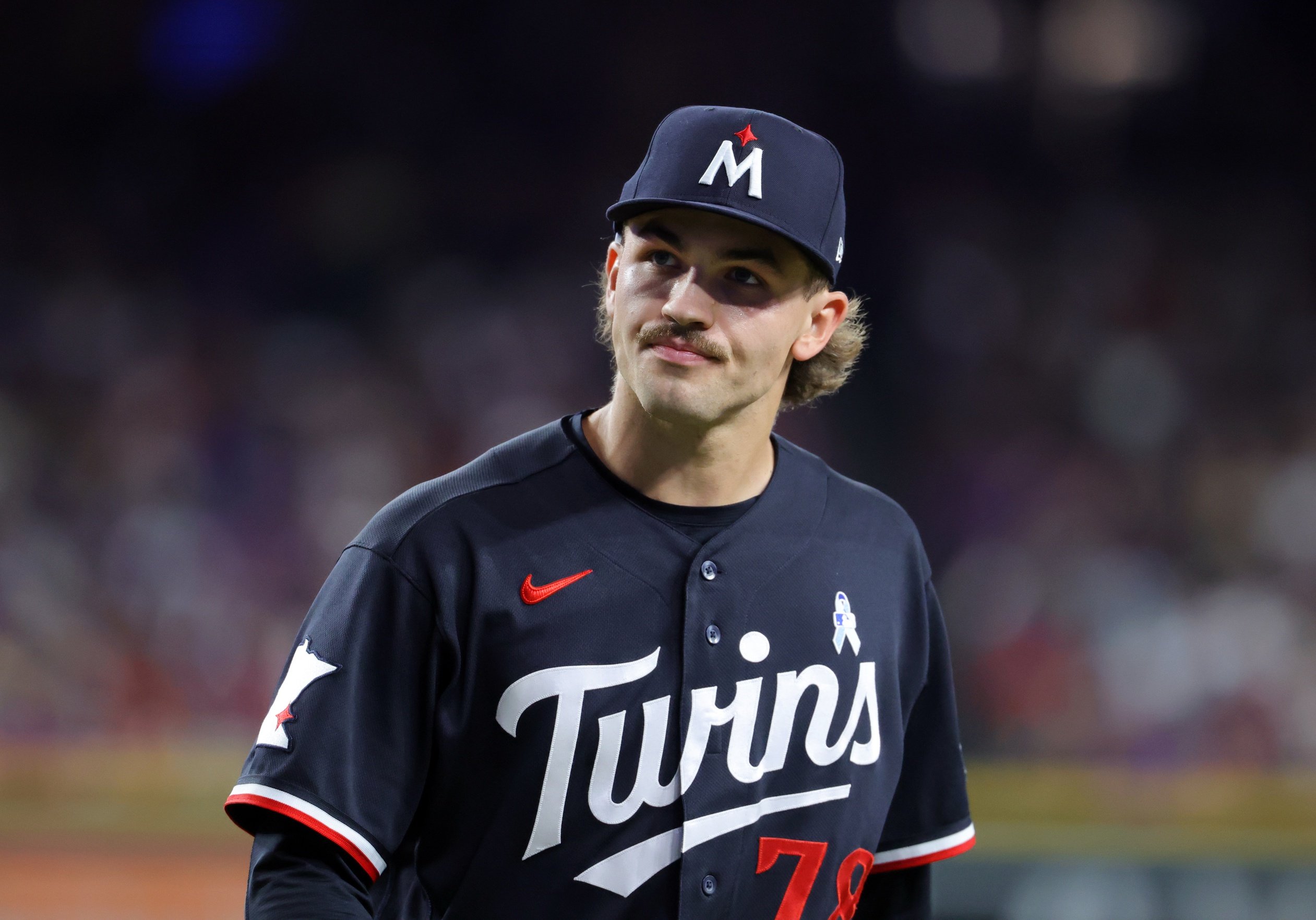 We knew coming into this year that the Minnesota Twins were going to have a bad bullpen. When you trade all of your best relievers and do little to replace them, that's inevitable. But it also seemed like there was a good chance this inevitably lackluster relief corps was not going to matter. The Twins lost 90 games last year and their Vegas over/under this year had them in the same vicinity. If the team was going to be flat-out bad, then there wouldn't be many leads to protect, no postseason race in the balance. Alas, here we are. As we head into July, the Twins are firmly on the radar of contention, four games below .500 but within spitting distance of playoff position. Through 88 games, Minnesota's offense has outscored every other American League team. Their rotation, if Bailey Ober can return at the level of a decent back-end starter, is solid one through five with a legitimate ace at the top. That is, theoretically, the makeup of a club that should be fancying itself a contender in one of the weakest AL competitive landscapes we can remember. But, that bullpen, whew. We knew it would be bad but it's been worse than bad, with the highest ERA in the majors at 5.43 and an egregious 6.94 mark in June. In some ways, the impact of this this run-hemorrhaging relief corps has been muted, because a lot of their ugliest moments have come in lopsided games that were already more or less decided. That's why the Twins look relatively better by Win Probability Added, ranking 23rd in the majors versus dead last. But this unit is direly short on dependable options, and there's little doubt it will torpedo any chance of a legit second-half push as currently comprised — especially with the offense likely to come back to earth. The loss of Anthony Banda, who'd shaken off a slow start to post a 2.45 ERA in his past 30 appearances, is a devastating blow. Is there anything they can do? The trade deadline will represent an opportunity for modest additions and upgrades (I'm not expecting much more), but the Twins also need to sort out what they have and optimize internally for the final three months. Here's a look at their current relief corps and how they might proceed, in order of confidence level to play a valuable role. Yoendrys Gómez He looks like a true find amid a sea of waiver claim flops. Certainly I'm not expecting him to keep up at his current level — the 3.4% HR/FB rate is a glaring regression red flag — but he's got a quality arsenal and he's thrived after being thrust into a high-leverage role. In an ideal scenario he's probably pitching in the seventh rather than closing, but he's a viable late-inning arm. That's one at least. Andrew Morris The most promising success story in Minnesota's bullpen so far. In contrast to Gómez, Morris' surface numbers actually understate how well he's pitched: his 2.79 FIP and 2.97 xERA are well below the 3.89 ERA, and his Statcast sliders are blazing red. This looks like the prototype scenario for transitioning a marginal starter to a standout reliever, and the Twins will have to make it happen several more times. Eric Orze Big drop-off from the top two to number three on this list. Orze, like Morris, has underperformed his peripherals (3.18 FIP and 3.97 xERA vs. 5.08 ERA) but I'm less convinced there is a credible back-end relief arm here. His K-rate is under 20%, his control has been poor and to the extent his numbers are adequate, it's in large part because he's allowed only one home run in 39 innings. That's not sustainable. Nevertheless, the 28-year-old worth keeping around as a lower-leverage option. Taylor Rogers I'm torn on Rogers. At times he has looked completely cooked, including last Tuesday when he got clobbered by the Dodgers for five earned runs in one inning. But he's sort of a microcosm of the Twins bullpen at large: very bad overall, less so situationally. Many of his worst outings have come in situations like the Dodgers game, where the Twins were already down 7-2 when he entered. His experience and left-handedness are worth keeping in the mix with Banda down, but again, you'd much prefer if he was your third lefty relief option versus your first. Travis Adams Another guy I'm a bit torn on. Adams throws reasonably hard and his 29.9% K-rate outranks all Twins pitchers (including Joe Ryan) dating back to last year's trade deadline. At the same time, his fastball is crushable as a Coors Light, and he's got a 7.23 ERA and 5.22 FIP in 55 MLB innings. Adams had a mediocre 4.50 career ERA in the minors. He's the kind of guy who you'd be interested in seeing more of in a non-competitive season but a clear liability if the Twins are trying to consistently win. Marco Raya Called up last week, he's only made two relief appearances for the Twins but Raya has avoided melting into a puddle, and that's an accomplishment for a 23-year-old with a history of yips, getting his first taste of the majors. Raya has solid long-term potential but is a shaky bet to produce at an above-average level or deliver in key situations right now. Another guy best suited for taking lumps in a lost season versus pitching meaningful innings down the stretch. Kody Funderburk He can't throw strikes. Seventeen walks versus 11 strikeouts in 20 innings this year. Yuck. He's gotten decent enough results when in the strike zone, so Funderburk is maybe not worth giving up on, but you can't count on him under any circumstances at this point. We've reached the tier of the bullpen where the Twins have absolutely got to upgrade if they want to be any kind of threat. Cody Laweryson I've got nothing against Laweryson but I also haven't been given any real reason to believe. His velocity is lowest of any bullpen righty. He lacks a legit secondary pitch. Laweryson looks like a minor-leaguer pitching in the majors, which I guess is what should be expected from someone who made his MLB debut at 28, out of sheer need last September, and got designated for assignment by two bad teams during the offseason, passing through waivers the second time. There's your Twins bullpen. There are two remotely dependable options for late innings or high leverage, and even they carry a certain degree of blow-up potential. It's not impossible that Orze and Rogers could round into respectable form, but the bottom half of the relief corps needs major improvement if this team is going to make a push. Here are the possible reinforcements from within worth tracking: Kendry Rojas: Easily the most intriguing figure on the farm. He's shown electric stuff in six appearances for the Twins, even while struggling to command the zone. There's no bigger wild-card in the system with regards to the rest of this season, but the Twins have to decide how they want to proceed with the lefty. Can they afford to not have him stretched out when he's their only remaining line of defense in the rotation? Cole Sands: He experienced a setback with his forearm two weeks ago, stalling his rehab, but threw an encouraging bullpen session on June 27th, and could return this month. Aside from Rojas, Sands is likely the best hope for a difference-making internal add. David Festa: Higher potential impact than Sands but much lower odds of returning for a substantial portion of the second half. Dealing with a persistently balky right shoulder, Festa was still multiple weeks from facing live hitters at last check. He hasn't pitched in almost a full year. Mike Paredes: With Ober on track to rejoin the rotation, shifting Paredes into a relief role would be an option. He's performed admirably as a rotation plug, albeit with ugly underlying numbers. I'm not sure he's got the stuff to be anything more than a Laweryson-caliber piece out of the bullpen. C.J. Culpepper: A sleeper in Triple-A. He's got relatively high-caliber stuff with a 3.20 career ERA in the minors and a track record of keeping the ball in the park. But he has made only seven appearances above Double-A and strike-throwing can be an issue. Probably more of an interesting candidate for 2027 than this year. John Klein: The Twins liked him enough to protect him on the 40-man last offseason, but haven't shown much inclination to deploy him in their MLB bullpen this year. He's made three appearances for the Twins, two of them as an opener. In Triple-A he has allowed 13 home runs in 45 innings. Like Culpepper, he's being treated as more of a future-looking option. The Twins are thin on upside in their current bullpen and there's not a whole lot more looming in the minors, although Rojas is a notable exception and Sands has the capability to move the needle if he comes back healthy. What becomes clear through this exercise is that they need outside help if they're going to support a contention effort versus sabotaging it. And it brings us to the defining question of this season, which the next several weeks may sort out: Is this a team worth investing in, at its core? There are major implications in trading away from the future value pool, even as light buyers, rather than adding to it as sellers. You don't want to end up severely regretting your decision by mid-August. If they're leaning in the "buy" direction, the front office would be wise to try and act sooner than later, because they are going to have a hard time staying in the range of competitiveness with this current assortment of relief arms.
- 87 comments
-
- 11
-
-
- andrew morris
- yoendrys gomez
- (and 2 more)
-
Image courtesy of Mark J. Rebilas-Imagn Images We knew coming into this year that the Minnesota Twins were going to have a bad bullpen. When you trade all of your best relievers and do little to replace them, that's inevitable. But it also seemed like there was a good chance this inevitably lackluster relief corps was not going to matter. The Twins lost 90 games last year and their Vegas over/under this year had them in the same vicinity. If the team was going to be flat-out bad, then there wouldn't be many leads to protect, no postseason race in the balance. Alas, here we are. As we head into July, the Twins are firmly on the radar of contention, four games below .500 but within spitting distance of playoff position. Through 88 games, Minnesota's offense has outscored every other American League team. Their rotation, if Bailey Ober can return at the level of a decent back-end starter, is solid one through five with a legitimate ace at the top. That is, theoretically, the makeup of a club that should be fancying itself a contender in one of the weakest AL competitive landscapes we can remember. But, that bullpen, whew. We knew it would be bad but it's been worse than bad, with the highest ERA in the majors at 5.43 and an egregious 6.94 mark in June. In some ways, the impact of this this run-hemorrhaging relief corps has been muted, because a lot of their ugliest moments have come in lopsided games that were already more or less decided. That's why the Twins look relatively better by Win Probability Added, ranking 23rd in the majors versus dead last. But this unit is direly short on dependable options, and there's little doubt it will torpedo any chance of a legit second-half push as currently comprised — especially with the offense likely to come back to earth. The loss of Anthony Banda, who'd shaken off a slow start to post a 2.45 ERA in his past 30 appearances, is a devastating blow. Is there anything they can do? The trade deadline will represent an opportunity for modest additions and upgrades (I'm not expecting much more), but the Twins also need to sort out what they have and optimize internally for the final three months. Here's a look at their current relief corps and how they might proceed, in order of confidence level to play a valuable role. Yoendrys Gómez He looks like a true find amid a sea of waiver claim flops. Certainly I'm not expecting him to keep up at his current level — the 3.4% HR/FB rate is a glaring regression red flag — but he's got a quality arsenal and he's thrived after being thrust into a high-leverage role. In an ideal scenario he's probably pitching in the seventh rather than closing, but he's a viable late-inning arm. That's one at least. Andrew Morris The most promising success story in Minnesota's bullpen so far. In contrast to Gómez, Morris' surface numbers actually understate how well he's pitched: his 2.79 FIP and 2.97 xERA are well below the 3.89 ERA, and his Statcast sliders are blazing red. This looks like the prototype scenario for transitioning a marginal starter to a standout reliever, and the Twins will have to make it happen several more times. Eric Orze Big drop-off from the top two to number three on this list. Orze, like Morris, has underperformed his peripherals (3.18 FIP and 3.97 xERA vs. 5.08 ERA) but I'm less convinced there is a credible back-end relief arm here. His K-rate is under 20%, his control has been poor and to the extent his numbers are adequate, it's in large part because he's allowed only one home run in 39 innings. That's not sustainable. Nevertheless, the 28-year-old worth keeping around as a lower-leverage option. Taylor Rogers I'm torn on Rogers. At times he has looked completely cooked, including last Tuesday when he got clobbered by the Dodgers for five earned runs in one inning. But he's sort of a microcosm of the Twins bullpen at large: very bad overall, less so situationally. Many of his worst outings have come in situations like the Dodgers game, where the Twins were already down 7-2 when he entered. His experience and left-handedness are worth keeping in the mix with Banda down, but again, you'd much prefer if he was your third lefty relief option versus your first. Travis Adams Another guy I'm a bit torn on. Adams throws reasonably hard and his 29.9% K-rate outranks all Twins pitchers (including Joe Ryan) dating back to last year's trade deadline. At the same time, his fastball is crushable as a Coors Light, and he's got a 7.23 ERA and 5.22 FIP in 55 MLB innings. Adams had a mediocre 4.50 career ERA in the minors. He's the kind of guy who you'd be interested in seeing more of in a non-competitive season but a clear liability if the Twins are trying to consistently win. Marco Raya Called up last week, he's only made two relief appearances for the Twins but Raya has avoided melting into a puddle, and that's an accomplishment for a 23-year-old with a history of yips, getting his first taste of the majors. Raya has solid long-term potential but is a shaky bet to produce at an above-average level or deliver in key situations right now. Another guy best suited for taking lumps in a lost season versus pitching meaningful innings down the stretch. Kody Funderburk He can't throw strikes. Seventeen walks versus 11 strikeouts in 20 innings this year. Yuck. He's gotten decent enough results when in the strike zone, so Funderburk is maybe not worth giving up on, but you can't count on him under any circumstances at this point. We've reached the tier of the bullpen where the Twins have absolutely got to upgrade if they want to be any kind of threat. Cody Laweryson I've got nothing against Laweryson but I also haven't been given any real reason to believe. His velocity is lowest of any bullpen righty. He lacks a legit secondary pitch. Laweryson looks like a minor-leaguer pitching in the majors, which I guess is what should be expected from someone who made his MLB debut at 28, out of sheer need last September, and got designated for assignment by two bad teams during the offseason, passing through waivers the second time. There's your Twins bullpen. There are two remotely dependable options for late innings or high leverage, and even they carry a certain degree of blow-up potential. It's not impossible that Orze and Rogers could round into respectable form, but the bottom half of the relief corps needs major improvement if this team is going to make a push. Here are the possible reinforcements from within worth tracking: Kendry Rojas: Easily the most intriguing figure on the farm. He's shown electric stuff in six appearances for the Twins, even while struggling to command the zone. There's no bigger wild-card in the system with regards to the rest of this season, but the Twins have to decide how they want to proceed with the lefty. Can they afford to not have him stretched out when he's their only remaining line of defense in the rotation? Cole Sands: He experienced a setback with his forearm two weeks ago, stalling his rehab, but threw an encouraging bullpen session on June 27th, and could return this month. Aside from Rojas, Sands is likely the best hope for a difference-making internal add. David Festa: Higher potential impact than Sands but much lower odds of returning for a substantial portion of the second half. Dealing with a persistently balky right shoulder, Festa was still multiple weeks from facing live hitters at last check. He hasn't pitched in almost a full year. Mike Paredes: With Ober on track to rejoin the rotation, shifting Paredes into a relief role would be an option. He's performed admirably as a rotation plug, albeit with ugly underlying numbers. I'm not sure he's got the stuff to be anything more than a Laweryson-caliber piece out of the bullpen. C.J. Culpepper: A sleeper in Triple-A. He's got relatively high-caliber stuff with a 3.20 career ERA in the minors and a track record of keeping the ball in the park. But he has made only seven appearances above Double-A and strike-throwing can be an issue. Probably more of an interesting candidate for 2027 than this year. John Klein: The Twins liked him enough to protect him on the 40-man last offseason, but haven't shown much inclination to deploy him in their MLB bullpen this year. He's made three appearances for the Twins, two of them as an opener. In Triple-A he has allowed 13 home runs in 45 innings. Like Culpepper, he's being treated as more of a future-looking option. The Twins are thin on upside in their current bullpen and there's not a whole lot more looming in the minors, although Rojas is a notable exception and Sands has the capability to move the needle if he comes back healthy. What becomes clear through this exercise is that they need outside help if they're going to support a contention effort versus sabotaging it. And it brings us to the defining question of this season, which the next several weeks may sort out: Is this a team worth investing in, at its core? There are major implications in trading away from the future value pool, even as light buyers, rather than adding to it as sellers. You don't want to end up severely regretting your decision by mid-August. If they're leaning in the "buy" direction, the front office would be wise to try and act sooner than later, because they are going to have a hard time staying in the range of competitiveness with this current assortment of relief arms. View full article
-
Image courtesy of Jeffrey Becker-Imagn Images The Weekly Nutshell: The last time the Twins had a .500 record was April 22nd. They've come close to getting back a couple times, but whenever a hot streak draws Minnesota back toward equilibrium, they invariably fall into a backslide that pushes them into the depths and casts doubt on their viability. It happened again this past week — the Twins entered with some momentum coming off a 5-1 road trip, then got swept by Los Angeles before eking out a series victory against Colorado with 19 runs allowed in three games. Losing to the MLB-leading Dodgers is no travesty, but getting knocked around by a Rockies team on pace for nearly 100 losses was rough. The underwhelming state of the American League makes it difficult to write the Twins off, even as they continually fail to get back above water. At the same time, this team is so blatantly short on relievers, and consequentially so incapable of locking into a prolonged stretch of winning, that it's hard to view them as any kind of legitimate contender. With the trade deadline now just over a month away, the stakes are fairly high in making that determination and choosing a course. Weekly Snapshot: Mon, 6/22 through Sun, 6/28 *** Record Last Week: 2-4 (Overall: 40-45) Run Differential Last Week: -12 (Overall: -30) Standing: 3rd Place in AL Central (4.5 GB) Latest Game Results Game 80 | LAD 2, MIN 1: Offense Goes Silent After Buxton's Early Blast Matthews: 6 IP, 2 ER, 6 H, 2 BB, 5 K Game 81 | LAD 12, MIN 3: Dodgers Take Control Early and Pull Away Late Rogers: 1 IP, 5 ER, 5 H, 2 BB, 0 K Game 82 | LAD 4, MIN 3: Ohtani Outshines Ryan, Betts Delivers on Both Sides Ryan: 6 IP, 4 ER, 9 K, 1 BB Game 83 | MIN 9, COL 8 (10): Twins Battle Back to Win After Bullpen Collapse Buxton: 3-5, 2 RBI Game 84 | COL 8, MIN 5: Rockies Even Series Behind Goodman's Three Homers Funderburk, Raya: 3 IP, 5 ER Game 85 | MIN 3, COL 2: Prielipp Dominates, Clemens and Kreidler Go Deep Prielipp: 6 IP, 2 ER, 6 H, 0 BB, 10 K NEWS & NOTES With Joe Ryan's scheduled start on Tuesday being delayed by illness, the Twins turned to newly activated Kendry Rojas as a fill-in starter and called up veteran journeyman Austin Voth, signed to a minor-league contract earlier this month, as a bulk arm. Rojas pitched okay, allowing just one run in two innings but needing 50 pitches to get through them. Voth got rocked for five earned runs on 11 hits in four innings, taking a lopsided loss on the chin. Both were sent out for fresh arms the following day. By optioning Rojas and designating Voth for assignment, the Twins made room for the return of Kody Funderburk and the arrival of Marco Raya. Unfortunately, these reinforcements didn't bring much relief in a staggeringly bad week for the bullpen. More on that later. Down in the minors, Kaelen Culpepper made his official return to the Saints lineup on Sunday, batting second as designated hitter. He went 0-for-4, but the call-up watch is back on. Also on Sunday, Bailey Ober made his first rehab start in Single-A, allowing three earned runs in 3 ⅓ innings while striking out one of 16 batters faced. Not the most inspiring result, but a step in the right direction at least. Out for a month due to elbow inflammation, Ober is on the comeback trail for a Twins rotation that could use some help. They sadly won't be getting it from Mick Abel, who was tabbed for arthroscopic elbow surgery after experiencing a setback near the end of his own rehab. Not a worst-case scenario, but a huge bummer. No timetable has been officially announced but he's looking at a multi-month recovery, putting Abel at risk of missing the remainder of the season. HIGHLIGHTS Derek Shelton started using Trevor Larnach in the leadoff spot for the first time earlier this month and he's been sticking to it; the outfielder hasn't hit anywhere other than first in the lineup in his last 13 starts. He's responded very well atop the order as one of Minnesota's best hitters in the month of June. Last week he went 6-for-15 with three doubles and three RBIs, pushing his batting average to .288. Brooks Lee is enjoying an excellent second half of June, powering the bottom half of the lineup with steady power output. The third baseman went deep twice more last week, pushing his season total to 14. We've seen these spurts of production from Lee often enough, but the question is whether he can harness it for more than a week or two rather than lapsing back into another extended slump. I'm very encouraged by the plate discipline — he's struck out just three times against seven walks in his past 73 plate appearances, the kind of development that fuels belief he could actually be turning a corner. Kody Clemens homered twice and also showed a nice touch of patience, drawing as many walks in five games (3) as he had in his previous 23. Clemens is one of three Twins hitters, along with Lee and Byron Buxton, who are on pace to hit 25-plus home runs this year. Ryan Kreidler would be on a similar pace if he were a full-time player — he tallied his fifth long ball in his 104th plate appearance on Sunday — and he's batting .290/.365/.527. One of the most refreshing surprises of the season so far. While it was a rough week for the pitching staff overall, the starters were on point. Zebby Matthews opened things up on Monday with his second consecutive quality start, limiting a potent Dodgers lineup to two solo homers in six innings. Taj Bradley delivered one of his finest starts of the season on Friday, tossing seven innings of two-run ball before the bottom fell out on the bullpen. Connor Prielipp's performance on Sunday was especially invigorating. He hadn't pitched in nine days as the Twins found a way to get him a little extended break, and that seemed to pay off: he looked as impressive as he ever has on a big-league mound. Prielipp struck out a career-high 10 batters with no walks, piling up 20 swinging strikes — most for any Twins starter this year — and featuring a filthy curveball that was giving Colorado hitters fits. Prielipp has had his ups and downs as a rookie, with an ERA barely under five, but on days like this one he shows the makings of a frontline starter. For the Twins, managing his workload and guiding him toward a stong, healthy finish will be one of the most important second-half storylines. LOWLIGHTS During the first two months of the season, the Twins pitching staff held its own. Through 55 games, they ranked 11th among MLB teams in fWAR, 17th in ERA, and 15th in FIP. Not amazing, but respectable. Since late May, things have taken a turn toward disaster. Over their past 30 games the Twins rank dead last in ERA at 6.22, with the second-lowest WAR in the American League. The bullpen has largely been at the center of this free fall, and this was absolutely the case last week. Multiple competitive games got completely out of hand in the late innings as relievers took turns melting down on the mound, and on Friday night a seven-run lead evaporated in the blink of an eye. It was Ludacris — er, ludicrous — to behold. The week saw Funderburk, Eric Orze and Taylor Rogers combine to yield 12 earned runs in six innings of work, with more walks (5) than strikeouts (4). Voth got shelled in his lone appearance. Raya showed some decent signs in his MLB debut on Saturday night, but gave up a two-run homer and struck out only one of nine batters faced. There have some promising performances from the likes of Andrew Morris and Yoendrys Gómez, and you'll certainly live with a guy like Raya taking his lumps, but too many innings are going to plainly sub-par pitchers that don't offer much in the way of future growth potential. A week like this one feels extremely demoralizing, especially with the way it ended: Anthony Banda, who's been one of the team's few consistently effective relievers (2.52 ERA in his past 25 innings), walked off the mound in the ninth on Sunday with an apparent injury, waving for trainers and pulling himself quickly. We'll see how serious it is, but any length of absence would be a potentially devastating blow to Minnesota's already thin late-inning mix. Elsewhere, the Twins have soured enough on Luke Keaschall's defense at second base that they've finally begun transitioning him away from the dirt. He made his first career start in right field on Friday and was back out there again on Sunday. Keaschall looks fine in right, though like Austin Martin, he's a bit of an odd fit at the position as a very speedy guy with a very weak arm, embodying more of a traditional LF profile. Alas, the Twins remain steadfast in their commitment to keeping Larnach in left. Moving from second base to right field raises the standard offensively for Keaschall, who is slugging .321 on the season. He notched one single in 15 at-bats last week and his OPS is down below .650. Not good enough. I'm curious to see what the plan is for the 23-year-old going forward because the outfield corners are crowded with talent, and he just hasn't shown signs of being the kind of impact bat you need out there. That said, I don't know where else his glove will play. TRENDING STORYLINE What are the Twins going to do about their bullpen? It's a really frustrating scene. Their offense leads the AL in runs scored, and is awaiting the return of Ryan Jeffers plus the arrivals of Culpepper, Walker Jenkins and others. They're giving us enough to believe in on that side. The starters have been perfectly serviceable with flashes of brilliance. They've got a worthy ace: Ryan is pitching as well as anybody in the league. Bradley and Matthews are back on track, and Prielipp is coming off a brilliant start. But that bullpen is a brutal buzzkill. It's sabotaging an otherwise very capable team, which is exactly the scenario many of us feared coming into the season. Theoretically, relief pitching is one of the easier weaknesses to address during the season, but the Twins are direly short-handed right now, as demonstrated by the endless wave of waiver pickups like Voth and Justin Lawrence. If Banda's down for any significant period of time, replacing his production won't be easy. The trade deadline is one avenue to add, but it's still five weeks away and Twins need to stay in the fight up until then to justify any kind of short-term aggressiveness. At this point, our best hope is that Raya can lock in and channel what he was doing in Triple-A, where he had a 24-to-1 K/BB ratio in his past 14 appearances. There's a lot riding on his immediate success. Part of me would like to see Rojas come back up in relief, but I also wonder how much the Twins are prioritizing keeping him stretched out as starting depth. If any of Pablo López, David Festa or Abel were healthy it might be a different story, but with all those guys out, converting starters into relief isn't a luxury the Twins can necessarily afford, even if it is their clear long-term strategy for rebuilding the bullpen. LOOKING AHEAD When the Twins hosted Houston at Target Field back in mid-May, the Astros were in a bad, bad place. They were 10 games below .500 and reeling after the loss of Carlos Correa. Minnesota took advantage by winning two of three. But the Astros are playing much better ball of late, with a 22-13 record since the two clubs last met. They've won five consecutive series, including four against AL Central opponents. Houston is always a tough place for the Twins to visit and win. Granted, not as tough as the Bronx. The Yankees are battling the Rays for first place in the East, and they have the best run differential in the AL. The Twins will see three quality starters in the series but, as of now, it looks like they'll avoid Cy Young front-runner Cam Schlittler. This road trip has a bit of a make-or-break feel given the timing. The clock is ticking and the season is no longer young. Can these Twins assert themselves against two large-market heavyweights or will they slink further below .500 as the All-Star break approaches? MONDAY, JUNE 29: TWINS @ ASTROS — RHP Zebby Matthews v. RHP Peter Lambert TUESDAY, JUNE 30: TWINS @ ASTROS — RHP Joe Ryan v. RHP Mike Burrows WEDNESDAY, JULY 1: TWINS @ ASTROS — RHP Taj Bradley v. RHP Tatsuya Imai FRIDAY, JULY 3: TWINS @ YANKEES — RHP Mike Paredes v. RHP Gerrit Cole SATURDAY, JULY 4: TWINS @ YANKEES — LHP Connor Prielipp v. LHP Carlos Rodon SUNDAY, JULY 5: TWINS @ YANKEES — RHP Zebby Matthews v. LHP Ryan Weathers View full article
-
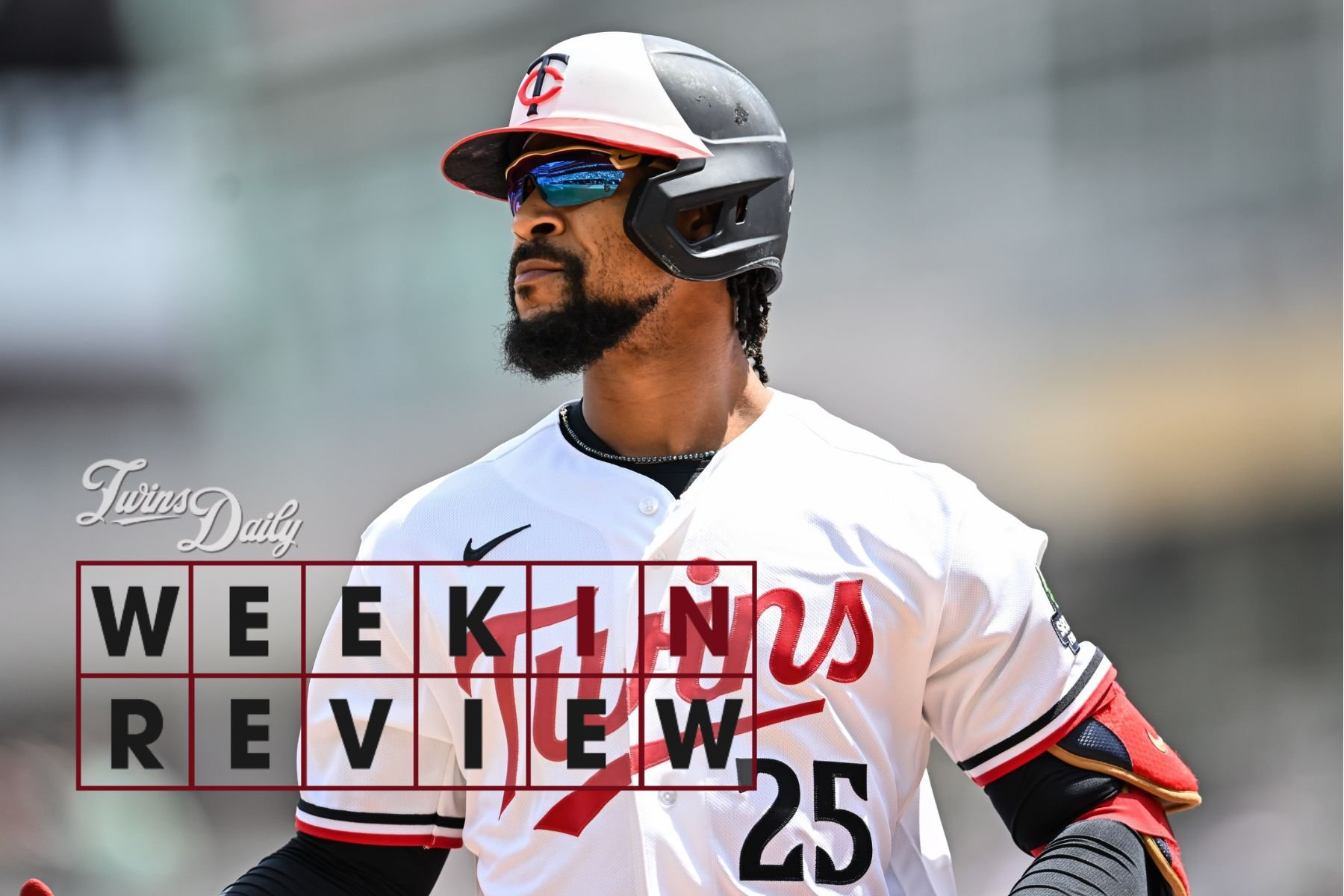 The Weekly Nutshell: The last time the Twins had a .500 record was April 22nd. They've come close to getting back a couple times, but whenever a hot streak draws Minnesota back toward equilibrium, they invariably fall into a backslide that pushes them into the depths and casts doubt on their viability. It happened again this past week — the Twins entered with some momentum coming off a 5-1 road trip, then got swept by Los Angeles before eking out a series victory against Colorado with 19 runs allowed in three games. Losing to the MLB-leading Dodgers is no travesty, but getting knocked around by a Rockies team on pace for nearly 100 losses was rough. The underwhelming state of the American League makes it difficult to write the Twins off, even as they continually fail to get back above water. At the same time, this team is so blatantly short on relievers, and consequentially so incapable of locking into a prolonged stretch of winning, that it's hard to view them as any kind of legitimate contender. With the trade deadline now just over a month away, the stakes are fairly high in making that determination and choosing a course. Weekly Snapshot: Mon, 6/22 through Sun, 6/28 *** Record Last Week: 2-4 (Overall: 40-45) Run Differential Last Week: -12 (Overall: -30) Standing: 3rd Place in AL Central (4.5 GB) Latest Game Results Game 80 | LAD 2, MIN 1: Offense Goes Silent After Buxton's Early Blast Matthews: 6 IP, 2 ER, 6 H, 2 BB, 5 K Game 81 | LAD 12, MIN 3: Dodgers Take Control Early and Pull Away Late Rogers: 1 IP, 5 ER, 5 H, 2 BB, 0 K Game 82 | LAD 4, MIN 3: Ohtani Outshines Ryan, Betts Delivers on Both Sides Ryan: 6 IP, 4 ER, 9 K, 1 BB Game 83 | MIN 9, COL 8 (10): Twins Battle Back to Win After Bullpen Collapse Buxton: 3-5, 2 RBI Game 84 | COL 8, MIN 5: Rockies Even Series Behind Goodman's Three Homers Funderburk, Raya: 3 IP, 5 ER Game 85 | MIN 3, COL 2: Prielipp Dominates, Clemens and Kreidler Go Deep Prielipp: 6 IP, 2 ER, 6 H, 0 BB, 10 K NEWS & NOTES With Joe Ryan's scheduled start on Tuesday being delayed by illness, the Twins turned to newly activated Kendry Rojas as a fill-in starter and called up veteran journeyman Austin Voth, signed to a minor-league contract earlier this month, as a bulk arm. Rojas pitched okay, allowing just one run in two innings but needing 50 pitches to get through them. Voth got rocked for five earned runs on 11 hits in four innings, taking a lopsided loss on the chin. Both were sent out for fresh arms the following day. By optioning Rojas and designating Voth for assignment, the Twins made room for the return of Kody Funderburk and the arrival of Marco Raya. Unfortunately, these reinforcements didn't bring much relief in a staggeringly bad week for the bullpen. More on that later. Down in the minors, Kaelen Culpepper made his official return to the Saints lineup on Sunday, batting second as designated hitter. He went 0-for-4, but the call-up watch is back on. Also on Sunday, Bailey Ober made his first rehab start in Single-A, allowing three earned runs in 3 ⅓ innings while striking out one of 16 batters faced. Not the most inspiring result, but a step in the right direction at least. Out for a month due to elbow inflammation, Ober is on the comeback trail for a Twins rotation that could use some help. They sadly won't be getting it from Mick Abel, who was tabbed for arthroscopic elbow surgery after experiencing a setback near the end of his own rehab. Not a worst-case scenario, but a huge bummer. No timetable has been officially announced but he's looking at a multi-month recovery, putting Abel at risk of missing the remainder of the season. HIGHLIGHTS Derek Shelton started using Trevor Larnach in the leadoff spot for the first time earlier this month and he's been sticking to it; the outfielder hasn't hit anywhere other than first in the lineup in his last 13 starts. He's responded very well atop the order as one of Minnesota's best hitters in the month of June. Last week he went 6-for-15 with three doubles and three RBIs, pushing his batting average to .288. Brooks Lee is enjoying an excellent second half of June, powering the bottom half of the lineup with steady power output. The third baseman went deep twice more last week, pushing his season total to 14. We've seen these spurts of production from Lee often enough, but the question is whether he can harness it for more than a week or two rather than lapsing back into another extended slump. I'm very encouraged by the plate discipline — he's struck out just three times against seven walks in his past 73 plate appearances, the kind of development that fuels belief he could actually be turning a corner. Kody Clemens homered twice and also showed a nice touch of patience, drawing as many walks in five games (3) as he had in his previous 23. Clemens is one of three Twins hitters, along with Lee and Byron Buxton, who are on pace to hit 25-plus home runs this year. Ryan Kreidler would be on a similar pace if he were a full-time player — he tallied his fifth long ball in his 104th plate appearance on Sunday — and he's batting .290/.365/.527. One of the most refreshing surprises of the season so far. While it was a rough week for the pitching staff overall, the starters were on point. Zebby Matthews opened things up on Monday with his second consecutive quality start, limiting a potent Dodgers lineup to two solo homers in six innings. Taj Bradley delivered one of his finest starts of the season on Friday, tossing seven innings of two-run ball before the bottom fell out on the bullpen. Connor Prielipp's performance on Sunday was especially invigorating. He hadn't pitched in nine days as the Twins found a way to get him a little extended break, and that seemed to pay off: he looked as impressive as he ever has on a big-league mound. Prielipp struck out a career-high 10 batters with no walks, piling up 20 swinging strikes — most for any Twins starter this year — and featuring a filthy curveball that was giving Colorado hitters fits. Prielipp has had his ups and downs as a rookie, with an ERA barely under five, but on days like this one he shows the makings of a frontline starter. For the Twins, managing his workload and guiding him toward a stong, healthy finish will be one of the most important second-half storylines. LOWLIGHTS During the first two months of the season, the Twins pitching staff held its own. Through 55 games, they ranked 11th among MLB teams in fWAR, 17th in ERA, and 15th in FIP. Not amazing, but respectable. Since late May, things have taken a turn toward disaster. Over their past 30 games the Twins rank dead last in ERA at 6.22, with the second-lowest WAR in the American League. The bullpen has largely been at the center of this free fall, and this was absolutely the case last week. Multiple competitive games got completely out of hand in the late innings as relievers took turns melting down on the mound, and on Friday night a seven-run lead evaporated in the blink of an eye. It was Ludacris — er, ludicrous — to behold. The week saw Funderburk, Eric Orze and Taylor Rogers combine to yield 12 earned runs in six innings of work, with more walks (5) than strikeouts (4). Voth got shelled in his lone appearance. Raya showed some decent signs in his MLB debut on Saturday night, but gave up a two-run homer and struck out only one of nine batters faced. There have some promising performances from the likes of Andrew Morris and Yoendrys Gómez, and you'll certainly live with a guy like Raya taking his lumps, but too many innings are going to plainly sub-par pitchers that don't offer much in the way of future growth potential. A week like this one feels extremely demoralizing, especially with the way it ended: Anthony Banda, who's been one of the team's few consistently effective relievers (2.52 ERA in his past 25 innings), walked off the mound in the ninth on Sunday with an apparent injury, waving for trainers and pulling himself quickly. We'll see how serious it is, but any length of absence would be a potentially devastating blow to Minnesota's already thin late-inning mix. Elsewhere, the Twins have soured enough on Luke Keaschall's defense at second base that they've finally begun transitioning him away from the dirt. He made his first career start in right field on Friday and was back out there again on Sunday. Keaschall looks fine in right, though like Austin Martin, he's a bit of an odd fit at the position as a very speedy guy with a very weak arm, embodying more of a traditional LF profile. Alas, the Twins remain steadfast in their commitment to keeping Larnach in left. Moving from second base to right field raises the standard offensively for Keaschall, who is slugging .321 on the season. He notched one single in 15 at-bats last week and his OPS is down below .650. Not good enough. I'm curious to see what the plan is for the 23-year-old going forward because the outfield corners are crowded with talent, and he just hasn't shown signs of being the kind of impact bat you need out there. That said, I don't know where else his glove will play. TRENDING STORYLINE What are the Twins going to do about their bullpen? It's a really frustrating scene. Their offense leads the AL in runs scored, and is awaiting the return of Ryan Jeffers plus the arrivals of Culpepper, Walker Jenkins and others. They're giving us enough to believe in on that side. The starters have been perfectly serviceable with flashes of brilliance. They've got a worthy ace: Ryan is pitching as well as anybody in the league. Bradley and Matthews are back on track, and Prielipp is coming off a brilliant start. But that bullpen is a brutal buzzkill. It's sabotaging an otherwise very capable team, which is exactly the scenario many of us feared coming into the season. Theoretically, relief pitching is one of the easier weaknesses to address during the season, but the Twins are direly short-handed right now, as demonstrated by the endless wave of waiver pickups like Voth and Justin Lawrence. If Banda's down for any significant period of time, replacing his production won't be easy. The trade deadline is one avenue to add, but it's still five weeks away and Twins need to stay in the fight up until then to justify any kind of short-term aggressiveness. At this point, our best hope is that Raya can lock in and channel what he was doing in Triple-A, where he had a 24-to-1 K/BB ratio in his past 14 appearances. There's a lot riding on his immediate success. Part of me would like to see Rojas come back up in relief, but I also wonder how much the Twins are prioritizing keeping him stretched out as starting depth. If any of Pablo López, David Festa or Abel were healthy it might be a different story, but with all those guys out, converting starters into relief isn't a luxury the Twins can necessarily afford, even if it is their clear long-term strategy for rebuilding the bullpen. LOOKING AHEAD When the Twins hosted Houston at Target Field back in mid-May, the Astros were in a bad, bad place. They were 10 games below .500 and reeling after the loss of Carlos Correa. Minnesota took advantage by winning two of three. But the Astros are playing much better ball of late, with a 22-13 record since the two clubs last met. They've won five consecutive series, including four against AL Central opponents. Houston is always a tough place for the Twins to visit and win. Granted, not as tough as the Bronx. The Yankees are battling the Rays for first place in the East, and they have the best run differential in the AL. The Twins will see three quality starters in the series but, as of now, it looks like they'll avoid Cy Young front-runner Cam Schlittler. This road trip has a bit of a make-or-break feel given the timing. The clock is ticking and the season is no longer young. Can these Twins assert themselves against two large-market heavyweights or will they slink further below .500 as the All-Star break approaches? MONDAY, JUNE 29: TWINS @ ASTROS — RHP Zebby Matthews v. RHP Peter Lambert TUESDAY, JUNE 30: TWINS @ ASTROS — RHP Joe Ryan v. RHP Mike Burrows WEDNESDAY, JULY 1: TWINS @ ASTROS — RHP Taj Bradley v. RHP Tatsuya Imai FRIDAY, JULY 3: TWINS @ YANKEES — RHP Mike Paredes v. RHP Gerrit Cole SATURDAY, JULY 4: TWINS @ YANKEES — LHP Connor Prielipp v. LHP Carlos Rodon SUNDAY, JULY 5: TWINS @ YANKEES — RHP Zebby Matthews v. LHP Ryan Weathers
 -
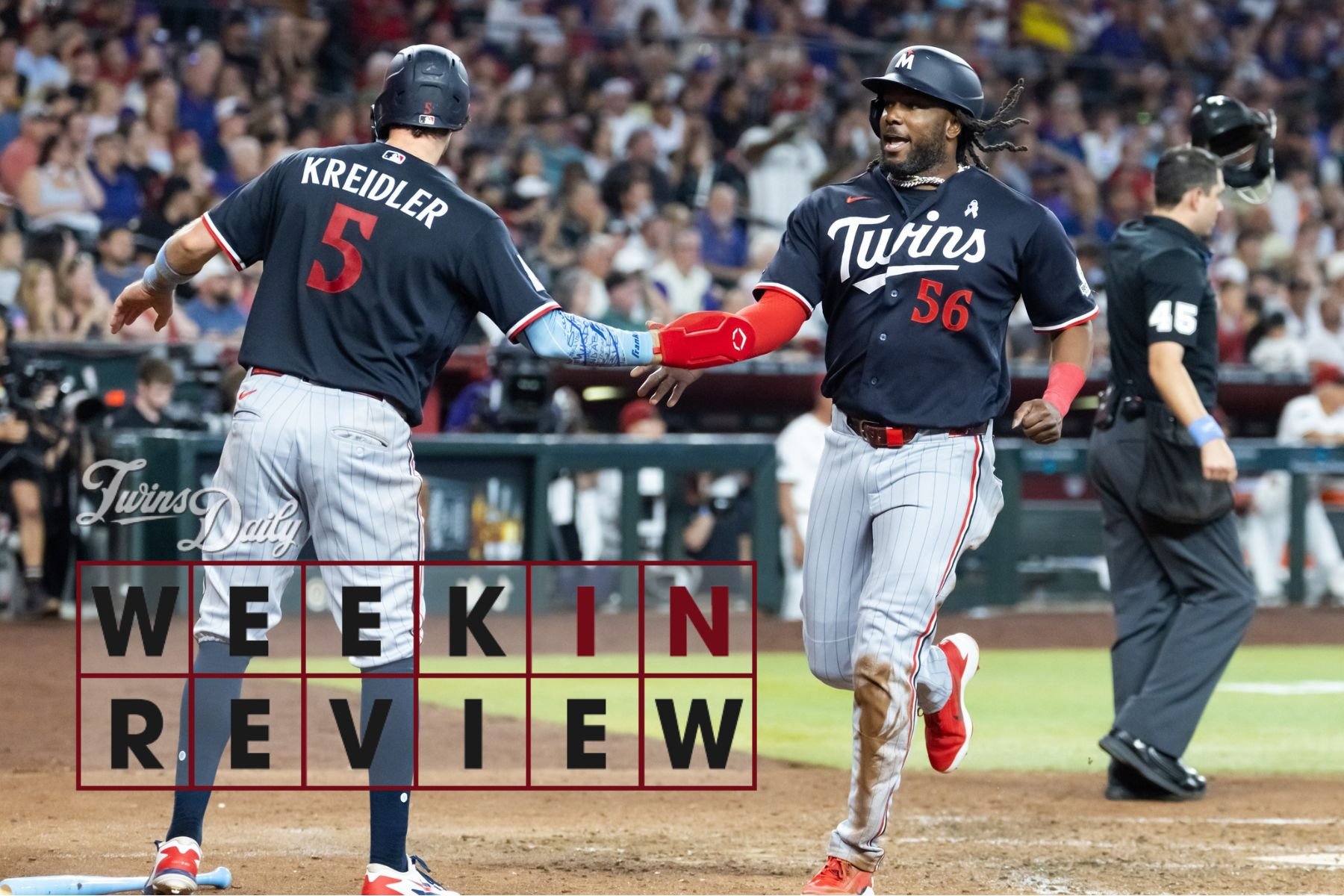 The Weekly Nutshell: The Twins have battled their way back to relevance. Twelve days ago they were 30-38, seemingly slipping into also-ran territory, but they've since won eight of 11 to charge back into the wild-card picture and even the AL Central contention mix. The past week saw Minnesota take five of six behind dominant offensive showings in Texas and Arizona, moving within a few games of first place while complicating their status six weeks ahead of the trade deadline. Weekly Snapshot: Mon, 6/15 through Sun, 6/21 *** Record Last Week: 5-1 (Overall: 38-41) Run Differential Last Week: +24 (Overall: -18) Standing: 3rd Place in AL Central (3.5 GB) Latest Game Results Game 74 | MIN 4, TEX 2: Pitchers Pull Through in Bullpen Game, Buxton and Bell Homer Bell: 2-4, HR, 3 RBI Game 75 | MIN 12, TEX 2: Twins Notch Season-High 17 Hits in Front-to-Back Blowout Clemens: 2-4, HR, 3 RBI Game 76 | MIN 9, TEX 3: Offense Keeps Adding to Early Lead, Securing 4th Straight Win Larnach: 3-5, HR, 3 RBI Game 77 | ARI 9, MIN 5: Sloppy Play in the Middle Innings Leads to Streak-Snapping Loss Adams: 1.1 IP, 3 ER, 4 H, 1 BB, 4 K Game 78 | MIN 16, ARI 8: Twins Separate with 10-Run 4th Inning in Another Lopsided Rout Lee: 4-6, 3B, 2 RBI Game 79 | MIN 4, ARI 2: Late Offensive Surge Turns the Tides and Locks Up Series Victory Jackson: 2-3, RBI NEWS & NOTES With a pair of successful rehab outings in the books, Mick Abel appeared on track to return to the Twins rotation. He was lined up to make Sunday's start in Arizona. Then ... the dreaded setback. Abel experienced renewed elbow soreness following a Friday bullpen session, and now will go for an MRI on Monday when the Twins are back in town. A brutal turn of events with ominous implications. The pitching staff did however receive a different boost on Sunday, with Kendry Rojas being activated from the injured list. He slots back into the bullpen and will likely resume the multi-inning role he was filling before going down. In order to make room on the roster, Justin Lawrence was designated for assignment after allowing 12 earned runs in six innings as a Twin. That's a massive upgrade in talent, and the Twins would love to see some more flashes from Rojas as Louis Varland lights the world on fire as Toronto's bullpen ace. HIGHLIGHTS It was a monster week for the Twins offense, which produced some of its most prolific performances of the season in close succession. They set a season high with 17 hits in Tuesday's 12-2 demolishing of Texas, then surpassed that total within the first five innings of Saturday's game against Arizona, a 16-run onslaught. Plenty of hitters got in on the action, including a few who loudly broke out of extended slumps: Trevor Larnach was batting .176 with just one RBI in his past 12 games before notching four hits, including a long home run, on Tuesday night against the Rangers. He added three more hits and another homer in Thusday's series finale, posted two hits and a walk on Saturday, and sprinkled on two more doubles Sunday. Overall, the 12-for-24 week raised Larnach's OPS by 76 points. Victor Caratini's bat is coming alive here in June. He entered the month with a .538 OPS but is now up over .700 after going 7-for-11 with a homer, four RBIs and three walks in three games last week. He went deep just once in his first 45 games but has now launched three homers in his past 11, lifting his slugging percentage by more than 100 points in the process. Fellow free-agent signing Josh Bell is also finding his groove, with multiple hits in five of his past six starts. He finished the past week 10-for-22 with two home runs, two doubles and eight RBIs. It looks like we're getting the typical Bell experience: lackluster production through the first couple of months, followed by a midsummer breakout. If last year was any indication, he's only getting started. Brooks Lee enjoyed a four-hit night on Saturday and finished the week with two doubles, a triple and a homer. He's got five walks and two strikeouts in his past 12 games. Luke Keaschall went 8-for-22 with four walks and is batting .310 over the past month. Ryan Kreidler drove in four runs as part of a three-hit game on Saturday, then singled three times on Sunday; he's got a .920 OPS through 89 plate appearances and is making a strong case to be the regular at shortstop. Byron Buxton hit two more homers, including a grand slam, and with 24 on the season he trails only Yordan Alvarez (by one) in the American League. Buxton is building a case as a legit MVP contender. Everywhere you looked, up and down the lineup, hitters were clicking. As a team, the Twins scored 50 runs on 74 hits in these six games, and that tends to be a pretty safe winning formula. Among American League teams, only the Yankees have scored more runs (389) than the Twins (388), and in fact no one else is even remotely close to those two. (The Orioles are third, with 369.) Pitching took a back seat in this stretch but there were a few notable showings from the staff. Zebby Matthews fired seven innings of two-run ball on Tuesday and Yoendrys Gómez solidified his grasp on the closer role with three scoreless appearances, including his seventh save in seven attempts. Mike Paredes is quietly getting the job done as a fill-in at the back of the rotation, and that should not be overlooked. He came out of nowhere to deliver some really valuable innings for this team. Shades of Randy Dobnak? (Now a Kansas City Royal, by the way.) LOWLIGHTS Tough to know what to make of Royce Lewis. On the one hand, he homered, doubled and tallied a two-run single, settling into his new role as primary starter at first base with the occasional big swing. On the other hand, he was 1-for-22 with nine strikeouts otherwise, including a 4-K game on Thursday that included some really baffling swing decisions. The power is certainly still there, but Lewis continues to look like a guy who's guessing his way through at-bats, hoping to run into a mistake rather than forcing one. That said, there's no reason not to stick with the current script and see if he can eventually develop some improved control of the zone. His overall numbers since returning to the majors remain good, and Derek Shelton is demonstrating a striking amount of confidence by routinely batting Lewis fourth or fifth in the lineup, a departure from his early-season tendency. The biggest rough patches from the past week came in the form of relief landmines. Lawrence was disastrous before getting designated for assignment on Sunday, surrendering seven earned runs in just 1 ⅔ innings of work. He came into Saturday's contest with a 14-run lead and proceeded to walk the bases loaded, allowing five runs and compelling the Twins to burn extra relievers. It was ugly. Now that he's been sent out, we'll see if he makes it through waivers and heads to Triple-A — very possible given his $1.2 million guaranteed salary. Maybe there's something there, but we didn't see it during this initial stint with the club. Friday night's game got away from the Twins under Travis Adams' watch. Shortly after the offense drew within one on solo homers from Bell and Lewis, Adams gave up a three-run triple to Corbin Carroll to blow the game open. Adams was arguably left in too long, throwing 42 pitches while facing nine batters, but it's really just a sign of how short this bullpen is on credible options in close games. Rojas re-entering the mix could give the relief corps a little more firepower to work with. TRENDING STORYLINE Has the Tristan Gray experiment run its course? He's not showing the kind of power or patience you want to see in a lineup regular, and his defense at shortstop has been quite unimpressive. Gray homered and drove in five runs against the White Sox on June 1st, but since then he has one extra-base hit (a double) and a 10-to-1 K/BB ratio in 38 plate appearances. Meanwhile, Kreidler has looked legitimately great on both ends. It seems noteworthy that Kreidler got the starting nod against right-handed starters on both Saturday and Sunday. He helped his case by contributing three hits in each game. In the field, Kreidler has made plays at short that are simply out of Gray's range of capability. I find myself in agreement with Gregg Masterson: let's see what Kreidler can do with some extended run. Of course, this all might be window dressing, because the real question is when Kaelen Culpepper will enter the mix. He was on the verge before suffering a hip injury that landed him on the injured list last week, but Culpepper appears to be on the mend with all signs pointing toward a relatively short-term absence. Once he's healthy, I see little reason to have him spend much more time at Triple-A before getting a big-league audition. From there, Kreidler can still play a valuable bench role thanks to his defensive aptitude and versatility. As for Gray? I'm not sure where he will fit in at that point. LOOKING AHEAD Fascinating week ahead. You won't often see this much of a talent differential in consecutive opponents. First, the Twins will host the Dodgers, who unsurprisingly have the most wins in baseball with their ultra-expensive, star-studded roster. Shohei Ohtani is scheduled to start Wednesday's game, making it a priority ticket for fans. Following Los Angeles into town over the weekend will be the Colorado Rockies, who conversely have the fewest wins in baseball. A good opportunity for the Twins to measure themselves against the very best and the very worst competition that MLB has to offer. If they can go toe-to-toe with the Dodgers in these next few days, it'd make a statement. MONDAY, JUNE 21: DODGERS @ TWINS — LHP Eric Lauer v. RHP Zebby Matthews TUESDAY, JUNE 22: DODGERS @ TWINS — LHP Justin Wrobleski v. RHP Joe Ryan WEDNESDAY, JUNE 23: DODGERS @ TWINS — RHP Shohei Ohtani v. LHP Connor Prielipp FRIDAY, JUNE 25: ROCKIES @ TWINS — RHP Tomoyuki Sugano v. RHP Taj Bradley SATURDAY, JUNE 26: ROCKIES @ TWINS — RHP Michael Lorenzen v. RHP Mick Abel SUNDAY, JUNE 27: ROCKIES @ TWINS — RHP Ryan Feltner v. RHP Zebby Matthews
- 22 comments
-
- 8
-
-
- trevor larnach
- ryan kreidler
- (and 2 more)
-
Image courtesy of Mark J. Rebilas-Imagn Images The Weekly Nutshell: The Twins have battled their way back to relevance. Twelve days ago they were 30-38, seemingly slipping into also-ran territory, but they've since won eight of 11 to charge back into the wild-card picture and even the AL Central contention mix. The past week saw Minnesota take five of six behind dominant offensive showings in Texas and Arizona, moving within a few games of first place while complicating their status six weeks ahead of the trade deadline. Weekly Snapshot: Mon, 6/15 through Sun, 6/21 *** Record Last Week: 5-1 (Overall: 38-41) Run Differential Last Week: +24 (Overall: -18) Standing: 3rd Place in AL Central (3.5 GB) Latest Game Results Game 74 | MIN 4, TEX 2: Pitchers Pull Through in Bullpen Game, Buxton and Bell Homer Bell: 2-4, HR, 3 RBI Game 75 | MIN 12, TEX 2: Twins Notch Season-High 17 Hits in Front-to-Back Blowout Clemens: 2-4, HR, 3 RBI Game 76 | MIN 9, TEX 3: Offense Keeps Adding to Early Lead, Securing 4th Straight Win Larnach: 3-5, HR, 3 RBI Game 77 | ARI 9, MIN 5: Sloppy Play in the Middle Innings Leads to Streak-Snapping Loss Adams: 1.1 IP, 3 ER, 4 H, 1 BB, 4 K Game 78 | MIN 16, ARI 8: Twins Separate with 10-Run 4th Inning in Another Lopsided Rout Lee: 4-6, 3B, 2 RBI Game 79 | MIN 4, ARI 2: Late Offensive Surge Turns the Tides and Locks Up Series Victory Jackson: 2-3, RBI NEWS & NOTES With a pair of successful rehab outings in the books, Mick Abel appeared on track to return to the Twins rotation. He was lined up to make Sunday's start in Arizona. Then ... the dreaded setback. Abel experienced renewed elbow soreness following a Friday bullpen session, and now will go for an MRI on Monday when the Twins are back in town. A brutal turn of events with ominous implications. The pitching staff did however receive a different boost on Sunday, with Kendry Rojas being activated from the injured list. He slots back into the bullpen and will likely resume the multi-inning role he was filling before going down. In order to make room on the roster, Justin Lawrence was designated for assignment after allowing 12 earned runs in six innings as a Twin. That's a massive upgrade in talent, and the Twins would love to see some more flashes from Rojas as Louis Varland lights the world on fire as Toronto's bullpen ace. HIGHLIGHTS It was a monster week for the Twins offense, which produced some of its most prolific performances of the season in close succession. They set a season high with 17 hits in Tuesday's 12-2 demolishing of Texas, then surpassed that total within the first five innings of Saturday's game against Arizona, a 16-run onslaught. Plenty of hitters got in on the action, including a few who loudly broke out of extended slumps: Trevor Larnach was batting .176 with just one RBI in his past 12 games before notching four hits, including a long home run, on Tuesday night against the Rangers. He added three more hits and another homer in Thusday's series finale, posted two hits and a walk on Saturday, and sprinkled on two more doubles Sunday. Overall, the 12-for-24 week raised Larnach's OPS by 76 points. Victor Caratini's bat is coming alive here in June. He entered the month with a .538 OPS but is now up over .700 after going 7-for-11 with a homer, four RBIs and three walks in three games last week. He went deep just once in his first 45 games but has now launched three homers in his past 11, lifting his slugging percentage by more than 100 points in the process. Fellow free-agent signing Josh Bell is also finding his groove, with multiple hits in five of his past six starts. He finished the past week 10-for-22 with two home runs, two doubles and eight RBIs. It looks like we're getting the typical Bell experience: lackluster production through the first couple of months, followed by a midsummer breakout. If last year was any indication, he's only getting started. Brooks Lee enjoyed a four-hit night on Saturday and finished the week with two doubles, a triple and a homer. He's got five walks and two strikeouts in his past 12 games. Luke Keaschall went 8-for-22 with four walks and is batting .310 over the past month. Ryan Kreidler drove in four runs as part of a three-hit game on Saturday, then singled three times on Sunday; he's got a .920 OPS through 89 plate appearances and is making a strong case to be the regular at shortstop. Byron Buxton hit two more homers, including a grand slam, and with 24 on the season he trails only Yordan Alvarez (by one) in the American League. Buxton is building a case as a legit MVP contender. Everywhere you looked, up and down the lineup, hitters were clicking. As a team, the Twins scored 50 runs on 74 hits in these six games, and that tends to be a pretty safe winning formula. Among American League teams, only the Yankees have scored more runs (389) than the Twins (388), and in fact no one else is even remotely close to those two. (The Orioles are third, with 369.) Pitching took a back seat in this stretch but there were a few notable showings from the staff. Zebby Matthews fired seven innings of two-run ball on Tuesday and Yoendrys Gómez solidified his grasp on the closer role with three scoreless appearances, including his seventh save in seven attempts. Mike Paredes is quietly getting the job done as a fill-in at the back of the rotation, and that should not be overlooked. He came out of nowhere to deliver some really valuable innings for this team. Shades of Randy Dobnak? (Now a Kansas City Royal, by the way.) LOWLIGHTS Tough to know what to make of Royce Lewis. On the one hand, he homered, doubled and tallied a two-run single, settling into his new role as primary starter at first base with the occasional big swing. On the other hand, he was 1-for-22 with nine strikeouts otherwise, including a 4-K game on Thursday that included some really baffling swing decisions. The power is certainly still there, but Lewis continues to look like a guy who's guessing his way through at-bats, hoping to run into a mistake rather than forcing one. That said, there's no reason not to stick with the current script and see if he can eventually develop some improved control of the zone. His overall numbers since returning to the majors remain good, and Derek Shelton is demonstrating a striking amount of confidence by routinely batting Lewis fourth or fifth in the lineup, a departure from his early-season tendency. The biggest rough patches from the past week came in the form of relief landmines. Lawrence was disastrous before getting designated for assignment on Sunday, surrendering seven earned runs in just 1 ⅔ innings of work. He came into Saturday's contest with a 14-run lead and proceeded to walk the bases loaded, allowing five runs and compelling the Twins to burn extra relievers. It was ugly. Now that he's been sent out, we'll see if he makes it through waivers and heads to Triple-A — very possible given his $1.2 million guaranteed salary. Maybe there's something there, but we didn't see it during this initial stint with the club. Friday night's game got away from the Twins under Travis Adams' watch. Shortly after the offense drew within one on solo homers from Bell and Lewis, Adams gave up a three-run triple to Corbin Carroll to blow the game open. Adams was arguably left in too long, throwing 42 pitches while facing nine batters, but it's really just a sign of how short this bullpen is on credible options in close games. Rojas re-entering the mix could give the relief corps a little more firepower to work with. TRENDING STORYLINE Has the Tristan Gray experiment run its course? He's not showing the kind of power or patience you want to see in a lineup regular, and his defense at shortstop has been quite unimpressive. Gray homered and drove in five runs against the White Sox on June 1st, but since then he has one extra-base hit (a double) and a 10-to-1 K/BB ratio in 38 plate appearances. Meanwhile, Kreidler has looked legitimately great on both ends. It seems noteworthy that Kreidler got the starting nod against right-handed starters on both Saturday and Sunday. He helped his case by contributing three hits in each game. In the field, Kreidler has made plays at short that are simply out of Gray's range of capability. I find myself in agreement with Gregg Masterson: let's see what Kreidler can do with some extended run. Of course, this all might be window dressing, because the real question is when Kaelen Culpepper will enter the mix. He was on the verge before suffering a hip injury that landed him on the injured list last week, but Culpepper appears to be on the mend with all signs pointing toward a relatively short-term absence. Once he's healthy, I see little reason to have him spend much more time at Triple-A before getting a big-league audition. From there, Kreidler can still play a valuable bench role thanks to his defensive aptitude and versatility. As for Gray? I'm not sure where he will fit in at that point. LOOKING AHEAD Fascinating week ahead. You won't often see this much of a talent differential in consecutive opponents. First, the Twins will host the Dodgers, who unsurprisingly have the most wins in baseball with their ultra-expensive, star-studded roster. Shohei Ohtani is scheduled to start Wednesday's game, making it a priority ticket for fans. Following Los Angeles into town over the weekend will be the Colorado Rockies, who conversely have the fewest wins in baseball. A good opportunity for the Twins to measure themselves against the very best and the very worst competition that MLB has to offer. If they can go toe-to-toe with the Dodgers in these next few days, it'd make a statement. MONDAY, JUNE 21: DODGERS @ TWINS — LHP Eric Lauer v. RHP Zebby Matthews TUESDAY, JUNE 22: DODGERS @ TWINS — LHP Justin Wrobleski v. RHP Joe Ryan WEDNESDAY, JUNE 23: DODGERS @ TWINS — RHP Shohei Ohtani v. LHP Connor Prielipp FRIDAY, JUNE 25: ROCKIES @ TWINS — RHP Tomoyuki Sugano v. RHP Taj Bradley SATURDAY, JUNE 26: ROCKIES @ TWINS — RHP Michael Lorenzen v. RHP Mick Abel SUNDAY, JUNE 27: ROCKIES @ TWINS — RHP Ryan Feltner v. RHP Zebby Matthews View full article
-
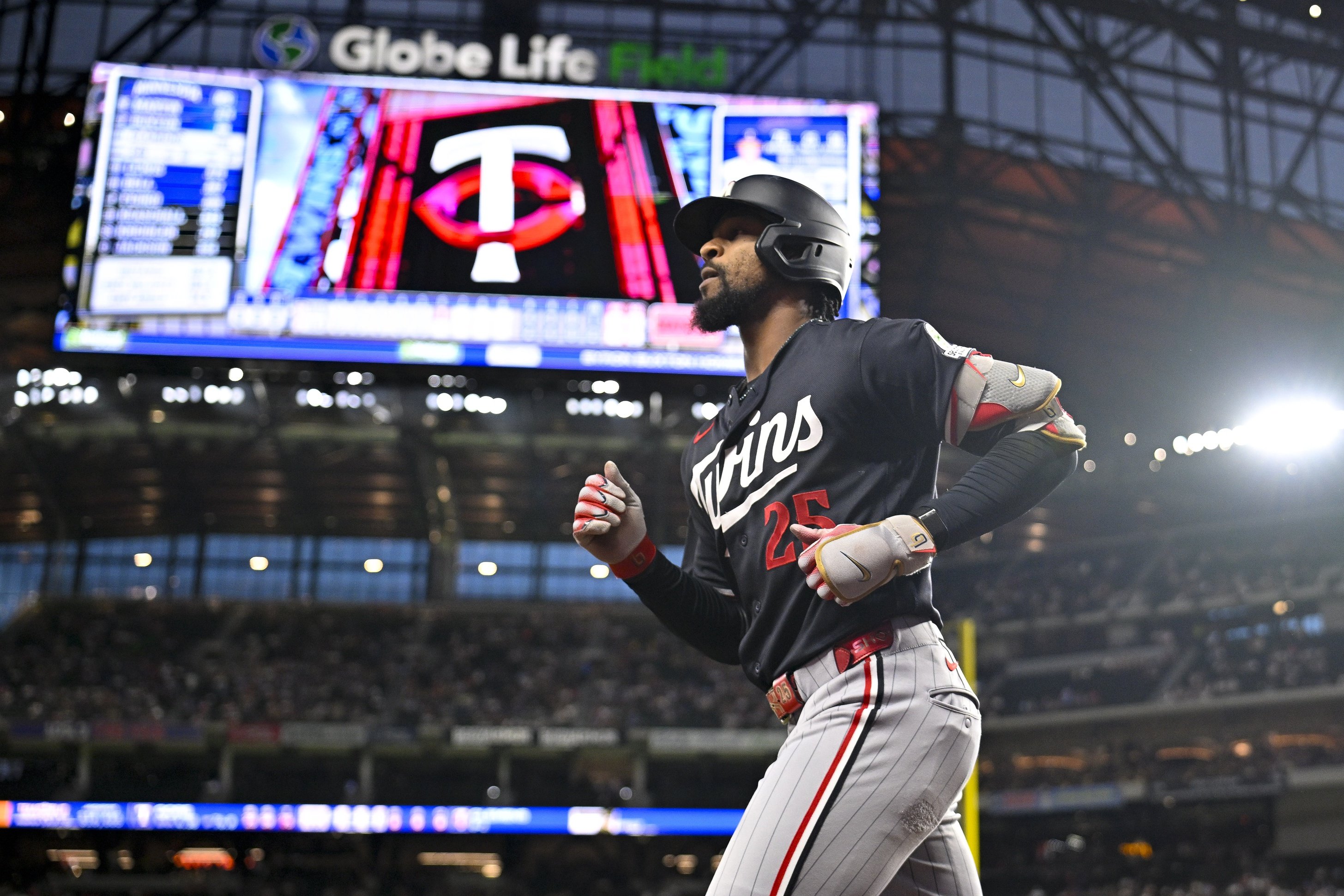 I vividly remember the day: December 1st, 2021. I was in Jamaica for a friend's wedding, already steeped in sunny bliss, when I opened my phone and saw the news: Buxton inks 7-year extension to remain a Twin. One of the more joyful moments I can remember. As Byron Buxton plays at an MVP-level and positions himself for a second straight All-Star appearance, it can be easy to forget just how close this franchise-altering contract extension came to not happening. With the lockout looming that winter — a three-month shutdown would commence the following day, on December 2nd — there was a sense that it was now-or-never for a Buxton extension. If he were to enter his final season under contract without one in place, he was all but assured to test free agency. Those weeks leading up to the lockout were frustrating, as reports painted a picture of reasonable demands from Buxton's camp and a Twins front office that inexplicably balked at low-risk propositions. Eventually the two sides got a deal done, and it was a favorable one for club: seven years, $100 million with ambitious incentives. The definition of a team-friendly pact, but also one that satisfied Buxton's target for a nine-digit guaranteed payday. I've never been more grateful for any move this team has made. It was a total win/win that's very much been proven out as such over time. For Buxton, the peace of mind was valuable. He put together an All-Star first half in 2022 but wore down in the second half, giving way to an injury-wrecked 2023 campaign that saw him reduced to a near replacement-level player, posting below-average production as a full-time DH. At that time, Buxton's future was very much in doubt but he at least had the financial security of his guaranteed long-term deal. Of course, knowing Buxton, he wasn't going to let that security stop him from giving his all to overcome the health woes that continually plagued him. A knee surgery in the following offseason finally delivered the answer. Buxton returned to center field in 2024 and played 102 games, his most in seven years. Then he took another step forward in 2025, setting a career high with 542 plate appearances while making the All-Star team, participating in the Home Run Derby and placing 11th in the MVP voting. Here at age 32, Buxton has somehow unlocked another gear. He is near the top of the league leaderboard for home runs after popping five in the past week to push his season total to 23. He's on pace for 6.3 fWAR in over 600 plate appearances, which would easily surpass last year's personal bests. Buxton came into this season with a chip on his shoulder after placing outside of the top 10 in last year's MVP balloting, to his financial detriment. He's at no risk of that happening again if he stays on this track. He's posting elite numbers as an (almost) everyday center fielder, and if you want to talk about value to his team specifically, Buxton leads Twins position players in WAR by more than a full win. And to think, he could've been doing it all elsewhere. Can you imagine? I'll admit, I might be biased in calling Buxton's extension the best move in Twins history. He is my favorite player ever. A great person, who has never ruffled feathers and is constantly heralded by those around him. A great player, with a uniquely spectacular set of skills: elite power, speed and defense that enable him to impact games in a multitude of ways. But above all, what really differentiates Buxton from almost any player I've followed is the character and loyalty. He doesn't just talk the talk about his commitment to the Twins, he has backed it up — first by signing that team-friendly contract back in 2021, and more recently by reiterating repeatedly his desire to hold to his no-trade clause and retire a Twin. Sure, you could say similar things about a guy like Joe Mauer, who also bypassed the possibility of a bigger free agency payday by signing an extension and staying home in 2009. But for Mauer, Minnesota was just that: home. Buxton joined the Twins franchise in 2012 as a skinny teenager from Baxley, GA, with no real ties to the local community. His loyalty was built through the experiences and relationships he's made here. It's special. And if I'm being honest, it makes me feel all the more bitter toward a Twins franchise that is unwilling to reward that loyalty with a competitive effort around Buxton as he reaches his full potential in the late stage of his prime. This roster's shortcomings entering the season were plain to see, regardless of Tom Pohlad's lip service, and now we're seeing what happens as an undermanned team ventures into the heart of the season: they are predictably running aground. Maybe it'll change. Maybe the latest Pohlad figurehead will prove true to his word with a more ambitious approach to supporting the major-league roster. There are reasons for optimism. The Twins have assembled an impressive wave of young pitching talent, with several highly regarded prospects nearing the big leagues. The foundation for another competitive run is there if ownership is willing to supplement it. But hope doesn't stop the clock. Buxton turns 33 next season. As remarkable as his late-career renaissance has been, age remains undefeated. In some ways, that's the great tragedy of his career. Injuries robbed baseball fans of seeing this version of Buxton over the span of a decade. Had his body cooperated, we might be talking about a player building a Hall of Fame résumé instead of one still trying to make up for lost time. What's more frustrating is that when the Twins were at their strongest and making playoff runs over the past decade — 2019, 2020 and 2023 — Buxton was either sidelined or significantly limited. Now, at long last, we're getting the sustained, MVP-caliber version of the player everyone always imagined. The problem is that the team around him isn't holding up its end of the bargain. As a fan, that's where I find myself conflicted. More than anything, I want Buxton to retire a Twin. I want him to be remembered as one of the greatest players in franchise history and to finally experience the sustained success that has so often eluded him. But increasingly, my desire to see Byron Buxton thrive in October outweighs my desire to watch him put up monster seasons for a mediocre baseball team. That's a difficult feeling to wrestle with when your favorite player has spent his entire career showing loyalty to one organization. Yet as Buxton continues validating the best contract decision the Twins have ever made, the franchise faces a simple question: are they going to give him a real chance to finish the story he stayed here to write?
 -
Image courtesy of erome Miron-Imagn Images I vividly remember the day: December 1st, 2021. I was in Jamaica for a friend's wedding, already steeped in sunny bliss, when I opened my phone and saw the news: Buxton inks 7-year extension to remain a Twin. One of the more joyful moments I can remember. As Byron Buxton plays at an MVP-level and positions himself for a second straight All-Star appearance, it can be easy to forget just how close this franchise-altering contract extension came to not happening. With the lockout looming that winter — a three-month shutdown would commence the following day, on December 2nd — there was a sense that it was now-or-never for a Buxton extension. If he were to enter his final season under contract without one in place, he was all but assured to test free agency. Those weeks leading up to the lockout were frustrating, as reports painted a picture of reasonable demands from Buxton's camp and a Twins front office that inexplicably balked at low-risk propositions. Eventually the two sides got a deal done, and it was a favorable one for club: seven years, $100 million with ambitious incentives. The definition of a team-friendly pact, but also one that satisfied Buxton's target for a nine-digit guaranteed payday. I've never been more grateful for any move this team has made. It was a total win/win that's very much been proven out as such over time. For Buxton, the peace of mind was valuable. He put together an All-Star first half in 2022 but wore down in the second half, giving way to an injury-wrecked 2023 campaign that saw him reduced to a near replacement-level player, posting below-average production as a full-time DH. At that time, Buxton's future was very much in doubt but he at least had the financial security of his guaranteed long-term deal. Of course, knowing Buxton, he wasn't going to let that security stop him from giving his all to overcome the health woes that continually plagued him. A knee surgery in the following offseason finally delivered the answer. Buxton returned to center field in 2024 and played 102 games, his most in seven years. Then he took another step forward in 2025, setting a career high with 542 plate appearances while making the All-Star team, participating in the Home Run Derby and placing 11th in the MVP voting. Here at age 32, Buxton has somehow unlocked another gear. He is near the top of the league leaderboard for home runs after popping five in the past week to push his season total to 23. He's on pace for 6.3 fWAR in over 600 plate appearances, which would easily surpass last year's personal bests. Buxton came into this season with a chip on his shoulder after placing outside of the top 10 in last year's MVP balloting, to his financial detriment. He's at no risk of that happening again if he stays on this track. He's posting elite numbers as an (almost) everyday center fielder, and if you want to talk about value to his team specifically, Buxton leads Twins position players in WAR by more than a full win. And to think, he could've been doing it all elsewhere. Can you imagine? I'll admit, I might be biased in calling Buxton's extension the best move in Twins history. He is my favorite player ever. A great person, who has never ruffled feathers and is constantly heralded by those around him. A great player, with a uniquely spectacular set of skills: elite power, speed and defense that enable him to impact games in a multitude of ways. But above all, what really differentiates Buxton from almost any player I've followed is the character and loyalty. He doesn't just talk the talk about his commitment to the Twins, he has backed it up — first by signing that team-friendly contract back in 2021, and more recently by reiterating repeatedly his desire to hold to his no-trade clause and retire a Twin. Sure, you could say similar things about a guy like Joe Mauer, who also bypassed the possibility of a bigger free agency payday by signing an extension and staying home in 2009. But for Mauer, Minnesota was just that: home. Buxton joined the Twins franchise in 2012 as a skinny teenager from Baxley, GA, with no real ties to the local community. His loyalty was built through the experiences and relationships he's made here. It's special. And if I'm being honest, it makes me feel all the more bitter toward a Twins franchise that is unwilling to reward that loyalty with a competitive effort around Buxton as he reaches his full potential in the late stage of his prime. This roster's shortcomings entering the season were plain to see, regardless of Tom Pohlad's lip service, and now we're seeing what happens as an undermanned team ventures into the heart of the season: they are predictably running aground. Maybe it'll change. Maybe the latest Pohlad figurehead will prove true to his word with a more ambitious approach to supporting the major-league roster. There are reasons for optimism. The Twins have assembled an impressive wave of young pitching talent, with several highly regarded prospects nearing the big leagues. The foundation for another competitive run is there if ownership is willing to supplement it. But hope doesn't stop the clock. Buxton turns 33 next season. As remarkable as his late-career renaissance has been, age remains undefeated. In some ways, that's the great tragedy of his career. Injuries robbed baseball fans of seeing this version of Buxton over the span of a decade. Had his body cooperated, we might be talking about a player building a Hall of Fame résumé instead of one still trying to make up for lost time. What's more frustrating is that when the Twins were at their strongest and making playoff runs over the past decade — 2019, 2020 and 2023 — Buxton was either sidelined or significantly limited. Now, at long last, we're getting the sustained, MVP-caliber version of the player everyone always imagined. The problem is that the team around him isn't holding up its end of the bargain. As a fan, that's where I find myself conflicted. More than anything, I want Buxton to retire a Twin. I want him to be remembered as one of the greatest players in franchise history and to finally experience the sustained success that has so often eluded him. But increasingly, my desire to see Byron Buxton thrive in October outweighs my desire to watch him put up monster seasons for a mediocre baseball team. That's a difficult feeling to wrestle with when your favorite player has spent his entire career showing loyalty to one organization. Yet as Buxton continues validating the best contract decision the Twins have ever made, the franchise faces a simple question: are they going to give him a real chance to finish the story he stayed here to write? View full article
-
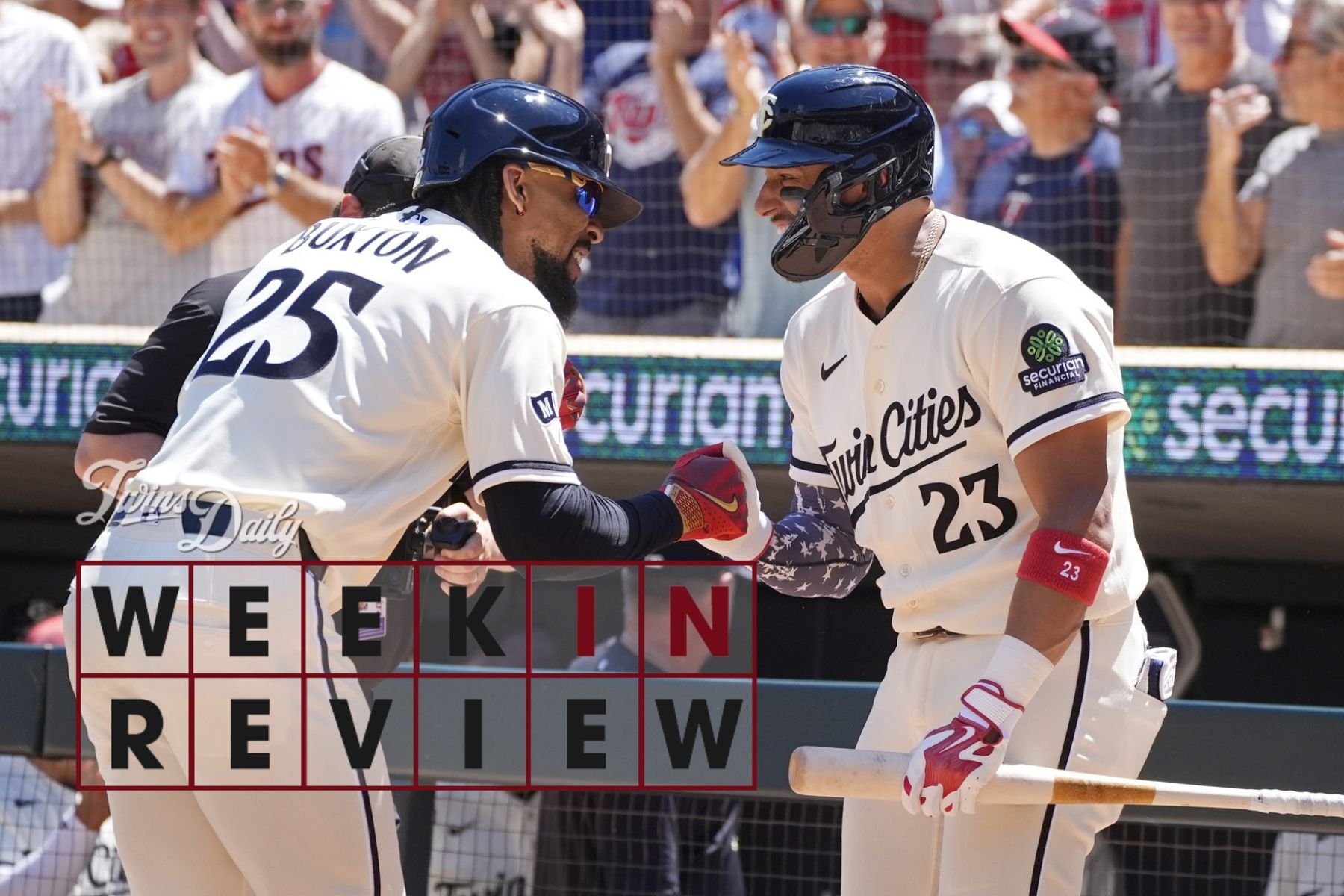 The Week in a Nutshell: We all know that this Twins season has been an erratic seesaw of an experience for fans, and the last week truly encapsulated that dynamic. They closed out a rough series in Detroit with perhaps their worst loss of the year, an 11-0 drubbing that ended with Alex Jackson lobbing BP on the mound. The next day brought arguably their best win of the season: a resilient comeback over the Cardinals that saw the Twins surge ahead on clutch homers after several late lead changes. Then they lost the following day, and bounced back to wrap the week up with another impressive comeback win. As has been the case more broadly, the highs weren't enough to outweigh the lows, and the sum result was a stagnation at seven games under .500 as the season approaches its halfway point. This team needs an infusion and, as it happens, that might soon be in the cards. Weekly Snapshot: Mon, 6/8 through Sun, 6/14 *** Record Last Week: 3-3 (Overall: 33-40) Run Differential Last Week: -16 (Overall: -42) Standing: 3rd Place in AL Central (6.5 GB) Latest Game Results Game 68 | DET 10, MIN 4: Twins Hit 4 Solo Homers But Pitching Can't Hold Up Bradley: 4.1 IP, 5 ER, 3 BB, 3 K, 3 HR Game 69 | MIN 6, DET 4: Big Bombs from Buxton and Lewis Help Even Series Buxton: 2-4, HR, 3 RBI Game 70 | DET 11, MIN 0: More Power Hitting Carries Tigers in Series-Clinching Rout Matthews: 6 IP, 7 ER, 1 BB, 4 K, 3 HR Game 71 | MIN 9, STL 8: Twins Prevail Over Cards in Thrilling Back-and-Forth Slugfest Buxton: 3-3, HR, 2 2B, BB Game 72 | STL 9, MIN 6: Lineup Shows Fight But Falls Short as Bullpen Suffers Implosion Lawrence: 0.2 IP, 4 ER, 2 HR Game 73 | MIN 5, STL 4: Another Late-Game Rally Secures a Series Victory Over St. Louis Kreidler: 2-2, 2B, RBI NEWS & NOTES For seemingly the hundredth time this season, the Twins traded for a waiver-bound pitcher to usher through their revolving-door bullpen. This time it was Taylor Rashi, acquired from the Arizona Diamondbacks for cash considerations. Rashi is a 31-year-old right-hander with a 5.40 ERA in limited major-league time, but strong numbers in the high minors. Sound familiar? Rashi has yet to make his Twins debut. In more exciting news, Mick Abel fired up a rehab stint at Triple-A and Wednesday and looked fantastic, striking out five with no walks over three efficient, scoreless innings. He also said afterward he felt great, which matters even more than results as the right-hander works his way back from an arm injury that has sidelined him for two months. He's due to make another start for the Saints on Tuesday and, if things go well, he should be back in the Twins rotation next weekend. After Sunday's game, Minnesota promoted Triple-A outfielder Kyler Fedko to the big leagues at long last, designating Orlando Arcia for assignment to make room. The 26-year-old Fedko has been steadily putting up big numbers for St. Paul over the past two years, slashing .278/.364/.532 in 100 games, but hasn't gotten a shot until now. Apparently, the persistently strong production and the very real need for some right-handed pop on the roster compelled the Twins to open the door. Let's see what he can do with it, and how much of an opportunity he gets. HIGHLIGHTS Byron Buxton returned to the lineup in Detroit on Tuesday after missing the final stretch of the previous home stand with a shoulder injury. He homered in his first at-bat, naturally. The following night, Buxton launched a key three-run blast, his 20th of the season, to lift the Twins in their two-run victory. He delivered another monster performance on Friday night, finishing 3-for-3 with a homer, two doubles and a walk. Then he went deep again as part of a 2-for-4 effort on Saturday. On Sunday he added three more hits, including a crucial RBI single to spur the comeback win. Buxton's overall results for the week: 11-for-26 (.423), 4 HR, 3 doubles, 7 RBIs and a steal. WHEW. Even with some missed time, the center fielder is on a nearly 50-homer pace, and I say "center fielder" with delight because he's back out there regularly, suggesting his hip feels better. Maybe the series of days off to mend his shoulder were a hidden blessing in that regard. Buxton is legitimately playing at an MVP-caliber level. Royce Lewis has emerged from his stint in the minor leagues with new life, notching 10 hits through his first 29 at-bats back with the Twins. Last week he drilled three home runs, including a 444-feet nuke that ranks as the second-longest of his career. We're seeing a glimpse of vintage Royce at the plate. As importantly, he struck out only four times with three walks, hinting at the type of improved discipline that lends legitimacy to his hot streak. Lewis is now playing first base regularly and starting to look more comfortable; it could be his new long-term home and would actually fill a pretty stark need for the team. Joining the power parade were Kody Clemens and Brooks Lee, who chipped in two homers apiece. Clemens has been scorching in June, with an OPS over 1.000, while providing real value on the defensive side — he made an exceptional diving catch in center field late in Saturday's game. Lee is still searching for an offensive identity outside of popping the occasional long ball, but what really encouraged me about his performance in the past week is that he drew four walks and didn't strike out. The Twins' pitching staff has generally been trending in the wrong direction, but a few arms are notably bucking the trend. Anthony Banda has turned his season around in a massive way, allowing zero earned runs on seven hits in his past 15 appearances with improved stuff and execution. He tossed 2 ⅔ scoreless frames last week. Newcomer Mike Paredes is proving helpful in a long-relief role; he started a bullpen game on Wednesday and contributed three innings of one-run ball to set the tone in a victory. Andrew Morris struck out six with no walks in his three innings of work, picking up a win, a hold and a save. LOWLIGHTS This was probably the worst week of the season for the pitching staff, which surrendered 46 runs on 61 hits, 23 walks and 17 home runs in six games. The bullpen had its share of troubles — Eric Orze and Taylor Rogers combined to yield eight earned runs in 3 ⅔ innings — but the fast-fading Twins rotation is at the core of this staff's fall from grace. Taj Bradley and Zebby Matthews both continued their momentum-shattering cold spells with a pair of clunkers in Detroit. Matthews was tagged for three homers on Thursday, allowing seven earned runs for a second time in his past three starts. Bradley gave up three homers on Tuesday and then two more against St. Louis on Sunday. He has allowed 17 earned runs in 19 ⅔ innings over his past four starts, looking mostly lost since returning from a pectoral injury. On Saturday, Connor Prielipp stumbled out of the gates against the Cardinals, surrendering four runs over the first two innings, although to his credit he settled in to get through six without further damage. Alas, it was his fifth consecutive non-quality start, and during this stretch he's seen his ERA rise from 2.88 to 5.26. Bradley, Matthews and Prielipp are all positioned as building blocks of a revamped rotation that's meant to lead the Twins back into relevance. Just a few weeks ago they all had an ERA under three, offering one of the biggest reasons for optimism looking forward. But now they're all simultaneously going through it, and that is beyond deflating. On the offensive side, it's hard to look forward when so many lineup spots are being occupied by mediocre-or-worse veterans who have no real purpose other than holding a place. Tristan Gray, still inexplicably drawing regular starts at shortstop while Kaelen Culpepper remains in the minors, went 2-for-13 with five strikeouts. Arcia was 1-for-8 before being DFA'ed at week's end. Victor Caratini homered on Sunday and Ryan Kreidler came through with the game-winning RBI double off the bench, but those two were previously a combined 3-for-17 and in general, neither inspires any kind of confidence offensively. Granted, the Twins are semi-limited in their healthy options to replace these guys — a state of affairs that may soon change, as we'll discuss — but it's just such a drag to watch them flail away day after day. The same goes for Minnesota's misfit-laden relief corps. Why is Justin Lawrence throwing in the seventh inning of a tie game, as he did on Saturday while taking the loss? We know why: because the Twins are utterly talent-deprived in the bullpen, largely by their own doing. It's quite upsetting to watch marginal minor-league signings and waiver-wire fodder fumble games away while wasting the high-end performances of Buxton and Joe Ryan in their primes. This rotation and lineup had the core components to put up a fight but the surrounding cast is grossly insufficient, and that was evident coming in. There's rather little to be done about that now, but even if the Twins aren't going to be factors in the postseason race, I at least want to watch players who have some semblance of intrigue or future potential. Fedko, while not likely to be a difference-maker, is a step in the right direction. Culpepper's arrival can't be far off. And more then there's this: TRENDING STORYLINE Reinforcements are on the way. Several key acquisitions from last year's deadline who've been sidelined are on the official rehab trail. It starts with Abel, who has a strong rehab start in the books and looks to be in line for one more before rejoining the Twins rotation. He's set to start in St. Paul on Tuesday with a target of 65 pitches. If Abel can return and pick up where he left off (16 K over 13 scoreless innings in his last two starts before going down), that would provide a critical boost for a unit that is currently floundering. Kendry Rojas threw a live bullpen in Ft. Myers on Saturday as he tracks toward a rehab assignment. He'd provide a much-needed bullpen salve. Alan Roden is on the verge of completing his own rehab at Triple-A, which is noteworthy as Trevor Larnach and Austin Martin slump in the outfield corners. All three of these pickups from last year's deadline bullpen sell-off have been sidelined and Bradley's been struggling while Louis Varland, Jhoan Duran and Griffin Jax all excel for their new teams to varying degrees. It's not the best look. The Twins (and their front office) could badly use a shift in the narrative, and if these rehabbing players can come back and bolster the club in needy areas, it'll definitely move the needle. One other big development on the injury recovery front: #1 prospect Walker Jenkins returned to action over the weekend in Ft. Myers to start a rehab stint. In his first game back on Saturday, he went 4-for-4 with a home run. Jenkins been out since early May with a shoulder injury but is working toward a return to the Saints, and could still be in line for a second-half MLB debut. That's the kind of spark of energy this fanbase really needs. The current product has gotten stale but it really feels like there's some motion toward a refresh. LOOKING AHEAD The Twins travel to Texas to face a middling Rangers team that is hovering around .500 in an underwhelming AL West. That three-game series has a unique quirk: a day off sandwiched in the middle, due to a World Cup game scheduled next door at AT&T Stadium on Wednesday. Over the weekend the Twins will head to Arizona to take on the Diamondbacks, who've been mediocre overall but have one of the best home records in the NL. There are two TBD (bullpen) games in the queue for Minnesota, on Monday and Sunday; I'd expect Paredes to be the bulk guy again on Monday, but if things go smoothly for Abel on Tuesday, he'll be in line to step back for the second of those games. MONDAY, JUNE 15: TWINS @ RANGERS — TBD v. LHP MacKenzie Gore TUESDAY, JUNE 16: TWINS @ RANGERS — RHP Zebby Matthews v. RHP Kumar Rocker THURSDAY, JUNE 18: TWINS @ RANGERS — RHP Joe Ryan v. RHP Jack Leiter FRIDAY, JUNE 19: TWINS @ DIAMONDBACKS — LHP Connor Prielipp v. RHP Michael Soroka SATURDAY, JUNE 20: TWINS @ DIAMONDBACKS — RHP Taj Bradley v. RHP Zac Gallen SUNDAY, JUNE 21: TWINS @ DIAMONDBACKS — TBD v. RHP Ryne Nelson
- 14 comments
-
- 4
-
-
- byron buxton
- royce lewis
- (and 2 more)
-
Image courtesy of Bruce Kluckhohn-Imagn Images The Week in a Nutshell: We all know that this Twins season has been an erratic seesaw of an experience for fans, and the last week truly encapsulated that dynamic. They closed out a rough series in Detroit with perhaps their worst loss of the year, an 11-0 drubbing that ended with Alex Jackson lobbing BP on the mound. The next day brought arguably their best win of the season: a resilient comeback over the Cardinals that saw the Twins surge ahead on clutch homers after several late lead changes. Then they lost the following day, and bounced back to wrap the week up with another impressive comeback win. As has been the case more broadly, the highs weren't enough to outweigh the lows, and the sum result was a stagnation at seven games under .500 as the season approaches its halfway point. This team needs an infusion and, as it happens, that might soon be in the cards. Weekly Snapshot: Mon, 6/8 through Sun, 6/14 *** Record Last Week: 3-3 (Overall: 33-40) Run Differential Last Week: -16 (Overall: -42) Standing: 3rd Place in AL Central (6.5 GB) Latest Game Results Game 68 | DET 10, MIN 4: Twins Hit 4 Solo Homers But Pitching Can't Hold Up Bradley: 4.1 IP, 5 ER, 3 BB, 3 K, 3 HR Game 69 | MIN 6, DET 4: Big Bombs from Buxton and Lewis Help Even Series Buxton: 2-4, HR, 3 RBI Game 70 | DET 11, MIN 0: More Power Hitting Carries Tigers in Series-Clinching Rout Matthews: 6 IP, 7 ER, 1 BB, 4 K, 3 HR Game 71 | MIN 9, STL 8: Twins Prevail Over Cards in Thrilling Back-and-Forth Slugfest Buxton: 3-3, HR, 2 2B, BB Game 72 | STL 9, MIN 6: Lineup Shows Fight But Falls Short as Bullpen Suffers Implosion Lawrence: 0.2 IP, 4 ER, 2 HR Game 73 | MIN 5, STL 4: Another Late-Game Rally Secures a Series Victory Over St. Louis Kreidler: 2-2, 2B, RBI NEWS & NOTES For seemingly the hundredth time this season, the Twins traded for a waiver-bound pitcher to usher through their revolving-door bullpen. This time it was Taylor Rashi, acquired from the Arizona Diamondbacks for cash considerations. Rashi is a 31-year-old right-hander with a 5.40 ERA in limited major-league time, but strong numbers in the high minors. Sound familiar? Rashi has yet to make his Twins debut. In more exciting news, Mick Abel fired up a rehab stint at Triple-A and Wednesday and looked fantastic, striking out five with no walks over three efficient, scoreless innings. He also said afterward he felt great, which matters even more than results as the right-hander works his way back from an arm injury that has sidelined him for two months. He's due to make another start for the Saints on Tuesday and, if things go well, he should be back in the Twins rotation next weekend. After Sunday's game, Minnesota promoted Triple-A outfielder Kyler Fedko to the big leagues at long last, designating Orlando Arcia for assignment to make room. The 26-year-old Fedko has been steadily putting up big numbers for St. Paul over the past two years, slashing .278/.364/.532 in 100 games, but hasn't gotten a shot until now. Apparently, the persistently strong production and the very real need for some right-handed pop on the roster compelled the Twins to open the door. Let's see what he can do with it, and how much of an opportunity he gets. HIGHLIGHTS Byron Buxton returned to the lineup in Detroit on Tuesday after missing the final stretch of the previous home stand with a shoulder injury. He homered in his first at-bat, naturally. The following night, Buxton launched a key three-run blast, his 20th of the season, to lift the Twins in their two-run victory. He delivered another monster performance on Friday night, finishing 3-for-3 with a homer, two doubles and a walk. Then he went deep again as part of a 2-for-4 effort on Saturday. On Sunday he added three more hits, including a crucial RBI single to spur the comeback win. Buxton's overall results for the week: 11-for-26 (.423), 4 HR, 3 doubles, 7 RBIs and a steal. WHEW. Even with some missed time, the center fielder is on a nearly 50-homer pace, and I say "center fielder" with delight because he's back out there regularly, suggesting his hip feels better. Maybe the series of days off to mend his shoulder were a hidden blessing in that regard. Buxton is legitimately playing at an MVP-caliber level. Royce Lewis has emerged from his stint in the minor leagues with new life, notching 10 hits through his first 29 at-bats back with the Twins. Last week he drilled three home runs, including a 444-feet nuke that ranks as the second-longest of his career. We're seeing a glimpse of vintage Royce at the plate. As importantly, he struck out only four times with three walks, hinting at the type of improved discipline that lends legitimacy to his hot streak. Lewis is now playing first base regularly and starting to look more comfortable; it could be his new long-term home and would actually fill a pretty stark need for the team. Joining the power parade were Kody Clemens and Brooks Lee, who chipped in two homers apiece. Clemens has been scorching in June, with an OPS over 1.000, while providing real value on the defensive side — he made an exceptional diving catch in center field late in Saturday's game. Lee is still searching for an offensive identity outside of popping the occasional long ball, but what really encouraged me about his performance in the past week is that he drew four walks and didn't strike out. The Twins' pitching staff has generally been trending in the wrong direction, but a few arms are notably bucking the trend. Anthony Banda has turned his season around in a massive way, allowing zero earned runs on seven hits in his past 15 appearances with improved stuff and execution. He tossed 2 ⅔ scoreless frames last week. Newcomer Mike Paredes is proving helpful in a long-relief role; he started a bullpen game on Wednesday and contributed three innings of one-run ball to set the tone in a victory. Andrew Morris struck out six with no walks in his three innings of work, picking up a win, a hold and a save. LOWLIGHTS This was probably the worst week of the season for the pitching staff, which surrendered 46 runs on 61 hits, 23 walks and 17 home runs in six games. The bullpen had its share of troubles — Eric Orze and Taylor Rogers combined to yield eight earned runs in 3 ⅔ innings — but the fast-fading Twins rotation is at the core of this staff's fall from grace. Taj Bradley and Zebby Matthews both continued their momentum-shattering cold spells with a pair of clunkers in Detroit. Matthews was tagged for three homers on Thursday, allowing seven earned runs for a second time in his past three starts. Bradley gave up three homers on Tuesday and then two more against St. Louis on Sunday. He has allowed 17 earned runs in 19 ⅔ innings over his past four starts, looking mostly lost since returning from a pectoral injury. On Saturday, Connor Prielipp stumbled out of the gates against the Cardinals, surrendering four runs over the first two innings, although to his credit he settled in to get through six without further damage. Alas, it was his fifth consecutive non-quality start, and during this stretch he's seen his ERA rise from 2.88 to 5.26. Bradley, Matthews and Prielipp are all positioned as building blocks of a revamped rotation that's meant to lead the Twins back into relevance. Just a few weeks ago they all had an ERA under three, offering one of the biggest reasons for optimism looking forward. But now they're all simultaneously going through it, and that is beyond deflating. On the offensive side, it's hard to look forward when so many lineup spots are being occupied by mediocre-or-worse veterans who have no real purpose other than holding a place. Tristan Gray, still inexplicably drawing regular starts at shortstop while Kaelen Culpepper remains in the minors, went 2-for-13 with five strikeouts. Arcia was 1-for-8 before being DFA'ed at week's end. Victor Caratini homered on Sunday and Ryan Kreidler came through with the game-winning RBI double off the bench, but those two were previously a combined 3-for-17 and in general, neither inspires any kind of confidence offensively. Granted, the Twins are semi-limited in their healthy options to replace these guys — a state of affairs that may soon change, as we'll discuss — but it's just such a drag to watch them flail away day after day. The same goes for Minnesota's misfit-laden relief corps. Why is Justin Lawrence throwing in the seventh inning of a tie game, as he did on Saturday while taking the loss? We know why: because the Twins are utterly talent-deprived in the bullpen, largely by their own doing. It's quite upsetting to watch marginal minor-league signings and waiver-wire fodder fumble games away while wasting the high-end performances of Buxton and Joe Ryan in their primes. This rotation and lineup had the core components to put up a fight but the surrounding cast is grossly insufficient, and that was evident coming in. There's rather little to be done about that now, but even if the Twins aren't going to be factors in the postseason race, I at least want to watch players who have some semblance of intrigue or future potential. Fedko, while not likely to be a difference-maker, is a step in the right direction. Culpepper's arrival can't be far off. And more then there's this: TRENDING STORYLINE Reinforcements are on the way. Several key acquisitions from last year's deadline who've been sidelined are on the official rehab trail. It starts with Abel, who has a strong rehab start in the books and looks to be in line for one more before rejoining the Twins rotation. He's set to start in St. Paul on Tuesday with a target of 65 pitches. If Abel can return and pick up where he left off (16 K over 13 scoreless innings in his last two starts before going down), that would provide a critical boost for a unit that is currently floundering. Kendry Rojas threw a live bullpen in Ft. Myers on Saturday as he tracks toward a rehab assignment. He'd provide a much-needed bullpen salve. Alan Roden is on the verge of completing his own rehab at Triple-A, which is noteworthy as Trevor Larnach and Austin Martin slump in the outfield corners. All three of these pickups from last year's deadline bullpen sell-off have been sidelined and Bradley's been struggling while Louis Varland, Jhoan Duran and Griffin Jax all excel for their new teams to varying degrees. It's not the best look. The Twins (and their front office) could badly use a shift in the narrative, and if these rehabbing players can come back and bolster the club in needy areas, it'll definitely move the needle. One other big development on the injury recovery front: #1 prospect Walker Jenkins returned to action over the weekend in Ft. Myers to start a rehab stint. In his first game back on Saturday, he went 4-for-4 with a home run. Jenkins been out since early May with a shoulder injury but is working toward a return to the Saints, and could still be in line for a second-half MLB debut. That's the kind of spark of energy this fanbase really needs. The current product has gotten stale but it really feels like there's some motion toward a refresh. LOOKING AHEAD The Twins travel to Texas to face a middling Rangers team that is hovering around .500 in an underwhelming AL West. That three-game series has a unique quirk: a day off sandwiched in the middle, due to a World Cup game scheduled next door at AT&T Stadium on Wednesday. Over the weekend the Twins will head to Arizona to take on the Diamondbacks, who've been mediocre overall but have one of the best home records in the NL. There are two TBD (bullpen) games in the queue for Minnesota, on Monday and Sunday; I'd expect Paredes to be the bulk guy again on Monday, but if things go smoothly for Abel on Tuesday, he'll be in line to step back for the second of those games. MONDAY, JUNE 15: TWINS @ RANGERS — TBD v. LHP MacKenzie Gore TUESDAY, JUNE 16: TWINS @ RANGERS — RHP Zebby Matthews v. RHP Kumar Rocker THURSDAY, JUNE 18: TWINS @ RANGERS — RHP Joe Ryan v. RHP Jack Leiter FRIDAY, JUNE 19: TWINS @ DIAMONDBACKS — LHP Connor Prielipp v. RHP Michael Soroka SATURDAY, JUNE 20: TWINS @ DIAMONDBACKS — RHP Taj Bradley v. RHP Zac Gallen SUNDAY, JUNE 21: TWINS @ DIAMONDBACKS — TBD v. RHP Ryne Nelson View full article
- 14 replies
-
- 2
-
-
- byron buxton
- royce lewis
- (and 2 more)
-
For nothing, to save money. That's not rebuilding it's just being cheap.
- 121 replies
-
- 9
-
-
-
- taj bradley
- austin martin
- (and 2 more)
-
Reconstructing the roster to win in 2026 was essentially an impossible request after what happened at the deadline last year. Especially when the "bold, aggressive approach" doesn't involve spending any money.
- 121 replies
-
- 8
-
-
-
- taj bradley
- austin martin
- (and 2 more)
-
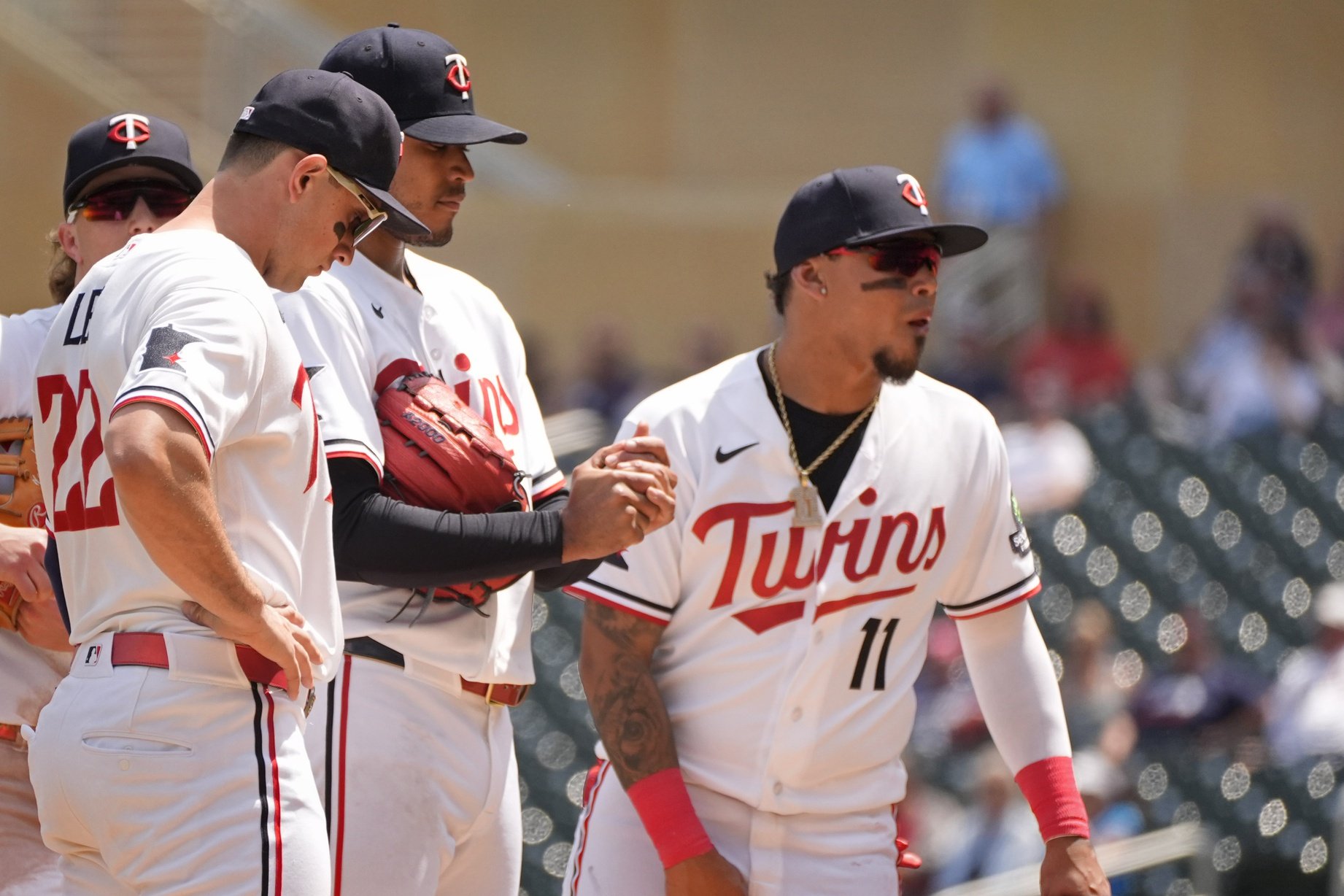 When Derek Shelton came aboard as manager, he brought with him a new mantra: "hunt the good." The idea was that, in a game often defined by failure, you've got to focus on the successes and wins where you can. Foreseeing plenty of failure as I looked ahead to this Twins season, it was a mindset I tried to adopt. I have to remind myself that this site was founded (in 2012) amidst a long stretch of constant losing for the franchise, but during those times we still found ways to enjoy following along. You search for the small positives and appreciate them — especially those with potentially significant future ramifications. As we checked in at the one-third point of the season a couple weeks ago, I found several heartening trends worth focusing on. Battling through myriad injuries and setbacks, the Twins were showing resilience. They had just pulled out of a tailspin with seven wins in their past nine games, drawing within a game of .500 and positioning themselves in the wild-card race. Since then, they've lost 11 of 15, falling back to eight games below .500 and to a 90-loss pace. Unfortunately, most of the bright spots that I called out at the time have taken a sharp turn downward turn, and in some cases the writing was one the wall even then. Let's check in on the primary contributors and factors that were keeping the Twins relevant. Fantastic starting rotation: Lately, not so much. Through May 27th, Twins starters ranked ninth in the majors in fWAR; since then they rank 27th. Bailey Ober's charmed run came to and end with a pair of clunkers preceding an IL trip for elbow inflammation. Taj Bradley's performance has tailed off dramatically, as has Connor Prielipp's. Simeon Woods Richardson got DFA'ed. Austin Martin and Trevor Larnach breakouts: Martin had a .900 OPS at the start of May. Since then he's slashing .216/.285/.288, with a .440 OPS in his past 24 games. Larnach is hitting .189 with a .610 OPS since May 27th. Ryan Jeffers on track for a career year: He had just gotten injured, and will still be out for several more weeks. When he turns he'll be just months from free agency, and a possible trade candidate. Shockingly effective bullpen: They were on a great run in late May, inching upward on the leaderboard after an expectedly rough start to the year. With Luis García and Justin Topa recently jettisoned, there was some hope that some of level of success would sustain. Nope. Since May 27th, Minnesota's bullpen ranks 26th in baseball with a 6.16 ERA and 28th in WPA. Derek Shelton resonance: I said at the time that I was lukewarm on this vibe because the Twins had plenty of hot streaks over the past couple of years under Rocco Baldelli, and they were ultimately outweighed by prolonged losing spells. So far that's been the case here too, and in fact with the way the team is trending — outscored by 45 runs during this latest 15-game stretch — you could argue that things are starting to go off the rails under his watch. So what positives remain? Frightfully few. Byron Buxton continues to absolutely crush when he's in the lineup and has been easily the biggest highlight on the team. Joe Ryan keeps turning in excellent outings to fuel his trade value. Kody Clemens has been one of the few red-hot hitters in the lineup over the past couple weeks, though it says a lot that he ranks third among Twins position players in fWAR as a journeyman role player. Slim pickings outside of a few select players, none of whom are really positioned as future building blocks. Then again, if this team has reminded us of anything, it's how many ups and downs can take place over the course of an MLB season. Any of the downward-trending guys mentioned above — Martin, Larnach, Bradley, Prielipp — could do an about-face and resume their ascent at any time. Royce Lewis is back and has taken some good swings. Moreover, help is on the way. Alan Roden is rehabbing from injury in Triple-A and could join the big-league club sometime soon. Ditto Mick Abel, whose return would do much to jolt a staggered rotation. Fellow 2026 deadline acquisition Hendry Mendez has been on a tear for the Saints and is a candidate for a second-half promotion, if the Twins can find room for him. One guy they'll have no trouble finding room for is Kaelen Culpepper, the top prospect who is excelling at Triple-A and in line for an imminent call-up. He's become the main source of optimism and excitement for demoralized Twins fans, although as I wrote earlier this week, that places a pretty heavy burden on his shoulders. If he comes up and struggles it won't be any kind of indictment on his future, but it will be another drop in the bucket of 2026 malaise. We'll see if the Twins and their key players have another burst of resilience in them. If not, we could be in for a dreary second half. Last year's team went 34-61 after this date. If this year's club were to play at the same pace the rest of the way they'd finish 64-98. Only three Twins teams have lost more games (2016, 2011, 1982). Gonna be hard to hunt much good out of that.
- 121 comments
-
- 11
-
-

-
- taj bradley
- austin martin
- (and 2 more)

