



Nick Nelson
-
Posts
8,322 -
Joined
-
Last visited
-
Days Won
56
Content Type
Profiles
News
Minnesota Twins Videos
2026 Minnesota Twins Top Prospects Ranking
2022 Minnesota Twins Draft Picks
Minnesota Twins Free Agent & Trade Rumors, Notes, & Tidbits
Guides & Resources
2023 Minnesota Twins Draft Picks
The Minnesota Twins Players Project
2024 Minnesota Twins Draft Picks
2025 Minnesota Twins Draft Pick Tracker
2026 Minnesota Twins Draft Tracker: Picks & Bonuses
Forums
Blogs
Events
Store
Downloads
Gallery
Everything posted by Nick Nelson
-
There were a number of players I was excited to see in action down here in Ft. Myers, but among the highest on that list was Alex Meyer. I've only had the chance to see brief clips of him throwing before, so I was interested to see how he'd look in person. I finally had that opportunity in Port Charlotte on Thursday. In a two-inning relief stint against the Rays, Meyer showed why he's such an exciting and potentially game-changing prospect, but also why the Twins may have some reservations about handing him a rotation spot.After a so-so start from Ricky Nolasco and a solid relief appearance from Ryan Pressly, Meyer came on to start the sixth inning. He's an unmistakable figure on the mound, standing a gangly 6'9" with legs that look longer than my entire body. He likely wasn't going full bore in this mid-March outing, but Meyer still worked at 93-94 MPH with the fastball, occasionally touching 95. He also mixed in some impressive knuckle-curves and threw a few decent changeups. The first thing that struck me about him was his strange arm slot, which I've noticed on tape but seemed much more distinct from the third row on the third-base line. Meyer slings the ball with a three-quarters delivery that seems to put an awful lot of strain on his elbow and shoulder, so it's unsurprising he's dealt with arm problems in each of the past two seasons. He clearly has trouble repeating his mechanics consistently, and that has been a frequently cited issue for the righty. He was wild, wild, wild in this game. In his first inning of work, he issued three walks, and some of his pitches were just nowhere near the zone. It was his fastball that he had most trouble commanding; he actually threw the offspeed in the zone for the most part. But that potent heater has a tendency to sail on him. He came back out to pitch the seventh, and although he issued a fourth walk, he was much more efficient, requiring only 10 pitches to get through the frame. It helped that Josmil Pinto gunned down Taylor Motter (who had drawn the walk) stealing second to end the inning. Wildness aside, Meyer was fun to watch. When he throws the ball in the zone (and sometimes when he doesn't) he has hitters flailing. He gave up only one hit -- a weakly hit bloop -- and no one made particularly hard contact with anything he delivered. He recorded three strikeouts in his two innings of work, two of them on filthy breaking balls. If he can harness those mechanics and reign in that fastball, he'll be a force. If, if, if… I can say with some confidence that Meyer is not going to make the big-league club out of spring training, and I know that might be frustrating for some, since he's a 25-year-old top prospect. But people need to stop focusing so much on his age. He's a project, and a rather unique one at that. How many MLB pitchers stand 6'9" or taller? Not many now, or even in the history of the game. He's been able to achieve excellent results in the minors but his erratic performances simply won't fly in the majors, where hitters are more selective and where there's a stronger expectation for starting pitchers to last deep into games. Fortunately, with Tommy Milone and Mike Pelfrey both pitching well right now, not to mention the presence of Trevor May, the Twins have the luxury of taking it slow with Meyer. He is working hard on fixing his problems and the Twins do believe he's coming along. The good news is that once he hopefully turns the corner, the team will control him for the entirety of his physical prime, into his 30s. Whether as a starter or reliever, I fully believe he'll be a valuable weapon for this club. We might just have to wait a little while longer. Click here to view the article
-
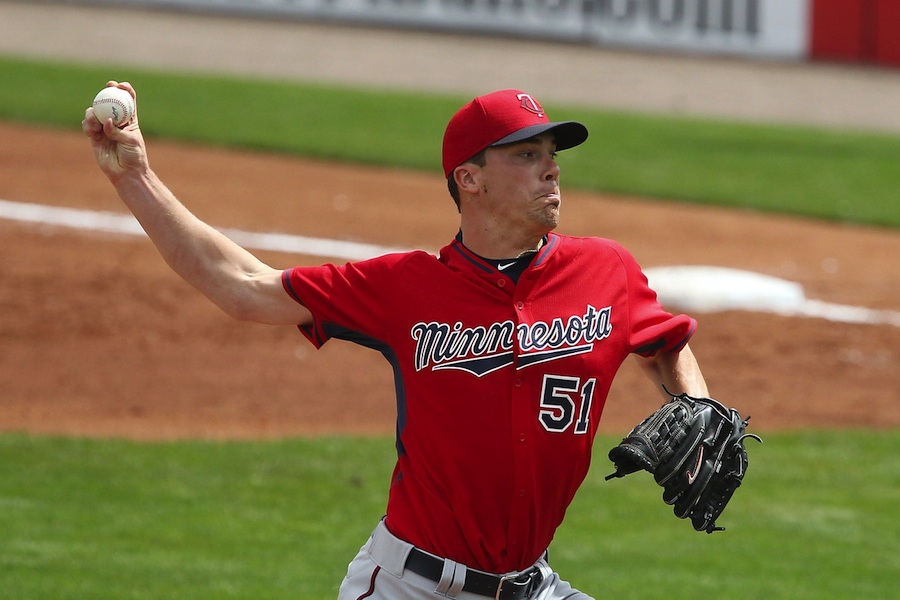 After a so-so start from Ricky Nolasco and a solid relief appearance from Ryan Pressly, Meyer came on to start the sixth inning. He's an unmistakable figure on the mound, standing a gangly 6'9" with legs that look longer than my entire body. He likely wasn't going full bore in this mid-March outing, but Meyer still worked at 93-94 MPH with the fastball, occasionally touching 95. He also mixed in some impressive knuckle-curves and threw a few decent changeups. The first thing that struck me about him was his strange arm slot, which I've noticed on tape but seemed much more distinct from the third row on the third-base line. Meyer slings the ball with a three-quarters delivery that seems to put an awful lot of strain on his elbow and shoulder, so it's unsurprising he's dealt with arm problems in each of the past two seasons. He clearly has trouble repeating his mechanics consistently, and that has been a frequently cited issue for the righty. He was wild, wild, wild in this game. In his first inning of work, he issued three walks, and some of his pitches were just nowhere near the zone. It was his fastball that he had most trouble commanding; he actually threw the offspeed in the zone for the most part. But that potent heater has a tendency to sail on him. He came back out to pitch the seventh, and although he issued a fourth walk, he was much more efficient, requiring only 10 pitches to get through the frame. It helped that Josmil Pinto gunned down Taylor Motter (who had drawn the walk) stealing second to end the inning. Wildness aside, Meyer was fun to watch. When he throws the ball in the zone (and sometimes when he doesn't) he has hitters flailing. He gave up only one hit -- a weakly hit bloop -- and no one made particularly hard contact with anything he delivered. He recorded three strikeouts in his two innings of work, two of them on filthy breaking balls. If he can harness those mechanics and reign in that fastball, he'll be a force. If, if, if… I can say with some confidence that Meyer is not going to make the big-league club out of spring training, and I know that might be frustrating for some, since he's a 25-year-old top prospect. But people need to stop focusing so much on his age. He's a project, and a rather unique one at that. How many MLB pitchers stand 6'9" or taller? Not many now, or even in the history of the game. He's been able to achieve excellent results in the minors but his erratic performances simply won't fly in the majors, where hitters are more selective and where there's a stronger expectation for starting pitchers to last deep into games. Fortunately, with Tommy Milone and Mike Pelfrey both pitching well right now, not to mention the presence of Trevor May, the Twins have the luxury of taking it slow with Meyer. He is working hard on fixing his problems and the Twins do believe he's coming along. The good news is that once he hopefully turns the corner, the team will control him for the entirety of his physical prime, into his 30s. Whether as a starter or reliever, I fully believe he'll be a valuable weapon for this club. We might just have to wait a little while longer.
 -
 … And that's music to the Minnesota Twins' ears. The bullpen has been struggling a bit in exhibition play, and while that's partially because innings are going to guys who won't necessarily figure into the big-league equation, it's also because the unit has been without its leader and stabilizing force.Glen Perkins saw his 2014 season end on an injury note when he was shut down in late September with a forearm strain, and his 2015 spring started on another one: an oblique strain that has kept him out of action for the past couple weeks. Frustrating? "Yeah," he said. "But part of that is you can't control it." On the bright side, all parties involved insist that the Twins closer and reigning All-Star is finally fully healthy. He threw a bullpen on Tuesday morning with no issues, and will pitch in a minor-league game Thursday. If all goes well, he'll make his first official spring appearance on Saturday. There's no concern that he won't be ready for the start of the season. "What is today, 17th? He should have ample time to get ready," Terry Ryan said on Tuesday. Perkins, who played catch frequently to keep his arm loose while being sidelined, says he doesn't really even need all that time. "I think I could probably be OK right now. Get a couple games to get stuff right but I think I'll be in a good spot." The elbow issues late last year were more worrisome than this spring's mild oblique strain, but an MRI at the time showed a "perfect" UCL and Perkins attributes the troubles to fatigue and wear-down. With all that in the past, attention turns to just how the closer's role might change under a new manager. Ron Gardenhire was always rather rigid with Perkins, using him almost exclusively in save situations outside of the occasional "getting his work in" appearance between such opportunities. Many were disappointed to hear Molitor state last month that he planned to fall on the conventional side with his closer usage, but the manager was referring more to the idea of asking Perkins to get more than three outs in a game as opposed to stringently adhering to save situations. That makes sense after last autumn's fatigue issues. Molitor told reporters on Wednesday that he's open to using Perk in tie games on the road, rather than waiting for his team to take a lead. That's something Gardy rarely did. At one time, the whole thing put Perkins in a somewhat tough spot. As a rather enlightened baseball mind, the lefty knows that he can often help the team more by pitching outside of save situations -- say, to get the team out of a tough jam in the eighth, or in the aforementioned road situation -- but with baseball's misguided focus on the save, his status and financial potential were largely dependent on the statistic. Perhaps that's one of the real silver linings of the team signing Perkins to an extension last spring that many deemed unnecessary. The closer is now locked in for the next three seasons, so he needn't worry about bolstering his market value. "I'm past caring about saves and personal stats," he said. "I think that kind of peaked last year with that All-Star Game. That stuff is not really a focus at all." That all sounds promising. But the real test will be what happens when Miguel Cabrera steps in with two runners on in the eighth inning of a one-run game. Will Molitor go to his bullpen ace to get the key outs if it means forgoing a possible save chance in the next inning? That'd most likely be the right move, but it would also be a bold one, opening the rookie manager up to criticism from those who still believe in the traditional definition of a closer. We shall see. Click here to view the article
 -
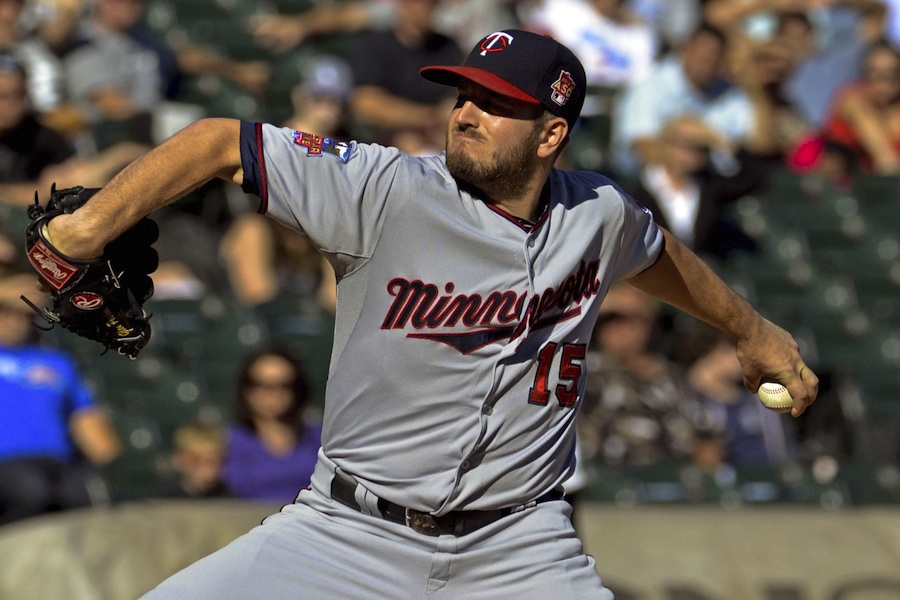 Glen Perkins saw his 2014 season end on an injury note when he was shut down in late September with a forearm strain, and his 2015 spring started on another one: an oblique strain that has kept him out of action for the past couple weeks. Frustrating? "Yeah," he said. "But part of that is you can't control it." On the bright side, all parties involved insist that the Twins closer and reigning All-Star is finally fully healthy. He threw a bullpen on Tuesday morning with no issues, and will pitch in a minor-league game Thursday. If all goes well, he'll make his first official spring appearance on Saturday. There's no concern that he won't be ready for the start of the season. "What is today, 17th? He should have ample time to get ready," Terry Ryan said on Tuesday. Perkins, who played catch frequently to keep his arm loose while being sidelined, says he doesn't really even need all that time. "I think I could probably be OK right now. Get a couple games to get stuff right but I think I'll be in a good spot." The elbow issues late last year were more worrisome than this spring's mild oblique strain, but an MRI at the time showed a "perfect" UCL and Perkins attributes the troubles to fatigue and wear-down. With all that in the past, attention turns to just how the closer's role might change under a new manager. Ron Gardenhire was always rather rigid with Perkins, using him almost exclusively in save situations outside of the occasional "getting his work in" appearance between such opportunities. Many were disappointed to hear Molitor state last month that he planned to fall on the conventional side with his closer usage, but the manager was referring more to the idea of asking Perkins to get more than three outs in a game as opposed to stringently adhering to save situations. That makes sense after last autumn's fatigue issues. Molitor told reporters on Wednesday that he's open to using Perk in tie games on the road, rather than waiting for his team to take a lead. That's something Gardy rarely did. At one time, the whole thing put Perkins in a somewhat tough spot. As a rather enlightened baseball mind, the lefty knows that he can often help the team more by pitching outside of save situations -- say, to get the team out of a tough jam in the eighth, or in the aforementioned road situation -- but with baseball's misguided focus on the save, his status and financial potential were largely dependent on the statistic. Perhaps that's one of the real silver linings of the team signing Perkins to an extension last spring that many deemed unnecessary. The closer is now locked in for the next three seasons, so he needn't worry about bolstering his market value. "I'm past caring about saves and personal stats," he said. "I think that kind of peaked last year with that All-Star Game. That stuff is not really a focus at all." That all sounds promising. But the real test will be what happens when Miguel Cabrera steps in with two runners on in the eighth inning of a one-run game. Will Molitor go to his bullpen ace to get the key outs if it means forgoing a possible save chance in the next inning? That'd most likely be the right move, but it would also be a bold one, opening the rookie manager up to criticism from those who still believe in the traditional definition of a closer. We shall see.
 -
Service clock is not the main reason for keeping Meyer down. Milone and Pelfrey have both pitched well. It's just a piece of the puzzle.
- 38 replies
-
- 4
-

-
- ervin santana
- brian dozier
- (and 1 more)
-
After beating the Baltimore Orioles 10-9 in Sarasota on Tuesday, the Minnesota Twins returned to Hammond Stadium for a home rematch today, losing 3-2 in a contest that featured far fewer fireworks. This was a quick one, finishing in just two hours and 15 minutes. Notes and quotes below:* Ervin Santana's third Grapefruit start didn't go quite as smoothly as the first two, as he allowed three runs on four hits -- including a two-run homer by Jonathan Schoop on a slider that didn't slide much -- but he looked fine. He aggressively threw the ball in the zone and got several swinging misses. * Today was a split-squad day, so the other half of the team was at JetBlue Park facing the Red Sox, and also lost 3-2. It sounds like Mike Pelfrey had a very nice outing over there, allowing one run on three hits over four innings with three strikeouts and no walks. Pelfrey's doing everything needed to keep pace in the fifth starter race. From my view, it's between him and Tommy Milone. If the Twins truly are unwilling to use Pelf in the bullpen, that might be deciding factor, all things being equal. * So, you might ask, what about Alex Meyer and Trevor May? Neither has really done anything to take himself out of the running, but they definitely appear to be trailing in this competition. I get it. It could be argued that Meyer and May are the best two options, especially from a long-term perspective, but they aren't established big-leaguers like Milone and Pelfrey (nor do they have multi-million dollar contracts, for what it's worth). In fact, the Twins actually have some incentive to start the two young hurlers in the minors, as it would extent their service clocks. * Eddie Rosario has been getting plenty of starts in the outfield, and seems to be doing good things everyday. In today's game, he gunned down Delmon Young at second with a strong throw from the left field corner on what initially looked like an easy double. Rosario also drove in the Twins' second run, ripping a liner to the opposite field on a 1-2 count for a sacrifice fly. It was the second consecutive day in which Rosario got a big hit after falling behind, fouling off a few pitches until he got one he could do something with. "He's an aggressive free swinger," said Joe Vavra, who was acting as manager with Paul Molitor across town. "He looks like he's going to be a bad-ball type hitter that's going to make contact … I don't think he's ever out of an at-bat." I can't see him unseating Aaron Hicks (who went 1-for-4 with a triple against the Red Sox) in center field, but Rosario is having a hell of a spring on the heels of an outstanding performance in the Arizona Fall League. * Brian Dozier said one of his main goals here in camp is to build a rapport with Danny Santana. It's becoming increasingly obvious that Santana will be the starting shortstop this season. Last year, he spent most of his time in center field, so the two had little opportunity to mesh up the middle. "I told Danny that we've gotta get to know each other better," Dozier said. "It's not just about making plays, double plays, things like that. It's more the communication, positioning, that kind of thing." Today, however, it was Eduardo Nunez on the other side of the bag, with Santana playing with Molitor and Co. at JetBlue. * Dozier was in the No. 3 spot again today, batting behind Joe Mauer. Molitor has intimated that this might be how things shake out on Opening Day. Dozier said he doesn't care where he hits and doesn't change his approach based on his spot in the lineup, although he obviously will try different things at the plate based on what the game situation dictates. He's sure looking like a three-hitter right now. He hit another double, giving him four extra-base hits in the three games I've watched. Even his outs have been loud -- two of them came on deep outfield liners today. He was unsurprisingly subdued about the big numbers: "Yeah, I've had a little success early, but that is what it is." Sure… but still. I've got to imagine he's wishing the regular season started tomorrow. * Vavra, who was the hitting coach when Dozier first arrived in the majors back in 2012, spoke a little after the game about the second baseman's evolution as a hitter. "He's getting on that high fastball pretty good," Vavra said. "He works really hard on a routine and getting on top of pitches. When he first came up he was hitting the ball in the air too much. So he made a point to really working on getting on top of the ball." "They can beat him up there, but if they don't, he gives it a pretty good ride." * The Twins will face off against the Rays tomorrow in Port Charlotte, with Ricky Nolasco getting the start at 12:05 CT. Click here to view the article
-
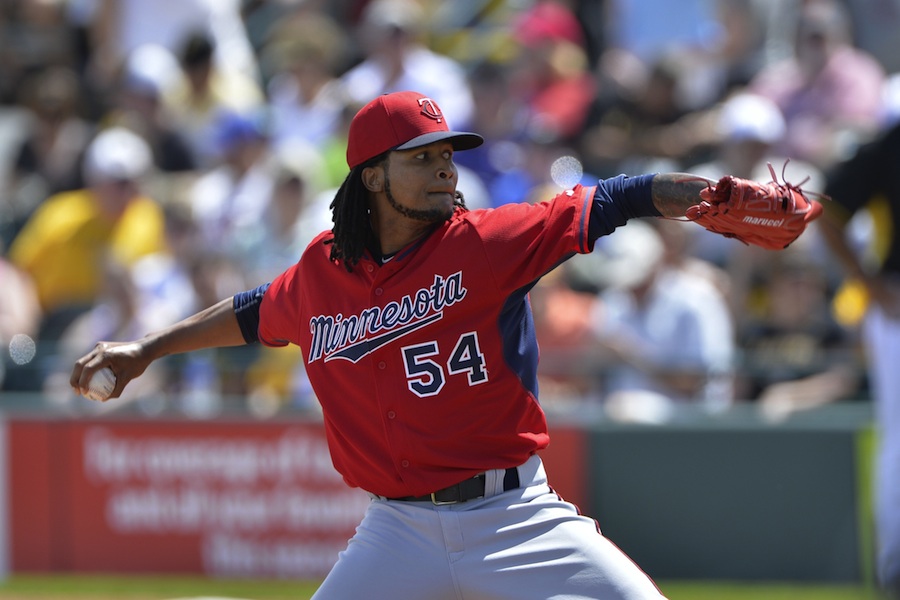 * Ervin Santana's third Grapefruit start didn't go quite as smoothly as the first two, as he allowed three runs on four hits -- including a two-run homer by Jonathan Schoop on a slider that didn't slide much -- but he looked fine. He aggressively threw the ball in the zone and got several swinging misses. * Today was a split-squad day, so the other half of the team was at JetBlue Park facing the Red Sox, and also lost 3-2. It sounds like Mike Pelfrey had a very nice outing over there, allowing one run on three hits over four innings with three strikeouts and no walks. Pelfrey's doing everything needed to keep pace in the fifth starter race. From my view, it's between him and Tommy Milone. If the Twins truly are unwilling to use Pelf in the bullpen, that might be deciding factor, all things being equal. * So, you might ask, what about Alex Meyer and Trevor May? Neither has really done anything to take himself out of the running, but they definitely appear to be trailing in this competition. I get it. It could be argued that Meyer and May are the best two options, especially from a long-term perspective, but they aren't established big-leaguers like Milone and Pelfrey (nor do they have multi-million dollar contracts, for what it's worth). In fact, the Twins actually have some incentive to start the two young hurlers in the minors, as it would extent their service clocks. * Eddie Rosario has been getting plenty of starts in the outfield, and seems to be doing good things everyday. In today's game, he gunned down Delmon Young at second with a strong throw from the left field corner on what initially looked like an easy double. Rosario also drove in the Twins' second run, ripping a liner to the opposite field on a 1-2 count for a sacrifice fly. It was the second consecutive day in which Rosario got a big hit after falling behind, fouling off a few pitches until he got one he could do something with. "He's an aggressive free swinger," said Joe Vavra, who was acting as manager with Paul Molitor across town. "He looks like he's going to be a bad-ball type hitter that's going to make contact … I don't think he's ever out of an at-bat." I can't see him unseating Aaron Hicks (who went 1-for-4 with a triple against the Red Sox) in center field, but Rosario is having a hell of a spring on the heels of an outstanding performance in the Arizona Fall League. * Brian Dozier said one of his main goals here in camp is to build a rapport with Danny Santana. It's becoming increasingly obvious that Santana will be the starting shortstop this season. Last year, he spent most of his time in center field, so the two had little opportunity to mesh up the middle. "I told Danny that we've gotta get to know each other better," Dozier said. "It's not just about making plays, double plays, things like that. It's more the communication, positioning, that kind of thing." Today, however, it was Eduardo Nunez on the other side of the bag, with Santana playing with Molitor and Co. at JetBlue. * Dozier was in the No. 3 spot again today, batting behind Joe Mauer. Molitor has intimated that this might be how things shake out on Opening Day. Dozier said he doesn't care where he hits and doesn't change his approach based on his spot in the lineup, although he obviously will try different things at the plate based on what the game situation dictates. He's sure looking like a three-hitter right now. He hit another double, giving him four extra-base hits in the three games I've watched. Even his outs have been loud -- two of them came on deep outfield liners today. He was unsurprisingly subdued about the big numbers: "Yeah, I've had a little success early, but that is what it is." Sure… but still. I've got to imagine he's wishing the regular season started tomorrow. * Vavra, who was the hitting coach when Dozier first arrived in the majors back in 2012, spoke a little after the game about the second baseman's evolution as a hitter. "He's getting on that high fastball pretty good," Vavra said. "He works really hard on a routine and getting on top of pitches. When he first came up he was hitting the ball in the air too much. So he made a point to really working on getting on top of the ball." "They can beat him up there, but if they don't, he gives it a pretty good ride." * The Twins will face off against the Rays tomorrow in Port Charlotte, with Ricky Nolasco getting the start at 12:05 CT.
 -
Article: Offense Is Springing To Life
Nick Nelson replied to Nick Nelson's topic in Twins Daily Front Page News
Regulars: Suzuki, Mauer, Dozier, Escobar, Plouffe, Willingham/Schafer, Santana, Arcia, Vargas. All had an OPS+ of 100 or above. As jokin mentioned, it's also true relative to position. -
Article: Offense Is Springing To Life
Nick Nelson replied to Nick Nelson's topic in Twins Daily Front Page News
Rosario is among those contingency plan/prospects that I was referring to. If Hicks finally figures it out, great. If not, boy is Rosario looking good. The way he's "staying in there off left-handed pitchers" was one thing that Molitor specifically called out post-game. -
When I was down here last year, there was a lot of talk about how utterly stagnant the offense looked. You can only put so much stock into spring performances (not much), but there was reason for concern with that offensive unit coming in, and the consistent struggles to score runs in Grapefruit League games, along with the complete lack of power hitting, did nothing to alleviate such trepidations. This year, there was much more inherent optimism surrounding the offense, and the production of the lineup -- especially the key players -- in exhibition play has only backed up those good vibes.The general qualms about the team's run production last spring proved overblown, as the Twins ended up outscoring all but six teams in the majors during the regular season, but the dearth of power proved to be an accurate omen. In 28 Grapefruit games last year, the Twins slugged .356 and hit a total of 16 home runs, second-fewest of any team in baseball. Oswaldo Arcia and Brandon Waring tied for the team lead with two. Yes, Brandon Waring. The Twins went on to hit 128 homers in 2014, ranking 11th in the AL, but this year's offense offered much more promise in that department, and we're getting an early preview now. On Tuesday, the team went deep four times against the Orioles, pushing this spring's count to 14 -- just two short of last spring's total with two-and-a-half weeks left to play. And these home runs aren't coming from the Brandon Warings of the world; they're coming from key players that the Twins are actually relying on to be power producers in the lineup. Chief among them is Kennys Vargas. Paul Molitor was quick to downplay the long ball barrage that took place at Ed Smith Stadium on Tuesday, pointing out that it's one of the smaller parks in the circuit and there were some favorable winds at play, but he couldn't hide his fascination with Vargas' team-leading third dinger, which cleared the wall in right-center field. "Vargas' was a strange one," the manager said. "At that particular juncture [the wind] was kind of blowing in from right, and he got an off-speed pitch that he hit a little bit off the end of the bat. It still got out." A big, lumbering specimen with ridiculous strength, Vargas has always offered tantalizing power potential, and whether or not the runs matter, it's great to see that playing out on the field. The same goes for Miguel Sano, who was cut from camp on Sunday after hitting two majestic blasts in the previous week. Something tells me he won't be in the minors for too long. Sano is a wild card down the line, but the lineup that the Twins will trot out on Opening Day has plenty of juice up and down. In 2014 the club got an above-average OPS from regulars at every position, and that could be the case again, with steps forward in a few areas. Even the players who are expected to regress are hardly major causes for concern. Sure, Danny Santana probably won't replicate that incredible rookie output (though he does have a 1.036 OPS this spring), but he's shifting to shortstop and looks pretty slick there defensively, so he doesn't need to hit a ton. When Kurt Suzuki inevitably regresses, you've got Josmil Pinto's potent bat waiting behind him. Eduardo Escobar hit a grand slam as part of Tuesday's onslaught. His OPS last year was higher than all but five qualifying MLB shortstops. And he currently projects as a utility man. It seems like everywhere the Twins might potentially project to have a weakness, they've got a contingency plan or prospect in the wings. That was always the blueprint, and now it's coming to fruition. I'd be remiss not to mention the guy whose offensive production this spring overshadows all others. Brian Dozier hit two doubles on Tuesday and is batting .556 with a ludicrous 1.635 OPS in Grapefruit play. Meaningless numbers, yeah yeah. But he's hitting everything hard right now, and that's great to see as he enters his age-28 season coming off back-to-back strong campaigns. It gives Molitor a ton of flexibility as he contemplates his lineup. "So far it hasn't really mattered where I've hit him, he's swung the bat well first, second or third," Molitor said, "so we're just mixing it up because I'm sure that given match-ups and different scenarios and who's playing on a given day he's probably going to have to fill all three at some time or another." When everyone's hitting the ball as well as they are right now, Molitor can do no wrong. And if that continues into the regular season, the rookie manager is going to look like quite the genius regardless of how he fills out lineup card. Click here to view the article
-
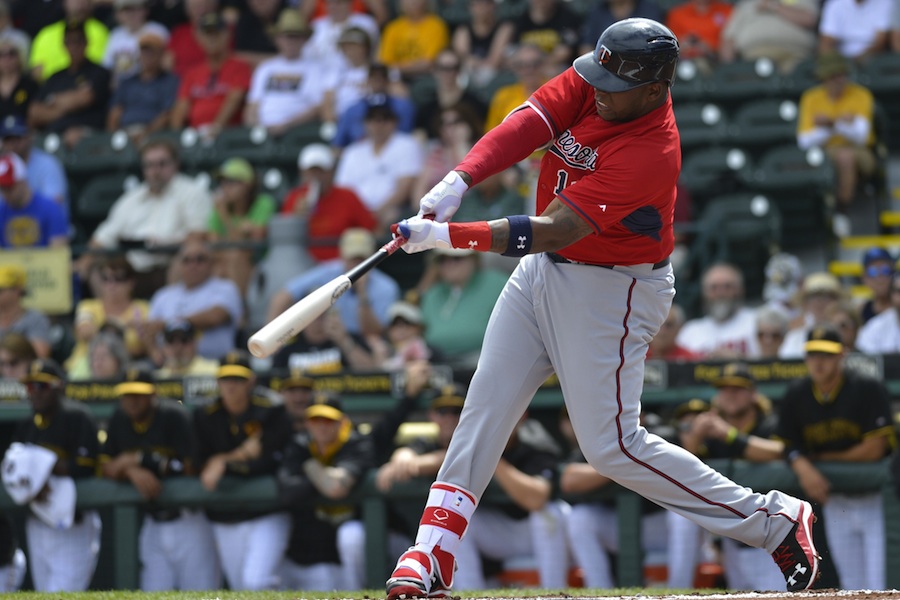 The general qualms about the team's run production last spring proved overblown, as the Twins ended up outscoring all but six teams in the majors during the regular season, but the dearth of power proved to be an accurate omen. In 28 Grapefruit games last year, the Twins slugged .356 and hit a total of 16 home runs, second-fewest of any team in baseball. Oswaldo Arcia and Brandon Waring tied for the team lead with two. Yes, Brandon Waring. The Twins went on to hit 128 homers in 2014, ranking 11th in the AL, but this year's offense offered much more promise in that department, and we're getting an early preview now. On Tuesday, the team went deep four times against the Orioles, pushing this spring's count to 14 -- just two short of last spring's total with two-and-a-half weeks left to play. And these home runs aren't coming from the Brandon Warings of the world; they're coming from key players that the Twins are actually relying on to be power producers in the lineup. Chief among them is Kennys Vargas. Paul Molitor was quick to downplay the long ball barrage that took place at Ed Smith Stadium on Tuesday, pointing out that it's one of the smaller parks in the circuit and there were some favorable winds at play, but he couldn't hide his fascination with Vargas' team-leading third dinger, which cleared the wall in right-center field. "Vargas' was a strange one," the manager said. "At that particular juncture [the wind] was kind of blowing in from right, and he got an off-speed pitch that he hit a little bit off the end of the bat. It still got out." A big, lumbering specimen with ridiculous strength, Vargas has always offered tantalizing power potential, and whether or not the runs matter, it's great to see that playing out on the field. The same goes for Miguel Sano, who was cut from camp on Sunday after hitting two majestic blasts in the previous week. Something tells me he won't be in the minors for too long. Sano is a wild card down the line, but the lineup that the Twins will trot out on Opening Day has plenty of juice up and down. In 2014 the club got an above-average OPS from regulars at every position, and that could be the case again, with steps forward in a few areas. Even the players who are expected to regress are hardly major causes for concern. Sure, Danny Santana probably won't replicate that incredible rookie output (though he does have a 1.036 OPS this spring), but he's shifting to shortstop and looks pretty slick there defensively, so he doesn't need to hit a ton. When Kurt Suzuki inevitably regresses, you've got Josmil Pinto's potent bat waiting behind him. Eduardo Escobar hit a grand slam as part of Tuesday's onslaught. His OPS last year was higher than all but five qualifying MLB shortstops. And he currently projects as a utility man. It seems like everywhere the Twins might potentially project to have a weakness, they've got a contingency plan or prospect in the wings. That was always the blueprint, and now it's coming to fruition. I'd be remiss not to mention the guy whose offensive production this spring overshadows all others. Brian Dozier hit two doubles on Tuesday and is batting .556 with a ludicrous 1.635 OPS in Grapefruit play. Meaningless numbers, yeah yeah. But he's hitting everything hard right now, and that's great to see as he enters his age-28 season coming off back-to-back strong campaigns. It gives Molitor a ton of flexibility as he contemplates his lineup. "So far it hasn't really mattered where I've hit him, he's swung the bat well first, second or third," Molitor said, "so we're just mixing it up because I'm sure that given match-ups and different scenarios and who's playing on a given day he's probably going to have to fill all three at some time or another." When everyone's hitting the ball as well as they are right now, Molitor can do no wrong. And if that continues into the regular season, the rookie manager is going to look like quite the genius regardless of how he fills out lineup card.
 -
The Minnesota Twins offense flexed some big-time power today at Ed Smith Stadium, spring home of the defending AL East Champion Baltimore Orioles. Eduardo Escobar hit a grand slam, while Eduardo Nunez, Trevor Plouffe and Kennys Vargas all chipped in homers as well in a 10-9 victory.* Phil Hughes had his best outing of the spring -- an efficient effort that saw him cruise through four frames on only 44 pitches. Outside of an opposite field homer by Chris Davis that barely sneaked over the wall and inside the foul pole in left, Hughes was almost perfect. He tallied a pair of strikeouts, freezing the opposing hitter with backdoor cutters on both occasions. * Hughes has been working on adding a changeup to his repertoire this spring, and threw a few during today's game but wasn't all that pleased with them. "It was terrible," he said. "I threw maybe two that leaked arm-side and maybe another two that bounced in the dirt. It's just about getting repetitions with it and getting more comfortable and seeing if I can add that as a fourth pitch for me that'll be effective." Of course, Hughes experienced plenty of success last year while rarely using that pitch -- he said he threw only a handful all season -- so if he doesn't gain enough confidence to make it a featured offering it won't be the end of the world. "It's not like a pitch that I necessarily need to have, but if it can be another weapon for me, that'd be great." * On Sunday, the Twins took an early lead behind a strong performance from their starter, only to watch that lead deteriorate once handed to the bullpen. That happened again today. "The game kind of lost its sanity in the middle," Paul Molitor said. "We had trouble getting outs. They were putting up crooked numbers and we were trying different people out there to see how they would respond." Despite the struggles of Brian Duensing, Mark Hamburger and Michael Tonkin, the Twins were able to hang on and win. Blaine Boyer came in and got the last four outs to seal up a one-run victory. The 33-year-old Boyer, who came out of retirement and had a solid season with the Padres last year before signing a minor-league deal with the Twins this past January, seems like a longshot to win a spot in the Twins bullpen but he is making an impression. "I like that he's aggressive, he's not afraid to use his fastball, and he's got enough velocity," Molitor said. "It was good to see him pitch well." "He's got that veteran presence about him, he doesn't panic," Terry Ryan said of Boyer. "He's got pretty good spin on a ball, he's got pretty good velocity. He's in the mix here." Boyer averaged 93 MPH with his heavily featured fastball last year in San Diego and he's been right around that number this spring. * Eddie Rosario got another start today, this time in left field, and once again he made the most of it. He had perhaps the best at-bat of the day for the Twins, falling behind 0-2 against Bud Norris before fouling off several pitches and then hooking a liner that rolled to the wall in right field and motoring around the bases for a triple. "That was a really good at-bat. He fought off some tough pitches," Molitor said. "I liked that he didn't hesitate around second. The guy ended up bobbling the ball and he was already full stride, so that was good to see. He had good at-bats again today." Rosario continues to stay relevant in the center field battle, although Aaron Hicks got the start there today and performed well, drawing a pair of walks at the plate and making a tremendous diving grab in the outfield. * With four home runs today, the Twins ran their Grapefruit League count to 14. That's just two short of last year's spring total. * I've had a hard time understanding what the Twins see in Eduardo Nunez, who started at DH today. He wasn't very good last year, even by his standards, so I was surprised when the club elected to tender him a contract during the offseason. I asked Ryan before today's game for his thoughts on Nunez, and the GM rattled off several things he likes about the 27-year-old. "He's got skills," Ryan said. "He's got surprising power, he can really throw and run, he's got versatility, he's a veteran, he can steal a bag." Sure enough, Nunez launched a two-run homer over the fence in left-center during the game, demonstrating the "surprising power" that Ryan was referring to. It was one of three hits on the day for the likely utility man. * Speaking of Nunez, if you're looking for a chuckle, you should check out this piece published today by Ben Lindbergh of Grantland, titled "Baseball's Secret Scandal: The Player Who Hits Popups on Purpose." The tongue-in-cheek article focuses on Nunez's historical penchant for chasing high pitches and hitting infield fly balls. It's lengthy (like everything at Grantland) but entertaining and illuminating, and worth the read if you've got time. For what it's worth, none of Nunez's three hits today came on infield flies. Click here to view the article
- 25 replies
-
- 1
-
-
- eduardo escobar
- kennys vargas
- (and 2 more)
-
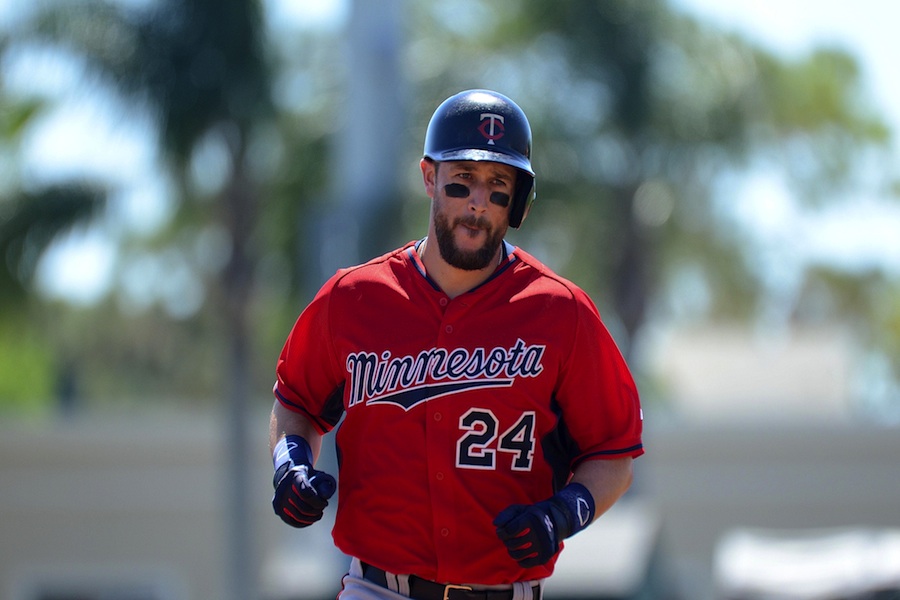 * Phil Hughes had his best outing of the spring -- an efficient effort that saw him cruise through four frames on only 44 pitches. Outside of an opposite field homer by Chris Davis that barely sneaked over the wall and inside the foul pole in left, Hughes was almost perfect. He tallied a pair of strikeouts, freezing the opposing hitter with backdoor cutters on both occasions. * Hughes has been working on adding a changeup to his repertoire this spring, and threw a few during today's game but wasn't all that pleased with them. "It was terrible," he said. "I threw maybe two that leaked arm-side and maybe another two that bounced in the dirt. It's just about getting repetitions with it and getting more comfortable and seeing if I can add that as a fourth pitch for me that'll be effective." Of course, Hughes experienced plenty of success last year while rarely using that pitch -- he said he threw only a handful all season -- so if he doesn't gain enough confidence to make it a featured offering it won't be the end of the world. "It's not like a pitch that I necessarily need to have, but if it can be another weapon for me, that'd be great." * On Sunday, the Twins took an early lead behind a strong performance from their starter, only to watch that lead deteriorate once handed to the bullpen. That happened again today. "The game kind of lost its sanity in the middle," Paul Molitor said. "We had trouble getting outs. They were putting up crooked numbers and we were trying different people out there to see how they would respond." Despite the struggles of Brian Duensing, Mark Hamburger and Michael Tonkin, the Twins were able to hang on and win. Blaine Boyer came in and got the last four outs to seal up a one-run victory. The 33-year-old Boyer, who came out of retirement and had a solid season with the Padres last year before signing a minor-league deal with the Twins this past January, seems like a longshot to win a spot in the Twins bullpen but he is making an impression. "I like that he's aggressive, he's not afraid to use his fastball, and he's got enough velocity," Molitor said. "It was good to see him pitch well." "He's got that veteran presence about him, he doesn't panic," Terry Ryan said of Boyer. "He's got pretty good spin on a ball, he's got pretty good velocity. He's in the mix here." Boyer averaged 93 MPH with his heavily featured fastball last year in San Diego and he's been right around that number this spring. * Eddie Rosario got another start today, this time in left field, and once again he made the most of it. He had perhaps the best at-bat of the day for the Twins, falling behind 0-2 against Bud Norris before fouling off several pitches and then hooking a liner that rolled to the wall in right field and motoring around the bases for a triple. "That was a really good at-bat. He fought off some tough pitches," Molitor said. "I liked that he didn't hesitate around second. The guy ended up bobbling the ball and he was already full stride, so that was good to see. He had good at-bats again today." Rosario continues to stay relevant in the center field battle, although Aaron Hicks got the start there today and performed well, drawing a pair of walks at the plate and making a tremendous diving grab in the outfield. * With four home runs today, the Twins ran their Grapefruit League count to 14. That's just two short of last year's spring total. * I've had a hard time understanding what the Twins see in Eduardo Nunez, who started at DH today. He wasn't very good last year, even by his standards, so I was surprised when the club elected to tender him a contract during the offseason. I asked Ryan before today's game for his thoughts on Nunez, and the GM rattled off several things he likes about the 27-year-old. "He's got skills," Ryan said. "He's got surprising power, he can really throw and run, he's got versatility, he's a veteran, he can steal a bag." Sure enough, Nunez launched a two-run homer over the fence in left-center during the game, demonstrating the "surprising power" that Ryan was referring to. It was one of three hits on the day for the likely utility man. * Speaking of Nunez, if you're looking for a chuckle, you should check out this piece published today by Ben Lindbergh of Grantland, titled "Baseball's Secret Scandal: The Player Who Hits Popups on Purpose." The tongue-in-cheek article focuses on Nunez's historical penchant for chasing high pitches and hitting infield fly balls. It's lengthy (like everything at Grantland) but entertaining and illuminating, and worth the read if you've got time. For what it's worth, none of Nunez's three hits today came on infield flies.
 -
Just like last year, the battle for the fifth spot in the rotation is a preeminent storyline here at Minnesota Twins camp. This time around, however, the competition is a little more compelling, featuring contenders that offer a quite a bit more reason for optimism. The fact that Tommy Milone is anything but a lock illustrates that well enough.It came as a surprise when Kyle Gibson won the final rotation spot a year ago, but looking back, perhaps it shouldn't have. Vance Worley and Scott Diamond were both coming off horrendous seasons, and Samuel Deduno was a 30-year-old journeyman with very iffy command. All three are now out of the organization. Comparatively speaking, the group of hurlers vying to round out the starting corps this year is superior by leaps and bounds, and perhaps that speaks to the all-around improvement of the pitching staff Top prospects Alex Meyer and Trevor May both have put in full seasons at Triple-A, with May even logging some MLB time. Mike Pelfrey is back from elbow surgery and (evidently) finally healthy. And then there's Milone, who might be the most accomplished big-leaguer of the bunch. Fans haven't been able to muster a ton of excitement for Milone, and that's understandable. The lefty lacks sexy strikeout totals or big velocity readings, and was awful in his first stint with the Twins after being acquired from the Athletics at the deadline last year. At the time, it was widely expected that some regression was in store with a move away from Oakland's friendly confines, but Milone's numbers with the Twins -- 17 earned runs allowed on 37 hits and 11 walks in 21 2/3 innings -- were brutal beyond what anyone could have anticipated. So, was a benign tumor in his neck that required surgery after the season to blame for the shoddy results? For his part, the 28-year-old says no. "I don't think it ever really affected me while I was out there on the mound," Milone said. "It was a big factor obviously when I couldn't physically go out there and pitch, but there were very few instances where I was out there and actually did feel it." "I wouldn't say that my pitching bad when I came over here was a direct reflection of my neck hurting." That may not seem like the most encouraging news, as it would be nice to have a convenient explanation for the struggles. But Milone isn't making excuses, and even though he went through a shortened offseason thanks to early December neck surgery -- "I kind of had to rush myself to get ready" -- the southpaw has looked sharp so far this spring. Milone hasn't allowed a run in five innings across two outings in Grapefruit League play. On Monday, he pitched against May in a minor-league game, and after giving up a two-run homer to the third batter he faced, Milone settled in to retire 11 straight. Between those three appearances, the lefty has yet to issue a single walk. Attacking the strike zone is critical to his success, so that's a promising sign that is surely helping his case in the eyes of decision-makers. Setting aside the numbers from last August and September, it's important to remember that Milone has a strong track record stretching back through his entire professional career. In addition to his 3.84 ERA and 1.27 WHIP in 468 2/3 MLB innings prior to coming here, he also posted strong numbers at every level of the minors. On a team desperate for quality starting pitching, that kind of background would often be an automatic ticket for a starting spot, regardless of a poor 20-inning run late last season. But Milone needs to beat out some tough competition to earn his way into the Twins' rotation. So far he's been doing everything he needs to. He's not a lock, but at this point, I'd say it's his job to lose. Click here to view the article
-
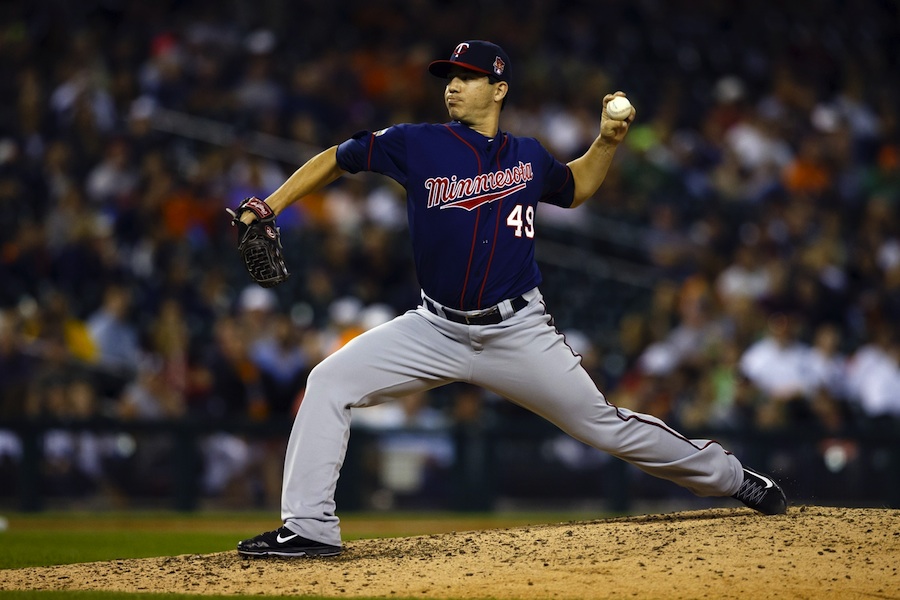 It came as a surprise when Kyle Gibson won the final rotation spot a year ago, but looking back, perhaps it shouldn't have. Vance Worley and Scott Diamond were both coming off horrendous seasons, and Samuel Deduno was a 30-year-old journeyman with very iffy command. All three are now out of the organization. Comparatively speaking, the group of hurlers vying to round out the starting corps this year is superior by leaps and bounds, and perhaps that speaks to the all-around improvement of the pitching staff Top prospects Alex Meyer and Trevor May both have put in full seasons at Triple-A, with May even logging some MLB time. Mike Pelfrey is back from elbow surgery and (evidently) finally healthy. And then there's Milone, who might be the most accomplished big-leaguer of the bunch. Fans haven't been able to muster a ton of excitement for Milone, and that's understandable. The lefty lacks sexy strikeout totals or big velocity readings, and was awful in his first stint with the Twins after being acquired from the Athletics at the deadline last year. At the time, it was widely expected that some regression was in store with a move away from Oakland's friendly confines, but Milone's numbers with the Twins -- 17 earned runs allowed on 37 hits and 11 walks in 21 2/3 innings -- were brutal beyond what anyone could have anticipated. So, was a benign tumor in his neck that required surgery after the season to blame for the shoddy results? For his part, the 28-year-old says no. "I don't think it ever really affected me while I was out there on the mound," Milone said. "It was a big factor obviously when I couldn't physically go out there and pitch, but there were very few instances where I was out there and actually did feel it." "I wouldn't say that my pitching bad when I came over here was a direct reflection of my neck hurting." That may not seem like the most encouraging news, as it would be nice to have a convenient explanation for the struggles. But Milone isn't making excuses, and even though he went through a shortened offseason thanks to early December neck surgery -- "I kind of had to rush myself to get ready" -- the southpaw has looked sharp so far this spring. Milone hasn't allowed a run in five innings across two outings in Grapefruit League play. On Monday, he pitched against May in a minor-league game, and after giving up a two-run homer to the third batter he faced, Milone settled in to retire 11 straight. Between those three appearances, the lefty has yet to issue a single walk. Attacking the strike zone is critical to his success, so that's a promising sign that is surely helping his case in the eyes of decision-makers. Setting aside the numbers from last August and September, it's important to remember that Milone has a strong track record stretching back through his entire professional career. In addition to his 3.84 ERA and 1.27 WHIP in 468 2/3 MLB innings prior to coming here, he also posted strong numbers at every level of the minors. On a team desperate for quality starting pitching, that kind of background would often be an automatic ticket for a starting spot, regardless of a poor 20-inning run late last season. But Milone needs to beat out some tough competition to earn his way into the Twins' rotation. So far he's been doing everything he needs to. He's not a lock, but at this point, I'd say it's his job to lose.
 -
Heading into camp, there were some questions surrounding how Danny Santana might fit into the Twins' lineup and fielding alignment. Would he bat leadoff, as he did for most of his surprisingly strong rookie campaign, or would he slide down to make room for a more established option? Would he remain in center field, where he excelled last year and where the Twins have no clear frontrunner, or would he move back to his natural position of shortstop? Three weeks into camp, any such uncertainty seems to have mostly vanished in the eyes of the Twins manager.Ron Gardenhire was a fun manager to cover because he was, frankly, hilarious. You would sit down with him for a media pow-wow and you were pretty much guaranteed a laugh or five, as he would invariably spew a bunch of witty repartees and folksy quips. But while amusing, his pressers weren't always all that informative or enlightening. His successor is not nearly as prone to falling back on whimsy. Paul Molitor is a straightforward guy who doesn't shy away from providing his honest viewpoint on any matter. When discussing his plans for Santana on Sunday, Molitor was refreshingly unsubtle. "I see Danny at the top for the most part to be honest with you, because I like the dimension he brings to that spot." OK then. Santana is your leadoff man. But will he play center or short? I asked Molitor about this after hearing Gibson's glowing review of Santana's stellar play to start Sunday's game against St. Louis. "I really like it when we make a good play to start the game. A lot of things can happen in that first inning that set the tone for winning or losing sometimes," Molitor said. "It was the kind of play that can make a difference in the game." It seems safe to say that Santana's nifty effort -- along with a couple of other nice plays he's converted in the past week -- made an impression on Molitor. So I asked flat-out: Do you see still see Santana as a possibility in center, or are you strongly leaning toward shortstop at this point? Molitor paused for a moment, then said, "I'm strongly leaning toward shortstop." OK then. Santana is your shortstop. I like it. Not necessarily because I agree with the rationale; I absolutely think Santana needs to be at short but I'm not totally convinced he's a great solution in the leadoff spot. Still, there's definitely something to be said for a no-BS approach from a skipper who is still trying to forge his identity. From my interactions with him, Molitor seems uninterested in beating around the bush. But if Santana's moving back to short, as he should, what does that mean for the center field competition, where Aaron Hicks is failing to inspire a whole lot of confidence thus far? Molitor treaded carefully on that topic, but still dropped a clear hint. Reporters asked yesterday about the decision to start Eddie Rosario in center field and this was the manager's response: "Rosario primarily has been left and a little bit of center, but I need to get a look at him out there, if we want to go down that road of who I want to play out there, as opposed to Santana as an option if things didn't work out or whatever. You know, it's obvious what we're talking about here. He's had a good spring, and he had a great fall. I want to make sure I get a good look at that kid. He looks fine to me both in center and left. He made some good plays, he's on the ball, I was watching his pitch preparation pitch-to-pitch, he's moving, he's doing a lot of good things out there." In other words, Rosario is making an impression, and Hicks should be on notice. As far as Molitor's feelings about Santana? Those need no translation. Click here to view the article
-
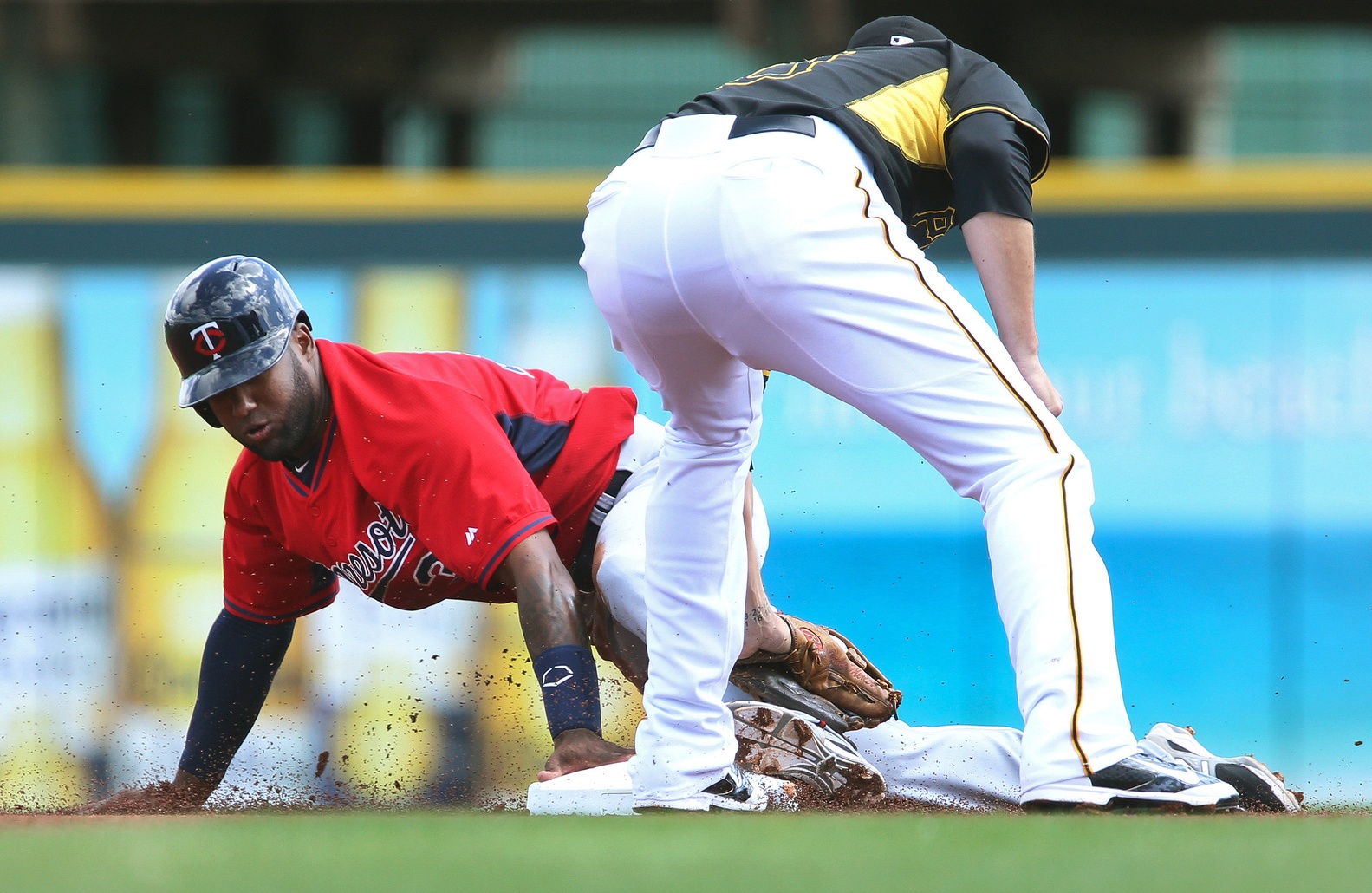 Ron Gardenhire was a fun manager to cover because he was, frankly, hilarious. You would sit down with him for a media pow-wow and you were pretty much guaranteed a laugh or five, as he would invariably spew a bunch of witty repartees and folksy quips. But while amusing, his pressers weren't always all that informative or enlightening. His successor is not nearly as prone to falling back on whimsy. Paul Molitor is a straightforward guy who doesn't shy away from providing his honest viewpoint on any matter. When discussing his plans for Santana on Sunday, Molitor was refreshingly unsubtle. "I see Danny at the top for the most part to be honest with you, because I like the dimension he brings to that spot." OK then. Santana is your leadoff man. But will he play center or short? I asked Molitor about this after hearing Gibson's glowing review of Santana's stellar play to start Sunday's game against St. Louis. "I really like it when we make a good play to start the game. A lot of things can happen in that first inning that set the tone for winning or losing sometimes," Molitor said. "It was the kind of play that can make a difference in the game." It seems safe to say that Santana's nifty effort -- along with a couple of other nice plays he's converted in the past week -- made an impression on Molitor. So I asked flat-out: Do you see still see Santana as a possibility in center, or are you strongly leaning toward shortstop at this point? Molitor paused for a moment, then said, "I'm strongly leaning toward shortstop." OK then. Santana is your shortstop. I like it. Not necessarily because I agree with the rationale; I absolutely think Santana needs to be at short but I'm not totally convinced he's a great solution in the leadoff spot. Still, there's definitely something to be said for a no-BS approach from a skipper who is still trying to forge his identity. From my interactions with him, Molitor seems uninterested in beating around the bush. But if Santana's moving back to short, as he should, what does that mean for the center field competition, where Aaron Hicks is failing to inspire a whole lot of confidence thus far? Molitor treaded carefully on that topic, but still dropped a clear hint. Reporters asked yesterday about the decision to start Eddie Rosario in center field and this was the manager's response: "Rosario primarily has been left and a little bit of center, but I need to get a look at him out there, if we want to go down that road of who I want to play out there, as opposed to Santana as an option if things didn't work out or whatever. You know, it's obvious what we're talking about here. He's had a good spring, and he had a great fall. I want to make sure I get a good look at that kid. He looks fine to me both in center and left. He made some good plays, he's on the ball, I was watching his pitch preparation pitch-to-pitch, he's moving, he's doing a lot of good things out there." In other words, Rosario is making an impression, and Hicks should be on notice. As far as Molitor's feelings about Santana? Those need no translation.
 -
Sunday's exhibition contest between the Twins and Cardinals at Hammond Stadium ended with a (sorta) controversial play in which Eduardo Nunez, representing the winning run, was called out at home plate despite appearing to be safe, causing the game to end in a tie. Players and coaches expressed faux outrage in the clubhouse over what ultimately was a meaningless outcome. The real story of the game, though, was Kyle Gibson.Making his third official start of the spring, Gibson delivered perhaps the best performance of any Twins pitcher thus far in Grapefruit League action, hurling four scoreless innings against an admittedly watered down traveling Cards lineup. Of the 12 outs Gibson recorded, 11 came on either grounders or strikeouts -- exactly what we want to see from the lanky sinkerballer. After the outing, he expressed satisfaction with a couple of key pitches in his arsenal. "The slider was about as good as it's been in any of my last three starts," Gibson said. "My change-up's been as I'd hope it would be against righties, so that's a pitch that's really showed up well for me." His manager echoed the positive sentiments. "His sinker was biting, off-speed good," Paul Molitor said. "He was good today." Gibson's target was 60 pitches and that was conveniently exactly where he finished after four frames. In his next start, the plan is to move up to about 75. * Gibson on notching four strikeouts after collecting only two total in his first two outings: "I'm not going to be mad if I get more swinging misses; then I don't have to answer the questions about why I don't get strikeouts. But it is what it is. As long as I'm executing down in the zone, the swings and misses will come. You can't get strikeouts unless you get to two strikes, and I think that was something I struggled with last year. The more 0-2 and 1-2 counts you see me in, the more I'm probably going to get strikeouts." * The infield alignment behind Gibson on Sunday is likely to be the one that we see regularly once the season starts, with Joe Mauer at first, Brian Dozier at second, Danny Santana at short and Trevor Plouffe at third. Gibson gave them plenty of work in this game and they converted every chance, including a tremendous effort by Santana to retire Peter Bourjos on the game's first play. The Cardinals lead-off hitter tapped a chopper between short and third, and Santana made an aggressive move to backhand it off a bounce, then quickly sent an off-balance one-hopper to Mauer at first to dispatch the speedy Bourjos. "That play on Bourjos to start the game was, I mean, I don't know that anybody has the arm to make that play in the league," Gibson said. "That was pretty impressive for Santana." Following that slick play, Gibson put a runner on base with a hit-by-pitch. He said Plouffe came over to him and instructed him to induce a 6-4-3 double play, adding "I'll take a 5-4-3 if you want to." Naturally, that's exactly what happened. Plouffe to Dozier to Mauer. Inning over. * Dozier has been locked in at the plate this spring. In his first at-bat on Sunday, he turned on a pitch and sent a scalding line drive toward left, though Cardinals third baseman Scott Moore jumped up and snagged it to rob a possible double. In his next at-bat, Dozier was able to hit the ball over the head of Moore, and everybody else -- a sky-high rocket that sailed beyond the left field wall for a two-run homer. In 14 at-bats this spring, Dozier has seven hits, including two home runs and a double. * Molitor knows he wants Dozier and Mauer to hit second and third in the lineup... he's just not sure in what order. "Dozier could fill that (No. 2 spot) well, mainly because he's a guy who despite hitting .240 last year his on-base percentage with 90 walks is good enough to do that role," the evidently stat-savvy rookie manager said, "but he's got the power to drive people in too." "I know Joe's been working this year on trying to pull more balls through the three-hole (between first and second) with a guy on first base, which is kind of suited to a No. 2 hitter possibly. We'll see how it looks." * Newly signed right-hander Tim Stauffer has really, really struggled through three Grapefruit League outings. He has allowed multiple runs each time out, totaling 12 (10 earned) on 16 hits in six innings of work while getting consistently barreled up by opposing lineups. There's reason to worry about Stauffer's outlook, mainly because he put up mediocre numbers while playing in an extremely pitcher-friendly park in the National League prior to signing here, but let's not overreact to three exhibition appearances. Molitor noted that, like Joe Nathan, Stauffer has a history of flashing decreased velocity in early March and building up toward the start of the season. With that said, it sounds as if any notion of Stauffer competing for a rotation spot is out the window. Molitor said that he and pitching coach Neil Allen would be meeting with the veteran hurler on Tuesday to reassess his role. He was never a realistic candidate to make the rotation anyway. * The Twins announced their first round of cuts on Sunday, and Seth posted an article with the full list. Terry Ryan spoke with us about some of the more prominent prospects to get sent out. On Byron Buxton: "He needs to go down and get some playing time. I think everybody's aware that, he got some time here and there, but we need to get him going. He needs regular playing time and four at-bats a day and center field everyday. But he is healthy and he is taking instruction well and he fared fine in the camp, but it's time for him to get some work in now." On Jose Berrios: "I don't think there's any question that he performed and he did everything that you'd ever want a young kid to do… Very professional, he's a good man. He took it well. He's a confident kid but he's not arrogant, he's not conceited. But he has a plan, and the plan that he came into camp with, he followed it. He made a good showing here, there's no question he's one of our better guys, we all know that." On Max Kepler: "He's made a lot of strides this year… mentally and physically. He's turned into a man. I thought he had one of the better camps of anybody in this camp to this point. Numbers aren't great but he got out there and put good at-bats together, he played well in right field, he played pretty good at first, and he showed that he's got some strength here to drive a baseball. He's kind of what we were envisioning when we signed him when he was about 16." Click here to view the article
-
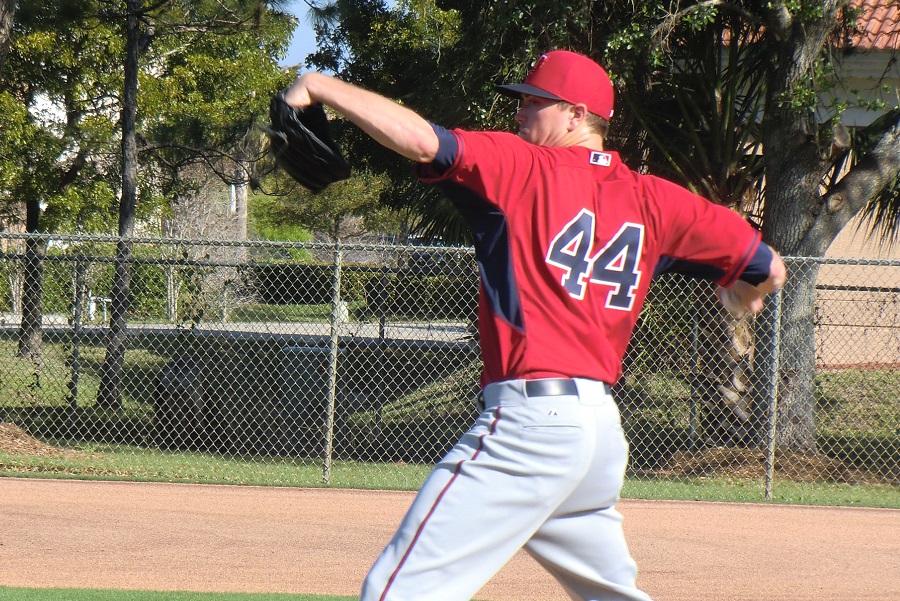 Making his third official start of the spring, Gibson delivered perhaps the best performance of any Twins pitcher thus far in Grapefruit League action, hurling four scoreless innings against an admittedly watered down traveling Cards lineup. Of the 12 outs Gibson recorded, 11 came on either grounders or strikeouts -- exactly what we want to see from the lanky sinkerballer. After the outing, he expressed satisfaction with a couple of key pitches in his arsenal. "The slider was about as good as it's been in any of my last three starts," Gibson said. "My change-up's been as I'd hope it would be against righties, so that's a pitch that's really showed up well for me." His manager echoed the positive sentiments. "His sinker was biting, off-speed good," Paul Molitor said. "He was good today." Gibson's target was 60 pitches and that was conveniently exactly where he finished after four frames. In his next start, the plan is to move up to about 75. * Gibson on notching four strikeouts after collecting only two total in his first two outings: "I'm not going to be mad if I get more swinging misses; then I don't have to answer the questions about why I don't get strikeouts. But it is what it is. As long as I'm executing down in the zone, the swings and misses will come. You can't get strikeouts unless you get to two strikes, and I think that was something I struggled with last year. The more 0-2 and 1-2 counts you see me in, the more I'm probably going to get strikeouts." * The infield alignment behind Gibson on Sunday is likely to be the one that we see regularly once the season starts, with Joe Mauer at first, Brian Dozier at second, Danny Santana at short and Trevor Plouffe at third. Gibson gave them plenty of work in this game and they converted every chance, including a tremendous effort by Santana to retire Peter Bourjos on the game's first play. The Cardinals lead-off hitter tapped a chopper between short and third, and Santana made an aggressive move to backhand it off a bounce, then quickly sent an off-balance one-hopper to Mauer at first to dispatch the speedy Bourjos. "That play on Bourjos to start the game was, I mean, I don't know that anybody has the arm to make that play in the league," Gibson said. "That was pretty impressive for Santana." Following that slick play, Gibson put a runner on base with a hit-by-pitch. He said Plouffe came over to him and instructed him to induce a 6-4-3 double play, adding "I'll take a 5-4-3 if you want to." Naturally, that's exactly what happened. Plouffe to Dozier to Mauer. Inning over. * Dozier has been locked in at the plate this spring. In his first at-bat on Sunday, he turned on a pitch and sent a scalding line drive toward left, though Cardinals third baseman Scott Moore jumped up and snagged it to rob a possible double. In his next at-bat, Dozier was able to hit the ball over the head of Moore, and everybody else -- a sky-high rocket that sailed beyond the left field wall for a two-run homer. In 14 at-bats this spring, Dozier has seven hits, including two home runs and a double. * Molitor knows he wants Dozier and Mauer to hit second and third in the lineup... he's just not sure in what order. "Dozier could fill that (No. 2 spot) well, mainly because he's a guy who despite hitting .240 last year his on-base percentage with 90 walks is good enough to do that role," the evidently stat-savvy rookie manager said, "but he's got the power to drive people in too." "I know Joe's been working this year on trying to pull more balls through the three-hole (between first and second) with a guy on first base, which is kind of suited to a No. 2 hitter possibly. We'll see how it looks." * Newly signed right-hander Tim Stauffer has really, really struggled through three Grapefruit League outings. He has allowed multiple runs each time out, totaling 12 (10 earned) on 16 hits in six innings of work while getting consistently barreled up by opposing lineups. There's reason to worry about Stauffer's outlook, mainly because he put up mediocre numbers while playing in an extremely pitcher-friendly park in the National League prior to signing here, but let's not overreact to three exhibition appearances. Molitor noted that, like Joe Nathan, Stauffer has a history of flashing decreased velocity in early March and building up toward the start of the season. With that said, it sounds as if any notion of Stauffer competing for a rotation spot is out the window. Molitor said that he and pitching coach Neil Allen would be meeting with the veteran hurler on Tuesday to reassess his role. He was never a realistic candidate to make the rotation anyway. * The Twins announced their first round of cuts on Sunday, and Seth posted an article with the full list. Terry Ryan spoke with us about some of the more prominent prospects to get sent out. On Byron Buxton: "He needs to go down and get some playing time. I think everybody's aware that, he got some time here and there, but we need to get him going. He needs regular playing time and four at-bats a day and center field everyday. But he is healthy and he is taking instruction well and he fared fine in the camp, but it's time for him to get some work in now." On Jose Berrios: "I don't think there's any question that he performed and he did everything that you'd ever want a young kid to do… Very professional, he's a good man. He took it well. He's a confident kid but he's not arrogant, he's not conceited. But he has a plan, and the plan that he came into camp with, he followed it. He made a good showing here, there's no question he's one of our better guys, we all know that." On Max Kepler: "He's made a lot of strides this year… mentally and physically. He's turned into a man. I thought he had one of the better camps of anybody in this camp to this point. Numbers aren't great but he got out there and put good at-bats together, he played well in right field, he played pretty good at first, and he showed that he's got some strength here to drive a baseball. He's kind of what we were envisioning when we signed him when he was about 16."
 -
The idea isn't necessarily that players are cheaper now than they will be at that time, but that you can have access to any player you want as long as you're willing to pony up. That likely won't be the case after next year.
-
When the Boston Red Sox signed Cuban infielder Yoan Moncada with a $31.5 million bonus last month, they were taking advantage of a flawed system that likely won't be in place much longer. Although it's on a much smaller scale, the Twins appear to be preparing to make a similarly savvy move with 16-year-old Dominican shortstop Wander Javier when the international signing period opens on July 2nd.Depending on which reports you choose to believe, the Twins either have very serious interest in Javier (La Velle says they are "definitely in on this one"), or they already have a tentative agreement in place (Kiley McDaniel of FanGraphs wrote that the shortstop is "widely believed to have a deal with the Twins"). If true, this signals that the Twins are not only on the verge of making their biggest financial splash ever on the international market, but also utilizing what may be one of their last opportunities to do so under the current favorable -- if somewhat ridiculous -- guidelines. Boston's signing of Moncada stirred up some controversy around a subject that has been touchy for some time, with Tampa Bay Rays pitcher Drew Smyly summarizing the basic conundrum in a tweet: "It's not right that a Cuban 19yr old gets paid 30m and the best 19yr old in the entire USA gets prob 1/6th of that. Everyone should have to go through same process." Unlike in the MLB amateur draft, there are no restrictions or limits on the bonuses that international players receive; it is an open bidding war among all 30 teams. Each club has a bonus pool that it is penalized for exceeding, but as the Red Sox showed, that tends to be a minor impediment. This isn't exactly fair for special young baseball talents who happen to be cultivated here in the States and must go through a far more regimented process. Last year, when the Twins selected 18-year-old shortstop Nick Gordon with the fifth overall pick, they signed him to a $3.85 million bonus, which was the slot-recommended amount. Meanwhile, reports suggest that the Twins are ready to hand Javier around $4 million. One could argue that Javier (who can be seen in the video below courtesy of FanGraphs) has more upside than Gordon did, but he's two years younger and considerably less seasoned. Clearly the Twins like this kid, and you certainly can't blame them for making aggressive moves to bring him aboard, especially since the same approach may not be possible after next year. Momentum is building toward the institution of an international draft. New commissioner Rob Manfred has expressed interest in taking this direction, and it might happen when the current collective bargaining agreement expires in 2016. If indeed the Twins make an historical investment to bring Javier aboard, they might be trying to get out in front of this coming development. And while it's extremely difficult to say how the teenaged infielder might develop -- he's got a great athletic build, with the defensive skills to stick at short, but his offensive ability is basically all projection at this point -- the last time the Twins took an international prospect plunge on this level was when they spent $3.15 million in 2009 to bring aboard Miguel Sano, who has transformed into a potentially franchise-altering talent. There's little doubt that Major League Baseball needs an international draft. But until then, the Twins are wise to take advantage of the open market and outbid all others to get the player they want. It appears that they are committed to doing just that. Click here to view the article
-
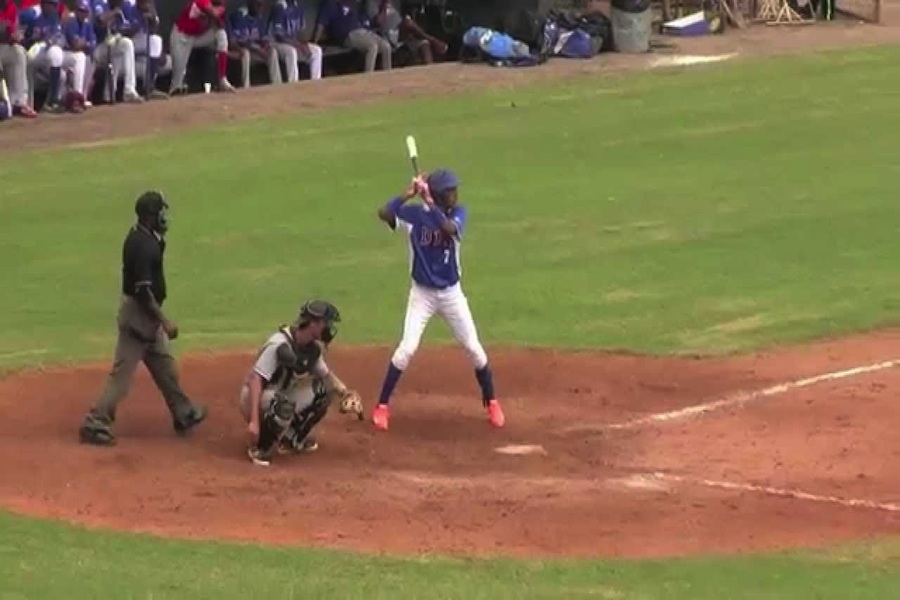 Depending on which reports you choose to believe, the Twins either have very serious interest in Javier (La Velle says they are "definitely in on this one"), or they already have a tentative agreement in place (Kiley McDaniel of FanGraphs wrote that the shortstop is "widely believed to have a deal with the Twins"). If true, this signals that the Twins are not only on the verge of making their biggest financial splash ever on the international market, but also utilizing what may be one of their last opportunities to do so under the current favorable -- if somewhat ridiculous -- guidelines. Boston's signing of Moncada stirred up some controversy around a subject that has been touchy for some time, with Tampa Bay Rays pitcher Drew Smyly summarizing the basic conundrum in a tweet: "It's not right that a Cuban 19yr old gets paid 30m and the best 19yr old in the entire USA gets prob 1/6th of that. Everyone should have to go through same process." Unlike in the MLB amateur draft, there are no restrictions or limits on the bonuses that international players receive; it is an open bidding war among all 30 teams. Each club has a bonus pool that it is penalized for exceeding, but as the Red Sox showed, that tends to be a minor impediment. This isn't exactly fair for special young baseball talents who happen to be cultivated here in the States and must go through a far more regimented process. Last year, when the Twins selected 18-year-old shortstop Nick Gordon with the fifth overall pick, they signed him to a $3.85 million bonus, which was the slot-recommended amount. Meanwhile, reports suggest that the Twins are ready to hand Javier around $4 million. One could argue that Javier (who can be seen in the video below courtesy of FanGraphs) has more upside than Gordon did, but he's two years younger and considerably less seasoned. https://www.youtube.com/watch?v=KQM2BzjyTNU Clearly the Twins like this kid, and you certainly can't blame them for making aggressive moves to bring him aboard, especially since the same approach may not be possible after next year. Momentum is building toward the institution of an international draft. New commissioner Rob Manfred has expressed interest in taking this direction, and it might happen when the current collective bargaining agreement expires in 2016. If indeed the Twins make an historical investment to bring Javier aboard, they might be trying to get out in front of this coming development. And while it's extremely difficult to say how the teenaged infielder might develop -- he's got a great athletic build, with the defensive skills to stick at short, but his offensive ability is basically all projection at this point -- the last time the Twins took an international prospect plunge on this level was when they spent $3.15 million in 2009 to bring aboard Miguel Sano, who has transformed into a potentially franchise-altering talent. There's little doubt that Major League Baseball needs an international draft. But until then, the Twins are wise to take advantage of the open market and outbid all others to get the player they want. It appears that they are committed to doing just that.
 -
Article: Where Will Miguel Sano Play?
Nick Nelson replied to Nick Nelson's topic in Twins Daily Front Page News
Good comments. Just want to clarify 2 things: 1) I'm not saying Sano is "fat." He's just big. It's hard to move around and maintain mobility when you're that size, especially if he's not done growing. 2) Many of you may be OK with substandard defense from Sano at third, considering how much his value is boosted over all by staying there. I might be, personally. But are the Twins? This is a team that has emphasized the importance of fielding as much as any in the league. So that's really the pertinent question. -
After taking a year off to recover from elbow surgery, Miguel Sano is back in Twins camp and opening some eyes with his prodigious power. Folks around the compound have marveled at his strength during batting practice sessions in which he has routinely driven baseballs well beyond the outfield walls. If Sano's bat isn't major-league ready, it is very, very close. Finding a place in the lineup for him will not be difficult. Finding a place in the field for him... well, that's another story.More than two years ago, I posed this question: Is Miguel Sano too big to stay at third? At the time, he was 19 years old and listed at 240 pounds -- already as big as any third baseman in the majors. Taking all factors into account, I concluded that "the odds seem heavily stacked against him remaining at his current position, especially with an organization that values steady defense more than most." Now, he's shown up to camp at a whopping 260 pounds, . According to 1500 ESPN's Derek Wetmore, the gain occurred "because for parts of his recovery period from last year's Tommy John surgery ... [sano] wasn't able to run or do workouts like he ordinarily would." There's also the fact that the young slugger seems to have little interest in keeping his weight down. In his own words: "I eat everything ... I don't like the nutrition. [i eat] whatever I want. If there's something here I'm eating." At age 21, Sano is already bigger than basically any third baseman in baseball. Pablo Sandoval is in the conversation; he's listed at 245 but is also five inches shorter than Sano. Nevertheless, it's rare for a guy that size to stick at the hot corner, and that's before you account for the questions that already surrounded Sano's footwork, accuracy and consistency -- not to mention the challenges he faces in learning to throw with a surgically repaired elbow. For their part, the Twins are publicly trying to maintain optimism that Sano can stay at third, as best they can. But the skepticism shows through when you read quotes like this one from Paul Molitor: "I was working today on the bunt defenses; he's trying," Molitor said. "There are things that are going to be a challenge for him. We've got to keep an eye on him. He's a big boy. He carries it pretty well, but you've got to have some athleticism. He's got to keep that ... if he wants to play a corner-infield position in the big leagues, especially third base." The Twins had their frustrations with Trevor Plouffe's defense, at least up until last year, and there's a good chance that the hulking Dominican will make Plouffe's range and reactions -- even in those early days at third base -- look stellar by comparison. Even if he does carry his weight well, it's difficult to imagine Sano offering much in the way of lateral movement or spryness when it comes to, say, charging and fielding a bunt. If (when?) the Twins decide that third base just isn't going to work out, there's been some talk of moving him to an outfield corner, but that seems like a less than ideal alternative. His lack of mobility would be an issue, particularly with Oswaldo Arcia patrolling the other side, and he also has zero professional experience playing anywhere other than the infield. The more likely destination would be first base or designated hitter. This is unfortunate because it would mean putting his powerful arm -- rated by some scouts as an 80 on a 20-80 scale -- to waste, and even more so because it's going to be very tricky to find room for him at either of those spots. Joe Mauer obviously is entrenched at first base, and while many fans have pondered the notion of moving him to an outfield spot, the Twins have never openly considered such a switch. More than likely, he's going to remain at first until his contract expires in 2018. So we're left with DH, where Kennys Vargas is currently penciled in. Vargas is young and unproven enough that there could be an opening here, but obviously everyone is hoping he can stick and the idea of him and Sano in the same lineup is beyond tantalizing. Unfortunately, it's growing more and more difficult to see how that's going to feasibly work. What do you think? Where can Sano fit in if the Twins want to get his bat up as quickly as possible? Click here to view the article
-
 More than two years ago, I posed this question: Is Miguel Sano too big to stay at third? At the time, he was 19 years old and listed at 240 pounds -- already as big as any third baseman in the majors. Taking all factors into account, I concluded that "the odds seem heavily stacked against him remaining at his current position, especially with an organization that values steady defense more than most." Now, he's shown up to camp at a whopping 260 pounds, . According to 1500 ESPN's Derek Wetmore, the gain occurred "because for parts of his recovery period from last year's Tommy John surgery ... [sano] wasn't able to run or do workouts like he ordinarily would."There's also the fact that the young slugger seems to have little interest in keeping his weight down. In his own words: "I eat everything ... I don't like the nutrition. [i eat] whatever I want. If there's something here I'm eating." At age 21, Sano is already bigger than basically any third baseman in baseball. Pablo Sandoval is in the conversation; he's listed at 245 but is also five inches shorter than Sano. Nevertheless, it's rare for a guy that size to stick at the hot corner, and that's before you account for the questions that already surrounded Sano's footwork, accuracy and consistency -- not to mention the challenges he faces in learning to throw with a surgically repaired elbow. For their part, the Twins are publicly trying to maintain optimism that Sano can stay at third, as best they can. But the skepticism shows through when you read quotes like this one from Paul Molitor: "I was working today on the bunt defenses; he's trying," Molitor said. "There are things that are going to be a challenge for him. We've got to keep an eye on him. He's a big boy. He carries it pretty well, but you've got to have some athleticism. He's got to keep that ... if he wants to play a corner-infield position in the big leagues, especially third base." The Twins had their frustrations with Trevor Plouffe's defense, at least up until last year, and there's a good chance that the hulking Dominican will make Plouffe's range and reactions -- even in those early days at third base -- look stellar by comparison. Even if he does carry his weight well, it's difficult to imagine Sano offering much in the way of lateral movement or spryness when it comes to, say, charging and fielding a bunt. If (when?) the Twins decide that third base just isn't going to work out, there's been some talk of moving him to an outfield corner, but that seems like a less than ideal alternative. His lack of mobility would be an issue, particularly with Oswaldo Arcia patrolling the other side, and he also has zero professional experience playing anywhere other than the infield. The more likely destination would be first base or designated hitter. This is unfortunate because it would mean putting his powerful arm -- rated by some scouts as an 80 on a 20-80 scale -- to waste, and even more so because it's going to be very tricky to find room for him at either of those spots. Joe Mauer obviously is entrenched at first base, and while many fans have pondered the notion of moving him to an outfield spot, the Twins have never openly considered such a switch. More than likely, he's going to remain at first until his contract expires in 2018. So we're left with DH, where Kennys Vargas is currently penciled in. Vargas is young and unproven enough that there could be an opening here, but obviously everyone is hoping he can stick and the idea of him and Sano in the same lineup is beyond tantalizing. Unfortunately, it's growing more and more difficult to see how that's going to feasibly work. What do you think? Where can Sano fit in if the Twins want to get his bat up as quickly as possible?
