



Nick Nelson
-
Posts
8,322 -
Joined
-
Last visited
-
Days Won
56
Content Type
Profiles
News
Minnesota Twins Videos
2026 Minnesota Twins Top Prospects Ranking
2022 Minnesota Twins Draft Picks
Minnesota Twins Free Agent & Trade Rumors, Notes, & Tidbits
Guides & Resources
2023 Minnesota Twins Draft Picks
The Minnesota Twins Players Project
2024 Minnesota Twins Draft Picks
2025 Minnesota Twins Draft Pick Tracker
2026 Minnesota Twins Draft Tracker: Picks & Bonuses
Forums
Blogs
Events
Store
Downloads
Gallery
Everything posted by Nick Nelson
-
Article: Like It Or Not, May Is Bullpen Bound
Nick Nelson replied to Nick Nelson's topic in Twins Daily Front Page News
The same people who are outraged that May is being blocked from the rotation by Nolasco and his bulky contract are also demanding that the team sign aging relievers to expensive three-year deals. Does not compute. While I have also been frustrated with the team's lack of significant activity in free agency, going with May gives them much more flexibility, because if some of those young guns develop as hoped, May can be shifted back to the rotation or traded for good value. That is probably not true of any expensive veteran FA signing that requires a 3+ year commitment. -
Article: Like It Or Not, May Is Bullpen Bound
Nick Nelson replied to Nick Nelson's topic in Twins Daily Front Page News
Good comments so far. As I expected, almost no one agrees with me. A few thoughts... That's really dependent on the relative improvements, isn't it? How much better is he as a starter than the guy he'd be replacing? And how much better is he than the reliever he'd be replacing? For this year, as things are presently laid out, I think he's a bigger upgrade for the bullpen. Long-term I tend to agree with your view on getting more value out of him in a starting role. But I think it's really important to look at this move as temporary rather than permanent. And they're not giving up on him as one. They're using him in the capacity that they feel he helps them most for the time being. Sunk costs, plural? Who can you make that argument for other than Nolasco? I'm in full agreement that the Twins need to make more significant moves to address the bullpen, but also think you'd be hard-pressed to find a guy with May's ability on the open market without a vast overpay. I'm honestly more concerned about the lack of strikeouts in the bullpen than in the rotation at this point. You can't just overlook that issue. They should have some starters capable of missing bats (Santana, Duffey, Hughes if his FB comes back, Berrios soon enough). -
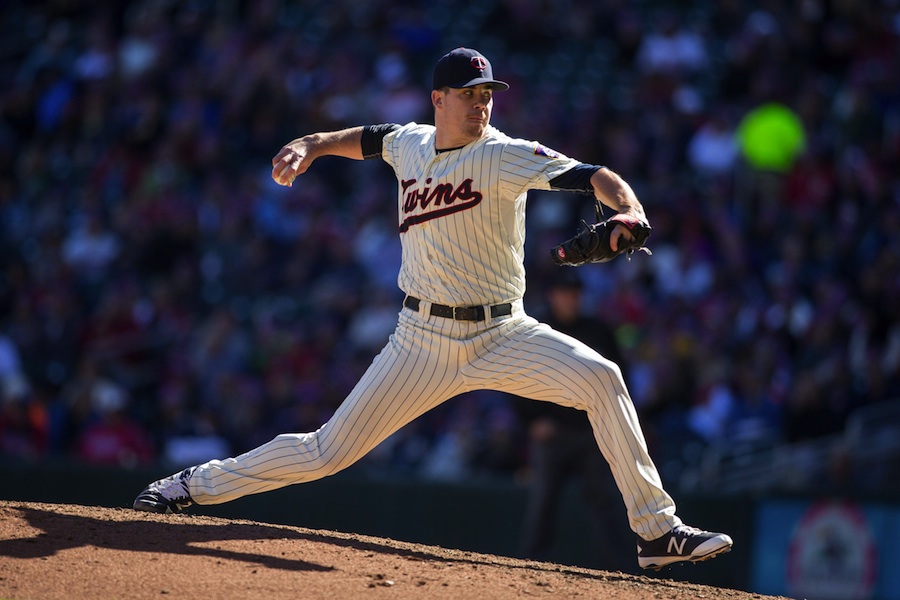
Earlier this week, Paul Molitor confirmed what many of us have expected all along: Trevor May is ticketed for a relief role in 2016. "Unless something changes, he is probably going to be a guy I want to keep out in the bullpen," the manager said in a conference call with season-ticket holders on Tuesday.Now, that isn't exactly an explicit guarantee that May will open the season as a reliever, but it's a big leap from the "We're asking him prepare for spring training as a starter and we'll see what happens" line that Twins officials have been sticking with through most of the offseason. In many ways, this is a frustrating development, both for fans who were eager to see what the right-hander could do with a full-time starting gig, and even more so for May himself. There's little doubt that he would prefer to be in the rotation. If May feels like he's being unfairly victimized for rising to the occasion when asked to transition into an unfamiliar role last year, one could hardly blame him. But it's also pretty easy to see and understand the team's thinking here. As we've discussed frequently, quality bullpens are becoming increasingly imperative in today's game, and in recent weeks we've seen contenders around the league take drastic steps to power up their relief corps. May possesses a higher ceiling, and I would argue a higher floor, than multiple pitchers that will be competing for rotation spots in front of him. His emergence last year as a rare Twins starter capable of actually striking people out was a breath of fresh air, and contributed to much of the promise that we saw in this starting unit going forward. Removing him from that mix puts a damper on the outlook for the rotation, but there are still quite a few respectable names in play. Even if you've completely given up on Ricky Nolasco (I haven't), you've still got Ervin Santana, Phil Hughes, Kyle Gibson, Tommy Milone, Tyler Duffey and Jose Berrios vying for spots. And it's important to remember that the 26-year-old May's fate is not being permanently sealed by any means. If injuries strike or multiple starters unravel, stretching May out and reverting him to his natural role isn't all that difficult. Moreover, if some of the big relief arms in the minors turn the corner, May can go back to starting in 2017. Adam Wainwright came up for the Cardinals as a starter but spent his full rookie season as a late-inning reliever in 2006; the next year they moved him back to the rotation and the rest is history. Right now, with those aforementioned relief prospects still uncertainties at best, the Twins quite simply need May more in the bullpen than in the rotation. While the latter is far from an obvious strong point, they do have some reliable quality within that group. The relief picture is far more jumbled, and that's a serious concern that could put them at a significant competitive disadvantage. With what he showed last year in his first prolonged exposure in the pen, May has given us plenty of reason to believe he can be a shut-down setup man and perhaps the club's bullpen ace. As well as he performed when thrown into the fire, I'm very interested to see what he can do heading into a season with the preparation and mindset of a relief pitcher. Would it be nice if the Twins went out and got themselves an impact relief arm via trade or free agency rather than further clouding a murky bullpen situation by gambling on a bunch of minor-league contracts? Yes, and they still might. Depth is good. But when they look at May, they see a guy who is every bit as capable as some of the veterans getting expensive three-year deals, and one who provides them with a lot more flexibility and freedom going forward. For now, it's the right call. ~~~ Not everyone agrees, of course. Tom Froemming argues that Trevor May should be in the rotation. What do you think? Click here to view the article
-
 Now, that isn't exactly an explicit guarantee that May will open the season as a reliever, but it's a big leap from the "We're asking him prepare for spring training as a starter and we'll see what happens" line that Twins officials have been sticking with through most of the offseason. In many ways, this is a frustrating development, both for fans who were eager to see what the right-hander could do with a full-time starting gig, and even more so for May himself. There's little doubt that he would prefer to be in the rotation. If May feels like he's being unfairly victimized for rising to the occasion when asked to transition into an unfamiliar role last year, one could hardly blame him. But it's also pretty easy to see and understand the team's thinking here. As we've discussed frequently, quality bullpens are becoming increasingly imperative in today's game, and in recent weeks we've seen contenders around the league take drastic steps to power up their relief corps. May possesses a higher ceiling, and I would argue a higher floor, than multiple pitchers that will be competing for rotation spots in front of him. His emergence last year as a rare Twins starter capable of actually striking people out was a breath of fresh air, and contributed to much of the promise that we saw in this starting unit going forward. Removing him from that mix puts a damper on the outlook for the rotation, but there are still quite a few respectable names in play. Even if you've completely given up on Ricky Nolasco (I haven't), you've still got Ervin Santana, Phil Hughes, Kyle Gibson, Tommy Milone, Tyler Duffey and Jose Berrios vying for spots. And it's important to remember that the 26-year-old May's fate is not being permanently sealed by any means. If injuries strike or multiple starters unravel, stretching May out and reverting him to his natural role isn't all that difficult. Moreover, if some of the big relief arms in the minors turn the corner, May can go back to starting in 2017. Adam Wainwright came up for the Cardinals as a starter but spent his full rookie season as a late-inning reliever in 2006; the next year they moved him back to the rotation and the rest is history. Right now, with those aforementioned relief prospects still uncertainties at best, the Twins quite simply need May more in the bullpen than in the rotation. While the latter is far from an obvious strong point, they do have some reliable quality within that group. The relief picture is far more jumbled, and that's a serious concern that could put them at a significant competitive disadvantage. With what he showed last year in his first prolonged exposure in the pen, May has given us plenty of reason to believe he can be a shut-down setup man and perhaps the club's bullpen ace. As well as he performed when thrown into the fire, I'm very interested to see what he can do heading into a season with the preparation and mindset of a relief pitcher. Would it be nice if the Twins went out and got themselves an impact relief arm via trade or free agency rather than further clouding a murky bullpen situation by gambling on a bunch of minor-league contracts? Yes, and they still might. Depth is good. But when they look at May, they see a guy who is every bit as capable as some of the veterans getting expensive three-year deals, and one who provides them with a lot more flexibility and freedom going forward. For now, it's the right call. ~~~ Not everyone agrees, of course. Tom Froemming argues that Trevor May should be in the rotation. What do you think?
 -
Things have played out slowly this offseason for the Minnesota Twins since the early splashes with Byung Ho Park and John Ryan Murphy. We're still waiting for significant moves to address the roster's remaining holes, but the organization did announce a series of minor-league signings on Tuesday. For a couple of reasons, this group is worthy of a closer look.In recent years, players signed to minor-league deals have frequently ended up on the Opening Day roster. Recent examples include Blaine Boyer, Shane Robinson, Jason Kubel, Jason Bartlett, Wilkin Ramirez and Jared Burton. Granted, those players all had spring training invites attached to their contracts, and to my knowledge none of the newly signed guys do. But considering that these acquisitions all have some MLB experience, and all conspicuously add depth at areas that are very much in flux on the big-league roster, they are noteworthy. It wouldn't be too surprising to see any of the four appear for the Twins next year. Darin Mastroianni, OF Hey, we know him! The Twins have been on the hunt for a fourth outfielder – a role that Mastroianni filled in Minnesota for parts of three seasons. He's a poor candidate for that role now, offering no real stand-out skills other than base-stealing, but he can play all around the outfield and will provide some depth at Rochester. Wilfredo Tovar, SS How many shortstops do the Twins have that they can trust defensively? Eduardo Escobar is good, but Danny Santana is overly error-prone, and Eduardo Nunez is more of an emergency option at the position. Many believe that Jorge Polanco will end up at second. Mike Berardino reported on Tuesday that Engelb Vielma, a slick-gloved 21-year-old, will be invited to big-league camp. He might be the best defensive shortstop in the organization, but he hasn't played above Single-A and has a .306 slugging percentage in the minors. Tovar comes over from the Mets system with a very good reputation as a fielder, and he has had a couple sips of coffee in the majors, though he doesn't hit much. It doesn't hurt to add another quality shortstop glove into the mix, and Tovar is still only 24. Brandon Kintzler, RHP Kintzler has quite a bit of experience at the highest level, having compiled 172 appearances for the Milwaukee Brewers over the past six seasons, all out of the bullpen. At his best, he was a reliable setup man, routinely pitching the eighth inning ahead of closer Jim Henderson in 2013. Kintzler has been hampered by shoulder issues recently, but the same was also true of Jared Burton when the Twins picked him up under similar circumstances. That didn't turn out too badly. Buddy Boshers, LHP By all accounts, finding lefty relief help is currently Ryan's top priority. Bosher, a 27-year-old who hasn't pitched in the majors outside of a brief stint in 2013, is a bit of a long shot, but he is probably the most intriguing player in this batch. A former fourth-round pick by the Angels, has shown some ability in the minors, averaging a strikeout per inning while posting a 3.67 ERA over seven seasons. Last year he pitched for the Somerset Patriots in indy ball, and must have caught the eye of the Twins scouting department while putting up a 1.00 ERA, 0.98 WHIP and 71-to-14 K/BB ratio out in 54 relief appearances. Bosher is a lotto ticket, but he does offer some enigmatic upside that you don't typically find with these kinds of signings. Plus, that name! He's one to keep an eye on. Click here to view the article
-
 In recent years, players signed to minor-league deals have frequently ended up on the Opening Day roster. Recent examples include Blaine Boyer, Shane Robinson, Jason Kubel, Jason Bartlett, Wilkin Ramirez and Jared Burton. Granted, those players all had spring training invites attached to their contracts, and to my knowledge none of the newly signed guys do. But considering that these acquisitions all have some MLB experience, and all conspicuously add depth at areas that are very much in flux on the big-league roster, they are noteworthy. It wouldn't be too surprising to see any of the four appear for the Twins next year. Darin Mastroianni, OF Hey, we know him! The Twins have been on the hunt for a fourth outfielder – a role that Mastroianni filled in Minnesota for parts of three seasons. He's a poor candidate for that role now, offering no real stand-out skills other than base-stealing, but he can play all around the outfield and will provide some depth at Rochester. Wilfredo Tovar, SS How many shortstops do the Twins have that they can trust defensively? Eduardo Escobar is good, but Danny Santana is overly error-prone, and Eduardo Nunez is more of an emergency option at the position. Many believe that Jorge Polanco will end up at second. Mike Berardino reported on Tuesday that Engelb Vielma, a slick-gloved 21-year-old, will be invited to big-league camp. He might be the best defensive shortstop in the organization, but he hasn't played above Single-A and has a .306 slugging percentage in the minors. Tovar comes over from the Mets system with a very good reputation as a fielder, and he has had a couple sips of coffee in the majors, though he doesn't hit much. It doesn't hurt to add another quality shortstop glove into the mix, and Tovar is still only 24. Brandon Kintzler, RHP Kintzler has quite a bit of experience at the highest level, having compiled 172 appearances for the Milwaukee Brewers over the past six seasons, all out of the bullpen. At his best, he was a reliable setup man, routinely pitching the eighth inning ahead of closer Jim Henderson in 2013. Kintzler has been hampered by shoulder issues recently, but the same was also true of Jared Burton when the Twins picked him up under similar circumstances. That didn't turn out too badly. Buddy Boshers, LHP By all accounts, finding lefty relief help is currently Ryan's top priority. Bosher, a 27-year-old who hasn't pitched in the majors outside of a brief stint in 2013, is a bit of a long shot, but he is probably the most intriguing player in this batch. A former fourth-round pick by the Angels, has shown some ability in the minors, averaging a strikeout per inning while posting a 3.67 ERA over seven seasons. Last year he pitched for the Somerset Patriots in indy ball, and must have caught the eye of the Twins scouting department while putting up a 1.00 ERA, 0.98 WHIP and 71-to-14 K/BB ratio out in 54 relief appearances. Bosher is a lotto ticket, but he does offer some enigmatic upside that you don't typically find with these kinds of signings. Plus, that name! He's one to keep an eye on.
 -
Article: What Holes Still Must Be Filled?
Nick Nelson replied to Nick Nelson's topic in Twins Daily Front Page News
Really? Because last year both May and Pelfrey were out of the rotation that the Twins announced at the end of spring training, and were both in it two weeks later. You are drastically underestimating the amount of rotation turnover that takes place throughout a season, even in the early weeks. -
Article: What Holes Still Must Be Filled?
Nick Nelson replied to Nick Nelson's topic in Twins Daily Front Page News
He did have a horrible year. But he's 24 and that horrible year was preceded by a bunch of very good ones. You don't give up on a young hitter of Arcia's caliber because of one bad season. With a corner outfield spot open, and with a couple young outfielders likely to be ready after a couple weeks (or months) in the minors, this seems like a good opportunity to let Arcia sink or swim. I'm optimistic that he'll bounce back. -
Article: What Holes Still Must Be Filled?
Nick Nelson replied to Nick Nelson's topic in Twins Daily Front Page News
I see a lot of people grumbling about the idea of Milone and (especially) Nolasco in the rotation over Duffey and Berrios to start the year. I think it's important to keep in mind that nothing on Opening Day is permanent. Obviously, much of this will be dictated in spring training, for better or worse. If Nolasco looks like crap I don't think they're going to just throw him into the rotation anyway. However, I do believe he will have a leg up. The Twins are paying him a lot of money to start games and he hasn't really had an extended chance to do so when healthy over the last two years. If they're going to take a drastic step like sending Nolasco to the bullpen or (even more so) a straight-up release, I think they want to be sure he can't help them as a starter. There's not a lot of risk in giving him a month's worth of starts out of the gates, especially when you look at the service time benefits of giving Berrios at least a few weeks at Triple-A. As far as Milone goes, again, that's going to play out in ST but I think the Twins like having a lefty in the rotation, he has an experience edge over Duffey/Berrios, and I'm not sure he does much for you as a reliever. It's important to keep in mind that last year was something of an outlier for the Twins in terms of rotation stability. Outside of Nolasco, they didn't really have anyone get seriously hurt or melt down. I wouldn't expect the same thing this year. Depth is important. To me, starting the year with Nolasco and Milone in the rotation is the best way to preserve that depth and keep quality arms at the ready. -
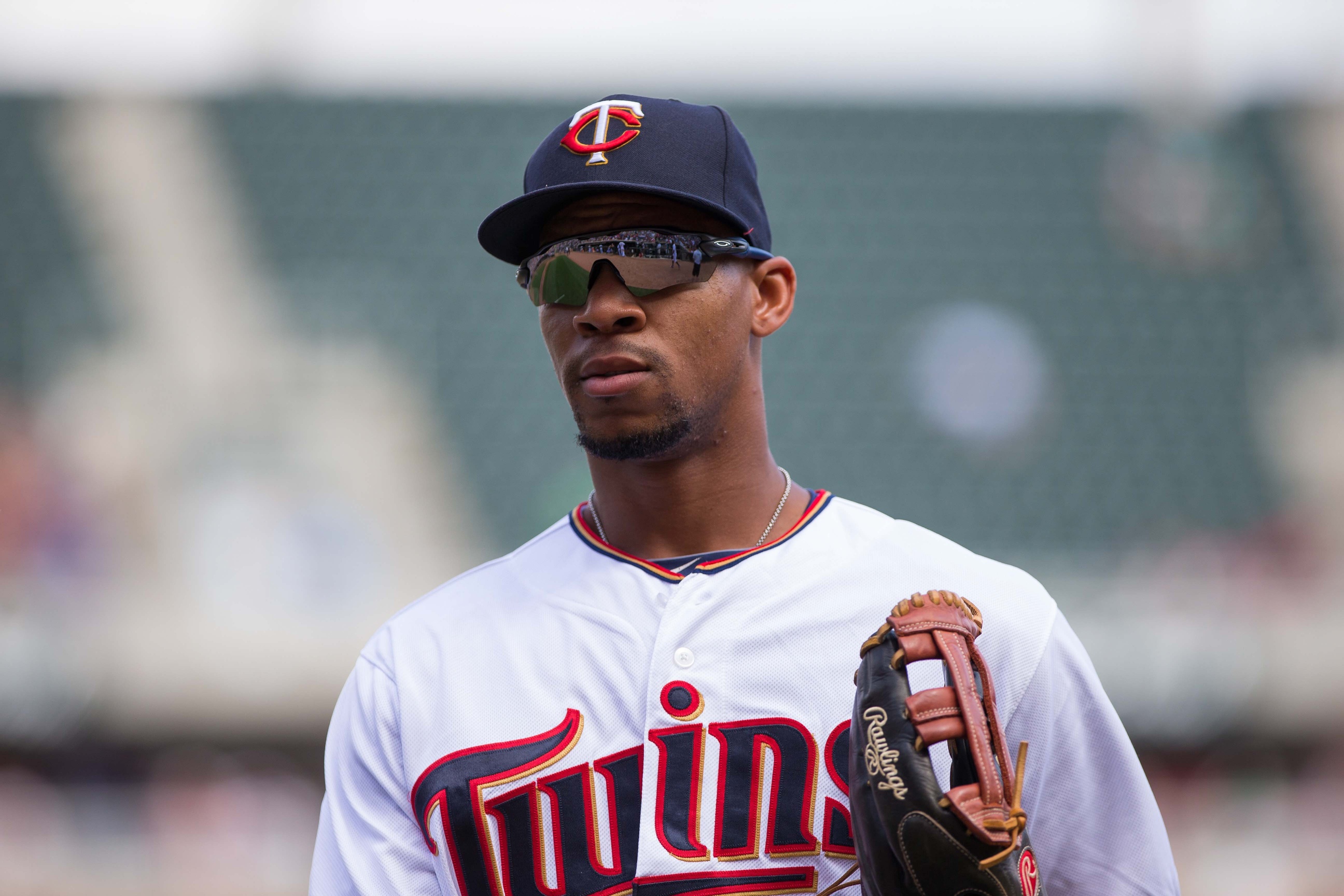
Terry Ryan came away from last week's Winter Meetings without any significant roster additions, but the general manager made it clear that progress was made on various fronts, and that he expects to complete at least one move within the coming weeks. To get an idea of what he and the front office need to get done in the remaining two months of the offseason, let's take a look at how a 2016 club might come together if the present configuration were to go unchanged. Where can the Twins reasonably rely on internal options to fill holes? Where do they absolutely need outside help?CATCHER Starter: Kurt Suzuki Backup: John Ryan Murphy Depth: John Hicks, Stuart Turner, Mitch Garver It looks like this is the group they'll head into the season with. This might not be the emphatic upgrade fans were hoping for after the catcher position emerged as a major problem spot in 2015, but the Twins are banking on Suzuki returning closer to his (albeit mediocre) career norm while the 24-year-old Murphy builds on his impressive .277/.327/.406 line from this year with the Yankees. INFIELD 1B: Joe Mauer 2B: Brian Dozier SS: Eduardo Escobar 3B: Trevor Plouffe Backups: Eduardo Nunez and Danny Santana Depth: Jorge Polanco, James Beresford Ryan keeps insisting that he's not shopping Plouffe, and there haven't been many rumors popping up surrounding the third baseman's market, so at this point we're operating under the assumption that he's going to be here. Nunez and Santana are actually a pretty nice backup duo, with each offering the versatility to play multiple infield and outfield positions while bringing some speed and offensive upside. Though Plouffe's status remains up in the air, Minnesota certainly doesn't need to make any further additions in the infield. OUTFIELD LF: Miguel Sano CF: Eddie Rosario RF: Oswaldo Arcia Backups: ? Depth: Byron Buxton, Max Kepler, Adam Walker, Daniel Palka As I see it, the plan is for Buxton to start in Triple-A, but the Twins will give him a chance to win the center field job with a convincing demonstration in spring training. Ryan has said that he views Sano as a better fit in right field, but Molitor prefers him in left and it's his call so that's what we'll go with for now. Whichever way you situate them, Sano and Arcia in the outfield corners has the potential to be a disaster, and it's a little surprising that the Twins would move forward with such an arrangement after seeing first-hand the benefits of a stellar defensive outfield (i.e. Rosario-Buxton-Hicks). Obviously Arcia is a question mark in every regard. Between all of the players listed above (each of whom is 24 or younger, by the way), I'd be fairly confident that the Twins can find a respectable starting trio, but the need for another veteran addition is obvious. Such a player would add experience to a group lacking it, and would lessen the pressure to push an unprepared kid into a starting role if neither Arcia, Buxton, nor Kepler proves ready in camp. The Twins have reportedly shown interest in Rajai Davis, who strikes me as a perfect fit. DESIGNATED HITTER Starter: Byung Ho Park Depth: Kennys Vargas, Oswaldo Arcia, Adam Walker The wild card. Park will undoubtedly have the job out of the gates, and if he stumbles or gets hurt the Twins have some other bats on hand that could be plugged in. (In addition to the names mentioned, Sano could obviously be moved back to DH, although that's not an ideal option.) STARTERS Rotation: Ervin Santana, Phil Hughes, Kyle Gibson, Tommy Milone, Ricky Nolasco Depth: Tyler Duffey, Trevor May, Jose Berrios, Pat Dean That starting five isn't necessarily going to wow anyone, but each guy has ability and the quality depth provided by young arms like Duffey, Berrios and May makes the risks associated with that group more tolerable. RELIEVERS Closer: Glen Perkins Setup Men: Kevin Jepsen, Casey Fien, Trevor May Middle Relievers: Michael Tonkin, Ryan O'Rourke Depth: Ryan Pressly, J.R. Graham, Aaron Thompson, Taylor Rogers, Alex Meyer, Nick Burdi Clearly, some work needs to be done here. I've got Tonkin and O'Rourke penciled in as middle relievers, but they're hardly more trustworthy than the unproven group on the next line. The Twins have a blatant need for a good left-hander, and would need to add another impact name to that "Setup" group in order to be able to realistically call the bullpen any kind of strength. Working around these assumptions, here's how I would see the 25-man roster, as currently constituted, playing out on Opening Day: C: Kurt Suzuki 1B: Joe Mauer 2B: Brian Dozier SS: Eduardo Escobar 3B: Trevor Plouffe LF: Miguel Sano CF: Eddie Rosario RF: Oswaldo Arcia DH: Byung Ho Park BN: John Ryan Murphy BN: Danny Santana BN: Eduardo Nunez BN: ? SP: Ervin Santana SP: Phil Hughes SP: Kyle Gibson SP: Tommy Milone SP: Ricky Nolasco RP: Glen Perkins RP: Kevin Jepsen RP: Casey Fien RP: Trevor May RP: Ryan O'Rourke RP: Michael Tonkin RP: ? The question marks certainly need to be addressed, and there are a few other places where Ryan should probably still be seeking to upgrade. What are your thoughts? Click here to view the article
-
 CATCHER Starter: Kurt Suzuki Backup: John Ryan Murphy Depth: John Hicks, Stuart Turner, Mitch Garver It looks like this is the group they'll head into the season with. This might not be the emphatic upgrade fans were hoping for after the catcher position emerged as a major problem spot in 2015, but the Twins are banking on Suzuki returning closer to his (albeit mediocre) career norm while the 24-year-old Murphy builds on his impressive .277/.327/.406 line from this year with the Yankees. INFIELD 1B: Joe Mauer 2B: Brian Dozier SS: Eduardo Escobar 3B: Trevor Plouffe Backups: Eduardo Nunez and Danny Santana Depth: Jorge Polanco, James Beresford Ryan keeps insisting that he's not shopping Plouffe, and there haven't been many rumors popping up surrounding the third baseman's market, so at this point we're operating under the assumption that he's going to be here. Nunez and Santana are actually a pretty nice backup duo, with each offering the versatility to play multiple infield and outfield positions while bringing some speed and offensive upside. Though Plouffe's status remains up in the air, Minnesota certainly doesn't need to make any further additions in the infield. OUTFIELD LF: Miguel Sano CF: Eddie Rosario RF: Oswaldo Arcia Backups: ? Depth: Byron Buxton, Max Kepler, Adam Walker, Daniel Palka As I see it, the plan is for Buxton to start in Triple-A, but the Twins will give him a chance to win the center field job with a convincing demonstration in spring training. Ryan has said that he views Sano as a better fit in right field, but Molitor prefers him in left and it's his call so that's what we'll go with for now. Whichever way you situate them, Sano and Arcia in the outfield corners has the potential to be a disaster, and it's a little surprising that the Twins would move forward with such an arrangement after seeing first-hand the benefits of a stellar defensive outfield (i.e. Rosario-Buxton-Hicks). Obviously Arcia is a question mark in every regard. Between all of the players listed above (each of whom is 24 or younger, by the way), I'd be fairly confident that the Twins can find a respectable starting trio, but the need for another veteran addition is obvious. Such a player would add experience to a group lacking it, and would lessen the pressure to push an unprepared kid into a starting role if neither Arcia, Buxton, nor Kepler proves ready in camp. The Twins have reportedly shown interest in Rajai Davis, who strikes me as a perfect fit. DESIGNATED HITTER Starter: Byung Ho Park Depth: Kennys Vargas, Oswaldo Arcia, Adam Walker The wild card. Park will undoubtedly have the job out of the gates, and if he stumbles or gets hurt the Twins have some other bats on hand that could be plugged in. (In addition to the names mentioned, Sano could obviously be moved back to DH, although that's not an ideal option.) STARTERS Rotation: Ervin Santana, Phil Hughes, Kyle Gibson, Tommy Milone, Ricky Nolasco Depth: Tyler Duffey, Trevor May, Jose Berrios, Pat Dean That starting five isn't necessarily going to wow anyone, but each guy has ability and the quality depth provided by young arms like Duffey, Berrios and May makes the risks associated with that group more tolerable. RELIEVERS Closer: Glen Perkins Setup Men: Kevin Jepsen, Casey Fien, Trevor May Middle Relievers: Michael Tonkin, Ryan O'Rourke Depth: Ryan Pressly, J.R. Graham, Aaron Thompson, Taylor Rogers, Alex Meyer, Nick Burdi Clearly, some work needs to be done here. I've got Tonkin and O'Rourke penciled in as middle relievers, but they're hardly more trustworthy than the unproven group on the next line. The Twins have a blatant need for a good left-hander, and would need to add another impact name to that "Setup" group in order to be able to realistically call the bullpen any kind of strength. Working around these assumptions, here's how I would see the 25-man roster, as currently constituted, playing out on Opening Day: C: Kurt Suzuki 1B: Joe Mauer 2B: Brian Dozier SS: Eduardo Escobar 3B: Trevor Plouffe LF: Miguel Sano CF: Eddie Rosario RF: Oswaldo Arcia DH: Byung Ho Park BN: John Ryan Murphy BN: Danny Santana BN: Eduardo Nunez BN: ? SP: Ervin Santana SP: Phil Hughes SP: Kyle Gibson SP: Tommy Milone SP: Ricky Nolasco RP: Glen Perkins RP: Kevin Jepsen RP: Casey Fien RP: Trevor May RP: Ryan O'Rourke RP: Michael Tonkin RP: ? The question marks certainly need to be addressed, and there are a few other places where Ryan should probably still be seeking to upgrade. What are your thoughts?
 -
It's pretty tough to put a good face on this one. Sure, there is plenty of offseason left to go, but what we've seen at this week's Winter Meetings has been a roundly discouraging display from Terry Ryan and the Twins front office. While their inactivity during this Hot Stove hotbed may not be historically atypical, it certainly comes off much more poorly now than it has in the past.The reaction to this uneventful week in Nashville, from many longtime Twins fans, has been a shrug of the shoulders. "What did you expect?" That is fair, to an extent, but the circumstances and stakes were significantly different this time around than in previous years. The Twins headed to Nashville with a very specific need, by their own admission. Not only did they fail to address it, but by all accounts they showed little interest in even trying to address it in a meaningful way. While top free agent relievers like Darren O'Day, Joakim Soria and Shawn Kelley have come off the board, the Twins stood pat, with reporters concluding that the club's sole focus was on adding a left-handed reliever. That makes some sense. Although the Twins lack any clearly exceptional right-handers in the bullpen, they undeniably have a stronger need for at least one lefty. But La Velle E. Neal III reported that the top southpaws on the market, Antonio Bastardo and Tony Sipp (who signed with Houston today), were not even on the team's radar. If that wording is to be believed, the Twins didn't even have material interest in pursuing the most impactful options at an area of need when all it would have cost was money. For a club that purportedly has championship aspirations and plentiful payroll flexibility, that's a tough pill to swallow. What makes this passive approach to addressing the bullpen all the more frustrating is that throughout the league, other contenders are stacking up dominant back-end relief units, putting the Twins well behind the pack. Here are the top three relievers, presently, for five likely postseason contenders in the American League following Houston's acquisition of Philly phenom Ken Giles on Thursday: Royals: Wade Davis, Kelvin Herrera, Joakim Soria Astros: Ken Giles, Luke Gregerson, Tony Sipp Yankees: Andrew Miller, Dellin Betances, Chasen Shreve Red Sox: Craig Kimbrel, Koji Uehara, Carson Smith Tigers: Francisco Rodriguez, Mark Lowe, Justin Wilson With the exception of Shreve (and I'm guessing the Yanks aren't done yet), every name listed there is an established premier relief arm. The Twins don't currently have one of those on their staff outside of Glen Perkins, whose status is somewhat in doubt. They had ample opportunity to target such a player this week but evidently elected not to. And while the possibilities of a major free agent signing or transformative trade remain in play, it's becoming increasingly difficult to believe that Ryan and the Twins are willing to take the steps necessary to bolster their bullpen to a point where it could even hold a candle to the ones listed above. Instead, all we've seen them do this week is weaken their outlook in the relief corps. On Thursday, the Milwaukee Brewers selected reliever Zack Jones from Minnesota in the Rule 5 draft. The 2012 fourth-round pick throws some serious gas and has put together a 2.63 ERA while averaging 12.8 K/9 on the farm, but was perplexingly left unprotected when the Twins made a series of 40-man roster moves last month. Jones has his flaws, to be sure, but his upside is undeniable and his penchant for missing bats has held steady as he has climbed the minor-league ranks. That a Twins team that ranked last in the majors in bullpen K-rate this year, and appears to be relying almost completely on its prospect pipeline to alleviate that issue, would allow a nearly MLB-ready player like Jones to slip away while opting instead to protect a low-ceiling mediocrity like Pat Dean -- who is completely redundant on the 40-man with southpaws like Logan Darnell and Taylor Rogers present -- signals a disheartening miscalculation of priorities. As much as I'd like to believe that this organization is evolving into a committed and dedicated winner with the proper mentality to succeed, weeks like this one really make me skeptical. Click here to view the article
-
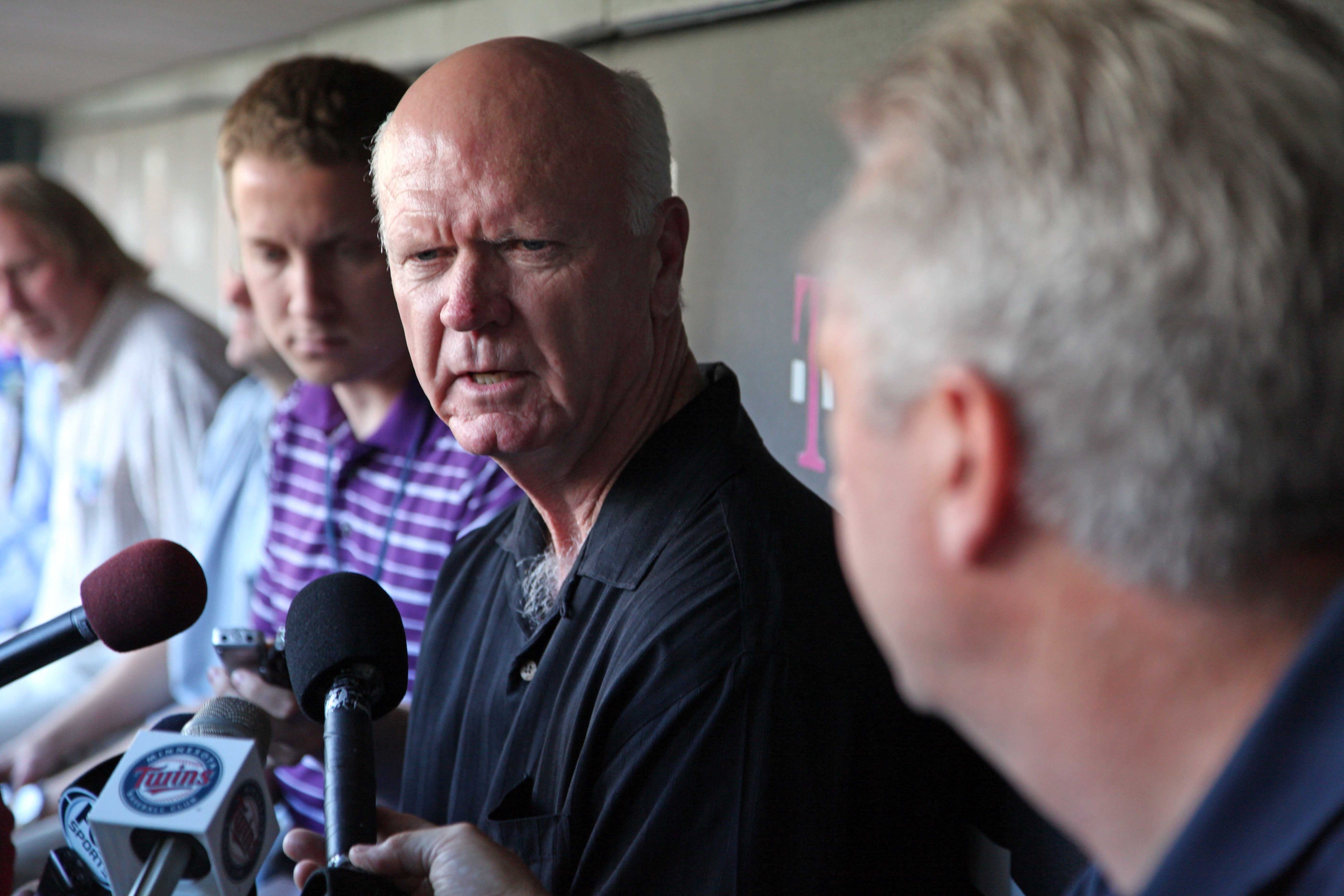 The reaction to this uneventful week in Nashville, from many longtime Twins fans, has been a shrug of the shoulders. "What did you expect?" That is fair, to an extent, but the circumstances and stakes were significantly different this time around than in previous years. The Twins headed to Nashville with a very specific need, by their own admission. Not only did they fail to address it, but by all accounts they showed little interest in even trying to address it in a meaningful way. While top free agent relievers like Darren O'Day, Joakim Soria and Shawn Kelley have come off the board, the Twins stood pat, with reporters concluding that the club's sole focus was on adding a left-handed reliever. That makes some sense. Although the Twins lack any clearly exceptional right-handers in the bullpen, they undeniably have a stronger need for at least one lefty. But La Velle E. Neal III reported that the top southpaws on the market, Antonio Bastardo and Tony Sipp (who signed with Houston today), were not even on the team's radar. If that wording is to be believed, the Twins didn't even have material interest in pursuing the most impactful options at an area of need when all it would have cost was money. For a club that purportedly has championship aspirations and plentiful payroll flexibility, that's a tough pill to swallow. What makes this passive approach to addressing the bullpen all the more frustrating is that throughout the league, other contenders are stacking up dominant back-end relief units, putting the Twins well behind the pack. Here are the top three relievers, presently, for five likely postseason contenders in the American League following Houston's acquisition of Philly phenom Ken Giles on Thursday: Royals: Wade Davis, Kelvin Herrera, Joakim Soria Astros: Ken Giles, Luke Gregerson, Tony Sipp Yankees: Andrew Miller, Dellin Betances, Chasen Shreve Red Sox: Craig Kimbrel, Koji Uehara, Carson Smith Tigers: Francisco Rodriguez, Mark Lowe, Justin Wilson With the exception of Shreve (and I'm guessing the Yanks aren't done yet), every name listed there is an established premier relief arm. The Twins don't currently have one of those on their staff outside of Glen Perkins, whose status is somewhat in doubt. They had ample opportunity to target such a player this week but evidently elected not to. And while the possibilities of a major free agent signing or transformative trade remain in play, it's becoming increasingly difficult to believe that Ryan and the Twins are willing to take the steps necessary to bolster their bullpen to a point where it could even hold a candle to the ones listed above. Instead, all we've seen them do this week is weaken their outlook in the relief corps. On Thursday, the Milwaukee Brewers selected reliever Zack Jones from Minnesota in the Rule 5 draft. The 2012 fourth-round pick throws some serious gas and has put together a 2.63 ERA while averaging 12.8 K/9 on the farm, but was perplexingly left unprotected when the Twins made a series of 40-man roster moves last month. Jones has his flaws, to be sure, but his upside is undeniable and his penchant for missing bats has held steady as he has climbed the minor-league ranks. That a Twins team that ranked last in the majors in bullpen K-rate this year, and appears to be relying almost completely on its prospect pipeline to alleviate that issue, would allow a nearly MLB-ready player like Jones to slip away while opting instead to protect a low-ceiling mediocrity like Pat Dean -- who is completely redundant on the 40-man with southpaws like Logan Darnell and Taylor Rogers present -- signals a disheartening miscalculation of priorities. As much as I'd like to believe that this organization is evolving into a committed and dedicated winner with the proper mentality to succeed, weeks like this one really make me skeptical.
 -
Article: The Rising Cost Of Relief
Nick Nelson replied to Nick Nelson's topic in Twins Daily Front Page News
Yeah, I was looking back at that one a little skeptically. Our rationale at the time was that he's the only real "closer" with a record of durability on the market and traditionally saves have been overvalued, but I think we're seeing that change right now to some extent, with the perceived value of closers and really good relievers (rightfully) started to merge. Something in the O'Day/Soria range is probably more realistic, though it wouldn't surprise me to see him get a four-year deal considering his age. I dunno, it's not like they were star-caliber pitchers but when you find guys on minor-league deals who give you seasons like Burton's 2012 or Fien's 2013 at a minimal cost, that's pretty damn good. -
Article: The Rising Cost Of Relief
Nick Nelson replied to Nick Nelson's topic in Twins Daily Front Page News
He was mentioned! -
The game of baseball is undergoing a transformation. The role of the bullpen has been gradually gaining prominence for many years (to the chagrin of old-schoolers like Bert Blyleven), but right now we're really seeing these units become more specialized and emphasized. The way the Royals have ridden their dominating relievers to two American League pennants and a World Series win has not gone unnoticed by the 29 other teams.A couple weeks ago I suggested that the best path for the Twins to become a true World Series contender in 2016 was to focus on building an elite bullpen, one that could negate other weaknesses to a degree. We have since seen some of MLB's heaviest hitters follow that same blueprint. The Dodgers reportedly have a trade in the works for Aroldis Chapman to complement Kenley Jensen. The Royals signed Joakim Soria to keep their pen infused with power and negate the loss of Greg Holland. The Red Sox traded a ransom to acquire Craig Kimbrel a month ago despite already having a pretty damn good closer in Koji Uehara, then picked up lights-out setup man Carson Smith from Seattle on Monday. With the game shifting at a fundamental level, the market is responding accordingly. In the past few days alone, we have seen Soria and Baltimore's Darren O'Day sign huge long-term deals at rates that would have been unthinkable for non-closers in the not-so-distant past. Ryan Madson, who had missed three straight seasons before putting together a good 2015 as a sixth/seventh inning guy for Kansas City, amazingly got a three-year, $22 million deal from the Athletics. Terry Ryan has been clear that bolstering the bullpen is his top priority at the Winter Meetings, but will he pay to play? The Twins haven't traditionally made a habit of aggressively attacking the free agent relief market in the past, typically opting for one-year contracts and low-risk fliers. To their credit, they have struck gold on a few occasions through this method with players like Jared Burton and Casey Fien, but that mentality isn't the avenue to a true top-tier relief corps. How much would it cost to add one of the remaining top free agents? Well, our contract projections from the Offseason Handbook have proven fairly accurate thus far, so here's a look at where we pegged some of the other big-name players: Name | Handbook Estimate | Actual Contract Darren O'Day, RH | 3 years, $27M | 4 years, $31M Joakim Soria, RH | 3 years, $27M | 3 years, $25M Mark Lowe, RH | 2 years, $10M | 2 years, $11M Oliver Perez, LH | 2 years, $7M | 2 years, $7M Tyler Clippard, RH | 4 years, $44M | ? Antonio Bastardo, LH | 3 years, $21M | ? Tony Sipp, LH | 3 years, $18M | ? Shawn Kelley, RH | 3 years, $15M | ? Matt Albers, RH | 2 years, $8M | ? Matt Thornton, LH | 1 year, $4M | ? Neal Cotts, LH | 1 year, $3M | ? My hope is that the Twins will make a serious play for someone like Kelley or Tony Sipp, both of whom they have been connected to. My fear is that they'll end up settling for someone like Matt Thornton or Neal Cotts, who are respectable veteran arms but nothing more than that. A big part of the reluctance to move on one of those higher-profile names might be the length of the required commitment; some of those three- and four-year terms are undoubtedly cringeworthy for Ryan given that he has numerous homegrown arms with big potential rising in the system. But the Twins have a lot of question marks across the roster and the bullpen is no exception. Glen Perkins is coming off a brutal finish, Kevin Jepsen has been a fairly ordinary reliever for the majority of his career, Trevor May might end up as a starter, and there are currently no established lefty arms to speak of. Will the Twins, who have undeniably turned a new leaf in their approach over the last few offseasons, take the kind of bold steps necessary to land one of the top remaining free agent relievers, or an impact player via trade? Click here to view the article
-
 A couple weeks ago I suggested that the best path for the Twins to become a true World Series contender in 2016 was to focus on building an elite bullpen, one that could negate other weaknesses to a degree. We have since seen some of MLB's heaviest hitters follow that same blueprint. The Dodgers reportedly have a trade in the works for Aroldis Chapman to complement Kenley Jensen. The Royals signed Joakim Soria to keep their pen infused with power and negate the loss of Greg Holland. The Red Sox traded a ransom to acquire Craig Kimbrel a month ago despite already having a pretty damn good closer in Koji Uehara, then picked up lights-out setup man Carson Smith from Seattle on Monday. With the game shifting at a fundamental level, the market is responding accordingly. In the past few days alone, we have seen Soria and Baltimore's Darren O'Day sign huge long-term deals at rates that would have been unthinkable for non-closers in the not-so-distant past. Ryan Madson, who had missed three straight seasons before putting together a good 2015 as a sixth/seventh inning guy for Kansas City, amazingly got a three-year, $22 million deal from the Athletics. Terry Ryan has been clear that bolstering the bullpen is his top priority at the Winter Meetings, but will he pay to play? The Twins haven't traditionally made a habit of aggressively attacking the free agent relief market in the past, typically opting for one-year contracts and low-risk fliers. To their credit, they have struck gold on a few occasions through this method with players like Jared Burton and Casey Fien, but that mentality isn't the avenue to a true top-tier relief corps. How much would it cost to add one of the remaining top free agents? Well, our contract projections from the Offseason Handbook have proven fairly accurate thus far, so here's a look at where we pegged some of the other big-name players: Name | Handbook Estimate | Actual Contract Darren O'Day, RH | 3 years, $27M | 4 years, $31M Joakim Soria, RH | 3 years, $27M | 3 years, $25M Mark Lowe, RH | 2 years, $10M | 2 years, $11M Oliver Perez, LH | 2 years, $7M | 2 years, $7M Tyler Clippard, RH | 4 years, $44M | ? Antonio Bastardo, LH | 3 years, $21M | ? Tony Sipp, LH | 3 years, $18M | ? Shawn Kelley, RH | 3 years, $15M | ? Matt Albers, RH | 2 years, $8M | ? Matt Thornton, LH | 1 year, $4M | ? Neal Cotts, LH | 1 year, $3M | ? My hope is that the Twins will make a serious play for someone like Kelley or Tony Sipp, both of whom they have been connected to. My fear is that they'll end up settling for someone like Matt Thornton or Neal Cotts, who are respectable veteran arms but nothing more than that. A big part of the reluctance to move on one of those higher-profile names might be the length of the required commitment; some of those three- and four-year terms are undoubtedly cringeworthy for Ryan given that he has numerous homegrown arms with big potential rising in the system. But the Twins have a lot of question marks across the roster and the bullpen is no exception. Glen Perkins is coming off a brutal finish, Kevin Jepsen has been a fairly ordinary reliever for the majority of his career, Trevor May might end up as a starter, and there are currently no established lefty arms to speak of. Will the Twins, who have undeniably turned a new leaf in their approach over the last few offseasons, take the kind of bold steps necessary to land one of the top remaining free agent relievers, or an impact player via trade?
 -
I don't think that's what I said, is it? My point was that I highly doubt they'll have anything close to a decided upon roster or lineup on March 6th. But it will be interesting to see what TR and Co. can accomplish between now and then to trim down some of the wide-reaching uncertainty.
-
Major League Baseball's annual Winter Meetings get underway this week in Nashville, and the Twins have sent a contingent that includes Paul Molitor, Terry Ryan, Rob Antony, Mike Radcliff, and basically every other recognizable name from the front office. I'd like to say that the club could use this opportunity to eliminate some question marks and solidify the state of the roster, but at this point the Twins seem inevitably destined to head into the 2016 season with a group that is, while filled with exciting potential, high on risk and low on certainty.When your big early splash in the offseason is signing an international free agent with no MLB experience and committing to him as designated hitter, you're inherently putting yourself in a precarious position. Byung Ho Park's raw power is undeniable, but the same was true for Kennys Vargas, who entered the 2014 season as the hopeful long-term DH solution. But Park himself isn't the only source of ambiguity, of course. His arrival creates a tricky logjam for the Twins with Miguel Sano's natural position occupied by Trevor Plouffe, who Ryan continues to insist isn't going anywhere. That insistence doesn't mean a lot right now – the GM can't very well openly admit to shopping Plouffe, both because it would diminish leverage and would leave the incumbent third baseman in an unfair spot – but whether or not the Twins make a trade, they're going to face some dangerous risks. Moving the 260-pound Sano to the outfield, where he's never played before, has the potential to be a disaster, and that cannot be ignored. He might be fast for his size, but Sano does not have the speed to cover a ton of ground and that's without accounting for the lack of instincts and reactions built up from experience. The two biggest decision-makers in the organization don't even seem to have agreement upon which outfield corner Sano would be best suited for, as Phil Miller laid out in his article for the Star Tribune last week. "Right now, we are very comfortable … moving Sano to right," said Ryan. "I would say right now, left field is what I would be leaning toward," said Molitor. OK then. Either way, putting Sano at a position where he has to guide his large body around vast and unfamiliar territory while trying not to collide with walls and fellow fielders increases his risk for injury. It also decreases Minnesota's chances of boasting an exceptional outfield defense, which ought to be a focal concern considering the high-contact nature of the pitching staff, and the major role that particular strength played in the success of both the Royals and Mets this year. Trading Ploufe and moving Sano to third base is much less likely to have a significantly negative impact on the team's defense, but would leave the Twins dangerously thin on established right-handed bats to complement Sano at the heart of the order. Brian Dozier hit 28 home runs this year but his second-half tailspin casts some doubt on his outlook. Losing Plouffe on top of Torii Hunter and Aaron Hicks (who has an .808 career OPS from the right side) would leave a whole lot of pressure on Park to produce – perhaps more so than we should realistically expect. Judd Zulgad of 1500 ESPN wrote an interesting column recently suggesting that trading Plouffe would be a mistake and that Park ought to be considered a prospect until he proves otherwise. I think we're already past that point, for all intents and purposes, but it's tough to argue with the core thought process there. This situation is the most prominent and visible point of uncertainty on the current projected roster, but it's far from the only one. Is Eddie Rosario going to play center field or a corner spot? That will be dictated by another unknown: Byron Buxton's readiness to be a major-leaguer. Who will be the fourth outfielder, with Shane Robinson gone and no other internal options fitting the bill especially well? Can the Twins find room in that oufield for Oswaldo Arcia? Where does Danny Santana fit? Both are out of options. Who will be the go-to left-hander in the bullpen? Is Trevor May a starter or reliever? What the heck are they going to do about Ricky Nolasco? The number of moving parts and unanswered questions at play leaves the Twins in an unstable state entering the heart of the offseason. We'll see how creative Ryan can get in trying to reduce his redundancies and create some clarity, but for the most part, we'll have to come to terms with the reality that this team is going to have an awful lot of things to sort out in March. Click here to view the article
-
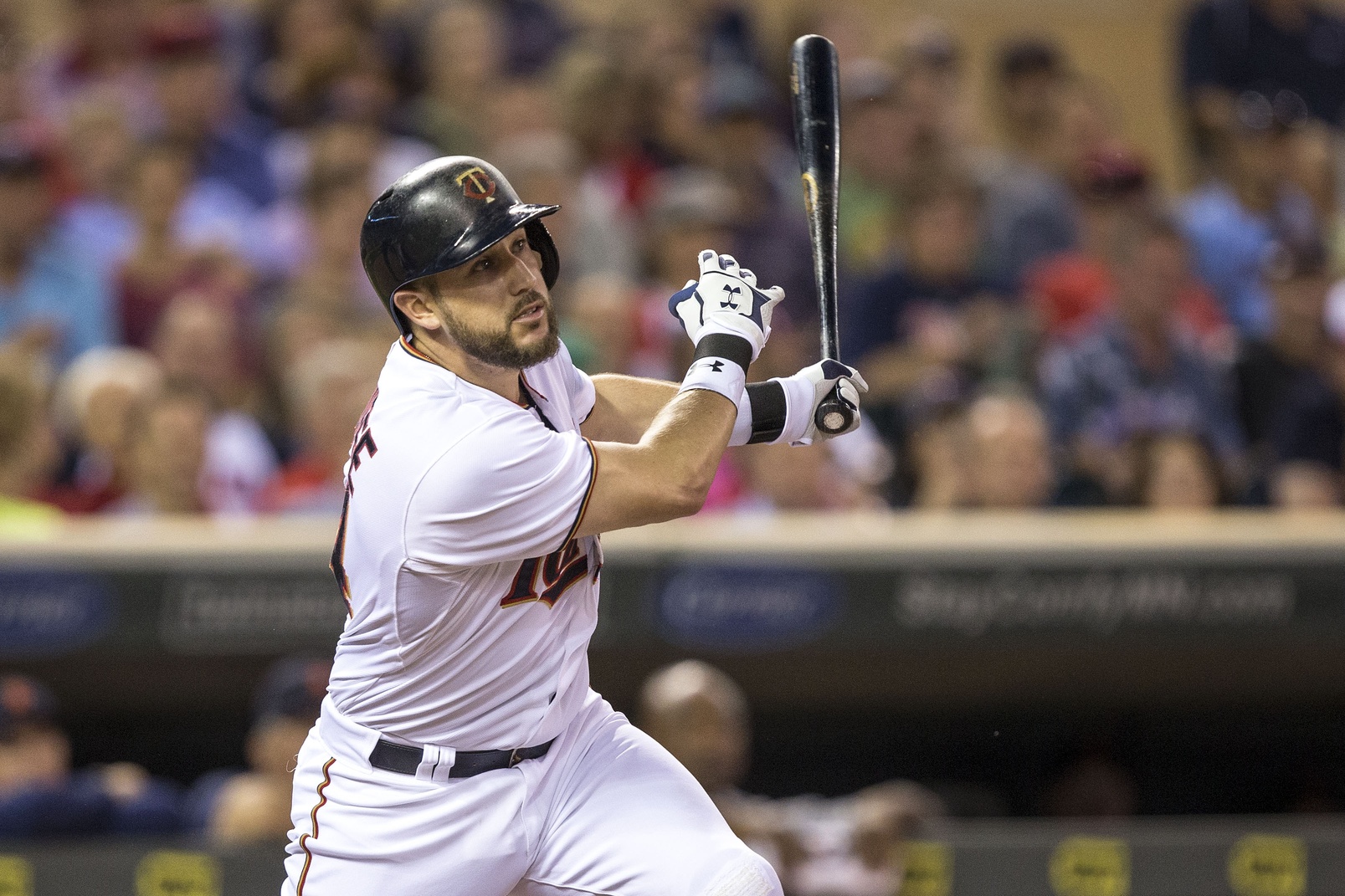 When your big early splash in the offseason is signing an international free agent with no MLB experience and committing to him as designated hitter, you're inherently putting yourself in a precarious position. Byung Ho Park's raw power is undeniable, but the same was true for Kennys Vargas, who entered the 2014 season as the hopeful long-term DH solution. But Park himself isn't the only source of ambiguity, of course. His arrival creates a tricky logjam for the Twins with Miguel Sano's natural position occupied by Trevor Plouffe, who Ryan continues to insist isn't going anywhere. That insistence doesn't mean a lot right now – the GM can't very well openly admit to shopping Plouffe, both because it would diminish leverage and would leave the incumbent third baseman in an unfair spot – but whether or not the Twins make a trade, they're going to face some dangerous risks. Moving the 260-pound Sano to the outfield, where he's never played before, has the potential to be a disaster, and that cannot be ignored. He might be fast for his size, but Sano does not have the speed to cover a ton of ground and that's without accounting for the lack of instincts and reactions built up from experience. The two biggest decision-makers in the organization don't even seem to have agreement upon which outfield corner Sano would be best suited for, as Phil Miller laid out in his article for the Star Tribune last week. "Right now, we are very comfortable … moving Sano to right," said Ryan. "I would say right now, left field is what I would be leaning toward," said Molitor. OK then. Either way, putting Sano at a position where he has to guide his large body around vast and unfamiliar territory while trying not to collide with walls and fellow fielders increases his risk for injury. It also decreases Minnesota's chances of boasting an exceptional outfield defense, which ought to be a focal concern considering the high-contact nature of the pitching staff, and the major role that particular strength played in the success of both the Royals and Mets this year. Trading Ploufe and moving Sano to third base is much less likely to have a significantly negative impact on the team's defense, but would leave the Twins dangerously thin on established right-handed bats to complement Sano at the heart of the order. Brian Dozier hit 28 home runs this year but his second-half tailspin casts some doubt on his outlook. Losing Plouffe on top of Torii Hunter and Aaron Hicks (who has an .808 career OPS from the right side) would leave a whole lot of pressure on Park to produce – perhaps more so than we should realistically expect. Judd Zulgad of 1500 ESPN wrote an interesting column recently suggesting that trading Plouffe would be a mistake and that Park ought to be considered a prospect until he proves otherwise. I think we're already past that point, for all intents and purposes, but it's tough to argue with the core thought process there. This situation is the most prominent and visible point of uncertainty on the current projected roster, but it's far from the only one. Is Eddie Rosario going to play center field or a corner spot? That will be dictated by another unknown: Byron Buxton's readiness to be a major-leaguer. Who will be the fourth outfielder, with Shane Robinson gone and no other internal options fitting the bill especially well? Can the Twins find room in that oufield for Oswaldo Arcia? Where does Danny Santana fit? Both are out of options. Who will be the go-to left-hander in the bullpen? Is Trevor May a starter or reliever? What the heck are they going to do about Ricky Nolasco? The number of moving parts and unanswered questions at play leaves the Twins in an unstable state entering the heart of the offseason. We'll see how creative Ryan can get in trying to reduce his redundancies and create some clarity, but for the most part, we'll have to come to terms with the reality that this team is going to have an awful lot of things to sort out in March.
 -
We learned on Wednesday night that the Twins had elected to tender contracts to all six of their arbitration eligible players. Several members of that group were a given, namely: Eduardo Escobar, Tommy Milone, Trevor Plouffe and Kevin Jepsen. Eduardo Nunez was a little iffy but he did fine in his limited role last year and he'll probably cost the least of the bunch. The most noteworthy decision, in my mind, was tendering Casey Fien.The bullpen has been a primary area of interest for me lately, one that I've written about a few times recently since I view that unit as one where the Twins can make very meaningful and impactful improvements during the offseason. Is bringing Fien back a step in the right direction? He turned 32 last month and his strikeout rate has declined in each of the past two seasons. This year, his 5.8 K/9 rate ranked 125th out of 137 qualified relievers. For a team that ought to have a clear focus on building a more powerful bullpen after finishing 2015 as the only team in the majors with a K/9 rate below 7.0 from its relief corps, bringing back a setup man who has struggled to miss bats like Fien is, on the surface, questionable at best. In fairness, however, there are a few other factors to be taken into account. For one thing, Fien's drop in strikeouts did not coincide with a dip in velocity, reducing concerns that his arm is running out of gas. Indeed, the heightened contact rates appeared to relate to his health, as the strikeouts mostly dried up in the middle of the summer, around the time he was dealing with a shoulder strain. By season's end, he had evidently put those those issues behind him, finishing with a 2.91 ERA and 17 strikeouts in 21 innings over his final 20 appearances. And even with the lack of whiffs, Fien had a good season overall. His 117 ERA+ was his best in a full season. His 1.09 WHIP was undeniably excellent, and exactly what you want from a pitcher getting high-leverage chances. His ability to keep runners off the basepaths was driven in part by his elite control; among qualified relievers, only Oakland's Evan Scribner had a walk rate lower than Fien's 1.1 BB/9. It was the third consecutive season in which Fien has ranked near the top of the league leaderboard in that category, and that is not something to be overlooked. Ultimately, when you account for the righty's proclivity for pounding the strike zone, along with his enduring mid-90s velocity, his strong finish, and the relatively low cost of keeping him around (in the Offseason Handbook, we estimated that he'd make $2.5 million in 2016) the decision to tender him a contract is a very defensible one. The downward strikeout trend is troubling, however, especially on a team that desperately needs to find more K's in the bullpen. All things considered, if Fien is the No. 3 right-hander in the bullpen heading into next season, he's nice to have on board. If he's the second option, routinely being called on to pitch the eighth inning, then some of the concerns surrounding him become magnified. So much will depend on what happens with Trevor May and with the remaining offseason moves. Click here to view the article
-
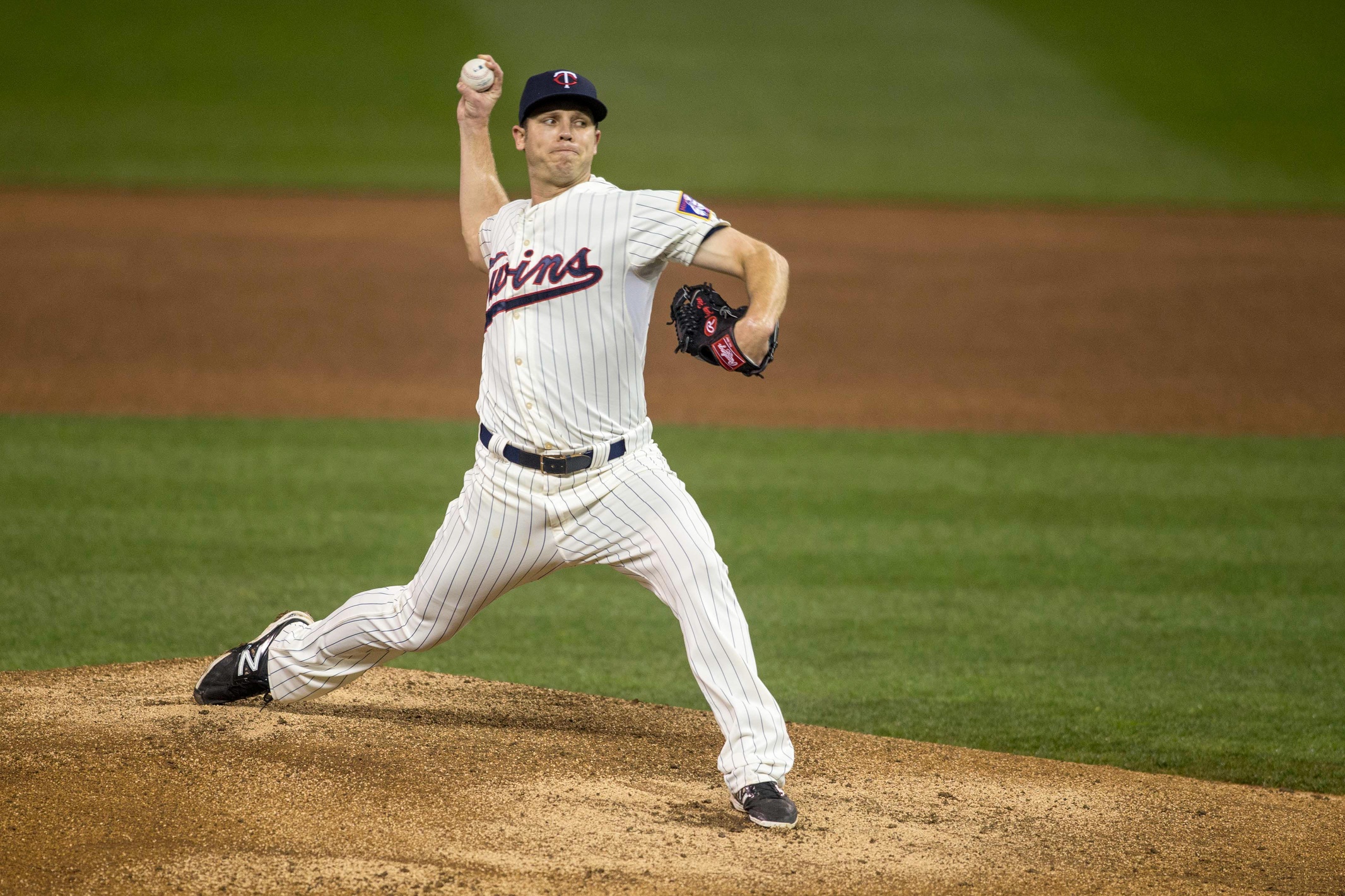 The bullpen has been a primary area of interest for me lately, one that I've written about a few times recently since I view that unit as one where the Twins can make very meaningful and impactful improvements during the offseason. Is bringing Fien back a step in the right direction? He turned 32 last month and his strikeout rate has declined in each of the past two seasons. This year, his 5.8 K/9 rate ranked 125th out of 137 qualified relievers. For a team that ought to have a clear focus on building a more powerful bullpen after finishing 2015 as the only team in the majors with a K/9 rate below 7.0 from its relief corps, bringing back a setup man who has struggled to miss bats like Fien is, on the surface, questionable at best. In fairness, however, there are a few other factors to be taken into account. For one thing, Fien's drop in strikeouts did not coincide with a dip in velocity, reducing concerns that his arm is running out of gas. Indeed, the heightened contact rates appeared to relate to his health, as the strikeouts mostly dried up in the middle of the summer, around the time he was dealing with a shoulder strain. By season's end, he had evidently put those those issues behind him, finishing with a 2.91 ERA and 17 strikeouts in 21 innings over his final 20 appearances. And even with the lack of whiffs, Fien had a good season overall. His 117 ERA+ was his best in a full season. His 1.09 WHIP was undeniably excellent, and exactly what you want from a pitcher getting high-leverage chances. His ability to keep runners off the basepaths was driven in part by his elite control; among qualified relievers, only Oakland's Evan Scribner had a walk rate lower than Fien's 1.1 BB/9. It was the third consecutive season in which Fien has ranked near the top of the league leaderboard in that category, and that is not something to be overlooked. Ultimately, when you account for the righty's proclivity for pounding the strike zone, along with his enduring mid-90s velocity, his strong finish, and the relatively low cost of keeping him around (in the Offseason Handbook, we estimated that he'd make $2.5 million in 2016) the decision to tender him a contract is a very defensible one. The downward strikeout trend is troubling, however, especially on a team that desperately needs to find more K's in the bullpen. All things considered, if Fien is the No. 3 right-hander in the bullpen heading into next season, he's nice to have on board. If he's the second option, routinely being called on to pitch the eighth inning, then some of the concerns surrounding him become magnified. So much will depend on what happens with Trevor May and with the remaining offseason moves.
 -
Now that he has addressed the needs for a catcher and power bat with the additions of John Ryan Murphy and Byung Ho Park, one of Terry Ryan's top priorities will be finding an impact lefty for the bullpen. Here's the latest on some candidates as next week's Winter Meetings approach.* According to Mike Berardino of the Pioneer Press, the Twins "definitely have interest" in bringing back veteran Neal Cotts, who became a free agent at season's end after joining the Twins in August. Cotts, who turns 36 in March, posted a 3.41 ERA and 1.26 WHIP in 68 appearances this year, including 3.95 and 1.39 in 14 late-season appearances with Minnesota. He signed a one-year, $3 million deal with Milwaukee last offseason and figures to get something similar this time around. Cotts has been decent over the past of couple years but if the Twins are truly trying to craft a power pen, they should aim higher for their top lefty option. * In the same article, Berardino reports that free agent Brian Duensing hasn't heard from the Twins. Once a solid southpaw specialist, Duensing has declined steadily over the past few seasons to the point where he was roundly ineffective in 2015. The Twins are expected to move on. * Darren Wolfson of 1500 ESPN tweeted that the Twins have been in contact with Tony Sipp, who ranked as the No. 2 free agent left-handed reliever in the Offseason Handbook following a fantastic season with the Astros. It would probably cost a fair amount to get Sipp signed, but Ryan might be more inclined to meet his asking price given that the 32-year-old is effective against both lefties and righties, providing Paul Molitor more late-inning flexibility. Wolfson mentioned that he didn't get the sense an offer has been made to Sipp. * The best free agent lefty reliever is Antonio Bastardo, who has averaged 11 K/9 in his career and is only 30. In the Handbook we estimated that he would get a three-year, $21 million contract but there has been no public steam surrounding his market up to this point. It looks as though Darren O'Day, a righty who is one of the top relievers in free agency, is poised to sign somewhere soon, and once he does, I'd expect a bunch of other dominos to start falling. * The Rule 5 Draft takes place next Thursday. Ryan and the Twins have used this avenue to add bullpen arms twice in the past three years, though both Ryan Pressly and J.R. Graham were righties. Could the club target a left-handed reliever next Thursday? Baseball America's J.J. Cooper listed several names to remember in his Rule 5 preview last month, and among them were a few hard-throwing southpaws: Chicago's Onelki Garcia, Houston's Reymin Guduan and Kansas City's Sam Selman. All have posted big strikeout rates in the minors, but also have significant control issues that would inhibit their chances of finding fast success in the majors. Another to keep in mind: 22-year-old Cardinals prospect Luis Perdomo, who shares a name with the righty reliever who made 15 appearances for the Twins back in 2012. Click here to view the article
-
 * According to Mike Berardino of the Pioneer Press, the Twins "definitely have interest" in bringing back veteran Neal Cotts, who became a free agent at season's end after joining the Twins in August. Cotts, who turns 36 in March, posted a 3.41 ERA and 1.26 WHIP in 68 appearances this year, including 3.95 and 1.39 in 14 late-season appearances with Minnesota. He signed a one-year, $3 million deal with Milwaukee last offseason and figures to get something similar this time around. Cotts has been decent over the past of couple years but if the Twins are truly trying to craft a power pen, they should aim higher for their top lefty option. * In the same article, Berardino reports that free agent Brian Duensing hasn't heard from the Twins. Once a solid southpaw specialist, Duensing has declined steadily over the past few seasons to the point where he was roundly ineffective in 2015. The Twins are expected to move on. * Darren Wolfson of 1500 ESPN tweeted that the Twins have been in contact with Tony Sipp, who ranked as the No. 2 free agent left-handed reliever in the Offseason Handbook following a fantastic season with the Astros. It would probably cost a fair amount to get Sipp signed, but Ryan might be more inclined to meet his asking price given that the 32-year-old is effective against both lefties and righties, providing Paul Molitor more late-inning flexibility. Wolfson mentioned that he didn't get the sense an offer has been made to Sipp. * The best free agent lefty reliever is Antonio Bastardo, who has averaged 11 K/9 in his career and is only 30. In the Handbook we estimated that he would get a three-year, $21 million contract but there has been no public steam surrounding his market up to this point. It looks as though Darren O'Day, a righty who is one of the top relievers in free agency, is poised to sign somewhere soon, and once he does, I'd expect a bunch of other dominos to start falling. * The Rule 5 Draft takes place next Thursday. Ryan and the Twins have used this avenue to add bullpen arms twice in the past three years, though both Ryan Pressly and J.R. Graham were righties. Could the club target a left-handed reliever next Thursday? Baseball America's J.J. Cooper listed several names to remember in his Rule 5 preview last month, and among them were a few hard-throwing southpaws: Chicago's Onelki Garcia, Houston's Reymin Guduan and Kansas City's Sam Selman. All have posted big strikeout rates in the minors, but also have significant control issues that would inhibit their chances of finding fast success in the majors. Another to keep in mind: 22-year-old Cardinals prospect Luis Perdomo, who shares a name with the righty reliever who made 15 appearances for the Twins back in 2012.
 -
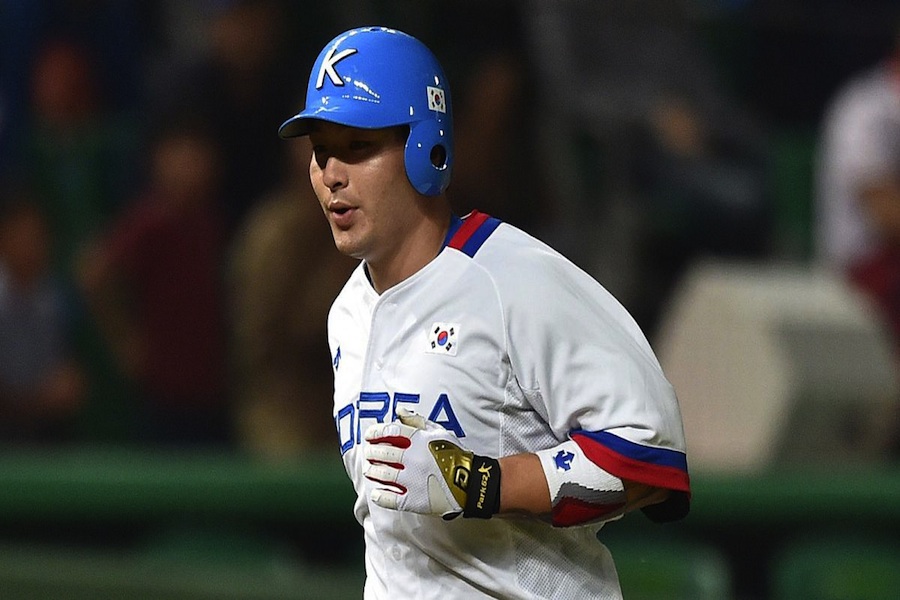 If you're surprised by how low that number is, you're not alone. Five years ago, the Twins signed Tsuyoshi Nishioka to a similar three-year, $9.25 million deal despite his being a far less accomplished player in Japan. Last year, the Pirates signed fellow Korean Jung Ho Kang to a four-year deal worth $11 million, so Park's commitment is only a shade bigger even though Kang paved the way with a highly successful rookie year in Pittsburgh. Of course, the Twins also will pay a $12.85 million posting fee to Nexen, Park's club in Korea, so the total investment here is more substantial than either of the aforementioned examples (Nishioka's posting fee was $5.3 million, Kang's was $5 million). Still, if Park's production translates to the major leagues as the Twins are hoping, he could prove to be a tremendous value. Park is 29, so this contract will lock him up through through his age 32 season. With the big power bat now officially locked in, the Twins will turn their attention to other matters, including a potential Trevor Plouffe trade that would open up third base for Miguel Sano. The Winter Meetings get underway in Nashville next Monday. UPDATE: Here are the specifics of the deal: 2016: $2.75M 2017: $2.75M 2018: $3.00M 2019: $3.00M 2010: Club option for $6.5M with a $0.5M buyout. Max Deal would be 5 years, $18M.


