



Nick Nelson
-
Posts
8,323 -
Joined
-
Last visited
-
Days Won
56
Content Type
Profiles
News
Minnesota Twins Videos
2026 Minnesota Twins Top Prospects Ranking
2022 Minnesota Twins Draft Picks
Minnesota Twins Free Agent & Trade Rumors, Notes, & Tidbits
Guides & Resources
2023 Minnesota Twins Draft Picks
The Minnesota Twins Players Project
2024 Minnesota Twins Draft Picks
2025 Minnesota Twins Draft Pick Tracker
2026 Minnesota Twins Draft Tracker: Picks & Bonuses
Forums
Blogs
Events
Store
Downloads
Gallery
Everything posted by Nick Nelson
-
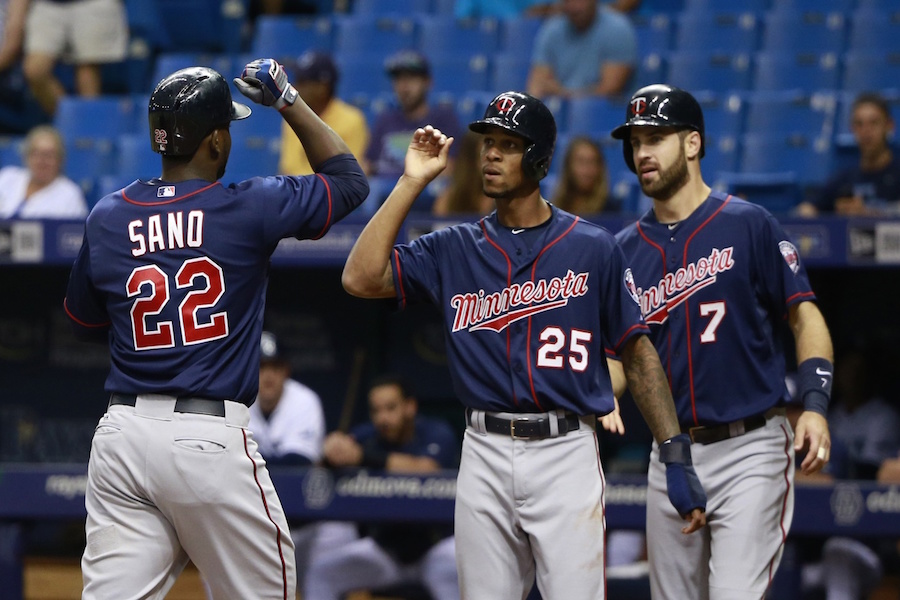 Looking back, the decision to sign Byung Ho Park out of of Korea signaled a monumental shift in the organization's mindset. By making this move – evidently with no plans to trade Trevor Plouffe – the front office was essentially saying, "Defense is a secondary concern. We want more power in the lineup." Well, they've got that. This offense looks like a good bet to finish among the top five in franchise history for home runs. Whether you're looking at the starting lineup, the bench, or the minor leagues, the Twins have power to spare. And they have a young slugger at the heart of the order who I truly believe will be one of the most valuable hitters in the game. READ: Could the Twins hit 200 home runs this year? Even accounting for some potential areas of concern – sophomore regression from Eddie Rosario, continued introductory struggles from Byron Buxton, a difficult transition from Park – this team should score runs. Preventing them will be the make-or-break factor. The starting rotation is moving in the right direction, but still can't be described as a particularly threatening bunch. Kyle Gibson is the de facto No. 1 at this point and he's coming off a year that would best be described as good, not great. Ervin Santana and Phil Hughes are hot-and-cold. Tommy Milone and Ricky Nolasco don't offer a ton of upside. The good news is that, in Tyler Duffey and Jose Berrios, the Twins have better reinforcements on deck than most teams can boast. They like their rotation depth enough that they felt comfortable moving one of their most promising starters to the bullpen, where he lines up as a pivotal piece. Trevor May's presence is the only reason that the lack of any meaningful offseason action on the relief front makes any sense. He might have a larger impact than any free agent the team could have signed. READ: May's strikeout mentality is much-needed in the bullpen. But he might not be enough. Glen Perkins is trying to reverse a two-year declining trend. Kevin Jepsen had been more of a solid middle reliever than dominant setup man before coming to Minnesota. Casey Fien appears to be on the downslope. Fernando Abad is an iffy choice as the go-to lefty. Just like with the rotation, the availability of legitimate impact replacements serves to lessen the bullpen concern. Nick Burdi, Jake Reed, Alex Meyer, J.R. Graham, Taylor Rogers and Ryan O'Rourke are the kinds of arms that profile as meaningful in-season additions, and they'll all be just a phone call away. This dynamic is perhaps the most exciting aspect of the club heading into this 2016 season. The pipeline that the Twins have been putting in place over the past five years is now paying full dividends, with the majority of their best prospects either in the fold or right on the verge. Even if you don't love the composition of the Opening Day roster, there is a lot of quality at the highest levels of the minors. READ: After breakout season, Max Kepler looking toward next level That might not result in a playoff berth. This is a young and inexperienced club that surely has some lumps to take before reaching its true potential. With their quiet offseason, the Twins made a full commitment to letting the kids take the reins, and now we'll really get a chance to see what this group can do. This is a team that warrants more optimism and intrigue than any we've seen around here for at least a half-decade. It's a good time to be a Twins fan.
 -
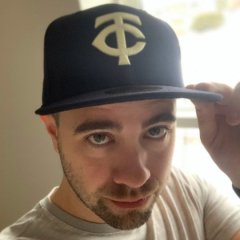 Do the Twins really think that Ricky Nolasco is their best option as fifth starter, or that Michael Tonkin is well suited as a long reliever? Maybe not, but placing the right-handers at the end of the rotation and bullpen buys the team a little more time to find out what they’ve got.When Paul Molitor stated early in spring he expected to have Tyler Duffey in the rotation, it signaled that he was considering pushing Nolasco to the bullpen. Presented with that possibility, the veteran made it clear that he would raise a stink. Alas, Nolasco ends up getting his rotation spot and Duffey starts in Triple-A. Some might see it as the organization relenting to a malcontent, but I see it more as trying to salvage an asset. Had the Twins decided to send Nolasco to the bullpen, it sounds like he would have implored them to trade him somewhere he could start. I’m sure they would love to do that, but he stands no chance of building any kind of market as a mop-up man. If, on the other hand, he gets off to a decent start in the rotation, and some other clubs suffer early losses in their starting corps? That changes things. He’ll never bring back much in a trade but at this point that’s almost immaterial. It would be hard to stomach this course of action if it meant accepting a clear performance downgrade, but that’s not the case. Duffey simply didn’t look very good this spring, and it’s not about the results. The change-up that he’s been dedicated to making a workable third pitch isn’t there. The curveball that he leaned so heavily on as a rookie isn’t having the same kind of effect, even by his own admission. I thought this Duffey quote, in Parker’s story from Fort Myers last week, was telling: “I think guys know it’s coming so they’re sitting on it. One guy took two fastballs. Didn’t even budge. I think he was sitting dead-red on curveball. So that’s where I’m going to have to adjust accordingly.” Sounds like something he needs to work on, and maybe not against major-league hitters. Nolasco throws a ton of breaking balls, but insists his fastball is his most important pitch, as it sets up everything else he does. And whereas Duffey’s key pitch was failing him, Nolasco’s was trending up. This development, much more so than their Grapefruit stats, makes the decision a justifiable one for now. If the veteran gets off to a clunky start while Duffey rolls in Triple-A? Then you make the switch, and at that point Nolasco can complain all he wants but really has no leg left to stand on. Perhaps then the Twins consider a more drastic option like straight-up release. Another hidden benefit of the decision to put Nolasco in the rotation is that it opened up an extra spot in the bullpen and might have saved the Twins from losing Tonkin. The vibe when I was in camp was that the 26-year-old had little chance of making the roster because the team preferred Ryan Pressly and didn’t have room for both. Well, now they do. And I believe it would have been a big mistake to risk giving Tonkin (who is out of options) away on waivers, especially with the questionable overall state of the relief unit. As the last guy in the bullpen, he’ll start out pitching in lower-leverage situations and being called upon after short starts, similar to the role filled last year by Rule 5 draftee J.R. Graham. But Tonkin is certainly more deserving of being in the majors on merit (he has a 2.65 ERA and 9.7 K/9 at Triple-A), and if he performs well he’ll have a chance to work his way into more important innings. Carrying him means they lack a traditional long man in the pen. Giving Nolasco a rotation spot means sending down a guy in Duffey who did everything to earn it last year. But the upside of these decisions is that the Twins might get a solid middle reliever out of the deal, and get a chance to recoup some semblance of value on their $48 million investment in Nolasco. The downside could be losing a few more games. But that downside only extends so far as the team's resistance to implementing quick changes if things go south, and something tells me that won't be an issue. They believe in Nolasco and Tonkin enough to give them one more look, but they're skeptical enough of both that the leashes will be short. Click here to view the article
- 72 replies
-
- 2
-

-
- ricky nolasco
- tyler duffey
- (and 1 more)
-
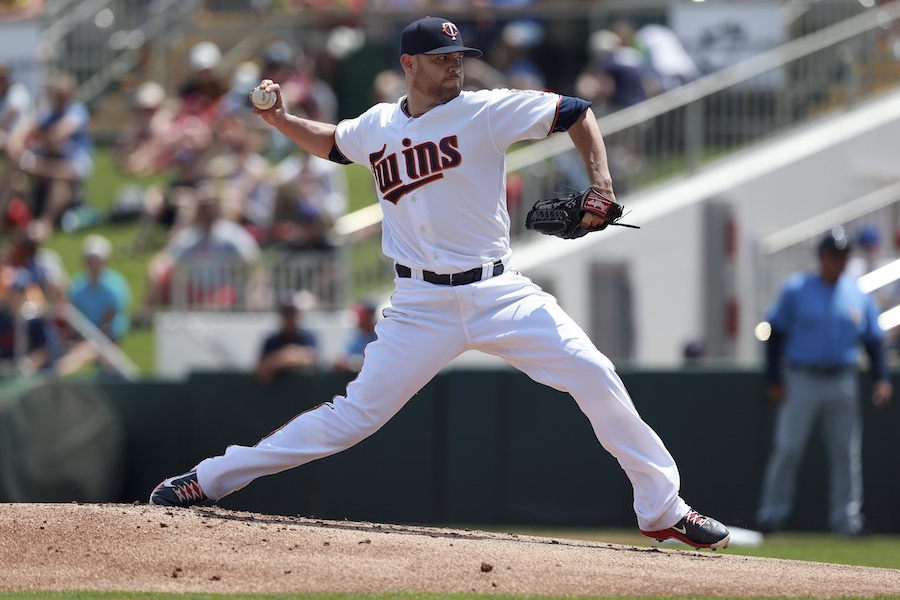 When Paul Molitor stated early in spring he expected to have Tyler Duffey in the rotation, it signaled that he was considering pushing Nolasco to the bullpen. Presented with that possibility, the veteran made it clear that he would raise a stink. Alas, Nolasco ends up getting his rotation spot and Duffey starts in Triple-A. Some might see it as the organization relenting to a malcontent, but I see it more as trying to salvage an asset. Had the Twins decided to send Nolasco to the bullpen, it sounds like he would have implored them to trade him somewhere he could start. I’m sure they would love to do that, but he stands no chance of building any kind of market as a mop-up man. If, on the other hand, he gets off to a decent start in the rotation, and some other clubs suffer early losses in their starting corps? That changes things. He’ll never bring back much in a trade but at this point that’s almost immaterial. It would be hard to stomach this course of action if it meant accepting a clear performance downgrade, but that’s not the case. Duffey simply didn’t look very good this spring, and it’s not about the results. The change-up that he’s been dedicated to making a workable third pitch isn’t there. The curveball that he leaned so heavily on as a rookie isn’t having the same kind of effect, even by his own admission. I thought this Duffey quote, in Parker’s story from Fort Myers last week, was telling: “I think guys know it’s coming so they’re sitting on it. One guy took two fastballs. Didn’t even budge. I think he was sitting dead-red on curveball. So that’s where I’m going to have to adjust accordingly.” Sounds like something he needs to work on, and maybe not against major-league hitters. Nolasco throws a ton of breaking balls, but insists his fastball is his most important pitch, as it sets up everything else he does. And whereas Duffey’s key pitch was failing him, Nolasco’s was trending up. This development, much more so than their Grapefruit stats, makes the decision a justifiable one for now. If the veteran gets off to a clunky start while Duffey rolls in Triple-A? Then you make the switch, and at that point Nolasco can complain all he wants but really has no leg left to stand on. Perhaps then the Twins consider a more drastic option like straight-up release. Another hidden benefit of the decision to put Nolasco in the rotation is that it opened up an extra spot in the bullpen and might have saved the Twins from losing Tonkin. The vibe when I was in camp was that the 26-year-old had little chance of making the roster because the team preferred Ryan Pressly and didn’t have room for both. Well, now they do. And I believe it would have been a big mistake to risk giving Tonkin (who is out of options) away on waivers, especially with the questionable overall state of the relief unit. As the last guy in the bullpen, he’ll start out pitching in lower-leverage situations and being called upon after short starts, similar to the role filled last year by Rule 5 draftee J.R. Graham. But Tonkin is certainly more deserving of being in the majors on merit (he has a 2.65 ERA and 9.7 K/9 at Triple-A), and if he performs well he’ll have a chance to work his way into more important innings. Carrying him means they lack a traditional long man in the pen. Giving Nolasco a rotation spot means sending down a guy in Duffey who did everything to earn it last year. But the upside of these decisions is that the Twins might get a solid middle reliever out of the deal, and get a chance to recoup some semblance of value on their $48 million investment in Nolasco. The downside could be losing a few more games. But that downside only extends so far as the team's resistance to implementing quick changes if things go south, and something tells me that won't be an issue. They believe in Nolasco and Tonkin enough to give them one more look, but they're skeptical enough of both that the leashes will be short.
 -
Article: Three Big Takeaways From Camp
Nick Nelson replied to Nick Nelson's topic in Twins Daily Front Page News
This is getting circular. What I said was that the Twins felt it was their only viable option. They weren't going to uproot a veteran like Plouffe or Mauer and it's not clear that would have been particularly wise.- 36 replies
-
- 1
-
-
- miguel sano
- max kepler
- (and 2 more)
-
Article: Three Big Takeaways From Camp
Nick Nelson replied to Nick Nelson's topic in Twins Daily Front Page News
Obviously. I'm not sure what you're arguing against. When I made the comment about their hand being forced, I meant that once trading Plouffe proved not to be a viable option, they didn't really have any option other than putting Sano in RF. Clearly I'm aware they assembled the personnel that put them in their current position.- 36 replies
-
- 2
-
-
- miguel sano
- max kepler
- (and 2 more)
-
Article: Calling It: Miguel Sano Will Be AL MVP
Nick Nelson replied to Nick Nelson's topic in Twins Daily Front Page News
Obviously this idea is contingent on him cutting down the strikeouts somewhat. I don't think that's unreasonable. Thirty-five percent is crazy. -
There's plenty of reason for skepticism regarding Miguel Sano's defense in right field. But at the plate, his masterful approach and incredible power should do more than make up for it. I believe that if he stays healthy, he'll outshine all other hitters in the American League on his way to a Most Valuable Player award in his first full season.The Twins were aided by so many strong rookie performances last year that the term "sophomore slump" can't help but be uttered this spring. It's certainly legitimate to wonder whether the league might adjust in Year 2 to Eddie Rosario's free-swinging tendencies, or Tyler Duffey's two-pitch mix. Somehow that seems hard to envision with Sano. His approach at the plate is impeccable. There's not really a weakness to exploit. He'll strike out, sure – in bunches sometimes – but Sano demonstrates such patience at the dish and works so many deep counts that he's invariably going to force mistakes. Taking advantage of those has never exactly been a problem for him. As a rookie, Sano ran the count full in 93 of his 335 plate appearances. That's 28 percent. The major-league leader in full counts was Cincinnati's Joey Votto, who got there 173 times in 695 PA (25 percent). The American League leader was Mike Trout (21 percent). Votto led the majors in walks. Trout hit 41 home runs with brilliant defense in center field. Both are former MVP recipients. Sano's profile differs from each, but he has traits that have traditionally been valued very highly by award voters. With his immense power and his placement in the middle of a quality lineup, Sano figures to put up outstanding numbers in the home run and RBI categories. His big personality and occasional bravado will endear him to the baseball world. The distance, and often dramatic nature, of his majestic homers can make him a steady presence on highlight reels. His defense, which is likely to be adequate at best in right field and potentially quite a bit worse, won't help bolster his value, exactly. But he may not spend the entire season there, and I tend to think that most voters would favorably view his dutifully going out and playing a brand new position because his team asked him to. Sano's legacy will be built upon what he does at the plate, however, and he shows no signs of slowing in production after putting up rookie numbers that would've factored into the MVP conversation if prorated over a full season. This spring in Fort Myers he has been doing his thing. When I've watched, he has worked a full count in seemingly every at-bat. The strikeouts have been there, as expected – 14 in 38 at-bats – but he has also drawn 11 walks. And when he has made contact, he has consistently put a charge into the ball, resulting in six extra-base hits and plenty of gasp-inducing line drives. Sano has never put up an OPS lower than 870 at any level. That almost feels like his floor. And his ceiling, as a 22-year-old who is still learning how to play in the majors with about a half-season's worth of at-bats under his belt? It's hard to put a cap on it. If he can stay on the field, he is going to put up some eye-popping offensive statistics. Health is no given for him. He's got a big body, and will be especially vulnerable while running around in the outfield for the first time. In his short time with the Twins, we've seen him deal with some ankle and hamstring issues. But since graduating to full-season ball, Sano has never missed an extended period of time due to injury, outside of the unfortunate Tommy John surgery that cost him all of 2014. In 2012, 2013 and 2015, he averaged 564 plate appearances, and that's with shorter seasons in the minors. Of course, Sano could have a healthy, terrific season and still fall short of the MVP award. Maybe an unspectacular batting average resulting from his high K-rate holds him back (no hitter has been MVP with a BA under .280 since 1972, and only five of the last 50 to win it have batted below .300). Maybe someone like Trout or Carlos Correa has an even more ridiculous year. Maybe the Twins fall well short of the postseason, essentially eliminating any of their players from serious consideration. But I'm feeling optimistic. When you watch Sano step up to the plate, watch him get his money's worth in every single at-bat, watch intimidated pitchers feebly try to nibble the outside edges of the zone against him, it's hard to feel any other way. Some might believe that Sano has some growing up to do. To me, he looks like a grown man who is ready to take this league by storm. He's not going to win a Gold Glove, but he's a very viable candidate to take home some other hardware, and that's a hell of an exciting thought with the season less than a week away. Click here to view the article
-
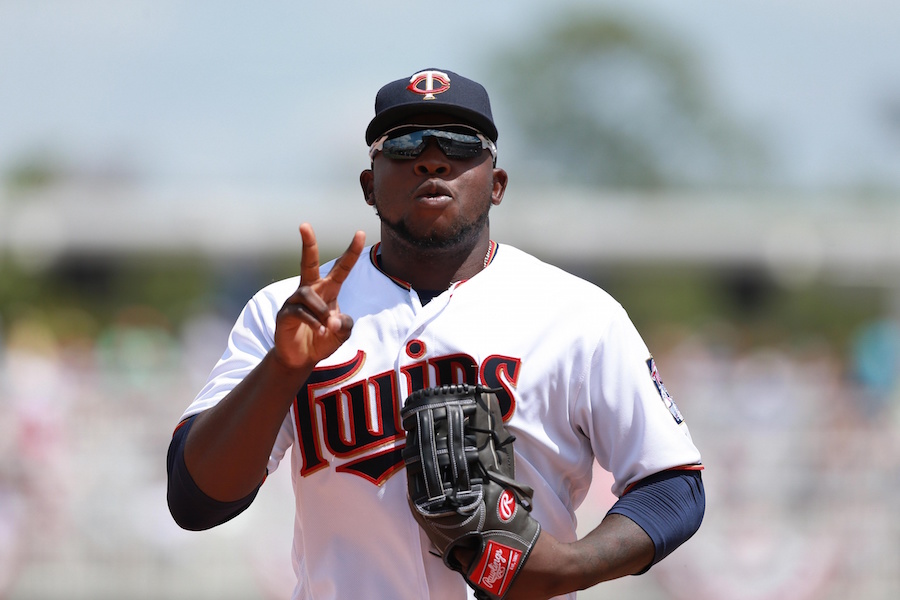 The Twins were aided by so many strong rookie performances last year that the term "sophomore slump" can't help but be uttered this spring. It's certainly legitimate to wonder whether the league might adjust in Year 2 to Eddie Rosario's free-swinging tendencies, or Tyler Duffey's two-pitch mix. Somehow that seems hard to envision with Sano. His approach at the plate is impeccable. There's not really a weakness to exploit. He'll strike out, sure – in bunches sometimes – but Sano demonstrates such patience at the dish and works so many deep counts that he's invariably going to force mistakes. Taking advantage of those has never exactly been a problem for him. As a rookie, Sano ran the count full in 93 of his 335 plate appearances. That's 28 percent. The major-league leader in full counts was Cincinnati's Joey Votto, who got there 173 times in 695 PA (25 percent). The American League leader was Mike Trout (21 percent). Votto led the majors in walks. Trout hit 41 home runs with brilliant defense in center field. Both are former MVP recipients. Sano's profile differs from each, but he has traits that have traditionally been valued very highly by award voters. With his immense power and his placement in the middle of a quality lineup, Sano figures to put up outstanding numbers in the home run and RBI categories. His big personality and occasional bravado will endear him to the baseball world. The distance, and often dramatic nature, of his majestic homers can make him a steady presence on highlight reels. His defense, which is likely to be adequate at best in right field and potentially quite a bit worse, won't help bolster his value, exactly. But he may not spend the entire season there, and I tend to think that most voters would favorably view his dutifully going out and playing a brand new position because his team asked him to. Sano's legacy will be built upon what he does at the plate, however, and he shows no signs of slowing in production after putting up rookie numbers that would've factored into the MVP conversation if prorated over a full season. This spring in Fort Myers he has been doing his thing. When I've watched, he has worked a full count in seemingly every at-bat. The strikeouts have been there, as expected – 14 in 38 at-bats – but he has also drawn 11 walks. And when he has made contact, he has consistently put a charge into the ball, resulting in six extra-base hits and plenty of gasp-inducing line drives. Sano has never put up an OPS lower than 870 at any level. That almost feels like his floor. And his ceiling, as a 22-year-old who is still learning how to play in the majors with about a half-season's worth of at-bats under his belt? It's hard to put a cap on it. If he can stay on the field, he is going to put up some eye-popping offensive statistics. Health is no given for him. He's got a big body, and will be especially vulnerable while running around in the outfield for the first time. In his short time with the Twins, we've seen him deal with some ankle and hamstring issues. But since graduating to full-season ball, Sano has never missed an extended period of time due to injury, outside of the unfortunate Tommy John surgery that cost him all of 2014. In 2012, 2013 and 2015, he averaged 564 plate appearances, and that's with shorter seasons in the minors. Of course, Sano could have a healthy, terrific season and still fall short of the MVP award. Maybe an unspectacular batting average resulting from his high K-rate holds him back (no hitter has been MVP with a BA under .280 since 1972, and only five of the last 50 to win it have batted below .300). Maybe someone like Trout or Carlos Correa has an even more ridiculous year. Maybe the Twins fall well short of the postseason, essentially eliminating any of their players from serious consideration. But I'm feeling optimistic. When you watch Sano step up to the plate, watch him get his money's worth in every single at-bat, watch intimidated pitchers feebly try to nibble the outside edges of the zone against him, it's hard to feel any other way. Some might believe that Sano has some growing up to do. To me, he looks like a grown man who is ready to take this league by storm. He's not going to win a Gold Glove, but he's a very viable candidate to take home some other hardware, and that's a hell of an exciting thought with the season less than a week away.
 -
Article: Three Big Takeaways From Camp
Nick Nelson replied to Nick Nelson's topic in Twins Daily Front Page News
Could have, could have, could have. So what? They didn't do those things. When they decided they wanted to gamble on Park, and couldn't find a taker for Plouffe, they determined that Sano in RF was the best option for the time being. Plouffe is a better third baseman and it's not clear he'd be a much better right fielder. Like I said, they know it's not ideal. But it also means that they have the bats of Sano, Plouffe and Park all in the lineup. They've deemed that offensive upside to be worth a probable defensive liability at the least important position on the field. You might disagree, but it's not a ridiculous line of thinking. Nor is letting your dominant in-house reliever serve as a setup man rather than tethering yourself to an expensive aging free agent who probably isn't as good. This organization has done some odd and inexplicable things in the past. Neither of these situations fall into that category.- 36 replies
-
- 3
-
-
- miguel sano
- max kepler
- (and 2 more)
-
Article: Three Big Takeaways From Camp
Nick Nelson replied to Nick Nelson's topic in Twins Daily Front Page News
The choice that they willfully made was deciding that they didn't want Sano to be a DH at age 22. Do you disagree with that? Or with not trading Plouffe when he had no market? May to the bullpen wasn't about a forced hand, it was about optimal use of resources.- 36 replies
-
- 6
-
-
- miguel sano
- max kepler
- (and 2 more)
-
Spending a stretch of March in Minnesota Twins camp is always illuminating in terms of what to expect in the upcoming season. Sure, it helps to chat with players/personnel and find out how much they're willing to share, but the vibe and buzz are more telling. You pick up on certain things based on what you overhear, and what you glean from conversations with reporters who are there all month. Last year, I came home from a week in Fort Myers with five beliefs about the team reinforced, and they were all confirmed more or less in the regular season. Here are three of my most significant takeaways from spending time on-site last week. 1. The bullpen might not be so far behind. That certainly wasn't my impression a year ago, and I didn't expect it be so this time around. Minnesota's relief corps was a weakness in 2015 and the front office did little to address it during the offseason. However, the talent makeup of the bullpen at the end of 2015 was a lot better than at the beginning, namely due to the additions of Trevor May and Kevin Jepsen. Both look like quality high-leverage arms, and to me, May has the makings of a pivotal difference-maker. Perkins has mostly looked good this spring, and he reports that his ramped up regimen over the offseason is already paying dividends. Cautious optimism is warranted at the back end. I personally think that the Twins would have benefited from upgrading over Casey Fien, and aiming higher than Fernando Abad on the lefty relief market, but youthful depth offsets those concerns somewhat. While other teams around the league have focused on building power bullpens with late-inning flame-throwers, the Twins have fallen behind the curve, as reflected by their last-place rank in relief strikeouts last year. But that is changing. Perkins and Jepsen usually work in the mid-90s with their fastballs and May can run his up to 98. Two righties vying for the final spots, Michael Tonkin and Ryan Pressly, have been flashing 95 and 96 with hard breaking stuff. And that's before you account for minor-leaguers like Nick Burdi, Jake Reed and Alex Meyer, who could all be bringing their upper-90s heat to The Show this summer. The Twins are not ignorant to the league-wide trend of bullpen gas. They've just characteristically elected to fuel theirs from within. 2. The Twins really like Max Kepler. Kepler was never going to make this team out of spring training. He has just one season of experience above Single-A and he's been a gradual developer, so the Twins weren't going to risk throwing him right into the fire. Paul Molitor – who has plenty of familiarity with the young outfielder given his years of experience as a minor-league instructor prior to taking the manager gig – basically said as much when asked, even as Kepler's stay carried into the latter portion of March. There was never much suspense. But the fact that Kepler stuck around as long as he did, up until he was cut last Friday, is telling. A year ago, Eddie Rosario was in a similar position, surprisingly remaining in big-league camp until March 28th. While he wasn't on the Twins roster at the start of the year, it took only a month before he got the call, and he never looked back. Kepler is a hell of a specimen, with a lithe yet muscular physique and swing mechanics that garner all sorts of complimentary cliches from the old-school ball guys around camp. I think it's safe to say we'll be seeing him up before long. 3. Yep, the Miguel Sano in right field experiment is going to be rough. There wasn't much reason to expect anything else. Acclimating a ballplayer to a brand new position takes more than a month, and often more than a year. People make a lot of out of Sano's size, and that's certainly a factor, but the biggest problem is a lack of experience and ingrained instincts. He didn't get a ton of action while I was there, and really hasn't all spring, but I did see him badly bungle a fairly routine liner, and there have been times where his footwork and throws have been noticeably awkward. Look, the Twins aren't under some delusion that this is an ideal situation. They know it's not, but they feel their hand was forced. They weren't going to uproot an entrenched veteran starter like Joe Mauer or Trevor Plouffe, and the desire not to relegate a 22-year-old to DH duty is understandable. When asked, coaches and execs tried to focus on the positive aspects of his progress (what else are the going to do?) but they're prepared and expectant of some growing pains. The good news is that right field falls toward the bottom of the defensive spectrum. Relatively few balls get hit there, and many of them are easy flies and line drives that Sano shouldn't have any problem with. It's a position that impacts games less than perhaps any other. Still, there are going to be some scary and frustrating moments out there. It will be interesting to see how pitchers react if they get bit repeatedly by the young slugger's inexperience. Click here to view the article
- 36 replies
-
- 3
-
-
- miguel sano
- max kepler
- (and 2 more)
-
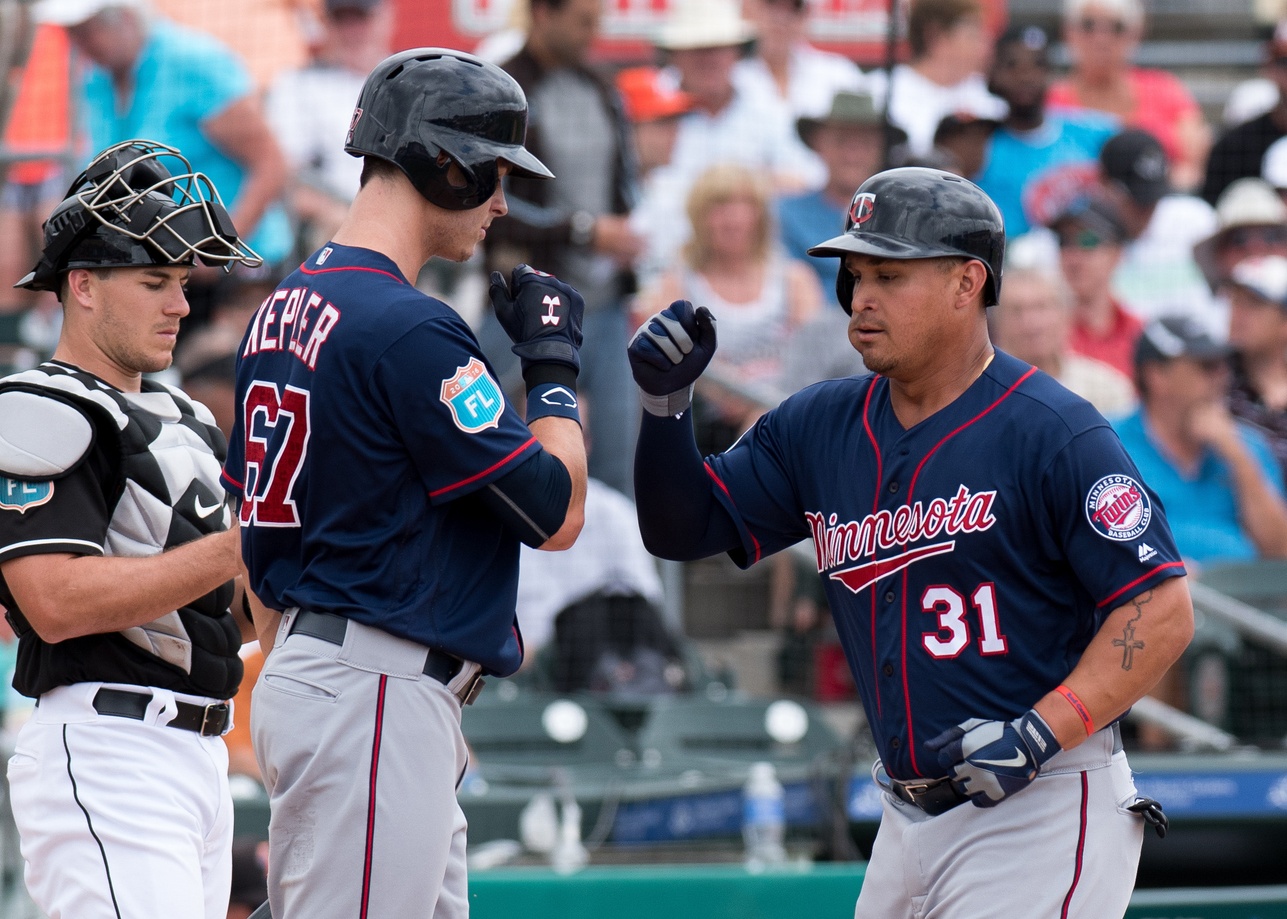 1. The bullpen might not be so far behind. That certainly wasn't my impression a year ago, and I didn't expect it be so this time around. Minnesota's relief corps was a weakness in 2015 and the front office did little to address it during the offseason. However, the talent makeup of the bullpen at the end of 2015 was a lot better than at the beginning, namely due to the additions of Trevor May and Kevin Jepsen. Both look like quality high-leverage arms, and to me, May has the makings of a pivotal difference-maker. Perkins has mostly looked good this spring, and he reports that his ramped up regimen over the offseason is already paying dividends. Cautious optimism is warranted at the back end. I personally think that the Twins would have benefited from upgrading over Casey Fien, and aiming higher than Fernando Abad on the lefty relief market, but youthful depth offsets those concerns somewhat. While other teams around the league have focused on building power bullpens with late-inning flame-throwers, the Twins have fallen behind the curve, as reflected by their last-place rank in relief strikeouts last year. But that is changing. Perkins and Jepsen usually work in the mid-90s with their fastballs and May can run his up to 98. Two righties vying for the final spots, Michael Tonkin and Ryan Pressly, have been flashing 95 and 96 with hard breaking stuff. And that's before you account for minor-leaguers like Nick Burdi, Jake Reed and Alex Meyer, who could all be bringing their upper-90s heat to The Show this summer. The Twins are not ignorant to the league-wide trend of bullpen gas. They've just characteristically elected to fuel theirs from within. 2. The Twins really like Max Kepler. Kepler was never going to make this team out of spring training. He has just one season of experience above Single-A and he's been a gradual developer, so the Twins weren't going to risk throwing him right into the fire. Paul Molitor – who has plenty of familiarity with the young outfielder given his years of experience as a minor-league instructor prior to taking the manager gig – basically said as much when asked, even as Kepler's stay carried into the latter portion of March. There was never much suspense. But the fact that Kepler stuck around as long as he did, up until he was cut last Friday, is telling. A year ago, Eddie Rosario was in a similar position, surprisingly remaining in big-league camp until March 28th. While he wasn't on the Twins roster at the start of the year, it took only a month before he got the call, and he never looked back. Kepler is a hell of a specimen, with a lithe yet muscular physique and swing mechanics that garner all sorts of complimentary cliches from the old-school ball guys around camp. I think it's safe to say we'll be seeing him up before long. 3. Yep, the Miguel Sano in right field experiment is going to be rough. There wasn't much reason to expect anything else. Acclimating a ballplayer to a brand new position takes more than a month, and often more than a year. People make a lot of out of Sano's size, and that's certainly a factor, but the biggest problem is a lack of experience and ingrained instincts. He didn't get a ton of action while I was there, and really hasn't all spring, but I did see him badly bungle a fairly routine liner, and there have been times where his footwork and throws have been noticeably awkward. Look, the Twins aren't under some delusion that this is an ideal situation. They know it's not, but they feel their hand was forced. They weren't going to uproot an entrenched veteran starter like Joe Mauer or Trevor Plouffe, and the desire not to relegate a 22-year-old to DH duty is understandable. When asked, coaches and execs tried to focus on the positive aspects of his progress (what else are the going to do?) but they're prepared and expectant of some growing pains. The good news is that right field falls toward the bottom of the defensive spectrum. Relatively few balls get hit there, and many of them are easy flies and line drives that Sano shouldn't have any problem with. It's a position that impacts games less than perhaps any other. Still, there are going to be some scary and frustrating moments out there. It will be interesting to see how pitchers react if they get bit repeatedly by the young slugger's inexperience.
 -
It's hard for me to envision Quentin taking an indefinite assignment at Triple-A. He didn't come back to ride minor-league buses. If he accepts that arrangement, I've gotta think it means the Twins indicated there's a strong chance of a fairly quick call-up. But it's not clear how they could, short of saying "Well, if there's an injury..." He showed enough this spring that some team would probably have a use for him. We'll see how it plays out. They made the right call here. Gotta stick with Arcia.
-
Article: May’s Mentality Much Needed In Pen
Nick Nelson replied to Nick Nelson's topic in Twins Daily Front Page News
I like how so many people are just assuming that May is a No. 2 starter, based on... who knows. He hasn't shown that kind of ability as a starter in the majors, save for one short stretch, and he was never a top-tier pitching prospect in the minors. I know, I know. "Now we'll never know!" But the downside of finding that out is reducing your starter depth (some SP is probably gone if May is in the rotation) and severely weakening your bullpen. And if May proves not to be vastly superior than the alternative starting option, it could prove to be a very costly error. Very costly. -
Article: May’s Mentality Much Needed In Pen
Nick Nelson replied to Nick Nelson's topic in Twins Daily Front Page News
If you think that is universally true, you're mistaken. May's best three pitches are his fastball, changeup and curve. Plenty of pitchers don't have good sliders. -
Article: May’s Mentality Much Needed In Pen
Nick Nelson replied to Nick Nelson's topic in Twins Daily Front Page News
Could be great. Could be just a decent mid-rotation starter with efficiency issues, as opposed to a top-tier power arm in the bullpen. I'm not sure why everyone is so fixated on the one possibility. It's not like he was an elite starting pitching prospect. TR's point was that their last-place ranking in strikeouts is deceiving as it relates to the current group because their best power arms in the bullpen were absent or ineffective for half the season. The "point" people are making has nothing to do with what he said. -
Article: May’s Mentality Much Needed In Pen
Nick Nelson replied to Nick Nelson's topic in Twins Daily Front Page News
You realize that the question he was answering was very specifically about strikeouts, right? I was talking K/9 rate but either way Ryan's point was fair. -
Article: May’s Mentality Much Needed In Pen
Nick Nelson replied to Nick Nelson's topic in Twins Daily Front Page News
Jepsen's K-rate with the Twins was lower than his career mark, so... -
Article: May’s Mentality Much Needed In Pen
Nick Nelson replied to Nick Nelson's topic in Twins Daily Front Page News
Sounds to me like an awfully good problem to have! If May turns into a big asset at the back end of the bullpen, and they have enough quality depth in the rotation so as not to need him there... what the hell are we complaining about? -
When Trevor May is pitching in relief, he ditches his slider and sinker. How come? "Neither one of those are swing-and-miss pitches really,” he says, "and that’s more what I’m trying to do in the bullpen.” That mindset is exactly why the Twins need May in that role, even if it means delaying the starting opportunity that he has certainly earned.In 2015, the Twins bullpen ranked last in the major leagues in strikeouts, right behind Detroit’s abysmal unit. Missing bats isn’t everything, but doing so effectively eliminates bad luck, bloopers and bleeders from the equation, which can be particularly critical in close late-game situations. General manager Terry Ryan is quick to point out that his team's last-place ranking is “a little deceiving” since they received only partial seasons from May and Kevin Jepsen, and Glen Perkins was not himself after the All-Star break. It’s a fair point. Even with little in the way of outside additions during the offseason, you’d expect more strikeouts – and better results – from the relief corps even if the Twins simply roll with the same group that finished last year, as it appears they basically will. But there’s no guarantee that Perkins will fully rebound from his dismal second half, nor that Jepsen will replicate his uncharacteristically excellent performance after being acquired. It is in this regard that May’s presence is vital. His stuff was good enough to yield quality strikeout numbers as a starter and plays up in relief, which consequentially led to an uptick in K-rate after he made the switch last summer. That was when he was learning on the fly. Now, the right-hander heads into the 2016 season priming himself as a reliever. That entails a lot of different things compared to starting. “You train a little bit differently,” May said of the alteration in approach. “You do a little bit less every day because you’ve got to be ready to go on a day-to-day basis instead of just looking forward to that one day.” In some ways, less is more. If he sticks in a relief role, May will pitch way fewer innings, but he’ll affect way more games, and he’ll be deployed in more high-leverage situations. He relishes the idea of being a designated go-to guy in those spots. "I see it as an opportunity to step into a role that wasn’t filled in the offseason,” he said. "I’m excited about it. I think I proved last year that I could do it. I’m looking to build on that success this year." Fans should be excited too. Because for all the hand-wringing about the lack of bullpen moves over the winter, May possesses a superior arsenal to many of the high-priced arms that were available on the market. He might be the most potent right-handed reliever to wear a Twins uniform since Joe Nathan. As you can see from his 2015 velocity chart (via Brooks Baseball), May’s pitches revved up across the board after he moved to the bullpen in July. His K/9 rate increased from 8.0 before July 1st to 10.0 afterward. Download attachment: mayvelo.png Flashes of his dominance have been on display this spring. His fastball has lit up the radar gun, clocking within a few ticks of triple digits, and his offspeeds have garnered plenty of awkward swings. In 8 2/3 innings of work, May has fanned 11 hitters, including three in his single frame on Wednesday. He has the makings of a bullpen ace, and one could argue that is an even more important asset than a reliable closer due to strategic usage. The Minnesota bullpen is invariably going to be a question mark going into the regular season, but without May it would be far more concerning. Only by blindly ignoring all of this team’s circumstances can one really question the decision. Another thing to keep in mind is that it’s not necessarily a permanent switch. Ryan has stated that he still views May as a future starter, and that’s definitely where the 26-year-old righty wants to end up. "Until that day they say you’re absolutely not a starter ever again, I’ll think that way,” May says, "because I still believe that I can do it.” There’s little reason to think he can’t. But for now, he’s dutifully embracing this current challenge. Now there's a breath of fresh air. Just as his swing-and-miss pitches will be in the late innings. Click here to view the article
-
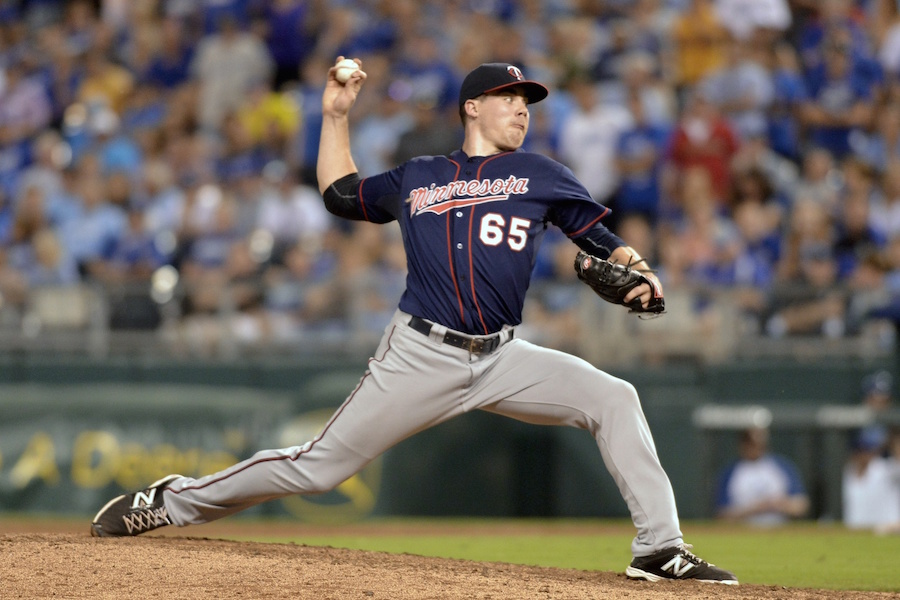 In 2015, the Twins bullpen ranked last in the major leagues in strikeouts, right behind Detroit’s abysmal unit. Missing bats isn’t everything, but doing so effectively eliminates bad luck, bloopers and bleeders from the equation, which can be particularly critical in close late-game situations. General manager Terry Ryan is quick to point out that his team's last-place ranking is “a little deceiving” since they received only partial seasons from May and Kevin Jepsen, and Glen Perkins was not himself after the All-Star break. It’s a fair point. Even with little in the way of outside additions during the offseason, you’d expect more strikeouts – and better results – from the relief corps even if the Twins simply roll with the same group that finished last year, as it appears they basically will. But there’s no guarantee that Perkins will fully rebound from his dismal second half, nor that Jepsen will replicate his uncharacteristically excellent performance after being acquired. It is in this regard that May’s presence is vital. His stuff was good enough to yield quality strikeout numbers as a starter and plays up in relief, which consequentially led to an uptick in K-rate after he made the switch last summer. That was when he was learning on the fly. Now, the right-hander heads into the 2016 season priming himself as a reliever. That entails a lot of different things compared to starting. “You train a little bit differently,” May said of the alteration in approach. “You do a little bit less every day because you’ve got to be ready to go on a day-to-day basis instead of just looking forward to that one day.” In some ways, less is more. If he sticks in a relief role, May will pitch way fewer innings, but he’ll affect way more games, and he’ll be deployed in more high-leverage situations. He relishes the idea of being a designated go-to guy in those spots. "I see it as an opportunity to step into a role that wasn’t filled in the offseason,” he said. "I’m excited about it. I think I proved last year that I could do it. I’m looking to build on that success this year." Fans should be excited too. Because for all the hand-wringing about the lack of bullpen moves over the winter, May possesses a superior arsenal to many of the high-priced arms that were available on the market. He might be the most potent right-handed reliever to wear a Twins uniform since Joe Nathan. As you can see from his 2015 velocity chart (via Brooks Baseball), May’s pitches revved up across the board after he moved to the bullpen in July. His K/9 rate increased from 8.0 before July 1st to 10.0 afterward. Flashes of his dominance have been on display this spring. His fastball has lit up the radar gun, clocking within a few ticks of triple digits, and his offspeeds have garnered plenty of awkward swings. In 8 2/3 innings of work, May has fanned 11 hitters, including three in his single frame on Wednesday. He has the makings of a bullpen ace, and one could argue that is an even more important asset than a reliable closer due to strategic usage. The Minnesota bullpen is invariably going to be a question mark going into the regular season, but without May it would be far more concerning. Only by blindly ignoring all of this team’s circumstances can one really question the decision. Another thing to keep in mind is that it’s not necessarily a permanent switch. Ryan has stated that he still views May as a future starter, and that’s definitely where the 26-year-old righty wants to end up. "Until that day they say you’re absolutely not a starter ever again, I’ll think that way,” May says, "because I still believe that I can do it.” There’s little reason to think he can’t. But for now, he’s dutifully embracing this current challenge. Now there's a breath of fresh air. Just as his swing-and-miss pitches will be in the late innings.
 -
Article: Wednesday Camp Notes: Tides Changing?
Nick Nelson replied to Nick Nelson's topic in Twins Daily Front Page News
Again: they know that Sano in RF is not ideal. They just don't really have a choice. -
Suddenly, the race for the Twins fifth starter job has gotten rather interesting. Three weeks after Paul Molitor said it would take “something fairly significant” for Tyler Duffey to miss out on a rotation spot, the right-hander has a 6.48 ERA through three Grapefruit starts, and he got shelled on the minor-league side today. Meanwhile, Ricky Nolasco cruised through six scoreless innings against the Rays at Hammond.* It’s hard to say whether these coinciding events could be construed as “significant.” No one puts much stock into results on the minor-league fields, and Nolasco was facing a Rays lineup that was beyond watered down, since the team flew back from an exhibition in Cuba last night. Still, the big curve ball from Nolasco that drew rave reviews during his last outing was on full display today. He got more than half of his seven strikeouts with the hook, and said he thought his slider was even better. Of course, breaking balls have always been a strength for the 33-year-old. He claims the big difference-maker today was his fastball command. “Felt it pretty decent that last time out in the minor league game and it kind of carried over,” Nolasco said. “I think everything just kind of goes off that.” And as for his status in the rotation competition? "It’s not my decision. I’ll leave it up to those guys ... They know how I feel. We’ll see what happens." * Is there any scenario in which Paul Molitor would consider bringing Duffey, a former college closer, north as a reliever if Nolasco and Tommy Milone end up in the last two rotation spots? "I haven't really thought about that as an option for the circumstances that we're looking at," the manager said. In other words, probably not. * Molitor confirmed after the game that Ervin Santana will be the team’s starter on Opening Day, with Kyle Gibson and Phil Hughes following him in Baltimore. That lines up Gibson to pitch the home opener against the White Sox at Target Field on April 11th. I wrote about Santana setting a tone for the rotation earlier this week. * The Twins announced during the game that they had outrighted lefty Mike Strong from the 40-man roster, creating an opening that will likely be filled by non-roster invite Fernando Abad. The veteran Abad was always likely to win a bullpen spot, and it looks like he’s had a solid enough spring to lock it up. * Danny Santana was in the lineup at second base today, after starting at shortstop on Tuesday and in center field on Monday. Molitor said earlier this week that he’s trying to get a gauge on Santana’s capacity to serve in a utility role. “His positional experience is somewhat limited,” Molitor said. “I wouldn’t say we’re at that point where we’re convinced he can do all those things. It’s still something we’re trying to decide.” The general manager likes what Santana brings to the table as a bench piece. “He’s been around the diamond quite a bit this spring,” Terry Ryan said. “Of course he can really run. There’s a lot of value in that type of player.” * The Twins cut six from camp this morning, trimming the total number of remaining players to 37. I wrote up a quick article about what the cuts – which included one reliever who was in the bullpen for all of 2015 – mean for the bullpen competition. * Daniel Palka raised some eyebrows by hitting a pair of home runs when he traveled to Clearwater with the split-squad on Tuesday, including a mammoth blast that he pulled over the right field wall. Today, while playing with the Triple-A group in the game Duffey started, Palka hit another bomb, this time an opposite-field shot. “He has power, there’s no doubt,” Ryan said. “Go across there (to the minor-league side) and just watch him take batting practice.” The pop this spring has been as advertised from Palka, who has hit 51 home runs over the last two years between two levels of A-ball. Acquired in exchange for Chris Herrmann in the offseason, the 24-year-old is looking like a nice find, infusing more power into a system that is suddenly rather flush with it. Click here to view the article
-
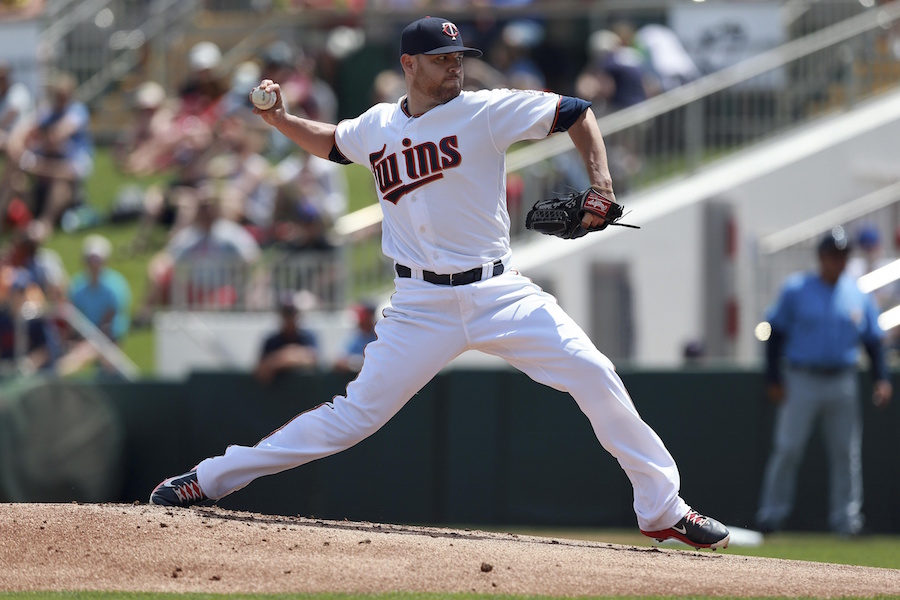 * It’s hard to say whether these coinciding events could be construed as “significant.” No one puts much stock into results on the minor-league fields, and Nolasco was facing a Rays lineup that was beyond watered down, since the team flew back from an exhibition in Cuba last night. Still, the big curve ball from Nolasco that drew rave reviews during his last outing was on full display today. He got more than half of his seven strikeouts with the hook, and said he thought his slider was even better. Of course, breaking balls have always been a strength for the 33-year-old. He claims the big difference-maker today was his fastball command. “Felt it pretty decent that last time out in the minor league game and it kind of carried over,” Nolasco said. “I think everything just kind of goes off that.” And as for his status in the rotation competition? "It’s not my decision. I’ll leave it up to those guys ... They know how I feel. We’ll see what happens." * Is there any scenario in which Paul Molitor would consider bringing Duffey, a former college closer, north as a reliever if Nolasco and Tommy Milone end up in the last two rotation spots? "I haven't really thought about that as an option for the circumstances that we're looking at," the manager said. In other words, probably not. * Molitor confirmed after the game that Ervin Santana will be the team’s starter on Opening Day, with Kyle Gibson and Phil Hughes following him in Baltimore. That lines up Gibson to pitch the home opener against the White Sox at Target Field on April 11th. I wrote about Santana setting a tone for the rotation earlier this week. * The Twins announced during the game that they had outrighted lefty Mike Strong from the 40-man roster, creating an opening that will likely be filled by non-roster invite Fernando Abad. The veteran Abad was always likely to win a bullpen spot, and it looks like he’s had a solid enough spring to lock it up. * Danny Santana was in the lineup at second base today, after starting at shortstop on Tuesday and in center field on Monday. Molitor said earlier this week that he’s trying to get a gauge on Santana’s capacity to serve in a utility role. “His positional experience is somewhat limited,” Molitor said. “I wouldn’t say we’re at that point where we’re convinced he can do all those things. It’s still something we’re trying to decide.” The general manager likes what Santana brings to the table as a bench piece. “He’s been around the diamond quite a bit this spring,” Terry Ryan said. “Of course he can really run. There’s a lot of value in that type of player.” * The Twins cut six from camp this morning, trimming the total number of remaining players to 37. I wrote up a quick article about what the cuts – which included one reliever who was in the bullpen for all of 2015 – mean for the bullpen competition. * Daniel Palka raised some eyebrows by hitting a pair of home runs when he traveled to Clearwater with the split-squad on Tuesday, including a mammoth blast that he pulled over the right field wall. Today, while playing with the Triple-A group in the game Duffey started, Palka hit another bomb, this time an opposite-field shot. “He has power, there’s no doubt,” Ryan said. “Go across there (to the minor-league side) and just watch him take batting practice.” The pop this spring has been as advertised from Palka, who has hit 51 home runs over the last two years between two levels of A-ball. Acquired in exchange for Chris Herrmann in the offseason, the 24-year-old is looking like a nice find, infusing more power into a system that is suddenly rather flush with it.
 -
The Twins optioned two players from camp this morning and reassigned four others. Taylor Rogers, J.R. Graham, Buddy Boshers, Carlos Paulino, Buck Britton and Wilfredo Tovar were all shipped out, trimming the number of remaining players to 37.This round of cuts brings more clarity to the bullpen race. Assuming that Fernando Abad and the loser of the fifth starter competition (Ricky Nolasco?) are both in, that leaves one remaining spot in a seven-man unit. Boshers (who I wrote about in yesterday’s notes) was not really a factor in the race, but Rogers and Graham – both on the 40-man roster – were in the mix. The remaining contenders for the job: Michael Tonkin, Ryan Pressly, Brandon Kintzler, Ryan O’Rourke, Dan Runzler. Presumably they’re going to go with a righty, and in my opinion, it’s between hard-throwers Tonkin and Pressly. Who would you like to see round out the Minnesota bullpen? Click here to view the article
