



Nick Nelson
-
Posts
8,325 -
Joined
-
Last visited
-
Days Won
56
Content Type
Profiles
News
Minnesota Twins Videos
2026 Minnesota Twins Top Prospects Ranking
2022 Minnesota Twins Draft Picks
Minnesota Twins Free Agent & Trade Rumors, Notes, & Tidbits
Guides & Resources
2023 Minnesota Twins Draft Picks
The Minnesota Twins Players Project
2024 Minnesota Twins Draft Picks
2025 Minnesota Twins Draft Pick Tracker
2026 Minnesota Twins Draft Tracker: Picks & Bonuses
Forums
Blogs
Events
Store
Downloads
Gallery
Everything posted by Nick Nelson
-
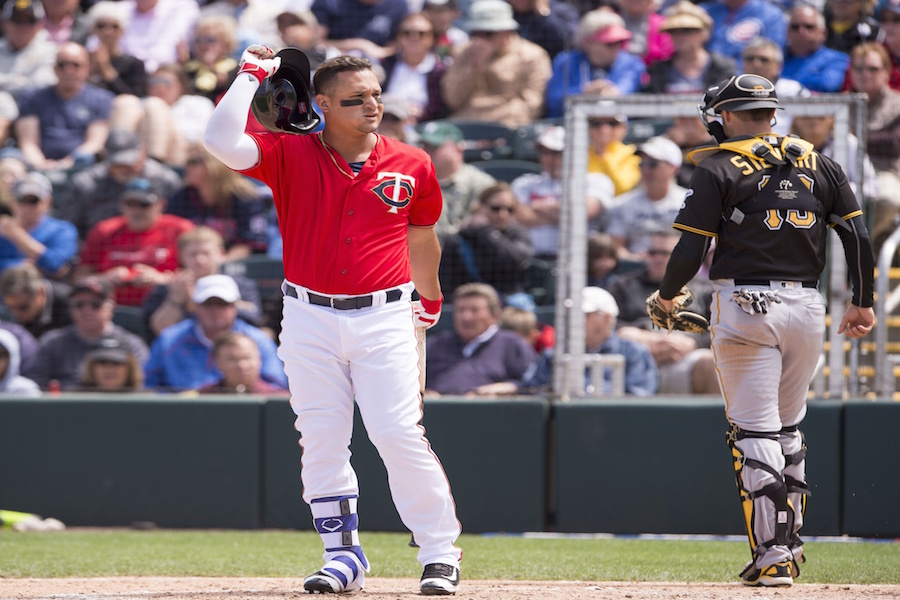 There was much frustration amongst fans over the decision to designate Arcia for assignment last week in order to make room for Danny Santana. Plenty of commenters voiced their displeasure in a 13-page thread here on Twins Daily. It's understandable. These are the same fans that have watched so many players leave Minnesota and excel elsewhere. The "David Ortiz Complex" is very real as the legendary DH wraps up a Hall of Fame career that took off as soon as the Twins unwisely gave up on him. There are too many more recent examples currently on other rosters in the league. Seeing the youth, the raw power, and the seemingly untapped potential, it's tempting to lump Arcia with some of the organization's most painful past mistakes. Don't do it. Let's lay out a few of the facts with regard to Arcia. He has been utterly terrible this year. In 114 plate appearances, he has batted .214/.289/.369 with 46 strikeouts. That's a 40 percent K-rate. Guys who are above 40 percent do not belong in the majors. The only MLB player with a higher strikeout rate this year (min. 100 PAs) is Byron Buxton. It's debatable whether Buxton belongs in the bigs right now but he gains leeway because he's so young and brings so much to the table defensively. Arcia, conversely, is approaching 1,000 plate appearances in the majors, and offers almost no defensive value. If he isn't mashing he isn't really an asset, and it's been quite a while since he has mashed. Last year, as we all recall, the outfielder turned a short rehab assignment into a permanent banishment at Triple-A because he never got going there. Save for a brief power splurge in July, Arcia basically slumped for three months straight, finishing with a .199 average in 79 games at Rochester. For someone who had hit 20 homers with a 752 OPS in the majors a year before, it was embarrassing. The Twins gave him a chance to make it right. Despite being tempted by Carlos Quentin's veteran bat in spring training, they stuck with Arcia, who was out of options. And while I've seen some people complaining about the team not putting Arcia in a position to succeed, that just isn't true. Actually, Paul Molitor has been quite good about using the righty-mashing slugger in the most advantageous spots. Eighty-two percent of Arcia's plate appearances have come against right-handed pitchers, and in those appearances he has batted .202 with a 42 percent K-rate. Yuck. Arcia is still young, but he continues to head in the wrong direction and the Twins have too many other players ahead of him that they are rightfully prioritizing. Miguel Sano, as things stand, remains an outfielder and has nowhere else to play. Max Kepler himself will be out of options next year and needs to get comfortable in the majors. Eddie Rosario has been absolutely tearing up Triple-A since his demotion – not struggling and sulking, mind you – and should be back up soon. Even Robbie Grossman is making a case as a long-term piece in some capacity. There's no argument to be made for Arcia starting ahead of any of these guys that doesn't fall back on his production from two years ago. Keeping him on the bench was doing neither him nor the Twins any good. He played himself out of the team's plans and it isn't anyone's fault but his own. This is not an indictment of the 25-year-old's long-term outlook; it wouldn't surprise me if he falls into the right situation and hits 30 homers in a couple of years. It's not unusual for players to reach their late 20s before they really figure things out in the majors. This game is tough. Yet, to argue that the Twins should have perpetually kept Arcia planted on their 25-man roster until that day arrived is silly. You can quibble with the timing and specifics of the DFA move, since Danny Santana isn't necessarily a player worth giving up anything to make room for and it's only June. But there were no signs of positive change, and keeping Arcia around was only going to get tougher with more deserving players like Sano and Rosario returning to the fold. All of the hand-wringing over the decision to designate Arcia overlooks the basic realities of the situation. You need to earn things on merit in Major League Baseball and he wasn't doing it. There is certainly a discussion to be had about how the organization may be culpable in his failure to adjust and grow as a player, especially given how many different times we've seen it happen, but that is a separate discussion. As of this post going live on Sunday night, there is still no word that Arcia has been claimed off waivers by another club. Maybe this will all be moot. But even if he does land elsewhere, and even if he does finally turn a corner eventually, it won't be because the Twins screwed up and gave up too early. It will be because he exhausted every last bit of patience they could show him.
 -

Article: A Grim Prognosis For Glen Perkins
Nick Nelson posted a topic in Twins Daily Front Page News
The Twins finally have some clarity on one of their many mysterious shoulder ailments, but it's not good news by any means. After heading to California this week to see a specialist, Glen Perkins was diagnosed with a torn labrum, and the Twins have officially shut him down for the season. The three-time All Star will undergo surgery within the next week or so.It's nice that Perkins will no longer face the uncertainty and frustration of continual setbacks, but he now has a very long and challenging road to recovery ahead of him. Procedures to repair labrum and rotator cuff issues are far murkier than elbow surgeries like Tommy John, which has now become almost routine with a reliably standard rehab window. Will Carroll, who has closely studied sports injuries and medicine for years, calls a labrum tear "baseball's toughest injury." Others have dubbed it "the career-ender." Dr. Neal ElAttrache, who examined Perkins in California this week and will perform the upcoming surgery, has likened fixing a damaged shoulder to trying to put a puzzle together without the box top for guidance. Many pitchers, particularly those in their 30s, are never able to return as effective players. That's not universally true, so there is still hope for Perkins. But the Twins need to come to terms with the somber reality that the lefty may be finished for all intents and purposes. At the very least, he'll be out through a portion of the 2017 season (his last under contract) with an extremely uncertain outlook thereafter. That means the search for a future closer is no longer a consideration that can be placed on the back-burner. Right now, the available options are unappealing. Kevin Jepsen is clearly not the guy. Hurlers within the system who possess the requisite stuff -- such as Alex Meyer, J.T. Chargois and Trevor May -- have failed to distinguish themselves. Nick Burdi might be the best hope internally but his own injury issues have limited him to three appearances this season (naturally, he just had a setback). In year that has been filled with unsettling developments for the Twins organization, this one has to rank near the top. As a hometown star who once bought a round of beers from the bullpen for a contingent of Twins Daily event-goers, Perkins is a natural fan favorite. Beyond that, his importance to the relief corps has been magnified by the unit's complete collapse this season. While most of us have seen it coming for a while, this development is nevertheless crushing. Alas, this merciless 2016 Minnesota Twins season drags on... Click here to view the article -
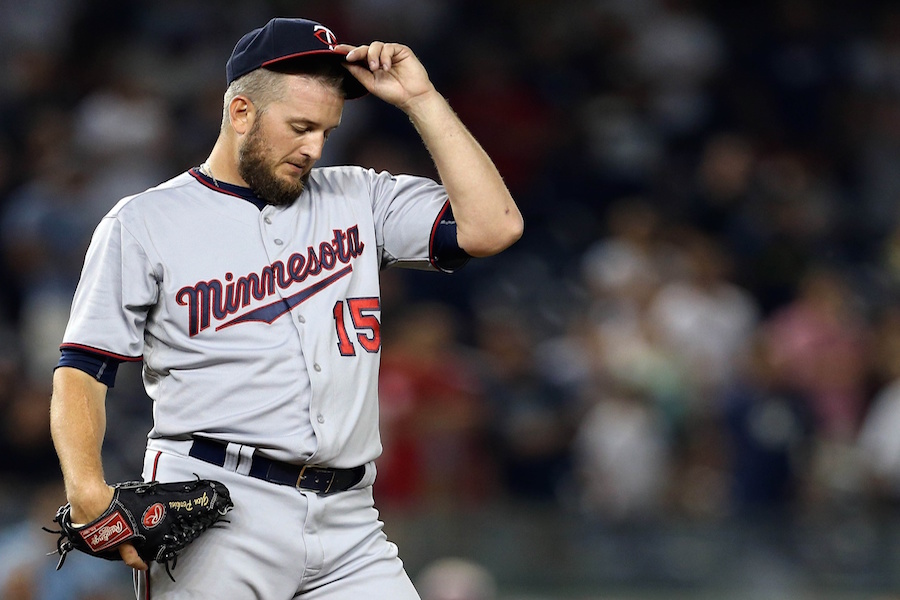 It's nice that Perkins will no longer face the uncertainty and frustration of continual setbacks, but he now has a very long and challenging road to recovery ahead of him. Procedures to repair labrum and rotator cuff issues are far murkier than elbow surgeries like Tommy John, which has now become almost routine with a reliably standard rehab window. Will Carroll, who has closely studied sports injuries and medicine for years, calls a labrum tear "baseball's toughest injury." Others have dubbed it "the career-ender." Dr. Neal ElAttrache, who examined Perkins in California this week and will perform the upcoming surgery, has likened fixing a damaged shoulder to trying to put a puzzle together without the box top for guidance. Many pitchers, particularly those in their 30s, are never able to return as effective players. That's not universally true, so there is still hope for Perkins. But the Twins need to come to terms with the somber reality that the lefty may be finished for all intents and purposes. At the very least, he'll be out through a portion of the 2017 season (his last under contract) with an extremely uncertain outlook thereafter. That means the search for a future closer is no longer a consideration that can be placed on the back-burner. Right now, the available options are unappealing. Kevin Jepsen is clearly not the guy. Hurlers within the system who possess the requisite stuff -- such as Alex Meyer, J.T. Chargois and Trevor May -- have failed to distinguish themselves. Nick Burdi might be the best hope internally but his own injury issues have limited him to three appearances this season (naturally, he just had a setback). In year that has been filled with unsettling developments for the Twins organization, this one has to rank near the top. As a hometown star who once bought a round of beers from the bullpen for a contingent of Twins Daily event-goers, Perkins is a natural fan favorite. Beyond that, his importance to the relief corps has been magnified by the unit's complete collapse this season. While most of us have seen it coming for a while, this development is nevertheless crushing. Alas, this merciless 2016 Minnesota Twins season drags on...
 -
What to do with Eddie Rosario? There's no easy answer to that question, but it's one that should be on the minds of Twins decision-makers as the 24-year-old outfielder torches Triple-A.Following his May 19th demotion, Rosario got off to a slow start at Rochester, with only two hits in 21 at-bats over his first five games. He was frustrated and swinging out of his shoes. Then, he flipped the switch. Since that opening cold stretch, he has collected multiple hits in 10 of 17 games, batting .400 with a 1.097 OPS in the process. Rosario had only one multi-hit game in his six weeks with the Twins. Clearly, he has turned a corner. He's still a free swinger, as ever, but he has gotten back to making hard contact, and has even taken a couple of walks in his past few games, a sadly noteworthy feat. The Twins were utterly exasperated with Rosario by the time they shipped him to the minors a month ago, and with good reason. But there is no denying the young outfielder's talent, which is flashing again right now as it did during his time with the Twins last year. We all know his aggressiveness can be a hindrance, but when Rosario is on his game – slashing tough pitches all over the field, laying off the truly unhittable stuff, playing dynamic defense – he is a player. While it may be tempting to pass off his hot streak in the International League as a pure reflection of the inferior pitching, he has shown before that he can hit in the majors, unlike fellow Triple-A bashers Byron Buxton and Max Kepler. Rosario's 2015 season in Minnesota can't be passed off as a total fluke. You don't lead the league in triples while playing 120 games by accident. And before you categorize him with fellow sophomore slumpers Danny Santana and Kennys Vargas, understand that Rosario was always in another prospect class. When an 18-year-old Miguel Sano blasted hit 20 home runs in his first year at Elizabethton, he didn't lead the league. Rosario did, with 21. This isn't to say that Rosario is not a very flawed player – he is. I do get the sense (from the responses to this tweet, for instance) that some fans are so down on him they have forgotten about his considerable strengths. The Twins surely have not, and must recognize that there's not much value in letting him pummel minor-league pitching. Their hands are tied, though. Buxton and Kepler have yet to find a sustained groove, but both deserve more time. Sano has been hitting off a tee and jogging, and should be back within a couple of weeks. Robbie Grossman is tough to take out of the lineup right now and Oswaldo Arcia needs at-bats unless the club is ready to give up on him. There's a pecking order for playing time in the Twins outfield and Rosario pushed himself pretty far down it over the first month and a half. He'll get another crack, but when? And at whose expense? Click here to view the article
-
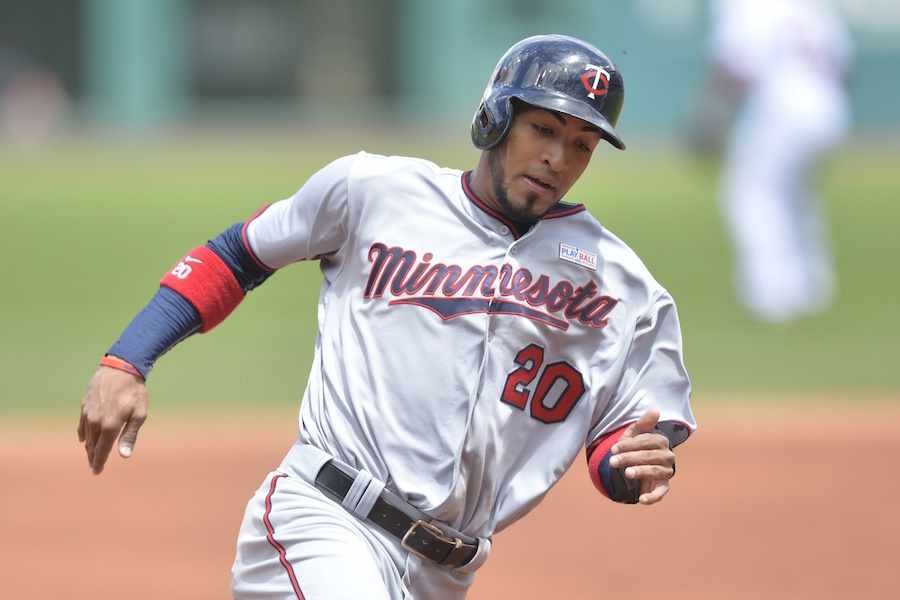 Following his May 19th demotion, Rosario got off to a slow start at Rochester, with only two hits in 21 at-bats over his first five games. He was frustrated and swinging out of his shoes. Then, he flipped the switch. Since that opening cold stretch, he has collected multiple hits in 10 of 17 games, batting .400 with a 1.097 OPS in the process. Rosario had only one multi-hit game in his six weeks with the Twins. Clearly, he has turned a corner. He's still a free swinger, as ever, but he has gotten back to making hard contact, and has even taken a couple of walks in his past few games, a sadly noteworthy feat. The Twins were utterly exasperated with Rosario by the time they shipped him to the minors a month ago, and with good reason. But there is no denying the young outfielder's talent, which is flashing again right now as it did during his time with the Twins last year. We all know his aggressiveness can be a hindrance, but when Rosario is on his game – slashing tough pitches all over the field, laying off the truly unhittable stuff, playing dynamic defense – he is a player. While it may be tempting to pass off his hot streak in the International League as a pure reflection of the inferior pitching, he has shown before that he can hit in the majors, unlike fellow Triple-A bashers Byron Buxton and Max Kepler. Rosario's 2015 season in Minnesota can't be passed off as a total fluke. You don't lead the league in triples while playing 120 games by accident. And before you categorize him with fellow sophomore slumpers Danny Santana and Kennys Vargas, understand that Rosario was always in another prospect class. When an 18-year-old Miguel Sano blasted hit 20 home runs in his first year at Elizabethton, he didn't lead the league. Rosario did, with 21. This isn't to say that Rosario is not a very flawed player – he is. I do get the sense (from the responses to this tweet, for instance) that some fans are so down on him they have forgotten about his considerable strengths. The Twins surely have not, and must recognize that there's not much value in letting him pummel minor-league pitching. Their hands are tied, though. Buxton and Kepler have yet to find a sustained groove, but both deserve more time. Sano has been hitting off a tee and jogging, and should be back within a couple of weeks. Robbie Grossman is tough to take out of the lineup right now and Oswaldo Arcia needs at-bats unless the club is ready to give up on him. There's a pecking order for playing time in the Twins outfield and Rosario pushed himself pretty far down it over the first month and a half. He'll get another crack, but when? And at whose expense?
 -
An intriguing new pitcher acquisition, a perturbing injury trend, and a clear emphasis in draft strategy: We'll cover all three in today's Three-Bagger.* Last week, in discussing the benefits of badness, I mentioned that the waiver wire could be a key avenue for the Twins to infuse some talent during the season. Over the weekend, they utilized it, claiming right-handed reliever Neil Ramirez after he was waived by the Brewers. Ramirez is only 27 and has an impressive track record. Over the past two seasons with the Cubs, he posted a 1.87 ERA, 1.11 WHIP and 68-to-23 K/BB ratio in 57 innings. The stuff matched the numbers as he racked up strikeouts with a mid-90s fastball and power slider. The velocity has been down a bit this year, and Ramirez has been a mess. The Brewers had acquired him off waivers from the Cubs and kept him for less than 10 days – only two appearances – before designating him for assignment, so clearly they didn't like what they saw. He's a project. But one with considerable upside that the Twins, desperate for arms, can't pass up. The word is that Ramirez has been battling some ongoing shoulder issues, so he should feel right at home with his new club. * Pitching a baseball is hard on the human body. For proof, look no further than all of the ravaged shoulders within Minnesota's pitching ranks. It is only fitting that the newest Twin has a bad wing, because that's been a persistent theme for the staff cornerstones. Phil Hughes' shoulder isn't the reason he went on the 60-day disabled list, but it's the reason he was pitching as the mop-up man in the ninth inning of a blowout loss when he took a line drive off the leg, breaking his femur. Battling through shoulder fatigue by his own admission, Hughes had been utterly ineffective. It wasn't entirely clear the Twins knew what to do with him. They sent him to the bullpen at the end of May, but his only appearances in June were a spot start in place of Kyle Gibson, and Thursday's mop-up relief outing in the final innings of a blowout loss. Now, the Twins have no choice but to do what they probably should have done all along: let that shoulder rest. No one seems able to diagnose what is specifically wrong with Hughes, other than vague dead arm attributions, but continually sending him out to take the mound was not doing any good. Since recording his lone victory this season, against the Brewers on April 18th, he has struck out only 17 of the 184 batters he has faced. That's 9 percent. You can't get by as a pitcher in the major leagues striking out less than 10 percent of opponents, much less as a fly ball guy. Hopefully the time off will do Hughes some good. So far, that plan hasn't worked for Glen Perkins, who remains tangled in an indefinite state of limbo due to his own ambiguously ailing shoulder. The lefty experienced yet another setback during his latest bullpen session, and is off to receive a third opinion due to lingering discomfort. Perkins hasn't pitched in a game since blowing his only save chance on April 10th, which was more than two months ago. Attempting to simply rest and rehab his aching shoulder has not resolved the issue, and that isn't surprising considering he dedicated his entire offseason to that approach before breaking down immediately. Meanwhile, Alex Meyer has been shut down for at least the month of June. We've been reassured that "nothing (was) found but inflammation" in his shoulder, but really there's nothing reassuring about that at this point. And if the shoulder strain that sidelined Gibson for seven weeks is now healed, it wasn't evident in his return on Saturday when he was rocked for five runs in 5 2/3 innings while inducing few swinging strikes or ground balls. The Twins are on pace to allow 894 runs, which is a higher total than any team has allowed since the 2010 Rangers gave up 967. And sure enough, bum shoulders are shouldering the blame for his porous pitching unit. * Turning the page to another deep-running organizational problem, here's some good news regarding Minnesota's catcher situation: John Ryan Murphy is hitting .370/.438/.630 this month at Rochester, with five extra-base hits (including his first home run) in eight games after totaling just two doubles in his first two months between the majors and Triple-A. At long last, it looks like he has shaken out of his mystifying slump. The better news, when it comes to the franchise's future at the catcher position, was the heavy emphasis given to it in last week's MLB Draft. The Twins smartly went the "Best Player Available" route with their first pick, selecting prep outfielder Alex Kiriloff and his enormous offensive ceiling, but they took a catcher with their second pick and then four more within the first 25 rounds. It's the most aggressively we have seen this team address the position since a 2013 draft class that produced the organization's two best current prospects behind the plate, Stuart Turner (a third-round pick) and Mitch Garver (a ninth-rounder). In fact, since Joe Mauer's MVP season in 2009, the Twins have spent only nine picks in the first 20 rounds of their six drafts on catchers, which... well, might help explain the situation they find themselves in today. But at least they're doing something about it. Ben Rortvedt, a high school backstop from Wisconsin that the Twins took with the 56th overall pick on Thursday, became the most highly drafted catcher for Minnesota since they got Mauer first overall in 2001, and he was considered by many to be the best prep player in the country at his position. Check out Jeremy's writeup on him. Along with Rortvedt, the Twins selected Mitchell Cranson, a slugging college catcher from UC Berkeley, in the ninth round. They grabbed Kidany Salva, a switch-hitting 17-year-old from a Texas high school, in the 17th and will try to lure him away from Sam Houston State. In the 20th round they landed Shamoy Christopher, an on-base machine from a community college in Tennessee. These guys are all wild cards to varying degrees, and some are quite unlikely to stick behind the plate, but the Twins are smart to load up on lotto tickets, with the hopes of finding a rare two-way treasure. Maybe they'll finally catch a break. Click here to view the article
- 4 replies
-
- 1
-

-
- phil hughes
- glen perkins
- (and 3 more)
-
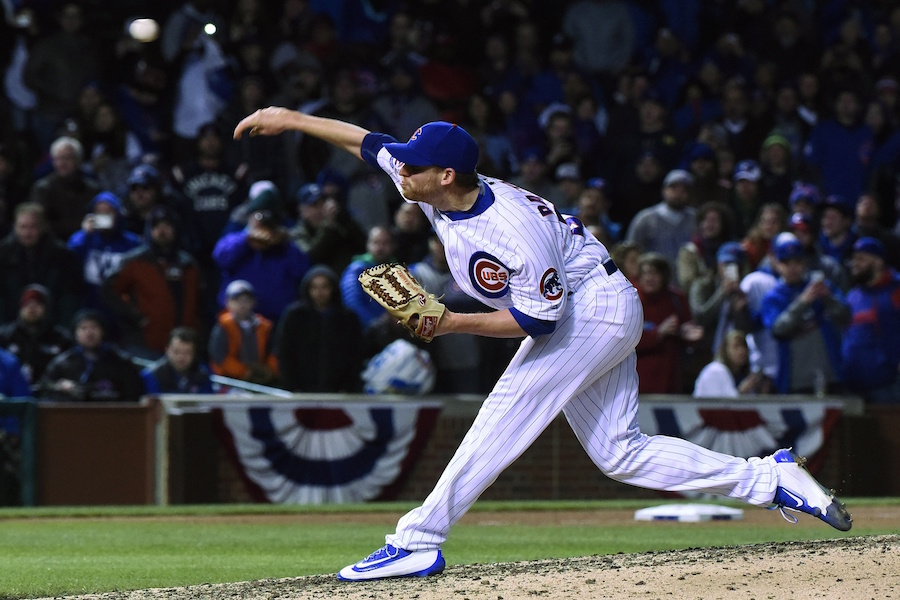 * Last week, in discussing the benefits of badness, I mentioned that the waiver wire could be a key avenue for the Twins to infuse some talent during the season. Over the weekend, they utilized it, claiming right-handed reliever Neil Ramirez after he was waived by the Brewers. Ramirez is only 27 and has an impressive track record. Over the past two seasons with the Cubs, he posted a 1.87 ERA, 1.11 WHIP and 68-to-23 K/BB ratio in 57 innings. The stuff matched the numbers as he racked up strikeouts with a mid-90s fastball and power slider. The velocity has been down a bit this year, and Ramirez has been a mess. The Brewers had acquired him off waivers from the Cubs and kept him for less than 10 days – only two appearances – before designating him for assignment, so clearly they didn't like what they saw. He's a project. But one with considerable upside that the Twins, desperate for arms, can't pass up. The word is that Ramirez has been battling some ongoing shoulder issues, so he should feel right at home with his new club. * Pitching a baseball is hard on the human body. For proof, look no further than all of the ravaged shoulders within Minnesota's pitching ranks. It is only fitting that the newest Twin has a bad wing, because that's been a persistent theme for the staff cornerstones. Phil Hughes' shoulder isn't the reason he went on the 60-day disabled list, but it's the reason he was pitching as the mop-up man in the ninth inning of a blowout loss when he took a line drive off the leg, breaking his femur. Battling through shoulder fatigue by his own admission, Hughes had been utterly ineffective. It wasn't entirely clear the Twins knew what to do with him. They sent him to the bullpen at the end of May, but his only appearances in June were a spot start in place of Kyle Gibson, and Thursday's mop-up relief outing in the final innings of a blowout loss. Now, the Twins have no choice but to do what they probably should have done all along: let that shoulder rest. No one seems able to diagnose what is specifically wrong with Hughes, other than vague dead arm attributions, but continually sending him out to take the mound was not doing any good. Since recording his lone victory this season, against the Brewers on April 18th, he has struck out only 17 of the 184 batters he has faced. That's 9 percent. You can't get by as a pitcher in the major leagues striking out less than 10 percent of opponents, much less as a fly ball guy. Hopefully the time off will do Hughes some good. So far, that plan hasn't worked for Glen Perkins, who remains tangled in an indefinite state of limbo due to his own ambiguously ailing shoulder. The lefty experienced yet another setback during his latest bullpen session, and is off to receive a third opinion due to lingering discomfort. Perkins hasn't pitched in a game since blowing his only save chance on April 10th, which was more than two months ago. Attempting to simply rest and rehab his aching shoulder has not resolved the issue, and that isn't surprising considering he dedicated his entire offseason to that approach before breaking down immediately. Meanwhile, Alex Meyer has been shut down for at least the month of June. We've been reassured that "nothing (was) found but inflammation" in his shoulder, but really there's nothing reassuring about that at this point. And if the shoulder strain that sidelined Gibson for seven weeks is now healed, it wasn't evident in his return on Saturday when he was rocked for five runs in 5 2/3 innings while inducing few swinging strikes or ground balls. The Twins are on pace to allow 894 runs, which is a higher total than any team has allowed since the 2010 Rangers gave up 967. And sure enough, bum shoulders are shouldering the blame for his porous pitching unit. * Turning the page to another deep-running organizational problem, here's some good news regarding Minnesota's catcher situation: John Ryan Murphy is hitting .370/.438/.630 this month at Rochester, with five extra-base hits (including his first home run) in eight games after totaling just two doubles in his first two months between the majors and Triple-A. At long last, it looks like he has shaken out of his mystifying slump. The better news, when it comes to the franchise's future at the catcher position, was the heavy emphasis given to it in last week's MLB Draft. The Twins smartly went the "Best Player Available" route with their first pick, selecting prep outfielder Alex Kiriloff and his enormous offensive ceiling, but they took a catcher with their second pick and then four more within the first 25 rounds. It's the most aggressively we have seen this team address the position since a 2013 draft class that produced the organization's two best current prospects behind the plate, Stuart Turner (a third-round pick) and Mitch Garver (a ninth-rounder). In fact, since Joe Mauer's MVP season in 2009, the Twins have spent only nine picks in the first 20 rounds of their six drafts on catchers, which... well, might help explain the situation they find themselves in today. But at least they're doing something about it. Ben Rortvedt, a high school backstop from Wisconsin that the Twins took with the 56th overall pick on Thursday, became the most highly drafted catcher for Minnesota since they got Mauer first overall in 2001, and he was considered by many to be the best prep player in the country at his position. Check out Jeremy's writeup on him. Along with Rortvedt, the Twins selected Mitchell Cranson, a slugging college catcher from UC Berkeley, in the ninth round. They grabbed Kidany Salva, a switch-hitting 17-year-old from a Texas high school, in the 17th and will try to lure him away from Sam Houston State. In the 20th round they landed Shamoy Christopher, an on-base machine from a community college in Tennessee. These guys are all wild cards to varying degrees, and some are quite unlikely to stick behind the plate, but the Twins are smart to load up on lotto tickets, with the hopes of finding a rare two-way treasure. Maybe they'll finally catch a break.
 -
This Twins team is terrible. That's not breaking news. We're through more than a third of the season and they're on pace for the most losses in franchise history. They consistently fail at every aspect of the game. To further solidify their standing as the worst team in the American League, they went and lost six of seven games last week to the AL's other last-place clubs. But being terrible in major league baseball is not without its silver linings.In an effort to find the bright side of this miserable season, let's take a look at a few of the advantages that come along with Minnesota's status as an outright cellar-dweller. 1) Top waiver priority Robbie Grossman is looking like he might be a player. Granted, he wasn't a waiver acquisition, as the Twins signed him to a minor-league deal after he opted out with the Indians, but he's the type of player that tends to pop up on waivers – a youngish guy who might have some untapped potential but was the victim of an in-season roster crunch. The Twins have the worst record in the league so they'll have first dibs on any such player to be dropped by an AL club. It's a sneaky way to add some decent talent. 2) Top draft pick in 2017 I know, it's tough to get excited about such a long-term proposition. But the 99-loss season in 2011 – worst for a Twins team since 1982 – resulted in the opportunity to draft Byron Buxton. A 93-loss clunker in 2000 got them Joe Mauer. In this respect, a truly rotten season can be a franchise-altering blessing. While it's impossible to get a clear picture of how the top amateur talent will stack up a year from now, there are some intriguing names already emerging. University of Florida catcher J.J. Schwarz is currently viewed as the likely No. 1 pick, and he obviously plays at a position of extreme need for Minnesota. 3) Clear seller status During their stretch of losing campaigns from 2011 through 2014, the Twins were often in a state of ambiguity around this point in the early summer, in terms of their contending status. No general manager wants to sell off key parts in June when his club still has a reasonable chance at getting in the postseason mix. This year, there are no such illusions at play. Terry Ryan can and should make anyone who is not a clear long-term piece available, and by trading with more of the season remaining, he might be able to slightly enhance his return. As I wrote on Monday, the timing is particularly favorable with regards to Trevor Plouffe and the third base market. 4) Low-pressure youth auditions At times, there are concerns about throwing a young and inexperienced player into the middle of an intense MLB race. The second half of this season will provide the Twins with an opportunity to ease any prospects in that they'd like to take a look at, with virtually nothing at stake in terms of wins and losses. This may be especially helpful with some of the system's minor-league bullpen arms, because the coaching staff really needs to get a handle on which ones are going to be able to help out in 2017. 5) Deep introspection When things get this bad, an organization must look inward with a critical eye and scrutinize every individual that they have in place at a high level. No front office exec, coach, trainer or scout should feel safe from a harsh evaluation at the end of this disastrous season, whereas in better times, ineffectiveness might get overlooked. In the spirit of searching for glimmers of positivity within the wreckage, are there any other benefits to being brutally bad that you would add to this list? Sound off in the comments. Click here to view the article
-
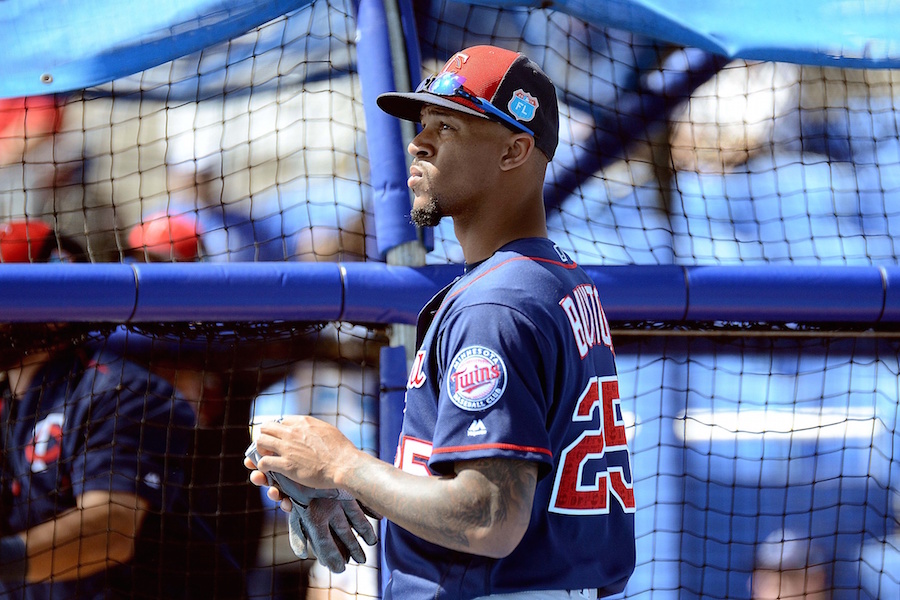 In an effort to find the bright side of this miserable season, let's take a look at a few of the advantages that come along with Minnesota's status as an outright cellar-dweller. 1) Top waiver priority Robbie Grossman is looking like he might be a player. Granted, he wasn't a waiver acquisition, as the Twins signed him to a minor-league deal after he opted out with the Indians, but he's the type of player that tends to pop up on waivers – a youngish guy who might have some untapped potential but was the victim of an in-season roster crunch. The Twins have the worst record in the league so they'll have first dibs on any such player to be dropped by an AL club. It's a sneaky way to add some decent talent. 2) Top draft pick in 2017 I know, it's tough to get excited about such a long-term proposition. But the 99-loss season in 2011 – worst for a Twins team since 1982 – resulted in the opportunity to draft Byron Buxton. A 93-loss clunker in 2000 got them Joe Mauer. In this respect, a truly rotten season can be a franchise-altering blessing. While it's impossible to get a clear picture of how the top amateur talent will stack up a year from now, there are some intriguing names already emerging. University of Florida catcher J.J. Schwarz is currently viewed as the likely No. 1 pick, and he obviously plays at a position of extreme need for Minnesota. 3) Clear seller status During their stretch of losing campaigns from 2011 through 2014, the Twins were often in a state of ambiguity around this point in the early summer, in terms of their contending status. No general manager wants to sell off key parts in June when his club still has a reasonable chance at getting in the postseason mix. This year, there are no such illusions at play. Terry Ryan can and should make anyone who is not a clear long-term piece available, and by trading with more of the season remaining, he might be able to slightly enhance his return. As I wrote on Monday, the timing is particularly favorable with regards to Trevor Plouffe and the third base market. 4) Low-pressure youth auditions At times, there are concerns about throwing a young and inexperienced player into the middle of an intense MLB race. The second half of this season will provide the Twins with an opportunity to ease any prospects in that they'd like to take a look at, with virtually nothing at stake in terms of wins and losses. This may be especially helpful with some of the system's minor-league bullpen arms, because the coaching staff really needs to get a handle on which ones are going to be able to help out in 2017. 5) Deep introspection When things get this bad, an organization must look inward with a critical eye and scrutinize every individual that they have in place at a high level. No front office exec, coach, trainer or scout should feel safe from a harsh evaluation at the end of this disastrous season, whereas in better times, ineffectiveness might get overlooked. In the spirit of searching for glimmers of positivity within the wreckage, are there any other benefits to being brutally bad that you would add to this list? Sound off in the comments.
 -
Trevor Plouffe is a decent player who is having a bad year. He has been one of the worst offensive starting third basemen in the league, and he's making $7 million. No one's going to give up a whole lot for him in a trade. At this point, that is almost immaterial. Terry Ryan needs to be looking at the big picture, and that starts with moving on from the club's longtime staple at the hot corner.Plouffe is doing little to help the Twins this year, but that's not why he needs to go. It's all about Miguel Sano. The experiment of running the big young slugger to the outfield needs to end, and soon, because the risks assumed by this ill-begotten idea are quickly becoming unpalatable. Last week, the Twins lost Sano to the disabled list after he came up lame while hustling down the first base line to beat out a grounder. There are no indications that the injury had anything to do with his playing the outfield, but it's incredibly easy to see the inherent dangers that accompany his roaming around out there. Earlier in the game where Sano strained his hamstring, he had a ball skip away from him in right, turning into a triple for Billy Burns. Watch the video of that play here. Watch Sano sprint after the ball then come to an awkward stop as it drops in front of him and bounces away, forcing him to change directions and accelerate again. These are not the kinds of plays Sano should be trying to make. In his short time with the Twins, he has proven susceptible to strains and sprains in his lower body – unsurprising for a man of his size. Last year he missed time with ankle and hamstring injuries, and he tweaked his ankle again at one point this spring. His latest mishap is the first to require a disabled list stint, but the probability of future incidents is heightened when he's chasing balls around in right field, and that's not even mentioning the danger of him colliding with another player or a wall. Third base is Sano's home. He's far more adept at playing there and far less likely to suffer an injury associated with running or abruptly changing directions. He's the most important bat in the Twins lineup and will be for years to come, but he is being played out of position and exposed to added injury risk for the sake of keeping Plouffe in the lineup. That made some sense as a short-term plan, theoretically, if Plouffe was going to be a key power bat for a contending team. Instead, Plouffe has been a non-factor for a lousy team. The Twins have no commitment to him beyond this year. The chances of him returning next year are growing slimmer and slimmer. It would behoove Ryan to move him this summer so that the team can move forward with Sano at the hot corner and allow their outfielders to play in the outfield. Plouffe's numbers this year aren't going to spark a market frenzy, obviously. His .652 OPS ranks below 20 of 22 qualified MLB third basemen. Hampered by a couple of different ailments, he has managed only three home runs and five walks in 37 games. His strengths have not played up. But he does have strengths, and a track record, that will be valued by clubs with postseason aspirations. Plouffe has hit 74 home runs over the past four seasons and has developed into a fine defender. The fact that his contractual commitment doesn't extend beyond 2016 would be appealing to a team strictly seeking a rental at third base for a World Series run. Incidentally, the Royals and Mets, two squads that are looking to return to repeat as league champs, are both seeking just that. Kansas City's Mike Moustakas will miss the rest of the season with an ACL tear. New York's David Wright is expected to be sidelined until August or September, at least, by a herniated disc in his neck. Both of these developments have arisen within the past two weeks. Plouffe is a clear upgrade over the in-house replacement options for either team. The Twins have the luxury of making him immediately available. In fact, pulling off a deal sooner than later would benefit them by providing salary relief and allowing Sano to return to third base immediately when he comes off the DL. The return for three-plus months of Plouffe won't be much – maybe a low-level prospect or two – but something is better than nothing, which is what the Twins get if they non-tender the 29-year-old during the offseason. Click here to view the article
-
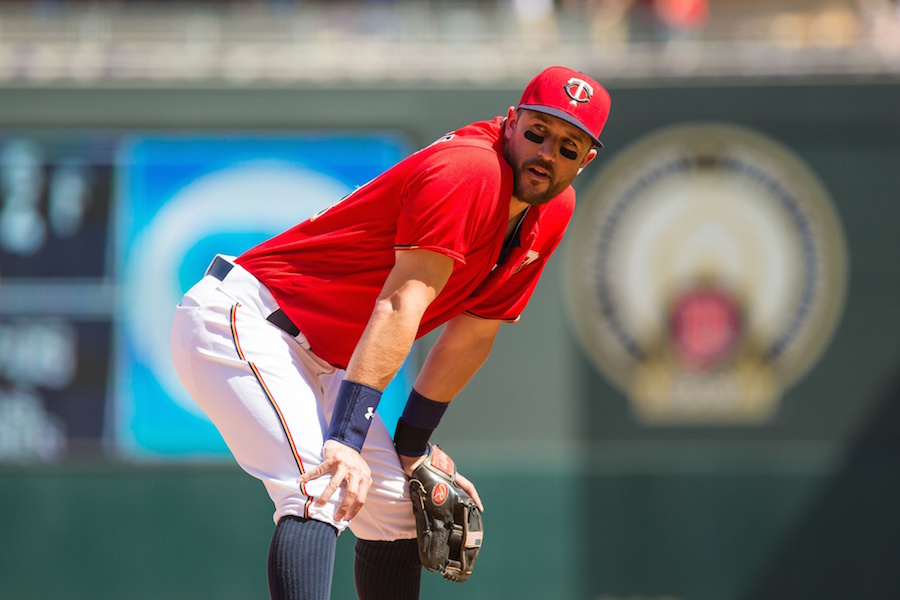 Plouffe is doing little to help the Twins this year, but that's not why he needs to go. It's all about Miguel Sano. The experiment of running the big young slugger to the outfield needs to end, and soon, because the risks assumed by this ill-begotten idea are quickly becoming unpalatable. Last week, the Twins lost Sano to the disabled list after he came up lame while hustling down the first base line to beat out a grounder. There are no indications that the injury had anything to do with his playing the outfield, but it's incredibly easy to see the inherent dangers that accompany his roaming around out there. Earlier in the game where Sano strained his hamstring, he had a ball skip away from him in right, turning into a triple for Billy Burns. Watch the video of that play here. Watch Sano sprint after the ball then come to an awkward stop as it drops in front of him and bounces away, forcing him to change directions and accelerate again. These are not the kinds of plays Sano should be trying to make. In his short time with the Twins, he has proven susceptible to strains and sprains in his lower body – unsurprising for a man of his size. Last year he missed time with ankle and hamstring injuries, and he tweaked his ankle again at one point this spring. His latest mishap is the first to require a disabled list stint, but the probability of future incidents is heightened when he's chasing balls around in right field, and that's not even mentioning the danger of him colliding with another player or a wall. Third base is Sano's home. He's far more adept at playing there and far less likely to suffer an injury associated with running or abruptly changing directions. He's the most important bat in the Twins lineup and will be for years to come, but he is being played out of position and exposed to added injury risk for the sake of keeping Plouffe in the lineup. That made some sense as a short-term plan, theoretically, if Plouffe was going to be a key power bat for a contending team. Instead, Plouffe has been a non-factor for a lousy team. The Twins have no commitment to him beyond this year. The chances of him returning next year are growing slimmer and slimmer. It would behoove Ryan to move him this summer so that the team can move forward with Sano at the hot corner and allow their outfielders to play in the outfield. Plouffe's numbers this year aren't going to spark a market frenzy, obviously. His .652 OPS ranks below 20 of 22 qualified MLB third basemen. Hampered by a couple of different ailments, he has managed only three home runs and five walks in 37 games. His strengths have not played up. But he does have strengths, and a track record, that will be valued by clubs with postseason aspirations. Plouffe has hit 74 home runs over the past four seasons and has developed into a fine defender. The fact that his contractual commitment doesn't extend beyond 2016 would be appealing to a team strictly seeking a rental at third base for a World Series run. Incidentally, the Royals and Mets, two squads that are looking to return to repeat as league champs, are both seeking just that. Kansas City's Mike Moustakas will miss the rest of the season with an ACL tear. New York's David Wright is expected to be sidelined until August or September, at least, by a herniated disc in his neck. Both of these developments have arisen within the past two weeks. Plouffe is a clear upgrade over the in-house replacement options for either team. The Twins have the luxury of making him immediately available. In fact, pulling off a deal sooner than later would benefit them by providing salary relief and allowing Sano to return to third base immediately when he comes off the DL. The return for three-plus months of Plouffe won't be much – maybe a low-level prospect or two – but something is better than nothing, which is what the Twins get if they non-tender the 29-year-old during the offseason.
 -
The Royals are at it again. After a somewhat slow start, the defending champs have come on strong, charging to the top of the division with 10 wins in their last 13 games, including five against the White Sox club they just blasted past. The Royals can do no wrong. Meanwhile, the Twins remain mired in last place and can do no right. Oh, how the tides have turned.Ten years ago, in 2006, the Twins were at the apex of a successful run in the AL Central. They won 96 games with an upstart squad that featured the American League's MVP, batting champ and Cy Young. They would have had the Rookie of the Year, too, if Francisco Liriano didn't tear his UCL. Terry Ryan had guided the franchise to its healthiest point in more than a decade and the future looked awfully bright. Things weren't so rosy for the Royals. They were enduring a third straight 100-loss season and were amidst a stretch of 17 finishes below .500 in 18 years. That June, Dayton Moore took over as Kansas City's general manager. It's been a long and slow road, but under Moore's administration, the team has transformed from baseball's laughing stock to its shining pinnacle. To watch the Royals now, the idea that they were a bungling catastrophe in the not-so-distant past seems preposterous. The last couple of weeks have been perfectly emblematic of how enchanted this ballclub has become. Two Sundays ago, Alex Gordon and Mike Moustakas collided in the outfield while chasing a fly ball behind third base. The results were calamitous: Gordon had broken his wrist and Moustakas had torn his ACL. In a split-second, Royals had lost two key staples in the lineup – one for at least a month and one for the year. What has happened since that fateful incident? Oh, the Royals have just won eight of 10, scoring 68 runs in the process. They're crushing the ball all over the field, leaving opponents muttering. The bullpen is impenetrable as usual. The rotation has been no one's idea of stable, but it doesn't even matter. Like I said, the Royals can do no wrong. On the very opposite end of the spectrum, we have the Twins. The same day Byron Buxton injected a mild spark of excitement into this nightmarish campaign by returning after a blistering stint at Triple-A, Miguel Sano went down with a hamstring injury, almost on cue. One day later, the Athletics completed a sweep of the Twins in Oakland, Minnesota's eighth in a season that is just two months old (that isn't counting the shortened two-gamer against the Baltimore in early May). In 2014, when they lost 92 games, the Twins were swept seven times total. Sano had been the best producer in a bad lineup, save for maybe Joe Mauer. Ideally, others would step up in the slugger's absence over the next few weeks, but then, no one has really stepped up on this entire roster over the first third of the season. And that's where the Twins now stand. If the 2016 season continues in the direction it's headed, it will not only be the organization's fifth 90-loss effort in six years, it will be a 110-loss debacle that easily surpasses any precedent in franchise history. The game of baseball – with its meticulous nature, its marathon seasons, its rules for competitive balance – will always be one of ebbs and flows. Peaks and valleys are to be expected. But the paths that the Twins and Royals have followed represent some of the most extreme examples you will come across. Is there a lesson to be learned from all of this? I don't know. Hopefully it doesn't take the Twins as long to dig themselves out of the dregs as it did the Royals. History doesn't dictate the future so we needn't immerse ourselves in parallels between the current swoon here and the one that lingered for so long in KC, even if those parallels are sometimes conspicuous. It's also worth noting that it took Dayton Moore the better part of 10 years to turn the Royals from a cellar-dweller to an unstoppable force. And Terry Ryan is the same man who put the Twins in that enviable position they were at when Moore took over. When he was seven years into his stagnating rebuild, few would have said that Moore was the man for the job. Now, no one would suggest otherwise. That's not so much a defense of TR, but a call for perspective. This situation is a lot bigger than the GM, no matter how much you want to simplify it. That's why I personally believe that the first step to getting this Twins franchise back on track is a rethinking of the front office structure rather than reactive firings to appease an angry fan base. Click here to view the article
-
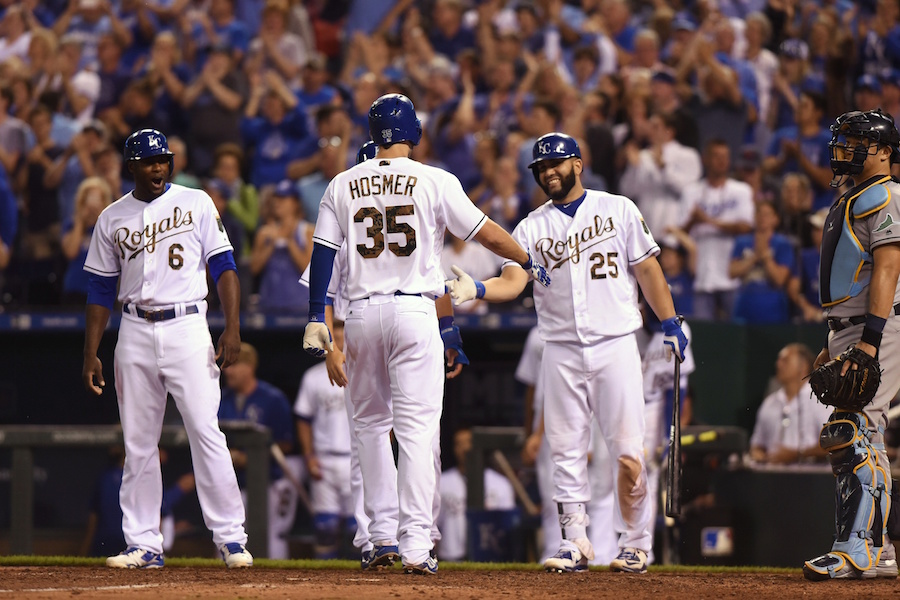 Ten years ago, in 2006, the Twins were at the apex of a successful run in the AL Central. They won 96 games with an upstart squad that featured the American League's MVP, batting champ and Cy Young. They would have had the Rookie of the Year, too, if Francisco Liriano didn't tear his UCL. Terry Ryan had guided the franchise to its healthiest point in more than a decade and the future looked awfully bright. Things weren't so rosy for the Royals. They were enduring a third straight 100-loss season and were amidst a stretch of 17 finishes below .500 in 18 years. That June, Dayton Moore took over as Kansas City's general manager. It's been a long and slow road, but under Moore's administration, the team has transformed from baseball's laughing stock to its shining pinnacle. To watch the Royals now, the idea that they were a bungling catastrophe in the not-so-distant past seems preposterous. The last couple of weeks have been perfectly emblematic of how enchanted this ballclub has become. Two Sundays ago, Alex Gordon and Mike Moustakas collided in the outfield while chasing a fly ball behind third base. The results were calamitous: Gordon had broken his wrist and Moustakas had torn his ACL. In a split-second, Royals had lost two key staples in the lineup – one for at least a month and one for the year. What has happened since that fateful incident? Oh, the Royals have just won eight of 10, scoring 68 runs in the process. They're crushing the ball all over the field, leaving opponents muttering. The bullpen is impenetrable as usual. The rotation has been no one's idea of stable, but it doesn't even matter. Like I said, the Royals can do no wrong. On the very opposite end of the spectrum, we have the Twins. The same day Byron Buxton injected a mild spark of excitement into this nightmarish campaign by returning after a blistering stint at Triple-A, Miguel Sano went down with a hamstring injury, almost on cue. One day later, the Athletics completed a sweep of the Twins in Oakland, Minnesota's eighth in a season that is just two months old (that isn't counting the shortened two-gamer against the Baltimore in early May). In 2014, when they lost 92 games, the Twins were swept seven times total. Sano had been the best producer in a bad lineup, save for maybe Joe Mauer. Ideally, others would step up in the slugger's absence over the next few weeks, but then, no one has really stepped up on this entire roster over the first third of the season. And that's where the Twins now stand. If the 2016 season continues in the direction it's headed, it will not only be the organization's fifth 90-loss effort in six years, it will be a 110-loss debacle that easily surpasses any precedent in franchise history. The game of baseball – with its meticulous nature, its marathon seasons, its rules for competitive balance – will always be one of ebbs and flows. Peaks and valleys are to be expected. But the paths that the Twins and Royals have followed represent some of the most extreme examples you will come across. Is there a lesson to be learned from all of this? I don't know. Hopefully it doesn't take the Twins as long to dig themselves out of the dregs as it did the Royals. History doesn't dictate the future so we needn't immerse ourselves in parallels between the current swoon here and the one that lingered for so long in KC, even if those parallels are sometimes conspicuous. It's also worth noting that it took Dayton Moore the better part of 10 years to turn the Royals from a cellar-dweller to an unstoppable force. And Terry Ryan is the same man who put the Twins in that enviable position they were at when Moore took over. When he was seven years into his stagnating rebuild, few would have said that Moore was the man for the job. Now, no one would suggest otherwise. That's not so much a defense of TR, but a call for perspective. This situation is a lot bigger than the GM, no matter how much you want to simplify it. That's why I personally believe that the first step to getting this Twins franchise back on track is a rethinking of the front office structure rather than reactive firings to appease an angry fan base.
 -
Article: Twins Daily Draft Preview: Zack Burdi
Nick Nelson replied to Nick Nelson's topic in Twins Daily Front Page News
haha nope -
Two years ago, the Twins used the 46th pick in the draft to select Louisville closer Nick Burdi, who quickly developed into one of the their best relief prospects. Next week, they will have the opportunity to draft his brother, Zack, also a dominating closer for the University of Louisville. What's the saying about two Burdis with one stone?WHO IS HE? Just like his older brother, Zack Burdi has emerged as one of the nation's most powerful collegiate arms while closing out games for a heralded Louisville program. The Cardinals have reigned over the Atlantic Coast Conference for two straight seasons with the flame-throwing righty handling the ninth. In 2015 Burdi posted a 0.92 ERA, 0.82 WHIP and 30-to-8 K/BB ratio in 29 1/3 innings. This year he's at 2.00, 0.74 and 45-to-7 K/BB in 27 innings. Earlier this month he was named ACC Co-Pitcher of the Week after tallying nine strikeouts in 4 1/3 perfect fraames across three appearances against top-ten ranked teams. He's dominant. Zack is a couple inches shorter than his brother Nick and throws with a slightly different arm angle, but the similarities between the two siblings out on the mound are numerous. So much that one scout remarked to the editor of Prospect Junkies, "If you've seen his brother then you've seen Zack Burdi because they're the same guy." WHY THE TWINS WILL DRAFT HIM Zack and Nick Burdi have a common trait that not many people in the world share: the ability to consistently fire fastballs at 100-plus miles per hour. Like his brother, Zack mixes in an upper-80s slider and he also throws a changeup that is rarely called upon. One thing that might differentiate the younger Burdi – and make him far more attractive to the Twins – is that some believe he has a chance to start games at the next level. Converting college closers into starting pitchers, or at least attempting to, is not something the Twins have shied away from in recent years. The idea of Burdi's premium velocity and aggressive approach being unleashed over six or seven innings is tantalizing. And taking a pitcher who optimistically projects as a starter but has a stellar relief background to fall back on can be a good strategy for an organization desperately needing any kind of impact arms. This undoubtedly played into the decision to gamble on Tyler Jay last June. Whichever role he settles into, Burdi certainly has the look of an impact arm, and a fast-rising one at that. The 21-year-old would likely follow in the footsteps of his older bro and report straight to Single-A, with a quick path to majors assuming good health and good performance. Plus, there's a cool novelty in the idea of two fireballing brothers locking down the eighth and ninth innings for the Twins in a few years. WHY THE TWINS WON'T DRAFT HIM The Twins have had three top 50 draft selections in the past two years and they have spent two of them on college relievers. Their pattern of using high picks on such players extends far beyond that sample. Even if you ignore the mixed results of these decisions, it is necessary to vary strategy a little bit over time. While the Twins will always have a need for more high-caliber power pitchers, there are obviously other needs to be addressed. If there isn't a very strong belief internally that Burdi has a good chance of catching on as a starter, he just doesn't offer enough upside that is required in an organization's No. 1 draft pick. Also, while Nick's injury issues this year (he's been limited to three total appearances) shouldn't be held against Zack in any way, they do speak to the magnified risk that is assumed when dealing with a kid who's touching triple-digits at such a young age. Based on where Burdi is being ranked presently as a draft prospect, he would be a bit of a reach for the Twins at 15. MLB.com has him ranked as the 39th-best player in the class, whereas Baseball America has him 21st. (It should be noted that Hudson Belinsky, who helps compile the BA rankings, is a believer in Burdi as a starter). I suspect the Twins will go another direction, for various reasons. But the excitement attached to the younger Burdi bro is undeniable. Click here to view the article
-
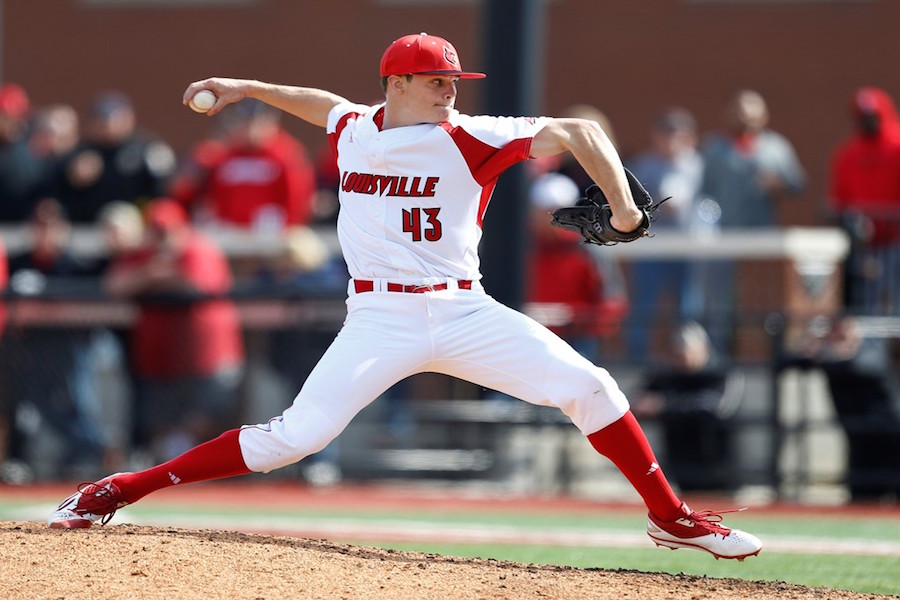 WHO IS HE? Just like his older brother, Zack Burdi has emerged as one of the nation's most powerful collegiate arms while closing out games for a heralded Louisville program. The Cardinals have reigned over the Atlantic Coast Conference for two straight seasons with the flame-throwing righty handling the ninth. In 2015 Burdi posted a 0.92 ERA, 0.82 WHIP and 30-to-8 K/BB ratio in 29 1/3 innings. This year he's at 2.00, 0.74 and 45-to-7 K/BB in 27 innings. Earlier this month he was named ACC Co-Pitcher of the Week after tallying nine strikeouts in 4 1/3 perfect fraames across three appearances against top-ten ranked teams. He's dominant. Zack is a couple inches shorter than his brother Nick and throws with a slightly different arm angle, but the similarities between the two siblings out on the mound are numerous. So much that one scout remarked to the editor of Prospect Junkies, "If you've seen his brother then you've seen Zack Burdi because they're the same guy." WHY THE TWINS WILL DRAFT HIM Zack and Nick Burdi have a common trait that not many people in the world share: the ability to consistently fire fastballs at 100-plus miles per hour. Like his brother, Zack mixes in an upper-80s slider and he also throws a changeup that is rarely called upon. One thing that might differentiate the younger Burdi – and make him far more attractive to the Twins – is that some believe he has a chance to start games at the next level. Converting college closers into starting pitchers, or at least attempting to, is not something the Twins have shied away from in recent years. The idea of Burdi's premium velocity and aggressive approach being unleashed over six or seven innings is tantalizing. And taking a pitcher who optimistically projects as a starter but has a stellar relief background to fall back on can be a good strategy for an organization desperately needing any kind of impact arms. This undoubtedly played into the decision to gamble on Tyler Jay last June. Whichever role he settles into, Burdi certainly has the look of an impact arm, and a fast-rising one at that. The 21-year-old would likely follow in the footsteps of his older bro and report straight to Single-A, with a quick path to majors assuming good health and good performance. Plus, there's a cool novelty in the idea of two fireballing brothers locking down the eighth and ninth innings for the Twins in a few years. WHY THE TWINS WON'T DRAFT HIM The Twins have had three top 50 draft selections in the past two years and they have spent two of them on college relievers. Their pattern of using high picks on such players extends far beyond that sample. Even if you ignore the mixed results of these decisions, it is necessary to vary strategy a little bit over time. While the Twins will always have a need for more high-caliber power pitchers, there are obviously other needs to be addressed. If there isn't a very strong belief internally that Burdi has a good chance of catching on as a starter, he just doesn't offer enough upside that is required in an organization's No. 1 draft pick. Also, while Nick's injury issues this year (he's been limited to three total appearances) shouldn't be held against Zack in any way, they do speak to the magnified risk that is assumed when dealing with a kid who's touching triple-digits at such a young age. Based on where Burdi is being ranked presently as a draft prospect, he would be a bit of a reach for the Twins at 15. MLB.com has him ranked as the 39th-best player in the class, whereas Baseball America has him 21st. (It should be noted that Hudson Belinsky, who helps compile the BA rankings, is a believer in Burdi as a starter). I suspect the Twins will go another direction, for various reasons. But the excitement attached to the younger Burdi bro is undeniable.
 -
Article: Change At The Top?
Nick Nelson replied to Nick Nelson's topic in Twins Daily Front Page News
Mostly behind the scenes stuff. For one thing, he has been deeply involved in creating the constantly improving ballpark experience at Target Field, which he deserves much credit for. In general I don't think any of us are really qualified to judge his merits as a business exec, and that's not what this article about. It's about the idea of redefining his role and creating a new structure of organizational accountability -- one that doesn't involve Terry Ryan standing on an island when it comes to baseball decisions. -
Article: Change At The Top?
Nick Nelson replied to Nick Nelson's topic in Twins Daily Front Page News
He is not responsible for the circumstances that have led to this outcome, no. The Twin Cities have a low cable subscriber rate and there isn't really any competition with FSN to drive up demand/cost for TV rights. There's no grounds for this being continually cited as an example of poor negotiating. -
Presidential term limits were ratified into the Constitution in the 1940s, for various reasons. Among them: a recognition of the potential for ineffectiveness and stale thinking when one individual occupied the office for too long. This rule means that the United States will be ushering in a new president here in 2016. Might it be time for the Minnesota Twins to do the same?From everything I know, Dave St. Peter is good at his job. He manages people and projects, has an excellent grasp on business relationships, interacts with fans, and admirably handles the tremendous responsibility and pressure inherent to his title as Twins President. I certainly don't hold him accountable for the things that are happening on the field this season. A business guy through and through, St. Peter has no real influence on roster construction. He's not a baseball mind. But maybe that's part of the problem here. Things have changed since St. Peter became president of the team back in 2002. Recently, more and more organizations are going to a two-tiered front office structure in which a president of baseball operations slots in above the general manager and reports directly to the owner. For example, we have seen this approach utilized by the Cubs with Theo Epstein, the Diamondbacks with Tony La Russa, and the Dodgers with Andrew Friedman. The role of president, as the Twins and many others currently view it, is strictly about running the business side. That's a major undertaking, to be sure. But there is much appeal in the idea of a top-ranking team exec with a competitive vision, especially for a club whose current general manager has seen his judgment rightfully called into question. Even if you believe Terry Ryan needs to go, it's not as simple as firing him and automatically installing a superior option. Who leads the search committee to find his replacement? What traits and tendencies are prioritized in such a search? If getting rid of Ryan simply means promoting his second-in-command, can we realistically expect anything to change significantly? Hiring a man above TR would enable the organization to keep the longtime GM in place, with some added oversight and collaboration. It would inject an authoritative fresh voice into the decision-making process. It would provide a neutral perspective on establishing a line of succession behind Ryan. It would also satiate the growing cries for change and new leadership without requiring a reactive dismissal or a hasty overhaul of the entire front office. I'm not saying St. Peter needs to be let go. He could stay on in a similar function, but with the way things have been going for the Twins over the past half-decade, the title of "Team President' has a weightier feel. The person in that role should have a direct accountability for the on-field product, and should inspire confidence on a team-building level. This doesn't even qualify as outside-the-box thinking anymore by most standards, but the Twins are so boxed in by their insular ideologies that it's hard to envision such a foundational shift in structure. I think I speak for everyone when I say I'd like to see some creativity implemented in fixing this broken franchise, and creativity doesn't usually involve sticking to the status quo. Click here to view the article
-
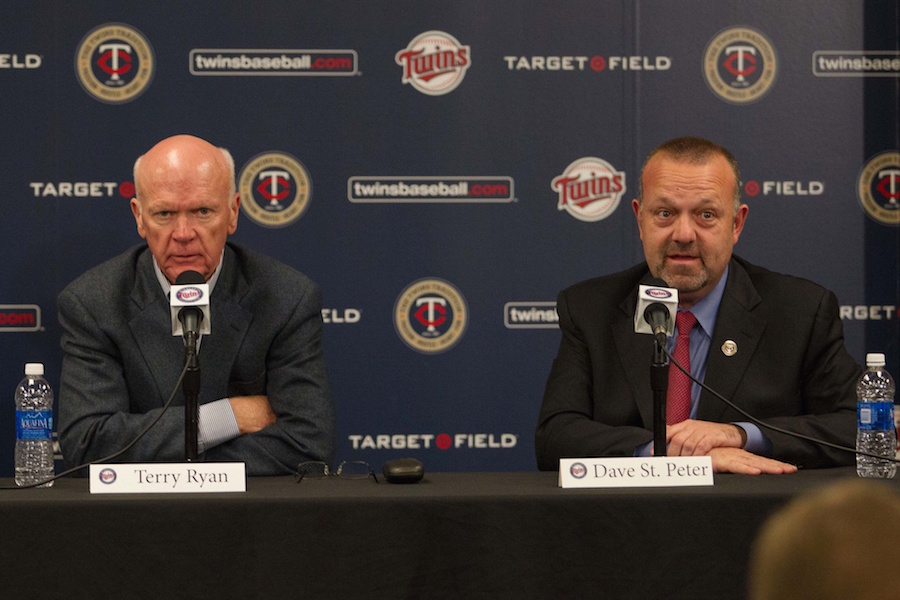 From everything I know, Dave St. Peter is good at his job. He manages people and projects, has an excellent grasp on business relationships, interacts with fans, and admirably handles the tremendous responsibility and pressure inherent to his title as Twins President. I certainly don't hold him accountable for the things that are happening on the field this season. A business guy through and through, St. Peter has no real influence on roster construction. He's not a baseball mind. But maybe that's part of the problem here. Things have changed since St. Peter became president of the team back in 2002. Recently, more and more organizations are going to a two-tiered front office structure in which a president of baseball operations slots in above the general manager and reports directly to the owner. For example, we have seen this approach utilized by the Cubs with Theo Epstein, the Diamondbacks with Tony La Russa, and the Dodgers with Andrew Friedman. The role of president, as the Twins and many others currently view it, is strictly about running the business side. That's a major undertaking, to be sure. But there is much appeal in the idea of a top-ranking team exec with a competitive vision, especially for a club whose current general manager has seen his judgment rightfully called into question. Even if you believe Terry Ryan needs to go, it's not as simple as firing him and automatically installing a superior option. Who leads the search committee to find his replacement? What traits and tendencies are prioritized in such a search? If getting rid of Ryan simply means promoting his second-in-command, can we realistically expect anything to change significantly? Hiring a man above TR would enable the organization to keep the longtime GM in place, with some added oversight and collaboration. It would inject an authoritative fresh voice into the decision-making process. It would provide a neutral perspective on establishing a line of succession behind Ryan. It would also satiate the growing cries for change and new leadership without requiring a reactive dismissal or a hasty overhaul of the entire front office. I'm not saying St. Peter needs to be let go. He could stay on in a similar function, but with the way things have been going for the Twins over the past half-decade, the title of "Team President' has a weightier feel. The person in that role should have a direct accountability for the on-field product, and should inspire confidence on a team-building level. This doesn't even qualify as outside-the-box thinking anymore by most standards, but the Twins are so boxed in by their insular ideologies that it's hard to envision such a foundational shift in structure. I think I speak for everyone when I say I'd like to see some creativity implemented in fixing this broken franchise, and creativity doesn't usually involve sticking to the status quo.
 -
One advantage to falling out of postseason contention within the first two months of the season is that it enables a team like the Minnesota Twins to clearly establish itself as a seller well ahead of the trade deadline.In this age of multiple wild card entrants, the vast majority of clubs around baseball are fancying themselves postseason contenders. This makes the market more favorable for teams in such a position as Minnesota's. Trade partners will generally give up a bit more to acquire help in June than July, for obvious reasons, and the Twins have no real reason to wait around. Unfortunately, in accordance with the "Total System Failure" framework of this 2016 season, nearly every player who looked like a potentially attractive trade chip has scuffled and drained his value. This is particularly painful in a few key spots, as we'll discuss below. It's not all bad, though. There won't be any blockbuster swap that brings back elite talent, but there are a few intriguing possibilities to be considered. Let's break down the roster and see where things stand as we head into June. CATCHER: It's possible that someone could take interest in Kurt Suzuki as a backup but the Twins have no usable alternative to fall back on and Suzuki's .570 OPS wouldn't fetch much anyway. This is a position where the Twins should solely be looking to add, not subtract. INFIELD: Eduardo Nunez is the hot name here. He is enjoying a very strong year, with a .314/.347/.482 slash line, and while it seems a bit flukish, he has continued to hit into late May and is also coming off a 2015 season in which he posted a career-high OPS. He doesn't turn 29 for a month. Combine the clear upward offensive trajectory with his defensive versatility, and Nunez could garner some real interest. Trevor Plouffe will be much discussed because he's on a one-year commitment and dealing him would open third base for Miguel Sano, but unfortunately he's playing terribly. Would Terry Ryan ship out Plouffe, a former first-round pick and a core veteran staple, for a mid-level prospect? At this point it's not unthinkable. Parting with Brian Dozier or Eduardo Escobar would open a spot for Jorge Polanco but neither has done anything to create a market. OUTFIELD: Ryan won't even think about giving up Sano, Byron Buxton or Max Kepler, and rightfully so. Trading Eddie Rosario over the offseason would have been a good idea if the opportunity arose, but now he has turned into a pumpkin. I actually think Danny Santana might attract some suitors as a bench piece because he can play several positions and offers plenty of speed, but he won't bring back anything special. ROTATION: The only rotation members who would have any credibility as trade candidates are Tyler Duffey and Ervin Santana, but the Twins can't really afford to lose either of them at this point considering how things have played out with the rest of the starters. It would have been really nice if Ricky Nolasco could have kept up his April pace and made himself appealing to a team needing a fifth starter, but alas, it looks like the only way he's leaving is by DFA. BULLPEN: This one hurts. There are many contenders looking for help in the bullpen, including the Red Sox (who just lost key setup man Carson Smith for the season) and the Rangers (who are second in the West but have the worst bullpen ERA in the AL). Depressingly, every reliever that might have brought back a decent haul has inspired no confidence. At the top of that list is Kevin Jepsen, who is pitching as poorly as he ever has, because of course. Trevor May has melted down this month, as has Ryan Pressly to a lesser extent. Michael Tonkin doesn't have a big-league track record. Fernando Abad has been the bullpen's best performer but as a lefty specialist with an uneven history, he's not the kind of arm that commands a meaningful return. SUMMARY Even in circumstances like these, where major shakeups are warranted, it's simply not good strategy to be trading assets with depressed value. That rules out the idea of flipping someone like Dozier or Glen Perkins (if he ever gets healthy). No one is taking those contracts and giving up anything. Nunez looks like a nice chip if he keeps hitting, and Santana might bring back a Single-A type, but there aren't many other opportunities to build a marketplace. Plouffe is going to be the most interesting case. On the one hand, it would be a shame to sell low on someone who's been a very solid player over the years. On the other hand, Sano needs to get out of right field, and it's not clear Plouffe is in the team's plans beyond 2016. It might end up being a "take what you can get" scenario. As it happens, the defending champs just lost third baseman Mike Moustakas for the year to a torn ACL. It wouldn't be a bad thing for Plouffe to get on a hot streak, as he is wont to do. What are your thoughts? If you were in the GM's chair, what would be your approach as the trade deadline draws nearer? Click here to view the article
- 82 replies
-
- 2
-
-
- eduardo nunez
- trevor plouffe
- (and 1 more)
-
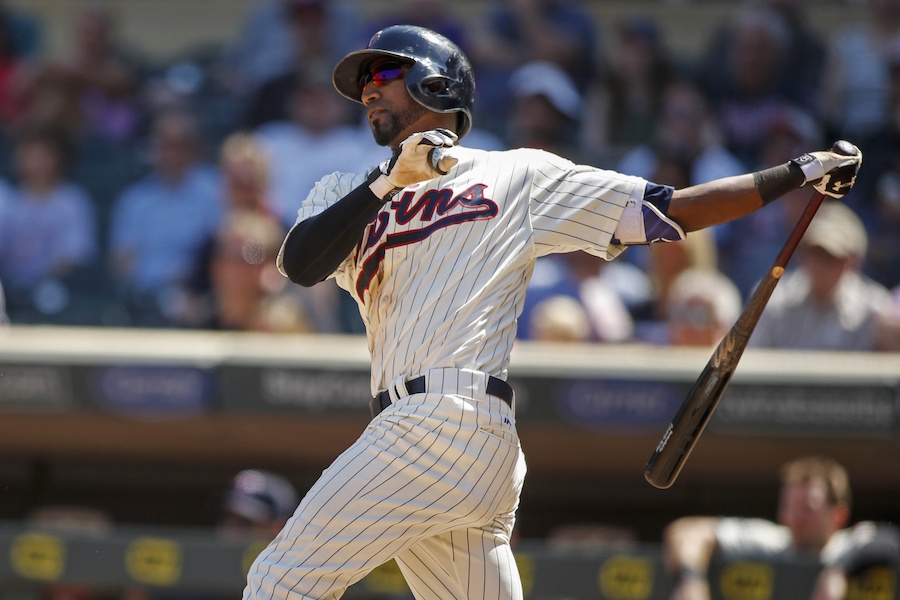 In this age of multiple wild card entrants, the vast majority of clubs around baseball are fancying themselves postseason contenders. This makes the market more favorable for teams in such a position as Minnesota's. Trade partners will generally give up a bit more to acquire help in June than July, for obvious reasons, and the Twins have no real reason to wait around. Unfortunately, in accordance with the "Total System Failure" framework of this 2016 season, nearly every player who looked like a potentially attractive trade chip has scuffled and drained his value. This is particularly painful in a few key spots, as we'll discuss below. It's not all bad, though. There won't be any blockbuster swap that brings back elite talent, but there are a few intriguing possibilities to be considered. Let's break down the roster and see where things stand as we head into June. CATCHER: It's possible that someone could take interest in Kurt Suzuki as a backup but the Twins have no usable alternative to fall back on and Suzuki's .570 OPS wouldn't fetch much anyway. This is a position where the Twins should solely be looking to add, not subtract. INFIELD: Eduardo Nunez is the hot name here. He is enjoying a very strong year, with a .314/.347/.482 slash line, and while it seems a bit flukish, he has continued to hit into late May and is also coming off a 2015 season in which he posted a career-high OPS. He doesn't turn 29 for a month. Combine the clear upward offensive trajectory with his defensive versatility, and Nunez could garner some real interest. Trevor Plouffe will be much discussed because he's on a one-year commitment and dealing him would open third base for Miguel Sano, but unfortunately he's playing terribly. Would Terry Ryan ship out Plouffe, a former first-round pick and a core veteran staple, for a mid-level prospect? At this point it's not unthinkable. Parting with Brian Dozier or Eduardo Escobar would open a spot for Jorge Polanco but neither has done anything to create a market. OUTFIELD: Ryan won't even think about giving up Sano, Byron Buxton or Max Kepler, and rightfully so. Trading Eddie Rosario over the offseason would have been a good idea if the opportunity arose, but now he has turned into a pumpkin. I actually think Danny Santana might attract some suitors as a bench piece because he can play several positions and offers plenty of speed, but he won't bring back anything special. ROTATION: The only rotation members who would have any credibility as trade candidates are Tyler Duffey and Ervin Santana, but the Twins can't really afford to lose either of them at this point considering how things have played out with the rest of the starters. It would have been really nice if Ricky Nolasco could have kept up his April pace and made himself appealing to a team needing a fifth starter, but alas, it looks like the only way he's leaving is by DFA. BULLPEN: This one hurts. There are many contenders looking for help in the bullpen, including the Red Sox (who just lost key setup man Carson Smith for the season) and the Rangers (who are second in the West but have the worst bullpen ERA in the AL). Depressingly, every reliever that might have brought back a decent haul has inspired no confidence. At the top of that list is Kevin Jepsen, who is pitching as poorly as he ever has, because of course. Trevor May has melted down this month, as has Ryan Pressly to a lesser extent. Michael Tonkin doesn't have a big-league track record. Fernando Abad has been the bullpen's best performer but as a lefty specialist with an uneven history, he's not the kind of arm that commands a meaningful return. SUMMARY Even in circumstances like these, where major shakeups are warranted, it's simply not good strategy to be trading assets with depressed value. That rules out the idea of flipping someone like Dozier or Glen Perkins (if he ever gets healthy). No one is taking those contracts and giving up anything. Nunez looks like a nice chip if he keeps hitting, and Santana might bring back a Single-A type, but there aren't many other opportunities to build a marketplace. Plouffe is going to be the most interesting case. On the one hand, it would be a shame to sell low on someone who's been a very solid player over the years. On the other hand, Sano needs to get out of right field, and it's not clear Plouffe is in the team's plans beyond 2016. It might end up being a "take what you can get" scenario. As it happens, the defending champs just lost third baseman Mike Moustakas for the year to a torn ACL. It wouldn't be a bad thing for Plouffe to get on a hot streak, as he is wont to do. What are your thoughts? If you were in the GM's chair, what would be your approach as the trade deadline draws nearer?
 -
By "same as before" you mean over the course of a career in which he's been an average MLB pitcher? I'll take that. It also bears noting that last year Milone pitched very, very well after returning from his successful stint in Triple-A so whether it was adjustments or confidence or whatever, he seemed to gain something. Right now the Twins need starters that can give them innings and salvage the beleaguered bullpen. Even with this terrible W/L record that is still a significant priority. Going with someone like Berrios over Milone is simply not an option right now for that reason.
-
Is more change coming for the Twins rotation? Who might be lined up to step in next? And what should we make of a prospect's prodigious power display in Rochester? All are covered in today's Three-Bagger.* Five days after coming out of a strong outing against the Tigers with just 75 pitches thrown, Phil Hughes took the hill against the Blue Jays on Sunday and once again managed to navigate his way through a quality start, despite opponents hitting non-stop rockets. The righty deserves plenty of credit for gutting it out but his pitches are woefully ineffective right now, as illustrated by the amount of contact being made and the loudness of that contact. In his last two starts Hughes has struck out only one of the 48 batters he has faced. That simply isn't going to be a workable formula for him. Hughes doesn't rank atop the list of Paul Molitor's concerns in the rotation, though. Ricky Nolasco was shelled by the Royals on Monday, failing to make it through three innings while giving up six runs. The meltdown was made more irksome by Nolasco's apathetic postgame remarks: The injury issues that consistently marred Nolasco's first two seasons in Minnesota were essentially the only justification for his getting another shot this year despite wholly inadequate results. Now he's healthy by his own admission and once again getting raked, with an 8.14 ERA and 990 opponents' OPS in the month of May. For a player who was already nearing the end of his rope with this organization, a parting of ways can't be far off as the team endures another dreadful stretch of performances. Even with Kyle Gibson due to return soon, the Twins may find themselves turning to the minors for reinforcements in the rotation. * Who might be at the head of the line to step in should another spot open up? It's probably not Jose Berrios. In his first start back at Rochester following last week's demotion, Berrios issued five walks and required 104 pitches to get through five innings, a continuation of the inefficiency and command problems that got him sent down. The more likely candidate for a promotion is Tommy Milone, who has been on the opposite end of the control spectrum since heading to Triple-A. In three starts with the Red Wings, Milone has issued zero walks over 20 innings while striking out 17 and putting up a 2.18 ERA. Just like he did last summer when the Twins demoted him, the lefty has responded well and is doing everything necessary to earn a trip back. Milone may have a limited ceiling, but right now he looks like a preferable option to at least three members of the Twins rotation. The southpaw would need to be re-added to the 40-man in order to return, but placing Glen Perkins on the 60-day DL is a formality at this point. * Not since 1990 has a player on the Rochester Red Wings hit three home runs in a game. At least, that was the case until Saturday, when slugging prospect Adam Walker accomplished the feat by going deep in each of his first three at-bats against Durham. Walker is now tied for the International League lead with nine home runs on the season, but that's nothing new. He has led his league in homers every year since he joined the professional ranks. His power is the stuff of legend. Given that Walker, who ranked 11th on our list of top Twins prospects this spring, is now at Triple-A and already on the 40-man roster, one could surmise that a big-league debut may be looming this summer. Indeed, it would behoove Minnesota to get a look at the 24-year-old, and his promotion would stir some warranted excitement among fans who dig the long ball. Walker is capable of hitting them longer than almost anybody in the game, and that's no overstatement. Unfortunately, while his immense pop has translated to the highest level of the minors, so too has his greatest weakness – one that makes it excruciatingly difficult to see him developing into a successful MLB hitter. He has struck out in 65 of his 148 plate appearances for Rochester (44 percent). To put that in perspective, no qualified hitter in the majors has ever posted a K-rate above 37 percent. Chris Carter, who set that record in 2013 with the Astros, struck out in only 24 percent of his plate appearances at Triple-A. Can a player like Walker stay afloat offensively in the big leagues while whiffing in half of his plate appearances if he is obliterating the ball when he manages to make contact? Not likely. But I'm curious to see. Why not? Click here to view the article
- 67 replies
-
- 3
-
-
- phil hughes
- ricky nolasco
- (and 3 more)
-
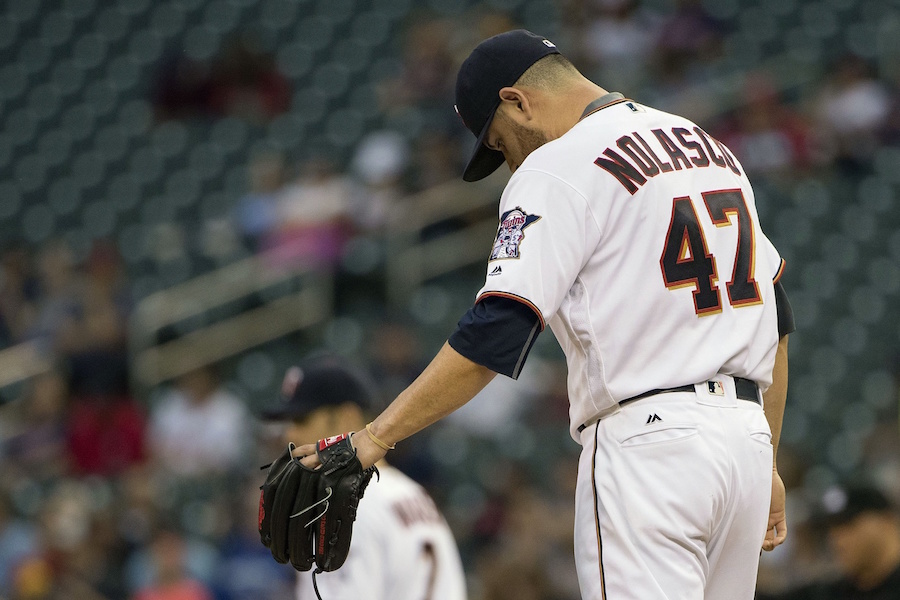 * Five days after coming out of a strong outing against the Tigers with just 75 pitches thrown, Phil Hughes took the hill against the Blue Jays on Sunday and once again managed to navigate his way through a quality start, despite opponents hitting non-stop rockets. The righty deserves plenty of credit for gutting it out but his pitches are woefully ineffective right now, as illustrated by the amount of contact being made and the loudness of that contact. In his last two starts Hughes has struck out only one of the 48 batters he has faced. That simply isn't going to be a workable formula for him. Hughes doesn't rank atop the list of Paul Molitor's concerns in the rotation, though. Ricky Nolasco was shelled by the Royals on Monday, failing to make it through three innings while giving up six runs. The meltdown was made more irksome by Nolasco's apathetic postgame remarks: https://twitter.com/MikeBerardino/status/734971347261001729 The injury issues that consistently marred Nolasco's first two seasons in Minnesota were essentially the only justification for his getting another shot this year despite wholly inadequate results. Now he's healthy by his own admission and once again getting raked, with an 8.14 ERA and 990 opponents' OPS in the month of May. For a player who was already nearing the end of his rope with this organization, a parting of ways can't be far off as the team endures another dreadful stretch of performances. Even with Kyle Gibson due to return soon, the Twins may find themselves turning to the minors for reinforcements in the rotation. * Who might be at the head of the line to step in should another spot open up? It's probably not Jose Berrios. In his first start back at Rochester following last week's demotion, Berrios issued five walks and required 104 pitches to get through five innings, a continuation of the inefficiency and command problems that got him sent down. The more likely candidate for a promotion is Tommy Milone, who has been on the opposite end of the control spectrum since heading to Triple-A. In three starts with the Red Wings, Milone has issued zero walks over 20 innings while striking out 17 and putting up a 2.18 ERA. Just like he did last summer when the Twins demoted him, the lefty has responded well and is doing everything necessary to earn a trip back. Milone may have a limited ceiling, but right now he looks like a preferable option to at least three members of the Twins rotation. The southpaw would need to be re-added to the 40-man in order to return, but placing Glen Perkins on the 60-day DL is a formality at this point. * Not since 1990 has a player on the Rochester Red Wings hit three home runs in a game. At least, that was the case until Saturday, when slugging prospect Adam Walker accomplished the feat by going deep in each of his first three at-bats against Durham. Walker is now tied for the International League lead with nine home runs on the season, but that's nothing new. He has led his league in homers every year since he joined the professional ranks. His power is the stuff of legend. Given that Walker, who ranked 11th on our list of top Twins prospects this spring, is now at Triple-A and already on the 40-man roster, one could surmise that a big-league debut may be looming this summer. Indeed, it would behoove Minnesota to get a look at the 24-year-old, and his promotion would stir some warranted excitement among fans who dig the long ball. Walker is capable of hitting them longer than almost anybody in the game, and that's no overstatement. Unfortunately, while his immense pop has translated to the highest level of the minors, so too has his greatest weakness – one that makes it excruciatingly difficult to see him developing into a successful MLB hitter. He has struck out in 65 of his 148 plate appearances for Rochester (44 percent). To put that in perspective, no qualified hitter in the majors has ever posted a K-rate above 37 percent. Chris Carter, who set that record in 2013 with the Astros, struck out in only 24 percent of his plate appearances at Triple-A. Can a player like Walker stay afloat offensively in the big leagues while whiffing in half of his plate appearances if he is obliterating the ball when he manages to make contact? Not likely. But I'm curious to see. Why not?
