



Nick Nelson
-
Posts
8,326 -
Joined
-
Last visited
-
Days Won
56
Content Type
Profiles
News
Minnesota Twins Videos
2026 Minnesota Twins Top Prospects Ranking
2022 Minnesota Twins Draft Picks
Minnesota Twins Free Agent & Trade Rumors, Notes, & Tidbits
Guides & Resources
2023 Minnesota Twins Draft Picks
The Minnesota Twins Players Project
2024 Minnesota Twins Draft Picks
2025 Minnesota Twins Draft Pick Tracker
2026 Minnesota Twins Draft Tracker: Picks & Bonuses
Forums
Blogs
Events
Store
Downloads
Gallery
Everything posted by Nick Nelson
-
Article: Penciling A 2017 Starting Rotation
Nick Nelson replied to Nick Nelson's topic in Twins Daily Front Page News
Good thing this year's performances completely dictate and predict exactly what will happen next year! It's nice to have the assurance that the Santiago we've seen the last few weeks is the real version and not the guy from the last 5 years. And of course there's no chance a 22-year-old rookie is going to improve in any regard. Gibson had a bad year so he might as well just quit and try something else.- 254 replies
-
- 5
-

-
- kyle gibson
- jose berrios
- (and 2 more)
-
Article: Penciling A 2017 Starting Rotation
Nick Nelson replied to Nick Nelson's topic in Twins Daily Front Page News
I've seen some people suggest that the Twins should drop Santiago, but then go find a one-year plug in free agency. Anyone who believes they're going to find a better starter on a more favorable deal in FA is kidding themselves.- 254 replies
-
- 13
-
-
- kyle gibson
- jose berrios
- (and 2 more)
-
Article: Penciling A 2017 Starting Rotation
Nick Nelson replied to Nick Nelson's topic in Twins Daily Front Page News
Good comments so far. I'll just say a couple of things: 1) Not a fan of the "let them compete in spring training approach." The Twins have made bad roster decisions too many times in the past by making judgments on the basis of specious data gathered over a month of exhibition games. They need a firm plan going into camp, which was the idea behind this thought exercise. 2) Giving up on players like Gibson after one bad year is how teams make huge mistakes that haunt them down the line. It's short-sighted and reactionary. He's a talented pitcher who had a bad season.- 254 replies
-
- 7
-
-
- kyle gibson
- jose berrios
- (and 2 more)
-
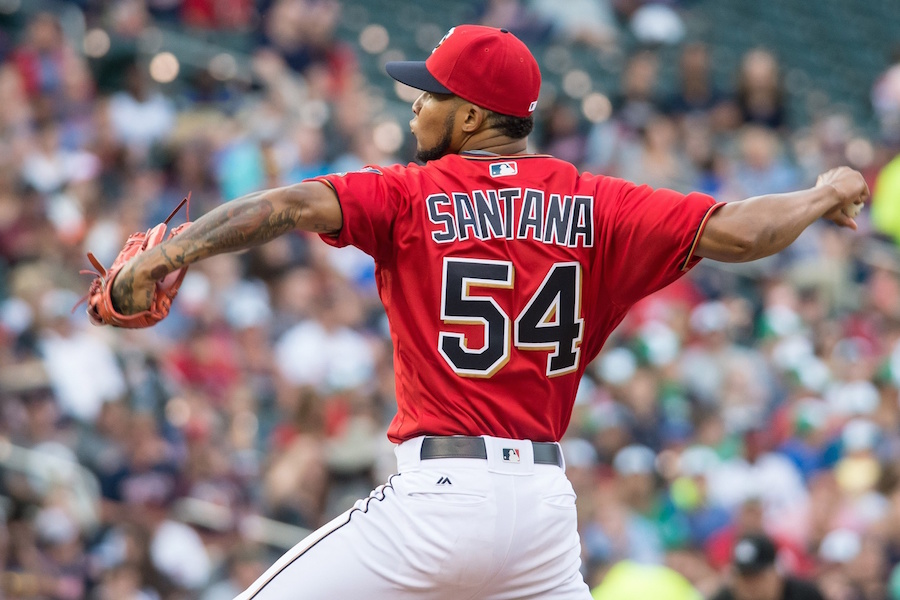
The first and most important objective for any incoming baseball ops chief, in terms of roster construction, will be assembling a rotation for next season that gives the Twins a chance to compete. This year's unit failed miserably in that regard. When the Twins inevitably drop their 100th game, they'll become the highest-scoring team with triple-digit losses of the last 10 years at least.Obviously, the new top decision-maker will want to pursue every avenue for improving Minnesota's historically bad starting corps. But that won't involve rebuilding from the ground up. There are usable assets on hand and the Twins will certainly give some of them an opportunity to rebound. The question is which ones should be penciled in as members of the 2017 rotation, and which should be heading into spring training on the outside looking in, needing to earn their way back. This determination will have a major impact on how the front office approaches the offseason. I would say that the following players will -- and in my estimation, probably should -- be viewed as locks: Ervin Santana: I presume no one's going to argue with this one. Santana is on his way to posting the lowest ERA for a Twins starter since that other Santana guy left. Some might suggest he should be traded over the winter, and that's a discussion for another time, but if he's here, Erv is the Opening Day starter (again) in 2017. Kyle Gibson: I suspect that some will disagree with this. Undeniably, Gibson has had an awful season. But he's just not a guy you give up on. He's 29, he was their best starter a year ago, and he'll be fairly inexpensive in his first year of arbitration. The ability is there but for whatever reason Gibson has been unable to straighten himself out this season. He looks like someone who would benefit greatly from a new coaching voice. Jose Berrios: On the one hand, he has done nothing to earn a guaranteed spot with his rocky performance as a rookie. But on the other hand, it makes no sense to send Berrios back to the minors. He has nothing left to accomplish there. He needs to sink or swim in the rotation from Day One next year. He'll have the next few months to focus on everything he needs to improve, and something tells me there will be no shortage of hard work put forth on that front. Hector Santiago: Since his dreadful opening stretch with the new club, Santiago has gone back to his usual routine, delivering solid if unspectacular starts each fifth day. He'll be 29 and on a one-year deal through arbitration, so there isn't much risk. If he's healthy and decent, he eats innings and fills a spot at the back of the rotation. If he's not good, the Twins can cut him loose and try another option. I only refer to him as a lock because that is what he'll be once the team commits to paying him close to $10 million for next year. With those four in place, the Twins will have one wide-open spot to fill. They could look to address it externally, but there will be several options on hand. Let's run through some of those candidates: Phil Hughes: Coming off thoracic outlet surgery, I severely doubt that he'll be healthy and strong enough to be an MLB starter next April. Let's not forget that he was throwing in the 80s and fatiguing in the fifth inning by the time he finally submitted to his shoulder issues. Although he'll be nine months removed from surgery by the start of next season, I'd rather see him ramp up and get sharp in the minors or extended spring before being inserted back into the big-league rotation. Trevor May: The Twins have declared that they intend to return May to a starting role, which is good news. But he hasn't started a game since last August. After altering his routine and approach to that of a reliever, he'll now need to switch back. There is no assurance he'll be able to complete that process in camp, and the Twins would be hard-pressed to rely upon it. He will have one option remaining if they want to start him in Triple-A as a go-to reinforcement. Tyler Duffey: My belief is that Duffey needs to swap roles with May and head to the bullpen. He was a dominant collegiate closer before the Twins drafted him, and his two-pitch combo is tailor-made for shorter stints. Even if the team doesn't go that route, I have to imagine that his brutal results this year have eliminated him from any kind of consideration to open 2017 in the rotation, regardless of how he looks in March. Adalberto Mejia: Acquired from San Francisco at the deadline, he had a nice year in Triple-A and briefly debuted for the Twins last month. Mejia is bordering on big-league ready but I suspect that he'll begin at Rochester again next year. It's tough to slot a guy with so little experience into a rotation that desperately needs to improve, especially with Berrios already in that mix. There are a few other prospects that could factor into this conversation, as well as Tommy Milone if he's kept around (doubtful). But these are the names I would have listed as legitimate options. Obviously, it will be helpful to add more depth and upside to this group, and that will be a priority during the coming offseason. What are your thoughts? Who should be penciled in? If you're the GM, how many starters are you set on acquiring this winter? Click here to view the article
- 254 replies
-
- 1
-
-
- kyle gibson
- jose berrios
- (and 2 more)
-
 Obviously, the new top decision-maker will want to pursue every avenue for improving Minnesota's historically bad starting corps. But that won't involve rebuilding from the ground up. There are usable assets on hand and the Twins will certainly give some of them an opportunity to rebound. The question is which ones should be penciled in as members of the 2017 rotation, and which should be heading into spring training on the outside looking in, needing to earn their way back. This determination will have a major impact on how the front office approaches the offseason. I would say that the following players will -- and in my estimation, probably should -- be viewed as locks: Ervin Santana: I presume no one's going to argue with this one. Santana is on his way to posting the lowest ERA for a Twins starter since that other Santana guy left. Some might suggest he should be traded over the winter, and that's a discussion for another time, but if he's here, Erv is the Opening Day starter (again) in 2017. Kyle Gibson: I suspect that some will disagree with this. Undeniably, Gibson has had an awful season. But he's just not a guy you give up on. He's 29, he was their best starter a year ago, and he'll be fairly inexpensive in his first year of arbitration. The ability is there but for whatever reason Gibson has been unable to straighten himself out this season. He looks like someone who would benefit greatly from a new coaching voice. Jose Berrios: On the one hand, he has done nothing to earn a guaranteed spot with his rocky performance as a rookie. But on the other hand, it makes no sense to send Berrios back to the minors. He has nothing left to accomplish there. He needs to sink or swim in the rotation from Day One next year. He'll have the next few months to focus on everything he needs to improve, and something tells me there will be no shortage of hard work put forth on that front. Hector Santiago: Since his dreadful opening stretch with the new club, Santiago has gone back to his usual routine, delivering solid if unspectacular starts each fifth day. He'll be 29 and on a one-year deal through arbitration, so there isn't much risk. If he's healthy and decent, he eats innings and fills a spot at the back of the rotation. If he's not good, the Twins can cut him loose and try another option. I only refer to him as a lock because that is what he'll be once the team commits to paying him close to $10 million for next year. With those four in place, the Twins will have one wide-open spot to fill. They could look to address it externally, but there will be several options on hand. Let's run through some of those candidates: Phil Hughes: Coming off thoracic outlet surgery, I severely doubt that he'll be healthy and strong enough to be an MLB starter next April. Let's not forget that he was throwing in the 80s and fatiguing in the fifth inning by the time he finally submitted to his shoulder issues. Although he'll be nine months removed from surgery by the start of next season, I'd rather see him ramp up and get sharp in the minors or extended spring before being inserted back into the big-league rotation. Trevor May: The Twins have declared that they intend to return May to a starting role, which is good news. But he hasn't started a game since last August. After altering his routine and approach to that of a reliever, he'll now need to switch back. There is no assurance he'll be able to complete that process in camp, and the Twins would be hard-pressed to rely upon it. He will have one option remaining if they want to start him in Triple-A as a go-to reinforcement. Tyler Duffey: My belief is that Duffey needs to swap roles with May and head to the bullpen. He was a dominant collegiate closer before the Twins drafted him, and his two-pitch combo is tailor-made for shorter stints. Even if the team doesn't go that route, I have to imagine that his brutal results this year have eliminated him from any kind of consideration to open 2017 in the rotation, regardless of how he looks in March. Adalberto Mejia: Acquired from San Francisco at the deadline, he had a nice year in Triple-A and briefly debuted for the Twins last month. Mejia is bordering on big-league ready but I suspect that he'll begin at Rochester again next year. It's tough to slot a guy with so little experience into a rotation that desperately needs to improve, especially with Berrios already in that mix. There are a few other prospects that could factor into this conversation, as well as Tommy Milone if he's kept around (doubtful). But these are the names I would have listed as legitimate options. Obviously, it will be helpful to add more depth and upside to this group, and that will be a priority during the coming offseason. What are your thoughts? Who should be penciled in? If you're the GM, how many starters are you set on acquiring this winter?
 -
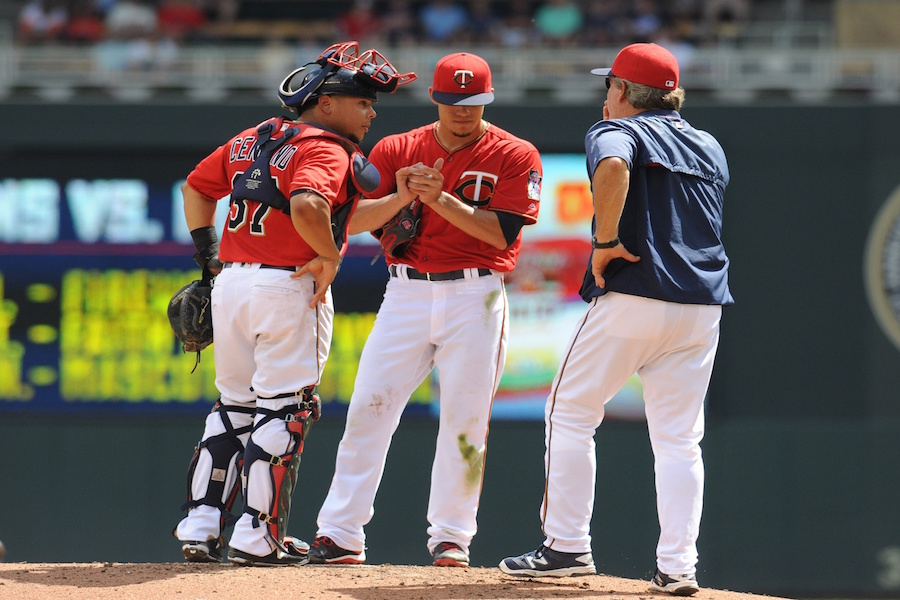
During their reign over the American League Central, from 2002 through 2010, the Minnesota Twins never once allowed more runs than the league average. A far cry from their current state, to say the least.The Twins are on their way to allowing the most runs of any American League team, for the second time in three years. They've been in the bottom three every season since 2011, with the exception of last year when they were ninth. So, things have taken a turn. The franchise appeared to be emerging from its run prevention rut last year but instead, the worst was yet to come. Entering play Thursday, the Twins had allowed 128 more runs than the Rangers. That's 50 more than the gap between between No. 14 Texas and No.1 Cleveland. It's a mess made possible by a pitching staff that has already, with two weeks left to go, allowed more home runs than any Twins staff since the turn of the century, and a defense that has converted the lowest percentage of balls in play into outs of any MLB club. It's been a team effort. As a result, the Twins may lose 100 games despite an offense that's on pace to score 750 runs. There have been seven 100-loss teams since 2010, the last time Minnesota made the playoffs, and none scored more than 615 runs. Obviously, the reimagined front office needs to do whatever they can to prevent anything like this from happening again. The lineup isn't going to slow down. But with the Twins being so far behind the pack on the other side, how can they make up massive ground in a hurry? How can they move back toward the era in which they never failed to field an above-average staff? I thought it might be instructive to take a look back at those years. Where have the Twins strayed? What lessons, if any, might a new baseball ops chief be wise to absorb while incorporating his or her own fresh philosophies? Here were some signatures of those effective 2000s pitching units: 1: Health Sure, those groups had some injuries here and there. That's inescapable. But when you look back, Johan Santana was remarkably durable during his time in Minnesota, and Joe Nathan basically never got hurt until his Tommy John surgery. It sure helps to keep your No. 1 starter and closer healthy for such lengths of time. For me, the leading storylines when looking back at this year's pitching woes will be the ruined shoulders of both Phil Hughes and Glen Perkins. The organization sought to build around these two in a similar fashion as they did with the aforementioned duo. Hughes' performance in 2014 was, arguably, the closest approximation to 'ace-like' for a Twins starter since Santana's departure. Perkins, like Nathan before him, moved into the league's elite tier of closers almost instantly after assuming the role ahead of his 30th birthday. Terry Ryan made long-term commitments to Hughes and Perkins, positioning them as building blocks for the construction of his staffs. And unfortunately, both have descended essentially into worst-case scenarios with their arms. Shoulder injuries are tough, and Santana himself is evidence enough of that. Could Ryan have foreseen this outcome? Maybe last year, but by then both hurlers were entrenched as cornerstones. Could the trainers have prevented it? Doubtful. In this regard, the former GM got dealt a bum hand, and it's a big part of why he's now the former GM. 2: Hitting Lotto Tickets Santana and Francisco Liriano were the two most electric starters to come through the system during those years, and Ryan managed to stumble upon both, more or less, through serendipitous happenstance. Santana was a Rule 5 pick, foolishly discarded by two organizations. Liriano was a toss-in from the Giants in the A.J. Pierzynski trade. TR capitalized on both opportunities and hit big. In the years since, he had no shortage of Rule 5 pick-ups or trades for fringey pitchers, but the big hits evaporated. Alex Meyer and Trevor May weren't so different as prospects from Liriano; big arms with questions surrounding control and/or mechanics. But the inability of either to even define a role in the majors has been a big part of the failure to launch on the pitching front. This brings us to our next item. 3: Developing Control When the Twins acquired Johan, he could hardly find the zone. Tethered to him as a Rule 5 pick, they endured a rookie season in 2000 that saw him issue 54 walks in 86 innings. They helped him find his way, as they did with many others. The Twins both sought out and developed pitchers who could hammer the zone. Sure, it was a specialty of pitching coach Rick Anderson, but he didn't get moldable strike-throwers like Brad Radke and Carlos Silva and Scott Baker and Nick Blackburn by accident. The team actively sought out such profiles, through trades and the draft, and converted them into big-leaguers who succeeded mainly by throwing the ball to the right spot. It's hard to figure where this process has gone amiss. There are still signs that prospects are receiving effective instruction. Jose Berrios had outstanding walk rates throughout the minors. J.T. Chargois had dramatically improved his control by the time he reached Triple-A. But something's not clicking when they make the jump. The Twins actually rank near the top of the league in walk rate overall – one of their lone strengths – but too many of the most important guys aren't figuring it out. It doesn't reflect well on Neil Allen, whose job is undoubtedly in jeopardy. When the Twins assembled a coaching staff for Paul Molitor, they took a gamble on a pitching coach with no major-league experience. There is no evidence that it's paying off. Too many players are failing to grow, or worse regressing, under his watch. Perhaps the Twins would be well served to replace him with a more experienced alternative, who better balances Molitor's lack of experience in the area. Dare I say they should seek a coach who instills an Anderson-esque "throw it over the plate at all costs" mentality? I do believe all of this pales in comparison to one final element. 4: Defense During the decade where "The Twins Way" was forged and worshipped, defense was always a foundational staple. It's what made 'pitch to contact' work. Ryan coveted glove-first players, to the extent that he ran out Doug Mientkiewicz as a longtime regular at first, made Juan Castro an Opening Day shortstop, and basically eschewed the DH position for many years. Playing defense – from making plays to executing basic fundamentals – has been a struggle for this current group. And while that's not a simple problem to solve, it's one that must be attacked from all angles during the offseason. Whether it's personnel, coaching or placement, everything must be critically evaluated. What steps would you take toward reversing the Twins' run prevention woes? What lessons from the past would you apply to the future? Click here to view the article
-
 The Twins are on their way to allowing the most runs of any American League team, for the second time in three years. They've been in the bottom three every season since 2011, with the exception of last year when they were ninth. So, things have taken a turn. The franchise appeared to be emerging from its run prevention rut last year but instead, the worst was yet to come. Entering play Thursday, the Twins had allowed 128 more runs than the Rangers. That's 50 more than the gap between between No. 14 Texas and No.1 Cleveland. It's a mess made possible by a pitching staff that has already, with two weeks left to go, allowed more home runs than any Twins staff since the turn of the century, and a defense that has converted the lowest percentage of balls in play into outs of any MLB club. It's been a team effort. As a result, the Twins may lose 100 games despite an offense that's on pace to score 750 runs. There have been seven 100-loss teams since 2010, the last time Minnesota made the playoffs, and none scored more than 615 runs. Obviously, the reimagined front office needs to do whatever they can to prevent anything like this from happening again. The lineup isn't going to slow down. But with the Twins being so far behind the pack on the other side, how can they make up massive ground in a hurry? How can they move back toward the era in which they never failed to field an above-average staff? I thought it might be instructive to take a look back at those years. Where have the Twins strayed? What lessons, if any, might a new baseball ops chief be wise to absorb while incorporating his or her own fresh philosophies? Here were some signatures of those effective 2000s pitching units: 1: Health Sure, those groups had some injuries here and there. That's inescapable. But when you look back, Johan Santana was remarkably durable during his time in Minnesota, and Joe Nathan basically never got hurt until his Tommy John surgery. It sure helps to keep your No. 1 starter and closer healthy for such lengths of time. For me, the leading storylines when looking back at this year's pitching woes will be the ruined shoulders of both Phil Hughes and Glen Perkins. The organization sought to build around these two in a similar fashion as they did with the aforementioned duo. Hughes' performance in 2014 was, arguably, the closest approximation to 'ace-like' for a Twins starter since Santana's departure. Perkins, like Nathan before him, moved into the league's elite tier of closers almost instantly after assuming the role ahead of his 30th birthday. Terry Ryan made long-term commitments to Hughes and Perkins, positioning them as building blocks for the construction of his staffs. And unfortunately, both have descended essentially into worst-case scenarios with their arms. Shoulder injuries are tough, and Santana himself is evidence enough of that. Could Ryan have foreseen this outcome? Maybe last year, but by then both hurlers were entrenched as cornerstones. Could the trainers have prevented it? Doubtful. In this regard, the former GM got dealt a bum hand, and it's a big part of why he's now the former GM. 2: Hitting Lotto Tickets Santana and Francisco Liriano were the two most electric starters to come through the system during those years, and Ryan managed to stumble upon both, more or less, through serendipitous happenstance. Santana was a Rule 5 pick, foolishly discarded by two organizations. Liriano was a toss-in from the Giants in the A.J. Pierzynski trade. TR capitalized on both opportunities and hit big. In the years since, he had no shortage of Rule 5 pick-ups or trades for fringey pitchers, but the big hits evaporated. Alex Meyer and Trevor May weren't so different as prospects from Liriano; big arms with questions surrounding control and/or mechanics. But the inability of either to even define a role in the majors has been a big part of the failure to launch on the pitching front. This brings us to our next item. 3: Developing Control When the Twins acquired Johan, he could hardly find the zone. Tethered to him as a Rule 5 pick, they endured a rookie season in 2000 that saw him issue 54 walks in 86 innings. They helped him find his way, as they did with many others. The Twins both sought out and developed pitchers who could hammer the zone. Sure, it was a specialty of pitching coach Rick Anderson, but he didn't get moldable strike-throwers like Brad Radke and Carlos Silva and Scott Baker and Nick Blackburn by accident. The team actively sought out such profiles, through trades and the draft, and converted them into big-leaguers who succeeded mainly by throwing the ball to the right spot. It's hard to figure where this process has gone amiss. There are still signs that prospects are receiving effective instruction. Jose Berrios had outstanding walk rates throughout the minors. J.T. Chargois had dramatically improved his control by the time he reached Triple-A. But something's not clicking when they make the jump. The Twins actually rank near the top of the league in walk rate overall – one of their lone strengths – but too many of the most important guys aren't figuring it out. It doesn't reflect well on Neil Allen, whose job is undoubtedly in jeopardy. When the Twins assembled a coaching staff for Paul Molitor, they took a gamble on a pitching coach with no major-league experience. There is no evidence that it's paying off. Too many players are failing to grow, or worse regressing, under his watch. Perhaps the Twins would be well served to replace him with a more experienced alternative, who better balances Molitor's lack of experience in the area. Dare I say they should seek a coach who instills an Anderson-esque "throw it over the plate at all costs" mentality? I do believe all of this pales in comparison to one final element. 4: Defense During the decade where "The Twins Way" was forged and worshipped, defense was always a foundational staple. It's what made 'pitch to contact' work. Ryan coveted glove-first players, to the extent that he ran out Doug Mientkiewicz as a longtime regular at first, made Juan Castro an Opening Day shortstop, and basically eschewed the DH position for many years. Playing defense – from making plays to executing basic fundamentals – has been a struggle for this current group. And while that's not a simple problem to solve, it's one that must be attacked from all angles during the offseason. Whether it's personnel, coaching or placement, everything must be critically evaluated. What steps would you take toward reversing the Twins' run prevention woes? What lessons from the past would you apply to the future?
 -
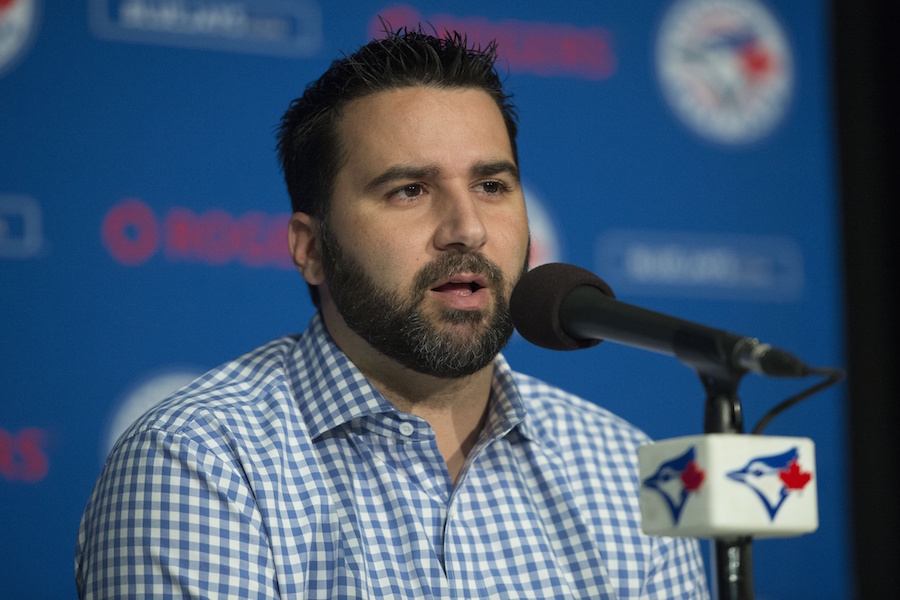
In their search for new leadership in the baseball operations department, we don't yet know if the Twins will ultimately settle on the right candidate. In fact, it may take years to determine that. We can say with some confidence, however, that they're looking in the right places.Last week, national MLB reporter Jon Morosi named Alex Anthopoulos as a "confirmed candidate" for Minnesota's new baseball ops chief position. A few days later, Mike Berardino of the Pioneer Press followed up with a report that Anthopoulos had taken his name out of the hat. While it's disappointing that the Twins won't be able to further pursue Anthopoulos, the fact that he was a legitimate consideration is encouraging. He is exactly the type of person that many fans would like to see tabbed for this vital role. Formerly the general manager of the Toronto Blue Jays, Anthopoulos is an outsider with background in both scouting and analytics. He has historically had an active and aggressive style when it comes to making moves and building rosters. Under his watch, the Blue Jays developed into an AL East powerhouse. They reached the postseason last year for the first time in two decades and are aiming for a return this year with a roster primarily crafted by Anthopolous. Alas, he won't be coming aboard. But we continue to see intriguing names pop up in the search for a top baseball exec. On Monday, Bob Nightengale of USA Today reported that the Twins had formally requested permission to interview Jason McLeod, who serves under Theo Epstein in the Chicago Cubs front office. The Cubs, owners of baseball's best record, boast one of the premier rosters and systems in the game. Their organization is a natural choice to scour for executive talent. McLeod, in particular, is a compelling name. As Berardino notes, he previously served as Epstein's scouting director in Boston, and is credited with drafting a number of high-profile stars such as Dustin Pedroia, Anthony Rizzo, Kris Bryant and Kyle Schwarber. Given Minnesota's struggles converting high draft picks into contributors lately, McLeod's track record in this regard is appealing. Another candidate that the Twins appear to be considering, according to Jon Heyman, is J.J. Piccolo. The 45-year-old currently serves as assistant GM in charge of scouting and player development for the Kansas City Royals. The Royals, like the Cubs, are a franchise worth emulating. Over the past 10 years, they have climbed from being AL Central bottom-feeders to two-time league champs, and that's exactly the type of path the Twins would like to follow (albeit in a shorter timeframe). Piccolo originally came up as a scout in the Braves system before spending the past decade with the Royals. He was at one point last year considered a finalist for the Phillies GM gig before Matt Klentak ended up being chosen. Given his role in constructing an elite defensive club in Kansas City, as well as his familiarity with the division (which means he likely also has better-than-average familiarity with the Twins and their personnel), Piccolo looks like a logical guy to vet. McLeod and Piccolo both are highly respected front office execs that many around the game view as GM-in-waiting types. Both also have few, if any, ties to the Twins organization, meaning they would bring the wholly fresh perspective that so many are yearning for in a new hire. One tricky thing that the Twins must balance is the urgency to fill their opening with the desire to interview individuals who remain focused on the postseason. This isn't so much of an issue with Piccolo, whose Royals are likely to miss the playoffs for the first time in three years. But it is with McLeod, whose Cubs are poised for a deep October run. Waiting out a guy like McLeod means postponing any serious offseason planning that he would spearhead, and also means delaying the process of finding a new GM, which will be task No. 1 for whoever takes over the baseball ops unit. With a decision carrying this much gravity, obviously the Twins and assisting search firm Korn Ferry need to take their time and ensure they get the best person for the job. But then, the team is looking ahead to a winter filled with critical choices that require proactive thinking. There's a tenuous timeline at play with the Hot Stove market firing up almost immediately after the World Series concludes. That said, it sounds as though the Twins are already deeply immersed in the task. They have reportedly conducted interviews with multiple candidates, and seeing the club publicly connected to coveted names like McLeod and Piccolo is a positive omen. So, too, is their preference for "someone who's more on the analytical side," per a Berardino source. Stay tuned to Twins Daily in the coming weeks and we'll keep you posted up-to-the-minute on every development that emerges as the team narrows its search. Click here to view the article
-
 Last week, national MLB reporter Jon Morosi named Alex Anthopoulos as a "confirmed candidate" for Minnesota's new baseball ops chief position. A few days later, Mike Berardino of the Pioneer Press followed up with a report that Anthopoulos had taken his name out of the hat. While it's disappointing that the Twins won't be able to further pursue Anthopoulos, the fact that he was a legitimate consideration is encouraging. He is exactly the type of person that many fans would like to see tabbed for this vital role. Formerly the general manager of the Toronto Blue Jays, Anthopoulos is an outsider with background in both scouting and analytics. He has historically had an active and aggressive style when it comes to making moves and building rosters. Under his watch, the Blue Jays developed into an AL East powerhouse. They reached the postseason last year for the first time in two decades and are aiming for a return this year with a roster primarily crafted by Anthopolous. Alas, he won't be coming aboard. But we continue to see intriguing names pop up in the search for a top baseball exec. On Monday, Bob Nightengale of USA Today reported that the Twins had formally requested permission to interview Jason McLeod, who serves under Theo Epstein in the Chicago Cubs front office. The Cubs, owners of baseball's best record, boast one of the premier rosters and systems in the game. Their organization is a natural choice to scour for executive talent. McLeod, in particular, is a compelling name. As Berardino notes, he previously served as Epstein's scouting director in Boston, and is credited with drafting a number of high-profile stars such as Dustin Pedroia, Anthony Rizzo, Kris Bryant and Kyle Schwarber. Given Minnesota's struggles converting high draft picks into contributors lately, McLeod's track record in this regard is appealing. Another candidate that the Twins appear to be considering, according to Jon Heyman, is J.J. Piccolo. The 45-year-old currently serves as assistant GM in charge of scouting and player development for the Kansas City Royals. The Royals, like the Cubs, are a franchise worth emulating. Over the past 10 years, they have climbed from being AL Central bottom-feeders to two-time league champs, and that's exactly the type of path the Twins would like to follow (albeit in a shorter timeframe). Piccolo originally came up as a scout in the Braves system before spending the past decade with the Royals. He was at one point last year considered a finalist for the Phillies GM gig before Matt Klentak ended up being chosen. Given his role in constructing an elite defensive club in Kansas City, as well as his familiarity with the division (which means he likely also has better-than-average familiarity with the Twins and their personnel), Piccolo looks like a logical guy to vet. McLeod and Piccolo both are highly respected front office execs that many around the game view as GM-in-waiting types. Both also have few, if any, ties to the Twins organization, meaning they would bring the wholly fresh perspective that so many are yearning for in a new hire. One tricky thing that the Twins must balance is the urgency to fill their opening with the desire to interview individuals who remain focused on the postseason. This isn't so much of an issue with Piccolo, whose Royals are likely to miss the playoffs for the first time in three years. But it is with McLeod, whose Cubs are poised for a deep October run. Waiting out a guy like McLeod means postponing any serious offseason planning that he would spearhead, and also means delaying the process of finding a new GM, which will be task No. 1 for whoever takes over the baseball ops unit. With a decision carrying this much gravity, obviously the Twins and assisting search firm Korn Ferry need to take their time and ensure they get the best person for the job. But then, the team is looking ahead to a winter filled with critical choices that require proactive thinking. There's a tenuous timeline at play with the Hot Stove market firing up almost immediately after the World Series concludes. That said, it sounds as though the Twins are already deeply immersed in the task. They have reportedly conducted interviews with multiple candidates, and seeing the club publicly connected to coveted names like McLeod and Piccolo is a positive omen. So, too, is their preference for "someone who's more on the analytical side," per a Berardino source. Stay tuned to Twins Daily in the coming weeks and we'll keep you posted up-to-the-minute on every development that emerges as the team narrows its search.
 -
Article: Unanswered Questions
Nick Nelson replied to Nick Nelson's topic in Twins Daily Front Page News
Partial season defensive metrics are virtually meaningless. Watching him. Listening to other, smarter people analyze him. Looking at the way the organization itself has handled him. I'm not saying he's a complete mess but the majority of starting MLB shortstops are actually stand-out defenders and he's just ok. -
We're at a stage in this lost season where game outcomes have ceased to matter. The results, at this point, are much less important than the process. One thing that's been particularly interesting to follow here in September is the way Paul Molitor is divvying up playing time in his infield. What conclusions can we draw from the manager's trends?Last week, owner Jim Pohlad double down on his vote of confidence, reiterating that the plan is for Molitor to return next season. It's the final leg of a three-year contract, so the skipper undoubtedly knows the stakes he'll be facing if he wants to keep doing this. These final weeks of the current season provide a prime opportunity to experiment, and evaluate players who will mostly be returning in 2017. In this respect, Molitor's usage of several infielders has been striking. The most noteworthy trend, of course, has been Jorge Polanco's entrenchment at shortstop. The 23-year-old's nod there on Sunday marked his fifth in a row, and his 22nd start at the position in the last 25 games. Prior to being called up for good at the end of July, Polanco had started a total of zero games at short this year with Rochester. It was the continuation of a trend. He had started seeing more and more time at second late last year with the Red Wings, and played that position almost exclusively in the Dominican Winter League. By all appearances, the Twins had given up on Polanco as a shortstop. When you watch him now, it isn't all that hard to see why. While he's capable of making most of the plays, he isn't the kind of flashy cannon-armed defender that you want at the crux of your infield. Yet, Molitor keeps looking at him there, at the expense of all other positions. Polanco hasn't drawn a start anywhere else in nearly a month. Meanwhile, Eduardo Escobar has fallen back into limbo. He rarely plays short anymore, instead seeing the majority of his sporadic starts at third. Escobar has had a poor but not disastrous season, and he certainly ought to be part of the team's plans going forward. He's still only 27, he's been a solidly average hitter over the last three years, and he'll command less than $5 million through arbitration in 2017. In the past, Molitor has liked Escobar enough to plug him in all over the field. Last year that even included 27 starts in left and seven at DH. Now, with nothing really standing in Escobar's way, he has been relegated to a utility role. Maybe the manager has finally soured on him, but it seems rather unwarranted. No position has seen more constant turnover than third base. Rarely has the same name been written next to 3B on the lineup card on consecutive days. Trevor Plouffe alternated steadily between the infield corners when he was healthy. Escobar has been at third every so often. James Beresford got his first big-league start there on Saturday. And as for Miguel Sano? Well, his usage may be the most perplexing of anyone on the club. He has only started back-to-back games at third twice since the beginning of August, and never three in a row during that span. Elbow soreness could contribute to this, although he still plays there often enough to dispel the notion that there's a great deal of concern surrounding his health. Sano has not looked good defensively but he has also surely developed rust from barely playing third base in the last 15 months. There is no better opportunity to let him shake off that rust in game situations than trivial September contests but Molitor evidently lacks interest in doing so. What to make of the manager's decisions as far as situating his infields? Personally, I have a hard time finding rhyme or reason when it comes to his deployments on the left side. How would you prefer to see infield playing time shake out in the final weeks? Click here to view the article
-
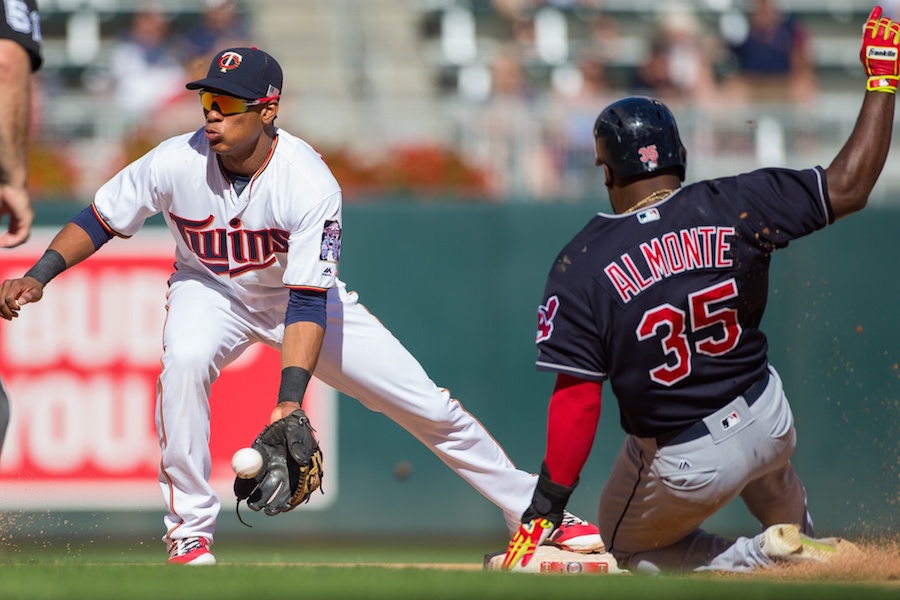 Last week, owner Jim Pohlad double down on his vote of confidence, reiterating that the plan is for Molitor to return next season. It's the final leg of a three-year contract, so the skipper undoubtedly knows the stakes he'll be facing if he wants to keep doing this. These final weeks of the current season provide a prime opportunity to experiment, and evaluate players who will mostly be returning in 2017. In this respect, Molitor's usage of several infielders has been striking. The most noteworthy trend, of course, has been Jorge Polanco's entrenchment at shortstop. The 23-year-old's nod there on Sunday marked his fifth in a row, and his 22nd start at the position in the last 25 games. Prior to being called up for good at the end of July, Polanco had started a total of zero games at short this year with Rochester. It was the continuation of a trend. He had started seeing more and more time at second late last year with the Red Wings, and played that position almost exclusively in the Dominican Winter League. By all appearances, the Twins had given up on Polanco as a shortstop. When you watch him now, it isn't all that hard to see why. While he's capable of making most of the plays, he isn't the kind of flashy cannon-armed defender that you want at the crux of your infield. Yet, Molitor keeps looking at him there, at the expense of all other positions. Polanco hasn't drawn a start anywhere else in nearly a month. Meanwhile, Eduardo Escobar has fallen back into limbo. He rarely plays short anymore, instead seeing the majority of his sporadic starts at third. Escobar has had a poor but not disastrous season, and he certainly ought to be part of the team's plans going forward. He's still only 27, he's been a solidly average hitter over the last three years, and he'll command less than $5 million through arbitration in 2017. In the past, Molitor has liked Escobar enough to plug him in all over the field. Last year that even included 27 starts in left and seven at DH. Now, with nothing really standing in Escobar's way, he has been relegated to a utility role. Maybe the manager has finally soured on him, but it seems rather unwarranted. No position has seen more constant turnover than third base. Rarely has the same name been written next to 3B on the lineup card on consecutive days. Trevor Plouffe alternated steadily between the infield corners when he was healthy. Escobar has been at third every so often. James Beresford got his first big-league start there on Saturday. And as for Miguel Sano? Well, his usage may be the most perplexing of anyone on the club. He has only started back-to-back games at third twice since the beginning of August, and never three in a row during that span. Elbow soreness could contribute to this, although he still plays there often enough to dispel the notion that there's a great deal of concern surrounding his health. Sano has not looked good defensively but he has also surely developed rust from barely playing third base in the last 15 months. There is no better opportunity to let him shake off that rust in game situations than trivial September contests but Molitor evidently lacks interest in doing so. What to make of the manager's decisions as far as situating his infields? Personally, I have a hard time finding rhyme or reason when it comes to his deployments on the left side. How would you prefer to see infield playing time shake out in the final weeks?
 -
Article: Unanswered Questions
Nick Nelson replied to Nick Nelson's topic in Twins Daily Front Page News
He would likely be one of the worst defensive starting shortstops in the league. I wouldn't call that "zero reason."- 54 replies
-
- 1
-
-
- miguel sano
- trevor may
- (and 2 more)
-
Article: Unanswered Questions
Nick Nelson replied to Nick Nelson's topic in Twins Daily Front Page News
That all may be true but it's anecdotal. The numbers don't bear out any particular level of dominance. His 23.6% K-rate ranked 24th among FSL pitchers with 50+ innings. The strikeouts also tailed off significantly after the first 2 months. His other secondary markers were good-not-great. I realize these may seem like harsh assessments but when we're talking about a 22YO first-round draft pick out of college playing in Single-A, it seems warranted to me. I know not everyone agrees.- 54 replies
-
- 4
-
-
- miguel sano
- trevor may
- (and 2 more)
-
Article: Unanswered Questions
Nick Nelson replied to Nick Nelson's topic in Twins Daily Front Page News
We knew that. But it would have been nice if this year could have been spent identifying some of that help. Outside of Santana, not one single starter has been even decent. -
Article: Unanswered Questions
Nick Nelson replied to Nick Nelson's topic in Twins Daily Front Page News
I guess I don't really agree with the idea that his season at Single-A was all that encouraging. He pitched well (not dominantly), as you would expect from a Top 10 draft pick out of college. But he broke down late in the year despite the Twins stringently managing his workload. I know a couple of people say he doesn't fit on this list, but I chose to include him because his development is quite important to turning this rotation around and I don't think we have any more clarity now on whether the conversion is going to work out. Personally, I'd say it's more doubtful than before.- 54 replies
-
- 2
-
-
- miguel sano
- trevor may
- (and 2 more)
-
A losing season is never the desired outcome, but even a last-place finish can prove productive for a team working to improve and reach the next level. The course of baseball's lengthy season provides ample opportunity to assess and evaluate different players. This information can be very valuable in future planning. Unfortunately, the Twins have failed to gain much clarity on some of the most important questions they face going forward.Here are eight items that the team would have liked to figure out this year amidst the disappointing results: Can Miguel Sano play defense? Well, we know he can't play right field, unsurprisingly. But we don't really know more about his ability to play third base then we did coming into the season. Sano has looked beyond shaky during his limited time in the hot corner, and elbow concerns have further clouded the matter. This puts the Twins in a tough spot because they'll be hard-pressed to drop Trevor Plouffe and commit to Sano as a third baseman, but also would undoubtedly prefer not to relegate him to DH permanently at age 23. Can Trevor May be an effective reliever? This was the club's most pivotal experiment this year other than trying Sano in the outfield. If he could improve upon the promise he showed during his time in a relief role last year, May could be a key part of the bullpen solution, and perhaps even a closer candidate. Instead, he endured a tough campaign filled with fits and starts. May flashed dominance at times but posted poor numbers overall and spent two long stints on the disabled list, calling into question whether he's physically equipped for the task of pitching three or four times per week. Which relievers can be counted on? The plan for the bullpen this year seemed reasonable enough: bypass expensive free agent relievers, and instead sort through the various internal candidates. What have we learned about those candidates over the past five months? Not much. Ryan Pressly has had a solid year and reinforced his status as a decent middle reliever. The same can maybe be said for Brandon Kintzler. But between Michael Tonkin, Taylor Rogers, Buddy Boshers, Ryan O'Rourke, J.T. Chargois, Pat Light, Alex Wimmers, is there a single guy that you really trust to be a central bullpen asset next year on the basis of what we've seen? Can Phil Hughes and Glen Perkins be counted on as factors going forward? Two of the biggest storylines this spring were tied to Hughes and Perkins, veteran pitchers that Minnesota has invested in deeply to anchor the pitching corps. Would Hughes regain his velocity and approach his 2014 form following a massive drop-off in 2015? Would Perkins shake off his brutal finish last year and hold up for a full season? Both hurlers worked out extensively last winter to avoid breaking down but ultimately their efforts were fruitless. Hughes and Perkins each underwent major shoulder surgery, and at this point relying on either to contribute much next year would be folly. Who will lead the rotation? It seems fair to say the Twins have no greater need than identifying at least one starter that can slot at the top of a legitimate rotation and compete against the best arms on other staffs. There were a few different sources of hope this year. Maybe Hughes would bounce back. Nope. Maybe Jose Berrios would hit the ground running and define himself as a front-line MLB talent. Nope. Ervin Santana is the only one who has pitched up to such a standard, and counting on a 33-year-old veteran to sustain the best performance of his career is not wise. Can Tyler Jay start? At the time of last year's draft, many analysts felt that Jay could be the first in his class to reach the majors, if he remained in a relief role. When they selected him sixth overall and committed to trying him as a starter, the Twins knew that they'd be extending his timeline. Still, there was hope that the collegiate hurler would move fairly quickly. That idea was contingent on a highly successful first year of transitioning to his new role, and 2016 could hardly be viewed as that. Jay pitched fairly well over the first half in Single-A, then moved up to Double-A, struggled and had to be shut down with a month left in the season due to shoulder issues. There's no question that the southpaw has talent, but can he pitch effectively when facing quality lineups multiple times, and can his body handle the rigors of a starting workload? We can't answer those questions with much more confidence now than we could when he was drafted. Who's going to catch in 2017 and beyond? When the Twins acquired John Ryan Murphy, they did so with the mindset that he could serve in a part-time role this year and establish himself as Kurt Suzuki's heir. Instead, Murphy split time in between Minnesota and Rochester, playing poorly with both. He will enter 2017 as, at best, a backup option, and the same can be said for every other in-house candidate if Suzuki leaves. Who's at short? Eduardo Escobar had shown the necessary tools to be a regular big-league shortstop, but he had yet to do it over a full season. Entering 2016 with the Opening Day job for the first time, this was Escobar's big chance to prove himself. Instead, he has started only 64 games at the position, with first Eduardo Nunez and now Jorge Polanco pushing him aside. Nunez is gone, Polanco remains a subpar defensive option, and Escobar will be coming off his worst season since 2013. The team has gone backward in its efforts to settle on a shortstop. That's a rather absurd number of unanswered vital questions for a team that has been in last place all year long with no real goal other than answering them. In some cases these outcomes were the result of bad planning or poor decision-making, but most often it was simply bad luck or players failing to take advantage of opportunities. The end result is that the Twins will be coming off one of the worst seasons in franchise history with a roster saturated in uncertainty. Click here to view the article
- 54 replies
-
- 1
-
-
- miguel sano
- trevor may
- (and 2 more)
-
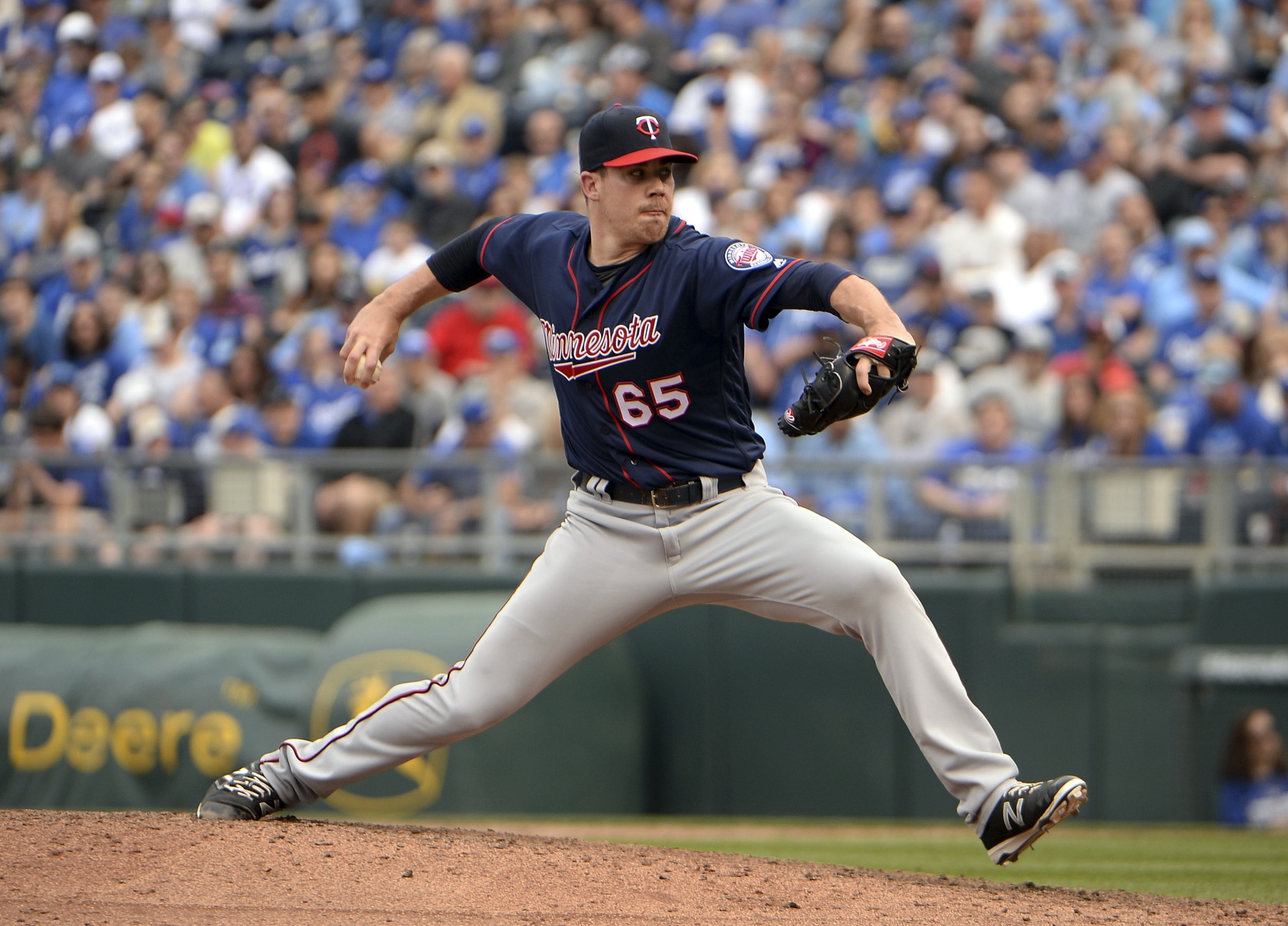 Here are eight items that the team would have liked to figure out this year amidst the disappointing results: Can Miguel Sano play defense? Well, we know he can't play right field, unsurprisingly. But we don't really know more about his ability to play third base then we did coming into the season. Sano has looked beyond shaky during his limited time in the hot corner, and elbow concerns have further clouded the matter. This puts the Twins in a tough spot because they'll be hard-pressed to drop Trevor Plouffe and commit to Sano as a third baseman, but also would undoubtedly prefer not to relegate him to DH permanently at age 23. Can Trevor May be an effective reliever? This was the club's most pivotal experiment this year other than trying Sano in the outfield. If he could improve upon the promise he showed during his time in a relief role last year, May could be a key part of the bullpen solution, and perhaps even a closer candidate. Instead, he endured a tough campaign filled with fits and starts. May flashed dominance at times but posted poor numbers overall and spent two long stints on the disabled list, calling into question whether he's physically equipped for the task of pitching three or four times per week. Which relievers can be counted on? The plan for the bullpen this year seemed reasonable enough: bypass expensive free agent relievers, and instead sort through the various internal candidates. What have we learned about those candidates over the past five months? Not much. Ryan Pressly has had a solid year and reinforced his status as a decent middle reliever. The same can maybe be said for Brandon Kintzler. But between Michael Tonkin, Taylor Rogers, Buddy Boshers, Ryan O'Rourke, J.T. Chargois, Pat Light, Alex Wimmers, is there a single guy that you really trust to be a central bullpen asset next year on the basis of what we've seen? Can Phil Hughes and Glen Perkins be counted on as factors going forward? Two of the biggest storylines this spring were tied to Hughes and Perkins, veteran pitchers that Minnesota has invested in deeply to anchor the pitching corps. Would Hughes regain his velocity and approach his 2014 form following a massive drop-off in 2015? Would Perkins shake off his brutal finish last year and hold up for a full season? Both hurlers worked out extensively last winter to avoid breaking down but ultimately their efforts were fruitless. Hughes and Perkins each underwent major shoulder surgery, and at this point relying on either to contribute much next year would be folly. Who will lead the rotation? It seems fair to say the Twins have no greater need than identifying at least one starter that can slot at the top of a legitimate rotation and compete against the best arms on other staffs. There were a few different sources of hope this year. Maybe Hughes would bounce back. Nope. Maybe Jose Berrios would hit the ground running and define himself as a front-line MLB talent. Nope. Ervin Santana is the only one who has pitched up to such a standard, and counting on a 33-year-old veteran to sustain the best performance of his career is not wise. Can Tyler Jay start? At the time of last year's draft, many analysts felt that Jay could be the first in his class to reach the majors, if he remained in a relief role. When they selected him sixth overall and committed to trying him as a starter, the Twins knew that they'd be extending his timeline. Still, there was hope that the collegiate hurler would move fairly quickly. That idea was contingent on a highly successful first year of transitioning to his new role, and 2016 could hardly be viewed as that. Jay pitched fairly well over the first half in Single-A, then moved up to Double-A, struggled and had to be shut down with a month left in the season due to shoulder issues. There's no question that the southpaw has talent, but can he pitch effectively when facing quality lineups multiple times, and can his body handle the rigors of a starting workload? We can't answer those questions with much more confidence now than we could when he was drafted. Who's going to catch in 2017 and beyond? When the Twins acquired John Ryan Murphy, they did so with the mindset that he could serve in a part-time role this year and establish himself as Kurt Suzuki's heir. Instead, Murphy split time in between Minnesota and Rochester, playing poorly with both. He will enter 2017 as, at best, a backup option, and the same can be said for every other in-house candidate if Suzuki leaves. Who's at short? Eduardo Escobar had shown the necessary tools to be a regular big-league shortstop, but he had yet to do it over a full season. Entering 2016 with the Opening Day job for the first time, this was Escobar's big chance to prove himself. Instead, he has started only 64 games at the position, with first Eduardo Nunez and now Jorge Polanco pushing him aside. Nunez is gone, Polanco remains a subpar defensive option, and Escobar will be coming off his worst season since 2013. The team has gone backward in its efforts to settle on a shortstop. That's a rather absurd number of unanswered vital questions for a team that has been in last place all year long with no real goal other than answering them. In some cases these outcomes were the result of bad planning or poor decision-making, but most often it was simply bad luck or players failing to take advantage of opportunities. The end result is that the Twins will be coming off one of the worst seasons in franchise history with a roster saturated in uncertainty.
 -
Article: Arizona's Cautionary Tale
Nick Nelson replied to Nick Nelson's topic in Twins Daily Front Page News
Except that Greinke and Miller had both done it in the majors, for multiple seasons. Berrios had a fantastic minor-league track record but was still largely an unknown. -
Article: Arizona's Cautionary Tale
Nick Nelson replied to Nick Nelson's topic in Twins Daily Front Page News
Players "entering their peak years" barely exist in free agency. The length of Greinke's contract was not that unusual and will become even less unusual in this era of big revenue. -
Article: Arizona's Cautionary Tale
Nick Nelson replied to Nick Nelson's topic in Twins Daily Front Page News
I just feel like you're talking about Swanson as some sort of can't-miss stud because of his lofty prospect ranking. But Miller was a former first-round pick, a product of the inimitable Cardinals system, BA's #6 overall prospect before graduating, and a guy who found consistent success through his first several years in the majors. I think everyone believed they overpaid, but that's what it takes to get a young, successful, controllable MLB starter. Basically, it looks like Dbacks ran out of patience and made hasty decisions aimed at pushing their timeline ahead. And, really, that's the cautionary tale here. But at the same time, how much more patient can the Twins afford to be? -
Article: Arizona's Cautionary Tale
Nick Nelson replied to Nick Nelson's topic in Twins Daily Front Page News
It's very easy to look back now and see these moves were foolish. But if you really feel your team is on the brink and you want to make that big push -- the kind of big push that EVERYONE was yearning for from TR when the Twins couldn't quite get over the hump in the 2000s -- these were defensible when they were made. Greinke has been one of the better pitchers in the game for most of his career and posted a freakin 1.66 ERA last year. Shelby Miller was himself rated as a Top 10 prospect in the game before he came up and posted a 3.22 ERA in the 575 MLB innings all before the age of 25. These guys looked like bona fide front of the rotation starters. Exactly what the Twins sorely need. But the way things have played out is a reminder that nothing is guaranteed with these kinds of acquisitions. Far from it. -
Article: Arizona's Cautionary Tale
Nick Nelson replied to Nick Nelson's topic in Twins Daily Front Page News
It was a very general comparison. Most Twins fans would like the team to restructure the front office from outside. Most would like the new front office to be aggressive and creative in addressing the rotation. Many (perhaps not you) would like to see the team finally take a plunge on a true top FA starter. Definitely seems like you're nitpicking, especially when you're calling Greinke simply a "32-year-old" without acknowledging that he led baseball in ERA last year, or calling Shelby Miller a "mid-rotation starter" in hindsight. I'm sorry but these are just very slanted comments. That's just it. This thing probably ain't going to magically fix itself. The Twins can't sit back and hope that their iffy pitching prospects eventually come up and turn around the staff or they're likely to remain in perpetual limbo. -
In efforts to build a championship-caliber club, the Arizona Diamondbacks took just about every step that many Twins fans would like to see from their own hometown team. It, uh... hasn't worked out.In 2014, Arizona hired a baseball legend in Tony La Russa to oversee their baseball ops department as chief officer. Creating this position, rather than simply hiring a new general manager, is the same route that Minnesota reportedly plans to take. Later that year, La Russa hired Dave Stewart to become the new D-backs GM. Stewart was an against-the-grain hiring with no meaningful previous connections to the franchise. As a former All-Star hurler who went on to work as a pitching coach (among other things) following his retirement, Stewart looked like a fine choice to overhaul the roster and rebuild the pitching staff. The Diamondbacks went 79-83 in 2015, their first year under the Stewart/La Russa regime. Their high-powered offense ranked second in the NL in scoring but was held back by a sub-par rotation, so Arizona decided to go all-in on pitching during the offseason. And I mean all-in. In December, the D-backs stunned the baseball world by signing free agent Zack Greinke to a massive contract approaching $200 million in total value. The very next day, they pulled the trigger on a blockbuster trade, acquiring 25-year-old Shelby Miller in exchange for a gaudy prospect package headlined by last June's No. 1 overall draft pick Dansby Swanson. In theory, Arizona had just picked up two starting pitchers to slot at the very top of their rotation, expending massive resources in order to do so. And the results? Well, you're probably aware. Greinke owns a 4.54 ERA, which would be his worst since 2005 if it sticks, and Miller has gone 2-10 with a 6.81 ERA in 15 starts sandwiching a two-month demotion to Triple-A. Despite enlisting a brand new front office structure, despite drafting arms heavily for years (seven of Arizona's last eight first-round selections prior to Swanson were pitchers), and despite making perhaps the most aggressive series of moves to acquire high-end pitching ever... the Diamondbacks find themselves in fourth place. They've somehow allowed as many runs as the Twins. Local fans can surely see some staggered parallels between the two franchises. Obviously the Twins aren't going to enter the offseason with a mindset that they're a couple arms away from being a World Series contender, but their need to upgrade the rotation is equally urgent if not more so. Arizona's postseason drought does not extend as far Minnesota's, nor does their record of consistently terrible pitching results. While the Twins' new head of baseball ops will not come in facing the kind of win-now directive that La Russa evidently felt, there will be pressure to orchestrate a big move or two and give fans some reason to believe that a vastly better product is in store for 2017. But as the D-backs and their new front office have illustrated, big moves aren't always a good thing. What's important is making the right moves. The Twins, under Terry Ryan, didn't do that often enough to dig out of their lengthy era of horrendous play. Here's hoping the new crew can do it, and that they can look ahead to better outcomes than the embattled bunch down in the desert. Click here to view the article
-
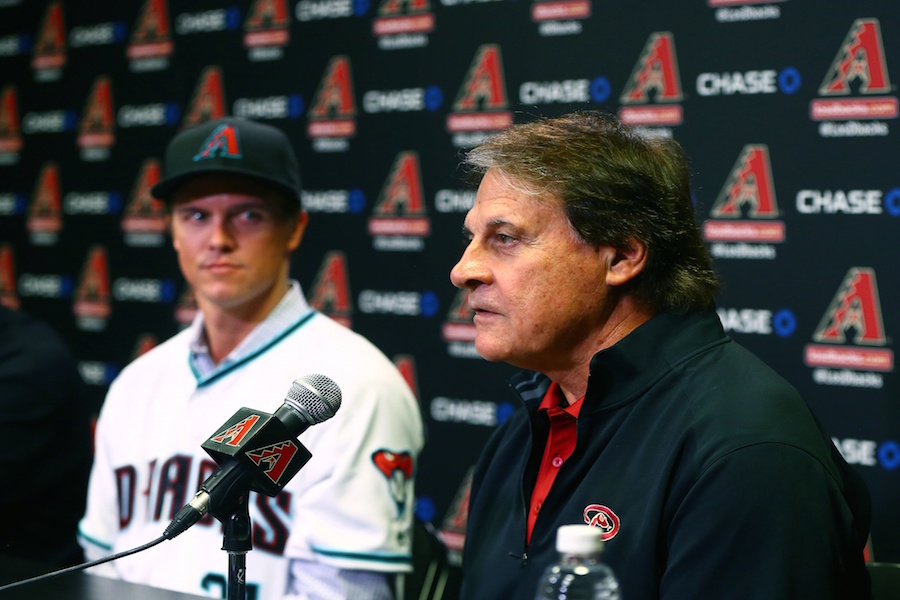 In 2014, Arizona hired a baseball legend in Tony La Russa to oversee their baseball ops department as chief officer. Creating this position, rather than simply hiring a new general manager, is the same route that Minnesota reportedly plans to take. Later that year, La Russa hired Dave Stewart to become the new D-backs GM. Stewart was an against-the-grain hiring with no meaningful previous connections to the franchise. As a former All-Star hurler who went on to work as a pitching coach (among other things) following his retirement, Stewart looked like a fine choice to overhaul the roster and rebuild the pitching staff. The Diamondbacks went 79-83 in 2015, their first year under the Stewart/La Russa regime. Their high-powered offense ranked second in the NL in scoring but was held back by a sub-par rotation, so Arizona decided to go all-in on pitching during the offseason. And I mean all-in. In December, the D-backs stunned the baseball world by signing free agent Zack Greinke to a massive contract approaching $200 million in total value. The very next day, they pulled the trigger on a blockbuster trade, acquiring 25-year-old Shelby Miller in exchange for a gaudy prospect package headlined by last June's No. 1 overall draft pick Dansby Swanson. In theory, Arizona had just picked up two starting pitchers to slot at the very top of their rotation, expending massive resources in order to do so. And the results? Well, you're probably aware. Greinke owns a 4.54 ERA, which would be his worst since 2005 if it sticks, and Miller has gone 2-10 with a 6.81 ERA in 15 starts sandwiching a two-month demotion to Triple-A. Despite enlisting a brand new front office structure, despite drafting arms heavily for years (seven of Arizona's last eight first-round selections prior to Swanson were pitchers), and despite making perhaps the most aggressive series of moves to acquire high-end pitching ever... the Diamondbacks find themselves in fourth place. They've somehow allowed as many runs as the Twins. Local fans can surely see some staggered parallels between the two franchises. Obviously the Twins aren't going to enter the offseason with a mindset that they're a couple arms away from being a World Series contender, but their need to upgrade the rotation is equally urgent if not more so. Arizona's postseason drought does not extend as far Minnesota's, nor does their record of consistently terrible pitching results. While the Twins' new head of baseball ops will not come in facing the kind of win-now directive that La Russa evidently felt, there will be pressure to orchestrate a big move or two and give fans some reason to believe that a vastly better product is in store for 2017. But as the D-backs and their new front office have illustrated, big moves aren't always a good thing. What's important is making the right moves. The Twins, under Terry Ryan, didn't do that often enough to dig out of their lengthy era of horrendous play. Here's hoping the new crew can do it, and that they can look ahead to better outcomes than the embattled bunch down in the desert.
