



Nick Nelson
-
Posts
8,326 -
Joined
-
Last visited
-
Days Won
56
Content Type
Profiles
News
Minnesota Twins Videos
2026 Minnesota Twins Top Prospects Ranking
2022 Minnesota Twins Draft Picks
Minnesota Twins Free Agent & Trade Rumors, Notes, & Tidbits
Guides & Resources
2023 Minnesota Twins Draft Picks
The Minnesota Twins Players Project
2024 Minnesota Twins Draft Picks
2025 Minnesota Twins Draft Pick Tracker
2026 Minnesota Twins Draft Tracker: Picks & Bonuses
Forums
Blogs
Events
Store
Downloads
Gallery
Everything posted by Nick Nelson
-
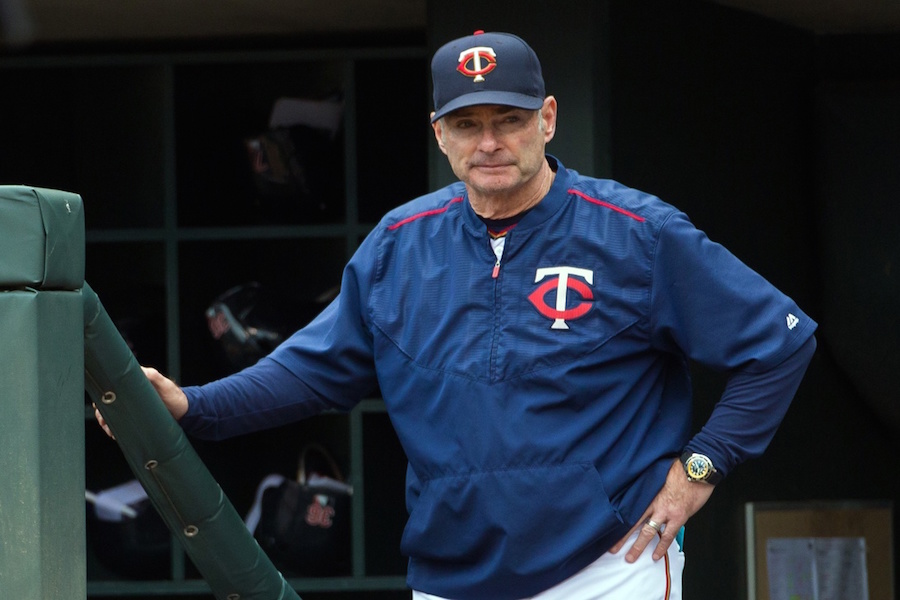 No one can deny that 2016 was a disastrous season for the Minnesota Twins. Never before in this franchise's history have things gone so awry. But thankfully, last year is in the past. When the team congregates in Florida they will be doing so with a fresh outlook. Much can change in three months, especially when you're dealing with numerous maturing young players and a completely overhauled baseball operations unit. Last week, Tom Froemming outlined a realistic, though pessimistic, scenario in which the Twins once against lose 100 games. It could happen. But let's keep in mind that last year's team accomplished an historical feat of ineptitude. Making it happen took multiple major injuries to key players, immense struggles from youngsters, inexplicable personnel decisions and plain old bad luck (Pythagorean W/L tells us they should have won seven more games). What has been does not dictate what will be. Especially when you view the state of this Twins roster in context. They've clearly got the makings of an above-average offense. The lineup shined in the latter portion of 2016. As things stand, the only changes are Jason Castro replacing Kurt Suzuki and a designated hitter – probably Byung Ho Park or Kennys Vargas – replacing Trevor Plouffe. I think we can call those swaps a wash, at worst. Then there's the pitching staff. It was cover-your-eyes ugly last year, but this is where the recency bias sets in. For basically every starter except Ervin Santana, 2016 was a complete catastrophe. Kyle Gibson endured his worst season. Ditto Hector Santiago. Phil Hughes had his shoulder crap out. Things couldn't have gone much worse for Tyler Duffey and Jose Berrios. It was, essentially, a series of worst-case scenarios. And the thing about those kinds of lows is that there's nowhere to go but up. I'm not saying these guys are all going to turn around and be world-beaters, but several of them will improve. And with new decision-makers place, we can hope to see players put in better positions to succeed. With most of the organization's top pitching prospects approaching Triple-A, if not already there, contingencies will be on hand to prevent someone like Duffey or Hughes from being sent out start after start with no ability to get outs. After the 2015 season, the Twins themselves fell victim to recency bias. There were underlying signs that their 83-win total was inflated, but still they operated as if they intended to springboard into contention from it. It's hard to blame them, when you consider what a breath of fresh air the competitive baseball was for everyone. But even amid the horrendous results of 2016, the organization did manage to check several important boxes in their rebuilding process. Byron Buxton and Miguel Sano got more experience, stayed mostly healthy, and probably learned some hard lessons. Max Kepler successfully transitioned to the big leagues. Jose Berrios transitioned not-so-successfully but he got those all-important first licks out of the way. Several prospects took steps forward and another key one entered the mix when Eduardo Nunez was traded for Adalberto Mejia at the deadline. And most importantly the Twins picked up the No. 1 pick in the draft, which will give them their choice of any amateur player in the nation this June. If complacency was an issue heading into 2016, it sure won't be this time around. And if poor planning, ill-advised decision-making, or clouded judgment were exacerbating factors, it is fair to be cautiously optimistic that a revamped front office structure will avoid making the same mistakes. Realistically, Minnesota probably will not compete for a playoff spot. Many teams won't. But the Twins will take a step forward. The question is how big it will be. Quiet offseason and all (and I don't think they're quite done), I'm excited to find out.
 -
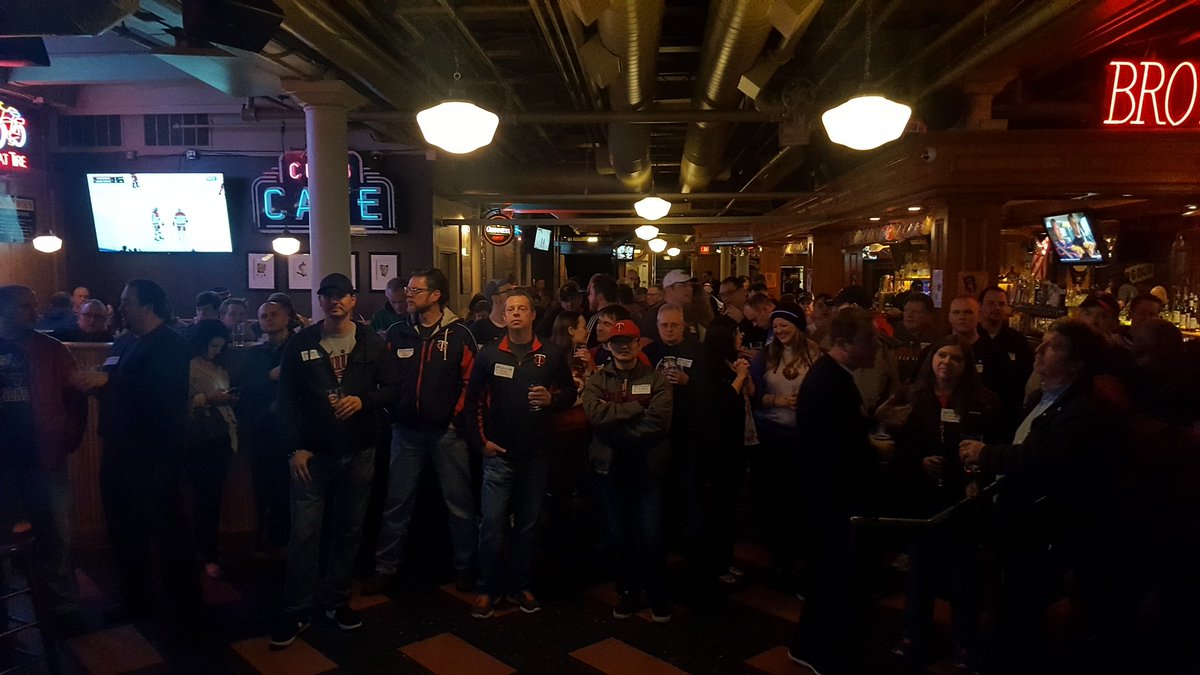
 On Saturday, Twins Daily held its fourth Winter Meltdown, an annual post-TwinsFest gathering of local baseball fanatics in Downtown Minneapolis. Thanks to tremendous support from our readers and sponsors, as well as the Minnesota Twins themselves, this year's event was without question our biggest and best yet.Before the official start time of 4:30 PM, dozens had already streamed into the basement of Brother's Bar and Grill, which proved to be a fittingly spacious and gracious venue for a crowd that ultimately came close to 300. That so many people would make the trip – some from just a few blocks away at Target Field, others from much further – for this baseball geek-out festival in the wake of 103 losses and a conspicuously quiet offseason is a true testament to the resilient loyalty and hopefulness of Twins fans. Of course, there was beer. So that helps. Tasty taps from 612 Brew were flowing as hardball enthusiasts revved up their engines over chatter, photo sessions and raffle prizes provided by AME Sports. On the main stage, emcee and local comic David Sitrick led the crowd through a series of Q&As and panels. First, Parker Hageman and I took the stage along with Twins Director of Baseball Research Jack Goin for a discussion of the growing use of analytics within his organization and baseball at large. Among the topics broached were changes under the new regime, appealing aspects of newly acquired catcher Jason Castro, and Jack's advice for aspiring statheads looking to break into the industry. Next, John Bonnes and Seth Stohs stepped in for an interview with former Twins reliever, and new front office assistant, LaTroy Hawkins. In candid fashion, Hawk recalled memories from his lengthy major-league career. He had some choice words for one particular umpire, as well as an ex-teammate (whom he only disliked as an opponent... I'm sure you can guess who it is). Finally, the Twins Daily crew was joined on-stage by Aaron Gleeman to answer audience-submitted questions, which ranged from the 2017 outlook to the appropriate number of cats for a household. Good news: if you missed out, you can listen to the entire show on this week's edition of the Gleeman and the Geek podcast. The event was casual and easygoing. Hawkins and Goin were good sports, participating in lighthearted game show style segments after their talks, and both hung around to rub shoulders afterwards. Jack and I went deep on a discussion of the all-time greatest hip-hop artists (he's got love for the oldies). Beat writers like Mike Berardino of the Pioneer Press, Phil Miller and La Velle E. Neal III of the Star Tribune, Derek Wetmore of 1500ESPN, and Rhett Bollinger of MLB.com were on hand, and they were all happy to talk Twins with anyone in attendance. Attendees who stayed at the bar until the end of the event and beyond might have spotted and said hello to prospects Stephen Gonsalves and Mitch Garver. When we first concocted this event several years ago, our vision was ambitious, but I don't think we ever could have imagined something of this magnitude. At least I didn't. Each Winter Meltdown has been better than the last, and it's beginning to truly feel like the kick-off celebration Minnesota baseball fans deserve. For that, all credit goes to the people that made WM4 happen: Brothers, 612 Brew, AME Sports, the Twins, and especially all of you who came out. Our only regret is that we couldn't host more of you. Tickets sold out fast, and once they were gone it was a bummer having to turn away people who wanted to join. Fortunately, we've got plenty more fun events in the works, and you better believe we'll be raising our sights next year when the Meltdown turns 5. We'll sign off with some of our favorite tweets using the #TDMeltdown hashtag. Again, thank you to everyone who helped make this a special evening. Seriously. Click here to view the article
 -
 Before the official start time of 4:30 PM, dozens had already streamed into the basement of Brother's Bar and Grill, which proved to be a fittingly spacious and gracious venue for a crowd that ultimately came close to 300. That so many people would make the trip – some from just a few blocks away at Target Field, others from much further – for this baseball geek-out festival in the wake of 103 losses and a conspicuously quiet offseason is a true testament to the resilient loyalty and hopefulness of Twins fans. Of course, there was beer. So that helps. Tasty taps from 612 Brew were flowing as hardball enthusiasts revved up their engines over chatter, photo sessions and raffle prizes provided by AME Sports. On the main stage, emcee and local comic David Sitrick led the crowd through a series of Q&As and panels. First, Parker Hageman and I took the stage along with Twins Director of Baseball Research Jack Goin for a discussion of the growing use of analytics within his organization and baseball at large. Among the topics broached were changes under the new regime, appealing aspects of newly acquired catcher Jason Castro, and Jack's advice for aspiring statheads looking to break into the industry. Next, John Bonnes and Seth Stohs stepped in for an interview with former Twins reliever, and new front office assistant, LaTroy Hawkins. In candid fashion, Hawk recalled memories from his lengthy major-league career. He had some choice words for one particular umpire, as well as an ex-teammate (whom he only disliked as an opponent... I'm sure you can guess who it is). Finally, the Twins Daily crew was joined on-stage by Aaron Gleeman to answer audience-submitted questions, which ranged from the 2017 outlook to the appropriate number of cats for a household. Good news: if you missed out, you can listen to the entire show on this week's edition of the Gleeman and the Geek podcast. The event was casual and easygoing. Hawkins and Goin were good sports, participating in lighthearted game show style segments after their talks, and both hung around to rub shoulders afterwards. Jack and I went deep on a discussion of the all-time greatest hip-hop artists (he's got love for the oldies). Beat writers like Mike Berardino of the Pioneer Press, Phil Miller and La Velle E. Neal III of the Star Tribune, Derek Wetmore of 1500ESPN, and Rhett Bollinger of MLB.com were on hand, and they were all happy to talk Twins with anyone in attendance. Attendees who stayed at the bar until the end of the event and beyond might have spotted and said hello to prospects Stephen Gonsalves and Mitch Garver. When we first concocted this event several years ago, our vision was ambitious, but I don't think we ever could have imagined something of this magnitude. At least I didn't. Each Winter Meltdown has been better than the last, and it's beginning to truly feel like the kick-off celebration Minnesota baseball fans deserve. For that, all credit goes to the people that made WM4 happen: Brothers, 612 Brew, AME Sports, the Twins, and especially all of you who came out. Our only regret is that we couldn't host more of you. Tickets sold out fast, and once they were gone it was a bummer having to turn away people who wanted to join. Fortunately, we've got plenty more fun events in the works, and you better believe we'll be raising our sights next year when the Meltdown turns 5. We'll sign off with some of our favorite tweets using the #TDMeltdown hashtag. Again, thank you to everyone who helped make this a special evening. Seriously. https://twitter.com/TCAnelle/status/825492858673197056 https://twitter.com/BryzTwinkieTown/status/825496369104318465 https://twitter.com/kbrobaseball/status/825503527841755141 https://twitter.com/W7thSnake/status/825520141857218561 https://twitter.com/graigkos/status/825501985080279043 https://twitter.com/heibrid_/status/825501178880524289 https://twitter.com/TravKnops/status/825488376182751233 https://twitter.com/katesacliche/status/825485896170483714 https://twitter.com/sheradoodles/status/825489915714625536 https://twitter.com/tlschwerz/status/825485958770458626 https://twitter.com/SethTweets/status/825754991319212032
 -
Article: Falvey's First Stand
Nick Nelson replied to Nick Nelson's topic in Twins Daily Front Page News
The problem with this is that Santana isn't really a super utility guy. He's an outfielder who could play IF in an emergency. Polanco would basically be the reverse, but that's also the exact same role Escobar fills. I don't see how they add another infielder unless they remove one of those two from the equation. -
Article: Falvey's First Stand
Nick Nelson replied to Nick Nelson's topic in Twins Daily Front Page News
If Falvey's first trade at the helm involves him very publicly relenting and giving in to the other side's demands, it sets a precedent. There is little doubt others will try to similarly take advantage in the future. This is not a "world is flat" type of proclamation, it's common sense. -
Article: Falvey's First Stand
Nick Nelson replied to Nick Nelson's topic in Twins Daily Front Page News
The conclusion of the piece is that, knowing what we know, Falvey made the right choice in sticking to his guns. If I find out at some point that the Twins turned down an offer of, say, De Leon + Buehler, it would change my view. But there is no indication that anyone from the group of Buehler/Urias/Alvarez/Bellinger was on the table, and I'm not sure there's a two-player package that does the trick without any of them involved. You complain about the "benefit of the doubt almost always given to the FO" but this is not the same front office, and if you're going to give anyone the benefit of the doubt ever, how would it not be this leadership? You could not possibly ask for a more impartial and unattached group to be making this decision. Falvey and Levine have zero history in this organization or with Dozier. Both have been at the negotiating table many times in the past with their other orgs, they understand the dynamics of dealing well. What reason is there to think they had some unreasonably high valuation of Dozier? -
Article: Falvey's First Stand
Nick Nelson replied to Nick Nelson's topic in Twins Daily Front Page News
Why do you find that hard to believe? That's what basically every report seems to allude. As tobi notes above, any team viewing Dozier's 2016 as a fluke may not see a ton of difference between him and Forsythe. It's very plausible, and perhaps even likely, Friedman and LA felt this way. In that event, why would they offer a ton more for Dozier? -
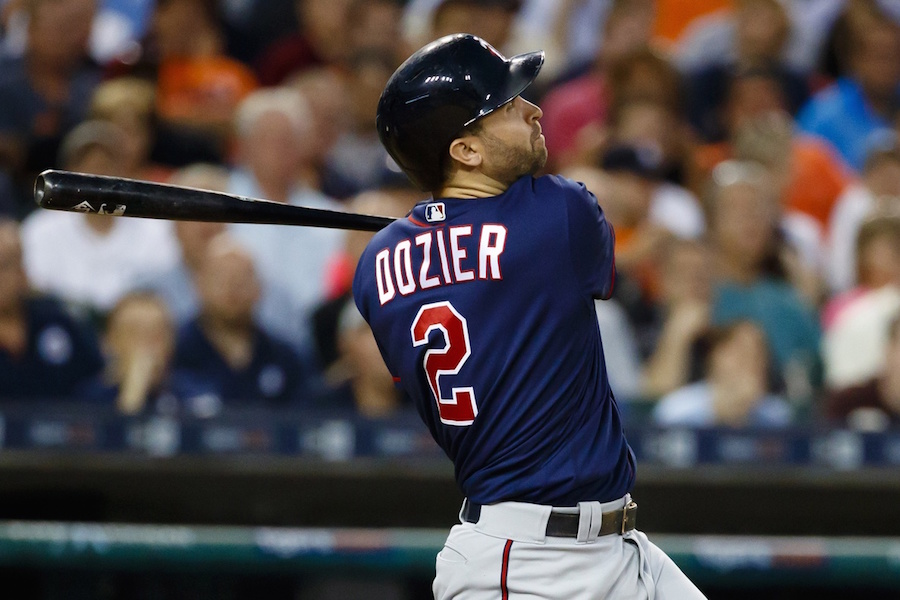
Derek Falvey was probably still unpacking his boxes at Target Field when communications first opened with the Los Angeles Dodgers, setting off months of Brian Dozier trade negotiations that would ultimately prove fruitless. The standoff will almost certainly prove to be a defining point in Falvey's young career.It was quite the situation to inherit. Held up by Cleveland's run to the World Series, Falvey got a belated start with the Twins. At 33, the second-youngest top baseball executive in the league found himself almost instantly entangled in a high-stakes showdown with one of the game's most legendary franchises – led by a high-profile exec in Andrew Friedman – over the best player on his new team. Shortly after he came aboard, Falvey brought in his general manager, Thad Levine. It's likely that Levine handled the majority of the direct discussions. But the two (along with Rob Antony and the rest of the front office) agreed upon a minimum return that would justify moving Dozier, and their unwavering commitment to that valuation ultimately falls upon the top dog. Without knowing the specifics of the best offer Minnesota turned down, it is difficult to cast any immediate judgments. We know Jose De Leon was on the table, but indications continue to suggest that Los Angeles refused to include one of Julio Urias, Yadier Alvarez or Walker Buehler in addition. A lengthy stalemate ensued. On Monday, the Dodgers finally made their move, dealing De Leon instead to the Tampa Bay Rays for second baseman Logan Forsythe, who could fairly be described as "Dozier Lite." Barring some hugely unforeseen development, the Twins will carry now Dozier into the 2017 season. At this moment, that looks like the right move. De Leon is a shiny prospect, and exactly the type of player Minnesota needed back as a headliner, but with a 1-to-1 swap and no meaningful auxiliary components the risks are sky-high. The risk he faces now is that Dozier suffers another first-half slump, or a significant overall regression, while De Leon takes off in Tampa. That glaring missed opportunity would trail Falvey and his front office for a while, especially if the Twins keep wallowing in mediocrity (or worse) and the pitching doesn't improve in a hurry. But I wouldn't say such a combination of outcomes is at all likely. Dozier is a star player in his prime, coming off one of the best seasons in team history. De Leon is a good prospect but hardly a can't-miss. While his numbers in the minors were nothing short of dazzling, there are signs the Dodgers weren't terribly high on him, and not all scouts were either. Per Jeff Passan, the Dodgers held the 24-year-old in lesser esteem than at least three of their other young arms, including one who has thrown five innings as a pro. De Leon has yet to accrue even 115 innings in a season. Baseball America's Josh Norris yesterday relayed a scouting report that pegged him with No. 3 starter upside. And the Dodgers, at the end of the day, were willing to deal him straight-up for a player in Forsythe who is a major downgrade from Dozier. All of these initial indicators point to Falvey and the Twins making the right call. It's possible they'll never get a shot at another prize like De Leon, but that's the gamble they are taking. In turn, they've got a lot of outs. If Dozier sustains – hell, even improves – and a more receptive market develops in July or next winter, there will at least be more robust (if not as top-heavy) offers on the table. And if the Twins manage to jump out to a strong start this season, with Dozier playing a big role? That's an outcome everyone can appreciate. Regardless of how things play out, this much is certain: In his very first weeks on the job, Falvey faced off against a giant in the game, and held his ground. For better or worse, others around the league will not forget it. Click here to view the article
-
 It was quite the situation to inherit. Held up by Cleveland's run to the World Series, Falvey got a belated start with the Twins. At 33, the second-youngest top baseball executive in the league found himself almost instantly entangled in a high-stakes showdown with one of the game's most legendary franchises – led by a high-profile exec in Andrew Friedman – over the best player on his new team. Shortly after he came aboard, Falvey brought in his general manager, Thad Levine. It's likely that Levine handled the majority of the direct discussions. But the two (along with Rob Antony and the rest of the front office) agreed upon a minimum return that would justify moving Dozier, and their unwavering commitment to that valuation ultimately falls upon the top dog. Without knowing the specifics of the best offer Minnesota turned down, it is difficult to cast any immediate judgments. We know Jose De Leon was on the table, but indications continue to suggest that Los Angeles refused to include one of Julio Urias, Yadier Alvarez or Walker Buehler in addition. A lengthy stalemate ensued. On Monday, the Dodgers finally made their move, dealing De Leon instead to the Tampa Bay Rays for second baseman Logan Forsythe, who could fairly be described as "Dozier Lite." Barring some hugely unforeseen development, the Twins will carry now Dozier into the 2017 season. At this moment, that looks like the right move. De Leon is a shiny prospect, and exactly the type of player Minnesota needed back as a headliner, but with a 1-to-1 swap and no meaningful auxiliary components the risks are sky-high. The risk he faces now is that Dozier suffers another first-half slump, or a significant overall regression, while De Leon takes off in Tampa. That glaring missed opportunity would trail Falvey and his front office for a while, especially if the Twins keep wallowing in mediocrity (or worse) and the pitching doesn't improve in a hurry. But I wouldn't say such a combination of outcomes is at all likely. Dozier is a star player in his prime, coming off one of the best seasons in team history. De Leon is a good prospect but hardly a can't-miss. While his numbers in the minors were nothing short of dazzling, there are signs the Dodgers weren't terribly high on him, and not all scouts were either. Per Jeff Passan, the Dodgers held the 24-year-old in lesser esteem than at least three of their other young arms, including one who has thrown five innings as a pro. De Leon has yet to accrue even 115 innings in a season. Baseball America's Josh Norris yesterday relayed a scouting report that pegged him with No. 3 starter upside. And the Dodgers, at the end of the day, were willing to deal him straight-up for a player in Forsythe who is a major downgrade from Dozier. All of these initial indicators point to Falvey and the Twins making the right call. It's possible they'll never get a shot at another prize like De Leon, but that's the gamble they are taking. In turn, they've got a lot of outs. If Dozier sustains – hell, even improves – and a more receptive market develops in July or next winter, there will at least be more robust (if not as top-heavy) offers on the table. And if the Twins manage to jump out to a strong start this season, with Dozier playing a big role? That's an outcome everyone can appreciate. Regardless of how things play out, this much is certain: In his very first weeks on the job, Falvey faced off against a giant in the game, and held his ground. For better or worse, others around the league will not forget it.
 -
Article: Jorge Polanco At SS Could Be Disastrous
Nick Nelson replied to Nick Nelson's topic in Twins Daily Front Page News
Spot on. Well said. We've got people saying the Twins should eschew defense for bats immediately after we watched them hit 200 HR, score 720 runs, and lose 103 games? I can't believe my eyes. -
Article: Jorge Polanco At SS Could Be Disastrous
Nick Nelson replied to Nick Nelson's topic in Twins Daily Front Page News
They did that last year. It went about as you would expect. He was terrible. There is minimal reason to believe he's going to improve significantly at SS, especially when he spends his entire offseason playing a different position. Blocking Polanco at short would not be akin to blocking Sano at 3B because SS is not his long-term position. That wasn't the point of the comparison though. We're talking about how much damage these guys are doing to their pitchers. Last year DRS says that Sano cost the Twins 2 runs defensively in 375 innings in RF, while Polanco cost 8 runs in 400 innings at SS. I'm not one to put a ton of stock into small-sample defensive stats but I believe there's something to that. -
If a Brian Dozier trade does not materialize in the remaining weeks of the this offseason – an outcome that is beginning to look increasingly likely – there will be reason for concern on multiple fronts. Yes, the Twins will be leaving at least one premier prospect on the table by holding onto Dozier, and they may never have a chance to recoup that same value in the future. But another factor in play is the short-term outlook for Jorge Polanco, who now sits in a state of flux. One would hope that this new regime has learned a few lessons from the previous one when it comes to placing important young players in these kinds of precarious situations.Dating back to the start of the 2016 season, only one of Polanco's three managers has seen fit to play him at shortstop. That would be Paul Molitor, who wrote the 23-year-old in at the position for 45 of 60 starts with Minnesota, including 39 straight to end the season. Prior to that, Polanco had spent zero time at shortstop with Class-AAA Rochester. And afterward, he spent zero time at shortstop in the Dominican Winter League, which recently wrapped up (per Mike Berardino). From any perspective, Polanco performed very poorly at shortstop with the Twins. He was rated atrociously by advanced defensive metrics. He piled up errors and posted a .942 fielding percentage, lower than every qualified big-leaguer at the position. He flunked the eye test as well, with a plainly visible lack of zip on his throws and an inability to reach tough balls. At best, he's an unfinished product. If you squint, you can see the adequate tools for Polanco to sharpen up and become a serviceable MLB shortstop, at least for a couple of years until Nick Gordon or Engelb Vielma arrives. But that takes a fair amount of faith and optimism. And it's not going to happen if he isn't even spending time playing the position during this formative period of his career. Granted, Molitor only chooses where Polanco plays when he's jotting the lineups. But the Twins obviously can dictate where he plays in the minors. And they surely have at least some level of input regarding how he's used on his winter league team. It is striking that his offseason program is essentially depriving him of the ability to work on strengthening his most important area of weakness. Defense is a vital component of the run prevention equation. Minnesota's forward-thinking new front office leaders are aware of this. And they also know that shortstop is the crux of a defense, perhaps the most important position on the field. There's no reason to believe Polanco can be an asset there unless he makes major strides. So what are we to make of the way things are playing out? It is odd to see the club proceeding without any clear plan at shortstop. At this point we're looking at three possible outcomes: 1) Dozier still gets traded Looking unlikely. Thad Levine told MLB Network on Sunday that he plans to have Dozier at camp in a Twins uniform, and that echoes the signals we've been receiving from all corners since the soft deadline passed for getting a deal done. But until the Dodgers pull off a meaningful move to add a second baseman, this option is going to remain in play. If that happens, the Twins are still in a tough spot with shortstop (and they likely skip to No. 3 below for a temporary plug), but at least they're doing right by Polanco. He gets to acclimate at what virtually every evaluator considers to be his future position. 2) Roll with Polanco at short and hope for the best This is the direction in which we are apparently heading. It means that not only will Polanco be potentially hurting his pitchers by missing plays, but also burdening himself with that knowledge while simultaneously trying to find his way offensively. Obviously it's not the same thing, but this has an ominously similar feel to the fiasco that played out with Miguel Sano last spring. Polanco is not as disastrous at short as Sano was in right field, but given the higher volume and importance of shortstop he could easily do much more damage. (Indeed, metrics like Defensive Runs Saved and Ultimate Zone Rating suggest that Polanco had a far more negative effect on run prevention at short than Sano did in right, in roughly the same number of innings.) He's got to take that back into the dugout and the clubhouse with him. This can hurt the development of young players. It can hurt team chemistry. It's all-around just bad, and a pretty ridiculous Plan A. There is one more alternative option... 3) Sign a free agent to take over shortstop There are still some solid names out there on the free agent market. Erick Aybar is one we've liked from the start, and suggested signing in the Offseason Handbook. If the Twins were to trade Dozier, I think he'd be almost an ideal fit – a capable, experienced and inexpensive veteran to play between Sano and Polanco. But if Dozier stays, this doesn't really work anymore. Eduardo Escobar is already under contract at $2.6 million so he'll be on the roster, as will Polanco who is out of options. Signing someone like Aybar to slot in front of them would mean carrying both as backups that serve almost the exact same function. That is not anyone's idea of efficient roster management. But the alternative is heading into spring with minimal stability or assurance at a position of the utmost importance. It's a troubling scenario but one that Levine and Derek Falvey needed to be prepared for if they were going to be willing to walk away from the negotiating table. Now, we'll see how they adjust and proceed. Can the Twins and avert disaster? It might require some creativity. Click here to view the article
-
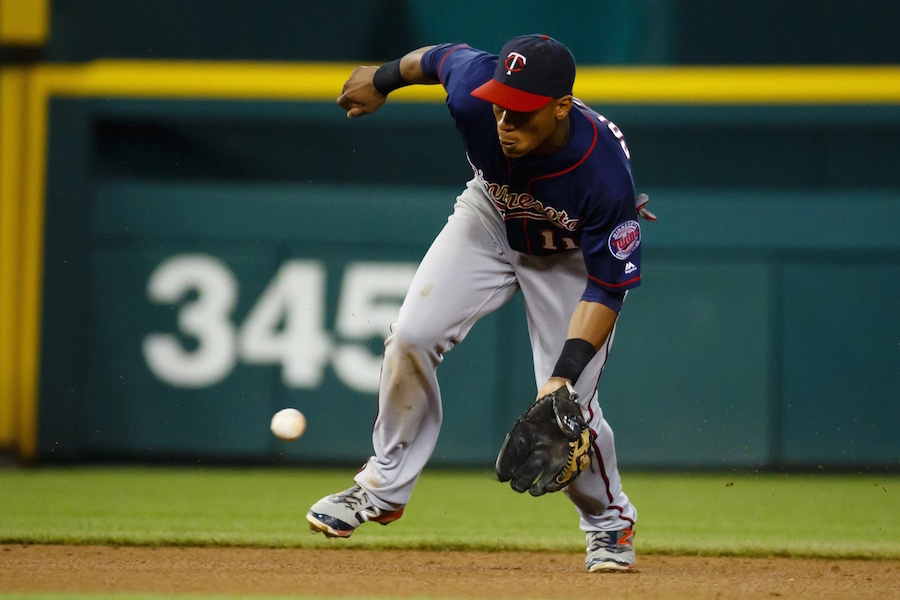 Dating back to the start of the 2016 season, only one of Polanco's three managers has seen fit to play him at shortstop. That would be Paul Molitor, who wrote the 23-year-old in at the position for 45 of 60 starts with Minnesota, including 39 straight to end the season. Prior to that, Polanco had spent zero time at shortstop with Class-AAA Rochester. And afterward, he spent zero time at shortstop in the Dominican Winter League, which recently wrapped up (per Mike Berardino). From any perspective, Polanco performed very poorly at shortstop with the Twins. He was rated atrociously by advanced defensive metrics. He piled up errors and posted a .942 fielding percentage, lower than every qualified big-leaguer at the position. He flunked the eye test as well, with a plainly visible lack of zip on his throws and an inability to reach tough balls. At best, he's an unfinished product. If you squint, you can see the adequate tools for Polanco to sharpen up and become a serviceable MLB shortstop, at least for a couple of years until Nick Gordon or Engelb Vielma arrives. But that takes a fair amount of faith and optimism. And it's not going to happen if he isn't even spending time playing the position during this formative period of his career. Granted, Molitor only chooses where Polanco plays when he's jotting the lineups. But the Twins obviously can dictate where he plays in the minors. And they surely have at least some level of input regarding how he's used on his winter league team. It is striking that his offseason program is essentially depriving him of the ability to work on strengthening his most important area of weakness. Defense is a vital component of the run prevention equation. Minnesota's forward-thinking new front office leaders are aware of this. And they also know that shortstop is the crux of a defense, perhaps the most important position on the field. There's no reason to believe Polanco can be an asset there unless he makes major strides. So what are we to make of the way things are playing out? It is odd to see the club proceeding without any clear plan at shortstop. At this point we're looking at three possible outcomes: 1) Dozier still gets traded Looking unlikely. Thad Levine told MLB Network on Sunday that he plans to have Dozier at camp in a Twins uniform, and that echoes the signals we've been receiving from all corners since the soft deadline passed for getting a deal done. But until the Dodgers pull off a meaningful move to add a second baseman, this option is going to remain in play. If that happens, the Twins are still in a tough spot with shortstop (and they likely skip to No. 3 below for a temporary plug), but at least they're doing right by Polanco. He gets to acclimate at what virtually every evaluator considers to be his future position. 2) Roll with Polanco at short and hope for the best This is the direction in which we are apparently heading. It means that not only will Polanco be potentially hurting his pitchers by missing plays, but also burdening himself with that knowledge while simultaneously trying to find his way offensively. Obviously it's not the same thing, but this has an ominously similar feel to the fiasco that played out with Miguel Sano last spring. Polanco is not as disastrous at short as Sano was in right field, but given the higher volume and importance of shortstop he could easily do much more damage. (Indeed, metrics like Defensive Runs Saved and Ultimate Zone Rating suggest that Polanco had a far more negative effect on run prevention at short than Sano did in right, in roughly the same number of innings.) He's got to take that back into the dugout and the clubhouse with him. This can hurt the development of young players. It can hurt team chemistry. It's all-around just bad, and a pretty ridiculous Plan A. There is one more alternative option... 3) Sign a free agent to take over shortstop There are still some solid names out there on the free agent market. Erick Aybar is one we've liked from the start, and suggested signing in the Offseason Handbook. If the Twins were to trade Dozier, I think he'd be almost an ideal fit – a capable, experienced and inexpensive veteran to play between Sano and Polanco. But if Dozier stays, this doesn't really work anymore. Eduardo Escobar is already under contract at $2.6 million so he'll be on the roster, as will Polanco who is out of options. Signing someone like Aybar to slot in front of them would mean carrying both as backups that serve almost the exact same function. That is not anyone's idea of efficient roster management. But the alternative is heading into spring with minimal stability or assurance at a position of the utmost importance. It's a troubling scenario but one that Levine and Derek Falvey needed to be prepared for if they were going to be willing to walk away from the negotiating table. Now, we'll see how they adjust and proceed. Can the Twins and avert disaster? It might require some creativity.
 -
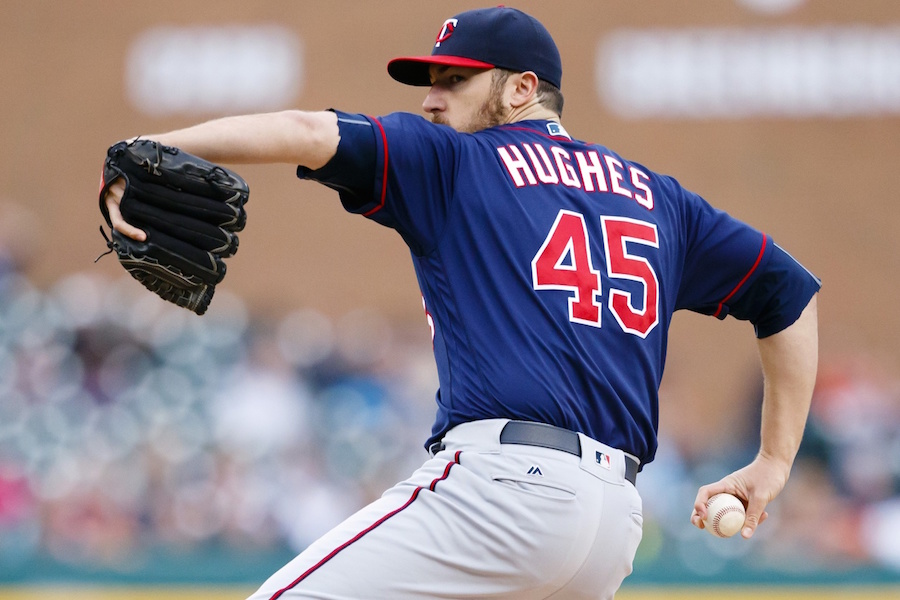 One free agent I was very curious to follow this offseason was Tyson Ross, because of his intriguing parallels with Hughes. They are almost the same age (Ross 29, Hughes 30). In 2014, both were at the top of their games, ranking among the best starting pitchers in their respective leagues. Ross continued to pitch well the following season while Hughes dropped off, but chronic shoulder problems caught up to both right-handers in 2016. Ross made only one (terrible) start on Opening Day before missing the entire campaign and eventually undergoing thoracic outlet surgery. Hughes, as we know, fought through with a bad wing and pitched into June before being pegged for the same fate. However, in his case, the decision was made more quickly. Ross didn't go under the knife until mid-October – three months after Hughes, who opted for the operation shortly after his season ended on a line drive to the leg. I figured that the former Padres ace's market might prove telling with regards to how the league at large is currently viewing thoracic outlet surgery, a rib-removal procedure that has been relatively rare for major-league pitchers, at least up until recently. The track record for hurlers who've been through it isn't great. But we've also seen an unprecedented number of high-profile players – including Royals reliever Luke Hochevar and Mets superstar Matt Harvey – elect the surgery within the past year. Earlier this week, Ross signed with the Texas Rangers for $6 million plus incentives. The fact that he ended up with not only a major-league contract, but a reasonably high guaranteed sum, tells us that there was a fair amount of competition for his services. The Rangers aren't the only team believing Ross, who will be only four months removed from thoracic outlet surgery when he reports for spring training, can be a productive starting pitcher this year. (Incidentally, Texas subsequently signed Dillon Gee – another recent TOS survivor – to a minor-league deal a few days later. Does Thad Levine's former front office have some unique enlightenment about this surgery?) Now, there are a few factors worth noting here. Ross has a sturdier history, with a more prolonged run of success in San Diego before getting hurt. And he was one of the lone upside plays in a very uninspiring free agent crop, which surely elevated his appeal. But Hughes will be three months ahead in his rehab, and he has already started throwing bullpen sessions here in mid-January. My observation is that most Twins fans have either forgotten or dismissed the righty's first season in Minnesota, having watched him scuffle along at some fraction of full strength ever since. I can still recall the wave of enthusiasm I felt in spring training of 2014 when I first saw Hughes throw. He was pitching in a side game on a minor-league field, but still, it was obvious the guy had it. He was attacking with vicious stuff, hitting his spots, strutting off the mound. He was young, and he had the confidence you would expect from a guy with his résumé: first-round draft pick, top prospect, dominant setup man for a World Series champ in 2009, 18-game winner in 2010. I wrote at the time about the buzz surrounding him in camp, and included a vintage Ron Gardenhire quote regarding the new acquisition's outing on that fenced-in side field: "Hughesy threw the [expletive] out of the ball." The early positive harbingers were proven valid when the right-hander went on to set the all-time MLB record for K/BB ratio, and turned in arguably the best performance by a Twins starter since Johan Santana's departure. Hughes doesn't need to get all the way back to that level to be a quality rotation piece who helps turn around Minnesota's run prevention woes. The question is how close he can get. And unlike his friend Glen Perkins – who faces a much steeper climb in his return from labrum surgery – I think there's significant reason for optimism this year with Hughes. The widespread interest in Ross, who is a half-season behind Hughes in his rehab, only reinforces that.
 -
It's not just that he's coming off a huge season, it's that you're getting him for two years. I would bet this is the primary hold-up for MN's front office. If you're trading for the final year of Dozier's contract, fine, Jose De Leon on his own is a fair offer. But when you're talking two years of a star player, in his prime, at a good price, you can't do a 1-for-1 deal unless you feel the guy is an absolute can't-miss lock. I love De Leon but he's not that. He'll turn 25 this year and he hasn't thrown 120 innings in a season.
-
Can the Twins compete this year? The general response to this question is going to be no, given that Minnesota finished as baseball's worst team in 2016. However, one thing that would vastly improve their odds would be a return to form – of any sort – from Phil Hughes, who could join Ervin Santana to form a quality veteran tandem atop the rotation if his surgery proves to be smashing success. That, of course, is an enormous "if."One free agent I was very curious to follow this offseason was Tyson Ross, because of his intriguing parallels with Hughes. They are almost the same age (Ross 29, Hughes 30). In 2014, both were at the top of their games, ranking among the best starting pitchers in their respective leagues. Ross continued to pitch well the following season while Hughes dropped off, but chronic shoulder problems caught up to both right-handers in 2016. Ross made only one (terrible) start on Opening Day before missing the entire campaign and eventually undergoing thoracic outlet surgery. Hughes, as we know, fought through with a bad wing and pitched into June before being pegged for the same fate. However, in his case, the decision was made more quickly. Ross didn't go under the knife until mid-October – three months after Hughes, who opted for the operation shortly after his season ended on a line drive to the leg. I figured that the former Padres ace's market might prove telling with regards to how the league at large is currently viewing thoracic outlet surgery, a rib-removal procedure that has been relatively rare for major-league pitchers, at least up until recently. The track record for hurlers who've been through it isn't great. But we've also seen an unprecedented number of high-profile players – including Royals reliever Luke Hochevar and Mets superstar Matt Harvey – elect the surgery within the past year. Earlier this week, Ross signed with the Texas Rangers for $6 million plus incentives. The fact that he ended up with not only a major-league contract, but a reasonably high guaranteed sum, tells us that there was a fair amount of competition for his services. The Rangers aren't the only team believing Ross, who will be only four months removed from thoracic outlet surgery when he reports for spring training, can be a productive starting pitcher this year. (Incidentally, Texas subsequently signed Dillon Gee – another recent TOS survivor – to a minor-league deal a few days later. Does Thad Levine's former front office have some unique enlightenment about this surgery?) Now, there are a few factors worth noting here. Ross has a sturdier history, with a more prolonged run of success in San Diego before getting hurt. And he was one of the lone upside plays in a very uninspiring free agent crop, which surely elevated his appeal. But Hughes will be three months ahead in his rehab, and he has already started throwing bullpen sessions here in mid-January. My observation is that most Twins fans have either forgotten or dismissed the righty's first season in Minnesota, having watched him scuffle along at some fraction of full strength ever since. I can still recall the wave of enthusiasm I felt in spring training of 2014 when I first saw Hughes throw. He was pitching in a side game on a minor-league field, but still, it was obvious the guy had it. He was attacking with vicious stuff, hitting his spots, strutting off the mound. He was young, and he had the confidence you would expect from a guy with his résumé: first-round draft pick, top prospect, dominant setup man for a World Series champ in 2009, 18-game winner in 2010. I wrote at the time about the buzz surrounding him in camp, and included a vintage Ron Gardenhire quote regarding the new acquisition's outing on that fenced-in side field: "Hughesy threw the [expletive] out of the ball." The early positive harbingers were proven valid when the right-hander went on to set the all-time MLB record for K/BB ratio, and turned in arguably the best performance by a Twins starter since Johan Santana's departure. Hughes doesn't need to get all the way back to that level to be a quality rotation piece who helps turn around Minnesota's run prevention woes. The question is how close he can get. And unlike his friend Glen Perkins – who faces a much steeper climb in his return from labrum surgery – I think there's significant reason for optimism this year with Hughes. The widespread interest in Ross, who is a half-season behind Hughes in his rehab, only reinforces that. Click here to view the article
-
Ever since first stepping into their roles leading the Minnesota Twins baseball operations department, both Derek Falvey and Thad Levine have been talking about the big picture. So how would keeping Brian Dozier, whose value is at a high point, align with the future-focused approach that this regime has espoused?In their early days on the job, the new CBO and GM were clear about their intentions to build a foundation for sustainable success, acknowledging that it might be a gradual process. Falvey laid out his vision for a "data-driven" collaboration. Levine spoke of making "thoughtful decisions that are designed for the future of this organization." On the surface, trading Dozier – a veteran star in his prime, who is highly unlikely to play on a championship-caliber team here during the two remaining years on his contract – would seem to be the very definition of such a move. But as we discussed late last week, Minnesota's front office has been stonewalled in its efforts to extract ample value for Dozier. Clearly, the newly installed executive duo entered this offseason with a specific valuation of Dozier, unshaded by familiarity with him as a person or his intangible value to the franchise. Clearly, suitors have been unwilling to meet it, for reasons outlined in last week's post. In the comments section for that article, some readers opined that the Twins should simply lower their sights and take what they can get for Dozier, which at this point appears to be Jose De Leon and not much else. It's a reasoned take because, in the big-picture view, De Leon has a much better chance of contributing to a contender in two years and beyond. But there's another big picture to look at, framed within Target Field and its many offices and operations. Beneath the new leadership structure, there are many returning employees, including the players on the roster. They are forming their own opinions of Falvey and Levine, who are both assuming top decision-making roles for the first time. Respect is earned, not given, and in the eyes of longtime Twins people who were loyal to Terry Ryan, these relatively inexperienced successors have big shoes to fill. How is it going to look if their first major trade involves shipping out the team's best player for a return that blatantly falls well short of expectations? How does it look to the guys in the clubhouse if their exemplary leader, viewed as a linchpin in efforts to rebound and return to contention, is removed and replaced by a rookie with no record of big-league success? How will the "Screw 2017, we'll do whatever it takes to get better in three years" approach be received by Paul Molitor as a lame duck manager who desperately needs to improve, in short order, to keep his job? And how much are these perceptions worsened if De Leon's shoulder flares up in the spring, or his initial struggles carry over to his first full season, or he ends up in the bullpen? If the Twins aren't getting back any additional pieces, there's no alternative opportunity to recoup value. Falvey knows about the importance of bolstering your odds. He comes from an organization that benefitted greatly from receiving quantity in these blockbusters. When the Indians traded CC Sabathia to the Brewers back in 2008, it wasn't headliner Matt LaPorta who ended up achieving star status but rather the "player to be named later" rounding out the package, who turned out to be Michael Brantley. When Cleveland traded Cliff Lee to Philadelphia a year later, four prospects of similar standing came back but only one truly panned out: Carlos Carrasco, who was a staple in their division-winning 2016 rotation. Of course, playing the odds works both ways. Any realist needs to acknowledge that the odds are very much against Minnesota making a dramatic jump and actually competing for a postseason spot in 2017. In the scope of long-term rebuilding, keeping Dozier is counterproductive in two important ways: it deprives the system of a top-tier talent in De Leon, with a lesser return likely if they make a deal down the line, and it forces Jorge Polanco to keep playing out of position at shortstop. Falvey is a calculating and analytical guy who earned a degree in economics. With the Indians, he learned under some of the game's most revered negotiators and evaluators. Same goes for Levine, who served as Jon Daniels' right-hand man in Texas. If Ryan were still in charge, I could see a stronger case for the Twins irrationally overvaluing their own asset. Such instances were not uncommon during his tenure. But the individuals charged with this Dozier decision are coming into the situation with clear eyes, and no inherent illusions about the current state of the organization. Tying this scenario to Falvey's area of speciality, there is an oft-cited concept in economics called opportunity cost. It is defined as "the loss of potential gain from other alternatives when one alternative is chosen," or more simply, the benefits that you give up by choosing one option over the other. In our present situation, the Twins are evidently prepared to leave a major prize on the table, as they've judged the positives of holding their ground and hanging onto Dozier to outweigh the value of acquiring De Leon. You can argue with the merits of their conclusion, but I don't think you can deny it's a thoughtful decision that meshes with a data-driven mindset. Click here to view the article
-
 In their early days on the job, the new CBO and GM were clear about their intentions to build a foundation for sustainable success, acknowledging that it might be a gradual process. Falvey laid out his vision for a "data-driven" collaboration. Levine spoke of making "thoughtful decisions that are designed for the future of this organization." On the surface, trading Dozier – a veteran star in his prime, who is highly unlikely to play on a championship-caliber team here during the two remaining years on his contract – would seem to be the very definition of such a move. But as we discussed late last week, Minnesota's front office has been stonewalled in its efforts to extract ample value for Dozier. Clearly, the newly installed executive duo entered this offseason with a specific valuation of Dozier, unshaded by familiarity with him as a person or his intangible value to the franchise. Clearly, suitors have been unwilling to meet it, for reasons outlined in last week's post. In the comments section for that article, some readers opined that the Twins should simply lower their sights and take what they can get for Dozier, which at this point appears to be Jose De Leon and not much else. It's a reasoned take because, in the big-picture view, De Leon has a much better chance of contributing to a contender in two years and beyond. But there's another big picture to look at, framed within Target Field and its many offices and operations. Beneath the new leadership structure, there are many returning employees, including the players on the roster. They are forming their own opinions of Falvey and Levine, who are both assuming top decision-making roles for the first time. Respect is earned, not given, and in the eyes of longtime Twins people who were loyal to Terry Ryan, these relatively inexperienced successors have big shoes to fill. How is it going to look if their first major trade involves shipping out the team's best player for a return that blatantly falls well short of expectations? How does it look to the guys in the clubhouse if their exemplary leader, viewed as a linchpin in efforts to rebound and return to contention, is removed and replaced by a rookie with no record of big-league success? How will the "Screw 2017, we'll do whatever it takes to get better in three years" approach be received by Paul Molitor as a lame duck manager who desperately needs to improve, in short order, to keep his job? And how much are these perceptions worsened if De Leon's shoulder flares up in the spring, or his initial struggles carry over to his first full season, or he ends up in the bullpen? If the Twins aren't getting back any additional pieces, there's no alternative opportunity to recoup value. Falvey knows about the importance of bolstering your odds. He comes from an organization that benefitted greatly from receiving quantity in these blockbusters. When the Indians traded CC Sabathia to the Brewers back in 2008, it wasn't headliner Matt LaPorta who ended up achieving star status but rather the "player to be named later" rounding out the package, who turned out to be Michael Brantley. When Cleveland traded Cliff Lee to Philadelphia a year later, four prospects of similar standing came back but only one truly panned out: Carlos Carrasco, who was a staple in their division-winning 2016 rotation. Of course, playing the odds works both ways. Any realist needs to acknowledge that the odds are very much against Minnesota making a dramatic jump and actually competing for a postseason spot in 2017. In the scope of long-term rebuilding, keeping Dozier is counterproductive in two important ways: it deprives the system of a top-tier talent in De Leon, with a lesser return likely if they make a deal down the line, and it forces Jorge Polanco to keep playing out of position at shortstop. Falvey is a calculating and analytical guy who earned a degree in economics. With the Indians, he learned under some of the game's most revered negotiators and evaluators. Same goes for Levine, who served as Jon Daniels' right-hand man in Texas. If Ryan were still in charge, I could see a stronger case for the Twins irrationally overvaluing their own asset. Such instances were not uncommon during his tenure. But the individuals charged with this Dozier decision are coming into the situation with clear eyes, and no inherent illusions about the current state of the organization. Tying this scenario to Falvey's area of speciality, there is an oft-cited concept in economics called opportunity cost. It is defined as "the loss of potential gain from other alternatives when one alternative is chosen," or more simply, the benefits that you give up by choosing one option over the other. In our present situation, the Twins are evidently prepared to leave a major prize on the table, as they've judged the positives of holding their ground and hanging onto Dozier to outweigh the value of acquiring De Leon. You can argue with the merits of their conclusion, but I don't think you can deny it's a thoughtful decision that meshes with a data-driven mindset.
 -
We need to get past the idea that Brian Dozier's production was somehow not valuable because the Twins lost 100 games. That's a very shallow way to look at it. The Twins were terrible because of catastrophic issues preventing runs – issues which will require a lot more to fix than adding one rookie pitcher. The offense was good enough to compete, in large part because of Dozier.
-
^^ Great comment! Very good questions.
-
I don't really understand why the Twins and Dodgers would not both be amenable to a De Leon + Buehler package. Seems like such a logical compromise to me. Maybe that's where the two sides eventually meet in the middle, if they ever do.
-
Wouldn't shock me. Noteworthy: BA released its Top 10 Dodgers prospects today. #1 on the list: Bellinger. Behind him, Alvarez. THEN De Leon. http://www.baseballamerica.com/minors/2017-los-angeles-dodgers-top-10-prospects/#Y8HVp9Ct12FqYPE8.97
-
This isn't a new development. Local reporters were mentioning Bellinger's name very early on, suggesting the Twins viewed him as a potential Mauer successor. Jon Heyman wrote this in mid-December: "The Twins at one point sought Dodgers’ top minor-league prospect Cody Bellinger, the slick-fielding first baseman, but those efforts apparently were rebuffed."
-
http://www.minorleagueball.com/2016/9/24/12932956/top-100-prospects-end-of-2016
-
Are the Twins and Dodgers moving on from Brian Dozier trade talks? It's beginning to look that way. Let's break down the latest developments and potential ramifications.Earlier this week, Ken Rosenthal of FOX Sports reported that the two sides had reached an impasse in their negotiations with "no momentum toward deal." That's an ominous sign at this late stage of the offseason and Rosenthal later wrote that the Dodgers were "back to square one in their search for a second baseman." Derek Falvey and Thad Levine took over the Twins front office with a tremendous opportunity to leverage a high-quality player at peak value in order to bolster the organization's lackluster pitching corps. But it appears that timing may have been against them. For one thing, they've been unable to develop much of a market for Dozier. The list of contenders with high-caliber young arms and a need for an impact hitter at second base was short to begin with, and shrunk when the Mets decided to bring back Neil Walker. Los Angeles was a very obvious fit from the start but unfortunately, no others really emerged. While a few clubs were loosely connected with Minnesota, it was evident all along that no one was going to press hard enough to create a bidding war. This placed the Twins at a rather disadvantageous negotiating position. Beyond these isolated circumstances, there is a larger trend at play. Baseball teams, in general, seem to be losing their thirst for power. It's the name of Dozier's game, but the home run doesn't carry the same appeal it once did. Consider this: Most expected Edwin Encarnacion, who ranks second in baseball since 2012 in both homers and RBI, to land a deal in excess of $100 million as a free agent this offseason. Instead, he settled for $60 million from Cleveland. His former Toronto teammate Jose Bautista, another of the game's premier power bats, has yet to find a job. Same for Mark Trumbo, whose 47 bombs led the majors in 2016. In other years, it would feel crazy that a second baseman coming off a 42-homer campaign wouldn't generate an aggressive market. In this current environment, though, it's kinda par for the course. Every report on the matter has made sure to emphasize that trade discussions are not considered dead. Levine said this week that a point might come where the Twins would stop initiating calls, but they would never stop listening. However, Rosenthal's note about how the Minnesota front office "wanted to give Dozier a heightened peace of mind about his status with the club" matches a similar relay from Mike Berardino of the Pioneer Press a week earlier. Reading between the lines, one can infer that Falvey and Levine have informed Dozier he'll be back in 2017 barring an unforeseen development. They're wise to keep their antennas up but at this point, it's tough to see what would change to precipitate a deal. More than a month after discussions began, there has been little in the way of evident progress. The Dodgers might feel they've done their part by offering up Jose De Leon, who is viewed by some as a top five prospect in the entire game. The Twins, meanwhile, are understandably opposed to giving up their best and most popular player for a single lottery ticket whose future could be thrown into question with a reoccurrence of his shoulder soreness, or an extension of his initial big-league struggles. It looks like the trenches that have been dug here. And while it's odd to see no accord despite such a natural match, it's not like either team is in a corner. Dodgers president Andrew Friedman, who gained notoriety while running operations for the Tampa Bay Rays, understands as well as anyone the value (and fickleness) of cheap young pitching talent. He'll be content keeping his full arsenal of young hurlers and looking elsewhere for an offensive boost. Maybe someone like Bautista could be an option. Meanwhile, the Twins can hang on to Dozier, who still doesn't turn 30 until May. He's in his prime and the possibility exists that we still haven't seen his best campaign. With two years left on his contract, he figures to retain strong value going forward, and if Minnesota surprisingly jumps out to a competitive start this season, he'll almost certainly be a big reason for it. That's a precarious gamble, though. Outside of adding Jason Castro, the Twins haven't done much to meaningfully upgrade a 100-loss team. It's reasonable to expect significant improvements from a contingent of returning players, but gaining 20-plus wins on that basis is a tough sell. If the shiny new front office brings back a largely untouched roster in 2017, the luster is going to quickly wear off in the eyes of fans and season ticket holders. So if Dozier stays, what's the plan? Spend some money to supplement the team around him and hope to catch lightning in a bottle? That definitely would not jibe with Falvey's initial talk of building for the future and looking at the big picture. But then again, you've got to work with what you've got. All that the Chief Baseball Officer and his GM can do is play the hand they're dealt. Now, we'll see if they push in their chips or continue to slow-play and straddle the line between trying to rebuild or retool. Click here to view the article

