



Nick Nelson
-
Posts
8,327 -
Joined
-
Last visited
-
Days Won
56
Content Type
Profiles
News
Minnesota Twins Videos
2026 Minnesota Twins Top Prospects Ranking
2022 Minnesota Twins Draft Picks
Minnesota Twins Free Agent & Trade Rumors, Notes, & Tidbits
Guides & Resources
2023 Minnesota Twins Draft Picks
The Minnesota Twins Players Project
2024 Minnesota Twins Draft Picks
2025 Minnesota Twins Draft Pick Tracker
2026 Minnesota Twins Draft Tracker: Picks & Bonuses
Forums
Blogs
Events
Store
Downloads
Gallery
Everything posted by Nick Nelson
-
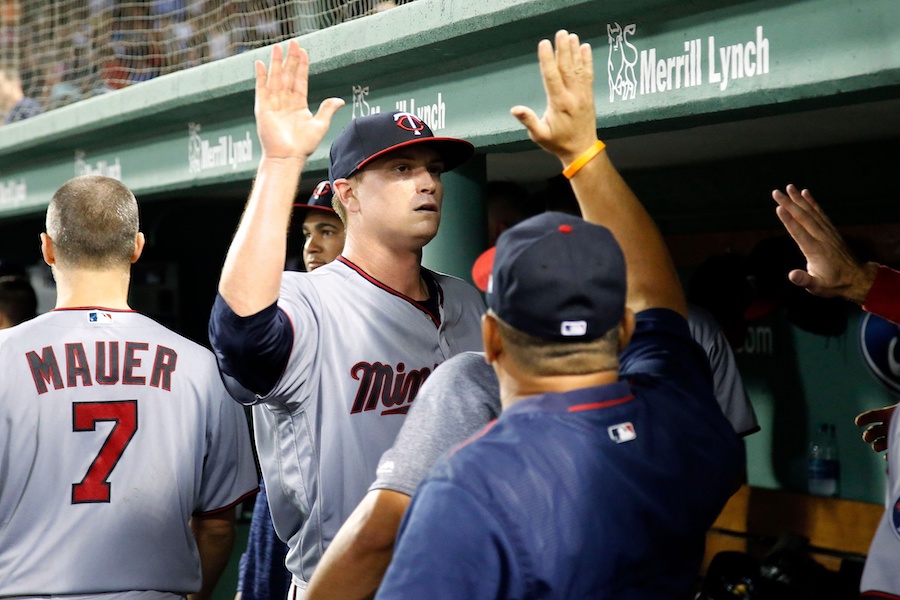 #1: Jose Berrios Blossoms In some ways, Berrios simply solidified his status after emerging in 2017. His ERA and FIP were nearly identical. His peripherals mainly held steady. There wasn't a huge difference in his overall performance between the two seasons, but backing up his breakout was an accomplishment on its own, especially with Berrios pushing his innings total to a career-high 192. That last part is very important. Berrios as at a critical juncture for any young pitcher, pushing his body to new limits in assuming a full MLB starter's workload. His arm is responding well to say the least; in his final outing on September 28th, Berrios averaged his highest fastball velo of the year (per Brooks Baseball) while tying his season-high for swinging strikes (17). He was an All-Star at age 24, and has established a high-caliber baseline with room for growth. In my mind, striking a long-term deal with Berrios is one of the club's foremost priorities this offseason. #2: Kyle Gibson Officially Turns the Corner Like that of Berrios, Gibson's story isn't entirely new to the 2018 season. He started figuring it out late last year, but has teased us with glimmers of success in the past. He needed to prove it here in 2018, and did just that. He threw his fastball and slider harder than ever, pushing his whiff rate to a career-high 11.5%. (Prior to 2017, he'd never reached double-digits.) Like Berrios, he set a new personal record for workload, coming just three frames short of 200. He stayed healthy from front to back, and delivered 18 quality starts in 32 turns. His persistently mediocre control makes Gibson more of a quality mid-rotation type than a frontman, but that he's better than most in that category. And the Twins conveniently have him under control for 2019, his age-31 season. #3: Mitch Garver Catches On The Twins have much vested in Garver. With Jason Castro's contract expiring after 2019, the organization has little else in the short-term pipeline at catcher. They really needed the 27-year-old to show something this year and thankfully he was up to the task. Our TD panel recently named Garver 2018 Twins Rookie of the Year after he posted a .749 OPS at a position where the AL average was .658. He showed exactly the kind of progressive improvement you hope to see in a first full year, shaking off a slow start to hit .293/.361/.476 in his final 55 games. He also put up a 32-to-18 K/BB ratio during that span. Garver's combination of power and discipline give him a sustainable formula for offensive success going forward. His defense also came along over the summer, though not quite as convincingly. Garver finished as one of the league's worst pitch framers and committed more than a couple head-scratching mental gaffes. But as he began to see more steady playing time following Castro's knee injury, Garver appeared to grow more adept. Paul Molitor spoke in late August of an "overall sense that my pitchers have gotten a lot more comfortable throwing with him as this season has gone on.” Of course, Garver's year did end on a bit of a somber note, as a concussion with lingering effects cost him much of September. But he made it back for a couple starts in the final week (albeit not at catcher), alleviating some concern. #4: Jake Cave Emerges Narrowly behind Garver in our ROTY balloting was Cave, who also turned in standout offensive production while playing most his defensive innings at a premium position. The outfielder was a pleasant surprise after being acquired in March from New York, where he was squeezed out of a roster already drenched in power. Cave had turned a corner in that regard last year in the Yankees system, hitting 20 homers after totaling 19 in his first four pro seasons, and in 2018 he proved it legit. In his first exposure to MLB pitching, the 25-year-old tallied 32 extra-base hits (13 bombs) to finish with a .481 slugging percentage in 91 games. He achieved these numbers through an extremely aggressive approach, striking out 33% of the time with minimal patience, but it worked out for him because – like fellow free-swinging outfielder (and Twins Daily 2018 MVP) Eddie Rosario – Cave hit the ball hard consistently. Only 8.6% of his contact qualified as "soft" (per FanGraphs), lowest on the team. Already, Cave has established himself as a valuable fourth outfielder and it's not hard to envision him becoming a quality starter. The Twins control his rights for the next five years. Great get. #5: Top Prospects Elevate All too often over the past eight years, Twins fans have been sold hope, as the system excelled and the major-league team flopped. So if you're having a hard time getting jazzed up about this, I get it. After all these years, Minnesota's vaunted pipeline still hasn't produced the desired impact, and now we're coming to grips with a realization that some young players who seemed destined for stardom may fall well short. But don't let that completely douse your enthusiasm over what happened on the farm this year – specifically in Fort Myers, with the organization's top three minor-leaguers. MLB Pipeline has shortstop Royce Lewis and outfielder Alex Kirilloff ranked as the seventh- and 10th-best prospects in baseball, respectively. The last time the Twins had two of the top 10 overall prospects? Well, it was only five years ago, when Byron Buxton was first and Miguel Sano was fourth, which... isn't gonna help with the dampered enthusiasm. But these are their own players, and they are incredibly talented – as is MLB.com's No. 70 prospect Brusdar Graterol, a fireballing 20-year-old righty. Any or all of these three could feasibly start next year in Double-A, putting them in range of a 2019 big-league debut. With Buxton and Sano on wayward paths, it sure helps to have another elite wave of youthful upside on the way. #6: Trevor May Returns Triumphantly I wrote earlier this week about May's phenomenal return to the Twins bullpen, which produced career highs in velocity, whiffs, K/BB rates, and just about every other metric. "I’m not a guy who’s gonna sit here and mope about how hard I worked and now it’s not gonna happen,” said a dejected yet determined May in spring of 2017, when his torn UCL was announced. True to his word, he went back to work and he made it happen. The righty underwent Tommy John surgery, spent about 16 months recovering and rehabbing, then returned to the major-league mound on July 31st. He allowed a run in that game, and then was essentially lights-out the rest of the way (excepting one clunky appearance as "opener"). He finished the year as closer, looking fantastic, and I don't think the Twins would be crazy to just leave him there. But they may opt for a more experienced guy who could slide May into a (potentially more valuable) fireman role. Either way, the 29-year-old surpassed all expectations in his return and his presence makes a huge difference in this bullpen's outlook. Let's hear your takes. What was the most promising development for the Twins in 2018, from your view?
 -
 The trend in baseball around power bullpens isn't new. But here in 2018, this seismic shift has become as conspicuously apparent as ever. If the Minnesota Twins want to establish themselves as true championship contenders, it's blindingly clear they need to stockpile some serious late-inning juice. While the club appears to have a decent foundation in place, much work remains on this front.This story helps set the stage for a truly pivotal offseason ahead. It's just a taste of what you'll find in the 2019 Offseason Handbook, which is currently available for preorder. If you wanna learn more about it, and the benefits of preordering, check out our FAQ. In the American League Wild Card Game last week, New York received four strong innings from starter Luis Severino before unleashing its intimidating reliever stable on Oakland's doomed lineup. Dellin Betances, David Robertson, Zach Britton, Aroldis Chapman... ballgame. The Twins can relate. One year earlier they'd been bounced in the same ballpark, after a bottomless Yankees bullpen ate their lunch following Severino's first-inning exit. Of course, the A's had made it into this position on the strength of their own stellar pen, which carried them to stunning regular-season success and made up for a wholly unspectacular rotation. Look around at the rest of the remaining teams, and you'll find plenty of deep, dominant relief units. Which brings us to the Twins. They finished the season with exactly two reliable relievers. The good news is that those two – Taylor Rogers and Trevor May – had a hell of showing in 2018, solidifying themselves as fixtures. Rogers has fully graduated to top-tier status, having finished with a 2.63 ERA and 0.95 WHIP after closing his year with 28 straight scoreless appearances. His 2.33 FIP ranked ninth among MLB relievers, and fourth among those who made 70+ appearances. Once a lefty specialist (and a great one at that), Rogers is now an all-purpose shutdown arm and easily Minnesota's best bullpen asset. May shows signs of being able to join him at this level of distinction. He was nothing short of spectacular in his return from Tommy John surgery, turning in a ridiculous 36-to-5 K/BB ratio in 25 innings. Take out his disastrous lone outing as "opener" (1 IP, 4 ER) and the right-hander put up a 1.73 ERA, 0.90 WHIP and 13.3 K/9 after joining the team in late July following Tommy John rehab. He averaged a career-high 94.1 MPH with his fastball, pounded the strike zone, and induced a 15.4% swinging strike rate, which would've ranked among the top 10 AL qualifiers. May finished the year as closer and looked very much up to the task. Rogers and May are 27 and 29, respectively. Both remain under control for multiple years. So, that's the good news. Elsewhere? Plenty of not-so-good news and uncertainty. I'm not sure you can make a strong argument that any other incumbents are locked into the 2019 bullpen. Addison Reed is probably closest, solely by virtue of his contract. He's owed $8.5 million next year as part of the two-year pact signed in January, so he'll get every opportunity next spring, but Reed showed nothing to indicate he's capable of being any kind of positive contributor. His 4.50 ERA was bad and his 5.11 FIP was worse. His fastball velocity was way down. He missed three weeks in July with elbow soreness and came back looking even worse, allowing an .842 OPS with just 8% swinging strikes the rest of the way (in 2017 he was at 13.7%). It's very obvious that Reed's arm was not close to 100% for the majority of the year, but evidently Minnesota never discovered structural damage and so no action was taken. The Twins have little choice but to hope several months of rest will cure what ails him. Trevor Hildenberger, too, looked completely broken by season's end. The reigning top Twins reliever bounced back from a rocky spring and put together a solid first half, but collapsed in the second. In August and September, he allowed more than a run per inning (9.55 ERA) and a .965 OPS, fumbling away his audition in the closer role. Much like Reed, the Twins were hoping Hildy would be a trustworthy staple, and now he's probably going to have to earn a job next spring. His greatest strengths disappeared, as his ground ball rate dropped from 58.8% in 2017 to 46.3% in 2018, as his K/9 rate dropped from 26% to 22%. The unraveling of these clearly capable righties throws a wrench into Minnesota's bullpen planning, and also casts further scrutiny on the decision to trade Ryan Pressly, who has since cemented his rep as one of baseball's very best relief pitchers. Jorge Alcala had better pan out. In the meantime, the Twins need to replace Pressly's impact in the bullpen if they have true aspirations for 2019. The remaining holdover candidates – Oliver Drake, Matt Magill, Alan Busenitz, Tyler Duffey, etc. – should all be considered fringe contenders for the bottom spots in the bullpen. This means Rogers and May are short on company at the top. General manager Thad Levine, fresh off turning down the Mets' advances, will have his work cut out for him. Last winter he showed some savvy in signing Fernando Rodney and Zach Duke, but his biggest splash (Reed) proved to be his biggest whiff. Will Levine be gun-shy this time around, still on the hook with Reed as the largest current payroll commitment for 2019? There are other options than free agency, of course. Trades are in play, and in fact I would wager good money the Twins acquire at least one reliever through this avenue during the winter. Meanwhile, any number of borderline starter candidates could be converted to relief. It's an approach we've seen work with May among many others. Zack Littell, Kohl Stewart, Fernando Romero or Lewis Thorpe could be intriguing in this regard. Needless to say, there's a lot at play here. We'll lay it all out for you – free agent options (+ what they'll cost), realistic trade targets, and an in-depth feature on the closer situation – in the 2019 Offseason Handbook. Preorder it today and you'll get your copy ahead of the official release. Click here to view the article
 -
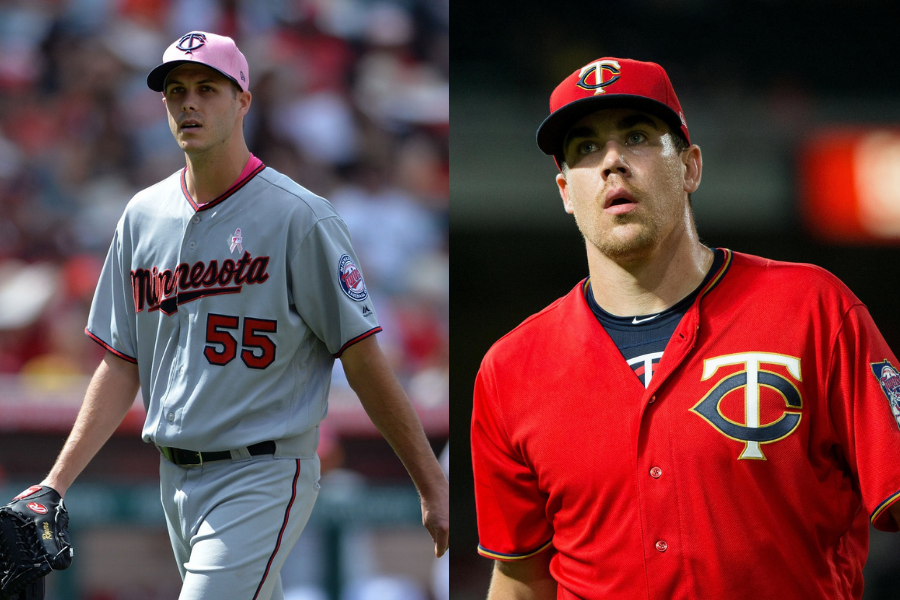 This story helps set the stage for a truly pivotal offseason ahead. It's just a taste of what you'll find in the 2019 Offseason Handbook, which is currently available for preorder. If you wanna learn more about it, and the benefits of preordering, check out our FAQ. In the American League Wild Card Game last week, New York received four strong innings from starter Luis Severino before unleashing its intimidating reliever stable on Oakland's doomed lineup. Dellin Betances, David Robertson, Zach Britton, Aroldis Chapman... ballgame. The Twins can relate. One year earlier they'd been bounced in the same ballpark, after a bottomless Yankees bullpen ate their lunch following Severino's first-inning exit. Of course, the A's had made it into this position on the strength of their own stellar pen, which carried them to stunning regular-season success and made up for a wholly unspectacular rotation. Look around at the rest of the remaining teams, and you'll find plenty of deep, dominant relief units. Which brings us to the Twins. They finished the season with exactly two reliable relievers. The good news is that those two – Taylor Rogers and Trevor May – had a hell of showing in 2018, solidifying themselves as fixtures. Rogers has fully graduated to top-tier status, having finished with a 2.63 ERA and 0.95 WHIP after closing his year with 28 straight scoreless appearances. His 2.33 FIP ranked ninth among MLB relievers, and fourth among those who made 70+ appearances. Once a lefty specialist (and a great one at that), Rogers is now an all-purpose shutdown arm and easily Minnesota's best bullpen asset. May shows signs of being able to join him at this level of distinction. He was nothing short of spectacular in his return from Tommy John surgery, turning in a ridiculous 36-to-5 K/BB ratio in 25 innings. Take out his disastrous lone outing as "opener" (1 IP, 4 ER) and the right-hander put up a 1.73 ERA, 0.90 WHIP and 13.3 K/9 after joining the team in late July following Tommy John rehab. He averaged a career-high 94.1 MPH with his fastball, pounded the strike zone, and induced a 15.4% swinging strike rate, which would've ranked among the top 10 AL qualifiers. May finished the year as closer and looked very much up to the task. Rogers and May are 27 and 29, respectively. Both remain under control for multiple years. So, that's the good news. Elsewhere? Plenty of not-so-good news and uncertainty. I'm not sure you can make a strong argument that any other incumbents are locked into the 2019 bullpen. Addison Reed is probably closest, solely by virtue of his contract. He's owed $8.5 million next year as part of the two-year pact signed in January, so he'll get every opportunity next spring, but Reed showed nothing to indicate he's capable of being any kind of positive contributor. His 4.50 ERA was bad and his 5.11 FIP was worse. His fastball velocity was way down. He missed three weeks in July with elbow soreness and came back looking even worse, allowing an .842 OPS with just 8% swinging strikes the rest of the way (in 2017 he was at 13.7%). It's very obvious that Reed's arm was not close to 100% for the majority of the year, but evidently Minnesota never discovered structural damage and so no action was taken. The Twins have little choice but to hope several months of rest will cure what ails him. Trevor Hildenberger, too, looked completely broken by season's end. The reigning top Twins reliever bounced back from a rocky spring and put together a solid first half, but collapsed in the second. In August and September, he allowed more than a run per inning (9.55 ERA) and a .965 OPS, fumbling away his audition in the closer role. Much like Reed, the Twins were hoping Hildy would be a trustworthy staple, and now he's probably going to have to earn a job next spring. His greatest strengths disappeared, as his ground ball rate dropped from 58.8% in 2017 to 46.3% in 2018, as his K/9 rate dropped from 26% to 22%. The unraveling of these clearly capable righties throws a wrench into Minnesota's bullpen planning, and also casts further scrutiny on the decision to trade Ryan Pressly, who has since cemented his rep as one of baseball's very best relief pitchers. Jorge Alcala had better pan out. In the meantime, the Twins need to replace Pressly's impact in the bullpen if they have true aspirations for 2019. The remaining holdover candidates – Oliver Drake, Matt Magill, Alan Busenitz, Tyler Duffey, etc. – should all be considered fringe contenders for the bottom spots in the bullpen. This means Rogers and May are short on company at the top. General manager Thad Levine, fresh off turning down the Mets' advances, will have his work cut out for him. Last winter he showed some savvy in signing Fernando Rodney and Zach Duke, but his biggest splash (Reed) proved to be his biggest whiff. Will Levine be gun-shy this time around, still on the hook with Reed as the largest current payroll commitment for 2019? There are other options than free agency, of course. Trades are in play, and in fact I would wager good money the Twins acquire at least one reliever through this avenue during the winter. Meanwhile, any number of borderline starter candidates could be converted to relief. It's an approach we've seen work with May among many others. Zack Littell, Kohl Stewart, Fernando Romero or Lewis Thorpe could be intriguing in this regard. Needless to say, there's a lot at play here. We'll lay it all out for you – free agent options (+ what they'll cost), realistic trade targets, and an in-depth feature on the closer situation – in the 2019 Offseason Handbook. Preorder it today and you'll get your copy ahead of the official release.
 -
Believe he's talking about Twins Daily's ROTY nod, which we actually handed out earlier this week to Mitch Garver, who narrowly edged Cave. As far as AL ROTY, I don't see how it could go to anyone but Ohtani.
-
Front Page: Offseason Handbook FAQ
Nick Nelson replied to Nick Nelson's topic in Twins Daily Front Page News
Ooh that's a great idea. Probably a little too late to fit into this year's edition but we'll keep that in mind for next. I think you'll all be very pleased with the guest features though. -
Front Page: Offseason Handbook FAQ
Nick Nelson replied to Nick Nelson's topic in Twins Daily Front Page News
Since this is more of a curiosity than a product question I'll answer it here. We start grinding on the Handbook in early September, and yes, it is uniquely challenging to create so much content under these constraints, knowing that we've gotta get it out as early as possibly given the relatively short shelf life. But it's a labor of love, and the positive feedback (as well as the generous contributions) always seems to make it worthwhile. -
Can't blame ya. His second half definitely threw some cold water on the "New and Improved Eddie Rosario" narrative, as he basically stopped drawing walks and his production tanked. But I do wonder how much of that owes to fighting through the quad injury. From July 1st, 2017 to June 30th, 2018, Rosario was an absolute freak over a full one-year span: 157 G, 614 AB, .308 AVG, .560 SLG, 35 HR, 46 2B, 106 RBIs, 40 BB
-
Nah, we don't start writing these until the votes are tallied and the awards finalized. I did pick Berrios but in my mind it was basically a two-way tie at the top with Gibson close behind. I'm totally good with Eddie being the choice.
-
So, maybe you're looking at that Offseason Handbook Now Available story on the Twins Daily homepage, and you're wondering... what's that? Why should I pony up $10+ for this digital ebook thingy? Read on and we'll try to answer any questions you might have.What is this [Dr. Evil air quotes] "Offseason Handbook"? It's a digital guide we've been creating annually since 2009, long before this site even launched. Back then we were a dorky bunch of bloggers (how far we've come?) who obsessed over every offseason and its infinite possibilities.We wanted to bottle up that mystique, so we created a product framed as the general manager's handbook. Free agent dossiers, trade recommendations, payroll breakdowns, organizational depth charts: everything a head decision-maker would need to take stock and formulate a plan for success. Anyway, we loved making it, and people seemed to like reading it, so we kept doing it. Eventually Brock (Twins Daily's resident tech/graphic wiz) joined the team and turned it from a crappy Word doc into a beautifully designed PDF. This year's edition is going to be our best yet, by leaps and bounds. I mean, I know, what else am I gonna say, but... seriously. Trust me. You can check out last year's to get a taste. Do I have to pay for it? Nope. We used to have a fixed price for the Offseason Handbook but a couple years ago we decided to make it totally donation-based. We appreciate the support but wanted everyone to be able to enjoy something we worked so hard on. So it was a name-your-price system. That will again the case this year, after the official release (there's a $10 minimum for preorders). You can order your copy now and enter your own price, and you'll receive a download link in your inbox right away. We toiled away to create this product, as well as the free content served up on Twins Daily all year long. We're beyond grateful for all contributions at any amount. But we'd much rather have you grab a copy for free and enjoy it than miss out. Can I buy a physical copy? Afraid not. We dabbled with that option in the past but it was not remotely cost-effective; at our scale, we had to charge wayyy too much just to break even. The Offseason Handbook comes in the form of a downloadable PDF file, which is very tablet/smartphone-friendly and can easily be printed. You can also discreetly read it at work with a spreadsheet open in its vicinity... I hear. What's different this year? New design. New guest authors. New features and resources. This thing is chock full of goodness. If you enjoy the content on this site, you are going to eat it up. That's a promise. ~~~ I want to make this an open forum. If you have any questions in addition to those above, please leave them in the comments section and I will add them into the article with an answer. If you're sold, and ready to lock up your copy, head on over to order page. We can't wait to get it to you. Click here to view the article
-
 What is this [Dr. Evil air quotes] "Offseason Handbook"? It's a digital guide we've been creating annually since 2009, long before this site even launched. Back then we were a dorky bunch of bloggers (how far we've come?) who obsessed over every offseason and its infinite possibilities.We wanted to bottle up that mystique, so we created a product framed as the general manager's handbook. Free agent dossiers, trade recommendations, payroll breakdowns, organizational depth charts: everything a head decision-maker would need to take stock and formulate a plan for success. Anyway, we loved making it, and people seemed to like reading it, so we kept doing it. Eventually Brock (Twins Daily's resident tech/graphic wiz) joined the team and turned it from a crappy Word doc into a beautifully designed PDF. This year's edition is going to be our best yet, by leaps and bounds. I mean, I know, what else am I gonna say, but... seriously. Trust me. You can check out last year's to get a taste. Do I have to pay for it? Nope. We used to have a fixed price for the Offseason Handbook but a couple years ago we decided to make it totally donation-based. We appreciate the support but wanted everyone to be able to enjoy something we worked so hard on. So it was a name-your-price system. That will again the case this year, after the official release (there's a $10 minimum for preorders). You can order your copy now and enter your own price, and you'll receive a download link in your inbox right away. We toiled away to create this product, as well as the free content served up on Twins Daily all year long. We're beyond grateful for all contributions at any amount. But we'd much rather have you grab a copy for free and enjoy it than miss out. Can I buy a physical copy? Afraid not. We dabbled with that option in the past but it was not remotely cost-effective; at our scale, we had to charge wayyy too much just to break even. The Offseason Handbook comes in the form of a downloadable PDF file, which is very tablet/smartphone-friendly and can easily be printed. You can also discreetly read it at work with a spreadsheet open in its vicinity... I hear. What's different this year? New design. New guest authors. New features and resources. This thing is chock full of goodness. If you enjoy the content on this site, you are going to eat it up. That's a promise. ~~~ I want to make this an open forum. If you have any questions in addition to those above, please leave them in the comments section and I will add them into the article with an answer. If you're sold, and ready to lock up your copy, head on over to order page. We can't wait to get it to you.
 -
The times they are a changin'. For the last 15 years, Joe Mauer has been a fixture in the Twins clubhouse. No more. For the last four years, Paul Molitor has held the manager's chair. No more. And now, Brian Dozier's three-year reign as Twins Daily MVP comes to an end. Overtaking the throne is Eddie Rosario, and his nod is well earned even if it says more about the surrounding nucleus than him.In 2016 and 2017, Dozier was worth 6.2 and 5.0 WAR respectively (per FanGraphs). Last year Byron Buxton came in second on the Twins at 3.5, which slightly edges Rosario's team-leading mark here in 2018 (3.4). This isn't meant as a knock on Eddie. For much of the season, Rosario seemed determined to carry this lackluster team on his back. It's not really a stretch to say he won a couple midsummer games single-handedly. In June, as the Twins began fading in the division race and the offense mostly fizzled around him, Rosario flourished, posting a ridiculous .330/.395/.689 line and at one point homering seven times in a 14-game span. He was exhilaratingly brazen on the base paths, stealing runs from opposing teams out of nowhere. He went all-out in left field and unleashed fury with his arm. With his team struggling to stay afloat, and Dozier a shell of his former self, Rosario played his ass off to try and make up the slack. It seemingly took a toll. From July 1st onward he hit just .254/.284/.359, collecting 14 extra-base hits in 60 games after totaling 43 in his first 78. In the latter weeks Rosario battled a nagging quad injury that eventually ended his season in mid-September. He was largely a non-factor in the second half, and yet Rosario still stands out as a fairly clear-cut choice for team MVP. Like I said, this award speaks to larger things than Rosario's production, but his all-around step forward as a ballplayer at age 26 should not be downplayed for that reason. So let's give Eddie his due and take a closer look at what fueled the stellar, if front-heavy, campaign he put together. I call it the E.D.D.I.E. equation: Excitement. Discipline. Defense. Intensity. Explosiveness. EXCITEMENT There was no player in baseball you'd rather watch on third base. He antagonized opposing pitchers by dancing down the line, once . He deked outfielders and left them bewildered as he scored easily on shallow flies. At times he seemed intent on stealing home and no one would've been surprised if he tried. Rosario's antics at third were but a microcosm of the intoxicating unpredictability he brought in all phases of the game. DISCIPLINE He still won't be confused for a patient hitter, but the improvements that enabled his 2017 emergence held steady for Rosario. His walk rate of 5.1% was down a tad from last year's 5.9% but still dwarfed his previous career clip of 3.3%, and he also reduced his strikeouts to a career-low 17.6% — an amazing feat for someone who swings so frequently. Rosario swung at a higher percentage of pitches (57.7%) than any other qualified American League hitter but had a lower K-rate than any Twin other than Mauer, Max Kepler and (of course) Willians Astudillo. The left fielder has settled into a groove of striking out three times for every walk, and that looks to be workable for him. DEFENSE FanGraphs had Rosario jumping from 2.5 WAR in 2017 to 3.4 in 2018. Baseball-Reference calculated an even larger leap, from 1.7 to 3.6. And yet, Rosario actually finished with worse numbers this year (.803 OPS, 24 HR) than last (.836 OPS, 27 HR). Why? The answer lies in his defense. By almost any metric, Rosario was vastly more valuable in left field, tracking down more drives and ranking among the league leaders in outfield assists. Hell, he even played a couple innings at third base and turned in a Web Gem. INTENSITY There is a certain edge that sometimes separates the good from the great – a fiery drive to compete and win. I'm not saying others on the Twins don't have it, but Eddie Rosario absolutely has got it. He launched all those max-effort howitzers from the outfield despite a triceps injury limiting him through much of spring training. His season-ending quad aggravation in left occurred because he was sprinting after a ball, while playing hurt, after lobbying his way back out there. He swung out of his shoes pretty much every time he offered at a pitch. Pushing himself to the max so relentlessly might have ultimately undermined Rosario (and the same is true for several of his teammates), but that intensity is what makes him who he is. And he's at least reined it in enough to cut back on some of the wild swings and mental mistakes. EXPLOSIVENESS At 6'1" and 180 lbs, Rosario makes you wonder where all of that explosive strength comes from. He's pure wiry muscle and, while not necessarily the speediest runner, his movements are as quick as they come. A combination of premier hand-eye coordination and lightning reflexes enables him to crush pitches nowhere near the plate. When he's locked in, Rosario is a nightmare matchup. There's no reliable way to get him out. His three-homer outburst against Cleveland in early June, culminating in a walk-off home run, was one of the most amazing individual performances in recent Twins history, pulling Minnesota within 3 1/2 games of the Indians for first place. It was as close as they'd get. Rosario couldn't do it alone, and the team was pretty much cooked by the time his slide began around the All-Star Game, which he narrowly missed playing in. Maybe that's why it was barely noticed, and most of us look back on his 2018 with nothing but positivity. That's as it should be. The Twins weren't a very good team this year but for several months Rosario put on a hell of a one-man show. As the rest of the team's young position-player core stagnated or regressed, he took another step forward, solidifying his stardom and status as a worthy building block. The Ballots Here’s a look at the ballots from our seven voters. Nick Nelson: 1) Jose Berrios, 2) Eddie Rosario, 3) Kyle Gibson Seth Stohs: 1) Eddie Rosario, 2) Kyle Gibson, 3) Jose Berrios John Bonnes: 1) Eddie Rosario, 2) Kyle Gibson, 3) Jose Berrios Tom Froemming: 1) Eddie Rosario, 2) Jose Berrios, 3) Kyle Gibson Cody Christie: 1) Eddie Rosario, 2) Jose Berrios, 3) Max Kepler Steve Lein: 1) Eddie Rosario, 2) Jose Berrios, 3) Kyle Gibson Ted Schwerzler: 1) Eddie Rosario, 2) Jose Berrios, 3) Kyle Gibson Points Eddie Rosario: 34 Jose Berrios: 27 Kyle Gibson: 22 How would your ballot look? Give a shout in the comments and start the discussion. Previous Twins Daily MVP Winners 2015: Brian Dozier 2016: Brian Dozier 2017: Brian Dozier Click here to view the article
-
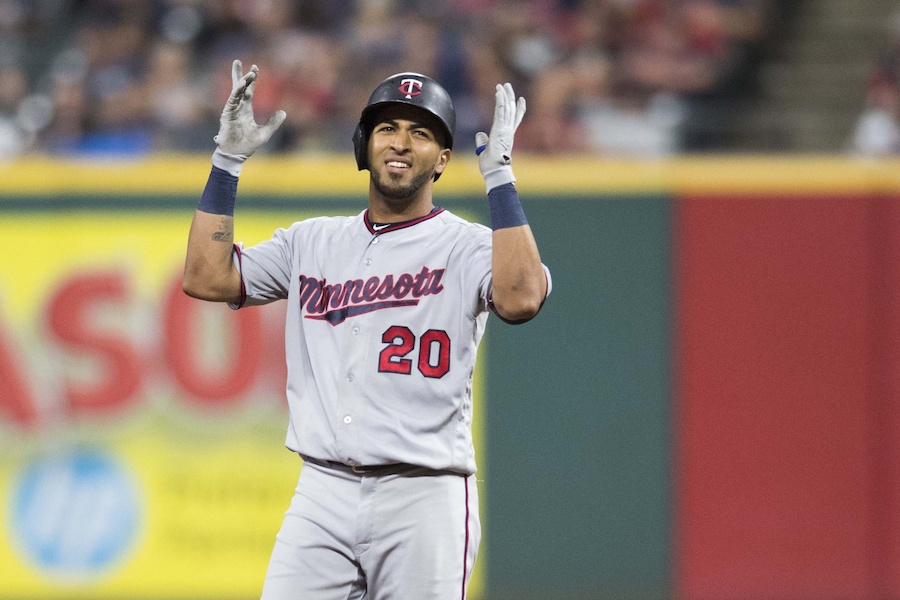 In 2016 and 2017, Dozier was worth 6.2 and 5.0 WAR respectively (per FanGraphs). Last year Byron Buxton came in second on the Twins at 3.5, which slightly edges Rosario's team-leading mark here in 2018 (3.4). This isn't meant as a knock on Eddie. For much of the season, Rosario seemed determined to carry this lackluster team on his back. It's not really a stretch to say he won a couple midsummer games single-handedly. In June, as the Twins began fading in the division race and the offense mostly fizzled around him, Rosario flourished, posting a ridiculous .330/.395/.689 line and at one point homering seven times in a 14-game span. He was exhilaratingly brazen on the base paths, stealing runs from opposing teams out of nowhere. He went all-out in left field and unleashed fury with his arm. With his team struggling to stay afloat, and Dozier a shell of his former self, Rosario played his ass off to try and make up the slack. It seemingly took a toll. From July 1st onward he hit just .254/.284/.359, collecting 14 extra-base hits in 60 games after totaling 43 in his first 78. In the latter weeks Rosario battled a nagging quad injury that eventually ended his season in mid-September. He was largely a non-factor in the second half, and yet Rosario still stands out as a fairly clear-cut choice for team MVP. Like I said, this award speaks to larger things than Rosario's production, but his all-around step forward as a ballplayer at age 26 should not be downplayed for that reason. So let's give Eddie his due and take a closer look at what fueled the stellar, if front-heavy, campaign he put together. I call it the E.D.D.I.E. equation: Excitement. Discipline. Defense. Intensity. Explosiveness. EXCITEMENT There was no player in baseball you'd rather watch on third base. He antagonized opposing pitchers by dancing down the line, once . He deked outfielders and left them bewildered as he scored easily on shallow flies. At times he seemed intent on stealing home and no one would've been surprised if he tried. Rosario's antics at third were but a microcosm of the intoxicating unpredictability he brought in all phases of the game.DISCIPLINE He still won't be confused for a patient hitter, but the improvements that enabled his 2017 emergence held steady for Rosario. His walk rate of 5.1% was down a tad from last year's 5.9% but still dwarfed his previous career clip of 3.3%, and he also reduced his strikeouts to a career-low 17.6% — an amazing feat for someone who swings so frequently. Rosario swung at a higher percentage of pitches (57.7%) than any other qualified American League hitter but had a lower K-rate than any Twin other than Mauer, Max Kepler and (of course) Willians Astudillo. The left fielder has settled into a groove of striking out three times for every walk, and that looks to be workable for him. DEFENSE FanGraphs had Rosario jumping from 2.5 WAR in 2017 to 3.4 in 2018. Baseball-Reference calculated an even larger leap, from 1.7 to 3.6. And yet, Rosario actually finished with worse numbers this year (.803 OPS, 24 HR) than last (.836 OPS, 27 HR). Why? The answer lies in his defense. By almost any metric, Rosario was vastly more valuable in left field, tracking down more drives and ranking among the league leaders in outfield assists. Hell, he even played a couple innings at third base and turned in a Web Gem. https://twitter.com/TwinsHighlights/status/1023034279675265025 INTENSITY There is a certain edge that sometimes separates the good from the great – a fiery drive to compete and win. I'm not saying others on the Twins don't have it, but Eddie Rosario absolutely has got it. He launched all those max-effort howitzers from the outfield despite a triceps injury limiting him through much of spring training. His season-ending quad aggravation in left occurred because he was sprinting after a ball, while playing hurt, after lobbying his way back out there. He swung out of his shoes pretty much every time he offered at a pitch. Pushing himself to the max so relentlessly might have ultimately undermined Rosario (and the same is true for several of his teammates), but that intensity is what makes him who he is. And he's at least reined it in enough to cut back on some of the wild swings and mental mistakes. EXPLOSIVENESS At 6'1" and 180 lbs, Rosario makes you wonder where all of that explosive strength comes from. He's pure wiry muscle and, while not necessarily the speediest runner, his movements are as quick as they come. A combination of premier hand-eye coordination and lightning reflexes enables him to crush pitches nowhere near the plate. When he's locked in, Rosario is a nightmare matchup. There's no reliable way to get him out. His three-homer outburst against Cleveland in early June, culminating in a walk-off home run, was one of the most amazing individual performances in recent Twins history, pulling Minnesota within 3 1/2 games of the Indians for first place. It was as close as they'd get. Rosario couldn't do it alone, and the team was pretty much cooked by the time his slide began around the All-Star Game, which he narrowly missed playing in. Maybe that's why it was barely noticed, and most of us look back on his 2018 with nothing but positivity. That's as it should be. The Twins weren't a very good team this year but for several months Rosario put on a hell of a one-man show. As the rest of the team's young position-player core stagnated or regressed, he took another step forward, solidifying his stardom and status as a worthy building block. The Ballots Here’s a look at the ballots from our seven voters. Nick Nelson: 1) Jose Berrios, 2) Eddie Rosario, 3) Kyle Gibson Seth Stohs: 1) Eddie Rosario, 2) Kyle Gibson, 3) Jose Berrios John Bonnes: 1) Eddie Rosario, 2) Kyle Gibson, 3) Jose Berrios Tom Froemming: 1) Eddie Rosario, 2) Jose Berrios, 3) Kyle Gibson Cody Christie: 1) Eddie Rosario, 2) Jose Berrios, 3) Max Kepler Steve Lein: 1) Eddie Rosario, 2) Jose Berrios, 3) Kyle Gibson Ted Schwerzler: 1) Eddie Rosario, 2) Jose Berrios, 3) Kyle Gibson Points Eddie Rosario: 34 Jose Berrios: 27 Kyle Gibson: 22 How would your ballot look? Give a shout in the comments and start the discussion. Previous Twins Daily MVP Winners 2015: Brian Dozier 2016: Brian Dozier 2017: Brian Dozier
 -
Joe Mauer's big send-off yesterday, combined with the ominous uncertainty surrounding Miguel Sano, leaves the corner infield spots as a major source of mystery as the Minnesota Twins embark on their offseason. Let's take an early look at a few players who will be available in free agency.Note: This is an excerpt from the free agency section of the upcoming 2019 Offseason Handbook, which you can officially preorder as of today. You'll find these profiles, plus dozens more, within. Claim your copy today to get it before its official release. To say the Twins lack clarity at the infield corners would be an understatement. Incumbent first baseman Joe Mauer is a free agent, for the first time ever. Incumbent third baseman Miguel Sano is coming off a brutal season bisected by a demotion to Single-A. The latter will be back (barring a trade) but in what capacity? Keep him at third, or move him to first (or even DH)? Up to you. And that decision will dictate planning here. Joe Mauer, 1B Age: 35 Previous Team: Twins 2018 Stats: .282/.351/.379, 6 HR, 48 RBI Mauer is coming off an underwhelming season that saw him turn in some of the worst numbers of his career. But he remains an excellent defensive first baseman and strong situational hitter with above-average OBP skills. If he returns, it'll be as a part-timer and frequent DH. But with righty-swinging Tyler Austin on hand, that might fit. Mauer is contemplating retirement. Estimated Contract: 1 year, $7 million Eduardo Escobar, 3B Age: 30 Previous Team: Diamondbacks 2018 Stats: .272/.334/.489, 23 HR, 84 RBI Cherished clubhouse character and late-blooming versatile slugger. Signing Escobar would restore a recognizable veteran presence to the locker room while allowing Sano to move across the diamond for a potential offensive upgrade at both corners. Esco's ability to fill in at short or second, if needed, helps with flexibility. Estimated Contract: 3 years, $45 million Matt Adams, 1B Age: 30 Previous Team: Cardinals 2018 Stats: .239/.309/.477, 21 HR, 57 RBI Looking for an apt platoon mate to complement lefty-masher Austin, Adams might be your man. He's got an .815 OPS with 41 homers over the past two seasons, and is a career .279/.330/.495 hitter against righties. Can play outfield corners in a pinch. Estimated Contract: 2 years, $15 million Hungry for more? Preorder the Offseason Handbook, which will include profiles on tons of other free agent options, at the corner infield and other areas of need. Click here to view the article
-
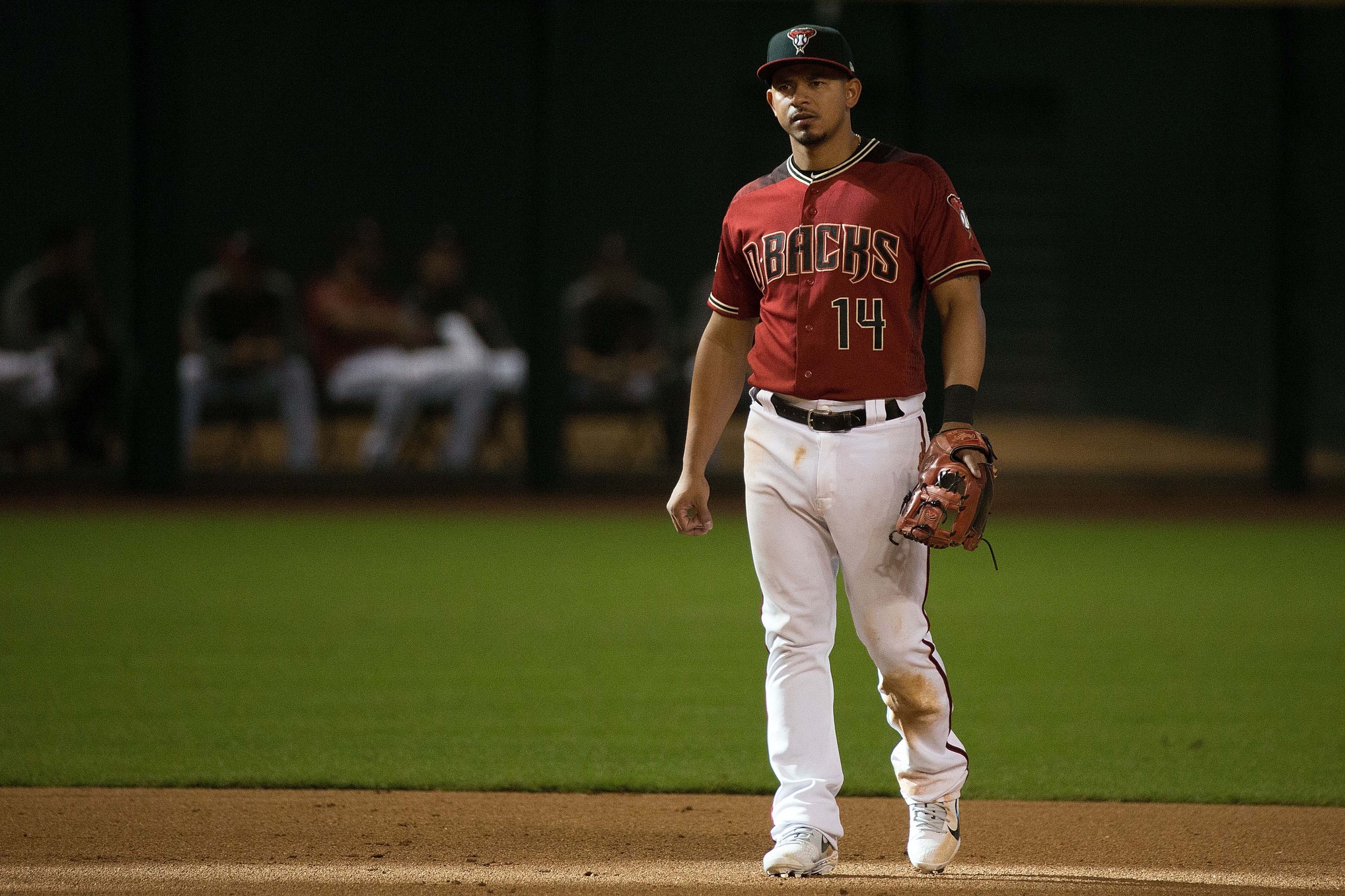 Note: This is an excerpt from the free agency section of the upcoming 2019 Offseason Handbook, which you can officially preorder as of today. You'll find these profiles, plus dozens more, within. Claim your copy today to get it before its official release. To say the Twins lack clarity at the infield corners would be an understatement. Incumbent first baseman Joe Mauer is a free agent, for the first time ever. Incumbent third baseman Miguel Sano is coming off a brutal season bisected by a demotion to Single-A. The latter will be back (barring a trade) but in what capacity? Keep him at third, or move him to first (or even DH)? Up to you. And that decision will dictate planning here. Joe Mauer, 1B Age: 35 Previous Team: Twins 2018 Stats: .282/.351/.379, 6 HR, 48 RBI Mauer is coming off an underwhelming season that saw him turn in some of the worst numbers of his career. But he remains an excellent defensive first baseman and strong situational hitter with above-average OBP skills. If he returns, it'll be as a part-timer and frequent DH. But with righty-swinging Tyler Austin on hand, that might fit. Mauer is contemplating retirement. Estimated Contract: 1 year, $7 million Eduardo Escobar, 3B Age: 30 Previous Team: Diamondbacks 2018 Stats: .272/.334/.489, 23 HR, 84 RBI Cherished clubhouse character and late-blooming versatile slugger. Signing Escobar would restore a recognizable veteran presence to the locker room while allowing Sano to move across the diamond for a potential offensive upgrade at both corners. Esco's ability to fill in at short or second, if needed, helps with flexibility. Estimated Contract: 3 years, $45 million Matt Adams, 1B Age: 30 Previous Team: Cardinals 2018 Stats: .239/.309/.477, 21 HR, 57 RBI Looking for an apt platoon mate to complement lefty-masher Austin, Adams might be your man. He's got an .815 OPS with 41 homers over the past two seasons, and is a career .279/.330/.495 hitter against righties. Can play outfield corners in a pinch. Estimated Contract: 2 years, $15 million Hungry for more? Preorder the Offseason Handbook, which will include profiles on tons of other free agent options, at the corner infield and other areas of need.
 -
It's been a rough season for the Twins, but fortunately, many players were able to end it on high notes. A successful and emotional final homestand featured plenty of inspiring performances, sending Minnesota into the offseason with a much-needed dose of positivity. Weekly Snapshot: Mon, 9/24 through Sun, 9/30 *** Record Last Week: 5-1 (Overall: 78-84) Run Differential Last Week: +27 (Overall: -37) Standing: 2nd Place in AL Central (13 GB) HIGHLIGHTS We still can't say with certainty, and may not be able to do so for another month or so, but there've been plenty of signals that this is it for Joe Mauer. He started every game last week, including – conspicuously – both ends of a Friday doubleheader. He basked in standing ovations and tipped his cap to the crowd numerous times. His teammates waxed nostalgic about him in interviews. He took the field for the ninth on Sunday at catcher. Oh, and Mauer also played really, really well. It was a vintage week for the veteran, who collected hits at a feverish pace en route to an 11-for-29 (.379) finish. Yes, the hits were almost all singles. Yeah, he grounded into a couple of double plays. It was signature Mauer through-and-through. But as with his career as a whole, the good healthily outweighed the bad as the first baseman put together exemplary ABs and came through in big spots, pushing his batting average with runners in scoring position to a ridiculous .413. In MLB history, Mauer's .334 average with RISP ranks fourth among players with 1,000 PA, trailing only Tony Gwynn, Rod Carew and Joey Votto (h/t Aaron Gleeman). What a ride it has been. While most of our eyes were on Mauer all week, plenty of other Twins were doing special things. Most heartening, to me, was Mitch Garver's explosive return to the starting lineup on Friday. As we all know, Mauer's career was thrown off its Hall of Fame course by an incident scarily similar to the one that sidelined Garver for much of September. So as Joe likely opts to retire, partially due to lingering after-effects from that concussion that continue to afflict him, it was all the more relieving to see Garver play nine innings in the double-header nightcap. Not only that, but he delivered his best offensive game of the year, driving in six runs on a 4-for-5 effort. The 27-year-old started again on Sunday, at DH, and singled in four at-bats. Jake Cave started his year as the No. 3 hitter for the Rochester Red Wings, freshly acquired in a spring trade with the Yankees. He ended it Sunday as the No. 3 hitter for the Minnesota Twins, capping off a remarkable 2018 ascendance. Cave fit the bill in his final week, collecting hits in all six of his starts on the way to an 8-for-22 finish, including his 13th home run on Sunday. More encouraging than the hits were the walks – four of them, which doubled his total from the previous 25 games. In batting .269 with a .481 slugging percentage as a rookie, Cave has convincingly displayed his hitting ability. Improved control of the strike zone may be essential to sustained success going forward, because it's really tough to hold up with a 30%+ K rate and sub-5% BB rate. But all in all, an excellent rookie year for Cave. Same goes for Willians Astudillo, even though he didn't get nearly the same amount of tread as Cave. La Tortuga made the most out of his time after joining the team for good in late August, producing at the dish with stunning consistency. After a 9-for-23 final week, he wraps up September with a .388 average, 17 RBIs and only one strikeout in 70 plate appearances. I'm not sure Astudillo will find a way onto the Opening Day roster next year, but he's absolutely hanging onto his 40-man roster spot. Incredible showing. Plenty of pitchers also punctuated their seasons in prime fashion. The team's top two starters both turned in gems, with Jose Berrios firing seven innings of one-run ball with nine strikeouts on Friday and Kyle Gibson following with six innings of one-run ball on Saturday. By surpassing the 200-K mark in his last start, Berrios became the first Twins pitcher to do so since Francisco Liriano in 2010. With his 9.45 K/9 rate, Berrios edges that 2010 Liriano campaign (9.44) as the ninth-best in franchise history. Four of the top eight belong to Johan Santana. Kohl Stewart also put a bow on his sterling month of September with his best outing as a pro, logging six shutout frames against Detroit on Tuesday. He allowed two singles and no walks in a near-spotless performance. The night prior to his excellent last start, I'd written about my intrigue with Stewart, whose astounding ability to limit hard contact and home runs has shone through at the big-league level, restoring intrigue that diminished during a non-dominant rise through the minors. In 36 2/3 innings during his MLB debut, Stewart held opponents to a .246 average and .326 slugging percentage while surrendering just one homer. His control wasn't nearly good enough and the volume of contact was troubling, but there's definitely something to work with here. Finally, we'll close out with a couple of big bright spots in the bullpen. Taylor Rogers continued his immaculate late-season run with two more scoreless outings, extending his run to 27 straight. Despite clearly emerging as the team's best reliever, Rogers hasn't gotten a shot at closer duties, and that's just fine, as he's thriving as is. It is Trevor May who has stepped into that ninth-inning role here in the home stretch, with gusto. The right-hander recorded three more clean appearances last week, converting his second and third saves in as many tries. On Sunday he entered and pitched around a leadoff double to protect a one-run lead, notching a pair of impressive strikeouts. May been nothing short of phenomenal since rejoining the fold at the end of July. In 25 1/3 innings, he put up a 3.20 ERA and 1.03 WHIP to go along with a dazzling 36-to-5 K/BB ratio. If you take out his disastrous early-September appearance as "opener," in which he was tagged for four runs on five hits in one inning, May completes his comeback season with a 1.77 ERA and 0.90 WHIP. He's locked in as a pivotal bullpen asset for 2019 and offers Ryan Pressly-type upside. LOWLIGHTS Of course, May only got his shot in the ninth because of Trevor Hildenberger's failure to establish himself in an extended look following the Fernando Rodney trade. His latest meltdown came against Detroit on Tuesday, when Hildy entered in the eighth and turned a 2-0 lead into a 4-2 loss. It was the fifth straight appearance in which the righty allowed at least one run to cross the plate. He added a sixth on Sunday when he issued two hits and a walk while failing to record an out. He hasn't quite been right all year and Hildenberger's late slump has epitomized his struggles – lagging command, frequent meatballs, inability to put hitters away. His ground ball rate dropped from 58.8% in 2017 to 46.3% in 2018, and the latter is probably not a workable number for him. While Rogers and May have both solidified their standing, Hildenberger heads into the offseason as a question mark, and will likely have nothing promised next spring. It was mostly a positive week for the rotation, but Stephen Gonsalves' erratic final turn was representative of his first foray into the majors at large. Despite being awarded a win, the left-hander wasn't especially impressive, issuing four walks over 3 1/3 innings while throwing only 43 of 76 pitches for strikes. The progress Gonsalves displayed with control in his previous start evaporated; he finishes with 22 walks allowed in 24 2/3 innings and a ghastly 2.03 WHIP. Like Stewart, Gonsalves is tough to square up. He showed this throughout the minors and he's carried it up to the majors, where he has allowed only two home runs and six total extra-base hits. In September opponents batted .173 and slugged .192 against him. But at this time, the lack of control is a crippling weakness. Gonsalves allowed a .418 on-base percentage with the Twins. He'll undoubtedly be billed for Rochester to open next year, and will know exactly what he needs to work on. Though much more established as a big-leaguer, Max Kepler will also head into this offseason recognizing a clear need for improvement. The outfielder did finish strong on Sunday with a double and his 20th home run, but it was his first multi-hit game in nearly three weeks. He closes out a disappointing third season with a .727 OPS, which is nearly identical to his marks in both 2017 (.737) and 2016 (.734). Kepler put up his best walk and strikeout rates this year, improving each significantly. Yet he posted a career-worst .224 average. He improved against lefties but regressed against righties, equating to the same middling production overall. The 25-year-old seemingly has the talent and aptitude to be a real impact player, but it hasn't come together yet. And if he keeps stagnating at the plate, the Twins are going to have to take a hard look at his fit as a core piece. Having said all that, Kepler was not a hindrance this year by any means and showed significant improvement on the defensive side. He'll be back. Will Logan Forsythe? A hot start after joining the Twins vaulted the impending free agent into consideration as a short-term plug for the team's vacancy at second, but he slumped down the stretch, managing only three singles in 24 at-bats last week to finish September with a .205 average and just two extra-base hits in 100 plate appearances. Even as a one-year stopgap, I think the Twins are gonna need to aim higher at second base this winter. Ehire Adrianza, who might have merited consideration with a strong second half, also failed to help his case with a 1-for-11 week. He finishes with a .680 OPS that's 27 points short of last year's semi-encouraging mark. TRENDING STORYLINE The central storyline for Twins Territory during the final week was Mauer's future, and it'll continue to hold that distinction until he makes an official decision. Watching the game play out on Sunday, his intention to retire felt like the world's worst-kept secret, but for now his status remains uncertain, and Minnesota's outlook at first base is a total mystery. That'll be one of many intriguing storylines to follow in the coming months as the Twins seek to retool and right the ship. We'll be covering them from every angle in the Twins Daily 2019 Offseason Handbook, coming soon. Keep your eyes peeled for preorder details this week. This is gonna be a fun one. I've really enjoyed bringing you these weekly recaps all season, and hope you feel the same way. Bring on the offseason. Catch Up On Twins Daily Game Recaps Game 156 | DET 4, MIN 2: Mauer Reaches Milestone, Hildenberger FlopsGame 157 | MIN 11, DET 4: Bats Bust Out, Bullpen Shuts Out DetroitGame 158 | MIN 9, DET 3: Vive La TortugaGame 159 | MIN 2, CHW 1: Berrios Reaches 200 KsGame 160 | MIN 12, CHW 4: Garver Drives In 6, Mauer Showered With ApplauseGame 161 | MIN 8, CHW 3: Twins Continue Trend of Finishing StrongGame 162 | MIN 5, CHW 4: You Are Appreciated, Joe Mauer Click here to view the article
- 21 replies
-
- 7
-

-
- joe mauer
- mitch garver
- (and 2 more)
-
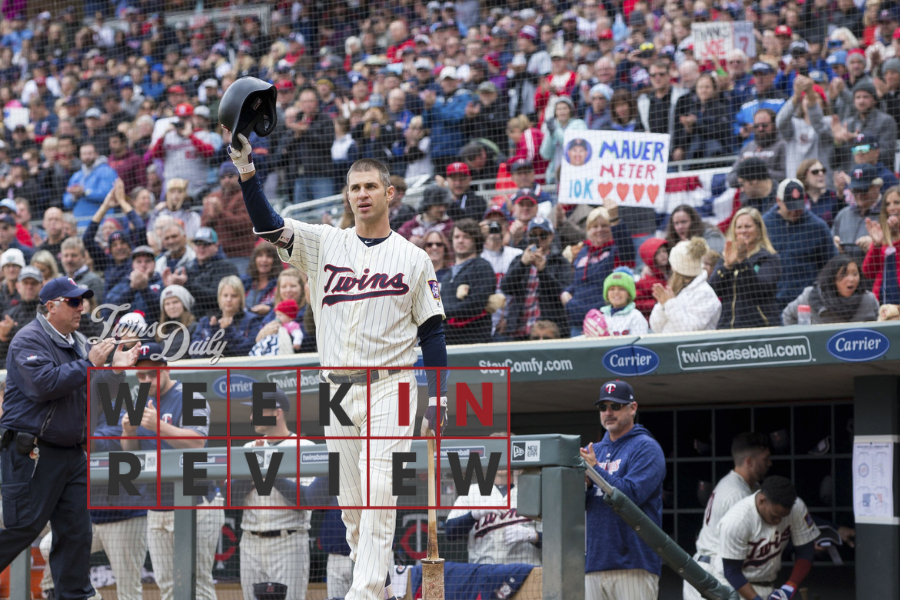 Weekly Snapshot: Mon, 9/24 through Sun, 9/30 *** Record Last Week: 5-1 (Overall: 78-84) Run Differential Last Week: +27 (Overall: -37) Standing: 2nd Place in AL Central (13 GB) HIGHLIGHTS We still can't say with certainty, and may not be able to do so for another month or so, but there've been plenty of signals that this is it for Joe Mauer. He started every game last week, including – conspicuously – both ends of a Friday doubleheader. He basked in standing ovations and tipped his cap to the crowd numerous times. His teammates waxed nostalgic about him in interviews. He took the field for the ninth on Sunday at catcher. Oh, and Mauer also played really, really well. It was a vintage week for the veteran, who collected hits at a feverish pace en route to an 11-for-29 (.379) finish. Yes, the hits were almost all singles. Yeah, he grounded into a couple of double plays. It was signature Mauer through-and-through. But as with his career as a whole, the good healthily outweighed the bad as the first baseman put together exemplary ABs and came through in big spots, pushing his batting average with runners in scoring position to a ridiculous .413. In MLB history, Mauer's .334 average with RISP ranks fourth among players with 1,000 PA, trailing only Tony Gwynn, Rod Carew and Joey Votto (h/t Aaron Gleeman). What a ride it has been. While most of our eyes were on Mauer all week, plenty of other Twins were doing special things. Most heartening, to me, was Mitch Garver's explosive return to the starting lineup on Friday. As we all know, Mauer's career was thrown off its Hall of Fame course by an incident scarily similar to the one that sidelined Garver for much of September. So as Joe likely opts to retire, partially due to lingering after-effects from that concussion that continue to afflict him, it was all the more relieving to see Garver play nine innings in the double-header nightcap. Not only that, but he delivered his best offensive game of the year, driving in six runs on a 4-for-5 effort. The 27-year-old started again on Sunday, at DH, and singled in four at-bats. Jake Cave started his year as the No. 3 hitter for the Rochester Red Wings, freshly acquired in a spring trade with the Yankees. He ended it Sunday as the No. 3 hitter for the Minnesota Twins, capping off a remarkable 2018 ascendance. Cave fit the bill in his final week, collecting hits in all six of his starts on the way to an 8-for-22 finish, including his 13th home run on Sunday. More encouraging than the hits were the walks – four of them, which doubled his total from the previous 25 games. In batting .269 with a .481 slugging percentage as a rookie, Cave has convincingly displayed his hitting ability. Improved control of the strike zone may be essential to sustained success going forward, because it's really tough to hold up with a 30%+ K rate and sub-5% BB rate. But all in all, an excellent rookie year for Cave. Same goes for Willians Astudillo, even though he didn't get nearly the same amount of tread as Cave. La Tortuga made the most out of his time after joining the team for good in late August, producing at the dish with stunning consistency. After a 9-for-23 final week, he wraps up September with a .388 average, 17 RBIs and only one strikeout in 70 plate appearances. I'm not sure Astudillo will find a way onto the Opening Day roster next year, but he's absolutely hanging onto his 40-man roster spot. Incredible showing. Plenty of pitchers also punctuated their seasons in prime fashion. The team's top two starters both turned in gems, with Jose Berrios firing seven innings of one-run ball with nine strikeouts on Friday and Kyle Gibson following with six innings of one-run ball on Saturday. By surpassing the 200-K mark in his last start, Berrios became the first Twins pitcher to do so since Francisco Liriano in 2010. With his 9.45 K/9 rate, Berrios edges that 2010 Liriano campaign (9.44) as the ninth-best in franchise history. Four of the top eight belong to Johan Santana. Kohl Stewart also put a bow on his sterling month of September with his best outing as a pro, logging six shutout frames against Detroit on Tuesday. He allowed two singles and no walks in a near-spotless performance. The night prior to his excellent last start, I'd written about my intrigue with Stewart, whose astounding ability to limit hard contact and home runs has shone through at the big-league level, restoring intrigue that diminished during a non-dominant rise through the minors. In 36 2/3 innings during his MLB debut, Stewart held opponents to a .246 average and .326 slugging percentage while surrendering just one homer. His control wasn't nearly good enough and the volume of contact was troubling, but there's definitely something to work with here. Finally, we'll close out with a couple of big bright spots in the bullpen. Taylor Rogers continued his immaculate late-season run with two more scoreless outings, extending his run to 27 straight. Despite clearly emerging as the team's best reliever, Rogers hasn't gotten a shot at closer duties, and that's just fine, as he's thriving as is. It is Trevor May who has stepped into that ninth-inning role here in the home stretch, with gusto. The right-hander recorded three more clean appearances last week, converting his second and third saves in as many tries. On Sunday he entered and pitched around a leadoff double to protect a one-run lead, notching a pair of impressive strikeouts. May been nothing short of phenomenal since rejoining the fold at the end of July. In 25 1/3 innings, he put up a 3.20 ERA and 1.03 WHIP to go along with a dazzling 36-to-5 K/BB ratio. If you take out his disastrous early-September appearance as "opener," in which he was tagged for four runs on five hits in one inning, May completes his comeback season with a 1.77 ERA and 0.90 WHIP. He's locked in as a pivotal bullpen asset for 2019 and offers Ryan Pressly-type upside. LOWLIGHTS Of course, May only got his shot in the ninth because of Trevor Hildenberger's failure to establish himself in an extended look following the Fernando Rodney trade. His latest meltdown came against Detroit on Tuesday, when Hildy entered in the eighth and turned a 2-0 lead into a 4-2 loss. It was the fifth straight appearance in which the righty allowed at least one run to cross the plate. He added a sixth on Sunday when he issued two hits and a walk while failing to record an out. He hasn't quite been right all year and Hildenberger's late slump has epitomized his struggles – lagging command, frequent meatballs, inability to put hitters away. His ground ball rate dropped from 58.8% in 2017 to 46.3% in 2018, and the latter is probably not a workable number for him. While Rogers and May have both solidified their standing, Hildenberger heads into the offseason as a question mark, and will likely have nothing promised next spring. It was mostly a positive week for the rotation, but Stephen Gonsalves' erratic final turn was representative of his first foray into the majors at large. Despite being awarded a win, the left-hander wasn't especially impressive, issuing four walks over 3 1/3 innings while throwing only 43 of 76 pitches for strikes. The progress Gonsalves displayed with control in his previous start evaporated; he finishes with 22 walks allowed in 24 2/3 innings and a ghastly 2.03 WHIP. Like Stewart, Gonsalves is tough to square up. He showed this throughout the minors and he's carried it up to the majors, where he has allowed only two home runs and six total extra-base hits. In September opponents batted .173 and slugged .192 against him. But at this time, the lack of control is a crippling weakness. Gonsalves allowed a .418 on-base percentage with the Twins. He'll undoubtedly be billed for Rochester to open next year, and will know exactly what he needs to work on. Though much more established as a big-leaguer, Max Kepler will also head into this offseason recognizing a clear need for improvement. The outfielder did finish strong on Sunday with a double and his 20th home run, but it was his first multi-hit game in nearly three weeks. He closes out a disappointing third season with a .727 OPS, which is nearly identical to his marks in both 2017 (.737) and 2016 (.734). Kepler put up his best walk and strikeout rates this year, improving each significantly. Yet he posted a career-worst .224 average. He improved against lefties but regressed against righties, equating to the same middling production overall. The 25-year-old seemingly has the talent and aptitude to be a real impact player, but it hasn't come together yet. And if he keeps stagnating at the plate, the Twins are going to have to take a hard look at his fit as a core piece. Having said all that, Kepler was not a hindrance this year by any means and showed significant improvement on the defensive side. He'll be back. Will Logan Forsythe? A hot start after joining the Twins vaulted the impending free agent into consideration as a short-term plug for the team's vacancy at second, but he slumped down the stretch, managing only three singles in 24 at-bats last week to finish September with a .205 average and just two extra-base hits in 100 plate appearances. Even as a one-year stopgap, I think the Twins are gonna need to aim higher at second base this winter. Ehire Adrianza, who might have merited consideration with a strong second half, also failed to help his case with a 1-for-11 week. He finishes with a .680 OPS that's 27 points short of last year's semi-encouraging mark. TRENDING STORYLINE The central storyline for Twins Territory during the final week was Mauer's future, and it'll continue to hold that distinction until he makes an official decision. Watching the game play out on Sunday, his intention to retire felt like the world's worst-kept secret, but for now his status remains uncertain, and Minnesota's outlook at first base is a total mystery. That'll be one of many intriguing storylines to follow in the coming months as the Twins seek to retool and right the ship. We'll be covering them from every angle in the Twins Daily 2019 Offseason Handbook, coming soon. Keep your eyes peeled for preorder details this week. This is gonna be a fun one. I've really enjoyed bringing you these weekly recaps all season, and hope you feel the same way. Bring on the offseason. Catch Up On Twins Daily Game Recaps Game 156 | DET 4, MIN 2: Mauer Reaches Milestone, Hildenberger Flops Game 157 | MIN 11, DET 4: Bats Bust Out, Bullpen Shuts Out Detroit Game 158 | MIN 9, DET 3: Vive La Tortuga Game 159 | MIN 2, CHW 1: Berrios Reaches 200 Ks Game 160 | MIN 12, CHW 4: Garver Drives In 6, Mauer Showered With Applause Game 161 | MIN 8, CHW 3: Twins Continue Trend of Finishing Strong Game 162 | MIN 5, CHW 4: You Are Appreciated, Joe Mauer
 -
Article: First-Round Flops or Unfinished Projects?
Nick Nelson replied to Nick Nelson's topic in Twins Daily Front Page News
Great post. You're right, Stewart and Jay are only microcosms of a roundly unfruitful draft/development strategy over a 5-6 year span, at a time where the organization could ill afford it. -
As a rebuilding team in desperate need of pitching, you can't really afford to miss on arms with two top-10 picks in the draft in three years. Alas, Minnesota's selections of Kohl Stewart in 2013 (fourth overall) and Tyler Jay in 2015 (sixth overall) have been heavily scrutinized. Neither has developed as one would hope. This offseason, the front office will need to take hard looks at both, and assess fits within the future vision.When prospects reach a certain threshold of service in the minors, they become eligible for the Rule 5 draft if not added to the 40-man roster. Stewart was at that point last offseason, and the Twins elected not to add him. He went unclaimed in the Rule 5. That's pretty telling in terms of his perceived value, just four-and-a-half years removed from being the top prep pitcher drafted. Stewart's minor-league career has been interesting, in that he has consistently been fairly successful, but has never shown characteristics of a dominant pitcher. To reach Triple-A by age 22, and the majors by 23, is impressive. Stewart posted a sterling 3.36 ERA while allowing only 24 homers in 570 minor-league innings. Great numbers. And now he's holding his own as an MLB rookie with a 4.40 ERA through seven outings. Recent history with more highly acclaimed prospects like Jose Berrios and Stephen Gonsalves shows how difficult it can be to achieve even so-so results out of the gates. But beneath the veil of Stewart's results are major shortcomings. At no point has the right-hander excelled at throwing strikes. He averaged 3.5 BB/9 in the minors and has had a tougher time since graduating to the majors, issuing 18 walks in 30 frames. He's thrown only 56% strikes, a staggeringly poor rate. And he's done so while allowing a ridiculous amount of contact; among 458 pitchers to throw 30+ innings innings this year, his 6.3% swinging strike rate ranks 451st. That formula sounds disastrous. Yet, in the month of September, Stewart has made it work. In three appearances this month, he's posted a 1.88 ERA while holding opponents to a .174 average and .196 slugging percentage over 14 1/3 innings. That includes zero home runs allowed over a span of 56 batters – truly an impressive feat for a 23-year-old whose matchups have included the Astros and Yankees. His success owes to an elite-level ground ball rate (55.1%), which was his calling card throughout the minors. Despite yielding all that contact, Stewart has allowed just one home run and a .368 slugging percentage overall with the Twins, while inducing six ground-ball double plays. In the minors he averaged 0.4 HR/9, a lower rate than Berrios or Kyle Gibson. Consistently preventing opponents from being able to lift the ball is a real skill, and it's very encouraging Stewart has carried it up to the majors. I still don't think it's enough to make him a quality starting option unless the control and/or whiffs improve considerably, but of course, he's only 23. Hardly an outlandish hope. Somewhat of an afterthought as recently as this spring, Stewart has put himself squarely back into the mix of rotation depth, and locked down a 40-man spot heading into an offseason that figures to feature plenty of turnover. The outlook is murkier for fellow first-rounder Jay. In the 2012 draft, Minnesota deployed a strategy of taking college relievers with high picks, and attempting to convert them to starters. Even though the method hadn't borne much fruit three years later, the Twins tried it again in 2015, with much higher stakes. They took the Illini closer sixth overall, letting Andrew Benintendi slide to the Red Sox at seven. Again, they expressed hopes for a successful transition to a starter's workload. Three years later, the pick is shaping up as a major bust, worsened by the questionable underlying thought process. Jay's shoulder evidently wasn't up to the task. He started 13 games at Fort Myers in 2016, and pitched fairly well, but was shut down with shoulder fatigue after a midseason promotion to Double-A. Last summer, the arm issue had become so severe that the team weighed thoracic outlet syndrome surgery – a dire step for a 23-year-old – though it didn't end up happening. He threw 11 2/3 innings total. Here in 2018, the lefty was healthy enough to make 38 appearances at Chattanooga, but he wasn't good, posting a 4.22 ERA and 1.58 WHIP over 60 innings. Double-A batters hit .310 against him. If the Twins don't add Jay to the 40-man this offseason, they'll risk letting another team snag him away. The only thing that would compel Minnesota to roster him over any number of more deserving candidates on merit is where he was drafted. That's also the only thing that would compel another team to draft him. Take a flyer on a 24-year-old former top college player with plenty of Double-A experience? I could see someone doing it. And I'm not sure the Twins would kick themselves much if it happened. Unless they've seen glimmers of something hidden deep within, Jay looks fairly expendable at this point, which is a real shame. As a rebuilding team in desperate need of pitching, you can't really afford to miss on arms with two top-10 picks in the draft in three years. The Twins are dangerously close to writing off one, so they really need Stewart to pan. Luckily, he's showing some real signs of promise. Not a moment too soon. Click here to view the article
-
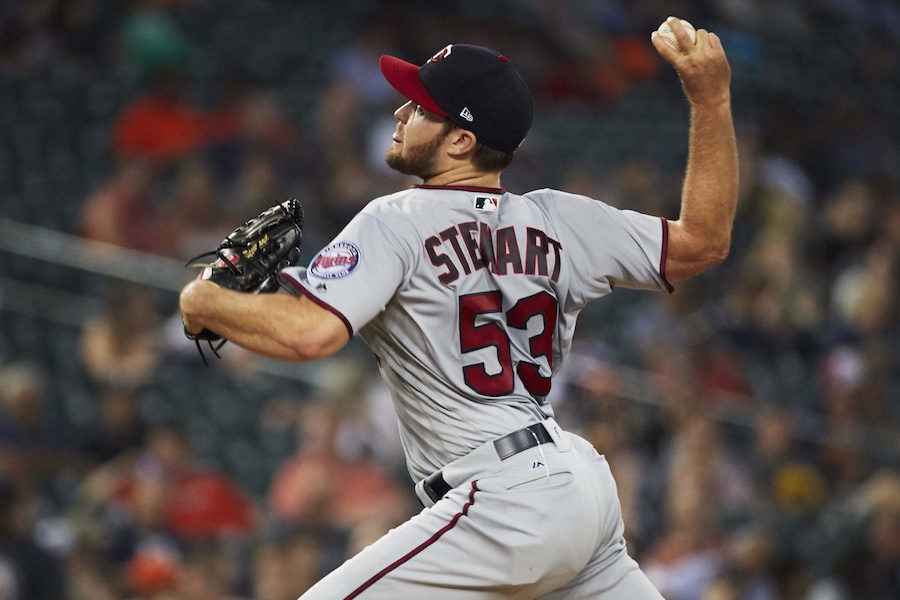 When prospects reach a certain threshold of service in the minors, they become eligible for the Rule 5 draft if not added to the 40-man roster. Stewart was at that point last offseason, and the Twins elected not to add him. He went unclaimed in the Rule 5. That's pretty telling in terms of his perceived value, just four-and-a-half years removed from being the top prep pitcher drafted. Stewart's minor-league career has been interesting, in that he has consistently been fairly successful, but has never shown characteristics of a dominant pitcher. To reach Triple-A by age 22, and the majors by 23, is impressive. Stewart posted a sterling 3.36 ERA while allowing only 24 homers in 570 minor-league innings. Great numbers. And now he's holding his own as an MLB rookie with a 4.40 ERA through seven outings. Recent history with more highly acclaimed prospects like Jose Berrios and Stephen Gonsalves shows how difficult it can be to achieve even so-so results out of the gates. But beneath the veil of Stewart's results are major shortcomings. At no point has the right-hander excelled at throwing strikes. He averaged 3.5 BB/9 in the minors and has had a tougher time since graduating to the majors, issuing 18 walks in 30 frames. He's thrown only 56% strikes, a staggeringly poor rate. And he's done so while allowing a ridiculous amount of contact; among 458 pitchers to throw 30+ innings innings this year, his 6.3% swinging strike rate ranks 451st. That formula sounds disastrous. Yet, in the month of September, Stewart has made it work. In three appearances this month, he's posted a 1.88 ERA while holding opponents to a .174 average and .196 slugging percentage over 14 1/3 innings. That includes zero home runs allowed over a span of 56 batters – truly an impressive feat for a 23-year-old whose matchups have included the Astros and Yankees. His success owes to an elite-level ground ball rate (55.1%), which was his calling card throughout the minors. Despite yielding all that contact, Stewart has allowed just one home run and a .368 slugging percentage overall with the Twins, while inducing six ground-ball double plays. In the minors he averaged 0.4 HR/9, a lower rate than Berrios or Kyle Gibson. Consistently preventing opponents from being able to lift the ball is a real skill, and it's very encouraging Stewart has carried it up to the majors. I still don't think it's enough to make him a quality starting option unless the control and/or whiffs improve considerably, but of course, he's only 23. Hardly an outlandish hope. Somewhat of an afterthought as recently as this spring, Stewart has put himself squarely back into the mix of rotation depth, and locked down a 40-man spot heading into an offseason that figures to feature plenty of turnover. The outlook is murkier for fellow first-rounder Jay. In the 2012 draft, Minnesota deployed a strategy of taking college relievers with high picks, and attempting to convert them to starters. Even though the method hadn't borne much fruit three years later, the Twins tried it again in 2015, with much higher stakes. They took the Illini closer sixth overall, letting Andrew Benintendi slide to the Red Sox at seven. Again, they expressed hopes for a successful transition to a starter's workload. Three years later, the pick is shaping up as a major bust, worsened by the questionable underlying thought process. Jay's shoulder evidently wasn't up to the task. He started 13 games at Fort Myers in 2016, and pitched fairly well, but was shut down with shoulder fatigue after a midseason promotion to Double-A. Last summer, the arm issue had become so severe that the team weighed thoracic outlet syndrome surgery – a dire step for a 23-year-old – though it didn't end up happening. He threw 11 2/3 innings total. Here in 2018, the lefty was healthy enough to make 38 appearances at Chattanooga, but he wasn't good, posting a 4.22 ERA and 1.58 WHIP over 60 innings. Double-A batters hit .310 against him. If the Twins don't add Jay to the 40-man this offseason, they'll risk letting another team snag him away. The only thing that would compel Minnesota to roster him over any number of more deserving candidates on merit is where he was drafted. That's also the only thing that would compel another team to draft him. Take a flyer on a 24-year-old former top college player with plenty of Double-A experience? I could see someone doing it. And I'm not sure the Twins would kick themselves much if it happened. Unless they've seen glimmers of something hidden deep within, Jay looks fairly expendable at this point, which is a real shame. As a rebuilding team in desperate need of pitching, you can't really afford to miss on arms with two top-10 picks in the draft in three years. The Twins are dangerously close to writing off one, so they really need Stewart to pan. Luckily, he's showing some real signs of promise. Not a moment too soon.
 -
Article: Week in Review: Limping Home
Nick Nelson replied to Nick Nelson's topic in Twins Daily Front Page News
Well, he is mad, whether or not you believe it justified. I can assure you of that. So it's a worthy talking point for "media types" and anyone with a vested long-term interest in this team. -
The Minnesota Twins wrapped up their final road trip of 2018 in fitting fashion, with a pair of walk-off losses over the weekend. Meanwhile, injuries continue to pile up, casting an ominous pall over the home stretch in a season defined by setbacks. Weekly Snapshot: Mon, 9/17 through Sun, 9/23 *** Record Last Week: 4-2 (Overall: 72-83) Run Differential Last Week: +15 (Overall: -63) Standing: 2nd Place in AL Central (14.5 GB) HIGHLIGHTS Many players are simply running out the string at this point, but for a few, these late-season opportunities matter quite a bit. That group includes Kohl Stewart and Stephen Gonsalves, who both brought it last week. The Twins have turned to using both rookies as "primary pitchers," inserting them after a reliever tosses the first inning or two, and each has responded well. Gonsalves fired six innings of shutout ball in Detroit on Wednesday, picking up his first major-league win. He has turned things around in a big way: after yielding 16 earned runs on 24 hits over 12 1/3 innings in his first four Twins appearances, Gonsalves has allowed no runs on one hit over nine innings in his last two. He fired 69% strikes in Wednesday's impressive showing. One night earlier, Stewart had notched his second MLB victory with six innings of three-hit ball in relief of opener Gabriel Moya. He allowed one unearned run and struck out five with three walks. After some rough going in his first few outings with the Twins, the 23-year-old is putting together a stellar September, with a 1.88 ERA and .517 opponents' OPS. His process hasn't exactly been convincing – Stewart has issued nine walks and thrown 56% strikes in 14 1/3 innings this month, with only eight strikeouts – but he's getting it done, which basically reflects his minor-league body of work. (In Minnesota's system, Stewart posted a 6.4 K/9 and 3.5 BB/9 but managed a 3.36 ERA.) It's all about the heavy sinking stuff, yielding a 55.1% grounder rate that'd rank among the top MLB starters. This makes him intriguing. But Stewart's 6.3% swinging strike rate, which would rank dead last, greatly limits his ceiling. That's just too much contact for sustainable success. In any case, I think he's clearly shown enough to merit keeping around. Robbie Grossman is another one of those players whose personal stakes are heightened here in September. Eligible for his second turn at arbitration this offseason, he's making his case not only for a bigger salary, but to stick around with the Twins at all. His profile as a defensively limited corner outfielder with minimal power works against him, but Grossman is reminding the Twins of what else he can bring at the plate, with a .425 OBP this month and nearly twice as many walks (14) as strikeouts (8). While questions swirl around so many of Minnesota's core players, Jorge Polanco is at least solidifying his place. He hasn't been spectacular, and the power that surfaced late last year isn't re-emerging, but Polanco continues to put in productive week after productive week. That included this one, in which he chipped in a homer, two doubles, and four RBIs. He drew four walks against four strikeouts. There's no question Polanco will be in the lineup next year, it's just a matter of where. Given the defensive shortcomings that keep showing through, it'd make plenty of sense to slide him over to second base and seek an upgrade at shortstop over the offseason. But since returning from suspension, all 69 of Polanco's starts for the Twins have come at short. LOWLIGHTS As the end of the season mercifully approaches, the Twins are besieged with injuries, and it's hard not to feel like at least some of their misfortunate on this front is self-inflicted. The Twins more or less acknowledged on Monday, before sending Eddie Rosario out to left field for the first time in 10 days, that his ailing quad was not 100%. He ended up re-aggravating the injury (for a second time), and sustaining what the team's calling a "mild to moderate strain." Seemed awfully unnecessary. The next night, Paul Molitor wrote Miguel Sano's name into the lineup, two weeks after the third baseman was carted off the field with a knee injury. Sano went 0-for-4 with four strikeouts, and didn't play again thereafter. On Friday, news surfaced that he was heading back to the Twin Cities to have his knee examined, as it apparently flared up in his return to action. This wasn't exactly hard to see coming. Time and time again this year, the Twins have been bitten by running out players before they are fully healthy. And now, ONE DAY after watching it backfire terribly with Rosario, they repeat it with Sano and immediately worsen his situation. All for the sake of getting these guys on the field for utterly meaningless ballgames. If I'm Byron Buxton, I'm fuming even more right now, because the idea that his snub was motivated by proactive health considerations now carries no weight. These Twins have shown little reluctance to put core players in harm's way, in spite of red flags that are clear as day to even a novice like me. It's some of most dumbfounding decision-making I've seen since the new leadership stepped in. Truly disappointing. Sano and Rosario join Buxton as well as Mitch Garver, Ervin Santana, Jason Castro, Logan Morrison and Adalberto Mejia as Twins players who will end the season shut down by injury. That's an unbelievable infirmary list, and the linger potential for some of these issues makes them all the more disconcerting. Bad luck is primarily responsible, to be sure, but in light of recent events I can't help but question this team's aptitude when it comes to injury management – as much as they present themselves as a sophisticated outfit. TRENDING STORYLINE There will be plenty of compelling storylines this week as the Twins wrap up their schedule at Target Field. First and foremost, these may very well be the final games of Joe Mauer's career. Will it be acknowledged as such, by him or others? Fittingly, he'll first be going against Ron Gardenhire's Tigers. Gardy of course ushered Mauer into the league as Twins manager and watched him blossom into an MVP. Meanwhile, Mauer has played more games against Detroit (213) than any other team, with a signature .305/.385/.432 lifetime slash line. Equally fitting is that Mauer will all but certainly surpass Harmon Killebrew's franchise record for times-on-base in this final homestand. He moved into a tie with Killer for the top spot at 3,072 with his second single on Sunday. Oh, and as another touch of nostalgia, Francisco Liriano will be starting a game for the Tigers! Stewart, slated as the primary pitcher for Monday and Sunday's finale, gets two more chances to leave a good impression. Gonsalves, lined up against Liriano on Thursday, will have one more. DOWN ON THE FARM All minor-league seasons are done, so nothing left to cover here. We did name our 2018 Minor League Hitter of the Year last week and I don't think anyone will be surprised by the winner. LOOKING AHEAD Seven more games at Target Field. Double-header on Friday. Head on down for your last chance to see the Twins play ball in 2018. And make sure to grab your tickets to Saturday's Twins Daily Touch 'Em All Pub Crawl so you can gather and commiserate with fellow fans as we send off a forgettable season. TUESDAY, 9/25: TIGERS @ TWINS – RHP Spencer Turnbull v. RHP Kohl Stewart WEDNESDAY, 9/26: TIGERS @ TWINS – LHP Matthew Boyd v. RHP Jake Odorizzi THURSDAY, 9/27: TIGERS @ TWINS – LHP Francisco Liriano v. LHP Stephen Gonsalves FRIDAY, 9/28 (1): WHITE SOX @ TWINS – RHP Lucas Giolito v. RHP Jose Berrios FRIDAY, 9/28 (2): WHITE SOX @ TWINS – LHP Carlos Rodon v. RHP Chase De Jong SATURDAY, 9/29: WHITE SOX @ TWINS – RHP Dylan Covey v. RHP Kyle Gibson SUNDAY, 9/30: WHITE SOX @ TWINS – RHP James Shields v. RHP Kohl Stewart Catch Up On Twins Daily Game Recaps Game 150 | MIN 6, DET 1: Stewart Impresses, Rosario Exits Due to InjuryGame 151 | MIN 5, DET 3: Odorizzi Turns In Another Quality StartGame 152 | MIN 8, DET 2: Gonsalves Stymies TigersGame 153 | OAK 7, MIN 6: Khrush Davis Walks Off TwinsGame 154 | OAK 3, MIN 2: Willians Astudillo Collects Three More HitsGame 155 | MIN 5, OAK 1: Gibby’s Arm, Cave’s Bat and Adrianza’s Glove Lift Twins to Victory Click here to view the article
- 17 replies
-
- 1
-
-
- kohl stewart
- stephen gonsalves
- (and 2 more)
-
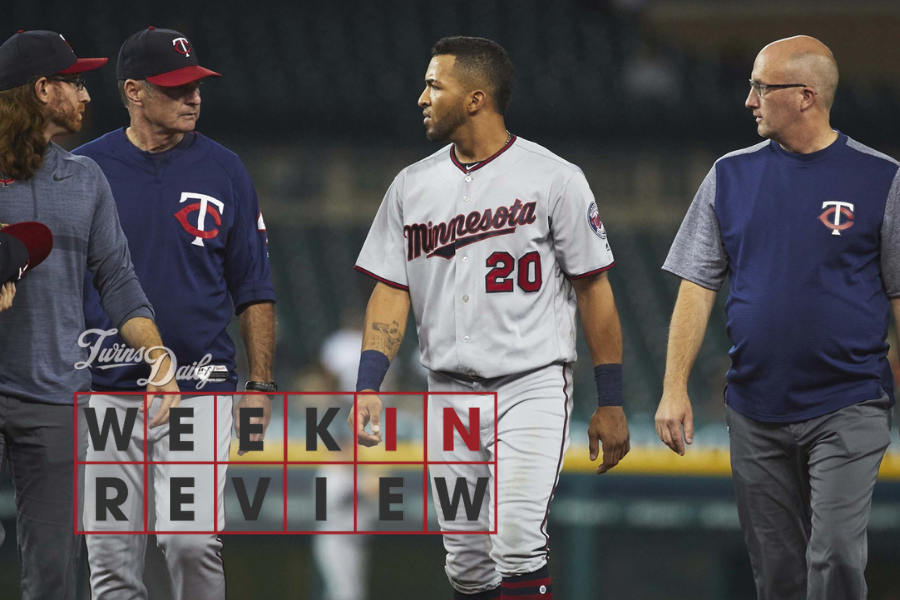 Weekly Snapshot: Mon, 9/17 through Sun, 9/23 *** Record Last Week: 4-2 (Overall: 72-83) Run Differential Last Week: +15 (Overall: -63) Standing: 2nd Place in AL Central (14.5 GB) HIGHLIGHTS Many players are simply running out the string at this point, but for a few, these late-season opportunities matter quite a bit. That group includes Kohl Stewart and Stephen Gonsalves, who both brought it last week. The Twins have turned to using both rookies as "primary pitchers," inserting them after a reliever tosses the first inning or two, and each has responded well. Gonsalves fired six innings of shutout ball in Detroit on Wednesday, picking up his first major-league win. He has turned things around in a big way: after yielding 16 earned runs on 24 hits over 12 1/3 innings in his first four Twins appearances, Gonsalves has allowed no runs on one hit over nine innings in his last two. He fired 69% strikes in Wednesday's impressive showing. One night earlier, Stewart had notched his second MLB victory with six innings of three-hit ball in relief of opener Gabriel Moya. He allowed one unearned run and struck out five with three walks. After some rough going in his first few outings with the Twins, the 23-year-old is putting together a stellar September, with a 1.88 ERA and .517 opponents' OPS. His process hasn't exactly been convincing – Stewart has issued nine walks and thrown 56% strikes in 14 1/3 innings this month, with only eight strikeouts – but he's getting it done, which basically reflects his minor-league body of work. (In Minnesota's system, Stewart posted a 6.4 K/9 and 3.5 BB/9 but managed a 3.36 ERA.) It's all about the heavy sinking stuff, yielding a 55.1% grounder rate that'd rank among the top MLB starters. This makes him intriguing. But Stewart's 6.3% swinging strike rate, which would rank dead last, greatly limits his ceiling. That's just too much contact for sustainable success. In any case, I think he's clearly shown enough to merit keeping around. Robbie Grossman is another one of those players whose personal stakes are heightened here in September. Eligible for his second turn at arbitration this offseason, he's making his case not only for a bigger salary, but to stick around with the Twins at all. His profile as a defensively limited corner outfielder with minimal power works against him, but Grossman is reminding the Twins of what else he can bring at the plate, with a .425 OBP this month and nearly twice as many walks (14) as strikeouts (8). While questions swirl around so many of Minnesota's core players, Jorge Polanco is at least solidifying his place. He hasn't been spectacular, and the power that surfaced late last year isn't re-emerging, but Polanco continues to put in productive week after productive week. That included this one, in which he chipped in a homer, two doubles, and four RBIs. He drew four walks against four strikeouts. There's no question Polanco will be in the lineup next year, it's just a matter of where. Given the defensive shortcomings that keep showing through, it'd make plenty of sense to slide him over to second base and seek an upgrade at shortstop over the offseason. But since returning from suspension, all 69 of Polanco's starts for the Twins have come at short. LOWLIGHTS As the end of the season mercifully approaches, the Twins are besieged with injuries, and it's hard not to feel like at least some of their misfortunate on this front is self-inflicted. The Twins more or less acknowledged on Monday, before sending Eddie Rosario out to left field for the first time in 10 days, that his ailing quad was not 100%. He ended up re-aggravating the injury (for a second time), and sustaining what the team's calling a "mild to moderate strain." Seemed awfully unnecessary. The next night, Paul Molitor wrote Miguel Sano's name into the lineup, two weeks after the third baseman was carted off the field with a knee injury. Sano went 0-for-4 with four strikeouts, and didn't play again thereafter. On Friday, news surfaced that he was heading back to the Twin Cities to have his knee examined, as it apparently flared up in his return to action. This wasn't exactly hard to see coming. Time and time again this year, the Twins have been bitten by running out players before they are fully healthy. And now, ONE DAY after watching it backfire terribly with Rosario, they repeat it with Sano and immediately worsen his situation. All for the sake of getting these guys on the field for utterly meaningless ballgames. If I'm Byron Buxton, I'm fuming even more right now, because the idea that his snub was motivated by proactive health considerations now carries no weight. These Twins have shown little reluctance to put core players in harm's way, in spite of red flags that are clear as day to even a novice like me. It's some of most dumbfounding decision-making I've seen since the new leadership stepped in. Truly disappointing. Sano and Rosario join Buxton as well as Mitch Garver, Ervin Santana, Jason Castro, Logan Morrison and Adalberto Mejia as Twins players who will end the season shut down by injury. That's an unbelievable infirmary list, and the linger potential for some of these issues makes them all the more disconcerting. Bad luck is primarily responsible, to be sure, but in light of recent events I can't help but question this team's aptitude when it comes to injury management – as much as they present themselves as a sophisticated outfit. TRENDING STORYLINE There will be plenty of compelling storylines this week as the Twins wrap up their schedule at Target Field. First and foremost, these may very well be the final games of Joe Mauer's career. Will it be acknowledged as such, by him or others? Fittingly, he'll first be going against Ron Gardenhire's Tigers. Gardy of course ushered Mauer into the league as Twins manager and watched him blossom into an MVP. Meanwhile, Mauer has played more games against Detroit (213) than any other team, with a signature .305/.385/.432 lifetime slash line. Equally fitting is that Mauer will all but certainly surpass Harmon Killebrew's franchise record for times-on-base in this final homestand. He moved into a tie with Killer for the top spot at 3,072 with his second single on Sunday. Oh, and as another touch of nostalgia, Francisco Liriano will be starting a game for the Tigers! Stewart, slated as the primary pitcher for Monday and Sunday's finale, gets two more chances to leave a good impression. Gonsalves, lined up against Liriano on Thursday, will have one more. DOWN ON THE FARM All minor-league seasons are done, so nothing left to cover here. We did name our 2018 Minor League Hitter of the Year last week and I don't think anyone will be surprised by the winner. LOOKING AHEAD Seven more games at Target Field. Double-header on Friday. Head on down for your last chance to see the Twins play ball in 2018. And make sure to grab your tickets to Saturday's Twins Daily Touch 'Em All Pub Crawl so you can gather and commiserate with fellow fans as we send off a forgettable season. TUESDAY, 9/25: TIGERS @ TWINS – RHP Spencer Turnbull v. RHP Kohl Stewart WEDNESDAY, 9/26: TIGERS @ TWINS – LHP Matthew Boyd v. RHP Jake Odorizzi THURSDAY, 9/27: TIGERS @ TWINS – LHP Francisco Liriano v. LHP Stephen Gonsalves FRIDAY, 9/28 (1): WHITE SOX @ TWINS – RHP Lucas Giolito v. RHP Jose Berrios FRIDAY, 9/28 (2): WHITE SOX @ TWINS – LHP Carlos Rodon v. RHP Chase De Jong SATURDAY, 9/29: WHITE SOX @ TWINS – RHP Dylan Covey v. RHP Kyle Gibson SUNDAY, 9/30: WHITE SOX @ TWINS – RHP James Shields v. RHP Kohl Stewart Catch Up On Twins Daily Game Recaps Game 150 | MIN 6, DET 1: Stewart Impresses, Rosario Exits Due to Injury Game 151 | MIN 5, DET 3: Odorizzi Turns In Another Quality Start Game 152 | MIN 8, DET 2: Gonsalves Stymies Tigers Game 153 | OAK 7, MIN 6: Khrush Davis Walks Off Twins Game 154 | OAK 3, MIN 2: Willians Astudillo Collects Three More Hits Game 155 | MIN 5, OAK 1: Gibby’s Arm, Cave’s Bat and Adrianza’s Glove Lift Twins to Victory
 -
Wow. "Miguel Sano is back in the Twin Cities to get his left knee re-evaluated, Molitor said. Still feels discomfort behind the knee. Could be nerve related."
-
Rosario actually had his best season defensively by most accounts. UZR liked his range and I believe he's among the MLB leaders in OF assists. This matches the eye test for me — I think he's mostly been terrific out there. Kepler's solid but not as much of a difference-maker from my view.
-
A little over one week remains in the 2018 campaign. I think we're all about ready to move on and forget about this one. So let's look ahead to the coming pivotal offseason, with a breakdown of five imperatives lying before the front office.In a little over a month, Twins Daily will be putting out its annual Offseason Handbook. I'm really excited about this edition because the coming winter is as ripe for discussion and dissection as any in memory. We'll be featuring plenty of stories here as we build up to the Handbook's release, but today I thought we'd kick things off with a high-level look at some critical priorities. If the Twins don't check all five of these boxes before spring training 2019 gets underway, it's gonna be hard to view their offseason as a real success. 1. Overpay Byron Buxton in arbitration Regardless of your feelings on the matter, there's no doubt about this: The Twins damaged their relationship with Buxton by sending him home after the minor-league season ended. His year was clearly a disaster but Buxton remains a centerpiece of the franchise's vision going forward. Creating ill will with such a player is suboptimal, to say the least. General manager Thad Levine acknowledged as much at the time. "From this day forward," he said, "I think we recognize a responsibility to make amends and that we’re going to need to invest in the relationship with Byron Buxton." Well, they'll get their chance to start on that almost immediately. Although the decision not to recall Buxton pushed his free agency back to 2022, he's still eligible for arbitration this offseason as a "Super 2." For the first time, he and his agent will be able to negotiate his salary. The Twins would be wise to ease up a bit. Given his complete lack of output this year (.383 OPS in 94 plate appearances), Minnesota is technically justified in giving Buxton a minimal raise from his $580,000 salary. Doing so would be standard operating procedure. But this might be a time to deviate. When the two sides submit numbers, the Twins should make sure theirs is fairly generous, and as long as Buxton's request is within reason, they should quickly accept it. No pushback. He's surely feeling as though they robbed him of millions by delaying his big payday, and while they can't fully make it up to him at this point, they can at least make a showing of good faith. It's a first step toward mending what will hopefully still be a tight long-term relationship. And given the relative dollars involved, it's a no-brainer. 2. Sign or trade for a top three starter in the rotation While some other areas of the roster are riddled with uncertainty, Minnesota's starting rotation is looking pretty solid. Jose Berrios, Kyle Gibson, Jake Odorizzi and Michael Pineda are essentially locked in, leaving one vacancy. The Twins could theoretically fill that spot internally, holding a spring competition between the likes of Fernando Romero, Stephen Gonsalves, Kohl Stewart, Zack Littell and others. But given the uncertainty surrounding Pineda and his perpetual ailments, the club is probably wise to reserve as much minor-league depth as it can. With their considerable stockpile of both available funds and tradable assets, the Twins should be looking to make a bold move on the pitching market. There are some premium names in free agency, as well as some intriguing trade scenarios. You'll find plenty covered in the Handbook. The Twins need to aim high here. It's an opportunity for Levine and Derek Falvey to make a signature splash after smartly bowing out of last year's Darvish Derby. 3. Extend Jose Berrios There is zero reason not to do this. Berrios is the player this organization has long been waiting for: a young, dominant, starter with an amazingly clean bill of health. After thoroughly dominating the minor leagues, he has improved in each of his three turns at the majors, and was named an All-Star at age 24 in July. The right-hander has four years of team control remaining, and will be eligible for arbitration next winter. This is the ideal time to strike an extension, leveraging that team control to score a relative bargain on his first years of free agency, and maybe even a team option or two. It's the blueprint Falvey helped execute in Cleveland multiple times. Given his age and almost spotless track record, Berrios will be able to command a hefty sum. But I can't see any reason why the Twins would be reluctant to do whatever it takes to lock him up through 2024 or beyond. He is the definition of a building block. The longer they wait, the more their leverage dissipates. 4. Build corner infield depth Joe Mauer's contract is up, and he seems likely to retire. Logan Morrison will be a free agent and probably won't return return. Eduardo Escobar was traded in July. Miguel Sano... well, it's gonna be tough to really count on him in any capacity next year. The Twins find themselves shallow at the infield corners. Tyler Austin looks like he'll be a factor but outside of him and Sano there won't be any incumbency at first or third on next year's roster. The closest legitimate impact help is Brent Rooker in Double-A. Acquiring a starting-caliber corner infielder – whether at first, or at third with Sano going to first or DH – should be a given. The team might even want to think about getting creative to increase its flexibility and options. Max Kepler started 38 games at first base in the minors... 5. Clear 40-man flotsam The decisions coming up in late November, as the Winter Meetings and Rule 5 draft approach, are among the toughest of the year for a front office. They'll have to take a hard look at their 40-man roster and decide who's really worth protecting – who they absolutely can't afford to lose. Making room for a new wave of additions, and also hopefully a number of external pickups, will require the Twins to take a hard look at who they need to keep. Some members of the 40-man are already on their way out (Mauer, Chris Gimenez, Logan Forsythe) and others make are fairly obvious cut candidates, but there will be some difficult calls to make. Is there room for Aaron Slegers or Adalberto Mejia anymore? Has Matt Magill shown enough to merit keeping around? What about Oliver Drake? Does it really make sense to keep dedicating spots to John Curtiss or Tyler Duffey or Alan Busenitz? This year's team appears a long way from where it needs to be. A fairly extensive overhaul would be warranted and I suspect we'll see one. Stay tuned for more details on the 2019 Offseason Handbook and, of course, more daily wall-to-wall coverage of your favorite team. Click here to view the article
