Lucas Seehafer PT
-
Posts
525 -
Joined
-
Last visited
-
Days Won
2
Content Type
Profiles
News
Minnesota Twins Videos
2026 Minnesota Twins Top Prospects Ranking
2022 Minnesota Twins Draft Picks
Minnesota Twins Free Agent & Trade Rumors, Notes, & Tidbits
Guides & Resources
2023 Minnesota Twins Draft Picks
The Minnesota Twins Players Project
2024 Minnesota Twins Draft Picks
2025 Minnesota Twins Draft Pick Tracker
2026 Minnesota Twins Draft Tracker: Picks & Bonuses
Forums
Blogs
Events
Store
Downloads
Gallery
Everything posted by Lucas Seehafer PT
-
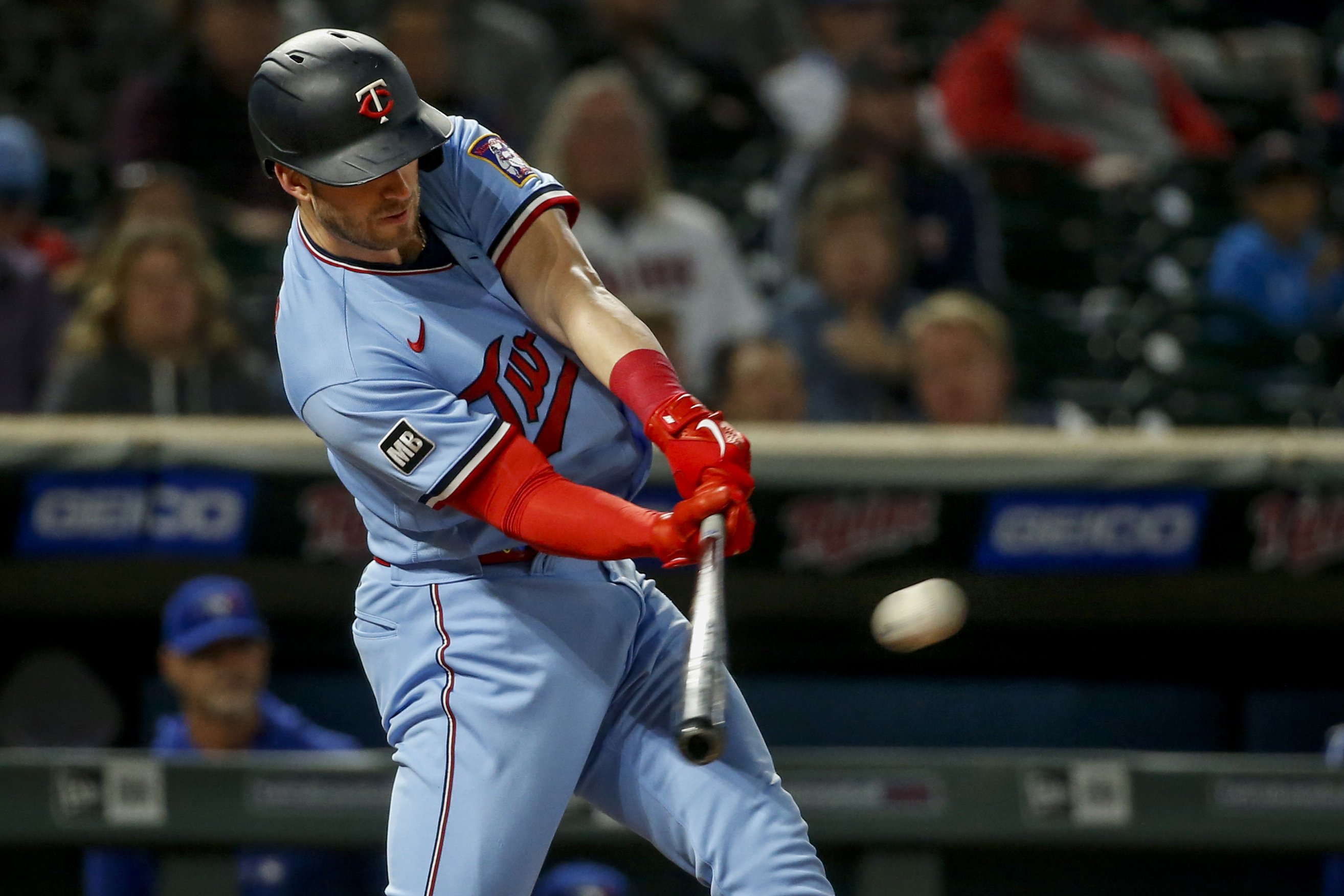 Box Score John Gant: 3 IP, 3 H, 1 R, 1 ER, 2 BB, 1 K Home Runs: None Bottom 3 WPA: Nick Gordon -.175, Kyle Barraclough -.114, Luke Farrell -.079 Win Probability Chart (via FanGraphs) As has been the case more times than not this season, the Twins simply didn’t have the juice Saturday evening. John Gant took to the mound approximately an hour after the game was scheduled to begin — more on that in a second — and relatively breezed through the opening frame. However, the second didn’t go as smoothly. Teoscar Hernandez wedged his 31st home run of the season in the ivy that coats the batter’s eye in centerfield to give the Jays a 1-0 lead. A couple of hits and a bobbled ball in rightfield later, Toronto extended their lead to 2-0, which ultimately proved enough to take down the Twins. Minnesota’s offense was anemic all evening, mustering a meager three hits, only one of which — a Josh Donaldson double — went for extra bases. However, it wasn’t all doom and gloom for the Twins. Jovani Moran produced his best big league outing, throwing 19 pitches — 15 for strikes — and punching out four. Byron Buxton and Jorge Polanco picked up stolen bases, while Mitch Garver just missed launching his 14th home run, settling for a long sacrifice fly instead. That’s about where the positives end, though. Minnesota has seven games remaining on their schedule and they’ll have to win at least four to avoid a 90-loss season. The Twins will conclude their series against the Blue Jays on Sunday as Griffin Jax (3-4, 6.75 ERA) and Alek Manoah (7-2, 3.36 ERA) go head-to-head. First pitch is slated for 1:10 p.m. CT. Morneau Enshrined The reason the game was delayed nearly an hour was because Justin Morneau became the 34th player inducted into the Minnesota Twins Hall of Fame. The four-time All-Star and 2006 American League MVP played his first 11 seasons in a Twins uniform and wracked up 221 home runs with a .278/.347/.485 slash line. He along with his good friend and fellow MVP winner Joe Mauer formed the foundation for some of the most fearsome and fun Twins’ lineups. Morneau’s speech was long but perfectly enmeshed inside jokes with touching commentary and memories. The entire thing can be viewed below. Another thing that I will always remember is the way he was talked about in my hometown. I grew up in a small town in southcentral Minnesota, the same town that Morneau’s wife, Krista, grew up in. It’s one of those farming communities that dot the landscape south and west of the Twin Cities where the only place to eat is a Dairy Queen. Whenever Justin and Krista were in the area, good-natured rumors would spread like wildfire. The neighbor kid saw him riding his moped down by the park. Word on the street is that he had agreed to play with the local townball team once he retired. That kind of stuff. While I wasn’t around to witness it, Morneau stopped by at my brother’s little league game the day after winning the 2008 home run derby with his award. The game paused in the middle innings so that all the kids could take individual pictures with him. He also recognized the rough shape of the dugouts and donated money for them to be refurbished. For all intents and purposes, Justin Morneau is one of the “good ones” and seeing his name forever in the confines of Target Field will never not bring joy and fond memories for myself and all Twins fans. Postgame Interviews Coming soon Bullpen Usage Spreadsheet TUE WED THU FRI SAT TOT Barraclough 35 0 0 0 33 68 Coulombe 17 0 0 0 37 54 Duffey 11 12 0 17 0 40 Farrell 0 0 19 0 18 37 Colomé 7 24 0 5 0 36 Minaya 0 13 0 19 0 32 Thielbar 16 0 14 0 0 30 Alcalá 10 10 0 6 0 26 Moran 0 0 0 0 19 19 Garza Jr. 0 0 16 0 0 16 Vincent 0 0 13 0 0 13 MORE FROM TWINS DAILY — Latest Twins coverage from our writers — Recent Twins discussion in our forums — Follow Twins Daily via Twitter, Facebook, or email
 -
 I voted Varland as my Twins Minor League Pitcher of the Year. He still may end up in the bullpen long term due to his lack of a third pitch, but his results this season were undeniable. His command got better as the season progressed and his overall numbers remained unchanged despite a drop in his K%. Some of that may be a little flukey, but no other pitcher in the Twins system put together as complete a season.
- 8 replies
-
- 4
-

-
- louis varland
- jordan balazovic
- (and 3 more)
-
I'm not overly concerned. For starters, its a long season and pitchers are pretty wiped at this point; other than his injury at the beginning of the season, Balazovic has more or less made every start he's been scheduled for, so he's probably pretty drained coming off little work last year. Also, as Dan Hayes wrote about at The Athletic, he's working on adding a splitter and changing up his approach. This should be good for him in the long run, but bumps in the road are expected at first.
- 8 replies
-
- 5
-
-
- louis varland
- jordan balazovic
- (and 3 more)
-
https://blogs.fangraphs.com/sunday-notes-twins-prospect-louie-varland-is-a-st-paul-sibling-on-the-rise/ Nice to see more national writers pick up on Varland. I think he's got great potential.
- 1 reply
-
- 1
-
-
Game Score: Twins 9, Royals 2
Lucas Seehafer PT replied to Lucas Seehafer PT's topic in Twins Daily Front Page News
I was pleasantly surprised by how fluid he looked on a couple of the double plays he was involved with. At the very least he didn't look overwhelmed.- 24 replies
-
- 2
-
-
- jorge polanco
- byron buxton
- (and 1 more)
-
 TRANSACTIONS LHP Jovani Moran promoted from Triple-A St. Paul to Minnesota Twins RHP Andrew Albers optioned from Minnesota Twins to Triple-A St. Paul SAINTS SENTINEL St. Paul 21, Omaha 4 Box Score Holy runs, Batman! The Saints’ lineup exploded on Saturday evening, particularly prior to the fifth inning, in which they scored 17 of their runs. The 21 runs is the high-water mark for the Triple-A East this season. Shortstop J.T. Riddle set the tone for St. Paul in the bottom of the second inning when he launched his seventh home run of the season to give his squad a 3-0 lead. However, the Saints weren’t done as center fielder Jimmy Kerrigan hit his 18th dinger and first baseman Sherman Johnson his fourth, later in the frame. It was his first hit since he went 3-for-5 on August 26th. He had been 0-for-17, though he had walked seven times in that stretch. Right fielder Mark Contreras joined the fun in the third inning when he smacked his 15th. The ball flew 461 feet. Every Saints batter picked up at least one hit on the evening except for catcher Caleb Hamilton who was a late-game replacement for Tomas Telis, who went 3-for-4. DH Gilberto Celestino led the way, going 4-for-6 with two RBI and three runs scored. B.J. Boyd (3-for-5), Drew Stankiewicz (2-for-5), and Kerrigan (2-for-6) also contributed multi-hit games. Derek Law, Vinny Nittoli, and Edgar Garcia tossed six innings of scoreless ball out of the pen after Jason Garcia exited after three innings. WIND SURGE WISDOM Arkansas 10, Wichita 3 Box Score Well, let’s just say that it wasn’t Chris Vallimont’s night. The Naturals touched the Twins RHP prospect for nine runs — seven of them earned — in 2 1.3 innings as they cruised to an easy victory. Vallimont was only able to pick up three strikeouts and surrendered nine hits as his ERA ballooned to 6.33. However, despite the first couple of frames going poorly, as a whole the Wind Surge’s pitching staff performed quite well. Evan Sisk, Hector Lujan, Erik Manoah Jr., and Mitchell Osnowitz combined to strike out 10 batters and allow one run over the course of their 6 2/3 innings. Right fielder Trey Cabbage led Wichita in hits as he picked up three — all singles — in four plate appearances. Third baseman Spencer Steer went 2-for-3 with a double; however, it was second baseman D.J. Burt’s mammoth home run in the first inning that was the highlight of the game. KERNELS NUGGETS Cedar Rapids 5, Wisconsin 4, F/10 Box Score The Kernels took home a close victory over the Timber Rattlers Saturday afternoon. Former Minnesota State University, Mankato Maverick Aaron Rozek started the game on the hill, and although he surrendered all four of Wisconsin’s runs — three coming via the long ball — he was able to put together a strong showing, striking out nine and only walking one. The 26-year-old lefty has made a name for himself after being signed midway through the season thanks to gaudy strikeout numbers and a refusal to issue walks. In 51 1/3 innings across Rookie, Low-A, High-A, and Double-A ball this summer, Rozek has punched out 70 and walked only six batters. That’s a nearly 12:1 K:BB ratio, which is the best in the system among pitchers with at least 50 innings and by a wide margin. Andrew Albers is second with a 8.7:1 ratio and Josh Winder is third with a 6.15:1 ratio. Derek Molina and Andrew Cabezas tossed the final five innings with shutout ball, striking out five. Catcher Jefferson Morales and shortstop Anthony Prato each went 3-for-5 on the afternoon; however, it was center fielder DaShawn Keirsey who played the role of hero out of the nine-hole, going 2-for-5 with a double and his fourth home run of the season; he finished with three RBI. Second baseman Edouard Julien (2-for-5, BB) and left fielder Michael Helman (2-for-6, triple, RBI) also contributed multi-hit games. MUSSEL MATTERS Fort Myers 6, Palm Beach 5 Box score The Mighty Mussels pulled off a come-from-behind victory against their cross-state rivals despite only one of their seven hits going for extra bases. Fort Myers scored all six of their runs over their final three at-bats, including four runs in the bottom of the seventh. Second baseman Mikey Perez and third baseman Jake Rucker each when 2-for-3, with one of Perez’s hits being the team’s lone double. First baseman Christian Encarnacion-Strand kept his hot streak alive as he drove in two of the Mighty Mussels’ runs. While his box score won’t jump off the page, left fielder Alerick Soularie had a productive night going 0-for-1 with three walks, two runs scored, and a stolen base. Regi Grace started on the bump for Fort Myers and tossed three innings, striking out three and walking one. RHP Ramon Pineda, brother of Twins’ RHP Michael, was awarded the win after he threw two innings in relief; he struck out two and allowed one earned run. RHP Matt Mullenbach earned the save. FCL COMPLEX REPORT Game 1: FCL Red Sox 2, FCL Twins 1, F/8 Game 2: FCL Twins 4, FCL Red Sox 1, F/7 2021 first-round draft pick RHP Chase Petty made his professional debut Saturday afternoon and performed largely as advertised. Across two innings of scoreless work, Petty surrendered two hits, struck out two, and did not surrender a run. First baseman Wander Valdez clubbed his fourth home run of the season during the Twins’ win, while DH Carlos Aguiar hit his fifth during the loss. As a unit, the Twins’ offense mustered only nine hits between the two games. TWINS DAILY MINOR LEAGUE PLAYERS OF THE DAY Pitcher of the Day — Andrew Cabezas, Cedar Rapids: 3 1/3 IP, 0 H, 0 R, 2 BB, 4 K Hitter of the Day — Jimmy Kerrigan, St. Paul Saints: 2-for-6, 2B, HR, 4 RBI PROSPECT SUMMARY #1 - Royce Lewis (rehab) - Out for season (torn ACL) #2 - Austin Martin (Wichita) - 1-for-3, RBI, BB #3 - Jordan Balazovic (Wichita) - Did not pitch #4 - Simeon Woods Richardson (Wichita) - Did not pitch #5 - Jhoan Duran (St. Paul) - Injured List (elbow strain) #6 - Jose Miranda (St. Paul) - Did not play #7 - Joe Ryan (Minnesota) - Did not pitch #8 - Matt Canterino (Cedar Rapids) - Injured List (right elbow strain) #9 - Chase Petty (Complex) - 2 IP, 2 H, 0 R, 0 ER, 0 BB, 2 K #10 - Keoni Cavaco (Fort Myers) - On Temporary Inactive List. #11 - Josh Winder (St. Paul) - Injured List (right shoulder impingement) #12 - Matt Wallner (Cedar Rapids) - 1-for-3, RBI, BB #13 - Gilberto Celestino (St. Paul) - 4-for-6, 2 RBI, 3 R #14 - Drew Strotman (St. Paul) - Did not pitch #15 - Noah Miller (Complex) - 0-for-5, BB #16 - Brent Rooker (Minnesota) - Did not play #17 - Blayne Enlow (Cedar Rapids) - Out for season (Tommy John surgery) #18 - Misael Urbina (Fort Myers) - 1-for-4 #19 - Cole Sands (Wichita) - Did not pitch #20 - Spencer Steer (Wichita) - 2-for-3, 2B, BB SUNDAY'S PROBABLE STARTERS Omaha @ St. Paul (2:05 PM CST) - LHP Bryan Sammons (1-2, 4.96 ERA) NW Arkansas @ Wichita (1:05 PM CST) - RHP Cole Sands (2-2, 2.86 ERA) Cedar Rapids @ Wisconsin (12:05 PM CST) - LHP Tyler Watson (2-3, 4.52 ERA) Palm Beach @ Fort Myers (11:00 AM CST) - TBD Feel free to comment and discuss tonight’s games!
- 7 comments
-
- 3
-
-
- gilberto celestino
- jimmy kerrigan
- (and 1 more)
-
The Saints scored 21 of them en route to a crushing victory. Cedar Rapids and Fort Myers won close ones. The Saints scored 21 of them en route to a crushing victory. Cedar Rapids and Fort Myers won close ones. TRANSACTIONS LHP Jovani Moran promoted from Triple-A St. Paul to Minnesota Twins RHP Andrew Albers optioned from Minnesota Twins to Triple-A St. Paul SAINTS SENTINEL St. Paul 21, Omaha 4 Box Score Holy runs, Batman! The Saints’ lineup exploded on Saturday evening, particularly prior to the fifth inning, in which they scored 17 of their runs. The 21 runs is the high-water mark for the Triple-A East this season. Shortstop J.T. Riddle set the tone for St. Paul in the bottom of the second inning when he launched his seventh home run of the season to give his squad a 3-0 lead. However, the Saints weren’t done as center fielder Jimmy Kerrigan hit his 18th dinger and first baseman Sherman Johnson his fourth, later in the frame. It was his first hit since he went 3-for-5 on August 26th. He had been 0-for-17, though he had walked seven times in that stretch. Right fielder Mark Contreras joined the fun in the third inning when he smacked his 15th. The ball flew 461 feet. Every Saints batter picked up at least one hit on the evening except for catcher Caleb Hamilton who was a late-game replacement for Tomas Telis, who went 3-for-4. DH Gilberto Celestino led the way, going 4-for-6 with two RBI and three runs scored. B.J. Boyd (3-for-5), Drew Stankiewicz (2-for-5), and Kerrigan (2-for-6) also contributed multi-hit games. Derek Law, Vinny Nittoli, and Edgar Garcia tossed six innings of scoreless ball out of the pen after Jason Garcia exited after three innings. WIND SURGE WISDOM Arkansas 10, Wichita 3 Box Score Well, let’s just say that it wasn’t Chris Vallimont’s night. The Naturals touched the Twins RHP prospect for nine runs — seven of them earned — in 2 1.3 innings as they cruised to an easy victory. Vallimont was only able to pick up three strikeouts and surrendered nine hits as his ERA ballooned to 6.33. However, despite the first couple of frames going poorly, as a whole the Wind Surge’s pitching staff performed quite well. Evan Sisk, Hector Lujan, Erik Manoah Jr., and Mitchell Osnowitz combined to strike out 10 batters and allow one run over the course of their 6 2/3 innings. Right fielder Trey Cabbage led Wichita in hits as he picked up three — all singles — in four plate appearances. Third baseman Spencer Steer went 2-for-3 with a double; however, it was second baseman D.J. Burt’s mammoth home run in the first inning that was the highlight of the game. KERNELS NUGGETS Cedar Rapids 5, Wisconsin 4, F/10 Box Score The Kernels took home a close victory over the Timber Rattlers Saturday afternoon. Former Minnesota State University, Mankato Maverick Aaron Rozek started the game on the hill, and although he surrendered all four of Wisconsin’s runs — three coming via the long ball — he was able to put together a strong showing, striking out nine and only walking one. The 26-year-old lefty has made a name for himself after being signed midway through the season thanks to gaudy strikeout numbers and a refusal to issue walks. In 51 1/3 innings across Rookie, Low-A, High-A, and Double-A ball this summer, Rozek has punched out 70 and walked only six batters. That’s a nearly 12:1 K:BB ratio, which is the best in the system among pitchers with at least 50 innings and by a wide margin. Andrew Albers is second with a 8.7:1 ratio and Josh Winder is third with a 6.15:1 ratio. Derek Molina and Andrew Cabezas tossed the final five innings with shutout ball, striking out five. Catcher Jefferson Morales and shortstop Anthony Prato each went 3-for-5 on the afternoon; however, it was center fielder DaShawn Keirsey who played the role of hero out of the nine-hole, going 2-for-5 with a double and his fourth home run of the season; he finished with three RBI. Second baseman Edouard Julien (2-for-5, BB) and left fielder Michael Helman (2-for-6, triple, RBI) also contributed multi-hit games. MUSSEL MATTERS Fort Myers 6, Palm Beach 5 Box score The Mighty Mussels pulled off a come-from-behind victory against their cross-state rivals despite only one of their seven hits going for extra bases. Fort Myers scored all six of their runs over their final three at-bats, including four runs in the bottom of the seventh. Second baseman Mikey Perez and third baseman Jake Rucker each when 2-for-3, with one of Perez’s hits being the team’s lone double. First baseman Christian Encarnacion-Strand kept his hot streak alive as he drove in two of the Mighty Mussels’ runs. While his box score won’t jump off the page, left fielder Alerick Soularie had a productive night going 0-for-1 with three walks, two runs scored, and a stolen base. Regi Grace started on the bump for Fort Myers and tossed three innings, striking out three and walking one. RHP Ramon Pineda, brother of Twins’ RHP Michael, was awarded the win after he threw two innings in relief; he struck out two and allowed one earned run. RHP Matt Mullenbach earned the save. FCL COMPLEX REPORT Game 1: FCL Red Sox 2, FCL Twins 1, F/8 Game 2: FCL Twins 4, FCL Red Sox 1, F/7 2021 first-round draft pick RHP Chase Petty made his professional debut Saturday afternoon and performed largely as advertised. Across two innings of scoreless work, Petty surrendered two hits, struck out two, and did not surrender a run. First baseman Wander Valdez clubbed his fourth home run of the season during the Twins’ win, while DH Carlos Aguiar hit his fifth during the loss. As a unit, the Twins’ offense mustered only nine hits between the two games. TWINS DAILY MINOR LEAGUE PLAYERS OF THE DAY Pitcher of the Day — Andrew Cabezas, Cedar Rapids: 3 1/3 IP, 0 H, 0 R, 2 BB, 4 K Hitter of the Day — Jimmy Kerrigan, St. Paul Saints: 2-for-6, 2B, HR, 4 RBI PROSPECT SUMMARY #1 - Royce Lewis (rehab) - Out for season (torn ACL) #2 - Austin Martin (Wichita) - 1-for-3, RBI, BB #3 - Jordan Balazovic (Wichita) - Did not pitch #4 - Simeon Woods Richardson (Wichita) - Did not pitch #5 - Jhoan Duran (St. Paul) - Injured List (elbow strain) #6 - Jose Miranda (St. Paul) - Did not play #7 - Joe Ryan (Minnesota) - Did not pitch #8 - Matt Canterino (Cedar Rapids) - Injured List (right elbow strain) #9 - Chase Petty (Complex) - 2 IP, 2 H, 0 R, 0 ER, 0 BB, 2 K #10 - Keoni Cavaco (Fort Myers) - On Temporary Inactive List. #11 - Josh Winder (St. Paul) - Injured List (right shoulder impingement) #12 - Matt Wallner (Cedar Rapids) - 1-for-3, RBI, BB #13 - Gilberto Celestino (St. Paul) - 4-for-6, 2 RBI, 3 R #14 - Drew Strotman (St. Paul) - Did not pitch #15 - Noah Miller (Complex) - 0-for-5, BB #16 - Brent Rooker (Minnesota) - Did not play #17 - Blayne Enlow (Cedar Rapids) - Out for season (Tommy John surgery) #18 - Misael Urbina (Fort Myers) - 1-for-4 #19 - Cole Sands (Wichita) - Did not pitch #20 - Spencer Steer (Wichita) - 2-for-3, 2B, BB SUNDAY'S PROBABLE STARTERS Omaha @ St. Paul (2:05 PM CST) - LHP Bryan Sammons (1-2, 4.96 ERA) NW Arkansas @ Wichita (1:05 PM CST) - RHP Cole Sands (2-2, 2.86 ERA) Cedar Rapids @ Wisconsin (12:05 PM CST) - LHP Tyler Watson (2-3, 4.52 ERA) Palm Beach @ Fort Myers (11:00 AM CST) - TBD Feel free to comment and discuss tonight’s games! View full article
- 7 replies
-
- 1
-
-
- gilberto celestino
- jimmy kerrigan
- (and 1 more)
-
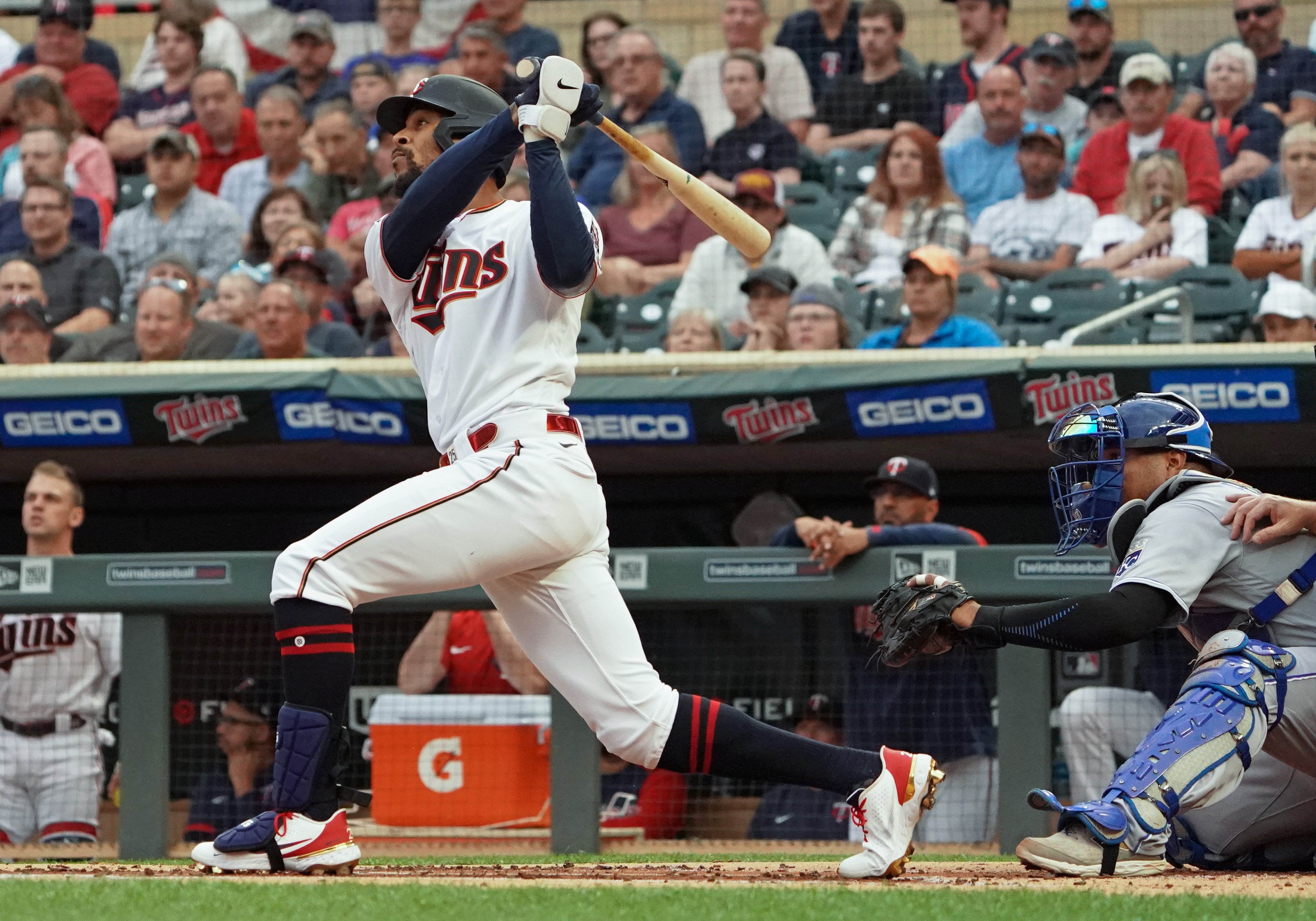 Box Score Michael Pineda: 5 IP, 5 H, 1 R, 1 ER, 0 BB, 3 K Home Runs: Byron Buxton (13), Jorge Polanco 2 (29), Nick Gordon (2), Max Kepler (17) Top 3 WPA: Michael Pineda .169, Jorge Polanco .167, Byron Buxton .095 Win Probability Chart (via FanGraphs) Byron Buxton and Jorge Polanco announced their presence in the bottom of the first inning with back-to-back home runs, setting the tone for the Twins’ offense for the remainder of the game. Nick Gordon followed with a solo shot of his own one inning later, and Max Kepler contributed another in the fourth. In the fifth inning, Polanco’s second dinger of the evening extended the Twins’ lead to 6-1, which was more than enough to propel them to victory. Polanco finished the evening with three hits in five plate appearances and raised his slash line to .280/.336/.520 in 133 games. His 29 home runs represent the most in franchise history by a switch-hitter and by a second baseman not named Brian Dozier. With his performance Saturday evening, Polanco eclipsed the 4.0 fWAR mark, placing him inside the top 25 performers on offense this season. While he did not make the All-Star team and got off to a slow start while still recovering from back-to-back ankles surgeries, Polanco’s second-half eruption is worthy of garnering MVP votes come season’s end despite the Twins being among the worst teams in all of baseball. He won’t get many — heck, there’s a good chance that he won’t get any — but few players have had a more impressive August and early September than the Twins’ second baseman. Even though Polanco and the Twins’ offense stole the show, Michael Pineda’s start should not be overlooked. The impending free agent lowered his ERA to 3.87 on the season and has allowed two or fewer runs in seven of his last 10 appearances. His overall strikeout numbers are down this year, and some of his advanced metrics suggest that he hasn’t been quite as good as his box score numbers, but overall his performance this season, when healthy, has been admirable. The Twins and Royals conclude their series on Sunday afternoon when Bailey Ober (2-2, 4.00 ERA) is expected to face off against Kris Bubic (4-6, 5.07 ERA). First pitch is slated for 1:10 PM CST. Postgame Interviews Coming soon... Bullpen Usage Spreadsheet TUE WED THU FRI SAT TOT Minaya 21 0 0 40 0 61 Thielbar 25 8 0 0 26 59 Farrell 0 0 32 0 12 44 Colomé 17 0 0 12 0 29 Coulombe 0 0 15 0 23 38 Duffey 0 17 0 11 0 28 Alcalá 19 0 0 9 0 28 Garza Jr. 0 0 19 0 0 19 Moran 0 0 0 0 0 0 MORE FROM TWINS DAILY — Follow Twins Daily via Twitter, Facebook or email — Latest Twins coverage from our writers — Recent Twins discussion in our forums
- 24 comments
-
- 2
-
-
- jorge polanco
- byron buxton
- (and 1 more)
-
The bats provided ample run support, and Michael Pineda stayed hot as the Twins took down the Royals with ease. Image courtesy of © Nick Wosika | 2021 Sep 11 The bats provided ample run support, and Michael Pineda stayed hot as the Twins took down the Royals with ease. Box Score Michael Pineda: 5 IP, 5 H, 1 R, 1 ER, 0 BB, 3 K Home Runs: Byron Buxton (13), Jorge Polanco 2 (29), Nick Gordon (2), Max Kepler (17) Top 3 WPA: Michael Pineda .169, Jorge Polanco .167, Byron Buxton .095 Win Probability Chart (via FanGraphs) Byron Buxton and Jorge Polanco announced their presence in the bottom of the first inning with back-to-back home runs, setting the tone for the Twins’ offense for the remainder of the game. Nick Gordon followed with a solo shot of his own one inning later, and Max Kepler contributed another in the fourth. In the fifth inning, Polanco’s second dinger of the evening extended the Twins’ lead to 6-1, which was more than enough to propel them to victory. Polanco finished the evening with three hits in five plate appearances and raised his slash line to .280/.336/.520 in 133 games. His 29 home runs represent the most in franchise history by a switch-hitter and by a second baseman not named Brian Dozier. With his performance Saturday evening, Polanco eclipsed the 4.0 fWAR mark, placing him inside the top 25 performers on offense this season. While he did not make the All-Star team and got off to a slow start while still recovering from back-to-back ankles surgeries, Polanco’s second-half eruption is worthy of garnering MVP votes come season’s end despite the Twins being among the worst teams in all of baseball. He won’t get many — heck, there’s a good chance that he won’t get any — but few players have had a more impressive August and early September than the Twins’ second baseman. Even though Polanco and the Twins’ offense stole the show, Michael Pineda’s start should not be overlooked. The impending free agent lowered his ERA to 3.87 on the season and has allowed two or fewer runs in seven of his last 10 appearances. His overall strikeout numbers are down this year, and some of his advanced metrics suggest that he hasn’t been quite as good as his box score numbers, but overall his performance this season, when healthy, has been admirable. The Twins and Royals conclude their series on Sunday afternoon when Bailey Ober (2-2, 4.00 ERA) is expected to face off against Kris Bubic (4-6, 5.07 ERA). First pitch is slated for 1:10 PM CST. Postgame Interviews Coming soon... Bullpen Usage Spreadsheet TUE WED THU FRI SAT TOT Minaya 21 0 0 40 0 61 Thielbar 25 8 0 0 26 59 Farrell 0 0 32 0 12 44 Colomé 17 0 0 12 0 29 Coulombe 0 0 15 0 23 38 Duffey 0 17 0 11 0 28 Alcalá 19 0 0 9 0 28 Garza Jr. 0 0 19 0 0 19 Moran 0 0 0 0 0 0 MORE FROM TWINS DAILY — Follow Twins Daily via Twitter, Facebook or email — Latest Twins coverage from our writers — Recent Twins discussion in our forums View full article
-
Minor League Report (9/5): Close But No Sweep-gar
Lucas Seehafer PT posted an article in Minor Leagues
 TRANSACTIONS RHP Luke Farrell activated from 60-day IL, sent to Twins LHP Andrew Albers optioned to St. Paul RHP Derek Law DFA SAINTS SENTINEL Game 1: Columbus 9, St. Paul 8 Game 2: St. Paul 1, Columbus 0 The Saints dropped their first game of the day against the Clippers in … unfortunate fashion. They took a 8-4 lead into the bottom of the seventh when Columbus promptly scored five runs against Ian Hamilton and the newly-signed Vinny Nittoli to pick up the win. Jason Garcia started the bullpen game for St. Paul and allowed four runs in two innings. Yennier Cano and Kyle Barraclough combined to pitch four scoreless innings, striking out six, walking two, and allowing two hits. The Saints picked up 15 hits as a team, including four from Tomas Telis alone. Caleb Hamilton crushed a home run and went 2-for-4 in his first game at Triple-A. Gilberto Celestino and J.T. Riddle also contributed two hits apiece. Charlie Barnes started the second game for the Saints and pitched five innings of shutout ball. He struck out three, walked one, and gave up only two hits. Nick Vincent pitched a scoreless sixth inning after loading the bases by striking out three. Edgar Garcia solidified the shutout and earned the save. Offensively, David Bañuelos went 2-for-2, while Drew Maggi drove in the Saints’ lone run. WIND SURGE WISDOM Arkansas 2, Wichita 1 Box Score The Wind Surge dropped a low-scoring affair to the Travelers on Sunday, though, at least that means that Jordan Balazovic pitched well. Balazovic struggled during the month of August — “struggle” being relative to his usual dominance — posting a 3.72 ERA with a 22:13 K:BB ratio in 29 innings. Encouragingly, the Canadian pitched a gem against Arkansas as he struck out six and did not allow a walk in 5 ⅔ innings of work. It was the first time since August 10 and only the fourth time all season that Balazovic did not issue a free pass. Although he missed some time earlier in the season with an injury, Balazovic has put together a truly encouraging season. His strikeout numbers are down (92 vs. 129) and his walk numbers up slightly (32 vs. 25) compared to his 2019 season split between Low- and High-A, but overall Balazovic has been one of the more consistent starting pitchers in the Twins farm system. His performance in 2021 should have him on track to debut at some point next summer, which will be his age 23 campaign. However, despite picking up seven hits collectively, Wichita was unable to bring home more than a single run. Roy Morales was the lone Wind Surge player to contribute more than one hit, going 2-for-4 with a double. Trey Cabbage also clobbered a double and rose his OPS to .874 at the Double-A level. Austin Martin, Spencer Steer, Leobaldo Cabrera, and Ernie De La Trinidad all hit singles. Zach Neff and Erik Manoah Jr. pitched 2 ⅓ innings of hitless ball in relief. KERNELS NUGGETS Quad Cities 6, Cedar Rapids 4 Box Score The Kernels stuck tight to the River Bandits all afternoon, though, in the end, the Quad Cities offense was simply too much to overcome. Cedar Rapids rallied with three runs across the sixth and seventh innings to tie the game at 4-4. However, Quad Cities scored two runs in the top of the ninth off the typically robust Zach Featherstone to claim the win. Tyler Watson started on the mound for the Kernels and tossed five innings, striking out four, walking three, and allowing four earned runs. Denny Bentely — who has put together a quietly great season out of the pen — tossed the next 2 2/3 innings, striking out five. Featherstone was ultimately handed the loss after striking out two and allowing two earned runs in 1 ⅔ innings. The Kernels mustered only four total hits at the plate, one of each coming off the bat of Edouard Julien (single), Yunior Severino (single), Jeferson Morales (double), and Aaron Sabato (home run). MUSSEL MATTERS Fort Myers 10, Daytona 2 Box score The Mighty Mussels crushed the Tortugas on Sunday to improve their record to .500 (52-52). Fort Myers threw five pitchers — Regi Grace, Zaquiel Puentes, Logan Campbell, Bradley Hanner, and A.J. Labas — who combined to strike out 14 Daytona batters and only walk three. No Tortuga athlete had more than a single hit. Conversely, the Mighty Mussels had three athletes contribute multi-hit games. Christian Encarnacion-Strand led the way with three hits, including his fourth home run of the season. Willie Joe Garry Jr. — who picked up two hits — also hit a dinger, his third, while Will Holland crushed his ninth. Kyler Fedko went 2-for-5. FCL COMPLEX REPORT FCL Twins off day TWINS DAILY MINOR LEAGUE PLAYERS OF THE DAY Pitcher of the Day — Jordan Balazovic, Wichita: 5 ⅔ IP, 6 H, 2 R, 2 ER, 0 BB, 6 K Hitter of the Day — Tomas Telis, St. Paul: 5-for-8, 3B PROSPECT SUMMARY #1 - Royce Lewis (rehab) - Out for season (torn ACL) #2 - Austin Martin (Wichita) - 1-for-4 #3 - Jordan Balazovic (Wichita) - 5 ⅔ IP, 6 H, 2 R, 2 ER, 0 BB, 6 K #4 - Simeon Woods Richardson (Wichita) - Did not pitch #5 - Jhoan Duran (St. Paul) - Injured List (elbow strain) #6 - Jose Miranda (St. Paul) - 1-for-6, RBI, BB #7 - Joe Ryan (Minnesota) - Did not pitch #8 - Matt Canterino (Cedar Rapids) - Injured List (right elbow strain) #9 - Chase Petty (Complex) - No game #10 - Keoni Cavaco (Fort Myers) - Did not play #11 - Josh Winder (St. Paul) - Injured List (right shoulder impingement) #12 - Matt Wallner (Cedar Rapids) - 1-for-3, BB #13 - Gilberto Celestino (St. Paul) - 2-for-5 #14 - Drew Strotman (St. Paul) - Did not pitch #15 - Noah Miller (Complex) - No game #16 - Brent Rooker (Minnesota) - Did not play #17 - Blayne Enlow (Cedar Rapids) - Out for season (Tommy John surgery) #18 - Misael Urbina (Fort Myers) - 0-for-2, 3 BB #19 - Cole Sands (Wichita) - Did not pitch #20 - Spencer Steer (Wichita) - 1-for-4 MONDAY'S PROBABLE STARTERS FCL Twins at FCL Braves — 11 a.m. CST, TBD
 -
The Mighty Mussels clobbered the Tortugas, but the remainder of the games were decided by four runs combined. The Mighty Mussels clobbered the Tortugas, but the remainder of the games were decided by four runs combined. TRANSACTIONS RHP Luke Farrell activated from 60-day IL, sent to Twins LHP Andrew Albers optioned to St. Paul RHP Derek Law DFA SAINTS SENTINEL Game 1: Columbus 9, St. Paul 8 Game 2: St. Paul 1, Columbus 0 The Saints dropped their first game of the day against the Clippers in … unfortunate fashion. They took a 8-4 lead into the bottom of the seventh when Columbus promptly scored five runs against Ian Hamilton and the newly-signed Vinny Nittoli to pick up the win. Jason Garcia started the bullpen game for St. Paul and allowed four runs in two innings. Yennier Cano and Kyle Barraclough combined to pitch four scoreless innings, striking out six, walking two, and allowing two hits. The Saints picked up 15 hits as a team, including four from Tomas Telis alone. Caleb Hamilton crushed a home run and went 2-for-4 in his first game at Triple-A. Gilberto Celestino and J.T. Riddle also contributed two hits apiece. Charlie Barnes started the second game for the Saints and pitched five innings of shutout ball. He struck out three, walked one, and gave up only two hits. Nick Vincent pitched a scoreless sixth inning after loading the bases by striking out three. Edgar Garcia solidified the shutout and earned the save. Offensively, David Bañuelos went 2-for-2, while Drew Maggi drove in the Saints’ lone run. WIND SURGE WISDOM Arkansas 2, Wichita 1 Box Score The Wind Surge dropped a low-scoring affair to the Travelers on Sunday, though, at least that means that Jordan Balazovic pitched well. Balazovic struggled during the month of August — “struggle” being relative to his usual dominance — posting a 3.72 ERA with a 22:13 K:BB ratio in 29 innings. Encouragingly, the Canadian pitched a gem against Arkansas as he struck out six and did not allow a walk in 5 ⅔ innings of work. It was the first time since August 10 and only the fourth time all season that Balazovic did not issue a free pass. Although he missed some time earlier in the season with an injury, Balazovic has put together a truly encouraging season. His strikeout numbers are down (92 vs. 129) and his walk numbers up slightly (32 vs. 25) compared to his 2019 season split between Low- and High-A, but overall Balazovic has been one of the more consistent starting pitchers in the Twins farm system. His performance in 2021 should have him on track to debut at some point next summer, which will be his age 23 campaign. However, despite picking up seven hits collectively, Wichita was unable to bring home more than a single run. Roy Morales was the lone Wind Surge player to contribute more than one hit, going 2-for-4 with a double. Trey Cabbage also clobbered a double and rose his OPS to .874 at the Double-A level. Austin Martin, Spencer Steer, Leobaldo Cabrera, and Ernie De La Trinidad all hit singles. Zach Neff and Erik Manoah Jr. pitched 2 ⅓ innings of hitless ball in relief. KERNELS NUGGETS Quad Cities 6, Cedar Rapids 4 Box Score The Kernels stuck tight to the River Bandits all afternoon, though, in the end, the Quad Cities offense was simply too much to overcome. Cedar Rapids rallied with three runs across the sixth and seventh innings to tie the game at 4-4. However, Quad Cities scored two runs in the top of the ninth off the typically robust Zach Featherstone to claim the win. Tyler Watson started on the mound for the Kernels and tossed five innings, striking out four, walking three, and allowing four earned runs. Denny Bentely — who has put together a quietly great season out of the pen — tossed the next 2 2/3 innings, striking out five. Featherstone was ultimately handed the loss after striking out two and allowing two earned runs in 1 ⅔ innings. The Kernels mustered only four total hits at the plate, one of each coming off the bat of Edouard Julien (single), Yunior Severino (single), Jeferson Morales (double), and Aaron Sabato (home run). MUSSEL MATTERS Fort Myers 10, Daytona 2 Box score The Mighty Mussels crushed the Tortugas on Sunday to improve their record to .500 (52-52). Fort Myers threw five pitchers — Regi Grace, Zaquiel Puentes, Logan Campbell, Bradley Hanner, and A.J. Labas — who combined to strike out 14 Daytona batters and only walk three. No Tortuga athlete had more than a single hit. Conversely, the Mighty Mussels had three athletes contribute multi-hit games. Christian Encarnacion-Strand led the way with three hits, including his fourth home run of the season. Willie Joe Garry Jr. — who picked up two hits — also hit a dinger, his third, while Will Holland crushed his ninth. Kyler Fedko went 2-for-5. FCL COMPLEX REPORT FCL Twins off day TWINS DAILY MINOR LEAGUE PLAYERS OF THE DAY Pitcher of the Day — Jordan Balazovic, Wichita: 5 ⅔ IP, 6 H, 2 R, 2 ER, 0 BB, 6 K Hitter of the Day — Tomas Telis, St. Paul: 5-for-8, 3B PROSPECT SUMMARY #1 - Royce Lewis (rehab) - Out for season (torn ACL) #2 - Austin Martin (Wichita) - 1-for-4 #3 - Jordan Balazovic (Wichita) - 5 ⅔ IP, 6 H, 2 R, 2 ER, 0 BB, 6 K #4 - Simeon Woods Richardson (Wichita) - Did not pitch #5 - Jhoan Duran (St. Paul) - Injured List (elbow strain) #6 - Jose Miranda (St. Paul) - 1-for-6, RBI, BB #7 - Joe Ryan (Minnesota) - Did not pitch #8 - Matt Canterino (Cedar Rapids) - Injured List (right elbow strain) #9 - Chase Petty (Complex) - No game #10 - Keoni Cavaco (Fort Myers) - Did not play #11 - Josh Winder (St. Paul) - Injured List (right shoulder impingement) #12 - Matt Wallner (Cedar Rapids) - 1-for-3, BB #13 - Gilberto Celestino (St. Paul) - 2-for-5 #14 - Drew Strotman (St. Paul) - Did not pitch #15 - Noah Miller (Complex) - No game #16 - Brent Rooker (Minnesota) - Did not play #17 - Blayne Enlow (Cedar Rapids) - Out for season (Tommy John surgery) #18 - Misael Urbina (Fort Myers) - 0-for-2, 3 BB #19 - Cole Sands (Wichita) - Did not pitch #20 - Spencer Steer (Wichita) - 1-for-4 MONDAY'S PROBABLE STARTERS FCL Twins at FCL Braves — 11 a.m. CST, TBD View full article
-
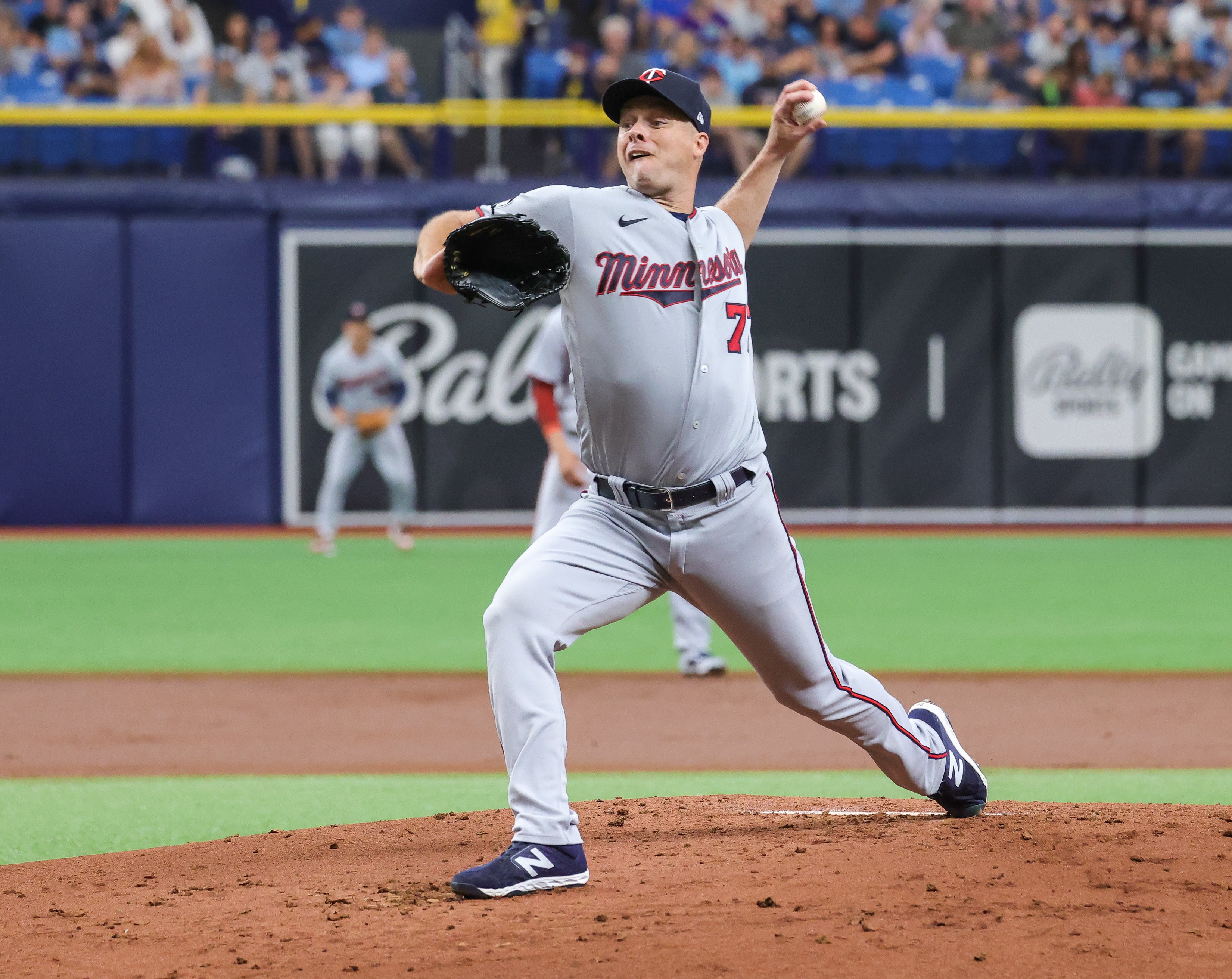 Box Score Andrew Albers: 3 IP, 10 H, 9 R, 9 ER, 1 BB, 2 K Home Runs: Miguel Sanó (24), Jorge Polanco (26) Bottom 3 WPA: Andrew Albers -.385, Luis Arraez -.046, Ryan Jeffers -.031 Win Probability Chart (via FanGraphs) The first inning didn’t exactly go well for Andrew Albers. The second inning was worse. The third inning was bad, too. The Rays jumped all over the Twins’ starter early, roughing him up for two runs on four hits, including a leadoff triple by rookie standout Randy Arozarena, in the opening frame. In the second, Arozarena (single), Wander Franco (double), Yandy Diaz (home run), and Jordan Luplow (home run) battered him up even more. Manuel Margot (home run) decided he had to get in on the fun in the third and Arozarena liked what he saw, so he added a dinger as well. Oh, and amid all the chaos, Albers was called for two balks, one that was ultimately rescinded while the other scored Tampa Bay a run. (Editor's Note - neither one was actually a balk.) It was that kind of game for the Twins who were thoroughly throttled by the Rays Saturday afternoon in Tampa. On the bright side, Jorge Polanco stayed hot, picking up hits — a single, his 29th double, and his 26th home run of the season — in his first three at-bats and Miguel Sanó hit a laser beam home run to center in the fourth. So, that was nice! (But because we can't have nice things, Sanó later exited the game following a collision with Rays’ catcher Mike Zunino. He was ruled day-to-day with a left shoulder contusion.) However, that’s about all that went well for Minnesota. All in all, it was a stinker of a game in which very little was learned, at least on the positive end of the spectrum. It’s probably for the best if we just agree to collectively pretend as though this one never happened. The Twins and Rays are back in action on Sunday when Griffin Jax (3-3, 6.71 ERA) faces off against Luis Patino (4-3, 4.24 ERA). First pitch is slated for 12:10 p.m. CST. Postgame Interviews Coming soon Bullpen Usage Spreadsheet MON TUE WED THU FRI SAT TOT Gibaut 0 0 24 0 0 47 71 Minaya 0 24 11 0 0 21 56 Garza Jr. 0 17 0 0 8 23 48 Colomé 23 0 0 0 0 11 34 Thielbar 0 26 0 0 0 0 26 Alcalá 25 0 0 0 0 0 25 Duffey 0 16 0 0 0 0 16 Coulombe 0 0 10 0 0 0 10 MORE FROM TWINS DAILY — Latest Twins coverage from our writers — Recent Twins discussion in our forums — Follow Twins Daily via Twitter, Facebook or email
 -
Jorge Polanco and Miguel Sanó stayed hot, but the Tampa Bay Rays beat up the Twins' pitching staff to earn the win in dominant fashion. Image courtesy of © Mike Watters, USA Today Jorge Polanco and Miguel Sanó stayed hot, but the Tampa Bay Rays beat up the Twins' pitching staff to earn the win in dominant fashion. Box Score Andrew Albers: 3 IP, 10 H, 9 R, 9 ER, 1 BB, 2 K Home Runs: Miguel Sanó (24), Jorge Polanco (26) Bottom 3 WPA: Andrew Albers -.385, Luis Arraez -.046, Ryan Jeffers -.031 Win Probability Chart (via FanGraphs) The first inning didn’t exactly go well for Andrew Albers. The second inning was worse. The third inning was bad, too. The Rays jumped all over the Twins’ starter early, roughing him up for two runs on four hits, including a leadoff triple by rookie standout Randy Arozarena, in the opening frame. In the second, Arozarena (single), Wander Franco (double), Yandy Diaz (home run), and Jordan Luplow (home run) battered him up even more. Manuel Margot (home run) decided he had to get in on the fun in the third and Arozarena liked what he saw, so he added a dinger as well. Oh, and amid all the chaos, Albers was called for two balks, one that was ultimately rescinded while the other scored Tampa Bay a run. (Editor's Note - neither one was actually a balk.) It was that kind of game for the Twins who were thoroughly throttled by the Rays Saturday afternoon in Tampa. On the bright side, Jorge Polanco stayed hot, picking up hits — a single, his 29th double, and his 26th home run of the season — in his first three at-bats and Miguel Sanó hit a laser beam home run to center in the fourth. So, that was nice! (But because we can't have nice things, Sanó later exited the game following a collision with Rays’ catcher Mike Zunino. He was ruled day-to-day with a left shoulder contusion.) However, that’s about all that went well for Minnesota. All in all, it was a stinker of a game in which very little was learned, at least on the positive end of the spectrum. It’s probably for the best if we just agree to collectively pretend as though this one never happened. The Twins and Rays are back in action on Sunday when Griffin Jax (3-3, 6.71 ERA) faces off against Luis Patino (4-3, 4.24 ERA). First pitch is slated for 12:10 p.m. CST. Postgame Interviews Coming soon Bullpen Usage Spreadsheet MON TUE WED THU FRI SAT TOT Gibaut 0 0 24 0 0 47 71 Minaya 0 24 11 0 0 21 56 Garza Jr. 0 17 0 0 8 23 48 Colomé 23 0 0 0 0 11 34 Thielbar 0 26 0 0 0 0 26 Alcalá 25 0 0 0 0 0 25 Duffey 0 16 0 0 0 0 16 Coulombe 0 0 10 0 0 0 10 MORE FROM TWINS DAILY — Latest Twins coverage from our writers — Recent Twins discussion in our forums — Follow Twins Daily via Twitter, Facebook or email View full article
-
Brent Rooker talked to Fangraph's David Laurila about hitting. An interesting read to go along with your Saturday morning coffee. https://blogs.fangraphs.com/brent-rooker-talks-hitting/
-
The Wichita Wind Surge came from behind to win in extra innings and the Fort Myers Might Mussels won one of two. The other games didn't go so hot. The Wichita Wind Surge came from behind to win in extra innings and the Fort Myers Might Mussels won one of two. The other games didn't go so hot. TRANSACTIONS St. Paul Saints place OF Trevor Larnach (left-hand contusion) on the 7-day injured list RHP Carlos Suniaga was promoted from Low-A Fort Myers to High-A Cedar Rapids C Kyle Schmidt was sent from Triple-A St. Paul to High-A Cedar Rapids C Caleb Hamilton was promoted from Double-A Wichita to Triple-A St. Paul SAINTS SENTINEL Columbus 7, St. Paul 6 Box Score The Saints dropped yet another game to the Clippers on Friday evening due in large part to poor pitching. Drew Strotman started on the bump for St. Paul and while his overall numbers weren’t great — five innings, five runs, seven hits, six strikeouts — he was *this close* to producing a truly great start. Strotman’s lack of command has been his biggest bugaboo since arriving in the Twins’ farm system. However, Friday night was his second start all season in which he did not walk anyone. (The other came on May 18 when he struck out eight batters in six innings.) His command still wasn’t great — when he missed, he missed pretty badly; more on that in a second — but allowing zero walks in five innings is a step in the right direction. Of Strotman’s misses, at least four were left in the exact spot a pitcher never wants to miss: middle-middle. Three misplaced fastballs were launched for two doubles and a home run and an errant curveball was blasted well over 400-feet to dead center for another round-tripper. If he places those pitches elsewhere, there’s a good chance that he and the Saints would have walked away with the win. Strotman’s future role and success are predicated on improving his command. He has the raw stuff and number of pitches to be a starter long-term, but he will likely be relegated to a bullpen role if he is unable to hone his ability to spot his offerings. Reliever Jovani Moran took the loss after he walked in the deciding run in the bottom of the ninth. He finished the night with one earned run in 1 1/3 innings to go along with two walks and two strikeouts. Moran is an exciting relief prospect who will likely find his way onto the Twins’ roster before the end of the season. He possesses the best changeup in the system — perhaps the team’s best since Johan Santana — and racks up the strikeouts. However, his biggest wart at this time is his walk rate. Entering Friday night, Moran owned a 4.78 BB/9, which translates to a 13.2% BB%. As long as his walks remain at their current level, Moran will always be susceptible to nights like Friday, though his overall dominance more than outweighs that risk. Luke Farrell and Nick Vincent also made appearances for St. Paul and combined to allow one earned run over their two innings. Drew Maggi was the Saints’ primary contributor offensively as he went 2-for-4 with four RBI at the plate, with one of his hits being his 14th home run of the season. Maggi owns a .848 OPS this season and provides some versatility defensively. At 32, he likely isn’t long for the franchise, but it would be nice to see the Twins reward his strong play, particularly as of late, with a promotion. Jose Miranda went 1-for-4 with a walk, while Mark Contreras and Jimmy Kerrigan drove in the team’s two other runs. WIND SURGE WISDOM Wichita 6, Arkansas 5, F/10 Box Score The Wind Surge came from behind to win an exciting affair in Arkansas on Friday evening despite picking up only four hits. Recent addition Stevie Berman — whom the Twins acquired from the Dodgers in exchange for pitcher Andrew Vasquez — pulled a grand slam to left field to tie the game at 4-4 in the seventh inning. However, the tie was short-lived as the Travelers reclaimed the lead in the bottom of the seventh. Aaron Whitefield knotted the game up at 5 with a sacrifice fly in the ninth before Spencer Steer drove in the game-winning run in the 10th with a sac fly of his own. D.J. Burt and Berman each contributed two hits. On the mound, the Wind Surge were led by potential future Twins Ben Gross and Jordan Gore, who combined to throw six innings in the relief. The two struck out 11 batters, walked three, and surrendered only a single run. Austin Schulfer started and struck out five in four innings of work. KERNELS NUGGETS Quad Cities 9, Cedar Rapids 5 Box Score The good news is that the Kernels pitching staff — Sean Mooney, Osiris German, and Andrew Cabezas — struck out 10 batters and only issued a single walk during the game’s nine innings. The bad news is that the River Bandits roughed them up for nine runs, five doubles, and a home run. At the plate, Seth Gray led the way by going 2-for-3 with a double, triple, and three runs scored. Daniel Ozoria registered his first home run — a two-run shot — in a Cedar Rapids uniform out of the nine-hole, and Jeferson Morales drove in two runs on 3-for-4 hitting; the catcher is hitting .323 with a .922 OPS since being promoted to the Kernels in early August. MUSSEL MATTERS Fort Myers 5, Daytona 1 (completion of game from Thursday) Daytona 5, Fort Myers 2, F/7 Box score 1 Box score 2 The Mighty Mussels and Tortugas began their evening of ball by wrapping up the game that was suspended on Thursday due to rain. Fort Myers — who led 3-1 at the time of suspension — added two more runs in the fifth inning and did not surrender any en route to picking up the win. Casey Legumina earned the win after tossing 5 2/3 shutout innings. He struck out five, walked one, and surrendered three hits, two of which were doubles. Bradley Hanner threw the final innings, striking out one and setting the side down in order. Alerick Soularie went 1-for-3 with a double and two walks. Christian Encarnacion-Strand and Jesus Feliz each contributed three hits. Patrick Winkel went 2-for-5 with a double. Fort Myers followed their win with a loss in seven innings. The Mighty Mussels bats did not wake up until the top of the seventh when they scored both of their runs. Encarnacion-Strand and Misael Urbina contributed doubles and Will Holland added a triple. In total, Fort Myers was only able to muster four hits. Miguel Rodriguez, Juan Pichardo, and Logan Campbell combined to throw seven innings for the Mighty Mussels, striking out nine and walking five. FCL COMPLEX REPORT FCL Twins vs. FCL Red Sox postponed due to rain TWINS DAILY MINOR LEAGUE PLAYERS OF THE DAY Pitcher of the Day — Casey Legumina, Fort Myers: 5 2/3 IP, 3 H, 0 R, 1 BB, 5 K Hitter of the Day — Drew Maggi, St. Paul: 2-for-4, 2B, HR (14), 4 RBI PROSPECT SUMMARY #1 - Royce Lewis (rehab) - Out for season (torn ACL) #2 - Austin Martin (Wichita) - Did not play #3 - Jordan Balazovic (Wichita) - Did not pitch #4 - Simeon Woods Richardson (Wichita) - Did not pitch #5 - Jhoan Duran (St. Paul) - Injured List (elbow strain) #6 - Jose Miranda (St. Paul) - 1-for-4, BB #7 - Joe Ryan (Minnesota) - Did not pitch #8 - Matt Canterino (Cedar Rapids) - Injured List (right elbow strain) #9 - Chase Petty (Complex) - No game #10 - Keoni Cavaco (Fort Myers) - Did not play #11 - Josh Winder (St. Paul) - Injured List (right shoulder impingement) #12 - Matt Wallner (Cedar Rapids) - 0-for-4, 4 K #13 - Gilberto Celestino (St. Paul) - 0-for-4 #14 - Drew Strotman (St. Paul) - 5 IP, 7 H, 5 R, 5 ER, 0 BB, 6 K #15 - Noah Miller (Complex) - No game #16 - Brent Rooker (Minnesota) - 0-for-1, K #17 - Blayne Enlow (Cedar Rapids) - Out for season (Tommy John surgery) #18 - Misael Urbina (Fort Myers) - 2-for-3, 2B #19 - Cole Sands (Wichita) - Did not pitch #20 - Spencer Steer (Wichita) - 0-for-3, BB, game-winning RBI SATURDAY'S PROBABLE STARTERS St. Paul @ Columbus (3:05 PM CST) - RHP Beau Burrows (2-3, 5.98 ERA) St. Paul @ Columbus (approx. 7:05 PM CST) - TBD Wichita @ Arkansas (6:10 PM CST) - TBD Quad Cities @ Cedar Rapids (6:35 PM CST) - LHP Aaron Rozek (0-1, 6.14 ERA) Fort Myers @ Daytona (6:05 PM CST) - LHP Cade Povich (Debut) Feel free to ask questions and discuss. View full article
- 7 replies
-
- 1
-
-
- casey legumina
- drew maggi
- (and 3 more)
-
Minor League Report (9/3): Wind Surge Win Wild One
Lucas Seehafer PT posted an article in Minor Leagues
 TRANSACTIONS St. Paul Saints place OF Trevor Larnach (left-hand contusion) on the 7-day injured list RHP Carlos Suniaga was promoted from Low-A Fort Myers to High-A Cedar Rapids C Kyle Schmidt was sent from Triple-A St. Paul to High-A Cedar Rapids C Caleb Hamilton was promoted from Double-A Wichita to Triple-A St. Paul SAINTS SENTINEL Columbus 7, St. Paul 6 Box Score The Saints dropped yet another game to the Clippers on Friday evening due in large part to poor pitching. Drew Strotman started on the bump for St. Paul and while his overall numbers weren’t great — five innings, five runs, seven hits, six strikeouts — he was *this close* to producing a truly great start. Strotman’s lack of command has been his biggest bugaboo since arriving in the Twins’ farm system. However, Friday night was his second start all season in which he did not walk anyone. (The other came on May 18 when he struck out eight batters in six innings.) His command still wasn’t great — when he missed, he missed pretty badly; more on that in a second — but allowing zero walks in five innings is a step in the right direction. Of Strotman’s misses, at least four were left in the exact spot a pitcher never wants to miss: middle-middle. Three misplaced fastballs were launched for two doubles and a home run and an errant curveball was blasted well over 400-feet to dead center for another round-tripper. If he places those pitches elsewhere, there’s a good chance that he and the Saints would have walked away with the win. Strotman’s future role and success are predicated on improving his command. He has the raw stuff and number of pitches to be a starter long-term, but he will likely be relegated to a bullpen role if he is unable to hone his ability to spot his offerings. Reliever Jovani Moran took the loss after he walked in the deciding run in the bottom of the ninth. He finished the night with one earned run in 1 1/3 innings to go along with two walks and two strikeouts. Moran is an exciting relief prospect who will likely find his way onto the Twins’ roster before the end of the season. He possesses the best changeup in the system — perhaps the team’s best since Johan Santana — and racks up the strikeouts. However, his biggest wart at this time is his walk rate. Entering Friday night, Moran owned a 4.78 BB/9, which translates to a 13.2% BB%. As long as his walks remain at their current level, Moran will always be susceptible to nights like Friday, though his overall dominance more than outweighs that risk. Luke Farrell and Nick Vincent also made appearances for St. Paul and combined to allow one earned run over their two innings. Drew Maggi was the Saints’ primary contributor offensively as he went 2-for-4 with four RBI at the plate, with one of his hits being his 14th home run of the season. Maggi owns a .848 OPS this season and provides some versatility defensively. At 32, he likely isn’t long for the franchise, but it would be nice to see the Twins reward his strong play, particularly as of late, with a promotion. Jose Miranda went 1-for-4 with a walk, while Mark Contreras and Jimmy Kerrigan drove in the team’s two other runs. WIND SURGE WISDOM Wichita 6, Arkansas 5, F/10 Box Score The Wind Surge came from behind to win an exciting affair in Arkansas on Friday evening despite picking up only four hits. Recent addition Stevie Berman — whom the Twins acquired from the Dodgers in exchange for pitcher Andrew Vasquez — pulled a grand slam to left field to tie the game at 4-4 in the seventh inning. However, the tie was short-lived as the Travelers reclaimed the lead in the bottom of the seventh. Aaron Whitefield knotted the game up at 5 with a sacrifice fly in the ninth before Spencer Steer drove in the game-winning run in the 10th with a sac fly of his own. D.J. Burt and Berman each contributed two hits. On the mound, the Wind Surge were led by potential future Twins Ben Gross and Jordan Gore, who combined to throw six innings in the relief. The two struck out 11 batters, walked three, and surrendered only a single run. Austin Schulfer started and struck out five in four innings of work. KERNELS NUGGETS Quad Cities 9, Cedar Rapids 5 Box Score The good news is that the Kernels pitching staff — Sean Mooney, Osiris German, and Andrew Cabezas — struck out 10 batters and only issued a single walk during the game’s nine innings. The bad news is that the River Bandits roughed them up for nine runs, five doubles, and a home run. At the plate, Seth Gray led the way by going 2-for-3 with a double, triple, and three runs scored. Daniel Ozoria registered his first home run — a two-run shot — in a Cedar Rapids uniform out of the nine-hole, and Jeferson Morales drove in two runs on 3-for-4 hitting; the catcher is hitting .323 with a .922 OPS since being promoted to the Kernels in early August. MUSSEL MATTERS Fort Myers 5, Daytona 1 (completion of game from Thursday) Daytona 5, Fort Myers 2, F/7 Box score 1 Box score 2 The Mighty Mussels and Tortugas began their evening of ball by wrapping up the game that was suspended on Thursday due to rain. Fort Myers — who led 3-1 at the time of suspension — added two more runs in the fifth inning and did not surrender any en route to picking up the win. Casey Legumina earned the win after tossing 5 2/3 shutout innings. He struck out five, walked one, and surrendered three hits, two of which were doubles. Bradley Hanner threw the final innings, striking out one and setting the side down in order. Alerick Soularie went 1-for-3 with a double and two walks. Christian Encarnacion-Strand and Jesus Feliz each contributed three hits. Patrick Winkel went 2-for-5 with a double. Fort Myers followed their win with a loss in seven innings. The Mighty Mussels bats did not wake up until the top of the seventh when they scored both of their runs. Encarnacion-Strand and Misael Urbina contributed doubles and Will Holland added a triple. In total, Fort Myers was only able to muster four hits. Miguel Rodriguez, Juan Pichardo, and Logan Campbell combined to throw seven innings for the Mighty Mussels, striking out nine and walking five. FCL COMPLEX REPORT FCL Twins vs. FCL Red Sox postponed due to rain TWINS DAILY MINOR LEAGUE PLAYERS OF THE DAY Pitcher of the Day — Casey Legumina, Fort Myers: 5 2/3 IP, 3 H, 0 R, 1 BB, 5 K Hitter of the Day — Drew Maggi, St. Paul: 2-for-4, 2B, HR (14), 4 RBI PROSPECT SUMMARY #1 - Royce Lewis (rehab) - Out for season (torn ACL) #2 - Austin Martin (Wichita) - Did not play #3 - Jordan Balazovic (Wichita) - Did not pitch #4 - Simeon Woods Richardson (Wichita) - Did not pitch #5 - Jhoan Duran (St. Paul) - Injured List (elbow strain) #6 - Jose Miranda (St. Paul) - 1-for-4, BB #7 - Joe Ryan (Minnesota) - Did not pitch #8 - Matt Canterino (Cedar Rapids) - Injured List (right elbow strain) #9 - Chase Petty (Complex) - No game #10 - Keoni Cavaco (Fort Myers) - Did not play #11 - Josh Winder (St. Paul) - Injured List (right shoulder impingement) #12 - Matt Wallner (Cedar Rapids) - 0-for-4, 4 K #13 - Gilberto Celestino (St. Paul) - 0-for-4 #14 - Drew Strotman (St. Paul) - 5 IP, 7 H, 5 R, 5 ER, 0 BB, 6 K #15 - Noah Miller (Complex) - No game #16 - Brent Rooker (Minnesota) - 0-for-1, K #17 - Blayne Enlow (Cedar Rapids) - Out for season (Tommy John surgery) #18 - Misael Urbina (Fort Myers) - 2-for-3, 2B #19 - Cole Sands (Wichita) - Did not pitch #20 - Spencer Steer (Wichita) - 0-for-3, BB, game-winning RBI SATURDAY'S PROBABLE STARTERS St. Paul @ Columbus (3:05 PM CST) - RHP Beau Burrows (2-3, 5.98 ERA) St. Paul @ Columbus (approx. 7:05 PM CST) - TBD Wichita @ Arkansas (6:10 PM CST) - TBD Quad Cities @ Cedar Rapids (6:35 PM CST) - LHP Aaron Rozek (0-1, 6.14 ERA) Fort Myers @ Daytona (6:05 PM CST) - LHP Cade Povich (Debut) Feel free to ask questions and discuss.
- 7 comments
-
- 1
-
-
- casey legumina
- drew maggi
- (and 3 more)
-
lol good catch. Slip of the finger. Made the change!
- 10 replies
-
- 2
-
-
- tyler palm
- ryan shreve
- (and 1 more)
-
A Celebration of Joe Ryan's Hair
Lucas Seehafer PT replied to RandBalls Stu's topic in Twins Daily Front Page News
We mustn't forget about his mustache either. As the kids are saying these days, Joe Ryan is a vibe.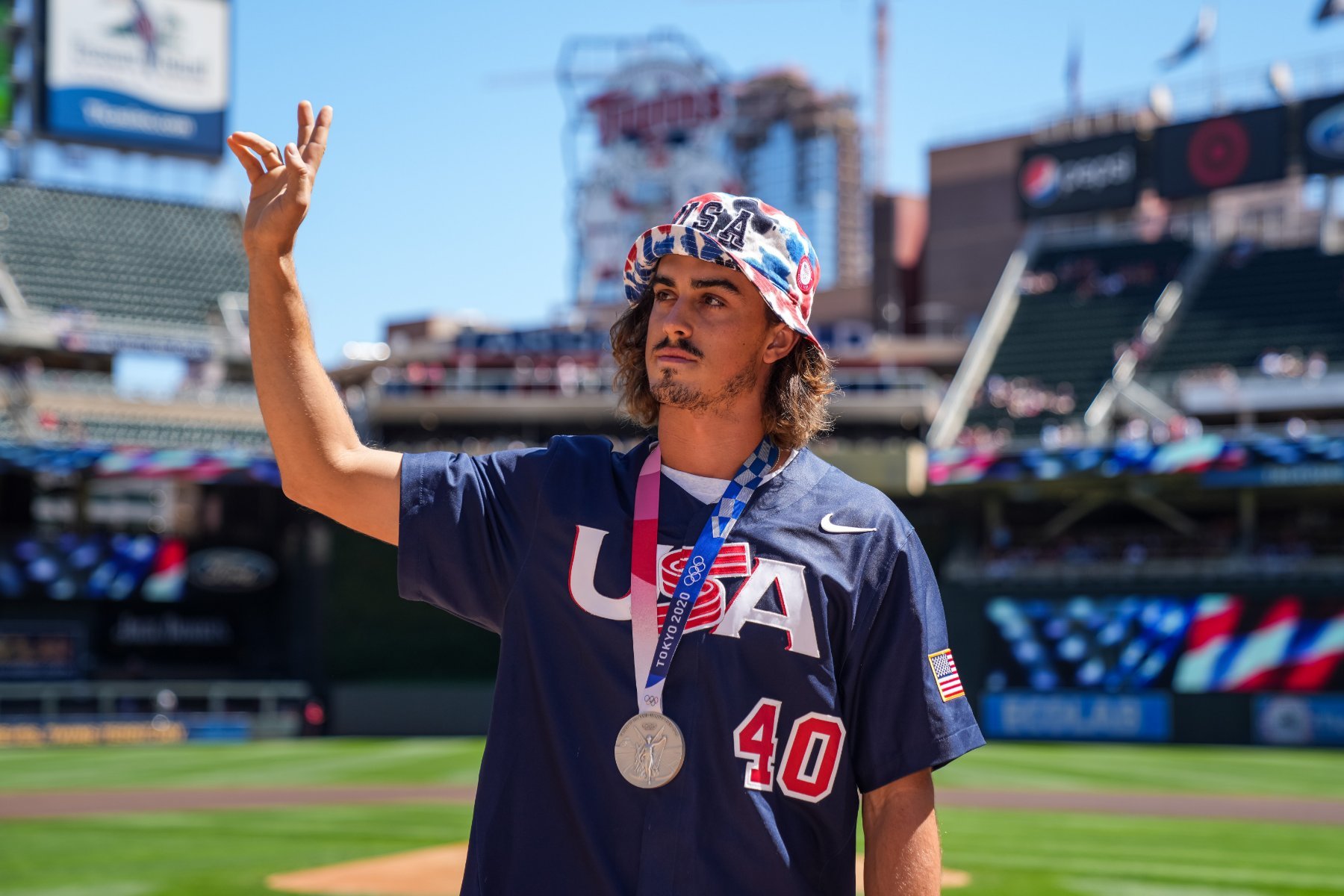
-
Twins Minor League Relief Pitcher of the Month - August 2021
Lucas Seehafer PT posted an article in Minor Leagues
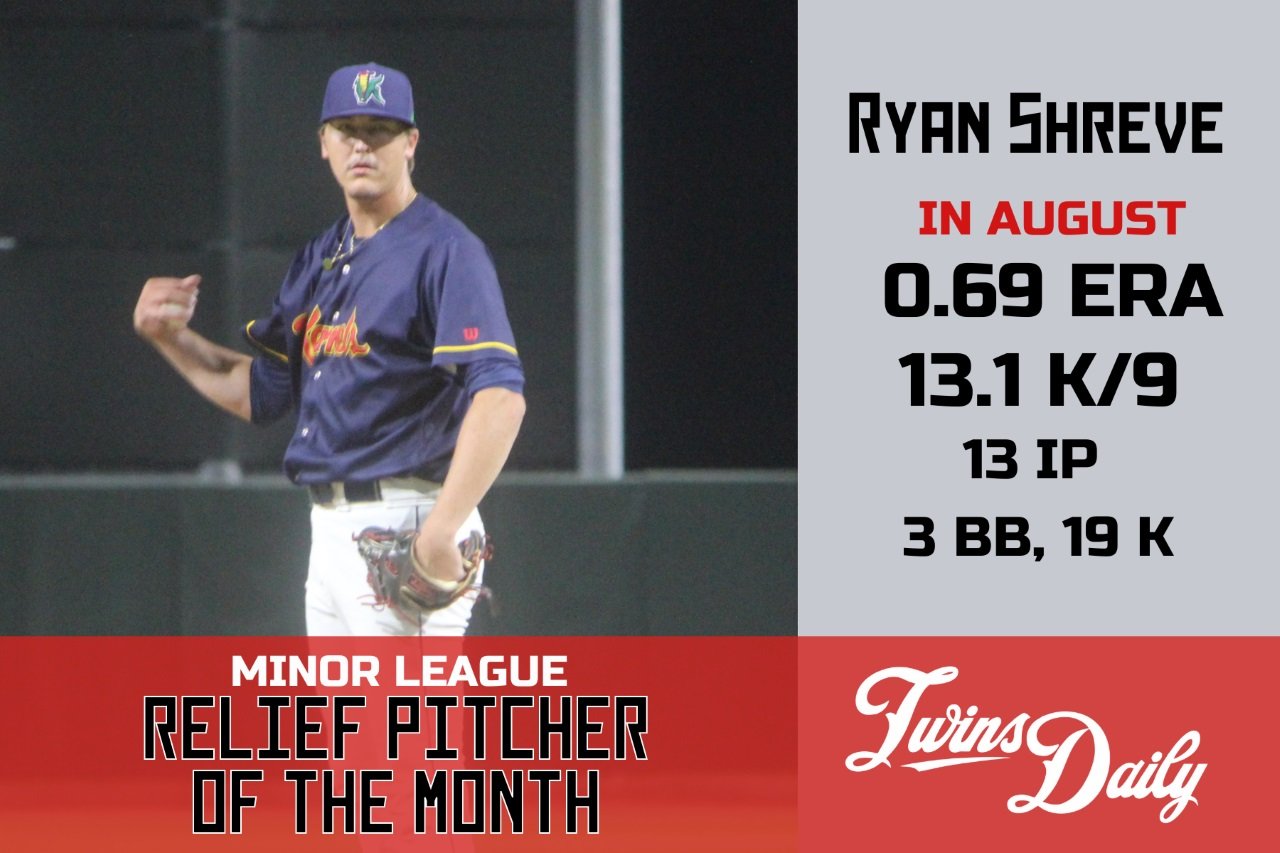 Before diving into the relievers, here are links to the Twins Minor League Hitter and Minor League Starting Pitcher of the Month articles. HONORABLE MENTIONS RHP Kyle Barraclough, St. Paul Saints: 9 1/3 IP, 3 H, 0 R, 0 ER, 1 BB, 15 K, 0.00 ERA LHP Jovani Moran, St. Paul Saints: 16 2/3 IP, 10 H, 7 R, 6 ER, 10 BB, 24 K, 3.24 ERA LHP Aaron Rozek, Ft. Myers/Cedar Rapids: 18 1/3 IP, 7 R, 6 ER, 3 BB, 27 K, 2.95 ERA RHP Melvi Acosta, Cedar Rapids Kernels: 14 IP, 9 H, 6 R, 4 ER, 3 BB, 19 K, 2.51 ERA The month of August saw a number of the more well-known relief arms in the Twins' farm system struggle or simply not perform to the level we've become accustomed. However, the four listed above, headlined by sure-fire future big leaguer Jovani Moran, just missed being considered for a spot in the top three. Each had at least one stat that prevented them from reaching the podium. Kyle Barraclough didn't throw enough innings (largely due to spending a week in the big leagues); Jovani Moran walked too many; and Aaron Rozek's and Melvi Acosta's ERA were higher than those above them. 3. RHP Jordan Gore, Wichita Wind Surge Stats: 13 2/3 IP, 6 H, 2 R, 2 ER, 4 BB, 16 K, 1.32 ERA This isn't the first time Gore's name has appeared on this list, and it likely won't be the last. The lefty's rise from a marginal infielder to one of the Twins' best minor league bullpen arms has been fun to watch and at no point has it appeared as though he's slowing down. Gore owns the farm system's fifth-best ERA (2.54) among pitchers who have tossed at least 40 innings, and his 82 strikeouts — in only 60 2/3 innings — comes in ninth; only Jovani Moran has struck out more batters (105) in a comparable amount of innings (64). Don't be surprised if he finds his way to Target Field at some point next season. 2. RHP Tyler Palm, Cedar Rapids Kernels Stats: 12 2/3 IP, 9 H, 3 R, 0 ER, 2 BB, 16 K, 0.00 ERA On the surface, Palm's numbers are arguably better than anyone else's on this list. His 8:1 K:BB ratio was topped only by Kyle Barraclough's 15:1 ratio in fewer innings and Aaron Rozek's 9:1 ratio, which accompanied a much higher ERA. However, what's keeping Palm from claiming the top spot in this month's rankings were his slightly higher number of hits and runs allowed (even if unearned) as well as four hit-by-pitches. It's nitpicking to a degree, sure, but the top guy performed infinitesimally better, and, therefore, he earned the nod. 1. RHP Ryan Shreve, Cedar Rapids Kernels Stats: 13 IP, 7 H, 2 R, 1 ER, 3 BB, 19 K, 0.69 ERA Shreve has been quietly one of the stronger bullpen arms in the Twins' farm system this season. Among Twins-affiliated minor league pitchers who have thrown at least 40 innings this summer, Shreve ranks fifth in K% at 34.8% as well as in K%-BB% at 24.9%, which places him alongside the likes of Rozek (32.9%), Moran (31.4%), Sawyer Gipson-Long (26.4%), and Louie Varland (25.1%). After excelling as a starter for Pacific University, Shreve was the Twins' 16th round pick during the 2019 draft. In late May, he was promoted from Low-A to High-A, putting him on track for a potential call to the big leagues next season. What are your thoughts? Who would get your vote? Congratulations to Kernels' reliever Ryan Shreve. MORE FROM TWINS DAILY — Latest Twins coverage from our writers — Recent Twins discussion in our forums — Follow Twins Daily via Twitter, Facebook or email
- 10 comments
-
- 1
-
-
- tyler palm
- ryan shreve
- (and 1 more)
-
Twins Daily concludes our Minor League Player of the Month series by naming a much-deserving athlete Relief Pitcher of the Month. Image courtesy of Bri Ostwinkle, Cedar Rapids Kernels Twins Daily concludes our Minor League Player of the Month series by naming a much-deserving athlete Relief Pitcher of the Month. Before diving into the relievers, here are links to the Twins Minor League Hitter and Minor League Starting Pitcher of the Month articles. HONORABLE MENTIONS RHP Kyle Barraclough, St. Paul Saints: 9 1/3 IP, 3 H, 0 R, 0 ER, 1 BB, 15 K, 0.00 ERA LHP Jovani Moran, St. Paul Saints: 16 2/3 IP, 10 H, 7 R, 6 ER, 10 BB, 24 K, 3.24 ERA LHP Aaron Rozek, Ft. Myers/Cedar Rapids: 18 1/3 IP, 7 R, 6 ER, 3 BB, 27 K, 2.95 ERA RHP Melvi Acosta, Cedar Rapids Kernels: 14 IP, 9 H, 6 R, 4 ER, 3 BB, 19 K, 2.51 ERA The month of August saw a number of the more well-known relief arms in the Twins' farm system struggle or simply not perform to the level we've become accustomed. However, the four listed above, headlined by sure-fire future big leaguer Jovani Moran, just missed being considered for a spot in the top three. Each had at least one stat that prevented them from reaching the podium. Kyle Barraclough didn't throw enough innings (largely due to spending a week in the big leagues); Jovani Moran walked too many; and Aaron Rozek's and Melvi Acosta's ERA were higher than those above them. 3. RHP Jordan Gore, Wichita Wind Surge Stats: 13 2/3 IP, 6 H, 2 R, 2 ER, 4 BB, 16 K, 1.32 ERA This isn't the first time Gore's name has appeared on this list, and it likely won't be the last. The lefty's rise from a marginal infielder to one of the Twins' best minor league bullpen arms has been fun to watch and at no point has it appeared as though he's slowing down. Gore owns the farm system's fifth-best ERA (2.54) among pitchers who have tossed at least 40 innings, and his 82 strikeouts — in only 60 2/3 innings — comes in ninth; only Jovani Moran has struck out more batters (105) in a comparable amount of innings (64). Don't be surprised if he finds his way to Target Field at some point next season. 2. RHP Tyler Palm, Cedar Rapids Kernels Stats: 12 2/3 IP, 9 H, 3 R, 0 ER, 2 BB, 16 K, 0.00 ERA On the surface, Palm's numbers are arguably better than anyone else's on this list. His 8:1 K:BB ratio was topped only by Kyle Barraclough's 15:1 ratio in fewer innings and Aaron Rozek's 9:1 ratio, which accompanied a much higher ERA. However, what's keeping Palm from claiming the top spot in this month's rankings were his slightly higher number of hits and runs allowed (even if unearned) as well as four hit-by-pitches. It's nitpicking to a degree, sure, but the top guy performed infinitesimally better, and, therefore, he earned the nod. 1. RHP Ryan Shreve, Cedar Rapids Kernels Stats: 13 IP, 7 H, 2 R, 1 ER, 3 BB, 19 K, 0.69 ERA Shreve has been quietly one of the stronger bullpen arms in the Twins' farm system this season. Among Twins-affiliated minor league pitchers who have thrown at least 40 innings this summer, Shreve ranks fifth in K% at 34.8% as well as in K%-BB% at 24.9%, which places him alongside the likes of Rozek (32.9%), Moran (31.4%), Sawyer Gipson-Long (26.4%), and Louie Varland (25.1%). After excelling as a starter for Pacific University, Shreve was the Twins' 16th round pick during the 2019 draft. In late May, he was promoted from Low-A to High-A, putting him on track for a potential call to the big leagues next season. What are your thoughts? Who would get your vote? Congratulations to Kernels' reliever Ryan Shreve. MORE FROM TWINS DAILY — Latest Twins coverage from our writers — Recent Twins discussion in our forums — Follow Twins Daily via Twitter, Facebook or email View full article
-
Twins Minor League Starting Pitcher of the Month - August 2021
Lucas Seehafer PT posted an article in Minor Leagues
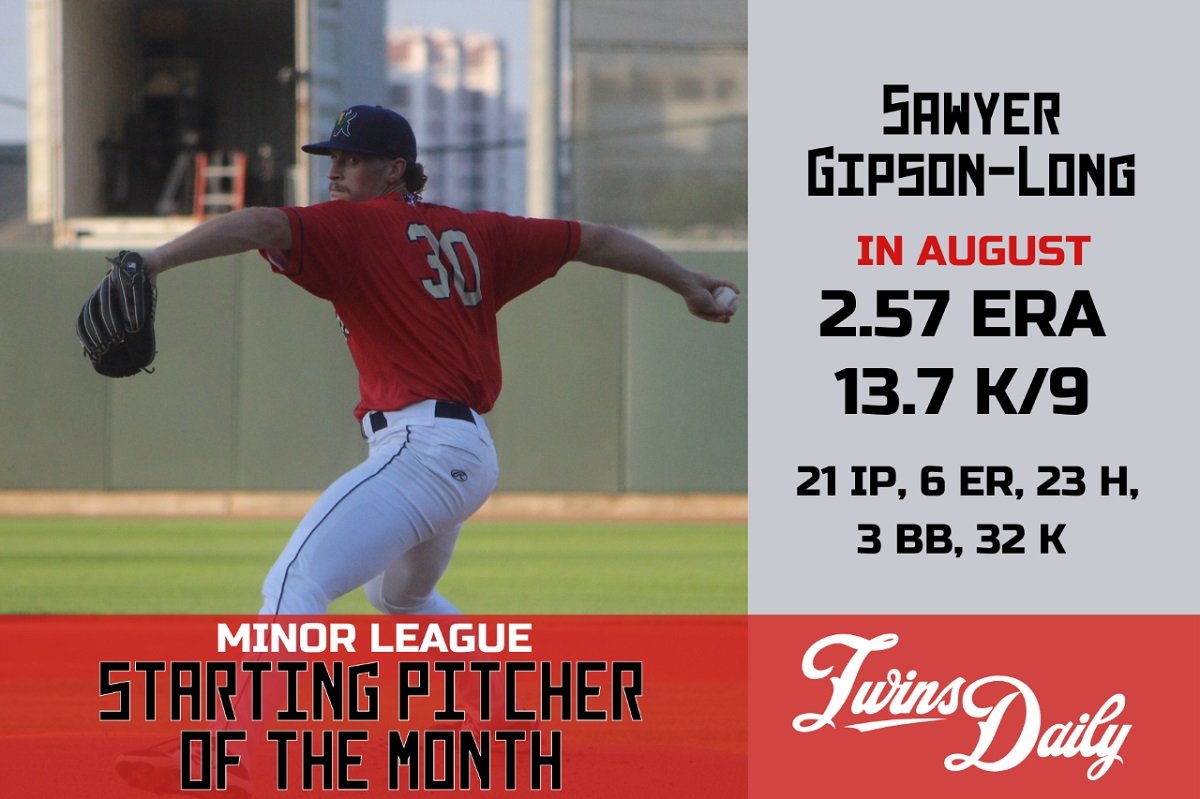 Below are a few names, mentioned in descending order based on minor league affiliation, that just missed the top three. HONORABLE MENTIONS RHP Joe Ryan, St. Paul Saints: 9 IP, 5 H, 2 R, 2 ER, 2 BB, 17 K, 2.00 ERA RHP Jordan Balazovic, Wichita Wind Surge: 24 1/3 IP, 32 H, 16 R, 10 ER, 11 BB, 19 K, 3.70 ERA RHP Cole Sands, Wichita Wind Surge: 18 2/3 IP, 20 H, 8 R, 7 ER, 7 BB, 25 K, 3.38 ERA RHP Louie Varland, Cedar Rapids Kernels: 22 2/3 IP, 20 H, 8 R, 8 ER, 4 BB, 23 K, 3.18 ERA RHP Casey Legumina, Ft. Myers Mighty Mussels: 15 IP, 8 H, 3 R, 3 ER, 4 BB, 19 K, 1.80 ERA And without further ado, the bronze, silver, and gold medal finishers. 3. RHP Sean Mooney, Ft. Myers Mighty Mussels Stats: 13 IP, 6 H, 5 R, 3 ER, 8 BB, 26 K, 2.08 ERA The Mighty Mussels handle starting pitching differently than their other minor league affiliate counterparts. As the bulk of their pitchers have yet to complete an entire minor league season due to the pandemic, their focus is less on having pitchers go deep into games and more on tossing them out there in spurts to keep their workload low. Regardless, Mooney put up great numbers during his four starts in August. In fact, he's put up great numbers all season and has arguably been the Mighty Mussels' best, most consistent starter. Stints on the IL have been the only thing that have slowed him down this year. For that reason, he recently earned a promotion to High-A. 2. RHP Andrew Albers, St. Paul Saints Stats: 20 IP, 19 H, 8 R, 4 ER, 1 BB, 14 K, 1.80 ERA Albers' 2021 campaign is an excellent footnote in an otherwise gloomy Twins' season. The 35-year-old, who signed a minor-league deal last offseason, had not pitched in the majors since 2017 and likely did not think he would return anytime soon. However, after some brief struggles at the beginning of the season and a successful Olympic Trials run (he threw 7 innings of a no-hitter) with Team Canada, Albers earned a promotion to the Twins due to solid performance and multiple injuries. He's not going to strike many batters out and likely won't be with the team beyond this season, but it's hard not to feel happy for the wily vet. 1. RHP Sawyer Gipson-Long, Cedar Rapids Kernels Stats: 17 IP, 17 H, 5 R, 4 ER, 2 BB, 26 K, 2.12 ERA I'll repeat what I mentioned in my recent scouting report: Sawyer Gipson-Long is one of the Twins' best under-the-radar pitching prospects. Gipson-Long was dominant during August, racking up strikeouts and not allowing free passes. His strong performance at High-A continued on Wednesday evening when he tossed six innings of one-hit ball. (Although the one hit was a two-run homer, and he also walked three while striking out four. They can't all be Cy Young caliber.) Other than four lackluster starts to begin the season, due at least in part to poor defense behind him, Gipson-Long has been solid all year. Don't be surprised if his name starts popping up in top prospect lists. MORE FROM TWINS DAILY — Latest Twins coverage from our writers — Recent Twins discussion in our forums — Follow Twins Daily via Twitter, Facebook or email
- 5 comments
-
- 1
-
-
- sawyer gipson-long
- andrew albers
- (and 1 more)
-
Yesterday, Twins Daily announced our Minor League Hitter of the Month for August. Today, we turn our focus to pitching and name our Minor League Starting Pitcher of the Month. Image courtesy of Bri Ostwinkle, Cedar Rapids Kernels Yesterday, Twins Daily announced our Minor League Hitter of the Month for August. Today, we turn our focus to pitching and name our Minor League Starting Pitcher of the Month. Below are a few names, mentioned in descending order based on minor league affiliation, that just missed the top three. HONORABLE MENTIONS RHP Joe Ryan, St. Paul Saints: 9 IP, 5 H, 2 R, 2 ER, 2 BB, 17 K, 2.00 ERA RHP Jordan Balazovic, Wichita Wind Surge: 24 1/3 IP, 32 H, 16 R, 10 ER, 11 BB, 19 K, 3.70 ERA RHP Cole Sands, Wichita Wind Surge: 18 2/3 IP, 20 H, 8 R, 7 ER, 7 BB, 25 K, 3.38 ERA RHP Louie Varland, Cedar Rapids Kernels: 22 2/3 IP, 20 H, 8 R, 8 ER, 4 BB, 23 K, 3.18 ERA RHP Casey Legumina, Ft. Myers Mighty Mussels: 15 IP, 8 H, 3 R, 3 ER, 4 BB, 19 K, 1.80 ERA And without further ado, the bronze, silver, and gold medal finishers. 3. RHP Sean Mooney, Ft. Myers Mighty Mussels Stats: 13 IP, 6 H, 5 R, 3 ER, 8 BB, 26 K, 2.08 ERA The Mighty Mussels handle starting pitching differently than their other minor league affiliate counterparts. As the bulk of their pitchers have yet to complete an entire minor league season due to the pandemic, their focus is less on having pitchers go deep into games and more on tossing them out there in spurts to keep their workload low. Regardless, Mooney put up great numbers during his four starts in August. In fact, he's put up great numbers all season and has arguably been the Mighty Mussels' best, most consistent starter. Stints on the IL have been the only thing that have slowed him down this year. For that reason, he recently earned a promotion to High-A. 2. RHP Andrew Albers, St. Paul Saints Stats: 20 IP, 19 H, 8 R, 4 ER, 1 BB, 14 K, 1.80 ERA Albers' 2021 campaign is an excellent footnote in an otherwise gloomy Twins' season. The 35-year-old, who signed a minor-league deal last offseason, had not pitched in the majors since 2017 and likely did not think he would return anytime soon. However, after some brief struggles at the beginning of the season and a successful Olympic Trials run (he threw 7 innings of a no-hitter) with Team Canada, Albers earned a promotion to the Twins due to solid performance and multiple injuries. He's not going to strike many batters out and likely won't be with the team beyond this season, but it's hard not to feel happy for the wily vet. 1. RHP Sawyer Gipson-Long, Cedar Rapids Kernels Stats: 17 IP, 17 H, 5 R, 4 ER, 2 BB, 26 K, 2.12 ERA I'll repeat what I mentioned in my recent scouting report: Sawyer Gipson-Long is one of the Twins' best under-the-radar pitching prospects. Gipson-Long was dominant during August, racking up strikeouts and not allowing free passes. His strong performance at High-A continued on Wednesday evening when he tossed six innings of one-hit ball. (Although the one hit was a two-run homer, and he also walked three while striking out four. They can't all be Cy Young caliber.) Other than four lackluster starts to begin the season, due at least in part to poor defense behind him, Gipson-Long has been solid all year. Don't be surprised if his name starts popping up in top prospect lists. MORE FROM TWINS DAILY — Latest Twins coverage from our writers — Recent Twins discussion in our forums — Follow Twins Daily via Twitter, Facebook or email View full article
-
The thing with BABIP is that it's wildly variable in small samples. 102 IP is a pretty small sample in the grand scheme, so I'm not overly concerned about his numbers. In the High-A games I've watched (again small sample size!) opposing batters really struggled to even touch his stuff. His stuff'll probably even play better with a better defense behind him.
-
He can touch the mid-90s but generally works 92-93 mph at the moment.