



Nash Walker
-
Posts
898 -
Joined
-
Last visited
-
Days Won
1
Content Type
Profiles
News
Minnesota Twins Videos
2026 Minnesota Twins Top Prospects Ranking
2022 Minnesota Twins Draft Picks
Minnesota Twins Free Agent & Trade Rumors, Notes, & Tidbits
Guides & Resources
2023 Minnesota Twins Draft Picks
The Minnesota Twins Players Project
2024 Minnesota Twins Draft Picks
2025 Minnesota Twins Draft Pick Tracker
2026 Minnesota Twins Draft Tracker: Picks & Bonuses
Forums
Blogs
Events
Store
Downloads
Gallery
Everything posted by Nash Walker
-
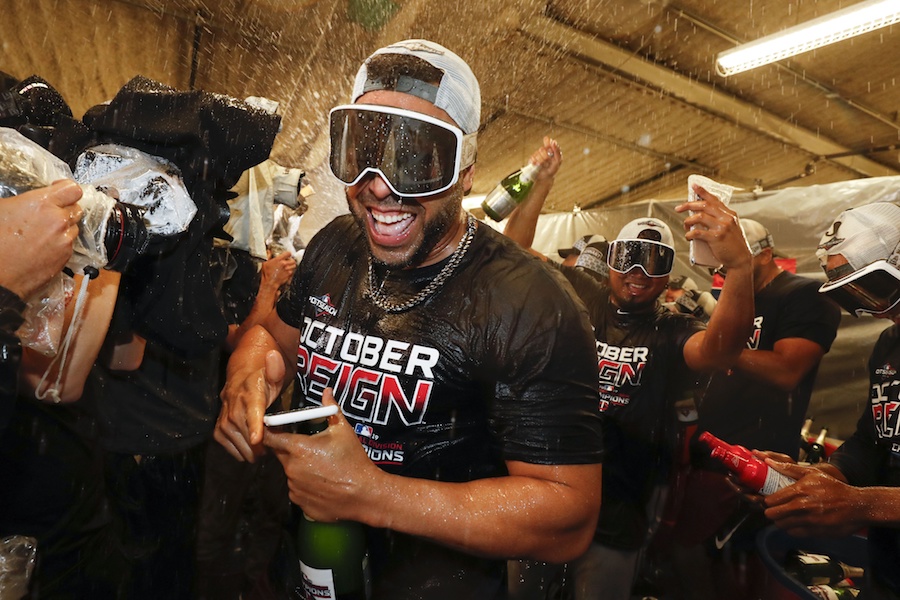 26. Willians Astudillo The good news: Astudillo makes the 26-man roster here. More good news: he is the 26th most stunning man on the roster. 25. Kenta Maeda Kenta is docked for his non-committal beard, but a strong smile (not pictured) helps him slot in just ahead of La Tortuga. 24. Jorge Polanco My 2019 Twins MVP. Polo enters camp with a light scruff and a slightly terrifying stare. 23. Matt Wisler Talk about terrifying stare. Wisler has a nice set of choppers and looks quite good in red, white and navy. 22. Tyler Clippard Clean cut goatee, sporty glasses help the Twins’ new addition add some swag at No.22. 21. Zack Littell A volumous flurry of red facial hair and lukewarm blue eyes push Littell just outside the top 20. 20. Randy Dobnak The Dobber scurries past his sports glasses foe Clippard with patchy, yet engaging handlebars. 19. Luis Arráez Baby-faced Luis sparkles with earrings and a soft-feeling gaze. 18. Alex Avila A tougher rank, Avila is your friendly neighbor who voluntarily plows your driveway and trims your grass. 17. Mitch Garver Just beating out his catching partner, the silver slugger impresses less with the beard but wins with his glare and jawline. 16. Taylor Rogers Perhaps I am influenced by his riveting voice and aura, but T-Rog is his own version of handsome. 15. Trevor May How ‘bout them eyebrows? Trevor gets massive bonus ticks for managing his bushy tails. 14. Jake Odorizzi Odo has constructed ways to complement his solid look. A plausible complexion is riveting enough to crack the top 15. 13. Eddie Rosario Rosito clearly employs a maestro as his barber. The hair slices in his left eyebrow and immoral stubbles are vigorous. 12. Tyler Duffey A good-looking side smile, ice blue eyes, and a finish just outside of the top 10. 11. Josh Donaldson I can appreciate a scruffy look, and Josh's certainly fits his personality. 10. Homer Bailey Homer “the horse” has a defined jaw line and deep brown eyes. 9. Ehire Adrianza AD, like Arráez, sports a strong pair of earrings and a dancing smile. 8. Cody Stashak Fighting for a spot in the Twins’ bullpen, Stashak doesn’t have to fight hard here to crack the top 8 with a nice little goatee and outstanding jaw. 7. Marwin Gonzalez This is where the smiles really shine through, and Margo has a strong one with this pretty pup. 6. Nelson Cruz King Nellie has the sharpest and simplest beard on the club. His laugh vaults him toward the top of the list. 5. Sergio Romo Nastiest slider in baseball? Yes. Nastiest smile in baseball? Quite the opposite. 4. Miguel Sano His new “SANO” necklace isn’t shown here, but his impressive teeth and King Nellie-like beard are. 3. José Berríos José entered photo day with a half-committal beard, but his inviting and kind watch is lovable. 2. Byron Buxton A phenomenal handlebar-goatee crossover lands Buck in the top 2. Plus, the hanging cross earring is the sign of a winner. 1. Max Kepler Kepler looks like the next contestant on ABC’s The Bachelor. Who was snubbed too low? Who was overrated? Comment below! MORE FROM TWINS DAILY — Latest Twins coverage from our writers — Recent Twins discussion in our forums — Follow Twins Daily via Twitter, Facebook or email
 -
 In what looks like a three team race for the AL Central crown, every game matters. Michael Pineda will return on May 10th and Rich Hill not too long after, but who should hold down the fifth rotation spot until then?The front-runners Randy Dobnak The Dobber was the Twins’ Minor League Pitcher of the Year after posting an incredible 2.07 ERA and 109 strikeouts in 135 innings at three different levels in 2019. Dobnak futher impressed for the Twins, holding a 1.59 ERA in 28 1/3 innings with 23 strikeouts and five walks. Dobnak started game two of the ALDS at Yankee Stadium, and while depth was a major issue, Rocco and company had a relatively easy decision handing him the ball. Dobnak has continued his excellence this spring. Dobnak relies mostly on his “one-seamer,” a variation of a diving sinker that generated an expected .659 OPS in 2019. Batters whiffed on 46% of his curveballs and his four-seam fastball averaged a not-too-shabby 93.4 MPH. His 54% ground ball rate was nearly 10% above league average (45.4%), and the addition of Josh Donaldson should only help him in that regard. Dobnak has proven that he can get major leaguers out consistently with his unique and effective repertoire. Jhoulys Chacín Once a highly efficient front-end arm, Chacín joins the Twins in Fort Myers following a disastrous 2019 season. From 2010 to 2018, Chacín ranked 37th in ERA (3.86) and 30th in OPS against (.704) among starters with at least 1,000 innings pitched. Chacín pitched for the Brewers in the 2018 postseason and didn’t allow a run until his 11th inning pitched. In 2019, he was the seventh worst starting pitcher who threw at least 100 innings with a 6.01 ERA. The key question for Chacín is: What the heck happened? Chacín lost command of his sinker and was forced to throw more sliders, thus becoming more predictable and hittable. His sinker was ineffective and his slider, while still nasty, was hit much harder (.215/.292/.379) than it was in 2018 (.158/.222/.270). The focus seems to be throwing more strikes with his sinker, a pitch that he commanded well up until 2019. As was referenced on Gleeman and the Geek, the only way to keep all four of these pitchers in the organization is to choose Chacín, who is in Fort Myers on a minor-league deal with no options. The dark horses: Devin Smeltzer The one dubbed as “Alka-Smeltzer” on Twitter has exuberant resiliency and grit. He gets batters out with less-than-stellar stuff and an insane spin rate that could potentially give him some more upside. Smeltzer pitched more innings for the Twins in 2019 than anyone on this list. He posted a 3.86 ERA and 38 strikeouts in 49 innings, starting six games and relieving in five. He could potentially fill a long relief role in 2020 if he doesn’t land the starting job. Smeltzer is a great story and a really solid pitcher. Lewis Thorpe Returning to camp after tending to personal matters, Thorpe is perhaps the longest shot to win the job. He arguably has the best stuff and highest upside of these four, but his struggles with the Twins last year (6.18 ERA), and slow start to spring training will likely land him in Rochester to begin 2020. However, the Twins are high on him and view him as a building block for their future rotation. His outstanding strikeout numbers and impressive arsenal make him a potential X-factor for the Twins. What do you think? Who should get the fifth spot in the Opening Day rotation? MORE FROM TWINS DAILY — Latest Twins coverage from our writers — Recent Twins discussion in our forums — Follow Twins Daily via Twitter, Facebook or email Click here to view the article
 -
Pick Your Pitcher: Who Should Get the Twins' 5th Rotation Spot?
Nash Walker posted an article in Twins
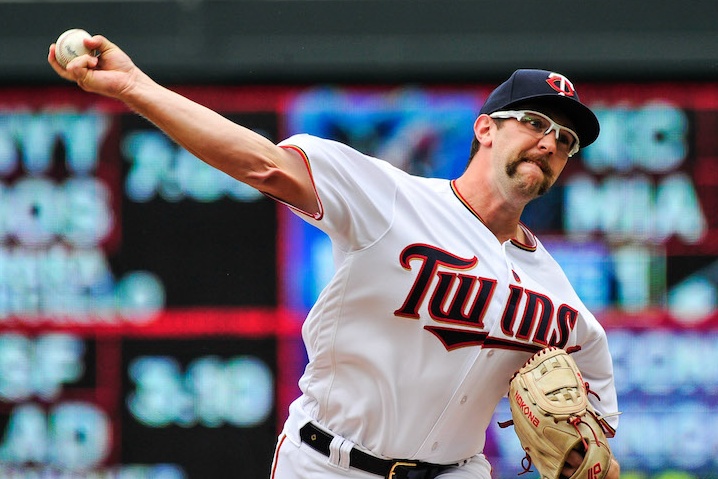 The front-runners Randy Dobnak The Dobber was the Twins’ Minor League Pitcher of the Year after posting an incredible 2.07 ERA and 109 strikeouts in 135 innings at three different levels in 2019. Dobnak futher impressed for the Twins, holding a 1.59 ERA in 28 1/3 innings with 23 strikeouts and five walks. Dobnak started game two of the ALDS at Yankee Stadium, and while depth was a major issue, Rocco and company had a relatively easy decision handing him the ball. Dobnak has continued his excellence this spring. https://twitter.com/tlschwerz/status/1234916069069983744?s=20 Dobnak relies mostly on his “one-seamer,” a variation of a diving sinker that generated an expected .659 OPS in 2019. Batters whiffed on 46% of his curveballs and his four-seam fastball averaged a not-too-shabby 93.4 MPH. His 54% ground ball rate was nearly 10% above league average (45.4%), and the addition of Josh Donaldson should only help him in that regard. Dobnak has proven that he can get major leaguers out consistently with his unique and effective repertoire. https://twitter.com/ajcondon_/status/1188998059797237760?s=20 Jhoulys Chacín Once a highly efficient front-end arm, Chacín joins the Twins in Fort Myers following a disastrous 2019 season. From 2010 to 2018, Chacín ranked 37th in ERA (3.86) and 30th in OPS against (.704) among starters with at least 1,000 innings pitched. Chacín pitched for the Brewers in the 2018 postseason and didn’t allow a run until his 11th inning pitched. https://twitter.com/PitcherList/status/1052012164070948864?s=20 In 2019, he was the seventh worst starting pitcher who threw at least 100 innings with a 6.01 ERA. The key question for Chacín is: What the heck happened? Chacín lost command of his sinker and was forced to throw more sliders, thus becoming more predictable and hittable. His sinker was ineffective and his slider, while still nasty, was hit much harder (.215/.292/.379) than it was in 2018 (.158/.222/.270). The focus seems to be throwing more strikes with his sinker, a pitch that he commanded well up until 2019. As was referenced on Gleeman and the Geek, the only way to keep all four of these pitchers in the organization is to choose Chacín, who is in Fort Myers on a minor-league deal with no options. https://twitter.com/ParkerHageman/status/1223796427647864833?s=20 The dark horses: Devin Smeltzer The one dubbed as “Alka-Smeltzer” on Twitter has exuberant resiliency and grit. He gets batters out with less-than-stellar stuff and an insane spin rate that could potentially give him some more upside. Smeltzer pitched more innings for the Twins in 2019 than anyone on this list. He posted a 3.86 ERA and 38 strikeouts in 49 innings, starting six games and relieving in five. He could potentially fill a long relief role in 2020 if he doesn’t land the starting job. Smeltzer is a great story and a really solid pitcher. Lewis Thorpe Returning to camp after tending to personal matters, Thorpe is perhaps the longest shot to win the job. He arguably has the best stuff and highest upside of these four, but his struggles with the Twins last year (6.18 ERA), and slow start to spring training will likely land him in Rochester to begin 2020. However, the Twins are high on him and view him as a building block for their future rotation. His outstanding strikeout numbers and impressive arsenal make him a potential X-factor for the Twins. What do you think? Who should get the fifth spot in the Opening Day rotation? MORE FROM TWINS DAILY — Latest Twins coverage from our writers — Recent Twins discussion in our forums — Follow Twins Daily via Twitter, Facebook or email
 -
Another Way the Josh Donaldson Signing Was Necessary
Nash Walker replied to Matt Braun's topic in Twins Daily Front Page News
@Moderator it was me ^ I compared Josh Donaldson to Jesus. -
Another Way the Josh Donaldson Signing Was Necessary
Nash Walker replied to Matt Braun's topic in Twins Daily Front Page News
I can’t imagine someone comparing Josh Donaldson to Jesus. What a tool. -
Twins' Corner Infield Duo Chasing History
Nash Walker replied to Nash Walker's topic in Twins Daily Front Page News
That’s... the point. If Donaldson and Sanó hit 35 homers each with an OPS+ above 130, they’d be the second duo ever to do it. If one of them hits 34, they’d be the 5th or 6th with at least 34. 34 homers is different than 35. -
Miguel Sanó and Josh Donaldson are getting along rosily so far in Fort Myers. Are they the best corner infield hitting pair in baseball history?OPS+ is an incredibly useful stat and especially in today’s game. With an emphasis on home runs and an alleged “juiced” ball, offensive numbers are through the roof. OPS+ is a measure of how a player’s OPS (on-base plus slugging) compares to the rest of the league. An OPS+ of 100 is the league average, and anything above or below represents a percentage better or worse. For example, Mike Trout led MLB with a 185 OPS+ in 2019. His OPS was 85% above league average. OPS+ gives us the opportunity to try to compare players across eras. The Twins had nine players with an OPS+ above 100 last year. ZiPS projections see 11 such players on the 2020 roster. The impeccable Nelson Cruz is projected to lead the team with an OPS+ of 135, with Sanó just behind him at 131 and Donaldson in third at 125. The 2019 Atlanta Braves were one of 66 teams since 1871 to field a corner infield duo who each posted an OPS+ of 125 or more in the same season. Freddie Freeman and Donaldson were a powerful duo, but Donaldson and Sanó could be better. Since 2013, Donaldson ranks 10th with 209 home runs. Excluding 2018 where he appeared in only 52 games due to calf injuries, Donaldson has averaged 33.5 homers per year over the last seven seasons. In 2019, Donaldson and Freeman became just the fifth corner infield pair to each hit 37 or more home runs in a season. They combined for 75 total homers, the most ever by a non-Rockies corner infield duo. ZiPS foresees some regression from Donaldson in 2020 and projects him to hit 27 home runs. I’d project him for closer to 34 to 40 as the switch from the stingy NL East to the hitter friendly AL Central will do wonders for the “Bringer of Rain.” Donaldson finished 2019 sixth in average exit velocity (92.9 mph) and eighth in hard-hit rate (50%). He recently said he feels like “MVP level production is attainable again,” and I wouldn’t bet against him. Sanó slugged 34 home runs in just 105 games in 2019. ZiPS projects him to hit a hefty 35 homers in 482 plate appearances in 2020. A healthy Sanó is capable of insane offensive output, and now entering his age-27 season in reportedly incredible shape, the sky is truly the limit. Sanó finished last season by hitting .254/.362/.578 with 21 home runs in 65 games after the break. He led MLB in hard hit rate (57.2%) and placed second behind Aaron Judge in average exit velocity (94.4 mph). So what numbers must Donaldson and Sanó surpass to be considered the best hitting corner infield duo in baseball history? There has been one pair of corner infielders since 1871 to each post an OPS+ of 130 or more AND hit at least 35 home runs in one season: Lee May and Tony Pérez for the 1969 Cincinnati Reds. May had an OPS+ of 133 with 38 homers, and Pérez went deep 37 times with an OPS+ of 140. Health, as usual, will be the key, but Donaldson and Sanó are capable of becoming the most powerful first base-third base tandem in baseball history. This will be one of many records to watch for the 2020 Twins. Is it Opening Day yet? What do you think? Will Donaldson and Sanó become the most powerful corner infield pair ever? Comment below! MORE FROM TWINS DAILY — Latest Twins coverage from our writers — Recent Twins discussion in our forums — Follow Twins Daily via Twitter, Facebook or email Click here to view the article
-
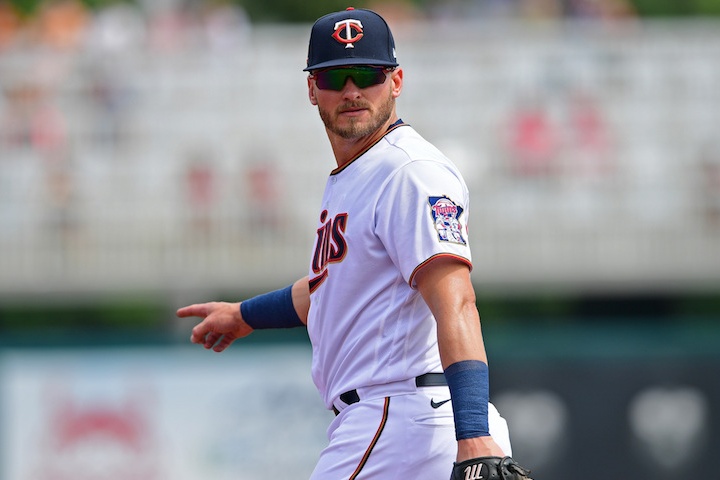 OPS+ is an incredibly useful stat and especially in today’s game. With an emphasis on home runs and an alleged “juiced” ball, offensive numbers are through the roof. OPS+ is a measure of how a player’s OPS (on-base plus slugging) compares to the rest of the league. An OPS+ of 100 is the league average, and anything above or below represents a percentage better or worse. For example, Mike Trout led MLB with a 185 OPS+ in 2019. His OPS was 85% above league average. OPS+ gives us the opportunity to try to compare players across eras. The Twins had nine players with an OPS+ above 100 last year. ZiPS projections see 11 such players on the 2020 roster. The impeccable Nelson Cruz is projected to lead the team with an OPS+ of 135, with Sanó just behind him at 131 and Donaldson in third at 125. The 2019 Atlanta Braves were one of 66 teams since 1871 to field a corner infield duo who each posted an OPS+ of 125 or more in the same season. Freddie Freeman and Donaldson were a powerful duo, but Donaldson and Sanó could be better. Since 2013, Donaldson ranks 10th with 209 home runs. Excluding 2018 where he appeared in only 52 games due to calf injuries, Donaldson has averaged 33.5 homers per year over the last seven seasons. In 2019, Donaldson and Freeman became just the fifth corner infield pair to each hit 37 or more home runs in a season. They combined for 75 total homers, the most ever by a non-Rockies corner infield duo. ZiPS foresees some regression from Donaldson in 2020 and projects him to hit 27 home runs. I’d project him for closer to 34 to 40 as the switch from the stingy NL East to the hitter friendly AL Central will do wonders for the “Bringer of Rain.” Donaldson finished 2019 sixth in average exit velocity (92.9 mph) and eighth in hard-hit rate (50%). He recently said he feels like “MVP level production is attainable again,” and I wouldn’t bet against him. Sanó slugged 34 home runs in just 105 games in 2019. ZiPS projects him to hit a hefty 35 homers in 482 plate appearances in 2020. A healthy Sanó is capable of insane offensive output, and now entering his age-27 season in reportedly incredible shape, the sky is truly the limit. Sanó finished last season by hitting .254/.362/.578 with 21 home runs in 65 games after the break. He led MLB in hard hit rate (57.2%) and placed second behind Aaron Judge in average exit velocity (94.4 mph). So what numbers must Donaldson and Sanó surpass to be considered the best hitting corner infield duo in baseball history? There has been one pair of corner infielders since 1871 to each post an OPS+ of 130 or more AND hit at least 35 home runs in one season: Lee May and Tony Pérez for the 1969 Cincinnati Reds. May had an OPS+ of 133 with 38 homers, and Pérez went deep 37 times with an OPS+ of 140. Health, as usual, will be the key, but Donaldson and Sanó are capable of becoming the most powerful first base-third base tandem in baseball history. This will be one of many records to watch for the 2020 Twins. Is it Opening Day yet? What do you think? Will Donaldson and Sanó become the most powerful corner infield pair ever? Comment below! MORE FROM TWINS DAILY — Latest Twins coverage from our writers — Recent Twins discussion in our forums — Follow Twins Daily via Twitter, Facebook or email
 -
Ohhhh baby. Thank you for writing this Nick!
-
Josh Donaldson and Nelson Cruz should shine, José Berríos will post an ERA lower than 4.00, and Taylor Rogers will continue to make hitters look foolish. They are not X-factors. The sports definition of an X-factor is a player with a strong but unpredictable influence on the outcome of the team. Who are the Twins’ three biggest X-factors?1. Byron Buxton Buxton could single-handedly dictate whether the Twins are eliminated or championed in October. The Twins were 53-25 when Buxton started and 48-36 when he didn’t in 2019. After saving 24 runs and receiving MVP votes in 2017, Buxton hit .156/.183/.200 in just 28 games in 2018. With a new manager and service time manipulation behind him, he broke out and hit .262/.314/.513 with 44 extra-base hits in 87 games last year. His magical season ended Aug.1 when he separated his shoulder colliding into the wall at Marlins Park. Buxton has moved swiftly in his recovery from labrum surgery and even took live batting practice Wednesday in Fort Myers. Buxton ranked fourth among centerfielders in success rate added in 2019, per baseball savant, and his 26 outs-above-average in 2017 ranked first among all defenders. Buxton was always an elite defender, but his career high 114 OPS+ in 2019 suggests that his immense upside as a prospect has not disappeared. Max Kepler is a plus defender in right and can keep his legs fresh with Buxton in center. Starting further back toward the warning track and getting regular days off should help Buxton stay healthy in 2020, and if he does, the sky is truly the limit. 2. Lewis Thorpe Thorpe first pitched in the Twins’ system in 2013 and has posted phenomenal strikeout numbers in every year since. In five seasons in the minors, Thorpe put up a 3.50 ERA with 10.8 strikeouts and 2.9 walks per nine. The Twins are seemingly very high on him even after he allowed 19 runs in 27 2/3 big league innings in 2019. Righties hit .330/.371/.549 off him in 97 plate appearances. Thorpe’s swing-and-miss stuff played well though as he struck out 31. The underlying numbers suggest that bad luck was a key contributor. Thorpe had a 3.47 FIP, almost three full runs below his ERA. Thorpe’s elite stuff shined through slightly in his debut. His 11.8% swinging strike rate would’ve ranked 22nd among qualified starters, ahead of Madison Bumgarner, Mike Minor, and Sonny Gray. Thorpe’s slider and curveball were rated highly through the minors and translated decently into the majors. His slider was swung on and missed 44% of the time and generated just a .285 expected wOBA. He threw his curve 86 times and got only 15 swinging strikes. His upside as a mid-rotation starter would be welcomed with open arms to this club, and he has a serious opportunity to hold a rotation spot before Opening Day. 3. Jake Odorizzi Odorizzi was a quiet key to the Twins’ success in 2019. He allowed a sterling .620 OPS in the first half en route to his first All-Star Game. The Twins went 21-9 in 30 Odorizzi starts and his ability to shut down right-handed hitters especially shined in the AL Central. Odorizzi held the Indians to a .177/.278/.304 line and just four runs in 22 1/3 innings. He struck out 32 White Sox in 22 innings with a 2.86 ERA. Odorizzi struck out a career high 10.1 per nine while posting the lowest home run per fly ball rate among pitchers with 150 or more innings pitched (8.8%). He had a treacherous July and allowed 19 runs in 23 innings. Take out Odorizzi’s start against the Yankees on July 24 (4 IP, 9 ER) and his ERA on the season drops to 3.07. That would’ve ranked 12th among pitchers with at least 150 innings, and firmly ahead of Stephen Strasburg, Walker Buehler, and Shane Bieber. Odorizzi started game three of the ALDS and pitched five strong innings, holding the potent Yankees to two runs and giving the Twins a chance to extend the series. Averaging just 5.3 innings per start in 2019, Odorizzi put in more work at the Florida Baseball Ranch this winter and is looking to take another step in 2020. If he posts another 131 ERA+, the Twins will flirt with 100 wins again. Who do you think is the Twins' biggest X-factor for their success in 2020? Comment below! MORE FROM TWINS DAILY — Latest Twins coverage from our writers — Recent Twins discussion in our forums — Follow Twins Daily via Twitter, Facebook or email Click here to view the article
-
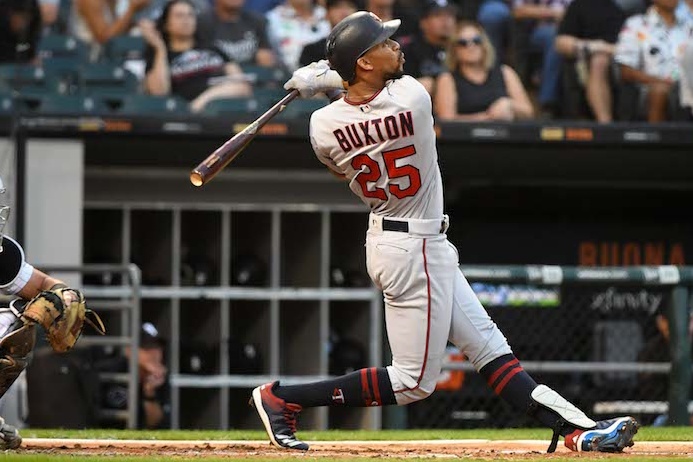 1. Byron Buxton Buxton could single-handedly dictate whether the Twins are eliminated or championed in October. The Twins were 53-25 when Buxton started and 48-36 when he didn’t in 2019. After saving 24 runs and receiving MVP votes in 2017, Buxton hit .156/.183/.200 in just 28 games in 2018. With a new manager and service time manipulation behind him, he broke out and hit .262/.314/.513 with 44 extra-base hits in 87 games last year. His magical season ended Aug.1 when he separated his shoulder colliding into the wall at Marlins Park. Buxton has moved swiftly in his recovery from labrum surgery and even took live batting practice Wednesday in Fort Myers. Buxton ranked fourth among centerfielders in success rate added in 2019, per baseball savant, and his 26 outs-above-average in 2017 ranked first among all defenders. Buxton was always an elite defender, but his career high 114 OPS+ in 2019 suggests that his immense upside as a prospect has not disappeared. Max Kepler is a plus defender in right and can keep his legs fresh with Buxton in center. Starting further back toward the warning track and getting regular days off should help Buxton stay healthy in 2020, and if he does, the sky is truly the limit. https://twitter.com/Nashwalker9/status/1227269351608287235?s=20 2. Lewis Thorpe Thorpe first pitched in the Twins’ system in 2013 and has posted phenomenal strikeout numbers in every year since. In five seasons in the minors, Thorpe put up a 3.50 ERA with 10.8 strikeouts and 2.9 walks per nine. The Twins are seemingly very high on him even after he allowed 19 runs in 27 2/3 big league innings in 2019. Righties hit .330/.371/.549 off him in 97 plate appearances. Thorpe’s swing-and-miss stuff played well though as he struck out 31. The underlying numbers suggest that bad luck was a key contributor. Thorpe had a 3.47 FIP, almost three full runs below his ERA. Thorpe’s elite stuff shined through slightly in his debut. His 11.8% swinging strike rate would’ve ranked 22nd among qualified starters, ahead of Madison Bumgarner, Mike Minor, and Sonny Gray. Thorpe’s slider and curveball were rated highly through the minors and translated decently into the majors. His slider was swung on and missed 44% of the time and generated just a .285 expected wOBA. He threw his curve 86 times and got only 15 swinging strikes. His upside as a mid-rotation starter would be welcomed with open arms to this club, and he has a serious opportunity to hold a rotation spot before Opening Day. 3. Jake Odorizzi Odorizzi was a quiet key to the Twins’ success in 2019. He allowed a sterling .620 OPS in the first half en route to his first All-Star Game. The Twins went 21-9 in 30 Odorizzi starts and his ability to shut down right-handed hitters especially shined in the AL Central. Odorizzi held the Indians to a .177/.278/.304 line and just four runs in 22 1/3 innings. He struck out 32 White Sox in 22 innings with a 2.86 ERA. Odorizzi struck out a career high 10.1 per nine while posting the lowest home run per fly ball rate among pitchers with 150 or more innings pitched (8.8%). He had a treacherous July and allowed 19 runs in 23 innings. Take out Odorizzi’s start against the Yankees on July 24 (4 IP, 9 ER) and his ERA on the season drops to 3.07. That would’ve ranked 12th among pitchers with at least 150 innings, and firmly ahead of Stephen Strasburg, Walker Buehler, and Shane Bieber. Odorizzi started game three of the ALDS and pitched five strong innings, holding the potent Yankees to two runs and giving the Twins a chance to extend the series. Averaging just 5.3 innings per start in 2019, Odorizzi put in more work at the Florida Baseball Ranch this winter and is looking to take another step in 2020. If he posts another 131 ERA+, the Twins will flirt with 100 wins again. Who do you think is the Twins' biggest X-factor for their success in 2020? Comment below! MORE FROM TWINS DAILY — Latest Twins coverage from our writers — Recent Twins discussion in our forums — Follow Twins Daily via Twitter, Facebook or email
 -
At TwinsFest in January, Twins’ chief baseball officer Derek Falvey was asked the golden question of the offseason: “Will you trade highly-touted minor league prospects for proven major league talent?” “It’s always a balance when trading away young talent to get near-term talent,” Falvey said.Falvey and general manager Thad Levine found that balance last week when they traded MLB Pipeline’s No. 83 prospect Brusdar Graterol to the Los Angeles Dodgers for veteran starting pitcher Kenta Maeda. Graterol was a consensus top five prospect in the Twins’ system and was slated to throw peas in Minnesota’s 2020 bullpen. Here was the finalized deal: Maeda is an entirely serviceable mid-rotation arm with great strikeout numbers and postseason pedigree. In a division and league loaded with right-handed sluggers, the Twins may have pegged Maeda’s stout ability to get them out. This isn’t a Royce Lewis-for-Noah Syndergaard type of deal. The Twins are both quietly and outwardly expressing their continued desire for sustained success. Maeda is under control for four more seasons at a base salary of $3 million per year. With the Dodgers sending $10 million, the Twins theoretically pay Maeda $500,000 in guaranteed yearly salary. The incentives are the kicker. Maeda has averaged 26 starts, 147 innings and $8.25 million in the first four years of his contract. This is essentially a four-year, $34-42 million contract if Maeda stays healthy and effective. By penciling in José Berríos, Maeda, and Michael Pineda into the 2021 rotation, Falvey and Levine avoid repeating the daunting task of filling four rotation spots next winter. This is absolutely an investment in the current 101-win core, but in the duo’s eyes, they are also adding to the floor of the future. There will be signifcant overlap with current assets into the next core of Lewis, Alex Kirilloff, Trevor Larnach, Jhoan Duran, and Jordan Balazovic. The more overlap, the higher the floor and ceiling. Jorge Polanco and Max Kepler are Twins through at least 2024, and Miguel Sanó, Maeda, and Mitch Garver are under contract through 2023. Lewis isn’t far away, Kirilloff was phenomenal at the end of 2019, and once you get a pronunciation tweet, you’re coming soon. While the instant perception to any prospect-for-veteran trade is sacrificing the future for the present, this case may be different. Maeda provides sustained stability to a roster that may become too full of excelling regulars in the next few years. Graterol is an immense talent with an unknown future, and Falvey and Levine chose the sure thing in Maeda. Josh Donaldson adds upside and flare to a team filled with consistent contributors. He is a prize for focusing on team-friendly, short-term deals since Falvey and Levine took over in 2016. Maeda is another piece with a considerable floor of four solid years, with maybe some untapped potential too. By creating cost control and seeking relatively "free" books, Falvey and Levine will be able to target high-profile free agents every single winter. What do you think? Was the Graterol-for-Maeda trade more about 2020 or the future? Comment below! MORE FROM TWINS DAILY — Latest Twins coverage from our writers — Recent Twins discussion in our forums — Follow Twins Daily via Twitter, Facebook or email Click here to view the article
-
Twins' Front Office Finds Desired Balance in the Brusdar Graterol Trade
Nash Walker posted an article in Twins
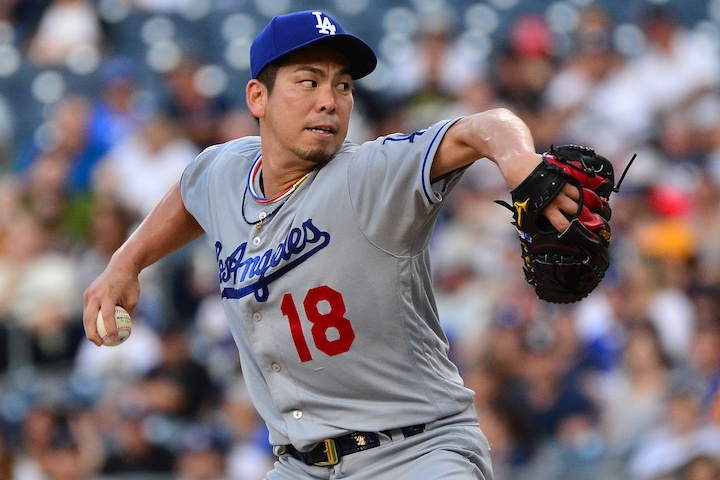 Falvey and general manager Thad Levine found that balance last week when they traded MLB Pipeline’s No. 83 prospect Brusdar Graterol to the Los Angeles Dodgers for veteran starting pitcher Kenta Maeda. Graterol was a consensus top five prospect in the Twins’ system and was slated to throw peas in Minnesota’s 2020 bullpen. Here was the finalized deal: https://twitter.com/KyleAGlaser/status/1227047558150705152?s=20 Maeda is an entirely serviceable mid-rotation arm with great strikeout numbers and postseason pedigree. In a division and league loaded with right-handed sluggers, the Twins may have pegged Maeda’s stout ability to get them out. https://twitter.com/Nashwalker9/status/1225093893546360832?s=20 This isn’t a Royce Lewis-for-Noah Syndergaard type of deal. The Twins are both quietly and outwardly expressing their continued desire for sustained success. Maeda is under control for four more seasons at a base salary of $3 million per year. With the Dodgers sending $10 million, the Twins theoretically pay Maeda $500,000 in guaranteed yearly salary. The incentives are the kicker. Maeda has averaged 26 starts, 147 innings and $8.25 million in the first four years of his contract. This is essentially a four-year, $34-42 million contract if Maeda stays healthy and effective. By penciling in José Berríos, Maeda, and Michael Pineda into the 2021 rotation, Falvey and Levine avoid repeating the daunting task of filling four rotation spots next winter. This is absolutely an investment in the current 101-win core, but in the duo’s eyes, they are also adding to the floor of the future. There will be signifcant overlap with current assets into the next core of Lewis, Alex Kirilloff, Trevor Larnach, Jhoan Duran, and Jordan Balazovic. The more overlap, the higher the floor and ceiling. Jorge Polanco and Max Kepler are Twins through at least 2024, and Miguel Sanó, Maeda, and Mitch Garver are under contract through 2023. Lewis isn’t far away, Kirilloff was phenomenal at the end of 2019, and once you get a pronunciation tweet, you’re coming soon. https://twitter.com/morsecode/status/1227622175471001601?s=20 https://twitter.com/morsecode/status/1225109222792290306?s=20 While the instant perception to any prospect-for-veteran trade is sacrificing the future for the present, this case may be different. Maeda provides sustained stability to a roster that may become too full of excelling regulars in the next few years. Graterol is an immense talent with an unknown future, and Falvey and Levine chose the sure thing in Maeda. Josh Donaldson adds upside and flare to a team filled with consistent contributors. He is a prize for focusing on team-friendly, short-term deals since Falvey and Levine took over in 2016. Maeda is another piece with a considerable floor of four solid years, with maybe some untapped potential too. By creating cost control and seeking relatively "free" books, Falvey and Levine will be able to target high-profile free agents every single winter. What do you think? Was the Graterol-for-Maeda trade more about 2020 or the future? Comment below! MORE FROM TWINS DAILY — Latest Twins coverage from our writers — Recent Twins discussion in our forums — Follow Twins Daily via Twitter, Facebook or email
 -
Another Year of Intangibles
Nash Walker replied to Cody Pirkl's topic in Twins Daily Front Page News
This is a great idea and article Cody. I am personally excited for Joshua Adam Donaldson and the grit he brings to third base. There’s so much talent and personality on this club. It’s a special group that is capable of extremely special things. -
Keeping Graterol, Acquiring Maeda Should Be the Twins' Goal
Nash Walker posted a blog entry in The Special Season
In a bizarre and frustrating twist, the Red Sox are staunchly refusing to get anything less than Graterol (and more) from the Twins. It just ain’t gonna work with Boston, Falvine. Kenta Maeda, with his underrated toolbox, would look great in Minnesota. Since his rookie season in 2016, Maeda ranks second to Max Scherzer among all pitchers with at least 1,000 at-bats against right-handed hitters (.199). In a right-handed heavy league and division, his prowess is welcomed with open arms. A large pull to Madison Bumgarner was his ability to pitch at an extremely high level in October. On a much lesser but comparably impressive scale, Maeda has a 3.31 ERA in 24 postseason games. Most of his appearances came out of the bullpen, but I foresee Maeda pitching the first four or five innings against the Yankees or Astros this October. Brusdar Graterol is an immense talent. His ability and upside have been tarnished in recent days by both the industry and Twins fans convincing themselves that he really isn’t that great. He is special. I wasn’t against this Graterol-for-Maeda swap, but I don’t want to see Brusdar go. Keep him as an overpowering gun in the 2020 bullpen if you can. He is an asset on and off the field for Minnesota. The Twins farm system is so incredibly deep with MLB-ready arms and bats. I am of the belief that they could put together a package for the Dodgers to acquire Maeda. I think he’s going to be traded regardless, so why not cut out the Red Sox, shift the focus away from Graterol, and group two or three top 20 prospects for Maeda? The Dodgers can work separately for Mookie Betts and David Price, and the Twins can exit this circus with Chaim Bloom and the Red Sox. Stash Graterol in an already great bullpen, pencil in Maeda as your number three starter, and let’s go to battle starting March 26th in Oakland. Would the Dodgers push to grab Graterol for their own World Series caliber roster? Probably. Say no. Flex your muscles of depth in the farm system and work a little magic to keep arguably your best pitching prospect while obtaining Maeda, who makes this Twins team that much better. This has been a wild ride, but the Twins can come out on top, and in a big way. What do you think? Comment below! -
I fixed the title
-
The Twins boast an extremely right-handed pitching staff. Taylor Rogers, Lewis Thorpe, Devin Smeltzer, and Rich Hill are the only four lefties among 21 pitchers on the 40-man roster.This could be looked at as a negative. The Twins may be strapped when Yordan Àlvarez comes up with bases loaded late, or when Didi Gregorius is entrenched in the heart of Philadelphia’s lineup in the 2020 World Series. But for right now, this is extremely favorable for the current construction of the American League. Let’s take a look at the top 20 hitters in the AL (excluding Twins) based on their projected wRC+ via Steamer. The lefty-lefty platoon advantage for a pitcher has been proven and exploited for many years. As a left-handed hitter myself, I can attest to the difficulty of hitting a same-side arm. In 2019, right-handed batters hit right-handed pitchers at a similar, lukewarm clip. The Twins have built a staff and bullpen that reflects these numbers. With the AL providing an advantage to right-handed pitchers, Minnesota re-signed Sergio Romo, Jake Odorizzi, and Michael Pineda, picked up Matt Wisler, traded for Kenta Maeda (pending) and invited Jhoulys Chacín to compete for a spot in Fort Myers. Here are the 2019 platoon numbers from the projected rotation. And the bullpen... Righties were set to have trouble against the Twins before (potentially) adding Maeda, one of the best in the sport at getting them out. A big reason for same-side pitchers having success is the slider. Yes, the frisbee. Here is a look at how Twins’ right-handed pitchers threw their sliders in 2019: Here are a few examples: I was frustrated when the Twins couldn’t land Marcus Stroman at the trade deadline in 2019 because of his prowess against righties. By bringing Maeda in (reportedly), Minnesota has gone above and beyond. Franmil Reyes, Eloy Jiménez, José Abreu, Jorge Soler, Tim Anderson, Edwin Encarnación, and Hunter Dozier, good luck overthrowing this staff (and offense) for the division crown. MORE FROM TWINS DAILY — Latest Twins coverage from our writers — Recent Twins discussion in our forums — Follow Twins Daily via Twitter, Facebook or email Click here to view the article
-
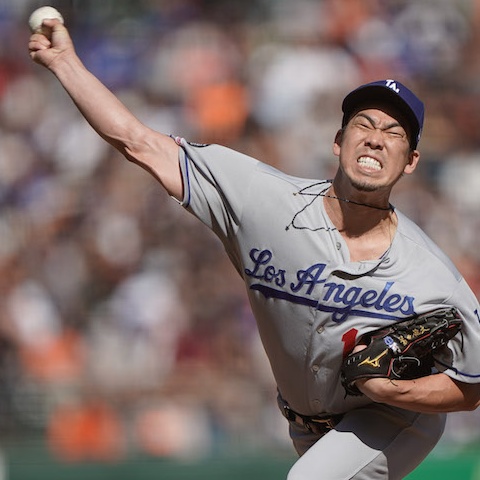 This could be looked at as a negative. The Twins may be strapped when Yordan Àlvarez comes up with bases loaded late, or when Didi Gregorius is entrenched in the heart of Philadelphia’s lineup in the 2020 World Series. But for right now, this is extremely favorable for the current construction of the American League. Let’s take a look at the top 20 hitters in the AL (excluding Twins) based on their projected wRC+ via Steamer. The lefty-lefty platoon advantage for a pitcher has been proven and exploited for many years. As a left-handed hitter myself, I can attest to the difficulty of hitting a same-side arm. In 2019, right-handed batters hit right-handed pitchers at a similar, lukewarm clip. The Twins have built a staff and bullpen that reflects these numbers. With the AL providing an advantage to right-handed pitchers, Minnesota re-signed Sergio Romo, Jake Odorizzi, and Michael Pineda, picked up Matt Wisler, traded for Kenta Maeda (pending) and invited Jhoulys Chacín to compete for a spot in Fort Myers. Here are the 2019 platoon numbers from the projected rotation. And the bullpen... Righties were set to have trouble against the Twins before (potentially) adding Maeda, one of the best in the sport at getting them out. https://twitter.com/Nashwalker9/status/1225093893546360832?s=20 https://twitter.com/Nashwalker9/status/1224893402636083202?s=20 A big reason for same-side pitchers having success is the slider. Yes, the frisbee. Here is a look at how Twins’ right-handed pitchers threw their sliders in 2019: Here are a few examples: https://twitter.com/benjpalmer/status/1182138482384343040?s=20 https://twitter.com/TFTwins/status/1164005013565399045?s=20 https://twitter.com/PitchingNinja/status/987280587126865920?s=20 I was frustrated when the Twins couldn’t land Marcus Stroman at the trade deadline in 2019 because of his prowess against righties. By bringing Maeda in (reportedly), Minnesota has gone above and beyond. Franmil Reyes, Eloy Jiménez, José Abreu, Jorge Soler, Tim Anderson, Edwin Encarnación, and Hunter Dozier, good luck overthrowing this staff (and offense) for the division crown. MORE FROM TWINS DAILY — Latest Twins coverage from our writers — Recent Twins discussion in our forums — Follow Twins Daily via Twitter, Facebook or email
 -
Really great writing as usual Matt. Love Wisler as I love Sergio for prowess against RHB. White Sox, Indians, Yanks, Astros are all right-handed and the current construction of the bullpen is favorable imo.
-
After hitting a Major League record 307 home runs in 2019, the Twins added another huge bat in Josh Donaldson. How does their lineup compare to the Yankees and Astros?CATCHER: Garver completely broke out in 2019 and many have speculated that he will regress some in 2020. While a minor step back is likely, he remains the best hitting catcher among these three candidates. Sánchez has big time power but has struggled to get on base (.305) since 2018. 1st: Mitch Garver 2nd: Gary Sánchez 3rd: Martín Maldonado FIRST BASE: Voit figures to rotate with Miguel Andújar and Mike Ford after failing to make the postseason roster last fall. Gurriel is entering his age-36 season and had never hit more than 18 homers before 2019. Sanó is the best hitter here and also has the highest ceiling. 1st: Miguel Sanó 2nd: Yuli Gurriel 3rd: Luke Voit SECOND BASE: LeMahieu was the best value signing in free agency in 2019 and garnered 178 votes in the AL MVP race, finishing fourth. Altuve had another great season and is tied for seventh in wRC+ (145) since 2017 (min. 1,000 PA). Arráez may win the batting title in 2020 after hitting .334 in his debut. Altuve’s track record of excellence gets him the win here with LeMahieu a close second and Arráez a strong third. 1st: José Altuve 2nd: DJ LeMahieu 3rd: Luis Arráez SHORTSTOP: Correa is exceptionally talented but struggles to stay healthy. He has played a total of 185 games in the past two seasons. Torres looks like an absolute superstar and just turned 23 years old. Polanco started for the AL in the All-Star game with a stellar season of his own. Correa and Polanco is a tough call for second to the outstanding Torres. 1st: Gleyber Torres 2nd: Carlos Correa 3rd: Jorge Polanco THIRD BASE: Bregman was the runner-up for AL MVP as Mike Trout edged him out by 20 vote points. Donaldson won the award in 2015 and has been raking since his breakout 2013. Urshela was one of the biggest surprises of 2019, but his .589 OPS in the three seasons before are telling enough. Bregman gets the edge over Donaldson. 1st: Alex Bregman 2nd: Josh Donaldson 3rd: Gio Urshela LEFT FIELD: Stanton played in just 18 regular season games after injuring his knee but is ranked 9th in home runs among active players (308). Brantley continues to post great numbers from the left side and Rosario, while a borderline All-Star, had a down year in 2019. Stanton is a stud when healthy and Brantley has a career .354 on-base percentage. 1st: Giancarlo Stanton 2nd: Michael Brantley 3rd: Eddie Rosario CENTER FIELD: Springer will earn $21 million in his final year of arbitration after finishing 7th in AL MVP voting. Gardner will be 37 in August and his 2019 slugging percentage was the highest of his career (.503). Buxton is just getting started at the plate and hopes to stay healthy moving forward. Springer will be one of the biggest names on the free agent market after the 2020 season. 1st: George Springer 2nd: Byron Buxton 3rd: Brett Gardner RIGHT FIELD: Kepler flashed his power potential in a phenomenal 2019 campaign. Judge has averaged only 107 games played the last two seasons but boasts extreme size and exceptional on-base skills. Reddick should eventually give way to Kyle Tucker after a poor year at the dish. Give me Judge, with Kepler a fairly close second with upside. 1st: Aaron Judge 2nd: Max Kepler 3rd: Josh Reddick DESIGNATED HITTER: Cruz is discussing an extension with the Twins after posting the second highest OPS in the AL in 2019 (1.031). Àlvarez won Rookie of the Year for 87 unbelievable games. After letting Edwin Encarnación walk, the Yankees will likely rotate Andújar and Clint Frazier in the Designated Hitter spot. Cruz is one of the best hitters in the game and doesn’t look to be slowing down. 1st: Nelson Cruz 2nd Yordan Àlvarez 3rd: Miguel Andújar FINAL TOTALS: 1st place spot = 3 points 2nd place spot = 2 points 3rd place spot = 1 point Best lineup in the AL: Houston Astros 2nd best lineup in the AL: Minnesota Twins 3rd best lineup in the AL: New York Yankees What do you think of these rankings? comment below! MORE FROM TWINS DAILY — Latest Twins coverage from our writers — Recent Twins discussion in our forums — Follow Twins Daily via Twitter, Facebook or email Click here to view the article
-
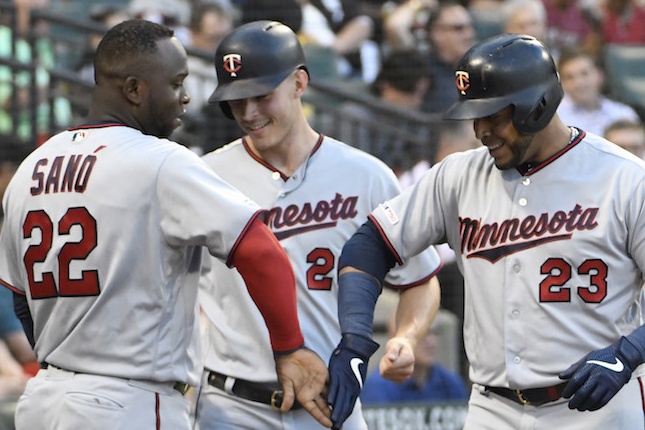 CATCHER: Garver completely broke out in 2019 and many have speculated that he will regress some in 2020. While a minor step back is likely, he remains the best hitting catcher among these three candidates. Sánchez has big time power but has struggled to get on base (.305) since 2018. 1st: Mitch Garver 2nd: Gary Sánchez 3rd: Martín Maldonado FIRST BASE: Voit figures to rotate with Miguel Andújar and Mike Ford after failing to make the postseason roster last fall. Gurriel is entering his age-36 season and had never hit more than 18 homers before 2019. Sanó is the best hitter here and also has the highest ceiling. 1st: Miguel Sanó 2nd: Yuli Gurriel 3rd: Luke Voit SECOND BASE: LeMahieu was the best value signing in free agency in 2019 and garnered 178 votes in the AL MVP race, finishing fourth. Altuve had another great season and is tied for seventh in wRC+ (145) since 2017 (min. 1,000 PA). Arráez may win the batting title in 2020 after hitting .334 in his debut. Altuve’s track record of excellence gets him the win here with LeMahieu a close second and Arráez a strong third. 1st: José Altuve 2nd: DJ LeMahieu 3rd: Luis Arráez SHORTSTOP: Correa is exceptionally talented but struggles to stay healthy. He has played a total of 185 games in the past two seasons. Torres looks like an absolute superstar and just turned 23 years old. Polanco started for the AL in the All-Star game with a stellar season of his own. Correa and Polanco is a tough call for second to the outstanding Torres. 1st: Gleyber Torres 2nd: Carlos Correa 3rd: Jorge Polanco THIRD BASE: Bregman was the runner-up for AL MVP as Mike Trout edged him out by 20 vote points. Donaldson won the award in 2015 and has been raking since his breakout 2013. Urshela was one of the biggest surprises of 2019, but his .589 OPS in the three seasons before are telling enough. Bregman gets the edge over Donaldson. 1st: Alex Bregman 2nd: Josh Donaldson 3rd: Gio Urshela LEFT FIELD: Stanton played in just 18 regular season games after injuring his knee but is ranked 9th in home runs among active players (308). Brantley continues to post great numbers from the left side and Rosario, while a borderline All-Star, had a down year in 2019. Stanton is a stud when healthy and Brantley has a career .354 on-base percentage. 1st: Giancarlo Stanton 2nd: Michael Brantley 3rd: Eddie Rosario CENTER FIELD: Springer will earn $21 million in his final year of arbitration after finishing 7th in AL MVP voting. Gardner will be 37 in August and his 2019 slugging percentage was the highest of his career (.503). Buxton is just getting started at the plate and hopes to stay healthy moving forward. Springer will be one of the biggest names on the free agent market after the 2020 season. 1st: George Springer 2nd: Byron Buxton 3rd: Brett Gardner RIGHT FIELD: Kepler flashed his power potential in a phenomenal 2019 campaign. Judge has averaged only 107 games played the last two seasons but boasts extreme size and exceptional on-base skills. Reddick should eventually give way to Kyle Tucker after a poor year at the dish. Give me Judge, with Kepler a fairly close second with upside. 1st: Aaron Judge 2nd: Max Kepler 3rd: Josh Reddick DESIGNATED HITTER: Cruz is discussing an extension with the Twins after posting the second highest OPS in the AL in 2019 (1.031). Àlvarez won Rookie of the Year for 87 unbelievable games. After letting Edwin Encarnación walk, the Yankees will likely rotate Andújar and Clint Frazier in the Designated Hitter spot. Cruz is one of the best hitters in the game and doesn’t look to be slowing down. 1st: Nelson Cruz 2nd Yordan Àlvarez 3rd: Miguel Andújar FINAL TOTALS: 1st place spot = 3 points 2nd place spot = 2 points 3rd place spot = 1 point Best lineup in the AL: Houston Astros 2nd best lineup in the AL: Minnesota Twins 3rd best lineup in the AL: New York Yankees What do you think of these rankings? comment below! MORE FROM TWINS DAILY — Latest Twins coverage from our writers — Recent Twins discussion in our forums — Follow Twins Daily via Twitter, Facebook or email
 -
Josh Donaldson was introduced as a Minnesota Twin on Wednesday. “I don’t want to just impact your team on the field, I want to impact your entire organization. This could be my final contract, and I want to leave an impact on the organization,” Donaldson said. What qualities does he have that could accomplish this?Pedigree Donaldson owns an MVP Award and has played in seven postseasons. Since 2013, he leads all third basemen with at least 2,500 at-bats in OPS (.901) and wRC+ (145). There is one position player with more fWAR than Donaldson since 2013: Mike Trout. A resume of his stature goes a long way in encouraging others to buy in. He has built an exceptional amount of respect from the league. As former Twins centerfielder Torii Hunter said on Skor North, "he has done damage on the game." Self-made mindset Donaldson was not always a household name. In 2012, Brandon Inge went down with a shoulder injury, and the now ‘Bringer of Rain’ earned a chance to play for the Athletics in his already age-26 season. By 2013, he was a full-fledged star for the A’s, producing 7.3 fWAR and finishing fourth in the MVP race. He noted in his press conference Wednesday that he believes he was once the worst player in MLB. He wasn’t handed anything, and he knows the value of hard work and dedication. Incredible knowledge of the game Donaldson is a hitting guru. He frequently breaks down how he made adjustments and rejected “traditional” methods of learning the craft. His swing is compact, violent, and carefully constructed. He turned himself into a perennial 40 home run threat with a specified and focused approach. Giving a 34-year-old player $92 million over four years seems ill-advised, but this isn’t just any other player. Donaldson posted career highs in average exit velocity, barrel rate, and hard hit percentage in 2019. He is a true masher at the plate, and his intelligence is vital. Comparisons to Twins’ top prospects With a powerful leg kick and a natural generation of thump, having Donaldson mentor Royce Lewis seems destined. Donaldson is extremely passionate about hitting and combined with Nelson Cruz, who had tremendous influence on Miguel Sanó, can carry out as a teacher of the game. Donaldson is not just a baseball addition, he is a developmental addition. He wants to lead the young Twins on a similar path of success. Donaldson played with young star Ronald Acuña Jr. last season, and the two seemed to connect on a special level. Swagger and competitiveness Much has been said about the ‘edge’ that Donaldson carries. After signing with Atlanta last year, Donaldson was asked what he'll bring to the Braves. His response, according to David O’Brien of The Athletic, “I don’t know, have you ever looked at the back of my baseball card?” Donaldson said. “That’s probably what I can bring.” On Tuesday, the three-time All-Star expressed his craving for victory. "I enjoy winning," Donaldson said. "I think over my entire career, I’ve been pretty successful at doing that and establishing an environment that’s successful for winning, and ultimately it comes down to competing. I’ve enjoyed competing ever since I was a very small child. The other end of that is I don’t enjoy losing." Familiarity with success A winning culture has been instilled in Minnesota and their new addition oozes triumph. Donaldson has played in over 155 games five times for three different teams. All five of those teams made the playoffs and three won their division. Their combined record was 463-347, or an average of 93 wins per season. He received MVP votes in all five of those campaigns. Donaldson is a phenomenal baseball player with clear tools and ability, but his personality and demeanor are maybe equally as impactful. MORE FROM TWINS DAILY — Latest Twins coverage from our writers — Recent Twins discussion in our forums — Follow Twins Daily via Twitter, Facebook or email Click here to view the article
-
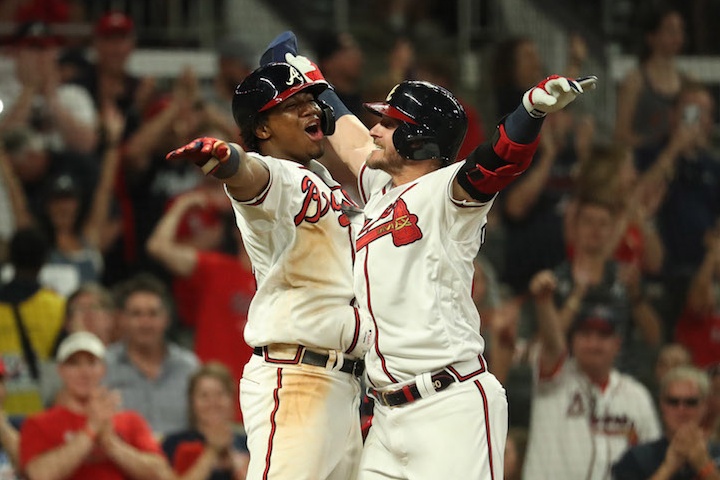 Pedigree Donaldson owns an MVP Award and has played in seven postseasons. Since 2013, he leads all third basemen with at least 2,500 at-bats in OPS (.901) and wRC+ (145). There is one position player with more fWAR than Donaldson since 2013: Mike Trout. A resume of his stature goes a long way in encouraging others to buy in. He has built an exceptional amount of respect from the league. As former Twins centerfielder Torii Hunter said on Skor North, "he has done damage on the game." Self-made mindset Donaldson was not always a household name. In 2012, Brandon Inge went down with a shoulder injury, and the now ‘Bringer of Rain’ earned a chance to play for the Athletics in his already age-26 season. By 2013, he was a full-fledged star for the A’s, producing 7.3 fWAR and finishing fourth in the MVP race. He noted in his press conference Wednesday that he believes he was once the worst player in MLB. He wasn’t handed anything, and he knows the value of hard work and dedication. Incredible knowledge of the game Donaldson is a hitting guru. He frequently breaks down how he made adjustments and rejected “traditional” methods of learning the craft. His swing is compact, violent, and carefully constructed. He turned himself into a perennial 40 home run threat with a specified and focused approach. Giving a 34-year-old player $92 million over four years seems ill-advised, but this isn’t just any other player. Donaldson posted career highs in average exit velocity, barrel rate, and hard hit percentage in 2019. He is a true masher at the plate, and his intelligence is vital. Comparisons to Twins’ top prospects With a powerful leg kick and a natural generation of thump, having Donaldson mentor Royce Lewis seems destined. Donaldson is extremely passionate about hitting and combined with Nelson Cruz, who had tremendous influence on Miguel Sanó, can carry out as a teacher of the game. Donaldson is not just a baseball addition, he is a developmental addition. He wants to lead the young Twins on a similar path of success. Donaldson played with young star Ronald Acuña Jr. last season, and the two seemed to connect on a special level. Swagger and competitiveness Much has been said about the ‘edge’ that Donaldson carries. After signing with Atlanta last year, Donaldson was asked what he'll bring to the Braves. His response, according to David O’Brien of The Athletic, “I don’t know, have you ever looked at the back of my baseball card?” Donaldson said. “That’s probably what I can bring.” On Tuesday, the three-time All-Star expressed his craving for victory. "I enjoy winning," Donaldson said. "I think over my entire career, I’ve been pretty successful at doing that and establishing an environment that’s successful for winning, and ultimately it comes down to competing. I’ve enjoyed competing ever since I was a very small child. The other end of that is I don’t enjoy losing." Familiarity with success A winning culture has been instilled in Minnesota and their new addition oozes triumph. Donaldson has played in over 155 games five times for three different teams. All five of those teams made the playoffs and three won their division. Their combined record was 463-347, or an average of 93 wins per season. He received MVP votes in all five of those campaigns. Donaldson is a phenomenal baseball player with clear tools and ability, but his personality and demeanor are maybe equally as impactful. MORE FROM TWINS DAILY — Latest Twins coverage from our writers — Recent Twins discussion in our forums — Follow Twins Daily via Twitter, Facebook or email
 -
The Twins made a franchise-altering move on Tuesday by signing superstar third baseman Josh Donaldson. His addition turns them into a serious World Series contender. Can they afford to wait to add starting pitching?It has long been known that the Twins were targeting impact starting pitching when the offseason commenced in October. Then Zack Wheeler, Madison Bumgarner and Hyun-Jin Ryu flew off the board, and the Twins were left in the cold of free agency. They quickly adapted, running for Josh Donaldson and grabbing the two highest upside free agent starters on the market in Rich Hill and Homer Bailey. Donaldson became a Twin, and now they are the clear favorite to win the AL Central again in 2020. A fully healthy and reinstated rotation of José Berríos, Jake Odorizzi, Michael Pineda, Hill and Bailey is hardly a disaster. The Twins’ rotation ranked seventh with 16.6 WAR in 2019, according to Fangraphs. They lost Kyle Gibson and Martín Pérez, who posted ERAs of 5.92 and 6.27 after the All-Star break, while retaining their three best starters in Berríos, Odorizzi and Pineda. The Nationals made an incredible postseason run with three phenomenal starting pitchers. Seeing this, along with the ALDS sweep at the hands of the Yankees, Twins fans asked for just one ace. The trade market may not be flush with options at this time. The number of teams not competing has been much reduced from 2019. The Mets, Diamondbacks, White Sox, Angels, Rangers, Reds and Blue Jays are all looking to win in 2020. This doesn’t mean they are unwilling to trade, but when paired with the current grasp for starting pitching, asking prices became astronomical. Logical targets with expiring contracts such as Robbie Ray, Trevor Bauer, and Noah Syndergaard seem almost untouchable. The good (and maybe bad) news for the Twins is that there are five playoff spots in each league. Come July, plenty of teams will unexpectedly find themselves far behind in the standings and won’t be demanding suddenly the moon. Some teams, like the 2019 Twins, will surprise in the first half and become buyers at the deadline. If, say, the White Sox and Angels, two pitching-needy teams who aren’t yet dubbed as contenders, are in the thick of things by mid-season, they will aggressively look to add that impact starter. Perhaps there is less of that competition now for the Twins. Should the Twins wait until July, they risk disappointment in the first half. Bailey can’t be counted on for anything more than mediocrity, and Randy Dobnak, while great in 2019, remains unproven. Pineda will return from his 39-game suspension on May 10 and should provide more stability until Hill returns in June. In those 39 games without Pineda, 24 are against teams that had a losing record in 2019. Of the 15 games against winning teams from last year, nine are at Target Field. Just two of the first 11 teams they play made the postseason a year ago. This seems like a weatherable storm. The Twins have momentum. Their 101-61 record was the fourth best in baseball last year and they just added a borderline top-20 player. Their youngsters will be more seasoned with playoff experience and they are led by a former MVP in Donaldson, the last decade’s home run leader in Nelson Cruz, four-time World Series champions in Marwin González and Sergio Romo, and a gritty veteran in Rich Hill. Is this team good enough to gamble on the rotation until the deadline? Comment what you think! MORE FROM TWINS DAILY — Latest Twins coverage from our writers — Recent Twins discussion in our forums — Follow Twins Daily via Twitter, Facebook or email Click here to view the article
-
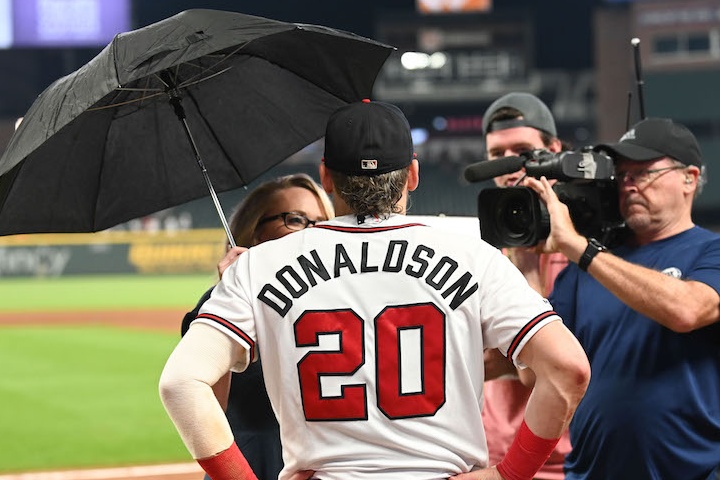 It has long been known that the Twins were targeting impact starting pitching when the offseason commenced in October. Then Zack Wheeler, Madison Bumgarner and Hyun-Jin Ryu flew off the board, and the Twins were left in the cold of free agency. They quickly adapted, running for Josh Donaldson and grabbing the two highest upside free agent starters on the market in Rich Hill and Homer Bailey. Donaldson became a Twin, and now they are the clear favorite to win the AL Central again in 2020. A fully healthy and reinstated rotation of José Berríos, Jake Odorizzi, Michael Pineda, Hill and Bailey is hardly a disaster. The Twins’ rotation ranked seventh with 16.6 WAR in 2019, according to Fangraphs. They lost Kyle Gibson and Martín Pérez, who posted ERAs of 5.92 and 6.27 after the All-Star break, while retaining their three best starters in Berríos, Odorizzi and Pineda. The Nationals made an incredible postseason run with three phenomenal starting pitchers. Seeing this, along with the ALDS sweep at the hands of the Yankees, Twins fans asked for just one ace. The trade market may not be flush with options at this time. The number of teams not competing has been much reduced from 2019. The Mets, Diamondbacks, White Sox, Angels, Rangers, Reds and Blue Jays are all looking to win in 2020. This doesn’t mean they are unwilling to trade, but when paired with the current grasp for starting pitching, asking prices became astronomical. Logical targets with expiring contracts such as Robbie Ray, Trevor Bauer, and Noah Syndergaard seem almost untouchable. The good (and maybe bad) news for the Twins is that there are five playoff spots in each league. Come July, plenty of teams will unexpectedly find themselves far behind in the standings and won’t be demanding suddenly the moon. Some teams, like the 2019 Twins, will surprise in the first half and become buyers at the deadline. If, say, the White Sox and Angels, two pitching-needy teams who aren’t yet dubbed as contenders, are in the thick of things by mid-season, they will aggressively look to add that impact starter. Perhaps there is less of that competition now for the Twins. Should the Twins wait until July, they risk disappointment in the first half. Bailey can’t be counted on for anything more than mediocrity, and Randy Dobnak, while great in 2019, remains unproven. Pineda will return from his 39-game suspension on May 10 and should provide more stability until Hill returns in June. In those 39 games without Pineda, 24 are against teams that had a losing record in 2019. Of the 15 games against winning teams from last year, nine are at Target Field. Just two of the first 11 teams they play made the postseason a year ago. This seems like a weatherable storm. The Twins have momentum. Their 101-61 record was the fourth best in baseball last year and they just added a borderline top-20 player. Their youngsters will be more seasoned with playoff experience and they are led by a former MVP in Donaldson, the last decade’s home run leader in Nelson Cruz, four-time World Series champions in Marwin González and Sergio Romo, and a gritty veteran in Rich Hill. Is this team good enough to gamble on the rotation until the deadline? Comment what you think! MORE FROM TWINS DAILY — Latest Twins coverage from our writers — Recent Twins discussion in our forums — Follow Twins Daily via Twitter, Facebook or email

