



Nash Walker
-
Posts
898 -
Joined
-
Last visited
-
Days Won
1
Content Type
Profiles
News
Minnesota Twins Videos
2026 Minnesota Twins Top Prospects Ranking
2022 Minnesota Twins Draft Picks
Minnesota Twins Free Agent & Trade Rumors, Notes, & Tidbits
Guides & Resources
2023 Minnesota Twins Draft Picks
The Minnesota Twins Players Project
2024 Minnesota Twins Draft Picks
2025 Minnesota Twins Draft Pick Tracker
2026 Minnesota Twins Draft Tracker: Picks & Bonuses
Forums
Blogs
Events
Store
Downloads
Gallery
Everything posted by Nash Walker
-
Front Page: Offseason Blueprint: Run It Back
Nash Walker replied to Nash Walker's topic in Twins Daily Front Page News
Doc, Perez pitched seven games out of the pen in 2018 and had a 2.45 ERA. He has bullpen experience. -
Why the Reds and Twins Should Talk About Trevor Bauer
Nash Walker commented on Nash Walker's blog entry in The Special Season
On the contrary, I believe Rosario should not be dealt for less than he is worth. For me, there is a small group of starting pitchers, including Bauer, that I would even consider moving Rosario for. As for Gordon, I believe he will be a productive pro but he is blocked by the SS heavy Twins and with the emergence of Arraez, there’s just no place for him. He’s a strong, moveable asset that many teams would benefit from. -
Why the Reds and Twins Should Talk About Trevor Bauer
Nash Walker commented on Nash Walker's blog entry in The Special Season
Taylor Trammell hit .234/.340/.349 (.689) at Double-A in 2019. The highest OPS of his minor league career is .819 at Low A in 2017. Also, Bauer is gone in one year to free agency, as mentioned in the article. There is plenty of incentive. -
The Twins are entering their most crucial offseason in many years. After winning 101 games and their first division title since 2010, Minnesota is primed to take the next step toward the fall classic. Why not bring the whole band back together? It worked in 2019.When I say bring the band back together, I mean everyone but Sam Dyson. Michael Pineda, Martín Pérez and Kyle Gibson are set to exit the rotation along with position players Jonathan Schoop and Jason Castro. The veteran ball of energy reliever Sergio Romo is also contract free. There are three prominent reasons why the Twins should bring them all back: 1.) These guys not only contributed on the field (some more than others), but there is serious chemistry and comradery among this group. Derek Falvey and Thad Levine carefully constructed the roster with both talent and charisma, and the team really seemed to gel on many fronts. 2.) The stars were limping in October. Mitch Garver was hampered by a hip impingement, Max Kepler was hardly healthy with a shoulder issue, Luis Arraez was hobbling, C.J. Cron battled a faulty thumb and Nelson Cruz played without a tendon in his wrist. Perhaps worst of all, both Byron Buxton and Michael Pineda were unavailable. When healthy and active, the 2019 team can win in October. 3.) There seems to be an assumption that because of the postseason, the Twins rotation was a mess in 2019. This is far from the truth. The starting rotation posted the fourth best fWAR in the American League, and the seventh best in the league. The bullpen was phenomenal, posting the third best fWAR in MLB. There are also ways for the Twins to improve pitching internally. The Twins are off to a phenomenal start as All-Star Jake Odorizzi accepted his qualifying offer and will return to the rotation in 2020. This was step one, here are the rest: Sign RHP Michael Pineda for 2-years, $22 million Pineda was great in the second half with a 5-1 record and 3.04 ERA. Pineda struck out 56 batters and walked just 12 in 53 ⅓ innings after the break. He is unavailable for the first 39 games, but the Twins would prefer an innings limit anyway. Sign RHP Kyle Gibson for 1-year, $9 million with $12 million club option for 2021 Gibson was a huge part of the Twins’ heartbeat. He leads with a great winning attitude and radiates positivity on and off the field. Jon Heyman reported Monday that Gibson is garnering interest from at least 1/3 of the league at the GM meetings in Scottsdale: Sign LHP Martín Pérez for 1-year, $5 million Pérez looked the part of a masterful pickup before the league figured him out and forced him off the playoff roster. There is legitimate reason to believe that Pérez can succeed in a bullpen platoon role. He has held lefties to a .639 OPS in his career. Sign RHP Sergio Romo for 1-year, $5 million Romo almost made up for the Dyson debacle by himself. The 36-year-old can still be a vital part of the bullpen because of his elite slider. Romo’s slider generated a 33% whiff rate and .184 batting average in 2019. He also held righties to a .205/.248/.394 line. He is a great clubhouse presence and the team seems to really admire him. Sign C Jason Castro for 2-years, $12 million Castro and Garver combined to form a lethal catcher platoon combo last year. Castro hit .254/.354/.497 against righties and Garver hit .321/.434/.736 against lefties. Castro is familiar with the split role and has repore with the pitchers above. Sign 2B Jonathan Schoop for 2-years, $16 million Luis Arraez is returning as the primary second baseman, but Schoop had a .917 OPS against lefties compared to a .696 OPS for Arraez in 2019. Schoop can slot into a defensive platoon role and Baldelli praised him as a phenomenal teammate in 2019. Summary Many will understandably point to the ALDS landslide when abolishing this plan. The Yankees were better than the Twins last year, but the gap is closing. Buxton was arguably an MVP candidate before shoulder surgery, and there is no reason to believe that he and the others can not continue to develop. According to MLB Pipeline, the Twins have the 3rd best farm system in the American League. The phenom flamethrower Brusdar Graterol should find himself in the rotation soon enough, and 21-year-old Jordan Balazovic is moving quickly. Additionally, top prospects Royce Lewis and Alex Kiriloff are chomping at the bit to reach the bigs. This roster won the AL Central by eight games and finished with the second best record in franchise history. This is hardly a failed offseason, and running it back may be the best option. Adversity will happen, but hopefully the Twins can avoid serious injuries down the stretch. Here is the 26-man look: Spending $10-20 million more is not worth breaking up team companionship and community. What do you think? More blueprints from our writers: Building a Bullpenner | Nick Nelson Making Big Betts | Nate Palmer Hooking a Big Fish | Ted Schwerzler The Window Just Opened | Jeremy Nygaard Cheat Off the Champs | Matthew Lenz Click here to view the article
-
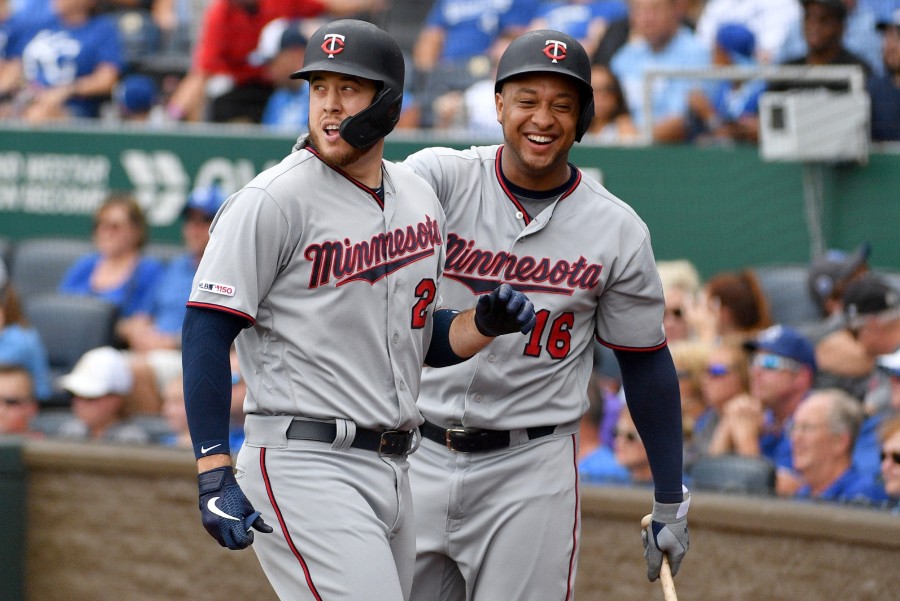 When I say bring the band back together, I mean everyone but Sam Dyson. Michael Pineda, Martín Pérez and Kyle Gibson are set to exit the rotation along with position players Jonathan Schoop and Jason Castro. The veteran ball of energy reliever Sergio Romo is also contract free. There are three prominent reasons why the Twins should bring them all back: 1.) These guys not only contributed on the field (some more than others), but there is serious chemistry and comradery among this group. Derek Falvey and Thad Levine carefully constructed the roster with both talent and charisma, and the team really seemed to gel on many fronts. 2.) The stars were limping in October. Mitch Garver was hampered by a hip impingement, Max Kepler was hardly healthy with a shoulder issue, Luis Arraez was hobbling, C.J. Cron battled a faulty thumb and Nelson Cruz played without a tendon in his wrist. Perhaps worst of all, both Byron Buxton and Michael Pineda were unavailable. When healthy and active, the 2019 team can win in October. 3.) There seems to be an assumption that because of the postseason, the Twins rotation was a mess in 2019. This is far from the truth. The starting rotation posted the fourth best fWAR in the American League, and the seventh best in the league. The bullpen was phenomenal, posting the third best fWAR in MLB. There are also ways for the Twins to improve pitching internally. The Twins are off to a phenomenal start as All-Star Jake Odorizzi accepted his qualifying offer and will return to the rotation in 2020. This was step one, here are the rest: Sign RHP Michael Pineda for 2-years, $22 million Pineda was great in the second half with a 5-1 record and 3.04 ERA. Pineda struck out 56 batters and walked just 12 in 53 ⅓ innings after the break. He is unavailable for the first 39 games, but the Twins would prefer an innings limit anyway. Sign RHP Kyle Gibson for 1-year, $9 million with $12 million club option for 2021 Gibson was a huge part of the Twins’ heartbeat. He leads with a great winning attitude and radiates positivity on and off the field. Jon Heyman reported Monday that Gibson is garnering interest from at least 1/3 of the league at the GM meetings in Scottsdale: https://twitter.com/JonHeyman/status/1194062750244229120?s=20 Sign LHP Martín Pérez for 1-year, $5 million Pérez looked the part of a masterful pickup before the league figured him out and forced him off the playoff roster. There is legitimate reason to believe that Pérez can succeed in a bullpen platoon role. He has held lefties to a .639 OPS in his career. Sign RHP Sergio Romo for 1-year, $5 million Romo almost made up for the Dyson debacle by himself. The 36-year-old can still be a vital part of the bullpen because of his elite slider. Romo’s slider generated a 33% whiff rate and .184 batting average in 2019. He also held righties to a .205/.248/.394 line. He is a great clubhouse presence and the team seems to really admire him. Sign C Jason Castro for 2-years, $12 million Castro and Garver combined to form a lethal catcher platoon combo last year. Castro hit .254/.354/.497 against righties and Garver hit .321/.434/.736 against lefties. Castro is familiar with the split role and has repore with the pitchers above. Sign 2B Jonathan Schoop for 2-years, $16 million Luis Arraez is returning as the primary second baseman, but Schoop had a .917 OPS against lefties compared to a .696 OPS for Arraez in 2019. Schoop can slot into a defensive platoon role and Baldelli praised him as a phenomenal teammate in 2019. Summary Many will understandably point to the ALDS landslide when abolishing this plan. The Yankees were better than the Twins last year, but the gap is closing. Buxton was arguably an MVP candidate before shoulder surgery, and there is no reason to believe that he and the others can not continue to develop. According to MLB Pipeline, the Twins have the 3rd best farm system in the American League. The phenom flamethrower Brusdar Graterol should find himself in the rotation soon enough, and 21-year-old Jordan Balazovic is moving quickly. Additionally, top prospects Royce Lewis and Alex Kiriloff are chomping at the bit to reach the bigs. This roster won the AL Central by eight games and finished with the second best record in franchise history. This is hardly a failed offseason, and running it back may be the best option. Adversity will happen, but hopefully the Twins can avoid serious injuries down the stretch. Here is the 26-man look: Spending $10-20 million more is not worth breaking up team companionship and community. What do you think? More blueprints from our writers: Building a Bullpenner | Nick Nelson Making Big Betts | Nate Palmer Hooking a Big Fish | Ted Schwerzler The Window Just Opened | Jeremy Nygaard Cheat Off the Champs | Matthew Lenz
 -
Why the Reds and Twins Should Talk About Trevor Bauer
Nash Walker posted a blog entry in The Special Season
As I was pondering about the potential rotation for the Twins in 2020, I remembered something. It had been in the back of my mind but it came to the forefront today. Thad Levine, in an interview with Aaron Gleeman, proclaimed that the Twins explored a trade during the season for Trevor Bauer. I can not remember the exact quote, but it went something like this: “We are interested in the player (Bauer), but it is unlikely that the Minnesota Twins will make a deal with the Cleveland Indians.” Of course, a trade between the Twins and Indians is unlikely to take place as they have become bitter division rivals, especially in 2019. Bauer was instead dealt to the Reds at the deadline in a three-team transaction that sent Yasiel Puig and Padres outfielder Franmil Reyes to Cleveland, while prospect Taylor Trammell moved from Cincinnati to San Diego. Bauer seemed excited to get out of Cleveland, later deeming that he “did not have fun there.” In 10 starts with Cincinnati, Bauer posted a 6.39 ERA and 2-5 record. The right-hander gave up 12 home runs in 56 ⅓ innings. Bauer was coming off a phenomenal season in 2018 where his FIP was a miniscule 2.44. Bauer went 12-6 and allowed just 0.5 home runs per nine while making his first All-Star game. He is a proven power pitcher with an average of 9.5 strikeouts per nine in his career. Cleveland has a surplus of pitchers, and dealing Bauer was a smart move. The irony is that Cincinnati does not need him either. The Reds have 2019 breakout Luis Castillo and another All-Star in Sonny Gray. Both are under team control until 2024. Additionally, the Reds top two (and three of their top four) prospects are pitchers. The Reds ranked 11th in the National League in team OPS in 2019 and their main priority will be acquiring impact bats this offseason. They are reportedly in on both Yasmani Grandal and Didi Gregorius. In order for this to happen, they need to shed salary. Bauer is estimated to make $18.6 million in his final year of arbitration. The Reds already have nearly $110 million tied up in 2020, and their total payroll was $128 million in 2019. They should be salivating at the opportunity to pick up someone like Eddie Rosario, who hit 32 home runs and drove in 109 runs in 2019. For the Twins, Rosario is below average, but for a team like the Reds, he would arguably be their second best bat next to Eugenio Suarez and will cost a manageable $9 million or so in 2020. That is where the Twins start. As Bauer only has one year of team control remaining, the Reds may not demand too much. Rosario and 24-year-old Nick Gordon, who hit .298/.342/.459 at Triple-A in 2019, should do the trick. The Reds are losing shortstop José Iglesias to free agency and Gordon seems ready for the big leagues. If Cincinnati misses out on Gregorius, they need a better backup plan than current starter José Peraza, who hit .239/.285/.346 in 2019. If you are doubting that the Reds would do this, I hear you. Remember though that Cincinnati has a below-average farm system, according to MLB Pipeline, and will lose Bauer next winter regardless. They can cash in now while still looking to compete in 2020. They would and should seriously consider this proposition. With this deal, the Twins gain an immediate top of the rotation arm in Bauer and do not strip the premier end of their farm system. Rosario, Gordon and a throw in of second baseman Travis Blankenhorn, who posted a .786 OPS at Double-A in 2019, will get this done. Jake Odorizzi is likely to return in one way or another, and Darren Wolfson confirmed Tuesday that the Twins are talking with Zack Wheeler: https://twitter.com/DWolfsonKSTP/status/1194376558200406018?s=20 The Twins could potentially start with a rotation of Wheeler, Jose Berríos, Odorizzi, and Bauer in 2020 with Brusdar Graterol on his way to starting soon. Yikes. Good luck, MLB. Would you want to face this team in the postseason? I sure would not. -
Madison Bumgarner and Zack Wheeler headline the second tier of the starting pitching free agent class, representing realistic Twins targets. Both will likely demand contracts of four or more years and at least $18 million per season. Which pitcher holds the advantage?The case for Bumgarner: Bumgarner is one of the most prominent names in MLB, and for good reason. He was drafted by the Giants with the 10th overall pick in the 2007 Amateur Draft as an 18-year-old. Bumgarner quickly moved up the system, debuting in 2008 at Class-A and pitching 10 innings in the big leagues by 2009. Bumgarner started in 18 games in 2010 with a 3.00 ERA in 111 innings. That breakout season was a bridge to six straight dominant campaigns as Bumgarner appeared in four All-Star games and finished in the top 10 for the Cy Young each of those years. This stretch included three championships and a World Series MVP Award in 2014. For the first time since 2010, Bumgarner started less than 30 games in 2017 after a dirt bike accident sprained the AC joint in his left shoulder. Bad luck struck again in 2018 when a line drive drilled his throwing hand. Bumgarner nearly matched his combined total of 38 starts between those two years with 34 in 2019. In his illustrious 11-year career, Bumgarner has never posted an ERA above the 3.90 mark he had in 2019. Consistency is perhaps his greatest asset, and Bumgarner is still just 30-years-old. There seems to be an assumption that Bumgarner has less left to give. His average pitch velocity actually increased in 2019: With Bumgarner also comes postseason experience and October mystic. Bumgarner is 8-3 with a 2.11 ERA in 102 1/3 playoff innings. It is unwise to hang your hat on this, but there is absolutely a bulldog mentality and calm demeanor that gives Bumgarner an edge when the stakes are highest. The case for Zack Wheeler: One of the most enticing names of the offseason, Wheeler enters free agency after two phenomenal seasons with the Mets. Wheeler was selected by the Giants with the 6th overall pick in the 2009 Amateur Draft. Wheeler was traded to New York for Carlos Beltran at the 2011 deadline. Wheeler was called up in May of 2013 and looked great in his first two seasons, posting a 3.50 ERA across 285 1/3 innings. In the spring of 2015, Wheeler had Tommy John surgery on his right elbow and was sidelined for the next two years. Wheeler returned in 2017 and was clearly rusty as he allowed 50 runs in just 86 1/3 innings. Full recovery showed in 2018 and Wheeler heaved his way to a sterling 3.25 FIP and 12-7 record, right back on track. Wheeler followed up his bounceback season with a 3.48 FIP and 195 strikeouts in 195 1/3 innings in 2019. Unlike Bumgarner, Wheeler is an overpowering pitcher with a fastball that averaged 96.7 MPH last year. He is throwing as hard as ever and has a nice complement of pitches. Here is how Wheeler mixed up his offerings compared to 2018 and the seasons prior to Tommy John surgery: For the Twins, Wheeler may have an edge over Bumgarner as he is dominant against right-handed batters. Righties hit just .245/.274/.360 off him in 2019. With the American League Central loaded with right-handed sluggers such as Franmil Reyes, Eloy Jimenez, and Jorge Soler, Wheeler could give an added advantage to Minnesota. Who should get the final rose? Both of these guys are proven, but Bumgarner offers stability and consistency that Wheeler does not. On the contrary, Wheeler holds upside that could turn him into a superstar, while Bumgarner has possibly reached his 95th percentile of production. With either, the Twins are getting a serious upgrade to the staff and each guy brings different assets and limitations to the table. Let’s take a look at how closely they compared in 2019: Who should the Twins get? Please share your thoughts in the comments below. Not registered? Click here to create an account. To stay up to date, follow Twins Daily on Twitter and Facebook. More from Twins Daily Exploring Five Twins Extension Candidates Important Dates for the 2020 Offseason Eyeing This Year's Most Intriguing Free Agent Click here to view the article
-
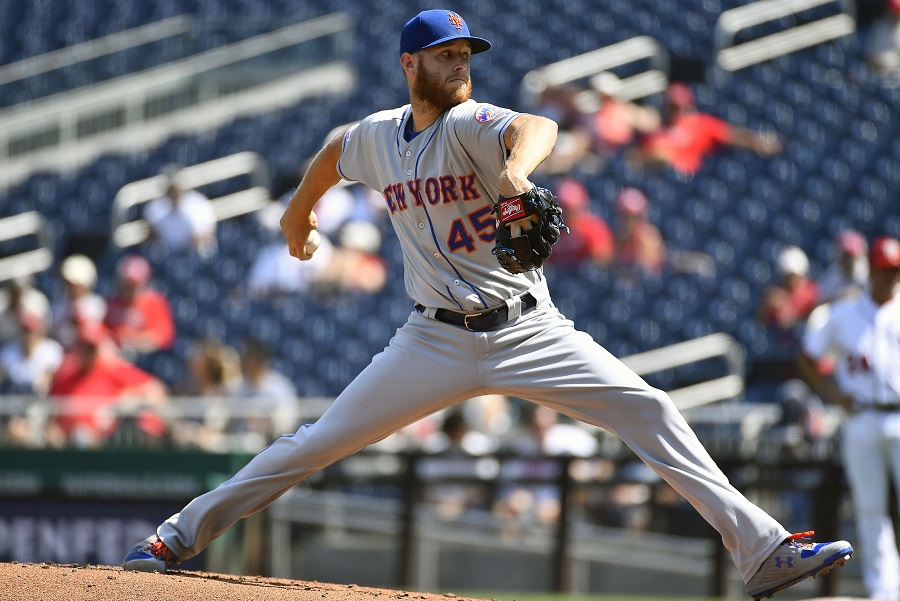 The case for Bumgarner: Bumgarner is one of the most prominent names in MLB, and for good reason. He was drafted by the Giants with the 10th overall pick in the 2007 Amateur Draft as an 18-year-old. Bumgarner quickly moved up the system, debuting in 2008 at Class-A and pitching 10 innings in the big leagues by 2009. Bumgarner started in 18 games in 2010 with a 3.00 ERA in 111 innings. That breakout season was a bridge to six straight dominant campaigns as Bumgarner appeared in four All-Star games and finished in the top 10 for the Cy Young each of those years. This stretch included three championships and a World Series MVP Award in 2014. For the first time since 2010, Bumgarner started less than 30 games in 2017 after a dirt bike accident sprained the AC joint in his left shoulder. Bad luck struck again in 2018 when a line drive drilled his throwing hand. Bumgarner nearly matched his combined total of 38 starts between those two years with 34 in 2019. In his illustrious 11-year career, Bumgarner has never posted an ERA above the 3.90 mark he had in 2019. Consistency is perhaps his greatest asset, and Bumgarner is still just 30-years-old. There seems to be an assumption that Bumgarner has less left to give. His average pitch velocity actually increased in 2019: With Bumgarner also comes postseason experience and October mystic. Bumgarner is 8-3 with a 2.11 ERA in 102 1/3 playoff innings. It is unwise to hang your hat on this, but there is absolutely a bulldog mentality and calm demeanor that gives Bumgarner an edge when the stakes are highest. The case for Zack Wheeler: One of the most enticing names of the offseason, Wheeler enters free agency after two phenomenal seasons with the Mets. Wheeler was selected by the Giants with the 6th overall pick in the 2009 Amateur Draft. Wheeler was traded to New York for Carlos Beltran at the 2011 deadline. Wheeler was called up in May of 2013 and looked great in his first two seasons, posting a 3.50 ERA across 285 1/3 innings. In the spring of 2015, Wheeler had Tommy John surgery on his right elbow and was sidelined for the next two years. Wheeler returned in 2017 and was clearly rusty as he allowed 50 runs in just 86 1/3 innings. Full recovery showed in 2018 and Wheeler heaved his way to a sterling 3.25 FIP and 12-7 record, right back on track. Wheeler followed up his bounceback season with a 3.48 FIP and 195 strikeouts in 195 1/3 innings in 2019. Unlike Bumgarner, Wheeler is an overpowering pitcher with a fastball that averaged 96.7 MPH last year. He is throwing as hard as ever and has a nice complement of pitches. Here is how Wheeler mixed up his offerings compared to 2018 and the seasons prior to Tommy John surgery: For the Twins, Wheeler may have an edge over Bumgarner as he is dominant against right-handed batters. Righties hit just .245/.274/.360 off him in 2019. With the American League Central loaded with right-handed sluggers such as Franmil Reyes, Eloy Jimenez, and Jorge Soler, Wheeler could give an added advantage to Minnesota. Who should get the final rose? Both of these guys are proven, but Bumgarner offers stability and consistency that Wheeler does not. On the contrary, Wheeler holds upside that could turn him into a superstar, while Bumgarner has possibly reached his 95th percentile of production. With either, the Twins are getting a serious upgrade to the staff and each guy brings different assets and limitations to the table. Let’s take a look at how closely they compared in 2019: Who should the Twins get? Please share your thoughts in the comments below. Not registered? Click here to create an account. To stay up to date, follow Twins Daily on Twitter and Facebook. More from Twins Daily Exploring Five Twins Extension Candidates Important Dates for the 2020 Offseason Eyeing This Year's Most Intriguing Free Agent
 -
Why Jordan Balazovic has the makings of an ace
Nash Walker posted a blog entry in The Special Season
Rightly so, Twins fans are very excited about Brusdar Graterol, the flame-throwing 21-year-old from Venezuela. Graterol was called up to the Twins bullpen last summer and mostly impressed, even touching 102 MPH on his sinker. Graterol will be in the rotation soon enough, and his future partner in crime, the one they call "Jordy Blaze,” is on his way to stardom. Jordan Balazovic was drafted in the 5th round of the 2016 Amateur Draft out of Mississauga, Canada. Balazovic played in eight Gulf Coast League games as a 17-year-old and posted a 1.97 ERA. Balazovic was mediocre at Class A in 2018 with a 3.94 ERA and 7-3 record. While Balazovic had a pedestrian ERA, his peripherals were outstanding. He struck out 78 batters in 61 2/3 innings and allowed only 5 home runs. Balazovic massively improved in 2019 with a 2.18 ERA in four starts at Cedar Rapids with 14.4 K/9. It was quickly realized that Balazovic was ready for the next step. He was promoted to Fort Myers and continued his excellence. In 73 innings, Jordy-B struck out 96 batters and allowed just three home runs. Balazovic was an elite strike thrower, walking just 2.4 batters per nine innings. Balazovic increased his velocity and consistently lived at 95 MPH with his sinker. Balazovic has flashed a plus-slider and at times, a great changeup. With his velocity increasing, his complementary pitches are becoming devastating. Tom Froemming has great analysis here: The 6 foot 5, 215 pound up-and-comer is developing well-deserved praise and attention. Balazovic is ranked as the 76th overall prospect on MLB Pipeline. Balazovic just turned 21, and figures to start next season in Pensacola at class Double-A. With the developmental system instituted by Derek Falvey and company, Jordy Blaze carries unforeseen upside. Image Credits: Creator:Gordon Donovan Credit:Photo: Gordon Donovan Copyright:Photo: Gordon Donovan -
At least some regression is expected after the Twins posted a ridiculous .270/.338/.494 (.832) line in 2019. It is likely that the overall offensive production will generally decrease as the baseball should be de-juiced and Nelson Cruz will be a year older. On-base wizard Luis Arraez will hit more than four homers, but do his peripherals show concern for regression in other areas?Luis Arraez was one of many breakouts for the Twins in 2019. Arraez ranked as the No.15 prospect in the Twins system on MLB Pipeline before the season. There was no doubt Arraez could hit, but his questionable athleticism and lack of power hampered his upside as a prospect. These stats say it all about how he fared in his first season in the big leagues: Arraez was called up in May and became nothing short of a marvel at the plate. His zone contact percentage was a pristine 94%, almost 11% higher than league average. His chase rate was well below average at 24.3%. Arraez made contact on 87.4% of pitches outside the zone, nearly 30% more than the average player. Arraez struck out just 7.9% of the time, ranking in the top 1% in MLB. It looks like the Twins have found an unlikely cornerstone piece. Arraez is a catalyst and a nightmare for an opposing pitcher. Arraez got ahead in 49% of counts, hitting .398/.497/.586 (1.083) in 163 tries after being up 1-0. When down 0-1, Arraez hit a pedestrian .291/.327/.342 (.669). When ahead in the count, he hit .448/.585/.676 (1.261) compared to .252/.252/.291 (.544) when behind. When controlling the count, pitchers had the luxury of shying away from the fastball, a pitch that Arraez hit to the tune of .364. Arraez whiffed on just 5.9% of fastballs but 12.5% of off-speed and breaking pitches. On off-speed and breaking pitches, Arraez had expected batting averages of .248 and .256, respectively. On the AL Central clinching night, Luis Arraez defied his Statcast trend on this 1-1 curveball from Drew VerHagen: Arraez hit .334/.399/.439 (.838) with a .355 BABIP in 92 games. In August, Arraez saw his BABIP lowered to a much more realistic .310. His monthly production responded as he hit .293/.350/.380 (.730) in 103 plate appearances. This is eerily close to the .286/.332/.395 (.727) line that Statcast expected from him this year. Arraez was coined as “La Regadera” (The Sprinkler) for his ability to spray hits all over the field. Arraez loves to push the ball, owning a 36.7% opposite field rate. Looking at his wOBA chart, he seems to have an eye for outside pitches. Arraez struggled with pitches located on the inner half, but crushed most pitches away: Pitchers will be adjusting to the surging sophomore in 2020. The strike zone will hopefully be around the same size (robot umps, please!), and Arraez can absolutely continue his production if he maintains elite plate discipline. This is a tall task for a young gun, but Arraez has been seemingly unfazed thus far. Getting ahead in the count and forcing fastballs is key for most hitters, but Arraez showed that this will be especially important moving forward. What do you think the future holds for Luis Arraez? Please comment below! For much more on Luis Arraez and his amazing campaign: Excellent Plate Discipline Emphasizes Why Luis Arraez Deserves Starting Spot in 2020Twins Daily 2019 Awards: Rookie of the YearThe Future Value of Luis Arraez Click here to view the article
-
What Makes Luis Arraez so Good and How Can He Repeat His Excellence in 2020?
Nash Walker posted an article in Twins
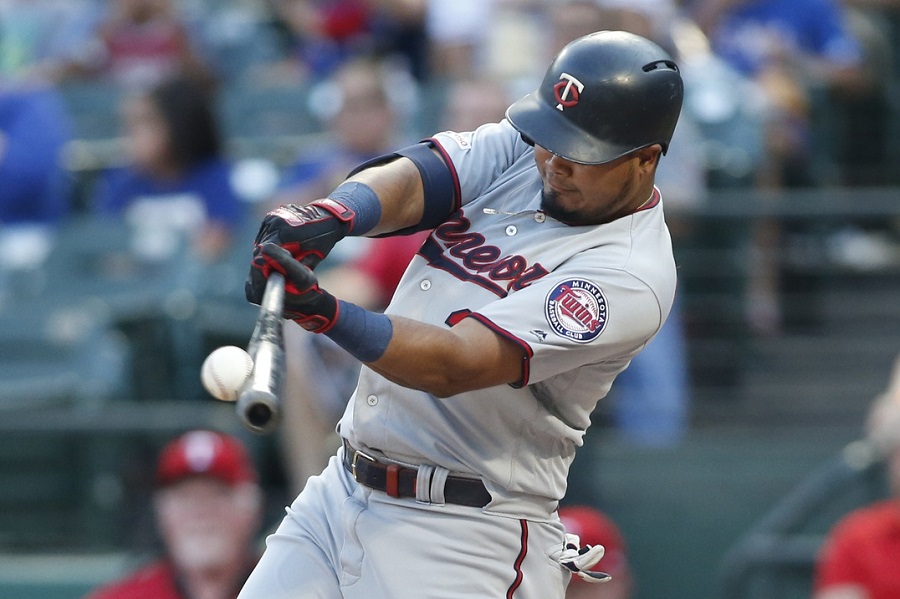 Luis Arraez was one of many breakouts for the Twins in 2019. Arraez ranked as the No.15 prospect in the Twins system on MLB Pipeline before the season. There was no doubt Arraez could hit, but his questionable athleticism and lack of power hampered his upside as a prospect. These stats say it all about how he fared in his first season in the big leagues: https://twitter.com/AaronGleeman/status/1173772349264392192?s=20 Arraez was called up in May and became nothing short of a marvel at the plate. His zone contact percentage was a pristine 94%, almost 11% higher than league average. His chase rate was well below average at 24.3%. Arraez made contact on 87.4% of pitches outside the zone, nearly 30% more than the average player. Arraez struck out just 7.9% of the time, ranking in the top 1% in MLB. It looks like the Twins have found an unlikely cornerstone piece. Arraez is a catalyst and a nightmare for an opposing pitcher. Arraez got ahead in 49% of counts, hitting .398/.497/.586 (1.083) in 163 tries after being up 1-0. When down 0-1, Arraez hit a pedestrian .291/.327/.342 (.669). When ahead in the count, he hit .448/.585/.676 (1.261) compared to .252/.252/.291 (.544) when behind. When controlling the count, pitchers had the luxury of shying away from the fastball, a pitch that Arraez hit to the tune of .364. Arraez whiffed on just 5.9% of fastballs but 12.5% of off-speed and breaking pitches. On off-speed and breaking pitches, Arraez had expected batting averages of .248 and .256, respectively. On the AL Central clinching night, Luis Arraez defied his Statcast trend on this 1-1 curveball from Drew VerHagen: https://twitter.com/fsnorth/status/1177014896342355968?s=20 Arraez hit .334/.399/.439 (.838) with a .355 BABIP in 92 games. In August, Arraez saw his BABIP lowered to a much more realistic .310. His monthly production responded as he hit .293/.350/.380 (.730) in 103 plate appearances. This is eerily close to the .286/.332/.395 (.727) line that Statcast expected from him this year. Arraez was coined as “La Regadera” (The Sprinkler) for his ability to spray hits all over the field. Arraez loves to push the ball, owning a 36.7% opposite field rate. Looking at his wOBA chart, he seems to have an eye for outside pitches. Arraez struggled with pitches located on the inner half, but crushed most pitches away: Pitchers will be adjusting to the surging sophomore in 2020. The strike zone will hopefully be around the same size (robot umps, please!), and Arraez can absolutely continue his production if he maintains elite plate discipline. This is a tall task for a young gun, but Arraez has been seemingly unfazed thus far. Getting ahead in the count and forcing fastballs is key for most hitters, but Arraez showed that this will be especially important moving forward. What do you think the future holds for Luis Arraez? Please comment below! For much more on Luis Arraez and his amazing campaign: Excellent Plate Discipline Emphasizes Why Luis Arraez Deserves Starting Spot in 2020 Twins Daily 2019 Awards: Rookie of the Year The Future Value of Luis Arraez
 -
The Twins bullpen was mostly great in 2019 as they finished with the third best WAR in baseball, per Fangraphs. They had the best second half reliever WAR and watched Tyler Duffey and Trevor May become legitimate weapons along with the great Taylor Rogers. Starting pitching will be the main focus this offseason, and rightly so. Trade deadline acquisition Sergio Romo is the only impending free agent from the bullpen. One of the other names circling at the deadline was left-hander Jake Diekman. A 32-year-old journeyman, Diekman started his career with the Phillies but found his most success in Arlington. Diekman posted a 3.18 ERA in four seasons with the Rangers, striking out 10.1 per nine and allowing just nine home runs in 124 1/3 innings. The Rangers moved on from Diekman before the deadline in 2018, trading him to Arizona for minor league pitcher Wei-Chieh Huang. Diekman finished the year horribly with the D-Backs, allowing 12 runs in 14 1/3 innings. Diekman entered free agency as a buy-low option and the Royals inked him to a 1-year, $2.75 million contract with a mutual option for 2020. Diekman responded to the show-me contract by going 0-6 with a 4.75 ERA in 41 2/3 innings with Kansas City. Some of that is due to the dumpster fire that is the Royals defense as his FIP was a stronger 3.36. The Royals elected to move him to Oakland before the 2019 deadline for two minor league prospects. Diekman allowed 10 runs in 20 1/3 innings with the A's, walking 16 and striking out 21. Oakland elected not to pick up his option, per Melissa Lockard of the Athletic: Now Diekman enters free agency once again as a buy-low option. Diekman made changes in 2019 that should entice the Twins to fill their left-handed reliever void. For one, he ditched his sinker and relied heavily on an elite slider, throwing it 46.1% of the time in 2019: As can be seen on the graph, Diekman relied on the slider and four-seam fastball. His average fastball velocity is 95.8 MPH, a number that should be salivating for Minnesota. The two-pitch combo helped generate 12.2 strikeouts per nine, Diekman's most since 2014. His slider generated a 45% whiff rate with an expected .176/.257/.246 (.503) line from opposing hitters. The Twins are accustomed to pitchers with devastating sliders and they seem to target them: Walks are clearly Diekman's biggest problem, as he has allowed a whopping 5.0 BB/9 in his career. Minnesota's pitching coach Wes Johnson cut 121 walks from the Twins in 2018, catapulting them from the 7th worst to 6th best in allowing free passes. Considering his recent struggles and age, Diekman figures to get a one or maybe two year deal at best. The Twins have the luxury of taking this risk, and a $4-5 million investment in Diekman makes all the sense in the world. If anyone can tap into the seemingly lost potential, it is the Twins. Go get him Falvine! Please comment what you think. Thanks for reading! Go Twins!
-
Hoarding prospects has been an effective strategy for the Twins as they enjoyed breakouts from Jorge Polanco, Max Kepler, Miguel Sanó, and Byron Buxton among others. The White Sox have employed a similar tactic, trading away numerous big leaguers for top-end prospects. Those prospects are here, and a few of them showed real promise last year. Three things remain true about Chicago.1.) They have a porous pitching staff. The rotation looked like a strong part of the rebuild for Chicago as Dylan Cease and Michael Kopech were both ranked in the top 25 on MLB Pipeline. Kopech has not pitched in over a year after Tommy John surgery and Cease struggled in the majors, starting 14 games and allowing an .839 OPS and 1.8 HR/9. Cease finished the year strong with a 3.00 ERA in September, but his last three starts came against the Angels, Mariners, and Tigers. After a step forward in 2018, Reynaldo López took two steps back. Teammate Lucas Giolito allowed 118 runs in 2018 and López allowed 110 runs this year, both led MLB. López allowed 35 homers in 184 innings. Giolito bounced back with a 3.41 ERA and 228 strikeouts in 176 2/3 innings. Giolito’s hard hit percentage only decreased 2.3%, but his strikeout rate doubled and his walk rate improved from 11.1% to 8.1%. Giolito was an All-Star but regressed following the break: Their latest additions, Dallas Keuchel and Gio Gonzalez, should help eat some innings. Keuchel hid behind a 4.72 FIP playing in front of Josh Donaldson and Ozzie Albies last year. His ground ball tendencies make little sense for a Chicago defense that ranked 25th in baseball in 2019. Gonzalez is more of a depth piece than anything of impact. 2.) The devil is in the details Slugger Eloy Jiménez started the year with a poor .674 OPS and 25 strikeouts in his first 85 plate appearances. He improved to hit .292 with a .542 slugging percentage after the break. The caveat is that Jiménez was an awful outfielder with -11 DRS and a -6.6 UZR/150. Let’s compare him to fellow rookie Luis Arraez: Batting champion Tim Anderson hit .335 with a .399 BABIP. The Sox led in BABIP at .329, 31 points above average. Anderson posted a putrid 109-15 strikeout-to-walk ratio, the worst in baseball. His hard hit percentage is a low 32.3%, ranking 332nd in MLB, according to baseball savant. Anderson ranks fourth in swing percentage at 58.5%. All of these numbers scream regression. Anderson was also an atrocious shortstop with -9 DRS and a -11.7 UZR/150. Anderson finished second in BABIP to teammate Yoàn Moncada, who followed up his strikeout plagued 2018 with improvement a year later. Moncada hit .315/.367/.548 with 25 home runs. Moncada, Anderson and Jiménez all ranked in the bottom 10 in strikeout-to-walk ratio. The White Sox ranked last in walks and sixth in strikeouts. Moncada, like his counterparts, was a below average defender with -7 DRS at third base. The White Sox only beat out the Marlins and Pirates in GB/FB ratio. Only the Marlins hit more ground balls than the Sox in 2019. 3.) They are not the 2018 Twins The Twins won 23 more games in one year, but this is different for Chicago. Minnesota has the capital, talent and front office to run this division for the foreseeable future. The Twins beat the White Sox in 13 of their 19 games this year, outscoring them by 60 runs. While the Twins were not good in 2018, they still ranked ninth in the AL in OPS, sixth in runs scored, and ninth in team ERA. The White Sox finished 13th in runs scored and home runs and 12th in OPS, despite having the batting champion in Anderson and RBI leader in Abreu. The offseason has shifted the attention back to the White Sox, and they have done a nice job improving. I believe the Sox can maybe push for a Wild Card spot, but they are far behind the defending division champions. Please share your thoughts in the comments below. Not registered? Click here to create an account. To stay up to date, follow Twins Daily on Twitter and Facebook. MORE FROM TWINS DAILY — Handbook Preview: Glen Perkins Reviewing Relievers — Twins Can Begin Cashing in on Prospects — Hot Corner Consideration: Potential Third Base Alternatives to Miguel Sano Click here to view the article
-
3 Reasons Why the Rebuilt White Sox Aren't Ready to Challenge Twins
Nash Walker posted an article in Twins
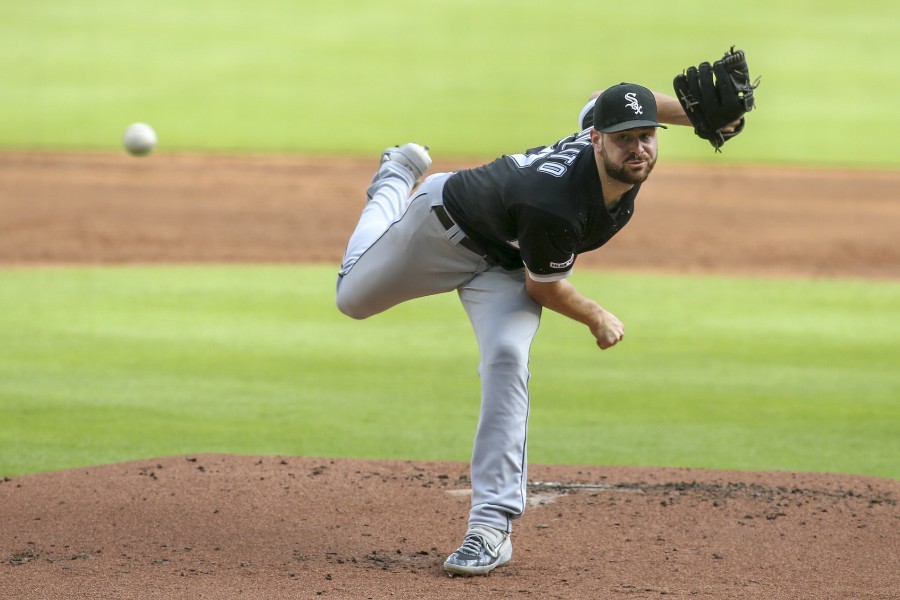 1.) They have a porous pitching staff. The rotation looked like a strong part of the rebuild for Chicago as Dylan Cease and Michael Kopech were both ranked in the top 25 on MLB Pipeline. Kopech has not pitched in over a year after Tommy John surgery and Cease struggled in the majors, starting 14 games and allowing an .839 OPS and 1.8 HR/9. Cease finished the year strong with a 3.00 ERA in September, but his last three starts came against the Angels, Mariners, and Tigers. After a step forward in 2018, Reynaldo López took two steps back. Teammate Lucas Giolito allowed 118 runs in 2018 and López allowed 110 runs this year, both led MLB. López allowed 35 homers in 184 innings. Giolito bounced back with a 3.41 ERA and 228 strikeouts in 176 2/3 innings. Giolito’s hard hit percentage only decreased 2.3%, but his strikeout rate doubled and his walk rate improved from 11.1% to 8.1%. Giolito was an All-Star but regressed following the break: Their latest additions, Dallas Keuchel and Gio Gonzalez, should help eat some innings. Keuchel hid behind a 4.72 FIP playing in front of Josh Donaldson and Ozzie Albies last year. His ground ball tendencies make little sense for a Chicago defense that ranked 25th in baseball in 2019. Gonzalez is more of a depth piece than anything of impact. 2.) The devil is in the details Slugger Eloy Jiménez started the year with a poor .674 OPS and 25 strikeouts in his first 85 plate appearances. He improved to hit .292 with a .542 slugging percentage after the break. The caveat is that Jiménez was an awful outfielder with -11 DRS and a -6.6 UZR/150. Let’s compare him to fellow rookie Luis Arraez: Batting champion Tim Anderson hit .335 with a .399 BABIP. The Sox led in BABIP at .329, 31 points above average. Anderson posted a putrid 109-15 strikeout-to-walk ratio, the worst in baseball. His hard hit percentage is a low 32.3%, ranking 332nd in MLB, according to baseball savant. Anderson ranks fourth in swing percentage at 58.5%. All of these numbers scream regression. Anderson was also an atrocious shortstop with -9 DRS and a -11.7 UZR/150. Anderson finished second in BABIP to teammate Yoàn Moncada, who followed up his strikeout plagued 2018 with improvement a year later. Moncada hit .315/.367/.548 with 25 home runs. Moncada, Anderson and Jiménez all ranked in the bottom 10 in strikeout-to-walk ratio. The White Sox ranked last in walks and sixth in strikeouts. Moncada, like his counterparts, was a below average defender with -7 DRS at third base. The White Sox only beat out the Marlins and Pirates in GB/FB ratio. Only the Marlins hit more ground balls than the Sox in 2019. 3.) They are not the 2018 Twins The Twins won 23 more games in one year, but this is different for Chicago. Minnesota has the capital, talent and front office to run this division for the foreseeable future. The Twins beat the White Sox in 13 of their 19 games this year, outscoring them by 60 runs. While the Twins were not good in 2018, they still ranked ninth in the AL in OPS, sixth in runs scored, and ninth in team ERA. The White Sox finished 13th in runs scored and home runs and 12th in OPS, despite having the batting champion in Anderson and RBI leader in Abreu. The offseason has shifted the attention back to the White Sox, and they have done a nice job improving. I believe the Sox can maybe push for a Wild Card spot, but they are far behind the defending division champions. Please share your thoughts in the comments below. Not registered? Click here to create an account. To stay up to date, follow Twins Daily on Twitter and Facebook. MORE FROM TWINS DAILY — Handbook Preview: Glen Perkins Reviewing Relievers — Twins Can Begin Cashing in on Prospects — Hot Corner Consideration: Potential Third Base Alternatives to Miguel Sano
 -
Miggy had just one year in which his URZ was positive in 2015. His career DRS is -19 and has been negative every year in the majors. His career average UZR/150 is -6.0.
-
You are right. I extrapolated over 162 games. You are right if each player was floated a full season that he would not finish first. But, of those with at least 100 games played, I believe he ranks 3rd behind only Trout and Cruz.
-
Good catch. Marwin was great in his 291 1/3 innings at third this year. He had 4 DRS and his UZR/150 is 18.9. Both are outstanding. If I am the Twins I worry about his health and bat (just a .736 OPS last year) as an every day third baseman.
-
Love that you mentioned this, thank you! I probably should have put him in for fun but it seems very improbable the Twins would land him. Maybe my other options are also unlikely but Rendon is the cream of the crop in my opinion.
-
Inside the Twins’ meeting rooms this winter, plenty of discussion will be focused on starting pitching. However, third base should be a serious consideration for the front office.Miguel Sanó Sanó had a monstrous season and returns as a cog in the lineup. Here are Miggy’s numbers in a full season with AL ranks: HR: 52 (1st) RBI: 122 (2nd) SLG: .576 (5th) OPS: .923 (7th) Sanó has broken out at the plate, but his defense is less promising. He led his position in errors and his UZR was a poor -6.7. Rocco Baldelli recently said in an interview with Do-Hyoung Park that there are not any plans to move him over to first. If Falvey and Levine do indeed keep him there, C.J. Cron will likely be resigned for a projected $8 million arbitration salary. Here are acquisitions that could improve the defense: Josh Donaldson Donaldson is a free agent after signing for one-year and $23 million with Atlanta last offseason. Donaldson rewarded the Braves with a .900 OPS and 6.1 WAR. Donaldson has been hampered by injuries since his torrid three-year stretch in Toronto where he won MVP with 41 homers and a .939 OPS in 2015. Donaldson is an elite third baseman, saving 68 runs above average in his career. Given is age, he will likely demand a two or three year contract worth $22-28 million annually. If the Twins miss on Cole and Strasburg, they will have plenty of money to spend elsewhere. Donaldson has also played in 39 career postseason games. Kris Bryant Bryant, unlike Donaldson, is under arbitration. Bryant earned $12.9 million in 2019 and MLB Trade Rumors projects him to get $18.5 million in 2020. GM Theo Epstein says “change is coming” this offseason and there is speculation that Bryant will be moved. Bryant is a star, owning a career .901 OPS, a Rookie of the Year award, an MVP honor, and a World Series ring. There is no doubt that he would require a substantial haul. Writer Jon Morosi says there will likely need to be a top 30 prospect involved. Luckily for the Twins, they have two: Royce Lewis (No. 9) and Alex Kiriloff (No. 15), according to MLB Pipeline. Bryant is under team control until 2022, so the Twins will need to gauge whether expending Lewis and/or Kiriloff is worth it. Bryant is a slightly below average defender with a career -0.8 UZR and -1 DRS. Mike Moustakas Moose has a mutual $11 million option, but Adam McCalvy of MLB.com reports Moustakas will likely opt out after posting a 3.2 WAR and 35 homers in 2019. Moustakas is a three time All-Star and received MVP votes in 2015 after winning the World Series with Kansas City. Playing over 1,000 games at third base, his UZR and DRS are both positive. In 2019, Moustakas was an average defender with a 0.2 UZR and 0 DRS in 105 games. The Twins would figure to spend a bit more than they would for C.J. Cron, but Moustakas would be a massive upgrade defensively and adds another strong bat to the lineup. What should they do? Looking at the chart below, we can see that Donaldson was the premier defender in 2019, and given his experience and prowess at the plate, he would take this team and infield to the next level. Pay the man, reap the rewards. Click here to view the article
-
Hot Corner Consideration: Potential Third Base Alternatives to Miguel Sano
Nash Walker posted an article in Twins
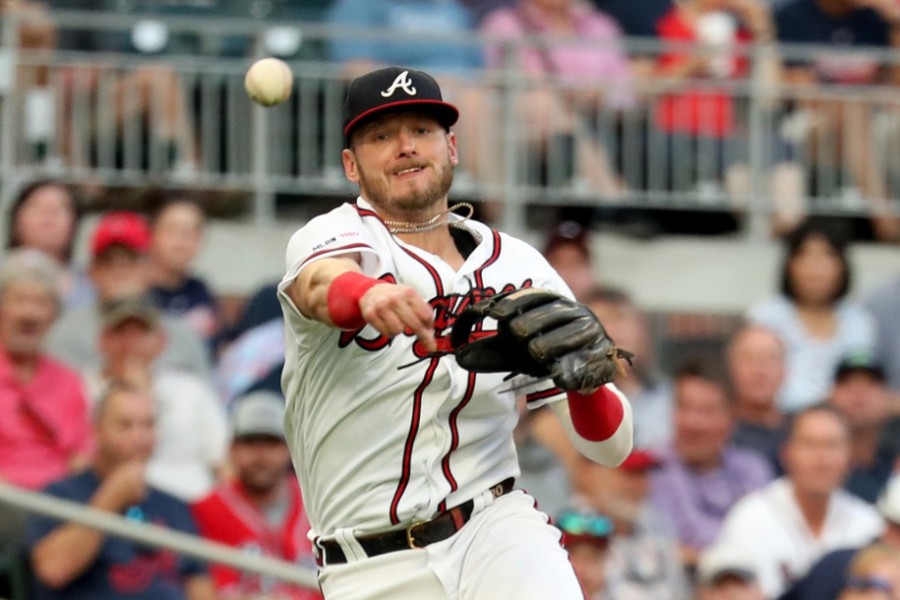 Miguel Sanó Sanó had a monstrous season and returns as a cog in the lineup. Here are Miggy’s numbers in a full season with AL ranks: HR: 52 (1st) RBI: 122 (2nd) SLG: .576 (5th) OPS: .923 (7th) Sanó has broken out at the plate, but his defense is less promising. He led his position in errors and his UZR was a poor -6.7. Rocco Baldelli recently said in an interview with Do-Hyoung Park that there are not any plans to move him over to first. If Falvey and Levine do indeed keep him there, C.J. Cron will likely be resigned for a projected $8 million arbitration salary. Here are acquisitions that could improve the defense: Josh Donaldson Donaldson is a free agent after signing for one-year and $23 million with Atlanta last offseason. Donaldson rewarded the Braves with a .900 OPS and 6.1 WAR. Donaldson has been hampered by injuries since his torrid three-year stretch in Toronto where he won MVP with 41 homers and a .939 OPS in 2015. Donaldson is an elite third baseman, saving 68 runs above average in his career. Given is age, he will likely demand a two or three year contract worth $22-28 million annually. If the Twins miss on Cole and Strasburg, they will have plenty of money to spend elsewhere. Donaldson has also played in 39 career postseason games. Kris Bryant Bryant, unlike Donaldson, is under arbitration. Bryant earned $12.9 million in 2019 and MLB Trade Rumors projects him to get $18.5 million in 2020. GM Theo Epstein says “change is coming” this offseason and there is speculation that Bryant will be moved. Bryant is a star, owning a career .901 OPS, a Rookie of the Year award, an MVP honor, and a World Series ring. There is no doubt that he would require a substantial haul. Writer Jon Morosi says there will likely need to be a top 30 prospect involved. Luckily for the Twins, they have two: Royce Lewis (No. 9) and Alex Kiriloff (No. 15), according to MLB Pipeline. Bryant is under team control until 2022, so the Twins will need to gauge whether expending Lewis and/or Kiriloff is worth it. Bryant is a slightly below average defender with a career -0.8 UZR and -1 DRS. Mike Moustakas Moose has a mutual $11 million option, but Adam McCalvy of MLB.com reports Moustakas will likely opt out after posting a 3.2 WAR and 35 homers in 2019. Moustakas is a three time All-Star and received MVP votes in 2015 after winning the World Series with Kansas City. Playing over 1,000 games at third base, his UZR and DRS are both positive. In 2019, Moustakas was an average defender with a 0.2 UZR and 0 DRS in 105 games. The Twins would figure to spend a bit more than they would for C.J. Cron, but Moustakas would be a massive upgrade defensively and adds another strong bat to the lineup. What should they do? Looking at the chart below, we can see that Donaldson was the premier defender in 2019, and given his experience and prowess at the plate, he would take this team and infield to the next level. Pay the man, reap the rewards.
 -
What will the Twins Opening Day lineup be in 2020?
Nash Walker posted a blog entry in The Special Season
Much of the discussion in the early part of the offseason has understandably been pitching. While the Twins must fill in their rotation, there are still plenty of questions to be answered at the plate. Here is my crack at the 2020 Opening Day lineup: 1. Luis Arraez, 2B Arraez is the quintessential leadoff hitter. He takes elite at-bats and rarely strikes out. 2. Jorge Polanco, SS Polanco should again slot in second. Do the Twins prefer to put more power behind Arraez? 3. Nelson Cruz, DH The ageless wonder will see ducks on the pond often with two elite contact hitters in front of him. 4. Max Kepler, RF Kepler is an admirable leadoff man and it pains me to take his at-bats. He will thrive in this role as well. 5. Miguel Sano, 3B The 5th spot will be cut out exclusively for Miggy and 3-4-5 will be a powerful punch. 6. Eddie Rosario, LF Rosario moves out of the cleanup role and provides much more balance to an already lethal lineup. 7. Mitch Garver, C This goes to show how good this team will be and obeys Baldelli's approach of alternating handedness. 8. Marwin Gonzalez, 1B Gonzalez and Cron should switch off at first unless Cron is non-tendered this winter. 9. Byron Buxton, CF Derek Falvey said Buxton should be ready by March. They are much better with him in the lineup. Starting Pitcher: Jose Berrios Unless the Twins sign Gerrit Cole or Stephen Strasburg, Berrios will spearhead the rotation once again. Of course, a lot of this revolves around the offseason, and there is no better place than Twins Daily for analysis and updates! Go Twins! Please comment below the changes you would make to this lineup! -
Game one has come and gone. The Twins fell 10-4 in 8 1/2 gut wrenching innings. Manager Rocco Baldelli will send Randy Dobnak to the hill in game two today at Yankee Stadium. Here are the keys to victory for the standout rookie: 1. Get ahead in the count Dobnak has portrayed an exceptional ability to throw strikes. Dobnak sports phenomenal per-nine numbers: 1.6 BB, 7.3 K, and 0.3 HR. His unique ability to limit fly balls gives him a substantial advantage at Yankee Stadium. When Dobnak gets ahead in the count, he allows a .180/.196/.180 (.376) line to opponents. Like most teams, the Yankees struggle when behind. They hit just .209/.217/.366 (.583) when pitchers have the advantage in the count. The Bronx Bombers look awfully human when they see a few more strikes than balls on the scoreboard. In an 0-2 count, the Yankees have a .138 average and .390 OPS. 2. Win the first pitch This may be a piggyback of the above, but this start could be a war of the first pitch. Dobnak has held opponents to a .494 OPS on the first pitch. The Yankees have a 1.157 OPS on the first pitch. These are extreme numbers on both ends, and the winner of this battle will have a huge advantage. 3. Be himself Dobnak is here for a reason. Starting the year at Class A, the rookie has pitched well at every turn. Dobnak has gotten better at almost every level. He posted a 0.40 ERA in Fort Myers (A), 2.57 ERA in Pensacola (AA), 2.15 ERA in Rochester (AAA), and an impressive 1.59 ERA for the Twins. Baldelli trusts him, and Twins Territory should too. Go Twins! Enjoy the game!
-
Rocco Baldelli is putting his rookie "through the ringer" to get healthy for the ALDS: Let's pretend we read that before the 2019 season began. First, the Twins are in the ALDS? Second, who is the rookie? Is it top prospect Royce Lewis? Alex Kiriloff? Trevor Larnach? Brusdar Graterol? nope. It is 22-year-old Venezuelan phenom Luis Arraez. Arraez ranked 15th in the Twins minor league system on MLB.com in 2018. In October 2019, he is the Twins starting second baseman and best hitter. Arraez was called up in mid-May as the Twins faced depth issues due to injuries. He made an impression early, smacking a double in his first major league game. The 5'10 jitterbug stayed hot on the West Coast trip, going 7-for-15 in five games in Seattle and Los Angeles. Arraez finished May with a .375 average and 1.050 OPS. He launched his first home run in his fourth career game. He hit just six homers in 367 minor league contests. Rocco Baldelli noticed not only the seasoned contact skills of Arraez, but also his discipline at the plate. Arraez walked five times and struck out just once in his 24 at-bats. This was no fluke. Arraez appeared in 10 more games in June and hit .438 with a .982 OPS. These gaudy numbers included a five-game stretch where he went 11-for-20. While this was happening, Jonathan Schoop struggled mightily. Schoop hit .226 with a .622 OPS in June. The slugger hit as many homers in June and July combined (6) as he did in May. Arraez found himself in the starting lineup almost every game leading up to the break. The versatile spark plug played nine games at second, nine games at third and three in left field. He finished the first half of the season with a .393 average in 84 at-bats. The rookie had struck out in just 8.4% of his appearances. Orioles' Hanser Alberto led MLB this season among qualified players, striking out in 9.1% of his at-bats. Arraez was turning the heads of Twins greats on Twitter: By August, it was apparent that Arraez would play a critical role down the stretch. He was starting on a nightly basis but gave way to Schoop against left-handed pitching. Arraez is batting .274 with a .696 OPS against lefties, while Schoop enjoys a .277 average and .917 OPS against southpaws. Arraez regressed a bit in August as his average dropped to .293 and OPS to .730 over 26 games. This was just an expected slump. Arraez broke back out in September, going 32-for-94 (.340) and slugging his fourth homer of the season to break a tie with Detroit on the night Minnesota clinched the AL Central: In the penultimate game of his 2019 breakout campaign, Arraez collided with Willians Astudillo on a pop fly in Kansas City. Arraez was in tears while being carted off with an ankle injury. Less than one week away from his first postseason start, Arraez's season looks to be in serious jeopardy. Baldelli had encouraging news on his rookie's status in yesterday's press conference: Although his rookie season may be over, this is the beginning of chapter one for Arraez. However, the Twins will miss his presence in big spots this October. In 49 high-leverage at-bats, Arraez is hitting .429 with a 1.012 OPS and nine RBIs. He is the rally starter for Baldelli's group, and his absence will send ripples through the lineup. Luckily for Minnesota, they signed Jonathan Schoop this winter to play second base. Despite mostly struggling this year, Schoop showed signs of life in August, posting a 1.029 OPS and five homers. Schoop is also an upgrade on defense as Arraez is still raw in the field. Still, there is no justification to say the Twins will not miss Arraez. To put into perspective the season the kid is having, Aaron Gleeman compared him to a few recognizable names: In a larger perspective, it looks like the Twins have found their future second baseman. Arraez is the most traditional leadoff stud that you can think of. He hits for average, gets on base and controls the plate. Arraez is a catalyst and a nightmare for an opposing pitcher. With Eddie Rosario possibly moving this off-season, Max Kepler could slide into the four spot. Arraez has a .339 average and just four strikeouts in 15 games in the leadoff role this season.
-
With just two weeks remaining, the Twins are in firm control of the AL Central. The real race is happening between the Astros and Yankees, and Houston is closing in on the top seed. This sets up for an ALDS matchup between Minnesota and…The New York Yankees. Minnesota: The Twins will head to October with one of the most prolific offenses in MLB history. Minnesota ranks first in homers, second in batting average, and third in OPS. On Tuesday, Miguel Sano broke the league record for most players with 30 or more home runs on one team. The Twins pitching staff has been nothing to scoff at. The team ranks 5th in the American League in ERA, and they have walked the second fewest batters. The bullpen, despite mid-season struggles, is ranked 4th in WAR. While this team loves homers, they are elite at stopping them. The Twins staff has allowed the 7th fewest home runs per nine innings. Consistency has been the key in 2019. The Twins have never had a winning streak longer than six, and have never lost more than four in a row. They are on pace to finish the season 99-63. That would be their best record since 1965, where they won 102 games. Here is their lineup: Max Kepler (36 HR, .855 OPS) Jorge Polanco (22 HR, .853 OPS) Nelson Cruz (37 HR, .996 OPS) Eddie Rosario (31 HR, .802 OPS) Miguel Sano (30 HR, .886 OPS) Luis Arraez (.349 AVG, .865 OPS) Mitch Garver (30 HR, 1.000 OPS) C.J Cron (24 HR, .782 OPS) Marwin Gonzalez (15 HR, .744 OPS) New York: The Yankees have faced more adversity than anyone in the American League, and they are still going to win well over 100 games. They lead the league with the most money spent on IL players at $30,568,273. Giancarlo Stanton returned Wednesday after missing almost the entire season with a knee injury. While the Twins prefer playing New York over Houston, the Yankees are far from a favorable draw. The Yankees are nipping at the heels of the Twins, trailing the home run race by just one heading into Thursday. The Bronx Bombers are second in MLB in OPS, OBP, and rank first in runs scored. Much like the Twins, this lineup is loaded with power and depth: DJ Lemahieu (.329 AVG, .893 OPS) Aaron Judge (24 HR in 95 G, .889 OPS) Edwin Encarnacion (34 HR, .856 OPS) Luke Voit (21 HR, .875 OPS) Gary Sanchez (34 HR, .849 OPS) Gleyber Torres (38 HR, .894 OPS) Giancarlo Stanton (306 career HR, .905 career OPS) Gio Urshela (20 HR, .915 OPS) Brett Gardner (25 HR, .825 OPS) The Yankees bullpen ranks first in WAR and their starting rotation is around league average. The lack of a frontline starter has been a concern for New York, but Luis Severino returned from a shoulder injury on Tuesday heaving at 96 MPH. Domingo German is 18-4 but is questionable to be available after the league placed him on Administrative Leave today while investigating for domestic violence. The matchup: The ALDS will begin in New York on October 4th. Twins’ ace Jose Berrios seems to be back to form after posting a 7.57 ERA in August. The two-time All-Star has been dominant in his last two starts, allowing just two runs in 14 ⅔ innings pitched. He is the game one go-to for rookie manager Rocco Baldelli. It is anyone’s guess who will start game one for the Yankees. Masahiro Tanaka could be a candidate. An All-Star this year, Tanaka posted a 3.86 ERA in the first half. Since then, Tanaka has allowed 11 homers in 67 innings. He is sporting a 5.78 ERA in the second half. Former Mariner James Paxton has been a major disappointment in 2019. The lefty has a 1.3 WHIP and allows 1.4 home runs per nine innings. The Twins also rank first in MLB in OPS against left-handed pitching. Paxton strikes out about 11 batters per nine innings. If Luis Severino proves to be healthy, I would not be surprised to see him take the hill in game one. The question is whether Severino can be trusted after missing 90% of the season with a serious shoulder injury. The Twins will likely send All-Star Jake Odorizzi to the mound in game two. Odorizzi has been incredibly consistent with a 3.59 ERA. He is a fly ball pitcher but allows under one home run per nine innings. The Yankees will turn to one of the aforementioned names in game two. J.A. Happ could be an option, although the Twins tagged him for two homers and six runs in 3 ⅓ innings in July. The Twins question mark comes in game three. Will Kyle Gibson get an opportunity? Will Rocco Baldelli turn to his top-5 bullpen to handle 27 outs? Should Martin Perez even be considered? The biggest question for Minnesota is who they can trust in a possible elimination game. What’s gonna happen here? These are two of the best offenses in baseball, and there is no doubt that fireworks will be flying in this series. The Yankees have home field advantage, but the Twins are confident in their two starters. The Yankees and Twins had one of the most memorable series’ of the year at Target Field in July. In three games, New York outscored Minnesota 30-27 and took two-of-three games. This is going to be one of the most energetic and exciting series of the playoffs. There is so much history here and both squads have been tremendous in 2019. It is worth noting that one of these coaches will be winning Manager of the Year. Both teams have questions in their rotation, but games one and two certainly favor the Twins. However, pitching will likely not win this series. The team that hits more home runs and capitalizes in key spots will head to the American League Championship Series.
-
The Twins defeated the Indians 2-0 in the first game of their doubleheader Saturday. Devin Smeltzer set the tone with three scoreless innings and the rest of the bullpen continued to shut out Cleveland. Jorge Polanco provided the big blow, hitting a two-run homer in the third inning.Box Score Smeltzer: 3 IP, 1 H, 0 ER, 1 BB, 1 K, 59% strikes (29 of 49 pitches) Bullpen: 6 IP, 4 H, 0 ER, 0 BB, 8 K Home Runs: Polanco (22) Multi-Hit Games: Kepler (2-for-4), Arraez (2-for-4) Top 3 WPA: Rogers (.209), Smeltzer (.162), Littell (.135) Devin Smeltzer entered this start with 14 2/3 innings pitched against Cleveland. Smeltzer had allowed 17 hits, 13 runs and six homers, including three from Francisco Lindor. Smeltzer’s success against Lindor on Saturday was a reflection of his outing. He held the All-Star to two foul pop-outs and the Indians to just one hit and no runs in three innings. Mike Clevinger started with his 11-2 record and 2.49 FIP. Luckily for the Twins, Jorge Polanco was not fazed. His two-run shot and dazzling diving stop in the third were decisive. Hitting home runs is vital in beating dominant pitchers, and Minnesota proved that on Saturday. Clevinger struck out 10 in eight strong innings. The Twins were planning on one bullpen game Saturday, but not two. After Jake Odorizzi’s start was washed away, Minnesota knew they would need 18 innings from the second-best bullpen in the American League since Aug. 1. They did not disappoint in game one. Zack Littell made his case to be a primary set-up man down the stretch with two scoreless innings. Littell could fill in for Sam Dyson after the former Giant was shut down and will undergo evaluation on his right arm. Taylor Rogers is seemingly unavailable for tonight's game after completing the five-out save. Rogers was huge once again, and is further submitting himself as one of the best relievers in baseball. This win means Minnesota will lead the AL Central by at least 2.5 games heading into the final 13-game stretch with the White Sox, Royals, and Tigers. The Twins can smell the ALDS. The magic number is 11. Postgame With Baldelli Bullpen Usage Spreadsheet Click here for a review of the number of pitches thrown by each member of the bullpen over the past five days. Click here to view the article
- 19 replies
-
- 1
-

-
- jorge polanco
- devin smeltzer
- (and 3 more)
