



Matthew Lenz
-
Posts
1,465 -
Joined
-
Last visited
-
Days Won
3
Content Type
Profiles
News
Minnesota Twins Videos
2026 Minnesota Twins Top Prospects Ranking
2022 Minnesota Twins Draft Picks
Minnesota Twins Free Agent & Trade Rumors, Notes, & Tidbits
Guides & Resources
2023 Minnesota Twins Draft Picks
The Minnesota Twins Players Project
2024 Minnesota Twins Draft Picks
2025 Minnesota Twins Draft Pick Tracker
2026 Minnesota Twins Draft Tracker: Picks & Bonuses
Forums
Blogs
Events
Store
Downloads
Gallery
Everything posted by Matthew Lenz
-
 Huh?
Huh? -
I'm not going to let a month and half of terrible, downright awful baseball takeaway from the rest of the 2024 season. I'm not giving them a moral victory, but they've won the division three times and made the playoffs four times in the last six seasons. 2019 and 2020 didn't have many of the names above, they missed in 2021 and 2022, so I guess the answer to your question is 2023?
-
Yes, they will but the guys who have been around longer will get more expensive.
-
'Tis the season where many of the prospect publications update their top 100 lists and team rankings ahead of the upcoming season. Baseball America took it a step further, and named candidates who could be the top prospect a year from now as well as those who could enter the top 100. What does their forecasting tell us about the Minnesota Twins' competitive window? Image courtesy of © Denis Poroy-Imagn Images 'Tis the season where many of the prospect publications update their top 100 lists and team rankings ahead of the upcoming season. Baseball America took it a step further, and named candidates who could be the top prospect a year from now as well as those who could enter the top 100. What does their forecasting tell us about the Minnesota Twins' competitive window? There is a consensus among rankers that Walker Jenkins, Emmanuel Rodriguez, and Luke Keaschall are top-100 guys. Baseball America adds Zebby Matthews at No. 73, while most others either have him outside of the top 100 or didn't include him given his accrued service time in 2024. Looking ahead to 2026, BA named Jenkins as a contender to be the top prospect in baseball, as well as Brandon Winokur and Connor Prielipp as guys to watch for in their top-100 list (our own Jamie Cameron would add 2025 IFA signee, Eduardo Beltre, to that list as well, and he came in for a mention on a similar list by Baseball Prospectus). In short, BA is predicting the Twins to have at least three more players, including two newcomers, on their top 100 a year from now. That's without considering the 2025 MLB Draft, wherein the Twins have three top-55 picks. If we look back at recent history, the Twins have experienced a changing of the guard in the 2020s, as a number of former prospects have reached the big leagues and many of those have established themselves as regular contributors. That list includes: Ryan Jeffers debuting in 2020 Bailey Ober, Joe Ryan, Griffin Jax, and Trevor Larnach in 2021 Royce Lewis, Matt Wallner, Cole Sands, Simeon Woods Richardson, Jhoan Durán, and José Miranda in 2022 Edouard Julien in 2023 Brooks Lee, Michael Helman, Jair Camargo, David Festa, Zebby Matthews, DaShawn Keirsey Jr., and Austin Martin in 2024 Regardless of what you think of those players' level of production, it's a developmental win to have that many players debut and stay at the major-league level. Moreover, that core has changed an organization that consistently lost 90 games in the 2010s to a team consistently competing for a playoff spot in the 2020s. In fact, that young core showed so much promise that the Twins shocked the world—okay, mainly Stateside baseball fans—by signing Carlos Correa not once, but twice. That signing, along with acquiring Pablo López, propelled the young core and the entire organization into their first competitive window since the late 2000s. As some of these players begin to enter their arbitration years and with the Pohlads implementing a cap ceiling, it's fair to wonder how long this competitive window might remain open. The latter of those two concerns will, hopefully, go away in the coming months, but we need to temper expectations: new ownership doesn't guarantee more spending. To the former concern, prospect development is hard to predict and rarely linear, but Baseball America’s predictions paint a pretty nice picture for the future of Twins baseball. While you can't solely rely on your best prospects to carry your big-league team, multiple publications rank the Twins as one of the best farm systems in baseball. A bevy of nationally unheralded prospects who have produced in the minors are candidates to make debuts in 2025, including guys like Payton Eeles and Andrew Morris. Although it's safer to temper expectations with prospect development, if the 2020-2024 debut classes have shown us anything, it's that the Twins know how to develop their guys. So while you have a very fair argument to think the “cheap Pohlads” are wasting this competitive window, I’d encourage you to also consider the Twins' latest wave of prospect promotions, along with the up-and-coming group. Pair that optimism with an ownership group who might actually invest in the team, and all of a sudden, the Twins' current competitive window is only in its infancy. View full article
-
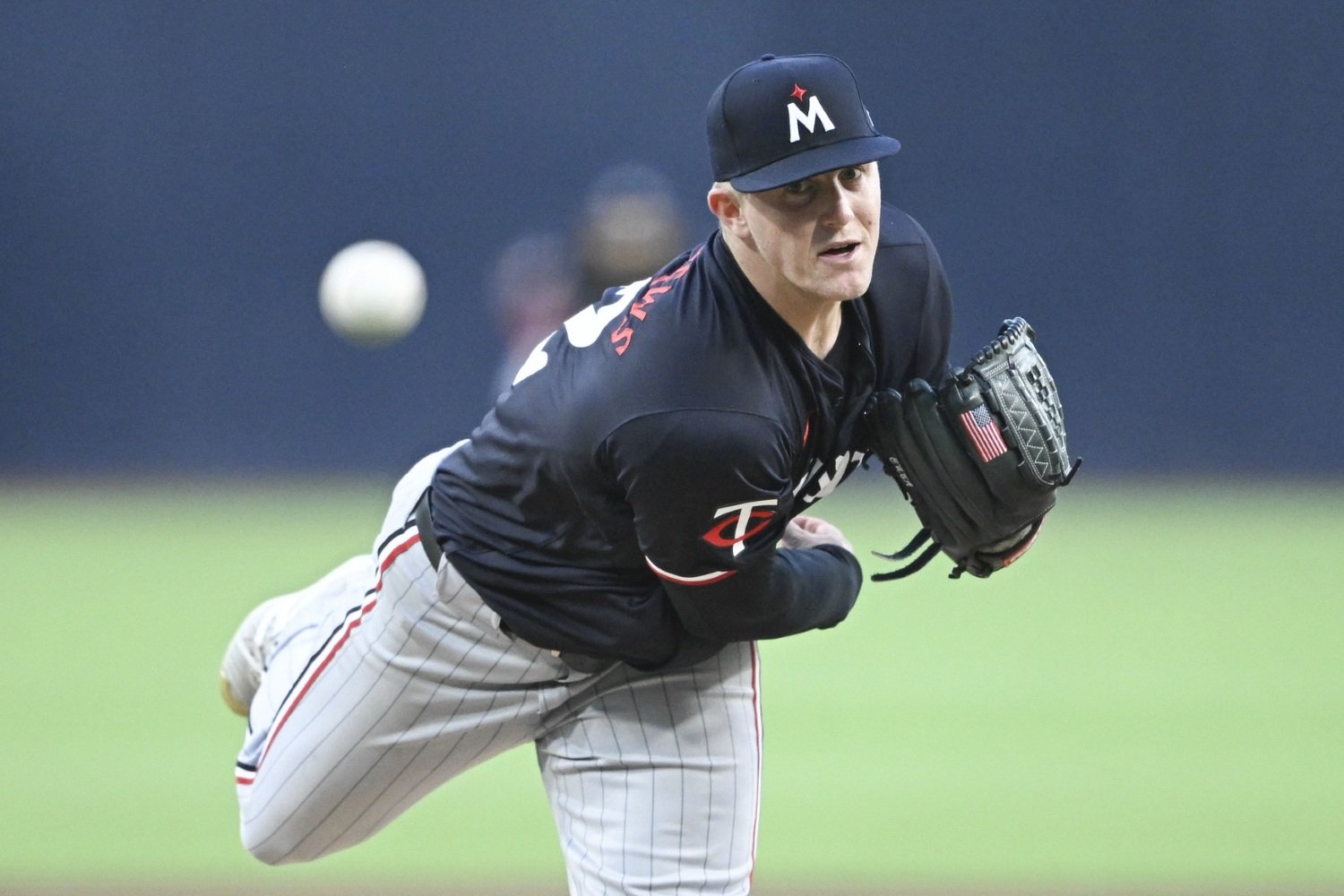 There is a consensus among rankers that Walker Jenkins, Emmanuel Rodriguez, and Luke Keaschall are top-100 guys. Baseball America adds Zebby Matthews at No. 73, while most others either have him outside of the top 100 or didn't include him given his accrued service time in 2024. Looking ahead to 2026, BA named Jenkins as a contender to be the top prospect in baseball, as well as Brandon Winokur and Connor Prielipp as guys to watch for in their top-100 list (our own Jamie Cameron would add 2025 IFA signee, Eduardo Beltre, to that list as well, and he came in for a mention on a similar list by Baseball Prospectus). In short, BA is predicting the Twins to have at least three more players, including two newcomers, on their top 100 a year from now. That's without considering the 2025 MLB Draft, wherein the Twins have three top-55 picks. If we look back at recent history, the Twins have experienced a changing of the guard in the 2020s, as a number of former prospects have reached the big leagues and many of those have established themselves as regular contributors. That list includes: Ryan Jeffers debuting in 2020 Bailey Ober, Joe Ryan, Griffin Jax, and Trevor Larnach in 2021 Royce Lewis, Matt Wallner, Cole Sands, Simeon Woods Richardson, Jhoan Durán, and José Miranda in 2022 Edouard Julien in 2023 Brooks Lee, Michael Helman, Jair Camargo, David Festa, Zebby Matthews, DaShawn Keirsey Jr., and Austin Martin in 2024 Regardless of what you think of those players' level of production, it's a developmental win to have that many players debut and stay at the major-league level. Moreover, that core has changed an organization that consistently lost 90 games in the 2010s to a team consistently competing for a playoff spot in the 2020s. In fact, that young core showed so much promise that the Twins shocked the world—okay, mainly Stateside baseball fans—by signing Carlos Correa not once, but twice. That signing, along with acquiring Pablo López, propelled the young core and the entire organization into their first competitive window since the late 2000s. As some of these players begin to enter their arbitration years and with the Pohlads implementing a cap ceiling, it's fair to wonder how long this competitive window might remain open. The latter of those two concerns will, hopefully, go away in the coming months, but we need to temper expectations: new ownership doesn't guarantee more spending. To the former concern, prospect development is hard to predict and rarely linear, but Baseball America’s predictions paint a pretty nice picture for the future of Twins baseball. While you can't solely rely on your best prospects to carry your big-league team, multiple publications rank the Twins as one of the best farm systems in baseball. A bevy of nationally unheralded prospects who have produced in the minors are candidates to make debuts in 2025, including guys like Payton Eeles and Andrew Morris. Although it's safer to temper expectations with prospect development, if the 2020-2024 debut classes have shown us anything, it's that the Twins know how to develop their guys. So while you have a very fair argument to think the “cheap Pohlads” are wasting this competitive window, I’d encourage you to also consider the Twins' latest wave of prospect promotions, along with the up-and-coming group. Pair that optimism with an ownership group who might actually invest in the team, and all of a sudden, the Twins' current competitive window is only in its infancy.
- 43 comments
-
- 10
-

-
- walker jenkins
- emmanuel rodriguez
- (and 1 more)
-
Towards the end of last season, when the Minnesota Twins were in the midst of a historic collapse, Rocco Baldelli had Royce Lewis try his hand at second base. The move was partially due to Lewis' performance at the hot corner (11 errors; 10 throwing), but it was more about the lack of production coming from those at the Keystone, which was a game of mix and match all season. At the time, Aaron Gleeman of The Athletic reported that Lewis was "apprehensive" with the move across the diamond. In fact, around that same time, he said the following about moving off third: "If you take a baby out of its crib where it’s safe, it’s going to feel a little bit scared. That’s kind of where I’m at right now". Despite those concerns, Dan Hayes of The Athletic reiterated ($$) in November that the Twins and Royce Lewis had a "second shot" at second base this offseason. What was interesting in that update was that Hayes led off by stating that Lewis' agent, Scott Boras, thought he'd be open to the move. Alas, here we are two months later and the latest update from Darren Wilson via the Minnesota Sports with Mackey & Judd podcast is that he's been taking more reps at third than second this offseason. Emphasis on "more", meaning he is still taking reps at second but that seems to be part of the plan to continue mixing and matching at the position, as needed, in 2025. If the roster generally stays the same between now and opening day, what does your starting infield look like? View full rumor
-
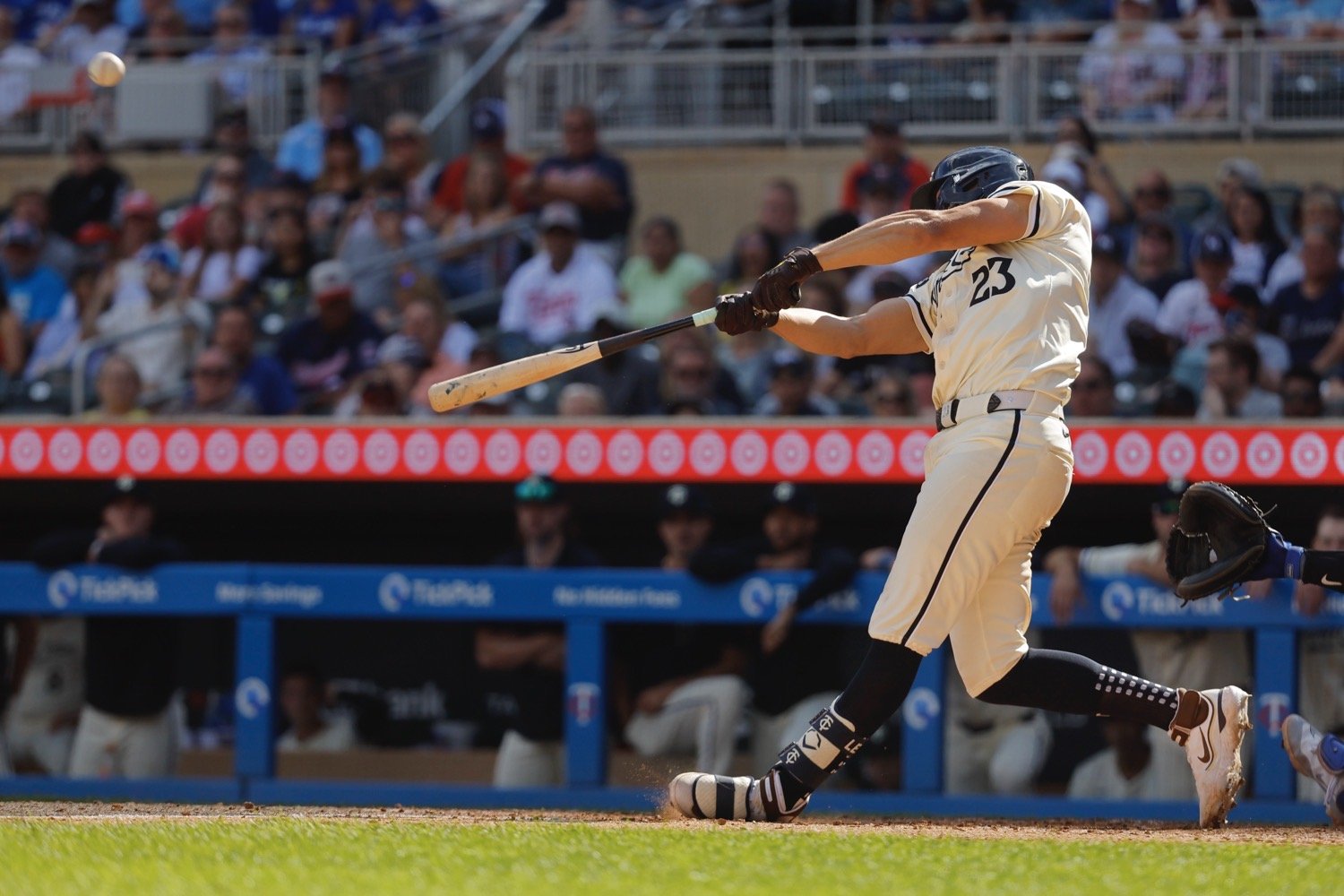 Towards the end of last season, when the Minnesota Twins were in the midst of a historic collapse, Rocco Baldelli had Royce Lewis try his hand at second base. The move was partially due to Lewis' performance at the hot corner (11 errors; 10 throwing), but it was more about the lack of production coming from those at the Keystone, which was a game of mix and match all season. At the time, Aaron Gleeman of The Athletic reported that Lewis was "apprehensive" with the move across the diamond. In fact, around that same time, he said the following about moving off third: "If you take a baby out of its crib where it’s safe, it’s going to feel a little bit scared. That’s kind of where I’m at right now". Despite those concerns, Dan Hayes of The Athletic reiterated ($$) in November that the Twins and Royce Lewis had a "second shot" at second base this offseason. What was interesting in that update was that Hayes led off by stating that Lewis' agent, Scott Boras, thought he'd be open to the move. Alas, here we are two months later and the latest update from Darren Wilson via the Minnesota Sports with Mackey & Judd podcast is that he's been taking more reps at third than second this offseason. Emphasis on "more", meaning he is still taking reps at second but that seems to be part of the plan to continue mixing and matching at the position, as needed, in 2025. If the roster generally stays the same between now and opening day, what does your starting infield look like?
 -
If it was more than one from that group, that would be more expensive than he was a year ago when he was a year younger and a year more controllable. I do agree that one from that group (I would also add Matthews) would be required to get the deal done. After that it's probably Vazquez and another prospect in the 15-30 range.
-
I'm confused by your statement regarding the Twins winning a bidding war. Are you saying that because you don't think they have the prospect capital to compete with an offer or because they'd be unwilling to match the cost? If it's the former, the Twins have one of the best systems in all of baseball even after a number of graduates over the last few seasons.
-
You can NEVER have enough pitching. Only three (or four if you count SWR...I don't yet) of those guys have shown the promise to be long time contributors in the bigs. I like Festa and Matthews and think we have a good pipeline in the minors but development is never guaranteed. You don't pass up on a guy like Cease simply because you've got other guys (who are all currently worse than Cease and most don't the upside to be as good) MLB ready or close to it.
-
This is a good nugget and one I didn't think of. Thank you!
-
While saying "half" is correct, it feels a little disingenuous when we're talking about the difference of a year. As I prefaced in the article, I used that trade "for reference"..not to say that is what it will cost. That said, his cost will be driven up with multiple teams interested. Regardless of the number of teams interested, there is zero chance the Padres deal him for a "couple of lower level prospects" and Vázquez.
-
It was just a year ago that he was traded, so a difference for sure but not substantive. It sounds like multiple teams are interested so that is going to drive up his cost, as well. I'd assume that he will cost less than a year ago but not by much.
-
The Minnesota Twins and San Diego Padres have had equally quiet offseasons, but a recent report suggests the two could tango in what might be a blockbuster deal. Image courtesy of Vázquez: © Brian Fluharty-Imagn Images; Cease: © David Frerker-Imagn Images The Minnesota Twins and San Diego Padres have had equally quiet offseasons, but a recent report suggests the two could tango in what might be a blockbuster deal. Dan Hayes and Dennis Lin, both of The Athletic, are reporting that the Twins and Padres “have spoken about a potential trade that would send Christian Vázquez to San Diego.” While a deal isn’t imminent, it is worth noting that this isn’t the first time the Padres have expressed interest in adding the veteran backstop to their club. In fact, they were one of the suitors competing against the Twins for his services two years ago, before he agreed to a three-year, $30-million pact. Despite talks slowing down, I would anticipate the two sides continue to work toward a deal, considering the Padres' need for a primary catcher and the lack of suitable options on the free agent market. While trading Vázquez has been a topic frequently discussed on Twins Daily, the sentiment has generally suggested that he would be dealt as more of a salary dump. On the contrary, Hayes and Lin’s report suggests that the Padres see the 34-year-old as a viable primary option behind the plate. Currently, the Padres have Luis Campusano and Brett Sullivan as the two catchers on their 40-man roster, but also signed Martín Maldanado to a minor-league deal in mid-January. Campusano got the bulk of the reps in 2024, but carried a .642 OPS and produced -0.5 fWAR in 91 games. Sullivan and Maldonado, who appeared in seven and 48 games respectively in 2024, aren’t expected to be productive contributors moving forward. For a team trying to remain a playoff contender and compete against the Los Angeles Dodgers, the Padres are even more motivated to shore up one of the most important positions on the diamond. So, if the Padres are actually interested in Vázquez, then what’s in it for the Twins? Dylan Cease. That’s what. No, seriously. Dylan Cease. Well, maybe. According to Hayes and Lin’s report, “the Twins would like to reallocate resources and are among the teams with interest in Dylan Cease.” Cease, who is set to be a free agent following the 2025 season, will make $13.75 million this year and is coming off one of the best years of his career. Across a career-high 189 ⅓ innings, the righty posted a 3.10 FIP with elite strikeout and walk rates and garnered both MVP and Cy Young votes. Since he spent parts of five seasons with the Chicago White Sox, the Twins brass is overly familiar with the 29-year-old's arsenal and skillset. It should go without saying that any deal would require more parts than Vázquez and Cease, and the Twins would likely have to send one of their big-league starters (likely one of their pre-arbitration arms) in any trade package that would net them Cease. For reference, the Padres acquired Cease by sending the White Sox a top-100 pitching prospect, two top-10 organizational prospects, and a replacement-level reliever. Of course, the White Sox organization is in a completely different position than the Twins, but that gives you an idea of what it would cost for the Twins to nab the former sixth-round pick. From a financial perspective, these two teams are an interesting fit. The Twins' self-imposed salary ceiling and potential sale have stopped the team from adding salary. On the other side, the Padres are currently projected to be above the luxury tax threshold, and they're expected to shed salary. Meanwhile, family members of the late owner, Peter Seidler, are in the midst of a legal dispute, further complicating things. Hayes and Lin go on to report that finances are one thing holding up this deal, as the two sides can’t agree on how much of Vázquez’s salary San Diego will absorb. The two sides make a tricky fit, unless a third team gets involved to facilitate things. Acquiring Cease would improve an already good starting rotation for the Twins, even if it cost them one of Joe Ryan, Bailey Ober, David Festa, or Zebby Matthews. Cease is a clear upgrade over any of those names. That said, the Twins reportedly aren’t the only party interested in acquiring Cease. The longer they’re in a stalemate with the Padres, the less likely it becomes they will be the team to acquire him in a deal. Do you think the Twins should do what it takes to acquire Cease? View full article
-
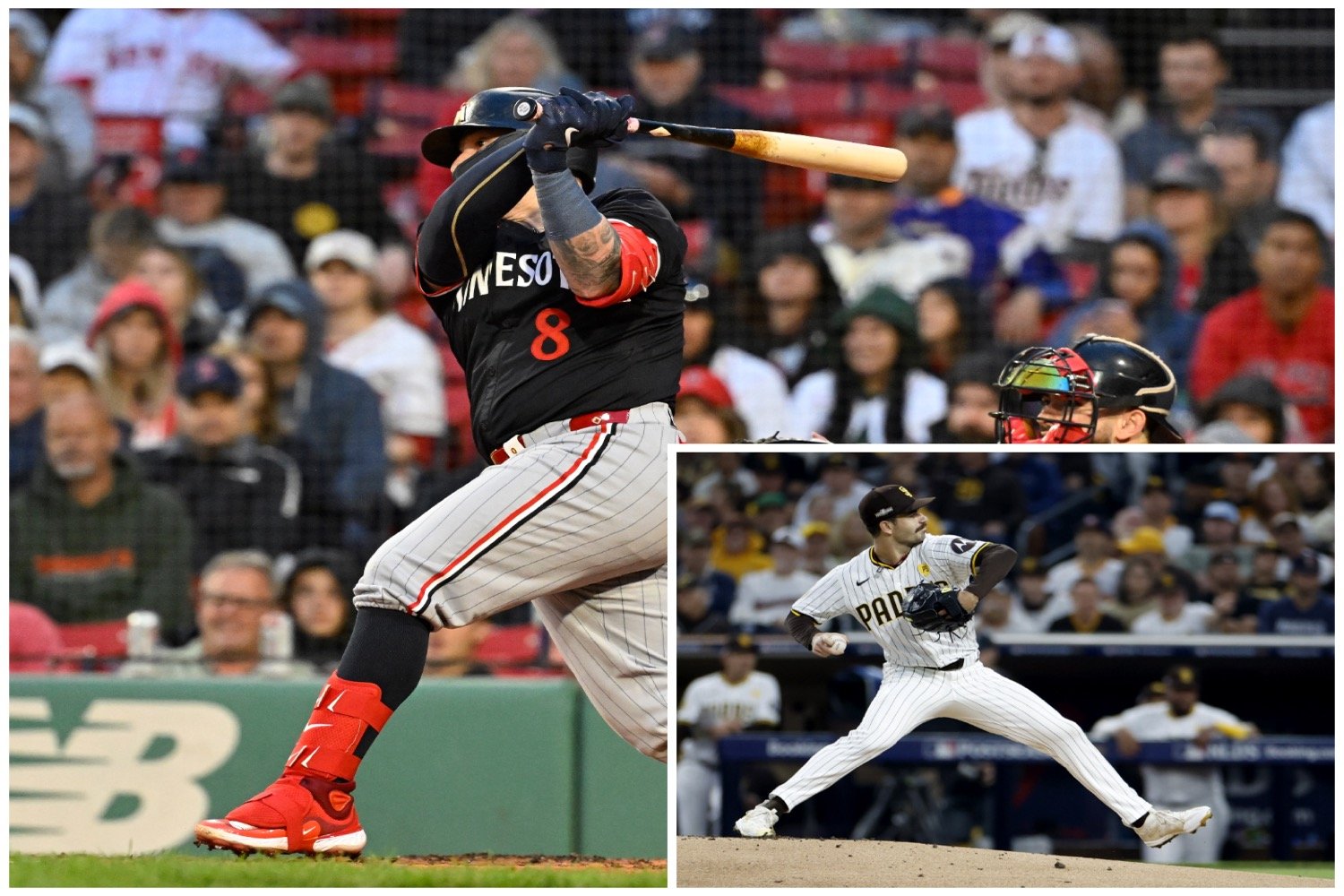 Dan Hayes and Dennis Lin, both of The Athletic, are reporting that the Twins and Padres “have spoken about a potential trade that would send Christian Vázquez to San Diego.” While a deal isn’t imminent, it is worth noting that this isn’t the first time the Padres have expressed interest in adding the veteran backstop to their club. In fact, they were one of the suitors competing against the Twins for his services two years ago, before he agreed to a three-year, $30-million pact. Despite talks slowing down, I would anticipate the two sides continue to work toward a deal, considering the Padres' need for a primary catcher and the lack of suitable options on the free agent market. While trading Vázquez has been a topic frequently discussed on Twins Daily, the sentiment has generally suggested that he would be dealt as more of a salary dump. On the contrary, Hayes and Lin’s report suggests that the Padres see the 34-year-old as a viable primary option behind the plate. Currently, the Padres have Luis Campusano and Brett Sullivan as the two catchers on their 40-man roster, but also signed Martín Maldanado to a minor-league deal in mid-January. Campusano got the bulk of the reps in 2024, but carried a .642 OPS and produced -0.5 fWAR in 91 games. Sullivan and Maldonado, who appeared in seven and 48 games respectively in 2024, aren’t expected to be productive contributors moving forward. For a team trying to remain a playoff contender and compete against the Los Angeles Dodgers, the Padres are even more motivated to shore up one of the most important positions on the diamond. So, if the Padres are actually interested in Vázquez, then what’s in it for the Twins? Dylan Cease. That’s what. No, seriously. Dylan Cease. Well, maybe. According to Hayes and Lin’s report, “the Twins would like to reallocate resources and are among the teams with interest in Dylan Cease.” Cease, who is set to be a free agent following the 2025 season, will make $13.75 million this year and is coming off one of the best years of his career. Across a career-high 189 ⅓ innings, the righty posted a 3.10 FIP with elite strikeout and walk rates and garnered both MVP and Cy Young votes. Since he spent parts of five seasons with the Chicago White Sox, the Twins brass is overly familiar with the 29-year-old's arsenal and skillset. It should go without saying that any deal would require more parts than Vázquez and Cease, and the Twins would likely have to send one of their big-league starters (likely one of their pre-arbitration arms) in any trade package that would net them Cease. For reference, the Padres acquired Cease by sending the White Sox a top-100 pitching prospect, two top-10 organizational prospects, and a replacement-level reliever. Of course, the White Sox organization is in a completely different position than the Twins, but that gives you an idea of what it would cost for the Twins to nab the former sixth-round pick. From a financial perspective, these two teams are an interesting fit. The Twins' self-imposed salary ceiling and potential sale have stopped the team from adding salary. On the other side, the Padres are currently projected to be above the luxury tax threshold, and they're expected to shed salary. Meanwhile, family members of the late owner, Peter Seidler, are in the midst of a legal dispute, further complicating things. Hayes and Lin go on to report that finances are one thing holding up this deal, as the two sides can’t agree on how much of Vázquez’s salary San Diego will absorb. The two sides make a tricky fit, unless a third team gets involved to facilitate things. Acquiring Cease would improve an already good starting rotation for the Twins, even if it cost them one of Joe Ryan, Bailey Ober, David Festa, or Zebby Matthews. Cease is a clear upgrade over any of those names. That said, the Twins reportedly aren’t the only party interested in acquiring Cease. The longer they’re in a stalemate with the Padres, the less likely it becomes they will be the team to acquire him in a deal. Do you think the Twins should do what it takes to acquire Cease?
 -
Matt Wallner and Trevor Larnach are too similar to be mainstays in the lineup over the long term. Dan Szymborski’s ZiPS projections for the Minnesota Twins paint a pretty clear picture; it's not hard to decide which one the team should trade. Image courtesy of © John Leyba-Imagn Images Matt Wallner and Trevor Larnach are too similar to be mainstays in the lineup over the long term. Dan Szymborski’s ZiPS projections for the Minnesota Twins paint a pretty clear picture; it's not hard to decide which one the team should trade. Matt Wallner and Trevor Larnach being left-handed hitters really isn’t the issue. Rather, while it’s still a relatively small sample, neither player has shown an ability to be remotely serviceable against left-handed pitching. With the Twins' penchant to play matchups, it’s not feasible to have two players that profile so similarly. That would require more than one right-handed-hitting, corner outfield bat on the bench. When it’s all said and done, the Twins are going to need to trade one of the two, and ZiPS projects one to far outperform the other. Szymborski's model projects Wallner to be a valuable slugger in 2025 and over the next three years, with a projected three-year OPS+ 15 points higher than Larnach's. Considering those projections, coupled with the fact that Wallner is the superior defender, the Twins should look to move on from Larnach sooner rather than later. The former first-round pick is coming off a career year, wherein he slashed .259/.338/.434 with 15 home runs and respectable strikeout and walk rates, but ZiPS projects him to fall short of those numbers in 2025. Larnach's not a truly poor hitter. The models like him to be a slightly above-average hitter in 2025 and over the next three years, with 106 and 105 OPS+ marks, respectively. That's a bit weak for a corner outfielder, though. With three years of team control remaining and ZiPS roughly projecting his 2024 season to be the norm from a production standpoint, Larnach's value now is higher than it may ever be again. While there may be more teams interested in a former top prospect entering his age-28 season, the Houston Astros and Atlanta Braves are two teams who have specifically identified a need for a left-handed hitting outfielder. With some of the top names that fit this bill (like switch-hitter Anthony Santander, Michael Conforto, and yes, Max Kepler) off the market, the Astros and Braves are left to fight over Jurickson Profar or less attractive options. Given both teams' plans to contend in 2025, and the Astros' preference for a more cost-effective approach, Larnach could be a valuable asset for either club. While I won’t put together specific trade packages, I will identify players from both teams who would be attainable and could help the Twins in 2025. Astros The Astros are $3 million above the CBT and could be looking to dip below that threshold. Larnach, costing $2.1 million in 2025, would be a cost-effective solution. Mauricio Dubon, a classic Falvey/Baldelli (Falvelli??) utility player who can play all around the diamond while being a plus at the plate, will cost $5 million in 2025. While this isn’t a perfect fit (as it wouldn't get the Astros under the CBT threshold and the Twins aren’t looking to add money), it has the framework to help both teams accomplish their goals, whether it be through a larger deal or dealing with other teams. Another roster fit, this time a little closer to 1:1 from a salary standpoint, is right-handed hitting corner outfielder Jake Meyers, which is a need for the Twins whether they move Larnach or not. Braves It’s a little harder to see a deal with the Braves come to fruition that would help the Twins win in 2025. They likely don’t have any cheap bullpen arms available and any available hitter would likely be a downgrade from Larnach. They do have two pre-arbitration utility players in Nick Allen and Eli White, although neither player jumps off the page as anything more than a defensive replacement off the bench. Acquiring either of those players would require the Braves, who don’t have a strong farm system after their top 5 guys, to throw in additional assets for it to make sense for the Twins. Those likely aren’t the only two teams who would be interested in Larnach given his prospect pedigree coupled with his 2024 season and controllability, but those are two that have publicly stated they’re interested in a left-handed hitting outfielder. Bottom line for the Twins: Based on 2024 and his future projections, Larnach’s value is at its highest point, and the cash-strapped Twins need to capitalize on that value now. What are your thoughts on trading Larnach? Would you rather see Wallner dealt? Or neither? Join the conversation in the comments! View full article
-
The Minnesota Twins Need to Trade a Left-Handed Hitting Outfielder Now
Matthew Lenz posted an article in Twins
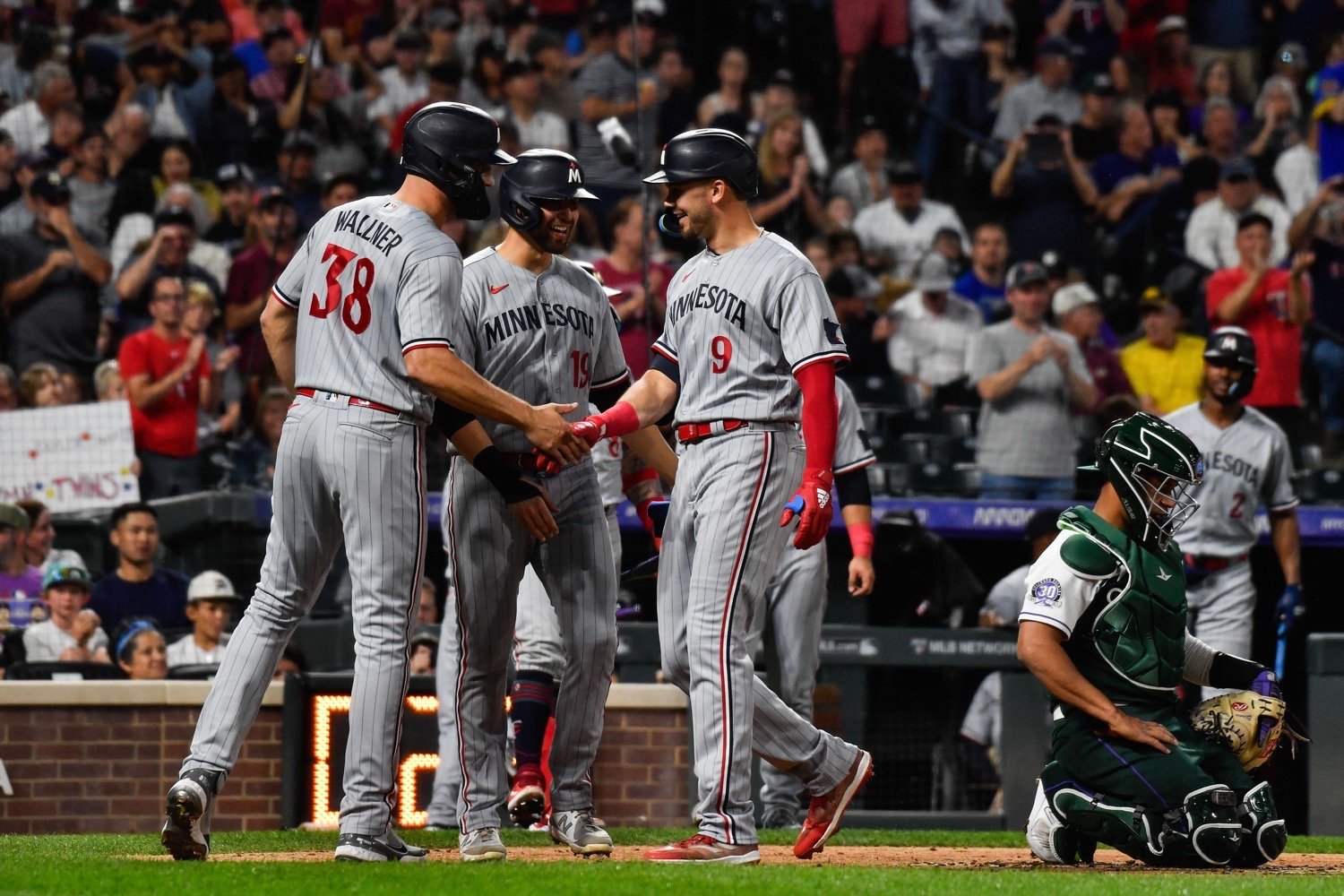 Matt Wallner and Trevor Larnach being left-handed hitters really isn’t the issue. Rather, while it’s still a relatively small sample, neither player has shown an ability to be remotely serviceable against left-handed pitching. With the Twins' penchant to play matchups, it’s not feasible to have two players that profile so similarly. That would require more than one right-handed-hitting, corner outfield bat on the bench. When it’s all said and done, the Twins are going to need to trade one of the two, and ZiPS projects one to far outperform the other. Szymborski's model projects Wallner to be a valuable slugger in 2025 and over the next three years, with a projected three-year OPS+ 15 points higher than Larnach's. Considering those projections, coupled with the fact that Wallner is the superior defender, the Twins should look to move on from Larnach sooner rather than later. The former first-round pick is coming off a career year, wherein he slashed .259/.338/.434 with 15 home runs and respectable strikeout and walk rates, but ZiPS projects him to fall short of those numbers in 2025. Larnach's not a truly poor hitter. The models like him to be a slightly above-average hitter in 2025 and over the next three years, with 106 and 105 OPS+ marks, respectively. That's a bit weak for a corner outfielder, though. With three years of team control remaining and ZiPS roughly projecting his 2024 season to be the norm from a production standpoint, Larnach's value now is higher than it may ever be again. While there may be more teams interested in a former top prospect entering his age-28 season, the Houston Astros and Atlanta Braves are two teams who have specifically identified a need for a left-handed hitting outfielder. With some of the top names that fit this bill (like switch-hitter Anthony Santander, Michael Conforto, and yes, Max Kepler) off the market, the Astros and Braves are left to fight over Jurickson Profar or less attractive options. Given both teams' plans to contend in 2025, and the Astros' preference for a more cost-effective approach, Larnach could be a valuable asset for either club. While I won’t put together specific trade packages, I will identify players from both teams who would be attainable and could help the Twins in 2025. Astros The Astros are $3 million above the CBT and could be looking to dip below that threshold. Larnach, costing $2.1 million in 2025, would be a cost-effective solution. Mauricio Dubon, a classic Falvey/Baldelli (Falvelli??) utility player who can play all around the diamond while being a plus at the plate, will cost $5 million in 2025. While this isn’t a perfect fit (as it wouldn't get the Astros under the CBT threshold and the Twins aren’t looking to add money), it has the framework to help both teams accomplish their goals, whether it be through a larger deal or dealing with other teams. Another roster fit, this time a little closer to 1:1 from a salary standpoint, is right-handed hitting corner outfielder Jake Meyers, which is a need for the Twins whether they move Larnach or not. Braves It’s a little harder to see a deal with the Braves come to fruition that would help the Twins win in 2025. They likely don’t have any cheap bullpen arms available and any available hitter would likely be a downgrade from Larnach. They do have two pre-arbitration utility players in Nick Allen and Eli White, although neither player jumps off the page as anything more than a defensive replacement off the bench. Acquiring either of those players would require the Braves, who don’t have a strong farm system after their top 5 guys, to throw in additional assets for it to make sense for the Twins. Those likely aren’t the only two teams who would be interested in Larnach given his prospect pedigree coupled with his 2024 season and controllability, but those are two that have publicly stated they’re interested in a left-handed hitting outfielder. Bottom line for the Twins: Based on 2024 and his future projections, Larnach’s value is at its highest point, and the cash-strapped Twins need to capitalize on that value now. What are your thoughts on trading Larnach? Would you rather see Wallner dealt? Or neither? Join the conversation in the comments!
 -
 Unsurprisingly, it's been a quiet offseason for the Minnesota Twins coming off an 82-win season. While pitchers and catchers report in under a month, multiple sources are indicating the Twins have been active in the trade market. On January 16th, Jeff Passan stated ($$) "Minnesota has entertained plenty but consummated nothing" in response to a question regarding any remaining "big trades" this offseason. Then, a day later, Dan Hayes quoted Derek Falvey ($$) who stated "...I can tell you we’ve had more active conversations in the last couple of weeks than we’ve had prior..." While specifics names and teams weren't mentioned, it's clear that the Twins are doing their diligence whether it's on bigger names like Carlos Correa and Pablo Lopez or salary dump candidates in Willi Castro, Chris Paddack, and Christian Vazquez. Are there any Twins on the current roster you'd like to see moved? Any players on other teams you'd like to see added? Let us know in the comments!
 -
Unsurprisingly, it's been a quiet offseason for the Minnesota Twins coming off an 82-win season. While pitchers and catchers report in under a month, multiple sources are indicating the Twins have been active in the trade market. On January 16th, Jeff Passan stated ($$) "Minnesota has entertained plenty but consummated nothing" in response to a question regarding any remaining "big trades" this offseason. Then, a day later, Dan Hayes quoted Derek Falvey ($$) who stated "...I can tell you we’ve had more active conversations in the last couple of weeks than we’ve had prior..." While specifics names and teams weren't mentioned, it's clear that the Twins are doing their diligence whether it's on bigger names like Carlos Correa and Pablo Lopez or salary dump candidates in Willi Castro, Chris Paddack, and Christian Vazquez. Are there any Twins on the current roster you'd like to see moved? Any players on other teams you'd like to see added? Let us know in the comments! View full rumor
-
Ranking the Top Pitching Prospect from Each AL Central Organization
Matthew Lenz posted an article in Minor Leagues
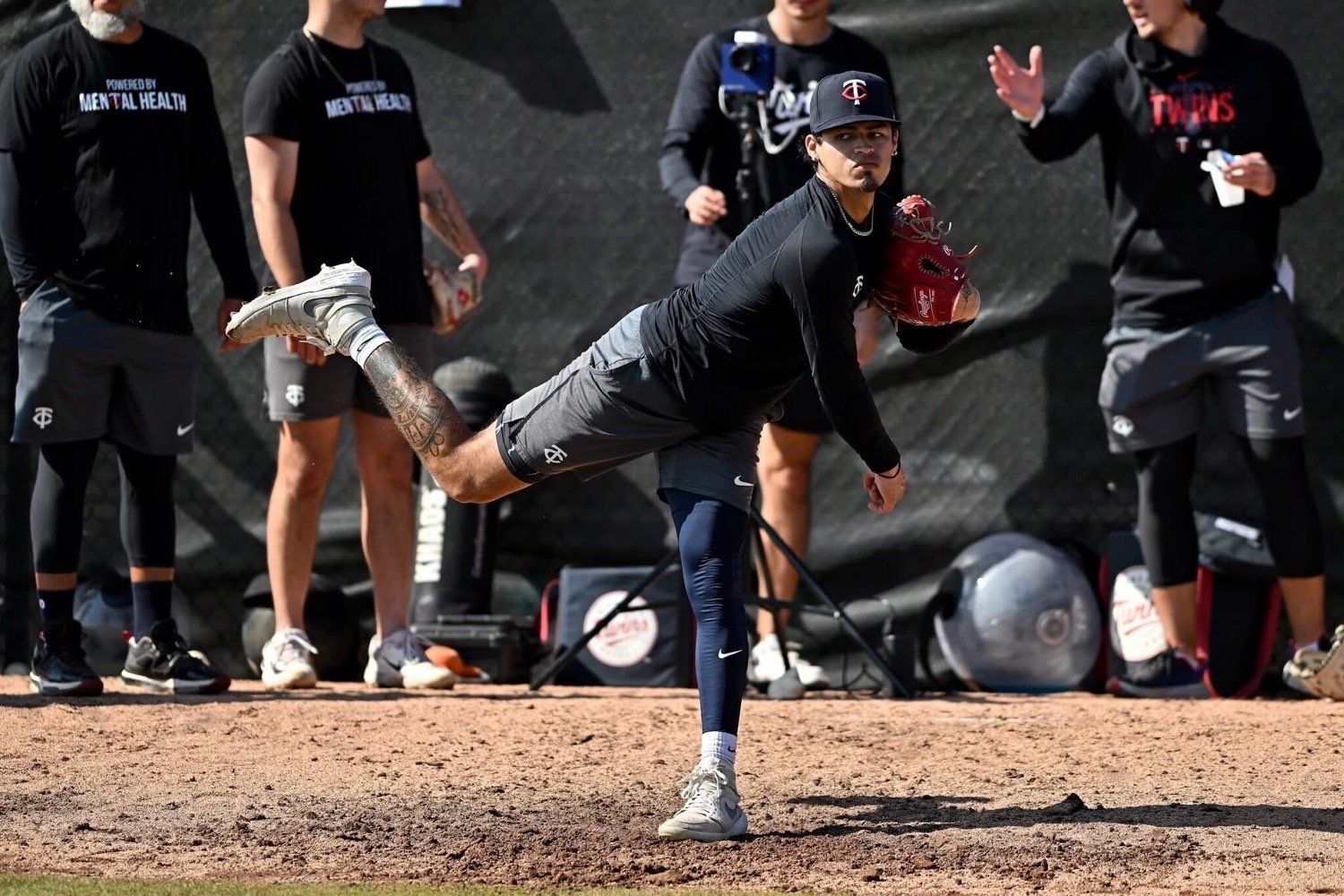 One reason the division's top-end pitching prospects appear weaker than the hitting prospects is because of recent graduations. In the recent past, the Minnesota Twins had David Festa and Zebby Matthews graduate from prospect status; the Cleveland Guardians had Gavin Williams and Tanner Bibee graduate; and the Kansas City Royals... well, they just hope Seth Lugo’s and Michael Wacha’s 2024 campaigns weren’t a fluke. In my review, I used a combination of MLB, Baseball America, Baseball Prospectus, and FanGraphs rankings and scouting reports to get an idea of how I’d rank the prospects against one another. Let’s see how they stack up. 1. Jackson Jobe - Detroit Tigers Jackson Jobe was the third overall by Detroit in 2021 and, while it took awhile for him to turn a corner in his development, he is considered the best pitching prospect in baseball by multiple rankers. Since missing the first month of the 2023 season, Jobe has been dominant, flying through the Tigers’ system and making his major-league debut at the end of the 2024 season. He finished each of his 2023 and 2024 minor-league seasons with an ERA south of 3.00, striking out more than a quarter of the batters he faced. Jobe's fastball has 18 inches of induced vertical break, reaching 94-97 mph, complementing his plus-plus slider with high spin rates and significant sweeping action. His ability to command the strike zone is a little inconsistent, but still, Jobe will be a thorn in the division’s side for the foreseeable future. 2. Noah Schultz - Chicago White Sox Schultz has quickly climbed prospect rankings, after being the 26th overall pick in the 2022 Draft by the Chicago White Sox—and that's despite missing more than two months of his second professional season. Regardless, though, he struck out 38 batters in 27 innings at Single-A Kannapolis and followed that up by posting a 2.45 FIP, a 32.1% strikeout rate, and a 6.7% walk rate at High-A Winston-Salem and Double-A Birmingham. The 6-foot-9 lefty, who’s rightfully drawn comparisons to Randy Johnson, features a plus slider with exceptional horizontal movement; a fastball that sits 93-97 mph; and a nascent two-seamer. A mid-80s changeup shows promise, and he also features an average cutter. While he doesn’t have the upside of Jobe, his impressive development shows that he has the ceiling of a front-line starter. 3. Marco Raya - Minnesota Twins Zebby Matthews “misses” the cut by just a few days after debuting in 2024, so the top spot in the Twins organization goes to Marco Raya. His development has not come without its lumps, due to both injuries and performance. Regardless, Baseball America ranks the 6-foot-1 righty as the 58th-best prospect in all of baseball. As a prep draftee, he performed well at Double-A Wichita in 2024 despite his age, posting a 4.05 ERA and 3.88 FIP with solid strikeout and walk rates, earning a promotion to Triple-A St. Paul. He boasts a mid- to upper-90s fastball, while his slider is a true out pitch, sitting mid-80s with elite spin. A slower curve provides a different look, and his changeup has developed into a plus offering. Having not yet eclipsed the 100-inning mark in any professional season, the goal for 2025 will be to manage a full starter’s workload at the minors' highest level—but be ready if called upon by the parent club, as a starter or reliever. 4. Braylon Doughty - Cleveland Guardians Braylon Doughty was the 36th overall pick in the most recent draft, as a prep prospect. The 6-foot-1 righty did not pitch in the 2024 season, but his scouting reports tell us he has a mid-90s fastball with arm-side run and good command, coupled with a high-spin curveball and slider. He’s also working on a changeup to help round out his arsenal. While it will be a long time before we see him in the big leagues, he’s currently pegged as a mid-rotation starter. 5. David Shields - Kansas City Royals David Shields, a 2024 second-round pick, re-classified for the draft, making him just 17 years old at the time he was drafted. Like Doughty, he did not pitch in the 2024 season, but we know he features a low- to mid-90s fastball up with good movement and command, along with an above-average low-80s slider, and a changeup and cutter that still need some fine-tuning. Given how young he is, it’s hard to know how much he will develop as he continues to grow and gain professional experience, but it’s likely he adds some ticks to his fastball and continues to improve his secondary offerings. After the top two arms, the current ceiling of the top pitching prospects within the division falls off considerably. Of course, that’s in part due to unknowns surrounding Raya’s ability to stay healthy over an entire season and the age of the two 2024 prep draftees. In the meantime, Jobe aims to remain in the majors, while Schultz and Raya target debuts by 2026, perhaps even by the end of 2025. Doughty and Shields are too young and far away to put any definitive timelines on, but MLB currently has both of their estimated arrivals for the 2028 season. Regardless of the current status of the top pitching prospects, the AL Central still claims some of the best young arms in baseball and these names will only deepen those starting rotations. What are your thoughts on the top prospects in the division? Were any players snubbed from the list? Join the conversation in the comments!
- 3 comments
-
- 4
-
-
- jackson jobe
- noah schultz
- (and 3 more)
-
The American League Central's top pitching prospects aren’t quite as strong as the division’s top hitting prospects, but does feature a couple of the best in baseball. I took each team’s top prospect and ranked them within the division. Image courtesy of William Parmeter The American League Central's top pitching prospects aren’t quite as strong as the division’s top hitting prospects, but does feature a couple of the best in baseball. I took each team’s top prospect and ranked them within the division. One reason the division's top-end pitching prospects appear weaker than the hitting prospects is because of recent graduations. In the recent past, the Minnesota Twins had David Festa and Zebby Matthews graduate from prospect status; the Cleveland Guardians had Gavin Williams and Tanner Bibee graduate; and the Kansas City Royals... well, they just hope Seth Lugo’s and Michael Wacha’s 2024 campaigns weren’t a fluke. In my review, I used a combination of MLB, Baseball America, Baseball Prospectus, and FanGraphs rankings and scouting reports to get an idea of how I’d rank the prospects against one another. Let’s see how they stack up. 1. Jackson Jobe - Detroit Tigers Jackson Jobe was the third overall by Detroit in 2021 and, while it took awhile for him to turn a corner in his development, he is considered the best pitching prospect in baseball by multiple rankers. Since missing the first month of the 2023 season, Jobe has been dominant, flying through the Tigers’ system and making his major-league debut at the end of the 2024 season. He finished each of his 2023 and 2024 minor-league seasons with an ERA south of 3.00, striking out more than a quarter of the batters he faced. Jobe's fastball has 18 inches of induced vertical break, reaching 94-97 mph, complementing his plus-plus slider with high spin rates and significant sweeping action. His ability to command the strike zone is a little inconsistent, but still, Jobe will be a thorn in the division’s side for the foreseeable future. 2. Noah Schultz - Chicago White Sox Schultz has quickly climbed prospect rankings, after being the 26th overall pick in the 2022 Draft by the Chicago White Sox—and that's despite missing more than two months of his second professional season. Regardless, though, he struck out 38 batters in 27 innings at Single-A Kannapolis and followed that up by posting a 2.45 FIP, a 32.1% strikeout rate, and a 6.7% walk rate at High-A Winston-Salem and Double-A Birmingham. The 6-foot-9 lefty, who’s rightfully drawn comparisons to Randy Johnson, features a plus slider with exceptional horizontal movement; a fastball that sits 93-97 mph; and a nascent two-seamer. A mid-80s changeup shows promise, and he also features an average cutter. While he doesn’t have the upside of Jobe, his impressive development shows that he has the ceiling of a front-line starter. 3. Marco Raya - Minnesota Twins Zebby Matthews “misses” the cut by just a few days after debuting in 2024, so the top spot in the Twins organization goes to Marco Raya. His development has not come without its lumps, due to both injuries and performance. Regardless, Baseball America ranks the 6-foot-1 righty as the 58th-best prospect in all of baseball. As a prep draftee, he performed well at Double-A Wichita in 2024 despite his age, posting a 4.05 ERA and 3.88 FIP with solid strikeout and walk rates, earning a promotion to Triple-A St. Paul. He boasts a mid- to upper-90s fastball, while his slider is a true out pitch, sitting mid-80s with elite spin. A slower curve provides a different look, and his changeup has developed into a plus offering. Having not yet eclipsed the 100-inning mark in any professional season, the goal for 2025 will be to manage a full starter’s workload at the minors' highest level—but be ready if called upon by the parent club, as a starter or reliever. 4. Braylon Doughty - Cleveland Guardians Braylon Doughty was the 36th overall pick in the most recent draft, as a prep prospect. The 6-foot-1 righty did not pitch in the 2024 season, but his scouting reports tell us he has a mid-90s fastball with arm-side run and good command, coupled with a high-spin curveball and slider. He’s also working on a changeup to help round out his arsenal. While it will be a long time before we see him in the big leagues, he’s currently pegged as a mid-rotation starter. 5. David Shields - Kansas City Royals David Shields, a 2024 second-round pick, re-classified for the draft, making him just 17 years old at the time he was drafted. Like Doughty, he did not pitch in the 2024 season, but we know he features a low- to mid-90s fastball up with good movement and command, along with an above-average low-80s slider, and a changeup and cutter that still need some fine-tuning. Given how young he is, it’s hard to know how much he will develop as he continues to grow and gain professional experience, but it’s likely he adds some ticks to his fastball and continues to improve his secondary offerings. After the top two arms, the current ceiling of the top pitching prospects within the division falls off considerably. Of course, that’s in part due to unknowns surrounding Raya’s ability to stay healthy over an entire season and the age of the two 2024 prep draftees. In the meantime, Jobe aims to remain in the majors, while Schultz and Raya target debuts by 2026, perhaps even by the end of 2025. Doughty and Shields are too young and far away to put any definitive timelines on, but MLB currently has both of their estimated arrivals for the 2028 season. Regardless of the current status of the top pitching prospects, the AL Central still claims some of the best young arms in baseball and these names will only deepen those starting rotations. What are your thoughts on the top prospects in the division? Were any players snubbed from the list? Join the conversation in the comments! View full article
-
Yep, just the three. Walker at 5, E Rod at 17, and Keaschall at 44.
- 4 replies
-
- 1
-
-
- walker jenkins
- max clark
- (and 3 more)
-
The American League Central has an impressive crop of top hitting prospects, with each organization boasting at least one consensus top-50 prospect. I took each team’s top position-player prospect and ranked them. Image courtesy of © Jonah Hinebaugh The American League Central has an impressive crop of top hitting prospects, with each organization boasting at least one consensus top-50 prospect. I took each team’s top position-player prospect and ranked them. The AL Central saw three teams make the playoffs and four teams finish above .500 in 2024, making it the most competitive division in all of baseball. After reviewing some of the top hitting prospects for each organization, this may not be a one-year wonder for the division, as each of the organizations has multiple hitting prospects in the top 100. In my review, I used a combination of MLB, Baseball America, Baseball Prospectus, and FanGraphs. Let’s see how each team's top prospect stacks up against the others within the division. 1. Walker Jenkins - Minnesota Twins Topping the list is our very own Walker Jenkins and, at least based on the prospect lists I referenced, it isn’t particularly close. The fifth pick in the 2023 Draft, Jenkins has had an impressive start to his career, reaching Double-A Wichita at just 19 years old. In 410 professional at-bats, he’s carried an .873 OPS, with nine home runs and 23 stolen bases. The 6-foot-3 left-handed hitter is projected to have plus hit and power tools by various scouting outlets, and was even compared to Twins (and National Baseball) Hall of Famer Joe Mauer, by Baseball America ($). Like Mauer, he has the ability to hit to all fields and demonstrates excellent contact skills. However, his power output is still a work in progress but is expected to develop over time as he’s produced very high-quality contact. Defensively, he can play anywhere in the outfield and could be the long-term heir apparent to Byron Buxton in center field. 2. Travis Bazzana - Cleveland Guardians Bazzana was the top pick in the most recent MLB Draft out of Oregon State. He was just 15 years old when he started playing in the Australian Baseball League. After three excellent seasons in college baseball, he slashed .238/.369/.396 at Hi-A Lake County, with three home runs and five stolen bases across 101 at-bats. He earned All-American honors as a freshman and, in the same summer, was named the MVP of the Cape Cod League. Bazzana’s left-handed swing generates consistent and dangerous contact, while his above-average power plays to all fields. His plus speed will play well on the base paths and, although he’s primarily a second baseman, his speed and arm strength give him the ability to also play center field. 3. Max Clark - Detroit Tigers Clark, drafted third overall by the Tigers in 2023, had the most variance in terms of rankings from the various sites. MLB currently has him as the sixth-ranked prospect in baseball from their August 2024 update, while Baseball Prospectus placed him 31st this week in their Top 101 list. After a brief stint in the Florida Complex League, he reached Single-A Lakeland by the end of 2023 and Hi-A West Michigan by the end of 2024. In his first two professional seasons, he has a .788 OPS, with 11 home runs, 5 stolen bases, and a very impressive 13.7% walk rate. He has a plus plate approach and the ability to hit to all fields, but his quality of contact to this point suggests he has some work to do in the power department. Clark has exclusively played center field, showing off excellent speed with a plus arm, and is fully expected to remain the captain of the outfield when he reaches the major leagues. 4. Colson Montgomery - Chicago White Sox Montgomery, who could have played Division 1 basketball, chose to enter the 2021 MLB draft and was selected 22nd overall by the Chicago White Sox. Despite battling injuries, Montgomery has climbed the White Sox system, reaching Triple-A Charlotte at just 22 years old and boasting a .710 OPS with 18 home runs and eight stolen bases. Overall, he’s shown a good approach at the plate with solid walk rates at each level but, if there is one concern, it’s the 28.6% strikeout rate he carried last season. MLB compared the big, left-handed hitting shortstop to Corey Seager, stating he “has plus power and is tapping into more often by launching balls in the air more consistently in 2023 and 2024.” Given his size, scouts wonder if he’ll be able to stay at shortstop long-term but think that his athleticism will make for an easy transition to the hot corner. 5. Jac Caglianone - Kansas City Royals Might Caglianone be the next Shohei Ohtani? Okay, probably not, but the sixth overall pick in the 2024 draft did earn the 2024 John Olerud Award as college baseball’s best two-way player at the University of Florida. That said, the Royals are developing the 6’5” power hitter as a first baseman, rather than a pitcher. Like Clark, there is quite a bit of variance in Caglianone’s rankings, largely because of an aggressive approach at the plate that resulted in 75 collegiate home runs—but also a high chase rate. While strikeouts weren’t an issue in college or his first taste of professional baseball, a 5.6% walk rate at Hi-A Quad Cities suggests some regression in that area if his approach doesn’t change. It’s the volatility in that type of profile that creates a wide range of outcomes for Caglianone. It’s going to be fun to watch these players develop over the next few seasons, as they slowly trickle into the major leagues. Given the state of the team and what he’s shown through his first three professional seasons, I fully expect to see Montgomery playing shortstop at some point for the White Sox in 2025 (maybe even Opening Day). After that, I’d expect Jenkins, Clark, and even Bazzana to debut sometime in 2026, with Caglianone to more realistically debut in 2027. Regardless of when they debut, though, the American League Central will boast some of the best young position players in all of baseball in the very near future. What are your thoughts on the top prospects in the division? Were any players snubbed from the list? Join the conversation in the comments! View full article
-
Ranking the Top Hitting Prospect from Each AL Central Organization
Matthew Lenz posted an article in Minor Leagues
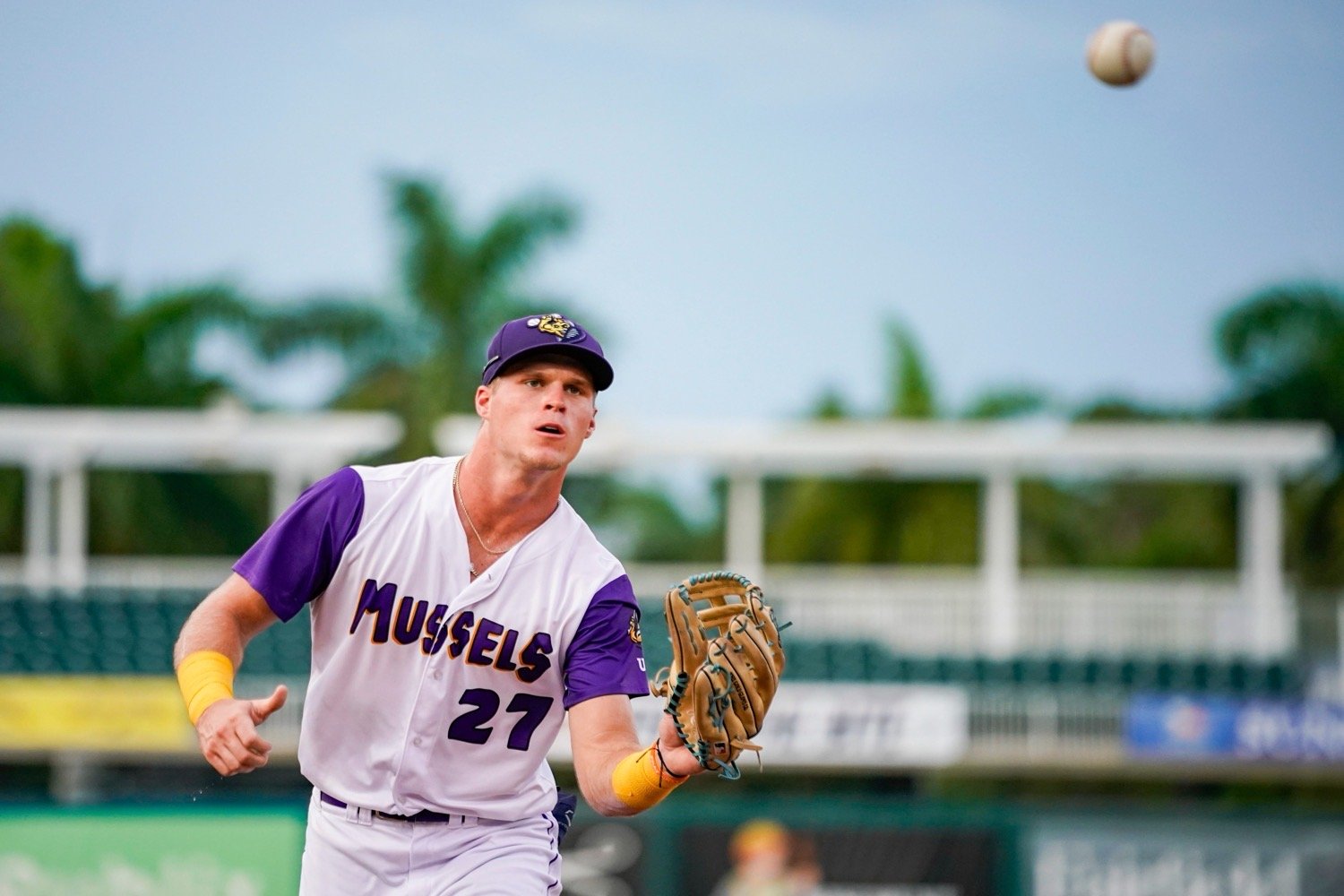 The AL Central saw three teams make the playoffs and four teams finish above .500 in 2024, making it the most competitive division in all of baseball. After reviewing some of the top hitting prospects for each organization, this may not be a one-year wonder for the division, as each of the organizations has multiple hitting prospects in the top 100. In my review, I used a combination of MLB, Baseball America, Baseball Prospectus, and FanGraphs. Let’s see how each team's top prospect stacks up against the others within the division. 1. Walker Jenkins - Minnesota Twins Topping the list is our very own Walker Jenkins and, at least based on the prospect lists I referenced, it isn’t particularly close. The fifth pick in the 2023 Draft, Jenkins has had an impressive start to his career, reaching Double-A Wichita at just 19 years old. In 410 professional at-bats, he’s carried an .873 OPS, with nine home runs and 23 stolen bases. The 6-foot-3 left-handed hitter is projected to have plus hit and power tools by various scouting outlets, and was even compared to Twins (and National Baseball) Hall of Famer Joe Mauer, by Baseball America ($). Like Mauer, he has the ability to hit to all fields and demonstrates excellent contact skills. However, his power output is still a work in progress but is expected to develop over time as he’s produced very high-quality contact. Defensively, he can play anywhere in the outfield and could be the long-term heir apparent to Byron Buxton in center field. 2. Travis Bazzana - Cleveland Guardians Bazzana was the top pick in the most recent MLB Draft out of Oregon State. He was just 15 years old when he started playing in the Australian Baseball League. After three excellent seasons in college baseball, he slashed .238/.369/.396 at Hi-A Lake County, with three home runs and five stolen bases across 101 at-bats. He earned All-American honors as a freshman and, in the same summer, was named the MVP of the Cape Cod League. Bazzana’s left-handed swing generates consistent and dangerous contact, while his above-average power plays to all fields. His plus speed will play well on the base paths and, although he’s primarily a second baseman, his speed and arm strength give him the ability to also play center field. 3. Max Clark - Detroit Tigers Clark, drafted third overall by the Tigers in 2023, had the most variance in terms of rankings from the various sites. MLB currently has him as the sixth-ranked prospect in baseball from their August 2024 update, while Baseball Prospectus placed him 31st this week in their Top 101 list. After a brief stint in the Florida Complex League, he reached Single-A Lakeland by the end of 2023 and Hi-A West Michigan by the end of 2024. In his first two professional seasons, he has a .788 OPS, with 11 home runs, 5 stolen bases, and a very impressive 13.7% walk rate. He has a plus plate approach and the ability to hit to all fields, but his quality of contact to this point suggests he has some work to do in the power department. Clark has exclusively played center field, showing off excellent speed with a plus arm, and is fully expected to remain the captain of the outfield when he reaches the major leagues. 4. Colson Montgomery - Chicago White Sox Montgomery, who could have played Division 1 basketball, chose to enter the 2021 MLB draft and was selected 22nd overall by the Chicago White Sox. Despite battling injuries, Montgomery has climbed the White Sox system, reaching Triple-A Charlotte at just 22 years old and boasting a .710 OPS with 18 home runs and eight stolen bases. Overall, he’s shown a good approach at the plate with solid walk rates at each level but, if there is one concern, it’s the 28.6% strikeout rate he carried last season. MLB compared the big, left-handed hitting shortstop to Corey Seager, stating he “has plus power and is tapping into more often by launching balls in the air more consistently in 2023 and 2024.” Given his size, scouts wonder if he’ll be able to stay at shortstop long-term but think that his athleticism will make for an easy transition to the hot corner. 5. Jac Caglianone - Kansas City Royals Might Caglianone be the next Shohei Ohtani? Okay, probably not, but the sixth overall pick in the 2024 draft did earn the 2024 John Olerud Award as college baseball’s best two-way player at the University of Florida. That said, the Royals are developing the 6’5” power hitter as a first baseman, rather than a pitcher. Like Clark, there is quite a bit of variance in Caglianone’s rankings, largely because of an aggressive approach at the plate that resulted in 75 collegiate home runs—but also a high chase rate. While strikeouts weren’t an issue in college or his first taste of professional baseball, a 5.6% walk rate at Hi-A Quad Cities suggests some regression in that area if his approach doesn’t change. It’s the volatility in that type of profile that creates a wide range of outcomes for Caglianone. It’s going to be fun to watch these players develop over the next few seasons, as they slowly trickle into the major leagues. Given the state of the team and what he’s shown through his first three professional seasons, I fully expect to see Montgomery playing shortstop at some point for the White Sox in 2025 (maybe even Opening Day). After that, I’d expect Jenkins, Clark, and even Bazzana to debut sometime in 2026, with Caglianone to more realistically debut in 2027. Regardless of when they debut, though, the American League Central will boast some of the best young position players in all of baseball in the very near future. What are your thoughts on the top prospects in the division? Were any players snubbed from the list? Join the conversation in the comments!
- 4 comments
-
- 5
-
-
- walker jenkins
- max clark
- (and 3 more)
-
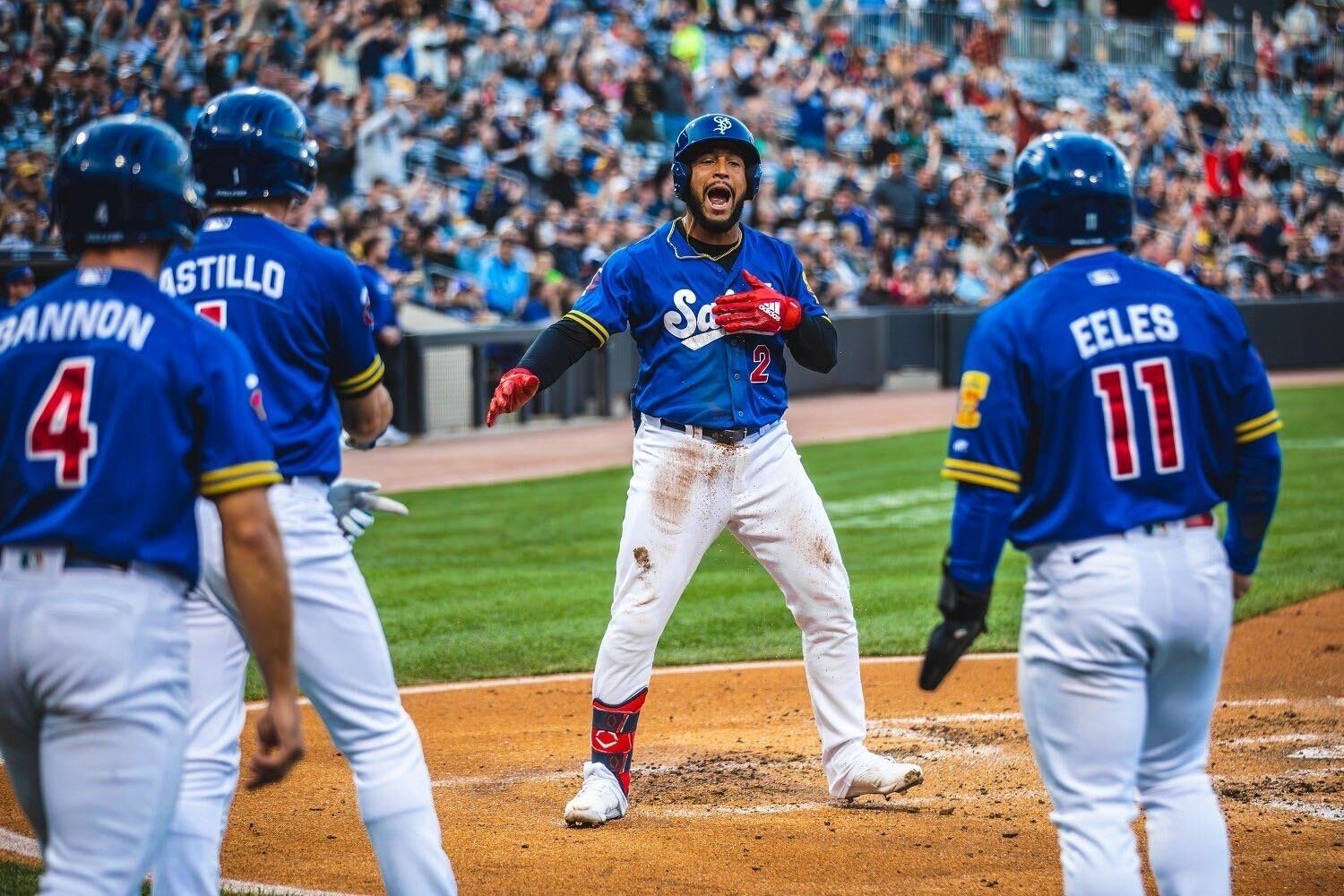 In his first four professional seasons, Emmanuel Rodriguez has performed well, with elite plate discipline, an inevitably strong OBP, and an average quality of contact that can produce decent power and a passable batting average. Where scouts and prospect rankers seem to differ the most is how his plate approach will translate as he moves up and eventually reaches the big leagues. His astonishingly low swing rate is a double-edged sword: his chase rate is low, but the lack of aggression can get him behind in counts. He's been limited by an extremely high swing-and-miss rate and a strikeout rate that flirts with 30%. If he can stay healthy, which is turning into a bit of a concern, he's a guy whose ceiling could be around 30 home runs with an OBP approaching .400. Think rookie Eddy Julien with a little more pop and a lot more defense. I chuckled while listening to episode 107 of the Future Projection podcast by Baseball America, wherein they suggested that a negative correlation exists between fans of Luis Arraez and Rodriguez, given their very different profiles. Staying on the theme of player comps, let's expand our player pool beyond the Twins organization. Which players compare to the wide range of outcomes that are possible for Rodriguez? Out Of This Universe Comp - Juan Soto What's to say that, if the stars align and fortune smiles down on the Twins organization, Rodriguez can't become Juan Soto? Okay, sure, there's a lot that says he won't, but I'm talkin’ 99th-percentile outcome here. All he needs to do is cut his strikeout rate in half, which in turn leads to a boost in batting average, and voilà—we have our very own Soto. (We'll all try hard not to think about the fact that Soto had 328 hits, 228 walks, and a World Series ring in the majors by Rodriguez's current age.) Ceiling Comp - Kyle Schwarber A much more reasonable “ceiling” comp is Kyle Schwarber, who profiles very similarly to Rodriguez, with a very good walk rate but a very high strikeout rate. Schwarber has more power but plays considerably worse defense (hence primarily DHing in 2024), but Twins fans would be extremely happy if Rodriguez turned into a consistent 35+ homer hitter with a .340+ OBP. Schwarber makes a nice fit, too, because his extreme tendency toward strikeouts has limited his upside at times, which we know is a risk with Rodriguez. Median Comp - Ian Happ Happ is Schwarber with less power, but better defense. While I think Rodriguez will strike out more and hit for more power than the current, increasingly balanced version of Happ. I think he presents a really good ballpark for Rodriguez’s 50th-percentile outcome. When Happ first came up, he was more extreme in his offensive profile, but his game has always been driven at least partially by abundant athleticism. Rodriguez has that, too. Floor Comp - Joey Gallo While Gallo has had an eight-year career (and counting), it would be pretty disappointing if Rodriguez turned into a guy who hit below the Mendoza line with a strikeout rate north of 35%. Sure, Gallo has three seasons of 38 or more home runs, but he also has five with 21 or fewer. We may very well see Rodriguez debut in 2025 at just 22 years old. Given his age (and keeping in mind development is rarely linear), I might expect more Gallo than Schwarber in the early parts of his career. That said, I don't think a Kyle Schwarber-esque player is out of the question down the road if the stars align on his development. What are your thoughts on these player comps? Leave your own in the comments!

