



Brock Beauchamp
-
Posts
32,641 -
Joined
-
Last visited
-
Days Won
328
Content Type
Profiles
News
Minnesota Twins Videos
2026 Minnesota Twins Top Prospects Ranking
2022 Minnesota Twins Draft Picks
Minnesota Twins Free Agent & Trade Rumors, Notes, & Tidbits
Guides & Resources
2023 Minnesota Twins Draft Picks
The Minnesota Twins Players Project
2024 Minnesota Twins Draft Picks
2025 Minnesota Twins Draft Pick Tracker
2026 Minnesota Twins Draft Tracker: Picks & Bonuses
Forums
Blogs
Events
Store
Downloads
Gallery
Everything posted by Brock Beauchamp
-
 Yeesh, I’m not sure it was wise to send Farmer there. Thankfully, the Angels are terrible.
 -
And that's fair. I wasn't terribly upset when the Twins were 7-13. It was disappointing but still so early that I wasn't hot and bothered about it.
-
Brad Radke is one of the most underrated players in Twins history. He's third in Twins history (excluding any Senators players) in pitcher wins and fourth in innings pitched. Only Bert Blyleven is consistently ahead of him in most counting stats since the franchise moved to Minneapolis in 1961. Radke was born in Eau Claire, Wisconsin but before you consider him a "hometown" guy, note that his family moved to Florida when he was a very small child. He graduated from Jesuit High School in Tampa, Florida and was drafted by the Minnesota Twins in the eighth round of the 1991 MLB Draft. Never considered a top prospect by Baseball America, Radke quietly progressed through the Twins' farm system, posting a 3.20 minor-league ERA. He was called up to the Twins in 1995 and made his MLB debut on April 29 against the Baltimore Orioles. He struggled through the 1995 season but the Twins were a bad team and gave Radke slack to figure out MLB hitters. He ended the season with 181 innings pitched and a 5.32 ERA (91 ERA+). He took steps forward in 1996, becoming an above-average starting pitcher. But in the 1997 season, Radke broke out in a big way. He started 35 games that season (winning 20 of them) and pitched to a 3.87 ERA (120 ERA+) on his way to third-place in the Cy Young Award voting after the season. This paved the way to Radke becoming one of the great workhorses in Twins history, pitching over 200 innings per season nine out of the next ten years. As the Twins struggled through the late 90s and into the early 2000s, it was tempting to consider trading Radke. The Twins received multiple offers from several teams but stuck by their top pitcher. Most of baseball expected Radke to be traded during the 2000 season but General Manager Terry Ryan continued to negotiate with Radke's camp and in July, they reached an agreement on a club-record four year, $36 million extension. As Radke aged into his 30s, the wear and tear on his arm began to show. By his standards, he struggled a bit through the 2002 and 2003 seasons but returned to form in 2004, posting a 3.48 ERA (136 ERA+, a career high). Following that season, it was again speculated that he would leave Minnesota but Radke signed another contract with the Twins, this time for two years. As it turns out, this contract would take Radke through the rest of his career. As the Twins became a perennial contender in the 2000s, it was Radke who provided the stabilizing force in the rotation. But in 2006, a torn labrum would prove to be the final straw for Radke. He pitched through incredible pain that season but stayed on the mound and finished with 162 innings pitched. He also started one postseason game against the Oakland Athletics, going four innings and allowing three earned runs. It was the last game Radke would pitch in a major league uniform. Following the season and citing that the arm injuries sapped his desire to play the game, Radke retired. He was only 33 years old when his pitched his final game for the Twins. View full player
-
- 2
-

-
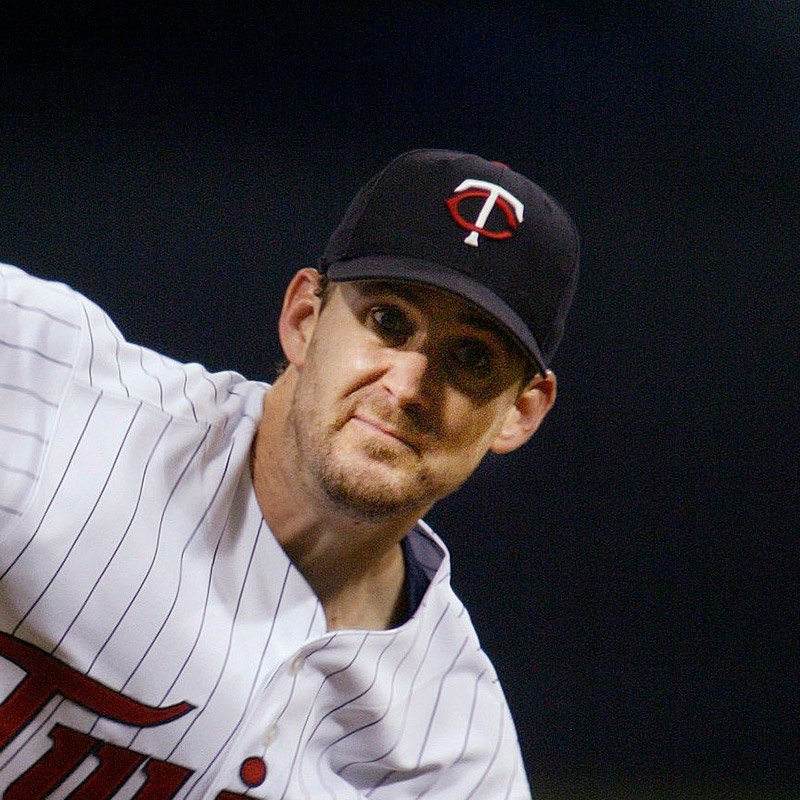 Brad Radke is one of the most underrated players in Twins history. He's third in Twins history (excluding any Senators players) in pitcher wins and fourth in innings pitched. Only Bert Blyleven is consistently ahead of him in most counting stats since the franchise moved to Minneapolis in 1961. Radke was born in Eau Claire, Wisconsin but before you consider him a "hometown" guy, note that his family moved to Florida when he was a very small child. He graduated from Jesuit High School in Tampa, Florida and was drafted by the Minnesota Twins in the eighth round of the 1991 MLB Draft. Never considered a top prospect by Baseball America, Radke quietly progressed through the Twins' farm system, posting a 3.20 minor-league ERA. He was called up to the Twins in 1995 and made his MLB debut on April 29 against the Baltimore Orioles. He struggled through the 1995 season but the Twins were a bad team and gave Radke slack to figure out MLB hitters. He ended the season with 181 innings pitched and a 5.32 ERA (91 ERA+). He took steps forward in 1996, becoming an above-average starting pitcher. But in the 1997 season, Radke broke out in a big way. He started 35 games that season (winning 20 of them) and pitched to a 3.87 ERA (120 ERA+) on his way to third-place in the Cy Young Award voting after the season. This paved the way to Radke becoming one of the great workhorses in Twins history, pitching over 200 innings per season nine out of the next ten years. As the Twins struggled through the late 90s and into the early 2000s, it was tempting to consider trading Radke. The Twins received multiple offers from several teams but stuck by their top pitcher. Most of baseball expected Radke to be traded during the 2000 season but General Manager Terry Ryan continued to negotiate with Radke's camp and in July, they reached an agreement on a club-record four year, $36 million extension. As Radke aged into his 30s, the wear and tear on his arm began to show. By his standards, he struggled a bit through the 2002 and 2003 seasons but returned to form in 2004, posting a 3.48 ERA (136 ERA+, a career high). Following that season, it was again speculated that he would leave Minnesota but Radke signed another contract with the Twins, this time for two years. As it turns out, this contract would take Radke through the rest of his career. As the Twins became a perennial contender in the 2000s, it was Radke who provided the stabilizing force in the rotation. But in 2006, a torn labrum would prove to be the final straw for Radke. He pitched through incredible pain that season but stayed on the mound and finished with 162 innings pitched. He also started one postseason game against the Oakland Athletics, going four innings and allowing three earned runs. It was the last game Radke would pitch in a major league uniform. Following the season and citing that the arm injuries sapped his desire to play the game, Radke retired. He was only 33 years old when his pitched his final game for the Twins.
 -
Awwwww.... why the hate on Denny? He was good for one season!
-
ByungHo Park
Brock Beauchamp replied to Twins and Losses's topic in The Minnesota Twins Players Project
So I "fixed" it and then realized I misspelled his name AGAIN. Can we please not touch Mr Park's name anymore? kthx -
ByungHo Park
Brock Beauchamp replied to Twins and Losses's topic in The Minnesota Twins Players Project
Mischief is afoot, it seems. -
I'm bullish on SWR if he's throwing 93-94. I'm incredibly bearish on him at 90mph. So...

-
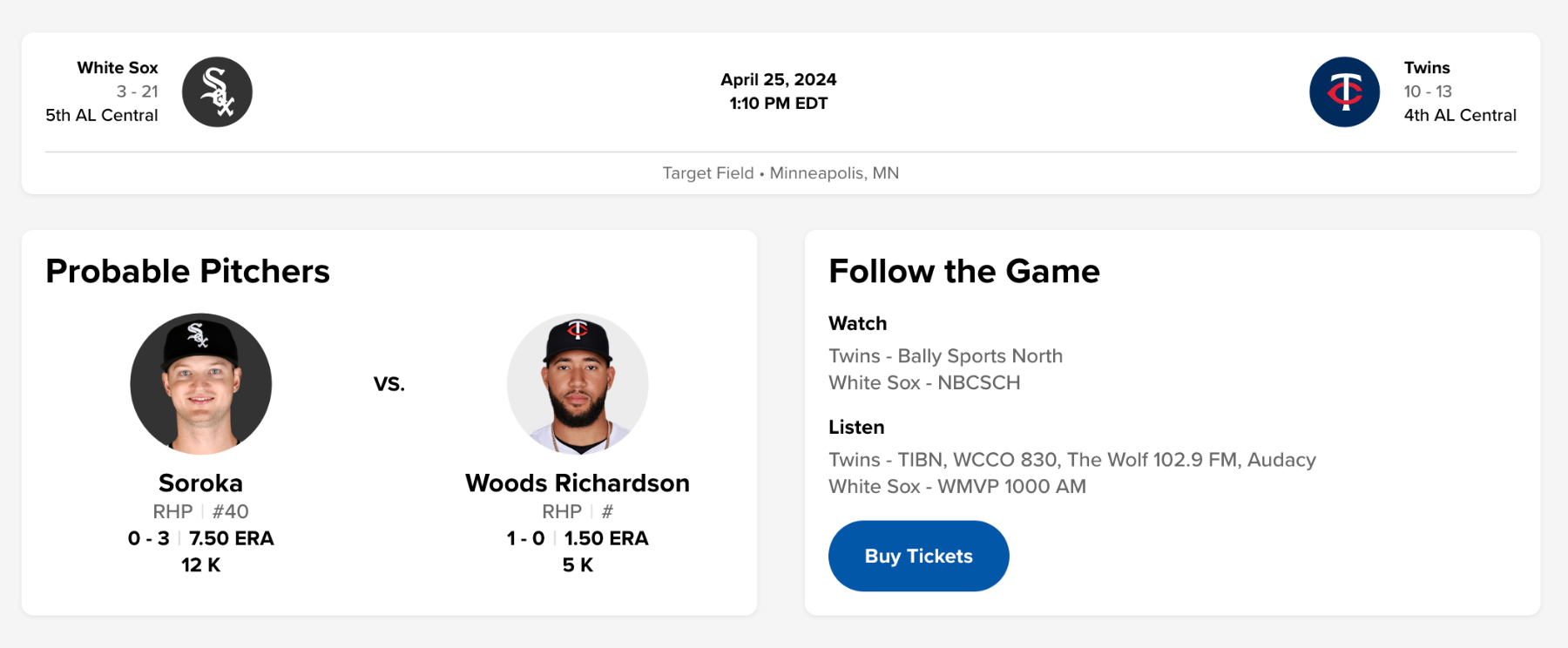
1. The Twins have a chance at a badly-needed sweep against the White Sox 2. I'm going to the game so #1 will not happen 3. I get to see SWR pitch in person for... I think the first time? I don't think I saw any of his appearances the past two seasons
-
Add it to his notable events & trivia section!
-
I believe you are correct that an option may not count but I think the threshold is less than ten days, or something along those lines. It's certainly well under the close-to-a-month that Larnach spent "in the minor leagues", being that he was optioned before Opening Day, which was March 28th this year.
-
The Players Project is open to all Twins Daily users. If you want to add to a player or create a new player, please do so! Just hit the Players Project index page and check to make sure he doesn't exist using the search tool. We want to make this the first and foremost tool to find cool information about Twins players. If you know of a link or an article that should be included, take 30 seconds and add it to the player link roll. Or if you're a baseball card fanatic, add a few for your favorite players. The sky here is the limit. This is meant to be for Twins fans and by Twins fans. The more esoteric and fun we make the project, the better it will be. The Players Project: https://twinsdaily.com/minnesota-twins-players-project/ A brief tutorial on the project: https://twinsdaily.com/help/all-help/how-to-use-the-minnesota-twins-players-project-r10/
-
He looks really good thus far, which probably means he's due to step on a marble and break his tibula.
- 48 replies
-
- 7
-

-

-
-
- left handed hitter
- corner outfielder
- (and 3 more)
-
All Jake Odorizzi ever wanted was a home. A home to call his own. For a man who made over $50 million playing baseball, Odorizzi was quite an unlucky player. Drafted in the first round of the 2008 MLB Draft by the Milwaukee Brewers (32nd overall), he was traded to the Kansas City Royals in 2010 as part of the Zack Greinke trade. He made his MLB debut in September of 2012 and made two appearances for the Royals. Odorizzi was traded again that offseason, this time to the Tampa Bay Rays in the James Shields trade. Here he (unsurprisingly) thrived, pitching parts of five seasons in Tampa, posting a 3.82 ERA (103 ERA+). Suffering recurring back problems that limited his ability to pitch effectively and stay on the mound, in February of 2018 Odorizzi was traded to the Minnesota Twins for Jermaine Palacios. The Twins, fresh off a 2017 Wild Card berth, had high hopes for the 2018 season and Jake Odorizzi was a key part of their attempt to see October baseball in back-to-back seasons. Unfortunately, Odorizzi had a mildly disappointing season where he posted a 4.49 ERA (95 ERA+) and was limited to only 164.1 innings despite making 32 starts. The Twins as a whole were also a disappointment, finishing 78-84 and finishing 13 games behind the Cleveland Indians. 2019 brought new hope and, ultimately, the Bomba Squad. As the Twins rolled their way to a 101-win season, Odorizzi had a career year. He started 30 games, posted a 3.51 ERA (129 ERA+), and made his only All-Star team. Following the 2019 season, Odorizzi was given the option of becoming a free agent but the Twins stuck him with a Qualifying Offer that offseason. Typically, there is no bad outcome if given the Qualifying Offer... unless you're Jake Odorizzi. Coming off a highly-successful age-30 season, he took the QO, expecting to receive close to $20 million for the 2020 season. Cue pandemic sirens. The baseball season was delayed and Odorizzi ended up receiving roughly one-third of the Qualifying Offer money in 2020. Naturally, he also had a very disappointing campaign riddled with injury and made only four starts. This took the wind out of Odorizzi's negotiating leverage sails the following winter, where he ultimately settled for an incentive-laden deal with the Houston Astros. He pitched in Houston for parts of two seasons. He was later traded to the Atlanta Braves and then again to the Texas Rangers. That brought the total number of times Jake Odorizzi was traded to five. Jake Odorizzi, once on the cusp of possibly receiving a $100 million contract, had to ultimately settle for a fraction of a Qualifying Offer and then an incentive-laden deal that paid him less than $30 million. View full player
- 1 reply
-
- 1
-
-
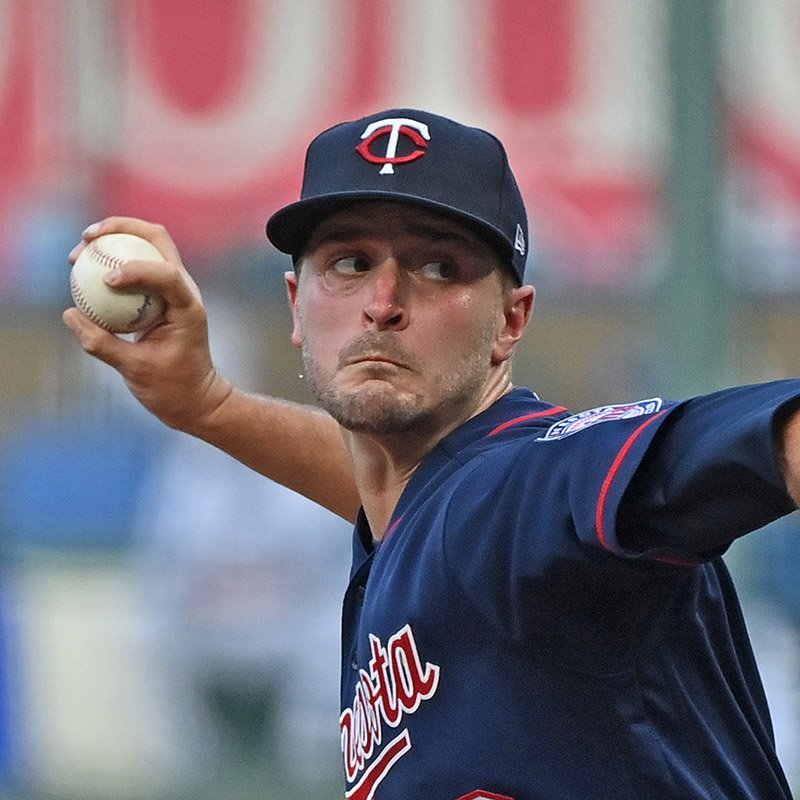 All Jake Odorizzi ever wanted was a home. A home to call his own. For a man who made over $50 million playing baseball, Odorizzi was quite an unlucky player. Drafted in the first round of the 2008 MLB Draft by the Milwaukee Brewers (32nd overall), he was traded to the Kansas City Royals in 2010 as part of the Zack Greinke trade. He made his MLB debut in September of 2012 and made two appearances for the Royals. Odorizzi was traded again that offseason, this time to the Tampa Bay Rays in the James Shields trade. Here he (unsurprisingly) thrived, pitching parts of five seasons in Tampa, posting a 3.82 ERA (103 ERA+). Suffering recurring back problems that limited his ability to pitch effectively and stay on the mound, in February of 2018 Odorizzi was traded to the Minnesota Twins for Jermaine Palacios. The Twins, fresh off a 2017 Wild Card berth, had high hopes for the 2018 season and Jake Odorizzi was a key part of their attempt to see October baseball in back-to-back seasons. Unfortunately, Odorizzi had a mildly disappointing season where he posted a 4.49 ERA (95 ERA+) and was limited to only 164.1 innings despite making 32 starts. The Twins as a whole were also a disappointment, finishing 78-84 and finishing 13 games behind the Cleveland Indians. 2019 brought new hope and, ultimately, the Bomba Squad. As the Twins rolled their way to a 101-win season, Odorizzi had a career year. He started 30 games, posted a 3.51 ERA (129 ERA+), and made his only All-Star team. Following the 2019 season, Odorizzi was given the option of becoming a free agent but the Twins stuck him with a Qualifying Offer that offseason. Typically, there is no bad outcome if given the Qualifying Offer... unless you're Jake Odorizzi. Coming off a highly-successful age-30 season, he took the QO, expecting to receive close to $20 million for the 2020 season. Cue pandemic sirens. The baseball season was delayed and Odorizzi ended up receiving roughly one-third of the Qualifying Offer money in 2020. Naturally, he also had a very disappointing campaign riddled with injury and made only four starts. This took the wind out of Odorizzi's negotiating leverage sails the following winter, where he ultimately settled for an incentive-laden deal with the Houston Astros. He pitched in Houston for parts of two seasons. He was later traded to the Atlanta Braves and then again to the Texas Rangers. That brought the total number of times Jake Odorizzi was traded to five. Jake Odorizzi, once on the cusp of possibly receiving a $100 million contract, had to ultimately settle for a fraction of a Qualifying Offer and then an incentive-laden deal that paid him less than $30 million.
 -
Game Thread: Twins v White Sox, 4/22/24 @ 6:40 CT
Brock Beauchamp replied to wsnydes's topic in Archived Game Threads
Alright, that’s how you know the White Sox really suck. -
Game Thread: Twins v White Sox, 4/22/24 @ 6:40 CT
Brock Beauchamp replied to wsnydes's topic in Archived Game Threads
I’m totally fine with striking out looking against Cannon, as it means you’re forcing him to throw strikes instead of unhittable pitches six inches off the ground. -
Game Thread: Twins v White Sox, 4/22/24 @ 6:40 CT
Brock Beauchamp replied to wsnydes's topic in Archived Game Threads
Easily the most disappointing, at least in part because I was so confident he’d be just fine. -
Game Thread: Twins v White Sox, 4/22/24 @ 6:40 CT
Brock Beauchamp replied to wsnydes's topic in Archived Game Threads
Where the **** has this been all season? -
Should they look at Cole Sands in the rotation?
Brock Beauchamp replied to jorgenswest's topic in Minnesota Twins Talk
There is more to blame than ownership, definitely. Guys just aren't performing. But taking a contending team with good vibes and lopping 20% off payroll was a mistake.- 44 replies
-
- 6
-
-
- cole sands
- relief pitcher
- (and 3 more)
-
Should they look at Cole Sands in the rotation?
Brock Beauchamp replied to jorgenswest's topic in Minnesota Twins Talk
They can't keep running Varland out there much longer. It's torpedoing the season and it's no good for him, either. But what other option is there? None of them are good. Thanks, Pohlads.- 44 replies
-
- 4
-
-
- cole sands
- relief pitcher
- (and 3 more)
-
Oh come on, Kirilloff.
-
I updated McCarty's page to reflect his surprise death. He was only 54; so unfortunate.
