


Twins Video
In April 2022, Opening Day for most MLB teams, the Minnesota Twins made a significant trade, sending All-Star closer Taylor Rogers and outfielder Brent Rooker to the San Diego Padres in exchange for Chris Paddack, Emilio Pagán, and a player to be named later (Brayan Medina). The deal was primarily framed around the acquisition of Paddack’s addition to the starting rotation and Pagán’s ability to slot into the bullpen. Rooker’s inclusion in the trade barely made headlines.
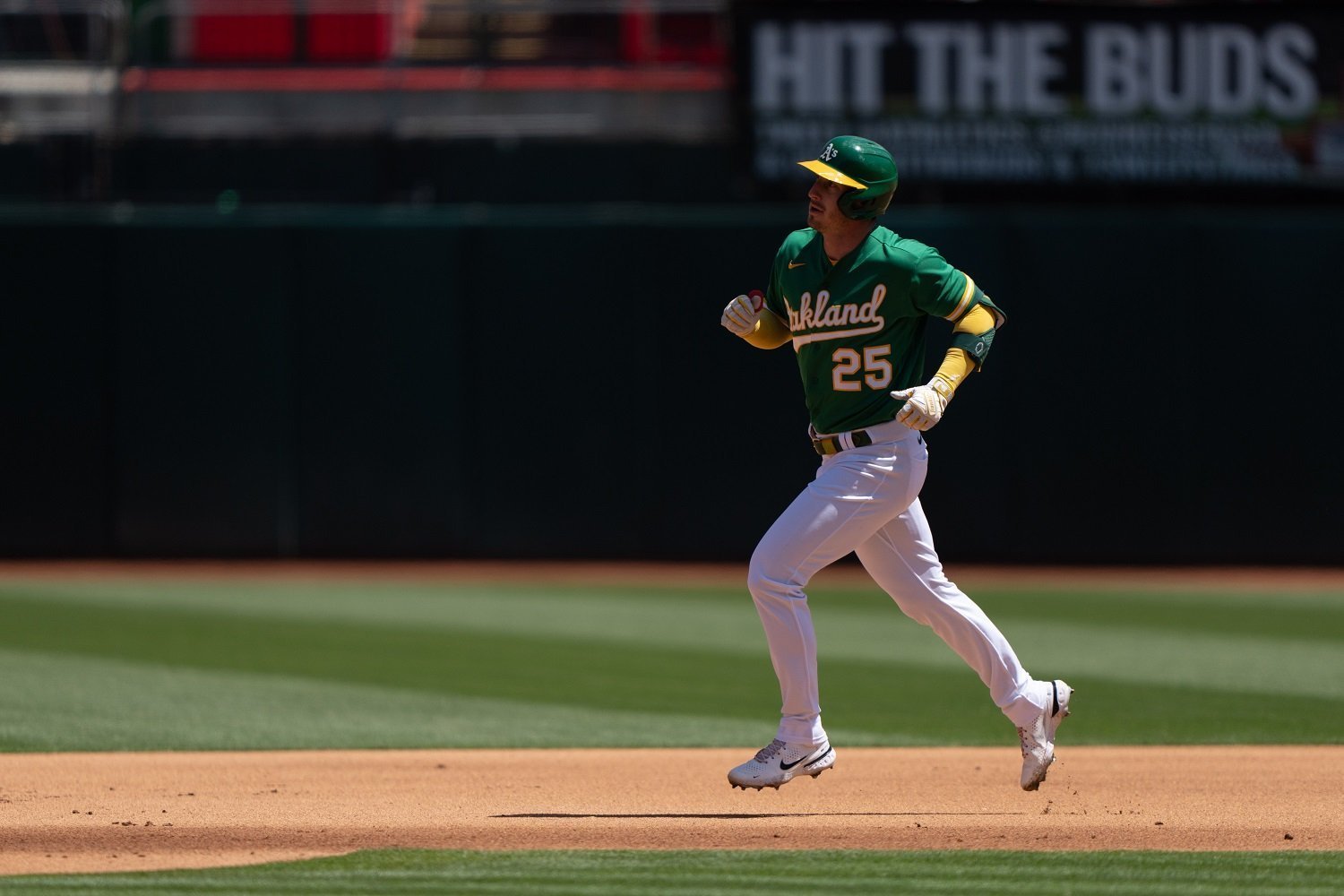
Fast-forward to 2024, and Rooker just finished a season where he landed in the Top 10 of MVP voting, thanks to his breakout performance with the Oakland Athletics. For the Twins, his departure raises questions: Why did Rooker never find success in Minnesota, and what changed to allow him to flourish elsewhere?
A Limited Opportunity in Minnesota
Drafted 35th overall in 2016, Brent Rooker was always projected as a bat-first prospect with power to spare. His minor league numbers supported this profile as he slugged his way through the system. Baseball America ranked him among their top 100 prospects leading into 2018. Then in 2019, he destroyed Triple-A by hitting .281/.398/.535 (.933) with 16 doubles and 14 home runs in 65 games. However, breaking into the big-league lineup proved difficult.
The Twins’ roster construction played a significant role in this. From 2019 to 2021, Nelson Cruz dominated the DH role, leaving Rooker limited to corner outfield opportunities, where his defensive limitations were apparent. Minnesota also boasted a deep lineup during those years, featuring sluggers like Miguel Sanó, Eddie Rosario, and Max Kepler, further complicating Rooker’s path to regular playing time.
When Rooker did get chances in Minnesota, he struggled to gain traction. In 65 games across parts of two seasons, he posted a 96 OPS+ and struck out in over 32% of his plate appearances. While he showed flashes of his power potential, the strikeouts and a lack of defensive versatility likely pushed the Twins’ front office to view him as expendable. To be fair, other teams also came to view him this way.
A Journey of Change
Following the trade to San Diego, Rooker’s nomadic journey continued. The Padres sent him to Kansas City during the 2022 season, where he received minimal playing time before being designated for assignment. The Oakland Athletics selected him off waivers in November 2022, giving him a fresh start with a rebuilding club, and that’s where things began to click.
With the A’s, Rooker finally got consistent at-bats, which allowed him to refine his approach at the plate. He reduced his strikeout rate (28.8% in 2024), improved his ability to hit breaking pitches (.540 SLG in 2024), and became one of the league’s premier sluggers. His 2024 season saw him mash 39 home runs while posting a 166 OPS+, numbers that earned him MVP votes despite playing on a below .500 team. He had the AL’s eighth-highest WAR total among position players while not providing any defensive value.
So, why did it take so long for Rooker to unlock his potential? The answer lies in a mix of opportunity, adjustments, and time.
- Consistent Playing Time: Oakland’s lack of offensive depth gave Rooker an everyday role, something he never had in Minnesota. This consistent exposure allowed him to make adjustments and build confidence against big-league pitching.
- A Refined Approach: Reports from Oakland suggested that Rooker worked tirelessly to shorten his swing and focus on making contact earlier in counts. This evolution helped him reduce strikeouts while still tapping into his raw power.
- Defensive Flexibility Irrelevant: The A’s used Rooker almost exclusively as a DH, allowing him to focus entirely on his offensive game. While Minnesota might not have had room for another bat-only player during the Cruz era, Rooker thrived in the role when given the chance.
The Twins’ Perspective
Looking back, Rooker’s inclusion in the Paddack-Rogers trade feels like a misstep, but it’s essential to consider the context. At the time, Rooker was viewed as a fringe roster piece with limited upside. The Twins had a crowded outfield, and the DH spot was locked up. Trading him allowed the team to address areas of greater need.
Still, his late-career breakout highlights the importance of opportunity and fit. The Twins’ inability to unlock Rooker’s potential is reminiscent of other cases, with David Ortiz’s departure to Boston being the most infamous example. For Minnesota, it’s a reminder that development isn’t always linear and that patience can sometimes pay off in unexpected ways.
Rooker’s journey from trade throw-in to down-ballot MVP candidate is a testament to perseverance and finding the right situation. While the Twins likely regret letting him go for so little, his success also serves as a fascinating “what if” scenario. What could he have accomplished in Minnesota with the right opportunity? Ultimately, it’s a lesson for all teams: Sometimes, all a player needs is a chance.
Should the Twins have hung on to Rooker? Leave a COMMENT and start the discussion.
Do you approve of the job the Twins front office is doing?

Follow Twins Daily For Minnesota Twins News & Analysis



- Patzky, gman, pete rukavina and 3 others
-
 6
6


Recommended Comments
Create an account or sign in to comment
You need to be a member in order to leave a comment
Create an account
Sign up for a new account in our community. It's easy!
Register a new accountSign in
Already have an account? Sign in here.
Sign In Now