Jump to content
Twins Daily
  • Create Account
  • Twins News & Analysis

    Part of the Core, or Out the Door? Ranking Minnesota Twins Trade Candidates, 6-10

    Minnesota’s front office must reevaluate the team’s building block players and decide whether they should be part of the core or pushed out the door.

    Cody Christie
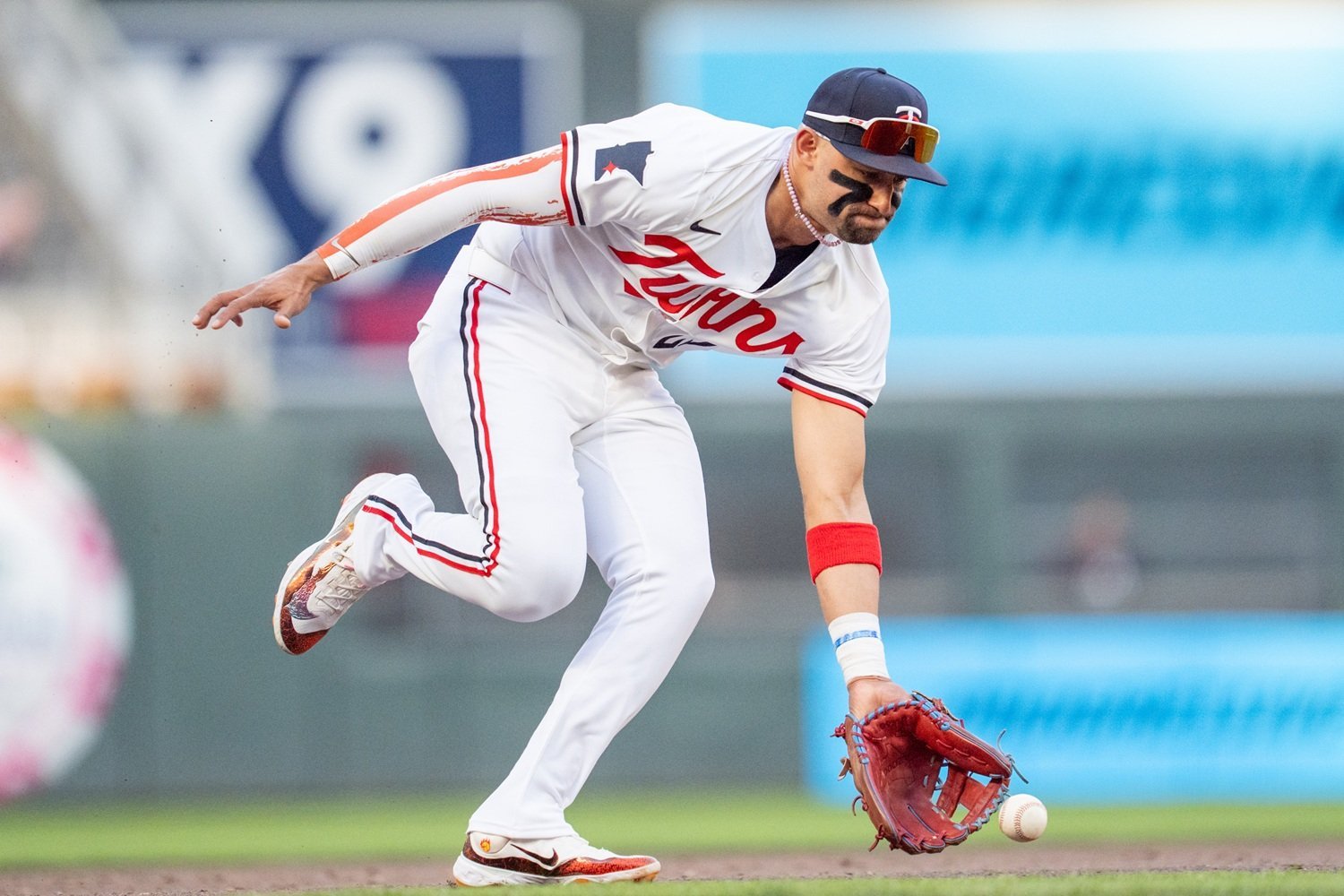
    Image courtesy of © Matt Blewett-Imagn Images

    Twins Video

    Last season, when I approached this series, the Twins’ roster was in a very different place. Minnesota looked like a playoff contender for much of the 2024 season, before an epic collapse. In 2025, the fall came much earlier, and the front office dealt away multiple core pieces at the trade deadline. It’s tough not to wonder if the winning window has abruptly shut on the current core. 

    As the Minnesota Twins gear up for the 2026 season, the focus shifts to the core group of players who form the backbone of the roster. Some players have cemented their place as long-term building blocks, while others could be valuable trade assets. In this article, we rank the Twins' most important pieces at the big-league level, considering their impact and the likelihood of them being traded before the 2026 season.

    10. RP Cole Sands
    Pros: Sands emerged as one of Minnesota’s most reliable bullpen arms in 2025, giving the team late-inning stability at a time when it desperately needed it. His splitter was worth seven runs, and his 6.4% walk rate was among the best quartile in the league. With three years of team control remaining, Sands offers cost-effective value at a position that constantly turns over.

    Cons: The Twins have limited options for the bullpen, so it seems unlikely that the front office will trade another reliever. While Sands was a needed bright spot, his track record is still inconsistent. As the Twins showed at the deadline, teams often look to sell high on relievers, and middle reliever is a high-volatility, non-premium role. A club searching for bullpen help could view Sands as an appealing second piece in a larger deal. His limited ceiling compared to other controllable pitchers also factors into Minnesota's long-term roster building.

    Trade Likelihood: Low
    Minnesota values the role Sands fills, and unless a trade package specifically targets him, it is hard to see the team pushing him out the door.

    9. 3B Royce Lewis
    Pros: When healthy, Lewis remains one of the most dynamic talents in the organization. Last season, I ranked him at the top of this list, but his 2025 performance dropped him. The Twins hoped that his early-career offensive performance would make him a franchise cornerstone. Even in 2025, Lewis showed improved defense at third base, with one OAA. Offensively, his 73.6 bat speed was in the 72nd percentile, and the rate at which he pulled the ball in the air (24.5%) continued to rank well. 

    Cons: Durability remains the defining question. Multiple significant injuries have kept Lewis off the field, and Minnesota must evaluate how much they can count on him. Even with this season’s improvements, his defensive future is unclear, and depending on roster construction, the Twins may question whether he fits best at third base, designated hitter, or somewhere else entirely. If the front office believes another club is willing to pay full value for his upside, the door is at least cracked open.

    Trade Likelihood: Medium
    While the Twins are far from eager to move Lewis, he is one of the few players who could be traded to shake up the team’s offensive core. That keeps the possibility in play.

    8. SS Brooks Lee
    Pros: Lee took over the team’s starting shortstop role after the club dumped Carlos Correa at the trade deadline. His athletic ability is worse than Correa’s at shortstop, but he can hold down the position, with -1 OAA in nearly 600 innings. Before his big-league debut, scouts praised him for his ability to control the zone, hit for average, and produce tough, professional at-bats. This season, he ranked in the 74th percentile or higher in both avoiding strikeouts and squaring up the ball, thereby getting the most out of his bat speed. The Twins have no other options for shortstop, so they would need to be blown away by a trade offer for Lee. With five years of control remaining, Lee looks like a core piece in the making.

    Cons: His ceiling may not be as high as some of Minnesota’s other young hitters, and that could make him expendable in the right deal. If another club views Lee as a ready-made solution at a premium position, the Twins might have the opportunity to address a glaring organizational need. There is also the looming question of where Lee fits long-term if the front office believes he can’t stick at shortstop.

    Trade Likelihood: Low
    The Twins have little incentive to trade Lee, and would require a significant return to even consider it.

    7. SP Bailey Ober
    Pros: Entering last season, Ober looked like he had established himself as a dependable mid-rotation starter. He had impressive strike-throwing ability and a track record of durability. His size, delivery and command make him uniquely difficult for hitters to time. Last year, his walk rate, chase rate, and extension toward the plate at release ranked in the 93rd percentile or higher. With two years remaining in team control, he continues to be cost-effective.

    Cons: Ober’s margin for error remains thinner than that of the typical front-line starter. He struggled with a hip injury last season, which seemed to throw off his mechanics. When his fastball command wavers, hitters can elevate against him and produce damage quickly. His stuff is more solid than electric, which may make him more replaceable in the long term as top prospects move closer to the majors. 

    Trade Likelihood: Medium-Low
    The Twins like what Ober brings, but as they reshape the rotation, they could listen if a team makes a compelling offer. However, his trade value might be at an all-time low.  

    6. OF Matt Wallner
    Pros: Like many Twins hitters, Wallner struggled in 2025—but he was still among the team’s best hitters, with a 110 OPS+. According to Baseball Reference, he was worth 6, relative to an average batter. He has game-changing power, with his Barrel rate, bat speed, and walk rate ranking in the 84th percentile or higher. His elite arm adds to his defensive value. When he is locked in, Wallner looks like the type of middle-of-the-order bat that Minnesota has been desperate to develop internally.

    Cons: His track record still contains peaks and valleys. Wallner’s offensive success relies heavily on his ability to maintain strike-zone discipline, and slumps get especially ugly. For instance, before going down at the end of the year, Wallner batted just .163/.293/.347 in September. With Minnesota’s growing outfield depth and the emergence of other left-handed bats, the front office must decide whether Wallner fits the long-term puzzle or represents one of their best trade chips. A club looking for controllable power could push for his inclusion.

    Trade Likelihood: Medium
    Wallner remains part of the Twins' plans, but his combination of upside and uncertainty makes him a realistic trade candidate, depending on the team’s offseason priorities.

    The Twins have a strong core for 2026, but that doesn’t mean they won’t explore trades to reshape the roster. Lee and Wallner are young, foundational players the team will probably build around, while others like Sands, Ober, and Lewis could be moved to fill other needs. The offseason will be critical, as the front office balances improving the team without disrupting its future success.


    Will any of the players above be traded this winter? Which player is the most critical building block? Leave a comment and start the discussion

    Follow Twins Daily For Minnesota Twins News & Analysis

    Recent Twins Articles

    Recent Twins Videos

    Twins Top Prospects

    Marek Houston

    Cedar Rapids Kernels - A+, SS
    The 22-year-old went 2-for-5 on Friday night, his fourth straight multi-hit game. Heading into the week, he was hitting .246/.328/.404 (.732). Four games later, he is hitting .303/.361/.447 (.808).

    User Feedback

    Recommended Comments


    Featured Comments

    Can the answer be: None of the Above?  Sure, Lewis and Wallner COULD be part of our core going forward, but they are in prove it years as far as I am concerned.  Lee is almost in the same boat, at least until Culpepper is ready to get his chance.

    Ober is ok, and he is likely worth his arb number but does not move the needle much beyond that.

    Sands has some promise, but, again, has this year to show what he can do out of the 'pen.

    This should be, as far as I am concerned, a Year of the Youngsters.  Get them all out and up here, play them, and see what we have.  Trade Ryan and possibly Lopez for more young players and see if we can form a true core of good players.  The A's have seemingly done that; we can to with luck and skill.


    The roster is beginning to take shape. 

    The Twins have selected the contracts of left-handers Kendry Rojas and Connor Prielipp, righties Andrew Morris and John Klein, and outfielders Gabriel Gonzalez and Hendry Mendez, the team announced Tuesday.

    Of this list, Wallner is the most likely to be traded. I don't think the Twins should be looking to move Ober after a down season despite the full rotation. If Wallner is traded, than the Twins need to be willing to let Jenkins and Rodriguez get consistent playing time in his spot.

    4 hours ago, SteveLV said:

    Can the answer be: None of the Above?  Sure, Lewis and Wallner COULD be part of our core going forward, but they are in prove it years as far as I am concerned.  Lee is almost in the same boat, at least until Culpepper is ready to get his chance.

    Ober is ok, and he is likely worth his arb number but does not move the needle much beyond that.

    Sands has some promise, but, again, has this year to show what he can do out of the 'pen.

    This should be, as far as I am concerned, a Year of the Youngsters.  Get them all out and up here, play them, and see what we have.  Trade Ryan and possibly Lopez for more young players and see if we can form a true core of good players.  The A's have seemingly done that; we can to with luck and skill.


    And how did that work out for the A's... no longer in Oakland, just an observation.

    I'm just too tired to go in to great detail, so forgive bullet point comments.

    SANDS: Flashed some in 2023. Was really good in 2024. Was disappointingly inconsistent, but not bad, the first 4 months of 2026. Take away 7-10 days of really bad performance, he was really good the last 2 months. Looked like his 2024 self. A lot of upside still, the Twins need BP arms, he isn't going anywhere. 

    LEWIS: Still only 26yo. Admitted he's finally been frustrated with trying to find comfort at the plate with all his injuries. Was a league average hitter the 2nd half of the season plus when he started to feel better. Even began to run more. Played the most games of his career and didn't have any injuries post his ST hamstring injury. Despite vast improvement defensively at 3B, COULD move to 1B down the road depending on the rest of the future INF construction. Foolish to trade him or bet against him and the hitter still lurking inside of him waiting to break out.

    LEE: Poor athlete. But he's smart, has good hands, transitions glove to hand well, and can make the off balance throw despite an average-ish arm. Has the potential to be solid, not great, across the dirt. Actually played better at SS post Correa trade. Was barely above ML rookie status in 2025. Might actually have more power than originally projected. Has never been a great BB/OB hitter, but should be much better than he's shown so far. Seems to recognize his mistakes as a hitter. But can he overcome his self recognized flaws? If he can, he's a potential starting player, long term, at either 2B or 3B. Possibly his best position? Super Utility INF who plays almost daily across the INF, including 1B. Much more potential awaiting to be unlocked. His trade value is only for someone who sees all of these same things. But the Twins need him more than any value he'd bring back at this time.

    OBER: I say again, chicken and the egg. What came first? Ober had a bad hip injury that ruined his 2025. Did the hip injury mess with his mechanics? Or did he mess up his mechanics and develop a hip injury?

    Regardless, Ober has been an excellent #3 starter before 2025's injury frustration. At times, he's thrown like a #2. IMO, STOP with the velocity issue. He's only 30yo! And he doesn't have a tremendous amount of IP on his arm. He just needs to be healthy in 2026 to be what he's been. If someone wants to offer a nice package because they also believe he's going to be OK, then listen for sure. But a healthy Ober is a very good SP. So the return would have to be pretty good.

    WALLNER: How much angst is directed towards Wallner only because he had a disappointing 2025? He had a solid rookie debut. He followed up with a pair of .870-ish OPS seasons. He was still above league average in a disappointing 2025 where maybe his early injury and missed time just messed with him. Great MILB career where he always advanced and improved. Great first 2 1/2 seasons. Has slowly been better and better against LHP. Should be the primary DH and occasional corner OF.

    UNTIL Rodriguez, Jenkins, Gonzalez, etc establish themselves, where else do you find the power and potential of Wallner? He's an absolute keeper.

    No disrespect to the OP, but ALL 5 of these are definitely part of the current core based on age, payroll, and potential. It stinks that all 5 had mediocre seasons in 2025. But why and when do you trade young and young-ish players with talent that have the potential to be part of your core for the next 2-5yrs? 


    In the next year you have Jenkins, Gonzalez, and Rodriquez along with Buxton and Martin.  Plus you have a few more guys that can play outfield.  I want players with speed and lower K totals.  That is not Wallner.  It might be a mistake, but I would move Wallner, and possible Larnach at this time to clear space.  We also have more of the same profile for outfielders at St. Paul plus Roden and Outman.  In the tough situations Wallner will either see a lefty or a righty that can hit his spots.  Wallner might make it, just do not see the timing of it here.  


    20 hours ago, stringer bell said:

    No organization wants to take on a guy who has lost velocity and effectiveness unless there is evidence that he can get the velo back. Ober finished the season with a fastball that couldn't get to 90, so I don't think any team will want him. 

    What's interesting about Ober's velocity, is that Perkins specifically mentioned (either during TV or radio broadcasts, I can't quite remember) that Ober would consistently hit 92-93 during his bullpen sessions...even late into the season.  Why didn't that transfer into games? I think there is more to the story than just mechanics.  We know he was dealing with hip issues since spring training last year.  I wouldn't be surprised if that lingered even when coming back off the IL in July.

    12 hours ago, hitterscount said:

    And how did that work out for the A's... no longer in Oakland, just an observation.

    The A's youth has nothing to do with them leaving Oakland.  The lease was up on the Coliseum and they were trying get a new stadium built.  There was also discontent between the fan base and the owners.  I travel to Sacramento at least once a month for business.  I have caught many A's games while there as well as Sacramento River Cats and the fan base.  I played college baseball and played in better stadiums than the Coliseum.  It is a horrible place to watch baseball.

    The fanbase was very apathetic.  They were upset that Fisher never invested in the team and consistently in rebuild mode. Over time fans stopped showing up.  Oakland finally gave the A's a site and $774M to build a stadium, then Fisher said no, they are moving to Vegas.  He blamed fans and the city for the move.  The funding he got for the Vegas stadium is $300M less that what Oakland was going to give them...

    The move has nothing to do with the youth or the talent of the team.  Oakland has a very talented group of young guys (Kurtz, Wilson, Soderstrom, Butler).   

    On 11/19/2025 at 6:02 AM, Chembry said:

    The A's youth has nothing to do with them leaving Oakland.  The lease was up on the Coliseum and they were trying get a new stadium built.  There was also discontent between the fan base and the owners.  I travel to Sacramento at least once a month for business.  I have caught many A's games while there as well as Sacramento River Cats and the fan base.  I played college baseball and played in better stadiums than the Coliseum.  It is a horrible place to watch baseball.

    The fanbase was very apathetic.  They were upset that Fisher never invested in the team and consistently in rebuild mode. Over time fans stopped showing up.  Oakland finally gave the A's a site and $774M to build a stadium, then Fisher said no, they are moving to Vegas.  He blamed fans and the city for the move.  The funding he got for the Vegas stadium is $300M less that what Oakland was going to give them...

    The move has nothing to do with the youth or the talent of the team.  Oakland has a very talented group of young guys (Kurtz, Wilson, Soderstrom, Butler).   

    Right, there were many games that Target field looked packed in September compared to most of the non-competitive teams the A's fielded the last 5-7 years in Oakland. Trading your best players is great, as long as you continue to win..... losing on a consistent basis will ruin many fans support/enthusiasm of their hometown or favorite teams....look no farther than Minnesota's attendance last year. So if you want to draw 1.25 - 1.5 million in 26 by all means trade all of the remaining guys with value and field a team like we saw from late June on. 

    15 hours ago, hitterscount said:

    Right, there were many games that Target field looked packed in September compared to most of the non-competitive teams the A's fielded the last 5-7 years in Oakland. Trading your best players is great, as long as you continue to win..... losing on a consistent basis will ruin many fans support/enthusiasm of their hometown or favorite teams....look no farther than Minnesota's attendance last year. So if you want to draw 1.25 - 1.5 million in 26 by all means trade all of the remaining guys with value and field a team like we saw from late June on. 

    I agree a consistent losing team will erode a fanbase.  But the relocation of the A’s has nothing to do with the team being young.

    https://www.nytimes.com/athletic/5798535/2024/09/27/oakland-as-final-game-coliseum-thompson/

    https://www.espn.com/mlb/story/_/id/38442355/story-how-all-went-south-las-vegas

    https://www.theguardian.com/sport/2024/sep/26/oakland-athletics-final-game-john-fisher


    Create an account or sign in to comment

    You need to be a member in order to leave a comment

    Create an account

    Sign up for a new account in our community. It's easy!

    Register a new account

    Sign in

    Already have an account? Sign in here.

    Sign In Now

×
×
  • Create New...