Jump to content
Twins Daily
  • Create Account
  • Twins News & Analysis

    How Long is the Twins Championship Window?


    Cody Christie

    Every MLB organization starts the season with the same end goal, to win the World Series. Obviously, some teams are better equipped than others to make a deep run through October. When a team has the pieces in place, it is imperative for them to take advantage of their championship window. The Twins saw the window open last year and now there are only a few years to take advantage of that window being open.

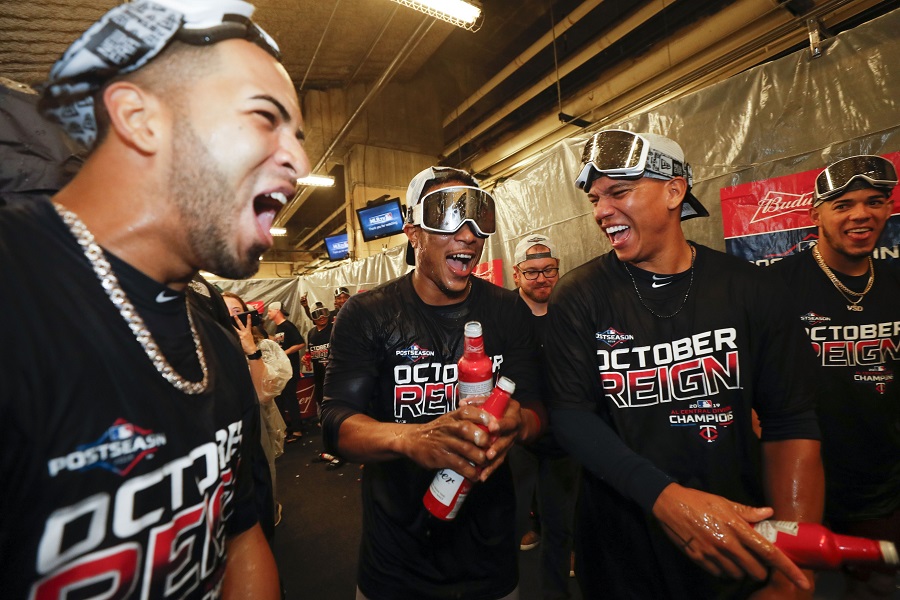
    Image courtesy of © Raj Mehta-USA TODAY Sports

    Twins Video

    “Windows Close Very, Very Quickly”

    The Chicago Cubs and the Boston Red Sox are both in similar situations. Each team has won a title since 2016 and now they are facing some uncertainty. Rumors have swirled about the Cubs fielding offers for Kris Bryant and the Red Sox entertaining the thought of a Mookie Betts trade. These players were cheaper when each club won their title and now it might be time to move onto a less expensive player or prospect.

    “The two most important commodities in the game are payroll flexibility, No. 1, and young, controllable talent. Even if you’re a large-market team and have no payroll flexibility, you’re a small-market team,” said former Rockies general manager Dan O’Dowd. “Windows close very, very quickly within the game. Everybody wants to build a Bill Belichick model [of sustainability], but with guaranteed contracts and the way our sport works, it’s very, very difficult to do that.”

    Forbes baseball writer Maury Brown believes MLB expects windows to be open for roughly five years. Low revenue clubs can expect to be a little shorter and higher revenue clubs can expect to be a little longer. Multiple prospects need to hit at the same time and the organization needs to make appropriate supplemental moves, but he feels confident the league likes to tout five years as a bit of a “standard.”

    Minnesota’s Window

    Last off-season, Minnesota was able to sign Jorge Polanco and Max Kepler to very team-friendly deals. Deals like these will help the Twins to keep their window open longer, but there are plenty of other players that still need long-term contracts. Jose Berrios, Byron Buxton and Miguel Sano are all part of Minnesota’s young core and all three could be out of a Twins uniform by the time of the 2023 off-season.

    When it comes to revenue, Minnesota ranks near the bottom of MLB, so this likely means their window of opportunity will be less than five years. This makes sense when considering the core players mentioned above. Minnesota has one of baseball’s top-ranked farm systems and these up-and-coming players could help to keep Minnesota’s window open a little longer, but there’s no guarantees that prospects will pan out at the big-league level.

    Another option for the front office is to supplement the roster by trading away prospects. If Minnesota’s window is going to be less than five seasons, it makes sense to take full opportunity of the window being open. The 2019 season showed the front office a lot of things and last off-season they had a clear message to fans.

    “The best moves are made not when you’re trying to open the window to contend, but when the window is wide open,” said General Manager Thad Levine. “We’re very eagerly waiting for this window to be opened, and when it is, we plan on striking.”

    Many fans would agree that the window is now open and it’s up to the front office to take advantage of the opportunity.

    How long do you feel the window is for the Twins to win a championship? Can the front office do anything to extend the window? Leave a COMMENT and start the discussion.

    MORE FROM TWINS DAILY

    — Latest Twins coverage from our writers

    — Recent Twins discussion in our forums

    — Follow Twins Daily via Twitter, Facebook or email

    Follow Twins Daily For Minnesota Twins News & Analysis

    Recent Twins Articles

    Recent Twins Videos

    Twins Top Prospects

    Marek Houston

    Cedar Rapids Kernels - A+, SS
    The 22-year-old went 2-for-5 on Friday night, his fourth straight multi-hit game. Heading into the week, he was hitting .246/.328/.404 (.732). Four games later, he is hitting .303/.361/.447 (.808).

    User Feedback

    Recommended Comments


    Featured Comments

    I concede that I'm suggesting a paradigm shift and have a dang good chance of operating on a false hunch about Falvey.


    I reject the "never once" argument as some sort of claim on future decisions by a new and very decidedly different regime. I may be wrong, but I believe that Falvey has the authority and the will to take on salary and reduce free cash, or to trade from the minors and reduce prospect capital if he deems it to be a prudent move. But he's not going to let either his talent pipeline OR his dry powder run down to nothing like Boston just did. That's not how he intends to skin the cat, IMO.


    But yes, they probably are going to continue to disappoint when it comes to taking on long-term contracts and salary, but it's because of their recognition of what creates graves worthy of dances.


    My entire argument boils down to the Twins positioning themselves as having asset value and using it wisely, whether that is roster players, prospects, or cash. Spending isn't even the main strategic weapon. In arguments on TD, spending seems to often be the ONLY measurement of anything.


    Again, having flexibility and USING it, as I have suggested? I see the possibility of sustained competitiveness with very short and very shallow cycles. Having flexibility and NOT using it? I agree. That lines the company coffers.


    I share your complaint about not putting "unspent" salary budget into "retained earnings" with the intention of splurging when the right opportunity presents itself. I differ with you, I think, in my trust that there is a crossing point of the lines where the spending converts to an investment that delivers both wins and financial rewards. I don't care about Pohlad's pockets one way or another, but I also don't believe we as fans are quite as entitled to more as we sometimes think we are. But that's going to be a point of difference here, we know that.

    We as fans don’t have the tools to expand the definition of assets beyond free agent spending.


    A number of posters quote trade analyzer websites and many posters disregard those sites as hogwash.


    I agree with your concept that this FO values liquidity very highly and for good reason. What’s not clear to me is the liquidity risk model being used.


    We talk about players as assets, but maybe better to be thought of as inventory. Turns as speed to commercialize inventory might be a metric/framework.


    The money isn't gone. It's in the owner's pockets. Not the players. Or the employees.


    This kind of statement makes me cringe a little, Mike. It's a not so subtle demonization, is it not? 


    How is Boros spreading it around? Or Harper? Why not demonize them too while we're at it? 

    ;)

    I know quite a few people who are employed in the organization, in jobs ranging from the top of the hierarchy to greeters, and none of these people think they're any more "underpaid" than their pals up the freeway at Medtronic.


    So who's being treated unfairly here? The players? The hundreds of gainfully employed people in the organization? 


    I hate the greed myself, from owners, advertisers, players, agents...but also from fans fortunate enough to afford the occasional trip to the park and who scream for the cheap owners to give them what they want, and often think they deserve.


    I'll save my venting on this subject to call for fair compensation to minor leaguers (don't expect the greedy players who have made it to give a hoot on the subject) and for reducing the whole wretched excess in the system to return the sport to a more inclusive cultural treasure. I look around the sport and can't find any real heroes these days.


    We as fans don’t have the tools to expand the definition of assets beyond free agent spending.

    A number of posters quote trade analyzer websites and many posters disregard those sites as hogwash.

    I agree with your concept that this FO values liquidity very highly and for good reason. What’s not clear to me is the liquidity risk model being used.

    We talk about players as assets, but maybe better to be thought of as inventory. Turns as speed to commercialize inventory might be a metric/framework.


    Yeah, I think the liquidity risk thing is manifested in aversion to years, not so much dollars, and it's predicated on the asset manager's view of the depreciation schedule for a given asset, an obvious guessing game. 


    WHat's more unclear for me is whether FO's are beginning to deploy an "active management" model where they endeavor to turn inventory more rapidly than the competition is doing in an attempt to sell high. I was thinking last year's tepid demand in free agency might be telling us something, but maybe not.

    Yeah, I think the liquidity risk thing is manifested in aversion to years, not so much dollars, and it's predicated on the asset manager's view of the depreciation schedule for a given asset, an obvious guessing game.


    WHat's more unclear for me is whether FO's are beginning to deploy an "active management" model where they endeavor to turn inventory more rapidly than the competition is doing in an attempt to sell high. I was thinking last year's tepid demand in free agency might be telling us something, but maybe not.

    I think the last couple soft markets were telling us something, we (and maybe Falvine too) were just wrong in interpretation.


    Market corrections come in many different forms. It may be that several organizations had too much non-working inventory. Teams are looking to turn their inventory faster, or reprioritize different types of inventory


    Yeah, I think the liquidity risk thing is manifested in aversion to years, not so much dollars, and it's predicated on the asset manager's view of the depreciation schedule for a given asset, an obvious guessing game. 


    WHat's more unclear for me is whether FO's are beginning to deploy an "active management" model where they endeavor to turn inventory more rapidly than the competition is doing in an attempt to sell high. I was thinking last year's tepid demand in free agency might be telling us something, but maybe not.

    The above comments really caused me to sit back and think about what you said.  Damn, that's about as mind awakening writing I have seen in awhile.  Thanks.


    Create an account or sign in to comment

    You need to be a member in order to leave a comment

    Create an account

    Sign up for a new account in our community. It's easy!

    Register a new account

    Sign in

    Already have an account? Sign in here.

    Sign In Now

×
×
  • Create New...