


Twins Video
12-27. That's the stat that will be remembered most from the 2024 campaign. It was the Twins' win/loss record in the final six weeks, after they reached a high watermark of 17 games above .500 in mid-August.
But there were a whole lot of other numbers involved with the past season, many of which help tell interesting stories about what happened with the team and its players. In digging deeper into player stats in the aftermath of the 2024 season, these eight really stuck out to me.
Matt Wallner had a .389 batting average on balls in play.
That's just an astonishingly high number. It ranked second in all of baseball among players with 200 or more plate appearances, behind Xavier Edwards (.398), and it's pretty funny that those two top the list because their styles couldn't be more opposite. (Edwards is a small, extreme-contact guy with no power, akin to Luis Arraez.)
Wallner's hitting profile did play a role in so many batted balls turning into hits – when you crush the ball consistently, you're going to find fewer gloves – but there was a whole lot of luck involved in his managing a .259 average while striking out in 36% of plate appearances. Wallner's K-rate was fifth-highest among players with 200+ PA, and no one else in the top 10 had a batting average above .214.
In other words, Wallner's going to need to cut down on the strikeouts substantially next year or we can expect a steep drop-off in average, and overall production.
The Twins had 3 hitters finish with a wOBA above .340.
I'm not just talking qualified hitters. I'm talking all hitters. (Well, expect Diego Castillo, who posted a .439 wOBA in eight plate appearances.) The only Twins players to post a wOBA of .340 or higher in 2024 were Wallner (.385), Carlos Correa (.385) and Byron Buxton (.366), and none played more than 102 games. From there it drops off to Trevor Larnach who came in fourth with a .336 wOBA.
This says a ton about why the lineup was so disappointing. There simply weren't enough standout producers. By comparison, in 2023, the Twins had seven hitters with a wOBA of .340 or better: Royce Lewis, Wallner, Ryan Jeffers, Edouard Julien, Max Kepler, Alex Kirilloff and Jorge Polanco. All other than Polanco returned in 2024, but only Wallner could repeat his strong performance – and only after spending the first half in Triple-A.
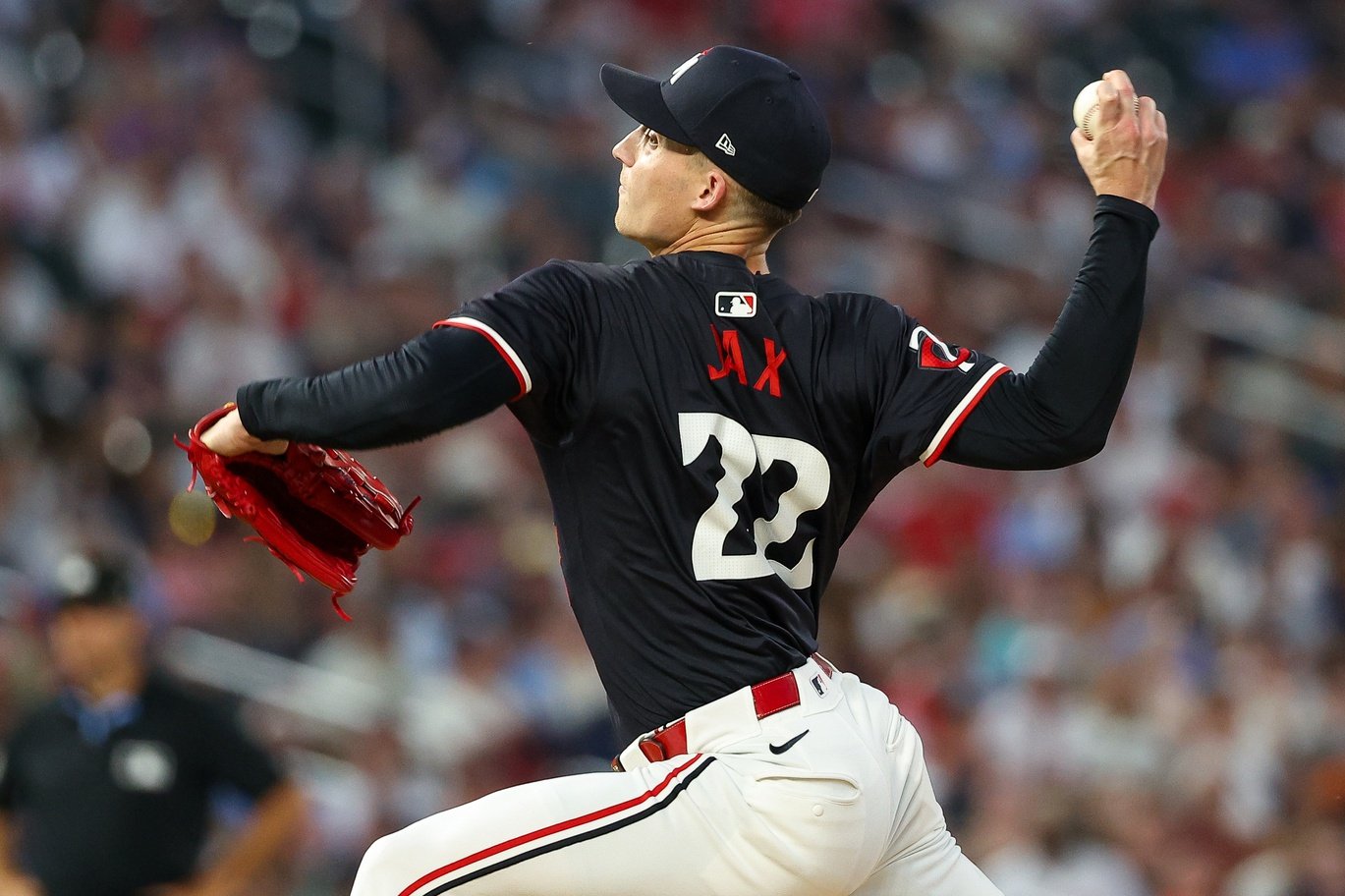
Griffin Jax induced swings on 41.2% of pitches outside the zone.
There are plenty of stats that could be cited to showcase Jax's greatness in 2024 but I really like this one. One of the most reliably effective things a pitcher can do is get opposing hitters to chase outside of the zone, and Jax was masterful at it, leading the American League with the above percentage.
It's a reflection of how Jax utterly baffles opposing hitters with his fastball/sweeper combo, which ranks among the most dominating pitch pairings in the game.
Only 5 of 17 Twins hitters had above-average sprint speed.
You probably noticed this was a slow team. The evidence backs it up. The Twins only had five above-average runners in 2024, and I was mildly surprised to learn that Wallner was one of them. The others are less surprising: Byron Buxton, Austin Martin, Willi Castro, Manuel Margot.
Some of the names near the bottom of that list are actually more surprising to me. Christian Vázquez ranking last is expected, but second-slowest is Brooks Lee, whose sprint speed ranks in the 13th percentile. Slower than Ryan Jeffers. Slower than 38-year-old first baseman Carlos Santana. Gotta be one of the slowest middle infielders we've some come through.
Jhoan Durán's xERA (2.70), FIP (2.85) and xFIP (2.70) were all nearly a run lower than his ERA (3.64).
These numbers all tell the same story: Durán was extremely unlucky this season, and he pitched far better than the inflated ERA or nine losses would suggest. It's pretty easy to argue that he performed every bit as well as he did in 2023, when he finished with a 2.45 ERA, but stuff happens in baseball: bad sequencing, bad defense, general bad luck.
Durán led the team in ground ball rate; in fact he ranked sixth in baseball. He allowed fewer walks and fewer home runs than the previous year. His strikeout rate was very good. Even while losing a few ticks of velocity Durán did all the important things at a premier level, which is why everyone should feel fully confident in him going forward.
Louie Varland gave up home runs on 21.1% of fly balls allowed.
Nearly one out of four balls that opposing hitters put into the air against Varland left the yard. That's wild. Even for someone not pitching well, it's an extraordinary HR/FB rate. As context, the leader among qualified pitchers was Boston reliever Zack Kelly at 20.8%, and only seven MLB relievers (no starters) were above 17 percent.
I find it noteworthy that xFIP, which attempts to normalize HR rate, had Varland at 4.14 this year compared to his 7.61 ERA. It feels kind of silly to say, "If you take away all the homers, he didn't pitch that badly!" But, there's some truth to it? I'm bullish on Lou going forward.
Edouard Julien struck out 175 times between the majors and minors.
Following a stellar rookie season, Julien's patient approach gave way to passivity as pitchers took control, in the major leagues and even in Triple-A where he struck out in over 30% of his plate appearances.
Only one Twins hitter in history has struck out more than 175 times in a season and you surely can guess who it is: Miguel Sanó. In fact, Sanó is the only Twin to ever strike out more than 150 times in a season. While top-tier sluggers like him and Wallner can whiff at that rate and still provide value, I'm not sure the same is true of Julien.
Alex Kirilloff had a 13% line drive rate.
It was the lowest of any Twins hitter and lower than any qualified hitter in baseball. In 2023, Kirilloff's 30.9% line drive rate led the team and would've led all qualified hitters. It's a stark demonstration of how much his play dropped off following that strong 2023 campaign, with an undisclosed back injury surely playing a role.
The Twins find themselves in a tough spot with Kirilloff this offseason, who is due for almost $2 million in arbitration next year. They know he can be a liner-spraying force at his best, but also that he was far from that version this season, and now facing a fourth consecutive offseason of health uncertainty.







Recommended Comments
Create an account or sign in to comment
You need to be a member in order to leave a comment
Create an account
Sign up for a new account in our community. It's easy!
Register a new accountSign in
Already have an account? Sign in here.
Sign In Now