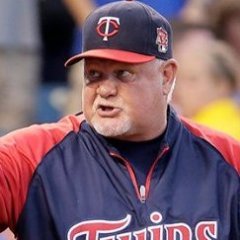
The Twins dipped back into familiar waters this week, agreeing to a minor league deal with catcher David Bañuelos. The deal includes an invitation to big league camp, giving Bañuelos a chance to reintroduce himself to an organization that knows him well.
At 29 years old, Bañuelos does not bring much in the way of major league experience. His time in the big leagues has been fleeting, appearing in just two games with Baltimore across the 2024 and 2025 seasons. Those appearances amounted to three plate appearances and not much opportunity to leave an impression. The Orioles ultimately removed him from their roster last summer, and he hit free agency after the season.
Even in the minors, recent playing time has been hard to come by. Baltimore frequently stashed Bañuelos on its taxi squad as emergency depth, which limited his opportunities to get regular at-bats. Over the last two seasons, he logged fewer than 200 plate appearances on the farm and struggled to find a rhythm in sporadic usage.
That lack of recent production does not erase his longer history in Minnesota. Originally acquired from Seattle in 2017 for $1 million in international bonus pool money, Bañuelos spent several years climbing the Twins' minor league ladder. From 2021 through 2023, he bounced between Double- and Triple-A, offering occasional power but also plenty of swing and miss. In 176 plate appearances in the minors over the past two years, he slashed .171/.284/.270 (.554).The offensive upside never fully arrived, but the defensive reputation stuck.
That glove-first profile is what brings him back into the picture now. The Twins currently project Ryan Jeffers and Victor Caratini as their primary catching tandem, with Caratini also capable of spelling first base or serving as a designated hitter. Alex Jackson looms as the third catcher on the roster, though his lack of remaining options complicates the roster math.
Bañuelos slots in neatly as depth beyond that group. He gives the Twins a reliable defensive presence at Triple-A and an experienced option if injuries strike or roster maneuvering thins the catching corps. If Jackson were to be lost on waivers, or if the Twins need an extra backstop for a short stretch, Bañuelos provides coverage without forcing a rushed promotion.
There is also a longer view to consider. If the Twins fall out of contention later this summer, Jeffers becomes an obvious trade chip as an impending free agent. Even Caratini, under contract through 2027, could draw interest in the right scenario. In that kind of shakeup, organizational depth suddenly matters a lot more.
For now, the signing is quiet and practical. Bañuelos is unlikely to push his way into a prominent role, but he fills a necessary space on the depth chart. Those are the kinds of moves that rarely make headlines in February, yet often become important by August.
Fort Myers felt a little more official on Thursday. Pitchers and catchers reported to the Lee Health Sports Complex, the Florida sun was beating down on the back fields, and a new chapter began as Derek Shelton officially started his first spring training as Twins manager. Bullpens popped, catchers dropped into their stances, and optimism was easy to find.
One notable arm, however, was not firing away. Twins pitching prospect Cory Lewis has been shut down from throwing after being diagnosed with a moderate subscapularis strain in his right shoulder. Lewis reported discomfort following a bullpen session on Saturday after arriving at camp early. Shelton told reporters that Lewis will be reevaluated in two weeks. For a player trying to force his way into the big-league conversation, it is far from an ideal start.
Lewis, 25, entered camp as a non-roster invitee after spending last season at Triple-A. The numbers were not kind. In 73 innings with the Saints, he posted a 7.27 ERA while striking out 87 and walking 68. The uneven command and high traffic outings made for a frustrating campaign. He also missed time with a right shoulder issue last season, though it is not yet clear whether this strain is connected to that prior injury. The disappointment of 2025 stands in sharp contrast to the trajectory Lewis was on before reaching Triple-A.
When the Twins selected him in the ninth round of the 2022 MLB Draft out of UC Santa Barbara, he was viewed more as an intriguing project than a fast-moving arm. What set him apart was not overpowering velocity but creativity. Lewis featured an unorthodox delivery and a deep mix of pitches, highlighted by a knuckleball that has become increasingly central to his identity.
In 2023, he split his professional debut between Low- and High-A. Across 22 starts, Lewis posted a 2.49 ERA with a 28.6% strikeout rate and an 8.0% walk rate. His poise and command stood out as much as the knuckleball itself. By the end of 2024, he had reached Triple-A and continued to miss bats, posting a nearly 28% strikeout rate, a 2.51 ERA, and a 1.31 WHIP.
In many farm systems, that type of rise would have generated louder buzz. In Minnesota, he was somewhat overshadowed by Zebby Matthews and a wave of pitching prospects who grabbed headlines. Still, evaluators appreciated Lewis for what he was becoming. Not a traditional power arm, but a different look. A pitcher capable of disrupting timing in a sport increasingly built around velocity.
That is what makes this spring important. With Shelton taking over and the Twins once again leaning on pitching depth as an organizational strength, camp reps matter. Lewis was unlikely to break north with the club, but a healthy and productive spring could have reestablished him as a depth option and potential call-up candidate during the season.
Instead, the focus shifts to recovery. Shoulder injuries are always delicate, and a subscapularis strain impacts one of the key stabilizing muscles in the shoulder. For a pitcher who relies heavily on feel and touch, especially with a knuckleball, any interruption to throwing progression can complicate timing and command.
The Twins will reevaluate Lewis in two weeks, and the hope is that this is merely a short-term pause rather than a lingering issue. Minnesota has seen how quickly pitching depth can evaporate over a long season. They will need arms at St Paul ready to contribute.
For Lewis, the path forward remains the same even if the timeline shifts. Embrace the uniqueness. Refine the knuckleball. Regain the command that fueled his rise. The Twins believed enough in the profile to invite him to big league camp. Now the challenge is getting back on the mound and proving that last season was a detour, not a destination.
Spring training is about fresh starts. For Lewis, that fresh start may just have to wait a few weeks.
The latest round of spring roster cuts from the Minnesota Twins came as little surprise, but they offer clarity on how the organization is shaping its upper-level depth.
At this stage of camp, decisions are now driven by practicality rather than upside. Veterans and non-roster invites receive longer looks for early-season roles. Prospects needing everyday reps or rehabbing injuries move to the minor league side. These changes don't dramatically alter the long-term outlook but do clarify how the Twins prioritize development and depth as camp concludes.
With those themes in mind, let's break down the implications of this specific group of cuts.
Catching Depth Gets Reassigned
Andrew Cossetti and Ricardo Olivar were both in big league camp to provide depth behind the plate. Neither was realistically pushing for an Opening Day role, but both gave the Twins reliable innings throughout the early Grapefruit League schedule.
Cossetti, a 2022 draft pick, has spent the last two seasons at Double A and posted a .717 OPS across 171 games. He has split time between catcher and first base, giving him some defensive versatility, but his offensive production has remained more steady than spectacular. For now, he remains organizational depth with a chance to climb if the bat takes another step.
Olivar has quietly put together a solid run in the system since signing out of Venezuela. Over five seasons, he has worked his way into fringe top-30 prospect conversations. Last season at Double A, he posted a .768 OPS in 93 games and continued to show a balanced offensive profile. Like Cossetti, he was in camp primarily to support the catching workload. Returning him to the minor league side allows him to prepare for what should be another important season in his development.
There was never any real debate about Jenkins breaking camp with the big league club, especially once the hamstring strain surfaced.
Jenkins remains the top prospect in the organization, but he is not on the 40-man roster and is currently sidelined for a couple of weeks. With his focus on rehab and getting back to full strength, sending him to minor league camp is simply procedural. It allows him to progress at his own pace without occupying a spot on a big league roster.
The Twins are thinking long term here. Jenkins does not need to rush anything in March. His priority is building toward a healthy and productive season, not squeezing in a few extra at-bats in exhibition games.
Sorting Out the Triple-A Bullpen
On the pitching side, several arms now shift their attention toward Triple-A roles.
Christian MacLeod’s path remains one of the more interesting developments. A fifth-round pick in 2021, he reached Triple-A last season after a strong first half at Double-A. As a starter there, he posted a 2.63 ERA in 13 starts and looked to be trending upward. The move to the bullpen in St. Paul brought mixed results. The hitter-friendly environment proved challenging, and his numbers took a hit. Still, the organization appears committed to him as a reliever for now. Returning him to Triple-A in a bullpen role gives him a chance to refine that transition with more experience.
Andrew Bash is a name to keep in mind. He has spent his entire professional career in the Blue Jays organization and quietly put together an impressive 2025 campaign at Triple-A. Over 40 appearances and 84 innings, he logged a 2.57 ERA with a 7.7 K/9. Minnesota brought him into camp for a closer evaluation, and while he will start the season in the minors, he profiles as a potential depth option if the big league bullpen needs reinforcements.
Raul Brito rounds out the group. The 28-year-old spent the last two seasons in the Padres system and showed swing-and-miss ability at Triple-A last year with an 11.7 K/9 across 63 1/3 innings. The problem was consistency. A 6.11 ERA, 5.0 BB/9, and 10.2 H/9 illustrate the volatility. Like Bash and MacLeod, he should factor into the Triple-A bullpen mix and serve as depth if he can tighten the command.
None of these cuts dramatically shifts the outlook for the Opening Day roster. Instead, they represent the natural narrowing of camp competition as the calendar flips toward the regular season. Spring training roster cuts are rarely headline-grabbing. But they often reveal how an organization values depth, flexibility, and patience. This round was no different.
Spring training often offers players on the roster bubble an opportunity to force their way into the conversation. For right-hander Travis Adams, the 2026 camp was shaping up as a chance to earn a role in the Minnesota bullpen. However, rather than moving closer to that goal, his spring has hit pause.
The Minnesota Twins announced Sunday that Adams has been diagnosed with right elbow inflammation and will not resume throwing until at least next weekend. According to Matthew Leach of MLB.com, Adams first experienced soreness on Friday, prompting the club to run additional tests.
The good news, though, is that the initial imaging provided some relief. An MRI revealed no structural damage in the elbow. Even so, the Twins are taking a cautious approach by shutting Adams down from throwing for at least seven days.
Adams originally felt the issue while warming up for a scheduled appearance on Friday against the Atlanta Braves. He was scratched from that outing and later evaluated by the medical staff. While the absence of structural damage is encouraging, any elbow concern for a pitcher during spring training is enough to slow the process.
The timing is not ideal for Adams, who entered camp as a contender for a spot in the Opening Day bullpen. The 26-year-old has the type of versatility that teams value during the long season. He is capable of pitching multiple innings and bridging the gap between the rotation and the late-inning relievers.
That flexibility was part of what made Adams an interesting developmental case for the Twins last season. Adams appeared in 18 games for Minnesota during the 2025 season. Across 33 2/3 innings, he posted a 7.49 ERA with a 1.66 WHIP and a 5.39 FIP. The strikeout and walk numbers told a similar story, as he recorded a 19.6 K% with a 10.8 BB%.
His performance at Triple-A was more encouraging. Pitching in the hitter-friendly environment of the International League, Adams produced a 3.93 ERA with a 19.6 K% and a more manageable 7.9 BB%. Those numbers helped keep him on the radar for a larger role entering 2026.
Part of Adams’s development also came within a unique pitching structure the Twins used throughout the minor leagues last year. When certain pitchers did not fit neatly into a traditional rotation slot, the organization placed them on a consistent four-day schedule. Instead of traditional starts, these pitchers would throw shorter outings more frequently.
The idea was that fewer pitches with quicker turnaround could provide better overall volume while helping pitchers recover more effectively. In those outings, Adams would typically face a lineup once or twice after a traditional starter before turning the game over to the bullpen. That approach allowed the Twins to continue building Adams’s workload while keeping him flexible for a variety of roles.
Entering this spring, it appeared likely that Minnesota would test Adams in shorter one or two-inning stints at the major league level. The hope was that his stuff might play up in shorter bursts, giving the bullpen another option capable of covering multiple frames when needed.
For now, that plan will have to wait. The immediate focus is simply getting Adams back on the mound and healthy. With no structural damage found, the Twins will hope the inflammation subsides quickly and allows him to resume throwing soon. If that happens, Adams could still work his way back into the conversation at some point during the season.
Spring training roster battles can change quickly, and injuries often reshape the competition. For Adams, the priority is making sure this brief scare stays just that. If his elbow responds well over the next week, he will have plenty of time to show the Twins what he can offer later in the year.
Minnesota may have an unexpected fan ahead of Sunday's World Cup Final.
Spanish superstar Lamine Yamal was recently spotted strolling through New York City wearing the Twins' light blue City Connect cap, and the video quickly went viral across social media. Naturally, Twins fans immediately began wondering if there was some hidden connection.
1,615 likes, 18 comments - thescore on July 17, 2026: "Lamine Yamal stoped by a New York food truck with his girlfriend rocking a Minnesota Twins caps two days before the World Cup...
As far as anyone can tell, there isn't one.
Yamal has no known ties to the Twins, Minnesota, or the organization. The most likely explanation is simply that he liked the look of the cap, but it still provided some unexpected national exposure for the club.
The 19-year-old phenom will lead Spain against Lionel Messi and Argentina in the World Cup Final on Sunday at 2 p.m. CT. Whether the Twins hat was just a fashion choice or the beginning of baseball's newest international fan, Twins fans seemed more than happy to claim him.
The first Gabriel Gonzalez era was, as expected, brief. But it was also memorable.
The Minnesota Twins on Monday sent Gonzalez, an outfielder, back to Triple-A St. Paul and activated infielder Tristan Gray from the paternity list.
Gonzalez, Twins Daily's No. 10 prospect, played in just one of the three games he was active for in his first MLB call-up. He made his debut in Friday's 8-6 win over the Boston Red Sox, hitting fifth and going 1-for-2 with two walks. That included his first MLB hit.
Gonzalez will certainly get another shot during this season, but for now heads back to St. Paul, where he has a .216/.294/.392 slash line with eight homers and 21 RBIs in 44 games this year.
Gray has produced a slash line of .240/.301/.373 with three homers and 14 RBIs in 26 games.
Ready or not, Zebby Matthews is set for his next opportunity at the MLB level.
The right-handed starter was promoted from Triple-A St. Paul on Thursday to start the series finale against the Miami Marlins. Outfielder-infielder Ryan Kreidler was also called up from the Saints, with outfielder Matt Wallner and right-hander Travis Adams sent to Triple-A.
The 25-year-old Matthews has made 25 starts over the last two years, including 16 in 2025. But Matthews has posted a 4.41 FIP, which is a stark contrast to his 5.56 ERA, during his time in the majors. His walk (6.6%) and strikeout rates (24.7%) are both a couple points above the MLB average.
In seven starts at Triple-A this year, Matthews has a 4.72 ERA with 11 walks and 33 strikeouts in 34⅓ innings. But he has given up nine homers.
Wallner was coming off a breakthrough 22-homer season in 2025, but was scuffling to begin 2026 with a slash line of .167/.259/.292 with two homers and 10 RBIs in 34 games.
Kreidler is up for the second time this season. He went 3-for-14 in five games with two homers and four RBIs. At St. Paul, Kreidler had a .266/.389/.500 slash line with five homers, 15 RBIs and three steals.
Adams made two relief appearances, giving up three runs in 3⅔ innings with two walks and five strikeouts.
The Minnesota Twins community is mourning the loss of a member of its 1987 championship club. Tom Nieto has passed away at the age of 65 after suffering a heart attack, according to a message shared by his family and later confirmed by the organization on Monday.
Nieto’s sister shared the news publicly, noting that he passed on March 27 while in Florida with his family. She described a man whose strength and resilience left a lasting impact on those closest to him, a sentiment that has echoed throughout the baseball world since the announcement.
The Twins also released a statement shortly after the news became public.
Nieto’s baseball journey began when the Twins selected him in the 31st round of the 1979 MLB Draft. Instead of signing, he chose to continue his development at the collegiate level, eventually going to Oral Roberts before being selected in the third round of the 1981 MLB Draft by the St. Louis Cardinals.
A highly regarded prospect in the Cardinals system, Nieto worked his way through the minors before making his big league debut in 1984. He made an immediate impression during his rookie campaign, posting a 109 OPS+ across 33 games and establishing himself as a capable backstop. He had a role on the Cardinals team that reached the 1985 World Series, but St. Louis ultimately fell to the Kansas City Royals in a seven-game series.
Two years later, Nieto found himself on baseball’s biggest stage again, but this time on the opposite side. After a stint with the Montreal Expos, the Twins acquired him during the 1987 season. In Minnesota, Nieto appeared in 41 games as part of a team that would go on to win the World Series, defeating his former Cardinals club in seven games.
While his offensive numbers with Minnesota were modest, Nieto played a supporting role on a roster that has become one of the most beloved in franchise history. Across two seasons with the Twins, he appeared in 65 games and contributed as a depth option behind the plate during a championship run. In total, Nieto spent seven seasons in the big leagues.
Following his playing days, Nieto transitioned into coaching, where he made perhaps an even greater impact. He spent seven seasons with the New York Yankees organization from 1995 through 2002 and later joined the New York Mets, working under manager Willie Randolph. With the Mets, Nieto served as both a catching instructor and first base coach.
For Twins fans, his name will always be tied to 1987, a season that remains one of the franchise's defining moments. Today, it also serves as a reminder of the people who helped make that run possible and the lasting impact they leave behind.
The Minnesota Twins announced Thursday that former pitcher Al Worthington passed away earlier this week at the age of 97.
For younger Twins fans, Worthington's name may not immediately jump off the page. However, his impact on some of the most successful teams in franchise history is impossible to overlook. Long before closers became baseball celebrities and bullpen usage charts consumed front offices, Worthington quietly became one of the game's most reliable late-inning arms and a key contributor to Minnesota's first American League pennant.
Worthington arrived in professional baseball after starring at the University of Alabama and signing with the Chicago Cubs organization in 1951. After only one season in the minors, he was traded to the New York Giants, a move that would launch a major-league career spanning parts of 14 seasons.
His introduction to the majors was memorable. Called up in 1953, Worthington opened his career by throwing complete-game shutouts in each of his first two appearances. He posted a 3.44 ERA as a rookie and appeared briefly for the Giants during their 1954 championship season. Although he did not pitch in the World Series, he was part of the club that defeated Cleveland in a Fall Classic best remembered for Willie Mays' iconic over-the-shoulder catch at the Polo Grounds.
Worthington spent six seasons with the Giants organization, including the franchise's historic move from New York to San Francisco in 1958. Along the way, he transitioned from starting pitcher to reliever, a role that ultimately prolonged his career. Stops with the Chicago White Sox, Boston Red Sox, and Cincinnati Reds followed before his baseball journey took an unexpected turn.
By 1964, Worthington was 35 years old and back in the minor leagues. Many players at that stage are contemplating retirement. Instead, the Twins purchased his contract from the Reds organization and gave him another opportunity. It turned out to be one of the better under-the-radar moves in franchise history.
From 1964 through 1969, Worthington became a bullpen cornerstone for Minnesota. He won 37 games, recorded 88 saves, and posted four consecutive seasons with an ERA below 3.00. His finest season came in 1965 when he went 10-7 with 14 saves and a sparkling 2.14 ERA across 62 appearances.
That season, the Twins captured their first American League pennant and advanced to the World Series against the Los Angeles Dodgers. Worthington delivered four scoreless innings during the series, allowing only an unearned run despite Minnesota ultimately falling in seven games.
The right-hander remained a valuable contributor through the end of the decade, including a final postseason appearance during the Twins' 1969 American League Championship Series run. By the time he retired after the 1969 season, he had established himself as one of the most effective relievers in franchise history.
Although the save did not become an official Major League Baseball statistic until the final year of his career, Worthington was retroactively credited with 111 saves. He finished his major-league career with a 75-82 record, a 3.09 ERA, 834 strikeouts, and 602 appearances. More than half of those outings ended with him recording the final outs of the game.
His baseball accomplishments extended well beyond the major leagues. Before reaching the majors, Worthington spent four seasons with the Minneapolis Millers and helped lead the club to the 1955 American Association championship while posting a 19-10 record with 18 complete games. In nine minor-league seasons, he compiled a 98-69 record.
After retiring as a player at age 40, Worthington dedicated nearly two decades to coaching and administration at what is now Liberty University. From 1973 through 1986, he amassed a 343-189-1 record as the school's baseball coach and later served as athletic director. His contributions earned him induction into both the Liberty University Hall of Fame and the Alabama Sports Hall of Fame.
In 2010, the Twins recognized his place in franchise history by naming him one of the organization's "50 Greatest Twins." Worthington was the fourth-oldest living former major-league player at the time of his passing and one of the last remaining players who wore a Giants uniform before the franchise relocated to San Francisco.
For Twins fans, however, his legacy will always be tied to the club's first pennant winner. More than 60 years after arriving in Minnesota as a veteran searching for one last opportunity, Worthington remains one of the most successful bullpen arms the franchise has ever had.
Looking for any solution in the bullpen, the Minnesota Twins have made another addition.
The Twins on Wednesday acquired right-handed reliever Yoendrys Gomez from the Tampa Bay Rays for cash considerations. Right-handed reliever Christian Roa, who was at Triple-A St. Paul, was designated for assignment to make room for Gomez on the 40-man roster. Another move will have to be made in the next day or two to add Gomez to the 26-man roster.
Gomez had been DFA'd by the Rays after making nine appearances and posting a 6.23 ERA in 17⅓ innings, walking 10 and striking out 13. He allowed runs in seven of his outings, ironically not in his last game a week ago Wednesday when he went two scoreless innings against the Cleveland Guardians.
Roa had been claimed off waivers April 23 by the Twins following being DFA'd by the Houston Astros. In three appearances at St. Paul, he allowed two runs on two hits and two walks with three strikeouts in 2⅓ innings. That came after seven games with the Astros in which he allowed five runs in 8⅔ innings with seven walks and six strikeouts.
In addition to the major news of former first-round pick Royce Lewisbeing sent to Triple-A St. Paul, the Minnesota Twins made more than a handful of other moves Tuesday ahead of the second game of the series against the Houston Astros. The most noteworthy of those moves is catcher Ryan Jeffers going on the 10-day injured list with a broken left hamate bone, which could sideline him anywhere from one to two months.
Here is the complete list of moves:
Optioned third baseman Royce Lewis to the Triple-A St. Paul Saints.
Placed catcher Ryan Jeffers on the 10-day injured list with a left hamate bone fracture.
Designated right-handed reliever Justin Topa for assignment.
Selected the contract of catcher Alex Jackson from the Triple-A St. Paul Saints.
Selected the contract of shortstop Orlando Arcia from the Triple-A St. Paul Saints.
Recalled right-handed reliever Travis Adams from the Triple-A St. Paul Saints.
Transferred right-handed reliever Garrett Acton (strained right shoulder) from the 15-day injured list to the 60-day injured list.
In other words, Lewis, Jeffers and Topa off the Twins' 26-man roster, with Arcia, Jackson and Adams now on the 26-man roster. Acton was moved to the 60-day IL to make room on the 40-man roster. There does appear to be one more 40-man move coming as FanGraphs lists the Twins with 41 players on the 40.
Some of the moves speculated over the last two days are now official.
Third baseman Royce Lewis was activated from the 10-day injured list, left-hander Kody Funderburk was placed on the paternity list and prospect left-hander Kendry Rojas was promoted from Triple-A St. Paul on Tuesday. The moves also fill the gap from Monday's transaction of placing right-handed starter Mick Abel on the 15-day injured list with inflammation in his right elbow.
Rojas, the No. 8 prospect by Twins Daily who was already on the 40-man roster, will be making his MLB debut. The Twins have 12 pitchers and 14 position players on their roster.
Lewis' return from a sprained right knee after a minimal IL stint will be a boost to the Twins' offense. He hit a pair of home runs in his two-game rehab assignment with the St. Paul Saints over the weekend. That matched the total he hit in 12 MLB games this season while producing a .222/.378/.444 slash line.
Rojas was part of the return from the Toronto Blue Jays in the trade last year for right-handed reliever Louis Varland and first baseman Ty France. Rojas has appeared in three games, including two starts, in the minors this season with four walks and seven strikeouts in 7⅓ innings.
Funderburk is expected to rejoin the team by this weekend.
The Minnesota Twins are adding another experienced arm to the organization, agreeing to a minor league deal with veteran right-hander Luis García. The 39-year-old reliever is expected to report to Triple-A St. Paul, giving the Twins a no-risk opportunity to evaluate whether he still has something left in the tank.
García opened the season with the New York Mets after signing a one-year deal worth $1.75 million over the winter. That partnership didn’t last long. After just six appearances, the Mets decided to move on, cutting ties following a brief stretch where García struggled to find consistency. In 6 1/3 innings, he allowed five earned runs on 11 hits while walking two and striking out four.
It’s an ugly line on the surface, but it also represents a very small sample size. For a pitcher with García’s track record, six outings are hardly enough to draw a definitive conclusion. Still, the Mets saw enough to pivot quickly, eating the remainder of his salary rather than attempting to stash him in the minors.
That decision opens the door for Minnesota. Even at 39, García isn’t far removed from being a useful bullpen piece. Just last season, he logged over 50 innings across multiple teams while posting a 3.42 ERA. He leaned on a heavy sinker that generated ground balls at an impressive clip, helping him work around less-than-elite strikeout and walk numbers. It wasn’t dominant, but it was effective, and that’s exactly the type of profile the Twins have targeted in the past when building bullpen depth.
The concern now is whether that version of García still exists. Early returns this season showed a noticeable dip in velocity. His sinker, which sat in the upper 90s a year ago, has backed off by a couple of miles per hour. His secondary pitches have followed a similar trend. For a pitcher who relies on movement and weak contact, even a slight drop in stuff can make a meaningful difference.
That’s where this signing becomes interesting. Minnesota doesn’t need García to be a high-leverage weapon. They don’t even need him in the majors right away. What they do need is depth, especially with the unpredictable nature of modern bullpens. By bringing him in on a minor league deal, the Twins can give him time to work in St. Paul, evaluate his stuff in a lower-stakes environment, and determine if any adjustments can help him regain effectiveness.
There’s also a financial advantage built into the move. Because the Mets released him, they remain responsible for the bulk of his salary. If García works his way onto Minnesota’s roster, the Twins would only owe him the prorated league minimum. For a team always mindful of payroll flexibility, that’s about as low-risk as it gets.
If it clicks, the Twins could uncover a steady veteran capable of soaking up innings and generating ground balls in the middle innings. If it doesn’t, they can move on without consequence.
Moves like this rarely grab headlines, but they often matter over the course of a long season. Bullpen attrition is inevitable, and organizations that can cycle through experienced options tend to weather that storm better than most.
For now, García is simply the latest name added to that mix. Whether he becomes anything more will depend on what he shows in St. Paul and whether the Twins can help him turn back the clock, even just a little.
The Minnesota Twins called up the left-hander to make his MLB debut by starting Wednesday's game against the New York Mets. Outfielder Ryan Kreidler was sent back to Triple-A St. Paul.
For the 25-year-old Prielipp, Twins Daily's No. 5 prospect, the path to his debut has been a rocky road. The Tomah, Wis., native had Tommy John surgery in college at Alabama, but the Twins still took a chance on him with their second-round pick in the 2022 draft. Unfortunately, Prielipp needed an internal brace procedure on the same elbow after two appearances in 2023.
In 2024, Prielipp returned to make nine starts with a 2.70 ERA in 23⅓ innings, walking seven and striking out 41. He made 23 starts and one relief appearance in 2025 between Double-A Wichita and Triple-A St. Paul, with a combined 4.03 ERA, with 31 walks and 98 strikeouts in 82⅔ innings. At St. Paul this season, Prielipp appeared in four games, three starts, pitching 15⅔ innings and posting a 2.30 ERA with eight walks and 22 strikeouts.
Kreidler was called up from St. Paul on April 11 and appeared in five games, going 3-for-14 with two homers and four RBIs. His demotion puts an even split on the 26-man roster of 13 position players and 13 pitchers after a one-day imbalance.
The Minnesota Twins have lost one of their bullpen stalwarts to an injury.
Right-hander Cole Sands was put on the 15-day injured list by the Twins on Saturday due to a strained right forearm. Right-hander John Klein was called up from Triple-A St. Paul to make his MLB debut.
Sands made 131 appearances out of the Twins' bullpen the last two seasons and had made 12 in 2026. In 11⅔ innings, he had a 4.63 ERA with six runs on 12 hits with four walks and 11 strikeouts. He last appeared in a game Tuesday against the Seattle Mariners, giving up two runs on three hits, including a homer, in two-thirds of an inning. He came on with one on and one out in the eighth and gave up a double to Julio Rodriguez and a three-run homer to Josh Naylor, turning a 2-1 Twins deficit into a 5-1 disadvantage.
Klein had made seven appearances, six starts, at St. Paul this year. He had a 7.48 ERA in 21⅔ innings, walking six and striking out 24. Klein signed as an undrafted free agent in 2022.
The setback sustained by right-hander Mick Abel has a trickle-down effect.
The Minnesota Twins on Sunday activated left-hander Kendry Rojas from the 15-day injured list, with right-handed reliever Justin Lawrence designated for assignment. Rojas, Twins Daily's No. 9 prospect, had been out since May 29 with inflammation in his left elbow.
Abel, on the 15-day IL with right elbow inflammation, threw a bullpen session Friday in anticipation of him starting Sunday, but woke up Saturday with a sore elbow, forcing the Twins to come up with an alternate plan. That will be right-hander Mike Paredes starting the series finale against the Arizona Diamondbacks.
Rojas could be a relief option for Sunday. He has made five appearances (one start), including his MLB debut, and been very good. Rojas has a 1.26 ERA in 14⅓ innings, walking 10 and striking out 14.
Lawrence has been DFA'd for the second time this season. The Twins acquired Lawrence for cash considerations from the Pittsburgh Pirates on June 2 after he was DFA'd. His brief time with the Twins did not go well. In six innings across seven appearances, Lawrence had an 18.00 ERA, getting tagged for 12 runs on 10 hits with nine walks and 12 strikeouts. This came after a 5.32 ERA in 22 games with the Pirates.
Just in time for a push before the trade deadline, Buck is back.
The Minnesota Twins on Monday activated All-Star center fielder Byron Buxton from the 10-day injured list and optioned infielder Tristan Gray to Triple-A St. Paul.
Buxton had been out since going on the IL July 7 with a strained right hip, the same ailment that kept him out for four games that week. Now, Buxton rejoins the Twins after being out for nearly two weeks and will be in the lineup Monday as Minnesota opens a big four-game series on the road against the Cleveland Guardians, who are in second place in the AL Central, just three games ahead of the Twins and one game behind the first-place Chicago White Sox.
Buxton is slashing .271/.328/.575 with 25 homers, which ranks eighth in MLB, and 45 RBIs. Buxton, who has a lengthy injury history, hit a career-high 35 homers last year.
Gray has been a valuable defensive piece on the infield, seeing quite a bit of time at shortstop, but has a slash line of just .232/.271/.333 with four homers and 29 RBIs. This likely opens the door for Ryan Kreidler to see a bulk of the time at shortstop and Brooks Lee backing him up.
The Minnesota Twins have lost one of their left-handed relievers for a bit.
The Twins on Monday placed lefty Anthony Banda on the 15-day injured list due to a strained left lat and called up right-handed reliever Cody Laweryson from Triple-A.
In 39 games and 34⅓ innings this year, Banda has a 4.32 FIP (4.46 ERA) with a 9.6 walk rate and 21.2 strikeout rate. He has already hit a career-high eight batters. He appeared in Sunday's 3-2 win over the Colorado Rockies, allowing a hit, hitting a batter, walking another and striking out a pair in two-thirds of an inning.
Laweryson is with the Twins for a second time this year after making the Opening Day roster. He also spent time on the 15-day injured list due to a strained right forearm. When healthy, Laweryson appeared in 14 games and had a 4.97 FIP (5.06 ERA), posting a 9.7% walk rate and 25% strikeout rate. He has given up three homers in 16 innings.
With the Minnesota Twins bringing in bullpen help from outside the organization, left-hander Kody Funderburk lost his roster spot.
The Twins on Tuesday optioned Funderburk to Triple-A St. Paul. The move came the day after the Twins acquired rigjt-hander Justin Lawrence from the Pittsburgh Pirates for cash considerations. Lawrence had been designated for assignment by the Pirates.
Funderburk has been doing well in the bullpen, posting a 3.44 ERA in 21 appearances covering 18⅓ innings. However, walks have hurt Funderburk as he has issued 16 free passes, while striking out 10.
Lawrence had a 5.32 ERA in 23 outings and 22 innings with 12 walks and 25 strikeouts with the Pirates.
Twins GM Jeremy Zoll reported that Mick Abel and David Festa are both unlikely to pitch this year.
Abel had arthroscopic elbow surgery on July 1. He looked good before going on the injured list. In his two starts before going on the injured list, he threw 13 innings, giving up zero runs and recording 16 strikeouts with just three walks. The hope when he went on the injured list was that he would be back later in the summer, but after surgery, it looks unlikely he will pitch again in 2026.
Unfortunately for Festa, he has been on the injured list all year after dealing with a shoulder impingement in Spring Training. He was starting to work back, and in unfortunate circumstances, symptoms resurfaced, which put his rehab on pause.
Zoll stated that Festa may be dealing with thoracic outlet syndrome, but the team would know more once he visits a specialist. Festa dealt with thoracic outlet syndrome in September of last season, so the hope is that this isn't a recurring issue but something else.
With this news, the Twins rotation loses potential depth options, and maybe this leads to the Twins adding a starter if they do decide to buy at the trade deadline in a few weeks.
According to USA Today's Bob Nightengale, rival executives are increasingly expecting the Minnesota Twins to move catcher Ryan Jeffers before the trade deadline.
In his latest report, Nightengale wrote, "Rival teams now believe that the Minnesota Twins will trade catcher Ryan Jeffers, with the Yankees the leading candidate to sign him."
The report lines up with what has seemed like the most logical outcome for weeks. Jeffers is set to become a free agent after the season, meaning the Twins risk losing him for nothing this winter. Even if Minnesota decides to make a modest buy at the deadline instead of becoming outright sellers, dealing Jeffers could still make sense if it allows the organization to add long-term value while replacing his production internally.
The timing of the report is also notable because the catching market changed dramatically on Sunday morning. Athletics All-Star Shea Langeliers suffered a torn meniscus in his knee and could miss the remainder of the season. Langeliers was widely viewed as the premier catcher available at the deadline thanks to his offensive production and team control through the 2028 season. With him now likely off the market, Jeffers becomes the clear top catching option available to contenders.
That shift in the market only increases Jeffers' value and could make it even more difficult for the Twins to justify holding onto him through the end of the season. If multiple contenders are searching for catching help and the best alternative is no longer available, Minnesota could find itself in an excellent position to maximize Jeffers' trade value.
Do you think the Twins should capitalize on Jeffers' value and trade him before the deadline, or should they keep him for a postseason push? Leave a comment below and start the conversation!
After Team USA clinched a spot in the Quarterfinals round of the World Baseball Classic, speculation was that Joe Ryan would replace Clayton Kershaw on the Team USA roster.
Following their quarterfinal win over Team Canada on Friday night, Kershaw officially said that he was retiring. It was quickly announced that Blue Jays closer Jeff Hoffman was replacing Kershaw. But it was possible there could still be more moves. On Saturday afternoon, we got confirmation that Joe Ryan will be sticking with the Twins rather than joining Team USA in Miami.
Selfishly from the Twins perspective, I think it's a good decision. Since he was slowed to start spring training and is still working his way to be ready near Opening Day, it doesn't make a lot of sense to have him push himself to max effort. Paul Skenes is making the start for the USA in Sunday night's semi-final game against the Dominican Republic. The four pitchers added to the USA roster since pool play have all been relievers. Presumably, Ryan could be lined up to make the start for Team USA in the championship game (if the US gets past the DR).
Logan Webb has been tremendous for Team USA this year. In two starts, he has thrown 8 2/3 scoreless innings. He was in a similar situation during the last WBC. He wasn't quite 100% and he was about to make some money, so he didn't pitch. Likewise, with a strong, healthy 2026 season, Ryan would line himself up for a lucrative extension with the Twins or with another team.
Selfishly as a baseball fan, it would have been fun to watch him pitch for Team USA. Think about it. When the Twins traded Nelson Cruz to the Rays in 2021, Ryan (and Simeon Woods Richardson) was in Tokyo, pitching for Team USA in the Olympics. So had he made the decision to go pitch for Team USA, one really couldn't fault him at all.
This is one of those scenarios that doesn't necessarily have one right and/or wrong answer. My hope is simply that Joe Ryan is happy with the choice and then has another All-Star caliber season.
The Minnesota Twins are welcoming one of the franchise’s most beloved figures back into the fold as they approach the 2026 season. Paul Molitor’s connection to the Twins stretches back decades, both as a hometown player and an influential presence in the organization. His return in a new capacity is sure to resonate with long-time fans and offer fresh insight to viewers tuning in this year.
This week, the Twins revealed Molitor’s latest role. “Hall of Famer Paul Molitor is joining the Twins' rotation of TV analysts this season, along with Justin Morneau, Trevor Plouffe, Denard Span, and Glen Perkins. Cory Provus returns as the play-by-play voice and Audra Martin is back as the sideline reporter,” reported Aaron Gleeman of The Athletic on Tuesday.
Molitor’s addition to the broadcast team brings a respected voice with firsthand experience in nearly every corner of the sport. He has been a superstar player, a veteran leader, a manager, and a special assistant in the front office. There are not many perspectives within baseball that he has not experienced.
His playing credentials remain among the most impressive in the game’s history. Over a 21-year career, Molitor compiled 3,319 hits, a .306 batting average, 234 home runs, 1,307 RBIs, and 1,782 runs scored. He also stole 504 bases, making him one of the rare players to pair 3,000 hits with 500 steals. His .817 OPS reflected a balanced offensive profile built on consistency, durability, and intelligence. Those accomplishments secured his induction into the National Baseball Hall of Fame in 2004.
Although Molitor built the bulk of his playing legacy with the Milwaukee Brewers and added a World Series title with the Toronto Blue Jays, his time with the Twins holds a special place. A native of St. Paul, he finished his career in Minnesota from 1996 through 1998, batting .312 across those three seasons, earning a Silver Slugger Award, and producing 5.2 bWAR in what were supposed to be his twilight years. For a player in his late thirties, that level of production was remarkable, and it provided a bridge between eras for the franchise.
Molitor’s impact in Minnesota extended well beyond his playing days. He managed the Twins from 2015 through 2018 and authored one of the more memorable managerial seasons in team history. In 2017, he guided Minnesota to the postseason one year after a 100-loss campaign, earning American League Manager of the Year honors in the process. Even after being let go from that role, Molitor remained involved as a Special Assistant in Baseball Operations, helping shape player development and instruction throughout the organization. He has also made radio appearances over the years, offering thoughtful and measured analysis.
There is a reason Molitor has remained intertwined with the Twins for much of the past decade. His Hall of Fame resume commands respect on its own, but his steady demeanor and deep understanding of the game make him a natural fit in any role. He is not necessarily remembered first as a Twin when it comes to his playing career, yet his post-playing identity has become closely tied to Minnesota. That matters to him, and it matters to the organization.
Now, as he joins a television rotation that already includes Morneau, Plouffe, Span, and Perkins, Molitor brings historical context and credibility to the broadcast. He understands what it means to chase 3,000 hits. He understands what it feels like to manage through a 100-loss season and then turn it into a playoff berth. He understands the pressure of expectations in this market.
For fans, that means more than just another analyst in the booth. It means hearing the game explained by someone who has lived every angle of it. Even if the Twins encounter bumps along the way in 2026, Molitor’s presence on the broadcast will offer perspective, nostalgia, and a connection to the franchise’s past. That is a win for the organization and a win for viewers tuning in all summer long.
The Minnesota Twins' dwindling pitching depth took another hit Sunday.
The Twins placed right-handed starter Bailey Ober on the 15-day injured list with inflammation in his right elbow. Right-hander Mike Paredes had his contract selected from Triple-A St. Paul and will be making his MLB debut. Also, the Twins called up Travis Adams and optioned fellow right-handed reliever John Klein to St. Paul.
Ober was tagged for eight runs in 4⅔ innings of Saturday's 10-9 loss to the Pittsburgh Pirates. He becomes the seventh Twins pitcher to go on the IL this season. Ober has been uneven this season, including giving up three homers Saturday and seven long balls in his last three starts. He has a 4.59 ERA with a 6.4% walk rate and 16.4% strikeout rate in his 12 starts this season, which includes a shutout.
Paredes is an 18th-round draft choice in 2021 out of San Diego State and has pitched for Double-A Wichita and Triple-A St. Paul this season. Between the two stops, he has made 13 appearances, including 10 starts, and thrown 48⅔ innings, walking nine and striking out 54.
Adams is making his third trip up from St. Paul this month after beginning the season on the 15-day injured list with a strained right triceps. Adams has appeared in seven games, throwing 10 innings with five walks and 12 strikeouts for a 7.20 ERA. The bullpen was in need of a fresh arm.
Klein went two innings Saturday after being called up earlier in the day. He didn't allow a run, although he walked three and gave up a hit. Klein made his MLB debut this month and has now appeared in three games, allowing two runs in 4⅓ innings.
05/31/26 Minnesota Twins placed RHP Bailey Ober on the 15-day injured list. Right elbow inflammation.
05/31/26 Minnesota Twins selected the contract of RHP Mike Paredes from St. Paul Saints.
05/31/26 Minnesota Twins recalled RHP Travis Adams from St. Paul Saints.
05/31/26 Minnesota Twins optioned RHP John Klein to St. Paul Saints.
Now we know the full picture of why the Minnesota Twins are calling up two of their top pitching prospects.
In a big blow to the starting rotation, the Twins will be placing right-hander Mick Abel on the 15-day injured list with right elbow inflammation. The move will be made before Tuesday's series opener against the New York Mets.
On Sunday, news broke that left-handers Kendry Rojas and Connor Prielipp were joining the team in New York. One part of the equation as to whose roster spots they would take was another left-hander, Kody Funderburk, is set to go on the paternity list. Rojas and Prielipp are both already on the 40-man roster.
The Abel injury answers the other half of that.
Abel, 24, has appeared in four games, including three starts, this season with a 3.98 ERA. He has been especially sharp in his last two starts, tossing 13 shutout innings against the Detroit Tigers and Boston Red Sox. He struck out 16 in those two games, including 10 Tuesday vs. the Red Sox.
Abel joins star right-hander Pablo Lopez, who is out for the season after having his right UCL repaired in late February.