



Matthew Trueblood
-
Posts
1,033 -
Joined
-
Last visited
Content Type
Profiles
News
Minnesota Twins Videos
2026 Minnesota Twins Top Prospects Ranking
2022 Minnesota Twins Draft Picks
Minnesota Twins Free Agent & Trade Rumors, Notes, & Tidbits
Guides & Resources
2023 Minnesota Twins Draft Picks
The Minnesota Twins Players Project
2024 Minnesota Twins Draft Picks
2025 Minnesota Twins Draft Pick Tracker
2026 Minnesota Twins Draft Tracker: Picks & Bonuses
Forums
Blogs
Events
Store
Downloads
Gallery
Everything posted by Matthew Trueblood
-
Exactly. Increasingly, this feels like a draft with a clear top 3, so being 3rd guarantees you access to the top tier. Personally, I like Emerson a lot, and HE feels like the one most likely to fall into their laps...
- 16 replies
-
- 2
-

-

-
- roch cholowsky
- vahn lackey
- (and 1 more)
-
Royce Lewis Needs to Have an Open Mind
Matthew Trueblood replied to Tom Froemming's topic in Twins Minor League Talk
What I'm really trying to tell you is that Lewis might never belong in a regular big-league lineup again. He needs to be open to position changes because the team is (rightfully) no longer holding his old one open for him. Moving him around isn't about finding a way to get his bat in the lineup, from the team's perspetive. It's about him still having a career, because versatility is one way bad players can hang around a while. -
Royce Lewis Needs to Have an Open Mind
Matthew Trueblood replied to Tom Froemming's topic in Twins Minor League Talk
Boy, I just don't see what you're seeing in what Tom wrote. It seems like a very clear-eyed, even-handed take on a player in a very real career crisis! You're sort of acting like Tom is making up the major climb that now lies before Royce, but look at this more reasonably. Lewis has been an atrocious hitter for the last 21 months now, going all the way to August 2024. Lee isn't a viable shortstop, but he's hitting enough that they need to keep giving him some chance to show whether he can stick. Third base is probably his best spot. The team sent Lewis down and installed Lee at his old position! This isn't some flight of fancy; it's what the actual big-league team just did. I think you've gotta grapple with reality a little more here. Royce doesn't have a clear path back to the majors and his most likely one is not as the everyday third baseman. He needs versatility, or a new defensive home where he fits better into someone's plans, even if it's not the Twins'. I don't think any other org is out there hoping to pounce on him for a full-time job at third, either. -
Royce Lewis Needs to Have an Open Mind
Matthew Trueblood replied to Tom Froemming's topic in Twins Minor League Talk
I disagree with you about Kreidler, and maybe Gray, too. I believe in Keaschall's bat long-term, but he's still in a tough adjustment phase. I don't think Lee is ever going to be a consistently average-plus hitter. I think the far superior defense should be plenty of motivation for them to keep using Kreidler and Gray in all advantageous matchups (Kreidler every day, Gray against all righties) for a while, to find out what they have there. I'm fine with letting Arcia ride the bench, mostly, but if he keeps hitting like this, you might need to fit him in for OFFENSIVE purposes—and he's certainly a better defender than Keaschall at second, anyway. -
Royce Lewis Needs to Have an Open Mind
Matthew Trueblood replied to Tom Froemming's topic in Twins Minor League Talk
Absolutely. I think the best defensive alignment they could field, by far, is Gray at third, Kreidler at short and Arcia at second. I wonder if we see that a few more times in the days ahead. -
Give me good results over bad results every time, but I will say, he hasn't been right this month, either. The quality of contact isn't there. The directionality is still off. And behind the scenes, neither Keaschall nor the Twins are satisfied with the progress.
-
Hitting .270 without power or defensive value is a good way to end up either starting for a very bad team or riding the shuttle between the majors and AAA for a good one...
-
Image courtesy of © Jordan Johnson-Imagn Images The plate appearance totals don't match up perfectly, but it's as close as you could ask it to be. Heading into Memorial Day, Luke Keaschall has played exactly 49 regular-season games in 2026, which is the same number he played in 2025. This time, he knows the daily grind of the majors better. This time, he hasn't had his progress interrupted by injuries. One would hope that he would be proving himself a robust part of the Twins' future, even if he couldn't quite replicate last year's tremendous rookie showing. Instead, the comparison of his freshman and (incomplete) sophomore efforts looks like this: 2025: 207 PA, .302/.382/.445, 4 HR, 19 BB, 29 SO 2026: 201 PA, .233/.318/.307, 1 HR, 19 BB, 32 SO He remains very good at putting the ball in play, but all the sting has been sapped from Keaschall's stick. He didn't exactly obliterate the ball last year, but his average exit velocity and his hard-hit rate are notably down this year. He overachieved in terms of hitting for both power and average last season, but even at a fundamental quality-of-contact level, he's seen a real degradation this year. Over the weekend, he was benched on consecutive days, as manager Derek Shelton elected to give him the same treatment he gave Matt Wallner and Royce Lewis during their own profound offensive struggles—right before each was shuttled off to the minors. Keaschall is younger, has hit better and is more clearly a part of the team's vision for the future than either Lewis or Wallner, so he's not likely to be optioned any time soon. As Shelton commits to making playing time a question of merit and production, though, Keaschall is already losing out. Brooks Lee, Ryan Kreidler, Orlando Arcia and Tristan Gray may not be Murderer's Row, but they all have substantially better offensive numbers than Keaschall has this year—and Keaschall is, by a wide margin, the worst defensive infielder in the group. All this is fairly shocking, because Keaschall actually came to camp this year having improved in what looked like the one area that would limit him as a hitter: bat speed. Last season, his average swing speed was just 66.9 miles per hour, according to Statcast—one of the lowest marks in the league. It's not possible to be any kind of power hitter with so little bat speed, so it looked as though Keaschall would need to use his speed and good placement of the ball even to consistently generate doubles in the majors. That he ran into four homers in a third of a season's playing time felt semi-miraculous. In theory, he's made a major upgrade this spring. His average swing speed is now 69.2 MPH. That's still well below average, but batters who find the barrel often can produce power at that level. Spencer Horwitz, Michael Busch, Will Smith, Cody Bellinger, Trent Grisham and other guys who have proved themselves capable of 20-plus homers a year live in that range. Admittedly, none of those are great comps for Keaschall, in terms of body type, handedness or bat path, but the point stands. You can have a pretty high ceiling as a hitter, once you get to 69 MPH or so. In practice, this has been nothing but bad for Keaschall—at least so far. Bat speed isn't primarily about the force you impart on the baseball because of that speed; you can generate just as hard a batted ball by squaring it up well. Bat speed matters, instead, because it lets you decide later and pull the trigger on the swing later—but so far, Keaschall has had no luck in redeeming that advantage for real value. With no noticeable or measurable change in his swing path and a significant increase in his bat speed, our default expectation should be that Keaschall would make contact farther in front of his body this year than he did in 2025. Instead, his contact point is almost identical to where it was last year. That tells us that he's making proper theoretical use of the advantage he's gained by swinging faster; he's deciding later. In practice, though, that's creating more problems than it's solving. Here's Keaschall handling a fastball down the middle the way a hitter like him should, last August. ZzY4bmxfWGw0TUFRPT1fRGdsWUFnQlZBMWNBQ2xVS1VBQUhDUVlIQUZnQlZBSUFWMXdDVXdJQkJnVlNWQWRW.mp4 This is Keaschall as we all came to know him as a rookie: direct to the ball, frighteningly accurate with the barrel, and (perhaps most importantly) consistently on time. Now, here he is against another fat heater, last month. bGJ3a0JfWGw0TUFRPT1fQlZkVlhGVURVVkFBQVZFQ1V3QUhVdzVRQUFOVFYxY0FCbEJSVWdBTlZ3VldCQUlD.mp4 The temptation, when you see a batter foul a fastball off to the opposite field, is to say they were late on it. Watch closely, though. Keaschall wasn't late here. Rather, he was a hair early, in the timing and the shape of his newly accelerated swing. Set the moments at which he made contact on each pitch side-by-side, and you can see what I mean. Keaschall's arms are actually more extended in the still on the right. He misses the barrel and clips the ball with the high/outside part of his bat because he's already rotated a hair too far. This is normal, if a bit unfortunate, for a hitter who's newly added some bat speed. It's great to swing faster, but you have to learn to stay on time, too. That's a quick glimpse at the fight not to be too early, once you get faster. Now, here's how you can end up a little too late. Here are two cutters away from Keaschall, in early counts. One from last September: b0daM1hfV0ZRVkV3dEdEUT09X0J3aFdBRkVBVkFZQUQxSUxWZ0FIQTFRREFBQlRBbFlBQlFjQ0F3b0ZCbEpWQUF0Vw==.mp4 And one from April: cU93MFFfWGw0TUFRPT1fQXdZSEFsUlFVUVlBRGdNSFZRQUhWUTlmQUZrR0FBTUFBUWNHVkZCWEFRRUJCd1JU.mp4 Keaschall hit both balls pretty squarely, but as any modern hitting coach will tell you, the difference between a squarely-hit ball pulled in the air and one up the middle on the ground is the difference between payday and pain. Keaschall got around the first of these offerings; he couldn't do so on the second. He's swinging faster this year, but you can't just swing fast; you have to swing on time. Here's the moment at which Keaschall first begins the descent phase of his leg kick—when his swing really begins, as opposed to his load—on each pitch. Last year, he was starting that part of his move before the pitch left the pitcher's hand. This year, it's more often coming just after release. The difference seems tiny, until you remember that the projectile he's trying to hit (at just the right angle, mind you) is coming in on the north side of 90 miles per hour and that the space in which he can produce the better kind of batted ball runs perhaps six inches from front to back. Again, in the long run, this should still be a good thing. Being able to decide later should yield better swing decisions, and if Keaschall decides he still needs to cheat a bit more to produce the contact he wants, he can now sacrifice some contact for power that was unreachable when his swing was one of the five or six slowest in the game. There are no guarantees about getting this evolution right, of course. Plenty of players have gotten permanently broken by trying to shore up some weakness, insufficiently cognizant of the costs of that improvement or simply unable to pay them without going talent-broke. On balance, though, it's fair to stay optimistic about Keaschall as a hitter. This adjustment period has been painful, but it's part of the process of going from good to (knock on wood) great. View full article
-
 The plate appearance totals don't match up perfectly, but it's as close as you could ask it to be. Heading into Memorial Day, Luke Keaschall has played exactly 49 regular-season games in 2026, which is the same number he played in 2025. This time, he knows the daily grind of the majors better. This time, he hasn't had his progress interrupted by injuries. One would hope that he would be proving himself a robust part of the Twins' future, even if he couldn't quite replicate last year's tremendous rookie showing. Instead, the comparison of his freshman and (incomplete) sophomore efforts looks like this: 2025: 207 PA, .302/.382/.445, 4 HR, 19 BB, 29 SO 2026: 201 PA, .233/.318/.307, 1 HR, 19 BB, 32 SO He remains very good at putting the ball in play, but all the sting has been sapped from Keaschall's stick. He didn't exactly obliterate the ball last year, but his average exit velocity and his hard-hit rate are notably down this year. He overachieved in terms of hitting for both power and average last season, but even at a fundamental quality-of-contact level, he's seen a real degradation this year. Over the weekend, he was benched on consecutive days, as manager Derek Shelton elected to give him the same treatment he gave Matt Wallner and Royce Lewis during their own profound offensive struggles—right before each was shuttled off to the minors. Keaschall is younger, has hit better and is more clearly a part of the team's vision for the future than either Lewis or Wallner, so he's not likely to be optioned any time soon. As Shelton commits to making playing time a question of merit and production, though, Keaschall is already losing out. Brooks Lee, Ryan Kreidler, Orlando Arcia and Tristan Gray may not be Murderer's Row, but they all have substantially better offensive numbers than Keaschall has this year—and Keaschall is, by a wide margin, the worst defensive infielder in the group. All this is fairly shocking, because Keaschall actually came to camp this year having improved in what looked like the one area that would limit him as a hitter: bat speed. Last season, his average swing speed was just 66.9 miles per hour, according to Statcast—one of the lowest marks in the league. It's not possible to be any kind of power hitter with so little bat speed, so it looked as though Keaschall would need to use his speed and good placement of the ball even to consistently generate doubles in the majors. That he ran into four homers in a third of a season's playing time felt semi-miraculous. In theory, he's made a major upgrade this spring. His average swing speed is now 69.2 MPH. That's still well below average, but batters who find the barrel often can produce power at that level. Spencer Horwitz, Michael Busch, Will Smith, Cody Bellinger, Trent Grisham and other guys who have proved themselves capable of 20-plus homers a year live in that range. Admittedly, none of those are great comps for Keaschall, in terms of body type, handedness or bat path, but the point stands. You can have a pretty high ceiling as a hitter, once you get to 69 MPH or so. In practice, this has been nothing but bad for Keaschall—at least so far. Bat speed isn't primarily about the force you impart on the baseball because of that speed; you can generate just as hard a batted ball by squaring it up well. Bat speed matters, instead, because it lets you decide later and pull the trigger on the swing later—but so far, Keaschall has had no luck in redeeming that advantage for real value. With no noticeable or measurable change in his swing path and a significant increase in his bat speed, our default expectation should be that Keaschall would make contact farther in front of his body this year than he did in 2025. Instead, his contact point is almost identical to where it was last year. That tells us that he's making proper theoretical use of the advantage he's gained by swinging faster; he's deciding later. In practice, though, that's creating more problems than it's solving. Here's Keaschall handling a fastball down the middle the way a hitter like him should, last August. ZzY4bmxfWGw0TUFRPT1fRGdsWUFnQlZBMWNBQ2xVS1VBQUhDUVlIQUZnQlZBSUFWMXdDVXdJQkJnVlNWQWRW.mp4 This is Keaschall as we all came to know him as a rookie: direct to the ball, frighteningly accurate with the barrel, and (perhaps most importantly) consistently on time. Now, here he is against another fat heater, last month. bGJ3a0JfWGw0TUFRPT1fQlZkVlhGVURVVkFBQVZFQ1V3QUhVdzVRQUFOVFYxY0FCbEJSVWdBTlZ3VldCQUlD.mp4 The temptation, when you see a batter foul a fastball off to the opposite field, is to say they were late on it. Watch closely, though. Keaschall wasn't late here. Rather, he was a hair early, in the timing and the shape of his newly accelerated swing. Set the moments at which he made contact on each pitch side-by-side, and you can see what I mean. Keaschall's arms are actually more extended in the still on the right. He misses the barrel and clips the ball with the high/outside part of his bat because he's already rotated a hair too far. This is normal, if a bit unfortunate, for a hitter who's newly added some bat speed. It's great to swing faster, but you have to learn to stay on time, too. That's a quick glimpse at the fight not to be too early, once you get faster. Now, here's how you can end up a little too late. Here are two cutters away from Keaschall, in early counts. One from last September: b0daM1hfV0ZRVkV3dEdEUT09X0J3aFdBRkVBVkFZQUQxSUxWZ0FIQTFRREFBQlRBbFlBQlFjQ0F3b0ZCbEpWQUF0Vw==.mp4 And one from April: cU93MFFfWGw0TUFRPT1fQXdZSEFsUlFVUVlBRGdNSFZRQUhWUTlmQUZrR0FBTUFBUWNHVkZCWEFRRUJCd1JU.mp4 Keaschall hit both balls pretty squarely, but as any modern hitting coach will tell you, the difference between a squarely-hit ball pulled in the air and one up the middle on the ground is the difference between payday and pain. Keaschall got around the first of these offerings; he couldn't do so on the second. He's swinging faster this year, but you can't just swing fast; you have to swing on time. Here's the moment at which Keaschall first begins the descent phase of his leg kick—when his swing really begins, as opposed to his load—on each pitch. Last year, he was starting that part of his move before the pitch left the pitcher's hand. This year, it's more often coming just after release. The difference seems tiny, until you remember that the projectile he's trying to hit (at just the right angle, mind you) is coming in on the north side of 90 miles per hour and that the space in which he can produce the better kind of batted ball runs perhaps six inches from front to back. Again, in the long run, this should still be a good thing. Being able to decide later should yield better swing decisions, and if Keaschall decides he still needs to cheat a bit more to produce the contact he wants, he can now sacrifice some contact for power that was unreachable when his swing was one of the five or six slowest in the game. There are no guarantees about getting this evolution right, of course. Plenty of players have gotten permanently broken by trying to shore up some weakness, insufficiently cognizant of the costs of that improvement or simply unable to pay them without going talent-broke. On balance, though, it's fair to stay optimistic about Keaschall as a hitter. This adjustment period has been painful, but it's part of the process of going from good to (knock on wood) great.
 -
Versatility never hurts but Royce needs such an offensive overhaul. Why complicate it by asking him to learn a new position that also puts more pressure on the bat? I already thought demoting him was a head start on sending him somewhere (anywhere?) else this summer, but moving Lee to third so soon after they did it only increases my conviction about that.
- 38 replies
-
- 7
-
-
- brooks lee
- kaelen culpepper
- (and 5 more)
-
It's a bit interesting that they waited until Tristan Gray left for paternity leave to do it, though. I wonder if Lee will slide back to short (for a bit) once Gray returns, or whether it'll now be Gray and Kreidler alternating at short with Lee at third.
- 38 replies
-
- 2
-
-
- brooks lee
- kaelen culpepper
- (and 5 more)
-
And, since he's not really good defensively at any spot and has no speed, not even that. He has to hit to be a big-leaguer at all.
- 38 replies
-
- 1
-
-
- brooks lee
- kaelen culpepper
- (and 5 more)
-
A Chance Worth Taking: The Twins Are Still in This, Somehow
Matthew Trueblood posted an article in Twins
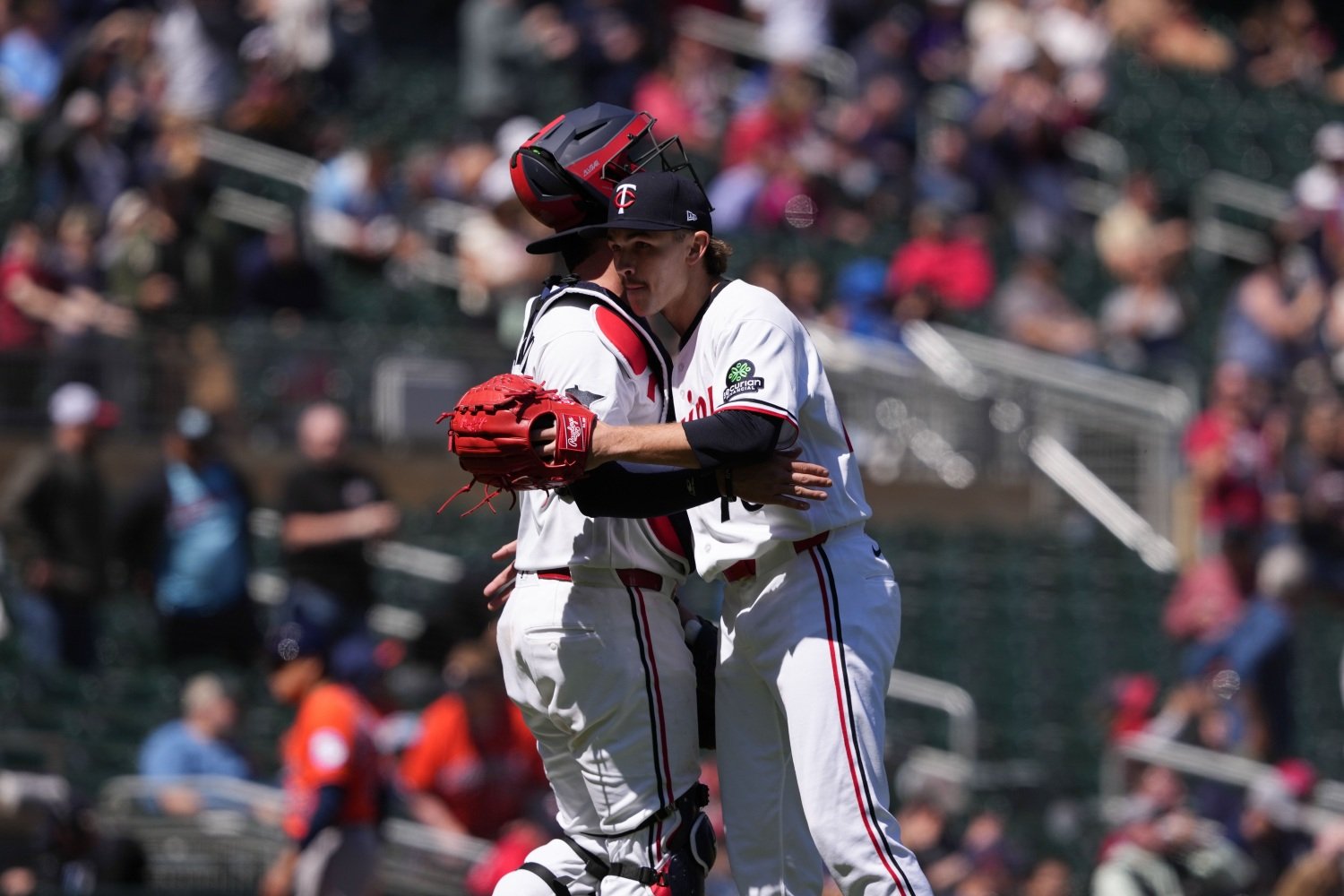 By no means have the 2026 Twins gotten lucky. In fact, they can't catch a break. Their run differential (230 runs scored, 231 allowed) implies a 25-25 record, but they're 23-27. They lost their ace to season-ending elbow surgery on the first day of full-squad workouts in the spring, and their in loco Pablosis ace, Joe Ryan, has had multiple disruptions to his preparation and performance. Their star center fielder went off to international duty and found himself benched, slowing his start to the season. They had two strong breakout candidates in their rotation for the first month, but both are currently on the injured list. Now, their primary catcher is shelved for weeks by a broken bone in his hand. Their top two prospects got hurt in Triple-A. Given all that (and especially given the aforementioned 23-27 record), though, things feel oddly hopeful. The Twins are 5.5 games behind the Guardians for first place in the AL Central, but they've already proved they can hang with that team, beating them twice in three games at Progressive Field earlier this month. They're only 1.5 games out of playoff position. According to FanGraphs, they have a 23.8% chance to make the playoffs—down from their highest point during their early-season hot streak, but right in the same range they've been in for the last four weeks or so. While neither Matt Wallner nor Royce Lewis left the team much choice but to demote them to Triple-A, this situation made that decision both easier and more urgent. Ditto for their replacement of Simeon Woods Richardson in the starting rotation. Because of what now seem to be real problems—and not just slow starts—for the Royals, Tigers, Red Sox, Orioles, Mariners, Astros and Blue Jays, the door to the playoffs remains open to this team. To give themselves a chance to push through it, the team needed to make changes. Here's a position-by-position breakdown of all 30 teams' wins above average, courtesy of Baseball Reference. The Twins' totals are highlighted. Rk Total All P SP RP Non-P C 1B 2B 3B SS LF CF RF OF (All) DH PH 1 Atlanta Braves9.5 ATL4.8 ATL3.9 SDP1.4 LAD6.3 BAL0.9 ATL1.9 STL1.7 LAD1.8 KCR2.6 SEA1.5 LAD2.2 STL2.1 BOS3.2 PHI1.0 ATL0.2 2 Los Angeles Dodgers9.3 NYY4.3 MIL3.8 PHI1.2 CHC5.8 CHC0.7 ATH1.3 MIL1.7 CHW1.2 MIA1.7 NYY1.3 CHC1.5 BOS1.8 CHC2.7 LAD1.0 LAD0.2 3 New York Yankees7.3 PHI3.4 NYY3.6 ATL0.9 ATL4.7 ATH0.7 BOS1.1 PIT1.4 CLE1.2 CIN1.4 DET0.9 LAA1.1 ARI1.8 NYY2.7 HOU0.9 CHC0.1 4 Milwaukee Brewers3.5 MIL3.4 TBR2.5 COL0.8 BOS3.6 MIN 0.6 NYY1.1 MIA1.3 ARI1.0 NYY1.3 CHC0.6 BOS1.1 NYY1.4 LAD2.6 TBR0.9 BOS0.0 5 Cleveland Guardians3.4 LAD3.0 CLE2.5 NYY0.7 NYY3.0 DET0.5 CHW1.0 CHC1.3 TEX0.7 WSN1.0 BAL0.5 MIN 0.9 WSN0.8 SEA1.9 ATL0.9 WSN0.0 6 Chicago Cubs3.0 CLE2.7 CHW2.4 LAD0.6 STL2.5 MIL0.3 HOU0.9 SEA1.3 KCR0.5 CLE0.9 TBR0.3 ATL0.8 TEX0.7 TEX1.5 CLE0.3 NYY0.0 7 Tampa Bay Rays1.7 ATH2.6 ATH2.4 ATH0.2 TEX2.2 SDP0.3 STL0.6 SFG1.1 HOU0.4 DET0.7 MIN 0.3 TOR0.7 CHC0.6 WSN1.3 CHC0.3 TBR0.0 8 Texas Rangers1.7 DET1.8 MIN 2.4 MIA0.2 ARI1.7 ATL0.3 PIT0.5 ATL1.1 SFG0.4 PIT0.7 BOS0.3 TEX0.6 LAD0.3 ARI1.1 MIL0.2 MIN -0.1 9 Athletics1.7 CHW1.6 PHI2.2 DET0.2 TBR1.1 LAD0.1 MIL0.4 CHW0.5 TBR0.3 TBR0.7 WSN0.3 SEA0.4 ATL0.2 ATL0.9 STL0.2 PIT-0.1 10 Chicago White Sox1.6 TOR1.6 LAD2.2 SEA0.2 HOU0.9 BOS0.1 SDP0.3 CLE0.3 CHC0.1 LAA0.5 TEX0.2 WSN0.2 CLE0.1 STL0.8 BOS0.1 ARI-0.1 11 Boston Red Sox1.1 SDP1.6 TOR1.8 CLE0.1 WSN0.7 TEX-0.1 TEX0.3 LAD0.3 TOR0.1 ARI0.5 LAD0.1 BAL0.1 KCR0.1 CLE-0.3 BAL0.1 HOU-0.1 12 Seattle Mariners0.7 MIN 0.8 DET1.6 SFG0.0 SEA0.7 KCR-0.1 CHC0.3 LAA0.2 DET0.0 HOU0.5 CIN0.1 PIT0.0 SEA0.0 TOR-0.3 NYY0.0 TEX-0.1 13 Philadelphia Phillies0.5 TBR0.6 PIT1.3 TEX-0.1 CLE0.7 HOU-0.2 BAL0.2 TBR0.2 SEA-0.1 CHW0.3 PHI-0.1 NYY0.0 TBR-0.1 BAL-0.4 WSN-0.1 KCR-0.2 14 Arizona Diamondbacks0.3 COL0.1 KCR0.7 TOR-0.1 PIT0.5 STL-0.2 CIN0.2 ARI0.2 PIT-0.1 CHC0.3 ATL-0.1 ARI-0.1 PIT-0.2 MIN -0.4 CIN-0.1 CIN-0.3 15 Kansas City Royals0.1 SEA0.0 CIN0.7 ARI-0.3 KCR0.4 COL-0.3 LAD0.2 TEX0.0 BOS-0.2 TEX0.2 COL-0.2 CHW-0.1 HOU-0.3 PIT-0.4 NYM-0.1 SDP-0.3 16 Pittsburgh Pirates0.1 KCR-0.3 SDP0.2 CHC-0.4 MIL0.1 PIT-0.3 PHI0.2 BAL0.0 ATL-0.2 SDP0.2 MIL-0.2 NYM-0.1 NYM-0.4 TBR-0.5 COL-0.1 MIA-0.3 17 St. Louis Cardinals-0.3 MIA-0.3 SEA-0.2 MIL-0.4 CHW0.0 MIA-0.4 MIN 0.1 ATH-0.1 LAA-0.3 STL0.2 PIT-0.2 CLE-0.1 CHW-0.4 KCR-0.6 ATH-0.2 CHW-0.3 18 Minnesota Twins -1.1 PIT-0.4 LAA-0.2 NYM-0.4 BAL-0.8 ARI-0.4 TBR0.0 WSN-0.1 COL-0.3 LAD0.1 CHW-0.2 KCR-0.1 ATH-0.4 CHW-0.7 TEX-0.3 ATH-0.3 19 Detroit Tigers-1.4 TEX-0.5 TEX-0.4 BOS-0.5 ATH-0.9 NYM-0.4 WSN-0.2 BOS-0.2 ATH-0.4 MIL0.0 NYM-0.3 HOU-0.2 TOR-0.5 NYM-0.8 DET-0.3 SEA-0.3 20 Toronto Blue Jays-1.6 NYM-0.9 STL-0.4 CHW-0.7 CIN-1.6 SFG-0.4 ARI-0.2 DET-0.2 STL-0.4 SFG-0.1 CLE-0.3 SDP-0.3 LAA-0.6 LAA-0.8 SEA-0.4 BAL-0.3 21 San Diego Padres-2.1 ARI-1.4 MIA-0.5 KCR-1.0 MIN -1.9 TOR-0.5 TOR-0.2 NYY-0.3 WSN-0.5 ATH-0.1 SDP-0.4 MIL-0.3 COL-0.7 HOU-0.9 LAA-0.4 LAA-0.3 22 Miami Marlins-2.4 CIN-1.4 NYM-0.6 WSN-1.0 LAA-1.9 SEA-0.5 COL-0.2 CIN-0.4 CIN-0.6 TOR-0.2 HOU-0.4 PHI-0.3 SFG-0.8 CIN-1.3 ARI-0.4 SFG-0.4 23 Cincinnati Reds-3.0 SFG-2.4 COL-0.7 MIN -1.6 MIA-2.1 CIN-0.5 LAA-0.3 KCR-0.4 PHI-0.6 NYM-0.3 STL-0.4 MIA-0.3 MIL-0.9 PHI-1.3 SDP-0.4 NYM-0.4 24 Washington Nationals-3.2 BOS-2.5 ARI-1.0 PIT-1.7 SFG-2.4 TBR-0.5 MIA-0.4 MIN -0.5 NYM-0.7 BAL-0.3 SFG-0.5 CIN-0.5 CIN-0.9 MIL-1.4 SFG-0.4 MIL-0.4 25 Houston Astros-3.8 CHC-2.8 HOU-1.7 TBR-1.9 PHI-2.9 LAA-0.5 NYM-0.5 TOR-0.5 MIL-0.7 PHI-0.3 ATH-0.5 COL-0.6 PHI-0.9 COL-1.5 MIN -0.5 CLE-0.4 26 New York Mets-4.8 STL-2.8 BOS-2.0 BAL-2.0 DET-3.2 WSN-0.7 SFG-0.6 HOU-0.6 MIN -0.7 ATL-0.4 TOR-0.5 SFG-0.7 BAL-1.0 DET-1.7 KCR-0.5 PHI-0.4 27 San Francisco Giants-4.8 LAA-3.3 CHC-2.4 CIN-2.0 TOR-3.2 CLE-0.7 CLE-0.6 PHI-0.7 SDP-0.8 SEA-0.4 ARI-0.6 TBR-0.7 SDP-1.2 ATH-1.8 MIA-0.6 STL-0.4 28 Colorado Rockies-5.0 WSN-3.9 SFG-2.4 STL-2.4 SDP-3.7 PHI-0.8 SEA-0.8 NYM-0.7 NYY-0.9 MIN -0.4 KCR-0.6 STL-0.9 MIA-1.2 SDP-1.9 CHW-0.9 TOR-0.6 29 Los Angeles Angels-5.2 HOU-4.7 BAL-2.8 HOU-3.0 NYM-3.9 NYY-0.9 KCR-0.9 COL-1.0 BAL-1.0 BOS-0.5 MIA-0.9 ATH-0.9 DET-1.5 SFG-2.0 TOR-1.0 COL-0.7 30 Baltimore Orioles-5.7 BAL-4.9 WSN-2.9 LAA-3.2 COL-5.1 CHW-1.1 DET-1.4 SDP-1.1 MIA-1.0 COL-1.0 LAA-1.3 DET-1.1 MIN -1.6 MIA-2.4 PIT-1.2 DET-0.8 Coming into this season, any hopes for this club to contend were anchored to their starting rotation being good. That hasn't happened in the way fans or the front office hoped and expected, in that Pablo López is out for the year and both Mick Abel and Taj Bradley have been sidelined, but lo, the unit has been a strength, after all. Bailey Ober is settling in as an obviously usable (though, just as obviously, vulnerable) keep-you-in-the-game guy. Woods Richardson was a disaster, but Zebby Matthews has looked just as good as Woods Richardson did bad. Bradley is on the cusp of returning to a rotation that now includes Connor Prielipp as a full and semi-permanent member, with fellow hard-throwing lefty Kendry Rojas as a more provisional piece. With Woods Richardson out of that picture, the team has come round to enjoying both ample upside and enviable depth in their starting corps, by however circuitous a route. Ryan, Ober, Bradley, Prielipp, Matthews, and whichever of Abel and Rojas is the right mix of available and effective can be the starting pitching depth chart of a playoff team. The (relatively) proactive fix of swapping Woods Richardson out for Matthews is echoed throughout the roster, where the team is (as expected) playing an even harder game of Whack-a-Mole. They entered the season with an utterly underpowered bullpen, and that unit still hasn't been good, so far. However, they're starting to cobble together a group that can be good, in the medium term. Already, they've churned through several external additions (Garrett Acton, Luis García, and Yoendrys Gómez), but more telling is what they've done with their internal options. Gone is Justin Topa, a roster casualty whom the team also couldn't trust anymore. Into the mix are Woods Richardson (who has a real chance to be useful in a long relief role, if deployed correctly) and Andrew Morris, who has unceremoniously claimed the mantle of relief ace. Rojas might yet spend some time in the pen, too, as the rotation gets healthier and stabilizes. No team has gotten worse performances from its right fielders than the Twins, thanks to Wallner's all-around atrociousness, but he's now out of the frame. Minnesota is 26th in wins above average from third basemen, but now, Lewis is out of the way, too. The replacements for those players won't put the team in the top echelon at either spot, but they have a real chance to be better than Lewis and Wallner. The outline of a decent team is coming into focus. That invites the question: What's next? What does the team need to do to keep improving, so they can take advantage of this unexpected opportunity to stay relevant all summer? Firstly, as the chart shows, things still aren't good at shortstop. Brooks Lee has responded better to the influence of new hitting coach Keith Beauregard than his fellow last-wave top prospects, Wallner and Lewis, but he's still only batting .248/.299/.388. He's doing a slightly better job of making contact against breaking and offspeed stuff, but that's the only notable change in his profile. Nor has he become a viable defensive shortstop. Lee almost certainly could play a solid third base, and his bat is playable. In the medium term, then, the move is obvious: call up Kaelen Culpepper, test him at short, and slide Lee over. That will be risky at any point this year, though, and Culpepper isn't quite ready for it yet. Right now, the team will stick with Lee at that position, and the first change we're likely to see will be a slow shift toward more matchup play. Tristan Gray, Orlando Arcia and Ryan Kreidler form an underwhelming but extremely intriguing collection of role players on the infield. Gray brings a left-handed bat, with enough bat speed to be dangerous. Kreidler looked like he would never hit in the big leagues, but in a tiny sample this year, he's hitting in the big leagues. Arcia brings the most experience defensively, and while he'd be no more than a minor upgrade on Lee's glove at short, he would be a big step up from Luke Keaschall's glove work at second. That brings us to Keaschall, who has belatedly pulled his OPS to the right side of .600. He's just not going to work as a defensive second baseman, though any real move to another position has to wait, right now. He can hit enough to outpace his defensive woes, though, and the team now has several guys on the roster whom Derek Shelton can use to mitigate the damage Keaschall can do in the field. It won't be easy for the team to sustain the momentum they've built by winning three of their last four series. Ryan Jeffers's absence looms large. There are guys on this roster overperforming, and guys already coming back to Earth after hot starts. (Witness Trevor Larnach's .217/.280/.326 batting line in May.) They have a 10-game road trip to survive, beginning Friday, in which they'll play the Red Sox, White Sox and Pirates. Don't forget, either, that this team is just 23-27. They haven't exactly surged. They've just maintained a decent pace longer than expected. However, the chance before them is real. By staying afloat into (at least) the final third of May, they've checked the box Tom Pohlad put on their to-do list over the winter, when he made the then-improbable claim that the team would contend this year. Pohlad said last month that he would supplement the roster via trade this summer, if new top executive Jeremy Zoll came to him with a chance to do so. Now, that feels less like a pipe dream and more like a possibility. By winning just enough to stay alive, Zoll, Shelton and the team have bought themselves enough time to fix some of their most glaring flaws.
- 95 comments
-
- 8
-
-
- andrew morris
- simeon woods richardson
- (and 4 more)
-
Image courtesy of © Jordan Johnson-Imagn Images By no means have the 2026 Twins gotten lucky. In fact, they can't catch a break. Their run differential (230 runs scored, 231 allowed) implies a 25-25 record, but they're 23-27. They lost their ace to season-ending elbow surgery on the first day of full-squad workouts in the spring, and their in loco Pablosis ace, Joe Ryan, has had multiple disruptions to his preparation and performance. Their star center fielder went off to international duty and found himself benched, slowing his start to the season. They had two strong breakout candidates in their rotation for the first month, but both are currently on the injured list. Now, their primary catcher is shelved for weeks by a broken bone in his hand. Their top two prospects got hurt in Triple-A. Given all that (and especially given the aforementioned 23-27 record), though, things feel oddly hopeful. The Twins are 5.5 games behind the Guardians for first place in the AL Central, but they've already proved they can hang with that team, beating them twice in three games at Progressive Field earlier this month. They're only 1.5 games out of playoff position. According to FanGraphs, they have a 23.8% chance to make the playoffs—down from their highest point during their early-season hot streak, but right in the same range they've been in for the last four weeks or so. While neither Matt Wallner nor Royce Lewis left the team much choice but to demote them to Triple-A, this situation made that decision both easier and more urgent. Ditto for their replacement of Simeon Woods Richardson in the starting rotation. Because of what now seem to be real problems—and not just slow starts—for the Royals, Tigers, Red Sox, Orioles, Mariners, Astros and Blue Jays, the door to the playoffs remains open to this team. To give themselves a chance to push through it, the team needed to make changes. Here's a position-by-position breakdown of all 30 teams' wins above average, courtesy of Baseball Reference. The Twins' totals are highlighted. Rk Total All P SP RP Non-P C 1B 2B 3B SS LF CF RF OF (All) DH PH 1 Atlanta Braves9.5 ATL4.8 ATL3.9 SDP1.4 LAD6.3 BAL0.9 ATL1.9 STL1.7 LAD1.8 KCR2.6 SEA1.5 LAD2.2 STL2.1 BOS3.2 PHI1.0 ATL0.2 2 Los Angeles Dodgers9.3 NYY4.3 MIL3.8 PHI1.2 CHC5.8 CHC0.7 ATH1.3 MIL1.7 CHW1.2 MIA1.7 NYY1.3 CHC1.5 BOS1.8 CHC2.7 LAD1.0 LAD0.2 3 New York Yankees7.3 PHI3.4 NYY3.6 ATL0.9 ATL4.7 ATH0.7 BOS1.1 PIT1.4 CLE1.2 CIN1.4 DET0.9 LAA1.1 ARI1.8 NYY2.7 HOU0.9 CHC0.1 4 Milwaukee Brewers3.5 MIL3.4 TBR2.5 COL0.8 BOS3.6 MIN 0.6 NYY1.1 MIA1.3 ARI1.0 NYY1.3 CHC0.6 BOS1.1 NYY1.4 LAD2.6 TBR0.9 BOS0.0 5 Cleveland Guardians3.4 LAD3.0 CLE2.5 NYY0.7 NYY3.0 DET0.5 CHW1.0 CHC1.3 TEX0.7 WSN1.0 BAL0.5 MIN 0.9 WSN0.8 SEA1.9 ATL0.9 WSN0.0 6 Chicago Cubs3.0 CLE2.7 CHW2.4 LAD0.6 STL2.5 MIL0.3 HOU0.9 SEA1.3 KCR0.5 CLE0.9 TBR0.3 ATL0.8 TEX0.7 TEX1.5 CLE0.3 NYY0.0 7 Tampa Bay Rays1.7 ATH2.6 ATH2.4 ATH0.2 TEX2.2 SDP0.3 STL0.6 SFG1.1 HOU0.4 DET0.7 MIN 0.3 TOR0.7 CHC0.6 WSN1.3 CHC0.3 TBR0.0 8 Texas Rangers1.7 DET1.8 MIN 2.4 MIA0.2 ARI1.7 ATL0.3 PIT0.5 ATL1.1 SFG0.4 PIT0.7 BOS0.3 TEX0.6 LAD0.3 ARI1.1 MIL0.2 MIN -0.1 9 Athletics1.7 CHW1.6 PHI2.2 DET0.2 TBR1.1 LAD0.1 MIL0.4 CHW0.5 TBR0.3 TBR0.7 WSN0.3 SEA0.4 ATL0.2 ATL0.9 STL0.2 PIT-0.1 10 Chicago White Sox1.6 TOR1.6 LAD2.2 SEA0.2 HOU0.9 BOS0.1 SDP0.3 CLE0.3 CHC0.1 LAA0.5 TEX0.2 WSN0.2 CLE0.1 STL0.8 BOS0.1 ARI-0.1 11 Boston Red Sox1.1 SDP1.6 TOR1.8 CLE0.1 WSN0.7 TEX-0.1 TEX0.3 LAD0.3 TOR0.1 ARI0.5 LAD0.1 BAL0.1 KCR0.1 CLE-0.3 BAL0.1 HOU-0.1 12 Seattle Mariners0.7 MIN 0.8 DET1.6 SFG0.0 SEA0.7 KCR-0.1 CHC0.3 LAA0.2 DET0.0 HOU0.5 CIN0.1 PIT0.0 SEA0.0 TOR-0.3 NYY0.0 TEX-0.1 13 Philadelphia Phillies0.5 TBR0.6 PIT1.3 TEX-0.1 CLE0.7 HOU-0.2 BAL0.2 TBR0.2 SEA-0.1 CHW0.3 PHI-0.1 NYY0.0 TBR-0.1 BAL-0.4 WSN-0.1 KCR-0.2 14 Arizona Diamondbacks0.3 COL0.1 KCR0.7 TOR-0.1 PIT0.5 STL-0.2 CIN0.2 ARI0.2 PIT-0.1 CHC0.3 ATL-0.1 ARI-0.1 PIT-0.2 MIN -0.4 CIN-0.1 CIN-0.3 15 Kansas City Royals0.1 SEA0.0 CIN0.7 ARI-0.3 KCR0.4 COL-0.3 LAD0.2 TEX0.0 BOS-0.2 TEX0.2 COL-0.2 CHW-0.1 HOU-0.3 PIT-0.4 NYM-0.1 SDP-0.3 16 Pittsburgh Pirates0.1 KCR-0.3 SDP0.2 CHC-0.4 MIL0.1 PIT-0.3 PHI0.2 BAL0.0 ATL-0.2 SDP0.2 MIL-0.2 NYM-0.1 NYM-0.4 TBR-0.5 COL-0.1 MIA-0.3 17 St. Louis Cardinals-0.3 MIA-0.3 SEA-0.2 MIL-0.4 CHW0.0 MIA-0.4 MIN 0.1 ATH-0.1 LAA-0.3 STL0.2 PIT-0.2 CLE-0.1 CHW-0.4 KCR-0.6 ATH-0.2 CHW-0.3 18 Minnesota Twins -1.1 PIT-0.4 LAA-0.2 NYM-0.4 BAL-0.8 ARI-0.4 TBR0.0 WSN-0.1 COL-0.3 LAD0.1 CHW-0.2 KCR-0.1 ATH-0.4 CHW-0.7 TEX-0.3 ATH-0.3 19 Detroit Tigers-1.4 TEX-0.5 TEX-0.4 BOS-0.5 ATH-0.9 NYM-0.4 WSN-0.2 BOS-0.2 ATH-0.4 MIL0.0 NYM-0.3 HOU-0.2 TOR-0.5 NYM-0.8 DET-0.3 SEA-0.3 20 Toronto Blue Jays-1.6 NYM-0.9 STL-0.4 CHW-0.7 CIN-1.6 SFG-0.4 ARI-0.2 DET-0.2 STL-0.4 SFG-0.1 CLE-0.3 SDP-0.3 LAA-0.6 LAA-0.8 SEA-0.4 BAL-0.3 21 San Diego Padres-2.1 ARI-1.4 MIA-0.5 KCR-1.0 MIN -1.9 TOR-0.5 TOR-0.2 NYY-0.3 WSN-0.5 ATH-0.1 SDP-0.4 MIL-0.3 COL-0.7 HOU-0.9 LAA-0.4 LAA-0.3 22 Miami Marlins-2.4 CIN-1.4 NYM-0.6 WSN-1.0 LAA-1.9 SEA-0.5 COL-0.2 CIN-0.4 CIN-0.6 TOR-0.2 HOU-0.4 PHI-0.3 SFG-0.8 CIN-1.3 ARI-0.4 SFG-0.4 23 Cincinnati Reds-3.0 SFG-2.4 COL-0.7 MIN -1.6 MIA-2.1 CIN-0.5 LAA-0.3 KCR-0.4 PHI-0.6 NYM-0.3 STL-0.4 MIA-0.3 MIL-0.9 PHI-1.3 SDP-0.4 NYM-0.4 24 Washington Nationals-3.2 BOS-2.5 ARI-1.0 PIT-1.7 SFG-2.4 TBR-0.5 MIA-0.4 MIN -0.5 NYM-0.7 BAL-0.3 SFG-0.5 CIN-0.5 CIN-0.9 MIL-1.4 SFG-0.4 MIL-0.4 25 Houston Astros-3.8 CHC-2.8 HOU-1.7 TBR-1.9 PHI-2.9 LAA-0.5 NYM-0.5 TOR-0.5 MIL-0.7 PHI-0.3 ATH-0.5 COL-0.6 PHI-0.9 COL-1.5 MIN -0.5 CLE-0.4 26 New York Mets-4.8 STL-2.8 BOS-2.0 BAL-2.0 DET-3.2 WSN-0.7 SFG-0.6 HOU-0.6 MIN -0.7 ATL-0.4 TOR-0.5 SFG-0.7 BAL-1.0 DET-1.7 KCR-0.5 PHI-0.4 27 San Francisco Giants-4.8 LAA-3.3 CHC-2.4 CIN-2.0 TOR-3.2 CLE-0.7 CLE-0.6 PHI-0.7 SDP-0.8 SEA-0.4 ARI-0.6 TBR-0.7 SDP-1.2 ATH-1.8 MIA-0.6 STL-0.4 28 Colorado Rockies-5.0 WSN-3.9 SFG-2.4 STL-2.4 SDP-3.7 PHI-0.8 SEA-0.8 NYM-0.7 NYY-0.9 MIN -0.4 KCR-0.6 STL-0.9 MIA-1.2 SDP-1.9 CHW-0.9 TOR-0.6 29 Los Angeles Angels-5.2 HOU-4.7 BAL-2.8 HOU-3.0 NYM-3.9 NYY-0.9 KCR-0.9 COL-1.0 BAL-1.0 BOS-0.5 MIA-0.9 ATH-0.9 DET-1.5 SFG-2.0 TOR-1.0 COL-0.7 30 Baltimore Orioles-5.7 BAL-4.9 WSN-2.9 LAA-3.2 COL-5.1 CHW-1.1 DET-1.4 SDP-1.1 MIA-1.0 COL-1.0 LAA-1.3 DET-1.1 MIN -1.6 MIA-2.4 PIT-1.2 DET-0.8 Coming into this season, any hopes for this club to contend were anchored to their starting rotation being good. That hasn't happened in the way fans or the front office hoped and expected, in that Pablo López is out for the year and both Mick Abel and Taj Bradley have been sidelined, but lo, the unit has been a strength, after all. Bailey Ober is settling in as an obviously usable (though, just as obviously, vulnerable) keep-you-in-the-game guy. Woods Richardson was a disaster, but Zebby Matthews has looked just as good as Woods Richardson did bad. Bradley is on the cusp of returning to a rotation that now includes Connor Prielipp as a full and semi-permanent member, with fellow hard-throwing lefty Kendry Rojas as a more provisional piece. With Woods Richardson out of that picture, the team has come round to enjoying both ample upside and enviable depth in their starting corps, by however circuitous a route. Ryan, Ober, Bradley, Prielipp, Matthews, and whichever of Abel and Rojas is the right mix of available and effective can be the starting pitching depth chart of a playoff team. The (relatively) proactive fix of swapping Woods Richardson out for Matthews is echoed throughout the roster, where the team is (as expected) playing an even harder game of Whack-a-Mole. They entered the season with an utterly underpowered bullpen, and that unit still hasn't been good, so far. However, they're starting to cobble together a group that can be good, in the medium term. Already, they've churned through several external additions (Garrett Acton, Luis García, and Yoendrys Gómez), but more telling is what they've done with their internal options. Gone is Justin Topa, a roster casualty whom the team also couldn't trust anymore. Into the mix are Woods Richardson (who has a real chance to be useful in a long relief role, if deployed correctly) and Andrew Morris, who has unceremoniously claimed the mantle of relief ace. Rojas might yet spend some time in the pen, too, as the rotation gets healthier and stabilizes. No team has gotten worse performances from its right fielders than the Twins, thanks to Wallner's all-around atrociousness, but he's now out of the frame. Minnesota is 26th in wins above average from third basemen, but now, Lewis is out of the way, too. The replacements for those players won't put the team in the top echelon at either spot, but they have a real chance to be better than Lewis and Wallner. The outline of a decent team is coming into focus. That invites the question: What's next? What does the team need to do to keep improving, so they can take advantage of this unexpected opportunity to stay relevant all summer? Firstly, as the chart shows, things still aren't good at shortstop. Brooks Lee has responded better to the influence of new hitting coach Keith Beauregard than his fellow last-wave top prospects, Wallner and Lewis, but he's still only batting .248/.299/.388. He's doing a slightly better job of making contact against breaking and offspeed stuff, but that's the only notable change in his profile. Nor has he become a viable defensive shortstop. Lee almost certainly could play a solid third base, and his bat is playable. In the medium term, then, the move is obvious: call up Kaelen Culpepper, test him at short, and slide Lee over. That will be risky at any point this year, though, and Culpepper isn't quite ready for it yet. Right now, the team will stick with Lee at that position, and the first change we're likely to see will be a slow shift toward more matchup play. Tristan Gray, Orlando Arcia and Ryan Kreidler form an underwhelming but extremely intriguing collection of role players on the infield. Gray brings a left-handed bat, with enough bat speed to be dangerous. Kreidler looked like he would never hit in the big leagues, but in a tiny sample this year, he's hitting in the big leagues. Arcia brings the most experience defensively, and while he'd be no more than a minor upgrade on Lee's glove at short, he would be a big step up from Luke Keaschall's glove work at second. That brings us to Keaschall, who has belatedly pulled his OPS to the right side of .600. He's just not going to work as a defensive second baseman, though any real move to another position has to wait, right now. He can hit enough to outpace his defensive woes, though, and the team now has several guys on the roster whom Derek Shelton can use to mitigate the damage Keaschall can do in the field. It won't be easy for the team to sustain the momentum they've built by winning three of their last four series. Ryan Jeffers's absence looms large. There are guys on this roster overperforming, and guys already coming back to Earth after hot starts. (Witness Trevor Larnach's .217/.280/.326 batting line in May.) They have a 10-game road trip to survive, beginning Friday, in which they'll play the Red Sox, White Sox and Pirates. Don't forget, either, that this team is just 23-27. They haven't exactly surged. They've just maintained a decent pace longer than expected. However, the chance before them is real. By staying afloat into (at least) the final third of May, they've checked the box Tom Pohlad put on their to-do list over the winter, when he made the then-improbable claim that the team would contend this year. Pohlad said last month that he would supplement the roster via trade this summer, if new top executive Jeremy Zoll came to him with a chance to do so. Now, that feels less like a pipe dream and more like a possibility. By winning just enough to stay alive, Zoll, Shelton and the team have bought themselves enough time to fix some of their most glaring flaws. View full article
-
What else are you hoping for??
-
Feels like one of those names that shows up a lot in the Boston phonebook, so sure! I mean if you mean AROLDIS, then no.
- 180 replies
-
- 4
-
-

-
- orlando arcia
- royce lewis
- (and 2 more)
-
Image courtesy of © Matt Krohn-Imagn Images Farming out outfielder Matt Wallner was never going to be the last of the Twins' major moves, as the team shakes up its roster and tries to accelerate its move toward a new core and away from the bitter failures of the last season and a half. Monday night saw Kendry Rojas take (at least for now) Simeon Woods Richardson's place in the starting rotation. On Tuesday, the club optioned Royce Lewis to the minors and designated reliever Justin Topa for assignment. Dan Hayes of The Athletic broke the news on Twitter. Topa, 35, fell off the ledge after clinging to it all season, never quite able to clamber to a safer perch. He made 23 appearances and gutted out a pair of saves, but he only made it through 19 innings and finishes his Twins tenure with an 8.05 ERA. He struck out 12 and walked 11, and a wobbly showing in which he let the Astros back into the game Monday night was the final straw. With Lewis, the story is much longer and more interesting, but much more of it has already been told. He can't get on time right now. His winter work with a private hitting coach has borne no fruit, making him less unorthodox but no more effective than he was in his lost 2025 campaign. When his at-bats remained uncompetitive after a two-day benching to reset and refocus, the writing was on the wall, just as it was for Wallner earlier this month. Replacing Lewis on the roster will be veteran utility infielder Orlando Arcia, who signed a minor-league deal with the team in the spring and stayed with the club despite not making the 26-man roster in March. Arcia, 31, offers steady (though no longer rangy) defense for an infield that needed help on that front. He's also hit very well for Triple-A St. Paul this season, with a .318/.376/.556 line in over 160 plate appearances. Arcia and Tristan Gray are expected to serve as a modified platoon at third base for the short term, according to a source briefed on the team's thinking, though Derek Shelton will have some discretion in which way to tip the greater share of playing time and whether to include Ryan Kreidler in that rotation. For the Twins, it's still worth hoping for and trying to engender a Lewis rebound, but that can no longer be Plan A. Like Wallner, Lewis heads to the minors without a guarantee of a return trip, and with the team's plans rapidly shifting in another direction. For now, top infield prospect Kaelen Culpepper will remain with the Saints, but he's knocking on the door to the majors. An infield that includes (in whichever alignment) Brooks Lee and Culpepper is now more likely to be the team's medium-term plan than is anything that involves Lewis. Cutting Topa creates a spot for Arcia on the 40-man roster, but there might be more shuffling ahead, as the team awaits more information on the injured wrist of catcher Ryan Jeffers. With Jeffers in limbo, Gray set to welcome a new child to his family and two veteran relievers (Matt Bowman and John Brebbia) eligible to become free agents Tuesday if not added to the roster. there are still moving pieces here. If the team wants to call up either Bowman or Brebbia, they'd need to create a second opening on the 40-man. A third spot could be needed for catcher Alex Jackson, should Jeffers land on the IL. It's even possible Lewis will go to Ft. Myers for a more complete reset, rather than to St. Paul. For now, though, it's clear that another phase of a longer-running shakeup is underway. This piece will be updated as the details of the roster moves are announced. UPDATE: Lewis will go to Triple-A, sources confirmed to Twins Daily. Hayes reported the same. As we reported above, the spot needed for Arcia will be the one taken from Topa. What other shifting takes place, however, remains to be seen. Unless the team places Jeffers on the IL, they can't recall Kody Funderburk, who hasn't been on optional assignment long enough yet to be reinstated for any reason other than injury. UPDATE 2: The full picture is now in view. Travis Adams will take Topa's spot in the bullpen, while once-promising pickup Garrett Acton will move to the 60-day injured list to make more room on the 40-man roster. Jeffers, indeed, hits the shelf, and Jackson will come up to serve as the secondary catcher. The last is a blow to the team's dwindling hopes for 2026, because Jeffers's injury turns out not to be a sprained wrist, but rather, a dreaded hamate bone fracture. It's likely that he'll be out until at least the latter part of June, during which time the Twins will have to make do with Victor Caratini and Jackson behind the plate. View full article
- 180 replies
-
- 1
-
-
- orlando arcia
- royce lewis
- (and 2 more)
-
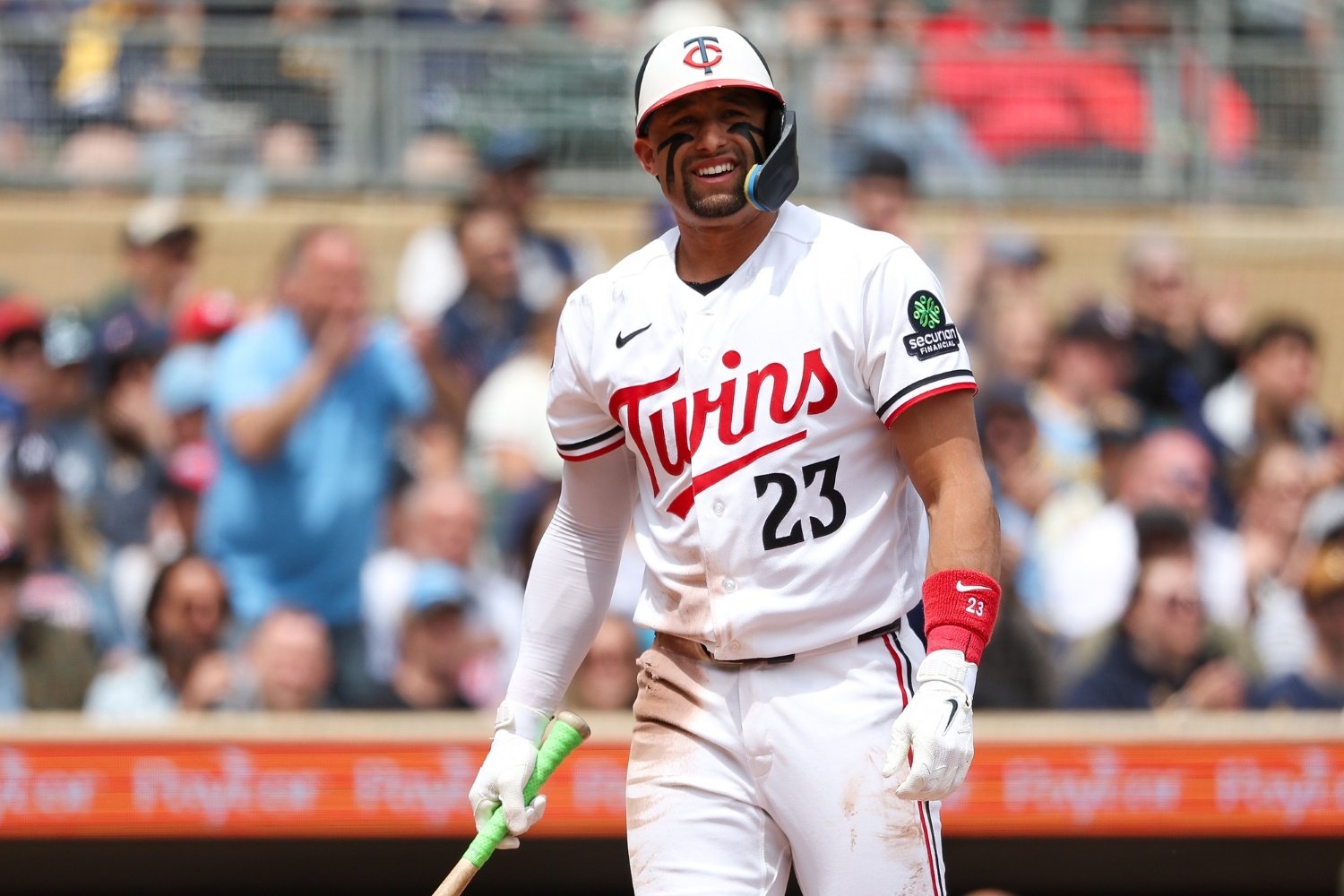 Farming out outfielder Matt Wallner was never going to be the last of the Twins' major moves, as the team shakes up its roster and tries to accelerate its move toward a new core and away from the bitter failures of the last season and a half. Monday night saw Kendry Rojas take (at least for now) Simeon Woods Richardson's place in the starting rotation. On Tuesday, the club optioned Royce Lewis to the minors and designated reliever Justin Topa for assignment. Dan Hayes of The Athletic broke the news on Twitter. Topa, 35, fell off the ledge after clinging to it all season, never quite able to clamber to a safer perch. He made 23 appearances and gutted out a pair of saves, but he only made it through 19 innings and finishes his Twins tenure with an 8.05 ERA. He struck out 12 and walked 11, and a wobbly showing in which he let the Astros back into the game Monday night was the final straw. With Lewis, the story is much longer and more interesting, but much more of it has already been told. He can't get on time right now. His winter work with a private hitting coach has borne no fruit, making him less unorthodox but no more effective than he was in his lost 2025 campaign. When his at-bats remained uncompetitive after a two-day benching to reset and refocus, the writing was on the wall, just as it was for Wallner earlier this month. Replacing Lewis on the roster will be veteran utility infielder Orlando Arcia, who signed a minor-league deal with the team in the spring and stayed with the club despite not making the 26-man roster in March. Arcia, 31, offers steady (though no longer rangy) defense for an infield that needed help on that front. He's also hit very well for Triple-A St. Paul this season, with a .318/.376/.556 line in over 160 plate appearances. Arcia and Tristan Gray are expected to serve as a modified platoon at third base for the short term, according to a source briefed on the team's thinking, though Derek Shelton will have some discretion in which way to tip the greater share of playing time and whether to include Ryan Kreidler in that rotation. For the Twins, it's still worth hoping for and trying to engender a Lewis rebound, but that can no longer be Plan A. Like Wallner, Lewis heads to the minors without a guarantee of a return trip, and with the team's plans rapidly shifting in another direction. For now, top infield prospect Kaelen Culpepper will remain with the Saints, but he's knocking on the door to the majors. An infield that includes (in whichever alignment) Brooks Lee and Culpepper is now more likely to be the team's medium-term plan than is anything that involves Lewis. Cutting Topa creates a spot for Arcia on the 40-man roster, but there might be more shuffling ahead, as the team awaits more information on the injured wrist of catcher Ryan Jeffers. With Jeffers in limbo, Gray set to welcome a new child to his family and two veteran relievers (Matt Bowman and John Brebbia) eligible to become free agents Tuesday if not added to the roster. there are still moving pieces here. If the team wants to call up either Bowman or Brebbia, they'd need to create a second opening on the 40-man. A third spot could be needed for catcher Alex Jackson, should Jeffers land on the IL. It's even possible Lewis will go to Ft. Myers for a more complete reset, rather than to St. Paul. For now, though, it's clear that another phase of a longer-running shakeup is underway. This piece will be updated as the details of the roster moves are announced. UPDATE: Lewis will go to Triple-A, sources confirmed to Twins Daily. Hayes reported the same. As we reported above, the spot needed for Arcia will be the one taken from Topa. What other shifting takes place, however, remains to be seen. Unless the team places Jeffers on the IL, they can't recall Kody Funderburk, who hasn't been on optional assignment long enough yet to be reinstated for any reason other than injury. UPDATE 2: The full picture is now in view. Travis Adams will take Topa's spot in the bullpen, while once-promising pickup Garrett Acton will move to the 60-day injured list to make more room on the 40-man roster. Jeffers, indeed, hits the shelf, and Jackson will come up to serve as the secondary catcher. The last is a blow to the team's dwindling hopes for 2026, because Jeffers's injury turns out not to be a sprained wrist, but rather, a dreaded hamate bone fracture. It's likely that he'll be out until at least the latter part of June, during which time the Twins will have to make do with Victor Caratini and Jackson behind the plate.
- 180 comments
-
- 10
-
-

-
- orlando arcia
- royce lewis
- (and 2 more)
-
The big difference there is, Jeffers is a free agent this fall. If he's out for any length, it probably dings his market value, but I don't think it makes it much more likely that the Twins are the team willing to stomach the risks that come with signing a catcher to a multi-year deal when they've never proved they can bear up under a full-time workload, y'know?
- 50 replies
-
- 3
-
-
- ryan jeffers
- josh bell
- (and 2 more)
-
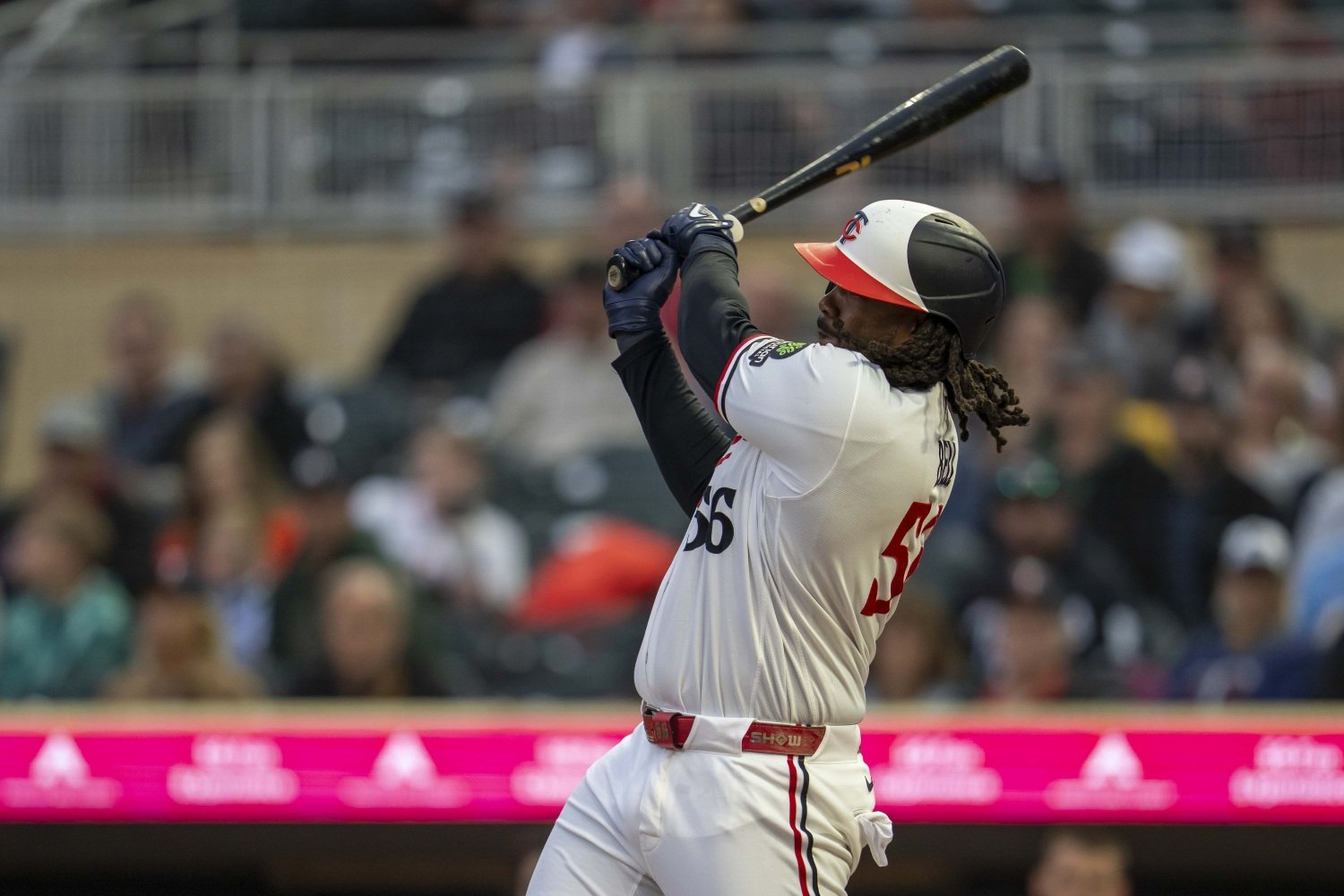 Box Score: Starting Pitcher: Kendry Rojas: 4 IP, 2 H, 0 R, 1 BB, 3 SO - 46 Pitches, 31 Strikes, 10 Whiffs = Average 4-Seam Velo: 96.0 MPH Home Runs: Josh Bell 2 (5) Top 3 WPA: Bell (0.30), Rojas (0.22), Eric Orze (0.09) Win Probability Chart (Via BaseballSavant): You Win Some... The Twins got some really encouraging performances Monday night. Josh Bell hadn't homered in over a month and was doing a frighteningly good impression of a player who's completely cooked. He entered the game batting .176/.176/.235 for the month of May, with 20 strikeouts and zero walks in 51 plate appearances. Bell has always been a streaky hitter, but that level of lostness is uncharted territory. Were it not for the concurrent death spirals of the careers of Matt Wallner and Royce Lewis, Bell might have been a focus of more conversation in recent days as someone who could lose their roster spot, or at least be placed on the IL with some semi-phantom injury. Almost any time such a thing is happening, though, there is at least some reason for it behind the scenes—and, therefore, more hope than you might guess, at a glance. In Bell's case, the mitigating circumstance is that he's been sick for much of this month, dealing with fluid loss and sapped strength. Players play through illness all the time, and it can't be used as an excuse for poor performance, so they'll rarely even admit to the issue. It does affect performance, though, just as it affects anyone else when they try to slog through a workday with a head cold or a stomach virus. Beginning to feel like himself again, perhaps, Bell broke out of his funk in a huge way Monday night. He hit two homers that were relatively low liners, but on which there was still no doubt of the outcome off the bat, and he lashed what turned out to be an important RBI single in the bottom of the sixth. A better Bell would go a long way to getting this Twins offense into the consistent groove they've sought all year. Meanwhile, Kendry Rojas put on an equally impressive show. His command was better than it's been in any of his other big-league outings, as he hammered away on the glove side of the plate with his four-seamer and showed the ability to drop in his changeup for strikes. He pitched just four innings, but only needed 46 pitches to do it and induced 10 whiffs by the visiting Astros. Though he'll have to find more consistency with his slider to replicate this in the future, Monday was a big step in his development as a potential starter. ... You Lose Some... It was inevitable, and is inarguably what's best for the team, but that probably won't give Simeon Woods Richardson a great deal of solace. He's (semi-)officially out of the starting rotation now, after the team plainly planned a piggyback of Rojas and Woods Richardson Monday night. Rojas left after four frames so that Woods Richardson could make a multi-inning appearance in relief, and it was nice that he was protecting a lead when he came in—but that's the kind of thing you do to emphasize how important a guy's new role is, when both you and he know his new role is a smaller and less important one. Woods Richardson only got one inning in, as it happened, because of the weather's disruptive influence on the game. He stayed on the plate, though he didn't have command of his curveball. Clearly pacing himself for an almost-normal outing, he didn't tap into the extra velocity the team surely hopes he might access as a reliever, but it was a first appearance in what's likely to be his new standard gig. It went fairly well, and Woods Richardson took the right attitude. Far, far more worrisome for the Twins than Woods Richardson's loss of a job is the danger that they might have lost their best player for a little while, on about as innocuous a play as you can imagine. After fouling off a pitch on which his bat broke, Ryan Jeffers initially stayed in the game—but two pitches later, he called for the trainer and departed. After the game, the team said Jeffers was being evaluated for a left wrist sprain. Though catchers play through dings that bad and worse, this figures to sideline Jeffers for at least a short time. If it's any more than a very mild sprain, it could (and probably should) land him on the injured list; no one's wrist ever got better by catching 120 pitches a day averaging 90 miles per hour. The truth, though, is that losing Jeffers for any meaningful stretch would mark the end of even half-hearted hopes of the Twins competing this season. He has a team-best .949 OPS. He's garnered the respect and trust of the pitching staff, thin though that group might be. Without Jeffers, even a hot streak from Bell wouldn't make this a very robust offense, and (despite Victor Caratini's ABS wizardry) they'll probably lose a bit on the run prevention side, too. It's breath-holding time—although, come to think of it, you were probably already holding your breath while you waited to see how long Byron Buxton will be sidelined by his hip flexor problem. Ok, let it out. Catch a few deep gulps of air. Now: hold your breath again. ... And Some Days it Rains. The game was delayed by nearly two hours right at its midpoint, with the Twins up 3-0 in the bottom of the fifth. You can make a pretty strong case that it just should have been banged, and the Twins declared the winners; it was official once they got through the top of the fifth. In some future version of the league, mid-game rain delays of more than 90 minutes will probably be banned, and we'll all be better for it. Baseball is an outdoor game, which is a wonderful thing. We're meant to live in contact and conversation with nature, and not to conquer it outright. Sometimes, it's ok to let Mother Nature win. This is a level of philosophizing that would make both Rob Manfred and whoever's running the MLB Players Association these days puke, but it's also pragmatic. Neither fans nor players benefit from long rain delays, and despite your wisecracks to the contrary, they're not moneymakers for teams, either. What's Next The Astros and Twins continue their three-game set Tuesday night, under clearer skies—but it's going to get chilly, with temperatures dipping into the 40s by the late innings. Lance McCullers Jr. (2-3, 6.86) gets the ball for the visitors, while Zebby Matthews (1-0, 0.00) makes his second start of the year for the Twins. First pitch is at 6:40 PM CT. Bullpen Usage Chart THURS FRI SAT SUN MON TOT Morris 0 24 0 12 16 52 Orze 0 0 26 0 19 45 Topa 0 0 0 11 31 42 Rogers 0 23 0 8 11 42 Gómez 0 7 11 0 11 29 Banda 0 8 0 18 0 26 Garcia 0 0 0 22 0 22 Woods-Richardson 0 0 0 0 18 18 Adams 0 0 0 0 0 0
- 50 comments
-
- 7
-
-
- ryan jeffers
- josh bell
- (and 2 more)
-
Image courtesy of © Jesse Johnson-Imagn Images Box Score: Starting Pitcher: Kendry Rojas: 4 IP, 2 H, 0 R, 1 BB, 3 SO - 46 Pitches, 31 Strikes, 10 Whiffs = Average 4-Seam Velo: 96.0 MPH Home Runs: Josh Bell 2 (5) Top 3 WPA: Bell (0.30), Rojas (0.22), Eric Orze (0.09) Win Probability Chart (Via BaseballSavant): You Win Some... The Twins got some really encouraging performances Monday night. Josh Bell hadn't homered in over a month and was doing a frighteningly good impression of a player who's completely cooked. He entered the game batting .176/.176/.235 for the month of May, with 20 strikeouts and zero walks in 51 plate appearances. Bell has always been a streaky hitter, but that level of lostness is uncharted territory. Were it not for the concurrent death spirals of the careers of Matt Wallner and Royce Lewis, Bell might have been a focus of more conversation in recent days as someone who could lose their roster spot, or at least be placed on the IL with some semi-phantom injury. Almost any time such a thing is happening, though, there is at least some reason for it behind the scenes—and, therefore, more hope than you might guess, at a glance. In Bell's case, the mitigating circumstance is that he's been sick for much of this month, dealing with fluid loss and sapped strength. Players play through illness all the time, and it can't be used as an excuse for poor performance, so they'll rarely even admit to the issue. It does affect performance, though, just as it affects anyone else when they try to slog through a workday with a head cold or a stomach virus. Beginning to feel like himself again, perhaps, Bell broke out of his funk in a huge way Monday night. He hit two homers that were relatively low liners, but on which there was still no doubt of the outcome off the bat, and he lashed what turned out to be an important RBI single in the bottom of the sixth. A better Bell would go a long way to getting this Twins offense into the consistent groove they've sought all year. Meanwhile, Kendry Rojas put on an equally impressive show. His command was better than it's been in any of his other big-league outings, as he hammered away on the glove side of the plate with his four-seamer and showed the ability to drop in his changeup for strikes. He pitched just four innings, but only needed 46 pitches to do it and induced 10 whiffs by the visiting Astros. Though he'll have to find more consistency with his slider to replicate this in the future, Monday was a big step in his development as a potential starter. ... You Lose Some... It was inevitable, and is inarguably what's best for the team, but that probably won't give Simeon Woods Richardson a great deal of solace. He's (semi-)officially out of the starting rotation now, after the team plainly planned a piggyback of Rojas and Woods Richardson Monday night. Rojas left after four frames so that Woods Richardson could make a multi-inning appearance in relief, and it was nice that he was protecting a lead when he came in—but that's the kind of thing you do to emphasize how important a guy's new role is, when both you and he know his new role is a smaller and less important one. Woods Richardson only got one inning in, as it happened, because of the weather's disruptive influence on the game. He stayed on the plate, though he didn't have command of his curveball. Clearly pacing himself for an almost-normal outing, he didn't tap into the extra velocity the team surely hopes he might access as a reliever, but it was a first appearance in what's likely to be his new standard gig. It went fairly well, and Woods Richardson took the right attitude. Far, far more worrisome for the Twins than Woods Richardson's loss of a job is the danger that they might have lost their best player for a little while, on about as innocuous a play as you can imagine. After fouling off a pitch on which his bat broke, Ryan Jeffers initially stayed in the game—but two pitches later, he called for the trainer and departed. After the game, the team said Jeffers was being evaluated for a left wrist sprain. Though catchers play through dings that bad and worse, this figures to sideline Jeffers for at least a short time. If it's any more than a very mild sprain, it could (and probably should) land him on the injured list; no one's wrist ever got better by catching 120 pitches a day averaging 90 miles per hour. The truth, though, is that losing Jeffers for any meaningful stretch would mark the end of even half-hearted hopes of the Twins competing this season. He has a team-best .949 OPS. He's garnered the respect and trust of the pitching staff, thin though that group might be. Without Jeffers, even a hot streak from Bell wouldn't make this a very robust offense, and (despite Victor Caratini's ABS wizardry) they'll probably lose a bit on the run prevention side, too. It's breath-holding time—although, come to think of it, you were probably already holding your breath while you waited to see how long Byron Buxton will be sidelined by his hip flexor problem. Ok, let it out. Catch a few deep gulps of air. Now: hold your breath again. ... And Some Days it Rains. The game was delayed by nearly two hours right at its midpoint, with the Twins up 3-0 in the bottom of the fifth. You can make a pretty strong case that it just should have been banged, and the Twins declared the winners; it was official once they got through the top of the fifth. In some future version of the league, mid-game rain delays of more than 90 minutes will probably be banned, and we'll all be better for it. Baseball is an outdoor game, which is a wonderful thing. We're meant to live in contact and conversation with nature, and not to conquer it outright. Sometimes, it's ok to let Mother Nature win. This is a level of philosophizing that would make both Rob Manfred and whoever's running the MLB Players Association these days puke, but it's also pragmatic. Neither fans nor players benefit from long rain delays, and despite your wisecracks to the contrary, they're not moneymakers for teams, either. What's Next The Astros and Twins continue their three-game set Tuesday night, under clearer skies—but it's going to get chilly, with temperatures dipping into the 40s by the late innings. Lance McCullers Jr. (2-3, 6.86) gets the ball for the visitors, while Zebby Matthews (1-0, 0.00) makes his second start of the year for the Twins. First pitch is at 6:40 PM CT. Bullpen Usage Chart THURS FRI SAT SUN MON TOT Morris 0 24 0 12 16 52 Orze 0 0 26 0 19 45 Topa 0 0 0 11 31 42 Rogers 0 23 0 8 11 42 Gómez 0 7 11 0 11 29 Banda 0 8 0 18 0 26 Garcia 0 0 0 22 0 22 Woods-Richardson 0 0 0 0 18 18 Adams 0 0 0 0 0 0 View full article
-
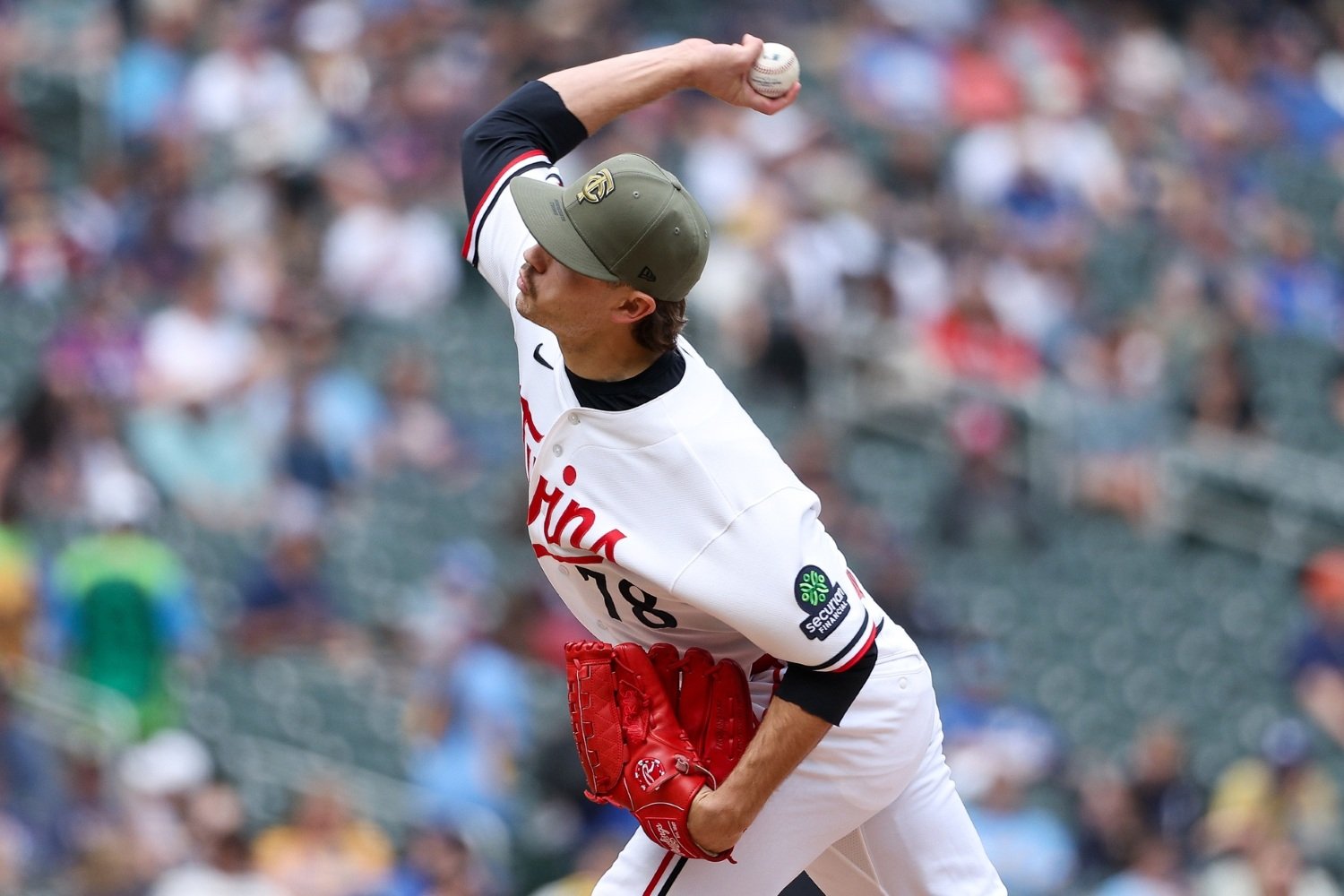 Throwing the way Andrew Morris comes with some limitations. At 61°, he has one of the league's highest arm angles; few pitchers have a truer over-the-top motion than his. That can be good—it's deceptive, and it gives him easy access to the top of the strike zone with his riding four-seam fastball—but it can also be bad. Most pitchers who operate from a high slot struggle to consistently generate much horizontal movement. Most of them struggle to target the bottom of the zone or to get out of it and induce chases, except with steep breaking balls that can be hard to command and/or easy for opposing batters to spot. Throwing overhand helps you stay over the 17-inch plate and can be the most natural movement for some pitchers, but the league is trending toward lower slots for a reason: it's easier to tinker from there. It's easier to manipulate the ball and challenge hitters with unusual angles. For all those reasons and more, it made sense for the Twins to move Morris to the bullpen when they needed help there earlier this season. He's made 62 starts across parts of five minor-league seasons, and he began the year as a starter with Triple-A St. Paul. Quickly, though, the Twins' historic, insupportable lack of hard throwers or bat-missers in the bullpen became a problem they had to solve, and Morris was the sensible solution. Called up to pitch in multi-inning relief, Morris has rarely opened the tank and fired with reckless abandon. When he has, though, his fastball has touched 99 miles per hour. It's averaging 96, and he can live there, comfortably. His movement—a little more carry than one would expect (but only a little, because of the high arm slot), but very straight horizontally and very true to the spin direction of the pitch—is unexceptional, so he has to throw hard to succeed; it's easier to do that in short bursts. The heater has worked fine so far, and in this role, that's sustainable. His sweeper is also working well. Few pitchers can create so much sweep from that high slot, so he's not only getting a good whiff rate on it, but inducing weak contact when batters do meet the ball. His pitch mix has consisted mostly of the four-seamer and the sweeper against righties, and it's worked pretty well. He's only fanned six of the 41 right-handed batters he's faced, which is a problem, but he's also only walked three of them, and he's yet to surrender an extra-base hit to a righty. With the right sequencing and the command he's already shown, he'll miss a few more bats and benefit from some better defensive support; those two pitches can get righties out for him. Lefties are a different story. Morris has already allowed six extra-base hits to left-handed batters this season, and it's not a coincidence. The sweeper really doesn't work against them, so the converted starter has tried a kitchen-sink approach. His four-seamer is the main offering, but otherwise, he's mixing his sweeper, cutter, sinker, curveball and changeup in, trying to find something that will flummox opposite-handed batters. So far, that's been elusive. His walk rate is excellent against them, too, and he has 10 strikeouts in 44 plate appearances—but missing bats isn't enough to make up for how hard he's getting blistered when he fails to do so. To fix that, the Twins and Morris need to find a third pitch that works for him—or, rather, a second truly functional offering against lefties. It's not going to be the current version of his changeup. He kills spin relatively well on that pitch, but again, most pitchers struggle to generate depth on a changeup from that high arm slot—and Morris is no exception. His change has a decent amount of run, relative to his four-seamer, but it comes from noticeably lowering his arm angle. There's a decent velocity gap (around 10 MPH), but that's partially because he doesn't use the same arm speed on the changeup as on the fastball. Worst of all, he can't get to the bottom of the zone or below with it; the pitch hangs in hittable regions. Right now, Morris uses a version of a circle-change grip. That's ill-suited to his motor preference and to his arm angle. The team does have a ready-made model Morris can emulate in the pursuit of a better fit, though: Taj Bradley. Like Morris, Bradley throws from an exceptionally high arm angle. His splitter has been the key to his success this season. One path forward is to have Morris try a splitter instead of this unusable changeup. Another option is his unique cutter. The spin direction and movement on his cutter make Morris very unusual. His cutter has a good mix of carry and glove-side movement, and it's something hitters hardly ever see from this arm slot. Guys who achieve that shape on the cutter tend to have much lower arm angles and less ride on their four-seamers. The one guy who matches Morris well, in terms of spin direction and actual movement direction from such a high angle, is Guardians right-hander Tanner Bibee, but his has a bit more depth and acts as his main breaking ball. Morris's could best be used another way. Its spin makes it easy to distinguish from his four-seamer early, but it moves deceptively after that. He could use the cutter to force lefties to cover the inner half and be more defensive, the better to set them up for a four-seamer that they'd then be less likely to hit hard. His curveball (so far, not especially polished) could factor in, too, as the pitch the hitter chases because they're locked in on the four-seamer and cutter and the curve looks enough like the four-seamer to earn the bad swing. Morris is learning on the fly, not only because he had a change in role sooner than the team initially envisioned but because injuries have interrupted his development since the team selected him in the 4th round in 2022. He isn't yet dominating hitters, though he's been able to work out of some jams and did a marvelous job to strand two Brewers runners in the top of the 7th inning Sunday. The sheer stuff will be good enough to make him a high-leverage arm, but Morris and the Twins have to make a few more adjustments first. It might mean letting go of the idea that he will ever be a big-league starter—but that's the right choice for the player and the team, right now.
 -
Image courtesy of © Matt Krohn-Imagn Images Throwing the way Andrew Morris comes with some limitations. At 61°, he has one of the league's highest arm angles; few pitchers have a truer over-the-top motion than his. That can be good—it's deceptive, and it gives him easy access to the top of the strike zone with his riding four-seam fastball—but it can also be bad. Most pitchers who operate from a high slot struggle to consistently generate much horizontal movement. Most of them struggle to target the bottom of the zone or to get out of it and induce chases, except with steep breaking balls that can be hard to command and/or easy for opposing batters to spot. Throwing overhand helps you stay over the 17-inch plate and can be the most natural movement for some pitchers, but the league is trending toward lower slots for a reason: it's easier to tinker from there. It's easier to manipulate the ball and challenge hitters with unusual angles. For all those reasons and more, it made sense for the Twins to move Morris to the bullpen when they needed help there earlier this season. He's made 62 starts across parts of five minor-league seasons, and he began the year as a starter with Triple-A St. Paul. Quickly, though, the Twins' historic, insupportable lack of hard throwers or bat-missers in the bullpen became a problem they had to solve, and Morris was the sensible solution. Called up to pitch in multi-inning relief, Morris has rarely opened the tank and fired with reckless abandon. When he has, though, his fastball has touched 99 miles per hour. It's averaging 96, and he can live there, comfortably. His movement—a little more carry than one would expect (but only a little, because of the high arm slot), but very straight horizontally and very true to the spin direction of the pitch—is unexceptional, so he has to throw hard to succeed; it's easier to do that in short bursts. The heater has worked fine so far, and in this role, that's sustainable. His sweeper is also working well. Few pitchers can create so much sweep from that high slot, so he's not only getting a good whiff rate on it, but inducing weak contact when batters do meet the ball. His pitch mix has consisted mostly of the four-seamer and the sweeper against righties, and it's worked pretty well. He's only fanned six of the 41 right-handed batters he's faced, which is a problem, but he's also only walked three of them, and he's yet to surrender an extra-base hit to a righty. With the right sequencing and the command he's already shown, he'll miss a few more bats and benefit from some better defensive support; those two pitches can get righties out for him. Lefties are a different story. Morris has already allowed six extra-base hits to left-handed batters this season, and it's not a coincidence. The sweeper really doesn't work against them, so the converted starter has tried a kitchen-sink approach. His four-seamer is the main offering, but otherwise, he's mixing his sweeper, cutter, sinker, curveball and changeup in, trying to find something that will flummox opposite-handed batters. So far, that's been elusive. His walk rate is excellent against them, too, and he has 10 strikeouts in 44 plate appearances—but missing bats isn't enough to make up for how hard he's getting blistered when he fails to do so. To fix that, the Twins and Morris need to find a third pitch that works for him—or, rather, a second truly functional offering against lefties. It's not going to be the current version of his changeup. He kills spin relatively well on that pitch, but again, most pitchers struggle to generate depth on a changeup from that high arm slot—and Morris is no exception. His change has a decent amount of run, relative to his four-seamer, but it comes from noticeably lowering his arm angle. There's a decent velocity gap (around 10 MPH), but that's partially because he doesn't use the same arm speed on the changeup as on the fastball. Worst of all, he can't get to the bottom of the zone or below with it; the pitch hangs in hittable regions. Right now, Morris uses a version of a circle-change grip. That's ill-suited to his motor preference and to his arm angle. The team does have a ready-made model Morris can emulate in the pursuit of a better fit, though: Taj Bradley. Like Morris, Bradley throws from an exceptionally high arm angle. His splitter has been the key to his success this season. One path forward is to have Morris try a splitter instead of this unusable changeup. Another option is his unique cutter. The spin direction and movement on his cutter make Morris very unusual. His cutter has a good mix of carry and glove-side movement, and it's something hitters hardly ever see from this arm slot. Guys who achieve that shape on the cutter tend to have much lower arm angles and less ride on their four-seamers. The one guy who matches Morris well, in terms of spin direction and actual movement direction from such a high angle, is Guardians right-hander Tanner Bibee, but his has a bit more depth and acts as his main breaking ball. Morris's could best be used another way. Its spin makes it easy to distinguish from his four-seamer early, but it moves deceptively after that. He could use the cutter to force lefties to cover the inner half and be more defensive, the better to set them up for a four-seamer that they'd then be less likely to hit hard. His curveball (so far, not especially polished) could factor in, too, as the pitch the hitter chases because they're locked in on the four-seamer and cutter and the curve looks enough like the four-seamer to earn the bad swing. Morris is learning on the fly, not only because he had a change in role sooner than the team initially envisioned but because injuries have interrupted his development since the team selected him in the 4th round in 2022. He isn't yet dominating hitters, though he's been able to work out of some jams and did a marvelous job to strand two Brewers runners in the top of the 7th inning Sunday. The sheer stuff will be good enough to make him a high-leverage arm, but Morris and the Twins have to make a few more adjustments first. It might mean letting go of the idea that he will ever be a big-league starter—but that's the right choice for the player and the team, right now. View full article
-
Image courtesy of © Denny Medley-Imagn Images The Twins will option struggling outfielder Matt Wallner to Triple-A St. Paul on Thursday, two sources with knowledge of the team's plans told Twins Daily, Taking Wallner's place on the roster will be utilityman Ryan Kreidler, who made his Twins debut during Royce Lewis's stint on the injured list earlier this season. Kreidler is expected to serve in the same roving backup role he filled in Lewis's absence, as the team gives Austin Martin a fuller opportunity as a regular corner outfielder. By now, there should be little suspense or surprise around that move. Wallner's demotion is overdue. The massive Forest Lake native is batting .167/.259/.292 on the year. His last two starts came Wednesday night against the Marlins and Saturday in Cleveland, and in each, he went 0-for-4 with four strikeouts. He's been slowly phased out of the team's plans over the last four weeks, with Martin gaining an ever greater share of the playing time in the outfield and Trevor Larnach becoming the left-handed batter manager Derek Shelton kept in the lineup even against left-handed opposing starters. Compounding the negative value of his bat, Wallner has been the worst defensive outfielder in baseball this season. He's lost speed; takes bad routes on fly balls; is too slow to field balls that fall in and to get off throws back to the infield; and doesn't communicate well with the infielders or with Byron Buxton on balls hit between defenders. He has no business playing in the major leagues right now; the team will hope that a hard reset in the minors can fix that. Right-hander Zebby Matthews is also coming over from St. Paul Thursday, and that promotion has portent, too. All the team is saying so far is that Matthews is making a spot start to facilitate the team bumping back Connor Prielipp's next one by a day, as they monitor and mete out the latter's workload for the year. However, Matthews looks likely to stick around and take over the starting rotation spot occupied (until now) by Simeon Woods Richardson, who was knocked out early again Wednesday and has an untenable 7.71 ERA for the year. Wednesday night's game was also the latest indication of a more gradual change. Tristan Gray made his fourth start at third base in the last 10 games. Two of those starts came one week ago, when Shelton gave Royce Lewis back-to-back days off as a reset. So far, however, Lewis has shown little to give the team renewed hope since then, and he's only batting .167/.269/.300 for the year. His two-day benching came one week after Wallner's, and now, Wallner is heading for the other end of the Green Line. The clock is ticking on Lewis, too, with Gray threatening to take his job even before the prospects about whom he's so worried are ready to come to the big leagues. The 2025 trade deadline amounted to a reckoning for the previous year's worth of failures—for the collapse that led the 2024 Twins to miss the playoffs and for an offseason in which they were hamstrung by the Pohlads' attempts to sell the team, preventing them from sufficiently addressing the causes of that collapse. As roster overhauls go, though, it was actually relatively small, and when a Derek Falvey-led front office once again plodded most of the way through the winter without proactively moving on from any of the players who'd dragged them down over the previous year-plus, they began this season in something eerily similar to the same place they were in before that so-called fire sale. Falvey's conservative approach and belief in the core he'd assembled led the team to hold onto Wallner, Lewis, Larnach and Woods Richardson over the winter, when there were strong arguments for moving on from any or all four of them. In fact, those arguments were also there last July, and even the previous offseason. The team went 1-for-4 in its long-running series of gambles on those young players. Larnach might not be a long-term piece for the club, but if nothing else, he's boosted his trade value substantially this spring. The other three are now being proactively replaced by a front office that still bears Falvey's fingerprints but has departed from his plans in some key aspects, and at the behest of a manager who isn't inclined to be especially patient with players at this phase of their careers. Shelton lost half a decade of his life in Pittsburgh, making no progress toward winning because he was handed a parade of players on whom the organization was placing doomed bets a year after they should have stopped. He's been quick to try new things and shake up the way he deploys his roster, and slow to trust anyone. He and Jeremy Zoll are reshaping the big-league roster relatively early in the season, both because the utter ineptitude of the AL Central has allowed them to hold onto a dream of competing this year and because they agree that it's no longer reasonable to keep expecting Lewis, Wallner and Woods Richardson to turn things around. Thursday marks the dawn of an interesting interstitial period. Martin, 27, will continue to get regular playing time, something he just achieved for the first time after last year's deadline. He's batting an extraordinary .327/.448/.416 in 125 plate appearances so far, though that's still distorted by platoon effects. Martin has faced left-handed pitchers in 49% of his plate appearances, almost twice as much as a full-time right-handed batter can expect to see them over a full season. As his role expands, he'll be tested, and could be exposed. Gray has been less impressive at the plate since his hot start, and looks like an inconsistent, Kody Clemens-style offensive contributor. However, he plays plus defense at third base, separating him from Lewis. Both players will get a real chance to earn an even longer look, but each is also holding down a spot that could soon pass into the hands of one of the team's top prospects. Kaelen Culpepper needs a bit more time at St. Paul, but were Emmanuel Rodríguez healthy, he would already be in the majors, according to one team source. Culpepper's arrival could move Brooks Lee off shortstop and over to the hot corner. This shakeup could also result in Lee moving to second, if Gray shows enough to merit sustained playing time, with Luke Keaschall sliding to the outfield to soak up some of the playing time vacated by Wallner's demotion. For now, Lewis remains on the big-league roster, so he'll play third base at least as often as Gray. The timeline of the Wallner phaseout is a reminder, though, that time is short. The Twins' new chairman, Tom Pohlad, expects the team to win and is evaluating the front office and manager on that criterion. Neither Zoll nor Shelton is as invested in Wallner, Lewis, Woods Richardson or several other players on this roster as Falvey was, even if Zoll has been around for several years and was part of bringing in and developing much of the team. Change is afoot, and while the only unequivocal handoff of playing time marked by Thursday's moves is from Wallner to Martin, the writing is on the wall for several pieces of a core that was once the team's future—but is now being tossed onto the junkheap of the past. View full article
-
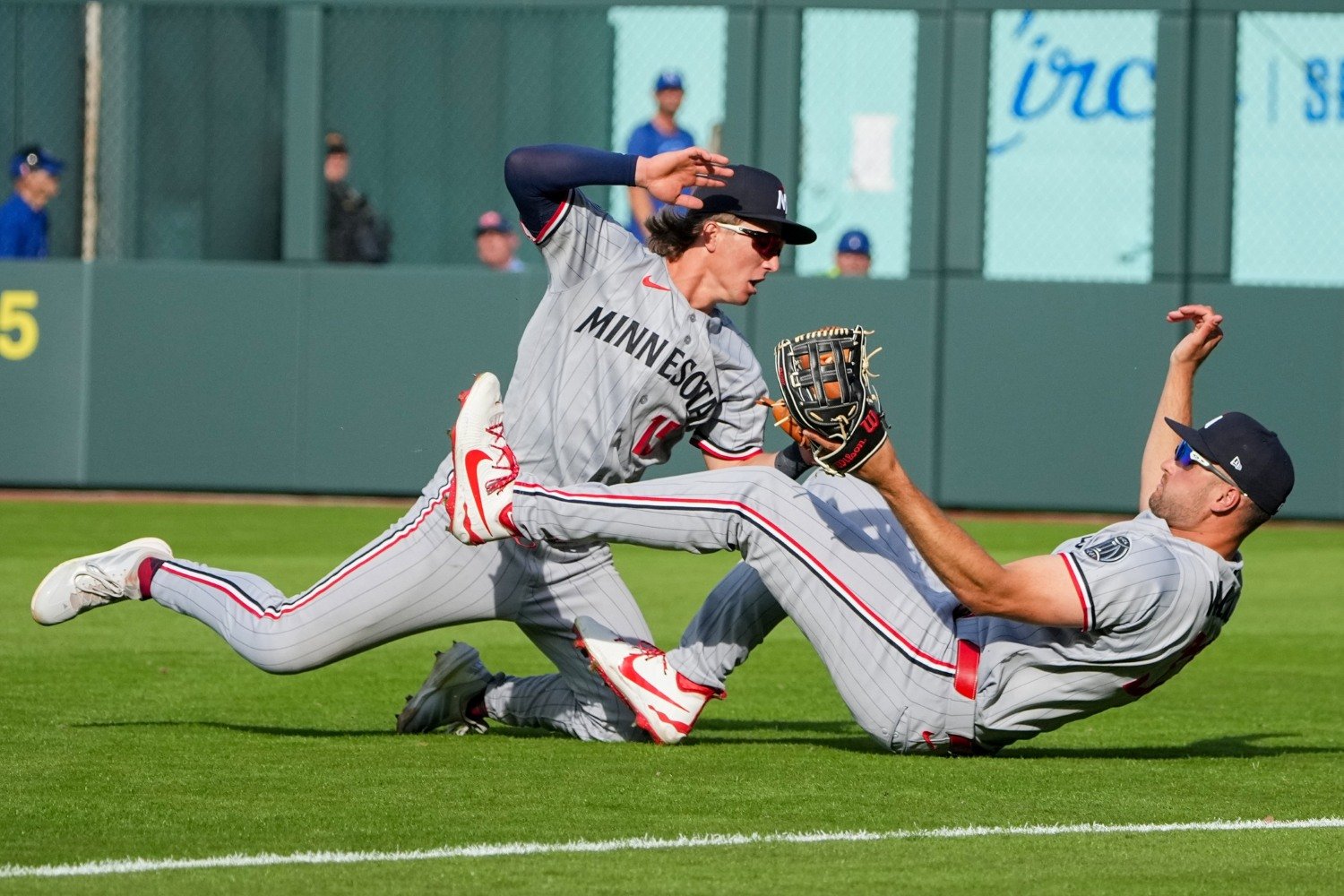 The Twins will option struggling outfielder Matt Wallner to Triple-A St. Paul on Thursday, two sources with knowledge of the team's plans told Twins Daily, Taking Wallner's place on the roster will be utilityman Ryan Kreidler, who made his Twins debut during Royce Lewis's stint on the injured list earlier this season. Kreidler is expected to serve in the same roving backup role he filled in Lewis's absence, as the team gives Austin Martin a fuller opportunity as a regular corner outfielder. By now, there should be little suspense or surprise around that move. Wallner's demotion is overdue. The massive Forest Lake native is batting .167/.259/.292 on the year. His last two starts came Wednesday night against the Marlins and Saturday in Cleveland, and in each, he went 0-for-4 with four strikeouts. He's been slowly phased out of the team's plans over the last four weeks, with Martin gaining an ever greater share of the playing time in the outfield and Trevor Larnach becoming the left-handed batter manager Derek Shelton kept in the lineup even against left-handed opposing starters. Compounding the negative value of his bat, Wallner has been the worst defensive outfielder in baseball this season. He's lost speed; takes bad routes on fly balls; is too slow to field balls that fall in and to get off throws back to the infield; and doesn't communicate well with the infielders or with Byron Buxton on balls hit between defenders. He has no business playing in the major leagues right now; the team will hope that a hard reset in the minors can fix that. Right-hander Zebby Matthews is also coming over from St. Paul Thursday, and that promotion has portent, too. All the team is saying so far is that Matthews is making a spot start to facilitate the team bumping back Connor Prielipp's next one by a day, as they monitor and mete out the latter's workload for the year. However, Matthews looks likely to stick around and take over the starting rotation spot occupied (until now) by Simeon Woods Richardson, who was knocked out early again Wednesday and has an untenable 7.71 ERA for the year. Wednesday night's game was also the latest indication of a more gradual change. Tristan Gray made his fourth start at third base in the last 10 games. Two of those starts came one week ago, when Shelton gave Royce Lewis back-to-back days off as a reset. So far, however, Lewis has shown little to give the team renewed hope since then, and he's only batting .167/.269/.300 for the year. His two-day benching came one week after Wallner's, and now, Wallner is heading for the other end of the Green Line. The clock is ticking on Lewis, too, with Gray threatening to take his job even before the prospects about whom he's so worried are ready to come to the big leagues. The 2025 trade deadline amounted to a reckoning for the previous year's worth of failures—for the collapse that led the 2024 Twins to miss the playoffs and for an offseason in which they were hamstrung by the Pohlads' attempts to sell the team, preventing them from sufficiently addressing the causes of that collapse. As roster overhauls go, though, it was actually relatively small, and when a Derek Falvey-led front office once again plodded most of the way through the winter without proactively moving on from any of the players who'd dragged them down over the previous year-plus, they began this season in something eerily similar to the same place they were in before that so-called fire sale. Falvey's conservative approach and belief in the core he'd assembled led the team to hold onto Wallner, Lewis, Larnach and Woods Richardson over the winter, when there were strong arguments for moving on from any or all four of them. In fact, those arguments were also there last July, and even the previous offseason. The team went 1-for-4 in its long-running series of gambles on those young players. Larnach might not be a long-term piece for the club, but if nothing else, he's boosted his trade value substantially this spring. The other three are now being proactively replaced by a front office that still bears Falvey's fingerprints but has departed from his plans in some key aspects, and at the behest of a manager who isn't inclined to be especially patient with players at this phase of their careers. Shelton lost half a decade of his life in Pittsburgh, making no progress toward winning because he was handed a parade of players on whom the organization was placing doomed bets a year after they should have stopped. He's been quick to try new things and shake up the way he deploys his roster, and slow to trust anyone. He and Jeremy Zoll are reshaping the big-league roster relatively early in the season, both because the utter ineptitude of the AL Central has allowed them to hold onto a dream of competing this year and because they agree that it's no longer reasonable to keep expecting Lewis, Wallner and Woods Richardson to turn things around. Thursday marks the dawn of an interesting interstitial period. Martin, 27, will continue to get regular playing time, something he just achieved for the first time after last year's deadline. He's batting an extraordinary .327/.448/.416 in 125 plate appearances so far, though that's still distorted by platoon effects. Martin has faced left-handed pitchers in 49% of his plate appearances, almost twice as much as a full-time right-handed batter can expect to see them over a full season. As his role expands, he'll be tested, and could be exposed. Gray has been less impressive at the plate since his hot start, and looks like an inconsistent, Kody Clemens-style offensive contributor. However, he plays plus defense at third base, separating him from Lewis. Both players will get a real chance to earn an even longer look, but each is also holding down a spot that could soon pass into the hands of one of the team's top prospects. Kaelen Culpepper needs a bit more time at St. Paul, but were Emmanuel Rodríguez healthy, he would already be in the majors, according to one team source. Culpepper's arrival could move Brooks Lee off shortstop and over to the hot corner. This shakeup could also result in Lee moving to second, if Gray shows enough to merit sustained playing time, with Luke Keaschall sliding to the outfield to soak up some of the playing time vacated by Wallner's demotion. For now, Lewis remains on the big-league roster, so he'll play third base at least as often as Gray. The timeline of the Wallner phaseout is a reminder, though, that time is short. The Twins' new chairman, Tom Pohlad, expects the team to win and is evaluating the front office and manager on that criterion. Neither Zoll nor Shelton is as invested in Wallner, Lewis, Woods Richardson or several other players on this roster as Falvey was, even if Zoll has been around for several years and was part of bringing in and developing much of the team. Change is afoot, and while the only unequivocal handoff of playing time marked by Thursday's moves is from Wallner to Martin, the writing is on the wall for several pieces of a core that was once the team's future—but is now being tossed onto the junkheap of the past.
- 89 comments
-
- 15
-
-
-
- matt wallner
- royce lewis
- (and 5 more)


