



Matthew Trueblood
-
Posts
1,026 -
Joined
-
Last visited
Content Type
Profiles
News
Minnesota Twins Videos
2026 Minnesota Twins Top Prospects Ranking
2022 Minnesota Twins Draft Picks
Minnesota Twins Free Agent & Trade Rumors, Notes, & Tidbits
Guides & Resources
2023 Minnesota Twins Draft Picks
The Minnesota Twins Players Project
2024 Minnesota Twins Draft Picks
2025 Minnesota Twins Draft Pick Tracker
2026 Minnesota Twins Draft Tracker: Picks & Bonuses
Forums
Blogs
Events
Store
Downloads
Gallery
Everything posted by Matthew Trueblood
-
How PECOTA Projections Could Miss on the Twins (Part One)
Matthew Trueblood posted an article in Twins
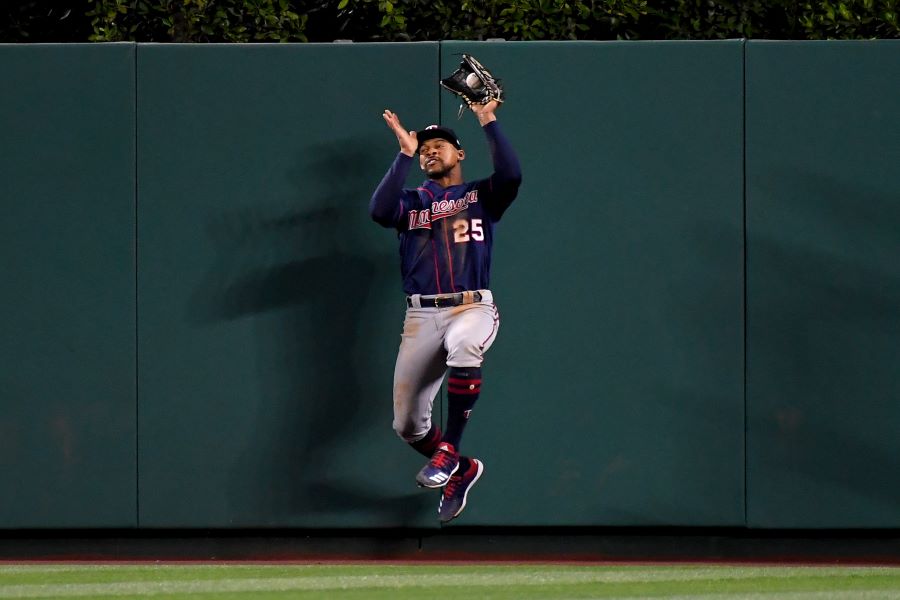 According to Baseball Prospectus’s PECOTA system, the Twins have a 76.6-percent chance of winning the AL Central in 2020. FanGraphs pegs them just a bit lower, at 55.0 percent to win the division. FanGraphs gives them a 68.3-percent chance to make the playoffs in any form; BP has them at a gaudy 87.5 percent. Both systems project them for over 90 wins, though fewer than 95. However, as I was preparing the Twins’ team preview for Prospectus last week, I found myself noting ways in which PECOTA (and all projection systems, in fact) is unable to properly capture the risk and the upside of a team like Minnesota. First, consider injury risk. At Baseball Prospectus, the only way in which those risks are accounted for is through the manual process of building team depth charts. Because Byron Buxton strongly tends to get hurt and miss portions of each season, he’s not projected for as full a share of the playing time in center field as he’ll enjoy whenever he’s healthy. However, the playing time he is projected to receive (75 percent of center field innings, and 490 total plate appearances) isn’t treated as a variable by the system. The format for team previews at Prospectus this spring involves building out and breaking down the decile projections for each team—that is, the record each club would have given a 90th-percentile outcome, an 80th-percentile outcome, and so on, down to 10th. The idea is to sketch out how PECOTA captures the variance possible at a team level, based on the vagaries of individual performances. The decile projections are created using the individual decile projections PECOTA generates, with each team projection representing the outcome of 500 simulations wherein each team’s players all perform at that decile and the rest of the league is kept at their median projection. Here are the Twins’ decile projections for 2020, as of last week: 90th percentile: 109-53 80th percentile: 104-58 70th percentile: 100-62 60th percentile: 98-64 50th percentile: 94-68 40th percentile: 90-72 30th percentile: 86-76 20th percentile: 81-81 10th percentile: 74-88 That seems, at first blush, like a fair depiction of the real possibility spectrum for this team. The Twins are likely to be very good, and the only way they won’t at least be a respectable Wild Card contender is if the wheels truly come off. However, in all nine of those amalgamated projections, and in all 4,500 simulations that underpin them, Byron Buxton goes to the plate 490 times, and is the Twins’ center fielder for 75 percent of their defensive innings. In all of the simulations, José Berríos pitches 184 innings, Michael Pineda pitches 100, and Rich Hill pitches 52. The system is only capturing variance created by players performing in unexpected ways; it doesn’t see injury risk. For that matter, the system also only reflects variance in offensive performance. In all those simulations, Buxton (with his fixed playing time) is worth 20 runs as a defender in center field. In all of them, Miguel Sanó (whom BP has pegged for 65 percent of the playing time at first base, five percent at third base, and five percent at DH, reflecting some of his own injury history) is worth eight runs as a defender at first base, because typically, third baseman who make the transition to first base while still in their prime tend to be good fielders there. PECOTA has no engine for systematically scaling defensive production upward or downward, and even if it had one, it would be hard to decide how to use it. Would a player having a bad season at the plate be expected to struggle to the same extent in the field? Would a guy who turned out to be a better-than-expected defender lose something at bat because of his focus on defense and the wear and tear of playing harder in the field? PECOTA isn’t alone in not being able to answer these questions, and BP isn’t alone in being unwilling to attempt to calibrate all of that manually. Playoff odds and other team-level projections, like the atomic player projections of which they consist, are fraught with oversimplifications and unexamined axes of upside and downside. This is part one of a two-part exploration of the ways projection systems miss certain elements of the Twins' risk and upside. Check back tomorrow for five specific examples drawn from the Twins' individual projections.
 -
Byron Buxton will always have swing-and-miss in his game, but he's shored up his vulnerability to whiffs over the last two years, especially in one key respect.Though Byron Buxton has had a long, uneven, complex development curve, it’s clear that he turned a new corner in 2019. After going back to the setup and swing mechanics he had trusted in high school late in the 2018 season, Buxton blossomed into the kind of multi-dimensional, dangerous hitter on which Twins fans had dreamed for years. He not only set a new career high in average exit velocity and hard-hit rate, but did so by wide margins, while slashing his strikeout rate. There were many adjustments and improvements involved, but the one that might have been most important seems trivial at first: he whiffed on many fewer fastballs. Over the last five years, there have been 1,666 player-seasons in which a batter swung at least 250 times at fastballs. That’s an average of about 350 per season, and equates to a threshold of coming to bat about 200 times. Buxton has only surpassed that threshold three times, because of his prolonged slumps and (more importantly) many injuries. Here are his whiff rates when swinging at fastballs in those three campaigns, along with their rankings on the list of 1,666. Download attachment: tempsnip.png This could seem like a small change, especially if one studies the list of all those player-seasons. Ronald Acuña, Jr., who was a contender for the NL MVP last season, whiffed as much during that season as Buxton did in 2017. Giancarlo Stanton’s 2017 MVP season saw a similar whiff rate on heat as Buxton had in those two troubled seasons. Meanwhile, the names and seasons around Buxton’s 2019 entry on the list are less inspiring. Buxton, however, isn’t a normal hitter, and he can’t be defined, nor his performance predicted, by analogy. He’s a unique athlete. Though he had a career-low ground-ball rate last season, he posted a .314 BABIP and a .348 batting average on contact (BACON). He did even better than that on contact in 2016 and 2017, but of course, he struck out so much in each season that his production was hampered. Buxton shouldn’t be focused on hitting ground balls, but to the extent that he can get on plane with an incoming pitch and increase his contact rate, he should always do so. His speed and his strength make him a potentially lethal hitter, if he does so. The change itself might feel small, too, but in the context of pitchers and teams trying to gameplan against Buxton, it’s not. Going from the 12th to the 28th percentile in vulnerability to whiffing on fastballs, while continuing to hit the ball hard when one makes contact, represents the elimination of a catastrophic weakness. Buxton might never have an average contact rate on fastballs, but if he’s merely below-average, rather than dwelling near the very bottom of the league, then he’s a tough at-bat and a tough out. It shouldn’t be controversial to say this: Buxton is the most important player on the 2020 Twins. When he’s healthy and functioning at full capacity, he turns the Twins into a juggernaut, closing the only prospective hole in their lineup and fundamentally transforming them from a subpar defensive team to one that catches almost everything in the air. When he’s absent or compromised, the team is still good, but their flaws become much more apparent. If Buxton can continue to hammer fastballs while minimizing his empty swings against them, he adds a dynamism to their lineup that is somewhat wanting otherwise. MORE FROM TWINS DAILY — Latest Twins coverage from our writers — Recent Twins discussion in our forums — Follow Twins Daily via Twitter, Facebook or email Click here to view the article
-
One Seemingly Small Adjustment from Byron Buxton Could Pay Off Big
Matthew Trueblood posted an article in Twins
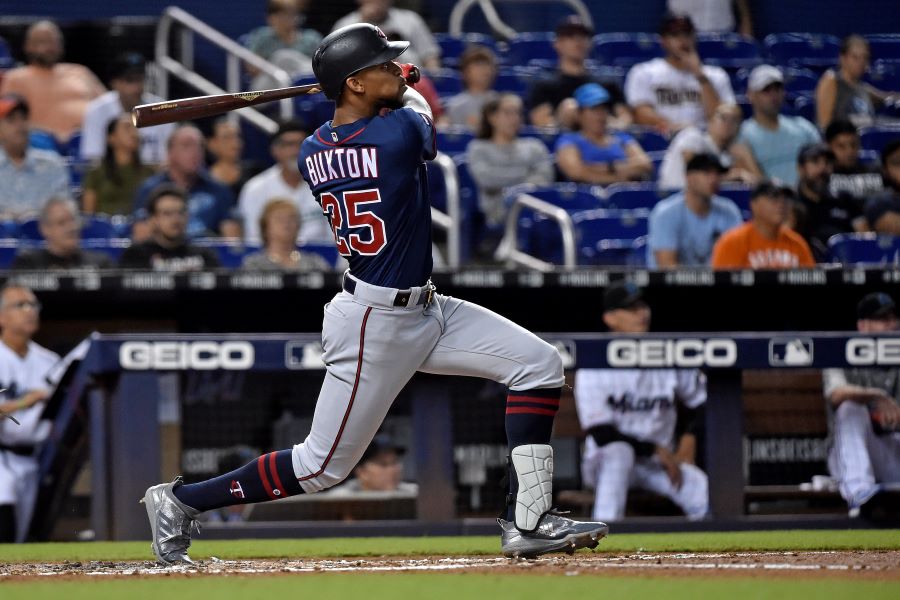 Though Byron Buxton has had a long, uneven, complex development curve, it’s clear that he turned a new corner in 2019. After going back to the setup and swing mechanics he had trusted in high school late in the 2018 season, Buxton blossomed into the kind of multi-dimensional, dangerous hitter on which Twins fans had dreamed for years. He not only set a new career high in average exit velocity and hard-hit rate, but did so by wide margins, while slashing his strikeout rate. There were many adjustments and improvements involved, but the one that might have been most important seems trivial at first: he whiffed on many fewer fastballs. Over the last five years, there have been 1,666 player-seasons in which a batter swung at least 250 times at fastballs. That’s an average of about 350 per season, and equates to a threshold of coming to bat about 200 times. Buxton has only surpassed that threshold three times, because of his prolonged slumps and (more importantly) many injuries. Here are his whiff rates when swinging at fastballs in those three campaigns, along with their rankings on the list of 1,666. This could seem like a small change, especially if one studies the list of all those player-seasons. Ronald Acuña, Jr., who was a contender for the NL MVP last season, whiffed as much during that season as Buxton did in 2017. Giancarlo Stanton’s 2017 MVP season saw a similar whiff rate on heat as Buxton had in those two troubled seasons. Meanwhile, the names and seasons around Buxton’s 2019 entry on the list are less inspiring. Buxton, however, isn’t a normal hitter, and he can’t be defined, nor his performance predicted, by analogy. He’s a unique athlete. Though he had a career-low ground-ball rate last season, he posted a .314 BABIP and a .348 batting average on contact (BACON). He did even better than that on contact in 2016 and 2017, but of course, he struck out so much in each season that his production was hampered. Buxton shouldn’t be focused on hitting ground balls, but to the extent that he can get on plane with an incoming pitch and increase his contact rate, he should always do so. His speed and his strength make him a potentially lethal hitter, if he does so. The change itself might feel small, too, but in the context of pitchers and teams trying to gameplan against Buxton, it’s not. Going from the 12th to the 28th percentile in vulnerability to whiffing on fastballs, while continuing to hit the ball hard when one makes contact, represents the elimination of a catastrophic weakness. Buxton might never have an average contact rate on fastballs, but if he’s merely below-average, rather than dwelling near the very bottom of the league, then he’s a tough at-bat and a tough out. It shouldn’t be controversial to say this: Buxton is the most important player on the 2020 Twins. When he’s healthy and functioning at full capacity, he turns the Twins into a juggernaut, closing the only prospective hole in their lineup and fundamentally transforming them from a subpar defensive team to one that catches almost everything in the air. When he’s absent or compromised, the team is still good, but their flaws become much more apparent. If Buxton can continue to hammer fastballs while minimizing his empty swings against them, he adds a dynamism to their lineup that is somewhat wanting otherwise. MORE FROM TWINS DAILY — Latest Twins coverage from our writers — Recent Twins discussion in our forums — Follow Twins Daily via Twitter, Facebook or email
 -
There's one organizational preference with regard to which Josh Donaldson isn't a perfect fit for the Minnesota Twins. Can he change it? Should he?When a team signs a former MVP and eight-year veteran to a deal that could reach nine figures in total salary, they rarely ask that player to make big changes. The Twins will be no exception to that rule when it comes to Josh Donaldson. One reason why Donaldson was an excellent fit for the team, in the first place, was the way his approach matched the mentality the team was already preaching to so many of its hitters. However, there is one thing the Twins ask of their hitters that Donaldson didn’t do in 2019, and it could be the one adjustment they try to make to his approach for the coming season. Consider the relationship between contact rate on pitches inside the strike zone, and contact rate on pitches outside of it. They each signify something different. To make consistent contact within the zone, a batter has to have a good understanding of that zone, and to engineer a swing that gets them on plane with the flight of the incoming pitch for as long as possible. Making a lot of contact on swings within the zone makes a batter a tough out for opposing pitchers. To make contact on pitches outside the zone frequently, a hitter generally has to have exceptional hand-eye coordination (even for a baseball player, a pool within which virtually everyone has what would be extraordinary hand-eye coordination by the standards of the general population). They also, usually, have to take a more aggressive mindset, and to trust themselves to find the barrel even on pitches that aren’t in the hitting zone on which they were most focused. Both of these skills can be valuable, depending on the overall skill set and objectives of the batter in question. Obviously, despite being representative of different things, they’re also correlated skills: the better you make contact within the zone, the better you’re likely to make contact beyond it. The correlation is far from perfect (r-squared, for the statistically savvy, is 0.41), but it’s meaningful. The fact that there’s a positive correlation between swing-and-miss within the zone and outside it means that no team has to choose between making contact in the zone and on chase pitches. However, the Twins have an organizational preference between the two. They would rather see their hitters have that grooved swing, ready to punish mistakes and defend the zone, than see their guys hitting pitches opposing hurlers want them to chase. Download attachment: chart.png Among hitters who played a meaningful role for Minnesota in 2019, only four had in-zone whiff rates that would have suggested a higher out-of-zone one than they actually had: Eddie Rosario, Jason Castro, C.J. Cron, and Jonathan Schoop. Of those four, only Rosario returns to the roster, and Castro (the one whose in-zone contact rate spiked highest, relative to his out-of-zone rate) was replaced by Alex Avila, who fits beneath the line. Donaldson, then, is an outlier in one way, even if he’s otherwise perfect for this Twins team. Famously, he prioritizes launching into the ball with as much energy as possible, and he did hit 37 home runs last season by virtue of posting his highest average exit velocity, hard-hit rate, and Sweet Spot percentage (the share of his batted balls hit in the most valuable band of launch angles) during the five-season Statcast Era. One could certainly argue that, rather than his in-zone whiff rate being too high for his profile, his out-of-zone whiff rate is merely held very low by way of his elite plate discipline. However, there are real holes in Donaldson’s zone, and the Twins might seek to help him cover them, even if it means doing a bit less damage on fringy pitches. Here’s the rate at which Donaldson swung at pitches last season, by where they were in (or outside of) the strike zone. Download attachment: chart (1).png Now, here’s his whiff rate when he swung, again mapped by pitch location. Download attachment: chart (2).png The hole in the upper, inside corner of the zone is not just about whiffs. Donaldson had just two hits on pitches in that corner of the zone all season last year, so even when he made contact, it tended not to be of a very high quality. It might well be that Donaldson’s overall approach works best when he organizes his zone this way—that whatever tradeoffs he might have to make in the plane or speed of his swing in order to cover that hole up in the zone, or whatever aggressiveness he might have to sacrifice on pitches similarly elevated but out over the plate, would offset any gains he’d make by swinging and missing less at the top of the strike zone. If so, the team will probably ascertain as much, and tell Donaldson to keep doing what has made him a superstar. However, the Twins are always looking for a way to take a player to the next level, so don’t be surprised if they at least try to help Donaldson cover that hole. Stylistically, they want their hitters to battle for control of the strike zone so fiercely that pitchers become afraid to attack them. Donaldson’s vulnerability to whiffs within the zone hurts him much less than it would hurt a hitter without such great patience, and it hurts less in a lineup full of hitters who don’t share that characteristic. Still, it sets him apart from his new teammates, and could be a point of emphasis as he tries to stay at the top of his game. MORE FROM TWINS DAILY — Latest Twins coverage from our writers — Recent Twins discussion in our forums — Follow Twins Daily via Twitter, Facebook or email Click here to view the article
-
Josh Donaldson: How Twins Could Tweak Slugger's Approach
Matthew Trueblood posted an article in Twins
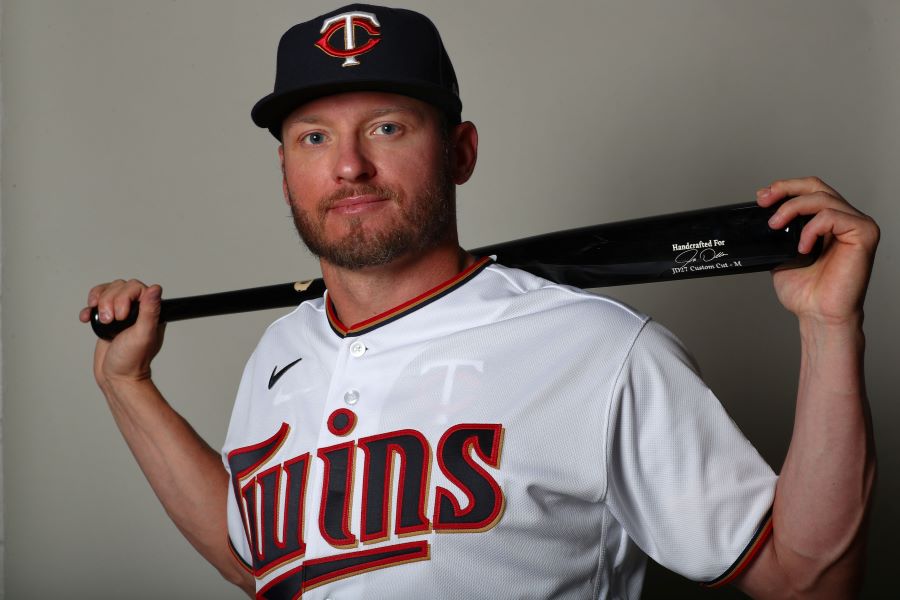 When a team signs a former MVP and eight-year veteran to a deal that could reach nine figures in total salary, they rarely ask that player to make big changes. The Twins will be no exception to that rule when it comes to Josh Donaldson. One reason why Donaldson was an excellent fit for the team, in the first place, was the way his approach matched the mentality the team was already preaching to so many of its hitters. However, there is one thing the Twins ask of their hitters that Donaldson didn’t do in 2019, and it could be the one adjustment they try to make to his approach for the coming season. Consider the relationship between contact rate on pitches inside the strike zone, and contact rate on pitches outside of it. They each signify something different. To make consistent contact within the zone, a batter has to have a good understanding of that zone, and to engineer a swing that gets them on plane with the flight of the incoming pitch for as long as possible. Making a lot of contact on swings within the zone makes a batter a tough out for opposing pitchers. To make contact on pitches outside the zone frequently, a hitter generally has to have exceptional hand-eye coordination (even for a baseball player, a pool within which virtually everyone has what would be extraordinary hand-eye coordination by the standards of the general population). They also, usually, have to take a more aggressive mindset, and to trust themselves to find the barrel even on pitches that aren’t in the hitting zone on which they were most focused. Both of these skills can be valuable, depending on the overall skill set and objectives of the batter in question. Obviously, despite being representative of different things, they’re also correlated skills: the better you make contact within the zone, the better you’re likely to make contact beyond it. The correlation is far from perfect (r-squared, for the statistically savvy, is 0.41), but it’s meaningful. The fact that there’s a positive correlation between swing-and-miss within the zone and outside it means that no team has to choose between making contact in the zone and on chase pitches. However, the Twins have an organizational preference between the two. They would rather see their hitters have that grooved swing, ready to punish mistakes and defend the zone, than see their guys hitting pitches opposing hurlers want them to chase. Among hitters who played a meaningful role for Minnesota in 2019, only four had in-zone whiff rates that would have suggested a higher out-of-zone one than they actually had: Eddie Rosario, Jason Castro, C.J. Cron, and Jonathan Schoop. Of those four, only Rosario returns to the roster, and Castro (the one whose in-zone contact rate spiked highest, relative to his out-of-zone rate) was replaced by Alex Avila, who fits beneath the line. Donaldson, then, is an outlier in one way, even if he’s otherwise perfect for this Twins team. Famously, he prioritizes launching into the ball with as much energy as possible, and he did hit 37 home runs last season by virtue of posting his highest average exit velocity, hard-hit rate, and Sweet Spot percentage (the share of his batted balls hit in the most valuable band of launch angles) during the five-season Statcast Era. One could certainly argue that, rather than his in-zone whiff rate being too high for his profile, his out-of-zone whiff rate is merely held very low by way of his elite plate discipline. However, there are real holes in Donaldson’s zone, and the Twins might seek to help him cover them, even if it means doing a bit less damage on fringy pitches. Here’s the rate at which Donaldson swung at pitches last season, by where they were in (or outside of) the strike zone. Now, here’s his whiff rate when he swung, again mapped by pitch location. The hole in the upper, inside corner of the zone is not just about whiffs. Donaldson had just two hits on pitches in that corner of the zone all season last year, so even when he made contact, it tended not to be of a very high quality. It might well be that Donaldson’s overall approach works best when he organizes his zone this way—that whatever tradeoffs he might have to make in the plane or speed of his swing in order to cover that hole up in the zone, or whatever aggressiveness he might have to sacrifice on pitches similarly elevated but out over the plate, would offset any gains he’d make by swinging and missing less at the top of the strike zone. If so, the team will probably ascertain as much, and tell Donaldson to keep doing what has made him a superstar. However, the Twins are always looking for a way to take a player to the next level, so don’t be surprised if they at least try to help Donaldson cover that hole. Stylistically, they want their hitters to battle for control of the strike zone so fiercely that pitchers become afraid to attack them. Donaldson’s vulnerability to whiffs within the zone hurts him much less than it would hurt a hitter without such great patience, and it hurts less in a lineup full of hitters who don’t share that characteristic. Still, it sets him apart from his new teammates, and could be a point of emphasis as he tries to stay at the top of his game. MORE FROM TWINS DAILY — Latest Twins coverage from our writers — Recent Twins discussion in our forums — Follow Twins Daily via Twitter, Facebook or email
 -
Devin Smeltzer spins the ball better than almost any other pitcher in baseball, but his delivery doesn't allow him to reap the full benefits of that talent. Can he adjust and thrive?On Monday afternoon, Devin Smeltzer pitched for the Twins in a Grapefruit League contest with the Cardinals. Thanks to several different forms of defensive deficiency, St. Louis scored four times in Smeltzer’s two frames, but he had two strikeouts and no walks. Lewis Thorpe’s brief personal absence has opened a narrow window of opportunity for Smeltzer to start the season as the Twins’ fifth starter. That could turn out to be enough, if Smeltzer can make a few adjustments to make his similarities to one new teammate play up. With an average fastball velocity of just 89.1 miles per hour, Smeltzer starts at a certain disadvantage, even as a lefty. However, his average fastball spin rate in 2019 was 2,433 revolutions per minute, a number as far above the league average as his velocity is below it. A budding modern heuristic for capturing the value of fastball spin rate is the Bauer Unit, named after Reds right-hander Trevor Bauer. Divide a hurler’s average spin by their average velocity, and you get their Bauer Units for a given pitch. The league average for Bauer Units on the fastball hovers around 24. Smeltzer sits at a very impressive 28.3. One of the few pitchers who topped that figure last year: Rich Hill, at 28.4. Smeltzer shares more in common with Hill than handedness and those fastball spin characteristics. Though Hill came up as a heralded prospect and was a solid big-leaguer for a couple of years, this version of him emerged only after a long sojourn in the minors and independent leagues, and after a stint as a matchup reliever. Smeltzer was similarly shoved into a relief role before he attained the majors, but being traded to the Twins gave him a fresh start. Both have overcome significant adversity, on and off the field, to get as far as they have. Both have extremely impressive spin not only on their heaters, but on their curveballs. Thus far, however, Smeltzer hasn’t missed bats and shown the ability to dominate the way Hill has, and it’s not hard to see why. Whereas Hill famously launches himself down the mound and comes right over the top with his high-energy delivery, Smeltzer’s deceptive, short-stride windup gives way to a three-quarter arm action. It helps keep batters off-balance, and it has been Smeltzer’s preferred arm slot since he was an amateur. However, that arm angle creates some wasted spin, and some spin that flattens out his fastball into a pitch with more lateral run than vertical hop. It also turns his big, slow curve into a two-plane breaker, rather than a 12-to-6 offering. Raising his arm angle could transform Smeltzer from a decent pitch-to-contact, control-oriented swingman into a higher-upside guy with the ability to rack up strikeouts. It would unlock the maximum value of his excellent ability to impart spin. Alas, it’s not nearly that simple. For one thing, Smeltzer has gotten to this point despite his lack of pure stuff, and it might be difficult for him to clear the mental hurdle of giving up his unique delivery for a more trendy one, thereby risking the deception he creates by pitching the way he does. For another, it might turn out that his ability to generate that spin is dependent upon his pitching from the angle he uses now—that his current mechanics fit his natural biomechanical signature, in a way throwing from a higher angle never could. If he runs into further adversity and ends up back in Triple-A for an extended period, Smeltzer might experiment with a change in mechanics. If the Twins end up needing him as a starter or a high-leverage reliever, they might approach him and suggest such tweaks. In the meantime, despite the potential benefits of such a change, it’s hard to see it actually happening. The fear of the unknown, and the possibility that making a change before it’s absolutely necessary could ruin a good thing, will give both parties pause. MORE FROM TWINS DAILY — Latest Twins coverage from our writers — Recent Twins discussion in our forums — Follow Twins Daily via Twitter, Facebook or email Click here to view the article
-
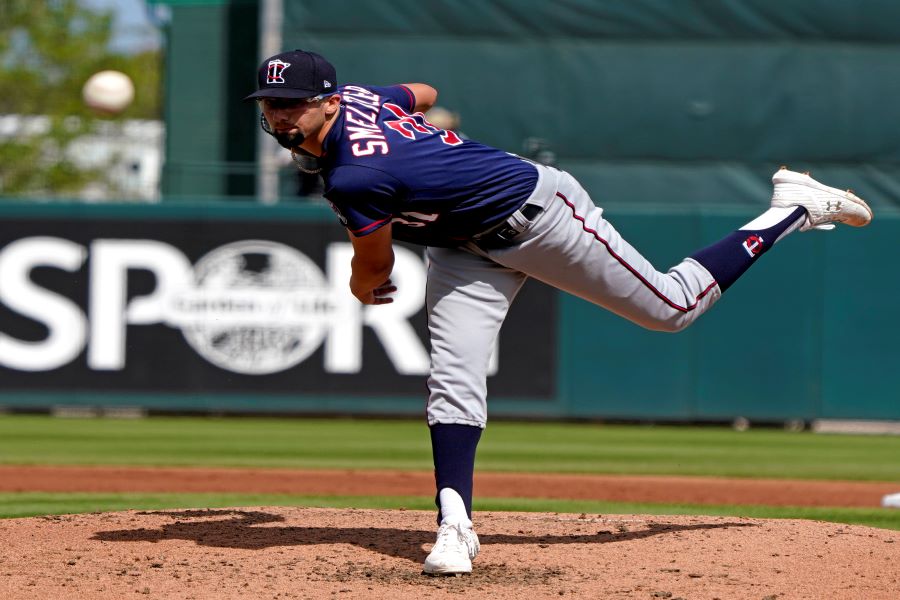 On Monday afternoon, Devin Smeltzer pitched for the Twins in a Grapefruit League contest with the Cardinals. Thanks to several different forms of defensive deficiency, St. Louis scored four times in Smeltzer’s two frames, but he had two strikeouts and no walks. Lewis Thorpe’s brief personal absence has opened a narrow window of opportunity for Smeltzer to start the season as the Twins’ fifth starter. That could turn out to be enough, if Smeltzer can make a few adjustments to make his similarities to one new teammate play up. With an average fastball velocity of just 89.1 miles per hour, Smeltzer starts at a certain disadvantage, even as a lefty. However, his average fastball spin rate in 2019 was 2,433 revolutions per minute, a number as far above the league average as his velocity is below it. A budding modern heuristic for capturing the value of fastball spin rate is the Bauer Unit, named after Reds right-hander Trevor Bauer. Divide a hurler’s average spin by their average velocity, and you get their Bauer Units for a given pitch. The league average for Bauer Units on the fastball hovers around 24. Smeltzer sits at a very impressive 28.3. One of the few pitchers who topped that figure last year: Rich Hill, at 28.4. Smeltzer shares more in common with Hill than handedness and those fastball spin characteristics. Though Hill came up as a heralded prospect and was a solid big-leaguer for a couple of years, this version of him emerged only after a long sojourn in the minors and independent leagues, and after a stint as a matchup reliever. Smeltzer was similarly shoved into a relief role before he attained the majors, but being traded to the Twins gave him a fresh start. Both have overcome significant adversity, on and off the field, to get as far as they have. Both have extremely impressive spin not only on their heaters, but on their curveballs. Thus far, however, Smeltzer hasn’t missed bats and shown the ability to dominate the way Hill has, and it’s not hard to see why. Whereas Hill famously launches himself down the mound and comes right over the top with his high-energy delivery, Smeltzer’s deceptive, short-stride windup gives way to a three-quarter arm action. It helps keep batters off-balance, and it has been Smeltzer’s preferred arm slot since he was an amateur. However, that arm angle creates some wasted spin, and some spin that flattens out his fastball into a pitch with more lateral run than vertical hop. It also turns his big, slow curve into a two-plane breaker, rather than a 12-to-6 offering. Raising his arm angle could transform Smeltzer from a decent pitch-to-contact, control-oriented swingman into a higher-upside guy with the ability to rack up strikeouts. It would unlock the maximum value of his excellent ability to impart spin. Alas, it’s not nearly that simple. For one thing, Smeltzer has gotten to this point despite his lack of pure stuff, and it might be difficult for him to clear the mental hurdle of giving up his unique delivery for a more trendy one, thereby risking the deception he creates by pitching the way he does. For another, it might turn out that his ability to generate that spin is dependent upon his pitching from the angle he uses now—that his current mechanics fit his natural biomechanical signature, in a way throwing from a higher angle never could. If he runs into further adversity and ends up back in Triple-A for an extended period, Smeltzer might experiment with a change in mechanics. If the Twins end up needing him as a starter or a high-leverage reliever, they might approach him and suggest such tweaks. In the meantime, despite the potential benefits of such a change, it’s hard to see it actually happening. The fear of the unknown, and the possibility that making a change before it’s absolutely necessary could ruin a good thing, will give both parties pause. MORE FROM TWINS DAILY — Latest Twins coverage from our writers — Recent Twins discussion in our forums — Follow Twins Daily via Twitter, Facebook or email
 -
The broad assumption, since MLB's newest rule on in-game strategy was announced, has been that specialists will go extinct because of it. That might not be true; they might just have to live closer to the edge.The 2020 Minnesota Twins are unlikely to carry a true matchup reliever, of either handedness. The pitchers closest to that profile, among those likely to make the roster, are veterans Sergio Romo (a righty who's tougher on righties) and Tyler Clippard (a righty who's famously tougher on lefties), but even they aren't extreme in this regard. However, despite a new rule that makes such hurlers harder to use, Rocco Baldelli might find he can occasionally escape a sticky situation by embracing platoon matchups in key moments, if he's willing to stomach a bit more risk. With the advent of the three-batter minimum rule in 2020, the role of matchup relief arms will, inevitably, diminish. The rule requires any pitcher who enters a game to face at least three batters, or to reach the end of an inning. It's been called the death of the LOOGY (lefty one-out guy), among other things, since it was first floated last spring. Paired with a rule that will firmly cap the number of pitchers on a roster at a given time at 13, and with longer option periods when pitchers are farmed out to bring up someone fresh, the three-batter minimum does incentivize a greater emphasis on durability and versatility among relievers. However, the rule changes have been slightly oversold as a death knell for the matchup guy. The second clause of the rule — "or to reach the end of an inning" — has been underrated as a carrot for the aggressive manager to chase. Last season, Baldelli showed that he belongs to the small class of new-age managers who are willing to take tactical risks, when the odds favor it. He could put that mentality to use to get the most out of his bullpen under new constraints in 2020. Say there are two outs, and an exceptionally tough left-handed hitter is due for the opposing team. It's the seventh inning of a one-run game, and there are two runners on base. Behind that slugging left-handed stick (perhaps Chicago's Yasmani Grandal) lurk a pair of right-handers with similar thunder (José Abreu and Edwin Encarnación, maybe). The White Sox's bullpen is pretty sturdy, these days, so it's important to hold on to the slim lead. In such a situation, Baldelli might be tempted to call on Taylor Rogers, as he sometimes did in 2019, and to then stretch Rogers through at least the eighth frame. That creates a long path to the end of the game, though. If he's feeling a bit more risk-averse, in light of the new rule, he might turn to Tyler Duffey or Trevor May, who are each split-neutral. Let's imagine, though, that only one of the two is available that night. That would leave someone further down the depth chart to pitch the eighth, or that same setup man to come back out, and maybe even Rogers to stretch out across multiple innings, too. If he were willing to roll the dice a bit, though, Baldelli could try something else: inserting Clippard. It's not ideal, in the sense that if Clippard should fail to get Grandal, he'd then be stuck in the game to face two tough right-handed batters. Clippard isn't as strong against righties; that would lead to a bit of a spiral. On the other hand, outside of Rogers, there's no single reliever in the Twins bullpen more likely to get Grandal out — and, thereby, to end the threat and become eligible to leave the game before the Sox come up to bat in the eighth — than Clippard. Managers will have to accept some risk of a snowball effect, whenever they try this kind of matchup management, from now on. However, that doesn't mean they shouldn't sometimes try it. In pivotal moments, if there's an optimal matchup against one or two particular batters, Baldelli should accept the downside in order to raise the likelihood of what is, already, the technically more likely event: getting out of the jam unscathed and regaining full flexibility for the following inning. Ron Gardenhire won't deploy this strategy. Nor will Mike Matheny, or even Terry Francona or Rick Renteria. In the AL Central, there will suddenly be a massive extinction event for matchup baseball in the middle and late innings, at least outside Minnesota. If Baldelli can sometimes accept the risk involved — if he's willing to raise the chances of a catastrophic unwinding by one percent in order to raise the chances of the best possible outcome by three or four percent, when that was already perhaps 65-percent likely — he'll give the Twins a clear strategic advantage in close contests throughout the campaign. MORE FROM TWINS DAILY — Latest Twins coverage from our writers — Recent Twins discussion in our forums — Follow Twins Daily via Twitter, Facebook or email Click here to view the article
-
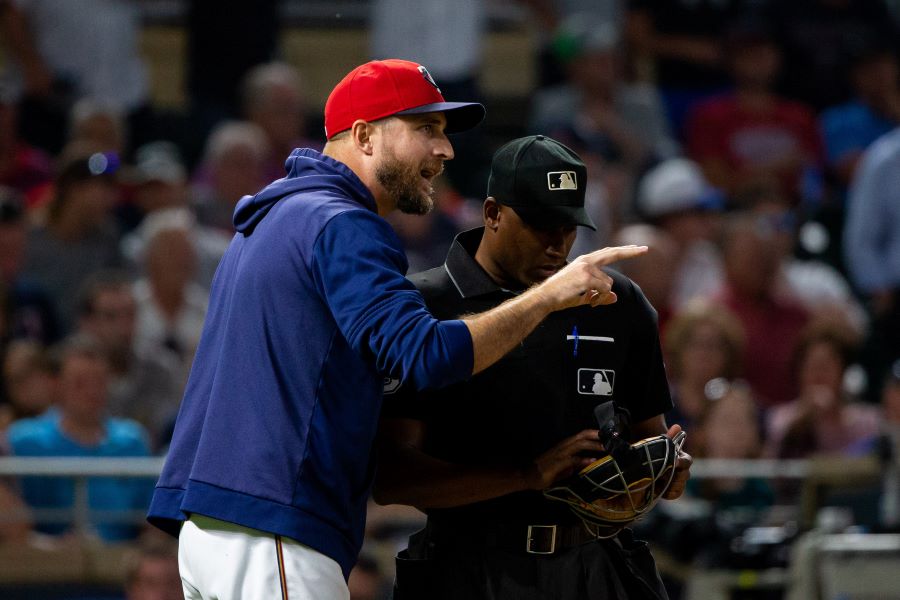 The 2020 Minnesota Twins are unlikely to carry a true matchup reliever, of either handedness. The pitchers closest to that profile, among those likely to make the roster, are veterans Sergio Romo (a righty who's tougher on righties) and Tyler Clippard (a righty who's famously tougher on lefties), but even they aren't extreme in this regard. However, despite a new rule that makes such hurlers harder to use, Rocco Baldelli might find he can occasionally escape a sticky situation by embracing platoon matchups in key moments, if he's willing to stomach a bit more risk. With the advent of the three-batter minimum rule in 2020, the role of matchup relief arms will, inevitably, diminish. The rule requires any pitcher who enters a game to face at least three batters, or to reach the end of an inning. It's been called the death of the LOOGY (lefty one-out guy), among other things, since it was first floated last spring. Paired with a rule that will firmly cap the number of pitchers on a roster at a given time at 13, and with longer option periods when pitchers are farmed out to bring up someone fresh, the three-batter minimum does incentivize a greater emphasis on durability and versatility among relievers. However, the rule changes have been slightly oversold as a death knell for the matchup guy. The second clause of the rule — "or to reach the end of an inning" — has been underrated as a carrot for the aggressive manager to chase. Last season, Baldelli showed that he belongs to the small class of new-age managers who are willing to take tactical risks, when the odds favor it. He could put that mentality to use to get the most out of his bullpen under new constraints in 2020. Say there are two outs, and an exceptionally tough left-handed hitter is due for the opposing team. It's the seventh inning of a one-run game, and there are two runners on base. Behind that slugging left-handed stick (perhaps Chicago's Yasmani Grandal) lurk a pair of right-handers with similar thunder (José Abreu and Edwin Encarnación, maybe). The White Sox's bullpen is pretty sturdy, these days, so it's important to hold on to the slim lead. In such a situation, Baldelli might be tempted to call on Taylor Rogers, as he sometimes did in 2019, and to then stretch Rogers through at least the eighth frame. That creates a long path to the end of the game, though. If he's feeling a bit more risk-averse, in light of the new rule, he might turn to Tyler Duffey or Trevor May, who are each split-neutral. Let's imagine, though, that only one of the two is available that night. That would leave someone further down the depth chart to pitch the eighth, or that same setup man to come back out, and maybe even Rogers to stretch out across multiple innings, too. If he were willing to roll the dice a bit, though, Baldelli could try something else: inserting Clippard. It's not ideal, in the sense that if Clippard should fail to get Grandal, he'd then be stuck in the game to face two tough right-handed batters. Clippard isn't as strong against righties; that would lead to a bit of a spiral. On the other hand, outside of Rogers, there's no single reliever in the Twins bullpen more likely to get Grandal out — and, thereby, to end the threat and become eligible to leave the game before the Sox come up to bat in the eighth — than Clippard. Managers will have to accept some risk of a snowball effect, whenever they try this kind of matchup management, from now on. However, that doesn't mean they shouldn't sometimes try it. In pivotal moments, if there's an optimal matchup against one or two particular batters, Baldelli should accept the downside in order to raise the likelihood of what is, already, the technically more likely event: getting out of the jam unscathed and regaining full flexibility for the following inning. Ron Gardenhire won't deploy this strategy. Nor will Mike Matheny, or even Terry Francona or Rick Renteria. In the AL Central, there will suddenly be a massive extinction event for matchup baseball in the middle and late innings, at least outside Minnesota. If Baldelli can sometimes accept the risk involved — if he's willing to raise the chances of a catastrophic unwinding by one percent in order to raise the chances of the best possible outcome by three or four percent, when that was already perhaps 65-percent likely — he'll give the Twins a clear strategic advantage in close contests throughout the campaign. MORE FROM TWINS DAILY — Latest Twins coverage from our writers — Recent Twins discussion in our forums — Follow Twins Daily via Twitter, Facebook or email
 -
The start of spring training doesn't necessarily spell the end of trade season, and the Twins still have the kind of depth that gives them options on the trade market.The Twins don't have many holes, and even their worst-case scenarios look relatively rosy. However, spring training is the time of year during which smart contenders consider ways in which they might shore up their minor weaknesses and raise their floor ever further. To that end, Minnesota should explore the possibility of a trade for Cubs outfielder Albert Almora, Jr. Before you ask, no, Almora isn't someone the Cubs are desperately trying to move, and no, he wouldn't be a notable improvement over Jake Cave or LaMont Wade as a regular fourth outfielder. However, the Cubs are infamously weak in an area (young pitching) in which the Twins are famously strong, and Almora would provide something the Twins do still need: a reliable, viable backup to Byron Buxton, capable of stepping in as an everyday center fielder if Buxton gets hurt and keeping the outfield defense intact. He has three years of team control remaining, including 2020. Almora, who will turn 26 in April, went to the Cubs just four picks after the Twins took Buxton in the 2012 draft. If Buxton's path to establishing himself in the majors felt circuitous and frustrating, though, it was nothing to that of Almora, who battled hand and wrist injuries, was blocked for most of a season during which he seemed ready for the majors, and has been given only inconsistent opportunities over the last three seasons. That said, he's not wholly a victim of circumstance: He's yet to post a season in which he was even a league-average hitter, according to Baseball Prospectus's DRC+, and he's failed to rein in his plate discipline as the Cubs hoped he would. Buxton and Almora are very different, in terms of style and profile, but similar in the shape of their overall value. Almora lacks Buxton's power potential and game-breaking speed, but has far superior feel for contact, and makes up for his lack of wheels in center field with terrific instincts. When right, he's well above-average defensively, and a line-drive hitter who can be a headache for left-handed pitchers. Alas, for much of 2019, Almora wasn't right. He had a career-worst 72 DRC+, as he continued to hack away too often at pitches outside the zone. He put the ball on the ground far too often. Last spring, he benefited when the Cubs sent Ian Happ to Triple-A Iowa to open the season. By mid-summer, however, Almora had lost his starting job in center to Jason Heyward, and Happ came back up to push him into a true platoon role. For the Twins to take interest in this particular target, they would need to believe they can do with Almora what they've done with so many other young hitters over the last two seasons. That would be a bet against the Cubs' player development, but bets against that particular element of the Chicago operation lately have tended to be wise ones. Almora showed up this spring talking about an overhauled swing, and there is certainly a real change. With his altered mechanics, he's already generated some impressive hard contact this spring, including a double and a home run, and he's more balanced, giving him a longer look at the incoming pitch and a better chance of laying off it if he doesn't like what he sees. If those changes hold, or if the Cubs (or Twins) build upon them, it's easy to see Almora blossoming into a similar hitter to Buxton, albeit with less impactful defense and baserunning. PECOTA projects an unimpressive .249/.287/.384 batting line for Almora this year, which isn't exciting, but the system only forecasts Buxton to hit .230/.288/.437. When (more than if) Buxton goes down with an injury, Almora could provide a facsimile of his value on both offense and defense. At the moment, the plan for any extended Buxton absence would seem to be to slide Max Kepler back to center field, with Marwin González becoming an everyday corner man and the roles of both Cave and Wade expanding considerably. Almora would change that. His presence would allow the team to keep Kepler in right field, where he's a Gold Glove-caliber defender. He'd also be a right-handed bat, helping maintain the balance at the bottom and turn of the batting order. Over the last few years, as teams have reached Peak Bullpen and the squeeze on position players has gotten tighter, the priority for any team in building a bench has been flexibility. Any player slated for a backup role needed to do things someone else on the roster didn't do. Complementary skills were valued much more highly than redundancies. With the addition of a 26th man and rules in place to prevent teams from further expanding their pitching staffs, that can start to change. The Twins could carry Almora as a late-game defensive replacement for Eddie Rosario, allow him to soak up the pinch-hit opportunities against lefties that would otherwise go (as his roster spot would) to Willians Astudillo, and have him handy as a high-upside replacement for Buxton when injury strikes. They'd still have room on the bench for Alex Avila, González, and Ehire Adrianza. Astudillo, Cave, and Wade, who all have minor-league options remaining, would remain available whenever need arose. For that matter, Almora can be optioned, too. The Cubs would want a fairly solid young arm in exchange for Almora. The fifth spot in their rotation is a toss-up between veteran Tyler Chatwood and young hurlers Alec Mills and Adbert Alzolay, but the system is considerably more bullish on Randy Dobnak and Lewis Thorpe than on Alzolay or Chatwood, and even its pessimistic take on Devin Smeltzer puts him on even footing with Chatwood. With Jhoulys Chacín in camp, the Twins could part with one of those three in exchange for Almora, but even if they were unwilling to, they might tempt the Cubs with either Cody Stashak or Zack Littell, because Chicago's bullpen lacks the controllable, flexible arms with which Minnesota's corps is replete. Moves that contain even a kernel of risk, as an Almora trade certainly would, are unappealing to teams in strong positions like the Twins' in February and March. If they're smart, though, Minnesota will keep their ears open and their thumbs limber, listening on offers and texting with executives throughout the spring. The worst-case scenario for this team isn't Buxton getting hurt, but rather, Buxton getting hurt at a time when any other player is also out, leaving them unable to shift their phalanx to cover their holes neatly. It's Buxton getting hurt while they don't have a solid defensive center fielder to keep their team defense together in his absence. It's having to go make a trade like the one outlined above, but in June or July, with the eyes of the baseball world on them and a whole lot less leverage than they have now. Proactive teams can avoid major overpays during the height of trade season, the kind that cost valuable prospects who go on to be stars elsewhere, and still be ready for a long season and deep playoff run. The Twins can enjoy that kind of benefit by acting now to fill what might be their only important hole. MORE FROM TWINS DAILY — Latest Twins coverage from our writers — Recent Twins discussion in our forums — Follow Twins Daily via Twitter, Facebook or email Click here to view the article
-
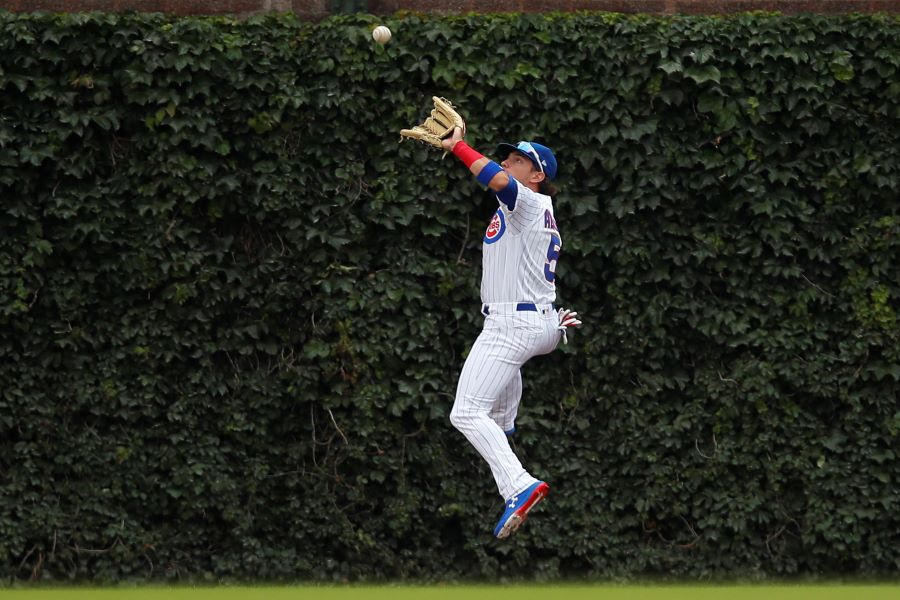 The Twins don't have many holes, and even their worst-case scenarios look relatively rosy. However, spring training is the time of year during which smart contenders consider ways in which they might shore up their minor weaknesses and raise their floor ever further. To that end, Minnesota should explore the possibility of a trade for Cubs outfielder Albert Almora, Jr. Before you ask, no, Almora isn't someone the Cubs are desperately trying to move, and no, he wouldn't be a notable improvement over Jake Cave or LaMont Wade as a regular fourth outfielder. However, the Cubs are infamously weak in an area (young pitching) in which the Twins are famously strong, and Almora would provide something the Twins do still need: a reliable, viable backup to Byron Buxton, capable of stepping in as an everyday center fielder if Buxton gets hurt and keeping the outfield defense intact. He has three years of team control remaining, including 2020. Almora, who will turn 26 in April, went to the Cubs just four picks after the Twins took Buxton in the 2012 draft. If Buxton's path to establishing himself in the majors felt circuitous and frustrating, though, it was nothing to that of Almora, who battled hand and wrist injuries, was blocked for most of a season during which he seemed ready for the majors, and has been given only inconsistent opportunities over the last three seasons. That said, he's not wholly a victim of circumstance: He's yet to post a season in which he was even a league-average hitter, according to Baseball Prospectus's DRC+, and he's failed to rein in his plate discipline as the Cubs hoped he would. Buxton and Almora are very different, in terms of style and profile, but similar in the shape of their overall value. Almora lacks Buxton's power potential and game-breaking speed, but has far superior feel for contact, and makes up for his lack of wheels in center field with terrific instincts. When right, he's well above-average defensively, and a line-drive hitter who can be a headache for left-handed pitchers. Alas, for much of 2019, Almora wasn't right. He had a career-worst 72 DRC+, as he continued to hack away too often at pitches outside the zone. He put the ball on the ground far too often. Last spring, he benefited when the Cubs sent Ian Happ to Triple-A Iowa to open the season. By mid-summer, however, Almora had lost his starting job in center to Jason Heyward, and Happ came back up to push him into a true platoon role. For the Twins to take interest in this particular target, they would need to believe they can do with Almora what they've done with so many other young hitters over the last two seasons. That would be a bet against the Cubs' player development, but bets against that particular element of the Chicago operation lately have tended to be wise ones. Almora showed up this spring talking about an overhauled swing, and there is certainly a real change. With his altered mechanics, he's already generated some impressive hard contact this spring, including a double and a home run, and he's more balanced, giving him a longer look at the incoming pitch and a better chance of laying off it if he doesn't like what he sees. If those changes hold, or if the Cubs (or Twins) build upon them, it's easy to see Almora blossoming into a similar hitter to Buxton, albeit with less impactful defense and baserunning. PECOTA projects an unimpressive .249/.287/.384 batting line for Almora this year, which isn't exciting, but the system only forecasts Buxton to hit .230/.288/.437. When (more than if) Buxton goes down with an injury, Almora could provide a facsimile of his value on both offense and defense. At the moment, the plan for any extended Buxton absence would seem to be to slide Max Kepler back to center field, with Marwin González becoming an everyday corner man and the roles of both Cave and Wade expanding considerably. Almora would change that. His presence would allow the team to keep Kepler in right field, where he's a Gold Glove-caliber defender. He'd also be a right-handed bat, helping maintain the balance at the bottom and turn of the batting order. Over the last few years, as teams have reached Peak Bullpen and the squeeze on position players has gotten tighter, the priority for any team in building a bench has been flexibility. Any player slated for a backup role needed to do things someone else on the roster didn't do. Complementary skills were valued much more highly than redundancies. With the addition of a 26th man and rules in place to prevent teams from further expanding their pitching staffs, that can start to change. The Twins could carry Almora as a late-game defensive replacement for Eddie Rosario, allow him to soak up the pinch-hit opportunities against lefties that would otherwise go (as his roster spot would) to Willians Astudillo, and have him handy as a high-upside replacement for Buxton when injury strikes. They'd still have room on the bench for Alex Avila, González, and Ehire Adrianza. Astudillo, Cave, and Wade, who all have minor-league options remaining, would remain available whenever need arose. For that matter, Almora can be optioned, too. The Cubs would want a fairly solid young arm in exchange for Almora. The fifth spot in their rotation is a toss-up between veteran Tyler Chatwood and young hurlers Alec Mills and Adbert Alzolay, but the system is considerably more bullish on Randy Dobnak and Lewis Thorpe than on Alzolay or Chatwood, and even its pessimistic take on Devin Smeltzer puts him on even footing with Chatwood. With Jhoulys Chacín in camp, the Twins could part with one of those three in exchange for Almora, but even if they were unwilling to, they might tempt the Cubs with either Cody Stashak or Zack Littell, because Chicago's bullpen lacks the controllable, flexible arms with which Minnesota's corps is replete. Moves that contain even a kernel of risk, as an Almora trade certainly would, are unappealing to teams in strong positions like the Twins' in February and March. If they're smart, though, Minnesota will keep their ears open and their thumbs limber, listening on offers and texting with executives throughout the spring. The worst-case scenario for this team isn't Buxton getting hurt, but rather, Buxton getting hurt at a time when any other player is also out, leaving them unable to shift their phalanx to cover their holes neatly. It's Buxton getting hurt while they don't have a solid defensive center fielder to keep their team defense together in his absence. It's having to go make a trade like the one outlined above, but in June or July, with the eyes of the baseball world on them and a whole lot less leverage than they have now. Proactive teams can avoid major overpays during the height of trade season, the kind that cost valuable prospects who go on to be stars elsewhere, and still be ready for a long season and deep playoff run. The Twins can enjoy that kind of benefit by acting now to fill what might be their only important hole. MORE FROM TWINS DAILY — Latest Twins coverage from our writers — Recent Twins discussion in our forums — Follow Twins Daily via Twitter, Facebook or email
 -
José Berríos became a full-fledged four-pitch pitcher in 2019. That makes him more well-rounded, and it might allow him to be better than even advanced models forecast him to be.José Berríos threw more changeups in 2019 than in the previous two seasons, combined. He’d had a good change when he first reached the majors in 2016, but lost confidence in it, and his lack of a second reliable off-speed pitch had been a lingering problem. In 2019, he developed more confidence in using the changeup as a swing-and-miss pitch against right-handers, and used it as a replacement for his sinker against lefties. Despite his struggles late in the season, Berríos made a major breakthrough when he rediscovered the changeup, and that improvement could vault him to ace status in 2020. Adding (or increasing the usage of) a pitch is one of the key ways in which a pitcher can find a new gear. In Berríos’s case, that would be an especially welcome development, because his projections aren’t overly optimistic, and they don’t even come with especially wide error bars. His metronomic consistency over the past three years, in terms of final, full-season numbers, belies both his real development and struggles as a pitcher, and fools projection systems. Baseball Prospectus’s PECOTA system generates not just one projection for each player, but a dozen of them. A player’s median projection is the default, but the system spits out projected values for each decile from 10 through 90, plus a couple of even more extreme possibilities. That allows us to look at the range of plausible outcomes for a player, rather than just a single, most likely one. The longer and more consistent a track record a player has, the less those decile projections differ from one another. For young players who have had uneven careers, however, they tend to vary widely. It’s a bit surprising, then, to note just how little the projected outcomes for the 25-year-old Berríos vary. His median projection includes a 4.20 ERA, 98 DRA- (meaning he’d be slightly above-average, relative to all big-league pitchers), and 1.6 wins above replacement player (WARP). In 184 innings, he projects for 190 strikeouts and 63 walks. In his 20th-percentile projection, he’d have a 4.90 ERA, a 105 DRA-, and be worth 0.9 WARP, with 185 strikeouts and 70 walks. His 80th-percentile projection would only nudge him to a 3.58 ERA, a 91 DRA-, 2.3 WARP, 195 strikeouts, and 56 walks. To see a real, significant chance of Berríos becoming the dominant starter for whom Twins fans have so often hoped, then, one has to believe he can do something the system can’t foresee. Because pitch types and pitch usage are two things PECOTA does not include in its modeling, Berríos throwing a changeup more frequently and strategically would be just such a blind spot. He’s now deftly using his four-seamer, curve, sinker, and changeup, blending them relatively evenly against batters who stand on each side of the plate. That keeps batters guessing, in a way PECOTA is only beginning to understand that Berríos can do. More importantly, perhaps, Berríos can command the sinker and the changeup really well when pitching to the third-base side of the plate. He can do the same with his four-seamer and curve to the first-base side of the dish. It’s great when a pitcher can command a given pitch to all quadrants, and to some extent, Berríos can do so with his four-seamer. In a huge majority of cases, though, a given offering is effective mostly when thrown to one side of the plate, because of the way its movement and the pitcher’s mechanics interact. That’s why it’s tremendously valuable for Berríos to have improved his feel for and confidence in the change; it gives him two pitches that are excellent on each side of home plate. Even if a batter decides to cut the plate in half in a given situation and lay off anything else, they have only a 50-percent chance of being right about what they’re swinging at. The Twins and Berríos have worked hard to ensure that he’s prepared for the long haul of baseball’s long season this year. He’s changed the way he recovers and is working to maximize flexibility, the better to promote his chances of staying healthy. If all of that works, he might emerge this year as the best pitcher in the American League Central, thanks to an improvement he’s already made. MORE FROM TWINS DAILY — Latest Twins coverage from our writers — Recent Twins discussion in our forums — Follow Twins Daily via Twitter, Facebook or email Click here to view the article
-
How José Berríos Can Ride His Changeup Past His Projections
Matthew Trueblood posted an article in Twins
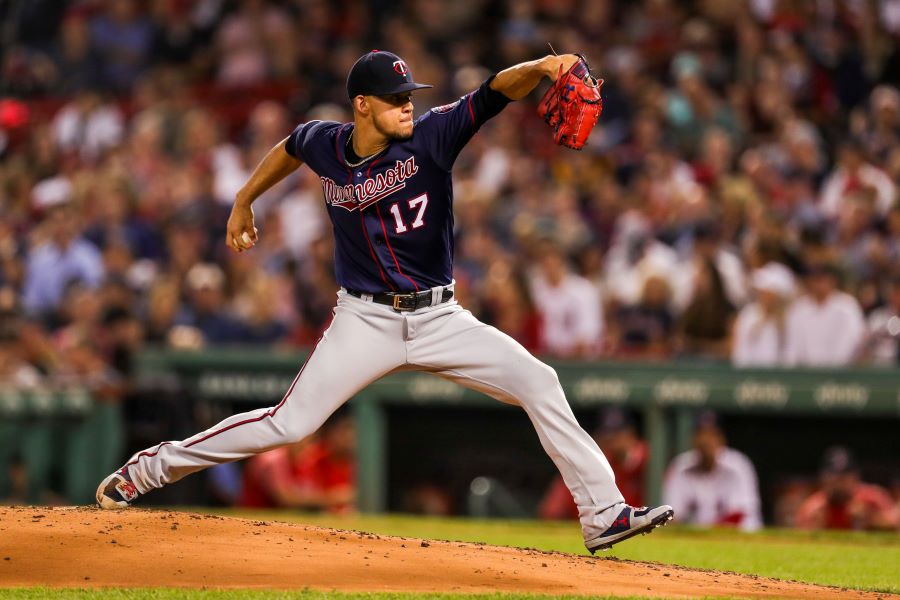 José Berríos threw more changeups in 2019 than in the previous two seasons, combined. He’d had a good change when he first reached the majors in 2016, but lost confidence in it, and his lack of a second reliable off-speed pitch had been a lingering problem. In 2019, he developed more confidence in using the changeup as a swing-and-miss pitch against right-handers, and used it as a replacement for his sinker against lefties. Despite his struggles late in the season, Berríos made a major breakthrough when he rediscovered the changeup, and that improvement could vault him to ace status in 2020. Adding (or increasing the usage of) a pitch is one of the key ways in which a pitcher can find a new gear. In Berríos’s case, that would be an especially welcome development, because his projections aren’t overly optimistic, and they don’t even come with especially wide error bars. His metronomic consistency over the past three years, in terms of final, full-season numbers, belies both his real development and struggles as a pitcher, and fools projection systems. Baseball Prospectus’s PECOTA system generates not just one projection for each player, but a dozen of them. A player’s median projection is the default, but the system spits out projected values for each decile from 10 through 90, plus a couple of even more extreme possibilities. That allows us to look at the range of plausible outcomes for a player, rather than just a single, most likely one. The longer and more consistent a track record a player has, the less those decile projections differ from one another. For young players who have had uneven careers, however, they tend to vary widely. It’s a bit surprising, then, to note just how little the projected outcomes for the 25-year-old Berríos vary. His median projection includes a 4.20 ERA, 98 DRA- (meaning he’d be slightly above-average, relative to all big-league pitchers), and 1.6 wins above replacement player (WARP). In 184 innings, he projects for 190 strikeouts and 63 walks. In his 20th-percentile projection, he’d have a 4.90 ERA, a 105 DRA-, and be worth 0.9 WARP, with 185 strikeouts and 70 walks. His 80th-percentile projection would only nudge him to a 3.58 ERA, a 91 DRA-, 2.3 WARP, 195 strikeouts, and 56 walks. To see a real, significant chance of Berríos becoming the dominant starter for whom Twins fans have so often hoped, then, one has to believe he can do something the system can’t foresee. Because pitch types and pitch usage are two things PECOTA does not include in its modeling, Berríos throwing a changeup more frequently and strategically would be just such a blind spot. He’s now deftly using his four-seamer, curve, sinker, and changeup, blending them relatively evenly against batters who stand on each side of the plate. That keeps batters guessing, in a way PECOTA is only beginning to understand that Berríos can do. More importantly, perhaps, Berríos can command the sinker and the changeup really well when pitching to the third-base side of the plate. He can do the same with his four-seamer and curve to the first-base side of the dish. It’s great when a pitcher can command a given pitch to all quadrants, and to some extent, Berríos can do so with his four-seamer. In a huge majority of cases, though, a given offering is effective mostly when thrown to one side of the plate, because of the way its movement and the pitcher’s mechanics interact. That’s why it’s tremendously valuable for Berríos to have improved his feel for and confidence in the change; it gives him two pitches that are excellent on each side of home plate. Even if a batter decides to cut the plate in half in a given situation and lay off anything else, they have only a 50-percent chance of being right about what they’re swinging at. The Twins and Berríos have worked hard to ensure that he’s prepared for the long haul of baseball’s long season this year. He’s changed the way he recovers and is working to maximize flexibility, the better to promote his chances of staying healthy. If all of that works, he might emerge this year as the best pitcher in the American League Central, thanks to an improvement he’s already made. MORE FROM TWINS DAILY — Latest Twins coverage from our writers — Recent Twins discussion in our forums — Follow Twins Daily via Twitter, Facebook or email
 -
The industry-leading projection engine has made its pronouncements about Twins players, and about the teams' likely record. What does it tell us about who should bat where?Signing Josh Donaldson as a free agent was the biggest offseason move in the history of Minnesota baseball, and it’s one of the great moves in recent memory in another category, too. An abiding joy of the hot stove league, one that long predates free agency, is the building of lineups on napkins and envelopes. Donaldson’s addition to an already stacked 2020 Twins lineup makes for some truly delightful dream-weaving, and surely set off a frenzy of such scribbling. Now, however, spring training has begun, and reality is rushing forward to blend into (if not overrun) our dream worlds. We have players in uniform, nagging injuries lurking, and projection systems spitting out hard, cold numbers that forecast each player’s 2020 season. Let’s shake off our dreams and memories of 2019, then, and use PECOTA projections to build the optimal Twins lineup for the year ahead. Neither Richard Rodgers nor Oscar Hammerstein II ever made it to the top step of a big-league dugout, but “start at the very beginning” is still salient advice, so let’s follow it. According to PECOTA, the Twins’ rightful leadoff hitter for 2020 is Luis Arraez. While the system doesn’t entirely buy into Arraez’s .334 average or .399 on-base percentage from 2019, it boldly projects the sophomore to post the highest OBP of any Twin, and the only others even in the same range as Arraez hit for too much power to slot them in at the top of the order. Arraez’s excellent contact rate could be a minor liability elsewhere in the order, because of the risk of hitting into double plays, but at the top of the order, it’s just one way to drive an opponent’s pitch count up and give teammates an early look at their stuff. Of the 304 batters who swung at least 500 times in the majors last year, Arraez had the seventh-highest rate of foul balls per swing. That’s not necessarily indicative of a great hitter; much depends on the way they get there. In Arraez’s case, however, it’s more feature than bug, keeping him in at-bats and perhaps giving the offense an early look at a starter’s third or fourth pitch. Second in the order, where he’s batted frequently and comfortably in the past, would be Donaldson, whom PECOTA projects to nearly match Arraez’s OBP despite a strikeout rate roughly two and a half times higher. The system expects Donaldson to make up for a strikeout rate just north of the league average with a gaudy 13.9-percent walk rate, highest among Minnesota regulars. Donaldson projects for less power than Nelson Cruz or Miguel Sanó, but the patience and on-base skills he provides fit best in the two-hole. Because of his extraordinary power (but less sterling walk rate), Nelson Cruz would be the optimal third hitter, according to PECOTA. The system forecasts a team-high .590 slugging average and a .304 isolated power that runs just behind Sanó for the team lead. The third spot in the order, because it is the most likely of any slot to come up with two outs and no one on base, should feature a batter who gets most of their value from their ISO, and shouldn’t feature someone who relies on walks. Cruz is just the right type of hitter for the job, and is especially perfect for it on this particular team. Though Cruz has the best overall offensive projection, Sanó is projected to lead the team in WARP, and would be the optimal cleanup hitter, based on PECOTA. His projected 37.1-percent strikeout rate is less than ideal for a cleanup guy, which could steer one toward an argument for batting him second and Donaldson fourth. However, the system projects such majestic power from Sanó—and the top of the order has such a good expected OBP—that sliding him down to fourth (to maximize the results from having men on base when he bats) makes more sense. Mitch Garver and Max Kepler have a nearly identical overall projection, in terms of production. The system forecasts Garver to be a slightly better hitter, on balance, thanks mostly to a higher forecasted batting average on balls in play (an area in which Kepler has always struggled), but it pegs Kepler for a considerably better strikeout rate. The raw data nudges things in Garver’s direction, but in acknowledgment of the fact that the three hitters above them will all be right-handed, Kepler should bat fifth. Though neither has as strong a projected OBP as the four guys at the top of the order, both Kepler and Garver do project to walk often. That could make the seventh slot in the order an effective second cleanup hitter—a hitter who sees a huge number of runners on base when they step to the plate and is tasked with driving them in. That makes it a cozy fit for Eddie Rosario, whom the system projects to slug .506 and be solidly above-average, despite (surprise, surprise) a very low projected walk rate. Conspicuous in his absence, to this point, has been Jorge Polanco, whom PECOTA projects to be the eighth-best hitter on the 2020 Twins. Even so, the system views him as a very well-rounded hitter, with a solid walk rate, very good strikeout rate, modest power and a solid BABIP. Almost any other team in the league would be thrilled to have a batter of Polanco’s quality, with his balanced skill set, even at the top of its order. Of course, all signs (from last season, and from the team’s remarks this winter) point toward Polanco hitting much higher than this, but if the lineup were constructed purely to maximize expected runs scored, he’d bat eighth. That leaves Byron Buxton, for whom batting ninth will be neither a surprise nor an insult. PECOTA only foresees an 86 DRC+ for Buxton, making him the weak link in a lineup that otherwise ranges from 152 down to 106. Given his power (when Polanco is on in front of him) and his speed, however, Buxton can be a dynamic weapon, even without being an overall monster. Having his speed at the bottom of the order, especially, could catalyze the lineup for the next round—though PECOTA projects just a .288 OBP, which is why he has to remain down there. A few caveats are necessary here. Firstly, of course, there is friction to some of these potential decisions, and that friction is likely to prevent them all from coming to pass. It’s hard to imagine Rosario and Polanco as the seventh and eighth hitters. Secondly, PECOTA does not code for or build its projections around handedness, so it can’t help us shake up the lineup based on the handedness or skill set of opposing starters. The projections are also vulnerable to error if the usage pattern of a particular player changes in an important way, for the same reason. It’s worth noting, in addition to all of that, that batting order doesn’t matter all that much, so fans shouldn’t take up torches and pitchforks if Kepler or Polanco break up the top of the batting order in some way not captured here. Finally, we have to acknowledge that (like many old and beloved baseball practices and customs) the back-of-the-envelope lineup has been rendered somewhat obsolete. Modern lineups are typically highly fluid and modular, and the Twins’ lineup fits those descriptors even better than most. Marwin González, Alex Avila, and others will rotate into the lineup often, changing the optimal alignment of it, even without accounting for injuries or slumps. However, especially with Donaldson on board, it’s still great fun to dream on the set lineup this team could run out on a regular basis throughout 2020. MORE FROM TWINS DAILY — Latest Twins coverage from our writers — Recent Twins discussion in our forums — Follow Twins Daily via Twitter, Facebook or email Click here to view the article
-
 Signing Josh Donaldson as a free agent was the biggest offseason move in the history of Minnesota baseball, and it’s one of the great moves in recent memory in another category, too. An abiding joy of the hot stove league, one that long predates free agency, is the building of lineups on napkins and envelopes. Donaldson’s addition to an already stacked 2020 Twins lineup makes for some truly delightful dream-weaving, and surely set off a frenzy of such scribbling. Now, however, spring training has begun, and reality is rushing forward to blend into (if not overrun) our dream worlds. We have players in uniform, nagging injuries lurking, and projection systems spitting out hard, cold numbers that forecast each player’s 2020 season. Let’s shake off our dreams and memories of 2019, then, and use PECOTA projections to build the optimal Twins lineup for the year ahead. Neither Richard Rodgers nor Oscar Hammerstein II ever made it to the top step of a big-league dugout, but “start at the very beginning” is still salient advice, so let’s follow it. According to PECOTA, the Twins’ rightful leadoff hitter for 2020 is Luis Arraez. While the system doesn’t entirely buy into Arraez’s .334 average or .399 on-base percentage from 2019, it boldly projects the sophomore to post the highest OBP of any Twin, and the only others even in the same range as Arraez hit for too much power to slot them in at the top of the order. Arraez’s excellent contact rate could be a minor liability elsewhere in the order, because of the risk of hitting into double plays, but at the top of the order, it’s just one way to drive an opponent’s pitch count up and give teammates an early look at their stuff. Of the 304 batters who swung at least 500 times in the majors last year, Arraez had the seventh-highest rate of foul balls per swing. That’s not necessarily indicative of a great hitter; much depends on the way they get there. In Arraez’s case, however, it’s more feature than bug, keeping him in at-bats and perhaps giving the offense an early look at a starter’s third or fourth pitch. Second in the order, where he’s batted frequently and comfortably in the past, would be Donaldson, whom PECOTA projects to nearly match Arraez’s OBP despite a strikeout rate roughly two and a half times higher. The system expects Donaldson to make up for a strikeout rate just north of the league average with a gaudy 13.9-percent walk rate, highest among Minnesota regulars. Donaldson projects for less power than Nelson Cruz or Miguel Sanó, but the patience and on-base skills he provides fit best in the two-hole. Because of his extraordinary power (but less sterling walk rate), Nelson Cruz would be the optimal third hitter, according to PECOTA. The system forecasts a team-high .590 slugging average and a .304 isolated power that runs just behind Sanó for the team lead. The third spot in the order, because it is the most likely of any slot to come up with two outs and no one on base, should feature a batter who gets most of their value from their ISO, and shouldn’t feature someone who relies on walks. Cruz is just the right type of hitter for the job, and is especially perfect for it on this particular team. Though Cruz has the best overall offensive projection, Sanó is projected to lead the team in WARP, and would be the optimal cleanup hitter, based on PECOTA. His projected 37.1-percent strikeout rate is less than ideal for a cleanup guy, which could steer one toward an argument for batting him second and Donaldson fourth. However, the system projects such majestic power from Sanó—and the top of the order has such a good expected OBP—that sliding him down to fourth (to maximize the results from having men on base when he bats) makes more sense. Mitch Garver and Max Kepler have a nearly identical overall projection, in terms of production. The system forecasts Garver to be a slightly better hitter, on balance, thanks mostly to a higher forecasted batting average on balls in play (an area in which Kepler has always struggled), but it pegs Kepler for a considerably better strikeout rate. The raw data nudges things in Garver’s direction, but in acknowledgment of the fact that the three hitters above them will all be right-handed, Kepler should bat fifth. Though neither has as strong a projected OBP as the four guys at the top of the order, both Kepler and Garver do project to walk often. That could make the seventh slot in the order an effective second cleanup hitter—a hitter who sees a huge number of runners on base when they step to the plate and is tasked with driving them in. That makes it a cozy fit for Eddie Rosario, whom the system projects to slug .506 and be solidly above-average, despite (surprise, surprise) a very low projected walk rate. Conspicuous in his absence, to this point, has been Jorge Polanco, whom PECOTA projects to be the eighth-best hitter on the 2020 Twins. Even so, the system views him as a very well-rounded hitter, with a solid walk rate, very good strikeout rate, modest power and a solid BABIP. Almost any other team in the league would be thrilled to have a batter of Polanco’s quality, with his balanced skill set, even at the top of its order. Of course, all signs (from last season, and from the team’s remarks this winter) point toward Polanco hitting much higher than this, but if the lineup were constructed purely to maximize expected runs scored, he’d bat eighth. That leaves Byron Buxton, for whom batting ninth will be neither a surprise nor an insult. PECOTA only foresees an 86 DRC+ for Buxton, making him the weak link in a lineup that otherwise ranges from 152 down to 106. Given his power (when Polanco is on in front of him) and his speed, however, Buxton can be a dynamic weapon, even without being an overall monster. Having his speed at the bottom of the order, especially, could catalyze the lineup for the next round—though PECOTA projects just a .288 OBP, which is why he has to remain down there. A few caveats are necessary here. Firstly, of course, there is friction to some of these potential decisions, and that friction is likely to prevent them all from coming to pass. It’s hard to imagine Rosario and Polanco as the seventh and eighth hitters. Secondly, PECOTA does not code for or build its projections around handedness, so it can’t help us shake up the lineup based on the handedness or skill set of opposing starters. The projections are also vulnerable to error if the usage pattern of a particular player changes in an important way, for the same reason. It’s worth noting, in addition to all of that, that batting order doesn’t matter all that much, so fans shouldn’t take up torches and pitchforks if Kepler or Polanco break up the top of the batting order in some way not captured here. Finally, we have to acknowledge that (like many old and beloved baseball practices and customs) the back-of-the-envelope lineup has been rendered somewhat obsolete. Modern lineups are typically highly fluid and modular, and the Twins’ lineup fits those descriptors even better than most. Marwin González, Alex Avila, and others will rotate into the lineup often, changing the optimal alignment of it, even without accounting for injuries or slumps. However, especially with Donaldson on board, it’s still great fun to dream on the set lineup this team could run out on a regular basis throughout 2020. MORE FROM TWINS DAILY — Latest Twins coverage from our writers — Recent Twins discussion in our forums — Follow Twins Daily via Twitter, Facebook or email
 -
I think there's something there, yet, but the team got an extra option year on him, and that puts him at a disadvantage in terms of getting consistent run in the bullpen at the big-league level. Still, yeah, it's still a big arm, it's a newly motivated person, and if the slider plays up in relief the way we thought it would going into last year, he could end up being this year's Littell.
-
Trading Brusdar Graterol for Kenta Maeda didn't become a possibility overnight. It took years of methodical, successful pitching development and investment. The Twins nailed it, and need to keep it up.As pitchers and catchers report to Fort Myers, the biggest Twins storyline is still the trade that landed them Kenta Maeda in exchange for Brusdar Graterol. That move put the finishing touches on their offseason, and whether you like the deal or not, it’s clearly solidified the team’s starting rotation for 2020 in a very positive way. Had it not been for the team’s overall advancements and successes in the development of pitchers over the last two years, however, the trade would have been impossible to pull off. Graterol is, himself, one success story of the team’s pitching development infrastructure. Many hard-throwing teenagers undergo Tommy John surgery shortly after turning pro; very few have as quick and smooth a path to the big leagues as Graterol has had. The team managed his workloads and helped him hone his mechanics to keep him healthy, and while the results were mixed on that front, every bit of uninterrupted competitive action helped, and Graterol’s command and feel for the slider came along much faster than is typical of pitchers whose careers begin the way his did. By this offseason, the team had come to the realization that Graterol belonged in the bullpen, but his upside there is considerable. His development has been a victory for the organization. Without other, even greater successes, though, that win wouldn’t have positioned the team to trade him for Maeda. In 2018, the team helped Taylor Rogers build a slider, and his career took off. Where they’d had little more than a matchup lefty, they now have one of the league’s best relievers, capable of stretching out beyond a single inning of work and dominant against both left-handed and right-handed batters. They also helped both Tyler Duffey and Trevor May re-engineer their mechanics, reshape their breaking stuff, and recalibrate their pitch mixes, leading to their twin 2019 breakouts. That made for a beefed-up back end of the bullpen, one that needed little help even from an electric arm like Graterol’s. Those achievements came at the big-league level, which made them highly visible, but they’re just the tip of the iceberg. Cody Stashak and Zack Littell contributed impressively in 2019, thanks largely to development and direction they undertook in the minor leagues. Devin Smeltzer and Randy Dobnak seemed unlikely to ever reach the major leagues as recently as 2018, but now, both look like credible swingmen who can eat innings when the team’s depth is tested and provide high-quality short relief work when they’re rolling. The club salvaged the development of Lewis Thorpe, after Thorpe’s long saga of elbow trouble forced him to evolve a lot in a short time, and now believe he’s a solid backend starter. Jordan Balazovic, Jhoan Duran, and Blayne Enlow all offer varying degrees of promise and a surprising amount of polish, given their profiles. Populating the back end of their rotation, for now, are low-risk, low-profile additions Homer Bailey and Rich Hill. Those gambles come on the heels of wildly successful similar investments in Jake Odorizzi and Michael Pineda. The team has demonstrated an ability to allow its pitchers to find their own paths to success, without feeling unable to step in when they can offer a new insight or tool to a particular hurler. As a result, they’re more confident in their ability to go bargain-hunting, and there’s a stronger foundation for that confidence. All of these wins set the stage for trading away Graterol. High-octane, high-profile pitching prospects are fun, but they’re a risky luxury. Because the Twins accrued such depth in their rotation, they could afford to view Graterol strictly as a reliever. Because they so successfully augmented the development of their key relievers, they could afford to view Graterol as a non-essential reliever. Because they had so little urgent need for him, and so much confidence in their processes and their number of options, they could afford to trade Graterol for Maeda. In the big leagues, every small victory of player development has a positive knock-on effect. Teams who commit to being good at the still-difficult science of player development, and who then pounce on any opportunity to capture and maximize those aftereffects when they have success, begin to enjoy the kind of persistent advantage that keeps windows open longer and builds dynasties. For every pitcher to whom the Twins successfully add a new pitch, or for whom they find some hidden mechanical key, they take another step toward winning a whole bunch of AL Central titles in a row. MORE FROM TWINS DAILY — Latest Twins coverage from our writers — Recent Twins discussion in our forums — Follow Twins Daily via Twitter, Facebook or email Click here to view the article
-
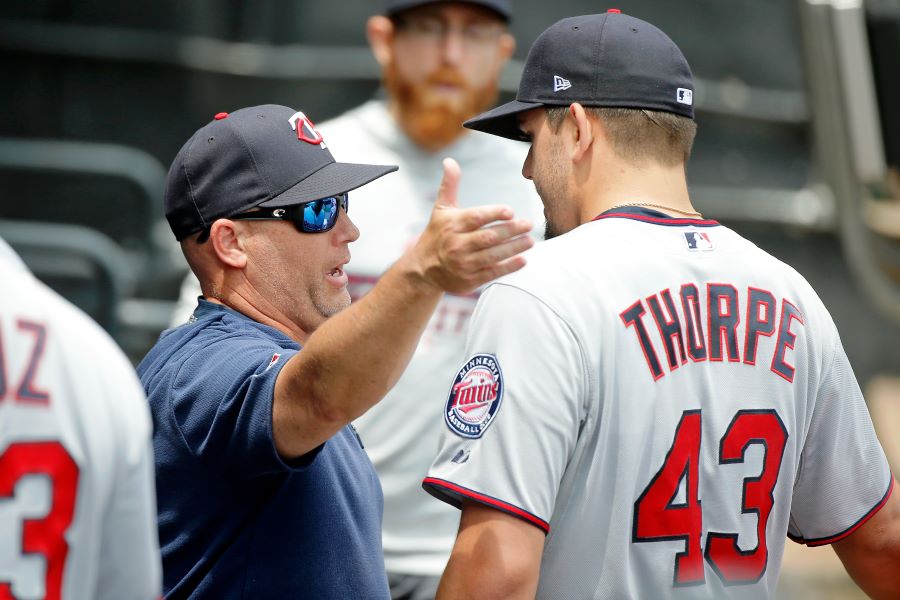 As pitchers and catchers report to Fort Myers, the biggest Twins storyline is still the trade that landed them Kenta Maeda in exchange for Brusdar Graterol. That move put the finishing touches on their offseason, and whether you like the deal or not, it’s clearly solidified the team’s starting rotation for 2020 in a very positive way. Had it not been for the team’s overall advancements and successes in the development of pitchers over the last two years, however, the trade would have been impossible to pull off. Graterol is, himself, one success story of the team’s pitching development infrastructure. Many hard-throwing teenagers undergo Tommy John surgery shortly after turning pro; very few have as quick and smooth a path to the big leagues as Graterol has had. The team managed his workloads and helped him hone his mechanics to keep him healthy, and while the results were mixed on that front, every bit of uninterrupted competitive action helped, and Graterol’s command and feel for the slider came along much faster than is typical of pitchers whose careers begin the way his did. By this offseason, the team had come to the realization that Graterol belonged in the bullpen, but his upside there is considerable. His development has been a victory for the organization. Without other, even greater successes, though, that win wouldn’t have positioned the team to trade him for Maeda. In 2018, the team helped Taylor Rogers build a slider, and his career took off. Where they’d had little more than a matchup lefty, they now have one of the league’s best relievers, capable of stretching out beyond a single inning of work and dominant against both left-handed and right-handed batters. They also helped both Tyler Duffey and Trevor May re-engineer their mechanics, reshape their breaking stuff, and recalibrate their pitch mixes, leading to their twin 2019 breakouts. That made for a beefed-up back end of the bullpen, one that needed little help even from an electric arm like Graterol’s. Those achievements came at the big-league level, which made them highly visible, but they’re just the tip of the iceberg. Cody Stashak and Zack Littell contributed impressively in 2019, thanks largely to development and direction they undertook in the minor leagues. Devin Smeltzer and Randy Dobnak seemed unlikely to ever reach the major leagues as recently as 2018, but now, both look like credible swingmen who can eat innings when the team’s depth is tested and provide high-quality short relief work when they’re rolling. The club salvaged the development of Lewis Thorpe, after Thorpe’s long saga of elbow trouble forced him to evolve a lot in a short time, and now believe he’s a solid backend starter. Jordan Balazovic, Jhoan Duran, and Blayne Enlow all offer varying degrees of promise and a surprising amount of polish, given their profiles. Populating the back end of their rotation, for now, are low-risk, low-profile additions Homer Bailey and Rich Hill. Those gambles come on the heels of wildly successful similar investments in Jake Odorizzi and Michael Pineda. The team has demonstrated an ability to allow its pitchers to find their own paths to success, without feeling unable to step in when they can offer a new insight or tool to a particular hurler. As a result, they’re more confident in their ability to go bargain-hunting, and there’s a stronger foundation for that confidence. All of these wins set the stage for trading away Graterol. High-octane, high-profile pitching prospects are fun, but they’re a risky luxury. Because the Twins accrued such depth in their rotation, they could afford to view Graterol strictly as a reliever. Because they so successfully augmented the development of their key relievers, they could afford to view Graterol as a non-essential reliever. Because they had so little urgent need for him, and so much confidence in their processes and their number of options, they could afford to trade Graterol for Maeda. In the big leagues, every small victory of player development has a positive knock-on effect. Teams who commit to being good at the still-difficult science of player development, and who then pounce on any opportunity to capture and maximize those aftereffects when they have success, begin to enjoy the kind of persistent advantage that keeps windows open longer and builds dynasties. For every pitcher to whom the Twins successfully add a new pitch, or for whom they find some hidden mechanical key, they take another step toward winning a whole bunch of AL Central titles in a row. MORE FROM TWINS DAILY — Latest Twins coverage from our writers — Recent Twins discussion in our forums — Follow Twins Daily via Twitter, Facebook or email
 -
The Red Sox saw something in Brusdar Graterol's medical information that made them balk. But is there any real value in the kinds of assessments that lead to such reversals?The way the Boston Red Sox interpreted and evaluated medical information about Brusdar Graterol cost the Minnesota Twins something tangible. Now that the terms of the Mookie Betts megadeal are more or less set, we can assess exactly what that cost was. Instead of getting Kenta Maeda in exchange for Graterol in a straight-up exchange, the Twins are now getting Maeda and $10 million from the Los Angeles Dodgers, but giving up Graterol, outfielder Luke Raley, and the 67th pick in the 2020 MLB Draft. The change in marginal value for Minnesota is small, but it’s real, and it’s not really fair. The Red Sox shouldn’t have had the right to hold up the deal on this basis, and MLB should modify its rules to avoid similar situations in the future. At first, this might seem an extreme position. No team should be expected to take on damaged goods, and any rule that reduces the discretion a team can exercise when reviewing otherwise privileged information before giving a trade final approval would be met with dismay. There are relevant, recent precedents for teams withholding key information about a player when trading them to another club, and that can’t be allowed to happen. However, there’s a marked difference between truly damaged, injured baseball players—especially pitchers—and merely risky ones. I would argue the difference is one of kind, not of degree, and that the ability of one team to apply their own prognoses to subjective medical data after a trade has been agreed upon is unfair to the other party in said trade and to the player himself. We’re very bad at predicting injuries in baseball, but that should come as no surprise. We’re pretty bad at predicting, and even diagnosing, much more simple, straightforward medical conditions, across much more robust and similar populations than big-league pitchers. In numerous studies, when shown them far enough apart to minimize awareness of the subject at issue, radiologists have been shown to draw almost diametrically opposite conclusions and make dramatically different diagnostic proclamations of two scans, only to be told afterward that the two scans were actually identical. Representativeness, available mental energy, halo effects, and a half-dozen other external factors and cognitive biases affect the way medical professionals assess patients, even in much higher stakes situations and with more time available for the review. It’s easy to imagine that the Red Sox drew different conclusions from Graterol’s medical history and private health information than did the Twins, or even the Dodgers. That doesn’t mean they’re right. In fact, they’re probably wrong. Graterol is most likely to be a reliever, in both the short- and the long-term future. His build, his delivery, his repertoire, and his movement profile all point in that direction. So does his health history, though the tea leaves are much less clear there, because it’s not at all clear that pitching in relief poses less risk to a pitcher’s arm or allows him to stay healthier than he would as a starter. However, he’s healthy right now. He’s pitched at a very high level as recently as the MLB postseason, and his offseason workouts have been uninterrupted. By declaring his medicals unsatisfactory, the Red Sox were able to renegotiate their deal with the Dodgers, and they got better talent in the process. The Twins, however, had to decide whether to go forward with a deal that lost some of its original simplicity and desirability. The Dodgers, though willing to take on Graterol, were in a position to apply leverage to the Twins, because of the public reports about the newly questionable health of their flamethrowing pitcher. If the Twins had elected to back out of the deal, they’d have had an even more damaged asset on their hands, because (unfairly) the outside view would have been that Graterol was also rejected, to one extent or another, by the Dodgers. For Graterol, this is all patently unfair. It will, if only tacitly, affect his future earnings. It will color the global perception of him. Again, the risky elements of his body, background, and skill set were already public knowledge, but this assigns a false sense of objective reality to one of those elements. If a player can be shown to be injured (in a way that prevents him from taking the field) at the time of a trade, and if that injury was not known to the acquiring team when the trade was agreed upon, the league should step in, certify as much, and nullify the deal. In all other cases, once an agreement has been reached, it should be final. If teams want to run risk analyses around injury precursors on a given player, they should have to do it using publicly available information, and they should have to do it before agreeing to acquire that player. A smart front office employee can map out the injury risk of a given pitcher using that pitcher’s age, workload, documented injury history, and average velocity, with purely statistical data, repertoire, and qualitative information about their delivery baked into the assessment. They can do so just about as reliably as a doctor, a biomechanics expert, and another front office employee can by viewing old scans of a shoulder strain or measurements of the length of the player’s ulnar collateral ligament, and the simpler method also avoids trafficking in divination. It wards off overconfident assessments that also hurt the reputation and earning power of players, and it provides a fairer foundation for trade negotiations. MORE FROM TWINS DAILY — Latest Twins coverage from our writers — Recent Twins discussion in our forums — Follow Twins Daily via Twitter, Facebook or email Click here to view the article
-
 The way the Boston Red Sox interpreted and evaluated medical information about Brusdar Graterol cost the Minnesota Twins something tangible. Now that the terms of the Mookie Betts megadeal are more or less set, we can assess exactly what that cost was. Instead of getting Kenta Maeda in exchange for Graterol in a straight-up exchange, the Twins are now getting Maeda and $10 million from the Los Angeles Dodgers, but giving up Graterol, outfielder Luke Raley, and the 67th pick in the 2020 MLB Draft. The change in marginal value for Minnesota is small, but it’s real, and it’s not really fair. The Red Sox shouldn’t have had the right to hold up the deal on this basis, and MLB should modify its rules to avoid similar situations in the future. At first, this might seem an extreme position. No team should be expected to take on damaged goods, and any rule that reduces the discretion a team can exercise when reviewing otherwise privileged information before giving a trade final approval would be met with dismay. There are relevant, recent precedents for teams withholding key information about a player when trading them to another club, and that can’t be allowed to happen. However, there’s a marked difference between truly damaged, injured baseball players—especially pitchers—and merely risky ones. I would argue the difference is one of kind, not of degree, and that the ability of one team to apply their own prognoses to subjective medical data after a trade has been agreed upon is unfair to the other party in said trade and to the player himself. We’re very bad at predicting injuries in baseball, but that should come as no surprise. We’re pretty bad at predicting, and even diagnosing, much more simple, straightforward medical conditions, across much more robust and similar populations than big-league pitchers. In numerous studies, when shown them far enough apart to minimize awareness of the subject at issue, radiologists have been shown to draw almost diametrically opposite conclusions and make dramatically different diagnostic proclamations of two scans, only to be told afterward that the two scans were actually identical. Representativeness, available mental energy, halo effects, and a half-dozen other external factors and cognitive biases affect the way medical professionals assess patients, even in much higher stakes situations and with more time available for the review. It’s easy to imagine that the Red Sox drew different conclusions from Graterol’s medical history and private health information than did the Twins, or even the Dodgers. That doesn’t mean they’re right. In fact, they’re probably wrong. Graterol is most likely to be a reliever, in both the short- and the long-term future. His build, his delivery, his repertoire, and his movement profile all point in that direction. So does his health history, though the tea leaves are much less clear there, because it’s not at all clear that pitching in relief poses less risk to a pitcher’s arm or allows him to stay healthier than he would as a starter. However, he’s healthy right now. He’s pitched at a very high level as recently as the MLB postseason, and his offseason workouts have been uninterrupted. By declaring his medicals unsatisfactory, the Red Sox were able to renegotiate their deal with the Dodgers, and they got better talent in the process. The Twins, however, had to decide whether to go forward with a deal that lost some of its original simplicity and desirability. The Dodgers, though willing to take on Graterol, were in a position to apply leverage to the Twins, because of the public reports about the newly questionable health of their flamethrowing pitcher. If the Twins had elected to back out of the deal, they’d have had an even more damaged asset on their hands, because (unfairly) the outside view would have been that Graterol was also rejected, to one extent or another, by the Dodgers. For Graterol, this is all patently unfair. It will, if only tacitly, affect his future earnings. It will color the global perception of him. Again, the risky elements of his body, background, and skill set were already public knowledge, but this assigns a false sense of objective reality to one of those elements. If a player can be shown to be injured (in a way that prevents him from taking the field) at the time of a trade, and if that injury was not known to the acquiring team when the trade was agreed upon, the league should step in, certify as much, and nullify the deal. In all other cases, once an agreement has been reached, it should be final. If teams want to run risk analyses around injury precursors on a given player, they should have to do it using publicly available information, and they should have to do it before agreeing to acquire that player. A smart front office employee can map out the injury risk of a given pitcher using that pitcher’s age, workload, documented injury history, and average velocity, with purely statistical data, repertoire, and qualitative information about their delivery baked into the assessment. They can do so just about as reliably as a doctor, a biomechanics expert, and another front office employee can by viewing old scans of a shoulder strain or measurements of the length of the player’s ulnar collateral ligament, and the simpler method also avoids trafficking in divination. It wards off overconfident assessments that also hurt the reputation and earning power of players, and it provides a fairer foundation for trade negotiations. MORE FROM TWINS DAILY — Latest Twins coverage from our writers — Recent Twins discussion in our forums — Follow Twins Daily via Twitter, Facebook or email
 -
Kenta Maeda doesn't have a reputation to compare to the top free-agent pitchers of this offseason, but he might be better than several of them, and the best pitcher on the Twins' entire staff.José Berríos is a more traditional workhorse. Jake Odorizzi has a deeper repertoire. Taylor Rogers is a relief ace. In the right mix, however, new acquisition Kenta Maeda can be better than any of them, and the erstwhile Los Angeles Dodgers swingman has landed on a Minnesota Twins team that suits him just as well as his old one did. While other pitchers might be more valuable in a vacuum, the specific context of the Twins pitching staff makes Maeda the most valuable hurler they have. That’s a bold claim, and the advisability of trading Brusdar Graterol for Maeda partially hinges on its viability, so here are five numbers to support it. Of the 104 pitchers who threw at least 2,000 pitches in 2019, Maeda induced the sixth-highest whiff rate on swings. Opponents made contact on a lower percentage of their swings against Maeda than against Lucas Giolito, Chris Sale, or Jacob deGrom. Despite a fastball that averages 92.3 miles per hour, Maeda misses bats at an extremely impressive clip. When he threw a slider to right-handers in 2019, they whiffed 25.2 percent of the time—not on swings, but on all sliders. Left-handed hitters whiffed at his changeup 21.5 percent of the time. Those numbers are eye-popping. Maeda has five pitches, but really, he throws just two against each type of batter. Righties see his slider 53.4 percent of the time and his fastball 33.2 percent of the time. To lefties, he throws 41.2 percent changeups and 34.6 percent fastballs. Because of that, of hurlers who threw at least 2,000 pitches, Maeda induced the seventh-highest swing rate on pitches outside the zone. Against batters of each handedness, Maeda is more likely to throw his primary non-fastball pitch than his heater. His fastball only remains his most-used pitch because he throws it as a secondary offering against all batters. He’s highly unpredictable, and that draws hitters into chasing bad pitches. That unpredictability makes him hard to square up, too. His fastball has above-average spin, adjusted for its velocity, and while his spin doesn’t generate extraordinary movement, it does seem to help him limit hard contact. Of 152 pitchers who allowed at least 250 batted balls in 2019, Maeda yielded the fourth-lowest average exit velocity. It’s not a coincidence that opponents have a .280 batting average on balls in play against Maeda over his 589 big-league innings, which is well below the typical .300. Nor has Maeda simply gotten lucky. He gets tangibly worse contact even when batters aren’t swinging and missing. He’s a fly-ball pitcher, but is one of the best pitchers in baseball at limiting exit velocity on those flies, which only makes him an even better fit for the Twins: their outfield defense is far better than the gloves on the infield. Finding pitchers with both strikeout rates and contact management skills this far above average, while throwing more than one inning at a time, is virtually impossible. Yet, Maeda manages it, partially because he’s been used very strategically. In all situations other than facing batters a third time in games as a starter, Maeda held opponents to a batting line of .199/.264/.343. The Dodgers’ plan with Maeda, for reasons both performance-centered and financial, was to minimize his exposure to opponents for the third time in any game. That prevented Maeda from running into trouble as batters grew accustomed to his two-pitch combinations. He only faced batters on a third trip through the order 104 times in 2019, less than half as many such plate appearances as he had facing them a second time. When restricted to that role, Maeda was dominant. The Twins, with such great bullpen depth in place, can afford to carry forward that strategy, which gives Maeda a chance to remain nearly unhittable. The way Maeda slides between roles (however unhappy he might be about it), and the way he both punches batters out and makes things easy on his defense when they do put the ball in play, makes him a darling of the most advanced pitching metrics. Baseball Prospectus uses Deserved Run Average (DRA) to holistically capture a pitcher’s contribution to run prevention, and DRA- puts that contribution on a simple scale, where 100 is average and (for example) 80 is 20 percent better than average. Maeda’s 68 career DRA- is better than the same number for the best seasons of Berríos, Odorizzi, or Pineda. Among possible Twins starters, only Rich Hill has ever been better than Maeda, and Hill is unlikely to reach that level again at this late stage of his career. It’s unlikely that Maeda will be as inexpensive as his contract first appears, because he’ll probably start for much of the season, and that will trigger a number of significant incentives. However, even at triple his base salary, Maeda is a bargain. He could be the Twins’ ace, especially because of the deep and highly modular group around him. His pitch mix is a perfect fit for the Twins’ evolving pitching philosophy, and his strengths match up with those of the team in ideal fashion. Click here to view the article
-
 José Berríos is a more traditional workhorse. Jake Odorizzi has a deeper repertoire. Taylor Rogers is a relief ace. In the right mix, however, new acquisition Kenta Maeda can be better than any of them, and the erstwhile Los Angeles Dodgers swingman has landed on a Minnesota Twins team that suits him just as well as his old one did. While other pitchers might be more valuable in a vacuum, the specific context of the Twins pitching staff makes Maeda the most valuable hurler they have. That’s a bold claim, and the advisability of trading Brusdar Graterol for Maeda partially hinges on its viability, so here are five numbers to support it. Of the 104 pitchers who threw at least 2,000 pitches in 2019, Maeda induced the sixth-highest whiff rate on swings. Opponents made contact on a lower percentage of their swings against Maeda than against Lucas Giolito, Chris Sale, or Jacob deGrom. Despite a fastball that averages 92.3 miles per hour, Maeda misses bats at an extremely impressive clip. When he threw a slider to right-handers in 2019, they whiffed 25.2 percent of the time—not on swings, but on all sliders. Left-handed hitters whiffed at his changeup 21.5 percent of the time. Those numbers are eye-popping. Maeda has five pitches, but really, he throws just two against each type of batter. Righties see his slider 53.4 percent of the time and his fastball 33.2 percent of the time. To lefties, he throws 41.2 percent changeups and 34.6 percent fastballs. Because of that, of hurlers who threw at least 2,000 pitches, Maeda induced the seventh-highest swing rate on pitches outside the zone. Against batters of each handedness, Maeda is more likely to throw his primary non-fastball pitch than his heater. His fastball only remains his most-used pitch because he throws it as a secondary offering against all batters. He’s highly unpredictable, and that draws hitters into chasing bad pitches. That unpredictability makes him hard to square up, too. His fastball has above-average spin, adjusted for its velocity, and while his spin doesn’t generate extraordinary movement, it does seem to help him limit hard contact. Of 152 pitchers who allowed at least 250 batted balls in 2019, Maeda yielded the fourth-lowest average exit velocity. It’s not a coincidence that opponents have a .280 batting average on balls in play against Maeda over his 589 big-league innings, which is well below the typical .300. Nor has Maeda simply gotten lucky. He gets tangibly worse contact even when batters aren’t swinging and missing. He’s a fly-ball pitcher, but is one of the best pitchers in baseball at limiting exit velocity on those flies, which only makes him an even better fit for the Twins: their outfield defense is far better than the gloves on the infield. Finding pitchers with both strikeout rates and contact management skills this far above average, while throwing more than one inning at a time, is virtually impossible. Yet, Maeda manages it, partially because he’s been used very strategically. In all situations other than facing batters a third time in games as a starter, Maeda held opponents to a batting line of .199/.264/.343. The Dodgers’ plan with Maeda, for reasons both performance-centered and financial, was to minimize his exposure to opponents for the third time in any game. That prevented Maeda from running into trouble as batters grew accustomed to his two-pitch combinations. He only faced batters on a third trip through the order 104 times in 2019, less than half as many such plate appearances as he had facing them a second time. When restricted to that role, Maeda was dominant. The Twins, with such great bullpen depth in place, can afford to carry forward that strategy, which gives Maeda a chance to remain nearly unhittable. The way Maeda slides between roles (however unhappy he might be about it), and the way he both punches batters out and makes things easy on his defense when they do put the ball in play, makes him a darling of the most advanced pitching metrics. Baseball Prospectus uses Deserved Run Average (DRA) to holistically capture a pitcher’s contribution to run prevention, and DRA- puts that contribution on a simple scale, where 100 is average and (for example) 80 is 20 percent better than average. Maeda’s 68 career DRA- is better than the same number for the best seasons of Berríos, Odorizzi, or Pineda. Among possible Twins starters, only Rich Hill has ever been better than Maeda, and Hill is unlikely to reach that level again at this late stage of his career. It’s unlikely that Maeda will be as inexpensive as his contract first appears, because he’ll probably start for much of the season, and that will trigger a number of significant incentives. However, even at triple his base salary, Maeda is a bargain. He could be the Twins’ ace, especially because of the deep and highly modular group around him. His pitch mix is a perfect fit for the Twins’ evolving pitching philosophy, and his strengths match up with those of the team in ideal fashion.
 -
The best reason to believe in and take note of the Twins' latest pitching addition is the trait he shares with their first one of the winter: a heavy (and potentially damaging) reliance on sliders.For the second time in three winters, the Twins have signed a Venezuelan right-hander in his early 30s, with an impressive MLB track record but nightmarish recent results, to a late-winter minor-league deal. I don’t expect Jhoulys Chacín to be with the organization much longer in 2020 than Aníbal Sánchez was in 2018, because the Twins already have a number of potentially solid starting pitching options. However, one thing about Chacín should stand out for Twins fans: his slider usage. Like the first pitching acquisition of Minnesota’s offseason (Matt Wisler), this final one seems to reflect the Twins’ confidence that a good, heavily-used slider is a solid foundation on which to build success. Chacín came up with the Rockies in 2009, and had impressive seasons with them. From 2014-16, however, he ran into a lot of trouble, especially with injuries. In that three-year span, he had a 4.81 ERA, in just 234 total innings. He was worth -0.4 WARP, according to Baseball Prospectus. Between March 2015 and the end of 2016, he belonged to five different teams. His career on life support, Chacín signed with the pitching-starved Padres for $1.75 million for 2017—but found something there that (briefly, anyway) changed the course of his career again. After never having thrown his slider even a quarter of the time, he threw it 34 percent of the time that season, stayed healthy, topped 180 innings, had a 3.89 ERA, and racked up 2.2 WARP. That earned him his two-year deal with the Brewers prior to 2018. Here’s where his slider usage has gone since. Download attachment: Brooksbaseball-Chart.jpeg In 2018, Chacín had a season fully in line with his early brilliance in Colorado. Using his slider as his primary pitch, he befuddled and frustrated opposing batters. They couldn’t get him to throw anything straight, and that left them hacking away at stuff they had no chance to drive. He made 35 starts during the season and another three in October, as the Brewers pitched him virtually every time he could be said to be on full rest. Their strategy was to get him out of the game before opponents could see him a third time, thereby giving them a chance to find the range on his slider and square it up. Then, in 2019: disaster. As Chacín leaned more and more heavily on the slider, batters started taking its measure. His whiff rate (as a percentage of all sliders thrown) tumbled to a career-low 11.5 percent, not because it flattened out or he stopped commanding it, but because batters started sitting on it. They still didn’t exactly obliterate the pitch; they did most of their damage when he gave in and threw a sinker. However, the attempt to push his slider usage up to 50 percent while still starting was a failure. He found the point of diminishing returns for that pitch, in his particular repertoire, in the role he was asked to fill. That point is higher, of course, if you’re a short-burst reliever. Opponents have far fewer chances to see and adjust to the pitch, and they can’t make you the focal point of their preparation for any particular game. Matt Wisler threw his slider 45 percent of the time even in 2018, but that wasn’t anywhere near the red line for slider use, because (although he began his big-league career in the Braves’ rotation) he’s a pure reliever. In 2019, though, he really pushed the envelope. Download attachment: Brooksbaseball-Chart (1).jpeg It backfired, though in a different way than Chacín’s strategy did. (That shouldn’t shock us; they’re very different pitchers and pitches.) Wisler still induced whiffs on a very impressive 20.9 percent of all his sliders, which is why the Twins liked him enough to claim him on waivers and slot him into the bullpen plans. By Baseball Prospectus’s advanced metrics (where 100 is league-average and lower is better), he had an 85 DRA-, a 93 cFIP, and was worth an impressive 0.7 WARP in just 51 innings last year. His ERA, however, was 5.61, because batters cracked 10 home runs against him in that relatively small body of work. The problem wasn’t that Wisler’s slider lacked bite, or that batters began gearing up and swinging out of their shoes against him. Nor was it (solely) the aeroball that victimized him. The problem was simple: most pitchers’ sliders are prone to occasional slips, and some of those slips lead to balls in dirt, and some lead to balls left fat in the center of the zone. By throwing so many sliders, Wisler opened himself up to a few too many of those slips, and too many of them landed in hittable areas. Pitch mix is always a delicate balance. Every pitcher must calibrate and tinker with their pitch interactions in their own, unique way. However, there are certain thresholds that should raise one’s eyebrows, and they can make for easy adjustments, especially for teams with ample confidence in their pitching infrastructure. That last modifier definitely describes the Twins, which is probably why they were happy to take their chances with Wisler and Chacín. If Wes Johnson can help them each hone their pitch balance the way he did with multiple Twins last season, these small investments could pay big dividends. MORE FROM TWINS DAILY — Latest Twins coverage from our writers — Recent Twins discussion in our forums — Follow Twins Daily via Twitter, Facebook or email Click here to view the article
-
Jhoulys Chacín, Matt Wisler, and Diminishing Returns on Sliders
Matthew Trueblood posted an article in Twins
 For the second time in three winters, the Twins have signed a Venezuelan right-hander in his early 30s, with an impressive MLB track record but nightmarish recent results, to a late-winter minor-league deal. I don’t expect Jhoulys Chacín to be with the organization much longer in 2020 than Aníbal Sánchez was in 2018, because the Twins already have a number of potentially solid starting pitching options. However, one thing about Chacín should stand out for Twins fans: his slider usage. Like the first pitching acquisition of Minnesota’s offseason (Matt Wisler), this final one seems to reflect the Twins’ confidence that a good, heavily-used slider is a solid foundation on which to build success. Chacín came up with the Rockies in 2009, and had impressive seasons with them. From 2014-16, however, he ran into a lot of trouble, especially with injuries. In that three-year span, he had a 4.81 ERA, in just 234 total innings. He was worth -0.4 WARP, according to Baseball Prospectus. Between March 2015 and the end of 2016, he belonged to five different teams. His career on life support, Chacín signed with the pitching-starved Padres for $1.75 million for 2017—but found something there that (briefly, anyway) changed the course of his career again. After never having thrown his slider even a quarter of the time, he threw it 34 percent of the time that season, stayed healthy, topped 180 innings, had a 3.89 ERA, and racked up 2.2 WARP. That earned him his two-year deal with the Brewers prior to 2018. Here’s where his slider usage has gone since. In 2018, Chacín had a season fully in line with his early brilliance in Colorado. Using his slider as his primary pitch, he befuddled and frustrated opposing batters. They couldn’t get him to throw anything straight, and that left them hacking away at stuff they had no chance to drive. He made 35 starts during the season and another three in October, as the Brewers pitched him virtually every time he could be said to be on full rest. Their strategy was to get him out of the game before opponents could see him a third time, thereby giving them a chance to find the range on his slider and square it up. Then, in 2019: disaster. As Chacín leaned more and more heavily on the slider, batters started taking its measure. His whiff rate (as a percentage of all sliders thrown) tumbled to a career-low 11.5 percent, not because it flattened out or he stopped commanding it, but because batters started sitting on it. They still didn’t exactly obliterate the pitch; they did most of their damage when he gave in and threw a sinker. However, the attempt to push his slider usage up to 50 percent while still starting was a failure. He found the point of diminishing returns for that pitch, in his particular repertoire, in the role he was asked to fill. That point is higher, of course, if you’re a short-burst reliever. Opponents have far fewer chances to see and adjust to the pitch, and they can’t make you the focal point of their preparation for any particular game. Matt Wisler threw his slider 45 percent of the time even in 2018, but that wasn’t anywhere near the red line for slider use, because (although he began his big-league career in the Braves’ rotation) he’s a pure reliever. In 2019, though, he really pushed the envelope. It backfired, though in a different way than Chacín’s strategy did. (That shouldn’t shock us; they’re very different pitchers and pitches.) Wisler still induced whiffs on a very impressive 20.9 percent of all his sliders, which is why the Twins liked him enough to claim him on waivers and slot him into the bullpen plans. By Baseball Prospectus’s advanced metrics (where 100 is league-average and lower is better), he had an 85 DRA-, a 93 cFIP, and was worth an impressive 0.7 WARP in just 51 innings last year. His ERA, however, was 5.61, because batters cracked 10 home runs against him in that relatively small body of work. The problem wasn’t that Wisler’s slider lacked bite, or that batters began gearing up and swinging out of their shoes against him. Nor was it (solely) the aeroball that victimized him. The problem was simple: most pitchers’ sliders are prone to occasional slips, and some of those slips lead to balls in dirt, and some lead to balls left fat in the center of the zone. By throwing so many sliders, Wisler opened himself up to a few too many of those slips, and too many of them landed in hittable areas. Pitch mix is always a delicate balance. Every pitcher must calibrate and tinker with their pitch interactions in their own, unique way. However, there are certain thresholds that should raise one’s eyebrows, and they can make for easy adjustments, especially for teams with ample confidence in their pitching infrastructure. That last modifier definitely describes the Twins, which is probably why they were happy to take their chances with Wisler and Chacín. If Wes Johnson can help them each hone their pitch balance the way he did with multiple Twins last season, these small investments could pay big dividends. MORE FROM TWINS DAILY — Latest Twins coverage from our writers — Recent Twins discussion in our forums — Follow Twins Daily via Twitter, Facebook or email
 -
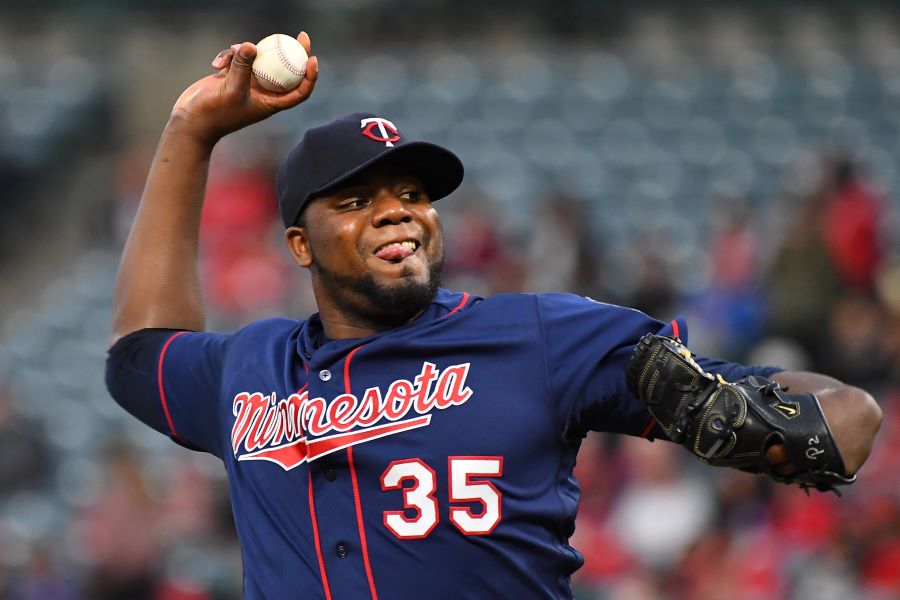 The Twins re-signed Michael Pineda to a two-year deal worth $20 million back in December, on the premise that he had regained his pre-Tommy John form down the stretch and proved himself as a viable mid-rotation starter. Despite the suspension that will steal a quarter of his 2020, Minnesota’s front office believes he can provide stability and upside for the balance of the season, based on last year’s progression. Pineda is a very tough pitcher to figure out, though, and whether or not the team made a good bet depends heavily on whether his good command can continue to outweigh his pedestrian stuff. By most of the currently popular pitching metrics, Pineda is somewhat unimpressive. His cFIP (a Baseball Prospectus metric that isolates factors over which a pitcher has the most control, but which does not fall victim to some of the oversmoothing tendencies of other fielder-independent statistics) was 105 in 2019, marking him as worse than an average hurler. Statcast has six buckets into which it sorts tracked batted balls. Pineda gave up the two most damaging types — Barrels and Solid Contact — in a higher percentage of opponent plate appearances than all but 14 other pitchers. His average fastball velocity has dipped over the years, and is now lower than the average for a right-handed starter without exceptional durability. His spin rate on the fastball is in the fifth percentile among all qualifying pitchers, which leads to heavy movement on the pitch — but because it’s still relatively straight, batters are able to lift it consistently. His slider once had considerable movement separation from the heater, but that’s become muted over the last two seasons in which he’s pitched, leading to fewer grounders on the slider, too. Indeed, Pineda was once a reliable ground-ball guy, but last year, 114 of the 130 pitchers with at least 100 innings pitched had higher ground-ball rates than he had. Pineda’s always been vulnerable to hard contact, and even during his strong finish to 2020, he gave up a fair amount of that, with opponents’ average exit velocity against him in the upper quartile of the league. Even worse, now that he’s not getting grounders, Pineda also allows a lot of that contact within the launch-angle band in which batters have the most success. Of the 129 pitchers who allowed at least 300 batted balls in 2019, Pineda allowed the 24th-highest Sweet Spot percentage. His changeup isn’t great, either, which makes containing left-handed batters and getting through opposing lineups for a third time a constant struggle for Pineda. However, he did throw his fastball and changeup more (and his slider less) against lefties in 2019 than ever before, and that led to more success than usual in those situations. When it comes to sheer whiffs per pitch or swing, Pineda is impressive, fitting into the top quartile of the league. However, he’s not even in the top tertile of the majors in actual strikeout rate. It seems as though, because Pineda’s repertoire remains limited, batters are able to guess along with him in certain counts and situations, minimizing the value of his granular, pitch-for-pitch numbers. Despite all that, however, Pineda had a 4.01 ERA, in a league that averaged 4.60. The only AL hurlers who topped 100 innings and allowed a lower walk rate were Mike Leake and Ryan Yarbrough. Without sexy stuff or a deep arsenal, Pineda was very good for most of 2019, and projects relatively well for 2020, because he does a simple and vital thing very well: he fills the zone with fastballs, and expands it with breaking stuff. Over 400 pitchers threw at least 200 four-seam fastballs in 2019. Among them, Pineda ranked in the 97th percentile for Called Strike Probability — in essence, the average likelihood that fastballs he threw would have been called strikes, if batters didn’t swing. Some 245 pitchers, meanwhile, threw at least 200 sliders. Pineda’s Called Strike Probability for that pitch ranked in the seventh percentile. An average fastball from Pineda had a 59-percent chance of being called a strike, and given the lack of either extreme velocity or rising action on the pitch, that made hitters very eager to attack. However, if they saw fastball but got a slider, they were likely to find themselves waving at a pitch that otherwise had a 36-percent chance of being called a strike. Unlike more straightforward, quantitative stats, Called Strike Probability is an extremely nuanced characteristic. It’s captured in a single number, but it’s hard to say what the optimal number is for any individual pitcher or pitch, except by understanding the pitch’s place in the pitcher’s repertoire and the constellation of characteristics that make up that hurler. For Pineda, however, it’s pretty easy to see how this works. Fastballs have to be strikes consistently, or else a pitcher starts racking up far too many walks. Breaking balls, and especially sliders, need to end up consistently outside the zone. Pineda did that better than ever in 2019, burying the slider not only more consistently, but further below the zone, reducing the chance that a hitter would even happen to reach down and golf a shin-high pitch somewhere. His lack of power or strikeout skill gives Pineda a thin margin for error. He has to repeat the command gains he made in 2019, especially since he’s unlikely to get back the velocity he once had. However, the Twins made multiple bets on command over stuff this winter, suggesting that they trust Wes Johnson and their support staff to help pitchers maintain that trait. That makes the deal to which they signed Pineda a reasonable risk, even if it seems a bit old-fashioned. MORE FROM TWINS DAILY — Latest Twins coverage from our writers — Recent Twins discussion in our forums — Follow Twins Daily via Twitter, Facebook or email

